WP_Post Object
(
    [ID] => 2631
    [post_author] => 2
    [post_date] => 2021-05-13 21:55:31
    [post_date_gmt] => 2021-05-13 21:55:31
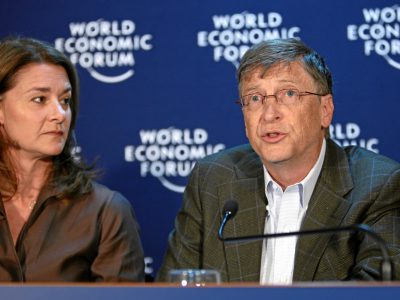
    [post_content] => Is Melinda Gates trying to get ahead of uncomfortable revelations about her husband's relationship with Jeffrey Epstein?

When I read the news last week that Bill and Melinda Gates were divorcing after 27 years of marriage, my first reaction was empathy. The pandemic has been hard on all couples, I thought, even the ones who happened to have been quarantining in a 66,000-square-foot compound with 18.75 bathrooms called Xanadu 2.0. Melinda told The New York Times in October 2020 that being stuck working from home with her husband, after years of frenetic traveling, “was a piece that I think we hadn’t really individually prepared for quite as much.” This was somewhat relatable. No matter the size of your home, there is such a thing as too much togetherness.

But then there were questions. Foremost among them: Why now? After all, thanks in part to the efforts of the Gates Foundation, which has donated more than $1.75 billion to Covid-19 research, 130 million people in the U.S. have received at least one dose of the vaccine. As we approach herd immunity, we are slowly emerging from our pandemic hidey holes. Businesses are reopening. People are talking about wearing jeans again. Couldn’t the world’s biggest philanthropists just carry on living separate lives, united by their passion for giving back? We already know that Melinda is pretty laissez faire when it comes to her marriage, allowing Bill to vacation every year with his ex-girlfriend. The couple owns a far-flung real estate portfolio with at least seven properties totaling $170 million. Melinda could take up residence at Xanadu 2.0 while Bill could stay in their $12.5 million home in Palm Desert, California, from whence he signed the divorce papers. Or they could resume traveling around the world, perhaps staying at the Four Seasons, which they own a large stake in through Bill’s firm Cascade Investment LLC.

A few days after the divorce announcement, we started to get a possible answer to the timing question. The Daily Beast broke the news that Melinda was reportedly “furious” after her husband took her to meet with Jeffrey Epstein at his Upper East Side mansion back in September 2013. The anger is understandable given that one of Melinda’s top priorities at the Gates Foundation is to invest in gender equality and women’s empowerment—and Jeffrey Epstein at the time was a registered sex offender. The Wall Street Journal followed up this week, reporting that Melinda met with divorce lawyers in 2019 after the New York Times published a story detailing the extent of her husband’s relationship with Epstein. The Times reported that Gates sent an effusive email to his colleagues upon meeting Epstein, describing his lifestyle as “very different and kind of intriguing although it would not work for me.” The Gates PR machine then went into full-on spin mode, telling the Times that Gates “was referring only to the unique décor of the Epstein residence.” Ah, yes, the unique décor!

I remember reading that Times article in 2019 and shaking my head. Did I think it was creepy that Bill Gates was hanging out with Jeffrey Epstein? Yes. Did I think that Bill Gates was raping girls who Epstein had trafficked? No, I did not.

Given his wealth, power and involvement in scientific pursuits, Bill Gates has been a magnet for truly wacko conspiracy theories, such as the idea that he wants to use vaccine shots as a vehicle to insert trackable microchips into people’s bodies. Believers in QAnon, the umbrella conspiracy theory that holds that there exists a secret child trafficking ring run by Satan-worshipping Democrats—including President Biden, Hillary Clinton and George Soros–have been having a field day with the divorce announcement, speculating in chat forums that Bill Gates is either about to be arrested or that the breakup is intended to somehow cover up for the fact that both Gateses are dead (don’t ask). I can now see how these types of bonkers narratives had the unusual effect of pushing my mind toward the exact opposite explanation, which is that Bill Gates is a brilliant but oblivious man who, like so many others, unwittingly got swept up in Epstein’s net.

But now I’m not so sure. Is it possible that Bill Gates’s involvement with Jeffrey Epstein went beyond fundraising for philanthropic projects? It is. And the thing that makes me think it is possible is the extent to which Gates downplayed his links to Epstein, both to the press and, apparently, to his wife. In an interview with the Wall Street Journal tied to a Netflix documentary about Gates, he denied having any sort of relationship with the pedophile financier, saying “I met him. I didn’t have any business relationship or friendship with him. I didn’t go to New Mexico or Florida or Palm Beach or any of that.” This turned out to be a big lie: Not only had the two men met many times over the years, but the Times report revealed that Gates flew on Epstein’s Gulfstream plane, known as “the Lolita Express” from Teterboro Airport in New Jersey to Palm Beach in 2013. The New Yorker also reported that Gates made a $2 million donation to the MIT Media Lab in 2014, a donation that was said to be directed by Epstein.

At the heart of any good conspiracy theory is a twisted kernel of truth. Could it be that there is, in fact, an elite illuminati-like pedophile ring running the world–except that, instead of being controlled by prominent Democrats, the cabal transcends any particular political ideology? If that turns out to be the case, then is it even remotely possible that Bill Gates, in collaboration perhaps with two other powerful Bills—Barr and Clinton—may have conspired to have Jeffrey Epstein murdered in jail, so that their involvement is kept secret? When my brain goes down these (admittedly speculative) rabbit holes, I start to feel like I’m getting swallowed up in the Matrix, until I remember that it’s one thing to be running around spouting nonsense about Pizzagate and frazzledrip, and quite another to see evidence of an actual conspiracy unfolding before your eyes. Because something here really does not make sense.

We need answers as to why Bill Gates, the fourth-richest man on earth who runs the biggest charitable organization in history, needed Epstein’s “help” with philanthropy, even after his wife expressed serious reservations about interacting with him. We need to understand why the Gates Foundation’s former science adviser, a man named Boris Nikolic, was named executor of Epstein’s estate before he died. We need to know how Melanie Walker, a longtime adviser to Epstein, came to be part of Gates’s inner circle. Then there’s the question of Nathan Myhrvold, former Microsoft Chief Technology Officer, who, according to Vanity Fair, palled around with Epstein in Palm Beach and Manhattan and was accused by Alan Dershowitz of having sex with one of Epstein’s underage victims. We need to understand why Bill Gates brushed off all these intersections between his orbit and Epstein’s, not to mention why he suddenly stepped down from the boards of Microsoft and Berkshire Hathaway last year.

And before we let Melinda Gates off the hook, we need to understand what she knew and when she knew it. Any evidence of complicity should disqualify her from being an advocate for women and girls.

Hopefully soon, we will get some answers. Last summer, Epstein co-conspirator Ghislaine Maxwell was arrested at a 156-acre property in New Hampshire and on Tuesday, U.S. District Judge Alison Nathan announced that the trial will begin after Thanksgiving. It was originally slated to commence in July, but her lawyers argued that they needed more time to prepare after a new sex-trafficking charge was filed this year that alone carries a maximum sentence of 40 years. If anyone knows where the bodies are buried, it is Ghislaine Maxwell. Indeed, she may already be cooperating with investigators in exchange for leniency.

Suddenly, the carefully coordinated Gates divorce announcement makes more sense as a calculated PR move on the part of Melinda to get ahead of the Epstein narrative and distance herself from its stench. If you are trying to run a foundation that advocates for women and girls around the world, being tied to a global child sex-trafficking ring is not exactly great for the brand.

There’s no question that the $50 billion Gates Foundation, in its 21 years of existence, has done a lot of good work. Because of their work, the incidence of polio around the world has declined by 99 percent. They have prevented 1.5 billion cases of malaria and donated billions to fighting HIV and AIDS. And of course, the coronavirus. But we cannot ignore the fact that the Foundation has also helped launder Bill Gates’s reputation, transforming him from a ruthless Robber Baron 2.0 who built his success by crushing the competition (and foisting a sub-optimal product on consumers), into a champion of public health, an expert on climate change, a thought leader for the Davos set. As Anand Giridharadas put it in his book “Winners Take All: The Elite Charade of Changing the World,” the only thing better than being a fox is being a fox asked to watch over hens.

We as a society need to question whether relying on the voluntary largesse of an ascendant billionaire class is the best way to solve the world’s problems. Why should the takers, the hoarders of the world’s wealth, be presumed to be experts on giving? The Gates divorce reminds us that it might be more effective, more conducive to a thriving democracy, to simply raise their taxes.
    [post_title] => What did Melinda Gates know—and when did she know it?
    [post_excerpt] => If you are trying to run a foundation that advocates for women and girls around the world, being tied to a global child sex-trafficking ring is not exactly great for the brand.
    [post_status] => publish
    [comment_status] => closed
    [ping_status] => open
    [post_password] =>
    [post_name] => what-did-melinda-gates-know-and-when-did-she-know-it
    [to_ping] =>
    [pinged] =>
    [post_modified] => 2024-08-28 21:15:13
    [post_modified_gmt] => 2024-08-28 21:15:13
    [post_content_filtered] =>
    [post_parent] => 0
    [guid] => https://conversationalist.org/?p=2631
    [menu_order] => 205
    [post_type] => post
    [post_mime_type] =>
    [comment_count] => 0
    [filter] => raw
)
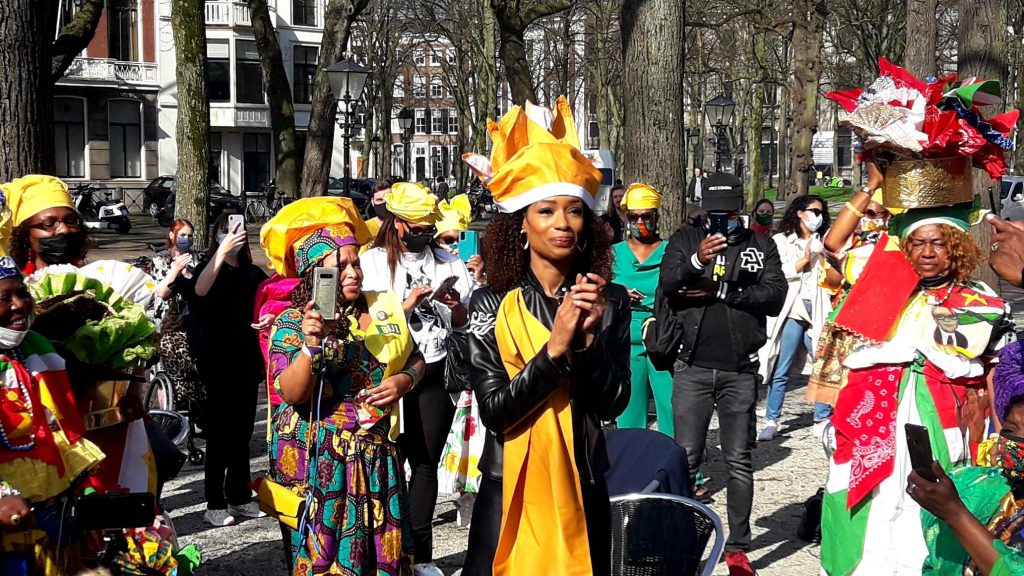 Afro-Surinamese ceremony honoring Sylvana Simons (center) on March 31.[/caption]


 A still from the film shows Bosniaks taking refuge at the UN Dutch peacekeeper base in Srebrenica.[/caption]
In 1993, at the dedication of the U.S. Holocaust Museum, Elie Wiesel made an
A still from the film shows Bosniaks taking refuge at the UN Dutch peacekeeper base in Srebrenica.[/caption]
In 1993, at the dedication of the U.S. Holocaust Museum, Elie Wiesel made an 

 During the decade prior to the 2011 uprising, Egypt saw a blogging boom, with people from diverse socio-economic backgrounds writing outspoken commentary about social and political issues, even though they ran the risk of arrest and imprisonment for criticizing the state. The internet provided space for discussions that had previously been restricted to private gatherings; it also enabled cross-national dialogue throughout the region, between bloggers who shared a common language. Public protests weren’t unheard of—in fact, as those I interviewed for the book argued, they had been building up slowly over time—but they were sporadic and lacked mass support.
While some bloggers and social media users chose to publish under their own names, others were justifiably concerned for their safety. And so, the creators of “We Are All Khaled Saeed” chose to manage the Facebook page using pseudonyms.
Facebook, however, has always had a policy that forbids the use of “fake names,” predicated on the misguided belief that people behave with more civility when using their “real” identity. Mark Zuckerberg famously claimed that having more than one identity represents a lack of integrity, thus demonstrating a profound lack of imagination and considerable ignorance. Not only had Zuckerberg never considered why a person of integrity who lived in an oppressive authoritarian state might fear revealing their identity, but he had clearly never explored the rich history of anonymous and pseudonymous publishing.
In November 2010, just before Egypt’s parliamentary elections and a planned anti-regime demonstration, Facebook, acting on a tip that its owners were using fake names, removed the “We are all Khaled Saeed” page.
At this point I had been writing and communicating for some time with Facebook staff about the problematic nature of the policy banning anonymous users. It was Thanksgiving weekend in the U.S., where I lived at the time, but a group of activists scrambled to contact Facebook to see if there was anything they could do. To their credit, the company offered a creative solution: If the Egyptian activists could find an administrator who was willing to use their real name, the page would be restored.
They did so, and the page went on to call for what became the January 25 revolution.
A few months later, I joined the Electronic Frontier Foundation and began to work full-time in advocacy, which gave my criticisms more weight and enabled me to communicate more directly with policymakers at various tech companies.
Three years later, while driving across the United States with my mother and writing a piece about social media and the Egyptian revolution, I turned on the hotel television one night and saw on the news that police in Ferguson, Missouri had shot an 18-year-old Black man, Michael Brown, sparking protests that drew a disproportionate militarized response.
The parallels between Egypt and the United States struck me even then, but only in 2016 did I become fully aware. That summer, a police officer in Minnesota pulled over 32-year-old Philando Castile—a Black man—at a traffic stop and, as he reached for his license and registration, fatally shot him five times at close range.
Castile’s partner, Diamond Reynolds, was in the passenger’s seat and had the presence of mind to whip out her phone in the immediate aftermath, streaming her exchange with the police officer on Facebook Live.
Almost immediately, Facebook removed the video. The company later restored it, citing a “technical glitch,” but the incident demonstrated the power that technology companies—accountable to no one but their shareholders and driven by profit motives—have over our expression.
The internet brought about a fundamental shift in the way we communicate and relate to one another, but its commercialization has laid bare the limits of existing systems of governance. In the years following these incidents, content moderation and the systems surrounding it became almost a singular obsession. I worked to document the experiences of social media users, collaborated with numerous individuals, and learned about the structural limitations to changing the system.
Over the years, my views on the relationship between free speech and tech have evolved. Once I believed that companies should play no role in governing our speech, but later I shifted to pragmatism, seeking ways to mitigate the harm of their decisions and enforce limits on their power.
But while the parameters of the problem and its potential solutions grew clearer, so did my thesis: Content moderation— specifically, the uneven enforcement of already-inconsistent policies—disproportionately impacts marginalized communities and exacerbates existing structural power balances. Offline repression is, as it turns out, replicated online.
The 2016 election of Donald Trump to the U.S. presidency brought the issue of content moderation to the fore; suddenly, the terms of the debate shifted. Conservatives in the United States claimed they were unjustly singled out by Big Tech and the media amplified those claims—much to my chagrin, since they were not borne out by data. At the same time, the rise of right-wing extremism, disinformation, and harassment—such as the spread of the QAnon conspiracy and wildly inaccurate information about vaccines—on social media led me to doubt some of my earlier conclusions about the role Big Tech should play in governing speech.
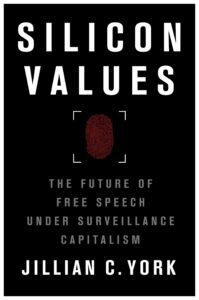
That’s when I knew that it was time to write about content moderation’s less-debated harms and to document them in a book.
Setting out to write about a subject I know so intimately (and have even experienced firsthand), I thought I knew what I would say. But the process turned out to be a learning experience that caused me to rethink some of my own assumptions about the right way forward.
One of the final interviews I conducted for the book was with Dave Willner, one of the early policy architects at Facebook. Sitting at a café in San Francisco just a few months before the pandemic hit, he told me: “Social media empowers previously marginal people, and some of those previously marginal people are trans teenagers and some are neo-Nazis. The empowerment sense is the same, and some of it we think is good and some of it we think is not good. The coming together of people with rare problems or views is agnostic.”
That framing guided me in the final months of writing. My instinct, based on those early experiences with social media as a democratizing force, has always been to think about the unintended consequences of any policy for the world’s most vulnerable users, and it is that lens that guides my passion for protecting free expression. But I also see now that it is imperative never to forget a crucial fact—that the very same tools which have empowered historically marginalized communities can also enable their oppressors.
[post_title] => Between Nazis and democracy activists: social media and the free speech dilemma
[post_excerpt] => The content moderation policies employed by social media platforms disproportionately affect marginalized communities and exacerbate power imbalances. Offline repression is replicated online.
[post_status] => publish
[comment_status] => closed
[ping_status] => open
[post_password] =>
[post_name] => between-nazis-and-democracy-activists-social-media-and-the-free-speech-dilemma
[to_ping] =>
[pinged] =>
[post_modified] => 2024-08-28 21:15:13
[post_modified_gmt] => 2024-08-28 21:15:13
[post_content_filtered] =>
[post_parent] => 0
[guid] => https://conversationalist.org/?p=2452
[menu_order] => 216
[post_type] => post
[post_mime_type] =>
[comment_count] => 0
[filter] => raw
)
During the decade prior to the 2011 uprising, Egypt saw a blogging boom, with people from diverse socio-economic backgrounds writing outspoken commentary about social and political issues, even though they ran the risk of arrest and imprisonment for criticizing the state. The internet provided space for discussions that had previously been restricted to private gatherings; it also enabled cross-national dialogue throughout the region, between bloggers who shared a common language. Public protests weren’t unheard of—in fact, as those I interviewed for the book argued, they had been building up slowly over time—but they were sporadic and lacked mass support.
While some bloggers and social media users chose to publish under their own names, others were justifiably concerned for their safety. And so, the creators of “We Are All Khaled Saeed” chose to manage the Facebook page using pseudonyms.
Facebook, however, has always had a policy that forbids the use of “fake names,” predicated on the misguided belief that people behave with more civility when using their “real” identity. Mark Zuckerberg famously claimed that having more than one identity represents a lack of integrity, thus demonstrating a profound lack of imagination and considerable ignorance. Not only had Zuckerberg never considered why a person of integrity who lived in an oppressive authoritarian state might fear revealing their identity, but he had clearly never explored the rich history of anonymous and pseudonymous publishing.
In November 2010, just before Egypt’s parliamentary elections and a planned anti-regime demonstration, Facebook, acting on a tip that its owners were using fake names, removed the “We are all Khaled Saeed” page.
At this point I had been writing and communicating for some time with Facebook staff about the problematic nature of the policy banning anonymous users. It was Thanksgiving weekend in the U.S., where I lived at the time, but a group of activists scrambled to contact Facebook to see if there was anything they could do. To their credit, the company offered a creative solution: If the Egyptian activists could find an administrator who was willing to use their real name, the page would be restored.
They did so, and the page went on to call for what became the January 25 revolution.
A few months later, I joined the Electronic Frontier Foundation and began to work full-time in advocacy, which gave my criticisms more weight and enabled me to communicate more directly with policymakers at various tech companies.
Three years later, while driving across the United States with my mother and writing a piece about social media and the Egyptian revolution, I turned on the hotel television one night and saw on the news that police in Ferguson, Missouri had shot an 18-year-old Black man, Michael Brown, sparking protests that drew a disproportionate militarized response.
The parallels between Egypt and the United States struck me even then, but only in 2016 did I become fully aware. That summer, a police officer in Minnesota pulled over 32-year-old Philando Castile—a Black man—at a traffic stop and, as he reached for his license and registration, fatally shot him five times at close range.
Castile’s partner, Diamond Reynolds, was in the passenger’s seat and had the presence of mind to whip out her phone in the immediate aftermath, streaming her exchange with the police officer on Facebook Live.
Almost immediately, Facebook removed the video. The company later restored it, citing a “technical glitch,” but the incident demonstrated the power that technology companies—accountable to no one but their shareholders and driven by profit motives—have over our expression.
The internet brought about a fundamental shift in the way we communicate and relate to one another, but its commercialization has laid bare the limits of existing systems of governance. In the years following these incidents, content moderation and the systems surrounding it became almost a singular obsession. I worked to document the experiences of social media users, collaborated with numerous individuals, and learned about the structural limitations to changing the system.
Over the years, my views on the relationship between free speech and tech have evolved. Once I believed that companies should play no role in governing our speech, but later I shifted to pragmatism, seeking ways to mitigate the harm of their decisions and enforce limits on their power.
But while the parameters of the problem and its potential solutions grew clearer, so did my thesis: Content moderation— specifically, the uneven enforcement of already-inconsistent policies—disproportionately impacts marginalized communities and exacerbates existing structural power balances. Offline repression is, as it turns out, replicated online.
The 2016 election of Donald Trump to the U.S. presidency brought the issue of content moderation to the fore; suddenly, the terms of the debate shifted. Conservatives in the United States claimed they were unjustly singled out by Big Tech and the media amplified those claims—much to my chagrin, since they were not borne out by data. At the same time, the rise of right-wing extremism, disinformation, and harassment—such as the spread of the QAnon conspiracy and wildly inaccurate information about vaccines—on social media led me to doubt some of my earlier conclusions about the role Big Tech should play in governing speech.
That’s when I knew that it was time to write about content moderation’s less-debated harms and to document them in a book.
Setting out to write about a subject I know so intimately (and have even experienced firsthand), I thought I knew what I would say. But the process turned out to be a learning experience that caused me to rethink some of my own assumptions about the right way forward.
One of the final interviews I conducted for the book was with Dave Willner, one of the early policy architects at Facebook. Sitting at a café in San Francisco just a few months before the pandemic hit, he told me: “Social media empowers previously marginal people, and some of those previously marginal people are trans teenagers and some are neo-Nazis. The empowerment sense is the same, and some of it we think is good and some of it we think is not good. The coming together of people with rare problems or views is agnostic.”
That framing guided me in the final months of writing. My instinct, based on those early experiences with social media as a democratizing force, has always been to think about the unintended consequences of any policy for the world’s most vulnerable users, and it is that lens that guides my passion for protecting free expression. But I also see now that it is imperative never to forget a crucial fact—that the very same tools which have empowered historically marginalized communities can also enable their oppressors.
[post_title] => Between Nazis and democracy activists: social media and the free speech dilemma
[post_excerpt] => The content moderation policies employed by social media platforms disproportionately affect marginalized communities and exacerbate power imbalances. Offline repression is replicated online.
[post_status] => publish
[comment_status] => closed
[ping_status] => open
[post_password] =>
[post_name] => between-nazis-and-democracy-activists-social-media-and-the-free-speech-dilemma
[to_ping] =>
[pinged] =>
[post_modified] => 2024-08-28 21:15:13
[post_modified_gmt] => 2024-08-28 21:15:13
[post_content_filtered] =>
[post_parent] => 0
[guid] => https://conversationalist.org/?p=2452
[menu_order] => 216
[post_type] => post
[post_mime_type] =>
[comment_count] => 0
[filter] => raw
)