WP_Post Object
(
    [ID] => 1941
    [post_author] => 2
    [post_date] => 2020-08-13 23:11:48
    [post_date_gmt] => 2020-08-13 23:11:48
    [post_content] => From Belarus to America: a lesson in how an authoritarian responds to those who threaten his power.

Six masked police officers in black uniforms and helmets were filmed beating one unarmed man, who can be heard moaning in pain. A woman runs up, screaming, and the cops turn on her, one of them explicitly threatening her, the other pushing her away. “Don’t touch him, that’s my husband!” she screams, flailing at them with her arms. The officers haul her husband up off the ground, presumably to be detained. It was just another day of violent crackdowns in Belarus, a country that has been ruled since 1994 by Alexander Lukashenko, who is often called Europe’s last dictator

We don’t know for certain where police took the man, but another video provides some clues. 


The women narrating the clip are clearly horrified at what they are seeing through the window. They fear the detained people lying face down in the walled yard of the police precinct will be murdered by police. One of the women wants to go out on the balcony to film, but then both decide it’s unsafe. The scene has a Children of Men vibe — dystopian and horrifyingly banal at the same time. Subsequent videos published on Twitter show protesters gathered outside a detention center in Minsk while chanting encouragement to the detainees who are being beaten inside, and weeping as large police vehicles arrive with yet more detained protesters inside. 

Reports of horrific torture in detention have begun to leak out. Here is just one video featuring the sounds of detainees screaming. Here is a video of a woman behind barbed wire, screaming “Don’t! Please stop! I can’t see anything!” A friend of mine who lives in Minsk has likened the situation to a war being waged by the state against its own populace. 

An independent Russian journalist, freed with the aid of his diplomats, was able to recount the scenes he saw after being essentially kidnapped by police (as they told him themselves, “You are not detained”), including minors being savagely beaten, people forced to lie face down in pools of blood for hours, police jumping on protesters’ backs until bones are broken, threats of rape, and much more. 

Four days into the anti-Lukashenko demonstrations, Belarusian state television broadcast a horrifying video report that shows young protesters at a detention center, obviously beaten and terrified, confirming to an off camera police officer that they will not engage in any more protests.

The mass arrests are part of a violent state crackdown on opposition demonstrators, who poured into the streets on August 9 to protest  an election that the president claimed he had “won” with 80% of the vote. Protests have sprung up all over the country, not just in the capital, Minsk. While exact numbers of protesters are hard to come by, official statistics say that at least 6,000 have been detained in just a few days. 


While media organizations have been careful to stress that vote rigging has been “alleged” in Belarus, I can state confidently that the election was stolen; the evidence is there for all to see.  Svetlana Tikhanovskaya, the 37 year-old woman who ran against Lukashenko after her husband, a well-known opposition blogger, was jailed in May, has been forced into exile in neighboring Lithuania. Security officials threatened to make orphans of her children, whom she sent abroad before the election; they later arrested her campaign manager, Maria Moroz.  They detained Moroz as a hostage, to be released in exchange for Tikhanovskaya’s departure from Belarus.  Before she was allowed to leave the country, Tikhanovskaya recorded what amounts to a hostage video, in which she reads from a script while sitting in what seems to be the office of a Belarusan Central Elections Commission chairperson. In a personal video, which she recorded shortly after arriving in Lithuania, Tikhanovskaya speaks emotionally; she calls herself a “weak woman” — a chilling reference to Lukashenko having mocked her as a “poor little girl” ahead of the election. “Children,” she said in that video, “are our everything”—a  clear indication that she was told her children would not be safe. She added: “God forbid you should ever have to face the choice I had to face.” Even with her children safely abroad, Tikhanovskaya had every reason to be terrified for them. Her husband, who was originally supposed to run instead of her before Lukashenko had him thrown in jail, remains behind bars, another hostage.  Svetlana Tikhanovskaya is young, passionate, and charismatic in a way that galvanizes voters. She has a wholesome image — an independent candidate who declared her love for her activist husband, Sergei, after he was locked up, and ran on a platform of freeing political prisoners, weakening ties with Russia, and democratic reforms. Her courage invested her with instant appeal. The threats against Tikhanovskaya and her family are not the actions of a confident leader who easily won the majority of the polls. They are the actions of a dictator who feels his throne wobbling underneath him. Although the election was not monitored — already a major red flag — the machinations witnessed by ordinary citizens at the polls were giving the game away, Tikhanovskaya was clearly getting too many votes for comfort. Demands for “all votes to be counted” are no longer relevant at this point; to get to the bottom of what happened, one would need to hold a whole new, transparent election, which is impossible at the moment. Look at this graph if you want to understand the generational span of Lukashenko’s rule: Add to that stagnation and growing inequality, as well as a history of repressions and crackdowns. Now add the fear, uncertainty, and crisis that 2020 brought — a spectacle that has included Lukashenko mocking the coronavirus and hosting a parade as infections surged Lukashenko’s response to the protests has included not just threats and violent crackdowns; he also cut off the internet in an attempt to stifle dissent. The people, however, appear furious and determined in their defiance. Bypassing restrictions, some have even created a Telegram channel dedicated to unmasking and doxxing Lukashenko’s security services — a situation that could escalate dramatically on top of all of the other escalations.  It is not clear if Lukashenko will be toppled. Certainly, the savagery with which the protesters are being treated shows us that he fears as much. Some regional analysts believe that the regime is nearing collapse, but the question is — at what cost? Americans should be paying close attention to events in Belarus. Lukashenko’s response to the opposition shows how a cornered rat behaves — with mass arrests, death threats, and attempts to shut down or limit access to the internet. Donald J. Trump is just a wannabe authoritarian, but like Lukashenko he can be dangerous when under duress. We have observed Trump’s increasing petulance — everything from the constant revenge-firings of officials and blasting his own intelligence community on Twitter — and see how it can easily turn into a rage.  We can see how that rage finds an outlet via unidentified paramilitary police grabbing protesters  in places like Portland. We can see it in how peaceful protesters were tear-gassed in D.C. for a bizarre photo op. One of the functions of authoritarianism is to bulldoze the safeguards that a democratic system places between the individual and the state — as craven officials continue to help Trump, more and more of the American public is exposed to both his anger and his incompetence. Americans are lucky to have a system that still provides many protections from Trump’s rage, but that system has its vulnerabilities. With the pandemic out of control in the States, voting by mail has become more important — but our Postal Service is being sabotaged, to name one obvious example. Republicans have been going after the USPS for years, but their efforts now present Trump with a potential opportunity to cast the upcoming presidential election as seriously flawed, especially if it’s a close one. When a crucial part of the societal infrastructure that is propping up our democracy is weakened, we stray further toward unpredictable scenarios.  Keith Kahn-Harris, a London based sociologist and prolific author, explains in an excellent Twitter thread that Western ideological zealots who support foreign dictators and cast them as fighters of Western imperialism (Kahn-Harris he refers to them as “Tankies” — the term originated with British people who supported Soviet tanks rolling across Europe, but has since broadened to include different groups, united by a disdain for the Western countries they call home) have succumbed to delusion by treating Lukashenko’s state propaganda as though it were meant to be believed.  Rather, explains Kahn-Harris, “In dictatorships the absurdity of the lie is precisely the point—it is an expression of dominance.” People who have grown up in authoritarian regimes know that official statements are lies. The trick is to understand the subtext of the lie. People who have grown up in democracies are not equipped with the necessary cynicism to combat a leader who lies axiomatically, which is why the U.S. media has failed to cover the Trump presidency with adequate insight.  There is a very good parallel to be drawn between Trump’s base — as they do everything from cheering on our own examples of horrific police violence to ignoring or dismissing the president’s inaction on the pandemic — and Lukashenko’s Western fanboys as they seek to discredit protesters in Belarus Both groups are operating in a state of unreality. As we have seen over the past few months,  2020 has shown all too well, unreality is both seductive and deadly. [post_title] => Why you should care about what's happening in Belarus [post_excerpt] => Americans should be facing close attention to events in Belarus. Lukashenko’s response to the opposition shows how a cornered rat behaves — with mass arrests, death threats, and attempts to shut down or limit access to the internet. Donald J. Trump is just a wannabe authoritarian, but like Lukashenko he can be dangerous when under duress. [post_status] => publish [comment_status] => closed [ping_status] => open [post_password] => [post_name] => why-you-should-care-about-whats-happening-in-belarus [to_ping] => [pinged] => [post_modified] => 2024-08-28 21:11:30 [post_modified_gmt] => 2024-08-28 21:11:30 [post_content_filtered] => [post_parent] => 0 [guid] => http://conversationalist.org/?p=1941 [menu_order] => 252 [post_type] => post [post_mime_type] => [comment_count] => 0 [filter] => raw )

Why you should care about what’s happening in Belarus

WP_Post Object
(
    [ID] => 1932
    [post_author] => 2
    [post_date] => 2020-08-06 20:44:44
    [post_date_gmt] => 2020-08-06 20:44:44
    [post_content] => With just 89 days left before the presidential election, we need more grassroots community-led political spectacle grounded in culture and pluralism.

The morning before July 4th, a group of artists and activists working together under the banner of the project “XMAP: In Plain Sight” sent flights throughout various parts of the United States to skytype messages in defense of immigrants incarcerated in detention facilities. These multicultural, multilingual messages -- such as “Care Not Cages,” “Azadi” (“Freedom,” Urdu/Hindi)  “Lespwa Ak Libete” (“Hope and Freedom,” Haitian Creole)  “Mitakuye Oyasin” (“All Are Related,” Lakota) and “Nos Vemos Libres” (“We Will See Each Other Free,” Spanish) — conveyed hope, resistance, and solidarity. They also received significant attention from legacy media outlets like the New York Times, L.A. Times, and CNN—and on social media

That same night, at Mount Rushmore (on stolen Lakota Sioux land), the president of the United States threw a populist pageant. Each detail of the event, from his nativist and racist speech to the grandiose setting, was designed to inflame his base’s desire to pull the country deeper into white nationalism and isolationism. While Native American activists protested outside the event, he ignored people lost to the raging coronavirus pandemic and those suffering under impending economic collapse, and explicitly denigrated people fighting for racial justice. The spectacle was aimed to bolster his failing popularity by stoking fears of a culture war created and driven by his own administration.  

The two events were bipolar political spectacles. The Mount Rushmore event was fascist propaganda grounded in populism and nativism; XMAP:IPS was community-led mobilization grounded in culture and pluralism.

With just 89 days left before the presidential election, we need more of the latter. 

The world is in a fragile state, as its peoples confront multiple catastrophes simultaneously— the coronavirus pandemic, mass political uprisings, forced displacement caused by climate change and war, and massive inequality. In the United States, these interlocking crises are exacerbated by a government fast descending into fascism, sacrificing lives for cheap political points as the GDP craters and millions hover near poverty. 

Past administrations weakened the immigration system, the issue XMAP:IPS addresses. But the Trump administration, with its short-sighted and cruel policies, has caused it to degrade almost completely into brutality. As of May 2020 there are over 25,000 immigrants in detention, all denied protections against COVID-19. The current government has eroded protections for asylum seekers; it has also attempted to ban certain minority populations, roll back the protections offered to recipients of DACA (children of undocumented immigrants), and deport foreign students—all while continuing to threaten immigrant families with forced separation of children from their parents. 

And then there are persistent calls to build a wall: Trump’s “big, beautiful” wall, which serves as a billboard for the administration’s xenophobia.

And that’s the key. So much of what emanates from the White House is bluster and stunt. As election season heats up, the administration is ramping up the political theater. In the month since the July 4th weekend, he and his daughter Ivanka posed with cans of Goya beans to indicate their support for the company’s CEO, whose controversial pro-Trump remarks led to calls from Latinos to boycott the company’s products. He held what could only be called a campaign rally in the Rose Garden, despite the long-observed norm by which incumbent presidents refrained from electioneering at the White House. Later the same week, there were pickup trucks on the South Lawn held up by a crane emblazoned with “Trump Administration.” Even his use of social media is a sort of ongoing digital spectacle. Trump’s recent tweets — which range from claiming the election should be postponed to attempting to ban Tiktok — fix the attention of the media, which chases them like a kitten with a ball of yarn and amplifies them in an endless cycle. 

But just because these are stunts doesn’t mean they can be ignored. The administration is turning violations of basic rights into a series of antics to push the window of acceptability while manipulating our gaze away from the next violation. And as the tide appears to be turning, their tools against falling poll numbers will be voter suppression, attempts at election invalidation, and dialing up their culture war rhetoric. The stakes around the elections—which, despite the U.S.’s declining stature in the international arena, will be one of the most consequential global political events in recent history—couldn’t be higher. 

We need to fight it all, in the courts, on our airwaves, in the press — and also in the streets and in the public imagination. For this last one, we need to mount spectacles of our own. 

There is a long-standing tradition, domestically and internationally, of community-led cultural intervention — a social relation amongst people, mediated by images”  — crafted in the language of aesthetic political resistance and radical community. It is an essential tool of nonviolent action. ACT UP, the grassroots movement to find a cure for AIDS, is particularly well known in the United States. More recent examples can be seen in South Korea, Armenia and Argentina, where culture-based demonstrations have been instrumental in pushing movements towards their goals.

I haven’t always supported political spectacle as practiced in the United States. Too often it is generated from outside an affected community, such as last decade’s Kony 2012. When imposed on a community’s needs and demands, grand gestures can be paternalistic, whitewashed, corporate stunts, such as Paving for Pizzas, or Refugee Nation, mounted by the same advertising firm that refused to stop working with Customs and Border Patrol, the US agency responsible for menacing immigrants. These types of actions suck time and energy away from the actual work that leads to positive social change. And as with the president, authoritarians and fascists have historically relied on it as a means of delineating and manifesting ideology and to distract a populace from larger social ills. 

But when the purpose of political theater is to get people to engage with grassroots movements for change, it can be an effective tool for strengthening coalitions. When grounded in participatory democracy and cultural expression, the planning and implementation process of these events are an effective means of connecting people. This is what my team at XMAP:IPS had in mind when we created the strategy for our action in immigration. 

We built the project predicated on three commitments: First, to amplify the voices of immigrants. Second, to be intersectional in the makeup of the production team and the invited contributors. Third, to partner with a network of national and local activists and organizations working directly with affected communities, and provide a new way for them to collaborate with each other. Highlighting their calls to action helped attract attention and resources for their work. This is how we captured the public square.

Ours was one of several interventions that captured media attention this summer. Black Lives Matter protesters have peacefully claimed the streets: they turned Brooklyn’s Barclays Center and 125th Street in Harlem into outdoor dance parties; in Washington, DC they created an outdoor yoga studio. In Minnesota an Aztec dance group paid tribute to George Floyd with performance, and a group in Atlanta honored John Lewis with dance. Artists turned slogans of resistance into public art. K-Pop stans — Korean pop music fans, many of whom have turned to activism -- were joined by American TikTok teens in culture jamming the president’s June 20th Tulsa rally. In a signal they are watching and using the tools they have at their disposal to activate on current political events, they rapidly spread messages over social media channels to reserve seats in the stadium. The president’s campaign staff claimed a million people would attend. Instead, only 6,200 showed up. The president was despondent -- and the culture jam achieved its goal. 

Each of these actions is a statement. It is a reminder that none of this is okay -- but that we might be able to come together to fight it. 

In a time of fascism and propaganda, we need reason and action to be supported by grand visions of change. 

These actions are fuel to our organizing power. They can be even more effective in firing up the collective imagination if they are connected, networked, and sustainably resourced. Driven by urgency and a political philosophy of interconnectedness, artists and activists too often fight without income or safety nets. Currently, legacy media outlets are giving far more coverage to the spectacle of the Trump administration and the GOP, than they are to the spectacles mounted by grassroots movements for social justice. 

And yet, despite the lack of attention paid by the legacy media, those very movements — for Black Lives, for the climate, for the displaced and detained — are currently fighting to turn the public gaze to calls for justice. In the tradition of past cultural activations stretching from the March on Washington for Jobs and Freedom through to the establishment of Black Lives Matter Plaza in Washington DC and painting the sky with messages of solidarity, our movements are using culture and community to hold the public square. 

We are at a critical moment in history. It requires us to continue using art as a foundation of social change and community building. We need support to allow people to stand up in a different way and create the space to do so, to use public dialogue to reignite compassion and build a collective vision for the country. Our interventions leading up to November can apply a different kind of pressure and allow us to dream beyond the election. Imagine the community engagement over the coming months if we were able to mount a coordinated series of local and national cultural activations.

With 89 days left until the election, we could lead the country through song, dance, art, and flight into a just future. Let’s give it to them. In the words of the late John Lewis, let’s find a way to get in the way. Let’s go big. 

 
    [post_title] => Radical community is the way to counter the Trumpian populist spectacle
    [post_excerpt] => We are at a critical moment in history. It requires us to continue using art as a foundation of social change and community building. We need support to allow people to stand up in a different way and create the space to do so, to use public dialogue to reignite compassion and build a collective vision for the country.
    [post_status] => publish
    [comment_status] => closed
    [ping_status] => open
    [post_password] => 
    [post_name] => radical-community-is-the-way-to-counter-trumpian-populist-spectacle
    [to_ping] => 
    [pinged] => 
    [post_modified] => 2024-08-28 21:15:13
    [post_modified_gmt] => 2024-08-28 21:15:13
    [post_content_filtered] => 
    [post_parent] => 0
    [guid] => http://conversationalist.org/?p=1932
    [menu_order] => 253
    [post_type] => post
    [post_mime_type] => 
    [comment_count] => 0
    [filter] => raw
)

Radical community is the way to counter the Trumpian populist spectacle

WP_Post Object
(
    [ID] => 1921
    [post_author] => 2
    [post_date] => 2020-07-30 09:31:44
    [post_date_gmt] => 2020-07-30 09:31:44
    [post_content] => Trump did not cause the rise of authoritarian Christianity. He is its symptom.

In a recent article in The Atlantic, prominent conservative commentator Peter Wehner, who worked for the Reagan and both Bush administrations, lamented the “Faustian bargain” his fellow white evangelicals have made in aligning themselves with Donald Trump. But the coreligionists Wehner finds so problematic represent the base that made his own high-profile career possible, and they do not agree that they are dealing with the devil. That the vast majority of white evangelicals have embraced Trump has caused prominent evangelicals invested in respectability, like Wehner and Michael Gerson of The Washington Post, considerable consternation. Gerson also played an influential role in the George W. Bush administration, and his hand wringing over the alliance between the Christian Right and Trump likely represents concern for his own legacy and that of “compassionate conservatism.”

The fear is not misplaced. One key lesson the American public should take away from the Trump years is precisely that the project of “respectable evangelicalism,” to which men like Wehner and Gerson have devoted much of their careers, has emphatically failed.

Specifically, the avatars of this “genteel” conservative Christianity have failed in three interrelated ways:
  1. they have failed to convince their coreligionists that supporting Trump is hypocritical or damaging;
  2. they have failed to take responsibility for the harm they have done by encouraging the culture wars and trying to put a benevolent face on them;
  3. they have failed to maintain control of the national conversation around evangelicalism to the extent they once did, which contributed to the major U.S. media’s tendency to normalize extremism.
If the United States is to have a healthy democratic future, Americans will have to reckon with the consequences of these failures. Wehner and company still represent the conventional wisdom, but their hold on the dominant narrative is cracking. Increasingly, ex-evangelical and other critical voices are breaking through, because the would-be respectable conservative Christians have failed to provide a satisfying answer to the nagging American question, “What’s wrong with evangelicals?” I will be devoting this and my two upcoming monthly columns here to addressing each of these three failures, starting with the first: the failure of the Wehners and Gersons of the world to influence white evangelicals away from support for Trump. As I will argue in subsequent months, this failure is essentially a symptom—a reflection of respectable evangelicals’ complicity in fueling the culture wars, which they can no longer contain. The fallout from the culture wars has also finally allowed ex-evangelicals to begin to be heard in the public sphere. Wehner argues that Trump is a cause of authoritarian Christianity’s rise, rather than the symptom of a decades-old movement, which he helped build, that is centered implicitly around protecting white privilege and explicitly around paranoid sexuality politics. In his recent article, Wehner writes, “The Trump presidency… has inflicted gaping wounds on the Republican Party, conservative causes, and the evangelical movement.” He is particularly concerned with the reputation, or “witness,” of evangelicals, which is vitally important to members of a faith community grounded largely in valorizing the conversion experience and the concomitant drive to convert others. But while the reputation of the evangelical movement has deservedly suffered greatly in the Trump era, we now have the data to show that, despite warnings from men like Wehner and Gerson, most conservative evangelicals simply don’t see this. The vast majority of white evangelicals support Trump because they believe he is doing the will of God. There is some disagreement among them over whether Trump is a Christian or simply an irreligious man willing to fight for Christians, but his white evangelical base does not doubt that the president fights for them. Of course, when they maintain he fights for Christians, they mean Christians “of the right sort”—i.e., those who oppose same-sex marriage and abortion, and who dislike immigrants and refugees. If a large, powerful body of Christians insists that backing a strongman credibly accused of sexually assaulting numerous women in order to grab power is Christian behavior, then, empirically, it is Christian behavior. Religions are complex cultural systems with traditions and texts that are subject to communal mediation and interpretation, which means that well-meaning liberals who dub Christian Trump supporters “fake Christians,” fail to see that authoritarian Christianity is just as “real” a version of the faith as any sort of progressive or liberationist Christianity. Meanwhile, “respectable” commentators like Wehner who mostly agree in substance with the majority of white evangelicals’ illiberal Christianity may see Trump support as a bridge too far, but their cries to this effect fall on deaf ears among their more uncouth brethren. According to findings by Denison University political scientist Paul A. Djupe, about three quarters of white evangelicals either disagree (46.5 percent) that “Christian support for Donald Trump has hurt Christian witness” or believe that it has neither hurt nor helped Christian witness (28 percent). Probing further into the influence of whether respondents to his study perceive their friends as mostly supportive or mostly opposed to Trump, Djupe argues, “these results help us see that, at this point, it is difficult, for instance, for evangelicals to see that the Christian brand has been damaged in society by its close association with Donald Trump. In part, that is because it has probably not been damaged among their bits of society.” Men like Wehner interact with a much more ideologically diverse crowd than rank-and-file evangelicals do; they are able to see the damage that evangelical support for Trump has caused, and thus fret about their inability to rein it in. Wehner’s willingness to call out his fellow evangelicals for accepting Trump’s overt racism (for example, Trump’s pejorative use of “kung flu” to refer to COVID-19 and his pushing the birther conspiracy about President Barack Obama) accomplishes nothing except, perhaps, to assuage his own conscience. In his analysis of the Supreme Court’s decision in Bostock v. Clayton County, Georgia, Wehner argues that evangelicals, despite their “devil’s bargain” with Trump, have largely failed to get what they want. This is simply wrong. Trump has delivered in numerous ways on what he promised white evangelicals; and while they might see Bostock as a setback, subsequent “religious liberty” decisions have granted evangelicals sweeping exemptions to civil rights laws and education regulations. Since I cannot see “his heart,” to use the evangelical speak of my youth, I cannot say whether Wehner truly believes that Roe v. Wade will remain settled law when it is very much threatened. I can say, however, that he is out of touch with the evangelical movement if he sincerely fails to see that their embrace of Donald Trump is not a betrayal of their values, but rather a reflection of them. [post_title] => The failure of 'respectable' evangelicalism, part I [post_excerpt] => A minority of 'respectable' Christian conservatives who oppose Trump claim that he is responsible for the rise of authoritarian Christianity, rather than a symptom of a decades-long movement that is centered implicitly around protecting white privilege and explicitly around paranoid sexuality politics. [post_status] => publish [comment_status] => closed [ping_status] => open [post_password] => [post_name] => the-failure-of-respectable-evangelicalism-part-i [to_ping] => [pinged] => https://conversationalist.org/2020/06/25/the-christian-right-the-bostock-decision-and-the-struggle-to-define-religious-freedom/ [post_modified] => 2024-08-28 21:15:13 [post_modified_gmt] => 2024-08-28 21:15:13 [post_content_filtered] => [post_parent] => 0 [guid] => http://conversationalist.org/?p=1921 [menu_order] => 254 [post_type] => post [post_mime_type] => [comment_count] => 0 [filter] => raw )
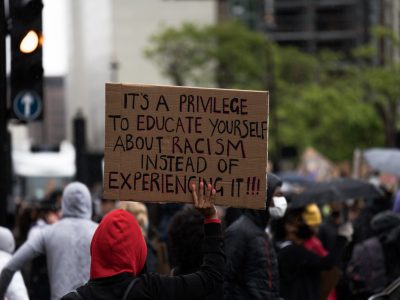
The failure of ‘respectable’ evangelicalism, part I

WP_Post Object
(
    [ID] => 1910
    [post_author] => 2
    [post_date] => 2020-07-23 17:14:58
    [post_date_gmt] => 2020-07-23 17:14:58
    [post_content] => A secret language, Láadan, allows women to express feelings and experiences for which English, with its male-centric deficiency of words, phrases and grammar, does not possess.

In May of 2017, while many were still reeling from shock at the spectacle of Donald Trump as president of the United States, the New York Review of Books published an article by Masha Gessen called “The Autocrat’s Language.” Gessen, a non-binary person who uses gender-neutral pronouns, was rapidly taking their place as a Trump explainer, drawing upon years of covering the Putin presidency in their native Russia to position themself as an expert in contemporary authoritarianism. In their piece for the NYRB, Gessen explained that because autocrats distorted the meaning of words by using them to lie, journalists were forced to use an impoverished vocabulary in order to report the truth.  Suzette Haden Elgin, a linguist and novelist, uses a variation on this scenario to inform her 1984 science fiction novel, Native Tongue; it is set in a patriarchal future United States of 2205, a place where the nineteenth amendment was repealed in 1991, stripping women of their rights. To combat male dominance, a group of female linguists invent a language of their own. Today the question posed by Native Tongue seems especially relevant to Gessen’s warning about language manipulation: is it possible to restructure language to re-alter our reality?

A particularly prescient science fiction book can offer an eerie prediction of current events years before they happen. Margaret Atwood’s 1985 novel A Handmaid’s Tale  describes a dystopia in which women’s civil rights had been rescinded; they could not vote or control their own procreation. Adapted for television in 2018, the steep erosion of rights didn’t seem so far-fetched in the Trump era. The dramatic series reflected the emerging reality that resulted from what Gessen describes as Trump’s ability to invert phrases and words dealing with power relationships into their exact opposite, thus doing “violence to language.”

This violence was strongly exemplified in Trump's July 3rd speech, given in the context of the recent protests demanding that Black lives matter as well as the Covid-19 crisis. In an attempt to discredit those calling for change, Trump spoke of a “new far-left fascism.” He argued that, “If you do not speak its language, perform its rituals, recite its mantras and follow its commandments, then you will be censored, banished, blacklisted, persecuted and punished.” In twisting these words to speak of discrimination against those in power rather than those who are oppressed, terms such as “fascism,” “censor,” “banish,” “blacklist,” “persecution” and “punishment” are stripped of their original meaning and begin to become hollow.

Native Tongue, the first of a three-book series, envisions repairing this damage to language. In Elgin imagined United States of 2205, women effectively belong to men. They are not allowed to own their own property, or to work outside the home without permission from a male relative. Because interplanetary exchange and colonization are crucial for the United States, linguists play a central role in society as interpreters for extra-terrestrial negotiations. Due to the strong demand for translation, linguistic “lines,” or dynasties, have evolved; each child of the lines is trained in at least one alien language and in multiple human languages. Native Tongue follows a group of linguist women whose secret language, Láadan, allows them to express feelings and experiences for which English, with its male-centric deficiency of words, phrases and grammar, does not possess.

Artificial, or constructed and imaginary, languages (conlang) are spoken in popular television series like Star Trek (Klingon) and Game of Thrones (Dothraki and Valyrian). They are also seen in a wide array of speculative fiction by authors like Francis Godwin and Thomas More. Artificial languages have been used in fiction to explore imaginary voyages and worlds, but in a 2007 interview Hadan Elgin described Láadan as a “thought experiment” with directives for women’s change within society. Elgin, who had a PhD in linguistics, was a writer and poet best known for a series called The Gentle Art of Verbal Defense. She also subscribed to the controversial Sapir-Whorf hypothesis, which she described in her book Language Imperative as the idea that languages “structure and constrain human perceptions of reality in significant and interesting ways”.

Accordingly, speakers of different languages see the world in very divergent ways: how one perceives the world is based both on linguistic structures in chosen words and their corresponding broader metaphors. For example, binaries such as male/female are often paired with other associations, such as strong/weak or active/passive. Elgin believed that English is dominated by male perception; that its lack of a vocabulary for women to discuss their feelings and experiences directly structures societal inequality. She argued that this configuration is upheld by societal metaphors, such as “women are objects,” reflected in cultural production ranging from fashion magazines to sitcoms. These structures, she posited, must be directly challenged by language itself. “By the technology of language– we insert new metaphors into our culture to replace the old ones, just as we have done in turning ‘war’ into ‘defense’. You don't use guns, or laws, to insert new metaphors into a culture. The only tool available for metaphor-insertion is LANGUAGE.”

Native Tongue provides a fictional blueprint for how these metaphors can change lived reality. While it takes several lifetimes and one more book in the Native Tongue trilogy, the linguist women eventually finish Láadan; they spread it secretly among themselves and then to some of the wider female population. Once enough linguist women have learned Láadan, the male linguists notice a startling change: their spouses, daughters and relatives have stopped complaining. Frustrated by the lack of nagging, which they realize had spurred them to respond, react and experience a sort of catharsis, the men eventually build separate houses for the linguist women. Left to their own devices, the women are freer to live, interact and express themselves, thus reveling in the real change produced by Láadan.

Láadan attempts to enable this freer expression through modifications to both the structure and intent of the language. Much of Native Tongue is occupied with “encodings”, new words for previously unexpressed experiences. The book includes part of a Láadan dictionary, available entirely online, which contains many words that feel very contemporary:
  • ralorolo: non-thunder, much talk and commotion from one (or more) with no real knowledge of what they’re talking about or trying to do, something like “hot air” but more so
  • rashida: non-game, a cruel “playing” that is a game only for the dominant “players” with the power to force others to participate
  • rathom: non-gestalt, a collection of parts with no relationship other than coincidence, a perverse choice of items to call a set; especially when used as “evidence”
While these definitions do fit uncannily well with the present political climate, some of the concepts of Láadan and Native Tongue feel outdated. The stark divisions between gender, for example, fit more with 1980s second-wave feminism in which gender essentialism was a big discussion. There’s also the glaring idea that all women are dominated by all men, which fails to take into account configurations of race, class, ability and non-binary gender identities. The questions posed by Native Tongue feel more relevant to our contemporary situation when  “male domination” is replaced with “patriarchy,” which is defined as an unjust social, political and economic system harmful to all who do not hold power within it. In this line of thought, “women’s language” could be replaced with “intersectional feminist language”—i.e., a language that expresses the views of those who, for a variety of factors, experience discrimination and oppression. Elgin wrote the Native Tongue trilogy with a ten-year timeline, aiming for Láadan to be adopted by 1994, but this never happened. While scholars such as Ruth Menzies point to the difficulty of learning a detailed new language, it is tempting to agree with Elgin, who argued that Láadan failed because women were reluctant to speak a language that forced them to parse their feelings so thoroughly. One additional detail about Láadan is that its structure makes the speaker state the emotion and intent behind everything they say. Necessary speech act morphemes, such as bíi (“I say to you, as a statement”), bóo (“I request”) and bée (“I say in warning”) are paired with suffixes, such as -li (“said in love”), -ya (“said in fear”) and -d (“said in anger”). Thus, in every sentence, the Láadan speaker must clarify their position with words such as:
  • bíili: “in love, I say as a statement…” (bíi + li)
  • bóoya: “in fear, I request…” (bóo + ya)
  • béed: “in anger, I say in warning…” (bée + d)
The type of emotional involvement in constantly analyzing one’s position, intention and feelings seems completely at odds with how English is spoken by those given the most attention, time and money to speak it. Imagine a society in which every politician, but also every citizen, must state their feelings of love, fear or paranoia in every sentence and choose from numerous words for comfort, community and wrongdoing. In her epigraph to chapter thirteen of Native Tongue, Elgin writes that, “For any language, there are perceptions which it cannot express because they would result in its indirect self-destruction.” Perhaps, as Gessen has warned, this implosion is in the not too distant future, in which the damage done by this era of American politics will leave us with few words that still hold meaning. Native Tongue provides a glimpse of how linguistic repair could be not just a tool to alter reality, but to mold it anew. [post_title] => In her 1984 science fiction novel 'Native Tongue,' linguist Suzette Haden Elgin created a feminist language from scratch [post_excerpt] => A particularly prescient science fiction book can offer an eerie prediction of current events years before they happen. [post_status] => publish [comment_status] => closed [ping_status] => open [post_password] => [post_name] => in-her-1984-science-fiction-novel-native-tongue-linguist-suzette-haden-elgin-created-a-feminist-language-from-scratch [to_ping] => [pinged] => [post_modified] => 2024-08-28 21:15:13 [post_modified_gmt] => 2024-08-28 21:15:13 [post_content_filtered] => [post_parent] => 0 [guid] => http://conversationalist.org/?p=1910 [menu_order] => 255 [post_type] => post [post_mime_type] => [comment_count] => 0 [filter] => raw )

In her 1984 science fiction novel ‘Native Tongue,’ linguist Suzette Haden Elgin created a feminist language from scratch

WP_Post Object
(
    [ID] => 1900
    [post_author] => 2
    [post_date] => 2020-07-16 17:35:36
    [post_date_gmt] => 2020-07-16 17:35:36
    [post_content] => As a child, I viewed his alcoholism as a personal affront; I didn’t realize he was in a lot of silent pain

For most of my life, I thought my dad was kind of an asshole. He was a very angry guy; and by the time I was in high school, he had also started drinking a lot, which didn’t make his fits of rage any better. I thought he was abusive, and that my mother and I were victims. I changed my mind when something similar happened to me. 

I’ve always had fairly bad anxiety, but, throughout my 20s, I was good at managing it in healthy ways. When I turned 30 last year, however, something broke. I found myself downing a bottle of wine every night even though I didn’t even want it, walking to the deli at 4 a.m. to buy beer even though my mind was screaming at me to turn around. I’ve had a much more privileged life than my father, whose childhood was much more difficult than mine, and I don’t carry quite as much anger around, so the consequences were relatively mild. Most of my drinking binges ended with me just falling asleep; the next morning I went to work as usual, but felt tired and depressed. I also often found myself on the receiving end of that mixture of pity, anger, and disgust that I used to direct at him. 

“What is the matter with you?” concerned friends, asked, clearly frustrated. “Why can’t you just get it together?” I stared blankly at the wall. I did know how to explain it. I just couldn’t. 

If someone tried to take the bottle away, I felt a wave of rage unlike anything I’d ever experienced before, as though they were stealing something precious that was so clearly mine. I’d lash out, verbally, then self-isolate. My roommate said that, in those moments, I acted like a “wounded animal in a cage.”  

It had never occurred to me that my father’s drunk rages were reactive rather than intentional. Now I understand what it feels like to see revulsion in someone's eyes—how it can make you feel even lower when you thought you were already at your lowest. 

As a child, I viewed his alcoholism as a personal affront; I didn’t realize he was in a lot of silent pain. One morning when I was 15, I came downstairs to find him sobbing in the living room. Big, heaving sobs. The sight threw me off completely. I had never thought of my father as someone who cried. I sat next to him and asked him what was wrong, thinking someone must have died.

In between sobs, he finally managed to get out, "I don't understand why I don't have any friends. I thought money would make it all go away." 

My father was a Soviet Jew, one who grew up in a room in a communal apartment with peeling wallpaper and a mossy bathtub in the hallway meant to serve five families. He had no father and was raised by an alcoholic mother. When he was a little boy, he got caught under a bridge in the Neva river and almost drowned. He thought that his anxiety could be cured with a middle-class income, middle-sized car and a middle-sized house with a middle-sized garage. But it couldn't. 

I interviewed an alcoholic in recovery a few months ago who said, "No one knows how alone an alcoholic truly is." I get that now. When I'm having one of my episodes, I'm not quite sure what to do. I know I'm supposed to ask for help, but I also know I'm liable to get mean-spirited and verbally aggressive. It seems safer for everyone to self-isolate. I lie in bed and think about how I’ve turned into my father, pushing everyone away and then crying about being alone. 

Thanks to a lot of therapy and yoga and self-care last fall, I managed to start the year off strong and get by OK during quarantine. I was mostly mindful about drinking, but I had my dark days. I’m convinced, at this point, that while alcohol isn’t the solution, it also isn’t the problem. My alcoholism is different from my father’s; I go months on end drinking “normally,” and then I’ll have a self-destructive few days where I drink without eating, a condition colloquially called “drunkorexia.” The real problem for me—as far as I can tell— is wanting to hurt myself and believing that I deserve to be hurt. Drinking on an empty stomach and taking pleasure in throwing it all up is just one of the ways to make that happen. 

I've been getting together with my father's AA group a few times a week since we started reopening. They hold nightly Zoom meetings, but I find the small groups that gather at the beach to be the most helpful. I sit there and listen to them try to convince me, successfully, that you can lead a richer life without alcohol. I sit there and let them tell me, over and over again, that asking for help is not a weakness, but a strength. I don’t tell them that I’m a journalist and that I’ve written hundreds of stories on this very topic, because I know that they aren’t telling all of this to me as much as they are to themselves.

I also just really like them. I’ve never met anyone more compassionate and willing to be vulnerable than alcoholics in recovery; it's like they've already lost everything and have nothing left to lose. It's a testament to the power of a strong support system. I also think there’s nothing more inspiring than watching a bunch of burly Russian men, in their Armani jeans and leather jackets and gold chains, start sentences with phrases like, “I think that my anxiety comes from…”

It always pains me a bit to hear my father say, "One of my friends from AA used to be a surgeon." 

"He used to be a surgeon," he repeats, with gusto. When I hear him say this, I realize just how low he considers himself in society because of his drinking problem. I try to explain to him that alcoholism affects people from all walks of life, that the most intense alcoholism that I've ever encountered has been from people "at the top." Fellow journalists. My friends at Oxford. Anyone I've ever dated in finance. He doesn't really get it. To him, alcohol abuse makes you a degenerate, and that's that. 

But I'm really happy that, for once in his life, he feels like he has real friends. And I hope, for once, that I can be one of them. Because I do believe healing and forgiveness are possible, and I do think that compassion is one of the best tools we have as human beings. I think it’s not that difficult to love and accept someone, with all of their flaws, if you get where they’re coming from. All you really need to do is listen and try to understand. 
    [post_title] => My alcoholism taught me to forgive my father for his own drunken rages
    [post_excerpt] => Raised by an alcoholic father prone to drunken rages, the author thought she was nothing like him. But when she turned 30, she suddenly became a binge drinker. The experience of recognizing her alcoholism and learning compassion at her father's AA meetings helped heal their relationship. 
    [post_status] => publish
    [comment_status] => closed
    [ping_status] => open
    [post_password] => 
    [post_name] => my-alcoholism-taught-me-to-forgive-my-father-for-his-own-drunken-rages
    [to_ping] => 
    [pinged] => 
    [post_modified] => 2024-08-28 21:14:03
    [post_modified_gmt] => 2024-08-28 21:14:03
    [post_content_filtered] => 
    [post_parent] => 0
    [guid] => http://conversationalist.org/?p=1900
    [menu_order] => 256
    [post_type] => post
    [post_mime_type] => 
    [comment_count] => 0
    [filter] => raw
)

My alcoholism taught me to forgive my father for his own drunken rages

WP_Post Object
(
    [ID] => 1872
    [post_author] => 2
    [post_date] => 2020-07-09 22:55:44
    [post_date_gmt] => 2020-07-09 22:55:44
    [post_content] => A bold defence of free speech, or a shout into the echo chamber? You be the judge.

It is a summer of justice, the summer of reckoning, the summer that the movement for Black lives went truly global, garnering massive support on the streets of Berlin, Toronto, and London —in addition to unprecedented numbers of protesters across the United States. And in the middle of this revolutionary summer, a group of elites from the worlds of media, publishing, and think tanks decided to publish a letter—not in support of the movement for justice (though they give a slight nod to it), but out of concern that perhaps the left has gone too far in pursuing it.

That letter, published by Harper’s Magazine, contends that censoriousness is “spreading more widely in our culture.” Expressing concern for the “intolerance of opposing views, a vogue for public shaming and ostracism, and the tendency to dissolve complex policy issues in a blinding moral certainty,” the letter further posits that these actions pose a great threat to freedom and, more specifically, to freedom of expression. Finally, the signatories argue for the preservation of the “possibility of good-faith disagreement without dire professional consequences,” concluding that if we as a society cannot defend such efforts, “we shouldn’t expect the public or the state to defend it for us.”

As a strong believer in free expression with more than a decade of experience advocating for and writing about online censorship, my concern sits not with the content of the letter (some of which I agree with) but with its supporters—and more specifically, with their self-positioning as great crusaders for the cause of free speech.

Around the world, the greatest threat to free speech is not losing a job opportunity for having said something insipid, misunderstood, poorly timed, or hateful, but rather losing one’s livelihood—or worse, one’s life—for speaking truth to actual power, and often at the hands of the state.

If you’re from Saudi Arabia, speaking up might get you killed, as the world learned two years ago when members of the government murdered journalist Jamal Khashoggi in their Istanbul consulate. Even when the consequences of expression aren’t deadly, they can be forever life-changing, as Lebanese journalist Ghada Oueiss recently learned when retribution for her criticism of the Saudi regime included the posting of her private photos to Twitter—more than 40,000 times.

In neighboring Egypt, COVID-19 has reportedly reached the country’s prisons, but dare speak of it on social media and you might end up in prison too. When activist Sanaa Seif—whose older brother Alaa Abd El Fattah has been imprisoned without charge for the better part of a year—questioned the situation on social media, she was abducted and later turned up at Cairo’s State Security, only to be charged with "disseminating false news” and "inciting terrorist crime," as well as “misuse of social media.” She was sentenced to 15 days in (renewable) pre-trial detention. The charges against Seif demonstrate that the Sisi government will go to great lengths to shut down even the mildest criticism, to set an example for the rest of its citizens.

Hong Kong’s new security law—imposed against the will of the people by China, one of the world’s worst and most effective censors—imposes new surveillance measures that have already begun to chill speech in the special administrative region, with reports of people deleting their social media accounts.

With few exceptions, hardly any of the people who signed the letter has any bona fides in free speech advocacy. Their thinking is deeply focused on perceived threats to elite American discourse at a time when there exists very real, tangible threats to the free expression of marginalized, vulnerable individuals and communities—and yet, those signatories have offered very little commentary about those threats, whether they are abroad or at home.

Take, for example, the impact of Stop Enabling Sex Traffickers Act, or SESTA, passed in 2018 in the U.S. despite opposition from actual survivors of trafficking. The law purportedly aims to stop sex traffickers from using online platforms, but has had the deeply censorious side effect of all but erasing sex workers (including those whose work is perfectly legal) and others who engage in sexual expression from most online platforms, and preventing them from using most payment processors, even for non-work purpose. Not only have most signatories of the letter been entirely silent on this well-known threat to free expression, but at least one of them—Katha Pollitt—actively worked to support the bill.

The War on Terror and the Patriot Act that it spawned has caused a world of harm to Muslims in the United States and abroad—harm that includes widespread censorship on online platforms. For the past several years since the rise of the Islamic State, tech companies have worked systematically to “eradicate” terrorism from their platforms, an effort bolstered by state actors. That might sound like a noble goal, but the effect has been the systemic silencing of satire, anti-terrorist counterspeech, and the documentation of war crimes in Syria and elsewhere—all collateral acts of censorship that come from constant pressure on Big Tech to “do more,” and particularly to apply automated tactics to a problem that requires far more nuance. While there are certainly critics of the War on Terror amongst the letter’s signatories, I could only identify one (former ACLU boss Nadine Strossen) who has spoken about the societal threat posed to Muslim voices around the world by Silicon Valley firms.

And I would be remiss in failing to mention the suppression of voices both from and in support of Palestinian rights. For much of the last decade, anyone who dared to breach the Overton window on the topic could easily be subject to cancellation—as professor Steven Salaita was in 2014, when he found his job offer to teach at University of Illionis Urbana-Champaign rescinded—an act assisted by letter signatory Cary Nelson.

Bari Weiss, another signatory, has spent her tenure thus far at the New York Times spinning stories about alleged left intolerance on college campuses and conducting guilt-by-association attacks on prominent women activists. She allegedly made a name for herself at Columbia University doing exactly what she purports to despise: Trying to get someone fired for daring to give a platform to someone she opposes.

And so, it is simply odd to see this particular list of individuals looking down their noses at those fighting for social justice and tsk-tsking them for “censorious” behavior, when so few of them use their well-paid positions and prominent platforms to speak out against actual censorship.

No, rather than fight against real injustice, the letter’s anonymous author(s) took the time to speak aloud their own fears of becoming irrelevant, of being canceled, while refusing to name their perceived enemies or threats. The letter is not a bold defence of speech, but a shout into an echo chamber, or the death throes of a culture where centrist groupthink reigns supreme and defending to one’s death the right to say inane and sometimes hateful things is more important than actual peace, freedom, and justice.

There is, however, one line with which I particularly agree: “The free exchange of information and ideas, the lifeblood of a liberal society, is daily becoming more constricted.” The thing is, that constriction is coming not from Gen Z or from critics on Twitter, but from the states and corporations that hold the actual power to silence individuals.

 
    [post_title] => The people who signed the Harper's letter seem blinded to what censorship is in the real world
    [post_excerpt] => Around the world, the greatest threat to free speech is not losing a job opportunity for having said something insipid, misunderstood, poorly timed, or hateful, but rather losing one’s livelihood—or worse, one’s life—for speaking truth to actual power, and often at the hands of the state.
    [post_status] => publish
    [comment_status] => closed
    [ping_status] => open
    [post_password] => 
    [post_name] => the-people-who-signed-the-harpers-letter-seem-blinded-to-what-censorship-is-in-the-real-world
    [to_ping] => 
    [pinged] => 
https://theappeal.org/anti-online-trafficking-bills-advance-in-congress-despite-opposition-from-survivors-themselves-e741ea300307/
    [post_modified] => 2024-08-28 21:15:13
    [post_modified_gmt] => 2024-08-28 21:15:13
    [post_content_filtered] => 
    [post_parent] => 0
    [guid] => http://conversationalist.org/?p=1872
    [menu_order] => 257
    [post_type] => post
    [post_mime_type] => 
    [comment_count] => 0
    [filter] => raw
)
The people who signed the Harper’s letter seem blinded to what censorship is in the real world

WP_Post Object
(
    [ID] => 1863
    [post_author] => 2
    [post_date] => 2020-07-09 20:55:22
    [post_date_gmt] => 2020-07-09 20:55:22
    [post_content] => Despite the father's documented history of abusive behavior, the judge presiding over a shared parenting dispute saw no urgent need to re-evaluate the arrangements.

On February 9, 2020, Robin Brown took his four-year-old daughter Keira hiking at Rattlesnake Point Conservation Area in Milton, Ontario. Later that day, police found their bodies at the bottom of a cliff; they suspect that Brown took the little girl in his arms and jumped off a bridge.

Keira’s mother, Jennifer Kagan, and her husband Philip Viater, are convinced it was a murder-suicide, triggered, in part, by a court ruling that retracted her former husband’s right to unsupervised visits with his daughter. Kagan had recently requested an emergency hearing on January 28 to suspend access; they were due in court on February 20.

Keira, who leaves behind a mother, stepfather, and baby brother, was at the centre of a long and contentious three-year shared parenting dispute for most of her short life. There was a long-standing and well-documented history of domestic abuse, including a horrifying incident with Brown trying to force a dead mouse into his then-wife’s mouth. There were also numerous examples of bullying, constant lying, and escalating erratic behaviour. While every judge warned Brown that he risked a ruling that would curtail his access to Keira, none made good on the threat. Even when a motion was brought on to suspend his access, the judge presiding over the case did not see the urgency. He said the abuse Brown had perpetrated against his former wife “was not relevant” to the visitation arrangements, and that he was “going to ignore it.” He added that he did not believe Keira’s safety was at risk.

Justice Douglas Gray had not practiced family law, but rather employment law. As strange as that might sound, this is not an anomaly in the justice system. Many judges hearing family law cases have no background at all in the field. Lacking experience and training, they often fail to recognize the warning signs.

Years of abuse and manipulation

Jennifer Kagan is a palliative care physician in Brampton, Ontario, a suburban town just outside Toronto. She fell in love with and married Robin Brown, an engineer, in 2013. Like all abuse cases, theirs did not begin as one. “Robin could be extremely charming and agreeable if he wanted to be,” Kagan said. “It was only after we were married that the veil came off. By the time I was pregnant with Keira I was very afraid.” Brown was prone to unpredictable and angry outbursts; Kagan found herself walking on eggshells around him. “There was a real scariness in him that I had never seen before,” she said. “He was very controlling, very misogynistic. It wasn’t run-of-the-mill abuse. This man was a psychopath. I feel stupid in retrospect because I was so duped.” Kagan was able to escape the abusive relationship and avoid becoming one more domestic violence statistic, but she was not able to escape her ex-husband’s control. Nor was she able to save her daughter. She followed all the appropriate legal channels and had the financial resources that many domestic abuse survivors do not, but she still hit a wall when it came to family law proceedings. Despite Brown’s well-documented pattern of abuse and lies, the courts awarded him shared parenting and thus the means to continue making Kagan’s life miserable. Brown had Keira on alternating weekends, including the weekend she was murdered.

When co-parenting becomes a way to extend the abuse

“Co-parenting was a way for him to continue to control me,” said Kagan. She said that he continually brought frivolous motions to court, forcing Kagan to pay for lawyers to appear before a judge, even as Brown was “constantly disobeying court orders or caught lying.” Brown abducted Keira when she was just one year old, refusing to return her to Kagan unless she agreed to sign an agreement to rotate custody between their homes every 48 hours. Kagan was still breastfeeding Keira at the time; she refused to sign the agreement. The court stated that Brown's having abducted Keira was not an urgent matter, but eventually returned her to Kagan's care. At trial, Justice Gray ignored the abduction incident; he chastised Kagan for refusing to sign the 48-hour rotating custody agreement. If Kagan had withheld access to Keira from her ex-husband, she would have been subject to legal repercussions for failing to comply with their shared parenting arrangement. Deeply worried about her daughter’s safety and increasingly desperate, Kagan brought forward an urgent motion on January 28, seeking a court order to suspend Brown’s access to Keira or limit him to supervised access. That, along with a review by the Jewish Family and Child Services that raised serious concerns about Brown, was apparently what triggered him to commit murder-suicide.

Shared parenting is prioritized over safety of women and children

Pamela Cross, a lawyer and expert on violence against women and the law, knows Jennifer Kagan’s case well. “Co-parenting and joint custody often just become another way for an abuser to control the abused,” she said, adding: “Exchanges of children can become extremely dangerous for abused women.” Many of the issues stem from the fact that the family court system is premised on “friendly parenting.” It does not consider the prevalence of post-separation violence and tries to prioritize shared parenting over the safety of women and children. “The system really failed Keira,” said Kagan. “She needed a voice and she didn’t get it. We need family law reform where the children’s needs are put first, and where they don’t end up as pawns in the system. Their rights should always supersede the parents’ rights.”

Understanding post-separation violence

Cross believes that lawyers, mediators, clerks and judges need to be trained in the dynamics of domestic violence. Right now, few understand that it continues after the divorce is finalized; nor do they realize the impact it has on the safety of both children and mothers. As a result, lawyers and judges in custody cases often label serious family violence “high-conflict”—instead of a dynamic that presented a serious power imbalance, with a highly elevated risk of harm. Canada's federal government is not currently considering mandatory training for judges. The government's position is that since judges are independent, they have the the right to decide if they want to participate in training. The government has put forward a bill that would allow judges to consider domestic violence, including coercive control, as one factor in considering custody and access, but the wording of the suggested legislation does not offer the courts any guidance regarding the definition of domestic violence; nor does it require judges to undergo training that would help them understand the issue. "Basically they have words on a piece of paper but no teeth behind it because if a judge does not understand the words, then they will ignore it like Gray," says Philip Viater, Kagan's husband, who is also a lawyer. The bill would be an important first step, but Cross said it’s not enough. Because domestic violence cuts across many areas, such as criminal law, family law, wills and estates, and real estate law, lawyers and judges need to be trained in the entire range of resolution processes available for family disputes, as well as the dynamics of separation and divorce, particularly as they affect children and including issues of power and family violence.

Repeated history of coercive control is a red flag

“Many of the decisions I see reflect a lack of understanding of the complexities of family violence,” Cross says. “I don’t believe that a parent who has been abusive to their partner should never see their children again, but it needs to be acknowledged that co-parenting may not be possible if persistent abuse was documented.” Cross wants people to understand there is an enormous difference between a high-conflict divorce where both parties are angry, hurt, and perhaps not on their best behaviour, and a divorce with an abusive partner where there is significant fear and no balance of power. In the latter, she said, “One person has been victimized and there is a long pattern of coercive control that often attempts to manifest itself through child arrangements or baseless accusations of parental alienation.”

A legal system that continues to minimize domestic violence

Melpa Kamateros is the Executive Director of Shield of Athena, a Montreal-based non-profit organization for victims of family violence that offers emergency shelter and professional services to women and their children. “Custody cases can often become an extension of abuse through legal means,” said Kamateros, echoing Pamela Cross. The justice system is long and complicated for abused women, she added—particularly for those who are from ethnic minority backgrounds or recent immigrants; and for those who lack the money, social power, support, and education to fight back. “Conjugal violence should be treated as a top priority, yet it rarely is. The onus is so often put on victims, which, essentially re-victimizes them, and parental alienation is used repeatedly as a tool by abusers.” Judges, Kamateros said, tend to view domestic violence “as an aggravated factor in divorce cases,” rather than violence per se.

Making the legal system work more effectively for victims

The legal system, which is instrumental in shaping social policy, has been slow to recognize the impact of domestic violence on children.  Changes to legislation in criminal, civil, and federal law can often face resistance because they challenge patriarchal structures, touching on issues of marriage, family, and gender norms that are deeply embedded in political and legal institutions. The legal system has often failed to examine the effects of domestic violence on children when it comes to child custody and visitation, restraining orders, protecting a child from harm, and termination of parental rights. Kamateros said the legal system also needs to ensure that legal aids and lawyers are trained in conjugal violence, since women without financial resources cannot afford to hire a lawyer who specializes in family law. Legal aid practitioners, she said, “are often not trained or sensitive to the realities of conjugal violence.” Kagan’s case, of course, demonstrates that even for women who do have the resources to pay a lawyer who specializes in family law, there are no guarantees of a positive outcome. The judge trying the case might not have any specialized knowledge or awareness of domestic violence.

A domestic abuse bill is needed 

Britain is leading the way in overhauling its family court system with the Domestic Abuse Bill. The government initiated the bill following the publication of an expert-led review, which showed that between 2014-19 four children had been killed by a parent who had a history of abuse, and to whom access had been awarded by a court. The reforms will allocate more powers for judges to prevent abusers repeatedly dragging former partners back to court and re-traumatizing victims. It will also push through more education and training for family court professionals, with the goal of prioritizing the safety of the victim and the child. The bill is now at the report stage and being debated in the House of Commons. It’s an important step for the U.K. and one that is desperately needed in Canada. “I have no doubt that Keira’s death could have been prevented,” said Kagan. “There was no justice for her. She deserved so much and got so little. It makes me so angry and I don’t know where to go with this anger. At this point there’s nothing left for me to do but honour her legacy by helping enact desperately needed change. I know there are other Keiras out there.” [post_title] => A four year-old is dead because the legal system failed to protect her from her abusive father [post_excerpt] => [post_status] => publish [comment_status] => closed [ping_status] => open [post_password] => [post_name] => a-four-year-old-is-dead-because-the-legal-system-failed-to-protect-her-from-her-abusive-father [to_ping] => [pinged] => [post_modified] => 2024-08-28 21:15:13 [post_modified_gmt] => 2024-08-28 21:15:13 [post_content_filtered] => [post_parent] => 0 [guid] => http://conversationalist.org/?p=1863 [menu_order] => 258 [post_type] => post [post_mime_type] => [comment_count] => 0 [filter] => raw )

A four year-old is dead because the legal system failed to protect her from her abusive father

WP_Post Object
(
    [ID] => 1853
    [post_author] => 2
    [post_date] => 2020-07-02 05:39:25
    [post_date_gmt] => 2020-07-02 05:39:25
    [post_content] => The inequities New Yorkers accept as a part of life are immediate, and sobering.

Returning to Brooklyn after two months of hiding from the pandemic in the suburbs, I had the discomfiting feeling that I’d been sold a bill of goods about the charms of this city—that maybe we all had. As the scenery changed from trees to close-packed single-family homes to bleak public high-rises, I was struck anew by the contortions of aesthetic impulse that had me finding beauty in tiny apartments, excitement in trash-strewn sidewalks and a sense of possibility in packed subway cars. I found myself making an inventory of the places I had lived over the last 15 years, and it was as if I had finally realized that that multi-geared thing in my hands was a kaleidoscope. The same pieces, turned askew, suddenly told a different story, and my narrative of constantly moving back to New York became a story of my constantly leaving. I realized that that story had been there all along.

As a child of the East Coast, New York felt like the only and obvious city to move to after college. It was the hub of culture, it was the fulfilment of suburban childhood fantasies shaped by romantic comedies, it was the place that seemed natural for a writer to cavort among other writers and stir up material. The city promised romance, new friendships, political activism, millions of strangers whose lives I could imagine, a whole new type of landscape to negotiate and ladders to climb.

It was also the city my parents grew up in, and which I had spent my life ruing their decision to leave.

From the vantage point of my childhood in a cookie-cutter subdivision outside Washington, D.C., I was sure they had made a horrible mistake, and that my brothers and I were the worse for it. Growing up, I found the green lawns and shopping centers of suburbia to be stultifying in their homogeneity, which to me seemed tragically matched by the lives of their owners. In college, living in close quarters with my peers, I read Jane Jacobs, fancied myself a committed urbanist, and decided to continue living closely with others. After moving to New York, I reveled in how much richer and more textured a simple run to the neighborhood bodega felt than a late-night drive to the suburban supermarket.

When I started traveling abroad in my mid-twenties, I saw that living in a diverse, international city with a vibrant cultural life didn’t have to mean compromising on quality of life. On vacation in Berlin, I found apartments that were cheap and spacious, freshwater swimming lakes right off the U-Bahn, and dedicated bike lanes. In Tel Aviv there were verdant boulevards designed for strolling, ubiquitous balconies, and more outdoor cafes than a person could visit in a lifetime. Paris had a refreshingly human sense of scale in its proportions, and even its grandeur felt calibrated to a person’s ability to take it in. Dublin was full of leafy neighborhoods and small shops, and its museums offered reduced entry fees for the unemployed.

The governments of the countries in which all these cities are located offer heavily subsidized childcare, education and eldercare, too. Sure, they each have their own brand of reprehensible politics, their own blind spots and injustices and intergenerational calamities, but today’s citizens can at least progress through life with a sense of security that comes from knowing there’s a social safety net, and that their government feels responsible for protecting its citizens. Those governments took proactive measures to protect their residents from the coronavirus, while the Trump Administration remains mired in anti-science hucksterism and denial, continues to turn U.S. citizens against one other and generally lets us fend for ourselves.

If you’ve got either wealth or American-dream style luck, New York, like the rest of America, can be an amazing playground full of career and educational opportunities, culture, food, entertainment. But without a financial cushion, the inequities we live with here are immediate, and sobering. It’s no coincidence that one of the city’s main strategies to offer decent affordable housing is called a lottery. You literally have to win the lottery to obtain an affordable apartment for the long term. With the exception of those lucky few, the available housing stock for all but the top tier is small, cramped and prohibitively expensive.

Our schools are grievously segregated. Homelessness is exploding. The quality of a public university or college is grossly inferior to that of the private universities, which charge annual tuition that is higher than the city’s median income. While real estate prices skyrocket, rat colonies are overtaking even Brooklyn’s most expensive neighborhoods, chewing through car wires and taking up residence beside cool engines. The city’s public transportation is frayed due to underfunding; meanwhile cyclists who avoid it get killed, and the cops ignore rampant motorist bike lane violations while overpolicing black neighborhoods.

For the millennials who migrated to the city after college, we can pretend all we want that New York is the city we want it to be, but in reality, it was always just the city it is, with its extremes of wealth and poverty and its uneven attempts at making it livable for all. In our twenties, my friends and I would strap towels and umbrellas to our backs and bike out to city beaches, battling traffic fumes and dodging collisions the whole way. By the time we got there and spread out our blankets, my heart would be racing more from adrenaline than from endorphins, but we’d pride ourselves on our grit and pretend we’d enjoyed it. On some level I did – who wouldn’t enjoy a survival tale that ends at the beach? But then of course, we’d have to face the return trip home.

This was all before the pandemic made New Yorkers with money flee like birds from a fire, while those without wondered how they could have so underestimated their neighbors’ wealth. For those of us who are privileged enough to think about moving our lives elsewhere but lack the wherewithal to do so easily, we find ourselves with actual decisions to make. For many in the middle class, living a good life in New York has always felt like a precarious balancing act that’s contingent on exactly the thing that Covid-19 has stripped away from us: comfort going out into the crowd. Without that, we are actually stuck inside apartments we only believed were as cozy and charming as the realtors promised back when we could leave them without fear.

As we drove into Brooklyn after our suburban retreat, we found ourselves in the middle of a BLM protest. My whorls of ambivalence about living in the city paused amid the chants. Being surrounded by marchers was exhilarating and encouraging and we tooted our horn in solidarity as they swarmed around us toward the Brooklyn Bridge. Every day since then has seen more demonstrations and masked young people, a striking number of them white, walking around the neighborhood with BLM posters made of cardboard delivery boxes. It’s reminded me why I do keep returning to New York, and why I still love the place in spite of its miseries.

But the truth is that right now I need the daily reminder. Maybe it’s political despair, or resignation. The racism of this country, the cruel pugilism of this political moment, the childish, criminal negligence of our leaders and all the systemic loopholes they’re exploiting in their self-serving campaigns – it all feels so much larger than us, so entrenched. And now that I have an infant to look after and provide a childhood for, I find myself focusing on attainable goals. Most are in the realm of the sensory: the air I want him to breathe, the landscapes I want him to explore, the feeling I want to have when I go about my day being his mother, the feeling I want him to have when he goes about his day being my son.

The problems are enormous, but the choices are individual. For my own little family it means cataloguing all the American cities out there and wondering if there’s another one we could imagine making a life in. It means ruminating on the small towns and rural areas I’ve loved and thinking through which are diverse and culturally rich enough to imagine wanting to live and raise a child in. It means wondering if we could feel at home in another country that offers the urban fabric we crave with the social safety net we desire.

How do you want life to feel? I asked my partner the other day on a masked walk to the park.

Not how do you want it to look, or what do you want to do. How do you want it to feel? At what point do we accept that the sensory is the level to focus on, that the rest is too far out of our control? And at what point do we shake up our lives in order to catch that feeling?
    [post_title] => The pandemic laid bare all the reasons I hate living in the city I love
    [post_excerpt] => New York can be an amazing playground full of career and educational opportunities, culture, food, entertainment. But without a financial cushion, the inequities we live with here are immediate, and sobering.
    [post_status] => publish
    [comment_status] => closed
    [ping_status] => open
    [post_password] => 
    [post_name] => an-ambivalent-return-to-brooklyn-from-pandemic-exile-raises-existential-questions
    [to_ping] => 
    [pinged] => 
https://conversationalist.org/2020/05/14/escaping-pandemic-brooklyn-youre-probably-white-even-if-you-dont-have-more-money-than-your-black-neighbors/
    [post_modified] => 2024-08-28 21:15:13
    [post_modified_gmt] => 2024-08-28 21:15:13
    [post_content_filtered] => 
    [post_parent] => 0
    [guid] => http://conversationalist.org/?p=1853
    [menu_order] => 259
    [post_type] => post
    [post_mime_type] => 
    [comment_count] => 0
    [filter] => raw
)
The pandemic laid bare all the reasons I hate living in the city I love

WP_Post Object
(
    [ID] => 1832
    [post_author] => 2
    [post_date] => 2020-06-25 15:57:54
    [post_date_gmt] => 2020-06-25 15:57:54
    [post_content] => When Trump appointee Neil Gorsuch was confirmed to the Supreme Court, the Christian Right celebrated. Now they're wondering if they've been betrayed.

On June 15 the Supreme Court of the United States handed down a landmark decision in Bostock v. Clayton County, Georgia, ruling that Title VII of the Civil Rights Act of 1964, which prohibits employment discrimination “on the basis of sex,” extends to sexuality, gender identity, and gender expression. Justice Neil Gorsuch, a young Trump appointee with a solid conservative background, wrote the 6-3 decision—leaving many right-wing Christians feeling betrayed and outraged.

“Bostock is as bad as you think,” reads the headline of one take published on June 19 in conservative evangelical magazine Christianity Today. The New York Times reported that Franklin Graham, president of the Billy Graham Evangelistic Association, called June 15 “a sad day” and worried that the decision would “make it harder to defend our religious freedom, as far as being able to hire people of like mind.”

Readers will remember that Gorsuch filled the vacancy left by arch-conservative Justice Antonin Scalia, who died toward the end of Obama’s second term. Senate Majority Leader Mitch McConnell made the unprecedented move of refusing to hold senate confirmation hearings for Judge Merrick Garland, the candidate named by President Obama. McConnell insisted instead on leaving the seat vacant until after the 2016 presidential election. The dubious Gorsuch appointment, in other words, was seen as a major victory for conservative Christians and Republicans.

What are we to make of Gorsuch’s seeming “defection,” and what are the implications of the SCOTUS decision for the 2020 election?

The U.S. Christian Right’s primary strategy to gain and maintain theocratic control over other Americans is to weaponize the concept of religious freedom. Andrew Seidel, a constitutional attorney who is Director of Strategic Response at the Freedom from Religion Foundation, explained that "the end goal is to make conservative Christians and Christian nationalists a special, favored class.”

In other words, the Christian Right wants the "right" to discriminate against anyone whose lifestyle or professed views conflict with white evangelical Christian thought. According to this view, a pastry chef can refuse a commission to bake a wedding cake for a same-sex couple because gay marriage conflicts with his religious beliefs; or an employer can refuse to cover contraception in their health coverage. Similarly, a pharmacist can refuse to sell a woman the morning after pill because his religious belief holds that life begins at conception.

In a sort of bait and switch, evangelical Protestants, traditionalist Catholics, and Mormons have, with significant success, attempted to replace a pluralistic understanding of religious liberty that is essentially in keeping with the vision of America’s founders, with a revisionist, Christian nationalist definition of religious freedom as the “right” of conservative Christians to dominate in the public square. This push has come along with the ascendance of a hypermasculine, patriarchal strain of evangelicalism that culminated in white evangelicals’ embrace of, and enduring loyalty to, President Donald Trump.

The point is neatly illustrated in another recent article from Christianity Today, in which evangelical political scientist Daniel Bennett argues in the wake of Bostock that all is not in fact lost for religious liberty, while positing a fundamental “conflict between LGBT rights and religious freedom rights." Bennett’s conservative Christian framing shows that he (like most of his coreligionists) thinks of religious freedom as a zero-sum game. In the context of pluralistic democracy, however, religious freedom should be understood as a fundamental area in which to ensure equal accommodation in the public square. Bennett, of course, ignores the existence of LGBTQ Christians and straight Christian allies. To approach religious freedom democratically means to see it as intertwined with, and complementary to, LGBTQ rights, rather than pitting the two against each other.

There is legal precedent for a pluralistic conception of religious liberty. Frederick Clarkson, a vocal advocate for the liberal reclamation of religious freedom, points to the 2014 case General Synod of the United Church of Christ v. Cooper in arguing the point. In that case, a federal judge ruled in favor of progressive Christian clergy who had been barred by North Carolina state law from solemnizing same-sex marriages—despite their religious conviction that they should do so.

There are other legal precedents that could be used by right-wing Christians to support their definition of religious freedom. The 2012 Supreme Court case Hosanna-Tabor Evangelical Lutheran Church and School v. Employment Opportunity Division exempts religious institutions from anti-discrimination laws if the employee affected can be considered a religious minister. However, the case left much ambiguity around the definition of “minister,” and thus the “ministerial exception” is likely to be the site of future litigation.

Meanwhile, the Christian Right has managed to expand religious exemptions in other recent cases: in the 2014 case Burwell v. Hobby Lobby Stores, Inc., for example, the Supreme Court ruled that a closely held corporation could be exempt from the Affordable Care Act’s contraception coverage requirement if adhering to that requirement would constitute a violation of the owners’ sincerely held religious beliefs.

These precedents in favor of religious exemptions did not stop arch-reactionary Rod Dreher, an adult convert to the Orthodox Church in America and senior editor at The American Conservative, from tweeting his alarm about the supposed threat posed by Bostock to churches’ tax exempt status. “Thanks to two GOP appointees—Roberts and Gorsuch,” Dreher tweeted, “churches and schools that discriminate against LGBTs stand at risk of losing tax-exempt status, per the Bob Jones ruling. Hard to overstate the magnitude of this loss for religious conservatives.”


But GOP operative Ralph Reed, an evangelical political organizer and lobbyist with a long history of fighting for socially conservative causes, sought to downplay the significance of LGBTQ rights victories to the Christian Right. Per the Washington Post, he said: "Religious freedom and abortion just rise far higher in the hierarchy of concerns of faith-based voters.” He even went so far as to state, “Ultimately seeing a reckoning on Roe vs. Wade looms so much larger in the psyche of the right that I don’t know that this is a de-motivator.”

We need not take either man’s claims at face value, as both are heavily interested parties and old hands at spin. But the overturning of Roe, which would do immense harm to women’s rights and public health, is well within the realm of possibility. Given the importance white evangelicals place on ending legal access to abortion, Democrats should assume high white evangelical turnout to vote for Trump in 2020. Nor can we be sure that Bostock means LGBTQ protections will be safe from further court challenges by right-wing Christians.

Imani Gandy, Senior Legal Analyst at Rewire.News, dismissed Dreher’s alarmist handwringing, saying she did not believe conservatives had “anything to worry about when it comes to losing tax exempt status.” She added, “Roberts expressly left open the question of whether or not the First Amendment or RFRA would permit discrimination against LGBT people if that discrimination is couched as a religious belief.”

Seidel agreed with Gandy, adding that we can expect to see further attempts to undermine the separation of church and state via legal battles over religious exemptions.

“That fight is coming to the court very soon, and I doubt we’ll be able to rely on Gorsuch and Roberts to do the right thing. In fact, I think that inevitable future question is part of the reason Gorsuch wrote such a clear opinion. No doubt that the text of the Civil Rights Act demanded this decision, but misguided and weaponized notions of religious freedom will allow the conservatives to walk back some of these gains later.”

Andrew L. Whitehead, coauthor with Samuel L. Perry of Taking America Back for God: Christian Nationalism in the United States, suggested that there is some truth to Ralph Reed’s claim that LGBTQ rights are not as urgent a concern for the Christian Right as they used to be. Public opinion has shifted on the issue, he said, pointing out that even “those Americans who most strongly embrace Christian nationalism have liberalized significantly. In 2007, 7 percent [of them] supported same sex marriage. In 2017, 25 percent did.”

Seidel was not so sanguine. As authoritarian Christians have framed it, “religious freedom” entails the “right” to discriminate against members of the LGBTQ community in as many areas as possible. “If they are able to convince this Supreme Court that the First Amendment guarantees a right for a religious believer to act on their belief, regardless of the law, they will have won,” said Seidel. He added: “It’s no wonder Reed cares more about that fight than the others. If they can redefine religious freedom—weaponize religious freedom—they will have a right that guarantees them substantial wins in every other fight.”

If America is to achieve a functional democratic future, the public must embrace a liberal vision of pluralism and reject the idea that religious freedom, properly understood, could ever be in conflict with the promise of equal rights for all.

 
    [post_title] => The Christian Right, the Bostock decision, and the struggle to define religious freedom
    [post_excerpt] => The Christian Right’s primary strategy to gain and maintain theocratic control over other Americans is to weaponize the concept of religious freedom. The goal “is to make conservative Christians and Christian nationalists a special, favored class.” 
    [post_status] => publish
    [comment_status] => closed
    [ping_status] => open
    [post_password] => 
    [post_name] => the-christian-right-the-bostock-decision-and-the-struggle-to-define-religious-freedom
    [to_ping] => 
    [pinged] => 
    [post_modified] => 2024-08-28 21:15:13
    [post_modified_gmt] => 2024-08-28 21:15:13
    [post_content_filtered] => 
    [post_parent] => 0
    [guid] => http://conversationalist.org/?p=1832
    [menu_order] => 260
    [post_type] => post
    [post_mime_type] => 
    [comment_count] => 0
    [filter] => raw
)

The Christian Right, the Bostock decision, and the struggle to define religious freedom

WP_Post Object
(
    [ID] => 1821
    [post_author] => 2
    [post_date] => 2020-06-18 20:24:45
    [post_date_gmt] => 2020-06-18 20:24:45
    [post_content] => Father's Day elicits painful and happy memories about a now aged father.

The words that best describe my father all start with the letter “r”: rogue, rapscallion, renegade, rascal.

Also: Rage. I have been scorched many times by his verbal outbursts; for years at a time, I’ve just had to keep my distance, emotionally singed by the last blast. I have wished often for a father who was calm and consistent. Someone for whom I could find the right Father’s Day card.

My father has four children by four women. I’m the oldest, the only child of his first marriage to my mother, an American he met in the south of France and married a few months later in her native New York City. He took her to his hometown, Vancouver, where they had a glamorous life: they opened an art gallery, and she modelled part-time. Later, they moved to London.

The second oldest is a half-sister I’ve never met and someone, for decades, he didn’t even know existed; I’ve spoken to her once by phone. The next oldest, who I know, is ten years my junior, a successful entrepreneur. The youngest, a man 23 years my junior, is the only child of his second marriage. None of us ever shared a home and only the two half-brothers have a relationship. The two not raised by my father resent those who were.

I lived with him from the age of 14 to 19. My parents had divorced, and my mother’s mental illness became overwhelming. I moved into his home with his girlfriend; she was too old to be a sister, too young to be a mother, and a tough cookie who, at 28, didn’t really know what to make of an unhappy 15 year old. He was often far away for a month at a time, filming, leaving two ill-suited young women alone to make it work.

When he was home in those years, though, he made up for it, and gave me a lot of time with him, alone. We skied and played squash and went for long walks in the country. When I was bullied at school, he tried his best to help me. Our Christmases were lavish. We played Scrabble for hours in front of the fire, the cat scrambling our letters as we drank tea and ate chocolate cookies.

This was the mid 1970s. Second-wave feminism was blooming and he never once, then or later, pressured me to be conventionally pretty or to follow the traditional path of marriage and motherhood. I’ve always appreciated that. Being smart, talented and competitive mattered most to him. He raised me, basically, as a boy — to be fearless, intellectually confident, eager to explore the wider world.

The summer I was 15 we drove across Canada together, just the two of us. We slept most often in a tent, once awakened by a farmer looking down on us from his tractor.

That road trip is one of my happiest memories. We drew, took photos and played endless games of 20 Questions as we drove across the tedious prairies. We dipped south into the United States and attended a pow-wow in one of the Dakotas, where a bag of sugar and some meat were left at our tent door, a welcome for everyone there. That’s typical of the best of my father — always curious, always seeking the next adventure.

That’s the part of him, still healthy and living alone at 91 in the countryside, that I still like and admire. Through his travels making documentaries, I glimpsed tantalizing bits of a larger world. He brought me home bits of it: badges from the Tokyo 1964 Olympics, a caribou rug and sealskin gloves from the Arctic, a woven Afghan rifle case. Much as it was difficult being left alone with his girlfriend—later his wife—I knew he loved his work and understood that his long absences were the price we paid for that. His pursuit of adventure and career influenced me profoundly in my choice of career; I became a journalist, digging up my own stories to share.

But those loving teenage years came to an abrupt end when, in my sophomore year of university, he abruptly sold the house and told me, without warning, to find a new place to live; he and his girlfriend were going to live on a boat in Europe. I was on my own for good, with some money from a grandmother but not a dime from him for tuition, books, or living expenses. Long before the internet or cellphones, the only way to contact my father was by poste restante.

That year was disastrous. I slept around, starved for male approval and attention. I was attacked in my ground-floor apartment where I lived alone, at the back of an alley in a dicey neighborhood—a place no attentive or protective father would have allowed. My grades, previously straight As, plummeted. I moved again and again until finally, that summer, I found safe shelter on the top floor of a spacious house on a treelined street in a much nicer neighborhood, in a sorority filled with other women, one of them my best friend.  Life calmed down and took a turn for the better.

That was the summer I started writing for national magazines, which was exciting but also a source of tremendous pressure.

I was running on fumes when my father sent me a ticket to join them on their small boat in France and I mailed a long letter explaining how fragile I was. Attending university full-time, while also freelancing, had been exhausting. I was thrilled to be taken seriously by national magazine editors, but was emotionally raw, barely a few weeks after having been grabbed through my bathroom’s low open window and hit on the head while bathing. The assailant took off and I never reported it.

My father never got the letter—so he had no idea. And he never welcomed weakness and fear.

That visit ended very badly, with a shouting match in a French parking lot at midnight. I was proud of my writing success which, somehow, he found dubious. Why, he raged, would anyone take me, then just turned 20, seriously?

Well, why not?

I had arrived desperately needing a relaxing break but, as usual, I disappointed him for reasons that made no sense to me. He wasn’t paying for university or any of my living costs and I didn’t need him financially. I sure didn’t need him emotionally if this was to be my lot.

For the first time in my life I stood up to him and flew home early.

They came back and re-settled in a small town 1,200 miles away from me, and I tried again, in my mid-20s, another summer vacation visit. They now had a son who was five or six.

There was another explosion of rage at me, and my father flung a heavy glass goblet into a metal sink, shattering it. I didn’t leave that time. Why was he always so angry with me? I rarely spent time with him and his second family, and had become a successful young journalist any parent would normally take pride in.

In the decades since, I’ve been the brunt of his anger —verbal, never physical—too many times. There’s never an apology, just the assumption this is the price of admission to our relationship. He’s had quieter arguments with my husband. After each one, we withdraw for months or years and hope he’ll be civil the next time.

He was wonderful at our wedding in 2011, terrible when I got breast cancer in 2018. He came out to support me at a successful event I organized, elegant in jacket and tie, beaming with pride – then a few years later excoriated me in front of others for a minor mistake.

He was cordial in our most recent conversation, just before his birthday. Relieved, I enjoyed it and wondered how many years we even have left to mend fences for good before it’s too late.

But, let down too many times when I really needed his help or support, I never know what to expect and learned not to rely on him years ago.

I keep trying because he’s my only parent.

Because his own father, a self-made businessman who died before I was born, was apparently very tough—and who knows what he learned to become?

Because I just do.

People wonder why I persist and so do I—how can a woman who considers herself a feminist keep tolerating such abuse?

I don’t have a tidy answer.

I just know that one day I won’t miss his anger—but I will miss the best of him.
    [post_title] => A daughter reflects on a volatile father who brought out her best and hurt her the most
    [post_excerpt] => I have wished often for a father who was calm and consistent. Someone for whom I could find the right Father’s Day card.
    [post_status] => publish
    [comment_status] => closed
    [ping_status] => open
    [post_password] => 
    [post_name] => a-daughter-reflects-on-a-volatile-father-who-brought-out-her-best-and-hurt-her-the-most
    [to_ping] => 
    [pinged] => 
    [post_modified] => 2024-08-28 21:14:03
    [post_modified_gmt] => 2024-08-28 21:14:03
    [post_content_filtered] => 
    [post_parent] => 0
    [guid] => http://conversationalist.org/?p=1821
    [menu_order] => 261
    [post_type] => post
    [post_mime_type] => 
    [comment_count] => 0
    [filter] => raw
)

A daughter reflects on a volatile father who brought out her best and hurt her the most

WP_Post Object
(
    [ID] => 1810
    [post_author] => 2
    [post_date] => 2020-06-11 18:30:26
    [post_date_gmt] => 2020-06-11 18:30:26
    [post_content] => By failing to invest in child care, the U.S. government is placing mothers in an impossible position.

Ashley Patrick was thrilled to land a full-time position at a prestigious publishing house in July 2016. The job came with smart, bookish colleagues, opportunities for advancement, a regular salary, and health insurance. For a Brooklyn-based writer and editor, it was a rare and valuable opportunity.

At the time she had two young sons, a husband who also worked full-time, and no flexibility. By the end of 2018, Patrick and her husband had three children. The combined monthly cost of full-time daycare for the baby and after-school programs for the boys was an unaffordable minimum of $3,250. In February 2019 she made the painful decision to leave her job.

“A big part of my decision to leave was the cost of child care,” Patrick told me in a recent phone conversation. “Which was a great disappointment because I was on an upward trajectory in the company.” She had been promoted shortly before the birth of her youngest and was on track for another promotion in the next year and a half. Getting that second promotion “would have made a big difference in terms of mobility from one publishing house to another.”

The kids are now nine, seven, and 18 months old. Patrick has managed to carve out a thriving freelance business, but, with schools and daycares closed due to the pandemic, she is now trying to work and supervise her boys’ online lessons from her small apartment. Her husband, who had been earning a good salary at a major company, was laid off eight months after she quit her own job—in part, Patrick suspects, because he took the family leave he was entitled to when their third child was born. She does not know what they’ll do when schools reopen—there is still no ideal option for the baby, and the boys attend schools in different neighborhoods with different start times, making pick-up and drop-off complicated and time-consuming.

Patrick and her family are hardly alone in finding the demands of child care and full-time employment increasingly unmanageable.

According to the Organisation for Economic Co-operation and Development (OECD), there are only four countries in the world where couples with young children who earn the average wage spend more than 30 percent of their salary on child care: New Zealand, the U.K., Australia, and the United States. In Korea, Austria, Greece, and Hungary, the average couple spends less than four percent of their income on child care. Mothers in Sweden, France, and Canada report being satisfied with the overall quality, availability, and cost of child care in those countries, all of which have government-run or heavily subsidized child care systems.

Erika Gubrium, a professor at Oslo Metropolitan University who has two sons, ages eight and 11, explained in response to questions sent by email that child care in Norway is offered through a mix of public and private day cares partially subsidized by the state. The cost of a full-time spot at a daycare in Oslo is approximately 3,100 Norwegian krone per month (around $302 USD). Some families pay reduced fees if they earn less and in some areas, day care is completely free for children of certain ages. In Gubrium’s words, “There is NO opposition to government funding of child care, as there is strong sentiment across the political board that the state should support measures that enable both parents to work full-time.”

When child care is consistent, affordable, and easy to access, more women work outside of the home. Quebec’s government-subsidized child care program led to a workforce participation rate of 85 percent for women ages 26 to 44—the highest in the world, according to University of Quebec at Montreal economist Pierre Fortin. The increased tax revenue covers more than 100 percent of what the government spends on child care. “In other words, it costs zero, or the cost is negative,” Fortin told CityLab in 2018. The program also saves money by reducing the number of families on public assistance.

Hannah Selinger, a freelance writer in East Hampton, New York, has two sons, ages three and one-and-a-half. Finding convenient child care for both, she said in a phone interview, has been a “nightmare.” She quit her well-paid job to be a stay-at-home mother when she became pregnant with her first child because her partner’s salary was double what she made. Since then her freelance writing career has taken off, requiring more of her time, but the logistics of child care are making that nearly impossible. The fee for her eldest son’s preschool is $12,000 per year for three half days per week, and it’s a 30-minute drive from her home, meaning she spends six hours per week driving him (and his little brother) there and back.

Carolina Gonzalez-Villar lives in California’s Bay Area with her husband and their four-year-old son. Her father, who is retired, took care of her son until he was 18 months old. Without her father, she said, her family would have had to bear the expense of a nanny. She and her husband decided they couldn’t afford another child, given that child care where they live costs up to $2,500 per month.

A shorter workweek would reduce both child care costs and parental stress. “We have doubled productivity since the 1960s; there is no reason we shouldn’t make the same money or better and work fewer hours,” said Erin Mahoney, who lives in Queens with her 2-year-old child. Mahoney described the search for child care as one of the most stressful parts of her pregnancy. “A month before my maternity leave ended, I was still trying to figure it out.”

The burden of navigating America’s patchwork child care system falls disproportionately on mothers. Ashley Patrick recently wrote on Facebook, in response to a comment about child care centers refusing to disclose their fees until parents have scheduled a tour, “The last thing I wanted to be doing while uncomfortably pregnant and frantically prepping at work for maternity leave and scheduling and attending a zillion doctor’s appointments was making still more phone calls and sending more emails to check tuition fees.”

Liz Grefath, a mother of two young sons who lives in Brooklyn, recently wrote on Facebook that “people use words like ‘challenge’ to describe [the search for adequate child care] but that is such a neutral word.” What most U.S. parents are really engaged in, she added, is “all-out scavenging, plotting, and survivalism.”Another problem with the U.S. system is that child care providers and preschool teachers are among the worst-paid workers in America. As of 2018, 58 percent of child care workers in California were paid so little that they qualified for public assistance. Some cannot afford to have children of their own.

“One thing I find really frustrating about child care is that it’s almost prohibitively expensive for parents yet the teachers are paid close to minimum wage,” Arielle Harrison recently wrote on Facebook. Harrison, who lives in Connecticut with her husband and their two young sons, continued: “I don’t see how the economics work without some form of government subsidy.”

The U.S. provides limited subsidies to low-income families, she acknowledged, but providers are still grossly underpaid.

Historically, the U.S. government has found the money for child care when it needed women to work. President Franklin Roosevelt used funds from a wartime infrastructure bill to establish a national network of child care centers for women who took factory jobs to support the war effort (remember Rosie the Riveter?). The centers were shut down under the Truman administration, despite a battle waged by mothers, social welfare groups, unions, early childhood educators and social workers to keep them open. That was the last time the United States offered universal child care.

In May 1971, two New York congresswomen—Shirley Chisholm of Brooklyn and Bella Abzug of Manhattan—introduced a bill that would have set aside billions of dollars in federal funds for child care. A watered-down version eventually passed the House and the Senate, only to be vetoed by Nixon, on the advice of his special assistant Pat Buchanan. Nixon described the bill as “radical,” “family-weakening” and tantamount to endorsing “communal” childrearing as opposed to “the family-centered approach.”

Jen Sunderland, a child care provider and mother of a 14-year-old in New York City, pointed out in a phone conversation that the U.S.’s “family-centered approach” is the problem. Instead of acknowledging that the entire society benefits when children are well cared for, our system places “all of the burden of that work on individual families.”

For women, child care decisions are inextricably tied to stagnant wages and unequal pay. The majority of mothers who “choose” the work of childrearing over a paying job do so because they would earn less or only marginally more than they would have to spend on child care if they worked.

The situation is even more dire for single parents. Nearly a quarter of U.S. children live in single-parent households, the vast majority of which are headed by women. Single parents earning an average wage spend 52.7 percent of their income on child care, which surely contributes to the fact that 30 percent of single mothers live below the poverty line.

Child care was a campaign issue in the 2020 presidential election cycle for the first time since the 1970s. Elizabeth Warren was the first to unveil a plan; Bernie Sanders’ plan was the most comprehensive. Joe Biden has not presented one. Earlier in 2020, he told Fortune that, under a Biden administration, children will be able to attend “high-quality, universal prekindergarten at no cost” and parents “will get up to $8,000 in tax credits” to offset child care costs. In 2016 the Center for American Progress, which advised Hillary Clinton’s presidential campaign, recommended offering child care tax credits of up to $14,000 per child.

The pandemic has brought the U.S.’s deepening child care crisis into even sharper relief. Daycares are closed and many schools will not reopen until the fall. Millions of parents are now either seeking work or attempting to hold onto their jobs while caring full-time for young children. In states where businesses are reopening, many now face a choice between returning to work and leaving their kids who knows where, or staying at home with their kids and losing their jobs or part of their income.

In a 1981 op-ed headlined “Congress is Subsidizing Deterioration of Family,” Joe Biden argued against expanding a child care tax credit to include families with higher incomes and labeled day care centers and nursing homes “monuments to our growing unwillingness to accept personal responsibility for those to whom we owe the most.”A lot has changed since 1981. What hasn’t changed is the need for the government to treat child care as a social responsibility, not a personal one.

Whatever happens in November, the U.S. will almost certainly end up with either a President Trump, who has agreed to spend more on child care block grants for low-income families and doubled the federal child tax credit to $2,000, or a President Biden, who has talked about “making sure that every single solitary person needing child care gets an $8,000 tax credit.” The average American family spends nearly $15,000 a year on child care.“We dread the idea that our day care might not come back from [the pandemic],” Josef Szende, who grew up in Canada and lives in New York City with his wife and their 15-month-old son, told me via Zoom. “We don’t know what we would do…we’d move from that lucky whatever percent who somehow made it work in New York City into the majority for whom it’s not working.”

Congress voted to invest billions in child care nearly 50 years ago. It’s past time to make good on that promise.
    [post_title] => The United States cannot put its economy in order unless it invests in child care
    [post_excerpt] => The United States is one of only four countries in the world where couples earning an average wage spend more than 30 percent of their income on child care. Women are paying the highest price.
    [post_status] => publish
    [comment_status] => closed
    [ping_status] => open
    [post_password] => 
    [post_name] => the-united-states-cannot-put-its-economy-in-order-unless-it-invests-in-child-care
    [to_ping] => 
    [pinged] => 
    [post_modified] => 2024-08-28 21:15:14
    [post_modified_gmt] => 2024-08-28 21:15:14
    [post_content_filtered] => 
    [post_parent] => 0
    [guid] => http://conversationalist.org/?p=1810
    [menu_order] => 262
    [post_type] => post
    [post_mime_type] => 
    [comment_count] => 0
    [filter] => raw
)

The United States cannot put its economy in order unless it invests in child care

WP_Post Object
(
    [ID] => 1803
    [post_author] => 2
    [post_date] => 2020-06-05 00:59:27
    [post_date_gmt] => 2020-06-05 00:59:27
    [post_content] => “We built this country, and we can burn it down." — BLM protester in Washington D.C.

In my Black Lives (Don’t) Matter class, I teach students that the revolution BLM demands cannot be humanized. Rather, the movement asks us to burn down our ideologies as well as our structures—to burn them all the way down—in order to make a different society. Because the system isn’t broken; it was intentionally designed to exclude black persons from human recognitions and protections. And that system isn’t reducible to a nation-state built on slave labor and indigenous genocide.

It is a commonly accepted truth that black people built the infrastructures of what is now called the United States. Many also acknowledge that the exclusion of black people from our imagined community is what makes possible our superstructures—i.e., our culture, values, and power relations. We are less likely, however, to acknowledge that the entire enterprise of liberal humanism was built by black people, even or especially as they cannot participate in it.

Public officials in the Los Angeles judicial system routinely used the acronym NHI—short for “no humans involved”—to describe the black people who showed up to protest the Rodney King decision in 1992. The state’s response then, like its response to the BLM protests today, is to plow through what they perceive to be a black mass of flesh that is at once subhuman (like chattel) and superhuman—or, as ex-police officer Darren Wilson described Ferguson resident Michael Brown, like a “hulk.” Both messages serve to communicate that black persons are mindlessly and mercilessly aggressive and that the rest of us should fear for our lives.

The perception that black people are somehow bestial or not-quite-human serves but one purpose: to justify the innumerable ways in which nonblack people, including nonblack people of color like ex-NYPD officer Peter Liang, gratuitously police and kill back people—not just on the street, as George Floyd experienced, but also in the park, and even in their homes.

The American writer and activist Audre Lorde explained that “there is no rest” from anti-black violence. It “weaves through the daily tissues of [black] living—in the supermarket, in the classroom, in the elevator, in the clinic and the schoolyard, from the plumber, the baker, the saleswoman, the bus driver, the bank teller, the waitress who does not serve us.” Antiblackness, in other words, is atmospheric. It is the air that nonblack people need to breathe and which makes it impossible for black people to also breathe.

Rather than acknowledge the vulnerability that black people experience, nonblack people continue to treat them as an ongoing threat. According to this logic, black people must be taken out back and shot like a dog and then left on the street to die—in the case of Michael Brown, for four hours—like roadkill.

When Enlightenment thinkers like Georg Wilhelm Friedrich Hegel, Immanuel Kant, and David Hume defined ‘the human,’ they could only ever arrive at a definition of what the human is not— i.e., the black African. They defined ‘the human’ as transcendent, of sound mind, in a state above nature, with the ability (and agility) to control the unruly instincts of his material body. In contrast, they imagined the black African as so irrational, so carnal—indeed, so bestial—that she could not pull herself out of a state of nature. She was unable to transcend the impulses of her flesh and climb the ladder of ‘the human,’ which is the ladder of whiteness. Hegel, Kant, and Hume suggest that this is also the ladder of civilization, modernity, progress, and history.

The racism expressed by these Enlightenment philosophers is not a thing of the past. Richard Spencer, the notorious alt-right spokesperson, argued in a November 2016 interview with African-American journalist Roland Martin that the black people who built the human world as we know it did not contribute to the making of human society—because they simply do not have access to the “genius” required to “create [human] systems.”

The fact that black lives don’t seem to matter is a problem not only for the settler colonial state in need of surplus labor—whether on the plantations of yore or the prison-industrial complex of today. It is also or primarily a problem for what the Jamaican critic and essayist Sylvia Wynter describes as the “genre of Man”—a racist and institutionalized standard of the human that (re)produces what feminist thinker bell hooks famously characterizes as “imperialist white supremacist capitalist (cis-hetero-) patriarchy.” The intersecting structures that hooks enumerates and which makes possible our modern world pivot on antiblackness.

The same genre of Man that denies the humanity of black people determines whether or how sex and gender minorities, persons with dis/abilities, and nonblack persons of color can access human recognitions and protections. Hooks’ inheritor, scholar Hortense Spillers argues that black lives are the “zero degree” of Man’s “social conceptualizations.” In other words, antiblackness is the foundation of the house of white, cis, able-bodied humans and makes possible everyone else’s exclusion from humanity. It is the genre of Man, Wynter and Spillers suggest, that we must burn down in order to make black lives—and thus all lives—matter.

It is no coincidence, then, that black people and those of us who stand with them take pleasure in the burning and looting of a human world that was built to ensure that black people die—for no other reason than, as Lorde painfully describes it, they are black. Those of us who are not black but who, indeed, embody difference know that we are next if we get too close to or approximate the non-human characteristics that white supremacist humanism has assigned to black people. Our pleasure is derived not from bloodlust for white or human death. This is about destroying the concept of whiteness as it informs the antiblack standard of human being.

The revolution espoused by Black Lives Matter cannot be humanized, because the white people who defined the human never intended to know black humanity, and because they can only ever contingently recognize the humanity of all of us other Others.

By excluding black people from human recognitions and protections, the prototypically white human produces other oppressions, too. The black person’s presumed sub-humanity locates them in a time before human time, as the furthest point away from the white, cis, able-bodied standard of the human that we inherit from the Enlightenment. If black people represent absolute difference—the “zero degree” or foundation of everyone else’s oppression—then the genre of Man that excludes them is also responsible for producing this world’s other “-isms”—e.g., sexism, misogyny, homophobia, xenophobia, and ableism.

Stated another way, if humanism is a country, then antiblackness is the border that makes its other exclusions possible. BLM protestors who are burning it down know that the country they must dismantle is the world as it was defined by white men. If we are to make all lives matter, then we must question and, where necessary, destroy the structures and ideologies of the genre of Man. And we must remember, always, that the revolution we seek cannot be humanized.
    [post_title] => The revolution will not be humanized
    [post_excerpt] => “To be a Negro in this country and to be relatively conscious is to be in a rage almost all the time.” — James Baldwin
    [post_status] => publish
    [comment_status] => closed
    [ping_status] => open
    [post_password] => 
    [post_name] => the-revolution-will-not-be-humanized
    [to_ping] => 
    [pinged] => 
    [post_modified] => 2024-08-28 21:15:14
    [post_modified_gmt] => 2024-08-28 21:15:14
    [post_content_filtered] => 
    [post_parent] => 0
    [guid] => http://conversationalist.org/?p=1803
    [menu_order] => 263
    [post_type] => post
    [post_mime_type] => 
    [comment_count] => 0
    [filter] => raw
)

The revolution will not be humanized