WP_Post Object
(
    [ID] => 4783
    [post_author] => 15
    [post_date] => 2022-09-01 11:00:00
    [post_date_gmt] => 2022-09-01 11:00:00
    [post_content] =>
How McDonald's, KFC, and other American eateries spread around the world.


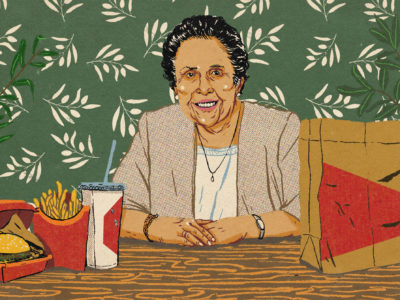
Even before the war, Aban Pestonjee’s business was doing rather well.


In the 1970s, Swedish and American home appliances were the kind of thing that lots of people in Sri Lanka wanted, but hardly anyone knew how to get. In response to a series of economic shocks, the government largely barred imports, including luxury goods like washing machines and dryers. But Pestonjee had an idea. She bought used appliances at embassy auctions and sold them at a markup out of a corner shop in the capital city, Colombo. Even with the economy largely restricted, business was good on the Indian Ocean island. But when Sri Lanka descended into civil war in the 1980s, it exploded.


Pestonjee started importing appliances from Korea and offering environmental cleanup services. Later, she expanded into tourism and property. Her three children joined the business, making her family a dynasty and her company, the Abans Group, one of the most powerful in Sri Lanka. In 1998, with the war mostly relegated to the north and east of the country, Colombo slipped into an eerie calm, and at the urging of one of her sons, Pestonjee made her biggest move yet.


She opened the first McDonald’s in Sri Lanka.


~


It’s easy to forget when looking at it through the nostalgic lens that often filters our view of the era, but American fast food was also born in the aftermath of war. When Richard and Maurice McDonald built their namesake restaurant chain in the Southern California desert in the late 1940s and early 1950s, the area was the frontline of a profound economic disruption. The industrial economy that had ended the Great Depression and closed out the Second World War had turned inwards, building prefabricated homes and four-door sedans instead of tanks and planes. In short order, this inverted war economy had also transformed American agriculture: When chemical manufacturers stopped making munitions and started making fertilizer, they supercharged corn production, setting off a livestock explosion which has never abated. As a business that sold meat to car-bound customers in new suburbs, McDonald’s and the industry it launched were ideally positioned to get ahead in an era of chaos.


As the same systems which made it thrive in the United States spread internationally, fast food rushed headlong for the rest of the world. In 1996, the New York Times’ columnist Thomas Friedman argued the industry’s global nature pointed to a deeper trend about the state of the world. As he summarized it, “No two countries that both have a McDonald’s have ever fought a war against each other.” Friedman said his idea was “tongue in cheek,” and as a hard-and-fast rule, it was always a little shaky, before coming apart entirely with Russia’s 2008 invasion of Georgia. But as an observation about the conditions necessary for capitalism, not an axiom of world affairs, Friedman’s “Golden Arches Theory of Conflict Prevention” pointed to a real correlation between a nation’s international fast food offerings and its stability. If a country was at peace (at least in its urban centers, like Colombo in the late 1990s), was prosperous enough to sustain a consumer class, and was integrated with the world economy, it was likely ready to host a McDonald’s or some other global fast food chain. Seen the other way around, fast food was evidence of a country’s stability.


The last few years have made that observation especially relevant, as the global fast food boom has reached countries which were at war in living memory. You can find Burger King in Côte d’Ivoire, Dairy Queen in Cambodia, and KFC in Sudan, a country that was heavily sanctioned as recently as 2017 for committing acts of genocide in Darfur. In these and other nations, fast food’s arrival is nothing if not an indication of peace and a rejoining of the international order.


Yet even as fast food continues to evidence stability, its global expansion has depended on entrepreneurs—like Aban Pestonjee—who sharpened their business acumen in chaotic times, including times of war and occupation.


~


If you know much about the business of fast food, you’ve likely heard about the franchise system. Since McDonald’s’ early days in the Southern California desert, fast food has depended on independent businesses and entrepreneurs, or “franchisees,” to buy into their system. For a fee and a cut of the revenues, a fast food company (i.e., McDonald’s Corporation, or CKE Restaurants, owners of the Carl’s Jr. and Hardee’s brands) gives the franchisee a regional monopoly, allowing them to use its likeness and adopt its methods of doing business. In the industry’s early days in the 1950s and 1960s, franchising allowed fast food companies to expand wildly across the United States on the backs of countless smaller, independent businesses—all with only marginal investments of their own capital. As they’ve plotted expansions around the world, fast food companies have found additional benefits to franchisees, as these local entrepreneurs typically bring local contacts and knowledge to the endeavor which their corporate overlords generally lack.


As an entrepreneur who made her fortune in war, Pestonjee was perfectly suited for the role. She had grown up as a child of an immigrant family and a member of Sri Lanka’s tiny Parsi community. In a war that pitted the nation’s two biggest ethnic groups against each other, she was an outsider. Conflict was little more than minor disruption and background noise as she grew her business.


“You get used to it,” she told a researcher many years after her business first took off. “Knowing that one bomb has gone off here, then everything goes down, business gets slack for a month or two, people forget it and then again it starts.”


Den Fujita, the Japanese entrepreneur who brought McDonald’s to Japan, similarly navigated a messy period in history to amass a fortune. Fujita’s father was an engineer for a British company, and he had picked up some English at home. He studied English in high school, and, at the end of the Second World War, with much of the country leveled and his father and two sisters having been killed in American bombing raids, Fujita left home to translate for the former enemy at the seat of their occupation, the General Headquarters, or GHQ, in Tokyo.


Soon after, Fujita started an importation company. It was a simple business model: He figured out what the American occupiers wanted, and then he figured out how to get it to them. As the Americans left, he expanded his business, importing luxury goods for the Japanese themselves. When McDonald’s first began laying plans for an overseas expansion two decades later, Japan looked difficult, if not impossible, to enter. The bureaucracy was dense, the culture was perplexing. But Fujita was the perfect partner in a country fraught with risk—a bridge between those American corporate executives and the Japanese people, whom they knew nothing about. In 1971, his company, Fujita & Co, became McDonald’s’ first franchisee in Japan. Before long, its first location, in the Ginza district in Tokyo, became the world’s busiest McDonald’s.


There are stories in the rubble of every conflict of shrewd entrepreneurs building a fortune as the nation rebuilds itself. In the early 1990s, as Cambodia recovered from years under Khmer Rouge rule, a refugee named Kith Meng returned from his adopted Australia to take the reins at his family’s company and tap some of the billions of dollars in international aid then flowing into the country. Kith’s Royal Group became a source of basic provisions for UNTAC, the United Nations’ body managing Cambodia while the national government assembled itself. Crucially, for the sprawling, multilingual force inundated with paperwork, Royal also imported copy machines.


As UNTAC packed its bags and left in 1993, Royal invested in a slew of other money-making ventures, some of which, such as a cellular network, a bank, and some TV stations, proved useful to a country getting on its feet, and some of which, such as a casino and a lottery, mostly served to line the budding tycoon’s pockets. Meng’s many ventures put him at the center of a vast network of his own creation, making him an ideal middleman for foreign companies looking to break into Cambodia. In the early 2000s, one of those companies was a Malaysian KFC franchisee. Soon after, Royal founded a separate company with it to bring KFC to Cambodia. The first location opened in 2008.


So, what does war have to do with running an international fast food chain? No matter when or where they take place, wars are times of creation as much as they are times of destruction. When war-ravaged people find that the commercial networks which once supported their purchasing habits have collapsed—because of sanctions, a shifting frontline, or because a manufacturing base was obliterated the night before—their usual consumer preferences evaporate. They don’t care who they bought from in the past. They’ll just go to whoever can navigate the tumult to deliver the goods, now.


When opening in developing countries, fast food’s corporate giants are similarly lackadaisical, if only because they have to be. In countries where industrial-scale beef and poultry production (let alone french fry-ready potatoes) don’t exist, they can’t work within existing systems to meet them, even if they would prefer to. Instead, they have to build new systems, and to do that, they need locals who understand these places intimately. Often, entrepreneurs who cut their teeth in war have exactly the skills they’re looking for.


War has another effect: It reveals the artificiality of old social hierarchies. Meng, Pestonjee, and Fujita were all ambitious and hungry for opportunity. But they were also outsiders—Pestonjee because she was a Parsi; Fujita, because his mother was a Christian and the Japanese he spoke was actually a dialect of his native Osaka; Meng, because he had spent most of his youth abroad. In an era of peace and stability, determination might have only led to modest success. But the social-leveling effects of war and occupation offered chances that would have never existed otherwise.


It’s fitting, then, that after the bombs and gunfire went quiet in their countries, all three would gravitate to fast food. Even though they promote their goods as luxuries in developing countries, fast food brands still retain the welcoming spirit of undiscerning capitalists wherever they operate. Through their doors, the old hierarchies have no place. Everyone is welcome, just as long as they have the money to pay.


Additional fact checking by Apoorva Tadepalli.

    [post_title] => The Wartime Roots of the Global Fast Food Boom
    [post_excerpt] =>
    [post_status] => publish
    [comment_status] => open
    [ping_status] => open
    [post_password] =>
    [post_name] => the-wartime-roots-of-fast-food
    [to_ping] =>
    [pinged] =>
    [post_modified] => 2026-08-04 20:31:38
    [post_modified_gmt] => 2026-08-04 20:31:38
    [post_content_filtered] =>
    [post_parent] => 0
    [guid] => https://conversationalist.org/?p=4783
    [menu_order] => 114
    [post_type] => post
    [post_mime_type] =>
    [comment_count] => 0
    [filter] => raw
)