Canadians tend to see the extremism expressed by the truckers and their supporters as a fringe movement imported from the U.S., but that is a gross oversimplification.
The so-called “Freedom Convoy,” a highly disruptive protest organized and led by Canadian truckers who oppose vaccine mandates and other pandemic-related restrictions, is now entering its third week. Protesting truckers drove their rigs into downtown Ottawa and set up camp, blowing their horns at eardrum-shattering decibels for hours each day and holding tailgate parties, making the downtown area of Canada’s usually placid small capital city unlivable. City residents are incensed by the noise and disruption, while the chief of police has resigned under fire for his failure to disperse the demonstrators.
The protesters are deeply unpopular in Canada, which has one of the highest vaccination rates in the world with 90 percent of the population overall—including truckers— having received at least two doses. And yet, the Freedom Convoy has managed to dominate the news cycle and paralyze Canada’s capital city, forcing Prime Minister Justin Trudeau to take the unprecedented step of invoking the Emergencies Act, which gives law enforcement expanded powers to arrest protesters and break up demonstrations.
The angry, anti-vax truckers have harassed residents to the point that older people are afraid to leave their homes; they have committed multiple acts of vandalism and violence, some targeting journalists; and in one egregious incident were spotted lighting a fire in the lobby of a residential apartment building. They have blockaded roads, and not only in Ottawa. The freedom convoy participants have also shut down multiple border crossings as the protest has spread west, with particularly large presences elsewhere in Ontario and in Alberta, an oil-rich province known for cattle ranching and the prevalence of strong right-wing views, including secessionism—a combination that often elicits comparisons with Texas.
On Sunday police cleared and reopened the Ambassador Bridge, where protesters had for a week choked off a critical commercial route that connects Detroit, Michigan, to Windsor, Ontario. But the authorities have not yet found the stomach to forcibly break up the protest in Ottawa. As the siege drags on, journalists, pundits, and the public have been digging into the ideological motivations, funding sources, and cross-border networks of the protesters.
Protesters have displayed swastikas, Canadian flags, Confederate flags, Gadsen flags, Trump flags, U.S. flags, and QAnon messaging. Observers have also reported conservative Christian messaging and symbols that were likewise present at the U.S. protests against the 2020 election results that culminated in the January 6 insurrection. The elements clearly inspired by American right-wing Christians include “Jericho marches” around the parliamentary precinct in Ottawa, in a symbolic reenactment of the Hebrew Bible tale about God causing the city of Jericho’s walls to collapse after the Israelites marched while blowing ram’s horns, or shofars. Right-wing Christians have in recent years appropriated these Jewish ritual instruments, blowing them during church services and at “Jericho marches” in both the U.S. and Canada. The organizer of the Canadian “Jericho marches” is Benita Pedersen, an Albertan.
As Jorge Barrera reports for the CBC, “Christian faith — with an overtly evangelical feel — flows like an undercurrent through the Freedom Convoy in Ottawa.” But how much of this represents the direct influence of the American Christian Right, as opposed to an expression of homegrown, if fringe, Canadian extremism and majoritarian grievance?
Catherine Porter, the New York Times’s Canada bureau chief, observed that “many believe the unrest is essentially a U.S. import,” but this is an oversimplification. The discourse reminds me of how, when I first began researching networks involving U.S. Christian Right actors and right-wing, pro-Putin Russians (many associated with the Russian Orthodox Church) in 2013, the spread of illiberal, socially conservative policies in the global South, Eastern Europe, and Russia was often framed in terms of the exportation of America’s culture wars. A few years later, when the connections between Donald Trump’s campaign for president and various Russian actors became apparent, many liberals embraced the simplistic and frankly absurd notion that the U.S.’s right-wing extremism and deep social and political divisions had been essentially manufactured by Russian disinformation. The reality is that Russian influence operations managed to exploit and exacerbate problems that already existed.
Throughout those years, while monitoring the various networks and connections between American, western European, and Russian right-wing extremists, eventually in my capacity as a senior research associate with the Postsecular Conflicts project based at the University of Innsbruck in Austria, I stressed agency among actors from all factions and rejected temptations to view the efforts of organizations like the World Congress of Families (now known as the International Organization for the Family) as sites of unidirectional influence.
By the same token, the international ties between Canada’s right-wing extremists and those from other countries, primarily the U.S., must be seen in terms of multidirectional influence and feedback loops. The U.S. Christian Right does have ties to Canadian extremist groups, and at least a diffuse connection to the convoy wreaking havoc in Ottawa. Whereas transatlantic connections are usually limited to elite, higher-level actors, Canada and the U.S. share the world’s longest undefended border, making it easy for less well-funded, less sophisticated, less easily monitored actors to connect with one another—people who are ready to engage in street violence, or ideologues and agitators who are happy to appear alongside street brawlers.
Proud Boys Canada may have officially dissolved itself after Ottawa declared it a terrorist organization last spring, but the organization was founded by a Canadian. And, while the Proud Boys have become mainly an American group, some Canadians have been involved in violent right-wing protests on the U.S. side of the border. These include the January 6, 2021 insurrection in Washington, D.C., where at least one Canadian flag was spotted, and where a group of Proud Boys knelt in an unmistakably evangelical prayer that was captured on video before playing a prominent role in the violence. Canadian actors have also been present at right-wing protests and incidents of street violence in Portland, Oregon—a city frequently targeted by the Proud Boys and similar far-right group Patriot Prayer.
The most well-known Canadian who has frequented Oregon is the notorious Artur Pawlowski, a Polish-born evangelical pastor based in Calgary, Alberta, who has led raucous protests and direct actions against public health mandates in Canada throughout the coronavirus pandemic, claiming that public health protections violate his “religious freedom.” In one such protest, Pawlowski and other participants carried tiki torches in a clear nod to the August, 2017 white supremacist “Unite the Right” rally that took place in Charlottesville, Virginia. Pawlowski was recently arrested in Coutts, Alberta, in connection with his support for the protesters blockading the border crossing there.
As for the American Christian Right’s connections to the trucker protest in Canada, major figures such as Franklin Graham—world-famous evangelist Billy Graham’s son and head of the Billy Graham Evangelistic Association—have spoken out in support of it. Although they are not household names, prominent “prophets” and “apostles” associated with the radical charismatic movement known as the New Apostolic Reformation—the kind of Christianity espoused by former Trump spiritual advisor Paula White—are also broadcasting their support, as researcher Bruce Wilson, who has published numerous articles documenting Christian Right and NAR activities and networks, confirmed when asked for comment.
The man holding the sign told 'The Catholic Register' that Pope Francis is a heretic and that the government is forcing people to take vaccines.
But perhaps the most significant U.S. Christian Right connection to the so-called “Freedom Convoy” is represented by the explicitly Christian crowdfunding site GiveSendGo, which has become infamous in recent years for funding white supremacist causes, including the legal defense of Kyle Rittenhouse, who gunned down supporters of Black Lives Matter at a protest in Kenosha, Wisconsin. Crowdfunding has allowed massive amounts of dark money to flow to the Canadian extremists behind the protest at a rate that dwarfs typical Canadian political fundraising, a worrisome development that could continue to undermine the country's civil society and democracy after the current protests are over.
Last week hackers broke into GiveSendGo’s network, releasing donor names, email addresses, and other information to journalists and researchers. One scholar looking into where the money originates is Dr. Thomas Lecaque, an associate professor of history at Grand View University. Lecaque posted a Twitter thread of messages from donors (without disclosing their names or other personally identifying information), as well as the countries (and in some cases states/provinces and cities) they come from. Eight of these messages “explicitly discuss Jericho,” Lecaque tweeted. The donations referenced in his thread mostly stemmed from the United States and Canada, but one came from the UK and another from France.
Lecaque told The Conversationalist that while the donors came from a broad geographic range, a high proportion were from the U.S. His keyword search of the messages donors posted brought up “a lot of religious themed entries, some more extreme than others.” Most of them were of the anodyne “God bless” variety, but there were some violent ones as well, with “themes of spiritual warfare or QAnon.” Lecaque acknowledged that explicitly religious messages were in the minority, but their presence nevertheless stood out.
The mostly white, racially aggrieved, conspiracy-theory believing crowd in the U.S. and Canada espouse unpopular views and support unpopular policies, but by using technology to connect and crowdfund internationally, they have managed to punch politically above their weight. Both countries have homegrown extremists and their own respective racist and colonialist realities to confront, but right-wingers from either side of the border are also influencing each other, probably more through media (including social media) than through direct cross-border interactions.
But what is it exactly that facilitates the mutual admiration and networking? That factor seems to be affiliation with conservative Christianity—especially, although not exclusively, evangelical Protestantism. This tracks with what I’ve observed in my own research both with respect to the domestic Christian Right and international right-wing networks. We are living through a moment of surging right-wing populism in North America, Europe, Australia, and some other parts of the world—a massive backlash against civil rights gains and the rise of multicultural democracy by the heirs of European colonialism and genocide.
A sense that they are outnumbered has contributed both to these individuals’ radicalization, and to the easing of traditional theological, cultural, and geopolitical enmities between various Christian and ethnic groups, paving the way for aggrieved (and mostly white) hardline Catholics, Protestants, Mormons, and Orthodox Christians to band together in attempts to assert dominance through the promotion of a “traditional values” agenda—whether in the European Court of Human Rights, the U.S. Supreme Court, or the streets of Portland and Ottawa. While most American, Canadian, and European Christians are not right-wing extremists, most American, Canadian, and European right-wing extremists identify with Christianity, and find in it a justification for their bigotry and anti-social, anti-government, and anti-democratic actions. For democracy to prevail, we must find more effective ways to counter the diffuse international threat of Christian extremism.
[post_title] => Conservative Christianity's influence on the 'Freedom Convoy' indicates global spread of authoritarianism
[post_excerpt] => The protesters are deeply unpopular in Canada, which has one of the highest vaccination rates in the world with 90 percent of the population overall—including truckers— having received at least two doses. And yet, the Freedom Convoy has managed to dominate the news cycle and paralyze Canada’s capital city.
[post_status] => publish
[comment_status] => closed
[ping_status] => open
[post_password] =>
[post_name] => freedom-convoys-extremism-poses-long-term-damage-to-canadian-civil-society
[to_ping] =>
[pinged] =>
[post_modified] => 2026-08-04 21:01:23
[post_modified_gmt] => 2026-08-04 21:01:23
[post_content_filtered] =>
[post_parent] => 0
[guid] => https://conversationalist.org/?p=3864
[menu_order] => 139
[post_type] => post
[post_mime_type] =>
[comment_count] => 0
[filter] => raw
)
The Phosphoros Theatre makes plays with, for, and by asylum seekers in the UK. Its amateur actors travel all over the country to perform, telling their own stories in the form of a fictionalized narrative.
__
“On a chair on a ship in the middle of the ocean.”
“The bed I shared with my grandfather at home.”
“A sofa-bed in Belgium that I could hardly fit on.”
The characters on the stage have all been forced by their circumstances to sleep in uncomfortable places. As the lights come up, the audience learns that the actors are all asylum seekers and refugees who have come to the UK. In All The Beds I Have Slept In, produced by Phosphoros Theatre, they describe their perilous journeys from their dangerous home countries to a place they hoped would offer them freedom and safety.
Phosphoros’s plays emerge from the minds of its actors. To create this production, the company got together over a weekend, played drama games, and brainstormed. They had stories to share but needed a theme to anchor them. They realized that what their stories had in common was beds, in that all of them had once slept on proper beds at home but then, during their long journeys, they had moved from one strange bed to another. Often, they had had nowhere to sleep but the cold ground. On stage, that theme became a prop that was central to the action—sometimes a bed on wheels that served as a place to sleep or a place to talk. Sometimes, the bed was even a boat.
By the end of the creative weekend playwright Dawn Harrison had a wealth of material. During the writing process she checked in with the actors by WhatsApp to verify what kinds of expressions they might use, to make sure the dialogue reflected their voices accurately.
“A charpai on top of my roof in Afghanistan when it was too hot to sleep inside,” is how one of the performers, a young man named Syed Haleem Najibi, described his bed.
Syed is studying to be an engineer, while simultaneously touring with the theater company—which makes productions with, for, and starring refugees and asylum seekers. In theory one’s bed is a “place of comfort,” but this has not been the case for many of these refugees. “I've slept on the street, and I've slept in forests and fields,” Syed said. Going into this project “I understood the value of a bed,” he said, adding that the stories were “very personal. All the actors, he said, wanted to tell their stories in their own voice and “not the way the media or the politicians are showing it.”
Syed has been with the company since its first production in 2016, but All the Beds I Have Slept In has been his most emotional acting experience . Refugee audience members often approach him after his performance and tell him that they heard their own story in his words. “I'm representing all these people who don't have the opportunity to be standing on a stage like this and tell the stories the way they want to,” Syed says.
All the actors in the production came to the UK as teenage asylum seekers. They are used to telling their stories, but usually to lawyers, social workers, and interpreters who then retell their stories for them. Syed wants people in the UK to get to know refugees and hear their stories directly.
The message he wants to convey is that “nobody would be willing to leave their family, leave their homeland, leave their friends, just like that for no reason. You don't leave home unless home is not safe for you.”
Missing home
“A blanket in the rescue ship that pulled me from the sea.”
When he arrived in the UK as a teenager in 2012, Syed was full of hope. He believed he had arrived in a country that would respect and recognize his human rights. But like his character in All The Beds I Have Slept In, who glosses over the difficulties of his life in the UK as he describes it to his brother back home over the phone, Syed’s experience was not what he had hoped.
Once in the UK, he discovered that he was at the start of another journey, this time through the bureaucracy—the asylum system, the care system, the education system. It was a “hostile” experience, he said. He had to fight for his rights, and his battle continues.
Being part of a touring theater company has changed Syed’s experience of living in the UK. He’s met people in every part of the country and has come to know a huge range of organizations that support refugees. And he has made new friends. He says he now has a new family called “Phosphoros.”
Nevertheless, said Syed, Britain does not feel like home. “I am constantly reminded that I don't belong here, by the system and by society,” he says. Compounding that feeling, the House of Commons recently passed the controversial “Nationality and Borders bill,” which, if approved by the House of Lords and passed into law, would make it harder for people to claim asylum in the UK. This bill could even allow the government to strip people of their citizenship without notice.
“It's shocking to hear that even somebody with British citizenship can be removed and sent back to their country of birth,” Syed says.
On a 2019 visit to Afghanistan Syed realized that his country no longer felt like home. People there saw him as a foreigner rather an Afghan. “I realized that I'm just a tourist in Afghanistan and I don't belong there,” he said. “I don’t belong anywhere.”
Afghanistan from afar
“In a stranger’s flat in Nice.”
During his previous life in Afghanistan, Syed went to school. But there was no future for him there, with seemingly never-ending war all around him. The extreme instability was impossible to bear, and so he decided to leave
In August, tensions in Afghanistan increased again when the U.S. pulled its remaining troops out of the country, leaving a power vacuum that the Taliban filled within days. Syed found it “heartbreaking” to watch this unfold from abroad, knowing his family was still there. He says that people he knows are now going weeks without their salaries and, unable to buy food, have become desperate.
Towards the future
“A carpet in church the night before a spiritual celebration.”
Syed no longer sees a future in Afghanistan and is now focused on building his life in the UK. He’s studying sustainable energy engineering, and hopes to contribute toward ending the climate crisis.
But he’s also hoping that those who follow his path will have a better future. “I'm hoping to see a system, not just in the UK, but all around the world, treating migrants, refugees, and asylum seekers with dignity and respect,” he says.
Syed wants to continue acting with Phosphoros even as he starts his engineering career. He’s proud to use his personal experience as a piece of art, and education, to help people see refugees as human beings. To treat them with the dignity and respect they are so often denied.
In the play, a stranger offers kindness to a boy called Mohamed, who is continuing his journey towards the UK. He offers him a place to stay for the night. He buys his train ticket. It is this kindness that allows Mohamed to travel without fear. But the stranger doesn’t wait to be thanked. Instead, he said that he was going to get a coffee and strolled away.
“When he said he was getting a coffee, he meant goodbye.”
[post_title] => 'In our own words': refugee actors share their stories on stage
[post_excerpt] => The Phosphoros Theatre makes plays with, for, and by asylum seekers in the UK. Its amateur actors travel all over the country to perform, telling their own stories in the form of a fictionalized narrative.
[post_status] => publish
[comment_status] => closed
[ping_status] => open
[post_password] =>
[post_name] => in-our-own-words-refugee-actors-share-their-stories-on-stage
[to_ping] =>
[pinged] =>
[post_modified] => 2026-08-04 21:02:32
[post_modified_gmt] => 2026-08-04 21:02:32
[post_content_filtered] =>
[post_parent] => 0
[guid] => https://conversationalist.org/?p=3833
[menu_order] => 140
[post_type] => post
[post_mime_type] =>
[comment_count] => 0
[filter] => raw
)
Finding the legal means to put children to work is another attempt to compensate for the 'great resignation,' with four million American adults declining to return to their low-paid jobs after the pandemic lockdown ended.
At the start of 2022, the United States set a global record with over one million Covid-19 cases reported each day—worse than at any time since the start of the pandemic. Just at this catastrophic moment, the government rolled back public assistance, which had become essential for millions of people struggling to deal with unemployment, the death of family members, and soaring food prices. This ongoing crisis has been particularly cruel to children, who have borne a disproportionate burden with the now-dominant Omicron variant.
Recent reports from the American Academy of Pediatrics show 11.4 million children have tested positive for the virus since the beginning of the pandemic, with 3.5 million pediatric cases reported in January alone.
Meanwhile, several Republican-controlled state legislatures want to weaken laws that limit child labor—even as Congressional Republicans oppose a continuation of Biden’s Child Tax Credit, which saw millions of children lifted from poverty virtually overnight. Those federal payments ended in December. As of January low-income parents are already in crisis and millions of children are poised to fall back into poverty.
At the federal level, the Biden administration is weakening child labor protection laws with its recently launched apprenticeship program, which lowers the minimum age for interstate long-haul trucking from 21 to 18, in an effort to ease supply chain backlogs by increasing the number of truckers. This is despite CDC research that shows motor vehicle accidents are highest among 16 to 19-year-olds. The director of the Truck Safety Coalition told theHuffington Post that putting teenagers behind the wheel of long-haul trucks was not safe, adding: “This is putting lipstick on a pig. They’re gaslighting the American people.”
The push to weaken child labor protection laws in an effort to fill what lawmakers call “labor shortages,” and which economists say is a shortage of jobs that pay a living wage, is most pronounced in Wisconsin. State lawmakers pushed a bill through the senate that would have expanded dramatically the number of hours 14 and 15 year-olds were allowed to work, to 11 p.m. on evenings that were not followed by a school day and as late as 9:30 pm on school nights.
This 1911 photo of children working in a Pennsylvania coal mine led Congress to pass child labor protection laws. Now government is rolling those protections back, undoing a century of progress.
The Wisconsin law only applies to businesses that are not covered by the Fair Labor Standards Act, which established a federal minimum wage, overtime pay, and flagship child labor provisions. Adolescents who are 14 and 15 years old may not, for example, work more than 18 hours per week during the school year in a job covered by federal law—i.e., which take in less than $500,000 in revenue and are not engaged in interstate commerce.
Wisconsin State Senator Mary Felzkowski (R-Irma), who introduced the legislation, said in a press release that “The idea for this bill came from a small business owner in town who ran into staffing issues during summer hours due to their young employees not being able to work past 9 p.m.”
In an op-ed for the Milwaukee Journal Sentinel, Wisconsin AFL-CIO President Stephanie Bloomingdale wrote, “The proposed change is the latest attempt by Wisconsin Republicans to solve the state’s so-called labor shortage on the backs of children.” The AFL-CIO, Wisconsin Education Association Council, and Wisconsin School Social Workers Association have all issued statements condemning the new law, saying it rolls back child labor protection laws.
Governor Tony Evers apparently agreed with the AFL-CIO: on February 4 he vetoed the bill.
Finding the legal means to put children to work is another attempt to compensate for the “great resignation,” with four million Americans declining to return to their low-paid jobs when the pandemic lockdown ended. The Wisconsin law allows businesses to keep wages low and fill job vacancies with adolescent employees—who should be focusing on their studies instead of working late on school nights—rather than increasing wages to attract adult employees. Another incentive for employers is that federal law allows them to pay workers younger than 20 as little as $4.25 an hour for the first 90 consecutive days of employment, which they can describe as a training period. Wisconsin is one of 20 states that have maintained the federal minimum wage of $7.25 an hour since 2008.
Small businesses have notoriously opposed attempts to raise the minimum wage, arguing that the increased labor costs would put them out of business. But big corporations are also capitalizing on the so-called labor shortage, in an effort to hire younger workers for low wages.
“They would like to see these hours of work change nationwide,” President Bloomingdale, who recently debated the head of the Wisconsin Restaurant Association, tells The Conversationalist. “We need to renew our collective efforts to make sure that when people go to work, they have the ability to sustain a family.”
McDonald’s has come under fire in recent months for allowing a franchise owner in Medford, Oregon, to hang a banner outside that read “NOW HIRING 14 & 15 year-olds.” Job postings that advertise positions for 14, 15, and 16-year-olds at McDonald’s are still up online with a reminder that “during the summer months when school is out of session you are actually allowed to work up to 5 days a week and 38 hours a week.” Other fast-food chains have taken similar steps in a desperate attempt to alleviate staffing shortages.
Reid Maki, the Director of the National Consumer League’s Child Labor Coalition, said the government does not keep strong data on child labor. “There’s good reason to fear that the numbers could climb,” he said, adding that rising poverty caused by the pandemic could “drive kids to early work” rather than staying in school.
The Department of Labor warns that “the pandemic and subsequent economic downturns threaten to reverse decades of progress on child labor.” Labor disruptions, the death of family members, and school closures are listed as some of the key factors aggravating the situation. But this data is outward-facing and treats child labor as an international issue among developing nations.
In the U.S., one in seven children lives in poverty. They account for one-third of impoverished Americans, according to data from the Center for American Progress. The U.S. ranks third in child poverty rates among OECD nations, after Israel and Chile.
“The [American] public doesn’t really perceive that child labor is a thing of contemporary times,” Maki says.
Asked about the Wisconsin legislation, Maki said, “One issue is that kids who work a certain number of hours don’t do as well in school.” But he was also concerned about the safety issues that come with working later hours, both on the job and while driving home.
Maki is not opposed to teens working part-time jobs for some pocket money. His concern is for children who are compelled to work because the family needs their income to meet basic expenses. “We need to get to a point where all adults make a living wage and don’t need the income of their kids to help the family get by,” says Maki.
But with soaring inflation and millions newly cut off from unemployment benefits, the risk that children will have to go out and work in order to help their parents put food on the table is now very real.
Under Biden’s Covid relief package, the Child Tax Credit (CTC) provided families with $3,600 per year for each child under the age of six and $3,000 for each child 17 and under, with the funds paid out in monthly checks of up to $300 per child. These payments went furthest among families who typically don’t make enough money in a fiscal year to receive a full CTC under normal circumstances. The December expiration has now cut off a critical source of cash-in-hand for the poorest families.
For Republicans, that seems to be the point. The GOP Ways and Means Committee published ablog post in October 2021 denying that the Child Tax Credit had reduced child poverty by half and claiming that it discourages people from working. They cite a University of Chicago study that claims the CTC would cause 1.5 million workers to exit the labor force.
At the beginning of the pandemic, we believed children were largely “immune” to the virus. Now we know this isn’t the case. Children are contracting Covid, just not at numbers that register at the policy level. Our elected officials have shown that they’re willing to let children be the collateral damage of an ongoing crisis in more ways than one.
[post_title] => Republicans want to solve the labor shortage problem by putting children to work
[post_excerpt] => Weak labor laws combined with poverty and soaring inflation could result in millions of children leaving school to help put food on the family table.
[post_status] => publish
[comment_status] => closed
[ping_status] => open
[post_password] =>
[post_name] => republicans-want-to-solve-the-labor-shortage-problem-by-putting-children-to-work
[to_ping] =>
[pinged] =>
[post_modified] => 2026-08-05 17:58:45
[post_modified_gmt] => 2026-08-05 17:58:45
[post_content_filtered] =>
[post_parent] => 0
[guid] => https://conversationalist.org/?p=3778
[menu_order] => 141
[post_type] => post
[post_mime_type] =>
[comment_count] => 0
[filter] => raw
)
For decades Johnson glided through life on his charisma and connections, enjoying a reputation as a genial buffoon. But now his lies and hypocrisy are finally catching up with him.
Boris Johnson, the prime minister of the United Kingdom, has had a storied career. He was once a journalist who, though fired for making up quotes and even whole stories, continued to rise in the profession. He was a Member of Parliament, then Mayor of London for two terms, then went back to Parliament, where he eventually became foreign secretary, before finally getting to the prime minister’s office.
Now it seems that Johnson’s time in 10 Downing Street, the prime minister’s official residence, might well be cut short, following a still unfolding scandal about boozy illegal parties during the country’s national lockdowns.
In a video recording that was leaked in December, a spokeswoman is seen giggling at a mock press briefing as she practices lying about the parties. Since then, the media has reported a tsunami of leaks about at least 16 parties having taken place in other government departments while pandemic rules were so strict that the law even forbade more than two people walking together in the park. In a matter of days, fury spread across the country.
The details were vivid. Aides at 10 Downing Street smuggled in suitcases filled with bottles of wine. There was a drunken party on the eve of Prince Philip’s funeral, at which the Queen herself was photographed sitting masked and alone at her own husband’s funeral, as per pandemic protocol. Some of the partygoers got so inebriated one night that they broke the backyard swing set, which had been set up for Johnson’s son to play on.
Each time the media reported yet another party, people shared on social media what they had been doing on that pandemic lockdown day. At best, people sat alone in their apartments with nothing to do; at worst, they were unable to attend the funerals of loved ones because of the stringent restrictions.
The scandal has, so far, caused one member of Parliament to leave the Conservatives for the Labour party and several others to publicly call on Johnson to resign. Sue Gray, a senior and well-respected civil servant, was asked to write an official report on the illegal events.
Days before she was due to publish her report, the Metropolitan Police announced they would be conducting their own investigation into alleged breaches of lockdown rules. This means that Gray’s full report will have to wait, but a redacted version published last week hit out against "failures of leadership and judgement" in Downing Street.
Dominic Cummings, a political consultant whom Johnson hired as his senior advisor when he became prime minister in 2019, and later fired in 2020 for briefing the press against him, is widely believed to be the source of the leaks about the parties. Cummings, who was Johnson’s closest advisor during and before the election, is known for being vengeful. This sequence of events also felt, in hindsight, a bit inevitable.
Boris Johnson has been caught lying in person and in print countless times and he has always got away with it. He has had three wives, heaven knows how many mistresses, and, allegedly, does not even know how many children he has fathered. He is untrustworthy, unserious, gaffe-prone and easily distracted; and yet, somehow, because of his charm and shamelessness, he kept falling upward.
His rise once seemed inevitable, given his class background (and the British are ever obsessed with class) and connections. The son of a politician, he spent his formative years at Eton College, Britain’s most elite private school, famously attended by both Prince William and Harry and 19 other British Prime Ministers. There, he became secretary of the debating society and editor of the school newspaper. This trajectory wasn’t surprising; as a profile from the Sunday Times once explained, “[their father] Stanley deliberately created a family atmosphere in which beating the others at running, jumping, eating the hottest mince pies, coming first at school or simply having the blondest hair entirely captured the lives of all four children.”
The Johnsons were bred to want it all. After Eton, Johnson “went up” to the University of Oxford, where he was elected president of the Oxford Union (the university’s prestigious debating club). A brief dip followed, when he was fired from an internship at the Times for making up some quotes.
Never down for long, Johnson bagged himself a job at the right-leaning Daily Telegraph instead, having met its editor while at Oxford, and took it from there. He soon became the paper’s Brussels correspondent and took to writing outlandish stories about the European Union to please its eurosceptic readers, in a bout of ham-fisted foreshadowing.
At the time, the EU was growing and important questions were being asked about what its future should be, what its members wanted and what its place should be in the world. Instead, Johnson wrote pieces on Italians wanting smaller condoms (false); about an EU spokesperson living in a castle (false); and other made up stories of that caliber.
By the end of the 1990s, Johnson started to show political ambitions. According to Jim Pickard, Chief Political Correspondent for The Financial Times, Johnson said he wanted to become a politician because “no one puts up statues to journalists."
It was a bold move but not a surprising one; after all, many well-connected, posh British men before him managed the move from journalism to politics, no matter how ill-suited to either job they were.
Johnson, who seems to revel in his image as a genial buffoon, once called Black people "piccaninnies" with "watermelon smiles" and gay men “tank-topped bumboys.” He has said that women who wear the hijab look like “letterboxes.” And yet, his foppish charm, bumbling charisma and semi-celebrity status meant he was elected mayor of London in 2008.
During the 2012 Olympics he got stuck on a zipwire while wearing a hardhat and clutching a plastic UK flag in each hand, in an incident that many believe was a stunt because, while he looked quite silly, he did not seem the least bit flustered.
While mayor, Johnson had an affair with a woman who worked in tech and was accused of giving her access to contacts and public funds. The story only came out relatively recently, as Jennifer Arcuri, the woman in question, decided to tell her story to the media. So far, there have been no serious consequences for Johnson.
In 2016 Johnson was back in Parliament when then-Prime Minister David Cameron called a referendum on whether the country should remain in the EU. Johnson huffed and puffed and then he came out in favor of Brexit. He later admitted that he’d written two columns for that day’s Telegraph, one supporting each side, as he could not make up his mind.
He then became the most visible face for the Vote Leave campaign. Johnson rode around on a big red bus claiming that post-Brexit Britain would spend an extra 350 million pounds a year on the national health service—which never happened—and compared the EU to Adolf Hitler. Three years later, he campaigned for prime minister on a platform of “get Brexit done.”
His decision to bring in Dominic Cummings, who is such a divisive figure that David Cameron called him a “career psychopath,” as his most senior adviser could yet prove to be his undoing.
The incompatibility of their personalities led to many fights, while Cummings’s abrasive style alienated everyone around him. The real problem, however, stemmed from his repeated clashes with Carrie, Johnson’s third wife.
A former Conservative adviser herself, she wielded—and still wields—considerable power in Number 10, a fact that Cummings resented. Forced to pick between the maverick and the spouse, Johnson eventually sided with the latter, and fired Cummings in late 2020.
It was always clear that Cummings would eventually take his revenge; the only question was when and how.
Since the “partygate” revelations became the top story in the British media, Cummings has repeatedly attacked Johnson for lying about the events to Parliament. In the prime minister’s defence, lying and charming people is something he has always been good at—and, until now, has nearly always been able to get away with.
The British people seem finally to be fed up with his charismatic clown persona. Millions of law-abiding citizens were unable to see their friends and families for months on end; people died alone and people gave birth alone; and meanwhile, in the corridors of power, people danced and drank until dawn. Johnson's profuse apologies are seen as transparently mendacious and insincere.
Whether Johnson will survive this scandal is still an open question, with not even the most seasoned political analysts taking bets. If the police do find evidence of criminal behavior, and if more revelations come out in the next few weeks, he might be ousted by his own party.
As of February 3, two top aides have quit, citing Johnson having been caught lying as their reason. Meanwhile, 11 Conservative Members of Parliament have called for a vote of no confidence against Johnson. If a total of 15 percent follow suit, MPs will then have to vote on whether they have confidence in their leader. If the prime minister wins the no-confidence vote, the MPs cannot challenge him again for a year; if he loses it, a leadership contest starts immediately. As of this writing, it is impossible to predict what will happen next.
Still, there are some years to go until the next election, and illegal parties during the pandemic aren’t the only problem Britain is facing. Rising inflation and skyrocketing energy bills means the country is heading for a dire cost of living crisis, and no-one seems to know how to deal with it. The Labour Party is climbing back up in the polls, slowly but surely, but these are not their problems quite yet; instead, what the U.K. needs right now is a sharp and well-functioning government.
[post_title] => Why 'Partygate' could be the end of Boris Johnson's political career
[post_excerpt] => A tsunami of revelations about drunken late-night parties at the prime minister's official residence during Covid lockdown have enraged the public, alienated members of his own party, led two top aides to quit, and might ultimately spell the end of Boris Johnson's term in office.
[post_status] => publish
[comment_status] => closed
[ping_status] => open
[post_password] =>
[post_name] => why-partygate-could-be-the-end-of-boris-johnsons-political-career
[to_ping] =>
[pinged] =>
[post_modified] => 2026-08-05 17:59:24
[post_modified_gmt] => 2026-08-05 17:59:24
[post_content_filtered] =>
[post_parent] => 0
[guid] => https://conversationalist.org/?p=3819
[menu_order] => 142
[post_type] => post
[post_mime_type] =>
[comment_count] => 0
[filter] => raw
)
WP_Post Object
(
[ID] => 3775
[post_author] => 2
[post_date] => 2022-02-03 10:39:07
[post_date_gmt] => 2022-02-03 10:39:07
[post_content] => Journalists have been silenced with a campaign of intimidation, censorship, arrests, detention—and murder.
One year since a democracy-suspending coup, press freedom is dying in Myanmar. A military campaign of intimidation, censorship, arrests, and detentions of journalists has more recently graduated to outright killing, an escalation of repression that aims ultimately to stop independent media reporting on the junta’s crimes and abuses.
In January, military authorities abducted local news reporter Pu Tuidim shortly after he interviewed members of the anti-coup Chinland Defense Force armed group in the restive Chin State. Soldiers confiscated his laptop computer, used him as a captive human shield in a live-fire combat zone, and then summarily executed him, dumping his bound corpse in the muddy outskirts of a local village, his editor at the Khonumthung Media Group told CPJ.
Pu Tuidim’s murder followed the killing of two other Myanmar journalists in December, including one independent photographer who was picked up for photographing an anti-coup silent protest in the commercial capital of Yangon, held at a military interrogation center, and then pronounced by a military hospital as dead without explanation to his family.
A third reporter, Sai Win Aung, was killed on Christmas Day in a military artillery attack in Kayin State while reporting on the plight of internally displaced people in border areas that have become full-blown war zones since the coup. His editor told CPJ it is unclear if he was targeted in the shelling attack, but the reporter had weeks earlier fled Yangon for the insurgent-controlled frontier region after coming under military surveillance for his news reporting.
Myanmar’s generals, already the target of Western sanctions for their rights abuses, have a cynical incentive to suppress reporting that exposes their daily assault on Myanmar’s people. The Assistance Association of Political Prisoners, an independent rights monitoring group based in Thailand, reported on January 28 that the junta has killed 1,499 and detained 8,798 since last year’s February 1 coup.
Those imprisoned include dozens of journalists, CPJ research shows, making Myanmar the world’s second-worst jailer of journalists in 2021, trailing only China, after having none in jail in 2020. The majority are being held on bogus charges under the penal code’s vague and broad Article 505(a), which effectively criminalizes critical news reporting as causing instability or purveying misinformation. Most were detained after reporting on anti-military street protests.
The generals are reaching next for an online kill switch. New proposed cybersecurity legislation aims to make virtual private networks (VPNs) illegal, a bid to stop Myanmar citizens from accessing banned websites and social media including Facebook, which many news organizations, including small local language outfits in ethnic areas, use as their sole platform for posting news. The legislation also gives junta authorities arbitrary powers to access user data, ban content, and imprison regime critics.
If passed, a near certainty without an elected legislature in place, the law will give the junta the legal tool it needs to roll back the press freedom gains achieved between 2012 and the coup, a period where hundreds of independent media outlets bloomed from the darkness of an earlier era of military dictatorship, when all broadcast media was soldier-controlled and all newspapers were forced to publish as weeklies to give censors time to cut their content.
Nothing more belies the junta’s claim that it is only holding power for an interregnum period to prepare for a return to democratic elections, originally in 2022, now supposedly in 2023, than its ongoing and intensifying assault on the free press – a crucial pillar in any functioning democracy that holds its leaders to account.
The effect of the military’s repression is seen clearly in the rising tide of journalists who are fleeing for their lives to face uncertain futures across the country’s borders with India and Thailand, in the growing number of once-vibrant news publications that have gone dark through shuttered bureaus, halted printing presses, and abandoned web sites and Facebook-hosted news pages.
That’s, of course, not to say the flame of press freedom has been completely extinguished in today’s benighted, military-run Myanmar. Tech-savvy reporters have launchedupstartnewspublications that continue to defy bans, threats, and even the murder of their reporters to publish the news and keep the world informed of abuses and atrocities that may be driving their nation towards full-scale civil war.
Myanmar’s journalists and independent news outlets have a long and storiedhistory of evading military censorship to get out the news. The next chapter in the history is now being written as a new generation of undercover journalists risk their lives for exile-run and other unauthorized publications to report the news the junta is desperately trying to suppress. And therein lies the hope for a one-day revitalized democratic Myanmar.
This article was originally published by the Committee to Protect Journalists. It is reproduced here with permission.
[post_title] => Myanmar's military has crushed press freedom
[post_excerpt] => One year since Burma's military staged a coup, it has crushed the country's free media with a campaign of intimidation, censorship, arrests, detention—and murder.
[post_status] => publish
[comment_status] => closed
[ping_status] => open
[post_password] =>
[post_name] => a-year-after-myanmars-military-coup-the-countrys-independent-media-has-been-crushed
[to_ping] =>
[pinged] =>
https://conversationalist.org/2021/02/12/in-myanmar-the-internet-is-a-tool-and-a-weapon/
[post_modified] => 2026-08-05 18:00:14
[post_modified_gmt] => 2026-08-05 18:00:14
[post_content_filtered] =>
[post_parent] => 0
[guid] => https://conversationalist.org/?p=3775
[menu_order] => 143
[post_type] => post
[post_mime_type] =>
[comment_count] => 0
[filter] => raw
)
WP_Post Object
(
    [ID] => 3767
    [post_author] => 2
    [post_date] => 2022-02-03 01:15:03
    [post_date_gmt] => 2022-02-03 01:15:03
    [post_content] => Zemmour's racism and anti-immigrant positions are not new, but his misogyny reveals where the ideological fault line lies between the new and the old far right.

Éric Zemmour, a prominent French journalist and television personality who espouses extreme-right views, announced in November that he would be a candidate for president of the Republic. He doesn’t yet have enough signatures to run in the April election, but his potential candidacy has captured enormous media attention, revealing significant support from the far right and even from some subcultures of the moderately conservative right.

Zemmour has almost no chance of being elected president, though he might poach some votes from Marine Le Pen, the leader of the Rassemblement National (RN, or National Rally; formerly the FN, or National Front). Nevertheless, a trickle of ministers and smaller political parties continue to join his newly established Reconquête (Reconquer) party, even as he is involved in a series of high profile scandals involving several accusations of sexual assault, an extramarital relationship with a much younger woman, and three court cases on accusations of inciting racist hatred.

While he has won supporters for his extreme positions on Muslims and immigration, Zemmour polls low with women. Marine Le Pen has reorganized her campaign accordingly, and Zemmour —with seven accusations of sexual assault currently pending and more than a few misogynist tracts under his belt—was obliged, for reasons of realpolitik, to declare himself a “feminist, like the next man.”
A darling of the culture wars
Zemmour, 63, rose to prominence in the 1990s as a columnist and commentator. Back then he espoused a “union of the right”—i.e., a coalition of the moderate right Républicains and the far-right Front National (FN). He became a darling of the culture wars with his essay Le Premier Sexe (2006), a gender panic polemic on the purported “feminization” of men in France. The book—yes, its title is a riposte of Simone de Beauvoir’s feminist book The Second Sex—sold over 100,000 copies.  He followed this with a novel, Petit Frère (2008), in which he attacked “anti-racist angelism," and then a trilogy that sold even better than Le Premier Sexe—Mélancolie française (2010), in which he recounts the history of France; Le Suicide français (2014), where he argues that the French nation has become degenerate since the student-led uprisings of 1968; and Destin français (2018), a sort of autobiography in which he describes various historical events that have influenced his worldview. He ends the final essay with a polemic against the growing influence of Islam on French society.

Zemmour’s most recent book, La France n’a pas dit son dernier mot (France Hasn’t Had Its Last Word), published in 2021, sold 165,000 copies within three weeks. Cherished by his followers as “an intellectual” and tolerated by others as a kind of maverick TV personality—a buffoon, perhaps, like the former journalist Boris Johnson, or like Donald Trump—Zemmour is, thanks to his many books, a frequent guest on television news and culture programs. He uses these prime-time opportunities to air his views on the decline of French society, the clash of civilizations, immigration and assimilation, national preference, and national identity. He is one of the figures responsible for bringing the “great replacement theory,” the fear that France’s “native” (white) population will be replaced by (brown) non-European people, into the mainstream discourse.

Whilst lamenting the passage of France’s heroic age—Napoleon, etc.—Zemmour manages to align himself with both President Charles de Gaulle, who led the French resistance during the Nazi occupation of France, and the Nazi collaborator Marshall Philippe Pétain, Vichy France’s chief of state. This pairing is an ingenious move, presenting two historical figures who represented opposing political views as representatives of France’s lost past, when strong men took charge. Jean Marie Le Pen, the former leader of the far-right FN, made the mistake of expressing his support for Pétain while denouncing de Gaulle—at a time when de Gaulle was still an extremely popular figure in France. Zemmour expresses support for both men, which is novel.
A racist's racist
Zemmour is the son of Jewish immigrants from Algeria and is himself a practicing Jew who attends an Orthodox synagogue. That has not stopped him from aligning himself with the antisemitic far right, or from saying that Pétain was right to deport non-French Jews to concentration camps—because in doing so he saved some French-French Jews (of the 75,000 Jews deported from France, 72,500 were murdered) .

Zemmour has transitioned smoothly from being an “outspoken” voice in the discourse around political correctness as it morphed into what we now call a “debate” on “cancel culture.” Today he is a comfortable anti-feminist, traditionalist, misogynist, homophobe, anti-abortionist, and a “critic” of the legacy of the social movements of the 1960s. He also deplores gender studies and writes in Le Premier Sexe that rape trials qualify as the “judiciary surveillance of desire.”

In the months before he announced his candidacy, Zemmour reveled in several personal and legal scandals that further raised his public profile. In September Paris Match’s cover showed him frolicking in the sea with Sarah Knafo, his 28 year-old assistant and campaign manager, whom he has known since she was 13 years old (she is the daughter of family friends). Zemmour recently confirmed that Knafo is his “companion” and is pregnant with his baby, to the delight of the press, which speculates endlessly about Mylène Chichportich, his wife of 40 years: Is she suffering or indifferent as she stands silently at his side?

While Knafo is something of a protégée to Zemmour, she is in her own right a perfectly terrifying and precocious extreme right militant. As a university student she was active in the FN and in a student association called Critique of European Reason, through which she got down with the sovereigntists and Euroskeptics, and met prominent right wing thinkers like Alain Finkielkraut. At 25 she did an internship at the French embassy in Tunis. She then authored a “handbook,” based on what she’d learned in North Africa about migration routes, on how to facilitate the deportation of undocumented migrants from France.

His frequent trips in and out of court keep the press talking about Zemmour, too. His January 17 conviction for inciting racial hatred was his third. A judge fined him 10,000 euros ($11,400) for having said, on live television, that unaccompanied migrant minors “have nothing to do [in France], they’re rapists, assassins, that’s all they are, you have to send them back to where they came from.” Meanwhile, at one of his November rallies, Zemmour’s militia-style bodyguards beat up an anti-racist activist in a brawl reminiscent of Trump rally scenes.
A radical ideologue
French commentators have pointed out that the country’s media is falling into the trap of giving free publicity to Zemmour, just as the U.S. media made the mistake of broadcasting Trump’s rallies live without commentary and of reporting incessantly on his tweets, giving him massive free publicity on mainstream evening and cable news programs. Like Trump, Zemmour overwhelms the media with provocative soundbites, which are often in the form of attacks on journalists. As a result, media outlets are drowning in a sea of far-right madness—reporting and broadcasting Zemmour’s racist, sexist, and fascist comments repeatedly, without analysis or critique.

The fact that Zemmour’s ideas are splayed bittily across television and internet platforms, and that only certain people read his books from beginning to end, works to obscure their character as a complete ideology. His misogyny, abhorrence for the student-led uprisings of 1968, dislike of modernity, and hatred of Muslims are connected and inform each other. A quick online search brings up a list of citations to go with each of Zemmour’s ideas, presented like an inventory of the contents of a bag belonging to the fasciste du jour.

Zemmour deliberately muddies the extremism of his complete ideology by presenting his ideas in a willfully confusing, often “third positionist” manner— i.e., expressing right wing ideas in the language of left-wing ones. For example, in his books he offers a critique of the monogamous couple and, ostensibly, praise for polyamory. But this is not advocacy for free love. Rather, it is an expression of approval for a premodern society in which married men had multiple mistresses and in which women had no means of leaving an unhappy marriage. In French third positionism is roughly translated as confusionniste — which is a better term, perhaps, because the deliberate effort to create confusion is a salient and defining characteristic of contemporary fascism. Writing about Zemmour is challenging because it’s almost impossible to avoid the trap of either reproducing his ideas without comment, or presenting them with expressions of shock and outrage. In either case, the writer is amplifying Zemmour’s ideology, thus giving him yet more free publicity.

Zemmour and his fellow far right television personalities have succeeded in shifting the Overton window of the French discourse. Fueled by the country’s growing and fertile climate of Islamophobia, which is partly a reaction to a series of high profile, violent terrorist attacks over the last six years, the center and center-right are now taking positions that were once considered far right. In a recent illustration of this shift, Macron’s government drafted and passed the Loi de Séparatisme, a law to “strengthen republican values.” The law targets and seeks to repress the Muslim community and its cultural expression, which conflicts with France’s aggressive secularism. As such, it is a populist attempt to exploit, or give lip service to, the idea that a cultural “great replacement” has happened, or is happening, in France.

It is perhaps surprising that the extreme right—identitarian and antisemitic as it is—might choose Éric Zemmour over Marine Le Pen. Zemmour, though born in France, is the offspring of an Algerian-Berber Jewish immigrant family, while Le Pen is white and descended from France’s best-known fascist dynasty. Zemmour’s background has been a subject of conversation on fan forums for Papacito (a far-right influencer with a popular YouTube channel who supports Zemmour) and on gaming websites, where eager 20-year-old neo-Nazis agree that while his Jewishness is a bit of a problem, he’s kind of an Ubermensch.
The fault line in the far right
Physically, Zemmour cuts a slight figure, with, as Harrison Stetler put it, “massive ears folding out around [a] receding jaw.” He bears no physical resemblance to the towering Aryan figures of Donald Trump or Boris Johnson, or to the topless horse rider Vladimir Putin. His possible success amongst extreme right voters — a smattering of ultra-conservative Christians, neo-Nazi groups, far right influencers, lapsed FN or Républicains voters—seems to be derived from his capacity to embody discursively a kind of straight talking, Trumpian masculinity (and whiteness), not seen in French politics since Jean-Marie Le Pen led the FN. He espoused a more overt brand of racism than that of his daughter Marine, the heir to the party’s leadership.

Marine Le Pen, meanwhile, has in recent years made a dive for the center, trying to clean up her party and kicking out embarrassing family members such as her niece (who now wants to run with Zemmour) and her father, who infamously described the Holocaust as “a detail of history” and, as a French military officer, tortured people during the Algerian war. The effect of Marine’s efforts to take the party mainstream was to alienate her most right-wing voters, who have become disillusioned with her perceived political correctness. While Le Pen herself has said she is “against gay marriage,” she has also pink-washed her party in an effort to appeal to LGBT groups and even has several gay deputies. Recently Le Pen revealed that for the last five years she has been living in secret with a woman, her “childhood friend” Ingrid. “There are no men in my house, even the cats are female,” Marine said in a widely watched TV interview broadcast in early November.

The critical fault line between Zemmour and Le Pen is, clearly, misogyny. Zemmour positions himself against a “cosmopolitan” political correctness that purportedly welcomes homosexuality and feminizes extreme right politics. Those who oppose Marine Le Pen’s leadership of the FN perceive her as having emasculated her daddy’s once-great party.

One might wonder what is more prominent in Zemmour’s ideology—a hatred of women, or a hatred of Muslims and immigrants?

But this would be the wrong question. Zemmour’s essay Le Premier Sexe shows his misogyny and his racism to be, if not interchangeable, on a continuum with one another. It shows the strong link between “theories” of feminization and the great replacement, which usually advances the racist theory that Muslims, Jews, and other non-white people will soon replace white people. It starts out as a great replacement theory about gender, advancing the idea that French men have become feminized through a culture that elevates “feminine values.” Men, he writes, are allowing themselves to be replaced by women and become total pussies, whereas a real man is a “sexual predator, a conqueror.”

It is of course a polemic: his histrionic dismay at the purported fragility of contemporary French men is motivated by his belief in a naturalized masculine power (and violence), ready and waiting to be resuscitated. His essay is a spurious patchwork of loosely connected observations on advertising, football, cinema, sport, dubious “facts” and statistics, and hardcore conspiracy theories. He advances the theory that the purported feminization of men is due to the influence of “single mothers, sixty-eighters and feminists,” plus a homosexual conspiracy that wants to denaturalize sex and create a society segregated along the lines of gender. According to Zemmour, the plot is to eradicate male body hair because it would remind men of their natural “bestiality, virility,” and to set up conspiratorial alliances in cities between immigrants, single women, and gays. The speed with which he moves from roots to rootless cosmopolitans is, frankly, startling.

By the end of Le Premier Sexe all this scattered madness joins up with his other great preoccupation—Muslims and immigrants. The great replacement of gender becomes just the great replacement, tout court. Hurtling through an account of the liberalization of divorce and abortion, he claims that French men have “laid their phalluses down,” thus declaring France “an open land, waiting to be impregnated by a virility from outside.” This has happened, he writes, because Christianity is a pussy religion. Outside of the Western world, he writes, men defend their dominant position “like a treasure” and refuse to align the “status” of their women with that of the Europeans.

The argument is not simply that white French men are becoming more like women, but that they will be replaced by a masculine revolution of foreign (Muslim) men who are concentrated in France’s suburbs. Despite the book’s highly misogynistic character, which shows Zemmour’s hatred for women and especially feminists, part of his argument is that Black and Arab men, with their machismo and their desire to dominate, present a danger to…Western white women and feminists.

Zemmour can claim as much as he likes that he is now a feminist. His entourage of female influencers, FemmesAvecZemmour (WomenWithZemmour), are flocking to make the same racist argument about women’s safety in an effort to make a feminist of old Zemmour. But Zemmour is quite different from other leaders. He manages to present himself as a real man, a man’s man, a man who speaks his mind, while remaining, a wily, self-satisfied intellectual who espouses a hardcore and explicit ideology. Whether he becomes a candidate in the presidential election or not, it’s quite clear that his prominence is symptomatic of a rightward shift in France, and in any case such extreme right mobilizing has already made its impact on the policies of the center.
    [post_title] => Softbois in France: a feminist perspective on the rise of Éric Zemmour
    [post_excerpt] => Zemmour's racism and anti-immigrant positions are not new, but his misogyny reveals where the ideological fault line lies between the new and the old far right.
    [post_status] => publish
    [comment_status] => closed
    [ping_status] => open
    [post_password] =>
    [post_name] => softbois-in-france-the-rise-of-eric-zemmour-from-a-feminist-perspective
    [to_ping] =>
    [pinged] =>
    [post_modified] => 2026-08-05 18:03:34
    [post_modified_gmt] => 2026-08-05 18:03:34
    [post_content_filtered] =>
    [post_parent] => 0
    [guid] => https://conversationalist.org/?p=3767
    [menu_order] => 144
    [post_type] => post
    [post_mime_type] =>
    [comment_count] => 0
    [filter] => raw
)
WP_Post Object
(
[ID] => 3756
[post_author] => 2
[post_date] => 2022-01-27 21:13:29
[post_date_gmt] => 2022-01-27 21:13:29
[post_content] => Forced sterilizations on detained migrant women is in line with the US's long, sordid history of eugenics.
Last month, the Department of Homeland Security (DHS) briefed House Democrats on allegations concerning several gynecological procedures, including hysterectomies, that a physician performed on migrant women in Immigration and Customs Enforcement (ICE) custody at the Irwin County Detention Center in Ocilla, Georgia—allegedly without their informed consent. The incidents became public knowledge in September 2020, after a consortium of human rights groups filed an explosive report on behalf of Nurse Dawn Wooten, a whistleblower who worked at the detention center.
In a December 3 letter signed by the chairmen of the House Committees on Homeland Security and Oversight and Reform, legislators wrote: “We are concerned that Dr. [Mahendra] Amin may have been performing unnecessary surgical procedures to defraud DHS and the Federal government without consequences.” The letter, which is addressed to DHS Secretary Alejandro Mayorkas, also requested information on the steps the Department has taken to review treatment Dr. Amin provided and ensure migrants receive proper medical care in the future.
The Conversationalist confirmed a December 15 DHS briefing with two committee staffers, both of whom declined to share additional details about the information presented. A staffer from the Committee on Homeland Security clarified that this was a DHS review of the Irwin County Detention Center and not a general review of migrant detention facilities, although Congress requested the Department to brief them on the matter months ago.
The December 3 letter says, “the Committee on Homeland Security requested a briefing on August 10, 2021, on DHS’s efforts to review the suitability of detention facilities. To date, DHS has not fulfilled this request. We ask that you ensure the Committees receive this briefing without further delay.”
On January 3, the DHS released a report that found “the facility’s chronic care, continuity of care, and medical policies and procedures to be inadequate” but did not find that unnecessary or unwanted hysterectomies had been performed. The report does, however, quote an ICE employee who alleges that there is a systemic issue in the ICE leadership that makes the agency “unwilling to listen to concerns or complaints about detention facilities.”
Nurse Dawn Wooten worked at the Irwin County Detention Center (ICDC) for three years. She says that Dr. Amin, who was referred to as the “uterus collector,” had performed hysterectomies on at least 20 women without their consent. Many of these women did not speak English well enough to consent to the procedures or understand what had been done to them. Thirty-five women are now suing ICE over Dr. Amin’s abuse.ICDC, run by a for-profit prison company called LaSalle Corrections, also came under harsh scrutiny for their botched COVID-19 response, which sparked hunger strikes and protests among detainees early in the pandemic.
The Georgia-based advocacy group Project South filed the complaint, which describes a filthy, insect-infested facility with inadequate COVID-19 safety precautions, where staff refused to test symptomatic detainees and fabricated medical records. Detainees who protested the conditions were punished with beatings, pepper spray, and solitary confinement. Nurse Wooten told The Intercept that she was demoted after raising concerns with her supervisors.
“It is deeply concerning that neither DHS nor the private prison company running Irwin have yet to face accountability for the medical abuse that migrant women faced at Irwin,” Azadeh Shahshahani, the Legal and Advocacy Director with Project South said in an email statement to The Conversationalist. “This is setting an awful precedent. Congress and the Biden Administration must act now.”
The joint committee investigation subpoenaed LaSalle Corrections in November 2020 after the company refused to turn over medical records on the procedures Dr. Amin performed. Dr. Tony Ogburn, Department Chair of Obstetrics and Gynecology at the University of Texas Rio Grande Valley, reviewed those records. He concluded that Dr. Amin’s care “did not meet acceptable standards.”
“My concern is that he was not competent and simply did the same evaluation and treatment on most patients because that is what he knew how to do, and/or he did tests and treatments that generated a significant amount of reimbursement without benefitting most patients,” Dr. Ogburn concluded in a November 2021 letter to the Georgia Medical Board.
Following pressure from lawmakers, activists, and advocacy groups, DHS Secretary Mayorkas announced he would sever ties with LaSalle Corrections in May 2021, though migrants were not removed from the facilities until September 2021—a full year after Project South filed Nurse Wooten’s whistleblower complaint with the ICE administration.
While these abuses came to light during the Trump presidency the lack of accountability continues under the Biden Administration, with migrant arrests now at a 21-year high. The current administration has ramped up deportations under a Trump-era health policy that allows the government to expedite the process without giving migrants the opportunity to apply for asylum. The government claims the rushed deportations are a COVID-19 safety precaution.
Under Title 42, the Trump Administration expelled 444,000 migrants. Under Biden, this number has already reached 690,000. COVID-19 still runs rampant in migrant detention centers and in prisons such as New York City’s Rikers Island, where more than one-fifth of the incarcerated population has tested positive.
Immigration advocateshave beendisappointed with the new administration. Since taking office, Biden has filed 296 executive orders on immigration, 89 of which have reversed actions taken by the Trump administration such as the travel ban on Muslim majority nations and construction of the border wall.
When Dawn Wooten stepped forward to make a whistleblower complaint about the medical abuses at ICDC, international headlines about “mass hysterectomies” sparked outrage and comparisons to Nazi Germany. Others placed the story within a long history of American eugenics that targeted Black, brown, disabled, and indigenous women.
“People with Spanish surnames were disproportionately sterilized during the period of peak eugenics in the 1920s through the 1950s,” says Heather Dron, a Research Fellow at the Sterilization and Social Justice Lab at the University of Michigan.
During the twentieth century, U.S. states subjected over 60,000 people to sterilization without consent, with over 30 states establishing eugenics boards. State governments targeted minorities, the disabled, and others who did not fit into “social norms” for forced sterilization.
From 1929 to 1974 North Carolina ordered as many as 7,600 women sterilized— a majority of whom were Black women from low-income backgrounds. Margaret Sanger and Dr. Gregory Pincus exploited government birth control centers in Puerto Rico to subject one-third of the female population to sterilization procedures, often without their consent, purportedly to address “overpopulation” and poverty on the island. Under the Family Planning Services and Population Research Act of 1970 physicians sterilized an estimated 25 percent of Native American women of childbearing age in a six-year period.
Adolf Hitler writes admiringly in Mein Kampf of eugenics policies practiced in the U.S. “There is today one state in which at least weak beginnings toward a better conception [of immigration] are noticeable. Of course, it is not our model German Republic, but [the United States], in which an effort is made to consult reason at least partially. By refusing immigrants on principle to elements in poor health, by simply excluding certain races from naturalization, it professes in slow beginnings a view that is peculiar to the People's State.”
Heather Dron’s research focuses on eugenic sterilization in California, where roughly 20,000, or one-third, of U.S. sterilizations were performed starting from 1909.
“There was a law on the books between 1909 and 1979 that allowed for the sterilization of institutionalized people housed in psychiatric hospitals, or in homes for what was then called the ‘feeble-minded,’” Dron says. “Sterilization was seen as a solution to all these other social problems. They saw it as a way to keep these people out of institutions.”
While eugenics laws in California have been repealed, sterilizations have continued. A 2013 investigation by Mother Jones revealed that 148 women in two California prisons were sterilized from 2006 to 2010.
“You get a similar dynamic there,” says Dron, referring to the recent ICE cases. “There were a few people who were performing a lot of procedures who seemed like they didn’t have a great ethical practice in general.”
There is no evidence to suggest that Dr. Mahendra Amin was motivated to perform these surgeries for anything other than financial compensation. Last month's letter from House Democrats expressing concerns that Dr. Amin performed these surgeries to “defraud the government” further supports this theory.
“It sounds like there’s some sort of incentive to perform surgical interventions because you’re paid per intervention and some people took advantage of that,” Dron says of Dr. Amin’s case. “But you have to read that with a little bit of skepticism because often we point to these bad actors and say it’s just them as opposed to a system that systematically thinks that people who are incarcerated shouldn’t have kids.”
The breaking news of hysterectomies performed on migrant women in ICE custody barely made it through one news cycle before news of Ruth Bader Ginsberg’s death broke just days later. Her death was followed by a swift Republican push to nominate a third Supreme Court Justice under Trump just weeks ahead of the 2020 election.
The media might choose to remember the hysterectomies performed at the Georgia ICE facility as a particularly egregious act that happened under a uniquely evil administration. That would be a huge mistake.
According to a December 2021 article in TheTexas Tribune, the number of immigrants held in ICE detention centers has increased by more than 50 percent since Biden took office. Moreover, the investigation into Dr. Amin’s medical practice has been conducted on Biden’s watch.
Detentions have been accompanied by a spike in border crossings in 2021. Biden has downplayed this as a seasonal phenomenon while Republicans have pointed to plans to offer 11 million migrants a path to citizenship as cause for the surge. Others say the migrants are motivated by growing instability in their home countries. With less attention on the issue of migration, Biden has gotten away with his continuation of the “remain in Mexico” policy by pointing to Title 42, which has been extended twice by the Centers for Disease Control and Prevention, as a matter of public health.
Under the Biden Administration, we no longer hear overtly fascist rhetoric from the White House aimed at migrants, but detainees at ICE facilities continue to suffer from extreme medical neglect and abuse as COVID-19 cases soar.
In order to prevent us from reliving the past, we need to understand the circumstances that led us to where we are today. Ending Trump’s remain in Mexico policies, fulfilling a campaign promise to offer migrants a path to citizenship, and holding Dr. Amin and LaSalle Corrections responsible for their medical abuses would be a great place to start.
[post_title] => The 'Uterus Collector': The surgeon who performed coerced hysterectomies on detained migrant women
[post_excerpt] => The forced sterilizations are in line with the U.S.'s long, sordid, racist history of eugenics.
[post_status] => publish
[comment_status] => closed
[ping_status] => open
[post_password] =>
[post_name] => the-uterus-collector-the-scandal-of-the-surgeon-who-performed-coerced-hysterectomies-on-detained-migrant-women
[to_ping] =>
[pinged] =>
[post_modified] => 2026-08-05 18:04:55
[post_modified_gmt] => 2026-08-05 18:04:55
[post_content_filtered] =>
[post_parent] => 0
[guid] => https://conversationalist.org/?p=3756
[menu_order] => 145
[post_type] => post
[post_mime_type] =>
[comment_count] => 0
[filter] => raw
)
WP_Post Object
(
    [ID] => 3748
    [post_author] => 2
    [post_date] => 2022-01-20 20:18:54
    [post_date_gmt] => 2022-01-20 20:18:54
    [post_content] => 'When there’s ambiguity, some governments will take advantage of that and try to use it to clamp down on speech.' —Human Rights Watch

Cybercrime is on the global agenda as a United Nations committee appointed to develop a treaty on the topic plans for its first meeting amid pandemic-related delays. The process is slated to take at least two years, but experts warn that such a treaty–initially proposed by Russia–could hand new tools to authorities looking to punish those who report the news.

The issue stems from competing definitions of cybercrime—one narrowed on malicious hacking of networks and data, the other encompassing any crime facilitated by a computer. It matters because many authorities around the world already invoke cybercrime or cybersecurity laws to punish journalists— not for secretly hacking into networks or systems, but for openly using their own to publicize wrongdoing.

“When there’s ambiguity, some governments will take advantage of that and try to use it to clamp down on speech,” Deborah Brown, senior researcher for digital rights at Human Rights Watch (HRW), told the Committee to Protect Journalists (CPJ). Brown has written about a global surge in national cybercrime laws undermining human rights. “It’s important to look not just at what’s being proposed at the global level, but at how national governments are interpreting their own laws,” she told CPJ.

Cybercrime laws criminalize topics like false news in Nicaragua, Nigeria, and Sudan, among other countries. Journalists have been arrested on cybercrime charges in Iran for reporting on the economy; in Pakistan for investigative and political commentary; and in Benin, for alleged defamation.

In 2011, CPJ warned about Russia’s push, along with China and a handful of other UN member states, to propose an “information security” code to combat online information that could incite terrorism or undermine national stability, charges both countries have levied against journalists.

“This has been part of Russia’s agenda for a while, and China has also been pushing for a treaty that would achieve similar goals—simply to extend more state control over the internet,” said Sheetal Kumar, head of global engagement and advocacy at Global Partners Digital, a London-based organization advocating digital rights.

CPJ emailed the Russian and Chinese permanent missions to the UN in New York to request comment but received no response.

Cybercrime measures can affect the press even if they don’t explicitly criminalize speech. According to Kumar, some seek to undermine encryption, a privacy feature that helps journalists protect files and communicate privately with sources and colleagues. CPJ has reported on journalists facing trumped-up hacking charges in retaliation for reporting, like Egypt’s Nora Younis. Journalists in the U.S. have told CPJ that the federal Computer Fraud and Abuse Act criminalizes data-gathering and verification activities that ought to be considered a routine part of reporting the news. In one recent local U.S. case, Missouri governor Mike Parsons said on December 29 that he expected prosecutors to charge St. Louis Post-Dispatch reporter Josh Renaud under a state anti-hacking statute for publicizing a local government website vulnerability that had exposed teachers’ Social Security numbers.

But journalists could be even more vulnerable if a global convention entrenches a broader definition of computer-enabled cybercrime, according to Brown at HRW. “The [UN] treaty has the potential to criminalize certain behavior and content online,” she said.

“Jordan, Indonesia, Russia, China, and others want to see a much broader scope [for the treaty] with so-called morality crimes, disinformation – more content-based crimes,” Kumar said, citing national statements submitted ahead of the convention. CPJ has documented journalists imprisoned under both Jordan’s Cybercrime Law and Indonesia’s Electronic Information and Transactions Law in the past.
Three journalists who have been arrested under cybercrime laws:
[caption id="attachment_3752" align="alignleft" width="400"] Maria Ressa at the International Journalism Festival in Perugia, Italy, April 4, 2019.[/caption]
Filipino journalist Maria Ressa, who was awarded the Nobel Peace Prize in October, is battling a spate of spurious libel charges under the Philippines’ 2012 Cybercrime Prevention Act in connection with reporting by her news website, Rappler, and could face a six-year prison sentence if one conviction from 2020 is not overturned on appeal.
Bangladeshi reporter Ruhul Amin Gazi has been jailed for over a year without trial because a 2019 report about an executed opposition leader published by his employer,the Bangla-language Daily Sangram newspaper, was available on the internet, triggering a criminal complaint under the Digital Security Act,Rezaur Rahman Lenin, an independent academic and activist based in Dhaka who has followed the case, told CPJ. Local courts deny bail to those charged under the law so often that the prosecution itself is a punishment, Lenin said.
Nigeria’s Cybercrimes Act criminalizes using computers to transmit information that could cause annoyance or that the sender knows to be false; Luka Binniyat, a Nigerian journalist who contributes to the U.S.-based outlet The Epoch Times, was arrested under the Cybercrimes Act in November 2021 and continues to be held in advance of a February 3 court hearing.
Many UN member states are calling for increased international cooperation in cybercrime investigations, which could see more information about alleged criminals shared across borders, according to Kumar.
“What’s good is that a number of states have said they want a rights-respecting approach,” she said. “But the devil is in the detail. You’re asking for increased [law enforcement] powers, you’re also saying human rights need to be protected. That’s where the issues will lie.”
This article was originally published by the Committee to Protect Journalists.
[post_title] => The UN's push for a cybercrime treaty could endanger the security of journalists
[post_excerpt] => 'When there’s ambiguity, some governments will take advantage of that and try to use it to clamp down on speech.' —Human Rights Watch
[post_status] => publish
[comment_status] => closed
[ping_status] => open
[post_password] =>
[post_name] => the-uns-push-for-a-cybercrime-treaty-could-endanger-the-security-of-journalists
[to_ping] =>
[pinged] =>
[post_modified] => 2024-08-28 21:11:29
[post_modified_gmt] => 2024-08-28 21:11:29
[post_content_filtered] =>
[post_parent] => 0
[guid] => https://conversationalist.org/?p=3748
[menu_order] => 146
[post_type] => post
[post_mime_type] =>
[comment_count] => 0
[filter] => raw
)
WP_Post Object
(
[ID] => 3725
[post_author] => 2
[post_date] => 2022-01-20 19:19:35
[post_date_gmt] => 2022-01-20 19:19:35
[post_content] => As couriers, saboteurs, fighters, and assassins, Jewish women played key roles in fighting the Nazis, displaying astonishing bravery and sangfroid.
In 2007, while carrying out research at the British Library, author Judy Batalion found a dusty, Yiddish-language book called Women in the Ghettos (Freuen in di Ghettos). Published in 1946, it contained dozens of accounts written by and about Jewish women who, in the years after the Second World War, scattered around the world and faded into obscurity. But before “disappearing,” they left written records detailing astonishing acts of wartime bravery.
In her introduction to The Light of Days: The Untold Story of Women Resistance Fighters in Hitler’s Ghettos, the gripping book inspired by her discovery in the British Library, Batalion describes her surprise at learning of the role women had played in organizing and leading resistance to the Nazis. “Despite years of Jewish education, I’d never read accounts like these… I had no idea how many Jewish women were involved in the resistance effort, nor to what degree,” she writes.
[caption id="attachment_3736" align="alignleft" width="300"] Judy Batalion[/caption]
Batalion grew up in Montreal’s tight-knit Jewish community “composed largely of Holocaust survivor families”—including her own grandmother, who escaped German-occupied Warsaw and fled eastward to the Soviet Union. Most of her grandmother’s family was subsequently murdered. As Batalion recalls, “She’d relay this dreadful story to me every single afternoon as she babysat me after school, tears and fury in her eyes.” For Batalion, remembering the Holocaust was a daily event. She describes a childhood overshadowed by “an aura of victimization and fear.”
That proximity allowed Batalion to develop an intimate connection to events that had taken place decades earlier, thousands of miles away. But even for those without such a close connection, the impact (and import) of the Holocaust is inescapable. According to a 2020 Pew Survey, 76 percent of American Jews overall, across religious denominations and demographics, reported that “remembering the Holocaust” was essential to their Jewish identity. In stark contrast, just 45 percent overall said that “caring about Israel” was a critical pillar of their identity, with that percentage declining among the youngest age groups.
These numbers raise an urgent question: given its centrality to North American Jewish life, what exactly are we remembering when we remember the Holocaust? As Judy Batalion herself points out, the Holocaust was an important subject in both her formal and informal education. And yet, of the many women featured in Freuen in di Ghettos, she had only heard of one, the Hungarian-Jewish poet Hannah Senesh, who lived in Mandatory Palestine when she was recruited by the British to parachute into Nazi-occupied Yugoslavia. Why had all these other women been edited out of history?
Part of the problem is that “the Holocaust” wasn’t one unified moment in time, but a highly complex historical event within an even larger, more complex world war. It unfolded over several years, spanned continents, and left evidence in numerous languages. The murder of millions of Jews was complex, too; death camps and gas chambers are the most recognized aspects of the genocide, but it must be remembered that two million Jews within the Soviet Union were murdered in mass shootings—the so-called “Holocaust by bullets.” In addition to those murdered in gas chambers and mass shootings, there were hundreds of thousands of so-called passive victims, who died of weaponized starvation and disease. No single story or perspective can convey the genocide’s enormity, a fact which makes teaching, and remembering, the Holocaust a constant challenge. In that sense, The Light of Days makes a welcome intervention, prompting us to think critically about what we choose to remember (and what we don’t.)
Drawing on memoir, witness testimony, interviews, and a variety of secondary sources, Batalion focuses on the stories of female “ghetto fighters.” These were activists and leaders who came up in the vibrant world of Poland’s pre-war Jewish youth movements, which represented a remarkable variety of political and religious affiliations. The young women of the socialist Zionist groups Dror (Freedom) and Hashomer Hatzair (Young Guard) feature prominently, but religious Zionists, Bundists (Jewish socialists), Communists, and young Jews representing various other cultural, political, and religious affiliations are there, too. Before the war, these groups taught leadership skills: how to make plans and follow through. When the war began, pre-existing leadership structures and a network of locations all over Poland allowed members to find one another and to immediately make plans for mutual aid and resistance. When these young fighters lost their family members, movement comrades were there to support and care for one another as another type of family.
Only a small percentage of Jewish women took part in armed resistance and combat. Most of them were kashariyot, or female couriers. Couriers were quite literally “connectors,” transporting news, publications, medical supplies, weapons and more between ghettos at incredible personal risk. Over the years, the role of the couriers has been minimized and pushed to the edges of Holocaust resistance narratives. Light of Days brings the stories of the kashariyot back to the center of resistance history. As the war progressed, the “youth movements evolved into militias.” Because of their ability to travel, the kashariyot acquired valuable information about logistics like guard routines and routes in and out of ghettos. The kashariyot worked alongside male resistance leaders, aiding in mission planning and working as fixers.
Frumka Plotnicka is one of the “stars” of Light of Days. She had been a member of the Freedom youth group from the age of 17; in 1939, when war breaks out, she is 25 and working for the movement in Warsaw. On the instructions of movement leaders, she returns to her family in Pinsk, now in Soviet territory. But she soon insists on returning to Nazi-occupied Warsaw to be with her comrades. Even so, Frumka is not content to stay in one place. She was “prescient about the need to forge long-distance connections. She’d dress up as a non-Jew… and traveled to Lodz and Bedzin,” (cities with Freedom communes) “to glean information.” And that’s just at the very beginning of the war.
We think of the Jewish experience during the war as one of overwhelming confinement. Jews were forced into enclosed ghettos, then onto cramped trains, and finally into camps. The experience of the women in Light of Days, however, tells a completely different story. They move in and out of ghettos and travel across Poland, with some traversing mountains in perilous journeys across borders to freedom. Batalion describes the experiences of women who were imprisoned in Nazi jails and subjected to Gestapo torture, as well as those who experienced miraculous prison breaks and other amazing escapes from peril.
These women moved around with relative ease, but their mobility depended on many factors. Undercover travel required physical stamina and mental focus. Funds were needed to pay for essentials like forged papers, bribes, and smugglers, not to mention the cost of transportation itself. In order to travel, a Jew had to be able to pass physically and linguistically as a Pole (or even a German). It was easier for women to pass because they didn’t have to worry about their circumcision betraying them. Many Jewish women spoke unaccented Polish thanks to their education at secular state schools, while their brothers, educated at religious schools, had heavy “Jewish” accents.
As a Yiddishist, some of Batalion’s characters were already familiar to me from Yiddish song and poetry. But Light of Days took me further into their stories, providing welcome recontextualization. For example, Hirsch Glik’s “Shtil di nakht” is a well-known Yiddish song that tells the story of a daring act of sabotage against a Nazi train; it was inspired by Vitka Kempner, a female partisan.
Kempner’s sabotage is covered in Light of Days, within a much longer, fascinating exploration of the women of Vilna’s (Vilnius) Jewish partisans (known by their acronym, FPO). Vitka’s successful use of a homemade bomb to blow up a Nazi train was “the first such act of sabotage in all of occupied Europe” and inspired many more.
Glik’s song, as moving as it is, is told from a man’s point of view. The lyrics highlight the appearance of the unnamed woman. The narrator of the song asks (in Yiddish), Do you remember how I taught you how to hold a weapon in your hand? It’s a romantic image, but one that started to bother me as I read further. The women of the FPO were not subordinates who needed to be instructed by the men. Vitka’s friendship with Ruzka Korczak, a fellow partisan fighter, was arguably as important to Vitka as her relationship with her future husband, ghetto resistance leader Abba Kovner. Abba, Vitka, and Ruzka were a high visibility trio on the streets of the Vilna ghetto, and the three of them supposedly shared a bed, “stirring rumors about a menage a trois.” Vitka and Ruzka fought side by side and, after the war, ended up at the same kibbutz in Palestine, where they remained life-long friends.
Though women played only a small role in actual armed resistance, those who did take up arms exhibited astonishing bravery and sangfroid. Batalion tells the story of Niuta Teitelbaum, a young Communist in the Warsaw ghetto who wore her long blond hair in thick braids to give the impression that she was a “naïve sixteen year-old” when she was in fact “an assassin.” With her blue eyes and blonde hair that allowed her to “pass” as a non-Jew, Teitelbaum walked into the office of a Gestapo officer and “shot him in cold blood.” When an attempted assassination left a Gestapo agent in the hospital, “Niuta, disguising herself as a doctor, entered his room, and mowed down both him and his guard.” Teitelbaum went on to organize a woman’s unit in the Warsaw ghetto and take a leading role in the 1943 uprising. She was captured, tortured, and killed at the age of 25.
Despite exhilarating moments of triumph, the overarching story of The Light of Days is still the mass murder of millions of Jews. The protagonists suffer vicious torture at the hands of the Gestapo. They are under constant threat of sexual blackmail. They see their friends and families murdered, and witness the Nazi occupation of Poland unfold with its obscene ethos of brutalizing sadism. In other words, this is heavy stuff. It deserves more room to breathe, and to allow the reader to process. I imagine that Batalion couldn’t bear cutting any of her fascinating material. Unfortunately, the book sags at times with too many main characters, and jumps around between storylines in a way some readers may find confusing.
Nonetheless, Light of Days is a perfect book for our moment. Not only does it recenter an important history, but it takes the time to explore the ethical implications that come with it (for example, does emphasizing armed resistance minimize Nazi crimes? Do we valorize armed resistance at the price of minimizing spiritual or creative resistance?) Batalion also does an admirable job exploring the many factors that account for the disappearance of women’s stories from Holocaust memory, both at an individual and societal level. In that regard, Light of Days offers something for all readers, whether Jewish or not, looking to (re)write lost narratives back into the collective memory.
[post_title] => Edited out of history: the Jewish women who fought the Nazis
[post_excerpt] => As couriers, saboteurs, fighters, and assassins, Jewish women played key roles in fighting the Nazis, displaying astonishing bravery and sangfroid.
[post_status] => publish
[comment_status] => closed
[ping_status] => open
[post_password] =>
[post_name] => edited-out-of-history-the-jewish-women-who-fought-the-nazis
[to_ping] =>
[pinged] =>
[post_modified] => 2026-08-05 18:08:07
[post_modified_gmt] => 2026-08-05 18:08:07
[post_content_filtered] =>
[post_parent] => 0
[guid] => https://conversationalist.org/?p=3725
[menu_order] => 147
[post_type] => post
[post_mime_type] =>
[comment_count] => 0
[filter] => raw
)
WP_Post Object
(
[ID] => 3712
[post_author] => 2
[post_date] => 2022-01-13 21:30:06
[post_date_gmt] => 2022-01-13 21:30:06
[post_content] => The trials of the women, though on vastly different charges, demonstrate clearly that there are two classes of victims: those for whom the wheels of justice grind slowly; and those for whom they move quickly.On the first weekday of the new year a California jury handed down a verdict in United States vs. Elizabeth Holmes, finding the Theranos founder guilty of four counts of wire fraud and conspiracy to commit fraud against investors. Just a few days earlier, a New York City jury found Ghislaine Maxwell, the disgraced British socialite who procured girls for Jeffrey Epstein to abuse sexually, guilty of sex-trafficking. The timing of the two decisions aimed at powerful women made them collectively feel like a good omen, as if 2022 was shaping up to be the Year of Accountability. According to the evidence presented by prosecutors in both cases, the verdicts seemed fair and the juries thoughtful. (John Carreyrou, the former Wall Street Journal reporter whose investigative series on Theranos brought down the company, said in the final episode of Bad Blood, his podcast series about the Elizabeth Holmes trial, that the jury had been “unusually thoughtful.”) Holmes was found guilty of defrauding investors but cleared of the charges against patients. Maxwell, for her part, was convicted of five of the six counts with which she was charged for aiding and abetting Jeffrey Epstein’s sexual abuse of minors in the 1990s. As different as the charges were, both trials raised uncomfortable questions about gender, underscoring how seriously our legal system takes protecting the interests of rich white men. Remember that Maxwell is the only person to have faced federal prosecution for her involvement in Epstein’s vast criminal enterprise—besides Epstein, who died in prison in what was ruled a suicide. Holmes is a “unicorn”—the first Silicon Valley CEO to be convicted of white collar crime, who also happens to also be a female founder, an under-represented demographic that receives just 11 percent of VC funding. “I wonder if [Holmes would] be going to prison if she didn’t have ovaries,” mused NYU marketing professor Scott Galloway on his podcast, Pivot. Like the last prominent female CEO convicted of white collar crime—Martha Stewart, who in 2004 was found guilty of obstruction of justice and sentenced to five months in prison—Holmes became a cautionary tale about a woman who flew too close to the sun, inspiring both a media frenzy and a content extravaganza. The rise and fall of Holmes, a billionaire (on paper) entrepreneur who was once heralded as the next Steve Jobs, has generated two prominent podcasts, a best-selling book, a documentary, a TV series on Hulu debuting March 3 that stars Amanda Seyfried, and a recently announced Apple Original Films adaptation of Carreyrou’s book, Bad Blood, starring Jennifer Lawrence. (Martha Stewart’s case, which took place before the podcast revolution, also inspired best-selling books—including a how-to guide written by Stewart herself while she was under house arrest—and a made-for-TV movie starring Cybill Shepherd.) Things get a bit more complicated—both with the Stewart comparisons and the idea that Holmes’s case contains broader lessons for the tech industry—when you consider the specifics of what she promised, and what Theranos actually delivered. As I have noted before, Theranos wasn’t a tech company, despite how it was pitched to investors. Holmes wasn’t trying to hawk a ride-sharing app or a social network or a coworking space. She was pitching a medical device that purported to diagnose diseases from a drop of blood with greater accuracy than traditional laboratory tests requiring larger samples. And unlike Martha Stewart, whose crime was relatively minor—she lied to investigators about a suspiciously well-timed sale of stock—Holmes lied to patients and investors, with life-altering implications. Theranos’s product never worked, which set Holmes apart from her Silicon Valley peers. Holmes told investors that Theranos’s “minilab” device could run thousands of blood tests, even though it never could run more than 12. She implied that it was being deployed on the battlefield and in Medevac helicopters, when she never had a deal with the Department of Defense beyond an exploratory conversation. One patient, Erin Tompkins, testified that she ordered a Theranos test at Walgreens, and was misdiagnosed as having HIV. “I was quite emotional about it,” she said, adding that she tried to call the company but never got beyond a customer service representative. Another patient, Brittany Gould, took the stand to say that a Theranos test result indicated that she was miscarrying, which would have been her fourth miscarriage in a row. Thankfully, a nurse practitioner encouraged her to get a second test, which confirmed that Gould’s baby was healthy.
[caption id="attachment_3721" align="alignleft" width="640"] (l to r): Bill Clinton, Elizabeth Holmes, and Jack Ma at the Clinton Global Initiative on September 29, 2015.[/caption]
As disturbing as that all sounds, it was the charges that stemmed from lying to the investors—not to the patients—that caused the jury to return a guilty verdict. To be sure, the defense successfully blocked testimony about the emotional impact of getting false test results, so it may have been harder to convince the jury to convict on those counts. Juror number six, a man named Wayne Katz, explained to ABC News that the jury ultimately felt that the CEO was “one step removed” from patient victims, so they weren’t directly defrauded in the same way as investors like the billionaire DeVos family, which put $100 million into Theranos; Daniel Mosley, a lawyer who invested $6 million; or PFM Health Sciences LP, a hedge fund that invested $96 million. For whistleblower Tyler Shultz—grandson of former Secretary of State George Shultz, who was on the company’s board—the verdict was mostly cause for celebration. But, as he told John Carreyrou on his Bad Blood podcast, he and his former colleague Erika Cheung were not motivated to put their “necks out on the line” so they could avenge aggrieved billionaires. They were trying “to save patients from potentially getting bad medical results.” It would be a travesty if Elizabeth Holmes were to wind up being the only Silicon Valley hype artist called to account for lying to investors or a range of other crimes. Elon Musk, for example, got a slap on the wrist for tweeting that he was taking Tesla public—a lie that sent the stock soaring—settling with the Securities and Exchange Commission for $40 million and agreeing to make some performative changes at the company. Travis Kalanick never faced criminal charges for any of the multiple scandals at Uber, which included price gouging, a culture of rampant sexual harassment and a failure to vet drivers, which led to high profile incidents of drivers committing sexual assault on female passengers. Neither has Facebook’s Mark Zuckerberg, even though his platform’s algorithm has weaponized disinformation, leading to disastrous outcomes ranging from a genocide in Myanmar, manipulation of the 2016 U.S. presidential election by a Russian troll farm, and the coordination of the assault on the Capitol by white nationalists on January 6, 2021. Holmes has yet to be sentenced. Each of her four fraud counts carries a 20-year maximum, but those sentences are likely to be served concurrently. She will probably get off with a much lighter sentence, as the judge takes into consideration factors such as her being the mother of an infant. Maxwell, who faces up to 65 years in prison, is awaiting sentencing, though her lawyers are currently trying to throw the whole verdict out on a technicality after a juror told a media outlet that he was a victim of sexual abuse. It has long been said that “the wheels of justice turn slowly,” but by looking at these two cases it’s clear that the relative slowness of that turning seems to depend on who the victims are. In the Maxwell case, where the victims were sexually abused underage girls, the crimes went uninvestigated for decades, until Julie K. Brown, a journalist with the Miami Herald, wrote a series that led to Epstein’s second arrest in 2019. (In 2008, Epstein famously cut a deal with prosecutors in Palm Beach, in which he pleaded guilty to soliciting a prostitute and served just 13 months in jail with extensive “work release.”) By contrast, Holmes was indicted for fraud more quickly–about three years after the first of John Carreyrou’s troubling reports were published in the Wall Street Journal. Ultimately, it is a good omen that Maxwell and Holmes, with their fleets of high-priced lawyers to match their unjustified entitlement, were both charged with crimes they obviously committed. But going forward, unless the complaints of teenage sex-trafficking victims and patients who got bad, potentially life-altering test results are treated with the same urgency as those of billionaire investors who lost money on a scam, the Year of Accountability will just have to wait.
[post_title] => The year started out well for justice, but less so for accountability
[post_excerpt] => The trials and convictions of Ghislaine Maxwell and and Elizabeth Holmes show us that there are two classes of victims: those for whom the wheels of justice grind slowly; and those for whom they move quickly.
[post_status] => publish
[comment_status] => closed
[ping_status] => open
[post_password] =>
[post_name] => the-year-started-out-well-for-justice-but-less-so-for-accountability
[to_ping] =>
[pinged] =>
https://conversationalist.org/2021/09/27/elizabeth-holmess-legal-strategy-part-svengali-part-cant-touch-this/
[post_modified] => 2024-08-28 21:11:29
[post_modified_gmt] => 2024-08-28 21:11:29
[post_content_filtered] =>
[post_parent] => 0
[guid] => https://conversationalist.org/?p=3712
[menu_order] => 148
[post_type] => post
[post_mime_type] =>
[comment_count] => 0
[filter] => raw
)
WP_Post Object
(
[ID] => 3704
[post_author] => 2
[post_date] => 2022-01-13 19:24:38
[post_date_gmt] => 2022-01-13 19:24:38
[post_content] => Officially, Dodik's secessionism is in reaction to a new law that bans genocide denial. But his true motives are more cynical and venal.
Bosnia and Herzegovina (BiH) appears to be coming apart at the seams. The Balkan state is currently embroiled in its worst political crisis since the 1992-1995 war, the bloodiest on European soil since the Second World War. The current tumult was triggered by Milorad Dodik, a Bosnian Serb nationalist politician and notorious demagogue, who has been leading calls for Republika Srpska (RS), the Serb-majority region established after the war, to “pull out” of the country’s central institutions—its armed forces, intelligence agency, and tax authority. Most recently, he and his party, the SNSD, have expanded their secessionist rhetoric to include the state police, the border police, and even the country’s constitutional court.
Dodik and his party are paving the way for the RS entity to secede from BiH in all but name. His calls to quit the state’s central institutions are a violation of BiH’s constitution and of the 1995 Dayton Peace Accords, which played a key role in ending the Bosnian War. According to that agreement, BiH is governed by a complex ethnic-based power system, which includes a tripartite presidency, wherein one Bosniak, one Serb, and one Croat simultaneously serve on the body and arrive at decisions via consensus. Or, at least, that is the theory. In practice, the system is marred by dysfunction and near constant obstruction, especially by Dodik and the SNSD.
What does he have to gain by pushing his war-scarred country dangerously close to the brink of another armed conflict? The answers are both cynical and predicated on a mix of political survival and ideology.
Officially, Dodik’s secessionist talk is based on his party’s rejection of a new law that criminalizes genocide denial. On July 23, 2020 the then High Representative, the Sarajevo-based international envoy who oversees the implementation of the 1995 peace agreement, Valentin Inzko, imposed a law banning the denial of all internationally recognized war crimes, crimes against humanity, and genocides (like the Holocaust). This means that anyone who denies that Serb nationalist forces committed genocide against Bosniaks during the 1992-95 war is now committing a crime.
For Serb nationalist leaders in BiH, this is an outrage. Genocide denial is a staple of their politics; Dodik’s regime has even funded bogus “commissions” to cast doubt on the well-established and forensically proven fact that Serb nationalist forces carried out widespread atrocities against Bosniak civilians while under the command of Radovan Karadzic and Ratko Mladic, both of whom were convicted of genocide by the International Criminal Tribunal for the former Yugoslavia (ICTY). Their convictions are largely concerned with the 1995 genocide in the eastern Bosnian town of Srebrenica, where Serb nationalist forces forcibly separated over 8,000 Bosniak men and boys from refugees nominally under the protection of the UN, transferred them to nearby fields and industrial buildings, and gunned them down. The New York Timesreport on the killings, quotes human rights officers and diplomatic officials who described it as “the worst crime since World War II.” Most experts and scholars, however, consider the totality of the Serb nationalist war effort in BiH to have been genocidal in nature, and not isolated merely to the events in Srebrenica.
The Bosnian parliament failed to pass its own legislation banning genocide denial because of obstruction by Dodik’s SNSD bloc and their coalition partners in the Croat nationalist HDZ. While the HDZ is not a secessionist party, they do want to further the ethnic fragmentation of BiH through the creation of a so-called “third entity,” a kind of Croat-dominated RS. Such an entity existed briefly during the war; its entire senior leadership was also convicted of crimes against humanity. Because Dodik sees the HDZ’s goals as a means of further undermining the central BiH state, he is happy to champion the HDZ’s interests.
In any case, Christian Schmidt, the new High Representative, has said the law imposed by his predecessor would remain in effect until parliament passed its own. Rather than engage in democratic niceties like parliamentary debate, Dodik has now shifted tactics to creating illegal parallel institutions. He has even threatened to recreate the “Army of the Republika Srpska” (VRS), the militia that committed the Srebrenica genocide.
Dodik has governed BiH’s RS as a virtual autocrat since 2006. Prior to the genocide, the areas of northern and eastern BiH that now constitute the entity were wholly multiethnic; today they are almost wholly Serb-dominated. Dodik is currently a member of BiH’s tripartite state presidency and has no official function within the RS, but the Serb enclave is his personal fiefdom in all but name. Once an American-backed reformist who helped eject Karadzic’s SDS party from power, Dodik has spent much of the last 16 years reinventing himself as a hardline nationalist. That has also meant violently cracking down on civil society, creating a regime-controlled media apparatus, and centering all real power in the entity of his own person.
Because of the Dodik regime’s near-authoritarian domination of the Serb entity, the SNSD is unlikely to lose power in the next BiH general elections, scheduled for October 2022. Moreover, because of the expansive power-sharing provisions of the Dayton constitution, Dodik and his Croat nationalist allies in the HDZ also (in)directly control large aspects of the state apparatus, a fact that has shielded leading figures in both parties from prosecution for a legion of criminal affairs and a smorgasbord of anti-constitutional activities. In October 2021, for instance, BiH’s BN TV reported that the SNSD government had allowed industrial grade oxygen tanks, unfit for human consumption, to be used in hospitals in the region. In December 2020, Dodik’s appointee on BiH’s central judicial oversight body was forced to resign in disgrace after he was caught on tape directing payoffs to underlings, and openly discussing how to sway justices.
It is this trinity—sectarian ultranationalism, autocracy, and kleptocracy—that is the nucleus of Dodik the person, and the regime he has constructed in RS. He wants to dismantle the Bosnian state because he needs all three to survive politically and because of venal, financial self-interest.
Dodik and his party have made the glorification of genocide denial one of their central ideological and electoral pillars. Without it, their political survival is in grave danger. The law banning genocide denial also creates politically and emotionally legitimate grounds for the High Representative to remove Dodik, which in turn would decimate his expansive criminal patronage networks. As noted in a January 5 U.S. Treasury Department brief, outlining the reasons for a new round of U.S. sanctions against him:
“Dodik…has established a patronage network in BiH from which he and his associates benefit. As one example of his corrupt actions, Dodik has provided government contracts and monopolies in the RS directly to close business associates. With his corrupt proceeds, Dodik has engaged in bribery and additional corrupt activities to further his personal interests at the expense of citizens in the RS.”
To be clear, the High Representative had grounds to remove Dodik already, but the SSND is hardly the only political party in BiH guilty of corruption, self-dealing, and abuse of office. Systematic genocide denial, however, packs a more robust, normative punch.
This also explains why Dodik has resisted implementing the “5+2 Agenda,” the formula set out in 2008 for the phasing out of the Office of the High Representative (OHR). The two most important pieces of that checklist are: the dispute over state properties on RS territory, the most sensitive of which are military installations that belong to the Bosnian Armed Forces; and “the entrenchment of the rule of law.” Both items strike at the heart of Dodik’s authoritarian autonomy in BiH. If Dodik agreed to respect the presence of Bosnian military bases on RS territory and to abide by the rule of law, including an appropriate genocide-denial law, he could secure the OHR’s departure. But he would also be undermining his own authority by accepting the state’s primacy over his fiefdom. That is why he is trying to get rid of the OHR without implementing the 5+2 Agenda.
Dodik ’s extremist gambit, however, reveals the true nature of his broader political project. He is not concerned about the anti-genocide law per se. He is worried because the OHR has shown that it is willing and still able to activate the Bonn Powers—i.e., its authority to use extra-constitutional powers to protect the integrity of the Dayton Accords—and this threatens Dodik’s own political survival.
What gives Dodik’s current efforts additional weight is not only that his party has begun using the RS assembly to formalize his purported “withdrawal” from state institutions, or his dismissing the legitimacy of Schmidt’s tenure at the OHR. That, in and of itself, does not make such acts legal. A sub-national assembly cannot unilaterally override the acts of a state parliament or the contents of international agreements—which is what the SNSD is doing—in any country on Earth, not even in BiH. But these actions indicate a degree of actual political courage Dodik’s regime has not hitherto displayed.
Dodik feels he can afford to be bold because he enjoys the support not only of Moscow and Belgrade, but also of Hungary, which is a member of the EU and NATO; he recently claimed to have the support of several additional EU member states. While the Russians had Schmidt barred from the UN Security Council—the first time a BiH High Representative was prevented from addressing the body—Hungary’s Viktor Orbán has said explicitly that he would prevent the EU from imposing sanctions against Dodik’s regime, even as his country pledged financial aid to the RS. Orbán, whose Fidesz party is notoriously racist, antisemitic, and anti-democratic, has also peddled thinly veiled Islamophobic conspiracy theories to buttress Dodik’s brinksmanship.
Where BiH goes in the months ahead remains to be seen. Dodik and his partners in the HDZ might try to scuttle the country’s next elections, in order to further the narrative that BiH is a “failed state” that should be partitioned among neighboring powers, in line with the contents of a recent non-paper written by the cabinet of Slovenia’s Prime Minister, Janez Jansa, another Dodik ally. The U.S. has imposed new rounds of sanctions on Dodik; on Alternativa Television, a regime-controlled TV station that broadcasts pro-Dodik propaganda; and on Dodik’s former appointee to BiH’s judicial oversight body. The U.S. is expected to add more names to the list in coming weeks. The UK and Germany have also threatened their own measures, though they have not yet initiated them. In the interim, Zeljko Komsic, the Chairman of BiH’s presidency, has warned that unless the international community works with local authorities to stop Dodik, “force will have to be the response.”
Komsic is not wrong. Whether because of his extremist politics or his criminal interests, Dodik is clearly replicating the 1992 march to war under presided over by Radovan Karadzic, the convicted genocidaire. For all his bravado, though, Dodik knows he does not have the necessary hard power to go up against the BiH security apparatus, as fragmented as it is. The fear, however, is that he is still gambling on the idea that if he concocts a serious enough crisis, Serbia and Russia will come to his aid—little green men and all. Such a scenario would create a vortex of instability and conflict in the strategic center of the Western Balkans that, as in the 1990s, would suck in neighboring states. With Russia threatening further aggression against Ukraine, the West can ill afford another security crisis in the volatile southeast of Europe.
[post_title] => A genocide-denying autocrat is threatening to throw a lit match into Bosnia's tinderbox
[post_excerpt] => Once a US-backed anti-nationalist reformist, Milorad Dodik has spent much of the last 16 years reinventing himself as a hardline nationalist politician.
[post_status] => publish
[comment_status] => closed
[ping_status] => open
[post_password] =>
[post_name] => a-genocide-denying-autocrat-is-threatening-to-throw-a-lit-match-into-bosnias-tinderbox
[to_ping] =>
[pinged] =>
https://conversationalist.org/2021/04/24/bearing-witness-to-genocide-quo-vadis-aida-is-a-shattering-essential-film/
[post_modified] => 2026-08-05 18:11:35
[post_modified_gmt] => 2026-08-05 18:11:35
[post_content_filtered] =>
[post_parent] => 0
[guid] => https://conversationalist.org/?p=3704
[menu_order] => 149
[post_type] => post
[post_mime_type] =>
[comment_count] => 0
[filter] => raw
)
WP_Post Object
(
    [ID] => 3689
    [post_author] => 2
    [post_date] => 2022-01-06 13:39:17
    [post_date_gmt] => 2022-01-06 13:39:17
    [post_content] => If Maxwell ends up being the only person involved in this vast criminal enterprise to do hard time, when so many prominent men have been named as 'guests' and associates of Epstein's, the reckoning will be very incomplete.

On December 29, following five days of deliberations, a New York jury found the disgraced British socialite Ghislaine Maxwell guilty of recruiting and grooming underage girls for pedophile Jeffrey Epstein to abuse. The most serious of the charges—sex trafficking—carries a maximum sentence of 40 years. As 2021 drew to a close, the verdict felt like a giant exhale. But it was not powerful enough to bend the moral arc of the universe toward justice.

Maxwell turned 60 on Christmas and will likely be spending the rest of her life behind bars. This is good. For the victims, it is necessary—though, considering the scale and scope of Epstein’s criminal enterprise, it is not sufficient.

Once the social media high-fiving subsided, there was something about the whole trial that left me feeling empty and bamboozled. It felt as if the incarceration of this one individual was supposed to satisfy the victims’ long quest for justice, and we observers should now move on, leave it alone. No further questions. It reminded me of what Maxwell’s lead attorney Bobbi Sternheim had said in her opening arguments, that “[e]ver since Eve was accused of tempting Adam with the apple, women have been blamed for the bad behavior of men.” While I disagree with the contention that Maxwell was just a scapegoat for Epstein, who died in 2019, it would be an incomplete reckoning—for the victims, and for the rule of law—if this woman were to end up being the only person involved in this vast criminal enterprise to do hard time.

For more than two decades Jeffrey Epstein operated a child sex-trafficking ring allegedly patronized by some of the most powerful men in the world. Heads of state, billionaire businessmen, thought leaders, prominent academics, members of royal families, and philanthropists are accused of having partaken in, or having had knowledge of, what Epstein had on offer. One of those people is Prince Andrew, second son of Queen Elizabeth; he currently faces a civil suit brought by Virginia Giuffre, who has accused Andrew of assaulting her at the London home of Ghislaine Maxwell when she was 17. Another is Epstein’s former attorney Alan Dershowitz, who is also being sued by Guiffre; she alleges that he, too, raped her. (Dershowitz has countersued her for defamation.)

[caption id="attachment_3693" align="alignleft" width="640"] Virginia Roberts Giuffre was 17 in this 2001 photo with Prince Andrew and Ghislaine Maxwell.[/caption]

There remain many questions left unanswered by the Maxwell trial, which focused narrowly on the testimony of four victims, none of which was Guiffre. The most critical question centers on the origins of Epstein’s obscene wealth. Was he really a financier, a math whiz with a rare ability to discover patterns in stock movements (as he was often described in the press), or just a very talented blackmailer? If the latter, then who was he blackmailing and with what?

Here’s what we do know: In 1974, a 21-year-old college dropout from Coney Island named Jeffrey Epstein managed to get a job teaching math at Dalton, one of the most prestigious private schools in New York City. The outgoing headmaster at the time was one Donald Barr, father of former Attorney General Bill Barr; in what might just be a creepy coincidence, Donald Barr was also the author of a 1973 novel called Space Relations, which features the rape of teenage girls. Whether Barr was the person directly responsible for hiring Epstein is unknown, according to the New York Times. What is known is that being inside the Dalton orbit afforded Epstein the opportunity to schmooze with bigwigs like Bear Stearns chairman Ace Greenberg, whose daughter attended the school. So, when Epstein was eventually fired from his teaching job, those connections enabled him to do what he did best: fail upward. He scored a job working for Greenberg at Bear Stearns, where he was made a limited partner before departing in the early 1980s after allegedly violating securities laws, although the specifics are murky. Investigative journalist Vicky Ward has noted that the death last week of former Bear Stearns CEO Jimmy Cayne—whom Epstein once reported to—might help clarify the circumstances of his departure; she speculates that, amid an SEC investigation, Epstein might have taken the fall for the bank’s higher-ups in exchange for their loyalty.

Several years after leaving Bear Stearns, once he glommed onto his first big client, Epstein reinvented himself as a globe-trotting philanthropist, rubbing shoulders with powerful people and building up an aura of mystery. That client was legendary retailer Leslie Wexner, the founder and Chief Executive of Limited Brands—later renamed L Brands—who boasted a net worth of $1.4 billion in 1986. For such a savvy businessman, Wexner made some strange financial moves in the 1990s, such as firing his longtime financial adviser and giving Epstein—a man with a revoked broker’s license and no experience—power of attorney over all his money. From Wexner, Epstein acquired his 51,000-square-foot New York City townhouse, in which he entertained rich men and abused young girls; he also obtained a private jet that was formerly owned by his client’s company. Epstein exploited his connections to the company, which owns now-embattled lingerie brand Victoria’s Secret, as a way to lure young girls with promises of modeling contracts.

Wexner, now 84, has some explaining to do. It wasn’t until September 2019, after Epstein was arrested, that he spoke about Epstein, without naming him. “Being taken advantage of by someone who was so sick, so cunning, so depraved,” he said at an analysts’ meeting, “is something that I’m embarrassed that I was even close to, but that is in the past.” Is it really? Maria Farmer, a visual artist, was in her mid-20s when Ghislaine Maxwell invited her under false pretenses to Wexner’s sprawling Ohio compound, where she was held hostage and sexually assaulted by Epstein; she would probably disagree that this trauma, which she has said is the reason she chose not to have children, is all in the past. Farmer went to the FBI in 1996 to report Epstein, and nothing was done. It wasn’t until a shareholder lawsuit was filed last year that allegations emerged that Wexner and his wife, Abigail, were not only aware of Epstein’s conduct but allowed him to “use their home for liaisons with victims.” (Following internal investigations, the results of which have not been made public, Wexner has since resigned from his company and its board.)

Only once we follow the money can we begin to understand why people like former Israeli prime minister Ehud Barak was so tight with Epstein, why Bill Gates said Epstein’s “lifestyle is very different and kind of intriguing,” why ex-presidents Bill Clinton and Donald Trump frequently rode on his plane, nicknamed the Lolita Express, and attended his parties. At one point, there was a lawsuit filed in New York by a victim who alleged that when she was just 13, Trump violently raped her at one of Epstein’s soirees. But just days before the 2016 election, right as the victim was expected to hold a press conference at the office of her attorney, Lisa Bloom, the case was abruptly dropped. What happened there? Did it have anything to do with the reason why Trump said, following the arrest of Maxwell, “I wish her well”? Did it have anything to do with why,  according to a new book by journalist Michael Wolff, Trump advisor Steve Bannon told Epstein that he was “the only person we were afraid of during the [2016] campaign”? And where did all the videos of Epstein’s high level friends engaged in illegal sexual activity with minors go? Why was CCTV footage from the prison cell where Epstein killed himself mysteriously deleted? (In a supreme irony, the investigation into Epstein’s death was led by the former attorney general Bill Barr, who concluded, in the understatement of the century, that it stemmed from “a perfect storm of screw ups.”)

Until the public can understand who was involved in Epstein’s crime ring, and see them held accountable for their involvement, the conviction of Ghislaine Maxwell will feel like a sad consolation prize, a cover up for the predations of extremely powerful men. Some legal experts have said that there’s a remote possibility that Maxwell could now negotiate a deal with prosecutors and name names in exchange for a more lenient prison sentence. But the fact that she’s the only person who has been prosecuted by the government for her role in this sprawling decades-long criminal conspiracy is just further evidence that a corrupt elite has captured our institutions and perverted the justice system to serve their own ends.

Under such conditions, as it stands right now, Maxwell’s best bet is to keep her mouth shut and pray that Trump can win in 2024, at which time he can pardon her and wish her well in person.
    [post_title] => Ghislaine Maxwell's conviction is just one step toward still-elusive justice for her victims
    [post_excerpt] => Maxwell will likely spend the rest of her life behind bars. This is good. For the victims, it is necessary—but insufficient.
    [post_status] => publish
    [comment_status] => closed
    [ping_status] => open
    [post_password] =>
    [post_name] => ghislaine-maxwells-conviction-is-just-one-step-toward-still-elusive-justice-for-her-victims
    [to_ping] =>
    [pinged] =>
    [post_modified] => 2026-08-05 18:12:59
    [post_modified_gmt] => 2026-08-05 18:12:59
    [post_content_filtered] =>
    [post_parent] => 0
    [guid] => https://conversationalist.org/?p=3689
    [menu_order] => 150
    [post_type] => post
    [post_mime_type] =>
    [comment_count] => 0
    [filter] => raw
)


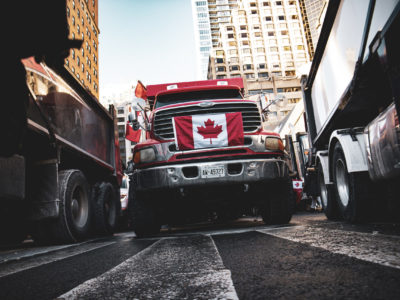
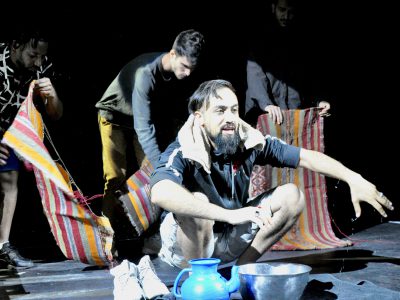
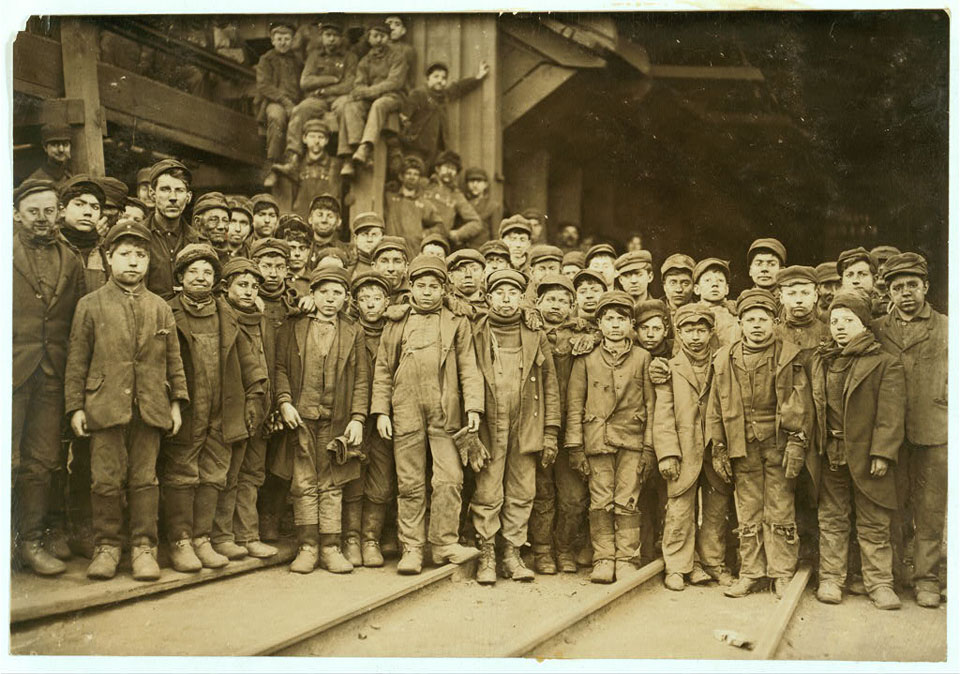
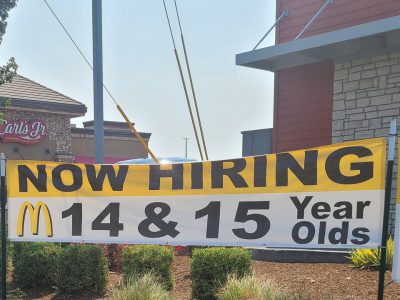
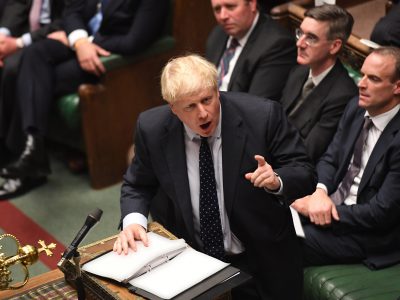
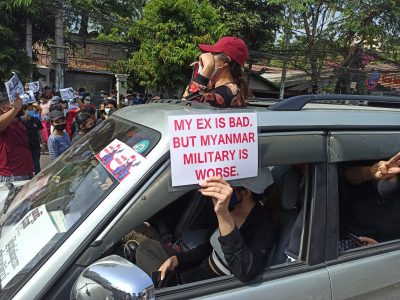
 In the months before he announced his candidacy, Zemmour reveled in several personal and legal scandals that further raised his public profile. In September Paris Match’s cover showed him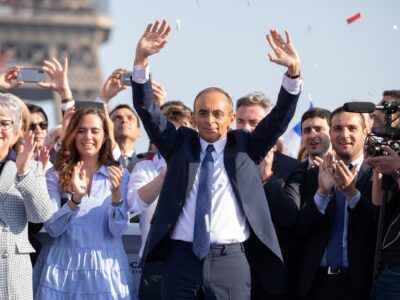
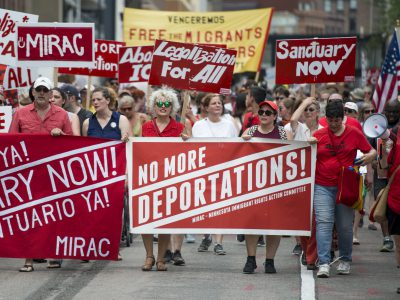
 Maria Ressa at the International Journalism Festival in Perugia, Italy, April 4, 2019.[/caption]

 Judy Batalion[/caption]
Batalion grew up in Montreal’s tight-knit Jewish community “composed largely of Holocaust survivor families”—including her own grandmother, who escaped German-occupied Warsaw and fled eastward to the Soviet Union. Most of her grandmother’s family was subsequently murdered. As Batalion recalls, “She’d relay this dreadful story to me every single afternoon as she babysat me after school, tears and fury in her eyes.” For Batalion, remembering the Holocaust was a daily event. She describes a childhood overshadowed by “an aura of victimization and fear.”
That proximity allowed Batalion to develop an intimate connection to events that had taken place decades earlier, thousands of miles away. But even for those without such a close connection, the impact (and import) of the Holocaust is inescapable. According to a 2020 Pew Survey, 76 percent of American Jews overall, across religious denominations and demographics, reported that “remembering the Holocaust” was essential to their Jewish identity. In stark contrast, just 45 percent overall said that “caring about Israel” was a critical pillar of their identity, with that percentage declining among the youngest age groups.
These numbers raise an urgent question: given its centrality to North American Jewish life, what exactly are we remembering when we remember the Holocaust? As Judy Batalion herself points out, the Holocaust was an important subject in both her formal and informal education. And yet, of the many women featured in Freuen in di Ghettos, she had only heard of one, the
Judy Batalion[/caption]
Batalion grew up in Montreal’s tight-knit Jewish community “composed largely of Holocaust survivor families”—including her own grandmother, who escaped German-occupied Warsaw and fled eastward to the Soviet Union. Most of her grandmother’s family was subsequently murdered. As Batalion recalls, “She’d relay this dreadful story to me every single afternoon as she babysat me after school, tears and fury in her eyes.” For Batalion, remembering the Holocaust was a daily event. She describes a childhood overshadowed by “an aura of victimization and fear.”
That proximity allowed Batalion to develop an intimate connection to events that had taken place decades earlier, thousands of miles away. But even for those without such a close connection, the impact (and import) of the Holocaust is inescapable. According to a 2020 Pew Survey, 76 percent of American Jews overall, across religious denominations and demographics, reported that “remembering the Holocaust” was essential to their Jewish identity. In stark contrast, just 45 percent overall said that “caring about Israel” was a critical pillar of their identity, with that percentage declining among the youngest age groups.
These numbers raise an urgent question: given its centrality to North American Jewish life, what exactly are we remembering when we remember the Holocaust? As Judy Batalion herself points out, the Holocaust was an important subject in both her formal and informal education. And yet, of the many women featured in Freuen in di Ghettos, she had only heard of one, the 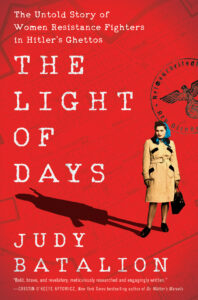 Drawing on memoir, witness testimony, interviews, and a variety of secondary sources, Batalion focuses on the stories of female “ghetto fighters.” These were activists and leaders who came up in the vibrant world of Poland’s pre-war Jewish youth movements, which represented a remarkable variety of political and religious affiliations. The young women of the socialist Zionist groups Dror (Freedom) and Hashomer Hatzair (Young Guard) feature prominently, but religious Zionists, Bundists (Jewish socialists), Communists, and young Jews representing various other cultural, political, and religious affiliations are there, too. Before the war, these groups taught leadership skills: how to make plans and follow through. When the war began, pre-existing leadership structures and a network of locations all over Poland allowed members to find one another and to immediately make plans for mutual aid and resistance. When these young fighters lost their family members, movement comrades were there to support and care for one another as another type of family.
Only a small percentage of Jewish women took part in armed resistance and combat. Most of them were
Drawing on memoir, witness testimony, interviews, and a variety of secondary sources, Batalion focuses on the stories of female “ghetto fighters.” These were activists and leaders who came up in the vibrant world of Poland’s pre-war Jewish youth movements, which represented a remarkable variety of political and religious affiliations. The young women of the socialist Zionist groups Dror (Freedom) and Hashomer Hatzair (Young Guard) feature prominently, but religious Zionists, Bundists (Jewish socialists), Communists, and young Jews representing various other cultural, political, and religious affiliations are there, too. Before the war, these groups taught leadership skills: how to make plans and follow through. When the war began, pre-existing leadership structures and a network of locations all over Poland allowed members to find one another and to immediately make plans for mutual aid and resistance. When these young fighters lost their family members, movement comrades were there to support and care for one another as another type of family.
Only a small percentage of Jewish women took part in armed resistance and combat. Most of them were 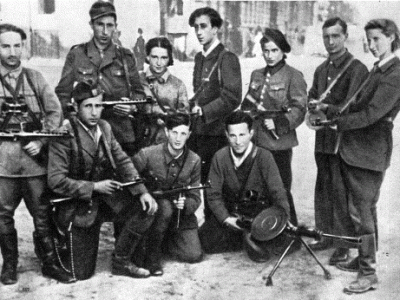
 (l to r): Bill Clinton,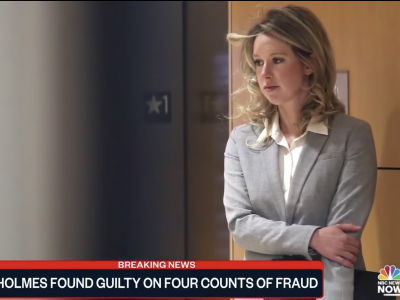
 Virginia Roberts Giuffre was 17 in this 2001 photo with Prince Andrew and Ghislaine Maxwell.[/caption]