WP_Post Object
(
    [ID] => 4418
    [post_author] => 15
    [post_date] => 2022-09-01 23:30:00
    [post_date_gmt] => 2022-09-01 23:30:00
    [post_content] =>
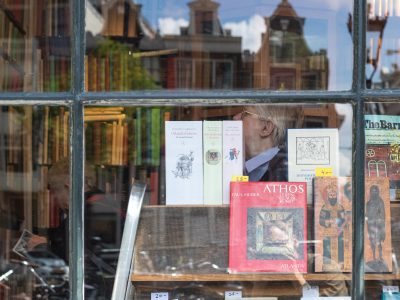
A round table with a few members of the Abolitionist Library Association.


In the wake of George Floyd’s murder by then-police officer and now-convicted killer Derek Chauvin in 2020, a large swath of people who’d never paid attention to systemic, anti-Black racism began, for the first time, to acknowledge its existence. Something shifted. Folks who had never spoken out chose to engage; to actually do something. While the Black Lives Matter movement had existed for nearly seven years before Floyd’s death—and abolitionism for many years before that—the widespread protests of 2020 seemed to give these movements new momentum. At the height of a raging pandemic, during a time of mass isolation and fear, hundreds of thousands of people across the world took to the streets, standing up against racist police violence and the prison-industrial complex it fuels.


In the two years since, the greater outrage has waned. Those privileged enough to not have paid attention before largely went back to not paying attention; while the people who had already been doing the work continued to do the work. But that initial uprising—that newfound awareness, and solidarity, and, in some cases, radicalization—was nonetheless significant, and provided necessary support for longtime activists to realize long-held needs, giving community spaces and organizations more resources to work towards collective liberation and even, perhaps, some policy change.


One of those spaces was the library.


In the spring of 2020, the Library Freedom Project published a piece on Medium titled, “It’s not enough to say Black Lives Matter—libraries must divest from the police.” The post set the library world ablaze, and before long, a group of library workers gathered over Zoom to discuss what they could do to further their message and their agenda. From this meeting—and from decades of work before it—the Abolitionist Library Association, or AbLA, was born.


More than two years after AbLA’s inception, we sat down with four of its members*—Lawrence M. (they/them), Megan R. (she/they), Jen W. (she/they), and Les D. (they/she)—to discuss the intersection between abolitionism and library work, the importance of creating safe public spaces, and the power of the collective.


*In respect of their privacy both online and off, we’ve opted to include only their first names and last initials.


~


Gina M.


To kick things off, I feel like an obvious question, but an important one, is: What is an abolitionist library worker? What does that mean, in action?


Lawrence M.


I think it's important to foreground abolition as a specific political ideology that stems from the Black radical and Black revolutionary tradition. Dr. Joy James talks about the plurality of abolitionism, right? So I'll speak for myself: When I think about abolition, I think about this long tradition that started with the desire and the demand to end Black chattel slavery. Today what that looks like is seeing how carcerality permeates through our social structures here on occupied Turtle Island, or the United States. Abolitionists are committed and dedicated to disrupting and ending the way carcerality works, and really carcerality in general.


Megan R.


That's a really good starting point and really important background that not necessarily everybody is conscious of when they're coming to abolition. Recently, I have been doing a lot of reading around the idea of the carceral habitus, and just the structuring of society in this punitive, carceral way, and how it presents itself as a natural occurrence, or a natural way of being a society when, in fact, it's not. By human nature, we're not necessarily punitive. Our interactions don't have to be based around punishment. So I think that abolition just offers such beautiful possibilities for life outside of this carceral framework, and that's the attitude that I try to bring to my library work.


Jen W.


Yeah—this is work that Black women have been leading for a very long time, and so all the work of our association is really built on their shoulders. That's important to acknowledge. You also might not necessarily think abolitionist and librarian go together. But the library world is not immune from carcerality. I mean, the stereotypical image of a librarian is literally someone shushing people. And I think that there's a lot of ways that people are policed in library spaces, or that libraries play into the prison-industrial complex. There are very practical issues that come up in all library spaces, not just public libraries, where you'll have a security guard be the first person you see when you walk in. Some libraries have security gates that literally beep if you didn't check out a book.


Megan R.


I want to really quickly touch back on the archetypal image of the librarian as shushing or performing some sort of policing behavior. Because I really want to emphasize that that archetype, or that archetypal image, is usually a white woman. So it's really crucial to be aware of the history of libraries as institutions that continue to uphold white supremacy through this policing of behaviors, and their role in the Americanization of immigrants and inculcating the youth. Even if you're not necessarily thinking about it in terms of penal abolition, just thinking about the ways in which social reproduction happens in libraries, especially public libraries, and who is allowed to be in those spaces, and what behaviors are allowed to occur in those spaces.


Gina M.


All of you are touching on something that I was going to ask, which is, if there’s a Venn diagram, right, between library work and library spaces, and abolition work and the prison-industrial complex, what's in the in-between? Libraries, at their best, should be these incredible public spaces and resources for people—but even they have been subjected to the carceral state that we exist in. Which leads very nicely into the origins of AbLA. I would love to hear a little bit more about your origin story. And, out of curiosity, was it a conscious choice to lead with abolitionist in your name?


Lawrence M.


So, Alison, right?


Jen W.


Yeah. AbLA got started in the wake of the George Floyd uprisings. Alison Macrina and some people from the Library Freedom Project had written a piece that was published on Medium. And that was kind of the birth of this association. The reason that it's the Abolitionist Library Association—as Lawrence said, that's what we want to foreground. And also, a little bit of mockery of ALA [American Library Association]. There's also the fact that the Abolitionist Library Association is more inclusive to library workers who might not necessarily be a degreed librarian.


Megan R.


Yeah, we actually spent a lot of time trying to figure out what to call ourselves. Because, like Jen mentioned, not everybody who works in the library is a librarian. I tend to use the term library workers, just to be as inclusive as possible. But we also wanted it to be a space where library patrons and community members can get involved, as well. We jokingly called ourselves the "good ALA" for a while, which was not really sustainable—which is how we ended up with AbLA.


Lawrence M.


We still are the good ALA, by the way.


Megan R.


I feel like maybe [Alison] put out a call on Twitter or something along those lines. I don't remember exactly. But I remember that we all ended up on Zoom.


Jen W.


I think we called it a town hall, to discuss the Medium article, because it had gotten a lot of attention. And there was clearly a need for a space to talk about it.


Lawrence M.


Yeah, no, we can't talk about AbLA without talking about Alison. The call went out on Twitter, and we were looking at this uprising, and everyone was thinking about the field—or, everyone who gave a shit was thinking about the field—and it was like, Okay, well, what the fuck are we going to do?


And that was the first time we all got together, reviewed the statement, and went from there. But I don't know—there's a part of me, a big part of me, that wants to be like, that first meeting was not so much the origin but the culmination of a lot of things. Gina, you brought up the library being a public space, right? Well, just seeing historically how that public space wasn't available for Black people specifically, and Indigenous and racialized non-white people in general—for me, it was a start, but also the apex of what was going on during spring 2020.


Megan R.


On that note, I feel like the town hall and then the subsequent meetings that eventually morphed into AbLA, what also facilitated it, in a lot of ways, was COVID forcing everything to be online. So all of these different organizing projects that have been running parallel to each other in a lot of ways—like Cop-Free NYC and things like that—people all had a chance to connect with each other.


Gina M.


What has the work looked like so far? Or, put another way, what are the biggest goals of AbLA? I’ve read your website, of course, and the four tenets you laid out. But in your own words, what do you hope to accomplish with it?


Lawrence M.


You know, I think first and foremost, AbLA is rooted in a liberatory ideology. That's in our mission statement, if I'm not mistaken. So off the bat, reforms to liberal approaches to carcerality—I won't say we’ll outright reject, but we'll heavily scrutinize.


Megan R.


I really quickly want to backtrack to AbLA’s origins and mention that the listserv, I think, has been one thing that's really kept momentum going. Like, it's being used in ways that I didn't anticipate, including people sharing job openings and things like that. So that's been really helpful. I like listservs—it's kind of old school, but I think it's helpful.


Lawrence M.


About AbLA and the listserv, too: We have “Association” in the name, but we're not an association. Like, I think the term that could best describe us is a political formation, and I’m not even loosely using that term, [that’s] as accurate as I can be. And in terms of listservs, I'm typically not a fan of them, but AbLA is the only listserv that I know in which the conversations that are happening on this listserv—I don't see those conversations anywhere else.


Gina M.


Your listserv is open to everyone too, right?


Lawrence M.


Yeah, it's open to everyone.


Megan R.


Which you know, is a double edged sword in that everything that is happening there is essentially public.


Lawrence M.


It's open to everyone, but not cops. I will say, for sure: If I find out there's a cop on the listserv, they're gone. You can put me on the record for that!


Gina M.


It sounds like it’s this public resource in itself, the listserv.


Jen W.


The listserv is certainly very active. There are probably like 1000 people on our listserv at this time. And I think the listserv has been a great space for people who are dealing with specific in-the-moment issues with policing, to come to our group and be like, I don't know what to do. I don't know how to get my administration to realize this is bad, and to be able to find support and practical advice for how to divest from policing in our spaces.


Megan R.


I mean, this idea of community self determination and working towards liberation is really important. And what goes hand in hand with that for me is rethinking what we mean by public safety in public places. Obviously not just for patrons, but for workers.


Thinking on the recent news, I don't know if you saw that there was a retired cop that shot and killed a library—what do they call them—a special library police officer, in the DC Public Library during a training yesterday. And I was just seeing so many comments on Twitter, like, Wait, there are cops in libraries? Why are there cops with guns in libraries? And I think it's one of those things that's not even flown under the radar, it's just that, in the United States, the presence of police officers goes so unremarked upon, that trying to foreground the “Abolitionist” in the Abolitionist Library Association is really important in even just becoming aware of the ways in which the carceral has intruded into public space, or shaped public space.


Jen W.


On a practical level, just to give a general overview of some of what the work has looked like: There were a couple of divestment campaigns that really got off the ground in 2020. And as a group, we were able to support those campaigns throughout the country. And then we also have some specific working groups, [which] will have their own meetings and their own agendas. We have a special collections working group that is very active—you might have seen the Ivy+ divestment statement that came out from there. And then we also have our working group focused on information access for incarcerated people. That group was born out of a specific attempt to ban one of Mariame Kaba's books in Washington, but has since become a place for people who are doing work to make information accessible, to come together and talk about the challenges that they're facing.


I think the exciting thing about libraries is that we do have the possibility of being liberatory spaces in a way that many spaces don't. But we aren't inherently liberatory spaces. Because we are state institutions under capitalism, we replicate the same oppressive dynamics as other institutions. But having the space where we can come together, and be real about that, and find other people who have the political goal of abolition, to talk about like, Okay, we're doing this work at my library, how do I do it through this lens? I think especially with prison library work, it can be hard, because you're often doing it through the state library, partnering with the state Department of Corrections. And it's like, how do you do that work in a way that is abolitionist?


Les D.


Speaking to what Jen was saying as far as sharing notes, and that sense of community and support—it especially meant a lot to me when I was in my last position, in western Kentucky. You kind of feel alone out there, and this is a space that I could turn to to get the feedback I was looking for and build some strategies and carry through and such. From my rural organizing background, [I] definitely see the importance of decentralized social spaces on the internet. We have people involved with AbLA who are from all over, and being able to exchange notes has been really crucial. Those of us who've become friends through the work, as well, that's just as important. Because not only are we achieving and winning battles, and pushing for these wins, but we're also supporting one another.


Megan R.


You're [raising] a good point of not just [providing] mutual support for one another, but the idea of joy and play and friendship in this work, as well, because so much of it is really heavy. And a lot of it is done on our own time, as volunteer work—like those of us who do reference by mail for incarcerated people, that's usually volunteer work with PLSN [Prison Library Support Network]. Just being able to—the work itself isn't necessarily fun all the time, but that you can find joy as a result of it.


Gina M.


It’s really interesting to hear you talk about the community aspect of it, which feels so essential—being able to be in community with each other, both on the abolitionist side, and on the library work side. Especially because, all of you keep bringing up this idea of the promise of the public space versus the reality of the public space. Lawrence, I think you were saying, traditionally, libraries were not actually that inclusive at all. You could argue a lot of library spaces still aren't, to unhoused people, and to Black and brown and Indigenous people. And in spaces where the work is very heavy and very difficult, there is—to your point, Megan—value in having people who are in the boat with you, and to feeling like you aren't alone in the work. Has that been a driving force for AbLA?


Les D.


I was going to add to that. Like, some of us have pushed back in ways that did put our jobs at risk. I mean, we are fighting for abolition under capitalism, and health care is tied to employment. So we are building power in this formation to be able to push for things, while still balancing [the fact that] we work for the state. And there's a tension there, right? And it's dangerous at times. So to varying levels, there is some risk, and being able to be in relationship with one another in that strategy and building that strategy accordingly has been really powerful.


Megan R.


Yeah, I think this idea of tension is a really important one, too, because that's working on a lot of different levels. Especially these days, with the current political climate around libraries, and the very real possibility of physical danger, not just job security. Les mentioned the decentralized formation that we use for AbLA. But at the same time, because we have a name now, it validates us [and] our work in a way, in that we have been cited in some academic pieces, or at conferences and things like that. So [there’s] this tension between being a formal organization, but then at the same time, at least for me, this resistance to this formalizing and institutionalizing of the work that's being done.


Jen W.


I want to piggyback off of that. Because we have built a network, we were able to mobilize to support Amy Dodson, [for example]. She had to go before her library board for a hearing to determine whether or not she was going to lose her job, and we wrote a letter that was presented to the board. And, you know, I don't want to give AbLA too much credit here, but we did a lot to really make sure that there was public outcry and that it was very clear that she had a lot of support, and not just in her county or her state, but nationally. Having been able to have that kind of collective influence was very valuable, and we've been able to replicate that a couple of times. Recently, we had some of our members who put together a statement pushing back on the Michigan Department of Corrections' decision to censor language learning books, and not allow Spanish or Swahili language books to be sent to their prisons. And again, I can't necessarily credit AbLA for reversing it. But I think that we did help to make sure that there was a lot of public attention, and that people across the country saw what they were doing and thought it was bad. Thankfully, the Michigan DOC has also walked back the policy.


Gina M.


What’s next for AbLA? How do you want to see it grow? What’s the ideal for you of what AbLA can do and what it can become?


Lawrence M.


Ideally, our way of seeing the political structures that reinforce the library becomes the norm, right? Just in my work alone, I'm seeing more and more people who are new to the field, realizing the same shit we've known. And [I want] AbLA to continue to be a space for new library workers to feel welcomed into. But also, I'm going to do what I always do and quote Fred Moten, because once you get rid of the police, you have to take care of policy, because all the police are is just an embodiment of policy. So in terms of growth, that's what I would like: I would like for more and more people to just be like, No, AbLA is the fucking standard. You're getting into this field. You're committed to making things better for everybody except cops and capitalists and fascists.


Megan R.


I agree with what Lawrence's saying. Even thinking about policy, within the library world—Emily Drabinski winning the election for ALA president is really exciting. Because she's somebody that I know has done reference work with incarcerated people. She's really strong on labor, which, I feel like you can't really talk about safety and library work without also talking about the labor aspect of it. And I don't know, I feel like a lot of AbLA people—not necessarily in the context of AbLA—were involved in [that] campaign. It's hard to say how that's gonna turn out because ALA is such a large organization and pretty conservative, but building power is important however we can do it right now.


In terms of where I'd like to see AbLA go, it feels like a lot of people's energy has become focused on their working groups, which is really good, because when we first started having regular meetings, I think people were really fired up and ready to go, but it becomes an issue of sustainability and burnout. And it seems like it's settling more into a place where people have a better understanding of their own capacities, with the work that they can do in a way that is going to keep the work going. For myself, really just focusing more on the information access for incarcerated people working group has felt really sustainable for me, and encouraging other folks to participate in ways that feel sustainable to them is the best way that I would like to see it grow.


Les D.


Yeah, the sustainable engagement is really important, especially to longevity of the movement and actually making sustainable change. That's how it's looked for me, as well. Also doing some research on deescalation tactics in libraries, in order to avoid calling the police—that's something I've been working on. But knowing everyone's out there doing the work, and that solidarity there, is pretty powerful. Having the support and the tools to do that work is really important. More skill sharing, as we have been doing all along, is a key concept, I think.


Jen W.


My answer would probably just echo a lot of what everyone else has said. [But] I also want to say that, I think we're in a moment where, every day, fascism's stronghold is growing. And we're seeing that in libraries a lot, as well. We’ve seen a lot of push for censoring collections; we've seen fucking white supremacist militias showing up to drag queen storytime and interrupting; and people trying to destroy pride displays or make sure that those books aren't available. And ALA is nowhere to be found.


Often, more bureaucratic or conservative organizations like ALA, or library administrators, the people in power in libraries—their default response to a fascist attack is to be like, Okay, well, we need [more] security, we need police. Like, the answer is basically more fascism. So I hope that AbLA will continue to be a space where people can see that we can push back in ways that are still centering the safety of our Black and brown patrons, that are still keeping libraries a space that is open to everyone, except for cops and Proud Boys. I feel a little corny because everyone quotes Mariame Kaba all the time, but her words are so valuable, and she always reminds us that hope is a discipline. In this day and age, it can be really easy to feel hopeless and to feel like we don't have the power to push back. And having a space that helps us remember that, actually, there is hope, and we can push back, and it doesn’t have to default to carceral solutions—I think that's incredibly valuable. I hope that people will continue to see that value and continue to keep that space alive, so that we can continue to collectively push back.


Gina M.


How can people who aren’t library workers best support your work?


Les D.


I can run with this one because this is what my research work is on. As far as just anyone goes, building conflict navigation skills—deescalation skills—are really important. In [the] public library context, what I'm working on is toolkits for library staff to use to not only deescalate a situation where a patron is having a bit of a mental break, and is being loud or argumentative—being able to engage with them in a compassionate way to then bring down the situation and make sure they're taken care of in that moment, as well as deescalate surrounding patrons so they don't react in a way that makes the situation worse and thus more unsafe, all with the intention of discouraging calling police because we know how dangerous police are in mental crisis moments. All that to say, if anyone wants to engage with this work, learning how to do bystander intervention, learning how to even just breathe through a moment, calm down people around you, and approach tension with compassion [and] patience. If everybody in the space can agree, Okay, we're gonna try to get through this as smoothly as possible, that makes it a lot easier for library staff.


Jen W.


Libraries are institutions that are meant to serve our community. So I think encouraging our community to show up and tell us what they like and what they don't like; white people [especially] have to have a voice in helping us push back on having cops or security in the library. You know, if enough people say, Hey, this doesn't feel great, then maybe administrators will listen and be willing to make a change. Showing up in solidarity—a lot of people have already been doing that—[and] showing that, as a community, we can protect ourselves, we can take care of each other, we don't need the cops. I hope that we, as library workers, can make it clear that the stereotypical power dynamic of that white lady librarian shushing people—that's not how we want to be, that's not what libraries want to be, and we want to know how we can make these spaces better for everyone. We want people's voices to be heard.


Lawrence M.


Yeah, off the top of my head, what can people do? Your library has a Friends of the Library—see what they're up to. If you want to join, it'd be cool to join. I mean, shit, get on the Library Board of Directors, if your library has one.


Megan R.


Run for your local library board if you can. I know that’s not something that everybody feels comfortable doing but if that’s something in your capacity, go for it! Otherwise even just attending the meetings and letting your library board know that people in the community are invested in what happens with the library is really powerful. And give public comment, if you feel so inclined. But I think probably the most basic is learning about abolition and what that means and what it entails.


Lawrence M.


The type of person I am, I just want [people to] study. I think analysis is key in this specific historical moment, because what we know, what informs our ideology, affects how we move [and] defines our praxis. Read Angela Y. Davis's Are Prisons Obsolete? Read Mariame Kaba's We Do This Until We Free Us. Specifically looking at abolitionist texts, and committing to an abolitionist praxis, will help people figure out where they best fit in. So you know, the typical person who's reading this, we can always put out great suggestions, but at the end of the day, figure out where you stand politically and who you want to be in this moment, because you, dear reader, are ultimately going to know where you best fit.


Jen W.


Libraries have lied to you about neutrality being a thing. It's not a thing.


Lawrence M.


Yep. Essentially, pick a side. Going back to the start of our conversation, we are part of a long historical tradition here that is still ongoing. And I think study and analysis is key.


Gina M.


And get those books from the library?


Les D.


Yes, please. I was gonna elaborate as far as tactical, action steps, if you can get something submitted—like good feedback that can go on someone's record, in-house—that's a structural way to have our backs. I've been in those situations where the record comes up, and if you've got good marks [as a library worker], then you have a little bit more wiggle room to push back. So giving good feedback about your library, on paper, is a great move for just regular ol' library users, because it does matter. You do have a lot of power as the user in that situation.


Gina M.


My last question for all of you, just to end things on a joyful note—I imagine you were all drawn to library work for your own personal reasons. I'd love to hear why.


Lawrence M.


I'm just good at it. And I figured I may as well get paid to help people find information. And also, I've seen the consequences. I've seen the consequences when people, especially marginalized people, do not have access to the information that they need. I used to work with teenagers in Long Beach Unified School District, talking about, like, missed deadlines for college applications, or lost opportunities for scholarships. But also, deportations, just because somebody didn't know that ICE needed a warrant to come into somebody's place. I'm good at finding shit (information), and I'm good at communicating it and conveying it to people. So I just figured I should get paid for this. And I am and it's great.


Gina M.


Do you like the work?


Lawrence M.


Oh, yeah. I mean, what I love most is disrupting fascism. It's great. I sleep comfortably at night, knowing that ICE has a few less people to surveil online.


Gina M.


Jen? Les? Megan?


Megan R.


I started library school back in 2011, right after undergrad, mostly because I didn’t really know what to do with my Comparative Literature degree. But I dropped out after a quarter, and ended up working for a while, and then went back seven years later—and I’m really glad I waited, because it gave me a lot better of an idea of what I wanted to do with my degree. I just got really interested in precarious labor in libraries and archives. I considered myself an abolitionist prior to library school, [and] I think library work just has so much potential in terms of realizing, or working towards, a more radical, liberatory vision for our communities and collective liberation. And that just feels like the right place for me to be right now.


Jen W.


So, I don't have my MLIS. I don't even have a bachelor's degree—I'm working on that now. But I tried to get a library job out of high school, because of romanticizing the idea of working at a library. Like Lawrence said, I love information. And once I started working in a library, I realized it was such a perfect intersection of my favorite thing—information—and an opportunity to hate cops. I wanted to stay in it. I've had a lot of jobs, and I always tried to find work that felt like it fit with my values, and was often disappointed. And certainly, libraries can also be disappointing in those ways. But I've been so energized by finding community and having found AbLA because I didn't start working in libraries until 2019. And when I was able to find these like-minded people, that has really kept me wanting to do this work, because it feels like there is possibility—there's opportunity—to transform these spaces. And like Lawrence said, as well, you can really change people's lives by making sure that they have access to information.


Les D.


I got into library work because it was a part-time summer job, and I fell in love with it, took a break to do community organizing for a bit, got burnout. I did a political campaign in western Kentucky, and that was rough. Working in community organizing nonprofits was like, I'll fight like hell, but it just never ends. The burnout was not manageable. So I ended up coming back to libraries. I ended up in outreach, and I realized I could fight like hell but more subversively, especially being able to call shots on how resources are allocated. One of my favorite projects that I was able to push through with grant funding was our reentry toolkits. It was an expansion on our digital toolkits program, [where] people could check out hotspots and laptops that we reworked to meet the specific needs of people who were coming out of jail. We added a phone, added a resource booklet. And it was mostly just a way to respond to needs in our community, and build up that relationship with folks who were impacted by the carceral state. Even though it's a nightmare at times, especially how entrenched neoliberalism's veins are—it's a good lane to fight in. As Lawrence mentioned, [it’s] the very tangible daily ways that people get their needs met: We can keep them out of ICE's claws, get them fed, get them housing, all those daily things. Just little needs met by the community or for the community really keeps me in the game, and is why I fell in love with it.


This conversation has been edited and condensed for clarity.


*The Footnotes


Editor’s Note: At The Conversationalist, we understand that no story exists in a vacuum, and every story is built on the work of others before us, whether in ways big or small. We are likewise dedicated to spotlighting the voices of those who have been or continue to be oppressed, disregarded, and/or otherwise silenced, in an effort to reverse centuries of often intentional erasure. Because of this, we have opted to include “footnotes” on certain stories to give readers additional context and reading material where it feels relevant and beneficial.
- Additional Reading: Are Prisons Obsolete? by Angela Y. Davis and We Do This Until We Free Us by Mariame Kaba
- Additional Listening: A two-part episode of Millennials Are Killing Capitalism, Part 1 and Part 2


 Judy Batalion[/caption]
Batalion grew up in Montreal’s tight-knit Jewish community “composed largely of Holocaust survivor families”—including her own grandmother, who escaped German-occupied Warsaw and fled eastward to the Soviet Union. Most of her grandmother’s family was subsequently murdered. As Batalion recalls, “She’d relay this dreadful story to me every single afternoon as she babysat me after school, tears and fury in her eyes.” For Batalion, remembering the Holocaust was a daily event. She describes a childhood overshadowed by “an aura of victimization and fear.”
That proximity allowed Batalion to develop an intimate connection to events that had taken place decades earlier, thousands of miles away. But even for those without such a close connection, the impact (and import) of the Holocaust is inescapable. According to a 2020 Pew Survey, 76 percent of American Jews overall, across religious denominations and demographics, reported that “remembering the Holocaust” was essential to their Jewish identity. In stark contrast, just 45 percent overall said that “caring about Israel” was a critical pillar of their identity, with that percentage declining among the youngest age groups.
These numbers raise an urgent question: given its centrality to North American Jewish life, what exactly are we remembering when we remember the Holocaust? As Judy Batalion herself points out, the Holocaust was an important subject in both her formal and informal education. And yet, of the many women featured in Freuen in di Ghettos, she had only heard of one, the
Judy Batalion[/caption]
Batalion grew up in Montreal’s tight-knit Jewish community “composed largely of Holocaust survivor families”—including her own grandmother, who escaped German-occupied Warsaw and fled eastward to the Soviet Union. Most of her grandmother’s family was subsequently murdered. As Batalion recalls, “She’d relay this dreadful story to me every single afternoon as she babysat me after school, tears and fury in her eyes.” For Batalion, remembering the Holocaust was a daily event. She describes a childhood overshadowed by “an aura of victimization and fear.”
That proximity allowed Batalion to develop an intimate connection to events that had taken place decades earlier, thousands of miles away. But even for those without such a close connection, the impact (and import) of the Holocaust is inescapable. According to a 2020 Pew Survey, 76 percent of American Jews overall, across religious denominations and demographics, reported that “remembering the Holocaust” was essential to their Jewish identity. In stark contrast, just 45 percent overall said that “caring about Israel” was a critical pillar of their identity, with that percentage declining among the youngest age groups.
These numbers raise an urgent question: given its centrality to North American Jewish life, what exactly are we remembering when we remember the Holocaust? As Judy Batalion herself points out, the Holocaust was an important subject in both her formal and informal education. And yet, of the many women featured in Freuen in di Ghettos, she had only heard of one, the 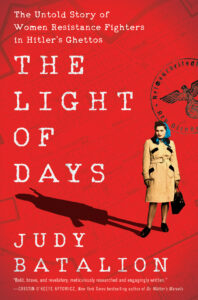 Drawing on memoir, witness testimony, interviews, and a variety of secondary sources, Batalion focuses on the stories of female “ghetto fighters.” These were activists and leaders who came up in the vibrant world of Poland’s pre-war Jewish youth movements, which represented a remarkable variety of political and religious affiliations. The young women of the socialist Zionist groups Dror (Freedom) and Hashomer Hatzair (Young Guard) feature prominently, but religious Zionists, Bundists (Jewish socialists), Communists, and young Jews representing various other cultural, political, and religious affiliations are there, too. Before the war, these groups taught leadership skills: how to make plans and follow through. When the war began, pre-existing leadership structures and a network of locations all over Poland allowed members to find one another and to immediately make plans for mutual aid and resistance. When these young fighters lost their family members, movement comrades were there to support and care for one another as another type of family.
Only a small percentage of Jewish women took part in armed resistance and combat. Most of them were
Drawing on memoir, witness testimony, interviews, and a variety of secondary sources, Batalion focuses on the stories of female “ghetto fighters.” These were activists and leaders who came up in the vibrant world of Poland’s pre-war Jewish youth movements, which represented a remarkable variety of political and religious affiliations. The young women of the socialist Zionist groups Dror (Freedom) and Hashomer Hatzair (Young Guard) feature prominently, but religious Zionists, Bundists (Jewish socialists), Communists, and young Jews representing various other cultural, political, and religious affiliations are there, too. Before the war, these groups taught leadership skills: how to make plans and follow through. When the war began, pre-existing leadership structures and a network of locations all over Poland allowed members to find one another and to immediately make plans for mutual aid and resistance. When these young fighters lost their family members, movement comrades were there to support and care for one another as another type of family.
Only a small percentage of Jewish women took part in armed resistance and combat. Most of them were 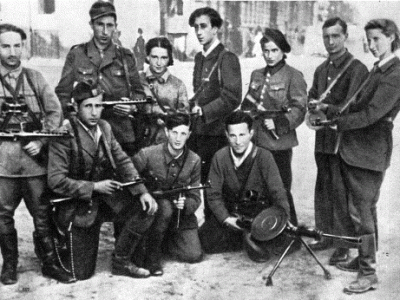
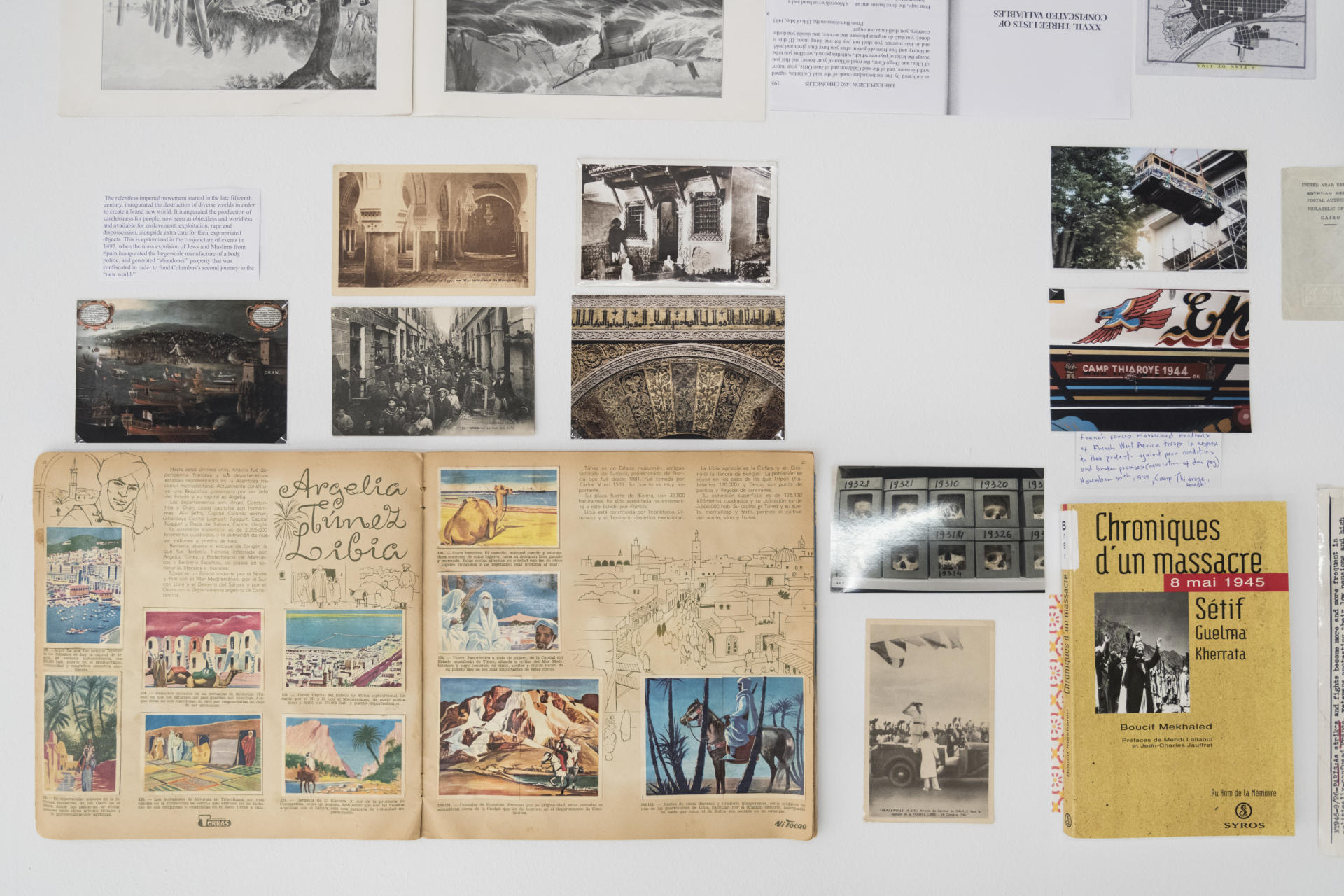 From Ariella Aïsha Azoulay's exhibition "Errata" at the Fundació Antoni Tàpies in Barcelona.[/caption]
Azoulay posits that the use of this violent photographic shutter stretches back to 1492, a moment of imperial Spanish colonization of the Americas, the start of the international global slave trade to make this possible and the obliteration of Judeo-Muslim culture through Inquisition decrees. This history also includes the devastation of the Caribbean’s indigenous Taíno people’s politics and culture in 1514; the ruination of the nonfeudal cocitizenship system of the Igabo people in West Africa; the 1872 Crémiuex decree that gave French citizenship to Jewish Algerians but withheld it from Muslims, a divide-and-conquer strategy with ramifications that are felt to this day; and the ongoing ravaging of Palestinian politics and culture since the early 1900s. In this connected schema of colonial destruction and erasure paired with institutionalization and documentation, the concept of history is premised on the ideas of discovery and progress. Each colonial regime “discovered” new artworks and exhibited them in new museums; they documented dispossessed people with the new label of “refugees” and imposed new cultural practices and political institutions premised on the undoing of previous indigenous norms and knowledge.
Potential history is positioned as a means of addressing these historical damages by imaginatively reactivating the memories and potentialities shut off by the imperialist photograph and its material positioning. Azoulay describes “rehearsal methods” for how we can question and begin to undo these structures. One strategy is the act of revising imperial photos through annotation, including notes, comments and modified captions that challenge the histories they describe. When these interventions are rejected by the archives that own the legal rights to the photos, Azoulay redraws the photographs herself.
Another rehearsal method is the idea of striking, found in short chapters that imagine museum workers, photographers and historians going on strike. The idea of striking until our world is repaired means saying no to the relentless new of history. It does not aim to substitute an alternative history or fill museums with new objects, but rather to reject their logic and promote its active unlearning. Azoulay underlines these and other rehearsals as modes of practicing new forms of co-citizenry and solidarity based on critical looking. “Unlearning imperialism,” she writes, “means aspiring to be there for and with others targeted by imperial violence, in such a way that nothing about the operation of the shutter can ever again appear neutral.”
“Being there” is a moment of radical solidarity in which one aspires to listen to those affected by such violence and question the flow of history that imperial institutions strive to promote as casual and natural. This includes recognizing the role of looted objects and their role in building imperial ideas, but also reclaiming them as means to enact other modes of being, such as thinking of them not as protected “art” but as part of people’s real material worlds.
Azoulay also listens to new melodies that arise from such sites of imperial documentation. She recounts the story of her own Algerian father moving to Israel as a child and trying to forget his native Arabic—because in Israel, the European elite actively condemned its use and promoted Hebrew. She first learned that her grandmother’s name was the Arabic Aïsha, the name of the Prophet Mohamed’s third wife, when she saw her father’s birth certificate after he died. Plucked from this imperial document, the name was a “treasure” in her Hebrew-speaking, Jewish-Israeli family; she sought to use it as a site of imagination by adopting it as her own—in addition to her Hebrew name, Ariella. Azoulay speaks of Aïsha as a haunting scream: Aïsha, Aïsha, Aïeeeeeeee-shaaaaaaaa.
Azoulay further demonstrates photographs and documents as dual sites of violence and resistance with images taken by the Civil War photographer Timothy O’Sullivan in 1862. One of his iconic images shows eight Black people standing stiffly near a large house persistently labeled as the “J.J. Smith Plantation.” These words make it clear that the people in the photograph are racialized property. She describes how this violence is repeated in historical archives, in which photographs of Black people taken before and after the Civil War are interchangeably captioned as depicting slaves; she proposes the imagining of a “dismissed exposure,” or ghostly negative of a forgotten image reinserted into the frame. The original image becomes blurred and surreal as it competes with sculptures from the MoMA floating in the background. Since there are no images on display in U.S. museums of Black Americans reunited with objects stolen from them, the dismissed exposure serves as an imaginative placeholder in the photographic archive. It waits for different worlds and meanings.
Potential history dwells in such creative exercises. It resists simplistic ideas of financial restitution for destroyed cultures or the mere substitution of one history for another. Instead, it advocates persistent unlearning of how the world is taught, represented and constructed; solidarity in resisting these demands; listening to those affected; and, above all, imagining. Azoulay’s book is a long (over 670 pages) and challenging read. It brings up the question of who has the resources to read it; while its ideas are currently being filtered through museum exhibitions such as the traveling , the question remains as to how this work can reach a wider and more diverse audience. If you do manage to find a copy, perhaps try following one of the more whimsical moments of the book: dip in as you please, conceiving of no beginning or end, but rather of moments that shine in “a bright, brief and sudden light” against the “dazzling” beam of imperialism.
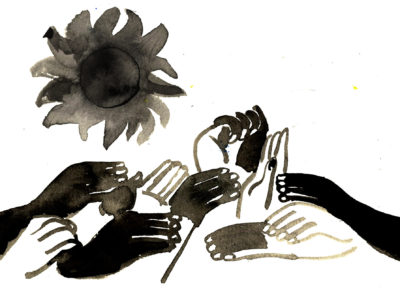
After all of the “kings” had been “beheaded” at the intergalactic memorial carnival in Berlin, we passed around a hat, on which was written things we wanted to cherish and save. “It’s more about the spirit of hope than destruction,” laughed a person in a wooden demon mask.
[post_title] => 'Potential Histories: Unlearning Imperialism': A review of Ariella Azoulay's new book
[post_excerpt] => How the "shutter" of photography aided imperial conquest.
[post_status] => publish
[comment_status] => closed
[ping_status] => open
[post_password] =>
[post_name] => potential-histories-unlearning-imperialism-a-review-of-ariella-azoulays-new-book
[to_ping] =>
[pinged] =>
[post_modified] => 2026-08-06 22:58:19
[post_modified_gmt] => 2026-08-06 22:58:19
[post_content_filtered] =>
[post_parent] => 0
[guid] => http://conversationalist.org/?p=2213
[menu_order] => 234
[post_type] => post
[post_mime_type] =>
[comment_count] => 0
[filter] => raw
)
From Ariella Aïsha Azoulay's exhibition "Errata" at the Fundació Antoni Tàpies in Barcelona.[/caption]
Azoulay posits that the use of this violent photographic shutter stretches back to 1492, a moment of imperial Spanish colonization of the Americas, the start of the international global slave trade to make this possible and the obliteration of Judeo-Muslim culture through Inquisition decrees. This history also includes the devastation of the Caribbean’s indigenous Taíno people’s politics and culture in 1514; the ruination of the nonfeudal cocitizenship system of the Igabo people in West Africa; the 1872 Crémiuex decree that gave French citizenship to Jewish Algerians but withheld it from Muslims, a divide-and-conquer strategy with ramifications that are felt to this day; and the ongoing ravaging of Palestinian politics and culture since the early 1900s. In this connected schema of colonial destruction and erasure paired with institutionalization and documentation, the concept of history is premised on the ideas of discovery and progress. Each colonial regime “discovered” new artworks and exhibited them in new museums; they documented dispossessed people with the new label of “refugees” and imposed new cultural practices and political institutions premised on the undoing of previous indigenous norms and knowledge.
Potential history is positioned as a means of addressing these historical damages by imaginatively reactivating the memories and potentialities shut off by the imperialist photograph and its material positioning. Azoulay describes “rehearsal methods” for how we can question and begin to undo these structures. One strategy is the act of revising imperial photos through annotation, including notes, comments and modified captions that challenge the histories they describe. When these interventions are rejected by the archives that own the legal rights to the photos, Azoulay redraws the photographs herself.
Another rehearsal method is the idea of striking, found in short chapters that imagine museum workers, photographers and historians going on strike. The idea of striking until our world is repaired means saying no to the relentless new of history. It does not aim to substitute an alternative history or fill museums with new objects, but rather to reject their logic and promote its active unlearning. Azoulay underlines these and other rehearsals as modes of practicing new forms of co-citizenry and solidarity based on critical looking. “Unlearning imperialism,” she writes, “means aspiring to be there for and with others targeted by imperial violence, in such a way that nothing about the operation of the shutter can ever again appear neutral.”
“Being there” is a moment of radical solidarity in which one aspires to listen to those affected by such violence and question the flow of history that imperial institutions strive to promote as casual and natural. This includes recognizing the role of looted objects and their role in building imperial ideas, but also reclaiming them as means to enact other modes of being, such as thinking of them not as protected “art” but as part of people’s real material worlds.
Azoulay also listens to new melodies that arise from such sites of imperial documentation. She recounts the story of her own Algerian father moving to Israel as a child and trying to forget his native Arabic—because in Israel, the European elite actively condemned its use and promoted Hebrew. She first learned that her grandmother’s name was the Arabic Aïsha, the name of the Prophet Mohamed’s third wife, when she saw her father’s birth certificate after he died. Plucked from this imperial document, the name was a “treasure” in her Hebrew-speaking, Jewish-Israeli family; she sought to use it as a site of imagination by adopting it as her own—in addition to her Hebrew name, Ariella. Azoulay speaks of Aïsha as a haunting scream: Aïsha, Aïsha, Aïeeeeeeee-shaaaaaaaa.
Azoulay further demonstrates photographs and documents as dual sites of violence and resistance with images taken by the Civil War photographer Timothy O’Sullivan in 1862. One of his iconic images shows eight Black people standing stiffly near a large house persistently labeled as the “J.J. Smith Plantation.” These words make it clear that the people in the photograph are racialized property. She describes how this violence is repeated in historical archives, in which photographs of Black people taken before and after the Civil War are interchangeably captioned as depicting slaves; she proposes the imagining of a “dismissed exposure,” or ghostly negative of a forgotten image reinserted into the frame. The original image becomes blurred and surreal as it competes with sculptures from the MoMA floating in the background. Since there are no images on display in U.S. museums of Black Americans reunited with objects stolen from them, the dismissed exposure serves as an imaginative placeholder in the photographic archive. It waits for different worlds and meanings.
Potential history dwells in such creative exercises. It resists simplistic ideas of financial restitution for destroyed cultures or the mere substitution of one history for another. Instead, it advocates persistent unlearning of how the world is taught, represented and constructed; solidarity in resisting these demands; listening to those affected; and, above all, imagining. Azoulay’s book is a long (over 670 pages) and challenging read. It brings up the question of who has the resources to read it; while its ideas are currently being filtered through museum exhibitions such as the traveling , the question remains as to how this work can reach a wider and more diverse audience. If you do manage to find a copy, perhaps try following one of the more whimsical moments of the book: dip in as you please, conceiving of no beginning or end, but rather of moments that shine in “a bright, brief and sudden light” against the “dazzling” beam of imperialism.
After all of the “kings” had been “beheaded” at the intergalactic memorial carnival in Berlin, we passed around a hat, on which was written things we wanted to cherish and save. “It’s more about the spirit of hope than destruction,” laughed a person in a wooden demon mask.
[post_title] => 'Potential Histories: Unlearning Imperialism': A review of Ariella Azoulay's new book
[post_excerpt] => How the "shutter" of photography aided imperial conquest.
[post_status] => publish
[comment_status] => closed
[ping_status] => open
[post_password] =>
[post_name] => potential-histories-unlearning-imperialism-a-review-of-ariella-azoulays-new-book
[to_ping] =>
[pinged] =>
[post_modified] => 2026-08-06 22:58:19
[post_modified_gmt] => 2026-08-06 22:58:19
[post_content_filtered] =>
[post_parent] => 0
[guid] => http://conversationalist.org/?p=2213
[menu_order] => 234
[post_type] => post
[post_mime_type] =>
[comment_count] => 0
[filter] => raw
)