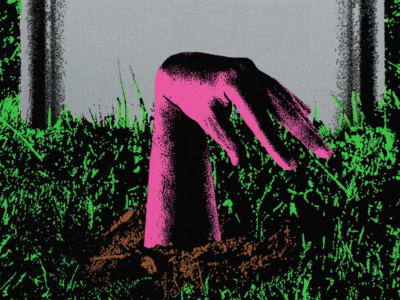
This is, without a doubt, one of the scariest books I've ever read, and one I haven't stopped thinking about since I finished reading it. Told in astonishing detail (the majority of the book takes place over the course of an hour), Nuclear War posits a play-by-play of what would happen in the immediate aftermath of a nuclear strike on the United States. In Jacobsen's hypothetical, the ensuing fallout is swift and apocalyptic; something made all the more vivid by her astonishing reporting. Early in the book, I gained a newfound understanding of doomsday preppers, and became convinced that I, too, should start stockpiling drinking water and saving up money for an underground bunker. By the end, I'd given up on the idea entirely, because of how fruitless my preparations would be against the reality of nuclear war. Both are a testament to Jacobsen's incredible work, which so deftly shows the precariousness of nuclear deterrence and the unimaginable horror (and stupidity) of mutually assured destruction.
First published in 1982, it's a delightful, irreverent coming of age novel about falling in love—with a boy, but more so with his family. Importantly, it's a refreshing change of speed from some of the heavier news of late.
After being on my bookshelf for the last two years, I finally decided to read New York, My Village by Uwen Akpan three years after it was published; I wish I'd read it sooner. In a fictional narrative, a Nigerian editor, Ekong, of the Anaang people—a minority group from the Niger Delta—visits New York City as a publishing house fellow while also working on a Biafra War anthology. For a subject as sensitive as the Biafra War, the author manages to be be both bold and funny in his rendition of how Nigerian ethnic minorities have viewed the war—often overlooked entirely—while demonstrating how his home country's divisions and differences on race, immigration, and history are not too dissimilar from what he experiences in New York. At times, especially in the middle chapters, the dialogue and plot can take rather far-fetched turns, but perhaps part of the amusement of Ekong's story is that they do. I originally picked it up because I think the subject of the Biafra War is difficult to discuss, whether as fiction or nonfiction, and so many perspectives are often lacking the dimension of minority viewpoints that Ekong and his cast of characters engage in, unashamedly. For that reason alone, it was a refreshing read for me personally, even considering the hyperbole that the read accompanied.
The new book about Joni Mitchell from NPR Music critic Ann Powers goes far beyond mere biography; it's also a reflection on how our culture defines "genius" (and how gendered that term can be!), and how our own individual perspectives influence our devotion to the artists we love. Powers' depth of research makes the book thrilling for longtime Joni aficionados, and her approach—a genuine but circumspect curiosity about this much-vaunted and perhaps misunderstood artist—welcomes newer fans to the fold, too.
This graphic novels follows the ups and downs of being a Korean-American teenager, with moving commentary on mental health and strained parental relationships. Although my upbringing differed from Lee’s, I saw so much of myself in their story. Beyond the touching narrative, the illustrations are insane. The level of detail is so intricate and intimate. It’s easy to get lost in every page.
—Kiera Wright-Ruiz
[post_title] => What We're Reading This Fall
[post_excerpt] => From Joni Mitchell to nuclear apocalypse and everything in between.
[post_status] => publish
[comment_status] => closed
[ping_status] => closed
[post_password] =>
[post_name] => fall-reads-2024-books-nuclear-war-joni-mitchell-new-york-my-village-in-limbo-novels-nonfiction
[to_ping] =>
[pinged] =>
[post_modified] => 2025-02-11 18:21:04
[post_modified_gmt] => 2025-02-11 18:21:04
[post_content_filtered] =>
[post_parent] => 0
[guid] => https://conversationalist.org/?p=7205
[menu_order] => 46
[post_type] => post
[post_mime_type] =>
[comment_count] => 0
[filter] => raw
)
According to one book, both a lot and very little has changed in the last 100 years.
From the moment I saw The Woman’s Book sitting on a dusty shelf in a secondhand shop, I knew I had to rescue it. I was fascinated: At 719 pages, the hefty tome—browned around the edges and threatening to fall apart—promised to teach well-off British women of 1911 everything they ought to know about womanhood, from poultry-keeping to child-rearing to overseeing the servants.
According to the hand-inked inscription, one lucky Miss Wilson received the manual as a Christmas gift in 1911, with “best wishes” from what looks to be a “Mr. Brooke.” Color me intrigued as to that relationship—but flipping through it, I could only assume that this Mr. Brooke had hoped to begin training his intended future wife, by sending her a literal manual on womanhood. While laying out various tasks, the book gives hints at what a woman’s purpose was in the early 20th century. The gentlewoman’s aim is to avoid attracting the eye of the crowd. To contain boisterous laughter. To please.
So much has changed! I thought. But so little had, too.
There’s plenty in The Woman’s Book that feels like it’s from another world — the etiquette of visiting cards, how to make a fur muff. Yet a lot also feels familiar: the domestic and family labor that too naturally falls to women, the fact that if we want to embark on certain careers, we better expect a fight to get there. While some of the details might differ, it’s clear that the ultimate purpose of this prescriptive book was to tell women how to exist—and in that regard, we have work to do.
Courtesy of the author.
On Pregnancy
When I picked up The Woman’s Book, I was heavily pregnant, and reading every feminist birthing book I could get my hands on (a sure fire way to terrify yourself about childbirth). I immediately skipped to the baby section to find out what the women of the early 20th century were being told, only to discover that the section titled “Baby’s Arrival” was merely two paragraphs long, with nothing whatsoever about the act of giving birth itself.
On the general topic of dressing during pregnancy, however, there was a full page: three times the space given to pushing the thing out. One important part of pregnancy that is very well covered is whether or not one should wear a corset when with child—not for the safety of the fetus, of course, but because “an effort must be made to avoid appearing conspicuous.” (The author’s advice is to keep the corset, but to wear ones that aren’t quite so tight, giving an inch of priority to health over some idea of vanity.)
And ladies, no snacks during this special time (or, actually, ever), no trips to the theatre, and for god’s sake, please do avoid traveling by bus, train, or tram towards the end of the final trimester. Most importantly, “All morbid and sensational literature should be avoided.”
Over a century later, people who are not medical professionals still tell pregnant women what to do and when. We’re told to take all the drugs, do it without drugs, have a birth plan, don’t have a birth plan— meanwhile, some pregnant women aren’t told an awful lot at all. But never is unwanted advice more abundant than during this magical time. When a yoga teacher told me I had complications in birth because I “didn’t try hard enough” to do it naturally, it took every ounce of peace I had left not to finish her off with a flying warrior pose. I imagine I’d have felt the same if someone chided me for not wearing the proper pregnancy corset.
On Beauty
Unsurprisingly for a book with such strong opinions on pregnancy fashion, The Woman’s Book also has a fair amount of beauty advice. The book is packed with gold like: “Try and cultivate a more cheerful outlook upon life if you would permanently rid yourself of these vexing little lines between brows” and “Overwork and worry are powerful deterrents to all culture of beauty.” Because we women really should prioritize the absence of wrinkles over thinking too hard, of course. (For the record, mischievous grey hairs are usually also caused by worry—so we should all really just STOP WORRYING if we want to remain youthful.)
It’s also in this chapter that it becomes clear who, exactly, the book is targeting. One tip in particular that speaks pretty strongly to the diversity of the UK’s upper-class in 1911 is a set of instructions on how to whiten your neck and arms. For real. It involves bathing in milk (the service of dairy cows is never ending) and dusting on plenty of powder, effectively telling wealthy white women to transform themselves into donuts in order to be beautiful.
But don’t fret gentlewomen, because by 2024, we’ve been freed from this obsession with how contorting our faces makes us hideous, how our bodies must be a certain way, and why any of that matters. Unless of course you count the endless “new beauty obsessions” we’re encouraged to spend our hard-earned money on (which we still make less of than men, of course), the smoothing Instagram filters that it’s now normal to view the world through, and the constant need to define a bikini body as anything other than a body that happens to have a bikini on it.
On Work
After I got the book home safely, I decided to take a closer look at the contents page. Did I spy “careers for women” and “women in politics”? Had I been too quick to judge?
What’s incredible is that Florence B. Jack, the editor of The Woman’s Book, suggests the 1911 woman has it pretty good in the world of work. There are many vocations for a young lady, unlike in those pesky olden times. A woman can be a teacher, a private secretary, a florist, a beekeeper, even a lady clerk, for heaven’s sake! (Not to be confused with a regular clerk, of course.) She can also be the most “womanly profession” of them all: a nurse. But no matter your choice, Jack cautions, there is a catch—you have to be really good. There’s no room for mediocrity when you’re a woman. (Arguably, still true today.)
When it comes to my own profession of journalism, I might have found breaking through a bit trickier in 1911, as Jack warns this is a job “not so easily accessible as other callings.” It’s possible, but the budding female journalist has to be “really clever.” When it comes to training, a girl should get a position as a typist or secretary in a newspaper office. Leave journalism school to the chaps, eh? But if a woman is able to make a success of being a reporter, “her powers of intuition and her tact are so much greater than that found in the average man reporter that she is at times entrusted with very special duties.” Imagine that. An exceptional employee being given more responsibility than an average one. Do we even need feminism anymore?
Shockingly, the book also gives women of 1911 permission to be a doctor. It only asks that there be no female medical students at Oxford and Cambridge, thank you very much. Apparently there’s little “old-fashioned prejudice against the ‘woman doctor’” anymore, either, and even more encouragingly, “there is none of that ‘under-cutting of fees’ which has to be adopted by women in most other professions.” So if you want to earn the same as a man for the same job (will we women ever be satisfied?), start getting to grips with human biology. (Perhaps just don’t consult The Woman’s Book for anatomy lessons.) Oh, and if being a woman surgeon (prefix compulsory, of course) is your raison d'etre, best to get a new raison, because in this profession above all others, “prejudice will prove one of the most formidable opponents.” That old chestnut.
Comparatively, you would hope advice on “careers for women” in 2024 would encourage you to do any job you damn well please. But of course, that doesn’t mean that women and nonbinary people are treated the same as their male coworkers. Call me when female pilots aren’t getting mistaken for air stewards and the gender pay gap has been eradicated. And that’s before we intersect gender with class, race, geography, sexuality, and everything else that has an impact on salary and treatment in the workplace.
On Politics
At last, we get to “women in politics.” In 1911, British women could be canvassers, speakers, and campaign organizers. But let’s not get carried away—they couldn’t be trusted to actually vote, let alone stand as political candidates themselves. Still, after all the advice on household management, what to wear, and how to correctly visit your neighbors, I was surprised that the final section of The Woman’s Book turned to the women’s suffrage movement. Now the men have lost interest, it seems to suggest, here’s what we really think.
There’s plenty of talk of servants and country houses throughout The Woman’s Book, so it’s no surprise that it wasn’t a book for all women: It was a book for privileged women. But I found it somewhat encouraging that one of its final comments is devoted to how the suffragist movement brought together women of all classes and politics, “the peeress and the laundry girl,” walking together in processions and fighting for what’s right. In particular, Jack talks about women’s desires to improve work and wages, so that work could be judged by its “true market value and not by the sex of the worker.” It’s a passionate take on why women want freer lives, and how their involvement in politics can create better circumstances for all of humanity.
In many ways, the same holds true today—and frustratingly, it feels like we’re still fighting for the same things. It also feels like we’re still fighting against the same things, too. I don’t know that a Woman’s Book of 2024 would pay quite so much attention to how to iron frills. But look at the pages of mainstream publications targeted at women and there’s an abundance of pieces on how to outfit prep, how to make a charcuterie board bigger than your actual house, and how to get a smoky lip. Aren’t we still being told how to exist? Isn’t this more of the same?
If instead of treating it as an endnote, there was a central focus on how to collectively push for progress for all of us, we might just be able to surpass all these objective measurements of how a woman should “be,” and instead tick the box of what we actually ought to know.
Courtesy of the author.
[post_title] => "Everything a Woman Ought to Know"
[post_excerpt] => According to one book, both a lot and very little has changed in the last 100 years.
[post_status] => publish
[comment_status] => closed
[ping_status] => closed
[post_password] =>
[post_name] => guide-the-womans-book-1911-manual-history-sexism-class-suffrage-movement
[to_ping] =>
[pinged] =>
[post_modified] => 2026-08-04 16:51:49
[post_modified_gmt] => 2026-08-04 16:51:49
[post_content_filtered] =>
[post_parent] => 0
[guid] => https://conversationalist.org/?p=7125
[menu_order] => 49
[post_type] => post
[post_mime_type] =>
[comment_count] => 0
[filter] => raw
)
In her new memoir "Rebel Girl," riot grrrl pioneer Kathleen Hanna reckons with her mistakes.
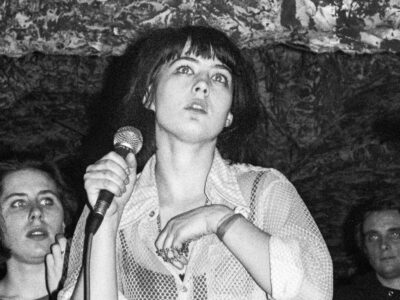
When I first saw Bikini Kill perform live in 2022, it felt like a long time coming. The groundbreaking feminist punk band hadn’t toured in two decades, and in the intervening years, legions of listeners like me had become devout fans, and frontwoman Kathleen Hanna something of an unwitting feminist icon. Most of us figured we’d never actually get the chance to see her, Kathi Wilcox, Billy Karren, and Tobi Vail together on stage again—at least, not like in the band’s heyday. Bikini Kill’s live shows were the stuff of legends: brash refutations of macho-dude punks, where the band tore through fierce odes to feminist solidarity, and Hanna yelled into the mic about wanting “revolution, girl-style, now”—famously demanding, at every show, that the crowd make space for young women to come up to the front of the room.
But that was 20 years ago. The three women I watched on stage in New York (Karren didn’t join the reunion tour) were not the same young punks who’d played in grungy basements in the ’90s. They were a couple decades older and wiser; still committed to their feminist principles, but changed, years of experience and new perspectives now coloring their rallying cries. At the show I saw, Hanna’s slogan—“Girls to the front!”—got an overdue, if slightly clunky, corrective. It wasn’t just girls who deserved space at these shows, Hanna explained. Nonbinary people deserved to occupy that space, too, as did trans men—anyone who usually got shoved aside. It made sense to me that Hanna would reject—or at least reframe—her original sentiment, even if it temporarily robbed the iconic phrase of some of its power. The context around Hanna had changed, and punk had, too: Where she used to look out from the stage and see only a handful of young women, their views blocked by a moshpit of guys, she now saw a respectful, diverse crowd who didn’t have to be asked to make space for each other, because they’d already done it themselves.
I thought about this shift in punk feminism while reading Rebel Girl, Hanna’s new memoir, released last month. It’s a dense, often chaotic book that careens through Hanna’s fascinating life: her difficult childhood, her entrée into the punk scene, her early days on tour with Bikini Kill, then later as a solo artist and with Le Tigre and The Julie Ruin. Throughout, Hanna grapples with what it means to be an artist and an activist, and how the sexist conditions for women in rock music have—and haven’t—changed since she first started making music. Hanna makes it clear that she never set out to become a feminist icon (she started a band, she writes, simply because she wanted “to be heard”), and that riot grrrl was always intended to be an anti-hierarchical movement, without a clear, singular leader. Maybe this is why what struck me most while reading Rebel Girl wasn’t Hanna’s righteousness, or her many triumphs, but the way she acknowledged her shortcomings—and the failures of the riot grrrl movement she helped pioneer.
With startling honesty, Hanna reflects over and over on the ignorance afforded to her by her privilege, a rare thing to witness from a celebrity of her magnitude. In one incident, she writes about offending Kurt Cobain, whom she’d initially befriended over their shared feminist politics. He’d gotten icy after she gifted him a copy of an inflammatory manifesto, and Hanna realized he may have felt like she was lording her expensive college education over him—“acting like Ms. Smarty Pants College Girl who had come to educate dumb working-class Kurt,” as she puts it, despite having worked as a stripper to make ends meet when she was a student. It was a crucial moment in her early understanding of intersectionality. “Being constantly put down as a woman,” she writes, “had blinded me to my own power to hurt people.”
Eventually, she’d witness this same lack of awareness in her peers. On one occasion, she writes about organizing a workshop called “Unlearning Racism” at a riot grrrl conference, and quickly realizing how few of her fellow white feminists had begun to think about—never mind concretely take action against—the intersecting oppressions women of color faced within the punk scene and more generally. Again, Hanna acknowledges her ignorance. “I realized that day that many BIPOC women were as disappointed in white punk feminists as I’d been by white male punks,” she writes. “And that was the problem…I hadn’t seen how so much of our punk feminism was really just white feminism.”
It’s not an entirely self-recriminating book. Hanna, too, has suffered plenty under the patriarchy, and more than anything else, her main nemesis throughout Rebel Girl is the unending violence she’s experienced at the hands of men: the abusive behavior of her father, betrayal and assault from trusted friends, and all manner of stalkers, creepy sound guys, and violent showgoers on tour. The book, too, is filled with moments of joy: Hanna finding her voice as a singer, witnessing her music connect with young women around the world, falling in love, starting a family. Hanna has long sat among my personal pantheon of feminist heroes, and it was enthralling to encounter the magic and power of her art throughout the book, and to peek behind the curtain of a creative life I’ve long admired.
But it’s the moments of tension, disappointment, and misjudgment in Rebel Girl that I still keep returning to. When I first fell in love with the moral certitude of Bikini Kill’s lyrics, it was easy to assume a certain kind of ethical perfection on the part of their author. These stories—laced with choices I didn’t always agree with—reveal a bigger, more complicated picture, one that was deeply humanizing and, in its own way, comforting to me as a reader. Over the years, I’ve loved Hanna’s creative output and been inspired by her commitment to feminism. But like her, I’ve made plenty of my own mistakes and failed to live up to my values innumerable times. Rather than absolution, Hanna’s confessions function as an honest acknowledgement of an uncomfortable truth: staying true to your values in a world that doesn’t always align with them means constantly making hard decisions. By her own admission, she didn’t always get it right.
When I finished reading Rebel Girl, I thought again about that moment when Hanna talked about “girls to the front” in New York. The fact that times have changed doesn’t mean the slogan had been unimpeachable in the ’90s; if anything, Hanna’s relatively tame qualifiers of today would have been far more punk if she’d said them then. But just because her rallying cry wasn't perfect doesn’t take away from the many people it inspired—and just because Hanna didn’t notice its limits then doesn’t disqualify her from seeing them and changing things now. Riot grrrl was a flawed movement, and Hanna a flawed person. Any version of history that ignores that fact erases the reality of what the feminist struggle actually looks like: exhilarating and empowering, yes, but also messy and filled with mistakes, both individual and collective. Rebel Girl feels all the more encouraging for its admissions of imperfection, as a humanizing reminder that even the most luminous icons have their flaws, and that striving for perfection at any cost can grind momentum to a halt. Instead, maybe it’s more powerful to take the mic when we have it, admit when we didn’t get things right, and make our way to the front, where we all belong.
Rebel Girl: My Life as a Feminist Punk by Kathleen Hanna is available now.
[post_title] => Imperfect Feminists to the Front
[post_excerpt] => In her new memoir “Rebel Girl,” riot grrrl pioneer Kathleen Hanna reckons with her mistakes.
[post_status] => publish
[comment_status] => closed
[ping_status] => closed
[post_password] =>
[post_name] => kathleen-hanna-rebel-girl-my-life-as-a-feminist-punk-memoir-review-bikini-kill-riot-grrrl
[to_ping] =>
[pinged] =>
[post_modified] => 2026-08-04 17:09:19
[post_modified_gmt] => 2026-08-04 17:09:19
[post_content_filtered] =>
[post_parent] => 0
[guid] => https://conversationalist.org/?p=6971
[menu_order] => 56
[post_type] => post
[post_mime_type] =>
[comment_count] => 0
[filter] => raw
)
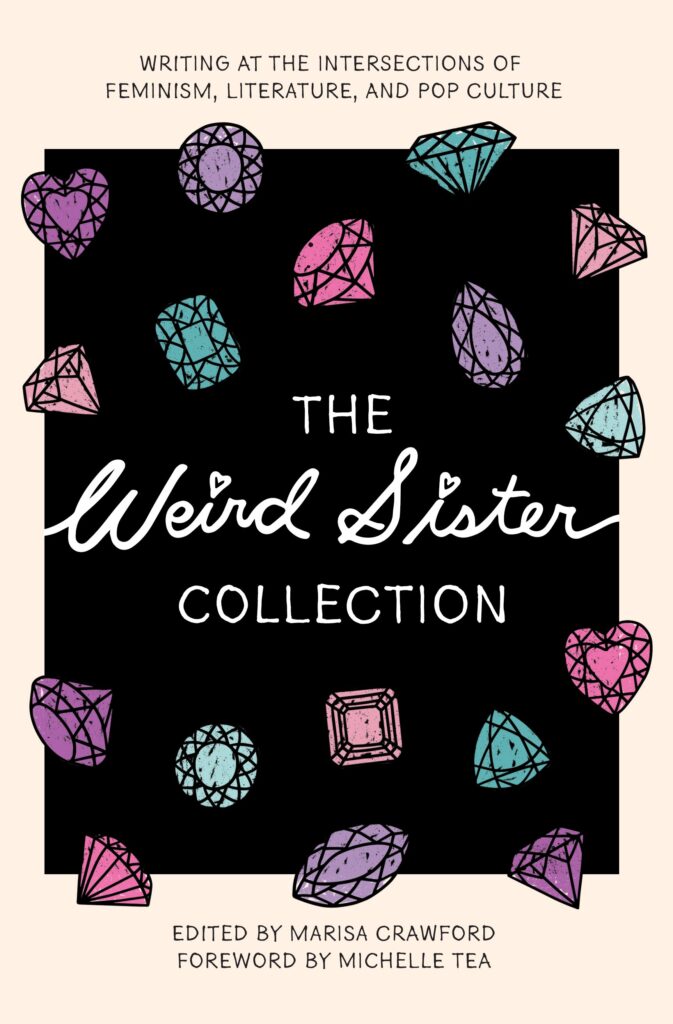
An exclusive excerpt from "The Weird Sister Collection," edited by Marisa Crawford.
I didn't deign to call myself a feminist until I was nineteen years old, in my second year of college. Before then, I just wanted to be a writer. Reading Judy Blume and the Baby-Sitters Club books obsessively as a kid, I decided I wanted to be an “author” when I grew up, and started writing my own poems and young adult novels in fourth grade (a baby poet at heart, I could never get past chapter two). “Feminist” was a word I rarely heard growing up. If I did, it was mentioned with suspicion at best and disdain at worst. My first encounter with feminism as not purely negative came at fourteen, when my friend’s dad took us to a feminist vegetarian bookstore and restaurant in Bridgeport, Connecticut, called Bloodroot (it’s still there; please go). There, customers brought their own used dishes up to the counter in an apparent rejection of female subserviency that set off a little spark in my brain about the roles of women in the world around me, even if we sort of made fun of it after we left. I bought a bumper sticker that said “Vegetarians Taste Better,” uncertain if the sexual undertone was intended. I also bought a book of poems called Used to the Dark by Vicky Edmonds, a totally obscure small-press work, but the sole example I had at the time of what might be called feminist poetry. Of course, I wouldn’t have used that shameful word, “feminist,” to describe Edmonds’s book—maybe “writing by a woman about the dark parts of how it feels to be a woman,” like so much of my favorite music was? Weird, outspoken women artists like Tori Amos and Ani DiFranco and Courtney Love, who all my boyfriends and boy friends made fun of.
In college when I finally started calling myself a feminist—after meeting cool feminist friends who were nothing like the humorless stereotypes I had been warned about, and who told me I needed to throw out my bleached tampons and listen to Le Tigre and take women’s studies classes—I wanted desperately to make up for lost time, realizing that my whole life had been missing this essential perspective. So I read any and all feminist media I could get my hands on: I borrowed Inga Muscio’s book Cunt from a friend and read it along with every issue of Bitch magazine. I declared a minor in women’s studies and took classes where I learned about intersectionality, agency, privilege.
In my creative writing classes, we never talked about those things; in my first workshop that same year, the MFA student instructor was so infectious in his excitement about literature that I didn’t even notice the syllabus he handed out had zero women writers on it until another female student in the class pointed it out—I was too busy becoming obsessed with Frank O’Hara’s Lunch Poems. Slowly I learned about feminism on a parallel path just next to the one where I was learning about how to be a writer. But I couldn’t quite figure out how these two spaces could coexist, let alone collide, and how on earth to go about building my own life within that collision.
~
Years later, I started the blog Weird Sister in 2014 because these two worlds—the feminist world that was incisive and inclusive, and the literary world that was performative, tongue-in-cheek, and experimental—still felt far too separate to me, even as I entered my thirties. In college, I’d started to see glimpses of the intersections between them: in women’s lit courses where we read Jamaica Kincaid, Toni Morrison, Maxine Hong Kingston, June Jordan, Gloria Anzaldúa. I went to see Eileen Myles read for extra class credit. I found Arielle Greenberg’s Small Press Traffic talk “On the Gurlesque” on the internet one night. Each piece of the feminist literary puzzle I learned about blew my mind all over again, and it occurred to me that there was not just one right way but many, many ways to be a feminist writer.
All these rich lineages of literary work and activism were out there, but where were the spaces outside of academia for people to come together to think and talk about them? From the mid-2000s into the 2010s, the blogosphere was where people talked about things. After college, I discovered the blog Feministing and made it my computer’s homepage so I wouldn’t forget to read it every day. That blog—along with other feminist blogs of that era like Crunk Feminist Collective, Everyday Feminism, Black Girl Dangerous, Tiger Beatdown, Racialicious, and the Women’s Media Center blog—offered supersmart, inclusive takes on politics and pop culture in an accessible, conversational tone that helped me and so many other young people better understand the world. But they didn’t often include literary content—how could they, strapped as they were with the task of breaking down the entire world for young feminists, and payment-free at that? When these spaces did cover books, they were more commercial publications, not the niche within-a-niche world of experimental poetry where I had found my home as a writer.
At the same time—but in a separate sphere—lit blogs were where my particular literary world found community and dialogue on the internet. On blogs like HTMLGiant, Coldfront, The Rumpus, and We Who Are About To Die, poets and experimental writers wrote and read about the small poetry presses and underground literary culture that rarely got covered in larger venues. I remember reading some posts that addressed feminist issues by writers like Roxane Gay and Melissa Broder, then still aspiring writers themselves, but more often I read a lot of posts by cis white men that were interesting, insightful, and funny but lacked the political analysis I was looking for about how poetry related to gender and race and the other aspects of identity and power that mattered most when it came to living in the world.
These indie lit blogs were mostly edited by men and featured long rosters of mostly male contributors, mirroring the gender disparities of more mainstream literary publishing outlets and gatekeepers of the time. Of course there were, thankfully, some exceptions. Pussipo (later renamed HemPo), a collective of 160 feminist poets, started the blog Delirious Hem in 2006, which featured feminist poetics forums, roundtables with feminist small presses, feminist poets writing about everything from rape culture to movies, fashion, and fitness (“It’s a blog, it’s a poetics journal, it’s a platform. From time to time, a post will appear,” reads the description on the now archived Blogspot website). In 2009 I was forwarded a mass email from poet and professor Cate Marvin called “Women’s Writing Now!” which began “Dear Female Writer.” The email—which explained that Marvin’s panel proposal on Contemporary Women’s Poetry had been rejected by the annual writing conference AWP, while the conference regularly accepted proposals on topics unrelated to women (Birds in Poetry, for example, stands out in the mind from my own years of attending)—was a rallying call for the creation of a whole new organization dedicated exclusively to women’s writing. As a result, Marvin, along with Erin Belieu and Ann Townsend, soon founded VIDA: Women in Literary Arts, and in 2010 the organization began, among other vital literary projects, their annual VIDA Count to draw attention to gender disparities in publishing. With the Count, VIDA was not just critiquing inequities in literary culture but also holding institutions and gatekeepers accountable to do better in a very clear, measurable way.
But as Christopher Soto writes in his piece “The Limits of Representation” (page 113), equity in numbers, while hugely important, is only one measure of progress. I still longed for an intentional, energetic, creative, and community-building space to fill in even just some of the lack of feminist literary commentary online, to bridge a bit of the gap between these two distinct worlds I inhabited, and to disrupt the white male lit-blog industrial complex with an explicitly feminist Blog of One’s Own. Boosted by the encouragement of a girl gang of feminist poet friends (special shout-out to Becca Klaver for helping me get the blog off the ground), I bought a web domain, went into a temporary and never-to-be-replicated fugue state wherein I designed a website, and asked a roster of the smartest, coolest feminist writers I knew to join me in launching Weird Sister.
~
I wanted Weird Sister to be a space for talking about the feminist poems and books that inspired us, the contemporary literature that was doing interesting work around gender and other aspects of identity, the sexist shit that happened in the literary world but that nobody talked about publicly, how the established canon we all learned in school upheld what bell hooks calls the white supremacist capitalist patriarchy, the exciting readings and events going on, and the pop culture we consumed alongside it all with glasses of wine or Dr. Pepper—because we were not, after all, monoliths who existed only within the literary world. Like Becca Klaver writes in her piece about Bernadette Mayer’s poetics of “radical inclusiveness” (page 74), it felt feminist and unapologetic to show ourselves as full people who were not just poets and literary critics but also nostalgists and reality TV watchers and record collectors and parents and teachers and people working to survive in the world.
With Weird Sister, I wanted to create an online platform that was filled with serious ideas, but didn’t feel stuffy and exclusionary like poetry criticism so often can. Emulating the chatty, conversational tone of my favorite feminist blogs, Weird Sister aimed to be open and unpretentious. Vernacular language and oft-ridiculed traditionally feminine speech patterns like saying “like” too much were welcomed and encouraged. And, as on the best lit blogs, conventional criticism, creative forms, and personal elements could all, like, blend together. It was a space to celebrate and encourage dialogue between seemingly divergent aspects of culture, both “highbrow” (poetry, film, visual art, politics) and “lowbrow” (pop music, nostalgia, TV, celebrity gossip), and to take to task those supposed cultural distinctions with a glitter-nail-polished middle finger held high.
When it came to the blog’s name, I wanted to invoke the ineffable, the interplanetary; the glittery liminal spaces that art comes from. The “Weird Sisters” are the three witches in Shakespeare’s Macbeth, double double-ing and leading the play’s hero to his demise. They’re prophets, goddesses, bearded hags stirring a glowing cauldron. A weird sister is also an outcast, a goth girl, a nerd, a poet. Her existence is a disruption to the status quo. In my own family, I always felt like the weird one—sandwiched between my two sisters, the art-y and sensitive one traced in heavy black eyeliner. Seeing other “weird” girls and women and femmes in pop culture growing up made me feel seen and inspired.
Weird Sister emerged as a space where we and others like us could see ourselves reflected back, and where we could hang out together and talk and write and multiply; a weird sister to both the more journalistic feminist blogs and the less feminist lit blogs that came before us. A platform and community of feminist poets and creative writers, many of whom were trying out writing critically for the first time in a collaborative blog space, all of whom have gone on to do so many incredible things in the literary world.
~
I didn't realize it at the time, but in 2014 we were on the precipice of a cultural sea change. When Beyoncé performed at the VMAs the next year alongside a giant glowing “FEMINIST” sign and a sample from Chimamanda Ngozi Adichie’s TED Talk “We Should All Be Feminists,” it made me wonder if a column debunking stereotypes about feminist poetry was even still necessary. In a turn toward what writer Andi Zeisler calls “marketplace feminism,” everywhere you looked people were suddenly wearing feminist T-shirts bought from indie retailers or from H&M, drinking from feminist mugs, meeting at feminist co-working spaces. There was also a huge influx of mainstream, corporate-funded feminist publications and content popping up online. Broadly, VICE’s women’s imprint, launched in 2015. (I both was miffed by their tagline, “Women’s news you thought would exist by now,” and longed for them to hire me.) Lena Dunham and Jenni Konner teamed up to create Lenny Letter that same year. Bustle, Rookie, and xoJane had all launched a few years earlier, and the media landscape was suddenly flooded with women’s personal stories and lists of “ten feminist novels to read this summer.” Most of these publications folded by 2019—a testament to the tumult of the industry, but also to the fleeting nature of corporate interests in feminism as a cultural fad. Many of the original trailblazing feminist blogs and magazines of the 1990s and early 2000s—like Bitch and Feministing—have also since folded, a testament to the difficulty of sustaining an independent feminist project without sufficient funding.
But of course the cultural and social activism of the mid-2010s was about much more than just corporate co-opting of feminism, something that’s been happening since the dawn of the women’s movement itself. Between 2013 and 2015, in response to non-indictments of the murderers of Trayvon Martin and Michael Brown, the #BlackLivesMatter hashtag created by Alicia Garza, Patrisse Cullors, and Opal Tometi became recognized as a protest movement on a global scale. And #MeToo, the campaign started by Tarana Burke in 2006 to draw attention to sexual assault, was popularized as a viral hashtag in 2017. Around this time, my own writing community also began having vital conversations about inclusion, abuse, race, and gender on a scale I had never seen before. In 2015, for example, Marcelo Hernandez Castillo, Javier Zamora, and Christopher Soto founded the Undocupoets Campaign—and later a fellowship with the same name—to protest the discriminatory rules of many first-book publishing contests in poetry, which prohibited undocumented poets from applying. And after several high-profile conceptual poets were called out for racist performances, an anonymous collective of poets called the Mongrel Coalition Against Gringpo began sharing online manifestos lambasting what they saw as the white supremacist project of conceptual poetry (or “conpo”). When a number of instances of sexual misconduct came to light in the poetry and Alt Lit worlds, a proto–#MeToo movement, started by feminist poets including myself in cities across the US and beyond, undertook efforts to dismantle a widespread culture of sexual abuse and harassment in poetry and Alt Lit. Jennif(f)er Tamayo, whose literary activism was instrumental during this time in organizing “Enough Is Enough” meetings and discussions on sexism and accountability in the New York poetry community, writes about their commitment to “Being Unreasonable” as a locus for resisting entrenched forms of oppression in our particular literary communities (page 129). Weird Sister was created to encourage dialogue at the intersections of literature, culture, and social justice, and during this transformative moment it served as a space to document some of these conversations as they were happening in literary communities.
A feminist lit blog was never enough, would never be enough, to eradicate the world’s injustices, but being one small piece of the puzzle trying to change things for the better was all we could ever really hope to be. Writing this in 2023, I can’t say that I feel particularly hopeful about the state of the world. But I think about an interview with Jia Tolentino in 2022 where she says that she can accept hopelessness as a feeling, but never as a political standpoint, and I feel inspired by the continued work of all the writers gathered in this book and at work beyond it—all those “humorless” and hilarious and smart and radical and messy and groundbreaking literary activists that paved the way for us and continue to do so.
When I first launched Weird Sister, I loved the feeling of running a vibrant space where vital conversations about feminism, poetry, and pop culture could flourish. I stayed up late each night working on it between days at my copywriting job—high on the blend of excitement and anxiety—but naturally it was impossible for me and for all of the Weird Sister team to keep doing this work, at this rate, sustainably. And without a model for funding or time to make one, the blog slowly went from a rush to a trickle of occasional content. As Samhita Mukhopadhyay, former executive editor of Feministing, wrote for Barnard College’s 2012 #FemFuture conference on the future of online feminism, “Blogging has become the third shift. You do your activist work, you have a job to make money and then you blog on top of that. It’s completely unsupported.” The feminist blogosphere that Mukhopadhyay refers to is widely considered the hallmark of a whole “wave” of feminism, but—like so much activist work throughout history— it’s had virtually no financial support. Still, in spite of the challenges that came with Weird Sister, it’s amazing to look back on the vast and mind-blowing array of writing that came out of planting this weird little seed on the internet. I hear there’s a movie about baseball where they say, “If you build it, they will come.” I built Weird Sister, and out came all the feminist weirdos with their brilliant minds, and this incredible collaboration and community was born.
~
The Weird Sister Collection brings together some of the most popular, insightful, LOL-funny, moving, and unforgettable posts from the blog between 2014 and 2022, along with some new work highlighting essential perspectives, figures, moments, and movements in feminist literary history. The book pulls out natural themes that emerged from the blog’s eclectic archive: from bringing a contemporary feminist lens to historical literature and paying homage to the iconic writers that came before us, to shining light on current books, events, organizations, and conversations. And, of course, it includes writing about pop culture, both nostalgic and present-day. While never exhaustive, this book hopes to offer a snapshot of some of the vital conversations and commentary surrounding feminism, literature, and pop culture from the last decade, and those that led up to it.
Weird Sister was born out of a love for feminist books, from my longing for feminist books to exist, to line the walls; to read them all, to write them. So it makes sense that it is now a feminist book too. I want feminist literary writing to take up more and more space, both on the internet and in the physical world, on bookshelves where a teenager at a feminist bookstore café might stumble upon them, goddess willing, after bringing her tray up to the counter. And I hope that putting Weird Sister’s contents in a book will allow future generations to learn about the early twenty-first-century feminist blogosphere in a format that gives it the same legitimacy as the white male literary canon; the same weight as the copy of On the Road that my high school English teacher handed me because she thought I might like weird, emotional, experimental prose, and assumed, correctly, that I would ignore how it treated women. The impulse that propelled feminist bloggers in the first place was an interest in creating our own media, holding it up, declaring it real and legitimate and important amid a patriarchal culture that devalued it and gatekept it away. So this book is a reminder that Weird Sister happened, and of the powerful, cool shit you can do together as a creative community. It’s proof that all these feminist writers read books by all these other feminist writers and wrote about them—and about music and movies and TV and art—and then became the feminist writers that others will write about someday. And actually, people are writing about them right now—go read it. Go write it. It’s a never-ending cycle of influence, admiration, and creation. I hope that you find it weird and inspiring.
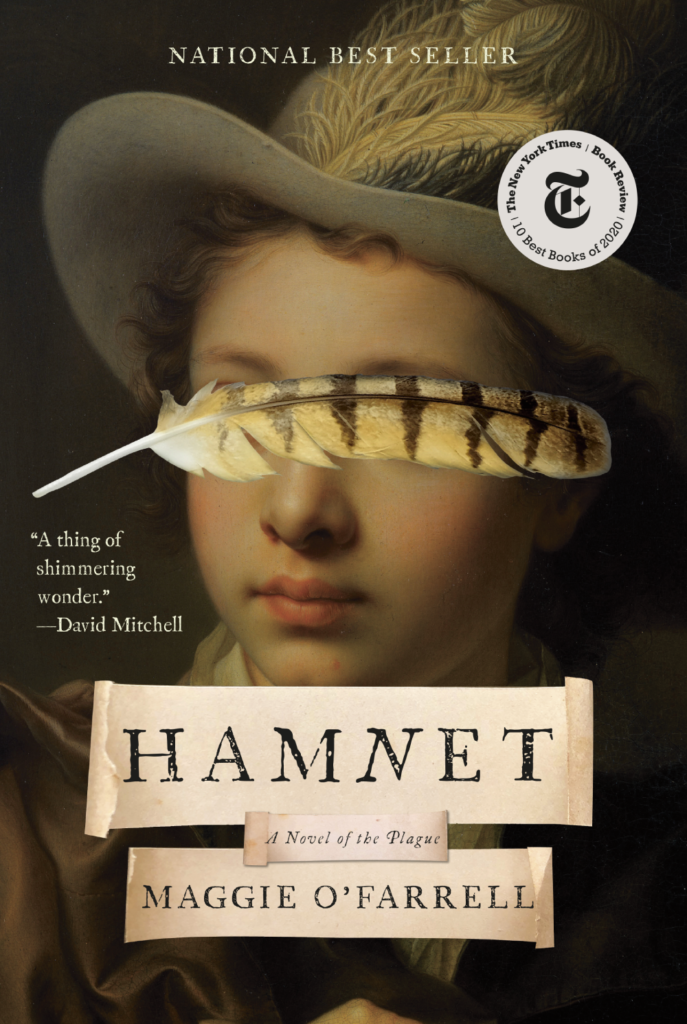
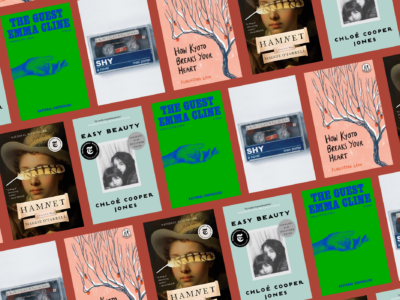
Before reading this novel, I’d somehow missed that Shakespeare had a child named Hamnet, who died of the plague in 1596 at the age of eleven, four years before Hamlet was written. Seems relevant! Only the bare bones are known about Shakespeare's wife, Agnes/Anne, and their kids, and Hamnet is O'Farrell's lyrical recreation of their 16th century family life in Stratford-upon-Avon. The storytelling is so vivid and captivating, you won’t miss their most famous relation.
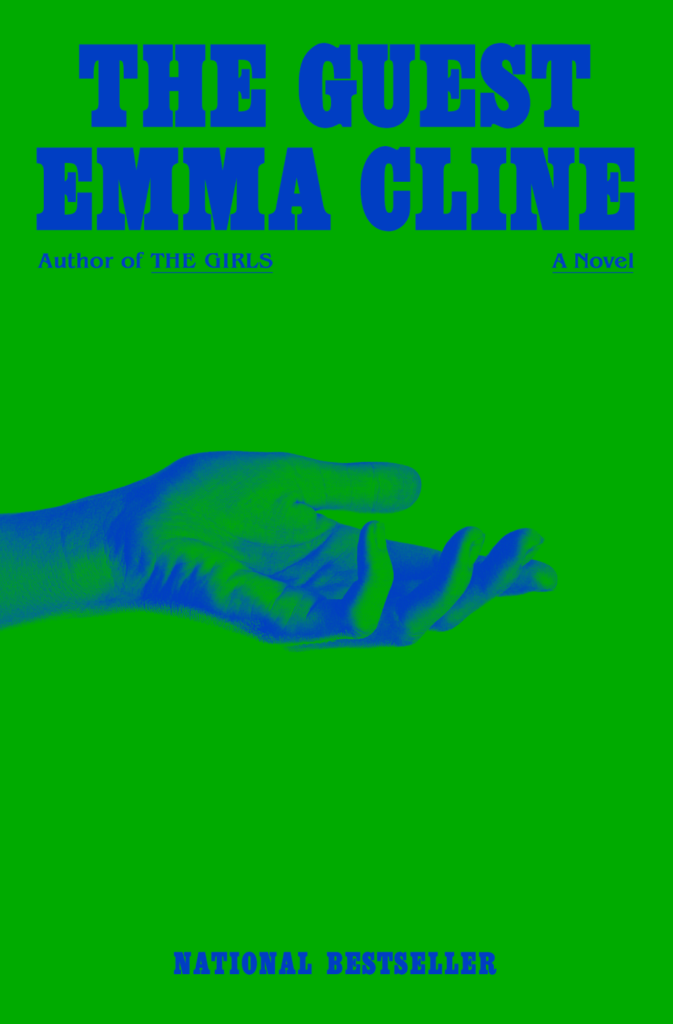
Like everyone else in New York, I flew through The Guest when it came out last summer. A story about a woman in her 20s after she's been kicked out of her boyfriend’s house in the Hamptons, she pleases her way through strangers’ homes, grasping onto the life that she once had. She was in no way a relatable character—but it was fascinating to me how this woman could so easily sell a narrative and transform herself into what various people want.
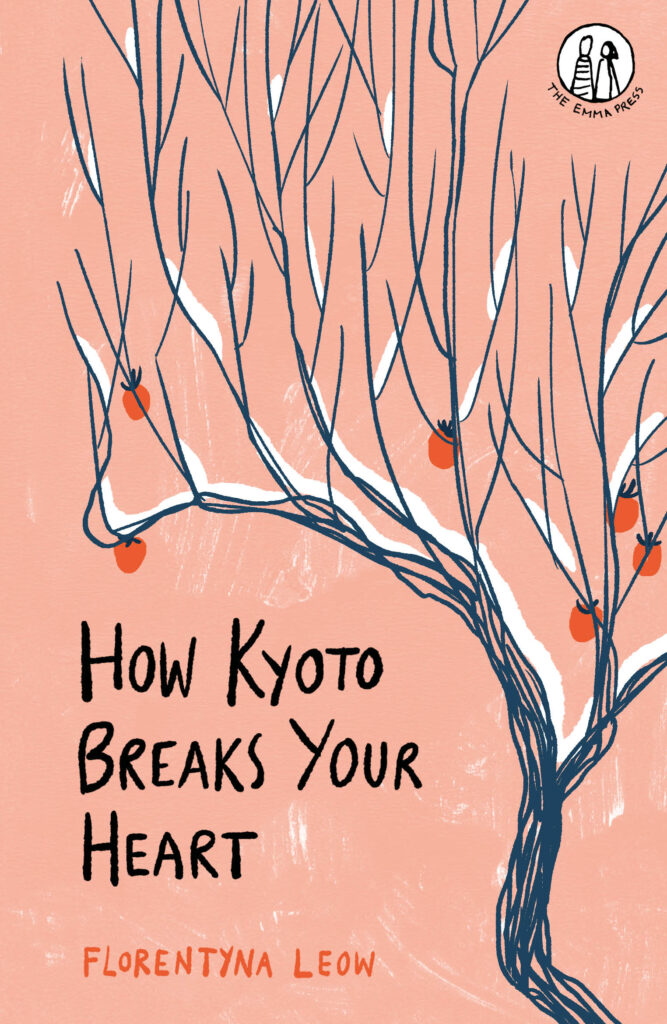
My favorite book this year was How Kyoto Breaks Your Heart by Florentyna Leow. It’s a story about women friendships, the heartbreak of breaking up with those close friends, and Kyoto. Throughout the book, Leow weaves their personal experiences, like of being a tour guide and making jam from a thriving persimmon tree, as metaphors on loss and the joy of finding yourself despite it. I have never read a book that so beautifully put the feelings of losing a female friend on a page (including the painful grieving process). Every word felt refreshing and I kept repeating to myself, “This is me.” But as much as it’s about friends, it’s equally about Japan. With every page, I yearned to explore Kyoto and soak up everything it has to offer, even if my heart breaks a little in the process.
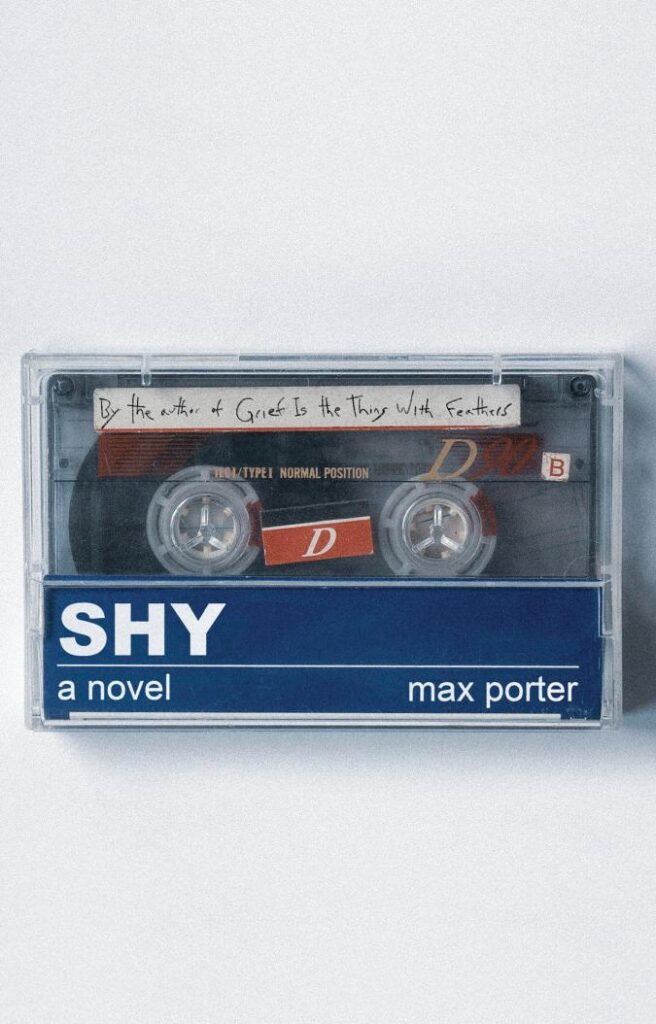
If you are interested in how identity and childhood shape our experiences of the world, you will love Max Porter's Shy, a novel that begins with its young protagonist leaving a boarding school for troubled boys in the middle of the night and heading for the river with a backpack full of rocks. What I loved is that Porter continuously disrupted my expectations of what would come next. The author—who holds a masters degree in feminism and performance art—writes about boyhood, toxic masculinity, and the existential crisis of growing up in today's gendered world in a way that incited an emotional and visceral reaction in me, offering the flip side of my own experience growing up as a girl in the US. It made me question and look at things with a new light; and the ending was so cinematic and powerful that I cried in public reading it!
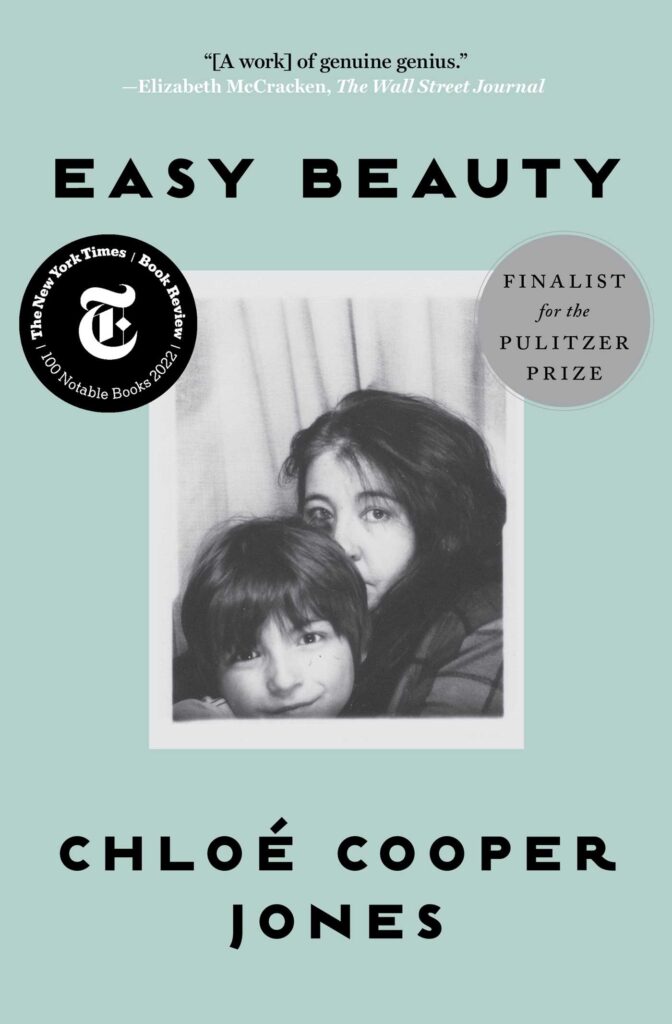
I hate to say it, but it's much rarer these days that a book really knocks my socks off. I blame myself for this. My attention span has waned, my burnout has deepened—both things that have made it harder for me to really sink myself into a good book. This was not the case with Easy Beauty. It was kismet: Entirely by chance, I started reading it while in Italy, where a large portion of the memoir takes place, making it an especially vivid read. But even if I'd been in the middle of the Pacific, I would have devoured this gorgeous memoir. Chloé Cooper Jones' writing is just sumptuous; her memoir equal parts sharp, tender, brutal, and funny. A breathtaking exploration of "otherness," and how each of us is complicit in upholding it, even as the "othered"; but likewise how we might be able to push back and subvert the narratives given to us.
—Gina Mei
[post_title] => The Best Books We Read in 2023
[post_excerpt] => (For you to add to your 2024 TBR pile.)
[post_status] => publish
[comment_status] => closed
[ping_status] => closed
[post_password] =>
[post_name] => best-books-read-2023-novel-memoir
[to_ping] =>
[pinged] =>
[post_modified] => 2024-08-28 21:15:11
[post_modified_gmt] => 2024-08-28 21:15:11
[post_content_filtered] =>
[post_parent] => 0
[guid] => https://conversationalist.org/?p=6505
[menu_order] => 67
[post_type] => post
[post_mime_type] =>
[comment_count] => 0
[filter] => raw
)
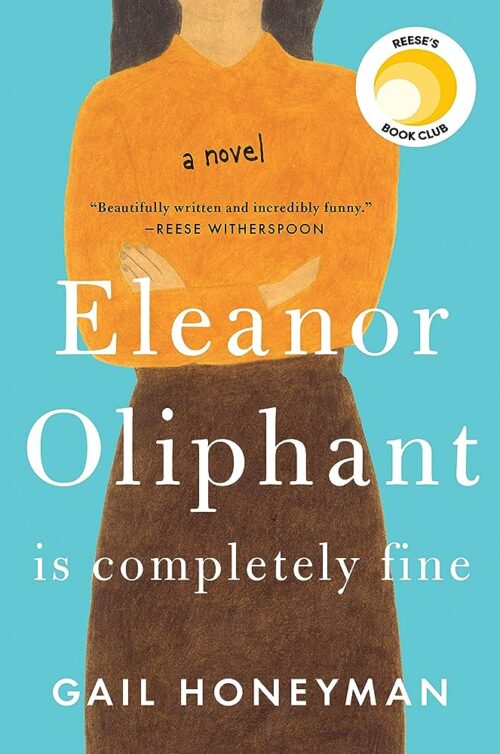
I enjoyed the audiobook of this weird, charming, and on occasion deeply disturbing novel. Eleanor is a one-of-a-kind protagonist, not easily likable, yet I was immediately invested in her journey. She’ll stretch your imagination in unexpected ways. —Anna Lind-Guzik
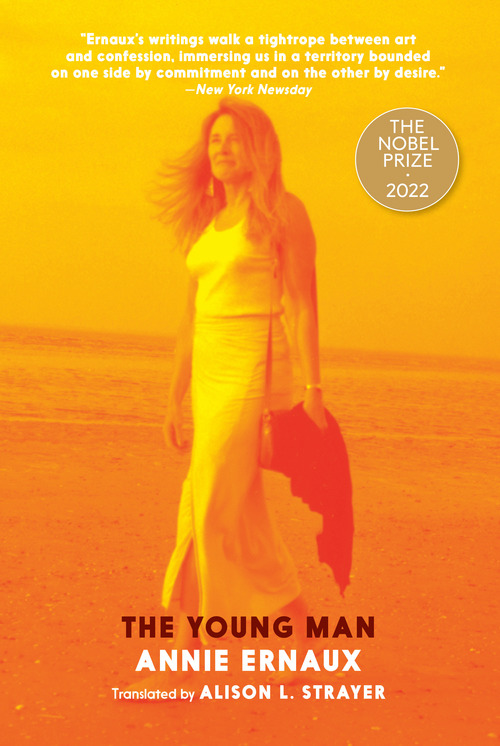
If there's a new translation of Annie Ernaux out in the world, you best believe I'm getting my hands on it ASAP. Her first since she won the 2022 Nobel Prize in Literature, this is Ernaux at her best: sexy, a little melancholic, complex, intimate. It's a wonderful meditation on desire, on aging, and on what drives an autobiographical writer to write about themselves. —Gina Mei
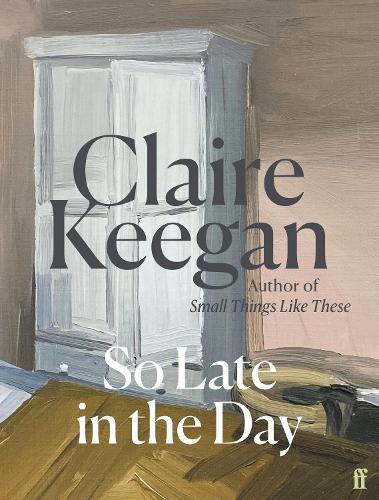
This month I reread a short story by Claire Keegan, "So Late in the Day." I heard of it on the New Yorker Radio Hour; the author George Saunders chose it and thought that Keegan could be compared to Anton Chechov. If that does not get your attention, Saunders also commented on how every line in the story had meaning, so it was worth reading once and then going back to notice its layers.
Keegan had challenged herself to come up with a story that was super tense but where that tension and suspense were not driven by the narrative. What she came up with is a story about misogyny and gender roles in relationships. I'm obsessed with it on so many levels—the writing, the craft, the message. It's a story that stays with you. —Elyssa Dole
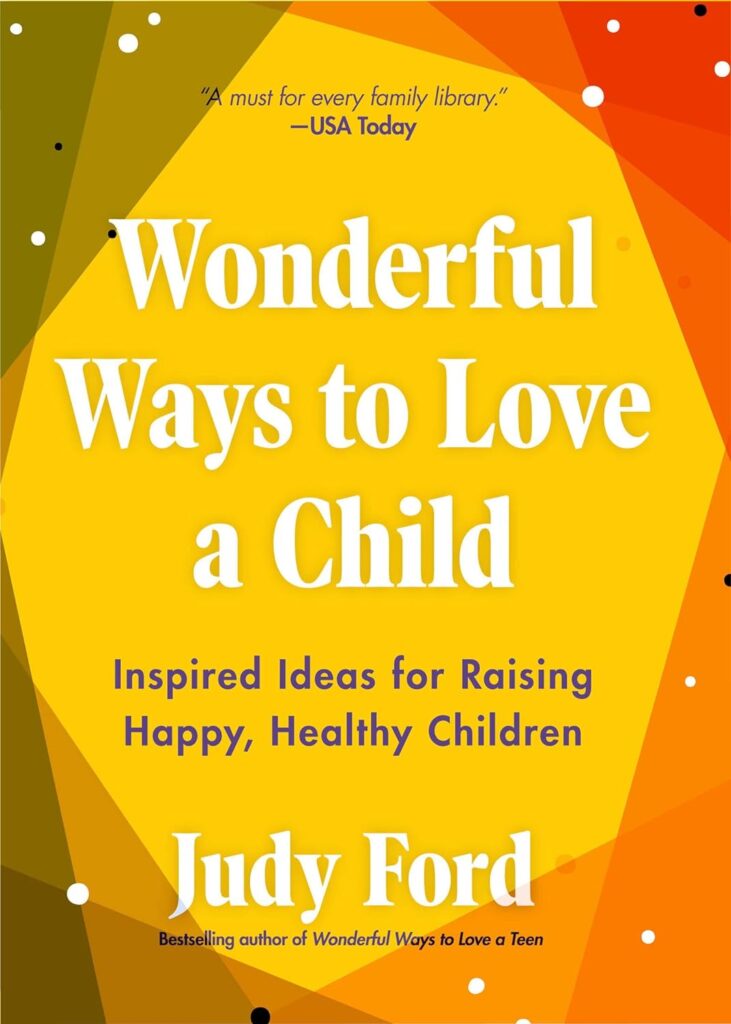
This month, I delved into Wonderful Ways to Love a Child by Judy Ford with the goal of enhancing my relationship and communication with my daughter. This insightful book offers a plethora of practical and creative techniques for building stronger connections with children. Through relatable anecdotes and heartfelt wisdom, Ford underscores the importance of spending quality time, being an attentive listener, and maintaining positive communication to nurturing these essential relationships. Whether you're a parent or caregiver, this book serves as an invaluable guide to enriching the bonds you share with the children in your life. —Loleta Ross
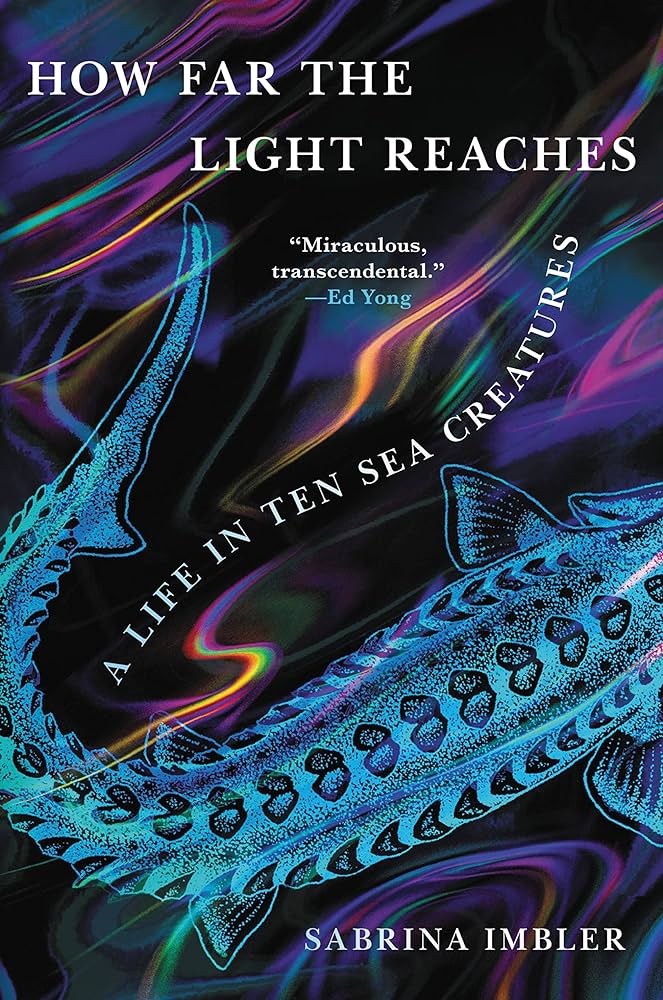
How Far the Light Reaches: A Life in Ten Sea Creatures has been one of the best books I've read this year! Sabrina Imbler explores their queer and cultural identities through shimmery life in the ocean in 10 essays. Once I started to read the first chapter, about how goldfish can actually thrive in wild waters (some growing as heavy as bowling balls!) and how this reflects their experience coming out, I couldn't put it down. This book is a beautiful reflection of life and acts as a reminder that every goldfish has the tenacity to live if only given the chance to escape their small bowl. —Kiera Wright-Ruiz
[post_title] => What We Read in September
[post_excerpt] => The staff's recommendations for your fall TBR pile.
[post_status] => publish
[comment_status] => closed
[ping_status] => closed
[post_password] =>
[post_name] => september-staff-book-reads-recommendations-nonfiction-fiction-novels-fall-new-releases
[to_ping] =>
[pinged] =>
[post_modified] => 2024-08-28 21:15:11
[post_modified_gmt] => 2024-08-28 21:15:11
[post_content_filtered] =>
[post_parent] => 0
[guid] => https://conversationalist.org/?p=6050
[menu_order] => 74
[post_type] => post
[post_mime_type] =>
[comment_count] => 0
[filter] => raw
)
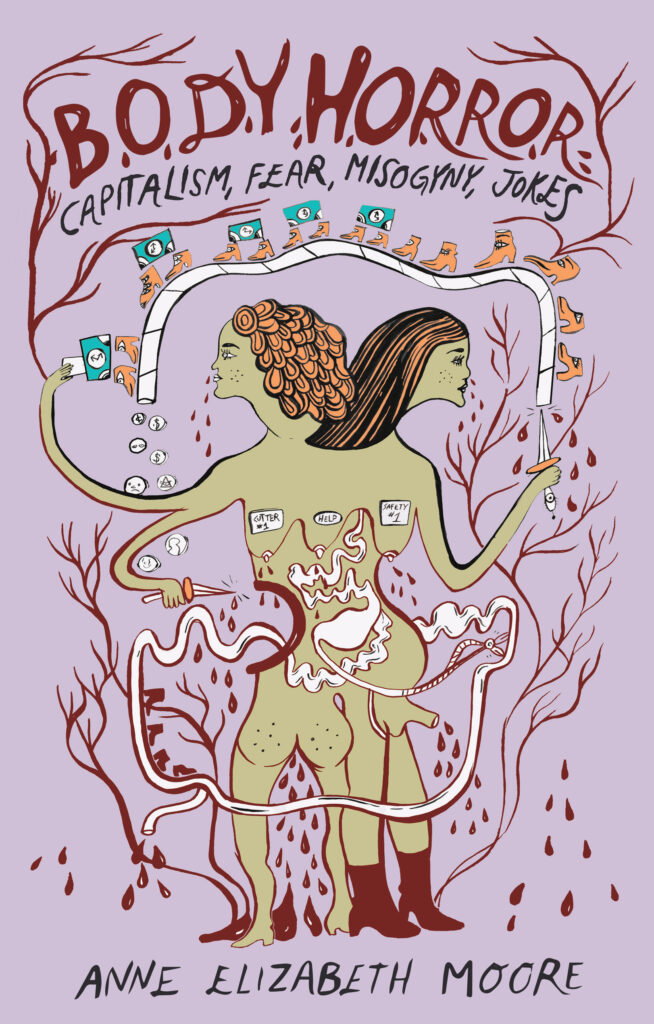
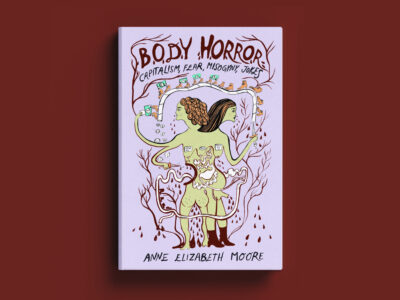
An exclusive excerpt from Anne Elizabeth Moore's "Body Horror: Capitalism, Fear, Misogyny, Jokes."
The Coronavirus. People who aren’t worried about the coronavirus. People who are too worried about the coronavirus. The possibility that I am not worried enough about the coronavirus. Case counts. The reliability of case counts. The vaccines. People who aren’t vaccinated. The reasons people aren’t vaccinated. Getting vaccinated. The mRNA vaccines. My thyroid gland, thrown into disarray by the mRNA vaccine and apparently increasing my blood pressure to dangerous levels. Convincing a pharmacist in a rural red county to give me a booster that is not an mRNA vaccine. Convincing a pharmacist in a rural red county to give me a booster at all. Convincing a pharmacist in a rural red county that the coronavirus is real. Convincing a pharmacist in a rural red county to give me a booster as an immunocompromised person. Explaining to a pharmacist in a rural red county what being immunocompromised means. Convincing my doctor that the mRNA vaccine caused my thyroid disruption, the first I’ve experienced in over a decade, occasioned exclusively and to the day by my second mRNA vaccine booster. A new coronavirus strain. The effectiveness of masks. Buying more masks. Masking at outdoor gatherings. Transmission at outdoor gatherings. Outdoor gatherings. Being around other people. Not being around other people. The large and embarrassing zit that emerged on my cheek a few days back despite the fact that I am an adult, wash frequently, and do not consume sugar. My autoimmune diseases. The medications for my autoimmune diseases. The vitamins and supplements I take to counteract the medications for my autoimmune diseases. The likelihood of accruing more autoimmune diseases. The likelihood of accruing other diseases because of my autoimmune diseases. Being immunocompromised during a pandemic. Buying clothes during a pandemic. Going outside during a pandemic. Remaining inside during a pandemic. My left forefinger, currently swollen. My blood pressure, still high. My concentration, largely shot. Oh man, a buncha stuff. So much stuff!
What comes flooding in when I have a moment to breathe. The dead tree outside my window, and the path it will take when it falls. Mowing the lawn. Trimming the lawn. The survival of the monarch butterflies. What will happen to my cat if I don’t take her to the vet soon. What will happen to my cat if she keeps eating leaves from my fig tree. What will happen to my cat if I have a heart attack. Writing a will. Finding someone to sign my will as a witness who won’t freak out about my impending death. Refinishing my furniture in a pleasing enough manner that the beneficiary named in my will won’t just throw it away. The calcium supplements I have been taking, triple the recommended dosage, which turns out to cause high blood pressure. New lab results. More lab tests. Where to drop my sharps container. Paying for lab tests. My dwindling grant funding. Inflation. Winter heating bills. Utilities costs. Author-website maintenance costs. The cost of a new computer. Word processing software subscriptions. Book prices. Food prices. Cat food prices. Finding time to run. How running will affect my achy right knee. How running will affect my left leg. Not finding time to run. Where I can go to swim. Where I can go to swim during a spike in case counts. Focusing on my personal physical health during a global health crisis. Going out to eat with my food restrictions. Going out to eat during a period in American history where setting boundaries around personal health is unwelcome. Cooking for myself, again. Another new coronavirus strain. A new vaccine. Getting the new vaccine. This sore throat. This persistent cough. This fatigue. This diminished capacity to smell. This negative coronavirus-test result. Coughing in public after a negative coronavirus-test result. Coughing in public for any reason. People casually mentioning that they just tested positive for the coronavirus but feel fine. People who would never test for the coronavirus but clearly do not feel fine. This essay. Other essays. Writing. Not writing. Publishing. Not publishing. The publishing industry. The state of this nation’s democracy, such as it is. The avowed white supremacist who lives down the road. The Civil War reenactor up the block. The guy at the edge of the village with the flag outside his house that reads, “TRUMP 2024 FUCK YOUR FEELINGS.” The guy on the internet who tells me my feelings don’t matter. The guy on the internet who tells me I am stupid. The guy on the internet who responds to every post by telling me how hot I am. The guy on the internet who tells me he knows where I live. That my house sits on a hill that is visibly eroding. The oxycodone manufacturing plant in my village. The environmental repercussions of the oxycodone manufacturing plant in my village. The social repercussions of the oxycodone manufacturing plant in my village. The sheer volume of oxycodone that passes through this village. The sheer volume of guns within a five-mile vicinity of my home. How the vast majority of gun owners in this village fundamentally disagree with me on most basic matters. Not owning a gun. Owning a gun. A civil war. The current Democratic president. Any potential future Republican president. My blood pressure, now both too high and too low. Weaning myself off blood pressure medication. Getting enough calcium in my food without consuming dangerous supplements or dairy. The vitamin D supplements I have been taking too frequently, another cause of high blood pressure. How to get more vitamin D without supplements. Finding time to google every single thing I need to know more about just to survive the week. Remembering to google everything I need to know about to survive the week. Google knowing too much about me. Amazon. Amazon’s influence over publishing. Amazon’s move into housing. Amazon’s move into healthcare. That the calcium supplements I was taking at three times the dose I ordered and which substantially contributed to my high blood pressure were due to an Amazon shipping error. My Amazon rankings. Sales numbers of my current book. Sales numbers of this book. Sales numbers of my next book. Finishing my next book. Finishing this book. Writing books. Reading books. The surprise bill I just got for something that should be entirely covered by my insurance. Calling the insurance company, who tells me to call the billing department. Calling the billing department, who demands I call my RN. My RN, who was fired for refusing to get vaccinated against the coronavirus and then rehired after a couple of months out of desperation and who never got vaccinated. Calling back the billing department, who failed to file my paperwork with the insurance company because they were “too busy” and who asks me to file it myself. That my very complicated disease- maintenance program relies entirely on a medical facility who will charge me three hundred dollars for a fully covered five-minute doctor visit because they’re “too busy” to send the same paperwork to someone else. Dobbs v. Jackson. The women I know who will be affected by Dobbs v. Jackson. The nonbinary and trans people I know who will be affected by Dobbs v. Jackson. All the people I will never meet because of how severely their lives will be affected by Dobbs v. Jackson. Whether my political organizing in response to Dobbs v. Jackson will impact my own political career. Whether or not I can have a political career in a world where people with uteruses have no bodily autonomy. Whether or not I want a political career in a world where people with uteruses have no bodily autonomy. Whether or not I want to live in a world where some people have no bodily autonomy. The kind of people who want to live in a world where some people have no bodily autonomy. Republicans. Democrats. Being told to vote in response to bad policy. Being told to vote by a political party that has more money than god. Being told to vote by the people I voted for. Being told to vote in a world where voting rights are being stripped away from increasing numbers of people. That two out of four times I have tried to vote in this village I have been told I could not. This sudden, inexplicable grief that has no identifiable origin and no end, but some days recedes while I am in the shower and stays in the background for a while, perhaps days, but at other times emerges while I am washing dishes or doing yoga or placing a forkful of salad in my mouth and causes intense chest pain and sudden tears and colors everything gray and that no amount of crying or meditating or talking to friends or sitting in the woods can alleviate in any way. Why my sunflowers have not yet opened. What is going on with my beans. The organic content of the soil in my garden. Why my herb bed isn’t filling out. Why my plum trees keep dying. What to do with all this compost. Where to get more raised beds. Wild parsnip. Buying a chain saw. Using a chain saw. Accidentally killing someone with a chain saw. And then wanting to do it again. Purposely murdering someone with a chain saw. Running for elected office. Running for elected office and then having nude pics unearthed on the internet. The kinds of people who run for office. The kinds of people who will never, ever run for office. The weird tendency my left leg has after I’ve been walking for a mile or so to sort of peter out, to stop performing at peak function, to bend less easily and not lift as high with each step, and how this appears to be a neurological, not a physical, symptom of my medications. Any neurological disease or symptom. Long COVID. Catching the coronavirus as an immunocompromised person and passing along a mutated strain. Accidentally killing someone—oh wait, that’s already listed. Mpox. Pretty much all straight white cis men. Straight white cis men who want to play devil’s advocate. Straight white cis men who just want to ask me one question about feminists. Straight white cis men who assure me they’re not racist. Straight white cis men who speak only to other straight white cis men. Introducing straight white cis men to one another in a professional capacity given the likelihood that they will develop some kind of lucrative project together, leaving me out entirely, often forgetting they ever knew me, that I introduced them, that I used to be their friend. Introducing straight white cis men to music I like. When straight white cis men express interest in my work because they are working on a similar subject. People who too aggressively want to befriend me. Obviously also people who have no interest in me. Engaging with elders in the community during a pandemic. Engaging with elders in the community in a collegial manner and immediately being treated as a sycophant. Becoming an elder in the community. Aging. Trying to behave as normal. Behaving as normal. Trying to remember what normal was. What normal was. The inexplicable knot in my stomach when I wake up every day that takes several hours to dissipate but seems really out of place because actually right now everything is fine, you know, relatively speaking. My dreams, which are often just more of the same. Sleeping, therefore. What will happen next. What will not happen next. How we will recover. Who will recover. Who will not recover.
J.K. Rowling could have died a hero, but will instead be remembered by millions of her most ardent fans as a villain.
At first, it seemed subtle enough: Rowling would “like” tweets that framed trans women as men, toeing the line of support for transphobic rhetoric. Then, in 2019, she shifted from passive implied support to active commentary. She tested the waters by voicing support for Maya Forstater, the plaintiff in a UK employment lawsuit claiming she had been discriminated against for “gender-critical” tweets. On her website, best known for its charming Harry Potter-related Easter eggs, Rowling published a nearly 3,700 word essay decrying trans activism. She has even gone so far as to compare her opponents to Death Eaters, a Nazi-esque terrorist organization in the Harry Potter universe. Today, the author’s brand is practically unrecognizable to many longtime fans; if you emerged from a coma you entered in 1997, you might look at Rowling’s Twitter and assume that policing trans lives was her day job.
As one of the leaders of Fandom Forward (formerly The Harry Potter Alliance), an international nonprofit that helps Harry Potter fans and members of other fan communities become real-life heroes through activism, I had a front row seat to Rowling’s shocking transformation. I wasn’t just angry; I was heartbroken, especially since so many of my friends and collaborators in the Harry Potter fandom are trans. Having grown up in the Catholic school system, where people simply didn’t come out until adulthood, many of the first openly trans people I ever met were people I knew through this fan community.
Whether she accepts it or not, J.K. Rowling is fighting to destroy a safe haven that she helped create. She isn’t just collecting royalty checks or rolling around in champagne: She is using the power of storytelling to enact significant political and cultural outcomes for trans people who are merely trying to live freely, without the threat of violence or death.
Fortunately, fans who support trans rights are doing the same thing. I am one of them. As a child, pop culture was the lens through which I understood the world and myself. I didn’t just consume stories. I devoured them, and made them my own. I was born in the early ’90s, and grew up with the Hogwarts trio: The night in 2001 that my grandmother and aunt took me to see Harry Potter and the Sorcerer’s Stone, then set me up with a copy of the book, changed my life forever. I spent countless hours imagining myself at Hogwarts, fighting alongside my favorite characters. Would I be great at Quidditch like Harry and Ron? An intellectual like Hermione? Great with magical creatures like Hagrid? The ability for readers to place themselves in this magical universe and learn something about themselves in the process is part of why the story has endured for so long.
Like many children of my generation, I also understood the Harry Potter universe not as an escape from reality, but an invitation to tackle the world’s injustices. After all, Harry Potter, Ron Weasley, and Hermione Granger were never passive bystanders. Even at age 11, they stepped up to fight evil, often without the support or knowledge of the adults around them.
Today, I am part of a community of fans using the lessons we learned from Harry Potter to combat a rising tide of transphobic violence in the U.S. and U.K. The fandom’s response to Rowling's comments has been swift and impactful, creating a path forward that challenges Rowling’s ideas and fosters trans acceptance, all while offering options beyond a mere boycott. The Gayly Prophet, a Harry Potter podcast with a queer and trans lens, created a guide to firing J.K. Rowling that features countless suggestions for engaging with the franchise ethically, and even supporting trans rights through the purchase of fan-made merchandise. Fandom Forward’s Protego Toolkit provides resources and actions fans can take to lobby against anti-trans legislation, attend protests, volunteer for trans rights organizations, and make community spaces trans-friendly. A consortium of fan organizations called HP Fans Against Transphobia has collected thousands of signatures petitioning HBO against further enriching Rowling through the creation of a new Harry Potter television series. And our heroes themselves have even stepped up to be a part of this activism, too: Recently, Harry Potter star Daniel Radcliffe moderated “Sharing Space,” a Trevor Project web series featuring discussions with trans and nonbinary youth.
Whether it comes from the fandom or “Harry” himself, Rowling faces a powerful storm of collective action, rooted in love and community for trans lives. Because the truth is this: Fans have power, and as a collective, we can make a difference—sometimes even bigger than the thing that brought us together in the first place.
Media scholar Henry Jenkins defines fan activism as “forms of civic engagement and political participation that emerge from within fan culture itself, often in response to the shared interests of fans, often conducted through the infrastructure of existing fan practices and in relationships, and often framed through metaphors drawn from popular and participatory culture.” Simply put, fan activism allows fans to channel their creative energy and imagination into civic action—and it’s effective.
As an innovative practice, fan activism can take many forms, though many were popularized by what was once The Harry Potter Alliance, which I joined as a college sophomore in 2012. What started amid a rich ecosystem of transformative works on Harry Potter became a guiding force and community hub for hundreds of thousands of fans. The organization was founded in 2005 to address human rights violations in Sudan and raise money for Amnesty International at local wizard rock concerts in the Boston area. Today, we’ve turned our sights toward countless other causes, too.
In nearly 20 years, fan activists have developed innovative, powerful campaigns on a global scale. As a longtime volunteer and now as the co-chair of the board of directors at Fandom Forward, I have witnessed thousands of volunteers, often young students from various backgrounds, recognize and own their collective power through pop culture. Together, we have donated over 400,000 books and built libraries in underserved communities globally through Accio Books (now Book Defenders), connected with activist mentors at our Granger Leadership Academy (also known as Camp GLA), raised funds to bring three planes (aptly nicknamed Harry, Ron, and Hermione) full of rescue supplies to Haiti during the 2010 earthquake disaster, and even successfully lobbied Warner Bros. to use Fair Trade-certified cocoa products through our Not in Harry’s Name campaign.
The real magic and legacy of fan activism, however, is that it challenges corporate assumptions about what fandom is. The world’s greatest “superfans” are more than just passive media consumers who will buy and stream whatever you put in front of them. They are active participants who will remix and reinterpret your brand through the lens of their own experience. And they aren’t afraid to walk away from the brand itself when its creators do not align with their morals. The swift response to J.K. Rowling’s commentary on trans rights, as well as commentary on fatphobic, racist, and antisemitic tropes in the Harry Potter series, illustrates that pop culture is no longer a top-down hierarchical structure, with audiences waiting to absorb whatever studio executives have decided the masses should consume. Fans have willed ideas about their favorite stories into life. If they don’t agree with the harm a creator has caused, they can—and will—go elsewhere.
This trend is extraordinary not because it is new, but because it brings us one step closer to the heart of what storytelling looks like outside the shadow of corporate greed: not a means by which a few companies could reap profits endlessly, but a modern mythos by which our collective memory passes from generation to generation. Storytelling is one of the key elements that makes us human. For thousands of years, humans have told stories in order to survive. As our species evolved and circumstances changed, stories have shifted in purpose, meaning, and interpretation, but ultimately still exist to help us survive and build community. Fandom, and fan activism by extension, is simply a part of the storytelling evolution.
The passion, joy, and power of fandom is immeasurable. It is a magic that cannot be contained or tamped down, even as brands attempt to wrest control over the meaning and messaging behind their intellectual property. Organizing can still seem daunting, and those in it for the long haul will need plenty of ways to take care of themselves and their community. For fan activists, the hard work of organizing is often accompanied by opportunities to experience joy and self-care at community events, from wizard rock concerts to meditation retreats. In the fight against fascism and anti-democratic practices, my ability to engage in sustainable, joyful activism with other fans has given me hope beyond measure.
While Harry Potter has fostered some of the most popular forms of fan activism, the possibilities are endless, spanning countless other fan communities. The Fan Organizer Coalition, founded in 2021 and co-directed by Fandom Forward and Black Nerds Create, has sparked numerous cross-fandom collaborations. From ending voter suppression with Star Trek fans, to celebrating Indigenous geek culture, to educating Disney fans on how to fight the climate crisis, our civic imagination as fans and as storytellers knows no bounds.
[post_title] => Don't Underestimate Fan Activists
[post_excerpt] => No one knows how to organize like a fandom.
[post_status] => publish
[comment_status] => closed
[ping_status] => closed
[post_password] =>
[post_name] => fan-activism-fandom-activists-harry-potter-jk-rowling-transphobia-protests
[to_ping] =>
[pinged] =>
[post_modified] => 2026-08-04 19:10:04
[post_modified_gmt] => 2026-08-04 19:10:04
[post_content_filtered] =>
[post_parent] => 0
[guid] => https://conversationalist.org/?p=5901
[menu_order] => 81
[post_type] => post
[post_mime_type] =>
[comment_count] => 0
[filter] => raw
)
Over 20 years after the first "Princess Diaries," the writer is still sticking up for romance.
In the opening scene of 1999's cinematic classic 10 Things I Hate About You, guidance counselor Ms. Perky (Allison Janney) sits pert in her cardigan and pearls, tip-tapping away at her computer. "I'll be right with you," she tells a student, turning back to her PowerPC…on which she is crafting a magnum opus of a romance novel. In the film, Ms. Perky’s novel is played for laughs—a running joke, with key words like “pulsating” and “bratwurst” used to portray the luridity of her side hustle. But around that same time, in real life, an administrator at a New York University dormitory was living out a similar scene: tucked away in her office, tapping away at romance novels in between wrangling angsty students. Only this time, she was the main character.
Her name was Meg Cabot.
"It was exactly like that," Cabot told The Conversationalist shortly before Thanksgiving. Over Zoom from her longtime home in Key West, Florida, she talked a mile a minute, the charming, real-life embodiment of the chatty early-aughts heroine she's most known for: The Princess Diaries’ Mia Thermopolis. "All the kids in the dorm knew that was exactly what I was doing. I'd be on my computer when they would come in and they'd be like, 'I don't want to interrupt you, but there's a fire.'"
Cabot would put out the fires, of course. It was from that desk, though, in her tiny corner of NYU, that she'd write her first "ten or eleven" novels. At the age of 31, she’d begin publishing steamy, “pulsating” adult historical romance, before breaking into the public consciousness in 2000 with the back-to-back publication of her first young adult novels, The Princess Diaries and The Mediator: Shadowland. The rest is history. Following Disney’s smash hit movie adaptation of The Princess Diaries, Cabot's name fast became synonymous with the fun, romantic "chick lit" of the time. You an Anne Hathaway fan? You also have Meg Cabot to thank for her breakthrough role.
More than twenty years (and over 80 published novels) later, and with another Princess Diaries bookandmovie on the way, Cabot remains a powerhouse. That's not just because she's more prolific than Stephen King, who's published a comparatively paltry 65 novels in more than twice the amount of time. And it’s not just because The Princess Diariesstill makes headlines. It’s because she created something that made waves for an entire generation. For those who came of age during the early 2000s, Cabot helped redefine what books for girls and women could look like: She wrote them funny, messy—and so horny they're still getting soft-banned all over the country.
To get there, though, Cabot had to push past the judgment that's long hovered like a cloud over women's literature. At Indiana University in the 1980s, while working towards her degree in studio art, Cabot started taking creative writing classes, where professors and peers alike passed judgment on the topics she was interested in writing about. "People really looked down on romance," Cabot said. "I was writing commercial genre fiction and [my classmates] were writing literary fiction. Theirs had a lot of suicide and mine had lots of going to the mall and meeting boys." Now, she jokes that those who once mocked her choice of genre were just jealous: The kind of books she'd been working on forever turned out to be lucrative. But at the time, their response was frustrating.
The reaction, though, was nothing new. For as long as there's been literature marketed towards women, there've been people looking down on it. Because of this, Cabot kept her work to herself for years. Her first published novel, a steamy adult romance called Where Roses Grow Wild, came out in 1998 under a pen name: Patricia Cabot. She’d go on to write seven more under the same name. "I was worried about the smut factor and my grandma finding out," she remembers. From the start, Cabot proved expert in writing women and girls who were not just strong, but varied and complex; which was precisely what drew her to the genre in the first place. "Romance novels have really strong female characters, and that was hard to find [for a long time],” she said. But her entry into life as a romance author proved revelatory. Unlike those college classmates, romance readers and writers welcomed her with open arms. "It was really fun, such a supportive community," Cabot said. "That was where I belonged."
Her grandmother did eventually find out about her secret second career, too, but the smut didn't bother her. "She loved it," Cabot recalled.
For a long while, Cabot kept her day job at NYU. It was stable, and offered health insurance. She made great friends, many of whom she's still tight with to this day. Then, right as the century turned, The Princess Diaries changed everything: When Disney came knocking, Cabot knew it was her chance to jump full-time into life as an author. She took it.
"There still weren't a whole lot of funny books for girls," Cabot said about the late '90s, when she first started writing for teens. She name-checked exceptions, like Judy Blume, and Cabot's contemporary Louise Rennison, whose hilarious Angus, Thongs, and Full-Frontal Snogging came out in '99. But at the time, she says that most of the genre “was very message-y”: "There really wasn't this idea that YA could just be for entertainment and be fun." Cabot saw an opportunity to help shift that. Her characters weren't without morality: Cabot's books contained messages, in that they had characters with a point of view. At the same time, though, those characters got to be awkward, swoony, and feminist as fuck, too. Her characters felt real.
Cabot's adult work is well worth exploring—sharp, comedic, with a deep love of banter—but it’s her first works in YA where she really found her stride. It's also where she's had the most impact, acting as millions of millennial readers' introduction to romantic comedy, many of them through Mia Thermopolis. In The Princess Diaries series, Mia is a teen outcast who finds out she's heir to the throne of a small country called Genovia. The character went mainstream in 2001, when the Disney adaptation introduced the world to Anne Hathaway’s portrayal of her as a dorky and sweet girl just trying to survive high school. But while the movie version of the character is rightfully beloved, it's worth remembering how Cabot originally crafted her. In the books, Mia is a sunny bleeding heart, who only agrees to undergo "princess lessons" after the monarchal side of her family agrees to donate $36,500 a year to Greenpeace. The Mia of the books is progressive, a kid with a massive political streak, whose big desire—aside from kissing Michael Moscovitz—is how badly she wants to help push the world into a better place.
But while Mia had staunch political values, The Princess Diaries was never about them. Mia was just a girl flailing her way into adulthood. Just like her readers, she was deeply insecure. She was also chaotic, and yearny, and horny as hell—a wonderful throughline for many of Cabot's most memorable characters. There’s ballsy psychic Jessica Mastriani, who works with hot, motorcycle-riding bad boy Rob to track down missing children in 1-800-WHERE-R-U. In Cabot’s popular The Mediator series, we’re introduced to tough, leather-clad Suze Simon as she solves murders while flirting with the 19th Century ghost haunting her bedroom. There's also Katie Ellison in Pants On Fire, so-titled because its heroine 1) can't stop lying, and 2) can't stop cheating on her boyfriend to make out with new boys.
Cabot’s most sexually liberated YA novel, though, is Ready Or Not, the sequel to All-American Girl, in which a teen girl named Sam Madison saves the president from an attempted assassination. She falls for the president's son, and in the sequel, they decide to have sex. The book follows Sam on her path to readiness—including securing contraceptives and learning to masturbate with the bathtub faucet.
"Still to this day, All-American Girl and Ready Or Not are my most-banned books, because they deal with sex very frankly," Cabot said. "It's surprising to me, because my mom was a Planned Parenthood volunteer. In my house it was very open." Sexuality, after all, is part of every coming of age in one way or another. And who in this world is juggling those thoughts more than a teenager?
Of course, the now-56-year-old wasn't the first in YA to portray horny teen girls. "If you read Judy Blume, you know that's been going on for years and years," she said. But Judy Blume’s books also weren’t adapted into blockbuster movies by Disney, and part of the backlash for Cabot may have come from how ubiquitous she was for romance-loving teens of the early 2000s. The Princess Diaries adaptation became an instant classic, funneling an eager audience towards her books.
"People started buying the books expecting them to be G-rated like the movie," Cabot recalls. They were not—and some parents didn't love that the book version of The Princess Diaries' first scene involved kissing.
Still, for plenty of young girls, Cabot's work was (and continues to be) vital and illuminating. Her novels are chatty and personable, her characters flawed, and her stories casually sex-positive. Even when her young characters weren't actually having sex, the acknowledgement of desire affirmed something bigger, something deep inside. A feeling that her readers, like her characters, were still exploring. And if those readers were so inclined, Cabot's adult novels were right there, full of the "smut" she once feared would disappoint her grandmother—but also so much more.
Romance is often written off as empty-headed porn for women, a stereotype Cabot wholeheartedly rejects: What the form's critics ignore is everything that surrounds the lust. Romance is about yearning, sure. About sex. Cabot's books, though, are also about dynamic friendships. About history—she's written plenty of historical fiction—and mystery. About the way women and girls are seen by their society, and the effects that has on them. Ultimately, all of Cabot's novels are also about the inner lives of interesting young women navigating challenging times in their lives.
This is something Cabot knows intimately. Though her family home growing up was frank about sex, in other aspects, her childhood was "very dark." Her father was an alcoholic, and to escape, she buried herself in books. "There were many times I felt there was no hope," Cabot recalled. "Romance was always where I could turn to. Those books, where there was an empowered woman who got what she wanted in the end, guaranteed."
"That's what pulled me out of despair," she continued. "Knowing I can put that out there for someone else is the greatest thing." To Cabot, writing is the skill she has that she can share with people. “I'm not going to be a brain surgeon,” she joked.
But even if her books were just a horny escape, wouldn't that be OK, too? "It's just misogyny," Cabot exclaimed when asked about naysayers of her genre. "People look down on anything that women like, and anything involving women."
For her younger readers, Cabot's work was an education—not just in sex, but in how rewarding it can be for readers when an author is skilled at seamlessly blending genre. Wrapped in a shiny "chick lit" package—books more recently known as "beach reads" because, well, the former had been so dragged through the sexist mud that it needed a rebrand—Cabot’s work is multi-faceted and wide-ranging. She’s written epistolary novels, murder mysteries, sci-fi, fantasy, middle-grade, YA, adult, historical fiction, and more. Fittingly, she has no patience for those who try to one-dimensionalize her corner of women's fiction. She often hears from readers afraid to be seen reading "chick lit" in the office because coworkers make fun of them. "I tell them to tell their coworkers to go fuck themselves," Cabot said. "Those people have clearly never read it."
These days, Cabot and fellow children's and young adult author Rachel Vail challenge each other to write five pages a day. The stakes of failure keep them going: If they don't hit their page count, they're forced to donate $5 to Donald Trump. "It's very motivating," Cabot said. Like her most famous character, Cabot is disturbed by the current state of the world. She’s even contemplating leaving Key West, where she's resided with her husband and cats for almost twenty years. She loves her town, and often blogs about her life there, but has been turned off by Florida’s ongoing political turmoil.
It’s there, too, that Cabot's born witness to a new wave of challenges levied against authors and readers alike: angry right-wing parents for whom the problems don't stop at french kissing. “It's a very small percentage of the population, but they're very loud,” she said. It's a nation-wide issue: The New York Times reported in January that parents hell-bent on banning books have become "more organized, well-funded" and "effective" in recent years. The Guardian characterized the efforts as "moral militancy."
"They don't want any reference to sex, race, gender fluidity…," Cabot said of recent attempts to pull books from the library system. "It might challenge the very Christian, neofascist way they want to raise their children.”
Pushback to the kind of books that have defined her career hasn't stopped Cabot in the slightest, though. Most recently, Cabot has published the Little Bridge Island series, an adult series set in her community of Key West, and next up is a new, COVID-set Princess Diaries book, as well as a lot more children's and middle-grade fiction. (Proceeds for The Quarantine Princess Diaries will go to VOW For Girls, a charity aimed at ending child marriage.)
And thank goodness for Meg Cabot. Her naysayers—whether politically lecherous or simply snobby—have no real way to stop the flow of stories from Cabot's brain to readers' hands. Cabot doesn’t take her role lightly. A cornerstone of young adult fiction, she’s no stranger to the pressures of shaping young minds. It's impossible to calculate, in 2023, just how many authors coming up today have been influenced by her work. It’s even more impossible to calculate how many women and girls have become voracious writers and readers as a result of her work. And twenty-five years on from her debut novel, both Cabot and her books remain chatty and cheerful, effervescent and gutsy—an escape from a hellish world, just as she intended. Given all that's happened in the interim, that's certainly a crowning achievement.
[post_title] => Thank Goodness for Meg Cabot
[post_excerpt] => Over 20 years after the first "Princess Diaries," the writer is still sticking up for romance.
[post_status] => publish
[comment_status] => closed
[ping_status] => closed
[post_password] =>
[post_name] => profile-meg-cabot-princess-diaries-romance-ya-books-interview
[to_ping] =>
[pinged] =>
[post_modified] => 2024-08-28 21:15:11
[post_modified_gmt] => 2024-08-28 21:15:11
[post_content_filtered] =>
[post_parent] => 0
[guid] => https://conversationalist.org/?p=5603
[menu_order] => 93
[post_type] => post
[post_mime_type] =>
[comment_count] => 0
[filter] => raw
)
Nothing bristles against whorephobia and class shame like a bunch of fierce strippers unionizing a strip club and then becoming a union collective.
"You live through that little piece of time that is yours, but that piece of time is not only your own life, it is the summing-up of all the other lives that are simultaneous with yours. It is, in other words, History, and what you are is an expression of History."
—Robert Penn Warren
I stripped in nude clubs before I could legally drink. It was the early nineties, in San Francisco, and my friends were unkempt, chain-smoking queer punks who wore beat-to-shit ripped slips that looked like they were stolen from some grandma’s dumpster. I wasn’t chic grunge like Courtney Love, who stripped on Hollywood Boulevard at Jumbo’s Clown room back then. I was broke. I was undone. I worked at a used clothing store on Haight Street for minimum wage, which, in 1992, was $4.25 an hour. I spent my lunch break selling T-shirts I found in trash piles on put-out night, hoping to make enough for a burrito next door. If I lucked out, I scored a burrito and bus fare. When I couldn’t afford bus fare, I walked straight to the Century, a grubby nude club where drugs were plentiful and twenty-dollar bills were rare.
Some of the strippers at the Century gave grand performances, with boas and whips and choreographed moves like in Fame. I merely darted to the dressing room before my stage set to put on something I could take off. The dressing room was down many narrow steps and through a low door, a smoker’s basement with a dirt floor that we called “the Crypt.” Luscious, Micky, Destiny, and I ashed our cigarettes on loose planks of wood. I was addicted to meth, but heroin was big then. My coworkers slid in the dark theater from lap to lap, or nodded off, or went to law school.
The Century was where I fell for stripping. Stripping is a hard, taxing job. It entails waiting, hustling, and negotiating personal physical boundaries in a place where strangers assume access to your body. As an art form, stripping is joyful, magical, and adrenaline-inducing. But it was also emotionally and politically confusing. Stripping contained that tension for me and has held me in its grip for twenty-nine years.
On the one hand, stripping was a public-facing revolt against demure femininity and heterosexual norms. Monetizing straight desire and performing as patriarchy’s plaything was fun and lucrative; lap dancing was fast money earned in the dark. At the time, feminist performance artists like Karen Finley, Laurie Anderson, Diamanda Galás, and Lydia Lunch challenged second-wave feminist ideals by performing desire and rage as a poetic disruption. They used their bodies as a site of protest against sexual shame, misogyny, and homophobia.
Stripping felt powerful back then, but not every second was an empowering feminist orgy. The job was not something I advertised to my friends or family. Deeply puritanical ideas about sex and class informed our cultural lives and affected dancers’ feminist visions of ourselves as deviants, artists, or societal failures. Among my peers, my life as a queer stripper was considered sleazy, even if it was rebellious. Dykes I dated were skeptical or downright disapproving of the sex industry, and they let me know it. Deep down, they believed the patriarchal party line that sex work was intrinsically wrong, even if they refused to admit it. One of my girlfriends threatened to break up with me if I continued full-contact lap dancing; she preferred my tenure in the live peep show behind glass at the Lusty Lady. She followed through with that promise eventually—but not before I joined a group of startlingly intelligent live nude girls who began unionizing the Lusty Lady in 1996 and eventually became the Exotic Dancers’ Alliance.
Stripping is a working-class grind.
Over the next decade, my customers became regulars, which turned me into a professional stripper who had the audacity to keep a schedule. I stripped on holidays, on weekends, and during sports events. I squirreled away cash in envelopes under my bed. My lust for financial security and love for travel led to many road trips on the search for gold mines; I stripped in Las Vegas, Hawaii, and New Orleans with only the tips and tricks of other stripper friends to guide me. This was five years before Facebook and nine years before the creation of the iPhone, which granted every sex worker the ability to screen a client in the palm of their hand.
I learned everything I know about where and how to strip by talking to seasoned strippers I befriended on the job. Strippers know where to find the money clubs and which shifts are the best ones there. They know how the fees and fines work and which managers to avoid. They know which clients to talk to and who is a time waster. I highly recommend talking to veterans in person, at work, about what they’ve learned. They are a part of my history, just as I am a part of yours.
Not only did we not text back then, but we also communicated without apps, websites, email, or the terminology strippers now use to accurately discuss the complexity of client relationships that progress outside the strip club. The fact was that I simply trusted certain clients to take me shopping or out to dinner. I indulged some of my clients in their fantasy that I was their girlfriend, their human vacation. And I charged as much as I could while maintaining a straight face.
When I moved to Los Angeles in 2004, I searched the vast whorescape that is the San Fernando Valley and Hollywood for a strip club to call my home—to no avail. Clubs in Los Angeles County were miserable, empty places with no use for a chubby, tattooed thirty-four-year-old with a women’s studies degree from Mills College. I did strip briefly at Cheetahs, Pleasures, Knockouts, and Nicholas, but the hustle baffled me; Los Angeles clients were cheap, unreliable, and awful. Unlike in San Francisco or New Orleans, where strippers are culturally relevant VIPs, Los Angeles treats non-famous strippers like the least favorite gum grabbed on the way out of the gas station. Perhaps this is due to the cultural prevalence of the porn industry that dominates the field here, rendering strippers an afterthought.
That same year, my mother was diagnosed with aggressive bile duct cancer. I was panicked and stressed, untethered by her illness. I constantly drove back and forth from LA to where my mother was hospitalized in my hometown. I switched from stripping to other types of sex work that required less of me, timewise and commitment-wise, where I could snatch as much cash as possible and still answer my phone in case my mother called.
Stripping outside the club entailed risks that were hard to anticipate, like depending on strangers to pay when they say they will and having no security whatsoever from violence. One night I stripped as “Ginger” at a Gilligan’s Island–themed fortieth birthday party. Shit-faced party guests grabbed my friend, a petite, impeccable “Maryanne,” and threw her in the pool, despite her frantic, screaming pleas that she couldn’t swim. I jumped in the pool after her, carried her out fully clothed, and scolded the organizer. I told them the least they could do was pay for her lost contact lenses and vintage clothing. A woman wrote me a check, and we left. But what if my friend had drowned? I had assumed the gig would be an easy one-off. No one knew where I was that night.
The next day, the check was canceled.
~
In 2007, at the age of sixty-two, my mother died. That same week, I attended my first class in an MFA program she had encouraged me to apply to before her illness. “Get that degree,” she said. I was heartbroken, and I was alone, but I got my MFA.
Around this time, the club in Pasadena where I stripped shut down. I was out of options and broke as fuck. My friend Kara told me about her lucrative “massage” hustle. She showed me how to put up photos and ads on sites like Backpage and Eros and—lickety-split—I was a hand job whore. At first, we mostly saw her regulars, like CJ, a chipper guy in his sixties. He’d eat her pussy while I jerked him off, and he always said the same shit: “What exemplary customer service.” Eventually, he gave Kara trichomoniasis. I had to convince her to get tested, which was not easy, because she believed she was in a constant state of orgasm—sex cult stuff she said she learned from OneTaste, an orgasmic meditation retreat up in San Raphael. It was also not easy to tell my ex, whom I was still fucking, that we had been exposed to trich. Soon after that incident, I saw CJ at Trader Joe’s piling lunch meat into a shopping cart. “Hey, CJ,” I said, before I could catch myself or think twice.
Kara had faith in her ability to stack cash safely. I did not, but I didn’t care. Blind faith, dumb luck, good timing, and magical thinking are markers of the sex trade. Similar to gamblers or stand-up comics, sometimes we lucked out. Sometimes we were on fire, sometimes we tanked. Unlike gamblers or stand-up comics, though, sometimes we got arrested. Sometimes we got STIs from our coworkers. Sometimes we got robbed or thrown in a pool. Sometimes we went missing. Sometimes we were murdered.
Class shame and whorephobia are rampant in our culture. Institutions, banks, and media platforms are denied to sex workers as punishment for trying to survive late capitalism in resourceful, clever ways. Sex workers and strippers themselves are not immune to whorephobia, in the same way that Black folks are not immune to anti-Black racism. I want to communicate the specific ethos of the deeply abusive landscape of strip clubs in order to unlearn it and to stop it.
Some commonalities in every strip club that I’ve witnessed and/or have experienced directly: the business model of theft, wage theft specifically; tip stealing; the acute lack of safety from violence inside the club; racism; anti-trans antagonism; whorephobia; anti-worker hostility; extortion; coercion; the negligence of any bookkeeping by employers; sexual assault; blame casting; misclassification; drugging of workers; unfair termination; racist hiring and firing policies; harassment. Nothing bristles against whorephobia and class shame like a bunch of fierce strippers unionizing a strip club and then becoming a union collective. The tide changed in 1996, but the labor war has dragged on since we won that battle.
I haven’t stripped inside a club since 2020; I’ve stepped away due to Covid-19 and the fact that I’m in a PhD program for literature that fills my time and pays me to show up. Clients and friends sometimes ask if I’ve retired, as if I long to quit the one job that has supported my life for nearly thirty years.
I miss stripping. Not just pole tricks and sliding from lap to lap, but being good at a thing and getting paid well to do it. Watching dancers twirl and fly on the pole like muscular ribbons. Ripping on clients and talking shit. Making money hand over fist, mid-shift. Counting dances and money under my breath while strippers pull customers from their chairs with a yank. Locking eyes with other dancers while they grind and guessing how long they will last on certain laps. I miss the grubby red theater chairs with gum residue, the zigzag carpet. I don’t miss the migraines, the wage theft, or the tired two-hour drive home.
Since April 30, 2018, I’ve been trying to organize strippers, sex workers, and allies from California to New Zealand to fight for safer and more humane working conditions. I will continue to fight for this cause because I answer to my community. My coworkers over the past twenty-nine years are a collection of intersectional, dynamic people, and my life is better for knowing them and their stories.
I was still in high school when my friend and mentor Lizzie Borden premiered Working Girls, a fictional film that shows the complex relational field sex workers navigate while also exploring class differences and queer relation ships within the industry. When I met Lizzie, in 2015, she mentioned an anthology of memoir pieces she was collecting that centered on strippers. I was delighted that she chose strippers as the group to focus on, because strippers are usually depicted as mere background, as invalids awaiting rescue, or as sociopaths. I think the best stories and films are ones where strippers/sex workers try to do right by one another, which has not happened much since Pretty Woman.
The essays and interviews Lizzie Borden has curated and collected here were written with a burning desire to share honestly about the landscape of stripping, the camaraderie and artfulness, without delighting in our demise; to celebrate our small and large triumphs, our rage, our sadness, our hope, and our love for stripping. We are living in the truth of our shared experiences together as strippers. We share that truth, and so we share our stories here. When we share our stories, we build our collective archive. When we share our collective history, we articulate our presence. And when we articulate and assert our presence, we can attempt to change our lives for the better and change the future we create. This is my history, which is part of yours. This is our history.
A review and a revisiting of Carla Lonzi’s "Self-Portrait."
On a peaked December day of a sunless Berlin winter in 2021, I attended a meeting of the personal is theoretical, a feminist reading group hosted by diffrakt center for theoretical periphery. A few weeks before, we had collectively decided to read “Let’s Spit on Hegel,” a 1970 manifesto written by Italian feminist thinker Carla Lonzi (1931–1982) and published by the feminist group she'd co-founded, Rivolta Femminile. As we read the text aloud over mugs of overly sweet mulled wine, we discussed how second wave feminism texts can feel both outdated and exciting, simultaneously limiting in terms of what the (white, Western, cis) female body can be, and inspiring in terms of what a (collective, non-hierarchical, sick of Hegel) feminist politics could demand. Towards the end of the manifesto, Lonzi declares, “An entirely new word is being put forward by an entirely new subject. It only has to be uttered to be heard,” a utopian demand for a new woman and a new feminist world to emerge through writing. Despite some reservations, I nevertheless left the meeting very curious about how Lonzi might further seize this act of self-creation in her other work.
The demand for a new word/world/woman resounds between tense and vibrant frequencies in Lonzi’s 1969 Self-Portrait, recently translated into English by Alison Grimaldi Donahue for Divided Publishing. Often positioned as Lonzi’s last work before her entry into feminist activism, Self-Portrait is a collection of interviews with fourteen Italian artists mostly associated with the Arte Povera movement throughout the 1960s. More than just an attempt to destabilize the hierarchies between artist and critic, Self-Portrait significantly not only critiques the Italian art scene, but how collective configurations should grapple with power, authority, and desire. One of the more popular works in Lonzi’s broader ouvre, it is an important text in Italian feminism because it reveals tensions in the broader cultural, political, and social movements of the late sixties and seventies that led some women to turn to feminism as the main means of achieving their demands for change.
As a whole, Self-Portrait records Lonzi’s discontent with the modern critic in a strict remove from his artistic subject, the desire to let artists speak for themselves, and the limits of art. The artists shift between flattering and talking over Lonzi, each vying for her attention but often losing themselves in the void of a soliloquy. Long-winded monologues on the myth of the artist, the mechanics of sculpting an erection, and the differences between Italian and American art scenes are peppered with casual and blatant sexism. When I first read Self-Portrait, I found myself alternating between moments of boredom and mirth fueled by frustration at most of the artists, and excitement when Lonzi’s clear voice cut through their bullshit. It felt like Lonzi was sketching the void where the role of the traditional critic wavers, and a feminist voice is needed to intervene.
Upon revisiting it, I found myself thinking of Self-Portrait as less of an enjoyable reading document and more as a template for how one can play with the boundaries of the self and others through experiments with the (spoken) word. On the one hand, Self-Portrait is a mash-up of the things normally cut out of interviews, such as pauses, stutters, and ramblings that go on for too long. On the other, it is the product of a seven-year project, the first of Lonzi's works in cutting, pasting, and editing conversations as a work of art in itself. As translator Alison Grimaldi Donahue describes in an interview, what seems to be the simple transcription of interviews was a long and highly mediated process. “Maybe she’s just treating their voices as a piece of found material. She is the manipulator, she is the fabbro…they sold their voices away,” Donahue muses. In a highly performative gesture, Lonzi poses her most eloquent questions to Cy Twombly, who was never formally interviewed and whose answers are always denoted by “[silence],” seeming to ask and answer itself about how to push back against those who try to take up too much space. Just when you think Lonzi’s aim is to let artists metaphorically hang themselves with their own words, interesting bits pop in, the best being her exchanges with eventual Rivolta Femminile co-founder Carla Accardi—the only woman interviewed. “I want to kiss you!” Lonzi exclaims amidst Accardi’s reflections on collectivity. In response, perhaps smirking, Accardi continues her answer unfazed.
Carla Lonzi studied art history and worked as an art critic in Florence, but is best known for her years as a feminist activist in Rome and Milan. After declaring a decisive break from art, Lonzi co-founded the radical feminist collective Rivolta Femminile with Carla Accardi and Elvira Bannoti in 1970—just a few short months after she released Self-Portrait. Lonzi and Rivolta Femminile were major figures in second wave feminism, often seen as part of the transnational movement of women from the early 1960s to the late 1970s, united by their rejection of sexual violence and the patriarchal order. As a collective, their demands were for equality in the private and public spheres, self-determination of female bodies and reproductive rights, and equal education and work opportunities. But globally, their work has largely gone overlooked: Historian Maude Anne Bracke argues that narratives of second wave Western transnational feminism tend to give primacy to the US and UK, while positioning Italian feminism as “atypical, with its distinctive features including its non-institutional basis, the centrality of theory, and the emphasis of sexual difference.” While Rivolta Femminile did indeed emphasize female separatism, Lonzi spent her career challenging this limited depiction of Italian feminism, most notably through the incredibly multifaceted nature of her writing, between theory, manifesto, poetry, diary entries, and manipulated transcripts of conversations, as in Self-Portrait.
While the art critic and feminist Lonzi are often described as at odds with each other, these two hats are connected by a thread of experiments in collective ways of being together—experiments that call attention to and aim to break down the hierarchies of modern capitalist patriarchy. In Self-Portrait, this is explored through illuminating these structures in a toxic art world that must ultimately be left behind. In later works, these concerns take the form of explicit demands to reject patriarchy as the central form of oppression in all strata of life and to form separatist feminist groups. Lonzi played with exactly how to live out such concerns throughout her life, and was often depicted as a strong-willed figure who simultaneously sought leadership roles while trying to break them down theoretically. While one can say that such a struggle is embedded in the nature of collective politics, it is in this realm that Lonzi’s varied writings resonate as unstable experiments in blurring the boundaries between the self and others to try to reach a conception of the new woman—usually coming back to the self after all.
In thinking about Lonzi’s legacy today, I came back to the original tensions that appear in Self-Portrait and Lonzi’s broader corpus, and how these same tensions have appeared in recent discussions of the #MeToo movement. When it went viral in 2017, years after it was first used by Tarana Burke in 2006, #MeToo brought together some of the hopes of the early, seemingly long-gone internet as an equal space, textually juxtaposing a variety of women from different races, classes, and statuses through verbal repetition and collective authorship of two simple words. It also recreated a false illusion of a de-hierarchical space, namely that it was based on the accusations of the privileged as a means of creating space to hear those who had cried out unheard against such abuse for many years. In regard to Lonzi, this again underlines the tensions between self and collective at the heart of the promise of feminism to make the personal political, along with the question of whose self we are led back to. Self-Portrait came at a breaking point for Lonzi, in which she turned to a more overtly feminist agenda to address what she saw as major wrongs with living together. Her issues with self portraiture itself mirror the very demands for more inclusivity and diversity that eventually broke down many second wave feminist collectives. Even as she dismantles the critic, Lonzi struggles with the hope of writing experiments to create new spaces and the lived reality of power and hierarchy.
While the road from the self to the collective is not an impossible one, from a contemporary perspective, it is a task that demands much more reflection on and attention to its intersectional scope. Lonzi's experiments speak to both the hope for the collapse of the formal bounds of established hierarchies and the need for such a dream to be constantly recontextualized and reevaluated. Perhaps then Lonzi is best approached as an entry into writing as a malleable extension of the feminist self, one whose contours change with a feminism in flux with the demands of its time. While Self-Portrait is nominally about art, it radiates with this demand to perpetually reimagine and reinvent the self when up against the realities of breaking down such boundaries. “Mine wasn’t an interest in art…” Lonzi confesses at one point in the book, but rather the feeling that, “extraordinary things were possible between beings… a potentiality that I felt humanity possessed. I knew I had it and I felt that it belonged to everyone.”
Divided Publishing
[post_title] => Can We Write Our Way to a New Word?
[post_excerpt] => A review and a revisiting of Carla Lonzi’s "Self-Portrait."
[post_status] => publish
[comment_status] => closed
[ping_status] => closed
[post_password] =>
[post_name] => self-portrait-carla-lonzi-rivolta-femminile
[to_ping] =>
[pinged] =>
[post_modified] => 2026-08-04 20:17:50
[post_modified_gmt] => 2026-08-04 20:17:50
[post_content_filtered] =>
[post_parent] => 0
[guid] => https://conversationalist.org/?p=5269
[menu_order] => 105
[post_type] => post
[post_mime_type] =>
[comment_count] => 0
[filter] => raw
)
An exclusive excerpt from "It Came from the Closet: Queer Reflections on Horror."
In My Skin / Dans ma peau
IT WASN’T UNTIL I got pregnant that I finally saw how distant I was from my own body. This was late 2016, early 2017, and I was about to turn thirty-five, a late age for a first baby. I spent half my day reading pregnancy manuals and websites, baffled and embarrassed by their maniacally chipper tone, which seemed to be aimed not at parents of small children but at the actual children themselves: Baby is the size of a grape! A papaya! A spaghetti squash! It’s all right to be nervous. But more all right to be happy! Mom (the pregnant person is always addressed, in these texts, as “Mom”) is getting ready for a big change!
I was not getting ready for a big change, I was in the midst of one. My personality shifted with my hormones, giving me new tastes and interests and a terrifying ability to cry in public. I swelled and rounded, changed shirt sizes and pant sizes and shoe sizes, puffed up at the joints until I had the tree-trunk legs of a brontosaurus. In the more scientific manuals, I learned that my body had doubled its amount of blood; that the baby’s cells were mingling with mine, and would stay there after I gave birth, rendering me a biological chimera; that I was growing a new organ, the placenta, and when I gave birth, I would both expel and (the manuals strongly encouraged) eat it.
The teenage edgelord in me delighted in this information. A parasite turns you into a mutant and forces you to eat your own organs; what’s cooler than that? Yet, when I tried to talk to other people about how disgusting pregnancy was, I was met with baffled politeness, not only from the world at large but from pregnant women. This experience of being lost at sea in my own body, held captive to its processes, seemed to be mine alone. In fact, if the expressions on people’s faces were any indication, it was mildly crazy.
Yet the more I sat with the feeling, the more it seemed to me that my body had never belonged to me. There were whole areas—my hair, my breasts—that I was keeping around primarily because they got a reaction from people. There were processes that had always felt unwelcome; as a teenager, my periods were so distressing that I once passed out in the middle of a McDonalds because I felt one coming on. I could never figure out all the little things women were supposed to do, how it was that they managed to look adult and female and put-together. It seemed easy, or at least manageable; a necessary life skill, like cooking dinner. I just couldn’t do it. My body was something I needed to manipulate, a weird, soft machine I was never quite sure of operating correctly. I fed it like a pet, washed it like a car, exercised it... well, no, I didn’t exercise it, because that would require getting in there and fucking around, and I spent as much time reading or drinking or otherwise getting out of my body as I could.
It never would have occurred to me to call these feelings “dysphoria.” I pushed through them the same way I’d always pushed through the pangs of shame and panic I got when I tried to do girly things or present as convincingly feminine, telling myself it was just internalized misogyny or poor self-esteem. Yet it seems clear to me now that my pregnancy was the beginning of my coming-out process as a nonbinary transmasculine person. It called my body to my attention. It made me realize that I could successfully and intentionally undergo a big change.
Now that I’m out, my former alienation from my body seems normal. I wasn’t “put together” because I was trying to put together the wrong thing. It’s like I bought a coffee table at IKEA and spent thirty-five years trying to assemble a couch with the parts. Frustration was inevitable. Yet in the moment, before I knew any other name for my experiences, my only comparison was body horror—specifically, the body horror movie I loved most in the world, and have loved ever since I saw a crappy VHS copy of it in college: In My Skin, the 2002 independent movie by French writer-director Marina de Van. In My Skin (Dans ma peau) is one of those movies that frequently makes lists of the “most disturbing movies ever” or “toughest horror movies to watch.” The college boyfriend I rented it with noped-out by the second act, telling me he was just too uncomfortable to keep going. I’ve always enjoyed the nerdy flex of watching a horror movie that is too much for some cis guy, and yet it pains me that In My Skin is remembered primarily as a gross-out feature. The violence here is nowhere near as graphic as the average Saw or Hostel movie. In My Skin is scarier than those movies precisely because it reaches the viewer on a level that soulless splatter porn can’t; the injuries feel real and painful because they’re grounded in a frighteningly believable portrait of one woman’s self-destruction.
We open on a heroine, Esther (played by de Van, directing herself), who seems to more or less have her life together: she’s got a job at an advertising firm, with a promotion in the near future; she has a boyfriend who wants to move in together; she’s putting him off, but it seems clear where things are headed. It’s a recognizable white, upper middle-class, postfeminist, heterosexual trajectory. It’s what she’s supposed to want, even if some key elements, like the boyfriend, don’t excite her as much as she’d like.
One night, at a drunken party, Esther manages to rip her calf open on a piece of jagged metal in someone’s yard. Due to some combination of shock and nerve damage and alcohol, Esther doesn’t feel the injury, and goes through the whole night without realizing that her leg is gushing blood. She only sees what’s happened when she goes to the bathroom; she gasps, and fingers the edges of her wound, and begins crying. It’s not clear whether she’s in pain or simply horrified by what she’s seeing.
I mean to say: Esther is betrayed and traumatized to see her body shedding blood from a hole that shouldn’t be there. You can see where the transmasculine viewer might connect. It is also bizarrely relatable to see how Esther tries to deal with the injury, which is, at first, by pretending she doesn’t have one; she goes over to her friends and casually mentions that she might need to go to the hospital, but she wants to stop at a bar for one last drink first. The doctor who eventually stitches Esther up is baffled by her dissociation: “Are you sure it’s your leg?” he jokes.
Esther doesn’t laugh. She also doesn’t answer. Esther becomes obsessed with her injury, and with the numbness that seems to be spreading out over her whole body. She begins trying to re-create the thrill of getting hurt; first pinching and picking at herself, then cutting herself, then doing several things so gross that one hesitates to spoil them, except to say that this one woman somehow becomes both the perpetrator and the victim of an entire Texas Chainsaw Massacre before the credits roll.
The gross-outs are real, but never cheap. Esther’s self-harm addiction mounts slowly and realistically; the brief relief of a cutting session in the break room slowly giving way to more sessions, more extreme injuries, entire weekends spent alone in a hotel room, doing things to yourself that you have to explain later as the result of a car accident. Some scenes are uncomfortable precisely because de Van’s slack-jawed, compulsive pleasure as she works on herself feels like watching someone masturbate. It’s that kind of problem: an urge you can’t get rid of without indulging, a gross but pressing need.
Esther’s self-destruction is a symptom of alienation: from capitalism (during a business dinner, Esther has to forcibly restrain her hand from skittering around the table) or from womanhood (after one cutting session, she watches a female friend apply moisturizer, baffled by the concept of feminine self-care) or from heterosexuality (her boyfriend tries to “cure” her by fucking her while asking if she can feel him; he does not get the answer he’s hoping for). Careful viewers will have noted that de Van’s heroine shares a name with Esther Greenwood, the protagonist of Sylvia Plath’s novel The Bell Jar. Like that other Esther, she self-destructs in part because meeting the expectations placed on women already feels like a kind of self-harm.
Most importantly, though, the cutting is symptomatic of Esther’s alienation from Esther. She doesn’t hate her body, she tells us, but she also doesn’t think of it as her. Her self-injury is exploratory, almost clinical; she’s a scientist, testing the foreign object of her flesh, trying to see what it can do. In fact, there is no part of Esther’s life that is truly hers: her friends are not really her friends, the man she fucks isn’t someone she particularly wants to be fucking, her professional success is maintained at the cost of disappearing into back rooms and wine cellars and coming apart at the seams. She takes her body apart because she is trying to get back inside it. She’s not trying to kill herself. She’s trying to prove she’s alive.
~
It’s dangerous, I know, to connect transmasculinity or gender dysphoria with a movie about female self-mutilation. The idea that transmasculine people are self-harming “women” is currently one of the main talking points TERFs (trans-exclusionary radical feminists) use to try to argue us out of existence.
As I write this, the number one book result on Amazon for “trans men” is a book called Irreversible Damage. The title is splashed across the page in big, bloodred letters, with a subtitle promising to expose the “Transgender Craze That’s Seducing Our Daughters” in the same tone 1950s horror movie posters used to advertise a “Terrifying Monster of the Ages!” or some “Students Made Victims of Terror-Beast!” Beneath the titles, there’s an illustration of a little girl, or possibly a baby doll, who is still alive and conscious despite the gigantic, red-rimmed, perfectly circular hole scooped out of her stomach.
The message is clear: transmasculinity is body horror. The average trans boy, according to Irreversible Damage author Abigail Shrier, is “psychologically alienated from her [sic] own body, and headed toward medical self-harm;”she predicts that medical transition will leave such a boy “angry, regretful, maimed, and sterile.”Give or take a “sterile,” he sounds very much like Esther from In My Skin.
Other TERFs have resorted to putting transmasculine bodies on display, hoping that the supposed freakishness of top surgery scars or testosterone-squared jawlines will scare the public away from supporting us. Photographer Laura Dodsworth has published an entire series of seminude portraits of “detransitioners,” women who formerly identified as transmasculine. Dodsworth was inspired, she says, by the horror she feels when she thinks about trans men’s bodies: “For me, the idea of having my breasts, ovaries, and womb removed, and then wanting them back, creates a feeling so unnerving that I cannot occupy it for long.”
She can, however, ask other people to occupy it in front of her while she takes pictures. It’s not clear whether Dodsworth informed her subjects that she would accompany the photos of their naked bodies with commentary on how scary and disgusting they are; nor is it clear how Dodsworth’s “unnerved” feeling is different from the pleasurable disgust carnival-goers feel at freak shows.
First things first: The posttransition body is not a mutilated body. It’s a healed body. Transition is not a symptom of psychological distress but a means to cure it. That “unnerving” feeling Dodsworth imagines—the horror of looking down at a body you don’t recognize, one which can’t do what you want or need it to do—is already felt by many people who are uncomfortable in their assigned genders, and it is spectacularly cruel for someone to use her own imaginary dysphoria as an excuse to deny transpeople treatment for theirs.
Yet the rubbernecking dread transphobic “feminists” have for trans bodies—Shrier, or Dodsworth, or J. K. Rowling, for whom trans boys are merely psychologically damaged and self-hating “girls” who’ve succumbed to the “allure of escaping womanhood”—is not unfamiliar to me as a horror fan. Whether these women know it or not, they’re talking about transpeople in the same way that sexist men have historically talked about the bodies of cis women.
The body horror genre is deeply rooted in cis men’s fear of femininity, and considers cis female bodies to be inherently freakish, flawed, and deformed. In particular, body horror often focuses an obsessive disgust on cis women’s reproductive cycle, either in a sideways fashion—like the exceptionally vaginal face-hugger in Alien, or that franchise’s many chest-bursting images of “child-birth”—or directly, as in David Lynch’s Eraserhead, where a woman’s fertility dooms her man to a life of tending the foul horror she’s produced. Body horror king David Cronenberg spent much of the ’80s explaining why he was scared of vaginas. There was the pulsating external uterus of The Brood, where a (cis) woman’s capacity to reproduce without a man led to countless hammer-based murders, or the “mutant women” of Dead Ringers, with their insatiable sexual needs and triple-headed Cerberus vaginas. Both movies feature a woman chewing through an umbilical cord with her teeth, I guess because no one told Cronenberg about the placenta thing.
This is how horror is used by the dominant culture: to justify fear and violence toward the Other, the Alien, the Mutant—and in a patriarchy, that title will always belong primarily to people who aren’t white cis men. Whether it’s David Cronenberg’s umbilical phobia, Laura Dodsworth’s close-ups of top-surgery scars, or the countless ways that cis-directed comedies and slasher movies have trained us to fear the bodies of trans women, horror is always located outside, in the marginalized person, in the body that doesn’t look like the person behind the camera.
I’m not interested in this type of horror, to put it mildly. Yet I still describe my own experiences in terms of body horror, because I am my own person to describe. I still hold out hope for body horror stories told by marginalized people, stories that are not about demonizing or destroying the Other but confronting the least comfortable parts of yourself. (It’s significant that when David Cronenberg discovered male anal penetration in the ’90s—Naked Lunch, eXistenZ—his gross-outs were improved.) There is a difference between feeling uncomfortable with your own body and having others proclaim how uncomfortable they are with you, between the horror felt by a person and the horror caused by a monster. Few movies understand this as well as In My Skin.
Marina de Van spends a lot of time naked in her own movie. Esther is perpetually taking clothes off, putting them on, hanging out at home in her underwear, taking showers. The camera encourages us to study her body in detail; here are her hands, here are her legs, here’s the odd fold of skin gathered at her right hip. The nudity has a strange dissociative effect, like catching your reflection unexpectedly in a mirror—de Van is both the object of our gaze and the subject directing it, somehow behind the camera and in front of it at the same time. All this serves a very practical purpose: de Van wants us to understand the architecture of Esther’s body before she destroys it. She’s laying out the parameters of the crime scene, giving us a tour of the house before she tears it down.
These points were missed by the film’s early (and nearly all male) critics, who invariably took the sight of a woman’s body on screen as an invitation to rate her looks: “Ms. de Van, who resembles a feral, gap-toothed version of the young Leslie Caron, is at once beautiful and ugly,” runs a representative assessment from Stephen Holden’s New York Times review. Dennis Lim at the Village Voice praised her “arresting screen presence” while also calling her “pale, flared-nostriled, and gap-toothed.”There are just so many more interesting things you could say about Marina de Van’s teeth in this movie—like, for instance, the fact that she uses them to eat her own leg like a chicken wing. Even in a movie about how women’s bodies are treated like meat, these men can’t help but leave three-star Yelp reviews for hers.
Cis men seemed incapable of understanding that a woman’s body could be put on screen for reasons other than objectification. We’re not meant to want Esther—we’re meant to be her. The movie is effective precisely because de Van blurs the boundaries between inside and outside, self and other, person and object, audience and action; when viewers of In My Skin scream or flinch at some gruesome injury, it’s because we’re so connected to Esther’s body that it feels like we are being injured. In the moment, as he squirms and averts his eyes from the bloody screen, the cis male viewer of In My Skin has become the very thing he’s spent his whole life trying not to resemble: a woman.
It’s that invitation to occupy the marginalized and monstrous body, to feel what it feels, that makes In My Skin unique. The power to make our oppressors share our perspective, to make them see the world as we see it—to bring them inside our skin, as de Van puts it—is one of the most potent tools any storyteller has. In My Skin is not an overtly feminist movie, but it makes the still-radical assumption that we will be able to identify with a woman enough to take her suffering as seriously as our own.
It worked. I’m not a woman. I feel my own pain, and Esther’s, when I watch this movie. What I relate to is not the cutting, though; the TERFs are wrong on that. What I relate to is the suffering the cutting is intended to relieve. It’s the baffled sense of being locked out of your own body; unable to connect with the person that is supposed to be you. Esther’s desperate need to get back inside herself, to have even one moment of being fully present in her own life, is something I’ve felt many times. It’s something I stopped feeling only when I transitioned.
I got so used to pushing past discomfort in the first thirty-five years of my life. I maintained my disconnected body in a manner that pleased others, gritted my teeth through periods and pregnancy, suppressed the flashes of anguish and shame and self-disgust that arose at predictable moments, but for no reason I could name. It’s only now, when the discomfort has lifted somewhat, that I realize I was hurting myself every day of my life. The injury was there. I just didn’t let myself feel it. I covered it up, mopped up the blood, went out and asked if anyone wanted to grab a beer.
When we cannot put ourselves together, we tear ourselves apart. This is true no matter who we are, no matter what reason we have for not fitting into the lives we’re given. Esther never explains why she needs to destroy herself, yet the answer is always right there in front of us. Why does any animal chew its own leg off? Because it’s trapped.