WP_Post Object
(
    [ID] => 3531
    [post_author] => 2
    [post_date] => 2021-12-02 22:17:42
    [post_date_gmt] => 2021-12-02 22:17:42
    [post_content] => Future COPs will bring about successful results only if organizers make the conferences more democratic, fair, and equal.

There were high hopes for COP26.  After years of disappointing climate conferences, many observers hoped that this one, held in Glasgow from October 31-November 13, would end with ambitious pledges and meaningful actions—particularly after both China and the US raised hopes with significant announcements going into the global event. China pledged to become carbon neutral by 2060, while the US pledged to double its financing to poorer countries for combating climate change. However, in the end COP26 fell short. Once again, the decisions taken at the UN Climate Change Conference brought a few advances, but mainly perpetuated the dangerous stagnation that we cannot afford at this critical time of rapid global warming.

I was an observer at COP26 under the auspices of the University of Edinburgh and Nuestra América Verde, a Latin American NGO. Although I studied climate law for both my LLM and now my doctorate, this was my first COP—and a totally novel experience, as can be seen in my description and analysis of events in this article.

Deeply unequal

Equity constitutes an essential element, in both procedural and substantive ambits, for achieving a successful UN climate change conference. Unfortunately, neither the conference organizers nor the state actors who attended COP26 took equity into account. Civil society organizations that came to observe were met with restricted  access to negotiations due to a combination of circumstances that included  the UK’s onerous and restrictive visa requirements; the high cost of accommodation in Glasgow; and vaccine apartheid. The absence of thousands of observers and climate activists from poorer countries in the global south, which are disproportionately affected by climate change made this extremely important global event that deeply unequal. State representatives engaged in important negotiations on critical climate issues with insufficient transparency, and in the absence of observers from civil society groups. The lack of equity and fairness had a strong impact on the substantive outcomes of the COP26, particularly on climate finance. [caption id="attachment_3535" align="aligncenter" width="640"] COP26 Climate Change Conference on November 4, 2021.[/caption] COP (Conference of the Parties) is the decision-making body for the United Nations Framework Convention on Climate Change (UNFCCC). Signed in 1992, the Convention tasks COP with realizing the UNFCCC’s agenda as it responds to the evolving challenges of climate change. COP1 took place in Berlin in 1995. Since then, the climate conferences have been held every one or two years; their purpose is to define the global path toward confronting the climate crisis. Some of the best-known COPs include: The success of each meeting is measured by the ambition and equity of its goals and their implementation. In this sense, many experts have pointed to the Paris Agreement as the perfect balance between ambition and equity, illustrated by its broad support among states. Lavanya Rajamani, a professor of environmental law at the University of Oxford Law School, said that the Paris Agreement “contains ambitious goals” and “is firmly anchored in the common but differentiated responsibilities principle” that are an expression of equity between states.

The importance of civil society groups

In August, the Intergovernmental Panel on Climate Change (IPCC) published the Sixth Assessment Report, with climate scientists issuing dire warnings about imminent climate collapse resulting from faster-than-predicted global warming. UN Secretary General Antonio Guterres called the report “a code red for humanity.”  In September, the NDCs Report of the United Nations further warned that the signatories of the Paris Accords were not meeting emissions control goals fast enough to stave off catastrophic global warming.  Both reports stipulated that there was a narrow window of opportunity for strong, efficient actions to reduce emissions and implement adaptation. As if to illustrate the warnings from scientists, 2021 saw several climate-related disasters—devastating floods, forest fires, unprecedented high summer temperatures—in Europe, India, China, and the US. Climate activists and civil society groups came to COP 26 hoping that the dire events of 2021 would inspire constructive and ambitious agreements to slow global warming and stave off climate catastrophe.
Civil society groups play a decisive role in creating truly cohesive and ambitious agreements at the COPs. The Paris Agreement, for example, is based on the preliminary work of civil society organizations that raised issues such as transparency, adaptation, mitigation and finance. The Climate Action Network was a key actor in achieving an agreement on global stocktake and transparency.  NGOs and grassroots movements can play a crucial role in pressuring their governments to improve climate commitments and actions domestically whereby reaching agreements that are more powerful. Every COP receives official delegations, observers, and what are known as “overflow parties”; these last two are usually representatives of NGOs or organizations that fight climate change. The reality of advocacy within COP is more complex. The limited time and restricted opportunities for civil society to engage with officials makes it difficult to exert real influence. In addition, observers and civil society have a very limited voice at the negotiating table, where only those presiding at the discussion can invite NGOs to talk which is extremely rare. In sum, civil society and NGOs must act as spectators at talks defined almost entirely by governments. COP26 was heavily criticized for unfair access to negotiations. It was the most attended COP in history, but non-state observers were not given proper access to negotiations. The Climate Action Network represents more than 1,500 organisations, but were given only two tickets to enter the negotiating area for the first two days of COP26, which was considerably fewer than the number they had received for previous COPs.  Organizers blamed pandemic restrictions, which limited the number of people who could gather in a single room. I saw dozens of observers barred from entering negotiation rooms, purportedly to comply with COVID-19 restrictions. But the COP presidency could have pre-empted this situation by providing larger conference rooms with proper ventilation so that civil society members could participate fully.  Limiting access to negotiations is particularly unfair in the case of the vulnerable communities that assisted in organizing and consulting to COP26, only to find themselves barred from observing the negotiations. Restricted access to negotiations aggravates the structural exclusion that is already an issue for vulnerable communities and indigenous people. But these limitations did not stop civil society from exerting much-needed pressure on the negotiations. On Friday, November 12, hundreds gathered inside the COP26 venue to express their dissatisfaction with the draft decisions that had been published. The weak and unclear wording regarding support for developing countries was at the core of climate justice claims inside and outside the COP venue. Access restrictions were somewhat lifted toward the end of the conference due to pressure from civil society.  The next COP presidency must do more to ensure broader access to the negotiations. The UNFCCC must work on new guidelines to ensure an effective method for including the participation of civil society organizations at global climate negotiations.

Poor countries gonna get what's theirs

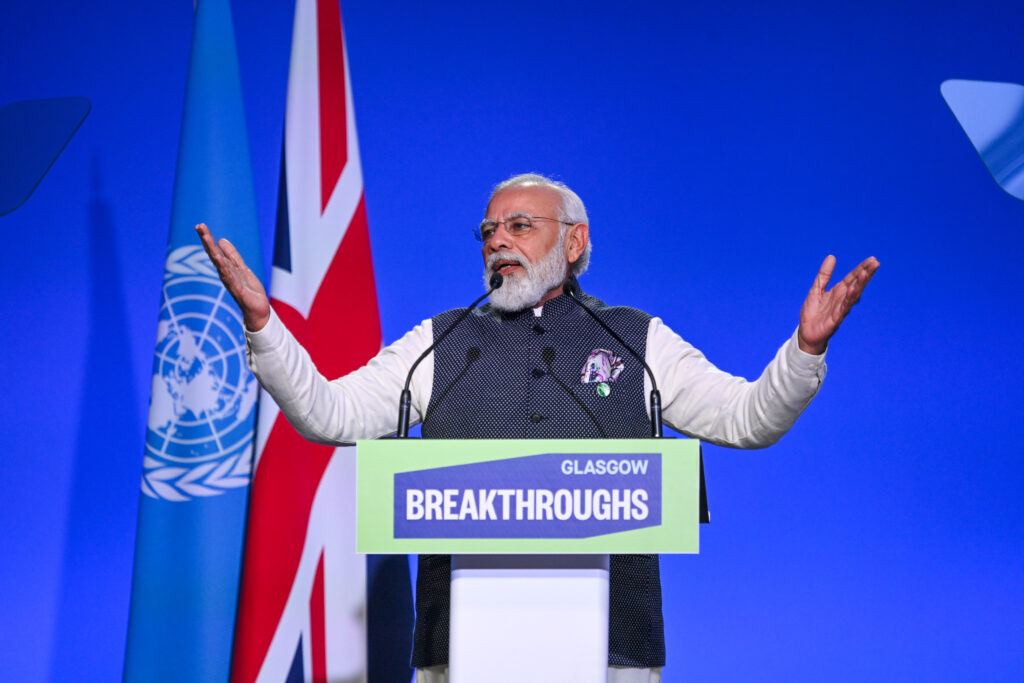
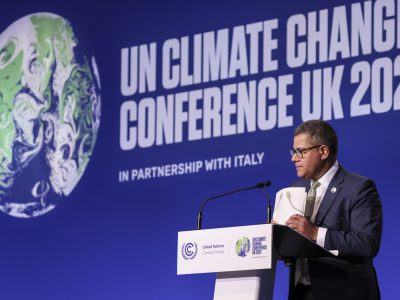
Unequal climate burdens provide the context for every COP gathering and Glasgow was no exception. Since the Paris Agreement, COPs have tried to make further progress on the implementation of past agreements, but so far have failed. Issues like “climate finance,” article 6 of the Paris Agreement, and “loss and damage” are among the most complicated ambits the COP must grapple with; equity is an important element of those debates. Wealthy industrialized nations arrived at COP this year having failed to comply with a commitment they made in 2009 at COP15 in Copenhagen, to transfer $100 billion annually to poorer nations for finance mitigation and adaptation actions. Through funds such as the “Adaptation Fund,” the “Global Environment Facility,” or the “Green Climate Fund,” climate finance can support projects to increase the resilience of vulnerable coastal lands, or for coping with severe droughts in sub-Saharan Africa. Enhancing the adaptive capacity of the poorest communities across the globe is essential for climate justice; that is why developing nations at COP26 pushed for an acknowledgement in the final statement that wealthy nations had reneged on their financial commitment. Climate mitigation and adaptation actions are costly and developing countries simply do not have enough money. This scarcity of resources creates a vicious circle, whereby poorer nations cannot afford to make more ambitious commitments until the wealthier nations accept their historical responsibility by sharing the necessary financing with those who need it. [caption id="attachment_3534" align="alignleft" width="640"] Indian Prime Minister Narendra Modi at at COP26 on November 2, 2021.[/caption] India’s last-minute demand for a change to the wording of the conference resolution caused an enormous uproar. The original wording called upon signatories to “accelerate (…) efforts towards the phase-out of unabated coal power”; India said it wanted it changed to “phasedown of unabated coal power.” COP decisions require consensus, so the president was forced to capitulate. But while wealthy countries were vociferous in their criticism of this move and the media blamed India for playing an obstructive role, there is more to India’s position than simple obstruction or lack of purpose. The country’s negotiators were responding to a lack of commitment from rich countries to supporting the needs of poorer ones. From India’s perspective, the richer nations were historically for climate change and were therefore ethically obligated to cooperate with those who were poorer, carried far less responsibility for climate change, and were more vulnerable to its impact. Ambition and equity mark a delicate balance in every climate negotiation, a fact that Glasgow demonstrated once again. Future COPs must better consider how to navigate this precarious balancing act.  The urgency of the situation precludes further setbacks. It will be very difficult for anyone who attended COP26 to forget the sight of Alok Sharma, the president of COP,  struggling to hold back tears at the final plenary as he acknowledged that the conference had failed to produce the climate commitments needed to avert global climate collapse.
COP26 fell short because it failed to integrate the principle of equity into its decisions. To bring about the ambitious change we desperately need, civil society must play an equal role to state actors in negotiations. Future climate agreements need to push harder for more significant cooperation and concessions from wealthier nations. This is not about charity; it is a matter of justice and responsibility that should be shouldered by those who created this climate emergency. If future COP climate agreements follow these steps and ensure true global equity, it may still be possible to attain the goal of keeping global warming at 1.5 degrees. [post_title] => COP26 fell short, but ended with a ray of hope [post_excerpt] => Conference organizers failed to include the civil society activists who do the hard work on the ground, but they still managed to have an impact. [post_status] => publish [comment_status] => closed [ping_status] => open [post_password] => [post_name] => cop26-fell-short-but-ended-with-a-fragile-ray-of-hope [to_ping] => [pinged] => [post_modified] => 2024-08-28 21:11:29 [post_modified_gmt] => 2024-08-28 21:11:29 [post_content_filtered] => [post_parent] => 0 [guid] => https://conversationalist.org/?p=3531 [menu_order] => 159 [post_type] => post [post_mime_type] => [comment_count] => 0 [filter] => raw )

COP26 fell short, but ended with a ray of hope

WP_Post Object
(
    [ID] => 3486
    [post_author] => 2
    [post_date] => 2021-11-24 17:46:37
    [post_date_gmt] => 2021-11-24 17:46:37
    [post_content] => There is a delicate balance when protesting inside the country: too much, and you attract police attention; too little, and you don’t make an impact.

In the summer of 2021, about 40 people sat squashed around a long table in the corner of a pizza restaurant in Minsk, the capital of Belarus. But this was not a birthday party; it was a gathering of a local opposition collective. The people seated around the table were there to reaffirm their support for the movement against the Lukashenko regime and to maintain the friendships and connections they developed during the last year of protests

None of the people at the pizza restaurant wore red and white, the colors of the flag of the first independent Belarusian state, as they had at the protests the year before. All expressions of solidarity with the opposition are now dangerous. But despite the regime’s brutal crackdown on dissent, grassroots opposition groups all over the country are finding novel ways to challenge the system, an undertaking that carries enormous risk. 

Belarus’s authoritarian leader Alexander Lukashenko managed to cling to power despite 10 months of massive, country-wide protests that followed the rigged national election of August 2020. But now the demonstrations—with thousands of Belarusians on the streets, workers marching out of state-owned factories, and red and white ribbon filled courtyards—are a thing of the past. Even the iconic Symbal.by, which sold products emblazoned with Belarusian traditional national symbols popular with the opposition, has been replaced with a shop selling kitchenware. The regime has crushed almost all visible dissent with mass arrests, imprisonment, and killings, instilling fear in the protest movement. 

Belarus stayed in the news cycle throughout 2021, even after the opposition was largely in jail, silenced, or in exile. Lukashenko grabbed international headlines by threatening an Olympic athlete, force-landing a Ryanair flight in order to arrest a dissident journalist, threatening to obstruct Europe’s gas supply, and manufacturing a migrant crisis in the heart of Europe. In another incident, the body of Vitaly Shishov, a Belarusian activist who headed an NGO to help fellow exiles, was found hanging from a tree in a Kyiv park after he failed to return home from a jog. Ukrainian police have opened a murder investigation. The message to exiled activists, explained Igor Mitchnik, project leader at Libereco, an NGO focused on human rights in Belarus and Ukraine, is that “nowhere is safe”—the regime can get to them anywhere.
In this superb November 19 interview, Lukashenko tells the BBC's Steven Rosenberg that he "may have helped" migrants enter the EU; he also says that Belarus would "massacre all the scum you've been financing"—referring to the 270 NGOs his regime has forcibly shut down this year.
Sviatlana Tsikhanouskaya, 39, the presumptive winner of the 2020 presidential election, who now lives in exile, has worked to keep the opposition in the news. Over the past year she has become an international figure, giving speeches, sitting for interviews with major media outlets, and meeting with world leaders like President Joe Biden, Prime Minister Boris Johnson, and Chancellor Angela Merkel. Meanwhile, the quiet work of activists inside Belarus goes mostly unnoticed. This is intentional; attention brings risk. But their persistence signals a determined strength to achieve a peaceful and sustainable transition to democracy.

The Partisans

There are many active cells of anti-regime partisans working underground inside Belarus, although the exact number of people involved is unknown. One group of partisans is a team of hackers that conducts frequent cyber attacks against the regime. Their successful hacks include: stealing the personal details of regime informants who reported on neighbors or colleagues; downloading recorded personal phone calls between members of the security apparatus; and publishing the personal information of senior KGB agents.  Tanya*, a 28 year old IT worker in Minsk, is a member of a cell that focuses primarily, in her own words, on samizdat: “We bring the truth to people, we print and distribute newspapers and leaflets.” This is in response to the regime's attempts to re-monopolize the information sphere. In restricting access to independent information, the regime has declared neighborhood social media chats “extremist,” shut down independent media outlets, and arrested numerous journalists and bloggers.  Even subscribing to an independent channel on Telegram, the encrypted messaging app, can be cause for arrest and a sentence of up to seven years in prison.  The partisan protest actions are small-scale and brief, designed to ensure images are shared widely on social media long after the activists have left the scene. There is a delicate balance when protesting inside the country: too much, and you attract police attention; too little, and you don’t make an impact. Last spring, for example, in the midst of the crackdown, activists planted small patches of white and red flowers around Minsk. Tanya shared photographs of districts that decorated their public areas with flowers and printed information on local marches and actions. The partisans also employ tactics to hurt the regime economically by, for example, encouraging consumers to boycott state-owned enterprises. In Belarus a wide range of foodstuffs and products are produced by the state, or by businesses closely connected with the regime. Products under boycott range from sausages and sugar, to cigarettes. A neighbouring cell has been raising the pressure by placing items on railway tracks to disable signals and delay trains carrying items for export, threatening the Europe-Asia transit route, a source of income for the regime.  Tanya was devastated to learn in August that the International Monetary Fund (IMF) had decided to send the regime $1 billion. The money was ostensibly earmarked to help the government fight Covid-19, but for opposition activists and outside observers, it would simply prop up Lukashenko’s illegitimate regime.  Timothy Ash, the London-based economist, asked in a rhetorical tweet if the IMF acronym SDR (Special Drawing Rights) actually stood for “support dodgy regimes.” Sviatlana Tsikhanouskaya, the exiled opposition leader, tweeted that she had sent letters to the IMF and the US government asking them to freeze the funds, which she had earlier asserted would be misused by the regime for nefarious purposes. A Washington Post editorial headline was blunt: “Biden should not let the IMF throw a lifeline to Belarus’ dictator.” Tanya said: “I felt that all my efforts, all the sleepless nights and the suffering of friends behind bars—it was all in vain.”  A few months later, as Belarus began registering record levels of Covid-19 infections, Lukashenko scrapped a short-lived mask mandate and ordered signs calling for them to be worn removed from public transport and shops, confirming the opposition’s fears that the IMF’s funds would be misappropriated.  Membership in the partisans is dangerous and many members have been arrested. But Tanya remains committed precisely because the regime treats prisoners inhumanely and humiliates their supporters. She recounted that on a recent visit to a local prison the guards refused to accept rolls of toilet paper for an inmate unless the tissue was separated along the perforated lines into individual squares. “The whole queue of family and friends were just standing there, ripping toilet paper into pieces,” she recalled. The guards eventually accepted the toilet paper, but didn’t give it to the prisoners until they were released. 

KOTOS

Alina, an economist in her 50s, is focused on organizing local self-government bodies, known in Belarus as KOTOS, across her city. The main idea behind KOTOS, which have functioned since 2014, is to build a collective of active neighbours who deal with local issues and improve the community’s quality of life. They decide what murals will be painted on local buildings, where to place a new bench in a courtyard, or how to improve playgrounds for children. For Alina, the aim is to maintain and build on the newfound momentum for civic engagement developed over the past year, laying the foundations for an eventual democratic state.  The KOTOS is supposed to be made up of locally elected representatives with a chairperson as the leader; but, as Alina and local residents discovered, to no one’s surprise, the regional administration appointed the representatives. KOTOS’s work is unpaid, and some of the appointed chairpersons in the region, explains Alina, did not want the position; but in a dictatorship, where the key currency is loyalty to the regime, they “could not refuse.” Chairpersons are reluctant to meet with the locals they represent; Alina recounts how in one neighbourhood “she [the chairman] still hides from the residents, coming up with different excuses to avoid them.” With the ongoing crackdown against any form of civic engagement, the regime is unlikely to tolerate the involvement of local citizens in KOTOS. This, however, does not discourage Alina. She is looking for different ways to work within the system, from engaging with the local chairperson, to seeking out areas where a KOTOS does not yet exist and distributing information to local residents on how to organize their own system from scratch. Her goal is to find “people who sincerely want to improve life in their neighbourhood” and build grassroots communal solidarity. This work is challenging. A year ago, there were people in the country who were happy to host discussions with locals on the rules and system of KOTOS; conduct seminars and consultations; and provide legal assistance. But, as Alina notes, who would want to  “stand out from the crowd today?”

New civil society initiatives

Volha, a businesswoman in Minsk, is developing a digital platform to educate people about democratic values. It provides a forum for experts from around the world to present information on different democratic systems to the next generation of Belarusians.  Volha describes Belarus today as “scorched earth,” noting that nearly all the people who had been developing civil society have left the country. In July 2021 Lukashenko announced a “clean-up” of civil society; since then, 270 independent NGOs have been closed down, with many activists facing trumped up criminal charges. But Volha believes some people need to remain in Belarus, despite the danger. If civil society was possible before the 2020 uprising against Lukashenko’s regime, she argues, some form “could become possible again.” She stresses that now is not the time to give up developing initiatives inside the country. And while she worries about being arrested and imprisoned, Volha says that her greatest fear is being prevented from carrying on her work, because “from prison you can’t influence anything anymore.” Activists who have remained in the country also run the risk of being labelled a GONGO— a “government-organized NGO.” For the opposition in exile, anyone who cooperates with the regime is de facto lending it legitimization. But Volha is undeterred. She knows that if she wants to develop her initiatives inside Belarus some cooperation with local authorities is unavoidable. Her approach is to integrate local authorities into her activities in order “to show them how things can work in normal countries, how it could be in Belarus.” Viewing all local authorities as representatives of Lukashenko, she says, is the wrong approach and “destroys all bridges.”  Igor Mitchnik stressed the danger of this approach. The regime, he says, “has lost any credibility as a reliable partner for civic or democratic initiatives.” But he values the work of any organization that promotes “a vision of democratic alternatives for their society.”  Volha’s approach to sustainable change in Belarus is, in her own words, “evolution, not revolution.” Yes, she acknowledges, the regime is oppressive, but “we [Belarusians] have allowed [it] to exist.” She argues that the only way to ensure Belarusians throw off the dictatorship, permanently, is through systemic change; otherwise it is only a matter of time before Belarusians will once again live under such a regime. 

Conclusion

These three activists represent very different approaches to regime change from inside Belarus, but they all believe Lukashenko is on borrowed time. While Tanya and the partisans fight the regime from the outside, Alina and Volha highlight a more nuanced grey area of opposition activism inside Belarus, one that requires some degree of cooperation with the regime. Whether their approach has merit remains to be seen; as Audre Lorde famously argued, “the master’s tools will never dismantle the master’s house.”   The future of the opposition inside Belarus is, of course, unclear. Local elections have been postponed indefinitely, and the cruelty of the ongoing crackdown means the March 22 country-wide referendum on constitutional reform is unlikely to lead to fresh protests.  One thing that is clear, however, is that the official Belarusian opposition depends on this network of activists inside the country to keep domestic pressure on the regime, and they are showing no signs of abating. As Tanya vowed: “as long as Belarus is not free, I will not stop.”   *All the names of the activists inside Belarus have been changed to protect them.  [post_title] => Risking arrest, prison & death, Belarus's underground activists fight for democracy [post_excerpt] => The vast majority of civil society activists are in exile, in prison, silenced, or dead, but a few underground cells of partisans are engaged in anti-regime and pro-democracy work that ranges from grassroots initiatives to carrying out cyber attacks against the regime. [post_status] => publish [comment_status] => closed [ping_status] => open [post_password] => [post_name] => risking-arrest-prison-death-belaruss-underground-activists-fight-for-democracy [to_ping] => [pinged] => https://conversationalist.org/2020/10/09/belaruss-uprising-against-autocracy-is-fuelled-by-an-unprecedented-civil-society-movement/ [post_modified] => 2024-08-28 21:11:29 [post_modified_gmt] => 2024-08-28 21:11:29 [post_content_filtered] => [post_parent] => 0 [guid] => https://conversationalist.org/?p=3486 [menu_order] => 160 [post_type] => post [post_mime_type] => [comment_count] => 0 [filter] => raw )

Risking arrest, prison & death, Belarus’s underground activists fight for democracy

WP_Post Object
(
    [ID] => 3461
    [post_author] => 2
    [post_date] => 2021-11-18 23:36:08
    [post_date_gmt] => 2021-11-18 23:36:08
    [post_content] => Will voters choose fear or hope?

Chile is experiencing one of its most powerful historical moments since the end of the dictatorship in 1990. The results of the November 21 presidential election will decide the fate of the social movements sparked by the 2019 “Chilean awakening' and of the constitutional process begun in 2020. Of the six candidates competing for the presidency two men who represent starkly opposing visions for Chile’s future are leading in the polls.

Gabriel Boric, 35, is a left-wing candidate who seeks to implement the social changes that Chilean people have been demanding over the last decade; his platform calls for ending the neoliberal economic-political model brutally imposed under the dictatorship of Augusto Pinochet.

On the far right is José Antonio Kast, 55, who wants to perpetuate the extreme neoliberal model that is the legacy of Pinochet’s rule. One of the many worrying aspects of Kast’s platform is a jingoistic anti-immigrant position, which includes a plan to construct ditches along Chile’s borders to prevent migrants—primarily from Haiti and Venezuela—from entering the country.

The volatile situation in which Chile finds itself—polls show Kast at 27.3 percent, ahead of Boric with 23.7 percent—makes this election an exceptional one, likely the most important since the return of democracy in 1989.

[caption id="attachment_3469" align="alignleft" width="640"] José Antonio Kast at a press conference on August 30, 2021.[/caption]

This election campaign takes place in the context of a process to rewrite the national constitution, which came out of the massive protest movement that swept across the country in 2019. The factors that led to the protests, the issues that are driving this election campaign, and the future of Chile’s democracy are the subject of this article.

1. The ‘Chilean Spring’

On October 14, 2019, high school students in Santiago responded to a government announcement of a public transportation fare hike of 30 pesos, or $0.04, by calling for widespread fare evasion; they amplified their call on social media with the hashtag #EvasionMasiva. Over the next few days, the chant "evadir, no pagar, otra forma de luchar" (“evade, don’t pay, there’s another way to fight”) was heard in almost every subway station. The student protests spread, sparking a mass movement for social change that reflected growing discontent over Chile’s enormous wealth gap, stagnant wages, and insufficient social services. The proposed subway fare hike, though small, came to symbolize the broader injustices and inequalities of Chile’s economic and political system, as enshrined in the Pinochet Constitution. Chile is the most unequal member of the OECD, with 50 percent of the population earning just $550 per month, even as the cost of living continues to rise while wages remain stagnant. The government suspended the proposed transit fare hike, but the move came too late: the spark of protest had already been already lit; people began to ask questions about years of increasingly inadequate pensions, education, and health care. During the Pinochet dictatorship (1973-90), while the military regime was prosecuting, torturing, and killing political opponents, the “Chicago Boys,” a group of right-wing Chilean economists who had studied with Milton Friedman at the University of Chicago, were busy implementing a right-wing economic model. Pinochet’s repressive dictatorship was the ideal environment for unilateral imposition of reforms in pensions, health care, and labor law—and for the privatization of state companies. In 1980, the Pinochet Constitution was enacted through a very dubious referendum, aligning the neoliberal economic reforms with the legal regime defined by the constitution. The system changed little after the dictatorship ended in 1990. Constant opposition by the country’s right wing to any mention of deeper reform, as well as a certain comfort from the center-left political elite with the existing system, provided a further obstacle to more far-reaching change. During this period, Western governments held Chile up as an example of political stability and economic growth in South America. But Chile’s perceived prosperity and stability were based on an economic and political system that was creating a huge wealth gap, with the richest one percent of the population earning 33 percent of the country’s wealth while the lower middle and working classes were barely able to make ends meet. For far too long, those in power ignored the growing resentment of Chile’s economically marginalized citizens—until it exploded. On October 18, tens of thousands of citizens poured onto the streets to protest the brutal police response to student demonstrators, which included mass arrests and the use of live ammunition. That night protesters ambushed 70 Santiago subway stations; students flooded in to vault the turnstiles, vandalize equipment, and pull the emergency brakes on trains. Police responded with beatings, tear gas, and arrests. These events were the tipping point: over the next three weeks a full-scale social movement erupted, with up to a million people pouring into the streets, clamoring for a new social and economic order that would bring dignity to the Chilean people. [caption id="attachment_3477" align="alignleft" width="640"] Protesters in Santiago on November 19, 2019.[/caption] The government responded with a repressive crackdown that included the deployment of soldiers on urban streets, the imposition of curfews in several cities, and President Sebastian Piñera’s “declaration of war” against the protesters. For untold thousands of Chileans, the sight of soldiers on their streets triggered barely repressed memories of the Pinochet dictatorship. Their fears were reflected in the horrific reports of police shooting protesters with live ammunition, often aiming at their eyes from close range. As a result, at least 300 people were injured in the eye, more than half of them partially blinded. Despite documented reports of these incidents compiled by the UN High Commissioner of Human Rights, Human Rights Watch, and Amnesty International , Piñera's government denied all the accusations of human rights violations. In this polarized context the government and the opposition reached a political agreement. On November 15, 2019, they announced a national referendum to decide whether and how a new constitution should be drafted to replace the 1980 Pinochet Constitution. The announcement helped quell the social unrest. The Chilean people had stood up for and won their right to draft a new, democratic constitution with the help of popularly elected representatives. The referendum was held October 20, 2020 and the result was a landslide: 78 percent of Chileans voted in favor of a new constitution.

2. The impact of the global rise in authoritarianism on the Chilean constitutional process

The events of 2019-20 loom heavily over the presidential election. Two issues could affect the outcome. First, there is the need for social transformation. Massive support for a new constitution drafted by elected representatives reflects the popular will for democratically implemented change to reduce inequalities. The second factor looming over this election is a fear of instability. The same people who want political and social reforms also fear the cost associated with economic and political upheaval. The euphoria of the 2019 social uprising was followed by the global pandemic, which has hurt the economy and had a chilling effect on Chilean society's social, political, and economic ambits. Unfortunately, the right and the far right-have taken advantage of this period of global instability to promote the idea that a new constitution and a left-wing president would bring about an economic and political “disaster.” The Chilean far right knows they don’t have a winning argument for maintaining the dictatorship’s constitution, so instead they are spreading fear with fake news and nationalism. In several important ways, the rising power of Chile’s far right and the threat of authoritarianism reflect the issues that dominated the last two US presidential elections. First, there is the debacle of the center right. Before Trump was elected as the Republican candidate in 2016, the moderate right in the US found itself rudderless, with no clear leaders, no discourse, and no obvious political agenda. Meanwhile, the center left failed to tackle inequality and other social ills. These two factors paved the way for Donald Trump’s takeover of the GOP, and his victory in the 2016 presidential election. Similarly, in Chile, the right-wing government of Sebastian Piñera, who is deeply unpopular, has been described as the worst in the history of Chile’s democracy. The traditional right-wing parties’ lack of credibility and the political isolation of right-wing voters contributed to the creation of a viable far right. Second, nationalism and anti-migrant sentiment are growing rapidly. Kast, the far-right candidate, is following the “Trumpist” or “Bolsonarist” blueprint of blaming migrants for the country’s social and economic problems. His dangerous rhetoric has provoked violent attacks on migrant communities, such as the September 24 police-led eviction of Venezuelan migrants, including small children, from a camp in the port city of Iquique. Third, conservative and fundamentalist religious groups, including the Political Network for Values, make up an important constituency in the Chilean far right. Their growing political clout threatens any progress on rights for women and the LGBTQ+ community. Fourth, there is a strong move toward protectionist foreign policy, alongside opposition to multilateralism. One of the main political refrains of the far right is to decry the uselessness of global forums and international agreements—particularly those that deal with human rights, the environment, and migration. Kast, for example, has declared his refusal to abide by the Escazú Agreement, a regional environmental treaty that guarantees access to information, public participation, and transparency in environmental matters. The agreement also provides special protection to environmental activists against threats and violence from polluting industries. Kast’s refusal to honor this treaty is reminiscent of Trump’s 2017 executive order to withdraw the US from the Paris Climate Agreement. The victory of the Chilean far right would almost certainly result in the country’s political isolation on the international stage. Fortunately, there is a political alternative to Kast. Gabriel Boric, a former law student, wants to move away from the country’s neoliberal past while curbing the rise of authoritarianism through a progressive and rights-based approach to policymaking. Boric’s platform builds on the social demands that a large segment of the Chilean people has pushed for over the past two decades. He rose to prominence as a leader of the 2011-13 mass student movements, which called for universal free high quality education, and launched his political career from that experience. Now his close relationship to social movements provides Boric and his allies with a real grasp of the current political reality of most Chileans. The leftist candidate's political platform calls for the total transformation of the privatized pension and inadequate health care system left over from the dictatorship, as well as an ecological agenda that recognizes the climate crisis as the catastrophic threat that it is, while offering solutions for social change and fair economic growth. The global rise of populist authoritarianism, including in the UK and the US, has not escaped the notice of Chileans. Their country’s constitutional transition should take place under the watch of a government that believes in the process and will thus facilitate it rather than impede it.

3. An essential step toward achieving social progress

Considering what’s at stake with the ratification of the new constitution, the health and progress of the Chilean political system depends in many ways on this electoral race. For instance, feminism has been an important social component in making the constitutional process more democratic. In 2019 the Chilean feminist collective Las Tesis amplified the women’s movement with their exuberant protest song, “A rapist in your path.”  It became a global feminist anthem and Chile’s feminist protests led to the inclusion of gender parity among constitutional representatives. Now Kast, the far-right candidate, wants to abolish the Ministry of Women and Gender Equality, which would mean a complete reversal of all the demands the feminist movement fought for.
The far right’s position on climate change is also very worrying. Kast’s platform casts doubt on the very existence of climate change, referring to it as a “stance” instead of a “scientific certainty.” On the other hand, several weeks ago the constitutional convention issued a declaration of climate emergency and defined an “ecological approach” as one of its guiding principles for the new constitutional text. Kast is an authoritarian threat to all the potential progress on social rights and ecological agenda that the constitutional process can bring. He led the political campaign against the new constitution and his political positions oppose any structural reform. If elected he will probably try all the mechanisms to obstruct and discredit the legitimate and legal constitutional process. Kast and Boric’s polarized positions on women’s equality and the environment reflect the opposing directions that the constitutional discussion could take, as the threat of authoritarianism from the far-right looms over Chile. The health of the country’s political and economic future hangs in the balance as Chileans await the results of both the constitutional process and the presidential election. Hopefully, the candidate who is elected president on Sunday will assist and collaborate with the constitutional assembly. For Chile, this would mean a stable and transformative constitutional transition toward a more just, democratic and sustainable country that is finally rid of Pinochet’s authoritarian politics and crippling neoliberal economic agenda. [post_title] => Chile faces its most consequential election since the end of the Pinochet dictatorship [post_excerpt] => A sharply divided electorate will choose between a young candidate for social change, and a far right middle aged candidate who embraces a radical neoliberal agenda and praises the Pinochet dictatorship. [post_status] => publish [comment_status] => closed [ping_status] => open [post_password] => [post_name] => chile-faces-its-most-important-and-most-polarized-presidential-election-since-the-end-of-pinochets-rule [to_ping] => [pinged] => [post_modified] => 2024-08-28 21:11:29 [post_modified_gmt] => 2024-08-28 21:11:29 [post_content_filtered] => [post_parent] => 0 [guid] => https://conversationalist.org/?p=3461 [menu_order] => 161 [post_type] => post [post_mime_type] => [comment_count] => 0 [filter] => raw )

Chile faces its most consequential election since the end of the Pinochet dictatorship

WP_Post Object
(
    [ID] => 3287
    [post_author] => 2
    [post_date] => 2021-10-14 14:28:27
    [post_date_gmt] => 2021-10-14 14:28:27
    [post_content] => Women shouldn’t need a 'good' reason to end a pregnancy.

Texas’s shockingly cruel new abortion law bars abortion once cardiac activity can be detected in the embryo, typically around the sixth week of pregnancy. Notably, it also allows any US citizen to sue any person who performs or otherwise “aids and abets” a prohibited abortion. The law has few defenders in the mainstream press. Jennifer Rubin, a conservative columnist for The Washington Post noted its “viciousness.” The New York Times’ Michelle Goldberg described its “sinister brilliance.” Rebecca Traister of New York Magazine decried its “ugliness.”

By deploying private citizens to subjugate the vulnerable, the law evokes the worst of the United States’ not-so-distant past. In the mid-nineteenth and early twentieth centuries, for example, doctors and police officers demanded that women dying of botched abortions name the provider. During the eighteenth and nineteenth centuries, mercenaries made their living by hunting down escaped slaves and returning them to bondage in exchange for a bounty. Some Americans have always been willing to work for or in lieu of law enforcement to catch, punish, and profit from those they or the state deem criminals based on deeply ingrained notions, rooted in systemic racism and sexism, of who is and isn’t a rational, capable human being.

Abortion was common in the United States throughout the nineteenth century. It was only in the latter half of the century, when medicine became a respected profession and the American Medical Association was established, that physicians lobbied to have abortion banned. Their concern was not about abortion’s morality, but about the financial and professional implications of being forced to compete with midwives and purveyors of home abortion remedies.

As ugly as the Texas law is on its own, many of its opponents are attempting to fight it by invoking the worst-case scenarios. A number of commentators have cited the case of a 13-year-old Texas girl who became pregnant after her grandfather raped her; the law grants no exceptions for pregnancies resulting from rape or incest. Few would argue that a 13-year-old rape victim should be forced to carry and give birth to her grandfather’s baby; that is why, even in Texas, the girl in question was able to end her pregnancy, albeit only after traveling hours from her small town to a clinic in Houston (this was a few months before the new law went into effect). People in extreme circumstances related to pregnancy—victims of rape and incest, women carrying fetuses with severe abnormalities, those who might die if they give birth—deserve support, compassion, and access to modern medicine, including abortion. But only a small minority of women seek abortion for those reasons.

The most common reasons women give for seeking abortions in the United States are the least shocking. According to data gathered from 2008 to 2010, 40 percent said they were “not financially prepared” to have a child. Thirty-six percent cited “bad timing,” “unplanned,” or “not ready.” Nearly a third (31 percent) cited reasons related to the person who caused the pregnancy—e.g., he was unsupportive, abusive, and/or didn’t want to be involved. Twenty-nine percent of abortion patients said they needed to focus on caring for the children they already had. Most gave not just one but several reasons for ending their pregnancy. By evoking only the extremes, activists risk creating a sense that some women are more or less “deserving” than others of abortion access.

Americans, including those who believe abortion should remain legal, are accustomed to weighing the relative moral acceptability of these reasons. They might sympathize with a terrified 15-year-old who gets pregnant the first time she has sex, but think a 36-year-old woman who didn’t use birth control and got pregnant from a one-night stand should have known better. Most rights are not absolute; they can be and often are restricted. But once a society recognizes that a right exists, it is not contingent on whether others approve of how it is exercised. That’s why proponents of free speech, particularly in the United States, often cite biographer Evelyn Hall’s summary of Voltaire’s philosophy: “I disapprove of what you say, but I will defend to the death your right to say it.”

Katie Watson, a lawyer and bioethicist who teaches at Northwestern University, sympathizes with advocates who focus on extraordinary cases. “Legally, you always pick the most sympathetic plaintiff for your case, and rhetorically, we often want to lead with our strongest examples,” she explained over the phone. “That’s narrative structure and that’s storytelling and that's litigation.” What concerns her is “the repetition damage…when those become the only stories that we tell, they skew our vision and our understanding of what life is really like. And starting with bad facts leads to bad policy.”

The result, said Watson, is that “the cases we discuss the most are the cases that happen the least.” She added: “When we focus exclusively on those—we unwittingly contribute to that dichotomy between good abortions and bad abortions—or deserved abortions and shameful abortions.”

Shifting attitudes toward divorce and the liberalization of divorce laws are a useful comparison. Divorce was once a very controversial issue in the United States. Until “no fault” divorce became the norm in the 1970s, the laws of most states required a woman petitioning for a legal end to her marriage to prove that her husband had committed adultery, abused her, or abandoned her. As of 2017 most Americans (73 percent), including a slim majority (51 percent) of the “very religious,” considered divorce morally acceptable. This, despite the fact that between 22 and 50 percent of people who obtain a divorce, regret having done so.  By comparison, 84 percent of women polled five years after having an abortion report feeling either positive or neutral about their decision. Few Americans, however, would advocate forcing people to stay married.

Despite the popular stereotype of those who get abortions as young, immature, and/or careless, most people who undergo terminations in the United States are not only adults, but parents. In 2014, 59 percent of abortions were obtained by women who already had at least one child. Only 12 percent were teenagers; those younger than 15 accounted for only 0.2 percent. The vast majority of people who undergo an abortion procedure are neither tricked nor pressured into ending their pregnancies. Only about 1 percent reported seeking a termination because somebody else, usually a parent or a partner, wanted them to. Most people who seek abortions know their own needs, desires, and limitations, and can imagine—or are already well aware of—the physical, psychological, and literal cost of bringing a child into being.

If a woman can choose to join the military, get married, or end a marriage—all potentially life-changing decisions—she can decide to end a pregnancy. As Watson argued in her 2018 book Scarlet A: The Ethics, Law and Politics of Ordinary Abortion, “We should be able to acknowledge the complexity of private decision making without threatening the right of private decision making.”

According to Watson, it’s no surprise, and no problem, for members of a large, diverse, and pluralistic society to have a range of views on abortion. That’s why, in defending abortion rights, she thinks it’s crucial to rely on the politics of respect rather than the politics of sympathy. “The politics of sympathy say, ‘You get to have that abortion because I feel sympathetic to you,’” she explained. “It puts the listener or the voter in the position of judge.” By contrast, “the politics of respect say, ‘I may or may not agree with her decision or like it, but she is a moral agent with a brain and a heart and she is the one who's going to live with the consequences of whatever decision she makes, whether to have a child or not…I respect her decision-making rights and her decision-making capacity and her decision-making authority, even if her moral frameworks are different than mine.’” The latter, Watson said, focuses on the pregnant person, whereas the former focuses on “the person offering the opinion or the vote.”

There are places in the world where abortion is not only safe, legal, and unremarkable, but also considered a basic human right. Five years ago, when my mother was on a group tour of Iceland, another American woman on the tour referred to then President Obama as a “baby killer.” My mother defended Obama and asked the Icelandic tour guide what she thought. “In this country,” the guide replied carefully, “Women are considered equal citizens, so abortion is not really an issue.”

That attitude is not limited to Nordic countries. People in many industrialized nations around the world see abortion rights as inseparable from the human right to self-determination. In Ireland, which legalized abortion by a wide margin following a 2018 referendum, the government heralded the right to abortion as a welcome sign that the country had finally joined modern society. “The people have spoken,” declared then Prime Minister Leo Varadkar. “They have said we need a modern constitution for a modern country.”

Meanwhile, when the Polish government implemented draconian abortion restrictions last year, they sparked the country’s largest protests since the fall of communism. As one protester told Reuters, “I want us to have our basic rights…the right to decide what we want to do and if we want to bear children and in what circumstances to have children.”

Melissa Upreti, a human rights lawyer tasked by the United Nations Human Rights Council with fighting to end discrimination against women and girls, characterized Texas’s law as “sex and gender-based discrimination at its worst” and a clear violation of international law, adding that it has “not only taken Texas backward, but in the eyes of the international community, it has taken the entire country backward.”

Based on the means many abortion opponents have employed to limit access to the procedure—e.g., picketing clinics and shaming women as they enter, murdering and threatening abortion providers, and now passing a law that empowers ordinary citizens to be vigilantes and bounty hunters—it seems obvious that their concerns are not about the sanctity of “life” but about controlling and humiliating pregnant people.

Abortion opponents detest the slogan, “My body, my choice.” So do I—not because it invokes bodily autonomy, but because the “choice” framework is trivializing, and falsely implies that all choices are equal. The choice to bring a human being into existence is far graver and more permanently life-altering than the decision not to. Forcing a woman to endure pregnancy and labor against her will is an act of brutality with lifelong consequences for her and any children for whom she is responsible. In defending the Texas law, Ohio Republican Senate candidate J.D. Vance falsely asserted that it’s about “whether a child should be allowed to live” and “not whether a woman should be forced to bring a child to term.” But that’s precisely what it is. And that kind of torture cannot be justified by the victim’s capacity to bring into being a child who doesn’t yet exist.
    [post_title] => In defense of ordinary abortion
    [post_excerpt] => People in extreme circumstances related to pregnancy—victims of rape and incest, women carrying fetuses with severe abnormalities, those who might die if they give birth—deserve support, compassion, and access to modern medicine, including abortion. But only a small minority of women seek abortion for those reasons.
    [post_status] => publish
    [comment_status] => closed
    [ping_status] => open
    [post_password] => 
    [post_name] => in-defense-of-ordinary-abortion
    [to_ping] => 
    [pinged] => 
    [post_modified] => 2024-08-28 21:11:29
    [post_modified_gmt] => 2024-08-28 21:11:29
    [post_content_filtered] => 
    [post_parent] => 0
    [guid] => https://conversationalist.org/?p=3287
    [menu_order] => 170
    [post_type] => post
    [post_mime_type] => 
    [comment_count] => 0
    [filter] => raw
)

In defense of ordinary abortion

WP_Post Object
(
    [ID] => 3261
    [post_author] => 2
    [post_date] => 2021-10-14 12:18:11
    [post_date_gmt] => 2021-10-14 12:18:11
    [post_content] => The government has recognized its error and resigned, but the women's lives are still in tatters. 

Franciska Manuputty’s ordeal with the Dutch tax authorities began in 2010, when she received notification to repay €30,000 (about US $35,000) in childcare tax benefits, to which the government alleged she had not been entitled. Manuputty, 49, is a low-income single mother of two. She was soon behind on the rent, couldn’t pay her electricity bills, and turned to a food bank to feed her family. Her daughter, now 20 years old, told her recently that as a child she had lived in constant fear of returning home from school to discover they had been evicted from their apartment. 

Manuputty is one of the victims of what the Dutch media calls the child benefits scandal. Over the course of around a decade the government falsely accused thousands of eligible families of having committed fraud and ordered them to repay childcare tax benefits to which they had, in fact, been entitled. 

A parliamentary investigation published in December 2020 found that the tax authorities had set up a child benefits system with bureaucratic rules so rigid that even the smallest administrative error in filling out forms caused the system to flag beneficiaries, who were then pursued by the courts and forced to repay all the money they had received—plus fines. The total number of victims is not yet clear; but based on a parliamentary investigation and the number of people who applied for the initial compensation of €30,000 (about $35,000), at least 35,000 people have been affected. 

The fallout from the scandal led to the government’s resignation in January 2021. 

Families that were forced to repay tens of thousands of euros faced bankruptcies, job losses, forced sale of houses, homelessness, divorce—even suicide. Several families saw their children removed by child protection authorities, on the basis that they were no longer able to care for them after losing their homes and financial stability. 

The €30,000 compensation doesn’t even begin to solve Manuputty’s problems. Because the tax authorities labelled her a cheat in 2009, her name is now in the system and her credit is ruined. Over the past decade all her applications for financial aid were rejected, which forced her to keep borrowing money and leave bills unpaid. She now owes €100,000 ($115,000) to various creditors. “I hold on to life for my children,” said Manuputty.

Investigative journalists discovered, via the parliamentary freedom of information act, that the algorithms had been designed to flag “cheats” based on the amount a parent received—i.e., the more benefits they received, the more likely they were to fall under suspicion. The result: the people targeted were those whose low-paid jobs made them most eligible for childcare benefits. 

A disproportionate number of people in that group were single mothers with foreign citizenship, so the algorithm de facto flagged poor women who were either immigrants themselves or the children of immigrants, adding racism to the scandal.  The Ministry of Finance brought a discrimination suit against the tax authorities, but the  public prosecutor dismissed the case, saying the issue must be solved politically. Victims of the false accusations are appealing that decision. A parliamentary commission will be  appointed to investigate the matter later this year or next year. 

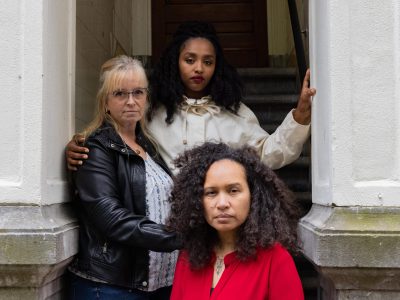
Via a WhatsApp group for victims of the scandal, Franciska Manuputty met Batya Brown, 35,  a part-time employee at a daycare center who is now pregnant with her fifth child. When the two were asked to address an anti-racism demonstration about their experiences they decided to collaborate on their speeches and provide one another with moral support. They were joined by Kristie Rongen, 45, a small truck driver, who had recently  confronted Prime Minister Rutte during a widely viewed live broadcast of a political TV show. 

While Rongen holds only Dutch citizenship, Batya Brown was born in Ethiopia. Manuputty’s parents are from the Maluku Islands, formerly a Dutch colony—now occupied by Indonesia. For the latter two women, their relationship with the Dutch state is informed by their ethnic identities, which is further compounded by the role that racism played in the tax scandal.

Brown was adopted as a child from Ethiopia, arriving in the Netherlands when she was six years old. Because of a bureaucratic error that she is fighting to correct, she is still ineligible for a Dutch passport. Meanwhile, in 2007 the tax authorities began demanding that she repay her benefits . The resulting financial problems forced her to move often and, while the tax authorities recently annulled her remaining debts, her struggle with the immigration authorities continues. In other words, she has been battling with both the tax authorities and the immigration office for her entire adult life.

Manuputty suffers from post-traumatic stress disorder and transgenerational trauma. Her grandfather is a South Mollucan, a member of an Indonesian indigenous group that fought in the Royal Netherlands East Indies Army (KNIL) alongside colonial forces in the Indonesian War of Independence (1945-9), then were brought to the Netherlands after the Dutch reneged on a promise to grant them territorial sovereignty. The Mollucan community feels humiliated to this day by their treatment at the hands of the Dutch. “As a victim of the child benefit scandal, I have been neglected and robbed of my dignity again,” said Manuputty, adding that she felt as though history were repeating itself.

Rongen acknowledged that she presents in her media appearances as a strong woman, which she is; but behind the scenes she is emotionally devastated. “I cry a lot, every day,” she said. Her ordeal with the tax authorities began in 2010, with her debt topping out at €92,000 ($123,000). After four years of debt counselling, the government annulled what was left of that amount and granted her compensation in December 2020. Her battle with psychological trauma is ongoing. She has dedicated herself to helping reunite parents with children they lost to foster care, a calling that provides her with a feeling of purpose. “When a mother messages me for help, I dry my eyes and get going again,” she said. In a matter-of-fact tone she added, “I would prefer not to live anymore. But what would happen to my children if I were no longer here?”

In addition to their media appearances and participation in anti-racism demonstrations earlier this year, the three women have initiated demonstrations of their own, to garner public support and amplify their demands. These include: cancellation of all the victims’ debts by the end of 2021; financial compensation of at least €1 million ($1.16 million) to each victim; and the immediate reunification of parents with children who were taken from them and put into foster care. They also want psychological support. And they want those responsible for the scandal to be brought to justice.

When the government resigned in January the women hoped the new administration would deal with the matter quickly, but they now understand the process will take years. One egregious reason for the slow pace: the commission tasked with defining the amount of compensation that each victim should receive is severely understaffed; at the current rate they will need 975 years to complete their work.

 “Applying for everything costs so much time and energy, which I would prefer to dedicate to my children,” said Batya Brown. Kristie Rongen added: “Instead of asking for more effort from the victims, they should just give every one of them half a million euros to settle the matter. Our lives have been destroyed.” 

Franciska Manuputty agrees. “I have been trying for years to regain my independence by setting up my own business,” she said, explaining that her applications for business loans have all been rejected because the “fraudster” label destroyed her credit rating. “I struggle for freedom, it’s in my genes, but I feel trapped in a prison without walls.”

The women have also reached out to other victims, organizing small events like picnics and activities for children, which they pay for via crowdfunding, just to relax and start healing together. Coming together has energized the women. “Our suffering has become visible,” said one. Then, with tears in her eyes and a voice choked with anger: “Years ago, when he was ten, eleven years old, I promised my oldest son that everything would be okay. He is 16 years old now! I am determined to keep my promise to him.” 
    [post_title] => 'I cry a lot, every day': victims of the Dutch child benefits scandal fight for compensation
    [post_excerpt] => Thousands of Dutch families were destroyed by financial hardship after the tax authorities falsely accused them of submitting fraudulent applications for childcare tax benefits, requiring them to pay back the allowances they had received in their entirety—plus fines.
    [post_status] => publish
    [comment_status] => closed
    [ping_status] => open
    [post_password] => 
    [post_name] => i-cry-a-lot-every-day-victims-of-the-dutch-child-benefits-scandal-fight-for-compensation
    [to_ping] => 
    [pinged] => 
    [post_modified] => 2024-08-28 21:11:29
    [post_modified_gmt] => 2024-08-28 21:11:29
    [post_content_filtered] => 
    [post_parent] => 0
    [guid] => https://conversationalist.org/?p=3261
    [menu_order] => 171
    [post_type] => post
    [post_mime_type] => 
    [comment_count] => 0
    [filter] => raw
)

‘I cry a lot, every day’: victims of the Dutch child benefits scandal fight for compensation

WP_Post Object
(
    [ID] => 3172
    [post_author] => 2
    [post_date] => 2021-09-14 21:49:04
    [post_date_gmt] => 2021-09-14 21:49:04
    [post_content] => If your internal organs are open to legislation you are not free.

On September 1 Texas enacted a law effectively banning abortion after six weeks of pregnancy, dealing a body blow to the physical autonomy of half the population. In a new and vicious twist, the law incentivizes Texans to report anyone who’s had an abortion, performed or assisted someone in obtaining an abortion, or merely “intends to engage in the conduct”—even if the pregnancy resulted from rape or incest—by offering them $10,000.

Much of what can be said about the law, TX SB8, has been said: It’s flatly unconstitutional; other states will use it as a template; it won’t stop abortion in Texas, only safe abortion; requiring survivors of rape and incest to carry to term pregnancies resulting from their violation is abhorrent; the law’s effect will be to deepen poverty, immiserate lives, and ruin the health of countless Texans, some of whom will no doubt die.

The Texas law is shocking and brutal. It is also a logical step in the steady, years-long erosion of reproductive rights across the United States. The patchwork of legislation, regulation, and flat out lies has done half the work simply by making abortion access confusing, chaotic, and difficult. With all the will in the world, the very young, the very poor, and the deliberately misinformed often see their luck and time run out; and where that doesn’t work, there’s always violence or the threat of violence to keep them away from abortion clinics. The goal, however, has always been not chaos but exquisite clarity: legal abortion, eliminated.

In the 48 years since the Supreme Court ruled that “a woman's decision whether or not to terminate her pregnancy” falls under the rubric of the 14th Amendment’s definition of privacy, the abortion argument has been presented as a binary: “life” and “choice”—i.e., between carrying a pregnancy to term or choosing a termination. Anti-abortion activists accuse those who support the right to choose of murderous intent and licentiousness; we respond with tales of medical necessity and sexual assault. “Abortion is healthcare!” we shout—because it is. Occasionally we add that “women’s rights are human rights!”—because they are, but it’s only there, with that last rallying cry, that we begin to approach the true essence of the argument.

In a democracy, individual rights and freedoms— “to life, liberty, and the pursuit of happiness,” for instance—are the presumed foundation on which civic life is constructed. I would submit, however, that if your internal organs are open to legislation, you are, manifestly, not free.

Roughly half of all Americans, as a class and by virtue of the organs with which they were born, are judged not to have the bodily autonomy inalienable to the other half. Should anyone in that class happen to find themselves in a physical state that precludes fertility—whether youth, age, or any other physiological limitation—that fact reflects freedom  bestowed solely by fortune’s vicissitudes. Dodging a bullet doesn’t mean there was no gun. Either your body is yours to command—or it isn’t.

Some have recently appropriated the mantra of “my body, my choice” to different ends, however, so this last point bears further clarification: Much as “Blue Lives Matter” is a spurious hijacking of the ideas animating the Black Lives Matter movement, so too is the suggestion that government-mandated vaccinations are the moral and legal equivalent of government-mandated third-party control of one’s reproductive organs. A police officer can discard the uniform; an anti-vaxer can make choices—however onerous or unpleasant—to avoid vaccination. But neither skin color nor anatomy can be discarded or sidestepped.

The need to police that dividing line informs moral panics past and present surrounding not just women in society but also the visible existence of anyone in the LGBTQ community. This is particularly the case for those who identify as trans or nonbinary. If our relative humanity and relative position to power are determined by our internal organs, I really need to know which ones you have.

All of this is true no matter where you live or under what system of government; human rights are inherent to all humans and can’t be granted, only honored or violated. Yet for half the citizens of a democracy to be fighting, still, for the most basic liberty in their own persons is particularly striking. Were we all created equal? Or are people born in male presenting bodies more equal than others?

TX SB8 at least does us the favor of stripping away any pretense of the former. By cutting off access at six weeks, far too early for the vast majority of people to know if they’re pregnant, and failing to allow exceptions for rape or incest, behind which “moderates” have long been able to hide, the law clears up any ambiguity about who owns your ovaries. It’s not you.

But while this law is the work of the Texas GOP, it’s crucial that we consider not just the actions of Republicans. The “moderates,” across the political spectrum, have also been instrumental in bringing about this dark day.

I’ve been a Democrat and activist for women’s rights since before I could vote. My party has been bartering with and chipping away at my rights and freedoms for my entire life—usually, but not always, in the name of a “Big Tent” or “bipartisanship.” Misogyny is foundational not just to the GOP but to all of American society. It is the very definition of systemic.

Misogyny expresses itself in many ways but is at base a supremacist ideology; as with any supremacist ideology, it posits a strict dichotomy: There are those to whom power naturally inheres, who may act, and those who are, by nature, acted upon.

Open rejection of cisgender heterosexuality, gender binaries, or the inherent right of men to act on the lives of women threatens the power structure on which society rests, which is why so many citizens of a purported democracy are still struggling to attain the rights that cis, straight men take for granted—and that’s before we factor in the realities of race in America. As a white, upper-middle-class, straight, cis woman, I might not enjoy genuine freedom, but if I live in Texas and need an abortion, it’ll be a lot easier for me to find and pay for a simulacrum of it than almost anyone else born with the same set of parts.

And having said all that: It’s well and good for me to argue for a more essentialist and ultimately political understanding of the fight for reproductive freedom, but at the end of the day—at the end of this and every day, for the foreseeable future—lives are being destroyed by the entire web of American anti-choice legislation. I want my country, or at least the party for which I’ve voted and knocked on doors all my life, to acknowledge that abortion is a matter of the most basic rights that inhere to all humans, but I also want them to come to the immediate aid of those now in desperate need of help.

There’s still a long fight ahead. But right now, we can at least ease the path of some of those for whom we’re fighting. Americans can demand our elected representatives take action to secure abortion rights on a federal level (starting with the Biden Administration’s newly announced suit against the State of Texas); donate to legal defense or abortion funds; act to ensure the free exchange of trustworthy information; serve as clinic escorts; or just drive a scared friend across state lines. And should Texas blink and offer compromise legislation, we must not back down.

Feminism has always been the radical notion that women are people. To deny people born with a uterus the right to make decisions about their own organs is to legislate a lie about their humanity and undermine the very idea of democracy. Our efforts to build a more perfect union can only falter, as long as half of us are not yet, truly, free.
    [post_title] => According to Texas law, your body doesn't belong to you
    [post_excerpt] => The goal has always been not chaos but exquisite clarity: legal abortion, eliminated.
    [post_status] => publish
    [comment_status] => closed
    [ping_status] => open
    [post_password] => 
    [post_name] => according-to-texas-law-your-body-doesnt-belong-to-you
    [to_ping] => 
    [pinged] => 
    [post_modified] => 2024-08-28 21:11:29
    [post_modified_gmt] => 2024-08-28 21:11:29
    [post_content_filtered] => 
    [post_parent] => 0
    [guid] => https://conversationalist.org/?p=3172
    [menu_order] => 179
    [post_type] => post
    [post_mime_type] => 
    [comment_count] => 0
    [filter] => raw
)

According to Texas law, your body doesn’t belong to you

WP_Post Object
(
    [ID] => 2802
    [post_author] => 2
    [post_date] => 2021-06-22 18:07:31
    [post_date_gmt] => 2021-06-22 18:07:31
    [post_content] => For corporate loggers, millennia-old forests are just land that should be exploited and trees that can be replanted.

Holly Friesen has spent most of her life documenting nature’s beauty. The Montreal-based landscape artist recently spent some time in British Columbia as the Artist in Residence at Eden Grove on Vancouver Island, and was awe-struck by the stunning ancient forest.

“The air was thick with moisture and dense silence and the forest was dripping with a thousand shades of green,” she said. “Giant cedars, Douglas fir and Sitka spruce were thrumming with life, some of them 1,000 years old and more.”

The Eden Grove protection camp, established in 2020 to prevent road building by the Teal-Jones logging corporation, is five minutes from the residency. The corporation is currently locked in a months-long dispute with forest protectors at Fairy Creek, a nearby old-growth watershed.

Moved by the forest’s beauty, Friesen auctioned off a large painting she made of Eden Grove, with all the money going toward the Fairy Creek blockades. “These forests help us to remember who we are and where we come from,” she says. “Their protection for future generations is essential. This is sacred land.”

[caption id="attachment_2829" align="aligncenter" width="640"] Amy Iredale dwarfed by one of the ancient trees at Fairy Creek.[/caption]

Some, however, don’t see anything holy here. For them, millennia-old forests are just land that should be exploited and trees that can be replanted.

A growing environmental movement

At the heart of the Fairy Creek dispute is, on one hand, a logging company that wants to exploit the land in what it claims is a sustainable way and, on the other, environmental protectors who don’t believe that profit should come at the expense of these precious ecosystems. A group that calls themselves the Rainforest Flying Squad has blockaded the watershed on unceded Pacheedaht First Nation’s territory for the past 10 months. Their goal is simple: to stop Teal-Jones from cutting down rare intact old-growth forest. Protesters have been camped here since last summer, demanding that the provincial government put an immediate end to old-growth logging and transition to an ecologically responsible forest economy. The movement to protect these ancient forests is not new, but it was the widely shared photo of a massive, ancient spruce tree being hauled down Vancouver Island on a flatbed truck that garnered international publicity. Even those least inclined to label themselves tree-hugging environmentalists knew there was something wrong with a tree older than many of the world’s most famous historic landmarks being reduced to a lifeless stump in order to supply lumber for someone’s deck. Lorna Beecroft, the woman who took the photo and posted it on her Facebook wall, said: “It’s like watching someone shoot the last dodo.” The international outrage attracted the support of Hollywood celebrities and activists. Marc Ruffalo and Leonardo di Caprio recently used their online platforms and considerable media clout to raise awareness. Margaret Atwood, Bryan Adams, Jane Fonda, and Greta Thunberg were among the 100 prominent people who signed a letter calling on John Horgan, the premier of British Columbia, to stop old-growth logging. The letter begins: “Some things can’t be replaced.”

The crux of the dispute

Renowned for its natural, untamed beauty, British Columbia is home to 60 million hectares of temperate coastal rainforest. The provincial government claims that 25 percent of the province’s forests are composed of old-growth trees; but the Old Growth Strategic Review, an independent study commissioned by the government in 2020, found that only 3 percent of the province is capable of supporting large trees. Within that small portion, old trees represent only 2.7 percent. Logging has cannibalized the ancient forests. “These ecosystems are effectively the white rhino of old-growth forests. They are almost extinguished and will not recover from logging,” concluded the authors of the report from Veridian Ecological Consulting. [caption id="attachment_2821" align="alignleft" width="400"] Freshly cut old growth trees in the Caycuse River Valley.[/caption] Old-growth forests cannot be replaced because replanted forests—referred to as second growth—do not recreate the rich conditions and biodiversity of the ancient trees. The study urged the government to “immediately place a moratorium on logging in ecosystems and landscapes with very little old forest.” The Union of British Columbia Indian Chiefs also passed a resolution last year calling on the government to do the same. Fairy Creek’s 12.8 hectares of unlogged ancient old-growth forests are in fact extremely rare, making up less than 1 percent of what remains in the province. And yet, despite their importance and rarity, these ancient trees are still being cut down. Teal-Jones still has government approval to log in mostly old-growth forests. The Supreme Court of British Columbia granted an injunction in April for the RCMP to come in and remove protesters and tree-sitters at a string of blockades on logging roads in the area. Over 185 people have so far been arrested, but Canada’s legacy media has given the story little coverage. Independent media outlets Ricochet and The Narwhal have filled the vacuum. Teal-Jones has set up a roadblock of its own to block media and public access to Waterfall Camp. Reports from the frontlines and from independent media outlets confirm that the RCMP are preventing access to accredited media and legal observers, as well as Indigenous leaders on their own lands. The Canadian Association of Journalists, along with a coalition of news organizations and press freedom groups, announced last week that it’s taking the RCMP to court over its decision to restrict media access.

Chainsaw massacre

Fairy Creek is near Port Renfrew, a tiny community that touts itself as the “Tall Tree Capital of Canada.” The area includes the world’s largest Douglas fir and Canada’s largest Sitka spruce, as well as endangered animal species like Western screech owls, Northern Goshawk, and Northern Red-legged frogs. The residents have built up a recreational tourism brand with its tree tourism, a reminder that conservation and commerce can coexist successfully. With proper infrastructure and policies in place, these beautiful trees can be worth more to the local economy standing than cut down. “I moved to BC after taking one of these big-tree tours and I live here because of their beauty,” says Michael Simkin, a lawyer originally from Montreal. “I can understand the intellectual tension between the access provided to these areas because of logging, and the consequences of logging. I understand that many people’s livelihoods depend on this industry.” Simkin insists the issue is complex and involves many angles: economic, cultural, environmental, employment, social, and climate change, as well as Indigenous land claims. “But factually speaking,” he said, “There just aren’t many of these trees left, and once they’re gone, they’re gone.” It’s not hard to see why so many people are invested in protecting them. Pictures of old-growth forests are mesmerizing. The soaring height of these trees gives visitors some perspective on the tiny importance humans have on this planet. Images of massive tree trunks chopped down, with humans looking like tiny Lilliputians next to them, only add to the looming sense of devastation.

Growing resistance

Premier Horgan promised to implement the Old Growth Strategic Review Panel’s 14 recommendations to work with Indigenous leaders and environmental organizations during his electoral campaign. More than a year later, none of those proposed changes have been fully implemented. “In fact,” says Simkin, “old-growth logging permits have increased by close to 50 percent in the past few years.” The government’s failure to act has sparked widespread resistance by long-standing local environmental protection agencies. Among them, the Ancient Forest Alliance, a non-profit that aims to enact province-wide legislation ending the logging of endangered old-growth trees, and Stand.earth, a Vancouver-based environmental advocacy organization. Tzeporah Berman—Stand.earth’s International Programs Director—was among the people recently arrested for defending old-growth forests near Fairy Creek headquarters. In early June, tired of the inaction, the Pacheedaht, Ditidaht, and Huu-ay-aht First Nations formally gave notice to the province to defer old-growth logging for two years in the Fairy Creek and Central Walbran areas while the nations prepare resource management plans. “For more than 150 years they have watched as others decided what was best for their lands, water, and people,” they wrote in their statement. The BC government, under increasing pressure, agreed on June 9 to a two-year moratorium on logging in the Fairy Creek watershed and Central Walbran areas. Land protectors see this as a good first step, but they are pushing for more permanent solutions.

We’ve lost our connection to nature

Amy Iredale is a kindergarten teacher in Cumberland on Vancouver Island. She teaches nature kindergarten, which means that her students do at least 50 percent of their learning and growing outside in the forests surrounding the schools. She has spent time at the blockades and has also raised awareness and funds for those on the front lines. Seeing the area through the eyes of children has given her a newfound appreciation for the forests. “Children have this innate connection to the natural world around them that so many of us adults have lost,” she says. “Spend a day in the forest with a five-year-old and you will notice and learn more than you have in a long time. This connection, for whatever reason, is severed as we grow up.” Iredale and her class spend most of their time in their Cumberland second-growth community forest, a forest that was protected after millions of dollars of fundraising and decades of community love and support. “This is a community that was built on coal mining and logging,” she explains, “but they also understand that forests provide much more value standing, they are not anti-logging, they’re pro-balance.”

This great, big, interconnected world

Ross Reid, an outdoor adventure sports filmmaker, runs a popular website, Nerdy About Nature, where he combines his passion for nature with his storytelling skills. In his videos, Reid educates and motivates people to protect their surroundings. He believes that it’s possible to be both pro-logging and pro-environment. The fight isn’t “loggers vs. environmentalists” but “people versus systemic wealth, power and greed.” The goal, he says, should be to create sustainable forest management with Indigenous and local communities for the long-term benefit of everyone. Reid emphasizes that, beyond their beauty, old-growth forests are vital for mitigating climate-related disasters like flooding, droughts, fires, and heatwaves. Clearcutting exacerbates heatwaves and increases the number and size of forest fires. It also increases the risk of flooding, erosion, and landslides. By protecting endangered old-growth forests, restoring intact forests, and reforming forest management, the government can support the health and safety of communities by mitigating climate-related disasters before the climate crisis worsens. “I'd say the most crucial thing we all need to understand about these forests is that they are so much more than just the trees,” he says, when I ask what his most vital message is about Fairy Creek. “They are complex, intricate, integrated and interconnected ecosystems that have evolved over millions and existed for thousands of years, whose functions are so far beyond the scope of our comprehension that we're only just now beginning to scratch the surface of understanding their role in the grand scheme of life on this planet. We can't even begin to understand the way that our actions will impact the rivers, the waters, the hydrological flows across both micro and macro climates for the next few thousand years to come.” He worries that many can’t see the forest for the trees. “Considering that our 'modern society' is only a couple hundred years old and that our calendar alone is only 2021 years old, when we cut these ecosystems down, we are literally erasing them from the planet forever, in human time-scale terms, and replacing them with tree plantations that we expect to grow back on 70-year rotations, essentially creating a cornfield where a forest used to be.” “This,” he says, “jeopardizes the ability for life on this planet to survive— including ours.” If you would like to add your voice to those calling for a stop to old-growth logging, Greenpeace Canada has compiled a handy list of 12 ways you can do so. You can find it here. [post_title] => 'Irreplaceable': the battle to save the last ancient trees of Canada's temperate rain forest [post_excerpt] => At the heart of the Fairy Creek dispute is, on one hand, a logging company that wants to exploit the land in what it claims is a sustainable way and, on the other, environmental protectors who don’t believe that profit should come at the expense of these precious ecosystems. [post_status] => publish [comment_status] => closed [ping_status] => open [post_password] => [post_name] => irreplaceable-the-battle-to-save-the-endangered-ancient-trees-of-british-columbia [to_ping] => [pinged] => https://www.greenpeace.org/canada/en/story/47068/saving-fairy-creek-and-why-ancient-forests-are-worth-more-standing/#action [post_modified] => 2024-08-28 21:11:29 [post_modified_gmt] => 2024-08-28 21:11:29 [post_content_filtered] => [post_parent] => 0 [guid] => https://conversationalist.org/?p=2802 [menu_order] => 194 [post_type] => post [post_mime_type] => [comment_count] => 0 [filter] => raw )

‘Irreplaceable’: the battle to save the last ancient trees of Canada’s temperate rain forest

WP_Post Object
(
    [ID] => 2686
    [post_author] => 2
    [post_date] => 2021-06-01 17:56:08
    [post_date_gmt] => 2021-06-01 17:56:08
    [post_content] => The true bulwark against Trumpism is at the state and local level.

In the eyes of many locals, Nate McMurray’s campaign was a fool’s errand. He was running for Congress as a Democrat in New York’s 27th congressional district, where a greater percentage of residents voted for Trump in 2016 than in any other district in the state. District 27 is vast: it includes Orleans, Genesee, Wyoming, and Livingston counties, parts of Erie, Monroe, Niagara, and Ontario, suburbs of Buffalo and Rochester, and farm country; altogether, it is home to over 700,000 people. Around 42 percent of voters are registered with the Republican or Conservative parties.

McMurray is a fierce critic of former president Trump; he champions Medicare For All, gun control, and legalizing marijuana. When he first ran, he lost narrowly to Republican Chris Collins, who was then under federal indictment; Collins later resigned from Congress and pled guilty to conspiracy to commit securities fraud. Celia Spacone, a retired psychologist who was a McMurray campaign volunteer, told me in 2019, “Collins was indicted on felony charges, and people still didn’t want to hear about a Democratic candidate.”

After Collins resigned, McMurray ran against Republican nominee Chris Jacobs in a June 2020 special election to fill Collins’ seat, and again lost by a relatively narrow margin. When McMurray challenged Jacobs in the November 2020 general election, he lost by a much wider margin. (The presidential election boosted turnout across the board, leading to a surge of Republican voters.)

Recent research suggests that the Democratic Party might have benefited from McMurray’s willingness to run in a race that he was all-but-predestined to lose. The mere fact that a forceful, energetic candidate ran a high-visibility campaign in the district mobilized volunteers, energized Democrats, and might even have boosted Joe Biden’s vote share.

According to election data compiled by the Daily Kos, Trump beat Hillary Clinton by 25 points in District 27 in 2016. District voters went for Trump again in 2020, but the margin narrowed significantly, from 25 to 16 points. There are a number of possible reasons for that shift, including the pandemic and/or local voters’ preference for Biden over Clinton. But the fact that a Democrat put up a fight was good for democracy—and good for the party. (Collins faced a Democratic challenger in 2016, too, but her campaign didn’t attract as much attention as McMurray’s, in part because her platform wasn’t as bold and Collins wasn’t yet under indictment; as a result, the race wasn’t as close.)

As a candidate, McMurray worked hard and made a point of courting supporters in often-overlooked rural counties. Rural Democratic county committee chairs were especially supportive of his campaign. “Nate brought a lot of energy and passion to his races that really excited a grassroots following,” Judith Hunter, chair of the Livingston County Democratic Committee, told The Conversationalist. “That was a very impressive thing and surely helped candidates up and down the ballot.”

Hunter also chairs the Democratic Rural Conference of New York State, which represents New York’s 47 rural counties (the state has 62 counties in total). It can be tough to get people to show up to volunteer and vote for down-ballot candidates, she said, and it was easier to recruit campaign volunteers for McMurray because he was running for Congress. Still, she added, “Once people understand what a campaign needs in terms of volunteer power, it’s something a certain proportion respond to, and they’re not going to go away.”

Recently, the progressive organization Run For Something partnered with data firms Kinetic21 and BlueLabs to analyze the effect of down-ballot races on Biden’s performance in the 2020 presidential election. They found that contested state legislative races—those in which both Democrats and Republicans ran, rather than just Republicans—yielded a small but notable (0.3-1.5 percent) boost for Biden. Even when a down-ballot Democrat loses, the fact that they bothered to run can benefit a presidential candidate. This is known as the “reverse coattails” effect—the reverse happens when a down-ballot candidate rides the “coattails” of a popular presidential candidate.

Ross Morales Rocketto, co-founder and chief program and recruitment officer of Run For Something, explained during a phone interview why progressive candidates should run, even in places where they are likely to lose. One reason is that doing so could boost the candidate at the top of the ticket. Another big reason, he said, citing an old sports adage, is that “You miss 100 percent of the shots you don't take.” Given how unpredictable the results of redistricting can be, the Democratic Party doesn’t know which races may turn out to be competitive. And given that the most recent census likely undercounted Latinos, Rocketto said, Democrats should rethink their tendency to avoid running candidates in deep-red areas.

“What ends up happening is that people who live in these areas only see Democrats as the caricatures they are on Fox News or Parler or Infowars or other conservative media outlets,” he said. “But when you have a candidate there, going to their door, they get to see one of their neighbors—somebody who actually lives in their community and likely shares some of their values—talking about another way [to address local problems].” It’s especially effective, Rocketto noted, when candidates stay focused on local issues. Rocketto sees ensuring that Democrats run for local office even in districts where they have little chance of winning as part of the long-term work necessary to reverse “some of the polarization that we currently see.”

In 2016, Leah Greenberg cofounded the progressive organization Indivisible, which she now co-directs, to help counter Trump’s agenda. Greenberg, whose family is from small-town Alabama, has also spoken about how powerful it can be for residents of red and/or rural areas to encounter self-identified progressives in their communities. Democrats who live in red states sometimes compare the experience of revealing their politics to friends and neighbors to LGBTQ peoples’ experience of “coming out.” As Hannah Horick, who chairs the Ector County Democratic Party in Texas, told Politico in 2020, a number of West Texas Democratic organizers are also openly LGBTQ. According to Horick, a friend once told her it was harder to come out as a Democrat in West Texas than it was to come out as gay.

Running as a Democrat in places that have historically been hostile to Democrats is less quixotic than it used to be. This is partly because voters of color have grown as a share of the electorate in recent years, while white voters, who are likelier to support Republicans, have declined. Hispanic voters account for increasingly large shares of the electorate, particularly in battleground states like Arizona, Florida, and Nevada, and red states like Texas. And thanks to the extraordinary efforts of local organizers and pro-voter registration, anti-voter suppression groups like Fair Fight, around 130,000 more black people registered to vote in Georgia in 2020 as compared with 2016.

The GOP has sought to counteract demographic shifts and efforts to expand the electorate by making it harder to vote. Since the record turnout of the 2020 election, Republican legislators have proposed over 250 laws that would limit mail-in, early, and Election Day voting in 43 states throughout the country. In March, Georgia’s Republican governor made it a crime to distribute food or drink to voters as they wait in line to cast their ballots. A recent Washington Post analysis characterized Republican efforts to restrict voting as “potentially…the most sweeping contraction of ballot access in the United States since the end of Reconstruction.”

Steve Phillips, a senior fellow at the Center for American Progress, has long argued that the key to making Democratic gains in Republican strongholds is to register and mobilize voters, specifically black and Latino voters, most of whom vote Democratic. Millions of eligible voters, including many people of color, did not vote in 2016 or 2020. Youth turnout “surged” in 2020—53 percent of eligible young voters (ages 18 to 29) voted in 2020, versus 45 percent in 2016—but that still means nearly half stayed home. A perennial fight within the Democratic Party is whether to focus on winning over swing voters or mobilizing eligible voters who never or rarely vote, most of whom would theoretically vote Democratic.

Yet it would be short-sighted to assume that a diversifying electorate will eventually ensure that the Democrats remain in power indefinitely. In a country as large, diverse, and gerrymandered as the United States, the Party cannot rely on voters of color and/or young voters alone. Political demographer Ruy Teixeira recently reflected on a book he cowrote with John Judis in 2002, in which the two analysts posited that demographic changes in the U.S. would benefit the Democratic Party. “Democrats should take advantage of a set of interrelated social, economic and demographic changes, including the growth of minority communities and cultural shifts among college graduates,” he wrote of the book’s central argument, adding, “But we also emphasized that building this majority would require a very broad coalition, including many voters drawn from the white working class.”

That crucial nuance, Teixeira said, was lost. Instead of cultivating support among multiple groups at once, including working-class people of all races, “many Democratic pundits, operatives and elected officials have falsely come to believe that demographics are destiny.”

Ideological, ethnic, and generational differences within communities of color make it unwise to take these voters for granted. Just over a third of Asian American and Pacific Islander (AAPI) voters backed Trump in 2020, with the former president also gaining support among Latino and Black male voters. Conversely, as Nate Cohn noted in a recent analysis for The New York Times, Democrats have made gains among white voters in recent years, and Republicans can no longer take that constituency for granted.

None of these shifts happened overnight. That’s why dedicated and appealing candidates, especially those running for local office, can gradually increase Democratic viability in conservative areas. Even if they lose the first time, or the first couple of times, their campaigns can make a difference. In local races, if a candidate is known, trusted, and has a plan to improve their neighbors’ daily lives, that often matters more than their stance on national issues. Run For Something asks candidates seeking its endorsement whether or not they agree with a series of statements on racial justice, income inequality, immigration reform, LGBTQIA+ and gender equality, climate change, and gun violence. But candidates who emphasize local issues, Rocketto said, “tend to do better than folks who allow their races to become nationalized.”

Marché Johnson lost her first city council race in Montgomery, Alabama by just six votes, then ran again and won by 174 in April. At the end of the day, she told me, it’s everyday issues that matter the most. “Everyone needs their trash done on time, everyone needs their roads cleaned, everyone needs their lights up,” she said. “So I focus more on the problems and getting viable solutions.”

Raising money is one of the main challenges progressive candidates face in places where the Democratic Party is virtually nonexistent. “The issue this always comes down to is resources,” Rocketto said, “and competition for those resources.” The money, he said, is there, but it tends to go to high-profile candidates in widely watched races, rather than to local candidates whose races cost less and who are better-positioned to win with adequate support.

“If the Party had been treating state legislative elections with the same level of priority that we treated the U.S. Senate over the last 10 years, we probably wouldn't be struggling with [state-level voter suppression bills] today,” Rocketto said. It’s easy to convey the urgency of beating Trump, he added, acknowledging that doing so was equally critical to the Democratic agenda. It’s harder to explain that the true bulwark against Trumpism is at the state and local level. “People actually do care about this work,” he added. “They just don't always care about it with their money.”

Strong local candidates, he said, tend to be “super-charged organizers,” which brings its own set of benefits. He mentioned a candidate who lost a race in a small town in Missouri in 2017, and later harnessed the energy and contacts he had cultivated during that campaign to advocate for environmental issues before the city council. “It’s good for the civic health of a place to have these folks running,” Rocketto concluded, “even if you know they're going to end up losing.”
    [post_title] => How a political candidate can help their party win—by losing
    [post_excerpt] => Even when a down-ballot Democrat loses, the fact that they bothered to run can benefit a presidential candidate. 
    [post_status] => publish
    [comment_status] => closed
    [ping_status] => open
    [post_password] => 
    [post_name] => how-a-political-candidate-can-help-their-party-win-by-losing
    [to_ping] => 
    [pinged] => 
    [post_modified] => 2024-08-28 21:11:29
    [post_modified_gmt] => 2024-08-28 21:11:29
    [post_content_filtered] => 
    [post_parent] => 0
    [guid] => https://conversationalist.org/?p=2686
    [menu_order] => 200
    [post_type] => post
    [post_mime_type] => 
    [comment_count] => 0
    [filter] => raw
)

How a political candidate can help their party win—by losing

WP_Post Object
(
    [ID] => 2675
    [post_author] => 2
    [post_date] => 2021-05-27 18:10:41
    [post_date_gmt] => 2021-05-27 18:10:41
    [post_content] => A hardwired belief that it couldn't happen here has made it impossible to acknowledge the reality. 

On May 19 Senate Minority Leader Mitch McConnell came out against the January 6th Commission, a proposed bipartisan investigation into Republican crimes. Kevin McCarthy, the GOP House leader, did the same on May 18. Thus the Democrats were once again stymied in their efforts to obtain answers under oath about the violent attempt to overturn the 2020 election results and reinstall Donald J. Trump as president. 

These provocations come on the heels of Liz Cheney's removal from her House GOP leadership position for having affirmed Biden's victory and for having criticized the "Big Lie"—i.e., that Trump won the election and the Democrats “stole” it— that led to the January 6th insurrection. It is a lie that the GOP continues to promote, as do the media outlets aligned with the party. Trump loyalist Elise Stefanik replaced Cheney. On Fox News Sunday, Cheney said that both McCarthy and Stefanik were complicit in Trump's lies.  

Fred Upton, a Michigan Republican congressman who also voted to impeach Trump, said on CNN’s “State of the Union” that he was “very disappointed” with his party’s leadership for ousting Cheney, saying: "We're not going to win unless we add to our base, not subtract from our base." 

In a functioning democracy, what Cheney and Upton said might make sense. But if their party’s strategy is to pack the courts, overturn elections, incite mobs, gerrymander, suppress votes, and otherwise harass the vulnerable, then the size of its base is not as relevant a concern. 

Authoritarians don’t want a big tent. They want—demand—a loyal, obedient cult of personality.  Exclusion is their power move. The GOP is an authoritarian party that has been open about its intent to establish minority rule by any means necessary. The Big Lie is going strong, part of a long tradition of racist Lost Causes.

As of April 1, Republicans introduced 361 voter suppression bills in 47 states.  As Jamelle Bouie wrote in The New York Times: If It's Not Jim Crow, What is It? In Florida and Oklahoma, Republicans legalized hitting protestors with cars. Across the country, Republicans are engaging in an all-out legal assault on trans kids and their families. This past week, the Republican-installed Supreme Court agreed to take up a Mississippi abortion case that is poised to overturn Roe v. Wade

Republicans have been on the path toward authoritarianism for more than two decades. Bush v. Gore, Citizens United and Shelby v Holder were way stations on the road to the insurrection. Trump just speeded up the journey and helped them blossom into their worst selves. 

American exceptionalism has distorted our perception of the GOP's turn to authoritarianism. The shocked surprise at each new escalation, the democracy experts Columbusing authoritarian studies—there are so many experts in so many countries to whom one could turn for years of accumulated wisdom if only the association were not considered so deeply offensive. A hardwired belief that “it couldn’t happen here” has made it impossible to acknowledge the reality: it has already "happened here."  

People continue to argue that America can't be fascist, as if semantics will save us from what's to come.  People said it couldn't be a slow-motion coup, and even if it was, that it would never succeed. How cavalier! In November, 2020 I tweeted,  "Not every attempted coup becomes a successful coup, but every successful coup was once an attempted coup. Why the fuck would you ever want to take the chance?"

People desperate for any semblance of the rule of law see principles in Liz Cheney's behavior. Others see her hard right voting record, her continued support for voter suppression laws and last name and wonder what she stands to gain. Her vote to impeach Trump was significant, and good for fundraising. In betting against the party, she must expect to survive long enough to see Trumpism implode. With the help of her backers, she is positioning herself and a few colleagues to pick up the GOP pieces. 

People have been betting since the 2016 primaries that Trump would collapse. What began as "he'll never be the nominee" morphed into "he'll never win"  which led to "he'll resign." By the end we'd hit a low: "he'll leave the White House." The latest version of this magical thinking: "He won't run again." 

Says who? How do they know? Have they met an abusive narcissist, let alone one with a personality cult who's had a taste of nuclear codes? What happens if Trumpism doesn't implode and the GOP further radicalizes? What happens if they regain national power? How much damage are they doing on the state and local level? Can you imagine a Republican Congress certifying a Democratic winner in 2024? 

On the bright side, Trump and the Trump Organization are embroiled in civil and criminal legal action. The Biden administration has shown more openness to unilateral action and structural change than many expected. Biden's stimulus bill was passed without bipartisan support through reconciliation. He's created a bipartisan commission to advise on expanding the Supreme Court. Previously against filibuster reform, Biden has since become open about its abuse and the need for change.  

But the administration has yet to overcome some exasperating hurdles. Senators Manchin and Sinema still oppose ending the filibuster, which effectively gives Republicans the power to block the January 6 Commission,  legislation securing the right to vote, PR or DC statehood, or an expanded Supreme Court. The myth of bipartisanship stands in the way of legislative mobilization to save our democracy.

Americans find it difficult to think of their country as anything other than a democracy. The reactionary backlash to the groundbreaking New York Times Magazine 1619 Project, which questioned how democratic a white supremacist America could truly be, most recently cost journalist Nikole Hannah-Jones tenure at UNC— despite impeccable credentials that include having been awarded a MacArthur “genius” fellowship in 2017 and a Pulitzer Prize in 2020.  

These trends did not arise overnight. America has a long history of legalizing atrocities, corruption and discrimination. Those efforts have been supported by white supremacist, nationalist myths like American exceptionalism and its imperialist predecessor, Manifest Destiny. 

If we're going to save our democracy, we must accept that Trump and the GOP are one, and that they pose a longstanding, violent threat to our democracy and human rights. American exceptionalism isn't real. We aren't special. Rule of law won't save the day. Propaganda works, and can't be easily undone.  

To start, it would help if people stopped expecting authoritarianism in the US to look like some other country’s version of it. We have our own white, capitalist, Evangelical version, built upon what Isabel Wilkerson persuasively calls the American caste system, rooted in indigenous genocide and chattel slavery.  The rest of the world knows it too. The Nazis studied American race laws, both state and federal, in order to write the Nuremberg Laws. In the case of the one-drop rule, even they found America too harsh. 

Too often, news analysis gives the impression that Trump is done and the authoritarian threat is past. But GOP displays of loyalty and escalations on Fox  News suggest otherwise. The base is holding Trump 2024 signs. 

We don't know how this will play out, or when Trumpism will implode, whether in two months or 10 years. But abusers don't quit, and it's a mistake to let our relief at the reprieve fool us into thinking we're free of him. 


    [post_title] => The fascism is already here, but we can't see it through the lens of exceptionalism
    [post_excerpt] => American exceptionalism has distorted our perception of the GOP's turn to authoritarianism.
    [post_status] => publish
    [comment_status] => closed
    [ping_status] => open
    [post_password] => 
    [post_name] => the-fascism-is-already-here-we-just-cant-see-it-through-the-lens-of-exceptionalism
    [to_ping] => 
    [pinged] => 
    [post_modified] => 2024-08-28 21:11:29
    [post_modified_gmt] => 2024-08-28 21:11:29
    [post_content_filtered] => 
    [post_parent] => 0
    [guid] => https://conversationalist.org/?p=2675
    [menu_order] => 201
    [post_type] => post
    [post_mime_type] => 
    [comment_count] => 0
    [filter] => raw
)

The fascism is already here, but we can’t see it through the lens of exceptionalism

WP_Post Object
(
    [ID] => 2646
    [post_author] => 2
    [post_date] => 2021-05-20 18:22:05
    [post_date_gmt] => 2021-05-20 18:22:05
    [post_content] => Has the proliferation of electronic echo chambers hollowed out our ability to separate facts from feelings?

In Plato’s “Allegory of the Cave” a seminal sequence in his Republic, the philosopher Socrates describes a group of people who have spent their lives chained in a cave, facing a blank wall. Through an opening above their heads, fragments of the outside world are projected in the form of shadows, cast by a fire. But because they have no knowledge of the true nature of the world, the people chained in the cave experience the shadow puppets as accurate depictions of the forms themselves.

It is one of the most famous passages in Western philosophy and, while its exact meaning has been debated for millennia, one of its central concerns  is clearly the role that knowledge—i.e., information, facts, and truth – plays in the construction of social reality. And, above all, in politics. How can we ensure that truth is the foundation for political decision making?

Plato’s attempt to puzzle through these questions, though written some 2,300 years ago, weighs heavily on the present. Today, we are in a halcyon era of disinformation and propaganda—much of which is state-sponsored. But our contemporary shadow theatre is disturbing not merely for the proliferation of “fake news,” or the widespread belief in hysterical, reactionary conspiracy theories like Q-Anon.

What’s truly alarming is that human beings are being evacuated from the political process. Artificial entities—bots, deep fakes, even artificial intelligence (AI)— are beginning to sway the perceptions of voters to such an extent that they are, essentially, being mechanized.

To be clear, actually existing citizens are still, nominally, forming opinions and casting votes. But they are being influenced by complex, malign algorithms to such an extent that they—we—are at risk of turning into mere push-button appendages. The bots cannot vote, of course, but they have enormous power to shape the perceptions of human voters. This is extremely dangerous.

Rather than living in a “simulated reality,” as tech billionaire Elon Musk recently speculated, we are seeing the dawning of something more plausible and more sinister: democratic politics shaped, moved, and determined by a simulated public.

Consider the case of Serbia. In April last year, Facebook identified and deleted more than 8,500 “troll” accounts which had systematically engaged in “inauthentic coordinated activity” to boost posts by Aleksandar Vucic, the country’s president, and his ruling SNS bloc. They were also used to swarm Vucic’s critics. This army of trolls had been at work for years, creating a “parallel reality where everything in Serbia is great, and critics are simply enemies of the state.”

A stark illustration of this new, synthetic political regime came a few weeks later, when in the context of the country’s parliamentary election campaign, Vucic held a bizarre, virtual kickoff rally. Surrounded by more than a hundred square monitors, ostensibly showing supporters of his government from all over the country—who, in true proto-authoritarian fashion, struggled to contain their exuberance at seeing their leader take the stage— Vucic stood alone and spoke to the wall of disembodied faces for 20 minutes. As the president spoke, he was accompanied by a soft melody that would shift in tenor to match the contents of his speech.
The pandemic forced Vucic and the SNS to abandon traditional mass rallies, but it also gave them the opportunity to experiment with something even better: a totally controlled environment, a panopticon of adoration for the great leader—complete with a stirring soundtrack. In June came the payoff: the SNS won a crushing victory, securing 180 seats in the 250-member National Assembly. Its coalition partners won another 42 seats. The main opposition blocs boycotted the elections, but the results would probably not have been very different even if they had run. In the 2017 presidential elections, Vucic won the first round with 55 percent of the vote. His nearest opponent failed to crack 17 percent. On one level, this is the familiar trajectory of an illiberal regime veering toward outright autocracy. Vucic’s control of the print and electronic media, for instance, is something he largely learned from his mentor Slobodan Milosevic. The use of mass media to maintain control and incite violence was not, of course, invented by Milosevic. But the contemporary conflagration of bots, deep fakes, and extremism-promoting algorithms is more than the sum of its parts. And it is not unique to Serbia. All over the democratic world, large segments of the public have fallen under the sway of illiberal movements and regimes, who have in turn tightened their grip on them by unleashing massive digital influence and surveillance mechanisms. These are proving so adept at creating partisan echo chambers, that they are birthing a whole new form of political society. Already, large segments of the American public believe, falsely, that the 2020 presidential election was “stolen” from Donald J. Trump through an elaborate, international conspiracy. That view is reinforced through an expansive ecosystem of right-wing disinformation media. Their stories are promoted by untold numbers of bot accounts that originate both inside and outside the United States. In this maelstrom, the conspiracy theorists, the fantastical worlds they have collectively (if unconsciously) constructed via social media, and the politically-directed bots and algorithms that signal boost their alchemy, there is the appearance of frenetic public discourse. Except all of it is make-believe, all of it is a kind of synthetic idiocy. The result of this combination of traditional and emerging forms of propaganda is not merely a more ignorant public than in decades prior. We are witnessing the emergence of forms of social control in (erstwhile) democratic societies that were previously reserved to totalitarian regimes—or science fiction. And genuine democracy cannot survive the production of such industrialized, mechanized ignorance. Nor can civil society endure such a phenomenon. Our modern conceptions of that term originate with what Plato and other classical philosophers called the polis; meaning, literally, city, but conceptually signifying the idea of an informed, participatory society in which all citizens share the burdens of debating and resolving the issues facing the community. We have never quite achieved this level of enlightened egalitarianism, but the whole concept of modern citizenship, and accompanying theories of its rights and obligations, is rooted in this notion. What Plato did not quite anticipate is a future in which the polis and the demos (the people) disappears entirely. Not because they have been silenced by a despotic king per se, but because have been convinced by digital phantasms to willingly march themselves into underground caverns, and chain themselves to the walls. And there they will sit, periodically raising their hands to affirm being governed by shadows. This is more than the reverse of what the ancients believed the process of enlightenment would precipitate. Plato’s cave was an allegory for the process of intellectual liberation. The rise of this synthetic public discourse is dissolving the very idea of the public square and the rational, autonomous public. And it may soon leave behind a world inhabited only by automatons, ones of flesh and blood but of no agency. [post_title] => Digital disinformation is driving illiberal democracies toward authoritarianism [post_excerpt] => Human beings are being evacuated from the process of politics as artificial entities sway the perceptions of voters to such an extent that they are, essentially, being mechanized. [post_status] => publish [comment_status] => closed [ping_status] => open [post_password] => [post_name] => digital-disinformation-is-driving-illiberal-democracies-toward-authoritarianism [to_ping] => [pinged] => [post_modified] => 2024-08-28 21:11:29 [post_modified_gmt] => 2024-08-28 21:11:29 [post_content_filtered] => [post_parent] => 0 [guid] => https://conversationalist.org/?p=2646 [menu_order] => 203 [post_type] => post [post_mime_type] => [comment_count] => 0 [filter] => raw )

Digital disinformation is driving illiberal democracies toward authoritarianism

WP_Post Object
(
    [ID] => 2638
    [post_author] => 2
    [post_date] => 2021-05-18 10:30:12
    [post_date_gmt] => 2021-05-18 10:30:12
    [post_content] => Whether organizations like the UN will meaningfully press China on the issue is not clear.

Humans have a real appetite for mass murder. The twentieth century produced at least eight genocides, and the last 21 years have featured three more. Genocides are now a casual part of politics, unfolding with little consequence or objection. Most troubling is confronting China’s systematic campaign against its Muslim Uyghur population, which is coming to a head after decades of discriminatory and abusive policies. The logic of the American-led War on Terror helped justify a tsunami of abusive policies against Muslims worldwide. The genocide in Xinjiang is only its logical conclusion.

The U.S., U.K. and some European states now confirm that China is committing genocide in Xinjiang. But beyond that are stillness and silence. The silence is loudest from leaders and countries who once professed solidarity for oppressed Muslims everywhere. This is partly a function of the authoritarianism in influential Muslim countries like Saudi Arabia, the United Arab Emirates, and Turkey—calling to protect the rights of Muslims elsewhere might give their own populations ideas. And anyway, Saudi Arabia is occupied with butchering journalists and Yemenis, the UAE is busy making peace with Israel (don’t mind the apartheid), and Turkey would rather deport Uyghurs back to China.

The ugly truth is that for all who wonder what they would have done as genocides unfolded in their time, the answer is largely nothing. The videos of Uyghur men shackled and blindfolded and put on trains to unknown destinations, the immense surveillance and detention infrastructure China uses to enforce obedience to Beijing, Uyghur women relating their rapes and abuse in internment camps, the fates of Uyghurs who have fled only for authorities to imprison their family members, the sharp decrease in Uyghur population numbers and birth rates—they are not a secret. Beijing has countered questions and criticisms from other states with unsubtle propaganda campaigns, outright hostility and assertions that it is fighting Islamic extremism.

No one knows how to confront a rising, antagonistic China. Global trade, commerce and financial markets all depend on a stable relationship with Beijing. Multilateral institutions like the United Nations no longer provide a meaningful forum to address vast crises and deal with atrocities like genocide as the UN Charter dictates. In any event, China is committed to a new multilateralism in the Eastern hemisphere where it can shape and influence the work of newer groupings such as the Shanghai Cooperation Organization and ASEAN. Moreover, through its flagship “Belt and Road Initiative” the Chinese government hopes to forge strong economic and political ties throughout Asia with billions in infrastructure investment. With these layered ties to its neighbors China is looking for more than markets: it needs as many allies as possible in a world where China’s authoritarianism is deepening.

Irrespective of how powerful China is or isn’t at this moment, it is powerful enough that it can subjugate a population of 14 million people, send one million of them to camps, and eradicate their religion and cultural identity without any repercussion from global actors. What’s clearer is that no one is prepared to find a way to end it. Beijing remains impervious, and hostile, to criticism about how its laws and policies violate political freedoms and basic rights, and especially so on Xinjiang. The most successful public campaigns that have managed to highlight an aspect of the Xinjiang crisis is the use of cotton harvested through forced Uyghur labor. As it turns out, major brands including Zara, Nike and Apple have all come under scrutiny for relying on Chinese supply chains that may well be relying on this labor too.

Not that many people are criticizing. Three years ago, the world looked on as Myanmar’s army displaced the country’s entire Muslim Rohingya population into neighboring Bangladesh, committing war crimes so monstrous that the UN deemed the campaign genocide. Despite an international outcry, the operation to push out the Rohingya from western Burma succeeded. Most Rohingya refugees remain in Bangladesh, living in squalid camps that lack basic amenities and infrastructure, without access to livelihoods or any prospect of returning safely to Myanmar.

Noting Henry Kissinger’s facetious and lazy advice not to tangle with China on human rights issues, the enormous question remains: how is the ongoing genocide in Xinjiang going to end? Who will end it? Does it end in mass graves and gas chambers, as with genocides before? Or is there a way, slow but painful, to push China toward a different relationship with is minority communities? Who is willing to make this a priority in state-to-state relations with China?

Perhaps it would be easier if the Muslims of Xinjiang had not been Muslim. Muslims have been the targets of so many wars in the last century that the notion of Muslims dying in far-off places—Chechnya, Palestine, Iraq, Syria, Afghanistan just in the latter half of the 20th century—is blasé and predictable. Even a state that traffics as aggressively in its Muslim identity as Pakistan has nothing to say about Xinjiang, despite the fact that the beleaguered province sits on the other side of Pakistan’s eastern border.

The US and European states have seriously damaged their own standing when criticizing the conduct of other states. The debacles in Afghanistan and Iraq, apart from destroying those countries, set a comfortable precedent for states with total contempt for the concept of human rights. One lesson of those wars was that no one would be held accountable for overthrowing a government, war crimes or any serious abuses, especially if they were from the occupying army. Such reckless disregard for longstanding international norms about how states conduct themselves in war meant that Russia and Iran could act as violently as they chose when intervening in Syria’s war to sustain Bashar al-Assad. The global institutions meant to protect civilians, and investigate and prosecute war crimes, have largely proven themselves useless.

The Chinese government also looks at events like the Iraq and Afghanistan wars and concluded its best defense against criticism for its gross human rights violations is to point that China’s opponents have no credibility on these points. This comes alongside a greater confidence that China can engage with the world on its own terms, and one of those terms is that outsiders have no say in China’s domestic affairs. The response to this cannot be silence.

The Chinese government works very hard to shut down any political discussion about Xinjiang, most recently demanding other UN member states not attend a discussion about the province, organized by the U.S., U.K., and Germany. Whether organizations like the UN will meaningfully press China on the issue is not clear. In the meantime, what of the world’s billion or so Muslims? Beyond a few Uyghur diaspora groups, Muslim advocacy organizations and governments are quiet. Confronting China on Xinjiang will have real material costs for states who want to sway Beijing’s policy, but ignoring an ongoing genocide means the destruction of an entire people is acceptable state conduct. That seems a much higher price to pay.
    [post_title] => We are watching real time genocide in China
    [post_excerpt] => No one knows how to confront a rising, antagonistic China. Global trade, commerce and financial markets all depend on a stable relationship with Beijing.
    [post_status] => publish
    [comment_status] => closed
    [ping_status] => open
    [post_password] => 
    [post_name] => we-are-watching-real-time-genocide-in-china
    [to_ping] => 
    [pinged] => 
    [post_modified] => 2024-08-28 21:11:29
    [post_modified_gmt] => 2024-08-28 21:11:29
    [post_content_filtered] => 
    [post_parent] => 0
    [guid] => https://conversationalist.org/?p=2638
    [menu_order] => 204
    [post_type] => post
    [post_mime_type] => 
    [comment_count] => 0
    [filter] => raw
)

We are watching real time genocide in China

WP_Post Object
(
    [ID] => 2508
    [post_author] => 2
    [post_date] => 2021-04-22 13:39:15
    [post_date_gmt] => 2021-04-22 13:39:15
    [post_content] => The bleakest and likeliest scenario for Afghanistan after the US withdrawal is a Taliban victory.

What was it for? After all the counted and uncounted dead, the destruction, the waste, the trauma, the failure, the loss, what was the war in Afghanistan for? Twenty years after it invaded an already war-torn country, the Biden Administration has announced a full withdrawal of its military, scheduled to be completed by the deeply symbolic date of September 11. From my perspective as an Afghan woman and as a foreign policy analyst, this decision is an acknowledgement of absolute failure.

I am 38 years old. Afghanistan has been at war longer than I have been alive. My parents and I came to the U.S. as refugees almost four decades ago; then, we were fleeing the Soviet invasion and occupation. Because the American war has gone on for so long, few people know or care that by 2001 Afghanistan was already sitting amid the ruins of two successive wars; by then the Soviet invasion of the 1980s and the violent internal power struggle that followed in the 1990s had already killed and displaced millions of Afghans and laid waste to the country. When the U.S. decided to invade to overthrow the Taliban in retribution for the 9/11 attacks, few questioned the logic of the global superpower and the strongest military alliance going to war with the world’s poorest, weakest country.

The most charitable explanation for the last 20 years of Afghanistan’s collective nightmare is that the U.S. haphazardly chose to respond to an unconventional threat posed by a transnational terrorist network with a conventional war.

I have observed and questioned American, European and regional policy toward Afghanistan for the length of my career:  trying to share dispassionate analysis of the war: the layered material, physical and psychological harm it brought to millions of Afghans; the economic catastrophe the conflict entailed; the misguided military policies in Western capitals; the toxic consequences of an aid bonanza;  and Pakistan’s brazen double-dealing in Afghanistan. I stayed dispassionate when explaining to policymakers that one night U.S. Special Forces killed eight members of my own family in Nangahar as they slept in their home, in a senseless frenzy of violence for which we will see no investigation, apology or justice.  None of it matters now, if it ever did, and Afghans at home and in the diaspora are left to contemplate their rage, fear and heartbreak.

Afghanistan going forward would face formidable challenges even if President Ashraf Ghani’s government were competent. The majority of families live in deep, multigenerational poverty, worsened through repeated displacement because of violent conflict. Most women and girls, as many as 84 percent by the government’s own admission, are illiterate. Outside major provincial cities and the capital, most Afghans still lack access to basic infrastructure like clean water or electricity, or to services like healthcare and education.

The economic outlook was grim before the onset of the COVID-19 crisis; now millions more men and women find themselves even worse off than they did a year ago as access to casual labor for a daily wage dried up through the pandemic. Heavily dependent on agriculture, the country faces serious consequences of climate change: floods and droughts are on the rise, while opium production is an ongoing scourge. And still the war grinds on, killing dozens if not hundreds each month.

The bleakest and likeliest scenario for Afghanistan is a Taliban victory following the departure of U.S. and other foreign forces. They will probably continue to capture districts and provinces from national security forces until they can claim control of the entire country, fueling civil war between the official backers of the government on one hand and the Taliban and its allies on the other. The hope of various negotiating processes—between the U.S. and the Taliban, and the Taliban and the Afghan government—was to try and fold the Taliban leadership into a transitional government that constituted of the full range of Afghan political actors, with an election to follow.

So far, the Taliban have made clear they are uninterested in this process until foreign forces have left the country. They expect to be in a stronger position by then.

Unfortunately, the constituent backers of the Afghan government also have a poor track record for peace. Many of the same leaders who now jostle for a place at the negotiating table have impeccable war crime credentials. They bombed, raped, pillaged and massacred their way through the Afghan civil war before the U.S. re-elevated them to power in Kabul after ousting the Taliban. Others used their political connections to generate lucrative relationships with U.S. agencies and contractors, funnelling aid intended to build schools or clinics into vast patronage networks. Key security and intelligence organs have been systematically torturing and executing suspected Taliban members. The bad blood between the different groups competing for power, and the Taliban’s apparent reluctance to share power unless they hold the preponderance of it, suggests the fighting will continue for years.

To put it more simply, the Taliban have won, and see no reason to rule Afghanistan in any way that does not acknowledge their victory.

And yet the notion of Taliban victory is anathema to many Afghans, both inside the country and in the diaspora. Even those who did not support the purpose or goals, such as they were, of the U.S. war were nonetheless relieved to be free of the group’s violent, arbitrary governance and practices. That relief was short-lived, as Taliban members and leadership regrouped in their safe haven across the border in Pakistan and returned to fight a new ground war that more violent than before. That violence spared no one, and the Taliban remain responsible for more Afghan deaths than international or Afghan security forces. What we know now of life in Taliban-controlled areas suggests very little has changed in their outlook, their role in Afghan society or how they intend to govern in Afghanistan. Where the Taliban hold power, in roughly half the country, the group institutes the same rules and codes that defined their attitudes when it was last in power.

No one will suffer more in Afghanistan from a Taliban revanche than Afghan women and girls. Can girls attend school, or will women be able to continue working in their chosen professions? Can anyone inside or outside Afghanistan challenge the Taliban’s writ where it holds power? The answers to most of these questions is no. The Taliban has long demonstrated how it deals with dissent. Over the past two years, a campaign of targeted assassinations across Afghanistan has killed dozens of journalists, activists and community leaders, men and women, who criticize the group. Some die after criticizing the government. In all instances, the questions of who is responsible, and whether there will be any accountability for murdering Afghans in broad daylight, go unanswered.

Then what? What does Afghanistan have to look forward to? The country’s population is staggeringly young (around 63 percent of the population is younger than 25); a generation has grown up entirely in wartime, uncertain of who can bring them stability, peace and prosperity. With the end of the U.S. war, will Afghans be able to look each other in the eye and concede that powerful groups have all wrought countless damage to the country and its people? That, if total impunity and disregard for the rule of law no longer defined the character of the Afghan state, the country would have half a chance of reconciling competing factions and ethnicities? Perhaps, but it will take another decade before a new generation of politically engaged Afghan men and women advocate for shaping the type of society they want to live in.

Afghanistan will remain in crisis for years to come, but the world’s already limited attention will almost certainly shift away completely. U.S. forces will not return to Afghanistan after they withdraw, even if the Taliban capture Kabul and overthrow the current government. The war may be ending in American eyes, but I will remember the names of every official, politician, diplomat, pundit, think tanker, and “expert” who made a living propagating the lie that the war was good, or right, or winnable, or making progress, or turning a corner, or that David Petraeus was a military genius, or that the Afghan government served the interests of its own people. It was a carnival of bad faith, bad choices, bad actors, and death. I will not forget.
    [post_title] => The US decision to withdraw from Afghanistan is an admission of absolute failure
    [post_excerpt] => The most charitable explanation for the last 20 years of Afghanistan’s collective nightmare is that the U.S. haphazardly chose to respond to an unconventional threat posed by a transnational terrorist network with a conventional war.
    [post_status] => publish
    [comment_status] => closed
    [ping_status] => open
    [post_password] => 
    [post_name] => the-us-decision-to-withdraw-from-afghanistan-is-an-admission-of-absolute-failure
    [to_ping] => 
    [pinged] => 
    [post_modified] => 2024-08-28 21:11:29
    [post_modified_gmt] => 2024-08-28 21:11:29
    [post_content_filtered] => 
    [post_parent] => 0
    [guid] => https://conversationalist.org/?p=2508
    [menu_order] => 212
    [post_type] => post
    [post_mime_type] => 
    [comment_count] => 0
    [filter] => raw
)

The US decision to withdraw from Afghanistan is an admission of absolute failure