WP_Post Object
(
    [ID] => 1437
    [post_author] => 2
    [post_date] => 2019-10-25 15:38:07
    [post_date_gmt] => 2019-10-25 15:38:07
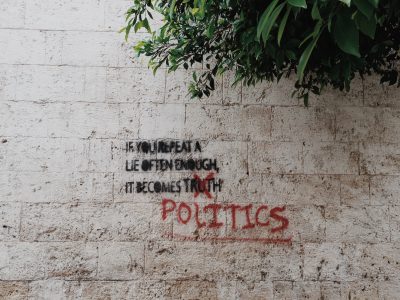
    [post_content] => Once, the purpose of philanthropy was to elevate civil society. Today, it is used by the wealthy to purchase power and influence — often at the cost of civil society. Now a young generation of Americans who were born into rich families are searching for new models for the wealthy to give and effect change.

Recently, philanthropic donations from prominent organizations or individuals have become controversial. Leading cultural institutions, such as London’s Tate Museum and the Guggenheim in New York, renounced donations from the Sackler family, because their role in the opiate epidemic could no longer be disputed. Prestigious universities, like Harvard and MIT, are under fire for having accepted large sums from Jeffrey Epstein, even after a Florida court convicted him in 2008 of procuring underage girls.

Exposing the problem of “third-rail donors” is important, but public outrage at the rich getting richer by giving to the poor also obscures more fundamental questions: is philanthropy, even by those with ostensibly altruistic motives, such as Bill Gates, compatible with democracy? Does it serve or subvert it? Are there newer models that might better serve the public interest? And how should wealthy channel their resources for the common good?

During America’s Gilded Age of the late nineteenth century, inequality became so stark that it became an issue in the public discourse. Industrialists like Andrew Carnegie implored the wealthy to ask, “What is the proper mode of administering wealth after the laws upon which civilization is founded have thrown it into the hands of the few?”  Carnegie became a philanthropist in order to lift up the less fortunate but at the time his generosity was not well received. Eugene V. Debs, the famous socialist and labor leader, railed against him:

We want libraries, and we will have them in glorious abundance when capitalism is abolished and workingmen are no longer robbed by the philanthropic pirates of the Carnegie class. Then the library will be as it should be, a noble temple dedicated to culture and symbolizing the virtues of the people.

Most of the labor movement, however, took a more practical view. Samuel L. Gompers, founder of the American Federation of Labor, once responded that,

After all is said and done, [Carnegie] might put his money to a much worse act. Yes, accept his library, organize the workers, secure better conditions and particularly, reduction in hours of labor and then workers will have some chance and leisure in which to read books.

Carnegie’s philanthropic program created one of the most important civic institutions in the United States and in the rest of the English-speaking world — the branch library. His example, however, remains exceptional, not least because he endeavored to bolster the public sector. During the Progressive Era of the early twentieth century, civil society activists enlisted the wealthy to help champion causes that would lead to new public policy and civic institutions. Their ideals and achievements heavily influenced President Franklin D. Roosevelt’s New Deal, under which Congress enacted public works and welfare policies, like Social Security, that are taken for granted today but which were revolutionary at the time. Contemporary philanthropy in the United States does not address inequality, or promote progressive public policy. In Just Giving: Why Philanthropy Is Failing Democracy and How It Can Do Better, political philosopher Rob Reich notes two surprising things: at most, 30 percent of giving in the United States goes to poverty-fighting programs; and the higher your income, the less likely you are to give your money to those programs. The wealthy tend to give to cultural institutions and higher education, while the less wealthy are more disposed to give to poverty alleviating institutions like soup kitchens. Reich then asks a question that only seems rhetorical: would society benefit more from altruistic philanthropy or private consumption? Does the tax-deductible charitable work a foundation or wealthy individual undertakes contribute more to society than the taxes the public coffers would receive from a major purchase, or from inheritance taxes? Furthermore, why should the public subsidize a wealthy person’s priorities and discretionary spending? At a recent panel, Reich recounted a story told in Mark Dowie’s 2002 book, American Foundations An Investigatory History: when George Soros set up his Open Society foundation, there was disagreement about what its priorities should be. Soros allegedly pounded his fist on the table and said, “This is my money at the end of the day, and we’re going to do it my way.” A junior staff member then chimed in,

Excuse me Mr. Soros, roughly half the money in this foundation is not yours but the public’s – if you hadn’t placed your money in this institute, half of it would be in the U.S. Treasury.

According to Reich, foundations and charitable giving cost the US roughly $50 billion per annum in foregone taxation. As Reich says, big philanthropy is then essentially an exercise of power that is unaccountable, nontransparent, donor-directed, tax-deductible. It’s a plutocratic exercise of power in a democratic society. Over the past 100 years, the changing economic and political landscape has affected and been affected by the role of philanthropy. In Nicholas Lemann’s essential Transaction Man: the rise and the decline of the American dream, the author explores reasons for the decline of the big corporation and big government, and the rise of unregulated finance and private sector solutions (or lack of solutions) in their place. Lemann writes about the series of policy decisions that led to a disintegration of the social compact. A confluence of factors led to a receding welfare state, made easier by a growing distance from the lessons of the Great Depression. However, Lemann shows that the status quo is not the inevitable result of the march of progress. Transaction Man, with his eyes fixed on the bottom line, is the manifestation of years of shifting priorities. Anand Giridharadas perfectly illustrates how this new transactional ethos affects philanthropy in Winners Take All: The Elite Charade of Changing the World, (Penguin Random House, 2018). Most conspicuously it is to “do well by doing good.” As Giridharadas writes, “In the journey from Adam Smith’s theory to that of the win-win, the entrepreneur is transformed from an incidental booster of the common good into a unique figure specially capable of tending to it.” Winners Take All brings the reader along to the ubiquitous conferences and panels where tech entrepreneurs, thought leaders, politicians, corporate executives and philanthropists contemplate the challenges of the world, then enthusiastically agree with one another’s often market-based solutions.  “If the logic of our time had applied to the facts of an earlier age,” writes Giridharadas, “someone would have put out a report suggesting that ending slavery was great for reducing the trade deficit.” Giridharadas unfortunately overlooks a major reason for the neoliberalist bent to current philanthropy. As Jane Mayer explains in her important 2016 book Dark Money, liberal philanthropy is the consequence of very intentional conservative philanthropy. Mayer charts the weaponization of philanthropy by the Kochs and other conservative billionaires, in their successful attempt to move previously radical libertarian positions about money and government into the mainstream. Not all philanthropic foundations exist to promote policy that undermines government regulation or benefits respective industries. Most, however, seem to perpetuate the notion that the private sector is better positioned to offer solutions. Rob Reich and Nicholas Lemann are not the only ones challenging this received wisdom. Many, like Holly Fetter, are searching for new models for the wealthy to give and effect change. Fetter grew up wealthy, but felt unable to reconcile her class with her more progressive politics. As she tells it: “When I went to an Occupy rally, I then went home and actually googled “rich kid social justice.”  She founded the Stanford University chapter of the Resource Generation, a community of young people, 35 and younger who are in the wealthiest 10 percent and are committed to wealth redistribution that aids progressive causes. The tagline on their website reads, “Got class privilege and want social justice?” Patriotic Millionaires is another group of the very wealthy people seeking systemic change. The quote framing its homepage, by former AOL executive Charlie Fink states, “Because my country – our country – means more than my money.” It includes links to a conference that calls for taxing the rich, and an article titled Equalizing Capital Gains is Essential for Equality. The North Star Fund is a 40 year-old New York City-based social justice foundation that provides more options for rich people who want to make the world more equitable. Their work includes the participation of communities to which they have contributed grant money totaling $57 million. Rachel Sherman, a sociologist who has been studying the habits of the wealthy, feels that there is something important about this political moment. In an interview with The Conversationalist she said, “Sanders and Warren talk about inequality and that it is silence about wealth, the fact that it’s kind of uncouth to talk about money, that allows so much inequality to hold together.” She emphasized the importance of not attacking individual rich people, or pointing out the “good” wealthy person who spends her money “appropriately.” Her work has raised this issue of what kind of person is a good wealthy person, and if we deem them so, would we then think they are entitled to their wealth? Sherman points to Warren Buffet as an example, saying: “It doesn’t matter that he’s lived in the same house he bought in 1951; there is nothing you can do to be entitled to that much money.” Sherman makes an apt analogy to engaging with white privilege and says, “If we can get rich people to not feel personally defensive…it is very analogous to white people feeling defensive about white privilege – ‘I’m not racist so it’s fine.’  You may not be a rich asshole, but you are still benefiting from class privilege.” She feels it is extremely important to depersonalize wealth and “show that this is a moment where we actually have shared interest in having a more egalitarian society and it is something we can do collectively.” She reflects that the new younger wealthy class, like Resource Generation, are able to catalyze this kind of conversation by openly saying “this is not about me personally — it’s not my fault — we just need to recognize the structural reasons [for inequality].” With the 2020 elections looming, inequality, and the role of government in addressing it, have risen to the surface for the first time in several generations. The spate of books about the role of philanthropy and the private sector attest to this. Problematic contributions by the Sacklers, the Kochs, and others with dubious intentions or sources of wealth, should highlight the urgency of reassessing redistribution of wealth more generally. Rather than relying on the wisdom and moral clarity of the very wealthy to fix societal ills, perhaps new models of philanthropy, or their tax contributions as citizens, should replace them. [post_title] => Is philanthropy subverting democracy? [post_excerpt] => Contemporary philanthropy in the United States does not address inequality, or promote progressive public policy. Instead it has become transactional — a means for the rich to purchase power and influence. [post_status] => publish [comment_status] => closed [ping_status] => open [post_password] => [post_name] => how-philanthropy-is-subverting-democracy [to_ping] => [pinged] => [post_modified] => 2026-09-15 23:29:34 [post_modified_gmt] => 2026-09-15 23:29:34 [post_content_filtered] => [post_parent] => 0 [guid] => https://conversationalist.org/?p=1437 [menu_order] => 296 [post_type] => post [post_mime_type] => [comment_count] => 0 [filter] => raw )

Is philanthropy subverting democracy?

WP_Post Object
(
    [ID] => 1428
    [post_author] => 2
    [post_date] => 2019-10-18 22:51:17
    [post_date_gmt] => 2019-10-18 22:51:17
    [post_content] => The Syria crisis has provided a clear issue for Democrats in pursuing their impeachment inquiry. 

When Nancy Pelosi took the 'extraordinary' step of initiating impeachment proceedings against President Trump on September 24, the consensus among even those who had for months been calling upon her to do so was that the Republican-dominated Senate would block his removal from office. Over the ensuing three weeks, however, a series of seismic occurrences have upended received wisdom. As prominent historian and journalist Heather Cox Richardson wrote yesterday in a long Facebook post, it feels "as though the nation has shifted." The immediate catalyst for this shift was Trump's decision to withdraw U.S. military support from the Kurdish stronghold in northeastern Syria, and to suspend military aid to the Kurds. This, coming on the back of some stunning revelations about Trump's dealings in Ukraine, have finally cracked the wall of Republican support for the president.

'I want you to do us a favor though'

The original reason for the impeachment hearings was a whistleblower complaint from an unnamed CIA officer who had been assigned to the White House. According to the complaint, which several media outlets published in its entirety, Trump indirectly told the newly elected president of Ukraine, Volodymyr Zelensky, that he wanted Ukraine to manufacture dirt on Joe Biden. During their phone conversation, Trump used a phrase that could be the 10 words that sink his presidency: "I want you to do us a favor though." The "though" implies that Trump was asking for a quid pro quo — a personal service for his own benefit. Then it emerged that Trump had held up the release of a $400 million military aid package to Ukraine. Since that aid package had been approved by Congress in July, the president was in effect withholding taxpayer money for his personal use. Trump tried, of course, to obfuscate by claiming the whistleblower had made false accusations and insisting that his conversation with Zelensky had been "a perfect phone call." Republican senators continued to defend Trump. Their constituents still supported the president, believing his claims that the allegations regarding the phone call were untrue or misunderstood. Since impeachment is a political process and not a trial, GOP lawmakers were not going to risk being voted out of office by angry Trump supporters. The impeachment inquiry would continue, but with little chance of the president being forced out of office.

The Syria debacle

On October 6, Trump announced abruptly that he was withdrawing U.S. military support for Kurdish forces in northeastern Syria. The Kurds were U.S. allies; they had fought and destroyed the Islamic State, which cost the lives of an estimated 11,000 soldiers. Turkey, however, regarded the Kurds as terrorists. As soon as American commandos pulled out of the Kurdish stronghold, Turkey launched a military attack that has shocked the world with its brutality. Besides the horrific moral implications of abandoning the Kurds after they had saved the U.S. from deploying its own troops to fight the Islamic State, Trump's decision to pull out of northeastern Syria is a diplomatic and security catastrophe. America has given up its leverage in the region, indicated to any future allies that they cannot be trusted, and possibly provided an opportunity for ISIS to resurrect itself. Kurdish forces that were guarding 11,000 captured ISIS fighters had to abandon the prison camps in order to fight Turkish forces; many of those ISIS prisoners simply walked out of the camps — presumably to fight another day; indeed, there has already been a spike in ISIS attacks against the Syrian Democratic Forces (SDF), the anti-Assad forces that were also U.S. allies. Meanwhile Putin rushed to fill the territorial vacuum, deploying Russian soldiers to the area. Some of them posted triumphal videos taken at abandoned U.S. military bases.

Cracks in the wall

Even stalwart Trump supporters were appalled at the extent to which Trump had undermined American security and its national interests. Senator Lindsey Graham, a national security hawk, issued scathing tweets accusing the president of creating "a complete and utter national security disaster." When Fox News reported Graham's criticism, it became clear that Trump's support was weakening. Swing voters might not understand the significance of Trump's phone call with Zelensky, but they certainly understand the significance of their president making them vulnerable to terrorist attacks committed by the so-called Islamic State. This was Nancy Pelosi's moment. At a fraught White House meeting regarding the Trump administration's Syria policy, she stood to confront the president, pointing her finger at him as his aides hung their heads. An unnamed White House photographer caught what has already become an iconic image, the subject of in-depth analysis by art historians and culture critics, and which Pelosi promptly posted as her new header on Twitter. Trump is now an embattled president, and he knows it. But his base remains loyal, and that will probably never change. The question is whether the institutions of the state, after three years of relentless assault, remain sufficiently robust to support the democratic process of impeachment.

For more analysis of this extraordinary historical moment:

[post_title] => The ground beneath Trump's feet [post_excerpt] => Besides the horrific moral implications of abandoning the Kurds after they had saved the U.S. from deploying its own troops to fight the Islamic State, Trump's decision to pull out of northeastern Syria is a diplomatic and security catastrophe. America has given up its leverage in the region, indicated to any future allies that they cannot be trusted, and possibly provided an opportunity for ISIS to resurrect itself. [post_status] => publish [comment_status] => closed [ping_status] => open [post_password] => [post_name] => the-ground-beneath-trumps-feet [to_ping] => [pinged] => [post_modified] => 2026-09-15 23:27:54 [post_modified_gmt] => 2026-09-15 23:27:54 [post_content_filtered] => [post_parent] => 0 [guid] => https://conversationalist.org/?p=1428 [menu_order] => 297 [post_type] => post [post_mime_type] => [comment_count] => 0 [filter] => raw )

The ground beneath Trump’s feet

WP_Post Object
(
    [ID] => 1409
    [post_author] => 2
    [post_date] => 2019-10-04 14:34:42
    [post_date_gmt] => 2019-10-04 14:34:42
    [post_content] => Raised in the heart of the Jewish American consensus, millennial Jews were taught to be fervently committed to Israel. Now, they are leading the push to criticize Israeli policy and question the community's Israel-centric politics. 

Talk to two Jews and you’ll get three opinions. It’s an old Jewish joke, but when the subject is Israel, a difference of opinions is often not considered amusing. Those who express unpopular opinions risk a type of excommunication, with friends and relatives severing relationships while professional networks become inaccessible.

I’ve been asked on many occasions why some otherwise-progressive Jews are so passionately supportive of Israel, even as others wonder why an increasing number of Jews in the diaspora reject Israel-centric politics. Many Jews prefer to avoid the subject. Israel is consistently ranked at or near the bottom of issues for Jewish American voters; perhaps paradoxically, there is no issue that elicits more ferocity within the Jewish community. 

The Jewish conversation on the subject of Israel/Palestine is confusing in part because things are changing rapidly. In the decades after the 1967 war, the consensus within the mainstream Jewish community was almost unwaveringly supportive of Israel — no matter what type of government the country had, or what its policies. The fabric of this broad communal agreement is now fraying, as younger Jews become increasingly aware of Palestinian life under Israeli control. They have a long way to go, but they are slowly moving the discussion about Israel-Palestine in the direction of universalism and solidarity. 

My own journey from right-wing supporter of Israel to leftist might provide some insights for an outsider trying to understand the context of Jewish Americans’ shifting communal position on Israel-Palestine.

I grew up in central North Carolina. We were almost always the only Jewish family anyone we knew had ever encountered. Our synagogue was (and is) a somewhat dilapidated brick building, too big for the tiny congregation that remains in the town, and too cash-strapped to care for its own cemetery. But it was a lovely place, and I spent hours in the small library, full of dusty history books about Israel and the Holocaust. Israel was inseparable from my Jewishness, and my Jewishness was inseparable from me.

At synagogue, Israel was the backdrop. At Jewish summer camp, it was the alpha and omega. Israel and Zionism symbolized a strength and self-assuredness that I could only imagine at home. It seemed to answer all the questions I had about the world and myself. At school, I fielded questions from evangelical peers about whether or not I had horns. At camp, I dashed around doing mock army drills and combat-crawled in wet grass. At home, friends glued a quarter onto the ground and laughed as I tried to pick it up. At camp, we learned about our heroic return to our homeland, and discussed making aliyah — a Hebrew word that means rising up, and which in this context refers to immigrating to Israel —  to fulfill our dreams. We rarely discussed the Arab Palestinians who lived there, and almost never thought of them.

For many American Jewish children, summer camp is a core component of their Jewishness. According to the Foundation for Jewish Summer Camp (tagline: Jewish Summers. Jewish Future.) about 15 percent of Jewish children, or around 90,000 kids, went to Jewish summer camp in 2017. Not all Jewish summer camps are the same; the ideology and curriculum varies from socialist to religious nationalist. The same is true for all Jewish institutions, although the majority espouse views that are more conservative than those held by the Jewish public. The message at my camp was clear. From raising the Israeli flag every morning, to singing the prayer for the State of Israel, our responsibility was to carry on the mission that the movement had pursued since its founding a century earlier.

I brought this fervent commitment with me when I traveled to Israel for my gap year between high school and college. While we traveled freely inside the Green Line, we were prohibited from traveling into the occupied Palestinian Territories — beyond the wall that Israel had constructed. A friend and I took this rule for a dare. We found a host to stay with on CouchSurfing, messaged her some vague lies about being Christian bloggers interested in Bethlehem, and woke up early to head to the Palestinian bus station outside Damascus Gate n East Jerusalem. We snickered roguishly to ourselves as we boarded the bus, which ferried mostly Palestinian passengers between Jerusalem and the West Bank. Our snickering died down as we pulled into Bethlehem and saw the graffiti-covered grey walls of what I would later know as the separation barrier. Our hilarity turned to fear when we realized that our host, a pro-Palestine activist, had set up several meetings for us with local organizers. Our little lie had blown up in our face. We had no choice: we were “bloggers” in a strange land; we had to go along, and play the part.

What I learned during those meetings changed my life. In his living room, an old man told me his story about the Nakba — Arabic for “catastrophe” — which is what Palestinians call the 1948 war that sent 800,000 Palestinians into permanent exile. I had never heard about the Nakba before that encounter. I had heard many stories about Jewish-Israeli experiences during the Second Intifada of 2000-02, but now I was hearing from Palestinians about their traumas from that time. In these and in countless subtler ways, the plain fact of Palestinian life and personhood seeped through the cracks of my nationalist worldview. I returned to my program the next day, and experienced my first ever night of insomnia.

A few months later, I reached college and, not knowing what else to do I joined the “Israeli-Palestinian Dialogue Committee.” I showed up and, at first, couldn’t help myself from repeating the talking points I’d learned as a child at synagogue and at Jewish summer camp. In retrospect I can’t believe anyone put up with me. But over time, my talking points gave way to questions, especially for the Palestinian members of our group. Not only were they real, they were my friends. And slowly, I began to organize.

At college, I could finally place my experiences into a broader pattern. Thousands of Jews, despite Israeli and American Zionist attempts at separation, have managed to escape what journalist Peter Beinart calls, “The American Jewish Cocoon,” the well-funded strategy by the mainstream community to shut our eyes to the reality of the Israeli occupation. While Palestinian organizers have, unsurprisingly, long worked hard to wake up American Jews from their comfortable slumber on this issue, the past decades have seen a groundswell in Jewish reciprocation. Entire organizations work to bring Jews out of our cocoon. Growing awareness of the dire realities for Palestinians has sparked conflict in the Jewish community over the nature of our relationship to Israel, with millennials taking a leading role in pushing for a new, more critical conversation.

This growing dissent against the pro-Israel consensus butts up against conservative Jewish communal institutions that are fighting back. They have increased pro-Israel investment in Democratic races, for example, and created McCarthy-style lists of pro-Palestinian activists on college campuses. These conservative pro-Israel activists hold political views that are far to the right of those held by the majority of Jewish Americans. But while Trump attempts to wrest Jews away from the Democratic party and progressivism in the name of supporting Israel, there is no evidence to show that Jews might abandon unbroken decades of supermajority support for it. 

What we are seeing now is a generational changing of the guard. All the efforts to hide the brutal realities of Palestinian life from plugged in and angry Millennials and Gen Z are doomed from the outset. Young Jewish Americans are, like their non-Jewish peers, increasingly progressive regarding nearly every political issue. Meanwhile, the vast majority of Jewish institutions remain in the hands of older Jewish people whose views are far more conservative. Fears of irrelevance stalk their boardrooms. The question is whether these organizations will remain in the cocoon, despite the obvious cost of alienating the younger generation, or come out with the rest of us. Either way, the majority of Jews will continue to live and vote according to their values.

 
    [post_title] => How Israel became the most divisive issue for Jewish Americans
    [post_excerpt] => Raised in the heart of the Jewish consensus, a young American journalist describes how and why a seminal trip to Israel during his gap years led to a political awakening. 
    [post_status] => publish
    [comment_status] => closed
    [ping_status] => open
    [post_password] => 
    [post_name] => how-israel-became-the-most-divisive-issue-for-jewish-americans
    [to_ping] => 
    [pinged] => 
    [post_modified] => 2026-09-15 23:17:58
    [post_modified_gmt] => 2026-09-15 23:17:58
    [post_content_filtered] => 
    [post_parent] => 0
    [guid] => https://conversationalist.org/?p=1409
    [menu_order] => 299
    [post_type] => post
    [post_mime_type] => 
    [comment_count] => 0
    [filter] => raw
)

How Israel became the most divisive issue for Jewish Americans

WP_Post Object
(
    [ID] => 1323
    [post_author] => 2
    [post_date] => 2019-08-16 18:54:45
    [post_date_gmt] => 2019-08-16 18:54:45
    [post_content] => 

Theresa May was the only one willing and able to take on the job of trying to clean up the mess the boys made, but it was an impossible task.

Things started going downhill in the United Kingdom about 38 months ago. Well, it could be 41, if you really want to be precise. In February 2016, then-Prime Minister David Cameron announced that there would be a referendum on Britain’s membership of the European Union. The choice was between “Leave” and “Remain.”  At the time, the widely-held assumption was that the Remain campaign would win, with Cameron staying on for a few more years, and then eventually handing the reins to another Conservative politician of his choosing.

The results of the June 23, 2016 referendum shocked liberal Britons in particular and the world in general, just as much as the election of Donald Trump shocked Americans and the world four-and-a-half months later.

It is now August 2019 and Britain is getting ready to leave the bloc without a deal. Boris Johnson, the new prime minister and one of the leaders of the Leave campaign, has said a hard Brexit is his wish. Johnson replaced Theresa May on July 24, after she resigned in light of her failure to broker a deal to exit the EU that would satisfy her own party.

Remain voters feel ignored and unhappy; soft Brexit voters feel things are going too far and are unhappy; hard Brexiteers do not believe that Britain will leave the EU and are unhappy. The country is fractured and no person or party looks capable of bringing everyone together again.

David Cameron, meanwhile, is getting ready to publish his memoirs, which he reportedly wrote in a bespoke £25,000 ($30,000) shed, complete with wood-burning fireplace and sofa-bed, in the garden of his “quintessentially English” Cotswolds home. So, what went wrong?

The main answer, as it often is, comes from the hubris of men. First Cameron, with his unearned confidence, called the referendum to quell internal disagreements in his party. He was certain that he would win, and then he did not.

As the Remain campaign discovered slightly too late, a country that had just gone through six years of savage cuts to public services did not take kindly to the architects of said austerity warning them that if they voted to leave, there might be less money in the coffers. Many banks warned they would leave Brexit Britain, but such threats were not exactly convincing to those on the breadline, who had little hope of becoming more prosperous anytime soon.

The Remainers were convinced they would win easily, and were not ready for the Brexiteers’ intense, relentless and occasionally disingenuous approach to campaigning. Instead, they spent too much time trying to counter dubious claims about the EU, and not enough reminding people why the EU was a good thing for the country.

As one writer put it in the aftermath, “In confronting populist demagoguery, it isn't enough to attack its promulgators. To get people to turn out and vote in your favor, you also have to give them something positive to rally behind.”

That the debate was overwhelmingly male had something to do with this disastrous turn of events, perhaps. In May 2016, Labour grandee Harriet Harman hit out against the lack of female voices leading the referendum campaigns; she quoted a study, which found that only 16% of television appearances on EU issues had been women. She was largely ignored.

A month later Leave won, by 52% to 48%, and no-one quite knew what to do. After all, damaging over-confidence had not been a side-specific issue; when Conservative MPs Boris Johnson and Michael Gove gave their victory speeches on June 24th, they looked terrified.

It is now clear that senior figures in the Vote Leave campaign had spent little time preparing for what would happen if they were to win, instead running a campaign conveniently promising all things to all people. Do you want Britain to be a buccaneering nation, ultra-liberal and open to the world? Brexit can make that happen. Do you yearn for the Britain of the past, and wish your country could shut itself from the world, and from the people wanting to move to the islands? There’s a Brexit for that — and so on.

David Cameron, who was a Remainer, resigned from his office and retired from politics after the Leave campaign won the referendum that he had called. Within weeks Theresa May, who was also a Remainer, replaced him. She was not quite the best candidate, but she was the only one willing and able to take the job.

Boris Johnson, the face of the Vote Leave campaign, wanted to run for party leadership. But Michael Gove, the other face of Vote Leave, stabbed him in the back; Gove ran instead, and the party didn’t back him. The boys had made a mess and as is so often the case, a woman had to come in and pick up the pieces, much to the glee of the boys in question. As May won, one male Conservative MP welcomed the news with a hearty “here comes Mummy!” Dry heave is appropriate.

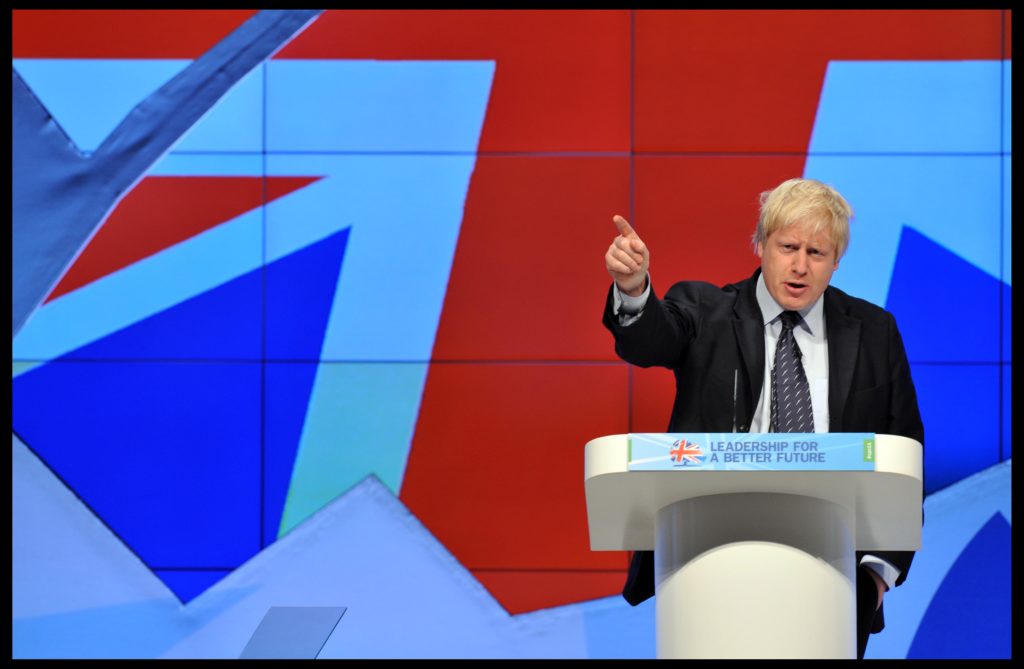
[caption id="attachment_1324" align="aligncenter" width="640"] Boris Johnson addressing the Conservative Party Conference in Manchester on October 4, 2011.[/caption]

This is where things could have picked up; the moment when the country could have come together. In a different world, May would have announced that the result of the referendum had been close, and that it called for a Brexit that kept Britain close to the European Union, in order to honour the winning side without alienating the others. Even if unenthusiastic about the compromise, Brexiteers could have rallied around her and accepted their narrow margin of victory, and Remainers could have gracefully accepted their defeat and constructively worked with those who had beaten them.

This, of course, is not what happened. Already in a tough position, May made her own life worse by pandering to the harder Brexiteers and, perhaps overcompensating for her Remainer past, all but ignoring everyone else. The Brexit fanatics used this opportunity to harden their lines every step of the way, while shellshocked Remainers floundered, and failed to do much but yap from the sidelines.

This is when things started to get steadily worse. Entire books could be written about what happened between the summer of 2016 and the summer of 2019, but in short: May called an election to get a bigger majority in Parliament and was instead left with no majority at all, the hard Brexiteers kept voting against the Brexit deal May got because they thought it wasn’t a hard enough Brexit, everyone else wasted more time arguing about whether they wanted no Brexit, a second referendum or a soft Brexit than doing anything else, and in a day of “indicative votes” (test votes), MPs showed that not a single Brexit outcome had a majority in the House of Commons.

If you want to picture it, it was a bit like one of those scenes in cartoon where the unlucky main character slips on a banana peel, stands up, steps on a rake, stands up again and then walks straight into a glass door, on repeat, for three years.

Still, the themes remained similar. There was the hubristic assumption from Remainers that as Brexit negotiations would get worse, enough people would fling back to their side (they didn’t), and the hubristic assumption from Brexiteers that all problems with the negotiations would simply fade away if people started believing in Brexit enough (they didn’t).

In a way, the natural conclusion to all this was always going to be Boris Johnson. The former London mayor is a serial cheater, has an unknown number of love children, no principles to speak of, and is interested in little but power. What he excels at is boisterous self-confidence, and an ability to speak with conviction on anything he believes would be useful for him to talk about. His gaffes are frequent and his blunders dangerous, but to his fans he represents the one true Brexit believer who can deliver on all those impossible promises. As has become received wisdom in Britain, it is sufficient to believe in things very hard in order to make them come true; he may not be fond of the comparison, but Johnson is the Tinkerbell of Brexit, Lost Boys very much in tow.

What happens now remains unclear; Johnson won on a platform of leaving the EU on the October 31st deadline “do or die.” He insists that leaving without a deal is not something he wants, but he will not bring May’s deal back to Parliament for one last go, and there is not enough time to negotiate another deal and get it through the Commons. Still, he believes something will happen therefore it must be true.

Members of Parliament, meanwhile, insist that they will stop Johnson from going for no-deal, despite the awkward fact that there is not much they can do about it. Still, they believe — well, you get the point.

As Westminster tribes keep fighting to see which will make the best Icarus, the country they govern remains entirely split along the lines drawn on June 23rd. Where you stand on Brexit is now as important (if not more) than which party you usually vote for, or any other characteristics identities are usually built upon.

It did not have to be this way, of course. The opportunities for healing were always going to be rare and complex, but they did exist and no-one took them up. After all, doing so would have involved coming to terms with reality, unpleasant and imperfect as it may be. Forty-one months on, Britain stands on the brink of destroying itself for no reason; by the time its economy tanks and it scrambles to rebuild its relationships with the EU and the rest of the world, it will be too late for anyone to be the bigger person.

Given the wider context, it might be unwise to suggest Brits now turn to culture from the continent for advice, but they could do worse than revisit the most famous scene from the cult French movie La Haine: “Heard about the guy who fell off a skyscraper? On his way down past each floor, he kept saying to reassure himself: So far so good... so far so good... so far so good. How you fall doesn't matter. It's how you land!”

https://www.youtube.com/watch?v=Uz9vgtXq_Hs

[post_title] => How less-than-great men brought Britain to its worst hour [post_excerpt] => It is now clear that senior figures in the Vote Leave campaign had spent little time preparing for what would happen if they were to win, instead running a campaign conveniently promising all things to all people. [post_status] => publish [comment_status] => closed [ping_status] => open [post_password] => [post_name] => how-less-than-great-men-brought-britain-to-its-worst-hour [to_ping] => [pinged] => [post_modified] => 2026-08-06 23:24:36 [post_modified_gmt] => 2026-08-06 23:24:36 [post_content_filtered] => [post_parent] => 0 [guid] => https://conversationalist.org/?p=1323 [menu_order] => 306 [post_type] => post [post_mime_type] => [comment_count] => 0 [filter] => raw )

How less-than-great men brought Britain to its worst hour

WP_Post Object
(
    [ID] => 1297
    [post_author] => 2
    [post_date] => 2019-08-09 15:36:13
    [post_date_gmt] => 2019-08-09 15:36:13
    [post_content] => Human rights organizations warn that northwestern Syria is on the brink of a humanitarian catastrophe unprecedented in the twenty-first century. 

On July 22 Russian jets bombed the market in Maarat al-Numan, a town near Idlib in northwestern Syria, killing 40 civilians. According to an eyewitness named Um Abdullah, the bombing was so devastating that rescue workers struggled to find corpses left intact. “They filled entire bags with body parts,” she said.

Idlib and the surrounding area is now the last remaining territory in Syria still controlled by opposition forces. Over three million people live there, including over 1.5 million children. They are nearly all civilians, with about half displaced from other parts of Syria. After Russia intervened directly in the civil war in late 2015 on the side of the Assad regime, pro-regime forces, including Iran-backed militias, recaptured all the other rebel-held areas. Those who refused to surrender to the regime were deported to Idlib, where they now await their fate. Since the end of April Bashar al-Assad’s regime forces and their Russian allies have been pounding the area with air strikes, killing nearly 800 people so far. The UN and human rights NGOs warn of an impending “humanitarian nightmare,” as regime forces decimate cities, pushing civilians to flee toward the sealed Turkish border.

https://www.youtube.com/watch?v=HFAZ_FsKxmg&feature=youtu.be

Syrian and Russian militaries renewed their assault on Idlib in late April, recycling tactics they used in places like Aleppo: in addition to heavy indiscriminate attacks on population centers, they destroy essential infrastructure and services such as hospitals, ambulances, schools and markets with targeted strikes from the air. They also kill civil defense teams while they are trying to rescue civilians trapped under rubble. Between heavy airstrikes, shelling, and a ground assault, more than 452,000 people have been displaced over the last three months.

But neither the dire warnings from humanitarian workers and UN agencies, nor the devastating death and destruction, have received significant media attention. The world has turned its attention away from the war for many reasons, but the main factor seems to be that there is essentially nothing new about Syrian civilians dying in indiscriminate airstrikes. Hundreds of thousands have died in such attacks over the last eight years. Activists on the ground disseminate graphic and disturbing images of the carnage and destruction in the hope of shocking the outside world into taking action; but those disturbing images achieve the opposite of their intended purpose, with the news-consuming public feeling helpless and thus increasingly reluctant to look and to know.

Another factor behind the scant reporting from Idlib is that journalists have extremely limited access. All entry of foreign journalists into Idlib requires coordination with the Islamist group Hayat Tahrir al-Sham (HTS), an offshoot of al-Qaeda, which is the dominant power in the region. Even when journalists do gain access to the area, they face enormous challenges that include limitations of time and space: it’s almost impossible to explain the complex international negotiations and power plays over the fate of this densely populated region in a succinct 750-word news item or a three-minute report for television news.

[embed]https://www.youtube.com/watch?v=c4I4tthapJw[/embed]
Aftermath of the Russian airstrike on Maarat al-Numan, July 22, 2019.
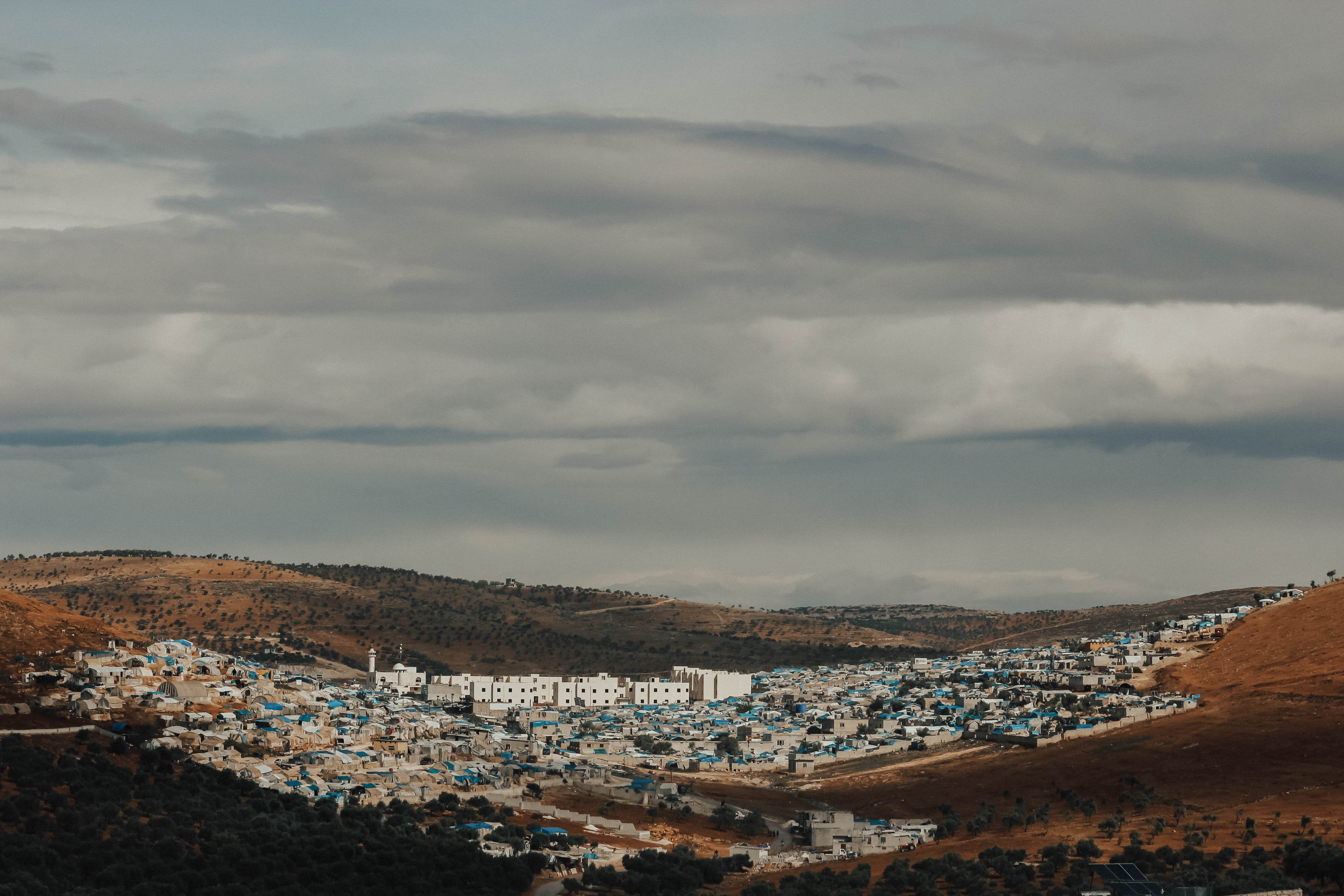
The significant media coverage of the atrocities in Aleppo, eastern Ghouta and the city of Homs did not alter the fate of these regions: they all fell to the regime, after ferocious military campaigns. The saturation coverage did, however, make it more difficult for Russia to claim that the regime was killing “terrorists” while the wire services were publishing photos and videos of wounded children undergoing painful medical treatment in bombed out hospitals that had run out of anesthesia. Media coverage also increased international empathy for the people living in areas that were under siege, with activists organizing demonstrations around the world. Syrians followed the online support campaigns and solidarity protests held across the west, feeling that even if their predicament remained unchanged, at least their humanity and suffering were acknowledged. The current silence, despite the ongoing humanitarian catastrophe, makes them feel abandoned. Perhaps, if the assault on Idlib had received the kind of media attention given to Aleppo in 2015, public pressure would have affected western government policy; perhaps those governments would have reconsidered their decision to cut essential funding for civil society organizations in the opposition-held areas of Syria. Despite the world’s indifference and the dearth of foreign reporters on the ground, local journalists continue to cover events. Samer Daabol, a photojournalist in Idlib, sees his work as an act of defiance against the Syrian regime. He explained that he felt a “responsibility to amplify the voice of civilians,” adding: “No one can do this except us, living in this war zone.” He tried to explain what it’s like to live with a complete absence of physical security. “There is no safe place during the day or night,” he said, adding that the air strikes “create immense pressure, anxiety, sudden precipitation, insomnia, headaches.” He and the rest of Idlib live “a life that revolves around death.” Idlib’s fate is now in the hands of Turkey, Russia, and, to a lesser extent, Iran. The three countries have negotiated several “de-escalation” deals, but all the armed actors in the conflict — the opposition, the Assad regime, and its ally Russia — have repeatedly violated those agreements. The Assad regime has vowed to retake every inch of Syria. In pursuit of this goal, it has ignored deals to de-escalate the conflict. Turkey, meanwhile, is determined to prevent the area from falling into the hands of the regime, largely because Ankara knows that as Assad’s forces re-take control of Idlib, a massive number of Syrian civilians will rush to the Turkish border, which has been sealed since 2016. Only a very few have the means to escape by paying smugglers thousands of dollars. Turkish border police routinely shoot and kill Syrian asylum seekers, while others have been caught and deported back. Turkey already has 3.6 million Syrian refugees and they don’t want any more — particularly not if they are jihadi militants. In order to preempt this scenario, Ankara has increased military assistance to the National Liberation Front, a conglomeration of Islamist and mainstream rebel groups. Umm Yazan, 28, is one of the Civil Defense employees who helps rescue civilians and provide them with medical care. I spoke to her after she had been displaced from her hometown in southern Idlib due to intense airstrikes. Umm Yazan explained that she joined the Civil Defense, also known as the White Helmets, because she could never abandon her people. White Helmets work under extremely perilous conditions: they are routinely targeted in “double tap” attacks, with bomber planes first hitting a target and then swooping back for a second time to kill rescue workers while they are working to drag survivors out of the rubble. Um Yazan’s five year-old son, Yazan, was killed in an airstrike in 2015. “When I rescue someone’s son, I feel I am recovering my son’s spirit. This gives me such great positive energy to continue my work,” she said. In recent years I have spoken to hundreds of Idlib residents and met with refugees who managed to escape to Turkey. The dire living conditions in the region — the near-constant shelling, loss of loved ones, poverty, absence of basic amenities, instability, and displacement patterns from and into Idlib, have left an indelible mark on the region’s inhabitants, forging a unique temperament. They have strong communal solidarity, are dogged, fatalistic, fearful, angry and bitter toward the outside world; they also suffer from unyielding, but usually repressed, mental anguish. “People have changed a great deal,” said Mohammed, a commander with the Free Syrian Army who was displaced from his home in Hama several years ago. “We never expected [when the uprising began in 2011] to be targeted with barrel bombs and missiles.” He added: “These people have been sentenced to death.” While in other regions of Syria the population often pressured the rebels to surrender to the regime, in Idlib half the population is composed of people who chose displacement over “reconciliation.” Many original inhabitants of the region are also opposed to surrender. [caption id="attachment_1303" align="aligncenter" width="5184"] Atmeh border camp in Idlib, near the Syrian border. Over 800,000 internally displaced people live here in tents, with neither running water nor toilets.[/caption] “Civilians saw with their own eyes what happened in areas that reconciled with the regime. People there are suffering humiliation, detention and torture,” said Mohammed, the FSA commander. In previous “reconciliation” deals, those who refused to surrender were bussed to Idlib, which was the last stronghold of the opposition. These internally displaced people have seen and heard what the Assad regime’s soldiers do to civilians in formerly opposition held areas — i.e., they rape the women and slaughter indiscriminately. Many people in Idlib believe that opposition factions are implementing the agendas of their foreign sponsors. They also acknowledge that the opposition forces can be abusive toward civilians. And yet, they need their protection. Yasin (not his real name), a resident of Khan Sheikhoun, said that about 150 members of his extended family had been killed during the eight-year war. “The international community and all countries, Arab and Western, do not care about [us],” he said, adding that he believed the Arab and western governments wanted the Russians to help the Assad regime kill all the people of Idlib. Yasin barely survived the April 2017 Sarin gas attack on Khan Sheikhoun, which killed about 100 people. The UN’s chemical weapons watchdog, the OPCW, held the Syrian regime responsible for the strike. “The entire world abandoned us — Turkey, the world, the West. Nothing is before us except death,” said Yasin. He spoke rapidly, rushing to unload his pain, inhaling and exhaling audibly. Yasin works as a monitor tracking Syrian and Russian jets. He informs the Syrian Civil Defense of approaching planes, so that they can warn civilians to find shelter, or escape the crowded locations that are routinely targeted by Russian forces and the Syrian regime. His immediate family fled to northern Aleppo, which is under Turkish control and thus safe from airstrikes. Khan Sheikhoun has been largely depopulated, with civilians seeking cover in nearby orchards or fleeing further north. “The Russian jets are chasing people wherever they escape,” Yasin said. But he refuses to leave, insisting that the regime will come for him no matter where he goes. “Let me die when I’m here, on my land.” Yassin’s resolve is not predicated on hope, but on fatalism. “No one hears us. Our blood is the cheapest on earth. Whether a Syrian dies or lives, it does not matter,” he said. Umm Abdullah is a math teacher and prominent anti-regime activist in her city, Maarat al-Numan, an epicenter of civil society activism in Idlib. She joined the early protest demonstrations in 2011. Today she leads several associations, advocates for the rights of detainees in regime prisons and supports their families. “If you walk around Maarat al-Numan, you will see buildings with floors collapsed atop each other, stores with metal gates blown out. Jets do not leave the sky. Strikes are ongoing... Our children are dying.” She wept as she said, “I have not seen my son in seven years. He was my happiness. My eldest. He had a flame inside him. He was full of life.” ِAbdullah, her son, was arrested in February 2012 and detained in the notorious Sednaya Prison for participating in anti-regime protests. The family was informed only this year that he died under torture back in 2014. Like many other relatives of detainees, they sold property to pay exorbitant bribes for the release of their child, but to no avail. For the past three years, Idlib has been stuck in an impossible, deadly situation. The frozen low-intensity conflict escalates every few months, resulting in mass casualties; the influence of the jihadis has expanded under the increasingly pragmatic Hayat Tahrir al-Sham; and humanitarian conditions have deteriorated as a consequence of a reduction in international funding. In the west, we are not reading about Idlib in the headlines — or even in the back pages. Because the media is barely reporting the story, many people have the mistaken impression that the war in Syria is over. The people of Idlib have become somewhat accustomed to having their intense suffering ignored — but still, they do feel dehumanized. “We are human beings. We have feelings, just like you,” said Umm Abdullah. “You in the west call for animal rights, for dogs and cats, so first demand our rights, us human beings.” [post_title] => Who will write our history? The world looks away while Idlib awaits its fate [post_excerpt] => Because the media has largely stopped reporting the war in Syria, there is a widespread misunderstanding that the war in Syria is over. In fact, it has escalated. [post_status] => publish [comment_status] => closed [ping_status] => open [post_password] => [post_name] => who-will-write-our-history-the-world-looks-away-while-idlib-awaits-its-fate [to_ping] => [pinged] => [post_modified] => 2026-08-06 23:25:10 [post_modified_gmt] => 2026-08-06 23:25:10 [post_content_filtered] => [post_parent] => 0 [guid] => https://conversationalist.org/?p=1297 [menu_order] => 307 [post_type] => post [post_mime_type] => [comment_count] => 0 [filter] => raw )

Who will write our history? The world looks away while Idlib awaits its fate

WP_Post Object
(
    [ID] => 1289
    [post_author] => 2
    [post_date] => 2019-08-08 20:59:43
    [post_date_gmt] => 2019-08-08 20:59:43
    [post_content] => “I did not oppose busing in America. What I opposed is busing ordered by the Department of Education. That’s what I opposed.” — Joe Biden to Kamala Harris at the June 27 Democratic primary debate

Responding to Biden's comment, investigative journalist Nikole Hannah-Jones, explains in the New York Times why busing succeeded in some parts of the country and failed in others — and also why the term "busing" is inaccurate for what was, in fact, "court-ordered school desegregation."

[The fact that] Americans of all stripes believe that the brief period in which we actually tried to desegregate our schools was a failure, speaks to one of the most successful propaganda campaigns of the last half century.

If there was a problem with busing, Hannah-Jones continues, it was that it was too successful, too good at desegregating schools in segregated cities and towns. Between 1964 and 1972, the proportion of black children attending white schools in the South rose from just two percent to nearly half. "The South," observes Hannah-Jones, "Had gone from the most segregated region of the country for black children to the most integrated, which it remains 40-some years later.” In the northern states, however, wealthy white urban parents organized against enforced busing so effectively that the policy eventually failed. Today, most school districts in cities like New York and Chicago are de facto segregated. Brown v. Education was not a court case about a child’s right to a better school on the other side of town, Hannah-Jones points out, but one about a child’s right to attend the school in her own neighborhood. The issue that Biden and others opposed was always integration, not busing. Now, three years into the Trump presidency, we are seeing the consequences of segregated neighborhoods and schools.  “De facto segregation of public schools continues to thrust aside the critical democratic experience of learning and conversing with racial Others during the formative years of human and citizen development,” MIT professor J. Phillip Thompson wrote in 2017, not long after Donald Trump took office. Segregation, he explains, means that people "are less likely to recognize commonalities in their values – concern for family, respect for hard work, willingness to help others." In the absence of mutually acknowledged humanity, it's a short step to "scapegoating and divisive politics." Segregation affects individuals and society in a variety of ways. One study by Boston University showed that black neighborhoods and white neighborhoods are policed differently, which accounts for the racial disparity in police shootings.

“A common refrain in the age of Trump is: ‘This is not who we are,’” David Smith writes in The Guardian. “A common riposte is to point to America’s long history of slavery, segregation and violence and say: ‘This is exactly who we are.’”

Most alarming about the racism exacerbated by segregation is that it has led to domestic terrorism, with mass shootings that target visible minorities. Segregated online spaces are fostering racist vitriol. “He truly believed wild conspiracy theories he read on the internet, many of which vilified Democrats and spread rumors that Trump supporters were in danger because of them,” wrote the defense lawyers for Cesar Sayoc Jr., who sent bombs to Democrats and journalists who had publicly taken on Trump. The hope and inspiration during these dark times lie with people and groups working to desegregate our society in different ways. In Houston, a city program called Build Up Houston seeks to empower and hire black business owners. Black and white ministers are working together to bridge the racial divide in churches and other faith-based spaces. Latinx activists, sometimes excluded from the black/white dichotomy, are establishing social and political movements that are founded on neither “American exceptionalism [nor] American aversion.” In 2017, Thompson identified "morally-based organizing" across races as an essential endeavor to combat white supremacism. "How to convene the public when the majority (including a majority of blacks and Latinos) is dispersed in segregated suburbs is a pressing practical issue," he wrote. If we want to save democracy, we'll have to figure out the means of traversing the physical and the racial divides.  [post_title] => Why Joe Biden's former position on school busing is anti-democratic [post_excerpt] => Between 1964 and 1972, court-enforced busing successfully desegregated public schools in the American South. But in the north, white parents in urban centers organized to oppose the policy — which eventually failed. Today, southern public schools remain integrated while northern public schools are de facto segregated. [post_status] => publish [comment_status] => closed [ping_status] => open [post_password] => [post_name] => democracy-withers-in-the-darkness-of-racism [to_ping] => [pinged] => [post_modified] => 2024-08-28 21:11:30 [post_modified_gmt] => 2024-08-28 21:11:30 [post_content_filtered] => [post_parent] => 0 [guid] => https://conversationalist.org/?p=1289 [menu_order] => 308 [post_type] => post [post_mime_type] => [comment_count] => 0 [filter] => raw )

Why Joe Biden’s former position on school busing is anti-democratic

WP_Post Object
(
    [ID] => 1259
    [post_author] => 2
    [post_date] => 2019-07-26 18:42:23
    [post_date_gmt] => 2019-07-26 18:42:23
    [post_content] => Despite the bleakness of the current political moment, the slide to authoritarian oligarchy is not inevitable.

America’s inequality crisis has emerged as the central issue of the 2020 presidential campaign. The realization that “it’s the economic inequality, stupid,” was a long time coming, given that the global economic crisis of 2008 is now more than a decade behind us. During the intervening years the global grassroots Occupy movement demonstrated for months to raise awareness, staging sit ins on Wall Street in New York and in major cities across Europe. In remarks delivered in 2013, Barack Obama called economic inequality “the defining challenge of our time.” And three years ago an anti-establishment voter revolt gave the United States its first plutocrat president in the form of Donald J. Trump. Americans have at last come to understand the effect of economic inequality on their lives. But the question of how to address inequality is fraught with controversy.

At the Democratic party debates in June, nearly all of the candidates for the presidential nomination railed against the U.S. economy for benefitting only the very rich. Senators Elizabeth Warren and Bernie Sanders, who have made inequality their signature issue, have both proposed detailed plans that would completely remake the American economy. Even frontrunner Joe Biden, for years affiliated with centrist politics, noticed that progressivism was rising in popularity; he too is now talking about inequality—with his donors.

All this is a far cry from the “America is already great” message that hampered the Clinton campaign in 2016, but is undoubtedly closer to the way Americans actually feel. Six years ago, the English edition of Thomas Piketty’s seminal book Capital in the Twenty-First Century was published, becoming a surprise bestseller and a cultural phenomenon. At the time, economists regarded as controversial Piketty’s warning that if the concentration of wealth and power remains unchecked we risk repeating the adverse conditions of the nineteenth century. In a 2016 paper, however, French economists Emmanuel Saez and Gabriel Zucman showed that American inequality is at levels unseen since the Roaring 1920s, with the top 0.1 percent controlling 22 percent of the wealth. This year, former Fed chairman Paul Volcker told the New York Times that the U.S. is “developing into a plutocracy.” Nobel laureate economist Joseph Stiglitz has written that the American economy is “rigged.” In the media, you can often see our current era referred to as the Second Gilded Age, after the period between the end of the Civil War and the beginning of the twentieth century, when inequality ran rampant and robber barons like Andrew Carnegie, John D. Rockefeller and J. P. Morgan plundered and pillaged their way into unimaginable wealth.

But Americans, who encounter extreme concentrations of wealth and power wherever they turn these days, don’t need economists to tell them what they already know: that capitalism, or at least their country’s form of it, is broken — perhaps irreparably. While the U.S. is among the world’s wealthiest countries, it is also, according to the UN, “the world champion of extreme inequality.” Forty million Americans live in poverty; in some areas of the country, life expectancy is equivalent to that of developing states. Meanwhile, “deaths of despair” — caused by drug abuse, alcoholism and suicide — have spiked. According to the UN, Americans lead “shorter and sicker lives, compared to people living in any other rich democracy.”

The American Dream — the idea that if you worked hard, you could succeed regardless of where you were born or what your parents earned — is still the national ethos, despite the fact that the U.S. currently has the lowest rate of economic mobility of any industrialized democracy. In contrast to earlier generations, very few young Americans will do better than their parents: they are buried in debt, struggling with rising rents and healthcare costs, and see more deaths from suicide and drug overdose than any other age group. The life trajectory of most contemporary Americans is inextricably linked to their parents’ education and income, and to their geographic location. A recent study by researchers at the N.Y.U. School of Medicine, for instance, found a 30-year gap in life expectancy between two neighborhoods in Chicago, one rich and one poor.

Republicans, meanwhile, passed an enormous $1.5 trillion tax cut for the wealthy and are now considering another one, while trying to cut Social Security and kick millions off Medicaid. White-collar crime prosecutions are at a record low, the president is openly corrupt, and corporate lobbyists literally run the government. Is it any wonder that polls have repeatedly shown that over two thirds of Americans believe the economic and political systems are rigged in favor of big business and the rich? This is why millions of voters paid attention when Donald Trump said during his presidential campaign that “the American dream is dead.”

While growing inequality has long been a fact of American life, income inequality has increased dramatically since the mid-1970s, to the point where the top one percent now earn 26.3 times more than the other 99 percent. And while the top one percent’s share of the nation’s earnings has doubled during that period, the top 0.1 percent fared even better: their incomes quadrupled, even as incomes for the bottom 90 percent, once adjusted for inflation, have remained stagnant.

But it is the distribution of wealth that truly highlights the vast disparities hidden by four decades of policies that have created the illusion of economic prosperity. In the U.S. today, wealth is concentrated to such an extent that three men alone — Bill Gates, Jeff Bezos, and Warren Buffett — are richer than the bottom half of the entire population. Recent data released by the Federal Reserve reveals in startling detail how the distribution of wealth in the U.S. became so unequal. Matt Bruenig of the People’s Policy Project, who analyzed the data, calculated that between 1989 and 2018, the net worth of the top one percent increased by $21 trillion, while the bottom 50 percent became poorer to the tune of $900 billion during the same period. In 2018, Bruenig finds, the top one percent owned “nearly $30 trillion of assets while the bottom half owns less than nothing, meaning they have more debts than they have assets.”

A 2018 study by researchers at the University of Bonn shows how the 2008 financial crisis exacerbated U.S. inequalities, particularly for black households, as the crisis contributed to the widening of a racial wealth gap that had already persisted for decades due to systemic discrimination. According to the authors, the median black household has only 12 percent of the wealth of a median white household and earns about half the income, leaving black households 80 percent poorer than white households. The economic crisis of 2008 erased the few gains they had made, while over the past 70 years “virtually no progress” has been made in reducing wealth inequality between blacks and whites in the United States.

The U.S. is the most extreme example, but most of the world has seen increased inequality over the past 40 years. In the U.K., deaths of despair have spiked following a decade of deliberately cruel austerity policies. In France, 2018’s gilets jaunes protests highlighted the country’s inequality crisis, partly fueled by Emmanuel Macron’s policy of cutting taxes to the top one percent while leaving those clinging to the lowest rungs of the income ladder worse off.

The causes of rising inequality vary from country to country, but in the U.S. and Europe the economic literature points to a few culprits. These include automation, the decline of organized labor, financial deregulation, regressive tax systems that allow the rich to cut their own taxes, and globalization. In the U.S. in particular, a growing body of research points to monopoly power and diminishing competition across the American economy as a major contributor. Among economists, a new movement highlights the negative impact done by decades of policies based on dubious market fundamentalist reasoning.

At the heart of all this is the ongoing failure of capitalist democracies to counter growing concentrations of wealth and power, which in turn fuel voter discontent and elevate populist authoritarians to power worldwide. In recent years many have raised the questions of why liberal democracy failed to address the rise of economic insecurity, or why the popular backlash to rising inequality has been marked by a turn toward far-right nativism —  as opposed to, say, a demand for higher taxes on the rich. Some, like Harvard economist Dani Rodrik and author Thomas Frank, argue that the answer lies in the left and center-left parties’ abdication of their historical responsibility toward low-income workers. Whereas the right has always been up front about its allegiance to business elites, the complicity of center-of-left parties in the policies that increased inequality has made them ill-equipped to address the problems that they helped create. A 2018 study by Piketty seems to confirm this view.

With democracies unable to ensure prosperity for all but the rich and well-connected, support for democracy is decreasing. In a recent speech, Angus Deaton, the Nobel Prize-winning economist, declared that rising inequality threatens democratic capitalism. But it’s not the “capitalism” part that’s under threat. Despite their populist protestations, far-right authoritarians like Brazil’s Jair Bolsonaro and Donald Trump are not opposed to rabid capitalism or even globalization—they just don’t believe democracy must be a part of it, or that it should stop them from giving handouts to their friends. Vanderbilt law professor Ganesh Sitaraman explains that the real threat to liberal democracy “isn’t authoritarianism—it’s nationalist oligarchy.” If left unchecked, the future of Western democracies could look a lot like Brazil, where pervasive inequality and lack of elite accountability gradually eroded support for democracy until the authoritarian Bolsonaro could rise to power — with the help of the country’s business elites.

Despite the bleakness of the current political moment, the slide to authoritarian oligarchy is not inevitable. One remedy, particularly in the U.S., is tougher enforcement of antitrust laws, which is necessary to constrain the power of corporate monopolies. Another, as historian-turned-folk hero Rutger Bregman told members of the global elite gathered in Davos earlier this year, is astoundingly simple: “Taxes, taxes, taxes.” Our current system, as documented by Zucman, is built upon massive tax evasion amounting trillions of dollars, by multinational corporations and the ultra-rich. Any solution to our inequality crisis necessarily involves wealthy people paying their fair share.

Any attempt at meaningful reform, however, would inevitably have to contend with the fact that all of our political and regulatory institutions have been completely captured by big business and the rich. Which brings us back to the 2020 elections.

The 2020 presidential election is not just a referendum on Trump’s authoritarian populism. It is also a test case for the ability of democratic capitalism to correct itself. The Democratic party’s candidate is thus a critical matter, whether that person is a progressive like Sanders or Warren, whose promises include a more equitable construction of the American economy, student debt forgiveness, reining in corporate power and a wealth tax; or a lifelong neoliberal centrist like Biden, who recently promised his donors that despite his newfound interest in income inequality, under his presidency “no one’s standard of living will change, nothing will fundamentally change.”

The choice goes beyond the likelihood of defeating Trump, straight to the heart of the debate over what American capitalism, and democratic capitalism in general, mean in the twenty-first century. Does democracy mean an oligarchy rooted in injustice, which is what we have had for the last few decades; or should it be a system that benefits the whole of society, rather than only a select few?
    [post_title] => In 2020, America will decide between oligarchy and egalitarianism
    [post_excerpt] => While growing inequality has long been a fact of American life, income inequality has increased dramatically since the mid-1970s, to the point where the top one percent now earn 26.3 times more than the other 99 percent. 
    [post_status] => publish
    [comment_status] => open
    [ping_status] => open
    [post_password] => 
    [post_name] => the-2020-presidential-election-will-either-make-or-break-democratic-capitalism
    [to_ping] => 
    [pinged] => 
https://democracyjournal.org/magazine/51/countering-nationalist-oligarchy/
    [post_modified] => 2026-09-15 23:00:00
    [post_modified_gmt] => 2026-09-15 23:00:00
    [post_content_filtered] => 
    [post_parent] => 0
    [guid] => https://conversationalist.org/?p=1259
    [menu_order] => 310
    [post_type] => post
    [post_mime_type] => 
    [comment_count] => 0
    [filter] => raw
)

In 2020, America will decide between oligarchy and egalitarianism

WP_Post Object
(
    [ID] => 1249
    [post_author] => 2
    [post_date] => 2019-07-26 15:46:59
    [post_date_gmt] => 2019-07-26 15:46:59
    [post_content] => Grassroots groups are organizing to protect undocumented immigrants.

In Passaic, N.J., a teenager refused to open her front door when awakened at 1 a.m., and hid with her parents through the small hours of the morning. In Houston, Texas, a teenager’s post on Facebook alerted neighbors in a largely Hispanic community to the presence of four Immigration and Customs Enforcement agents in fatigues and bulletproof vests. ICE agents were also rebuffed in Brooklyn, N.Y. In Nashville, a group of neighbors formed a human chain to help shield a father and son from ICE agents as they walked from their truck to their home.

In response to President Trump’s threats to deport undocumented immigrants en masse, immigrant rights organizations mobilized to inform immigrants of their rights, by spreading information sheets on social media, and passing out flyers out in particularly vulnerable communities. What’s more, they’ve been joined in this effort by Democratic politicians and presidential candidates: Chicago Mayor Lori Lightfoot was out distributing Know Your Rights flyers; multiple New York City lawmakers attended a rally protesting the raids; the Los Angeles Police Chief Michel Moore has provoked the ire of federal agents by standing with the L.A. mayor Eric Garcetti as he informed residents that they don’t have to open the door to ICE agents unless the agents have a warrant.

Although the massive raids never materialized as promised, immigrants are more informed and better prepared than ever. And bystanders are also more informed and angrier than ever.

“The unapologetic publicizing of these threatened raids activated a different level of consciousness for allies not directly impacted,” Ambien Mitchell, an advocate at the New Sanctuary Coalition in New York City, told The Huffington Post’s Angelina Chapin. “Citizens are more outraged now than ever.”

“Allies developed sophisticated tools on all ends,” Sarah Cullinane, the director of immigrant rights organization Make The Road New Jersey, told Chapin. “I think this new level of sophistication arises from the constant and repeated threat to immigrant lives.”

Activists have been preparing for these raids since June, when they were first announced by the Trump administration and then subsequently postponed. The L.A. Raids Rapid Response Network run by the Coalition for Humane Immigrant Rights (CHIRLA) hands out copies of a judicial arrest warrant to immigrant families so that they can compare that text to the text of documents that ICE agents may hand them, to verify that the document is in fact a legal arrest warrant, CHIRLA’s Shannon Camacho told Democracy Now!’s Amy Goodman. Adelina Nicholls, from the Georgia Latino Alliance of Human Rights, said that they have visited with or spoken to more than 25,000 people across the state.

However, knowing your rights has its limits. A widely-shared video of ICE agents breaking a car window and dragging out the occupant aroused widespread outrage, but subsequent reporting revealed that the agents had a warrant and acted lawfully. (Although that report did not address an eyewitness’ claims that the agents threatened to shoot her when she asked about a warrant.)

Even if the promised large-scale raids have yet to materialize, the constant threat has created a culture of fear and anxiety for immigrant communities and their allies. Undocumented people worry about going to work every day, but have no choice if they want to continue to pay rent and other bills.

“Raids didn’t happen this weekend to the scale people were expecting them, but just the fear of knowing it could happen, it really terrorizes and traumatizes people in neighborhoods," Daniela Alulema, director of programs for the Center for Migration Studies in New York, told NorthJersey.com. "And that was reflected when you saw restaurants, churches and public places that are usually filled with people, they were just empty.”

Stacy Torres, a sociology professor, noticed a similar lull and depression in Oakland. “On the first day of planned immigration raids across the country last Sunday, eerie quiet settled over Fruitvale, the heavily Mexican and Central American neighborhood where I live in Oakland, Calif.,” she writes.

“Normally bustling places were deserted and somber. The feeling of a community holding its breath hung like a fog. Few vendors roamed the sidewalks selling raspados, ice cream and sliced mango. Missing were the mothers I glimpse from my porch walking with young children toddling alongside or babies expertly wrapped in cloth bound to their backs. The baseball diamond and playing fields of Brookdale Park remained empty. Finally, around 8:20 p.m., with the sky still tinged with faint light, the park filled with children and a group of men playing soccer on a neighboring field. The fog of fear had lifted, allowing everyone to burn energy pent up after a day of hiding.”

Although the threat of violence — the forced expulsion of immigrants is a kind of violence — may make some Americans feel big, places are being hollowed out whether people are forced to leave or not. [post_title] => Living in terror of the knock on the door [post_excerpt] => The constant threat has created a culture of fear and anxiety for immigrant communities and their allies. [post_status] => publish [comment_status] => open [ping_status] => open [post_password] => [post_name] => living-in-terror-of-the-knock-on-the-door [to_ping] => [pinged] => [post_modified] => 2026-09-15 22:52:05 [post_modified_gmt] => 2026-09-15 22:52:05 [post_content_filtered] => [post_parent] => 0 [guid] => https://conversationalist.org/?p=1249 [menu_order] => 311 [post_type] => post [post_mime_type] => [comment_count] => 0 [filter] => raw )

Living in terror of the knock on the door

WP_Post Object
(
    [ID] => 1210
    [post_author] => 2
    [post_date] => 2019-07-12 16:16:52
    [post_date_gmt] => 2019-07-12 16:16:52
    [post_content] => The proud feminists who aspire to be the Democratic presidential nominee in 2020 haven't said much about how U.S. foreign policy affects women around the world. Maybe they should.

As a Pakistani woman, I cannot vote in the 2020 elections. But as a non-American Muslim feminist who lives in the global south I wonder what impact the election of a female American president might have on women like me. Would a woman in the Oval Office be good for citizens of Muslim-majority countries in South Asia and the Middle East?

Feminism and women’s rights are dominant issues in the current American political discourse, with four of the female candidates for the Democratic party’s nomination vowing to fight back against the Trump administration’s attempts to undermine them. Kirsten Gillibrand, reports The New York Times, is placing “women’s equality and opportunity at the center of her policy agenda.” Tulsi Gabbard has a clear position on women’s issues: she is pro-choice, supports programs to help domestic violence victims, advocates equal pay (although she has not signed the Paycheck Fairness Act), and opposes sex trafficking. Elizabeth Warren has a strategy to protect women’s reproductive rights and another one to fix America’s failing child care system. Kamala Harris backs the passing of the Equal Rights Amendment and supports pro-choice legislation; and as a black American woman, she represents the rights of women of color, who face discrimination based on both race and gender.

American government policy has profound implications for women all over the world. For example, Trump’s decision to reinstate the Reagan-era Global Gag Rule has defunded aid programs that counsel poor women on reproductive health or provide abortions. His decision to cut funding to the UN Population Fund means that women in war zones, refugee camps, and disaster-hit areas no longer have access to free contraception.

Precedents set by women who held powerful positions in Democratic administrations are not necessarily promising. Both Madeleine Albright, appointed the first female secretary of state by Bill Clinton, and Hillary Clinton, who served as Barak Obama’s secretary of state, implemented policies that had a profoundly negative impact on the lives of millions of Muslim women in Iraq, Syria, Afghanistan and Libya. The wars and conflicts that Albright and Clinton supported undermined the health and wellbeing of millions of women and their children. Both Clinton and Albright whitewashed their policies with the phrase “humanitarian war,” while one of the widely heard justifications for the U.S. military invasion of Afghanistan was to claim that it was “a fight for the rights and dignity of women.”

But war does not improve the lives of female civilians — particularly not in socially conservative societies. According to the World Health Organization (WHO), “gender-based inequity is usually exacerbated during situations of extreme violence such as armed conflict." This is certainly true in Afghanistan. The U.S. has been fighting its longest war there since 2001, with female civilians paying the highest prices in both mortality and human rights. “The legacy of war is killing our freedom,” says Jameela Naseri, a lawyer with the NGO Medica Afghanistan, in a 2018 article for Time. According to data cited by the reporter, Afghanistan is still ranked the worst country in the world to be a woman: 90% of Afghan women have experienced domestic abuse, while 87% are illiterate.

In Iraq and Syria, women and children have suffered the most from the recent and ongoing wars. The power vacuum left in Iraq following the U.S.-led military intervention was filled by ISIS, which made atrocities against women an everyday occurrence. Women who managed to escape from ISIS-held territory were often destitute and had to sell sexual favors for food; they suffered from malnutrition because men controlled food distribution in war-ravaged areas; and cultural strictures kept them from accessing health services or going to school during war.

As a U.S. senator, Hillary Clinton voted for the invasion of Iraq in 2002. Madeleine Albright infamously told journalist Leslie Stahl, during a 1996 interview for 60 Minutes, that the deaths of half a million Iraqi children as a consequence of U.S. sanctions were “worth it.” When she was Secretary of State, Hillary Clinton authorized nearly 300 drone attacks in Pakistan, which had a direct effect on the safety and security of millions of girls and women in the northwestern region, already traumatized by the reign of the Taliban.

A female president could correct these poor precedents by championing the cause of women’s rights in countries afflicted by war, political instability, or regressive societal and cultural codes that result in massive discrimination against women. This could be good news for many Muslim women, who are struggling mightily for emancipation, empowerment, and opportunities in their own countries. The coming years will probably be critical for Muslim women: they are finding their voice, and their struggle is gaining critical mass and support from Egypt to Indonesia.

If a woman were elected president in 2020, would she adopt the "feminist foreign policy" that Margot Wallstrom, Sweden's foreign minister, tried to promote in 2015? Probably not. Wallstrom lost her job in part because of the diplomatic rows her stance provoked with Saudi Arabia and her position on Israel vis-a-vis Palestine. Clinton made no such mistakes during her stint as Secretary of State; she maintained a strategic relationship with Saudi Arabia, even as she maintained that women's rights were of utmost importance to her.

Many Americans associate pacifism with weakness, and no woman who aspires to the presidency can afford to be perceived as weak. A hawkish foreign policy combined with a warm and caring outlook for America might be the winning combination for a female President.

How are these four female candidates taking this dynamic on board their campaigns?

Tulsi Gabbard opposes Trump’s hawkish policy on Iran and advocates ending the U.S. military presence in Afghanistan, but she has also met with Bashar al-Assad, who is largely responsible for the deaths of hundreds of thousands of Syrian civilians. Elizabeth Warren advocates progressive domestic policies, but she has voted in favor of hawkish foreign policy initiatives such as a 2017 bill to impose sanctions on Iran. Kamala Harris has voted against resolutions condemning Israel for destroying Palestinian villages or using lethal force in Gaza, although the ongoing occupation of Palestinian territory under Israeli rule is crushing the lives of Palestinian women and girls.

A female president who campaigned as a feminist would have to reconcile her commitment to the advancement of women's rights around the world with the well-established relationships between the United States and Middle Eastern countries that oppress women. I see nothing yet in any of the female candidate’s foreign policy record or platform that indicates an interest in improving conditions for women in Middle Eastern countries that suffer from poverty, war, and repressive dictatorships.

The women who aspire to be president of the United States must recognize that American foreign policy decisions made by her predecessors have created terrible hardship for millions of women. They must be aware of the disproportionately high cost of war to women and children, and consider how to reverse this trend. For example, they could make the landmark UN Resolution 1325 on  Women, Peace, and Security part of U.S. foreign policy. Or they could employ gender experts with on-the-ground experience in Afghan women's rights  to formulate effective programs that will help women regain their ground after decades of war.

A female president who aspires to undo the damage wrought by U.S. foreign policy on Muslim women globally will face significant challenges. But if she makes that effort, she could become the champion of women that the world so badly needs right now.

 
    [post_title] => Would a female president be a feminist for the world, or only for America?
    [post_excerpt] => A female president could champion the cause of women’s rights in countries afflicted by war, political instability, or regressive societal and cultural codes that result in massive discrimination against women. This could be good news for many Muslim women, who are struggling mightily for emancipation, empowerment, and opportunities in their own countries. 
    [post_status] => publish
    [comment_status] => open
    [ping_status] => open
    [post_password] => 
    [post_name] => if-a-women-were-president-would-she-be-a-feminist-for-all-or-only-for-americans
    [to_ping] => 
    [pinged] => 
    [post_modified] => 2026-09-15 22:50:43
    [post_modified_gmt] => 2026-09-15 22:50:43
    [post_content_filtered] => 
    [post_parent] => 0
    [guid] => https://conversationalist.org/?p=1210
    [menu_order] => 314
    [post_type] => post
    [post_mime_type] => 
    [comment_count] => 0
    [filter] => raw
)

Would a female president be a feminist for the world, or only for America?

WP_Post Object
(
    [ID] => 1142
    [post_author] => 2
    [post_date] => 2019-06-21 17:23:28
    [post_date_gmt] => 2019-06-21 17:23:28
    [post_content] => America's foreign policy and international image would be improved if the foreign policy community were more diverse.

I am a black man in America, which means I am physically vulnerable all the time. The United States leads the world in police killings of its own black and brown citizens, and ranks first in incarcerating them. Its education system disproportionately funnels black children through the school to prison pipeline. Millions of people  — many of them black — are disenfranchised from voting because they served time in jail for felonies. In many cases they never regain their right to participate  in American democracy. Despite all these obvious and well-documented injustices, the white majority believes America has the moral pedigree to tell the rest of the world how to handle its own internal affairs. 

This attitude among white Americans speaks to an astonishing lack of self-awareness. The people who dominate and shape global conversations in the western and English-speaking world — think tank presidents, diplomats, foreign correspondents, and business executives  — are almost exclusively white men. They have no experience of the America I grew up in, and this limits their ability to understand the world. 

 As a black man who grew up in Detroit and then spent a good part of his adult life traveling and reporting in Eastern Europe, I have learned that white supremacy and imperialism are the same. The difference is that one is global while the other is domestic. Africa is least responsible for global warming but suffers most of its consequences, which are caused by the world’s leading powers. This is the type of visceral understanding gained from lived experience that the white men who dominate and shape the foreign policy conversation do not have. Their understanding of the world is thus limited, and the consequences are becoming increasingly clear: the American conversation about the world lacks nuance and insight; this undermines our ability to engage effectively — which, in turn, weakens both our own society and our place in the world.

I welcome the conversations about the need for more ethnic diversity in foreign policy conversations. I am glad that people are beginning to understand that with more diverse voices, America could develop a foreign policy that was less expansionist in its global engagement. Unfortunately, however, these conversations are predicated on inaccurate beliefs.

A flawed democracy

America is not the world’s most successful democracy; nor is it an example for the world to follow. Its own legal system has kept black people from gaining any real electoral power at the local and national levels. In Florida alone, more than a million people convicted of felonies were disenfranchised from voting before a November referendum restored their rights; the current governor is trying to slow the restoration process. This is not a system to export. It is a system that must be changed. If America’s white majority were truly interested in making sure that non-white voices were included in foreign policy discussions, they would first work to stop the disenfranchisement of people of color. Nor are teachers with unchecked racial biases qualified to shape the minds of the next generation of foreign policy thinkers. Besides its many misguided military interventions, such as the now widely-reviled Second Iraq War, the U.S. also has a long-documented history of allowing its intelligence service to carry out assassinations against world leaders whose policies deviate from the administration’s. In the twentieth century the CIA backed the assassination of elected leaders like Chile’s Salvador Allende because he was a socialist, and helped engineer the coup that deposed Iran’s Mohammad Mosaddegh because he wanted to nationalize his country’s oil reserves. The United States is accustomed to implementing its foreign policy via the barrel of a gun, which makes a twisted kind of sense for the most gun-toting country on earth with the second-highest number of gun-related murders of any industrialized nation. But if the United States wants to be an example to the world it must change its gun laws and change its ways. It must ban the sale and distribution of military grade weapons to law enforcement agencies that treat the communities they are supposed to serve like enemy combatants. There is a saying in journalism that all politics is local. I’d argue that international politics is local and it's impossible to deploy a diverse diplomatic corps if so many potential non-white recruits are disenfranchised or jailed. I write for The Root, the largest black news site in America. I have the rare opportunity of covering national politics from the perspective of a black person with a black editor. I do not have to deal with a white male editor who might try to change my voice or question my using personal experiences to inform my reporting. I love working at The Root, but my ambition is to be a foreign correspondent. I have two graduate degrees in journalism and another in Russia area studies; I speak two Eastern European languages and can point to many other achievements. But I have never been invited to an interview for any foreign reporting job. An editor at a mainstream newspaper once told me that I wasn’t qualified to write about U.S.-Russia/Ukraine relations because I was not a diplomat. This same publication has hired white people without any relevant credentials for foreign reporting positions. One of the recurring claims one hears in foreign policy circles is there aren’t enough qualified people of color to fill open positions. And yet, despite my qualifications, I cannot find a job as a foreign correspondent.

Hypocrisy won't win hearts and minds

The lack of diverse voices in international news has a profound  impact on the coverage of countries like Russia, China, Nigeria and Ukraine. The foreign press corps in Moscow and Kiev are almost exclusively white. I am quite confident that the reporting from those regions would be richer and more nuanced if half the press corps were composed of black and brown reporters who had personal experiences of immigration and of police abuse. In the United States the coverage of Russia over the past two years has been weak. Analysts have focused on Putin, at the expense of nuanced reporting about ordinary Russians. Our media has spent an inordinate amount of time trying to blame the Kremlin for the fact that millions of Americans decided to vote a white supremacist into the White House, even as they have refused to engage in a serious conversation about the white supremacy that played a far greater role in getting Donald Trump elected than Putin could have done. Incorporating more ethnically diverse people into foreign policy spaces goes well beyond cherry picking brown faces that seem non-threatening to sit at the table. If the U.S. is to pursue an honest, effective foreign policy, it needs to recruit people who are willing to break from the neo-liberalism that underlies the racism in contemporary American society. There is transparent hypocrisy in insisting that Russia remove its troops from Ukraine while threatening military intervention in Iran. America regularly condemns Russia and other nations over their abuse of LGBTQ people, even as black trans women in America are murdered at alarming rates.

Why diversity is important

Too many of our white diplomats are blind to this hypocrisy, because they are the products of an America that was built by and for them. There are too few people like me representing the United States at the table of global affairs, and this undermines the effectiveness of its foreign policy. Take Haiti, for example. Under the expansionist Monroe Doctrine, the United States deployed Marines to the island in 1915 to fend off German influence during World War I. But instead of helping to protect Haiti’s independence, the U.S. occupied the Caribbean country until 1934, exacerbating the theft of resources and political instability caused by French colonization. More recent U.S. policy towards Haiti hasn’t been much better. During the 1970s and 1980s successive administrations supported the violent  regime of Jean-Claude “Baby Doc” Duvalier, while Donald Trump stripped Haitians in the United States of their Temporary Protected Status and made them vulnerable to deportation. House Democrats have held hearings on reparations for the descendants of slaves who were brought to America from Africa. The conversation needs to go global in the case of Haiti, with a hearing to address reparations for that country — or, better yet, a Marshall Plan. What is good for Europe is good for Haiti. Americans see their country as a global cop enforcing democracy around the world, but Putin, Kim Jong-un, China’s President Xi and Iran’s Supreme Leader Ali Khamenei see a state with dubious motives and a narcissistic worldview. I am working to diversify the international affairs conversation through my fellowship at Global Strategists Association, a non-profit organization that helps people from the black diaspora to engage in foreign policy spaces. Most of our events are held in spaces that are majority people of color, and look at domestic and global issues through the lens of blackness. Founder Apprecia Faulkner created the organization after encountering obstacles that prevented her from persuading white-dominated organizations to open up for black participants. I and other fellows are benefiting from her efforts, but the fact that she had to build that space illustrates the problem: America’s foreign policy circles are not interested in being as diverse as the image of America they sell to the world. The United States needs to carry out a major makeover of its domestic politics so that it is committed to all of its citizens, and not just the white ones. Only then can America truly promote an honest foreign policy that is not predicated on exploiting the world’s most vulnerable people — which is precisely what it does to its own minority groups at home. [post_title] => America's foreign policy is undermined by the dominance of white men [post_excerpt] => There is a saying in journalism that all politics is local. I’d argue that international politics is local and it's impossible to deploy a diverse diplomatic corps if so many potential non-white recruits are disenfranchised or jailed. [post_status] => publish [comment_status] => open [ping_status] => open [post_password] => [post_name] => americas-foreign-policy-is-undermined-by-the-dominance-of-white-men [to_ping] => [pinged] => [post_modified] => 2026-09-15 22:47:13 [post_modified_gmt] => 2026-09-15 22:47:13 [post_content_filtered] => [post_parent] => 0 [guid] => https://conversationalist.org/?p=1142 [menu_order] => 320 [post_type] => post [post_mime_type] => [comment_count] => 0 [filter] => raw )

America’s foreign policy is undermined by the dominance of white men

WP_Post Object
(
    [ID] => 1083
    [post_author] => 2
    [post_date] => 2019-06-06 14:36:45
    [post_date_gmt] => 2019-06-06 14:36:45
    [post_content] => Expressing dissent in China is difficult and dangerous, but a brave few persist in telling their story. 

This week the world remembers the events that took place on June 4, 1989, in Tiananmen Square — although remembering is easier to do in some countries than in others. China’s digital great wall blocks access to information about the massacre, often with the help of American technology companies. Demonstrators who were in Tiananmen and lived through the crackdown that followed don’t even tell their children about it, lest they ask questions of the wrong people. Even more disturbing, young Chinese students raised in a post-Tiananmen world question the value of knowing what really happened that day, as Louisa Lim, the author of The People’s Republic of Amnesia, writes in the New York Times. 

But while the Communist party has succeeded in crushing dissent, it has not figured out a way to make people forget. Today some survivors of those horrific events that took place in Beijing 30 years ago still make tiny, subversive gestures to show they have not forgotten, thus proving that people can uphold the historical record even under the most repressive governments.

In a moving reported op-ed for the New York Times, China expert Ian Johnson describes this quiet dissent expressed by brave writers, artists, musicians, and intellectuals as “unofficial history.” They “have taken it upon themselves to preserve the memories of the country’s many killings, famines, uprisings and government crackdowns,” he writes. This history is smuggled in and out of China, accessed through VPN software to avoid censorship, or conveyed in symbolic code. This unofficial history is a testament to the resilience of people and of storytellers.

In addition to the vibrant unofficial history kept alive by a community of people, Johnson writes for the New York Review of Books that the official history of Tiananmen Square continues to expand, most recently with a book about how the Communist Party rewrote history the week following the crackdown, including backdating political endorsements of the decision to use military force on the protestors. The “truth stubbornly endures,” Johnson writes.

In other news:

Can the social cost of carbon — a figure that estimates the economic burden of climate change per metric ton of carbon dioxide — help incentive climate change solutions? Read more. What is “economic patriotism”? Read about Elizabeth Warren’s plan to reinvigorate American industry. At this New York bakery, it’s not your past (whatever it may hold) that matters, but your future. What does employment based on the  Buddhist principle of “non-judgment” look like? [post_title] => This is how China's political dissidents keep historical memory alive [post_excerpt] => In China, brave writers, artists, musicians, and intellectuals have taken it upon themselves to preserve the memories of events their government works hard to repress with digital censorship and police harassment. [post_status] => publish [comment_status] => open [ping_status] => open [post_password] => [post_name] => chinas-digital-great-wall-censors-facts-but-memory-persists [to_ping] => [pinged] => [post_modified] => 2026-08-07 16:10:49 [post_modified_gmt] => 2026-08-07 16:10:49 [post_content_filtered] => [post_parent] => 0 [guid] => https://conversationalist.org/?p=1083 [menu_order] => 325 [post_type] => post [post_mime_type] => [comment_count] => 0 [filter] => raw )

This is how China’s political dissidents keep historical memory alive

WP_Post Object
(
    [ID] => 1027
    [post_author] => 5
    [post_date] => 2019-05-23 14:09:50
    [post_date_gmt] => 2019-05-23 14:09:50
    [post_content] => Authoritarian politics has become a global crisis that requires creative, new thinking

Far-right, nationalist, populist, illiberal, authoritarian: However one might describe these politicians, they are increasingly dominating the world stage. They've been called a "security threat" and compared to climate change — a global crisis in need of a global response. The outline of what such a response might look like is beginning to take shape, as seen in these articles from prominent media outlets.

Authoritarian politicians are a “global security threat,” writes Jonah Shepp in a recent op-ed for New York Magazine. To know the near-future, he suggests looking to recent events in Austria, where government officials sympathetic to far-right groups illegally seized records from a domestic intelligence agency, including the identities of informants within far-right, extremists groups, jeopardizing domestic terrorism investigations. And yet, as Shepp demonstrates, Austria is far from a global outlier. “So don’t look at what’s happening in Austria and say it couldn’t happen here,” Shepp writes, “it already is.”

For The Nation, John Feffer characterizes rising authoritarianism as a global crisis that requires international cooperation. Feffer worries that progressive tactics rely too much on the “guardrails” of democracy, which authoritarians begin to erode as soon as they step foot in office. “Environmentalists understand that unprecedented change requires an unprecedented response,” Feffer writes. “To deal with the threat of political climate change, a similarly international, broad-based, and fundamentally new approach is called for.”

Polish activists Karolina Wigura and Jaroslaw Kuisz might be the example to follow in combatting illiberalism. In a recent New York Times op-ed, they share three lessons gleaned from their work: First, to find areas of consensus among non-right-wing, populist parties, and to set aside differences in favor of compromise. Second, to spend less time reacting to political provocations on social media, and more time building a long-term strategic plan. Finally, to invigorate voters with stories of optimism and hope that goes beyond a return to the way things were “before the illiberals.” These suggestions can be applied locally, but they could also form the basis of the kind of global strategy Feffer outlines.

In other news:

Is the answer to global warming to reduce the work week to a mere nine hours? That’s the conclusion of one study by the think tank Autonomy. Read more at The Guardian. A recent win on same-sex marriage in Taiwan could have reverberations throughout Asia, as the country demonstrates that LGBTQ movement can be in alignment with traditional Asian values. Read more in The Washington Post. Magnolia Mother’s Trust is a model for an unconditional income: small amounts of regularly distributed financial support without any work requirements or other demands. The pilot is small: 20 families in Jackson, Mississippi, are each receiving $1,000 a month for 12 months. But the program could pave the way for more systemic racial justice programs. Read more in The New York Times. [post_title] => More effective than punching a Nazi: Tactics that work [post_excerpt] => The outline of an effective response to authoritarianism is taking shape. [post_status] => publish [comment_status] => open [ping_status] => open [post_password] => [post_name] => more-effective-than-punching-a-nazi-tactics-that-work [to_ping] => [pinged] => [post_modified] => 2026-08-07 16:14:26 [post_modified_gmt] => 2026-08-07 16:14:26 [post_content_filtered] => [post_parent] => 0 [guid] => https://conversationalist.org/?p=1027 [menu_order] => 329 [post_type] => post [post_mime_type] => [comment_count] => 0 [filter] => raw )

More effective than punching a Nazi: Tactics that work