WP_Post Object
(
    [ID] => 1588
    [post_author] => 2
    [post_date] => 2020-01-31 04:25:33
    [post_date_gmt] => 2020-01-31 04:25:33
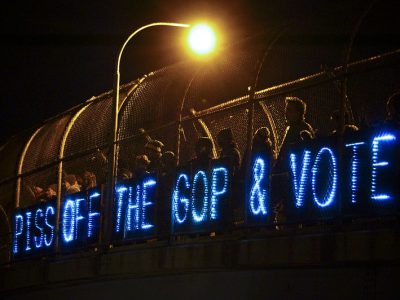
    [post_content] => Grassroots organizers are proving to be a formidable challenge to the Republican Party's voter suppression tactics. 

When Stacey Abrams, the first black woman ever nominated by a major party to run for governor of any state, ran as Georgia’s Democratic candidate for governor in 2018, voters knew she might lose. Abrams’ skills, tenacity, and national profile—enhanced by a decade of service in Georgia’s state legislature and an endorsement from Barack Obama—helped secure her historic nomination. But the state’s long history of voter suppression was a formidable obstacle to victory.

Brian Kemp, the Republican gubernatorial candidate then serving as Georgia’s Secretary of State, was responsible for overseeing voter registration. One month before the election, his office was holding 53,000 voter registration applications for review—nearly 70 percent of which were for black residents, who compose approximately 32 percent of Georgia’s population. In a leaked recording Kemp can be heard saying that the Abrams campaign’s voter turnout operation “continues to concern us, especially if everybody uses and exercises their right to vote.”

Abrams lost the election by 54,723 votes.

The United States has a long history of voter suppression. For decades following Reconstruction, black American residents of Jim Crow states who tried to exercise their right to vote were subjected to poll taxes, literacy tests, arrests, savage beatings, and murder. In the United States (and in Britain), women who agitated for the right to vote were arrested and imprisoned; when they protested by going on hunger strikes, they were violently force-fed.

Contemporary voter suppression tactics are just as prevalent, though implementation is no longer as violent. In 2011, New Hampshire House Speaker William O’Brien vowed to “tighten up the definition of a New Hampshire resident” and crack down on same-day voter registrations in college towns, which, he said, were full of “kids voting liberal, voting their feelings, with no life experience.”

Voter suppression has been a key component of Republican electoral strategy at least since 2008—particularly, but not exclusively, in the Midwest and South. The last Republican presidential candidate to win the popular vote was George W. Bush in 2004. Republican strategists saw in Obama’s 2008 and 2012 victories a rising tide of “kids voting liberal” and minority voter turnout that threatened GOP power. In response, they crafted a strategy to suppress the vote, especially among young people and black people.

It’s no secret that conservatives are deliberately targeting people of color. In a 2019 documentary called “Rigged: The Voter Suppression Playbook,” a North Carolina retiree named Michael Hyers describes his role in helping to purge thousands from his state’s voter rolls in the run-up to the 2016 presidential election. While claiming—without evidence—that he’s working to counteract rampant voter fraud, Hyers, who is white, repeatedly uses language that suggests his true motives are to keep black people from voting. “We got to clean the rolls up one way or another,” he says. “It’s about time we turned the lights on in the kitchen and started cleaning the cockroaches out of here.” In explaining that people like him have a knack for spotting anomalies in registrations, he says, “It’s kind of like seeing a lump of coal in a bale of cotton—it’ll just pop right out at you.”

Don Yelton resigned as chair of North Carolina's Buncombe County Republican Party in 2013 after “The Daily Show” aired an interview in which he acknowledged that new state voting laws were designed to “kick the Democrats in the butt” and could hurt “lazy blacks that want the government to give them everything.”

This sort of overtly racist discourse can incite violence. Shortly before a gunman opened fire in 2019 outside a Walmart in El Paso, Texas, killing 22 and wounding 26, a manifesto that he is believed to have authored appeared online. The long, detailed document includes a description of the author’s intent to “remove the threat of the Hispanic voting bloc” through violent means.

While Republicans work to keep certain demographic groups from voting, institutions like the Electoral College sap the power of our votes. In November, Stacey Abrams told Oliver Laughland, a reporter for The Guardian U.S., that the Electoral College should be abolished. It was, she said, “designed because those who were in power did not trust the peasants and the working people to actually make good decisions, and we should all be in rebellion against that idea.”

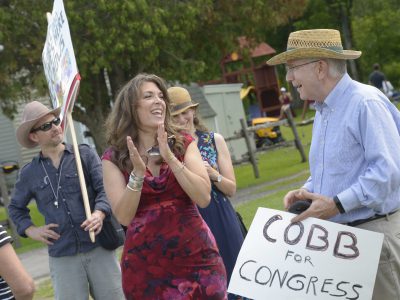
One way to join Abrams’s efforts to fight back against voter suppression is to get involved with one of the grassroots organizations that have sprung up over the last decade to combat anti-democratic measures. After Brian Kemp was declared the winner of Georgia’s gubernatorial election, Abrams founded Fair Fight to “promote fair elections in Georgia and around the country, encourage voter participation in elections, and educate voters about elections and their voting rights.” Through Fair Fight’s nonprofit she also helped organize a lawsuit that challenged Georgia’s entire election system, arguing that it violates the constitutional rights of voters of color.

While large black populations can make states like Georgia targets of voter suppression efforts, they also create bases of power from which those efforts can be fought. In a 2017 Alabama Senate election, black voters organized to propel Doug Jones, the Democratic candidate, to a narrow victory over Republican Roy Moore; his victory made Jones the first Democrat since 1997 to represent the state of Alabama in the U.S. Senate. Doug Jones is white, but 56 percent of those who voted for him were black. According to NBC News exit polls, 96 percent of black voters supported Jones, including 98 percent of black female voters and 93 percent of black male voters.New groups like Woke Vote, a “tiny” collection of students, church-going activists, and organizers, succeeded in getting out the vote for Jones by concentrating on “potential sites of latent black political power, including historically black colleges and universities and black churches,” writes Vann R. Newkirk II in The Atlantic. Newkirk describes these institutions as “force-multipliers, turning each potential new voter into an organizer.” Woke Vote “secured pledges from members not only to vote, but to bring people with them to the polls.”

Steve Phillips, the founder of Democracy in Color, writes in a 2017 New York Times op-ed that “independent, under-the-radar, grass-roots, on-the-ground voter turnout efforts by black leaders and organizers in black neighborhoods” made the difference in Alabama—and not the Democratic Party, nor Doug Jones’ campaign. Phillips names organizations like BlackPAC, which canvassed the state and organized transportation for voters.

In his notorious interview for "The Daily Show," Don Yelton said that laws restricting voting only hurt lazy people. “If it hurts a bunch of college kids that’s too lazy to get up off their bohunkus and go get a photo ID, so be it,” Yelton said.

Acquiring an ID card is, however, not an easy undertaking. Government agencies have limited hours and are often inaccessible to people who cannot afford time off work or the cost of travel. The 25 percent of Americans who do not have internet access at home face an additional obstacle: they have no easy way of looking up voter requirements in their area.

When election law is deliberately abstruse and selectively enforced, it’s rational to conclude that it might be safer to skip voting than to risk breaking the law. In 2018, a dozen people—nine of them black—in North Carolina’s Alamance County were charged with voting illegally in the 2016 presidential election. All were on probation or parole for felony convictions, and most had no idea they were committing a crime by voting while on parole. One of those charged, a man named Taranta Holman who was then 28 years old, told The New York Times that he had never voted before 2016 and never would again; it was simply “too much of a risk.” Residents of Texas, Kansas, Idaho, and other states have also been charged with voting illegally.

Grassroots efforts to counteract voter suppression have succeeded in part because many Americans see voting as a duty as well as a right. They want to vote, but they need information, encouragement, and support. Reported obstacles to voting include lack of time, lack of transportation, work and family responsibilities that preclude people from waiting in long lines, broken machines, unclear and/or onerous voter ID requirements—and, notably, anxiety. (I remember feeling slightly panicky entering a voting booth for the first time as an adult; the machines are not user-friendly!)

Accompanying a person who is nervous or uncertain because they haven’t voted in a long time, if ever, to the polls is not only an act of kindness—it’s a powerful act of solidarity. Like women seeking to exercise their right to a safe and legal abortion, marginalized people have, ever since winning the right to vote, been actively discouraged or prevented from using it.

We can’t reform institutions, repeal unjust laws, or ensure that every election official is capable and fair-minded overnight, but we can support one another, logistically and psychologically, in exercising our rights. Just as escorting one woman into an abortion clinic is an act of communal solidarity that communicates to all women the message “We are in this together,” escorting voters to the polls doesn’t just move the needle in one election: it helps build community power in the long term.
    [post_title] => Escorting voters to the polls is as crucial as escorting women to abortion clinics
    [post_excerpt] => 
    [post_status] => publish
    [comment_status] => closed
    [ping_status] => open
    [post_password] => 
    [post_name] => escorting-voters-to-the-polls-is-as-crucial-as-escorting-women-to-abortion-clinics
    [to_ping] => 
    [pinged] => 
    [post_modified] => 2026-09-16 22:57:51
    [post_modified_gmt] => 2026-09-16 22:57:51
    [post_content_filtered] => 
    [post_parent] => 0
    [guid] => http://conversationalist.org/?p=1588
    [menu_order] => 284
    [post_type] => post
    [post_mime_type] => 
    [comment_count] => 0
    [filter] => raw
)

Escorting voters to the polls is as crucial as escorting women to abortion clinics

WP_Post Object
(
    [ID] => 1554
    [post_author] => 2
    [post_date] => 2020-01-10 15:40:52
    [post_date_gmt] => 2020-01-10 15:40:52
    [post_content] => As Americans worry about suffering reprisals for the killing of Iran's top general, they overlook the civilians who have already been paying for many years — with their blood.

In an Egyptian political satire play called al-Za’im (The Chief), a military dictator who is an archetype representing the Middle East’s various tyrants dies of a sudden heart attack. His inner circle scrambles to replace him with a two-bit actor who looks exactly like the deceased president, so they can buy time to consolidate their power.

When told that he would be the new leader because the real one had perished, the actor smirks and lets out a derisive laugh. “Are there presidents who die, Sir?”

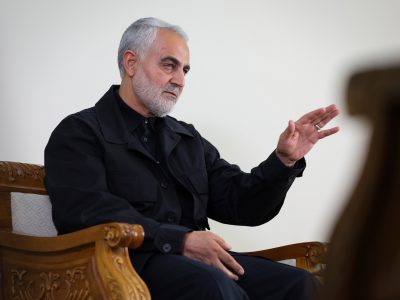
Many of us Middle Easterners and observers of the region had a similarly incredulous reaction to the death of General Qasem Soleimani, Iran’s top military general, who was killed in a US airstrike over the weekend. Analysts and experts claimed that his death would change everything and nothing, that it would lead to World War III; it had the American president vowing to commit war crimes just a few days into the new decade.

These predictions appear to be overblown. Soleimani’s legacy of violence and dispossession in Syria and Iraq will, however, endure. For his many victims, there is momentary relief at his passing.

Soleimani was the leader of the Quds Force, the unit responsible for external operations of the Iranian Revolutionary Guards Corps. The IRGC’s remit is protecting the Islamic Republic’s political system from internal and external threats. Soleimani gained his formative experience fighting on the frontlines of the cruel eight-year war between Iran and Iraq, during which Saddam Hussein deployed chemical weapons with impunity while continuing to enjoy western backing. He witnessed the enormous loss of life – more than half a million, including children and soldiers who were sent into minefields as human detonators, in what was ultimately a pointless war of attrition. 

By 1998 Soleimani was head of the Quds Force; and in 2011 he was promoted to major general. Meanwhile the Arab Spring was sweeping through the region, with Syria the focal point of the Islamic Republic’s paranoia.

Soleimani loomed large as the face of Iran’s campaign for regional dominance, a figure of mystique and mythical brilliance and strategic wisdom. He was the second-most powerful man in Iran, after Supreme Leader Ayatollah Ali Khamenei; he battled the US for influence in Iraq during the American occupation, arming and backing Shia militias in order to guarantee a weak Iraqi state that functioned under the shadow of Iranian influence.

Though he was always an elusive figure, Soleimani had grown less wary of the limelight in recent years. He allowed himself to be photographed and took selfies with Shia militias on the frontlines in Iraq and Syria. 

In Iraq, he organized militias that defeated ISIS; but then those militias turned around and launched military reprisals against ordinary Sunni civilians, thus alienating the very people they had just liberated from the jihadi terror group. 

In Syria, the Iranian general’s self-appointed mission was to save the dictator Bashar al-Assad’s regime from collapse. In doing so, he presided over the country’s destruction, the displacement of millions of civilians, the greatest refugee crisis since the Second World War, and the survival of a tyrannical regime.

All the while, he was portrayed as a master strategist who foiled American designs in the region at every stage.

Iran’s pro-Assad policy is based on its desire to maintain regional influence. The Islamic Republic needs Syria to be stable in order to maintain a secure overland avenue for the transportation of military supplies to Hezbollah in Lebanon, which is its most powerful proxy force. Iran also needs to maintain an overland route to ports on the Mediterranean. When the Arab Spring of 2011 spread to Syria from Egypt, where protesters set a precedent by forcing the resignation of long-time ruler Hosni Mubarak, Iran sent advisors to Syria. Soon after that, it sent proxy militias to fight alongside Assad’s forces. In 2013, Hezbollah forces entered Syria to fight for the regime as well.

These proxy forces were responsible for some of the cruelest tactics of the war. In early 2016, I reported on the siege of Madaya, a border town that was home to 30,000 civilians who were being systematically starved to death by Hezbollah in an effort to force their surrender. To survive, people ate grass, leaves, and spiced water instead of soup.

These starvation sieges were replicated throughout the country, with Soleimani’s proxy forces often leading the charge into areas held by anti-Assad rebel troops. In addition to using hunger as a weapon of war, the pro-regime militias used scorched earth tactics. To recapture Aleppo, they bombarded from the ground while the Syrian and Russian air forces bombed from the air; as they reclaimed territory from the rebels, they carried out extrajudicial killings.

When the rebel forces eventually surrendered, tens of thousands of civilians, fearing the regime would persecute them for suspected anti-government sympathies, were forcibly displaced. Soleimani’s tactics are responsible for rendering countless Syrians destitute and homeless, and for driving many to seek refuge abroad. The ensuing refugee crisis contributed enormously to sectarian tensions in the Middle East. Those who stayed inside Syria continue to suffer from the violent tactics of the Assad regime and its Russian and Iranian allies.

In 2015 Soleimani traveled to Moscow and personally convinced the Russians to intervene on Assad’s behalf. Russian warplanes have carried out dozens of attacks on hospitals in rebel-held areas, and they have killed thousands of Syrian civilians in various air strikes.

In Iraq, the extent of the atrocities carried out by Soleimani’s proxy forces in Sunni communities liberated from ISIS was so extreme that, according to cables leaked by rivals, the intelligence services worried they were undermining Iran’s popular reputation.

More recently, Soleimani was reportedly involved in the crackdown on the popular protest movement against government corruption in Iraq. Security forces and Tehran-backed militias killed hundreds of Iraqi protesters in the weeks leading up to Soleimani’s death. According to reports, the Iranian general attended key security meetings in Iraq; he advised his counterparts to learn from Iran, where security forces killed over a thousand civilians in anti-government demonstrations that took place in December.

In the weeks and months before the Trump administration assassinated Soleimani, the Iranian regime carried out several calculated provocations against the US, as payback for their having pulled out of the multilateral nuclear deal. They threatened and disrupted shipping in the Persian Gulf and bombed Saudi oil installations; more recently, Iran launched rocket attacks against Iraqi bases housing American troops and attacked the US embassy in Baghdad on New Year’s Eve.

The question of whether assassinating Soleimani was legal or not is an academic one. Not just because it is already done and nobody will be held accountable for it, but because Soleimani had been waging an overt and covert war against the US and its allies for years. He orchestrated the death and displacement of hundreds of thousands of civilians over nearly a decade of war in Syria, against a backdrop of a broad violence and civil warfare in Yemen and Libya, as well as political crackdowns and resurgent authoritarianism throughout the region. 

The Middle Eastern conflagration that American pundits claim to be so concerned about Soleimani’s death sparking has already been raging for a decade, with hundreds of thousands of civilians paying in blood.

For now, the worst predictions of the alarmists have not been realized. World War III has not started, and Tehran responded with a calculated attack that didn’t kill any Americans. It did kill or injure Iraqi soldiers stationed on the military base housing American troops, but this was a matter of indifference to both Iran and the United States. As we have seen since the invasion of 2003, America places little value on Iraqi lives.

If there is a future escalation, it will take place on the backs of Arab civilians, because Iran does not have the capacity to match American military aggression. If it does respond further, it will do so through its proxies, further destabilizing the region and risking war. Tehran and Washington will never allow Arab civilians to stand between them when it comes to pursuing their foreign policy goals in the Middle East.

Trump does not care about Arab lives — about this, there is little doubt. Nor is he concerned about human rights, international law, or even having an actual strategy for his foreign policy in the most volatile part of the world. 

But amid the hand-wringing, spare a thought for Soleimani’s victims. For a brief moment, their suffering has been eased.

 
    [post_title] => Dear America: The death of Qasem Soleimani is not all about you
    [post_excerpt] => For now, the worst predictions of the alarmists have not been realized. World War III has not started, and Tehran responded with a calculated attack that didn’t kill any Americans. It did kill or injure Iraqi soldiers stationed on the military base housing American troops, but this was a matter of indifference to both Iran and the United States. As we have seen since the invasion of 2003, America places little value on Iraqi lives.
    [post_status] => publish
    [comment_status] => closed
    [ping_status] => open
    [post_password] => 
    [post_name] => dear-america-the-death-of-qassem-soleimani-is-not-all-about-you
    [to_ping] => 
    [pinged] => 
    [post_modified] => 2026-09-16 22:54:06
    [post_modified_gmt] => 2026-09-16 22:54:06
    [post_content_filtered] => 
    [post_parent] => 0
    [guid] => http://conversationalist.org/?p=1554
    [menu_order] => 287
    [post_type] => post
    [post_mime_type] => 
    [comment_count] => 0
    [filter] => raw
)
Dear America: The death of Qasem Soleimani is not all about you

WP_Post Object
(
    [ID] => 1523
    [post_author] => 2
    [post_date] => 2019-12-20 04:58:47
    [post_date_gmt] => 2019-12-20 04:58:47
    [post_content] => There is a crack in everything; that's how the light gets in.
 — Leonard Cohen

I’m writing these words from a yoga center in the snow-covered Berkshires, in an atmosphere of extreme serenity that is both deeply comforting and somewhat intimidating. On the second day of my little retreat, during a silent meditation walk in the snowy woods, the woman leading the group had us stop at a particularly idyllic spot and stand still, listening to the quiet. Tree branches creaked gently in the wind, a stream of water bubbled over rocks, a woodpecker tapped on a tree, and someone (it might have been me) struggled to control her jagged breathing (it was a steep climb!). Gazing up at the treetops, the instructor asked us to describe what we heard during the silent walk. Reader, I was honest: during the meditation walk, all I could hear was the cacophony in my head — and it sounded like a super highway at rush hour. 

Most of us walk around with a head full of noisy thoughts. Meditation is supposed to help quiet the mind, but sitting still (or walking in deliberate silence) while thinking about nothing is incredibly difficult. Still, I don’t think I am alone in feeling that the normal roar inside my head has become much louder and shriller in recent months. When I mentioned to a friend, a journalist who covers the Christian and white nationalist right in the United States, that I was feeling overwhelmed by an unending stream of worried thoughts, she said, without missing a beat: “It’s the fascism.”

For those of us who are concerned about the state of civil society and democracy, 2019 was a disquieting year. Authoritarianism continues to rise and spread, while once robust democracies falter as the pillars of supporting institutions — the judiciary, the independent media, and the legislative branch — are weakened. Around the United States, in New Zealand and in Europe, we have seen a notable uptick in violent racist and antisemitic incidents. Perhaps most worrying of all, governments continue to dither over the climate crisis, even as scientists issue dire warnings about the consequences of a failure to implement policy changes. 

The news is so bad, and the sense of hopelessness so pervasive, that there’s a constant temptation to withdraw and focus inward rather than fight back. This is especially true when the exigencies of daily life — working, raising children, worrying about money, and trying to find a little time for oneself — are so all consuming. Where do people who don’t have any experience of struggling for their rights, because they took them for granted, find the inner resources to fight back? 

The story of this yoga retreat center provides some insight and inspiration on the matter of fighting for what is important. For many years, it was an ashram led by a guru. His devotees and disciples lived on the property in a communal lifestyle that involved providing a lot of free labor, from teaching yoga classes to cooking meals and cleaning rooms for paying guests. In return, the devotees received all the emotional benefits of being part of a nurturing, close-knit, spiritual community. In the mid-1990s, however, the guru was discovered to have “abused his power” — i.e., preyed sexually on some of the devotees. For the community, this was a devastating betrayal. Many had lived at the ashram for years; they had taken on new names bestowed by the guru; their friends, community, and identity were all tied up with the ashram and its spiritual leader.

Twenty-five years later, the ashram is a thriving, non-profit educational center, which provides a nurturing, peaceful place for people who need some time to take care of their bodies and their spirits. 

The center provides scholarships to grassroots community leaders interested in learning how to broker and teach non-violent conflict resolution in challenging environments, and to people who want to use yoga as a means of enriching their professional practice — as healthcare providers, teachers, or corporate wellness consultants. The people who clean and cook are no longer volunteer religious devotees, but staff who are paid and treated well — many of them refugees, or people who live with physical or intellectual limitations. The instructors have stripped the yoga classes of Sanskrit chanting, except for the occasional “om” or “namaste.” Instead, they emphasize that yoga is a science and a practice that promotes physical well being, but not a religion. Slowly, some of the disillusioned devotees who moved away after the guru’s betrayal are drifting back to spend time at the ashram-turned-yoga center. They’ve reconnected with old friends, and rejoined a changed community. 

Nothing about this trajectory was obvious in 1994, shortly after the guru was exposed and ousted. I remember, because I happened to visit at the time and saw how crushed and unmoored the devotees were. They could easily have closed up shop and dispersed into a fog of bitterness and loneliness, but they decided that the place had too much to give and teach, and that it must be salvaged. And so they set to work, and after a few years they realized that they hadn’t needed a guru, after all.

I am inspired by people who are willing to face and overcome emotional devastation.

Over the past year, as I mourned the decline of democracy and civil society and tried to fight my way through the spiritual malaise that is caused by fear and a perception of helplessness, I saw some thought provoking inspiration around the world. 

In a Moscow courtroom, a 21 year-old university student named Yegor Zhukov was tried for “extremism,” after he was arrested for posting YouTube videos in which he extolled the virtues of nonviolent protest, criticized Vladimir Putin, and discussed his campaign for a seat on the Moscow City Council. Masha Gessen translated the moving and powerful speech Zhukov gave at his court hearing, after which he was sentenced to only three years of probation. In Putin’s repressive Russia, this was a surprisingly light sentence. The explanation, Gessen writes, lies in Zhukov’s speech, the response it elicited from the public — and the fact that several Russian media outlets “dared” to publish it.

Globally, the number of grassroots movements challenging corrupt and/or authoritarian governments with sustained protests is breathtaking. In Chile, protestors have faced down police using live ammunition and mass arrests as they continue to protest the social and economic inequality in their country. In Lebanon and Iraq, protestors have joined forces across sectarian lines to challenge the corrupt and ineffective governing systems in their countries. In Hong Kong, the sustained pro-democracy demonstrations are entering their eighth month. The Chinese government issued dire threats and even indicated it was prepared to intervene militarily, but has so far done nothing. 

In India, just this week, a stunning number of ordinary citizens flooded the streets of major cities to protest the controversial new citizenship act that discriminates against Muslims. 

And last October, just steps from my home in Montreal, an estimated 500,000 people gathered to cheer for Greta Thunberg, the 16 year-old Swedish girl who single handedly inspired a global movement to raise awareness of the climate crisis. 

The power of authoritarians can and must be challenged. The temptation to check out and turn inward must be fought. Giving up is not an option. 

I think I’ll adopt those thoughts as my meditation mantras. Meanwhile, The Conversationalist will continue to publish insightful, knowledgeable, thought provoking articles about the urgent issues that we all care about so deeply. I don’t know if 2020 will be better than 2019, but let’s get ready to meet its challenges. 

 
    [post_title] => Lessons in resistance at a former yoga ashram
    [post_excerpt] => Over the past year, as I mourned the decline of democracy and civil society and tried to fight my way through the spiritual malaise that is caused by fear and a perception of helplessness, I saw some thought provoking inspiration around the world. 
    [post_status] => publish
    [comment_status] => closed
    [ping_status] => open
    [post_password] => 
    [post_name] => at-a-yoga-center-i-learned-a-lesson-in-how-to-challenge-authoritarianism
    [to_ping] => 
    [pinged] => 
    [post_modified] => 2026-09-16 22:52:50
    [post_modified_gmt] => 2026-09-16 22:52:50
    [post_content_filtered] => 
    [post_parent] => 0
    [guid] => http://conversationalist.org/?p=1523
    [menu_order] => 288
    [post_type] => post
    [post_mime_type] => 
    [comment_count] => 0
    [filter] => raw
)

Lessons in resistance at a former yoga ashram

WP_Post Object
(
    [ID] => 1510
    [post_author] => 2
    [post_date] => 2019-12-10 12:08:44
    [post_date_gmt] => 2019-12-10 12:08:44
    [post_content] => Weary British voters are not even sure what the issues are anymore.

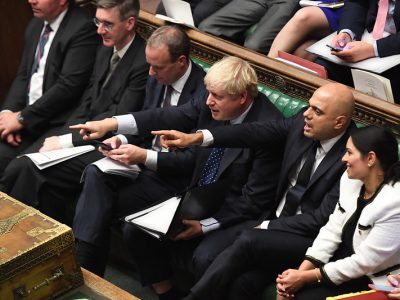
On December 12 Britain will see its third general election in four years. The campaign, which began just over a month ago, did not see any high points. It has, however, had several low points.

For Jeremy Corbyn, the leader of the Labour party, one low point was when BBC interviewer Andrew Neil asked him whether he agreed that “Rothschild’s Zionists run Israel and world government,” a statement that a member of his own party had made was an antisemitic statement. Neil had to ask the question three times before Corbyn finally agreed, grudgingly, that the statement was antisemitic; in his first to attempts at answering Neil’s question, Corbyn only said it should not be used.

For the Conservative incumbent Boris Johnson, a low point was probably reading an interview in the prestigious Times newspaper with Jennifer Arcuri, his alleged mistress, in which she merrily describes visiting his family home before he was officially divorced from his wife. Johnson was later asked about Arcuri’s allegations but avoided addressing the questions, just as he avoided related questions about the number of affairs he has had, and the number of children he has fathered out of wedlock (is it five? Six? More? We do not know.)

The BBC has also seen its fair share of low points in its election coverage. The most notorious incident involved the national broadcaster’s selective editing of a clip from a TV debate (more on those later) for its news bulletin.

In the original, an audience member asked Johnson: "How important is it for someone in your position of power to always tell the truth?" The question was followed by laughter and clapping from other members of the audience, as the Prime Minister was beginning to answer. In the bulletin segment, the laughs and claps were gone. The BBC explained in statement that they had shortened the clip for time reasons, but the damage was already done.

In fact, “the damage was already done” feels like a running theme in Britain at the moment.

The Labour party can try all it wants to convince Jewish voters that it has got the antisemitism problem among its ranks under control; yet, fewer than 10 percent of Jewish voters are currently considering voting for the party — down from about 50 percent in previous elections.

The Conservative party can go on and on and on about how it doesn’t plan to sell off the National Health Service, or stop it from being free at the point of use; yet, only 18 percent of people trust them to keep it publicly funded and publicly run.

The Liberal Democrats, centrist and pro-Europe (anti-Brexit) are also struggling with their recent past. Jo Swinson, their new, young, female leader was predicted to bring the party up in the polls, but the Lib-Dems joined a governing coalition led by the Conservatives in 2015 and this perceived betrayal is still fresh in the minds of left-leaning voters.

It did not have to be like this, for any of the parties; initially, this election was meant to be about Brexit, and Brexit only.  Boris Johnson called it, in an attempt to regain the majority the previous party leader, Theresa May, lost — back when she was trying to win a bigger majority in order to get Brexit done.

Sadly for May, the election became about everything else — Corbynmania, her party’s disastrously unpopular social welfare policy — and it marked the beginning of her long, painful downfall.

Will Johnson suffer the same fate as May? Few analysts dare make a prediction, given the notorious inaccuracy of pre-election polls, but the mop-haired incumbent prime minister is certainly going through an election that feels very similar to the one that ended May’s political career. While the Conservatives want to focus on Labour’s supposedly confusing Brexit plans, which is based on  negotiating a softer exit deal with Brussels rather than calling a second referendum — the issue itself has largely disappeared.

Like a ghost in a mansion struggling to scare off its living inhabitants, the UK’s imminent departure from the EU crops up every few days, for a few hours, then disappears again.

Though nearly half the country says it still supports Remain, only a fraction of those voters have turned to the Liberal Democrats, the one party offering not a second referendum, but a straightforward reversal of Article 50 — i.e., canceling the referendum results and remaining in the EU. Nigel Farage and his Brexit party were initially a major threat to the Conservatives and high up in the polls, but as December 12 approaches, it languishes at 3 percent.

In a way, this shouldn’t be a surprise. The United Kingdom is split on Brexit in a way that now feels ingrained; more than a preference on the future of the country, where you stand on Brexit is now a tribal identity in itself.

It is also worth mentioning that Brexit has been going on for years, and has defeated many deadlines; the UK was going to leave in March until it didn’t, and then in October — before it was delayed again. Deciding to center an election around something voters are utterly sick of hearing about — no matter where they stand on the issue — was always going to be tricky.

Instead of arguing about Europe again and again, the public seems to yearn for conversations about, well, everything else: falling living standards, the poor quality of public services, the lack of adequate public transport in the north, unaffordable house prices in cities, and so on. Sadly, it is not clear that the main parties are offering something that quite fits this national mood.

On the one hand, Johnson and his ilk have offered a rail-thin manifesto, built on Brexit, a tough stance on crime, a promise to fix potholes and not much else. On the other, Corbyn’s Labour is offering too much: the party says it wants to renationalize industries and overhaul the health and education system, among countless other major reforms in countless other areas.

Labour’s proposals would seem ambitious in any other context, but in late, grey, cold 2019, they feel slightly out of step with the general mood. The party hasn’t captured the minds of enough voters to win a majority in this election.

In fact, it looks as though once again, no one will walk into Downing Street on December 13 with a pounding majority. Pollsters continue to remind the public that their work amounts to snapshots instead of predictions, but current figures point towards another hung Parliament, or a wafer-thin majority.

Given that Brexit has so far failed to get anywhere because no deal could get through a House of Commons that does not have a proper majority for any side, or at least any one plan, this would mean going back to square one.

So what will this election be remembered for, if it does not get the country out of its Groundhog Day dystopia? Perhaps its low points will be what defines it, in the end.

After all, there have been many of them. There was Boris Johnson reneging on a promise to sit for an interview the BBC’s prominent political journalist Andrew Neil despite having agreed in principle and having let Corbyn go first. There was the Tory social media team changing its Twitter handle to @FactCheckUK and pretending to be a fact-checking outlet during the leaders’ debate, and crowning Johnson winner of the head-to-head. In fact, most of the low points so far have come from Boris Johnson or his party, but no matter how low they go, they remain the ones higher in the polls.

Perhaps this will be the disappointment election after all. The Conservatives, having backed Boris over the summer because he promised he could lead them to victory, not getting anywhere near the landslide they were hoping for. Labour, high on Corbyn’s unexpected success in 2017, emerging bitterly as the opposition party for the fourth election in a row. The Liberal Democrats, having decided to set aside all their other ideas to fight Brexit, failing to get anywhere or even beginning to turn the Europe debate around.

The defining moment of the 2017 election was Theresa May at her manifesto launch, being asked about her campaign falling apart and awkwardly repeating “nothing has changed! nothing has changed!” with her long thin arms stuck in a near-comical shrug. Everything had changed, of course, which is what made the quote so poignant.

After some weeks of triumphant Conservative campaigning and Labour officials fearing complete wipe-out because of dire polls, the tide suddenly turned on May. The Tory operation was focusing on her and she was not very good, interacting awkwardly with journalists and members of the public alike.

Her manifesto, planned to put Tory tanks firmly on Labour’s lawns, was instead received like a cup of tepid tea by the very voters she was trying to turn. Slowly, Labour started doing better and better, until it left May with no majority at all. Looking back, it does feel like it started at that press conference, where she unexpectedly floundered.

We are yet to have such a moment this time around, but as things stand: nothing has changed, but everything is worse.
    [post_title] => British voters are sick of talking about Brexit
    [post_excerpt] => Instead of arguing about Europe again and again, the public seems to yearn for conversations about, well, everything else.
    [post_status] => publish
    [comment_status] => closed
    [ping_status] => open
    [post_password] => 
    [post_name] => the-british-general-election-of-2019-will-be-remembered-for-its-many-low-points
    [to_ping] => 
    [pinged] => 
    [post_modified] => 2026-09-16 22:49:49
    [post_modified_gmt] => 2026-09-16 22:49:49
    [post_content_filtered] => 
    [post_parent] => 0
    [guid] => https://conversationalist.org/?p=1510
    [menu_order] => 289
    [post_type] => post
    [post_mime_type] => 
    [comment_count] => 0
    [filter] => raw
)

British voters are sick of talking about Brexit

WP_Post Object
(
    [ID] => 1488
    [post_author] => 2
    [post_date] => 2019-11-22 16:24:16
    [post_date_gmt] => 2019-11-22 16:24:16
    [post_content] => In an age of declining democracy, rising walls, and closing borders, a brilliant art exhibition makes a persuasive case for openness and freedom. 

Three decades ago, the world watched as throngs of East and West Germans tore down the wall that had divided Berlin for 28 years. Joyous street celebrations marked the end of an era distinguished by repression and censorship, ushering in a new age of democracy and freedom. My own fuzzy childhood recollection of that evening by our family television in Westchester, N.Y. is soaked in champagne toasts and heartfelt tears.

Unfortunately, the promise of those heady days has long since faded. While in 1989 history seemed to be moving in a straight line toward democracy and openness, today we are seeing the global rise of autocrats, demagogues and xenophobia. Even the phrase “we are the people,” which pro-democracy demonstrators chanted at the Berlin Wall in 1989, has been coopted by Germany’s far-right AfD party in support of nationalist, isolationist policies. Instead of a post-wall utopian paradise, we’ve found ourselves in increasingly border-obsessed times, entering what the historian David Frye author of Walls: A History of Civilization in Blood and Brick, calls “a second age of walls.”

For most millennials, the Cold War is barely-remembered history. They might recall a few dry textbook paragraphs. Perhaps they saw Hollywood movies like The Hunt for the Red October — with Sean Connery starring as a Soviet naval commander — or the impossibly sexy television drama The Americans, about two Soviet spies living under deep cover in suburban Washington, D.C., during the 1980s. But the Berlin Wall was a very real part of my childhood. As the daughter of a refugee from the German Democratic Republic (East Germany), some of my earliest memories include learning during a family vacation that East German water wasn’t safe to drink, and hearing my parents describe my petulant scowls as my “East German border guard look.” The Wall was a totem that loomed large in our home. It shaped my entire conception of good and evil into a simple, binary understanding of the world: freedom (U.S.A.) good; wall (U.S.S.R.) bad. At the time, it seemed that all the adults saw the world in the same way: indeed, one would have been hard pressed to justify the morality of dividing families, bugging private residences, and terrorizing a population into obedience through the Stasi (State Security Service).

During the Cold War, opposition to the Berlin Wall was a bipartisan issue in the United States. In Berlin in 1963, President John F. Kennedy famously said “Ich bin ein Berliner,” indicating his support for a united, democratic city; he did not know that a “Berliner,” was the local word for a jelly donut, a fact that inspired many memes and jokes.


When Ronald Reagan stood at the Brandenburg Gate to give his own Cold War speech in 1987, the line that became iconic was, “Mr. Gorbachev, tear down this wall.”


Today, walls again fill the news, but the rhetoric has shifted dramatically. Since first tweeting about it on August 4, 2014, Donald Trump has been crowing regularly about the great American border wall to be, albeit with variable costs, heights, and Mexican-bill-footers. So, what happened over the past decades that morphed the Republican rallying cry from “tear down this wall” to “build a wall?”

As someone who grew up thinking of “wall” as another four-letter word, I’m not the only one to notice the ironic timing of this anniversary. In the Annenberg Space for Photography’s affecting exhibition WALLS: Defend, Divide and the Divine, curator Jennifer Sudul Edwards grapples with our contradictory reality and breaks down the significance of walls across the ages. She notes at the exhibit’s entrance, “When the Berlin Wall was torn down in 1989, there were 15 border walls around the world. Today there are more than 70.” Although globalism and technology have presented more opportunities for connection than ever, countries around the world are increasingly shutting others out and turning inward. Where the internet erases distance, politics reinstates it.

Edwards’ WALLS traverses the boundaries both historical and metaphorical. We see the segregationist 8-mile wall that divided white and black residents of Detroit; the so-called peace walls that were built to separate Catholics from Protestants in Northern Ireland; and, of course, the Berlin Wall, with the now iconic images of East German soldiers leaping over the half-constructed wall to freedom, and graffiti of Brezhnev and Honecker (the East German Communist party leader) kissing in what came to be known as the “socialist fraternal kiss” (now available as both a beer  and a gin!)

[caption id="" align="aligncenter" width="575"]Restoration of the kiss - between East German leader Erich Honecker and Soviet leader Leonid Brezhnev, Berlin Wall A Berlin wall mural shows the famous 1979 kiss between East German leader Erich Honecker and Soviet leader Leonid Brezhnev.[/caption]

Outside, we are met with the obligatory full text of Robert Frost’s Mending Wall and, in full woo-woo Los Angeles fashion, an installation called Light the Barricades, where patrons are invited to meditate on the inner walls we all create-- Resentment, Judgment, and Doubt, specifically. Inside, you’re encouraged to write down “What is blocking your path,” with the understanding that your response may be selected for inclusion in a projected video loop. (Unsurprisingly, a majority of the answers I saw centered on crippling student debt and other sundry money issues. Now that’s a wall.) From the Walls! children’s book for sale in the gift shop to Pink Floyd’s Another Brick in the Wall music video being projected in the women’s bathroom, the exhibit leaves very few wall-stones unturned.


Edwards’ exhibit is unapologetic in the ethos it engenders, which very much echo those of my childhood self: freedom = good; walls = bad. But she also elegantly captures the manner in which public opinion dictates the meaning and significance of walls in our society. In her exhibit, we see walls shift from a symbol of authority to a canvas for resistance. Like any other framing device, walls are used to delineate and define, but unlike these fixtures, what they signify is fluid. To borrow from literary theorist Kenneth Burke’s Terministic Screens, we make sense of the world around us by what elements of reality we reflect, select or deflect. A wall is a wall is a wall. But whereas to some it can symbolize safety or defense, to others it signifies exclusion and division, control and repression. While most pictures of the Berlin Wall capture a famously colorful concrete scar of bright, expressive, politically-charged graffiti, the Berlin Wall I knew — the one my father risked his life to cross —was a drab gray; anyone who approached it would be shot. The West-facing Berlin Wall told a story of resistance that was invisible to the East.

Edwards’ exhibit is as much a collection of wall photos as it is classic, insightful wall quotes. Its “Delineation-Deterrent-Defense” section begins with this old chestnut from Upton Sinclair’s classic 1905 novel The Jungle — “There is one kind of prison where the man is behind bars, and everything that he desires is outside; and there is another kind where the things are behind bars, and the man is outside.” When the Berlin Wall was built in 1961, its purpose was to keep people in, although publicly Walter Ulbricht, the East German communist party leader, claimed it was a defense “against West German influence.” The wall was a symbol that represented the opposite of freedom—the opposite of American values. As advocates for a unified, democratic Germany, U.S. politicians stood unwaveringly in opposition to the GDR. You don’t have to be a historian to see that creating a wall to stop the flow of people across a border only intensifies the natural human desire to cross. Create a wall and create an obstacle—a definition, a delineation, a limitation. As WALLS captures, few problems are permanently solved by these barriers, whether it be the obedience of East Germans or keeping the peace in Northern Ireland.

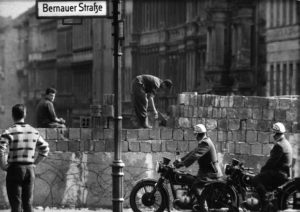
[caption id="attachment_1496" align="aligncenter" width="636"] Building the Berlin Wall, 1961.[/caption]

Which brings us back to the present place and time. Trump envisions a wall that keeps people out, but his wall is destined only to exacerbate the problems it seeks to solve. Until the 1970s, the United States had a porous border with Mexico—which, contrary to what most Republican lawmakers might claim, actually resulted in fewer undocumented migrants living in the United States, as workers could cross over, work, and then return to their homes back in Mexico. The current administration calls the now-militarized border “porous,” with “record-breaking” rates of “illegal aliens” crossing over and remaining in the country. In fact, it was the U.S. government’s elimination of border porousness and availability of work visas, starting in 1965, that sparked the ever-increasing “surge” of immigrants from Latin America. Once you take away the option to allow people to leave, you encourage those who very well might have left, if given the freedom to do so, to stay. But instead of easing off of militarized borders, our government is leaning further and further in.

Thirty years ago, the world celebrated the elimination of a wall, the reunification of a country, the hope for a day where walls need no longer exist. I think of my father, a refugee who fully embraced his American citizenship as his identity, who proudly put out our American flag on every holiday, whose eyes shone with tears of gratitude to the lyrics of “Born Free,” warbled by my tone-deaf elementary school choir. Trump’s wall is not just a wall. It demarcates the end of the American ideal. It is the elimination of “nation of immigrants” from the United States Citizenship and Immigration Services’ mission statement. It is a line that places our country on the wrong side of history. For refugees seeking a better life, for the sake of our country’s future, for the memory of my father: Mr. Trump, don’t build this wall.

 
    [post_title] => 'Wall' is a four-letter word
    [post_excerpt] => “When the Berlin Wall was torn down in 1989, there were 15 border walls around the world. Today there are more than 70.”
    [post_status] => publish
    [comment_status] => closed
    [ping_status] => open
    [post_password] => 
    [post_name] => wall-is-a-four-letter-word
    [to_ping] => 
    [pinged] => 
    [post_modified] => 2026-09-16 22:44:48
    [post_modified_gmt] => 2026-09-16 22:44:48
    [post_content_filtered] => 
    [post_parent] => 0
    [guid] => https://conversationalist.org/?p=1488
    [menu_order] => 291
    [post_type] => post
    [post_mime_type] => 
    [comment_count] => 0
    [filter] => raw
)

‘Wall’ is a four-letter word

WP_Post Object
(
    [ID] => 1473
    [post_author] => 2
    [post_date] => 2019-11-14 21:18:46
    [post_date_gmt] => 2019-11-14 21:18:46
    [post_content] => This is the first instance of a transcontinental application to the ICJ based on violations of the Convention on the Prevention and Punishment of the Crime of Genocide

The Gambia, a majority-Muslim West African nation, and the smallest country on mainland Africa, took an enormous step this Monday on behalf of their fellow Muslims, the Rohingya people, when it filed a lawsuit against Myanmar for the crime of genocide — the destruction in whole or in part, of a national, ethnical, racial or religious group — at the International Court of Justice (ICJ).

The Rohingya are a Muslim ethnic minority in majority-Buddhist Myanmar who are concentrated in Rakhine state, which borders Bangladesh. They have lived in Myanmar for generations, but the Rohingya have always been treated like outsiders and systematically discriminated against by the government. In August 2017, following small-scale attacks by Rohingya militants against Myanmar police posts, Myanmar security forces responded with widespread, indiscriminate murders and gang-rapes, as well as the burning of entire villages. Thousands of Rohingya were killed, and an estimated 745,000 Rohingya fled as refugees to neighboring Bangladesh, including 400,000 children.

They joined around 200,000 Rohingya refugees already living in Cox’s Bazar, Bangladesh, which is now home to the world’s largest refugee camp. Over 900,000 stateless, deeply traumatized Rohingya are living in precarious shelters, vulnerable to monsoons and dependent on humanitarian aid.

Witnesses to the genocide tell horrifying stories. Reuters reported that on September 2, 2017, 10 Rohingya men were bound together while Buddhist villagers dug a shallow grave, before hacking to death two of the men and shooting the rest:

“One grave for 10 people,” said Soe Chay, 55, a retired soldier from Inn Din’s Rakhine Buddhist community who said he helped dig the pit and saw the killings. The soldiers shot each man two or three times, he said. “When they were being buried, some were still making noises. Others were already dead.”

Myanmar describes its actions as a “clearance operation." It jailed and then ultimately released two of the Reuters journalists who investigated the story, and continues to deny vehemently that it committed genocide. The United Nations independent fact-finding mission issued a report last year, which named senior generals of the Myanmar military who they recommended be investigated and prosecuted in an international criminal tribunal for genocide, crimes against humanity and war crimes. The mission further found that the Rohingya who remain in Myanmar are at risk of further genocidal violence, and that repatriation has been practically impossible. The case is unprecedented for a number of reasons. The Gambia is located over 7,000 miles from Myanmar — this is the first instance of a transcontinental application to the ICJ based on violations of the Convention on the Prevention and Punishment of the Crime of Genocide of December 9, 1948, to which both Myanmar and The Gambia are signatories. The Gambia’s lawsuit is supported by the Organisation of Islamic Cooperation, which calls itself the “collective voice of the Islamic world,” and represents 57 member states, including Bangladesh, which has borne the brunt of the Rohingya refugee crisis. The Gambia is seeking an injunction to prevent Myanmar from inflicting further violence upon the Rohingya population, and accountability for atrocities already committed. Prosecution of war crimes and crimes against humanity normally falls under the jurisdiction of the International Criminal Court (ICC), but Myanmar is not a signatory to the Rome Statute and so no charges have been filed. At a time when wealthy nations are increasingly turning their backs on enforcing human rights law, it’s heartening to see smaller nations (with access to deep pockets) holding power to account at the Hague. Gambia’s efforts on behalf of the Rohingya began after its attorney general and justice minister, Abubacarr Tambadou, read the UN report on the atrocities, and flew to Bangladesh to meet refugees and hear their stories. Tambadou, who worked for years as a lawyer at the International Criminal Tribunal for Rwanda (ICTR), told the Washington Post: “As I listened to the horrific stories — of killings, of rape, of torture, of burning people alive in their homes — it brought back memories of the Rwandan genocide. The world failed to help in 1994, and the world is failing to protect vulnerable people 25 years later.” The Gambia recently began hearings for its own Truth, Reconciliation and Reparations Commission to address human rights abuses committed by former dictator Yahya Jammeh. [post_title] => The Gambia has filed a case of genocide at The Hague against Myanmar, on behalf of the Rohingya [post_excerpt] => The case is unprecedented for a number of reasons. [post_status] => publish [comment_status] => closed [ping_status] => open [post_password] => [post_name] => gambia-has-filed-a-case-of-genocide-at-the-hague-against-myanmar-on-behalf-of-the-rohingya [to_ping] => [pinged] => [post_modified] => 2026-09-16 22:28:25 [post_modified_gmt] => 2026-09-16 22:28:25 [post_content_filtered] => [post_parent] => 0 [guid] => https://conversationalist.org/?p=1473 [menu_order] => 292 [post_type] => post [post_mime_type] => [comment_count] => 0 [filter] => raw )

The Gambia has filed a case of genocide at The Hague against Myanmar, on behalf of the Rohingya

WP_Post Object
(
    [ID] => 1444
    [post_author] => 4
    [post_date] => 2019-11-01 20:00:11
    [post_date_gmt] => 2019-11-01 20:00:11
    [post_content] => Robert McNamara was a product of the so-called greatest generation, who believed in his place in the world. The boomers challenged him for lying about Vietnam and for his contribution to the military-industrial complex. And then the boomers voted for Trump. So who's making America great, again?

Did the twentieth century offer any poetry finer than a standardized test? Surely all those bubbled-in letters spell out something, but multiple choice itself is a love language. Plaintively, with each whirl of a No. 2 pencil, we plead that those letters will trace a path to the perfect score, to the perfect job, and to one perfect nation under God, indivisible as helmed by the Best and the Brightest — by intrepid men who bubbled impeccably. In his critically-acclaimed 2003 documentary, The Fog of War: Eleven Lessons from the Life of Robert S. McNamara, director Errol Morris interviews one such man who climbed the rungs of standardized testing into power. In his capacity as Secretary of Defense to Presidents John F. Kennedy and Lyndon B. Johnson, McNamara was a severely gifted number-cruncher who escalated American military involvement in the Vietnam War even as he knew that it was unwinnable — a fact that he denied repeatedly, until the publication of the Pentagon Papers proved he had known all along. The film was released just as the coalition invasions of Iraq and Afghanistan were descending into a Vietnam-like quagmire, making McNamara a timely interview subject. 


It seems doubly prophetic that the film was released in 2003. This was the same year Facebook launched — and the internet began its stranglehold on our public, private, and political lives. While McNamara never digitally ranked the university’s hottest women during his own time at Harvard, as Zuckerberg notoriously did, he did help integrate IBM into global warfare during his time as an analyst in the Pacific theater during WWII and while Secretary of Defense to Kennedy and Johnson during the Vietnam War. Today, the automated war machine is something more subtle, as Facebook allows bad actors — whether state leaders or individuals — to promote propaganda and lies, and even help throw a presidential election. 

Morris, a baby boomer, engages McNamara in a deeply disturbing conversation about what the latter's generation left Morris's to sift through. As a millennial, when I first saw the movie in 2003, I felt I was watching the good guy from the generation that brought us Woodstock go after the bad man who brought us napalm. Today, I cannot say I look at the baby boomers as a merry band of Robin Hood types who sought to rescue the nation from the military-industrial complex. The 16 years since the documentary have seen the rise of one particular baby boomer who is, in many ways, antithetical to both McNamara and Morris. On the one hand, Donald Trump is nothing like my childhood idealization of my parents’ generation, protesting war and burning bras. On the other, Trump is nothing like McNamara: he is the wily byproduct of outer-borough nepotism who defies all statistical analysis. Watching The Fog Of War in 2019 almost made me nostalgic for what I now realize was a sense of progress that I had in 2003. It made me wonder what I have learned as the lofty aspirations of the Great Society have degenerated into the bitter pandemonium of Making America Great Again. 

I offer — it seems appropriate — eleven lessons: 

The fog of institutional faith rolls in before the fog of war

A little background: during World War One, the U.S. Army administered IQ tests, which begat the S.A.T., which begat the need for rudimentary computers to analyze the results, which begat IBM government contracts, which begat a bureaucracy primed for battle by December, 1941. This automated war machine had previously been marketed to America as a political platform to better manage America — the New Deal. The IBM punch card led the charge into the theater of war; attendant propaganda shorthanded a push for achievement. Science education would win the Cold War! The best and the brightest would protect us from falling dominoes in Southeast Asia! A moonshot could redeem humanity! Before he conveyed this militarized optimism, McNamara tested his way from UC Berkeley to Harvard Business School to celebrated Army analyst in the Pacific Theater of World War Two, a mascot for the meritocracy. Why listen to a damn thing he says? Well, look at those test scores!

Nothing lends political credibility quite like the private sector 

Robert McNamara was the C.E.O. of Ford Motor Company when John F. Kennedy tapped him for the position of Secretary of Defense. In the United States, shaped by the Protestant work ethic, a rich person is by definition considered to be a smart person. In Fog of War, Morris shows archival footage of journalists ingratiating themselves to McNamara by complimenting him on his intelligence; during the 2016 presidential election campaign, the media reported on Donald Trump’s private plane, his luxurious residential properties, his hotels, and his private golf courses. In The Fog of War, as McNamara accepts the cabinet position, Kennedy says that McNamara has chosen to serve his country at “great personal sacrifice” — which is code for giving up the extremely generous salary of a C.E.O. in the private sector in exchange for a civil servant’s salary. 

The Greatest Generation™ and the baby boomers double-teamed successive generations

The Vietnam War inspired a libertarian insurgency on the right and a counterculture from the left, with adherents to both questioning the enormous role big government (as the right calls it) and the military-industrial complex (as the left refers to it) played in policy implementation that affects our lives. This wide loss of faith in the government saw its first expression in anti-war demonstrators chanting “hey, hey, L.B.J., how many kids have you killed today?” — but Watergate dealt the death blow. The revelations that came out during the impeachment hearings into the Nixon presidency alienated Americans across the political spectrum, and on both sides of the generation gap. In 2016, the same generation that drove Nixon out of office voted Trump in. In a New York Times op-ed about baby boomers who voted for Trump, the writer and activist Astra Taylor suggests we “call it the coming gerontocracy.” The hippies told us never to trust anyone over 30; frankly, I wouldn’t trust anyone already receiving Medicare or Social Security — they’ll kick the ladder right out from under you.    

America remains a sucker for postcolonial civil conflict in countries it scarcely understands 

Near the end of The Fog of War, McNamara talks of dining with his North Vietnamese counterpart in 1995, who told him, “Mr. McNamara, you must never have read a history book. If you had, you’d know that we weren’t pawns...Don’t you understand that we have been fighting the Chinese for 1,000 years? We were fighting for our independence and were determined to do so to the last man.” As McNamara recollects this tense conversation, it’s almost like he’s saying, Right but you said that wouldn’t be on the test. While McNamara openly — astonishingly — concedes his ignorance, he refuses to concede his mode of thinking had been wrong, or that “each of us could have achieved our objectives without the terrible loss of life.” On October 6, Trump abruptly announced that he was pulling U.S. military support out of the Kurdish-held territory northeast Syria, leaving the Kurds — who had sacrificed more than 11,000 combatants in the fight against ISIS — extremely vulnerable to a massacre at the hands of Turkish forces, who were poised to cross the border. Supposedly to preempt this from happening, Trump wrote a widely-circulated (and widely-ridiculed) letter to Turkey’s President Erdogan. “Let’s make a deal! You don’t want to be responsible for slaughtering thousands of people, and I don’t want to be responsible for destroying the Turkish economy...Don’t be a tough guy. Don’t be a fool!” Erdogan, according to several reports, promptly threw Trump's letter into the garbage. 

Statistics are amoral

The most visually eloquent moment of Morris’ documentary comes as McNamara explains the impact of the U.S. firebombing 67 Japanese cities during the Second World War, while, in the accompanying footage, numbers are shown raining down from bombardiers. Stomach-churning statistics follow, unmistakable as atrocities — in some Japanese cities, up to 90 percent of the population was killed by U.S. aerial bombardments. McNamara concedes as much, but he also justifies the bombings. The war between the U.S. and Japan, he explains, was “one of the most brutal in history.” The Americans could not afford to lose, and that was why he “didn’t fault” Truman for using the atomic bomb. McNamara asserts that General Curtis LeMay would have been prosecuted as a war criminal if he had lost the war in the Pacific, just as he (McNamara) would have been prosecuted had the U.S. lost the war in Vietnam. After World War Two, discharged from the U.S. military, McNamara went to work for Ford Motors. There he crunched the numbers again and mandated that all the company’s cars must have seat belts. He applied the same logic that justified the deaths of 2 million Japanese civilians to the saving of 15,000 American lives annually — according to the National Transportation Board.  Trump is cagier with numbers; we haven’t even seen his tax returns. But we do know this: he has 65.9 million Twitter followers. 

We’ve gone from fireside chats to a dumpster fire — but at least there’s no draft!

For good reason, Roosevelt’s New Deal of the 1930s is the subject of much discussion these days: polarized political ideologies, hysteria, and a U.S. president who won’t shut up on that newfangled media outlet called Twitter. The Great Depression required large-scale political and economic solutions. After the Second World War, the G.I. Bill allowed (white) men to receive a free college education. In today’s privatized, post-Raegan, gig economy hell, apparently 70 percent of us want universal healthcare and 58 percent want debt-free education, but far fewer Americans—I’m hazarding a guess here—pine for a government capable of sending us to certain death in Guam. The Greatest Generation™ may have basked in the glow of a welfare state, but it also tolerated the draft and a powerful government that operated far away from a free press with the likes of Seymour Hersh poking around its files and exposing war crimes like My Lai. Given that many Americans want a government that provides us with more, we also need to be mindful of what such a powerful government can take from us. 

The Space Race might be over, but we found a black hole!

Fittingly, one of the bright spots of the Trump era has been a literal black hole: in April, the very first image of one was captured by an international team. Meanwhile, the American century’s certainty of measurable progress has collapsed; we are a dying star and this black hole has a name: the algorithm. All the numbers, all the metrics have been automated and programmed to produce more and more data and metadata, so that discernible political reality has collapsed under its own weight, and space-time warps into phenomena like Pizzagate. On December 4, 2016, a man fired multiple rounds of ammo into Comet Ping Pong, a D.C. pizza joint thinking he was busting up a sex-trafficking ring run by Hilary Clinton. This rumor had been spread as “news” by Twitter bots and Trump supporters, much in the same way the Obama birther “movement” was spawned. Uncannily, in NASA illustrations, the silhouette of a star-death is orange and flailing.

No one is at the wheel anymore

Our economic reality is the same: our war machine has collapsed into a Ponzi scheme of a service economy. Corporations that boast of high valuations do not created anything, post no profits, and offer employees few benefits. As Rick Wartzman, author of The End Of Loyalty: The Rise And Fall Of Good Jobs In America, pointed out, “We're now at a point where fewer than 7 percent of private sector workers are unionized in this country. And it's just clearly not enough to have the kind of collective voice and countervailing power against corporate power that, again, was able to lift wages and benefits for all folks, not only those carrying union cards but other blue-collar workers and even white-collar workers in the past.” Fewer Americans have health insurance with every passing year, yet we have apps to manage apps. The cruelest irony is this: the data sucks! Remember the 2016 electoral polls results that showed Hillary Clinton's victory was a dead certainty?  Still, we remain in thrall to irrelevant figures — like the stock market — and use such indexes as magical thinking to ward off evil premonitions of decline and fall. Reporting on a paper the Fed published earlier this year, Forbes, not exactly known as a bastion of Sanders supporters, published an article titled with Trumpian hyperbole, “America's Humongous Wealth Gap Is Widening Further.” It gave the following statistics:

In 2018, the richest 10 percent held 70 percent of total household wealth, up from 60 percent in 1989. The share funneled to the top 1 percent jumped to 32 percent last year from 23 percent in 1989. ‘The increase in the wealth share of the top 10 percent came at the expense of households in the 50th to 90th percentiles of the wealth distribution.' Their share dropped to 29 percent from over the same period. The bottom 50 percent saw essentially zero net gains in wealth over those 30 years, driving their already meager share of total wealth down to just 1 percent from 4 percent.

But who cares when the DOW is up over 27,000? McNamara’s tyranny of numbers is complete. 

Keep it casual!

Though an egghead as surely as he breathed, McNamara kept a common man image close at hand. The very same meritocracy that enabled his rise, ensured he could always do so. He could always claim, no matter how many diplomas he’d earned, no matter how many companies he’d run, that he was a middle-class Irish striver and a family man. Today we have Trump who is, as Fran Lebowitz deliciously put it, “a poor person’s idea of a rich man” — from the Fifth Ave apartment that looks like Versailles vomited to the McDonald’s catering for Clemson’s triumphant football team at the White House. Populism is always essential in the American political arena, as the imminent spectacle of all 19 Democratic candidates chowing down on corn dogs across Iowa soon will prove. 

The meritocracy was a Western

The American meritocracy has closed, like the American frontier. Much like the frontier, the illusion of accessibility was the most potent part of its myth of inevitable progress and increase. The barriers, too, were the same: race, class, gender. As with a Western, when you step back a bit, you may ask, why on earth is this our chosen narrative of progress? What is the enduring appeal of genocide and discrimination in this country? Yet, there is an almost sweet naïveté in the notion that something as simple as a test could identify all our future leaders from all walks of life! Similarly, there is a grand romance to thinking an empty continent simply awaited discovery and settlement! But the problem is the continent was not empty, and not everyone could take that test, let alone access the tools to excel at it. And the results of the test themselves were impoverished scraps of data that correlated to achievement insofar as they granted that selfsame access. Nothing succeeds like success!  

R.I.P. public service

The ideal of civil service, as illustrated by Kennedy’s founding of the Peace Corps or Carnegie’s philanthropy, is dead. The Trump administration’s scandals, shameless profiteering from the private sector, and virulent partisan politics have painfully gutted agencies ranging from the foreign service to the Department of Justice. In her recent testimony to Congress over influence-peddling in Ukraine, former U.S. ambassador Marie Yovanovitch said:

Before I close, I must share the deep disappointment and dismay I have felt as these events have unfolded...Today, we see the State Department attacked and hollowed out from within. State Department leadership, with Congress, needs to take action now to defend this great institution, and its thousands of loyal and effective employees.

She added that she feared “harm will come when bad actors in countries beyond Ukraine see how easy it is to use fiction and innuendo to manipulate our system.” The integrity of institutions has eroded at a terrifying pace; and that wealth of experience and culture of service cannot simply be rebooted in an election cycle or two. The sort of service to mourn is not the type exemplified by McNamara — an executive who traded outstanding profits for unthinkable power — but that of the 2.79 million civil servants who get out of bed, make the federal government run, and will never have an Oscar-winning documentary that motes they "sacrified" a big corporate salary.  Today marks the release date for Errol Morris’ newest political documentary, American Dharma. His subject this time is another creature of his times — Steve Bannon. As the historical narrative passes over the event horizon and into the black hole of Twitter, I am reminded of that fabled ghost in the American propaganda machine — the myth of American exceptionalism. Morris’s movie makes the following thesis statement on the origins of McNamara’s power and how it tied into his own sense of exceptionalism: he was the very embodiment of the American meritocracy. Meritocracy, this vaunted bubbler would have us believe, identified the talent that enabled America’s successful prosecution of World War Two; triumph in the Cold War; and stewardship of the Free World. As ludicrous as this sounds, the fact of the matter is, that I see how someone could have felt this way in the thick of it all. I see how someone might have taken a test, served in the Army, gone to college, gotten a job, bought a house, made a life, and felt pretty great about the whole system. Yet, in the thick of 2019, from my own considerably privileged perch, I don’t see how anyone could feel that sense of purpose and belonging from the service economy that isolates and social media that distorts — and I wonder what Gen Z will make of it all, another 16 years from now.  [post_title] => The fog of overachieving: From Robert S. McNamara to Donald J. Trump [post_excerpt] => Watching The Fog Of War in 2019 almost made me nostalgic for what I now realize was a sense of progress that I had in 2003. It made me wonder what I have learned as the lofty aspirations of the Great Society have degenerated into the bitter pandemonium of Making America Great Again.  [post_status] => publish [comment_status] => closed [ping_status] => open [post_password] => [post_name] => the-fog-of-overachieving-how-robert-s-mcnamara-and-the-meritocracy-paved-the-road-to-donald-j-trump-and-the-algorithm [to_ping] => [pinged] => [post_modified] => 2026-09-15 23:53:45 [post_modified_gmt] => 2026-09-15 23:53:45 [post_content_filtered] => [post_parent] => 0 [guid] => https://conversationalist.org/?p=1444 [menu_order] => 295 [post_type] => post [post_mime_type] => [comment_count] => 0 [filter] => raw )

The fog of overachieving: From Robert S. McNamara to Donald J. Trump

WP_Post Object
(
    [ID] => 1437
    [post_author] => 2
    [post_date] => 2019-10-25 15:38:07
    [post_date_gmt] => 2019-10-25 15:38:07
    [post_content] => Once, the purpose of philanthropy was to elevate civil society. Today, it is used by the wealthy to purchase power and influence — often at the cost of civil society. Now a young generation of Americans who were born into rich families are searching for new models for the wealthy to give and effect change.

Recently, philanthropic donations from prominent organizations or individuals have become controversial. Leading cultural institutions, such as London’s Tate Museum and the Guggenheim in New York, renounced donations from the Sackler family, because their role in the opiate epidemic could no longer be disputed. Prestigious universities, like Harvard and MIT, are under fire for having accepted large sums from Jeffrey Epstein, even after a Florida court convicted him in 2008 of procuring underage girls.

Exposing the problem of “third-rail donors” is important, but public outrage at the rich getting richer by giving to the poor also obscures more fundamental questions: is philanthropy, even by those with ostensibly altruistic motives, such as Bill Gates, compatible with democracy? Does it serve or subvert it? Are there newer models that might better serve the public interest? And how should wealthy channel their resources for the common good?

During America’s Gilded Age of the late nineteenth century, inequality became so stark that it became an issue in the public discourse. Industrialists like Andrew Carnegie implored the wealthy to ask, “What is the proper mode of administering wealth after the laws upon which civilization is founded have thrown it into the hands of the few?”  Carnegie became a philanthropist in order to lift up the less fortunate but at the time his generosity was not well received. Eugene V. Debs, the famous socialist and labor leader, railed against him:

We want libraries, and we will have them in glorious abundance when capitalism is abolished and workingmen are no longer robbed by the philanthropic pirates of the Carnegie class. Then the library will be as it should be, a noble temple dedicated to culture and symbolizing the virtues of the people.

Most of the labor movement, however, took a more practical view. Samuel L. Gompers, founder of the American Federation of Labor, once responded that,

After all is said and done, [Carnegie] might put his money to a much worse act. Yes, accept his library, organize the workers, secure better conditions and particularly, reduction in hours of labor and then workers will have some chance and leisure in which to read books.

Carnegie’s philanthropic program created one of the most important civic institutions in the United States and in the rest of the English-speaking world — the branch library. His example, however, remains exceptional, not least because he endeavored to bolster the public sector. During the Progressive Era of the early twentieth century, civil society activists enlisted the wealthy to help champion causes that would lead to new public policy and civic institutions. Their ideals and achievements heavily influenced President Franklin D. Roosevelt’s New Deal, under which Congress enacted public works and welfare policies, like Social Security, that are taken for granted today but which were revolutionary at the time. Contemporary philanthropy in the United States does not address inequality, or promote progressive public policy. In Just Giving: Why Philanthropy Is Failing Democracy and How It Can Do Better, political philosopher Rob Reich notes two surprising things: at most, 30 percent of giving in the United States goes to poverty-fighting programs; and the higher your income, the less likely you are to give your money to those programs. The wealthy tend to give to cultural institutions and higher education, while the less wealthy are more disposed to give to poverty alleviating institutions like soup kitchens. Reich then asks a question that only seems rhetorical: would society benefit more from altruistic philanthropy or private consumption? Does the tax-deductible charitable work a foundation or wealthy individual undertakes contribute more to society than the taxes the public coffers would receive from a major purchase, or from inheritance taxes? Furthermore, why should the public subsidize a wealthy person’s priorities and discretionary spending? At a recent panel, Reich recounted a story told in Mark Dowie’s 2002 book, American Foundations An Investigatory History: when George Soros set up his Open Society foundation, there was disagreement about what its priorities should be. Soros allegedly pounded his fist on the table and said, “This is my money at the end of the day, and we’re going to do it my way.” A junior staff member then chimed in,

Excuse me Mr. Soros, roughly half the money in this foundation is not yours but the public’s – if you hadn’t placed your money in this institute, half of it would be in the U.S. Treasury.

According to Reich, foundations and charitable giving cost the US roughly $50 billion per annum in foregone taxation. As Reich says, big philanthropy is then essentially an exercise of power that is unaccountable, nontransparent, donor-directed, tax-deductible. It’s a plutocratic exercise of power in a democratic society. Over the past 100 years, the changing economic and political landscape has affected and been affected by the role of philanthropy. In Nicholas Lemann’s essential Transaction Man: the rise and the decline of the American dream, the author explores reasons for the decline of the big corporation and big government, and the rise of unregulated finance and private sector solutions (or lack of solutions) in their place. Lemann writes about the series of policy decisions that led to a disintegration of the social compact. A confluence of factors led to a receding welfare state, made easier by a growing distance from the lessons of the Great Depression. However, Lemann shows that the status quo is not the inevitable result of the march of progress. Transaction Man, with his eyes fixed on the bottom line, is the manifestation of years of shifting priorities. Anand Giridharadas perfectly illustrates how this new transactional ethos affects philanthropy in Winners Take All: The Elite Charade of Changing the World, (Penguin Random House, 2018). Most conspicuously it is to “do well by doing good.” As Giridharadas writes, “In the journey from Adam Smith’s theory to that of the win-win, the entrepreneur is transformed from an incidental booster of the common good into a unique figure specially capable of tending to it.” Winners Take All brings the reader along to the ubiquitous conferences and panels where tech entrepreneurs, thought leaders, politicians, corporate executives and philanthropists contemplate the challenges of the world, then enthusiastically agree with one another’s often market-based solutions.  “If the logic of our time had applied to the facts of an earlier age,” writes Giridharadas, “someone would have put out a report suggesting that ending slavery was great for reducing the trade deficit.” Giridharadas unfortunately overlooks a major reason for the neoliberalist bent to current philanthropy. As Jane Mayer explains in her important 2016 book Dark Money, liberal philanthropy is the consequence of very intentional conservative philanthropy. Mayer charts the weaponization of philanthropy by the Kochs and other conservative billionaires, in their successful attempt to move previously radical libertarian positions about money and government into the mainstream. Not all philanthropic foundations exist to promote policy that undermines government regulation or benefits respective industries. Most, however, seem to perpetuate the notion that the private sector is better positioned to offer solutions. Rob Reich and Nicholas Lemann are not the only ones challenging this received wisdom. Many, like Holly Fetter, are searching for new models for the wealthy to give and effect change. Fetter grew up wealthy, but felt unable to reconcile her class with her more progressive politics. As she tells it: “When I went to an Occupy rally, I then went home and actually googled “rich kid social justice.”  She founded the Stanford University chapter of the Resource Generation, a community of young people, 35 and younger who are in the wealthiest 10 percent and are committed to wealth redistribution that aids progressive causes. The tagline on their website reads, “Got class privilege and want social justice?” Patriotic Millionaires is another group of the very wealthy people seeking systemic change. The quote framing its homepage, by former AOL executive Charlie Fink states, “Because my country – our country – means more than my money.” It includes links to a conference that calls for taxing the rich, and an article titled Equalizing Capital Gains is Essential for Equality. The North Star Fund is a 40 year-old New York City-based social justice foundation that provides more options for rich people who want to make the world more equitable. Their work includes the participation of communities to which they have contributed grant money totaling $57 million. Rachel Sherman, a sociologist who has been studying the habits of the wealthy, feels that there is something important about this political moment. In an interview with The Conversationalist she said, “Sanders and Warren talk about inequality and that it is silence about wealth, the fact that it’s kind of uncouth to talk about money, that allows so much inequality to hold together.” She emphasized the importance of not attacking individual rich people, or pointing out the “good” wealthy person who spends her money “appropriately.” Her work has raised this issue of what kind of person is a good wealthy person, and if we deem them so, would we then think they are entitled to their wealth? Sherman points to Warren Buffet as an example, saying: “It doesn’t matter that he’s lived in the same house he bought in 1951; there is nothing you can do to be entitled to that much money.” Sherman makes an apt analogy to engaging with white privilege and says, “If we can get rich people to not feel personally defensive…it is very analogous to white people feeling defensive about white privilege – ‘I’m not racist so it’s fine.’  You may not be a rich asshole, but you are still benefiting from class privilege.” She feels it is extremely important to depersonalize wealth and “show that this is a moment where we actually have shared interest in having a more egalitarian society and it is something we can do collectively.” She reflects that the new younger wealthy class, like Resource Generation, are able to catalyze this kind of conversation by openly saying “this is not about me personally — it’s not my fault — we just need to recognize the structural reasons [for inequality].” With the 2020 elections looming, inequality, and the role of government in addressing it, have risen to the surface for the first time in several generations. The spate of books about the role of philanthropy and the private sector attest to this. Problematic contributions by the Sacklers, the Kochs, and others with dubious intentions or sources of wealth, should highlight the urgency of reassessing redistribution of wealth more generally. Rather than relying on the wisdom and moral clarity of the very wealthy to fix societal ills, perhaps new models of philanthropy, or their tax contributions as citizens, should replace them. [post_title] => Is philanthropy subverting democracy? [post_excerpt] => Contemporary philanthropy in the United States does not address inequality, or promote progressive public policy. Instead it has become transactional — a means for the rich to purchase power and influence. [post_status] => publish [comment_status] => closed [ping_status] => open [post_password] => [post_name] => how-philanthropy-is-subverting-democracy [to_ping] => [pinged] => [post_modified] => 2026-09-15 23:29:34 [post_modified_gmt] => 2026-09-15 23:29:34 [post_content_filtered] => [post_parent] => 0 [guid] => https://conversationalist.org/?p=1437 [menu_order] => 296 [post_type] => post [post_mime_type] => [comment_count] => 0 [filter] => raw )

Is philanthropy subverting democracy?

WP_Post Object
(
    [ID] => 1428
    [post_author] => 2
    [post_date] => 2019-10-18 22:51:17
    [post_date_gmt] => 2019-10-18 22:51:17
    [post_content] => The Syria crisis has provided a clear issue for Democrats in pursuing their impeachment inquiry. 

When Nancy Pelosi took the 'extraordinary' step of initiating impeachment proceedings against President Trump on September 24, the consensus among even those who had for months been calling upon her to do so was that the Republican-dominated Senate would block his removal from office. Over the ensuing three weeks, however, a series of seismic occurrences have upended received wisdom. As prominent historian and journalist Heather Cox Richardson wrote yesterday in a long Facebook post, it feels "as though the nation has shifted." The immediate catalyst for this shift was Trump's decision to withdraw U.S. military support from the Kurdish stronghold in northeastern Syria, and to suspend military aid to the Kurds. This, coming on the back of some stunning revelations about Trump's dealings in Ukraine, have finally cracked the wall of Republican support for the president.

'I want you to do us a favor though'

The original reason for the impeachment hearings was a whistleblower complaint from an unnamed CIA officer who had been assigned to the White House. According to the complaint, which several media outlets published in its entirety, Trump indirectly told the newly elected president of Ukraine, Volodymyr Zelensky, that he wanted Ukraine to manufacture dirt on Joe Biden. During their phone conversation, Trump used a phrase that could be the 10 words that sink his presidency: "I want you to do us a favor though." The "though" implies that Trump was asking for a quid pro quo — a personal service for his own benefit. Then it emerged that Trump had held up the release of a $400 million military aid package to Ukraine. Since that aid package had been approved by Congress in July, the president was in effect withholding taxpayer money for his personal use. Trump tried, of course, to obfuscate by claiming the whistleblower had made false accusations and insisting that his conversation with Zelensky had been "a perfect phone call." Republican senators continued to defend Trump. Their constituents still supported the president, believing his claims that the allegations regarding the phone call were untrue or misunderstood. Since impeachment is a political process and not a trial, GOP lawmakers were not going to risk being voted out of office by angry Trump supporters. The impeachment inquiry would continue, but with little chance of the president being forced out of office.

The Syria debacle

On October 6, Trump announced abruptly that he was withdrawing U.S. military support for Kurdish forces in northeastern Syria. The Kurds were U.S. allies; they had fought and destroyed the Islamic State, which cost the lives of an estimated 11,000 soldiers. Turkey, however, regarded the Kurds as terrorists. As soon as American commandos pulled out of the Kurdish stronghold, Turkey launched a military attack that has shocked the world with its brutality. Besides the horrific moral implications of abandoning the Kurds after they had saved the U.S. from deploying its own troops to fight the Islamic State, Trump's decision to pull out of northeastern Syria is a diplomatic and security catastrophe. America has given up its leverage in the region, indicated to any future allies that they cannot be trusted, and possibly provided an opportunity for ISIS to resurrect itself. Kurdish forces that were guarding 11,000 captured ISIS fighters had to abandon the prison camps in order to fight Turkish forces; many of those ISIS prisoners simply walked out of the camps — presumably to fight another day; indeed, there has already been a spike in ISIS attacks against the Syrian Democratic Forces (SDF), the anti-Assad forces that were also U.S. allies. Meanwhile Putin rushed to fill the territorial vacuum, deploying Russian soldiers to the area. Some of them posted triumphal videos taken at abandoned U.S. military bases.

Cracks in the wall

Even stalwart Trump supporters were appalled at the extent to which Trump had undermined American security and its national interests. Senator Lindsey Graham, a national security hawk, issued scathing tweets accusing the president of creating "a complete and utter national security disaster." When Fox News reported Graham's criticism, it became clear that Trump's support was weakening. Swing voters might not understand the significance of Trump's phone call with Zelensky, but they certainly understand the significance of their president making them vulnerable to terrorist attacks committed by the so-called Islamic State. This was Nancy Pelosi's moment. At a fraught White House meeting regarding the Trump administration's Syria policy, she stood to confront the president, pointing her finger at him as his aides hung their heads. An unnamed White House photographer caught what has already become an iconic image, the subject of in-depth analysis by art historians and culture critics, and which Pelosi promptly posted as her new header on Twitter. Trump is now an embattled president, and he knows it. But his base remains loyal, and that will probably never change. The question is whether the institutions of the state, after three years of relentless assault, remain sufficiently robust to support the democratic process of impeachment.

For more analysis of this extraordinary historical moment:

[post_title] => The ground beneath Trump's feet [post_excerpt] => Besides the horrific moral implications of abandoning the Kurds after they had saved the U.S. from deploying its own troops to fight the Islamic State, Trump's decision to pull out of northeastern Syria is a diplomatic and security catastrophe. America has given up its leverage in the region, indicated to any future allies that they cannot be trusted, and possibly provided an opportunity for ISIS to resurrect itself. [post_status] => publish [comment_status] => closed [ping_status] => open [post_password] => [post_name] => the-ground-beneath-trumps-feet [to_ping] => [pinged] => [post_modified] => 2026-09-15 23:27:54 [post_modified_gmt] => 2026-09-15 23:27:54 [post_content_filtered] => [post_parent] => 0 [guid] => https://conversationalist.org/?p=1428 [menu_order] => 297 [post_type] => post [post_mime_type] => [comment_count] => 0 [filter] => raw )

The ground beneath Trump’s feet

WP_Post Object
(
    [ID] => 1409
    [post_author] => 2
    [post_date] => 2019-10-04 14:34:42
    [post_date_gmt] => 2019-10-04 14:34:42
    [post_content] => Raised in the heart of the Jewish American consensus, millennial Jews were taught to be fervently committed to Israel. Now, they are leading the push to criticize Israeli policy and question the community's Israel-centric politics. 

Talk to two Jews and you’ll get three opinions. It’s an old Jewish joke, but when the subject is Israel, a difference of opinions is often not considered amusing. Those who express unpopular opinions risk a type of excommunication, with friends and relatives severing relationships while professional networks become inaccessible.

I’ve been asked on many occasions why some otherwise-progressive Jews are so passionately supportive of Israel, even as others wonder why an increasing number of Jews in the diaspora reject Israel-centric politics. Many Jews prefer to avoid the subject. Israel is consistently ranked at or near the bottom of issues for Jewish American voters; perhaps paradoxically, there is no issue that elicits more ferocity within the Jewish community. 

The Jewish conversation on the subject of Israel/Palestine is confusing in part because things are changing rapidly. In the decades after the 1967 war, the consensus within the mainstream Jewish community was almost unwaveringly supportive of Israel — no matter what type of government the country had, or what its policies. The fabric of this broad communal agreement is now fraying, as younger Jews become increasingly aware of Palestinian life under Israeli control. They have a long way to go, but they are slowly moving the discussion about Israel-Palestine in the direction of universalism and solidarity. 

My own journey from right-wing supporter of Israel to leftist might provide some insights for an outsider trying to understand the context of Jewish Americans’ shifting communal position on Israel-Palestine.

I grew up in central North Carolina. We were almost always the only Jewish family anyone we knew had ever encountered. Our synagogue was (and is) a somewhat dilapidated brick building, too big for the tiny congregation that remains in the town, and too cash-strapped to care for its own cemetery. But it was a lovely place, and I spent hours in the small library, full of dusty history books about Israel and the Holocaust. Israel was inseparable from my Jewishness, and my Jewishness was inseparable from me.

At synagogue, Israel was the backdrop. At Jewish summer camp, it was the alpha and omega. Israel and Zionism symbolized a strength and self-assuredness that I could only imagine at home. It seemed to answer all the questions I had about the world and myself. At school, I fielded questions from evangelical peers about whether or not I had horns. At camp, I dashed around doing mock army drills and combat-crawled in wet grass. At home, friends glued a quarter onto the ground and laughed as I tried to pick it up. At camp, we learned about our heroic return to our homeland, and discussed making aliyah — a Hebrew word that means rising up, and which in this context refers to immigrating to Israel —  to fulfill our dreams. We rarely discussed the Arab Palestinians who lived there, and almost never thought of them.

For many American Jewish children, summer camp is a core component of their Jewishness. According to the Foundation for Jewish Summer Camp (tagline: Jewish Summers. Jewish Future.) about 15 percent of Jewish children, or around 90,000 kids, went to Jewish summer camp in 2017. Not all Jewish summer camps are the same; the ideology and curriculum varies from socialist to religious nationalist. The same is true for all Jewish institutions, although the majority espouse views that are more conservative than those held by the Jewish public. The message at my camp was clear. From raising the Israeli flag every morning, to singing the prayer for the State of Israel, our responsibility was to carry on the mission that the movement had pursued since its founding a century earlier.

I brought this fervent commitment with me when I traveled to Israel for my gap year between high school and college. While we traveled freely inside the Green Line, we were prohibited from traveling into the occupied Palestinian Territories — beyond the wall that Israel had constructed. A friend and I took this rule for a dare. We found a host to stay with on CouchSurfing, messaged her some vague lies about being Christian bloggers interested in Bethlehem, and woke up early to head to the Palestinian bus station outside Damascus Gate n East Jerusalem. We snickered roguishly to ourselves as we boarded the bus, which ferried mostly Palestinian passengers between Jerusalem and the West Bank. Our snickering died down as we pulled into Bethlehem and saw the graffiti-covered grey walls of what I would later know as the separation barrier. Our hilarity turned to fear when we realized that our host, a pro-Palestine activist, had set up several meetings for us with local organizers. Our little lie had blown up in our face. We had no choice: we were “bloggers” in a strange land; we had to go along, and play the part.

What I learned during those meetings changed my life. In his living room, an old man told me his story about the Nakba — Arabic for “catastrophe” — which is what Palestinians call the 1948 war that sent 800,000 Palestinians into permanent exile. I had never heard about the Nakba before that encounter. I had heard many stories about Jewish-Israeli experiences during the Second Intifada of 2000-02, but now I was hearing from Palestinians about their traumas from that time. In these and in countless subtler ways, the plain fact of Palestinian life and personhood seeped through the cracks of my nationalist worldview. I returned to my program the next day, and experienced my first ever night of insomnia.

A few months later, I reached college and, not knowing what else to do I joined the “Israeli-Palestinian Dialogue Committee.” I showed up and, at first, couldn’t help myself from repeating the talking points I’d learned as a child at synagogue and at Jewish summer camp. In retrospect I can’t believe anyone put up with me. But over time, my talking points gave way to questions, especially for the Palestinian members of our group. Not only were they real, they were my friends. And slowly, I began to organize.

At college, I could finally place my experiences into a broader pattern. Thousands of Jews, despite Israeli and American Zionist attempts at separation, have managed to escape what journalist Peter Beinart calls, “The American Jewish Cocoon,” the well-funded strategy by the mainstream community to shut our eyes to the reality of the Israeli occupation. While Palestinian organizers have, unsurprisingly, long worked hard to wake up American Jews from their comfortable slumber on this issue, the past decades have seen a groundswell in Jewish reciprocation. Entire organizations work to bring Jews out of our cocoon. Growing awareness of the dire realities for Palestinians has sparked conflict in the Jewish community over the nature of our relationship to Israel, with millennials taking a leading role in pushing for a new, more critical conversation.

This growing dissent against the pro-Israel consensus butts up against conservative Jewish communal institutions that are fighting back. They have increased pro-Israel investment in Democratic races, for example, and created McCarthy-style lists of pro-Palestinian activists on college campuses. These conservative pro-Israel activists hold political views that are far to the right of those held by the majority of Jewish Americans. But while Trump attempts to wrest Jews away from the Democratic party and progressivism in the name of supporting Israel, there is no evidence to show that Jews might abandon unbroken decades of supermajority support for it. 

What we are seeing now is a generational changing of the guard. All the efforts to hide the brutal realities of Palestinian life from plugged in and angry Millennials and Gen Z are doomed from the outset. Young Jewish Americans are, like their non-Jewish peers, increasingly progressive regarding nearly every political issue. Meanwhile, the vast majority of Jewish institutions remain in the hands of older Jewish people whose views are far more conservative. Fears of irrelevance stalk their boardrooms. The question is whether these organizations will remain in the cocoon, despite the obvious cost of alienating the younger generation, or come out with the rest of us. Either way, the majority of Jews will continue to live and vote according to their values.

 
    [post_title] => How Israel became the most divisive issue for Jewish Americans
    [post_excerpt] => Raised in the heart of the Jewish consensus, a young American journalist describes how and why a seminal trip to Israel during his gap years led to a political awakening. 
    [post_status] => publish
    [comment_status] => closed
    [ping_status] => open
    [post_password] => 
    [post_name] => how-israel-became-the-most-divisive-issue-for-jewish-americans
    [to_ping] => 
    [pinged] => 
    [post_modified] => 2026-09-15 23:17:58
    [post_modified_gmt] => 2026-09-15 23:17:58
    [post_content_filtered] => 
    [post_parent] => 0
    [guid] => https://conversationalist.org/?p=1409
    [menu_order] => 299
    [post_type] => post
    [post_mime_type] => 
    [comment_count] => 0
    [filter] => raw
)

How Israel became the most divisive issue for Jewish Americans

WP_Post Object
(
    [ID] => 1323
    [post_author] => 2
    [post_date] => 2019-08-16 18:54:45
    [post_date_gmt] => 2019-08-16 18:54:45
    [post_content] => 

Theresa May was the only one willing and able to take on the job of trying to clean up the mess the boys made, but it was an impossible task.

Things started going downhill in the United Kingdom about 38 months ago. Well, it could be 41, if you really want to be precise. In February 2016, then-Prime Minister David Cameron announced that there would be a referendum on Britain’s membership of the European Union. The choice was between “Leave” and “Remain.”  At the time, the widely-held assumption was that the Remain campaign would win, with Cameron staying on for a few more years, and then eventually handing the reins to another Conservative politician of his choosing.

The results of the June 23, 2016 referendum shocked liberal Britons in particular and the world in general, just as much as the election of Donald Trump shocked Americans and the world four-and-a-half months later.

It is now August 2019 and Britain is getting ready to leave the bloc without a deal. Boris Johnson, the new prime minister and one of the leaders of the Leave campaign, has said a hard Brexit is his wish. Johnson replaced Theresa May on July 24, after she resigned in light of her failure to broker a deal to exit the EU that would satisfy her own party.

Remain voters feel ignored and unhappy; soft Brexit voters feel things are going too far and are unhappy; hard Brexiteers do not believe that Britain will leave the EU and are unhappy. The country is fractured and no person or party looks capable of bringing everyone together again.

David Cameron, meanwhile, is getting ready to publish his memoirs, which he reportedly wrote in a bespoke £25,000 ($30,000) shed, complete with wood-burning fireplace and sofa-bed, in the garden of his “quintessentially English” Cotswolds home. So, what went wrong?

The main answer, as it often is, comes from the hubris of men. First Cameron, with his unearned confidence, called the referendum to quell internal disagreements in his party. He was certain that he would win, and then he did not.

As the Remain campaign discovered slightly too late, a country that had just gone through six years of savage cuts to public services did not take kindly to the architects of said austerity warning them that if they voted to leave, there might be less money in the coffers. Many banks warned they would leave Brexit Britain, but such threats were not exactly convincing to those on the breadline, who had little hope of becoming more prosperous anytime soon.

The Remainers were convinced they would win easily, and were not ready for the Brexiteers’ intense, relentless and occasionally disingenuous approach to campaigning. Instead, they spent too much time trying to counter dubious claims about the EU, and not enough reminding people why the EU was a good thing for the country.

As one writer put it in the aftermath, “In confronting populist demagoguery, it isn't enough to attack its promulgators. To get people to turn out and vote in your favor, you also have to give them something positive to rally behind.”

That the debate was overwhelmingly male had something to do with this disastrous turn of events, perhaps. In May 2016, Labour grandee Harriet Harman hit out against the lack of female voices leading the referendum campaigns; she quoted a study, which found that only 16% of television appearances on EU issues had been women. She was largely ignored.

A month later Leave won, by 52% to 48%, and no-one quite knew what to do. After all, damaging over-confidence had not been a side-specific issue; when Conservative MPs Boris Johnson and Michael Gove gave their victory speeches on June 24th, they looked terrified.

It is now clear that senior figures in the Vote Leave campaign had spent little time preparing for what would happen if they were to win, instead running a campaign conveniently promising all things to all people. Do you want Britain to be a buccaneering nation, ultra-liberal and open to the world? Brexit can make that happen. Do you yearn for the Britain of the past, and wish your country could shut itself from the world, and from the people wanting to move to the islands? There’s a Brexit for that — and so on.

David Cameron, who was a Remainer, resigned from his office and retired from politics after the Leave campaign won the referendum that he had called. Within weeks Theresa May, who was also a Remainer, replaced him. She was not quite the best candidate, but she was the only one willing and able to take the job.

Boris Johnson, the face of the Vote Leave campaign, wanted to run for party leadership. But Michael Gove, the other face of Vote Leave, stabbed him in the back; Gove ran instead, and the party didn’t back him. The boys had made a mess and as is so often the case, a woman had to come in and pick up the pieces, much to the glee of the boys in question. As May won, one male Conservative MP welcomed the news with a hearty “here comes Mummy!” Dry heave is appropriate.

[caption id="attachment_1324" align="aligncenter" width="640"] Boris Johnson addressing the Conservative Party Conference in Manchester on October 4, 2011.[/caption]

This is where things could have picked up; the moment when the country could have come together. In a different world, May would have announced that the result of the referendum had been close, and that it called for a Brexit that kept Britain close to the European Union, in order to honour the winning side without alienating the others. Even if unenthusiastic about the compromise, Brexiteers could have rallied around her and accepted their narrow margin of victory, and Remainers could have gracefully accepted their defeat and constructively worked with those who had beaten them.

This, of course, is not what happened. Already in a tough position, May made her own life worse by pandering to the harder Brexiteers and, perhaps overcompensating for her Remainer past, all but ignoring everyone else. The Brexit fanatics used this opportunity to harden their lines every step of the way, while shellshocked Remainers floundered, and failed to do much but yap from the sidelines.

This is when things started to get steadily worse. Entire books could be written about what happened between the summer of 2016 and the summer of 2019, but in short: May called an election to get a bigger majority in Parliament and was instead left with no majority at all, the hard Brexiteers kept voting against the Brexit deal May got because they thought it wasn’t a hard enough Brexit, everyone else wasted more time arguing about whether they wanted no Brexit, a second referendum or a soft Brexit than doing anything else, and in a day of “indicative votes” (test votes), MPs showed that not a single Brexit outcome had a majority in the House of Commons.

If you want to picture it, it was a bit like one of those scenes in cartoon where the unlucky main character slips on a banana peel, stands up, steps on a rake, stands up again and then walks straight into a glass door, on repeat, for three years.

Still, the themes remained similar. There was the hubristic assumption from Remainers that as Brexit negotiations would get worse, enough people would fling back to their side (they didn’t), and the hubristic assumption from Brexiteers that all problems with the negotiations would simply fade away if people started believing in Brexit enough (they didn’t).

In a way, the natural conclusion to all this was always going to be Boris Johnson. The former London mayor is a serial cheater, has an unknown number of love children, no principles to speak of, and is interested in little but power. What he excels at is boisterous self-confidence, and an ability to speak with conviction on anything he believes would be useful for him to talk about. His gaffes are frequent and his blunders dangerous, but to his fans he represents the one true Brexit believer who can deliver on all those impossible promises. As has become received wisdom in Britain, it is sufficient to believe in things very hard in order to make them come true; he may not be fond of the comparison, but Johnson is the Tinkerbell of Brexit, Lost Boys very much in tow.

What happens now remains unclear; Johnson won on a platform of leaving the EU on the October 31st deadline “do or die.” He insists that leaving without a deal is not something he wants, but he will not bring May’s deal back to Parliament for one last go, and there is not enough time to negotiate another deal and get it through the Commons. Still, he believes something will happen therefore it must be true.

Members of Parliament, meanwhile, insist that they will stop Johnson from going for no-deal, despite the awkward fact that there is not much they can do about it. Still, they believe — well, you get the point.

As Westminster tribes keep fighting to see which will make the best Icarus, the country they govern remains entirely split along the lines drawn on June 23rd. Where you stand on Brexit is now as important (if not more) than which party you usually vote for, or any other characteristics identities are usually built upon.

It did not have to be this way, of course. The opportunities for healing were always going to be rare and complex, but they did exist and no-one took them up. After all, doing so would have involved coming to terms with reality, unpleasant and imperfect as it may be. Forty-one months on, Britain stands on the brink of destroying itself for no reason; by the time its economy tanks and it scrambles to rebuild its relationships with the EU and the rest of the world, it will be too late for anyone to be the bigger person.

Given the wider context, it might be unwise to suggest Brits now turn to culture from the continent for advice, but they could do worse than revisit the most famous scene from the cult French movie La Haine: “Heard about the guy who fell off a skyscraper? On his way down past each floor, he kept saying to reassure himself: So far so good... so far so good... so far so good. How you fall doesn't matter. It's how you land!”

https://www.youtube.com/watch?v=Uz9vgtXq_Hs

[post_title] => How less-than-great men brought Britain to its worst hour [post_excerpt] => It is now clear that senior figures in the Vote Leave campaign had spent little time preparing for what would happen if they were to win, instead running a campaign conveniently promising all things to all people. [post_status] => publish [comment_status] => closed [ping_status] => open [post_password] => [post_name] => how-less-than-great-men-brought-britain-to-its-worst-hour [to_ping] => [pinged] => [post_modified] => 2026-08-06 23:24:36 [post_modified_gmt] => 2026-08-06 23:24:36 [post_content_filtered] => [post_parent] => 0 [guid] => https://conversationalist.org/?p=1323 [menu_order] => 306 [post_type] => post [post_mime_type] => [comment_count] => 0 [filter] => raw )

How less-than-great men brought Britain to its worst hour

WP_Post Object
(
    [ID] => 1297
    [post_author] => 2
    [post_date] => 2019-08-09 15:36:13
    [post_date_gmt] => 2019-08-09 15:36:13
    [post_content] => Human rights organizations warn that northwestern Syria is on the brink of a humanitarian catastrophe unprecedented in the twenty-first century. 

On July 22 Russian jets bombed the market in Maarat al-Numan, a town near Idlib in northwestern Syria, killing 40 civilians. According to an eyewitness named Um Abdullah, the bombing was so devastating that rescue workers struggled to find corpses left intact. “They filled entire bags with body parts,” she said.

Idlib and the surrounding area is now the last remaining territory in Syria still controlled by opposition forces. Over three million people live there, including over 1.5 million children. They are nearly all civilians, with about half displaced from other parts of Syria. After Russia intervened directly in the civil war in late 2015 on the side of the Assad regime, pro-regime forces, including Iran-backed militias, recaptured all the other rebel-held areas. Those who refused to surrender to the regime were deported to Idlib, where they now await their fate. Since the end of April Bashar al-Assad’s regime forces and their Russian allies have been pounding the area with air strikes, killing nearly 800 people so far. The UN and human rights NGOs warn of an impending “humanitarian nightmare,” as regime forces decimate cities, pushing civilians to flee toward the sealed Turkish border.

https://www.youtube.com/watch?v=HFAZ_FsKxmg&feature=youtu.be

Syrian and Russian militaries renewed their assault on Idlib in late April, recycling tactics they used in places like Aleppo: in addition to heavy indiscriminate attacks on population centers, they destroy essential infrastructure and services such as hospitals, ambulances, schools and markets with targeted strikes from the air. They also kill civil defense teams while they are trying to rescue civilians trapped under rubble. Between heavy airstrikes, shelling, and a ground assault, more than 452,000 people have been displaced over the last three months.

But neither the dire warnings from humanitarian workers and UN agencies, nor the devastating death and destruction, have received significant media attention. The world has turned its attention away from the war for many reasons, but the main factor seems to be that there is essentially nothing new about Syrian civilians dying in indiscriminate airstrikes. Hundreds of thousands have died in such attacks over the last eight years. Activists on the ground disseminate graphic and disturbing images of the carnage and destruction in the hope of shocking the outside world into taking action; but those disturbing images achieve the opposite of their intended purpose, with the news-consuming public feeling helpless and thus increasingly reluctant to look and to know.

Another factor behind the scant reporting from Idlib is that journalists have extremely limited access. All entry of foreign journalists into Idlib requires coordination with the Islamist group Hayat Tahrir al-Sham (HTS), an offshoot of al-Qaeda, which is the dominant power in the region. Even when journalists do gain access to the area, they face enormous challenges that include limitations of time and space: it’s almost impossible to explain the complex international negotiations and power plays over the fate of this densely populated region in a succinct 750-word news item or a three-minute report for television news.

[embed]https://www.youtube.com/watch?v=c4I4tthapJw[/embed]
Aftermath of the Russian airstrike on Maarat al-Numan, July 22, 2019.
The significant media coverage of the atrocities in Aleppo, eastern Ghouta and the city of Homs did not alter the fate of these regions: they all fell to the regime, after ferocious military campaigns. The saturation coverage did, however, make it more difficult for Russia to claim that the regime was killing “terrorists” while the wire services were publishing photos and videos of wounded children undergoing painful medical treatment in bombed out hospitals that had run out of anesthesia. Media coverage also increased international empathy for the people living in areas that were under siege, with activists organizing demonstrations around the world. Syrians followed the online support campaigns and solidarity protests held across the west, feeling that even if their predicament remained unchanged, at least their humanity and suffering were acknowledged. The current silence, despite the ongoing humanitarian catastrophe, makes them feel abandoned. Perhaps, if the assault on Idlib had received the kind of media attention given to Aleppo in 2015, public pressure would have affected western government policy; perhaps those governments would have reconsidered their decision to cut essential funding for civil society organizations in the opposition-held areas of Syria. Despite the world’s indifference and the dearth of foreign reporters on the ground, local journalists continue to cover events. Samer Daabol, a photojournalist in Idlib, sees his work as an act of defiance against the Syrian regime. He explained that he felt a “responsibility to amplify the voice of civilians,” adding: “No one can do this except us, living in this war zone.” He tried to explain what it’s like to live with a complete absence of physical security. “There is no safe place during the day or night,” he said, adding that the air strikes “create immense pressure, anxiety, sudden precipitation, insomnia, headaches.” He and the rest of Idlib live “a life that revolves around death.” Idlib’s fate is now in the hands of Turkey, Russia, and, to a lesser extent, Iran. The three countries have negotiated several “de-escalation” deals, but all the armed actors in the conflict — the opposition, the Assad regime, and its ally Russia — have repeatedly violated those agreements. The Assad regime has vowed to retake every inch of Syria. In pursuit of this goal, it has ignored deals to de-escalate the conflict. Turkey, meanwhile, is determined to prevent the area from falling into the hands of the regime, largely because Ankara knows that as Assad’s forces re-take control of Idlib, a massive number of Syrian civilians will rush to the Turkish border, which has been sealed since 2016. Only a very few have the means to escape by paying smugglers thousands of dollars. Turkish border police routinely shoot and kill Syrian asylum seekers, while others have been caught and deported back. Turkey already has 3.6 million Syrian refugees and they don’t want any more — particularly not if they are jihadi militants. In order to preempt this scenario, Ankara has increased military assistance to the National Liberation Front, a conglomeration of Islamist and mainstream rebel groups. Umm Yazan, 28, is one of the Civil Defense employees who helps rescue civilians and provide them with medical care. I spoke to her after she had been displaced from her hometown in southern Idlib due to intense airstrikes. Umm Yazan explained that she joined the Civil Defense, also known as the White Helmets, because she could never abandon her people. White Helmets work under extremely perilous conditions: they are routinely targeted in “double tap” attacks, with bomber planes first hitting a target and then swooping back for a second time to kill rescue workers while they are working to drag survivors out of the rubble. Um Yazan’s five year-old son, Yazan, was killed in an airstrike in 2015. “When I rescue someone’s son, I feel I am recovering my son’s spirit. This gives me such great positive energy to continue my work,” she said. In recent years I have spoken to hundreds of Idlib residents and met with refugees who managed to escape to Turkey. The dire living conditions in the region — the near-constant shelling, loss of loved ones, poverty, absence of basic amenities, instability, and displacement patterns from and into Idlib, have left an indelible mark on the region’s inhabitants, forging a unique temperament. They have strong communal solidarity, are dogged, fatalistic, fearful, angry and bitter toward the outside world; they also suffer from unyielding, but usually repressed, mental anguish. “People have changed a great deal,” said Mohammed, a commander with the Free Syrian Army who was displaced from his home in Hama several years ago. “We never expected [when the uprising began in 2011] to be targeted with barrel bombs and missiles.” He added: “These people have been sentenced to death.” While in other regions of Syria the population often pressured the rebels to surrender to the regime, in Idlib half the population is composed of people who chose displacement over “reconciliation.” Many original inhabitants of the region are also opposed to surrender. [caption id="attachment_1303" align="aligncenter" width="5184"] Atmeh border camp in Idlib, near the Syrian border. Over 800,000 internally displaced people live here in tents, with neither running water nor toilets.[/caption] “Civilians saw with their own eyes what happened in areas that reconciled with the regime. People there are suffering humiliation, detention and torture,” said Mohammed, the FSA commander. In previous “reconciliation” deals, those who refused to surrender were bussed to Idlib, which was the last stronghold of the opposition. These internally displaced people have seen and heard what the Assad regime’s soldiers do to civilians in formerly opposition held areas — i.e., they rape the women and slaughter indiscriminately. Many people in Idlib believe that opposition factions are implementing the agendas of their foreign sponsors. They also acknowledge that the opposition forces can be abusive toward civilians. And yet, they need their protection. Yasin (not his real name), a resident of Khan Sheikhoun, said that about 150 members of his extended family had been killed during the eight-year war. “The international community and all countries, Arab and Western, do not care about [us],” he said, adding that he believed the Arab and western governments wanted the Russians to help the Assad regime kill all the people of Idlib. Yasin barely survived the April 2017 Sarin gas attack on Khan Sheikhoun, which killed about 100 people. The UN’s chemical weapons watchdog, the OPCW, held the Syrian regime responsible for the strike. “The entire world abandoned us — Turkey, the world, the West. Nothing is before us except death,” said Yasin. He spoke rapidly, rushing to unload his pain, inhaling and exhaling audibly. Yasin works as a monitor tracking Syrian and Russian jets. He informs the Syrian Civil Defense of approaching planes, so that they can warn civilians to find shelter, or escape the crowded locations that are routinely targeted by Russian forces and the Syrian regime. His immediate family fled to northern Aleppo, which is under Turkish control and thus safe from airstrikes. Khan Sheikhoun has been largely depopulated, with civilians seeking cover in nearby orchards or fleeing further north. “The Russian jets are chasing people wherever they escape,” Yasin said. But he refuses to leave, insisting that the regime will come for him no matter where he goes. “Let me die when I’m here, on my land.” Yassin’s resolve is not predicated on hope, but on fatalism. “No one hears us. Our blood is the cheapest on earth. Whether a Syrian dies or lives, it does not matter,” he said. Umm Abdullah is a math teacher and prominent anti-regime activist in her city, Maarat al-Numan, an epicenter of civil society activism in Idlib. She joined the early protest demonstrations in 2011. Today she leads several associations, advocates for the rights of detainees in regime prisons and supports their families. “If you walk around Maarat al-Numan, you will see buildings with floors collapsed atop each other, stores with metal gates blown out. Jets do not leave the sky. Strikes are ongoing... Our children are dying.” She wept as she said, “I have not seen my son in seven years. He was my happiness. My eldest. He had a flame inside him. He was full of life.” ِAbdullah, her son, was arrested in February 2012 and detained in the notorious Sednaya Prison for participating in anti-regime protests. The family was informed only this year that he died under torture back in 2014. Like many other relatives of detainees, they sold property to pay exorbitant bribes for the release of their child, but to no avail. For the past three years, Idlib has been stuck in an impossible, deadly situation. The frozen low-intensity conflict escalates every few months, resulting in mass casualties; the influence of the jihadis has expanded under the increasingly pragmatic Hayat Tahrir al-Sham; and humanitarian conditions have deteriorated as a consequence of a reduction in international funding. In the west, we are not reading about Idlib in the headlines — or even in the back pages. Because the media is barely reporting the story, many people have the mistaken impression that the war in Syria is over. The people of Idlib have become somewhat accustomed to having their intense suffering ignored — but still, they do feel dehumanized. “We are human beings. We have feelings, just like you,” said Umm Abdullah. “You in the west call for animal rights, for dogs and cats, so first demand our rights, us human beings.” [post_title] => Who will write our history? The world looks away while Idlib awaits its fate [post_excerpt] => Because the media has largely stopped reporting the war in Syria, there is a widespread misunderstanding that the war in Syria is over. In fact, it has escalated. [post_status] => publish [comment_status] => closed [ping_status] => open [post_password] => [post_name] => who-will-write-our-history-the-world-looks-away-while-idlib-awaits-its-fate [to_ping] => [pinged] => [post_modified] => 2026-08-06 23:25:10 [post_modified_gmt] => 2026-08-06 23:25:10 [post_content_filtered] => [post_parent] => 0 [guid] => https://conversationalist.org/?p=1297 [menu_order] => 307 [post_type] => post [post_mime_type] => [comment_count] => 0 [filter] => raw )

Who will write our history? The world looks away while Idlib awaits its fate