WP_Post Object
(
    [ID] => 2115
    [post_author] => 2
    [post_date] => 2020-10-09 04:32:33
    [post_date_gmt] => 2020-10-09 04:32:33
    [post_content] => Belarusians have found a unifying crucible in their resistance to state violence.

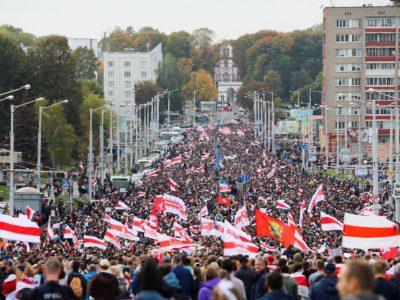
Mass demonstrations erupted in Belarus on August 9 to protest what was widely viewed as a rigged election that gave long-time strongman Alexander Lukashenko, who has ruled Belarus for 26-years, a victory over the popular incumbent. The protests have continued on a daily basis for nearly two months, despite mass arrests, beatings, and torture. The largest civil society movement in Belarus’s history is shaping the future of this former Soviet bloc country.

Mikita Mikado, 34 years old, is the CEO of PandaDoc, a California-based software company. From his office in San Francisco, he is following the news from his home country of Belarus. In the midst of the nationwide protests over the result of the presidential election and a crackdown of unprecedented force, he stepped in and urged police officers to resign. Money? “We can solve it,” he promised.

Never before, Mikado said, had he felt like standing up against Alexander Lukashenko, the authoritarian leader who has been president of Belarus since 1994. The breaking point was when he watched in horror as his fellow countrymen were dragged away and beaten up by riot police.

“I knew someone who was tortured and beaten,” he said. “I could no longer stay silent and do nothing, when stun grenades were exploding on the streets.”

Mikado’s crowdfunding initiative, Protect Belarus, was successful: over the ensuing three weeks it raised money to financially support police officers who quit their jobs. Hundreds of security forces members applied for re-training in the technology industry and for financial aid.

For years, Belarus’s rapidly expanding IT industry coexisted with Lukashenko’s government, keeping out of politics while benefiting from preferential tax rates and little regulation. For many tech professionals, the luxury of having a stable and relatively well-paid job allowed them the privilege of not following politics.

That relationship was already changing ahead of the August 9 election. Valery Tsepkalo, a former Belarusian ambassador to the United States and founder of the Hi-Tech Park— the Minsk equivalent of Silicon Valley—joined the opposition. Some startups created apps to monitor vote counts and collect data on poll violations.

Young and savvy engineers, fashion designers and successful entrepreneurs joined the protests. Passivity became just what a country could no longer afford. The middle class that long flourished within the system began separating from it. Post-election violence became the last straw.

An apolitical nation fights

Middle class disenchantment with the regime became apparent during the peak of the COVID-19 pandemic. Lukashenko played down the danger posed by the virus and dismissed it as mass “psychosis.” He said it was a minor health issue that could be cured easily with a shot of vodka, or with a day of working on the farm. A mass Victory Day military parade went off as scheduled. Public gatherings were not banned. Without guidance or policy from the government, Belarusians organised what they called “the people’s quarantine”: either individuals stayed home from work, or businesses introduced work from home policies without official guidance. Lacking support from the government, dozens of local initiatives and crowdfunding efforts emerged to buy and produce medical equipment, sew protective masks and raise financial support from local and diaspora communities. In Belarus, the pandemic utterly destroyed Lukashenko’s reputation as the controller-in-chief. Despite all his bravado, the president failed spectacularly to contain the virus. More importantly, civil society proved faster, more creative and resourceful than the state. By his very inaction, the president of Belarus unintentionally galvanized ordinary people to take action. Andrej Stryzhak, a human rights activist and volunteer worker, co-founded the #ByCovid19 initiative to help doctors deal with the pandemic. An informal group of some 1,500 volunteers delivered personal protective equipment (PPE) and medical equipment, purchased with money raised through crowdfunding, to hospitals across the country. Private businesses contributed funds and masks. Restaurants donated food. Hotels provided rooms pro bono to medical workers. In May, when we spoke about the initiative, Stryzhak told me he hoped the crisis would develop trust in the country’s third sector. “I see it as gradation from dissidents to parliamentary opposition,” he said. “Even if the dissidents are being trapped, they exist. If there’s less control, they are slowly becoming civil society. Later, alternative candidates appear, after which political parties will be initiated.” As numerous initiatives and projects exploded since then, he’s emerged from all that’s taken place in recent weeks in a distinctly optimistic mood. “Alternative structures of society are being created at the moment. These structures, which citizens are forming themselves, will eventually take over the current dysfunctional politics,” Stryzhak says now. The needle has indeed moved quickly.

Unprecedented solidarity

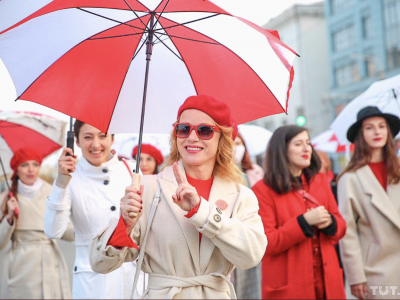
A vibrant popular movement has unfolded in the past months in Belarus. More than 100,000 rallied against Lukashenko in Minsk each of the past seven Sundays, despite detentions and police violence, insisting that his landslide re-election in August was falsified. Unlike in previous elections, the widespread grassroots protests —the largest in the country’s history—are sustained and organized with skillful use of social media. Telegram, a social media app that often remains available even during internet outages, has become a crucial tool in coordinating the unprecedented mass protests that have swept Belarus since the election. Several channels, such as Nexta and Belarus of the Brain, have become the most popular and main tools to facilitate the protests. The crowds are coming from all walks of life. In addition to the middle class, popular public figures are joining the protests. Among the celebrity protesters are athletes and Olympic medalists who march under the banner of the Free Union of Athletes, a newly-created movement. Nearly 600 Belarusian athletes signed an open letter demanding, among other things, new elections and an end to police violence. The wave of solidarity and self-organization is unprecedented in this country. Strike committees have been formed at state enterprises across the country, even though police are arresting and fining workers. Students gather on university campuses to protest repression and censorship. Lecturers support them. Media outlets publish blank pages when journalists are detained. Local residents feel the pride in belonging and self-identification; nearly every neighbourhood has its own newly designed flag. In the largest crowdfunding campaign, Belarusians have raised more than $6 million to help those who suffered from police violence and were fired for political reasons. It is a significant amount in a country where the average salary is roughly $500—and hasn’t increased in the past decade.

New values

The tide of anger and frustration with the Belarusian authorities is longstanding. People have united in the face of blatant injustice. But why was it this particular election that proved to be the tipping point? “Now it’s different. Belarusians made a sharp leap thanks to the generational change,” says Minsk-based sociologist Alena Artsiomenka. “People who grew up in the post-Perestroika era are more inclined to contribute to the society’s well-being. Those who were brought up in more stable and safe conditions are more interested in post-materialistic values.” Technology has been essential to the movement’s growth. Crowdfunding platforms made philanthropy easier. But this is no longer considered desirable. The work of one such platform, MolaMola, came to a halt after the government shut it down. It was launched by Lukashenko’s main rival’s son, Eduard Babariko, who has been under arrest since June. The same platform was used to collect money during the pandemic and previously for civil society projects that were not related to politics. Mikita Mikado felt a desire for revenge, too, after police raided the Minsk office of PandaDoc and arrested four of the company's managers. The government subsequently blocked the company’s accounts. In order to save his employees in Belarus, Mikado left the project Protect Belarus. But this did not halt the initiative. The state’s use of violence against protesters has proved to be not only a breakthrough in the way people think about the authorities— and the Belarusian public’s reaction against police brutality— but also in the way they see many realms of day-to-day life. Belarusians have been moving away from the paternalistic culture that was the tradeoff for economic stability during the post-Soviet period. In recent years, local communities managed to preserve a historic district that was slated for demolition. Residents also protested against the construction of a plant that would pollute their environment. Belarusians have long been associated with a strong paternalistic culture. This began changing in the recent years —people took matters into their own hands. The 2020 demonstrations are not without precedent. In 2017, ordinary citizens rocked the country with widespread protests against a tax on the unemployed, a bizarre plan that would have forced those who do not officially work to pay a penalty to the state. Injustice was the main driving force for the protests; the same is true of the current protests. In response to the 2017 protests, Lukashenko initially agreed to impose a ban on the tax—only to reintroduce it at a later date. He might not have changed in the intervening years, but the country has. Belarusian society had for years seen the trust of ordinary people in one another drain away. Now it has found a unifying crucible in its resistance to violence. Self-organizing and helping one another became fundamental. A nation’s new, yet old, encounter with its autocratic leader may not be finished yet. But there is little to no chance that Belarusians will submit any longer to Lukashenko's authoritarian regime. [post_title] => Belarus's protests are fueled by an unprecedented civil society movement [post_excerpt] => For years, Belarus’s rapidly expanding IT industry coexisted with Lukashenko’s government, keeping out of politics while benefiting from preferential tax rates and little regulation. The rigged August 9 election proved to be a tipping point. [post_status] => publish [comment_status] => closed [ping_status] => open [post_password] => [post_name] => belaruss-uprising-against-autocracy-is-fuelled-by-an-unprecedented-civil-society-movement [to_ping] => [pinged] => [post_modified] => 2026-08-06 22:59:40 [post_modified_gmt] => 2026-08-06 22:59:40 [post_content_filtered] => [post_parent] => 0 [guid] => http://conversationalist.org/?p=2115 [menu_order] => 242 [post_type] => post [post_mime_type] => [comment_count] => 0 [filter] => raw )
Belarus’s protests are fueled by an unprecedented civil society movement

WP_Post Object
(
    [ID] => 2068
    [post_author] => 2
    [post_date] => 2020-09-17 16:30:03
    [post_date_gmt] => 2020-09-17 16:30:03
    [post_content] => The curious case of the Russian grassroots movement that borrows racist and alt-right language from America to advocate for the rights of white anti-Putin protesters.

As a Black woman who is an historian of the Soviet Union and Russia, the Black Lives Matter movement has put me in an interesting position. The ongoing demonstrations taking place across the United States illuminate the depths of the physical, spiritual, and emotional violence that African Americans and ethnic minorities experience. The Trump administration’s response is callous and includes the use federal power to violate the protestors’ first amendment rights. In Russia, meanwhile, while responses to the protests have ranged from empathy to victim-blaming, one hashtag caught my attention: it is called “Russian Lives Matter.”

Despite its name, RLM does not seek solidarity with BLM. The Russian version calls out police violence committed against anti-government protestors. To be clear: police also target ethnic minorities, such as migrants from Central Asian countries like Uzbekistan, but RLM advocates specifically for ethnic (i.e., white) Russian citizens. The largely overlooked element in the Russian Lives Matter movement is its “borrowing” of American racist and alt-right language.

While a Twitter search for the hashtag Russian Lives Matter brings up a few responses in support of the demonstrations in America, many more regurgitate the Kremlin’s messaging, which mirrors the right-wing American response—i.e., that protestors are criminals and looters, and that the demonstrations are contrary to the spirit of Martin Luther King, Jr. The latter is a popular argument in both the United States and Russia, with the right using it to dismiss the validity of the contemporary struggle for civil rights—not realizing that Dr. King was murdered for his perceived radicalism.

In the United States, the right describes Black Lives Matter protests as riots, planned violence, and “poison.” This language is meant to portray the movement as anything but what it is—i.e., one that demands accountability and reform of the public institutions that maintain the racist status quo.

Many Russians deny that racism exists in their country. Alina Polyanskikh, a Russian television presenter who is Black, described her experiences with overt racism, and with those who deny its existence, in a recent blog post. When Afro-Russian blogger Maria Tunkara posted on her social media accounts about her experiences with racism, she was threatened and even investigated by the prosecutor in St. Petersburg. Popular Russian memes about the American protests compare African Americans to apes and call them thugs; the vilest make fun of George Floyd’s killing at the hands of American police.

My first reaction to these images was disgust, then sadness. They reminded me of my first experience with racism in Eastern Europe, when in spring 2011, I spent a couple of weeks in Varna, Bulgaria, volunteering at an orphanage for Roma children. On one of our first visits, the children (a range of elementary-aged kids) encircled me and called me a “n----r” and “monkey” to the tune of “Ring Around the Rosie.” I was mortified and deeply hurt; seeing my reaction, one of the kids ran off to tell the orphanage director, who made the other children apologize. I did not understand how children in Bulgaria knew the racist slurs that whites had directed against me when I was growing up in southeast Texas in the 1990s and early 2000s. Now, almost ten years after my experience at the orphanage in Bulgaria, I see the people who inhabit the corners of the Russian-language internet using the same slurs.

American ideas of racism and the racist undercurrent of conservative populism have a transnational impact that is now felt in Russia. As Natalia Antonova wrote in the early months of the Trump administration, many American racists see Russia as a “white man’s paradise” where there is no political correctness, no vocal ethnic minority demanding rights, and no legal protections for the LGBTQ community. An exploration of the connections between American and Russian white supremacist groups provides further insight into this phenomenon.

The Southern Poverty Law Center’s (SPLC) Hatewatch initiative has documented the close relationship between white supremacist groups in Russia and the United States. In 2018, members of League of the South, an Alabama-based white supremacist group, launched a Russian-language version of their organization’s website. Michael Hill, the League’s leader, said that Russians and American white supremacists have in common “real, organic factors such as shared blood, culture, and religion.” This idea of a shared culture or blood is a dog whistle for a shared white race.

The SPLC also examined the “strange alliance” between Russian Orthodox monarchists and radical white Evangelicals in the annual meeting of the World Congress of Families (WCF). The WCF is an ultra-conservative religious group; its goals include promoting anti-LGBTQ legislation. Participants in the group include far-right and nationalist groups across the United States, Europe, and Eastern Europe, all committed to white supremacism. In this case, Russia reflects American racist ideology.

Claims of a shared culture and religion notwithstanding, the image of a “white paradise” is belied by the numbers that illustrate its ethnic diversity. Russia is home to hundreds of ethnic minorities that speak over 100 languages. It has not seen the mass protests against racism that spread across Western Europe since the murder of George Floyd, but Afro-Russians, Africans, and Central Asians who live in Russia have spoken out and led discussions about their experiences of racism and prejudice.

These discussions can complicate our understandings of how racism assimilates into the relatively unique context of Eastern Europe and the post-Soviet space. Russia does not have a history of institutionalized racism against people of color (POC) like those of the United States and the former imperial states of Europe. This is not to erase the treatment of Jews, and people from the Caucasus and Central Asia who had long been targets of institutional racism and oppression in the Russian empire. In fact, the Soviet Union did not track race in its censuses. People were classified by their nationality; thus, their race was not even a possibility of official identification. This fact lends itself to current understandings of racism and prejudice in Russia.

In contemporary Russia, POC are called racial slurs, denied housing, violently beaten, and sometimes killed. Acquaintances from Russia and Ukraine have posited that these documented cases of racism are manifestations of xenophobia—i.e., that POC are not trusted or are not treated as equals because they are outsiders. But this logic illustrates the greater issue. It shows that people who have dark skin, even if they were born in Russia or are permanent residents, are still excluded from the dominant concept of who is Russian.

There is a Janus-like dichotomy when it comes to Western media portrayals of Russia. Some American conservatives see Russia as a paradise for white heterosexuals, while some American liberals see Russia as an authoritarian regime plotting to destroy U.S. democracy. From my own relatively unique position, I see in Russia a mirror of the United States.

The language and logic of racism in Russia, particularly toward Black people, is not an organic development. Throughout the Soviet period, African American and African people visited, studied, and lived in a country with relatively few incidents of race-based violence (although one African student was murdered in 1963). Even the use of racist language was different. Central Asians were called “chornyi” (black) as a slur, but Blacks were called “negr” (similar to “negro,” but without the negative connotations the word carried in the U.S..)

Since the collapse of the Soviet Union, the Russian lexicon of racism has absorbed elements from America. If Americans and Russians can take away any lessons from this development, it is that anti-racist forces in both countries need to engage with one another and build alliances. Because the forces of white supremacy certainly have.
    [post_title] => Russia as a mirror of American racism
    [post_excerpt] => Some American conservatives see Russia as a paradise for white heterosexuals, while some American liberals see Russia as an authoritarian regime plotting to destroy U.S. democracy. From her own relatively unique position as a Black American who studies Russia, the author sees in Russia a mirror of the United States.
    [post_status] => publish
    [comment_status] => closed
    [ping_status] => open
    [post_password] => 
    [post_name] => russia-as-a-mirror-of-american-racism
    [to_ping] => 
    [pinged] => 
https://conversationalist.org/2019/01/22/russia-as-a-white-mans-paradise-other-scary-reasons-why-trump-adores-putin-and-what-to-do-about-it/
    [post_modified] => 2026-08-06 23:00:10
    [post_modified_gmt] => 2026-08-06 23:00:10
    [post_content_filtered] => 
    [post_parent] => 0
    [guid] => http://conversationalist.org/?p=2068
    [menu_order] => 246
    [post_type] => post
    [post_mime_type] => 
    [comment_count] => 0
    [filter] => raw
)
Russia as a mirror of American racism

WP_Post Object
(
    [ID] => 2048
    [post_author] => 2
    [post_date] => 2020-09-11 00:18:50
    [post_date_gmt] => 2020-09-11 00:18:50
    [post_content] => Even as femicide rates rise, conservatives in the ruling party want to roll back legislation designed to protect women.

For the last five years Turkish feminist movements have faced one backlash after another and are perpetually braced for the next one. “There is always this… feeling of insecurity, uncertainty, and inability to see the future,” activist Feride Eralp told The Conversationalist. “Your most basic rights are constantly under threat.”

Eralp has been advocating for women’s rights since she was 15; her mother was active in the founding women’s movements in the 1980’s. In recent weeks, thousands of women have been demonstrating on the streets of Istanbul, Ankara, and 35 additional cities across Turkey to demand their civil rights and to protest a shocking rise in rates of femicide.

The catalyst for this latest round of protests occurred in July, when police found the mutilated corpse of Pınar Gültekin, a 27 year-old student, in a rural area of southwestern Turkey. They arrested her ex-boyfriend, Cemal Metin Avci, who confessed to having beaten and strangled Gültekin, before burning her body and stuffing it into a barrel, which he buried in the woods. The horrific incident was heavily covered by Turkish media, eliciting widespread revulsion; the murder became a rallying cry for feminist groups, which had already been protesting for months the failure of government authorities to protect women from domestic violence and femicide.

The government’s obligation to protect women is enshrined in the Istanbul Convention, a groundbreaking human rights treaty against domestic violence that is aimed at preventing violence against women. It is formally called the Council of Europe Convention on preventing and combating violence against women and domestic violence. Turkey was the first country to ratify the treaty, signed on March 12, 2012. Since then, 45 countries and the EU have signed. No country has ever withdrawn from it.

Recently, President Erdoğan's Justice and Development Party (AKP) suggested they would withdraw Turkey from the treaty.

The impetus for the Istanbul Convention was the 2009 decision of the European Court of Human Rights (ECHR) in Opuz v Turkey, which found that Turkish authorities failed to protect Nahide Opuz from her violently abusive ex-husband, even after he stabbed her repeatedly and murdered her mother.

So far this year, 285 women have been murdered in Turkey. That’s more than one woman murdered per day, the majority at the hands of their estranged spouses.

Despite these numbers, lobbying groups for political Islamists, composed mostly of conservative men, have been pressuring the government to withdraw from the Convention on the basis that it undermines ‘family structure.’ In fact, the Istanbul Convention truly aims to protect the most vulnerable members of the family from domestic violence.

Preservation of the traditional family structure has long been a foundation of values instilled by the Turkish ruling party, explained Sinem Adar, an Associate at the Center for Applied Turkey Studies in the German Institute for International and Security Affairs. “I think the current government definitely has a very particular, rigid understanding of the family,” Adar told The Conversationalist.

Erdoğan has said numerous times throughout the years that women should have at least three children. The President has also referred to women who do not wish to have children as “unnatural” and “incomplete.” The deputy chair of AKP, Numan Kurtulmus, once described single women as “hedonistic,” and asserted that they put “dynamite in the foundations of the family.”

When Erdoğan, who was then prime minister rather than president, made his 2013 statement about woman having to bear three children, he played into this capitalistic driver of women’s oppression. As Eralp said, the family becomes a unit to keep women producing labor, inside and outside the home. Turkey does not have a strong social welfare system and it is on the brink of a financial crisis; under these circumstances, women become primary caregivers for children and the elderly. “With an economic crisis of this degree, you don’t want to lose free labor,” Eralp explained. As Erdoğan said in his speech: “One or two children mean bankruptcy. Three children mean we are not improving but not receding either. So, I repeat, at least three children are necessary in each family, because our population risks aging."

Turkish society invests the family with tremendous value and importance; the average Turkish citizen is inculcated from childhood with a strong sense of responsibility for relatives. But when the issue of gender is contextualized within the family, individual rights are undermined. “It’s almost like not seeing the woman as an individual but seeing them as part of a family,” Adar said. In other words, a woman’s safety, security and freedoms cannot be seen as intrinsic, but instead debatable within traditional family structures.

The government’s rhetoric and policy can be seen as systematic pressure to suppress individual liberties when it comes to family, sex, gender relations; they leave very little space for women to seek change. “It’s like making the voice of the women who need the help the most, less and less heard, because again everyone is packaged in the context of the family,” Adar said. “If they decide to abolish [the Istanbul Convention], it would definitely have an influence on individual liberties.”

Canan Güllüm, the president of the Federation of Women's Associations in Turkey, said during a phone interview that the Islamist lobbying groups have long advocated for the “protection of the holy family.” She agreed that this contributed to a culture that threatened women’s safety and freedom. “Family, where the violence is reproduced as it is happening now in the society, is not a safe place for women,” Güllü said.

The composition of the protests belies conservative claims that Turkish feminists are primarily secular. Practicing Muslim women wearing the traditional headscarf are as visible at demonstrations as their secular sisters; they are all willing to hold picket signs reading “We don’t want to die!”; the phrase recalls the last words of Emine Bulut, whose husband stabbed her to death last year in a café—in front of her 10-year-old daughter. Women who represent a broad swathe of political and religious views have come together in these protests to advocate for their right to life. As Güllü pointed out, they “do not feel comfortable in today's patriarchal and unequal family structure where their rights are not protected.”

Whether they are religious or secular, there is only one set of laws, and one path of recourse for all people in the country. “Women are aware of these rights and they’re not willing to give them up for any ideological or political reasons,” Eralp said. “I can’t imagine a woman who would push that away under her own free will.”

The debate around the Istanbul Convention in Turkey has also divided the ruling AKP’s base. Erdoğan’s own daughter, Sümeyye Erdoğan Bayraktar has come out in support of the Convention. Bayraktar is the deputy chair of the Women and Democracy Association (KADEM), which is conservative on issues such as LGBT rights; it advocates for ‘woman’s human dignity’ and is often engaged in lobbying the government.

There is something religiously conservative in the family value model the government is trying to “preserve,” but it isn’t predicated on a secular vs religious binary. A more accurate analysis would emphasize the ongoing inequality between men and women, and how the impunity and lack of justice demonstrated in Turkey promotes it. In recent years, a more moralistic, conservative discourse has become salient in the public realm. At the same time, there has been an increasing intensity of violence by the state and break down of the justice system in order to consolidate power.  As Adar put it; “it has to do with the institutional deterioration [and] the deterioration of the primary rule of law.” To a certain extent, the increase in violence now prominent in the public eye, reflects the socio economic situation of the country.

The rate of femicide has more than doubled in Turkey since the signing of the Istanbul Convention, which means that its legal and protective measures are not being implemented. Rarely is there justice for women who are murdered or abused, particularly if the perpetrators are well connected. For Turkish women, their rights, as Eralp observed, are transactional.

Güllü added that while the framework to protect women and promote equality is already in place, it hasn’t been prioritized. The government, she believes, has not upheld the values of civil and gender equality in the last 20 years.

The rhetoric employed by Erdogan’s conservative government further conveys to the public an implicit understanding that this type of discourse and behavior is acceptable; this acts as a legitimizing power. In general, there is an acceptance and understanding of men’s motives to commit violence towards women, which ends up being passed from one generation to the next. Amnesty International went so far as to say in an August statement on the rise of femicides that “even the discussion of a possible withdrawal [from the Convention] is having a huge adverse impact on the safety of women and girls.”

At the same time, women in Turkey are clearly going through a period of consciousness raising and are becoming much more politically assertive. But unless the value of gender equality is internalized throughout all levels of government and civil society, the task of protecting individual rights in Turkey will continue to be challenging. What’s needed is a widespread understanding that no one “deserves” to be subjected to violence.

Turkey’s feminist activists are hopeful, given the increasing numbers of women coming out to protest and stand up for their rights. “The women's movement in Turkey is very strong and consolidated, and we will not give up fighting,” Güllü said, emphatically.

 
    [post_title] => "We don't want to die!" Turkish women demand government action to end femicide
    [post_excerpt] => Women who represent a broad swathe of political and religious views have come together in mass demonstrations to advocate for their right to life in a deeply patriarchal society, under a government that has failed to implement the laws that should protect them.
    [post_status] => publish
    [comment_status] => closed
    [ping_status] => open
    [post_password] => 
    [post_name] => turkish-women-are-staring-down-the-patriarchy-as-they-demand-their-rights
    [to_ping] => 
    [pinged] => 
    [post_modified] => 2026-08-06 23:00:30
    [post_modified_gmt] => 2026-08-06 23:00:30
    [post_content_filtered] => 
    [post_parent] => 0
    [guid] => http://conversationalist.org/?p=2048
    [menu_order] => 247
    [post_type] => post
    [post_mime_type] => 
    [comment_count] => 0
    [filter] => raw
)

“We don’t want to die!” Turkish women demand government action to end femicide

WP_Post Object
(
    [ID] => 1941
    [post_author] => 2
    [post_date] => 2020-08-13 23:11:48
    [post_date_gmt] => 2020-08-13 23:11:48
    [post_content] => From Belarus to America: a lesson in how an authoritarian responds to those who threaten his power.

Six masked police officers in black uniforms and helmets were filmed beating one unarmed man, who can be heard moaning in pain. A woman runs up, screaming, and the cops turn on her, one of them explicitly threatening her, the other pushing her away. “Don’t touch him, that’s my husband!” she screams, flailing at them with her arms. The officers haul her husband up off the ground, presumably to be detained. It was just another day of violent crackdowns in Belarus, a country that has been ruled since 1994 by Alexander Lukashenko, who is often called Europe’s last dictator

We don’t know for certain where police took the man, but another video provides some clues. 


The women narrating the clip are clearly horrified at what they are seeing through the window. They fear the detained people lying face down in the walled yard of the police precinct will be murdered by police. One of the women wants to go out on the balcony to film, but then both decide it’s unsafe. The scene has a Children of Men vibe — dystopian and horrifyingly banal at the same time. Subsequent videos published on Twitter show protesters gathered outside a detention center in Minsk while chanting encouragement to the detainees who are being beaten inside, and weeping as large police vehicles arrive with yet more detained protesters inside. 

Reports of horrific torture in detention have begun to leak out. Here is just one video featuring the sounds of detainees screaming. Here is a video of a woman behind barbed wire, screaming “Don’t! Please stop! I can’t see anything!” A friend of mine who lives in Minsk has likened the situation to a war being waged by the state against its own populace. 

An independent Russian journalist, freed with the aid of his diplomats, was able to recount the scenes he saw after being essentially kidnapped by police (as they told him themselves, “You are not detained”), including minors being savagely beaten, people forced to lie face down in pools of blood for hours, police jumping on protesters’ backs until bones are broken, threats of rape, and much more. 

Four days into the anti-Lukashenko demonstrations, Belarusian state television broadcast a horrifying video report that shows young protesters at a detention center, obviously beaten and terrified, confirming to an off camera police officer that they will not engage in any more protests.

The mass arrests are part of a violent state crackdown on opposition demonstrators, who poured into the streets on August 9 to protest  an election that the president claimed he had “won” with 80% of the vote. Protests have sprung up all over the country, not just in the capital, Minsk. While exact numbers of protesters are hard to come by, official statistics say that at least 6,000 have been detained in just a few days. 


While media organizations have been careful to stress that vote rigging has been “alleged” in Belarus, I can state confidently that the election was stolen; the evidence is there for all to see.  Svetlana Tikhanovskaya, the 37 year-old woman who ran against Lukashenko after her husband, a well-known opposition blogger, was jailed in May, has been forced into exile in neighboring Lithuania. Security officials threatened to make orphans of her children, whom she sent abroad before the election; they later arrested her campaign manager, Maria Moroz.  They detained Moroz as a hostage, to be released in exchange for Tikhanovskaya’s departure from Belarus.  Before she was allowed to leave the country, Tikhanovskaya recorded what amounts to a hostage video, in which she reads from a script while sitting in what seems to be the office of a Belarusan Central Elections Commission chairperson. In a personal video, which she recorded shortly after arriving in Lithuania, Tikhanovskaya speaks emotionally; she calls herself a “weak woman” — a chilling reference to Lukashenko having mocked her as a “poor little girl” ahead of the election. “Children,” she said in that video, “are our everything”—a  clear indication that she was told her children would not be safe. She added: “God forbid you should ever have to face the choice I had to face.” Even with her children safely abroad, Tikhanovskaya had every reason to be terrified for them. Her husband, who was originally supposed to run instead of her before Lukashenko had him thrown in jail, remains behind bars, another hostage.  Svetlana Tikhanovskaya is young, passionate, and charismatic in a way that galvanizes voters. She has a wholesome image — an independent candidate who declared her love for her activist husband, Sergei, after he was locked up, and ran on a platform of freeing political prisoners, weakening ties with Russia, and democratic reforms. Her courage invested her with instant appeal. The threats against Tikhanovskaya and her family are not the actions of a confident leader who easily won the majority of the polls. They are the actions of a dictator who feels his throne wobbling underneath him. Although the election was not monitored — already a major red flag — the machinations witnessed by ordinary citizens at the polls were giving the game away, Tikhanovskaya was clearly getting too many votes for comfort. Demands for “all votes to be counted” are no longer relevant at this point; to get to the bottom of what happened, one would need to hold a whole new, transparent election, which is impossible at the moment. Look at this graph if you want to understand the generational span of Lukashenko’s rule: Add to that stagnation and growing inequality, as well as a history of repressions and crackdowns. Now add the fear, uncertainty, and crisis that 2020 brought — a spectacle that has included Lukashenko mocking the coronavirus and hosting a parade as infections surged Lukashenko’s response to the protests has included not just threats and violent crackdowns; he also cut off the internet in an attempt to stifle dissent. The people, however, appear furious and determined in their defiance. Bypassing restrictions, some have even created a Telegram channel dedicated to unmasking and doxxing Lukashenko’s security services — a situation that could escalate dramatically on top of all of the other escalations.  It is not clear if Lukashenko will be toppled. Certainly, the savagery with which the protesters are being treated shows us that he fears as much. Some regional analysts believe that the regime is nearing collapse, but the question is — at what cost? Americans should be paying close attention to events in Belarus. Lukashenko’s response to the opposition shows how a cornered rat behaves — with mass arrests, death threats, and attempts to shut down or limit access to the internet. Donald J. Trump is just a wannabe authoritarian, but like Lukashenko he can be dangerous when under duress. We have observed Trump’s increasing petulance — everything from the constant revenge-firings of officials and blasting his own intelligence community on Twitter — and see how it can easily turn into a rage.  We can see how that rage finds an outlet via unidentified paramilitary police grabbing protesters  in places like Portland. We can see it in how peaceful protesters were tear-gassed in D.C. for a bizarre photo op. One of the functions of authoritarianism is to bulldoze the safeguards that a democratic system places between the individual and the state — as craven officials continue to help Trump, more and more of the American public is exposed to both his anger and his incompetence. Americans are lucky to have a system that still provides many protections from Trump’s rage, but that system has its vulnerabilities. With the pandemic out of control in the States, voting by mail has become more important — but our Postal Service is being sabotaged, to name one obvious example. Republicans have been going after the USPS for years, but their efforts now present Trump with a potential opportunity to cast the upcoming presidential election as seriously flawed, especially if it’s a close one. When a crucial part of the societal infrastructure that is propping up our democracy is weakened, we stray further toward unpredictable scenarios.  Keith Kahn-Harris, a London based sociologist and prolific author, explains in an excellent Twitter thread that Western ideological zealots who support foreign dictators and cast them as fighters of Western imperialism (Kahn-Harris he refers to them as “Tankies” — the term originated with British people who supported Soviet tanks rolling across Europe, but has since broadened to include different groups, united by a disdain for the Western countries they call home) have succumbed to delusion by treating Lukashenko’s state propaganda as though it were meant to be believed.  Rather, explains Kahn-Harris, “In dictatorships the absurdity of the lie is precisely the point—it is an expression of dominance.” People who have grown up in authoritarian regimes know that official statements are lies. The trick is to understand the subtext of the lie. People who have grown up in democracies are not equipped with the necessary cynicism to combat a leader who lies axiomatically, which is why the U.S. media has failed to cover the Trump presidency with adequate insight.  There is a very good parallel to be drawn between Trump’s base — as they do everything from cheering on our own examples of horrific police violence to ignoring or dismissing the president’s inaction on the pandemic — and Lukashenko’s Western fanboys as they seek to discredit protesters in Belarus Both groups are operating in a state of unreality. As we have seen over the past few months,  2020 has shown all too well, unreality is both seductive and deadly. [post_title] => Why you should care about what's happening in Belarus [post_excerpt] => Americans should be facing close attention to events in Belarus. Lukashenko’s response to the opposition shows how a cornered rat behaves — with mass arrests, death threats, and attempts to shut down or limit access to the internet. Donald J. Trump is just a wannabe authoritarian, but like Lukashenko he can be dangerous when under duress. [post_status] => publish [comment_status] => closed [ping_status] => open [post_password] => [post_name] => why-you-should-care-about-whats-happening-in-belarus [to_ping] => [pinged] => [post_modified] => 2026-08-06 23:01:20 [post_modified_gmt] => 2026-08-06 23:01:20 [post_content_filtered] => [post_parent] => 0 [guid] => http://conversationalist.org/?p=1941 [menu_order] => 252 [post_type] => post [post_mime_type] => [comment_count] => 0 [filter] => raw )

Why you should care about what’s happening in Belarus

WP_Post Object
(
    [ID] => 1682
    [post_author] => 2
    [post_date] => 2020-04-03 03:40:38
    [post_date_gmt] => 2020-04-03 03:40:38
    [post_content] => 

Despite their liberal manifestos, the Labour Party and the Democrats continue to choose men as their leaders

It wasn’t meant to be like this. This time it would be different; Britain’s Labour party was going to elect its new leader, and this time it would be a woman. They didn’t really seem to have a choice: Labour turns 120 this year, but not once had a woman managed to poll higher than a man in a leadership contest.

On top of that, the original field of candidates looked promising. There were four women— and one solitary man. Two women dropped out early but that still left twice as many women as men in the running.

In the end, none of that mattered. The results of the Labour Party leadership election will be announced next week and, unless there is a major upset, Keir Starmer, the lone male candidate, will be elected leader by a landslide.

It wasn’t meant to be like this. The Democratic candidate was going to be Kamala Harris — or was it going to be Elizabeth Warren? No, it was going to be Bernie Sanders. One thing was certain: it was not going to be Joe Biden.

Biden was polling high but his campaign was poor and he was nowhere to be seen; he was more of the same when the consensus seemed to be that the Democrats needed anything but that. Still, he went on and slowly but surely, until everyone but Bernie dropped out. Now Biden is almost certainly going to be the candidate for president who will face off against incumbent Donald Trump in November.

It wasn’t meant to be like this. Both contests had already been going on for weeks — months! — and were starting to near fever pitch, but the pandemic hit. We know for certain that the Labour party’s leadership race will end with a whimper as everyone remains focused on the coronavirus.

The Democratic convention, meanwhile, feels like it belongs to a distant future: who even knows what our world will look like in July? But this doesn’t mean either race should go unrecorded; there are lessons that will need to be learnt, once we have the time (and mental space) to do so.

Let’s look at what happened in Britain, where the Labour party has now been headed by Jeremy Corbyn for four and a half tumultuous years. He seemed to emerge from nowhere in 2015; with politics well to the left of the party’s mainstream, the 70-year-old lawmaker had for decades been a backbencher with obscure pet issues.

With Corbyn as its leader, the Labour party was in near constant revolt. Factional infighting reached its peak in the summer of 2016, when an attempt to oust him failed.

While his fellow MPs had a famously acrimonious relationship with Corbyn, he saw his popularity with the Labour membership spike and grow exponentially in the first few years. Sadly for him, it didn’t translate into success in the polls; sadly for then-Prime Minister Theresa May, Corbyn’s apparent weakness pushed her to call an election in 2017, which turned into one of the worst campaigns in memory, and resulted in Labour making some unexpected gains.

Buoyed, the left wing of the Labour party claimed victory over its centrist counterparts — whose policies, they insisted, had lost the party the 2010 and 2015 elections — but the triumphalism was relatively short-lived.

After May came Boris, and when Johnson called an election last year, it ended with Labour’s worst electoral results since 1935. The shock came and went, and then came the gloating, this time from the moderates. After warning for four years that the hard left would bring disaster, they felt vindicated.

Corbyn’s faction, on the other hand, claimed that the election had been solely focussed on Brexit, and that the loss could be attributed to the Conservatives’ straightforward Leave message, as opposed to their own muddled position of a second referendum.

Then the leadership contest started, with Rebecca Long-Bailey, Lisa Nandy and Keir Starmer emerged as the three main candidates.

Most people believed that Long-Bailey would win; she always was a close ally of Jeremy Corbyn’s and the membership presumably still loved Corbyn, so it should have been a done deal.

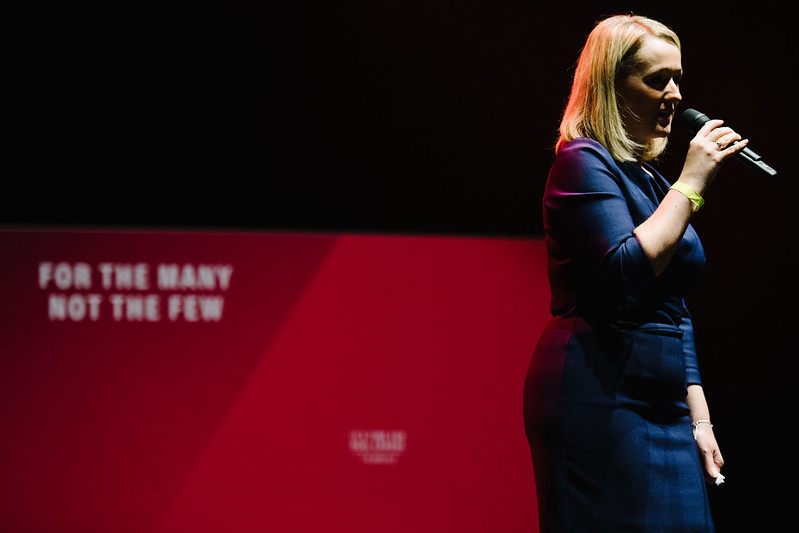
[caption id="attachment_1688" align="alignnone" width="799"] Rebecca Long-Bailey at a Manchester Labour Party event on November 7. 2019.[/caption]

It wasn’t. Stuck in the former leader’s shadow, Long-Bailey struggled to make a case for herself. Yes, she was of the left, no, she wasn’t “continuity Corbyn: yes, she was asked to rate his leadership on television and gave him “10/10”; no, she couldn’t really explain what policies of hers would be a departure from the past few years.

She’s also, well, a bit middle of the road. Brought up in Manchester, she studied politics and sociology at university, and eventually became a solicitor in 2007. She joined the Labour party in 2010, was elected to a safe seat in 2015, and joined the frontbench after Corbyn’s victory, though never quite made waves.

As the party’s spokesperson for business, she pushed on establishing a Green New Deal, but the policy got a bit lost in the discourse; in fact, everything she did in those five years always failed to really land. That she was seen as the given pro-Corbyn candidate was telling.

Many observers have pointed to the similarities between Jeremy Corbyn and Bernie Sanders, both socialists roughly the same age who tend to have acrimonious relationships with their fellow legislators. But while Sanders has loyalists like 30 year-0ld Congresswoman Alexandria Ocasio-Cortez poised to pick up his torch, Corbyn has left no such legacy. Under Corbynism, no successor was allowed to grow and bloom—and here we are.

Lisa Nandy had the opposite problem. Unlike Long-Bailey, she is not stuck with the Corbynite label. Nandy is a woman of no faction.

[caption id="attachment_1689" align="alignnone" width="799"] Lisa Nandy on September 23, 2018.[/caption]

The daughter of Indian Marxist academic Dipak Nandy and granddaughter of Liberal Party MP then peer Frank Byers, she has been in Parliament since 2010 — a term longer than her two opponents. Despite her pedigree, she has always been a bit of an outsider; often hovering near the frontbench but never fully a frontline politician.

There is a drum she has been banging, often alone, and it is: English towns that used to be safe Labour strongholds are leaving us in droves because we have stopped listening to them, and the party must reconnect with its northern working class base if it wants to survive.

She is absolutely right, of course, and did gain traction when she got to claim that she had been warning that the 2019 election results would be inevitable for a long time. When the party lost seats like Bolsover — held by socialist stalwart Dennis Skinner since 1970 — and Sedgefield, which was home for decades to a certain Tony Blair, people finally started to listen.

 Still, identifying a problem and finding a solution are two different things, and she never quite convinced her peers that she had succeeded with the latter.

Then there is our last candidate, who is simultaneously the most and least exciting figure in the race. On the one hand, he used to be the Director of Public Prosecutions and head of the Crown Prosecution Service, for which he was knighted, and is rumoured to be the man Helen Fielding based dreamy Mark Darcy in her 1996 novel Bridget Jones's Diary (later made into a hit film with Colin Firth in the role of Mark Darcy).

On the other, he is boring. Keir Starmer is not an exciting politician; he is a former barrister who measures his words, speaks with the cadence of an expert, and has always managed to keep out of his party’s factional warfare. His policy platform is a bit Corbynite but not entirely so; he appealed to the moderates in Labour but without appearing like one of them either.

In fact, he is currently all things to all people; he really could not be possibly accused of leaning into populism, and he is about to become the Labour party leader. Perhaps his very own brand of establishment dullness will be needed in five years’ time, when Britain’s voters have gone through a full term of Boris Johnson. Or perhaps desperate times call for desperate measures, and he simply is not up to the gargantuan task ahead of him.

In short: Labour is playing it safe. It could have taken a gamble by electing one of two 40-year-old women occupying northern seats, but is going instead with a 57-year-old man based down the road from the current leader’s inner London constituency. Starmer and Biden may be different, but the circumstances of their rise feel eerily similar.

Header image courtesy of Chris Boland.

[post_title] => In the UK and the USA, the political left has rejected female leadership in 2020 [post_excerpt] => In their search for a leader who can beat the incumbent, both Labour in the UK and the Democrats in the USA chose white men who represent a status quo ante that already seems like ancient history. [post_status] => publish [comment_status] => closed [ping_status] => open [post_password] => [post_name] => in-the-uk-and-the-usa-the-political-left-has-rejected-female-leadership-in-2020 [to_ping] => [pinged] => [post_modified] => 2026-08-06 23:05:05 [post_modified_gmt] => 2026-08-06 23:05:05 [post_content_filtered] => [post_parent] => 0 [guid] => http://conversationalist.org/?p=1682 [menu_order] => 275 [post_type] => post [post_mime_type] => [comment_count] => 0 [filter] => raw )

In the UK and the USA, the political left has rejected female leadership in 2020

WP_Post Object
(
    [ID] => 1510
    [post_author] => 2
    [post_date] => 2019-12-10 12:08:44
    [post_date_gmt] => 2019-12-10 12:08:44
    [post_content] => Weary British voters are not even sure what the issues are anymore.

On December 12 Britain will see its third general election in four years. The campaign, which began just over a month ago, did not see any high points. It has, however, had several low points.

For Jeremy Corbyn, the leader of the Labour party, one low point was when BBC interviewer Andrew Neil asked him whether he agreed that “Rothschild’s Zionists run Israel and world government,” a statement that a member of his own party had made, was an antisemitic statement. Neil had to ask the question three times before Corbyn finally agreed, grudgingly, that the statement was antisemitic; in his first to attempts at answering Neil’s question, Corbyn only said it should not be used.

For the Conservative incumbent Boris Johnson, a low point was probably reading an interview in the prestigious Times newspaper with Jennifer Arcuri, his alleged mistress, in which she merrily describes visiting his family home before he was officially divorced from his wife. Johnson was later asked about Arcuri’s allegations but avoided addressing the questions, just as he avoided related questions about the number of affairs he has had, and the number of children he has fathered out of wedlock (is it five? Six? More? We do not know.)

The BBC has also seen its fair share of low points in its election coverage. The most notorious incident involved the national broadcaster’s selective editing of a clip from a TV debate (more on those later) for its news bulletin.

In the original, an audience member asked Johnson: "How important is it for someone in your position of power to always tell the truth?" The question was followed by laughter and clapping from other members of the audience, as the Prime Minister was beginning to answer. In the bulletin segment, the laughs and claps were gone. The BBC explained in statement that they had shortened the clip for time reasons, but the damage was already done.

In fact, “the damage was already done” feels like a running theme in Britain at the moment.

The Labour party can try all it wants to convince Jewish voters that it has got the antisemitism problem among its ranks under control; yet, fewer than 10 percent of Jewish voters are currently considering voting for the party — down from about 50 percent in previous elections.

The Conservative party can go on and on and on about how it doesn’t plan to sell off the National Health Service, or stop it from being free at the point of use; yet, only 18 percent of people trust them to keep it publicly funded and publicly run.

The Liberal Democrats, centrist and pro-Europe (anti-Brexit) are also struggling with their recent past. Jo Swinson, their new, young, female leader was predicted to bring the party up in the polls, but the Lib-Dems joined a governing coalition led by the Conservatives in 2015 and this perceived betrayal is still fresh in the minds of left-leaning voters.

It did not have to be like this, for any of the parties; initially, this election was meant to be about Brexit, and Brexit only.  Boris Johnson called it, in an attempt to regain the majority the previous party leader, Theresa May, lost — back when she was trying to win a bigger majority in order to get Brexit done.

Sadly for May, the election became about everything else — Corbynmania, her party’s disastrously unpopular social welfare policy — and it marked the beginning of her long, painful downfall.

Will Johnson suffer the same fate as May? Few analysts dare make a prediction, given the notorious inaccuracy of pre-election polls, but the mop-haired incumbent prime minister is certainly going through an election that feels very similar to the one that ended May’s political career. While the Conservatives want to focus on Labour’s supposedly confusing Brexit plans, which is based on  negotiating a softer exit deal with Brussels rather than calling a second referendum — the issue itself has largely disappeared.

Like a ghost in a mansion struggling to scare off its living inhabitants, the UK’s imminent departure from the EU crops up every few days, for a few hours, then disappears again.

Though nearly half the country says it still supports Remain, only a fraction of those voters have turned to the Liberal Democrats, the one party offering not a second referendum, but a straightforward reversal of Article 50 — i.e., canceling the referendum results and remaining in the EU. Nigel Farage and his Brexit party were initially a major threat to the Conservatives and high up in the polls, but as December 12 approaches, it languishes at 3 percent.

In a way, this shouldn’t be a surprise. The United Kingdom is split on Brexit in a way that now feels ingrained; more than a preference on the future of the country, where you stand on Brexit is now a tribal identity in itself.

It is also worth mentioning that Brexit has been going on for years, and has defeated many deadlines; the UK was going to leave in March until it didn’t, and then in October — before it was delayed again. Deciding to center an election around something voters are utterly sick of hearing about — no matter where they stand on the issue — was always going to be tricky.

Instead of arguing about Europe again and again, the public seems to yearn for conversations about, well, everything else: falling living standards, the poor quality of public services, the lack of adequate public transport in the north, unaffordable house prices in cities, and so on. Sadly, it is not clear that the main parties are offering something that quite fits this national mood.

On the one hand, Johnson and his ilk have offered a rail-thin manifesto, built on Brexit, a tough stance on crime, a promise to fix potholes and not much else. On the other, Corbyn’s Labour is offering too much: the party says it wants to renationalize industries and overhaul the health and education system, among countless other major reforms in countless other areas.

Labour’s proposals would seem ambitious in any other context, but in late, grey, cold 2019, they feel slightly out of step with the general mood. The party hasn’t captured the minds of enough voters to win a majority in this election.

In fact, it looks as though once again, no one will walk into Downing Street on December 13 with a pounding majority. Pollsters continue to remind the public that their work amounts to snapshots instead of predictions, but current figures point towards another hung Parliament, or a wafer-thin majority.

Given that Brexit has so far failed to get anywhere because no deal could get through a House of Commons that does not have a proper majority for any side, or at least any one plan, this would mean going back to square one.

So what will this election be remembered for, if it does not get the country out of its Groundhog Day dystopia? Perhaps its low points will be what defines it, in the end.

After all, there have been many of them. There was Boris Johnson reneging on a promise to sit for an interview the BBC’s prominent political journalist Andrew Neil despite having agreed in principle and having let Corbyn go first. There was the Tory social media team changing its Twitter handle to @FactCheckUK and pretending to be a fact-checking outlet during the leaders’ debate, and crowning Johnson winner of the head-to-head. In fact, most of the low points so far have come from Boris Johnson or his party, but no matter how low they go, they remain the ones higher in the polls.

Perhaps this will be the disappointment election after all. The Conservatives, having backed Boris over the summer because he promised he could lead them to victory, not getting anywhere near the landslide they were hoping for. Labour, high on Corbyn’s unexpected success in 2017, emerging bitterly as the opposition party for the fourth election in a row. The Liberal Democrats, having decided to set aside all their other ideas to fight Brexit, failing to get anywhere or even beginning to turn the Europe debate around.

The defining moment of the 2017 election was Theresa May at her manifesto launch, being asked about her campaign falling apart and awkwardly repeating “nothing has changed! nothing has changed!” with her long thin arms stuck in a near-comical shrug. Everything had changed, of course, which is what made the quote so poignant.

After some weeks of triumphant Conservative campaigning and Labour officials fearing complete wipe-out because of dire polls, the tide suddenly turned on May. The Tory operation was focusing on her and she was not very good, interacting awkwardly with journalists and members of the public alike.

Her manifesto, planned to put Tory tanks firmly on Labour’s lawns, was instead received like a cup of tepid tea by the very voters she was trying to turn. Slowly, Labour started doing better and better, until it left May with no majority at all. Looking back, it does feel like it started at that press conference, where she unexpectedly floundered.

We are yet to have such a moment this time around, but as things stand: nothing has changed, but everything is worse.

 
    [post_title] => British voters are sick of talking about Brexit
    [post_excerpt] => Instead of arguing about Europe again and again, the public seems to yearn for conversations about, well, everything else.
    [post_status] => publish
    [comment_status] => closed
    [ping_status] => open
    [post_password] => 
    [post_name] => the-british-general-election-of-2019-will-be-remembered-for-its-many-low-points
    [to_ping] => 
    [pinged] => 
    [post_modified] => 2026-08-06 23:12:33
    [post_modified_gmt] => 2026-08-06 23:12:33
    [post_content_filtered] => 
    [post_parent] => 0
    [guid] => https://conversationalist.org/?p=1510
    [menu_order] => 289
    [post_type] => post
    [post_mime_type] => 
    [comment_count] => 0
    [filter] => raw
)

British voters are sick of talking about Brexit

WP_Post Object
(
    [ID] => 1488
    [post_author] => 2
    [post_date] => 2019-11-22 16:24:16
    [post_date_gmt] => 2019-11-22 16:24:16
    [post_content] => In an age of declining democracy, rising walls, and closing borders, a brilliant art exhibition makes a persuasive case for openness and freedom. 

Three decades ago, the world watched as throngs of East and West Germans tore down the wall that had divided Berlin for 28 years. Joyous street celebrations marked the end of an era distinguished by repression and censorship, ushering in a new age of democracy and freedom. My own fuzzy childhood recollection of that evening by our family television in Westchester, N.Y. is soaked in champagne toasts and heartfelt tears.

Unfortunately, the promise of those heady days has long since faded. While in 1989 history seemed to be moving in a straight line toward democracy and openness, today we are seeing the global rise of autocrats, demagogues and xenophobia. Even the phrase “we are the people,” which pro-democracy demonstrators chanted at the Berlin Wall in 1989, has been coopted by Germany’s far-right AfD party in support of nationalist, isolationist policies. Instead of a post-wall utopian paradise, we’ve found ourselves in increasingly border-obsessed times, entering what the historian David Frye author of Walls: A History of Civilization in Blood and Brick, calls “a second age of walls.”

For most millennials, the Cold War is barely-remembered history. They might recall a few dry textbook paragraphs. Perhaps they saw Hollywood movies like The Hunt for the Red October — with Sean Connery starring as a Soviet naval commander — or the impossibly sexy television drama The Americans, about two Soviet spies living under deep cover in suburban Washington, D.C., during the 1980s. But the Berlin Wall was a very real part of my childhood. As the daughter of a refugee from the German Democratic Republic (East Germany), some of my earliest memories include learning during a family vacation that East German water wasn’t safe to drink, and hearing my parents describe my petulant scowls as my “East German border guard look.” The Wall was a totem that loomed large in our home. It shaped my entire conception of good and evil into a simple, binary understanding of the world: freedom (U.S.A.) good; wall (U.S.S.R.) bad. At the time, it seemed that all the adults saw the world in the same way: indeed, one would have been hard pressed to justify the morality of dividing families, bugging private residences, and terrorizing a population into obedience through the Stasi (State Security Service).

During the Cold War, opposition to the Berlin Wall was a bipartisan issue in the United States. In Berlin in 1963, President John F. Kennedy famously said “Ich bin ein Berliner,” indicating his support for a united, democratic city; he did not know that a “Berliner,” was the local word for a jelly donut, a fact that inspired many memes and jokes.


When Ronald Reagan stood at the Brandenburg Gate to give his own Cold War speech in 1987, the line that became iconic was, “Mr. Gorbachev, tear down this wall.”


Today, walls again fill the news, but the rhetoric has shifted dramatically. Since first tweeting about it on August 4, 2014, Donald Trump has been crowing regularly about the great American border wall to be, albeit with variable costs, heights, and Mexican-bill-footers. So, what happened over the past decades that morphed the Republican rallying cry from “tear down this wall” to “build a wall?”

As someone who grew up thinking of “wall” as another four-letter word, I’m not the only one to notice the ironic timing of this anniversary. In the Annenberg Space for Photography’s affecting exhibition WALLS: Defend, Divide and the Divine, curator Jennifer Sudul Edwards grapples with our contradictory reality and breaks down the significance of walls across the ages. She notes at the exhibit’s entrance, “When the Berlin Wall was torn down in 1989, there were 15 border walls around the world. Today there are more than 70.” Although globalism and technology have presented more opportunities for connection than ever, countries around the world are increasingly shutting others out and turning inward. Where the internet erases distance, politics reinstates it.

Edwards’ WALLS traverses the boundaries both historical and metaphorical. We see the segregationist 8-mile wall that divided white and black residents of Detroit; the so-called peace walls that were built to separate Catholics from Protestants in Northern Ireland; and, of course, the Berlin Wall, with the now iconic images of East German soldiers leaping over the half-constructed wall to freedom, and graffiti of Brezhnev and Honecker (the East German Communist party leader) kissing in what came to be known as the “socialist fraternal kiss” (now available as both a beer  and a gin!)

[caption id="" align="aligncenter" width="575"]Restoration of the kiss - between East German leader Erich Honecker and Soviet leader Leonid Brezhnev, Berlin Wall A Berlin wall mural shows the famous 1979 kiss between East German leader Erich Honecker and Soviet leader Leonid Brezhnev.[/caption]

Outside, we are met with the obligatory full text of Robert Frost’s Mending Wall and, in full woo-woo Los Angeles fashion, an installation called Light the Barricades, where patrons are invited to meditate on the inner walls we all create-- Resentment, Judgment, and Doubt, specifically. Inside, you’re encouraged to write down “What is blocking your path,” with the understanding that your response may be selected for inclusion in a projected video loop. (Unsurprisingly, a majority of the answers I saw centered on crippling student debt and other sundry money issues. Now that’s a wall.) From the Walls! children’s book for sale in the gift shop to Pink Floyd’s Another Brick in the Wall music video being projected in the women’s bathroom, the exhibit leaves very few wall-stones unturned.


Edwards’ exhibit is unapologetic in the ethos it engenders, which very much echo those of my childhood self: freedom = good; walls = bad. But she also elegantly captures the manner in which public opinion dictates the meaning and significance of walls in our society. In her exhibit, we see walls shift from a symbol of authority to a canvas for resistance. Like any other framing device, walls are used to delineate and define, but unlike these fixtures, what they signify is fluid. To borrow from literary theorist Kenneth Burke’s Terministic Screens, we make sense of the world around us by what elements of reality we reflect, select or deflect. A wall is a wall is a wall. But whereas to some it can symbolize safety or defense, to others it signifies exclusion and division, control and repression. While most pictures of the Berlin Wall capture a famously colorful concrete scar of bright, expressive, politically-charged graffiti, the Berlin Wall I knew — the one my father risked his life to cross —was a drab gray; anyone who approached it would be shot. The West-facing Berlin Wall told a story of resistance that was invisible to the East.

Edwards’ exhibit is as much a collection of wall photos as it is classic, insightful wall quotes. Its “Delineation-Deterrent-Defense” section begins with this old chestnut from Upton Sinclair’s classic 1905 novel The Jungle — “There is one kind of prison where the man is behind bars, and everything that he desires is outside; and there is another kind where the things are behind bars, and the man is outside.” When the Berlin Wall was built in 1961, its purpose was to keep people in, although publicly Walter Ulbricht, the East German communist party leader, claimed it was a defense “against West German influence.” The wall was a symbol that represented the opposite of freedom—the opposite of American values. As advocates for a unified, democratic Germany, U.S. politicians stood unwaveringly in opposition to the GDR. You don’t have to be a historian to see that creating a wall to stop the flow of people across a border only intensifies the natural human desire to cross. Create a wall and create an obstacle—a definition, a delineation, a limitation. As WALLS captures, few problems are permanently solved by these barriers, whether it be the obedience of East Germans or keeping the peace in Northern Ireland.

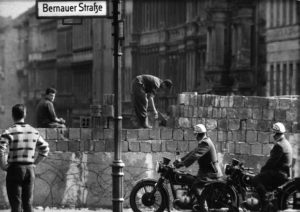
[caption id="attachment_1496" align="aligncenter" width="636"] Building the Berlin Wall, 1961.[/caption]

Which brings us back to the present place and time. Trump envisions a wall that keeps people out, but his wall is destined only to exacerbate the problems it seeks to solve. Until the 1970s, the United States had a porous border with Mexico—which, contrary to what most Republican lawmakers might claim, actually resulted in fewer undocumented migrants living in the United States, as workers could cross over, work, and then return to their homes back in Mexico. The current administration calls the now-militarized border “porous,” with “record-breaking” rates of “illegal aliens” crossing over and remaining in the country. In fact, it was the U.S. government’s elimination of border porousness and availability of work visas, starting in 1965, that sparked the ever-increasing “surge” of immigrants from Latin America. Once you take away the option to allow people to leave, you encourage those who very well might have left, if given the freedom to do so, to stay. But instead of easing off of militarized borders, our government is leaning further and further in.

Thirty years ago, the world celebrated the elimination of a wall, the reunification of a country, the hope for a day where walls need no longer exist. I think of my father, a refugee who fully embraced his American citizenship as his identity, who proudly put out our American flag on every holiday, whose eyes shone with tears of gratitude to the lyrics of “Born Free,” warbled by my tone-deaf elementary school choir. Trump’s wall is not just a wall. It demarcates the end of the American ideal. It is the elimination of “nation of immigrants” from the United States Citizenship and Immigration Services’ mission statement. It is a line that places our country on the wrong side of history. For refugees seeking a better life, for the sake of our country’s future, for the memory of my father: Mr. Trump, don’t build this wall.

 
    [post_title] => 'Wall' is a four-letter word
    [post_excerpt] => “When the Berlin Wall was torn down in 1989, there were 15 border walls around the world. Today there are more than 70.”
    [post_status] => publish
    [comment_status] => closed
    [ping_status] => open
    [post_password] => 
    [post_name] => wall-is-a-four-letter-word
    [to_ping] => 
    [pinged] => 
    [post_modified] => 2026-08-06 23:14:04
    [post_modified_gmt] => 2026-08-06 23:14:04
    [post_content_filtered] => 
    [post_parent] => 0
    [guid] => https://conversationalist.org/?p=1488
    [menu_order] => 291
    [post_type] => post
    [post_mime_type] => 
    [comment_count] => 0
    [filter] => raw
)

‘Wall’ is a four-letter word

WP_Post Object
(
    [ID] => 1394
    [post_author] => 2
    [post_date] => 2019-09-27 14:24:25
    [post_date_gmt] => 2019-09-27 14:24:25
    [post_content] => A deep forensic investigation into one of the greatest aviation tragedies in history highlights the critical role of transparency and the role of the law in a conspiracy-minded, 'post-truth' society.

Besides the initial shock and horror of what happened, there was, of course, the visual carnage. Malaysian Airlines Flight 17 (MH17) was shot down on July 17, 2014 in Ukraine, over a war zone controlled by Russian and pro-Russian forces, killing everyone on board.  Photographs of the bodies of the 298 innocent victims, many of them children, are seared onto the world’s collective memory. 

The recovery of the bodies was a grotesque nightmare made more appalling by the ongoing conflict in the area. Even from a distance, one felt abused by what was going on — to this day, I still think about the Ukrainian emergency workers who did most of the work; they were initially criticized as uniformly careless and incompetent, but in fact they had been more dedicated than anybody thought. 

What happened to the flight felt like a curse, a sacrifice to the deranged god of war. 

Then, of course, came the questions. Who had shot the plane down, and why?

I work for Bellingcat. It is an online investigative collective that became famous for the thorough forensic research it did to debunk the lies and conspiracy theories that Russia disseminated in an attempt to prevent the truth about MH17 from being discovered and made public — we work with open source materials and know how to scour the web for clues more quickly and efficiently than many established, but often times not nearly as flexible, news organizations. Although the legal process is ongoing, we know that the Russian military was involved in bringing the plane down. We also know that Russia has been doing all it can to delegitimize the legal proceedings surrounding what happened — and not always succeeding.

Russia’s obfuscations, painfully obvious as they are, are also indicative of our collective need to adopt a strategy called legal realism. — an approach to the law that is based on empirical evidence. Being a legal realist means dealing with legal facts in a non-sensationalist but also holistic manner. It’s taking the facts of a case into account while also understanding why a case is important and who or what it impacts — i.e., not treating it in isolation. For example, if a president abuses power, you establish the abuse and take into account the corrosive effect such a case has on democratic institutions.

In a world of deep fakes, demagogues, and eroding trust in our established institutions, legal realism is essential — it provides a way for us to re-establish that trust, and to strengthen rule of law.

The arm of the law is long for a reason

The internet is home to many conspiracy theories about MH17. Some of them were created and spread with the help of Russian propaganda, while others are the product of the independent tinfoil hat brigade.  The explanation that emerged from the forensic analysis is clear: Russian forces mistook MH17 for a military plane and shot it down; and then the Russian government denied that it was at war with Ukraine — although it was, and still is. But many people reject this explanation; perhaps it strikes them as too banal.  Conspiracy theories are comforting because they provide an overarching framework to the brutal chaos of war — and of life in general. It wasn’t a mistake, it was a cunning plot by Ukraine and Hitlary Kkklinton (an influential woman must always have some role to play) to frame Russia! It was a cover-up for doomed flight MH370! It was the lizard people! Unfortunately, the lengthy and cumbersome legal investigation into the fate of MH17 has had the unintended side-effect of fueling this madness. I am often asked, for example, why it has taken so long to bring charges against anyone. They claim is that if the case was really so clear, investigators would not have needed years to look into the matter.  I’ve written about aviation and aviation safety on and off for years, so I remind people that even a seemingly straightforward crash that does not take place in a war zone can take years to investigate. When a crash in a war zone involves a local power that is very keen to throw investigators off the scent, the investigation becomes extremely complex.  This is just one reason why legal realism is so important, although fake narratives are sexier and more dramatic. There is one thing that feels better than drama, though, and that’s the righteous calm of acceptance. This is why I try not only to explain the legal process surrounding disasters, but to  remind people that mistakes are actually very common.  One of the most stunning examples of a near-mistake prevented by pure courage is exemplified by the story of Soviet Lt. Colonel Stanislav Petrov, who in 1983 prevented a nuclear holocaust because he recognized an alert of incoming missiles was in fact a computer error. Petrov, who died earlier this year at the age of 77, was a hero — that one guy with nerves of steel who had the courage to make a decision that conflicted with his orders, and which ultimately held billions of lives in the balance. Very few people have that courage, which is why we are at such risk of catastrophe by human error. A major part of being realistic about the legal process is accepting human nature. The accurate version of the events of July 17, 2014 might be simple and therefore more grim, but the history of civilization bears it out.  The judgments of history, however, rarely bring closure. 

Don’t mistake legal justice for the sense of justice

What can make up for the lives lost on MH17? What can make this tragedy more bearable? I am often told that the answer is “nothing” — and that the pursuit of legal justice is therefore meaningless, or, better yet, performative. “Even if Russia did it, nothing is going to bring those people back,” people have told me in the immediate wake of the tragedy in Moscow, that formidably gorgeous city where legal norms, not to mention the norms of reality, are constantly in flux. We’re inculcated with the belief that legal justice brings closure and peace — otherwise, we think, what is the point? People feel cheated if they do not receive justice. The purpose of legal justice is not to bring closure, but it is nonetheless very important. By enforcing the law, we enforce the very concept of a law-abiding society — if you need a lesson in why that’s important, look no further than the social dislocation and random lawlessness in Russia itself, a country that went from legal chaos to legal nihilism after the fall of the Soviet Union. Legal nihilism is not symbolic, it really means the difference between whether or not the police will protect you or hit you up for a bribe, or whether a judge will collude with a prosecutor to withhold crucial evidence from trial and hand down a draconian sentence, something I’ve seen happen time and time again when I was a journalist working in the country. And if you want to know what happens when the concept of a law-abiding society is completely thrown out the window and institutions crumble, look no further than the Russian-occupied parts of eastern Ukraine, where MH17 was shot down.  Via armed conflict and destabilization, carried out by Russia and some willing cohorts within Ukraine, parts of eastern Ukraine were effectively severed from the Ukrainian capital. The sham “governments” created there do not clearly answer to anyone, in fact, chaos is deliberately built into their very existence and is a feature and not a bug (no matter what Russian propaganda will claim). While this has obviously resulted in a prolonged war — it has also resulted in tragic byproducts of said war, of which MH17 is only the most famous example.  The fate of MH17 emphasizes and reinforces that we need a credible legal system that operates transparently. Without one, bodies rain out of the sky. Remember — the people who shot down the plane that day were there illegally, answering to God-knows-who, obviously given free reign to shoot at whoever they thought was a threat. In this case, the “threat” turned out to be a passenger liner. And if you think that lack of respect for the law is some sort of “exotic” problem, that only happens “in those countries over there”  — I bring you the whole of the Trump administration. The president’s most fervent supporters will actually support me on this one; they’re the ones yelling at his rallies for the president to break the law.  What they don’t understand is that civilization is fragile. When legal norms break down, we are all left vulnerable. [post_title] => When a plane fell from the sky, the lies rose up to meet it [post_excerpt] => Few crimes have affected the modern world like the MH17 tragedy, when a Malaysian Airlines passenger flight from Amsterdam to Kuala Lumpur was shot out of the skies over eastern Ukraine on July 17, 2014.  [post_status] => publish [comment_status] => closed [ping_status] => open [post_password] => [post_name] => when-a-plane-fell-from-the-sky-the-lies-rose-up-to-meet-it [to_ping] => [pinged] => [post_modified] => 2026-08-06 23:23:01 [post_modified_gmt] => 2026-08-06 23:23:01 [post_content_filtered] => [post_parent] => 0 [guid] => https://conversationalist.org/?p=1394 [menu_order] => 300 [post_type] => post [post_mime_type] => [comment_count] => 0 [filter] => raw )

When a plane fell from the sky, the lies rose up to meet it

WP_Post Object
(
    [ID] => 1323
    [post_author] => 2
    [post_date] => 2019-08-16 18:54:45
    [post_date_gmt] => 2019-08-16 18:54:45
    [post_content] => 

Theresa May was the only one willing and able to take on the job of trying to clean up the mess the boys made, but it was an impossible task.

Things started going downhill in the United Kingdom about 38 months ago. Well, it could be 41, if you really want to be precise. In February 2016, then-Prime Minister David Cameron announced that there would be a referendum on Britain’s membership of the European Union. The choice was between “Leave” and “Remain.”  At the time, the widely-held assumption was that the Remain campaign would win, with Cameron staying on for a few more years, and then eventually handing the reins to another Conservative politician of his choosing.

The results of the June 23, 2016 referendum shocked liberal Britons in particular and the world in general, just as much as the election of Donald Trump shocked Americans and the world four-and-a-half months later.

It is now August 2019 and Britain is getting ready to leave the bloc without a deal. Boris Johnson, the new prime minister and one of the leaders of the Leave campaign, has said a hard Brexit is his wish. Johnson replaced Theresa May on July 24, after she resigned in light of her failure to broker a deal to exit the EU that would satisfy her own party.

Remain voters feel ignored and unhappy; soft Brexit voters feel things are going too far and are unhappy; hard Brexiteers do not believe that Britain will leave the EU and are unhappy. The country is fractured and no person or party looks capable of bringing everyone together again.

David Cameron, meanwhile, is getting ready to publish his memoirs, which he reportedly wrote in a bespoke £25,000 ($30,000) shed, complete with wood-burning fireplace and sofa-bed, in the garden of his “quintessentially English” Cotswolds home. So, what went wrong?

The main answer, as it often is, comes from the hubris of men. First Cameron, with his unearned confidence, called the referendum to quell internal disagreements in his party. He was certain that he would win, and then he did not.

As the Remain campaign discovered slightly too late, a country that had just gone through six years of savage cuts to public services did not take kindly to the architects of said austerity warning them that if they voted to leave, there might be less money in the coffers. Many banks warned they would leave Brexit Britain, but such threats were not exactly convincing to those on the breadline, who had little hope of becoming more prosperous anytime soon.

The Remainers were convinced they would win easily, and were not ready for the Brexiteers’ intense, relentless and occasionally disingenuous approach to campaigning. Instead, they spent too much time trying to counter dubious claims about the EU, and not enough reminding people why the EU was a good thing for the country.

As one writer put it in the aftermath, “In confronting populist demagoguery, it isn't enough to attack its promulgators. To get people to turn out and vote in your favor, you also have to give them something positive to rally behind.”

That the debate was overwhelmingly male had something to do with this disastrous turn of events, perhaps. In May 2016, Labour grandee Harriet Harman hit out against the lack of female voices leading the referendum campaigns; she quoted a study, which found that only 16% of television appearances on EU issues had been women. She was largely ignored.

A month later Leave won, by 52% to 48%, and no-one quite knew what to do. After all, damaging over-confidence had not been a side-specific issue; when Conservative MPs Boris Johnson and Michael Gove gave their victory speeches on June 24th, they looked terrified.

It is now clear that senior figures in the Vote Leave campaign had spent little time preparing for what would happen if they were to win, instead running a campaign conveniently promising all things to all people. Do you want Britain to be a buccaneering nation, ultra-liberal and open to the world? Brexit can make that happen. Do you yearn for the Britain of the past, and wish your country could shut itself from the world, and from the people wanting to move to the islands? There’s a Brexit for that — and so on.

David Cameron, who was a Remainer, resigned from his office and retired from politics after the Leave campaign won the referendum that he had called. Within weeks Theresa May, who was also a Remainer, replaced him. She was not quite the best candidate, but she was the only one willing and able to take the job.

Boris Johnson, the face of the Vote Leave campaign, wanted to run for party leadership. But Michael Gove, the other face of Vote Leave, stabbed him in the back; Gove ran instead, and the party didn’t back him. The boys had made a mess and as is so often the case, a woman had to come in and pick up the pieces, much to the glee of the boys in question. As May won, one male Conservative MP welcomed the news with a hearty “here comes Mummy!” Dry heave is appropriate.

[caption id="attachment_1324" align="aligncenter" width="640"] Boris Johnson addressing the Conservative Party Conference in Manchester on October 4, 2011.[/caption]

This is where things could have picked up; the moment when the country could have come together. In a different world, May would have announced that the result of the referendum had been close, and that it called for a Brexit that kept Britain close to the European Union, in order to honour the winning side without alienating the others. Even if unenthusiastic about the compromise, Brexiteers could have rallied around her and accepted their narrow margin of victory, and Remainers could have gracefully accepted their defeat and constructively worked with those who had beaten them.

This, of course, is not what happened. Already in a tough position, May made her own life worse by pandering to the harder Brexiteers and, perhaps overcompensating for her Remainer past, all but ignoring everyone else. The Brexit fanatics used this opportunity to harden their lines every step of the way, while shellshocked Remainers floundered, and failed to do much but yap from the sidelines.

This is when things started to get steadily worse. Entire books could be written about what happened between the summer of 2016 and the summer of 2019, but in short: May called an election to get a bigger majority in Parliament and was instead left with no majority at all, the hard Brexiteers kept voting against the Brexit deal May got because they thought it wasn’t a hard enough Brexit, everyone else wasted more time arguing about whether they wanted no Brexit, a second referendum or a soft Brexit than doing anything else, and in a day of “indicative votes” (test votes), MPs showed that not a single Brexit outcome had a majority in the House of Commons.

If you want to picture it, it was a bit like one of those scenes in cartoon where the unlucky main character slips on a banana peel, stands up, steps on a rake, stands up again and then walks straight into a glass door, on repeat, for three years.

Still, the themes remained similar. There was the hubristic assumption from Remainers that as Brexit negotiations would get worse, enough people would fling back to their side (they didn’t), and the hubristic assumption from Brexiteers that all problems with the negotiations would simply fade away if people started believing in Brexit enough (they didn’t).

In a way, the natural conclusion to all this was always going to be Boris Johnson. The former London mayor is a serial cheater, has an unknown number of love children, no principles to speak of, and is interested in little but power. What he excels at is boisterous self-confidence, and an ability to speak with conviction on anything he believes would be useful for him to talk about. His gaffes are frequent and his blunders dangerous, but to his fans he represents the one true Brexit believer who can deliver on all those impossible promises. As has become received wisdom in Britain, it is sufficient to believe in things very hard in order to make them come true; he may not be fond of the comparison, but Johnson is the Tinkerbell of Brexit, Lost Boys very much in tow.

What happens now remains unclear; Johnson won on a platform of leaving the EU on the October 31st deadline “do or die.” He insists that leaving without a deal is not something he wants, but he will not bring May’s deal back to Parliament for one last go, and there is not enough time to negotiate another deal and get it through the Commons. Still, he believes something will happen therefore it must be true.

Members of Parliament, meanwhile, insist that they will stop Johnson from going for no-deal, despite the awkward fact that there is not much they can do about it. Still, they believe — well, you get the point.

As Westminster tribes keep fighting to see which will make the best Icarus, the country they govern remains entirely split along the lines drawn on June 23rd. Where you stand on Brexit is now as important (if not more) than which party you usually vote for, or any other characteristics identities are usually built upon.

It did not have to be this way, of course. The opportunities for healing were always going to be rare and complex, but they did exist and no-one took them up. After all, doing so would have involved coming to terms with reality, unpleasant and imperfect as it may be. Forty-one months on, Britain stands on the brink of destroying itself for no reason; by the time its economy tanks and it scrambles to rebuild its relationships with the EU and the rest of the world, it will be too late for anyone to be the bigger person.

Given the wider context, it might be unwise to suggest Brits now turn to culture from the continent for advice, but they could do worse than revisit the most famous scene from the cult French movie La Haine: “Heard about the guy who fell off a skyscraper? On his way down past each floor, he kept saying to reassure himself: So far so good... so far so good... so far so good. How you fall doesn't matter. It's how you land!”

https://www.youtube.com/watch?v=Uz9vgtXq_Hs

[post_title] => How less-than-great men brought Britain to its worst hour [post_excerpt] => It is now clear that senior figures in the Vote Leave campaign had spent little time preparing for what would happen if they were to win, instead running a campaign conveniently promising all things to all people. [post_status] => publish [comment_status] => closed [ping_status] => open [post_password] => [post_name] => how-less-than-great-men-brought-britain-to-its-worst-hour [to_ping] => [pinged] => [post_modified] => 2026-08-06 23:24:36 [post_modified_gmt] => 2026-08-06 23:24:36 [post_content_filtered] => [post_parent] => 0 [guid] => https://conversationalist.org/?p=1323 [menu_order] => 306 [post_type] => post [post_mime_type] => [comment_count] => 0 [filter] => raw )

How less-than-great men brought Britain to its worst hour

WP_Post Object
(
    [ID] => 850
    [post_author] => 12
    [post_date] => 2019-04-18 15:35:22
    [post_date_gmt] => 2019-04-18 15:35:22
    [post_content] => A surprise electoral win by the first and only communist mayor in Turkey deserves a closer look at how his socialist policies won over the hearts of his constituents and then of the whole country

By Hande Oynar

After dancing with his supporters on the street, one of the first things Turkey’s first elected Communist mayor did, within a week of taking office, was to remove the police checkpoint and demolish the wall in front of the municipality building in the city of Tunceli. Fatih Mehmet Maçoğlu told the assembled television news reporters that he intended to make the administrative building more accessible to the public, in keeping with the platform on which he had run. He also tweeted that he would not accept any celebratory flowers or gifts; instead, he suggested to those who wanted to give him a gift that they could instead donate to a fund for the rehabilitation of the city’s stray animals. The results of Turkey’s municipal elections last month inflicted several losses on President Erdoğan’s Justice and Development Party (AKP) in strongholds such as Istanbul and Ankara, but the most remarkable victory went to Maçoğlu, a 50-year old healthcare worker with a bushy moustache and ever-present smile who won the race for the province of Tunceli with 32.7% of the vote. The communist challenger beat the candidate for the left-wing, Pro-Kurdish People’s Democratic Party (HDP) and the incumbent from the CHP, historically the main opposition party. Maçoğlu called his election “a victory for the people of Dersim,” using the Kurdish name for the city to emphasize that its population is predominantly Alevi and Zaza/Kurdish. The city has seen several uprisings; most recently, it was run by a trustee appointed by Erdoğan as part of a crackdown on 24 Kurdish-run cities after the failed coup attempt in 2016. Maçoğlu earned his political support over a period of five years as a regional small town mayor, in which capacity he established a sterling reputation for transparency, rectitude, and hard work. But even so, his win in last month’s municipal elections is an anomaly for Turkish politics, where the word “communist” has long been used as a slur. Since the 1920s, successive Turkish governments have persecuted communists, starting in the 1920s with the assassination of the party’s leaders, through the Cold War and the period of military rule during the 1980s. Under Erdogan, opposition leaders, journalists and intellectuals are in jail. Given all this, Maçoğlu’s overt embrace of communism is an act of great courage.

Rise of an idealist

Maçoğlu entered politics in 2014, winning  a local election with 36.1% of the vote. He beat his closest rival from Peace and Democracy Party (BDP, the precursor to today’s HDP) to become the mayor of his hometown of Ovacık, a rural district of Tunceli with a population of approximately 7,000. Previously, he had worked as a healthcare professional in public hospitals. But besides his well known socialist views and his union activism, Maçoğlu had no political experience. As mayor of Ovacık he inherited a debt of approximately $200,000 from the previous local government; and so he immediately set about to increase the district’s revenue. In Ovacık, Maçoğlu’s first priority was to improve agricultural production and ease unemployment by allowing people to cultivate 160,000 acres of arable land that belong to the municipality. Comprised mostly of women and unionized teachers who had recently been laid off, Maçoğlu's army of amateur farmers began producing organic potatoes, garbanzo and cannellini beans — all crops that are relatively easy to grow in the province’s harsh climate, with its heavy winters that last five to six months. Subsidized by the municipality, the farmers founded an agricultural production cooperative, which eventually evolved into an e-commerce site, ovacikdogal.com (Ovacık Natural). Soon they added sustainably and organically produced honey, salt, cheese and molasses to their range of products. People in big cities who were following the communist mayor on social media began buying the communist beans of Ovacık to support the cooperative. The initiative performed beyond expectations. The amateur organic farmers of Ovacık succeeded not only in paying off the district’s debt, but also in providing local women with earned income for the first time in their lives. Part of its profits were put toward a small fund that helps college students from disadvantaged backgrounds to pay their school-related expenses. Maçoğlu also reduced the cost of water, which is prohibitively expensive in Turkey, to a symbolic 50 kr (about 10 cents) per cubic meter. His reason: access to water is a basic human right. He transferred the annual budget allotted to cover the cost of gas for his unused official vehicle to the only bus that served the whole district, making public transportation free. He built a library containing 10,000 books for a small town of 3,200 people and organized public programs to encourage reading habits among children and adolescents.

A folk hero

But perhaps the most striking reason for Maçoğlu having become a viral folk hero overnight was his radical fiscal transparency. At the end of the first fiscal year of his first term, he hung an enormous poster showing his administration’s profit and loss statement on the facade of the town’s municipality building. In the murky waters of municipal politics, where tenders miraculously go to people with close ties to administrators, this was a breath of fresh air. Across the country, both Maçoğlu’s supporters and his critics alike applauded his action. In Ovacık, Maçoğlu ran on a platform that promised transparency and accountability. He emphasized those two principles while championing and explaining his socialist values almost every time he opened his mouth, especially in front of cameras. And there were (and still are) a lot of cameras. People began to travel from across the country to meet the determined man with the cheerful smile, and to see his model of governance. In fact, he has made a point of keeping his office door open and has set up his desk in such a way so that he sits alongside his visitors, instead of across from them behind his desk. In Turkey, every public officer has a portrait of Ataturk, the founder of the republic above their seats, but Maçoğlu has a picture of the Argentine Marxist revolutionary Che Guevara up on his wall as well. As mayor of Tuncil, Maçoğlu has rejected the trappings of power. He made the official vehicle assigned to him available to newly weds who get married at City Hall, and opted to drive his own car while on the job. This is a significant statement in Turkey, where public officials enjoy driving around with security convoys of up to 50 vehicles, blocking traffic everywhere they go. These small acts may seem trivial or even gimmicky to those unfamiliar with Turkish politics, but in the corruption-ridden atmosphere propagated over decades by local and central governments, simple gestures go a long way. “Socialism has an inherent understanding of how to create a culture that provides the ability to act in a way that is united and in solidarity based on equality and social justice,” Maçoğlu noted in an interview with the leftist publication SOL International. With his work in Ovacık and now in Dersim, he hopes to set an example in municipal governance for other cities across the country. The fact that these values are so rare in Turkey’s political landscape makes Maçoğlu a harbinger of hope for a new breed of public official, whose agenda is truly to serve the people Hande Oynar is a freelance writer based in New York and Istanbul. She has been writing for various art and lifestyle publications for the past decade and is a regular contributor to Vogue Turkey. Follow her on Twitter @handeoynar. [post_title] => In Turkey, a communist mayor has become a national folk hero [post_excerpt] => Turkey's first communist mayor ran on a platform of radical transparency — and won, in a country where 'communism' is a dirty word [post_status] => publish [comment_status] => open [ping_status] => closed [post_password] => [post_name] => in-turkey-a-communist-mayor-has-become-a-national-folk-hero [to_ping] => [pinged] => [post_modified] => 2026-08-07 16:25:38 [post_modified_gmt] => 2026-08-07 16:25:38 [post_content_filtered] => [post_parent] => 0 [guid] => https://conversationalist.org/?p=850 [menu_order] => 338 [post_type] => post [post_mime_type] => [comment_count] => 0 [filter] => raw )
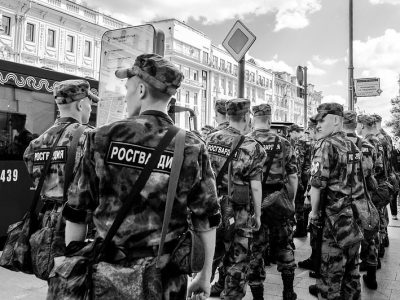
In Turkey, a communist mayor has become a national folk hero

WP_Post Object
(
    [ID] => 751
    [post_author] => 10
    [post_date] => 2019-03-22 17:24:56
    [post_date_gmt] => 2019-03-22 17:24:56
    [post_content] => While westerners argue about whether or not disinformation really exists, eastern European states have figured out how to combat it. 

On a recent Friday night in Kyiv, the capital of Ukraine, about one hundred people gathered in an open concrete atrium. At first glance, it appeared to be a normal birthday celebration — there was ample champagne and a DJ spun records in the corner — until the guests started reading excerpts from George Orwell’s 1984. The guest of honor was not a person, but an organization: StopFake, one of the first organizations to draw attention to and fight the now familiar phenomenon of Russian disinformation, was marking its fifth birthday.

While the term “fake news” gained prominence in the West only after the 2016 U.S. presidential election, organizations across central and eastern Europe like StopFake have been battling disinformation for years. What they possess that Westerners lack is a clear-eyed recognition of Russian intentions and tactics. For the citizens of countries in the post-communist space, Russian disinformation isn’t foreign, ancient, or theoretical; it is a lived experience, and one that moves their societies past debate about its existence and toward practicable solutions.

Meanwhile, the western world is still debating whether disinformation exists, and if it does, whether or not it is effective. But it has not yet begun to fight it. For lessons, the West would be well advised to look eastward.

Back in the USSR

It wasn’t long ago that the former communist bloc was subject to a constant barrage of disinformation and propaganda from the Soviet authorities and their allies. The government-controlled press was the ultimate vehicle for “fake news,” and its influence permeated every aspect of life — including education, the arts, and science. The Soviet authorities set out to control the narrative about their rule. Three of their most egregious lies include: blaming the 1940 Katyn massacre of thousands of Polish military officers on Nazi Germany, although it was in fact carried out by the KGB; denying that Stalin had deliberately allowed millions of Ukrainians to starve during the man-made famine of 1932-33 known as Holodomor; and the claim, manufactured and disseminated by the KGB during the 1980s, that the U.S. military had invented AIDS as part of a biological weapons project.

Lessons learned: How to identify propaganda

The Soviet Union’s lies unraveled with its demise. But it left the former Soviet republics and satellite states deeply mistrustful of the Russian Federation. This historical experience is part of the reason officials across the former communist space now describe their populations as “inoculated” against Soviet propaganda. But this mistrust is not enough to protect all people from the internet, which has proven an insidiously effective mechanism for disseminating disinformation. During the Soviet period, official propaganda was relegated to the pages and airwaves of state newspapers and broadcast outlets. Information did not move nearly as quickly as it does today, in the internet age; but even more importantly, it was clearly recognizable as state-sponsored propaganda because it was published by state-owned media outlets. But while the purpose of Soviet propaganda was to promote a single political ideology the purpose of contemporary disinformation disseminated by the Russian Federation under Vladimir Putin is only to sow chaos. It has no political ideology; Russia’s strategy today is to promote many points of view, including some that are at polar opposites of the political spectrum. The tools available to anyone on the internet allow disinformation  to travel across the world at the click of a mouse, and to be micro-targeted to reach exactly the audience that will find it most appealing. Russia and other bad actors, both foreign and domestic, use these tools weaponize the fissures in our societies, creating chaos and undermining the Western democratic order. Contemporary Russian disinformation weaponizes the fractures in target societies and amplifies them via traditional media. They disseminate state propaganda via Russia Today (RT), the state-sponsored TV channel that has a heavily watched YouTube channel, and online outlet Sputnik. Russia launders its propaganda stories via fake NGOs and fake experts who travel to conferences, appear on television, and conduct “research” in support of disinformation goals. Russian narratives are also supported and spread by local organizations, media outlets, and political parties in target countries. For example, in an attempt to destabilize Ukraine and neutralize support for the country’s democratic reforms both domestically and internationally, Russia advances the narrative that Ukraine is a “failed state” harboring “fascists” and violating the rights of Russian speakers who live in Ukraine (approximately 30 percent of Ukrainians are native Russian speakers). These narratives begin on Russian state television and travel to local Russian media properties abroad. In some cases, their editorial control is clearly labeled; but in other cases the reporting outlets attempt to disguise themselves as legitimate local media outlets, when in fact they are government owned-and-operated propaganda outlets. Facebook recently removed over 100 pages and accounts that were driving traffic in Ukraine to Sputnik, the Russian state-owned outlet that is one of its propaganda arms.

How to combat Russia’s online troll army

Eastern Europe has been quick to recognize the threat of online propaganda, and to take action. Estonia, a Baltic nation that was occupied by the Soviet Union after World War Two, leads the NATO Cyber Center of Excellence, which researches and builds capacity among NATO members on cyber security. It has invested in Russian language media programs and educational initiatives to bridge the divide between the Russian and Estonian populations; this initiative came about after Estonia discovered in 2007 that Russia had released a massive cyber attack intended to divide Russian and Estonian speakers in that country. But the attack backfired: Today Estonia leads the EU and NATO in its efforts to build both national and global awareness about the Russian threat; just last week, it released an intelligence report about Russia’s intention to meddle in European elections in 2019. When disinformation weaponizing anti-migrant sentiment cropped up on shadowy outlets in the Czech Republic, the country created a “Center Against Terrorism and Hybrid Threats” within its Ministry of Interior to deal with information warfare. Across the region, including in Ukraine, where StopFake just celebrated its fifth anniversary after being formed during the height of the Euromaidan protests, when Ukraine was the epicenter of Russian disinformation, and in Lithuania, where a group of “elves” counter Russian trolls’ lies, fact-checking has taken on new life. It’s no longer the domain of journalists; it is an act of resistance.

Media literacy: The essential tool

But the Kremlin has financial and human resources that cannot be beaten back by armies of fact-checkers alone, no matter how large or well-funded. This is why the countries bordering Russia have also invested in their citizens as defense against Russian disinformation. In Ukraine, media literacy is now integrated into the secondary school curriculum. And a program for adults found that 18 months after attending a media literacy training, participants were 25 per cent more likely to consult multiple sources in their news consumption. Finland, though not part of the former communist space, has dealt with its fair share of Russian disinformation; it begins teaching media literacy in kindergarten. These responses show that while there is no silver bullet to fighting disinformation, a clear recognition from the government is critical in order to pursue the many prongs of programs and policies required to begin producing an effective response. The West must recognize the insidiousness of disinformation and implement programs and policies that both discredit the lies and teach people how to be critical media consumers. Since the 2016 election, our political leaders have further complicated the American response to disinformation by politicizing the issue. But until they recognize that Russian disinformation’s ultimate victim is confidence in our democratic system, the government will not be in a position to enter the important battle for truth and accuracy that Eastern Europe has been waging for years. [post_title] => If the West wants to combat fake news, it should look to eastern Europe [post_excerpt] => While westerners are still arguing about whether or not disinformation really exists, the countries of central and eastern Europe have been fighting it for years with serious policy implementation. [post_status] => publish [comment_status] => open [ping_status] => open [post_password] => [post_name] => if-the-west-wants-to-combat-fake-news-it-should-look-to-eastern-europe [to_ping] => [pinged] => [post_modified] => 2026-08-07 16:46:22 [post_modified_gmt] => 2026-08-07 16:46:22 [post_content_filtered] => [post_parent] => 0 [guid] => https://conversationalist.org/?p=751 [menu_order] => 346 [post_type] => post [post_mime_type] => [comment_count] => 0 [filter] => raw )
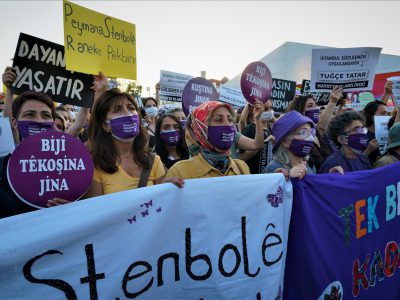
If the West wants to combat fake news, it should look to eastern Europe

WP_Post Object
(
    [ID] => 673
    [post_author] => 8
    [post_date] => 2019-03-01 20:57:17
    [post_date_gmt] => 2019-03-01 20:57:17
    [post_content] => 

The most compelling argument for repatriating British citizen Shamima Begum, who sneaked into Syria and joined the Islamic State when she was 15, is based not on emotion but on cold, hard logic.

On February 19 the British home secretary announced that he had decided to revoke the citizenship of 19 year-old Shamima Begum, the London-born daughter of immigrants from Bangladesh. Begum sneaked out of Britain and infiltrated Syria to join the Islamic State when she was 15 years old, becoming one of its most notorious promoters on social media platforms. Now, with the ISIS routed from nearly all its territory in Syria, Begum is detained in a Kurdish-controlled detention camp. In interviews with British media outlets, the teenage ISIS bride, who recently gave birth to her third child (the first two died), asked to be allowed to return to the UK.

Begum’s request set off a storm of controversy, with those who opposed her repatriation pointing to her lack of contrition for having supported notorious terror attacks like the 2017 Manchester Arena bombing. Those who favor bringing the young woman back to Britain point to international law, which prohibits rendering a person stateless. While Begum’s parents are Bangladeshi, she is not a citizen of the South Asian country; the government of Bangladesh has said that it would not be willing to take her in.

Other arguments in support of her repatriation include the fact that her child is a UK citizen, and revoking the citizenship of one person for engaging in politically unacceptable activity sets a dangerous precedent.

My argument is based neither on international law nor on sympathy for Begum's innocent child, but rather on cold logic. The fact is that the British government, with its decision to strip Shamima Begum of her citizenship, is playing directly into the hands of ISIS. It is implementing the Islamic State’s own policy — thereby strengthening jihadi recruiting methods.

The Begum case pours salt into one of the gaping wounds of the postcolonial condition: as in the case of other ISIS brides, the British government’s decision to revoke Shamima Begum’s citizenship makes her “someone else’s problem now.” She has been cast aside, a move justified by pointing to her ancestral roots in another nation-state (which happens to be a former British colony) — where she is not even a citizen. To British Muslims, their government’s message is very clear: “you will never really be British.”

But the fundamental problem with stripping citizenship from ISIS returnees is far more worrying and destructive than having made Muslims feel that they will never belong in the so-called West. The real consequence of the British home secretary's announcement is that is doing  the work of the Islamic State by stepping right into its propaganda trap.

The difference between compassion and understanding

Shamima Begum’s case elicits heated emotions and divisive debates. People who say they are trying to “understand” the teenager's motives, or who call for compassion to be shown toward her, provoke reflexive and performative expressions of horror and, often, the accusation that they are soft on ISIS.

Propaganda succeeds when it provokes emotional responses that override one’s willingness or ability to respond with logic and reason — rather than reacting emotionally. And that is the ISIS trap.

I understand well the temptation to give in to one’s emotions: Steven Sotloff, the American journalist who was killed in Syria by ISIS in 2014, was a close friend.

The way to lose a war is by dehumanizing your enemy.  When your enemy appears wholly irrational and monstrous, the idea of trying to “understand” her ostensibly renders one guilty of “sympathizing.” But it is impossible to defeat an opponent whom you do not understand — because you will never see them coming.

ISIS 101: Citizenship, gender, and civilians in the caliphate

If Shamima Begum joined a terrorist group, does that make her a terrorist? The question is a valid one, albeit controversial. There is a difference between offering support and actively carrying a weapon for a terrorist group. The jihadi brides are accused of providing support by disseminating pro-ISIS propaganda on social media platforms.

But while the regime of Syria’s President Bashar al-Assad has killed far more civilians than ISIS could ever aspire to, one very rarely hears calls to revoke the British passport of Asma al-Assad, the London-born wife of the Syrian dictator. And yet, Asma al-Assad frequently and vehemently expresses her uncritical support for her husband’s regime and its army, both on social media and in television appearances that are broadcast all over the world.

Note, too, that men who were recruited to become fighters with ISIS were later repatriated to their home countries with only a fraction of the media attention paid to Shamima Begum’s request return to her native England. If we fail to grasp that the case of Shamima Begum is complex, then we simply do not understand ISIS.

The first two letters of the acronym ISIS stand for Islamic State. The caliphate aspires to establish a state, and states need civilian settlers, not just an army. They need a nation of citizens to govern, which requires civilians — including women and children — who have chosen the caliphate over the contemporary nation-state.

That is why when men who are new recruits to the Islamic State’s fighting force arrive in IS-held territory, they are compelled to burn their passports in a ritual act that is recorded. ISIS propagandists disseminate the videos of those passport burning ceremonies online, where they are shared widely, with the intended impact of severing from those new recruits the possibility of returning home. Women who join the Islamic State as jihadi brides are also compelled to burn their passports.

Why, then, is the public far less outraged about male jihadi fighters having been repatriated to their home countries than they are about women who joined the Islamic State and now want to return home? The answer is that when young women like 19 year-old Shamima Begum join the jihadis to become their brides, and praise them for carrying out beheadings or terror attacks on European soil, they contradict a very commonly held orientalist stereotype about oppressed Muslim women who lack agency. Note well that much of the controversy over Shamima Begum has been over her apparent lack of contrition. There is an unsettling contrast between her shapeless traditional black robe and hijab, which many interpret as a symbol of oppression, and the assertive manner in which she expresses pro-ISIS opinions.

The fastest and most efficient way to lose a war is to underestimate your opponent. If you believe they are irrational and incapable of strategizing, then you are underestimating them. The key to winning the war is to understand the enemy. Critical here is an overlooked feature of ISIS propaganda — the organization tailors messaging with particular audience demographics in mind. ISIS purposely represents themselves as monstrous and irrational, because that image plays into our fears and stereotypes. They weaponize orientalist stereotypes against us — and we fall for it, every time..

Remember that ISIS sees itself as a state, which means it must attract civilians, including women, as well as male fighters. The vast majority of ISIS propaganda is, to the surprise of many, not violent. Instead, it employs utopian images of a sustainable state and nation—where civilians can live in safety and security in a welcoming, multi-racial, autonomous and sovereign state. Shamima Begum was recruited online from her London home, when she was only 15 years old, because she saw those propaganda videos of a land where — in contrast to Saudi Arabia — women could drive, and were promised comfortable lives as the wives of fighters, but not as fighters themselves.  Of course we can find Begum’s decision to join ISIS abhorrent, and her gullibility for the group’s propaganda absurd. But remember: we are falling for ISIS propaganda too — just different propaganda, which targets a different audience.

Neurology, violence, and trauma: The making of child soldiers

Public outcry over Shamima Begum has largely focused on her failure to express remorse. Fundamental to both the ISIS state-making project, and the production of child soldiers is the role of neurological development before the age of twenty-five. Begum joined the IS when she was 15 years old. Much like the ISIS youth group, Cubs of the Caliphate, Begum has witnessed — and perhaps committed — acts of grotesque violence and morally abhorrent trauma at an age well before the brain develops its capacity to exert full agency, to cope with trauma, or to deal with the consequences of one’s actions.

The leaders of the ISIS youth groups deliberately traumatize children when they are very young, as a means of ensuring that their psychological scars make their reentry to their home society nearly impossible. In their graduation ceremony from ISIS youth groups, children are forced to commit an act of murder. This same method was used to recruit child soldiers in Sierra Leone and Côte d'Ivoire. 

Once children have been forced to witness or participate in morally injurious acts like murder, the psychological scars are profound. The guilt and self-hatred can prove irreversible without considerable assistance—one reason, among others, that the reintegration of child soldiers proves a challenge across global conflict zones. Worse, these underage returnees are well aware that society views them as monsters — damaged beyond recognition. And so they are inculcated with the idea that there is no going back home, because “home” no longer exists.

Successful counterterrorism tactics

Shamima Begum needs help — if for no other reason than the biological reality of her age means that her neurological ability to reason is limited. There is also the concern that she has witnessed extensive trauma that she is — again, for neurological reasons — unable to process. This is not an appeal to set her free, nor a suggestion that she face no consequences for her actions. One can understand why she behaved as she did, without condoning her actions.

The fact is that we, the people who want to defeat ISIS, need Shamima Begum. Repatriated former members of the Islamic State are the best weapon we have in the war against jihadism. They are, in fact, the only credible messengers. By repatriating them, we slay the jihadi propaganda claim that the so-called West not only doesn’t care about its Muslim citizens, or that it commits human rights abuses far worse than those of the caliphate’s fighters. By bringing Shamima Begum home to Britain, we give lie to the ISIS claim that once recruits join the Islamic State, they can never go home again  — that their governments will disown them, because they do not care about or want their Muslim citizens. 

What next

Successful counterterrorism strategy is not driven by public emotion or political expediency. The politicians who chose to take the populist route in revoking Shamima Begum’s citizenship capitulated in the face of a frightened electorate. In doing so, they fell straight into the trap set by ISIS. They confirmed what jihadi propaganda videos preach to followers and to potential new recruits: that their home countries are led by non-believers who don’t care about them or want them, and that they are thus better off in the caliphate than in suburban London (or Paris, or Brussels, or Toronto).

I am not calling for peace, love, and understanding for ISIS, but precisely the opposite: an emphatic reminder that cold, hard logic makes for successful policy. The purpose of ISIS propaganda is to undermine our ability to engage in logical thought by blinding us with hate-filled emotion. In the case of Shamima Begum, the British government handed ISIS their victory — because a public frightened by beheading videos votes on emotion. Politicians win elections not on strategy that is born of detached logic, but on the calculus of political expediency.

Fear-inducing propaganda is extremely effective — until it isn’t. But rather than wait to see if something worse comes after propaganda stops working, let's take some preemptive, logical action. Let's show vulnerable teenagers who spend far too much time online that ISIS propaganda is a lie. 

[post_title] => When Britain revoked a jihadi bride's citizenship, they fell for ISIS propaganda [post_excerpt] => The most compelling argument for repatriating British citizen Shamima Begum, who sneaked into Syria and joined the Islamic State when she was 15, is based not on emotion but on cold, hard logic. [post_status] => publish [comment_status] => open [ping_status] => open [post_password] => [post_name] => when-britain-revoked-isis-bride-shamima-begums-citizenship-they-fell-right-into-the-isis-propaganda-trap [to_ping] => [pinged] => [post_modified] => 2026-08-07 16:49:42 [post_modified_gmt] => 2026-08-07 16:49:42 [post_content_filtered] => [post_parent] => 0 [guid] => https://conversationalist.org/?p=673 [menu_order] => 352 [post_type] => post [post_mime_type] => [comment_count] => 0 [filter] => raw )
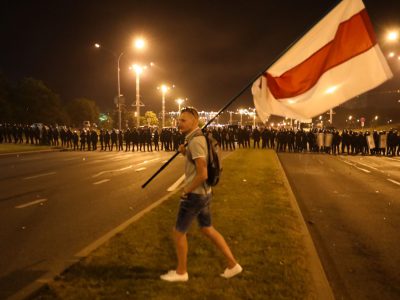
The older sister of Shamima Begum, Renu Begum, holds a photo of her sister with a child. Two of her fingers obscure the child's face. She is wearing rings on two of her fingers and a watch on her wrist. In the photo, Shamima's hair is tied in a bun and she's wearing a burgundy button down shirt buttoned to the top, and a matching blazer over it. She is looking directly at the camera.

When Britain revoked a jihadi bride’s citizenship, they fell for ISIS propaganda