WP_Post Object
(
    [ID] => 673
    [post_author] => 8
    [post_date] => 2019-03-01 20:57:17
    [post_date_gmt] => 2019-03-01 20:57:17
    [post_content] => 

The most compelling argument for repatriating British citizen Shamima Begum, who sneaked into Syria and joined the Islamic State when she was 15, is based not on emotion but on cold, hard logic.

On February 19 the British home secretary announced that he had decided to revoke the citizenship of 19 year-old Shamima Begum, the London-born daughter of immigrants from Bangladesh. Begum sneaked out of Britain and infiltrated Syria to join the Islamic State when she was 15 years old, becoming one of its most notorious promoters on social media platforms. Now, with the ISIS routed from nearly all its territory in Syria, Begum is detained in a Kurdish-controlled detention camp. In interviews with British media outlets, the teenage ISIS bride, who recently gave birth to her third child (the first two died), asked to be allowed to return to the UK.

Begum’s request set off a storm of controversy, with those who opposed her repatriation pointing to her lack of contrition for having supported notorious terror attacks like the 2017 Manchester Arena bombing. Those who favor bringing the young woman back to Britain point to international law, which prohibits rendering a person stateless. While Begum’s parents are Bangladeshi, she is not a citizen of the South Asian country; the government of Bangladesh has said that it would not be willing to take her in.

Other arguments in support of her repatriation include the fact that her child is a UK citizen, and revoking the citizenship of one person for engaging in politically unacceptable activity sets a dangerous precedent.

My argument is based neither on international law nor on sympathy for Begum's innocent child, but rather on cold logic. The fact is that the British government, with its decision to strip Shamima Begum of her citizenship, is playing directly into the hands of ISIS. It is implementing the Islamic State’s own policy — thereby strengthening jihadi recruiting methods.

The Begum case pours salt into one of the gaping wounds of the postcolonial condition: as in the case of other ISIS brides, the British government’s decision to revoke Shamima Begum’s citizenship makes her “someone else’s problem now.” She has been cast aside, a move justified by pointing to her ancestral roots in another nation-state (which happens to be a former British colony) — where she is not even a citizen. To British Muslims, their government’s message is very clear: “you will never really be British.”

But the fundamental problem with stripping citizenship from ISIS returnees is far more worrying and destructive than having made Muslims feel that they will never belong in the so-called West. The real consequence of the British home secretary's announcement is that is doing  the work of the Islamic State by stepping right into its propaganda trap.

The difference between compassion and understanding

Shamima Begum’s case elicits heated emotions and divisive debates. People who say they are trying to “understand” the teenager's motives, or who call for compassion to be shown toward her, provoke reflexive and performative expressions of horror and, often, the accusation that they are soft on ISIS.

Propaganda succeeds when it provokes emotional responses that override one’s willingness or ability to respond with logic and reason — rather than reacting emotionally. And that is the ISIS trap.

I understand well the temptation to give in to one’s emotions: Steven Sotloff, the American journalist who was killed in Syria by ISIS in 2014, was a close friend.

The way to lose a war is by dehumanizing your enemy.  When your enemy appears wholly irrational and monstrous, the idea of trying to “understand” her ostensibly renders one guilty of “sympathizing.” But it is impossible to defeat an opponent whom you do not understand — because you will never see them coming.

ISIS 101: Citizenship, gender, and civilians in the caliphate

If Shamima Begum joined a terrorist group, does that make her a terrorist? The question is a valid one, albeit controversial. There is a difference between offering support and actively carrying a weapon for a terrorist group. The jihadi brides are accused of providing support by disseminating pro-ISIS propaganda on social media platforms.

But while the regime of Syria’s President Bashar al-Assad has killed far more civilians than ISIS could ever aspire to, one very rarely hears calls to revoke the British passport of Asma al-Assad, the London-born wife of the Syrian dictator. And yet, Asma al-Assad frequently and vehemently expresses her uncritical support for her husband’s regime and its army, both on social media and in television appearances that are broadcast all over the world.

Note, too, that men who were recruited to become fighters with ISIS were later repatriated to their home countries with only a fraction of the media attention paid to Shamima Begum’s request return to her native England. If we fail to grasp that the case of Shamima Begum is complex, then we simply do not understand ISIS.

The first two letters of the acronym ISIS stand for Islamic State. The caliphate aspires to establish a state, and states need civilian settlers, not just an army. They need a nation of citizens to govern, which requires civilians — including women and children — who have chosen the caliphate over the contemporary nation-state.

That is why when men who are new recruits to the Islamic State’s fighting force arrive in IS-held territory, they are compelled to burn their passports in a ritual act that is recorded. ISIS propagandists disseminate the videos of those passport burning ceremonies online, where they are shared widely, with the intended impact of severing from those new recruits the possibility of returning home. Women who join the Islamic State as jihadi brides are also compelled to burn their passports.

Why, then, is the public far less outraged about male jihadi fighters having been repatriated to their home countries than they are about women who joined the Islamic State and now want to return home? The answer is that when young women like 19 year-old Shamima Begum join the jihadis to become their brides, and praise them for carrying out beheadings or terror attacks on European soil, they contradict a very commonly held orientalist stereotype about oppressed Muslim women who lack agency. Note well that much of the controversy over Shamima Begum has been over her apparent lack of contrition. There is an unsettling contrast between her shapeless traditional black robe and hijab, which many interpret as a symbol of oppression, and the assertive manner in which she expresses pro-ISIS opinions.

The fastest and most efficient way to lose a war is to underestimate your opponent. If you believe they are irrational and incapable of strategizing, then you are underestimating them. The key to winning the war is to understand the enemy. Critical here is an overlooked feature of ISIS propaganda — the organization tailors messaging with particular audience demographics in mind. ISIS purposely represents themselves as monstrous and irrational, because that image plays into our fears and stereotypes. They weaponize orientalist stereotypes against us — and we fall for it, every time..

Remember that ISIS sees itself as a state, which means it must attract civilians, including women, as well as male fighters. The vast majority of ISIS propaganda is, to the surprise of many, not violent. Instead, it employs utopian images of a sustainable state and nation—where civilians can live in safety and security in a welcoming, multi-racial, autonomous and sovereign state. Shamima Begum was recruited online from her London home, when she was only 15 years old, because she saw those propaganda videos of a land where — in contrast to Saudi Arabia — women could drive, and were promised comfortable lives as the wives of fighters, but not as fighters themselves.  Of course we can find Begum’s decision to join ISIS abhorrent, and her gullibility for the group’s propaganda absurd. But remember: we are falling for ISIS propaganda too — just different propaganda, which targets a different audience.

Neurology, violence, and trauma: The making of child soldiers

Public outcry over Shamima Begum has largely focused on her failure to express remorse. Fundamental to both the ISIS state-making project, and the production of child soldiers is the role of neurological development before the age of twenty-five. Begum joined the IS when she was 15 years old. Much like the ISIS youth group, Cubs of the Caliphate, Begum has witnessed — and perhaps committed — acts of grotesque violence and morally abhorrent trauma at an age well before the brain develops its capacity to exert full agency, to cope with trauma, or to deal with the consequences of one’s actions.

The leaders of the ISIS youth groups deliberately traumatize children when they are very young, as a means of ensuring that their psychological scars make their reentry to their home society nearly impossible. In their graduation ceremony from ISIS youth groups, children are forced to commit an act of murder. This same method was used to recruit child soldiers in Sierra Leone and Côte d'Ivoire. 

Once children have been forced to witness or participate in morally injurious acts like murder, the psychological scars are profound. The guilt and self-hatred can prove irreversible without considerable assistance—one reason, among others, that the reintegration of child soldiers proves a challenge across global conflict zones. Worse, these underage returnees are well aware that society views them as monsters — damaged beyond recognition. And so they are inculcated with the idea that there is no going back home, because “home” no longer exists.

Successful counterterrorism tactics

Shamima Begum needs help — if for no other reason than the biological reality of her age means that her neurological ability to reason is limited. There is also the concern that she has witnessed extensive trauma that she is — again, for neurological reasons — unable to process. This is not an appeal to set her free, nor a suggestion that she face no consequences for her actions. One can understand why she behaved as she did, without condoning her actions.

The fact is that we, the people who want to defeat ISIS, need Shamima Begum. Repatriated former members of the Islamic State are the best weapon we have in the war against jihadism. They are, in fact, the only credible messengers. By repatriating them, we slay the jihadi propaganda claim that the so-called West not only doesn’t care about its Muslim citizens, or that it commits human rights abuses far worse than those of the caliphate’s fighters. By bringing Shamima Begum home to Britain, we give lie to the ISIS claim that once recruits join the Islamic State, they can never go home again  — that their governments will disown them, because they do not care about or want their Muslim citizens. 

What next

Successful counterterrorism strategy is not driven by public emotion or political expediency. The politicians who chose to take the populist route in revoking Shamima Begum’s citizenship capitulated in the face of a frightened electorate. In doing so, they fell straight into the trap set by ISIS. They confirmed what jihadi propaganda videos preach to followers and to potential new recruits: that their home countries are led by non-believers who don’t care about them or want them, and that they are thus better off in the caliphate than in suburban London (or Paris, or Brussels, or Toronto).

I am not calling for peace, love, and understanding for ISIS, but precisely the opposite: an emphatic reminder that cold, hard logic makes for successful policy. The purpose of ISIS propaganda is to undermine our ability to engage in logical thought by blinding us with hate-filled emotion. In the case of Shamima Begum, the British government handed ISIS their victory — because a public frightened by beheading videos votes on emotion. Politicians win elections not on strategy that is born of detached logic, but on the calculus of political expediency.

Fear-inducing propaganda is extremely effective — until it isn’t. But rather than wait to see if something worse comes after propaganda stops working, let's take some preemptive, logical action. Let's show vulnerable teenagers who spend far too much time online that ISIS propaganda is a lie. 

[post_title] => When Britain revoked a jihadi bride's citizenship, they fell for ISIS propaganda [post_excerpt] => The most compelling argument for repatriating British citizen Shamima Begum, who sneaked into Syria and joined the Islamic State when she was 15, is based not on emotion but on cold, hard logic. [post_status] => publish [comment_status] => open [ping_status] => open [post_password] => [post_name] => when-britain-revoked-isis-bride-shamima-begums-citizenship-they-fell-right-into-the-isis-propaganda-trap [to_ping] => [pinged] => [post_modified] => 2026-08-07 16:49:42 [post_modified_gmt] => 2026-08-07 16:49:42 [post_content_filtered] => [post_parent] => 0 [guid] => https://conversationalist.org/?p=673 [menu_order] => 352 [post_type] => post [post_mime_type] => [comment_count] => 0 [filter] => raw )
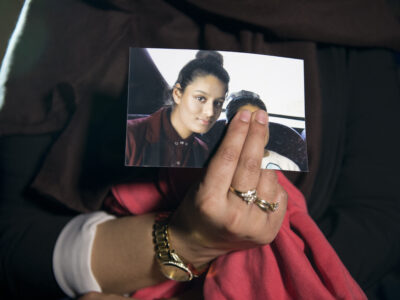
The older sister of Shamima Begum, Renu Begum, holds a photo of her sister with a child. Two of her fingers obscure the child's face. She is wearing rings on two of her fingers and a watch on her wrist. In the photo, Shamima's hair is tied in a bun and she's wearing a burgundy button down shirt buttoned to the top, and a matching blazer over it. She is looking directly at the camera.

When Britain revoked a jihadi bride’s citizenship, they fell for ISIS propaganda

WP_Post Object
(
    [ID] => 419
    [post_author] => 2
    [post_date] => 2019-01-22 14:55:09
    [post_date_gmt] => 2019-01-22 14:55:09
    [post_content] => 

How did we overlook billionaire Commerce Secretary Wilbur Ross’s overt financial ties with the Russian oligarchy?

Though Wilbur Ross's 2014 buyout of the Bank of Cyprus, a tax haven for Russian billionaires, has been documented in the press, it only made headlines in 2017. Spy games may capture our cultural imagination, but dirty money is what greases the machinery.

On February 16, six Democratic senators sent a letter to Wilbur Ross with questions about his Russia ties but the White House sat on his response. Cory Booker was the only senator to keep pushing into last week with follow-up questions. Ross sailed through his confirmation yesterday without answering them. We didn’t follow the money and now it’s in the White House.

In a way, the Bank of Cyprus, where Ross is the primary stakeholder and vice-chairman, symbolizes the failure of Western efforts to diminish Russian financial influence.

Cyprus was a notorious tax haven for Russian businessmen until the European debt crisis in 2013 led the bank to collapse. Russian businessmen lost billions fast. Putin refused to help and Germany was reluctant to bail out the Russian deposits. It wanted to force Russians out of the European bank and so during restructuring, deposits were converted into shares. Ironically, this gave majority ownership of the bank over to Russian plutocrats. As the Cypriot president, Nicos Anastasiades, said in June 2013, “They wanted to throw out the Russians but in the end, they delivered our main bank to the Russians.”

This is where Wilbur Ross comes in. Having already made money during the European debt crisis through a takeover of the Bank of Ireland, Ross led a 1 billion euro takeover of the Cypriot bank during the summer of 2014, including a buyout of most, but not all of the Russian plutocrats. Viktor Vekselberg, one of Russia’s richest men, became the second-largest shareholder in the bank through his Bahama-based conglomerate, Renova Group.

Ross recruited Josef Ackermann, former CEO of Deutsche Bank, Putin associate and a director at Renova Group, to join Bank of Cyprus’s board. Deutsche Bank is Trump’s largest creditor and was recently found guilty of enabling a $10 billion Russian money laundering scheme, funnelling money from Moscow to offshore accounts in Cyprus (!), among other places.

Besides Ackermann, Bank of Cyprus’s board includes Ross as vice-chairman, a position he shared until 2015 with former KGB agent and businessman Vladimir Strzhalkovsky. After Strzhalkovsky’s resignation, Renova Group executive Maksim Goldman stepped up as vice-chairman. These relationships are more than a little bit incestuous.

In his rage against Obama and Clinton over the Panama Papers and Crimean sanctions, Putin could never have planned a revenge fantasy which played out as well as it has for him — it’s too perfect. But Putin did set himself up for success.

Oil men, offshore accounts and corrupt businessmen are Putin’s bread and butter, and now he has Trump, Tillerson and Ross in the White House.

It’s unfortunate considering that the sanctions seemingly limited Russia’s financial bad behavior. In March 2016, just a week before the Panama Paper leaks revealed Putin’s off-shore investments in the Caribbean, Reuters reported on Moscow’s tighter regulation of off-shore business, citing Vekselberg’s choice to bring assets home to Russia as evidence of the Kremlin’s new muscle.

Imagine the field day these thieves will have when sanctions are lifted and secrecy is protected. Of all of the Trump team’s connections to Russia, Ross’s are explicit and well-documented and yet nothing has been done about them.

Trump’s campaign knew about Vekselberg even before he won. As Trump’s own ties to Russia were being questioned in the weeks before the election, his campaign issued a press release accusing the Clinton Foundation of being on Vekselberg’s dole. Trump regularly accuses Clinton of crimes that he has in fact committed.

Additionally, though it predates Ross’s involvement in the Bank of Cyprus, Senator Booker’s follow up letter asks Ross if he has any knowledge about the 2008 purchase of Trump’s Palm Beach home by Dmitry Rybolovlev, another Russian billionaire and investor in the Bank of Cyprus. Good luck getting an official answer now.

America’s obsession with Flynn’s phone calls should not come at the expense of investigation into Ross’s relationship with notorious money launderers. Ross has yet to resign from the Bank of Cyprus. He has said he intends to divest, but talk is especially cheap with the Trump administration. Such overt corruption in the highest echelons of our government is corrosive, and, unlike the rest of the GOPs policies, is sure to trickle down.


[post_title] => Wilbur Ross, Trump and Russia: Dirty money in the White House [post_excerpt] => Oil men, offshore accounts and corrupt businessmen are Putin’s bread and butter, and now he has Trump, Tillerson and Ross in the White House. [post_status] => publish [comment_status] => open [ping_status] => open [post_password] => [post_name] => wilbur-ross-trump-and-russia-dirty-money-in-the-white-house-2 [to_ping] => [pinged] => [post_modified] => 2026-08-07 16:51:24 [post_modified_gmt] => 2026-08-07 16:51:24 [post_content_filtered] => [post_parent] => 0 [guid] => https://conversationalist.org/?p=419 [menu_order] => 361 [post_type] => post [post_mime_type] => [comment_count] => 0 [filter] => raw )

Wilbur Ross, Trump and Russia: Dirty money in the White House

WP_Post Object
(
    [ID] => 408
    [post_author] => 2
    [post_date] => 2019-01-22 14:48:51
    [post_date_gmt] => 2019-01-22 14:48:51
    [post_content] => 

I thought I was doing the right thing, I was obeying orders, and now, of course, I see that it was unnecessary and wrong. But I don’t know what you mean by being upset….I didn’t personally murder anybody. I was just the director of the extermination program at Auschwitz.
—Rudolf Hoess, April 11, 1946 at Nuremberg.

Several years ago I began researching Nazi mens rea, the legal term for a criminal defendant’s mental state at the time a crime is committed, in order to explore what it means to obey unethical orders. How do evil people convince others to do their dirty work? What effect do hateful ideologies and propaganda have on individual agency? Can complicity in crimes against humanity be explained by obedience to hierarchies or coercion?

How does one rationalize or compartmentalize genocide? Towards that end, I compared a Jewish-American Army psychiatrist’s interviews with defendants during the Nuremberg Trials in 1946 to Hannah Arendt’s reporting for The New Yorker on Adolf Eichmann’s kidnapping from Argentina and subsequent trial in Israel in 1961, Eichmann in Jerusalem. You could call it an examination of the banality of evil, the concept Arendt coined while watching Eichmann testify. The project was fascinating, but also sickening and mentally and physically exhausting.

I discovered that any attempt to pin down the origin and nature of atrocities foundered when shifting from systemic failures onto issues of individual moral culpability.

This was especially true when dealing with the testimony of perpetrators. The result was a paradox, described by Emil Fackenheim as the “double move”: to seek an explanation but also to resist explanation.

The Nuremberg Trials disturbed observers not simply with revelations of mass atrocities, but also by the Nazis’ seeming normalcy and lack of remorse. Dr. Leon Goldensohn spent seven months studying the mental health of the Nuremberg defendants on assignment from the U.S. Army. Goldensohn regularly interviewed both defendants and witnesses, 33 in total. His notes were published in The Nuremberg Interviews: An American Psychiatrist’s Conversations with the Defendants and Witnesses.

Goldensohn, himself a Jew, treated the defendants as subjects in a study, hoping for signs of a distinctive Nazi pathology. He didn’t find one. There were common patterns of behavior and repetitive answers, but from Goldensohn’s notes it’s clear that each Nazi made their own impression on the doctor. Defendants for the most part used their time with him to rehearse their testimony.

The basic measure for competence to stand trial at Nuremberg was the ability to tell right from wrong (historically, competence was also measured by an awareness of one’s actions). The tribunal’s authority rested on the notion that individuals act of their own free will and that those who cannot tell right from wrong belong in an insane asylum, not prison.

Of all the defendants, only two were deemed incompetent to stand trial. As for the others, Goldensohn held that psychopathy or sadistic tendencies didn’t necessarily negate one’s ability to distinguish right from wrong. The most repulsive interviews were with Julius Streicher, editor of Der Stürmer, the Nazi tabloid. While calling himself a Zionist, Streicher was the only defendant wholly unable to contain his anti-Semitic tirades. As Goldensohn put it: “He is of below-average intelligence, but all the same awoke one morning inspired to dedicate himself to becoming an ‘authority on anti-Semitism.’”

In order to get a conviction for each crime, prosecutors at Nuremberg not only had to prove that the Nazis committed the acts, actus reus, but also that they had the requisite mental state or intent when they did. Murder committed intentionally is punished more harshly than a murder committed in the heat of passion.

Since it was impossible to read their minds, this introduced an element of conjecture to the trials. How deliberate was the Final Solution? Who knew when and how far back did the plan go? Hitler was dead, so who was responsible? Why would anyone tell the truth?

The court drama played out over the original charge of conspiracy. Some scholars argue that the prosecution’s wish to prove that the defendants had all collaborated together in an organized conspiracy towards the Final Solution led them to exaggerate the intentionality and coherence of Nazi planning and policy. At trial, defense counsels were quick to point out the enormous confusion of authority in the Third Reich. In the hopes of having the conspiracy charges dismissed, Nazi defendants pled ignorance of the atrocities, blaming the compartmentalized system of Nazi administration.

There is evidence from Goldensohn’s interviews that even during the trial, Hermann Goering, the highest ranking Nazi defendant, was maintaining party discipline in prison. Goering’s plan for the defense was copied by the majority of defendants and involved ignoring the atrocities, or in the alternative, blaming Goebbels and Himmler, both conveniently dead. He disparaged lower-level officials’ claims when they contradicted his own, and proudly took responsibility for all but the extermination camps. No one living would account for those.

Goering was smooth:

We Germans consider an oath of fealty more important than anything….Mind you, I said almost anything. I don’t consider the extermination of women and children as proper even if an oath were taken. I myself can hardly believe that women and children were exterminated. It must have been that criminal Goebbels, or Himmler, who influenced Hitler to do such a dastardly thing.

The disconnect between language and reality was astounding. By Nazi reasoning, Goering’s stolen art was a major disgrace, whereas killing Jews was merely distasteful. In an interview with Otto Ohlendorf, commander of Einsatzgruppe D, one of the paramilitary death squads, Goldensohn couldn’t hide his disgust.

LG: Did your wife know of this business of the Einzatsgruppe?

OO: No.

LG: Have you seen her since 1941–42?

OO: I saw her, but never talked to her about those things. I didn’t think it was good conversation for a woman.

LG: But it’s all right to shoot women, not all right to talk to them about shootings?

OO: In the first place, I didn’t shoot women. I merely supervised.

Hans Fritzsche, one of the few defendants to be released, was the head of the Radio Division in Goebbel’s Ministry of Propaganda from 1942 onwards. His defense:

Pure idealism on my part. I can defend everything point by point. But I won’t try to do that, because everything I did, I did before the world public. On the other side of the picture is the fact that on the basis of my work, 5 million people were murdered and untold atrocities took place. It is purely a question of judgment as to whether a connection can be established clearly between these two things.

Fritzsche felt no personal responsibility for his actions spreading anti-Semitic propaganda. His idealism, aka his Hitler-worship, was to blame. It’s not that they hated Jews, you see. They were simply devoted to the Führer. The Führer made it legal to kill Jews; if it’s legal, it’s not murder.

Fifteen years later, Eichmann still blamed idealism for everything.

The psychiatrists who examined Eichmann pronounced him normal, or as one psychiatrist said, “more normal, at any rate, than I am after having examined him.” Still, the disconnect between systemic crimes and personal culpability remained. By Eichmann’s reasoning, his fixation on the Jewish question was the result of idealism. He was quoted once saying “Had I been born Jewish, I’d have been the most fervent Zionist!” As Arendt explained: an idealist was not merely a man who believed in an idea.

An idealist lived for his idea…and was prepared to sacrifice for his idea everything and, especially, everybody.

Eichmann might have personal feelings on a subject but he would never permit them to interfere with his actions if they came into conflict with his idea. This blind fanaticism allowed for some form of conscience so long as it did not obstruct the Nazi in the execution of his duties. For Eichmann that meant planning the deportation of Europe’s Jewish population.

Hannah Arendt was furious that Eichmann, like the Nuremberg defendants before him, had distanced himself from his crimes through mental gymnastics. She cut to the chase, arguing that he was guilty of crimes against humanity because the subjective element, his mens rea, was objective by virtue of complete obedience to the Führerprinzip. Eichmann not only “obeyed orders, he obeyed the law.”

She advocated rethinking criminal intent altogether in cases of crimes against humanity. Arendt seized upon Eichmann’s distortion of Kant’s categorical imperative:

“Act in such a way that the Führer, if he knew your action, would approve it.”

Eichmann had abdicated his ability to think for himself, she said. In relinquishing himself to Hitler, Eichmann became strictly liable for the crimes he committed on Hitler’s behalf.

Strict liability in such cases resolved the issue of criminal intent and made it difficult for those who benefitted from the regime to then disavow it later, as “so-called inner emigrants.”

[Inner emigrants] were people who frequently had held positions, even high ones, in the Third Reich and who, after the end of the war, told themselves and the world at large that they had always been “inwardly opposed” to the regime. The question here is not whether or not they are telling the truth; the point is, rather, that no secret in the secret-ridden atmosphere of the Hitler regime was better kept than such “inward opposition.” As a rather well-known “inner emigrant,” who certainly believed in his own sincerity, once told me, they had to appear “outwardly” even more like Nazis than ordinary Nazis did, in order to keep their secret.

One such emigrant was Oswald Pohl, head of the SS Economic and Administrative Main Office, and witness at Nuremberg. In interviews, Goldensohn pushed back on Pohl’s answers:

Had he ever objected to the whole business?

OP: No. Nobody asked for my opinion. It would have done no good to protest anyway….I did not participate in the murder of the Jews.

I remarked that nevertheless, he did run all the concentration camps.

Yes, but the camps had nothing to do with it….Some of my present wife’s best friends were Jewish. That is proof enough of how I feel.

Such were the totalitarian perversions of the moral and legal order. How did such a distortion take place? It was a deadly mix of ideological fanaticism, authoritarian state structure, intellectual and linguistic conformity, a subjugation of conscience, and ultimately the ability to overcome an innate aversion to human suffering.

South African psychologist Pumla Gobodo-Madikizela conducted prison interviews with the infamous Apartheid death squad leader Eugene de Kock, serving consecutive life sentences and barred from amnesty under the Truth and Reconciliation Commission. De Kock was said to have repented and showed remorse, but in her book, A Human Being Died That Night, Gobodo-Madikizela writes that he exhibited outright similarities to the Nazis, particularly in his views on racism. Just like Eichmann and Streicher’s claims to Zionism, de Kock insisted that his zealously nationalist father equated Afrikaaner nationalism with the ANC’s struggle for freedom, that his father could not possibly have been a racist because he spoke multiple African languages, and “had he been Black, he would have joined the ANC.”

Just this past week, President Trump equated neo-Nazis to the anti-fascist protesters. Richard Spencer regularly equates white pride with black pride. Ben Carson is their Black friend.

When we consider history, we see that such mental gymnastics are not coincidental. If they were unique to Nazis, the Klan would not be marching and lynching postcards would not exist. When Trump said he could shoot someone on Fifth Avenue and his followers would support him, he was right. To paraphrase Nixon, “It’s not murder when the President does it.” Destroying society’s moral compass promotes the politics of hate from a practical perspective.

In light of this, we must continue to study the nature of genocide and mass atrocities, not in an attempt to find definitive answers, but rather to illuminate the boundaries of what’s knowable. Expanding our collective imagination of what’s humanly possible is crucial if we’re ever going to stop embracing old horrors with new technologies.

[post_title] => What were the Nazis thinking when they killed all those people? [post_excerpt] => [post_status] => publish [comment_status] => open [ping_status] => open [post_password] => [post_name] => what-were-the-nazis-thinking-when-they-killed-all-those-people-2 [to_ping] => [pinged] => [post_modified] => 2026-09-15 20:02:12 [post_modified_gmt] => 2026-09-15 20:02:12 [post_content_filtered] => [post_parent] => 0 [guid] => https://conversationalist.org/?p=408 [menu_order] => 364 [post_type] => post [post_mime_type] => [comment_count] => 0 [filter] => raw )
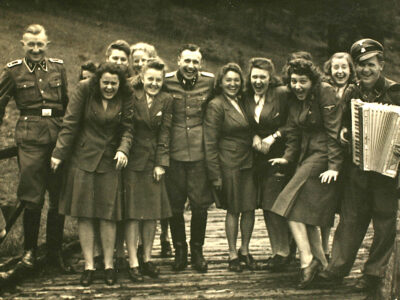
A sepia photo from 1944 of a group of about a dozen Nazi officers and auxiliaries—including Karl Höcker in the center—all openly laughing. The photo was taken at Solahütte, a "resort" where Nazis who worked at Auschwitz would vacation on weekends. They are all in uniform: The women wear long sleeved blazers and knee length skirts with flat shoes, and the men wear long sleeved military jackets and trousers tucked into tall boots. The man on the right is wearing a Nazi hat and is holding an accordion. They're standing on what appears to be a wooden bridge. There is grass behind them.

What were the Nazis thinking when they killed all those people?

WP_Post Object
(
    [ID] => 405
    [post_author] => 2
    [post_date] => 2019-01-22 14:45:38
    [post_date_gmt] => 2019-01-22 14:45:38
    [post_content] => 


Why don’t Trump supporters care that their leader seems more sympathetic to the Kremlin than he does to, say, his own intelligence community? Take a look at the numbers.

Among Republican voters, Putin is literally more popular than Obama. This trend didn’t didn’t come out of the blue. Republican leaders have been actively promoting Putin for some time.

There are many reasons why Putin is attractive to conservative voters — both obvious and not-so-obvious.

As Terrell J. Starr has repeatedly pointed out on Twitter (if you’re on Twitter, you should really follow his account, btw), Putin is particularly beloved by Americans who have a lot of anxiety around race issues/nonwhite leaders (*cough* Obama *cough*)/the idea of whites becoming a minority, etc.

While some of them know that Russia is a diverse country, they also see it as a country where “minorities know their place” (they may have heard as much from notorious racist David Duke to various right wing websites).

That’s just one piece of the puzzle— but it’s important, and rarely discussed by cable news. There is a lot of discomfort around this issue.

As for Trump himself, even if you discard the wilder allegations against him, including the idea that the Kremlin is literally blackmailing him, his line of work and his personality can clue you in as to why he wants to cozy up to the Kremlin.

Trump is a good salesman. He tells people what they want to hear.

Instinctively, Trump understood that what millions of people wanted to hear is that there is a country — a big country with imperial ambitions and nuclear might— where white people are in charge and make no apologies for it.

There is no pesky “political correctness” in this alleged white paradise. This image of Russia and its leader was a product that Trump could sell to voters. It worked. It’s still working.

(The reality of life in Russia is different from the fantasy, but we at the Anti-Nihilist Institute will get to that in our subsequent articles on the topic)

Trump is also just a narcissist. There is no getting around it — this man feeds off of the spotlight, he needs to be adored, and he believes that now that he is president, it is everyone’s job to adore him. He’s going to respond favorably to a Kremlin that’s making overtures to his ego, national security be damned.

On cable news, we keep hearing the excuse that Trump merely wants to normalize relations with Russia. If you know anything about foreign policy, this should strike you as odd. Normalizing relations ≠ siding with foreign officials over your own officials (the Russians know it too, which is why I recently told Marco Werman that I bet Putin is laughing at us right now).

What can be done about this hot mess? It pays to be realistic and play the long game.

  1. Don’t think that facts will convince Trump or his most fervent supporters. If facts mattered to him or his base, he would have never become president. Facts don’t matter to the Kremlin at all, and it’s doing just great (for now).
  2. Remember that people who bought into Trump mania are just as feverishly excited (if not more so) as a different section of the electorate was excited for Obama. The pendulum swings both ways — first there is the euphoria, and then the inevitable letdown.
  3. When the letdown begins it’s important to remember that these excited people were, in many instances, motivated by rage. Many of them may be looking to turn to even more aggressive right-wingers as the result. A lot of right-wing leaders (particularly those who promote Russia as a white man’s paradise) who have flocked to Trump understand this.
  4. This is why it’s important to begin the process of reconciliation sooner rather than later. If you know anti-Trump conservatives or even Trump voters who are beginning to have doubts, check out the Anti-Nihilist guide to reaching out to them. Only do it if you are able & think it is safe. Fellow white people, it’s time to step up to the plate and reject white supremacy. Use your privilege for good.
  5. Remember that the majority of the American public did not vote for this man. How did the Bolsheviks win in Russia? They convinced everyone that they were the majority. “Bolshevik” comes from the Russian word “bolshinstvo,” or “majority”. (They did so, in part, by stealing isolationist, populist platforms to rouse the peasants and soldiers returning from WWI into a bloody civil war at home.) They were NOT even the majority of their own party, and if people never fell for their BS, Russia may have been a different country. The Trump White House is already using Kremlin-like tactics of distorting numbers in order to make support for Trump seem bigger than it is. Simple ideologies spread easily. Don’t fall for it.

As scholar Mark Galeotti explains, a Trump-Putin summit may torpedo the friendship between Trump and Putin faster than any intelligence dossier featuring kinky sex stuff.

It won’t be an issue of their differences, it will be an issue of their similarities. Putin depends on his image as a strongman. Trump depends on his image as an all-powerful corporate boss. They may never admit it in public, but in private the two are bound to clash.

Meanwhile, here is the main reason why Trump admires Putin — Putin does what he wants and is held accountable by no one inside his own country.

That kind of power comes at the cost of freedom for millions of people.

Watch out for anti-protest measures, for crackdowns on civic activity, for even more spying on Americans, for, well, classic authoritarian tactics.

Don’t expect the majority of Republicans in Congress to automatically revolt against this — they have proven themselves to be craven and self-serving.

Repealing the Affordable Care Act with no viable replacement is another measure that serves authoritarian interests. As any good authoritarian will tell you, when you have citizens who are literally struggling to survive, it’s much easier to do whatever the hell you want.

This is why it’s important to:

a) Keep up the pressure on your officials. Remember, they don’t like pressure — especially not when they have to face it publicly. Phone calls and e-mails will not be enough.

b) Hold the media to high standards. Access journalism is overrated when the people journalists are trying to access will only lie to their faces. Media sycophants will be used to advance Trump’s agenda.

c) Forge new alliances. Trump is impulsive and alienates people. He alienated his own intelligence community before he was sworn in (now he’s saying that he “loves” them — that just looks like more inconsistency to them). Meanwhile, your conservative neighbors down the street may not be as comfortable with the Trump-Putin bromance (not to mention Trump saying “grab them by the pussy”) as they pretend to be. You can use Trump’s impulsiveness against him.

d) Recall the lessons of self-isolating Russian liberals. The tactics of divide & conquer work. Don’t let them work on you.


This is not going to be an easy battle. But it will be slightly easier if we come prepared, with realistic goals on the agenda. Remember, a lot of the Democrats in Washington are not ready to hear any of this right now — and keeping pressure on them as a way of making them understand what’s happening is also important.


[post_title] => Russia as a “White Man’s Paradise” & Other Scary Reasons Why Trump Adores Putin (and what to do about it) [post_excerpt] => [post_status] => publish [comment_status] => open [ping_status] => open [post_password] => [post_name] => russia-as-a-white-mans-paradise-other-scary-reasons-why-trump-adores-putin-and-what-to-do-about-it [to_ping] => [pinged] => [post_modified] => 2026-08-07 16:53:34 [post_modified_gmt] => 2026-08-07 16:53:34 [post_content_filtered] => [post_parent] => 0 [guid] => https://conversationalist.org/?p=405 [menu_order] => 365 [post_type] => post [post_mime_type] => [comment_count] => 0 [filter] => raw )

Russia as a “White Man’s Paradise” & Other Scary Reasons Why Trump Adores Putin (and what to do about it)

WP_Post Object
(
    [ID] => 401
    [post_author] => 2
    [post_date] => 2019-01-22 14:44:10
    [post_date_gmt] => 2019-01-22 14:44:10
    [post_content] => 

By American exceptionalist logic, the United States is rich because Americans are good people who make good choices. Russians suffer because they’re dirty liars who don’t want to be happy.

As the Trump-Russia scandal continues to unravel, no one blinked when former Director of National Intelligence James Clapper said, “It is in [the Russian people’s] genes to be opposed, diametrically opposed to US and western democracies.” Excuse me? I had no idea that my DNA depended on an outdated, racist clash of civilizations. Tell me, sir: as a Russian-American Jew, will medical tests show trace amounts of Fifth Column in my blood?

Many will argue that statements like Clapper’s should be taken seriously but not literally. Even metaphorically, however, the statement is crap. The Russian people cannot be reduced to Putin’s regime, nor do they have an inherited cultural defect which can cured by exporting American capitalism or rule of law. Above all, their pride won’t allow them to submit to a culture that openly disdains them. What meeting of minds can there be when the likes of Vanity Fair and Louise Mensch treat the name “Vladimir” as an expletive?

According to a family anecdote, my father worked as a television engineer for the Soviet team taping the 1959 “Kitchen Debate” in Moscow between then Vice-President Richard Nixon and Soviet General Secretary Nikita Khrushchev. The exhibition of kitchen appliances as the fruits of American capitalism was meant to foment envy in Soviet households over Americans’ superior lifestyle. The whole episode was recorded in color using American technology.

When Nixon boasted about America’s technological prowess, Khrushchev angrily responded that the Soviets would soon catch up. And so they did. In my father’s retelling, his team got the American camera crew so drunk that the chumps didn’t notice when their equipment was stolen. The Soviet team copied down blueprints of the technology before returning the equipment.

I told this story in a class discussion years ago and the professor, a humorless Cold Warrior, looked at me and retorted, “Ah, now you make sense!” It wasn’t a compliment.

We agreed that the Soviets broke the rules, didn’t respect American property rights, and didn’t innovate as quickly. With his backhanded shade, however, he turned a tricky historical situation into a moral failing, a defect passed down to me by my family.

His judgment came with all the moral weight of a sheltered American who’d never been forced to choose between bad and worse. Black and white thinking is for people who’ve never lived in grey.

Many Americans hear that story and see American capitalism rising above the Soviet saboteurs who would undermine democratic norms just for kicks. My takeaway was that the Americans were arrogant idiots for thinking they could out-drink the Russians that day. To each their own.

Americans of every political stripe enjoy shitting on the Russians to make themselves feel superior. They’re rough around the edges, hahaha! They’ve lived through horror and had to make ugly choices to survive. The women are whores and the men will bury you. As Dan Soder’s comedy bit goes, “Russians are the scariest white people.” And some people seriously believe that — and wouldn’t want them dirtying our democracy.

By American exceptionalist logic, the United States is rich because Americans are good people who make good choices. Russians suffer because they’re dirty liars who don’t want to be happy.

The political sentiment on Trump-Russia in 2017 can be summed up as: “Americans got Trump because shady Russians got him elected — not because of racist nativists and political corruption. Russians got Putin because they’re ignorant animals who don’t believe in human rights.”

Democrats and Republicans are playing up ignorant stereotypes to deflect from America’s institutional collapse. Democrats don’t want to admit to themselves that there is a vicious contingent of Americans who want white supremacist dictatorship.

That must be the Russian influence, they say. Pshh. The Republicans, meanwhile, are glorifying Russia as a haven for corporate malfeasance and white supremacist patriarchy. Someone should tell Ann Coulter that Muslims make up the second largest religious population in Russia before she tries to move there.

Russophobia, like any irrational hatred, plays directly into unscrupulous hands. Vladimir Putin exploits American condescension in order to bolster power at home. Propaganda works best when it contains a kernel of truth. Russians haven’t forgotten the American journalists in Sochi who laughed at the poverty and corruption ruining their lives. Imagine the schadenfreude Russians felt when Lavrov rubbed Comey’s firing in our faces before playing our president for a fool in the Oval Office itself.

Even in our current situation, Americans still live in a richer country with a vastly better quality of life, but instead of acting maturely, we’re sitting poolside like ladies who lunch, teasing Russia mercilessly for daring to apply to the same country club. The European Union did the same to Turkey with equally disastrous results.

Mar a Lago-style diplomacy will steer us all off a cliff

When we don’t take the time to relate to our geopolitical adversaries, or we call their inferiority complexes stupid, we‘re rubbing salt in old wounds. No one responds well to that kind of behavior.

The other day a young conservative mentioned to me how much he loved that Russia “doesn’t care about human rights” — a dangerous sentiment we’re hearing echoes of from Trump and Theresa May. When I told him that Russians do care about rights — socioeconomic rights, for example— he was shocked that Russians aren’t a mythical people built to suffer in order to make us feel superior. He preferred to rationalize his prejudice rather than debate me, but he’d be better served letting go and sitting for an episode of The Americans. That show knows that Soviets were people too.


[post_title] => American Russophobia is real — and it’s helping Putin [post_excerpt] => Russophobia, like any irrational hatred, plays directly into unscrupulous hands. Vladimir Putin exploits American condescension in order to bolster power at home. [post_status] => publish [comment_status] => open [ping_status] => open [post_password] => [post_name] => american-russophobia-is-real-and-its-helping-putin-2 [to_ping] => [pinged] => [post_modified] => 2026-08-07 16:54:06 [post_modified_gmt] => 2026-08-07 16:54:06 [post_content_filtered] => [post_parent] => 0 [guid] => https://conversationalist.org/?p=401 [menu_order] => 366 [post_type] => post [post_mime_type] => [comment_count] => 0 [filter] => raw )

American Russophobia is real — and it’s helping Putin