WP_Post Object
(
    [ID] => 1387
    [post_author] => 2
    [post_date] => 2019-09-13 16:19:20
    [post_date_gmt] => 2019-09-13 16:19:20
    [post_content] => How to fix our disturbingly unequal relationship with smartphones

 A couple of weeks ago, I gave a talk in Austria on smartphones and cybersecurity.

 “Put up your hand if you like or maybe even love your smartphone,” I asked the audience of policymakers, industrialists and students.

Nearly every hand in the room shot up.

“Now, please put up your hand if you trust your smartphone.”

One young guy at the back put his hand in the air, then faltered as it became obvious he was alone. I thanked him for his honesty and paused before saying,“We love our phones, but we do not trust them. And love without trust is the definition of an abusive relationship.”

We are right not to trust our phones. They serve several masters, the least of whom is us. They constantly collect data about us that is not strictly necessary to do their job. They send data to the phone company, to the manufacturer, to the operating system owner, to the app platform, and to all the apps we use. And then those companies sell or rent that data to thousands of other companies we will never see. Our phones lie to us about what they are doing, they conceal their true intentions, they monitor and manipulate our emotions, social interaction and even our movements. We tell ourselves ‘it’s okay, I chose this’ when we know it really, really isn’t okay, and we can’t conceive of a way out, or even of a world in which our most intimate device isn’t also a spy. 

Let’s face the truth. We are in an abusive relationship with our phones.

Ask yourself the first three questions that UK non-profit Women’s Aid suggests to determine if you’re in an abusive relationship:
  • Has your partner tried to keep you from seeing your friends or family?
  • Has your partner prevented you or made it hard for you to continue or start studying, or from going to work?
  • Does your partner constantly check up on you or follow you?
If you substitute ‘phone’ for ‘partner’, you could answer yes to each question. And then you’ll probably blame yourself.  If this feels dangerously close to trivializing abuse and intimate partner violence, then stick with me just a minute more. What our smartphones and relationship abusers share is that they both exert power over us in a world shaped to tip the balance in their favour, and they both work really, really hard to obscure this fact and keep us confused and blaming ourselves. Here are some of the ways our unequal relationship with our smartphones is like an abusive relationship: 
  • They isolate us from deeper, competing relationships in favour of superficial contact – ‘user engagement’ – that keeps their hold on us strong. Working with social media, they insidiously curate our social lives, manipulating us emotionally with dark patterns to keep us scrolling.
  • They tell us the onus is on us to manage their behavior. It’s our job to tiptoe around them and limit their harms. Spending too much time on a literally-designed-to-be-behaviorally-addictive phone? They send company-approved messages about our online time, but ban from their stores the apps that would really cut our use. We just need to use willpower. We just need to be good enough to deserve them.
  • They betray us, leaking data / spreading secrets. What we shared privately with them is suddenly public. Sometimes this destroys lives, but hey, we only have ourselves to blame. They fight nasty and under-handed, and are so, so sorry when they get caught that we’re meant to feel bad for them. But they never truly change, and each time we take them back, we grow weaker.
  • They love-bomb us when we try to break away, piling on the free data or device upgrades, making us click through page after page of dark pattern, telling us no one understands us like they do, no one else sees everything we really are, no one else will want us.  
  • It’s impossible to just cut them off. They’ve wormed themselves into every part of our lives, making life without them unimaginable. And anyway, the relationship is complicated. There is love in it, or there once was. Surely we can get back to that if we just manage them the way they want us to?
 Nope. Our devices are basically gaslighting us. They tell us they work for and care about us, and if we just treat them right then we can learn to trust them. But all the evidence shows the opposite is true. This cognitive dissonance confuses and paralyses us. And look around. Everyone has a smartphone. So it’s probably not so bad, and anyway, that’s just how things work. Right?

Feminism is a secret super-power

Feminists are often the canary in the coalmine, warning us years in advance of coming threats. Feminist analysis of Gamergate first exposed the online radicalization of legions of angry young men for whom misogyny was a gateway drug to far-right politics. More practically, when the US military finally realised the enemy could use running app, Strava, to track the habits and route-maps of soldiers based in hostile environments, domestic violence activists collectively sighed. They’d been pointing out for years that the app is used by stalkers and aggrieved exes to track women. I’m not the first person to notice that in cyber-security, feminism is a secret super-power. Checking every app, data-set and shiny new use-case for how men will use it to endanger women and girls is a great way to expose novel flaws and vulnerabilities the designers almost certainly missed. So, while looking at our relationship with our phones through a feminist lens may be disconcerting, it’s incredibly useful, and in a deliciously counter-intuitive way. Feminists know about power. Specifically, they know a lot about unequal power relationships; how they are systematically used, and how they are rationalised or explained away as ‘just the way things are’. Long before individual men abuse women, they internalise the logic of “unequal power relationships between men, women and children embedded in social organisations like the family”. Abuse isn’t just pathological. It’s political. Where others might just see some behavioral problems that need fixing, one to one, a feminist sees the abuse of women and girls as something inevitable – even intentional – in patriarchy. So, just as we don’t fix climate change by individually eschewing plastic straws, we don’t fix our smartphones’ designed-in lack of trust by individually trying to spend a bit less time on Twitter. But that’s just entry-level feminist analysis. It explains why individual solutions won’t fix the structural problem of our trust-wrecking smartphone business model, but it doesn’t get at why the model exists.

Emotional labour holds up patriarchy just as ‘attentional labour’ fuels surveillance capitalism

Australian philosopher Kate Manne points out how misogyny is based on the care, attention, support and service women are expected to give to men. Emotional labour is the currency that patriarchy extracts from us and stockpiles for the winners. There’s a clear parallel between the emotional labour of women under patriarchy and the ‘attentional labour’ extracted from all of us under surveillance capitalism. We’re required to keep clicking on ads, serving up our behavioral data and spending hours every day scrolling, tweeting, liking, surveying and high-fiving.  Because if we ever stop? Well then the whole damn thing will come falling down. Without adtech the internet will fail. Without the freemium model, there will be no services, no content, no innovation. Big Tech and the phone companies and all the downstream data-brokers have to lie to us about how our devices really work – and who they really work for — because otherwise everything good they’ve built would go away. We must go on sharing more of our lives with devices we love but cannot trust, because even trying to fix it will cause the whole social order to combust. Next thing you know, women will be wearing trousers and thinking they can vote. Which is to say, everything is impossible until it’s inevitable. One more thing feminists have taught us; to get out of an abusive relationship you first have to see it for what it is. And to change the economic and political order a corrupt business model depends on, you first have to realise that it can be done. Twenty or thirty years ago ‘rape in marriage’ was considered an oxymoron in most Western countries, something that couldn’t be a crime because those in power couldn’t even conceive of wives being able to with-hold consent. Today we have changed mindsets so much it’s almost hard to imagine ourselves back into that moment. And we can do it again.

What would a trustworthy smartphone be like?

We have to imagine a future we want to live in so we can build it.  A smartphone worthy of both our love and our trust would be a smartphone that is primarily loyal to us. It wouldn’t share our data with random companies that want to exploit or manipulate us, or with governments whose acts can harm us. It would tell us in plain language what it’s doing and why. It wouldn’t run background software on behalf of organizations that don’t work for us, and it wouldn’t hide what it was doing because it knew we wouldn’t like it. It wouldn’t be pockmarked with vulnerabilities that hostile agents exploit and sell to the highest bidder. It would give access to our data as and when we wanted, but also not bug us too much with opt-ins. That’s because it would use machine-learning to understand and enact what we want, instead of to manipulate us into serving others first. A smartphone worthy of our love and trust would want the best for us and would actively help us to achieve it. Smartphones can be our second and third and fourth brains. They help people with memory loss or processing deficits to build work-arounds. Similarly, they could help the rest of us extend our memories and build our concentration. Instead of monetizing our distraction, a trustworthy smartphone would help us do the sustained intellectual and creative work that gives our life meaning. It would deepen and broaden our relationships, not exploit them for a social graph. It would dive into immersive storytelling and communication with the goal to make new ways for us to love and be loved. A smartphone worthy of our love and trust would not just waste less time or wreck less privacy or extract fewer monopoly rents. It would work with us to make us better humans and help squeeze our species through the narrow survival gate of the next hundred years.  Yes, this is all very utopian. But you know what else was? Charlotte Perkins Gilman’s Herland, a feminist utopia written in 1915 that imagined and helped make possible the world of 2015. Imagining better futures is the only way we have ever managed to shrug off settled wisdom and build better lives. 

How do we get there?

There are different ways to configure the financial and political ecosystems our phones dwell in and suck us into. We can pay the full cost of them while also reducing the gargantuan, irrational and once-in-a-millennium returns on capital Big Tech has made for the past twenty years. We can treat the services that run on them more like utilities, with revenue caps and universal service requirements, because that is how grown-up countries deal with life-critical public goods. We can wildly ramp up privacy and data-portability and competition rules, and we can start actually enforcing them. All this requires a change in mindset, what some would call a revolution. Seeing that our relationship with our smartphones is not healthy and not right is the first step. Understanding that we are not individually at fault for it is the next. Abusive relationships depend on mystification, “the process of explaining away what might otherwise be evident.”  Using a feminist lens brings the unequal power relationship into focus, shows just how weird it is and reminds us how we’ve dealt with this kind of problem before.  It’s not for us to tweak who we are, but for our phones to radically change so they are worthy of our love and trust.   [post_title] => This is your phone on feminism [post_excerpt] => Let’s face the truth. We are in an abusive relationship with our phones. [post_status] => publish [comment_status] => closed [ping_status] => open [post_password] => [post_name] => feminism-explains-our-toxic-relationships-with-our-smartphones [to_ping] => [pinged] => [post_modified] => 2026-09-15 23:11:23 [post_modified_gmt] => 2026-09-15 23:11:23 [post_content_filtered] => [post_parent] => 0 [guid] => https://conversationalist.org/?p=1387 [menu_order] => 301 [post_type] => post [post_mime_type] => [comment_count] => 0 [filter] => raw )

This is your phone on feminism

WP_Post Object
(
    [ID] => 1354
    [post_author] => 2
    [post_date] => 2019-08-23 19:25:28
    [post_date_gmt] => 2019-08-23 19:25:28
    [post_content] => We can't seem to quit social media, even though we know it's not good for us. Is there a way to take back control of the user experience? 

The good news is that we now know, thanks to investigative journalism, that bad faith actors are using social media to manipulate our emotions and, by extension, our political domain. The bad news is that despite rising awareness, nothing has changed. Facebook is still manipulating its algorithms so that we all live in our own information bubbles. Twitter is still full of fake accounts, often called bots, that dupe even sophisticated users —  like prominent journalists or well-known politicians — into sharing information that simply is not true. 

As Robert Mueller said while testifying to Congress last month, social media manipulators working for Russian intelligence continue to interfere in U.S. politics “right now.”

An addiction to social media goes well beyond craving the dopamine hit supplied by seeing one’s Tweet shared widely, or one’s Facebook post liked many times. These days, journalists need Twitter to follow the news and promote their own work, while Facebook has become an all-but essential tool for staying abreast of cultural events and keeping in touch with friends and family. But while we’re “liking” photos of our friends’ new babies and sharing important investigative journalism via Twitter, we are also inadvertently exposing ourselves to people whose job it is to manipulate our thoughts and emotions. And they are experts.

Now scholars and journalists are warning that YouTube has become a terribly dangerous radicalizing tool. Zeynep Tufekci, an expert in the sociology of technology, warned about YouTube last year in a column for The New York Times. Almost by accident, she writes, she discovered that the video platform was algorithmically programmed to direct users toward opinions more radical than the ones they seemed to hold. If a user searched for a Bernie Sanders video, for example, YouTube might recommend an Atifa video. On the other hand, search for a video by a mainstream conservative commentator and next thing you know the algorithm is suggesting videos by white nationalists. YouTube, concluded Tufekci, "[might be] one of the most powerful radicalizing instruments of the 21st century."

One year later, The New York Times published an investigative story that shows how bad faith actors manipulated YouTube videos in order to radicalize Brazilian society by upending long-held social norms. Teachers quoted in the article say, for example, that their students disrupted classes to quote conspiracy theories they had seen on YouTube videos. Meanwhile Bolsanoro staffers were uploading videos that propagated conspiracy theories about teachers manipulating their students to support communism. The result: voters chose Jair Bolsanor, the far right newly elected president of Brazil. Danah Boyd, the founder of Data & Society, told The New York Times that the YouTube-influenced results of Brazil’s elections are “a worrying indication of the platform’s growing impact on democracies worldwide.”

Similarly, Britain saw its democracy undermined in 2016 when bad actors who funded and led the Brexit campaign used Facebook to manipulate British public opinion. The result: a slight majority of Britons voted in favor of leaving the European Union.  

Read more about Brexit: How less-than-great men brought Britain to its worst hour

But given that few Britons had expressed any interest in the EU prior to the referendum, how did this result come about? We now know, as The Guardian’s Carole Cadwalladr reported in a bombshell investigative piece, that British public opinion had been manipulated by misinformation published on Facebook accounts set up by a now-notorious (but then unknown) company called Cambridge Analytica. The same company later acknowledged the role it had played in manipulating public opinion in the United States prior to the 2016 presidential election. 

Craig Silverman, the Canadian BuzzFeed journalist who coined the term “fake news” in 2015, warned the CBC that Canadians are not immune from the disease of social media manipulation, either. Facebook, he told the CBC, is publishing anti-Trudeau propaganda as well as attacks on members of Trudeau’s government who are people of color. Silverman added that “...people acting outside of Canada publishing, in some cases, completely false or unsupported stories that are having an effect on what Canadians think about the current government and politics in Canada in general.”

How are we to remain connected and informed and still deal with the crisis of disinformation? 

Taylor Owen, a prominent digital media scholar who holds the Beaverbrook Chair in Media, Ethics and Communications at McGill University, suggests that some self-awareness would help. We must stop and think carefully before responding to news and opinion that makes us feel an emotion, whether it be satisfaction or anger. “When people are supplied with a wide variety of information that confirms their biases,” he says, they are less willing to accept opinions that contradict them. 

But journalists also have an important role to play, he says in this interview. According to Owen's newly published research, people who consume a great deal of news are not better informed. The reason: they tend to consume and retain information that confirms their biases. The media, suggests Owen, would be doing a public service by reporting deeply on issues for which there is bipartisan agreement. In Canada, interestingly, one of those issues is the environment. 
    [post_title] => How can we stop social media from manipulating our emotions?
    [post_excerpt] => An addiction to social media that goes well beyond needing the dopamine hit supplied by seeing one’s Tweet shared widely, or one’s Facebook post liked many times. These days, journalists need social media to follow the news and promote their own work, while Facebook has become an all-but essential tool for staying abreast of cultural events and keeping in touch with friends and family.
    [post_status] => publish
    [comment_status] => closed
    [ping_status] => open
    [post_password] => 
    [post_name] => how-can-we-stop-social-media-from-manipulating-our-emotions
    [to_ping] => 
    [pinged] => 
https://conversationalist.org/2019/08/16/how-less-than-great-men-brought-britain-to-its-worst-hour/
    [post_modified] => 2026-09-15 23:01:52
    [post_modified_gmt] => 2026-09-15 23:01:52
    [post_content_filtered] => 
    [post_parent] => 0
    [guid] => https://conversationalist.org/?p=1354
    [menu_order] => 304
    [post_type] => post
    [post_mime_type] => 
    [comment_count] => 0
    [filter] => raw
)

How can we stop social media from manipulating our emotions?

WP_Post Object
(
    [ID] => 1346
    [post_author] => 2
    [post_date] => 2019-08-23 16:48:03
    [post_date_gmt] => 2019-08-23 16:48:03
    [post_content] => More people are currently fleeing war and extreme poverty than at any time in history, but those who try to help often face criminal charges

The United Nations High Commissioner for Refugees (UNHCR) reports that 839 people have already died in 2019 trying to cross the Mediterranean. In 2018, the number of dead or missing was 2,277. At its height in 2016, 5,096 people died at sea. These are desperate people fleeing war and extreme poverty. But no state will take responsibility for them. 

Yet even as international accountability for human rights violations becomes a hollow joke, there are people who have taken it up themselves to dedicate their lives to rescuing and helping refugees, no matter what the personal cost. These are idealistic people who also have a firm grasp on reality: they know they cannot save the world, but they believe that capitulating to helplessness is not an option.

Salam Aldeen is the founder of Team Humanity, a Danish nonprofit dedicated to helping refugees who made the perilous journey across the Mediterranean to the Greek island of Lesbos. A Dane of Iraqi-Moldovan descent, Salam flew to Lesbos in 2015 to begin sea rescue operations two days after seeing the now-iconic image of Alan Kurdi, the three year old Syrian boy whose body washed up on a beach in Turkey. Alan and his family had been trying to reach Europe in an inflatable raft.

In January 2016, Greek authorities arrested Salam and four other humanitarian volunteers after they responded to a distress call from a group of refugees on a sinking rubber raft. The arresting officers accused them of crossing into Turkish waters with the intent to traffic refugees into Greece. Salam spent 48 hours in jail, and then two more years on trial, with prosecutors seeking a life sentence. The five men were acquitted of all charges in May 2018 and Salam immediately went back to work, this time building a women and children’s center adjacent to Moria, a notorious refugee camp on Lesbos that is known for violence and horrifying conditions. Moria was built for 3,000 people but shelters more than three times that many, mainly Syrian refugees and Afghan asylum seekers. 

The Team Humanity center is a reprieve for the 1,500 women and children who use it daily. “All women and children are welcome,” Salam said, noting that 11 is the cutoff age for boys. There’s a playground, and space for people to gather to dance, listen to music and watch movies. The center is funded entirely through private donations from all over the world. The money goes toward providing camp residents with necessities like food, diapers, winter clothes, and underwear. Salam gets wistful when he talks about building a school. “I don’t have funds for chairs and tables.”

On August 11th, the night of the Muslim festival of Eid-al-Adha, a group of men attacked the women’s center. “It was Eid, Ramadan had finished and everyone was happy. People went out. But then some troublemakers started making problems,” Salam says. 

https://vimeo.com/355385248

Salam described a scuffle between camp residents, which included a drunk man, volunteer security people restraining him, and a woman who screamed and pretended to faint. “It was all over quickly, Salam says. “She fainted for attention, it was a joke, and the drunk guy apologized.” But then, he says, a rumor started in the camp that someone had hit the woman. Salam estimated that between 100 to 200 men from Moria showed up, angry. There were only 26 volunteers working at the time, with additional women and children inside. When some men began to climb over the fence, Salam chased after them with sparklers and they ran off. 

https://vimeo.com/355385512

The local Greek police took an hour to arrive. “They don’t want to help. They don’t want us to be there. They want us to suffer so we go home,” Salam says. 

On August 14th, the Greek police returned, this time to rearrest Salam. “The police said the fireworks that I used to protect us were illegal,” Salam says. “They held me for over two hours, and at the same time brought someone in to report me for hitting him. I don’t know what they promised him for that, but it’s so corrupt.” 

He doesn’t expect the harassment will stop. Salam says he received a letter from the United Nations last week, also sent to the Greek government, which condemned the legal actions taken against Salam and the criminalization of humanitarian aid. Still, his biggest hope is for celebrity intervention — a “We are the World” moment to capture international attention.

Salam Aldeen is not the only humanitarian volunteer facing legal charges for aiding refugees. Pia Kemp, the German captain of a ship that was impounded for rescuing migrants at sea, recently announced she was turning down a medal from the city of Paris. Addressing the mayor of Paris, Kemp wrote in a Facebook post, “Madame Hidalgo, you want to award me a medal for my solidarian action in the Mediterranean Sea, because our crews 'work to rescue migrants from difficult conditions on a daily basis'...while you raid protests and criminalize people that are standing up for rights of migrants and asylum seekers. You want to give me a medal for actions that you fight in your own ramparts." Kemp reportedly faces 20 years in prison in Italy on charges of aiding in human trafficking.

There is no humanitarian exception to the European Union Directive that criminalizes aiding illegal migration. The burden of hosting refugees and asylum-seekers falls heavily on Mediterranean countries due to the Dublin Regulation, an EU law which states that people seeking asylum are the responsibility of the first European country they land in. At the same time, whistleblowers in the Greek government have accused the state of misappropriating EU funds meant for refugees, and awarding inflated contracts to local businesses. As Salam put it, “Finance crisis, bullshit, I see new cars. They didn’t have them in 2015, now they do.”

In Denmark, Salam’s home country, the government’s laws and rhetoric are increasingly anti-immigrant. In 2016, Denmark passed the controversial “jewelry law,” which allows the government to confiscate valuables from refugees to pay for their care. The law has not been enforced, but the symbolism remains. “I’m ashamed that Denmark doesn’t take refugees. That’s why I’m here helping people. I’m trying to show that it’s not every Danish person that feels this way,” says Salam. 

In 2018, Arizonan geography teacher Scott Warren was charged by Border Patrol with three felonies for aiding a pair of Central American migrants. His trial resulted in a hung jury. Federal prosecutors have refused to drop the charges since the mistrial, and plan to retry Warren on two felony harboring charges in November.

Warren’s case, like his European counterparts, failed in court because prosecutors could not prove intent to commit a crime. Still, Warren’s arrest is part of an escalating attack on humanitarian volunteers, who for years have put out jugs of water for dehydrated migrants traversing the desert along the United States’ southern border.

Migration flows will increase as the planet warms and regions become uninhabitable. The post-World War II liberal order, built upon freedom of movement and freedom from persecution has failed. The Refugee Convention was not written to account for massive influxes of people fleeing widespread violence and climate change. Permanent impermanence has been normalized - the most obvious example being Palestinian refugees, who were placed under their own UN agency in order to sidestep UNHCR. 

Ironically, during World War II, Syria played host to thousands of European refugees. Now that the tables have turned, Europeans are treating the refugee crisis like a game of hot potato, selling out basic principles in order to keep Muslims out. What began with a 2016 deal to return refugees to Turkey was followed by an even worse deal with Libya

In America, our government has behaved no better. Just this week, the Trump administration announced a new policy that would allow for indefinite detention of migrant families and children. Meanwhile, Haitians who have lived for decades on Temporary Protected Status (TPS) now face deportation since the Trump regime denied them renewal. 

The crackdowns are real, and until new institutions are constructed to provide accountability, legal or otherwise, we’ll return to the same solutions humanity has used throughout history. 

There’s a Jewish teaching, naaseh v'nishma, which means “we will do and we will hear.” If somebody shows up to your doorstep, feed them, give them a bed, and ask questions in the morning.

Tyrants have always used vulnerable populations as pawns in their games with one another. But there have always been people willing to sacrifice their bodies and voices for others. 

Salam and his family arrived in Denmark in 1992 after fleeing civil war in Moldova, but he insists that his past is irrelevant to what he’s doing now. “Everyone can do what I do. No money in the world can give you the feeling you get when you’re saving a human from drowning. I can’t explain it to you because it’s something insane. Giving a baby back to their mother after pulling them from the water, that is something I’ll never forget. People if they want to do something — know one thing — don’t think that you will get something back, but you’ll get peace with yourself. That feeling when you help somebody, this is your reward. You’ll understand, I did something good. Because one day, maybe it’s you who is going to run.”
    [post_title] => 'Saving lives is not a crime': When ordinary people sacrifice everything in the name of humanity
    [post_excerpt] => Tyrants have always used vulnerable populations as pawns in their games with one another. But there have always been people willing to sacrifice their bodies and voices for others. 
    [post_status] => publish
    [comment_status] => closed
    [ping_status] => open
    [post_password] => 
    [post_name] => saving-lives-is-not-a-crime-when-ordinary-people-sacrifice-everything-in-the-name-of-humanity
    [to_ping] => 
    [pinged] => 
https://vimeo.com/355385512
    [post_modified] => 2026-08-06 23:24:21
    [post_modified_gmt] => 2026-08-06 23:24:21
    [post_content_filtered] => 
    [post_parent] => 0
    [guid] => https://conversationalist.org/?p=1346
    [menu_order] => 305
    [post_type] => post
    [post_mime_type] => 
    [comment_count] => 0
    [filter] => raw
)

‘Saving lives is not a crime’: When ordinary people sacrifice everything in the name of humanity

WP_Post Object
(
    [ID] => 1225
    [post_author] => 2
    [post_date] => 2019-07-19 20:06:03
    [post_date_gmt] => 2019-07-19 20:06:03
    [post_content] => Is racist the new four-letter word?

On Wednesday night at a rally in North Carolina, President Trump falsely claimed that Congresswoman Ilhan Omar, a refugee from Somalia who became a U.S. citizen when she was a child, was a supporter of Al Qaeda. Then he stood and watched as his supporters chanted “Send her back! Send her back! Send her back..!” That rally capped several days of Trump’s well-publicized incitement against the four junior congresswomen known as the Squad — Rashida Tlaib, Alexandria Ocasio-Cortez, Ayanna Presley, and Ilhan Omar — who have been vociferously critical of President Trump and his policies.

“If they don’t love [America],” said the president, “tell them to leave it.”

In their coverage of this story, legacy media outlets ranging from The New York Times to CNN finally embraced the term “racist” to describe the president’s words. Their use of this word became a story in itself, with Trump supporters denying the president’s words were racist. “It’s not racist to say love it or leave it,” said Senator Lindsey Graham. He added: “A Somali refugee embracing Trump would not have been asked to go back.”


Even if one were to agree with Graham that “send her back” was not necessarily racist, one would be hard-pressed to reconcile the core right to freedom of expression in a democracy with the idea that an immigrant who exercised that right by criticizing the president's policies should be deported.

Other Republican representatives were clearly uncomfortable with the “send her back” chant, but they didn’t want to label the president a racist, so they split the difference: The crowd was wrong, said Representative Tom Emmer (R-MN), but the president “didn’t have a racist bone in his body.” Emmer did not comment on the fact that the president stood silently for 13 seconds as the crowd he’d been working into a frenzy for the previous quarter of an hour chanted rhythmically.

Trump is, of course, notorious for his misogyny. But besides their gender, the four Democratic representatives he attacked are also all people of color. Bernie Sanders shares the same political views, but Trump did not single him out. Sanders is, of course, a white man. Meanwhile, Nancy Pelosi — who has a testy relationship with the Squad — successfully pushed through a House resolution to condemn Trump for his racist comments, overriding Republican objections and a parliamentary ruling that deemed the term an insult and thus not allowed.

The partisan argument over what constitutes racism is the driving force behind the reluctance of legacy media outlets to use the term. Editors are afraid that if they label someone a racist, the media outlet will no longer be considered an objective source of information. There is a whole separate argument over whether or not objectivity is possible or desirable in these troubled times. When, for example, The New York Times published a controversial profile of a white supremacist that made him sound like an ordinary guy who loved his family but happened to hold some extremist views, critics charged that the paper had lent credibility to a Nazi by presenting a humanizing portrait in the pages of the country’s most prestigious newspaper.

One expert argued that using the term "racist" was counter-productive because it made the person accused of racism defensive, and that the ensuing argument over whether or not the term was appropriate deflected attention from meaningful and substantive policy discussions.

But as Trump engages increasingly in overt racist incitement, the legacy media are re-examining their editorial policy. Over the past two days, The New York Times, Washington Post, CNN, MSNBC, and other prominent reporting platforms have all used the term “racist,” to describe the president’s comments. As Maria Bustillos explains in the Columbia Journalism Review: “The language of distance and delicacy is based in good faith; where good faith is absent, delicate language does little more than normalize things like racism and cruelty.” In other words, sometimes going high when others are going low can be counter-productive.
    [post_title] => Why editors are so reluctant to label Donald Trump a racist
    [post_excerpt] => The use of the term "racist" became a story in itself, with Trump supporters denying the president’s words were racist. “It’s not racist to say love it or leave it,” said Senator Lindsey Graham. He added: “A Somali refugee embracing Trump would not have been asked to go back.”
    [post_status] => publish
    [comment_status] => open
    [ping_status] => open
    [post_password] => 
    [post_name] => why-editors-are-so-reluctant-to-label-donald-trump-a-racist
    [to_ping] => 
    [pinged] => 
    [post_modified] => 2024-08-28 21:15:14
    [post_modified_gmt] => 2024-08-28 21:15:14
    [post_content_filtered] => 
    [post_parent] => 0
    [guid] => https://conversationalist.org/?p=1225
    [menu_order] => 312
    [post_type] => post
    [post_mime_type] => 
    [comment_count] => 0
    [filter] => raw
)

Why editors are so reluctant to label Donald Trump a racist

WP_Post Object
(
    [ID] => 1218
    [post_author] => 2
    [post_date] => 2019-07-19 18:03:53
    [post_date_gmt] => 2019-07-19 18:03:53
    [post_content] => The current political climate seems disastrous for the Palestinians. But as recent history shows, the bleakest circumstances can yield great opportunities.

Alongside the dog whistle politics, much of Donald Trump’s public image is a throwback to 1980s New York City culture, with its gaudy society parties, unapologetic misogyny, and predatory real estate practices. His presidency jerks between rhetorical excess and emptiness. From negotiations with North Korea abroad to immigration policy at home, Trump’s actions have cycled between Twitter onslaughts devoid of meaningful content and the implementation of acutely retrograde executive orders. His administration’s recent effort to address conflict in the Middle East by convening the “Peace to Prosperity” conference in Manama, Bahrain, is a further case in point.

At the core of the Trump administration’s economic plans for the Palestinians is a glossy brochure released shortly before the summit itself. Notwithstanding the slick graphics and  the presentation, which makes it look like something a business consulting firm would publish, it is an astonishing study of hollowness and deception. The $50 billion dollar pitch book promotes all sorts of investments, including a desalination plant in Gaza and a transport corridor with the West Bank, but does not even mention the word “occupation” to describe Israel’s control over the occupied Palestinian territories. Particularly galling to Israeli and Palestinian civil society activists was the discovery that the photographs used to illustrate that glossy brochure were from promotional material for the very grassroots peace building initiatives — such as The Bereaved Parents Circle Forum and Olive Oil Without Borders — that the Trump administration had abruptly defunded in recent months.

Live-tweeting from the lobby of Manama’s Four Seasons hotel, where the workshop was held, journalist Jack Moore wrote that he was “was left speechless by the Davos-esque Conflab” he had witnessed during the two-day event. In a widely-circulated Twitter thread, he described a gathering of shady private sector grandees, all male panels, and patronizing U.S. flippancy toward absent Palestinian officials. In his opening speech, Jared Kushner described his vision for an economically vibrant West Bank and Gaza without broaching the political context in which such development might take place. Other participants had spent so little time on the ground in Palestine, that they mispronounced names of well-known places. Meanwhile, the head of FIFA touted the virtues of football as a means of “contribut[ing] to change” in the region. When the numbers were crunched, it was clear that the U.S. government was looking for a way to offload the major costs of economic investment to the Gulf states and private investors, shouldering even less of the paltry amount they now provide in the form of economic assistance in the occupied territories.

This opportunistic spirit of Manama fit with a broader pattern of pushing the Palestinians into a corner. During several interviews in the run up to the Bahrain Summit, Kushner reinforced the approach of excluding the PLO while dismissing fears of American imbalance. Asked if he understood why the Palestinians did not trust him, Kushner responded curtly, “I’m not here to be trusted.” As the Palestinian historian Rashid Khalidi has argued, this “neocolonial arrogance” of the U.S. administration is a throwback to the British Mandate and the notion that Palestinians are not quite ready to govern themselves.

Israeli leaders have also promoted this paternalistic view. The former Education Minister and leader of the right-wing Jewish Home party, Naftali Bennett, for example, called for the Palestinians to govern themselves “in all aspects barring two elements: overall security responsibility and not being able to allow the return of descents of Palestinian refugees.” When asked whether his vision would provide self-determination for Palestinians, Bennett demurred. “It’s unrealistic…the Stability Plan is only partial self-determination, but in the real world you have to make compromises.”

Since Trump’s election the alignment between the U.S. and Israeli governments has yielded a series of transformative developments that in practice put an end to the two-state solution.

The most widely publicized of these developments was the relocation of the U.S. embassy from Tel Aviv to Jerusalem. With this move, the U.S. indicated that it no longer regarded as legitimate the Palestinians’ claim to East Jerusalem as the putative capital of their future state. The U.S. also closed its consulate in East Jerusalem, which had served Palestinian residents of the occupied territories; and it ordered the Palestinian mission in Washington D.C. to close, ending the official Palestinian diplomatic presence in the U.S. capital.

The U.S. withdrew its funding to UNWRA, the United Nations agency that provides essential services, like education and medical care, to over five million Palestinian refugees in Lebanon, Syria, Jordan, Gaza, and the West Bank. The State Department denied visas to prominent Palestinian figures who had been visiting the U.S. for years — including PLO executive committee member Hanan Ashrawi, who received her PhD from the University of Virginia. In addition to adopting a policy of complete indifference to Israel’s ever-expanding settlement expansion in the West Bank, the U.S. removed the word ‘occupied’ from government documents. When Netanyahu campaigned in the recent national election partly on a promise to annex the West Bank, which Israel has occupied for 52 years, the Trump administration did not even respond, even as it has chosen a permissive attitude towards the growing Israeli call for annexation of the West Bank. In all these ways, the conflict has returned to a pre-Oslo paradigm. The Palestinians are, as it were, stuck back in the 1980s.

Rather than simply lament the circus in Bahrain, the Palestinian leadership must look for a meaningful way to respond to this diplomatic farce. Some Palestinians have argued that since the Oslo Agreement has been fatally violated, the Palestinian Authority should formally be dismantled. Those who oppose this move say it would cause harm to the Palestinian population, and perhaps even lead to the outbreak of violence. Another historical parallel to consider is the PLO’s position following the 1978 Camp David Accords between Egypt and Israel. Abandoned by Egyptian President Anwar al-Sadat, sidelined in autonomy talks over their future without participation, surrounded by an expanding ring of Jewish settlements in the West Bank and Gaza, the Palestinians were forced to confront both political efforts at state prevention followed swiftly by the 1982 military intervention in Lebanon and Israeli attempts to defeat the PLO in its Beirut stronghold.

This moment of acute crisis was also an opportunity for Yasser Arafat and the Palestinian leadership to rethink the future of the national struggle. After the PLO was forced to retreat from Beirut in 1982, Palestinian political activists in Gaza and the West Bank forced a shift of power away from the exiled leaders, now based in Tunis, and a new reckoning with their demands, culminating in the outbreak of the first Intifada in December 1987. The mass grassroots protest against the then 20-year old occupation led to tangible results: the U.S. finally recognized the PLO; and by the early 1990s the Israelis began to engage with the Palestinian political movement. With that same occupation now extending over five decades, what new opportunities might be seized beyond the fulsome rejection of the Trump administration’s effort to impose what one Palestinian playwright has called a “slumlord’s peace”?

In the summer of 1986, the Palestinian political activist and intellectual Sari Nusseibeh toyed with an idea that might shake up the paradigms of political discussion. Writing in the newspaper Al-Mawqef, he posed a thought experiment about which situation was preferable: “autonomy or annexation with full equal rights [for Palestinians] in Israel?” In his view, freedom through the ballot box would give Palestinians joint control over their own lives and the lives of their Jewish neighbors. He soon appeared on a leading Israeli political talk show alongside one leader of the settler movement, who was startled by Nusseibeh’s argument. Either Palestinians would get a state of their own, or Israel would have a battle for equal rights on its hands. Suddenly, the left-wing Labor Party began invoking fears of a “demographic threat” as a means to accelerate negotiations, while the Israeli representative to the UN noted that “If Palestinians begin to think like this, then we’ve really got something to worry about."

These fears remain highly relevant today. What happens when the political conflict is framed as a conversation about equal rights, access, and citizenship? The government of Israeli Prime Minister Benjamin Netanyahu is acutely concerned about the rhetoric shifting in this direction, a fear underscored by the backlash against the movement for Boycott, Divestment, and Sanctions (BDS) as a means of pressuring Israel in economic, cultural and diplomatic realms. Recent efforts to criminalize BDS, and to label it anti-Semitic, underscore how far this battle of delegitimization can go.

In the face of these developments, advocates for an equitable solution to the Israeli-Palestinian conflict must continue to push for a values-centered approach where the language of rights and equality for Arabs and Jews remains at the center of political discourse. Trump himself was quick to dispose of the two-state paradigm in his first meeting with the Israeli Prime Minister, telling reporters he was not wedded to the idea of territorial partition. But rather than promote an equitable alterative, his administration has tipped the scales firmly in one direction. To reverse this sense of defeat, a reorientation of the parameters of debate is in order. Rather than haggle over the crumbs of economic peace, there needs to be a clear demand for meaningful sovereignty and citizenship—along with the means of leveraging that equitable future—in whatever political constellation might eventually emerge.

A return to the 1980s can evoke retrograde politics, but it is also an opportunity to interrogate the political imaginaries that took hold at the end of the Cold War, and to imagine alternative paths not taken. Could contemporary developments offer a chance to rethink the Palestinian future, moving away from territorial division and statist demands? Are there lessons to be learnt from Nusseibeh’s earlier calls for annexation alongside Netanyahu’s promise of implementing a more restrictive version? Might this crisis provide a viable way for Palestinians to firmly back out of the narrow Israeli and American corner? The current political landscape might appear calamitous, but Trump and Netanyahu will not last forever. Even as the foolhardy mandarins like Jared Kushner, Jason Greenblatt, and David Friedman demand Palestinian surrender, the threat of being vanquished can also be redirected in bracing new directions.


    [post_title] => Back to the future: How Palestine can pull itself out of the 1980s
    [post_excerpt] => Pushed into a corner by U.S. and Israeli policy and the indifference of Arab leaders, Palestinian leadership is in a moment of acute crisis. But the calamitous political landscape also presents an opportunity for creative new paradigms.
    [post_status] => publish
    [comment_status] => open
    [ping_status] => open
    [post_password] => 
    [post_name] => back-to-the-future-how-palestine-can-pull-itself-out-of-the-1980s
    [to_ping] => 
    [pinged] => 
    [post_modified] => 2026-08-07 15:59:01
    [post_modified_gmt] => 2026-08-07 15:59:01
    [post_content_filtered] => 
    [post_parent] => 0
    [guid] => https://conversationalist.org/?p=1218
    [menu_order] => 313
    [post_type] => post
    [post_mime_type] => 
    [comment_count] => 0
    [filter] => raw
)

Back to the future: How Palestine can pull itself out of the 1980s

WP_Post Object
(
    [ID] => 1191
    [post_author] => 2
    [post_date] => 2019-07-03 15:35:33
    [post_date_gmt] => 2019-07-03 15:35:33
    [post_content] => An unlikely partnership between politically opposed billionaires raises questions about the role money plays in ...  everything.

Perhaps the most surprising news this week is the unlikely partnership between two billionaires who represent opposite sides of the political spectrum. George Soros, the billionaire known for his liberalism, is partnering with the far-right Charles Koch to fund a Washington think tank that will promote a non-interventionist foreign policy. 

Stephen Kinzer, a senior fellow at the Watson Institute for International and Public Affairs at Brown University, describes his reaction to the announcement in  an op-ed for the Boston Globe:

"The depth of this heresy can only be appreciated by recognizing the meretricious power that nourishes Washington’s think-tank ecosystem… In foreign policy, all major Washington think tanks promote interventionist dogma: the United States faces threats everywhere, it must therefore be present everywhere, and “present” includes maintaining more than 800 foreign military bases and spending trillions of dollars on endless confrontations with foreign countries.” 

The Quincy Institute for Responsible Statecraft, as it will be known, will be led by a number of critics of American foreign policy, including Trita Parsi, the former president of the National Iranian American Council. Parsi said:

“It shows how important ending endless war is if they’re willing to put aside their differences and get together on this project. We are going to challenge the basis of American foreign policy in a way that has not been done in at least the last quarter-century.”

One of the loudest critics of billionaires bearing liberal gifts is Anand Giridharadas. In his book Winners Take All: the elite charade of changing the world, the former McKinsey consultant turned social critic attempts to answer the question: “What is the relationship between the extraordinary elite generosity of our time, which is real, and the extraordinary elite hoarding of our time?” Giridharadas’s conclusion: that elite generosity is a partner of elite hoarding. The billionaires’ partnership raises the issue of the role of money in, well, just about everything, explains Kelsey Piper in an article for Vox.  Institutional pushback against “endless war” feels like a relief and a welcome change in Washington, D.C., but one should temper one’s reaction with a healthy skepticism of billionaires who want to shape the world.  [post_title] => The problem with billionaires bearing liberal gifts [post_excerpt] => George Soros and Charles Koch would seem to be the most unlikely of partners, but the two billionaires have found synergy in their newly launched think tank. [post_status] => publish [comment_status] => open [ping_status] => open [post_password] => [post_name] => the-problem-with-billionaires-bearing-liberal-gifts [to_ping] => [pinged] => [post_modified] => 2024-08-28 21:15:14 [post_modified_gmt] => 2024-08-28 21:15:14 [post_content_filtered] => [post_parent] => 0 [guid] => https://conversationalist.org/?p=1191 [menu_order] => 316 [post_type] => post [post_mime_type] => [comment_count] => 0 [filter] => raw )

The problem with billionaires bearing liberal gifts

WP_Post Object
(
    [ID] => 1173
    [post_author] => 2
    [post_date] => 2019-06-27 15:09:19
    [post_date_gmt] => 2019-06-27 15:09:19
    [post_content] => Two of the leading candidates for the Democratic party's nomination unveiled plans to deal with the student debt crisis — and were met with a chorus of critics.

On Monday, Senator Bernie Sanders proposed eliminating all student debt, to the tune of $1.6 trillion. Sanders also wants to make public universities, community colleges, and trade schools all tuition-free. With his proposal, Sanders has one-upped Elizabeth Warren, his main opponent for the Democratic party nomination. Warren’s proposal is for a tiered loan forgiveness plan — up to $50,000 based on household income.

But while student debt is an enormous burden for both individuals and the economy, critics have nonetheless objected to the plans put forward by both Sanders and Warren. Kevin Carey, who directs the education policy program at New America, the Washington, D.C. think tank, writes in the New York Times that the plans fail to account for the largest cause of student debt in the United States — i.e., graduate and professional school programs. Adam Looney, a Brookings fellow cited in The Wall Street Journal, says that Warren’s plan would benefit higher earners. Matt Bruenig, a policy analyst who founded the People’s Policy Project, grapples with some of the inconsistencies in the plans; but he does not see any potential benefits.

However, as author and documentary filmmaker Astra Taylor reminds us in The Guardian, the call for student debt forgiveness began with grassroots organizing. The Debt Collective, an organization she co-founded, organized student strikes that resulted in the cancellation of more than $1 billion in debt acquired by people who attended fraudulent for-profit colleges. Nor is the Brookings Institute’s analysis the last word on “fairness”: Taylor cites research by sociologist Tressie McMillan Cottom and economist Darrick Hamilton, which shows that student debt disproportionately affects women and people of color. Debt forgiveness could help close the racial wealth gap.

Meanwhile, more than 150,000 victims of deceptive practices by for-profit colleges are suing the Department of Education for failing to deliver on debt relief that is already guaranteed by existing laws.

In other news:

Is your vacation ethical? Writing in Yes Magazine, travel writer Bani Amor asks how we can decolonize vacations. Read more. Why is a 40-year veteran of the environmental movement feeling hopeful? Read the op-ed. Meet the big-name brands that want to buy back your old clothing to reuse and recycle. Read more. [post_title] => Searching for a way to rescue the American dream [post_excerpt] => Senators Warren and Sanders, both candidates for the Democratic party nomination, have unveiled concrete plans that would address the prohibitive financial burden of higher education [post_status] => publish [comment_status] => open [ping_status] => open [post_password] => [post_name] => searching-for-a-way-to-rescue-the-american-dream [to_ping] => [pinged] => [post_modified] => 2026-09-15 22:48:57 [post_modified_gmt] => 2026-09-15 22:48:57 [post_content_filtered] => [post_parent] => 0 [guid] => https://conversationalist.org/?p=1173 [menu_order] => 318 [post_type] => post [post_mime_type] => [comment_count] => 0 [filter] => raw )
Searching for a way to rescue the American dream

WP_Post Object
(
    [ID] => 1159
    [post_author] => 2
    [post_date] => 2019-06-26 16:59:51
    [post_date_gmt] => 2019-06-26 16:59:51
    [post_content] => We've changed our name and expanded our mission, but our ethos remains the same

In 2017 a group of journalists and academics with expertise in authoritarianism launched a Medium blog called The Anti-Nihilist Institute. Over the ensuing months they wrote sharp analysis about the historical and social context of anti-democratic forces, and published thought provoking interviews with experts in the field. With a rapidly growing readership of thoughtful people seeking new thinking about critical issues, the founders decided to migrate the Medium blog to its own, dedicated website.

We are delighted to announce that the launch of our new website comes with a new name — The Conversationalist.

The name reflects our expanded mission, which is to bring together thoughtful writers who are experts in a variety of fields to provide new insights into critical issues. Over the past half year we have published thought provoking articles on diverse topics that range from the role of art in times of political despair to a new way of thinking about how to treat opioid addicts. The thread that links these many ideas together is one of creative new approaches to the urgent issues of our times, from social inequality to the stale thinking that underlies political stagnation. We invite you, our readers, to contribute to this conversation: share our articles on social media, comment on our Facebook, Twitter, and Instagram accounts, and send us your ideas for new topics to write about here.

We look forward to playing a role in supporting an ongoing conversation about how to make our society  more inclusive, healthy, environmentally sustainable, and thoughtful.
    [post_title] => The Conversationalist: A new name and an expanded mission
    [post_excerpt] => The thread that links these many ideas together is the intention to inspire creative new approaches to the urgent issues of our times, from social inequality to the stale thinking that underlies political stagnation. 
    [post_status] => publish
    [comment_status] => open
    [ping_status] => open
    [post_password] => 
    [post_name] => the-conversationalist-a-new-name-and-an-expanded-mission
    [to_ping] => 
    [pinged] => 
    [post_modified] => 2026-09-15 22:48:13
    [post_modified_gmt] => 2026-09-15 22:48:13
    [post_content_filtered] => 
    [post_parent] => 0
    [guid] => https://conversationalist.org/?p=1159
    [menu_order] => 319
    [post_type] => post
    [post_mime_type] => 
    [comment_count] => 0
    [filter] => raw
)

The Conversationalist: A new name and an expanded mission

WP_Post Object
(
    [ID] => 1133
    [post_author] => 5
    [post_date] => 2019-06-20 16:00:09
    [post_date_gmt] => 2019-06-20 16:00:09
    [post_content] => With leading publications having phased out their public editors, external watchdogs have stepped in, holding the media to account in an age of declining public trust.

The Columbia Journalism Review (CJR) has decided to fill the vacuum left by the near disappearance of public editors from major newspapers by appointing a few of its own: Gabriel Snyder will take on The New York Times; Ana Marie Cox will monitor The Washington Post; Maria Bustillos will keep an eye on MSNBC; and Emily Tamkin will oversee CNN. Whether or not the news organizations will engage with these outsiders much (if at all) remains to be seen, but the Columbia Journalism Review is counting on having enough organizational clout so their efforts are not in vain.

Emily Tamkin has already been on CJR's podcast to take CNN to task for filling the airwaves with “underqualified pundits.” An article in the Washingtonian provides more information on CJR’s project, reporting that staffers for various media platforms have already been in touch with editor Kyle Pope to suggest issues for the attention of the public editors.

Something those public editors should consider: Joshua Benton reports for Nieman Lab on the “new avoidance” phenomenon, which is unfortunately becoming more common globally, and especially in the United States. The report is dismaying, but also illuminating. Some of the comments from readers explaining why they sometimes or always avoid the news demonstrate real demand and hunger for more positive coverage of things that are working—problems that are being solved—which is part of our goal here at The Conversationalist.

In other news:

New York Governor Andrew Cuomo has signed a new law that permits undocumented immigrants to apply for driver’s licenses. Read more. An argument for targeting the world’s 2.4 billion gamers with messaging about environmental issues and sustainability. Learn more. How is participatory budgeting enlivening democracy in New York? Read the op-ed. [post_title] => The important work of keeping the media honest [post_excerpt] => Journalists passionate about keeping the media relevant have taken on the job of shadow ombudsman [post_status] => publish [comment_status] => open [ping_status] => open [post_password] => [post_name] => the-important-work-of-keeping-the-media-honest [to_ping] => [pinged] => https://conversationalist.org/?p=1133&preview=true [post_modified] => 2024-08-28 21:15:14 [post_modified_gmt] => 2024-08-28 21:15:14 [post_content_filtered] => [post_parent] => 0 [guid] => https://conversationalist.org/?p=1133 [menu_order] => 321 [post_type] => post [post_mime_type] => [comment_count] => 0 [filter] => raw )

The important work of keeping the media honest

WP_Post Object
(
    [ID] => 1108
    [post_author] => 2
    [post_date] => 2019-06-13 15:06:55
    [post_date_gmt] => 2019-06-13 15:06:55
    [post_content] => Social media platforms and authoritarian populists have a troubled, tangled, symbiotic relationship

Evgeny Morozov, a prominent culture critic and social media expert, argues in a recent opinion piece for The Guardian that the global right-wing populist movement is divided over Big Tech companies. Globally, populists see the platforms as a way to subvert mainstream media, but in the United States the right wing sees it as a target to attack.  Morozov's analysis overlooks, however, the fact that American extremists have been having it both ways: they capitalize off the opportunity to radicalize individuals on social media, while cynically complaining about “far-left” ideologues, as demonstrated by recent events.

Last week, YouTube initially declined to sanction the right-wing comedian Stephen Crowder for posting videos filled with racist and homophobic attacks against a Vox journalist. As HuffPo reporter Andy Campbell observes, this is a really bad sign for the company’s new anti-hate policy.

Then the company proceeded to prove, as Will Oremus describes it, “The One Rule of Content Moderation”: Namely, if a decision is too controversial, reverse it. YouTube’s decision to take away Crowder’s ability to make money off his videos is neither a “hard-won victory” nor “mob rule,” but merely more evidence that the tech companies have no idea what they’re doing.

As this story by New York Times reporter Kevin Roose demonstrates, the recommendation engines that power platforms like YouTube are as influential as content moderation — if less visible. Roose reports that a series of tweaks to the recommendation system on YouTube made it even easier for white supremacists and other right-wing populists to radicalize their audiences.

However, Roose also reports that some left-wing YouTubers are hacking the system by mimicking the video style, lingo, and subject matter of right-wing populists, and then debunking their messages. These activists are modeling their tactics on successful de-radicalization by co-opting the medium, meme by meme. While this community-driven strategy is promising, its creators are ultimately at the mercy of the same algorithms as their far-right colleagues: if YouTube switches things up again, who knows whether they can still get their videos in front of the people who need them.

In other news:

States race to ban styrofoam in the latest skirmish of the much-needed war on plastic. Read more. How an “innovation team” is ending blight in Mobile, Alabama. Learn more. The small Hawaiian island of Moloka‘i is modeling a post-carbon future for us all. Here’s how. [post_title] => How the far right games social media platforms [post_excerpt] => [post_status] => publish [comment_status] => open [ping_status] => open [post_password] => [post_name] => how-the-far-right-games-social-media-platforms [to_ping] => [pinged] => [post_modified] => 2026-09-15 22:45:18 [post_modified_gmt] => 2026-09-15 22:45:18 [post_content_filtered] => [post_parent] => 0 [guid] => https://conversationalist.org/?p=1108 [menu_order] => 323 [post_type] => post [post_mime_type] => [comment_count] => 0 [filter] => raw )

How the far right games social media platforms

WP_Post Object
(
    [ID] => 1094
    [post_author] => 2
    [post_date] => 2019-06-07 14:32:51
    [post_date_gmt] => 2019-06-07 14:32:51
    [post_content] => Celebrity chefs and food manufacturers are setting an example for us all in reimagining and repurposing discarded food

When I first began to cook, learning to discriminate between what I could and could not eat was essential to understanding my way around the kitchen. Dark green tops of leeks, for instance, are considered waste. Radish roots are for salad, but the greens are usually discarded. As a cook and an avid eater, I generated a significant amount of unused vegetable matter. Eventually, I began composting those food scraps. But what if those radish greens and leek tops had value? What if they were not considered waste?

Unused food product has become a major environmental issue. One third of the food produced globally goes to waste every year, along with all the resources spent on its production, even as 1 billion people around the world starve. Meanwhile, the methane produced by food discarded in landfills contributes 8% of greenhouse gases that are rapidly warming our planet to dangerous levels.

When restaurants, food manufacturers, and caterers break down raw ingredients, peel vegetables, and trim cuts of meat, they generate enormous quantities of scraps. Supermarkets, meanwhile, throw away produce just slightly past its aesthetic prime, sending wilted lettuce and imperfect-looking bananas to the landfills.

In 2016 ReFED, a U.S. non-profit consortium that is committed to reducing food waste, produced a report called “Rethinking Food Waste through Economics and Data: A Roadmap to Reduce Food Waste." Among their findings: in the United States, $218 billion is spent each year just to grow, process, distribute, and then dispose of food that nobody ate. Landfills receive 52.4 million tons of food in a year. Restaurants in the United States alone produce 11.4 million tons of food waste annually, worth about $25 billion. The quantity of waste is mind-bending.

Problem of perception

Now some celebrity chefs are setting an example for us all in reducing waste with creative methods. Massimo Bottura, owner of the Michelin three-star Osteria Francescana in Modena, Italy, is a famous advocate of using discarded food scraps rather than throwing them away. In his cookbook Bread Is Gold, published in 2015, he provides recipes that reclaim unused food items, including one for chutney made from banana peels. Plenty of foods considered inedible in some cultures are part of the diet in others. Koreans, for example, make a tea from corn silk. Many chefs today appreciate the woody flavor corn husks add to broths. The green tops of leeks can be used for soups, and radish greens add a peppery bite to salads. “Waste,” says Chef Douglas McMaster of Silo, the U.K.’s first zero waste restaurant, “is a failure of the imagination.” Waste is also a byproduct of affluence and privilege. I often think about the disconnect between my grandmother’s kitchen sense and my mother’s: My grandmother survived the Second World War with her family in Siberia, where food was scarce and hunger widespread. When she speaks of that period, she often recounts digging in the ground to find discarded potato peels, which for her were a nutrient-rich food. When I was growing up in suburban New Jersey during the 1980s and ‘90s, we never thought twice about discarding our potato peels — or most food, for that matter.

Converting organic waste into soil

Composting — the process of converting organic materials into densely nutrient-rich topsoil — is a commonly practiced solution to food waste. San Francisco is one of several American cities that has established a municipal program to collect and treat organic waste. New York City currently requires commercial kitchens to dispose of organic matter in separate bins. Huge digesters, essentially in-house machine-operated composters that convert food scraps into soil using special enzymes, help offset the volume of waste generated by large food establishments that would otherwise be hauled away and processed off premises. To be sure, alleviating the burden on landfills and turning organic matter into soil is an incredibly important solution for cities and companies to pursue. But, as many food waste entrepreneurs are realizing, a better solution is to limit the creation of waste in the first place and compost only what is truly inedible. In the case of commercial composting, hauling tons of food scraps in tractor-trailers across state lines to commercial facilities (sometimes great distances) and operating fossil fuel-powered machinery to process waste expends energy and places carbon in the atmosphere. Profit is another incentive: according to a recent report, restaurants save seven dollars for every dollar invested in methods to limit food waste.

Turning liabilities into assets

By rethinking how we cook and what we consume, we can create innovative solutions that bring huge ecological and social benefits. Some new food companies have already implemented systems to prevent nutrient-rich foods from being thrown away. Take, for example, the case of acidic whey. A byproduct of Greek-style strained yogurt, it cannot legally be disposed of by throwing it down the drain or into natural waterways, because it sucks up the oxygen in water and destroys aquatic life. The whey is, however, tangy, probiotic, and nutrient-rich. And so large yogurt-manufacturing companies like Chobani pay to have it transported in bulk to farmers, who feed it to their animals. Homa Dashtaki, the owner of White Moustache, a Brooklyn-based artisanal yogurt brand, calls whey, which is full of vitamins but contains no calories or fat, a “golden elixir.” She has begun supplying restaurants with whey for their own experiments, like specialty cocktails, but still has a significant quantity left over. Rather than pay someone to haul it away, Dashtaki created innovative products, like a probiotic tonic made of flavored whey, and a probiotic popsicle infused with fresh fruit. On a much larger scale, the New York-based specialty foods distributor Baldor has pursued a zero waste strategy by creating an entirely new business ecosystem. Thomas McQuillan, the company’s vice president of strategy, culture, and sustainability, understands the value of carrot peels. “Food product has to be consumed by human beings, it has to be consumed by animals or it has to be turned into energy or compost,” he said recently, while giving a lecture at New York’s Food Waste Fair. He added that food “should never go to landfills.” In 2016, Baldor set into a motion a program called SparCs (scraps spelled backwards) to eliminate food waste from their fresh produce processing facility. It takes the150,000 pounds of fruit and vegetable by-product it generates each week and turns it over to animal or human consumption. Baldor partners with chefs to create baked goods, broths, juices, and sauces with these scraps, and with farmers who use them for feed. Since its inception, the program has diverted 6,000 tons of produce from landfill. Baldor has thus not only generated new revenue streams, but also reduced its waste haul by 73%. It is now a zero organic waste company.

A new consciousness

While not every food service company can afford to rethink its business model, companies with the resources to do so must take the lead. This is the only way to create a cultural shift that will set the standard for small food businesses. When companies like Baldor and White Moustache notice inefficiencies in the existing structures and begin looking for creative and environmentally sustainable solutions, they change how we as a culture understand the value of food. By strategically intervening and reframing the idea of waste while reasserting the value of the whole vegetable, for instance, we not only limit food waste, but we also ease the burden on our environment and maximize the nutrition of food to reach more people. These ideas and policies can affect how we all cook and eat in our own homes, so that we create a more sustainable and innovative food culture.  We already have the capacity to feed the entire world. Reframing waste as food is the first step toward ensuring a more just and sustainable food system. [post_title] => We would have enough food to feed the planet if we stopped wasting so much of it [post_excerpt] => One third of the food produced globally every year goes to waste, even as 1 billion people starve. [post_status] => publish [comment_status] => open [ping_status] => open [post_password] => [post_name] => we-would-have-enough-food-to-feed-the-planet-if-we-stopped-wasting-so-much-of-it [to_ping] => [pinged] => [post_modified] => 2026-09-15 22:44:43 [post_modified_gmt] => 2026-09-15 22:44:43 [post_content_filtered] => [post_parent] => 0 [guid] => https://conversationalist.org/?p=1094 [menu_order] => 324 [post_type] => post [post_mime_type] => [comment_count] => 0 [filter] => raw )

We would have enough food to feed the planet if we stopped wasting so much of it

WP_Post Object
(
    [ID] => 1076
    [post_author] => 2
    [post_date] => 2019-05-31 16:43:38
    [post_date_gmt] => 2019-05-31 16:43:38
    [post_content] => The decline in international news coverage over the past two years has worrying implications

My friend used to chain smoke cigarettes as he reported from the front lines of Libya’s civil war and from Cairo’s Tahrir Square during the tumultuous 2011 Arab Spring. Today, he lives in Washington, D.C., where he has an exciting job covering U.S. news as well as a dog, and a new baby. My friend belongs to a wave of American journalists who were once foreign correspondents but have over the past couple of years shifted back to the United States. Now he reports from a different front line — the Trump White House. This shift of reporters from foreign beats to the domestic one reflects a worrying decline in rigorous international news coverage.

In 2018, six out of 10 of the top stories published by the Washington Post were Trump-related. This could be because readers are looking for Trump news; or it could be that most of the stories their favorite media outlets publish are about the president.

Foreign news coverage has, to be sure, been on the decline for quite some time. According to a 2014 Pew report 20 media companies eliminated their foreign bureaus over the past two decades. Furthermore, 64% of 250 newspapers surveyed said that over the past three years they decreased the space allotted to international news.

Declining interest

Rick Edmonds, a media analyst at the Poynter Institute, says that coverage of foreign news, especially among the big three American networks, has been declining “for a long time.” Those who seek international news coverage now rely on the New York Times and the BBC, or specialist publications and sites. Trump's attempts to monopolize the news cycle, Edmonds observes, has accelerated and exacerbated the decline in international news coverage. Freelancers are feeling the pinch. Rebecca Collard, who freelances for various Canadian media outlets, confirms that since Trump was elected, she has found it increasingly difficult to find a home for stories that are not about the U.S. president or about the so-called Islamic State. A couple of years ago, Collard said, “there was constant demand” for reporting across print, radio, and television. She was filing four stories per day from northern Iraq, plus television and radio reports. Today she finds it difficult to pitch stories that lack an American angle. The appetite for foreign news had dried up, she said. Elisa Lees Munoz heads the International Women’s Media Fund (IWMF), which disburses grants to female journalists for investigative and underreported international stories. She confirms that the organization’s grantees are having a hard time pitching and placing foreign stories that had nothing to do with Trump or the elections. Media outlets will publish foreign news pieces “grudgingly” if a media non-profit like the IWMF pays the reporter’s expenses, she said, but they will rarely commission international stories with money from their own budget. Shaheen Pasha, a professor of international news at Amherst College, sees the freelancers she teaches struggle to pitch their foreign stories to American editors. “These reporters make no money, risk their lives to do stories about people being brutalized around the world and an editor will say, what is the interest, where is Trump?” Pasha said. The lack of appetite for foreign news has, according to Pasha, created a generation of college students who are poorly informed about international affairs, because the media outlets they read have shifted away from foreign coverage. Pasha believes that the absence of rigorous reporting on important issues like the global refugee crisis and climate change narrows the breadth of voices we hear in journalism and contributes to “othering,” or a decrease in identification with and compassion for people who speak different languages and observe different religions.

The cost of not knowing

Another consequence of the vacuum in international news coverage is that it distorts the lens through which we view the world, depicting it in simplistic, binary terms and as a place full of violence and chaos. Elisa Lees Munoz of the IWMF gave the Democratic Republic of Congo (DRC) as an example of distorted coverage.  The few media reports one reads about the DRC, she pointed out, were about “war and rape and rape survivors.” So the average American news consumer has no idea that “there are really interesting stories about entrepreneurship and environmental issues” in the DRC. Editors don’t commission those stories, so reporters don’t pitch them. There are serious consequences to being uninformed about international events. Not understanding how ordinary Iranians experience sanctions for example, makes it harder for Americans to empathize with their situation or to understand the implications of the U.S. government’s foreign policy not only for Iranians – but for Americans, too. So they continue to vote for hawkish lawmakers who make often misleading, saber-rattling statements about Iran, instead of advocating diplomatic solutions. A lack of rigorous reporting about the effects of climate change has also had catastrophic consequences, with poorly informed voters choosing representatives who ignore environmental issues — or, worse, support policies that further contribute to the depleting of natural resources and the dangerous warming of the planet. The cost of being uninformed about the world is too high to ignore. There are remedies, but they require a commitment to journalism as a crucial pillar of democracy, rather than as a type of money-making entertainment. Journalism schools, said Pasha, must create courses like the one on media literacy and international reporting that she teaches at Amherst, which is available as an elective to students not majoring in journalism. Lee Keath, a Middle East editor at the Associated Press, said that because the media was so Trump-obsessed, Americans had the impression that the war in Syria was over. The fighting is in fact still raging, but the media’s spotlight has turned away. Afghanistan, too, has slipped off the news cycle despite ongoing flareups in fighting. Keath said that while plenty of editors are looking for a Trump angle to nearly every story, he also knows many journalists who are determined to cover stories rigorously, without reference to the person currently occupying the White House.

How to change

“For me, the question to editors is, why are you passing up on these stories,” said Lees Munoz. She wants to know what evidence or criteria are being used to publish more stories that are only about Trump and the election – if the editorial decisions are based on real data or just on perceptions. One systemic problem is that the vast majority of senior media jobs are still held by straight, white, men who make editorial decisions based on their own interests and worldview. But there is no single institution or factor that bears all the responsibility for this state of affairs.  Media outlets are obsessed with making a profit and editors are obsessed with the page views upon which their jobs depend. Publishers struggle to keep their newspapers afloat as the revenue from advertising continues to decline. Readers, meanwhile, increasingly fail to engage with anything longer than a 280-character tweet or a 30-second video. Miriam Elder, World News editor at BuzzFeed, cautions against blaming readers. The news cycle has accelerated to an unprecedented pace, she said, with so much happening all at once that readers are overwhelmed. It’s up to journalists, she says, to do their jobs by reporting and explaining the news clearly, engaging their target audience so that they want to read about what’s going on in the world. “And that,” she said, “Means making it more relatable to their lives.” Perhaps we all need to remind the editors who commission stories that making the news relatable is a crucial part of their jobs. While Trump and the U.S. elections must and should be covered rigorously, so should stories about what it means for a woman to be pregnant in El Salvador, or why infanticide is a problem in Senegal, or how Indians who oppose the authoritarianism of Narendra Modi are fighting for their democracy, or the real experiences and struggles of queer refugees in Europe and Canada. These are the stories that connect us on an emotional level. When they are told well and reported sensitively, we feel connected to the rest of the world — instead of isolated in a fear-filled fortress of our own making. [post_title] => The corrosive effect of the 'Trump Bump' [post_excerpt] => The lack of rigorous reporting on important issues like the global refugee crisis and climate change contributes to “othering,” or a decrease in identification with and compassion for people who speak different languages and observe different religions. [post_status] => publish [comment_status] => open [ping_status] => open [post_password] => [post_name] => trump-obsessed-media-is-increasingly-neglecting-foreign-news [to_ping] => [pinged] => https://conversationalist.org/2019/02/22/media-outlets-are-still-not-amplifying-female-experts-and-this-means-we-really-dont-know-whats-going-on-in-the-world/ [post_modified] => 2026-09-15 22:41:00 [post_modified_gmt] => 2026-09-15 22:41:00 [post_content_filtered] => [post_parent] => 0 [guid] => https://conversationalist.org/?p=1076 [menu_order] => 326 [post_type] => post [post_mime_type] => [comment_count] => 0 [filter] => raw )
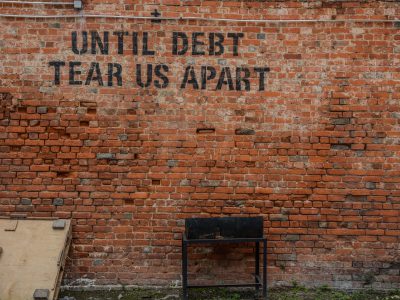
The corrosive effect of the ‘Trump Bump’