WP_Post Object
(
    [ID] => 1694
    [post_author] => 2
    [post_date] => 2020-04-10 17:36:04
    [post_date_gmt] => 2020-04-10 17:36:04
    [post_content] => In northern British Columbia, a female chef draws on her native heritage and introduces diners to local, pre-European cuisine.

Generations ago, Indigenous communities living in harsh environments found comfort and sustenance in a basic bread recipe. 

For many remote First Nations communities throughout North America, flour wasn’t available, so bread was made with ground-up roots, bear fat and berries to sweeten, it was then cooked in an open fire or wrapped around a stick to bake.

This bread, called bannock, changed over the years incorporating ingredients like flour, fat, and sugar that were rationed to people after the government forcibly removed them from their land. It was then fried and became an important staple at powwows. Indigenous people took the scraps of oppression and made something delicious with it.

Powwows are a meeting, a chance for Indigenous people to get together and showcase dancing, singing, artisan creations and spend time in cultural appreciation and celebration. They have also served as an act of powerful resistance against continuous attempts to destroy, legislate and remove Indigenous culture. They are a demonstration of pride.

Sharon Bond, who is from the Nooaitch Indian Band in Merritt, British Columbia, has made her “bannock and butter” from bringing this ancient food to modern diners and the public can’t get enough.

“Bannock was a survival bread that really brought communities together through celebrations and gatherings. And it was one of the roots of keeping people alive,” she says.

Bond owns Kekuli Cafe, which has become the first Indigenous-owned restaurant franchise in Canada. With two locations and a third set to open in the near future, Bond’s long-held desire to run her own restaurant has come to fruition. But it doesn’t stop there; by offering franchising opportunities, Bond is helping to empower another generation of Indigenous entrepreneurs to taste success with bannock too.

Indigenous youth can be supported from the time they are in high school. We need to bring entrepreneurs and business people into schools to teach and inspire youth, to bring out their ideas and to be creative and know that they can make their dream into a business. Mentors are needed,” she says.

She herself guides and empowers youth and aspiring business owners through an initiative called Futurpreneur and through monthly Indigenous Women Networking Sessions. She also sees mentorship as a cycle and continues to benefit from her own mentor, a successful restaurant owner, who she can talk to about any industry-specific questions she may have.

Her journey to becoming a restaurant owner was a long process, in part because she wanted the endeavor to be a success and took her time to design a winning product.

“It took a few years to do the business plan, we took our time to make sure that everything was going to be just right, the colors, the logo, the slogan. We just wanted to have a very strong business. It took time to get to that point and then when we finally opened our doors people thought we were a franchise which was pretty cool. So, I said, Well, we're not, but we will be now!”

One of the decisions she grappled with was the name for the cafe, she eventually found the word “Kekuli” in a book by James Teit, a Scottish anthropologist who wrote extensively about the people of the Interior Salish First Nations.

It’s the name for a winter dwelling, found across the Okanagan region, a house built into the ground to provide shelter and warmth. Pronounced ke-koo-lee, it seemed like the perfect moniker for the type of space she wanted to create, she registered the business name the very same day.

Even though the process of launching the business was a slow burn, Bond has been interested in cooking since she was a child, when she was making a mess in her mom’s kitchen and watching her bake cinnamon buns and bread. She remembers enjoying the smell of spices and recently found an old recipe book with a missing cover, the pages of which were decorated with her childish doodles and colorings.

One of her mom’s regular recipes was chili, which also features on Kekuli Cafe’s menu, although Bond says its quite a different recipe. A staple offered at powwows; chili is traditionally served atop a piece of bannock to catch all of the meaty juices.

Bread forms a part of almost every human culinary culture across the globe and Bond has often been told that her bannock reminds customers of other fry bread that they remember from their childhood, whether that was in China, Scotland or anywhere else across the world.

Different Indigenous communities across North America make their bannock to their own unique recipes, in fact, at Kekuli they have their own ancient and secret recipe.

Bannock fans will find that the familiar frybread taste replicated perfectly at Kekuli Cafe with regulars often praising the softness of the bannock. But you can also find a number of innovative menu items like dessert topped bannocks, BLTs and bannock-wich sandwiches.

“Time has evolved so now we've got flour and oil and cast iron pans and fryers. It’s bannock with a twist, you know a little bit more contemporary bannock,” she says.

That contemporary bannock topped with sweet treats remains very popular but the traditional bannock is favored by purists as are some of the sweet yet naturally Canadian flavors from the land like Saskatoon Berry, Maple Glaze, and Maple Walnut.

The restaurant’s slogan “Don’t Panic... We Have Bannock!” came about from one of the first customers who ran up to the counter worried that they may have sold out. Sharon reassured them by stating the now-famous line and they all broke into laughter.

Bond is an incredibly warm person who makes people feel at ease, no doubt due to her genuine care and concern for how others are feeling. One of the philosophies that Kekuli Cafe is built upon is that all her customers should feel acknowledged when they arrive.

“I wanted to open a restaurant for 20 years and I always thought ‘Oh I'm going to do this with my restaurant,’ I'm going to make sure everyone smiles and is acknowledged, you're not just someone who comes in and orders and sits down and that's it. You know, I engage with all my customers and I really felt that there wasn't enough compassion or empathy, it's important to make someone's day,” she says.

Bond is also humble and credits her success to the whole team. In fact, she was recently awarded the Indigenous Woman-Business Award of Excellence from The National Aboriginal Capital Corporation but was almost too shy to tell me. She admitted that she sometimes finds it difficult to enjoy her success without feeling like she’s bragging.

Where she excels, however, is in empowering other women to proudly and confidently promote themselves. A culture she is trying to develop in her local community through her Indigenous Women Networking Sessions. 

“I can see it becoming a very important networking group. I've been to other networking groups for women and sometimes I just feel out of place,  it doesn't seem to be me, I'm not a high heel wearing type person and everyone's all decked right out and I am more of a Doc Martens person!” she says.

Through mentorship, encouragement, and plenty of bannock, Bond is building a culture of shared success.
    [post_title] => In Canada, a female Indigenous chef popularizes local, pre-European cuisine
    [post_excerpt] => 
    [post_status] => publish
    [comment_status] => closed
    [ping_status] => open
    [post_password] => 
    [post_name] => mentoring-with-bannock-a-female-chef-popularizes-an-indigenous-dish
    [to_ping] => 
    [pinged] => 
    [post_modified] => 2026-09-17 23:33:26
    [post_modified_gmt] => 2026-09-17 23:33:26
    [post_content_filtered] => 
    [post_parent] => 0
    [guid] => http://conversationalist.org/?p=1694
    [menu_order] => 274
    [post_type] => post
    [post_mime_type] => 
    [comment_count] => 0
    [filter] => raw
)

In Canada, a female Indigenous chef popularizes local, pre-European cuisine

WP_Post Object
(
    [ID] => 1669
    [post_author] => 2
    [post_date] => 2020-03-27 03:07:35
    [post_date_gmt] => 2020-03-27 03:07:35
    [post_content] => What has been driving the harmful behaviors exhibited by some Christians in reaction to the coronavirus pandemic?

The World Health Organization worries, in a February 2 report about the spread of the COVID-19 virus, that an “infodemic,” i.e., “an over-abundance of information—some accurate, and some not,” is making the public feel that it’s difficult to find trustworthy sources and reliable guidance. The authors of the report seem to assume that most people want objectively reliable information. Unfortunately, far too many are looking not for objectively reliable information, but rather for “guidance” that corresponds with their political loyalties and ideological preconceptions.

In the United States, there are fundamentalist Christians who see institutions like the WHO and the Centers for Disease Control and Prevention as part of a “godless liberal” plot. Tony Spell, the Apostolic Pastor of Tabernacle Life Church in Baton Rouge, Louisiana, said: “The virus, we believe, is politically motivated.” He made this statement during a church service reportedly attended by 350 people on the evening of Tuesday, March 17, in defiance of a ban on gatherings of more than 50 people issued by Louisiana Governor John Bel Edwards.

Governor Edwards is a Democrat.

While CBS News reported that police told Spell the National Guard would break up any future gatherings at his church, a FOX News report quotes Louisiana National Guard Colonel Ed Bush denying that any such order has been issued. In any case, Life Tabernacle Church doubled down, bragging that it planned to bring 27 buses’ worth of area children to church on Sunday, March 22;  and, according to a public Facebook post by Tony Spell’s father Timothy, that they planned to host a blood drive on the same day. And the church followed through.

In a period of surging right-wing authoritarianism, defenders of democracy must not ignore the dangers posed by those who embrace “alternative facts.” Anti-intellectualism and pseudo-intellectualism are hallmarks of authoritarianism, and in the United States in particular, opposition to much modern science has come to define the mostly white, mostly Christian Republican Party. The problem, however, is global.

Independent Apostolic Christians like Spell are extremists even among extremists, but similar radical charismatic Christians are attaining ever more power and influence in a number of countries, including Uganda and Brazil, where these far-right Protestants represent strong-man President Jair Bolsonaro’s base. Meanwhile, Vladimir Putin’s Russia has emerged as the global standard bearer for international efforts to oppose women’s and LGBTQ Rights. Russia, too, is one of the countries in which authoritarian Christians have undermined efforts to stem the tide of the coronavirus pandemic.

Over the past few weeks, the coronavirus threat has dominated the news cycle, and quite a few stories about the reactions of churches—both responsible and irresponsible—have appeared. In the Orthodox Christian World, the Ecumenical Patriarchate of Constantinople—traditionally considered “first among equals” among the world’s Eastern Orthodox Churches—initially sent mixed messages; now, however, in a tacit rebuke to Russian and Greek Orthodox Christians’ insistence that “coronavirus cannot be transmitted by communion,” it has announced the cancellation of all services for laity within its jurisdiction. Here geopolitical tensions are in play, as the Putinist Russian Orthodox Church has increasingly defied the more moderate Constantinople in recent years.

Meanwhile, after calling the virus, or at least Democrats’ responses to it, a “hoax,” President Trump seemed to feel compelled to address COVID-19 in a more serious (if still dubious) manner, and, for a moment his white evangelical supporters seemed to be shifting with him, at least in some cases. Jerry Falwell, Jr., who at first declared that he would not shut down Liberty University, changed his mind. Pastor Robert Jeffress, leader of the influential megachurch First Baptist Dallas, has canceled physical church services, even going so far as to state that “every pastor and every church ought to follow the guidance to not assemble during this crisis.” But then President Trump oafishly declared that he wanted America’s economy reopened by Easter (April 12 this year for Protestants and Catholics), and Falwell called for Liberty students to return to campus after all, in sharp contrast to most universities essentially shutting down in order to slow the spread of the virus. Liberty University’s residential enrollment is around 13,500 students.

What has been driving the harmful behaviors exhibited by some Christians in reaction to the coronavirus pandemic? I turned to several experts on aspects of the crisis for their assessments of Christian defiance of public health measures.

Sarah Kendzior, an expert in authoritarianism, notes in fairness that “there’s a rational component” to the fear of government malfeasance and overreach, which underlays the paranoia of American far-right actors. She sees “a combination of defiance and obedience” in right-wing Christians’ reactions to the pandemic, and is spot-on in describing Trump’s style of demagoguery as “much more similar to a televangelist than to any previous president.” Kendzior’s observation goes some way toward illustrating why white evangelicals tend to be Trump supporters.

Obedience to authority is certainly emphasized as a virtue among authoritarians, and the Christian Right is no different in this regard. However, the authority in question must conform to their white supremacist patriarchal social hierarchy in order for them to consider it legitimate. Hence the “defiance of what they think of as evil liberal officials telling them what they can’t do,” as seen, for example, in former Alabama Supreme Court Chief Justice Roy Moore calling the inclusion of restrictions on church services in public health responses to the pandemic “tyranny.” When asked about the parallels between right-wing American Christians and the Russian Orthodox Church with respect to coronavirus, Kendzior found them unsurprising.

André Gagné, a former charismatic pastor and current Associate Professor of Theological Studies at Concordia University in Montreal, offered some insights into why charismatic believers are so vocal in defying the imposition of public health measures to contain the spread of coronavirus. He maintains that we must understand charismatic Christians’ defiance in terms of their theology of “spiritual warfare” and the “victorious eschatology” espoused by some charistmatics, i.e., “the idea that the church will be victorious before the second coming of Christ.”

According to Gagné, “Some neo-charismatics believe that ‘end-time’ Christians will be able to heal people from plagues, diseases, or any other physical conditions, and even take dominion over entire hospitals, healing every patient in them by laying hands on the building.” Such theology is, of course, not benign. “When people die, these ministers will find a way to rationalize the consequences, saying that the Church is also called to go through a time of tribulation and persecution, and that God is somehow sifting his Church for the Second Coming of Christ.”

Also in play is Christian nationalism, a phenomenon that sociologists Andrew L. Whitehead and Samuel L. Perry have found to be predictive of Trump support. Whitehead was kind enough to speak with me about the issue and about his forthcoming research with Perry and Joseph O. Baker, which shows how anti-science views in the United States are intimately intertwined with Christian nationalism. Noting that “Christian nationalism is a threat to a pluralistic democratic society,” an issue I have also written about for both The Conversationalist and Religion Dispatches, Whitehead observes that Christian nationalists “legitimate their desires for the country in the will of the Christian God. This severely inhibits any chance or even desire for compromise.”

But how is this related to the kind of science denial we find in right-wing Christian responses to the coronavirus pandemic? Whitehead summarizes some of the key findings from his forthcoming paper with Perry and Baker as follows:

We find consistent evidence that Christian nationalism—a desire to see a particularistic and exclusive version of Christian symbols, values, and policies privileged and enshrined in US civil society—is a strong predictor about Americans’ attitudes toward science. In fact, the effect of political conservatism on skepticism about the moral authority of science is mediated through Christian nationalism, meaning that political conservatives are more likely to be skeptical of science because they are more likely to be Christian nationalists.

The conclusion of the new paper puts it more simply: “Christian nationalism is many things, but above all it is an effort to (re)assert the dominant moral and cultural authority of a white, native-born, straight, masculine, and Christian social order. Likewise, disputes about ‘science and religion’ are primarily conflicts over moral and cultural order.” We can only hope that the empirical demonstration of such connections will prove useful in the struggle for a more equitable democratic future for reasonable believers and non-believers alike. Charismatic and evangelical Christians represent, after all, varieties of Christian fundamentalism, and fundamentalism is a constant source of disinformation. Indeed, fundamentalism is incompatible with democracy, yet for the most part the American press remains deferential to authoritarian Christians. That needs to change if we have any hope of stemming the influence of the radical right-wing Christians Trump has surrounded himself with. As has become clear, they threaten not only our human rights, but also our public health. [post_title] => Authoritarian Christians are deliberately undermining the public health response to coronavirus [post_excerpt] => In a period of surging right-wing authoritarianism, defenders of democracy must not ignore the dangers posed by those who embrace “alternative facts.” [post_status] => publish [comment_status] => closed [ping_status] => open [post_password] => [post_name] => authoritarian-christians-are-deliberately-undermining-the-public-health-response-to-coronavirus [to_ping] => [pinged] => [post_modified] => 2026-09-16 23:07:08 [post_modified_gmt] => 2026-09-16 23:07:08 [post_content_filtered] => [post_parent] => 0 [guid] => http://conversationalist.org/?p=1669 [menu_order] => 276 [post_type] => post [post_mime_type] => [comment_count] => 0 [filter] => raw )

Authoritarian Christians are deliberately undermining the public health response to coronavirus

WP_Post Object
(
    [ID] => 1659
    [post_author] => 2
    [post_date] => 2020-03-13 06:44:37
    [post_date_gmt] => 2020-03-13 06:44:37
    [post_content] => With environmentally conscious, humane butchery, Hannah Miller stakes a position between factory farming and veganism.

Picture a butcher and what do you see?

Perhaps a burly mustachioed man swinging a meat cleaver into a carcass. Hacking away, smeared in blood, working in a quick and inelegant fashion. Heaving body parts up onto his thick shoulder and then slamming them down onto a cutting table.

That out of date image persists but at a New Zealand company, aptly named “A Lady Butcher,” owner Hannah Miller does things quite differently. First of all, there’s no music blaring and no loud power tools or machinery running. In fact, it’s rather quiet—Zen-like, even. 

Miller, originally from Portland, Oregon, practices a type of butchery called seam cutting. It’s careful, precise work where every part of the animal is used. Miller describes this nose to tail work as “mindful” and finds it peaceful.

“When it's just you and a knife you have to pay attention to what you're doing. The seams and the muscles tell you what to do, it's very obvious where to cut. You can't be joking around and having a laugh and singing to music because you'll miss it, you'll miss the intricacies and the detail of that style of butchery, it's that mindful practice, I call it the Zen of butchery,” she says.

Before learning to butcher in London, Miller was a culinary student in New York. After a lecture delivered by world-famous chefs Anthony Bourdain and Fergus Henderson, she was inspired to make the move to the United Kingdom and found that butchery and cooking go hand in hand.

“They're completely intertwined, I don't think you can have one without the other,” she says.

The more butchers understand about the restaurant industry the better they can respond to operational matters like creating workarounds to offer little-used cuts of meat to prevent waste. For instance, when a trend for lamb rumps meant that restaurants might require dozens of lambs a week but were only using one part of the animal for their signature dish.

Practically sharing information and skills also means that butchers can better educate customers on the cuts of meat they need to create the recipe they have in mind. Miller says she would challenge butchers to go home and cook a particular cut and then have them share their experience with the crew the next day.

Before settling in New Zealand, Miller had traveled all over the world always finding that butchers were in short supply. When she landed in New Zealand at dawn, she had her first interview and had secured a job by lunchtime. 

Despite New Zealand traditionally having a meat-heavy diet, with dinner often called “meat and three veg,” Miller was surprised to discover that the majority of cured meats in New Zealand were imported.

A Lady Butcher began to provide homegrown Pancetta, Prosciutto, and Bresaola using grass-fed lamb, local free-range pork, and wagyu, from First Light Farms.  

Sharing meat education continues to be one of the most important parts of Miller’s business philosophy. She gives workshops to chefs in restaurants in Auckland, teaching them how to prepare different cuts to serve in order to use the animal economically. This is a better way for the restaurant to maximize profits and introduce customers to new cuts, but it also serves to reinforce her commitment to less wasteful meat production.

“We've chosen to take an animal for our own nourishment, so absolutely nothing can go to waste. I make sure the bones are perfectly clean, that everything's trimmed properly, part of the whole process is being in the moment, but also ultimately it's about respecting the animal,” she says.

She has also spread that message of education by offering workshops to chefs and in April when her new restaurant, Churly’s Brew Pub & Eatery, opens members of the public will be able to sign up for butchery classes too. This new venture will be a leader in nose to tail restaurants, changing the menu up regularly, sometimes even during service, to ensure all meat cuts are utilized and that nothing goes to waste.

From a 90-kilo animal, Miller says only about 150g should be thrown away. But she says to do this you really need to focus. “You can use absolutely everything, but you need to pay attention. When I teach butchery, I set out the rules and, safety is first, second is nothing, absolutely nothing goes in the bin unless I put it there.”

She says that the skill of the butcher determines much of the waste. Trimming fat from muscles meticulously results in a much higher yield of usable meat. She then renders down all the fat and bones for broths and even dehydrates sinew to make dog treats. Lately, she has also been giving away bones and skulls for people to decorate.

Her message of sustainability may at first glance seem to be at odds with her job. After all, veganism is often touted as the cure for much of the earth’s problems. I asked her if she ever thinks about the impact of meat production on the planet and she said it’s something that she considers daily. 

“It's not really so much about eating meat or not eating meat, it's about eating local, and seasonally. You don't need to eat a tomato in December, if you live in the northern hemisphere,” she says.

 Her remedy is that we all need to eat better quality meat from farmers that we know and trust, returning to a time before supermarkets and discount stores disrupted the relationship consumers had with the people who produced their food.

“Eat meat, but eat less of it, eat a better-quality meat. My husband and I eat meat most days. This week we had beautiful sausages, on the barbecue, I know the farm it came from and we had one sausage and then the rest of the plate was full of cauliflower salad and beautiful guac because right now we have tons of avocados.  We should first be eating local, and secondly, eating better but less.”

Developing a relationship with your local farm is an important step in becoming a more conscious food consumer, as I discovered when I first met Miller at the Taurapa Station in Napier, on New Zealand’s North Island. She gave a butchery demonstration using lamb from Atkins Ranch, who raise 100 percent grass-fed animals that wander and graze over beautiful pasture lands; it’s about as idyllic as farming can be.

In that way, New Zealand which is often described as 18 hours ahead and 20 years behind the rest of the world, really is a pioneer. Miller explained to me that the resurgence of interest in local foods and the proliferation of trendy farmers’ markets seen in the United States has always been part of the food culture in New Zealand.

Sustainability goes further for Miller though, it’s an entire way of life where she aims for balance. “We say regeneration instead of sustainability. Because regeneration is the idea of giving back. So, you're not just taking you actually make sure that this circle is completed. Think about it as a circle, instead of an A-Z,” she says.

Miller knows her customers care about where their meat comes from and how it was raised. At her new restaurant and pub, Churly’s, opening in Auckland, she’ll continue this education.

The restaurant takes its name from a popular kiwi expression. “Chur” can mean thank you, cool, OK, and a range of other expressions. It’s also the name of the mascot at her husband, Andrew Child’s, brewery Behemoth Brewing Company, which is a big part of the new brand.

To help with her increased workload, Miller has just taken on an assistant, another lady butcher, who sent her a message on Instagram asking to be mentored.

“I love that the people approaching me to come work for me and to learn and to invest their time are women. These women that I’ve  worked with have said how empowered they feel, they're just so excited and they have that feeling that they can take on the world and it just fills me with so much pride. I will definitely teach anyone and have a great time with it but there's something special about being a lady butcher,” she says.


    [post_title] => Nose to tail with a lady butcher
    [post_excerpt] => For those who avoid meat because they don't wish to participate in cruel factory farming methods, New Zealand butcher Hannah Miller offers a different approach.
    [post_status] => publish
    [comment_status] => closed
    [ping_status] => open
    [post_password] => 
    [post_name] => nose-to-tail-with-a-lady-butcher
    [to_ping] => 
    [pinged] => 
    [post_modified] => 2026-09-16 23:04:52
    [post_modified_gmt] => 2026-09-16 23:04:52
    [post_content_filtered] => 
    [post_parent] => 0
    [guid] => http://conversationalist.org/?p=1659
    [menu_order] => 278
    [post_type] => post
    [post_mime_type] => 
    [comment_count] => 0
    [filter] => raw
)

Nose to tail with a lady butcher

WP_Post Object
(
    [ID] => 1646
    [post_author] => 2
    [post_date] => 2020-03-05 20:16:47
    [post_date_gmt] => 2020-03-05 20:16:47
    [post_content] => The tech executive turned data justice warrior is celebrated as a truth-telling hero, but there's something a bit too smooth about this narrative arc.

A few months ago, I was contacted by a senior executive who was about to leave a marketing firm. He got in touch because I’ve worked on the non-profit side of tech for a long time, with lots of volunteering on digital and human rights. He wanted to ‘give back’. Could I put him in touch with digital rights activists? Sure. We met for coffee and I made some introductions. It was a perfectly lovely interaction with a perfectly lovely man. Perhaps he will do some good, sharing his expertise with the people working to save democracy and our private lives from the surveillance capitalism machine of his former employers. The way I rationalized helping him was: firstly, it’s nice to be nice; and secondly, movements are made of people who start off far apart but converge on a destination. And isn’t it an unqualified good when an insider decides to do the right thing, however late?

The Prodigal Son is a New Testament parable about two sons. One stays home to work the farm. The other cashes in his inheritance and gambles it away. When the gambler comes home, his father slaughters the fattened calf to celebrate, leaving the virtuous, hard-working brother to complain that all these years he wasn’t even given a small goat to share with his friends. His father replies that the prodigal son ‘was dead, now he’s alive; lost, now he’s found’. Cue party streamers. It’s a touching story of redemption, with a massive payload of moral hazard. It’s about coming home, saying sorry, being joyfully forgiven and starting again. Most of us would love to star in it, but few of us will be given the chance.

The Prodigal Tech Bro is a similar story, about tech executives who experience a sort of religious awakening. They suddenly see their former employers as toxic, and reinvent themselves as experts on taming the tech giants. They were lost and are now found. They are warmly welcomed home to the center of our discourse with invitations to write opeds for major newspapers, for think tank funding, book deals and TED talks. These guys – and yes, they are all guys – are generally thoughtful and well-meaning, and I wish them well. But I question why they seize so much attention and are awarded scarce resources, and why they’re given not just a second chance, but also the mantle of moral and expert authority.

I’m glad that Roger McNamee, the early Facebook investor, has testified to the U.S. Congress about Facebook’s wildly self-interested near-silence about its amplification of Russian disinformation during the 2016 presidential election. I’m thrilled that Google’s ex-‘design ethicist’, Tristan Harris, “the closest thing Silicon Valley has to a conscience,"(startlingly faint praise) now runs a Center for Humane Technology, exposing the mind-hacking tricks of his former employer. I even spoke —critically but, I hope, warmly—at the book launch of James Williams, another ex-Googler turned attention evangelist, who “co-founded the movement”of awareness of designed-in addiction. I wish all these guys well. I also wish that the many, exhausted activists who didn’t take money from Google or Facebook could have even a quarter of the attention, status and authority the Prodigal Techbro assumes is his birth-right.

Today, when the tide of public opinion on Big Tech is finally turning, the brothers (and sisters) who worked hard in the field all those years aren’t even invited to the party. No fattened calf for you, my all but unemployable tech activist. The moral hazard is clear; why would anyone do the right thing from the beginning when they can take the money, have their fun, and then, when the wind changes, convert their status and relative wealth into special pleading and a whole new career?

Just half an hour flipping through my contacts produced half a dozen friends and acquaintances who didn’t require a ‘road to Damascus’ conversion to see what was wrong with big tech or the ways governments abuse it. Nighat Dad runs the Digital Rights Foundation in Pakistan, defending online freedom of expression and privacy for women, minorities and dissidents. That’s real courage. Gus Hosein has worked in tech and human rights for over 20 years, runs Privacy International, the UK-based non-profit, and is the most visionary thinker I know on how to shake up our assumptions about why things are as they are.  Bianca Wylie founded the volunteer-run Open Data Institute Toronto, and works on open data, citizen privacy and civic engagement. The “Jane Jacobs of the Smart Cities Age,” she’s been a key figure in opening up and slowing down Alphabet’s Sidewalk Labs juggernaut in Toronto. Aral Balkan runs Small Technology Foundation and works on both the tools and the policies to resist surveillance capitalism. Unafraid of being unpopular, even with other activists, Balkan freely hammers rights organizations or conferences for taking big tech’s sponsorship money while criticizing the companies’ practices. In the western Balkans, hvale vale works tirelessly and cheerfully on women's rights, sexual rights and the political and practical path to a feminist internet. Robin Gross,  a Californian intellectual property lawyer, could have put her persistence and sheer pizazz to work defending big entertainment companies, but instead she’s worked for decades against the copyright maximalism that strangles artists’ creativity and does nothing to increase their incomes. I would love to hear their voices amplified, not (just) the voices of those who took a decade and more to work out the rottenness at the core of big tech.

Ex-Google lobbyist Ross Lajeunesse left the company in 2019 over its censored search engine for China and also because of homophobic, sexist and racist work practices. He’s now running for a Democratic senate nomination, and recently wrote a classic of the ‘scales have fallen from my eyes’ genre, called “I Was Google’s Head of International Relations. Here’s Why I Left.” Its lede is “The company’s motto used to be “Don’t be evil.” Things have changed.”

Really? Has Google really changed? Lajeunesse joined in 2008, years into Google’s multi-billion dollar tax avoidance, sexist labor practices and privacy hostility and continued to work there through the years of antitrust fines, misuse of personal health data, wage fixing, and financially pressuring think tanks. Google didn’t change. It just started treating some of its insiders like it already treated outsiders. That only looks like radical change if you’ve never thought too hard about what you are doing and to whom.

One hundred thousand people work for Google/Alphabet; some of them have much more power than others. The point isn’t whether Lajeunesse is or isn’t culpable for the many acts of the enormous company he represented—as its chief lobbyist in Asia for several years—it’s that of all the people who spent the decade of 2010-20 working thanklessly to expose and reduce the firm’s monopolistic abuse and assault on global privacy, it’s the ex-lobbyist who gets our attention now.

We all need second chances. Even if we don’t need those fresh starts ourselves, we want to live in a world where people have a reason to do better. But the prodigal tech bro’s redemption arc is so quick and smooth it’s barely a road bump. That’s because we keep skipping the most important part of the prodigal son story—where he hits rock bottom. In the original parable, the prodigal son wakes up in a pig sty, starving, and realizes his father’s servants now live better than he does. He resolves to go home to the people and place he did not value or respect before. He will beg to be one of his father’s servants. He accepts his complete loss of status. But instead of chastising and punishing his prodigal son, the rejoicing father greets him joyfully and heads off the apology with a huge party. It’s a great metaphor for how to run a religion, but a lousy way to run everything else.

Prodigal tech bro stories skip straight from the past, when they were part of something that—surprise!—turned out to be bad, to the present, where they are now a moral authority on how to do good, but without the transitional moments of revelation and remorse.  But the bit where you say you got things wrong and people were hurt? That’s the most important part. It’s why these corporatized reinventions feel so slick and tinny, and why so many of the comments on Lajeunesse’s train wreck post on Medium were critical. The journey feels fake. These ‘I was lost but now I’m found, please come to my TED talk’ accounts typically miss most of the actual journey, yet claim the moral authority of one who’s ‘been there’ but came back. It’s a teleportation machine, but for ethics.

(While we’re thinking about the neatly elided parts of the prodigal tech bro story, let’s dwell for one moment on the deletion of the entire stories of so many women and people of color barely given a first chance in Silicon Valley, let alone multiple reinventions.)

The only thing more fungible than cold, hard cash is privilege. The prodigal tech bro doesn’t so much take an off-ramp from the relatively high status and well-paid job he left when the scales fell from his eyes, as zoom up an on-ramp into a new sector that accepts the reputational currency he has accumulated. He’s not joining the resistance. He’s launching a new kind of start-up using his industry contacts for seed-funding in return for some reputation-laundering.

So what? Sure, it’s a little galling, but where’s the harm?

Allowing people who share responsibility for our tech dystopia to keep control of the narrative means we never get to the bottom of how and why we got here, and we artificially narrow the possibilities for where we go next. And centering people who were insiders before and claim to be leading the outsiders now doesn’t help the overall case for tech accountability. It just reinforces the industry’s toxic dynamic that some people are worth more than others, that power is its own justification.

The prodigal tech bro doesn’t want structural change. He is reassurance, not revolution. He’s invested in the status quo, if we can only restore the founders’ purity of intent. Sure, we got some things wrong, he says, but that’s because we were over-optimistic / moved too fast / have a growth mindset. Just put the engineers back in charge / refocus on the original mission / get marketing out of the c-suite. Government “needs to step up”, but just enough to level the playing field / tweak the incentives. Because the prodigal techbro is a moderate, centrist, regular guy. Dammit, he’s a Democrat. Those others who said years ago what he’s telling you right now? They’re troublemakers, disgruntled outsiders obsessed with scandal and grievance. He gets why you ignored them. Hey, he did, too. He knows you want to fix this stuff. But it’s complicated. It needs nuance. He knows you’ll listen to him. Dude, he’s just like you…

I’m re-assessing how often I help out well-established men suddenly interested in my insights and contact book. It’s ridiculous how many ‘and I truly mean them well’s I cut out of this piece, but I really do, while also realizing I help them because they ask, or because other people ask for them. And that coffee, those introductions, that talk I gave and so much more of my attention and care—it needs to go instead to activists I know and care about but who would never presume to ask. Sometimes the prodigal daughter has her regrets, too.

So, if you’re a prodigal tech bro, do us all a favour and, as Rebecca Solnit says, help “turn down the volume a little on the people who always got heard”:
  • Do the reading and do the work. Familiarize yourself with the research and what we’ve already tried, on your own time. Go join the digital rights and inequality-focused organizations that have been working to limit the harms of your previous employers and – this is key – sit quietly at the back and listen.
  • Use your privilege and status and the 80 percent of your network that’s still talking to you to big up activists who have been in the trenches for years already—especially women and people of colour. Say ‘thanks but no thanks’ to that invitation and pass it along to someone who’s done the work and paid the price.
  • Understand that if you are doing this for the next phase of your career, you are doing it wrong. If you are doing this to explain away the increasingly toxic names on your resumé, you are doing it wrong. If you are doing it because you want to ‘give back,’ you are doing it wrong.
Do this only because you recognize and can say out loud that you are not ‘giving back’, you are making amends for having already taken far, far too much.   [post_title] => The Prodigal Techbro [post_excerpt] => Prodigal tech bro stories skip straight from the past, when they were part of something that—surprise!—turned out to be bad, to the present, where they are now a moral authority on how to do good, but without the transitional moments of revelation and remorse.   [post_status] => publish [comment_status] => closed [ping_status] => open [post_password] => [post_name] => the-prodigal-techbro [to_ping] => [pinged] => [post_modified] => 2026-09-16 23:03:49 [post_modified_gmt] => 2026-09-16 23:03:49 [post_content_filtered] => [post_parent] => 0 [guid] => http://conversationalist.org/?p=1646 [menu_order] => 279 [post_type] => post [post_mime_type] => [comment_count] => 0 [filter] => raw )

The Prodigal Techbro

WP_Post Object
(
    [ID] => 1616
    [post_author] => 2
    [post_date] => 2020-02-13 17:55:07
    [post_date_gmt] => 2020-02-13 17:55:07
    [post_content] => For the Christian Right, religious freedom means their right to discriminate against people who don't share their beliefs. 

In Bible class at my evangelical high school, I was taught that pluralism is “heresy” and must be rejected. This was a more formal way of conveying what I had already learned as a small child— that it was the task of all Christians to convert everyone to Christianity, and that the world would be a much better place if everyone were Christian.

A person who is committed to the liberal democratic project will probably be appalled at the idea of teaching children to desire a world in which everyone follows the same religion. Many, however, do not share that reaction—and that is because Christian hegemony is so smoothly woven into the fabric of American life that they fail to recognize it. Christian privilege and Christian supremacism are very real; if we are ever going to see the United States live up to the democratic potential contained in the higher ideals of the founding fathers, however much they failed to realize those ideals, we must be as committed to its dismantling as we are to that of white supremacism.

Pluralism: What’s at stake

Pluralism, of course, refers to people of diverse and conflicting beliefs coexisting peaceably, linked by their adherence to a shared social contract which commits members of different groups to treating others fairly and accommodating them equally in the public square. Outside academic settings, however, pluralism is little discussed these days—except by right-wing Christians. That’s a problem: failing to articulate a liberal understanding of pluralism will allow the authoritarian Christian Right, already advantaged in what I recently argued in Playboy Magazine is our de facto Christian public sphere, to drag the country ever further rightward. Liberals do not feel comfortable discussing the place of religion in the public sphere, says Jeremy Forest Price, assistant professor of education and chair of the Jewish Faculty and Staff Council at Indiana University - Purdue University Indianapolis. Avoiding the topic, however,  has unintended consequences. “It allows those who seek to push their own religious agendas, particularly evangelical Christians, Christian dominionists*, and Christian nationalists, to [convince the public] not only to support their beliefs and practices over others, but to make the public sphere itself mirror their beliefs and practices.” Because they reflexively support the separation of church and state, and therefore may not feel an innate sense of urgency to articulate its value, liberals and progressives run the risk of ceding the national discourse on pluralism to the Right. Fortunately, there is an increasingly visible broad-based movement, including both believers and non-believers, who oppose the Christian nationalism that is ascendant in the Trump era. They are working actively to reclaim the meaning of religious freedom from those who would define it as the right to discriminate against members of othered groups on the basis of “sincerely held religious beliefs,” even at the expense of equal accommodation in the public square. I contend that we need similarly to reclaim the liberal value of pluralism. Paul Rosenberg, a writer and activist who has documented and championed this movement, says that pluralism requires an openness that religious fundamentalists lack, and when it comes to building and participating in a functional democratic society, what people do is more important than their espoused beliefs. “It is in doing the work that we discover what we have in common,” he said, noting that the work itself leads to an appreciation of our differences. I asked other stakeholders to comment on what pluralism means to them in theory and practice, hoping to encourage further discussion of this critical civic concept among those of us who reject the Republican Party’s authoritarianism. To understand the stakes, we need to take a brief look at the state of the discourse around pluralism on the Christian Right. According to reactionary Catholic scholar Brad Gregory, “hyper-pluralism” is to blame for everything that ails the modern West, and the solution would seem to be a return to some sort of imagined Catholic unity. This would undoubtedly entail many horrors for non-Christians, women, and members of the LGBTQ community. Russell Moore , the president of the Southern Baptist Convention’s Ethics & Religious Liberty Commission, is among those conservative Christians who dismiss pluralism as “heresy.” Sohrab Ahmari, the radical Catholic writer, unabashedly argues that conservative Christians should “enforce our order and our orthodoxy.” Attorney General William Barr seems to share this view: in a speech he delivered at Notre Dame University this past October, Barr decried “militant secularists” who were supposedly “behind a campaign to destroy the traditional moral order.” C. Colt Anderson, a Catholic theologian and professor of religion at Fordham University, was so appalled by the extremism in Barr’s remarks that he called him “a threat to American democracy.” There are other conservative Christian commentators, however—people like evangelical historian John Fea and David French, a frequent contributor to The National Review—who embrace a concept of pluralism very much of a piece with the Christian Right’s understanding of “religious liberty” as their liberty to discriminate against others, including Christians with whom they disagree. Fea and French are public figures who enjoy a degree of respectability; it is dangerous to cede our contemporary understanding of pluralism exclusively to them and to those even further to the right. The Christian Right already dominates sex education in our public schools and has effectively ended abortion in numerous states. Christian hospitals regularly deny women and queer people life-saving healthcare on the basis of strictly religious views that many of their patients do not share. Deregulated homeschooling, pushed above all by conservative Christians, allows abuse and fundamentalist indoctrination to flourish. If liberals will not argue the meaning of pluralism and religious freedom precisely as liberal values, the Christian Right will only subject more and more of American life to its harmful theocratic agenda. So what might a liberal pluralism predicated on robust separation of church and state and equal accommodation in the public square look like? And how might we navigate the tensions not just between representatives of different confessions, but also between believers and non-believers?

Liberal pluralism in theory and practice

Non-religious voters now make up the single largest defined bloc within the Democratic Party. But a large and significant part of the party’s base is composed of Christians—especially African-American Christians. It is self-evidently necessary for progressive atheists and agnostics to build coalitions with progressive believers and to work together toward the common good. Loud voices in the visible atheist community, like the prominent neuroscientist Sam Harris and Richard Dawkins, the evolutionary biologist and author, often alienate not only religious believers, but also women and people of color with remarks that are Islamophobic, racist, and misogynist. Progressive atheists who are interested in coalition building must work to repair the bridges that these men and their trollish online fans have damaged. Tom Van Denburgh, communications director for American Atheists, acknowledged that “people within the atheist community sometimes engage in anti-religious rhetoric,” but attributes this anger in most cases to their having been harmed by religion. But he agrees that justifiable anger at religious privilege, which in the United States primarily pertains to Christians, must not become an excuse to dehumanize all religious people. “While there’s still a lot of work to do, the atheist community has become increasingly inclusive and more concerned about how religious privilege impacts different groups in disparate ways. And that means advocating for women, LGBTQ people, members of minority faith communities, and people of color.” He added: “Integral to [our] work is building bridges with religious allies when we find common ground.” American Atheists can point to practical achievements in this regard, notably the launch of BlitzWatch Coalition, a project dedicated to opposing the Christian nationalist agenda of Project Blitz, which seeks to impose hardline Christian values on every aspect of American political and civil society. Van Denburgh sees the work involved in BlitzWatch Coalition as authentic pluralism in practice, and BlitzWatch Coalition’s member organizations include the Interfaith Alliance and the Religious Coalition for Reproductive Choice (RCRC). For Rev. Dr. Cari Jackson, RCRC’s Director of Spiritual Care and Activism, pluralism is associated above all with compassion. “To be compassionate requires decentering or stepping outside one’s own experiences in order to give priority to the experiences of others,” Jackson said. This task is more challenging, she added, for those who “are part of any privileged hegemony” because of “a limitation of experience and exposure.” Christianity represents one of these hegemonies, said Jackson. “For interfaith dialogues to be healthy and viable, now is a critical time for atheist perspectives to be included,” she said, adding: “The path to social harmony and national unity is paved by compassion for and a genuine valuing of the stranger, those whose beliefs, practices, and so on, are different from those in the social, religious or political majority.” Jeremy Forest Price, who is involved in interfaith work, agrees with Jackson on the importance of clear-eyed honesty regarding power dynamics and the importance of representation. “An emphasis on pluralism will help open up the discussion around religion (and worldviews, spiritualities, and the absence of religion) so that we can trace the ways that specific religious ideologies influence our shared public spaces,” he said. Such tracing must include facing the impact of Christian supremacism in the United States, which means breaking the social taboo on criticizing any large Christian group. The focus of much of my own work in recent years has been on facilitating the collective visibility of ex-evangelicals and others who have left fundamentalist religion, and on advocating for us to be heard in our national discussions of religion and politics. Efforts to halt America’s lurch into authoritarianism will fail unless we shift the national discourse on Christianity. I believe that by devoting some serious thought and effort to pluralism, both theory and practice, those of us who support democracy and human rights might succeed in nudging the American public sphere toward the kind of discourse that will aid us in the the realization of this country’s democratic potential. * While there are a number of specific fundamentalist Christian ideologies whose adherents refer to themselves as Dominionists (for example, Seven Mountains Dominionism), broadly defined, Christian dominionism simply refers to the beliefs and politics of Christians who pursue social domination over members of other groups by enshrining their religious beliefs in coercive law. [post_title] => The only way to save democracy from the Christian Right is by fighting for pluralism [post_excerpt] => “The path to social harmony and national unity is paved by compassion for and a genuine valuing of the stranger, those whose beliefs, practices, and so on, are different from those in the social, religious or political majority.” [post_status] => publish [comment_status] => closed [ping_status] => open [post_password] => [post_name] => the-only-way-to-save-democracy-from-the-christian-right-is-by-fighting-for-pluralism [to_ping] => [pinged] => [post_modified] => 2026-09-16 22:59:49 [post_modified_gmt] => 2026-09-16 22:59:49 [post_content_filtered] => [post_parent] => 0 [guid] => http://conversationalist.org/?p=1616 [menu_order] => 282 [post_type] => post [post_mime_type] => [comment_count] => 0 [filter] => raw )

The only way to save democracy from the Christian Right is by fighting for pluralism

WP_Post Object
(
    [ID] => 1598
    [post_author] => 2
    [post_date] => 2020-02-07 17:52:00
    [post_date_gmt] => 2020-02-07 17:52:00
    [post_content] => One of the world's most financially successful singers is a recluse who never performs, rarely gives interviews, and declines to play the role of a celebrity.

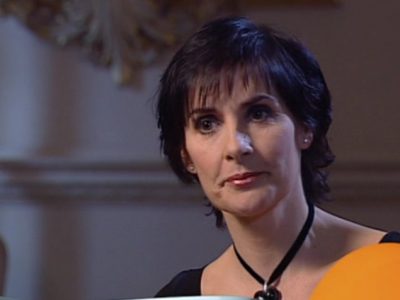
Enya, the Irish singer-musician, is perhaps one of the most mocked and memed artists of our time. Her body of work is often dismissed as New Age, a label she has disavowed. To many, her songs are the aural equivalent of astrology: mystical and fun, but lacking substance. Familiar tracks like “Only Time” provide ambience at yoga retreats, LARPs, facials, and tarot card readings. The singer has a reputation for being a bit of a recluse, rarely making public appearances or granting interviews. Music critics often offer muted or grudging praise for her albums, but they don’t take her seriously. I, however, love Enya—and not ironically.

When I was growing up, my dad often assumed the role of school chauffeur and minivan DJ. His taste was (and remains) eclectic; during those drives, he played everything from The Moody Blues, to German musical project Enigma, to ambient techno from the now-defunct 90s website mp3.com. Enya was always on heavy rotation and, as a result, still occupies a special place in my heart and on my Spotify playlists. 

My deep affection for Enya's music is rooted in more than just nostalgic childhood memories. Her ethereal songs are a testament to the worth of gentleness and beauty, qualities that have historically been categorized as feminine and, therefore, of little value. In a world where obsessive fans have endangered the lives of female musicians, her choice to live a private life is a salutary example; setting boundaries is an act of self-preservation and an empowering choice, not necessarily an eccentric one. It is also a mute but radical demonstration that professional success as a musician can be achieved without living the life of a celebrity, perpetually in the spotlight. As one of the best-selling artists in the world, Enya shows us there is another way to achieve wealth and fame.

Born Eithne Pádraigín Ní Bhraonáin, Enya began her music career singing with Clannad, her family’s award-winning Irish music band. In 1982, she became a solo artist in partnership with Nicky Ryan, who she met when he was Clannad’s sound engineer, and his wife Roma, a lyricist; they remain her creative team to this day. The three began experimenting with looping harmonies, eventually creating what is now Enya’s signature layered sound. Unless otherwise noted in song credits, Enya performs all the vocals for her music and plays all the instruments. Known for her facility with languages, she has recorded songs in Gaelic, Latin, Japanese, and Sindarin—the latter an Elvish language invented by J.R.R. Tolkien.

The music industry tends to expect that female artists will offer up their private lives for public consumption, but Enya refuses to play the celebrity game. Instead she lives alone in Manderley Castle, the Dublin-area Victorian mansion named for the house in Daphne Du Maurier's novel Rebecca. She never tours, rarely performs, and spends years crafting each album.

[caption id="attachment_1601" align="aligncenter" width="640"] Manderley Castle, Enya's mansion in Killiney.[/caption]

On the rare occasions she sits for interviews, Enya frequently points out that fame and success are not synonymous. In a 2015 profile for BuzzFeed she notes, “There’s no rulebook that says, ‘Your music is successful; you must now become famous.’” She remains unwaveringly committed to the integrity of her music, and isn’t afraid to say “no” to even the most tempting offers. She famously declined to compose the score for “Titanic,” and turned down an invitation to speak at Harvard. In an interview for The Irish Times, she explains, “I just did things that I wanted to do.”

Rooted in Celtic, classical, folk, and choral traditions, Enya’s music has a timeless quality. I can imagine someone cleansing a room with sage and crystals to "The Memory of Trees" in 2020 as easily as I can channel the image of fourteenth-century women singing the Gaelic lyrics of "Ebudæ" while dancing in a misty green field. Enya’s body of work is both beautiful and deeply, wonderfully weird. 

Despite her refusal to play the role of celebrity, Enya is by all objective standards a superstar. She is one of the best-selling musicians in the world, surpassing even Nirvana in album sales. She’s a four-time Grammy Award winner, and has been nominated for an Academy Award and a Golden Globe. The eclectic range of artists who have sampled her music include The Fugees, Panda Bear, Diddy, and Meek Mill; her music has provided the soundtracks for countless commercials and movies, and inspired artists from Weyes Blood to Nicki Minaj. Enya’s music has spent over five years in the number one spot on the Top New Age Albums chart. (Check it out, she’s still there.) 

“There isn't another modern artist who can stay holed up with her cats in her castle (next door to Bono's!) watching “Breaking Bad” and still sell 23.8 million albums in the United States alone,” writes Melissa Locker in a profile for NPR. In 2017, VICE described her as “a musician capable of selling the unsellable”—spiritual, synth-infused choral music. In a 1989 review in the Orlando Sentinel, Bill Henderson describes Enya’s music “as light as a whisper, yet as strong as a scream.” The Irish musician has become an unlikely music industry powerhouse on her own terms, according to her own rules. 

So why are similarly reclusive male musicians, like Leonard Cohen, or those who are “eccentric,” like David Bowie, or genre-bending, like Brian Eno, respected as artists, while she is not? 

In a searing 2000 review, Entertainment Weekly summarized  "A Day Without Rain," her fifth album, as “New Age nonsense," adding: “Unless you’re bound in an herbal body wrap, there’s simply no acceptable reason to listen” it. According to the reviewer for Rolling Stone, “The Irish-multi-instrumentalist-singer-composer's skill at ephemeral sonic watercolors has grown wearisome.” In 1989, The Los Angeles Times panned Enya’s second album, "Watermark," calling it “a portentous pastiche,” and dismissively referring to her as a “young chanteuse.” According to critics, Enya’s music is “too much,” and yet not substantive enough. Her talent is pretentious and tiring. Her success is baffling. Her songs are strange, but not in a cool way. (Siri, play “The Man” by Taylor Swift.)

For his film “Eighth Grade," director Bo Burnham uses "Orinoco Flow" (Sail away, sail away, sail away) as a poignant commentary on the swirling emotions of a socially anxious, lonely 13 year-old girl seeking the acceptance of her peers in the Instagram generation. Burnham feels the singer has been unjustifiably maligned. "We’ve been trained by countless commercials and Will Ferrell movies to find the retro needle-drop inherently funny,” he tells Vulture's Sean O'Neal. In "Eighth Grade," Burnham sets out to redeem "Orinoco Flow," a song he loves without irony. The treatment of Enya’s music in popular culture has clearly warped our collective ability to take it seriously, but Burnham remembers that as a child, Enya’s music made him “feel bigger than [he] was...deeper and more exciting.” I can relate.


The dual nature of Enya’s work is part of what makes it both hard to pin down and special. Are her songs beautiful, technical, and emotive? Or are they hilarious in their hyper-seriousness? The answer is, they are both.

“Derry Girls,” a comedy about a group of high school friends in 1990s Northern Ireland, channels these diverse elements of Enya’s music to great effect. “Caribbean Blue” opens and closes Season Two: In the first episode: a drone camera pans over Ireland’s iconic green hills and its urban rooftops, showing heavily armed British soldiers in armored personnel carriers, demonstrators throwing molotov cocktails, and walls covered in Irish nationalist graffiti; meanwhile we hear Erin, one of the protagonists, delivering a dramatic and very clichéd monologue about peace—and then the camera reveals she’s speaking from the bathtub. Here, the function of Enya’s music is to add humor—a comically solemn soundtrack to highlight the heroine’s sense of self-importance. 


The same song sets the mood for a serious moment in the season finale, when the girls stand sullenly in a cheering crowd, unable to join in celebrating President Bill Clinton’s visit to their town because their friend James is moving back to England. “Caribbean Blue” grows louder as one of the girls spots James, who has decided to stay; the song drowns out the crowd’s cheers, and the girls run to embrace their friend: If all you told was turned to gold, if all you dreamed was new… The song that provided comedy in the first episode of the season signals earnestness in the final one. Enya’s music is no longer the butt of the joke; it’s serious.

When I listen to Enya, I hear the sound of a woman in control, undaunted by those who underestimate her. Her delicate, ethereal songs affirm that in softness, there is power.
    [post_title] => Enya: Icon of radical softness
    [post_excerpt] => 
    [post_status] => publish
    [comment_status] => closed
    [ping_status] => open
    [post_password] => 
    [post_name] => enya-icon-of-radical-softness
    [to_ping] => 
    [pinged] => 
https://www.billboard.com/charts/new-age-albums
    [post_modified] => 2026-09-16 22:58:47
    [post_modified_gmt] => 2026-09-16 22:58:47
    [post_content_filtered] => 
    [post_parent] => 0
    [guid] => http://conversationalist.org/?p=1598
    [menu_order] => 283
    [post_type] => post
    [post_mime_type] => 
    [comment_count] => 0
    [filter] => raw
)

Enya: Icon of radical softness

WP_Post Object
(
    [ID] => 1577
    [post_author] => 2
    [post_date] => 2020-01-24 16:12:49
    [post_date_gmt] => 2020-01-24 16:12:49
    [post_content] => Can the law save our democracies? A new crop of podcasts, films, and television dramas attempt to answer the burning question of our times.

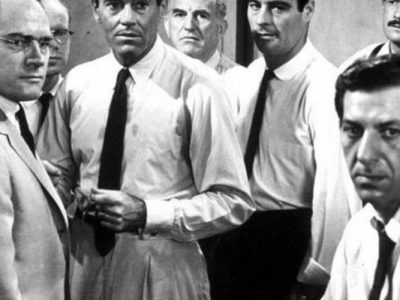
Legal dramas and police procedurals are hugely popular genres of entertainment. 12 Angry Men, Law & Order, and the Wallander detective novels by Swedish author Henning Mankell spring randomly to mind, but there are of dozens of examples in film, television, and literature. Recently, however, a crop of new dramas and documentaries that focus on the law and legal process seem to indicate, based on popularity and critical acclaim, to reflect a shift in the zeitgeist. Instead of providing escapism through fiction, the latest legal procedurals offer intellectual engagement with current events, and possibly answers to an urgent and poignant question: can the law, if implemented ethically, stabilize the shaky institutions holding up our democracies and redeem our social norms?


Donald Trump’s impeachment trial in the Senate, which began this week with saturation media coverage, comes on the back of months of shocking revelations regarding Jeffrey Epstein and what appears to be a high-level conspiracy between the state and Epstein’s defense team to look the other way for decades while he openly trafficked in and preyed sexually upon underage girls. In another case that is receiving global media coverage, opening arguments were presented this week at the New York City trial of Harvey Weinstein on two charges of rape and sexual assault; more than 100 women have accused the once-powerful producer of sexual assault, harassment, and rape.

All of these cases hold enormous implications. Can the law, which these powerful men flouted openly for decades, provide justice? The future of our vulnerable democracies seems to be predicated on an affirmative answer to this question.

Preet Bharara, a widely respected former Assistant U.S. Attorney for the Southern District of New York (SDNY) who lost his job when Trump purged Obama appointees in early 2017, now hosts two popular podcasts that provide analysis of current events and their legal implications.

In Stay Tuned with Preet, Bharara offers a sober and non-partisan approach to the law that is remarkably appealing. Each episode is divided into two parts: Bharara opens by providing informed, engaged responses to listeners’ questions on the law, and moves on to a thought-provoking conversation with a feature guest. The latter have included Sally Yates, the former United States Deputy Attorney General; Jill Lepore, the prominent Harvard historian who is a frequent contributor to The New Yorker; filmmaker and actor Ed Norton; and George Conway, Kelly Ann’s stridently anti-Trump—but conservative—husband.

Bryan Stevenson, a prominent civil rights attorney who is often described as America’s Nelson Mandela, was Bharara’s guest on the December 26 episode of Stay Tuned.

Stevenson, who is black, grew up in racially segregated rural Delaware. He was deeply affected by his childhood experiences of institutional racism, and by the murder of his grandfather. During the podcast conversation, Stevenson explains that while he was keenly aware of how the law had been used to oppress black people in the United States, he also saw how it could be implemented to address inequities. The law ended school desegregation, for example, and it provided due process after police arrested his grandfather’s murderers; they were convicted and sentenced to life in prison. Stevenson, who has a law degree from Harvard, founded the Equal Justice Initiative, a non-profit law firm based in Alabama that is dedicated to challenging racial injustice and ending mass incarceration. He is also the author of Just Mercy, a memoir about his experience of representing Walter McMillan, a man wrongfully accused of murdering a white woman. Critics have responded positively to recently released film based on the book, and starring Jamie Foxx.

The subject of Café Insider (tagline: Make Sense of Law & Politics), which Bharara co-hosts with Anne Milgram, the former New Jersey Attorney General, is the week’s events. In a single episode on August 12, 2019, Bharara and Milgram discuss and analyze Jeffrey Epstein’s suicide; the lawsuit by two former FBI officials claiming that they were wrongfully terminated as political retaliation; and the massive raids conducted by ICE agents of food processing plants in Mississippi. With their seasoned and engaging legal minds, Bharara and Milgram fill an urgent need for legal and factual clarity.

In television, the critically acclaimed series The Good Fight, a spin-off of The Good Wife, stars Christine Baranski as Diane Lockhart, now a partner at a majority black Chicago law firm. The plot of each episode is based on stories “ripped from the headlines” — but always with a thought-provoking “what if?” twist. Lockhart, a liberal whose commitment to the law is challenged by the rise of Trump appointees in the judiciary, confesses to exhaustion and is tempted by gonzo feminist activists who claim that the only path of resistance is through dirty tricks and extra-legal activity. But each time Lockhart seems ready to capitulate to temptation, someone or some incident pulls her back, reminding her of and re-asserting the value, effectiveness and function of the law and adhering to legal process.

The law plays a major role in the gripping HBO miniseries Our Boys, which was broadcast to international critical acclaim. The series, which is co-directed by an Israeli and a Palestinian, dramatizes the horrific events of the summer of 2014 in Israel-Palestine, when three Jewish boys abducted and immolated 16 year-old Mohamed Abu Khdeir, a Palestinian from East Jerusalem, in retribution for the abduction and murder by Palestinians of three yeshiva students from a West Bank settlement.

The story is framed as a police procedural, with a forensic dramatization of how the Shin Bet, Israel’s domestic intelligence agency, identified and arrested Abu Khdeir’s murderers, and how the criminal justice system prosecuted them. The series provides one of the most nuanced portrayals of the social, cultural, religious, and political divisions in contemporary Israel-Palestine, shining an uncomfortably bright light on the fissures between various subcultures of Jewish society, and between Jewish and Arab-Palestinian society.

From the moment they report him missing to the police, Mohamed Abu Khdeir’s parents are under enormous pressure. Not only must they rely on their political oppressors, the Israeli state, to pursue and prosecute their son’s killers, but they must also justify to their Palestinian community their controversial decision to abide by the Israeli legal system, trusting it to provide justice.

State Attorney Uri Korb, played by Lior Ashkenazi, communicates superbly the Israeli liberal intelligentsia’s failure to recognize that the country's legal system does not define justice for Palestinians in the same way it does for Jews. This is particularly true for Palestinians like the Abu Khdeir family, who are stateless residents of East Jerusalem with nebulously defined legal rights. Korb sees himself as the representative of the Israeli state, rather than a pursuer of justice on behalf of any one party. He does not, for example, see cognitive dissonance in dismissing Mohamed Abu Khdeir’s father, portrayed with luminous verisimilitude by Jony Arbid, when the latter demands that the homes of the Jewish Israelis convicted of his son’s murder be destroyed. This, after all, is a punishment that the Israeli state commonly metes out to Palestinians who are convicted of having committed political violence against Jews.

The ambiguous ending of Our Boys leaves open the question of whether or not the law can provide justice to Palestinian victims of a crime committed by Jews. There are, however, several gripping and complex scenes that illustrate the violent, anarchic consequences of rejecting the law and choosing extra-judicial action. As a dramatic device, the granular reconstruction of the police investigation provides a compassionate and insightful portrayal of contemporary Israeli-Palestinian society.

Also from Israel, Advocate (2019), an award-winning documentary that was shortlisted for an Oscar nomination, is a portrait of Lea Tsemel, an Israeli human rights lawyer who has spent most of her life defending Palestinian political prisoners. Miri Regev, the populist right wing Minister of Culture, predictably proclaimed her loathing for the film even as she acknowledged that she had not seen it; this type of criticism from Regev has become something of a badge of honor for left wing Israeli artists.

Advocate traces Tsemel’s career from the genesis of her left-wing activism in the 1970s, while she was a student at the Hebrew University of Jerusalem, to the present; it follows her as she represents one of her most highly publicized recent — that of Ahmad, a 13 year-old boy who is accused of attempting to kill a Jewish teenager with a knife. In a memorable scene that takes place in her cramped office, Tsemel explains to Ahmad and his family that they must choose between pleading guilty and seeing Ahmad charged as a minor, or going to trial; the latter option means that the barely adolescent boy could be sentenced as an adult if he is convicted. Ahmad, who insists that he had no intention of causing injury with the knife, and who was, as video footage shows, brutally questioned for hours by Israeli security without a lawyer or guardian present, opts for a trial. In court, Tsemel predicates her legal argument on the demonstrably true assertion that Jewish Israelis accused of the same crime as the one for which Ahmad is on trial are not charged with attempted murder. Nor do they risk being sentenced to life in prison.

Tsemel mentions frequently during the film that she has never won a case. Given the legal and political climate in Israel, she knows that her losing streak is likely to continue uninterrupted, but she is ideologically and morally committed to challenging the structures imposed on her clients. She has chosen her path of resistance, which is to demonstrate the legal system’s failures by the very act of working within the system. Giving up is not an option and refusing to work within the system will not, she seems to believe, help anybody.

Many observers of President Trump’s impeachment trial in the senate hope that the legal process will reverse what seems, due to partisan politics, to be a predetermined result. News outlets are providing saturation coverage of the lead-up to the trial, the role of Chief Justice Roberts, the number of Senate votes required to bring forward new witnesses and new evidence, and many other matters of procedure.

In Israel, meanwhile, the question of whether and for how long Benjamin Netanyahu can continue to occupy the position of prime minister while he is under criminal indictment is keeping everyone on edge, with the media providing saturation coverage of every new development. Does the law permit Netanyahu to run as head of his party in a third election while he is charged with criminal corruption? It does. Americans and Israelis are discovering, more or less in tandem, but for different reasons, the extent to which the law is predicated on social norms. Can the law provide justice even as populist authoritarianism systematically undermines and destroy those norms?

For social and political activists, the silver lining of these deeply troubling times is a noticeable uptick in civic engagement. Demonstrations, grassroots activism, and artistic resistance play a crucial role in social transformation, but so does the law. Three years into the Trump administration and a decade into the global rise of authoritarianism, it seems that many people are also recognizing with new appreciation the critical function of the law and legal process in maintaining a democracy.
    [post_title] => Desperately seeking answers in the law
    [post_excerpt] => 
    [post_status] => publish
    [comment_status] => closed
    [ping_status] => open
    [post_password] => 
    [post_name] => desperately-seeking-comfort-in-the-law
    [to_ping] => 
    [pinged] => 
    [post_modified] => 2026-09-16 22:56:39
    [post_modified_gmt] => 2026-09-16 22:56:39
    [post_content_filtered] => 
    [post_parent] => 0
    [guid] => http://conversationalist.org/?p=1577
    [menu_order] => 285
    [post_type] => post
    [post_mime_type] => 
    [comment_count] => 0
    [filter] => raw
)

Desperately seeking answers in the law

WP_Post Object
(
    [ID] => 1566
    [post_author] => 4
    [post_date] => 2020-01-16 21:53:33
    [post_date_gmt] => 2020-01-16 21:53:33
    [post_content] => Two decades after her breakout memoir was published, a writer once dismissed as a narcissist died a literary heroine.

When Elizabeth Wurtzel published Prozac Nation in 1994, she seemed all too eager to regale the public with her struggles. Raised on the Upper East Side of Manhattan, she was the gifted daughter of a prosperous family who attended private schools and graduated from Harvard. In her memoirs, however, Wurtzel luridly described her depression: snorting coke to kick her lithium dependence, curling up on bathroom floors sweating and sobbing, and falling into bed with the wrong man at every turn. Yet, she looked gorgeous as she lived this self-destructive life. Posing on the cover of a magazine with a come-hither stare and a crop top, Wurtzel embodied the dark and angsty glamour of the 1990s—a literary Courtney Love or Tracey Emin. The memoir sat atop best-seller lists and was made into a movie starring Christina Ricci. Critics, however, were split. Was this the second coming of Sylvia Plath (had she survived a suicide attempt to promote The Bell Jar on MTV); or, was she merely a raving narcissist who, in Wurtzel’s own words, “didn’t even come across as sad any longer, just obnoxious”?  

Elizabeth Wurtzel died last week, and she died young—if not as young as she once predicted. (“I’m starting to wonder if I might not be one of those people like Anne Sexton or Sylvia Plath who are just better off dead…Perhaps, I, too, will die young and sad, a corpse with her head in the oven.”) She was 52 when she died of breast cancer. 

By the time of her passing Wurtzel had cleaned up and, in defiance of her erstwhile Gen X slacker image, had graduated from Yale Law School, joined a white-shoe firm, and even—GASP!—married. Parsing her legacy, however, is more complex than simply caring about whether or not she “grew up,” as the New York Times obituary writer suggested. Wurtzel laid herself bare, but we did not know her. It’s a profound compliment to her writing that her readers—detractors and admirers alike—assumed that they did. Confessional writing as a genre can have great value, transforming both the lives of individuals and the cultural discourse. Wurtzel’s impact, though inextricably bound up in her celebrity, lies in the role she carved out for herself—and in everyone else who has since played the same part.  

Prozac Nation inspired a robust national conversation at the time it was published. Although many dismissed Wurtzler as a whiny egomaniac—no less a critic than Walter Kirn called the book “a work of singular self-absorption”—she kicked off a trend. The publishing market suddenly made room for confessional memoirs meant to make the reader at once cringe and relate, from Dani Shapiro’s Slow Motion (raised in a traditional suburban Jewish home, she dropped out of college and became the kept woman of a wealthy married man) to Susan Kaysen’s Girl, Interrupted (recollections of leaving a mental institution; Angelina Jolie starred in the film version and won an Oscar for her performance). What critic Nathan Rabin deemed “the Manic Pixie Dream Girl” came to define an archetype of the 1990s; the educated-woman-as-hot-mess trope can be traced directly down the line to more recent cultural fare, including Lena Dunham’s television series Girls, as Meghan Daum asserted in The New Yorker. 

A friend of Wurtzel’s hit upon the importance of her legacy in an interview for her New York Times obituary, 

“Lizzie’s literary genius rests not just in her acres of quotable one-liners...but in her invention of what was really a new form, which has more or less replaced literary fiction—the memoir by a young person no one has ever heard of before. It was a form that Lizzie fashioned in her own image, because she always needed to be both the character and the author.” 

This runs deeper than genre or medium. Allow me to explain it in the context of what you are reading right now: at some point in this essay, I will tell you something about myself. Why? Because I have to; that’s what writers do now. Last week, Geraldine Brooks wrote an excellent opinion piece to contextualize Iranian perceptions of American aggression. It wasn’t enough for her simply to mention in her bio blurb that she used to report from Iran for the Wall Street Journal; she also incorporated information about her background anecdotally into her argument, as though to prove she had the right to her opinion. Writing no longer exists on its own: it is a given that the author is a character, with their own motivations for writing. It’s almost as though they have a duty to contextualize a piece of writing within the greater timeline of their lives.  Memoir may well be the narcissist’s playground, but the exhilarating rides the reader shows up for are not the high points. Wurtzel knew well that darkness was the draw. Whereas in 1994 readers perceived her style of memoir as wallowing, a 2020 reader might see plenty of space for a very contemporary word: empathy. Wurtzel spoke fearlessly about her problems. Depression, addiction, family dysfunction, and self-harm were all dragged out into broad daylight. She didn’t worry about what was in good taste: she told her truth, no matter who called her a poor little rich girl or a “brat”—as the writer of an unusually spicy Kirkus review opined. In 2020, therapy and mental health are talked about openly.  Confessional writing played a part in this sea change, allowing for a more intimate glimpse into pain. And for those who contend Wurtzel looked too chic as she profited handsomely from her suffering, her own cancer advocacy offers a riposte. Although she failed to have herself tested for the BRCA gene, she campaigned for wider testing in the wake of her diagnosis. “I could have had a mastectomy with reconstruction and skipped the part where I got cancer,” she wrote. “I feel like the biggest idiot for not doing so.” In creating a space to speak about her own problems, Wurtzel made a niche for other writers to inhabit, too—those who aren’t white or rich or Ivy League-educated. Prozac Nation was certainly not the first confessional memoir, but it pioneered something far more particular. Maya Angelou and James Baldwin wrote memoirs, but they did so in order to shine a light on the plight of a larger group of people—i.e., black people in the United States. Wurtzel’s motives were not quite so high-minded: she was unsparing in her depiction of her own individual privilege. Sylvia Plath certainly covered a lot of the same ground as Wurtzel, but she veiled it as fiction and, because The Bell Jar was published shortly before she killed herself, the book reads like a suicide note—an explanation of the writer’s absence rather than a plea for her presence. Although she was derided for self-pity, Wurtzel notably did not ask for sympathy.  Arguably, Wurtzel ripped herself open so effectively that it has taken a couple of decades to see the precedent she set and its value as literature. The wounded, weird, yet compellingly charismatic individual is now a literary trope in memoirs written by a broad spectrum of writers. It is a space as suited to Wurtzel’s Prozac Nation as it is to Saeed Jones’ How We Fight For Our Lives, about growing up black and queer in a small Texas town, or to Roxane Gay’s Hunger, in which the author describes her struggles with sexual trauma, obesity, and her own identity.  Perhaps we don’t like the idea that Wurtzel—wealthy, white, Harvard-educated—created this space, but the access those qualities granted her created a more accepting landscape for others. We cannot know if this was her intent, but it is the effect of her writing. What Gloria Steinem’s looks were to second-wave feminism, Elizabeth Wurtzel’s were to a platform capable of accommodating almost anyone brave enough—or exhibitionistic enough—to inhabit it.  What does the reader gain from coming in contact with all of this? The confessional memoir opens a window onto the aspects of human nature that we tend to hide, mostly out of shame. It allows us to see and accept that we are messy, complex, and multifaceted human beings. It’s a genre with a natural intersectionality about it, like a soapbox on which anyone can stand. And you, the reader, don’t need to love any of these authors to appreciate that by putting themselves out there, they make more space for the rest of us, not only to be messy but to understand one another. On the one hand, we can see ourselves in the problems we share; we are less alone, validated. As someone with cancer in the family (and, just like that, I told you something about myself!!), I know the nerve Anne Boyer’s The Undying hits all too well. On the other hand, I will never be a queer man of color from rural Texas; reading Saeed Jones allows me to step inside an experience that isn’t mine, but also to appreciate our shared realities—and maybe even weigh the social and political ties that bind us. There is a great deal of courage in the kind of vulnerability that begets those bigger conversations.   This kind of discourse is vital to any pluralistic society and to any democracy. We must understand one another to truly value one another, and there isn’t enough space for that transaction in a tweet. This kind of understanding can never be credited to a single confessional memoir, but rather to the aggregate effect they have had on how we treat one another and accommodate one another’s needs. As we continue to fight for various civil rights in a precarious political moment—an election year, no less—we should remember that, even if there is not a direct line between Prozac Nation and gender-neutral bathrooms, there is certainly a direct correlation between how the culture allows us to express ourselves and what arguments the body politic is capable of understanding and integrating.  As a teenager reading Prozac Nation a few years after it came out, I wondered if I needed to be a bigger mess to succeed as a writer. Perhaps I was a Millennial rolling her eyes at Gen X. I asked myself if we really needed to know that Wurtzel’s “mouth was getting tired and chapped from giving so many blowjobs” to appreciate gems like, “If you feel everything intensely, ultimately you feel nothing at all.” The answer is no. No, we did not. But we also don’t need to like someone to admire them. More importantly, any exercise in empathy is a chance at community building, both an opportunity to feel less alone in this world and to see more of it from a perspective that glories in its lack of varnish. Confessional memoirs—even in their most profound self-absorption—are just that: a chance to be let in on something other than ourselves.    [post_title] => The personal (even on Prozac) is political: Elizabeth Wurtzel's literary legacy [post_excerpt] => The confessional memoir allows us to see and accept that we are messy, complex, and multifaceted human beings. [post_status] => publish [comment_status] => closed [ping_status] => open [post_password] => [post_name] => the-personal-even-on-prozac-is-political-elizabeth-wurtzels-literary-legacy [to_ping] => [pinged] => [post_modified] => 2026-09-16 22:55:29 [post_modified_gmt] => 2026-09-16 22:55:29 [post_content_filtered] => [post_parent] => 0 [guid] => http://conversationalist.org/?p=1566 [menu_order] => 286 [post_type] => post [post_mime_type] => [comment_count] => 0 [filter] => raw )

The personal (even on Prozac) is political: Elizabeth Wurtzel’s literary legacy

WP_Post Object
(
    [ID] => 1500
    [post_author] => 2
    [post_date] => 2019-12-05 17:03:50
    [post_date_gmt] => 2019-12-05 17:03:50
    [post_content] => What did you talk about at your Thanksgiving dinner?

A week after the celebration of the most American holiday, many people are still digesting dinner table conversations that might have wandered into current events. Whether they were contentious, or affirming, the Thanksgiving dinner table conversation as a reflection of our cultural moment has become a motif in popular culture. A survey of some of the most iconic enactments of the holiday meal in film and in television go some way toward putting last week's conversations in context.

Unlike any other religious or secular American celebration, Thanksgiving offers a motif that resonates with nearly all American audiences, as Norman Rockwell shows in his iconic 1943 portrait of a family celebrating the holiday. The title of the painting is Freedom From Want; it is one in a series inspired by Franklin D. Roosevelt’s 1941 State of the Union address, Four Freedoms (freedom of speech, freedom of worship, freedom from want, freedom from fear), which he delivered shortly after the United States entered World War Two. Rockwell’s all-American family would, one hopes, look quite different today; but the propaganda potential is the same – almost everyone celebrates Thanksgiving, in similar ways, with similar cultural cues and breaks from the workweek.

Over the years, film directors have used Thanksgiving scenes as an instantly recognizable tableau for the foibles of the extended family. Many of those Thanksgiving scenes have become iconic — offering a peek into less-familiar narratives. They are also remarkably powerful reflections of the political climate of their time. Viewed years later, they offer salutary insights into whether and how things have changed.

In Avalon, the third of Barry Levinson’s semi-autobiographical Baltimore movies —of which Diner is perhaps the best known —Thanksgiving makes the director’s Jewish Baltimore deeply and undeniably American. Even for people who haven’t seen it, “You cut the turkey without me?!” has become one of the most-quoted lines about Thanksgiving.


Each Thanksgiving meal in Avalon marks the evolution and assimilation of the Jewish-immigrant Krichinsky family, presided over by the benevolent, mustachioed patriarch Sam Krichinsky (Armin Mueller-Stahl). As the children gather at their feet and listen raptly, the older generation — Sam, his brothers, their wives and offspring — regale them with oft-repeated stories about the old world, which the younger ones imbue with fresh ideas bred by the new world. The opening scene of Avalon shows Sam arriving in Baltimore as a young man, before World War One, a new immigrant landing on the Fourth of July amid the fireworks and fairy lights. The sense of splendor and 1950’s nostalgia are a constant in this deeply sentimental film; at times Levinson’s Americana schmaltz is almost too much to bear. Yet it reflects the sentiments of its time: the film was released in 1990, just as the Communist bloc was collapsing — a historical event that many (perhaps most) Americans viewed as a validation of their values. This feeling is reflected in Barry Levinson’s nostalgic film about growing up in post-war Baltimore as the grandson of Jewish immigrants from eastern Europe.

This American exuberance at the Thanksgiving table can be found in the films of two less likely candidates — Woody Allen's Hannah and Her Sisters,  and Spike Lee's She's Gotta Have It. Both films were released in 1986; they channel a Reagan-era sense of carefree consumption, the ability to recreate oneself, and endless second chances.  Hannah and Her Sisters, one of Woody Allen’s best-known films, is framed and punctuated by three Thanksgiving meals. Given the director’s reputation for cynicism, “Hannah” is surprisingly optimistic, even as it explores the destructive potential of love and human frailty. The film begins with a Thanksgiving gathering at the sprawling Central Park West apartment of Hannah (Mia Farrow) and Elliot (Michael Caine). The camera take us through rooms that are suffused with warm light and happy children playing while clusters of adults drink, eat hors d’oeuvres, and converse. Hannah’s mother, a retired Broadway performer, sings while her husband accompanies her at the piano, and uniformed catering staff serve the food. Rather quickly, however, this scene of familial happiness morphs into something altogether different, with all the characters seemingly on the brink of ruinous heartbreak and professional failure. And yet, in tandem with the anguish over illicit love affairs, money problems, career frustration, and sibling rivalry, the city continues to sparkle and entice; the failures are minor and redeemed by success; death is defied; and most of the hearts not only survive intact, but seem to grow. The whimsy, humor, and celebration of New York City, with a closing Thanksgiving meal, full of heart and warmth, are what remain. Even Woody Allen and Dianne Wiest are happy at the end, which seems to make the film a veritable fairy tale.

She’s Gotta Have It, Spike Lee’s first (and arguably best) film, is a similarly overflowing package of whimsy and a sense of plenty. This includes its charmingly odd Thanksgiving meal. Nola, the female protagonist, is a free spirit whose enjoyment of love, sex, art, and the people around her are intoxicating, to both the characters and the viewers. For Thanksgiving dinner, the first she has ever cooked, Nola invites her three lovers — Jamie, Mars, and Greer. Over dinner the men joust for her affection, with their competitiveness extending to a post-dessert game of Scrabble. At the end of the evening each suitor is understandably reluctant to leave, hoping he will be the one Nola chooses to spend the night with her. The final scene is a beautiful overhead composition of Nola and Jamie lying in one another’s arms on her bed, with Mars and Greer hanging on nearby as the music plays — until they finally give up and leave. Like Hannah and Her Sisters, the film feels suffused with a late-1980’s American intoxication with itself – even when it’s pushing the margins or making them visible. Spike Lee provides a portrait of black Americans that doesn’t use white America as a reference point. This world exists regardless of whether or not white people are aware of it or understand it; just as Nola offers herself without apology or excuse, so does Spike Lee present black America.


While less celebratory Thanksgiving films exist — Parker Posey offers two examples of unhappy Thanksgiving gatherings in her cult classics The Day Trippers and House of Yes — television has more space to dig into broader conversations. The Thanksgiving episodes in some older television series feel shockingly political in a way that seems inconceivable today. In a 1994 episode of Roseanne, abortion is the predominant theme: four generations of women sit at the holiday table sharing their views and experiences, with Roseanne expressing views that are stridently pro-choice. When she and Dan discover their unborn child may not be healthy, however, Roseanne suddenly realizes she might not be so certain about her own choice. It is a remarkably thoughtful conversation —one of many salutary episodes in a series that gave white working-class Americans a nuanced, complex voice.

That other avatar of the white working man, Archie Bunker (Carroll O’Connor), famously served as a foil for the preoccupations of the 1970s. In the 1974 Thanksgiving episode of All In The Family, he and Edith are invited to the new home of their daughter Gloria, and son-in-law Mike  (a.k.a Meathead). Since Gloria is pregnant, the subject of whether or not the child will be raised with religion arises, with Archie and Edith expressing hurt and dismay that their grandson might be raised a liberal atheist.


All in the Family is one of the few shows premised entirely on the culture wars of the 1970s; viewed today, it holds up a sobering mirror to our contemporary political moment — i.e., we’ve regressed to a place where those inter-generational conflicts of 45 years ago now feel acutely relevant.  Emily Nussbaum, The New Yorker’s television critic, adds an additional insight in her brilliant essay about All in the Family, titled “The Great Divide:  Norman Lear, Archie Bunker, and the Rise of the Bad Fan.” The show, observes Nussbaum, attracted many “bad fans” who watched because they identified with Archie Bunker and his bigoted views. He was meant to be the old racist uncle at the Thanksgiving dinner table, an anachronistic buffoon, but many of his fans loved him because they shared his worldview. This is one of the dangers posed by using anti-heroes to explode cultural stereotypes and advance conversations.

The new canvas created by the so-called Golden Age of television has endowed the Thanksgiving episode with even greater potential. Friday Night Lights, one of the best twenty-first century portraits of very key elements of American culture, provided a perfectly fraught Thanksgiving episode in 2010, very much under the shadow of the culture wars and the polarized national debate on abortion. Tami Taylor, one of the main characters, is a principal of a high school in this a small, conservative, Texas town of churchgoers. After she is discovered to have advised a pregnant student to explore her options, guiding her with empathy and a total lack of judgment, Tami is publicly criticized and nearly fired from her job. At Thanksgiving dinner she is in the midst of dealing with the fallout from this incident, which makes the holiday a brief and not completely relaxed respite.  While the subject itself is not discussed at the dinner table, her anxiety over it permeates the evening and she is visibly distracted. This Thanksgiving dinner, as is so often the case in real life, represents a short respite from the battles of the workweek. The next day she is essentially told she is fired, and so decides to leave and work as a counselor at another school, where she is needed and wanted. When she returns home, her husband and daughters are putting up the Christmas lights, in a perfect exhalation and sense of relief.

One of the most touching Thanksgiving episodes in recent years is Denise’s coming out story in a 2017 episode of Master of None, Aziz Ansari’s scripted show on Netflix. The show ran for two seasons, took on some very big issues with humor and insight that showed one can be woke and sensitive and remain funny; its demise is a real loss — it was a cathartic corrective to the Trump presidency, an advancement of so many important conversations. The Thanksgiving episode shows Denise and Dev, who are childhood friends, at the former’s  home over several holiday celebrations, starting when they are about 6 years old. Successive scenes in the episode show the same tableau when they are 12 and 16 years old; it then jumps forward to 2015, 2016, and 2017. Dev is the only male, and the only non African-American at these Thanksgiving tables, over which Denise’s single mother, aunt and grandmother preside. It is a beautiful extended family that gradually, by the very end, grows to include Denise’s partner Michelle. The path there is lovingly charted – and the specific challenges of coming out as gay in the African American community are explored. The “non-conventional” family debunks the notion that they lack anything a traditional nuclear family might offer.


It seems odd that the cultural currency of Thanksgiving is underestimated or unrecognized– it has as captive an audience as is still possible and offers a trope that is so universally familiar. It also sets lower expectations for denouement, as Christmas might, which makes it a better canvas for experimentation or unintended projections. This is why Thanksgiving, the ultimate American holiday, has often been the best means for getting a real sense of the country’s political pulse via popular culture. We are all tuned in, and not because we are preoccupied with impeachment hearings. We just happen to be watching.
    [post_title] => How film and television put last week's Thanksgiving celebration in cultural context
    [post_excerpt] => It's a tradition as old as Hollywood: every year, Thanksgiving scenes are presented on television and in film as a metaphor and an analysis of our cultural moment. 
    [post_status] => publish
    [comment_status] => closed
    [ping_status] => open
    [post_password] => 
    [post_name] => how-film-and-television-put-last-weeks-thanksgiving-celebration-in-cultural-context
    [to_ping] => 
    [pinged] => 
    [post_modified] => 2026-09-16 22:46:36
    [post_modified_gmt] => 2026-09-16 22:46:36
    [post_content_filtered] => 
    [post_parent] => 0
    [guid] => https://conversationalist.org/?p=1500
    [menu_order] => 290
    [post_type] => post
    [post_mime_type] => 
    [comment_count] => 0
    [filter] => raw
)

How film and television put last week’s Thanksgiving celebration in cultural context

WP_Post Object
(
    [ID] => 1454
    [post_author] => 2
    [post_date] => 2019-11-08 22:30:16
    [post_date_gmt] => 2019-11-08 22:30:16
    [post_content] => 

(CC BY 2.0)

The claim that social media is a neutral platform for the amplification of free speech does not hold up to scrutiny.  Does it matter that Mark Zuckerberg dines with far-right politicians and activists, or that he genuinely seems to believe their websites are trustworthy fact-checkers? Does it matter that Jack Dorsey personally overrules Twitter bans on white supremacists but allows Donald Trump to ignore the acceptable use rules that the rest of us must obey? Yes and no. Yes, it matters because the political preferences and blind spots of social media C.E.O.s influence their businesses. And no, because leaders’ opinions matter less than how right-favoring ideas, incentives and ways of organizing are baked into social media’s business models in ways those executives don’t even seem fully aware of. We know that Facebook’s Washington D.C. lobby-shop and electoral integrity work is dominated by Republican party operatives and members, and we know Twitter prefers to give Nazi sympathizers a blue check mark rather than the boot. Google funds climate change deniers and YouTube is a right-wing radicalization engine. There is no shortage of evidence that America’s West Coast tech unicorns qualify as liberal only on a narrow range of identity issues. They’ll stand up for LGBTQ rights, but they’ll come down hard on any union activism among their own employees. Less obvious is the fact that social media itself is structurally right-wing. Not because its CEOs are tech-bro libertarians or even because of their suspiciously agile pivot to Trump, but because social media affords advantages to the ideas, feelings and organizing principles of the hard-right. Oh, and also because of the money.

Structure

First, some heavy lifting. Social media as we currently organize it is trivially easy to weaponize in ways that favour autocracy and damage democracy. Political scientist Henry Farrell* and information security expert Bruce Schneier recently explained why democracies are so easily harmed by disinformation attacks while autocracies are actually strengthened by them. It’s because democracies and autocracies rely on people having two different kinds of shared knowledge; and social media disinformation disrupts one and favours the other. In an autocracy, you know who’s in charge and what they want, but you’re not sure who the different political movers in society are, how much power they have and who you could form a coalition with. Certainly, political conflict occurs in societies that are dominated by the power vertical, but mostly off-stage or in ways only insiders can interpret. That’s why we still use the term ‘Kremlinology’ to describe the study of subtle public signs of largely secret power struggles. In an autocracy, shared knowledge about other people’s political views is low. This makes it risky and difficult to organize an opposition. In 2010, democracy activists in Tunisia had very little idea how many other people felt the same and were prepared to rise up against the regime until Mohamed Bouazizi, that fateful vegetable seller, set himself on fire and triggered the entire Arab Spring. Social media did help those protests to go viral — though its role has been exaggerated — but autocratic rulers learned quickly how to turn social media against citizens. The main tactic autocrats use is "flooding," sending huge numbers of often contradictory political messages via automated social media accounts to drown out discourse and make it impossible to figure out who’s friend, who’s foe, or who’s even a human. The Chinese government strategically uses social media flooding both as a censorship tool — "who knows what’s really true?" —  and to distract and divide people, weakening them as a political force. Autocracies are strengthened by divisions that prevent people coming together as a political force. The tactics autocrats use at home can quickly become part of their strategy abroad. Russia is known to have used flooding to undermine shared belief in the validity of electoral politics in Ukraine and also in the U.S., U.K., France, and Germany. Social media makes flooding cheap and successful because increasing the quantity of noise degrades the quality of discourse. It might even make it impossible to sustain. When a tactic becomes a strategy, things can change, sometimes very quickly. An aside: I recently heard a well-connected U.K. conservative saying something I’ve heard from at least a dozen people in powerful positions: "Social media doesn’t do anything new. It just lets people express themselves, for good and for ill." Wrong. Different technologies — embedded in different business models — have different affordances. They encourage certain kinds of behavior, ways to make money and means to concentrate power. Those who benefit from these affordances seem to be almost unaware of the advantages thus bestowed, as though they’re used to playing the game of life on "easy." The same person later regretfully confided that yes, it was dreadful their own party was going to fight an election campaign that would pit parliament against "the people," but no, there was nothing to be done about it. Nothing at all. Farrell and Schneier’s article explains that democracy is so vulnerable because flooding destroys precisely the kind of information democracy depends on. In a stable democracy we disagree about who should be in charge, but we share — and depend on — common knowledge about who the political actors are, how much support they have and how we can form coalitions. That shared knowledge allows us to have a functioning political opposition. We also share the knowledge that our electoral systems are basically fair, that outcomes approximate what enough people really feel, and that if we lose this year’s election we still have a good chance of winning the next one. If that knowledge goes away, then the institutions that depend on it can, too. All very interesting, you might say, but this shows that social media helps autocrats, and autocracy can be of the left, too, at least in its self-justifying propaganda. What is peculiar to how social media helps right-wing autocracy? Social media is structurally disposed to weaken our real-life horizontal ties with one other, to poison our ability even to imagine a social contract, to disrupt our drive to discover shared interests and shape them into collective political action. Social media is great for democracy only if you think democracy is a an exercise in ticking all the boxes for crowning a strongman. I say social media is inherently right-wing because it is structurally predisposed to making social democracy impossible. Social democracy depends on the ability to form rolling coalitions of different groups around broadly shared goals. If I’m the middle-class parent of a disabled child, I can make common cause with an unemployed miner hundreds of miles away. We both want the state to be a social safety net for when life throws us a curveball. We don’t want all the same things, but we agree on enough to vote for or even belong to the same political party. And it’s not purely transactional. In our kinder moments, we feel solidarity, even though we are in different places and belong to different social classes. But what happens if I start seeing that ex-miner as an enemy, and vice versa? If our tribal identities have become so narrow and hardened that we no longer feel we’re on the same side? Hell, that we no longer even live the same world? If the broad-based coalitions that built social democracy can no longer recognize each other as allies, then it’s devil take the hindmost in a world of an unchecked and punitive state. Goodbye fraternity, hello Koch brothers. Social media is the ideal medium and amplifier for the actively divisive and zero-sum politics of the hard, populist right. It disadvantages any politics based on compromise, on solidarity, on a forgivingly broad concept of who ‘the people’ are. Social media’s methods structurally favour Duterte, Trump, Orban et al the way tennis disinterestedly favours athletes with long arms.

Methods

Facebook and Google act as advertising consolidators, collecting vast amounts of personal data on users and renting that data and access to their users to advertisers. So the more you use their services, the more data they can gather and ads they can sell. This is called adtech, and it is social media’s chosen business model.  The official version regarding the unique selling point (USP) of adtech is that social media firms can target ads to us more closely because they know so much about us. The private, and more accurate, USP to advertisers is that they have finely segmented the markets we inhabit in order to identify the tiniest possible groups for advertisers to target. The key to adtech is market segmentation— i.e., breaking people down into ever smaller groups to sell things to. We sell things to people by convincing them of the importance and uniqueness of their group. What sells is making people feel they are different, special and even superior. They deserve things most others don’t. In society at large we call this "fomenting division." Social media, the pill we swallow to ingest adtech, is based on creating and exploiting social division. So too, it turns out, is the right-wing project whose goal and working methods are to create in-groups and out-groups for an ever-smaller number of people who count as ‘people’. Social media’s business model is to make us feel more divided than ever, and monetize the finest of distinctions we can be made to feel.

Feelings

And what keeps us clicking? Strong emotions like fear, anger and even hate. By now, most of us know that YouTube and others drive "engagement" by presenting the most emotive content, with most of us barely three clicks away from politically extremist content. Social media divides us ever more finely, all the better to market our profiles to its real customers, the advertisers, and then it makes us internalize distinction and divisions by force-feeding us hateful clickbait. Xenophobia and conspiratorial distrust create clicks. These are the signature emotions of the far right. It's anger with no purpose except to be monetized. Clickability almost always leads to the dark side. The political radicalization that helps make social media so wildly profitable is almost exclusively to the right. As well as fomenting division and making political solidarity harder to evoke, the dark emotional palette social media spatters everywhere has a deeper effect on what we think politics is actually for. Firehosing is a technique used by disinformation merchants to pump out a stream of often contradictory lies. No one has the time, energy or resources to dispute each lie, and airing out lies to debunk them can make even more people believe them. This method is used by anti-vaxxers, far-right media sites and state-sponsored disinformation campaigns. Firehosing floods what used to be a conversation with wacky grimdark lies that cumulatively insist that nothing really works, everyone is on the make and no organization or authority can be trusted. It implies that nothing we do to collectively improve the state of the world can work, because someone, somewhere is gaming the system and that someone is probably brown or female or educated. Firehosing helps explain why people who think the government should slash taxes and drop environmental regulations also think it should kidnap immigrants’ children and micro-manage women’s uteruses. The world of the firehose is one in which reality is not true and almost everyone is bad. In this world, the only useful way to use state power is to punish, to coerce, and to hurt. It reinforces a world where states can do no positive good because it will be taken advantage of — someone, somewhere is getting stuff for free that you have to pay for. If the only effective state power is violence, the only role of politics is to decide who to target. This isn’t an intentional effect of the medium, but it is a real world consequence of the quality and sheer volume of the messages it transmits. Social media is rightwing because its amplified nihilism makes far-right misanthropy sound like a fundamental truth and ushers its dream into being; a world where the state exists only to punish outsiders and throttle the poor, not to rebalance wild excesses of inequality.

Organizing

But if social media companies are making money from advertisers, and advertisers – most of them aggregators – are making money from the companies whose ads they place, who is making money from the emotive content that keeps people clicking? Who is paying to feed the beast? All those videos, images and stories that trigger and sustain the outrage cycle aren’t going to just make themselves. New York Times columnist Charlie Warzel asked whether the Democrats can compete with Trump’s Twitter feed and concluded that “one of the few ways to power right now is to never, ever stop making content."
A Photoshopped image of a dog getting the Medal of Honor. Sharpiegate. A Fourth of July military parade. They’re all attention spectacles.
To "win" social media you must spew out content optimized for virality. Individuals can only do so much. Volunteer organizations don’t have the time and are too busy firefighting (and, let’s be honest, infighting). The organizations manning the firehose are top-heavy political outfits with strong message control – typically the preserve of the hierarchical right — and astro-turf fronts pretending to be grassroots organizations. Yes, there is an ecosystem of ad aggregators and content amplifiers. But the optimal organizational form to create firehose content at scale isn’t the pyramid of large and unwieldy membership organizations so beloved of the left, but a thorn — rigid, narrow and sharpened to a point — all the better to sink deep into the flesh of the body politic. Social media lets small, well-funded organizations convert grey and dark money into attention. It makes big money’s ideas look like they’re backed by the masses. People on the left almost never have hundreds of millions of dollars sitting around waiting for a vast, anonymizing influence engine to convert money into power. People on the right do. Fake organizations are more effective than real ones. Sock puppets, amplification accounts and automatic reply-guys work 24/7, never disagree with the leader, get disillusioned or split into factions. Social media makes fake organizations look real, and real ones look like dinosaurs. Only on the right is there a sufficient concentration of capital with the means and motivation to exploit this.

Ideas

None of this can be unknown to those running the big social media companies. Their job is to understand what works on their websites in ways we outsiders can only guess at. Science writer James Gleick recently observed that “people on the left and people on the right BOTH understand that Facebook’s policy of allowing lies benefits the right.” Monetizing lies drives profit. How can anyone possibly defend that? In the US, free speech absolutism is a feature of the right. Liberals argue for laws banning hate speech and incitement, while conservatives and the far right insist freedom of expression is enshrined without condition in the U.S. constitution, even if that means people are hurt or sometimes die. This year, as the clamour has grown against Facebook’s damage to democracies around the world, the company has doubled down on its insistence that advertising is protected speech. Sheryl Sandberg, Facebook’s COO, has said: “We believe that ads are a big part of [freedom of expression]." Social media executives’ insistence that their companies are just neutral bystanders but that the most important value of all is free speech shows how closely aligned their interests now are to the right. Mark Zuckerberg doesn’t invite Tucker Carlson home to try and understand the alien mindset of America’s hard right, but because they share a common financial interest in protecting the peculiar political ecosystem of which Facebook is the apex predator. Social media companies share ideas with the right not because they are awkward fellow travellers but because they share fundamental interests. But just as my conservative acquaintance couldn’t admit, even to themselves, that social media’s affordances privilege the ideas and organizations from which they personally and politically benefit, so social media executives seem to believe their pursuit of self-interest is simply the acting out of self-evident philosophical imperatives like the absolute value of freedom of speech. But guess what? It doesn’t matter. It doesn’t matter whether Mark Zuckerberg holds his nose when he dines with the far right, if Jack Dorsey torments himself about open Nazis he keeps inviting back in, or if Susan Woijicki truly believes YouTube is a force for good. It is wholly irrelevant whether these individuals believe they are speaking in good faith or how deep any self-deception may go. Their interests are fully those of their companies, and their companies exist to make money. Their companies are once-in-a-century concentrations of capital whose only imperative is survival and growth. Capital doesn’t care if the boss still thinks he’s one of the good guys, if, in his heart of hearts, he’s truly not a racist but just happens to run a company that monetizes racism. Capital doesn’t care if he can’t sleep at night. Capital calls to capital everywhere. Social media empires are big business and history shows us that big business doesn’t have a problem with the far right. They want many of the same things; to act unfettered, to weaken horizontal social ties, to re-shape the world in their own twisted image. Social media driven by adtech will only, always serve capital, however many beanbags they have in the office. * Henry Farrell is the writer's brother. [post_title] => Social media's right wing bias is baked into its business model [post_excerpt] => Social media lets small, well-funded organizations convert grey and dark money into attention. It makes big money’s ideas look like they’re backed by the masses.   [post_status] => publish [comment_status] => closed [ping_status] => open [post_password] => [post_name] => social-medias-right-wing-bias-is-baked-in-to-its-business-model [to_ping] => [pinged] => [post_modified] => 2026-09-15 23:54:36 [post_modified_gmt] => 2026-09-15 23:54:36 [post_content_filtered] => [post_parent] => 0 [guid] => https://conversationalist.org/?p=1454 [menu_order] => 294 [post_type] => post [post_mime_type] => [comment_count] => 0 [filter] => raw )

Social media’s right wing bias is baked into its business model

WP_Post Object
(
    [ID] => 1416
    [post_author] => 2
    [post_date] => 2019-10-11 17:27:55
    [post_date_gmt] => 2019-10-11 17:27:55
    [post_content] => 'The game is rigged, and it does not reward people who play by the rules.' — Ramona (Jennifer Lopez)

In 2019, sex workers are some of the most powerful women in America. That’s the reason Hustlers has been cleaning up at the box office. Every movie theater in America is now an ersatz strip club, catering to a gaze that doesn’t objectify its subjects so much as shower them with solidarity and aspiration. You love to see it: a swaggering, unabashed admission that beauty is capital, and women deploying everything used to deny them power – their bodies, sexuality, and financial precariousness — in order to reclaim their own.

The film, for those who have not heard of or seen it, stars an ensemble cast featuring Jennifer Lopez and Cardi B.; the women play strippers working at Scores, the iconic New York City club, which is frequented by wealthy Wall Street men. Angry at the decline in their income after the 2008 financial crisis, the women engage in a Robin Hood-type con: they target rich customers, the men who caused or became rich from the very crisis that is now depriving them of income; they drug them, steal their credit card numbers, and charge them to the limit. The plot of the movie is ripped from the headlines, so to speak: it was reported by Jessica Presley for New York Magazine, in a 2015 feature titled The Hustlers at Scores.

https://www.youtube.com/watch?v=4ZXYLoog1TI

Even before Hustlers took over both movie theaters and the cultural discourse, Stormy Daniels, the nom de film for porn actress Stephanie Clifford, was able to humiliate Donald Trump and reveal some of his financial arrangements. She steadfastly rejects any shaming over her work, whether it is stripping or starring in porn films. Cardi B, star of the charts, stage, and screens big and small, openly relishes the way her body allowed her to earn money and command attention: "When I was dancing, I had so much fun. I felt powerful in the club. I felt free.” Stormy Daniels and Cardi B weaponize their lack of shame. Their power, and that of the characters in Hustlers, comes from exposure —  not of their bodies per se, but of the transactional mentality behind gender relations under capitalism.

Thirteen years have passed since Omar Little, a character in the acclaimed television series The Wire who made his living by robbing drug dealers, succinctly dispatched a lawyer’s attempt to stake out a moral argument while questioning him in court with the observation, “I got the shotgun, you got the briefcase. It’s all in the game though, right?” In 2019, Ramona (Jennifer Lopez) gives the feminist-specific take on the same respectability politics around white-collar and underground criminality: she tells Destiny (Constance Wu) that she doesn’t feel guilty about drugging and robbing Wall Street men because they “stole from everybody, and not one of them went to jail.” Later, she says, “this whole country is a strip club.” In other words, it’s all in the game.

The women of Hustlers are firing their shots not only at men, or the brokenness of capitalism. They are also calling out white women who use femininity as a scam — although the latter pretend otherwise, and would certainly deny the accusation vehemently. White women like Caroline Calloway and Tavi Gevinson, for example, attained notoriety for using Instagram to portray lifestyles, fashion, travels, and an overall gestalt of effortless cool and joie de vivre. The women present very different images, but they both monetized their personal brands to obtain six-figure book advances, payment for featuring products in their posts —  and, in Gevinson’s case, a free apartment in Brooklyn’s most expensive neighborhood. All of this was predicated on fan bases built on enticing people’s attention and admiration, using faces, bodies, outfits, and the impression of unobtainable glamour.

You know who else got a free apartment for being beautiful and alluring, but unavailable? Ramona –  one of the strippers in Hustlers. Gavinson’s hustle may centered on what she is wearing, while Ramona’s is more about what she is not wearing;  in the end, however, Gavinson’s fashionable Rodarte trousers are the briefcase to Ramona’s bodysuit shotgun. They are all in the same game of commanding attention in a visual medium.

As New York-based culture critic Larissa Pham observed of Calloway and Gavinson, “crafting and monetizing a brand is now the easiest way to enter a profession.” A lot of people are trying to cash in on this game, but their success is predicated on being able to deny plausibly that their business model is predicated on self-commodification. Part of the controversy around Calloway’s fall from grace and Gavinson’s breaking of the fourth screen is based on the revelation that their online presences had a commercial angle. The key to influencing is not looking like you’re trying to influence, and certainly never manufacturing artificial enthusiasm for a product when your authentic taste, reactions and voice are what “inspire” people. By contrast,  the working class women in Hustlers know that their looks are the best opportunity they have, and they never pretend otherwise

The difference between white women who are online influencers and women of color who make their living performing in a strip club is this: only the former can indulge in the delusion that their looks are not a commodity. This kind of plausible deniability is deeply rooted in toxic white femininity, which is based on a combination of good intentions and obliviousness to ugly social phenomena — like racism, for example. In the now-notorious article that Gavinson wrote last month for New York Magazine, she admits that her integrity and sense of self have been undermined by the performative process of building her personal online following and platform: “I haven’t believed the purity of my intentions ever since I became my own salesperson.” Her success as a publisher, editor, writer and actor felt “less real if I considered that I could only support myself using [my] face.” The disconnect around needing to commodify one’s looks is only possible from a place of privileged obliviousness. There’s no need for respectability politics if your race, size, and class already render you inherently respectable.

Hustlers is a hit because it portrays women of color using their bodies as their path to seizing the means of reproduction (if you will). To be clear, Hustlers is not and cannot be an indictment of capitalism – it is after all, a major studio film, a product that is going to make a lot of white people a lot of money. Can the subaltern executive-produce a film? I hope so, but Megan (daughter of billionaire Larry) Ellison is not the example I would choose for my answer. But in a moment of maybe-she's-born-with-it/maybe-it's-sponcon, when we pretend that race, size, and beauty aren't forms of capital, the real service Hustler offers is in showcasing women's agency, savvy, and — yes — sheer physical grace, when capitalizing on themselves.
    [post_title] => 'Hustlers' is a lesson in feminism from women of color
    [post_excerpt] => A Hollywood hit film starring Jennifer Lopez and Cardi B as strippers who rip off their Wall Street customers holds salutary lessons about capitalism, commodification, feminism, and racism. 
    [post_status] => publish
    [comment_status] => closed
    [ping_status] => open
    [post_password] => 
    [post_name] => hustlers-is-a-lesson-in-feminism-from-women-of-color
    [to_ping] => 
    [pinged] => 
    [post_modified] => 2026-09-15 23:26:55
    [post_modified_gmt] => 2026-09-15 23:26:55
    [post_content_filtered] => 
    [post_parent] => 0
    [guid] => https://conversationalist.org/?p=1416
    [menu_order] => 298
    [post_type] => post
    [post_mime_type] => 
    [comment_count] => 0
    [filter] => raw
)

‘Hustlers’ is a lesson in feminism from women of color

WP_Post Object
(
    [ID] => 1394
    [post_author] => 2
    [post_date] => 2019-09-27 14:24:25
    [post_date_gmt] => 2019-09-27 14:24:25
    [post_content] => A deep forensic investigation into one of the greatest aviation tragedies in history highlights the critical role of transparency and the role of the law in a conspiracy-minded, 'post-truth' society.

Besides the initial shock and horror of what happened, there was, of course, the visual carnage. Malaysian Airlines Flight 17 (MH17) was shot down on July 17, 2014 in Ukraine, over a war zone controlled by Russian and pro-Russian forces, killing everyone on board.  Photographs of the bodies of the 298 innocent victims, many of them children, are seared onto the world’s collective memory. 

The recovery of the bodies was a grotesque nightmare made more appalling by the ongoing conflict in the area. Even from a distance, one felt abused by what was going on — to this day, I still think about the Ukrainian emergency workers who did most of the work; they were initially criticized as uniformly careless and incompetent, but in fact they had been more dedicated than anybody thought. 

What happened to the flight felt like a curse, a sacrifice to the deranged god of war. 

Then, of course, came the questions. Who had shot the plane down, and why?

I work for Bellingcat. It is an online investigative collective that became famous for the thorough forensic research it did to debunk the lies and conspiracy theories that Russia disseminated in an attempt to prevent the truth about MH17 from being discovered and made public — we work with open source materials and know how to scour the web for clues more quickly and efficiently than many established, but often times not nearly as flexible, news organizations. Although the legal process is ongoing, we know that the Russian military was involved in bringing the plane down. We also know that Russia has been doing all it can to delegitimize the legal proceedings surrounding what happened — and not always succeeding.

Russia’s obfuscations, painfully obvious as they are, are also indicative of our collective need to adopt a strategy called legal realism. — an approach to the law that is based on empirical evidence. Being a legal realist means dealing with legal facts in a non-sensationalist but also holistic manner. It’s taking the facts of a case into account while also understanding why a case is important and who or what it impacts — i.e., not treating it in isolation. For example, if a president abuses power, you establish the abuse and take into account the corrosive effect such a case has on democratic institutions.

In a world of deep fakes, demagogues, and eroding trust in our established institutions, legal realism is essential — it provides a way for us to re-establish that trust, and to strengthen rule of law.

The arm of the law is long for a reason

The internet is home to many conspiracy theories about MH17. Some of them were created and spread with the help of Russian propaganda, while others are the product of the independent tinfoil hat brigade.  The explanation that emerged from the forensic analysis is clear: Russian forces mistook MH17 for a military plane and shot it down; and then the Russian government denied that it was at war with Ukraine — although it was, and still is. But many people reject this explanation; perhaps it strikes them as too banal.  Conspiracy theories are comforting because they provide an overarching framework to the brutal chaos of war — and of life in general. It wasn’t a mistake, it was a cunning plot by Ukraine and Hitlary Kkklinton (an influential woman must always have some role to play) to frame Russia! It was a cover-up for doomed flight MH370! It was the lizard people! Unfortunately, the lengthy and cumbersome legal investigation into the fate of MH17 has had the unintended side-effect of fueling this madness. I am often asked, for example, why it has taken so long to bring charges against anyone. They claim is that if the case was really so clear, investigators would not have needed years to look into the matter.  I’ve written about aviation and aviation safety on and off for years, so I remind people that even a seemingly straightforward crash that does not take place in a war zone can take years to investigate. When a crash in a war zone involves a local power that is very keen to throw investigators off the scent, the investigation becomes extremely complex.  This is just one reason why legal realism is so important, although fake narratives are sexier and more dramatic. There is one thing that feels better than drama, though, and that’s the righteous calm of acceptance. This is why I try not only to explain the legal process surrounding disasters, but to  remind people that mistakes are actually very common.  One of the most stunning examples of a near-mistake prevented by pure courage is exemplified by the story of Soviet Lt. Colonel Stanislav Petrov, who in 1983 prevented a nuclear holocaust because he recognized an alert of incoming missiles was in fact a computer error. Petrov, who died earlier this year at the age of 77, was a hero — that one guy with nerves of steel who had the courage to make a decision that conflicted with his orders, and which ultimately held billions of lives in the balance. Very few people have that courage, which is why we are at such risk of catastrophe by human error. A major part of being realistic about the legal process is accepting human nature. The accurate version of the events of July 17, 2014 might be simple and therefore more grim, but the history of civilization bears it out.  The judgments of history, however, rarely bring closure. 

Don’t mistake legal justice for the sense of justice

What can make up for the lives lost on MH17? What can make this tragedy more bearable? I am often told that the answer is “nothing” — and that the pursuit of legal justice is therefore meaningless, or, better yet, performative. “Even if Russia did it, nothing is going to bring those people back,” people have told me in the immediate wake of the tragedy in Moscow, that formidably gorgeous city where legal norms, not to mention the norms of reality, are constantly in flux. We’re inculcated with the belief that legal justice brings closure and peace — otherwise, we think, what is the point? People feel cheated if they do not receive justice. The purpose of legal justice is not to bring closure, but it is nonetheless very important. By enforcing the law, we enforce the very concept of a law-abiding society — if you need a lesson in why that’s important, look no further than the social dislocation and random lawlessness in Russia itself, a country that went from legal chaos to legal nihilism after the fall of the Soviet Union. Legal nihilism is not symbolic, it really means the difference between whether or not the police will protect you or hit you up for a bribe, or whether a judge will collude with a prosecutor to withhold crucial evidence from trial and hand down a draconian sentence, something I’ve seen happen time and time again when I was a journalist working in the country. And if you want to know what happens when the concept of a law-abiding society is completely thrown out the window and institutions crumble, look no further than the Russian-occupied parts of eastern Ukraine, where MH17 was shot down.  Via armed conflict and destabilization, carried out by Russia and some willing cohorts within Ukraine, parts of eastern Ukraine were effectively severed from the Ukrainian capital. The sham “governments” created there do not clearly answer to anyone, in fact, chaos is deliberately built into their very existence and is a feature and not a bug (no matter what Russian propaganda will claim). While this has obviously resulted in a prolonged war — it has also resulted in tragic byproducts of said war, of which MH17 is only the most famous example.  The fate of MH17 emphasizes and reinforces that we need a credible legal system that operates transparently. Without one, bodies rain out of the sky. Remember — the people who shot down the plane that day were there illegally, answering to God-knows-who, obviously given free reign to shoot at whoever they thought was a threat. In this case, the “threat” turned out to be a passenger liner. And if you think that lack of respect for the law is some sort of “exotic” problem, that only happens “in those countries over there”  — I bring you the whole of the Trump administration. The president’s most fervent supporters will actually support me on this one; they’re the ones yelling at his rallies for the president to break the law.  What they don’t understand is that civilization is fragile. When legal norms break down, we are all left vulnerable. [post_title] => When a plane fell from the sky, the lies rose up to meet it [post_excerpt] => Few crimes have affected the modern world like the MH17 tragedy, when a Malaysian Airlines passenger flight from Amsterdam to Kuala Lumpur was shot out of the skies over eastern Ukraine on July 17, 2014.  [post_status] => publish [comment_status] => closed [ping_status] => open [post_password] => [post_name] => when-a-plane-fell-from-the-sky-the-lies-rose-up-to-meet-it [to_ping] => [pinged] => [post_modified] => 2026-09-15 23:16:16 [post_modified_gmt] => 2026-09-15 23:16:16 [post_content_filtered] => [post_parent] => 0 [guid] => https://conversationalist.org/?p=1394 [menu_order] => 300 [post_type] => post [post_mime_type] => [comment_count] => 0 [filter] => raw )

When a plane fell from the sky, the lies rose up to meet it