WP_Post Object
(
[ID] => 842
[post_author] => 5
[post_date] => 2019-04-17 15:19:23
[post_date_gmt] => 2019-04-17 15:19:23
[post_content] => Technology is a seemingly overwhelming force in our personal lives and society, but as these stories show, people are working to check Big Tech’s power at every turn, whether by resisting expansion to new American cities or by introducing legislation to force companies into implementing more user-friendly design.
[caption id="attachment_847" align="alignnone" width="4608"]

Photo by Victoria Heath on Unsplash[/caption]
America’s love affair with Big Tech is finally over, asserts Micah Sifry in his review of three books that look at surveillance of capitalism. But now that we are re-evaluating our relationship with Facebook, Amazon, and other social media apps that have traded convenience for our money and our attention, will we insist on real change? Perhaps. But only if we put some effort into understanding, describing, and analyzing the impact it has had on our lives. Read the review here.
Here is a fun, not entirely unrelated thought experiment: Could we blow up the internet? As we consider its ubiquitousness in our lives and how to mediate and improve the internet’s influence, perhaps it’s important to recognize that no, actually just blowing it up (probably) isn’t an option. Read more here.
Regulating Big Tech is a more likely scenario than blowing it up and starting over. Sens. Mark Warner (D-Va.) and Deb Fischer (R-Neb.) have introduced a bill that is meant to outlaw some of the most manipulative design tricks employed by technology companies to get users to hand over more of the data or personal information than they might otherwise choose to, if they understood that they had a choice. Learn more about the bill here.
The U.K. is also taking steps to limit the worst features of technology companies, particularly as it relates to users under the age of 18. The Information Commissioner's Office also wants internet companies to make privacy settings high by default, to turn location tracking off when the app is not in use and make it clear when it’s on, and explain how personal data is used, among other proposed changes. Learn more here.
Opposition to tech companies can actually have a unifying effect on groups that otherwise espouse ideologically opposed worldviews. That is what is happening in Nashville, where free-market libertarians and union-backed activists are both working to oppose a deal in which Nashville will give public money to Amazon in exchange for jobs. Activists are pressuring Amazon to prove to the public that they have followed through on their promises to the city. Read more here.
[post_title] => The People v Big Tech
[post_excerpt] => Blind love for Big Tech is over as people re-assess the high price they pay for convenience
[post_status] => publish
[comment_status] => open
[ping_status] => open
[post_password] =>
[post_name] => the-people-v-big-tech
[to_ping] =>
[pinged] =>
[post_modified] => 2024-08-28 21:15:14
[post_modified_gmt] => 2024-08-28 21:15:14
[post_content_filtered] =>
[post_parent] => 0
[guid] => https://conversationalist.org/?p=842
[menu_order] => 339
[post_type] => post
[post_mime_type] =>
[comment_count] => 0
[filter] => raw
)

Culture
- The cost of living is skyrocketing around the country, and wages have failed to keep pace. Paltry wage increases won by labor unions across the country mean little when those dollars don’t go as far as they once did. That is why unions should make affordable housing an organizing priority. Read The American Prospect op-ed.
- Journalism shapes the way we understand the world, and accuracy and precision matter. Words like "ethnic"—as in "ethnic tension"—can obscure and mystify what's really going on in conflicts around the world, so the Global Press Journal banned the word in its style guide. Learn more at Neiman Reports.
- NGOs are getting better at admitting to failure—making the industry more transparent and encouraging open and honest conversations. For decades, only successes were rewarded by the funders and supporters of NGOs, and failures have been carefully hidden or disguised—making it difficult to create open channels for discussion about what works and what doesn’t. Bright Magazine has the story.
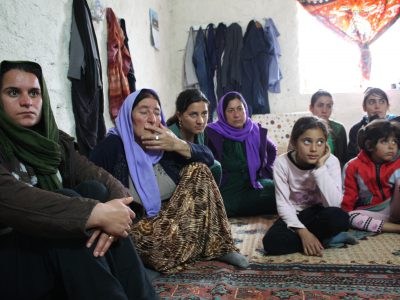
- Displaced Yazidi women who escaped ISIS violence are building a women-only commune in north-eastern Syria, free from "patriarchy and capitalism.” Read The Guardian report.
- Over-policing is a problem in many U.S. cities, but a new program in Albuquerque allows police officers to take low-level offenders to substance abuse treatment, helping individuals avoid arrest and a criminal record, The Albuquerque Journal reports.
- The Affordable Care Act was supposed to make mental health services available to all, but fell short of the promise. Some cities, including Denver and Seattle, are stepping up and raising taxes to fill that gap. Governing magazine has the details.
- When conservative American lawmakers are unable to legislate services like Medicaid or SNAP out of existence, they throw up bureaucratic roadblocks in front of people who need to access those services. In addition to proposing new laws, a progressive agenda should push for reversals of those roadblocks, making it easier for people to access the benefits for which they qualify. Read the op-ed in The American Prospect.
- When Esquire profiled a 17-year-old, white, male Trump supporter from middle America earlier this month, there was an uproar in liberal circles. Why do we need to hear the thoughts of this ‘privileged’ teenager? Why aren’t we hearing the voices of young men of color? But the real problem with the profile, writes Alexandra Tempus in this thought-provoking op-ed, is not who it’s about; the problem is the magazine’s failure to provide any context or meaningful insight that might help the reader understand the circumstances that created this young man and his worldview. If it had provided that insight, it would have been an example of valuable journalism.
- A non-profit initiative in Oklahoma City established a school for homeless children. The idea is to help kids who have been living with the chaos of chronic homelessness by providing an environment that allows them to catch up developmentally and re-enter the mainstream school system. The school provides cooking lessons for students and families who might never have lived in a home with their own kitchen; it also provides washers and dryers and a place to socialize outside of school hours, all with the intention of helping kids grow academically and socially, in spite of the uncertainty in their home life. One way the school made sure they were meeting student needs? They asked the kids what they wanted. Read the story at Fast Company.
- With student loan debt soaring, one school is operating on a whole new model: tuition is free, until you land a good job. Andrew Ross Sorkin explains the concept and how it works in this intriguing New York Times op-ed.
- When poverty is alleviated, depression levels decline. This is one of the conclusions presented in the results of a Finnish study on basic income. According to the study, “recipients [of basic income] reported a 37 percent reduction in depression levels, a 22 percent improvement in confidence for their futures, and an 11 percent bump in faith in politicians,” Fast Company reports.
- The epidemic of loneliness is now widely viewed as a public health threat with consequences as bad or worse than smoking and obesity. But how can one build the communities that are essential for combating loneliness in our increasingly atomized, frenetic society? One answer, according to this Bloomberg report, is to throw a party.
- The children of migrant farmworkers in California have been invited to join a program led by scientists who want to figure out how to minimize the children's exposure to dangerous pesticides. By including the children, they are setting an example of how to democratize scientific research. Read the story published by Ensia.
- How can journalists make their reporting on conflict and on elections more nuanced? Apparently, a very successful strategy is to bring together journalists and conflict resolution experts to workshop essential questions that "complicate the narrative." Fascinating report here.
- There is a dearth of affordable housing in American cities, but Austin, Texas, is considering lifting building restrictions in exchange for developers building more affordable units. Next City has the story.
- In order to stop global warming at 1.5 degrees, we need to increase radically our use of sustainable energy sources. Solutions like solar and wind energy require the use of "rare earth metals" like cadmium, neodymium and indium — which must be mined from the earth. Now the issue is: How can we do this sustainably? Here's a concrete suggestion.
- In Bali teenage sisters led a successful grassroots campaign to ban single-use plastic in 2019. NPR has the story.
- In Europe, teenage girls are calling for strikes to demand action on climate change, and BuzzFeed profiled their heroic efforts.
- Many serious illness associated with poor sanitation can be preempted by providing access to clean water, decreasing the need for over-prescribing antibiotics. The Bureau of Investigative Journalism has the report.
[post_title] => Bringing nuance to conflict reporting, successful campaigns to ban plastic, and children who learn scientific research for their own benefit [post_excerpt] => The children of California farmworkers are working with research scientists seeking a way to limit their exposure to toxic pesticides; conflict resolution experts and journalists workshop strategies for bringing more nuance to reporting from war zones and election campaigns; and a heartening story about teenage sisters in Bali who led a successful grassroots campaign to ban single use plastic bags [post_status] => publish [comment_status] => open [ping_status] => open [post_password] => [post_name] => bringing-nuance-to-conflict-reporting-successful-campaigns-to-ban-plastic-and-children-who-learn-scientific-research-for-their-own-benefit [to_ping] => [pinged] => [post_modified] => 2024-08-28 21:15:14 [post_modified_gmt] => 2024-08-28 21:15:14 [post_content_filtered] => [post_parent] => 0 [guid] => https://conversationalist.org/?p=602 [menu_order] => 356 [post_type] => post [post_mime_type] => [comment_count] => 0 [filter] => raw )

- The Guardian reports on a small company in northern England that has resolved the persistent problem of gender pay-gaps. It decided to skip the traditional corporate hierarchy, establishing itself instead as a cooperative that pays all of its employee-members the exact same wage, regardless of race, gender, age, or experience.
- Genocide is potentially preventable. According to researchers at the U.S. Holocaust Memorial Museum in Washington, D.C., the conditions that lead up to genocide are consistent. The conclusion: that if genocide can be predicted, it can also be pre-empted. NPR reported the story.
- In their search for a compassionate solution to the problem of homeless people using libraries to bathe or sleep, libraries in San Francisco and Denver have hired social workers who work at the libraries, where their job is to direct homeless people to the services they need. The municipalities have also hired peer navigators with lived experiences of homelessness to help guide their work. Next City reports the story.
- In order to fight the political polarization that is tearing Poland apart, five news outlets representing editorial positions across the political spectrum came to an agreement to publish one another’s stories, in order to present their readers with diverse opinions. Read the New York Times op-ed.
- Helsinki has figured out a remarkable solution to the problem of homelessness. By implementing its Housing First program, which provides a stable and permanent home to indigent people for as long as they might need it, the city reduced the number of people living on the street from a high of 18,000 in 1987, to 6,600 today. The BBC reported the story.
- How to reduce the social tension in university towns between local residents and the students and staff? The Institute on Inequality and Democracy at the UCLA Luskin School of Public Affairs is working with social justice activists and community organizers, and asking how their research can help advance and sustain movements on the ground. Read the Next City story.
- Newspapers around the world have for years been shutting down, reducing staff, or operating at a loss as advertising revenue continues to slide downward, but The Seattle Times might have found a solution. The paper is working with reporters to understand which stories and products drive subscriptions, rather than clicks. One Seattle Times reporter noted on Twitter that the result so far has been: No layoffs. Read the story at Digiday.
- A grassroots movement in Louisville, Kentucky, has tackled the unaffordable housing issue. Black Lives Matter raised the funds to purchase inexpensive houses, which they then gifted to transient families and single mothers with low incomes. Read about it at Yes! Magazine.
- An insurance company, noting that its employees had an average student loan debt of $32,000, came up with a solution: It would allow its workers to trade up to five of their 28 paid vacation days for assistance with that debt. Read the Bloomberg Business report.
[post_title] => Solutions to intractable problems: Homelessness, debt, political polarization, and more [post_excerpt] => Successful efforts to resolve homelessness, prevent political polarization, and pre-empt genocide are just some of the solutions-oriented stories we curated from around the web. [post_status] => publish [comment_status] => open [ping_status] => open [post_password] => [post_name] => solutions-to-intractable-problems-homelessness-debt-political-polarization-and-more [to_ping] => [pinged] => [post_modified] => 2026-08-07 16:50:50 [post_modified_gmt] => 2026-08-07 16:50:50 [post_content_filtered] => [post_parent] => 0 [guid] => https://conversationalist.org/?p=555 [menu_order] => 358 [post_type] => post [post_mime_type] => [comment_count] => 0 [filter] => raw )


A Dick Captured by the FSB, 2010, Liteiny Bridge, St. Petersburg. (photo: Voina)[/caption]

Childish Gambino (This is America, screencap)[/caption]

Landscape by Arkadiy Aktsynov and Lyudmila Aktsynova, 1962. Oil and cardboard.[/caption]

Swan Lake graffiti by

Russian Questions and Life of Marvellous Monroes shining with gold and silver foil. (New Museum)[/caption]