WP_Post Object
(
    [ID] => 3432
    [post_author] => 2
    [post_date] => 2021-11-11 12:08:43
    [post_date_gmt] => 2021-11-11 12:08:43
    [post_content] => Throughout her journey, the 9-year-old Syrian refugee girl-puppet was greeted by both loving crowds and anti-migrant protesters. 

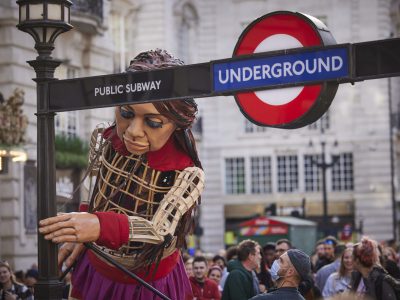
A huge crowd gathers outside the National Theatre in London’s Southbank. Children run around during the last moments of daylight. A choir stands ready. They are waiting for Amal. Heads turn and people point, as a giant puppet rounds the corner. As she walks into the courtyard, a solo voice sings out her name. The audience is silent.

Amal tentatively explores the crowd, peering into the faces in front of her. She bends down to touch a child’s hand, and an elderly woman appears to give her words of heartfelt comfort. The mood is electric. When Amal finally leaves the National Theater, the crowd follows her across Waterloo Bridge, accompanying her as she continues to her next destination. 

She might just be a puppet, but Amal represents something very real. She embodies a nine-year-old Syrian refugee, who has taken the same journey as many unaccompanied minors across Europe. Her name is Arabic for “hope.” Amal started her journey on the Turkey-Syria border, kicking off Good Chance and Handspring Puppet Company’s travelling festival, The Walk, and journeying 8,000 kilometers (5,000 miles) to find a home in Manchester, UK.

We were all invited to join Amal as she traveled across Turkey, Greece, and Italy, where she was met with both love and hostility. Amal has finally arrived in the UK, just as its government is proposing potentially hugely consequential changes to its immigration system, changes which could actually land those making dangerous journeys like Amal’s in jail. 

Thankfully for Amal, as she made her final steps across Europe, she was welcomed and given a home. Will the same be true for real migrant children?

Amal’s next steps in Europe

As Amal left Italy, to begin the final leg of her journey, she took her first steps through south-eastern France and into Switzerland. In Geneva, she played in the fountains outside the United Nations Office, and placed her hand on The Broken Chair, a 12-metre sculpture of a seat with a snapped leg, designed to raise awareness of the victims of landmines. There were many such poignant moments during The Walk. “The fact that this journey is based on a real route that many thousands of children have walked, and some have lost their life on, means that we are entrusted with a great responsibility to represent their stories in an honest and complicated way, showing the hardship but also the beauty of their journeys,” Amir Nizar Zuabi, artistic director of The Walk and Good Chance, told me.  “We take this responsibility very seriously, because we know that as big as Amal is, so is the impact of her journey.” Amal moved on from Switzerland, stepping next into Germany, home to the EU’s largest population of displaced people. When she arrived in Stuttgart, she made friends with a giant robotic puppet, part of the Dundu Family of German puppets that have brought together audiences internationally since 2006 with spectacular light and music shows. As nighttime arrived, Amal met more of the family, as they lit up the darkness. When unaccompanied minors like Amal first arrive in Germany, they’re taken into the care of the local youth welfare office, explains Jonathan Sieger, head of the Bürgerzentrum community center and executive board member of NGO Kölner Spendenkonvoi, which assists newly arrived refugees. These young people are then placed with relatives, a foster family, or a suitable facility, and they must be given a legal guardian, as is the case—although not necessarily the reality—across much of Europe. One of the main risks young refugees face, Sieger says, is developing long term trauma. “What we are lacking in Germany is general psychological treatment for refugees. Especially for unaccompanied minors, this help is crucial,” Sieger says. This same sentiment has been echoed by organizations across the continent.  Organizations like Bürgerzentrum are supporting young refugees to settle into their new homes. From its base in Cologne, Bürgerzentrum offers cooking workshops, theater classes, cultural events, and trips. Amal’s journey did not end here, but if it did, perhaps she would have found a warm welcome. As Amal bid farewell to Germany, she continued across Belgium, and then into France.

Walking through France

In the mountain region of Briançon, Amal embarked upon the treacherous path that many refugees have used to cross from Italy into France. She gazed at an exhibition of artwork made from the objects and clothes left behind by those who had traveled before her. In Paris, she saw the Eiffel Tower, and in Lyon she walked through the park with new friends. There was music wherever she went: brass bands, accordions, drumbeats. Amal was treated with dignity and celebration, but this is not always the reality for refugees in northern France. Police use violence and tear gas, which has been documented by Refugee Rights Europe and others. Safe Passage International is an organization helping child refugees reach safety and reunite with family, and it works across the UK, France, and Greece. In France, most of the people they support are sleeping on the street when they first come into contact with them. “Having fled war and persecution, there are thousands of children stuck on the streets or in refugee camps across Europe—nobody can call that safe for a child. Children are at serious risk of violence, exploitation and trafficking. These are children left in limbo and exposed to incredibly dangerous situations,” says the organization’s CEO, Beth Gardiner-Smith.  Amal then made her way to Calais flanked with cheers and flags. This is often the spot where people cross over to the UK. It was the people of the Calais Jungle, a refugee camp that the French government had destroyed in 2016, which served as the original inspiration for Amal. It was also the birthplace of an earlier Good Chance production, The Jungle, about the people who gathered at an Afghan café in the refugee camp. Despite all this, the Mayor of Calais objected to Amal passing through the area and refused to approve a permit. Like many young refugees before her, Amal crossed the English Channel to the UK. But unlike fellow young refugees, the company of Good Chance actors accompanying Amal crossed the water safely, with passports in hand and comfortable places to sleep on either side of the journey.

Arriving on UK shores

On a grey day toward the end of October, Amal finally stepped onto the shore in Folkestone, Kent, in the south-east of England. The actor Jude Law, who is an ambassador for The Walk, held her hand as she walked down the pier, where schoolchildren welcomed her and gave her a passport, blanket, and cookies. The day after Amal’s arrival, supporters flocked to Parliament Square in London to join the Refugees Welcome Rally, organized by a collective of refugee organizations. The protest took place in opposition to the government’s new “Nationality and Borders Bill,” which parliament is currently considering. The Conservative government has stated three objectives for this bill: 
  • “To make the system fairer and more effective”;
  • “To deter illegal entry into the UK”;
  • “To remove from the UK those with no right to be here.”
In her opening speech for the bill, Home Secretary Priti Patel said: “The British people have had enough of open borders and uncontrolled migration[...] Enough of dinghies arriving illegally on our shores, directed by organized crime gangs.” She went on to outline some of the proposed changes, which include a maximum prison sentence of four years for those “entering the country illegally” and additional powers for the Home Office’s Border Force.  The policies outlined in the bill contravene the UN Refugee Convention, which states that refugees should not be penalized for the manner in which they enter a country if they are coming from somewhere where their life or freedom has been threatened.  According to Safe Passage International, the UK government’s bill is aimed, foremost, at deterring migrants and refugees who wish to enter the UK, but fails to address the reasons people leave their countries. “The UK Government’s Nationality and Borders Bill will cruelly punish refugees who turn to us for compassion and safety, whilst doing nothing to break the business model of smugglers who exploit the lack of safe passage to the UK,” says the organization’s CEO, Beth Gardiner-Smith. “We urge this government to tear up these cruel plans and instead open safe routes for refugees seeking sanctuary in the UK.” There are currently no visas that would allow a person to travel legally to the UK and claim asylum.  “It’s deeply concerning that virtually the only way now for child refugees to reach the UK from France—regardless of their age, vulnerability, family links or community ties—is to risk a dangerous journey in the back of lorries or on dinghies across the Channel,” Gardiner-Smith added. If passed, the bill could see many asylum seekers deported to a third country, particularly those who have already traveled through what are considered “safe nations.” The government will introduce “reception centers,” which could resemble the controversial Napier Barracks, criticized for their “squalid” conditions. The bill also paves the way for keeping refugees offshore, where they are detained in so-called processing centers in a third country. Safe Passage International is calling on the UK government to allow entry to people seeking asylum in cases where they already have family in the UK. They also say the situation for refugees has worsened since Brexit because the EU’s Dublin Regulation, which provided the criteria for defining which country is responsible for examining a refugee’s asylum application, has not yet been replaced with a UK equivalent.  Thankfully, there is a strong network of local organizations across the UK supporting young refugees, like the Kent Refugee Action Network (KRAN). Daniel and Osama are two of KRAN’s youth ambassadors. They are also refugees; now they support people who are making the same journeys that they did.  Three years ago, KRAN started a Youth Forum, where young refugees meet to discuss different issues that affect them—like accommodation, education, and mental health. Youth ambassadors like Daniel and Osama act as a bridge between these young people and the organization. In the forum, young people often describe the contrast between their expectations and their experiences in seeking asylum in the UK. In most instances, they’ve faced challenges at every stage. These stories also highlight the essential role of organizations like KRAN and the Refugee Council, and Refugee Action. Despite the challenges he’s faced, Daniel has felt welcomed in the UK and does not believe the country’s new immigration plan represents the sentiment of the wider public. The bill is now in the report stage and awaiting its third reading, after passing its second reading by 366 votes to 265. With a Conservative majority, it seems likely the bill will pass. But there could be legal challenges to Priti Patel’s plan for a Border Force to push back boats carrying refugees.

Meeting Amal

Both Daniel and Osama met Amal in Kent. They described it as an extraordinary experience. “It really represents our stories, it represents the suffering that we have been through,” Osama says. “You have this emotional feeling when you see that people are coming just [to see] a puppet and [to give] their warm greetings.” At the beginning of this month, Amal finally found a home in Manchester. Local schools, refugee communities, and the Manchester International Festival created a spectacle for her arrival: a flock of puppet birds. As Amal moved among the crowd, a flight of swallows acted as her guide, their wings illuminated and flapping gently around Amal. These birds know migration too, making dangerous journeys every year between the UK and South Africa. “I know that the arrival into the UK specifically, though not only the UK, is not a simple one. Amal and the children she represents only start a much longer journey once they reach their final destinations,” The Walk director Zuabi says. Zuabi, nonetheless, has hopes for Amal, a puppet who represents all young refugees: “We are not born refugees, it is a circumstance, and this circumstance should be as short as possible.”  If the Nationality and Borders bill is passed, the future could look bleak for asylum seekers hoping for refuge and welcome in the UK. Already, the Border Force has been spotted practising sea push back techniques. Napier Barracks is still operating. But the open arms with which Little Amal has been welcomed and the persistent work of grassroots refugee organizations show that the British people care, and will stand up for their new neighbors. It’s there in Amal’s name—there is hope. [post_title] => Little Amal arrives in the UK as parliament considers a bill that would see her deported [post_excerpt] => Enthusiastic crowds greeted the 10 year-old unaccompanied Syrian refugee girl, even as parliament considered a bill that would make thousands of refugees ineligible to stay in the UK. [post_status] => publish [comment_status] => closed [ping_status] => open [post_password] => [post_name] => little-amal-arrives-in-the-uk-as-parliament-considers-a-bill-that-would-see-her-deported [to_ping] => [pinged] => [post_modified] => 2026-08-05 20:00:07 [post_modified_gmt] => 2026-08-05 20:00:07 [post_content_filtered] => [post_parent] => 0 [guid] => https://conversationalist.org/?p=3432 [menu_order] => 164 [post_type] => post [post_mime_type] => [comment_count] => 0 [filter] => raw )
Little Amal arrives in the UK as parliament considers a bill that would see her deported

WP_Post Object
(
    [ID] => 3086
    [post_author] => 2
    [post_date] => 2021-08-05 16:33:54
    [post_date_gmt] => 2021-08-05 16:33:54
    [post_content] => LGBT groups across the Middle East and North Africa rely on social media for networking, information, and empowerment. Now police are exploiting the platforms to arrest & detain them, often destroying their lives. 

Sarah Hegazy, an Egyptian queer feminist, raised a rainbow flag at a concert in Cairo. Rania Amdouni, a Tunisian queer activist, protested deteriorating economic conditions and police brutality in Tunis. Mohamad al-Bokari, a Yemeni blogger in Saudi Arabia, declared he supported equal rights for all, including LGBT people.

The common thread in these cases is that all three were identified in social media posts, which allowed their governments to monitor their online activity and target them offline. What happened afterward ruined their lives.

In Sarah Hegazy’s now infamous photo she is hoisted on a friend’s shoulders, smiling elatedly as she waves a rainbow flag at a 2017 performance in Cairo by Mashrou’ Leila, the popular Lebanese band whose lead singer is openly gay. The photo was posted on Facebook and shared countless times, garnering thousands of hateful comments and supportive counter-messages in what became a frenzied digital debate.

Days later, the Egyptian government initiated a crackdown. Police arrested Hegazy on charges of  “joining a banned group aimed at interfering with the constitution,” along with Ahmed Alaa, who also raised the flag, and then dozens of other concertgoers. In what became a massive campaign of arrests against hundreds of people perceived as gay or transgender, Egyptian authorities created fake profiles on same-sex dating applications to entrap LGBT people, reviewed online video footage of the concert, then proceeded to round up people on the street based on their appearance.

Hegazy spoke about her post-traumatic stress after she was released on bail. She had been jailed for three months of pretrial detention, during which police tortured her with electric shocks and solitary confinement. They also incited other detainees to sexually assault and verbally abuse her. Fearing re-arrest and a prison sentence, she went into exile in Toronto, where, on June 14, 2020, she took her own life. The 30-year-old woman ended her short farewell note with the words: “To the world, you’ve been greatly cruel, but I forgive.”

Rania Amdouni was on the front line during the country-wide demonstrations in Tunisia that began in January 2021, protesting economic decline and rampant police violence. People who identified themselves as police officers took her photo at a protest, posted it on Facebook, and captioned it with her contact information and derogatory comments based on her gender expression.

Soon after, her profile was flooded with death threats, insults—including from a parliament member—and messages inciting violence against her. When police harassment extended to the street—outside restaurants she frequented and near her residence—she tried to file a complaint. At the police station, officers refused to register her complaint, then arrested her for shouting.

Tunisian security forces also targeted other LGBT activists at the protests with arrests, threats to rape and kill, and physical assault. LGBT people were smeared on social media and “outed”—their identities and personal information exposed without their consent. The offline consequences were catastrophic—people lost their jobs, were expelled from their homes, and even fled the country.

Amdouni was sentenced to six months in prison and a fine. Though released upon appeal, she reported suffering acute anxiety and depression as well as continued harassment online and in the street.

Mohamed al-Bokari traveled on foot from Yemen to Saudi Arabia after armed groups threatened to kill him due to his online activism and gender non-conformity. While living in Riyadh as an undocumented migrant, he posted a video on Twitter declaring his support for LGBT rights; this prompted homophobic outrage from the Saudi authorities and the public. Subsequently, security forces arrested him.

He was charged with promoting homosexuality online and “imitating women,” sentenced to 10 months in prison, and faced deportation to Yemen upon release.  Security officers held him in solitary confinement for weeks, subjected him to a forced anal exam, and repeatedly beat him to compel him to “confess that he is gay.” Al-Bokari is now safely resettled, with outside help, but remains isolated from his community and cannot safely return home.

Across the Middle East and North Africa region, LGBT people and groups advocating for LGBT rights have relied on digital platforms for empowerment, access to information, movement building, and networking. In contexts  in which governments prohibit LGBT groups from operating, activist organizing happens mainly online, to expose anti-LGBT violence and discrimination. In some cases, digital advocacy has contributed to reversing injustices against LGBT individuals. But governments have been paying attention, and they have a crucial advantage—the law is on their side.

Most countries in the  region have laws that criminalize same-sex relations. Even in the countries that do not—Egypt, ironically, is one of them—spurious “morality laws,” debauchery and prostitution laws are weaponized to target LGBT people.

When I was documenting the systematic torture of LGBT people in Egypt’s prisons, the targeting pattern was unmistakable: Egyptian authorities relied on digital evidence to track down, arrest, and prosecute LGBT people. People who had been detained told me that police officers, unable to find “evidence” when searching their phones at the time of arrest, downloaded same-sex dating apps on their phones and uploaded pornographic photos to justify keeping them in detention. The cases I documented suggest a policy coordinated by the Egyptian government online and offline, to persecute LGBT people. One police officer told a man I interviewed that his entrapment and arrest were part of an operation to “clean the streets of faggots.”

In recent years, government digital surveillance has gained traction as a method to quell free expression and silence opponents. Concurrently, the application of anti-LGBT laws has extended to online spaces—regardless of whether same-sex acts occur—chilling even the digital discussion of LGBT issues.

The consequences of digital surveillance and online discrimination spiked for LGBT people just as the Covid-19 pandemic and related lockdown measures closed down groups that had offered safe refuge, diminished existing communal safety nets, threatened already dire employment and health access, and forced individuals to endure often abusive environments.

In Morocco, a campaign of “outing” emerged in April 2020, at the height of the Covid-19 pandemic. Ordinary citizens created fake accounts on same-sex dating apps and endangered users by circulating their private information, alarming vulnerable groups. LGBT people, expelled from their homes by their families during a country-wide lockdown, had nowhere to go.

Activist organizations in the region play a significant role in navigating these threats and responding to LGBT people’s needs, regularly calling upon digital platforms to remove content that incites violence and to protect users. Yet in most of the region, these organizations are also hobbled by intimidation and government interference.

In Lebanon, for example, a gender and sexuality conference, held annually since 2013, had to be moved abroad in 2019 after a religious group on Facebook called for the organizers’ arrest and the cancellation of the conference for “inciting immorality.” General Security Forces shut down the 2018 conference and indefinitely denied  non-Lebanese LGBT activists who attended the conference permission to re-enter the country. The crackdown signaled the shrinking space for LGBT activism in a country which used to be known as a port in a storm for human rights defenders from the Arabic-speaking world.

These are not isolated incidents in each country. When state-led, they often reflect government strategies to digitalize attacks against LGBT people and justify their persecution, especially under the pretext of responding to ongoing crises. It is no coincidence that oppressive governments in varied contexts across the region are threatened by online activism — because it works.

Exposing these abusive patterns highlights the urgency of decriminalizing same-sex relations and gender variance in the region. Instead of criminalizing the existence of LGBT people and targeting them online, governments should safeguard them from digital attacks and subsequent threats to their basic rights, livelihoods, and bodily autonomy.

Meanwhile, digital platforms have a responsibility to prevent online spaces from becoming a realm for state-sponsored repression. Corporations that produce these technologies need to engage meaningfully with LGBT people in the development of policies and features, including by employing them as engineers and in their policy teams, from design to implementation.
    [post_title] => ‘Clean the streets of faggots’: Governments in the Middle East & North Africa target LGBT people via social media
    [post_excerpt] => Most Middle Eastern countries have laws that criminalize same-sex relations. In cases where they do not, police weaponize spurious 'morality' laws to target LGBT people.
    [post_status] => publish
    [comment_status] => closed
    [ping_status] => open
    [post_password] => 
    [post_name] => clean-the-streets-of-faggots-governments-in-the-middle-east-north-africa-target-lgbt-people-via-social-media
    [to_ping] => 
    [pinged] => 
    [post_modified] => 2026-08-06 19:38:40
    [post_modified_gmt] => 2026-08-06 19:38:40
    [post_content_filtered] => 
    [post_parent] => 0
    [guid] => https://conversationalist.org/?p=3086
    [menu_order] => 185
    [post_type] => post
    [post_mime_type] => 
    [comment_count] => 0
    [filter] => raw
)

‘Clean the streets of faggots’: Governments in the Middle East & North Africa target LGBT people via social media

WP_Post Object
(
    [ID] => 2712
    [post_author] => 2
    [post_date] => 2021-06-08 17:06:58
    [post_date_gmt] => 2021-06-08 17:06:58
    [post_content] => An assertive new generation of Muslim feminists is disrupting the white feminist narrative of victimhood.

“Too many religions are patriarchal and imbued with misogyny. Because of this I am often asked how I can be a Muslim feminist. My response is that I am both of Muslim descent and a feminist, and the two identities are not connected. One does not depend on the other.” — Egyptian-American feminist and author Mona Eltahawy, in her recently published book of essays, The Seven Necessary Sins for Women and Girls

The West has for too long related to Muslim women as though they needed to be saved, lumping them all into a single, victim focused narrative. In recent years, a vocal new generation of Muslim feminists, of whom Mona Eltahawy is perhaps the best known, seeks to challenge the victim narrative and assert their place in the feminist discourse on their own terms.  Saving oneself, as opposed to being saved by others, whether by escaping physically, emotionally or creatively, is a key theme in the emerging Muslim feminist narrative.  The plot of Yosra Samir Imran’s debut novel Hijab and Red Lipstick (Hashtag Press, 2020), appears at first to describe a familiar narrative of oppression.  Sara, a British Muslim adolescent in London, chafes against the restrictions set by her strict Egyptian father, who forbids her from indulging her passions for makeup, fashion magazines and pop music. His decision to move the family to Qatar, where Sara’s freedom is further restricted by patriarchal social norms and laws, sets father and daughter on a collision course. Imran insists that her story is strictly about an individual—and not a commentary on Muslim society as a whole.  [caption id="attachment_2752" align="aligncenter" width="640"] Yousra Samir Imran with her book, "Hijab and Red Lipstick."[/caption] I even put an author’s note at the start of my book asking readers not to discredit one woman’s experience just because it’s not their own, and that this book tells only one type of experience,” Imran told The Conversationalist. Still, some Muslim readers complain that the novel perpetuates stereotypes. Their unwillingness to see the book as one woman’s journey reflects a pervasive awareness among Muslims of the lens through which they are perceived—one that they feel distorts their lived experiences. Sabyn Javeri, a Karachi-born academic and novelist (Hijabistan and Nobody Killed Her) who is a professor of Literature and Creative Writing, told The Conversationalist that a major barrier to understanding the diversity of narratives within Muslim communities is the propogation of a single dominant narrative. “I always wonder what we mean by white feminist narrative,” she said, adding: “I believe in plurality, I believe there’s many facades to identity.” She almost wrote Hijab and Red Lipstick as a memoir, said Imran, who now lives in West Yorkshire, but decided to fictionalize her story for reasons of personal safety. Nevertheless, the book is obviously based on  her own experiences in Qatar, where she lived from the age of 14 until she returned to the U.K. at 29. Sara, the protagonist, is a practicing Muslim who wears the hijab, but she is also a rebel who tests boundaries. Samir Imran believes that because she wears the hijab, her Muslim readers might have expected her “to present squeaky clean Muslim characters” instead of the complex and flawed characters in her novel.   There are, to be sure, some widely reported incidents that seem to support the white feminist narrative about oppressed Muslim women who need to be saved. Princess Latifa of Dubai, for example, has for several years been her father’s hostage, kept in an isolated villa after an unsuccessful attempt to escape the Gulf territory in 2018. Dina Ali Lasloom, then 24, was forcibly returned to Saudi Arabia in 2017 when she was stopped in Manila on her way to seek asylum in Australia.  Another highly publicized incident occurred in 2019, when Rahaf Mohammed, an 18 year-old Saudi woman who was granted asylum in Canada after she barricaded herself in a Bangkok Airport hotel room and tweeted that she was in danger of being deported and imprisoned for having renounced Islam (a crime in Saudi Arabia). Via amplification, she grew her Twitter following from fewer than 30 to several thousand within a few hours and gained the attention of the international media. Ms. Eltahawy, who played a critical role in amplifying the then-unknown Rahaf Mohammed’s tweets, writes in The Seven Necessary Sins for Women and Girls that Ms. Mohammed “saved herself.” “Saving oneself” can also mean asserting one’s right to choose how to dress—including whether or not to wear a traditional head scarf. The hijab is a hot topic—and not only in the west. Tunisia, for example, bans women from wearing the niqab, or face covering, in government offices. France and Quebec ban the niqab completely, while the Canadian province recently passed a law that restricts public servants from wearing religious symbols at work, in a move that is widely regarded as singling out Muslim women. But the debate about face and head coverings is taking place without the participation of Muslim women. How do they feel about the issue? “Hijab has been a tool of military and political intervention since colonial days,” said Sabybn Javeri. “People don't want to focus on things which really are oppressive—like violence or assault. It’s easier to target women’s clothing because that’s easier to control. Violence and control takes more work, you need to challenge the system, demand a larger shift,” she pointed out.  The characters in Hijabistan, Javeri’s collection of short stories about hijabi culture set in the U.K. and Pakistan, include a kleptomaniac who exploits the anonymity of her burqa to shoplift, and who enjoys flashing the fruit vendor across the street. They include women who feel the hijab liberates them and others who feel it constricts them. The stories highlight the intersectionality and plurality that comes with identities, which are often overshadowed by the debate about the meaning of a scarf on a woman’s head rather than the thoughts inside it.  “We have long been defined by what’s between our legs and what’s on our heads,” said Mona Eltahawy. She told The Conversationalist that the title of her first book, Headscarves and Hymens, was inspired by her desire to challenge the binary view of what defines a Muslim woman. Nevertheless, Eltahawy feels now that there is too much talk about the Muslim head scarf. “Whether I should wear the hijab, or whether anyone should wear the hijab, is a difficult conversation about choice. At the end of the day that conversation of wearing and not wearing is limited to women of Muslim descent and no one else,” she said. Our Women On The Ground is a collection of first-person essays by female Arab journalists in the Middle East that reflects the unique challenges Muslim women face when reporting. “I wondered about the fearless Arab women journalists, whose work I’d been following for years,” editor Zahra Hankir told The Conversationalist. “What if we read about their experiences, and about how their lives have been affected by the tumult in the region, in a similar space? The stakes are, without a doubt, so much higher for them. Being a local journalist in the region, particularly a woman journalist, carries with it immense risks and challenges.”  Choosing a job that means being in the public eye can be seen as an act of defiance for a woman in Muslim society. Foreign journalists have the privilege of leaving when things get bad, or of turning to their government for help when they are in trouble. Local journalists, particularly in countries where laws or customs restrict a woman’s presence in the public domain, do not have those privileges and are easier for the state to control. Non-Muslim female journalists also face many gender-related challenges when working in the field, although of a different sort; by acknowledging that oppressive systems affect all but in different ways, we see how their identities affect their experiences. For Muslim women, their religion is just one part of that lived experience.  The bottom line for most Muslim feminists is that they are more concerned with advancing their own cause than with countering the white feminist point of view. “A lot of my work goes towards complicating the narrative for women of Muslim descent, who are not white, who are from the global south,” said Eltahawy. This is the disruption we need in order to change existing systems.  [post_title] => Muslim feminists are not interested in the white woman's gaze [post_excerpt] => An assertive new generation of Muslim feminists is challenging the victim narrative imposed on them. [post_status] => publish [comment_status] => closed [ping_status] => open [post_password] => [post_name] => muslim-feminists-are-not-interested-in-the-white-womans-gaze [to_ping] => [pinged] => [post_modified] => 2026-08-06 20:59:04 [post_modified_gmt] => 2026-08-06 20:59:04 [post_content_filtered] => [post_parent] => 0 [guid] => https://conversationalist.org/?p=2712 [menu_order] => 198 [post_type] => post [post_mime_type] => [comment_count] => 0 [filter] => raw )

Muslim feminists are not interested in the white woman’s gaze

WP_Post Object
(
    [ID] => 2452
    [post_author] => 2
    [post_date] => 2021-04-09 02:55:05
    [post_date_gmt] => 2021-04-09 02:55:05
    [post_content] => Once hailed as the great democratizers, social media platforms are now under fire for failing to moderate hate speech.

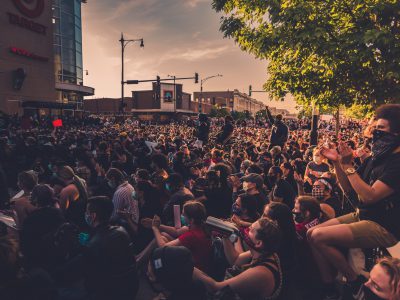
On June 6, 2020 I participated in Berlin’s Black Lives Matter demonstration. Thousands of people turned out, despite the pandemic, in solidarity with those who were demonstrating across the United States to protest the police killing of George Floyd—and to protest police killings of people of color in Germany. The mass gathering in the middle of the city’s historic Alexanderplatz was a powerful sight; standing there, wearing my mask and face shield, I felt for a moment as though things might change.

Exactly 10 years earlier and halfway around the world, another act of horrific police brutality occurred and changed the course of history. Khaled Saeed, a 28-year-old Egyptian man who lived in Alexandria, was sitting in a cybercafé when plainclothes police officers barged in and demanded to see everyone’s identification. Saeed refused. In response the officers, who almost never encountered defiance from the cowed citizens of the authoritarian state, began to beat him. They dragged him outside, continuing to batter him in full view of numerous witnesses. At one point, Saeed cried out, “I’m dying!” to which an officer responded: “I’m not leaving you until you are dead.” They drove off with Saeed’s lifeless body and returned 10 minutes later to dump it at the same place they had attacked him.

I was finishing my book, Silicon Values: The Future of Free Speech Under Surveillance Capitalism on the day a teenage shop clerk in Minneapolis called 911 to report a customer he suspected of having passed him a counterfeit $20 bill. Derek Chauvin was one of the responding police officers who arrested George Floyd soon after. A bystander used her phone to record the shocking spectacle of Chauvin, a white police officer, kneeling on Floyd’s neck for nearly 10 minutes as he gasped for breath, begged for mercy, and ultimately died. The video of the incident sparked a global movement.

While writing my book I thought about the ties that bind us, across borders; our commonalities, our differences, and the ways in which powerful actors place limits on how we communicate, how we organize, and how we express ourselves.

The chapters covering the role that social media platforms had played in the Arab uprisings of 2010-2011 and in the Movement for Black Lives were done by the time the protests of 2020 erupted and I was working on the book’s conclusion, in which I wrote:

“Police brutality and repression in Egypt and the United States are inextricably linked, through global networks of power and capitalism and more directly through military aid and training, but also through the similar ways in which the powerful seek to quash dissent—which includes platform censorship.”

In Egypt, Saeed’s death inspired activists to create a Facebook page called “We are all Khaled Saeed,” which became a place where thousands of Egyptians participated in conversations and polls about the oppressive state, police violence and repression. Later, it was the place where activists called for the protests that led to the January 25 revolution—an uprising that inspired numerous movements throughout the region and the world and shaped the ensuing decade. But the Egyptian revolution might never have begun as it did if events had evolved differently. During the decade prior to the 2011 uprising, Egypt saw a blogging boom, with people from diverse socio-economic backgrounds writing outspoken commentary about social and political issues, even though they ran the risk of arrest and imprisonment for criticizing the state. The internet provided space for discussions that had previously been restricted to private gatherings; it also enabled cross-national dialogue throughout the region, between bloggers who shared a common language. Public protests weren’t unheard of—in fact, as those I interviewed for the book argued, they had been building up slowly over time—but they were sporadic and lacked mass support. While some bloggers and social media users chose to publish under their own names, others were justifiably concerned for their safety. And so, the creators of “We Are All Khaled Saeed” chose to manage the Facebook page using pseudonyms. Facebook, however, has always had a policy that forbids the use of “fake names,” predicated on the misguided belief that people behave with more civility when using their “real” identity. Mark Zuckerberg famously claimed that having more than one identity represents a lack of integrity, thus demonstrating a profound lack of imagination and considerable ignorance. Not only had Zuckerberg never considered why a person of integrity who lived in an oppressive authoritarian state might fear revealing their identity, but he had clearly never explored the rich history of anonymous and pseudonymous publishing. In November 2010, just before Egypt’s parliamentary elections and a planned anti-regime demonstration, Facebook, acting on a tip that its owners were using fake names, removed the “We are all Khaled Saeed” page. At this point I had been writing and communicating for some time with Facebook staff about the problematic nature of the policy banning anonymous users. It was Thanksgiving weekend in the U.S., where I lived at the time, but a group of activists scrambled to contact Facebook to see if there was anything they could do. To their credit, the company offered a creative solution: If the Egyptian activists could find an administrator who was willing to use their real name, the page would be restored. They did so, and the page went on to call for what became the January 25 revolution. A few months later, I joined the Electronic Frontier Foundation and began to work full-time in advocacy, which gave my criticisms more weight and enabled me to communicate more directly with policymakers at various tech companies. Three years later, while driving across the United States with my mother and writing a piece about social media and the Egyptian revolution, I turned on the hotel television one night and saw on the news that police in Ferguson, Missouri had shot an 18-year-old Black man, Michael Brown, sparking protests that drew a disproportionate militarized response. The parallels between Egypt and the United States struck me even then, but only in 2016 did I become fully aware. That summer, a police officer in Minnesota pulled over 32-year-old Philando Castile—a Black man—at a traffic stop and, as he reached for his license and registration, fatally shot him five times at close range. Castile’s partner, Diamond Reynolds, was in the passenger’s seat and had the presence of mind to whip out her phone in the immediate aftermath, streaming her exchange with the police officer on Facebook Live. Almost immediately, Facebook removed the video. The company later restored it, citing a “technical glitch,” but the incident demonstrated the power that technology companies—accountable to no one but their shareholders and driven by profit motives—have over our expression. The internet brought about a fundamental shift in the way we communicate and relate to one another, but its commercialization has laid bare the limits of existing systems of governance. In the years following these incidents, content moderation and the systems surrounding it became almost a singular obsession. I worked to document the experiences of social media users, collaborated with numerous individuals, and learned about the structural limitations to changing the system. Over the years, my views on the relationship between free speech and tech have evolved. Once I believed that companies should play no role in governing our speech, but later I shifted to pragmatism, seeking ways to mitigate the harm of their decisions and enforce limits on their power. But while the parameters of the problem and its potential solutions grew clearer, so did my thesis: Content moderation— specifically, the uneven enforcement of already-inconsistent policies—disproportionately impacts marginalized communities and exacerbates existing structural power balances. Offline repression is, as it turns out, replicated online. The 2016 election of Donald Trump to the U.S. presidency brought the issue of content moderation to the fore; suddenly, the terms of the debate shifted. Conservatives in the United States claimed they were unjustly singled out by Big Tech and the media amplified those claims—much to my chagrin, since they were not borne out by data. At the same time, the rise of right-wing extremism, disinformation, and harassment—such as the spread of the QAnon conspiracy and wildly inaccurate information about vaccines—on social media led me to doubt some of my earlier conclusions about the role Big Tech should play in governing speech. That’s when I knew that it was time to write about content moderation’s less-debated harms and to document them in a book. Setting out to write about a subject I know so intimately (and have even experienced firsthand), I thought I knew what I would say. But the process turned out to be a learning experience that caused me to rethink some of my own assumptions about the right way forward. One of the final interviews I conducted for the book was with Dave Willner, one of the early policy architects at Facebook. Sitting at a café in San Francisco just a few months before the pandemic hit, he told me: “Social media empowers previously marginal people, and some of those previously marginal people are trans teenagers and some are neo-Nazis. The empowerment sense is the same, and some of it we think is good and some of it we think is not good. The coming together of people with rare problems or views is agnostic.” That framing guided me in the final months of writing. My instinct, based on those early experiences with social media as a democratizing force, has always been to think about the unintended consequences of any policy for the world’s most vulnerable users, and it is that lens that guides my passion for protecting free expression. But I also see now that it is imperative never to forget a crucial fact—that the very same tools which have empowered historically marginalized communities can also enable their oppressors. [post_title] => Between Nazis and democracy activists: Social media and the free speech dilemma [post_excerpt] => The content moderation policies employed by social media platforms disproportionately affect marginalized communities and exacerbate power imbalances. Offline repression is replicated online. [post_status] => publish [comment_status] => closed [ping_status] => open [post_password] => [post_name] => between-nazis-and-democracy-activists-social-media-and-the-free-speech-dilemma [to_ping] => [pinged] => [post_modified] => 2026-08-06 22:43:16 [post_modified_gmt] => 2026-08-06 22:43:16 [post_content_filtered] => [post_parent] => 0 [guid] => https://conversationalist.org/?p=2452 [menu_order] => 216 [post_type] => post [post_mime_type] => [comment_count] => 0 [filter] => raw )
Between Nazis and democracy activists: Social media and the free speech dilemma

WP_Post Object
(
    [ID] => 1950
    [post_author] => 2
    [post_date] => 2020-08-20 18:25:40
    [post_date_gmt] => 2020-08-20 18:25:40
    [post_content] => Three illiberal leaders cooked up a backroom deal to benefit the political careers of two and the geopolitical power of the third.

When the United Arab Emirates (UAE) announced on August 13 that it would normalize relations with Israel, under a U.S.-sponsored agreement, many were taken by surprise, including Netanyahu's coalition partners. But from the perspective of the parties involved, the deal makes perfect sense. It serves the respective interests of three illiberal leaders—Benjamin Netanyahu, Donald Trump and Mohammed bin Zayed, the powerful Emirati crown prince widely known as MBZ. Israel signed a peace treaty with Jordan in 1994 in a spirit of optimism for regional peace and an end to Israel’s military rule over the Palestinians; the current deal, by contrast, is driven by a shared perception of regional threats—most notably a fear of Iran, of political Islam and of popular mobilization. Both Netanyahu and the Emirati leadership see these as inherently destabilizing agents.

The deal is a win for all three actors. For Netanyahu, the UAE’s willingness to normalize relations without demanding territorial concessions— i.e., an end to Israel’s 53-year-old occupation of the West Bank and a lifting of its closure on Gaza—is a vindication of the political right’s long-held narrative, according to which if Israel maintained its military strength and refused to compromise, the international community and the Arab world would ultimately accept Israel on its own terms. The Israeli left has been saying for more than five decades that failure to end the occupation would lead to the country’s isolation on the international stage, to economic sanctions and political violence; now, Netanyahu can say they were wrong—and that he was right.

Netanyahu did not have to make any concessions in exchange for normalization. He is a deeply risk-averse politician, which is why he almost certainly had no intention of following through on his campaign promise—a bone to the far right—to annex the West Bank. The consequences of annexation would have been a freeze in the burgeoning and mutually beneficial—though as-yet unofficial—relationship with the Gulf Arab regimes, deterioration in relations with Jordan, and possibly another uprising in the Palestinian territories. Netanyahu’s policy for years has been to pursue creeping annexation of the West Bank, without making it official, so as to preclude the establishment of a Palestinian state, while at the same time avoiding international opprobrium and a Palestinian backlash; the latter would have interrupted almost two decades of relative calm in the occupied West Bank, since the Israeli Army crushed the Second Intifada in 2002.

But annexation was off the table, it appears, even before the normalization deal with the UAE was announced. The White House had made it clear that Netanyahu would have to make concessions to the Palestinians; but this is something the prime minister was unwilling to do, lest he bolster far right parties, such as Naftali Bennett’s Yamina and Avigdor Liberman’s Yisrael Beiteinu, which are courting voters who traditionally supported Netanyahu’s Likud. With its offer of normalization, the UAE. threw Netanyahu a lifeline: instead of fulfilling his campaign promise to annex swathes of the West Bank, the embattled prime minister could wave the trophy of peace in our time. By presenting the normalization agreement as a shining diplomatic success, he could deflect attention from his poor handling of the COVID-19 pandemic, which has caused widespread outrage, a slump in the polls, and ongoing demonstrations outside his official residence. At the same time, to appease his base, Netanyahu rushed to clarify that annexation of parts of the occupied West Bank was not canceled but rather postponed.

For Trump, the deal is a rare foreign policy success, as he continues to mismanage the national response to COVID-19 and to trail the Democratic nominee, Joe Biden, by wide margins. Trump claimed the deal was particularly popular among the Christian right, who are his most unswervingly loyal supporters and a crucial segment of his base. Conservative Evangelical Christians are ultra-hawkish supporters of Israel for theological reasons.

While most Americans would struggle to find the UAE on a map, the deal does represent a major break in Israel’s official isolation in the Middle East. The negative externalities of annexation, if Israel were to face widespread condemnation or outbreaks of violence, would likely have been blamed on Trump as well, given the inclusion of annexation in his “deal of the century” peace plan. With the UAE-Israel deal, both Netanyahu and Trump can avoid the accusation that they made Israel less safe and more isolated.

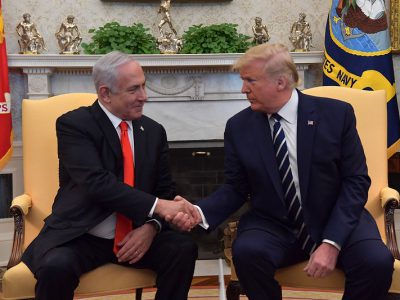
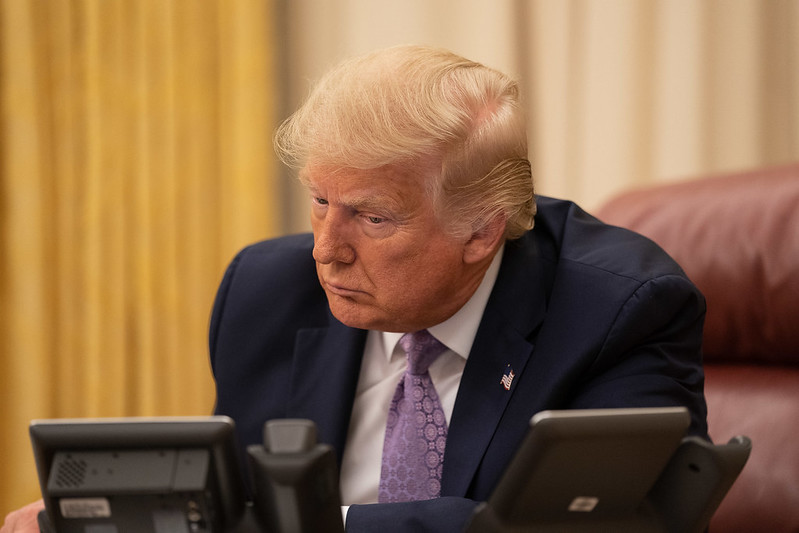
[caption id="attachment_1954" align="alignnone" width="799"] Trump on the phone with Netanyahu and Mohammed Bin Zayed to discuss the Israel-UAE deal on Thursday, Aug. 13, 2020.[/caption]

For the UAE, the deal guarantees that it will have access to advanced military technology from the United States. It will also facilitate trade in surveillance technologies, which the UAE has used to track dissidents. Israeli technology firms, which until now had to create European shell companies in order to work in Gulf countries, will be free to close deals with Emirati clients. In addition to technologies used to police their population, Abu Dhabi needs information technologies: While the wealthy U.A.E. can afford these products, Emirati university graduates still prefer to work for the stagnant, bloated but stable public sector, rather than launch technology start-ups.

The UAE also seeks to curry favor with Washington, where, in a rare show of bi-partisan agreement, the deal was supported by both Democrats and Republicans. Regardless of who wins the November elections, in Washington, the perception that one is close to Israel, and that one has Israel’s powerful lobby on one’s side, is immensely beneficial for the UAE. Israel’s allies get lobbying services for free. For example, AIPAC has for years lobbied Congress to increase financial aid to Jordan. While the UAE is hardly in need of financial aid, it could benefit from the support of one of the most powerful lobbying groups in Washington in seeking to justify its bloody interventions in Yemen and Libya, or for serving as a money-laundering hub for cronies linked to the Iranian and Syrian regimes.

Taking annexation off the table also justifies, in hindsight, the UAE’s budding relationship with Israel. This was illustrated when Yousef al Otaiba, the country’s influential ambassador to Washington, wrote an unprecedented op-ed that was published in Hebrew by Yedioth Ahronoth, one of Israel’s most widely read daily newspapers. Al Otaiba warned his Israeli readers that annexation would destabilize the region, undermine existing peace agreements with neighboring states, and lead to a freeze in normalization of ties with the Gulf states; the ambassador followed up with a video for The National, an English-language newspaper in the UAE., in which he said that he had written the op-ed for the good of the region and of the Palestinian people. If Israel had annexed part of the West Bank, particularly after this appeal, the UAE would have been unable to offer a convincing justification for its Israel strategy to the broader Arab public, which is deeply sympathetic to the Palestinian cause.

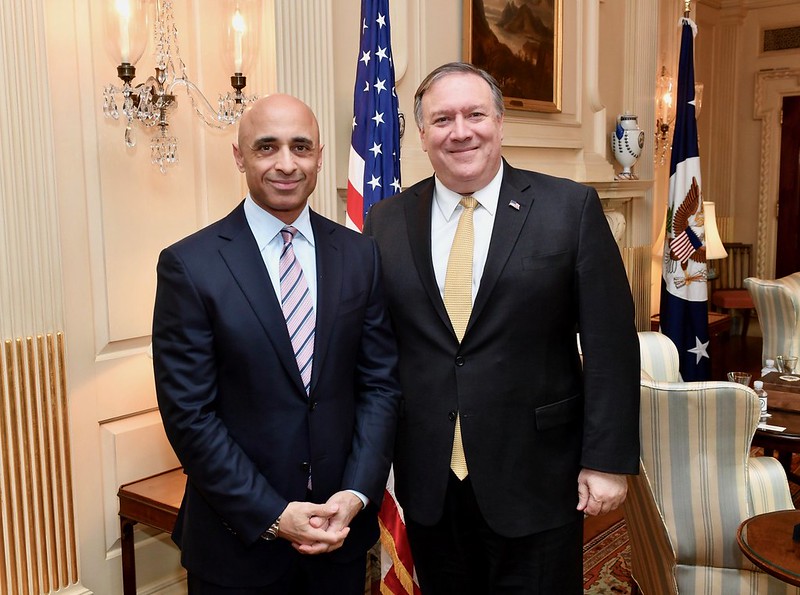
[caption id="attachment_1955" align="alignnone" width="800"] Mike Pompeo with Yousef al Otaiba at the State Department on March 29, 2019.[/caption]

The timing of the deal is linked to Netanyahu’s efforts to remain in power. Netanyahu needs any success to bolster his standing in the polls. His political survival and even his personal freedom are at stake. Israel’s longest-serving prime minister has been charged with several counts of criminal corruption, which is why he called no fewer than three elections over the past year, in increasingly desperate attempts to form a governing coalition that would pass a law to make him immune from prosecution while in office. Ahead of the second round of elections in April 2019, in an attempt to win the support of voters on the far right, he suddenly declared he would annex large parts of the West Bank, thus pushing the idea from the political fringe to the mainstream, making it seem like a real possibility. By offering Netanyahu diplomatic recognition in exchange for backing away from annexation, and possibly using the opportunity to make the long-standing unofficial ties between the two countries public, the UAE presented both the Israeli prime minister and Trump with some political capital as both leaders lose popular support due to mishandling of the COVID-19 response. Circumstances, in other words, probably precipitated the announcement of a deal that was already in the making.

The ramifications will be quite extensive. The UAE broke a long-held taboo among the Arab states by agreeing to formalize diplomatic relations with Israel without extracting any territorial concessions (as Egypt did with the Camp David Accords in 1978) or even lip-service regarding a future Palestinian state (as Jordan did in 1994). With this initiative, the UAE. is paving the way for other countries that have maintained semi-public relations with Israel—such as Bahrain, Sudan and Oman—to follow suit. The Palestinians are left to watch Israel further entrench its control over the occupied territories, while the little leverage they had dissipates.

In 2002 leaders of Arab states that had once rejected Israel’s existence met in Beirut and, following an initiative from Saudi Arabia, made Israel an unprecedented offer: full normalization in exchange for complete withdrawal from the occupied territories and a “just settlement” of the Palestinian refugee issue. At the time, the international community thought the offer was almost too good to be true; Israel, then embroiled in the Second Intifada, rejected it outright, claiming it was a ruse to destroy the Hebrew state with an influx of Palestinian refugees.  Eighteen years later, Netanyahu can claim credit for having shown that Israel can have its cake and eat it too.

The deal also crystalizes and hardens the new dividing lines of the Middle East. No longer are Middle Eastern countries categorized according to their position on the Israeli-Palestinian issue or closeness to the West, but rather according to their position on Iran and political Islam. Israel is comfortably situated within the axis that sees both Iran and political Islam as a threat, alongside the UAE., Saudi Arabia, Sudan, Bahrain, Jordan, Egypt and Morocco. Netanyahu is right at home among these authoritarian rulers, who openly express disdain for liberal principles and incite against internal enemies supposedly plotting against them. In one fell swoop, the UAE-Israel deal boosts Israel's political right, helps cement Israel's military rule over the Palestinians, and solidifies Israel's alliance with monarchical and undemocratic rulers. Illiberalism was victorious this week.
    [post_title] => The Israel-UAE deal is a triumph for authoritarianism
    [post_excerpt] => For decades, Middle Eastern countries were categorized to their positions on Israel-Palestinian issue or closeness to the West. Now, the issues are Iran and political Islam. Israel is comfortably situated within the axis that sees both Iran and political Islam as a threat, alongside the UAE., Saudi Arabia, Sudan, Bahrain, Jordan, Egypt and Morocco. Netanyahu is right at home among these authoritarian rulers
    [post_status] => publish
    [comment_status] => closed
    [ping_status] => open
    [post_password] => 
    [post_name] => the-israel-u-a-e-deal-is-a-triumph-for-authoritarianism
    [to_ping] => 
    [pinged] => 
    [post_modified] => 2026-08-06 23:01:03
    [post_modified_gmt] => 2026-08-06 23:01:03
    [post_content_filtered] => 
    [post_parent] => 0
    [guid] => http://conversationalist.org/?p=1950
    [menu_order] => 251
    [post_type] => post
    [post_mime_type] => 
    [comment_count] => 0
    [filter] => raw
)
The Israel-UAE deal is a triumph for authoritarianism

WP_Post Object
(
    [ID] => 1554
    [post_author] => 2
    [post_date] => 2020-01-10 15:40:52
    [post_date_gmt] => 2020-01-10 15:40:52
    [post_content] => As Americans worry about suffering reprisals for the killing of Iran's top general, they overlook the civilians who have already been paying for many years — with their blood.

In an Egyptian political satire play called al-Za’im (The Chief), a military dictator who is an archetype representing the Middle East’s various tyrants dies of a sudden heart attack. His inner circle scrambles to replace him with a two-bit actor who looks exactly like the deceased president, so they can buy time to consolidate their power.

When told that he would be the new leader because the real one had perished, the actor smirks and lets out a derisive laugh. “Are there presidents who die, Sir?”

Many of us Middle Easterners and observers of the region had a similarly incredulous reaction to the death of General Qasem Soleimani, Iran’s top military general, who was killed in a US airstrike over the weekend. Analysts and experts claimed that his death would change everything and nothing, that it would lead to World War III; it had the American president vowing to commit war crimes just a few days into the new decade.

These predictions appear to be overblown. Soleimani’s legacy of violence and dispossession in Syria and Iraq will, however, endure. For his many victims, there is momentary relief at his passing.

Soleimani was the leader of the Quds Force, the unit responsible for external operations of the Iranian Revolutionary Guards Corps. The IRGC’s remit is protecting the Islamic Republic’s political system from internal and external threats. Soleimani gained his formative experience fighting on the frontlines of the cruel eight-year war between Iran and Iraq, during which Saddam Hussein deployed chemical weapons with impunity while continuing to enjoy western backing. He witnessed the enormous loss of life – more than half a million, including children and soldiers who were sent into minefields as human detonators, in what was ultimately a pointless war of attrition. 

By 1998 Soleimani was head of the Quds Force; and in 2011 he was promoted to major general. Meanwhile the Arab Spring was sweeping through the region, with Syria the focal point of the Islamic Republic’s paranoia.

Soleimani loomed large as the face of Iran’s campaign for regional dominance, a figure of mystique and mythical brilliance and strategic wisdom. He was the second-most powerful man in Iran, after Supreme Leader Ayatollah Ali Khamenei; he battled the US for influence in Iraq during the American occupation, arming and backing Shia militias in order to guarantee a weak Iraqi state that functioned under the shadow of Iranian influence.

Though he was always an elusive figure, Soleimani had grown less wary of the limelight in recent years. He allowed himself to be photographed and took selfies with Shia militias on the frontlines in Iraq and Syria. 

In Iraq, he organized militias that defeated ISIS; but then those militias turned around and launched military reprisals against ordinary Sunni civilians, thus alienating the very people they had just liberated from the jihadi terror group. 

In Syria, the Iranian general’s self-appointed mission was to save the dictator Bashar al-Assad’s regime from collapse. In doing so, he presided over the country’s destruction, the displacement of millions of civilians, the greatest refugee crisis since the Second World War, and the survival of a tyrannical regime.

All the while, he was portrayed as a master strategist who foiled American designs in the region at every stage.

Iran’s pro-Assad policy is based on its desire to maintain regional influence. The Islamic Republic needs Syria to be stable in order to maintain a secure overland avenue for the transportation of military supplies to Hezbollah in Lebanon, which is its most powerful proxy force. Iran also needs to maintain an overland route to ports on the Mediterranean. When the Arab Spring of 2011 spread to Syria from Egypt, where protesters set a precedent by forcing the resignation of long-time ruler Hosni Mubarak, Iran sent advisors to Syria. Soon after that, it sent proxy militias to fight alongside Assad’s forces. In 2013, Hezbollah forces entered Syria to fight for the regime as well.

These proxy forces were responsible for some of the cruelest tactics of the war. In early 2016, I reported on the siege of Madaya, a border town that was home to 30,000 civilians who were being systematically starved to death by Hezbollah in an effort to force their surrender. To survive, people ate grass, leaves, and spiced water instead of soup.

These starvation sieges were replicated throughout the country, with Soleimani’s proxy forces often leading the charge into areas held by anti-Assad rebel troops. In addition to using hunger as a weapon of war, the pro-regime militias used scorched earth tactics. To recapture Aleppo, they bombarded from the ground while the Syrian and Russian air forces bombed from the air; as they reclaimed territory from the rebels, they carried out extrajudicial killings.

When the rebel forces eventually surrendered, tens of thousands of civilians, fearing the regime would persecute them for suspected anti-government sympathies, were forcibly displaced. Soleimani’s tactics are responsible for rendering countless Syrians destitute and homeless, and for driving many to seek refuge abroad. The ensuing refugee crisis contributed enormously to sectarian tensions in the Middle East. Those who stayed inside Syria continue to suffer from the violent tactics of the Assad regime and its Russian and Iranian allies.

In 2015 Soleimani traveled to Moscow and personally convinced the Russians to intervene on Assad’s behalf. Russian warplanes have carried out dozens of attacks on hospitals in rebel-held areas, and they have killed thousands of Syrian civilians in various air strikes.

In Iraq, the extent of the atrocities carried out by Soleimani’s proxy forces in Sunni communities liberated from ISIS was so extreme that, according to cables leaked by rivals, the intelligence services worried they were undermining Iran’s popular reputation.

More recently, Soleimani was reportedly involved in the crackdown on the popular protest movement against government corruption in Iraq. Security forces and Tehran-backed militias killed hundreds of Iraqi protesters in the weeks leading up to Soleimani’s death. According to reports, the Iranian general attended key security meetings in Iraq; he advised his counterparts to learn from Iran, where security forces killed over a thousand civilians in anti-government demonstrations that took place in December.

In the weeks and months before the Trump administration assassinated Soleimani, the Iranian regime carried out several calculated provocations against the US, as payback for their having pulled out of the multilateral nuclear deal. They threatened and disrupted shipping in the Persian Gulf and bombed Saudi oil installations; more recently, Iran launched rocket attacks against Iraqi bases housing American troops and attacked the US embassy in Baghdad on New Year’s Eve.

The question of whether assassinating Soleimani was legal or not is an academic one. Not just because it is already done and nobody will be held accountable for it, but because Soleimani had been waging an overt and covert war against the US and its allies for years. He orchestrated the death and displacement of hundreds of thousands of civilians over nearly a decade of war in Syria, against a backdrop of a broad violence and civil warfare in Yemen and Libya, as well as political crackdowns and resurgent authoritarianism throughout the region. 

The Middle Eastern conflagration that American pundits claim to be so concerned about Soleimani’s death sparking has already been raging for a decade, with hundreds of thousands of civilians paying in blood.

For now, the worst predictions of the alarmists have not been realized. World War III has not started, and Tehran responded with a calculated attack that didn’t kill any Americans. It did kill or injure Iraqi soldiers stationed on the military base housing American troops, but this was a matter of indifference to both Iran and the United States. As we have seen since the invasion of 2003, America places little value on Iraqi lives.

If there is a future escalation, it will take place on the backs of Arab civilians, because Iran does not have the capacity to match American military aggression. If it does respond further, it will do so through its proxies, further destabilizing the region and risking war. Tehran and Washington will never allow Arab civilians to stand between them when it comes to pursuing their foreign policy goals in the Middle East.

Trump does not care about Arab lives — about this, there is little doubt. Nor is he concerned about human rights, international law, or even having an actual strategy for his foreign policy in the most volatile part of the world. 

But amid the hand-wringing, spare a thought for Soleimani’s victims. For a brief moment, their suffering has been eased.

 
    [post_title] => Dear America: The death of Qasem Soleimani is not all about you
    [post_excerpt] => For now, the worst predictions of the alarmists have not been realized. World War III has not started, and Tehran responded with a calculated attack that didn’t kill any Americans. It did kill or injure Iraqi soldiers stationed on the military base housing American troops, but this was a matter of indifference to both Iran and the United States. As we have seen since the invasion of 2003, America places little value on Iraqi lives.
    [post_status] => publish
    [comment_status] => closed
    [ping_status] => open
    [post_password] => 
    [post_name] => dear-america-the-death-of-qassem-soleimani-is-not-all-about-you
    [to_ping] => 
    [pinged] => 
    [post_modified] => 2026-08-06 23:11:15
    [post_modified_gmt] => 2026-08-06 23:11:15
    [post_content_filtered] => 
    [post_parent] => 0
    [guid] => http://conversationalist.org/?p=1554
    [menu_order] => 287
    [post_type] => post
    [post_mime_type] => 
    [comment_count] => 0
    [filter] => raw
)

Dear America: The death of Qasem Soleimani is not all about you

WP_Post Object
(
    [ID] => 1409
    [post_author] => 2
    [post_date] => 2019-10-04 14:34:42
    [post_date_gmt] => 2019-10-04 14:34:42
    [post_content] => Raised in the heart of the Jewish American consensus, millennial Jews were taught to be fervently committed to Israel. Now, they are leading the push to criticize Israeli policy and question the community's Israel-centric politics. 

Talk to two Jews and you’ll get three opinions. It’s an old Jewish joke, but when the subject is Israel, a difference of opinions is often not considered amusing. Those who express unpopular opinions risk a type of excommunication, with friends and relatives severing relationships while professional networks become inaccessible.

I’ve been asked on many occasions why some otherwise-progressive Jews are so passionately supportive of Israel, even as others wonder why an increasing number of Jews in the diaspora reject Israel-centric politics. Many Jews prefer to avoid the subject. Israel is consistently ranked at or near the bottom of issues for Jewish American voters; perhaps paradoxically, there is no issue that elicits more ferocity within the Jewish community. 

The Jewish conversation on the subject of Israel/Palestine is confusing in part because things are changing rapidly. In the decades after the 1967 war, the consensus within the mainstream Jewish community was almost unwaveringly supportive of Israel — no matter what type of government the country had, or what its policies. The fabric of this broad communal agreement is now fraying, as younger Jews become increasingly aware of Palestinian life under Israeli control. They have a long way to go, but they are slowly moving the discussion about Israel-Palestine in the direction of universalism and solidarity. 

My own journey from right-wing supporter of Israel to leftist might provide some insights for an outsider trying to understand the context of Jewish Americans’ shifting communal position on Israel-Palestine.

I grew up in central North Carolina. We were almost always the only Jewish family anyone we knew had ever encountered. Our synagogue was (and is) a somewhat dilapidated brick building, too big for the tiny congregation that remains in the town, and too cash-strapped to care for its own cemetery. But it was a lovely place, and I spent hours in the small library, full of dusty history books about Israel and the Holocaust. Israel was inseparable from my Jewishness, and my Jewishness was inseparable from me.

At synagogue, Israel was the backdrop. At Jewish summer camp, it was the alpha and omega. Israel and Zionism symbolized a strength and self-assuredness that I could only imagine at home. It seemed to answer all the questions I had about the world and myself. At school, I fielded questions from evangelical peers about whether or not I had horns. At camp, I dashed around doing mock army drills and combat-crawled in wet grass. At home, friends glued a quarter onto the ground and laughed as I tried to pick it up. At camp, we learned about our heroic return to our homeland, and discussed making aliyah — a Hebrew word that means rising up, and which in this context refers to immigrating to Israel —  to fulfill our dreams. We rarely discussed the Arab Palestinians who lived there, and almost never thought of them.

For many American Jewish children, summer camp is a core component of their Jewishness. According to the Foundation for Jewish Summer Camp (tagline: Jewish Summers. Jewish Future.) about 15 percent of Jewish children, or around 90,000 kids, went to Jewish summer camp in 2017. Not all Jewish summer camps are the same; the ideology and curriculum varies from socialist to religious nationalist. The same is true for all Jewish institutions, although the majority espouse views that are more conservative than those held by the Jewish public. The message at my camp was clear. From raising the Israeli flag every morning, to singing the prayer for the State of Israel, our responsibility was to carry on the mission that the movement had pursued since its founding a century earlier.

I brought this fervent commitment with me when I traveled to Israel for my gap year between high school and college. While we traveled freely inside the Green Line, we were prohibited from traveling into the occupied Palestinian Territories — beyond the wall that Israel had constructed. A friend and I took this rule for a dare. We found a host to stay with on CouchSurfing, messaged her some vague lies about being Christian bloggers interested in Bethlehem, and woke up early to head to the Palestinian bus station outside Damascus Gate n East Jerusalem. We snickered roguishly to ourselves as we boarded the bus, which ferried mostly Palestinian passengers between Jerusalem and the West Bank. Our snickering died down as we pulled into Bethlehem and saw the graffiti-covered grey walls of what I would later know as the separation barrier. Our hilarity turned to fear when we realized that our host, a pro-Palestine activist, had set up several meetings for us with local organizers. Our little lie had blown up in our face. We had no choice: we were “bloggers” in a strange land; we had to go along, and play the part.

What I learned during those meetings changed my life. In his living room, an old man told me his story about the Nakba — Arabic for “catastrophe” — which is what Palestinians call the 1948 war that sent 800,000 Palestinians into permanent exile. I had never heard about the Nakba before that encounter. I had heard many stories about Jewish-Israeli experiences during the Second Intifada of 2000-02, but now I was hearing from Palestinians about their traumas from that time. In these and in countless subtler ways, the plain fact of Palestinian life and personhood seeped through the cracks of my nationalist worldview. I returned to my program the next day, and experienced my first ever night of insomnia.

A few months later, I reached college and, not knowing what else to do I joined the “Israeli-Palestinian Dialogue Committee.” I showed up and, at first, couldn’t help myself from repeating the talking points I’d learned as a child at synagogue and at Jewish summer camp. In retrospect I can’t believe anyone put up with me. But over time, my talking points gave way to questions, especially for the Palestinian members of our group. Not only were they real, they were my friends. And slowly, I began to organize.

At college, I could finally place my experiences into a broader pattern. Thousands of Jews, despite Israeli and American Zionist attempts at separation, have managed to escape what journalist Peter Beinart calls, “The American Jewish Cocoon,” the well-funded strategy by the mainstream community to shut our eyes to the reality of the Israeli occupation. While Palestinian organizers have, unsurprisingly, long worked hard to wake up American Jews from their comfortable slumber on this issue, the past decades have seen a groundswell in Jewish reciprocation. Entire organizations work to bring Jews out of our cocoon. Growing awareness of the dire realities for Palestinians has sparked conflict in the Jewish community over the nature of our relationship to Israel, with millennials taking a leading role in pushing for a new, more critical conversation.

This growing dissent against the pro-Israel consensus butts up against conservative Jewish communal institutions that are fighting back. They have increased pro-Israel investment in Democratic races, for example, and created McCarthy-style lists of pro-Palestinian activists on college campuses. These conservative pro-Israel activists hold political views that are far to the right of those held by the majority of Jewish Americans. But while Trump attempts to wrest Jews away from the Democratic party and progressivism in the name of supporting Israel, there is no evidence to show that Jews might abandon unbroken decades of supermajority support for it. 

What we are seeing now is a generational changing of the guard. All the efforts to hide the brutal realities of Palestinian life from plugged in and angry Millennials and Gen Z are doomed from the outset. Young Jewish Americans are, like their non-Jewish peers, increasingly progressive regarding nearly every political issue. Meanwhile, the vast majority of Jewish institutions remain in the hands of older Jewish people whose views are far more conservative. Fears of irrelevance stalk their boardrooms. The question is whether these organizations will remain in the cocoon, despite the obvious cost of alienating the younger generation, or come out with the rest of us. Either way, the majority of Jews will continue to live and vote according to their values.

 
    [post_title] => How Israel became the most divisive issue for Jewish Americans
    [post_excerpt] => Raised in the heart of the Jewish consensus, a young American journalist describes how and why a seminal trip to Israel during his gap years led to a political awakening. 
    [post_status] => publish
    [comment_status] => closed
    [ping_status] => open
    [post_password] => 
    [post_name] => how-israel-became-the-most-divisive-issue-for-jewish-americans
    [to_ping] => 
    [pinged] => 
    [post_modified] => 2026-08-06 23:22:33
    [post_modified_gmt] => 2026-08-06 23:22:33
    [post_content_filtered] => 
    [post_parent] => 0
    [guid] => https://conversationalist.org/?p=1409
    [menu_order] => 299
    [post_type] => post
    [post_mime_type] => 
    [comment_count] => 0
    [filter] => raw
)

How Israel became the most divisive issue for Jewish Americans

WP_Post Object
(
    [ID] => 1297
    [post_author] => 2
    [post_date] => 2019-08-09 15:36:13
    [post_date_gmt] => 2019-08-09 15:36:13
    [post_content] => Human rights organizations warn that northwestern Syria is on the brink of a humanitarian catastrophe unprecedented in the twenty-first century. 

On July 22 Russian jets bombed the market in Maarat al-Numan, a town near Idlib in northwestern Syria, killing 40 civilians. According to an eyewitness named Um Abdullah, the bombing was so devastating that rescue workers struggled to find corpses left intact. “They filled entire bags with body parts,” she said.

Idlib and the surrounding area is now the last remaining territory in Syria still controlled by opposition forces. Over three million people live there, including over 1.5 million children. They are nearly all civilians, with about half displaced from other parts of Syria. After Russia intervened directly in the civil war in late 2015 on the side of the Assad regime, pro-regime forces, including Iran-backed militias, recaptured all the other rebel-held areas. Those who refused to surrender to the regime were deported to Idlib, where they now await their fate. Since the end of April Bashar al-Assad’s regime forces and their Russian allies have been pounding the area with air strikes, killing nearly 800 people so far. The UN and human rights NGOs warn of an impending “humanitarian nightmare,” as regime forces decimate cities, pushing civilians to flee toward the sealed Turkish border.

https://www.youtube.com/watch?v=HFAZ_FsKxmg&feature=youtu.be

Syrian and Russian militaries renewed their assault on Idlib in late April, recycling tactics they used in places like Aleppo: in addition to heavy indiscriminate attacks on population centers, they destroy essential infrastructure and services such as hospitalsambulancesschools and markets with targeted strikes from the air. They also kill civil defense teams while they are trying to rescue civilians trapped under rubble. Between heavy airstrikes, shelling, and a ground assault, more than 452,000 people have been displaced over the last three months.

But neither the dire warnings from humanitarian workers and UN agencies, nor the devastating death and destruction, have received significant media attention. The world has turned its attention away from the war for many reasons, but the main factor seems to be that there is essentially nothing new about Syrian civilians dying in indiscriminate airstrikes. Hundreds of thousands have died in such attacks over the last eight years. Activists on the ground disseminate graphic and disturbing images of the carnage and destruction in the hope of shocking the outside world into taking action; but those disturbing images achieve the opposite of their intended purpose, with the news-consuming public feeling helpless and thus increasingly reluctant to look and to know.

Another factor behind the scant reporting from Idlib is that journalists have extremely limited access. All entry of foreign journalists into Idlib requires coordination with the Islamist group Hayat Tahrir al-Sham (HTS), an offshoot of al-Qaeda, which is the dominant power in the region. Even when journalists do gain access to the area, they face enormous challenges that include limitations of time and space: it’s almost impossible to explain the complex international negotiations and power plays over the fate of this densely populated region in a succinct 750-word news item or a three-minute report for television news.

[embed]https://www.youtube.com/watch?v=c4I4tthapJw[/embed]
Aftermath of the Russian airstrike on Maarat al-Numan, July 22, 2019.
The significant media coverage of the atrocities in Aleppo, eastern Ghouta and the city of Homs did not alter the fate of these regions: they all fell to the regime, after ferocious military campaigns. The saturation coverage did, however, make it more difficult for Russia to claim that the regime was killing “terrorists” while the wire services were publishing photos and videos of wounded children undergoing painful medical treatment in bombed out hospitals that had run out of anesthesia. Media coverage also increased international empathy for the people living in areas that were under siege, with activists organizing demonstrations around the world. Syrians followed the online support campaigns and solidarity protests held across the west, feeling that even if their predicament remained unchanged, at least their humanity and suffering were acknowledged. The current silence, despite the ongoing humanitarian catastrophe, makes them feel abandoned. Perhaps, if the assault on Idlib had received the kind of media attention given to Aleppo in 2015, public pressure would have affected western government policy; perhaps those governments would have reconsidered their decision to cut essential funding for civil society organizations in the opposition-held areas of Syria. Despite the world’s indifference and the dearth of foreign reporters on the ground, local journalists continue to cover events. Samer Daabol, a photojournalist in Idlib, sees his work as an act of defiance against the Syrian regime. He explained that he felt a “responsibility to amplify the voice of civilians,” adding: “No one can do this except us, living in this war zone.” He tried to explain what it’s like to live with a complete absence of physical security. “There is no safe place during the day or night,” he said, adding that the air strikes “create immense pressure, anxiety, sudden precipitation, insomnia, headaches.” He and the rest of Idlib live “a life that revolves around death.” Idlib’s fate is now in the hands of Turkey, Russia, and, to a lesser extent, Iran. The three countries have negotiated several “de-escalation” deals, but all the armed actors in the conflict — the opposition, the Assad regime, and its ally Russia — have repeatedly violated those agreements. The Assad regime has vowed to retake every inch of Syria. In pursuit of this goal, it has ignored deals to de-escalate the conflict. Turkey, meanwhile, is determined to prevent the area from falling into the hands of the regime, largely because Ankara knows that as Assad’s forces re-take control of Idlib, a massive number of Syrian civilians will rush to the Turkish border, which has been sealed since 2016. Only a very few have the means to escape by paying smugglers thousands of dollars. Turkish border police routinely shoot and kill Syrian asylum seekers, while others have been caught and deported back. Turkey already has 3.6 million Syrian refugees and they don’t want any more — particularly not if they are jihadi militants. In order to preempt this scenario, Ankara has increased military assistance to the National Liberation Front, a conglomeration of Islamist and mainstream rebel groups. Umm Yazan, 28, is one of the Civil Defense employees who helps rescue civilians and provide them with medical care. I spoke to her after she had been displaced from her hometown in southern Idlib due to intense airstrikes. Umm Yazan explained that she joined the Civil Defense, also known as the White Helmets, because she could never abandon her people. White Helmets work under extremely perilous conditions: they are routinely targeted in “double tap” attacks, with bomber planes first hitting a target and then swooping back for a second time to kill rescue workers while they are working to drag survivors out of the rubble. Um Yazan’s five year-old son, Yazan, was killed in an airstrike in 2015. “When I rescue someone’s son, I feel I am recovering my son’s spirit. This gives me such great positive energy to continue my work,” she said. In recent years I have spoken to hundreds of Idlib residents and met with refugees who managed to escape to Turkey. The dire living conditions in the region — the near-constant shelling, loss of loved ones, poverty, absence of basic amenities, instability, and displacement patterns from and into Idlib, have left an indelible mark on the region’s inhabitants, forging a unique temperament. They have strong communal solidarity, are dogged, fatalistic, fearful, angry and bitter toward the outside world; they also suffer from unyielding, but usually repressed, mental anguish. “People have changed a great deal,” said Mohammed, a commander with the Free Syrian Army who was displaced from his home in Hama several years ago. “We never expected [when the uprising began in 2011] to be targeted with barrel bombs and missiles.” He added: “These people have been sentenced to death.” While in other regions of Syria the population often pressured the rebels to surrender to the regime, in Idlib half the population is composed of people who chose displacement over “reconciliation.” Many original inhabitants of the region are also opposed to surrender. [caption id="attachment_1303" align="aligncenter" width="5184"] Atmeh border camp in Idlib, near the Syrian border. Over 800,000 internally displaced people live here in tents, with neither running water nor toilets.[/caption] “Civilians saw with their own eyes what happened in areas that reconciled with the regime. People there are suffering humiliation, detention and torture,” said Mohammed, the FSA commander. In previous “reconciliation” deals, those who refused to surrender were bussed to Idlib, which was the last stronghold of the opposition. These internally displaced people have seen and heard what the Assad regime’s soldiers do to civilians in formerly opposition held areas — i.e., they rape the women and slaughter indiscriminately. Many people in Idlib believe that opposition factions are implementing the agendas of their foreign sponsors. They also acknowledge that the opposition forces can be abusive toward civilians. And yet, they need their protection. Yasin (not his real name), a resident of Khan Sheikhoun, said that about 150 members of his extended family had been killed during the eight-year war. “The international community and all countries, Arab and Western, do not care about [us],” he said, adding that he believed the Arab and western governments wanted the Russians to help the Assad regime kill all the people of Idlib. Yasin barely survived the April 2017 Sarin gas attack on Khan Sheikhoun, which killed about 100 people. The UN’s chemical weapons watchdog, the OPCW, held the Syrian regime responsible for the strike. “The entire world abandoned us — Turkey, the world, the West. Nothing is before us except death,” said Yasin. He spoke rapidly, rushing to unload his pain, inhaling and exhaling audibly. Yasin works as a monitor tracking Syrian and Russian jets. He informs the Syrian Civil Defense of approaching planes, so that they can warn civilians to find shelter, or escape the crowded locations that are routinely targeted by Russian forces and the Syrian regime. His immediate family fled to northern Aleppo, which is under Turkish control and thus safe from airstrikes. Khan Sheikhoun has been largely depopulated, with civilians seeking cover in nearby orchards or fleeing further north. “The Russian jets are chasing people wherever they escape,” Yasin said. But he refuses to leave, insisting that the regime will come for him no matter where he goes. “Let me die when I’m here, on my land.” Yassin’s resolve is not predicated on hope, but on fatalism. “No one hears us. Our blood is the cheapest on earth. Whether a Syrian dies or lives, it does not matter,” he said. Umm Abdullah is a math teacher and prominent anti-regime activist in her city, Maarat al-Numan, an epicenter of civil society activism in Idlib. She joined the early protest demonstrations in 2011. Today she leads several associations, advocates for the rights of detainees in regime prisons and supports their families. “If you walk around Maarat al-Numan, you will see buildings with floors collapsed atop each other, stores with metal gates blown out. Jets do not leave the sky. Strikes are ongoing... Our children are dying.” She wept as she said, “I have not seen my son in seven years. He was my happiness. My eldest. He had a flame inside him. He was full of life.” ِAbdullah, her son, was arrested in February 2012 and detained in the notorious Sednaya Prison for participating in anti-regime protests. The family was informed only this year that he died under torture back in 2014. Like many other relatives of detainees, they sold property to pay exorbitant bribes for the release of their child, but to no avail. For the past three years, Idlib has been stuck in an impossible, deadly situation. The frozen low-intensity conflict escalates every few months, resulting in mass casualties; the influence of the jihadis has expanded under the increasingly pragmatic Hayat Tahrir al-Sham; and humanitarian conditions have deteriorated as a consequence of a reduction in international funding. In the west, we are not reading about Idlib in the headlines — or even in the back pages. Because the media is barely reporting the story, many people have the mistaken impression that the war in Syria is over. The people of Idlib have become somewhat accustomed to having their intense suffering ignored — but still, they do feel dehumanized. “We are human beings. We have feelings, just like you,” said Umm Abdullah. “You in the west call for animal rights, for dogs and cats, so first demand our rights, us human beings.” [post_title] => Who will write our history? The world looks away while Idlib awaits its fate [post_excerpt] => Because the media has largely stopped reporting the war in Syria, there is a widespread misunderstanding that the war in Syria is over. In fact, it has escalated. [post_status] => publish [comment_status] => closed [ping_status] => open [post_password] => [post_name] => who-will-write-our-history-the-world-looks-away-while-idlib-awaits-its-fate [to_ping] => [pinged] => [post_modified] => 2026-08-06 23:25:10 [post_modified_gmt] => 2026-08-06 23:25:10 [post_content_filtered] => [post_parent] => 0 [guid] => https://conversationalist.org/?p=1297 [menu_order] => 307 [post_type] => post [post_mime_type] => [comment_count] => 0 [filter] => raw )

Who will write our history? The world looks away while Idlib awaits its fate

WP_Post Object
(
    [ID] => 1218
    [post_author] => 2
    [post_date] => 2019-07-19 18:03:53
    [post_date_gmt] => 2019-07-19 18:03:53
    [post_content] => The current political climate seems disastrous for the Palestinians. But as recent history shows, the bleakest circumstances can yield great opportunities.

Alongside the dog whistle politics, much of Donald Trump’s public image is a throwback to 1980s New York City culture, with its gaudy society parties, unapologetic misogyny, and predatory real estate practices. His presidency jerks between rhetorical excess and emptiness. From negotiations with North Korea abroad to immigration policy at home, Trump’s actions have cycled between Twitter onslaughts devoid of meaningful content and the implementation of acutely retrograde executive orders. His administration’s recent effort to address conflict in the Middle East by convening the “Peace to Prosperity” conference in Manama, Bahrain, is a further case in point.

At the core of the Trump administration’s economic plans for the Palestinians is a glossy brochure released shortly before the summit itself. Notwithstanding the slick graphics and  the presentation, which makes it look like something a business consulting firm would publish, it is an astonishing study of hollowness and deception. The $50 billion dollar pitch book promotes all sorts of investments, including a desalination plant in Gaza and a transport corridor with the West Bank, but does not even mention the word “occupation” to describe Israel’s control over the occupied Palestinian territories. Particularly galling to Israeli and Palestinian civil society activists was the discovery that the photographs used to illustrate that glossy brochure were from promotional material for the very grassroots peace building initiatives — such as The Bereaved Parents Circle Forum and Olive Oil Without Borders — that the Trump administration had abruptly defunded in recent months.

Live-tweeting from the lobby of Manama’s Four Seasons hotel, where the workshop was held, journalist Jack Moore wrote that he was “was left speechless by the Davos-esque Conflab” he had witnessed during the two-day event. In a widely-circulated Twitter thread, he described a gathering of shady private sector grandees, all male panels, and patronizing U.S. flippancy toward absent Palestinian officials. In his opening speech, Jared Kushner described his vision for an economically vibrant West Bank and Gaza without broaching the political context in which such development might take place. Other participants had spent so little time on the ground in Palestine, that they mispronounced names of well-known places. Meanwhile, the head of FIFA touted the virtues of football as a means of “contribut[ing] to change” in the region. When the numbers were crunched, it was clear that the U.S. government was looking for a way to offload the major costs of economic investment to the Gulf states and private investors, shouldering even less of the paltry amount they now provide in the form of economic assistance in the occupied territories.

This opportunistic spirit of Manama fit with a broader pattern of pushing the Palestinians into a corner. During several interviews in the run up to the Bahrain Summit, Kushner reinforced the approach of excluding the PLO while dismissing fears of American imbalance. Asked if he understood why the Palestinians did not trust him, Kushner responded curtly, “I’m not here to be trusted.” As the Palestinian historian Rashid Khalidi has argued, this “neocolonial arrogance” of the U.S. administration is a throwback to the British Mandate and the notion that Palestinians are not quite ready to govern themselves.

Israeli leaders have also promoted this paternalistic view. The former Education Minister and leader of the right-wing Jewish Home party, Naftali Bennett, for example, called for the Palestinians to govern themselves “in all aspects barring two elements: overall security responsibility and not being able to allow the return of descents of Palestinian refugees.” When asked whether his vision would provide self-determination for Palestinians, Bennett demurred. “It’s unrealistic…the Stability Plan is only partial self-determination, but in the real world you have to make compromises.”

Since Trump’s election the alignment between the U.S. and Israeli governments has yielded a series of transformative developments that in practice put an end to the two-state solution.

The most widely publicized of these developments was the relocation of the U.S. embassy from Tel Aviv to Jerusalem. With this move, the U.S. indicated that it no longer regarded as legitimate the Palestinians’ claim to East Jerusalem as the putative capital of their future state. The U.S. also closed its consulate in East Jerusalem, which had served Palestinian residents of the occupied territories; and it ordered the Palestinian mission in Washington D.C. to close, ending the official Palestinian diplomatic presence in the U.S. capital.

The U.S. withdrew its funding to UNWRA, the United Nations agency that provides essential services, like education and medical care, to over five million Palestinian refugees in Lebanon, Syria, Jordan, Gaza, and the West Bank. The State Department denied visas to prominent Palestinian figures who had been visiting the U.S. for years — including PLO executive committee member Hanan Ashrawi, who received her PhD from the University of Virginia. In addition to adopting a policy of complete indifference to Israel’s ever-expanding settlement expansion in the West Bank, the U.S. removed the word ‘occupied’ from government documents. When Netanyahu campaigned in the recent national election partly on a promise to annex the West Bank, which Israel has occupied for 52 years, the Trump administration did not even respond, even as it has chosen a permissive attitude towards the growing Israeli call for annexation of the West Bank. In all these ways, the conflict has returned to a pre-Oslo paradigm. The Palestinians are, as it were, stuck back in the 1980s.

Rather than simply lament the circus in Bahrain, the Palestinian leadership must look for a meaningful way to respond to this diplomatic farce. Some Palestinians have argued that since the Oslo Agreement has been fatally violated, the Palestinian Authority should formally be dismantled. Those who oppose this move say it would cause harm to the Palestinian population, and perhaps even lead to the outbreak of violence. Another historical parallel to consider is the PLO’s position following the 1978 Camp David Accords between Egypt and Israel. Abandoned by Egyptian President Anwar al-Sadat, sidelined in autonomy talks over their future without participation, surrounded by an expanding ring of Jewish settlements in the West Bank and Gaza, the Palestinians were forced to confront both political efforts at state prevention followed swiftly by the 1982 military intervention in Lebanon and Israeli attempts to defeat the PLO in its Beirut stronghold.

This moment of acute crisis was also an opportunity for Yasser Arafat and the Palestinian leadership to rethink the future of the national struggle. After the PLO was forced to retreat from Beirut in 1982, Palestinian political activists in Gaza and the West Bank forced a shift of power away from the exiled leaders, now based in Tunis, and a new reckoning with their demands, culminating in the outbreak of the first Intifada in December 1987. The mass grassroots protest against the then 20-year old occupation led to tangible results: the U.S. finally recognized the PLO; and by the early 1990s the Israelis began to engage with the Palestinian political movement. With that same occupation now extending over five decades, what new opportunities might be seized beyond the fulsome rejection of the Trump administration’s effort to impose what one Palestinian playwright has called a “slumlord’s peace”?

In the summer of 1986, the Palestinian political activist and intellectual Sari Nusseibeh toyed with an idea that might shake up the paradigms of political discussion. Writing in the newspaper Al-Mawqef, he posed a thought experiment about which situation was preferable: “autonomy or annexation with full equal rights [for Palestinians] in Israel?” In his view, freedom through the ballot box would give Palestinians joint control over their own lives and the lives of their Jewish neighbors. He soon appeared on a leading Israeli political talk show alongside one leader of the settler movement, who was startled by Nusseibeh’s argument. Either Palestinians would get a state of their own, or Israel would have a battle for equal rights on its hands. Suddenly, the left-wing Labor Party began invoking fears of a “demographic threat” as a means to accelerate negotiations, while the Israeli representative to the UN noted that “If Palestinians begin to think like this, then we’ve really got something to worry about."

These fears remain highly relevant today. What happens when the political conflict is framed as a conversation about equal rights, access, and citizenship? The government of Israeli Prime Minister Benjamin Netanyahu is acutely concerned about the rhetoric shifting in this direction, a fear underscored by the backlash against the movement for Boycott, Divestment, and Sanctions (BDS) as a means of pressuring Israel in economic, cultural and diplomatic realms. Recent efforts to criminalize BDS, and to label it anti-Semitic, underscore how far this battle of delegitimization can go.

In the face of these developments, advocates for an equitable solution to the Israeli-Palestinian conflict must continue to push for a values-centered approach where the language of rights and equality for Arabs and Jews remains at the center of political discourse. Trump himself was quick to dispose of the two-state paradigm in his first meeting with the Israeli Prime Minister, telling reporters he was not wedded to the idea of territorial partition. But rather than promote an equitable alterative, his administration has tipped the scales firmly in one direction. To reverse this sense of defeat, a reorientation of the parameters of debate is in order. Rather than haggle over the crumbs of economic peace, there needs to be a clear demand for meaningful sovereignty and citizenship—along with the means of leveraging that equitable future—in whatever political constellation might eventually emerge.

A return to the 1980s can evoke retrograde politics, but it is also an opportunity to interrogate the political imaginaries that took hold at the end of the Cold War, and to imagine alternative paths not taken. Could contemporary developments offer a chance to rethink the Palestinian future, moving away from territorial division and statist demands? Are there lessons to be learnt from Nusseibeh’s earlier calls for annexation alongside Netanyahu’s promise of implementing a more restrictive version? Might this crisis provide a viable way for Palestinians to firmly back out of the narrow Israeli and American corner? The current political landscape might appear calamitous, but Trump and Netanyahu will not last forever. Even as the foolhardy mandarins like Jared Kushner, Jason Greenblatt, and David Friedman demand Palestinian surrender, the threat of being vanquished can also be redirected in bracing new directions.


    [post_title] => Back to the future: How Palestine can pull itself out of the 1980s
    [post_excerpt] => Pushed into a corner by U.S. and Israeli policy and the indifference of Arab leaders, Palestinian leadership is in a moment of acute crisis. But the calamitous political landscape also presents an opportunity for creative new paradigms.
    [post_status] => publish
    [comment_status] => open
    [ping_status] => open
    [post_password] => 
    [post_name] => back-to-the-future-how-palestine-can-pull-itself-out-of-the-1980s
    [to_ping] => 
    [pinged] => 
    [post_modified] => 2026-08-07 15:59:01
    [post_modified_gmt] => 2026-08-07 15:59:01
    [post_content_filtered] => 
    [post_parent] => 0
    [guid] => https://conversationalist.org/?p=1218
    [menu_order] => 313
    [post_type] => post
    [post_mime_type] => 
    [comment_count] => 0
    [filter] => raw
)

Back to the future: How Palestine can pull itself out of the 1980s

WP_Post Object
(
    [ID] => 1019
    [post_author] => 2
    [post_date] => 2019-05-17 16:53:51
    [post_date_gmt] => 2019-05-17 16:53:51
    [post_content] => Gaza is often described as a humanitarian catastrophe, but its crisis is the result of self-serving policy implementation that could be reversed

Exactly a week after the most recent military escalation between Gaza and Israel, Haaretz, a left-leaning Israeli newspaper, placed on the front page of its Hebrew print edition a photograph depicting a crowd of Palestinians in Gaza gathered around a steaming cauldron of soup. Mostly men and boys, they are clamoring to get closer to the cauldron, clutching pots, bowls and even plastic storage containers to be filled. It is an aerial shot and you can almost hear the commotion through the image.

Over just three days during the first week of May, 25 Palestinian residents of Gaza and four Israeli citizens were killed while hundreds were injured. This was just the latest of eight military escalations since Operation Protective Edge in 2014. Israeli missiles and artillery fire damaged homes and businesses in Gaza, while barrages of rockets fired from the Strip hit dozens of homes in Israel in a tactic that seemed meant to overwhelm the Iron Dome defense system, which has until now prevented heavy damage and loss of life in Israeli cities and towns.

For most Israelis, Gaza exists only as a place of violence and misery. The images in the mainstream media depict its residents as either shooting rockets or clamoring for food. Israeli citizens can’t enter the Strip, and residents of Gaza are very rarely granted permission to enter Israel.

The misery-violence connection

While Israelis have little insight into the complex, nuanced realities of Palestinian society, many do see the link between violence and misery. In a poll conducted in early 2017, more than two-thirds of Israelis acknowledged that Israel would be serving its own interests by working to improve living conditions in Gaza. Israeli security experts — current and former military officials, analysts, and politicians — frequently warn that the misery in Gaza is a threat to Israel’s security. The terms of each ceasefire agreement have been variations on the same theme: Expanding the fishing zone, allowing more goods into Gaza, and granting exit permits to more people. But Israel regularly fails to implement the terms of the agreements, and Gaza’s desperate situation continues to deteriorate. If misery drives conflict, and everyone acknowledges this, why isn’t Israel doing more to prevent the next round of violence?

A crisis rooted in policy

Neither increased aid nor improved infrastructure can resolve the crisis in Gaza. The endless cycle of escalations, ceasefires, and unfulfilled concessions are symptomatic of a broader problem. The international community has allowed Israel to “manage the conflict” with the Palestinians, rather than take meaningful steps to end it. From Israel’s perspective, keeping Gaza in perpetual crisis is the point —not the problem. The two parties will remain stuck in this holding pattern, with escalations becoming increasingly frequent and their magnitude stronger, until external players who have an interest in ending the conflict compel Israel to shift course radically and take responsibility for the well-being of civilians in both Israel and Gaza. The crisis in Gaza today is rooted in policies implemented over the course of decades, particularly in Israel’s June 2007 decision, soon after Hamas took over, to declare Gaza a “hostile territory” and impose a closure. After 2007, Israel allowed only one crossing for the transport of humanitarian aid to remain open. The message was that Gaza could have aid but not an economy, subsistence but not prosperity. An Israeli official at the time said that the government’s policy was “no development, no prosperity, no humanitarian crisis” and in court proceedings the state articulated that its intention was to wage economic warfare against Gaza.  The justification for the closure, which Egypt joined by closing its own crossing point at Gaza’s southernmost point, was that it would squeeze Hamas into compliance — or place so much economic pressure on the general population, that it would rise up and overthrow Hamas. Over the ensuing 12 years, there have been three major military operations, more than a dozen interim escalations that felt very much like war to those experiencing them, and more than a year of protests at the perimeter fence where Israeli snipers have killed hundreds of unarmed protesters. Millions of Palestinians and Israelis have been affected by violence. Palestinians in Gaza have borne the vast brunt of the conflict, with Israel using its formidable military force on the small territory, which lacks bomb shelters and has an underfunded and overwhelmed medical system. Israelis — mostly in southern Israel but not only — have also experienced the violence of Palestinian factions, whose use of sniper, mortar and rocket fire, and incendiary devices, has caused death, injury, property damage and trauma. Prime Minister Netanyahu, realizing that Israeli policy created a situation in Gaza that was a liability as well as an image problem, has sought to manage the situation by keeping the pot simmering, believing he can prevent it from boiling over. But it keeps boiling over. Israel has reversed some of its most egregious restrictions, like the one that forbade certain foods, books and children’s toys they described as ‘luxuries’ from entering Gaza. Nonetheless, 12 years after the Hamas takeover, there are dozens of policies that have nothing to do with security and everything to do with the logic of applying pressure or sanctions — i.e., creating more misery, which keeps all parties to the conflict locked in a loop of escalations and ceasefires. For example, Israel frequently closes Erez Crossing — the only pedestrian crossing for Palestinians who have permission to leave Gaza — and Kerem Shalom, its only commercial crossing. In 2018, Israel closed both crossings on seven occasions, sometimes for weeks at a time.

Human bargaining chips

Israel only issues permits to leave Gaza for what it calls “exceptional humanitarian” reasons, with some exceptions for merchants. The list of criteria determining who is eligible to request a permit for travel reveals the arbitrary nature of Israel’s access policy and a kind of violent and dystopian bureaucracy. Even after passing a security screening, Palestinians must meet additional criteria in order to be granted an exit permit. Permission to visit a family member, for example, is only granted in the case of a first-degree relative who is dead, mortally ill, or getting married. The processing time for permit applications can run up to 70 business days, and many applications go unanswered. Israel often disputes the request, asking whether the relative is still sick enough to warrant a visit or whether their death occurred so long ago that there is no longer justification for issuing a permit to participate in the mourning rituals. Israel routinely blocks travel that could allow residents of the Strip to establish trade ties or travel for professional development — including for women, who rarely meet Israel’s bar for what is considered legitimate business needs. If Israel wanted to stave off misery in Gaza, it would take its boot off the necks of Gaza residents and stop using their lives as currency in its negotiations vis-à-vis Hamas. But Israel has no incentive to make compromises that would move the region out of conflict. It conveys the perception that it is “managing” an insoluble problem and that it is a victim of Palestinian violence, with neither responsibility for Palestinian misery nor the ability to alleviate it. But the truth is that the status quo serves Israel well. As long as a weakened Hamas has control over Gaza while Mahmoud Abbas’s Fatah heads the Palestinian Authority in the West Bank, Israel can use divide and conquer tactics to manipulate the rift between the two parties and maintain its hold on the West Bank, where more than half a million Israeli settlers live and which Netanyahu recently said he plans to annex. A deeper look at the situation in Gaza, and its connection to the bigger picture, reveals these truths. If the political leadership of Israel, Palestine and the international community were willing, collectively, to prioritize the needs and rights of civilians, in Israel and Palestine, there would be a clear path to negotiating a way out of the crisis. Israel’s control over freedom of movement provides it with ample opportunities to take meaningful steps in this direction. [post_title] => Policy, not aid: How to avert catastrophe in Gaza [post_excerpt] => Neither increased aid nor improved infrastructure can resolve the crisis in Gaza. The endless cycle of escalations, ceasefires, and unfulfilled concessions are symptomatic of a broader problem. [post_status] => publish [comment_status] => open [ping_status] => open [post_password] => [post_name] => policy-not-aid-how-to-avert-catastrophe-in-gaza [to_ping] => [pinged] => [post_modified] => 2026-08-07 16:15:46 [post_modified_gmt] => 2026-08-07 16:15:46 [post_content_filtered] => [post_parent] => 0 [guid] => https://conversationalist.org/?p=1019 [menu_order] => 330 [post_type] => post [post_mime_type] => [comment_count] => 0 [filter] => raw )

Policy, not aid: How to avert catastrophe in Gaza

WP_Post Object
(
    [ID] => 702
    [post_author] => 9
    [post_date] => 2019-03-08 15:33:45
    [post_date_gmt] => 2019-03-08 15:33:45
    [post_content] => In the decade Benjamin Netanyahu has been prime minister of Israel, his right wing narrative has come to dominate the country's political discourse while the progressive minority shrinks, flails, and finds its voice drowned out. But there is a way forward, and the prescription has powerful lessons for American progressives searching for a way to win back the White House

Israel has, over the past decade, appeared to be part of the global wave of right-wing populism. Parties considered far-right just over a decade ago are now seen as moderate, while extreme-right fringe parties are increasingly legitimized. The Svengali-like Benjamin Netanyahu has won every election since 2009. The right wing bloc of parties will probably win again in Israel’s national election on April 9 , with Netanyahu once again forming and heading the governing coalition. 

Israel’s lurch to the right is not, however, the work of a single political figure. Benjamin Netanyahu, the master political puppeteer, rode the right wing wave to buoy his personal fortunes, but his political success is rooted in events and ideas that developed over decades.

A populist narrative

The modern start of Israel’s shift to the right began with the collapse of the July 2000 Camp David Summit between Ehud Barak, then Israel’s prime minister, and Yasser Arafat, the late Palestinian leader. The failure of those negotiations led right-wing leader Ariel Sharon to make a provocative visit in September 2000 to the Jerusalem holy site that the Muslims call Haram al-Sharif; the Jews call it the Temple Mount. That event precipitated the Palestinian uprising that is now called the Second Intifada. During the violent years that followed, Jewish Israeli voters who had, until then, identified as left wing, defected en masse to the center and center right. Their change in political ideology was a response to the narrative proffered by Ehud Barak — i.e., that he had offered Arafat everything at Camp David, and not only had the Palestinian leader refused, but he had then set off the Second Intifada. This is a widely accepted narrative among Israeli Jews today. By 2005, the center had eclipsed the left wing. By 2008, a poll I conducted showed that nearly half of Israelis identified as right wing, up nearly 10 points from before the Intifada. Since then the percentage of voters who self-define as right wing has climbed to the low 50s; meanwhile, the Jewish left has been stable at around 15 percent, ever since the mid-2000s (20 percent of Israeli citizens are non-Jewish Arab Palestinians). Another narrative that has taken root amongst Israeli Jews is that Ariel Sharon made a peace offering in 2005 by unilaterally withdrawing IDF bases and Jewish settlements from Gaza; but that Palestinians responded with rocket fire on southern Israeli towns and a Hamas takeover of Gaza in 2007, which forced Israel into three wars. There are other interpretations of these events, but they have little traction in Israel. Israelis rarely consider the accusation that Ehud Barak is at least partly responsible for the failure of the Camp David talks in 2000 because he tried to dictate the terms with little leeway for negotiations. Or that Israel responded to the Second Intifada with collective punishment, temporary re-occupation of cities, suffocation of Palestinian economic livelihood and, as always, settlement expansion. Israelis definitely don’t recall that Ariel Sharon’s own advisor once said that the withdrawal from Gaza was politically calculated to stymie the peace process, by dividing Palestinians and weakening their leadership. Those arguments never registered in Israeli discourse, which largely explains why there is almost no domestic opposition to Israel’s 12 year-old, ongoing military siege of Gaza. Netanyahu won the 2009 election because he skillfully leveraged the popular Israeli version of recent events, the one about the Palestinians responding with violence to all of Israel’s peaceful overtures. But he combined that narrative with a deeper and older story — one that began more than four decades earlier.

The roots of resentment

In 1977 the Likud beat the Labor party for the first time. It did so by channeling the resentment and anger of Mizrahi Jews, those from Middle Eastern backgrounds, against the Ashkenazi (European) Jews. At the time, Ashkenazi Jews were Israel’s elite, dominating every aspect of the country’s economy, polity, and culture; Mizrahi Jews were the marginalized underclass. This class/ethnic dynamic still exists, although the manner in which it manifests has changed. Prior to 1977, Labor — Ben Gurion’s party — had dominated Israeli politics without interruption since the state’s founding in 1948. The Likud won in 1977 largely based on party leader Menachem Begin’s direct appeal to Mizrahi voters, whom he identified as a constituency that had been neglected by Labor. Since then, generations of Likud voters have remained unstintingly loyal to the party, which they consider the authentic, anti-elitist voice of the people. Netanyahu perpetuated the idea that the “people” vote for the right wing parties, and that a small cadre of the leftist (read: Ashkenazi) elite has for decades been fighting a relentless, bare-fisted battle to maintain their control over Israel’s major institutions — such as the media, for example. The deep-seated populist resentment that helped fuel Donald Trump’s success has plenty in common with the the worldview espoused by Netanyahu’s base. Since the investigation into corruption allegations against Netanyahu began to close in on the prime minister, his narrative has expanded. Now he accuses the Israeli justice system, the Attorney General, the police, and civil society of coming under the influence of the elite that he insists is trying to oust him, a democratically elected leader, from power. He repeatedly accuses them all of succumbing to subversive leftist political pressure to bring him down at all costs. Sound familiar? Many Israelis agree that Netanyahu is the victim of a vast, left-wing conspiracy. The day after the attorney general announced he was likely to indict Netanyahu on criminal charges, 42 percent agreed that the AG had succumbed to pressure from the media and the left. With substantial parts of the public on Netanyahu’s side, and a new level of extremist right-wing parties moving into the political mainstream, the upcoming elections are unlikely to bring a significant change.

How the left can win (again)

But this does not mean that liberals are permanently defeated. There is a way forward. Those who support a progressive agenda must commit to playing a long game, with better strategy. To achieve their goal, progressives can take a number of important steps. First, Israel is in urgent need of a coherent ideological alternative. The left has for years been apologizing for its beliefs and obfuscating its goals, out of fear that the right wing narrative is so all-powerful that anyone who tries to express an alternative view will fail at the voting booth. The result is the perception that the left is hiding something, with the subtext that it is hiding something nefarious. If they want to win, the progressive parties must be clear about their agenda. They should say that they want to end Israel’s occupation of the occupied Palestinian territories; that they want complete separation of religion and state; that they want to strengthen democratic norms; and that they want to strengthen civil society, to integrate minorities and marginalized populations. It wouldn’t hurt to adopt other progressive causes that are generally ignored in Israel, such as climate change. To be sure, Meretz, the party that represents those who are furthest left while still on the Zionist spectrum, openly promotes these basic goals. Meretz also faces the perennial danger of falling below the electoral threshold and seeing its political presence evaporate. Meretz’s problem is partly rooted in the current left-wing camp’s insistence on continuing to promote stale solutions that long ago lost their political credibility. The second major step, therefore, is for the Israeli left to propose new approaches to its core problems. For example: while nearly half of Israelis and a majority of Palestinians believe that a two-state solution is no longer feasible, the left-wing parties cling to this ever-more remote idea. A new generation of activists examining alternative solutions, such as a two-state confederation, can breathe new life into the debate because they recognize the failure of old approaches. Given that just 20 percent of Israeli society (Jews and Arabs) self-identify as left wing, there is no way for the left to win an election solely on votes from its base. Progressive parties need a compelling message that can win over voters from the center and even from the moderate right. In order to achieve this, they will have to swallow a bitter pill: they will have to humanize the right. And that is the third important strategy. Like anyone else, the Israeli left can be guilty of disparaging and dismissing those who disagree with them. But while Israel’s right-wing can afford to alienate their adversaries, the reverse is not true. Progressive forces, if they want to win, will have to forge partnerships. That means reaching out and being inclusive.

Finding common ground

“Reaching out,” however, cannot mean imitating right-wing themes. This fourth point is essential: progressives pretending to be hardline will never win votes. This lesson proves itself time and again; at present, the Israeli Labor party is barely crossing the electoral threshold in surveys, largely for this reason. Appealing to the right without imitating them means searching for specific areas of common cause, and forging partnerships where possible. For example, a majority of Israelis support positions that are generally viewed as liberal and progressive in the United States. Israelis across the political spectrum enthusiastically embrace LGBT rights, including support for surrogacy, adoption and marriage for same sex couples. Israel saw a vigorous wave of #MeToo exposés already in 2016, the year before it began in the U.S., and surveys regularly show high overall support for further gender equality and representation. Israel has a broadly liberal de facto approach to abortion; it has growing support for marijuana legalization, a strong universal health care system and widespread expectations of a strong social safety net.   Instead of assuming that everyone who is fearful of the Palestinians in the midst of a violent conflict is a fascist, progressives should help release Israel’s inner liberal spirit. This final prescription might not end the occupation overnight. But in the long game, perhaps Israeli Jews will recognize that their policies in the occupied territories are antithetical to the kind of society the majority wishes to build at home. There are lessons for American progressives in this prescription for Israeli politics. Pandering to the right will never be a winning case for voting left. Clarity about values, acknowledging what didn’t work in the past, and creative policymaking for the future are much more attractive. That’s the kind of approach that might cause a 2012 Obama voter who defected in 2016, to consider coming home.   Dr. Dahlia Scheindlin is a public opinion expert and a political consultant. Her articles have been published in Foreign Policy, the Forward, Haaretz, the Guardian, and the Huff Po and she is a frequent commentator for the BBC, Aljazeera, and France 24. She co-hosts The Tel Aviv Review podcast and writes regularly for +972 Magazine. Dr. Scheindlin lives in Tel Aviv. [post_title] => Lessons for American progressives from Netanyahu's Israel [post_excerpt] => A strategy for progressives in Netanyahu's Israel has a lot to teach American progressives in the age of Trump. [post_status] => publish [comment_status] => open [ping_status] => open [post_password] => [post_name] => what-american-progressives-can-learn-from-netanyahus-israel [to_ping] => [pinged] => [post_modified] => 2026-08-07 16:47:35 [post_modified_gmt] => 2026-08-07 16:47:35 [post_content_filtered] => [post_parent] => 0 [guid] => https://conversationalist.org/?p=702 [menu_order] => 350 [post_type] => post [post_mime_type] => [comment_count] => 0 [filter] => raw )

Lessons for American progressives from Netanyahu’s Israel

WP_Post Object
(
    [ID] => 389
    [post_author] => 2
    [post_date] => 2019-01-22 14:32:41
    [post_date_gmt] => 2019-01-22 14:32:41
    [post_content] => 

This interview was originally published in March 2017.

Dylan Park is a United States Air Force veteran who served for six years in a Pararescue unit in Iraq and Afghanistan among other places. He’s now a writer and music video director living in Santa Monica . A sci-fi nerd who signed up for Mars One, he’s written a graphic novel (Zombiraq) and worked on tv shows including AMC’s The Walking Dead. His Twitter thread about his Iraqi teenage interpreter, Brahim, recently went viral. We discussed issues ranging from North Korea and military rape to cancer and the KKK.

Anna: One theme I’ve seen through all of your work is the issue of violence in society. You draw parallels between being at war and life in America. A lot of Americans haven’t experienced violence at home. You haven’t been so fortunate, your family especially.

Dylan: I think it’s a misconception that a lot of Americans haven’t experienced violence.

I think it’s around 30,000 people a year dying from gun violence. That’s astronomical.

I grew up in an affluent, upper-middle class area. My house literally had a white picket fence. But mom is an orphan from North Korea. My dad was growing up in Texas and Louisiana during the civil rights movement. When he was a kid they were still lynching people. He witnessed that. That’s super traumatic.

His father was murdered by the KKK. I tell people that and they think I’m joking. I have to explain to a lot of my peers that slavery and all that stuff was not that long ago.

So I never met my grandfather because he was murdered by the KKK. I never met my other grandfather because he was a North Korean defector. 

I did six years in the military in Iraq, Afghanistan, and Africa. There was a lot of violence, a lot of trauma there. I got back and a few years later, my brother was murdered in a carjacking. It’s a sad story, but I try not get down on myself. I know a lot of Americans, a lot of people in the world, have had it so much worse.

Anna: While studying to be a historian, I looked at postcards of lynchings people sent to one another. You look at some of the photos and see the sheriff standing there. If the sheriff is supervising, how much of mob justice is separate from state violence? Is this really an extrajudicial killing?

Dylan: A lot of people don’t realize that racism was state-sponsored. It was essentially law. When I talk about my grandfather being murdered in Killeen, Texas in 1972, that’s not that long ago.

The Killeen Police Department listed it as a cold case, an unsolved mystery. My father says, “That’s bullshit. We watched two cops walk into our house and shoot my father.”

So of course it’s not going to be solved. They threatened my father and uncles, saying “If you don’t get out of here, we’re going to kill you too.” This all happened because my grandfather had remarried [to] a woman from an affluent white family. They weren’t happy with a black guy getting in on the wealth.

Anna: I’d like to ask you about the different political administrations. What kind of changes have you seen in the military over time?

Dylan: When I first signed up for the military, George W. Bush was still president. We still had a lot of blind nationalism, a kind of gross patriotism after 9/11. If you weren’t for the red, white, and blue, you were the enemy. As an 18-year old, I got caught up in that.

I wanted to go fight the fucking terrorists. They promised me action, adventure and a little bit of money. There were a lot of teenagers my age that were all about that.

We’re a country that glorifies violence. We romanticize it.

When I had a recruiter telling me that I’d get a $15,000 bonus to go blow shit up, I said awesome, that sounds great.

This was in 2004. A year later, I was in Iraq and wondering, what are we even doing here?

Dylan Park in his “blowing shit up” days

And the Iraqis are normal people, but now all of a sudden they have these Americans occupying their country. Of course they’re going to be hesitant and defensive.

When I admit this a lot of my veteran buddies get pissed, but we had no right to be in Iraq.

It was such a sham. They literally had us fighting over an oil town. They weren’t even trying to hide it. We were occupying an oil town while American contractors did whatever they needed to do to get the oil.

A couple of years later, Obama became president. That was great. My veterans benefits immediately increased.

Anna: I didn’t realize that he passed a law on veteran’s benefits.

Dylan: Oh yeah, Barack passed a lot of laws for veterans.

It’s crazy when you think about how Republicans say that Obama hates vets. The amount of attention I was receiving, the healthcare, everything was exponentially better.

Barack often gets criticized for pulling our troops out of Iraq, and in the long run, that might have been a mistake. I still don’t think that’s his fault, though, because we shouldn’t have been there in the first place.

He also gets criticized for the drone program. I get that too, but essentially he’s using drones instead of having boots on the ground. There’s no real difference, besides fewer Americans dead. Either way, the war machine is not going to stop.

Anna: In that sense, to what extent is U.S. foreign policy this juggernaut with a figurative head to be replaced each time there’s a new president? What influence does the president have over how our military force is used?

Dylan: You can see it right now. Before Trump got in office, he was talking about killing civilians. That’s a war crime.

Anna: Right, already we’re seeing the number of civilian deaths shoot up, like in Mosul and Yemen.

Dylan: He’s basically gotten rid of rules of engagement. He’s usurping the Geneva Conventions.

Trump’s been in office for 65–70 days and he’s already killed 1000 civilians? It’s crazy, but that puts him on a record pace.

You read the articles and the quotes from the commanders or generals that are leading these troops into battle and they say, “It’s disgusting, but these are our orders. If we’re told to level a city, we’re going to do it.”

Anna: Theres a lot of talk about Mattis and his influence over Trump. Their relationship has been framed as Trump needing Mattis in order to keep the military loyal to some extent. If Trump decided he was through with Mattis because he’s said “no” one too many times, what happens? Does it work that way?

Dylan: There’s a large population of liberal veterans and service members, but we’re never going to be larger than the conservative side. You’ll always have this group of service members that would do anything for their commander in chief, including war crimes, which is the problem. I don’t think replacing Mattis would make a difference, and I don’t see a military coup happening. It is what it is.

Anna: You’ve tweeted about civil war. I’m worried about that, too, honestly. I don’t think it’s that far-fetched to think about, especially given Steve Bannon and Trump’s threats to use the National Guard in Chicago. I think that his base will follow him no matter what and also that he won’t go quietly.

Dylan: It’s scary. I joke around about it, but usually when you’re joking it’s because it’s somewhere in the back of your head. I don’t think we’re close to that yet, but who knows?

You know we’re gonna start talking about impeaching Donald Trump, and you know the dude is going to be a psychopath on his way out.

The guy is in bed with the Kremlin, which is crazy in itself. Not to be a conspiracy theorist, but America is more ripe for attack than we’ve ever been. We’re messing up really badly right now.

Anna: Yeah, we’ve also sort of taken apart our entire State Department, which is not helpful. I worry about us getting attacked as well, and what kind of things they could use that as an excuse for.

Dylan: Donald Trump is attacking all these people in the defense services, the NSA. So now all of a sudden, all the guys who are protecting us don’t want to work for him. He’s not going to his security briefings. This is unprecedented.

It’s crazy because we have North Korea firing missiles off while Trump is golfing.

Russia’s saying, we’re going to expand our nuclear program, and Donald Trump is like, no you’re not, we’re going to have a better nuclear program.

[In general], Donald Trump is the type of leader who has a short temper and an ego. That is something that could potentially get a lot of Americans killed.

Anna: I’ve spent a lot of time in Russia. Half my family are Russian Jews who emigrated from the Soviet Union. My dad was alive for World War II. That affected how I was raised, and gave me some perspective. The thing that I’ve seen change the most since he took power is that America became like everyone else.

Dylan: That’s exactly what it is.

Anna: I’m waiting for everyone else to catch up to that fact. It’s hard when people don’t want to deal.

Dylan: [Trump’s] actually making our country a bigger target. ISIS is using this as a recruiting tool to say, “look how America hates Muslims.” And it’s true, America does hate Muslims. It’s not going to get better, it’s only going to get worse… ISIS is ramping up their hate for America, and so more attacks are going to happen. It’s a sick cycle.

Anna: I wanted to talk to you about the VA. You just had a procedure, you’re alright?

Dylan: I have some stomach complications, but I’m okay. When I was in Iraq, I was in Kirkuk, an oil town. Imagine the worst smog you’ve ever seen in your life. The sky was black. [And then there was] the depleted uranium, burning corpses, burning fecal matter, chemicals.

It was a bad environment. A crazy number of people in my detachment were getting sick.

The VA couldn’t figure out what was going on, people were getting cancer. A couple of smart doctors figured out, oh, we had these awful conditions. They set up this thing called a Burn Pit Registry. If you had been on certain bases or at certain locations at certain times you went to the VA.

My best friend went back to Iraq for another tour. He came home and was diagnosed with Stage IV stomach cancer the same day that his daughter was born. He was in the hospital feeling really sick. They pulled him to another room and did tests on him. The day his daughter is born he finds out he has a year to live. It was really fucked up.

Anna: That’s so messed up, how old was he?

Dylan: He was 30 years old. This was 2014. It’s very sad. It happens to a lot of guys. I have a lot of problems too, but I’m one of the lucky ones.

From Dylan Park’s Twitter: “Me and Allen (RIP) walked into the Shannon airport terminal in our uniforms and we got a standing ovation. Free Guinness & Jameson for days.”

Anna: The story of Brahim, your translator, was so touching. I’m wondering if the response to that story gives you hope that people aren’t totally terrible?

Dylan: I had just written a proposal for that book. I was about to start shopping it. I’ve actually told that story before but I decided to retell it because it was so relevant to the Refugee Ban. It just blew up. The amount of attention it received, couldn’t have seen that coming. For a week straight, my phone would not start beeping. I had tens of thousands of strangers telling me that I made them cry.

And there were dozens of deplorables in my mentions, too, calling me a liar. But it was heartwarming to see that not everyone’s a complete piece of shit.

Anna: You’ve tweeted about sexual assault in the military. To what extent is the military just a microcosm of society?

Dylan: The military is worse than society because the military is a fraternity. The U.S. military is basically the biggest gang in the world. It’s a big frat with the good ole boys. They keep everything on the inside, they don’t want any bad publicity.

There were two women in my unit who were raped, and the unit buried it. They actually forced the women to work alongside their rapist for almost two years before he got court-martialled.

If you can imagine that trauma having to work with the guy who assaulted you. When guys like me would go around and cause a fuss, I got blacklisted essentially. Dudes started treating me completely differently. Started calling me a narc, a snitch… It was like high school. I was in a clique and then all of a sudden I was an outcast. Don’t talk to Dylan.

And again not everyone in the military is like that. It’s the same parallel with law enforcement. We know that not all cops are shitty cops. I’d say 90% of cops aren’t shitty cops. But the fact that they protect shitty cops makes them a shitty cop. That’s exactly the situation in the military.

Anna: They become complicit. What do you think about militarized police?

Dylan: Did you just see the video of that machine they’re using? It’s like a protest sweeper. I definitely could have used that in Iraq.

Police departments in the U.S. are armed better than I was in Iraq in a war zone. I grew up in Campbell, CA. It’s the cutest little town. Their police department has a fucking tank. It’s just sitting there in a parking lot. There’s been one homicide in Campbell in five years. What are they going to do with that? You’re giving police departments military equipment so they’re going to start acting like the military.

It’s not about law and order anymore. It’s not about justice. It’s about suppression and intimidation.

You’re seeing peaceful protesters getting tear gassed, beaten and shot. On the flip side, you can have a KKK rally and they’ll get police protection. A neo-Nazi rally, the police will protect them because of their First Amendment rights. I get it, they have freedom of speech, but what happens to freedom of speech when you’re a brown guy and you’re speaking out against the system? Then you’re the enemy.

Anna: Knowing what you know now, would you do it again? Would you have joined?

Dylan: Even though they were some of the worst times of my life, they were also some of the best times too. I got to do things, experience things, meet people and go places that I had never been before and never would have had the chance to go. In the military I went to every continent but Antarctica.

I traveled a lot. A lot of it was — humanitarian missions, peacekeeping missions. My unit was a pararescue unit. We weren’t an offensive force.

We were the 129th rescue wing. Pararescue units are combat rescue units who pick up downed troops, downed civilians behind enemy lines. We’re equipped as military, so if we need to fight we can do that too.

My first mission when I signed up was New Orleans, Hurricane Katrina. We had gotten intel that there were militias running around raping women and shooting people, shooting our helicopters. They armed us up and said get ready for a fight. We’re going to fight gangbangers.

We fly out there and its not that at all. It’s just a bunch of scared black people. On their roofs, trying to survive.

There was no violence whatsoever but we had been conditioned to believe we were going to fight people. Our mission was a rescue mission so we were pulling scared people off roofs. But we were ready for a fight, had our guns loaded up.

Anna: Why would they say that about those people on the roofs?

Dylan: When you have a group of disenfranchised minorities they are the enemy no matter what. That’s how the United States has always been. It took 5 days to send help. And then when we did go, they said the people on the ground were enemies. It was absurd.

Anna: How did you feel as a person of color serving in the military?

Dylan: I had never really experienced real racism until I got into the military. There was a little bit of racism in private Catholic school: as a 5th grader if some kid calls you the n-word , what are you going to do?

But in the military people have real control over you and can send you to your death. That was an issue.

In Iraq, I found myself working the Suicide Gate more often than not. They call it the Suicide Gate because that’s where all the suicide bombers would go blow themselves up.

I always found myself working that station. It was not a coincidence. If everything had been fairly distributed, I would have only been there a few times. I found myself there nightly.

To answer your question, I often say that I’m, I don’t know if ashamed is the right word, but sometimes I’m ashamed to have been a part of the war machine. But if I had not gone through that experience, I wouldn’t have been as “woke” as you would say.

Anna: You saw a lot — and that changes you. When you were talking about the racism, I was thinking about “Get Out.”

Dylan: Oh my god that movie was insane. Not to spoil anything, but I kinda knew from the beginning that there was double-sidedness going on.

Anna: What projects are you working on right now?

Dylan: I’m working on a book based on the Twitter story, and there’s already interest in making it into a movie. Being a veteran that writes is rare thing in Los Angeles, so that’s my niche. Coming up there’s a reboot of “Behind Enemy Lines” with Owen Wilson and a “Call of Duty” TV show. They want people with experience to write for them. I also have a couple of comic books that I’m working on. And I do music videos.

Anna: Oh, right! I saw your pictures with Wyclef Jean.

Dylan: Yeah, I write and direct music videos now. Wyclef is one of my favorite artists ever, and I’ve been working with him.


[post_title] => Woke vets: Black skies and the suicide gate [post_excerpt] => "There’s a large population of liberal veterans and service members, but we’re never going to be larger than the conservative side. You’ll always have this group of service members that would do anything for their commander in chief, including war crimes, which is the problem. I don’t think replacing Mattis would make a difference, and I don’t see a military coup happening. It is what it is." [post_status] => publish [comment_status] => open [ping_status] => open [post_password] => [post_name] => woke-vets-black-skies-and-the-suicide-gate-2 [to_ping] => [pinged] => [post_modified] => 2026-08-07 16:54:50 [post_modified_gmt] => 2026-08-07 16:54:50 [post_content_filtered] => [post_parent] => 0 [guid] => https://conversationalist.org/?p=389 [menu_order] => 369 [post_type] => post [post_mime_type] => [comment_count] => 0 [filter] => raw )

Woke vets: Black skies and the suicide gate