WP_Post Object
(
    [ID] => 2416
    [post_author] => 2
    [post_date] => 2021-04-01 19:10:26
    [post_date_gmt] => 2021-04-01 19:10:26
    [post_content] => The Cuban government is enraged at the song's message and its popularity.

‘Patria o muerte’ — homeland or death. Those three words can be found all over Cuba: on graffiti, murals, government signs, state media, money. While alive, Fidel Castro repeated them often, turning them into a slogan emblazoned on the consciousness of the people; a definition of what it means to be a true Cuban after the 1959 revolution. But a song released by Cuban artists in late February took those words and inverted their meaning. “Patria y Vida,” the song is called, Homeland and Life.

The lyrics and the video have taken the island and its diaspora by storm. They have also enraged the Cuban government.

The song is a rebuke of the regime, accusing the government of playing its people like dominos. “Patria y Vida” has turned into a rallying cry and a powerful call for Cubans to abandon fear, speak truth to power and demand the island take care of their own as well as they take care of tourists and foreign interests. It’s a collaboration between Cuban musicians both off the island—including Grammy winner Descemer Bueno, rapper Yotuel, the reggaeton duo Gente de Zona—and dissident musicians on the island including Maykel Osorbo, Luis Manuel Otero Alcántara, and El Funky, who are part of the grassroots San Isidro movement for of artists and intellectuals combating the prohibition of artistic freedom. The mere presence of these men in the video puts them at risk; they had to film it in secret.

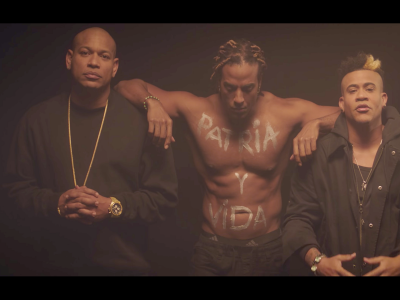
The video, which has so far been viewed 4 million times, is relatively simple in execution. It opens with an image of José Martí, one of the island’s most celebrated national heroes, burning away to reveal the face of George Washington, in a criticism directed at the government for its interest in foreign currency over the well-being of its citizens. The video is a montage of footage made by artists in Cuba and afuera (outside), along with clips from San Isidro protests and subsequent arrests. “Se acabó, ya se venció tu tiempo, se rompió el silencio,” they sing again and again in the song. “It’s over, your time is up, and the silence has been broken.” In an act now being repeated across social media, Yotuel also has the words ‘Patria y Vida’ written in white across his chest.

Cindy Ermus, an assistant professor of history at the University of Texas at San Antonio and a Cuban-American, pointed to the many reasons the song has exploded both on the island and in the diaspora. She identifies the new expansion of internet access in Cuba as one consideration, adding that everyone she’s spoken with in Cuba seems to have heard it. “‘Patria y vida’ is quickly becoming a new rallying cry alongside ‘Cuba libre!’ and ‘libertad!’” she tells The Conversationalist. “One can find the phrase on shirts, stickers, and other items, as well as in the form of art installations and graffiti in Cuba, Miami, and across the diaspora.”

The video explodes with grief and pain—hand movements showing the pent up frustration and facial expressions spilling over with anguish. There is also sheer bravery in the act of this art. In an interview, the members of Gente de Zona, who now live in Miami, said they kept silent about their beliefs for years, worried about the repercussions that family members who still live on the island would face. But, they added, now is the time to leave behind their fear and speak out. “The price of this song is that I won’t be able to return to Cuba,” Descemer told journalist Jorge Ramos in the New York Times.

“The youth of Cuba want life, they want another Cuba, other air, liberty, rights, dreams,” Yotuel told Ramos. “We don’t want the option to be death.”

“Our hope is that the situation in Cuba improves,” Gente de Zona’s Alexandre Delgado told Billboard. “We deserve a change in 2021, and our country has no need to be suffering as it has for generations. It’s been 62 years with the same government that has hurt Cuba and its people, leaving youth with no hope. We’ve also been victims for the simple fact of thinking different, of not being Communist. We’ve been attacked and censored.”

Academics the world over have stressed the song’s importance. In a Twitter thread Ana Dopico, director of the Hemispheric Institute of Performance and Politics at New York University, wrote: “‘Patria y vida,’ in 3 little words, wakes us up from a dream, or a stupor. Forced choices are refused. Life is affirmed. Make the nation or die, the old saying demands. Either way there is victory. The artists, the song, the video refuse this, and the nation is joined to life.”

The Cuban government’s response to ‘Patria y Vida’ has been vitriolic. As Ramos wrote in the Times, the fact that they have publicly responded shows the power of the song and its popularity. “This song full of hate that tries to make fun of everything we are, everything we gave to be free,” declared the writer of an article in the Cuban government run paper Granma. “Its hate doesn’t represent me. Its horrible lyrics don’t represent me. Gente de Zona doesn’t represent me.”

‘Patria y Vida’ is the latest in a wave of statements by Cuban artists and musicians who are risking their safety to speak out against the communist government and Fidel Castro. In a December interview for the Wall Street Journal, Mary Anastasia O’Grady interviewed Luis Manuel Otero Alcántara, one of the leaders of the San Isidro Movement, who appears in the ‘Patria y Vida’ video; she asked him for his thoughts on Castro. “His answer stunned not because I disagreed but because challenging the godlike myth of the comandante, alive or dead, has always been taboo,” she wrote. “‘For me he was a bad person, and what he did is not justified by what he did in things like health care,’ the 33-year-old performance artist said. ‘If you repress someone because they wrote a poem you don’t like or you arrest young people continually, you are not a good person. This repression has destroyed the lives of intellectuals.’”

Demonstrating how much the song has rattled the Cuban government, President Miguel Díaz-Canel Bermúdez tweeted repeatedly on the matter. “Patria o muerte! Thousands of us shouted last night,” he wrote on February 19. “They wanted to erase our slogan and we made it go viral.”

“We must acknowledge the struggle of the Cuban people, and the fact that so many—and each day more—have become exasperated with the rhetoric and the repression that in part characterizes the Cuban government,” Ermus tells The Conversationalist. “With its calls for libertad, and with its artists’ plea for dignity and for respect—‘Somos la dignidad de un pueblo entero pisoteada,’ a reasonable appeal for the right to artistic expression and an end to violence—a song like this is bound to resonate with the Cuban people, and indeed, with all people.”

The power of the song continues to pick up momentum, with the resonance of the lyrics and the video reverberating across the Cuban community both on the island and abroad. “Publicizing a paradise,” the lyrics say of Cuba, “While mothers cry for their sons who’ve left.” The ones who left and the ones who stayed are joining their voices together, and it’s getting harder and harder for the government to keep them quiet.


    [post_title] => 'Patria y Vida': the Cuban song that has become a global rallying cry
    [post_excerpt] => The video of the song explodes with grief and pain—hand movements showing the pent up frustration and facial expressions spilling over with anguish.
    [post_status] => publish
    [comment_status] => closed
    [ping_status] => open
    [post_password] =>
    [post_name] => patria-y-vida-the-cuban-song-that-has-become-a-global-rallying-cry
    [to_ping] =>
    [pinged] =>
    [post_modified] => 2024-08-28 21:15:13
    [post_modified_gmt] => 2024-08-28 21:15:13
    [post_content_filtered] =>
    [post_parent] => 0
    [guid] => https://conversationalist.org/?p=2416
    [menu_order] => 218
    [post_type] => post
    [post_mime_type] =>
    [comment_count] => 0
    [filter] => raw
)
 Granaz Baloch[/caption]
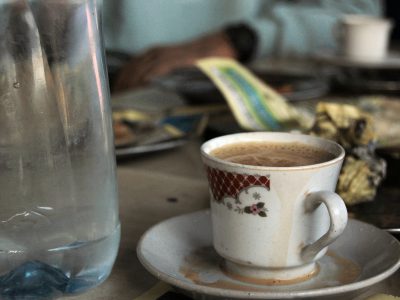
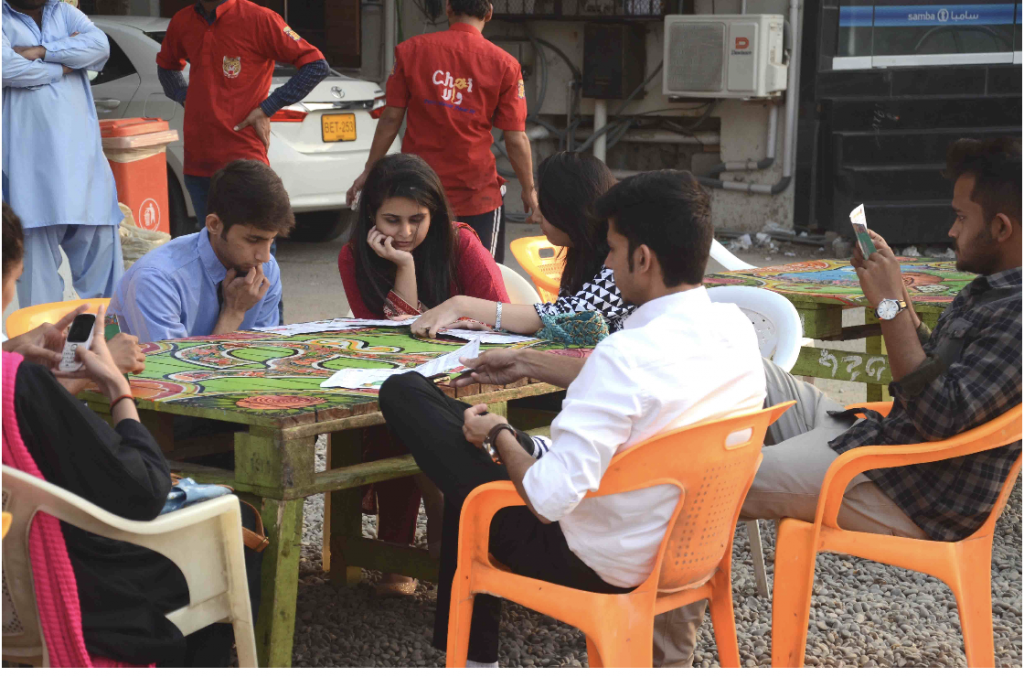 The scene at Chai Wala.[/caption]
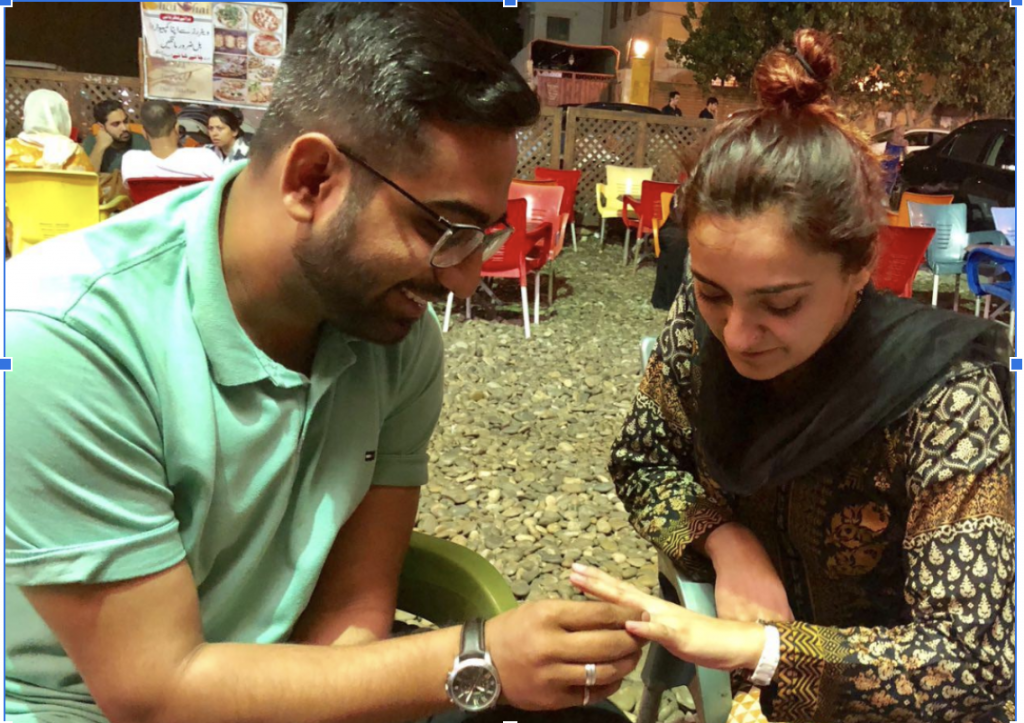 Shaheera Anwar getting engaged at a traditional dhaba in Karachi.[/caption]
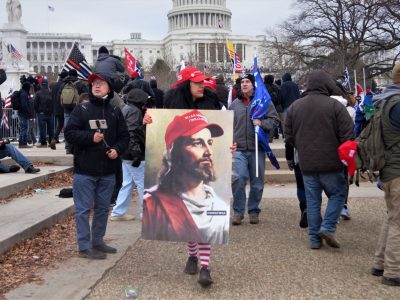
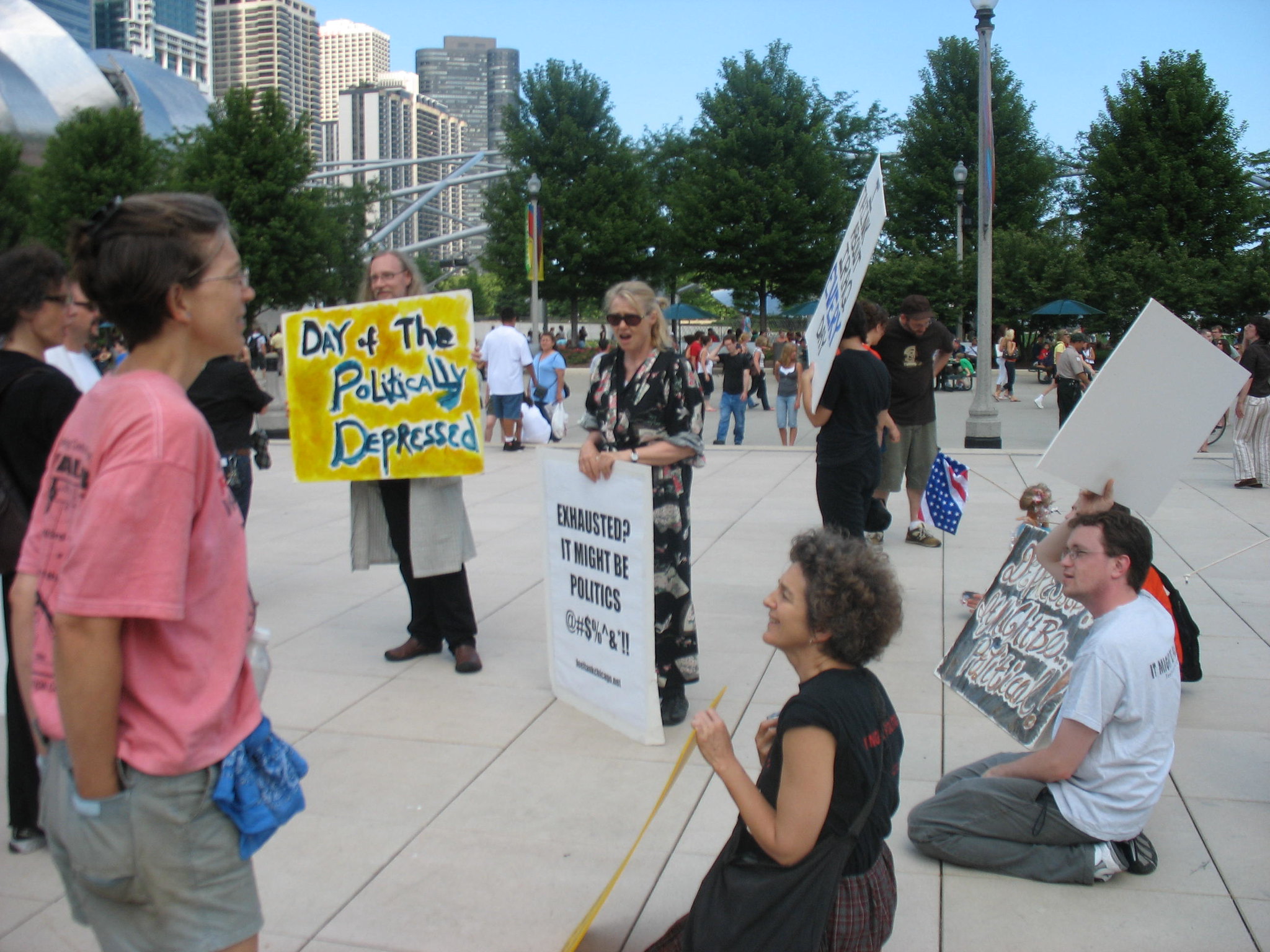 Chicago FeelTank Parade of the Politically Depressed on July 25, 2006.[/caption]
A few months ago, I heard about a Feel Tank Toronto event at which the participants sang pop songs, repeating the line
Chicago FeelTank Parade of the Politically Depressed on July 25, 2006.[/caption]
A few months ago, I heard about a Feel Tank Toronto event at which the participants sang pop songs, repeating the line 

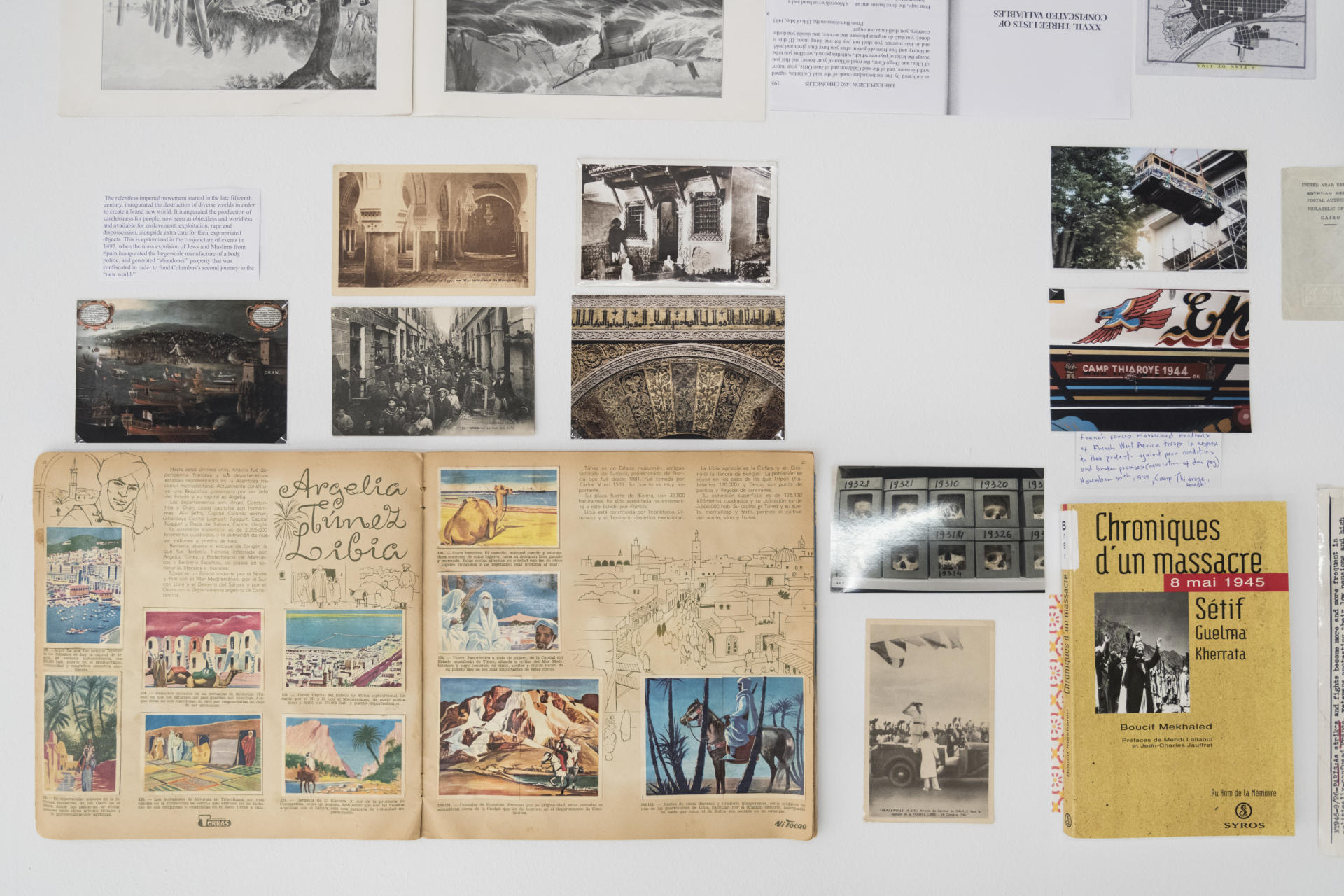 From Ariella Aïsha Azoulay's exhibition "Errata" at the Fundació Antoni Tàpies in Barcelona.[/caption]
Azoulay posits that the use of this violent photographic shutter stretches back to 1492, a moment of imperial Spanish colonization of the Americas, the start of the international global slave trade to make this possible and the obliteration of Judeo-Muslim culture through Inquisition decrees. This history also includes the devastation of the Caribbean’s indigenous Taíno people’s politics and culture in 1514; the ruination of the nonfeudal cocitizenship system of the Igabo people in West Africa; the 1872 Crémiuex decree that gave French citizenship to Jewish Algerians but withheld it from Muslims, a divide-and-conquer strategy with ramifications that are felt to this day; and the ongoing ravaging of Palestinian politics and culture since the early 1900s. In this connected schema of colonial destruction and erasure paired with institutionalization and documentation, the concept of history is premised on the ideas of discovery and progress. Each colonial regime “discovered” new artworks and exhibited them in new museums; they documented dispossessed people with the new label of “refugees” and imposed new cultural practices and political institutions premised on the undoing of previous indigenous norms and knowledge.
Potential history is positioned as a means of addressing these historical damages by imaginatively reactivating the memories and potentialities shut off by the imperialist photograph and its material positioning. Azoulay describes “rehearsal methods” for how we can question and begin to undo these structures. One strategy is the act of revising imperial photos through annotation, including notes, comments and modified captions that challenge the histories they describe. When these interventions are rejected by the archives that own the legal rights to the photos, Azoulay redraws the photographs herself.
Another rehearsal method is the idea of striking, found in short chapters that imagine museum workers, photographers and historians going on strike. The idea of striking until our world is repaired means saying no to the relentless new of history. It does not aim to substitute an alternative history or fill museums with new objects, but rather to reject their logic and promote its active unlearning. Azoulay underlines these and other rehearsals as modes of practicing new forms of co-citizenry and solidarity based on critical looking. “Unlearning imperialism,” she writes, “means aspiring to be there for and with others targeted by imperial violence, in such a way that nothing about the operation of the shutter can ever again appear neutral.”
“Being there” is a moment of radical solidarity in which one aspires to listen to those affected by such violence and question the flow of history that imperial institutions strive to promote as casual and natural. This includes recognizing the role of looted objects and their role in building imperial ideas, but also reclaiming them as means to enact other modes of being, such as thinking of them not as protected “art” but as part of people’s real material worlds.
Azoulay also listens to new melodies that arise from such sites of imperial documentation. She recounts the story of her own Algerian father moving to Israel as a child and trying to forget his native Arabic—because in Israel, the European elite actively condemned its use and promoted Hebrew. She first learned that her grandmother’s name was the Arabic Aïsha, the name of the Prophet Mohamed’s third wife, when she saw her father’s birth certificate after he died. Plucked from this imperial document, the name was a “treasure” in her Hebrew-speaking, Jewish-Israeli family; she sought to use it as a site of imagination by adopting it as her own—in addition to her Hebrew name, Ariella. Azoulay speaks of Aïsha as a haunting scream: Aïsha, Aïsha, Aïeeeeeeee-shaaaaaaaa.
Azoulay further demonstrates photographs and documents as dual sites of violence and resistance with images taken by the Civil War photographer Timothy O’Sullivan in 1862. One of his iconic images shows eight Black people standing stiffly near a large house persistently labeled as the “J.J. Smith Plantation.” These words make it clear that the people in the photograph are racialized property. She describes how this violence is repeated in historical archives, in which photographs of Black people taken before and after the Civil War are interchangeably captioned as depicting slaves; she proposes the imagining of a “dismissed exposure,” or ghostly negative of a forgotten image reinserted into the frame. The original image becomes blurred and surreal as it competes with sculptures from the MoMA floating in the background. Since there are no images on display in U.S. museums of Black Americans reunited with objects stolen from them, the dismissed exposure serves as an imaginative placeholder in the photographic archive. It waits for different worlds and meanings.
Potential history dwells in such creative exercises. It resists simplistic ideas of financial restitution for destroyed cultures or the mere substitution of one history for another. Instead, it advocates persistent unlearning of how the world is taught, represented and constructed; solidarity in resisting these demands; listening to those affected; and, above all, imagining. Azoulay’s book is a long (over 670 pages) and challenging read. It brings up the question of who has the resources to read it; while its ideas are currently being filtered through museum exhibitions such as the traveling , the question remains as to how this work can reach a wider and more diverse audience. If you do manage to find a copy, perhaps try following one of the more whimsical moments of the book: dip in as you please, conceiving of no beginning or end, but rather of moments that shine in “a bright, brief and sudden light” against the “dazzling” beam of imperialism.
After all of the “kings” had been “beheaded” at the intergalactic memorial carnival in Berlin, we passed around a hat, on which was written things we wanted to cherish and save. “It’s more about the spirit of hope than destruction,” laughed a person in a wooden demon mask.
[post_title] => 'Potential Histories: Unlearning Imperialism': a review of Ariella Azoulay's new book
[post_excerpt] => How the "shutter" of photography aided imperial conquest.
[post_status] => publish
[comment_status] => closed
[ping_status] => open
[post_password] =>
[post_name] => potential-histories-unlearning-imperialism-a-review-of-ariella-azoulays-new-book
[to_ping] =>
[pinged] =>
[post_modified] => 2024-08-28 21:15:13
[post_modified_gmt] => 2024-08-28 21:15:13
[post_content_filtered] =>
[post_parent] => 0
[guid] => http://conversationalist.org/?p=2213
[menu_order] => 234
[post_type] => post
[post_mime_type] =>
[comment_count] => 0
[filter] => raw
)
From Ariella Aïsha Azoulay's exhibition "Errata" at the Fundació Antoni Tàpies in Barcelona.[/caption]
Azoulay posits that the use of this violent photographic shutter stretches back to 1492, a moment of imperial Spanish colonization of the Americas, the start of the international global slave trade to make this possible and the obliteration of Judeo-Muslim culture through Inquisition decrees. This history also includes the devastation of the Caribbean’s indigenous Taíno people’s politics and culture in 1514; the ruination of the nonfeudal cocitizenship system of the Igabo people in West Africa; the 1872 Crémiuex decree that gave French citizenship to Jewish Algerians but withheld it from Muslims, a divide-and-conquer strategy with ramifications that are felt to this day; and the ongoing ravaging of Palestinian politics and culture since the early 1900s. In this connected schema of colonial destruction and erasure paired with institutionalization and documentation, the concept of history is premised on the ideas of discovery and progress. Each colonial regime “discovered” new artworks and exhibited them in new museums; they documented dispossessed people with the new label of “refugees” and imposed new cultural practices and political institutions premised on the undoing of previous indigenous norms and knowledge.
Potential history is positioned as a means of addressing these historical damages by imaginatively reactivating the memories and potentialities shut off by the imperialist photograph and its material positioning. Azoulay describes “rehearsal methods” for how we can question and begin to undo these structures. One strategy is the act of revising imperial photos through annotation, including notes, comments and modified captions that challenge the histories they describe. When these interventions are rejected by the archives that own the legal rights to the photos, Azoulay redraws the photographs herself.
Another rehearsal method is the idea of striking, found in short chapters that imagine museum workers, photographers and historians going on strike. The idea of striking until our world is repaired means saying no to the relentless new of history. It does not aim to substitute an alternative history or fill museums with new objects, but rather to reject their logic and promote its active unlearning. Azoulay underlines these and other rehearsals as modes of practicing new forms of co-citizenry and solidarity based on critical looking. “Unlearning imperialism,” she writes, “means aspiring to be there for and with others targeted by imperial violence, in such a way that nothing about the operation of the shutter can ever again appear neutral.”
“Being there” is a moment of radical solidarity in which one aspires to listen to those affected by such violence and question the flow of history that imperial institutions strive to promote as casual and natural. This includes recognizing the role of looted objects and their role in building imperial ideas, but also reclaiming them as means to enact other modes of being, such as thinking of them not as protected “art” but as part of people’s real material worlds.
Azoulay also listens to new melodies that arise from such sites of imperial documentation. She recounts the story of her own Algerian father moving to Israel as a child and trying to forget his native Arabic—because in Israel, the European elite actively condemned its use and promoted Hebrew. She first learned that her grandmother’s name was the Arabic Aïsha, the name of the Prophet Mohamed’s third wife, when she saw her father’s birth certificate after he died. Plucked from this imperial document, the name was a “treasure” in her Hebrew-speaking, Jewish-Israeli family; she sought to use it as a site of imagination by adopting it as her own—in addition to her Hebrew name, Ariella. Azoulay speaks of Aïsha as a haunting scream: Aïsha, Aïsha, Aïeeeeeeee-shaaaaaaaa.
Azoulay further demonstrates photographs and documents as dual sites of violence and resistance with images taken by the Civil War photographer Timothy O’Sullivan in 1862. One of his iconic images shows eight Black people standing stiffly near a large house persistently labeled as the “J.J. Smith Plantation.” These words make it clear that the people in the photograph are racialized property. She describes how this violence is repeated in historical archives, in which photographs of Black people taken before and after the Civil War are interchangeably captioned as depicting slaves; she proposes the imagining of a “dismissed exposure,” or ghostly negative of a forgotten image reinserted into the frame. The original image becomes blurred and surreal as it competes with sculptures from the MoMA floating in the background. Since there are no images on display in U.S. museums of Black Americans reunited with objects stolen from them, the dismissed exposure serves as an imaginative placeholder in the photographic archive. It waits for different worlds and meanings.
Potential history dwells in such creative exercises. It resists simplistic ideas of financial restitution for destroyed cultures or the mere substitution of one history for another. Instead, it advocates persistent unlearning of how the world is taught, represented and constructed; solidarity in resisting these demands; listening to those affected; and, above all, imagining. Azoulay’s book is a long (over 670 pages) and challenging read. It brings up the question of who has the resources to read it; while its ideas are currently being filtered through museum exhibitions such as the traveling , the question remains as to how this work can reach a wider and more diverse audience. If you do manage to find a copy, perhaps try following one of the more whimsical moments of the book: dip in as you please, conceiving of no beginning or end, but rather of moments that shine in “a bright, brief and sudden light” against the “dazzling” beam of imperialism.
After all of the “kings” had been “beheaded” at the intergalactic memorial carnival in Berlin, we passed around a hat, on which was written things we wanted to cherish and save. “It’s more about the spirit of hope than destruction,” laughed a person in a wooden demon mask.
[post_title] => 'Potential Histories: Unlearning Imperialism': a review of Ariella Azoulay's new book
[post_excerpt] => How the "shutter" of photography aided imperial conquest.
[post_status] => publish
[comment_status] => closed
[ping_status] => open
[post_password] =>
[post_name] => potential-histories-unlearning-imperialism-a-review-of-ariella-azoulays-new-book
[to_ping] =>
[pinged] =>
[post_modified] => 2024-08-28 21:15:13
[post_modified_gmt] => 2024-08-28 21:15:13
[post_content_filtered] =>
[post_parent] => 0
[guid] => http://conversationalist.org/?p=2213
[menu_order] => 234
[post_type] => post
[post_mime_type] =>
[comment_count] => 0
[filter] => raw
)