WP_Post Object
(
    [ID] => 1523
    [post_author] => 2
    [post_date] => 2019-12-20 04:58:47
    [post_date_gmt] => 2019-12-20 04:58:47
    [post_content] => There is a crack in everything; that's how the light gets in.
 — Leonard Cohen

I’m writing these words from a yoga center in the snow-covered Berkshires, in an atmosphere of extreme serenity that is both deeply comforting and somewhat intimidating. On the second day of my little retreat, during a silent meditation walk in the snowy woods, the woman leading the group had us stop at a particularly idyllic spot and stand still, listening to the quiet. Tree branches creaked gently in the wind, a stream of water bubbled over rocks, a woodpecker tapped on a tree, and someone (it might have been me) struggled to control her jagged breathing (it was a steep climb!). Gazing up at the treetops, the instructor asked us to describe what we heard during the silent walk. Reader, I was honest: during the meditation walk, all I could hear was the cacophony in my head — and it sounded like a super highway at rush hour. 

Most of us walk around with a head full of noisy thoughts. Meditation is supposed to help quiet the mind, but sitting still (or walking in deliberate silence) while thinking about nothing is incredibly difficult. Still, I don’t think I am alone in feeling that the normal roar inside my head has become much louder and shriller in recent months. When I mentioned to a friend, a journalist who covers the Christian and white nationalist right in the United States, that I was feeling overwhelmed by an unending stream of worried thoughts, she said, without missing a beat: “It’s the fascism.”

For those of us who are concerned about the state of civil society and democracy, 2019 was a disquieting year. Authoritarianism continues to rise and spread, while once robust democracies falter as the pillars of supporting institutions — the judiciary, the independent media, and the legislative branch — are weakened. Around the United States, in New Zealand and in Europe, we have seen a notable uptick in violent racist and antisemitic incidents. Perhaps most worrying of all, governments continue to dither over the climate crisis, even as scientists issue dire warnings about the consequences of a failure to implement policy changes. 

The news is so bad, and the sense of hopelessness so pervasive, that there’s a constant temptation to withdraw and focus inward rather than fight back. This is especially true when the exigencies of daily life — working, raising children, worrying about money, and trying to find a little time for oneself — are so all consuming. Where do people who don’t have any experience of struggling for their rights, because they took them for granted, find the inner resources to fight back? 

The story of this yoga retreat center provides some insight and inspiration on the matter of fighting for what is important. For many years, it was an ashram led by a guru. His devotees and disciples lived on the property in a communal lifestyle that involved providing a lot of free labor, from teaching yoga classes to cooking meals and cleaning rooms for paying guests. In return, the devotees received all the emotional benefits of being part of a nurturing, close-knit, spiritual community. In the mid-1990s, however, the guru was discovered to have “abused his power” — i.e., preyed sexually on some of the devotees. For the community, this was a devastating betrayal. Many had lived at the ashram for years; they had taken on new names bestowed by the guru; their friends, community, and identity were all tied up with the ashram and its spiritual leader.

Twenty-five years later, the ashram is a thriving, non-profit educational center, which provides a nurturing, peaceful place for people who need some time to take care of their bodies and their spirits. 

The center provides scholarships to grassroots community leaders interested in learning how to broker and teach non-violent conflict resolution in challenging environments, and to people who want to use yoga as a means of enriching their professional practice — as healthcare providers, teachers, or corporate wellness consultants. The people who clean and cook are no longer volunteer religious devotees, but staff who are paid and treated well — many of them refugees, or people who live with physical or intellectual limitations. The instructors have stripped the yoga classes of Sanskrit chanting, except for the occasional “om” or “namaste.” Instead, they emphasize that yoga is a science and a practice that promotes physical well being, but not a religion. Slowly, some of the disillusioned devotees who moved away after the guru’s betrayal are drifting back to spend time at the ashram-turned-yoga center. They’ve reconnected with old friends, and rejoined a changed community. 

Nothing about this trajectory was obvious in 1994, shortly after the guru was exposed and ousted. I remember, because I happened to visit at the time and saw how crushed and unmoored the devotees were. They could easily have closed up shop and dispersed into a fog of bitterness and loneliness, but they decided that the place had too much to give and teach, and that it must be salvaged. And so they set to work, and after a few years they realized that they hadn’t needed a guru, after all.

I am inspired by people who are willing to face and overcome emotional devastation.

Over the past year, as I mourned the decline of democracy and civil society and tried to fight my way through the spiritual malaise that is caused by fear and a perception of helplessness, I saw some thought provoking inspiration around the world. 

In a Moscow courtroom, a 21 year-old university student named Yegor Zhukov was tried for “extremism,” after he was arrested for posting YouTube videos in which he extolled the virtues of nonviolent protest, criticized Vladimir Putin, and discussed his campaign for a seat on the Moscow City Council. Masha Gessen translated the moving and powerful speech Zhukov gave at his court hearing, after which he was sentenced to only three years of probation. In Putin’s repressive Russia, this was a surprisingly light sentence. The explanation, Gessen writes, lies in Zhukov’s speech, the response it elicited from the public — and the fact that several Russian media outlets “dared” to publish it.

Globally, the number of grassroots movements challenging corrupt and/or authoritarian governments with sustained protests is breathtaking. In Chile, protestors have faced down police using live ammunition and mass arrests as they continue to protest the social and economic inequality in their country. In Lebanon and Iraq, protestors have joined forces across sectarian lines to challenge the corrupt and ineffective governing systems in their countries. In Hong Kong, the sustained pro-democracy demonstrations are entering their eighth month. The Chinese government issued dire threats and even indicated it was prepared to intervene militarily, but has so far done nothing. 

In India, just this week, a stunning number of ordinary citizens flooded the streets of major cities to protest the controversial new citizenship act that discriminates against Muslims. 

And last October, just steps from my home in Montreal, an estimated 500,000 people gathered to cheer for Greta Thunberg, the 16 year-old Swedish girl who single handedly inspired a global movement to raise awareness of the climate crisis. 

The power of authoritarians can and must be challenged. The temptation to check out and turn inward must be fought. Giving up is not an option. 

I think I’ll adopt those thoughts as my meditation mantras. Meanwhile, The Conversationalist will continue to publish insightful, knowledgeable, thought provoking articles about the urgent issues that we all care about so deeply. I don’t know if 2020 will be better than 2019, but let’s get ready to meet its challenges. 

 
    [post_title] => Lessons in resistance at a former yoga ashram
    [post_excerpt] => Over the past year, as I mourned the decline of democracy and civil society and tried to fight my way through the spiritual malaise that is caused by fear and a perception of helplessness, I saw some thought provoking inspiration around the world. 
    [post_status] => publish
    [comment_status] => closed
    [ping_status] => open
    [post_password] => 
    [post_name] => at-a-yoga-center-i-learned-a-lesson-in-how-to-challenge-authoritarianism
    [to_ping] => 
    [pinged] => 
    [post_modified] => 2026-08-06 23:11:57
    [post_modified_gmt] => 2026-08-06 23:11:57
    [post_content_filtered] => 
    [post_parent] => 0
    [guid] => http://conversationalist.org/?p=1523
    [menu_order] => 288
    [post_type] => post
    [post_mime_type] => 
    [comment_count] => 0
    [filter] => raw
)

Lessons in resistance at a former yoga ashram

WP_Post Object
(
    [ID] => 1500
    [post_author] => 2
    [post_date] => 2019-12-05 17:03:50
    [post_date_gmt] => 2019-12-05 17:03:50
    [post_content] => What did you talk about at your Thanksgiving dinner?

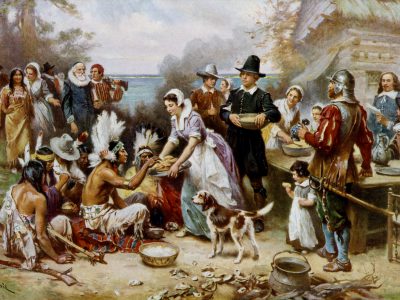
A week after the celebration of the most American holiday, many people are still digesting dinner table conversations that might have wandered into current events. Whether they were contentious, or affirming, the Thanksgiving dinner table conversation as a reflection of our cultural moment has become a motif in popular culture. A survey of some of the most iconic enactments of the holiday meal in film and in television go some way toward putting last week's conversations in context.

Unlike any other religious or secular American celebration, Thanksgiving offers a motif that resonates with nearly all American audiences, as Norman Rockwell shows in his iconic 1943 portrait of a family celebrating the holiday. The title of the painting is Freedom From Want; it is one in a series inspired by Franklin D. Roosevelt’s 1941 State of the Union address, Four Freedoms (freedom of speech, freedom of worship, freedom from want, freedom from fear), which he delivered shortly after the United States entered World War Two. Rockwell’s all-American family would, one hopes, look quite different today; but the propaganda potential is the same – almost everyone celebrates Thanksgiving, in similar ways, with similar cultural cues and breaks from the workweek.

Over the years, film directors have used Thanksgiving scenes as an instantly recognizable tableau for the foibles of the extended family. Many of those Thanksgiving scenes have become iconic — offering a peek into less-familiar narratives. They are also remarkably powerful reflections of the political climate of their time. Viewed years later, they offer salutary insights into whether and how things have changed.

In Avalon, the third of Barry Levinson’s semi-autobiographical Baltimore movies —of which Diner is perhaps the best known —Thanksgiving makes the director’s Jewish Baltimore deeply and undeniably American. Even for people who haven’t seen it, “You cut the turkey without me?!” has become one of the most-quoted lines about Thanksgiving.


Each Thanksgiving meal in Avalon marks the evolution and assimilation of the Jewish-immigrant Krichinsky family, presided over by the benevolent, mustachioed patriarch Sam Krichinsky (Armin Mueller-Stahl). As the children gather at their feet and listen raptly, the older generation — Sam, his brothers, their wives and offspring — regale them with oft-repeated stories about the old world, which the younger ones imbue with fresh ideas bred by the new world. The opening scene of Avalon shows Sam arriving in Baltimore as a young man, before World War One, a new immigrant landing on the Fourth of July amid the fireworks and fairy lights. The sense of splendor and 1950’s nostalgia are a constant in this deeply sentimental film; at times Levinson’s Americana schmaltz is almost too much to bear. Yet it reflects the sentiments of its time: the film was released in 1990, just as the Communist bloc was collapsing — a historical event that many (perhaps most) Americans viewed as a validation of their values. This feeling is reflected in Barry Levinson’s nostalgic film about growing up in post-war Baltimore as the grandson of Jewish immigrants from eastern Europe.

This American exuberance at the Thanksgiving table can be found in the films of two less likely candidates — Woody Allen's Hannah and Her Sisters,  and Spike Lee's She's Gotta Have It. Both films were released in 1986; they channel a Reagan-era sense of carefree consumption, the ability to recreate oneself, and endless second chances.  Hannah and Her Sisters, one of Woody Allen’s best-known films, is framed and punctuated by three Thanksgiving meals. Given the director’s reputation for cynicism, “Hannah” is surprisingly optimistic, even as it explores the destructive potential of love and human frailty. The film begins with a Thanksgiving gathering at the sprawling Central Park West apartment of Hannah (Mia Farrow) and Elliot (Michael Caine). The camera take us through rooms that are suffused with warm light and happy children playing while clusters of adults drink, eat hors d’oeuvres, and converse. Hannah’s mother, a retired Broadway performer, sings while her husband accompanies her at the piano, and uniformed catering staff serve the food. Rather quickly, however, this scene of familial happiness morphs into something altogether different, with all the characters seemingly on the brink of ruinous heartbreak and professional failure. And yet, in tandem with the anguish over illicit love affairs, money problems, career frustration, and sibling rivalry, the city continues to sparkle and entice; the failures are minor and redeemed by success; death is defied; and most of the hearts not only survive intact, but seem to grow. The whimsy, humor, and celebration of New York City, with a closing Thanksgiving meal, full of heart and warmth, are what remain. Even Woody Allen and Dianne Wiest are happy at the end, which seems to make the film a veritable fairy tale.

She’s Gotta Have It, Spike Lee’s first (and arguably best) film, is a similarly overflowing package of whimsy and a sense of plenty. This includes its charmingly odd Thanksgiving meal. Nola, the female protagonist, is a free spirit whose enjoyment of love, sex, art, and the people around her are intoxicating, to both the characters and the viewers. For Thanksgiving dinner, the first she has ever cooked, Nola invites her three lovers — Jamie, Mars, and Greer. Over dinner the men joust for her affection, with their competitiveness extending to a post-dessert game of Scrabble. At the end of the evening each suitor is understandably reluctant to leave, hoping he will be the one Nola chooses to spend the night with her. The final scene is a beautiful overhead composition of Nola and Jamie lying in one another’s arms on her bed, with Mars and Greer hanging on nearby as the music plays — until they finally give up and leave. Like Hannah and Her Sisters, the film feels suffused with a late-1980’s American intoxication with itself – even when it’s pushing the margins or making them visible. Spike Lee provides a portrait of black Americans that doesn’t use white America as a reference point. This world exists regardless of whether or not white people are aware of it or understand it; just as Nola offers herself without apology or excuse, so does Spike Lee present black America.


While less celebratory Thanksgiving films exist — Parker Posey offers two examples of unhappy Thanksgiving gatherings in her cult classics The Day Trippers and House of Yes — television has more space to dig into broader conversations. The Thanksgiving episodes in some older television series feel shockingly political in a way that seems inconceivable today. In a 1994 episode of Roseanne, abortion is the predominant theme: four generations of women sit at the holiday table sharing their views and experiences, with Roseanne expressing views that are stridently pro-choice. When she and Dan discover their unborn child may not be healthy, however, Roseanne suddenly realizes she might not be so certain about her own choice. It is a remarkably thoughtful conversation —one of many salutary episodes in a series that gave white working-class Americans a nuanced, complex voice.

That other avatar of the white working man, Archie Bunker (Carroll O’Connor), famously served as a foil for the preoccupations of the 1970s. In the 1974 Thanksgiving episode of All In The Family, he and Edith are invited to the new home of their daughter Gloria, and son-in-law Mike  (a.k.a Meathead). Since Gloria is pregnant, the subject of whether or not the child will be raised with religion arises, with Archie and Edith expressing hurt and dismay that their grandson might be raised a liberal atheist.


All in the Family is one of the few shows premised entirely on the culture wars of the 1970s; viewed today, it holds up a sobering mirror to our contemporary political moment — i.e., we’ve regressed to a place where those inter-generational conflicts of 45 years ago now feel acutely relevant.  Emily Nussbaum, The New Yorker’s television critic, adds an additional insight in her brilliant essay about All in the Family, titled “The Great Divide:  Norman Lear, Archie Bunker, and the Rise of the Bad Fan.” The show, observes Nussbaum, attracted many “bad fans” who watched because they identified with Archie Bunker and his bigoted views. He was meant to be the old racist uncle at the Thanksgiving dinner table, an anachronistic buffoon, but many of his fans loved him because they shared his worldview. This is one of the dangers posed by using anti-heroes to explode cultural stereotypes and advance conversations.

The new canvas created by the so-called Golden Age of television has endowed the Thanksgiving episode with even greater potential. Friday Night Lights, one of the best twenty-first century portraits of very key elements of American culture, provided a perfectly fraught Thanksgiving episode in 2010, very much under the shadow of the culture wars and the polarized national debate on abortion. Tami Taylor, one of the main characters, is a principal of a high school in this a small, conservative, Texas town of churchgoers. After she is discovered to have advised a pregnant student to explore her options, guiding her with empathy and a total lack of judgment, Tami is publicly criticized and nearly fired from her job. At Thanksgiving dinner she is in the midst of dealing with the fallout from this incident, which makes the holiday a brief and not completely relaxed respite.  While the subject itself is not discussed at the dinner table, her anxiety over it permeates the evening and she is visibly distracted. This Thanksgiving dinner, as is so often the case in real life, represents a short respite from the battles of the workweek. The next day she is essentially told she is fired, and so decides to leave and work as a counselor at another school, where she is needed and wanted. When she returns home, her husband and daughters are putting up the Christmas lights, in a perfect exhalation and sense of relief.

One of the most touching Thanksgiving episodes in recent years is Denise’s coming out story in a 2017 episode of Master of None, Aziz Ansari’s scripted show on Netflix. The show ran for two seasons, took on some very big issues with humor and insight that showed one can be woke and sensitive and remain funny; its demise is a real loss — it was a cathartic corrective to the Trump presidency, an advancement of so many important conversations. The Thanksgiving episode shows Denise and Dev, who are childhood friends, at the former’s  home over several holiday celebrations, starting when they are about 6 years old. Successive scenes in the episode show the same tableau when they are 12 and 16 years old; it then jumps forward to 2015, 2016, and 2017. Dev is the only male, and the only non African-American at these Thanksgiving tables, over which Denise’s single mother, aunt and grandmother preside. It is a beautiful extended family that gradually, by the very end, grows to include Denise’s partner Michelle. The path there is lovingly charted – and the specific challenges of coming out as gay in the African American community are explored. The “non-conventional” family debunks the notion that they lack anything a traditional nuclear family might offer.


It seems odd that the cultural currency of Thanksgiving is underestimated or unrecognized– it has as captive an audience as is still possible and offers a trope that is so universally familiar. It also sets lower expectations for denouement, as Christmas might, which makes it a better canvas for experimentation or unintended projections. This is why Thanksgiving, the ultimate American holiday, has often been the best means for getting a real sense of the country’s political pulse via popular culture. We are all tuned in, and not because we are preoccupied with impeachment hearings. We just happen to be watching.
    [post_title] => How film and television put last week's Thanksgiving celebration in cultural context
    [post_excerpt] => It's a tradition as old as Hollywood: every year, Thanksgiving scenes are presented on television and in film as a metaphor and an analysis of our cultural moment. 
    [post_status] => publish
    [comment_status] => closed
    [ping_status] => open
    [post_password] => 
    [post_name] => how-film-and-television-put-last-weeks-thanksgiving-celebration-in-cultural-context
    [to_ping] => 
    [pinged] => 
    [post_modified] => 2026-08-06 23:13:19
    [post_modified_gmt] => 2026-08-06 23:13:19
    [post_content_filtered] => 
    [post_parent] => 0
    [guid] => https://conversationalist.org/?p=1500
    [menu_order] => 290
    [post_type] => post
    [post_mime_type] => 
    [comment_count] => 0
    [filter] => raw
)

How film and television put last week’s Thanksgiving celebration in cultural context

WP_Post Object
(
    [ID] => 1416
    [post_author] => 2
    [post_date] => 2019-10-11 17:27:55
    [post_date_gmt] => 2019-10-11 17:27:55
    [post_content] => 'The game is rigged, and it does not reward people who play by the rules.' — Ramona (Jennifer Lopez)

In 2019, sex workers are some of the most powerful women in America. That’s the reason Hustlers has been cleaning up at the box office. Every movie theater in America is now an ersatz strip club, catering to a gaze that doesn’t objectify its subjects so much as shower them with solidarity and aspiration. You love to see it: a swaggering, unabashed admission that beauty is capital, and women deploying everything used to deny them power – their bodies, sexuality, and financial precariousness — in order to reclaim their own.

The film, for those who have not heard of or seen it, stars an ensemble cast featuring Jennifer Lopez and Cardi B.; the women play strippers working at Scores, the iconic New York City club, which is frequented by wealthy Wall Street men. Angry at the decline in their income after the 2008 financial crisis, the women engage in a Robin Hood-type con: they target rich customers, the men who caused or became rich from the very crisis that is now depriving them of income; they drug them, steal their credit card numbers, and charge them to the limit. The plot of the movie is ripped from the headlines, so to speak: it was reported by Jessica Presley for New York Magazine, in a 2015 feature titled The Hustlers at Scores.

https://www.youtube.com/watch?v=4ZXYLoog1TI

Even before Hustlers took over both movie theaters and the cultural discourse, Stormy Daniels, the nom de film for porn actress Stephanie Clifford, was able to humiliate Donald Trump and reveal some of his financial arrangements. She steadfastly rejects any shaming over her work, whether it is stripping or starring in porn films. Cardi B, star of the charts, stage, and screens big and small, openly relishes the way her body allowed her to earn money and command attention: "When I was dancing, I had so much fun. I felt powerful in the club. I felt free.” Stormy Daniels and Cardi B weaponize their lack of shame. Their power, and that of the characters in Hustlers, comes from exposure —  not of their bodies per se, but of the transactional mentality behind gender relations under capitalism.

Thirteen years have passed since Omar Little, a character in the acclaimed television series The Wire who made his living by robbing drug dealers, succinctly dispatched a lawyer’s attempt to stake out a moral argument while questioning him in court with the observation, “I got the shotgun, you got the briefcase. It’s all in the game though, right?” In 2019, Ramona (Jennifer Lopez) gives the feminist-specific take on the same respectability politics around white-collar and underground criminality: she tells Destiny (Constance Wu) that she doesn’t feel guilty about drugging and robbing Wall Street men because they “stole from everybody, and not one of them went to jail.” Later, she says, “this whole country is a strip club.” In other words, it’s all in the game.

The women of Hustlers are firing their shots not only at men, or the brokenness of capitalism. They are also calling out white women who use femininity as a scam — although the latter pretend otherwise, and would certainly deny the accusation vehemently. White women like Caroline Calloway and Tavi Gevinson, for example, attained notoriety for using Instagram to portray lifestyles, fashion, travels, and an overall gestalt of effortless cool and joie de vivre. The women present very different images, but they both monetized their personal brands to obtain six-figure book advances, payment for featuring products in their posts —  and, in Gevinson’s case, a free apartment in Brooklyn’s most expensive neighborhood. All of this was predicated on fan bases built on enticing people’s attention and admiration, using faces, bodies, outfits, and the impression of unobtainable glamour.

You know who else got a free apartment for being beautiful and alluring, but unavailable? Ramona –  one of the strippers in Hustlers. Gavinson’s hustle may centered on what she is wearing, while Ramona’s is more about what she is not wearing;  in the end, however, Gavinson’s fashionable Rodarte trousers are the briefcase to Ramona’s bodysuit shotgun. They are all in the same game of commanding attention in a visual medium.

As New York-based culture critic Larissa Pham observed of Calloway and Gavinson, “crafting and monetizing a brand is now the easiest way to enter a profession.” A lot of people are trying to cash in on this game, but their success is predicated on being able to deny plausibly that their business model is predicated on self-commodification. Part of the controversy around Calloway’s fall from grace and Gavinson’s breaking of the fourth screen is based on the revelation that their online presences had a commercial angle. The key to influencing is not looking like you’re trying to influence, and certainly never manufacturing artificial enthusiasm for a product when your authentic taste, reactions and voice are what “inspire” people. By contrast,  the working class women in Hustlers know that their looks are the best opportunity they have, and they never pretend otherwise

The difference between white women who are online influencers and women of color who make their living performing in a strip club is this: only the former can indulge in the delusion that their looks are not a commodity. This kind of plausible deniability is deeply rooted in toxic white femininity, which is based on a combination of good intentions and obliviousness to ugly social phenomena — like racism, for example. In the now-notorious article that Gavinson wrote last month for New York Magazine, she admits that her integrity and sense of self have been undermined by the performative process of building her personal online following and platform: “I haven’t believed the purity of my intentions ever since I became my own salesperson.” Her success as a publisher, editor, writer and actor felt “less real if I considered that I could only support myself using [my] face.” The disconnect around needing to commodify one’s looks is only possible from a place of privileged obliviousness. There’s no need for respectability politics if your race, size, and class already render you inherently respectable.

Hustlers is a hit because it portrays women of color using their bodies as their path to seizing the means of reproduction (if you will). To be clear, Hustlers is not and cannot be an indictment of capitalism – it is after all, a major studio film, a product that is going to make a lot of white people a lot of money. Can the subaltern executive-produce a film? I hope so, but Megan (daughter of billionaire Larry) Ellison is not the example I would choose for my answer. But in a moment of maybe-she's-born-with-it/maybe-it's-sponcon, when we pretend that race, size, and beauty aren't forms of capital, the real service Hustler offers is in showcasing women's agency, savvy, and — yes — sheer physical grace, when capitalizing on themselves.
    [post_title] => 'Hustlers' is a lesson in feminism from women of color
    [post_excerpt] => A Hollywood hit film starring Jennifer Lopez and Cardi B as strippers who rip off their Wall Street customers holds salutary lessons about capitalism, commodification, feminism, and racism. 
    [post_status] => publish
    [comment_status] => closed
    [ping_status] => open
    [post_password] => 
    [post_name] => hustlers-is-a-lesson-in-feminism-from-women-of-color
    [to_ping] => 
    [pinged] => 
    [post_modified] => 2026-08-06 23:22:10
    [post_modified_gmt] => 2026-08-06 23:22:10
    [post_content_filtered] => 
    [post_parent] => 0
    [guid] => https://conversationalist.org/?p=1416
    [menu_order] => 298
    [post_type] => post
    [post_mime_type] => 
    [comment_count] => 0
    [filter] => raw
)

‘Hustlers’ is a lesson in feminism from women of color

WP_Post Object
(
    [ID] => 1354
    [post_author] => 2
    [post_date] => 2019-08-23 19:25:28
    [post_date_gmt] => 2019-08-23 19:25:28
    [post_content] => We can't seem to quit social media, even though we know it's not good for us. Is there a way to take back control of the user experience? 

The good news is that we now know, thanks to investigative journalism, that bad faith actors are using social media to manipulate our emotions and, by extension, our political domain. The bad news is that despite rising awareness, nothing has changed. Facebook is still manipulating its algorithms so that we all live in our own information bubbles. Twitter is still full of fake accounts, often called bots, that dupe even sophisticated users —  like prominent journalists or well-known politicians — into sharing information that simply is not true. 

As Robert Mueller said while testifying to Congress last month, social media manipulators working for Russian intelligence continue to interfere in U.S. politics “right now.”

An addiction to social media goes well beyond craving the dopamine hit supplied by seeing one’s Tweet shared widely, or one’s Facebook post liked many times. These days, journalists need Twitter to follow the news and promote their own work, while Facebook has become an all-but essential tool for staying abreast of cultural events and keeping in touch with friends and family. But while we’re “liking” photos of our friends’ new babies and sharing important investigative journalism via Twitter, we are also inadvertently exposing ourselves to people whose job it is to manipulate our thoughts and emotions. And they are experts.

Now scholars and journalists are warning that YouTube has become a terribly dangerous radicalizing tool. Zeynep Tufekci, an expert in the sociology of technology, warned about YouTube last year in a column for The New York Times. Almost by accident, she writes, she discovered that the video platform was algorithmically programmed to direct users toward opinions more radical than the ones they seemed to hold. If a user searched for a Bernie Sanders video, for example, YouTube might recommend an Atifa video. On the other hand, search for a video by a mainstream conservative commentator and next thing you know the algorithm is suggesting videos by white nationalists. YouTube, concluded Tufekci, "[might be] one of the most powerful radicalizing instruments of the 21st century."

One year later, The New York Times published an investigative story that shows how bad faith actors manipulated YouTube videos in order to radicalize Brazilian society by upending long-held social norms. Teachers quoted in the article say, for example, that their students disrupted classes to quote conspiracy theories they had seen on YouTube videos. Meanwhile Bolsanoro staffers were uploading videos that propagated conspiracy theories about teachers manipulating their students to support communism. The result: voters chose Jair Bolsanor, the far right newly elected president of Brazil. Danah Boyd, the founder of Data & Society, told The New York Times that the YouTube-influenced results of Brazil’s elections are “a worrying indication of the platform’s growing impact on democracies worldwide.”

Similarly, Britain saw its democracy undermined in 2016 when bad actors who funded and led the Brexit campaign used Facebook to manipulate British public opinion. The result: a slight majority of Britons voted in favor of leaving the European Union.  

Read more about Brexit: How less-than-great men brought Britain to its worst hour

But given that few Britons had expressed any interest in the EU prior to the referendum, how did this result come about? We now know, as The Guardian’s Carole Cadwalladr reported in a bombshell investigative piece, that British public opinion had been manipulated by misinformation published on Facebook accounts set up by a now-notorious (but then unknown) company called Cambridge Analytica. The same company later acknowledged the role it had played in manipulating public opinion in the United States prior to the 2016 presidential election. 

Craig Silverman, the Canadian BuzzFeed journalist who coined the term “fake news” in 2015, warned the CBC that Canadians are not immune from the disease of social media manipulation, either. Facebook, he told the CBC, is publishing anti-Trudeau propaganda as well as attacks on members of Trudeau’s government who are people of color. Silverman added that “...people acting outside of Canada publishing, in some cases, completely false or unsupported stories that are having an effect on what Canadians think about the current government and politics in Canada in general.”

How are we to remain connected and informed and still deal with the crisis of disinformation? 

Taylor Owen, a prominent digital media scholar who holds the Beaverbrook Chair in Media, Ethics and Communications at McGill University, suggests that some self-awareness would help. We must stop and think carefully before responding to news and opinion that makes us feel an emotion, whether it be satisfaction or anger. “When people are supplied with a wide variety of information that confirms their biases,” he says, they are less willing to accept opinions that contradict them. 

But journalists also have an important role to play, he says in this interview. According to Owen's newly published research, people who consume a great deal of news are not better informed. The reason: they tend to consume and retain information that confirms their biases. The media, suggests Owen, would be doing a public service by reporting deeply on issues for which there is bipartisan agreement. In Canada, interestingly, one of those issues is the environment. 
    [post_title] => How can we stop social media from manipulating our emotions?
    [post_excerpt] => An addiction to social media that goes well beyond needing the dopamine hit supplied by seeing one’s Tweet shared widely, or one’s Facebook post liked many times. These days, journalists need social media to follow the news and promote their own work, while Facebook has become an all-but essential tool for staying abreast of cultural events and keeping in touch with friends and family.
    [post_status] => publish
    [comment_status] => closed
    [ping_status] => open
    [post_password] => 
    [post_name] => how-can-we-stop-social-media-from-manipulating-our-emotions
    [to_ping] => 
    [pinged] => 
https://conversationalist.org/2019/08/16/how-less-than-great-men-brought-britain-to-its-worst-hour/
    [post_modified] => 2024-08-28 21:15:14
    [post_modified_gmt] => 2024-08-28 21:15:14
    [post_content_filtered] => 
    [post_parent] => 0
    [guid] => https://conversationalist.org/?p=1354
    [menu_order] => 304
    [post_type] => post
    [post_mime_type] => 
    [comment_count] => 0
    [filter] => raw
)

How can we stop social media from manipulating our emotions?

WP_Post Object
(
    [ID] => 1346
    [post_author] => 2
    [post_date] => 2019-08-23 16:48:03
    [post_date_gmt] => 2019-08-23 16:48:03
    [post_content] => More people are currently fleeing war and extreme poverty than at any time in history, but those who try to help often face criminal charges

The United Nations High Commissioner for Refugees (UNHCR) reports that 839 people have already died in 2019 trying to cross the Mediterranean. In 2018, the number of dead or missing was 2,277. At its height in 2016, 5,096 people died at sea. These are desperate people fleeing war and extreme poverty. But no state will take responsibility for them. 

Yet even as international accountability for human rights violations becomes a hollow joke, there are people who have taken it up themselves to dedicate their lives to rescuing and helping refugees, no matter what the personal cost. These are idealistic people who also have a firm grasp on reality: they know they cannot save the world, but they believe that capitulating to helplessness is not an option.

Salam Aldeen is the founder of Team Humanity, a Danish nonprofit dedicated to helping refugees who made the perilous journey across the Mediterranean to the Greek island of Lesbos. A Dane of Iraqi-Moldovan descent, Salam flew to Lesbos in 2015 to begin sea rescue operations two days after seeing the now-iconic image of Alan Kurdi, the three year old Syrian boy whose body washed up on a beach in Turkey. Alan and his family had been trying to reach Europe in an inflatable raft.

In January 2016, Greek authorities arrested Salam and four other humanitarian volunteers after they responded to a distress call from a group of refugees on a sinking rubber raft. The arresting officers accused them of crossing into Turkish waters with the intent to traffic refugees into Greece. Salam spent 48 hours in jail, and then two more years on trial, with prosecutors seeking a life sentence. The five men were acquitted of all charges in May 2018 and Salam immediately went back to work, this time building a women and children’s center adjacent to Moria, a notorious refugee camp on Lesbos that is known for violence and horrifying conditions. Moria was built for 3,000 people but shelters more than three times that many, mainly Syrian refugees and Afghan asylum seekers. 

The Team Humanity center is a reprieve for the 1,500 women and children who use it daily. “All women and children are welcome,” Salam said, noting that 11 is the cutoff age for boys. There’s a playground, and space for people to gather to dance, listen to music and watch movies. The center is funded entirely through private donations from all over the world. The money goes toward providing camp residents with necessities like food, diapers, winter clothes, and underwear. Salam gets wistful when he talks about building a school. “I don’t have funds for chairs and tables.”

On August 11th, the night of the Muslim festival of Eid-al-Adha, a group of men attacked the women’s center. “It was Eid, Ramadan had finished and everyone was happy. People went out. But then some troublemakers started making problems,” Salam says. 

https://vimeo.com/355385248

Salam described a scuffle between camp residents, which included a drunk man, volunteer security people restraining him, and a woman who screamed and pretended to faint. “It was all over quickly, Salam says. “She fainted for attention, it was a joke, and the drunk guy apologized.” But then, he says, a rumor started in the camp that someone had hit the woman. Salam estimated that between 100 to 200 men from Moria showed up, angry. There were only 26 volunteers working at the time, with additional women and children inside. When some men began to climb over the fence, Salam chased after them with sparklers and they ran off. 

https://vimeo.com/355385512

The local Greek police took an hour to arrive. “They don’t want to help. They don’t want us to be there. They want us to suffer so we go home,” Salam says. 

On August 14th, the Greek police returned, this time to rearrest Salam. “The police said the fireworks that I used to protect us were illegal,” Salam says. “They held me for over two hours, and at the same time brought someone in to report me for hitting him. I don’t know what they promised him for that, but it’s so corrupt.” 

He doesn’t expect the harassment will stop. Salam says he received a letter from the United Nations last week, also sent to the Greek government, which condemned the legal actions taken against Salam and the criminalization of humanitarian aid. Still, his biggest hope is for celebrity intervention — a “We are the World” moment to capture international attention.

Salam Aldeen is not the only humanitarian volunteer facing legal charges for aiding refugees. Pia Kemp, the German captain of a ship that was impounded for rescuing migrants at sea, recently announced she was turning down a medal from the city of Paris. Addressing the mayor of Paris, Kemp wrote in a Facebook post, “Madame Hidalgo, you want to award me a medal for my solidarian action in the Mediterranean Sea, because our crews 'work to rescue migrants from difficult conditions on a daily basis'...while you raid protests and criminalize people that are standing up for rights of migrants and asylum seekers. You want to give me a medal for actions that you fight in your own ramparts." Kemp reportedly faces 20 years in prison in Italy on charges of aiding in human trafficking.

There is no humanitarian exception to the European Union Directive that criminalizes aiding illegal migration. The burden of hosting refugees and asylum-seekers falls heavily on Mediterranean countries due to the Dublin Regulation, an EU law which states that people seeking asylum are the responsibility of the first European country they land in. At the same time, whistleblowers in the Greek government have accused the state of misappropriating EU funds meant for refugees, and awarding inflated contracts to local businesses. As Salam put it, “Finance crisis, bullshit, I see new cars. They didn’t have them in 2015, now they do.”

In Denmark, Salam’s home country, the government’s laws and rhetoric are increasingly anti-immigrant. In 2016, Denmark passed the controversial “jewelry law,” which allows the government to confiscate valuables from refugees to pay for their care. The law has not been enforced, but the symbolism remains. “I’m ashamed that Denmark doesn’t take refugees. That’s why I’m here helping people. I’m trying to show that it’s not every Danish person that feels this way,” says Salam. 

In 2018, Arizonan geography teacher Scott Warren was charged by Border Patrol with three felonies for aiding a pair of Central American migrants. His trial resulted in a hung jury. Federal prosecutors have refused to drop the charges since the mistrial, and plan to retry Warren on two felony harboring charges in November.

Warren’s case, like his European counterparts, failed in court because prosecutors could not prove intent to commit a crime. Still, Warren’s arrest is part of an escalating attack on humanitarian volunteers, who for years have put out jugs of water for dehydrated migrants traversing the desert along the United States’ southern border.

Migration flows will increase as the planet warms and regions become uninhabitable. The post-World War II liberal order, built upon freedom of movement and freedom from persecution has failed. The Refugee Convention was not written to account for massive influxes of people fleeing widespread violence and climate change. Permanent impermanence has been normalized - the most obvious example being Palestinian refugees, who were placed under their own UN agency in order to sidestep UNHCR. 

Ironically, during World War II, Syria played host to thousands of European refugees. Now that the tables have turned, Europeans are treating the refugee crisis like a game of hot potato, selling out basic principles in order to keep Muslims out. What began with a 2016 deal to return refugees to Turkey was followed by an even worse deal with Libya

In America, our government has behaved no better. Just this week, the Trump administration announced a new policy that would allow for indefinite detention of migrant families and children. Meanwhile, Haitians who have lived for decades on Temporary Protected Status (TPS) now face deportation since the Trump regime denied them renewal. 

The crackdowns are real, and until new institutions are constructed to provide accountability, legal or otherwise, we’ll return to the same solutions humanity has used throughout history. 

There’s a Jewish teaching, naaseh v'nishma, which means “we will do and we will hear.” If somebody shows up to your doorstep, feed them, give them a bed, and ask questions in the morning.

Tyrants have always used vulnerable populations as pawns in their games with one another. But there have always been people willing to sacrifice their bodies and voices for others. 

Salam and his family arrived in Denmark in 1992 after fleeing civil war in Moldova, but he insists that his past is irrelevant to what he’s doing now. “Everyone can do what I do. No money in the world can give you the feeling you get when you’re saving a human from drowning. I can’t explain it to you because it’s something insane. Giving a baby back to their mother after pulling them from the water, that is something I’ll never forget. People if they want to do something — know one thing — don’t think that you will get something back, but you’ll get peace with yourself. That feeling when you help somebody, this is your reward. You’ll understand, I did something good. Because one day, maybe it’s you who is going to run.”
    [post_title] => 'Saving lives is not a crime': When ordinary people sacrifice everything in the name of humanity
    [post_excerpt] => Tyrants have always used vulnerable populations as pawns in their games with one another. But there have always been people willing to sacrifice their bodies and voices for others. 
    [post_status] => publish
    [comment_status] => closed
    [ping_status] => open
    [post_password] => 
    [post_name] => saving-lives-is-not-a-crime-when-ordinary-people-sacrifice-everything-in-the-name-of-humanity
    [to_ping] => 
    [pinged] => 
https://vimeo.com/355385512
    [post_modified] => 2026-08-06 23:24:21
    [post_modified_gmt] => 2026-08-06 23:24:21
    [post_content_filtered] => 
    [post_parent] => 0
    [guid] => https://conversationalist.org/?p=1346
    [menu_order] => 305
    [post_type] => post
    [post_mime_type] => 
    [comment_count] => 0
    [filter] => raw
)

‘Saving lives is not a crime’: When ordinary people sacrifice everything in the name of humanity

WP_Post Object
(
    [ID] => 1225
    [post_author] => 2
    [post_date] => 2019-07-19 20:06:03
    [post_date_gmt] => 2019-07-19 20:06:03
    [post_content] => Is racist the new four-letter word?

On Wednesday night at a rally in North Carolina, President Trump falsely claimed that Congresswoman Ilhan Omar, a refugee from Somalia who became a U.S. citizen when she was a child, was a supporter of Al Qaeda. Then he stood and watched as his supporters chanted “Send her back! Send her back! Send her back..!” That rally capped several days of Trump’s well-publicized incitement against the four junior congresswomen known as the Squad — Rashida Tlaib, Alexandria Ocasio-Cortez, Ayanna Presley, and Ilhan Omar — who have been vociferously critical of President Trump and his policies.

“If they don’t love [America],” said the president, “tell them to leave it.”

In their coverage of this story, legacy media outlets ranging from The New York Times to CNN finally embraced the term “racist” to describe the president’s words. Their use of this word became a story in itself, with Trump supporters denying the president’s words were racist. “It’s not racist to say love it or leave it,” said Senator Lindsey Graham. He added: “A Somali refugee embracing Trump would not have been asked to go back.”


Even if one were to agree with Graham that “send her back” was not necessarily racist, one would be hard-pressed to reconcile the core right to freedom of expression in a democracy with the idea that an immigrant who exercised that right by criticizing the president's policies should be deported.

Other Republican representatives were clearly uncomfortable with the “send her back” chant, but they didn’t want to label the president a racist, so they split the difference: The crowd was wrong, said Representative Tom Emmer (R-MN), but the president “didn’t have a racist bone in his body.” Emmer did not comment on the fact that the president stood silently for 13 seconds as the crowd he’d been working into a frenzy for the previous quarter of an hour chanted rhythmically.

Trump is, of course, notorious for his misogyny. But besides their gender, the four Democratic representatives he attacked are also all people of color. Bernie Sanders shares the same political views, but Trump did not single him out. Sanders is, of course, a white man. Meanwhile, Nancy Pelosi — who has a testy relationship with the Squad — successfully pushed through a House resolution to condemn Trump for his racist comments, overriding Republican objections and a parliamentary ruling that deemed the term an insult and thus not allowed.

The partisan argument over what constitutes racism is the driving force behind the reluctance of legacy media outlets to use the term. Editors are afraid that if they label someone a racist, the media outlet will no longer be considered an objective source of information. There is a whole separate argument over whether or not objectivity is possible or desirable in these troubled times. When, for example, The New York Times published a controversial profile of a white supremacist that made him sound like an ordinary guy who loved his family but happened to hold some extremist views, critics charged that the paper had lent credibility to a Nazi by presenting a humanizing portrait in the pages of the country’s most prestigious newspaper.

One expert argued that using the term "racist" was counter-productive because it made the person accused of racism defensive, and that the ensuing argument over whether or not the term was appropriate deflected attention from meaningful and substantive policy discussions.

But as Trump engages increasingly in overt racist incitement, the legacy media are re-examining their editorial policy. Over the past two days, The New York Times, Washington Post, CNN, MSNBC, and other prominent reporting platforms have all used the term “racist,” to describe the president’s comments. As Maria Bustillos explains in the Columbia Journalism Review: “The language of distance and delicacy is based in good faith; where good faith is absent, delicate language does little more than normalize things like racism and cruelty.” In other words, sometimes going high when others are going low can be counter-productive.
    [post_title] => Why editors are so reluctant to label Donald Trump a racist
    [post_excerpt] => The use of the term "racist" became a story in itself, with Trump supporters denying the president’s words were racist. “It’s not racist to say love it or leave it,” said Senator Lindsey Graham. He added: “A Somali refugee embracing Trump would not have been asked to go back.”
    [post_status] => publish
    [comment_status] => open
    [ping_status] => open
    [post_password] => 
    [post_name] => why-editors-are-so-reluctant-to-label-donald-trump-a-racist
    [to_ping] => 
    [pinged] => 
    [post_modified] => 2024-08-28 21:15:14
    [post_modified_gmt] => 2024-08-28 21:15:14
    [post_content_filtered] => 
    [post_parent] => 0
    [guid] => https://conversationalist.org/?p=1225
    [menu_order] => 312
    [post_type] => post
    [post_mime_type] => 
    [comment_count] => 0
    [filter] => raw
)

Why editors are so reluctant to label Donald Trump a racist

WP_Post Object
(
    [ID] => 1218
    [post_author] => 2
    [post_date] => 2019-07-19 18:03:53
    [post_date_gmt] => 2019-07-19 18:03:53
    [post_content] => The current political climate seems disastrous for the Palestinians. But as recent history shows, the bleakest circumstances can yield great opportunities.

Alongside the dog whistle politics, much of Donald Trump’s public image is a throwback to 1980s New York City culture, with its gaudy society parties, unapologetic misogyny, and predatory real estate practices. His presidency jerks between rhetorical excess and emptiness. From negotiations with North Korea abroad to immigration policy at home, Trump’s actions have cycled between Twitter onslaughts devoid of meaningful content and the implementation of acutely retrograde executive orders. His administration’s recent effort to address conflict in the Middle East by convening the “Peace to Prosperity” conference in Manama, Bahrain, is a further case in point.

At the core of the Trump administration’s economic plans for the Palestinians is a glossy brochure released shortly before the summit itself. Notwithstanding the slick graphics and  the presentation, which makes it look like something a business consulting firm would publish, it is an astonishing study of hollowness and deception. The $50 billion dollar pitch book promotes all sorts of investments, including a desalination plant in Gaza and a transport corridor with the West Bank, but does not even mention the word “occupation” to describe Israel’s control over the occupied Palestinian territories. Particularly galling to Israeli and Palestinian civil society activists was the discovery that the photographs used to illustrate that glossy brochure were from promotional material for the very grassroots peace building initiatives — such as The Bereaved Parents Circle Forum and Olive Oil Without Borders — that the Trump administration had abruptly defunded in recent months.

Live-tweeting from the lobby of Manama’s Four Seasons hotel, where the workshop was held, journalist Jack Moore wrote that he was “was left speechless by the Davos-esque Conflab” he had witnessed during the two-day event. In a widely-circulated Twitter thread, he described a gathering of shady private sector grandees, all male panels, and patronizing U.S. flippancy toward absent Palestinian officials. In his opening speech, Jared Kushner described his vision for an economically vibrant West Bank and Gaza without broaching the political context in which such development might take place. Other participants had spent so little time on the ground in Palestine, that they mispronounced names of well-known places. Meanwhile, the head of FIFA touted the virtues of football as a means of “contribut[ing] to change” in the region. When the numbers were crunched, it was clear that the U.S. government was looking for a way to offload the major costs of economic investment to the Gulf states and private investors, shouldering even less of the paltry amount they now provide in the form of economic assistance in the occupied territories.

This opportunistic spirit of Manama fit with a broader pattern of pushing the Palestinians into a corner. During several interviews in the run up to the Bahrain Summit, Kushner reinforced the approach of excluding the PLO while dismissing fears of American imbalance. Asked if he understood why the Palestinians did not trust him, Kushner responded curtly, “I’m not here to be trusted.” As the Palestinian historian Rashid Khalidi has argued, this “neocolonial arrogance” of the U.S. administration is a throwback to the British Mandate and the notion that Palestinians are not quite ready to govern themselves.

Israeli leaders have also promoted this paternalistic view. The former Education Minister and leader of the right-wing Jewish Home party, Naftali Bennett, for example, called for the Palestinians to govern themselves “in all aspects barring two elements: overall security responsibility and not being able to allow the return of descents of Palestinian refugees.” When asked whether his vision would provide self-determination for Palestinians, Bennett demurred. “It’s unrealistic…the Stability Plan is only partial self-determination, but in the real world you have to make compromises.”

Since Trump’s election the alignment between the U.S. and Israeli governments has yielded a series of transformative developments that in practice put an end to the two-state solution.

The most widely publicized of these developments was the relocation of the U.S. embassy from Tel Aviv to Jerusalem. With this move, the U.S. indicated that it no longer regarded as legitimate the Palestinians’ claim to East Jerusalem as the putative capital of their future state. The U.S. also closed its consulate in East Jerusalem, which had served Palestinian residents of the occupied territories; and it ordered the Palestinian mission in Washington D.C. to close, ending the official Palestinian diplomatic presence in the U.S. capital.

The U.S. withdrew its funding to UNWRA, the United Nations agency that provides essential services, like education and medical care, to over five million Palestinian refugees in Lebanon, Syria, Jordan, Gaza, and the West Bank. The State Department denied visas to prominent Palestinian figures who had been visiting the U.S. for years — including PLO executive committee member Hanan Ashrawi, who received her PhD from the University of Virginia. In addition to adopting a policy of complete indifference to Israel’s ever-expanding settlement expansion in the West Bank, the U.S. removed the word ‘occupied’ from government documents. When Netanyahu campaigned in the recent national election partly on a promise to annex the West Bank, which Israel has occupied for 52 years, the Trump administration did not even respond, even as it has chosen a permissive attitude towards the growing Israeli call for annexation of the West Bank. In all these ways, the conflict has returned to a pre-Oslo paradigm. The Palestinians are, as it were, stuck back in the 1980s.

Rather than simply lament the circus in Bahrain, the Palestinian leadership must look for a meaningful way to respond to this diplomatic farce. Some Palestinians have argued that since the Oslo Agreement has been fatally violated, the Palestinian Authority should formally be dismantled. Those who oppose this move say it would cause harm to the Palestinian population, and perhaps even lead to the outbreak of violence. Another historical parallel to consider is the PLO’s position following the 1978 Camp David Accords between Egypt and Israel. Abandoned by Egyptian President Anwar al-Sadat, sidelined in autonomy talks over their future without participation, surrounded by an expanding ring of Jewish settlements in the West Bank and Gaza, the Palestinians were forced to confront both political efforts at state prevention followed swiftly by the 1982 military intervention in Lebanon and Israeli attempts to defeat the PLO in its Beirut stronghold.

This moment of acute crisis was also an opportunity for Yasser Arafat and the Palestinian leadership to rethink the future of the national struggle. After the PLO was forced to retreat from Beirut in 1982, Palestinian political activists in Gaza and the West Bank forced a shift of power away from the exiled leaders, now based in Tunis, and a new reckoning with their demands, culminating in the outbreak of the first Intifada in December 1987. The mass grassroots protest against the then 20-year old occupation led to tangible results: the U.S. finally recognized the PLO; and by the early 1990s the Israelis began to engage with the Palestinian political movement. With that same occupation now extending over five decades, what new opportunities might be seized beyond the fulsome rejection of the Trump administration’s effort to impose what one Palestinian playwright has called a “slumlord’s peace”?

In the summer of 1986, the Palestinian political activist and intellectual Sari Nusseibeh toyed with an idea that might shake up the paradigms of political discussion. Writing in the newspaper Al-Mawqef, he posed a thought experiment about which situation was preferable: “autonomy or annexation with full equal rights [for Palestinians] in Israel?” In his view, freedom through the ballot box would give Palestinians joint control over their own lives and the lives of their Jewish neighbors. He soon appeared on a leading Israeli political talk show alongside one leader of the settler movement, who was startled by Nusseibeh’s argument. Either Palestinians would get a state of their own, or Israel would have a battle for equal rights on its hands. Suddenly, the left-wing Labor Party began invoking fears of a “demographic threat” as a means to accelerate negotiations, while the Israeli representative to the UN noted that “If Palestinians begin to think like this, then we’ve really got something to worry about."

These fears remain highly relevant today. What happens when the political conflict is framed as a conversation about equal rights, access, and citizenship? The government of Israeli Prime Minister Benjamin Netanyahu is acutely concerned about the rhetoric shifting in this direction, a fear underscored by the backlash against the movement for Boycott, Divestment, and Sanctions (BDS) as a means of pressuring Israel in economic, cultural and diplomatic realms. Recent efforts to criminalize BDS, and to label it anti-Semitic, underscore how far this battle of delegitimization can go.

In the face of these developments, advocates for an equitable solution to the Israeli-Palestinian conflict must continue to push for a values-centered approach where the language of rights and equality for Arabs and Jews remains at the center of political discourse. Trump himself was quick to dispose of the two-state paradigm in his first meeting with the Israeli Prime Minister, telling reporters he was not wedded to the idea of territorial partition. But rather than promote an equitable alterative, his administration has tipped the scales firmly in one direction. To reverse this sense of defeat, a reorientation of the parameters of debate is in order. Rather than haggle over the crumbs of economic peace, there needs to be a clear demand for meaningful sovereignty and citizenship—along with the means of leveraging that equitable future—in whatever political constellation might eventually emerge.

A return to the 1980s can evoke retrograde politics, but it is also an opportunity to interrogate the political imaginaries that took hold at the end of the Cold War, and to imagine alternative paths not taken. Could contemporary developments offer a chance to rethink the Palestinian future, moving away from territorial division and statist demands? Are there lessons to be learnt from Nusseibeh’s earlier calls for annexation alongside Netanyahu’s promise of implementing a more restrictive version? Might this crisis provide a viable way for Palestinians to firmly back out of the narrow Israeli and American corner? The current political landscape might appear calamitous, but Trump and Netanyahu will not last forever. Even as the foolhardy mandarins like Jared Kushner, Jason Greenblatt, and David Friedman demand Palestinian surrender, the threat of being vanquished can also be redirected in bracing new directions.


    [post_title] => Back to the future: How Palestine can pull itself out of the 1980s
    [post_excerpt] => Pushed into a corner by U.S. and Israeli policy and the indifference of Arab leaders, Palestinian leadership is in a moment of acute crisis. But the calamitous political landscape also presents an opportunity for creative new paradigms.
    [post_status] => publish
    [comment_status] => open
    [ping_status] => open
    [post_password] => 
    [post_name] => back-to-the-future-how-palestine-can-pull-itself-out-of-the-1980s
    [to_ping] => 
    [pinged] => 
    [post_modified] => 2026-08-07 15:59:01
    [post_modified_gmt] => 2026-08-07 15:59:01
    [post_content_filtered] => 
    [post_parent] => 0
    [guid] => https://conversationalist.org/?p=1218
    [menu_order] => 313
    [post_type] => post
    [post_mime_type] => 
    [comment_count] => 0
    [filter] => raw
)

Back to the future: How Palestine can pull itself out of the 1980s

WP_Post Object
(
    [ID] => 1191
    [post_author] => 2
    [post_date] => 2019-07-03 15:35:33
    [post_date_gmt] => 2019-07-03 15:35:33
    [post_content] => An unlikely partnership between politically opposed billionaires raises questions about the role money plays in ...  everything.

Perhaps the most surprising news this week is the unlikely partnership between two billionaires who represent opposite sides of the political spectrum. George Soros, the billionaire known for his liberalism, is partnering with the far-right Charles Koch to fund a Washington think tank that will promote a non-interventionist foreign policy. 

Stephen Kinzer, a senior fellow at the Watson Institute for International and Public Affairs at Brown University, describes his reaction to the announcement in  an op-ed for the Boston Globe:

"The depth of this heresy can only be appreciated by recognizing the meretricious power that nourishes Washington’s think-tank ecosystem… In foreign policy, all major Washington think tanks promote interventionist dogma: the United States faces threats everywhere, it must therefore be present everywhere, and “present” includes maintaining more than 800 foreign military bases and spending trillions of dollars on endless confrontations with foreign countries.” 

The Quincy Institute for Responsible Statecraft, as it will be known, will be led by a number of critics of American foreign policy, including Trita Parsi, the former president of the National Iranian American Council. Parsi said:

“It shows how important ending endless war is if they’re willing to put aside their differences and get together on this project. We are going to challenge the basis of American foreign policy in a way that has not been done in at least the last quarter-century.”

One of the loudest critics of billionaires bearing liberal gifts is Anand Giridharadas. In his book Winners Take All: the elite charade of changing the world, the former McKinsey consultant turned social critic attempts to answer the question: “What is the relationship between the extraordinary elite generosity of our time, which is real, and the extraordinary elite hoarding of our time?” Giridharadas’s conclusion: that elite generosity is a partner of elite hoarding. The billionaires’ partnership raises the issue of the role of money in, well, just about everything, explains Kelsey Piper in an article for Vox.  Institutional pushback against “endless war” feels like a relief and a welcome change in Washington, D.C., but one should temper one’s reaction with a healthy skepticism of billionaires who want to shape the world.  [post_title] => The problem with billionaires bearing liberal gifts [post_excerpt] => George Soros and Charles Koch would seem to be the most unlikely of partners, but the two billionaires have found synergy in their newly launched think tank. [post_status] => publish [comment_status] => open [ping_status] => open [post_password] => [post_name] => the-problem-with-billionaires-bearing-liberal-gifts [to_ping] => [pinged] => [post_modified] => 2024-08-28 21:15:14 [post_modified_gmt] => 2024-08-28 21:15:14 [post_content_filtered] => [post_parent] => 0 [guid] => https://conversationalist.org/?p=1191 [menu_order] => 316 [post_type] => post [post_mime_type] => [comment_count] => 0 [filter] => raw )

The problem with billionaires bearing liberal gifts

WP_Post Object
(
    [ID] => 1173
    [post_author] => 2
    [post_date] => 2019-06-27 15:09:19
    [post_date_gmt] => 2019-06-27 15:09:19
    [post_content] => Two of the leading candidates for the Democratic party's nomination unveiled plans to deal with the student debt crisis — and were met with a chorus of critics.

On Monday, Senator Bernie Sanders proposed eliminating all student debt, to the tune of $1.6 trillion. Sanders also wants to make public universities, community colleges, and trade schools all tuition-free. With his proposal, Sanders has one-upped Elizabeth Warren, his main opponent for the Democratic party nomination. Warren’s proposal is for a tiered loan forgiveness plan — up to $50,000 based on household income.

But while student debt is an enormous burden for both individuals and the economy, critics have nonetheless objected to the plans put forward by both Sanders and Warren. Kevin Carey, who directs the education policy program at New America, the Washington, D.C. think tank, writes in the New York Times that the plans fail to account for the largest cause of student debt in the United States — i.e., graduate and professional school programs. Adam Looney, a Brookings fellow cited in The Wall Street Journal, says that Warren’s plan would benefit higher earners. Matt Bruenig, a policy analyst who founded the People’s Policy Project, grapples with some of the inconsistencies in the plans; but he does not see any potential benefits.

However, as author and documentary filmmaker Astra Taylor reminds us in The Guardian, the call for student debt forgiveness began with grassroots organizing. The Debt Collective, an organization she co-founded, organized student strikes that resulted in the cancellation of more than $1 billion in debt acquired by people who attended fraudulent for-profit colleges. Nor is the Brookings Institute’s analysis the last word on “fairness”: Taylor cites research by sociologist Tressie McMillan Cottom and economist Darrick Hamilton, which shows that student debt disproportionately affects women and people of color. Debt forgiveness could help close the racial wealth gap.

Meanwhile, more than 150,000 victims of deceptive practices by for-profit colleges are suing the Department of Education for failing to deliver on debt relief that is already guaranteed by existing laws.

In other news:

Is your vacation ethical? Writing in Yes Magazine, travel writer Bani Amor asks how we can decolonize vacations. Read more. Why is a 40-year veteran of the environmental movement feeling hopeful? Read the op-ed. Meet the big-name brands that want to buy back your old clothing to reuse and recycle. Read more. [post_title] => Searching for a way to rescue the American dream [post_excerpt] => Senators Warren and Sanders, both candidates for the Democratic party nomination, have unveiled concrete plans that would address the prohibitive financial burden of higher education [post_status] => publish [comment_status] => open [ping_status] => open [post_password] => [post_name] => searching-for-a-way-to-rescue-the-american-dream [to_ping] => [pinged] => [post_modified] => 2024-08-28 21:15:14 [post_modified_gmt] => 2024-08-28 21:15:14 [post_content_filtered] => [post_parent] => 0 [guid] => https://conversationalist.org/?p=1173 [menu_order] => 318 [post_type] => post [post_mime_type] => [comment_count] => 0 [filter] => raw )

Searching for a way to rescue the American dream

WP_Post Object
(
    [ID] => 1159
    [post_author] => 2
    [post_date] => 2019-06-26 16:59:51
    [post_date_gmt] => 2019-06-26 16:59:51
    [post_content] => We've changed our name and expanded our mission, but our ethos remains the same

In 2017 a group of journalists and academics with expertise in authoritarianism launched a Medium blog called The Anti-Nihilist Institute. Over the ensuing months they wrote sharp analysis about the historical and social context of anti-democratic forces, and published thought provoking interviews with experts in the field. With a rapidly growing readership of thoughtful people seeking new thinking about critical issues, the founders decided to migrate the Medium blog to its own, dedicated website.

We are delighted to announce that the launch of our new website comes with a new name — The Conversationalist.

The name reflects our expanded mission, which is to bring together thoughtful writers who are experts in a variety of fields to provide new insights into critical issues. Over the past half year we have published thought provoking articles on diverse topics that range from the role of art in times of political despair to a new way of thinking about how to treat opioid addicts. The thread that links these many ideas together is one of creative new approaches to the urgent issues of our times, from social inequality to the stale thinking that underlies political stagnation. We invite you, our readers, to contribute to this conversation: share our articles on social media, comment on our Facebook, Twitter, and Instagram accounts, and send us your ideas for new topics to write about here.

We look forward to playing a role in supporting an ongoing conversation about how to make our society  more inclusive, healthy, environmentally sustainable, and thoughtful.
    [post_title] => The Conversationalist: A new name and an expanded mission
    [post_excerpt] => The thread that links these many ideas together is the intention to inspire creative new approaches to the urgent issues of our times, from social inequality to the stale thinking that underlies political stagnation. 
    [post_status] => publish
    [comment_status] => open
    [ping_status] => open
    [post_password] => 
    [post_name] => the-conversationalist-a-new-name-and-an-expanded-mission
    [to_ping] => 
    [pinged] => 
    [post_modified] => 2026-08-07 16:00:13
    [post_modified_gmt] => 2026-08-07 16:00:13
    [post_content_filtered] => 
    [post_parent] => 0
    [guid] => https://conversationalist.org/?p=1159
    [menu_order] => 319
    [post_type] => post
    [post_mime_type] => 
    [comment_count] => 0
    [filter] => raw
)

The Conversationalist: A new name and an expanded mission

WP_Post Object
(
    [ID] => 1133
    [post_author] => 5
    [post_date] => 2019-06-20 16:00:09
    [post_date_gmt] => 2019-06-20 16:00:09
    [post_content] => With leading publications having phased out their public editors, external watchdogs have stepped in, holding the media to account in an age of declining public trust.

The Columbia Journalism Review (CJR) has decided to fill the vacuum left by the near disappearance of public editors from major newspapers by appointing a few of its own: Gabriel Snyder will take on The New York Times; Ana Marie Cox will monitor The Washington Post; Maria Bustillos will keep an eye on MSNBC; and Emily Tamkin will oversee CNN. Whether or not the news organizations will engage with these outsiders much (if at all) remains to be seen, but the Columbia Journalism Review is counting on having enough organizational clout so their efforts are not in vain.

Emily Tamkin has already been on CJR's podcast to take CNN to task for filling the airwaves with “underqualified pundits.” An article in the Washingtonian provides more information on CJR’s project, reporting that staffers for various media platforms have already been in touch with editor Kyle Pope to suggest issues for the attention of the public editors.

Something those public editors should consider: Joshua Benton reports for Nieman Lab on the “new avoidance” phenomenon, which is unfortunately becoming more common globally, and especially in the United States. The report is dismaying, but also illuminating. Some of the comments from readers explaining why they sometimes or always avoid the news demonstrate real demand and hunger for more positive coverage of things that are working—problems that are being solved—which is part of our goal here at The Conversationalist.

In other news:

New York Governor Andrew Cuomo has signed a new law that permits undocumented immigrants to apply for driver’s licenses. Read more. An argument for targeting the world’s 2.4 billion gamers with messaging about environmental issues and sustainability. Learn more. How is participatory budgeting enlivening democracy in New York? Read the op-ed. [post_title] => The important work of keeping the media honest [post_excerpt] => Journalists passionate about keeping the media relevant have taken on the job of shadow ombudsman [post_status] => publish [comment_status] => open [ping_status] => open [post_password] => [post_name] => the-important-work-of-keeping-the-media-honest [to_ping] => [pinged] => https://conversationalist.org/?p=1133&preview=true [post_modified] => 2024-08-28 21:15:14 [post_modified_gmt] => 2024-08-28 21:15:14 [post_content_filtered] => [post_parent] => 0 [guid] => https://conversationalist.org/?p=1133 [menu_order] => 321 [post_type] => post [post_mime_type] => [comment_count] => 0 [filter] => raw )

The important work of keeping the media honest

WP_Post Object
(
    [ID] => 1108
    [post_author] => 2
    [post_date] => 2019-06-13 15:06:55
    [post_date_gmt] => 2019-06-13 15:06:55
    [post_content] => Social media platforms and authoritarian populists have a troubled, tangled, symbiotic relationship

Evgeny Morozov, a prominent culture critic and social media expert, argues in a recent opinion piece for The Guardian that the global right-wing populist movement is divided over Big Tech companies. Globally, populists see the platforms as a way to subvert mainstream media, but in the United States the right wing sees it as a target to attack.  Morozov's analysis overlooks, however, the fact that American extremists have been having it both ways: they capitalize off the opportunity to radicalize individuals on social media, while cynically complaining about “far-left” ideologues, as demonstrated by recent events.

Last week, YouTube initially declined to sanction the right-wing comedian Stephen Crowder for posting videos filled with racist and homophobic attacks against a Vox journalist. As HuffPo reporter Andy Campbell observes, this is a really bad sign for the company’s new anti-hate policy.

Then the company proceeded to prove, as Will Oremus describes it, “The One Rule of Content Moderation”: Namely, if a decision is too controversial, reverse it. YouTube’s decision to take away Crowder’s ability to make money off his videos is neither a “hard-won victory” nor “mob rule,” but merely more evidence that the tech companies have no idea what they’re doing.

As this story by New York Times reporter Kevin Roose demonstrates, the recommendation engines that power platforms like YouTube are as influential as content moderation — if less visible. Roose reports that a series of tweaks to the recommendation system on YouTube made it even easier for white supremacists and other right-wing populists to radicalize their audiences.

However, Roose also reports that some left-wing YouTubers are hacking the system by mimicking the video style, lingo, and subject matter of right-wing populists, and then debunking their messages. These activists are modeling their tactics on successful de-radicalization by co-opting the medium, meme by meme. While this community-driven strategy is promising, its creators are ultimately at the mercy of the same algorithms as their far-right colleagues: if YouTube switches things up again, who knows whether they can still get their videos in front of the people who need them.

In other news:

States race to ban styrofoam in the latest skirmish of the much-needed war on plastic. Read more. How an “innovation team” is ending blight in Mobile, Alabama. Learn more. The small Hawaiian island of Moloka‘i is modeling a post-carbon future for us all. Here’s how. [post_title] => How the far right games social media platforms [post_excerpt] => [post_status] => publish [comment_status] => open [ping_status] => open [post_password] => [post_name] => how-the-far-right-games-social-media-platforms [to_ping] => [pinged] => [post_modified] => 2026-08-07 16:06:00 [post_modified_gmt] => 2026-08-07 16:06:00 [post_content_filtered] => [post_parent] => 0 [guid] => https://conversationalist.org/?p=1108 [menu_order] => 323 [post_type] => post [post_mime_type] => [comment_count] => 0 [filter] => raw )

How the far right games social media platforms