Nothing bristles against whorephobia and class shame like a bunch of fierce strippers unionizing a strip club and then becoming a union collective.
"You live through that little piece of time that is yours, but that piece of time is not only your own life, it is the summing-up of all the other lives that are simultaneous with yours. It is, in other words, History, and what you are is an expression of History."
—Robert Penn Warren
I stripped in nude clubs before I could legally drink. It was the early nineties, in San Francisco, and my friends were unkempt, chain-smoking queer punks who wore beat-to-shit ripped slips that looked like they were stolen from some grandma’s dumpster. I wasn’t chic grunge like Courtney Love, who stripped on Hollywood Boulevard at Jumbo’s Clown room back then. I was broke. I was undone. I worked at a used clothing store on Haight Street for minimum wage, which, in 1992, was $4.25 an hour. I spent my lunch break selling T-shirts I found in trash piles on put-out night, hoping to make enough for a burrito next door. If I lucked out, I scored a burrito and bus fare. When I couldn’t afford bus fare, I walked straight to the Century, a grubby nude club where drugs were plentiful and twenty-dollar bills were rare.
Some of the strippers at the Century gave grand performances, with boas and whips and choreographed moves like in Fame. I merely darted to the dressing room before my stage set to put on something I could take off. The dressing room was down many narrow steps and through a low door, a smoker’s basement with a dirt floor that we called “the Crypt.” Luscious, Micky, Destiny, and I ashed our cigarettes on loose planks of wood. I was addicted to meth, but heroin was big then. My coworkers slid in the dark theater from lap to lap, or nodded off, or went to law school.
The Century was where I fell for stripping. Stripping is a hard, taxing job. It entails waiting, hustling, and negotiating personal physical boundaries in a place where strangers assume access to your body. As an art form, stripping is joyful, magical, and adrenaline-inducing. But it was also emotionally and politically confusing. Stripping contained that tension for me and has held me in its grip for twenty-nine years.
On the one hand, stripping was a public-facing revolt against demure femininity and heterosexual norms. Monetizing straight desire and performing as patriarchy’s plaything was fun and lucrative; lap dancing was fast money earned in the dark. At the time, feminist performance artists like Karen Finley, Laurie Anderson, Diamanda Galás, and Lydia Lunch challenged second-wave feminist ideals by performing desire and rage as a poetic disruption. They used their bodies as a site of protest against sexual shame, misogyny, and homophobia.
Stripping felt powerful back then, but not every second was an empowering feminist orgy. The job was not something I advertised to my friends or family. Deeply puritanical ideas about sex and class informed our cultural lives and affected dancers’ feminist visions of ourselves as deviants, artists, or societal failures. Among my peers, my life as a queer stripper was considered sleazy, even if it was rebellious. Dykes I dated were skeptical or downright disapproving of the sex industry, and they let me know it. Deep down, they believed the patriarchal party line that sex work was intrinsically wrong, even if they refused to admit it. One of my girlfriends threatened to break up with me if I continued full-contact lap dancing; she preferred my tenure in the live peep show behind glass at the Lusty Lady. She followed through with that promise eventually—but not before I joined a group of startlingly intelligent live nude girls who began unionizing the Lusty Lady in 1996 and eventually became the Exotic Dancers’ Alliance.
Stripping is a working-class grind.
Over the next decade, my customers became regulars, which turned me into a professional stripper who had the audacity to keep a schedule. I stripped on holidays, on weekends, and during sports events. I squirreled away cash in envelopes under my bed. My lust for financial security and love for travel led to many road trips on the search for gold mines; I stripped in Las Vegas, Hawaii, and New Orleans with only the tips and tricks of other stripper friends to guide me. This was five years before Facebook and nine years before the creation of the iPhone, which granted every sex worker the ability to screen a client in the palm of their hand.
I learned everything I know about where and how to strip by talking to seasoned strippers I befriended on the job. Strippers know where to find the money clubs and which shifts are the best ones there. They know how the fees and fines work and which managers to avoid. They know which clients to talk to and who is a time waster. I highly recommend talking to veterans in person, at work, about what they’ve learned. They are a part of my history, just as I am a part of yours.
Not only did we not text back then, but we also communicated without apps, websites, email, or the terminology strippers now use to accurately discuss the complexity of client relationships that progress outside the strip club. The fact was that I simply trusted certain clients to take me shopping or out to dinner. I indulged some of my clients in their fantasy that I was their girlfriend, their human vacation. And I charged as much as I could while maintaining a straight face.
When I moved to Los Angeles in 2004, I searched the vast whorescape that is the San Fernando Valley and Hollywood for a strip club to call my home—to no avail. Clubs in Los Angeles County were miserable, empty places with no use for a chubby, tattooed thirty-four-year-old with a women’s studies degree from Mills College. I did strip briefly at Cheetahs, Pleasures, Knockouts, and Nicholas, but the hustle baffled me; Los Angeles clients were cheap, unreliable, and awful. Unlike in San Francisco or New Orleans, where strippers are culturally relevant VIPs, Los Angeles treats non-famous strippers like the least favorite gum grabbed on the way out of the gas station. Perhaps this is due to the cultural prevalence of the porn industry that dominates the field here, rendering strippers an afterthought.
That same year, my mother was diagnosed with aggressive bile duct cancer. I was panicked and stressed, untethered by her illness. I constantly drove back and forth from LA to where my mother was hospitalized in my hometown. I switched from stripping to other types of sex work that required less of me, timewise and commitment-wise, where I could snatch as much cash as possible and still answer my phone in case my mother called.
Stripping outside the club entailed risks that were hard to anticipate, like depending on strangers to pay when they say they will and having no security whatsoever from violence. One night I stripped as “Ginger” at a Gilligan’s Island–themed fortieth birthday party. Shit-faced party guests grabbed my friend, a petite, impeccable “Maryanne,” and threw her in the pool, despite her frantic, screaming pleas that she couldn’t swim. I jumped in the pool after her, carried her out fully clothed, and scolded the organizer. I told them the least they could do was pay for her lost contact lenses and vintage clothing. A woman wrote me a check, and we left. But what if my friend had drowned? I had assumed the gig would be an easy one-off. No one knew where I was that night.
The next day, the check was canceled.
~
In 2007, at the age of sixty-two, my mother died. That same week, I attended my first class in an MFA program she had encouraged me to apply to before her illness. “Get that degree,” she said. I was heartbroken, and I was alone, but I got my MFA.
Around this time, the club in Pasadena where I stripped shut down. I was out of options and broke as fuck. My friend Kara told me about her lucrative “massage” hustle. She showed me how to put up photos and ads on sites like Backpage and Eros and—lickety-split—I was a hand job whore. At first, we mostly saw her regulars, like CJ, a chipper guy in his sixties. He’d eat her pussy while I jerked him off, and he always said the same shit: “What exemplary customer service.” Eventually, he gave Kara trichomoniasis. I had to convince her to get tested, which was not easy, because she believed she was in a constant state of orgasm—sex cult stuff she said she learned from OneTaste, an orgasmic meditation retreat up in San Raphael. It was also not easy to tell my ex, whom I was still fucking, that we had been exposed to trich. Soon after that incident, I saw CJ at Trader Joe’s piling lunch meat into a shopping cart. “Hey, CJ,” I said, before I could catch myself or think twice.
Kara had faith in her ability to stack cash safely. I did not, but I didn’t care. Blind faith, dumb luck, good timing, and magical thinking are markers of the sex trade. Similar to gamblers or stand-up comics, sometimes we lucked out. Sometimes we were on fire, sometimes we tanked. Unlike gamblers or stand-up comics, though, sometimes we got arrested. Sometimes we got STIs from our coworkers. Sometimes we got robbed or thrown in a pool. Sometimes we went missing. Sometimes we were murdered.
Class shame and whorephobia are rampant in our culture. Institutions, banks, and media platforms are denied to sex workers as punishment for trying to survive late capitalism in resourceful, clever ways. Sex workers and strippers themselves are not immune to whorephobia, in the same way that Black folks are not immune to anti-Black racism. I want to communicate the specific ethos of the deeply abusive landscape of strip clubs in order to unlearn it and to stop it.
Some commonalities in every strip club that I’ve witnessed and/or have experienced directly: the business model of theft, wage theft specifically; tip stealing; the acute lack of safety from violence inside the club; racism; anti-trans antagonism; whorephobia; anti-worker hostility; extortion; coercion; the negligence of any bookkeeping by employers; sexual assault; blame casting; misclassification; drugging of workers; unfair termination; racist hiring and firing policies; harassment. Nothing bristles against whorephobia and class shame like a bunch of fierce strippers unionizing a strip club and then becoming a union collective. The tide changed in 1996, but the labor war has dragged on since we won that battle.
I haven’t stripped inside a club since 2020; I’ve stepped away due to Covid-19 and the fact that I’m in a PhD program for literature that fills my time and pays me to show up. Clients and friends sometimes ask if I’ve retired, as if I long to quit the one job that has supported my life for nearly thirty years.
I miss stripping. Not just pole tricks and sliding from lap to lap, but being good at a thing and getting paid well to do it. Watching dancers twirl and fly on the pole like muscular ribbons. Ripping on clients and talking shit. Making money hand over fist, mid-shift. Counting dances and money under my breath while strippers pull customers from their chairs with a yank. Locking eyes with other dancers while they grind and guessing how long they will last on certain laps. I miss the grubby red theater chairs with gum residue, the zigzag carpet. I don’t miss the migraines, the wage theft, or the tired two-hour drive home.
Since April 30, 2018, I’ve been trying to organize strippers, sex workers, and allies from California to New Zealand to fight for safer and more humane working conditions. I will continue to fight for this cause because I answer to my community. My coworkers over the past twenty-nine years are a collection of intersectional, dynamic people, and my life is better for knowing them and their stories.
I was still in high school when my friend and mentor Lizzie Borden premiered Working Girls, a fictional film that shows the complex relational field sex workers navigate while also exploring class differences and queer relation ships within the industry. When I met Lizzie, in 2015, she mentioned an anthology of memoir pieces she was collecting that centered on strippers. I was delighted that she chose strippers as the group to focus on, because strippers are usually depicted as mere background, as invalids awaiting rescue, or as sociopaths. I think the best stories and films are ones where strippers/sex workers try to do right by one another, which has not happened much since Pretty Woman.
The essays and interviews Lizzie Borden has curated and collected here were written with a burning desire to share honestly about the landscape of stripping, the camaraderie and artfulness, without delighting in our demise; to celebrate our small and large triumphs, our rage, our sadness, our hope, and our love for stripping. We are living in the truth of our shared experiences together as strippers. We share that truth, and so we share our stories here. When we share our stories, we build our collective archive. When we share our collective history, we articulate our presence. And when we articulate and assert our presence, we can attempt to change our lives for the better and change the future we create. This is my history, which is part of yours. This is our history.
As if the gig economy wasn’t exploitative enough, it’s now filling a gap in another exploitative industry that values profits over human lives—both the lives of those needing the service and the lives of those providing it.
When I was in college, I worked with California’s In-Home Support Services (IHSS) as an aide in the homes of disabled people. My job was to support people in completing activities of daily living (ADLs): I swept and mopped, did dishes and laundry, dusted blinds, decluttered bedrooms, grocery shopped, picked up medication, gave rides to doctor’s appointments. I was proud of my work; I made it possible for people to stay in their homes, rather than having to enter long-term care. I liked my work. I was also paid low wages for my work.
But even at minimum wage, the people I worked for would never have been able to afford to pay me, relying instead on state assistance. Today, ten hours of “homemaker” services like those I provided would be around $1,127 a month. The average monthly disability payment—for those who manage to qualify—is $1,234. Not all disabled people qualify for Social Security disability programs or for state programs like IHSS, however, and those that do often do are often not assigned enough hours to meet their needs, if they can even find workers. People do not like the pay, the hours, the conditions; it’s hard work.
Because society does not provide disabled people with the support they need to live independently and safely, many people have been forced to fill the gaps for themselves via services that weren’t designed for them, but have become a lifeline. As a result, gig economy workers, such as rideshare drivers and shoppers, are now inadvertently assisting with ADLs and entering the care and support workforce. An Instacart driver is buying supplies someone can’t access because they’re bedbound, can’t go to the store, and don't have a support worker or a social network to help. A Taskrabbit worker is putting a mobility device together because it wasn’t delivered assembled, and the client can’t do it independently, even if she could get it up the two flights of stairs to her apartment. A Lyft driver takes someone to the doctor because there’s no public transit, and no paratransit service.
Technology has already profoundly destabilized labor. It’s changed the way we eat, access medical care, interact, and lead our daily lives. But nowhere is this destabilization more striking than in the form of an army of gig workers across the globe meeting our every conceivable need, including, inevitably, care for elders, children, and disabled people. The gig economy has been a tremendous boon for the disability community, opening pathways of connection, communication, resources, and employment to people who are more at risk of being socially, economically, and medically isolated. But while the rise of the gig economy has expanded access to society for disabled people, it has become a double-edged sword: that access has been at the expense of gig workers, some of whom are disabled themselves. As if the gig industry wasn’t exploitative enough, it’s now filling a gap in another exploitative industry that values profits over human lives—both the lives of those needing the service and the lives of those providing it.
For the time being, it is necessary to recognize that among its many functions, and in the midst of an inherently exploitative and harmful business model, the gig economy can assist some people with ADLs in a way that is not currently replicated by any other usable option. In some cases, the gig economy itself has problematically replaced those other options, such as stores relying on Instacart instead of staff to shop for customers, or Uber and Lyft pushing out the taxi industry, including legally required accessible cabs—often claiming this will result in lower costs for consumers while actually increasing pricing via surge metrics or simple rate increases once they choke out the competition. We must engage with this understanding in order to effectively criticize the gig economy and the way people use it: If a disabled person orders groceries from an app, taking advantage of a discount to make them affordable, telling them to “order directly from the store” is useless if the store no longer offers delivery, or doesn’t take SNAP for delivery orders, or has additional charges that make the groceries too expensive. The question is not “why are you ordering via app when you know it’s bad” but “what are the barriers to alternatives, and can we solve them.”
Conversation about the gig economy’s role in the disability community often ends up highly individualistic, targeting people rather than the system and implying that disabled people are uniquely exploitative or unwilling to look for alternatives. But talking about app-based end issues (e.g., Uber exploits people) rather than the problem that needs to be solved (e.g., people need to be able to get around) elides the option of discussing whether better solutions exist, and if they do not, whether it is possible to make them happen as a community, acknowledging a collective social responsibility rather than blaming individuals for forced choices.
These conversations also notoriously sour very quickly, and tend to skirt the larger implications of what it means to become part of the care economy, one designed to generate profits for a few at the expense of many, and one where disregard for disabled and elder lives makes that profit possible. The collapse of one exploitative industry into another should be decried, but the problem is not the people who need these services. Some disabled people need support to lead full lives, and that support requires workers who deserve justice and respect.
According to a 2021 Pew poll, nine percent of workers in the U.S. were current or recent gig workers, and while not all were involved in care, a not insignificant portion were, or were using their gig jobs to support unpaid care work. These workers join 3.6 million health and personal care aides as well as other care professionals, a number that is projected to grow with an aging population. Among them are many disabled people taking advantage of the “convenience” of gig work—flexible days, hours, and tasks that come, of course, with the same exploitation, including harsh ratings and penalty systems, abuse from customers, and being forced to use their own equipment for work.
Both traditional and gig care workers are underpaid, expected to work long hours, provided with minimal benefits, and not offered protections from workplace hazards such as harassment or abuse. On-the-job injuries are very common in traditional care work and a serious risk for gig workers, as well. These workers lack access to health insurance, disability insurance, paid leave, sick leave, and other benefits that might help them manage existing or work-acquired disabilities, unless they are unionized, which is rare. They are treated as disposable. The gig economy’s entry into this field is a feature, not a bug, for shareholders and executives, another source of throwaway labor they can charge a premium for.
This exploitation is also bound up in racism; Black people, Southeast Asians, and Latinx workers are more likely to be employed in these economies, where they are paid less and treated worse than their white colleagues, viewed again as a source of cheap, easy come/easy go workers. Wage theft is rampant across the care industry, even as gig apps constantly change payment policies to cheat workers. In New York State, for example, more than 100 care workers won a historic $450,000 wage theft judgment in 2021, after working 24-hour shifts that could extend over as many as five days at a time. Poor working conditions, abuse, and low pay are also driving a home health worker shortage.
This is an entire economy of capitalist abuse, enabled because society does not view disabled people as worthy of dignity, and therefore does not respect the workers who support them. This includes workers who are indirect care workers and who would not necessarily describe themselves as such if asked.
Historically, there has been a resistance within the disability community to talking about exploitation in this context. Even as workers organize and some disabled clients support them, there’s a lingering hesitancy and fear to engage with an unavoidable tension: If you agree that gig workers, home health providers, and others who assist with ADLs are being exploited, and you use these services, you are admitting that you contribute to that exploitation. That’s a sobering and uncomfortable statement to make, but it is a necessary one to engage with when considering solutions to this problem—especially since worker exploitation does not begin or end with disability services, illustrating a broader social issue that requires a response from everyone.
This issue is also largely not within the control of disabled people themselves. Unless disabled people are independently wealthy, the hours and wages of people such as in-home care providers are generally set by the state or an agency, if they are available at all—forcing disabled people to choose between accepting exploited help, or accepting no help at all, and potentially going into a long-term care facility, where workers are notably not treated well, either. All of this—lack of access to formalized care workers, poverty that constrains options, and few available resources—is pushing people toward the gig economy.
Sometimes, there is no good choice, because of decisions society has made about whose life has value and should be accommodated. This is a no-win exploitation situation, and it’s one many disabled people who need these services find profoundly unjust. Some people like to evoke “no ethical consumption under capitalism” here, misusing the phrase to suggest there’s nothing to be done and we should all throw up our hands. But perhaps people who commonly opine on how we are collectively trapped in capitalist systems that we can only escape through collaboration should acknowledge that when they are targeting disabled people for being trapped in, and relying upon, those systems. The focus specifically on disabled people who use these services rather than other clients is also…striking. Especially when the move instead should be to discuss what collective action one could embark upon to secure independence for disabled people AND justice for workers.
People who benefit from these services are not powerless to change care workers’ circumstances when they work collectively. Disability mobilizations in solidarity with home care workers and aides calling for better pay, benefits, hours, and working conditions have proven effective. Caring Across Generations, for example, has modeled a collaborative approach to fighting exploitation in caregiving settings. Similarly, disabled service users can and have mobilized to support gig workers, as when Instacart shoppers called for an app boycott in 2021. Many are eager to live in a world where their liberation is not dependent upon others’ oppression, but they can’t get there by themselves.
All workers deserve fair pay, safe working conditions, and dignity, and that should be a common goal that unites all of us. The notion that there is inherent opposition between disabled people and the workers (many likely to be disabled themselves) who provide them with the services that they need to survive is predicated on the incorrect belief that these two groups aren’t on the same side, and it is a deep distraction from the real enemies: Capitalism, disablism, and racism, and their relentless consumption of humanity for profit.
While working with IHSS, many of my clients didn’t like having to ask for help, especially those who were newly disabled; our intake conversation was often one of push and pull, what’s available, what’s imaginable, and what the two of us could improvise together regardless of what the state said was possible. The act of helping my clients was not exploitative, and their desire to get that help was not wrong. A just world for workers requires an end to capitalism, not disabled people: My state-determined wages and hours were the real enemy, and ultimately exploited us both.
Disabled people are worthy. The people who help them are not automatons. Disabled people collaborating to meet their needs will lift everyone up, but they also need to be listened to and respected when they express their needs and ask for sustainable and just help with meeting them. When those needs are unfamiliar, rather than pushing back, it’s an opportunity to learn, grow, and collaborate—with both sides equally valued. Neither care workers nor disabled people are at fault for the system they are trapped in, and they are better served by fighting that system together than they are apart.
[post_title] => When Gig Workers Inadvertently Become Care Workers
[post_excerpt] => As if the gig industry wasn’t exploitative enough, it’s now filling a gap in another exploitative industry that values profits over human lives.
[post_status] => publish
[comment_status] => closed
[ping_status] => closed
[post_password] =>
[post_name] => gig-economy-care-work
[to_ping] =>
[pinged] =>
[post_modified] => 2024-08-28 21:08:25
[post_modified_gmt] => 2024-08-28 21:08:25
[post_content_filtered] =>
[post_parent] => 0
[guid] => https://conversationalist.org/?p=5446
[menu_order] => 96
[post_type] => post
[post_mime_type] =>
[comment_count] => 0
[filter] => raw
)
How confessing my grief over my grandad's death allowed me to become a part of the human world again.
“Old Friends” is an ongoing series exploring the many ways that friendship changes shape in adulthood.
When my grandad first told me he was dying, I didn’t tell anyone.
He had first told me he was sick a week earlier. My fiancé Karl, now my husband, had come home to find me sobbing. It was as far as the news got. When my grandad called a little over a week later to confirm that there was nothing that could be done, he asked if someone was home with me. As I cried he cried with me, telling me how he had dreaded telling me most of all. We’ve always been kind of spooky, he and I, wrapped up in each other’s lives. I was born soon after my grandma died and he poured his grief into raising me, giving me space when I needed it and nurturing the things I loved to do.
Simply put, I was his favorite. I knew that. He made sure I knew that. My grandad was the first person to love me unconditionally. I had been let down by a lot of people whose job it was to care for me, but never him. He wanted me to believe that he would never leave me, and he felt as if dying was breaking a promise.
The first thing I did when he told me he was sick was walk into the sea, paddling up to my thighs in the icy May water. An hour later, when I was walking home from the beach, he called to tell me he had good news “for both of us”: He was getting treatment. He promised to live to see my wedding a few months later, a promise that felt hollow when I went to see him a week later and he could barely eat soup.
The dying was a painful, tricky limbo. Nobody could support me the way I wanted them to, by twisting the realities of time and space and death to make him well and keep him with me. I wanted to forever eat lunch with him, drink with him, yell at him over FaceTime to put his hearing aids in. He never answered his phone anyway, but now, he wasn’t ignoring me to hang out at the golf club or eat dinner at his neighbor’s house. He was in the hospital. I half-tried to live my life. Knowing he wanted me out in the world, that he waited in a hospital bed for my stories, was all that got me out of the house.
So, for weeks, I told only my fiancé. Then, in a moment of tipsy grief, I told a friend at a wedding, because I knew she would give me what I needed, a kind of maternal care, the enveloping you get from friends a few years older. I started telling other friends and colleagues when I had to: to say we might rearrange the wedding, to ask for forgiveness when I missed a deadline or canceled a trip. I retreated, keeping my circle small. I spent days swimming in the sea or out on a small boat, nights often at shows where I screamed and cried and sometimes confided in the person I was with but usually didn’t. In hindsight I think that maybe I believed that if it wasn’t spoken, it couldn’t become true.
In June I was told not to cancel a trip to Barcelona: Nothing would change and I couldn’t visit him anyway. Then, everything changed. He was admitted to the hospital for the last time. A family member texted me the words “he’s dying” for the first time, and I burst into tears, surprising a friend who had no idea anything was wrong. She confided in me that a close friend of hers had died recently and she hadn’t had a second to process it. We cried together, holding hands, walking around Barcelona scaring tourists and talking about the people we loved so much. I felt her soft hand in mine and with it the first time the closeness that grief can bring. Before then, I’d felt for a while that nobody could understand what I was feeling. I was walking around the world as a ghost, one foot in his hospital room. By confessing, everyone else’s grief poured out, too. By confessing, I became a part of the human world again, tangible and alive.
My friends would check in, asking how he was, wanting the minutiae beyond “still dying.” In an airport restaurant later that summer, my best friend asked for an update and burst into tears at the table, telling me that it had been a year that day since her own grandpa had died. She apologized for “making it about her”—but I felt only happy that we could reach each other through the thick walls grief had built.
Sitting by the water drinking mojitos, we talked about our grandads, the special men they were. The people they continued to be for us. When I checked my phone I saw updates from a group chat with my family, sharp changes in health. Sometimes I shared them. It was our first vacation in four years, and different from the ones before, but it taught me the ways our friendships change when we age, the ways death and disability and illness shape us and make us new. The way grief can either isolate us or create a cocoon in which to understand and support one another. I had shut myself off, not wanting to ask for anything, not believing that anyone would care or understand that the shock of grief can come even when someone is 92 years old. That the bargaining with death never stops. That you can be closer with a grandparent than your own parents.
He died in late July. The first thing I realized in those busy, sad first days and weeks was that it had become impossible to cut myself off from the human world and the living bodies in it as I would once have done when my grandad had first called me just two months ago.
First came the texts. Not just saying “sorry for your loss”—nothing so easy to ignore as that. No: reams, essays about my grandad, his role in making me, the man he seemed to be to friends who had never met him. I was responsible for his image in the eyes of strangers, and I had painted a noble one. My friends, their parents, too, let that be known.
Whether I responded or not, the check-ins came daily. If I replied, I lied or sent memes, wanting to try and live and avoid making eye contact with the depth of my loss. The first person to love me unconditionally lay cold, and I felt suspicious and undeserving of the love flowing so freely from my friends. But still, they came, and in those weeks, I learned uneasily to accept it.
Then came the flowers.
I couldn’t leave the city, the country, go into hiding as I once might have done. Not when boxes of bouquets were arriving at my door daily. Snapdragons, roses, lilies, hypericum berries. Not just grief flowers, but my favorites, chosen for the modicum of joy they might bring me. They filled the vases we had and then some. They came from Birmingham, from Glasgow, from Atlanta, from Los Angeles. With notes and without.
Then came the bodies.
To my flat, to my sofa bed, to my stretch of beach, the one where I’d spent most days hiding and swimming. Sometimes we talked about it, mostly we didn’t. But they didn’t flinch when we did. One friend dreamed of me, tried to meet me somewhere safe while practicing lucid dreaming. Whether it worked or not, whether they filtered through my nightmares, I don’t remember. My friend Zoe and I opened a suitcase of my grandad’s diaries for the first time since I’d lugged them all home, since he had sat up in his hospital bed to tell me where they were. We laughed at the way he wrote, the things he remembered. Zoe shivered realizing that his handwriting was the same as her own grandad’s.
When I was much younger, I had asked my childhood best friend Joe if he would walk me down the aisle. My father wasn’t, and isn’t, in my life, and I feared that my grandad might be gone by the time I actually found someone to marry me. When I got engaged, my grandad was still healthy, and asked if he could take on the job. My friend took it graciously. When my grandad died six weeks before my wedding, I asked Joe if he would consider stepping back into the role. He took it on with honor, crying on the day and giving a speech that night about what it meant to him. He raised a glass to my grandad, the man who raised me. I felt then the warmth of my friends in that room, warmth my grandad taught me I deserved.
Three days after my grandad died, Karl bought me yet another copy of Joan Didion’s grief memoir, The Year of Magical Thinking. It is my favorite of hers, and when my own book was released, Karl bought me a signed first edition. This one was cheap, flimsy, begging to be underlined and re-read in the bath. In the hotel after my grandad’s funeral, I highlighted Didion recalling the way her house filled with bodies after her husband John died suddenly. “How could I deal at this moment with company?” she asks.
I have learned that good company, the kind you need, doesn’t ask if you can or not. It just shows up without asking, arms full of flowers.
[post_title] => "Then Came the Bodies"
[post_excerpt] => How confessing my grief over my grandad's death allowed me to become a part of the human world again.
[post_status] => publish
[comment_status] => closed
[ping_status] => closed
[post_password] =>
[post_name] => old-friends-column-grief-friendship-healing-essay
[to_ping] =>
[pinged] =>
[post_modified] => 2025-09-16 06:38:23
[post_modified_gmt] => 2025-09-16 06:38:23
[post_content_filtered] =>
[post_parent] => 0
[guid] => https://conversationalist.org/?p=5345
[menu_order] => 98
[post_type] => post
[post_mime_type] =>
[comment_count] => 0
[filter] => raw
)
Nearly seven months later, a case for why some healthcare providers in Nigeria are getting nervous.
Rose sits in the waiting room of a Planned Parenthood clinic in Isolo, Lagos, waiting to receive her prescription for oral contraceptives. While her husband supports her decision, her family does not, and she is here despite their insistence on her having more children before trying them, believing that they can take away her fertility. That she’s even able to get these contraceptives would have been unthinkable just a few years ago: Rose has never heard about Roe v. Wade, but she remembers when it was impossible to consider family planning at all, let alone have access to it, and fears returning to those times.
Before organizations like Planned Parenthood Federation Nigeria (PPFN), sexual and reproductive agency were impossible for most women in the country. “Many women who visit Planned Parenthood defy their husbands to get contraceptives, secretly making choices that save their lives despite facing consequences if they are ever found out,” says Zainab Mukhtar, Communications Officer for PPFN. "We advocate method by choice and exercising free will, not only for married women but sexual and reproductive health choices for young people."
In Nigeria, many women cannot access reproductive health services without spousal permission, and if unmarried, they are shunned for considering it. Even health workers cite God's omniscience when refusing care: While trying to obtain birth control, one unmarried woman recalls her male doctor condescendingly telling her, "Ah, madam, do you want to test God? Where is your husband? Go and bring [him]." This provider bias, where health workers lead with disapproval when consulted for reproductive and sexual health care, has only made it harder for many women in Nigeria to access the care they need—a bias that becomes far more severe when it comes to abortion.
This bias is likely to only get worse: Sani Mohammed, a sociologist, activist, and the executive director of the Bridge Connect Africa Initiative, says the repeal of Roe v. Wade last summer has had ripple effects beyond the U.S., and creates justification for more limits on women's rights worldwide, often detering advocacy efforts and slowing momentum behind progressive bills. “It sends a signal to anti-abortion advocates in Nigeria that if the U.S. can do it, why not us?” Mohammed says. “It will take longer for Nigeria to make abortion services open and legal because it sets a precedent and justification, rescinding all the work done today and making it harder to make a case in favor of sexual and reproductive rights.”
Sani was careful in choosing his words, so as not to risk the little progress made, adding that it took a long time to even get this far. Bridge Connect Africa Initiative focuses on women’s rights and reproductive health rights, pushing for policies and campaigns around gender-based violence, and access to education for young girls to help inspire more informed social and reproductive health choices, especially in northern Nigeria. But it’s been an uphill battle.
Except in situations where having the child puts the mother's life at risk, Nigeria is governed by two laws that criminalize abortion: the penal code in the north and the criminal code in the south. When discussing restrictive sexual and reproductive laws in Nigeria, people often think of the north, associating it with Sharia law and terrorism, but southern Nigeria is predominantly Christian, comprising of Catholics and evangelical Christians, and their stance toward abortion and sexual reproductive rights is similar to hardliners in America. In Enugu State, in southeastern Nigeria, for example, a coalition of civil society organizations claimed that the comprehensive sexuality education (CSE) in the public school curriculum equates to pornography and demanded to stop sex education in schools.
While abortion is a crime in Nigeria, it is also a cause of shame to be pregnant out of wedlock, regardless of the circumstances of the pregnancy. In northern Nigerian culture, a girl is considered old enough to be married and have children at 11 years old, but an 11-year-old girl is not allowed to seek out family planning methods. Young girls who get pregnant from rape still have to carry it to term, and to avoid scorn and ostracism, often find unsafe means to hide their shame. Without legal recourse, these girls either neglect the children after they are born or resort to unsafe abortions, regardless of the risks. Sani recalls witnessing two cases of hysterectomies performed on 14-year-old girls. "It is already difficult to have access to safe abortion, and other reproductive health devices that help girls as young as 12 to 14 stay safe and live healthy lives."
According to a report by the Population Reference Bureau (PRB), about two million women and girls aged 15 to 45 have abortions in Nigeria every year—a staggeringly high number over three times the estimated number of abortions in the U.S. Of these women and girls, 6,000 die, and 500,000 live with complications from unsafe abortions, despite some doctors risking their licenses to provide off-record/off-book abortion care. It is also the fourth leading cause of death for lower and middle income women, according to the Academy for Health Development (AHEAD), a not-for-profit health research agency in Nigeria.
Organizations like PPFN—which is a member of the International Planned Parenthood Federation (IPPF)—are doing their best to combat this, but similar to America, misconceptions about their services abound. Like in the U.S., the majority of Planned Parenthood Nigeria’s services are preventive, especially against HIV/AIDS, cervical cancer, and malaria. They provide maternal and child care through malaria prevention and treatments, especially intermittent preventive treatment (IPT) for pregnancy malaria, which is a critical public health problem in Nigeria. Also like in the U.S., PPFN provides post-abortion care for women and girls having spontaneous abortions or miscarriages, and those who attempt incomplete abortions using crude objects to remove an unwanted pregnancy “by any means necessary.” Sometimes these objects are found still inside the women.
Would PPFN provide abortions in uncomplicated cases? Zainab, with a careful laugh, says they would, but that it’s “tricky.” They are damned if they do and damned if they don’t. If they don’t help, the patient could seek an unsafe abortion elsewhere that could lead to death; if they do, it could mean breaking the law. Nevertheless, PPFN will not turn away a patient in need, and will perform abortion services within legal exceptions—that is, when the birth of the child directly puts the life of the mother in mortal danger.
Perhaps if Nigerians were more open about abortion, it could inspire a legislative debate similar to the one in Ireland, and allow a platform to discuss the benefits of legalizing abortion, providing safer choices for women and girls through government funding and training for health care providers. But with the Nigerian health sector being one of the most underfunded in the world, it does not leave much hope.
While Zainab believes it is too early to say what the real effects of the overturning of Roe v. Wade will be on Africa, she predicts the heightening of fear and possibilities of regression. “It is difficult to work in this field in Nigeria; these things happening here have existed a long time but signaling from the U.S. can make things worse.” Shortly after the repeal of Roe v. Wade, the Lagos Government proposed new abortion guidelines on the safe termination of pregnancy. They were quickly rejected after the governor, Babajide Sanwo Olu, who is running for re-election, received backlash from Christian and Muslim religious organizations in the state.
But even before the overturning of Roe v. Wade, it’s been an especially difficult time. For more than 50 years, the United States has supported global family planning and reproductive health rights in Nigeria, but when countries like America, which have historically provided aid, start taking them away in their own countries, the idea of choice for women in oppressive societies is erased forever. Most notably, the global gag rule on abortion during the Trump years reduced reproductive health funding and setback the work being done independently on sexual health rights both locally and abroad.
There is progress, however, no matter how slow. Planned Parenthood Nigeria has a more comprehensive curriculum for sexual and reproductive health rights (SRHR) education currently being piloted in private schools, where there is less national control of the curriculum. They also train health workers on sexual and reproductive health rights and how to identify provider bias. Bridge Connect Initiative has been able to get three northern states (Kano, Jigawa, and Bauchi) to recognize the Violence Against Person Prohibition Act (VAPP) and the child protection bill. They also provide psychosocial support to child brides and survivors of gender-based violence while helping many girls complete their education.
The durability of these successes lies in the allyship of progressive nations towards women’s health abroad. This is why the rescinding of Roe v. Wade is so dangerous on a global scale. Women are dying now. Nigerian women are deprived of contraception when they want it or forced by their husbands to take it when they don’t, and even that is considered progressive. What becomes the fate of a woman living in Nigeria when the government takes a more hardline stance on her agency without a powerful ally to help? With the right support from local organizations and international health rights networks, and a renewed interest in Africa from the U.S., hopefully, we never have to find out.
[post_title] => The Overturning of Roe v. Wade Didn't Just Affect America
[post_excerpt] => Nearly seven months later, a case for why some healthcare providers in Nigeria are getting nervous.
[post_status] => publish
[comment_status] => closed
[ping_status] => closed
[post_password] =>
[post_name] => roe-v-wade-abortion-reproductive-access-planned-parenthood-nigeria
[to_ping] =>
[pinged] =>
[post_modified] => 2024-08-28 21:11:28
[post_modified_gmt] => 2024-08-28 21:11:28
[post_content_filtered] =>
[post_parent] => 0
[guid] => https://conversationalist.org/?p=5461
[menu_order] => 99
[post_type] => post
[post_mime_type] =>
[comment_count] => 0
[filter] => raw
)
Like most train enthusiasts, I’m all for high-speed rail. But there are benefits to taking the slow route.
Everyone had assured me the Nevada desert was the most boring part. Maybe because we happened to be there when the sun was setting, or maybe because my cabin was on the left side of the train, the highway out of sight, I thought it was the most spectacular.
I was heading east on the California Zephyr, an Amtrak train that joins Emeryville, California with Chicago, and all I could see out my window was desert, as vast and inhospitable as it must have looked a hundred and fifty years ago. I had always wanted to take the train through the American West, and a sale on last minute fares meant, for the first time, I could do it. For only slightly more than the cost of an airline ticket, I had purchased an 18-hour trip from the Bay Area to Salt Lake City via private room. By the time the sun was setting, I had about ten hours left in my trip—an hour more than I had been scheduled for, after a delay—but I didn’t care. I could have stayed on for days more and been happy.
Why couldn’t I go everywhere this way?
~
With climate change forcing some difficult decisions, expanding passenger rail transportation seems like one of the easiest ones we could make. Even at less than full capacity, trains emit far less carbon dioxide per passenger than any form of mechanized mass transit. But when national and regional governments talk of rail travel as a climate solution, the conversation inevitably tilts towards a certain category of rail—not trains like the California Zephyr, which are legacies of an earlier era of intracontinental transport and lurch at 80 or 90 kilometers per hour, but high-speed rail, like we see in Japan, China, and much of Europe. In the last two years, new high-speed trains that can run at speeds at or above 300 KPH have appeared in Morocco and Saudi Arabia. Another, connecting Indonesia’s two largest cities, will take its first passengers as soon as next year. The European Union has vowed to triple its high-speed capacity by 2050, and there’s even an ambitious, but struggling, plan to bring actual, Japanese bullet trains to Texas.
Like many (maybe most) rail enthusiasts, I’m all for high-speed rail. But what if we’re missing something by devoting so much attention to this ultra-advanced mode of transport? There are benefits to taking the slow route. When speed is an overriding concern for our mass transit plans, entire towns and regions get left out. We lose more than just scenery, but the people who live outside major cities, or care to visit them. Solving climate change requires building a transit system that serves everyone, and to do that, we’ll need slow trains, too.
~
If high-speed rail is like a taut rope strung between city centers, slow rail is like a chain with many links that branch out into other chains—an often intricate web that connects entire regions. It’s why, in the heyday of passenger rail, when a train was typically the fastest and often the only way to travel long distances overland, it gave rise to entire corridors of human activity. Italy’s formation as a unified nation state, Canada’s consolidation of British Columbia into its burgeoning union, Russia’s conquest of Siberia, and the United States’ settlement of the American West all depended on railroads. Like any high-speed project today, those railroads were also major infrastructure projects. But the simplicity of their components meant they could meander in places, and be extended and adjoined with shorter lines as needed, like creeks feeding into major rivers, finding people where they were.
Where slow trains are the progeny of a 19th century legacy, high-speed trains are descendents of a completely different mode of transportation. In the late 1950s and early 1960s, passenger jets were just taking off and threatened to dominate long-distance travel all over the world. Fearing the end of long-distance overland travel, Japanese planners wanted to maintain a role for passenger rail, but the only way to do so was to make trains that were just as fast as the emergent passenger network in the sky. The realization led to the development of the world’s first high-speed train network, the Shinkansen. As Bob Gwynne, a curator at the British Railway Museum, explains in a video tour of one early Japanese bullet train, the Shinkansen’s designers—many of whom engineered military aircraft during World War II—wanted their trains to look their part as passenger jet competitors by adapting the same aesthetics, like bulbous nose cones and front windows that joined at sharp angles to resemble cockpits.
Even today, high-speed rail enthusiasts still talk about their favorite trains like earthbound passenger jets. It’s a comparison that invokes not just an image of speed, but also a certain kind of passenger—namely, business people who travel frequently and value comfort, but mostly just want to get from the center of one major city to another fast and with space to work on their laptop. For these travelers, high-speed rail is very nearly the perfect mode of long-distance transportation. But reworking the rail network to suit them hasn’t exactly benefited everyone else in the same way.
The reason is cost. High-speed trains à la the Shinkansen or France’s TGV not only cost more to ride, they also cost a lot more to build. Since they can’t run on slow-speed tracks, they need dedicated infrastructure, and that necessitates some enormous capital investments—often with very little return. A 2019 report from the European Court of Auditors found that various EU governments have spent enormous amounts of money on high-speed rail lines for often marginal gains. The Madrid-Galicia route, for instance, opened in 2019 and cost almost €14 million per kilometer to build. Its trains are designed to reach 300 KPH, but its average speed is only about a third that fast. Other routes, still under construction, have come at a higher cost with more questionable benefits. An incomplete Munich-Stuttgart route costs around €40 million per kilometer to save passengers, on average, less than an hour of travel time. These figures don’t even account for the enormous amount of power required to keep high-speed trains rolling. Even the most committed environmentalist can be forgiven at this point for wondering if the costs of tripling the size of the European network, as EU member states plan to do, would not outweigh the benefits—and whether the money might be better spent on some other, slower part of the rail system.
Even as humanity becomes an increasingly urban species, with a greater proportion of people living in cities than ever before, slow rail continues to link small and mid-sized towns to metropolitan centers, distributing the benefits of economic growth across a region. Riding the train across the American West today, one can begin to appreciate the vastness of the region and rail’s essential role in making it a single place. The train crosses farmland, mountains, and desert, with stops in big cities, like Sacramento, and small towns, like Colfax, California (population: 2,000) and Winnemucca, Nevada (7,400)—towns that were founded as railroad stops, and still benefit from Amtrak’s service.
By contrast, the extraordinary cost of high-speed rail means planning any but the most direct route can make a project unviable. In California, the French national railroad operator reportedly walked away from one of the biggest high-speed rail projects in the world partly because the state insisted on running a San Francisco-Los Angeles route inland through the Central Valley, instead of a more direct route closer to the coast. The Central Valley has been neglected from California’s development plans for decades, and the idea was to use high-speed trains to join four of its metro areas with a combined population of 2.5 million people to the rest of the state. Yet what would have made perfect sense for a slow rail project has made California’s high-speed rail plans so expensive, the entire project is now in doubt. The latest figures put the final bill at around $113 billion—more than four times the budget voters had originally approved, a figure likely to rise again before the trains are finally rolling.
By contrast, in 2021, Amtrak released a proposal for a systemwide upgrade. Among other advances, the plan called for new cars and more fuel-efficient locomotives, along with new stations in 160 areas their trains currently do not serve. Upgrading the service would increase revenue and reduce greenhouse gas emissions, Amtrak said, and all for the cost of $75 billion over fifteen years. (The US Congress eventually gave Amtrak $66 billion as part of a major infrastructure bill.)
Perhaps it’s time we reconsidered our obsession with high-speed rail entirely. Instead of fixating on speed at the expense of just about everything else, we could demand a system which makes the breadth of its reach and the depth of its connection its leading ambitions. We might even retool our expectations of overland travel itself. When the time of our arrival is no longer the only thing we care about, we can turn our attention to other things—the view, the company, the book in our hands. On a trip like that, you might not think about where you’re going at all, or even care.
[post_title] => In Defense of Slow Rail
[post_excerpt] => Like most train enthusiasts, I’m all for high-speed rail. But there are benefits to taking the slow route.
[post_status] => publish
[comment_status] => closed
[ping_status] => closed
[post_password] =>
[post_name] => slow-rail-defense-trains-opinion
[to_ping] =>
[pinged] =>
[post_modified] => 2024-08-28 21:15:11
[post_modified_gmt] => 2024-08-28 21:15:11
[post_content_filtered] =>
[post_parent] => 0
[guid] => https://conversationalist.org/?p=5342
[menu_order] => 100
[post_type] => post
[post_mime_type] =>
[comment_count] => 0
[filter] => raw
)
Meet the artisans and designers who want to change where you think "luxury" comes from.
Forty years ago, in a small workshop in Sabzazar, Lahore, a young boy watched colors come to life in the form of peacocks, traditional Islamic patterns, and various depictions of his favorite Mughal stories, and fell in love with cotton printing. It was a process Aslam Mirza could watch for hours: the workers extracting natural dyes, sometimes even from vegetables; placing the stencils down for block printing; painstakingly stamping out each design; and creating rows and rows of unique patterns. He was fascinated by the way the machines and artisans came together to turn curtains, table runners, and more into usable art. It was the most beautiful thing he’d ever seen.
For Mirza, this art was also a connection to his ancestors: Under the name of Punjab Calico Printing, his family had been bringing beautiful tapestries and Mughal artwork to customers since 1868, helping to keep these delicate art forms alive. From a young age, Mirza knew that he wanted to carry on his family’s legacy, and today, he is the fourth generation in a business that has won multiple awards and accolades for their talent. But despite this rich family legacy, when he first expressed an interest in joining the family business, his father discouraged it; and by the time he was old enough to work, the once popular, 40-worker strong printing house had been left with almost nothing. “Pakistani handicrafts have long been left behind,” Mirza says. “When I attend small scale exhibitions I see that the younger generation wants nothing to do with [it] anymore.”
Despite his father’s wishes, Mirza took over Punjab Calico Printing in 1982, and with a small team of workers, he continued to create the designs that had always awed him. He also made contact with brokers and middlemen who could get his work to larger cities where he thought more people might be interested. Still, despite their best efforts to stay on top of trends and keep prices low to attract more customers, it became pretty clear to Mirza and his fellow artisans that individual efforts could only go so far. State corruption, which Mirza describes as the mismanagement and at times pocketing of funds attributed to his sector, and a lack of attention given to artisans and their needs, meant there were no areas for growth and almost no platforms for artisans to feature their work and connect with customers, or even each other. It was only when Mirza was approached by Zain Ahmad some two and a half years ago that things started to change.
Ahmed had then just started Rastah—a luxury urban wear brand fusing streetwear and traditional Pakistani crafts—and was looking to bring Mirza’s skill with Mughal art to his designs. For Ahmad, the main goal was to elevate a timeless talent to an international trend, and doing that meant challenging a lot of norms. Amidst local fashion trends having moved away from traditional crafts and a lack of access to international platforms, perhaps the biggest hurdle Rastah faced was challenging the decades old notion that anything made in Pakistan was automatically subpar. “Countries where artisanship can thrive have a very negative connotation with the tag ‘Made In Pakistan,’ which is controversial because if you look at luxury heritage brands globally, many are inspired by South Asian crafts but they won't acknowledge it,” Ahmad says. “You'll see block prints, hand woven fabrics, and more, but they're white washed to fit the narrative that sells abroad.”
Challenging these perceptions on a global scale was difficult enough on its own, but according to Ahmad, it has been just as difficult locally. Last year, the brand was embroiled in online controversy when customers accused them of exploitation due to their high prices compared to other Pakistani brands. It was only after Rastah made it into the wardrobes of high profile names like Hollywood’s Riz Ahmed and Bollywood’s Karan Johar that the criticism stopped. “We live in a Pakistan where people still live in a colonial hangover, and it shows us consumer psychology,” he says. “We need outsiders to validate things for us.”
As Ahmad explains it, the high price point is meant to be a counter to the norm of middlemen exploiting artisans by buying their products for low prices, then upselling them and pocketing the profits. It’s a practice experts and activists in the industry have long been looking to end, but hasn’t proven easy—and not just for Rastah. Sara Ejaz, the head of business developments and partnerships at Vceela, an online marketplace promoting Pakistani handicrafts, says that despite wanting to make the selling process as direct as possible, the organization has faced multiple hurdles. For one, the lack of financial inclusion for women in Pakistan has been a major barrier for women artisans who want to take their skills (and profits) further. “We’re trying to get rid of the middleman process and when we get an order on Vceela, it directly notifies the artisan who is registered as a seller,” she explains. “But we ran into an issue where many of the women artisans who were registered would put up their brother’s, father’s, or husband’s account to receive payments because they didn’t have their own.”
Still, it’s a start. Platforms and brands like Rastah, Vceela, Kaarvan Crafts Foundation, and Khudkaar are all examples of how Pakistani crafts can be amplified and made more desirable with the right structures in place, and in their own way, each of them is challenging social perceptions and inequality in order to champion the “Made in Pakistan” tag. Through these online marketplaces, artisans can access both local and international consumers directly, which otherwise wouldn’t have been possible for them.
Thus far, most of the “Made in Pakistan” movement has been about perception and innovation. But while "artisan," "heritage," and "sustainability" have all become buzzwords across Pakistan’s newly "woke" fashion landscape, a sustainable movement needs to go beyond greenwashing and putting certain words on their labels, and instead focus on investing in the people behind the products. As founder of sustainability focused organization Zuka and long time PR head at Kaarvan, Mehr Husain explains that the ultimate goal is for artisans like Mirza to be able to retain customers on their own and achieve financial independence. “Just because one engages with artisans does not mean it is sustainable,” she says. “You need to train them so they are able to earn independently and you need to go beyond just creation of fashion products. This means you raise awareness and be advocates of highlighting what is wrong with the current models of fashion and work to protect local heritage, be it fabrics, skills, or craft. Sustainable support ultimately means upward social mobility for artisans.” So far, it seems to be working: Rabia, an artisan in Layyah—a small town in South Punjab, Pakistan—who works at Khudkaar, says the organization's online marketplace and marketing has been crucial in empowering artisans to believe that they, too, can create international level products with the right training and access.
For Rastah, having their artisans have a direct stake in the products they create has played a major role in doing this, too. Building off of the hype from their initial collaboration, Ahmad decided to move past just fashion, and stock unique handmade products like Mirza’s tapestries directly onto his website. “When it comes to the products they create themselves, all the money earned on those goes to the artisan directly," Ahmad says. "We keep no part of it, we simply act as a connector between them and consumers." Before his collaboration with Rastah, Mirza’s tapestries would often sell for PKR 4000 to 5000, or $20 to $25 USD. “When I first told Aslam Saab [a term of respect used for elders] that I would stock his tapestry and price it at $300, he told me I was making a huge mistake and that no one would buy it, but it sold out.”
As the impact of these individual efforts comes together, benefiting from the accessibility that digital bridges provide, a somewhat unintentional movement is slowly starting to uplift those who have struggled in poverty for generations at the behest of their craft. Rastah—and Vceela, and many others—are proof of what artisans like Mirza have always known: that these crafts and traditions are undoubtedly unique, they just need other people to see it, too. But it can only happen working from the inside out, and it needs to be a collaborative effort. “Pakistani artisans are no less than anyone, they are just restricted because of their poverty,” Mirza says. “When people visit from abroad, they love our things but we don't like them ourselves. We need to start changing that.” Championing a “Made in Pakistan” label, and marketing it with pride, might just be step one in getting there.
[post_title] => Made in Pakistan
[post_excerpt] => Meet the artisans and designers who want to change where you think "luxury" comes from.
[post_status] => publish
[comment_status] => closed
[ping_status] => closed
[post_password] =>
[post_name] => made-in-pakistan-rastah-mughal-artisans-luxury-fashion
[to_ping] =>
[pinged] =>
[post_modified] => 2024-08-28 21:15:11
[post_modified_gmt] => 2024-08-28 21:15:11
[post_content_filtered] =>
[post_parent] => 0
[guid] => https://conversationalist.org/?p=5379
[menu_order] => 101
[post_type] => post
[post_mime_type] =>
[comment_count] => 0
[filter] => raw
)
Communities directly affected by a mass shooting don't just get to move on when there's another one.
I was a junior in high school when I first imagined dying in a mass shooting. It was 1999 and two young men had murdered 12 of their fellow students and one teacher at Columbine High School in Littleton, Colorado, 1,500 miles from my hometown of Buffalo, New York. A few weeks after the slaughter, a schoolmate burst onstage at an assembly. He was wielding a Super Soaker and wearing a trench coat, the Columbine killers’ signature clothing item. He thought it was funny. Those of us who’d spent that spring mapping out escape routes in our heads were less amused.
On the eve of my 40th birthday, I’ve been thinking about that episode a lot. Columbine stood out in 1999 because it was then the deadliest school shooting in U.S. history, the killers ending more than ten lives at once. Once a grim milestone, it now seems relatively small in scale. While roughly as common as they were in the 1990s, mass shootings have become deadlier and more prominent in the age of social media: Gunmen killed 60 people in Las Vegas in 2017; 49 at Orlando’s Pulse nightclub in 2016; 32 at Virginia Tech in 2007; and 26, including 20 first graders, at Sandy Hook Elementary School in Newtown, Connecticut in 2012. Back when I was in high school, these shootings didn’t seem so sickeningly normal.
I was sheltered enough then that I didn’t think about dying every day. Like lots of other kids, my anxiety spiked when I read about Columbine or heard about it on TV, but I didn’t really believe that something like that could happen where I lived or went to school. People frequently die of gun violence in Buffalo—a fact I was only dimly aware of as a teenager—but I invented all kinds of reasons why my classmates and I were exempt from the kind of random mass killing that had taken place at Columbine: New York has tougher gun laws than the rest of the country; my high school was small and close-knit; and, like most sheltered adolescents, I simply didn’t believe that people my age could die. As one high school friend put it, “I definitely didn’t internalize Columbine as a real risk for us. That was something crazy people in other places did.”
For a long time, it felt as if my friend was right. Our city was scarred by everyday violence, but for decades it escaped large mass shootings of the kind that happened at Columbine. Earlier this month, I was grabbing lunch at a diner in Providence, Rhode Island, when I overheard some customers chatting about a local shooting. “Not too many people get shot who haven’t put themselves in harm’s way,” one guy tut-tutted, expressing a belief many Americans still hold. It’s comforting to believe you can avoid violence by being smart and doing right, even when there’s plenty of evidence to the contrary.
Buffalo’s luck ran out in May, when it became the latest American city to experience a deadly mass shooting, this time at a Tops grocery store in a predominantly Black neighborhood. Ten people were killed, victims of a targeted, anti-Black hate crime. No decent person would suggest that the victims had “put themselves in harm’s way” by shopping for groceries in the middle of the afternoon. But whether an act of violence feels random and haphazardly cruel or personal and targeted only really matters to those left behind. It makes no difference to the dead.
One of the cruelest aspects of the way we live now—always bracing for the next horrific headline, believing this kind of violence is inevitable because we are told over and over again that it is—is the way all of these massacres, no matter how shocking or deadly or racist or cruel, soon become old news to everyone but those most directly affected. Occasionally they reappear in headlines on anniversaries, or as benchmarks to help contextualize the latest mass shooting. Even the phrase “mass shooting” has acquired a leaden deadness; it’s become so common that it has lost the power to shock and horrify. Before those who lost children and parents and spouses and friends can even keep food down again, the rest of us have already moved on.
Andrew Lichtenstein/Corbis via Getty Images
“5/14,” the date of the Tops massacre, has become the equivalent of “9/11” for Buffalonians—a grim shorthand for a community-altering event that few outside of Buffalo would immediately comprehend. When I first heard about the shooting, I cried for two days. My sister-in-law used to shop at that Tops; it’s a mile and a half from my parents’ place. There were vigils and rallies and fundraisers. President Biden showed up to denounce the “poison” of white supremacy. Then we tried to move on. We have come to believe that those not directly affected by a particular mass shooting have to move on; it’s the only way to grasp a few moments of peace before the next one.
The respite was short-lived. Ten days after the murders in Buffalo, an 18-year-old man killed 19 children and two adults at Robb Elementary School in Uvalde, Texas. In both cases, the shooter was an 18-year-old man, the weapon of choice was a legally purchased AR-15-style rifle, and communities of color were the target. The killer in Buffalo was a young white man who targeted Black people; the killer in Uvalde was a young Latino man who targeted Latinos and was likely inspired by the massacre in Buffalo.
It’s impossible to stop thinking about something that never stops happening.
Six months on, residents of Buffalo and Uvalde are feuding over how much of the money raised by various victims' funds is going to which victims. Some Uvalde families believe that only those who lost children should be entitled to compensation. At a recent meeting in Buffalo, survivors of the Tops massacre made the opposite argument. Several argued that the people who died were at peace now, while they still had bills to pay and trauma-related symptoms that make it difficult or impossible to go back to work. Some former Tops employees shared stories of forcing themselves to return to their workplace, which now doubled as the scene of a shattering crime. Most couldn’t make it through an hour. Many of the children who watched their friends die in Uvalde have found it difficult or impossible to return to school. They suffer panic attacks, scare easily, and have trouble sleeping. Hundreds of U.S. parents have lost the power to give their children safe and normal childhoods.
In Buffalo, survivors have complained of being promised substantial financial assistance from a $2.9 million victims’ fund, then fobbed off with gift cards and meal vouchers. Worse than the inadequate disbursement policies of a particular fund is the abandonment of a community by the institutions meant to serve and protect it. In Uvalde, where the cowardice and incompetence of local police and other law enforcement officers may have cost children their lives, Governor Greg Abbott announced the opening of a center meant to provide the community with long-term mental health services. The mother of a little girl who survived the massacre toldThe Washington Post that no staffers were there when she stopped by the center to request gas vouchers. “It’s so frustrating,” she said. “Like, I know how this system works. And as an educated person, I see how they’re trying to take advantage of all these families…I knew it was gonna happen. Resources here are so limited. They were limited prior to this. And it was obvious to me this morning that there was no one that could help when we needed it.”
Adding to their trauma is the fact that survivors are now pitted against one another in a Hunger Games-style competition for artificially meager resources. A state government that cares for its people would fully fund its schools and mental health services, ensure families have a basic income, and provide free therapy to traumatized children that parents don’t have to drive for miles to access. A responsibly run charity would seek guidance from the community it is ostensibly serving and be open and transparent about its resources and who can expect what.
Instead, the thousands of people in this country who have been traumatized by a mass shooting—who were there when it happened, who were shot but survived, who lost children and parents and spouses and friends—get thoughts and prayers. They get to talk to high-profile reporters for a few days or a week. Their kids get therapy every other week, sometimes for as little as 15 minutes per session. Maybe they get a couple of gift cards or a meal voucher. After every mass shooting, we vow to support the victims, yet more often than not, what they end up getting is staggeringly inadequate. Meanwhile, the rest of the country moves on. And all these communities are left with is the pain of being associated with the worst thing that ever happened there: “Buffalo” now evokes a brutal hate crime more than football or chicken wings or snow.
On December 14, the Sandy Hook parents, with the exception of those who couldn’t bear to go on living, will have survived a decade without their babies. November 14 marked six months since the Buffalo massacre. The six-month anniversary of the Uvalde shooting falls on Thanksgiving. This year, I am thankful for my friends and family, and the fact that we survived another year in a violent, fraying, heartless country ruled by people who would rather let children smear blood on themselves and play dead than ban assault rifles.
The day this essay was commissioned, there was a mass shooting at the University of Virginia that left three young men dead. Two other students were injured, one by a bullet that went through his back and lodged in his stomach. He is expected to survive, which in this country counts as luck. Two days after I submitted a draft, a 22-year-old man shot up an LGBTQ club in Colorado, killing at least five people and injuring 25 others. The morning after I submitted a final draft, a gunman killed six people and himself at a Walmart in Chesapeake, Virginia.
What is a life worth? What about the lives of three people, or ten, or 12, or 60? We have reached a point where we can’t process the unique horror of any single massacre, let alone deal with the social fallout, before the next one comes along. And until we meaningfully restrict access to guns in the United States, there will always be a next one. That sense of inevitability has led to a pervasive hopelessness that compounds this uniquely American trauma. It is daunting to mourn each life lost, each family broken, each childhood marred, each marriage strained and severed. But that’s what we need to do, and we need to do it while fighting to dismantle the anti-democratic institutions preventing us from ending this carnage. We have to stop moving on from what those who lost loved ones, the use of limbs, or the will to live can never move on from. We have to confront the true cost of these killings: to victims, survivors, society, and every human being with a soul.
[post_title] => Buffalo and Uvalde, Six Months Later
[post_excerpt] => Communities directly affected by a mass shooting don't just get to move on when there's another one.
[post_status] => publish
[comment_status] => closed
[ping_status] => closed
[post_password] =>
[post_name] => buffalo-uvalde-shooting-six-month-anniversary
[to_ping] =>
[pinged] =>
[post_modified] => 2024-08-28 21:11:28
[post_modified_gmt] => 2024-08-28 21:11:28
[post_content_filtered] =>
[post_parent] => 0
[guid] => https://conversationalist.org/?p=5337
[menu_order] => 102
[post_type] => post
[post_mime_type] =>
[comment_count] => 0
[filter] => raw
)
Why the Duma's new restrictions against LGBTQ "propaganda" are both dangerous and unsurprising.
Nearly everyone who pursues an advanced degree in area studies without having ethnic or family ties to their chosen region has an unusual story about how they got into the field. In my case, the interest stemmed from two short-term evangelical youth mission trips to Russia in 1999 and 2000.
I had just graduated from high school at the time, and I was looking for something to help me contextualize a crisis of faith that had been troubling me for several years. I wanted to imagine a world beyond the stifling Midwestern conservative Christian enclave in which I’d grown up, and when I first stepped off the plane in Moscow, I was nervous but also thrilled to start getting a sense of what Russia was like. I was thus susceptible to certain romantic notions about the “Russian soul” and its depth of authenticity that supposedly contrasted with Western superficiality and calculation, and, after seeing the sights in Moscow and spending a couple of weeks getting to know young Russians in a rural summer camp environment, I was hooked. In that lingering post-Cold War moment of relative optimism, I developed a naive fascination with Russian language and culture that came to define my professional and intellectual life in the following years.
It’s embarrassing to me now that I ever engaged in missionary activities, but, while I quickly gave up on the desirability of converting (Orthodox) Christians to (Protestant) Christianity, the new friends and pen pals and an interest in the country itself remained. I began to study Russian in college, and from that point on, I traveled to Russia regularly until the end of 2015, by which time I had earned a PhD in modern Russian history from Stanford University and spent three years teaching at the Russian Presidential Academy of National Economy and Public Administration (RANEPA), a school with which Stanford partnered at the time. But these days, I’m forced to wonder if I’ll ever go back.
Amid the coverage of Russia’s brutal war in Ukraine, which has dragged on now for nearly eight months, the Russian State Duma has been preparing to pass further restrictions against LGBTQ “propaganda” in an initiative that Deputy Alexander Khinshtein, chair of the committee on information policy, believes may pass as early as next week, according to reporting by the Russian news service Interfax. The new legislation, for which hefty fines will be demanded from violators, is quite comprehensive, banning any public representation of queer sexualities or gender identities, and making particular mention of banning “information that might cause children to wish to change their sex.” Thus far, this new legislation has received relatively little comment in the Western press. But there is no doubt that the legislation and the Russian discourse around it will generate yet more violence against a scapegoated minority as the government drives LGBTQ existence entirely underground.
“Sodomy” was illegal in the Soviet Union, and was only legalized in Russia in 1993. At that point, many observers believed that a democratizing post-Soviet state was on a trajectory toward greater acceptance of difference and greater integration into the international community. Sadly, and in retrospect unsurprisingly, the openness did not last.
From 2003 to 2004, in between finishing college at Ball State University and starting my postgraduate studies at Stanford, I worked as an English teacher at the American Home—a private English school and center of cultural exchange—in the provincial Russian city of Vladimir, in the region I’d traveled to as a youth missionary. In my advanced English classes at the American Home, I had students read and discuss newspaper articles about current events, and that year, the state of Massachusetts had legalized same-sex marriage. When we discussed the topic in class, by and large, the students voiced negative opinions. But whether it was acceptable that we were discussing homosexuality and LGBTQ rights in the classroom was never remotely in question.
Fast-forward to the 2012-2013 academic year, when, post-PhD, I taught humanities classes to both undergraduates and master’s students at RANEPA. One of the Russian students in my postgraduate course—the only liberal among the Russians in the class—gave a sympathetic presentation about Pussy Riot’s “Punk Prayer” protest and its aftermath. She chose the topic entirely on her own, but I was admittedly enthusiastic. Her presentation gave way to a chaotic shouting match among the students, which I should have taken as a foreshadowing of things to come. Some weeks later, I got a frantic phone call from a RANEPA administrator demanding to know why I had “taught Pussy Riot lyrics” in my class. The conversation left me wondering if I was going to get fired. While I didn’t, I did learn to self-censor a bit in the classroom. Later that summer, the Russian State Duma passed its notorious anti-gay “propaganda” law banning the dissemination of any information about “non-traditional sexual relations” to minors. I was dismayed.
All of this has been on my mind in light of the Duma’s new anti-LGBTQ legislation—legislation that feels all the more potent given what is fueling it. Because while anti-queer sentiment has been brewing for years, with much encouragement from above, it is also quite clear that Moscow’s anti-queer obsession is connected with the war in Ukraine, both of which derive from an authoritarian ethos that elevates toxic masculinity, patriarchy, and “traditional values” as an ideal to be emulated, promising punishment for those who deviate. The legislation is of a piece with the war effort, which Russian Orthodox Church and state officials have cast in terms of “spiritual warfare” against the “satanic” West, specifically for its rejection of these same “traditional values.”
Russian President Vladimir Putin has taken an increasingly right-wing populist line since 2011, a period when protests against corruption and election irregularities were a regular feature of life in Moscow. Meanwhile, since the Ukrainian protests of 2013, which centered on Kyiv’s Maidan Nezalezhnosti (Independence Square) and developed into what is now referred to as the Revolution of Dignity, right-wing Russian politicians and Russian Orthodox Christian leaders have fixated on Ukrainian aspirations for democracy and self-determination, denouncing these hopes as a Western conspiracy, Nazism, Satanism—and, of course, as the corrupting influence of “Gayropa.” The authoritarian desire of the Putin regime and Russian nationalists to control the future of Kyiv has thus been framed in terms of “Western decadence” vs. “traditional Slavic values,” a framing that, until Putin actually invaded Ukraine, generated a great deal of sympathy for the Russian autocrat on the American and European Right.
Here at home, of course, LGBTQ rights are also under intense attack by the Right, and certain states’ governors—those of Florida and Texas in particular—have so severely abused their respective state bureaucracies in their efforts to persecute transgender Americans and their supporters that many families with trans children have been forced to move out of state. This isn’t the post-Cold War world many of us once young, naïve idealists imagined. When I returned from Russia to take a postdoctoral fellowship at the University of South Florida in Tampa in 2015, I still thought I was going to a place where things were getting better and better for queer folks like myself. I was wrong.
In both Putin’s authoritarian Russia and Trump’s authoritarian America, it was (and has been) painful to watch people I thought were reasonable go all-in for the nationalist narratives that leave no room for those who are different from the straight Christian norm. Ironically, it was while living in Moscow, at age 33, that I finally came to recognize my own queerness, the source of feeling “different” and uncomfortable in my own skin that had marked my evangelical childhood and youth, and which that same evangelical socialization had left me ill-equipped to see or acknowledge. Once upon a time, I had held up Russia as a mirror to America, my vague young adult discontent and inability to feel comfortable in my Christian Right milieu fueling a need to broaden my horizons about human possibilities. Now, I see in both countries a sort of imperial provincialism, a post-Cold War hangover borne of “great power” nostalgia and a yawning abyss of insecurity papered over with jingoistic bravado, conspiracy theories, and approved categories of people to hate, while (in classic abuser mode) claiming to “love” them so much that you have to beat them into conformity with what is ultimately “best for them.” In both countries, there are many good people who resist these toxic impulses, but the impulses persist, leaving destruction in their wake.
The last time I was in Russia was December 2015, when RANEPA flew me to Moscow to sign a contract that supposedly had to be signed in person before I could get paid for the last semester of editorial work I had done remotely on one of the school’s academic journals. With not much to do other than wait for the paperwork, I visited friends, strolled down memory lane, and went ice skating with a colleague and an ex-girlfriend at the massive outdoor rink in Gorky Park. Amid New Year’s preparations, almost no work gets done in Russia in late December, and on the day I had to leave Moscow, there was still no contract for me to sign. “Don’t worry,” a young administrator told me. “We’ll just forge your signature on the contract.” I finally got paid in cash at an academic conference in the United States that took place nearly a year later.
That surreal goodbye to Russia is an apt coda to the years I spent at RANEPA, when Putin’s creeping authoritarianism started to become, well, much less creeping. In the first few years after 2015, I continued to assume I would return to Russia someday. But now, many Russians themselves, including some of my friends and colleagues, have had to flee the country for their own protection as conscientious objectors to the full-scale war that, back then, none of us anticipated. Some LGBTQ Russians have also fled in recent years, a trend that will no doubt continue as state persecution of the LGBTQ community intensifies. Just as Americans sometimes debate whether it’s ethical for people whose rights and safety are threatened to leave red states instead of staying and trying to change things for the better, the topic of leaving or remaining in Russia—which inevitably raises questions of privilege and survivors’ guilt—has been a contentious matter among the Russian intelligentsia in recent years. My own thinking is that no one who can find a way to leave—especially no marginalized person—is ever ethically obligated to remain in a place that denies them their rights and is unsafe for them. Sometimes, as you struggle to keep hope alive that someday things will be better, all you can do is bear witness.
[post_title] => Russia's New Anti-LGBTQ Legislation is Just More of the Same Authoritarianism
[post_excerpt] => Why the Duma's new restrictions against LGBTQ "propaganda" are both dangerous and unsurprising.
[post_status] => publish
[comment_status] => closed
[ping_status] => closed
[post_password] =>
[post_name] => russia-duma-anti-lgbtq-propaganda-legislation-authoritarianism
[to_ping] =>
[pinged] =>
[post_modified] => 2024-08-28 21:11:28
[post_modified_gmt] => 2024-08-28 21:11:28
[post_content_filtered] =>
[post_parent] => 0
[guid] => https://conversationalist.org/?p=5317
[menu_order] => 103
[post_type] => post
[post_mime_type] =>
[comment_count] => 0
[filter] => raw
)
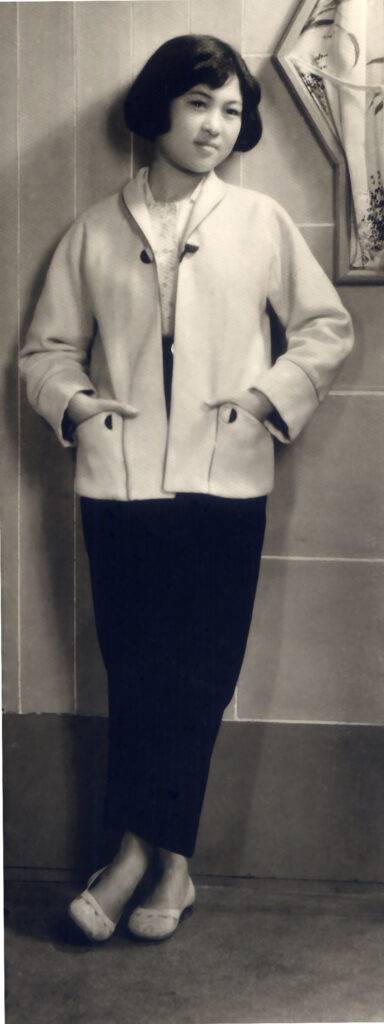
As a young girl, I had a spunky friend, who bossed me and dressed me, and she'd stand in her driveway, hand on her hip, taunting me, "How does it feel to want?"
It was a line in a film she saw.
At that time, I could not afford to want. But still, I wanted to have her hair, the way hairspray and crimping irons gave her that perfect Who’s The Boss, Alyssa Milano flair; her capacity to pick up dance moves, jumping off a chair like Janet Jackson in the “Pleasure Principle” video. I wanted her mom, how she sat with us at night and tickled our backs until we fell asleep, how she stocked the kitchen with healthy food, wheat germ, and honey.
Later, in foster care, I was nothing but a meat sack of want. I wanted privacy, time alone; I'd sometimes sit in the bathroom, door and eyes closed, blocking out everything outside. I wanted a home—a real home, with a dog and a family. I wanted to go back to my school where I was enrolled in accelerated classes—where I still had the freedom to dream of becoming a neurosurgeon, or a lawyer, or whatever profession would pull my mom and me out of poverty.
And the less I have, the more I want: Even now, I want ridiculous things with no purpose, the little capitalist elves getting to work on my brain. I want nail polish and lipsticks, nonsensical outfits—jumpers, one-pieces—boots, espadrilles, soaps and face creams. I want accolades, acceptance notices from fancy literary journals, and fellowships. And underneath it all, what I really want is love—to be seen, to be touched, to be held, to be kept, to be possessed wholly with all my good and all my naughty bits, a no turning away kind of love.
I want to move through the world with ease.
~
We try hard to make sense of things in a senseless time. My friend, who I'd spoken to every day before all this, but who's since been exposed to the virus, or some other cruel thing that has her sleeping and using an inhaler, says wistfully into the phone, "I miss malls."
Of malls, Frederic Jameson wrote in Postmodernism, “Overwhelmingly, our daily life, our psychic experiences, our cultural languages are processes performed in and contingent on commercial space.”
In the early days of the pandemic, I wonder what happens when we no longer have that commercial space or when that space becomes virtual. Where do we go when that pinnacle remains burning inside us, but the space to make it grow—disappears? What is America without the physical space to Want?
~
After World War II, Americans embraced the ideal of the suburbs. People moved away from big cities, and malls were a new indication of what LIVING would be like. For all those suburban households, the mall became the epicenter of activity, a place where we could brush arms with the Joneses. And all of us drove there—a luxury in itself. As Joan Didion writes in her essay "On the Mall," "as a child in the late Forties in California, I recall reading and believing that the 'freedom of movement' afforded by the automobile was 'America's fifth freedom.'"
The previous four were outlined in Franklin D. Roosevelt's 1941 State of the Union address: 1. Freedom of Speech, 2. Freedom of Worship, 3. Freedom from Want, 4. Freedom from Fear.
As for the third, what better homage is there to Want than the mall?
~
America's first malls were outdoors; they were to be community centers—our zocalo—where people could come together for social interaction. These first malls appeared in the 1920s. One of the earliest was opened in the California boom town of Lakewood. With its 154 acres and sprawling parking lot, the Lakewood Shopping Center transformed fields of lima beans into a big city suburb—a precursor for what was to come.
J.C. Nichols, generally regarded as the father of the shopping center for his role in developing Country Club Plaza in Kansas City (1924), established many of the mall’s fundamental merchandising and management concepts. Nichols’ 1945 Urban Land Institute publication, Mistakes We Have Made in Developing Shopping Centers, codified the tenets of the modern mall with a list of 150 maxims, which covered everything from strategies to ensure local political support to adequate ceiling heights.
In 1956, the first enclosed mall—Southdale, in Edina, a suburb of Minneapolis—changed everything. It also firmly cemented Austrian architect Victor Gruen as one of America's great mall pioneers. Gruen created a completely introverted building by enclosing once-open spaces and controlling the temperature, establishing the prototype for how we think of most malls today. As William Kowinski illustrates in Malling of America, once inside, the commercial potential of enormous spaces was realized in theatrical "sets" where "retail drama" could occur. Southdale was covered for practical reasons; Minnesota weather allows for only 126 outdoor shopping days a year. But the contrast between the freezing cold or blistering heat outdoors and the mall's constant 72 degrees was only accelerated by its atrium centerpiece, the Garden Court of Perpetual Spring, filled with orchids, azaleas, magnolias, and palms.
~
Kowinski identifies mal de mall (literal translation: bad of mall, which could be interpreted as mall sickness) as both stimulation and sedation, characterized by disorientation, anxiety, and apathy. Margaret Crawford writes in her essay “The World In A Shopping Mall” of The Gruen Transfer (named after Victor Gruen), which “designates the moment when a ‘destination buyer’ with a specific purchase in mind is transformed into an impulse shopper, a crucial point immediately visible in the shift from a determined stride to an erratic and meandering gait.”
These effects, in part, might help explain the expansion of the typical mall visit from twenty minutes in 1960 to nearly three hours today. Eventually, the mall became a place to cruise. For teenagers to hang out, and work, and steal, and kiss. Gallerias everywhere achieved a reputation as a safe place for singles to meet, and where "mall walkers"—senior citizens and heart patients seeking a safe place to exercise—could arrive before the shops opened to walk a measured route around the corridors.
To that end, terrazzo tiles were introduced in the '80s because developers thought the carpet would slow shoppers down. Architects also gradually increased lighting to create the illusion of longer afternoons. Finally, in 1992, the Mall of America opened, eventually featuring a whopping 5.6 million square feet of retail. The largest mall in North America, the mall sits just south of the Twin Cities, in Bloomington, Minnesota, and was built on the site of the former Metropolitan Stadium. To honor the location of home plate, the mall houses a plaque in its amusement park that commemorates a home run hit by hall-of-famer Harmon Killebrew on June 3, 1967—definitively placing this shopping center, and its absurd representation of excess, alongside America’s favorite past-time.
By the mid-90s, malls were being constructed at 140/year.
~
I was a latchkey kid when the Westside Pavilion finally arrived in Los Angeles in 1985; my young spunky friend who quoted movies about Want would raid her mother's empty Sparkletts of change, and we'd walk the two miles to the mall. We spent all day trying on clothes at Wet Seal and Contempo Casuals; we'd spend any money we had on Mrs. Fields' cookies or slices of pizza from Sbarro. We’d ride the escalator up and down.
Later the mall became a site for me to act out what feminist theorist Lauren Berlant calls "cruel optimism": “A relation of cruel optimism exists when something you desire is actually an obstacle to your flourishing.” During the holidays, I'd go to the mall and finger all the items, look on longingly at the shoes and handbags, listen to the music, and see the line for Santa, and a part of me secretly hoped that perhaps someone would see me, and take pity on me, and offer to buy me all the things. But no one ever did.
~
There is, of course, a conventional association between women and mall space. Iconic films like Valley Girl and Clueless. Roseanne Barr's television show, wherein her title character worked in the mall. And then, there's the music.
I’m shuttin’ shit down in the mall
And tellin’ every girl she’s the one for me
And I ain’t even planning to call
I want this shit forever man, ever man, ever man, ever man
—Drake, “Forever”
For rapper Drake, girls are granted equivalence to stores as sources for reaffirmation of male dominance and economic success in the hip-hop market. As early as 1998, mall space provided a similar referent for Jay Z in "Can I Get A?":
Do you need a balla? So you can shop and tear the mall up?
Brag, tell your friends what I brought ya
Jay Z directs his curiosities about mall space to female listeners, engaging end rhyme between “mall” and “balla,” a term initially used to describe wealthy athletes but which now refers to anyone or even anything admirable. While these dialogues with mall space certainly perpetuate the same anti-feminist stereotypes—positioning women as shoppers and as “shopped” by the male speakers—they reproduce the very real social relations that occur in mall space, both through the exchange of money for clothing, and sexually, through the bodies of the spatial practitioners.
For example, around 10 AM on April 12, 2019, a woman and her 5-year-old son were standing outside the Rainforest Café on the third floor of the Mall of America when 24-year-old Emmanuel Aranda approached. She asked him if they were in his way and should move. Mr. Aranda, without warning, picked her son up and threw him off the balcony. When asked why he did it, he said he was sick and tired of years of being rejected by women at the mall.
~
My generation, Generation X, could also be aptly named the Mall Generation, as we were around in the before times of malls and now in the after. The before times, for me, were riddled with trips to the local Kmart. A store that allowed for layaway, where we posed for studio-like holiday photos, drank bright blue or red slushies, and ate at the Kmart Cafe.
The first Kmart opened in San Fernando, California, in January 1962; 1500 miles north, and five months later, Sam Walton opened the first Walmart in Rogers, Alaska. Both were the blueprint for what a mall could be. In our small military town in northern California, Kmart was one of the few places to hang out. I touched and longed for all the items, imagined a need and a stealthiness with the camping gear, and extended the fictive dream of Capitalism—that somehow being near Jaclyn Smith's discount clothing line put me in closer proximity to becoming one of Charlie's Angels myself.
In the ‘80s, Ma got a job as a security officer for Kmart, and when they were robbed, she was blamed and then let go of. Years later, I worked graveyard at the Winchell's Donut, and I, too, was robbed and then fired. In reality, Jaclyn Smith's discount clothing line just put me closer to who I always was, a girl whose Ma's bounced check was on display at the Food King on Westwood Blvd. A girl who was called to the front of the class with all the other poor kids to get her lunch tickets. The tickets she tucked into the side of her Payless Shoesource ProWings, a brand of shoes all the kids talked smack about.
~
In researching genres, I recently discovered a form of ‘80s minimalist literature called “dirty realism,” also known as "Kmart realism." Author Paul McFedries, in the craft book Word Spy: The Word Lovers Guide To Modern Culture, defines the precursors of Kmart realism as “trailer park fiction, Diet-Pepsi minimalism, and hick chic.” Miriam Clark writes in Studies in Short Fiction that it "represent[s] and reproduce[s] the disintegration of public life [and] the colonization of private life by consumer capitalism."
Authors Bobbie Ann Mason and Joy Williams are most known for this genre, likely coined by author Tom Wolfe in reference to stories that mention Dairy Queens and third-rate motels. In his introduction to Patchwork: A Bobbie Ann Mason Reader, George Saunders writes, "You could say, as critics have, that Mason is writing about a particular form of late-twentieth-century American sadness, a moment during which something has fundamentally shifted in the American ethos. The way I would say it is that she is bearing witness to our descent into a new era of pure materialism."
~
If Bobbie Ann Mason is representative of Kmart realism, then I wonder who or what literature would represent Caruso realism. I'm speaking here of Rick Caruso, the Los Angeles mall developer and mayoral candidate. Caruso's The Grove and The Americana at Brand are the epitome of Los Angeles' animated spaces, spaces that are part fairy ground and part extensions of the body of Los Angeles. Caruso's intentional use of mall space and large multi-use dwelling-consumer spaces have become LA's theme park phantom limbs, filling the ghost imprint of the homes and apartment units bulldozed in the mid-20th century.
Both The Americana at Brand and The Grove are organized upon the idea of a city center—with a mix of architectural styles, building heights, materials used, and vast open spaces at their center. The Grove is reminiscent of 1930s Los Angeles; meanwhile, The Americana reflects the brick factory facades of the industrial era, with its massive elevator shaft with exposed steel beams.
Each of the two intends to appear to be a public space but is private property and is protected as such. But if mall decor and design are not explicit enough to tell young people of color or the unhoused that they are not welcome, more literal warnings can be issued. A bronze plaque placed at the Grove's southern entrance spells out the house rules: "The Grove is private property and has not at any time been dedicated to public uses," listing 18 activities from which visitors must refrain. While the two-acre park in the center of the Americana is technically public property, the private security force that patrols it prevents anyone from photographing with professional equipment without permission. "Sitting on floors, handrails, stairs, escalators, trash receptacles and other areas not specifically designed for seating” is also restricted. The Americana at Brand allows dogs on the property—except on its grassy area, and unless the dog in question is a pit bull.
Still, in a city that lacks accessible public space, The Grove and The Americana provide a peek into an alternate reality. Pedestrianized streets. Seamless sidewalks. Reliable transit. Shady trees. Alissa Walker writes in New York Magazine, “Yes, in theory, the Grove represents the dystopian future where billionaire developers have cordoned off our public spaces into oversurveilled fortresses. But in reality, elements of this future are very appealing to Angelenos. That’s why they go there. If they don’t readily admit that they do, they’re lying. Everybody loves the Grove.”
I will confess here that in recent years, I, too, have found some joy at my local outdoor mall—Americana at Brand—after one winter, as the fake snow blasted upon us, my now-wife bent down on one knee and proposed beside the iconic dancing water fountain.
~
In 1787, Grigory Potemkin, former lover of Empress Catherine II, supposedly erected phony portable settlements along the banks of the Dnieper River to impress the Russian Empress and her guests on their way to Crimea. He would then disassemble and reassemble the village along the way. Today, the term "potemkin" is used in politics and economics as any construction whose sole purpose is to provide an external façade to a country that is faring poorly, making people believe that the country is faring better.
As I write this, Caruso is running for mayor, and some Angelenos are concerned that he will try to apply these same guidelines and principles to the entire city. "You go to the Grove; it represents everybody in this great city of ours. It's every background. It's every color. It's every creed," Caruso told the Los Angeles Times editorial board earlier this year. Often compared to Walt Disney, the 63-year-old is known for a similar pseudo-urbanism, equal parts utopianism and nostalgia. He’s also known for switching his party affiliation for the race, as he was very publicly registered as a Republican three years ago. Caruso is now making it to the general election after sinking millions of his own money into ads for his campaign, featuring actors and personalities such as Gwyneth Paltrow and Snoop Dogg. The Americana, as I see it, is the modern-day Potemkin Village; and Caruso, the modern day Potemkin.
~
Being an off-brand kid—a Kmart kid, sometimes even in the time of malls—I was always consumed with desire; that achy want. The word consumption from the late 14th century to mean "wasting of the body by disease"; from Old French consumpcion, "A using up, wasting"; from consume, "the using up of material, destruction by use."
For me, it is a truly American experience to be overwhelmed with this desire to consume, to waste. I walk around my college campus and cut through USC’s University Village, a Caruso-endorsed project. In this instance, University Village is a $700 million multi-use development described by the LA Times as “a fantasia of just-add-water heritage, equal parts Disneyland and Hogwarts.” As trustee and longtime donor, Caruso has been quoted as stating, “It makes it a much more vibrant neighborhood.”
University Village is home to an Amazon pick-up center, a Target, a Trader Joe’s. But there’s most reliably a line outside of Dulce, an artisanal cafe and donut shop. I spy a plump matcha donut in the window dusted with sugar, a dollop of cream winking on the mouth-hole. I want it. Between classes, sweaty, and arm aching from my heavy book bag, I rush past a spa called Face Haus, where customers can stop in for an afternoon facial; I see the aestheticians, their face masks, an advertisement of a woman, her hair wrapped in a towel, eyes closed, relaxing beneath a cool layer of serums. I want it. Some days when I’m in need of comfort, a hug, words of encouragement, I linger a bit too long in front of Honeybird, with their southern fried chicken, banana cream pie; it smells like somebody’s home. I want it, too.
This year, I’ve received notice from two of my undergraduate students stating they had to leave the school after tuition was raised from the already-staggering $60k/year. They do not want to leave. I do not want them to leave. But they do not have what they need to stay. Money.
~
In 1943, The Saturday Evening Post published a series of oil paintings by the Americana artist Norman Rockwell that came to be known as “The Four Freedoms,” along with corresponding essays for each. “Freedom From Want” was published alongside an essay by Filipino writer and labor activist Carlos Bulosan. At the time, Bulosan was a migrant laborer working intermittent jobs when the Post tracked him down to contribute the essay. Initially, the Post lost it, and as there was no carbon copy, Bulosan had to track down the only other draft he had stashed at a bar in Tacoma.
Ultimately, Bulosan's essay proposed that while citizens had obligations to the state, the state had an obligation to provide sustenance to its citizens. Unlike Roosevelt, Bulosan presented the case that the New Deal had not already granted freedom from want as it did not guarantee Americans the essentials of life.
Lately, walking through University Village, I find myself thinking of Want. The facials, the nail salon, yes—but also, the grocery store. As an undergrad, every week, I’d buy a loaf of bread, a can of sweetened condensed milk, and a container of instant coffee. I’d pour the milk on my toast for breakfast and dinner and use it to lighten and sweeten my coffee. I remember the anguish of passing the fast food restaurants on my campus; how the credit card companies would set up tables right outside the Burger King. It worked.
In 2022, it costs up to $30 a day to park on campus, but if you can nab it, there’s free parking on Frat Row off of Hoover. Here, there are people tabling, too—but rather than signing students up for credit cards, they’re selling test strips people can put in their drinks to make sure they aren’t roofied. It works.
If you travel about twelve miles southeast from USC, you’ll hit The Compton Towne Shopping Center, a mall not designed by Caruso. You likely won’t find many USC students there. Compton, a city of 95,000 residents, acutely faces issues of racial injustice and structural inequality—issues that largely haven’t touched USC. Many of Compton’s residents are either unemployed, poorly paid, or ineligible for government assistance. Upwards of 1 in 5 Comptonians live in poverty—double the nationwide average. Compton also happens to be home to the largest city-based guaranteed income pilot project in the country, The Compton Pledge. According to the Compton Pledge website, “Local housing assistance in Compton is at capacity, presenting unaffordable hardships for a city where 46% of residents are renters. In Compton, rates of unemployment have risen to 21.9% since the beginning of COVID-19, and a growing number of residents regularly rely on food pantries.”
Ninety years after Franklin D. Roosevelt’s New Deal and local governments and private nonprofits are still trying to deliver on its promise. Ninety years after Franklin D. Roosevelt’s New Deal and we still haven’t achieved his promise of “Freedom From Want.” Because ninety years after Franklin D. Roosevelt’s New Deal, America can’t even deliver on freedom from need.
And what we need, of course, a mall can’t give us.
A small portion of this essay originally appeared in Lenny Letter.
Additional fact checking by Apoorva Tadepalli.
[post_title] => Freedom to Want
[post_excerpt] => What the mall tells us about American need.
[post_status] => publish
[comment_status] => closed
[ping_status] => closed
[post_password] =>
[post_name] => freedom-to-want-malls-america-need
[to_ping] =>
[pinged] =>
[post_modified] => 2024-08-28 21:15:12
[post_modified_gmt] => 2024-08-28 21:15:12
[post_content_filtered] =>
[post_parent] => 0
[guid] => https://conversationalist.org/?p=5265
[menu_order] => 104
[post_type] => post
[post_mime_type] =>
[comment_count] => 0
[filter] => raw
)
A review and a revisiting of Carla Lonzi’s "Self-Portrait."
On a peaked December day of a sunless Berlin winter in 2021, I attended a meeting of the personal is theoretical, a feminist reading group hosted by diffrakt center for theoretical periphery. A few weeks before, we had collectively decided to read “Let’s Spit on Hegel,” a 1970 manifesto written by Italian feminist thinker Carla Lonzi (1931–1982) and published by the feminist group she'd co-founded, Rivolta Femminile. As we read the text aloud over mugs of overly sweet mulled wine, we discussed how second wave feminism texts can feel both outdated and exciting, simultaneously limiting in terms of what the (white, Western, cis) female body can be, and inspiring in terms of what a (collective, non-hierarchical, sick of Hegel) feminist politics could demand. Towards the end of the manifesto, Lonzi declares, “An entirely new word is being put forward by an entirely new subject. It only has to be uttered to be heard,” a utopian demand for a new woman and a new feminist world to emerge through writing. Despite some reservations, I nevertheless left the meeting very curious about how Lonzi might further seize this act of self-creation in her other work.
The demand for a new word/world/woman resounds between tense and vibrant frequencies in Lonzi’s 1969 Self-Portrait, recently translated into English by Alison Grimaldi Donahue for Divided Publishing. Often positioned as Lonzi’s last work before her entry into feminist activism, Self-Portrait is a collection of interviews with fourteen Italian artists mostly associated with the Arte Povera movement throughout the 1960s. More than just an attempt to destabilize the hierarchies between artist and critic, Self-Portrait significantly not only critiques the Italian art scene, but how collective configurations should grapple with power, authority, and desire. One of the more popular works in Lonzi’s broader ouvre, it is an important text in Italian feminism because it reveals tensions in the broader cultural, political, and social movements of the late sixties and seventies that led some women to turn to feminism as the main means of achieving their demands for change.
As a whole, Self-Portrait records Lonzi’s discontent with the modern critic in a strict remove from his artistic subject, the desire to let artists speak for themselves, and the limits of art. The artists shift between flattering and talking over Lonzi, each vying for her attention but often losing themselves in the void of a soliloquy. Long-winded monologues on the myth of the artist, the mechanics of sculpting an erection, and the differences between Italian and American art scenes are peppered with casual and blatant sexism. When I first read Self-Portrait, I found myself alternating between moments of boredom and mirth fueled by frustration at most of the artists, and excitement when Lonzi’s clear voice cut through their bullshit. It felt like Lonzi was sketching the void where the role of the traditional critic wavers, and a feminist voice is needed to intervene.
Upon revisiting it, I found myself thinking of Self-Portrait as less of an enjoyable reading document and more as a template for how one can play with the boundaries of the self and others through experiments with the (spoken) word. On the one hand, Self-Portrait is a mash-up of the things normally cut out of interviews, such as pauses, stutters, and ramblings that go on for too long. On the other, it is the product of a seven-year project, the first of Lonzi's works in cutting, pasting, and editing conversations as a work of art in itself. As translator Alison Grimaldi Donahue describes in an interview, what seems to be the simple transcription of interviews was a long and highly mediated process. “Maybe she’s just treating their voices as a piece of found material. She is the manipulator, she is the fabbro…they sold their voices away,” Donahue muses. In a highly performative gesture, Lonzi poses her most eloquent questions to Cy Twombly, who was never formally interviewed and whose answers are always denoted by “[silence],” seeming to ask and answer itself about how to push back against those who try to take up too much space. Just when you think Lonzi’s aim is to let artists metaphorically hang themselves with their own words, interesting bits pop in, the best being her exchanges with eventual Rivolta Femminile co-founder Carla Accardi—the only woman interviewed. “I want to kiss you!” Lonzi exclaims amidst Accardi’s reflections on collectivity. In response, perhaps smirking, Accardi continues her answer unfazed.
Carla Lonzi studied art history and worked as an art critic in Florence, but is best known for her years as a feminist activist in Rome and Milan. After declaring a decisive break from art, Lonzi co-founded the radical feminist collective Rivolta Femminile with Carla Accardi and Elvira Bannoti in 1970—just a few short months after she released Self-Portrait. Lonzi and Rivolta Femminile were major figures in second wave feminism, often seen as part of the transnational movement of women from the early 1960s to the late 1970s, united by their rejection of sexual violence and the patriarchal order. As a collective, their demands were for equality in the private and public spheres, self-determination of female bodies and reproductive rights, and equal education and work opportunities. But globally, their work has largely gone overlooked: Historian Maude Anne Bracke argues that narratives of second wave Western transnational feminism tend to give primacy to the US and UK, while positioning Italian feminism as “atypical, with its distinctive features including its non-institutional basis, the centrality of theory, and the emphasis of sexual difference.” While Rivolta Femminile did indeed emphasize female separatism, Lonzi spent her career challenging this limited depiction of Italian feminism, most notably through the incredibly multifaceted nature of her writing, between theory, manifesto, poetry, diary entries, and manipulated transcripts of conversations, as in Self-Portrait.
While the art critic and feminist Lonzi are often described as at odds with each other, these two hats are connected by a thread of experiments in collective ways of being together—experiments that call attention to and aim to break down the hierarchies of modern capitalist patriarchy. In Self-Portrait, this is explored through illuminating these structures in a toxic art world that must ultimately be left behind. In later works, these concerns take the form of explicit demands to reject patriarchy as the central form of oppression in all strata of life and to form separatist feminist groups. Lonzi played with exactly how to live out such concerns throughout her life, and was often depicted as a strong-willed figure who simultaneously sought leadership roles while trying to break them down theoretically. While one can say that such a struggle is embedded in the nature of collective politics, it is in this realm that Lonzi’s varied writings resonate as unstable experiments in blurring the boundaries between the self and others to try to reach a conception of the new woman—usually coming back to the self after all.
In thinking about Lonzi’s legacy today, I came back to the original tensions that appear in Self-Portrait and Lonzi’s broader corpus, and how these same tensions have appeared in recent discussions of the #MeToo movement. When it went viral in 2017, years after it was first used by Tarana Burke in 2006, #MeToo brought together some of the hopes of the early, seemingly long-gone internet as an equal space, textually juxtaposing a variety of women from different races, classes, and statuses through verbal repetition and collective authorship of two simple words. It also recreated a false illusion of a de-hierarchical space, namely that it was based on the accusations of the privileged as a means of creating space to hear those who had cried out unheard against such abuse for many years. In regard to Lonzi, this again underlines the tensions between self and collective at the heart of the promise of feminism to make the personal political, along with the question of whose self we are led back to. Self-Portrait came at a breaking point for Lonzi, in which she turned to a more overtly feminist agenda to address what she saw as major wrongs with living together. Her issues with self portraiture itself mirror the very demands for more inclusivity and diversity that eventually broke down many second wave feminist collectives. Even as she dismantles the critic, Lonzi struggles with the hope of writing experiments to create new spaces and the lived reality of power and hierarchy.
While the road from the self to the collective is not an impossible one, from a contemporary perspective, it is a task that demands much more reflection on and attention to its intersectional scope. Lonzi's experiments speak to both the hope for the collapse of the formal bounds of established hierarchies and the need for such a dream to be constantly recontextualized and reevaluated. Perhaps then Lonzi is best approached as an entry into writing as a malleable extension of the feminist self, one whose contours change with a feminism in flux with the demands of its time. While Self-Portrait is nominally about art, it radiates with this demand to perpetually reimagine and reinvent the self when up against the realities of breaking down such boundaries. “Mine wasn’t an interest in art…” Lonzi confesses at one point in the book, but rather the feeling that, “extraordinary things were possible between beings… a potentiality that I felt humanity possessed. I knew I had it and I felt that it belonged to everyone.”
Divided Publishing
[post_title] => Can We Write Our Way to a New Word?
[post_excerpt] => A review and a revisiting of Carla Lonzi’s "Self-Portrait."
[post_status] => publish
[comment_status] => closed
[ping_status] => closed
[post_password] =>
[post_name] => self-portrait-carla-lonzi-rivolta-femminile
[to_ping] =>
[pinged] =>
[post_modified] => 2024-08-28 21:15:12
[post_modified_gmt] => 2024-08-28 21:15:12
[post_content_filtered] =>
[post_parent] => 0
[guid] => https://conversationalist.org/?p=5269
[menu_order] => 105
[post_type] => post
[post_mime_type] =>
[comment_count] => 0
[filter] => raw
)
Why the protests in Iran are about more than just women's rights.
Zan. Zendegi. Azadi.
Woman. Life. Freedom.
This is the rallying cry on the streets of Iran as the people clamor not just for women’s rights and justice for Mahsa Amini, but for a different world order—for the right to live under conditions of their own making.
On September 16, 2022, 22-year-old Amini died in the custody of Iran’s “morality police,” who (allegedly) beat her to death for inappropriately wearing “hijab,” or the veil. In direct response, the Iranian people have taken to the streets to protest not just gender violence, but decades-long violences of empire that survive in Iran despite the Islamic Republic’s break with the West. While galvanized by Mahsa’s murder, these protests highlight accruing grievances against the Islamic regime, as well asan empire that birthed and underwrites the state’s terror tactics.
As those of us in the West begin to make sense of Iran’s senseless state violence, we must refrain from pathologizing Islam as the source of this violence, or the veil as a sign of oppression that revokes women’s agency. We must also be careful not to reproduce the colonialist logic whereby we task ourselves, as “good liberal subjects,” with “saving” these brown women from brown men, as cultural anthropologist Lila Abu-Lughod warns.
This is not the first time that Iranian women have used the veil—in other words, gender politics—to mobilize a demand for the people. In 1979, at the height of what was then an anti-imperialist uprising, Iranian women donned the veil not because they wanted to give up their agency, but because they wanted to take it. These women had suffered for years at the hands of a puppet government that imposed Western standards of being and doing and knowing, including but not limited to mandatory unveiling—obscuring their lived experiences as a people who want to know themselves outside of the West’s phallic gaze.
As the handmaiden of empire, this gaze pretends to “know” the people it Others, making Iranians, in this case, the West’s antecedent and foil; a people in need of Western patronage and intervention in order to animate their political will. But the women of Iran are not awaiting our verb to make their demands known and felt. Neither are the Iranian children who sing about the possibility of “enghelab”—revolution—as they join their teachers to burn effigies of the Ayatollah.
Today, Iranians across gender, racial, ethnic, religious, and class lines are risking their lives in refusal of what iconic feminist scholar bell hooks describes as “imperialist white supremacist capitalist patriarchy.” Even as the state’s violence is totalizing, these women and children and those who stand with them courageously and collectively dream of an Otherwise. And it isn’t the first time: Jalal Al-e Ahmad, whose writings galvanized the 1979 revolution, called the Iranian state’s obsession with emulating the West a disease, which he termed “Gharbzadegi,” or Westoxification. He implored Iranians to seek alternative modernities outside of imperialist white supremacist capitalist patriarchy’s phallic, penetrating violence, so that they might make their own lives (and ours) matter. Indeed, the revolution that the Iranian people sought then and continue to seek today cannot be contained by a demand for gender justice alone.
I have often wondered, in the hour of bell hooks’ passing, what she might say about the uprisings in Iran. She argued that feminism is for everybody; in other words, that feminism helps us understand how society and its dis/contents function. In her final years, hooks expressed concern that feminism is dying in today’s society. As her friend and confidant, I would like to think that the protests in Iran today would give her hope, because Iranian women and their co-conspirators are strategically leveraging feminism, using a critique of patriarchy to challenge empire.
Shervin Hajipour’s song “Barayeh,” described by popular media as the “anthem” of Iran’s protests, enumerates many of these intersectional violences, and how they animate the Iranian government’s iron fist. The people are protesting, Hajipour writes, “for the child laborer and [for] his dreams”; he adds, rather poetically, that they are also protesting for a crumbling economy, for the imprisoned, for the polluted air, for the dying trees, for the extinction of Persian cheetahs, and for “the murdered and innocent forbidden street dogs.”
Interestingly, rather than get caught up in the humanist exceptionalism of Western empire, Iranians protesting on the streets today know that revolution for their people is impossible without a change in the valuation of life. Their demand is not that all lives matter, but rather, that all life—human and non-human—matters.
What’s happening in Iran today isn’t (just) the stuff of gender violence, which is a Western import, anyway. It is about survivance in the face of the imperialist white supremacist capitalist violence that remains in Iran. It is about poverty. It is about Western sanctions that make medical care impossible. It is about, as political theorist Michel Foucault wrote in a November 1978 article for the Italian daily Corriere della serra, “breaking away from…global hegemonies.” It is about a people who, “with bare hands who want to lift the fearful weight, the weight of the entire world that bears down on each of us, but more specifically on them, these oil workers and peasants at the frontiers of empire.”
In “Barayeh,” Hajipour goes on to describe the protests as a revolution for “the embarrassed fathers with empty hands,” for “the missing and murdered kids,” for “the students and their future,” for “the Afghan kids.” His list is long, because, as Foucault notes, Iranians are clamoring for all of us. While Iranian women and girls are certainly leading this charge, there has been no shortage of men who stand with them or, indeed, who follow their lead, understanding that the feminism these women employ to clamor against patriarchy will better their living conditions, too.
What we’re seeing today is a long history of Iranians demanding a freedom with empty hands, for the world that suffers, still, because—as hooks implores—imperialist white supremacist patriarchy devastates all of our living conditions.
Let us stand with Iranians now as they stand with us, as they bear this weight: the “fearful weight…of the entire world.”
This piece has been adapted from a speech given by M. Shadee Malaklou at a vigil hosted by the bell hooks center.
[post_title] => The Fight for an Otherwise
[post_excerpt] => Why the protests in Iran are about more than just women's rights.
[post_status] => publish
[comment_status] => closed
[ping_status] => closed
[post_password] =>
[post_name] => iran-protests-mahsa-amini
[to_ping] =>
[pinged] =>
[post_modified] => 2024-08-28 21:11:28
[post_modified_gmt] => 2024-08-28 21:11:28
[post_content_filtered] =>
[post_parent] => 0
[guid] => https://conversationalist.org/?p=5246
[menu_order] => 106
[post_type] => post
[post_mime_type] =>
[comment_count] => 0
[filter] => raw
)
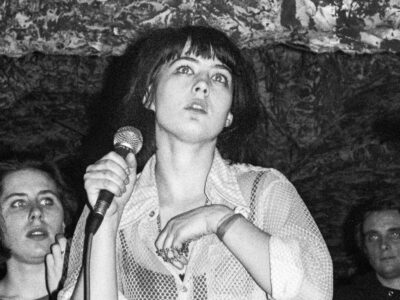
An exclusive excerpt from "It Came from the Closet: Queer Reflections on Horror."
In My Skin / Dans ma peau
IT WASN’T UNTIL I got pregnant that I finally saw how distant I was from my own body. This was late 2016, early 2017, and I was about to turn thirty-five, a late age for a first baby. I spent half my day reading pregnancy manuals and websites, baffled and embarrassed by their maniacally chipper tone, which seemed to be aimed not at parents of small children but at the actual children themselves: Baby is the size of a grape! A papaya! A spaghetti squash! It’s all right to be nervous. But more all right to be happy! Mom (the pregnant person is always addressed, in these texts, as “Mom”) is getting ready for a big change!
I was not getting ready for a big change, I was in the midst of one. My personality shifted with my hormones, giving me new tastes and interests and a terrifying ability to cry in public. I swelled and rounded, changed shirt sizes and pant sizes and shoe sizes, puffed up at the joints until I had the tree-trunk legs of a brontosaurus. In the more scientific manuals, I learned that my body had doubled its amount of blood; that the baby’s cells were mingling with mine, and would stay there after I gave birth, rendering me a biological chimera; that I was growing a new organ, the placenta, and when I gave birth, I would both expel and (the manuals strongly encouraged) eat it.
The teenage edgelord in me delighted in this information. A parasite turns you into a mutant and forces you to eat your own organs; what’s cooler than that? Yet, when I tried to talk to other people about how disgusting pregnancy was, I was met with baffled politeness, not only from the world at large but from pregnant women. This experience of being lost at sea in my own body, held captive to its processes, seemed to be mine alone. In fact, if the expressions on people’s faces were any indication, it was mildly crazy.
Yet the more I sat with the feeling, the more it seemed to me that my body had never belonged to me. There were whole areas—my hair, my breasts—that I was keeping around primarily because they got a reaction from people. There were processes that had always felt unwelcome; as a teenager, my periods were so distressing that I once passed out in the middle of a McDonalds because I felt one coming on. I could never figure out all the little things women were supposed to do, how it was that they managed to look adult and female and put-together. It seemed easy, or at least manageable; a necessary life skill, like cooking dinner. I just couldn’t do it. My body was something I needed to manipulate, a weird, soft machine I was never quite sure of operating correctly. I fed it like a pet, washed it like a car, exercised it... well, no, I didn’t exercise it, because that would require getting in there and fucking around, and I spent as much time reading or drinking or otherwise getting out of my body as I could.
It never would have occurred to me to call these feelings “dysphoria.” I pushed through them the same way I’d always pushed through the pangs of shame and panic I got when I tried to do girly things or present as convincingly feminine, telling myself it was just internalized misogyny or poor self-esteem. Yet it seems clear to me now that my pregnancy was the beginning of my coming-out process as a nonbinary transmasculine person. It called my body to my attention. It made me realize that I could successfully and intentionally undergo a big change.
Now that I’m out, my former alienation from my body seems normal. I wasn’t “put together” because I was trying to put together the wrong thing. It’s like I bought a coffee table at IKEA and spent thirty-five years trying to assemble a couch with the parts. Frustration was inevitable. Yet in the moment, before I knew any other name for my experiences, my only comparison was body horror—specifically, the body horror movie I loved most in the world, and have loved ever since I saw a crappy VHS copy of it in college: In My Skin, the 2002 independent movie by French writer-director Marina de Van. In My Skin (Dans ma peau) is one of those movies that frequently makes lists of the “most disturbing movies ever” or “toughest horror movies to watch.” The college boyfriend I rented it with noped-out by the second act, telling me he was just too uncomfortable to keep going. I’ve always enjoyed the nerdy flex of watching a horror movie that is too much for some cis guy, and yet it pains me that In My Skin is remembered primarily as a gross-out feature. The violence here is nowhere near as graphic as the average Saw or Hostel movie. In My Skin is scarier than those movies precisely because it reaches the viewer on a level that soulless splatter porn can’t; the injuries feel real and painful because they’re grounded in a frighteningly believable portrait of one woman’s self-destruction.
We open on a heroine, Esther (played by de Van, directing herself), who seems to more or less have her life together: she’s got a job at an advertising firm, with a promotion in the near future; she has a boyfriend who wants to move in together; she’s putting him off, but it seems clear where things are headed. It’s a recognizable white, upper middle-class, postfeminist, heterosexual trajectory. It’s what she’s supposed to want, even if some key elements, like the boyfriend, don’t excite her as much as she’d like.
One night, at a drunken party, Esther manages to rip her calf open on a piece of jagged metal in someone’s yard. Due to some combination of shock and nerve damage and alcohol, Esther doesn’t feel the injury, and goes through the whole night without realizing that her leg is gushing blood. She only sees what’s happened when she goes to the bathroom; she gasps, and fingers the edges of her wound, and begins crying. It’s not clear whether she’s in pain or simply horrified by what she’s seeing.
I mean to say: Esther is betrayed and traumatized to see her body shedding blood from a hole that shouldn’t be there. You can see where the transmasculine viewer might connect. It is also bizarrely relatable to see how Esther tries to deal with the injury, which is, at first, by pretending she doesn’t have one; she goes over to her friends and casually mentions that she might need to go to the hospital, but she wants to stop at a bar for one last drink first. The doctor who eventually stitches Esther up is baffled by her dissociation: “Are you sure it’s your leg?” he jokes.
Esther doesn’t laugh. She also doesn’t answer. Esther becomes obsessed with her injury, and with the numbness that seems to be spreading out over her whole body. She begins trying to re-create the thrill of getting hurt; first pinching and picking at herself, then cutting herself, then doing several things so gross that one hesitates to spoil them, except to say that this one woman somehow becomes both the perpetrator and the victim of an entire Texas Chainsaw Massacre before the credits roll.
The gross-outs are real, but never cheap. Esther’s self-harm addiction mounts slowly and realistically; the brief relief of a cutting session in the break room slowly giving way to more sessions, more extreme injuries, entire weekends spent alone in a hotel room, doing things to yourself that you have to explain later as the result of a car accident. Some scenes are uncomfortable precisely because de Van’s slack-jawed, compulsive pleasure as she works on herself feels like watching someone masturbate. It’s that kind of problem: an urge you can’t get rid of without indulging, a gross but pressing need.
Esther’s self-destruction is a symptom of alienation: from capitalism (during a business dinner, Esther has to forcibly restrain her hand from skittering around the table) or from womanhood (after one cutting session, she watches a female friend apply moisturizer, baffled by the concept of feminine self-care) or from heterosexuality (her boyfriend tries to “cure” her by fucking her while asking if she can feel him; he does not get the answer he’s hoping for). Careful viewers will have noted that de Van’s heroine shares a name with Esther Greenwood, the protagonist of Sylvia Plath’s novel The Bell Jar. Like that other Esther, she self-destructs in part because meeting the expectations placed on women already feels like a kind of self-harm.
Most importantly, though, the cutting is symptomatic of Esther’s alienation from Esther. She doesn’t hate her body, she tells us, but she also doesn’t think of it as her. Her self-injury is exploratory, almost clinical; she’s a scientist, testing the foreign object of her flesh, trying to see what it can do. In fact, there is no part of Esther’s life that is truly hers: her friends are not really her friends, the man she fucks isn’t someone she particularly wants to be fucking, her professional success is maintained at the cost of disappearing into back rooms and wine cellars and coming apart at the seams. She takes her body apart because she is trying to get back inside it. She’s not trying to kill herself. She’s trying to prove she’s alive.
~
It’s dangerous, I know, to connect transmasculinity or gender dysphoria with a movie about female self-mutilation. The idea that transmasculine people are self-harming “women” is currently one of the main talking points TERFs (trans-exclusionary radical feminists) use to try to argue us out of existence.
As I write this, the number one book result on Amazon for “trans men” is a book called Irreversible Damage. The title is splashed across the page in big, bloodred letters, with a subtitle promising to expose the “Transgender Craze That’s Seducing Our Daughters” in the same tone 1950s horror movie posters used to advertise a “Terrifying Monster of the Ages!” or some “Students Made Victims of Terror-Beast!” Beneath the titles, there’s an illustration of a little girl, or possibly a baby doll, who is still alive and conscious despite the gigantic, red-rimmed, perfectly circular hole scooped out of her stomach.
The message is clear: transmasculinity is body horror. The average trans boy, according to Irreversible Damage author Abigail Shrier, is “psychologically alienated from her [sic] own body, and headed toward medical self-harm;”she predicts that medical transition will leave such a boy “angry, regretful, maimed, and sterile.”Give or take a “sterile,” he sounds very much like Esther from In My Skin.
Other TERFs have resorted to putting transmasculine bodies on display, hoping that the supposed freakishness of top surgery scars or testosterone-squared jawlines will scare the public away from supporting us. Photographer Laura Dodsworth has published an entire series of seminude portraits of “detransitioners,” women who formerly identified as transmasculine. Dodsworth was inspired, she says, by the horror she feels when she thinks about trans men’s bodies: “For me, the idea of having my breasts, ovaries, and womb removed, and then wanting them back, creates a feeling so unnerving that I cannot occupy it for long.”
She can, however, ask other people to occupy it in front of her while she takes pictures. It’s not clear whether Dodsworth informed her subjects that she would accompany the photos of their naked bodies with commentary on how scary and disgusting they are; nor is it clear how Dodsworth’s “unnerved” feeling is different from the pleasurable disgust carnival-goers feel at freak shows.
First things first: The posttransition body is not a mutilated body. It’s a healed body. Transition is not a symptom of psychological distress but a means to cure it. That “unnerving” feeling Dodsworth imagines—the horror of looking down at a body you don’t recognize, one which can’t do what you want or need it to do—is already felt by many people who are uncomfortable in their assigned genders, and it is spectacularly cruel for someone to use her own imaginary dysphoria as an excuse to deny transpeople treatment for theirs.
Yet the rubbernecking dread transphobic “feminists” have for trans bodies—Shrier, or Dodsworth, or J. K. Rowling, for whom trans boys are merely psychologically damaged and self-hating “girls” who’ve succumbed to the “allure of escaping womanhood”—is not unfamiliar to me as a horror fan. Whether these women know it or not, they’re talking about transpeople in the same way that sexist men have historically talked about the bodies of cis women.
The body horror genre is deeply rooted in cis men’s fear of femininity, and considers cis female bodies to be inherently freakish, flawed, and deformed. In particular, body horror often focuses an obsessive disgust on cis women’s reproductive cycle, either in a sideways fashion—like the exceptionally vaginal face-hugger in Alien, or that franchise’s many chest-bursting images of “child-birth”—or directly, as in David Lynch’s Eraserhead, where a woman’s fertility dooms her man to a life of tending the foul horror she’s produced. Body horror king David Cronenberg spent much of the ’80s explaining why he was scared of vaginas. There was the pulsating external uterus of The Brood, where a (cis) woman’s capacity to reproduce without a man led to countless hammer-based murders, or the “mutant women” of Dead Ringers, with their insatiable sexual needs and triple-headed Cerberus vaginas. Both movies feature a woman chewing through an umbilical cord with her teeth, I guess because no one told Cronenberg about the placenta thing.
This is how horror is used by the dominant culture: to justify fear and violence toward the Other, the Alien, the Mutant—and in a patriarchy, that title will always belong primarily to people who aren’t white cis men. Whether it’s David Cronenberg’s umbilical phobia, Laura Dodsworth’s close-ups of top-surgery scars, or the countless ways that cis-directed comedies and slasher movies have trained us to fear the bodies of trans women, horror is always located outside, in the marginalized person, in the body that doesn’t look like the person behind the camera.
I’m not interested in this type of horror, to put it mildly. Yet I still describe my own experiences in terms of body horror, because I am my own person to describe. I still hold out hope for body horror stories told by marginalized people, stories that are not about demonizing or destroying the Other but confronting the least comfortable parts of yourself. (It’s significant that when David Cronenberg discovered male anal penetration in the ’90s—Naked Lunch, eXistenZ—his gross-outs were improved.) There is a difference between feeling uncomfortable with your own body and having others proclaim how uncomfortable they are with you, between the horror felt by a person and the horror caused by a monster. Few movies understand this as well as In My Skin.
Marina de Van spends a lot of time naked in her own movie. Esther is perpetually taking clothes off, putting them on, hanging out at home in her underwear, taking showers. The camera encourages us to study her body in detail; here are her hands, here are her legs, here’s the odd fold of skin gathered at her right hip. The nudity has a strange dissociative effect, like catching your reflection unexpectedly in a mirror—de Van is both the object of our gaze and the subject directing it, somehow behind the camera and in front of it at the same time. All this serves a very practical purpose: de Van wants us to understand the architecture of Esther’s body before she destroys it. She’s laying out the parameters of the crime scene, giving us a tour of the house before she tears it down.
These points were missed by the film’s early (and nearly all male) critics, who invariably took the sight of a woman’s body on screen as an invitation to rate her looks: “Ms. de Van, who resembles a feral, gap-toothed version of the young Leslie Caron, is at once beautiful and ugly,” runs a representative assessment from Stephen Holden’s New York Times review. Dennis Lim at the Village Voice praised her “arresting screen presence” while also calling her “pale, flared-nostriled, and gap-toothed.”There are just so many more interesting things you could say about Marina de Van’s teeth in this movie—like, for instance, the fact that she uses them to eat her own leg like a chicken wing. Even in a movie about how women’s bodies are treated like meat, these men can’t help but leave three-star Yelp reviews for hers.
Cis men seemed incapable of understanding that a woman’s body could be put on screen for reasons other than objectification. We’re not meant to want Esther—we’re meant to be her. The movie is effective precisely because de Van blurs the boundaries between inside and outside, self and other, person and object, audience and action; when viewers of In My Skin scream or flinch at some gruesome injury, it’s because we’re so connected to Esther’s body that it feels like we are being injured. In the moment, as he squirms and averts his eyes from the bloody screen, the cis male viewer of In My Skin has become the very thing he’s spent his whole life trying not to resemble: a woman.
It’s that invitation to occupy the marginalized and monstrous body, to feel what it feels, that makes In My Skin unique. The power to make our oppressors share our perspective, to make them see the world as we see it—to bring them inside our skin, as de Van puts it—is one of the most potent tools any storyteller has. In My Skin is not an overtly feminist movie, but it makes the still-radical assumption that we will be able to identify with a woman enough to take her suffering as seriously as our own.
It worked. I’m not a woman. I feel my own pain, and Esther’s, when I watch this movie. What I relate to is not the cutting, though; the TERFs are wrong on that. What I relate to is the suffering the cutting is intended to relieve. It’s the baffled sense of being locked out of your own body; unable to connect with the person that is supposed to be you. Esther’s desperate need to get back inside herself, to have even one moment of being fully present in her own life, is something I’ve felt many times. It’s something I stopped feeling only when I transitioned.
I got so used to pushing past discomfort in the first thirty-five years of my life. I maintained my disconnected body in a manner that pleased others, gritted my teeth through periods and pregnancy, suppressed the flashes of anguish and shame and self-disgust that arose at predictable moments, but for no reason I could name. It’s only now, when the discomfort has lifted somewhat, that I realize I was hurting myself every day of my life. The injury was there. I just didn’t let myself feel it. I covered it up, mopped up the blood, went out and asked if anyone wanted to grab a beer.
When we cannot put ourselves together, we tear ourselves apart. This is true no matter who we are, no matter what reason we have for not fitting into the lives we’re given. Esther never explains why she needs to destroy herself, yet the answer is always right there in front of us. Why does any animal chew its own leg off? Because it’s trapped.