WP_Post Object
(
    [ID] => 3675
    [post_author] => 2
    [post_date] => 2022-01-05 21:49:48
    [post_date_gmt] => 2022-01-05 21:49:48
    [post_content] => The current situation for journalists in Belarus is horrific enough, but will probably worsen. 

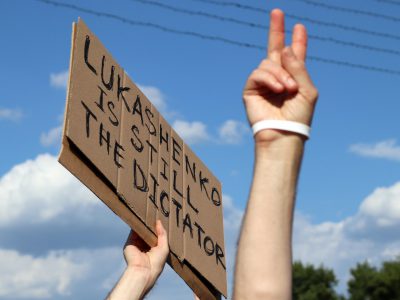
On May 23, Belarusian authorities caused a global outcry when they diverted a Lithuania-bound commercial flight to the Belarus capital of Minsk so they could arrest two passengers on the plane: self-exiled journalist Raman Pratasevich and his girlfriend Sofia Sapega. This shocking tactic was seen as emblematic of just how far President Aleksandr Lukashenko is willing to go to capture and punish his critics.

The dramatic arrest should not have surprised anyone familiar with the vindictive nature of the Lukashenko regime. The Belarusian leader, who has run the country since 1994, launched an especially brutal crackdown against the media around the August 9, 2020, presidential election, which was widely seen as rigged.

Dozens of reporters were detained for reporting on mass anti-government protests after Lukashenko claimed victory in the contested vote; Belarus now has at least 19 reporters behind bars —up from 10 in 2020 —according to CPJ’s 2021 prison census. 

CPJ has documented the beatings of journalists in detention as well as the authorities’ attempts to close media outlets, block the internet, raid newsrooms, harass journalists, and keep bringing new charges against those in jail. Many journalists have been detained multiple times.

By late 2020, CPJ noted another change in the Belarusian authorities’ tactics: they started bringing criminal charges against journalists rather than just holding them in 15-day administrative detentions. In February, two journalists of the Poland-based online broadcaster Belsat TV were sentenced to two years in jail. The two were detained in November 2020 while livestreaming from a protest in Minsk. Katsiaryna Barysevich, a correspondent for Tut.by, one of Belarus’ largest media outlets, was also detained in November 2020 and sentenced in March this year to six months in jail on absurd charges of reporting on the death of protester Raman Bandarenka.

When Barysevich, whom CPJ honored with its International Press Freedom Award this year, was released from prison on May 19, she found out that her media outlet was shuttered, more than a dozen of her colleagues, including chief editor Maryna Zolatava, journalists Elena Tolkacheva and Volha Loika were in custody on tax evasion charges. Barysevich was unable to enter the Tut.by office. “I can’t get a document that proves my past employment with Tut.by because the office is sealed off, and there’s nobody in there. I cannot prove that I am unemployed now,” she told CPJ in June. (Several other Tut.by staff remain in detention and face serious charges. They are not listed in CPJ’s prison census because they did not work as journalists.)

Days after the authorities raided the Tut.by and Belsat offices in May, the arrest of Pratasevich reinforced the full extent of the brutal nature of the Lukashenko regime.

Pratasevich, who was made to appear on state TV and at press conferences after a publicized “confession,” is now under house arrest in Minsk, banned from seeing anybody and going outside. Agents from the KGB, Belarus’ national security agency, reportedly live with him in his room. Pratasevich’s parents, Dmitry and Nataliya, say they do not know what charges their son is facing and told CPJ they are concerned about him.
By late 2021, Belarusian authorities had closed down most prominent independent media outlets and popular social media channels, branding them “extremist.” The authorities also targeted organization that help journalists. The Belarusian Association of Journalists (BAJ), an advocacy and trade group that is a partner of CPJ, was ordered to close after 26 years of operations. Its leaders continue monitoring press freedom violations from inside Belarus. The Press Club Belarus, which assisted journalists with training, education and capacity building, was shuttered; its head Yulia Slutkskaya and other employees ended up behind bars. They were released only after asking for presidential pardon and paying large fines to cover the taxes they were accused of evading. In addition, Belarusian authorities took extra measures to ensure that the information about detainees does not get to local and international media. They forced many lawyers to sign non-disclosure agreements that prevent them from speaking on cases, and stripped some lawyers of their licenses. Belarus prison conditions are harsh. Journalists usually share cells with a dozen of other inmates, some with diseases, including COVID-19, or lice. Many have health issues but are not getting the medical treatment they need. Ksenia Lutskina, detained in December 2020 and facing seven years in jail in retaliation for her work as a journalist, has a brain tumor that is growing and causing bad headaches, her father, Aleh Lutksin, told CPJ. She’s been given painkillers but is not allowed to receive tests or medication she needs. (Belarus authorities have not responded to CPJ’s requests for information about any detainees.) The current number of journalists behind bars is the highest for Belarus in the three decades since CPJ launched its prison census. Many are facing lengthy prison sentences on retaliatory and anti-state charges, such as treason. The situation for journalists in Belarusian jails is likely to worsen. Every day, there are fewer media outlets and press freedom advocates to report on the journalists’ conditions, upcoming trials, and sentences. Those who continue to do so, like reporters at BAJ, are at risk of imprisonment. Lukashenko’s track record shows he can be expected to use every available tool to continue gagging dissident voices. *This article was originally published by the Committee to Protect Journalists (CPJ).  [post_title] => In Belarus, Lukashenko’s vindictiveness reaches new heights [post_excerpt] => The current number of journalists behind bars is the highest for Belarus in three decades. [post_status] => publish [comment_status] => closed [ping_status] => open [post_password] => [post_name] => in-belarus-lukashenkos-vindictiveness-reaches-new-heights [to_ping] => [pinged] => [post_modified] => 2024-08-28 21:11:29 [post_modified_gmt] => 2024-08-28 21:11:29 [post_content_filtered] => [post_parent] => 0 [guid] => https://conversationalist.org/?p=3675 [menu_order] => 152 [post_type] => post [post_mime_type] => [comment_count] => 0 [filter] => raw )
In Belarus, Lukashenko’s vindictiveness reaches new heights

WP_Post Object
(
    [ID] => 3629
    [post_author] => 2
    [post_date] => 2021-12-21 19:53:03
    [post_date_gmt] => 2021-12-21 19:53:03
    [post_content] => Pro-choice Americans need to stop deferring to institutions that don't represent them and start organizing. 

I was 15 in October 1998 when an anti-abortion zealot murdered Dr. Barnett Slepian, a doctor who performed abortions in my hometown of Buffalo, New York. A married father of four, Dr. Slepian had just returned home from his synagogue, where he’d attended a memorial service for his father. It was a Friday evening and he was standing in his kitchen heating split-pea soup in the microwave when the sniper hiding in his backyard shot him in the chest.

I did not know Dr. Slepian, but my family knew people who did. I also knew that two of his young sons were in the room when he was shot. That detail haunted me the most. My father is not a doctor, but he is a kind, caring, socially conscious Jewish man who believes strongly in a pregnant person’s right to end a pregnancy. I adore my father and the thought of two children younger than I was at the time witnessing the sudden, violent death of theirs was hard to bear. Even at 15 I knew that Dr. Slepian’s life had been a full one cut brutally short—one on which many other people, including his children, had depended. What he did with it helped fully formed adult women live theirs. It was the first time I realized that caring for vulnerable women could get you killed.

The U.S. Supreme Court is, following its December 1 hearing about the legality of Mississippi’s most recent abortion ban, widely expected to overturn or gut Roe vs. Wade, the landmark 1973 ruling that formalized a pregnant woman’s human right to end her pregnancy. For nearly 50 years, Roe has prevented states from banning abortion at any time before fetal viability outside the womb. This suggests (a) that a woman has more rights than an incubator; and (b) that a person who exists—one with hopes, dreams, relationships, and obligations—matters more than one who does not.

Reversing or substantially weakening Roe would flip that formula and reduce women from fully fledged people to single-purpose objects. It would make obtaining an abortion a dangerous, degrading, and difficult-to-impossible undertaking for millions of women. At least 21 states will ban or severely restrict abortion virtually overnight if the Court dismantles Roe. Those who believe that forcing a woman to undergo pregnancy and labor against her will is a uniquely misogynistic form of torture are understandably alarmed. A right that’s been under threat for decades is still a right. Abortion bans harm women and their children and terrorize anyone who tries to help them. Overturning Roe would restructure American society for decades to come by forcing into existence millions of children, many of whom will not be adequately cared for.

As a result of laws and policies that limit or ban access to medical terminations, women in the U.S. and parts of Europe are today in greater danger of being prosecuted, punished, or allowed to die horribly from being denied an abortion than they are of being harmed by the procedure itself.

Shockingly, the prevailing response from legacy media outlets in the U.S. has been terrifyingly passive and fatalistic—heavy on doom and gloom and light on practical solutions. Pro-choice voters are being told what we have been told in every election cycle since at least the 1980s: that our most fundamental rights are hanging in the balance and voting has never mattered more. Rarely do liberal columnists remind faithful Democratic voters that our loyalty has been rewarded with the most reactionary Court and the direst threat to Roe in decades. House Democrats did manage to pass a bill in late September that would enshrine the protections guaranteed by Roe in federal law. But thanks to antiquated procedural rules like the filibuster, which President Biden and Democratic senators Joe Manchin and Kyrsten Sinema have been reluctant to eliminate, there’s virtually no chance of passing it in the Senate. Despairing references to The Handmaid’s Tale and the fact that women will soon be legally reduced to “vessels” abound.

This despair is often cloaked in gallows humor, and there is a dark comedy to the whole situation: imagine living in a country where women can do anything—vote, live alone, drive a car, buy a house, get a divorce, become a Supreme Court justice—and still be forced to carry a pregnancy to term, despite the availability of pills that can safely and easily end an early pregnancy in the privacy of one’s home. The most privileged women are the least likely to be denied this right. Women of means, who are used to living freely, will continue to do so. Those who lack money, child care, the ability to travel, supportive partners or family, understanding bosses, and/or other forms of support will suffer even more. But what can we do? First Trump, then the confirmation of Brett Kavanaugh, then COVID, then Amy Coney Barrett, and now this. Given that the right controls the Court, we’re basically doomed, the thinking seems to go. Now get out there and vote Democratic in the midterms!

It’s time to acknowledge that this playbook has failed women for decades. If I were a theist I would consider freedom from forced pregnancy and labor a God-given right, as many deeply religious people do. Just as Black people have always been full human beings with inalienable rights to life and liberty, regardless of what the Court has, at various times, decreed, those with the power to bring forth life have an inherent right to decide whether and under what circumstances to use it. These rights cannot be revoked by judicial fiat; we should stop behaving as if they can. Six judges cannot strip us of a right that exists whether or not they recognize it.

Anyone serious about defending the rights and dignity of all women needs to stop mourning and start confronting state power, as Irish women did in 2017 and Polish and Mexican women did in 2020, and as women in Chile, Colombia, El Salvador, and other Latin American countries did in 2021—in response to far graver threats to their humanity. Even in the U.S., where abortion is restricted but legal, women have been prosecuted for ending pregnancies and having miscarriages. Latin American women, particularly in El Salvador, have served decades-long prison sentences for having miscarriages the authorities claimed were self-induced. Over the last decade or so Marea Verde (Green Wave), a Latin American women’s movement, has helped liberalize abortion laws throughout the region “with aggressive campaigns and mass popular protests organized around legal action and legislative demands that center broadly on women’s autonomy and rights,” as reproductive rights litigation expert Ximena Casas recently explained in The New York Times.

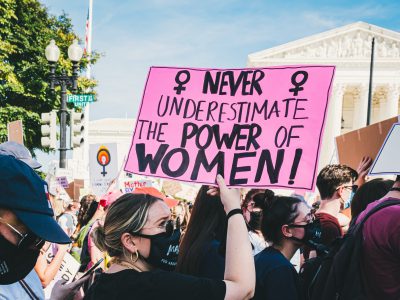
The pro-choice movement in the United States is comparatively piecemeal and diffuse, given the country’s size and diversity, and far less effective than it should be. The 2017 Women’s March, which was described at the time as the largest single-day demonstration in U.S. history, was the last time U.S. women protested sexist oppression en masse. But while I saw plenty of signs referring to abortion rights, the women’s march was not specifically or exclusively about reproductive justice; it was a general expression of rage at Trump’s election. The largest abortion rights demonstration in the U.S. in the last 20 years was the April 2004 March for Women’s Lives, which drew hundreds of thousands of people (organizers put the number at over a million).

There will almost certainly be large street protests in June, when the Court is expected to issue its response. But we cannot wait until then to defend these rights. “I think it's going to mobilize people to go to the polls,” Democratic Rep. Pramila Jayapal recently said, referring to the impact the Court’s expected ruling could have on the 2022 midterms. “You will see an outcry like you've never seen before.” About seven months after the 2004 march, George W. Bush, whose policies had prompted it, was reelected by a clear margin, winning with over three million votes more than his Democratic rival, John Kerry.

In other words, while anger motivated American women to show up for a large demonstration, it did not drive them to sweep Bush out of office or defend abortion rights against further attack. This is partly because U.S. women’s attitudes toward abortion do not differ substantially from men’s; pro-choice Americans, including men, need to defend these rights more vigorously. Voting is not enough. U.S. voters swept Trump out of office in 2020, but only after he had packed the Court with far-right ideologues. And in the absence of major structural reforms—expanding or abolishing the Supreme Court, eliminating the filibuster and passing federal voting rights legislation, amending the Constitution, abolishing the Senate—which many organizers are demanding but the Democratic Party has so far been unwilling to do, we cannot vote our way out of the devastation that will result if Roe is gutted.

There are a number of ways to help:

Although medication abortion has been approved by the U.S. Food and Drug Administration for over 20 years, the agency continues to restrict one of the medications, mifepristone, for reasons that have more to do with politics than safety. According to Carrie N. Baker, who chairs the American Studies department and teaches courses on gender, law and public policy at Smith College, abortion medications are “safer than Tylenol” and “six times safer than Viagra,” which is commonly prescribed and easy to purchase online. “The Supreme Court doesn’t get the last word on this,” Brown told me by phone. She mentioned the abortion rights bill Democrats passed in the House and could, in theory, pass in the Senate. “Technology has outstripped the anti-abortion strategy,” she added. Women in countries that criminalize abortion have known for years how to end pregnancies safely; according to Brown, pharmacy techs in Brazil discovered that misoprostol could be used to induce abortion when they were warned not to handle the drug while pregnant. “There’s never been a better time to have an at-home abortion than now,” Brown said. “In the 1960s we faced butchery, and that is completely unnecessary at this stage because the pills are widely available overseas.” The FDA suspended rules barring doctors from mailing the abortion pill to patients due to COVID. On December 16 the agency announced that it would allow doctors to send the pill by mail on a permanent basis—a victory for groups like the American Civil Liberties Union, which challenged the restrictions in court, and one that will enable many more doctors to prescribe the drugs and many more women to order them online and receive them by mail. But over a dozen Republican-controlled states have already passed laws restricting access to the pills, including by outlawing delivery by mail. A Texas law that went into effect on December 2 bans prescribing abortion pills online and mailing them to patients in the state. Providers who break it could be jailed or fined up to $10,000. Regardless of how the Court rules, women will keep getting abortions, as they did before and after abortion was criminalized in the U.S. and before Roe. There will be protests and marches and underground networks and sympathetic providers willing to break what they know to be unjust laws. Those who refuse to be bullied into abandoning their patients will be threatened, prosecuted, jailed, or worse. That is why we cannot afford resignation or childlike deference to institutions that have outlived their usefulness, like the Supreme Court. An unelected, unrepresentative, and thoroughly politicized entity willing to endanger pregnant women, their children, and abortion providers has no moral authority. We are not vessels or chattel; we are people, with lives as real and complicated and meaningful to our families and communities as those of any other human being. Reactionary judges are not just threatening choice or women’s health care or a specific medical procedure; they are calling into question our fundamental humanity. There is no reason, especially in the age of the abortion pill, to sit back and let them. There will always be disagreement on the morality of abortion. But the personhood of women and those who care for them is not up for debate. [post_title] => Women are people, no matter what the Supreme Court says [post_excerpt] => Anyone serious about defending the rights and dignity of all women needs to stop mourning and start organizing. [post_status] => publish [comment_status] => closed [ping_status] => open [post_password] => [post_name] => women-are-people-no-matter-what-the-supreme-court-says [to_ping] => [pinged] => [post_modified] => 2024-08-28 21:14:02 [post_modified_gmt] => 2024-08-28 21:14:02 [post_content_filtered] => [post_parent] => 0 [guid] => https://conversationalist.org/?p=3629 [menu_order] => 153 [post_type] => post [post_mime_type] => [comment_count] => 0 [filter] => raw )

Women are people, no matter what the Supreme Court says

WP_Post Object
(
    [ID] => 3637
    [post_author] => 2
    [post_date] => 2021-12-20 18:10:17
    [post_date_gmt] => 2021-12-20 18:10:17
    [post_content] => The historic election marks the final stage in the transition away from Pinochet's dictatorship.

Hundreds of thousands of people flocked onto the streets of Chile’s cities on Sunday night to celebrate a history-making presidential election. The sounds of cheers and honking car horns were everywhere as, with 97 percent of the votes counted, Gabriel Boric, a 35-year-old former student leader who headed the leftist coalition Frente Amplio, became the country’s youngest president. The final polls heading into the election predicted a very close result, with the far-right Jose Antonio Kast, 55, slightly ahead of the much younger, progressive Boric. But the final tally was not even close: Boric won with 55.9 percent of the vote—12 percentage points ahead of Kast, who called Boric to concede at 7.10 p.m., after only 30 percent of the ballots had been counted.

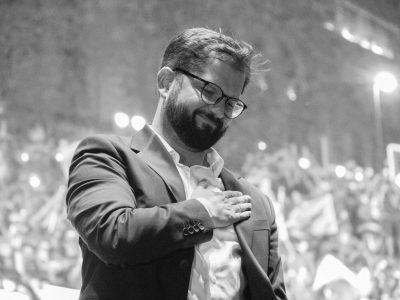
[caption id="attachment_3644" align="aligncenter" width="740"] Jubilant Boric supporters poured onto the streets of Santiago on December 19, 2021.[/caption]

On Election Day I was in Concepcion, in south-central Chile, feeling anxious but also hopeful that the Chilean people would elect Gabriel Boric, the humane, democratic and environmentally conscious candidate. I was at a polling station as ballot counting began, watching as the numbers showed a consistent advantage for Boric. When the announcement was made that Gabriel Boric had been elected, becoming Chile's youngest president, I was euphoric.


The two candidates campaigned on polarized visions for their country.

Kast, a conservative Catholic with nine children, is a Pinochet supporter. He ran a right-wing populist campaign that promoted a continuation of neoliberal economic policies and climate change denial. He vociferously opposed gender equality and abortion rights and incited against impoverished Venezuelans and Haitians who sought a better life in Chile.

Read more: Chile faces its most consequential election since the end of the Pinochet dictatorship

Boric is a former leader of the 2011-13 student movement, which sought better and more affordable education for all; as a young politician, he was one of the architects of the 2019 Agreement for Social Peace, which led to the 2020 referendum for a new, more equitable constitution to replace the Pinochet-era one. His platform calls for an overhaul of the economy, ending the neoliberal policies that have made the country deeply unequal; Boric campaigned on making Chile a more unified society—one fully transitioned away from the legacy of the Pinochet regime.

The campaign

Sunday’s election marked the end of a long process that began with the July primaries. Boric surprised everyone by winning the leadership of the leftist coalition over the Communist candidate, Daniel Jadue. The polls had projected a win for Jadue, but he made some serious missteps with various gaffes, including antisemitic statements; Boric, meanwhile, came off as inclusive, charismatic, and knowledgeable during the debates. With his moderate yet innovative positions, like the importance of finding a balance between economic growth and a response to the climate crisis, he attracted the millennial voters who played a decisive role in his becoming the leftist coalition's candidate. A high turnout for the primaries, with more than 1.7 million voters casting a ballot, created a solid electoral base for the first round of the presidential election. Kast, on the other hand, did not participate in the right-wing party’s primary elections; nor was he a favorite in the polls at the beginning of the election campaign. His candidacy emerged from a political pact between conservative Christians and the new far-right Republican Party; he then went on to perform well during the first debates against Sebastian Sichel, his rival for leadership of the right-wing coalition. Sichel positioned himself as a center-right candidate, a move that proved to be a mistake: He pushed right-wing voters toward Kast, whom they saw as an “authentic” right-wing candidate. For the far-right, who supported the Pinochet dictatorship and opposed a new constitution, Kast represented both their natural political home, and the man who was more likely to bring a right-wing government to power. The center-right moved toward Kast because they saw him as the man most likely to be elected and they wanted a right-wing government at all costs, even if that meant tacitly supporting xenophobic proposals such as the construction of ditches in Chile’s north to prevent impoverished and desperate Venezuelan migrants from entering the country.

The race

In the weeks before Election Day on December 19, polls consistently showed Kast just slightly ahead of Boric in a very tight race. International legacy media outlets painted a picture of Chilean society polarized between two extremist candidates, although Boric’s views are hardly extreme—they would put him somewhere between Bernie Sanders and Elizabeth Warren. In Chile, the influential right-wing media outlets played an outsized role in promoting Kast’s campaign with fake news that incited against Boric. Kast, for example, claimed several times that the bearded, tattooed leader of the leftist coalition used illicit drugs, a baseless lie that the right-wing media amplified until it gained such wide credence that Boric felt compelled to respond. During the December 13 debate against Kast he released lab results that proved he had no cannabis, amphetamines, or cocaine in his bloodstream. Besides creating a divisive and polarized atmosphere during the campaign, the far right’s aggressive rhetoric and fake news also disseminated fear of Boric’s purportedly “socialist” agenda. For example, Kast claimed that the Communist Party’s support for Boric was indicative of a dangerous, far-left agenda; evoking Venezuela’s socialist bogeyman, he said that Boric, if elected, would drag Chile into chaos. In fact, Boric is very much a moderate who has attracted broad support with a political platform that advocates policies similar to those of European social democratic parties. Voter turnout in Chile hovers at 50 percent, which increased this time in the second round. Some analysts predicted that Boric would inspire a surge in the youth vote, propelled by their concerns about the climate crisis and rising authoritarianism. While there is no data yet about age groups, overall voter participation did increase by more than one million over the first round. This election saw the highest electoral turnout in Chilean history, with Gabriel Boric receiving more votes than any presidential candidate in previous elections.

A historic election

Kast’s extreme views on women’s rights, gender equality, and LGBTQ rights inspired a diverse political movement in support of Boric’s candidacy. One of his proposals, for example, was to allow police to detain suspects for five days in undefined “confinement centers.” The far-right candidate thus galvanized significant sectors of voters to find common cause in combating the threat of far-right populism. The close relationship between the far right and religious fundamentalists alarmed feminists and other progressive movements, mobilizing them to organize and get out the vote.
But Chileans remain divided about the causes and outcomes of the 2019 social movement that sparked nationwide protests, which in turn led to a political agreement for the establishment of a constitutional process. The far-right opposes any structural change to Pinochet’s system. Boric and his broad coalition represent Chile’s majority, who aspire to a stable social and political transformation. They support the constitutional process and want a more equitable economic system that will replace Pinochet’s neoliberal legacy with a welfare state and sound environmental policies. Boric’s administration will seek to introduce an ecological approach to governing, and to implement transformative policies to pensions and healthcare, two of the pillars of the unequal and segregated Chilean system. Boric represents hope for a nation that wants more dignity, a fact that puts positive pressure on the future government: it needs to be humane, fair, and efficient. I believe the newly elected President Boric is more than ready to take on this immense challenge. [post_title] => Gabriel Boric becomes Chile's youngest president on a progressive mandate [post_excerpt] => The historic election marks the final stage in the transition away from Pinochet's dictatorship. [post_status] => publish [comment_status] => closed [ping_status] => open [post_password] => [post_name] => gabriel-boric-becomes-chiles-youngest-president-on-a-progressive-mandate [to_ping] => [pinged] => https://conversationalist.org/2021/11/18/chile-faces-its-most-important-and-most-polarized-presidential-election-since-the-end-of-pinochets-rule/ [post_modified] => 2024-08-28 21:11:29 [post_modified_gmt] => 2024-08-28 21:11:29 [post_content_filtered] => [post_parent] => 0 [guid] => https://conversationalist.org/?p=3637 [menu_order] => 154 [post_type] => post [post_mime_type] => [comment_count] => 0 [filter] => raw )

Gabriel Boric becomes Chile’s youngest president on a progressive mandate

WP_Post Object
(
    [ID] => 3615
    [post_author] => 2
    [post_date] => 2021-12-16 14:15:36
    [post_date_gmt] => 2021-12-16 14:15:36
    [post_content] => Maxwell's defense team is expected to claim her accusers have faulty memories and that they are money-grubbing whores. 

When Ghislaine Maxwell was arrested by the FBI in the summer of 2020, the victims of Jeffrey Epstein rejoiced: “[I]t truly means that the justice system didn’t forget about us,” one of them, Jennifer Araoz, said at the time.

The victims were forgotten in 2008, when Epstein was granted a sweetheart non-prosecution deal without the knowledge of their attorneys. They were forgotten again a year later when Epstein got out of jail after serving just 13 months and quickly resumed his activities as a philanthropist, surrounded by the world’s most powerful people and institutions. They were forgotten yet again when Epstein was left alone and unmonitored in his prison cell, a situation which led to his death. Now, the trial of Epstein’s longtime companion and accused co-conspirator represented a chance for these women, abused as teens, to finally witness some semblance of accountability for crimes which have been downplayed or downright ignored by authorities for more than a decade. 

A 59-year-old Oxford-educated former British socialite, daughter of disgraced and deceased media mogul Robert Maxwell, Ghislaine has been charged with recruiting and grooming underage girls for Epstein to sexually abuse. She is accused of participating in the abuse herself. Arrested on sex-trafficking charges in July 2019, Epstein died in his cell in the Metropolitan Correction Center of New York City on August 19, 2019; the death was officially ruled a suicide, but some people, including me, still have questions. Whatever the cause, his death was a tough break for Maxwell: She was widely expected to flip on him in exchange for leniency. Now she has absolutely no leverage, and faces up to 70 years in prison if convicted on all counts. She has pleaded not guilty to all of them. 
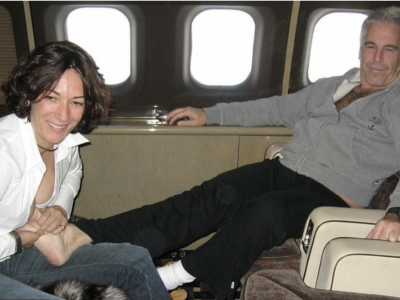
Originally scheduled for the summer of 2021, the Maxwell trial was pushed into the fall after the prosecution filed a superseding indictment in April containing more serious charges and adding an additional victim. So, after so many delays and false starts, it’s fair to say that as Maxwell entered the federal courtroom in downtown Manhattan on November 29 wearing a cream cashmere sweater, there was plenty of pent-up anticipation about what was going to transpire. I fully expected that this story, involving obscene wealth, power and a child sex-trafficking ring, would dominate the headlines, and that the trial would contain shocking revelations. But neither of those predictions has come to pass.   Things started out on an exciting note, when Maxwell had the audacity to sketch the sketch artist who was sketching her, a visual metaphor for the defense team’s defiant DARVO (deny, attack, reverse victim and offender) strategy. Power lawyer Bobbi Sternheim came out guns blazing, stating in her opening arguments that her client was being used as a scapegoat to pay for the crimes of her dead boss: “Ever since Eve was accused of tempting Adam with the apple, women have been blamed for the bad behavior of men,” she said, ignoring the fact that there is plenty of bad behavior here to go around. Over the course of the next 10 days in court, the prosecution called about 20 witnesses—including four victims who told harrowing stories of being befriended as teens by Maxwell and Epstein, who promised mentorship and financial support, only to betray them with unwanted and traumatic sexual encounters. Then on Friday, the prosecution summoned their star witness: Annie Farmer, whose sister–also an Epstein victim–went to the FBI back in 1996 to report Epstein’s abuse. A full 25 years later, Annie, a self-possessed 42-year-old psychologist, took the stand and told jurors of a nightmarish visit to Epstein’s New Mexico ranch, where he and Maxwell molested her. “I felt sick to my stomach,” she told Assistant U.S. Attorney Lara Pomerantz.    I also felt sick to my stomach, fearing yet another miscarriage of justice when, following Farmer’s emotional testimony, the government shocked everyone—including Judge Alison Nathan—by resting its case two weeks earlier than anticipated. An early wrap-up would have been exciting if the prosecution, led by 32-year-old Assistant U.S. Attorney Maurene Comey—daughter of former FBI director James Comey—had nailed its case. By all accounts, however, it did not.  Despite the strong testimony from the victims, the government’s case was weaker than expected, their young lawyers outmatched by Maxwell’s high-priced, seasoned team and unprepared for their counterarguments, according to media reports. For example, Maxwell’s lawyers tried to undermine the claims of one victim, Jane Doe, who said that she had flown with Maxwell on Epstein’s plane, arguing that Epstein had an assistant with the same first name—even thought that particular assistant didn’t work for Epstein at the same time, or even in the same decade. The prosecution took days to provide an adequate rebuttal, underscoring its lack of nimbleness. But it’s possible that all is not lost. Cameras and recording devices are not permitted in federal court, so all the information about the Maxwell trial is filtered through the media’s lens. Expectations are high and impressions can be distorted, particularly since it feels as though this case got overshadowed by a mountain of other equally disturbing news, ranging from the Supreme Court’s abortion decision to the steady drumbeat of information about the January 6 insurrection, and the trial of another high-profile woman, Elizabeth Holmes. Many have noted the similarities between Maxwell’s and Holmes’s defenses, in which they lay the blame for their alleged misdeeds on powerful men, as if “women simply don't have the agency to be true criminal masterminds,” as Salon put it. Starting on Thursday, December 16, Maxwell’s defense team gets its chance to make their client’s case, casting doubt on the victims’ recollections. Based on their questioning of the witnesses under cross-examination, it’s clear that they will continue to paint the accusers as money-grubbing whores who are being manipulated by a platoon of greedy lawyers. It’s truly a disgusting argument, but the defense must realize that Maxwell does not have any other cards to play. One promising sign: witnesses for the defense are so embarrassed at being associated with Maxwell and Epstein that they have requested to testify under pseudonyms, a highly unusual move. The request was denied, but the sheer chutzpah of putting it in writing is rich given that an attorney for the defense “accidentally” name-checked two of the anonymous victims last week. On Friday December 10, lawyers for Maxwell said that the defense would take just four days, possibly fewer, to present its case. That’s probably because they want to wrap up before the holidays so the jury won’t be stuck in court, resentment spilling over into their deliberations. Ghislaine’s 60th birthday happens to fall on Christmas. We will soon find out if her victims will finally be remembered, or if this lifelong bottom feeder will be given the gift of impunity.  [post_title] => The trial of Ghislaine Maxwell: justice delayed—and possibly denied [post_excerpt] => An early wrap-up of the trial would have been exciting if the prosecution, led by 32-year-old Assistant US Attorney Maurene Comey—daughter of former FBI director James Comey—had nailed its case. By all accounts, however, it did not.  [post_status] => publish [comment_status] => closed [ping_status] => open [post_password] => [post_name] => the-trial-of-ghislaine-maxwell-justice-delayed-and-possibly-denied [to_ping] => [pinged] => [post_modified] => 2024-08-28 21:15:12 [post_modified_gmt] => 2024-08-28 21:15:12 [post_content_filtered] => [post_parent] => 0 [guid] => https://conversationalist.org/?p=3615 [menu_order] => 155 [post_type] => post [post_mime_type] => [comment_count] => 0 [filter] => raw )

The trial of Ghislaine Maxwell: justice delayed—and possibly denied

WP_Post Object
(
    [ID] => 3604
    [post_author] => 2
    [post_date] => 2021-12-16 13:38:56
    [post_date_gmt] => 2021-12-16 13:38:56
    [post_content] => Jimmy Lai, 74, angered the Chinese government by refusing to curb the pro democracy editorial line of  his popular newspaper 'Apple Daily.'

The year 2021 marks a sad milestone in Hong Kong. For the first time journalists in the former British colony appear on CPJ’s annual survey of journalists unjustly imprisoned for their work. Eight. Zero to eight in one year.

I first visited Hong Kong nearly 50 years ago as a student and returned to live there a few years later for research on a Ph.D. thesis. I subsequently paid many visits to Hong Kong as a working journalist, both before and after reversion to Chinese rule in 1997, and most recently as a press freedom advocate with CPJ.*

To say that Hong Kong has changed over these years is a vast understatement.

The squeeze on press freedom didn’t start in 2021. While Hong Kongers have never participated in a full electoral democracy, they had for decades enjoyed uninhibited freedom of the press and the rule of law—factors that contributed to Hong Kong’s attractiveness as a thriving business and finance center. The colonial era anti-communist press included famed titles like the English-language South China Morning Post and the Chinese Ming Pao, while the left included the pro-communist flag wavers Ta Kung Pao and Wen Wei Po. Many international news organizations established regional headquarters in the city because of the freedom and convenience. It was hard not to like Hong Kong for its energy, the food, the setting, and its entrepreneurial, ambitious people.

The 1984 British-Chinese agreement that led to the handover to China 13 years later put Hong Kong on notice that the communists were coming, like it or not, and set in motion significant changes, as CPJ documented in a report. The anti-communist press gradually became less strident, even before the handover. Afterwards, the trend continued, with occasional physical attacks on journalists notably concentrated on critics of the Chinese or Hong Kong governments. Police frequently attacked journalists during widespread pro-democracy demonstrations in 2019.

Of course, there was a major exception to this softening of China coverage: Jimmy Lai, founder of Apple Daily and Next Digital. Lai is this year’s winner of CPJ’s Gwen Ifill Press Freedom Award for “extraordinary and sustained achievement in the cause of press freedom.” And he now sits in jail for his stubborn refusal to join most of the rest of the media by curbing his openly pro-democracy and anti-communist editorial line in Apple Daily. He could remain there for the rest of his life. Six of his senior colleagues, as well as a commentator at the independent internet radio channel D100, are also in jail. The paper and Next Digital were forced out of business.

[caption id="attachment_3607" align="alignleft" width="640"] Reading a newspaper on a bench in Hong Kong on August 20, 2020.[/caption]

The Chinese government’s feud with Lai started in the 1990s, when, after writing a column suggesting that China’s tough Premier Li Peng “drop dead,” Lai was forced to sell his mainland Chinese clothing business that was the source of his initial wealth. An advertising squeeze on the paper, clearly orchestrated by China, started in the late 1990s and accelerated over the years. The Apple Daily office, Lai’s home, and staff reporters suffered various attacks over the years.

“The very rights of journalists are being taken away,” Lai told CPJ in a 2019 interview. “We were birds in the forest and now we are being taken into a cage.” A literal cage, now.
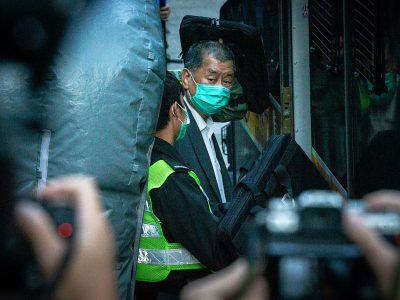
Lai and the others have been charged under the draconian National Security Law that China imposed on July 1, 2020 after historic pro-democracy protests swept the city. While Lai and his colleagues are the most prominent media targets, the law has spread a chill through the Hong Kong community of journalists, as CPJ has documented.

The independent-minded Hong Kong Journalists Association has come under a series of attacks from the government and the pro-communist press, including a suggestion by authorities that HKJA may have breached the national security law. On November 5, the Hong Kong Foreign Correspondents’ Club released a survey of its members showing that 83.8 percent of its members saw deterioration of the working environment for journalists, and that 71 percent were slightly or very concerned about possible arrest for their work. Predictably, and in sadly typical fashion, the Chinese foreign ministry office in Hong Kong blasted the FCC, saying in a threatening statement: “Its smearing of Hong Kong’s press freedom and playing-up of the chilling effect are interference in Hong Kong affairs.”
This isn’t to say that some excellent journalism doesn’t still take place in Hong Kong by a number of news outlets and international bureaus that remain in the city. But the red lines over what’s permissible and what’s not have never been more blurry. As CPJ’s principal spokesperson on Hong Kong and China, I’ve been blunt and uninhibited criticizing both the Chinese and Hong Kong governments. Given China’s record of taking foreigners hostage, and Hong Kong’s still evolving application of the National Security Law, will I ever feel comfortable or safe returning to the place that I’ve grown to love over the years?  I’m not sure. *This article was originally published on the website of the Committee to Protect Journalists.  [post_title] => 'The rights of journalists are being taken away': Hong Kong's most prominent media mogul is jailed [post_excerpt] => For decades Hong Kong enjoyed uninhibited freedom of the press, which continued after the territory reverted to China's rule in 1997. But the July 1, 2020 National Security Law put a chill on the media. [post_status] => publish [comment_status] => closed [ping_status] => open [post_password] => [post_name] => jailing-of-pro-democracy-media-mogul-is-a-sad-milestone-in-the-decline-of-hong-kongs-press-freedom [to_ping] => [pinged] => [post_modified] => 2024-08-28 21:15:12 [post_modified_gmt] => 2024-08-28 21:15:12 [post_content_filtered] => [post_parent] => 0 [guid] => https://conversationalist.org/?p=3604 [menu_order] => 156 [post_type] => post [post_mime_type] => [comment_count] => 0 [filter] => raw )

‘The rights of journalists are being taken away’: Hong Kong’s most prominent media mogul is jailed

WP_Post Object
(
    [ID] => 3583
    [post_author] => 2
    [post_date] => 2021-12-09 23:56:55
    [post_date_gmt] => 2021-12-09 23:56:55
    [post_content] => Famous for its delicious honey, Kashmir has seen a decline in artisanal apiculture due to a confluence of political and environmental factors.

GANDERBAL, KASHMIR –Clusters of beehives dot the sprawling lawns outside the Rizvi family home in the Kashmiri village of Shalhar. Bees swarm the flowers and suck the marrow out of colorful petals. Towseefa Rizvi, 49, clad in protective gear, walks toward her hives; she manages 200 colonies of Apis mellifera, often referred to as the European or western honeybee. This district, located about a half-hour’s drive from Srinagar, boasts diverse flora, sprawling apple orchards, and extensive forests that are the reason Kashmir is famous for its uniquely delicious honey.

“I had never thought of doing something like this,” she says, gently opening a hive. “But this unusual job has both challenged and fascinated me.”

A mother of three, Rizvi has been beekeeping for more than a decade. She taught herself the necessary skills by researching online, watching and consulting with local apiarists, and through trial and error. In addition to running her own honey production busines, she now trains and supports new apiarists, especially women in her community. Beekeeping is a popular enterprise, she explained, because startup costs are low.

The average annual turnover from Rizvi’s 200 colonies is about $10,698 (monthly income in rural Kashmir is between $66 and $133). She retains an income of about $4,012 and puts the difference back into the business.

This part of Kashmir is deeply conservative. Women typically look down while walking outdoors; they do not speak in public or visit the homes of strangers unless accompanied by a male family member. Rizvi’s decision to become the first women in her district to launch her own business, let alone in this traditionally male-dominated occupation, was thus deeply unusual. But her husband, Syed Parvaz, 42, has supported her from the beginning; he is now a production manager in Kashmir Valley Agro Industry, which includes their honey-making business (Jammu and Kashmir is the only place in India that produces a rare variety of wild bush honey, he explained.) The couple are committed to releasing the untapped potential of the honey production industry in their region.

Inspired by Rizvi’s example, an increasing number of women from poor families are starting their own apiaries. They look up to her for showing them an income-earning business that they can run from home, a fact that was particularly relevant during the pandemic lockdown. Rizvi and her husband have registered around 500 beekeepers and have trained thousands of beekeepers in neighboring districts.

“I tell them if I can be an entrepreneur with limited education and skills, why can’t they,” says Rizvi. “I started beekeeping when there were hardly any women in the trade, but now we have so many around and if we cannot inspire and support each other then it would be our collective failure.”

The pandemic provided Rizvi with unexpected opportunities. During the lockdown she launched an online school to teach beekeeping, and then a website to sell a variety of products ranging from honey to herbal tea mixtures. She also renewed her commitment to sustainable farming practices, starting with cultivating her own vegetables to compensate for soaring prices and spotty access to markets. Bees, she pointed out, play “a major role” in sustainable agriculture.

[caption id="attachment_3585" align="aligncenter" width="840"] Towseefa Rizvi and Syed Parvez at their honey production facility.[/caption]

Some hope that, with an infusion of knowledge and skills, beekeeping could help revitalize Kashmir’s economy.

Unemployment in the territory is the highest in India, a fact that has particularly hurt people younger than 35, who are 70 percent of the population, and women—72.6 percent of whom are without work. More than two years of political upheaval, military curfews, the longest internet blackout in history, and then the pandemic lockdown, have had a devastating impact. The Kashmir Chamber of Commerce and Industries estimates that the regional economy has lost $7bn since 2019.

But the road to expanding beekeeping into a lucrative business is littered with obstacles, explained Sajad Hussain Parey, professor of entomology at Baba Ghulam Shah Badshah University. The government provides no social security to beekeepers—i.e, they are not insured—or training in modern methods. Most traditional beekeepers are unaware of critical  skills like seasonal hive management and bee pollen collection. As a result, honey production is low; a lack of marketing opportunities further undermines the earning potential of beekeeping. Quality control is also a problem, said Parey, because there is no central institution to monitor and test the honey for purity.

But an infusion of government funding could unleash the potential of Kashmir’s honey industry. What’s needed are training and market access to allow sustainable exploitation of Kashmir’s climate and natural vegetation. With honeybees around the world becoming increasingly vulnerable to climate change and the chemicals used in industrial apiaries, training local people in artisanal beekeeping and modern scientific methodology could create significant employment opportunities. A return to sustainable beekeeping methods would also encourage ecological awareness and rural development, promote small village industry, increase biodiversity —and could double farmers’ income from fruit and vegetable cultivation by complementing it with beekeeping.

Since almost everyone in Kashmir has a house and land, they have the space and means to engage in small and medium scale beekeeping at home, with minimal financial investment.

The regional government is working to generate new business opportunities in the production of bee byproducts like beeswax, propolis, bee venom, and royal jelly. In addition, it is attempting to expand the apiculture sector by increasing the number of beekeeping units, obtaining a GI tag for the region’s honey, and helping farmers increase their incomes by introducing modern technological methods.

Parvez and Rizvi have begun working on Integrated Pest Management to train apiarists in protecting their bees from pests and predators.

“A person should be confident to take care of bees,” says Syed, adding that the couple is in constant touch with institutions, research departments, and independent beekeepers across the world. Through their networks they are learning about skill training, trust building measures, and procurement of plants and machinery, as well as how to diversify their honey products and expand their market opportunities. By setting up sales outlets, they are also learning how to improve the income and employment of the beekeepers, assure sustainability and inspire more young unemployed people to take up the craft.

Rizvi explains that her ambition goes beyond just growing her own business. “The participation of more and more women in this field is my dream,” she said, adding that she is working to create “a sustainable revenue opportunity” for local people.

As Rizvi prepares to inspect her hives, which she does during the evenings, when the bees are less aggressive, she puts on her protective cap and coat. “A blooming garden is my office,” says Rizvi as bees buzz and hum in the hive. “And bees are like my family.”
    [post_title] => ‘Bees are like my family’: A female beekeeper is reviving honey production in Kashmir
    [post_excerpt] => After years of political upheaval, military curfews, months-long communications blockades, and then the devastating pandemic, Kashmir's economy is on its knees. Could beekeeping save it?
    [post_status] => publish
    [comment_status] => closed
    [ping_status] => open
    [post_password] => 
    [post_name] => bees-are-like-my-family-how-a-female-beekeeper-is-redefining-honey-production-in-kashmir
    [to_ping] => 
    [pinged] => 
    [post_modified] => 2024-08-28 21:08:26
    [post_modified_gmt] => 2024-08-28 21:08:26
    [post_content_filtered] => 
    [post_parent] => 0
    [guid] => https://conversationalist.org/?p=3583
    [menu_order] => 157
    [post_type] => post
    [post_mime_type] => 
    [comment_count] => 0
    [filter] => raw
)

‘Bees are like my family’: A female beekeeper is reviving honey production in Kashmir

WP_Post Object
(
    [ID] => 3576
    [post_author] => 2
    [post_date] => 2021-12-09 18:38:43
    [post_date_gmt] => 2021-12-09 18:38:43
    [post_content] => The dominant religion of Russian officials is money. There are many ways to exploit that, starting with a long list of individually targeted sanctions.

Russia appears to be preparing for a full scale invasion of Ukraine. Satellite images show the  Kremlin has been moving military materiel to the border since October, while intelligence analysis posits that as many as 175,000 troops are headed for border-region Russian army bases. These developments have alarmed both Europe and the United States, with President Biden warning President Putin on Tuesday of “strong economic and other measures” during a two-hour video summit between the two leaders. 

The ongoing conflict began more than seven years ago, after the November 2013 Euromaidan Uprising that led to the popular ousting of Viktor Yanukovich, a fantastically corrupt president who had largely been Putin’s ally. The Russian president responded in March 2014 by invading and annexing Crimea, and destabilizing parts of the Ukrainian east. Now, a simmering conflict is poised to get much worse. How should  Western powers respond, particularly given that Ukraine is not a member of the EU or NATO?

First, we must dispense with the idea that we can and should do nothing. As someone originally from Ukraine I am a biased observer; but even when I set aside my desire to prevent Putin from killing my relatives, I can see dire consequences for ostensibly disinterested parties. Western states would prefer to pretend that the headache called Vladimir Putin didn’t exist, given all the other headaches they have to deal with — like the global pandemic and rising inflation — but deal with him they must.

A Russian invasion of Ukraine would cause instability throughout Europe and beyond, including a gas pipeline disruption and the loss of a buffer zone between NATO and an ever-belligerent Russia. Adventurism by leaders of other countries—such as Iran, for example—who would see the distraction and the dismay as an opportunity, would likely increase in scope. The current refugee crisis would grow exponentially, with disastrous repercussions. Markets would suffer, as would businesses and aviation.  

Russia’s other neighbors — including Central Asian regimes — could become increasingly unstable. Putin is using extreme measures in an attempt to bully Western powers into keeping Ukraine out of NATO; his fear is the prospect of seeing the Western alliance’s military forces right on his border, but this fear holds risks for the entire region. As long as there are no consequences to his actions, Putin will not stop. 

The Russian view of Ukraine, which was part of the czarist empire and the Soviet Union, is distorted by imperialist propaganda that describes it as both a nation of buffoons and a threat that Russia must pacify. Russia also sees Ukraine as the stage for another grievance—that of Western triumphalism following the end of the Cold War, which the United States described as a “victory.” To put the matter in crude but simple terms, America insulted Russia and Putin, the former KGB officer, wants revenge.

Putin seems to believe that demoralizing the United States, which has provided aid to Ukraine  since it became independent in 1992, would be a major win for Russia. Ukraine is poised to fight, even if their military is destined to lose an all-out war against Russia's, but images of carnage and violence don’t deter Putin easily. We must understand that the Russian president would be initially unmoved by the sight of Russian soldiers coming home in body bags. 

“Who the hell do Ukrainians think they are?” was something I often heard in elite Moscow circles— among businessmen, television personalities, politicians—after the ousting of Yanukovych and the launch of the 2014 war. Russia’s ruling elite disliked the idea of Ukrainians possibly enjoying a functioning democracy and a better standard of living than they had. Moscow sees a stable, prosperous Ukraine as hostile simply because its existence might cause ordinary Russians to ask questions about why they were comparatively worse off. 

Because Russia is an extremely unequal society, its elite sees ordinary citizens as less than human and thus not entitled to ask uncomfortable questions, which might lead to popular discontent. In order to maintain their position, the leadership is most likely to choose divide-and-conquer: Incite a bunch of ordinary Russians against Ukrainians, dial up anti-Ukrainian and anti-Western propaganda, and keep everyone distracted with a war. 

What’s to be done to prevent this looming nightmare that will involve both bloodshed and wider instability? 

First, the Western nations must stop behaving as though they are powerless. Putin sees Western consternation as a sign of weakness.

It’s important, furthermore, to understand that Putin is not an ideologue. He uses ideology as an effective shield, but in practice he’s just another kleptocrat—albeit one with nuclear weapons. Russia’s new elite is composed of his close friends and important functionaries, all of whom benefit financially from their relationship with the president; normal people loathe Putin’s friends because they are so overtly corrupt. That very justifiable hatred is one of Russia’s greatest vulnerabilities, and one of the saddest elements of modern Russian life, which is dominated by stress and suspicion. Putin is the single leadership figure that Russians look to today, but he cannot fix all their problems. Meanwhile, brewing discontent is ripe for exploitation.

Western powers must also draw clear red lines by naming consequences and then acting upon them if Putin refuses to back down. Cutting Russia off from SWIFT (Society for Worldwide Interbank Financial Telecommunication)—the international system that allows banks to carry out trans-border transactions—should absolutely be on the table. This would rattle the Russian economy and have an immediate impact on Russian citizens. Notice how you can’t send money to an Iranian bank from the United States? That’s because Iran has been cut off from SWIFT; this affects everyone in Iran, from the leadership to ordinary people on the street. 

A move to cut Russia off from SWIFT would also, of course, impact U.S. banks and German banks, which use it to communicate with Russia. But these banks are more insulated from financial pain because their economies are far more robust and integrated than Russia’s.

The Russian elite loves opulence. It stashes its assets (and, frequently, its children) abroad — popular spots include London and Paris, Manhattan and Miami, the Cayman Islands, and Cyprus. The dominant religion of Russian officials is money. There are many ways to exploit that, starting with a potentially very long list of individually targeted sanctions, such as those already levelled at dangerous Kremlin lackeys like businessman Yevgeny Prigozhin, who has been indicted in the U.S. for the role he played in meddling in the 2016 election; and propagandist Dmitry Kiselyov, the notorious state TV presenter who is Russia’s own Tucker Carlson, only virtually unopposed.

Another factor to consider is Moscow’s fragile relationship with Beijing, with the Kremlin particularly worried about China expanding its influence in Russia’s Far East, where there are real tensions between the local leadership and Putin’s central government. When you want to know what bothers the Russian government, look at what it is restricting or monitoring. The FSB, for example, controls the Russian census in order to cover up resentment of Moscow in different parts of Russia. I was in Moscow when the 2010 census was conducted, and saw how researchers noted that the number of people identifying as “Siberian” as opposed to “Russian” had spiked. Today, writing about these issues in Russia can easily land you on a watchlist. All of this demonstrates that Moscow is worried about Russian territorial integrity. 

Russian propagandists tend to yell at me when I make these observations; they are defensive because they know I am telling the truth. Moscow is wary of China’s ambitions in the Far East and elsewhere, how they might affect Russia’s position in areas ranging from the Arctic to outer space, and how an already resentful Russian society might react to their country’s declining position. Washington can leverage that fear in many ways, most saliently by playing up the fact that Moscow today is nothing but Beijing’s uneasy sidekick. Russia is poorer and more vulnerable than China. Its population is declining. In its desire for great power status, it is decidedly outmatched by Beijing. These facts already don’t sit well with Putin, but are particularly infuriating to Russia’s citizens. 

Engaging Russia directly would merely serve to create another vortex of violent instability. But Russian private military companies (PMCs) have their fingers in many pies — in countries like the Central African Republic and Venezuela, where they are interested in both resource extraction and political influence. Signaling that all of these ventures are fair game for hostile action might not have an immediate effect—Putin likes PMCs precisely because they are expendable—but many of the Russian leader’s friends have significant amounts of money tied up in these ventures; inflicting pain on them makes him vulnerable. 

Most importantly, we must not mythologize Putin. Nor should we adopt the approach of the notorious Fox TV commentator, Tucker Carlson, who claims that Putin is massing troops and materiel because he needs to “secure” his border with Ukraine. This is a cynical political move: Carlson’s ratings go up every time he trashes President Joe Biden. If Biden is opposed to Putin, Carlson will side with Putin, even at the cost of global stability and the international standing of the United States. If Putin came out and claimed he needed his “Lebensraum” now, Tucker would probably cheer him on, and that’s all you need to know about that. 

Instead of being like Tucker, we should simply see the depressing system Putin created in all of its stark, granular detail — and understand that it won’t stop after it devours Ukraine. The time to oppose it is now.
    [post_title] => To stop Putin, grab him by his wallet
    [post_excerpt] => Western leaders are conducting their foreign policy as though nothing can be done to stop Putin. This is a mistake: he's weaker and more vulnerable than he appears.  
    [post_status] => publish
    [comment_status] => closed
    [ping_status] => open
    [post_password] => 
    [post_name] => to-stop-putin-grab-him-by-his-wallet
    [to_ping] => 
    [pinged] => 
    [post_modified] => 2024-08-28 21:11:29
    [post_modified_gmt] => 2024-08-28 21:11:29
    [post_content_filtered] => 
    [post_parent] => 0
    [guid] => https://conversationalist.org/?p=3576
    [menu_order] => 158
    [post_type] => post
    [post_mime_type] => 
    [comment_count] => 0
    [filter] => raw
)

To stop Putin, grab him by his wallet

WP_Post Object
(
    [ID] => 3531
    [post_author] => 2
    [post_date] => 2021-12-02 22:17:42
    [post_date_gmt] => 2021-12-02 22:17:42
    [post_content] => Future COPs will bring about successful results only if organizers make the conferences more democratic, fair, and equal.

There were high hopes for COP26.  After years of disappointing climate conferences, many observers hoped that this one, held in Glasgow from October 31-November 13, would end with ambitious pledges and meaningful actions—particularly after both China and the US raised hopes with significant announcements going into the global event. China pledged to become carbon neutral by 2060, while the US pledged to double its financing to poorer countries for combating climate change. However, in the end COP26 fell short. Once again, the decisions taken at the UN Climate Change Conference brought a few advances, but mainly perpetuated the dangerous stagnation that we cannot afford at this critical time of rapid global warming.

I was an observer at COP26 under the auspices of the University of Edinburgh and Nuestra América Verde, a Latin American NGO. Although I studied climate law for both my LLM and now my doctorate, this was my first COP—and a totally novel experience, as can be seen in my description and analysis of events in this article.

Deeply unequal

Equity constitutes an essential element, in both procedural and substantive ambits, for achieving a successful UN climate change conference. Unfortunately, neither the conference organizers nor the state actors who attended COP26 took equity into account. Civil society organizations that came to observe were met with restricted  access to negotiations due to a combination of circumstances that included  the UK’s onerous and restrictive visa requirements; the high cost of accommodation in Glasgow; and vaccine apartheid. The absence of thousands of observers and climate activists from poorer countries in the global south, which are disproportionately affected by climate change made this extremely important global event that deeply unequal. State representatives engaged in important negotiations on critical climate issues with insufficient transparency, and in the absence of observers from civil society groups. The lack of equity and fairness had a strong impact on the substantive outcomes of the COP26, particularly on climate finance. [caption id="attachment_3535" align="aligncenter" width="640"] COP26 Climate Change Conference on November 4, 2021.[/caption] COP (Conference of the Parties) is the decision-making body for the United Nations Framework Convention on Climate Change (UNFCCC). Signed in 1992, the Convention tasks COP with realizing the UNFCCC’s agenda as it responds to the evolving challenges of climate change. COP1 took place in Berlin in 1995. Since then, the climate conferences have been held every one or two years; their purpose is to define the global path toward confronting the climate crisis. Some of the best-known COPs include: The success of each meeting is measured by the ambition and equity of its goals and their implementation. In this sense, many experts have pointed to the Paris Agreement as the perfect balance between ambition and equity, illustrated by its broad support among states. Lavanya Rajamani, a professor of environmental law at the University of Oxford Law School, said that the Paris Agreement “contains ambitious goals” and “is firmly anchored in the common but differentiated responsibilities principle” that are an expression of equity between states.

The importance of civil society groups

In August, the Intergovernmental Panel on Climate Change (IPCC) published the Sixth Assessment Report, with climate scientists issuing dire warnings about imminent climate collapse resulting from faster-than-predicted global warming. UN Secretary General Antonio Guterres called the report “a code red for humanity.”  In September, the NDCs Report of the United Nations further warned that the signatories of the Paris Accords were not meeting emissions control goals fast enough to stave off catastrophic global warming.  Both reports stipulated that there was a narrow window of opportunity for strong, efficient actions to reduce emissions and implement adaptation. As if to illustrate the warnings from scientists, 2021 saw several climate-related disasters—devastating floods, forest fires, unprecedented high summer temperatures—in Europe, India, China, and the US. Climate activists and civil society groups came to COP 26 hoping that the dire events of 2021 would inspire constructive and ambitious agreements to slow global warming and stave off climate catastrophe.
Civil society groups play a decisive role in creating truly cohesive and ambitious agreements at the COPs. The Paris Agreement, for example, is based on the preliminary work of civil society organizations that raised issues such as transparency, adaptation, mitigation and finance. The Climate Action Network was a key actor in achieving an agreement on global stocktake and transparency.  NGOs and grassroots movements can play a crucial role in pressuring their governments to improve climate commitments and actions domestically whereby reaching agreements that are more powerful. Every COP receives official delegations, observers, and what are known as “overflow parties”; these last two are usually representatives of NGOs or organizations that fight climate change. The reality of advocacy within COP is more complex. The limited time and restricted opportunities for civil society to engage with officials makes it difficult to exert real influence. In addition, observers and civil society have a very limited voice at the negotiating table, where only those presiding at the discussion can invite NGOs to talk which is extremely rare. In sum, civil society and NGOs must act as spectators at talks defined almost entirely by governments. COP26 was heavily criticized for unfair access to negotiations. It was the most attended COP in history, but non-state observers were not given proper access to negotiations. The Climate Action Network represents more than 1,500 organisations, but were given only two tickets to enter the negotiating area for the first two days of COP26, which was considerably fewer than the number they had received for previous COPs.  Organizers blamed pandemic restrictions, which limited the number of people who could gather in a single room. I saw dozens of observers barred from entering negotiation rooms, purportedly to comply with COVID-19 restrictions. But the COP presidency could have pre-empted this situation by providing larger conference rooms with proper ventilation so that civil society members could participate fully.  Limiting access to negotiations is particularly unfair in the case of the vulnerable communities that assisted in organizing and consulting to COP26, only to find themselves barred from observing the negotiations. Restricted access to negotiations aggravates the structural exclusion that is already an issue for vulnerable communities and indigenous people. But these limitations did not stop civil society from exerting much-needed pressure on the negotiations. On Friday, November 12, hundreds gathered inside the COP26 venue to express their dissatisfaction with the draft decisions that had been published. The weak and unclear wording regarding support for developing countries was at the core of climate justice claims inside and outside the COP venue. Access restrictions were somewhat lifted toward the end of the conference due to pressure from civil society.  The next COP presidency must do more to ensure broader access to the negotiations. The UNFCCC must work on new guidelines to ensure an effective method for including the participation of civil society organizations at global climate negotiations.

Poor countries gonna get what's theirs

Unequal climate burdens provide the context for every COP gathering and Glasgow was no exception. Since the Paris Agreement, COPs have tried to make further progress on the implementation of past agreements, but so far have failed. Issues like “climate finance,” article 6 of the Paris Agreement, and “loss and damage” are among the most complicated ambits the COP must grapple with; equity is an important element of those debates. Wealthy industrialized nations arrived at COP this year having failed to comply with a commitment they made in 2009 at COP15 in Copenhagen, to transfer $100 billion annually to poorer nations for finance mitigation and adaptation actions. Through funds such as the “Adaptation Fund,” the “Global Environment Facility,” or the “Green Climate Fund,” climate finance can support projects to increase the resilience of vulnerable coastal lands, or for coping with severe droughts in sub-Saharan Africa. Enhancing the adaptive capacity of the poorest communities across the globe is essential for climate justice; that is why developing nations at COP26 pushed for an acknowledgement in the final statement that wealthy nations had reneged on their financial commitment. Climate mitigation and adaptation actions are costly and developing countries simply do not have enough money. This scarcity of resources creates a vicious circle, whereby poorer nations cannot afford to make more ambitious commitments until the wealthier nations accept their historical responsibility by sharing the necessary financing with those who need it. [caption id="attachment_3534" align="alignleft" width="640"] Indian Prime Minister Narendra Modi at at COP26 on November 2, 2021.[/caption] India’s last-minute demand for a change to the wording of the conference resolution caused an enormous uproar. The original wording called upon signatories to “accelerate (…) efforts towards the phase-out of unabated coal power”; India said it wanted it changed to “phasedown of unabated coal power.” COP decisions require consensus, so the president was forced to capitulate. But while wealthy countries were vociferous in their criticism of this move and the media blamed India for playing an obstructive role, there is more to India’s position than simple obstruction or lack of purpose. The country’s negotiators were responding to a lack of commitment from rich countries to supporting the needs of poorer ones. From India’s perspective, the richer nations were historically for climate change and were therefore ethically obligated to cooperate with those who were poorer, carried far less responsibility for climate change, and were more vulnerable to its impact. Ambition and equity mark a delicate balance in every climate negotiation, a fact that Glasgow demonstrated once again. Future COPs must better consider how to navigate this precarious balancing act.  The urgency of the situation precludes further setbacks. It will be very difficult for anyone who attended COP26 to forget the sight of Alok Sharma, the president of COP,  struggling to hold back tears at the final plenary as he acknowledged that the conference had failed to produce the climate commitments needed to avert global climate collapse.
COP26 fell short because it failed to integrate the principle of equity into its decisions. To bring about the ambitious change we desperately need, civil society must play an equal role to state actors in negotiations. Future climate agreements need to push harder for more significant cooperation and concessions from wealthier nations. This is not about charity; it is a matter of justice and responsibility that should be shouldered by those who created this climate emergency. If future COP climate agreements follow these steps and ensure true global equity, it may still be possible to attain the goal of keeping global warming at 1.5 degrees. [post_title] => COP26 fell short, but ended with a ray of hope [post_excerpt] => Conference organizers failed to include the civil society activists who do the hard work on the ground, but they still managed to have an impact. [post_status] => publish [comment_status] => closed [ping_status] => open [post_password] => [post_name] => cop26-fell-short-but-ended-with-a-fragile-ray-of-hope [to_ping] => [pinged] => [post_modified] => 2024-08-28 21:11:29 [post_modified_gmt] => 2024-08-28 21:11:29 [post_content_filtered] => [post_parent] => 0 [guid] => https://conversationalist.org/?p=3531 [menu_order] => 159 [post_type] => post [post_mime_type] => [comment_count] => 0 [filter] => raw )

COP26 fell short, but ended with a ray of hope

WP_Post Object
(
    [ID] => 3486
    [post_author] => 2
    [post_date] => 2021-11-24 17:46:37
    [post_date_gmt] => 2021-11-24 17:46:37
    [post_content] => There is a delicate balance when protesting inside the country: too much, and you attract police attention; too little, and you don’t make an impact.

In the summer of 2021, about 40 people sat squashed around a long table in the corner of a pizza restaurant in Minsk, the capital of Belarus. But this was not a birthday party; it was a gathering of a local opposition collective. The people seated around the table were there to reaffirm their support for the movement against the Lukashenko regime and to maintain the friendships and connections they developed during the last year of protests

None of the people at the pizza restaurant wore red and white, the colors of the flag of the first independent Belarusian state, as they had at the protests the year before. All expressions of solidarity with the opposition are now dangerous. But despite the regime’s brutal crackdown on dissent, grassroots opposition groups all over the country are finding novel ways to challenge the system, an undertaking that carries enormous risk. 

Belarus’s authoritarian leader Alexander Lukashenko managed to cling to power despite 10 months of massive, country-wide protests that followed the rigged national election of August 2020. But now the demonstrations—with thousands of Belarusians on the streets, workers marching out of state-owned factories, and red and white ribbon filled courtyards—are a thing of the past. Even the iconic Symbal.by, which sold products emblazoned with Belarusian traditional national symbols popular with the opposition, has been replaced with a shop selling kitchenware. The regime has crushed almost all visible dissent with mass arrests, imprisonment, and killings, instilling fear in the protest movement. 

Belarus stayed in the news cycle throughout 2021, even after the opposition was largely in jail, silenced, or in exile. Lukashenko grabbed international headlines by threatening an Olympic athlete, force-landing a Ryanair flight in order to arrest a dissident journalist, threatening to obstruct Europe’s gas supply, and manufacturing a migrant crisis in the heart of Europe. In another incident, the body of Vitaly Shishov, a Belarusian activist who headed an NGO to help fellow exiles, was found hanging from a tree in a Kyiv park after he failed to return home from a jog. Ukrainian police have opened a murder investigation. The message to exiled activists, explained Igor Mitchnik, project leader at Libereco, an NGO focused on human rights in Belarus and Ukraine, is that “nowhere is safe”—the regime can get to them anywhere.
In this superb November 19 interview, Lukashenko tells the BBC's Steven Rosenberg that he "may have helped" migrants enter the EU; he also says that Belarus would "massacre all the scum you've been financing"—referring to the 270 NGOs his regime has forcibly shut down this year.
Sviatlana Tsikhanouskaya, 39, the presumptive winner of the 2020 presidential election, who now lives in exile, has worked to keep the opposition in the news. Over the past year she has become an international figure, giving speeches, sitting for interviews with major media outlets, and meeting with world leaders like President Joe Biden, Prime Minister Boris Johnson, and Chancellor Angela Merkel. Meanwhile, the quiet work of activists inside Belarus goes mostly unnoticed. This is intentional; attention brings risk. But their persistence signals a determined strength to achieve a peaceful and sustainable transition to democracy.

The Partisans

There are many active cells of anti-regime partisans working underground inside Belarus, although the exact number of people involved is unknown. One group of partisans is a team of hackers that conducts frequent cyber attacks against the regime. Their successful hacks include: stealing the personal details of regime informants who reported on neighbors or colleagues; downloading recorded personal phone calls between members of the security apparatus; and publishing the personal information of senior KGB agents.  Tanya*, a 28 year old IT worker in Minsk, is a member of a cell that focuses primarily, in her own words, on samizdat: “We bring the truth to people, we print and distribute newspapers and leaflets.” This is in response to the regime's attempts to re-monopolize the information sphere. In restricting access to independent information, the regime has declared neighborhood social media chats “extremist,” shut down independent media outlets, and arrested numerous journalists and bloggers.  Even subscribing to an independent channel on Telegram, the encrypted messaging app, can be cause for arrest and a sentence of up to seven years in prison.  The partisan protest actions are small-scale and brief, designed to ensure images are shared widely on social media long after the activists have left the scene. There is a delicate balance when protesting inside the country: too much, and you attract police attention; too little, and you don’t make an impact. Last spring, for example, in the midst of the crackdown, activists planted small patches of white and red flowers around Minsk. Tanya shared photographs of districts that decorated their public areas with flowers and printed information on local marches and actions. The partisans also employ tactics to hurt the regime economically by, for example, encouraging consumers to boycott state-owned enterprises. In Belarus a wide range of foodstuffs and products are produced by the state, or by businesses closely connected with the regime. Products under boycott range from sausages and sugar, to cigarettes. A neighbouring cell has been raising the pressure by placing items on railway tracks to disable signals and delay trains carrying items for export, threatening the Europe-Asia transit route, a source of income for the regime.  Tanya was devastated to learn in August that the International Monetary Fund (IMF) had decided to send the regime $1 billion. The money was ostensibly earmarked to help the government fight Covid-19, but for opposition activists and outside observers, it would simply prop up Lukashenko’s illegitimate regime.  Timothy Ash, the London-based economist, asked in a rhetorical tweet if the IMF acronym SDR (Special Drawing Rights) actually stood for “support dodgy regimes.” Sviatlana Tsikhanouskaya, the exiled opposition leader, tweeted that she had sent letters to the IMF and the US government asking them to freeze the funds, which she had earlier asserted would be misused by the regime for nefarious purposes. A Washington Post editorial headline was blunt: “Biden should not let the IMF throw a lifeline to Belarus’ dictator.” Tanya said: “I felt that all my efforts, all the sleepless nights and the suffering of friends behind bars—it was all in vain.”  A few months later, as Belarus began registering record levels of Covid-19 infections, Lukashenko scrapped a short-lived mask mandate and ordered signs calling for them to be worn removed from public transport and shops, confirming the opposition’s fears that the IMF’s funds would be misappropriated.  Membership in the partisans is dangerous and many members have been arrested. But Tanya remains committed precisely because the regime treats prisoners inhumanely and humiliates their supporters. She recounted that on a recent visit to a local prison the guards refused to accept rolls of toilet paper for an inmate unless the tissue was separated along the perforated lines into individual squares. “The whole queue of family and friends were just standing there, ripping toilet paper into pieces,” she recalled. The guards eventually accepted the toilet paper, but didn’t give it to the prisoners until they were released. 

KOTOS

Alina, an economist in her 50s, is focused on organizing local self-government bodies, known in Belarus as KOTOS, across her city. The main idea behind KOTOS, which have functioned since 2014, is to build a collective of active neighbours who deal with local issues and improve the community’s quality of life. They decide what murals will be painted on local buildings, where to place a new bench in a courtyard, or how to improve playgrounds for children. For Alina, the aim is to maintain and build on the newfound momentum for civic engagement developed over the past year, laying the foundations for an eventual democratic state.  The KOTOS is supposed to be made up of locally elected representatives with a chairperson as the leader; but, as Alina and local residents discovered, to no one’s surprise, the regional administration appointed the representatives. KOTOS’s work is unpaid, and some of the appointed chairpersons in the region, explains Alina, did not want the position; but in a dictatorship, where the key currency is loyalty to the regime, they “could not refuse.” Chairpersons are reluctant to meet with the locals they represent; Alina recounts how in one neighbourhood “she [the chairman] still hides from the residents, coming up with different excuses to avoid them.” With the ongoing crackdown against any form of civic engagement, the regime is unlikely to tolerate the involvement of local citizens in KOTOS. This, however, does not discourage Alina. She is looking for different ways to work within the system, from engaging with the local chairperson, to seeking out areas where a KOTOS does not yet exist and distributing information to local residents on how to organize their own system from scratch. Her goal is to find “people who sincerely want to improve life in their neighbourhood” and build grassroots communal solidarity. This work is challenging. A year ago, there were people in the country who were happy to host discussions with locals on the rules and system of KOTOS; conduct seminars and consultations; and provide legal assistance. But, as Alina notes, who would want to  “stand out from the crowd today?”

New civil society initiatives

Volha, a businesswoman in Minsk, is developing a digital platform to educate people about democratic values. It provides a forum for experts from around the world to present information on different democratic systems to the next generation of Belarusians.  Volha describes Belarus today as “scorched earth,” noting that nearly all the people who had been developing civil society have left the country. In July 2021 Lukashenko announced a “clean-up” of civil society; since then, 270 independent NGOs have been closed down, with many activists facing trumped up criminal charges. But Volha believes some people need to remain in Belarus, despite the danger. If civil society was possible before the 2020 uprising against Lukashenko’s regime, she argues, some form “could become possible again.” She stresses that now is not the time to give up developing initiatives inside the country. And while she worries about being arrested and imprisoned, Volha says that her greatest fear is being prevented from carrying on her work, because “from prison you can’t influence anything anymore.” Activists who have remained in the country also run the risk of being labelled a GONGO— a “government-organized NGO.” For the opposition in exile, anyone who cooperates with the regime is de facto lending it legitimization. But Volha is undeterred. She knows that if she wants to develop her initiatives inside Belarus some cooperation with local authorities is unavoidable. Her approach is to integrate local authorities into her activities in order “to show them how things can work in normal countries, how it could be in Belarus.” Viewing all local authorities as representatives of Lukashenko, she says, is the wrong approach and “destroys all bridges.”  Igor Mitchnik stressed the danger of this approach. The regime, he says, “has lost any credibility as a reliable partner for civic or democratic initiatives.” But he values the work of any organization that promotes “a vision of democratic alternatives for their society.”  Volha’s approach to sustainable change in Belarus is, in her own words, “evolution, not revolution.” Yes, she acknowledges, the regime is oppressive, but “we [Belarusians] have allowed [it] to exist.” She argues that the only way to ensure Belarusians throw off the dictatorship, permanently, is through systemic change; otherwise it is only a matter of time before Belarusians will once again live under such a regime. 

Conclusion

These three activists represent very different approaches to regime change from inside Belarus, but they all believe Lukashenko is on borrowed time. While Tanya and the partisans fight the regime from the outside, Alina and Volha highlight a more nuanced grey area of opposition activism inside Belarus, one that requires some degree of cooperation with the regime. Whether their approach has merit remains to be seen; as Audre Lorde famously argued, “the master’s tools will never dismantle the master’s house.”   The future of the opposition inside Belarus is, of course, unclear. Local elections have been postponed indefinitely, and the cruelty of the ongoing crackdown means the March 22 country-wide referendum on constitutional reform is unlikely to lead to fresh protests.  One thing that is clear, however, is that the official Belarusian opposition depends on this network of activists inside the country to keep domestic pressure on the regime, and they are showing no signs of abating. As Tanya vowed: “as long as Belarus is not free, I will not stop.”   *All the names of the activists inside Belarus have been changed to protect them.  [post_title] => Risking arrest, prison & death, Belarus's underground activists fight for democracy [post_excerpt] => The vast majority of civil society activists are in exile, in prison, silenced, or dead, but a few underground cells of partisans are engaged in anti-regime and pro-democracy work that ranges from grassroots initiatives to carrying out cyber attacks against the regime. [post_status] => publish [comment_status] => closed [ping_status] => open [post_password] => [post_name] => risking-arrest-prison-death-belaruss-underground-activists-fight-for-democracy [to_ping] => [pinged] => https://conversationalist.org/2020/10/09/belaruss-uprising-against-autocracy-is-fuelled-by-an-unprecedented-civil-society-movement/ [post_modified] => 2024-08-28 21:11:29 [post_modified_gmt] => 2024-08-28 21:11:29 [post_content_filtered] => [post_parent] => 0 [guid] => https://conversationalist.org/?p=3486 [menu_order] => 160 [post_type] => post [post_mime_type] => [comment_count] => 0 [filter] => raw )

Risking arrest, prison & death, Belarus’s underground activists fight for democracy

WP_Post Object
(
    [ID] => 3461
    [post_author] => 2
    [post_date] => 2021-11-18 23:36:08
    [post_date_gmt] => 2021-11-18 23:36:08
    [post_content] => Will voters choose fear or hope?

Chile is experiencing one of its most powerful historical moments since the end of the dictatorship in 1990. The results of the November 21 presidential election will decide the fate of the social movements sparked by the 2019 “Chilean awakening' and of the constitutional process begun in 2020. Of the six candidates competing for the presidency two men who represent starkly opposing visions for Chile’s future are leading in the polls.

Gabriel Boric, 35, is a left-wing candidate who seeks to implement the social changes that Chilean people have been demanding over the last decade; his platform calls for ending the neoliberal economic-political model brutally imposed under the dictatorship of Augusto Pinochet.

On the far right is José Antonio Kast, 55, who wants to perpetuate the extreme neoliberal model that is the legacy of Pinochet’s rule. One of the many worrying aspects of Kast’s platform is a jingoistic anti-immigrant position, which includes a plan to construct ditches along Chile’s borders to prevent migrants—primarily from Haiti and Venezuela—from entering the country.

The volatile situation in which Chile finds itself—polls show Kast at 27.3 percent, ahead of Boric with 23.7 percent—makes this election an exceptional one, likely the most important since the return of democracy in 1989.

[caption id="attachment_3469" align="alignleft" width="640"] José Antonio Kast at a press conference on August 30, 2021.[/caption]

This election campaign takes place in the context of a process to rewrite the national constitution, which came out of the massive protest movement that swept across the country in 2019. The factors that led to the protests, the issues that are driving this election campaign, and the future of Chile’s democracy are the subject of this article.

1. The ‘Chilean Spring’

On October 14, 2019, high school students in Santiago responded to a government announcement of a public transportation fare hike of 30 pesos, or $0.04, by calling for widespread fare evasion; they amplified their call on social media with the hashtag #EvasionMasiva. Over the next few days, the chant "evadir, no pagar, otra forma de luchar" (“evade, don’t pay, there’s another way to fight”) was heard in almost every subway station. The student protests spread, sparking a mass movement for social change that reflected growing discontent over Chile’s enormous wealth gap, stagnant wages, and insufficient social services. The proposed subway fare hike, though small, came to symbolize the broader injustices and inequalities of Chile’s economic and political system, as enshrined in the Pinochet Constitution. Chile is the most unequal member of the OECD, with 50 percent of the population earning just $550 per month, even as the cost of living continues to rise while wages remain stagnant. The government suspended the proposed transit fare hike, but the move came too late: the spark of protest had already been already lit; people began to ask questions about years of increasingly inadequate pensions, education, and health care. During the Pinochet dictatorship (1973-90), while the military regime was prosecuting, torturing, and killing political opponents, the “Chicago Boys,” a group of right-wing Chilean economists who had studied with Milton Friedman at the University of Chicago, were busy implementing a right-wing economic model. Pinochet’s repressive dictatorship was the ideal environment for unilateral imposition of reforms in pensions, health care, and labor law—and for the privatization of state companies. In 1980, the Pinochet Constitution was enacted through a very dubious referendum, aligning the neoliberal economic reforms with the legal regime defined by the constitution. The system changed little after the dictatorship ended in 1990. Constant opposition by the country’s right wing to any mention of deeper reform, as well as a certain comfort from the center-left political elite with the existing system, provided a further obstacle to more far-reaching change. During this period, Western governments held Chile up as an example of political stability and economic growth in South America. But Chile’s perceived prosperity and stability were based on an economic and political system that was creating a huge wealth gap, with the richest one percent of the population earning 33 percent of the country’s wealth while the lower middle and working classes were barely able to make ends meet. For far too long, those in power ignored the growing resentment of Chile’s economically marginalized citizens—until it exploded. On October 18, tens of thousands of citizens poured onto the streets to protest the brutal police response to student demonstrators, which included mass arrests and the use of live ammunition. That night protesters ambushed 70 Santiago subway stations; students flooded in to vault the turnstiles, vandalize equipment, and pull the emergency brakes on trains. Police responded with beatings, tear gas, and arrests. These events were the tipping point: over the next three weeks a full-scale social movement erupted, with up to a million people pouring into the streets, clamoring for a new social and economic order that would bring dignity to the Chilean people. [caption id="attachment_3477" align="alignleft" width="640"] Protesters in Santiago on November 19, 2019.[/caption] The government responded with a repressive crackdown that included the deployment of soldiers on urban streets, the imposition of curfews in several cities, and President Sebastian Piñera’s “declaration of war” against the protesters. For untold thousands of Chileans, the sight of soldiers on their streets triggered barely repressed memories of the Pinochet dictatorship. Their fears were reflected in the horrific reports of police shooting protesters with live ammunition, often aiming at their eyes from close range. As a result, at least 300 people were injured in the eye, more than half of them partially blinded. Despite documented reports of these incidents compiled by the UN High Commissioner of Human Rights, Human Rights Watch, and Amnesty International , Piñera's government denied all the accusations of human rights violations. In this polarized context the government and the opposition reached a political agreement. On November 15, 2019, they announced a national referendum to decide whether and how a new constitution should be drafted to replace the 1980 Pinochet Constitution. The announcement helped quell the social unrest. The Chilean people had stood up for and won their right to draft a new, democratic constitution with the help of popularly elected representatives. The referendum was held October 20, 2020 and the result was a landslide: 78 percent of Chileans voted in favor of a new constitution.

2. The impact of the global rise in authoritarianism on the Chilean constitutional process

The events of 2019-20 loom heavily over the presidential election. Two issues could affect the outcome. First, there is the need for social transformation. Massive support for a new constitution drafted by elected representatives reflects the popular will for democratically implemented change to reduce inequalities. The second factor looming over this election is a fear of instability. The same people who want political and social reforms also fear the cost associated with economic and political upheaval. The euphoria of the 2019 social uprising was followed by the global pandemic, which has hurt the economy and had a chilling effect on Chilean society's social, political, and economic ambits. Unfortunately, the right and the far right-have taken advantage of this period of global instability to promote the idea that a new constitution and a left-wing president would bring about an economic and political “disaster.” The Chilean far right knows they don’t have a winning argument for maintaining the dictatorship’s constitution, so instead they are spreading fear with fake news and nationalism. In several important ways, the rising power of Chile’s far right and the threat of authoritarianism reflect the issues that dominated the last two US presidential elections. First, there is the debacle of the center right. Before Trump was elected as the Republican candidate in 2016, the moderate right in the US found itself rudderless, with no clear leaders, no discourse, and no obvious political agenda. Meanwhile, the center left failed to tackle inequality and other social ills. These two factors paved the way for Donald Trump’s takeover of the GOP, and his victory in the 2016 presidential election. Similarly, in Chile, the right-wing government of Sebastian Piñera, who is deeply unpopular, has been described as the worst in the history of Chile’s democracy. The traditional right-wing parties’ lack of credibility and the political isolation of right-wing voters contributed to the creation of a viable far right. Second, nationalism and anti-migrant sentiment are growing rapidly. Kast, the far-right candidate, is following the “Trumpist” or “Bolsonarist” blueprint of blaming migrants for the country’s social and economic problems. His dangerous rhetoric has provoked violent attacks on migrant communities, such as the September 24 police-led eviction of Venezuelan migrants, including small children, from a camp in the port city of Iquique. Third, conservative and fundamentalist religious groups, including the Political Network for Values, make up an important constituency in the Chilean far right. Their growing political clout threatens any progress on rights for women and the LGBTQ+ community. Fourth, there is a strong move toward protectionist foreign policy, alongside opposition to multilateralism. One of the main political refrains of the far right is to decry the uselessness of global forums and international agreements—particularly those that deal with human rights, the environment, and migration. Kast, for example, has declared his refusal to abide by the Escazú Agreement, a regional environmental treaty that guarantees access to information, public participation, and transparency in environmental matters. The agreement also provides special protection to environmental activists against threats and violence from polluting industries. Kast’s refusal to honor this treaty is reminiscent of Trump’s 2017 executive order to withdraw the US from the Paris Climate Agreement. The victory of the Chilean far right would almost certainly result in the country’s political isolation on the international stage. Fortunately, there is a political alternative to Kast. Gabriel Boric, a former law student, wants to move away from the country’s neoliberal past while curbing the rise of authoritarianism through a progressive and rights-based approach to policymaking. Boric’s platform builds on the social demands that a large segment of the Chilean people has pushed for over the past two decades. He rose to prominence as a leader of the 2011-13 mass student movements, which called for universal free high quality education, and launched his political career from that experience. Now his close relationship to social movements provides Boric and his allies with a real grasp of the current political reality of most Chileans. The leftist candidate's political platform calls for the total transformation of the privatized pension and inadequate health care system left over from the dictatorship, as well as an ecological agenda that recognizes the climate crisis as the catastrophic threat that it is, while offering solutions for social change and fair economic growth. The global rise of populist authoritarianism, including in the UK and the US, has not escaped the notice of Chileans. Their country’s constitutional transition should take place under the watch of a government that believes in the process and will thus facilitate it rather than impede it.

3. An essential step toward achieving social progress

Considering what’s at stake with the ratification of the new constitution, the health and progress of the Chilean political system depends in many ways on this electoral race. For instance, feminism has been an important social component in making the constitutional process more democratic. In 2019 the Chilean feminist collective Las Tesis amplified the women’s movement with their exuberant protest song, “A rapist in your path.”  It became a global feminist anthem and Chile’s feminist protests led to the inclusion of gender parity among constitutional representatives. Now Kast, the far-right candidate, wants to abolish the Ministry of Women and Gender Equality, which would mean a complete reversal of all the demands the feminist movement fought for.
The far right’s position on climate change is also very worrying. Kast’s platform casts doubt on the very existence of climate change, referring to it as a “stance” instead of a “scientific certainty.” On the other hand, several weeks ago the constitutional convention issued a declaration of climate emergency and defined an “ecological approach” as one of its guiding principles for the new constitutional text. Kast is an authoritarian threat to all the potential progress on social rights and ecological agenda that the constitutional process can bring. He led the political campaign against the new constitution and his political positions oppose any structural reform. If elected he will probably try all the mechanisms to obstruct and discredit the legitimate and legal constitutional process. Kast and Boric’s polarized positions on women’s equality and the environment reflect the opposing directions that the constitutional discussion could take, as the threat of authoritarianism from the far-right looms over Chile. The health of the country’s political and economic future hangs in the balance as Chileans await the results of both the constitutional process and the presidential election. Hopefully, the candidate who is elected president on Sunday will assist and collaborate with the constitutional assembly. For Chile, this would mean a stable and transformative constitutional transition toward a more just, democratic and sustainable country that is finally rid of Pinochet’s authoritarian politics and crippling neoliberal economic agenda. [post_title] => Chile faces its most consequential election since the end of the Pinochet dictatorship [post_excerpt] => A sharply divided electorate will choose between a young candidate for social change, and a far right middle aged candidate who embraces a radical neoliberal agenda and praises the Pinochet dictatorship. [post_status] => publish [comment_status] => closed [ping_status] => open [post_password] => [post_name] => chile-faces-its-most-important-and-most-polarized-presidential-election-since-the-end-of-pinochets-rule [to_ping] => [pinged] => [post_modified] => 2024-08-28 21:11:29 [post_modified_gmt] => 2024-08-28 21:11:29 [post_content_filtered] => [post_parent] => 0 [guid] => https://conversationalist.org/?p=3461 [menu_order] => 161 [post_type] => post [post_mime_type] => [comment_count] => 0 [filter] => raw )

Chile faces its most consequential election since the end of the Pinochet dictatorship

WP_Post Object
(
    [ID] => 3458
    [post_author] => 2
    [post_date] => 2021-11-18 22:23:20
    [post_date_gmt] => 2021-11-18 22:23:20
    [post_content] => Frances Haugen's policy proposals are modest at best, amounting to little more than what Facebook has already proposed or supported. 

In the summer of 2014, the kidnapping of three Israeli teenagers in the West Bank by Hamas-afilliated Palestinians sparked a seven-week sustained Israeli military assault on Gaza, with the military wing of the Islamist organization simultaneously launching rockets into Israel. By the time a ceasefire was implemented, around 2,200 Palestinians were dead and more than 10,000 wounded, the vast majority of them civilians. On the Israeli side, 67 soldiers and six civilians were killed. The physical destruction in Gaza was immense, with entire neighbourhoods reduced to rubble. It was one of the deadliest conflicts in the region’s history.

Social media—which was by then a popular tool for activism used by both Palestinians and Israelis (as well as the Israeli state)—played a significant role in the conflict. Israelis used social media to draw attention to the kidnapping and murder of the three boys and to the fear wrought by Hamas’s rockets, while Palestinians sought to draw the world’s attention to the Israeli military’s use of immense force against civilians. Everyone used memes, hashtags, and videos to amplify their messaging.

Facebook, which was a key tool for the activists who organized the uprisings that rocked Tunisia and Egypt in 2010-12, was still a young platform. It had instituted its first community standards only three years prior. Now it was a key site for online conflict.

That summer, concerned Palestinian activists brought a Facebook page to my attention. It featured a sniper’s target, with the title, in Hebrew:  “Kidnapped: Until the boys come back, we shoot a terrorist every hour.” The page had been created by Israelis who advocated vigilante justice; they posted the photographs and names of various Palestinian political prisoners, calling for them to be shot in retribution for the killing of the three Israeli boys who had been abducted.  

There is no question that page was inciting for retributive violence; language in the ‘about’ section read: “We must use a strong hand to fight violent and life-threatening terror. The weakness shown by the Israeli Government, which released thousands of murderers has only increased their drive and led to the kidnapping of the teens. The only way to bring the teens back is to instill fear in our enemies and make them understand that they will suffer. We support executing a terrorist every hour until the teens are released.”

In Israel, killing Palestinians as revenge for an unconnected incident is known colloquially as a “price tag” killing; the US State Department has condemned the act as terrorism. The Facebook page objectively called for murder, which violated one of the precepts of the platform’s community standards: “Safety is Facebook's top priority. We remove content and may escalate to law enforcement when we perceive a genuine risk of physical harm, or a direct threat to public safety. You may not credibly threaten others, or organize acts of real-world violence.”

But the company refused to delete the page, overriding multiple reports from users. One Facebook policy staffer defended the decision by saying that the page administrators were calling for violence against terrorists, as though branding a person a terrorist justified advocating their extra-judicial murder. The page objectively violated Facebook’s own policy, but the company refused to admit it. Monika Bickert, who was then Facebook’s head of Global Policy Management, asserted in an interview that the page did not violate the company’s policy against hate speech.

This incident encapsulates Facebook’s policies in dealing with content across the Middle East and North Africa, for nearly a decade. In my book, Silicon Values: The Future of Free Speech Under Surveillance Capitalism, I describe several occasions on which Facebook either failed to act against threats, or acted in bad faith—disappearing valuable content that served as documentation of history.

In another egregious example of acting in bad faith, Facebook removed Egypt’s leading dissident page just a few months before the 2011 revolution. “We Are All Khaled Said,” named for a young man beaten to death by Alexandria police in 2010, had hundreds of thousands of followers. Ultimately, the organizers of the page put out a call for mass protests on January 25, 2011. The Tahrir Uprising, named for Cairo’s central square, lasted 18 days; it ended with the fall of the Mubarak regime. 

This is why global civil society activists were unsurprised at the revelations in the internal documents that Facebook whistleblower Frances Haugen released, particularly those that detailed the company’s abject failures in moderating content in the region. While American news outlets expressed shock at these stories, civil society organizations like 7amleh, the Palestinian civil society NGO that focuses on human rights in digital spaces, saw confirmation of what they had been reporting for years

Frances Haugen took a risk in releasing the documents, which provided important receipts for more than a decade of accusations against Facebook. But her policy proposals are modest at best, amounting to little more than what Facebook has already proposed or supported: She advocates the important intermediary liability proposals contained within Section 230, the law often dubbed “the most important law for online speech,” which protects companies from liability for what they choose to host (or remove). She has also spoken out against breaking up the increasingly monopolistic company, and told the French National Assembly that interoperability—allowing new services to “plug in” to existing, dominant ones, which is a core tenet of civil society proposals—won’t make a difference toward fixing our current conditions.  

In fact, all of these things—intermediary liability protections, competition, interoperability, as well as other fundamental concepts like transparency and accountability—are vital to a free and open internet. While companies can and should moderate content, proposals to reform Section 230 are not only likely to be unconstitutional; they also open up space for frivolous lawsuits against US companies, which are protected by the First Amendment for what content they choose to host (or not host). Interoperability would give users far more choice over how and what platforms they use, by enabling them not only to modify the services they use and communicate across services more easily, but also potentially enabling different models for content moderation. And if we want a landscape where people have more choice over where they interact, access information, and express themselves, competition is a key component of any reform. These solutions are not a panacea, nor a substitute for more holistic societal fixes, but they’re important pieces of the puzzle.

Meanwhile, media outlets outside the US and Europe are still struggling to obtain access to the Facebook company documents that Haugen leaked, so that they can report, with cultural competence and local knowledge, on the company’s shortcomings in a number of regions. In addition, Haugen’s publicity tour in the United States and Europe has prioritized talking to lawmakers rather than listening to potential allies. Many of those lawmakers ignored the demands of civil society experts, a notable number of whom are women of color; but they are willing to give their full attention to a former Facebook employee who is white and has a Harvard MBA.

Haugen isn’t entirely wrong: She understands that platforms need to be more transparent about how they create their policies and moderate content, as well as who is doing that moderation, and what sort of cultural and linguistic competencies those individuals have. Civil society actors, particularly those from the global south, have repeatedly emphasized the need for local expertise in content moderation—that is, the hiring of moderators with linguistic and cultural knowledge to tackle difficult speech issues and ensure that truly harmful content, such as incitement, doesn’t flourish while also making sure that content isn’t wrongfully removed. Here, her suggestions echo those of global civil society, although she has not given credit or consulted with those who have been making the same proposals for many years.

What Frances Haugen should have done—and still could do—is consult with the civil society experts, the activists and academics who have spent years studying and critiquing her former employer from the outside, painstakingly documenting its faults, and agitating for change. She needs to refocus her priorities to ensure that documents are made accessible to journalists around the world who have the lived experience and deep expertise to analyze them properly. Instead of assuming she has all the answers, she should be using her significant power to call for Facebook—and lawmakers—to bring them to the table. 
    [post_title] => The world's most famous Facebook whistleblower should amplify those who came before her
    [post_excerpt] => The internal documents Haugen leaked only confirmed what civil society activists and researchers have been saying for years. 
    [post_status] => publish
    [comment_status] => closed
    [ping_status] => open
    [post_password] => 
    [post_name] => the-worlds-most-famous-facebook-whistleblower-should-amplify-those-who-came-before-her
    [to_ping] => 
    [pinged] => 
    [post_modified] => 2024-08-28 21:08:26
    [post_modified_gmt] => 2024-08-28 21:08:26
    [post_content_filtered] => 
    [post_parent] => 0
    [guid] => https://conversationalist.org/?p=3458
    [menu_order] => 162
    [post_type] => post
    [post_mime_type] => 
    [comment_count] => 0
    [filter] => raw
)

The world’s most famous Facebook whistleblower should amplify those who came before her

WP_Post Object
(
    [ID] => 3435
    [post_author] => 2
    [post_date] => 2021-11-11 12:32:06
    [post_date_gmt] => 2021-11-11 12:32:06
    [post_content] => Bond is a sex addict, but he doesn't really love women—unless they are dead.

The current James Bond, Daniel Craig, looks like a working-class man who puts in hours at the gym. If you watch his body, you think: That’s where I’ll find him, doing burpees. Sean Connery, who was the first to play 007—he and Craig are considered the best of the Bonds—was the same type. Broad and solid, he walks through the corridors of power with a sullen expression on his face. His fists itch. He is keenly addicted to these places because the people who work there let him kill things. But he does not belong there.

James Bond is not, however, packaged as a working-class man. He wears bespoke suits from Jermyn Street, the London address synonymous with timelessly elegant and very expensive men’s clothes. When you see him, you imagine a copy of Esquire or GQ just beyond his reach. His accessories are a constant reminder that Bond is a highly lucrative franchise. In “No Time to Die,” reports jamesbondlifestyle.com, “James Bond’s Tom Ford Tuxedo is presented to him in a Bennett Winch The S.C Holdall Suit Carrier”—a high end twill weekend bag that retails for about $845.

This James Bond is both a salesman and a product—a quintessentially British brand, like Devon fudge or Cheddar cheese. He sells suits, shirts, watches, shoes, ties, bags—and, especially, cars. Bond is a tenacious and destructive car salesman. A British patriot, he usually drives an Aston Martin— in “No Time to Die” there are four of them—but, as with women, he isn’t fussy. In the same film a Toyota Land Cruiser takes out two Land Rovers in a Norwegian wood.
  It feels as though every new Bond film precipitates a feminist debate. I think this is part of the marketing strategy, trying to keep a man from the past relevant, but women are not important to Bond. We think they are because they so often appear naked in front of him, but they are important the way peacocks are important, and you don’t improve a fairy tale by inviting real women in. Bond likes them pretty and even better dead.  Mrs. Bond lived a single afternoon in “On Her Majesty’s Secret Service,” and it was righteous. Fairy tale creatures can’t take responsibility. Then it was back to dull and repetitive objectification: of Beautiful Firm Breasts in floating beds or escape pods with windows and Venetian blinds. Two of his women were called, quite literally, Pussy. Others were named for sex acts: Goodhead, Onatop, O’Toole and even Chew Mee, which is outrageous. Bond is so obviously a sex addict there is little else to say. He keeps his cars longer than his women; in "Skyfall," the Aston Martin DB5 even had a garage like a marital home. He did have a female boss for a while (Judi Dench), but she died in his arms, like a broken little girl or a bad mother. Fleming called his mother M, and his women are death-stalked breasts. Ian Fleming, the man who invented Bond, was an upper middle-class journalist who worked at the foreign desk of the Sunday Times and was a sometime secret agent who lost his father in the First World War. Both Bond and Fleming are orphans, and all Fleming’s anger and longing meet in Bond, named for an ornithologist who became famous in the 1930s; because if an ornithologist can seduce and save the world, who can’t? Let us not forget that James Bond is just a civil servant—albeit one who, according to the Ian Fleming books, had an unlimited overseas expense account. According to one British newspaper, his salary would be the equivalent of $120,000, and that won’t buy many Tom Ford dinner suits. But he doesn’t live like a civil servant. He lives like an oligarch without boundaries: he lives like a villain.  When the villain says to Bond, as he often does, “we are the same person, you and I”—and Ernst Blofeld is explicitly his adoptive brother, according to “Spectre” (2015)— he means this. Want to see my new cufflinks, bro? Our beloved Bond is a Franken-Bond then: not so much a man who isn’t there as a man who cannot be. He’s not a character because he doesn’t make sense. He is a myth. No wonder Daniel Craig looks exhausted. No wonder, too, that my favorite Bond is the 2012 short film “The Queen and James Bond,” set at the London Olympics, in which 007 delivers Elizabeth II from Buckingham Palace to the opening ceremony in a helicopter. Myth to myth, they fall into the sky. “No Time to Die” makes no attempt to conceal that Bond is a creature from a fairy tale. In this latest instalment we have two imprisoned princesses, one ogre, and a poison garden. No matter; or, rather, more please. James Bond is, 10 novels and 25 films in, the third most lucrative cinema franchise in history—behind “The Avengers” and the Harry Potter series. This is suitable because he is both an Avenger without a cape and Harry Potter without magic. Sean Connery called him “an invincible superman” and “this dream we all have of survival” who “thrives on conflict” though “one can’t help liking him.” Of course, we do. He is our proxy soldier and lover; our only authentic superhero, apart from, possibly, King Arthur (and didn’t Merlin do all the real work, just as Q does?) Marvel’s Captain Britain never really took off, so we won’t include him. James Bond’s chief raison d'être is to inhabit the fantasy of British power. There are multiple drugs in Bond, but the big one is global hegemony. It’s the dream that only the villain can give voice to, the villain we are invited to despise. “World domination, same old dream,” says Roger Moore in “The Spy Who Loved Me.” Every film has shots of Imperial London—the calming scenes when Bond returns from dangerous foreign lands. But the Empire is long gone, except in the mind of this tiny man who is a bit like Hiroo Onoda, the Japanese soldier who refused to surrender in 1945; instead, he hid in the jungle of the Philippines until 1974, when the emperor formally relieved him of his command. A man from the past still alive? That is Count Dracula, and Bart Simpson, and James Bond, who fought in World War Two, which Britain won, and that finest hour was 80 years ago. It is true that Bond is sadder now, that he has gained some self-awareness, and this has ruined him. In the opening sequence of “No Time to Die” Britannia lies in sand—like Ozymandias, but next to an Aston Martin. Bond is 99 years old, entombed in Tom Ford and a dream that has now broken. You can see his misery in his face. Still, some things endure. A Black woman (Lashana Lynch) is 007 for most of “No Time to Die” but, as M retreated into useless femininity in “Skyfall,” so does Lynch as 007. She leaves the war in a dingy with the women and children, which a male 007 would never do. I won’t tell you the ending, but Bond makes breakfast for a child, and he doesn’t make sense peeling a mango. The new James Bond will collide with Brexit Britain. I cannot think what happens next.   [post_title] => The feminist debate about James Bond is a marketing strategy [post_excerpt] => James Bond is the third most lucrative cinema franchise in history—behind 'The Avengers' and the Harry Potter series. He is a British export, like Cheddar cheese or Devon fudge. He is also a man who represents nostalgia for a time, long ago, when Britain ruled over an empire. [post_status] => publish [comment_status] => closed [ping_status] => open [post_password] => [post_name] => the-feminist-debate-about-james-bond-is-just-a-marketing-strategy-for-the-brand [to_ping] => [pinged] => [post_modified] => 2024-08-28 21:15:12 [post_modified_gmt] => 2024-08-28 21:15:12 [post_content_filtered] => [post_parent] => 0 [guid] => https://conversationalist.org/?p=3435 [menu_order] => 163 [post_type] => post [post_mime_type] => [comment_count] => 0 [filter] => raw )

The feminist debate about James Bond is a marketing strategy