WP_Post Object
(
    [ID] => 2696
    [post_author] => 2
    [post_date] => 2021-06-04 03:39:59
    [post_date_gmt] => 2021-06-04 03:39:59
    [post_content] => Changing attitudes and mentorship programs are nurturing an emerging generation of young women. 

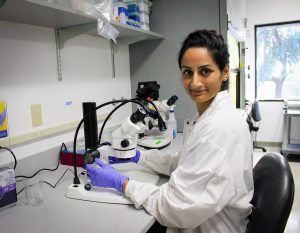
Numana Bhat, 34, is a postdoctoral researcher at the La Jolla Institute for Immunology in San Diego, where she focuses on understanding the biology that underlies the immune response to vaccines. Her husband, Raiees Andrabi, is Institute Investigator at the Department of Immunology and Microbiology at Scripps Research, a prestigious non-profit medical research center. Both are from Kashmir, the India-administered Muslim majority territory that has been convulsed by political violence for decades.

India and Pakistan have fought three wars over Kashmir, which is claimed by both countries. Meanwhile, the Indian military has put down popular insurgencies, which began in the late 1980s, with tactics that Amnesty International and Human Rights Watch have described as human rights abuses. Since 1989, more than 70,000 Kashmiris have been killed during these government crackdowns, while more than 8,000 have disappeared. Thousands of people have been detained without charge under the draconian Public Safety Act.

On August 5, 2019, Prime Minister Narendra Modi’s BJP government unilaterally revoked the constitutionally guaranteed autonomous status of the region, further dividing it into two federally governed union territories. The military imposed an unprecedented lockdown, blocking internet access and phone lines and intimidating journalists. As a result, seven million people were cut off from the outside world for several months.

Given the obstacles created by the political turmoil and violence in Kashmir, Dr. Bhat’s academic success is remarkable. And she is not alone; a notable number of Kashmiri women have become prominent scientists, despite periodic and unpredictable outbreaks of militarized violence, a lack of resources, and the pressure of traditional expectations.

After completing her B.A. and Master’s degrees in Kashmir, Dr. Bhat earned a PhD in biomedical sciences from Sanford Burnham Prebys Medical Discovery Institute, a non-profit medical research center in La Jolla, California. There she discovered that “a fascinating molecule called Regnase-1 acts as molecular brakes in antibody producing cells and prevents autoimmunity.”

[caption id="attachment_2698" align="alignnone" width="300"] Numana Bhat in her laboratory.[/caption]
She credits her mother and a dedicated high school biology teacher for endowing her with the tools and curiosity to pursue a career in biomedical science. But other gifted young women are not as fortunate: opportunities and resources for higher education in scientific research are scarce in Kashmir, “although the people themselves, both students and mentors at the university level, are capable of doing great things,” she said.

She added that she had heard about “people in mentoring positions” who made “discouraging remarks” to female students— including explicit pressure to channel their energy into getting married and having children rather than into post-graduate studies.

Nevertheless, Dr. Bhat said, she has noticed an increasing number of young Kashmiri women pursuing graduate studies and careers in scientific research both in India and abroad. She added that younger people were going outside the sciences to choose careers in humanities, journalism and the arts, “which is also quite refreshing to see.”

More challenges for women

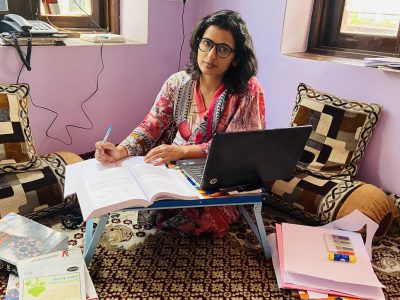
Masrat Maswal, 33, is an assistant professor in chemistry at a government college in central Kashmir’s Budgam district. She grew up middle class in an extended family where attention and money were scarce. Her parents paid more attention to her in high school, where she excelled academically and won praise from her teachers. But she said that Kashmiri society does not make it easy for young women who want to pursue post graduate work and demanding research positions in the sciences. “From the day you are born as a girl in a family in Kashmir, they start to prepare for your marriage; so choosing a career—particularly in science, which needs patience, persistence, hard work, sacrifices and an ample amount of time—is really hard,” she said. [caption id="attachment_2704" align="alignnone" width="300"] Masrat Maswal at home in Kashmir.[/caption] Her female students are often deterred from pursuing graduate work in the sciences by social pressures to marry and settle down when they are in their twenties. “We are losing a lot of talent,” she said, “Due to the prevailing socio-cultural norms of our society.” The lack of proper infrastructure and lab facilities in Kashmir’s colleges also undermines the enthusiasm of both students and teachers, she added.

Family support matters

Amreen Naqash, 31, moved to New Zealand in 2019 to study for a doctorate in pharmacology and toxicology at the University of Otago. In her spare times she mentors students in her native Kashmir who want to pursue graduate studies either in India or abroad. Women, she observed, are showing more interest in looking for fellowships and pursuing graduate work in the sciences at universities outside India. [caption id="attachment_2702" align="alignnone" width="200"] Amreen Naqash in her lab.[/caption] “I’m in touch with some promising female undergrads from Kashmir, which makes me so glad,” she said. “It is such a wonderful feeling to guide them as they are in their prime career stage.” Omera Matoo, 38, has a PhD in marine biology. She is an assistant professor in evolutionary genetics and physiology at the University of Nebraska in Lincoln, where her research is funded by the National Science Foundation (NSF). Born and raised in Kashmir, Dr. Matoo earned her B.A. and Master’s degrees at Bangalore University, where she became friends with two classmates from different parts of India, both of whom came from families of scientists. [caption id="attachment_2703" align="alignnone" width="300"] Omera Matoo in her lab.[/caption] “Looking back, I realize that played a very big role in my career,” she said. All three of them decided to pursue doctorates in the sciences.


Limited opportunities

When Dr. Matoo applied in 2007 for a doctoral program at a university in the United States, she had to travel to New Delhi and Bangalore to take her GRE and TOEFL exams; at the time, there wasn’t a single coaching or test center in Kashmir. The situation for prospective graduate students has since improved. Thanks to the internet, they can take standardized tests online. Mentoring initiatives like JKScientists have been established, with volunteers offering would-be graduate students help and advice. “And then there are other Kashmiri scientists across the world who struggled along similar paths before making a mark in their chosen fields; and now they are giving back to their society by mentoring and guiding young students and aspiring researchers.” Role models and social support structures, said Dr. Matoo, provide positive feedback for young people; this is especially true for female university students in Kashmir, who benefit from having their academic interests nurtured. Dr Seemin Rubab, a professor of physics at the National Institute of Technology in Srinagar, is regularly approached by young girls from Kashmir for career guidance and counseling. “Many times I’ve had to counsel their fathers and brothers to let them pursue their academic careers and avail themselves of opportunities outside Kashmir and India,” said Dr. Rubab. Professor Nilofer Khan, acting Vice Chancellor at the University of Kashmir who has also served as Dean of Student Welfare and founder coordinator of Women’s Studies Centre, confirmed that for years a lack of family support has been a serious obstacle for women who wished to pursue doctoral studies, particularly when they were married with children. “Very few females used to go for research studies in science subjects,” she said, adding that times were changing and female students were “proving their mettle” in the sciences. The frequent government-imposed internet shutdowns are a serious problem for students facing application deadlines, said Dr. Matoo. Delayed exams and the lack of access to resources—“all these limiting things have a scale up effect, not to mention the consequences for mental health,” she said. But somehow these obstacles have not undermined the enthusiasm and academic focus of the young women from Kashmir who regularly reach out to her for guidance on making a career in science. “I am constantly impressed and humbled by their resolve to make a bright future for themselves against all odds,” said Omera. “That gives me a lot of hope and in a way keeps me grounded.” [post_title] => Kashmiri women defy patriarchy & politics to pursue careers in the sciences [post_excerpt] => A notable number of Kashmiri women have become prominent scientists, despite periodic and unpredictable outbreaks of militarized violence, a lack of resources, and the pressure of traditional expectations. [post_status] => publish [comment_status] => closed [ping_status] => open [post_password] => [post_name] => kashmiri-women-defy-patriarchy-politics-to-pursue-careers-in-the-sciences [to_ping] => [pinged] => [post_modified] => 2024-08-28 21:08:26 [post_modified_gmt] => 2024-08-28 21:08:26 [post_content_filtered] => [post_parent] => 0 [guid] => https://conversationalist.org/?p=2696 [menu_order] => 199 [post_type] => post [post_mime_type] => [comment_count] => 0 [filter] => raw )
Kashmiri women defy patriarchy & politics to pursue careers in the sciences

WP_Post Object
(
    [ID] => 56
    [post_author] => 3
    [post_date] => 2020-09-03 16:41:12
    [post_date_gmt] => 2020-09-03 16:41:12
    [post_content] => Published on December 15, 2016, this analysis of the Trump presidency is remarkably prescient.

As a writer and journalist, I’ve been lucky enough to have a long, varied and exciting (and sometimes too exciting) career. A few years ago, I worked with a genuine, bona fide narcissist. The kind of man who once bragged about his diagnosis while dismissing the “asshole shrink” who made it.

Without going into too much detail, here are a few things you can expect from a narcissist in a position of power:

He won’t take responsibility for mistakes.

At most, he will force himself to pretend to take responsibility, while scheming to shirk it in the end anyway. He will, however, hog credit for successes, whether they are his or not. This is why you absolutely have to stop being shocked when Trump says a nasty lie about the CIA and then doesn’t care about the consequences. He will never care. Consequences are for losers.

Everything is always someone else’s fault, and he’ll mess with your head to keep it that way. Here’s a classic exchange between me and my old colleague:

Him: … And let’s focus on that topic tomorrow. Me: OK. ***day goes by*** Me: …So I was writing about this topic and I think… Him: [Screaming, interrupting] WHY AREN’T YOU FOCUSED ON THIS OTHER TOPIC INSTEAD? THIS IS A NIGHTMARE. YOU’RE A NIGHTMARE. WHAT’S WRONG WITH YOU? WHAT KIND OF A JOURNALIST ARE YOU? Me: But you said… Him: [More screaming, more interrupting] I NEVER SAID THAT.

Basically, you couldn’t have a normal conversation with my colleague, because every conversation was a battle he had to win. If he found himself in a corner, he just lied.

You can’t appeal to a narcissist’s morals and ethics.

For them, morals are a weakness and you’ll lose their respect for trying. You’ll never persuade them with ethical arguments, but don’t let that corrupt your own moral compass in the process. When I was being verbally abused by my narcissist colleague, I worked hard to keep the moral high ground. When he insisted that the world was upside-down, it was necessary to keep right and wrong clear in my own head. Why should someone sick like that set the standard for my behavior, let alone explain my reality?

Don’t waste your time expecting a narcissist to change.

Before Trump won, there was all this talk about how he’ll become more “presidential” should he win, because he will realize the gravity of his responsibility. Hahaha — what a joke!

Now people are telling you that it’s OK, Trump will be “presidential” when he’s sworn in. Those people are wrong. You know, sometimes it’s necessary to admit that things are exactly as bad as they seem. I did it. You can too. This doesn’t mean you get to sink into a deep, apathetic depression about the state of things, it just means facing what is happening to our country and society head on. The emperor is naked, but you won’t go blind looking at him.

Disengagement is always the best policy, but when you can’t disengage, remember to not let the narcissist play you off other people.

Narcissists can’t form healthy bonds with others, and therefore do their best to destroy others’ healthy bonds through divide and conquer tactics.

My narcissist colleague would badmouth others around me, trying to make me feel like his special confidante. I realized he was badmouthing me to others simultaneously. I wasn’t important to him, I was just being isolated and used. Look at how Trump humiliated Mitt Romney. Trump didn’t do it because he’s some brilliant tactician, he did it because he pathologically dominates others.

Speaking of “brilliant tacticians” — don’t buy in to the image of grandiosity these people like to project.

Narcissists fake it ‘till they make it. They bluster, and people give in to the bluster. This doesn’t mean that they are smarter than you, it just means that they’re better at the game of “chicken.”

I noticed that my colleague liked to surround himself with people who were conscientious and, in many ways, vulnerable to him precisely because they were conscientious. He enjoyed making people feel guilty and insecure. This kind of abuse is so rampant because it’s everyone’s best kept secret — those of us who have been abused elsewhere are perfect targets for further abuse.

A narcissistic leader won’t inspire genuine loyalty in his inner circle, which is why he forces compliance. 

People have mercenary approaches to narcissists in power: “Oh, I just need the money,” or “Oh, let’s see what he can do for me,” that kind of stuff. Sadly, those who stick around too long get “Stockholm syndrome-ed” to the point of no return. Just look at Trump’s marriage. Melania acts like his well-coached prisoner, not his wife.

Meanwhile, does someone like Kellyanne Conway look like a true believer to you? Please. This lack of loyalty is precisely why narcissists are always working with incomplete information. It is their primary weakness and must be exploited.

These people have big plans they often can’t deliver on.

They’re too bored, enraged or hysterical, which are not particularly efficient emotions. Or it’s because hard work is rarely glamorous and seemingly unrewarding at first. Or maybe it’s because they spend all their time hiring and firing their latest favorites.

You’re going to argue, “But Trump made billions.” Says Trump. We can’t check that fact because he’s shady and avoids all accountability. He won’t even make his tax returns public.

We do know he had his father’s support, and a narcissist’s knack for abusing others’ vulnerability. It’s why he’s such an effective sexist and racist, though maybe not such a brilliant businessman. In short, Trump succeeded because money makes more money, not due to his great ideas. Don’t let the lifestyle and the babes surrounding him fool you.

I remember how my colleague would say literally anything just to maintain the appearance of power and control. People who didn’t know him took him at his word. But observing him closely, I became disillusioned. Seeing his lies for what they were helped protect my sense of self from his verbal assaults.

Narcissistic leaders need adulation and refuse to listen to things they don’t want to hear (i.e., the truth).

Besides vulnerable folks, my old colleague had to surround himself with incompetent people who made him the center of their universe (sometimes the vulnerability and the incompetence overlapped). He mistook empty praise for loyalty.

This is why members of the press should be wary about falling into Trump’s trap. He will seek to punish anyone who in any way deviates from him, because the truth is a betrayal of his worldview. And his worldview is the only one that matters.

If you’re a journalist who depends on access — you’re going to have an especially hard time. Use your access for good. Stockpile what you know. Stay organized.

Narcissists in power do everything they can to drain you of your energy.

They are relentless. They argue, cajole, whip up hysteria, insult, demand that you please them, etc. It’s important to keep quiet about what you value, because they will go nuclear just to take it from you and force you into submission.

The bottom line with a narcissist is that they demand that all attention be focused on them, at all times. If you can’t disengage, don’t try and reason with them. You must learn to conserve your energy, pick your battles, and just. remember. to. breathe.

. . .

In summation, I’d like to be completely honest : You are not going to win with powerful narcissists when you play their games. The minute you’ve started playing, you’ve already lost.

But being realistic about the person you’re dealing with will save your mental health. Don’t let them into your head to prey on your insecurities.

These people do real psychological damage. This is why The Conversationalist places so much emphasis on the roots of and consequences of authoritarianism.

[post_title] => I used to work with a narcissist. Here is my advice on dealing with Donald Trump [post_excerpt] => You’ll never persuade them with ethical arguments, but don’t let that corrupt your own moral compass in the process. [post_status] => publish [comment_status] => open [ping_status] => open [post_password] => [post_name] => i-used-to-work-with-a-narcissist-here-is-my-advice-on-dealing-with-donald-trump [to_ping] => [pinged] => [post_modified] => 2024-08-28 21:08:26 [post_modified_gmt] => 2024-08-28 21:08:26 [post_content_filtered] => [post_parent] => 0 [guid] => https://conversationalist.org/?p=56 [menu_order] => 249 [post_type] => post [post_mime_type] => [comment_count] => 0 [filter] => raw )

I used to work with a narcissist. Here is my advice on dealing with Donald Trump

WP_Post Object
(
    [ID] => 1767
    [post_author] => 2
    [post_date] => 2020-05-14 22:00:58
    [post_date_gmt] => 2020-05-14 22:00:58
    [post_content] => A scientist-turned-businessman believes he can make a profit by harvesting carbon dioxide from the atmosphere and turning it into synthetic limestone.

In 2006 Brent Constanz, a marine biologist who had studied corals for over 20 years, founded a company called Calera to produce cement with carbon dioxide. Constanz believed he could make a profit from harvesting toxic emissions to make the world’s most in-demand product with a method that was not only environmentally sound – but which actually helped reduce carbon emissions. He later thought using carbon dioxide to create concrete was the way to go and in 2012 launched Blue Planet, with the aspiration to pull 25 billion tons of carbon dioxide annually out of the air’s foul breath and turn it into synthetic limestone. Blue Planet manufactures synthetic limestone out of carbon dioxide – the toxic gas that is an industrial byproduct.  Synthetic limestone, when broken down into small pebbles and added to water and cement, becomes concrete, the second largest commodity in the world after water.

Today, carbon in the atmosphere has hit 415 parts per million—the highest level in the 800,000 years for which we have reliable data. In the pre-industrial era, it was below 300 parts per million. The excess carbon in the atmosphere traps heat on Earth, turning up the global thermostat.

Sanjeev Khagram, dean of the Thunderbird School of Global Management at Arizona State University, said that Blue Planet’s method of turning carbon into synthetic limestone was an effective means of reducing carbon dioxide emissions in the atmosphere. While presenting a paper on the subject at the Davos World Economic Forum this year, Khagram said that “carbon farming” was an opportunity for entrepreneurs to “turn a profit of $1 to $10 trillion” per year.

“Blue Planet’s is indeed a market-based approach to tackling climate change,” said Rick Parnell, CEO of the Foundation for Climate Restoration,  an organization that aspires to restore atmospheric CO2 levels to pre-industrial levels by 2050. Parnell also advocates private sector initiatives like that of Constantz’s. “You can't wait for the governments to act, we need to act now,” he said. His partner, MIT graduate Peter Fiekowsky, said that until now Bill Gates was the only person funding carbon removal. He added that recent government initiatives were “at one tenth the scale we need.”

Carbon farming on a large scale would indeed solve a major environmental issue while creating a whole new industry, said Casper Ohm, a data scientist in the field of environmental sustainability. Ohm is editor-in-chief of Water Pollution, an online resource about water and the environment. “The investment to pull 25 billion tons of C02 per year would require a huge amount of capital,” he said.  “It all depends on money.”

For other experts, carbon trading is controversial for ethical and environmental reasons.

“It is kind of like enabling other companies to release more carbon carbon dioxide [so that] another company can take it out of the atmosphere, [which allows] the first company to keep creating more carbon dioxide,” said Lisa Schaefer, a systems engineer who founded Thinq.tv, a video streaming platform developed at Arizona State University that hosts live grassroots conversations about current events.

The first company, explained Schaefer, could be investing in making its infrastructure and processes greener, but instead will now pay a contractor to clean up what they are putting out into the atmosphere.  Schaefer also believes the amount of carbon Blue Planet promises to pull out of the atmosphere might have the counter-productive effect of encouraging the production of more concrete.

“Only 10 billion tons of concrete are produced every year, not including the recycling of old concrete and other cheaper materials for making concrete,” she said. There appears to be no demand for 25 billion tons. She added: “We certainly don't want to encourage companies to manufacture more concrete even if it is a ‘green one.’”

Constantz was, until January 2020, in discussions with a wide range of industrial emitters, including cement and steel plants about initiatives to establish manufacturing plants around the world. The Covid-19 pandemic has brought those discussion to a temporary halt, but Constanz expects them to resume once the crisis has passed.

But even in these times of insecurity, global stasis, and introspection, Fiekowsky, who invested in Blue Planet years ago (Leonardo DiCaprio and  Don Kennedy, the former president of Stanford University, are also investors), says there are parallels to be drawn between how different countries are addressing climate change and Covid-19.

“Singapore and South Korea decided they wanted to control the virus. The US and the UK said, well, let's just minimize the impact of the virus,” Fiekowsky said. As of this writing, the US has reported 1,259,108 cases and 75,781 deaths and the UK 207,977 cases and 30,689 deaths, while South Korea reports 10,822 cases and 256 deaths and Singapore 21,707 cases and 20 deaths. “Obviously, it's horrible. To just minimize what you really want to get rid of,” said Fiekowsky.

Governments were giving short shrift to the urgent need for policy to deal with climate change before the pandemic, which has since drowned out the conversation about the issue.  Constanz pointed out that while the United States government has allocated $2 trillion to address the Covid-19 emergency, far more will die from climate change.

Ismail Serageldin, the former  Vice-President for Environmentally and Socially Sustainable Development at the World Bank, famously said in 1995 that "if the wars of [the twentieth century] century were fought over oil, the wars of the [twenty-first] century will be fought over water — unless we change our approach to managing this precious and vital resource."

Climate change will continue to ravage the Earth even after a vaccination for the Covid-19 virus becomes available. It is thus a crisis that we cannot afford to sideline, even during a global health crisis. To that point, climate expert Professor Robert Devoy of Ireland’s Coastal Marine Research Center issued a stark warning in a 2015 interview. “The last time the planet warmed this much,” he said, “88 percent of life disappeared.”

 
    [post_title] => Can private industry save the environment with for-profit green initiatives?
    [post_excerpt] => Harvest carbon and turning it into synthetic limestone could be an effective means of reducing carbon dioxide emissions in the atmosphere.
    [post_status] => publish
    [comment_status] => closed
    [ping_status] => open
    [post_password] => 
    [post_name] => can-private-industry-save-the-environment-with-for-profit-green-initiatives
    [to_ping] => 
    [pinged] => 
    [post_modified] => 2024-08-28 21:08:26
    [post_modified_gmt] => 2024-08-28 21:08:26
    [post_content_filtered] => 
    [post_parent] => 0
    [guid] => http://conversationalist.org/?p=1767
    [menu_order] => 267
    [post_type] => post
    [post_mime_type] => 
    [comment_count] => 0
    [filter] => raw
)

Can private industry save the environment with for-profit green initiatives?

WP_Post Object
(
    [ID] => 1710
    [post_author] => 2
    [post_date] => 2020-04-24 02:31:36
    [post_date_gmt] => 2020-04-24 02:31:36
    [post_content] => Working from home under lockdown has highlighted some unanticipated gender and class issues.

I have a vivid memory of a 1990s television commercial for a then-state-of-the-art cordless phone. It portrayed an industrious young businesswoman working her way through the weekend from home. Her three young daughters appear and beg her to drive them to the beach. The woman is torn; she loves her kids, but she’s also a dedicated Career Woman, and, weekend or no, she has work to do.

The last shot of the ad shows the woman taking her daughters to the beach—and joining a conference call from her new cordless phone as they frolic in the waves. Technology, the ad suggested, would set a new generation of women free by allowing them to work from anywhere: with the right phone, you could spend time with your kids without sacrificing that promotion!


Fast forward to 2020 and a world reeling from a global pandemic. The ad now seems both dated and antithetical to modern concepts of gender roles and work-life balance (why can’t the children’s other parent take them to the beach? why is the person struggling to balance work and family always a woman? why should anyone have to join a conference call on a Saturday?). Now facing a grim choice between economic pain and physical risk are the huge number of people whose jobs cannot be performed from home—grocery store clerks, warehouse workers, transit workers, and health care providers, to name a few—as well as those whose employers are refusing to let them work from home, even in cases where their jobs can be done remotely.

Those who can work from home are the lucky minority. According to a survey conducted by the U.S. Bureau of Labor Statistics, 29 percent of wage and salary workers had the option of working from home in 2017-18, and 25 percent did so at least some of the time. Most of them are high-earning white collar workers. Of civilian workers, a category comprised of both private industry and state and local government workers, only 7 percent have access to “flexible” work, or telework.

The COVID-19 crisis has transformed a white-collar job perk into a necessary means of protecting the health of workers, businesses, and the overall economy. This is why, in the span of a few weeks, so many companies have gone from resisting to mandating it.

Organizations seeking to advance women in the workplace have been pushing for companies to allow flexible and/or at-home work since the 1970s. Women would benefit the most from these arrangements, the theory went, because they were expected to perform a greater share of domestic labor. Why should an ambitious, hardworking woman be held back in her career simply because she had to pick up the kids at 3pm or get dinner on the table by 7?

Today, women still do more child care and housework than men, but many fathers are playing a greater role in their children’s lives than did men of previous generations. Male and female, single and married, parents and child-free, many workers value the flexibility and freedom of working from home at least some of the time—being able to let in the plumber, sign for a package, go to the gym, walk the dog, or prepare a home-cooked meal reduces stress across the board.

Before the pandemic—and even now, in the midst of it—many organizations were and are reluctant to allow staff to work from home. Although more companies have been allowing at-home work in the last 20 years, the last decade saw a small backlash, led most notably by Marissa Mayer, who banned remote work when she took over Yahoo in 2013. Some employers worried that workers didn’t have the training or equipment necessary to work productively from home, or that being at home would be too distracting. Some managers feared a loss of control and didn’t trust employees to get work done. Mayer, Steve Jobs, and others believed that collaboration, connectedness, and innovation suffer when employees aren’t interacting with each other in person.

Now that working from home has, in some cases, gone from a reward reserved for upper management to a requirement of the job, more people are discovering its downsides. As a young entrepreneur named Adam Simmons told CBC News in 2019, "I think [working at home] is really damaging for your mental health…It definitely was for mine. I felt very, very lonely.”

When Simmons worked from home, he was alone. But due to pandemic-induced school and day care closures, many of today’s office workers are trying to meet the demands of full-time jobs while caring for children. An acquaintance recently described a meltdown her toddler son had while she was working from home. “He asked for a snack WHILE eating a snack,” she wrote in a Facebook post. “I said, ‘You’re already eating an apple,’ and he threw himself on the ground, moaning, ‘No, I need a snaaaaaaack!’” Never has the professor whose children famously interrupted a live BBC News interview in 2017 been more relatable.

Newer technologies like instant chat and video conferencing have made it easier than ever to work from home, if not necessarily more pleasant. Jeremy Bailenson, a professor of communication at Stanford and founding director of the university’s Virtual Human Interaction Lab, wrote about why so many people find Zoom meetings more exhausting than in-person ones in a recent Wall Street Journal op-ed.

Bailenson’s research suggests that employees now attending hours of Zoom meetings per week are experiencing “nonverbal overload.” The grid format of ten-person Zoom meetings, in which each participant stares at you from the screen for the entire time in an eerie echo of “The Brady Bunch,” can be “draining,” he wrote. In real-life meetings, we can “control our personal space,” whereas “for every minute we are in Zoom, we have staring faces inches from our own.”

Employers resist allowing people to work from home in part because they fear a dip in productivity. But research and workers’ experiences during the pandemic indicate that allowing (or requiring) work from home is in fact a boon to management. As Bailenson wrote in The Wall Street Journal, “people are forced to pay attention” on Zoom to a greater degree than in person. Even Kevin Roose, author of a recent New York Times op-ed entitled, “Sorry, but Working From Home is Overrated,” acknowledged that studies show remote workers are more efficient and productive and “tend to take shorter breaks and fewer sick days” than their on-site peers.

Advocates have emphasized for years that allowing employees to work from home at least some of the time can save companies money—e.g., by reducing office size or eliminating the need to rent one and slashing the cost of utilities, janitorial services, supplies, equipment, and furniture. According to a 2014 NBC News story, a typical business would save, on average, $11,000 per year by allowing employees to work from home just half of the time.

As Roose pointed out, having trouble separating work life from home life is a downside for workers, but not for bosses looking to “squeeze extra efficiency out of [their] employees.” Indeed, employees who now have to work from home because of the pandemic are encountering what one described in a recent career advice column as, “expectations that because we’re at home all the time anyway, we should be online and available at almost all times” and “being asked to do extra work during the evenings…because everyone knows we’re all here anyway.”

Without “the normal excuse of having plans,” the advice seeker wrote, “I'm finding it hard to say no.” Overwhelmed and/or abusive managers are already taking advantage of this situation; more than one person has noticed that they are working more hours now than they were before the pandemic, often because they’re replacing their daily commute with another hour or three of work.

Extra hours aside, working from home is not for everyone. Some—extroverts, parents of young children, people who value a clear separation between work and home—will be delighted to return to their offices as soon as it is safe to do so. Others, having discovered that they can work just as well (or better) from home, will not easily give up their newfound freedom.

For many companies, allowing people to work remotely at least some of the time makes sense for employers and employees alike, with or without a global pandemic. And it will be difficult for management to continue insisting it’s not feasible when workers have been doing it for months. Forcing adults to spend eight or more hours a day on-site is as outdated and ludicrous as running an ad that equates weekend work with women’s liberation.
    [post_title] => What the pandemic is teaching us about working from home
    [post_excerpt] => Now that working from home has, in some cases, gone from a privilege reserved for upper management to a requirement of the job, more people are discovering its downsides.
    [post_status] => publish
    [comment_status] => closed
    [ping_status] => open
    [post_password] => 
    [post_name] => what-the-pandemic-is-teaching-us-about-working-from-home
    [to_ping] => 
    [pinged] => 
    [post_modified] => 2024-08-28 21:08:26
    [post_modified_gmt] => 2024-08-28 21:08:26
    [post_content_filtered] => 
    [post_parent] => 0
    [guid] => http://conversationalist.org/?p=1710
    [menu_order] => 272
    [post_type] => post
    [post_mime_type] => 
    [comment_count] => 0
    [filter] => raw
)

What the pandemic is teaching us about working from home

WP_Post Object
(
    [ID] => 1646
    [post_author] => 2
    [post_date] => 2020-03-05 20:16:47
    [post_date_gmt] => 2020-03-05 20:16:47
    [post_content] => The tech executive turned data justice warrior is celebrated as a truth-telling hero, but there's something a bit too smooth about this narrative arc.

A few months ago, I was contacted by a senior executive who was about to leave a marketing firm. He got in touch because I’ve worked on the non-profit side of tech for a long time, with lots of volunteering on digital and human rights. He wanted to ‘give back’. Could I put him in touch with digital rights activists? Sure. We met for coffee and I made some introductions. It was a perfectly lovely interaction with a perfectly lovely man. Perhaps he will do some good, sharing his expertise with the people working to save democracy and our private lives from the surveillance capitalism machine of his former employers. The way I rationalized helping him was: firstly, it’s nice to be nice; and secondly, movements are made of people who start off far apart but converge on a destination. And isn’t it an unqualified good when an insider decides to do the right thing, however late?

The Prodigal Son is a New Testament parable about two sons. One stays home to work the farm. The other cashes in his inheritance and gambles it away. When the gambler comes home, his father slaughters the fattened calf to celebrate, leaving the virtuous, hard-working brother to complain that all these years he wasn’t even given a small goat to share with his friends. His father replies that the prodigal son ‘was dead, now he’s alive; lost, now he’s found’. Cue party streamers. It’s a touching story of redemption, with a massive payload of moral hazard. It’s about coming home, saying sorry, being joyfully forgiven and starting again. Most of us would love to star in it, but few of us will be given the chance.

The Prodigal Tech Bro is a similar story, about tech executives who experience a sort of religious awakening. They suddenly see their former employers as toxic, and reinvent themselves as experts on taming the tech giants. They were lost and are now found. They are warmly welcomed home to the center of our discourse with invitations to write opeds for major newspapers, for think tank funding, book deals and TED talks. These guys – and yes, they are all guys – are generally thoughtful and well-meaning, and I wish them well. But I question why they seize so much attention and are awarded scarce resources, and why they’re given not just a second chance, but also the mantle of moral and expert authority.

I’m glad that Roger McNamee, the early Facebook investor, has testified to the U.S. Congress about Facebook’s wildly self-interested near-silence about its amplification of Russian disinformation during the 2016 presidential election. I’m thrilled that Google’s ex-‘design ethicist’, Tristan Harris, “the closest thing Silicon Valley has to a conscience,"(startlingly faint praise) now runs a Center for Humane Technology, exposing the mind-hacking tricks of his former employer. I even spoke —critically but, I hope, warmly—at the book launch of James Williams, another ex-Googler turned attention evangelist, who “co-founded the movement”of awareness of designed-in addiction. I wish all these guys well. I also wish that the many, exhausted activists who didn’t take money from Google or Facebook could have even a quarter of the attention, status and authority the Prodigal Techbro assumes is his birth-right.

Today, when the tide of public opinion on Big Tech is finally turning, the brothers (and sisters) who worked hard in the field all those years aren’t even invited to the party. No fattened calf for you, my all but unemployable tech activist. The moral hazard is clear; why would anyone do the right thing from the beginning when they can take the money, have their fun, and then, when the wind changes, convert their status and relative wealth into special pleading and a whole new career?

Just half an hour flipping through my contacts produced half a dozen friends and acquaintances who didn’t require a ‘road to Damascus’ conversion to see what was wrong with big tech or the ways governments abuse it. Nighat Dad runs the Digital Rights Foundation in Pakistan, defending online freedom of expression and privacy for women, minorities and dissidents. That’s real courage. Gus Hosein has worked in tech and human rights for over 20 years, runs Privacy International, the UK-based non-profit, and is the most visionary thinker I know on how to shake up our assumptions about why things are as they are.  Bianca Wylie founded the volunteer-run Open Data Institute Toronto, and works on open data, citizen privacy and civic engagement. The “Jane Jacobs of the Smart Cities Age,” she’s been a key figure in opening up and slowing down Alphabet’s Sidewalk Labs juggernaut in Toronto. Aral Balkan runs Small Technology Foundation and works on both the tools and the policies to resist surveillance capitalism. Unafraid of being unpopular, even with other activists, Balkan freely hammers rights organizations or conferences for taking big tech’s sponsorship money while criticizing the companies’ practices. In the western Balkans, hvale vale works tirelessly and cheerfully on women's rights, sexual rights and the political and practical path to a feminist internet. Robin Gross,  a Californian intellectual property lawyer, could have put her persistence and sheer pizazz to work defending big entertainment companies, but instead she’s worked for decades against the copyright maximalism that strangles artists’ creativity and does nothing to increase their incomes. I would love to hear their voices amplified, not (just) the voices of those who took a decade and more to work out the rottenness at the core of big tech.

Ex-Google lobbyist Ross Lajeunesse left the company in 2019 over its censored search engine for China and also because of homophobic, sexist and racist work practices. He’s now running for a Democratic senate nomination, and recently wrote a classic of the ‘scales have fallen from my eyes’ genre, called “I Was Google’s Head of International Relations. Here’s Why I Left.” Its lede is “The company’s motto used to be “Don’t be evil.” Things have changed.”

Really? Has Google really changed? Lajeunesse joined in 2008, years into Google’s multi-billion dollar tax avoidance, sexist labor practices and privacy hostility and continued to work there through the years of antitrust fines, misuse of personal health data, wage fixing, and financially pressuring think tanks. Google didn’t change. It just started treating some of its insiders like it already treated outsiders. That only looks like radical change if you’ve never thought too hard about what you are doing and to whom.

One hundred thousand people work for Google/Alphabet; some of them have much more power than others. The point isn’t whether Lajeunesse is or isn’t culpable for the many acts of the enormous company he represented—as its chief lobbyist in Asia for several years—it’s that of all the people who spent the decade of 2010-20 working thanklessly to expose and reduce the firm’s monopolistic abuse and assault on global privacy, it’s the ex-lobbyist who gets our attention now.

We all need second chances. Even if we don’t need those fresh starts ourselves, we want to live in a world where people have a reason to do better. But the prodigal tech bro’s redemption arc is so quick and smooth it’s barely a road bump. That’s because we keep skipping the most important part of the prodigal son story—where he hits rock bottom. In the original parable, the prodigal son wakes up in a pig sty, starving, and realizes his father’s servants now live better than he does. He resolves to go home to the people and place he did not value or respect before. He will beg to be one of his father’s servants. He accepts his complete loss of status. But instead of chastising and punishing his prodigal son, the rejoicing father greets him joyfully and heads off the apology with a huge party. It’s a great metaphor for how to run a religion, but a lousy way to run everything else.

Prodigal tech bro stories skip straight from the past, when they were part of something that—surprise!—turned out to be bad, to the present, where they are now a moral authority on how to do good, but without the transitional moments of revelation and remorse.  But the bit where you say you got things wrong and people were hurt? That’s the most important part. It’s why these corporatized reinventions feel so slick and tinny, and why so many of the comments on Lajeunesse’s train wreck post on Medium were critical. The journey feels fake. These ‘I was lost but now I’m found, please come to my TED talk’ accounts typically miss most of the actual journey, yet claim the moral authority of one who’s ‘been there’ but came back. It’s a teleportation machine, but for ethics.

(While we’re thinking about the neatly elided parts of the prodigal tech bro story, let’s dwell for one moment on the deletion of the entire stories of so many women and people of color barely given a first chance in Silicon Valley, let alone multiple reinventions.)

The only thing more fungible than cold, hard cash is privilege. The prodigal tech bro doesn’t so much take an off-ramp from the relatively high status and well-paid job he left when the scales fell from his eyes, as zoom up an on-ramp into a new sector that accepts the reputational currency he has accumulated. He’s not joining the resistance. He’s launching a new kind of start-up using his industry contacts for seed-funding in return for some reputation-laundering.

So what? Sure, it’s a little galling, but where’s the harm?

Allowing people who share responsibility for our tech dystopia to keep control of the narrative means we never get to the bottom of how and why we got here, and we artificially narrow the possibilities for where we go next. And centering people who were insiders before and claim to be leading the outsiders now doesn’t help the overall case for tech accountability. It just reinforces the industry’s toxic dynamic that some people are worth more than others, that power is its own justification.

The prodigal tech bro doesn’t want structural change. He is reassurance, not revolution. He’s invested in the status quo, if we can only restore the founders’ purity of intent. Sure, we got some things wrong, he says, but that’s because we were over-optimistic / moved too fast / have a growth mindset. Just put the engineers back in charge / refocus on the original mission / get marketing out of the c-suite. Government “needs to step up”, but just enough to level the playing field / tweak the incentives. Because the prodigal techbro is a moderate, centrist, regular guy. Dammit, he’s a Democrat. Those others who said years ago what he’s telling you right now? They’re troublemakers, disgruntled outsiders obsessed with scandal and grievance. He gets why you ignored them. Hey, he did, too. He knows you want to fix this stuff. But it’s complicated. It needs nuance. He knows you’ll listen to him. Dude, he’s just like you…

I’m re-assessing how often I help out well-established men suddenly interested in my insights and contact book. It’s ridiculous how many ‘and I truly mean them well’s I cut out of this piece, but I really do, while also realizing I help them because they ask, or because other people ask for them. And that coffee, those introductions, that talk I gave and so much more of my attention and care—it needs to go instead to activists I know and care about but who would never presume to ask. Sometimes the prodigal daughter has her regrets, too.

So, if you’re a prodigal tech bro, do us all a favour and, as Rebecca Solnit says, help “turn down the volume a little on the people who always got heard”:
  • Do the reading and do the work. Familiarize yourself with the research and what we’ve already tried, on your own time. Go join the digital rights and inequality-focused organizations that have been working to limit the harms of your previous employers and – this is key – sit quietly at the back and listen.
  • Use your privilege and status and the 80 percent of your network that’s still talking to you to big up activists who have been in the trenches for years already—especially women and people of colour. Say ‘thanks but no thanks’ to that invitation and pass it along to someone who’s done the work and paid the price.
  • Understand that if you are doing this for the next phase of your career, you are doing it wrong. If you are doing this to explain away the increasingly toxic names on your resumé, you are doing it wrong. If you are doing it because you want to ‘give back,’ you are doing it wrong.
Do this only because you recognize and can say out loud that you are not ‘giving back’, you are making amends for having already taken far, far too much.   [post_title] => The Prodigal Techbro [post_excerpt] => Prodigal tech bro stories skip straight from the past, when they were part of something that—surprise!—turned out to be bad, to the present, where they are now a moral authority on how to do good, but without the transitional moments of revelation and remorse.   [post_status] => publish [comment_status] => closed [ping_status] => open [post_password] => [post_name] => the-prodigal-techbro [to_ping] => [pinged] => [post_modified] => 2024-08-28 21:08:26 [post_modified_gmt] => 2024-08-28 21:08:26 [post_content_filtered] => [post_parent] => 0 [guid] => http://conversationalist.org/?p=1646 [menu_order] => 279 [post_type] => post [post_mime_type] => [comment_count] => 0 [filter] => raw )

The Prodigal Techbro

WP_Post Object
(
    [ID] => 1598
    [post_author] => 2
    [post_date] => 2020-02-07 17:52:00
    [post_date_gmt] => 2020-02-07 17:52:00
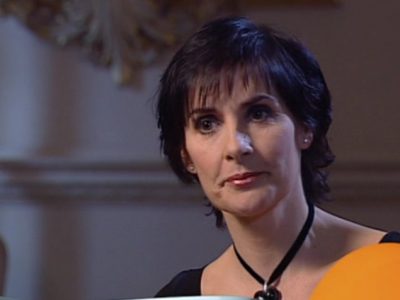
    [post_content] => One of the world's most financially successful singers is a recluse who never performs, rarely gives interviews, and declines to play the role of a celebrity.

Enya, the Irish singer-musician, is perhaps one of the most mocked and memed artists of our time. Her body of work is often dismissed as New Age, a label she has disavowed. To many, her songs are the aural equivalent of astrology: mystical and fun, but lacking substance. Familiar tracks like “Only Time” provide ambience at yoga retreats, LARPs, facials, and tarot card readings. The singer has a reputation for being a bit of a recluse, rarely making public appearances or granting interviews. Music critics often offer muted or grudging praise for her albums, but they don’t take her seriously. I, however, love Enya—and not ironically.

When I was growing up, my dad often assumed the role of school chauffeur and minivan DJ. His taste was (and remains) eclectic; during those drives, he played everything from The Moody Blues, to German musical project Enigma, to ambient techno from the now-defunct 90s website mp3.com. Enya was always on heavy rotation and, as a result, still occupies a special place in my heart and on my Spotify playlists. 

My deep affection for Enya's music is rooted in more than just nostalgic childhood memories. Her ethereal songs are a testament to the worth of gentleness and beauty, qualities that have historically been categorized as feminine and, therefore, of little value. In a world where obsessive fans have endangered the lives of female musicians, her choice to live a private life is a salutary example; setting boundaries is an act of self-preservation and an empowering choice, not necessarily an eccentric one. It is also a mute but radical demonstration that professional success as a musician can be achieved without living the life of a celebrity, perpetually in the spotlight. As one of the best-selling artists in the world, Enya shows us there is another way to achieve wealth and fame.

Born Eithne Pádraigín Ní Bhraonáin, Enya began her music career singing with Clannad, her family’s award-winning Irish music band. In 1982, she became a solo artist in partnership with Nicky Ryan, who she met when he was Clannad’s sound engineer, and his wife Roma, a lyricist; they remain her creative team to this day. The three began experimenting with looping harmonies, eventually creating what is now Enya’s signature layered sound. Unless otherwise noted in song credits, Enya performs all the vocals for her music and plays all the instruments. Known for her facility with languages, she has recorded songs in Gaelic, Latin, Japanese, and Sindarin—the latter an Elvish language invented by J.R.R. Tolkien.

The music industry tends to expect that female artists will offer up their private lives for public consumption, but Enya refuses to play the celebrity game. Instead she lives alone in Manderley Castle, the Dublin-area Victorian mansion named for the house in Daphne Du Maurier's novel Rebecca. She never tours, rarely performs, and spends years crafting each album.

[caption id="attachment_1601" align="aligncenter" width="640"] Manderley Castle, Enya's mansion in Killiney.[/caption]

On the rare occasions she sits for interviews, Enya frequently points out that fame and success are not synonymous. In a 2015 profile for BuzzFeed she notes, “There’s no rulebook that says, ‘Your music is successful; you must now become famous.’” She remains unwaveringly committed to the integrity of her music, and isn’t afraid to say “no” to even the most tempting offers. She famously declined to compose the score for “Titanic,” and turned down an invitation to speak at Harvard. In an interview for The Irish Times, she explains, “I just did things that I wanted to do.”

Rooted in Celtic, classical, folk, and choral traditions, Enya’s music has a timeless quality. I can imagine someone cleansing a room with sage and crystals to "The Memory of Trees" in 2020 as easily as I can channel the image of fourteenth-century women singing the Gaelic lyrics of "Ebudæ" while dancing in a misty green field. Enya’s body of work is both beautiful and deeply, wonderfully weird. 

Despite her refusal to play the role of celebrity, Enya is by all objective standards a superstar. She is one of the best-selling musicians in the world, surpassing even Nirvana in album sales. She’s a four-time Grammy Award winner, and has been nominated for an Academy Award and a Golden Globe. The eclectic range of artists who have sampled her music include The Fugees, Panda Bear, Diddy, and Meek Mill; her music has provided the soundtracks for countless commercials and movies, and inspired artists from Weyes Blood to Nicki Minaj. Enya’s music has spent over five years in the number one spot on the Top New Age Albums chart. (Check it out, she’s still there.) 

“There isn't another modern artist who can stay holed up with her cats in her castle (next door to Bono's!) watching “Breaking Bad” and still sell 23.8 million albums in the United States alone,” writes Melissa Locker in a profile for NPR. In 2017, VICE described her as “a musician capable of selling the unsellable”—spiritual, synth-infused choral music. In a 1989 review in the Orlando Sentinel, Bill Henderson describes Enya’s music “as light as a whisper, yet as strong as a scream.” The Irish musician has become an unlikely music industry powerhouse on her own terms, according to her own rules. 

So why are similarly reclusive male musicians, like Leonard Cohen, or those who are “eccentric,” like David Bowie, or genre-bending, like Brian Eno, respected as artists, while she is not? 

In a searing 2000 review, Entertainment Weekly summarized  "A Day Without Rain," her fifth album, as “New Age nonsense," adding: “Unless you’re bound in an herbal body wrap, there’s simply no acceptable reason to listen” it. According to the reviewer for Rolling Stone, “The Irish-multi-instrumentalist-singer-composer's skill at ephemeral sonic watercolors has grown wearisome.” In 1989, The Los Angeles Times panned Enya’s second album, "Watermark," calling it “a portentous pastiche,” and dismissively referring to her as a “young chanteuse.” According to critics, Enya’s music is “too much,” and yet not substantive enough. Her talent is pretentious and tiring. Her success is baffling. Her songs are strange, but not in a cool way. (Siri, play “The Man” by Taylor Swift.)

For his film “Eighth Grade," director Bo Burnham uses "Orinoco Flow" (Sail away, sail away, sail away) as a poignant commentary on the swirling emotions of a socially anxious, lonely 13 year-old girl seeking the acceptance of her peers in the Instagram generation. Burnham feels the singer has been unjustifiably maligned. "We’ve been trained by countless commercials and Will Ferrell movies to find the retro needle-drop inherently funny,” he tells Vulture's Sean O'Neal. In "Eighth Grade," Burnham sets out to redeem "Orinoco Flow," a song he loves without irony. The treatment of Enya’s music in popular culture has clearly warped our collective ability to take it seriously, but Burnham remembers that as a child, Enya’s music made him “feel bigger than [he] was...deeper and more exciting.” I can relate.


The dual nature of Enya’s work is part of what makes it both hard to pin down and special. Are her songs beautiful, technical, and emotive? Or are they hilarious in their hyper-seriousness? The answer is, they are both.

“Derry Girls,” a comedy about a group of high school friends in 1990s Northern Ireland, channels these diverse elements of Enya’s music to great effect. “Caribbean Blue” opens and closes Season Two: In the first episode: a drone camera pans over Ireland’s iconic green hills and its urban rooftops, showing heavily armed British soldiers in armored personnel carriers, demonstrators throwing molotov cocktails, and walls covered in Irish nationalist graffiti; meanwhile we hear Erin, one of the protagonists, delivering a dramatic and very clichéd monologue about peace—and then the camera reveals she’s speaking from the bathtub. Here, the function of Enya’s music is to add humor—a comically solemn soundtrack to highlight the heroine’s sense of self-importance. 


The same song sets the mood for a serious moment in the season finale, when the girls stand sullenly in a cheering crowd, unable to join in celebrating President Bill Clinton’s visit to their town because their friend James is moving back to England. “Caribbean Blue” grows louder as one of the girls spots James, who has decided to stay; the song drowns out the crowd’s cheers, and the girls run to embrace their friend: If all you told was turned to gold, if all you dreamed was new… The song that provided comedy in the first episode of the season signals earnestness in the final one. Enya’s music is no longer the butt of the joke; it’s serious.

When I listen to Enya, I hear the sound of a woman in control, undaunted by those who underestimate her. Her delicate, ethereal songs affirm that in softness, there is power.
    [post_title] => Enya: icon of radical softness
    [post_excerpt] => 
    [post_status] => publish
    [comment_status] => closed
    [ping_status] => open
    [post_password] => 
    [post_name] => enya-icon-of-radical-softness
    [to_ping] => 
    [pinged] => 
https://www.billboard.com/charts/new-age-albums
    [post_modified] => 2023-11-06 13:55:51
    [post_modified_gmt] => 2023-11-06 13:55:51
    [post_content_filtered] => 
    [post_parent] => 0
    [guid] => http://conversationalist.org/?p=1598
    [menu_order] => 283
    [post_type] => post
    [post_mime_type] => 
    [comment_count] => 0
    [filter] => raw
)

Enya: icon of radical softness

WP_Post Object
(
    [ID] => 1588
    [post_author] => 2
    [post_date] => 2020-01-31 04:25:33
    [post_date_gmt] => 2020-01-31 04:25:33
    [post_content] => Grassroots organizers are proving to be a formidable challenge to the Republican Party's voter suppression tactics. 

When Stacey Abrams, the first black woman ever nominated by a major party to run for governor of any state, ran as Georgia’s Democratic candidate for governor in 2018, voters knew she might lose. Abrams’ skills, tenacity, and national profile—enhanced by a decade of service in Georgia’s state legislature and an endorsement from Barack Obama—helped secure her historic nomination. But the state’s long history of voter suppression was a formidable obstacle to victory.

Brian Kemp, the Republican gubernatorial candidate then serving as Georgia’s Secretary of State, was responsible for overseeing voter registration. One month before the election, his office was holding 53,000 voter registration applications for reviewnearly 70 percent of which were for black residents, who compose approximately 32 percent of Georgia’s population. In a leaked recording Kemp can be heard saying that the Abrams campaign’s voter turnout operation “continues to concern us, especially if everybody uses and exercises their right to vote.”

Abrams lost the election by 54,723 votes.

The United States has a long history of voter suppression. For decades following Reconstruction, black American residents of Jim Crow states who tried to exercise their right to vote were subjected to poll taxes, literacy tests, arrests, savage beatings, and murder. In the United States (and in Britain), women who agitated for the right to vote were arrested and imprisoned; when they protested by going on hunger strikes, they were violently force-fed.

Contemporary voter suppression tactics are just as prevalent, though implementation is no longer as violent. In 2011, New Hampshire House Speaker William O’Brien vowed to “tighten up the definition of a New Hampshire resident” and crack down on same-day voter registrations in college towns, which, he said, were full of “kids voting liberal, voting their feelings, with no life experience.”

Voter suppression has been a key component of Republican electoral strategy at least since 2008—particularly, but not exclusively, in the Midwest and South. The last Republican presidential candidate to win the popular vote was George W. Bush in 2004. Republican strategists saw in Obama’s 2008 and 2012 victories a rising tide of “kids voting liberal” and minority voter turnout that threatened GOP power. In response, they crafted a strategy to suppress the vote, especially among young people and black people.

It’s no secret that conservatives are deliberately targeting people of color. In a 2019 documentary called “Rigged: The Voter Suppression Playbook,” a North Carolina retiree named Michael Hyers describes his role in helping to purge thousands from his state’s voter rolls in the run-up to the 2016 presidential election. While claiming—without evidence—that he’s working to counteract rampant voter fraud, Hyers, who is white, repeatedly uses language that suggests his true motives are to keep black people from voting. “We got to clean the rolls up one way or another,” he says. “It’s about time we turned the lights on in the kitchen and started cleaning the cockroaches out of here.” In explaining that people like him have a knack for spotting anomalies in registrations, he says, “It’s kind of like seeing a lump of coal in a bale of cotton—it’ll just pop right out at you.”

Don Yelton resigned as chair of North Carolina's Buncombe County Republican Party in 2013 after “The Daily Show” aired an interview in which he acknowledged that new state voting laws were designed to “kick the Democrats in the butt” and could hurt “lazy blacks that want the government to give them everything.”

This sort of overtly racist discourse can incite violence. Shortly before a gunman opened fire in 2019 outside a Walmart in El Paso, Texas, killing 22 and wounding 26, a manifesto that he is believed to have authored appeared online. The long, detailed document includes a description of the author’s intent to “remove the threat of the Hispanic voting bloc” through violent means.

While Republicans work to keep certain demographic groups from voting, institutions like the Electoral College sap the power of our votes. In November, Stacey Abrams told Oliver Laughland, a reporter for The Guardian U.S., that the Electoral College should be abolished. It was, she said, “designed because those who were in power did not trust the peasants and the working people to actually make good decisions, and we should all be in rebellion against that idea.”

One way to join Abrams’s efforts to fight back against voter suppression is to get involved with one of the grassroots organizations that have sprung up over the last decade to combat anti-democratic measures. After Brian Kemp was declared the winner of Georgia’s gubernatorial election, Abrams founded Fair Fight to “promote fair elections in Georgia and around the country, encourage voter participation in elections, and educate voters about elections and their voting rights.” Through Fair Fight’s nonprofit she also helped organize a lawsuit that challenged Georgia’s entire election system, arguing that it violates the constitutional rights of voters of color.

While large black populations can make states like Georgia targets of voter suppression efforts, they also create bases of power from which those efforts can be fought. In a 2017 Alabama Senate election, black voters organized to propel Doug Jones, the Democratic candidate, to a narrow victory over Republican Roy Moore; his victory made Jones the first Democrat since 1997 to represent the state of Alabama in the U.S. Senate. Doug Jones is white, but 56 percent of those who voted for him were black. According to NBC News exit polls, 96 percent of black voters supported Jones, including 98 percent of black female voters and 93 percent of black male voters.New groups like Woke Vote, a “tiny” collection of students, church-going activists, and organizers, succeeded in getting out the vote for Jones by concentrating on “potential sites of latent black political power, including historically black colleges and universities and black churches,” writes Vann R. Newkirk II in The Atlantic. Newkirk describes these institutions as “force-multipliers, turning each potential new voter into an organizer.” Woke Vote “secured pledges from members not only to vote, but to bring people with them to the polls.”

Steve Phillips, the founder of Democracy in Color, writes in a 2017 New York Times op-ed that “independent, under-the-radar, grass-roots, on-the-ground voter turnout efforts by black leaders and organizers in black neighborhoods” made the difference in Alabama—and not the Democratic Party, nor Doug Jones’ campaign. Phillips names organizations like BlackPAC, which canvassed the state and organized transportation for voters.

In his notorious interview for "The Daily Show," Don Yelton said that laws restricting voting only hurt lazy people. “If it hurts a bunch of college kids that’s too lazy to get up off their bohunkus and go get a photo ID, so be it,” Yelton said.

Acquiring an ID card is, however, not an easy undertaking. Government agencies have limited hours and are often inaccessible to people who cannot afford time off work or the cost of travel. The 25 percent of Americans who do not have internet access at home face an additional obstacle: they have no easy way of looking up voter requirements in their area.

When election law is deliberately abstruse and selectively enforced, it’s rational to conclude that it might be safer to skip voting than to risk breaking the law. In 2018, a dozen people—nine of them black—in North Carolina’s Alamance County were charged with voting illegally in the 2016 presidential election. All were on probation or parole for felony convictions, and most had no idea they were committing a crime by voting while on parole. One of those charged, a man named Taranta Holman who was then 28 years old, told The New York Times that he had never voted before 2016 and never would again; it was simply “too much of a risk.” Residents of Texas, Kansas, Idaho, and other states have also been charged with voting illegally.

Grassroots efforts to counteract voter suppression have succeeded in part because many Americans see voting as a duty as well as a right. They want to vote, but they need information, encouragement, and support. Reported obstacles to voting include lack of time, lack of transportation, work and family responsibilities that preclude people from waiting in long lines, broken machines, unclear and/or onerous voter ID requirements—and, notably, anxiety. (I remember feeling slightly panicky entering a voting booth for the first time as an adult; the machines are not user-friendly!)

Accompanying a person who is nervous or uncertain because they haven’t voted in a long time, if ever, to the polls is not only an act of kindness—it’s a powerful act of solidarity. Like women seeking to exercise their right to a safe and legal abortion, marginalized people have, ever since winning the right to vote, been actively discouraged or prevented from using it.

We can’t reform institutions, repeal unjust laws, or ensure that every election official is capable and fair-minded overnight, but we can support one another, logistically and psychologically, in exercising our rights. Just as escorting one woman into an abortion clinic is an act of communal solidarity that communicates to all women the message “We are in this together,” escorting voters to the polls doesn’t just move the needle in one election: it helps build community power in the long term.
    [post_title] => Escorting voters to the polls is as crucial as escorting women to abortion clinics
    [post_excerpt] => 
    [post_status] => publish
    [comment_status] => closed
    [ping_status] => open
    [post_password] => 
    [post_name] => escorting-voters-to-the-polls-is-as-crucial-as-escorting-women-to-abortion-clinics
    [to_ping] => 
    [pinged] => 
    [post_modified] => 2023-11-06 13:56:02
    [post_modified_gmt] => 2023-11-06 13:56:02
    [post_content_filtered] => 
    [post_parent] => 0
    [guid] => http://conversationalist.org/?p=1588
    [menu_order] => 284
    [post_type] => post
    [post_mime_type] => 
    [comment_count] => 0
    [filter] => raw
)

Escorting voters to the polls is as crucial as escorting women to abortion clinics

WP_Post Object
(
    [ID] => 1577
    [post_author] => 2
    [post_date] => 2020-01-24 16:12:49
    [post_date_gmt] => 2020-01-24 16:12:49
    [post_content] => Can the law save our democracies? A new crop of podcasts, films, and television dramas attempt to answer the burning question of our times.

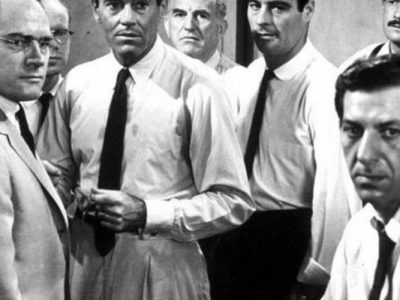
Legal dramas and police procedurals are hugely popular genres of entertainment. 12 Angry Men, Law & Order, and the Wallander detective novels by Swedish author Henning Mankell spring randomly to mind, but there are of dozens of examples in film, television, and literature. Recently, however, a crop of new dramas and documentaries that focus on the law and legal process seem to indicate, based on popularity and critical acclaim, to reflect a shift in the zeitgeist. Instead of providing escapism through fiction, the latest legal procedurals offer intellectual engagement with current events, and possibly answers to an urgent and poignant question: can the law, if implemented ethically, stabilize the shaky institutions holding up our democracies and redeem our social norms?


Donald Trump’s impeachment trial in the Senate, which began this week with saturation media coverage, comes on the back of months of shocking revelations regarding Jeffrey Epstein and what appears to be a high-level conspiracy between the state and Epstein’s defense team to look the other way for decades while he openly trafficked in and preyed sexually upon underage girls. In another case that is receiving global media coverage, opening arguments were presented this week at the New York City trial of Harvey Weinstein on two charges of rape and sexual assault; more than 100 women have accused the once-powerful producer of sexual assault, harassment, and rape.

All of these cases hold enormous implications. Can the law, which these powerful men flouted openly for decades, provide justice? The future of our vulnerable democracies seems to be predicated on an affirmative answer to this question.

Preet Bharara, a widely respected former Assistant U.S. Attorney for the Southern District of New York (SDNY) who lost his job when Trump purged Obama appointees in early 2017, now hosts two popular podcasts that provide analysis of current events and their legal implications.

In Stay Tuned with Preet, Bharara offers a sober and non-partisan approach to the law that is remarkably appealing. Each episode is divided into two parts: Bharara opens by providing informed, engaged responses to listeners’ questions on the law, and moves on to a thought-provoking conversation with a feature guest. The latter have included Sally Yates, the former United States Deputy Attorney General; Jill Lepore, the prominent Harvard historian who is a frequent contributor to The New Yorker; filmmaker and actor Ed Norton; and George Conway, Kelly Ann’s stridently anti-Trump—but conservative—husband.

Bryan Stevenson, a prominent civil rights attorney who is often described as America’s Nelson Mandela, was Bharara’s guest on the December 26 episode of Stay Tuned.

Stevenson, who is black, grew up in racially segregated rural Delaware. He was deeply affected by his childhood experiences of institutional racism, and by the murder of his grandfather. During the podcast conversation, Stevenson explains that while he was keenly aware of how the law had been used to oppress black people in the United States, he also saw how it could be implemented to address inequities. The law ended school desegregation, for example, and it provided due process after police arrested his grandfather’s murderers; they were convicted and sentenced to life in prison. Stevenson, who has a law degree from Harvard, founded the Equal Justice Initiative, a non-profit law firm based in Alabama that is dedicated to challenging racial injustice and ending mass incarceration. He is also the author of Just Mercy, a memoir about his experience of representing Walter McMillan, a man wrongfully accused of murdering a white woman. Critics have responded positively to recently released film based on the book, and starring Jamie Foxx.

The subject of Café Insider (tagline: Make Sense of Law & Politics), which Bharara co-hosts with Anne Milgram, the former New Jersey Attorney General, is the week’s events. In a single episode on August 12, 2019, Bharara and Milgram discuss and analyze Jeffrey Epstein’s suicide; the lawsuit by two former FBI officials claiming that they were wrongfully terminated as political retaliation; and the massive raids conducted by ICE agents of food processing plants in Mississippi. With their seasoned and engaging legal minds, Bharara and Milgram fill an urgent need for legal and factual clarity.

In television, the critically acclaimed series The Good Fight, a spin-off of The Good Wife, stars Christine Baranski as Diane Lockhart, now a partner at a majority black Chicago law firm. The plot of each episode is based on stories “ripped from the headlines” — but always with a thought-provoking “what if?” twist. Lockhart, a liberal whose commitment to the law is challenged by the rise of Trump appointees in the judiciary, confesses to exhaustion and is tempted by gonzo feminist activists who claim that the only path of resistance is through dirty tricks and extra-legal activity. But each time Lockhart seems ready to capitulate to temptation, someone or some incident pulls her back, reminding her of and re-asserting the value, effectiveness and function of the law and adhering to legal process.

The law plays a major role in the gripping HBO miniseries Our Boys, which was broadcast to international critical acclaim. The series, which is co-directed by an Israeli and a Palestinian, dramatizes the horrific events of the summer of 2014 in Israel-Palestine, when three Jewish boys abducted and immolated 16 year-old Mohamed Abu Khdeir, a Palestinian from East Jerusalem, in retribution for the abduction and murder by Palestinians of three yeshiva students from a West Bank settlement.

The story is framed as a police procedural, with a forensic dramatization of how the Shin Bet, Israel’s domestic intelligence agency, identified and arrested Abu Khdeir’s murderers, and how the criminal justice system prosecuted them. The series provides one of the most nuanced portrayals of the social, cultural, religious, and political divisions in contemporary Israel-Palestine, shining an uncomfortably bright light on the fissures between various subcultures of Jewish society, and between Jewish and Arab-Palestinian society.

From the moment they report him missing to the police, Mohamed Abu Khdeir’s parents are under enormous pressure. Not only must they rely on their political oppressors, the Israeli state, to pursue and prosecute their son’s killers, but they must also justify to their Palestinian community their controversial decision to abide by the Israeli legal system, trusting it to provide justice.

State Attorney Uri Korb, played by Lior Ashkenazi, communicates superbly the Israeli liberal intelligentsia’s failure to recognize that the country's legal system does not define justice for Palestinians in the same way it does for Jews. This is particularly true for Palestinians like the Abu Khdeir family, who are stateless residents of East Jerusalem with nebulously defined legal rights. Korb sees himself as the representative of the Israeli state, rather than a pursuer of justice on behalf of any one party. He does not, for example, see cognitive dissonance in dismissing Mohamed Abu Khdeir’s father, portrayed with luminous verisimilitude by Jony Arbid, when the latter demands that the homes of the Jewish Israelis convicted of his son’s murder be destroyed. This, after all, is a punishment that the Israeli state commonly metes out to Palestinians who are convicted of having committed political violence against Jews.

The ambiguous ending of Our Boys leaves open the question of whether or not the law can provide justice to Palestinian victims of a crime committed by Jews. There are, however, several gripping and complex scenes that illustrate the violent, anarchic consequences of rejecting the law and choosing extra-judicial action. As a dramatic device, the granular reconstruction of the police investigation provides a compassionate and insightful portrayal of contemporary Israeli-Palestinian society.

Also from Israel, Advocate (2019), an award-winning documentary that was shortlisted for an Oscar nomination, is a portrait of Lea Tsemel, an Israeli human rights lawyer who has spent most of her life defending Palestinian political prisoners. Miri Regev, the populist right wing Minister of Culture, predictably proclaimed her loathing for the film even as she acknowledged that she had not seen it; this type of criticism from Regev has become something of a badge of honor for left wing Israeli artists.

Advocate traces Tsemel’s career from the genesis of her left-wing activism in the 1970s, while she was a student at the Hebrew University of Jerusalem, to the present; it follows her as she represents one of her most highly publicized recent — that of Ahmad, a 13 year-old boy who is accused of attempting to kill a Jewish teenager with a knife. In a memorable scene that takes place in her cramped office, Tsemel explains to Ahmad and his family that they must choose between pleading guilty and seeing Ahmad charged as a minor, or going to trial; the latter option means that the barely adolescent boy could be sentenced as an adult if he is convicted. Ahmad, who insists that he had no intention of causing injury with the knife, and who was, as video footage shows, brutally questioned for hours by Israeli security without a lawyer or guardian present, opts for a trial. In court, Tsemel predicates her legal argument on the demonstrably true assertion that Jewish Israelis accused of the same crime as the one for which Ahmad is on trial are not charged with attempted murder. Nor do they risk being sentenced to life in prison.

Tsemel mentions frequently during the film that she has never won a case. Given the legal and political climate in Israel, she knows that her losing streak is likely to continue uninterrupted, but she is ideologically and morally committed to challenging the structures imposed on her clients. She has chosen her path of resistance, which is to demonstrate the legal system’s failures by the very act of working within the system. Giving up is not an option and refusing to work within the system will not, she seems to believe, help anybody.

Many observers of President Trump’s impeachment trial in the senate hope that the legal process will reverse what seems, due to partisan politics, to be a predetermined result. News outlets are providing saturation coverage of the lead-up to the trial, the role of Chief Justice Roberts, the number of Senate votes required to bring forward new witnesses and new evidence, and many other matters of procedure.

In Israel, meanwhile, the question of whether and for how long Benjamin Netanyahu can continue to occupy the position of prime minister while he is under criminal indictment is keeping everyone on edge, with the media providing saturation coverage of every new development. Does the law permit Netanyahu to run as head of his party in a third election while he is charged with criminal corruption? It does. Americans and Israelis are discovering, more or less in tandem, but for different reasons, the extent to which the law is predicated on social norms. Can the law provide justice even as populist authoritarianism systematically undermines and destroy those norms?

For social and political activists, the silver lining of these deeply troubling times is a noticeable uptick in civic engagement. Demonstrations, grassroots activism, and artistic resistance play a crucial role in social transformation, but so does the law. Three years into the Trump administration and a decade into the global rise of authoritarianism, it seems that many people are also recognizing with new appreciation the critical function of the law and legal process in maintaining a democracy.
    [post_title] => Desperately seeking answers in the law
    [post_excerpt] => 
    [post_status] => publish
    [comment_status] => closed
    [ping_status] => open
    [post_password] => 
    [post_name] => desperately-seeking-comfort-in-the-law
    [to_ping] => 
    [pinged] => 
    [post_modified] => 2023-11-06 13:56:13
    [post_modified_gmt] => 2023-11-06 13:56:13
    [post_content_filtered] => 
    [post_parent] => 0
    [guid] => http://conversationalist.org/?p=1577
    [menu_order] => 285
    [post_type] => post
    [post_mime_type] => 
    [comment_count] => 0
    [filter] => raw
)

Desperately seeking answers in the law

WP_Post Object
(
    [ID] => 1566
    [post_author] => 4
    [post_date] => 2020-01-16 21:53:33
    [post_date_gmt] => 2020-01-16 21:53:33
    [post_content] => Two decades after her breakout memoir was published, a writer once dismissed as a narcissist died a literary heroine.

When Elizabeth Wurtzel published Prozac Nation in 1994, she seemed all too eager to regale the public with her struggles. Raised on the Upper East Side of Manhattan, she was the gifted daughter of a prosperous family who attended private schools and graduated from Harvard. In her memoirs, however, Wurtzel luridly described her depression: snorting coke to kick her lithium dependence, curling up on bathroom floors sweating and sobbing, and falling into bed with the wrong man at every turn. Yet, she looked gorgeous as she lived this self-destructive life. Posing on the cover of a magazine with a come-hither stare and a crop top, Wurtzel embodied the dark and angsty glamour of the 1990s—a literary Courtney Love or Tracey Emin. The memoir sat atop best-seller lists and was made into a movie starring Christina Ricci. Critics, however, were split. Was this the second coming of Sylvia Plath (had she survived a suicide attempt to promote The Bell Jar on MTV); or, was she merely a raving narcissist who, in Wurtzel’s own words, “didn’t even come across as sad any longer, just obnoxious”?  

Elizabeth Wurtzel died last week, and she died young—if not as young as she once predicted. (“I’m starting to wonder if I might not be one of those people like Anne Sexton or Sylvia Plath who are just better off dead…Perhaps, I, too, will die young and sad, a corpse with her head in the oven.”) She was 52 when she died of breast cancer. 

By the time of her passing Wurtzel had cleaned up and, in defiance of her erstwhile Gen X slacker image, had graduated from Yale Law School, joined a white-shoe firm, and even—GASP!—married. Parsing her legacy, however, is more complex than simply caring about whether or not she “grew up,” as the New York Times obituary writer suggested. Wurtzel laid herself bare, but we did not know her. It’s a profound compliment to her writing that her readers—detractors and admirers alike—assumed that they did. Confessional writing as a genre can have great value, transforming both the lives of individuals and the cultural discourse. Wurtzel’s impact, though inextricably bound up in her celebrity, lies in the role she carved out for herself—and in everyone else who has since played the same part.  

Prozac Nation inspired a robust national conversation at the time it was published. Although many dismissed Wurtzler as a whiny egomaniac—no less a critic than Walter Kirn called the book “a work of singular self-absorption”—she kicked off a trend. The publishing market suddenly made room for confessional memoirs meant to make the reader at once cringe and relate, from Dani Shapiro’s Slow Motion (raised in a traditional suburban Jewish home, she dropped out of college and became the kept woman of a wealthy married man) to Susan Kaysen’s Girl, Interrupted (recollections of leaving a mental institution; Angelina Jolie starred in the film version and won an Oscar for her performance). What critic Nathan Rabin deemed “the Manic Pixie Dream Girl” came to define an archetype of the 1990s; the educated-woman-as-hot-mess trope can be traced directly down the line to more recent cultural fare, including Lena Dunham’s television series Girls, as Meghan Daum asserted in The New Yorker. 

A friend of Wurtzel’s hit upon the importance of her legacy in an interview for her New York Times obituary, 

“Lizzie’s literary genius rests not just in her acres of quotable one-liners...but in her invention of what was really a new form, which has more or less replaced literary fiction—the memoir by a young person no one has ever heard of before. It was a form that Lizzie fashioned in her own image, because she always needed to be both the character and the author.” 

This runs deeper than genre or medium. Allow me to explain it in the context of what you are reading right now: at some point in this essay, I will tell you something about myself. Why? Because I have to; that’s what writers do now. Last week, Geraldine Brooks wrote an excellent opinion piece to contextualize Iranian perceptions of American aggression. It wasn’t enough for her simply to mention in her bio blurb that she used to report from Iran for the Wall Street Journal; she also incorporated information about her background anecdotally into her argument, as though to prove she had the right to her opinion. Writing no longer exists on its own: it is a given that the author is a character, with their own motivations for writing. It’s almost as though they have a duty to contextualize a piece of writing within the greater timeline of their lives.  Memoir may well be the narcissist’s playground, but the exhilarating rides the reader shows up for are not the high points. Wurtzel knew well that darkness was the draw. Whereas in 1994 readers perceived her style of memoir as wallowing, a 2020 reader might see plenty of space for a very contemporary word: empathy. Wurtzel spoke fearlessly about her problems. Depression, addiction, family dysfunction, and self-harm were all dragged out into broad daylight. She didn’t worry about what was in good taste: she told her truth, no matter who called her a poor little rich girl or a “brat”—as the writer of an unusually spicy Kirkus review opined. In 2020, therapy and mental health are talked about openly.  Confessional writing played a part in this sea change, allowing for a more intimate glimpse into pain. And for those who contend Wurtzel looked too chic as she profited handsomely from her suffering, her own cancer advocacy offers a riposte. Although she failed to have herself tested for the BRCA gene, she campaigned for wider testing in the wake of her diagnosis. “I could have had a mastectomy with reconstruction and skipped the part where I got cancer,” she wrote. “I feel like the biggest idiot for not doing so.” In creating a space to speak about her own problems, Wurtzel made a niche for other writers to inhabit, too—those who aren’t white or rich or Ivy League-educated. Prozac Nation was certainly not the first confessional memoir, but it pioneered something far more particular. Maya Angelou and James Baldwin wrote memoirs, but they did so in order to shine a light on the plight of a larger group of people—i.e., black people in the United States. Wurtzel’s motives were not quite so high-minded: she was unsparing in her depiction of her own individual privilege. Sylvia Plath certainly covered a lot of the same ground as Wurtzel, but she veiled it as fiction and, because The Bell Jar was published shortly before she killed herself, the book reads like a suicide note—an explanation of the writer’s absence rather than a plea for her presence. Although she was derided for self-pity, Wurtzel notably did not ask for sympathy.  Arguably, Wurtzel ripped herself open so effectively that it has taken a couple of decades to see the precedent she set and its value as literature. The wounded, weird, yet compellingly charismatic individual is now a literary trope in memoirs written by a broad spectrum of writers. It is a space as suited to Wurtzel’s Prozac Nation as it is to Saeed Jones’ How We Fight For Our Lives, about growing up black and queer in a small Texas town, or to Roxane Gay’s Hunger, in which the author describes her struggles with sexual trauma, obesity, and her own identity.  Perhaps we don’t like the idea that Wurtzel—wealthy, white, Harvard-educated—created this space, but the access those qualities granted her created a more accepting landscape for others. We cannot know if this was her intent, but it is the effect of her writing. What Gloria Steinem’s looks were to second-wave feminism, Elizabeth Wurtzel’s were to a platform capable of accommodating almost anyone brave enough—or exhibitionistic enough—to inhabit it.  What does the reader gain from coming in contact with all of this? The confessional memoir opens a window onto the aspects of human nature that we tend to hide, mostly out of shame. It allows us to see and accept that we are messy, complex, and multifaceted human beings. It’s a genre with a natural intersectionality about it, like a soapbox on which anyone can stand. And you, the reader, don’t need to love any of these authors to appreciate that by putting themselves out there, they make more space for the rest of us, not only to be messy but to understand one another. On the one hand, we can see ourselves in the problems we share; we are less alone, validated. As someone with cancer in the family (and, just like that, I told you something about myself!!), I know the nerve Anne Boyer’s The Undying hits all too well. On the other hand, I will never be a queer man of color from rural Texas; reading Saeed Jones allows me to step inside an experience that isn’t mine, but also to appreciate our shared realities—and maybe even weigh the social and political ties that bind us. There is a great deal of courage in the kind of vulnerability that begets those bigger conversations.   This kind of discourse is vital to any pluralistic society and to any democracy. We must understand one another to truly value one another, and there isn’t enough space for that transaction in a tweet. This kind of understanding can never be credited to a single confessional memoir, but rather to the aggregate effect they have had on how we treat one another and accommodate one another’s needs. As we continue to fight for various civil rights in a precarious political moment—an election year, no less—we should remember that, even if there is not a direct line between Prozac Nation and gender-neutral bathrooms, there is certainly a direct correlation between how the culture allows us to express ourselves and what arguments the body politic is capable of understanding and integrating.  As a teenager reading Prozac Nation a few years after it came out, I wondered if I needed to be a bigger mess to succeed as a writer. Perhaps I was a Millennial rolling her eyes at Gen X. I asked myself if we really needed to know that Wurtzel’s “mouth was getting tired and chapped from giving so many blowjobs” to appreciate gems like, “If you feel everything intensely, ultimately you feel nothing at all.” The answer is no. No, we did not. But we also don’t need to like someone to admire them. More importantly, any exercise in empathy is a chance at community building, both an opportunity to feel less alone in this world and to see more of it from a perspective that glories in its lack of varnish. Confessional memoirs—even in their most profound self-absorption—are just that: a chance to be let in on something other than ourselves.    [post_title] => The personal (even on Prozac) is political: Elizabeth Wurtzel's literary legacy [post_excerpt] => The confessional memoir allows us to see and accept that we are messy, complex, and multifaceted human beings. [post_status] => publish [comment_status] => closed [ping_status] => open [post_password] => [post_name] => the-personal-even-on-prozac-is-political-elizabeth-wurtzels-literary-legacy [to_ping] => [pinged] => [post_modified] => 2023-11-06 13:56:24 [post_modified_gmt] => 2023-11-06 13:56:24 [post_content_filtered] => [post_parent] => 0 [guid] => http://conversationalist.org/?p=1566 [menu_order] => 286 [post_type] => post [post_mime_type] => [comment_count] => 0 [filter] => raw )

The personal (even on Prozac) is political: Elizabeth Wurtzel’s literary legacy

WP_Post Object
(
    [ID] => 1554
    [post_author] => 2
    [post_date] => 2020-01-10 15:40:52
    [post_date_gmt] => 2020-01-10 15:40:52
    [post_content] => As Americans worry about suffering reprisals for the killing of Iran's top general, they overlook the civilians who have already been paying for many years — with their blood.

In an Egyptian political satire play called al-Za’im (The Chief), a military dictator who is an archetype representing the Middle East’s various tyrants dies of a sudden heart attack. His inner circle scrambles to replace him with a two-bit actor who looks exactly like the deceased president, so they can buy time to consolidate their power.

When told that he would be the new leader because the real one had perished, the actor smirks and lets out a derisive laugh. “Are there presidents who die, Sir?”

Many of us Middle Easterners and observers of the region had a similarly incredulous reaction to the death of General Qasem Soleimani, Iran’s top military general, who was killed in a US airstrike over the weekend. Analysts and experts claimed that his death would change everything and nothing, that it would lead to World War III; it had the American president vowing to commit war crimes just a few days into the new decade.

These predictions appear to be overblown. Soleimani’s legacy of violence and dispossession in Syria and Iraq will, however, endure. For his many victims, there is momentary relief at his passing.

Soleimani was the leader of the Quds Force, the unit responsible for external operations of the Iranian Revolutionary Guards Corps. The IRGC’s remit is protecting the Islamic Republic’s political system from internal and external threats. Soleimani gained his formative experience fighting on the frontlines of the cruel eight-year war between Iran and Iraq, during which Saddam Hussein deployed chemical weapons with impunity while continuing to enjoy western backing. He witnessed the enormous loss of life – more than half a million, including children and soldiers who were sent into minefields as human detonators, in what was ultimately a pointless war of attrition. 

By 1998 Soleimani was head of the Quds Force; and in 2011 he was promoted to major general. Meanwhile the Arab Spring was sweeping through the region, with Syria the focal point of the Islamic Republic’s paranoia.

Soleimani loomed large as the face of Iran’s campaign for regional dominance, a figure of mystique and mythical brilliance and strategic wisdom. He was the second-most powerful man in Iran, after Supreme Leader Ayatollah Ali Khamenei; he battled the US for influence in Iraq during the American occupation, arming and backing Shia militias in order to guarantee a weak Iraqi state that functioned under the shadow of Iranian influence.

Though he was always an elusive figure, Soleimani had grown less wary of the limelight in recent years. He allowed himself to be photographed and took selfies with Shia militias on the frontlines in Iraq and Syria. 

In Iraq, he organized militias that defeated ISIS; but then those militias turned around and launched military reprisals against ordinary Sunni civilians, thus alienating the very people they had just liberated from the jihadi terror group. 

In Syria, the Iranian general’s self-appointed mission was to save the dictator Bashar al-Assad’s regime from collapse. In doing so, he presided over the country’s destruction, the displacement of millions of civilians, the greatest refugee crisis since the Second World War, and the survival of a tyrannical regime.

All the while, he was portrayed as a master strategist who foiled American designs in the region at every stage.

Iran’s pro-Assad policy is based on its desire to maintain regional influence. The Islamic Republic needs Syria to be stable in order to maintain a secure overland avenue for the transportation of military supplies to Hezbollah in Lebanon, which is its most powerful proxy force. Iran also needs to maintain an overland route to ports on the Mediterranean. When the Arab Spring of 2011 spread to Syria from Egypt, where protesters set a precedent by forcing the resignation of long-time ruler Hosni Mubarak, Iran sent advisors to Syria. Soon after that, it sent proxy militias to fight alongside Assad’s forces. In 2013, Hezbollah forces entered Syria to fight for the regime as well.

These proxy forces were responsible for some of the cruelest tactics of the war. In early 2016, I reported on the siege of Madaya, a border town that was home to 30,000 civilians who were being systematically starved to death by Hezbollah in an effort to force their surrender. To survive, people ate grass, leaves, and spiced water instead of soup.

These starvation sieges were replicated throughout the country, with Soleimani’s proxy forces often leading the charge into areas held by anti-Assad rebel troops. In addition to using hunger as a weapon of war, the pro-regime militias used scorched earth tactics. To recapture Aleppo, they bombarded from the ground while the Syrian and Russian air forces bombed from the air; as they reclaimed territory from the rebels, they carried out extrajudicial killings.

When the rebel forces eventually surrendered, tens of thousands of civilians, fearing the regime would persecute them for suspected anti-government sympathies, were forcibly displaced. Soleimani’s tactics are responsible for rendering countless Syrians destitute and homeless, and for driving many to seek refuge abroad. The ensuing refugee crisis contributed enormously to sectarian tensions in the Middle East. Those who stayed inside Syria continue to suffer from the violent tactics of the Assad regime and its Russian and Iranian allies.

In 2015 Soleimani traveled to Moscow and personally convinced the Russians to intervene on Assad’s behalf. Russian warplanes have carried out dozens of attacks on hospitals in rebel-held areas, and they have killed thousands of Syrian civilians in various air strikes.

In Iraq, the extent of the atrocities carried out by Soleimani’s proxy forces in Sunni communities liberated from ISIS was so extreme that, according to cables leaked by rivals, the intelligence services worried they were undermining Iran’s popular reputation.

More recently, Soleimani was reportedly involved in the crackdown on the popular protest movement against government corruption in Iraq. Security forces and Tehran-backed militias killed hundreds of Iraqi protesters in the weeks leading up to Soleimani’s death. According to reports, the Iranian general attended key security meetings in Iraq; he advised his counterparts to learn from Iran, where security forces killed over a thousand civilians in anti-government demonstrations that took place in December.

In the weeks and months before the Trump administration assassinated Soleimani, the Iranian regime carried out several calculated provocations against the US, as payback for their having pulled out of the multilateral nuclear deal. They threatened and disrupted shipping in the Persian Gulf and bombed Saudi oil installations; more recently, Iran launched rocket attacks against Iraqi bases housing American troops and attacked the US embassy in Baghdad on New Year’s Eve.

The question of whether assassinating Soleimani was legal or not is an academic one. Not just because it is already done and nobody will be held accountable for it, but because Soleimani had been waging an overt and covert war against the US and its allies for years. He orchestrated the death and displacement of hundreds of thousands of civilians over nearly a decade of war in Syria, against a backdrop of a broad violence and civil warfare in Yemen and Libya, as well as political crackdowns and resurgent authoritarianism throughout the region. 

The Middle Eastern conflagration that American pundits claim to be so concerned about Soleimani’s death sparking has already been raging for a decade, with hundreds of thousands of civilians paying in blood.

For now, the worst predictions of the alarmists have not been realized. World War III has not started, and Tehran responded with a calculated attack that didn’t kill any Americans. It did kill or injure Iraqi soldiers stationed on the military base housing American troops, but this was a matter of indifference to both Iran and the United States. As we have seen since the invasion of 2003, America places little value on Iraqi lives.

If there is a future escalation, it will take place on the backs of Arab civilians, because Iran does not have the capacity to match American military aggression. If it does respond further, it will do so through its proxies, further destabilizing the region and risking war. Tehran and Washington will never allow Arab civilians to stand between them when it comes to pursuing their foreign policy goals in the Middle East.

Trump does not care about Arab lives — about this, there is little doubt. Nor is he concerned about human rights, international law, or even having an actual strategy for his foreign policy in the most volatile part of the world. 

But amid the hand-wringing, spare a thought for Soleimani’s victims. For a brief moment, their suffering has been eased.

 
    [post_title] => Dear America: the death of Qasem Soleimani is not all about you
    [post_excerpt] => For now, the worst predictions of the alarmists have not been realized. World War III has not started, and Tehran responded with a calculated attack that didn’t kill any Americans. It did kill or injure Iraqi soldiers stationed on the military base housing American troops, but this was a matter of indifference to both Iran and the United States. As we have seen since the invasion of 2003, America places little value on Iraqi lives.
    [post_status] => publish
    [comment_status] => closed
    [ping_status] => open
    [post_password] => 
    [post_name] => dear-america-the-death-of-qassem-soleimani-is-not-all-about-you
    [to_ping] => 
    [pinged] => 
    [post_modified] => 2023-11-06 13:56:33
    [post_modified_gmt] => 2023-11-06 13:56:33
    [post_content_filtered] => 
    [post_parent] => 0
    [guid] => http://conversationalist.org/?p=1554
    [menu_order] => 287
    [post_type] => post
    [post_mime_type] => 
    [comment_count] => 0
    [filter] => raw
)

Dear America: the death of Qasem Soleimani is not all about you

WP_Post Object
(
    [ID] => 1523
    [post_author] => 2
    [post_date] => 2019-12-20 04:58:47
    [post_date_gmt] => 2019-12-20 04:58:47
    [post_content] => There is a crack in everything; that's how the light gets in.
 — Leonard Cohen

I’m writing these words from a yoga center in the snow-covered Berkshires, in an atmosphere of extreme serenity that is both deeply comforting and somewhat intimidating. On the second day of my little retreat, during a silent meditation walk in the snowy woods, the woman leading the group had us stop at a particularly idyllic spot and stand still, listening to the quiet. Tree branches creaked gently in the wind, a stream of water bubbled over rocks, a woodpecker tapped on a tree, and someone (it might have been me) struggled to control her jagged breathing (it was a steep climb!). Gazing up at the treetops, the instructor asked us to describe what we heard during the silent walk. Reader, I was honest: during the meditation walk, all I could hear was the cacophony in my head — and it sounded like a super highway at rush hour. 

Most of us walk around with a head full of noisy thoughts. Meditation is supposed to help quiet the mind, but sitting still (or walking in deliberate silence) while thinking about nothing is incredibly difficult. Still, I don’t think I am alone in feeling that the normal roar inside my head has become much louder and shriller in recent months. When I mentioned to a friend, a journalist who covers the Christian and white nationalist right in the United States, that I was feeling overwhelmed by an unending stream of worried thoughts, she said, without missing a beat: “It’s the fascism.”

For those of us who are concerned about the state of civil society and democracy, 2019 was a disquieting year. Authoritarianism continues to rise and spread, while once robust democracies falter as the pillars of supporting institutions — the judiciary, the independent media, and the legislative branch — are weakened. Around the United States, in New Zealand and in Europe, we have seen a notable uptick in violent racist and antisemitic incidents. Perhaps most worrying of all, governments continue to dither over the climate crisis, even as scientists issue dire warnings about the consequences of a failure to implement policy changes. 

The news is so bad, and the sense of hopelessness so pervasive, that there’s a constant temptation to withdraw and focus inward rather than fight back. This is especially true when the exigencies of daily life — working, raising children, worrying about money, and trying to find a little time for oneself — are so all consuming. Where do people who don’t have any experience of struggling for their rights, because they took them for granted, find the inner resources to fight back? 

The story of this yoga retreat center provides some insight and inspiration on the matter of fighting for what is important. For many years, it was an ashram led by a guru. His devotees and disciples lived on the property in a communal lifestyle that involved providing a lot of free labor, from teaching yoga classes to cooking meals and cleaning rooms for paying guests. In return, the devotees received all the emotional benefits of being part of a nurturing, close-knit, spiritual community. In the mid-1990s, however, the guru was discovered to have “abused his power” — i.e., preyed sexually on some of the devotees. For the community, this was a devastating betrayal. Many had lived at the ashram for years; they had taken on new names bestowed by the guru; their friends, community, and identity were all tied up with the ashram and its spiritual leader.

Twenty-five years later, the ashram is a thriving, non-profit educational center, which provides a nurturing, peaceful place for people who need some time to take care of their bodies and their spirits. 

The center provides scholarships to grassroots community leaders interested in learning how to broker and teach non-violent conflict resolution in challenging environments, and to people who want to use yoga as a means of enriching their professional practice — as healthcare providers, teachers, or corporate wellness consultants. The people who clean and cook are no longer volunteer religious devotees, but staff who are paid and treated well — many of them refugees, or people who live with physical or intellectual limitations. The instructors have stripped the yoga classes of Sanskrit chanting, except for the occasional “om” or “namaste.” Instead, they emphasize that yoga is a science and a practice that promotes physical well being, but not a religion. Slowly, some of the disillusioned devotees who moved away after the guru’s betrayal are drifting back to spend time at the ashram-turned-yoga center. They’ve reconnected with old friends, and rejoined a changed community. 

Nothing about this trajectory was obvious in 1994, shortly after the guru was exposed and ousted. I remember, because I happened to visit at the time and saw how crushed and unmoored the devotees were. They could easily have closed up shop and dispersed into a fog of bitterness and loneliness, but they decided that the place had too much to give and teach, and that it must be salvaged. And so they set to work, and after a few years they realized that they hadn’t needed a guru, after all.

I am inspired by people who are willing to face and overcome emotional devastation.

Over the past year, as I mourned the decline of democracy and civil society and tried to fight my way through the spiritual malaise that is caused by fear and a perception of helplessness, I saw some thought provoking inspiration around the world. 

In a Moscow courtroom, a 21 year-old university student named Yegor Zhukov was tried for “extremism,” after he was arrested for posting YouTube videos in which he extolled the virtues of nonviolent protest, criticized Vladimir Putin, and discussed his campaign for a seat on the Moscow City Council. Masha Gessen translated the moving and powerful speech Zhukov gave at his court hearing, after which he was sentenced to only three years of probation. In Putin’s repressive Russia, this was a surprisingly light sentence. The explanation, Gessen writes, lies in Zhukov’s speech, the response it elicited from the public — and the fact that several Russian media outlets “dared” to publish it.

Globally, the number of grassroots movements challenging corrupt and/or authoritarian governments with sustained protests is breathtaking. In Chile, protestors have faced down police using live ammunition and mass arrests as they continue to protest the social and economic inequality in their country. In Lebanon and Iraq, protestors have joined forces across sectarian lines to challenge the corrupt and ineffective governing systems in their countries. In Hong Kong, the sustained pro-democracy demonstrations are entering their eighth month. The Chinese government issued dire threats and even indicated it was prepared to intervene militarily, but has so far done nothing. 

In India, just this week, a stunning number of ordinary citizens flooded the streets of major cities to protest the controversial new citizenship act that discriminates against Muslims. 

And last October, just steps from my home in Montreal, an estimated 500,000 people gathered to cheer for Greta Thunberg, the 16 year-old Swedish girl who single handedly inspired a global movement to raise awareness of the climate crisis. 

The power of authoritarians can and must be challenged. The temptation to check out and turn inward must be fought. Giving up is not an option. 

I think I’ll adopt those thoughts as my meditation mantras. Meanwhile, The Conversationalist will continue to publish insightful, knowledgeable, thought provoking articles about the urgent issues that we all care about so deeply. I don’t know if 2020 will be better than 2019, but let’s get ready to meet its challenges. 

 
    [post_title] => Lessons in resistance at a former yoga ashram
    [post_excerpt] => Over the past year, as I mourned the decline of democracy and civil society and tried to fight my way through the spiritual malaise that is caused by fear and a perception of helplessness, I saw some thought provoking inspiration around the world. 
    [post_status] => publish
    [comment_status] => closed
    [ping_status] => open
    [post_password] => 
    [post_name] => at-a-yoga-center-i-learned-a-lesson-in-how-to-challenge-authoritarianism
    [to_ping] => 
    [pinged] => 
    [post_modified] => 2023-11-06 13:56:41
    [post_modified_gmt] => 2023-11-06 13:56:41
    [post_content_filtered] => 
    [post_parent] => 0
    [guid] => http://conversationalist.org/?p=1523
    [menu_order] => 288
    [post_type] => post
    [post_mime_type] => 
    [comment_count] => 0
    [filter] => raw
)

Lessons in resistance at a former yoga ashram

WP_Post Object
(
    [ID] => 1510
    [post_author] => 2
    [post_date] => 2019-12-10 12:08:44
    [post_date_gmt] => 2019-12-10 12:08:44
    [post_content] => Weary British voters are not even sure what the issues are anymore.

On December 12 Britain will see its third general election in four years. The campaign, which began just over a month ago, did not see any high points. It has, however, had several low points.

For Jeremy Corbyn, the leader of the Labour party, one low point was when BBC interviewer Andrew Neil asked him whether he agreed that “Rothschild’s Zionists run Israel and world government,” a statement that a member of his own party had made, was an antisemitic statement. Neil had to ask the question three times before Corbyn finally agreed, grudgingly, that the statement was antisemitic; in his first to attempts at answering Neil’s question, Corbyn only said it should not be used.

For the Conservative incumbent Boris Johnson, a low point was probably reading an interview in the prestigious Times newspaper with Jennifer Arcuri, his alleged mistress, in which she merrily describes visiting his family home before he was officially divorced from his wife. Johnson was later asked about Arcuri’s allegations but avoided addressing the questions, just as he avoided related questions about the number of affairs he has had, and the number of children he has fathered out of wedlock (is it five? Six? More? We do not know.)

The BBC has also seen its fair share of low points in its election coverage. The most notorious incident involved the national broadcaster’s selective editing of a clip from a TV debate (more on those later) for its news bulletin.

In the original, an audience member asked Johnson: "How important is it for someone in your position of power to always tell the truth?" The question was followed by laughter and clapping from other members of the audience, as the Prime Minister was beginning to answer. In the bulletin segment, the laughs and claps were gone. The BBC explained in statement that they had shortened the clip for time reasons, but the damage was already done.

In fact, “the damage was already done” feels like a running theme in Britain at the moment.

The Labour party can try all it wants to convince Jewish voters that it has got the antisemitism problem among its ranks under control; yet, fewer than 10 percent of Jewish voters are currently considering voting for the party — down from about 50 percent in previous elections.

The Conservative party can go on and on and on about how it doesn’t plan to sell off the National Health Service, or stop it from being free at the point of use; yet, only 18 percent of people trust them to keep it publicly funded and publicly run.

The Liberal Democrats, centrist and pro-Europe (anti-Brexit) are also struggling with their recent past. Jo Swinson, their new, young, female leader was predicted to bring the party up in the polls, but the Lib-Dems joined a governing coalition led by the Conservatives in 2015 and this perceived betrayal is still fresh in the minds of left-leaning voters.

It did not have to be like this, for any of the parties; initially, this election was meant to be about Brexit, and Brexit only.  Boris Johnson called it, in an attempt to regain the majority the previous party leader, Theresa May, lost — back when she was trying to win a bigger majority in order to get Brexit done.

Sadly for May, the election became about everything else — Corbynmania, her party’s disastrously unpopular social welfare policy — and it marked the beginning of her long, painful downfall.

Will Johnson suffer the same fate as May? Few analysts dare make a prediction, given the notorious inaccuracy of pre-election polls, but the mop-haired incumbent prime minister is certainly going through an election that feels very similar to the one that ended May’s political career. While the Conservatives want to focus on Labour’s supposedly confusing Brexit plans, which is based on  negotiating a softer exit deal with Brussels rather than calling a second referendum — the issue itself has largely disappeared.

Like a ghost in a mansion struggling to scare off its living inhabitants, the UK’s imminent departure from the EU crops up every few days, for a few hours, then disappears again.

Though nearly half the country says it still supports Remain, only a fraction of those voters have turned to the Liberal Democrats, the one party offering not a second referendum, but a straightforward reversal of Article 50 — i.e., canceling the referendum results and remaining in the EU. Nigel Farage and his Brexit party were initially a major threat to the Conservatives and high up in the polls, but as December 12 approaches, it languishes at 3 percent.

In a way, this shouldn’t be a surprise. The United Kingdom is split on Brexit in a way that now feels ingrained; more than a preference on the future of the country, where you stand on Brexit is now a tribal identity in itself.

It is also worth mentioning that Brexit has been going on for years, and has defeated many deadlines; the UK was going to leave in March until it didn’t, and then in October — before it was delayed again. Deciding to center an election around something voters are utterly sick of hearing about — no matter where they stand on the issue — was always going to be tricky.

Instead of arguing about Europe again and again, the public seems to yearn for conversations about, well, everything else: falling living standards, the poor quality of public services, the lack of adequate public transport in the north, unaffordable house prices in cities, and so on. Sadly, it is not clear that the main parties are offering something that quite fits this national mood.

On the one hand, Johnson and his ilk have offered a rail-thin manifesto, built on Brexit, a tough stance on crime, a promise to fix potholes and not much else. On the other, Corbyn’s Labour is offering too much: the party says it wants to renationalize industries and overhaul the health and education system, among countless other major reforms in countless other areas.

Labour’s proposals would seem ambitious in any other context, but in late, grey, cold 2019, they feel slightly out of step with the general mood. The party hasn’t captured the minds of enough voters to win a majority in this election.

In fact, it looks as though once again, no one will walk into Downing Street on December 13 with a pounding majority. Pollsters continue to remind the public that their work amounts to snapshots instead of predictions, but current figures point towards another hung Parliament, or a wafer-thin majority.

Given that Brexit has so far failed to get anywhere because no deal could get through a House of Commons that does not have a proper majority for any side, or at least any one plan, this would mean going back to square one.

So what will this election be remembered for, if it does not get the country out of its Groundhog Day dystopia? Perhaps its low points will be what defines it, in the end.

After all, there have been many of them. There was Boris Johnson reneging on a promise to sit for an interview the BBC’s prominent political journalist Andrew Neil despite having agreed in principle and having let Corbyn go first. There was the Tory social media team changing its Twitter handle to @FactCheckUK and pretending to be a fact-checking outlet during the leaders’ debate, and crowning Johnson winner of the head-to-head. In fact, most of the low points so far have come from Boris Johnson or his party, but no matter how low they go, they remain the ones higher in the polls.

Perhaps this will be the disappointment election after all. The Conservatives, having backed Boris over the summer because he promised he could lead them to victory, not getting anywhere near the landslide they were hoping for. Labour, high on Corbyn’s unexpected success in 2017, emerging bitterly as the opposition party for the fourth election in a row. The Liberal Democrats, having decided to set aside all their other ideas to fight Brexit, failing to get anywhere or even beginning to turn the Europe debate around.

The defining moment of the 2017 election was Theresa May at her manifesto launch, being asked about her campaign falling apart and awkwardly repeating “nothing has changed! nothing has changed!” with her long thin arms stuck in a near-comical shrug. Everything had changed, of course, which is what made the quote so poignant.

After some weeks of triumphant Conservative campaigning and Labour officials fearing complete wipe-out because of dire polls, the tide suddenly turned on May. The Tory operation was focusing on her and she was not very good, interacting awkwardly with journalists and members of the public alike.

Her manifesto, planned to put Tory tanks firmly on Labour’s lawns, was instead received like a cup of tepid tea by the very voters she was trying to turn. Slowly, Labour started doing better and better, until it left May with no majority at all. Looking back, it does feel like it started at that press conference, where she unexpectedly floundered.

We are yet to have such a moment this time around, but as things stand: nothing has changed, but everything is worse.

 
    [post_title] => British voters are sick of talking about Brexit
    [post_excerpt] => Instead of arguing about Europe again and again, the public seems to yearn for conversations about, well, everything else.
    [post_status] => publish
    [comment_status] => closed
    [ping_status] => open
    [post_password] => 
    [post_name] => the-british-general-election-of-2019-will-be-remembered-for-its-many-low-points
    [to_ping] => 
    [pinged] => 
    [post_modified] => 2023-11-06 13:56:55
    [post_modified_gmt] => 2023-11-06 13:56:55
    [post_content_filtered] => 
    [post_parent] => 0
    [guid] => https://conversationalist.org/?p=1510
    [menu_order] => 289
    [post_type] => post
    [post_mime_type] => 
    [comment_count] => 0
    [filter] => raw
)

British voters are sick of talking about Brexit