WP_Post Object
(
    [ID] => 4831
    [post_author] => 15
    [post_date] => 2022-09-01 10:41:00
    [post_date_gmt] => 2022-09-01 10:41:00
    [post_content] => 

Here's what to read so you can get to know us better.

When I started The Conversationalist in 2018, I wanted to create a platform that amplified the voices of women and people of color with creative solutions and deep insights about this chaotic, interconnected world. There were too many critical stories that weren't getting the attention they deserved. The Conversationalist's mission was to build a feminist media outlet to publish these global perspectives, and to foster a space for readers to connect and engage over shared interests and concerns. We believed, and still do, that people are hungry for thoughtful, engaging journalism they can trust, a natural response to the proliferation of disinformation, propaganda, and equivocation over basic facts and human dignity. Curiosity and empathy thrive when the rage clicks disappear.

In pursuit of our goals, we decided to take a step back earlier this year so we could re-evaluate how to best honor our mission moving forward. And now, we're back. Just like before, we're prioritizing writers who shine a light on underreported stories and trends around the world. We plan to continue only publishing a couple stories a week for the time being, in pursuit of putting out fewer, richer stories rather than chasing clicks. But we're also thinking bigger: Feminism, at its core, is about linking the personal to the political, a critical commitment in times like these that demand human connection and collective action. It’s also about finding moments of joy, and with our relaunch, The Conversationalist aims to inform, connect, and delight. As you've noticed, we've fully embraced a new artistic direction, with the aim of supporting artists around the world, and are more committed than ever to celebrating human ingenuity and building community. I want to give a shout-out here to our Executive Editor, Gina Mei, whose editorial and creative vision for this relaunch has been a joy to witness, and the writers, artists, and countless other people who helped bring this new iteration to life. 

As for our readers, we're so glad you're here. And in case you aren't already familiar with us, here are a few stories from The Conversationalist's archives—all hand-picked by the team—so you can get to know us a little better.

~

‘Bees are like my family’: A female beekeeper is reviving honey production in Kashmir Aliya Bashir / December 9, 2021

If you are looking for a sign to leave it all and start a new life as a beekeeper, look no further than this beautiful profile of Towseefa Rizvi and her family's apiary in Kashmir. It's both an honest look at the profession and the region, exploring the economic and cultural hurdles that keep women from beekeeping, while also showing why honey production can be a surprisingly accessible (and meaningful!) trade. Rizvi's deep love and care for her hive is contagious, and her dedication to sharing her knowledge with others is an absolute joy to read. It's a lovely and empowering piece, gorgeously reported by Aliya Kashir. 

Gina Mei

The fascism is already here, but we can’t see it through the lens of exceptionalism Anna Lind-Guzik / May 27, 2021

It’s maddening to watch a green-headed bird with webbed orange feet fly into your home, quacking wildly and gobbling up all your bread, only to be told, “That can’t be a duck; ducks live outside.” And it’s a relief when someone else notices the same things you’ve been noticing, and confirms that you’re not just being hysterical after all. That’s why I’d heartily recommend this story to anyone who’s worried about the future of U.S. democracy—if nothing else, it’ll reassure you that you’re not losing your mind. 

Nick Slater

Women are people, no matter what the Supreme Court says Raina Lipsitz / December 21, 2021

My picks follow a theme, which is, times that The Conversationalist’s contributors accurately, if unfortunately, foretold the near future.This article ran before Roe fell, and it remains both prescient and a great example of the solutions journalism The Conversationalist exists to elevate. “Anyone serious about defending the rights and dignity of all women needs to stop mourning and start confronting state power,” writes Lipsitz, and she’s right. Now that we’ve seen the full range of absurd Democratic leadership responses to Roe’s demise (Nancy Pelosi’s fundraising emails and Zionist poetry readings, my god) it’s beyond clear that no person of conscience can continue to perform “childlike deference to institutions that have outlived their usefulness, like the Supreme Court.” Americans may remain fundamentally uncomfortable with demanding accountability from their institutions, but this article is a great place to start contemplating what real domestic resistance could look like.

Brenna Erford

A beginner’s guide to immigration Katie Dancey-Downs / March 10, 2022

Immigration vs. emigration vs. migration. What makes someone a refugee vs. an economic migrant? When it comes to immigration, things are more complicated than they may appear. In this beginner’s guide, Katie Dancey-Downs breaks it all down in a very digestible way. I love how approachable this makes the topic, but also how it answered all of my immigration questions I didn’t even think to ask yet. It includes history from some countries around the world (like Japan, Saudi Arabia, and the U.S., to name a few) and takes a look at where we stand today. This is a must-read for anyone looking to learn more about immigration and the motives behind why people seek out a new home.

Kiera Wright-Ruiz

Russia as a mirror of American racism Kimberly St. Julian-Varnon / September 17, 2020

White supremacist movements are globally interconnected, which Kimberly St. Julian-Varnon demonstrates in this story on "Russian Lives Matter," a knock-off grassroots movement in Russia that borrowed the language of the American alt-right to promote white anti-Putin protesters and denigrate "Black Lives Matter" protests. American racism is one of our most dangerous exports, and an aspect of US influence that is taboo to mention in most mainstream coverage. I appreciate The Conversationalist's commitment to platforming writers who aren't afraid to take on sensitive, critical subjects with moral clarity and deep insight.

Anna Lind-Guzik

Why you should continue to wear a mask outdoors, even after you’ve been vaccinated Jillian York / April 29, 2021

Confession: I was ready to hate this story based on the headline. But after a couple paragraphs it became obvious York was making a smart, nuanced point about adapting our behavior (in certain situations) to protect people who are vulnerable in ways we might not immediately recognize. It was a nice reminder to move through the world with more thoughtfulness and compassion. As someone who lives outside the U.S., I also appreciated the acknowledgement that other countries and other peoples exist—and everyone’s lives have meaning.

N.S.

To stop Putin, grab him by his wallet Natalia Antonova / December 9, 2021

A scant two months before Russia invaded Ukraine and just four months before the US government imposed severe financial sanctions on Russia in response, The Conversationalist ran this damn-near-prophetic article by Natalia Antonova in which she makes a compelling case for the policy path the U.S. and numerous other nations ultimately followed. To defang Putin, Antonova argues that Western powers should leverage ordinary Russians’ contempt for the kleptocrats who comprise his inner circle—“that very justifiable hatred is one of Russia’s greatest vulnerabilities, and one of the saddest elements of modern Russian life, which is dominated by stress and suspicion.“ In service to this end, Western powers should create painful consequences for this circle via economic sanctions that target their opulent, offshore-stashed wealth. Additionally, she suggests targeting Russian private military companies, which the U.S. Department of State just recently moved to do in June of this year. 

B.E.

The Prodigal Techbro Maria Farrell / March 5, 2020

What can I say, I'm a sucker for a good headline, and the very concept of a "prodigal techbro" made me laugh—partly because Twitter has ruined my brain forever, but also because it's genuinely a clever moniker for the type of dude that Maria Farrell is describing. The piece takes a scalpel to the all-too-easy redemption arc of those who have left Big Tech and rebranded themselves as what might best be summed up as "good, actually." It's a nuanced take that acknowledges the importance of giving people second chances and allowing them to learn and grow from their mistakes; while also pointing out the many problems with immediately centering these folks in conversations and work that others have been having and doing for far longer. 

G.M.

Pakistani women are claiming their right to be in public spaces—one cup of chai at a time Anmol Irfan / March 26, 2021

I loved this story about Pakistani women who have started meeting up in public to drink chai, traditionally thought of as a men-only activity. It's a small but meaningful act of rebellion, as these women challenge patriarchal restrictions to their freedom of movement while enjoying a delicious cup of chai. It's also a story about class, as women from middle and upper class families have more opportunities to go abroad and get out of the house. As movement founder Sadia Khatri put it, "It took living in other countries to learn that I had been conforming to a clever scam my whole life, thinking the city belonged only to men." 

A.L.G.

[post_title] => Welcome to the "New" Conversationalist [post_excerpt] => Here's what to read so you can get to know us better. [post_status] => publish [comment_status] => open [ping_status] => open [post_password] => [post_name] => welcome-to-the-new-conversationalist [to_ping] => [pinged] => https://conversationalist.org/2021/04/29/why-you-should-continue-to-wear-a-mask-outdoors-even-after-youre-vaccinated/ https://conversationalist.org/2020/03/05/the-prodigal-techbro/ https://conversationalist.org/2021/12/21/women-are-people-no-matter-what-the-supreme-court-says/ https://conversationalist.org/2021/05/27/the-fascism-is-already-here-we-just-cant-see-it-through-the-lens-of-exceptionalism/ https://conversationalist.org/2021/12/09/bees-are-like-my-family-how-a-female-beekeeper-is-redefining-honey-production-in-kashmir/ https://conversationalist.org/2022/03/10/a-beginners-guide-to-immigration/ [post_modified] => 2024-08-28 21:14:02 [post_modified_gmt] => 2024-08-28 21:14:02 [post_content_filtered] => [post_parent] => 0 [guid] => https://conversationalist.org/?p=4831 [menu_order] => 115 [post_type] => post [post_mime_type] => [comment_count] => 0 [filter] => raw )
A scattered grid of illustrations, including two cups of tea, a bee, a goat eating grass, BFF necklaces, and a perfume bottle.

Welcome to the “New” Conversationalist

WP_Post Object
(
    [ID] => 4677
    [post_author] => 15
    [post_date] => 2022-08-31 21:11:05
    [post_date_gmt] => 2022-08-31 21:11:05
    [post_content] => 

In order to gather the people you love, sometimes you have to make a plan.

Listen to this article on The Conversationalist Podcast. | 12:57 min

Old Friends” is an ongoing series exploring the many ways that friendship changes shape in adulthood. 

It started as an aspirational text between buddies: "I want to run away somewhere for a month and just disappear." I'd sent it to my friend Matt in a fit of pique. I was on my fourth daily hour of Zoom fatigue, my twentieth month of consistent burnout. The text was an ice pack to the soul, a delusional light at the end of the tunnel, completely untethered to reality. So I was surprised by the speed of his response: 

"OK but yes. Let's do it." 

Matt's and my platonic love story was born in proximity, forged in the fires of our twenties and a New York media office. At first, we were just wallpaper to each other's daily lives. It was in the commuter crush of the Q train that real love formed. We'd talk about our flailing twenties, our pasts, and what we were working towards. There was a through line for us both: a steadfast commitment to creativity, to love in its many forms, and to making space in which we could become our best selves. At the time we were young and broke, stealing bananas from the office kitchen for sustenance. But we dreamed of growth, of room to write and play—and of travel. Before long, our commutes turned to regular walks around Gramercy Park, to writing dates, and to my first ever trip abroad: Matt, my roommate Brittney, and I absconded to Paris for the ultimate Friendsgiving. 

Eventually, as these things go, I moved across the country. The structure of us shifted. Matt and I would FaceTime, send voice notes and TikToks and check-in texts, but it wasn't the same. Proximity in friendship is a privilege that rarely lasts forever; we were used to this. Distance became de rigueur, especially as the pandemic raged on. Both Matt and I were run down. We felt boxed in. I battled panic attacks that had become commonplace at work. I craved the metaphorical wide open spaces Matt and I had daydreamed about years before on the Q. I needed something

Luckily, Matt and I were the kind of buds who frequently exchanged travel fantasies. Our long distance love language had taken the form of links to hotels and Airbnbs in far-flung places. These plans were always both serious and unserious—part aspiration, part ambition. It was impossible to tell when a flight of fancy might go through chrysalis, willed into existence. We'd aged a thousand years since that first trip to Paris. The world had changed a thousand times, too. 

A month after my text, Matt was in town for a conference, and he and I experienced something rare: the opportunity to sit on a couch together. We binged a season of Bridgerton in one sitting. That night I sat with him and another friend on my balcony, each of us balancing glasses of rosé, knowing very well we only had 48 hours to catch up on each other's lives. There was an undercurrent of energy to this visit, too: Over the weeks preceding it, our fantasies about running away had taken on a tone of reality. On his last day we brought out our laptops. Matt sucked in a sharp breath and breathed out excitement, his octaves climbing: "It's happening." The only way to make this trip real, we'd realized, was to actually book the damn thing. We'd figure out the rest later. 

We had until a month before the reservation to change our minds. But we knew once we hit “book” that it'd be done. So we did it.

Our place for August would be a villa in the Chianti Hills of Tuscany, with four bedrooms and five beds. After years living paycheck to paycheck, we were finally at a point in our lives where we could front the initial costs before the details were all ironed out. We were burnt out enough—experience-hungry enough—to just fucking do it already. But we also had our limits: Though Matt and I would have been happy wandering the Tuscan countryside just the two of us, if we were to be financially responsible, the plan would rely on filling the place with friends. People who could cut the costs into thirds, fourths, eighths—but who would also enhance this ambitious escape from our daily realities. The more we thought about it, the more people we wanted to invite into our world away. 

We started contacting people. Friends we knew were itching to travel. Friends who shared the same fantasy of disappearing, even if only for a week. Friends we missed, who lived in different states or on different continents. Friends of all economic realities to whom that round trip ticket felt necessary to their very spirit. 

It was not an all-encompassing effort, nor one that yielded only positive results. Some passed, some flaked, others yearned but couldn't pull together the PTO or funds. As time to takeoff inched closer, Matt and I weren't sure we were going to have much company at all. Anyone who's tried to gather the whole group chat for dinner knows the feeling. 

We blinked and months passed. Three weeks from when our villa would welcome us… and still, almost nobody had confirmed. We worried about the costs. Mentally, I calibrated what this month would be like in relative isolation. 

But then, the tide turned. A friend from New York told us she'd be there for one of the weeks. A confidante from college followed shortly. A newer buddy, from Chicago, tiptoed onto the reservation. Her time would happily overlap with the friend from New York—who she happened to be close with from their days in college. Soon we'd hear from a friend in London, and one in Los Angeles. The latter would bring her long-distance best friend from Miami. 

We'd wrangled eight people to join us, spread over twenty-four days. Friends from all different eras of our lives, and multiple who were strangers to either Matt or me. Another function of what we were doing became clear as we gathered the confirmations. We had always intended to create space, to go to a beautiful place where we could breathe and recoup. What I hadn't taken into account was the thrill in my chest seeing who'd be there. 

For me, the trip had originally been a haggard Hail Mary, a desperate attempt to escape burnout that had stopped me in my tracks. Those texts with Matt had been a temporary escape; now we were building a tangible one. My therapist's grin spread to her eyes when I told her: This was a chance to rebalance, she said, to center myself. That I could be some small part of helping friends find their space to recoup, as well, only aided in that journey. 

I know I'll see these friends in other places eventually. I'll see two of them at upcoming fall weddings, if only for a few hours here and there. If we're lucky, work or family will take us to each other's neck of the woods within the year. We'll have dinner, or spend a night on each other's couches. Then, inevitably, one of us will get on a plane and disappear back to their own time zone. 

This trip will have a similar ending, but the very body of it will be different. Realizing the kind of time I'll get with these people changes the shape of the whole experience. Our time, now, is a kind of summer camp, an adult friendship retreat—for some a recreation of a time where we were all living in the same space, and for others the first ever opportunity to do so, with fewer deadlines and pressures to boot. We will find space for ourselves. We'll take our breaths. We'll also commune with each other in ways we haven't before, reshaping our friendships in a whole different kind of proximity. 

In preparing for the trip, I scoured the aisles of Target. Into my cart I dumped a pack of Uno cards and 2009 favorite Cards Against Humanity. I bought a watercolor kit and a sketch pad. As I was checking out, I made a mental note to gather recipes that worked for groups; ones we could cook together while drinking and yelling and laughing. 

Friendship changes shape in adulthood. They don't warn you about that. "Your friends will move away!" they should say as they pass out caps and gowns. "They'll scatter, find new partners and jobs and put their roots down far away from you." They should tell you that when you do see these people it’s likely to be at a wedding, or at a funeral; through elusive FaceTimes or on brief holiday breaks. They should warn us early so we can shield our hearts. So we can know the reality: that in order to see these people you care about so much… you’ll have to make a plan. A deliberate, unfortunately expensive, frustrating, ever-shifting plan. But if you can make it happen, it will be worth it. 

There's a dull ache that comes with realizing you've lost track; the intricacies of intimate friends' day-to-days become, at some fuzzy point, no longer automatic knowledge. It's just natural. But in that villa forty minutes outside Florence, Matt and I will be roommates for a month. One friend will be there for fourteen days, another for nine, another for six. There'll be plenty of bickering, plenty of long nights holed up in our individual rooms, the craving of quiet time. Alongside all that, though, will be friendships that have lived and changed over years—and friendships that haven't even yet begun—colliding and congealing into something new. 

As I write this, most of us are packing. Here are a few things I'm looking forward to: the drifting of eyelids as someone I haven't seen in two years falls asleep before the movie's over; the crick of a brow as they judge the cheese I chose for dinner; long, long walks, talking till we're hoarse, finally saying out loud the nuance of a feeling we had months ago but are just now working through. The effort, financially and physically, that we all made to be there, and the ache I already feel for when it will be over. Friendship, when done right, is not fleeting. Time, however, is. What a relief then, to have made this space.

[post_title] => The Healing Power of the Friendship Retreat [post_excerpt] => [post_status] => publish [comment_status] => open [ping_status] => open [post_password] => [post_name] => the-healing-power-of-the-friendship-retreat-culture [to_ping] => [pinged] => [post_modified] => 2026-01-15 08:47:27 [post_modified_gmt] => 2026-01-15 08:47:27 [post_content_filtered] => [post_parent] => 0 [guid] => https://conversationalist.org/?p=4677 [menu_order] => 116 [post_type] => post [post_mime_type] => [comment_count] => 0 [filter] => raw )
An illustration of five friends, arms linked, exploring somewhere new.

The Healing Power of the Friendship Retreat

WP_Post Object
(
    [ID] => 4701
    [post_author] => 15
    [post_date] => 2022-08-31 21:00:03
    [post_date_gmt] => 2022-08-31 21:00:03
    [post_content] => 

Making friends in your 20s is one thing. Making friends as a mom in my mid-30s felt nearly impossible.

Old Friends” is an ongoing series exploring the many ways that friendship changes shape in adulthood. 

You wouldn’t know it to meet me now, but as a child, I was deeply, almost paralyzingly shy. I struggled with new situations, always anxious that everyone around me knew something I didn't—what to say to boys, what to wear, how to act. It was the '90s, so I was often alone, in the benign neglect style of parenting that was so prevalent back then. I spent most of my days riding my bike around, making up games for myself, finding comfort in the solitude. I felt woefully unequipped for socialization of any kind, something that wasn’t helped by the fact that my family moved a lot, and I changed schools often. I wish I could say this was because of something practical like work, but really, my parents were just bohemian and broke. My mom once moved us across the country because she had a dream about the mountains out West, mountains she’d never seen in real life. So I retreated into myself, choosing to focus on making a small number of very close friends, rather than a wide social circle. 

But it wasn’t quite enough, the way nothing really is in adolescence. My younger sister was always the social butterfly in our family: People were (and still are) attracted to her warm, joyful nature and eagerness to include everyone in on the joke. She’s thoughtful and funny and kind, and watching her make friends has always been a pleasure, even when I was jealous of her ability to do it. You can’t imagine how difficult it is to admit to your younger sister that she’s better at making friends than you, but I was stuck and she was the one to set me free. I finally asked her outright one day, in the safety of our shared bedroom, full of Tiger Beat posters and Barbies, how she did it. She told me I needed to adopt a “fake it till you make it” approach, not just to friendships, but with my shyness in general. 

And it worked. I pretended not to be shy long enough that I actually became less shy. I cultivated a more open and less guarded approach to friendships and social scenes, and slowly, I became more comfortable meeting new people. In my early 20s, this led to a solid group of close friends and a large network of acquaintances that made the first half of that decade so exciting and fun—though not without its own drama and heartache. 

Then, halfway through my 20s, I left my hometown of Vancouver, Canada and moved to Toronto. At the time, it was a little uncomfortable having to make a new group of friends in a new city, but I was going out, I was meeting people at work, and there didn’t seem to be a huge barrier to recreating the social life I’d had in a different city. I settled deeper into the relationships I had: Some friendships got better, some faded away, some ended very painfully. With no need to make new friends, my skills atrophied.

When I met and married my husband, things shifted again. His friends and my friends became our friends. Merging our lives in the biggest, most important ways necessarily meant bringing together how and with whom we socialized, and I embraced it. I loved seeing this disparate group of people become a community that we took care of and who took care of us. This was made abundantly clear when we had our first child, and this big group of people came together to feed and look after us in the painful postpartum phase. 

But the cruelty of finally leaning into the friendships you’ve cultivated over decades is that you start to feel like you don’t have room in your life for new ones. In my early 30s, I closed rank. I shed acquaintances, avoided making new pals at work or when going out, and focused on maintaining a very close inner circle of friends, a lot like I had when I was a kid. On the one hand, that meant easy, comfortable friendships where we’d developed a rhythm that was second nature. On the other, I can admit I also took a lot of those close relationships for granted, picking some friends apart when they irritated me, or not putting in the kind of work either of us used to when we were first becoming friends. 

And it probably would have gone on like that for many more years, until my husband and I, along with our five month old son, moved to the UK in 2018. 

As far as relationships go, it’s an accepted truism that the older you get, the harder it is to make new friends. Whether it’s a lack of time for the friends you already have, feeling overwhelmed by the rigors and responsibilities of life, work, and family, or just plain old apathy about chatting up fresh faces—“no new friends,” as Drake more aptly put it—it can seem not just impossible, but unnecessary to open up your world of acquaintances after, say, your 20s. I readily accepted, even embraced this idea myself, up until we moved to a new country and I was forced to start from scratch. 

Making friends in a new city in your 20s is one thing, starting over again as a mom in my mid-30s felt nearly impossible. It took me right back to elementary school, to feeling like there was a shorthand that I was missing, a piece of the puzzle I’d dropped on the way to the playground. I found it hard to meet people at work because I had to rush home at five for daycare pickup and it was tricky to meet up on weekends because I was still breastfeeding every few hours. 

Yet, paralyzing loneliness is a good motivator—at least it was for me. I forced myself to be as open and willing as I had been as a child. This meant reaching out to fellow parents for play dates as often as possible, including strangers I met in the park near our house, painful as that was to do. It was like rebuilding my atrophied muscle: I had to do friendship rehab just to make one or two new friends. 

But it was also invigorating. Forging a close relationship with a stranger for the first time in almost a decade reminded me of how necessary it is not to cut yourself off from the world. The relief of having someone to call on for a walk or a vent or both was incalculable. Working on that part of myself after so many years not only led to making new friends, but also made me appreciate the friendships I had back in Toronto, the community I’d spent years building. 

When we decided after a couple of years to move back, I was determined to bring this energy home with me. Being curious about people, making an effort to see the good and work through the bad, especially after the pandemic, felt (and feels) like radical self-care. It was precisely because making friends in London was so difficult, that has made making friends in Toronto so exciting—I want to make the effort. I love stretching my sense of community in a place I’ve always called home, where it would be so, so easy to just coast and take all of it for granted. It seems so obvious now, once you’re on the other side, but it really is true that no one knows what they’re doing; some of us are just fumbling a little less. 

And after nearly twenty years, I think I’m done faking it: I may have actually made it. 

[post_title] => No New Friends [post_excerpt] => [post_status] => publish [comment_status] => open [ping_status] => open [post_password] => [post_name] => no-new-friends-in-mid-30s [to_ping] => [pinged] => [post_modified] => 2024-08-28 21:15:12 [post_modified_gmt] => 2024-08-28 21:15:12 [post_content_filtered] => [post_parent] => 0 [guid] => https://conversationalist.org/?p=4701 [menu_order] => 117 [post_type] => post [post_mime_type] => [comment_count] => 0 [filter] => raw )
A painting of a woman from behind, holding a glass of wine and looking out at a party where everyone is socializing.

No New Friends

WP_Post Object
(
    [ID] => 4269
    [post_author] => 15
    [post_date] => 2022-08-31 20:50:00
    [post_date_gmt] => 2022-08-31 20:50:00
    [post_content] => 

No, I'm not joking.

Sitting on the front porch on a summer afternoon, in a straight back chair on two legs leaned against the wall. Iced tea or Aperol spritz in hand, Dolly on the record player. We’ve just gotten back from work or visiting elder neighbors or distributing hygiene kits and we’re looking out over the garden, where we grow tomatoes and kale on land returned to and rented from its local Native communities. Some of us will turn our harvest into a vegan vegetable lasagna, while others will do the dishes so no one doubles up on chores. After dinner, we’ll sit around a fire and wax optimistic about the rise of leftist governments in Latin America or the latest rom com, and dance with the kids and pets to Beyoncé until we all get sleepy and retire to our own quiet, comfortable quarters.

… I don’t know, I’m just spitballing here—but it sounds pretty idyllic to me.

For the past few years, I’ve been pitching friends, my girlfriend, and pretty much every person I meet on the idea of starting a queer commune. To me, it’s an easy and perfectly logical sell. Built-in relationships buffered by solitude? Not having to do all the chores (or buy a whole house) yourself? A spirit of chosen family and anti-heteronormativity? I’m not sure what more a millennial queer could want.

Often my audience goes along with it, affecting enthusiasm as if placating a child who’s playing pretend. “Let’s look in the desert!” one friend offers, then later sends me a Zillow listing for land outside Palm Springs. (I guess we’re building.) An ex-girlfriend tells me she and her fiancé joke about buying a multifamily house with her cousin and his boyfriend and raising kids together. A good friend from college and I discuss the animals, activities, and ethos of “the compound” we’ll one day end up on.

What these people fail to understand is that I am not playing—and whatever surface interest they show barely conceals their endgame. Because for every feigned “Fuck yeah” and “We’ll host art shows in our yard!” is another friend, another queer couple, lost to the decaying Xanadu of the American dream: individual homeownership. As they’ve been socialized to see it, they’re not just buying a house, but also buying into the promise of safety, stability, and comfort that can apparently only be secured with a mortgage. I watch, melancholic, as they succumb. This could be us, I whisper, painting pastorals of home-cooked meals you didn’t have to make unless you wanted to make them, and someone always there to take you to the airport, but you and your girlfriend would rather sink a million dollars into an 800-square-foot single-family.

~

I got my first glimpse of communal living in college. I had recently found queerness, and with it, a community of other queer students and alums who lived in double- and triple-deckers where they cooked together, learned from one another, and formed all kinds of relationships—living, laughing, loving, as it were. They probably would have identified this as “intentional living,” more than “commune living,” although both are essentially a group of people sharing space and resources. But semantics aside, they showed me a configuration that felt more loving, more normal, than the purported ideal of a suburban nuclear family. (Admittedly, I was also watching a lot of Big Love at the time.)

Particularly appealing about these spaces was their foundation of queer ethics. The residents were queer, yes, in sexuality, gender, or both, but beyond that, their politics resisted assimilation and oppression and were rooted in inclusive feminism. Many were activists and organizers in other leftist movements; the houses were an experiment in mutual aid, honest communication, and non-punitive measures for addressing harm. They were environments that allowed a multiplicity of relationships and intimacies to bloom. If you were poly, if you didn’t want kids, if you didn’t aspire to anything but being a kind person, if you were just a freak—you could feel at home.

It made sense not just theoretically, but also practically. As someone who prizes privacy and interdependence—and as an Aquarian who loves humanity but not always people—I was taken by the concept of having one’s own space with friends close by, all of us contributing skills and goods and relying on one another. I’m incapable of house maintenance, for example, but I’d happily do the group laundry. I don’t want to raise my own human children, but I think I’d thrive as a weird aunt.

Some might call this immature; a failure to properly adult. In dominant U.S. culture, there’s an expectation of ascending from living with parents or roommates to living alone or with a spouse. But we’re somewhat of a minority there: Around the world, the most common living arrangement is the extended family household. It tracks, then, that we’ve been fed classist and racist notions of communal living as unhealthy, unproductive, and un-American. After World War I, the U.S. government conceived and propagated the aspirational narrative of individual homeownership as a direct response to communism. Later, the Public Works and Federal Housing administrations socially engineered segregated public housing and underwrote the white (wealthied) suburbanization of the U.S. We want to own our own homes because—surprise, surprise—the idea was marketed to us.

If sharing a home with extended family or non-relations is antithetical to this country’s identity, it’s not just about forgoing individual property ownership. Communal living demands and facilitates a way of life that’s inherently anti-capitalist. Six people on one piece of land don’t need to buy six lawnmowers. Cohabitating with housemates from different backgrounds and life experiences gives way to social and political alignments that threaten the dominant paradigm. And if we didn’t have to do everything ourselves—if we weren’t solely responsible for keeping our lights on and our kids fed—what freedom might we know, both collectively and as individuals?

The pandemic, for all its hellishness, has blown illuminating holes through our picket fence individualism. Many of us who’d been relatively comfortable minding our own were suddenly confronted with the reality that we’re vulnerable without each other. We started getting to know our neighbors, trading toilet paper and sourdough starter. The number of multigenerational homes increased, and roommates—whether platonic or romantic—looked after one another when we fell sick. Covid (re)introduced us to communal care.

It also demonstrated and continues to demonstrate how profoundly our neoliberal systems have failed us. From fractured supply chains and healthcare infrastructure to insecure housing markets and wages continually eclipsed by the cost of living, instability and scarcity have blanketed the collective. Rent and inflation increases are knocking more people out of their homes, while more than 3 in 5 people in the U.S. are in debt. After so many mothers left their jobs to care for kids at home in 2020, there are still 1 million fewer women in the workforce two years later.

Why not abandon the road once laid out for us, now all buckled pavement and gaping potholes, and take a detour down the less trodden path of communal living? Why not create our own, ever-expanding social safety net? It’s been made clear that traditional structures of power aren’t going to save us. We are all we’ve got. And when we’re not on our separate, self-reliant islands—when we have more robust immediate support networks of people who may not share our surname—we’re better able to help others in our communities and ourselves. And it works: One recently founded commune, the Tenacious Unicorn Ranch, was explicitly developed as a safe haven for queer and trans people trying to survive the previous presidential administration, and continues to grow today. 

I’m not too proud to admit I Zillow as much as the next person (though I remain disturbed by how soothing it can be). There are some things I value more, however, than four beds and two baths to myself. In my 20s, I lived with three other queer people who taught me how to change my oil and reminded me of the simple joy of passing an unplanned joint after work. In my current fourplex, we count on one another for emergency pet care, for “Are you home? I think I left my oven on,” and for an unexpected, genuine conversation when passing in the yard. (Not to mention the loaves of bread one of my neighbors regularly bakes for the rest of us.) It’s experiences like these that trigger the spark of connection, the comfort of knowing someone’s close by, and the familial warmth of being cared for and taking care.

The American Dream was never imagined with everyone in mind. At its best, individual homeownership evokes feelings of stability, safety, and attachment. At its worst, it embodies exclusionary consumerism and white-hetero tribalism. The queer commune offers all of the former without the latter, instead gifting collectivism, kinship, and the potential for social transformation. And probably some good homemade dessert. 

Y’all coming?

[post_title] => I Want to Start a Queer Commune [post_excerpt] => [post_status] => publish [comment_status] => open [ping_status] => open [post_password] => [post_name] => i-want-to-start-a-queer-commune [to_ping] => [pinged] => https://singlehoodstudies.net/2021/12/03/diverse-intimacies-on-friendship-communal-living-and-non-monogamy/ [post_modified] => 2024-08-28 21:14:02 [post_modified_gmt] => 2024-08-28 21:14:02 [post_content_filtered] => [post_parent] => 0 [guid] => https://conversationalist.org/?p=4269 [menu_order] => 118 [post_type] => post [post_mime_type] => [comment_count] => 0 [filter] => raw )
An illustration of a colorful house made up of a rainbow of faces.

I Want to Start a Queer Commune

WP_Post Object
(
    [ID] => 4258
    [post_author] => 15
    [post_date] => 2022-08-31 20:30:00
    [post_date_gmt] => 2022-08-31 20:30:00
    [post_content] => 

Summer doesn't officially end until September 22. Here's what to read before then.

Whether or not it's factually true, I have always been of the belief that September feels like the hottest month of the year. This could be because I live in Los Angeles, where there is rarely a meaningful difference in weather once we cross the threshold of August. (A problem that only gets worse each year.) Or maybe it's just some latent, adolescent part of my brain that associates September with school and, therefore, with fall, thus making the heat feel like a punishment—the sun taunting me, the same 80-degree day sitting differently with my body than it did in July.

Either way, early September has always felt like purgatory to me; and while I like summer just fine, come September 1, I often forget it isn't technically over yet: This year, the fall equinox begins on September 22—another three weeks away. With that in mind, I asked a few cool folks to tell us what they're reading until then. (But I think it's a list worth devouring year-round.)

G.M.

~

Autobiography of Red by Anne Carson

This is my favorite book to bring to the beach. Many books have tackled reimaginings of the classics, and it’s been interesting to see a hearty subgenre emerge within that category of same-sex romance. But for me, Anne Carson did it best with this poetic take on one of the labors of Heracles: Instead of slaying the red monster Geryon, he breaks his heart. 

The story is told from Geryon’s perspective. He is soft, sensitive, and insecure. So, you know. Gay. I found that relatable to begin with. The most beautiful parts to me are the passing mentions of Geryon’s wings, which exist, but most people don’t seem to pay much mind to. Love, flight, Greek mythology, being different, the erotic—it’s all here, rendered so splendidly and with such tenderness. It’s an incredibly quick read. It will only take you an afternoon or so to fall in love.

J.P. Brammer

All This Could Be Different by Sarah Thankam Mathews

I’m a bit burned out on media about women in their early 20s living their messiest lives—but when I started Sarah Thankam Mathew’s debut, I felt excited by its fresh approach. In a coming-of-age that considers capitalism, queerness, and cultural identity, recent graduate Sneha lands in Milwaukee during the Great Recession thanks to a corporate job that offers free rent and enough money to support her family in India. As funny as she is frustrating, with that naive mix of knowing nothing but believing everything deeply, I saw a lot of my younger self in Sneha, and I appreciated the chance to spend a rainy weekend in the world of her and friends, knowing I’d return to the stability of my late 20s after I finished it.

Bettina Makalintal

Misfits: A Personal Manifesto by Michaela Coel

Personally, summer tends to either be a blossoming time of creativity, or I feel like a raisin withering on a vine. The fact that I’ve mostly spent the summer reading screenwriting guides, I can say this one was the former. One memoir has become the center of my practice, however: Misfits: A Personal Manifesto by Michaela Coel. A quick read, Misfits refuses to sit firmly in any genre. Coel shares stories from her life, explores her creative ambitions, and provides guidance for Black people trying to survive in the entertainment industry. Reading about Coel’s process and life has inspired my own work and the risks I take.

Ashley Ray

Counternarratives by John Keene

The linked stories in John Keene’s Counternarratives took me a month to read and will take years, I’m sure, to weave through my thinking. This is the kind of book that makes me return to what Toni Morrison and Stephanie Smallwood have said about imaginative literature as a necessary part of the history of slavery (and, I would add, indigenous genocide and survival). How else? In these pieces of the quilt we have an interior monologue from Huck Finn’s Jim (who now belongs to himself), we have a deckhand from Hispaniola on the uncolonized shores of Manhattan, we have conversos in 17th century Brazil. We have Langston Hughes in bed with his translator, Xavier Villaurrutia. We have so many forms and their wild reformations. I was already a fan after reading John Keene’s experimental memoir Annotations, but now he’s a top five fave. 

Carina del Valle Schorske

People Person by Sam Cottington

I find summers to be catastrophic for reading, but recently it's been a nice salve. Mostly I have a hard time reading when it's too hot, and of course, the world is the hottest it's ever been. The heat in Toronto has broken just a touch, so I can sit in the shade and finally enjoy a few pages. I'm very lucky to be able to get sent novels all the time, and recently I've been reading the novella by Sam Cottington, People Person, and Allie Rowbottom's new novel Aesthetica. If you know me, I am always buying out of print books and trying to find certain titles. I just got the novelization of the film The Way We Were by Arthur Laurents. I think the story of The Way We Were is one of the best portrayals of romance, ever! I'm hoping reading the novel will be instructive...

Marlowe Granados

Anna: The Biography by Amy Odell

When I think biography, I think dense. I was delighted to find Odell's bio of Vogue Editor-In-Chief Anna Wintour to be the opposite. It flows nimbly through decades of media, culture, and fashion history, all told through the lens of one powerful, embattled, iconic, often deeply contradictory woman. Perhaps most impressive is that despite Wintour's fame, Odell manages to neither valorize nor villainize the notorious editor. Her reporting is fair, the book's voice compelling. It's a fascinating look behind the scenes of what makes Wintour a powerhouse—the privilege, the skills, and above all the survival instincts that may make or break her in the years to come.

Alanna Bennett

Patricia Wants to Cuddle by Samantha Allen

I just finished reading Samantha Allen’s Patricia Wants to Cuddle, a novel that somehow manages to pack horror, queer romance, and comedy elements all in one book, perfect for readers who love reality dating shows (whether ironically or not). This fun read follows the contestants—and producers—of a Bachelor-like reality show called The Catch as their experience filming on a remote island in the Pacific Northwest turns more Stephen King than Nora Ephron, all because of an uninvited guest lurking in the background. The relationships between the women vying for the attention of the titular “Catch” created legitimate laugh-out-loud moments, only to be followed by suspenseful twists and turns that kept me turning the page. Those who watch reality TV will truly appreciate the way Allen has written these characters, though you don’t have to be a devotee of dating shows to appreciate this book. It’s honestly just so much fun, and a great summer read.

Rosemary Donahue

Boom Town by Sam Anderson

I must start off this recommendation by admitting that I am not a sports guy in any sense of the word; as a Philadelphian, I will defend the Birds and all of our other rambunctious sports teams until my dying breath, but that is only because to do otherwise would be deeply unwise in terms of my personal safety (and would severely piss off my neighbors, who own a meat smoker and like to share its bounty). However, Sam Anderson's sprawling, ingenious, lovingly crafted narrative nonfiction debut about Oklahoma City, its messy frontier history, and its oft-beleaguered basketball team not only got me to care about sports, it made me want to look up the (living, breathing, balling) characters in his book to find out more about them. It scratched my eternal itch to learn about places that seem overlooked and written off, the way that Oklahoma City and its Midwestern brethren often are; it made me consider listening to the Flaming Lips, and taught me a hell of a lot about tornados and the benign cult of the local weatherman. I really cannot recommend it highly enough. Even if you do not care about any of the things I've listed here, trust me—Sam Anderson will change that, and teach you a thing or two besides.

Kim Kelly

Nevada by Imogen Binnie

A cult book is a bit like a cat, in that it has many lives, and you never know when you might encounter it. For Imogen Binnie’s Nevada—a squirrely novel about a slacker named Maria—a close friend told me it was absolutely her favorite book, then emailed me a PDF. I read it quickly, as one tends to do with anything on their computer screen, and found it to be the rare, actually-funny New York novel, more possessed by the grime of the city than its glitz. But it’s the book’s surprising second act that takes place in the state of—well, you can guess—and the way it swerves past the obvious ending that has stayed with me.

Nevada was reissued this summer by FSG, giving it a new audience and me a reason to read it again. This time, as a handsome paperback, I told myself I would consume it more slowly. No such luck. The book is too funny! I read the whole thing in a single afternoon at the park.

Kevin Nguyen

High-Rise by J.G. Ballard

I just re-read J.G. Ballard’s 1975 novel High-Rise. As the story opens, a hyper-modern tower block welcomes its new tenants. The building offers them every imaginable convenience, from an onsite supermarket and swimming pool to automatic trash chutes and a rooftop children’s garden. Well-heeled women walk pedigreed poodles across the building’s pristine elevator concourses. By the end of the novel their feral husbands are hunting those same dogs for food and roasting them on improvised spits over pyres of burning furniture. The housewives, themselves, have turned to cannibalism. The most alarming thing about this calamitous fall is that absolutely everyone in the building sees it coming—which makes this novel an unsettling read in the early days of our climate apocalypse. It’s easy to call Ballard prophetic, but he was just attuned to the human subconscious and fascinated by the ways in which our desires could be set loose by architecture and technology. In High-Rise, the building itself gives shape to the worst of humanity. I can only hope we imagine some new shapes to avoid such a fate ourselves.

Claire L. Evans

Oh! by Mary Robison

I believe summer reading calls for books that either tap into a refreshing deep freeze or enhance the heat and entropy of the season. Mary Robison’s first novel, Oh!, mixes these effects—it’s the ice in your tea on a blazing afternoon, a pristinely funny account of a Midwestern family, the Clevelands, who seem dysfunctional to outsiders but may be living more authentically than the rest of us. Underneath the booze and bickering is a love strong enough to sustain them through the disasters that, besides the tornados, are mostly of their own making. I felt right at home.

Miles Klee

Homer's The Odyssey, translated by Emily Wilson

I spent the last year researching, writing, and promoting a book. It’s been transformative, exhilarating, and frankly exhausting. My goal this summer was to be as lazy as possible. My tolerance for holding a book, as well as my attention span, are at an all-time low, so I turned to audio books (yes, I realize I am decades behind!). Listening to Emily Wilson’s lively, lean, and rhythmic translation of Homer’s The Odyssey, narrated by Claire Danes, is the perfect soundtrack to lying down, on my bed or warm grass, my preferred summer activities. It’s a fun reminder of the physicality of words and storytelling, and Wilson’s accessible language lets me focus on all the human drama—like I’m eavesdropping on some hot, ancient gossip!

Angela Garbes

Less by Andrew Sean Greer

I feel like I read Andrew Sean Greer’s Less whenever I’m traveling or trying to write—which, I suppose, is all the time. The book follows Arthur Less, a “minor author” and “magniloquent spoony” pushing fifty years old, who skips his ex’s wedding by going on a round-the-world trip where he writes and teaches and meets a sparkling cast of life lessons masquerading as humans. I have four big trips this summer (Manila, London, Sewanee in Tennessee, and Tuscany; writing through all of it), so I’ve kept Greer’s Pulitzer Prize-winning baby in my carry-on this whole time. It’s been nice having a friend with me for the long layovers, for the writer’s blocks, for the reminders that this burning world is something to love.

Matt Ortile

The Morning Star by Karl Ove Knausgård

I regret to open my first ever blurb for this wonderful publication by triple-bypassing its single instruction and recommending a book that I actually read in the dead of winter, but I devoured The Morning Star by Karl Ove Knausgård, and you should, too. I had never read him before but, based on the man’s healthy ego and reputation for excruciating minutiae, I half expected to give up almost immediately. Instead, this haunting, imaginative, at times philosophical, and at times humorous collection of loosely interconnected stories gripped me from the first page. What can I say, Knausgård can write!

Vanessa A. Bee

Ada, or Ardor by Vladimir Nabokov

This is a book about being Vladimir Nabokov and wanting to flex with language. Some would say it’s a book about love, or that it’s a family chronicle, but really it’s Nabokov dancing giddily across the page. There’s wordplay galore, with the title itself being an example—”Ada,” the author notes, when pronounced with a “long, deep Russian a” sounds like “ardor,” and so a person can be construed as a tribulation. 

There’s a plot to be traveled down, should you need one. But the point of reading the book, to me, is to remind the reader that prose can be pursued so rapturously and with such confidence. It’s a great book to read if you’re experiencing writer’s block. Watching Nabokov shape language like a master ceramicist is inspiring, if you can push past the confusing names (there are two different “Van Veen”s) and, well, the incest. There are plenty of beautiful descriptions of bugs to distract you, at least. 

The whole thing also takes place on an entirely alternate Earth called Antiterra, for some reason, which to me gave the austere trappings of the book an alluring sci-fi sheen to it. It’s truly an imagination, run amok. 

J.P.B.

Honey & Spice by Bolu Babalola

This new adult contemporary romance is the debut novel of the author of Love in Colour, a master of the love story. Set at a university in the UK, with an exclusively Black cast of characters, Babalola's crafted a world with such care and attention to detail that it rises from the page to greet the reader. You are invited in, summoned to come play with some of the best romance tropes in existence (Enemies to lovers! Fake dating!), and also to bear witness to their reinvigoration.  

I devoured this book beachside, taken over by rich characters who by book's end settle into your heart like old friends. Most incisive, to me? This book is ultimately about how hard it is to open your heart: the pits that form when you fear hurting or getting hurt, and the rewards that come when you do the work to do better and be open. A tribute to the "babygirls" and "babyghels" of Babalola's life, the novel's a love letter to all kinds of love, not just the romantic.

A.B.

The Hidden Case of Ewan Forbes And the Unwritten History of the Trans Experience By Zoë Playdon

This book is an absolute must for anyone interested in trans history, queer history, or any kind of history at all, really. In 1912, Ewan Forbes was born to an old aristocratic family in Scotland; assigned female at birth, he was nonetheless very clear about his identity from a young age, and that resolve (and his mother's love) led him to seek out an early version of gender affirming care. All Ewan wanted was to become a family man and live a quiet, decent life; he achieved this for a while, until a grasping younger brother came knocking, and Ewan's entire world—and identity—was turned upside down. What happened afterwards led to a pivotal, precedent-setting legal ruling that was summarily buried and kept secret for decades, until now. Ewan's story intersects with many different moments and movements throughout his long and eventful life, and as Playdon deftly illustrates (backed up by years of intensive research), the roots of the UK's current abysmal plague of transphobia do not run nearly as deep as its hateful proponents would like us to think. Her thrilling, warm-hearted excavation of Ewan's life and legal battles unravels a fascinating tale that challenges modern ideas around gender, healthcare, human rights, the British legal system, and even the aristocracy. Read it.

K.K.

How to Read Now by Elaine Castillo


I loved Elaine Castillo’s novel, America Is Not the Heart, but I wasn’t sure what to expect from her first nonfiction release. Ostensibly a critique of reading and how we, as readers, can do it better, it sounded esoteric. But Castillo makes a strong argument that reading isn’t just for books, but also the reading of the world: the broader consideration of other people, and ourselves in relation, using topics like Joan Didion, Watchmen, and the films of Wong Kar-Wai as a lens. Her essays are so honest, funny, and sharp in their criticism that after just a few of them, I felt like some of the stuck gears in my thinking had come loose and I felt immediately motivated to write.

B.M.

When You Get the Chance by Emma Lord

This contemporary young adult novel is a Mamma Mia remix of the finest degree—and it knows it. The book's main character, an eager Manhattan theater kid, makes frequent reference to the musical, but somehow the novel is never bogged down by its origins. It's a fun read, gripping and gratifying. I found myself looking forward to the end of my workday so I could keep going and find out what happens in both the novel's winning romance and in its mystery. And here's a non-spoiler: That end is as gratifying as you'd hope.

A.B.

[post_title] => What a Bunch of Interesting Humans Are Reading This Summer/Fall Purgatory [post_excerpt] => [post_status] => publish [comment_status] => open [ping_status] => open [post_password] => [post_name] => what-a-bunch-of-interesting-humans-are-reading-this-summer-fall-purgatory [to_ping] => [pinged] => [post_modified] => 2024-08-28 21:15:12 [post_modified_gmt] => 2024-08-28 21:15:12 [post_content_filtered] => [post_parent] => 0 [guid] => https://conversationalist.org/?p=4258 [menu_order] => 119 [post_type] => post [post_mime_type] => [comment_count] => 0 [filter] => raw )
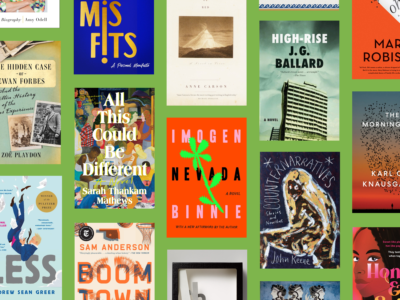
A collection of books on a green background.

What a Bunch of Interesting Humans Are Reading This Summer/Fall Purgatory

WP_Post Object
(
    [ID] => 4775
    [post_author] => 15
    [post_date] => 2022-08-31 17:45:00
    [post_date_gmt] => 2022-08-31 17:45:00
    [post_content] => 

Meet Cole Bush, the shepherdess battling fire season with goats and sheep.

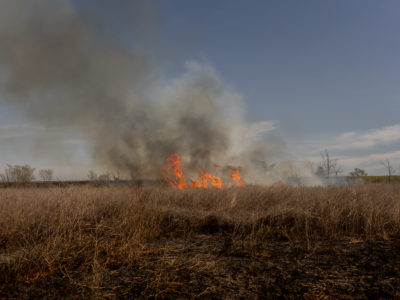
One morning last summer, Cole Bush was high up on a ridge in North Los Angeles County, shepherding her “flerd”—a mixed flock of sheep and herd of goat—from one paddock to another. Normally, this maneuver was routine; but something was wrong. When she turned around, in the distance far below, she spotted a hundred of her goats and sheep: They had slipped off into a high school parking lot and were eating the median. People were already gathering around them. Bush and her team ran down the steep hillside as quickly as they could and found a football coach surveying the scene. She began to explain what was going on: Her animals, now munching away on tufts of grass, weren’t just a prank gone awry. They were there to protect them from fire. 

This answer likely surprised him, but Bush—who goes by BCB—explained that the animals were on the clock. Based out of Ojai Valley, in Ventura County, California, Bush’s business, Shepherdess Land and Livestock Co., is a for-hire grazing outfit that focuses on fire prevention and vegetation management. The work they do is tantamount to creating protective force fields; shepherding the flerd to eat brush, weeds, invasive plants—would-be fuel—so that fires won’t move as quickly or get as hot. The grazing is not to eradicate fires, but to ensure they’ll be smaller, more manageable, and to create defensible space. 

Of course, the animals have no idea they’re rushing against time to prevent the destruction of property, livelihoods, and a potential great extinction. They’re just animals doing animal things; curious, hungry, and content to roam. They have good days and bad depending on the elements; on a hot day they might move more slowly. If there are interesting landscaped yards—or football fields—nearby, they might wander over to get a taste. 

Still, they’re highly effective. As they roam, their hooves aerate the soil, making it healthier. They digest plants and turn them into food for the soil when they shit. “Their bodies know so much,” says Bush. From the womb, their gut biomes are prepared as their mothers introduce them to the local weeds and brush. From birth, they begin learning what they need and how to exist with the land; and when they stray, their shepherdess guides them home. 

If it seems like an underreaction to employ goats and sheep to combat an ever-expanding fire season, that’s part of the point of Bush’s project. “We have a culture of fear around fire,” she says, when we need to feel empowered against it. And to feel powerful against an element that turns us into shut-ins, that paints the sky otherworldly colors and sends residents fleeing from their homes every year, Bush says, requires us to first re-examine our relationship to the land it ravages. 

“A lot of our work is this idea of bridging, of the translation piece,” she says. “We’re at war with the earth when in fact we need to see that we’re a part of it.”

~

Bush grew up in San Diego, the chaparral region of California, a fire-prone ecosystem. In middle school, her family moved to a house in Elfin Forest, just north of the city, which they could afford because the forest itself had burned down. 

In the barn, a young Bush could see the smoke stains on the stucco walls. “We lived in the shadows of the aftermath of fire,” she remembers. Even then she understood on some level, despite the ash and the charred remnants of trees, that fire was not a combative element. “How [the ecosystem] has evolved with fire is so important. But the way that we have not actively stewarded or tended to our landscapes has created the devastation of mega wildfires.”

It would be a long road before Bush would realize her place was among the “flerd.” Raised in the Church of Latter-Day Saints, she knew two things by the time she was 20: that she was queer, and that she had to leave the church. Still, she remembers an idyllic childhood. Her family would cross the border to Rosarito almost every Sunday, driving workers from her dad’s LED business home. In Mexico, they’d join them for community dinners, where Bush remembers not wanting to go back to the suburbs, back to the States, where neighbors lived close, but seemed to be strangers to one another. 

As Bush began breaking away from the church, she became increasingly hungry for understanding what made groups—and cultures—cohere and thrive. She thought that built environments were the answer. She’d dropped out of college, but returned to school to take classes on the history of civilizations. “All of them c[a]me down to the same demise,” she learned, “which is lack of resources or depletion of resources.” Pivoting her focus, Bush began to gravitate towards agroecology and environmental studies. It was there that she learned about what would later be called regenerative agriculture. Now it’s a buzzword—a shell for many things, often conflated with sustainability—but for Bush, regeneration was tied to the idea of “ancient futures,” of taking lessons and traditions from the past and adapting them to a future sorely in need of change. 

And then she met Becky, a border collie who worked at Star Creek Ranch in Santa Cruz County, California. When Becky’s owner had to leave town, Bush adopted her and started working at the ranch alongside her, taking photos of the goats and sheep Becky herded. She began to see the animals’ personalities emerge. The goats were the “bad kids on the block,” and the sheep did, indeed, prefer to stick together. They were also surprisingly sweet with their young. Bush was hooked. The ranch opened a grazing business, called Star Creek Land Stewards, and when it landed its first big contract in 2012, Bush became the project manager. She was 27, in charge of organizing thousands of acres of prescribed grazing.

When the owner wanted to retire and sell the ranch in 2014, Bush helped track down a family that traced its lineage back to European Basque shepherds to buy and run the business. Through them, Bush was helping to reinvigorate a shepherding tradition that had waned after WWII, when demand for wool and mutton fell, followed by another decline in the '60s, as synthetic fibers continued to gain in popularity. In addition to grazing, she started selling high-end hides—repurposing waste from the lamb industry—and began calling herself “a modern-day urban shepherdess.” She had found her calling. 

Soon, she took off for Spain and France, where she studied not just shepherding but also the systems that allow young people to become shepherds. She was following in the footsteps of a tradition that had existed long before her; exploring what makes a shepherd a shepherd, and what might attract more people to the work—questions posed by respected researchers like Fred Provenza and Michel Meuret in books she’d studied. She was now certain that she had “sheep and goat in her blood,” and dreamed of a grazing school in California. She created a curriculum and developed a project called The Grazing School of the West despite having no students yet. Someday, she thought, it would be a place where people could work the land with each other, with a community supporting them as they experimented with a vocation that might end up being a life calling, like it was for her. “This ancient vocation somehow persists in contemporary times and will always be a part of humanity,” explains Bush. “Domesticating animals and agriculture is what allowed us to grow as a species on Earth.” 

Now, she hoped those same tools might be used to help the species survive. 

~

In 2017, the Thomas Fire raged through Southern California, burning nearly two-hundred and ninety-thousand acres of land over the course of a month. The city of Ojai was surrounded by flames, and though they never fully breached its perimeter, they destroyed more than seven-hundred and fifty homes in nearby Ventura and Santa Barbara counties. At the time, it was the largest fire in California’s history—and for Bush, it served as a wake up call.

Ojai Valley was a place Bush felt close to; she’d visited often and found herself more connected to nature there. She saw, too, that Southern California was in need of a new approach to fire, one that would not perpetuate the tropes of fear and flight, losing and winning, burning and rebuilding. It needed something different, something radical but not experimental, something reliable and time-tested. It needed goats, sheep, and shepherds. So, when she opened up her own prescribed grazing outfit in 2020—Shepherdess Land and Livestock Co.—she did it in Ojai.

At the time, she knew she was choosing to “be a part of this crazy capitalist system, go out and make money and create jobs for people so that I can pay them.” It was a risky path, but the goal was always to use the grazing company not only for fire prevention but also to subsidize training for a new generation of shepherds. Bush thinks that there is a boom coming in the U.S.; a wave of people who will be eager to dedicate themselves to the land. But they won’t have the same social safety nets, like shepherds in Europe, to help them as they learn. They’ll need to get paid. Last year, The Grazing School of the West welcomed its first cohort of eight trainees. This year Bush is training six, paying them a livable wage. She hopes to continue to expand the program to include twelve shepherds each year. 

When trainees see the flerd for the first time, there is a high-frequency buzz of excitement in the air. When the first goat or sheep wanders off, they panic, thinking they’ll lose the animal. And at some point, the weight of being responsible for so many lives washes over them and the true nature of the work becomes clear. In her letter preparing interested would-be shepherds for the job, Bush warns that the work “will be the HARDEST work you could possibly imagine.” It’s mostly fence-building in one-hundred-degree heat and practicing patience with people who sometimes don’t know the difference between a sheep and a goat. Since it’s rare to be grazing far from private property, Bush has to invest in liability insurance for her flerd—in case they destroy landscaping or wander into the wrong yard or, in the worst case scenario, onto a highway. Not everyone is cut out for those realities, which Bush admits don’t appear on her social media, and leads to a swath of applicants who have never done manual labor but have done a lot of Instagramming. “I made it look way too beautiful and cool,” she says. “And I'm looking at some applicants, and I'm just like, Oh, no, this is an issue.”

Still, Bush is also turning away applicants who would be good fits. “[Prescribed grazing is] a huge burgeoning industry, and the biggest bottleneck is a skilled and trained workforce,” she says. She doesn’t have the resources to expand her program, and no one else seems to either. In Bush’s experience, young folks do want to become shepherds. But she’s left wondering, “What is the barrier to getting these people trained for more businesses and more hands on the ground?” The David vs. Goliath framing, made so common by climate change, leaving smaller actors feeling impotent, weighs on her. “I would say pretty regularly I am overwhelmed with emotion because I just wish I could do more faster,” she says. Twelve new shepherds a year is not going to solve the chaos that’s already happening. And it’s frustrating when there are plenty more than twelve people who want to and could become shepherds. 

Lately, with a team she can trust on the ground, Bush has been taking more time away from the day-to-day operations and focusing on education. Usually, and especially with fire, we wait for a fight to make itself plain and then send out the troops, sparing no expense. But there is another way—and Bush is trying to build bridges to decision makers who can help push structural change. In order to scale ideas, it’s all about getting funds from the state level to specific, grassroots level grazing projects, she says. One of her most radical ideas would be to bring goats into prisons, instead of sending inmates to go out and fight fires, a dangerous and grueling task. “Why don't we train inmates to learn how to manage and work with livestock?” Bush asks. “To do the same work that we're doing and also have such incredible healing components with working with animals?” These are the types of ideas she hopes to bring to the table; to prioritize prevention over fear and connection over combativeness. 

The numbers don’t seem to be in Bush’s favor, nor does time, as fire season continues to expand; 2.5 million acres of land in California burned in 2021 alone. But that’s the thing about a calling: Once you answer it you have to find your way forward. If a few meetings with assembly members go well, if a few more shepherds learn quickly, then Bush might be able to shift just a few more people’s perception of fire, of animals, of the land. In turn, the path might open a bit wider for the boom of ecological doctors and modern-day shepherds that she sees coming. 

With every successful connection made and bridge built, Bush stays hopeful. In the high school parking lot, as she handed the football coach her card and talked to the observers, she quickly diffused a potentially fraught situation. By the end of the day the onlookers were spreading the word that the “flerd” was in the neighborhood with a purpose, and that if anyone found animals suddenly roaming alongside them, they didn’t have to panic; they were exactly where they needed to be. 

In the end, Bush considers herself a herder of humans as well as animals. And if nothing else, humans need to figure out how to give ourselves more time, so we might have more chances to adjust. As she writes in her closing line of the letter she sends to prospective shepherds, “It's a daunting world in society these days and the Earth is throwing out all kinds of loud cries for humanity to get a grip. We can do our part even if small and maybe we can herd on together for some time.”

Additional fact checking by Elizabeth Moss.

~

*The Footnotes

Editor’s Note: At The Conversationalist, we understand that no story exists in a vacuum, and every story is built on the work of others before us, whether in ways big or small. We are likewise dedicated to spotlighting the voices of those who have been or continue to be oppressed, disregarded, and/or otherwise silenced, in an effort to reverse centuries of often intentional erasure. Because of this, we have opted to include “footnotes” on certain stories to give readers additional context and reading material where it feels relevant and beneficial. 

[post_title] => Fighting Fire with Flerd [post_excerpt] => [post_status] => publish [comment_status] => open [ping_status] => open [post_password] => [post_name] => fighting-fire-with-flerd-cole-bush-goats [to_ping] => [pinged] => [post_modified] => 2024-08-28 21:08:25 [post_modified_gmt] => 2024-08-28 21:08:25 [post_content_filtered] => [post_parent] => 0 [guid] => https://conversationalist.org/?p=4775 [menu_order] => 120 [post_type] => post [post_mime_type] => [comment_count] => 0 [filter] => raw )
Shepherdess Cole Bush wearing a light wide brim hat, bandanna, green tank top, and jeans, looking over her flerd.

Fighting Fire with Flerd

WP_Post Object
(
    [ID] => 4229
    [post_author] => 15
    [post_date] => 2022-08-31 17:30:00
    [post_date_gmt] => 2022-08-31 17:30:00
    [post_content] => 

The women of color writing new narratives in perfumery.

When I travel, my souvenir of choice comes in olfactive form: a TSA-compliant bottle of perfume that embodies the spirit of the place I’m visiting, so that I can return to it later in my mind. One cherished example, from a trip to Tokyo, smells like a cup of green tea enjoyed in the cooling clarity of a shaded garden. To someone who grew up surrounded by tea rituals, it also smells like coming home. At its heart is a photorealistic green tea accord—soft yet assertive, bright and smooth at once, bitterness and sweetness in an entangled dance until the end. The scent was composed by someone who understands tea in all of its kaleidoscopic facets: Satori Osawa, a licensed Japanese tea master and one of the country’s few recognized perfumers. She was also the first East Asian perfumer I’d ever met. 

Perfumers, admittedly, are hard to come by. They work in chemistry labs sheltered from the public eye and, for the most part, anonymously. But they also tend to hail from the same small pocket of the world, even though their work caters to audiences all over the globe. Looking at headshots of famous perfumers feels like playing a difficult game of Guess Who: From Jean Claude Ellena (Hermès Terre d’Hermès, Bulgari Thé Vert) to Olivier Cresp (Thierry Mugler Angel, YSL Black Opium), the creators behind some of the biggest household names in perfumery are all born in France—often into perfumer families—and trained there, too. 

France is hardly the only place in the world with a rich cultural scent heritage; nevertheless, the traditional perfumer’s mold continues to be cast in the French man’s image. For those who try to challenge this convention, the barriers to entry unpack like nesting dolls: gender, race, nationality, lineage, and, at the heart of it all, access. “When I first started out and wanted to establish my brand name, it was incredibly difficult,” says Chavalia Dunlap-Mwamba, self-taught perfumer and owner of Texas-based fragrance brand Pink MahogHany. Whether it was finding other Black perfumers in the industry to reach out to, or bulk manufacturers and compounders to scale her business, helpful information proved to be scant and elusive. She found herself bootstrapping as a complete outsider.

For many, the barriers to perfumery are also profoundly financial. From minimum order quantities to the price of raw materials—250ml of jasmine absolute, for example, can retail for over a thousand dollars—every aspect of the industry comes with a price tag to choke on. “Perfumery is an expensive hobby, and historically, only the very privileged have been able to partake in it,” says Loreto Remsing, creator of artisan brand LAROMATICA. Learning the tricks of the trade is equally prohibitive, and usually involves moving to France to study at one of its prestigious fragrance institutions. For Remsing, an immigrant to the United States who faced poverty growing up and ended up putting herself through college, a formal perfume education was never an option; and even if it had been, she would have felt out of place. This exclusionary feeling is shared by Lula Curioca, an olfactory artist and perfumer based in Mexico City, and also pushed her to pursue the self-taught route. “[It was] like going against water all the time,” Curioca admits. “I was like, ‘That gate, at the moment, I can’t cross it.’” 

In conversations about the industry, this image of gates comes up time and time again. “[Historically,] women of color haven’t been given the opportunity to come up in perfumery,” says Yosh Han, self-taught perfumer and creative director at Scent Trunk, a fragrance publishing house. “Many have been in marketing or sales roles only.” Disregarding the rules of convention, she launched her eponymous perfume brand in 2004, as an Asian-American female with no formal training. She recalls the industry reception being one of shock: “Everybody was like, ‘Who the fuck is this girl?’” Han, who now champions other independent and self-taught perfumers by commissioning their work for Scent Trunk, is a vocal advocate for doing things the untraditional way. She likens it to good cooking: talent can come from any kitchen, not just Le Cordon Bleu’s. 

Access through the well-trodden pathways, too, comes with asterisks and caveats for those who do not fit the profile. “It’s really guarded. And still, despite what a huge industry it is,” says Anne Serrano-McClain, founder of independent perfume brand MCMC Fragrances. She’s what the industry dubs “classically” trained, through a year-long professional degree offered by the Grasse Institute of Perfumery (GIP), a rarefied and renowned perfume school located in the South of France, that only accepts 12 students a year. When she enrolled in 2009, most of her fellow students were from Europe, with familial ties to the industry; one of them was the aforementioned Olivier Cresp’s son. “You are expected in the industry to follow a very particular path,” she says. “I walked away with the technical skills, but I also walked away with this understanding that made me passionate [about] breaking that mold a little bit.”

Dana El Masri, a Lebanese-Egyptian-Canadian perfumer who launched her line Jazmin Saraï shortly after graduating from GIP, recalls clashing with her French teachers and classmates throughout her time there. Often, it came down to cultural differences as a person of color in a traditional Euro-centric environment. In one instance, while working on a group project for a perfume that she was leading—inspired by a luxury hotel in Siwa, an oasis in northern Egypt—her unusual choice of fragrance materials was called into question as being “too oriental.” 

Here, “oriental” is accompanied by emphatic air quotes. Until recently, the term was a part of the perfume industry taxonomy—a fragrance family that encapsulates scents with warm, resinous, spicy facets, featuring materials such as vanilla, labdanum, and tonka bean. The classification has always played an othering role in perfumery, used to describe scents that represented fantasies of foreign places. “It means nothing from an olfactory perspective,” El Masri explains. “You can eliminate it entirely and break it down into balsamic, ambery, powdery, and gourmand.” In school, she was praised for being skilled at making “oriental” perfumes—until those compositions started to smell too foreign. “We were playing around with materials that you find in ancient Egypt. So I was using myrrh, I was playing with papyrus. Palm frond. Carob. Jasmine,” she recounts. “So yeah, it was going to be a little ‘oriental.’”

Today, due to growing pressure from industry advocates—including many of the perfumers featured here—a term that was once deemed part of perfume tradition is now understood as terribly outdated and offensive. In 2021, the perfume database Fragrances of the World updated all instances of “oriental” to “amber,” as did the perfume encyclopedia Fragrantica. Some brands and retailers followed suit. Still, many haven’t, and the industry remains riddled with disparity and ripe for change. “If a [fragrance] company cannot acknowledge a word description because they’re upholding colonial white supremacist beliefs,” asks Han, “how is a woman of color ever going to get to leadership positions?” 

To amplify and uplift the presence of BIPOC creators within the industry, Han, El Masri, and their network of advocates have assembled resources like Decolonize Scent and the Diverse Talent in Fragrance & Perfumery Database. It is, after all, in perfume companies’ best interests to expand their pool of talent; diversity begets innovation and creativity. And when perfumers are hired from all over the world, not just the microclimates of the South of France, they distill their experiences and unique olfactive associations into their work. “When you bring in women of color, you are bringing in unique cultural experiences, traditions, history, heritage, and stories,” says Remsing, who attributes the inspiration for some of her creations to a childhood of living on isolated farms, surrounded by herbs, plants, and folk medicine. 

Before I had the chance to visit Satori Osawa, I had smelled a dozen green tea scents—all pleasant and lovely, but none that hooked me by the heart. When I smelled her specific translation of green tea—with the sparkle of a portrait painted by a person who loves the subject—the rest of them dropped out of qualification. 

Perfumes have always been prized for their transportive properties, how they allow us to return to a beloved memory, or armchair travel to new surroundings. This is why fragrance marketing copy is saturated with references to fabled worlds and exotic destinations, to odysseys and adventures. But as the olfactory terrain of fragrance becomes more and more diverse, those responsible for creating these concepts remain the same. 

To the brands who capitalize on the allure of the unfamiliar yet default to working with the old guard, El Masri presents an alternative perspective: “Don't you think you're going to get more of an accurate and potentially even more soulful, passionate, connected interpretation of what you're trying to express,” she asks, “if it was made with a local [perfumer] or someone who understands the culture on a much deeper level?” This is not to say that only people who’ve lived those experiences should get to tell their stories, El Masri clarifies. “I’m just saying that we need to give those people that chance.”

For the women who’ve plodded their own paths in perfumery, a shared belief is the moral imperative to create more opportunities for the scent-curious, whomever they may be. Dunlap-Mwamba, who also works as an educator, sees it as more than a DE&I concern—it’s the missing representation that helps close gaps for the next generation. “My mission is to create more visibility for perfumers of color,” she says. “Because what happened with me is that I didn’t know this space existed until I was grown.” If fragrance became incorporated into elementary school curriculums alongside electives like art or dance, she suggests, students would be exposed to the different facets of the fragrance industry at a younger age—which broadens their avenues in the job market.

Serrano-McClain has a similar mission: to pass on her technical training from the GIP to those in less privileged positions. “We don’t treat perfume like it’s accessible art,” she says. “And we could do more of that.” She had previously taught a perfume class at a local youth engagement center, and recalls being impressed with the wealth of olfactive ideas that her teenage students brought to the table—evidence that good ideas in perfumery can come from anywhere, at any age. But what is understood for other artistic mediums—that capital and institutional training are not prerequisites to great art—still pushes the boundaries of this one. 

One of the silver linings of the pandemic is how it has normalized and democratized online education—and that includes more remote perfume courses, previously rarely offered. Organizations dedicated to accessible scent education and experimentation, such as the Institute for Art and Olfaction (IAO) in Los Angeles, make it easier than ever to dabble in the art and science of smells. Curioca, who herself learned to make perfume through sessions at the IAO, offered advice for other outsiders with interest in the industry who are unsure of where to begin: “If you want to, you’ll find a way. Maybe it’s slower. Maybe it’s different. Your own path will find you—you just need to let yourself be guided.” 

As they say in the industry: Just follow your nose.

[post_title] => Follow Her Nose [post_excerpt] => The women of color rewriting the narratives of perfume. [post_status] => publish [comment_status] => open [ping_status] => open [post_password] => [post_name] => follow-her-nose-woc-perfumers [to_ping] => [pinged] => [post_modified] => 2024-08-28 21:15:12 [post_modified_gmt] => 2024-08-28 21:15:12 [post_content_filtered] => [post_parent] => 0 [guid] => https://conversationalist.org/?p=4229 [menu_order] => 121 [post_type] => post [post_mime_type] => [comment_count] => 0 [filter] => raw )
An image of a purple orchid rearranged and reshuffled in a grid.

Follow Her Nose

WP_Post Object
(
    [ID] => 4729
    [post_author] => 15
    [post_date] => 2022-08-31 16:30:00
    [post_date_gmt] => 2022-08-31 16:30:00
    [post_content] => 

A story of two deaths and an engagement.

Old Friends” is an ongoing series exploring the many ways that friendship changes shape in adulthood. 

“My friend Rachel is getting married.”

I say the words in my head, and out loud, and marvel at the way the syllables align; laugh a bit at the obvious joke about the 2008 movie; pull my mouth into a half-smile as I imagine Rachel as I knew her best, someone I sat with during tenth grade biology and who gifted me so many of the foundational touchstones of my personhood now. Rachel, goofy and unguarded and easily earnest, who spurred me to be my weirdest and wildest self. Rachel, who introduced me to Britpop; who introduced me to a lot of music, actually, including the artist Annie, whose song “Heartbeat” is a top five for sure. Rachel, who taught me to be funny in the exact way that would make her giggle, an expression and sound I can picture without any dimming over the distance of space and time.

The thing is, I haven’t seen Rachel in person in over a decade. Before this past year, the last time I’d spoken to her was back in 2017, when our friend L, who’d sat at that same bio table, passed away, and knowing that she and L had been as close as sisters, I’d reached out to Rachel over a flurry of texts. We made the kind of promises that happen over death, to be more present and ready for each other in the now. And I thought I’d meant it, but I couldn’t follow through. When everyone descended back on our hometown for the funeral, I demurred, citing life and time and work—and did I mention life?—letting the memory of who I was to them attend instead.

There were real reasons why I didn’t go back. I was in the throes of an internal gender crisis as I assessed and tried to repress my rejection of womanhood, a bridle bit that was carving a waterfall of blood from my metallic mouth. I was still reeling from a big move—out of Los Angeles, my home for seven years, and into a domicile with the man who’d become my spouse—and hadn’t quite found my footing, financially and otherwise, in this new place. But the most elemental reason I didn’t go back to New Jersey was that I didn’t know what to say to the friends I’d essentially left behind when I moved to California and decided to become the person I couldn’t be back home. Back where I knew and loved them. Back where I maybe not loved, but at least thought I knew, myself.

~

Four years later, death is what brings me back to Rachel again. She’d always been attuned to what one might call the “pop girls,” and in the early 2000s, that included Girls Aloud, the British girl group whose impact and influence never quite crossed the Atlantic like their most popular predecessors the Spice Girls' had. Rachel had made a hagiography out of their music and careers—as a group, as individuals—with the expertise of a stan, which she was. And then, last fall, one of the members of Girls Aloud passed away suddenly, at an age where your first reaction is, “That’s too young.”

I read the headline on the music blog I’ve been reading since high school and felt the impact in two waves: first, a sharp kick in the throat, and then, a dull pang tunneling through my chest cavity and into my gut, where it settled into the heavy, heady ache of guilt. I needed to tell Rachel. Did she already know? Did she still care? Would she want to talk about it with me, and could this transparent bid for reconnection actually in turn open the door for us to discuss everything I now knew about myself and everything I didn’t know about her? 

~

We fell out over a boy, or at least that’s how I framed it. After my high school ex and I broke up, he’d stayed on the East Coast for college like most of the people I’d gone to school with and made plans with them and reached out to them and made them feel wanted and seen, and that included Rachel. Meanwhile, I’d crossed the country and immediately began my free bitch makeover montage, seeking nothing less than sublimation, to seem cooler, smarter, more self-possessed than I’d ever felt in the town where I’d grown up, to leave my body behind and diffuse into a sun-baptized spirit. I quite literally tried to shed my body of its mass, its baggage, its racialized cocoon, to cultivate the effortless, weightless glow of success and satisfaction that’d make people look at me, want me, and maybe even accept me. No wonder my ex broke up with me over a video call right before Halloween our freshman year; no wonder my attempts at conversations with my once-best friends became buckshot in sparse forests, doves with clipped wings released to their doom, cursory “happy birthday”s and then merciful silence. It didn’t matter that our high school friend group started to break apart on its own, that many of the friends my ex had “won” in the breakup custody battle didn’t stay friends with him or each other. I surrendered my past completely, and more than anyone else, I surrendered Rachel. 

Honestly, the loss of most of those friendships was for the best. And eventually, I figured out how to become the kind of person I wanted to be without brutalizing myself for the achievement of that want. But I never got over Rachel, who was one of the only people I knew from back then who went on to work in the entertainment world, too; whose influence in my life goes down to my marrow. 

I went alone to a Robyn concert and thought, “Rachel would’ve gone with me.” I went to parties and wondered what she’d think of their soundtracks, because she was the one who’d taught me how to listen to—really listen to—and contextualize music. In many ways, she was my shadow sensei and my twin, not in the biological sense but in the Hilton Als essayistic way. A mirrored soul, someone who knew how to draw the best of me out of myself. 

I’d never told her any of this because nobody we grew up with talked about friendship like that. But maybe we’d always picked up a singular frequency from each other. When I heard through the grapevine that she’d come out in college, I yearned to tell her that I understood even though I hadn’t come out in my own way to myself then. When I did come out, I’d often imagine, unbidden, how I would break the news to her. How she’d process it; whether she’d recoil from or reach for me, whether she’d still recognize our similarities despite the new difference between us.

~

I stared at the headline and imagined a world where I took my regret to the grave, and texted her something that, between the lines, simply said: I miss you, I miss you, I miss you.

We talked for what felt like and actually was hours. Her girlfriend-now-fiancée had to remind her of the life outside our impassioned recollections and brutal revelations. Our mutual admirations and jealousies and drafted but scrapped overtures. She asked me what happened back then, and I told her with no shame or fear or gloss, the kind of honesty we’d never achieved as friends. 

And really, we’re barely friends now. I don’t know the rhythms of her day-to-day life and she doesn’t know mine. We haven’t talked at length since that first outpouring, but we both agreed that all we could do was keep placing stones in the river that’d grown between us. I text her every time I think of her and she does the same. She’s back into British girl pop again and told me when she sang Little Mix at karaoke. I asked her for her address to send her flowers for her engagement though I’m not (and didn’t/don’t expect to be) invited to whatever ceremony she’s got planned. I won’t be in New York for a while and she won’t be in California anytime soon, but the door is open if/when one of us crosses over the same expanse that’d once divided us.

I want to shake my younger self by the shoulders and tell her/them that the only thing that ever kept me from rekindling these kinds of connections was my own damn ego, so fixated on the idea that something was broken that I couldn’t imagine reforging it into not the thing it was, but the thing it could be. I want to leap across the country and shake Rachel’s shoulders and promise, really promise, that I won’t let our friendship become a memory again. I want to watch her face morph with indescribable emotion as she sees me and I want to know she sees my face go through the same. 

Maybe I’m coming on too strong. It’s true, whirlwind courtships have slimmer odds than ones that grow from deeply planted roots. So here I am, enriching the soil; soon, though, I hope to have more flowers for her.

[post_title] => How Do You Reconnect with Someone You Haven't Spoken to in a Decade? [post_excerpt] => [post_status] => publish [comment_status] => open [ping_status] => open [post_password] => [post_name] => how-to-reconnect-with-someone-you-havent-spoken-to-in-a-decade [to_ping] => [pinged] => [post_modified] => 2024-08-28 21:15:12 [post_modified_gmt] => 2024-08-28 21:15:12 [post_content_filtered] => [post_parent] => 0 [guid] => https://conversationalist.org/?p=4729 [menu_order] => 122 [post_type] => post [post_mime_type] => [comment_count] => 0 [filter] => raw )
An illustration of a photo album, with two people in different photos reaching out across the page towards each other.

How Do You Reconnect with Someone You Haven’t Spoken to in a Decade?

WP_Post Object
(
    [ID] => 4690
    [post_author] => 15
    [post_date] => 2022-08-31 16:00:00
    [post_date_gmt] => 2022-08-31 16:00:00
    [post_content] => 

In my 20s, this question consumed me. Then, I asked a better one.

Old Friends” is an ongoing series exploring the many ways that friendship changes shape in adulthood. 

At the nadir of the Great Recession, as I prepared to hurl my about-to-graduate self into a labor pool that looked more like a quicksand pit, my many preoccupations about the future—Where would I live? How would I pay the bills? What would I do, in both a cosmic and literal sense?—were always overshadowed by a quietly devastating question: Why don’t I have any friends?

The thought was born of confusion more than self-pity. I had plenty of flaws, yes, but I wasn’t a uniquely unlikeable person, nor an especially cruel or boring or stupid one. At no point had I ever made a conscious decision to reject friendships; in fact, I craved them with a somewhat pathetic sincerity. Yet, for whatever reason, most days I woke up feeling deeply alone and went to bed feeling the same way.

Soon I’d learn this was normal, that feeling like you have no friends is one of the most universal experiences of being an adult in the 21st century. Every year there’s a new study that quantifies our collective loneliness. The specific statistics are irrelevant, the takeaways interchangeable. The numbers say little we don’t already know. Who needs an expert to explain that a society built around perpetual, exponential growth must demand ever-greater exertion and attention from an increasingly exhausted population, and that this state of affairs sucks ass?

On some level it was nice to know my misery had company. But not that nice. It certainly wasn’t enough to allay my fear that I was trying my best to make friends and failing miserably. No matter how often (or where) I put myself out there, I had nothing to show for it. Desperation is a stinky cologne, and it often felt like the more I yearned for friendship, the faster people ran away from me. After two years of playing pickup basketball at the local YMCA, I’d bonded with zero other humans. My weekly trips to the meditation center were wonderful, but even joining a “Dharma Friends” group didn’t yield any actual friends. I chatted with classmates in the halls after lectures and struck up conversations with strangers at the bus stop, often with the promise that we’d grab a drink later. We never wound up grabbing a drink later.

My inability to make friends would’ve made more sense if I’d been a “real” adult, I reasoned. If I’d had the excuse of a kid who ate up all my free time, or a career that chained me to a desk. It would’ve made more sense if I’d just moved to the area: Minnesota is notoriously inhospitable to newcomers. None of this was true, though. The only remaining explanation? The problem was me. 

In hindsight, I think this was correct, but not for the reasons I imagined.

Compared with all the time 21-year old me spent pondering why I didn’t have any friends, I spent very little wondering how I might be a good friend to others. I don’t think I was unique in this regard: Young people are typically (if not always accurately) regarded as self-centered. In any case, my own needs were so urgent and ravenous that I had no brain space to contemplate the needs of anyone else. My obsession with having friends made me poorly suited to be one myself.   

Another thing I’d rarely considered was if the question of Why don’t I have any friends? was even valid. It’s not like nobody was ever nice to me. The YMCA basketball guys, for example, may not have invited me over to play video games—but we did spend 5-10 hours a week hooping together, cracking jokes and talking good-natured smack. And some of the people I’d met at the meditation center had shown me remarkable kindness. There was the yoga teacher who’d stay after class to help me practice headstands (and, much to my surprise, commiserate about trying to quit smoking). Or the avuncular gentleman who carved me a beautiful portable altar after I told him I was moving to South Korea. I remember admiring the wood’s live edge and choking up as he hugged me goodbye. Isn’t that something friends would do, even if we’d never hit the bars together? 

And then, a strange thing happened: I left the place I’d spent most of my life and promptly made a bunch of friends. 

The change of scenery didn’t hurt, and finally having a small-but-steady source of income wasn’t bad either. (How invisible you can feel in a city when you have no money, and how limited your options for socializing become when a $5 drink is beyond your budget!) On Thursday nights, we’d have barbecue feasts and sing karaoke; on weekends we’d go to mud festivals or lewd sculpture parks. At last my life was full of the friendship I’d craved, the bubbly and adventurous camaraderie of beer commercials and Benetton ads. This miracle didn’t happen because I somehow got smarter or funnier or cooler, though—all the attributes I’d thought were essential for having friends. Instead, I’m pretty sure it happened because I got more curious about other peoples’ lives and less obsessed with my own.

Looking back, it feels unsatisfying to say that my reintroduction to friendship came thanks to a change in my material conditions. People can’t just pack up and move if they feel alone in their town or city, and finding a decent job has always been easier said than done. But it feels equally unsatisfying to say it happened because I shifted how I thought about things—as if the only thing standing between me and a brunch table full of chums was a pinch of positive thinking.

When it comes to making friends as an adult, the deck is indeed stacked against us. It’s not just me: This is a shitty and difficult time to be alive. Life under a hypercompetitive capitalist regime is hostile to the conditions that make friendships possible. We have little free time for long meandering chats, and we have few nice public spaces in which to have them. We’re taught from birth to view ourselves as consumers and competitors. We’re punished for having any vulnerabilities. You could say this makes friendship more urgent than ever… but when hasn’t it been urgent?

All these points are true in a big picture sense, which made it essential (in my case, at least) to ignore the big picture. Ignoring stuff tends to get a bad rap—but for me it was an act of liberation instead of neglect. When I started paying less attention to my own neuroses about friendship and the structural reasons it felt so out of reach, I had more time and energy to pay attention to other people. I started to notice little things about the ways they talked, moved, thought, ate. This was genuinely interesting to me, and it turned out that taking an interest in others was a good way to get them interested in me, too. Not all the time, but often enough that I felt less alone. 

In the decade-plus since my existential friend crisis, my thoughts about friendship have changed so much they might as well belong to a different person. My urge to impress morphed into an urge to care. This shift didn’t happen because I gritted my teeth and tried extra hard to be nicer; it came when I took a break from beating myself up to notice all the fascinating humans moving around me. There’s an old Buddhist joke that goes, “Don’t just do something, sit there.” And as silly as it might sound, not trying to fix my friend problem was the first and most important step to letting it fade away. 

I wish I could go back and explain all this to about-to-graduate me, but who knows if he would have listened. Maybe he had to experience it all firsthand for himself. Better late than never, though, and better now than even later. What a blessing it is to realize that we don’t have to be better to be worthy of friendship. What a relief to know that flowers bloom even if we don’t pull them up by their petals. 

[post_title] => "Why Don't I Have Any Friends?" [post_excerpt] => [post_status] => publish [comment_status] => open [ping_status] => open [post_password] => [post_name] => why-dont-i-have-any-friends-culture [to_ping] => [pinged] => [post_modified] => 2024-08-28 21:15:12 [post_modified_gmt] => 2024-08-28 21:15:12 [post_content_filtered] => [post_parent] => 0 [guid] => https://conversationalist.org/?p=4690 [menu_order] => 123 [post_type] => post [post_mime_type] => [comment_count] => 0 [filter] => raw )
A black and white illustration of a man looking melancholy; a colorful illustration of him surrounded by friends is breaking through the "canvas."

“Why Don’t I Have Any Friends?”

WP_Post Object
(
    [ID] => 4811
    [post_author] => 15
    [post_date] => 2022-08-31 10:30:00
    [post_date_gmt] => 2022-08-31 10:30:00
    [post_content] => 

A survey of 12-year-olds to early 20-somethings in the US.

This article is a companion piece. If you’re curious to learn how older people feel about the state of the world, click here.

We’re more than two years deep into a pandemic, and if it feels like we’re moving backwards, it’s because in many ways, we are. 

In 2022 alone, there have been over 300 mass shootings in the US. Earlier this summer, in a historic decision, the Supreme Court overturned Roe v. Wade, immediately impacting the reproductive rights of millions. Meanwhile, global temperatures have reached dangerous, record-breaking highs, and if we squint into the horizon, all signs point to an imminent recession, where young people seeking employment will undoubtedly be among those hit the hardest. 

Oh, and did we mention we’re still living amid a deadly virus that continues to take lives each day? 

The Conversationalist asked young people from various parts of the country their thoughts on the state of the world right now. Which issues are overwhelming them the most? What kinds of discussions are they having with their friends? How do they feel about the future? Is it all doom and gloom? 

Here’s what they had to say, in their own words. 

~

“Turning on the news and seeing the violence in this world is not a surprise anymore. It's not even sad because I expect it. What scares me now is going to places where I can't find the nearest exit if I need to flee quickly. My home city of Chicago is now looked down upon by America as crime central. When I tell people I live in the suburbs of Chicago they gasp as if I'm in danger. 

I remember flinching at school when I heard a student squeeze open their chip bag, resulting in a loud popping noise. My heart skipped a beat and my mind immediately thought of the worst. Within seconds I was asking myself, Where is the noise coming from? Is it safe to stay where I am? How did the intruder get into the school? All from a kid’s chip bag making a loud popping noise. I shouldn't be thinking that way. It shouldn't be a habit for me, a 17-year-old, to look for the nearest exit in every public place I go to. 

I just want to be shocked when I turn on the news channels again.”

—Amanda, 17, suburbs of Chicago 

“Not only is there more fear in the world with monkeypox currently, specifically in New York, climate change is also only giving us about eight more years before there is no turning back. This is extremely worrisome because Americans aren’t doing anything about this and we only have so much time before our ecosystems become more fragile than ever. 

Overall, as someone within the generation that has to suffer most from these current issues, this is very concerning for not only our well-being but our physical health. We need to take the appropriate measures to prevent further conflict.”

Juliette, 15, New York, NY

“I’m finishing up my senior year in the fall at Penn State University. From my vantage point, the recent Dobbs decision has stirred up an immense amount of emotion from all sides of the spectrum and both sides of the coin, so to speak. College-aged women and female students that I interact with are overwhelmingly disturbed and frightened—they are fired up and want to help right the ship to protect abortion access for themselves and, in the case of the few pro-life women, for others. I work in local political organizing and one way to communicate with pro-life women in particular is to remind them that while they may not choose to have an abortion, their friends may face situations where they need one—and bringing the hot-button issue to a hyper-personal level really helps some people understand that they should not be so anti-choice. 

For men, a general sense of confusion and passive worrisome behavior is the vibe that I’m getting. My guy friends in particular tend NOT to be split among party lines with abortion—a lot of them think it’s stupid to tell women they can’t do something, while others are afraid that their female partners may not have the birth control/contraceptives they need to continue a sexual relationship. 

My fear is that despite the level of concern and anger at this decision, people my age will not care enough to vote in the large numbers that we need to actually change things. [We] can’t change SCOTUS, but can sure as hell change our state legislatures and Congress. That’s why I’m getting as involved as I can to spread the word to students and folks my age that this election is undeniably the most important of our lifetimes, and that at the very least you need to vote.”

Josh, 21, State College, PA

“With everything happening in our political climate, the one word that can't escape my mind is 'division.’ With all of the constant discord going about through the media, it's hard to ignore. 

I've noticed that the in-person conversations I've shared with people of differing views from me have been much more productive than online ones, whether it be in my classes or at group hangouts. I believe a considerable problem our generation is facing is a lack of personal connection stemming from social media playing a much more significant role in our day-to-day lives. The more that I've realized the adverse side effects of social media, the more attempts I've made to stray away from it. I've deleted Twitter, TikTok, and Facebook with the goal of doing away with it entirely. It's too stressful and time-consuming, and I've also found my mental health to be better in my time away from it. 

I can't help but have my worries about our society's collapse. It's very taxing on me to see so much nonstop negative news.”

Tommy, 18, Worthington, OH

“I’m feeling a bit agitated with how we talk about mental health on the internet and social media lately. I’m not saying that mental health awareness is bad. I just think that with anything that becomes mainstream, it loses any much-needed nuance and seriousness. And that’s what has happened with mental health awareness. You can see it happening in so many forms, whether it’s brands trying to capitalize off of it, down to those stupid ‘Little Miss Whatever’ memes, or any other insert-yourself-here gimmick. All of it totally downplays how serious mental health is and buries any useful resources, turning mental health awareness into another throwaway talking point.”

Margot, 19, Boston, MA

“I live in Jacksonville, Florida but attend school in Ohio. I’m pursuing a degree in fashion and am thankful that most opportunities in fashion do take place in more blue states like New York and California. However, that doesn’t take away my fear of what the future holds. 

While New York, specifically NYC, and California are states that I believe do well in protecting the rights of their citizens, they are also some of the most expensive places to live. Fashion is not one of the best industries in terms of high salaries and affordable wages––at least compared to the cost of living in the places where the industry is best established. 

But even more than that, reproductive rights are a major concern for me. The mere thought of me unintentionally getting pregnant and not even having the option to decide how I want to go about my health has me petrified and runs through my mind constantly. I’m truly at the point where I don’t think I’m even going to consider looking into jobs and companies that are located in red states. To make matters worse, we’re living in a system ruled by a Supreme Court that just took a major blow to combating the climate crisis and agreed to hear a case that heavily impacts voting rights, which would just be another major step in the seemingly decline of democracy. 

I’m very worried about the future, which really sucks because I feel like this is the time that I should be looking forward to it the most.”

Janelle, 21, Jacksonville, FL 

“Over the past few years, the world has felt pretty bad and it’s not getting much better. The government is corrupt; politicians are bad. I’m just resigned to it. I don’t really know how I could change anything. All politicians suck (sorry). It feels like things have been bad forever.”

—Charlotte, 12, Los Angeles, CA

“Everything and everyone right now is so polarized. Most people are arguing for or against things that they don’t know the half about. We are being served all of our information through the media and most of it is altered and incorrect. People form opinions on misinformation and stick to them while being blind to any opposing information. We have to be more open to hearing others' ideas in order to function as a united front.”

Kate, 18, East Lyme, CT

“It's pretty easy to feel despair about the big national issues as it really seems like there is nothing we can do to stem the flow of environmental and human rights catastrophes coming down from a federal and corporate level. That said, I feel hopeful about local politics. 

I hear a lot of talk about urban issues in my peer groups, mainly how to deal with cars-as-default politics in urban planning and policy while promoting alternatives for local transport. While this also feels futile sometimes, there are always silver linings and improvements being made to help bring American cities up to snuff, which in turn seems like a way to help the battle against climate change AND improve quality of life across the board.”

Nicholas, 21, Memphis, TN

“After the events of the last few months I have really felt a crushing fear settle under my skin, wherever I am––at a parade, my school, or the grocery store. It has become harder and harder to listen to the news, to force myself to feel the reality of the crushing headlines, both afraid of the state of the country and afraid of becoming numb to it. 

Being a teen right now is a minefield of double edged swords; between finding comfort in social media and absorbing yourself in saddening discussions, and learning how to become an adult while having massive gaps in the teen experience from the pandemic. I feel young and afraid to grow up in a world where my rights are in question and where there is not a path in sight leading to true freedom. I am as helpless as our elected president, sadly tweeting about what I wish I could fix about our country.”

Carley, 17, Romeoville, IL

“I feel like the world is moving forwards and backwards in different ways. Some things are being improved such as tech and medicine, and some things may be struggling to improve such as plastic in the ocean or people littering. [But] I believe that people should still take precautions with COVID.”

Spencer, 13, New York, NY

“I think it’s impossible not to feel somewhat hopeless at the moment, especially if you’re an activist or politically ‘in-the-know’ circle. I work in education consultancy and research and have done so since I was 15, so I am no stranger to a challenge. Kentucky was not exactly the most conducive environment to the work I was attempting to do. So I guess today's current state of affairs does not strike me as too abnormal. 

I understand this is not the prevailing view amongst my peers, especially in California. But I honed my chops in this work when Kentucky had a governor who openly wondered about drowning teachers, who loosened gun restrictions, and who attempted to gut our teacher pension system. Today's battles are not any different from yesterday’s; they are just as severe and not any more severe. But that assumes you were fighting yesterday’s battles and a lot of my peers weren’t. A lot of them gained political and social consciousness relatively recently and have nothing to compare today's climate to. I would never blame them for that, and I do not think that lessens the importance of their voices. But it does mean these activists need to take a step back from their work to frame it in historical context. 

The Civil Rights Movement, the LGBTQ movement, the fight for Roe; these movements led to large scale social changes in the face of unprecedented challenges. We should be taking strategic guidance from these movements to provide us with that roadmap to social change. It’s like if we were playing chess and constantly losing to the same guy, yet when we stopped and looked at the table next to us, we see the same guy losing to someone else. By taking that step back, we are able to observe a successful strategy to counter that would not have come out of our frustration. If we just keep attempting the same strategies over and over to create social change, without drawing from successful historical examples, we are destined to lose. 

This is why I have hope in the midst of such despair. Because I understand much of our despair has to do not with the particular situation we find ourselves in and more with our outlook on this situation.”

Will, 21, Somerset, KY

[post_title] => How Do Younger People Feel About the State of the World? [post_excerpt] => [post_status] => publish [comment_status] => open [ping_status] => open [post_password] => [post_name] => how-do-younger-people-feel-about-the-state-of-the-world [to_ping] => [pinged] => https://conversationalist.org/2022/08/31/how-do-older-people-feel-about-the-state-of-the-world/ [post_modified] => 2024-08-28 21:11:28 [post_modified_gmt] => 2024-08-28 21:11:28 [post_content_filtered] => [post_parent] => 0 [guid] => https://conversationalist.org/?p=4811 [menu_order] => 124 [post_type] => post [post_mime_type] => [comment_count] => 0 [filter] => raw )
An illustration of a young woman looking out over representations of the state of the world

How Do Younger People Feel About the State of the World?

WP_Post Object
(
    [ID] => 4861
    [post_author] => 15
    [post_date] => 2022-08-31 10:03:00
    [post_date_gmt] => 2022-08-31 10:03:00
    [post_content] => 

A survey of late 60-somethings to 80-somethings in the US (mostly).

This article is a companion piece. If you're curious to learn how younger people feel about the state of the world, click here.

Every day is an exhausting day of dealing with unprecedented events. From multiple pandemics, out-of-control gun violence, the rollback and continued endangerment of human rights and bodily autonomy, and the aggressive creep of fascism, it is valid to feel overwhelmed and hopeless. These issues are enormous and wicked problems. And as a younger generation learns to grapple with them and find a way forward, there is also a growing understanding that these issues are not new, and are built upon the decisions and actions of the generations before us.

In consideration of this, The Conversationalist spoke to numerous people around or over the age of 70 about their hopes, concerns, and feelings regarding the current state of the world. What became apparent is that our collective experience of feeling overwhelmed by unprecedented times is not a new or unique one; and that historical texts and teachings are often a neatly organized version of events that can flatten the truth of living through them. 

The conversations didn’t necessarily provide solutions— but they did offer a sense of meaningful and gritty hope. The kind of hope that suggests a hard push and insistent effort can elicit change over time. Not only of policies, but also of communities and people. 

Here’s what they had to say, in their own words.

~

“Being a kid in the ‘50s, we had duck and cover. We were learning how to duck and cover [in case] a nuclear bomb goes off. [But] even as a kid, I [remember thinking], I don't think that's going to help. When [my family] was first looking for a house, a lot of homes had bomb shelters. I remember being eight or nine years old, some bomb shelter[s] had arsenic in [them], so that if all else failed, you wouldn't suffer. I mean, it's just a weird way to grow up and weird things to think about at that age. Now kids are, you know, learning what to do when there's an active shooter. 

I'm hopeful. Otherwise, the alternative is too horrible. I've seen huge changes in my life, so I feel like change is possible. I just look at it like this: my mother was really homophobic. And then I came out and got a divorce, and had to go through this horrible custody battle and almost lose my kids. It took a few years, she was devastated, [it] was awful. [But] I saw her make these amazing changes. As freaked out as she was when I came out to her, and when my next brother came out, years later, and then my other brother came out, you know, she started to come around. Three out of four of us are gay and she went from being very homophobic and upset to being like a three-star general in PFLAG and she was on the speaker's bureau. I think, because of that, it helps me be more optimistic, because I really do think people can change in drastic ways that you would never imagine. I mean, I would never ever have imagined that I would have a relationship with her and I became very close to her. So that makes me optimistic.”

—Allison Akana, 71, Half Moon Bay, California

“As far as the political climate, [it] was actually much worse in the late 60s and 70s. [In] the 60s, you had [John F.] Kennedy's assassination. You had his brother, [Robert F. Kennedy’s] assassination. You had Martin Luther King's assassination. We had the Mỹ Lai massacre. Nixon was in Cambodia and Laos and wasn't supposed to be there. John Mitchell, the Attorney General of the United States, the chief law enforcement officer was in federal prison. It's really nothing new. There's more information [now]. It's available faster. [But] human behavior hasn't changed at all.

And I would think for young people, they're worse [off] now. I graduated from high school in 1971. In the Detroit area, you could go to work at Ford's Chrysler or GM after you graduated from high school and you could make as much money as your dad. Now, how many kids can do that now? No one, no one. 

[I] used to work the first two weeks of the month, seven days, 10 hours a day. [For] the last two weeks of the month, I would work five days, eight hours a day. Because [I] made so much money in the first two weeks, I couldn't spend it all. My rent was $200 a month, which I split with my friend. I think our electric bill was maybe 12 bucks. My car payment was $190 per month, because I put no money down. The last time I bought gas in high school was 19 cents a gallon. So tell me, who’s got it worse?”

—Robert T., 68, Las Vegas, Nevada

When you go [get] medicinal herbs, you pick a little piece from the east side, pick some from the south side, the west side, the north side, and you say a prayer, you say thank you. With what you've given me, I will get well—that's respect. And what I have seen in the world that we now live in, there is no respect. There is no sense of providing dignity to the things all around us. We don't care about the pollutants that we're putting into the rivers. All we're interested in is how we're going to make additional money, make more profits. I’m now seeing, like in California, all the wildfires are happening. And the water is drying up in Lake Mead and Lake Powell. That's because we did not pay attention. The larger world, the larger society has just totally knocked everything off balance. And now we're sitting with all of these fires that are raging, we have all these polluted waters. We have people that are talking about running a pipeline from Canada down to New Orleans, for this dirty oil that's going to be coming down from up there. And people go, Oh, but they'll provide jobs. They'll give them an income. You can't eat money. You know, and that pipeline is going through a very important aquifer for the Cheyenne and the Lakota people up in North and South Dakota. If that pipeline bursts it is going to pollute that aquifer. And what are they going to drink? They can't drink oil.

What we have been saying for years as Indian people, the outside world [is] finally realizing our relationship as human beings, to the worlds that we live in. We’ve been talking about polluting energy sources for a long time. [The outside world] should have listened to us 100 years ago. They could learn something from us. But we were ‘savages.’ 

But, you know, there is hope. That's my nature. We have all of these negative things that are happening, but there are little flashes of brilliance out there. That's why I'm working where I'm working. I am working with the elderly. I'm one myself. But I look at the elderly as a walking encyclopedia. The elderly still know our language, they know the history, the culture, traditions, customs, the ceremonies, all that keeps us in balance. 

Those elderly people are precious to me. They are the hope for the next generation.”  

—Larry Curley*, 73, Navajo Nation/Albuquerque, New Mexico

“You know, everything I'm seeing, it's just stuff that has happened before. I was a young adult during the Vietnam crisis and now we’ve got the Russian/Ukraine crisis. Every day, you're seeing bombings and body counts, and the news is covering it. [It’s] the same with that civil rights stuff. I mean, it's all the same kind of stuff we were dealing with then. So it'll pass, I guess, eventually. I'll do what I can. But I don't know if I have any power to do anything except vote on November 8, you know? You can go and join marches and protests and write letters and do all that. But I think voting is where people might have some power.

In a representative democracy, voting is the only thing that you can do. Because if you don't vote, you're just throwing up your hands and saying, ‘What the hell, nothing's gonna change.’ But I think it can change, and I think it will change, but you have to have an informed public and you have to have people willing to vote.”

—Barbara Walters, 77, Punta Gorda, Florida

“I remember getting the talk about pandemics and infectious diseases. It may have been kindergarten or first grade, and we all went to the school gym and we got the [polio] shot. It was during World War Two when penicillin came along and antibiotics. And it was kind of this miracle age where all these infectious diseases and dreaded pandemic diseases of childhood and beyond, were kind of behind us.

The 70s were the sexual revolution. It was a time of a lot of sexual freedom, which we hadn't had before. You know, straight people had got it wrong for so long and told us [gay people] all this crap about what we could do, and what we couldn't do, and how we were bad people, and what we did was perverted. [There was] a kind of release, which I think led to a lot of happy, free sex all the time. So when AIDS came in, it really put a damper on things, and shut a lot of people down—it shut me down a lot. 

You’ve lived through Polio, AIDS, and now COVID and Monkeypox. What’s been the experience of living through those moments?

My reaction has been what [is the government] waiting for? Why is it taking so long? There have been many points when it could have been contained. They've been dragging their feet and when will they ever learn? So I find that very discouraging. 

[Overall,] I'm very pessimistic. I mean, there’s always been these fascist elements. I remember the George Wallace campaign, which was quite strong, but it never felt overreaching. The Trump election was a major thing. I guess maybe I was naive. I remember when Obama ran, and I couldn't decide whether I wanted to support him or not, because I didn't think he was progressive enough. Of course, I voted for him and when he got elected I remember the whole thing on TV and crying. I remember thinking, well maybe it’s not as progressive as I like but at least we’re going to get past some of this racial shit, finally. And now I think back at how stupid and naive I was to think that, because it really had the opposite effect and there was a huge reaction to it. I mean, you know, when I was very young, I heard the stories of how it happened in Germany and how it could never happen here in this country. But it's happening.”

—David Lebe*, 74, Upstate New York

“[When I was teaching,] I worked with boys with severe emotional and behavioral problems, they taught me more than I ever could teach them. [Eventually,] I ended up getting a doctorate in technology, studying media and informational technology. And I see a real connection between all the changes, big changes in history, they're very much related to how we communicate. The Protestant Reformation—which was a great movement—started with the printing press when people started learning that they could read these scriptures rather than just look at the pictures in the cathedral. [By reading it] for themselves, [they started] making decisions for themselves. That was all traumatic for the church and the aristocracy at the time because they were in control of everything. Anyway, that's been repeated over and over with the Enlightenment and all this other stuff. Today with the internet, mainly, I think it's the biggest [form of] digital communication. [We’re] learning how to use this new way of democracy and communicating with one another. But we got a lot of learning to do. As we’ve had to do time and time again. I'm very hopeful. The more you give individuals responsibility for their life and for the life of their community, the better things happen.

—Daniel O’Donnell, 77, Chicago, Illinois

“I think the main thing that's different is that for the early part of my life a lot of us got our news from the same places. We watched ABC, CBS, and NBC. And we watched people like Walter Cronkite, or [The Huntley–Brinkley Report]. So we got kind of a similar perspective on what was going on in the United States and the world. And that's good and bad, and probably white supremacy shaped some of those messages. But on the other hand, it was easier to feel like you were part of one fabric of a nation. 

Around the time that Newt Gingrich was elected and became Speaker of the House, and Karl Rove started to shape this slash and burn style of politics that has become the norm, the country bec[a]me increasingly polarized into red and blue silos. Folks just don't trust those that live in the other camp or have any other label, and often self sort themselves so that they don't spend much time with people that are different from them. I think that's the most dangerous thing going on. I'm hopeful that part of what's going on right now is the oppressive system[s] that I grew up with—white supremacy, or patriarchy, or, you know, whatever you want to call it, the status quo—that basically, enough liberation movements have happened that [it’s] kind of in its death throes. And what we're seeing could be considered kind of a death rattle. 

I'd like to believe that liberty and justice and equity are going to prevail, but I don't believe that's automatic. I think we have to make that happen by our choices and by our actions [and] by living responsibly. So I'm hopeful that a more inclusive vision for how to live [and] a more compassionate set of social policies will prevail.

When I was young, I felt a lot of fear. I can remember when I was in seminary, I got anonymous mail from the Ku Klux Klan because I had volunteered with an LGBT organization, and they had a P.O. box. When I picked up the mail, there was a letter from the KKK letting me know that they were watching me and that they knew our organization existed and that they were organizing in our area. And then, when I came out during seminary, a story about me wound up on the first page of the [newspaper] in 1988. I was worried that someone might shoot me because there really was a lot of hate and hostility out there in the world. 

What I've seen has made me perhaps more hopeful than when I was younger. Not only have I changed, but I've also seen things [change]. Legal discrimination [has] become illegal now. I couldn't legally marry when I was younger, I can legally marry now. Black people were having to pay poll taxes and guess how many jelly beans were in a jar [to vote] when I was a child and that's illegal now. Not that [the government] hasn't found [an] incredible number of ways to discriminate against African Americans still. But my own resilience and the things that I've seen change—we've had some wins over the years, some things have happened that are important and good and that at least move[d] the needle somewhat in the right direction.” 

—J-Mo*, 68, St.Louis, Missouri

“There's going to be climate integration. For sure. The number of refugees from Ukraine right now is over 5 million. Can you believe that? That's more than 10% of the population; 15% have already left. Certainly, the wars in the Middle East created millions of refugees. These are just the tip of the iceberg. My understanding—or my belief, is that the Biden Administration is following the lead of the Trump Administration in drastically cutting back the immigration from Central and South America, and looking for technically competent immigrants from South and East Asia and Europe.

It's heartbreaking. It's a crucifixion, because I feel more and more guilty about being a poster boy [of refugees and immigrants] while people who managed to get into this country are working with leaf blowers at $5 an hour.

There are all kinds of things we could do as a country if we had the will to do [it]. And we certainly have the wherewithal to absorb a lot more people. This is still an underpopulated country by almost any standards. And we don't have quite—although Florida will be underwater the day after tomorrow—we certainly don't have the same immediate climate problem. Although we are without any doubt the worst climate criminals in the world.

It’s extremely complicated. I vote in every election, I show up for jury duty. I just returned to the United States, so I have an American passport. I believe that if I accept the citizenship I have certain obligations. But it's terribly confusing.

In terms of the context of this conversation, it’s important to mention that I survived the Holocaust. As a five- and six-year-old boy, this is profound childhood trauma. It's probably helpful for people to understand you as you're talking to somebody who has very severe Post Traumatic Stress Disorder.

[But] I now have, at the age of 84, a four-month-old grandson. He's beautiful. He's gorgeous. One-fourth of him is made of me. As long as there are people there is hope. It's not good to get cynical or bitter. It doesn't help anyone, whatsoever, ever. That's a statement from a very old man who was delighted to have his first grandchild come into the world.”

—Joseph B. Juhász*, 84, Boulder, Colorado

“I have a lot of concerns about how expensive it is to live. That's like a big, big one. That was one of the differences in the 70s, and even the 80s, we weren’t putting all our money towards rent, and all of these gadgets and all this stuff. Towards the end of my teaching—I left Portland in 2006 for Salt Spring Island, and was able to retire with some benefits—I could feel the pressures the students are under with having to work full time, or even work part-time and being so economically challenged, that they wouldn't be able to be as prepared. I don't know how a lot of people do it. And the tendency not to read. I feel like reading is not as valued. And that's a problem. I mean, reading is just, it's one of the life forces for me, and not having to teach has given me a lot of freedom to read. I have some younger friends, [who are a] range of ages and some people have kids—which I don’t have—and they have to devote a lot of time to earning money. That's pretty antithetical to being able to have a lot of time to do other kinds of organizing and community involvement. But I think that people are always going to find ways to do that.”

—Wendy Judith Cutler*, 70, Salt Spring Island British Columbia, Canada

“See, I had seen the police do terrible things. Okay. In the neighborhood [in Philly], I had seen them beat up a playmate of mine, just to beat him up. And then [they] jumped away and said, ‘We beat the wrong n-word.’ I couldn't believe that. To see this and I'm a kid. He's a kid. He had to be about a year or two older than me. We were all kids. So I didn't like the police.

The oligarchs of America do not care about people, or the welfare of common people. Do you understand? [In the 60s,] we were tearing this country apart. And I don't necessarily even mean just physically, you know.

We had Black people, just courageous Black people, who said you know what, these laws are not good for us. They're not even good for the poor working whites. They're not good for any working person in this country. So we aren't going to obey the laws, we're not going to do it, we’re gonna patrol our own communities. And so what would happen? There would be standoffs with the police, shootouts with the police, and people were willing to give their lives, go to jail, or whatever so that we can move forward as a people. And we did. So what I see now is a hesitancy. Now, there are certainly demonstrations of sorts going on now, we know that. But I don't see the kind of strategic cohesiveness that I would like to see, as an extension of what we did in the 1960s. 

I know America is a criminal country. You got to understand that. I was exposed to the despotism of America for so long, that the protests, and the young Black girl filming George Floyd being killed [right] before our fucking eyes—I said, Okay. I'm sorry George was killed that way. But I also knew something like that needed to happen, because the youngsters are too complacent with the crimes of America. When I saw the protests, I watched, and I knew that it was going to be different from what it had been previously. I knew that it would spark, I'll call it a revolutionary thrust, that had not been there before. This is what I knew. And you see this country, it's very good at masquerade and camouflage. It's excellent. We want to spread democracy around [the world]. Really? With all of the homeless that are strewn across this country? But you're spreading democracy? With the inequality that regular Americans are facing?”

—Dr. Regina Jennings*, 72, Philadelphia, Pennsylvania

Interviews have been edited for length and clarity.

~

*The Footnotes

Editor’s Note: At The Conversationalist, we understand that no story exists in a vacuum, and every story is built on the work of others before us, whether in ways big or small. We are likewise dedicated to spotlighting the voices of those who have been or continue to be oppressed, disregarded, and/or otherwise silenced, in an effort to reverse centuries of often intentional erasure. Because of this, we have opted to include “footnotes” on certain stories to give readers additional context and reading material where it feels relevant and beneficial. 

[post_title] => How Do Older People Feel About the State of the World? [post_excerpt] => [post_status] => publish [comment_status] => open [ping_status] => open [post_password] => [post_name] => how-do-older-people-feel-about-the-state-of-the-world-survey [to_ping] => [pinged] => https://conversationalist.org/2022/08/31/how-do-younger-people-feel-about-the-state-of-the-world/ [post_modified] => 2024-08-28 21:11:28 [post_modified_gmt] => 2024-08-28 21:11:28 [post_content_filtered] => [post_parent] => 0 [guid] => https://conversationalist.org/?p=4861 [menu_order] => 125 [post_type] => post [post_mime_type] => [comment_count] => 0 [filter] => raw )
An illustration of an old man looking out across representations of the state of the world

How Do Older People Feel About the State of the World?

WP_Post Object
(
    [ID] => 4008
    [post_author] => 2
    [post_date] => 2022-04-08 12:01:03
    [post_date_gmt] => 2022-04-08 16:01:03
    [post_content] => 

A non-exhaustive list of cruel, corrupt, and extreme actions taken by Republicans of late.

With so many overlapping global crises happening at once, and Democrats in charge of the Presidency and Congress, it's especially hard to keep track of all the ways the US GOP continues to radicalize. This is partly by design. The cascade of oppressive laws and disinformation from Republican legislators and media is meant confuse and overwhelm. The following is a list of GOP and related far right news worth your attention.

  • Jamelle Bouie, Ezra Klein, Jane Coaston and Lulu Garcia-Navarro discuss how the GOP fringe took over American politics for the New York Times.
  • Gabriel Rosenberg, Duke Professor of Gender, Sexuality and Feminist Studies, wrote a Twitter thread about how the latest "groomer" panic is categorically different and more violent than what we've seen before.
  • Writer Jude Doyle does a deep dive into the growing connections between anti-trans feminists and the far right. “It’s a grim irony that, by insisting on a ‘feminism’ without any trans women in it, TERFs have wound up constructing the tool by which fascists aim to destroy feminism altogether.”
  • Roxanna Asgarian writes in NY Mag about how Texas became the most virulently anti-trans state in America, including directing the state’s child-welfare agency to conduct abuse investigations of parents who provide their children gender-affirming care.
  • For the Editorial Board, Mia Brett writes about how Republicans are close to legalizing child marriage in Tennessee. 
  • Also in the Editorial Board, John Stoehr speaks with NYU Law Professor Melissa Murray about Ginni and Clarence Thomas and how their relationship affects perceptions about the Supreme Court's legitimacy. 
  • The editorial board of the Boston Globe wants the January 6 Committee to subpoena Ginni Thomas already.
  • Elie Mystal argues in The Nation that post-Roe, Republicans are coming for marriage equality next.
  • Gerren Keith Gaynor interviews Preston Mitchum about the harm to Black LGBTQ youth of the "Don't Say Gay" Laws.
  • The Oregon GOP is running three QAnon and Proud Boy candidates. 
  • Trump admitted to speaking to key Republican figures at the time of the riot on 1/6. Greg Sargent argues that Merrick Garland should use this admission to launch a full investigation into Trump's communications that day.
  • Speaking of which, there are 7 hours missing from Trump's phone records that day. Historian Tim Naftali writes in The Atlantic that Trump can't just erase history like Nixon did.
  • On the bright side, the DOJ plans to investigate the boxes of records Trump illegally brought with him to Mar a Lago.
  • The Child Tax Credit expiring is pushing voters towards the GOP. Meanwhile the GOP plus Joe Manchin are why it expired in the first place.
[post_title] => What has the radicalized GOP been up to? [post_excerpt] => [post_status] => publish [comment_status] => closed [ping_status] => open [post_password] => [post_name] => media-roundup-what-has-the-radicalized-gop-been-up-to [to_ping] => [pinged] => https://www.editorialboard.com/while-republicans-in-florida-debate-dont-say-gay-republicans-in-tennessee-are-close-to-legalizing-child-marriage/ [post_modified] => 2024-08-28 21:11:28 [post_modified_gmt] => 2024-08-28 21:11:28 [post_content_filtered] => [post_parent] => 0 [guid] => https://conversationalist.org/?p=4008 [menu_order] => 126 [post_type] => post [post_mime_type] => [comment_count] => 0 [filter] => raw )
What has the radicalized GOP been up to?