



WP_Post Object
(
    [ID] => 10980
    [post_author] => 15
    [post_date] => 2026-08-27 21:42:46
    [post_date_gmt] => 2026-08-27 21:42:46
    [post_content] => 

A staggering and tender collection of short stories about Mapuche youth in modern day Chile.

Daniela Catrileo begins Piñen with an invocation. In a short preface, she asks the reader to imagine a river, powerful and pulsing; to imagine its sounds, its smells; to picture the way it moves, how the water snakes through the earth. 

“Now come with me to the river,” she writes. “Give me your hand.” 

For Catrileo, this invocation is both purposeful and personal. Piñen is a book of short stories about Mapuche youth, largely centered around girls navigating childhood and adolescence against a backdrop of othering: The Mapuche are the largest group of Indigenous peoples in Chile, where these stories take place. The author asks us to invoke the river as a path through “continuity and exile,” and chooses it, in part, for its significance to her family’s lineage and name. (In Mapudungun, the Mapuche language, Catrileo means “cut river,” a symbolism she interweaves throughout her work as a way of exploring how Indigenous people have been “fractured by dispossession” and displacement.) 

Her request sets the tone for the rest of the book. “To understand the river, a sensory relationship with its body is essential,” she writes. “If we can manage to understand its song, its language, its movement, perhaps we can translate tomorrow.”

With Catrileo as our guide, we are pulled through Piñen’s currents, both gentle and violent. In one story, the narrator considers the death of a classmate, shot and killed just beneath her window. In another, a young woman remembers her brother, years after he’s disappeared, while stuck on the Santiago Metro. In “Warriache,” a woman reflects on her childhood friendship with another Mapuche girl, a fellow outcast named Yajaira, as a means of remembering and understanding herself. “When I imagine Yajaira, I have an easier time of seeing me, too,” she says. “I am trying to sketch my life, beginning with hers.” 

Much of the book explores the idea of collective memory, and the deep wound that colonialism leaves behind. It is also an exercise in how we might begin to correct and defy colonial narratives by uncovering the truth hidden beneath them. (As Catrileo writes, “In the dance of writing, it’s important to open the wound.”) “Colonial shards produce colonial images: fragments that lodge like splinters,” she writes in the book’s preface. “The question of how to create images that fold and divert the colonial gaze runs through my creative practice. Though it may seem like an aesthetic question, it’s also deeply political. To interrogate the image is to interrogate the instruments of geopolitical domination that continue to operate.” 

Piñen—which means “dust or grime stuck to the skin” in Mapudungun—is a book about identity and survival, and how they are inherently intertwined; how gender and race and class can change the shape of how a person perseveres. Specific to the Mapuche, it is about how a displaced people and culture can endure, even when forced out of their ancestral home to cities and other places unknown. 

Yet while the stories are specific—all take place in Chile around the turn of the century, and follow characters trying and failing to shed the piñen that clings to them—the collection feels most universal in Catrileo’s deep understanding of the precarity of adolescence, and the feeling of gradually becoming who you are. Through this lens, its stories feel both exceptionally jarring and undeniably tender. Perhaps most unsettlingly, in “Pornomisery,” the narrator grapples with the violence that surrounds her: Next door, her neighbor Valeska—a girl around her age—suffers incestual rape at the hands of her father, who eventually kills himself after he learns his daughter is pregnant. Later, the narrator discovers her grandmother had been abused by her own father, and that her mother, too, had been abused by an uncle, something her mother only remembers much later in life. 

Much of the story is about feeling helpless in the face of other people’s suffering, and for those who have suffered, domestic rage as a response to silence. “The kitchen was my mother’s place of liberation,” the unnamed narrator says. “I always imagined that instead of crying, she cooked… It was her way of escaping, of screaming.” As the narrator begins to go through puberty, she is hurdled towards something she feels both unequipped for and uninterested in. Still, she knows that the change is entirely out of her control. “Everyone went through the motions to make me a woman,” she says, resentfully. “But they never explained to us why, nor did they ask if I wanted to become one.” 

Through all of this, Catrileo does not shy away from the darkest depths of her characters’ pain, particularly the pain of women and girls. But she also never abandons us in its pursuit: Just when you think you might be starting to drown, her hand is there to pull you out of the river, and back into the light.
[post_title] => Book of the Month: "Piñen" by Daniela Catrileo [post_excerpt] => A staggering and tender collection of short stories about Mapuche youth in modern day Chile. [post_status] => publish [comment_status] => closed [ping_status] => closed [post_password] => [post_name] => book-of-the-month-pinen-by-daniela-catrileo-translated-fiction-short-stories-mapuche-chile [to_ping] => [pinged] => [post_modified] => 2026-08-27 21:42:48 [post_modified_gmt] => 2026-08-27 21:42:48 [post_content_filtered] => [post_parent] => 0 [guid] => https://conversationalist.org/?p=10980 [menu_order] => 0 [post_type] => post [post_mime_type] => [comment_count] => 0 [filter] => raw )
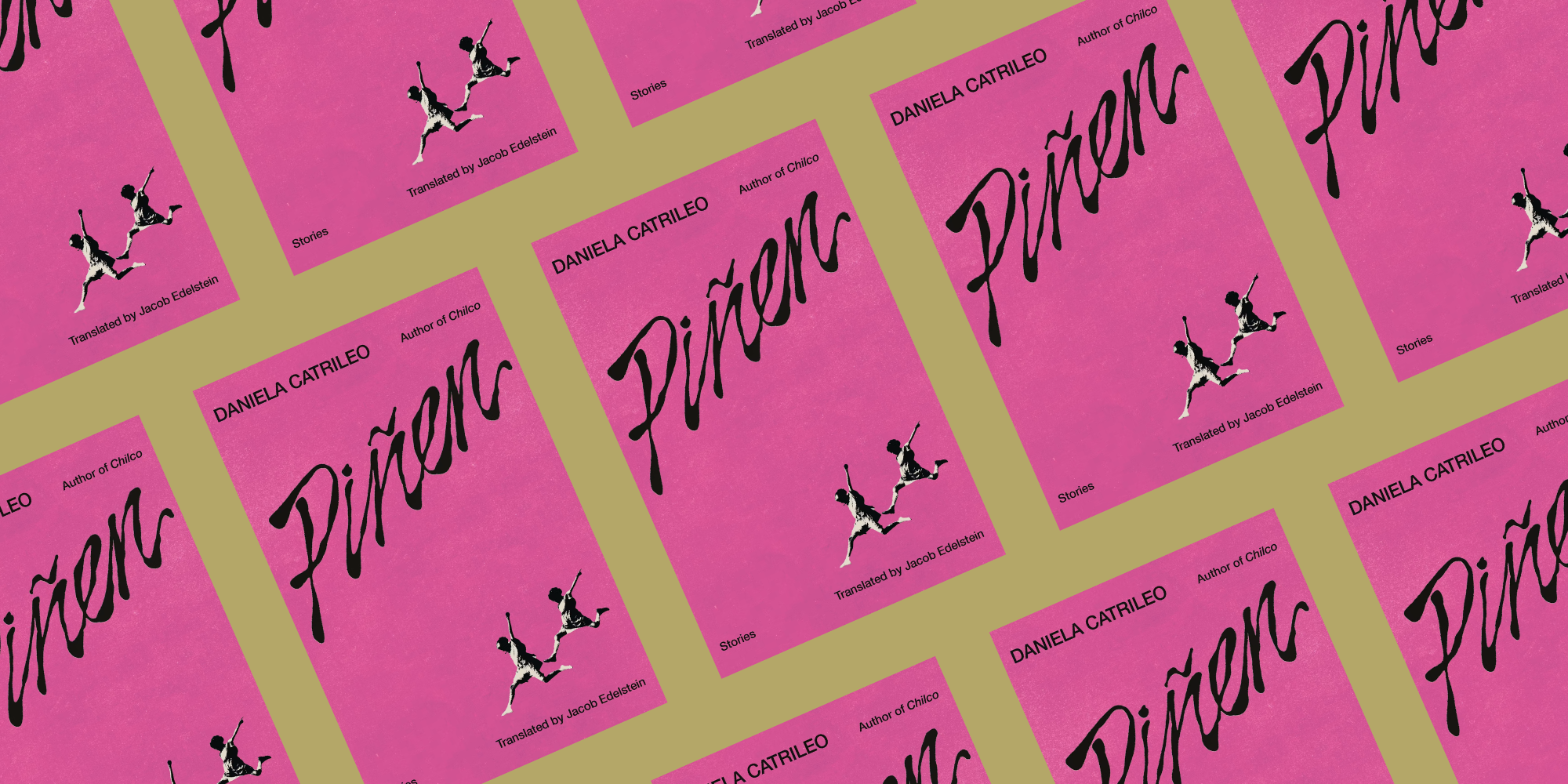
The book cover for "Piñen" by Daniela Catrileo.
FSG Originals

Book of the Month: “Piñen” by Daniela Catrileo

A staggering and tender collection of short stories about Mapuche youth in modern day Chile.

Daniela Catrileo begins Piñen with an invocation. In a short preface, she asks the reader to imagine a river, powerful and pulsing; to imagine its sounds, its smells; to picture the way it moves, how the water snakes through the earth. 

“Now come with me to the river,” she writes. “Give me your hand.” 

For Catrileo, this invocation is both purposeful and personal. Piñen is a book of short stories about Mapuche youth, largely centered around girls navigating childhood and adolescence against a backdrop of othering: The Mapuche are the largest group of Indigenous peoples in Chile, where these stories take place. The author asks us to invoke the river as a path through “continuity and exile,” and chooses it, in part, for its significance to her family’s lineage and name. (In Mapudungun, the Mapuche language, Catrileo means “cut river,” a symbolism she interweaves throughout her work as a way of exploring how Indigenous people have been “fractured by dispossession” and displacement.) 

Her request sets the tone for the rest of the book. “To understand the river, a sensory relationship with its body is essential,” she writes. “If we can manage to understand its song, its language, its movement, perhaps we can translate tomorrow.”

With Catrileo as our guide, we are pulled through Piñen’s currents, both gentle and violent. In one story, the narrator considers the death of a classmate, shot and killed just beneath her window. In another, a young woman remembers her brother, years after he’s disappeared, while stuck on the Santiago Metro. In “Warriache,” a woman reflects on her childhood friendship with another Mapuche girl, a fellow outcast named Yajaira, as a means of remembering and understanding herself. “When I imagine Yajaira, I have an easier time of seeing me, too,” she says. “I am trying to sketch my life, beginning with hers.” 

Much of the book explores the idea of collective memory, and the deep wound that colonialism leaves behind. It is also an exercise in how we might begin to correct and defy colonial narratives by uncovering the truth hidden beneath them. (As Catrileo writes, “In the dance of writing, it’s important to open the wound.”) “Colonial shards produce colonial images: fragments that lodge like splinters,” she writes in the book’s preface. “The question of how to create images that fold and divert the colonial gaze runs through my creative practice. Though it may seem like an aesthetic question, it’s also deeply political. To interrogate the image is to interrogate the instruments of geopolitical domination that continue to operate.” 

Piñen—which means “dust or grime stuck to the skin” in Mapudungun—is a book about identity and survival, and how they are inherently intertwined; how gender and race and class can change the shape of how a person perseveres. Specific to the Mapuche, it is about how a displaced people and culture can endure, even when forced out of their ancestral home to cities and other places unknown. 

Yet while the stories are specific—all take place in Chile around the turn of the century, and follow characters trying and failing to shed the piñen that clings to them—the collection feels most universal in Catrileo’s deep understanding of the precarity of adolescence, and the feeling of gradually becoming who you are. Through this lens, its stories feel both exceptionally jarring and undeniably tender. Perhaps most unsettlingly, in “Pornomisery,” the narrator grapples with the violence that surrounds her: Next door, her neighbor Valeska—a girl around her age—suffers incestual rape at the hands of her father, who eventually kills himself after he learns his daughter is pregnant. Later, the narrator discovers her grandmother had been abused by her own father, and that her mother, too, had been abused by an uncle, something her mother only remembers much later in life. 

Much of the story is about feeling helpless in the face of other people’s suffering, and for those who have suffered, domestic rage as a response to silence. “The kitchen was my mother’s place of liberation,” the unnamed narrator says. “I always imagined that instead of crying, she cooked… It was her way of escaping, of screaming.” As the narrator begins to go through puberty, she is hurdled towards something she feels both unequipped for and uninterested in. Still, she knows that the change is entirely out of her control. “Everyone went through the motions to make me a woman,” she says, resentfully. “But they never explained to us why, nor did they ask if I wanted to become one.” 

Through all of this, Catrileo does not shy away from the darkest depths of her characters’ pain, particularly the pain of women and girls. But she also never abandons us in its pursuit: Just when you think you might be starting to drown, her hand is there to pull you out of the river, and back into the light.
Published on
Posted in Culture, Identity