WP_Post Object
(
    [ID] => 10980
    [post_author] => 15
    [post_date] => 2026-08-27 21:42:46
    [post_date_gmt] => 2026-08-27 21:42:46
    [post_content] => 

A staggering and tender collection of short stories about Mapuche youth in modern day Chile.

Daniela Catrileo begins Piñen with an invocation. In a short preface, she asks the reader to imagine a river, powerful and pulsing; to imagine its sounds, its smells; to picture the way it moves, how the water snakes through the earth. 

“Now come with me to the river,” she writes. “Give me your hand.” 

For Catrileo, this invocation is both purposeful and personal. Piñen is a book of short stories about Mapuche youth, largely centered around girls navigating childhood and adolescence against a backdrop of othering: The Mapuche are the largest group of Indigenous peoples in Chile, where these stories take place. The author asks us to invoke the river as a path through “continuity and exile,” and chooses it, in part, for its significance to her family’s lineage and name. (In Mapudungun, the Mapuche language, Catrileo means “cut river,” a symbolism she interweaves throughout her work as a way of exploring how Indigenous people have been “fractured by dispossession” and displacement.) 

Her request sets the tone for the rest of the book. “To understand the river, a sensory relationship with its body is essential,” she writes. “If we can manage to understand its song, its language, its movement, perhaps we can translate tomorrow.”

With Catrileo as our guide, we are pulled through Piñen’s currents, both gentle and violent. In one story, the narrator considers the death of a classmate, shot and killed just beneath her window. In another, a young woman remembers her brother, years after he’s disappeared, while stuck on the Santiago Metro. In “Warriache,” a woman reflects on her childhood friendship with another Mapuche girl, a fellow outcast named Yajaira, as a means of remembering and understanding herself. “When I imagine Yajaira, I have an easier time of seeing me, too,” she says. “I am trying to sketch my life, beginning with hers.” 

Much of the book explores the idea of collective memory, and the deep wound that colonialism leaves behind. It is also an exercise in how we might begin to correct and defy colonial narratives by uncovering the truth hidden beneath them. (As Catrileo writes, “In the dance of writing, it’s important to open the wound.”) “Colonial shards produce colonial images: fragments that lodge like splinters,” she writes in the book’s preface. “The question of how to create images that fold and divert the colonial gaze runs through my creative practice. Though it may seem like an aesthetic question, it’s also deeply political. To interrogate the image is to interrogate the instruments of geopolitical domination that continue to operate.” 

Piñen—which means “dust or grime stuck to the skin” in Mapudungun—is a book about identity and survival, and how they are inherently intertwined; how gender and race and class can change the shape of how a person perseveres. Specific to the Mapuche, it is about how a displaced people and culture can endure, even when forced out of their ancestral home to cities and other places unknown. 

Yet while the stories are specific—all take place in Chile around the turn of the century, and follow characters trying and failing to shed the piñen that clings to them—the collection feels most universal in Catrileo’s deep understanding of the precarity of adolescence, and the feeling of gradually becoming who you are. Through this lens, its stories feel both exceptionally jarring and undeniably tender. Perhaps most unsettlingly, in “Pornomisery,” the narrator grapples with the violence that surrounds her: Next door, her neighbor Valeska—a girl around her age—suffers incestual rape at the hands of her father, who eventually kills himself after he learns his daughter is pregnant. Later, the narrator discovers her grandmother had been abused by her own father, and that her mother, too, had been abused by an uncle, something her mother only remembers much later in life. 

Much of the story is about feeling helpless in the face of other people’s suffering, and for those who have suffered, domestic rage as a response to silence. “The kitchen was my mother’s place of liberation,” the unnamed narrator says. “I always imagined that instead of crying, she cooked… It was her way of escaping, of screaming.” As the narrator begins to go through puberty, she is hurdled towards something she feels both unequipped for and uninterested in. Still, she knows that the change is entirely out of her control. “Everyone went through the motions to make me a woman,” she says, resentfully. “But they never explained to us why, nor did they ask if I wanted to become one.” 

Through all of this, Catrileo does not shy away from the darkest depths of her characters’ pain, particularly the pain of women and girls. But she also never abandons us in its pursuit: Just when you think you might be starting to drown, her hand is there to pull you out of the river, and back into the light.

[post_title] => Book of the Month: "Piñen" by Daniela Catrileo [post_excerpt] => A staggering and tender collection of short stories about Mapuche youth in modern day Chile. [post_status] => publish [comment_status] => closed [ping_status] => closed [post_password] => [post_name] => book-of-the-month-pinen-by-daniela-catrileo-translated-fiction-short-stories-mapuche-chile [to_ping] => [pinged] => [post_modified] => 2026-08-27 21:42:48 [post_modified_gmt] => 2026-08-27 21:42:48 [post_content_filtered] => [post_parent] => 0 [guid] => https://conversationalist.org/?p=10980 [menu_order] => 0 [post_type] => post [post_mime_type] => [comment_count] => 0 [filter] => raw )
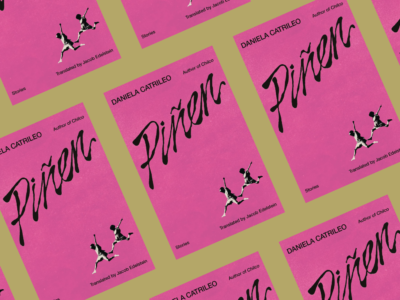
The book cover for "Piñen" by Daniela Catrileo.

Book of the Month: “Piñen” by Daniela Catrileo

WP_Post Object
(
    [ID] => 3637
    [post_author] => 2
    [post_date] => 2021-12-20 18:10:17
    [post_date_gmt] => 2021-12-20 18:10:17
    [post_content] => The historic election marks the final stage in the transition away from Pinochet's dictatorship.

Hundreds of thousands of people flocked onto the streets of Chile’s cities on Sunday night to celebrate a history-making presidential election. The sounds of cheers and honking car horns were everywhere as, with 97 percent of the votes counted, Gabriel Boric, a 35-year-old former student leader who headed the leftist coalition Frente Amplio, became the country’s youngest president. The final polls heading into the election predicted a very close result, with the far-right Jose Antonio Kast, 55, slightly ahead of the much younger, progressive Boric. But the final tally was not even close: Boric won with 55.9 percent of the vote—12 percentage points ahead of Kast, who called Boric to concede at 7.10 p.m., after only 30 percent of the ballots had been counted.

[caption id="attachment_3644" align="aligncenter" width="740"] Jubilant Boric supporters poured onto the streets of Santiago on December 19, 2021.[/caption]

On Election Day I was in Concepcion, in south-central Chile, feeling anxious but also hopeful that the Chilean people would elect Gabriel Boric, the humane, democratic and environmentally conscious candidate. I was at a polling station as ballot counting began, watching as the numbers showed a consistent advantage for Boric. When the announcement was made that Gabriel Boric had been elected, becoming Chile's youngest president, I was euphoric.


The two candidates campaigned on polarized visions for their country.

Kast, a conservative Catholic with nine children, is a Pinochet supporter. He ran a right-wing populist campaign that promoted a continuation of neoliberal economic policies and climate change denial. He vociferously opposed gender equality and abortion rights and incited against impoverished Venezuelans and Haitians who sought a better life in Chile.

Read more: Chile faces its most consequential election since the end of the Pinochet dictatorship

Boric is a former leader of the 2011-13 student movement, which sought better and more affordable education for all; as a young politician, he was one of the architects of the 2019 Agreement for Social Peace, which led to the 2020 referendum for a new, more equitable constitution to replace the Pinochet-era one. His platform calls for an overhaul of the economy, ending the neoliberal policies that have made the country deeply unequal; Boric campaigned on making Chile a more unified society—one fully transitioned away from the legacy of the Pinochet regime.

The campaign

Sunday’s election marked the end of a long process that began with the July primaries. Boric surprised everyone by winning the leadership of the leftist coalition over the Communist candidate, Daniel Jadue. The polls had projected a win for Jadue, but he made some serious missteps with various gaffes, including antisemitic statements; Boric, meanwhile, came off as inclusive, charismatic, and knowledgeable during the debates. With his moderate yet innovative positions, like the importance of finding a balance between economic growth and a response to the climate crisis, he attracted the millennial voters who played a decisive role in his becoming the leftist coalition's candidate. A high turnout for the primaries, with more than 1.7 million voters casting a ballot, created a solid electoral base for the first round of the presidential election. Kast, on the other hand, did not participate in the right-wing party’s primary elections; nor was he a favorite in the polls at the beginning of the election campaign. His candidacy emerged from a political pact between conservative Christians and the new far-right Republican Party; he then went on to perform well during the first debates against Sebastian Sichel, his rival for leadership of the right-wing coalition. Sichel positioned himself as a center-right candidate, a move that proved to be a mistake: He pushed right-wing voters toward Kast, whom they saw as an “authentic” right-wing candidate. For the far-right, who supported the Pinochet dictatorship and opposed a new constitution, Kast represented both their natural political home, and the man who was more likely to bring a right-wing government to power. The center-right moved toward Kast because they saw him as the man most likely to be elected and they wanted a right-wing government at all costs, even if that meant tacitly supporting xenophobic proposals such as the construction of ditches in Chile’s north to prevent impoverished and desperate Venezuelan migrants from entering the country.

The race

In the weeks before Election Day on December 19, polls consistently showed Kast just slightly ahead of Boric in a very tight race. International legacy media outlets painted a picture of Chilean society polarized between two extremist candidates, although Boric’s views are hardly extreme—they would put him somewhere between Bernie Sanders and Elizabeth Warren. In Chile, the influential right-wing media outlets played an outsized role in promoting Kast’s campaign with fake news that incited against Boric. Kast, for example, claimed several times that the bearded, tattooed leader of the leftist coalition used illicit drugs, a baseless lie that the right-wing media amplified until it gained such wide credence that Boric felt compelled to respond. During the December 13 debate against Kast he released lab results that proved he had no cannabis, amphetamines, or cocaine in his bloodstream. Besides creating a divisive and polarized atmosphere during the campaign, the far right’s aggressive rhetoric and fake news also disseminated fear of Boric’s purportedly “socialist” agenda. For example, Kast claimed that the Communist Party’s support for Boric was indicative of a dangerous, far-left agenda; evoking Venezuela’s socialist bogeyman, he said that Boric, if elected, would drag Chile into chaos. In fact, Boric is very much a moderate who has attracted broad support with a political platform that advocates policies similar to those of European social democratic parties. Voter turnout in Chile hovers at 50 percent, which increased this time in the second round. Some analysts predicted that Boric would inspire a surge in the youth vote, propelled by their concerns about the climate crisis and rising authoritarianism. While there is no data yet about age groups, overall voter participation did increase by more than one million over the first round. This election saw the highest electoral turnout in Chilean history, with Gabriel Boric receiving more votes than any presidential candidate in previous elections.

A historic election

Kast’s extreme views on women’s rights, gender equality, and LGBTQ rights inspired a diverse political movement in support of Boric’s candidacy. One of his proposals, for example, was to allow police to detain suspects for five days in undefined “confinement centers.” The far-right candidate thus galvanized significant sectors of voters to find common cause in combating the threat of far-right populism. The close relationship between the far right and religious fundamentalists alarmed feminists and other progressive movements, mobilizing them to organize and get out the vote.
But Chileans remain divided about the causes and outcomes of the 2019 social movement that sparked nationwide protests, which in turn led to a political agreement for the establishment of a constitutional process. The far-right opposes any structural change to Pinochet’s system. Boric and his broad coalition represent Chile’s majority, who aspire to a stable social and political transformation. They support the constitutional process and want a more equitable economic system that will replace Pinochet’s neoliberal legacy with a welfare state and sound environmental policies. Boric’s administration will seek to introduce an ecological approach to governing, and to implement transformative policies to pensions and healthcare, two of the pillars of the unequal and segregated Chilean system. Boric represents hope for a nation that wants more dignity, a fact that puts positive pressure on the future government: it needs to be humane, fair, and efficient. I believe the newly elected President Boric is more than ready to take on this immense challenge. [post_title] => Gabriel Boric becomes Chile's youngest president on a progressive mandate [post_excerpt] => The historic election marks the final stage in the transition away from Pinochet's dictatorship. [post_status] => publish [comment_status] => closed [ping_status] => open [post_password] => [post_name] => gabriel-boric-becomes-chiles-youngest-president-on-a-progressive-mandate [to_ping] => [pinged] => https://conversationalist.org/2021/11/18/chile-faces-its-most-important-and-most-polarized-presidential-election-since-the-end-of-pinochets-rule/ [post_modified] => 2026-08-05 18:17:08 [post_modified_gmt] => 2026-08-05 18:17:08 [post_content_filtered] => [post_parent] => 0 [guid] => https://conversationalist.org/?p=3637 [menu_order] => 154 [post_type] => post [post_mime_type] => [comment_count] => 0 [filter] => raw )

Gabriel Boric becomes Chile’s youngest president on a progressive mandate