WP_Post Object
(
    [ID] => 10674
    [post_author] => 15
    [post_date] => 2026-06-04 20:32:16
    [post_date_gmt] => 2026-06-04 20:32:16
    [post_content] => 

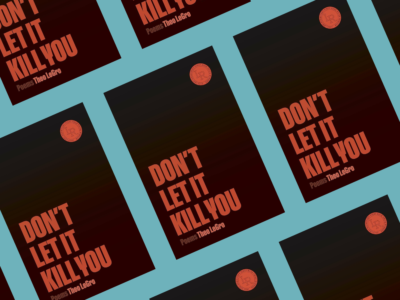
A stunning posthumous collection of poetry that grapples with living and dying.

In early March 2026, the queer Vietnamese-American poet Theo LeGro died after a long battle with breast cancer. Nearly three months later, almost exactly to the day, their debut collection, Don’t Let It Kill You, was published posthumously by Persea Books. I’d known Theo—first online, then off—since I was a teenager, around half my life. They were a beloved partner and daughter, sister and aunt, and a dear friend to many. They were also a Kundiman fellow and Pushcart nominee whose gorgeous work was published in Brooklyn Poets, Plume, and The Offing, amongst others.

Writers who die young often seem to leave behind the most prolific thoughts on life, and Theo was no exception. I devoured Don’t Let It Kill You in one sitting, and then savored it in another. The collection is raw but exacting; sumptuous and sharp; tender and devastating. Much of it also grapples with dying, and existing in a body that is killing you. In some of their poems, Theo humanizes the tumor that has made a home in their chest, as they navigate their relationship to something both a part of them and not: “It’s humiliating, / how what’s killing you never even thinks of you. The storm / pulling down your house doesn’t even know your name.”

The collection is seeped in want as it is in longing. As Frontier Poetry puts it, Theo “leans into what could have been—a life not marred by disease.” (“It should be a miracle, to be so young / and ancient,” Theo writes. “To watch a scar’s colors change.”) But it is equally a trove of poems about trauma and inheritance; about distance, literal and felt; about the death of Theo’s father and their complicated relationship with their mother in Vietnam. It explores love—both its complications and its ease—and grief. 

In the Jeff Tweedy song the book’s title is referencing (“Don’t Forget”), the line that precedes “don’t let it kill you” is “we all think about dying.” Perhaps more than most, this was true of Theo, long before they even knew they were sick. A few years ago, they were featured in a segment on The Today Show about the power of music to save us when we feel most untethered from life. They spoke of their depression and PTSD, grappling with suicidal ideation, and how music helped bring them back to themself. “Sometimes,” Theo said, “music becomes this communal experience that has reminded me of what's worth sticking around for.”

This sentiment is interwoven throughout Theo’s collection—in its title, in certain poems like “I’d Rather Go Blind,” and in the rhythm of the writing. Don’t Let It Kill You is for anyone who’s ever felt seen in the lyrics of a song, who’s been touched by music’s particular kind of poetry—which is to say, all of us. But the collection also feels like listening to music when you’re reading it, as if imbued with all the songs that shaped Theo’s life.

At their joyful celebration of life in May, there was a video of Theo reading “Dress Sexy at My Funeral,” a reference to the Smog song of the same name. It also acted as a checklist for the very event taking place. Theo made music requests, of course (including “fiddles / even if I’m the only one / who thinks they’re sexy”); asked for those in attendance to “wear leather / wear chains” and “dance like nobody / is dying”; requested an after-party with karaoke. “Bury me / in the red dress / and the Reeboks,” they said, voice steady. “I wanna be ready / to run / in the next life.” They spoke, too, of wanting to come back, their body intact and scarless. “Let me / tell you a secret,” they said. “I’m not ready / to go / so / miss me / even though / it’s selfish to ask.” 

From a Zoom call, thousands of miles away, I watched Theo in black and white, smoking a cigarette, beautiful as ever, and cried. But even those who might not have known them would have been able to see and feel the particular magic of Theo’s words and voice. Don’t Let It Kill You is an extension of this magic, and a testament to something—and someone—lost. “This life is nothing / but a thievery of hours,” Theo writes, “and I can’t even be / grateful I haven’t gotten caught.”

We aren’t owed our time on Earth, I know—but there is a specific kind of grief when someone dies so young, like expecting another step and slamming your foot on flat ground. I wonder what Theo might have written about if they’d had more time; what new music they might have liked that doesn’t yet exist. But more than anything else, I just wish they’d had more time to be. 

“Sometimes, I get bogged down thinking about where all this time spent in this depressed state has gotten me, and one way to sort of alchemize it has been writing poetry,” Theo said in that same Today Show interview. “I feel like another way to alchemize it might be just using it to help other people if I can.”

We all think about dying. But sometimes, what gets us to the other side is finding something that helps us make sense of living. What a gift, then, to have Theo’s words, in Don’t Let It Kill You and beyond, to guide us through. 

~

In honor of Theo’s life and legacy, Kundiman has established the Theo LeGro Scholarship Fund to help support queer and disabled writers participating in their online classes and retreats. To learn more about the fund and donate, you can visit TheoForever.com.

[post_title] => Book of the Month: "Don't Let It Kill You" by Theo LeGro [post_excerpt] => A stunning posthumous collection of poetry that grapples with living and dying. [post_status] => publish [comment_status] => closed [ping_status] => closed [post_password] => [post_name] => book-of-the-month-dont-let-it-kill-you-theo-legro-poetry-collection-books-botm [to_ping] => [pinged] => [post_modified] => 2026-06-13 20:41:04 [post_modified_gmt] => 2026-06-13 20:41:04 [post_content_filtered] => [post_parent] => 0 [guid] => https://conversationalist.org/?p=10674 [menu_order] => 0 [post_type] => post [post_mime_type] => [comment_count] => 0 [filter] => raw )
The book cover for "Don't Let It Kill You" by Theo LeGro

Book of the Month: “Don’t Let It Kill You” by Theo LeGro

WP_Post Object
(
    [ID] => 10212
    [post_author] => 15
    [post_date] => 2026-02-26 12:45:10
    [post_date_gmt] => 2026-02-26 12:45:10
    [post_content] => 

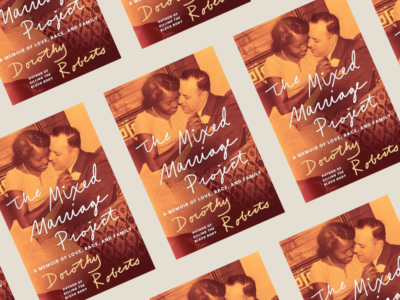
A memoir interwoven with historical research that might leave you wondering if anything really changes in these United States.

The Mixed Marriage Project’s title will more than likely give an onlooker pause. Perhaps that’s the point. But before conjuring up too many presumptions based on the name, one might also note it is the work of renowned law professor and sociologist Dorothy E. Roberts. Amongst other books, Roberts is the author of Killing the Black Body (about black women’s reproductive history in the United States) and Fatal Invention: How Science, Politics, and Big Business Re-create Race in the Twenty-first Century. In her latest, a memoir interwoven with historical research, she unfolds her parents’ interracial relationship, and through it, partly unravels a United States’ history of the subject itself. 

The “project” of the book’s title is personal for Roberts: In the 1930s, her father, a white American of Welsh and German descent, set out to examine interracial relationships between black and white people specifically, while studying to be an anthropologist at the University of Chicago. His interview-based research, which explored interracial unions formed as early as the late 1800s, continued till the 1960s and ’70s, and included interviewing the children of couples he’d earlier surveyed. This feat was supposed to become a book, sold to a publisher while her father was working as a professor at Chicago’s Roosevelt University. But the book was never published, and its stories left untold until now.

Roberts theorizes the reason for this was that her father’s work had become so interwoven into his identity—and their family life—that its completion would have caused a real identity disruption. Who was he if he wasn’t working on the project? And where did that leave her and her family? 

Through her own research, Roberts learns her mother, a black, Jamaican immigrant, was also involved in this work, conducting interviews alongside her father for many years. Both were committed to the project’s objectives, one of which was to demonstrate that interracial relationships are not inherently abnormal, because black and white people are not fundamentally different. This was also how her parents met: While majoring in chemistry at Roosevelt, her mother became her father’s research assistant. (In the book, Roberts explicitly states she “wonder[s] how their professional partnership evolved into a romantic one—and whether they worried about the perception of impropriety.”) This prompts Roberts to question an underlying reason for her parents' marriage: Were they supposed to be embodiments of their own mixed marriage project? If Roberts’ parents were indeed as much a part of the study as they were leads of it, she concludes, it would make her and her sisters its subjects, too—or, at least, its personified outcomes. 

Rather than be rattled by this possibility, the author measures it against the people she personally knew her parents to be—curious, culturally-aware, well-traveled, and community-minded. Her parents’ relationship, after all, existed beyond their work, and they were initially drawn to each other by their shared sense of adventure, similar values on education, and complementary sensibilities—her mother as the planner and her father as the spontaneous one. By her own admission, Roberts gives them a latitude that an outsider might not. But I reckon this is where the book shines as memoir, rather than an investigation of an investigation: the reader gets to know Roberts’ parents through her loving eyes. Loving eyes that, for the record, do not condone the same politics her parents—especially her father—may have arrived at through their work: that interracial relationships offer some kind of medium to restore black and white relations in the United States, shaped by white supremacy and violence. (On this, Roberts pointedly disagrees.) 

Beyond family history, the themes in Project will be recognizable to anyone versed on the discourse, likely causing you to wonder if anything really changes in these United States. The politics of the study’s participants—black men, black women, white men, and white women in heterosexual, interracial relationships—reveal how black men-white women couples were seen as more “acceptable” but also more arduous in the long-run; white women often lost privilege they couldn’t regain unless divorced. The research also highlighted the sexual tropes attached to black women-white men couples—and the misogynoir that informs outsiders' views of them. Recurring themes, regardless of interracial pairings, showed how marital cutting across the color line affected one’s choice of neighborhood and the life afforded to them and, possibly, their children. Also recurring—especially in the civil rights era—were the many well-meaning couples who entered these marriages in the hopes of proving to the world as much as to themselves that interracial coupling inherently combats a racist society. This hope, Roberts argues, was often an erroneous one, as countless couples later found out. 

In the lasting analysis of her father’s work, Roberts arrives at the same conclusion that she began with regarding interracial relationships: They are not panacea for a society, a country, or a world that has yet to unravel itself from white supremacy, let alone repair its many casualties. But in Project, Roberts shows us that despite flawed, socially-constructed and racialized societies, people will enter unions and arrangements of all kinds, her parents included. These unions may not transcend race, but they do demonstrate that, in spite of the race politics attached, people will deem them worth fighting for. Some do so naively and are thus confronted with seeing the depths of racism like they never have before. But others, especially the curious, culturally-aware, and community-minded, go into them with eyes wide open, prepared to confront all of its politics united.

[post_title] => Book of the Month: "The Mixed Marriage Project" by Dorothy E. Roberts [post_excerpt] => A memoir interwoven with historical research that might leave you wondering if anything really changes in these United States. [post_status] => publish [comment_status] => closed [ping_status] => closed [post_password] => [post_name] => february-book-of-the-month-botm-pick-the-mixed-marriage-project-by-dorothy-e-roberts-memoir-interracial-relationships-dating-history-research [to_ping] => [pinged] => [post_modified] => 2026-04-29 18:07:19 [post_modified_gmt] => 2026-04-29 18:07:19 [post_content_filtered] => [post_parent] => 0 [guid] => https://conversationalist.org/?p=10212 [menu_order] => 0 [post_type] => post [post_mime_type] => [comment_count] => 0 [filter] => raw )
The book cover for "The Mixed Marriage Project" by Dorothy E. Roberts.

Book of the Month: “The Mixed Marriage Project” by Dorothy E. Roberts

WP_Post Object
(
    [ID] => 9993
    [post_author] => 15
    [post_date] => 2026-01-29 23:07:30
    [post_date_gmt] => 2026-01-29 23:07:30
    [post_content] => 

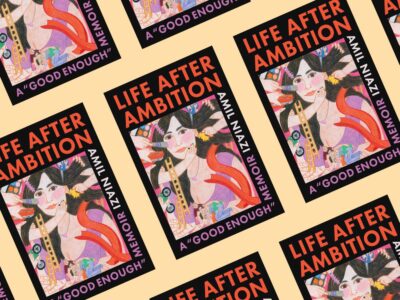
A memoir that grapples with changing ambitions and the myth of having it all.

Many millennials (or non-millenials, for that matter) will be familiar with the overarching plight of Amil Niazi’s Life After Ambition, her "good enough memoir": the experience of being stuck in the rat race of chasing one dream after another, only to find yourself on a never-ending grind. In this race, there’s always one more goal to achieve—one more professional hurdle to overcome, one more career ambition to attain—before the dream can be realized. For women especially, relentlessly pursuing a profession, while ensuring all other aspects of your life are left unscathed, becomes an ever-shifting goalpost; the quintessential “having it all”.

As the book’s title implies, Niazi unfolds the futility of this chase, made especially futile given the instabilities accompanying her career of choice—journalism and writing. But the memoir is as much a personal unfolding as it is a professional one. In it, we learn of Niazi’s parents' almost romcom-like origins before she disabuses the reader of the myth of their marriage and the prospect of an idyllic childhood. There are the anticipated working-class migrant struggles, the family never having quite enough, which takes them across oceans to seek a better life in England, where the author was born, and eventually, to Canada, where the author has spent most of her life. There’s also the abuse between her parents, which Niazi touches without ever quite expounding on, even as she informs of their eventual divorce and sketches her own experience of intimate partner abuse later in life.

In Niazi’s childhood, adolescence, and early adulthood, there’s a persistent feeling of lack. There’s little romanticizing of her circumstances, and she admits her personal rat race was likely born from this instinct: Storytelling—reporting and writing—was the one endeavor that allowed her to make sense of the world. In distressing but humorous episodes, she depicts a life of underemployment before eventually landing a job that sets her on a viable career path. Amid all the instabilities, she moves from Vancouver to Toronto with a boyfriend who physically abuses her—and there, the violent ending of their final contact results in a hard-to-shake addiction to prescription drugs. Through all of this, Niazi continues to work, uncertain of who she can trust with the vulnerable parts of her life, but finding stability through her ambitions—learning along the way, her calculus won’t always pay off.

There are bright spots throughout Niazi’s ordeals, despite the numerous and varied difficulties. There is a dog she loves and cares for, friends who intervene, and a reliable boyfriend who eventually becomes her husband. Yet her career ambitions remain the driving force that shapes her life, until suddenly, it isn’t; and for Niazi, a large part of this shift happens when she becomes a mother. After a period in London—chosen, of course, for her career ambitions—she ultimately returns to Toronto with her family when she realizes those ambitions have changed. 

Indeed, in the final analysis of Life After Ambition, I wonder if the author doesn’t slightly betray the title. She gains fresh perspective through her choice to pursue having a third child, and by attempting the kind of writing career she’s always longed for, one less defined by output, and instead, by balance. For her, motherhood and writing are intertwined and related; one aids the other, and though she must make sacrifices to have both, neither can be forfeited. 

Perhaps less than delineating what life looks like after ambition fades and falters, what the author concludes is what becomes of us—especially of many women—when our ambitions include more than the careers we set out to have. In so doing, what Niazi offers in her debut book is not only a re-think of our lives as she unravels her own, but a re-defining of ambition entirely, demanding we consider the whole of our lives, and not just the parts we keep separate in the name of career.

[post_title] => Book of the Month: "Life After Ambition" by Amil Niazi [post_excerpt] => A memoir that grapples with changing ambitions and the myth of having it all. [post_status] => publish [comment_status] => closed [ping_status] => closed [post_password] => [post_name] => book-of-the-month-botm-january-pick-life-after-ambition-amil-niazi-memoir [to_ping] => [pinged] => [post_modified] => 2026-04-29 18:07:25 [post_modified_gmt] => 2026-04-29 18:07:25 [post_content_filtered] => [post_parent] => 0 [guid] => https://conversationalist.org/?p=9993 [menu_order] => 0 [post_type] => post [post_mime_type] => [comment_count] => 0 [filter] => raw )
The book cover for "Life After Ambition" by Amil Niazi.

Book of the Month: “Life After Ambition” by Amil Niazi

WP_Post Object
(
    [ID] => 7581
    [post_author] => 15
    [post_date] => 2024-12-20 23:16:49
    [post_date_gmt] => 2024-12-20 23:16:49
    [post_content] => 

All the movies, podcasts, books, albums, and TV that made us feel a little more human this year.

The cover for Cutting for Stone, the album art for Esther Perel's podcast, and a poster for the HBO show Somebody Somewhere.

Anna Lind-Guzik, Founder

Best Thing I Read: Cutting for Stone by Abraham Verghese. It was my first time reading Verghese, and I've added him alongside Chekhov to my mental list of favorite writers who are also doctors. It's an epic novel mostly set in a hospital in Addis Ababa, with unforgettable characters and a stunning historical backdrop. The bodily detail can be gruesome at times, but the characters' humanity is what sticks with you.

Best Thing I Watched: When I want to cry-laugh and feel things, I watch Somebody Somewhere, created by Bridget Everett. It's a quiet show set in rural Kansas about chosen family, grief, and vulnerability. The series just ended on HBO, but I hope it gets picked up by another network for more seasons because it's a beautifully moving story with characters that feel so real, and aren't like any you'll find elsewhere on TV.

Best Thing I Listened To: I went deep on relationship podcasts this year, and *ugh* they were genuinely helpful with personal growth. Because I'm a nerd, I looked for academics and practitioners to teach me, and the top two I turned to were Reimagining Love with Dr. Alexandra Solomon and my longtime fave, Where Should We Begin? with Esther Perel

A poster for the TV Show "Tell Me Lies" with a closeup of a woman's face, the album art for Shaboozey's "Where I've Been, Isn't Where I'm Going," and the cover for Zora Neale Hurston's "You Don't Know Us Negroes and Other Essays."

Kovie Biakolo, Contributing Editor

The Best Book I Read: You Don't Know Us Negroes And Other Essays by Zora Neale Hurston has been one of my favorite reads this year, even though I'm not quite done with it yet. It's an essay collection that covers almost every facet of Black American folk culture from church and church going to dance to the politics of race and gender, showing Hurston as every bit of the all-rounder she truly was. Reading it with 2024 eyes, Hurston's writing easily allows you to place yourself in the time and landscape of the early 20th century she wrote in, but there's an authenticity and love to her writing about culture that transcends time.

The Best Thing I Watched: Tell Me Lies Season 2 is an amazing feat, considering it is only eight episodes and the second season has come two years after the first. For a show that jumps timelines between present day and the past lives of Millennial college students, it traverses a lot of serious issues, from sexual and emotional abuse to grief to murder. But if it sounds so serious you couldn't possibly enjoy it, you'd be wrong, because almost every episode manages to keep you on your toes and keep you invested in the outcome of a story largely depicting a bunch of deeply flawed—or really terrible—people.

The Best Thing I Listened To: I've listened to Shaboozey's "A Bar Song" on repeat a lot, so I have to give it a shout-out along with the album, Where I've Been, Isn't Where I'm Going, which I think is doing interesting things in genre-bending country, similar to Beyoncé's Cowboy Carter. Along with these, I have to give a nod to Esther Perel's podcast, which is among the best out there, teasing out contemporary platonic and romantic relationships matters from sex to grief to family, unpacking a lot of taboo topics with clarity and empathy. 

The movie poster for "I Saw the TV Glow," featuring a child sitting in front of a glowing pink TV set; the album art for I Got Heaven by Mannequin Pussy; and the cover for Mating by Norman Rush.

Marissa Lorusso, Newsletter Editor

Best Book I Read: Mating by Norman Rush. A friend recommended this 1991 National Book Award-winning novel to me with such enthusiasm earlier this year that I couldn't resist. It tells the story of two Americans in Botswana—a woman who's in graduate school and a man who's an anthropologist and is trying to start a matriarchal society in the desert. They fall in love, work alongside each other, argue about politics and gender and history—it all makes for a long, immersive, heartfelt, and genuinely unique novel.

Best Thing I Watched: I Saw The TV Glow. Even if you only interpret it as an allegory for the fear, isolation, and regret that can sprout up when we ignore serious questions about our gender identity, I Saw The TV Glow is a deeply moving film in a league of its own. But then there's everything else the film tackles, too, right on its surface: life in the suburbs, the way our tastes shape our identities (and vice-versa), pivotal teenage friendships. Together, these themes and subtexts all add up to a brilliant and strange viewing experience I kept close to my heart all year. (Plus its soundtrack, filled with original songs by an impressive slate of indie-rock luminaries, is pitch-perfect.)

Best Thing I Listened To: I Got Heaven by Mannequin Pussy. The punk band, led by Marisa Dabice, has been churning out an impressive blend of confrontational rock, gauzy guitars, and razor-sharp pop melodies for several records. But their latest is an impressive level-up, filled with moments of iridescent beauty alongside the kind of righteous rage I needed to sustain me this year.

The album art for NPR's Code Switch, the Netflix poster for K-drama "Chicken Nugget," and the bright purple book cover for Bodega Bakes: Recipes for Sweets and Treats Inspired by My Corner Store by Paola Velez

Kiera Wright-Ruiz, Social Media Manager

Best Book I Read: My favorite book this year is Bodega Bakes: Recipes for Sweets and Treats Inspired by My Corner Store by Paola Velez. Paola is such a force in the kitchen. Her imaginative recipes like thick'em (an ultra thick cookie) and plantain sticky buns (!!!) make me ecstatic to preheat the oven.

Best Thing I Watched: I LOVED Netflix's Chicken Nugget. In this K-drama, a woman steps into a machine and accidentally transforms into a chicken nugget. It's absurd, funny, and, oddly, moving.

Best Thing I Listened To: Whenever I listen to NPR's Code Switch, the episodes tend to linger and give me something to chew on for days or even months afterward. Their episode from January called "Taylor Swift and the era of the 'girl'" is something I keep revisiting. It's about those who get to embrace girlhood and those who don't.

Gina Mei, Executive Editor

Best Book I Read: As I've already sung the praises of Annie Jacobsen's Nuclear War: A Scenario, which was easily my most haunting read of the year (and perhaps my life), I'll choose The Future of War Crimes Justice by Chris Stephen as another equally depressing 2024 favorite. I found it to be a super digestible and straightforward look at the history of war crimes justice, and all the reasons (mostly bureaucratic, all utterly enraging) that so few war criminals have ever been tried for their crimes, let alone convicted. For something lighter, My Lesbian Novel by Renee Gladman was an enjoyably strange, genre-bending book that even got me out of a writing slump. For something in-between, Intermezzo by Sally Rooney seems to have become her most divisive book to date—but personally, I thought it was her best.

Best Thing I Watched: My film/TV consumption this year skewed very international, and with movies, often independent, which led me to a lot of what one Letterboxd user dubbed "freaky movies for freaks"—appropriately, in their review of 2022's Babysitter. Directed by and co-starring Monia Chokri, the film is strange and horny and feminist to its core, as much a playful skewering of casual misogyny as it is a psychedelic fairytale about exhausted motherhood. Combined with an utterly delightful performance from Nadia Tereszkiewicz as Amy (the titular babysitter), and a perfect one-and-a-half hour run time (bring back movies that aren't exclusively 3-plus hours), it's also a total technicolor feast, worth a watch just for the visuals alone.

As far as TV goes, I've started dabbling in more K-dramas this year, and ended up watching Netflix's The 8 Show, which drew a lot of comparisons to Squid Game when it first came out. I'm here to tell you: The 8 Show is much, much darker, and far more violent, and somehow, an even more scathing critique of the power that money affords and denies us.

Best Thing I Listened To: "Don't Forget Me" by Maggie Rogers was one of my most-listened to songs of the year, and has not once failed to make me feel something when I listen to it. But overall, I didn't listen to as much new music this year—although Faye Webster's new album Underdressed at the Symphony was a notable exception, and is filled with gentle tunes perfect for basking in all your sparkling melancholy.

[post_title] => The Best Things We Consumed in 2024 [post_excerpt] => All the movies, podcasts, books, albums, and TV that made us feel a little more human this year. [post_status] => publish [comment_status] => closed [ping_status] => closed [post_password] => [post_name] => best-movies-albums-books-podcasts-tv-television-series-2024-roundup-favorites-recommendations [to_ping] => [pinged] => [post_modified] => 2025-02-03 23:06:43 [post_modified_gmt] => 2025-02-03 23:06:43 [post_content_filtered] => [post_parent] => 0 [guid] => https://conversationalist.org/?p=7581 [menu_order] => 33 [post_type] => post [post_mime_type] => [comment_count] => 0 [filter] => raw )
A grid image of various books, movie and TV posters, and album covers, on a light green background.

The Best Things We Consumed in 2024

WP_Post Object
(
    [ID] => 6505
    [post_author] => 15
    [post_date] => 2024-01-10 19:33:00
    [post_date_gmt] => 2024-01-10 19:33:00
    [post_content] => 

(For you to add to your 2024 TBR pile.)

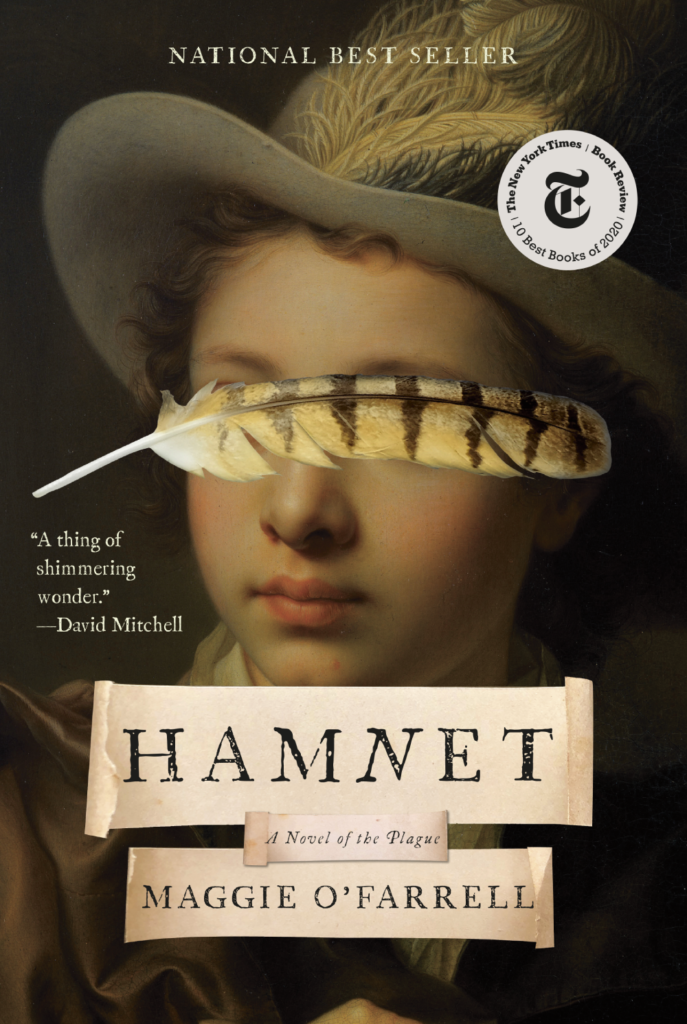
Book cover for Hamnet by Maggie O'Farrell.

Hamnet by Maggie O'Farrell

Before reading this novel, I’d somehow missed that Shakespeare had a child named Hamnet, who died of the plague in 1596 at the age of eleven, four years before Hamlet was written. Seems relevant! Only the bare bones are known about Shakespeare's wife, Agnes/Anne, and their kids, and Hamnet is O'Farrell's lyrical recreation of their 16th century family life in Stratford-upon-Avon. The storytelling is so vivid and captivating, you won’t miss their most famous relation.

Anna Lind-Guzik

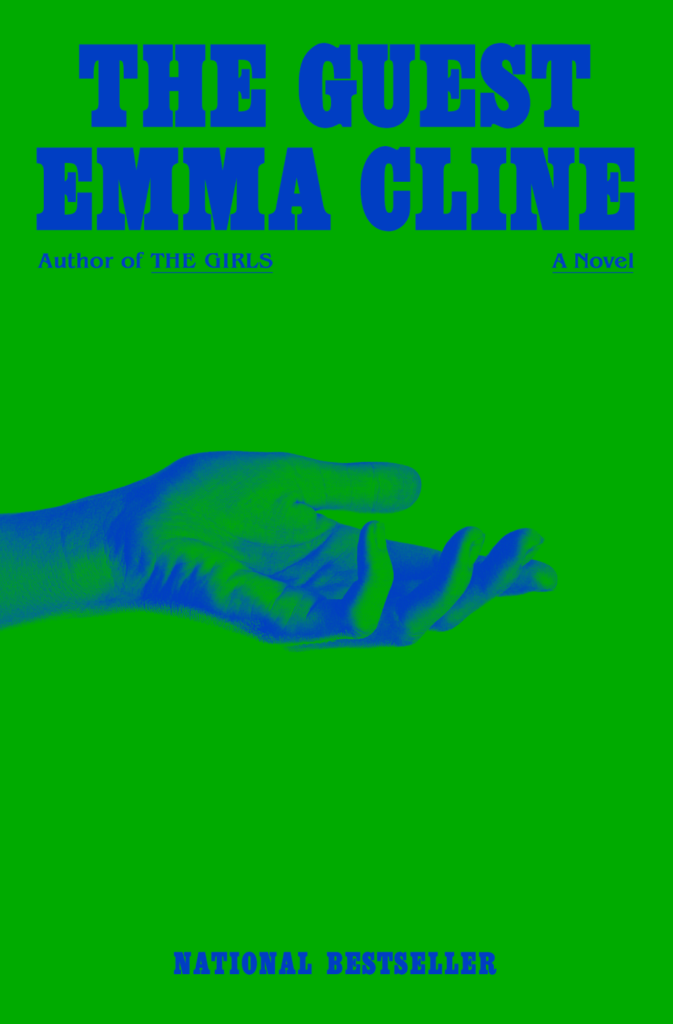
The Guest by Emma Cline

Like everyone else in New York, I flew through The Guest when it came out last summer. A story about a woman in her 20s after she's been kicked out of her boyfriend’s house in the Hamptons, she pleases her way through strangers’ homes, grasping onto the life that she once had. She was in no way a relatable character—but it was fascinating to me how this woman could so easily sell a narrative and transform herself into what various people want.

Victoria Rosselli

Book cover for The Guest by Emma Cline.

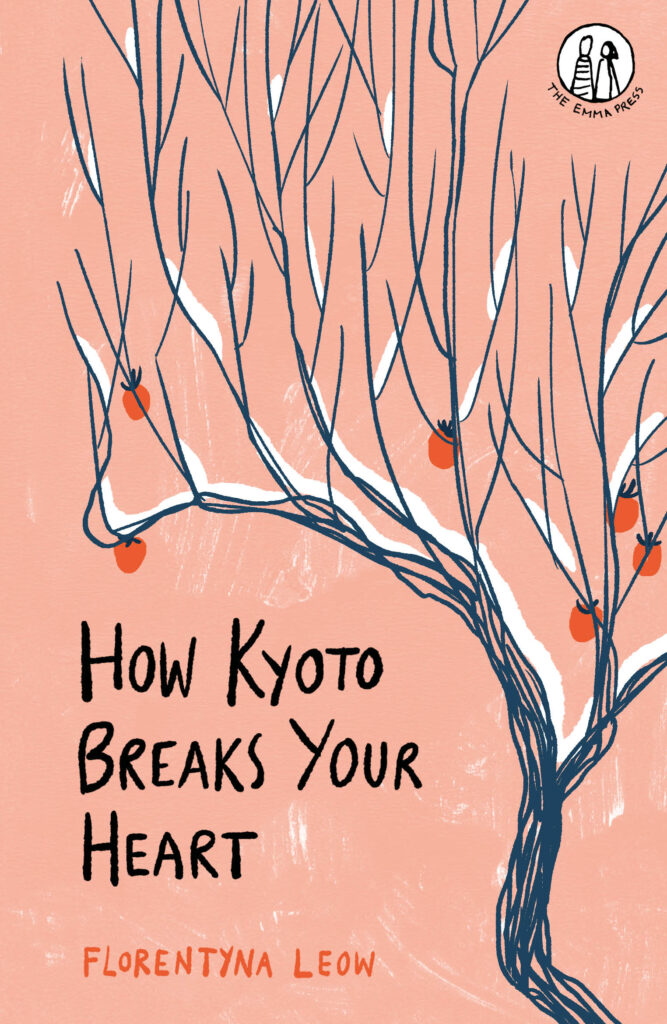
How Kyoto Breaks Your Heart by Florentyna Leow

My favorite book this year was How Kyoto Breaks Your Heart by Florentyna Leow. It’s a story about women friendships, the heartbreak of breaking up with those close friends, and Kyoto. Throughout the book, Leow weaves their personal experiences, like of being a tour guide and making jam from a thriving persimmon tree, as metaphors on loss and the joy of finding yourself despite it. I have never read a book that so beautifully put the feelings of losing a female friend on a page (including the painful grieving process). Every word felt refreshing and I kept repeating to myself, “This is me.” But as much as it’s about friends, it’s equally about Japan. With every page, I yearned to explore Kyoto and soak up everything it has to offer, even if my heart breaks a little in the process.

Kiera Wright-Ruiz

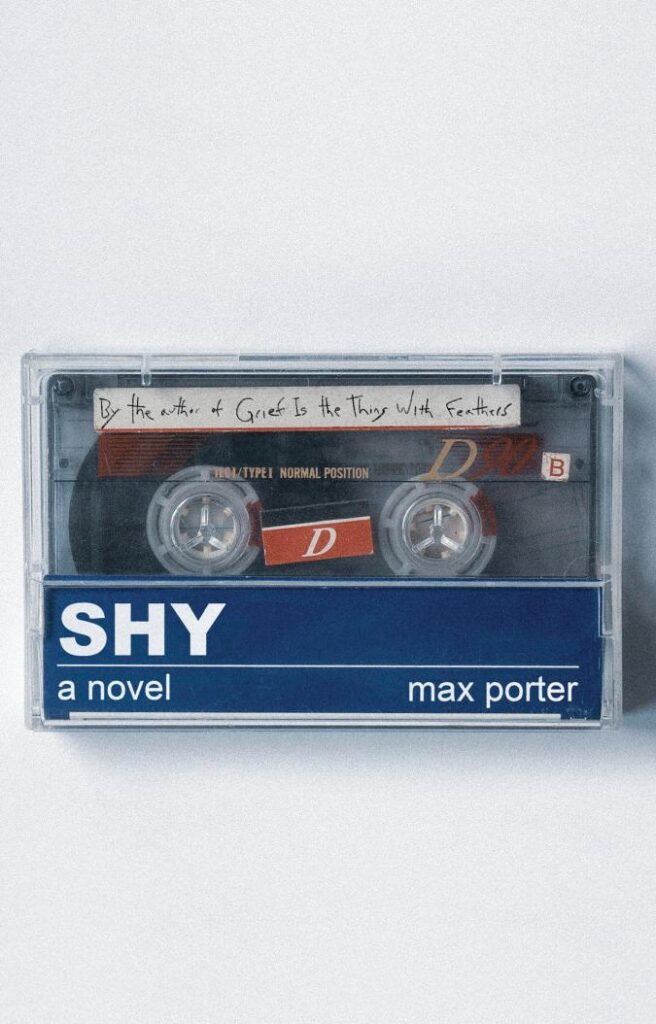
Shy by Max Porter

If you are interested in how identity and childhood shape our experiences of the world, you will love Max Porter's Shy, a novel that begins with its young protagonist leaving a boarding school for troubled boys in the middle of the night and heading for the river with a backpack full of rocks. What I loved is that Porter continuously disrupted my expectations of what would come next. The author—who holds a masters degree in feminism and performance art—writes about boyhood, toxic masculinity, and the existential crisis of growing up in today's gendered world in a way that incited an emotional and visceral reaction in me, offering the flip side of my own experience growing up as a girl in the US. It made me question and look at things with a new light; and the ending was so cinematic and powerful that I cried in public reading it!

Elyssa Dole

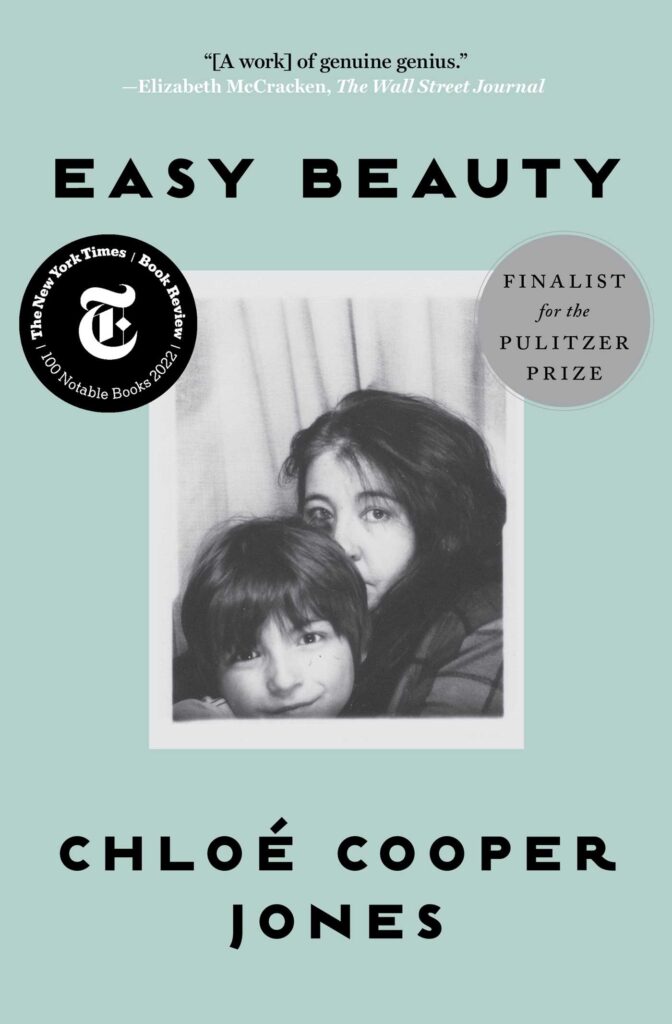
Easy Beauty by Chloé Cooper Jones

I hate to say it, but it's much rarer these days that a book really knocks my socks off. I blame myself for this. My attention span has waned, my burnout has deepened—both things that have made it harder for me to really sink myself into a good book. This was not the case with Easy Beauty. It was kismet: Entirely by chance, I started reading it while in Italy, where a large portion of the memoir takes place, making it an especially vivid read. But even if I'd been in the middle of the Pacific, I would have devoured this gorgeous memoir. Chloé Cooper Jones' writing is just sumptuous; her memoir equal parts sharp, tender, brutal, and funny. A breathtaking exploration of "otherness," and how each of us is complicit in upholding it, even as the "othered"; but likewise how we might be able to push back and subvert the narratives given to us.

Gina Mei

[post_title] => The Best Books We Read in 2023 [post_excerpt] => (For you to add to your 2024 TBR pile.) [post_status] => publish [comment_status] => closed [ping_status] => closed [post_password] => [post_name] => best-books-read-2023-novel-memoir [to_ping] => [pinged] => [post_modified] => 2024-08-28 21:15:11 [post_modified_gmt] => 2024-08-28 21:15:11 [post_content_filtered] => [post_parent] => 0 [guid] => https://conversationalist.org/?p=6505 [menu_order] => 67 [post_type] => post [post_mime_type] => [comment_count] => 0 [filter] => raw )
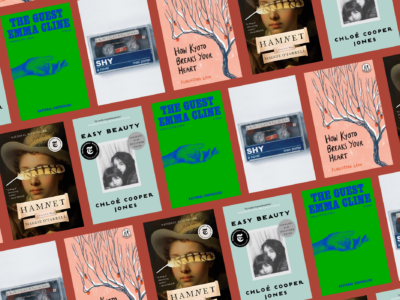
A tiled grid of books: The Guest by Emma Cline, Shy by Max Porter, How Kyoto Breaks Your Heart by Florentyna Leow, Hamnet by Maggie O'Farrell, and Easy Beauty by Chloe Cooper-Jones.

The Best Books We Read in 2023