WP_Post Object
(
    [ID] => 10449
    [post_author] => 15
    [post_date] => 2026-04-29 23:09:07
    [post_date_gmt] => 2026-04-29 23:09:07
    [post_content] => 

The writer's new memoir is a feast, exploring how food can be both deeply personal and impacted by forces much larger than ourselves.

Our appetites are deeply personal, a reflection of our idiosyncratic tastes. They’re shaped, too, by what our communities feed us, by what’s available or accessible or shared. Growing up in New England, you might develop a love of fried clams; raised in Hong Kong, you might hunger for congee; spend enough time in France and you’ll probably become a pastry snob. In every extended family lies one recipe that’s an instant passport to time spent with a beloved matriarch, or a meal that feels like home. And who doesn’t have a dish they’ve sworn they’ll never eat again because it reminds us too much of an ex? 

Food writer Alicia Kennedy knows these contours well. In her writing—including in her fantastic history of vegetarian eating, 2023’s No Meat Requiredshe explores how our relationships to food can be deeply personal, yet impacted by forces much larger than ourselves, from local climates and family histories to global supply chains and government policies. Her work illuminates the ethical and sociopolitical elements of what we eat and why, yet sacrifices none of the thrills our appetites expose us to. And her latest, On Eating: The Making and Unmaking of My Appetites, is a feast, exploring her personal relationship to food and cooking as she journeys from an adolescent gourmand to vegan baker to established food and culture writer.  

In her new memoir, Kennedy organizes each chapter around a specific food—beans, lamb, bread, pumpkin, and more—tying each to a moment in her life. She writes about developing culinary preferences via the plentiful apples of Long Island, where she grew up; about the Proustian power of a box of Entenmann’s doughnuts. When she goes to college, her coursework inspires her to think more critically about the systems of power that ensnare us all, and naturally, this leads her to consider how the food she loves has made its way to her plate. 

She begins with a childhood obsession. “Chocolate, the first true object of my longing and love,” she writes, “was the way I learned about exploitation in the global food system.” When she reads about the enslaved child labor and exploited farmers up and down the cocoa supply chain, she starts seeking out fair trade-certified chocolate—then bananas, and sugar, and coffee. She goes vegan, then falls in love with baking, and stumbles into running a vegan bakery out of her home kitchen alongside her day job as a copy editor. As Kennedy traces her winding path to meatless eating, she continually challenges the reader to consider food as an extension of our ethics. But her clear moral stance—her assertions that one’s choices around food ought to reflect one’s principles—never feels didactic; instead, it offers a blueprint for self-interrogation that can help lead the reader to their own conclusions. 

When a long romantic relationship dissolves in the face of her ambition, she shuts down the bakery and moves to Brooklyn. There, she immerses herself in the city’s vegan food scene while picking up assignments as a freelance writer, endeavoring to normalize vegan coverage in the world of food journalism—an especially difficult task given its love of meat and masculinity. After several reporting trips bring her to Puerto Rico, she decides to move there—in part, because she’s fallen in love with her now-husband, whom she meets by chance while reporting on a rum distillery. 

From Puerto Rico, she tells the story of their romance through wine. She walks through the island’s sugarcane fields, considering the crop’s relationship to slavery and colonialism. In her chapter on plantains, she also reflects on her own Puerto Rican heritage: Her paternal grandmother was born on the island, but rarely spoke about her childhood, forcing Kennedy to negotiate her understanding of her identity after she moves there. “Here, in my Puerto Ricanness, was something I couldn’t disappear into,” she writes; “this was something I had to seek in order to claim.” In part, she ultimately achieves this via her relationship to food, incorporating the island’s seasonality and culinary history into her kitchen.

Writing many years and miles removed from her childhood, Kennedy also finds newfound perspective on her home and the food that grows there—and the indelible way it has shaped her. Most of all, she grows to appreciate Long Island’s oysters, which she devours in a period of mourning following the death of her younger brother: They had been his least favorite food. “Maybe that urge for an oyster, and all the urges after it, were a way of reclaiming my appetite from the immense sadness,” she writes. “A way of saying, ‘I’ll live, and I’ll live enough for both of us, but because I’m mad at you, I’m going to eat the food you hated most.’” Her grief rips a hole in the metaphysical center of the book, a wound she can’t repair but which colors the way she looks at everything—eventually prompting a renegotiation of the strictures of her veganism to allow for her newfound craving. 

Much of Kennedy’s work evokes the complex systems and philosophical concepts underpinning how we nourish ourselves; her writing about grief—and love—offers a moving reminder of the deeply personal, human scale of these choices. We ought to consider how far food traveled to get to our plates, Kennedy argues; we should know how much work it takes to grow crops, to slaughter animals, to cut down sugarcane. But these are not merely ideological considerations—nor are they simply a setup for a joyless life, a way of prioritizing our principles over our pleasures. To truly consider our own appetite is a way of connecting us to ourselves and to each other. Seen through that lens, the ethical choices we make about our food aren’t a burden, but a gift.  

The day after I finished reading On Eating, I made dinner for my sister and her husband, who had just welcomed their first child. They’re omnivores; meanwhile, I haven’t eaten meat in over a decade, drawn to vegetarianism’s respect for animals and the planet. I worried, as I cooked, whether they’d enjoy the meat-free, bean-centric dish I was preparing. But as I made it, I also kept thinking of Kennedy’s belief that “inevitably … cooking becomes care: for self, for others”—her insistence that the delights of a well-made meal and our responsibility as stewards of this planet are inseparable. Food is a means of tending to our own bodies; it’s something we share with those we love; it’s a way of putting our values into practice. Her words echoed in my head as I cooked, feeling nourished by each of these overlapping versions of care, and the many appetites we feed when we embody them.

[post_title] => Book of the Month: "On Eating" by Alicia Kennedy [post_excerpt] => The writer's new memoir is a feast, exploring how food can be both deeply personal and impacted by forces much larger than ourselves. [post_status] => publish [comment_status] => closed [ping_status] => closed [post_password] => [post_name] => book-of-the-month-on-eating-the-making-and-unmaking-of-my-appetites-alicia-kennedy-memoir-botm [to_ping] => [pinged] => [post_modified] => 2026-04-29 23:09:09 [post_modified_gmt] => 2026-04-29 23:09:09 [post_content_filtered] => [post_parent] => 0 [guid] => https://conversationalist.org/?p=10449 [menu_order] => 0 [post_type] => post [post_mime_type] => [comment_count] => 0 [filter] => raw )
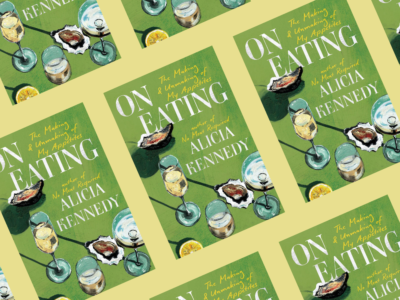
The book cover for "On Eating" by Alicia Kennedy.

Book of the Month: “On Eating” by Alicia Kennedy

WP_Post Object
(
    [ID] => 10374
    [post_author] => 15
    [post_date] => 2026-03-27 21:37:14
    [post_date_gmt] => 2026-03-27 21:37:14
    [post_content] => 

How the ephemerality of the internet and the many ways we present ourselves online has warped our ability to know who we really are.

Will the Future Like You? Reflections on the Age of Hyper-Reinvention begins with a declaration: Our personal identities have not kept pace with the tempo of technology. And, according to author Patricia Martin, this imbalance has made us wholly unprepared to explore—let alone answer—the age-old question of who we really are.

In her book, Martin, a cognitive psychology-informed cultural analyst and host of the podcast Jung in the World, frames many of her arguments using Carl Jung’s theory of archetypes, applying them to identity formation in the digital age. If Jung’s original thesis proposes that humans rely on universal themes and inherited behaviors in the psyche to present who we are across self, shadow, persona, and anima, Martin contends the ephemerality of the internet has warped our inheritance. Her primary concern are the selves we present to the world via our various performances online, often manufactured as authentic while being anything but. Carrying out numerous ethnographic approaches including content analysis, narrative interviews, and sorting and coding “15,000 online users across 500 million posts,” she concludes these performances are also occurring at an exorbitant rate never experienced before in human history, sowing mass identity confusion in the process. 

Having become increasingly skeptical (and weary) of internet self-presentation via social media, I devoured Martin’s latest work, which utilized psychoanalytical language and frameworks to explore observations I’ve mainly considered through a cultural and anthropological lens. But even those who don’t agree with Martin (or me) about the current state of affairs will likely find instructive value in the book’s summations about our ever brave new technological era and its effects on identity. 

According to Martin, there are three main elements contributing to our modern distortions of self-construction and development: “personal fog,” “chronic self-doubt,” and “cascading crossroads.” Borrowing from Jung’s definition of the persona as a complex system that helps the individual relate with the world socially by wearing a kind of mask, Martin argues that personal fog comes from the continuous amplification and proliferation of various personas online, which obliterate our sense of who we are. Chronic self-doubt, meanwhile, delineates the distances between our digital presentations, which rely on external validation, and the selves we present offline, a gap that can cause tremendous self-uncertainty. Finally, cascading crossroads is characterized by how previously reliable identity anchors—such as family and work, or even other modes, such as class, gender, and where we consider home—now fluctuate more frequently, making our shape-shifting far more incessant. 

Among the many examples Martin offers of this increasing ephemerality, she cites the story of the trailblazing confessional blogger, Heather Armstrong. In the early aughts, Armstrong’s blog, Dooce, was a “mommy tell-all” magnet to millions, especially young mothers, who regularly consumed her relatable personal accounts of raising two children in Salt Lake City, Utah. But even before Dooce’s eventual decline due to the rise of social media, Martin points out that as Armstrong “matured, she found her light waning,” and the blogger increasingly divulged more serious confessions, including daily alcohol consumption and marital issues, not to mention the details of her history with depression. Martin isn’t explicit about whether Armstrong’s solemn shift was a cry for help or an effort to reinvigorate the blog. She does, however, add that “Dooce attempted several comebacks. But traffic never bounced back.” In 2023, Armstrong died by suicide. Examining how she was remembered, Martin notes “how little was said about her massive output of content, the effort it took, and the emotional toll of constant reinvention…”

While Armstrong’s story is a particularly dire case, there are others—admittedly less tragic—throughout the book that still speak to the toll our relationship to having an audience is taking on our relationship to ourselves. Martin also makes clear this goes beyond those who are, in some shape or form, attempting to be influencers: All of us online are liable to the emotional struggles of trying to juggle various presentations at cost to our psyche and identity development. 

However, the book doesn’t propose that we all abandon the internet (to the extent that we can) to counter these identity disruptions. Nor does Martin suggest that we wholly desert digital performance and presentation altogether. Rather, she asks the reader to more carefully consider the repercussions to our relationships—both to ourselves and others—online, where our identities are overwhelmed by seemingly endless transmutations, and ultimately underpinned by digital spaces extorting our identity confusion for profit. 

This inevitably has affinities with Karl Marx’s concept of the alienation of the factory worker from anything that could give their work meaning. But for me, it brought to mind Aimé Cesaire’s Discourse on Colonialism, and its thesis that the thingification of the colonized subject turns them into a commodity, isolating a person from themselves and the other. Transposing Cesaire’s contentions onto Martin’s begs questions worth probing further: Are we being colonized by the internet? Or by the tech bros that run it? 

Luckily, Martin doesn’t leave us without specific resolutions for alleviating our identity disruptions, the greatest of which is—perhaps surprisingly—a spiritual recommendation: that we reconsider the soul. Some anecdotes in the book are even dedicated to people who've been able to subvert identity confusion by relying on time-honored means of transformation and soul-enrichment: insulating themselves offline, and leaning on close bonds in the flesh. 

Martin also challenges us not to render onto technology what cannot be done by technology. Instead, she encourages us to create and honor our most true selves beyond the curations the internet can only offer. “We set boundaries, we verify claims, and we don’t give ourselves away too easily for the sake of a little fawning attention,” Martin writes in the concluding chapters of the book; to me, sound advice regardless of which continuum of internet identity discourse you choose to be on. She also offers perhaps one resolve for the question the book’s title proposes, Will the Future Like You?: Ultimately, the quest to answer this in the digital space is a hollow endeavor, because it requires an endless reconfiguration of selves, often to our own detriment. So, whatever selves we do offer up as performance in digital spaces, at the very least, we should refuse to give in fully—saving us perhaps not only from ourselves, but for ourselves.

[post_title] => Book of the Month: "Will The Future Like You?" by Patricia Martin [post_excerpt] => How the ephemerality of the internet has warped our ability to know who we are. [post_status] => publish [comment_status] => closed [ping_status] => closed [post_password] => [post_name] => march-book-of-the-month-botm-will-the-future-like-you-patricia-martin-identity-online-social-media-nonfiction-psychology [to_ping] => [pinged] => [post_modified] => 2026-04-29 18:07:12 [post_modified_gmt] => 2026-04-29 18:07:12 [post_content_filtered] => [post_parent] => 0 [guid] => https://conversationalist.org/?p=10374 [menu_order] => 0 [post_type] => post [post_mime_type] => [comment_count] => 0 [filter] => raw )

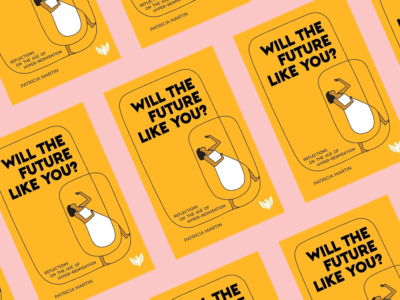
Book cover for "Will The Future Like You?" by Patricia Martin.

Book of the Month: “Will The Future Like You?” by Patricia Martin

WP_Post Object
(
    [ID] => 9993
    [post_author] => 15
    [post_date] => 2026-01-29 23:07:30
    [post_date_gmt] => 2026-01-29 23:07:30
    [post_content] => 

A memoir that grapples with changing ambitions and the myth of having it all.

Many millennials (or non-millenials, for that matter) will be familiar with the overarching plight of Amil Niazi’s Life After Ambition, her "good enough memoir": the experience of being stuck in the rat race of chasing one dream after another, only to find yourself on a never-ending grind. In this race, there’s always one more goal to achieve—one more professional hurdle to overcome, one more career ambition to attain—before the dream can be realized. For women especially, relentlessly pursuing a profession, while ensuring all other aspects of your life are left unscathed, becomes an ever-shifting goalpost; the quintessential “having it all”.

As the book’s title implies, Niazi unfolds the futility of this chase, made especially futile given the instabilities accompanying her career of choice—journalism and writing. But the memoir is as much a personal unfolding as it is a professional one. In it, we learn of Niazi’s parents' almost romcom-like origins before she disabuses the reader of the myth of their marriage and the prospect of an idyllic childhood. There are the anticipated working-class migrant struggles, the family never having quite enough, which takes them across oceans to seek a better life in England, where the author was born, and eventually, to Canada, where the author has spent most of her life. There’s also the abuse between her parents, which Niazi touches without ever quite expounding on, even as she informs of their eventual divorce and sketches her own experience of intimate partner abuse later in life.

In Niazi’s childhood, adolescence, and early adulthood, there’s a persistent feeling of lack. There’s little romanticizing of her circumstances, and she admits her personal rat race was likely born from this instinct: Storytelling—reporting and writing—was the one endeavor that allowed her to make sense of the world. In distressing but humorous episodes, she depicts a life of underemployment before eventually landing a job that sets her on a viable career path. Amid all the instabilities, she moves from Vancouver to Toronto with a boyfriend who physically abuses her—and there, the violent ending of their final contact results in a hard-to-shake addiction to prescription drugs. Through all of this, Niazi continues to work, uncertain of who she can trust with the vulnerable parts of her life, but finding stability through her ambitions—learning along the way, her calculus won’t always pay off.

There are bright spots throughout Niazi’s ordeals, despite the numerous and varied difficulties. There is a dog she loves and cares for, friends who intervene, and a reliable boyfriend who eventually becomes her husband. Yet her career ambitions remain the driving force that shapes her life, until suddenly, it isn’t; and for Niazi, a large part of this shift happens when she becomes a mother. After a period in London—chosen, of course, for her career ambitions—she ultimately returns to Toronto with her family when she realizes those ambitions have changed. 

Indeed, in the final analysis of Life After Ambition, I wonder if the author doesn’t slightly betray the title. She gains fresh perspective through her choice to pursue having a third child, and by attempting the kind of writing career she’s always longed for, one less defined by output, and instead, by balance. For her, motherhood and writing are intertwined and related; one aids the other, and though she must make sacrifices to have both, neither can be forfeited. 

Perhaps less than delineating what life looks like after ambition fades and falters, what the author concludes is what becomes of us—especially of many women—when our ambitions include more than the careers we set out to have. In so doing, what Niazi offers in her debut book is not only a re-think of our lives as she unravels her own, but a re-defining of ambition entirely, demanding we consider the whole of our lives, and not just the parts we keep separate in the name of career.

[post_title] => Book of the Month: "Life After Ambition" by Amil Niazi [post_excerpt] => A memoir that grapples with changing ambitions and the myth of having it all. [post_status] => publish [comment_status] => closed [ping_status] => closed [post_password] => [post_name] => book-of-the-month-botm-january-pick-life-after-ambition-amil-niazi-memoir [to_ping] => [pinged] => [post_modified] => 2026-04-29 18:07:25 [post_modified_gmt] => 2026-04-29 18:07:25 [post_content_filtered] => [post_parent] => 0 [guid] => https://conversationalist.org/?p=9993 [menu_order] => 0 [post_type] => post [post_mime_type] => [comment_count] => 0 [filter] => raw )
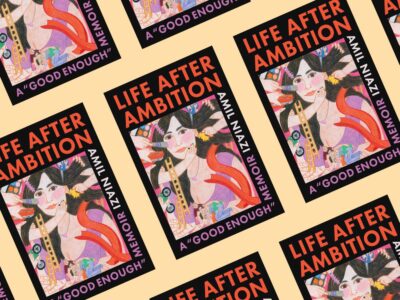
The book cover for "Life After Ambition" by Amil Niazi.

Book of the Month: “Life After Ambition” by Amil Niazi