WP_Post Object
(
[ID] => 1083
[post_author] => 2
[post_date] => 2019-06-06 14:36:45
[post_date_gmt] => 2019-06-06 14:36:45
[post_content] => Expressing dissent in China is difficult and dangerous, but a brave few persist in telling their story.
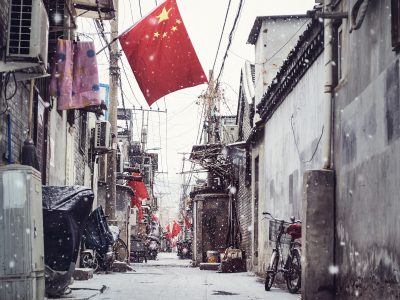
This week the world remembers the events that took place on June 4, 1989, in Tiananmen Square — although remembering is easier to do in some countries than in others. China’s digital great wall blocks access to information about the massacre, often with the help of American technology companies. Demonstrators who were in Tiananmen and lived through the crackdown that followed don’t even tell their children about it, lest they ask questions of the wrong people. Even more disturbing, young Chinese students raised in a post-Tiananmen world question the value of knowing what really happened that day, as Louisa Lim, the author of The People’s Republic of Amnesia, writes in the New York Times.
But while the Communist party has succeeded in crushing dissent, it has not figured out a way to make people forget. Today some survivors of those horrific events that took place in Beijing 30 years ago still make tiny, subversive gestures to show they have not forgotten, thus proving that people can uphold the historical record even under the most repressive governments.
In a moving reported op-ed for the New York Times, China expert Ian Johnson describes this quiet dissent expressed by brave writers, artists, musicians, and intellectuals as “unofficial history.” They “have taken it upon themselves to preserve the memories of the country’s many killings, famines, uprisings and government crackdowns,” he writes. This history is smuggled in and out of China, accessed through VPN software to avoid censorship, or conveyed in symbolic code. This unofficial history is a testament to the resilience of people and of storytellers.
In addition to the vibrant unofficial history kept alive by a community of people, Johnson writes for the New York Review of Books that the official history of Tiananmen Square continues to expand, most recently with a book about how the Communist Party rewrote history the week following the crackdown, including backdating political endorsements of the decision to use military force on the protestors. The “truth stubbornly endures,” Johnson writes.
In other news:
Can the social cost of carbon — a figure that estimates the economic burden of climate change per metric ton of carbon dioxide — help incentive climate change solutions? Read more.
What is “economic patriotism”? Read about Elizabeth Warren’s plan to reinvigorate American industry.
At this New York bakery, it’s not your past (whatever it may hold) that matters, but your future. What does employment based on the Buddhist principle of “non-judgment” look like?
[post_title] => This is how China's political dissidents keep historical memory alive
[post_excerpt] => In China, brave writers, artists, musicians, and intellectuals have taken it upon themselves to preserve the memories of events their government works hard to repress with digital censorship and police harassment.
[post_status] => publish
[comment_status] => open
[ping_status] => open
[post_password] =>
[post_name] => chinas-digital-great-wall-censors-facts-but-memory-persists
[to_ping] =>
[pinged] =>
[post_modified] => 2026-08-07 16:10:49
[post_modified_gmt] => 2026-08-07 16:10:49
[post_content_filtered] =>
[post_parent] => 0
[guid] => https://conversationalist.org/?p=1083
[menu_order] => 325
[post_type] => post
[post_mime_type] =>
[comment_count] => 0
[filter] => raw
)
Politics
- Current global response is insufficient;
- Transformative changes’ are needed to restore and protect nature;
- Opposition from vested interests can be overcome for public good.
- “It’s 2050 — how did we stop climate change?” This is the question posed at the opening of a recent NPR report. Instead of focusing on the monumental challenge facing the world, the reporter asks what actions we as individuals can take right now. The result is an optimistic road map for a more climate-friendly future, relying almost entirely on technology and capabilities that we already have. Listen to the story here.
- A grassroots campaign in Britain convinced Walkers, the manufacturer of the country’s most popular brand of potato chips, to create a recycling scheme for its excessive packaging. The company’s response to the popular campaign shows that consumers have the power to influence corporate policies. Read The Independent op-ed.
- Case in point: Greta Thunberg, the adolescent activist who skipped school to protest climate inaction outside of the Swedish parliament building. What began as her lone crusade has become a global movement with Thunberg at the helm, inspiring her teenage peers and adult activists alike. Read The Guardian’s profile of this remarkable girl.
- In finding a way to get the Green New Deal passed by the Senate, there’s a case to be made that the left wing of the Democratic Party has embraced tactics more effective than those of the moderates. While the moderates are searching for a sensible compromise, progressives want to eliminate structural impediments to real action. “This might seem like fantastical thinking, but it actually carries a greater dose of realism about both the current political situation and about the opposition in the Republican Party,” writes David Atkins. Read his op-ed in The American Prospect.
- A vegan reporter faced an online backlash from dairy farmers after appearing on a national Canadian radio show to talk about veganism. But instead of throwing up her hands in frustration at the incivility of social media, she took the opportunity to learn from her so-called opponents, and modelled the ideal social media conversationalist for people on either side of the issue. Read her account for Vice.
- The Chinese government thought that they could nip a feminist protest in the bud by arresting five activists planning to hand out anti-sexual harassment stickers on International Women’s Day in 2015—but instead their crackdown turned the women into heroes, and laid the foundation for a growing feminist movement. On a recent episode of The Current, author Leta Hong Fincher discussed a new book she wrote on the subject. Listen here.
- South Jersey non-profit Distributing Dignity provides women in need with free, new bras and other goods that often go overlooked, but are essential to any woman’s well-being and dignity. Read the story at The Philadelphia Citizen.
- According to a new study published by the Aspen Institute, schoolchildren who study in an environment with strong, secure relationships grow up to become empathetic and collaborative adults. Read about the education reform that appeals to conservatives and progressives alike in Governing magazine.
- The industry working to improve global access to clean water, food, and education, relies too heavily on jargon that obscures more than it explains—and usually excludes the very people NGOs are trying to help. Simpler, more accessible language does not necessarily mean simpler, less impactful interventions. Read the op-ed in Bright Magazine.
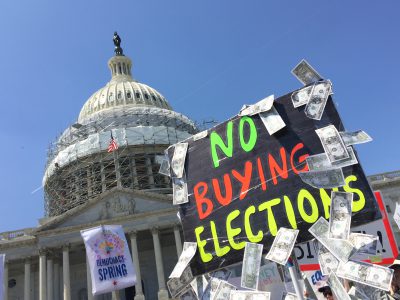
- Big money distorts our democracy in favor of those with the deepest pockets, but in the absence of campaign finance reform, politicians can make small-donor contributions a cornerstone of their for-the-people platforms. Read the op-ed in The American Prospect.
- Defying telecoms and internet service providers, cities across the country are taking steps to create municipal broadband utilities to help close the digital divide in our country. Learn more on Smart Cities Dive.
- Although the steady drumbeat of layoffs at newspapers and media companies across the country is devastating for the people who work in the industry, one optimistic way of looking at the wreckage is to see an opportunity to remake digital news and local media, learning from the mistakes of the past. Read the op-ed in Wired.
- Finally, a start-up seeks to make disposable coffee cups a thing of the past with its reusable coffee mugs on-demand service. Sierra Magazine has the story.