A tour through Europe's past—and what lessons we might learn from its museums to fight authoritarianism today.
Interrupting the skyline in Tallinn, Estonia is a tall gray building, a relic of the country’s Soviet occupation. It looms over the medieval city, declaring its name in giant letters: HOTELL VIRU. Behind these letters is a secret 23rd floor, where the KGB (the Soviet Union’s security agency) would listen to the hotel’s visitors, as unsuspecting tourists sipping drinks in the restaurant just a floor below would point to the windows above them and ask, “Hey, what’s up there?”
Tourists at the hotel were spied on right up until April 1991, when the KGB left the building and shortly before the Soviet Union collapsed. While the KGB cleared away many important details, enough artifacts were left behind, including a room full of monitoring devices, that a museum was opened in 2011. It’s a constant reminder of what once happened here—a reminder of how personal freedoms can so easily be lost, and a reminder of what’s at the end of the road to authoritarianism. A road that several European countries might be on once again.
The Hotel Viru & KGB Museum is the first stop on my tour as I gather up the scattered pieces of Europe’s recent history of authoritarianism and ask whether we are paying enough attention to our present.
(Photo courtesy of Katie Dancey-Downs.)
As you walk into what our tour guide calls the “listening room,” it’s the musty smell that hits you first. “Oh no, it even smells like the Soviet Union,” tourists from neighboring Finland are reported to have said, according to our guide, Margit. In one glass cabinet, there is a selection of microphones, recording devices, and transmitters. In the 1970s, when the hotel opened, around 60 guest rooms were designated as special rooms, with an empty room next door so that one of these KGB microphones could be slotted through a small hole. By the next decade, advances in technology meant more rooms could be monitored, with vases and lamps becoming favorite spots for hidden microphones. Sitting on a glass shelf in front of us, there’s even an old handheld camera, once used as a way to collect compromising photographs when poked through bedroom walls.
The guests were not completely oblivious to any of this, Margit says; KGB monitoring was something of an open secret.
“Tourists in general were very cautious in the rooms,” she explains. Visitors would leave the water running, turn up the television volume, or cover vents with towels for privacy.
The microphones weren’t limited to bedrooms, either. Margit directs us to a circular, speckled-green set of cufflinks, fitted out with a hidden microphone. In another cabinet, there’s an ashtray and a gold-rimmed plate monogrammed with a bold black V, both with hidden microphones, too. Perfect for slipping onto the table in front of people of interest.
While this hotel was a symbol of the free Western world to the people who lived in Tallinn, Soviet citizens knew not to get too close to its front doors, unless they wanted to be dragged to the basement for an interrogation. During its prime, Hotel Viru was not unique—any hotel that welcomed tourists in the Soviet Union or Eastern Bloc had a KGB presence.
It’s easy to forget that Margit lived under this occupation, that she knew exactly what it meant to keep away from Hotel Viru. I won’t go so far as to call Margit yet another artifact, but the memories and experiences held by the woman standing before us, in her Viru-branded gilet, are an important part of the picture. She remembers how Estonians used to hold their hands in front of their faces when they talked to each other in the park to fend away lip readers. She remembers how much people wanted to work at Hotel Viru, because they got access to illicit foreign goods and received gifts from the tourists. She also remembers how the hotel preferred hiring married people, assuming they wouldn’t try and couple up with a foreigner—the only accepted reason for leaving the Soviet Union. (This was an appealing option for many, although it came with complications: Divorce was allowed, but taking children to a new foreign life was not—any child born in the Soviet Union was in effect owned by the state.) This atmosphere, Margit tells us, made people easier to control.
“You are free to leave,” Margit says at the end of our tour. “Nobody takes you to the basement, nowadays.”
(Photo courtesy of Katie Dancey-Downs.)
An atmosphere of control
Unfortunately, this “special atmosphere of control” is not consigned to museum display cabinets. In Europe today, illiberal ideologies are finding strong ground, with support for populist parties soaring in many countries—my own, the UK, included.
This atmosphere Margit told us about, and the spying on people of interest, is also still going on in Russia today. Soviet (now Russian) state security has had various different names, including the Cheka, then the NKVD, then the KGB. Nowadays, the former KGB is known as the FSB.
I cannot safely travel to Russia to tell you what this atmosphere is like. I’ve criticized Putin and interviewed enough Russian dissidents that I don’t think I would be particularly welcome. But in the same way that seeing the artifacts in Hotel Viru has brought to life the history of intense surveillance and the atmosphere of terror, there is similar evidence in our current times: from school teachers forced to teach propaganda and patriotic lessons to a state-backed messaging app with extensive surveillance capabilities.
The artifacts in Hotel Viru’s listening room show us how surveillance technology developed over the decades, and that it did not stop when the Soviet Union fell in 1991. Instead, we now have even more advanced technologies to contend with.
This isn’t limited to Russia. In the UK, live facial recognition cameras are being rolled out by police across the country. According to Big Brother Watch, a human rights group that campaigns against the practice, there are 10 regional police forces regularly using the technology, but many others use it for large events. Currently, there are no specific rules governing its use.
Here's how it works: Surveillance cameras snap individuals’ faces and make biometric prints, then compare them to a police watchlist for similar matches, with the software flagging people in real time. A tech-smart way to catch criminals, yes, but here the threat to freedom begins. The technology has been deployed in numerous city centers, with hundreds of thousands of faces scanned on the streets as well as at events like Notting Hill Carnival. There have been cases of people being misidentified, and accusations from Amnesty International that the practice “amplifies racist policing,” as Black people are most often misidentified.
Big Brother Watch notes that it’s usually authoritarian regimes that embrace live facial recognition—Russia and China, for example. The UK does not currently have an authoritarian regime. But pair this with growing support for far-right politics and the UK’s rollback on protest rights—including a new provision to limit “cumulative disruption” of protests—and we might have a problem on the horizon.
Silencing critics
Across the border from Estonia, in Latvia’s capital city of Riga, is the KGB building known as the Corner House. Of all the places I see on my museums tour, the Corner House is the most chilling. The one that stinks the most of death. As I walk around the dark and dingy complex of cells, where the paint is peeling off in long strips, the thing that makes my skin crawl is the knowledge that in this very place people had their liberties stripped in the most inhumane ways. Some of them even lost their lives, simply for opposing the regime.
A young guide shows us around the KGB cells which were used during the first and second Soviet occupations (with a Nazi occupation in the middle). He tells us that people could be arrested for reading a banned book, for joking about the Soviets, or for believing that Latvia could be free.
At some point, when we’re standing in the old interrogation room, the guide smacks a rubber stick on the desk and we all jump, a glimmer of what someone under KGB interrogation would face. In one cell, he tells us that 30 people would be inside at once, the window covered so they couldn’t tell what time of day it was, then he flicks on the bright lights so that we’re disoriented like the prisoners would have been. He points to the heating system that would be cranked up high, and the sole bucket used as a toilet and emptied once a day.
(Photo courtesy of Katie Dancey-Downs.)
It's with all this in mind that we are taken to the courtyard. This, he tells us, would have been a reminder to the prisoners of how the free world feels (and a way to make them willing to sign anything, including confessions). Above us there are bars and netting. To stop suicides from the interrogation room, we’re told.
We’re left there for a few minutes, in a space where prisoners would have been allowed to breathe fresh air once a week, walking in circles with their heads bowed, their feet trudging along the same concrete that we stand on now. It is a reminder that not all artifacts live in glass cabinets.
There is worse to come. In what was once an execution room, there are more than 200 bullet holes in the walls, marked with red and yellow stickers. They go back to 1940 and 1941, when prisoners were told to face the very same wall now before us, then shot in the back of the head. Researchers are still trying to find out whether executions continued here during the second Soviet occupation.
“We Latvians know the price of freedom,” the guide tells us. He also reminds us that this type of thing is still happening in Russia today.
Opposition leader Alexei Navalny is one recent, high-profile person to have lost his life while incarcerated by Russia in a penal colony north of the Arctic Circle, where he was killed with a dart frog toxin. But he is far from alone, as many other Kremlin critics or persecuted communities have been imprisoned or killed.
(Photo courtesy of Katie Dancey-Downs.)
This modern unease extends beyond Russia to Baltic states like Latvia, Estonia, and Lithuania. One person in Estonia told me that her daughter talks about how they would escape if their home was attacked. In neighboring Belarus—where state security is still called the KGB, and Russian influence is strong—more than 4,600 people have ended up as political prisoners since 2020. Many of those people are pro-democracy protesters and campaigners who stood up against dictator Alexander Lukashenko’s rule, including his rigged election win in 2020 and then 2025.
A short walk away from Riga’s Corner House, artifacts in the Museum of the Occupation of Latvia shine more light on the country’s dark history. If you’d forgotten about the KGB building already, your memory would be refreshed by this museum’s display of bullet casings and the keys for the prison cells, now housed in a glass box.
I land at a small bottle and blister pack of pills which turn out to be chlorprothixene and other antipsychotics used to “treat” dissidents imprisoned in psychiatric hospitals. This practice is not history, but still happening in Europe as I stand looking at these artifacts. I am reminded of Russia’s punitive psychiatry, where medicated treatment is forced onto political activists who have been sent to psychiatric units in response to their activism, and where they are brutalized.
And then we come to what might be one of the most terrifying tools of Soviet oppression: the concentration and forced-labor camps known as the Gulag. A quilted jacket with the number F358 sewn on the back is hanging up on display, this particular one having belonged to a woman called Leontīne Kriviņa, who in the 1950s was arrested for participation in a youth resistance group and sent to the Norilsk Gulag camp, 400km above the Arctic Circle, where temperatures could drop to -50C.
The personality cult
I’m now standing before a KGB-sponsored weekly newspaper, called Dzimtenes Balss, which translates as Voice of the Homeland. It was written specifically for Latvians in Western exile and—if we were in any doubt about its purpose—published by the “Committee for the Return to the Homeland” between 1958 and 1989. The Soviets wanted to repatriate Latvian émigrés, and propaganda like this was a vital tool in making that happen.
The Soviet Union had a well-oiled propaganda machine. Posters, films, lectures, theatre, newspapers, and radio were ways to shape the collective consciousness, and control society. Among these was the personality cult—which brings us to our next artifact: a small statue from the 1960s of Vladimir Lenin, the founder of the USSR, set inside a black display cabinet. The personality cult around him developed after his death, the description says, with many streets named after him and every significant town home to a monument. The “Lenin Cult” replaced the “Stalin Cult,” an information board explains, around three years after Stalin’s death, when the new leader Nikita Khrushchev denounced Stalin’s policies as a “departure from Lenin’s ideals.”
(Photo courtesy of Katie Dancey-Downs.)
There’s another artifact in this museum that speaks to this history of authoritarianism—a copy of Mein Kampf, Adolf Hitler’s memoir and manifesto. It’s chilling to see it in real life, something so feared and despised across the continent, and indeed the world. Something that represents the personality of the man who led a genocide and brought terror to Europe.
In today’s Europe, we have a personality cult problem once again. But the personalities in question don’t even need to bother writing a book: They have social media at their disposal.
The scapegoats
There’s one more thing that I want to show you in the Museum of the Occupation of Latvia. A fabric Star of David, faded with time, which would have been used by the Nazis to identify Jews. It’s one thing knowing about these yellow stars and how they were used, but it’s another to really see one, imagining who it might have been pinned on. Next to it, there are a couple of strings of numbers on what look like badges. One is brighter, and says 8533. They are identification numbers worn by Jews held in the Kaiserwald Concentration Camp or the Lenta factory in Riga. Tens of thousands of Jewish people were murdered in Latvia during the Holocaust.
While relatively short compared to their Soviet occupations, Estonia and Latvia were both subjected to Nazi occupations during World War II. Many people even welcomed the Nazis, hoping they would save them from the Soviets. What people soon learned is that no authoritarian regime is “better” than another. All are bad.
I went to Kraków, a medieval city in Poland’s south, which felt the full weight of a Nazi occupation from 1939 to 1945. Up to 20,000 Jews were forced into a purpose-made ghetto, before Heinrich Himmler ordered their deaths in 1943 and they were either shot, sent to labor camps, or sent to concentration camps where they remained as prisoners or were exterminated.
In Oskar Schindler’s Enamel Factory, the permanent exhibition Kraków Under Nazi Occupation tells this story. In one of the first displays, there is a circular wooden construction painted in yellows and blues, like something that might belong in an old-fashioned penny arcade, with pairs of binoculars set into each panel. It is a carousel of photographs, the images rendered in 3D, each one frighteningly immersive as it takes my whole field of vision. I have never seen Hitler’s face this close, as he shakes hands with another Nazi, or holds hands with a smiling girl—in the latter, they might even be dancing. Another shows a woman smiling and saluting in a Sieg Heil. Flags are draped from buildings and swastikas plastered on armbands. Not just seeing these photographs from over 80 years ago, but being inside the photographs, makes it all frighteningly real—which of course it was. The people smiling is what’s really terrifying.
As we face our own dangerous political shifts today, it scares me to think about the photographs that our generation’s great grandchildren will look at. Will they also sit in a museum like this, immersing themselves in the artifacts we’ve left behind and ask, “How did they allow this to happen?” Will they struggle to understand how so many people could welcome the far right rallies and shake hands with the populist leaders of today, the way I now struggle with the same? Or will ours be a generation that truly learns from its history, so that we do not allow the most atrocious things that have happened in the past to happen again?
(Photo courtesy of Katie Dancey-Downs.)
At the end of the Schindler Museum exhibit is a glass case containing two spirals of barbed wire. They are from KL Płaszów, a camp in Kraków built on Jewish cemeteries, which housed up to 25,000 prisoners at a time. It began as a forced labor camp and later became a concentration camp, a place of terror for Jews, Poles, Roma and political prisoners. Although it wasn’t an extermination camp, prisoners were indeed also executed here.
Many concentration camps have been preserved across Europe as a reminder of what happened during the Holocaust, when the Nazis murdered six million Jewish people, as well as other persecuted groups. Decades ago, I visited the Sachsenhausen concentration camp, north of Berlin, on a school history trip. I still remember, vividly, the “Arbeit Macht Frei” lettering on the gates, that awful, twisted phrase that translates as “Work Makes You Free.”
On the other side of Kraków, there is a blue and white striped uniform hanging up in the People of Kraków in Times of Terror exhibition, part of Muzeum Krakowa. A woman named Anna Pieczarka-Mikulskaw wore it while imprisoned in the German concentration camp KL Ravensbrück between 1942 and 1945. Her grandson gave it to the museum.
“Some of them came back home in the uniform,” the museum’s curator Grzegorz Jeżowski tells me.
The Holocaust is perhaps our starkest example of where scapegoating can lead. That barbed wire and that prisoner uniform in Kraków are reminders of what happened in Europe’s darkest hours. And yet today, far-right politicians are still villainizing minority groups, in particular Jews, Muslims, refugees, and LGBTQ+ people. It is not comparable with what the Nazis did, of course it isn’t. But we must never forget where this road can lead.
Today, in countries including Russia, Germany, Italy, and Georgia, there are growing political movements pushing for “traditional family values” and against LGBTQ+ rights. In Bulgaria, too, it is illegal to discuss LGBTQ+ topics in schools. There is a question mark over Hungary, which made global headlines for banning Pride marches under recently deposed strongman, Viktor Orbán. Recently in the German state of Saxony-Anhalt, the far right Alternative for Germany (AfD) won the state election, just falling short of gaining a majority, and leaving the rest of Europe shaken.
(Photo courtesy of Katie Dancey-Downs.)
Why we must visit the museum
Let me caveat what I’m about to say: I am not carrying the weight of lived or generational trauma, as others whose families have been persecuted by authoritarian regimes. But I believe it's vital we go to these museums and face the evidence head on, that we look at Mein Kampf, at the shoes of people murdered by the Soviet secret service units found in burial sites, at the microphones slipped into hotel rooms. Not just to remember what has happened in the past, but to make sure that we develop the necessary critical thinking required to understand and prevent what is already emerging in our present.
The museums I visited are just a handful of those dotted around Europe, with countless artifacts to remind us we are not immune to the possibility of ending up under authoritarianism. In Europe today, there are flickers of these tendencies—and not just in Russia and Belarus.
In Serbia and Turkey, journalists critical of the government live under serious threat, and protesters have faced violent clampdowns in Georgia since the Georgian Dream party claimed victory in the 2024 election—a result which Western pollsters said did not match exit polls. Both Turkey and Georgia’s leadership has been described as authoritarian.
And then there are countries where populist or illiberal politicians are waiting in the wings, steadily growing in popularity. Like in the UK, where there is an ever-growing personality cult around the anti-immigration Reform UK leader Nigel Farage, a man who has been accused by former schoolmates of antisemitic and racist bullying (which he denies) while more recently getting caught supporting a neo-Nazi event and using extremist slogans in personalized Cameo videos. As of May 2026, Reform UK was the most popular political party in the country, before a series of financial scandals consumed discussion around the party, dropping them to second place by August.
Similarly in France, Marine Le Pen’s far right National Rally is the country’s most popular party according to the most recent voting poll. And perhaps most shockingly, as of June 2026, the most popular political party in Germany is the far right nationalist AfD (Alternative für Deutschland), which is shaped by xenophobia, Islamophobia, antisemitism, and hostility to LGBTQ+ people.
Tyrants-gone-by echo in our current world, and illiberal politics serve as fertile ground for authoritarianism.
With all this in mind, the artefacts of terror and extremist politics in Europe’s museums are frightening, quite rightly. But in these same buildings, there are also always artefacts of hope.
In the Vabamu Museum of Occupations and Freedom in Tallinn, there is not only evidence of the oppressions Estonians faced, but also of their resistance. Hanging up on the wall, a brown leather briefcase that belonged to Enn, an Estonian dissident who was arrested by the KGB numerous times, tells the story of a petition called the Baltic Appeal, calling for the independence of the Baltic states. The briefcase was big enough to carry a secret typewriter, which could be used to make and copy prohibited materials—and there’s one of those here too, a large clunky machine with a teal-colored carriage. They were considered so dangerous by the Soviet Union, that each typewriter had to be registered, but dissidents found ways to trick the authorities. This particular typewriter belonged to Irene, who, according to the museum’s digital guide, exchanged her tent to get it and then used it to make copies of the banned The Gulag Archipelago by Aleksandr Solzhenitsyn, an autobiographical work about life in the Soviet labor camps.
(Photo courtesy of Katie Dancey-Downs.)
Sitting proudly above the typewriter and the briefcase is a piece of samizdat, which dissidents were producing in the decades after Stalin died. These were self-published copies of prohibited texts—novels, journals, cookbooks, anything people wanted to read and couldn’t—which were passed around hand-to-hand, secretively.
There is a letter on the wall, too, signed by 40 Estonian figures from the cultural and scientific communities, against Russification. They collected these signatures in secret and sent the open letter to newspapers—even though ultimately, it resulted in many of them being punished, interrogated, or forced to publicly apologize.
Lastly, in the Museum of the Occupation of Latvia, there’s one incredible artefact that I sit in front of for a long time. It’s a video of people—ordinary people—holding their linked hands up high along the side of the road. It is a singing revolution. In August 1989, 1.5 million people across the three Baltic states—Estonia, Latvia, and Lithuania—created a 410-mile chain from Tallinn to Riga to Vilnius, held hands, and sang for their independence. A few months later, the Berlin Wall fell, and by 1991, all three countries were independent and free of Soviet occupation.
So much of authoritarian control is about isolating people, making them afraid of what they say and to whom they speak. These movements of resistance, then, these items that bond people, these relics, are all precious reminders of how people have resisted before. But we must go to the museum to truly see them. We must go to the museum to find hope in what can be overwhelming times. And we must go to the museum to arm ourselves with the lessons of history in the fight against a repeat of our worst moments.
[post_title] => Warnings from the Museum
[post_excerpt] => A tour through Europe's past—and what lessons we might learn from its museums to fight authoritarianism today.
[post_status] => publish
[comment_status] => closed
[ping_status] => closed
[post_password] =>
[post_name] => warnings-from-the-museum-authoritarianism-europe-history-estonia-latvia-poland-soviet-union
[to_ping] =>
[pinged] =>
[post_modified] => 2026-09-23 00:12:35
[post_modified_gmt] => 2026-09-23 00:12:35
[post_content_filtered] =>
[post_parent] => 0
[guid] => https://conversationalist.org/?p=11041
[menu_order] => 0
[post_type] => post
[post_mime_type] =>
[comment_count] => 0
[filter] => raw
)
In an era of rising authoritarianism and billionaire autocrats, defenders of human rights cannot afford to retreat.
There's a moment in every struggle when retreat seems like the only rational option. When dictators grow bolder and democracies grow weaker; when the funding dries up and the threats are mounting.
For even the staunchest of human rights defenders, this is often the moment when the temptation to step back, to compromise, to "wait for better times" becomes almost irresistible. But it’s also the moment when it’s most crucial that we hold the line.
The Illiberal Surge
The numbers tell a grim story. According to the 2025 Democracy Without Borders report, the proportion of the world’s population living in a liberal democracy is now the lowest it’s been in 50 years—less than 12% of people worldwide. In contrast, 72% of the population—equivalent to 5.8 billion people—live under autocratic rule. Even countries once considered democratic beacons are sliding backwards, their institutions hollowed out by leaders who exploit fear, weaponize division, and dismantle checks and balances with disturbing efficiency. Increasingly, even the United States—long regarded as a democratic anchor—is exhibiting patterns of autocratic drift, marked by the concentration of executive power, the erosion of institutional constraints, and the normalization of political coercion and violence.
Across every continent, we are witnessing an unprecedented assault on human rights, rule of law, and democratic norms. According to Freedom House, global freedom has declined for 19 consecutive years. In Russia, Vladimir Putin has transformed a nuclear superpower into a revisionist rogue state, waging wars of conquest under the banner of Russkii Mir (“the Russian World”)—an imperial doctrine that frames violence as civilizational reunification. In practice, this entails the imposition of totalitarian control over territory, society, and political life through authoritarian systems of governance abroad; and at home, the total, systematic elimination of political opposition. In Turkey, Recep Tayyip Erdoğan has hollowed out judicial independence and imprisoned tens of thousands to entrench personal rule. In China, Xi Jinping has constructed the most advanced surveillance state in human history, fusing cutting-edge technology with unapologetic repression. In Hungary, Viktor Orbán has perfected the model of so-called “illiberal democracy,” an oxymoron that now functions as a practical manual for aspiring autocrats.
Even in formerly Soviet Central Asia, where expectations were never high, the trajectory is alarming. Kyrgyzstan, once celebrated as the region's freest country, now jails journalists, suppresses protests, and coordinates with Russian security services to hunt down dissidents. Kazakhstan, despite its carefully cultivated image as a modernizing state and economic powerhouse, brutally crushes peaceful protests, including inviting Russian troops to massacre its own citizens—killing over 200 people in what the government euphemistically called "anti-terrorist operations" in January 2022. Uzbekistan continues to restrict civil liberties, while the EU prepares to reward it with enhanced trade deals; and Tajikistan and Turkmenistan remain totalitarian nightmares that don't even try to pretend otherwise.
The Billionaire Autocrat: Democracy's New Nemesis
Making this era particularly dangerous is not just the rise of traditional autocrats, but the emergence of a new breed: the billionaire strongman who wields wealth as a weapon and treats nations like personal subsidies.
These are not just politicians who happen to be rich, but oligarchs who view governance as an extension of their business empires, who treat public office as private property, and who recognize no distinction between state resources and personal assets. Unlike traditional dictators, who seize power through military coups or revolutionary movements, this modern autocrat often arrives through elections—then uses his power for self-enrichment and for dismantling democracy from within, ensuring he can remain in power indefinitely.
Look at Donald Trump’s return to the U.S. presidency, backed by the world’s richest man, Elon Musk, who has used his ownership of X (formerly Twitter) to amplify destructive and hateful narratives and undermine democratic discourse while on his path to becoming the world’s first trillionaire. Look at the tech billionaires who increasingly view themselves as above the law and accountable to no one, while wielding unprecedented influence over information flows and public opinion. Intoxicated by this unchecked power, some have gone further—intervening in the domestic politics of other countries, amplifying or aligning with extremist and openly fascist movements, and actively threatening democratic processes far beyond their own borders. This concentration of power is not accidental: It is built on decades of privileged access to public resources, publicly funded research, state subsidies, regulatory forbearance, and the extraction of value from user-generated data and public infrastructure.
This marriage of authoritarian governance and extreme wealth has created a feedback loop of power consolidation, where wealth buys political influence, and political influence protects and expands wealth—a cycle that continues until the very concept of public interest becomes quaint and obsolete.
These billionaire autocrats also work in tandem, threatening human rights both in their home countries and abroad: They fund each other's regimes, help evade sanctions, provide safe havens for each other's stolen assets, and create international networks of corruption that transcend borders.
The result is a global ecosystem of kleptocracy where the rules apply to ordinary people but never to the powerful. When a Kyrgyz president is overthrown for corruption, he flees to Belarus or Russia. When Russian oligarchs need to launder money, they find willing accomplices in London, Dubai, and New York. This is not limited to traditionally authoritarian states, either. Under Donald Trump, the United States also recently adopted a recognizably autocratic maneuver: Shortly after kidnapping President Nicolás Maduro, proceeds from the sale of Venezuelan oil—reportedly totaling $500 million—were routed into multiple offshore accounts, the largest held in Qatar.
The Funding Crisis
The cruel irony is that, as threats of global authoritarianism continue to multiply, the resources to defend against them are evaporating.
The organizations that document war crimes, defend political prisoners, expose corruption, and provide legal aid to vulnerable populations are being forced to cut staff, close offices, and scale back operations. Small grassroots groups—often the most effective, because they're closest to the communities they serve—are disappearing entirely.
Human rights organizations across the world are facing unprecedented funding cuts. Governments that once supported civil society are redirecting resources to "national priorities"—often code for building walls and buying weapons. Private foundations are "pivoting" to other issues. International donors are suffering from "democracy fatigue," as if defending basic rights were a trend rather than a fundamental imperative.
Why We Cannot Retreat
In the face of these challenges, some have argued for strategic retreat. "Wait for the political climate to improve," they say. "Focus on less controversial issues." "Don't antagonize powerful governments." "Be realistic about what's achievable."
This advice is seductive precisely because of its supposed practicality. But it's also wrong.
History teaches us that authoritarianism, once given space to breathe, metastasizes. Dictators interpret hesitation as weakness and compromise as surrender. When human rights defenders go quiet, they don't buy time—they lose ground.
The window for resistance doesn't widen with patience; it narrows with delay.
Every time we soften our demands for accountability, every time we accept "reforms" that are purely cosmetic, every time we prioritize short-term economic interests over long-term democratic values, we hand authoritarians another victory. Consider the trajectory of Russia. In the 1990s and early 2000s, Western governments believed they could moderate Putin through engagement and economic ties. But each concession, each instance of looking the other way, each prioritization of "stability" over justice only emboldened Putin further. By the time the West decided to take a firm stance, Russia had already become the authoritarian menace it is today—and Ukraine is still paying the price for it in blood.
It is imperative, then, that we do not repeat our predecessors’ mistakes: Where they ceded ground, we must now hold the line.
What Holding the Line Means
Holding the line doesn't mean mindless stubbornness, or a refusal to adapt. Instead, it means refusing to compromise on core principles, regardless of the circumstances—a collective effort that requires each of us.
It means human rights organizations should continue documenting abuses even when governments threaten their staff. It means journalists investigating corruption even when they risk imprisonment or death. It means activists organizing protests, even when they’re banned and participants are beaten.
Holding the line means attaching real, enforceable human rights conditions to every cooperation agreement, trade deal, and aid package. It means wealthy democracies cannot allow their financial systems to become laundromats for dictators' stolen wealth. It means tech companies cannot provide surveillance tools to authoritarian regimes. It means universities cannot accept money from kleptocrats seeking to buy respectability. It means investigating and sanctioning corruption, regardless of whose feelings it hurts.
It also means confronting the uncomfortable truth that extreme wealth concentration must be dismantled. A world where a handful of billionaires wield more power than elected governments is inherently incompatible with democracy and human rights. When individuals accumulate resources equivalent to national budgets, they become unaccountable centers of power that can manipulate democracies, fund authoritarian movements, and evade any meaningful oversight.
To truly hold the line, then, we also need wealth taxes that prevent the emergence of quasi-monarchical fortunes. We need to abandon the fiction that billionaires are somehow more enlightened, more competent, or more deserving of power than democratically elected officials. We need corporate governance reforms that prevent oligarchs from treating companies as personal fiefdoms. We need to close the legal loopholes that allow the ultra-wealthy to operate in regulatory twilight zones.
We need to hold not just one line, but all the smaller lines that make up the whole.
The Cost of Retreat
And if we don't?
In the 1930s, democracies chose appeasement over confrontation, economic interests over moral clarity. They told themselves that engaging with fascist regimes would moderate them, that war could be avoided through compromise—and millions died because of it.
Today's authoritarians are learning the same lesson their predecessors did: Democracies will tolerate almost anything if you frame it as "stability" or "economic necessity." And they've adjusted their behavior accordingly—becoming bolder, more brutal, and more brazen in their contempt for human rights and international law.
If we retreat now, the next generation won't just face an "illiberal surge"—they'll face an illiberal world order where authoritarianism is the norm, the powerful answer to no one, and human rights are quaint historical curiosities.
Hope Is a Discipline
Make no mistake: Holding the line is exhausting. The victories are small and the setbacks are devastating. There will be moments when continuing seems impossible, when the challenges we face feel insurmountable.
But hope is not about believing everything will work out. Hope is the discipline of continuing the fight even when the odds are terrible. Hope is understanding that the line we hold today creates and protects the space where tomorrow's resistance will grow. And sometimes, against all odds, that resistance succeeds.
We’ve seen it in our lifetimes: the fall of the Berlin Wall, the collapse of the USSR, the end of apartheid, the Arab Spring’s brief flowering, the popular uprisings across Latin America and Central Asia, Ukraine’s Revolution of Dignity. These weren't inevitable—they happened because people refused to accept authoritarianism as permanent.
They happened because people held the line until the moment came to advance.
A Call to Action
To human rights defenders everywhere: When funding disappears, innovate. When governments threaten you, document everything. When allies waiver, remind them what's at stake.
To democratic governments and international institutions: Stop the charade of believing trade will transform autocrats. Attach real conditions to every agreement. Support civil society unreservedly. Sanction corruption aggressively. And recognize that your credibility depends not on what you say but what you do when authoritarians call your bluff.
To citizens of global democracies: Recognize that your freedoms are not guaranteed. They exist because previous generations fought for them and current defenders maintain them. Support human rights organizations. Find your people. Build coalitions. Hold your governments accountable when they prioritize profits over principles. And understand that authoritarianism will eventually come for you if it is allowed to flourish unchecked.
To journalists: Keep investigating. Keep publishing. Your work is dangerous precisely because it's effective. Every investigation you complete, every truth you reveal, chips away at the foundations of authoritarian power.
And to those who have already retreated, who have compromised, who have gone quiet: It's never too late to return to the fight. The line is thinner than it should be, and we need everyone who still believes in human rights and rule of law to stand with us.
The Choice Before Us
We stand at an inflection point. The choices we make now—as individuals, organizations, and societies—will determine whether the 21st century becomes an era of hard-won freedom or deepening oppression.
The authoritarians are betting we'll fold. They're counting on our exhaustion, our divisions, our tendency to prioritize short-term comfort over long-term principles. They believe that funding cuts will silence us, that threats will intimidate us, that time is on their side.
They're wrong.
We will hold the line. Not because it's easy, but because it's necessary. Not because victory is guaranteed, but because surrender is unthinkable.
The line we hold is not just a metaphor. It's the space where lawyers defend political prisoners. Where journalists expose corruption and abuse. Where activists organize communities. Where ordinary people refuse to accept injustice as inevitable.
We see this in action with every political prisoner who receives legal representation because a human rights organization refused to close. Every corruption scandal exposed because a journalist refused to be silenced. Every protest that happens because activists refused to give up. These are not marginal victories—these are the threads that keep the fabric of resistance intact.
This line is under assault from authoritarians, oligarchs, and billionaire autocrats who recognize no limits to their ambition and no accountability for their actions. They have money, power, and momentum.
But we have something stronger: the conviction that human dignity matters, that our rights are not negotiable, and that no amount of wealth or power places anyone above justice.
So we hold the line. Today, tomorrow, and for as long as it takes.
Because if we don't, there won’t be one left to hold onto.
[post_title] => We Must Hold the Line
[post_excerpt] => In an era of rising authoritarianism and billionaire autocrats, defenders of human rights cannot afford to retreat.
[post_status] => publish
[comment_status] => closed
[ping_status] => closed
[post_password] =>
[post_name] => hold-the-line-fascism-autocracy-kleptocracy-billionaires-threats-authoritarianism-protest-activism-preserving-democracy-politics-human-rights
[to_ping] =>
[pinged] =>
[post_modified] => 2026-02-18 19:45:33
[post_modified_gmt] => 2026-02-18 19:45:33
[post_content_filtered] =>
[post_parent] => 0
[guid] => https://conversationalist.org/?p=10165
[menu_order] => 0
[post_type] => post
[post_mime_type] =>
[comment_count] => 0
[filter] => raw
)
How women play a crucial role in the country's struggle against dictatorship.
Andreina Baduel, a 39-year-old activist from Caracas, Venezuela, had a happy childhood. Growing up with 11 brothers and sisters, she fondly remembers the love and support she received from her parents—how her father frequently took all his children to the beach, or out to dinner at their favorite restaurant. From an early age, she says, her father also instilled in them an appreciation for education, allowing her, in her own words, to "cultivate an intellect and become a better human being.” But at 23, life as Baduel knew it came to an abrupt end when her father was sent to prison.
“My life came to a standstill,” she recalls. “It was a turning point in our lives that affected so many things.”
Baduel is the daughter of Raúl Isaías Baduel, a retired general of the Venezuelan armed forces and former defense minister under former President Hugo Chávez’s regime. In 2009, he publicly broke with Chávez over constitutional disagreements, and accused the then-president of becoming “increasingly authoritarian.” For his dissent, he was sent to prison for the majority of his remaining life, until his death in 2021.
After her father’s imprisonment, Baduel became her family’s main source of moral support. The Baduel family has now been considered dissidents for nearly 17 years, and she also acts as their public mouthpiece—speaking out on their behalf, and ensuring their stories continue to be heard, both in their country and beyond. This has included aiding two of her brothers over the years, who were respectively detained, arrested, and subjected to torture and ill-treatment in prison, under both Chávez’s and current President Nicolás Maduro’s regimes.
“We have been persecuted, harassed, silenced,” Baduel says. “[But] the truth cannot be killed, [and] faith cannot be extinguished. My father’s voice lives in every word we speak.”
Baduel’s story is not uncommon. Like many women in Venezuela, she is known both as the relative of a high profile political prisoner, and as an outspoken activist. Her advocacy on her family’s behalf also exemplifies how Venezuelan women play a crucial role in fighting against the country’s dictatorship, amid Maduro’s human rights violations and in the face of his “reelection” last year. (The win was deemed fraudulent by election watchdogs such as Transparencia Electoral, as well as the international community, including the U.S. and some of the country’s Latin American neighbors, like Brazil and Colombia.)
“Women have a very important role in the opposition movement; but also in sounding the alarm after last year’s election,” says a leader of a Venezuelan women’s rights organization, who asked to remain anonymous for safety reasons. Referencing María Corina Machado—one of the country’s main opposition leaders, who recently won a Nobel Peace Prize for her democratic struggle against the country’s dictatorship—the organizer says Venezuelan women have long “been a leading force and a leading voice” in speaking out about the government’s infractions, both at home and abroad. “[Many] women in exile and in the diaspora are also playing a key role,” she says.
This includes women like Violeta Santiago, a Venezuelan human rights activist and journalist who was forced to flee the country after receiving death threats by government-led armed groups. She now continues to write about injustice and the state of human rights in Venezuela from Chile.
But at home, the risks are higher, both for those who speak out and those who don’t. Because of this, everyday women like Baduel have been forced to partake in this fight for their entire adult lives, defining the parameters of their existence from within the nation they call home.
First Arrest
On the day Baduel’s father was arrested by the Venezuelan military, he was shopping with his family. None of them could have known that, except for a brief period of house arrest in 2017, he’d languish in prisons for the rest of his life. This included spending time in La Tumba, or The Tomb, a prison infamous for inflicting white torture on its prisoners. This torture is comprised of, but not limited to, isolation, a lack of access to natural light, constant freezing temperatures, no access to water, and nearly no food.
In 2021, while detained in El Helicoide, one of Caracas’ most notorious penitentiary facilities, Baduel’s father died at 66, over a decade after his initial arrest. According to the official report, he died from “cardiac-respiratory failure” after contracting COVID-19. But his family believes his death was actually caused by neglect, torture, and ongoing health conditions sustained after years of imprisonment without medical care. Juan Guaidó, the main opposition leader at the time, publicly supported this claim on social media, and the United Nations called for an independent investigation. A separate UN fact-finding mission has since concluded that crimes against humanity have been perpetrated in the country, particularly in relation to political persecution and prison conditions.
Through all of it, the Baduel family has remained steadfast.
“We knew our father’s imprisonment and death would change us from within,” Baduel says, wearing a t-shirt that reads “Ser Baduel No Es un Delito” (“Being a Baduel Is Not a Crime”). “We understood it would either bring up the best of us, or the worst of us. And we decided to confront it with faith and hope.”
Brutal Torture
Years before Baduel’s death, two of his sons—Raúl Emilio Baduel and Josnars Adolfo Baduel—were also imprisoned over conspiracy charges. Raúl Emilio, now 45, was detained while attending a peaceful protest in 2014, and released four years later. Josnars Adolfo, now 37, was detained in 2020 and sentenced to 30 years in prison, which he’s currently serving at Rodeo Uno, also known for its brutal torture of prisoners.
“He is imprisoned in a cell of two square meters, where he only has a cement bed and a latrine,” Baduel says. “They physically torture [him]—they beat him, suffocate him, and use electric [torture] on him.” She also says she’s only able to speak to Josnars for 15 minutes each week, from behind a glass wall. “They want to annihilate him, and make other prisoners scared of what awaits them,” she says.
Despite facing an onslaught of harassment, death threats, and government surveillance, Baduel plans to keep fighting. Recently, she received support from The Inter-American Commission on Human Rights, who granted her precautionary measures “in the belief that she faces a serious, urgent risk of suffering irreparable harm to her rights to life and personal integrity.” But while there is still no guarantee that her rights will be respected under the current regime, Baduel believes that she and the many other women stuck in the same fight as her are “a fundamental pillar” in defending human rights in Venezuela. “I am the voice of my family,” she reiterates, ”and of all the victims of this regime who are in prison, and who cannot speak for themselves.”
Constant Fear
Sairam Rivas, 32, is another Venezuelan activist fighting for a loved one who she says was unjustly imprisoned by the regime: Her partner, Jesús Armas, 38, has been imprisoned since December 2024.
Rivas is also a former political prisoner herself. In May 2014, while attending Caracas’ Central University of Venezuela for social work, Rivas, then a leading student organizer, was a part of a public camping protest in the capital’s streets. They were speaking out against the militarization of public space, and protesting the recent deaths of multiple young protestors at previous demonstrations. Along with 200 other young people, Rivas was arrested and later incarcerated at El Helicoide, the same prison as Raúl Baduel. With support from her university and international NGOs like PROVEA, Amnesty International, and Foro Penal, she was released after five months, unlike other young people detained that day, some of whom she says were imprisoned for up to three years.
“But the [political] situation then was different to what it is now,” Rivas says. “Back then, we could hire private lawyers, and there were no forced disappearances of dissidents.”
Sairam Rivas. (Photo courtesy of Sara Cincurova.)
She also says she believes the only reason she was not subjected to sexual violence and torture is because her imprisonment was “very famous.” “As a student leader, my case had a lot of visibility on social media among young people,” she explained. The notoriety of her case did not avert all ill-treatment, however. “We had to sleep handcuffed on the floor,” she says. “We were threatened to be transferred to harsher prisons and face torture if we continued to protest in the future.”
A decade later, on June 10, 2024, Rivas would experience a new horror: Her partner, Jesús Armas, was nowhere to be found. Neither she nor his family had received any information about him for seven days, only to discover he’d been “kidnapped” by the government.
Armas had been a part of María Corina Machado’s campaign team, and as punishment following the 2024 election, he was detained, interrogated, imprisoned, and then tortured by Maduro’s regime.
“At this moment, Jesús is still isolated in El Helicoide, and doesn’t have any contact with me or his family,” she says. “The feeling of fear is [constant] in Venezuela, but you cannot think about it because then you become paralyzed.”
Rivas is acutely aware of the pain many Venezuelan women experience, not only as prisoners, but often, as the caretakers and public resistors on their family’s behalf. But she also notes that many Venezuelan women are transforming this pain into action. As she sees it, beyond activism, women must also take on key roles in the opposition, as Machado has, and lead movements that will restructure the civil and political order destroyed by the dictatorship. “Women have a crucial role to play in the construction of a movement of families of political prisoners—a movement that not only fights for their freedom, but also for the creation of historical memory, so that justice can be done and [similar] crimes are never repeated,” she says.
A Venezuelan university professor of social sciences, who also requested anonymity for fear of retaliation, echoes Rivas’ assessment that it is a particularly scary time. She tells The Conversationalist that “every [new] day has become a possibility of chaos.” But despite the enormous risks, women across the country continue to fight however they can.
“After having spent my entire active life as a professor at the Central University of Venezuela, it is very difficult to keep my mouth shut when I see how [our] country is being destroyed,” she says. “But when you open your mouth, [the government] can come and look for you—regardless of whether you are young or old, or whether you live in a middle class or lower class area.”
According to the professor, women’s rights violations have a long, multifaceted history in Venezuela. “More covert at one time, more open at another, more hidden in some places, more open in others—it is permanent and constant,” she says, adding that political prisoners are always treated worse than other prisoners, especially those detained for democratic activism.
Still, fear of imprisonment has not silenced opposition to the government for some, despite the potential cost. As Machado recently wrote on X—while still living in hiding within the country's borders––in the face of a brutal dictatorship and the suffering, torture, and extrajudicial killings it has caused, Venezuelans have continued bravely forging a “formidable civic movement,” overcoming the barriers “the regime built to divide us.”
For Baduel, the years of persecution, and witnessing her family members being tortured, also forced her to confront a personal choice: “to become the best version of myself, or the worst.”
Despite her suffering, she says she deliberately chose to cultivate her humanity, something necessary in the continued fight. “I decided to transform my life for the better, not for the worse,” she says. “To fight for justice in Venezuela; to demand accountability, and to build a historical memory for my family and all those who were tortured.”
[post_title] => The Fight to Free Venezuela's Political Prisoners
[post_excerpt] => How women play a crucial role in the country's struggle against dictatorship.
[post_status] => publish
[comment_status] => closed
[ping_status] => closed
[post_password] =>
[post_name] => venezuela-dictatorship-activist-adreina-baduel-raul-isaias-caracas-prison-political-persecution-sairam-rivas-jesus-armas
[to_ping] =>
[pinged] =>
[post_modified] => 2026-08-03 21:07:38
[post_modified_gmt] => 2026-08-03 21:07:38
[post_content_filtered] =>
[post_parent] => 0
[guid] => https://conversationalist.org/?p=9814
[menu_order] => 0
[post_type] => post
[post_mime_type] =>
[comment_count] => 0
[filter] => raw
)
Attacks against LGBTQ rights—largely targeting trans people—have been ramping up. It isn't hard to imagine what will happen next.
Since the Supreme Court’s decision in Obergefell v. Hodges legalized same-sex marriage nationwide in 2015, we have been living through an era of fierce fascist backlash against progressive politics and “wokeness” in general—much of it targeted against the LGBTQ community. With each passing year, Republican theocrats have pushed the envelope in state legislatures, paving the way for the eventual passage of severe restrictions on LGBTQ rights. Across the board, these attacks have disproportionately affected transgender people.
In this era of defunding and banning gender-affirming healthcare—and, most recently, a ban on drag in the state of Tennessee that will likely lead to police harassment of anyone deemed gender-nonconforming, if it survives its legal challenges—the bathroom bills of yesteryear seem almost quaint. The Right’s onslaught has progressed incrementally but quickly, with the state bans on trans girls participating in school sports that began to pass in 2020 effectively serving as “gateway” bills to make today’s terrifying state-level, anti-queer crackdown possible. And now, congressional Republicans are threatening to take state persecution of the LGBTQ community nationwide once more: H.R. 734, the first national anti-trans sports bill to advance in Congress beyond committee, is currently awaiting a floor vote in the House of Representatives. This bill comes just days after the House passed a new “parental rights” bill, more accurately described as a “don’t say gay” bill: legislation that would force schools to out queer children to their parents in order to receive federal funding, among other repressive measures.
Neither of these bills will pass the narrowly Democratic-controlled Senate, of course. But should Republicans regain both houses of Congress and the presidency in 2024, national bills attacking queer schoolchildren (and the parents who support them), gender-affirming healthcare for both minors and adults, and public expressions of gender-nonconformity are very likely to become federal law. With the precedent set by the recent overturning of Roe v. Wade as a key turning point, the Roberts Court will already have established the “constitutionality” of allowing such cruel, draconian laws. And they will be passed, of course, in the name of “protecting children,” even though queer children will be severely harmed by these policies—forced to remain closeted or subjected to outing and conversion “therapy,” and, in far too many cases, driven to suicide as a result.
Using children as pawns to push a radical Christian agenda is nothing new. To make their enemies seem truly monstrous, authoritarians need innocent “victims” to “rescue.” This is where “the children” come in, so long as the children are never permitted to speak for themselves. We’ve seen this playbook before. The Christian boys supposedly subjected to ritual murder by Jews, according to the medieval European blood libel. The fertilized eggs that anti-abortion extremists insist to us are “persons” whose “murders” must be prevented and/or punished. And now, the all-American schoolchildren who might observe happy, thriving queer adults, or read about queer people in school libraries, or hear a female teacher talk about her wife, and thus “decide” to be queer against the wishes of their good Christian parents.
Of course, if proponents of anti-trans legislation actually cared about children, they would rally behind, for example, sensible regulations to make sure that homeschooling isn’t being used by parents to abuse, neglect, or indoctrinate their children. They would support initiatives like those in the state of California that provide wellness centers in public schools, where any student can get mental health help and queer children can get safe and confidential guidance without fear of being outed to parents that it may not be safe to come out to. Instead, the people concerned with “saving kids” from “transgenderism” promote the opposite—including unregulated homeschooling and Christian schooling where possible, and attempting to control public schoolswhere it’s not.
As John Stoehr of The Editorial Board aptly put it, “The rights of children—the right to grow, develop and change—is conspicuous for its absence in the debate over anti-trans laws, book bans and other oppressive forms of government control.” In the United States, children’s rights at the federal level are almost nonexistent. We are the only United Nations member state not to have ratified the UN Convention on the Rights of the Child. And if patriarchal, anti-pluralist, authoritarian Christians who treat their children like chattel want to keep things this way—and they do—fomenting a conspiratorial politics of moral panic is an effective means of doing so.
In recent years, a number of commentators have convincingly argued that the QAnon conspiracy theory is of a piece with the Satanic Panic of the 1980s and 1990s—essentially the resurgence of an American impulse toward Christian-inflected moral panic. Then as now, conspiracy theorists have conjured up a phantasmagoric enemy, projecting their fears, anxieties, and grievances both personal and social onto a monstrous “other” in the name of protecting “children” from cabals of ritual child abusers who happen to be populated by the out-groups conservative Christians most despise: “heretics” and nonbelievers, liberals and progressives (including progressive Christians), Jewish-coded “elites,” and members of the LGBTQ community.
Again, this is nothing new. In 1977, Anita Bryant named her Miami, Florida-based organization that fought, successfully, for anti-gay discrimination “Save Our Children.” Similarly, in the original Satanic Panic, the panicking populace in question rallied around “believing the children.” The irony is that the adults involved did not, in fact, believe the children—the supposed victims of the supposed satanic ritual abuse, of which no physical evidence has ever emerged. It was only under prompting from their paranoid parents, wildly irresponsible mental health practitioners pushing “recovered memory” therapy, and police and prosecutors at the height of the “tough on crime” era that the children were “believed” at all—after they at last broke down and told the adults what they wanted to hear, by regurgitating those adults’ absurd dark fantasies back to them. In recent years, some of these children, now able to speak for themselves as adults, have explained the ways in which they were manipulated into lying. Some have even gone to court to formally recant their childhood testimony in an effort to exonerate innocent people who were falsely convicted. Not coincidentally, many of those innocent people who were unjustly locked up for years as a result of the Satanic Panic were also queer.
This historical context has been on my mind as I consider the American Christian Right’s current moral panic, in which fixations on Hollywood, the Democratic Party, and the “deep state” coincide with the rebooting of baseless 1970s and 80s era conspiracy-mongering about queer people as supposed “groomers” and “pedos.” In fact, most child molesters identify as heterosexual. But as the website of the Zero Abuse Project, a nonprofit dedicated to preventing sexual abuse, puts it, “Abuse is about power and control and is not anchored by sexual orientation.”
Never mind the fact that 93% of child sex abusers are known to their victims, and 34% of child sex abuse victims are abused by members of their own families. Statistically, attending church on a regular basis is far more dangerous for children than attending an occasional family-friendly drag show in the company of their parents. Yet only the latter are regularly targeted by raving mobs of angry, mostly white, mostly male Christian fascists, carrying the Christian flag and shouting things like, “The fist of Christ will come down on you very soon!”
Abusers and authoritarians can’t handle ego threats, so instead of self-reflection on the real threats of violence within their own communities, they scapegoat members of vulnerable groups, casting them as “demonic” and connected to powerful, “evil” forces, thus allowing them to paint themselves as victims rather than victimizers. Rather than grapple with the ways in which their patriarchal ideology directly fosters abuse against women, children, and queer folks, they push actively harmful policies that purport to “help” them. Such are the contours of majoritarian grievance-mongering—and it’s the out-groups and the children the fascists claim to be so concerned about who suffer as a result.
Like other kinds of abuse, today’s right-wing American moral panic is about power and control—the power and control of the aggrieved, privileged population who fear they are losing their “right” to put the rest of us in our place. So far, the current moral panic isn’t generating an epidemic of false convictions for “indecency” or sexual misconduct involving minors, as happened during the Satanic Panic. But if we let them get away with it, today’s American fascists will simply criminalize queer existence, and then, you can be sure, the arrests will start in force.
Tennessee’s new drag ban, which would have gone into effect on April 1 before it was temporarily blocked by a court, stipulates that a second offense is a felony, punishable by up to six years in prison. And let’s be clear: While lower courts may still block laws like Tennessee’s from going into effect as they work their way through the court system, the illegitimately stacked, far-right Supreme Court can almost be counted on to stand on the wrong side of history. If the law does go into effect within the next year or two, how it is enforced may give us a hint of what lies in store for the rest of the nation if Republicans take full control of the federal government. We need to be aware of the stakes even as we continue to fight state-level battles, and we need to start pressuring blue states to commit not to enforce unjust laws targeting marginalized people, as dictated by an angry fascist minority who hold disproportionate power in our flawed American system. Fascists should not be allowed to frame the national discourse, and they have proven time and time again that they don’t truly care about the wellbeing of actual children, as opposed to the voiceless victims they’ve created in their heads. They only care about retaining power and control—and pitting scapegoated “demons” against objectified “children” is a means to that end.
[post_title] => Tennessee's Anti-Drag Bill Doesn't Exist in a Vacuum
[post_excerpt] => Attacks against LGBTQ rights—largely targeting trans people—have been ramping up. It isn't hard to imagine what will happen next.
[post_status] => publish
[comment_status] => closed
[ping_status] => closed
[post_password] =>
[post_name] => anti-lgbtq-drag-policies-christian-attacks-rights-tennessee
[to_ping] =>
[pinged] =>
[post_modified] => 2026-08-04 19:23:33
[post_modified_gmt] => 2026-08-04 19:23:33
[post_content_filtered] =>
[post_parent] => 0
[guid] => https://conversationalist.org/?p=5760
[menu_order] => 88
[post_type] => post
[post_mime_type] =>
[comment_count] => 0
[filter] => raw
)
Why the Duma's new restrictions against LGBTQ "propaganda" are both dangerous and unsurprising.
Nearly everyone who pursues an advanced degree in area studies without having ethnic or family ties to their chosen region has an unusual story about how they got into the field. In my case, the interest stemmed from two short-term evangelical youth mission trips to Russia in 1999 and 2000.
I had just graduated from high school at the time, and I was looking for something to help me contextualize a crisis of faith that had been troubling me for several years. I wanted to imagine a world beyond the stifling Midwestern conservative Christian enclave in which I’d grown up, and when I first stepped off the plane in Moscow, I was nervous but also thrilled to start getting a sense of what Russia was like. I was thus susceptible to certain romantic notions about the “Russian soul” and its depth of authenticity that supposedly contrasted with Western superficiality and calculation, and, after seeing the sights in Moscow and spending a couple of weeks getting to know young Russians in a rural summer camp environment, I was hooked. In that lingering post-Cold War moment of relative optimism, I developed a naive fascination with Russian language and culture that came to define my professional and intellectual life in the following years.
It’s embarrassing to me now that I ever engaged in missionary activities, but, while I quickly gave up on the desirability of converting (Orthodox) Christians to (Protestant) Christianity, the new friends and pen pals and an interest in the country itself remained. I began to study Russian in college, and from that point on, I traveled to Russia regularly until the end of 2015, by which time I had earned a PhD in modern Russian history from Stanford University and spent three years teaching at the Russian Presidential Academy of National Economy and Public Administration (RANEPA), a school with which Stanford partnered at the time. But these days, I’m forced to wonder if I’ll ever go back.
Amid the coverage of Russia’s brutal war in Ukraine, which has dragged on now for nearly eight months, the Russian State Duma has been preparing to pass further restrictions against LGBTQ “propaganda” in an initiative that Deputy Alexander Khinshtein, chair of the committee on information policy, believes may pass as early as next week, according to reporting by the Russian news service Interfax. The new legislation, for which hefty fines will be demanded from violators, is quite comprehensive, banning any public representation of queer sexualities or gender identities, and making particular mention of banning “information that might cause children to wish to change their sex.” Thus far, this new legislation has received relatively little comment in the Western press. But there is no doubt that the legislation and the Russian discourse around it will generate yet more violence against a scapegoated minority as the government drives LGBTQ existence entirely underground.
“Sodomy” was illegal in the Soviet Union, and was only legalized in Russia in 1993. At that point, many observers believed that a democratizing post-Soviet state was on a trajectory toward greater acceptance of difference and greater integration into the international community. Sadly, and in retrospect unsurprisingly, the openness did not last.
From 2003 to 2004, in between finishing college at Ball State University and starting my postgraduate studies at Stanford, I worked as an English teacher at the American Home—a private English school and center of cultural exchange—in the provincial Russian city of Vladimir, in the region I’d traveled to as a youth missionary. In my advanced English classes at the American Home, I had students read and discuss newspaper articles about current events, and that year, the state of Massachusetts had legalized same-sex marriage. When we discussed the topic in class, by and large, the students voiced negative opinions. But whether it was acceptable that we were discussing homosexuality and LGBTQ rights in the classroom was never remotely in question.
Fast-forward to the 2012-2013 academic year, when, post-PhD, I taught humanities classes to both undergraduates and master’s students at RANEPA. One of the Russian students in my postgraduate course—the only liberal among the Russians in the class—gave a sympathetic presentation about Pussy Riot’s “Punk Prayer” protest and its aftermath. She chose the topic entirely on her own, but I was admittedly enthusiastic. Her presentation gave way to a chaotic shouting match among the students, which I should have taken as a foreshadowing of things to come. Some weeks later, I got a frantic phone call from a RANEPA administrator demanding to know why I had “taught Pussy Riot lyrics” in my class. The conversation left me wondering if I was going to get fired. While I didn’t, I did learn to self-censor a bit in the classroom. Later that summer, the Russian State Duma passed its notorious anti-gay “propaganda” law banning the dissemination of any information about “non-traditional sexual relations” to minors. I was dismayed.
All of this has been on my mind in light of the Duma’s new anti-LGBTQ legislation—legislation that feels all the more potent given what is fueling it. Because while anti-queer sentiment has been brewing for years, with much encouragement from above, it is also quite clear that Moscow’s anti-queer obsession is connected with the war in Ukraine, both of which derive from an authoritarian ethos that elevates toxic masculinity, patriarchy, and “traditional values” as an ideal to be emulated, promising punishment for those who deviate. The legislation is of a piece with the war effort, which Russian Orthodox Church and state officials have cast in terms of “spiritual warfare” against the “satanic” West, specifically for its rejection of these same “traditional values.”
Russian President Vladimir Putin has taken an increasingly right-wing populist line since 2011, a period when protests against corruption and election irregularities were a regular feature of life in Moscow. Meanwhile, since the Ukrainian protests of 2013, which centered on Kyiv’s Maidan Nezalezhnosti (Independence Square) and developed into what is now referred to as the Revolution of Dignity, right-wing Russian politicians and Russian Orthodox Christian leaders have fixated on Ukrainian aspirations for democracy and self-determination, denouncing these hopes as a Western conspiracy, Nazism, Satanism—and, of course, as the corrupting influence of “Gayropa.” The authoritarian desire of the Putin regime and Russian nationalists to control the future of Kyiv has thus been framed in terms of “Western decadence” vs. “traditional Slavic values,” a framing that, until Putin actually invaded Ukraine, generated a great deal of sympathy for the Russian autocrat on the American and European Right.
Here at home, of course, LGBTQ rights are also under intense attack by the Right, and certain states’ governors—those of Florida and Texas in particular—have so severely abused their respective state bureaucracies in their efforts to persecute transgender Americans and their supporters that many families with trans children have been forced to move out of state. This isn’t the post-Cold War world many of us once young, naïve idealists imagined. When I returned from Russia to take a postdoctoral fellowship at the University of South Florida in Tampa in 2015, I still thought I was going to a place where things were getting better and better for queer folks like myself. I was wrong.
In both Putin’s authoritarian Russia and Trump’s authoritarian America, it was (and has been) painful to watch people I thought were reasonable go all-in for the nationalist narratives that leave no room for those who are different from the straight Christian norm. Ironically, it was while living in Moscow, at age 33, that I finally came to recognize my own queerness, the source of feeling “different” and uncomfortable in my own skin that had marked my evangelical childhood and youth, and which that same evangelical socialization had left me ill-equipped to see or acknowledge. Once upon a time, I had held up Russia as a mirror to America, my vague young adult discontent and inability to feel comfortable in my Christian Right milieu fueling a need to broaden my horizons about human possibilities. Now, I see in both countries a sort of imperial provincialism, a post-Cold War hangover borne of “great power” nostalgia and a yawning abyss of insecurity papered over with jingoistic bravado, conspiracy theories, and approved categories of people to hate, while (in classic abuser mode) claiming to “love” them so much that you have to beat them into conformity with what is ultimately “best for them.” In both countries, there are many good people who resist these toxic impulses, but the impulses persist, leaving destruction in their wake.
The last time I was in Russia was December 2015, when RANEPA flew me to Moscow to sign a contract that supposedly had to be signed in person before I could get paid for the last semester of editorial work I had done remotely on one of the school’s academic journals. With not much to do other than wait for the paperwork, I visited friends, strolled down memory lane, and went ice skating with a colleague and an ex-girlfriend at the massive outdoor rink in Gorky Park. Amid New Year’s preparations, almost no work gets done in Russia in late December, and on the day I had to leave Moscow, there was still no contract for me to sign. “Don’t worry,” a young administrator told me. “We’ll just forge your signature on the contract.” I finally got paid in cash at an academic conference in the United States that took place nearly a year later.
That surreal goodbye to Russia is an apt coda to the years I spent at RANEPA, when Putin’s creeping authoritarianism started to become, well, much less creeping. In the first few years after 2015, I continued to assume I would return to Russia someday. But now, many Russians themselves, including some of my friends and colleagues, have had to flee the country for their own protection as conscientious objectors to the full-scale war that, back then, none of us anticipated. Some LGBTQ Russians have also fled in recent years, a trend that will no doubt continue as state persecution of the LGBTQ community intensifies. Just as Americans sometimes debate whether it’s ethical for people whose rights and safety are threatened to leave red states instead of staying and trying to change things for the better, the topic of leaving or remaining in Russia—which inevitably raises questions of privilege and survivors’ guilt—has been a contentious matter among the Russian intelligentsia in recent years. My own thinking is that no one who can find a way to leave—especially no marginalized person—is ever ethically obligated to remain in a place that denies them their rights and is unsafe for them. Sometimes, as you struggle to keep hope alive that someday things will be better, all you can do is bear witness.
[post_title] => Russia's New Anti-LGBTQ Legislation is Just More of the Same Authoritarianism
[post_excerpt] => Why the Duma's new restrictions against LGBTQ "propaganda" are both dangerous and unsurprising.
[post_status] => publish
[comment_status] => closed
[ping_status] => closed
[post_password] =>
[post_name] => russia-duma-anti-lgbtq-propaganda-legislation-authoritarianism
[to_ping] =>
[pinged] =>
[post_modified] => 2026-08-04 20:10:42
[post_modified_gmt] => 2026-08-04 20:10:42
[post_content_filtered] =>
[post_parent] => 0
[guid] => https://conversationalist.org/?p=5317
[menu_order] => 103
[post_type] => post
[post_mime_type] =>
[comment_count] => 0
[filter] => raw
)
Canadians tend to see the extremism expressed by the truckers and their supporters as a fringe movement imported from the U.S., but that is a gross oversimplification.
The so-called “Freedom Convoy,” a highly disruptive protest organized and led by Canadian truckers who oppose vaccine mandates and other pandemic-related restrictions, is now entering its third week. Protesting truckers drove their rigs into downtown Ottawa and set up camp, blowing their horns at eardrum-shattering decibels for hours each day and holding tailgate parties, making the downtown area of Canada’s usually placid small capital city unlivable. City residents are incensed by the noise and disruption, while the chief of police has resigned under fire for his failure to disperse the demonstrators.
The protesters are deeply unpopular in Canada, which has one of the highest vaccination rates in the world with 90 percent of the population overall—including truckers— having received at least two doses. And yet, the Freedom Convoy has managed to dominate the news cycle and paralyze Canada’s capital city, forcing Prime Minister Justin Trudeau to take the unprecedented step of invoking the Emergencies Act, which gives law enforcement expanded powers to arrest protesters and break up demonstrations.
The angry, anti-vax truckers have harassed residents to the point that older people are afraid to leave their homes; they have committed multiple acts of vandalism and violence, some targeting journalists; and in one egregious incident were spotted lighting a fire in the lobby of a residential apartment building. They have blockaded roads, and not only in Ottawa. The freedom convoy participants have also shut down multiple border crossings as the protest has spread west, with particularly large presences elsewhere in Ontario and in Alberta, an oil-rich province known for cattle ranching and the prevalence of strong right-wing views, including secessionism—a combination that often elicits comparisons with Texas.
On Sunday police cleared and reopened the Ambassador Bridge, where protesters had for a week choked off a critical commercial route that connects Detroit, Michigan, to Windsor, Ontario. But the authorities have not yet found the stomach to forcibly break up the protest in Ottawa. As the siege drags on, journalists, pundits, and the public have been digging into the ideological motivations, funding sources, and cross-border networks of the protesters.
Protesters have displayed swastikas, Canadian flags, Confederate flags, Gadsen flags, Trump flags, U.S. flags, and QAnon messaging. Observers have also reported conservative Christian messaging and symbols that were likewise present at the U.S. protests against the 2020 election results that culminated in the January 6 insurrection. The elements clearly inspired by American right-wing Christians include “Jericho marches” around the parliamentary precinct in Ottawa, in a symbolic reenactment of the Hebrew Bible tale about God causing the city of Jericho’s walls to collapse after the Israelites marched while blowing ram’s horns, or shofars. Right-wing Christians have in recent years appropriated these Jewish ritual instruments, blowing them during church services and at “Jericho marches” in both the U.S. and Canada. The organizer of the Canadian “Jericho marches” is Benita Pedersen, an Albertan.
As Jorge Barrera reports for the CBC, “Christian faith — with an overtly evangelical feel — flows like an undercurrent through the Freedom Convoy in Ottawa.” But how much of this represents the direct influence of the American Christian Right, as opposed to an expression of homegrown, if fringe, Canadian extremism and majoritarian grievance?
Catherine Porter, the New York Times’s Canada bureau chief, observed that “many believe the unrest is essentially a U.S. import,” but this is an oversimplification. The discourse reminds me of how, when I first began researching networks involving U.S. Christian Right actors and right-wing, pro-Putin Russians (many associated with the Russian Orthodox Church) in 2013, the spread of illiberal, socially conservative policies in the global South, Eastern Europe, and Russia was often framed in terms of the exportation of America’s culture wars. A few years later, when the connections between Donald Trump’s campaign for president and various Russian actors became apparent, many liberals embraced the simplistic and frankly absurd notion that the U.S.’s right-wing extremism and deep social and political divisions had been essentially manufactured by Russian disinformation. The reality is that Russian influence operations managed to exploit and exacerbate problems that already existed.
Throughout those years, while monitoring the various networks and connections between American, western European, and Russian right-wing extremists, eventually in my capacity as a senior research associate with the Postsecular Conflicts project based at the University of Innsbruck in Austria, I stressed agency among actors from all factions and rejected temptations to view the efforts of organizations like the World Congress of Families (now known as the International Organization for the Family) as sites of unidirectional influence.
By the same token, the international ties between Canada’s right-wing extremists and those from other countries, primarily the U.S., must be seen in terms of multidirectional influence and feedback loops. The U.S. Christian Right does have ties to Canadian extremist groups, and at least a diffuse connection to the convoy wreaking havoc in Ottawa. Whereas transatlantic connections are usually limited to elite, higher-level actors, Canada and the U.S. share the world’s longest undefended border, making it easy for less well-funded, less sophisticated, less easily monitored actors to connect with one another—people who are ready to engage in street violence, or ideologues and agitators who are happy to appear alongside street brawlers.
Proud Boys Canada may have officially dissolved itself after Ottawa declared it a terrorist organization last spring, but the organization was founded by a Canadian. And, while the Proud Boys have become mainly an American group, some Canadians have been involved in violent right-wing protests on the U.S. side of the border. These include the January 6, 2021 insurrection in Washington, D.C., where at least one Canadian flag was spotted, and where a group of Proud Boys knelt in an unmistakably evangelical prayer that was captured on video before playing a prominent role in the violence. Canadian actors have also been present at right-wing protests and incidents of street violence in Portland, Oregon—a city frequently targeted by the Proud Boys and similar far-right group Patriot Prayer.
The most well-known Canadian who has frequented Oregon is the notorious Artur Pawlowski, a Polish-born evangelical pastor based in Calgary, Alberta, who has led raucous protests and direct actions against public health mandates in Canada throughout the coronavirus pandemic, claiming that public health protections violate his “religious freedom.” In one such protest, Pawlowski and other participants carried tiki torches in a clear nod to the August, 2017 white supremacist “Unite the Right” rally that took place in Charlottesville, Virginia. Pawlowski was recently arrested in Coutts, Alberta, in connection with his support for the protesters blockading the border crossing there.
As for the American Christian Right’s connections to the trucker protest in Canada, major figures such as Franklin Graham—world-famous evangelist Billy Graham’s son and head of the Billy Graham Evangelistic Association—have spoken out in support of it. Although they are not household names, prominent “prophets” and “apostles” associated with the radical charismatic movement known as the New Apostolic Reformation—the kind of Christianity espoused by former Trump spiritual advisor Paula White—are also broadcasting their support, as researcher Bruce Wilson, who has published numerous articles documenting Christian Right and NAR activities and networks, confirmed when asked for comment.
The man holding the sign told 'The Catholic Register' that Pope Francis is a heretic and that the government is forcing people to take vaccines.
But perhaps the most significant U.S. Christian Right connection to the so-called “Freedom Convoy” is represented by the explicitly Christian crowdfunding site GiveSendGo, which has become infamous in recent years for funding white supremacist causes, including the legal defense of Kyle Rittenhouse, who gunned down supporters of Black Lives Matter at a protest in Kenosha, Wisconsin. Crowdfunding has allowed massive amounts of dark money to flow to the Canadian extremists behind the protest at a rate that dwarfs typical Canadian political fundraising, a worrisome development that could continue to undermine the country's civil society and democracy after the current protests are over.
Last week hackers broke into GiveSendGo’s network, releasing donor names, email addresses, and other information to journalists and researchers. One scholar looking into where the money originates is Dr. Thomas Lecaque, an associate professor of history at Grand View University. Lecaque posted a Twitter thread of messages from donors (without disclosing their names or other personally identifying information), as well as the countries (and in some cases states/provinces and cities) they come from. Eight of these messages “explicitly discuss Jericho,” Lecaque tweeted. The donations referenced in his thread mostly stemmed from the United States and Canada, but one came from the UK and another from France.
Lecaque told The Conversationalist that while the donors came from a broad geographic range, a high proportion were from the U.S. His keyword search of the messages donors posted brought up “a lot of religious themed entries, some more extreme than others.” Most of them were of the anodyne “God bless” variety, but there were some violent ones as well, with “themes of spiritual warfare or QAnon.” Lecaque acknowledged that explicitly religious messages were in the minority, but their presence nevertheless stood out.
The mostly white, racially aggrieved, conspiracy-theory believing crowd in the U.S. and Canada espouse unpopular views and support unpopular policies, but by using technology to connect and crowdfund internationally, they have managed to punch politically above their weight. Both countries have homegrown extremists and their own respective racist and colonialist realities to confront, but right-wingers from either side of the border are also influencing each other, probably more through media (including social media) than through direct cross-border interactions.
But what is it exactly that facilitates the mutual admiration and networking? That factor seems to be affiliation with conservative Christianity—especially, although not exclusively, evangelical Protestantism. This tracks with what I’ve observed in my own research both with respect to the domestic Christian Right and international right-wing networks. We are living through a moment of surging right-wing populism in North America, Europe, Australia, and some other parts of the world—a massive backlash against civil rights gains and the rise of multicultural democracy by the heirs of European colonialism and genocide.
A sense that they are outnumbered has contributed both to these individuals’ radicalization, and to the easing of traditional theological, cultural, and geopolitical enmities between various Christian and ethnic groups, paving the way for aggrieved (and mostly white) hardline Catholics, Protestants, Mormons, and Orthodox Christians to band together in attempts to assert dominance through the promotion of a “traditional values” agenda—whether in the European Court of Human Rights, the U.S. Supreme Court, or the streets of Portland and Ottawa. While most American, Canadian, and European Christians are not right-wing extremists, most American, Canadian, and European right-wing extremists identify with Christianity, and find in it a justification for their bigotry and anti-social, anti-government, and anti-democratic actions. For democracy to prevail, we must find more effective ways to counter the diffuse international threat of Christian extremism.
[post_title] => Conservative Christianity's influence on the 'Freedom Convoy' indicates global spread of authoritarianism
[post_excerpt] => The protesters are deeply unpopular in Canada, which has one of the highest vaccination rates in the world with 90 percent of the population overall—including truckers— having received at least two doses. And yet, the Freedom Convoy has managed to dominate the news cycle and paralyze Canada’s capital city.
[post_status] => publish
[comment_status] => closed
[ping_status] => open
[post_password] =>
[post_name] => freedom-convoys-extremism-poses-long-term-damage-to-canadian-civil-society
[to_ping] =>
[pinged] =>
[post_modified] => 2026-08-04 21:01:23
[post_modified_gmt] => 2026-08-04 21:01:23
[post_content_filtered] =>
[post_parent] => 0
[guid] => https://conversationalist.org/?p=3864
[menu_order] => 139
[post_type] => post
[post_mime_type] =>
[comment_count] => 0
[filter] => raw
)
WP_Post Object
(
[ID] => 2270
[post_author] => 2
[post_date] => 2021-01-22 16:48:56
[post_date_gmt] => 2021-01-22 16:48:56
[post_content] => Can a single activist bring down Vladimir Putin?In December of 2011, the name Alexey Navalny was everywhere in Moscow. Then a 35 year-old lawyer turned popular anti-corruption blogger, he inspired unprecedented street protests after Vladimir Putin’s party won 50 percent of the parliamentary vote in an election that was widely viewed as fraudulent. Even the most cynical members of the Moscow Hack Pack, as foreign correspondents called themselves, were stunned and impressed by the protests. By December 24 the crowds swelled to 120,000, according to organizers. For the first time in about a decade, Vladimir Putin’s so-called “managed democracy” faced an opposition that captured the attention of mainstream Russians. Russian police cracked down harshly on the protest organizers. Many were arrested and imprisoned—including Navalny, who was sentenced to 15 days in jail for “blocking traffic.” Over the next decade Navalny became the best known and most popular leader of the opposition to Vladimir Putin’s anti-democratic rule. He established the Anti-Corruption Foundation (FBK); under its auspices, he published documentary evidence of the dirty, corrupt dealings between oligarchs, state corporations and Putin. Within two years of the 2011 protests, he was widely regarded as the most potent opposition to Putin and his United Russia Party, which Navalny called “the party of thieves and crooks.”In 2013 he ran for mayor of Moscow, winning a remarkable 27 percent of the vote in a four-way contest, but ultimately losing a run-off to incumbent Sergei Sobyanin—a Putin appointee—in a result that Navalny and his supporters said was tainted by vote falsifications and violations. The police and FSB continued to persecute Navalny with detention, house arrests, and a criminal investigation on trumped up corruption charges. But he remained undeterred, and his popularity continued to grow. Navalny was the international face of Russia’s opposition, widely regarded as the only viable threat to Putin’s power. Tellingly, Putin has never spoken Navalny’s name, which Kremlin observers say is a sign of weakness. Imprisonment, house arrest and threats failed to deter the activist, so perhaps it was inevitable that Putin would try something more lethal to bring down his rival.In August 2020, while on a domestic flight, Navalny collapsed in excruciating pain. He was taken to a local hospital, then evacuated to Germany for treatment. French and Swedish lab tests confirmed that he had been poisoned by Novichok, the Soviet-era nerve agent. Russian authorities, of course, denied having poisoned the activist. But in a widely publicized audio recording, Navalny himself managed to elicit a confession from an agent of the FSB; the man not only confirmed that Russia’s Intelligence agency had poisoned Navalny, but explained that they had done so by putting the toxic substance on his underpants. There is something very personal and humiliating about trying to kill a person that way. This past Sunday Navalny returned to Russia for the first time since the Novichok incident, in a move that many supporters thought was foolhardy but all agreed was very brave. Police detained him as soon as he landed, taking him from the airport to Moscow’s notorious Matrosskaya Tishina prison, where he awaits trial for failing to check in with his parole authorities over a suspended prison sentence in a politically motivated fraud case. Sergei Magnitsky, the anti-corruption crusader for whom the Magnitsky Act is named, was infamously tortured to death in the same prison.In order to defeat a political foe in Russia, you must also emasculate him (I’m using this pronoun deliberately, as power in Russia is fundamentally male-centric). I think this is why videos of a poisoned Navalny moaning in pain were such a hit with Kremlin trolls and various lackeys. It seemed like the ultimate defeat at the time. It’s also why Navalny’s brave and defiant return to Russia, in spite of the state making it obvious that he should not go back, is all the more powerful. Navalny, who was a lawyer and a businessman before he became a prominent member of the opposition, was a well-known Russian nationalist. Some of his nationalist activity, such as using ethnic slurs against Georgians, he has disavowed. At the same time, Navalny’s specific and frequent criticism of the Chechen dictator, Ramzan Kadyrov, and the violent misogyny espoused by Kadyrov and his officials, is clearly not something Navalny regrets. Those of us who observed the rampages of wealthy Chechens in Moscow thought Navalny had a point there. The Kremlin’s completely hands-off approach toward Chechen officials had resulted in lawlessness that’s monstrous even for a country like Russia, and that kind of sickness was never going to stay contained in Chechnya. In channeling Russian resentment against Chechen leader Ramzan Kadyrov & Co., Navalny certainly increased his relevance early on — but it was his investigative work into the corruption of mainstream Russian officials that really hit the mark in recent years. That’s because Navalny understands the helpless frustration that Russian corruption engenders. Even among Russian citizens who still support Putin, there is anger at the wealthy clans that surround his throne. Putin himself knows this, which is why he clearly considers Navalny dangerous.
In July 2013 I reported on a downtown Moscow protest that erupted after Navalny first registered for the mayoral election and was swiftly given a prison term, before the votes could be cast. The weather was hot and stifling that day. An older woman in the crowd next to me made an odd remark—something about still believing that Putin was OK, because “surely he doesn’t realize that they’re putting Navalny in prison,” but that what was happening to Navalny was just beyond belief at this point.
I couldn’t get the woman to give me her name and go on the record, but I’ll never forget the duality of her thinking. It’s the kind of duality that has enabled Putin to stay in power for as long as he has, but yet has also contributed to Navalny’s stardom — all because it allows Russian citizens to pick and choose what facts to believe. They can, for example, admit that corruption in Russia is terrible, but, at the same time, will argue that Putin is a good guy who’s actively trying to fight it. They can disapprove of random repressions but wholeheartedly insist that Putin’s government is not to blame for them.
Navalny did not go to prison on that occasion. Instead, he went on to do more high profile anti-corruption work. The politically motivated court cases against him stacked up. He was attacked from all sides, including by Russian oppositioners jealous of his charisma and success. Together with his wife Yulia, his resolute companion and the mother of his two children, he has persevered. Now his fate is again uncertain.
It is especially uncertain, because less than 48 hours after Navalny was put behind bars, his team released a major investigation into Russian corruption that the Washington Post describes as a “bombshell” that “crossed all Putin’s red lines.” In video posted to YouTube and to his Instagram account, which has 3.5 million followers, Navalny narrates footage of a stupendously lavish residence that he calls “Putin’s palace” and “the world’s biggest bribe.” Built on the Black Sea, the “palace” includes an ice skating rink, casino, theater, and helicopter landing pad; it cost, according to Navalny, about $1 billion in taxpayer funds. Putin has not disclosed the residence on any official forms. As of this writing, the video has been viewed more than 50 million times.
According to Bloomberg News, the Kremlin now plans to seek a 13.5 year jail sentence for Navalny, in an attempt to derail his anti-corruption movement. Navalny's supporters are calling for nationwide protests on Saturday; Russian police already harassing well-known activists and trying to force social media platforms to delete posts calling upon people to join the protests, as this young woman does in a TikTok video.
It would be impossible to document every tragedy, indignity, and controversy of Alexey Navalny’s political life here. To do so would take a book, if not several books. Meanwhile, perhaps the most important lesson about his trajectory has to do with his dedication.
For years, my fellow journalists and I argued about every twist and turn in his story. People have said, “Now he will surely give up.” “He will consider the safety of his family.” “He will go into exile.” None of those predictions came to pass. Since returning to the States from Moscow, I have used Navalny as a cautionary tale for people seduced by the administration of Donald Trump. I have told them that what Putin did to Navalny is something that Trump would love to do to all of his critics, if he had the opportunity and means. I have pointed out that Putin’s authoritarianism is something that Trump always admired. “Is this what you want for your own country?” I’ve said. “To be hounded by the police, and the courts, and every other government attack dog just because you care about official accountability?” Many of my fellow Americans have argued to me that such lawlessness could never take root here. But the January 6th attempted insurrection did give a lot of them pause. The thing about democracy is that it can be fragile. After all, institutions are only as good as the people who occupy powerful positions within them. Russia has plenty of institutions. Russia even used to have a decent constitution — until recent, sweeping changes. None of that matters on the ground, where repression and corruption remain the norm. As we move on from Trump, it’s something for Americans to consider, to humble ourselves just a little, and to think long and hard about what transparency and rule of law mean for us. What Navalny is fighting to create is something that we must be willing to preserve.
[post_title] => Alexei Navalny: The Russian anti-corruption activist who refuses to back down
[post_excerpt] => Five months after he was airlifted to a German hospital to recover from Novichok poisoning, allegedly by the FSB, Alexei Navalny returned to Russia. Police arrested him at the airport, but even from jail he continues to challenge Putin with revelations about the Russian leader's alleged corruption.
[post_status] => publish
[comment_status] => closed
[ping_status] => open
[post_password] =>
[post_name] => meet-alexey-navalny-the-russian-anti-corruption-activist-who-is-a-thorn-in-putins-side
[to_ping] =>
[pinged] =>
[post_modified] => 2026-08-06 22:56:02
[post_modified_gmt] => 2026-08-06 22:56:02
[post_content_filtered] =>
[post_parent] => 0
[guid] => http://conversationalist.org/?p=2270
[menu_order] => 230
[post_type] => post
[post_mime_type] =>
[comment_count] => 0
[filter] => raw
)
WP_Post Object
(
    [ID] => 1950
    [post_author] => 2
    [post_date] => 2020-08-20 18:25:40
    [post_date_gmt] => 2020-08-20 18:25:40
    [post_content] => Three illiberal leaders cooked up a backroom deal to benefit the political careers of two and the geopolitical power of the third.

When the United Arab Emirates (UAE) announced on August 13 that it would normalize relations with Israel, under a U.S.-sponsored agreement, many were taken by surprise, including Netanyahu's coalition partners. But from the perspective of the parties involved, the deal makes perfect sense. It serves the respective interests of three illiberal leaders—Benjamin Netanyahu, Donald Trump and Mohammed bin Zayed, the powerful Emirati crown prince widely known as MBZ. Israel signed a peace treaty with Jordan in 1994 in a spirit of optimism for regional peace and an end to Israel’s military rule over the Palestinians; the current deal, by contrast, is driven by a shared perception of regional threats—most notably a fear of Iran, of political Islam and of popular mobilization. Both Netanyahu and the Emirati leadership see these as inherently destabilizing agents.

The deal is a win for all three actors. For Netanyahu, the UAE’s willingness to normalize relations without demanding territorial concessions— i.e., an end to Israel’s 53-year-old occupation of the West Bank and a lifting of its closure on Gaza—is a vindication of the political right’s long-held narrative, according to which if Israel maintained its military strength and refused to compromise, the international community and the Arab world would ultimately accept Israel on its own terms. The Israeli left has been saying for more than five decades that failure to end the occupation would lead to the country’s isolation on the international stage, to economic sanctions and political violence; now, Netanyahu can say they were wrong—and that he was right.

Netanyahu did not have to make any concessions in exchange for normalization. He is a deeply risk-averse politician, which is why he almost certainly had no intention of following through on his campaign promise—a bone to the far right—to annex the West Bank. The consequences of annexation would have been a freeze in the burgeoning and mutually beneficial—though as-yet unofficial—relationship with the Gulf Arab regimes, deterioration in relations with Jordan, and possibly another uprising in the Palestinian territories. Netanyahu’s policy for years has been to pursue creeping annexation of the West Bank, without making it official, so as to preclude the establishment of a Palestinian state, while at the same time avoiding international opprobrium and a Palestinian backlash; the latter would have interrupted almost two decades of relative calm in the occupied West Bank, since the Israeli Army crushed the Second Intifada in 2002.

But annexation was off the table, it appears, even before the normalization deal with the UAE was announced. The White House had made it clear that Netanyahu would have to make concessions to the Palestinians; but this is something the prime minister was unwilling to do, lest he bolster far right parties, such as Naftali Bennett’s Yamina and Avigdor Liberman’s Yisrael Beiteinu, which are courting voters who traditionally supported Netanyahu’s Likud. With its offer of normalization, the UAE. threw Netanyahu a lifeline: instead of fulfilling his campaign promise to annex swathes of the West Bank, the embattled prime minister could wave the trophy of peace in our time. By presenting the normalization agreement as a shining diplomatic success, he could deflect attention from his poor handling of the COVID-19 pandemic, which has caused widespread outrage, a slump in the polls, and ongoing demonstrations outside his official residence. At the same time, to appease his base, Netanyahu rushed to clarify that annexation of parts of the occupied West Bank was not canceled but rather postponed.

For Trump, the deal is a rare foreign policy success, as he continues to mismanage the national response to COVID-19 and to trail the Democratic nominee, Joe Biden, by wide margins. Trump claimed the deal was particularly popular among the Christian right, who are his most unswervingly loyal supporters and a crucial segment of his base. Conservative Evangelical Christians are ultra-hawkish supporters of Israel for theological reasons.

While most Americans would struggle to find the UAE on a map, the deal does represent a major break in Israel’s official isolation in the Middle East. The negative externalities of annexation, if Israel were to face widespread condemnation or outbreaks of violence, would likely have been blamed on Trump as well, given the inclusion of annexation in his “deal of the century” peace plan. With the UAE-Israel deal, both Netanyahu and Trump can avoid the accusation that they made Israel less safe and more isolated.

[caption id="attachment_1954" align="alignnone" width="799"] Trump on the phone with Netanyahu and Mohammed Bin Zayed to discuss the Israel-UAE deal on Thursday, Aug. 13, 2020.[/caption]

For the UAE, the deal guarantees that it will have access to advanced military technology from the United States. It will also facilitate trade in surveillance technologies, which the UAE has used to track dissidents. Israeli technology firms, which until now had to create European shell companies in order to work in Gulf countries, will be free to close deals with Emirati clients. In addition to technologies used to police their population, Abu Dhabi needs information technologies: While the wealthy U.A.E. can afford these products, Emirati university graduates still prefer to work for the stagnant, bloated but stable public sector, rather than launch technology start-ups.

The UAE also seeks to curry favor with Washington, where, in a rare show of bi-partisan agreement, the deal was supported by both Democrats and Republicans. Regardless of who wins the November elections, in Washington, the perception that one is close to Israel, and that one has Israel’s powerful lobby on one’s side, is immensely beneficial for the UAE. Israel’s allies get lobbying services for free. For example, AIPAC has for years lobbied Congress to increase financial aid to Jordan. While the UAE is hardly in need of financial aid, it could benefit from the support of one of the most powerful lobbying groups in Washington in seeking to justify its bloody interventions in Yemen and Libya, or for serving as a money-laundering hub for cronies linked to the Iranian and Syrian regimes.

Taking annexation off the table also justifies, in hindsight, the UAE’s budding relationship with Israel. This was illustrated when Yousef al Otaiba, the country’s influential ambassador to Washington, wrote an unprecedented op-ed that was published in Hebrew by Yedioth Ahronoth, one of Israel’s most widely read daily newspapers. Al Otaiba warned his Israeli readers that annexation would destabilize the region, undermine existing peace agreements with neighboring states, and lead to a freeze in normalization of ties with the Gulf states; the ambassador followed up with a video for The National, an English-language newspaper in the UAE., in which he said that he had written the op-ed for the good of the region and of the Palestinian people. If Israel had annexed part of the West Bank, particularly after this appeal, the UAE would have been unable to offer a convincing justification for its Israel strategy to the broader Arab public, which is deeply sympathetic to the Palestinian cause.

[caption id="attachment_1955" align="alignnone" width="800"] Mike Pompeo with Yousef al Otaiba at the State Department on March 29, 2019.[/caption]

The timing of the deal is linked to Netanyahu’s efforts to remain in power. Netanyahu needs any success to bolster his standing in the polls. His political survival and even his personal freedom are at stake. Israel’s longest-serving prime minister has been charged with several counts of criminal corruption, which is why he called no fewer than three elections over the past year, in increasingly desperate attempts to form a governing coalition that would pass a law to make him immune from prosecution while in office. Ahead of the second round of elections in April 2019, in an attempt to win the support of voters on the far right, he suddenly declared he would annex large parts of the West Bank, thus pushing the idea from the political fringe to the mainstream, making it seem like a real possibility. By offering Netanyahu diplomatic recognition in exchange for backing away from annexation, and possibly using the opportunity to make the long-standing unofficial ties between the two countries public, the UAE presented both the Israeli prime minister and Trump with some political capital as both leaders lose popular support due to mishandling of the COVID-19 response. Circumstances, in other words, probably precipitated the announcement of a deal that was already in the making.

The ramifications will be quite extensive. The UAE broke a long-held taboo among the Arab states by agreeing to formalize diplomatic relations with Israel without extracting any territorial concessions (as Egypt did with the Camp David Accords in 1978) or even lip-service regarding a future Palestinian state (as Jordan did in 1994). With this initiative, the UAE. is paving the way for other countries that have maintained semi-public relations with Israel—such as Bahrain, Sudan and Oman—to follow suit. The Palestinians are left to watch Israel further entrench its control over the occupied territories, while the little leverage they had dissipates.

In 2002 leaders of Arab states that had once rejected Israel’s existence met in Beirut and, following an initiative from Saudi Arabia, made Israel an unprecedented offer: full normalization in exchange for complete withdrawal from the occupied territories and a “just settlement” of the Palestinian refugee issue. At the time, the international community thought the offer was almost too good to be true; Israel, then embroiled in the Second Intifada, rejected it outright, claiming it was a ruse to destroy the Hebrew state with an influx of Palestinian refugees.  Eighteen years later, Netanyahu can claim credit for having shown that Israel can have its cake and eat it too.

The deal also crystalizes and hardens the new dividing lines of the Middle East. No longer are Middle Eastern countries categorized according to their position on the Israeli-Palestinian issue or closeness to the West, but rather according to their position on Iran and political Islam. Israel is comfortably situated within the axis that sees both Iran and political Islam as a threat, alongside the UAE., Saudi Arabia, Sudan, Bahrain, Jordan, Egypt and Morocco. Netanyahu is right at home among these authoritarian rulers, who openly express disdain for liberal principles and incite against internal enemies supposedly plotting against them. In one fell swoop, the UAE-Israel deal boosts Israel's political right, helps cement Israel's military rule over the Palestinians, and solidifies Israel's alliance with monarchical and undemocratic rulers. Illiberalism was victorious this week.
    [post_title] => The Israel-UAE deal is a triumph for authoritarianism
    [post_excerpt] => For decades, Middle Eastern countries were categorized to their positions on Israel-Palestinian issue or closeness to the West. Now, the issues are Iran and political Islam. Israel is comfortably situated within the axis that sees both Iran and political Islam as a threat, alongside the UAE., Saudi Arabia, Sudan, Bahrain, Jordan, Egypt and Morocco. Netanyahu is right at home among these authoritarian rulers
    [post_status] => publish
    [comment_status] => closed
    [ping_status] => open
    [post_password] =>
    [post_name] => the-israel-u-a-e-deal-is-a-triumph-for-authoritarianism
    [to_ping] =>
    [pinged] =>
    [post_modified] => 2026-08-06 23:01:03
    [post_modified_gmt] => 2026-08-06 23:01:03
    [post_content_filtered] =>
    [post_parent] => 0
    [guid] => http://conversationalist.org/?p=1950
    [menu_order] => 251
    [post_type] => post
    [post_mime_type] =>
    [comment_count] => 0
    [filter] => raw
)
WP_Post Object
(
[ID] => 1554
[post_author] => 2
[post_date] => 2020-01-10 15:40:52
[post_date_gmt] => 2020-01-10 15:40:52
[post_content] => As Americans worry about suffering reprisals for the killing of Iran's top general, they overlook the civilians who have already been paying for many years — with their blood.
In an Egyptian political satire play called al-Za’im (The Chief), a military dictator who is an archetype representing the Middle East’s various tyrants dies of a sudden heart attack. His inner circle scrambles to replace him with a two-bit actor who looks exactly like the deceased president, so they can buy time to consolidate their power.
When told that he would be the new leader because the real one had perished, the actor smirks and lets out a derisive laugh. “Are there presidents who die, Sir?”Many of us Middle Easterners and observers of the region had a similarly incredulous reaction to the death of General Qasem Soleimani, Iran’s top military general, who was killed in a US airstrike over the weekend. Analysts and experts claimed that his death would change everything and nothing, that it would lead to World War III; it had the American president vowing to commit war crimes just a few days into the new decade.These predictions appear to be overblown. Soleimani’s legacy of violence and dispossession in Syria and Iraq will, however, endure. For his many victims, there is momentary relief at his passing.Soleimani was the leader of the Quds Force, the unit responsible for external operations of the Iranian Revolutionary Guards Corps. The IRGC’s remit is protecting the Islamic Republic’s political system from internal and external threats. Soleimani gained his formative experience fighting on the frontlines of the cruel eight-year war between Iran and Iraq, during which Saddam Hussein deployed chemical weapons with impunity while continuing to enjoy western backing. He witnessed the enormous loss of life – more than half a million, including children and soldiers who were sent into minefields as human detonators, in what was ultimately a pointless war of attrition. By 1998 Soleimani was head of the Quds Force; and in 2011 he was promoted to major general. Meanwhile the Arab Spring was sweeping through the region, with Syria the focal point of the Islamic Republic’s paranoia.Soleimani loomed large as the face of Iran’s campaign for regional dominance, a figure of mystique and mythical brilliance and strategic wisdom. He was the second-most powerful man in Iran, after Supreme Leader Ayatollah Ali Khamenei; he battled the US for influence in Iraq during the American occupation, arming and backing Shia militias in order to guarantee a weak Iraqi state that functioned under the shadow of Iranian influence.Though he was always an elusive figure, Soleimani had grown less wary of the limelight in recent years. He allowed himself to be photographed and took selfies with Shia militias on the frontlines in Iraq and Syria. In Iraq, he organized militias that defeated ISIS; but then those militias turned around and launched military reprisals against ordinary Sunni civilians, thus alienating the very people they had just liberated from the jihadi terror group. In Syria, the Iranian general’s self-appointed mission was to save the dictator Bashar al-Assad’s regime from collapse. In doing so, he presided over the country’s destruction, the displacement of millions of civilians, the greatest refugee crisis since the Second World War, and the survival of a tyrannical regime.All the while, he was portrayed as a master strategist who foiled American designs in the region at every stage.Iran’s pro-Assad policy is based on its desire to maintain regional influence. The Islamic Republic needs Syria to be stable in order to maintain a secure overland avenue for the transportation of military supplies to Hezbollah in Lebanon, which is its most powerful proxy force. Iran also needs to maintain an overland route to ports on the Mediterranean. When the Arab Spring of 2011 spread to Syria from Egypt, where protesters set a precedent by forcing the resignation of long-time ruler Hosni Mubarak, Iran sent advisors to Syria. Soon after that, it sent proxy militias to fight alongside Assad’s forces. In 2013, Hezbollah forces entered Syria to fight for the regime as well.These proxy forces were responsible for some of the cruelest tactics of the war. In early 2016, I reported on the siege of Madaya, a border town that was home to 30,000 civilians who were being systematically starved to death by Hezbollah in an effort to force their surrender. To survive, people ate grass, leaves, and spiced water instead of soup.These starvation sieges were replicated throughout the country, with Soleimani’s proxy forces often leading the charge into areas held by anti-Assad rebel troops. In addition to using hunger as a weapon of war, the pro-regime militias used scorched earth tactics. To recapture Aleppo, they bombarded from the ground while the Syrian and Russian air forces bombed from the air; as they reclaimed territory from the rebels, they carried out extrajudicial killings.When the rebel forces eventually surrendered, tens of thousands of civilians, fearing the regime would persecute them for suspected anti-government sympathies, were forcibly displaced. Soleimani’s tactics are responsible for rendering countless Syrians destitute and homeless, and for driving many to seek refuge abroad. The ensuing refugee crisis contributed enormously to sectarian tensions in the Middle East. Those who stayed inside Syria continue to suffer from the violent tactics of the Assad regime and its Russian and Iranian allies.In 2015 Soleimani traveled to Moscow and personally convinced the Russians to intervene on Assad’s behalf. Russian warplanes have carried out dozens of attacks on hospitals in rebel-held areas, and they have killed thousands of Syrian civilians in various air strikes.In Iraq, the extent of the atrocities carried out by Soleimani’s proxy forces in Sunni communities liberated from ISIS was so extreme that, according to cables leaked by rivals, the intelligence services worried they were undermining Iran’s popular reputation.More recently, Soleimani was reportedly involved in the crackdown on the popular protest movement against government corruption in Iraq. Security forces and Tehran-backed militias killed hundreds of Iraqi protesters in the weeks leading up to Soleimani’s death. According to reports, the Iranian general attended key security meetings in Iraq; he advised his counterparts to learn from Iran, where security forces killed over a thousand civilians in anti-government demonstrations that took place in December.In the weeks and months before the Trump administration assassinated Soleimani, the Iranian regime carried out several calculated provocations against the US, as payback for their having pulled out of the multilateral nuclear deal. They threatened and disrupted shipping in the Persian Gulf and bombed Saudi oil installations; more recently, Iran launched rocket attacks against Iraqi bases housing American troops and attacked the US embassy in Baghdad on New Year’s Eve.The question of whether assassinating Soleimani was legal or not is an academic one. Not just because it is already done and nobody will be held accountable for it, but because Soleimani had been waging an overt and covert war against the US and its allies for years. He orchestrated the death and displacement of hundreds of thousands of civilians over nearly a decade of war in Syria, against a backdrop of a broad violence and civil warfare in Yemen and Libya, as well as political crackdowns and resurgent authoritarianism throughout the region. The Middle Eastern conflagration that American pundits claim to be so concerned about Soleimani’s death sparking has already been raging for a decade, with hundreds of thousands of civilians paying in blood.For now, the worst predictions of the alarmists have not been realized. World War III has not started, and Tehran responded with a calculated attack that didn’t kill any Americans. It did kill or injure Iraqi soldiers stationed on the military base housing American troops, but this was a matter of indifference to both Iran and the United States. As we have seen since the invasion of 2003, America places little value on Iraqi lives.If there is a future escalation, it will take place on the backs of Arab civilians, because Iran does not have the capacity to match American military aggression. If it does respond further, it will do so through its proxies, further destabilizing the region and risking war. Tehran and Washington will never allow Arab civilians to stand between them when it comes to pursuing their foreign policy goals in the Middle East.Trump does not care about Arab lives — about this, there is little doubt. Nor is he concerned about human rights, international law, or even having an actual strategy for his foreign policy in the most volatile part of the world. But amid the hand-wringing, spare a thought for Soleimani’s victims. For a brief moment, their suffering has been eased.
[post_title] => Dear America: The death of Qasem Soleimani is not all about you
[post_excerpt] => For now, the worst predictions of the alarmists have not been realized. World War III has not started, and Tehran responded with a calculated attack that didn’t kill any Americans. It did kill or injure Iraqi soldiers stationed on the military base housing American troops, but this was a matter of indifference to both Iran and the United States. As we have seen since the invasion of 2003, America places little value on Iraqi lives.
[post_status] => publish
[comment_status] => closed
[ping_status] => open
[post_password] =>
[post_name] => dear-america-the-death-of-qassem-soleimani-is-not-all-about-you
[to_ping] =>
[pinged] =>
[post_modified] => 2026-09-16 22:54:06
[post_modified_gmt] => 2026-09-16 22:54:06
[post_content_filtered] =>
[post_parent] => 0
[guid] => http://conversationalist.org/?p=1554
[menu_order] => 287
[post_type] => post
[post_mime_type] =>
[comment_count] => 0
[filter] => raw
)
WP_Post Object
(
[ID] => 1523
[post_author] => 2
[post_date] => 2019-12-20 04:58:47
[post_date_gmt] => 2019-12-20 04:58:47
[post_content] => There is a crack in everything; that's how the light gets in.
— Leonard Cohen
I’m writing these words from a yoga center in the snow-covered Berkshires, in an atmosphere of extreme serenity that is both deeply comforting and somewhat intimidating. On the second day of my little retreat, during a silent meditation walk in the snowy woods, the woman leading the group had us stop at a particularly idyllic spot and stand still, listening to the quiet. Tree branches creaked gently in the wind, a stream of water bubbled over rocks, a woodpecker tapped on a tree, and someone (it might have been me) struggled to control her jagged breathing (it was a steep climb!). Gazing up at the treetops, the instructor asked us to describe what we heard during the silent walk. Reader, I was honest: during the meditation walk, all I could hear was the cacophony in my head — and it sounded like a super highway at rush hour. Most of us walk around with a head full of noisy thoughts. Meditation is supposed to help quiet the mind, but sitting still (or walking in deliberate silence) while thinking about nothing is incredibly difficult. Still, I don’t think I am alone in feeling that the normal roar inside my head has become much louder and shriller in recent months. When I mentioned to a friend, a journalist who covers the Christian and white nationalist right in the United States, that I was feeling overwhelmed by an unending stream of worried thoughts, she said, without missing a beat: “It’s the fascism.”For those of us who are concerned about the state of civil society and democracy, 2019 was a disquieting year. Authoritarianism continues to rise and spread, while once robust democracies falter as the pillars of supporting institutions — the judiciary, the independent media, and the legislative branch — are weakened. Around the United States, in New Zealand and in Europe, we have seen a notable uptick in violent racist and antisemitic incidents. Perhaps most worrying of all, governments continue to dither over the climate crisis, even as scientists issue dire warnings about the consequences of a failure to implement policy changes. The news is so bad, and the sense of hopelessness so pervasive, that there’s a constant temptation to withdraw and focus inward rather than fight back. This is especially true when the exigencies of daily life — working, raising children, worrying about money, and trying to find a little time for oneself — are so all consuming. Where do people who don’t have any experience of struggling for their rights, because they took them for granted, find the inner resources to fight back? The story of this yoga retreat center provides some insight and inspiration on the matter of fighting for what is important. For many years, it was an ashram led by a guru. His devotees and disciples lived on the property in a communal lifestyle that involved providing a lot of free labor, from teaching yoga classes to cooking meals and cleaning rooms for paying guests. In return, the devotees received all the emotional benefits of being part of a nurturing, close-knit, spiritual community. In the mid-1990s, however, the guru was discovered to have “abused his power” — i.e., preyed sexually on some of the devotees. For the community, this was a devastating betrayal. Many had lived at the ashram for years; they had taken on new names bestowed by the guru; their friends, community, and identity were all tied up with the ashram and its spiritual leader.Twenty-five years later, the ashram is a thriving, non-profit educational center, which provides a nurturing, peaceful place for people who need some time to take care of their bodies and their spirits. The center provides scholarships to grassroots community leaders interested in learning how to broker and teach non-violent conflict resolution in challenging environments, and to people who want to use yoga as a means of enriching their professional practice — as healthcare providers, teachers, or corporate wellness consultants. The people who clean and cook are no longer volunteer religious devotees, but staff who are paid and treated well — many of them refugees, or people who live with physical or intellectual limitations. The instructors have stripped the yoga classes of Sanskrit chanting, except for the occasional “om” or “namaste.” Instead, they emphasize that yoga is a science and a practice that promotes physical well being, but not a religion. Slowly, some of the disillusioned devotees who moved away after the guru’s betrayal are drifting back to spend time at the ashram-turned-yoga center. They’ve reconnected with old friends, and rejoined a changed community. Nothing about this trajectory was obvious in 1994, shortly after the guru was exposed and ousted. I remember, because I happened to visit at the time and saw how crushed and unmoored the devotees were. They could easily have closed up shop and dispersed into a fog of bitterness and loneliness, but they decided that the place had too much to give and teach, and that it must be salvaged. And so they set to work, and after a few years they realized that they hadn’t needed a guru, after all.I am inspired by people who are willing to face and overcome emotional devastation.Over the past year, as I mourned the decline of democracy and civil society and tried to fight my way through the spiritual malaise that is caused by fear and a perception of helplessness, I saw some thought provoking inspiration around the world. In a Moscow courtroom, a 21 year-old university student named Yegor Zhukov was tried for “extremism,” after he was arrested for posting YouTube videos in which he extolled the virtues of nonviolent protest, criticized Vladimir Putin, and discussed his campaign for a seat on the Moscow City Council. Masha Gessen translated the moving and powerful speech Zhukov gave at his court hearing, after which he was sentenced to only three years of probation. In Putin’s repressive Russia, this was a surprisingly light sentence. The explanation, Gessen writes, lies in Zhukov’s speech, the response it elicited from the public — and the fact that several Russian media outlets “dared” to publish it.Globally, the number of grassroots movements challenging corrupt and/or authoritarian governments with sustained protests is breathtaking. In Chile, protestors have faced down police using live ammunition and mass arrests as they continue to protest the social and economic inequality in their country. In Lebanon and Iraq, protestors have joined forces across sectarian lines to challenge the corrupt and ineffective governing systems in their countries. In Hong Kong, the sustained pro-democracy demonstrations are entering their eighth month. The Chinese government issued dire threats and even indicated it was prepared to intervene militarily, but has so far done nothing. In India, just this week, a stunning number of ordinary citizens flooded the streets of major cities to protest the controversial new citizenship act that discriminates against Muslims. And last October, just steps from my home in Montreal, an estimated 500,000 people gathered to cheer for Greta Thunberg, the 16 year-old Swedish girl who single handedly inspired a global movement to raise awareness of the climate crisis. The power of authoritarians can and must be challenged. The temptation to check out and turn inward must be fought. Giving up is not an option. I think I’ll adopt those thoughts as my meditation mantras. Meanwhile, The Conversationalist will continue to publish insightful, knowledgeable, thought provoking articles about the urgent issues that we all care about so deeply. I don’t know if 2020 will be better than 2019, but let’s get ready to meet its challenges.
[post_title] => Lessons in resistance at a former yoga ashram
[post_excerpt] => Over the past year, as I mourned the decline of democracy and civil society and tried to fight my way through the spiritual malaise that is caused by fear and a perception of helplessness, I saw some thought provoking inspiration around the world.
[post_status] => publish
[comment_status] => closed
[ping_status] => open
[post_password] =>
[post_name] => at-a-yoga-center-i-learned-a-lesson-in-how-to-challenge-authoritarianism
[to_ping] =>
[pinged] =>
[post_modified] => 2026-09-16 22:52:50
[post_modified_gmt] => 2026-09-16 22:52:50
[post_content_filtered] =>
[post_parent] => 0
[guid] => http://conversationalist.org/?p=1523
[menu_order] => 288
[post_type] => post
[post_mime_type] =>
[comment_count] => 0
[filter] => raw
)
WP_Post Object
(
[ID] => 1488
[post_author] => 2
[post_date] => 2019-11-22 16:24:16
[post_date_gmt] => 2019-11-22 16:24:16
[post_content] => In an age of declining democracy, rising walls, and closing borders, a brilliant art exhibition makes a persuasive case for openness and freedom.
Three decades ago, the world watched as throngs of East and West Germans tore down the wall that had divided Berlin for 28 years. Joyous street celebrations marked the end of an era distinguished by repression and censorship, ushering in a new age of democracy and freedom. My own fuzzy childhood recollection of that evening by our family television in Westchester, N.Y. is soaked in champagne toasts and heartfelt tears.
Unfortunately, the promise of those heady days has long since faded. While in 1989 history seemed to be moving in a straight line toward democracy and openness, today we are seeing the global rise of autocrats, demagogues and xenophobia. Even the phrase “we are the people,” which pro-democracy demonstrators chanted at the Berlin Wall in 1989, has been coopted by Germany’s far-right AfD party in support of nationalist, isolationist policies. Instead of a post-wall utopian paradise, we’ve found ourselves in increasingly border-obsessed times, entering what the historian David Frye author of Walls: A History of Civilization in Blood and Brick, calls “a second age of walls.”
For most millennials, the Cold War is barely-remembered history. They might recall a few dry textbook paragraphs. Perhaps they saw Hollywood movies like TheHunt for the Red October — with Sean Connery starring as a Soviet naval commander — or the impossibly sexy television drama The Americans, about two Soviet spies living under deep cover in suburban Washington, D.C., during the 1980s. But the Berlin Wall was a very real part of my childhood. As the daughter of a refugee from the German Democratic Republic (East Germany), some of my earliest memories include learning during a family vacation that East German water wasn’t safe to drink, and hearing my parents describe my petulant scowls as my “East German border guard look.” The Wall was a totem that loomed large in our home. It shaped my entire conception of good and evil into a simple, binary understanding of the world: freedom (U.S.A.) good; wall (U.S.S.R.) bad. At the time, it seemed that all the adults saw the world in the same way: indeed, one would have been hard pressed to justify the morality of dividing families, bugging private residences, and terrorizing a population into obedience through the Stasi (State Security Service).
During the Cold War, opposition to the Berlin Wall was a bipartisan issue in the United States. In Berlin in 1963, President John F. Kennedy famously said “Ich bin ein Berliner,” indicating his support for a united, democratic city; he did not know that a “Berliner,” was the local word for a jelly donut, a fact that inspired many memes and jokes.
When Ronald Reagan stood at the Brandenburg Gate to give his own Cold War speech in 1987, the line that became iconic was, “Mr. Gorbachev, tear down this wall.”
Today, walls again fill the news, but the rhetoric has shifted dramatically. Since first tweeting about it on August 4, 2014, Donald Trump has been crowing regularly about the great American border wall to be, albeit with variable costs, heights, and Mexican-bill-footers. So, what happened over the past decades that morphed the Republican rallying cry from “tear down this wall” to “build a wall?”
As someone who grew up thinking of “wall” as another four-letter word, I’m not the only one to notice the ironic timing of this anniversary. In the Annenberg Space for Photography’s affecting exhibition WALLS: Defend, Divide and the Divine, curator Jennifer Sudul Edwards grapples with our contradictory reality and breaks down the significance of walls across the ages. She notes at the exhibit’s entrance, “When the Berlin Wall was torn down in 1989, there were 15 border walls around the world. Today there are more than 70.” Although globalism and technology have presented more opportunities for connection than ever, countries around the world are increasingly shutting others out and turning inward. Where the internet erases distance, politics reinstates it.
Edwards’ WALLS traverses the boundaries both historical and metaphorical. We see the segregationist 8-mile wall that divided white and black residents of Detroit; the so-called peace walls that were built to separate Catholics from Protestants in Northern Ireland; and, of course, the Berlin Wall, with the now iconic images of East German soldiers leaping over the half-constructed wall to freedom, and graffiti of Brezhnev and Honecker (the East German Communist party leader) kissing in what came to be known as the “socialist fraternal kiss” (now available as both a beerand a gin!)
[caption id="" align="aligncenter" width="575"] A Berlin wall mural shows the famous 1979 kiss between East German leader Erich Honecker and Soviet leader Leonid Brezhnev.[/caption]
Outside, we are met with the obligatory full text of Robert Frost’s Mending Wall and, in full woo-woo Los Angeles fashion, an installation called Light the Barricades, where patrons are invited to meditate on the inner walls we all create-- Resentment, Judgment, and Doubt, specifically. Inside, you’re encouraged to write down “What is blocking your path,” with the understanding that your response may be selected for inclusion in a projected video loop. (Unsurprisingly, a majority of the answers I saw centered on crippling student debt and other sundry money issues. Now that’s a wall.) From the Walls! children’s book for sale in the gift shop to Pink Floyd’s Another Brick in the Wall music video being projected in the women’s bathroom, the exhibit leaves very few wall-stones unturned.
Edwards’ exhibit is unapologetic in the ethos it engenders, which very much echo those of my childhood self: freedom = good; walls = bad. But she also elegantly captures the manner in which public opinion dictates the meaning and significance of walls in our society. In her exhibit, we see walls shift from a symbol of authority to a canvas for resistance. Like any other framing device, walls are used to delineate and define, but unlike these fixtures, what they signify is fluid. To borrow from literary theorist Kenneth Burke’s Terministic Screens, we make sense of the world around us by what elements of reality we reflect, select or deflect. A wall is a wall is a wall. But whereas to some it can symbolize safety or defense, to others it signifies exclusion and division, control and repression. While most pictures of the Berlin Wall capture a famously colorful concrete scar of bright, expressive, politically-charged graffiti, the Berlin Wall I knew — the one my father risked his life to cross —was a drab gray; anyone who approached it would be shot. The West-facing Berlin Wall told a story of resistance that was invisible to the East.
Edwards’ exhibit is as much a collection of wall photos as it is classic, insightful wall quotes. Its “Delineation-Deterrent-Defense” section begins with this old chestnut from Upton Sinclair’s classic 1905 novel The Jungle — “There is one kind of prison where the man is behind bars, and everything that he desires is outside; and there is another kind where the things are behind bars, and the man is outside.” When the Berlin Wall was built in 1961, its purpose was to keep people in, although publicly Walter Ulbricht, the East German communist party leader, claimed it was a defense “against West German influence.” The wall was a symbol that represented the opposite of freedom—the opposite of American values. As advocates for a unified, democratic Germany, U.S. politicians stood unwaveringly in opposition to the GDR. You don’t have to be a historian to see that creating a wall to stop the flow of people across a border only intensifies the natural human desire to cross. Create a wall and create an obstacle—a definition, a delineation, a limitation. As WALLS captures, few problems are permanently solved by these barriers, whether it be the obedience of East Germans or keeping the peace in Northern Ireland.
[caption id="attachment_1496" align="aligncenter" width="636"] Building the Berlin Wall, 1961.[/caption]
Which brings us back to the present place and time. Trump envisions a wall that keeps people out, but his wall is destined only to exacerbate the problems it seeks to solve. Until the 1970s, the United States had a porous border with Mexico—which, contrary to what most Republican lawmakers might claim, actually resulted in fewer undocumented migrants living in the United States, as workers could cross over, work, and then return to their homes back in Mexico. The current administration calls the now-militarized border “porous,” with “record-breaking” rates of “illegal aliens” crossing over and remaining in the country. In fact, it was the U.S. government’s elimination of border porousness and availability of work visas, starting in 1965, that sparked the ever-increasing “surge” of immigrants from Latin America. Once you take away the option to allow people to leave, you encourage those who very well might have left, if given the freedom to do so, to stay. But instead of easing off of militarized borders, our government is leaning further and further in.
Thirty years ago, the world celebrated the elimination of a wall, the reunification of a country, the hope for a day where walls need no longer exist. I think of my father, a refugee who fully embraced his American citizenship as his identity, who proudly put out our American flag on every holiday, whose eyes shone with tears of gratitude to the lyrics of “Born Free,” warbled by my tone-deaf elementary school choir. Trump’s wall is not just a wall. It demarcates the end of the American ideal. It is the elimination of “nation of immigrants” from the United States Citizenship and Immigration Services’ mission statement. It is a line that places our country on the wrong side of history. For refugees seeking a better life, for the sake of our country’s future, for the memory of my father: Mr. Trump, don’t build this wall.
[post_title] => 'Wall' is a four-letter word
[post_excerpt] => “When the Berlin Wall was torn down in 1989, there were 15 border walls around the world. Today there are more than 70.”
[post_status] => publish
[comment_status] => closed
[ping_status] => open
[post_password] =>
[post_name] => wall-is-a-four-letter-word
[to_ping] =>
[pinged] =>
[post_modified] => 2026-09-16 22:44:48
[post_modified_gmt] => 2026-09-16 22:44:48
[post_content_filtered] =>
[post_parent] => 0
[guid] => https://conversationalist.org/?p=1488
[menu_order] => 291
[post_type] => post
[post_mime_type] =>
[comment_count] => 0
[filter] => raw
)
WP_Post Object
(
    [ID] => 1428
    [post_author] => 2
    [post_date] => 2019-10-18 22:51:17
    [post_date_gmt] => 2019-10-18 22:51:17
    [post_content] => The Syria crisis has provided a clear issue for Democrats in pursuing their impeachment inquiry.

When Nancy Pelosi took the 'extraordinary' step of initiating impeachment proceedings against President Trump on September 24, the consensus among even those who had for months been calling upon her to do so was that the Republican-dominated Senate would block his removal from office. Over the ensuing three weeks, however, a series of seismic occurrences have upended received wisdom. As prominent historian and journalist Heather Cox Richardson wrote yesterday in a long Facebook post, it feels "as though the nation has shifted." The immediate catalyst for this shift was Trump's decision to withdraw U.S. military support from the Kurdish stronghold in northeastern Syria, and to suspend military aid to the Kurds. This, coming on the back of some stunning revelations about Trump's dealings in Ukraine, have finally cracked the wall of Republican support for the president.
'I want you to do us a favor though'
The original reason for the impeachment hearings was a whistleblower complaint from an unnamed CIA officer who had been assigned to the White House. According to the complaint, which several media outlets published in its entirety, Trump indirectly told the newly elected president of Ukraine, Volodymyr Zelensky, that he wanted Ukraine to manufacture dirt on Joe Biden. During their phone conversation, Trump used a phrase that could be the 10 words that sink his presidency: "I want you to do us a favor though." The "though" implies that Trump was asking for a quid pro quo — a personal service for his own benefit. Then it emerged that Trump had held up the release of a $400 million military aid package to Ukraine. Since that aid package had been approved by Congress in July, the president was in effect withholding taxpayer money for his personal use.

Trump tried, of course, to obfuscate by claiming the whistleblower had made false accusations and insisting that his conversation with Zelensky had been "a perfect phone call." Republican senators continued to defend Trump. Their constituents still supported the president, believing his claims that the allegations regarding the phone call were untrue or misunderstood. Since impeachment is a political process and not a trial, GOP lawmakers were not going to risk being voted out of office by angry Trump supporters. The impeachment inquiry would continue, but with little chance of the president being forced out of office.
The Syria debacle
On October 6, Trump announced abruptly that he was withdrawing U.S. military support for Kurdish forces in northeastern Syria. The Kurds were U.S. allies; they had fought and destroyed the Islamic State, which cost the lives of an estimated 11,000 soldiers. Turkey, however, regarded the Kurds as terrorists. As soon as American commandos pulled out of the Kurdish stronghold, Turkey launched a military attack that has shocked the world with its brutality.

Besides the horrific moral implications of abandoning the Kurds after they had saved the U.S. from deploying its own troops to fight the Islamic State, Trump's decision to pull out of northeastern Syria is a diplomatic and security catastrophe. America has given up its leverage in the region, indicated to any future allies that they cannot be trusted, and possibly provided an opportunity for ISIS to resurrect itself.

Kurdish forces that were guarding 11,000 captured ISIS fighters had to abandon the prison camps in order to fight Turkish forces; many of those ISIS prisoners simply walked out of the camps — presumably to fight another day; indeed, there has already been a spike in ISIS attacks against the Syrian Democratic Forces (SDF), the anti-Assad forces that were also U.S. allies. Meanwhile Putin rushed to fill the territorial vacuum, deploying Russian soldiers to the area. Some of them posted triumphal videos taken at abandoned U.S. military bases.
Cracks in the wall
Even stalwart Trump supporters were appalled at the extent to which Trump had undermined American security and its national interests. Senator Lindsey Graham, a national security hawk, issued scathing tweets accusing the president of creating "a complete and utter national security disaster."

I worry we will not have allies in the future against radical Islam, ISIS will reemerge, & Iran’s rise in Syria will become a nightmare for Israel.
I fear this is a complete and utter national security disaster in the making and I hope President Trump will adjust his thinking.

— Lindsey Graham (@LindseyGrahamSC) October 16, 2019

When Fox News reported Graham's criticism, it became clear that Trump's support was weakening. Swing voters might not understand the significance of Trump's phone call with Zelensky, but they certainly understand the significance of their president making them vulnerable to terrorist attacks committed by the so-called Islamic State.

This was Nancy Pelosi's moment. At a fraught White House meeting regarding the Trump administration's Syria policy, she stood to confront the president, pointing her finger at him as his aides hung their heads. An unnamed White House photographer caught what has already become an iconic image, the subject of in-depth analysis by art historians and culture critics, and which Pelosi promptly posted as her new header on Twitter.


Trump is now an embattled president, and he knows it. But his base remains loyal, and that will probably never change. The question is whether the institutions of the state, after three years of relentless assault, remain sufficiently robust to support the democratic process of impeachment.
For more analysis of this extraordinary historical moment:
[post_title] => The ground beneath Trump's feet
[post_excerpt] => Besides the horrific moral implications of abandoning the Kurds after they had saved the U.S. from deploying its own troops to fight the Islamic State, Trump's decision to pull out of northeastern Syria is a diplomatic and security catastrophe. America has given up its leverage in the region, indicated to any future allies that they cannot be trusted, and possibly provided an opportunity for ISIS to resurrect itself.
[post_status] => publish
[comment_status] => closed
[ping_status] => open
[post_password] =>
[post_name] => the-ground-beneath-trumps-feet
[to_ping] =>
[pinged] =>
[post_modified] => 2026-09-15 23:27:54
[post_modified_gmt] => 2026-09-15 23:27:54
[post_content_filtered] =>
[post_parent] => 0
[guid] => https://conversationalist.org/?p=1428
[menu_order] => 297
[post_type] => post
[post_mime_type] =>
[comment_count] => 0
[filter] => raw
)

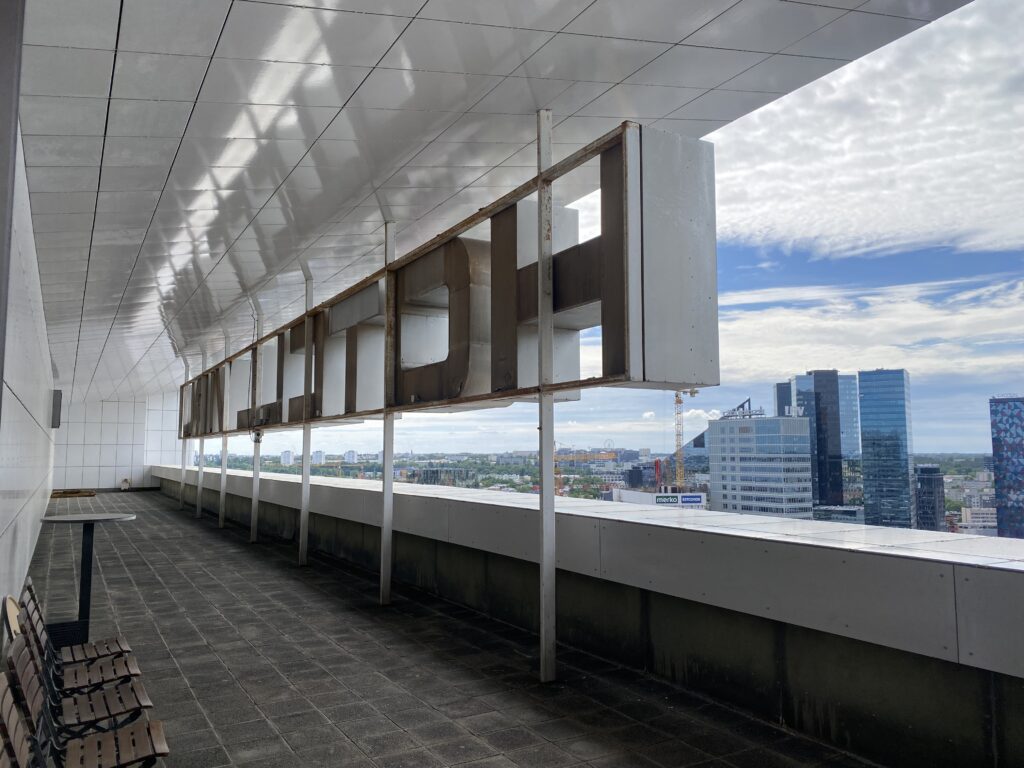

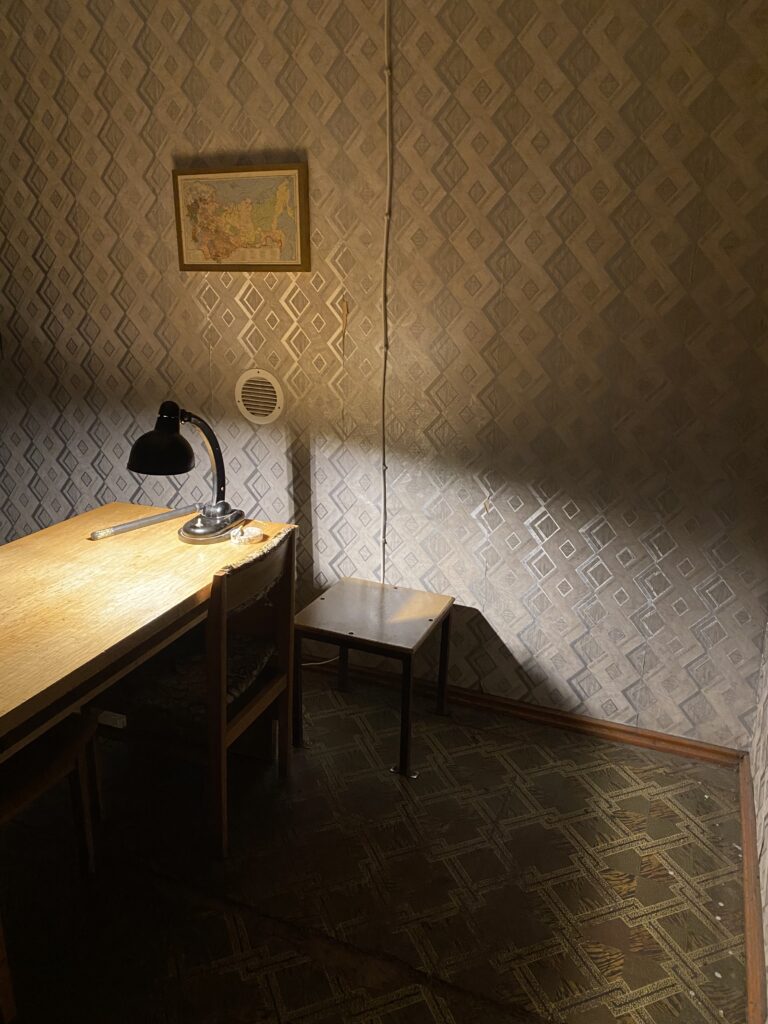
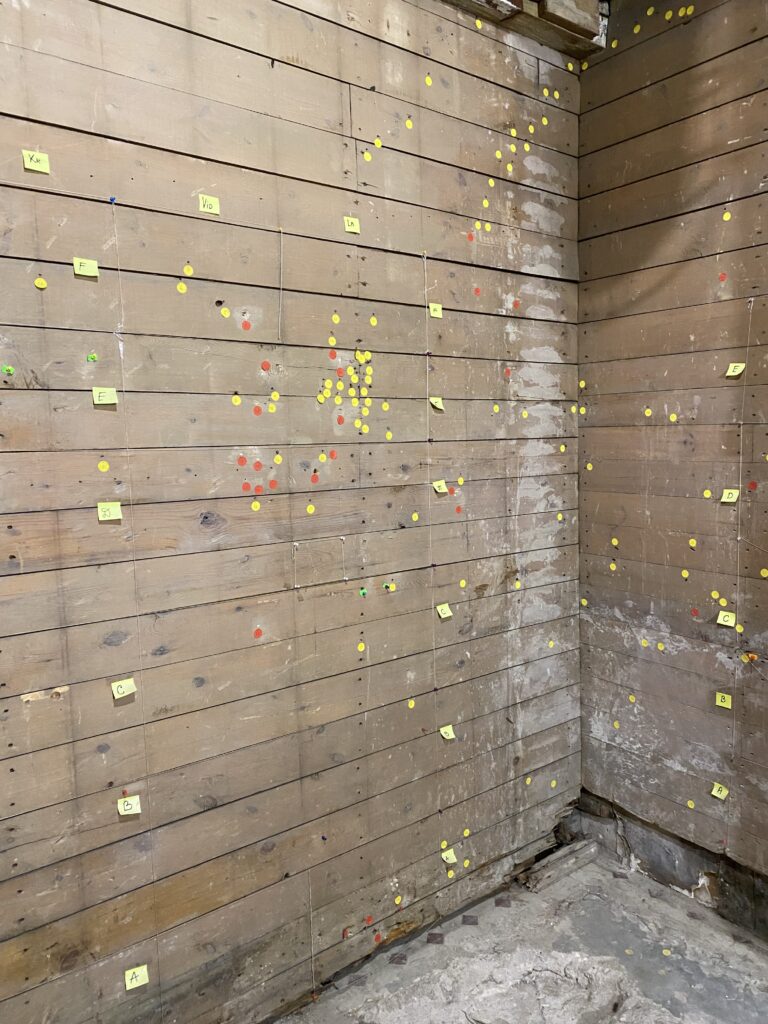
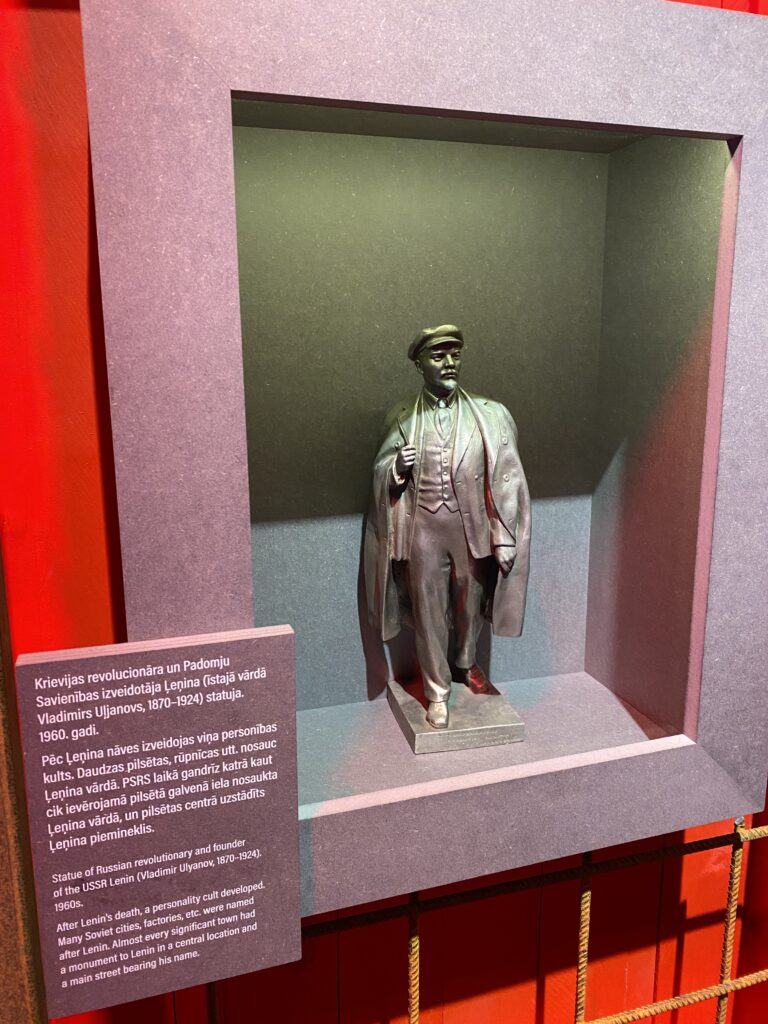
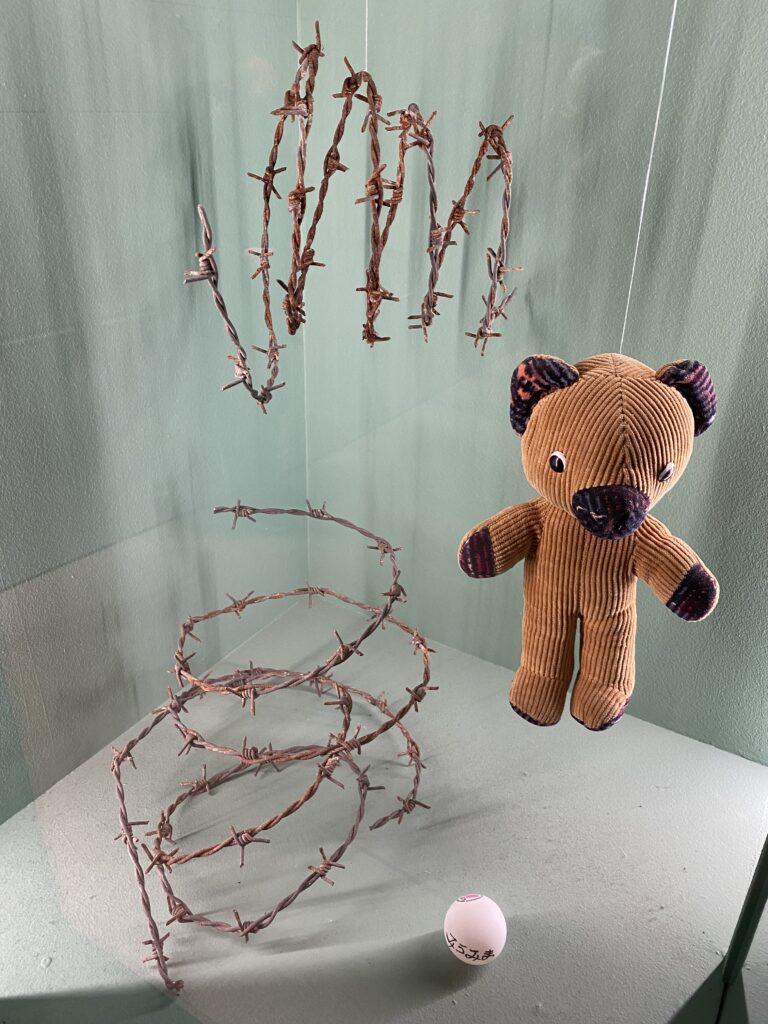
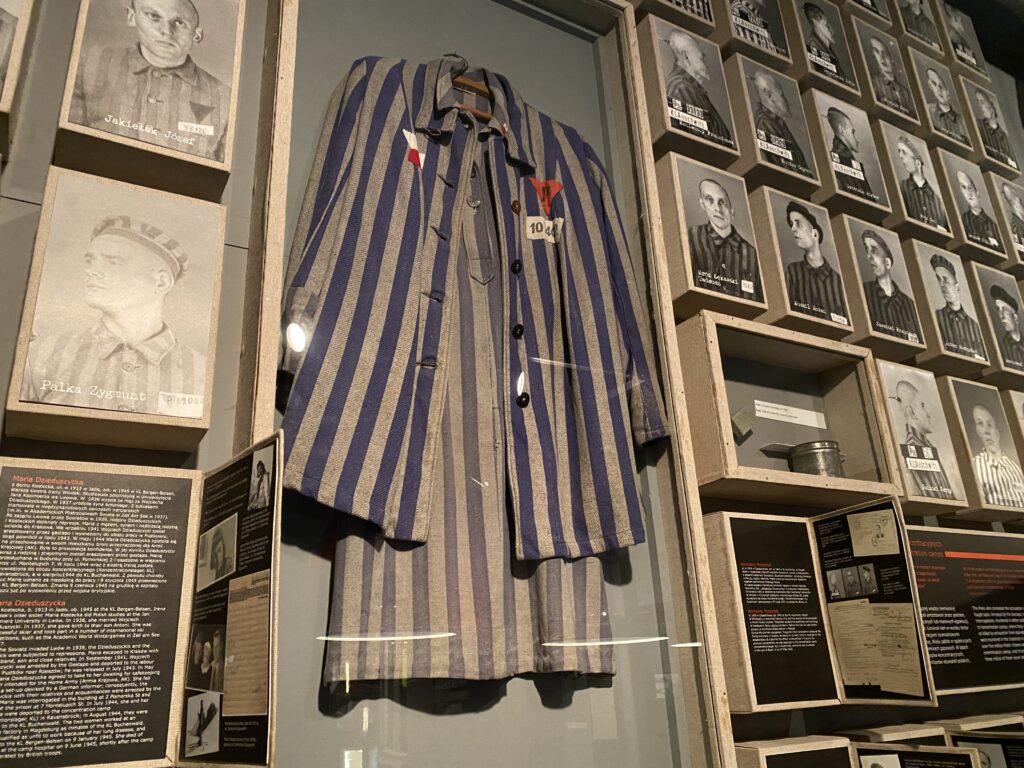

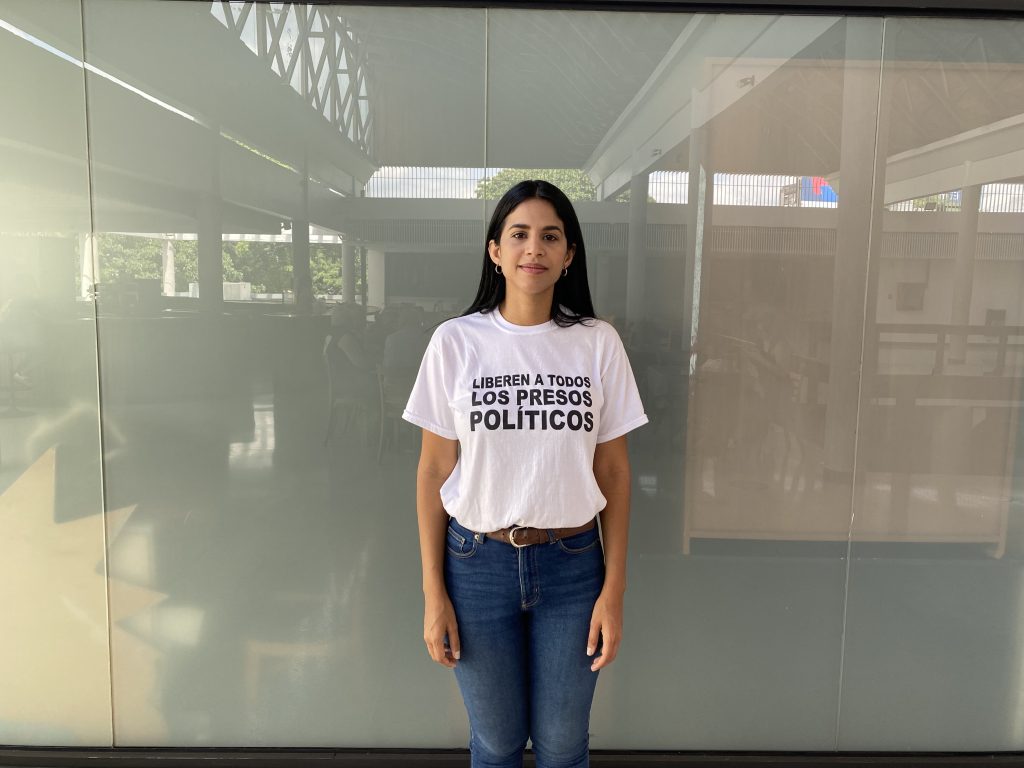
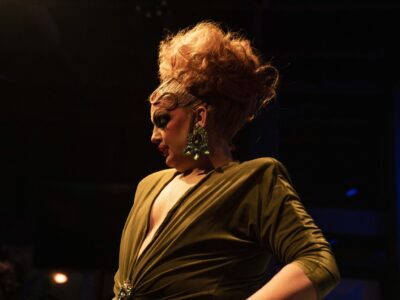

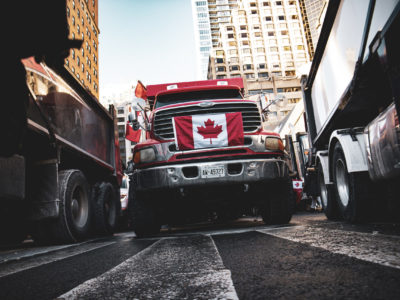
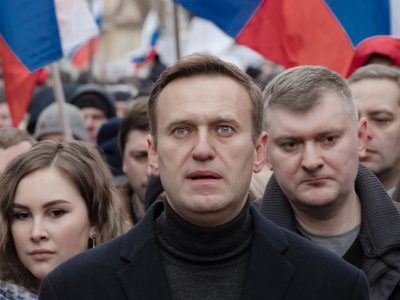
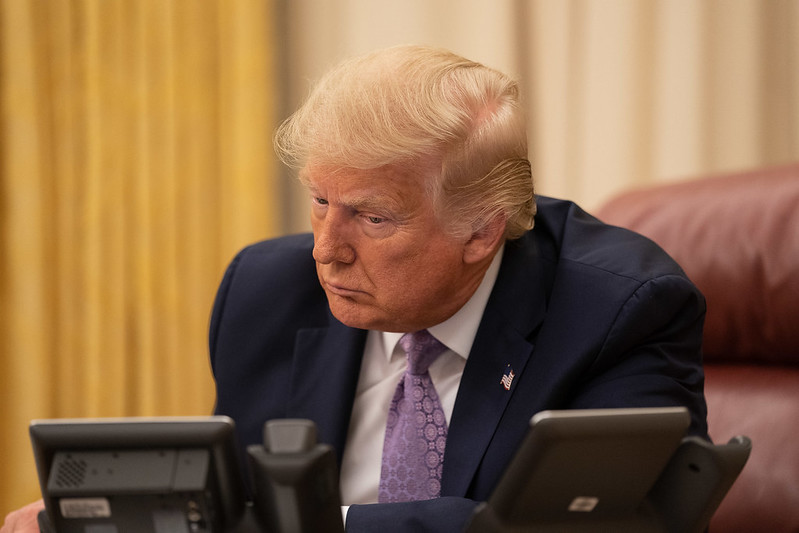 Trump on the phone with Netanyahu and Mohammed Bin Zayed to discuss the Israel-UAE deal on Thursday, Aug. 13, 2020.[/caption]
For the UAE, the deal guarantees that it will have
Trump on the phone with Netanyahu and Mohammed Bin Zayed to discuss the Israel-UAE deal on Thursday, Aug. 13, 2020.[/caption]
For the UAE, the deal guarantees that it will have  Mike Pompeo with Yousef al Otaiba at the State Department on March 29, 2019.[/caption]
The timing of the deal is linked to Netanyahu’s efforts to remain in power. Netanyahu needs any success to bolster his standing in the polls. His political survival and even his personal freedom are at stake. Israel’s longest-serving prime minister has been charged with several counts of criminal corruption, which is why he called no fewer than three elections over the past year, in increasingly desperate attempts to form a governing coalition that would pass a law to make him immune from prosecution while in office. Ahead of the second round of elections in April 2019, in an attempt to win the support of voters on the far right, he suddenly declared he would annex large parts of the West Bank, thus pushing the idea from the
Mike Pompeo with Yousef al Otaiba at the State Department on March 29, 2019.[/caption]
The timing of the deal is linked to Netanyahu’s efforts to remain in power. Netanyahu needs any success to bolster his standing in the polls. His political survival and even his personal freedom are at stake. Israel’s longest-serving prime minister has been charged with several counts of criminal corruption, which is why he called no fewer than three elections over the past year, in increasingly desperate attempts to form a governing coalition that would pass a law to make him immune from prosecution while in office. Ahead of the second round of elections in April 2019, in an attempt to win the support of voters on the far right, he suddenly declared he would annex large parts of the West Bank, thus pushing the idea from the 
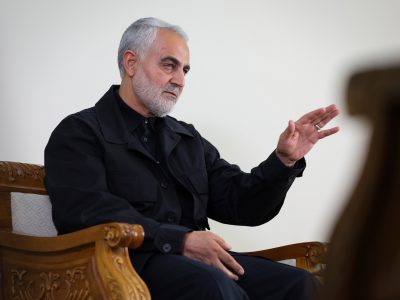

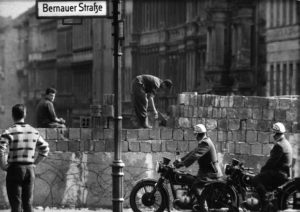 Building the Berlin Wall, 1961.[/caption]
Which brings us back to the present place and time. Trump envisions a wall that keeps people out, but his wall is destined only to exacerbate the problems it seeks to solve. Until the 1970s, the United States had a porous border with Mexico—which, contrary to what most Republican lawmakers might claim, actually resulted in
Building the Berlin Wall, 1961.[/caption]
Which brings us back to the present place and time. Trump envisions a wall that keeps people out, but his wall is destined only to exacerbate the problems it seeks to solve. Until the 1970s, the United States had a porous border with Mexico—which, contrary to what most Republican lawmakers might claim, actually resulted in 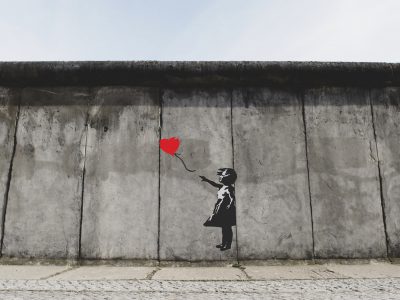
 Trump is now an embattled president, and he knows it. But his base remains