Growing up, I was afraid to look at myself in the mirror. Then my friends helped me recognize the woman looking back.
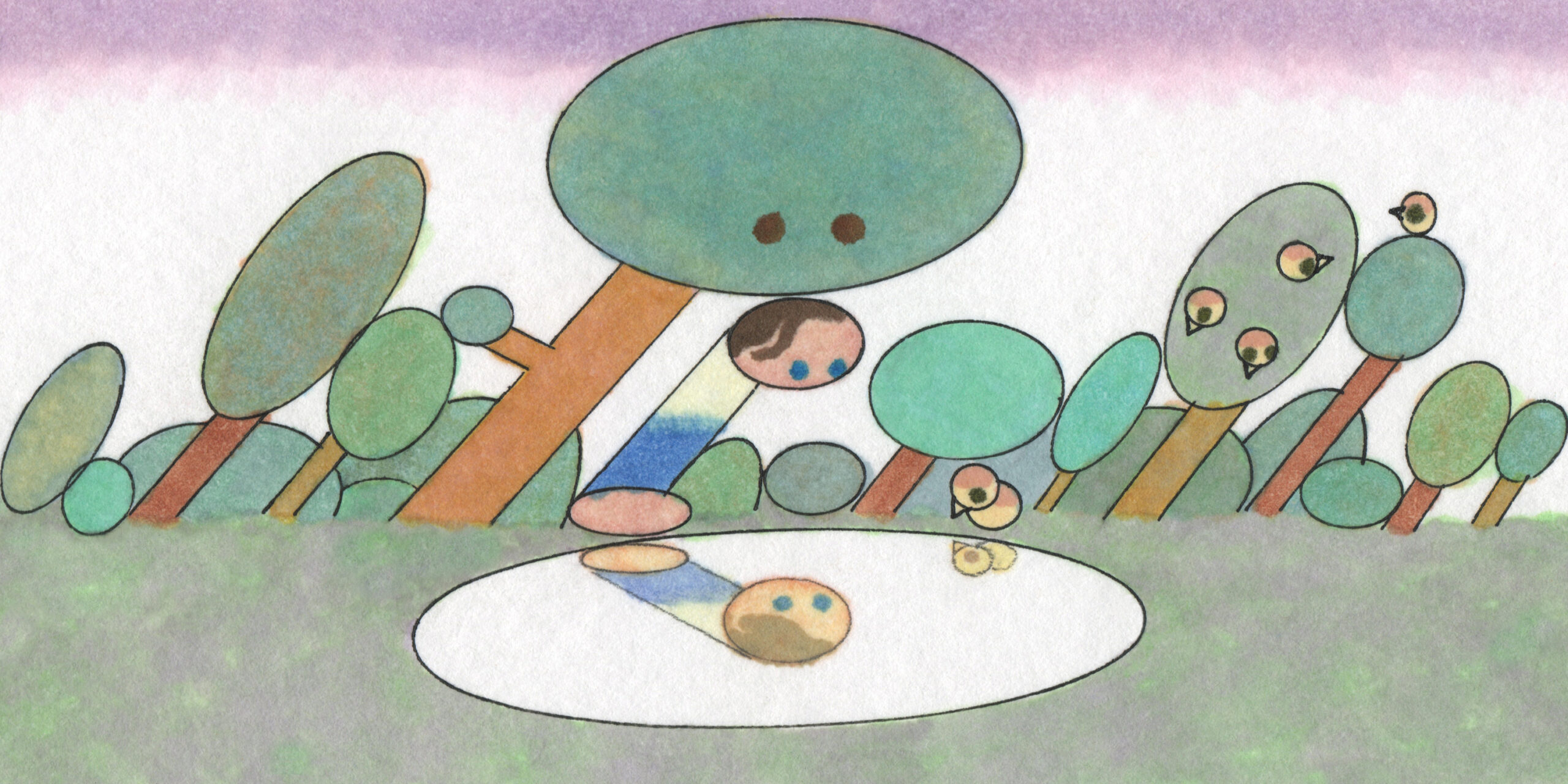
A mirror might be an innocuous part of your life, but for most of mine, it was filled with the unknown. Each accidental glance meant confronting abstract shapes that filled me with dread. I knew my real reflection was buried somewhere underneath. But I feared if I looked too closely I still wouldn’t be able to comprehend what I saw; a fear equal to the tales of Lovecraft.
I wasn’t born afraid of my reflection, but instead, taught to bear witness to my incongruence by the world around me. As a child, my gender was irrelevant to me until people started telling me how it was supposed to be; how it was supposed to look. I’d never wanted to wear a dress, had never liked the color pink, and had never cared for unicorns. But I chafed at the obligation that I had to be something at all.
Growing up, I found an unconscious comfort in a digital social life, where I was freed from those gendered obligations. I recessed into this world, filling my days with hours-long voice calls while playing video games with strangers online. I felt safe from the abstract fear I’d always carried. In the digital world, it didn’t matter what I looked like, or what body I was born into. I had full agency over how others “saw” me. This is the reason so many young trans kids find comfort in communities online: a separation from the physical. But I wasn’t ready to look inward yet.
My connections became tethered to a screen. Even when I did get together with neighborhood friends to play video games or watch movies in their families’ basements, the chances that I’d catch myself reflected were limited. The screen acted as bait so we wouldn’t have to look at one another. For a kid who would put a blanket over their bedroom mirror, this was a pretty nice situation to be in. It was only when the monitor shut down that I could see the unknown looking back at me again.
This abstract discomfort I’d always felt finally took shape as I entered an all-boys high school. Standing in a hallway amongst a jungle of teen boys for the first time, I had only one thought: I’m not like them. Maybe every mirror I’d encountered before that moment was unfocused, and this one epiphany corrected my vision, revealing what was always buried on the other side of the mirror: myself. And now, I could see that she was suffocating.
As realization and panic set in, I recessed further online. My only gasps of air came from my growing digital social life. Unlike the grand stage it often feels like today, the internet of my adolescence felt like a town square, where I could meet people I’d otherwise never would. Slowly, my digital circle expanded. Along with select friends from previous school years, I began building a community of trusted people across the country, picked up in different virtual lobbies. I’d spend hours on Skype calls with dozens of friends late into the night, talking about gaming and politics and movies. Much to the certain dismay of our parents, these strangers became some of my closest friends.
After I left the jungle, I was ripped away from the safety of that digital circle. College revealed that my digital life was just a band-aid on a much deeper wound. It was there I finally understood that I was trans, and that hiding this would not only leave my reflection suffocating, but leave me suffocating, too. This urgency forced me to find trusted people around me, and begin to transition socially—online and off. I changed my name to Allison across both worlds, and slightly altered how I dressed offline to feel more congruent with who I wanted to be. I became recognized at school and at work as myself.
In the process, something surprising happened: other people saw the woman in my reflection before I could. I began relishing in my newfound community, many of them other queer folk on their own identity journeys. It was healing to see, in living color, that I was not alone. They encouraged me to celebrate milestones; hormone anniversaries became an additional birthday worth celebrating. The thoughts and feelings I’d hidden my whole life became open conversations. Panic slowed, and the tightness in my chest and the weight on my shoulders began to ease.
To be accepted was like a breath of fresh air on the first warm day of spring. I wish it was simple enough to say this solved all my problems; I still feared my reflection and would flinch whenever I accidentally caught a glimpse. But occasionally, I’d recognize the woman looking back at me, and even be able to meet her eye.
What I previously thought impossible and out of reach was suddenly right in front of me. I wasn’t born loving myself, but I was taught how to. And the people who taught me this—the people who allowed me to be myself—are who I consider family now.
During the pandemic, I traveled across New York visiting state parks with two of these friends from college. We’d take long hikes together, and whenever we’d reach the top of a mountain, I’d finally feel untethered from a screen. On one of these hikes, I decided I didn’t want to make it to the peak. I let my friends go off as I clambered up a small boulder, two-thirds up the trail. For the very first time, I allowed myself to just sit and breathe. I was unburdened by the weight of my own fears, and my body relaxed, allowing me to take a nap on top of the comfiest boulder in central New York.
Those dear strangers online are now family, too. A year ago, we all traveled across the world to meet for the first time in Tokyo, Japan. It’s a beautifully strange experience to finally meet people you’ve spoken to through a screen for around a decade in the streets of Asakusa. Yet it never felt like we were “meeting” for the first time; instead, we were celebrating our collective friendship. With roughly a dozen of us, we explored a new country together, visiting shrines and possibly every 7-Eleven in Tokyo. They even helped my now-wife plan her proposal to me on that very trip. (They were also the first to know about our engagement, almost a week before our blood families did.)
This community pulled me out from the other side of the mirror. Each person was a hand stretching out. Without them, I likely would not be here. I cherish my community so deeply, and even though life has taken its grip, we still find ways to talk and to see each other; we find ways to make time.
These days, I don’t cover the mirrors in my apartment. I’m not immune to the fears I once had, and will probably always harbor some form of self-reproach. But mostly, I am living with enthusiasm, despite how hellbent this country is on targeting people like me. With each new policy enacted, any moment of fear I have is quickly assuaged by a friend sending support or a loving message. At a time when I have less protections than ever, I somehow feel the most safe.
You don’t notice healing, you realize you’ve healed. Walking on the street used to require the mental anguish of shutting my peripherals off in fear of catching a distorted reflection of myself in a car or shop window. Sitting in a subway car meant closing my eyes to not see a blurry reflection in the glass on the other side. Until one day, it didn’t.
I wish I could go back in time and tell younger me to not look away. I know if she ever did look for long enough, she would’ve seen herself with a now common smile, surrounded by friends who love her. Just because she didn’t know who she was looking at didn’t mean it was some Lovecraftian horror. Sometimes, it’s just your reflection waiting to be recognized, waiting to be freed.