WP_Post Object
(
    [ID] => 11096
    [post_author] => 15
    [post_date] => 2026-10-06 21:39:27
    [post_date_gmt] => 2026-10-06 21:39:27
    [post_content] =>
Why you should pay attention to Colorado's Proposition 134 this election.


This article is a part of Down-Ballot, a weeklong series highlighting state measures worth watching in the 2026 United States election.


In February 2025, just 16 days after President Trump took office for the second time, he signed an executive order banning trans girls and women from competing in girls’ and women’s sports in schools receiving federal funding. That directive, part of the administration’s broader assault on trans rights, goes against multiple studies showing that transgender students benefit from participating in athletics, including earning higher grades and a reduction in self-harm.


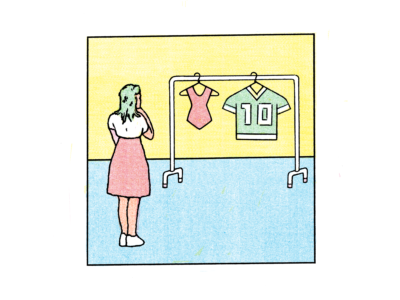
This November, Colorado voters will decide where they stand on this issue by voting on Proposition 134, a ballot initiative regarding the right of trans students to play on K-12 and college sports teams that align with their gender identity.


“We talk about the importance of sports being this place for community, particularly for youth, but this is a few people assuming for the rest of people what their values are around sports and inclusion,” says Ash Neufeldt of Rocky Mountain Equality about the measure. Rocky Mountain Equality is a Colorado-based LGBTQ+ non-profit organization that advocates for, educates, and supports LGBTQ+ individuals and families.


While supporters of the proposition describe it as an effort to protect girls' sports, opponents like Neufeldt are concerned about its ambiguity and the process for determining which students would face restrictions. “When it comes to things like this for people who are trying to keep particular gender roles, a lot of times, it's related to genitalia,” Neufeldt says. “It could have the most invasive implications for kindergarteners all the way through college athletes.”


Hannah*, a parent of a trans youth who requested anonymity due to safety concerns, agrees. “I think the thing is really poorly written and very vague. Anybody could be accused, and then what happens? The coach has to verify. How does that happen?” Hannah questions in what other setting would another parent be okay with a school meeting that is essentially about their child’s genitalia. “But somehow with our girls, it’s on the table because they're trans?” she asks.


While similar laws have been enacted in other states, including Idaho and Mississippi in 2020 and 2021, respectively, 2026 will be the first time U.S. voters decide on the issue at the ballot box. (Three other states—Washington, Arizona, and Nebraska—have similar ballot measures this November.) If passed, the initiative would require school- and association-sponsored athletic teams to be classified into one of three categories: males, females, or mixed. Teams designated for males would remain open to females, so long as no corresponding female team exists. The reverse, however, would not apply, meaning if no male team exists, anyone who is not a cisgender woman or girl would be barred from joining female teams. Neufeldt says this asymmetry points to a fixation and disdain for trans women and trans girls in particular. From her viewpoint, proponents of the measure are suggesting that a six-year-old transgender girl is somehow dangerous to cisgender girls of the same age.


The organization leading the campaign in support of the initiative, Protect Kids Colorado, says on its website, "Bigger, stronger biological males are invading girls' sports in Colorado, taking away our girls' dignity, safety, and opportunity.” Parents like Hannah push back against such arguments. “What do we need protection from? Show us one time when this has really, truly been a problem,” she says, referring to transgender athletes participating in K-12 sports. Beyond this, the "bigger, stronger" argument hinges on testosterone-driven puberty, a stage many trans kids never experience. While not every trans child uses puberty blockers, those who do must monitor hormone levels with regular blood checks. Hannah says these checks have shown her that her daughter’s testosterone levels are two-thirds lower than the average cisgender girl.


Another parent of a trans child who also asked for anonymity says they “are manufacturing an outrage that just doesn’t exist,” noting that Colorado already has guidelines from the Colorado High School Activities Association (CHSAA). Under CHSAA's existing policy, a transgender student's home school conducts a confidential evaluation to determine eligibility—meaning coaches, athletic directors, and principals already have a formal process for making the call on what team(s) a student is allowed to play on, with CHSAA reviewing decisions on appeal rather than deciding unilaterally.


"The reality is Proposition 134 is so unclear. There's no accountability, there's no enforcement structure," says Nadine Bridges, Executive Director of One Colorado, an advocacy organization dedicated to advancing equality, freedom, and opportunity for LGBTQIA+ Coloradans and their families. "We have 179 school districts in the state of Colorado, and each one can interpret it any way they want. I don't believe they're setting up a structure to protect girls. I think they're setting up a situation that makes it even more gray. This is allowing government to get involved in decisions that families, experts, coaches, and schools should be allowed to make."


If the ballot measure passes in November, Neufeldt says sports will no longer be a place of fun, friendly competition and community building. It will become a place of interrogations. And that loss would fall on kids who are already struggling. Nearly 60 percent of transgender and nonbinary youth experience depression, and almost half have considered suicide in the past year. Laws that restrict sports participation worsen psychological stress for transgender youth, and the Bell Policy Center’s website highlights that Prop 134 would cut off transgender students from the benefits organized sports provide. It also notes there is no sound evidence that transgender participation in youth sports negatively impacts the well-being of cisgender youth.


For parents like Hannah, whose daughter has always been athletic and loves to be active, it’s heartbreaking to even consider. “Every body is different. There’s different athletic abilities, talents. Different heights, some kids are fast, some are clumsy. But learning how to win, how to lose, how to compete… It’s the one time for her that, for just a little while, she just gets to be like everybody else,” she says. “It’s this tiny moment in her life that she’s allotted to just be a kid.”


* Hannah is an alias. The family requested anonymity due to increasing safety concerns.

    [post_title] => When a Kid Just Wants To Play Sports
    [post_excerpt] => Why you should pay attention to Colorado's Proposition 134 this election.
    [post_status] => publish
    [comment_status] => closed
    [ping_status] => closed
    [post_password] =>
    [post_name] => 2026-election-united-states-colorado-proposition-134-down-ballot-transphobia-sports-voting
    [to_ping] =>
    [pinged] =>
    [post_modified] => 2026-10-07 22:19:19
    [post_modified_gmt] => 2026-10-07 22:19:19
    [post_content_filtered] =>
    [post_parent] => 0
    [guid] => https://conversationalist.org/?p=11096
    [menu_order] => 0
    [post_type] => post
    [post_mime_type] =>
    [comment_count] => 0
    [filter] => raw
)