
WP_Post Object
(
    [ID] => 10949
    [post_author] => 15
    [post_date] => 2026-08-07 19:36:01
    [post_date_gmt] => 2026-08-07 19:36:01
    [post_content] => 

As my siblings and I become our own people, it'll be up to us to determine whether and how our relationships will thrive or crumble from the foundations we were given. 

Since my maternal grandmother’s unexpected death last fall, the legacy of her life has weighed on me. She was authoritative, opinionated, and very close to everyone in the family, especially my mother. In my hometown, she was a hero—a city council member of the second largest city in New Hampshire, a school board member, and an advocate for civic engagement. In many ways, she was the best role model of leadership and independence I could have asked for. 

Concurrently, my grandmother was a complicated figure whose strong morals and beliefs shaped the foundations of our familial dynamics. She always encouraged us grandchildren to be outspoken, smart, and strong-willed. But she also modeled emotional inconsistency, porous boundaries, and a pattern of partaking in conflict cycles without resolution or repair. 

As I continue to grieve, I’ve been reflecting on how all of this has affected me in both obvious and quieter ways. But more recently, I’ve also started to wonder whether her influence is a part of why I’ve struggled so much to bond with my siblings. 

My grandmother had a rough life, and sometimes, that trauma spilled over onto the rest of the family. She grew up one of eight siblings in the projects of Hartford, Connecticut, to a single mother. She had her first child at 16, married at 18, divorced at 27, then joined the military with three small children in tow. It’s likely she was never given the tools to cope with all she lived through, and when she was alive, her temperament was everyone’s responsibility. Whether she was sad or angry or anxious, it was our collective duty to manage her emotions and transform them into something better. Within my family, this form of enmeshment has now been passed down from my maternal grandmother and her siblings, to my mom and hers, to me and mine.

As with many eldest daughters, I was raised to take responsibility for the needs of both my siblings and my parents, consequently becoming hyper-independent at a premature age. This has continued into early adulthood: At 26 years old, if something were to suddenly happen to either of my parents, I am likely next in line to take care of my two siblings. My sister is 22 years old and disabled, and my brother, 13, is still a child. There’s no immediate reason to worry about imminent parental loss, but as I’ve been contemplating death more frequently, it’s a possibility I’ve chosen to prepare for. This has spurned thoughts of how atypical my relationship is with my siblings, at least compared to what I’ve seen between others, and whether it’s possible for these dynamics to change over a lifetime, especially now that my sister and I are both adults. 

Theoretically, sharing the unique experience of being raised by the same two parents should be an unbreakable bond. At its best, it can mean having a built-in BFF with whom trust, history, and emotional depth are a given. But at its worst, even kin can become strangers: Regardless of age gaps or favoritism or birth order or familial dynamics, sometimes, two individuals just don’t click.

With four years between us that felt larger when we were younger, my sister and I would get into physical altercations over the smallest things, like who got control of the TV remote or my refusal to share my video games with her. Of course, most siblings bicker, fight, and get jealous of each other at some point, and none of these things have to adversely affect the totality of a relationship. But in our case, it often felt like they defined it: We never really played together, just fought. 

Then, almost a decade after my sister was born, my brother arrived. I was resentful, already subconsciously anticipating my role as the family’s emotional sponge would expand, and knowing the age gap between us would mean, at least in part, that I would be responsible for his care. 

As Canadian author, physician, and childhood development and trauma expert Dr. Gabor Maté asserts—no two children have the same parents. I can attest to this with my sister, a sickly child who required more attention, and with my brother, who has received a more laissez-faire style of parenting as the youngest in the family. 

Perhaps partly due to my quiet nature, I had always been the child that my parents felt they never had to worry about. Frequently called “mature for my age,” this also meant I was expected to put everyone else’s emotional needs before my own. Sharing my feelings in any given situation was discouraged, and I was often called “selfish” for not considering how they might affect the family. I learned early to keep the peace by avoiding high-conflict subjects, and while we maintained a superficial relationship as children, my sister and I always shared a silent understanding that due to our mother’s sacrifices on our behalf, we had no right to complain. (I suspect this is my brother’s experience, as well, despite my mother’s insistence that “boys are just less work than girls.”)

This was especially difficult for me because, unlike my siblings, I was perceived as the responsible one, who therefore didn’t need additional support or care. While my physical needs of shelter, food, clothing, and even entertainment were comfortably met, my emotional needs were not. I was bullied at school for most of my childhood, and although sympathetic, my parents and siblings both regularly chalked it up to me being “too sensitive,” rather than actually listening. 

This label—being “too sensitive”—became a recurring one throughout my life. It was also frequently reinforced by my grandmother, which eventually led me to hide more and more of myself from my parents and my siblings, and to rely on them less and less. Soon after graduating high school, I got as far away from them as I could. 

Living away from home for the last eight years—with strangers, friends, other families, and romantic partners—has allowed me to connect to my own emotional needs and wants for the first time in my life. It’s also fundamentally changed the lens through which I see sibling friendships for the better, and changed the way I look at my own. I’ve learned that siblings can and do take an interest in each other’s lives and rely on each other for support, out of genuine interest rather than familial duty. I’ve also learned that conflicts can be addressed and resolved in healthy ways, rather than ignored and left to fester, eventually turning into resentments. 

These lessons evoke a desire in me to do better for my younger siblings: I yearn for this kind of “elevated” relationship with them, where we can talk about our struggles and our interests, our shared and diverging upbringings and the ways we see the world. Above all else, I just want us to be able to be ourselves around each other, to free ourselves from the roles our family has given us, and to become genuine friends. More importantly, I want to be able to confide in them and for them to see me as a safe person to confide in, too—not as a part of an unspoken eldest daughter imperative, but because I am someone they can genuinely trust. 

I’m still struggling to form this deeper connection with each of them, and to break the ice of emotional superficiality that everyone in my family seems to be comfortable with. After all, we are the outcome of a multigenerational combination of emotional detachment, dysfunction, and our respective and sometimes clashing individualities. But even if the adults in my life—from my grandmother to my parents—were most culpable for the conditions that produced this emotional environment, ideally, it’s my siblings and I whose lives will succeed theirs. And it’ll eventually be up to us to determine whether and how our relationships will thrive or crumble from the foundations we were given. 

Of course, my perspective is just that—mine. My siblings and parents have their own readings of our relationships, and maybe someday, we’ll find places where they intersect. It’s entirely possible that as a sensitive child who has become a sensitive adult, I’ve been too hard on them. And despite the origins of my sister and I’s discontentment, there’s a sincerity with which she relates to me today: When I ask about her day, she tells me in earnest, and genuinely wants to know how mine is, too. 

I make every effort to actively listen to her when we speak, because I truly want to know about her and her life. But I still struggle to share my emotional truths with her in return. No matter what day or week or month I’m having, as far as she knows, I’m fine. I don’t want her to worry, and besides, my grandmother would have encouraged me not to share those feelings, in order to protect the family’s peace. 

But in my grandmother’s absence, there’s also no longer anyone here to manage how everyone in the family should feel, or what they should share. So, despite grieving her—or maybe because of what this grief has afforded me—I’m gaining more courage in facing my family: in standing up for myself, in choosing to remove myself from discomfort, in refusing to absorb my family’s emotional dysregulation. I’m also choosing to be hopeful about what sort of relationships I want to forge with my siblings, and choosing to be hopeful about the person I can still become. 

With this new courage comes new insight. Just as I am doing now, my younger siblings will one day become their own people. Amid pondering about how this one death has changed our present, and how subsequent ones may change our future, there’s no guarantee that my relationships with my siblings will get any better. What if we’re never able to overcome the emotional barriers that were formed early? What if the only way to maintain our individual emotional health and change our family’s future is to build and preserve strong boundaries between us that might keep us from ever being truly close? 

I hope not. But, maybe the best eldest sister and friend I can be to them is in maintaining my own developing boundaries as I understand them and myself better. Maybe the form of courage I can work towards is mirroring a sibling friendship built on healthy communication and respect, and taking chances, little by little, in trusting them with who I am. That way, as we all grow, we can truthfully see whether it’s possible for us to become closer, or whether it’s healthiest for all of us to care for each other as best we can from a distance.

[post_title] => Can Siblings Eventually Become Friends? [post_excerpt] => As my siblings and I become our own people, it'll be up to us to determine whether and how our relationships will thrive or crumble from the foundations we were given.  [post_status] => publish [comment_status] => closed [ping_status] => closed [post_password] => [post_name] => friendship-week-can-siblings-eventually-become-friends-family-dynamics-relationships-childhood-upbringing-grief-personal-essay [to_ping] => [pinged] => [post_modified] => 2026-08-07 19:36:03 [post_modified_gmt] => 2026-08-07 19:36:03 [post_content_filtered] => [post_parent] => 0 [guid] => https://conversationalist.org/?p=10949 [menu_order] => 0 [post_type] => post [post_mime_type] => [comment_count] => 0 [filter] => raw )
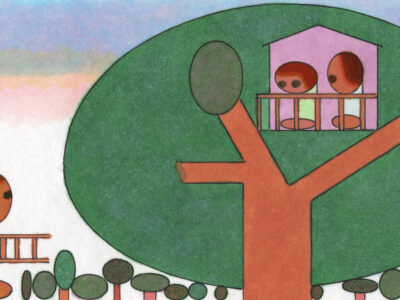
An illustration of two siblings in a treehouse, while on the ground, an older sibling holds a ladder and looks up at them.

Can Siblings Eventually Become Friends?

WP_Post Object
(
    [ID] => 10830
    [post_author] => 15
    [post_date] => 2026-08-06 16:30:55
    [post_date_gmt] => 2026-08-06 16:30:55
    [post_content] => 

There’s something magical about the comfort and interconnectedness that comes with befriending someone a few decades older.

We’ve all had a friend crush before. You meet someone and immediately feel that special spark and a deep desire to get to know them better. Suddenly, you want to know where they grew up, what their childhood was like, what neighborhood they live in, and what recipes they’ve been cooking up lately. Your friend crush pulls you in with their shimmering light, and the next thing you know, you’re imagining future hangouts together. Maybe you even feel some nervous butterflies, hoping they might want to be your friend, too.  

For me, that person has often been three or four decades older. Sure, I’ve had plenty of friend crushes with people closer to my age, but there’s something magical about the comfort and interconnectedness of an intergenerational friendship. Befriending someone older can provide a certain steadiness, almost like they’re reaching out a soft hand and saying, “I’ve seen it all, darling. Come sit with me and I’ll make you a cup of tea.”  

When I first moved to New Orleans, it was Jeanette. I met her through my job at the time in the food and farming space. She’d walk into our warehouse with bundles of basil and bouquets of zinnias and “shrimp flowers” (named such because they resemble—yep, you guessed it—boiled shrimp!). It was hard not to smile when Jeanette entered a room, beaming with sunny energy and greeting us in her charming Southern accent.  

Then 72 years old, Jeanette spent most of her days gardening in her signature wide-brimmed hat. But for her, this wasn’t just a fun retirement hobby (not that there’s anything wrong with that). She was growing flowers and food on vacant lots around the city—including land that had been overgrown and neglected since Hurricane Katrina—both to enjoy at home and to sell to local businesses. You could find her basil in a fresh pesto at a neighborhood Italian restaurant and her rose petals in a fragrant body oil made by a New Orleans skincare brand. In her free time, she taught neighbors how to grow their own herbs, veggies, and flowers, too, demonstrating what was possible in their small backyards and on their windowsills. 

Jeanette has that go-getter gumption that’s inspiring at any age, but especially for someone in their 70s. This was immediate friend crush material for me, and inspired me to channel my own go-gettery-ness to take the first step and call her. After I dialed her up, we ended up chatting on the phone for over an hour. Within a few days, I was walking through her garden as she proudly pointed out every plant she had grown, as if they were her children.  

Flash forward to our many hours together in the car running errands, pulling weeds in her gardens around the city, shopping at Costco (often with matching items in our baskets—great minds!), and assembling bouquets for my wedding. Jeanette was in my regular friend rotation just like anyone else. She also modeled to me what healthy aging could look like. Whether she was planting a new round of shrimp flowers, or teaching another gardening workshop to a new group of students, she reminded me that you can always keep learning, dreaming, and reinventing yourself no matter your age; that you can always nurture and sprout new seedlings, even if they don’t all blossom. 

During times of transition—navigating new jobs in a new city—Jeanette was an especially important friend. She always picked up the phone when I called, and always provided a refreshing levity that reminded me not to take life too seriously. This felt especially remarkable coming from someone who’d already lived 70-something years of challenges, grief, ups and downs, and all the juicy life bits in between.

This ability to keep showing up and her commitment to getting to know her neighbors was also what first drew me to Ava, another New Orleans friend crush.

Also in her 70s, Ava posted on a neighborhood message board that she was offering sewing lessons. This was a few years after meeting Jeanette, when I was pregnant with my first child. I’d wanted to sew a quilt for my future baby (and maybe some cute rompers, too), so I decided to send her a message. 

Learning to sew with Ava wasn’t anything like watching a how-to video on YouTube. She invited me over to her house to sit beside her at the sewing machine and watch her do basic stitches, then had me do them, guiding me through each tangly thread and unwieldy bobbin.

We’d sit together and stitch while sharing stories about our families, religious journeys, and favorite recipes, interspersed with quiet moments of just sitting next to each other at our sewing machines. This was another season of transition for me—preparing to enter motherhood—and without my mom nearby, I appreciated Ava sharing her nuggets of maternal wisdom, and her understanding on a deeper level that everything was changing for me, but somehow still staying the same. 

I knew our friendship was really reaching a deeper level, too, when Ava and I started going on our own Costco trips together, which seems to be a trend in all my closest friendships. (Is it just me, or do those wide aisles and free samples create the perfect space for meandering conversations?) 

More recently, both of these friendships have evolved. When I moved from Louisiana to Rhode Island a couple years ago, I also moved away from both Jeanette and Ava. While we no longer have regular in-person time, we still text and share photos; and whenever we do get on the phone together, you better believe it’s going to be at least an hour-long chat, since there’s always so much to cover. 

I’ve been lucky enough to make new friends in my new neighborhood, often at the playground with fellow parents around my age (or at least within the same decade), and I’m starting to feel more settled. But while this has been a blessing, it’s also been a stark reminder that I’ve been lacking in the intergenerational friendships department. This hole has felt even bigger when I think about my daughters growing up without their grandparents nearby. I knew I’d have to be more intentional about seeking intergenerational friendships if I wanted to share their magic, and show my daughters that friendship has no age limit. 

Our weekly neighborhood potlucks—a tradition we had in New Orleans that we brought up to Providence—are a natural place to meet folks of all ages, and Nancy has become a recent regular. She has two daughters, born in the 1980s like me, so there was an instant familiarity when we met. She seemed to get me on some level, knowing what it was like to raise daughters around my age, and I seemed to get her on some level—she was a nurse just like my mom. We bonded over the challenges of weaning your last baby after years of breastfeeding, our shared love of recycling, and our having spent time in the same small town in Ireland coincidentally. On top of that, her sesame noodles at potluck were SO good—all enough to spark a new friend crush. 

Like me, Nancy had recently moved to the neighborhood. She had grandkids about an hour away but wanted to deepen her relationships with nearby neighbors. I texted her the next day inviting her to go for a walk. She accepted with a purple heart emoji, so I knew we were off to a good start. We’ve been on a couple walks since, and our conversations continue to flow.

In 2021, Jeanette and I were featured in a beautiful book called Collective Wisdom by Grace Bonney, which spotlights intergenerational friendships and life advice from women over the age of 50. After speaking with over 100 women for the book, Bonney reflects that “while age brings wisdom, it rarely offers closure or perfection.” We’re all still evolving. We’re all still curious about ourselves and the world around us. That curiosity doesn’t expire with age.

The best kinds of friendships create a safe space for listening, sharing, and learning, but in an intergenerational friendship, it feels like unlocking another dimension. Almost like time traveling forward and back, weaving between decades, getting a glimpse into the future and remembering what it was like in the past. It’s a refreshing reminder that we’re all just figuring it out as we go, and very little in life is actually linear. 

In our interview for the book, Jeanette said I changed the way she approaches young people about gardening. “I’ve learned from how Erin just walks up and starts talking. There are young people I probably wouldn’t approach because I would expect them to not be receptive. But Erin doesn’t see it that way; she just moves forward.” 

I was surprised to learn that I had taught her something, let alone almost the exact same thing she had taught me. That you’re never too old (or young) to make new friends, to put yourself out there, and to keep feeling those nervous butterflies, whether you’re meeting a new friend crush, or planting a new seed in hopes of watching it grow.

[post_title] => Everyone Needs an Intergenerational Friendship [post_excerpt] => There’s something magical about the comfort and interconnectedness that comes with befriending someone a few decades older. [post_status] => publish [comment_status] => closed [ping_status] => closed [post_password] => [post_name] => everyone-needs-an-intergenerational-friendship-week-old-friends-age-gap [to_ping] => [pinged] => [post_modified] => 2026-08-06 16:30:57 [post_modified_gmt] => 2026-08-06 16:30:57 [post_content_filtered] => [post_parent] => 0 [guid] => https://conversationalist.org/?p=10830 [menu_order] => 0 [post_type] => post [post_mime_type] => [comment_count] => 0 [filter] => raw )
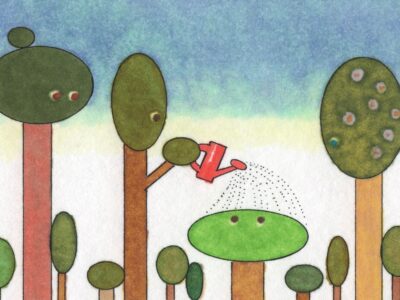
An illustration of a group of trees, with one of the tallest watering one of the shortest.

Everyone Needs an Intergenerational Friendship

WP_Post Object
(
    [ID] => 10821
    [post_author] => 15
    [post_date] => 2026-08-05 17:41:07
    [post_date_gmt] => 2026-08-05 17:41:07
    [post_content] => 

How a shared love of soccer transformed my long-distance friendship.

On a rainy and unseasonably cold summer night last March, my friend Mendes and I walked the long way around the stadium of a fourth division soccer team in São Paulo, Brazil. Neither of us had ever been there before and we’d gotten out of the taxi on the wrong side of the grounds. But even though we were cold and a little lost, we were determined to make it to this game. 

Mendes and I have been friends for more than 15 years, although going to soccer games has only recently become a staple of our friendship. We met when he switched schools in the fifth grade, bonding over our shared love of Batman, Black Sabbath, and Scorsese films. As kids, we’d go to the movies and the bookstore together, and at the time, it felt like we were the only two people in our class who liked doing either. We’d talk about girls, study for tests together, and go looking for good burgers after late-night movie screenings. 

After I went to college in New York and he stayed to attend film school in São Paulo, we remained friends. Back then, we’d find time every other week to catch up via the old video call app, Skype. But there was still physical distance, and as the years passed, there rose a feeling of a wall between us, keeping us apart.

I felt as if I was leading two lives that didn’t quite get to meet. There was the life in São Paulo I shared with my family and my old friends, filled with all the experiences that had made me who I was up until that point. Then there was my new life in New York, which I could only tell people back home about—a new school, new friends, and new experiences in a new language—that felt completely my own. Whenever Mendes and I would talk about it, I felt like I was translating a movie for him that only I got to see. 

Maybe it felt the same for him. Back in São Paulo, he ran around shooting films and became a regular at old-school bars that I’d never even heard of. He fell in love with Carnaval and the hidden charms of a city we hadn’t gotten to explore fully as teenagers. But in some ways, I think it was easier for me to feel tethered to his life in a way he couldn’t be to mine. Every summer break, when it was winter in Brazil, I’d fly back home and we’d go back to our old ways. I’d meet his new friends and go to parties or ride in their cars listening to Liniker, Guilherme Held, or Baco Exu do Blues, the music that was bopping in São Paulo at the time. For about three months each year, the wall between Mendes and I became porous, and we would pass through it together. Then the summer would end, and I’d hop on a plane and go back to my other life, and the wall would turn solid again.

Soccer entered our friendship during the pandemic, which I spent back in Brazil. Though I’ve long been almost unhealthily addicted to the sport—I’ve woken up at 5 a.m. to watch random league games in different time zones, and more than once cancelled plans after my team lost a big game—Mendes had a more off-and-on relationship to it. We became fans of the same club in 2005, a few years before we’d met, when our dads introduced us to the soon-to-be champions of South America: São Paulo FC. Neither remembers much—we were eight years old at the time—but our dads have told us different versions of a similar story. Whenever São Paulo won, they’d show off the cover of the next day’s newspaper at breakfast, reading the recap of the match out loud. As São Paulo advanced in the knockouts, our dads would let us watch more and more of the games during the week, even though they came on late at night after our bedtimes. At the end of that year, São Paulo beat Liverpool FC to become world champions. I remember putting on my little uniform—shirt, shorts, and socks—and going out with my family to eat a burger and celebrate. São Paulo fans filled the streets of the city that day, dressed in their own uniforms, waving flags, wearing crazy hats, blowing horns and lighting red, black, and white smoke flares.

After those glory days, São Paulo went through a dire cold streak in the 2010s. Mendes and I would catch the occasional game together, but even then, it would be a European champions league game, or a World Cup match on TV. Then, when professional sports came back at the end of 2020, São Paulo made an improbable run at the Brazilian title. Though it ended in abject failure in the last weeks of the season (let’s not talk about that), it was enough to get Mendes and I talking about the team for the first time since I can remember. 

After the end of lockdown, Mendes spent weeks at my house with me and my brother Thomas, who also lives in New York and had come home during the pandemic. If we weren’t watching a movie, the TV would be tuned to a game, or the sports channel, or old São Paulo highlights on YouTube, often on mute so we could talk over them. And it’s probably because of us specifically, but at the beginning of 2021, São Paulo won the state championship for the first time since we started supporting them.

Later that year, I left Brazil for New York again, this time for grad school. Our video chats now came through Zoom, but it didn’t take long for Mendes and I to fall into the traps of my previous years abroad—weekly conversations that turned monthly, texts that became more infrequent as we got busy with school and work. The only difference this time was our shared befuddlement with São Paulo FC (the good times were few and far between), which brought us together after every game. We’d found a way to share the same experience every week, thousands of miles between us. 

By 2023, we started going to games together whenever I was home. Sometimes we’d go to cheer on our team, which desperately needed our help, but often, we just went to hang out and talk about what was going on in our lives while the match played in the background, as if we were back in my living room.

I have told Mendes many times that I have a problem: if I could, I’d go to every game, no matter the weather or the opponent. I have dragged my dad to matchdays when there were storm warnings in effect; I have taken Mendes and my brother to games we were sure to lose. And so it was again, in March of this year, a couple of weeks before I was due to fly back to New York for work. São Paulo was playing a league game in the stadium of a fourth division team because our homegrounds had been rented out for a series of AC/DC concerts. It had been raining for days and the weather was dour. The stadium was on the other side of the city; it had no roof and none of the modern amenities and infrastructure you’d find in the home fields of higher division teams, including ours. 

Mendes met me after work, unprepared for the rain, and I lent him my dad’s rain jacket. After we made our way around the walls of this stadium we’d never been to before, we were caught in a wave of fans trying to enter through the small entrance on the side of a highway. Because the stadium didn’t have metal detectors, the military police were patting down every fan, and we only managed to get in halfway through the first half, just as the rain got thicker. The pitch was muddy, the play meager, and we spent most of the match squinting to avoid the water flogging our faces, as the stormy winds teased the smell of barbecue from the restaurant next door, making us half-wish we’d stayed back to watch the game on TV. 

When the final whistle blew, we’d won: two-to-zero. Mendes and I went back to my place, drenched, ordered a pizza, and talked about things I don’t even remember. The food, like the match, was an excuse to spend more time together before I left for New York again. The season carried on in unsurprisingly mediocre ways, but every other week we’d connect over watching soccer before opening up about moments with our partners, our friends, and our family that we couldn’t share in person.

Over a decade into this long-distance friendship, we’ve grown used to looking for the openings in the wall. They may not always be there. Sometimes the rain, or the military police, or losing our seven-point lead in the national championship with a handful of games left in the season only to capitulate into agony and a fourth-place finish, slows us down. But we keep looking. 

Not long ago, during one of those times when I was back from school, I remember overhearing my mom on the phone with a friend, telling her I was home. “He’s seeing his brother tomorrow,” she said. “He has a brother in New York and a brother in São Paulo.”

[post_title] => Friends from Far Afield [post_excerpt] => How a shared love of soccer transformed my long-distance friendship. [post_status] => publish [comment_status] => closed [ping_status] => closed [post_password] => [post_name] => friends-from-far-afield-adult-friendship-week-soccer-sao-paulo-fc-brazil-long-distance [to_ping] => [pinged] => [post_modified] => 2026-08-05 17:41:08 [post_modified_gmt] => 2026-08-05 17:41:08 [post_content_filtered] => [post_parent] => 0 [guid] => https://conversationalist.org/?p=10821 [menu_order] => 0 [post_type] => post [post_mime_type] => [comment_count] => 0 [filter] => raw )
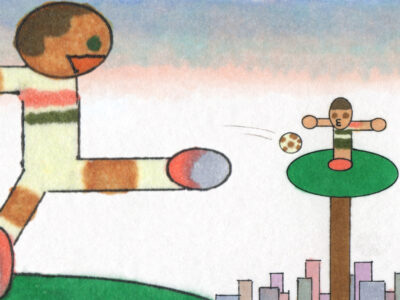
An illustration of two people passing a soccer ball between them from atop two trees.

Friends from Far Afield

WP_Post Object
(
    [ID] => 10817
    [post_author] => 15
    [post_date] => 2026-08-04 17:02:07
    [post_date_gmt] => 2026-08-04 17:02:07
    [post_content] => 

Growing up, I was afraid to look at myself in the mirror. Then my friends helped me recognize the woman looking back.

A mirror might be an innocuous part of your life, but for most of mine, it was filled with the unknown. Each accidental glance meant confronting abstract shapes that filled me with dread. I knew my real reflection was buried somewhere underneath. But I feared if I looked too closely I still wouldn't be able to comprehend what I saw; a fear equal to the tales of Lovecraft. 

I wasn’t born afraid of my reflection, but instead, taught to bear witness to my incongruence by the world around me. As a child, my gender was irrelevant to me until people started telling me how it was supposed to be; how it was supposed to look. I’d never wanted to wear a dress, had never liked the color pink, and had never cared for unicorns. But I chafed at the obligation that I had to be something at all.

Growing up, I found an unconscious comfort in a digital social life, where I was freed from those gendered obligations. I recessed into this world, filling my days with hours-long voice calls while playing video games with strangers online. I felt safe from the abstract fear I’d always carried. In the digital world, it didn’t matter what I looked like, or what body I was born into. I had full agency over how others “saw” me. This is the reason so many young trans kids find comfort in communities online: a separation from the physical. But I wasn’t ready to look inward yet. 

My connections became tethered to a screen. Even when I did get together with neighborhood friends to play video games or watch movies in their families’ basements, the chances that I'd catch myself reflected were limited. The screen acted as bait so we wouldn't have to look at one another. For a kid who would put a blanket over their bedroom mirror, this was a pretty nice situation to be in. It was only when the monitor shut down that I could see the unknown looking back at me again. 

This abstract discomfort I’d always felt finally took shape as I entered an all-boys high school. Standing in a hallway amongst a jungle of teen boys for the first time, I had only one thought: I’m not like them. Maybe every mirror I'd encountered before that moment was unfocused, and this one epiphany corrected my vision, revealing what was always buried on the other side of the mirror: myself. And now, I could see that she was suffocating. 

As realization and panic set in, I recessed further online. My only gasps of air came from my growing digital social life. Unlike the grand stage it often feels like today, the internet of my adolescence felt like a town square, where I could meet people I’d otherwise never would. Slowly, my digital circle expanded. Along with select friends from previous school years, I began building a community of trusted people across the country, picked up in different virtual lobbies. I’d spend hours on Skype calls with dozens of friends late into the night, talking about gaming and politics and movies. Much to the certain dismay of our parents, these strangers became some of my closest friends. 

After I left the jungle, I was ripped away from the safety of that digital circle. College revealed that my digital life was just a band-aid on a much deeper wound. It was there I finally understood that I was trans, and that hiding this would not only leave my reflection suffocating, but leave me suffocating, too. This urgency forced me to find trusted people around me, and begin to transition socially—online and off. I changed my name to Allison across both worlds, and slightly altered how I dressed offline to feel more congruent with who I wanted to be. I became recognized at school and at work as myself.

In the process, something surprising happened: other people saw the woman in my reflection before I could. I began relishing in my newfound community, many of them other queer folk on their own identity journeys. It was healing to see, in living color, that I was not alone. They encouraged me to celebrate milestones; hormone anniversaries became an additional birthday worth celebrating. The thoughts and feelings I’d hidden my whole life became open conversations. Panic slowed, and the tightness in my chest and the weight on my shoulders began to ease. 

To be accepted was like a breath of fresh air on the first warm day of spring. I wish it was simple enough to say this solved all my problems; I still feared my reflection and would flinch whenever I accidentally caught a glimpse. But occasionally, I’d recognize the woman looking back at me, and even be able to meet her eye.

What I previously thought impossible and out of reach was suddenly right in front of me. I wasn’t born loving myself, but I was taught how to. And the people who taught me this—the people who allowed me to be myself—are who I consider family now. 

During the pandemic, I traveled across New York visiting state parks with two of these friends from college. We’d take long hikes together, and whenever we’d reach the top of a mountain, I’d finally feel untethered from a screen. On one of these hikes, I decided I didn’t want to make it to the peak. I let my friends go off as I clambered up a small boulder, two-thirds up the trail. For the very first time, I allowed myself to just sit and breathe. I was unburdened by the weight of my own fears, and my body relaxed, allowing me to take a nap on top of the comfiest boulder in central New York. 

Those dear strangers online are now family, too. A year ago, we all traveled across the world to meet for the first time in Tokyo, Japan. It's a beautifully strange experience to finally meet people you’ve spoken to through a screen for around a decade in the streets of Asakusa. Yet it never felt like we were “meeting” for the first time; instead, we were celebrating our collective friendship. With roughly a dozen of us, we explored a new country together, visiting shrines and possibly every 7-Eleven in Tokyo. They even helped my now-wife plan her proposal to me on that very trip. (They were also the first to know about our engagement, almost a week before our blood families did.) 

This community pulled me out from the other side of the mirror. Each person was a hand stretching out. Without them, I likely would not be here. I cherish my community so deeply, and even though life has taken its grip, we still find ways to talk and to see each other; we find ways to make time.  

These days, I don’t cover the mirrors in my apartment. I’m not immune to the fears I once had, and will probably always harbor some form of self-reproach. But mostly, I am living with enthusiasm, despite how hellbent this country is on targeting people like me. With each new policy enacted, any moment of fear I have is quickly assuaged by a friend sending support or a loving message. At a time when I have less protections than ever, I somehow feel the most safe. 

You don’t notice healing, you realize you’ve healed. Walking on the street used to require the mental anguish of shutting my peripherals off in fear of catching a distorted reflection of myself in a car or shop window. Sitting in a subway car meant closing my eyes to not see a blurry reflection in the glass on the other side. Until one day, it didn’t. 

I wish I could go back in time and tell younger me to not look away. I know if she ever did look for long enough, she would’ve seen herself with a now common smile, surrounded by friends who love her. Just because she didn’t know who she was looking at didn’t mean it was some Lovecraftian horror. Sometimes, it’s just your reflection waiting to be recognized, waiting to be freed.

[post_title] => Befriending My Reflection [post_excerpt] => Growing up, I was afraid to look at myself in the mirror. Then my friends helped me recognize the woman looking back at me. [post_status] => publish [comment_status] => closed [ping_status] => closed [post_password] => [post_name] => befriending-my-reflection-adult-friendship-week-old-friends-identity-mirror-personal-essay [to_ping] => [pinged] => [post_modified] => 2026-08-04 17:23:29 [post_modified_gmt] => 2026-08-04 17:23:29 [post_content_filtered] => [post_parent] => 0 [guid] => https://conversationalist.org/?p=10817 [menu_order] => 0 [post_type] => post [post_mime_type] => [comment_count] => 0 [filter] => raw )
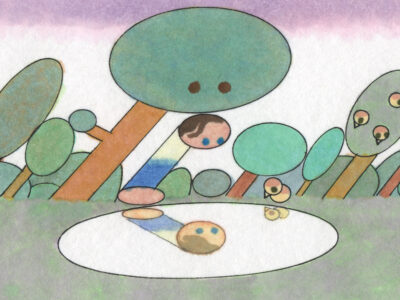
An illustration of a person leaning over water and looking at their reflection. A large tree behind them looks over their shoulder and a bird stands at the edge of the water.

Befriending My Reflection

WP_Post Object
(
    [ID] => 10823
    [post_author] => 15
    [post_date] => 2026-08-03 15:56:25
    [post_date_gmt] => 2026-08-03 15:56:25
    [post_content] => 

Beyond the classroom and in real life, a teacher-student friendship can be one of the best and most enduring kinds there is.

A card arrived in the mail last week, my name written in a cursive I know well. It had been a couple of weeks since her last letter, and I eagerly sat down on my couch to read it. She told me how everyone at home, “both human and animal,” was doing well, how many cats she was currently fostering (thirteen), and yet, that she didn’t mind the label that came with it. “The Crazy Cat Lady is definitely somebody I identify with,” she wrote, and of course, that made me giggle. Her playful way with words paired with self-deprecation have always been uniquely hers. This I’ve known since long before we became friends.

My penpal and I met one morning more than three decades ago, when I walked to the end of a high school hallway full of lockers and into her classroom. I can only imagine how confused I looked to everyone on that first day of school: Shy and slightly awkward, I spoke no English and was dressed very differently from my peers. I’d only landed in that small New Jersey town a couple of weeks prior, from my home in Caracas, Venezuela. I was fourteen years old, and had attended the same school for most of my life. Suddenly, I was one of the “new kids,” and only one of three in the high school who spoke Spanish, who had the great luck of being assigned to Mrs. Boutin’s English-as-a-Second-Language (ESL) class.

I don’t remember her being a Cat Lady in those years. In fact, in one of her many letters this year, she told me she used to be a dog person until she’d helped a neighbor trap, neuter, and return a bunch of feral cats, then decided to keep doing it. She found the work humbling. It made her feel useful. I guess it wasn’t much different than teaching English to a bunch of deer-in-the-headlights scared and somewhat feral adolescents who had come from all walks of life and many corners of the world, including Vietnam, Argentina, India, and China, in my class alone. Some of us had experienced trauma, others came from families seeking work, but no matter how we ended up in that New Jersey high school, every one of us took refuge in her classroom. I’d like to think we all needed it.

We all looked up to Mrs. Boutin because she was patient, laughing off our teenage drama and championing us as we uttered our very first English words, thick accents and all. Like many of my classmates, I’d often swing by after the school bell rang just to talk. She would ask me about my old life. Did I miss it? Would I get to visit home again, and if so, what would be on the top of my list of things to do? Who did I most want to see? She listened intently to my melancholy answers like few others did. It kept me emotionally present at a time in my life when it would have been much easier to push my complex feelings under the rug and simply do whatever I could to fit in (which I did anyway).

Within a year, I was able to defend myself in English; in another three years, I graduated and left for college. I discovered journalism, moved around—within the U.S. and abroad—got married, and, almost twenty years after leaving high school, had a kid. Now that I think about it, becoming a parent must have prompted my search for her: caring for a new life made me appreciate the old ones all the more. I found her through social media. When she responded a day or two later, she insisted that I call her by her first name: Juanita.

In Sister Outsider, poet and essayist Audre Lorde says that being a teacher means learning to talk to students to get “through to them” so that “their own processes would start.” She likens it to a fire, something you could “literally incite, like a riot." By the time I found Juanita again in 2014, I’d been teaching storytelling for a few years, trying my best to incite my students like she had me. Until then, I hadn’t realized how teaching could be political, both an act of kindness and of rebellion. How, beyond the classroom and in real life, a teacher-student friendship could be one of the best and most enduring kinds there is.

After a few email exchanges, we realized snail mail was much better for us both. Juanita would often finish her letters with an invitation to visit until, four years ago, I decided to accept and travel to Mississippi, where she lives with her husband, dog, and a rotating crew of at least a dozen former street cats she’s trying to find homes for. She was the same Juanita I remembered—with her Puerto Rican Spanglish, her hair short and her skirts long—except both she and I were a few decades older. She insisted I stay at their home and sleep in a hot pink guestroom she’d dubbed the “Pepto-Bismol.” That first night, I dreamt I was back in high school; it was a good dream. 

Even though she’s long retired, Juanita still works most weekdays as a volunteer for local trap, neuter, and release efforts, which are few and far between in Mississippi. The morning after I arrived, I came along as she drove us around town to all the spots where she knew there were feral cat populations. I watched as she counted how many cats were in each, gave them food and water, and took note of any new litters or sick animals. Most of the cats scampered away as soon as they saw me. But they knew and trusted Juanita, just like the workers we ran into at the University of Mississippi campus, and the man at the gas station where she and I grabbed “the best fried chicken on a stick in all of Mississippi” after her volunteer shift. And just like me and my fellow classmates who used to seek her out after school. 

I left Mississippi feeling grateful and whole. In just three days, we’d visited three art museums, ate obscene amounts of delicious fried food, went on long sightseeing drives, discussed religion and politics and race, and visited her friends who seemed delighted to hear that I, Juanita’s former high school student, was now her friend, too.

Sometimes I think the term “friend” doesn’t quite do our relationship justice, though. Not because of our age difference or the deep respect I continue to feel for her as my former teacher. Juanita knows me like a parent; her gentle yet no-nonsense life advice has always reminded me of my late grandmother whose Spanish-language proverbs were just as funny and true. But she also continues to be a source of comfort, like she was many years ago. “Be at peace,” she texted recently, when I told her I needed to put our beloved cat to sleep. “You will know what to do as each moment arrives.” She was right. 

Can a fairy godmother be a “friend”? Absolutely. We are lucky to find (and keep) even one such friend over the course of a life, and I believe Juanita is mine. Her letters arrive in the mail with printed out poems or books I haven’t yet read that seem to address my moods in ways that sometimes spook me. Like the Mary Oliver poem, “How Would You Live Then?,”  which she’d cut down to a four-by-five piece of paper and slipped inside a card that arrived last week. “What if the mockingbird came into the house with you and became your advisor?” its third line read, which I happened to scan early one evening while I sat on my bed, listening to our resident mockingbird sing in the front yard. 

I am still drafting my latest snail mail response to her, in our now-customary English mixed in with Spanish, following our thread, asking about summers in Mississippi, her garden, and her foster cats. I am also planning another visit, already knowing which room she’ll insist I stay in when she replies, in that playful way that’s uniquely hers, and never fails to make me laugh.

[post_title] => Friendship as a Second Language [post_excerpt] => Beyond the classroom and in real life, a teacher-student friendship can be one of the best and most enduring kinds there is. [post_status] => publish [comment_status] => closed [ping_status] => closed [post_password] => [post_name] => old-friends-adult-friendship-esl-english-second-language-teacher-student [to_ping] => [pinged] => [post_modified] => 2026-08-03 15:56:27 [post_modified_gmt] => 2026-08-03 15:56:27 [post_content_filtered] => [post_parent] => 0 [guid] => https://conversationalist.org/?p=10823 [menu_order] => 0 [post_type] => post [post_mime_type] => [comment_count] => 0 [filter] => raw )
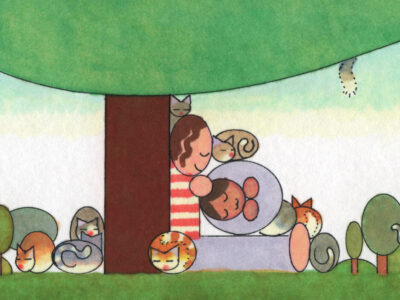
An illustration of two people sitting under a tree, surrounded by cats curled up napping.

Friendship as a Second Language

WP_Post Object
(
    [ID] => 7869
    [post_author] => 15
    [post_date] => 2025-02-14 18:19:28
    [post_date_gmt] => 2025-02-14 18:19:28
    [post_content] => 

Sometimes, the death of a friendship can feel like a haunting.

Old Friends” is an ongoing series exploring the many ways that friendship changes shape in adulthood. 

The first signs of our friendship’s death appeared when she did not win a poetry contest for which I served as a judge. you have humiliated me, she texted when the results were announced, each word on the glass screen as furious as a finger-jab. you have embarrassed me in front of my press. I was driving across the country with my husband when I felt my phone vibrate. We were on our way to a poetry conference, where I would give a talk on the craft of writing poems about trauma. how can you be so cold, she wrote. how could you do this. I wept as I read each new text out loud.

After that first near-death, the air between us felt colder. She began to drift away, becoming increasingly gauzy like a piece of silk sliding through my fingers. She stopped reading my poems and essays, stopped even asking about my work. This support was, she knew, what I treasured most about our friendship, all those evenings when we read one another’s writing and offered suggestions. Maybe you should break the line here; this metaphor could be more precise; I think you could expand this image of the trapped sparrow.

We would talk for hours on the phone. “I’m making my favorite beverage,”she might laugh, and I could hear in the background of her call the sputter of coffee brewing or a pitcher of milk being frothed, that shhhhh-shhhh-shhhh from the steam. Sometimes we spoke so long that I would have to say, “Hold on—I’m almost out of power.” I would plug the charger into the nearest outlet and sit on the floor with my back against the wall, placing the cellphone in my lap like a small, delicate animal that needed comfort.

But once our friendship began its dying, there were fewer and fewer conversations. When she did offer to read my work, her critiques were harsh and tearing. Or else, she was indifferent. “This looks fine,” she would say. The withdrawal was her punishment. Already, she was becoming spectral.

Almost two years after the dying first began, my friend finally chose to become a ghost. Over the stretch of a summer, she theatrically disappeared. Her silence was ostentatious and immense. My calls and messages went unanswered for weeks. I texted her, asked what had changed. Her answers answered nothing. I’m just so busy, she would say.

In a ghost story, tension is created through uncertainty. Is the ghost malevolent, in need of help, or simply lost? Those who encounter a phantasm must fill in the narrative on their own. During our last conversation, she complained about her most recent rejections from several literary journals. “I suppose you’re still getting as many acceptances as ever,” she said, her tone scraping like a querulous violin. I don’t know what I answered. But I remember thinking, when the call ended, that I would never hear her voice again.

By the time summer passed, I knew our friendship was a thing that should be laid to rest. I had waited too long already. In the Jewish tradition, we bury a body within 24 hours of death. When a loved one dies, we say the mourner’s Kaddish for eleven months minus a day. After that, the bereaved are expected to reenter their own lives. They must only reexamine grief on the anniversary of the death, the yahrzeit, lighting a candle that burns on the kitchen table for 24 hours, the flame like a flimsy, wobbling soul. It was time to reenter my life without her in it.  

Then, in late fall, my friend decided to visit me from beyond. Ghosts are said to haunt the sites of their deaths or the places to which they once felt most attached, battlefields, creaking houses, cobwebbed alcoves. Because we had never lived in the same city or state, much of our friendship resided in the ether of texts and the internet. So, it seemed fitting that her arrival came in the form of an email on the evening of my 49th birthday.

I was sitting with my family in a restaurant. I felt the delicate buzz of my phone and looked down. Best wishes for a Happy Birthday, she wrote. My eyes slipped across her words, the accusations of arrogance, that I thought too much of my own accomplishments as a writer. People talk about how, in a moment of shock or desolation, food can become ash in the mouth. Something vicious occurs and the tongue responds with cremation. Everything it tastes turns to cinders. But—as I held the poisonous, green glow of the phone in my left hand, a fork still gripped in my right—the food tasted like choking smoke.

Later that evening, I wrote to her:

Your birthday message has given me the closure I so needed. I feel able to move on now. Thank you for that. 

Good luck in your future endeavors.

Is it possible to escort a ghost from one’s life in such a crisp, businesslike way? My email had the detachment of a rejection letter; but, to me, it felt like a door held open as I spoke to an empty room. Go, I pleaded, please, leave now.

Still, I’ve allowed myself to mourn. There was a story I used to tell whenever people asked how my friend and I first met. “I was a young grad student,” I would explain. “And I wrote her a fan letter—an email saying how much her first book meant to me. Have you read it?” I would interrupt my story to ask. “It’s a wonderful collection. And that was how we became friends!”I would turn to look at her, waiting for a grin or nod in confirmation. But over the years, the story must have lost its shimmer. She stopped smiling back. Sometimes, she would say, “Oh, I can’t recall how we met,” and flit a hand, as if to clear away the thick lilies of a perfume from the air around her.

Sometimes friendships between writers are less spectral than they are ghoulish. Envy. Competitiveness. Insecurity. Every writer is a host to such creatures. And it is always difficult to confront that which horrifies the self. Looking back, I see what was hidden from me before—that my explanation must have struck her as cruel and self-congratulatory. When we became friends, I was very young, still discovering the voice of my poems and just beginning to publish, and I couldn’t believe that someone so gifted would want to make space for me in her life. My friend, two decades my senior, was further along in her career. By the time things ended between us, however, our positions had changed—and perhaps this haunted her, too.

And, yet—“Here, take half of this sandwich,” she would say, sliding the plate across the table toward me. “Do you want a taste of this cake?”she would ask while holding out her fork. Whenever we spent time together, she fed me, gave me a jacket to stay warm, even offered the lipstick from her purse. She was generous like that.

Still, I can admit too that exorcising her ghost was a relief. The morning after the birthday message, I woke to find the constant pain in my back was gone. For months, I had felt a sharp stone near the base of my spine, as if someone had lodged it there. It often hurt my sleep so that I twisted for hours in bed, unable to find a restful position. Some nights I barely dozed. But the email from my friend had dislodged, at last, the rock from its pointed place.

In a Jewish cemetery, we don’t lay flowers on the graves. A bouquet is too brief; blossoms wilt in a week. Instead, we put small stones on the headstones, leaving our grief behind us when we go. After we have cried, after we have kneeled beside the carved letters and let our fingertips follow each deep groove in the granite surface, we stand. We walk away. The pebbles stay where we have positioned them. The weight of our loss becomes lighter. The pain disappears from our spines. Those little, smooth stones pin our dead—at last—deep under the earth. Let them rest, I say. Let her rest and never return.

[post_title] => Ghost Story [post_excerpt] => Sometimes, the death of a friendship can feel like a haunting. [post_status] => publish [comment_status] => closed [ping_status] => closed [post_password] => [post_name] => old-friends-friendship-ghosting-breakup [to_ping] => [pinged] => [post_modified] => 2026-08-03 23:22:58 [post_modified_gmt] => 2026-08-03 23:22:58 [post_content_filtered] => [post_parent] => 0 [guid] => https://conversationalist.org/?p=7869 [menu_order] => 28 [post_type] => post [post_mime_type] => [comment_count] => 0 [filter] => raw )
An illustration of a woman sitting in the dark of her home on a red chair next to a burning candle. There's a folding paper screen next to her with the shadow of another woman behind it. In four insert boxes, there are two women on opposite ends of a phone conversation, an image of red flowers, and a pile of pebbles.

Ghost Story

WP_Post Object
(
    [ID] => 5345
    [post_author] => 15
    [post_date] => 2023-01-23 09:00:00
    [post_date_gmt] => 2023-01-23 09:00:00
    [post_content] => 

How confessing my grief over my grandad's death allowed me to become a part of the human world again.

Old Friends” is an ongoing series exploring the many ways that friendship changes shape in adulthood. 

When my grandad first told me he was dying, I didn’t tell anyone. 

He had first told me he was sick a week earlier. My fiancé Karl, now my husband, had come home to find me sobbing. It was as far as the news got. When my grandad called a little over a week later to confirm that there was nothing that could be done, he asked if someone was home with me. As I cried he cried with me, telling me how he had dreaded telling me most of all. We’ve always been kind of spooky, he and I, wrapped up in each other’s lives. I was born soon after my grandma died and he poured his grief into raising me, giving me space when I needed it and nurturing the things I loved to do.

Simply put, I was his favorite. I knew that. He made sure I knew that.  My grandad was the first person to love me unconditionally. I had been let down by a lot of people whose job it was to care for me, but never him. He wanted me to believe that he would never leave me, and he felt as if dying was breaking a promise.

The first thing I did when he told me he was sick was walk into the sea, paddling up to my thighs in the icy May water. An hour later, when I was walking home from the beach, he called to tell me he had good news “for both of us”: He was getting treatment. He promised to live to see my wedding a few months later, a promise that felt hollow when I went to see him a week later and he could barely eat soup. 

The dying was a painful, tricky limbo. Nobody could support me the way I wanted them to, by twisting the realities of time and space and death to make him well and keep him with me. I wanted to forever eat lunch with him, drink with him, yell at him over FaceTime to put his hearing aids in. He never answered his phone anyway, but now, he wasn’t ignoring me to hang out at the golf club or eat dinner at his neighbor’s house. He was in the hospital. I half-tried to live my life. Knowing he wanted me out in the world, that he waited in a hospital bed for my stories, was all that got me out of the house.

So, for weeks, I told only my fiancé. Then, in a moment of tipsy grief, I told a friend at a wedding, because I knew she would give me what I needed, a kind of maternal care, the enveloping you get from friends a few years older. I started telling other friends and colleagues when I had to: to say we might rearrange the wedding, to ask for forgiveness when I missed a deadline or canceled a trip. I retreated, keeping my circle small. I spent days swimming in the sea or out on a small boat, nights often at shows where I screamed and cried and sometimes confided in the person I was with but usually didn’t. In hindsight I think that maybe I believed that if it wasn’t spoken, it couldn’t become true. 

In June I was told not to cancel a trip to Barcelona: Nothing would change and I couldn’t visit him anyway. Then, everything changed. He was admitted to the hospital for the last time. A family member texted me the words “he’s dying” for the first time, and I burst into tears, surprising a friend who had no idea anything was wrong. She confided in me that a close friend of hers had died recently and she hadn’t had a second to process it. We cried together, holding hands, walking around Barcelona scaring tourists and talking about the people we loved so much. I felt her soft hand in mine and with it the first time the closeness that grief can bring. Before then, I’d felt for a while that nobody could understand what I was feeling. I was walking around the world as a ghost, one foot in his hospital room. By confessing, everyone else’s grief poured out, too. By confessing, I became a part of the human world again, tangible and alive.

My friends would check in, asking how he was, wanting the minutiae beyond “still dying.” In an airport restaurant later that summer, my best friend asked for an update and burst into tears at the table, telling me that it had been a year that day since her own grandpa had died. She apologized for “making it about her”—but I felt only happy that we could reach each other through the thick walls grief had built. 

Sitting by the water drinking mojitos, we talked about our grandads, the special men they were. The people they continued to be for us. When I checked my phone I saw updates from a group chat with my family, sharp changes in health. Sometimes I shared them. It was our first vacation in four years, and different from the ones before, but it taught me the ways our friendships change when we age, the ways death and disability and illness shape us and make us new. The way grief can either isolate us or create a cocoon in which to understand and support one another. I had shut myself off, not wanting to ask for anything, not believing that anyone would care or understand that the shock of grief can come even when someone is 92 years old. That the bargaining with death never stops. That you can be closer with a grandparent than your own parents.

He died in late July. The first thing I realized in those busy, sad first days and weeks was that it had become impossible to cut myself off from the human world and the living bodies in it as I would once have done when my grandad had first called me just two months ago.

First came the texts. Not just saying “sorry for your loss”—nothing so easy to ignore as that. No: reams, essays about my grandad, his role in making me, the man he seemed to be to friends who had never met him. I was responsible for his image in the eyes of strangers, and I had painted a noble one. My friends, their parents, too, let that be known.

Whether I responded or not, the check-ins came daily. If I replied, I lied or sent memes, wanting to try and live and avoid making eye contact with the depth of my loss. The first person to love me unconditionally lay cold, and I felt suspicious and undeserving of the love flowing so freely from my friends. But still, they came, and in those weeks, I learned uneasily to accept it.

Then came the flowers.

I couldn’t leave the city, the country, go into hiding as I once might have done. Not when boxes of bouquets were arriving at my door daily. Snapdragons, roses, lilies, hypericum berries. Not just grief flowers, but my favorites, chosen for the modicum of joy they might bring me. They filled the vases we had and then some. They came from Birmingham, from Glasgow, from Atlanta, from Los Angeles. With notes and without.

Then came the bodies.

To my flat, to my sofa bed, to my stretch of beach, the one where I’d spent most days hiding and swimming. Sometimes we talked about it, mostly we didn’t. But they didn’t flinch when we did. One friend dreamed of me, tried to meet me somewhere safe while practicing lucid dreaming. Whether it worked or not, whether they filtered through my nightmares, I don’t remember. My friend Zoe and I opened a suitcase of my grandad’s diaries for the first time since I’d lugged them all home, since he had sat up in his hospital bed to tell me where they were. We laughed at the way he wrote, the things he remembered. Zoe shivered realizing that his handwriting was the same as her own grandad’s.

When I was much younger, I had asked my childhood best friend Joe if he would walk me down the aisle. My father wasn’t, and isn’t, in my life, and I feared that my grandad might be gone by the time I actually found someone to marry me. When I got engaged, my grandad was still healthy, and asked if he could take on the job. My friend took it graciously. When my grandad died six weeks before my wedding, I asked Joe if he would consider stepping back into the role. He took it on with honor, crying on the day and giving a speech that night about what it meant to him. He raised a glass to my grandad, the man who raised me. I felt then the warmth of my friends in that room, warmth my grandad taught me I deserved.

Three days after my grandad died, Karl bought me yet another copy of Joan Didion’s grief memoir, The Year of Magical Thinking. It is my favorite of hers, and when my own book was released, Karl bought me a signed first edition. This one was cheap, flimsy, begging to be underlined and re-read in the bath. In the hotel after my grandad’s funeral, I highlighted Didion recalling the way her house filled with bodies after her husband John died suddenly. “How could I deal at this moment with company?” she asks.

I have learned that good company, the kind you need, doesn’t ask if you can or not. It just shows up without asking, arms full of flowers.

[post_title] => "Then Came the Bodies" [post_excerpt] => How confessing my grief over my grandad's death allowed me to become a part of the human world again. [post_status] => publish [comment_status] => closed [ping_status] => closed [post_password] => [post_name] => old-friends-column-grief-friendship-healing-essay [to_ping] => [pinged] => [post_modified] => 2026-08-04 19:39:56 [post_modified_gmt] => 2026-08-04 19:39:56 [post_content_filtered] => [post_parent] => 0 [guid] => https://conversationalist.org/?p=5345 [menu_order] => 98 [post_type] => post [post_mime_type] => [comment_count] => 0 [filter] => raw )
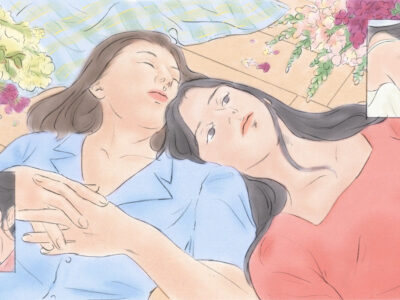
An illustration of two friends lying on the floor, one wearing a light blue, short sleeved collared shirt, her hands clasped over her chest and her eyes closed; the other woman is wearing a pink blouse and is leaning on her shoulder, looking up at the sky. Behind them there is a checkered blanket and bouquets of flowers. In two inserts, we see the woman in the pink shirt alone, clearly in pain and grieving.

“Then Came the Bodies”

WP_Post Object
(
    [ID] => 4729
    [post_author] => 15
    [post_date] => 2022-08-31 16:30:00
    [post_date_gmt] => 2022-08-31 16:30:00
    [post_content] => 

A story of two deaths and an engagement.

Old Friends” is an ongoing series exploring the many ways that friendship changes shape in adulthood. 

“My friend Rachel is getting married.”

I say the words in my head, and out loud, and marvel at the way the syllables align; laugh a bit at the obvious joke about the 2008 movie; pull my mouth into a half-smile as I imagine Rachel as I knew her best, someone I sat with during tenth grade biology and who gifted me so many of the foundational touchstones of my personhood now. Rachel, goofy and unguarded and easily earnest, who spurred me to be my weirdest and wildest self. Rachel, who introduced me to Britpop; who introduced me to a lot of music, actually, including the artist Annie, whose song “Heartbeat” is a top five for sure. Rachel, who taught me to be funny in the exact way that would make her giggle, an expression and sound I can picture without any dimming over the distance of space and time.

The thing is, I haven’t seen Rachel in person in over a decade. Before this past year, the last time I’d spoken to her was back in 2017, when our friend L, who’d sat at that same bio table, passed away, and knowing that she and L had been as close as sisters, I’d reached out to Rachel over a flurry of texts. We made the kind of promises that happen over death, to be more present and ready for each other in the now. And I thought I’d meant it, but I couldn’t follow through. When everyone descended back on our hometown for the funeral, I demurred, citing life and time and work—and did I mention life?—letting the memory of who I was to them attend instead.

There were real reasons why I didn’t go back. I was in the throes of an internal gender crisis as I assessed and tried to repress my rejection of womanhood, a bridle bit that was carving a waterfall of blood from my metallic mouth. I was still reeling from a big move—out of Los Angeles, my home for seven years, and into a domicile with the man who’d become my spouse—and hadn’t quite found my footing, financially and otherwise, in this new place. But the most elemental reason I didn’t go back to New Jersey was that I didn’t know what to say to the friends I’d essentially left behind when I moved to California and decided to become the person I couldn’t be back home. Back where I knew and loved them. Back where I maybe not loved, but at least thought I knew, myself.

~

Four years later, death is what brings me back to Rachel again. She’d always been attuned to what one might call the “pop girls,” and in the early 2000s, that included Girls Aloud, the British girl group whose impact and influence never quite crossed the Atlantic like their most popular predecessors the Spice Girls' had. Rachel had made a hagiography out of their music and careers—as a group, as individuals—with the expertise of a stan, which she was. And then, last fall, one of the members of Girls Aloud passed away suddenly, at an age where your first reaction is, “That’s too young.”

I read the headline on the music blog I’ve been reading since high school and felt the impact in two waves: first, a sharp kick in the throat, and then, a dull pang tunneling through my chest cavity and into my gut, where it settled into the heavy, heady ache of guilt. I needed to tell Rachel. Did she already know? Did she still care? Would she want to talk about it with me, and could this transparent bid for reconnection actually in turn open the door for us to discuss everything I now knew about myself and everything I didn’t know about her? 

~

We fell out over a boy, or at least that’s how I framed it. After my high school ex and I broke up, he’d stayed on the East Coast for college like most of the people I’d gone to school with and made plans with them and reached out to them and made them feel wanted and seen, and that included Rachel. Meanwhile, I’d crossed the country and immediately began my free bitch makeover montage, seeking nothing less than sublimation, to seem cooler, smarter, more self-possessed than I’d ever felt in the town where I’d grown up, to leave my body behind and diffuse into a sun-baptized spirit. I quite literally tried to shed my body of its mass, its baggage, its racialized cocoon, to cultivate the effortless, weightless glow of success and satisfaction that’d make people look at me, want me, and maybe even accept me. No wonder my ex broke up with me over a video call right before Halloween our freshman year; no wonder my attempts at conversations with my once-best friends became buckshot in sparse forests, doves with clipped wings released to their doom, cursory “happy birthday”s and then merciful silence. It didn’t matter that our high school friend group started to break apart on its own, that many of the friends my ex had “won” in the breakup custody battle didn’t stay friends with him or each other. I surrendered my past completely, and more than anyone else, I surrendered Rachel. 

Honestly, the loss of most of those friendships was for the best. And eventually, I figured out how to become the kind of person I wanted to be without brutalizing myself for the achievement of that want. But I never got over Rachel, who was one of the only people I knew from back then who went on to work in the entertainment world, too; whose influence in my life goes down to my marrow. 

I went alone to a Robyn concert and thought, “Rachel would’ve gone with me.” I went to parties and wondered what she’d think of their soundtracks, because she was the one who’d taught me how to listen to—really listen to—and contextualize music. In many ways, she was my shadow sensei and my twin, not in the biological sense but in the Hilton Als essayistic way. A mirrored soul, someone who knew how to draw the best of me out of myself. 

I’d never told her any of this because nobody we grew up with talked about friendship like that. But maybe we’d always picked up a singular frequency from each other. When I heard through the grapevine that she’d come out in college, I yearned to tell her that I understood even though I hadn’t come out in my own way to myself then. When I did come out, I’d often imagine, unbidden, how I would break the news to her. How she’d process it; whether she’d recoil from or reach for me, whether she’d still recognize our similarities despite the new difference between us.

~

I stared at the headline and imagined a world where I took my regret to the grave, and texted her something that, between the lines, simply said: I miss you, I miss you, I miss you.

We talked for what felt like and actually was hours. Her girlfriend-now-fiancée had to remind her of the life outside our impassioned recollections and brutal revelations. Our mutual admirations and jealousies and drafted but scrapped overtures. She asked me what happened back then, and I told her with no shame or fear or gloss, the kind of honesty we’d never achieved as friends. 

And really, we’re barely friends now. I don’t know the rhythms of her day-to-day life and she doesn’t know mine. We haven’t talked at length since that first outpouring, but we both agreed that all we could do was keep placing stones in the river that’d grown between us. I text her every time I think of her and she does the same. She’s back into British girl pop again and told me when she sang Little Mix at karaoke. I asked her for her address to send her flowers for her engagement though I’m not (and didn’t/don’t expect to be) invited to whatever ceremony she’s got planned. I won’t be in New York for a while and she won’t be in California anytime soon, but the door is open if/when one of us crosses over the same expanse that’d once divided us.

I want to shake my younger self by the shoulders and tell her/them that the only thing that ever kept me from rekindling these kinds of connections was my own damn ego, so fixated on the idea that something was broken that I couldn’t imagine reforging it into not the thing it was, but the thing it could be. I want to leap across the country and shake Rachel’s shoulders and promise, really promise, that I won’t let our friendship become a memory again. I want to watch her face morph with indescribable emotion as she sees me and I want to know she sees my face go through the same. 

Maybe I’m coming on too strong. It’s true, whirlwind courtships have slimmer odds than ones that grow from deeply planted roots. So here I am, enriching the soil; soon, though, I hope to have more flowers for her.

[post_title] => How Do You Reconnect with Someone You Haven't Spoken to in a Decade? [post_excerpt] => [post_status] => publish [comment_status] => open [ping_status] => open [post_password] => [post_name] => how-to-reconnect-with-someone-you-havent-spoken-to-in-a-decade [to_ping] => [pinged] => [post_modified] => 2026-08-04 20:40:10 [post_modified_gmt] => 2026-08-04 20:40:10 [post_content_filtered] => [post_parent] => 0 [guid] => https://conversationalist.org/?p=4729 [menu_order] => 122 [post_type] => post [post_mime_type] => [comment_count] => 0 [filter] => raw )
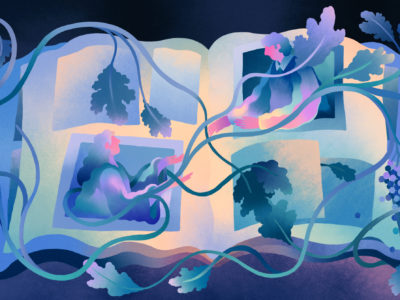
An illustration of a photo album, with two people in different photos reaching out across the page towards each other.

How Do You Reconnect with Someone You Haven’t Spoken to in a Decade?