
WP_Post Object
(
    [ID] => 10949
    [post_author] => 15
    [post_date] => 2026-08-07 19:36:01
    [post_date_gmt] => 2026-08-07 19:36:01
    [post_content] => 

As my siblings and I become our own people, it'll be up to us to determine whether and how our relationships will thrive or crumble from the foundations we were given. 

Since my maternal grandmother’s unexpected death last fall, the legacy of her life has weighed on me. She was authoritative, opinionated, and very close to everyone in the family, especially my mother. In my hometown, she was a hero—a city council member of the second largest city in New Hampshire, a school board member, and an advocate for civic engagement. In many ways, she was the best role model of leadership and independence I could have asked for. 

Concurrently, my grandmother was a complicated figure whose strong morals and beliefs shaped the foundations of our familial dynamics. She always encouraged us grandchildren to be outspoken, smart, and strong-willed. But she also modeled emotional inconsistency, porous boundaries, and a pattern of partaking in conflict cycles without resolution or repair. 

As I continue to grieve, I’ve been reflecting on how all of this has affected me in both obvious and quieter ways. But more recently, I’ve also started to wonder whether her influence is a part of why I’ve struggled so much to bond with my siblings. 

My grandmother had a rough life, and sometimes, that trauma spilled over onto the rest of the family. She grew up one of eight siblings in the projects of Hartford, Connecticut, to a single mother. She had her first child at 16, married at 18, divorced at 27, then joined the military with three small children in tow. It’s likely she was never given the tools to cope with all she lived through, and when she was alive, her temperament was everyone’s responsibility. Whether she was sad or angry or anxious, it was our collective duty to manage her emotions and transform them into something better. Within my family, this form of enmeshment has now been passed down from my maternal grandmother and her siblings, to my mom and hers, to me and mine.

As with many eldest daughters, I was raised to take responsibility for the needs of both my siblings and my parents, consequently becoming hyper-independent at a premature age. This has continued into early adulthood: At 26 years old, if something were to suddenly happen to either of my parents, I am likely next in line to take care of my two siblings. My sister is 22 years old and disabled, and my brother, 13, is still a child. There’s no immediate reason to worry about imminent parental loss, but as I’ve been contemplating death more frequently, it’s a possibility I’ve chosen to prepare for. This has spurned thoughts of how atypical my relationship is with my siblings, at least compared to what I’ve seen between others, and whether it’s possible for these dynamics to change over a lifetime, especially now that my sister and I are both adults. 

Theoretically, sharing the unique experience of being raised by the same two parents should be an unbreakable bond. At its best, it can mean having a built-in BFF with whom trust, history, and emotional depth are a given. But at its worst, even kin can become strangers: Regardless of age gaps or favoritism or birth order or familial dynamics, sometimes, two individuals just don’t click.

With four years between us that felt larger when we were younger, my sister and I would get into physical altercations over the smallest things, like who got control of the TV remote or my refusal to share my video games with her. Of course, most siblings bicker, fight, and get jealous of each other at some point, and none of these things have to adversely affect the totality of a relationship. But in our case, it often felt like they defined it: We never really played together, just fought. 

Then, almost a decade after my sister was born, my brother arrived. I was resentful, already subconsciously anticipating my role as the family’s emotional sponge would expand, and knowing the age gap between us would mean, at least in part, that I would be responsible for his care. 

As Canadian author, physician, and childhood development and trauma expert Dr. Gabor Maté asserts—no two children have the same parents. I can attest to this with my sister, a sickly child who required more attention, and with my brother, who has received a more laissez-faire style of parenting as the youngest in the family. 

Perhaps partly due to my quiet nature, I had always been the child that my parents felt they never had to worry about. Frequently called “mature for my age,” this also meant I was expected to put everyone else’s emotional needs before my own. Sharing my feelings in any given situation was discouraged, and I was often called “selfish” for not considering how they might affect the family. I learned early to keep the peace by avoiding high-conflict subjects, and while we maintained a superficial relationship as children, my sister and I always shared a silent understanding that due to our mother’s sacrifices on our behalf, we had no right to complain. (I suspect this is my brother’s experience, as well, despite my mother’s insistence that “boys are just less work than girls.”)

This was especially difficult for me because, unlike my siblings, I was perceived as the responsible one, who therefore didn’t need additional support or care. While my physical needs of shelter, food, clothing, and even entertainment were comfortably met, my emotional needs were not. I was bullied at school for most of my childhood, and although sympathetic, my parents and siblings both regularly chalked it up to me being “too sensitive,” rather than actually listening. 

This label—being “too sensitive”—became a recurring one throughout my life. It was also frequently reinforced by my grandmother, which eventually led me to hide more and more of myself from my parents and my siblings, and to rely on them less and less. Soon after graduating high school, I got as far away from them as I could. 

Living away from home for the last eight years—with strangers, friends, other families, and romantic partners—has allowed me to connect to my own emotional needs and wants for the first time in my life. It’s also fundamentally changed the lens through which I see sibling friendships for the better, and changed the way I look at my own. I’ve learned that siblings can and do take an interest in each other’s lives and rely on each other for support, out of genuine interest rather than familial duty. I’ve also learned that conflicts can be addressed and resolved in healthy ways, rather than ignored and left to fester, eventually turning into resentments. 

These lessons evoke a desire in me to do better for my younger siblings: I yearn for this kind of “elevated” relationship with them, where we can talk about our struggles and our interests, our shared and diverging upbringings and the ways we see the world. Above all else, I just want us to be able to be ourselves around each other, to free ourselves from the roles our family has given us, and to become genuine friends. More importantly, I want to be able to confide in them and for them to see me as a safe person to confide in, too—not as a part of an unspoken eldest daughter imperative, but because I am someone they can genuinely trust. 

I’m still struggling to form this deeper connection with each of them, and to break the ice of emotional superficiality that everyone in my family seems to be comfortable with. After all, we are the outcome of a multigenerational combination of emotional detachment, dysfunction, and our respective and sometimes clashing individualities. But even if the adults in my life—from my grandmother to my parents—were most culpable for the conditions that produced this emotional environment, ideally, it’s my siblings and I whose lives will succeed theirs. And it’ll eventually be up to us to determine whether and how our relationships will thrive or crumble from the foundations we were given. 

Of course, my perspective is just that—mine. My siblings and parents have their own readings of our relationships, and maybe someday, we’ll find places where they intersect. It’s entirely possible that as a sensitive child who has become a sensitive adult, I’ve been too hard on them. And despite the origins of my sister and I’s discontentment, there’s a sincerity with which she relates to me today: When I ask about her day, she tells me in earnest, and genuinely wants to know how mine is, too. 

I make every effort to actively listen to her when we speak, because I truly want to know about her and her life. But I still struggle to share my emotional truths with her in return. No matter what day or week or month I’m having, as far as she knows, I’m fine. I don’t want her to worry, and besides, my grandmother would have encouraged me not to share those feelings, in order to protect the family’s peace. 

But in my grandmother’s absence, there’s also no longer anyone here to manage how everyone in the family should feel, or what they should share. So, despite grieving her—or maybe because of what this grief has afforded me—I’m gaining more courage in facing my family: in standing up for myself, in choosing to remove myself from discomfort, in refusing to absorb my family’s emotional dysregulation. I’m also choosing to be hopeful about what sort of relationships I want to forge with my siblings, and choosing to be hopeful about the person I can still become. 

With this new courage comes new insight. Just as I am doing now, my younger siblings will one day become their own people. Amid pondering about how this one death has changed our present, and how subsequent ones may change our future, there’s no guarantee that my relationships with my siblings will get any better. What if we’re never able to overcome the emotional barriers that were formed early? What if the only way to maintain our individual emotional health and change our family’s future is to build and preserve strong boundaries between us that might keep us from ever being truly close? 

I hope not. But, maybe the best eldest sister and friend I can be to them is in maintaining my own developing boundaries as I understand them and myself better. Maybe the form of courage I can work towards is mirroring a sibling friendship built on healthy communication and respect, and taking chances, little by little, in trusting them with who I am. That way, as we all grow, we can truthfully see whether it’s possible for us to become closer, or whether it’s healthiest for all of us to care for each other as best we can from a distance.

[post_title] => Can Siblings Eventually Become Friends? [post_excerpt] => As my siblings and I become our own people, it'll be up to us to determine whether and how our relationships will thrive or crumble from the foundations we were given.  [post_status] => publish [comment_status] => closed [ping_status] => closed [post_password] => [post_name] => friendship-week-can-siblings-eventually-become-friends-family-dynamics-relationships-childhood-upbringing-grief-personal-essay [to_ping] => [pinged] => [post_modified] => 2026-08-07 19:36:03 [post_modified_gmt] => 2026-08-07 19:36:03 [post_content_filtered] => [post_parent] => 0 [guid] => https://conversationalist.org/?p=10949 [menu_order] => 0 [post_type] => post [post_mime_type] => [comment_count] => 0 [filter] => raw )
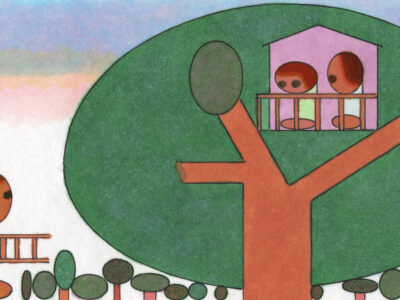
An illustration of two siblings in a treehouse, while on the ground, an older sibling holds a ladder and looks up at them.

Can Siblings Eventually Become Friends?

WP_Post Object
(
    [ID] => 10830
    [post_author] => 15
    [post_date] => 2026-08-06 16:30:55
    [post_date_gmt] => 2026-08-06 16:30:55
    [post_content] => 

There’s something magical about the comfort and interconnectedness that comes with befriending someone a few decades older.

We’ve all had a friend crush before. You meet someone and immediately feel that special spark and a deep desire to get to know them better. Suddenly, you want to know where they grew up, what their childhood was like, what neighborhood they live in, and what recipes they’ve been cooking up lately. Your friend crush pulls you in with their shimmering light, and the next thing you know, you’re imagining future hangouts together. Maybe you even feel some nervous butterflies, hoping they might want to be your friend, too.  

For me, that person has often been three or four decades older. Sure, I’ve had plenty of friend crushes with people closer to my age, but there’s something magical about the comfort and interconnectedness of an intergenerational friendship. Befriending someone older can provide a certain steadiness, almost like they’re reaching out a soft hand and saying, “I’ve seen it all, darling. Come sit with me and I’ll make you a cup of tea.”  

When I first moved to New Orleans, it was Jeanette. I met her through my job at the time in the food and farming space. She’d walk into our warehouse with bundles of basil and bouquets of zinnias and “shrimp flowers” (named such because they resemble—yep, you guessed it—boiled shrimp!). It was hard not to smile when Jeanette entered a room, beaming with sunny energy and greeting us in her charming Southern accent.  

Then 72 years old, Jeanette spent most of her days gardening in her signature wide-brimmed hat. But for her, this wasn’t just a fun retirement hobby (not that there’s anything wrong with that). She was growing flowers and food on vacant lots around the city—including land that had been overgrown and neglected since Hurricane Katrina—both to enjoy at home and to sell to local businesses. You could find her basil in a fresh pesto at a neighborhood Italian restaurant and her rose petals in a fragrant body oil made by a New Orleans skincare brand. In her free time, she taught neighbors how to grow their own herbs, veggies, and flowers, too, demonstrating what was possible in their small backyards and on their windowsills. 

Jeanette has that go-getter gumption that’s inspiring at any age, but especially for someone in their 70s. This was immediate friend crush material for me, and inspired me to channel my own go-gettery-ness to take the first step and call her. After I dialed her up, we ended up chatting on the phone for over an hour. Within a few days, I was walking through her garden as she proudly pointed out every plant she had grown, as if they were her children.  

Flash forward to our many hours together in the car running errands, pulling weeds in her gardens around the city, shopping at Costco (often with matching items in our baskets—great minds!), and assembling bouquets for my wedding. Jeanette was in my regular friend rotation just like anyone else. She also modeled to me what healthy aging could look like. Whether she was planting a new round of shrimp flowers, or teaching another gardening workshop to a new group of students, she reminded me that you can always keep learning, dreaming, and reinventing yourself no matter your age; that you can always nurture and sprout new seedlings, even if they don’t all blossom. 

During times of transition—navigating new jobs in a new city—Jeanette was an especially important friend. She always picked up the phone when I called, and always provided a refreshing levity that reminded me not to take life too seriously. This felt especially remarkable coming from someone who’d already lived 70-something years of challenges, grief, ups and downs, and all the juicy life bits in between.

This ability to keep showing up and her commitment to getting to know her neighbors was also what first drew me to Ava, another New Orleans friend crush.

Also in her 70s, Ava posted on a neighborhood message board that she was offering sewing lessons. This was a few years after meeting Jeanette, when I was pregnant with my first child. I’d wanted to sew a quilt for my future baby (and maybe some cute rompers, too), so I decided to send her a message. 

Learning to sew with Ava wasn’t anything like watching a how-to video on YouTube. She invited me over to her house to sit beside her at the sewing machine and watch her do basic stitches, then had me do them, guiding me through each tangly thread and unwieldy bobbin.

We’d sit together and stitch while sharing stories about our families, religious journeys, and favorite recipes, interspersed with quiet moments of just sitting next to each other at our sewing machines. This was another season of transition for me—preparing to enter motherhood—and without my mom nearby, I appreciated Ava sharing her nuggets of maternal wisdom, and her understanding on a deeper level that everything was changing for me, but somehow still staying the same. 

I knew our friendship was really reaching a deeper level, too, when Ava and I started going on our own Costco trips together, which seems to be a trend in all my closest friendships. (Is it just me, or do those wide aisles and free samples create the perfect space for meandering conversations?) 

More recently, both of these friendships have evolved. When I moved from Louisiana to Rhode Island a couple years ago, I also moved away from both Jeanette and Ava. While we no longer have regular in-person time, we still text and share photos; and whenever we do get on the phone together, you better believe it’s going to be at least an hour-long chat, since there’s always so much to cover. 

I’ve been lucky enough to make new friends in my new neighborhood, often at the playground with fellow parents around my age (or at least within the same decade), and I’m starting to feel more settled. But while this has been a blessing, it’s also been a stark reminder that I’ve been lacking in the intergenerational friendships department. This hole has felt even bigger when I think about my daughters growing up without their grandparents nearby. I knew I’d have to be more intentional about seeking intergenerational friendships if I wanted to share their magic, and show my daughters that friendship has no age limit. 

Our weekly neighborhood potlucks—a tradition we had in New Orleans that we brought up to Providence—are a natural place to meet folks of all ages, and Nancy has become a recent regular. She has two daughters, born in the 1980s like me, so there was an instant familiarity when we met. She seemed to get me on some level, knowing what it was like to raise daughters around my age, and I seemed to get her on some level—she was a nurse just like my mom. We bonded over the challenges of weaning your last baby after years of breastfeeding, our shared love of recycling, and our having spent time in the same small town in Ireland coincidentally. On top of that, her sesame noodles at potluck were SO good—all enough to spark a new friend crush. 

Like me, Nancy had recently moved to the neighborhood. She had grandkids about an hour away but wanted to deepen her relationships with nearby neighbors. I texted her the next day inviting her to go for a walk. She accepted with a purple heart emoji, so I knew we were off to a good start. We’ve been on a couple walks since, and our conversations continue to flow.

In 2021, Jeanette and I were featured in a beautiful book called Collective Wisdom by Grace Bonney, which spotlights intergenerational friendships and life advice from women over the age of 50. After speaking with over 100 women for the book, Bonney reflects that “while age brings wisdom, it rarely offers closure or perfection.” We’re all still evolving. We’re all still curious about ourselves and the world around us. That curiosity doesn’t expire with age.

The best kinds of friendships create a safe space for listening, sharing, and learning, but in an intergenerational friendship, it feels like unlocking another dimension. Almost like time traveling forward and back, weaving between decades, getting a glimpse into the future and remembering what it was like in the past. It’s a refreshing reminder that we’re all just figuring it out as we go, and very little in life is actually linear. 

In our interview for the book, Jeanette said I changed the way she approaches young people about gardening. “I’ve learned from how Erin just walks up and starts talking. There are young people I probably wouldn’t approach because I would expect them to not be receptive. But Erin doesn’t see it that way; she just moves forward.” 

I was surprised to learn that I had taught her something, let alone almost the exact same thing she had taught me. That you’re never too old (or young) to make new friends, to put yourself out there, and to keep feeling those nervous butterflies, whether you’re meeting a new friend crush, or planting a new seed in hopes of watching it grow.

[post_title] => Everyone Needs an Intergenerational Friendship [post_excerpt] => There’s something magical about the comfort and interconnectedness that comes with befriending someone a few decades older. [post_status] => publish [comment_status] => closed [ping_status] => closed [post_password] => [post_name] => everyone-needs-an-intergenerational-friendship-week-old-friends-age-gap [to_ping] => [pinged] => [post_modified] => 2026-08-06 16:30:57 [post_modified_gmt] => 2026-08-06 16:30:57 [post_content_filtered] => [post_parent] => 0 [guid] => https://conversationalist.org/?p=10830 [menu_order] => 0 [post_type] => post [post_mime_type] => [comment_count] => 0 [filter] => raw )
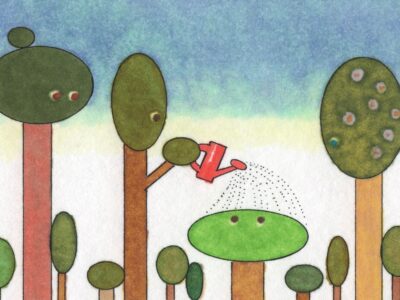
An illustration of a group of trees, with one of the tallest watering one of the shortest.

Everyone Needs an Intergenerational Friendship

WP_Post Object
(
    [ID] => 10821
    [post_author] => 15
    [post_date] => 2026-08-05 17:41:07
    [post_date_gmt] => 2026-08-05 17:41:07
    [post_content] => 

How a shared love of soccer transformed my long-distance friendship.

On a rainy and unseasonably cold summer night last March, my friend Mendes and I walked the long way around the stadium of a fourth division soccer team in São Paulo, Brazil. Neither of us had ever been there before and we’d gotten out of the taxi on the wrong side of the grounds. But even though we were cold and a little lost, we were determined to make it to this game. 

Mendes and I have been friends for more than 15 years, although going to soccer games has only recently become a staple of our friendship. We met when he switched schools in the fifth grade, bonding over our shared love of Batman, Black Sabbath, and Scorsese films. As kids, we’d go to the movies and the bookstore together, and at the time, it felt like we were the only two people in our class who liked doing either. We’d talk about girls, study for tests together, and go looking for good burgers after late-night movie screenings. 

After I went to college in New York and he stayed to attend film school in São Paulo, we remained friends. Back then, we’d find time every other week to catch up via the old video call app, Skype. But there was still physical distance, and as the years passed, there rose a feeling of a wall between us, keeping us apart.

I felt as if I was leading two lives that didn’t quite get to meet. There was the life in São Paulo I shared with my family and my old friends, filled with all the experiences that had made me who I was up until that point. Then there was my new life in New York, which I could only tell people back home about—a new school, new friends, and new experiences in a new language—that felt completely my own. Whenever Mendes and I would talk about it, I felt like I was translating a movie for him that only I got to see. 

Maybe it felt the same for him. Back in São Paulo, he ran around shooting films and became a regular at old-school bars that I’d never even heard of. He fell in love with Carnaval and the hidden charms of a city we hadn’t gotten to explore fully as teenagers. But in some ways, I think it was easier for me to feel tethered to his life in a way he couldn’t be to mine. Every summer break, when it was winter in Brazil, I’d fly back home and we’d go back to our old ways. I’d meet his new friends and go to parties or ride in their cars listening to Liniker, Guilherme Held, or Baco Exu do Blues, the music that was bopping in São Paulo at the time. For about three months each year, the wall between Mendes and I became porous, and we would pass through it together. Then the summer would end, and I’d hop on a plane and go back to my other life, and the wall would turn solid again.

Soccer entered our friendship during the pandemic, which I spent back in Brazil. Though I’ve long been almost unhealthily addicted to the sport—I’ve woken up at 5 a.m. to watch random league games in different time zones, and more than once cancelled plans after my team lost a big game—Mendes had a more off-and-on relationship to it. We became fans of the same club in 2005, a few years before we’d met, when our dads introduced us to the soon-to-be champions of South America: São Paulo FC. Neither remembers much—we were eight years old at the time—but our dads have told us different versions of a similar story. Whenever São Paulo won, they’d show off the cover of the next day’s newspaper at breakfast, reading the recap of the match out loud. As São Paulo advanced in the knockouts, our dads would let us watch more and more of the games during the week, even though they came on late at night after our bedtimes. At the end of that year, São Paulo beat Liverpool FC to become world champions. I remember putting on my little uniform—shirt, shorts, and socks—and going out with my family to eat a burger and celebrate. São Paulo fans filled the streets of the city that day, dressed in their own uniforms, waving flags, wearing crazy hats, blowing horns and lighting red, black, and white smoke flares.

After those glory days, São Paulo went through a dire cold streak in the 2010s. Mendes and I would catch the occasional game together, but even then, it would be a European champions league game, or a World Cup match on TV. Then, when professional sports came back at the end of 2020, São Paulo made an improbable run at the Brazilian title. Though it ended in abject failure in the last weeks of the season (let’s not talk about that), it was enough to get Mendes and I talking about the team for the first time since I can remember. 

After the end of lockdown, Mendes spent weeks at my house with me and my brother Thomas, who also lives in New York and had come home during the pandemic. If we weren’t watching a movie, the TV would be tuned to a game, or the sports channel, or old São Paulo highlights on YouTube, often on mute so we could talk over them. And it’s probably because of us specifically, but at the beginning of 2021, São Paulo won the state championship for the first time since we started supporting them.

Later that year, I left Brazil for New York again, this time for grad school. Our video chats now came through Zoom, but it didn’t take long for Mendes and I to fall into the traps of my previous years abroad—weekly conversations that turned monthly, texts that became more infrequent as we got busy with school and work. The only difference this time was our shared befuddlement with São Paulo FC (the good times were few and far between), which brought us together after every game. We’d found a way to share the same experience every week, thousands of miles between us. 

By 2023, we started going to games together whenever I was home. Sometimes we’d go to cheer on our team, which desperately needed our help, but often, we just went to hang out and talk about what was going on in our lives while the match played in the background, as if we were back in my living room.

I have told Mendes many times that I have a problem: if I could, I’d go to every game, no matter the weather or the opponent. I have dragged my dad to matchdays when there were storm warnings in effect; I have taken Mendes and my brother to games we were sure to lose. And so it was again, in March of this year, a couple of weeks before I was due to fly back to New York for work. São Paulo was playing a league game in the stadium of a fourth division team because our homegrounds had been rented out for a series of AC/DC concerts. It had been raining for days and the weather was dour. The stadium was on the other side of the city; it had no roof and none of the modern amenities and infrastructure you’d find in the home fields of higher division teams, including ours. 

Mendes met me after work, unprepared for the rain, and I lent him my dad’s rain jacket. After we made our way around the walls of this stadium we’d never been to before, we were caught in a wave of fans trying to enter through the small entrance on the side of a highway. Because the stadium didn’t have metal detectors, the military police were patting down every fan, and we only managed to get in halfway through the first half, just as the rain got thicker. The pitch was muddy, the play meager, and we spent most of the match squinting to avoid the water flogging our faces, as the stormy winds teased the smell of barbecue from the restaurant next door, making us half-wish we’d stayed back to watch the game on TV. 

When the final whistle blew, we’d won: two-to-zero. Mendes and I went back to my place, drenched, ordered a pizza, and talked about things I don’t even remember. The food, like the match, was an excuse to spend more time together before I left for New York again. The season carried on in unsurprisingly mediocre ways, but every other week we’d connect over watching soccer before opening up about moments with our partners, our friends, and our family that we couldn’t share in person.

Over a decade into this long-distance friendship, we’ve grown used to looking for the openings in the wall. They may not always be there. Sometimes the rain, or the military police, or losing our seven-point lead in the national championship with a handful of games left in the season only to capitulate into agony and a fourth-place finish, slows us down. But we keep looking. 

Not long ago, during one of those times when I was back from school, I remember overhearing my mom on the phone with a friend, telling her I was home. “He’s seeing his brother tomorrow,” she said. “He has a brother in New York and a brother in São Paulo.”

[post_title] => Friends from Far Afield [post_excerpt] => How a shared love of soccer transformed my long-distance friendship. [post_status] => publish [comment_status] => closed [ping_status] => closed [post_password] => [post_name] => friends-from-far-afield-adult-friendship-week-soccer-sao-paulo-fc-brazil-long-distance [to_ping] => [pinged] => [post_modified] => 2026-08-05 17:41:08 [post_modified_gmt] => 2026-08-05 17:41:08 [post_content_filtered] => [post_parent] => 0 [guid] => https://conversationalist.org/?p=10821 [menu_order] => 0 [post_type] => post [post_mime_type] => [comment_count] => 0 [filter] => raw )
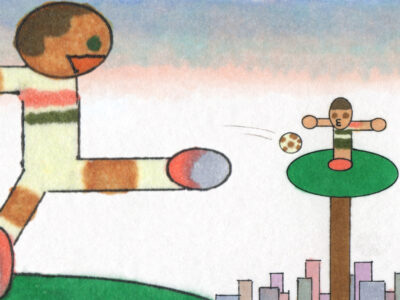
An illustration of two people passing a soccer ball between them from atop two trees.

Friends from Far Afield

WP_Post Object
(
    [ID] => 10817
    [post_author] => 15
    [post_date] => 2026-08-04 17:02:07
    [post_date_gmt] => 2026-08-04 17:02:07
    [post_content] => 

Growing up, I was afraid to look at myself in the mirror. Then my friends helped me recognize the woman looking back.

A mirror might be an innocuous part of your life, but for most of mine, it was filled with the unknown. Each accidental glance meant confronting abstract shapes that filled me with dread. I knew my real reflection was buried somewhere underneath. But I feared if I looked too closely I still wouldn't be able to comprehend what I saw; a fear equal to the tales of Lovecraft. 

I wasn’t born afraid of my reflection, but instead, taught to bear witness to my incongruence by the world around me. As a child, my gender was irrelevant to me until people started telling me how it was supposed to be; how it was supposed to look. I’d never wanted to wear a dress, had never liked the color pink, and had never cared for unicorns. But I chafed at the obligation that I had to be something at all.

Growing up, I found an unconscious comfort in a digital social life, where I was freed from those gendered obligations. I recessed into this world, filling my days with hours-long voice calls while playing video games with strangers online. I felt safe from the abstract fear I’d always carried. In the digital world, it didn’t matter what I looked like, or what body I was born into. I had full agency over how others “saw” me. This is the reason so many young trans kids find comfort in communities online: a separation from the physical. But I wasn’t ready to look inward yet. 

My connections became tethered to a screen. Even when I did get together with neighborhood friends to play video games or watch movies in their families’ basements, the chances that I'd catch myself reflected were limited. The screen acted as bait so we wouldn't have to look at one another. For a kid who would put a blanket over their bedroom mirror, this was a pretty nice situation to be in. It was only when the monitor shut down that I could see the unknown looking back at me again. 

This abstract discomfort I’d always felt finally took shape as I entered an all-boys high school. Standing in a hallway amongst a jungle of teen boys for the first time, I had only one thought: I’m not like them. Maybe every mirror I'd encountered before that moment was unfocused, and this one epiphany corrected my vision, revealing what was always buried on the other side of the mirror: myself. And now, I could see that she was suffocating. 

As realization and panic set in, I recessed further online. My only gasps of air came from my growing digital social life. Unlike the grand stage it often feels like today, the internet of my adolescence felt like a town square, where I could meet people I’d otherwise never would. Slowly, my digital circle expanded. Along with select friends from previous school years, I began building a community of trusted people across the country, picked up in different virtual lobbies. I’d spend hours on Skype calls with dozens of friends late into the night, talking about gaming and politics and movies. Much to the certain dismay of our parents, these strangers became some of my closest friends. 

After I left the jungle, I was ripped away from the safety of that digital circle. College revealed that my digital life was just a band-aid on a much deeper wound. It was there I finally understood that I was trans, and that hiding this would not only leave my reflection suffocating, but leave me suffocating, too. This urgency forced me to find trusted people around me, and begin to transition socially—online and off. I changed my name to Allison across both worlds, and slightly altered how I dressed offline to feel more congruent with who I wanted to be. I became recognized at school and at work as myself.

In the process, something surprising happened: other people saw the woman in my reflection before I could. I began relishing in my newfound community, many of them other queer folk on their own identity journeys. It was healing to see, in living color, that I was not alone. They encouraged me to celebrate milestones; hormone anniversaries became an additional birthday worth celebrating. The thoughts and feelings I’d hidden my whole life became open conversations. Panic slowed, and the tightness in my chest and the weight on my shoulders began to ease. 

To be accepted was like a breath of fresh air on the first warm day of spring. I wish it was simple enough to say this solved all my problems; I still feared my reflection and would flinch whenever I accidentally caught a glimpse. But occasionally, I’d recognize the woman looking back at me, and even be able to meet her eye.

What I previously thought impossible and out of reach was suddenly right in front of me. I wasn’t born loving myself, but I was taught how to. And the people who taught me this—the people who allowed me to be myself—are who I consider family now. 

During the pandemic, I traveled across New York visiting state parks with two of these friends from college. We’d take long hikes together, and whenever we’d reach the top of a mountain, I’d finally feel untethered from a screen. On one of these hikes, I decided I didn’t want to make it to the peak. I let my friends go off as I clambered up a small boulder, two-thirds up the trail. For the very first time, I allowed myself to just sit and breathe. I was unburdened by the weight of my own fears, and my body relaxed, allowing me to take a nap on top of the comfiest boulder in central New York. 

Those dear strangers online are now family, too. A year ago, we all traveled across the world to meet for the first time in Tokyo, Japan. It's a beautifully strange experience to finally meet people you’ve spoken to through a screen for around a decade in the streets of Asakusa. Yet it never felt like we were “meeting” for the first time; instead, we were celebrating our collective friendship. With roughly a dozen of us, we explored a new country together, visiting shrines and possibly every 7-Eleven in Tokyo. They even helped my now-wife plan her proposal to me on that very trip. (They were also the first to know about our engagement, almost a week before our blood families did.) 

This community pulled me out from the other side of the mirror. Each person was a hand stretching out. Without them, I likely would not be here. I cherish my community so deeply, and even though life has taken its grip, we still find ways to talk and to see each other; we find ways to make time.  

These days, I don’t cover the mirrors in my apartment. I’m not immune to the fears I once had, and will probably always harbor some form of self-reproach. But mostly, I am living with enthusiasm, despite how hellbent this country is on targeting people like me. With each new policy enacted, any moment of fear I have is quickly assuaged by a friend sending support or a loving message. At a time when I have less protections than ever, I somehow feel the most safe. 

You don’t notice healing, you realize you’ve healed. Walking on the street used to require the mental anguish of shutting my peripherals off in fear of catching a distorted reflection of myself in a car or shop window. Sitting in a subway car meant closing my eyes to not see a blurry reflection in the glass on the other side. Until one day, it didn’t. 

I wish I could go back in time and tell younger me to not look away. I know if she ever did look for long enough, she would’ve seen herself with a now common smile, surrounded by friends who love her. Just because she didn’t know who she was looking at didn’t mean it was some Lovecraftian horror. Sometimes, it’s just your reflection waiting to be recognized, waiting to be freed.

[post_title] => Befriending My Reflection [post_excerpt] => Growing up, I was afraid to look at myself in the mirror. Then my friends helped me recognize the woman looking back at me. [post_status] => publish [comment_status] => closed [ping_status] => closed [post_password] => [post_name] => befriending-my-reflection-adult-friendship-week-old-friends-identity-mirror-personal-essay [to_ping] => [pinged] => [post_modified] => 2026-08-04 17:23:29 [post_modified_gmt] => 2026-08-04 17:23:29 [post_content_filtered] => [post_parent] => 0 [guid] => https://conversationalist.org/?p=10817 [menu_order] => 0 [post_type] => post [post_mime_type] => [comment_count] => 0 [filter] => raw )
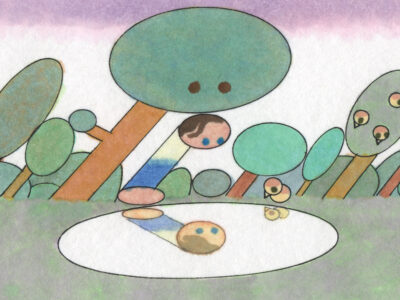
An illustration of a person leaning over water and looking at their reflection. A large tree behind them looks over their shoulder and a bird stands at the edge of the water.

Befriending My Reflection

WP_Post Object
(
    [ID] => 10823
    [post_author] => 15
    [post_date] => 2026-08-03 15:56:25
    [post_date_gmt] => 2026-08-03 15:56:25
    [post_content] => 

Beyond the classroom and in real life, a teacher-student friendship can be one of the best and most enduring kinds there is.

A card arrived in the mail last week, my name written in a cursive I know well. It had been a couple of weeks since her last letter, and I eagerly sat down on my couch to read it. She told me how everyone at home, “both human and animal,” was doing well, how many cats she was currently fostering (thirteen), and yet, that she didn’t mind the label that came with it. “The Crazy Cat Lady is definitely somebody I identify with,” she wrote, and of course, that made me giggle. Her playful way with words paired with self-deprecation have always been uniquely hers. This I’ve known since long before we became friends.

My penpal and I met one morning more than three decades ago, when I walked to the end of a high school hallway full of lockers and into her classroom. I can only imagine how confused I looked to everyone on that first day of school: Shy and slightly awkward, I spoke no English and was dressed very differently from my peers. I’d only landed in that small New Jersey town a couple of weeks prior, from my home in Caracas, Venezuela. I was fourteen years old, and had attended the same school for most of my life. Suddenly, I was one of the “new kids,” and only one of three in the high school who spoke Spanish, who had the great luck of being assigned to Mrs. Boutin’s English-as-a-Second-Language (ESL) class.

I don’t remember her being a Cat Lady in those years. In fact, in one of her many letters this year, she told me she used to be a dog person until she’d helped a neighbor trap, neuter, and return a bunch of feral cats, then decided to keep doing it. She found the work humbling. It made her feel useful. I guess it wasn’t much different than teaching English to a bunch of deer-in-the-headlights scared and somewhat feral adolescents who had come from all walks of life and many corners of the world, including Vietnam, Argentina, India, and China, in my class alone. Some of us had experienced trauma, others came from families seeking work, but no matter how we ended up in that New Jersey high school, every one of us took refuge in her classroom. I’d like to think we all needed it.

We all looked up to Mrs. Boutin because she was patient, laughing off our teenage drama and championing us as we uttered our very first English words, thick accents and all. Like many of my classmates, I’d often swing by after the school bell rang just to talk. She would ask me about my old life. Did I miss it? Would I get to visit home again, and if so, what would be on the top of my list of things to do? Who did I most want to see? She listened intently to my melancholy answers like few others did. It kept me emotionally present at a time in my life when it would have been much easier to push my complex feelings under the rug and simply do whatever I could to fit in (which I did anyway).

Within a year, I was able to defend myself in English; in another three years, I graduated and left for college. I discovered journalism, moved around—within the U.S. and abroad—got married, and, almost twenty years after leaving high school, had a kid. Now that I think about it, becoming a parent must have prompted my search for her: caring for a new life made me appreciate the old ones all the more. I found her through social media. When she responded a day or two later, she insisted that I call her by her first name: Juanita.

In Sister Outsider, poet and essayist Audre Lorde says that being a teacher means learning to talk to students to get “through to them” so that “their own processes would start.” She likens it to a fire, something you could “literally incite, like a riot." By the time I found Juanita again in 2014, I’d been teaching storytelling for a few years, trying my best to incite my students like she had me. Until then, I hadn’t realized how teaching could be political, both an act of kindness and of rebellion. How, beyond the classroom and in real life, a teacher-student friendship could be one of the best and most enduring kinds there is.

After a few email exchanges, we realized snail mail was much better for us both. Juanita would often finish her letters with an invitation to visit until, four years ago, I decided to accept and travel to Mississippi, where she lives with her husband, dog, and a rotating crew of at least a dozen former street cats she’s trying to find homes for. She was the same Juanita I remembered—with her Puerto Rican Spanglish, her hair short and her skirts long—except both she and I were a few decades older. She insisted I stay at their home and sleep in a hot pink guestroom she’d dubbed the “Pepto-Bismol.” That first night, I dreamt I was back in high school; it was a good dream. 

Even though she’s long retired, Juanita still works most weekdays as a volunteer for local trap, neuter, and release efforts, which are few and far between in Mississippi. The morning after I arrived, I came along as she drove us around town to all the spots where she knew there were feral cat populations. I watched as she counted how many cats were in each, gave them food and water, and took note of any new litters or sick animals. Most of the cats scampered away as soon as they saw me. But they knew and trusted Juanita, just like the workers we ran into at the University of Mississippi campus, and the man at the gas station where she and I grabbed “the best fried chicken on a stick in all of Mississippi” after her volunteer shift. And just like me and my fellow classmates who used to seek her out after school. 

I left Mississippi feeling grateful and whole. In just three days, we’d visited three art museums, ate obscene amounts of delicious fried food, went on long sightseeing drives, discussed religion and politics and race, and visited her friends who seemed delighted to hear that I, Juanita’s former high school student, was now her friend, too.

Sometimes I think the term “friend” doesn’t quite do our relationship justice, though. Not because of our age difference or the deep respect I continue to feel for her as my former teacher. Juanita knows me like a parent; her gentle yet no-nonsense life advice has always reminded me of my late grandmother whose Spanish-language proverbs were just as funny and true. But she also continues to be a source of comfort, like she was many years ago. “Be at peace,” she texted recently, when I told her I needed to put our beloved cat to sleep. “You will know what to do as each moment arrives.” She was right. 

Can a fairy godmother be a “friend”? Absolutely. We are lucky to find (and keep) even one such friend over the course of a life, and I believe Juanita is mine. Her letters arrive in the mail with printed out poems or books I haven’t yet read that seem to address my moods in ways that sometimes spook me. Like the Mary Oliver poem, “How Would You Live Then?,”  which she’d cut down to a four-by-five piece of paper and slipped inside a card that arrived last week. “What if the mockingbird came into the house with you and became your advisor?” its third line read, which I happened to scan early one evening while I sat on my bed, listening to our resident mockingbird sing in the front yard. 

I am still drafting my latest snail mail response to her, in our now-customary English mixed in with Spanish, following our thread, asking about summers in Mississippi, her garden, and her foster cats. I am also planning another visit, already knowing which room she’ll insist I stay in when she replies, in that playful way that’s uniquely hers, and never fails to make me laugh.

[post_title] => Friendship as a Second Language [post_excerpt] => Beyond the classroom and in real life, a teacher-student friendship can be one of the best and most enduring kinds there is. [post_status] => publish [comment_status] => closed [ping_status] => closed [post_password] => [post_name] => old-friends-adult-friendship-esl-english-second-language-teacher-student [to_ping] => [pinged] => [post_modified] => 2026-08-03 15:56:27 [post_modified_gmt] => 2026-08-03 15:56:27 [post_content_filtered] => [post_parent] => 0 [guid] => https://conversationalist.org/?p=10823 [menu_order] => 0 [post_type] => post [post_mime_type] => [comment_count] => 0 [filter] => raw )
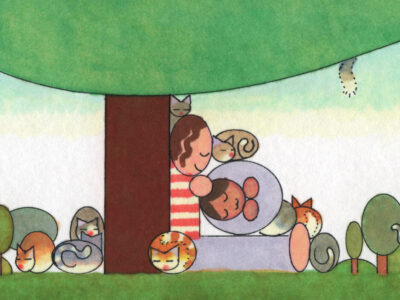
An illustration of two people sitting under a tree, surrounded by cats curled up napping.

Friendship as a Second Language

WP_Post Object
(
    [ID] => 7098
    [post_author] => 15
    [post_date] => 2024-07-30 06:57:58
    [post_date_gmt] => 2024-07-30 06:57:58
    [post_content] => 

Don't just touch grass. Befriend some.

Old Friends” is an ongoing series exploring the many ways that friendship changes shape in adulthood. 

The first time a tree talked to me, it nearly knocked me over. I was walking in my neighborhood when I felt a pull toward a Chinese elm I’d seen countless times, and stopped to put my hand on its trunk. I closed my eyes. Instantly, everything that tree had ever felt, known, relished, and endured rushed through me. I saw flashes of images of the people and animals and plants that had lived and died there before us; at once flooded with energy and sense memories that predated the tree itself. When I opened my eyes, I was woozy. 

If you had told me this story several years ago—that I’d one day believe I’d conversed with a tree—I would’ve laughed in your face. Like many people raised in a white Western settler culture, I was a self-righteous skeptic who’d been taught that plants, animals, and any other other-than-human entities were barely sentient and less than; meant to be used or dominated, not befriended, let alone viewed as equals. (Even the domesticated animals we consider family in most Western cultures are treated, to some extent, as objects we “own.”) I was human, elevated, civilized; everything else was nature, base, uncivilized. This was the inviolable order of things—until, of course, I put my hand on that tree, and definitively learned that it wasn’t.

There was nothing original about my “discovery.” The idea that everyone and every “thing” is alive, has inherent worth, and is interconnected is integral to communities and cosmologies across space and time. In many indigenous languages, there isn’t even a word for “nature” as some discrete, static entity. Quite the opposite: Aboriginal Australians’ conception of Country comprises a “sentient landscape” of waterways, air, land, humans, other-than-humans, ancestors, and their relationships—a way of being and relating so complex and antithetical to dualistic thinking that it threatens to blow the White Western mind. 

It would take an ego death and a spiritual rebirth for me to allow it to change mine, and a healthy dose of decolonization to see just how profoundly lonely my anthropocentric individualism had made me. Luckily, a whole world of friends awaited me on the other side.

~

I wasn’t always so isolated. Like all of us, I was born with an innate capacity for connection. As a kid, I remember desperately trying to save ants from the eager shoes of the other kids who delighted in stomping on them. I would cry as I tried to steer them to safety; feeling deeply for the ants in my body; each stomp chipping away at a greater whole I didn’t yet understand. As I got older, I’d feel this same connection to the squirrels searching for food in our yard, and the quahogs my family would dig up from the salt marsh to cook and eat. In high school I was swept away by transcendentalism and did my senior project on the benefits of being in nature. I knew there was something sacred going on there—that nature was sacred. But into my 20s, jaded and weighed down by the expectations of a certain kind of adulthood, I found myself communing with non-humans less and less. 

The severing of this connection wasn’t conscious, but it wasn’t accidental, either. A capitalist, colonialist society relies on separation and hierarchy to maintain power. We’re indoctrinated with dualisms of human/animal, society/nature, us/them—all of which teach us to fear and loathe the “other.” We become beholden to violent state apparatuses under the guise of safety, and comfort at the expense of our neighbors. We learn to believe that our heartache is not a craving for community and reciprocity, but for more things to buy and other perceived measures of status and power; for the newest iPhone, or more followers. The cult of individualism continues to do its job of isolating us from one another at the expense of the whole, eroding our relationships to other humans and rendering relationships with non-humans almost unimaginable. 

In 2020, we were offered a portal into a new world—one that slowed us down, showed us the flowers on our block, and recalled the visceral truth that what happens on another continent, even to those we’ll never meet, still changes us. For a lot of people, this spaciousness was also painful, allowing old wounds to surface and new versions of self to grow. In my corner of the universe, alongside the blooming jasmine and bottlebrush, I was blooming, too: confronting unearthed trauma in a process that scrubbed me clean and made me new. When I came back up from the underworld, I found myself attuned to another frequency. It must have been what Persephone’s first return felt like: I was vibrating on a cellular level with awareness of the animacy, importance, and interconnectedness of every leaf, root, rock, and worm around me. 

Surrounded by divine love, I was eager to reciprocate, to let these new friends know I was interested in them, too. In introducing myself, I tried to learn the names of those I’d once passed without a thought. This meant holding up my phone between me and a tree to take photos for iNaturalist then looking at my screen to memorize the results. It didn’t take long to realize that this logocentric, colonized approach was actually impeding our relationship: I wasn’t spending meaningful time with my potential friends, I was acquiring information. I realized they probably didn’t even care what I called them, anyway. It’s not like they chose those names for themselves; we imposed them. As the Franciscan priest Richard Rohr writes, “The divine has never seemed very worried about us getting [their] exact name right.” So neither would I. 

In these early, experimental days, I also took to heart what the scientist and writer Robin Wall Kimmerer, a member of the Citizen Potawatomi Nation, says about speaking of “the living world as our relatives.” She offers the pronouns “ki” and “kin” as replacements for “it” when referring to plants and the like; with this as a guide, I settled on they/them/their. To me, this shift is an expression of the philosopher Martin Buber’s “I-Thou” relationship, which recognizes someone’s individual subjecthood, as opposed to “I-It,” which reduces them to an object, an other. By practicing this basic respect, we begin to dismantle our imbalanced relationship to the world around us, instead entering a new one as equals.

After these shifts in consciousness, friendship came easily. Each time I stepped outside, I opened myself up to whoever was around, extending an invitation to engage. Sometimes I’d feel a tree or bird call for my attention and I’d meet them with curiosity and an offering of my heart. One morning it was a hummingbird, floating and feeding at the bottlebrush. Instead of glancing and moving on, I stopped and attuned all my energy to them, and they stopped to look at me, too, holding my gaze for probably five seconds but what felt like lifetimes. A few weeks ago, I sat with the eucalyptus tree up the hill behind my house. Our bodies touching, we soaked up the sun and I sensed a mutual ease and tenderness. On a recent hike through a gorge, I met granite and moss that wanted to tell me what they knew, and I returned their gifts with a gratitude that vibrated through me and sung out in a silent echo.

These friends and I didn’t share a spoken word, but we did share a mother tongue, and the more I practiced listening and speaking to them with body and spirit, the more fluent I became. In my efforts to communicate, I thought of Ursula K. Le Guin’s story “The Author of the Acacia Seeds and Other Extracts from the Journal of the Association of Therolinguistics,” in which a scientist wonders whether humans will ever understand plant language: “Let another century pass, and we may seem… laughable. ‘Do you realise,’ the phytolinguist will say…, ‘that they couldn't even read Eggplant?’” I was trying to learn.

We also don't need to fully understand one another to build radical affinities across scientific kingdoms. To survive ecocide and genocide; to imagine lives beyond a fascist, imperialist death cult; we have to liberate ourselves from dichotomy and practice interdependence with all of our neighbors. This looks like mutual aid, kinship, care, fluidity—wisdom that rings revolutionary against the values of neoliberal empire but has always been embedded in indigenous practices and political affiliations. Despite what colonial capitalism sells us, the only option is collective vitality. We either all survive together, or perish.

This is notably different from the (white) saviorism of mainstream environmental movements. It’s what Kimmerer calls reciprocity over sustainability; I consider it empathy over pity. I used to see the environment as a flat thing humans acted upon, something we extracted from and damaged and were thus morally obligated to save. I’d failed to consider that the environment, in all their agency, was also acting upon me—that, if anything, they were the ones doing the saving. (Insert tree bumper sticker: “Who rescued who?”) My belief that humans were a scourge upon the earth was rooted in shame, a state of being that prevents us from taking accountability and building connection. Plants helped me understand my value, both to them and to myself. The anthropologist Deborah Bird Rose articulated this experience well:

“Westerners… find ourselves embarrassed at the thought that country might really be addressing us… I have from time to time encountered real discomfort around the idea that any nonhuman being really gives a darn about me and my projects, outside of the obvious contexts of, say, hunting—as predator and as prey. However, the corollary to the idea of nobody giving a darn would be that what I do doesn't matter, and that is clearly not true.”

It’s a reminder that it’s not all about us, but it’s also not not about us. My relationships with the Chinese elm on my block, and with the ocean, and with the crows that congregate in front of my house, are an antidote to toxic individualism and its shadow, loneliness. They’re a font of political power, a rooting into the past, and an orientation toward the future. Other-than-human entities showed me I was part of an ecosystem, already and always loved. Now, when I need community, I reach for the leaves of the pepper tree in the front yard. Sometimes I ask how they’re doing in English, but usually it’s a wordless greeting, an exchange of energy. We meet in reception and response and in affirmation of our shared aliveness. We both know neither of us could ever be lonely when surrounded by so much life.

[post_title] => Have You Made a Non-Human Friend Today? [post_excerpt] => Don't just touch grass. Befriend some. [post_status] => publish [comment_status] => closed [ping_status] => closed [post_password] => [post_name] => non-human-friends-trees-nature-animals-plants [to_ping] => [pinged] => [post_modified] => 2026-08-04 16:57:18 [post_modified_gmt] => 2026-08-04 16:57:18 [post_content_filtered] => [post_parent] => 0 [guid] => https://conversationalist.org/?p=7098 [menu_order] => 51 [post_type] => post [post_mime_type] => [comment_count] => 0 [filter] => raw )
An illustration of a woman with long dark hair with one arm around a tree; her other hand is cupping her ear as if to hear what the tree is saying to her. They are surrounded by colorful leaves.

Have You Made a Non-Human Friend Today?

WP_Post Object
(
    [ID] => 4677
    [post_author] => 15
    [post_date] => 2022-08-31 21:11:05
    [post_date_gmt] => 2022-08-31 21:11:05
    [post_content] => 

In order to gather the people you love, sometimes you have to make a plan.

Listen to this article on The Conversationalist Podcast. | 12:57 min

Old Friends” is an ongoing series exploring the many ways that friendship changes shape in adulthood. 

It started as an aspirational text between buddies: "I want to run away somewhere for a month and just disappear." I'd sent it to my friend Matt in a fit of pique. I was on my fourth daily hour of Zoom fatigue, my twentieth month of consistent burnout. The text was an ice pack to the soul, a delusional light at the end of the tunnel, completely untethered to reality. So I was surprised by the speed of his response: 

"OK but yes. Let's do it." 

Matt's and my platonic love story was born in proximity, forged in the fires of our twenties and a New York media office. At first, we were just wallpaper to each other's daily lives. It was in the commuter crush of the Q train that real love formed. We'd talk about our flailing twenties, our pasts, and what we were working towards. There was a through line for us both: a steadfast commitment to creativity, to love in its many forms, and to making space in which we could become our best selves. At the time we were young and broke, stealing bananas from the office kitchen for sustenance. But we dreamed of growth, of room to write and play—and of travel. Before long, our commutes turned to regular walks around Gramercy Park, to writing dates, and to my first ever trip abroad: Matt, my roommate Brittney, and I absconded to Paris for the ultimate Friendsgiving. 

Eventually, as these things go, I moved across the country. The structure of us shifted. Matt and I would FaceTime, send voice notes and TikToks and check-in texts, but it wasn't the same. Proximity in friendship is a privilege that rarely lasts forever; we were used to this. Distance became de rigueur, especially as the pandemic raged on. Both Matt and I were run down. We felt boxed in. I battled panic attacks that had become commonplace at work. I craved the metaphorical wide open spaces Matt and I had daydreamed about years before on the Q. I needed something

Luckily, Matt and I were the kind of buds who frequently exchanged travel fantasies. Our long distance love language had taken the form of links to hotels and Airbnbs in far-flung places. These plans were always both serious and unserious—part aspiration, part ambition. It was impossible to tell when a flight of fancy might go through chrysalis, willed into existence. We'd aged a thousand years since that first trip to Paris. The world had changed a thousand times, too. 

A month after my text, Matt was in town for a conference, and he and I experienced something rare: the opportunity to sit on a couch together. We binged a season of Bridgerton in one sitting. That night I sat with him and another friend on my balcony, each of us balancing glasses of rosé, knowing very well we only had 48 hours to catch up on each other's lives. There was an undercurrent of energy to this visit, too: Over the weeks preceding it, our fantasies about running away had taken on a tone of reality. On his last day we brought out our laptops. Matt sucked in a sharp breath and breathed out excitement, his octaves climbing: "It's happening." The only way to make this trip real, we'd realized, was to actually book the damn thing. We'd figure out the rest later. 

We had until a month before the reservation to change our minds. But we knew once we hit “book” that it'd be done. So we did it.

Our place for August would be a villa in the Chianti Hills of Tuscany, with four bedrooms and five beds. After years living paycheck to paycheck, we were finally at a point in our lives where we could front the initial costs before the details were all ironed out. We were burnt out enough—experience-hungry enough—to just fucking do it already. But we also had our limits: Though Matt and I would have been happy wandering the Tuscan countryside just the two of us, if we were to be financially responsible, the plan would rely on filling the place with friends. People who could cut the costs into thirds, fourths, eighths—but who would also enhance this ambitious escape from our daily realities. The more we thought about it, the more people we wanted to invite into our world away. 

We started contacting people. Friends we knew were itching to travel. Friends who shared the same fantasy of disappearing, even if only for a week. Friends we missed, who lived in different states or on different continents. Friends of all economic realities to whom that round trip ticket felt necessary to their very spirit. 

It was not an all-encompassing effort, nor one that yielded only positive results. Some passed, some flaked, others yearned but couldn't pull together the PTO or funds. As time to takeoff inched closer, Matt and I weren't sure we were going to have much company at all. Anyone who's tried to gather the whole group chat for dinner knows the feeling. 

We blinked and months passed. Three weeks from when our villa would welcome us… and still, almost nobody had confirmed. We worried about the costs. Mentally, I calibrated what this month would be like in relative isolation. 

But then, the tide turned. A friend from New York told us she'd be there for one of the weeks. A confidante from college followed shortly. A newer buddy, from Chicago, tiptoed onto the reservation. Her time would happily overlap with the friend from New York—who she happened to be close with from their days in college. Soon we'd hear from a friend in London, and one in Los Angeles. The latter would bring her long-distance best friend from Miami. 

We'd wrangled eight people to join us, spread over twenty-four days. Friends from all different eras of our lives, and multiple who were strangers to either Matt or me. Another function of what we were doing became clear as we gathered the confirmations. We had always intended to create space, to go to a beautiful place where we could breathe and recoup. What I hadn't taken into account was the thrill in my chest seeing who'd be there. 

For me, the trip had originally been a haggard Hail Mary, a desperate attempt to escape burnout that had stopped me in my tracks. Those texts with Matt had been a temporary escape; now we were building a tangible one. My therapist's grin spread to her eyes when I told her: This was a chance to rebalance, she said, to center myself. That I could be some small part of helping friends find their space to recoup, as well, only aided in that journey. 

I know I'll see these friends in other places eventually. I'll see two of them at upcoming fall weddings, if only for a few hours here and there. If we're lucky, work or family will take us to each other's neck of the woods within the year. We'll have dinner, or spend a night on each other's couches. Then, inevitably, one of us will get on a plane and disappear back to their own time zone. 

This trip will have a similar ending, but the very body of it will be different. Realizing the kind of time I'll get with these people changes the shape of the whole experience. Our time, now, is a kind of summer camp, an adult friendship retreat—for some a recreation of a time where we were all living in the same space, and for others the first ever opportunity to do so, with fewer deadlines and pressures to boot. We will find space for ourselves. We'll take our breaths. We'll also commune with each other in ways we haven't before, reshaping our friendships in a whole different kind of proximity. 

In preparing for the trip, I scoured the aisles of Target. Into my cart I dumped a pack of Uno cards and 2009 favorite Cards Against Humanity. I bought a watercolor kit and a sketch pad. As I was checking out, I made a mental note to gather recipes that worked for groups; ones we could cook together while drinking and yelling and laughing. 

Friendship changes shape in adulthood. They don't warn you about that. "Your friends will move away!" they should say as they pass out caps and gowns. "They'll scatter, find new partners and jobs and put their roots down far away from you." They should tell you that when you do see these people it’s likely to be at a wedding, or at a funeral; through elusive FaceTimes or on brief holiday breaks. They should warn us early so we can shield our hearts. So we can know the reality: that in order to see these people you care about so much… you’ll have to make a plan. A deliberate, unfortunately expensive, frustrating, ever-shifting plan. But if you can make it happen, it will be worth it. 

There's a dull ache that comes with realizing you've lost track; the intricacies of intimate friends' day-to-days become, at some fuzzy point, no longer automatic knowledge. It's just natural. But in that villa forty minutes outside Florence, Matt and I will be roommates for a month. One friend will be there for fourteen days, another for nine, another for six. There'll be plenty of bickering, plenty of long nights holed up in our individual rooms, the craving of quiet time. Alongside all that, though, will be friendships that have lived and changed over years—and friendships that haven't even yet begun—colliding and congealing into something new. 

As I write this, most of us are packing. Here are a few things I'm looking forward to: the drifting of eyelids as someone I haven't seen in two years falls asleep before the movie's over; the crick of a brow as they judge the cheese I chose for dinner; long, long walks, talking till we're hoarse, finally saying out loud the nuance of a feeling we had months ago but are just now working through. The effort, financially and physically, that we all made to be there, and the ache I already feel for when it will be over. Friendship, when done right, is not fleeting. Time, however, is. What a relief then, to have made this space.

[post_title] => The Healing Power of the Friendship Retreat [post_excerpt] => [post_status] => publish [comment_status] => open [ping_status] => open [post_password] => [post_name] => the-healing-power-of-the-friendship-retreat-culture [to_ping] => [pinged] => [post_modified] => 2026-08-04 20:33:17 [post_modified_gmt] => 2026-08-04 20:33:17 [post_content_filtered] => [post_parent] => 0 [guid] => https://conversationalist.org/?p=4677 [menu_order] => 116 [post_type] => post [post_mime_type] => [comment_count] => 0 [filter] => raw )
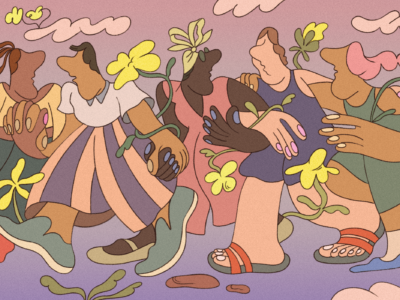
An illustration of five friends, arms linked, exploring somewhere new.

The Healing Power of the Friendship Retreat

WP_Post Object
(
    [ID] => 4701
    [post_author] => 15
    [post_date] => 2022-08-31 21:00:03
    [post_date_gmt] => 2022-08-31 21:00:03
    [post_content] => 

Making friends in your 20s is one thing. Making friends as a mom in my mid-30s felt nearly impossible.

Old Friends” is an ongoing series exploring the many ways that friendship changes shape in adulthood. 

You wouldn’t know it to meet me now, but as a child, I was deeply, almost paralyzingly shy. I struggled with new situations, always anxious that everyone around me knew something I didn't—what to say to boys, what to wear, how to act. It was the '90s, so I was often alone, in the benign neglect style of parenting that was so prevalent back then. I spent most of my days riding my bike around, making up games for myself, finding comfort in the solitude. I felt woefully unequipped for socialization of any kind, something that wasn’t helped by the fact that my family moved a lot, and I changed schools often. I wish I could say this was because of something practical like work, but really, my parents were just bohemian and broke. My mom once moved us across the country because she had a dream about the mountains out West, mountains she’d never seen in real life. So I retreated into myself, choosing to focus on making a small number of very close friends, rather than a wide social circle. 

But it wasn’t quite enough, the way nothing really is in adolescence. My younger sister was always the social butterfly in our family: People were (and still are) attracted to her warm, joyful nature and eagerness to include everyone in on the joke. She’s thoughtful and funny and kind, and watching her make friends has always been a pleasure, even when I was jealous of her ability to do it. You can’t imagine how difficult it is to admit to your younger sister that she’s better at making friends than you, but I was stuck and she was the one to set me free. I finally asked her outright one day, in the safety of our shared bedroom, full of Tiger Beat posters and Barbies, how she did it. She told me I needed to adopt a “fake it till you make it” approach, not just to friendships, but with my shyness in general. 

And it worked. I pretended not to be shy long enough that I actually became less shy. I cultivated a more open and less guarded approach to friendships and social scenes, and slowly, I became more comfortable meeting new people. In my early 20s, this led to a solid group of close friends and a large network of acquaintances that made the first half of that decade so exciting and fun—though not without its own drama and heartache. 

Then, halfway through my 20s, I left my hometown of Vancouver, Canada and moved to Toronto. At the time, it was a little uncomfortable having to make a new group of friends in a new city, but I was going out, I was meeting people at work, and there didn’t seem to be a huge barrier to recreating the social life I’d had in a different city. I settled deeper into the relationships I had: Some friendships got better, some faded away, some ended very painfully. With no need to make new friends, my skills atrophied.

When I met and married my husband, things shifted again. His friends and my friends became our friends. Merging our lives in the biggest, most important ways necessarily meant bringing together how and with whom we socialized, and I embraced it. I loved seeing this disparate group of people become a community that we took care of and who took care of us. This was made abundantly clear when we had our first child, and this big group of people came together to feed and look after us in the painful postpartum phase. 

But the cruelty of finally leaning into the friendships you’ve cultivated over decades is that you start to feel like you don’t have room in your life for new ones. In my early 30s, I closed rank. I shed acquaintances, avoided making new pals at work or when going out, and focused on maintaining a very close inner circle of friends, a lot like I had when I was a kid. On the one hand, that meant easy, comfortable friendships where we’d developed a rhythm that was second nature. On the other, I can admit I also took a lot of those close relationships for granted, picking some friends apart when they irritated me, or not putting in the kind of work either of us used to when we were first becoming friends. 

And it probably would have gone on like that for many more years, until my husband and I, along with our five month old son, moved to the UK in 2018. 

As far as relationships go, it’s an accepted truism that the older you get, the harder it is to make new friends. Whether it’s a lack of time for the friends you already have, feeling overwhelmed by the rigors and responsibilities of life, work, and family, or just plain old apathy about chatting up fresh faces—“no new friends,” as Drake more aptly put it—it can seem not just impossible, but unnecessary to open up your world of acquaintances after, say, your 20s. I readily accepted, even embraced this idea myself, up until we moved to a new country and I was forced to start from scratch. 

Making friends in a new city in your 20s is one thing, starting over again as a mom in my mid-30s felt nearly impossible. It took me right back to elementary school, to feeling like there was a shorthand that I was missing, a piece of the puzzle I’d dropped on the way to the playground. I found it hard to meet people at work because I had to rush home at five for daycare pickup and it was tricky to meet up on weekends because I was still breastfeeding every few hours. 

Yet, paralyzing loneliness is a good motivator—at least it was for me. I forced myself to be as open and willing as I had been as a child. This meant reaching out to fellow parents for play dates as often as possible, including strangers I met in the park near our house, painful as that was to do. It was like rebuilding my atrophied muscle: I had to do friendship rehab just to make one or two new friends. 

But it was also invigorating. Forging a close relationship with a stranger for the first time in almost a decade reminded me of how necessary it is not to cut yourself off from the world. The relief of having someone to call on for a walk or a vent or both was incalculable. Working on that part of myself after so many years not only led to making new friends, but also made me appreciate the friendships I had back in Toronto, the community I’d spent years building. 

When we decided after a couple of years to move back, I was determined to bring this energy home with me. Being curious about people, making an effort to see the good and work through the bad, especially after the pandemic, felt (and feels) like radical self-care. It was precisely because making friends in London was so difficult, that has made making friends in Toronto so exciting—I want to make the effort. I love stretching my sense of community in a place I’ve always called home, where it would be so, so easy to just coast and take all of it for granted. It seems so obvious now, once you’re on the other side, but it really is true that no one knows what they’re doing; some of us are just fumbling a little less. 

And after nearly twenty years, I think I’m done faking it: I may have actually made it. 

[post_title] => No New Friends [post_excerpt] => [post_status] => publish [comment_status] => open [ping_status] => open [post_password] => [post_name] => no-new-friends-in-mid-30s [to_ping] => [pinged] => [post_modified] => 2026-08-04 20:34:11 [post_modified_gmt] => 2026-08-04 20:34:11 [post_content_filtered] => [post_parent] => 0 [guid] => https://conversationalist.org/?p=4701 [menu_order] => 117 [post_type] => post [post_mime_type] => [comment_count] => 0 [filter] => raw )
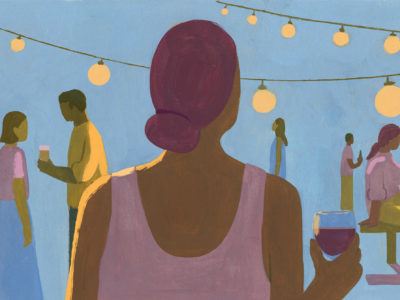
A painting of a woman from behind, holding a glass of wine and looking out at a party where everyone is socializing.

No New Friends

WP_Post Object
(
    [ID] => 4690
    [post_author] => 15
    [post_date] => 2022-08-31 16:00:00
    [post_date_gmt] => 2022-08-31 16:00:00
    [post_content] => 

In my 20s, this question consumed me. Then, I asked a better one.

Old Friends” is an ongoing series exploring the many ways that friendship changes shape in adulthood. 

At the nadir of the Great Recession, as I prepared to hurl my about-to-graduate self into a labor pool that looked more like a quicksand pit, my many preoccupations about the future—Where would I live? How would I pay the bills? What would I do, in both a cosmic and literal sense?—were always overshadowed by a quietly devastating question: Why don’t I have any friends?

The thought was born of confusion more than self-pity. I had plenty of flaws, yes, but I wasn’t a uniquely unlikeable person, nor an especially cruel or boring or stupid one. At no point had I ever made a conscious decision to reject friendships; in fact, I craved them with a somewhat pathetic sincerity. Yet, for whatever reason, most days I woke up feeling deeply alone and went to bed feeling the same way.

Soon I’d learn this was normal, that feeling like you have no friends is one of the most universal experiences of being an adult in the 21st century. Every year there’s a new study that quantifies our collective loneliness. The specific statistics are irrelevant, the takeaways interchangeable. The numbers say little we don’t already know. Who needs an expert to explain that a society built around perpetual, exponential growth must demand ever-greater exertion and attention from an increasingly exhausted population, and that this state of affairs sucks ass?

On some level it was nice to know my misery had company. But not that nice. It certainly wasn’t enough to allay my fear that I was trying my best to make friends and failing miserably. No matter how often (or where) I put myself out there, I had nothing to show for it. Desperation is a stinky cologne, and it often felt like the more I yearned for friendship, the faster people ran away from me. After two years of playing pickup basketball at the local YMCA, I’d bonded with zero other humans. My weekly trips to the meditation center were wonderful, but even joining a “Dharma Friends” group didn’t yield any actual friends. I chatted with classmates in the halls after lectures and struck up conversations with strangers at the bus stop, often with the promise that we’d grab a drink later. We never wound up grabbing a drink later.

My inability to make friends would’ve made more sense if I’d been a “real” adult, I reasoned. If I’d had the excuse of a kid who ate up all my free time, or a career that chained me to a desk. It would’ve made more sense if I’d just moved to the area: Minnesota is notoriously inhospitable to newcomers. None of this was true, though. The only remaining explanation? The problem was me. 

In hindsight, I think this was correct, but not for the reasons I imagined.

Compared with all the time 21-year old me spent pondering why I didn’t have any friends, I spent very little wondering how I might be a good friend to others. I don’t think I was unique in this regard: Young people are typically (if not always accurately) regarded as self-centered. In any case, my own needs were so urgent and ravenous that I had no brain space to contemplate the needs of anyone else. My obsession with having friends made me poorly suited to be one myself.   

Another thing I’d rarely considered was if the question of Why don’t I have any friends? was even valid. It’s not like nobody was ever nice to me. The YMCA basketball guys, for example, may not have invited me over to play video games—but we did spend 5-10 hours a week hooping together, cracking jokes and talking good-natured smack. And some of the people I’d met at the meditation center had shown me remarkable kindness. There was the yoga teacher who’d stay after class to help me practice headstands (and, much to my surprise, commiserate about trying to quit smoking). Or the avuncular gentleman who carved me a beautiful portable altar after I told him I was moving to South Korea. I remember admiring the wood’s live edge and choking up as he hugged me goodbye. Isn’t that something friends would do, even if we’d never hit the bars together? 

And then, a strange thing happened: I left the place I’d spent most of my life and promptly made a bunch of friends. 

The change of scenery didn’t hurt, and finally having a small-but-steady source of income wasn’t bad either. (How invisible you can feel in a city when you have no money, and how limited your options for socializing become when a $5 drink is beyond your budget!) On Thursday nights, we’d have barbecue feasts and sing karaoke; on weekends we’d go to mud festivals or lewd sculpture parks. At last my life was full of the friendship I’d craved, the bubbly and adventurous camaraderie of beer commercials and Benetton ads. This miracle didn’t happen because I somehow got smarter or funnier or cooler, though—all the attributes I’d thought were essential for having friends. Instead, I’m pretty sure it happened because I got more curious about other peoples’ lives and less obsessed with my own.

Looking back, it feels unsatisfying to say that my reintroduction to friendship came thanks to a change in my material conditions. People can’t just pack up and move if they feel alone in their town or city, and finding a decent job has always been easier said than done. But it feels equally unsatisfying to say it happened because I shifted how I thought about things—as if the only thing standing between me and a brunch table full of chums was a pinch of positive thinking.

When it comes to making friends as an adult, the deck is indeed stacked against us. It’s not just me: This is a shitty and difficult time to be alive. Life under a hypercompetitive capitalist regime is hostile to the conditions that make friendships possible. We have little free time for long meandering chats, and we have few nice public spaces in which to have them. We’re taught from birth to view ourselves as consumers and competitors. We’re punished for having any vulnerabilities. You could say this makes friendship more urgent than ever… but when hasn’t it been urgent?

All these points are true in a big picture sense, which made it essential (in my case, at least) to ignore the big picture. Ignoring stuff tends to get a bad rap—but for me it was an act of liberation instead of neglect. When I started paying less attention to my own neuroses about friendship and the structural reasons it felt so out of reach, I had more time and energy to pay attention to other people. I started to notice little things about the ways they talked, moved, thought, ate. This was genuinely interesting to me, and it turned out that taking an interest in others was a good way to get them interested in me, too. Not all the time, but often enough that I felt less alone. 

In the decade-plus since my existential friend crisis, my thoughts about friendship have changed so much they might as well belong to a different person. My urge to impress morphed into an urge to care. This shift didn’t happen because I gritted my teeth and tried extra hard to be nicer; it came when I took a break from beating myself up to notice all the fascinating humans moving around me. There’s an old Buddhist joke that goes, “Don’t just do something, sit there.” And as silly as it might sound, not trying to fix my friend problem was the first and most important step to letting it fade away. 

I wish I could go back and explain all this to about-to-graduate me, but who knows if he would have listened. Maybe he had to experience it all firsthand for himself. Better late than never, though, and better now than even later. What a blessing it is to realize that we don’t have to be better to be worthy of friendship. What a relief to know that flowers bloom even if we don’t pull them up by their petals. 

[post_title] => "Why Don't I Have Any Friends?" [post_excerpt] => [post_status] => publish [comment_status] => open [ping_status] => open [post_password] => [post_name] => why-dont-i-have-any-friends-culture [to_ping] => [pinged] => [post_modified] => 2026-08-04 20:40:51 [post_modified_gmt] => 2026-08-04 20:40:51 [post_content_filtered] => [post_parent] => 0 [guid] => https://conversationalist.org/?p=4690 [menu_order] => 123 [post_type] => post [post_mime_type] => [comment_count] => 0 [filter] => raw )
A black and white illustration of a man looking melancholy; a colorful illustration of him surrounded by friends is breaking through the "canvas."

“Why Don’t I Have Any Friends?”