WP_Post Object
(
    [ID] => 10817
    [post_author] => 15
    [post_date] => 2026-08-04 17:02:07
    [post_date_gmt] => 2026-08-04 17:02:07
    [post_content] => 

Growing up, I was afraid to look at myself in the mirror. Then my friends helped me recognize the woman looking back.

A mirror might be an innocuous part of your life, but for most of mine, it was filled with the unknown. Each accidental glance meant confronting abstract shapes that filled me with dread. I knew my real reflection was buried somewhere underneath. But I feared if I looked too closely I still wouldn't be able to comprehend what I saw; a fear equal to the tales of Lovecraft. 

I wasn’t born afraid of my reflection, but instead, taught to bear witness to my incongruence by the world around me. As a child, my gender was irrelevant to me until people started telling me how it was supposed to be; how it was supposed to look. I’d never wanted to wear a dress, had never liked the color pink, and had never cared for unicorns. But I chafed at the obligation that I had to be something at all.

Growing up, I found an unconscious comfort in a digital social life, where I was freed from those gendered obligations. I recessed into this world, filling my days with hours-long voice calls while playing video games with strangers online. I felt safe from the abstract fear I’d always carried. In the digital world, it didn’t matter what I looked like, or what body I was born into. I had full agency over how others “saw” me. This is the reason so many young trans kids find comfort in communities online: a separation from the physical. But I wasn’t ready to look inward yet. 

My connections became tethered to a screen. Even when I did get together with neighborhood friends to play video games or watch movies in their families’ basements, the chances that I'd catch myself reflected were limited. The screen acted as bait so we wouldn't have to look at one another. For a kid who would put a blanket over their bedroom mirror, this was a pretty nice situation to be in. It was only when the monitor shut down that I could see the unknown looking back at me again. 

This abstract discomfort I’d always felt finally took shape as I entered an all-boys high school. Standing in a hallway amongst a jungle of teen boys for the first time, I had only one thought: I’m not like them. Maybe every mirror I'd encountered before that moment was unfocused, and this one epiphany corrected my vision, revealing what was always buried on the other side of the mirror: myself. And now, I could see that she was suffocating. 

As realization and panic set in, I recessed further online. My only gasps of air came from my growing digital social life. Unlike the grand stage it often feels like today, the internet of my adolescence felt like a town square, where I could meet people I’d otherwise never would. Slowly, my digital circle expanded. Along with select friends from previous school years, I began building a community of trusted people across the country, picked up in different virtual lobbies. I’d spend hours on Skype calls with dozens of friends late into the night, talking about gaming and politics and movies. Much to the certain dismay of our parents, these strangers became some of my closest friends. 

After I left the jungle, I was ripped away from the safety of that digital circle. College revealed that my digital life was just a band-aid on a much deeper wound. It was there I finally understood that I was trans, and that hiding this would not only leave my reflection suffocating, but leave me suffocating, too. This urgency forced me to find trusted people around me, and begin to transition socially—online and off. I changed my name to Allison across both worlds, and slightly altered how I dressed offline to feel more congruent with who I wanted to be. I became recognized at school and at work as myself.

In the process, something surprising happened: other people saw the woman in my reflection before I could. I began relishing in my newfound community, many of them other queer folk on their own identity journeys. It was healing to see, in living color, that I was not alone. They encouraged me to celebrate milestones; hormone anniversaries became an additional birthday worth celebrating. The thoughts and feelings I’d hidden my whole life became open conversations. Panic slowed, and the tightness in my chest and the weight on my shoulders began to ease. 

To be accepted was like a breath of fresh air on the first warm day of spring. I wish it was simple enough to say this solved all my problems; I still feared my reflection and would flinch whenever I accidentally caught a glimpse. But occasionally, I’d recognize the woman looking back at me, and even be able to meet her eye.

What I previously thought impossible and out of reach was suddenly right in front of me. I wasn’t born loving myself, but I was taught how to. And the people who taught me this—the people who allowed me to be myself—are who I consider family now. 

During the pandemic, I traveled across New York visiting state parks with two of these friends from college. We’d take long hikes together, and whenever we’d reach the top of a mountain, I’d finally feel untethered from a screen. On one of these hikes, I decided I didn’t want to make it to the peak. I let my friends go off as I clambered up a small boulder, two-thirds up the trail. For the very first time, I allowed myself to just sit and breathe. I was unburdened by the weight of my own fears, and my body relaxed, allowing me to take a nap on top of the comfiest boulder in central New York. 

Those dear strangers online are now family, too. A year ago, we all traveled across the world to meet for the first time in Tokyo, Japan. It's a beautifully strange experience to finally meet people you’ve spoken to through a screen for around a decade in the streets of Asakusa. Yet it never felt like we were “meeting” for the first time; instead, we were celebrating our collective friendship. With roughly a dozen of us, we explored a new country together, visiting shrines and possibly every 7-Eleven in Tokyo. They even helped my now-wife plan her proposal to me on that very trip. (They were also the first to know about our engagement, almost a week before our blood families did.) 

This community pulled me out from the other side of the mirror. Each person was a hand stretching out. Without them, I likely would not be here. I cherish my community so deeply, and even though life has taken its grip, we still find ways to talk and to see each other; we find ways to make time.  

These days, I don’t cover the mirrors in my apartment. I’m not immune to the fears I once had, and will probably always harbor some form of self-reproach. But mostly, I am living with enthusiasm, despite how hellbent this country is on targeting people like me. With each new policy enacted, any moment of fear I have is quickly assuaged by a friend sending support or a loving message. At a time when I have less protections than ever, I somehow feel the most safe. 

You don’t notice healing, you realize you’ve healed. Walking on the street used to require the mental anguish of shutting my peripherals off in fear of catching a distorted reflection of myself in a car or shop window. Sitting in a subway car meant closing my eyes to not see a blurry reflection in the glass on the other side. Until one day, it didn’t. 

I wish I could go back in time and tell younger me to not look away. I know if she ever did look for long enough, she would’ve seen herself with a now common smile, surrounded by friends who love her. Just because she didn’t know who she was looking at didn’t mean it was some Lovecraftian horror. Sometimes, it’s just your reflection waiting to be recognized, waiting to be freed.

[post_title] => Befriending My Reflection [post_excerpt] => Growing up, I was afraid to look at myself in the mirror. Then my friends helped me recognize the woman looking back at me. [post_status] => publish [comment_status] => closed [ping_status] => closed [post_password] => [post_name] => befriending-my-reflection-adult-friendship-week-old-friends-identity-mirror-personal-essay [to_ping] => [pinged] => [post_modified] => 2026-08-04 17:23:29 [post_modified_gmt] => 2026-08-04 17:23:29 [post_content_filtered] => [post_parent] => 0 [guid] => https://conversationalist.org/?p=10817 [menu_order] => 0 [post_type] => post [post_mime_type] => [comment_count] => 0 [filter] => raw )
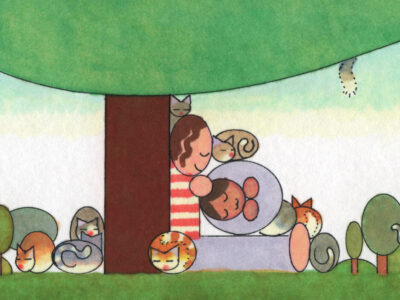
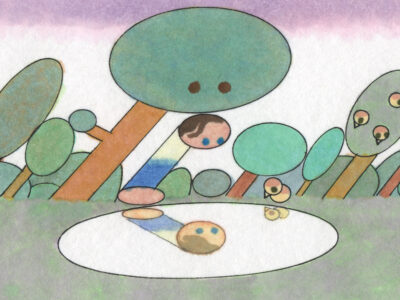
An illustration of a person leaning over water and looking at their reflection. A large tree behind them looks over their shoulder and a bird stands at the edge of the water.

Befriending My Reflection

WP_Post Object
(
    [ID] => 10823
    [post_author] => 15
    [post_date] => 2026-08-03 15:56:25
    [post_date_gmt] => 2026-08-03 15:56:25
    [post_content] => 

Beyond the classroom and in real life, a teacher-student friendship can be one of the best and most enduring kinds there is.

A card arrived in the mail last week, my name written in a cursive I know well. It had been a couple of weeks since her last letter, and I eagerly sat down on my couch to read it. She told me how everyone at home, “both human and animal,” was doing well, how many cats she was currently fostering (thirteen), and yet, that she didn’t mind the label that came with it. “The Crazy Cat Lady is definitely somebody I identify with,” she wrote, and of course, that made me giggle. Her playful way with words paired with self-deprecation have always been uniquely hers. This I’ve known since long before we became friends.

My penpal and I met one morning more than three decades ago, when I walked to the end of a high school hallway full of lockers and into her classroom. I can only imagine how confused I looked to everyone on that first day of school: Shy and slightly awkward, I spoke no English and was dressed very differently from my peers. I’d only landed in that small New Jersey town a couple of weeks prior, from my home in Caracas, Venezuela. I was fourteen years old, and had attended the same school for most of my life. Suddenly, I was one of the “new kids,” and only one of three in the high school who spoke Spanish, who had the great luck of being assigned to Mrs. Boutin’s English-as-a-Second-Language (ESL) class.

I don’t remember her being a Cat Lady in those years. In fact, in one of her many letters this year, she told me she used to be a dog person until she’d helped a neighbor trap, neuter, and return a bunch of feral cats, then decided to keep doing it. She found the work humbling. It made her feel useful. I guess it wasn’t much different than teaching English to a bunch of deer-in-the-headlights scared and somewhat feral adolescents who had come from all walks of life and many corners of the world, including Vietnam, Argentina, India, and China, in my class alone. Some of us had experienced trauma, others came from families seeking work, but no matter how we ended up in that New Jersey high school, every one of us took refuge in her classroom. I’d like to think we all needed it.

We all looked up to Mrs. Boutin because she was patient, laughing off our teenage drama and championing us as we uttered our very first English words, thick accents and all. Like many of my classmates, I’d often swing by after the school bell rang just to talk. She would ask me about my old life. Did I miss it? Would I get to visit home again, and if so, what would be on the top of my list of things to do? Who did I most want to see? She listened intently to my melancholy answers like few others did. It kept me emotionally present at a time in my life when it would have been much easier to push my complex feelings under the rug and simply do whatever I could to fit in (which I did anyway).

Within a year, I was able to defend myself in English; in another three years, I graduated and left for college. I discovered journalism, moved around—within the U.S. and abroad—got married, and, almost twenty years after leaving high school, had a kid. Now that I think about it, becoming a parent must have prompted my search for her: caring for a new life made me appreciate the old ones all the more. I found her through social media. When she responded a day or two later, she insisted that I call her by her first name: Juanita.

In Sister Outsider, poet and essayist Audre Lorde says that being a teacher means learning to talk to students to get “through to them” so that “their own processes would start.” She likens it to a fire, something you could “literally incite, like a riot." By the time I found Juanita again in 2014, I’d been teaching storytelling for a few years, trying my best to incite my students like she had me. Until then, I hadn’t realized how teaching could be political, both an act of kindness and of rebellion. How, beyond the classroom and in real life, a teacher-student friendship could be one of the best and most enduring kinds there is.

After a few email exchanges, we realized snail mail was much better for us both. Juanita would often finish her letters with an invitation to visit until, four years ago, I decided to accept and travel to Mississippi, where she lives with her husband, dog, and a rotating crew of at least a dozen former street cats she’s trying to find homes for. She was the same Juanita I remembered—with her Puerto Rican Spanglish, her hair short and her skirts long—except both she and I were a few decades older. She insisted I stay at their home and sleep in a hot pink guestroom she’d dubbed the “Pepto-Bismol.” That first night, I dreamt I was back in high school; it was a good dream. 

Even though she’s long retired, Juanita still works most weekdays as a volunteer for local trap, neuter, and release efforts, which are few and far between in Mississippi. The morning after I arrived, I came along as she drove us around town to all the spots where she knew there were feral cat populations. I watched as she counted how many cats were in each, gave them food and water, and took note of any new litters or sick animals. Most of the cats scampered away as soon as they saw me. But they knew and trusted Juanita, just like the workers we ran into at the University of Mississippi campus, and the man at the gas station where she and I grabbed “the best fried chicken on a stick in all of Mississippi” after her volunteer shift. And just like me and my fellow classmates who used to seek her out after school. 

I left Mississippi feeling grateful and whole. In just three days, we’d visited three art museums, ate obscene amounts of delicious fried food, went on long sightseeing drives, discussed religion and politics and race, and visited her friends who seemed delighted to hear that I, Juanita’s former high school student, was now her friend, too.

Sometimes I think the term “friend” doesn’t quite do our relationship justice, though. Not because of our age difference or the deep respect I continue to feel for her as my former teacher. Juanita knows me like a parent; her gentle yet no-nonsense life advice has always reminded me of my late grandmother whose Spanish-language proverbs were just as funny and true. But she also continues to be a source of comfort, like she was many years ago. “Be at peace,” she texted recently, when I told her I needed to put our beloved cat to sleep. “You will know what to do as each moment arrives.” She was right. 

Can a fairy godmother be a “friend”? Absolutely. We are lucky to find (and keep) even one such friend over the course of a life, and I believe Juanita is mine. Her letters arrive in the mail with printed out poems or books I haven’t yet read that seem to address my moods in ways that sometimes spook me. Like the Mary Oliver poem, “How Would You Live Then?,”  which she’d cut down to a four-by-five piece of paper and slipped inside a card that arrived last week. “What if the mockingbird came into the house with you and became your advisor?” its third line read, which I happened to scan early one evening while I sat on my bed, listening to our resident mockingbird sing in the front yard. 

I am still drafting my latest snail mail response to her, in our now-customary English mixed in with Spanish, following our thread, asking about summers in Mississippi, her garden, and her foster cats. I am also planning another visit, already knowing which room she’ll insist I stay in when she replies, in that playful way that’s uniquely hers, and never fails to make me laugh.

[post_title] => Friendship as a Second Language [post_excerpt] => Beyond the classroom and in real life, a teacher-student friendship can be one of the best and most enduring kinds there is. [post_status] => publish [comment_status] => closed [ping_status] => closed [post_password] => [post_name] => old-friends-adult-friendship-esl-english-second-language-teacher-student [to_ping] => [pinged] => [post_modified] => 2026-08-03 15:56:27 [post_modified_gmt] => 2026-08-03 15:56:27 [post_content_filtered] => [post_parent] => 0 [guid] => https://conversationalist.org/?p=10823 [menu_order] => 0 [post_type] => post [post_mime_type] => [comment_count] => 0 [filter] => raw )
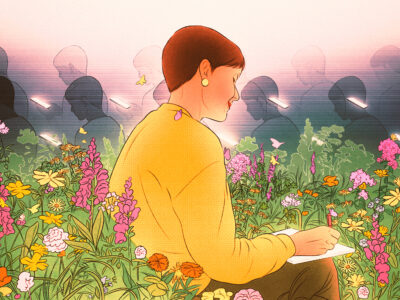
An illustration of two people sitting under a tree, surrounded by cats curled up napping.

Friendship as a Second Language

WP_Post Object
(
    [ID] => 9098
    [post_author] => 15
    [post_date] => 2025-08-01 17:42:22
    [post_date_gmt] => 2025-08-01 17:42:22
    [post_content] => 

As immigrants, my friends and I depend on each other in ways I've never needed back home.

Old Friends” is an ongoing series exploring the many ways that friendship changes shape in adulthood. 

For months, I thought coming to New York City was a mistake. I’d accepted an unpaid internship in the city, leaving my home in Bogota to try living abroad. I dreamed of going to Broadway shows, dining out at different restaurants—enjoying all the fun New York had to offer. But instead, in addition to my internship, I ended up taking another job, just to afford rent. I worked sixteen hours a day, six days a week, with little time to socialize. I was burned out and deeply lonely. Then, one day, my friend Carolina suggested we go out after our internship and do something fun.

“We should go rollerskating at Rockefeller Center,” she said.

I used to skate for fun back in Colombia—my home country—when I was a teenager, but hadn’t gone in years. Still, I thought it was a great idea. Carolina was a talented skater, and we had so much fun looping around the rink that I was reminded of the joy skating had once made me feel. 

For the first time in months, I was completely at ease. Then, as we were leaving the rink, I fell. When I looked down, my arm was shaped like the letter “s”: I’d broken my left wrist. Carolina, somehow, found the strength to pull me up, call an Uber, and take me to the nearest hospital. She waited with me for hours in the emergency room, where I learned I’d need nails and a cast to fix my broken bones. 

As my arm healed, Carolina took the subway with me to work every day, protecting me from accidental bumps. She brushed my messy hair, pulled down my pants so I could pee, and dressed me up again; all things I’m not sure I’d ask even my closest friends to do for me back home. 

At the time, we had only known each other for four months. 

~

I once read an Instagram post that said being an immigrant is like becoming a dog: one year as an immigrant equals seven years of life experience. Friendships, then, become intense and profound more quickly than they might back home. Sometimes, out of necessity, they become deeper than our friendships back home, too.

Adult immigrants often find themselves profoundly alone. Our families and closest friends usually remain in our home countries, hundreds or even thousands of miles away. The friendships we form in our new lives, then, become everything to us: our support network, our first call, our emergency contacts. 

In an unfamiliar city, we also seek familiarity. As immigrants, we tend to connect more deeply with people from similar cultural backgrounds, something especially meaningful when we suddenly become the “other” after a lifetime of living in a country where we are the “norm.” Sharing a language, traditions, and social cues lowers the barriers to intimacy: When someone understands the way you were raised, you don’t have to justify or over-explain everything you do. 

Carolina was from Bogota, too, and had started at the same internship a week before I had. We had a lot in common: We both came from Catholic-conservative backgrounds, needed to be very mature at a young age, identified as feminists, had issues making friends, and wanted to start life from scratch in the city. We shared similar experiences growing up, and similar experiences since coming to New York. But our friendship deepened after I broke my wrist: I knew then that we could rely on one another. That if something ever happened to me again, she would take care of me—and if something ever happened to her, I’d take care of her, too. 

Carolina isn’t the only immigrant friend I’ve felt this immediate intimacy with. One day, I was hiking with Nicol, a Peruvian friend. The trail was rocky and we had to march in rhythm just to move forward. Suddenly, a memory popped into my head: In primary school, I used to march like a soldier with the rest of my classmates. Military culture is deeply ingrained in Colombia because of our near century-long history of war and internal armed conflict. It felt silly, but I decided to share my memory with Nicol.

“Oh, yeah, we did that at my school, too,” she said. “It was so ridiculous. Our parents would come watch us march in squared formations.”

Of course. Peru, too, has a history of armed conflict, and military culture was a part of her primary school indoctrination as well. She didn’t make fun of me for what I thought might be a strange confession. Instead, she took my memory and treated it with care—turning it into something funny and shared. 

I immediately felt closer to her, something unusual for me. I’ve always considered myself introverted. During my undergrad years in Colombia, I experienced severe social anxiety. I was trapped in an internal monologue that told me I was boring, strange, and hard to love. For nearly two years, I didn’t make a single friend. I built high walls around myself that kept everyone out. After a while, I made meaningful connections that have stayed with me, but I’d never found it easy.

When I migrated, I assumed I’d again struggle to make friends—especially since, on top of everything else, I now had to add “not fluent enough in English” to my long list of self-demeaning adjectives.

But when I started grad school in the States, I made friends within the first two weeks. At the time, I thought maybe I had changed somehow; become more at ease within myself, more confident. But looking back, I can see it was something else: My deep, human need to belong—and the comfort I felt around other Latin American students—had activated parts of me that had been frozen. 

A couple of weeks ago, I spent the afternoon with María, a friend from Mexico. Before coming here, I had never had friends like her—extroverted, party lovers, heavy users of dating apps, full of energy. After a long conversation about how Latina diet culture has shaped our relationship to food and our bodies, I realized our friendship had grown strong, in spite of our differences, because it was rooted in something larger than us. Like with Carolina, and Nicol, and countless other immigrant friends, we were united by our need to resist a homogenizing environment. We were united by our shared confusion about U.S. social cues. We were united by our warmth, our humor, and our overlapping memories, even if we didn’t grow up in the same country.

“I’ve noticed you’re literally like my younger sister,” she told me. “The good girl who wants to fit in and carries the weight of your lineage. We’re very different, but there’s a strong emotional connection between us.” I realized then that she is, indeed, a lot like my older sister, too.

I’ve been in the U.S. for almost two years now, and I still find it hard to make American friends. Sometimes, people make xenophobic comments to me in the streets. When I meet people who grew up in the States, I quickly find myself running out of conversation topics, unable to find much common ground—something that still makes me feel out of place. But my immigrant friends are part of the reason I still want to stay, to put down roots. 

At the end of the day, home is where you feel safe, loved, and cared for, rather than where you grew up. If I have friends who look after me, who resist the harshest expressions of discrimination and exclusion by my side—then here, I’ve found a place to call home. 

Don’t get me wrong: I have beautiful, loyal friendships in Colombia, too. But my friends there don’t need me to survive. In Colombia, if I got sick, I could call my parents or sisters, and they would drop everything for me. But there, I had never been anyone’s emergency contact. My friends back home already had someone else to call—their own parents, siblings, partners. 

In contrast, my friendships in New York became lifelong within months. I’m now the emergency contact for two friends. I’ve been the caregiver for one of them coming out of a medical procedure that needed anesthesia. Here, my friends and I depend on each other to be each other’s version of family, to be a shoulder to cry on, to be someone reliable for medicine delivery; as a party plus-one, a caregiver, a babysitter (or cat sitter!), among many other things. 

The need to survive, to resist, to belong, and to be comforted—that’s what first pushed us together. But it’s the care, love, and familiarity that’s kept us bonded.

[post_title] => Emergency Contact [post_excerpt] => As immigrants, my friends and I depend on each other in ways I've never needed back home. [post_status] => publish [comment_status] => closed [ping_status] => closed [post_password] => [post_name] => immigrant-friendships-migrant-friends-relationships-home-emergency-contacts-shared-language-culture-latin-america-immigration-personal-essay [to_ping] => [pinged] => [post_modified] => 2026-01-15 19:22:16 [post_modified_gmt] => 2026-01-15 19:22:16 [post_content_filtered] => [post_parent] => 0 [guid] => https://conversationalist.org/?p=9098 [menu_order] => 3 [post_type] => post [post_mime_type] => [comment_count] => 0 [filter] => raw )
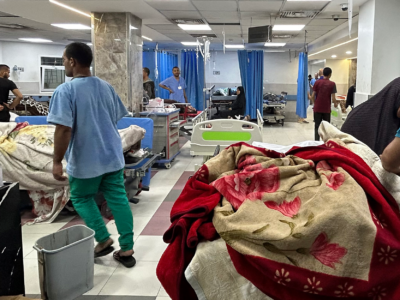
Illustrator of the silhouettes of two women, one braiding the hair of the other. They are in shadow, standing in front of a window with a sunrise, while the rest of the room is shrouded in darkness.

Emergency Contact

WP_Post Object
(
    [ID] => 8363
    [post_author] => 15
    [post_date] => 2025-05-20 20:08:39
    [post_date_gmt] => 2025-05-20 20:08:39
    [post_content] => 

One would hope that something that happens so frequently would be discussed. But overwhelmingly, it’s not—until, as I learned, you join the miscarriage club yourself. 

Listen to this article on The Conversationalist Podcast. | 12:57 min

For an LA storytelling show in 2009, I wrote and performed an essay called “The Cinderella Instinct,” a piece detailing that cut-and-run gut feeling nearly every woman in her 20s cultivates from continuously escaping predatory men. Easing the audience in with the softball line, “Every man is a potential rapist,” I launched into stories detailing the many times I’d quite literally run away from an uncomfortable situation with a possible predator—from hopping out of a convertible at a rolling stop in Hollywood to sprinting from a shirtless Frenchman through a deserted, deeply unsavory part of Nice. 

At the essay’s conclusion, I reflected on how, while I’d escaped potential assault throughout my life so far, 1 in 6 women do not—including some of my best friends, and my sister, whose story I shared with her permission. Perhaps my “luck” was partly because my stories had involved strangers, whereas assault has always been more likely to occur from someone you know, as it had with my loved ones. “So who that I know is the real potential rapist?” I’d written in the original essay. “Is it you?” 

Granted, they made me cut that final line in my performance, deeming it a bit too much truth telling for a comedy night. Because of this, it wasn’t until some handful of years later, with the advent of #metoo, that I thought we might finally be ready to address the question—and that things might start to shift. 

Reader, we did not cleanse the world of rape culture. But, at least, we began to talk about it, and to me, that felt like progress. 

A decade on, I’d survived the end of my twenties, and spent most of my thirties setting the stage for a deeply healthy marriage (pro-tip: couple’s therapy while dating!). Then, I fell face first into yet another hidden gem of womanhood—a very different pile of bullshit our culture has encouraged women to shovel through in silence.

I had a miscarriage. 

While there’s been a slow thaw towards openly talking about miscarriage thanks to social media, the word itself still contains an air of old-timey superstition and precious shame in most everyday contexts, something I would quickly learn in the aftermath of my own. Even now, chatting with friends or neighbors, I’ve found the word “miscarriage” invokes an involuntary wince, in both myself and others, because it’s just not something we talk about in a casual way.

Meanwhile, in a medical setting, doctors will bluntly inform you of how wildly common miscarriage is, ending 1 in 4 pregnancies, mostly in the first trimester and often before you’ve even realized you’re pregnant. One would hope that something that happens that frequently would be—I don’t know—discussed? But overwhelmingly, it’s not—until, as I learned, you join the miscarriage club yourself. 

I’m not going to get into the public political discourse on pregnancy here—that would require several books, not an article. But with the trend of states legislating a stranglehold on women’s reproductive rights, it feels more important than ever to have open, candid, and clear conversations about the reality of pregnancy—including potential miscarriage. And that means sharing our stories, no matter how uncomfortable, so that we have a realistic, informed, and nuanced view on the many things becoming pregnant can entail.  

So, here’s mine.

I’ve never felt the clicking of my biological clock, but after blissfully devoting my 30s to self-producing edgy physical theater with my co-performer-turned-husband, I realized if we wanted to procreate, we’d better get a move on. So, we survived a global pandemic, got married, and had a year’s worth of unprotected sex—until one day, just like I learned, I peed on a stick and found out I was pregnant. Like magic!

As an information-seeking, newly pregnant woman of advanced maternal age, I’d already worked hard to mentally prepare myself for possible miscarriage. I knew the 1-in-4 statistic, how spontaneous miscarriages are very normal, and that they’re often chromosomal and don’t mean anything negative about a couple’s ability to have children. Still, in the early days of my pregnancy, my mind raced, mapping out the ticking 40-week time bomb of our life. To me, my pregnancy was real the minute that pee stick said so; and I took any advice I could find, whether from doctor friends or the internet, avoiding deli meat and sushi, abstaining from alcohol and Advil, and quitting my nighttime melatonin. At the same time, I tried to hold the simultaneous truth that this pregnancy could be nothing—that I could be one of the unlucky ones—trying to temper my own anticipation until enough time had passed to make it “real.” 

To make matters worse, I’d found out I was pregnant a few weeks before my husband and I were scheduled to shoot pick-ups in Los Angeles for the film adaptation of one of our aforementioned edgy plays. I was dismayed to learn the doctor wouldn’t see me until I was 8 weeks pregnant—right when we were out of town—because of the prevalence of miscarriage in the first trimester. As she explained, it wouldn’t make sense for them to see me until the pregnancy was really viable, so they scheduled my check-up for when I would return to New York, at the top of week 11. 

Lacking a doctor’s guidance, I felt like I needed a master’s in philosophy and a zen Buddhist practice just to navigate the mindfuckery of early pregnancy. This potential baby was both alive and not at the same time. It was Schrödinger’s Cat, but in my womb. During this time, I also had several experiences where I'd cautiously divulge to a trusted friend that I was in my first trimester—always sharing that I knew I was "not supposed to tell anyone." But nearly every time I offered that caveat, people would actually shush me—as if uttering the word "miscarriage" while pregnant would invite it in. They insisted that if I believed things were okay, they would be; and as time continued to pass, I grew more confident that they were right, that I could trust my pregnancy was real. My cautious internal caveat of “I could miscarry” began to lose its footing. In my mind, Schrödinger’s baby was alive. 

Back in New York, my husband and I excitedly went to our doctor’s appointment. The vibe was immediately optimistic and pleasant: We’d just made it to week 11, and after having a discussion about all the nightmare things we’d have to monitor for the next 30-odd weeks, things felt pretty real. Then, we got around to the ultrasound. At first, the doctor couldn’t really “find” the pregnancy visually. Which... seemed bad. Then, once she did, she noted that it looked closer to 7 weeks, not 11. 

The vibe shifted. 

The doctor asked about the timing—could we have mistaken the date of conception? In response, I showed her my overachieving honor student psychopathic period tracking data, and her expression changed. Suddenly, the life-changing timeline that had taken shape over the past weeks started to crumble. The following week’s nuchal translucency, done at week 12, was changed to a "dating sonogram.” Later, in my patient notes, I saw it was actually to check viability: No heartbeat had been detected.

While I was too blindsided to think clearly, my husband luckily had the presence of mind to ask what all of this actually meant. Finally, the doctor explained how the sonogram was to confirm if this was an "abnormal pregnancy." If it was, we'd discuss next steps of how to "remove" it, and we'd be able to "try again" basically right away. 

Since this was a Friday appointment, we would have to wait an agonizing weekend before getting official answers at Monday’s sonogram. During two endless days of a new, unwelcome brand of uncertainty, I sat in my paradigm’s reversal, going from 95% sure I was pregnant to 95% sure I was not. In this purgatory, I tried to catch up to a new reality while still occupying the old truths I’d come to accept. Like a prayer or superstitious tick, I kept avoiding lox, soft cheese, and alcohol when we went out to eat, but I also cried for hours in anticipatory mourning. 

That Monday, the doctor confirmed I had, in fact, miscarried a couple of weeks prior. Turns out there's a thing called a "missed abortion," where you miscarry but it doesn't actually leave your body, and you still feel totally fine. I’d always thought miscarriages were marked by cramping and bleeding and a big event—but no, mine was just straight chilling in my body for weeks, something I found horribly disturbing, but is medically normal. (Yet another thing no one talks about, and something I only learned of after it had happened to me.)

Going through the psychological whiplash of accepting that I was no longer pregnant felt even harder given all those hushed conversations that had preceded it. I felt like this pain was something no one wanted to hear about, or talk about—that I wasn’t allowed to talk about it. But then, something surprising started happening. The minute I would get over the fear of divulging my story—and the fear of making other people feel uncomfortable, sad, or awkward by being truthful about what I’d been through—all of these other stories began emerging around me. Women I’d known for years began privately sharing their own experiences with me—how they’d miscarried both before and after carrying successful pregnancies, how they’d had to endure D&Cs during IVF, how they had held the image of their future child in their heart and had struggled to let it go. Once I learned just how many women around me had carried the same pain, the powerful loneliness around my miscarriage fell away. And while feeling grateful for the empathy and support these shared stories gave me, I also felt sorrow that I’d never heard them before—that these women only now felt like it was safe or acceptable to share them with me because I’d gone through it, too.

It was also through hearing about other women’s experiences that I learned, in at least one respect, I’d been very lucky. One small silver lining of my story was the team of spectacular women doctors who saw me through my miscarriage as quickly and empathetically as possible—something a doctor friend informed me is "very unusual for OBs." They worked to get me seen within the week of my sonogram, and upon noting my distress, the doctor doing my D&C worked to fit me in at the hospital the next day so I could go under anesthesia. When I thanked her for all her efforts—knowing how glacially slow the medical world usually works—she simply said, "1 in 4 of us have been there, we know how important it is to get past this as quickly as possible so you can heal." That same empathy was echoed by virtually every woman who saw me through my care, from both of my doctors to the receptionists booking my appointments to the nurses in the hospital. (Weill Cornell… Thank you.)

Still, it took me nearly a year to feel well enough to write about any of it. This is partly because I had to grapple with my own internalized conceptions of what a miscarriage “means,” even while knowing intellectually that it does not “mean” anything. I was raised on a German workhorse ethic, believing anything I put my mind to I can make happen, so a “failed” pregnancy did not fit into my sense of self. Plus, navigating the term “infertility”—which suddenly gets slapped on you medically after miscarriage—has been far from easy, especially in a culture that seems obsessed with women’s reproductive viability, and how many years past the age of thirty they dare to age. 

But as I’ve worked to come to grips with these many things that lie beyond my control, I hope that sharing my story can help start some necessary conversations. That maybe my sharing will help someone feel a little less alone in the same way so many women helped me feel a little less alone, too. 

I won’t sugarcoat it: Miscarriage sucks. It’s sad. And no one likes talking about sad shit. But based on my own experience, I think we need to talk about it. Because when we don’t—when we carry it alone, when we shush the possibility of its existence—we give it unnecessary weight. So many others are carrying this, have carried it—and it shouldn’t feel so heavy. But to make that possible, we need to catch up culturally to the reality of miscarriage medically: It’s normal. Often, it’s your body resetting from a pregnancy that was not ready to cook. Whatever the root reason, it’s not a failure. It’s just another one of those things that happens. 

When we stigmatize miscarriage by refusing to talk about it or treating it as a tragedy, we’re setting women up to feel isolated and broken, to feel like they’ve failed. I’ve found that, by talking about my own miscarriage openly, without hesitation, I’ve helped redefine what it means to me personally: It’s not a failure, and no one is to blame. It’s just another one of many steps along the road, a moment of sadness I’ve endured and moved beyond. It can feel tragic, but it is not a tragedy. It is normal. You’re normal. And if you need to feel sad, just know: There is a whole world of women out there sharing the weight of this with you, whether you realize it or not.

~

Author's Note: I’ve referred to people who can get pregnant in this essay as “women,” as it is a deeply personal story, written from my perspective as a woman. However, with so much rampant transphobia in culture and politics right now, I want to make clear that people beyond the traditional gender binary can get pregnant, and can also experience miscarriage—and I emphatically believe they should be included in this conversation. 

[post_title] => We Need to Talk About Our Miscarriages [post_excerpt] => One would hope something so common would be discussed. But overwhelmingly, it's not—until you join the miscarriage club yourself. [post_status] => publish [comment_status] => closed [ping_status] => closed [post_password] => [post_name] => miscarriages-pregnancy-reproductive-rights-bodies-personal-essay [to_ping] => [pinged] => [post_modified] => 2026-01-15 08:56:42 [post_modified_gmt] => 2026-01-15 08:56:42 [post_content_filtered] => [post_parent] => 0 [guid] => https://conversationalist.org/?p=8363 [menu_order] => 17 [post_type] => post [post_mime_type] => [comment_count] => 0 [filter] => raw )
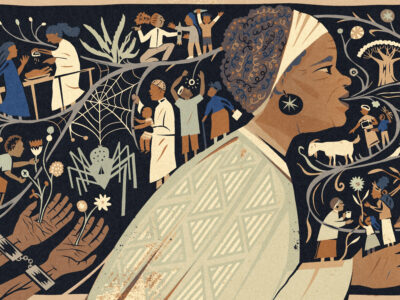
An illustration of three women on a dark fading background. Each has a transparent cloud over their face, representing the weight of the miscarriage they have experienced. The woman in the foreground on the right has dark hair. To her left, there is a pregnant woman with blonde hair; in the background, there is a woman holding the hand of her child.

We Need to Talk About Our Miscarriages