WP_Post Object
(
    [ID] => 2565
    [post_author] => 2
    [post_date] => 2021-05-04 16:36:54
    [post_date_gmt] => 2021-05-04 16:36:54
    [post_content] => As their home country is engulfed by a raging second wave of the pandemic, Indians living abroad feel helpless and guilty.

The live-in domestic help at my parents’ house in Mumbai got COVID-19. My neighbor’s entire family was infected. So was my husband’s elderly aunt in Ahmedabad. My friend's father was hospitalized for 12 days. Everyone in India knows someone who has been affected by the raging second wave of the pandemic.

And no wonder—as of today, India is the only country other than the U.S. to have 20 million coronavirus cases, and that is likely a vast undercount.

Crematoriums across India have so many bodies piling up that some are running out of wood to build funeral pyres. At Mumbai hospitals there are long waiting lists for beds; at one, the chief medical officer died of complications from COVID-19. She was 51 years old.

There is a thriving black market for medical supplies. In Mumbai, an oxygen concentrator is selling for Rs. 75,000 to Rs. 150,000 ($1,000 to $2,000) while in the capital city of Delhi, which has been even harder hit by the pandemic, it can cost as much as Rs. 250,000. ($3,400)—in a country where the monthly per capita income just before COVID hit was less than $150. But even at these inflated prices, demand far outpaces supply.

All over social media, people are posting their desperation, sharing shaky videos and pleading words, begging for a hospital bed, for oxygen, for someone to come and help. More than 100 Indian journalists have died of COVID, with one, Vinay Srivastava, live tweeting his declining oxygen levels until he died. Meanwhile, the Modi government ordered Facebook, Twitter, and Instagram to take down posts critical of its handling of the pandemic.

We hear about the tragic stories of the sick and dying in India’s cities, but almost nothing from the rural areas, where roughly two-thirds of the population lives.

Meanwhile New York City, where I live, is opening up. It’s been opening up. Indoor dining. Theaters. Gyms. Now the CDC says the vaccinated don’t need to wear masks outdoors. After a year of living in sweats, I went shopping for sundresses last week. Awkwardly, we hug each other again.

In New York City, a return to normal

On a warm Saturday in April, Mayor Bill DeBlasio made a surprise appearance at the Brooklyn Children’s Museum where we were celebrating Holi, the Indian festival of color, with live musicians, dancers, and samosas for guests to snack on. During the last half hour of our time slot, which was limited to comply with COVID precautions, the mayor and a dhol player led a procession to the park next door. We played Holi, flinging colorful powder in the air and smearing each other’s clothes and hair with red, green, yellow, and pink, while catchy Bollywood songs playing in the background. But even as I laughed and shrieked with friends, grateful that the receding threat of COVID had allowed me to enjoy my favorite festival, I celebrated with a clammy feeling of guilt. How could I turn my face to the sun while my country was being battered by a vicious second surge of the virus?

How India's second wave happened

About 10 days before I celebrated Holi in Brooklyn, the Kumbh Mela took place in the northern Indian city of Haridwar. Government authorities estimate that approximately 3.5 million Hindu pilgrims traveled to the banks of the holy Ganga River for the days-long festival, despite a sharp increase in COVID cases in the country—and amid calls for the government to cancel the event. But Narendra Modi, the Hindu nationalist prime minister, had already declared victory over the pandemic at the World Economic Forum’s Davos Dialogue in January. While the rest of the world warned that the number of cases was set to increase precipitously, Modi boasted that India had not only looked after its own population but was also saving lives by exporting 60 million doses of domestically produced vaccines around the world. Even as the country was making global front-page headlines for its rising infection numbers, Modi and his home minister appeared without masks at massive political rallies leading up to state elections in West Bengal, where Modi expressed admiration for the size of the crowds. (The election results were announced Monday and Modi’s party, the BJP, suffered a major loss in the state.) Last week, the Madras High Court handed down severe criticism of the Election Commission of India (ECI) for permitting political rallies during the pandemic. In response to a claim from a spokesperson for the ECI that COVID safety protocols had been enforced at the mass rallies, the chief justice asked, "Were you on another planet when political rallies were being held?" The justice underlined his outrage by adding that the ECI was “singularly responsible” for the massive second wave of COVID-19 in India, adding that commission officials “should be booked on murder charges” for sponsoring mass political rallies that turned into super spreader events.

Living in fear

At around the same time in Mumbai, the older sister of a close friend was running ragged trying to take care of her family. Her husband works at the airport and the docks, in “import-export.” His job is essential, since he oversees the import of critical supplies into the country, including oxygen, which is in desperately short supply. A colleague in the customs division has already succumbed to COVID-19. He himself is not fully vaccinated. “He’s endangering himself every day, he has to travel for his job, and he can’t get the second dose, because they’ve run out,” my friend said. My friend’s sister lives in a multi-generational home with her in-laws; recently, two of her in-laws’ cousins also came to stay with them. For a time, there were four elderly people at home, with 10 human beings squeezing into the three-bedroom apartment. Last week, one of the cousins, who was in her 80s, tested positive. One of my friend’s nieces has juvenile diabetes, which puts her at increased risk from the virus; her sister asked the elderly cousin to isolate at her own house. The woman died the next day. Karna Basu’s maternal grandmother passed away before the second surge hit. His grandmother had COVID, but it was the cancer that took her life. The COVID made it hard for her to access treatment, though. They were close, and he regrets not being able to travel from New York, where he lives, to see her before she passed. The news from his wife’s family is worse. For the last several weeks, the WhatsApp group of her extended family in Ahmedabad, Gujarat, has been bringing news of two new deaths from the virus each week. “The family is getting depleted,” Basu says. “It’s so painful you don’t even want to think about it.” An old classmate of mine in Mumbai is on a WhatsApp group full of wealthy professionals—the kind of people who, in India’s deeply unequal society, usually know someone in authority and thus are able to jump the queue. But even they are having trouble accessing resources. “I’m reading their messages of desperation—they’re not able to get their hands on medicine and oxygen,” my classmate told me over the phone. “If they can’t do it, what is happening to the middle class and lower middle class in the country?” When she had to get a hospital bed for her cousin, who tested positive a week before the state of Maharashtra went into lockdown, my friend realized just how dire the situation had become. “We were hearing that there were no beds available, but only when I started calling hospitals did I realize how bad it was,” she said. The only reason they were able to secure a bed, she added, was because they knew someone high up in a hospital. Even before the world had heard of COVID-19, India ranked 155 out of 167 countries in hospital bed capacity. A New York friend spent a recent morning trying to find either medical oxygen or an oxygen concentrator, a device that take in ambient air and increases its oxygen concentration by stripping away the nitrogen, for a former employee of his in Delhi. He made 23 calls, only to be put on waitlist after waitlist. Eventually the employee found a hospital bed; she is now on a ventilator. Aid is now coming into India now from several countries, including the United States, but President Joe Biden has been criticized for hoarding vaccines, while other wealthy countries continue to store vaccines in excess of their needs. In India, meanwhile, many states have run out. My New York friend is angry at Modi’s government for not doing enough. “It’s all fucked up,” he says. “Not stockpiling enough vaccines is fucked up. Not having more structured lockdowns is fucked up. Silencing anyone who says anything bad about them is fucked up.” Last year, the central government tried to force independent news outlets to submit their pandemic coverage to authorities for approval before publication. Just last month Yogi Adityanath, the chief minister of Uttar Pradesh and a key Modi ally, directed police to confiscate the property of anyone who posted about oxygen shortages online. Meanwhile an increasing number of countries have limited or suspended travel from India, with Australia even criminalizing its own citizens for returning home from the subcontinent. Indians who live abroad can’t go back to be with loved ones during their last days or mourn with their families. Ann, an American woman married a South Indian man, is now barred from traveling to northern India to finalize the adoption of a teenage girl. This would have been the family’s second adoption, and fourth child. Meanwhile, the young girl they were supposed to bring back to Texas this month is having a hard time in her orphanage. She’s the oldest one there, close to aging out of care. Every time they speak on the phone, Ann says, the girl is either crying or holding back tears. “The only thing I have to say to you is come get me,” she says on their weekly calls. “When are you coming?”

Sending money is the only thing you can do

On the WhatsApp groups that I’m a part of, we exchange the names of aid organizations on the ground. “Is it vetted?” people ask. “Can you send me a list of reputable groups?” When you’re 9,000 miles away, sending money is about the only thing you can do. Meanwhile, I got my second dose of the vaccine last week. In New York, the tulips are blooming. Over the weekend, I met friends for an outdoor lunch and then enjoyed the sun on my shoulders at a nearby park. Around us picnickers spread out on blankets; a guitarist riffed nearby. I felt the grass brushing my bare legs and played mock battles with my son. The shoulder where I got the jab was still sore, and I was glad for the pain. Here is a list of 12 places you can donate to help India.  [post_title] => I celebrated Holi in New York while in India friends and family begged for hospital beds [post_excerpt] => The author's joy in celebrating the Hindu festival of Holi, which in her adopted city of New York coincided with spring weather and a recovery from the pandemic, was tempered by guilt and disquiet over the raging second wave of the pandemic in her home country. [post_status] => publish [comment_status] => closed [ping_status] => open [post_password] => [post_name] => i-celebrated-holi-in-new-york-while-friends-and-family-begged-for-hospital-beds-in-india [to_ping] => [pinged] => [post_modified] => 2026-08-06 21:04:59 [post_modified_gmt] => 2026-08-06 21:04:59 [post_content_filtered] => [post_parent] => 0 [guid] => https://conversationalist.org/?p=2565 [menu_order] => 208 [post_type] => post [post_mime_type] => [comment_count] => 0 [filter] => raw )
I celebrated Holi in New York while in India friends and family begged for hospital beds

WP_Post Object
(
    [ID] => 2508
    [post_author] => 2
    [post_date] => 2021-04-22 13:39:15
    [post_date_gmt] => 2021-04-22 13:39:15
    [post_content] => The bleakest and likeliest scenario for Afghanistan after the US withdrawal is a Taliban victory.

What was it for? After all the counted and uncounted dead, the destruction, the waste, the trauma, the failure, the loss, what was the war in Afghanistan for? Twenty years after it invaded an already war-torn country, the Biden Administration has announced a full withdrawal of its military, scheduled to be completed by the deeply symbolic date of September 11. From my perspective as an Afghan woman and as a foreign policy analyst, this decision is an acknowledgement of absolute failure.

I am 38 years old. Afghanistan has been at war longer than I have been alive. My parents and I came to the U.S. as refugees almost four decades ago; then, we were fleeing the Soviet invasion and occupation. Because the American war has gone on for so long, few people know or care that by 2001 Afghanistan was already sitting amid the ruins of two successive wars; by then the Soviet invasion of the 1980s and the violent internal power struggle that followed in the 1990s had already killed and displaced millions of Afghans and laid waste to the country. When the U.S. decided to invade to overthrow the Taliban in retribution for the 9/11 attacks, few questioned the logic of the global superpower and the strongest military alliance going to war with the world’s poorest, weakest country.

The most charitable explanation for the last 20 years of Afghanistan’s collective nightmare is that the U.S. haphazardly chose to respond to an unconventional threat posed by a transnational terrorist network with a conventional war.

I have observed and questioned American, European and regional policy toward Afghanistan for the length of my career:  trying to share dispassionate analysis of the war: the layered material, physical and psychological harm it brought to millions of Afghans; the economic catastrophe the conflict entailed; the misguided military policies in Western capitals; the toxic consequences of an aid bonanza;  and Pakistan’s brazen double-dealing in Afghanistan. I stayed dispassionate when explaining to policymakers that one night U.S. Special Forces killed eight members of my own family in Nangahar as they slept in their home, in a senseless frenzy of violence for which we will see no investigation, apology or justice.  None of it matters now, if it ever did, and Afghans at home and in the diaspora are left to contemplate their rage, fear and heartbreak.

Afghanistan going forward would face formidable challenges even if President Ashraf Ghani’s government were competent. The majority of families live in deep, multigenerational poverty, worsened through repeated displacement because of violent conflict. Most women and girls, as many as 84 percent by the government’s own admission, are illiterate. Outside major provincial cities and the capital, most Afghans still lack access to basic infrastructure like clean water or electricity, or to services like healthcare and education.

The economic outlook was grim before the onset of the COVID-19 crisis; now millions more men and women find themselves even worse off than they did a year ago as access to casual labor for a daily wage dried up through the pandemic. Heavily dependent on agriculture, the country faces serious consequences of climate change: floods and droughts are on the rise, while opium production is an ongoing scourge. And still the war grinds on, killing dozens if not hundreds each month.

The bleakest and likeliest scenario for Afghanistan is a Taliban victory following the departure of U.S. and other foreign forces. They will probably continue to capture districts and provinces from national security forces until they can claim control of the entire country, fueling civil war between the official backers of the government on one hand and the Taliban and its allies on the other. The hope of various negotiating processes—between the U.S. and the Taliban, and the Taliban and the Afghan government—was to try and fold the Taliban leadership into a transitional government that constituted of the full range of Afghan political actors, with an election to follow.

So far, the Taliban have made clear they are uninterested in this process until foreign forces have left the country. They expect to be in a stronger position by then.

Unfortunately, the constituent backers of the Afghan government also have a poor track record for peace. Many of the same leaders who now jostle for a place at the negotiating table have impeccable war crime credentials. They bombed, raped, pillaged and massacred their way through the Afghan civil war before the U.S. re-elevated them to power in Kabul after ousting the Taliban. Others used their political connections to generate lucrative relationships with U.S. agencies and contractors, funnelling aid intended to build schools or clinics into vast patronage networks. Key security and intelligence organs have been systematically torturing and executing suspected Taliban members. The bad blood between the different groups competing for power, and the Taliban’s apparent reluctance to share power unless they hold the preponderance of it, suggests the fighting will continue for years.

To put it more simply, the Taliban have won, and see no reason to rule Afghanistan in any way that does not acknowledge their victory.

And yet the notion of Taliban victory is anathema to many Afghans, both inside the country and in the diaspora. Even those who did not support the purpose or goals, such as they were, of the U.S. war were nonetheless relieved to be free of the group’s violent, arbitrary governance and practices. That relief was short-lived, as Taliban members and leadership regrouped in their safe haven across the border in Pakistan and returned to fight a new ground war that more violent than before. That violence spared no one, and the Taliban remain responsible for more Afghan deaths than international or Afghan security forces. What we know now of life in Taliban-controlled areas suggests very little has changed in their outlook, their role in Afghan society or how they intend to govern in Afghanistan. Where the Taliban hold power, in roughly half the country, the group institutes the same rules and codes that defined their attitudes when it was last in power.

No one will suffer more in Afghanistan from a Taliban revanche than Afghan women and girls. Can girls attend school, or will women be able to continue working in their chosen professions? Can anyone inside or outside Afghanistan challenge the Taliban’s writ where it holds power? The answers to most of these questions is no. The Taliban has long demonstrated how it deals with dissent. Over the past two years, a campaign of targeted assassinations across Afghanistan has killed dozens of journalists, activists and community leaders, men and women, who criticize the group. Some die after criticizing the government. In all instances, the questions of who is responsible, and whether there will be any accountability for murdering Afghans in broad daylight, go unanswered.

Then what? What does Afghanistan have to look forward to? The country’s population is staggeringly young (around 63 percent of the population is younger than 25); a generation has grown up entirely in wartime, uncertain of who can bring them stability, peace and prosperity. With the end of the U.S. war, will Afghans be able to look each other in the eye and concede that powerful groups have all wrought countless damage to the country and its people? That, if total impunity and disregard for the rule of law no longer defined the character of the Afghan state, the country would have half a chance of reconciling competing factions and ethnicities? Perhaps, but it will take another decade before a new generation of politically engaged Afghan men and women advocate for shaping the type of society they want to live in.

Afghanistan will remain in crisis for years to come, but the world’s already limited attention will almost certainly shift away completely. U.S. forces will not return to Afghanistan after they withdraw, even if the Taliban capture Kabul and overthrow the current government. The war may be ending in American eyes, but I will remember the names of every official, politician, diplomat, pundit, think tanker, and “expert” who made a living propagating the lie that the war was good, or right, or winnable, or making progress, or turning a corner, or that David Petraeus was a military genius, or that the Afghan government served the interests of its own people. It was a carnival of bad faith, bad choices, bad actors, and death. I will not forget.
    [post_title] => The US decision to withdraw from Afghanistan is an admission of absolute failure
    [post_excerpt] => The most charitable explanation for the last 20 years of Afghanistan’s collective nightmare is that the U.S. haphazardly chose to respond to an unconventional threat posed by a transnational terrorist network with a conventional war.
    [post_status] => publish
    [comment_status] => closed
    [ping_status] => open
    [post_password] => 
    [post_name] => the-us-decision-to-withdraw-from-afghanistan-is-an-admission-of-absolute-failure
    [to_ping] => 
    [pinged] => 
    [post_modified] => 2026-08-06 22:37:17
    [post_modified_gmt] => 2026-08-06 22:37:17
    [post_content_filtered] => 
    [post_parent] => 0
    [guid] => https://conversationalist.org/?p=2508
    [menu_order] => 212
    [post_type] => post
    [post_mime_type] => 
    [comment_count] => 0
    [filter] => raw
)
The US decision to withdraw from Afghanistan is an admission of absolute failure

WP_Post Object
(
    [ID] => 2477
    [post_author] => 2
    [post_date] => 2021-04-16 03:57:25
    [post_date_gmt] => 2021-04-16 03:57:25
    [post_content] => Activists and civil society groups are outraged at the prime minister's victim blaming. 

In Pakistan, the first thing a woman thinks of when she steps outside her home is rape. In a country that routinely ranks as one of the most dangerous in the world for women, rape is everywhere. Women live in constant fear of predators, who routinely go unpunished not because the law protects them (it does not), but because attitudes in this deeply conservative culture manifest in a lack of will to enforce them. Recently Imran Khan, the prime minister of Pakistan, reinforced this entrenched misogyny when he claimed that vulgarity, temptation and willpower were among the causes of rape.

Before he became a politician, Imran Khan was an international cricket champion and a national hero. Oxford educated, handsome, fair skinned and an eloquent speaker, he embodies the quintessential colonial concept of the “white man” coming to save the damsel in distress Pakistan was made out to be. When he was elected prime minister, the media dubbed him the leader of “naya Pakistan” (new Pakistan).

But this, I knew, was a lie. Imran Khan has a well-documented history of misogyny.

In 2006, he rejected the Protection of Women’s Rights Bill, which amended the 1979 Hudood Ordinances that put the entire onus of proving a rape accusation on the woman. The 2006 Bill did pass a parliamentary vote, no thanks to Khan; but prior to this legislation, a rape victim could be prosecuted and imprisoned for adultery if she failed to produce an adult male witness to her assault.

Ayesha Gulalai, a human rights activist who in 2013 became the first female member of the National Assembly, accused Khan of sexual harassment; according to Gulalai, the prime minister sent lewd messages to her and other women in the progressive Pakistan Tehreek-e-Insaf party. For having made this accusation, Gulalai received death threats.

In 2018, Khan said that feminism was “degenerating” to motherhood and called it a “western concept.”

In 2020, he said that the Aurat (women’s) March was culturally divisive.

This year, Khan presented a Pride of Performance award to Ali Zafar, a prominent singer-songwriter who has been credibly accused of sexual harassment by several leading female artists. The prime minister did not even acknowledge an open letter from feminist activists who asked him to refrain from conferring the award, given that one of Zafar’s accusers, singer-actress Meesha Shafi (who plays the protagonist’s sister in the 2013 film The Reluctant Fundamentalist)  was pursuing legal action against him.

In a Q&A session with the public that was televised live in early April, a journalist asked Prime Minister Khan what steps he would take to tackle rape and child abuse. Instead of answering the question, he said: “In any society where vulgarity is prevalent, there are consequences.”

Vulgarity is a broad term. What’s vulgar for one person, might not be for the other. But in this case, Khan was using the word to blame the victims. Over the past three years, Pakistan has seen a spike in widely publicized, extremely violent rapes. One of the victims was 6 year-old Zainab Ansari, whose body was found in a rubbish dump in 2018; she had been raped and strangled. In another notorious case that made international headlines last April, a woman was gang-raped in front of her children after she stopped at the side of a highway just outside of Lahore because her car had run out of fuel.

During the same televised Q&A session, Khan held women responsible for the behavior of men, saying they should remove “temptation” because “not everyone has willpower.” He claimed the high rape statistics were a consequence of “increasing obscenity.” Bollywood films and an infatuation with Western lifestyle were to blame, said the prime minister.

With those words, Khan diminished every person who has stood up against rape, every victim who came out with their story; and every woman, trans and non-binary individual that marched against rape. By saying that women should take “purdah” (cover themselves from head to toe), he reiterated the notion that the onus is upon women to protect themselves. There will be no safety in Pakistan, no justice. There will simply be women constantly berated for taking up space.

In 2020, 11 rape cases were reported every single day in Pakistan. But only 77, or 0.3 percent, of the accused have been convicted. According to government statistics, fewer than half the women who report having been raped end up pressing charges; police estimate that the actual number of rapes could be closer to 60,000 annually. Women are instantly labeled liars when they press charges against their rapists. Sometimes the consequence is more fatal, as seen in cases of so-called “honor killings,” whereby the male relatives of an unmarried rape victim take her life because she is no longer a virgin. Women are sometimes forced to marry their rapist to save their family from scandal. In other cases, families choose revenge rape as a “solution.”

In a conference organized by the Women’s Action Forum on rape, Nazish Brohi, a social sector consultant said that, “There is the expense of the lawyer, going to court, the cost of living in a big city, and then there is the impact on the family, so, the cost of reporting rape is high. But the cost of not reporting rape is also high.”

The system usually works against survivors. In the case of the woman who was gang raped on the highway, Capital City Police Officer Umar Sheikh blamed the victim, asking reporters rhetorically why she was traveling with her children late at night.

Mehnaz Akber Aziz, a member of Pakistan’s National Assembly and a children’s rights advocate said: “You are signalling to these people, the rapists, that ‘It’s OK, you can continue doing what you’re doing and there will be a way out, even if you’re arrested.” Pakistan’s police and judiciary generally fail to apply the law robustly in rape cases where there are no witnesses.

But there are organizations and activists working to force law enforcement officers and the judiciary into implementing the laws that are supposed to protect women.

Sahil provides free legal aid for children and women who have been victims of abuse. War Against Rape (WAR) provides rehabilitation for survivors of sexual assault and works with them to deal with their medical, legal and social issues. Earlier this year, The Lahore High Court declared the “two finger test”—used to determine whether a sexual assault survivor was a virgin—as illegal.

The Zainab Alert Response and Recovery Act, 2020 was passed under the Children's Protection Bill to criminalize abduction and kidnapping. Anti-Rape Ordinance 2020 was approved to ensure that sexual assault trials are completed within four months and that victims’ identities will be protected.

Each of these organizations is committed to tackling Pakistan’s rape problem. And yet, Prime Minister Khan did not mention any of them. Instead, he left Pakistan’s women in a more vulnerable and precarious state than ever before. The country does have laws that, if enforced, would help combat sexual violence. What it does not have, however, is a leader who sets an example by working with existing organizations to change the entrenched patriarchal attitudes that prevent women from feeling safe in public. Nor does it have a leader who is committed to public education.  If the prime minister of a country where the literacy rate has fallen below 60 percent says that men aren’t able to control their instincts and that women must be covered from head to toe if they want to remain safe, the masses will believe it.

Sheraz Ahmed, the program officer at WAR, noted that Khan’s remarks demonstrated “a clear pattern that reveals his regressive views of rape and sexual violence.” Asked why rape cases in Pakistan are so high, and what measures need to be taken to make women safer, Ahmed said, “Rapists know they will get off the hook and that’s why cases are rising.” The lack of medical and psychological care available for rape survivors places even more stress on the woman, which often factors into a decision to refrain from pressing charges.

Several organizations—including Women’s Action Forums of Pakistan, War Against Rape, Aurat March Lahore, The Human Rights Commission of Pakistan, and The Women’s Lawyer Association—have demanded an apology from Imran Khan. In a statement of condemnation that has, as of this writing, been signed by 438 people, they describe the prime minister’s comments as “factually incorrect, insensitive and dangerous,” adding that they “actively fostered and promoted rape culture.”

The Human Rights Commission of Pakistan said in a statement that they were “appalled” by the prime minister’s remarks, describing them as “unacceptable behavior on the part of a public leader” and demanding that he apologize.


Jemima Khan, the prime minister's former wife (and mother of his two children), tweeted: “The Imran I knew used to say, "Put a veil on the man's eyes not on the woman."”

The response on Pakistani Twitter, meanwhile, has been scathing.

This time, the anger does not seem likely to abate; it will continue to fester until there is systemic change and a decisive shift in the conservative narrative regarding rape in Pakistan. Over the past two years Pakistan has seen a rising feminist movement; now, with the growing Aurat Marches and the opening up of the #MeinBhi (MeToo) movement, something has shifted. The women of Pakistan will no longer be dismissed when it comes to sharing their truths.

In many South Asian countries there is widespread scepticism about the #MeToo movement. Why, people ask, does it even exist? Why don’t women who are molested immediately speak out and share their stories? The answer, or part of it, can be found in Khan’s remarks. Whether he believes them or not is irrelevant; he has exacerbated the dangers women face by reinforcing the primitive idea that men are driven by animalistic instincts and are physically incapable of controlling themselves in the presence of a woman.

Imran Khan has a bit of a nefarious past, with his playboy reputation and his hypocrisy towards women. But it is his actions and words today that demonstrate yet again how men in power use their privilege to reinforce only one truth—their own.
    [post_title] => 'Vulgarity has consequences': Pakistan's prime minister blames rising number of rape cases on women's dress choices
    [post_excerpt] => Before he became a politician, Imran Khan was an international cricket champion and a national hero. Oxford educated, handsome, fair skinned and an eloquent speaker, he campaigned for prime minister as a reformer who believed in meritocracy. But he had a well-documented history of misogyny.
    [post_status] => publish
    [comment_status] => closed
    [ping_status] => open
    [post_password] => 
    [post_name] => vulgarity-has-consequences-pakistans-prime-minister-blames-rising-number-of-rape-cases-on-womens-dress-choices
    [to_ping] => 
    [pinged] => 
    [post_modified] => 2026-08-06 22:37:54
    [post_modified_gmt] => 2026-08-06 22:37:54
    [post_content_filtered] => 
    [post_parent] => 0
    [guid] => https://conversationalist.org/?p=2477
    [menu_order] => 214
    [post_type] => post
    [post_mime_type] => 
    [comment_count] => 0
    [filter] => raw
)

‘Vulgarity has consequences’: Pakistan’s prime minister blames rising number of rape cases on women’s dress choices

WP_Post Object
(
    [ID] => 2401
    [post_author] => 2
    [post_date] => 2021-03-26 04:20:38
    [post_date_gmt] => 2021-03-26 04:20:38
    [post_content] => The recent proliferation of high end chai dhabas inspired a national conversation about freedom of movement for women.

It’s a truth widely accepted in Pakistan that drinking chai is what makes you a true native. And not just any chai, but the sweet, milky, caramel-colored brew that is served at dhabas (outdoor tea stands) and slurped noisily while sitting on a small plastic chair, waiting for the dhabay wala to bring you another cup because one is never enough.

But while street dhabas play a major role in Pakistani society, they are traditionally a male-dominated space.

Granaz Baloch, a teaching fellow at the University of Turbat in Balochistan, is a feminist academic and writer whose research focuses on the gender challenges rural women face in finding potable water. She said that while dhabas in Turbat provide “information, opportunities and networking” for men in the city, women are not welcome. But this is not a Turbat-specific issue. Until recently, it was very unusual to see a woman enjoying the simple pleasure of a leisurely cup of chai at a roadside stand anywhere in Pakistan. Now attitudes are beginning to change, partly on the back of social media driven influencer culture. 

[caption id="attachment_2404" align="aligncenter" width="640"] Granaz Baloch[/caption]

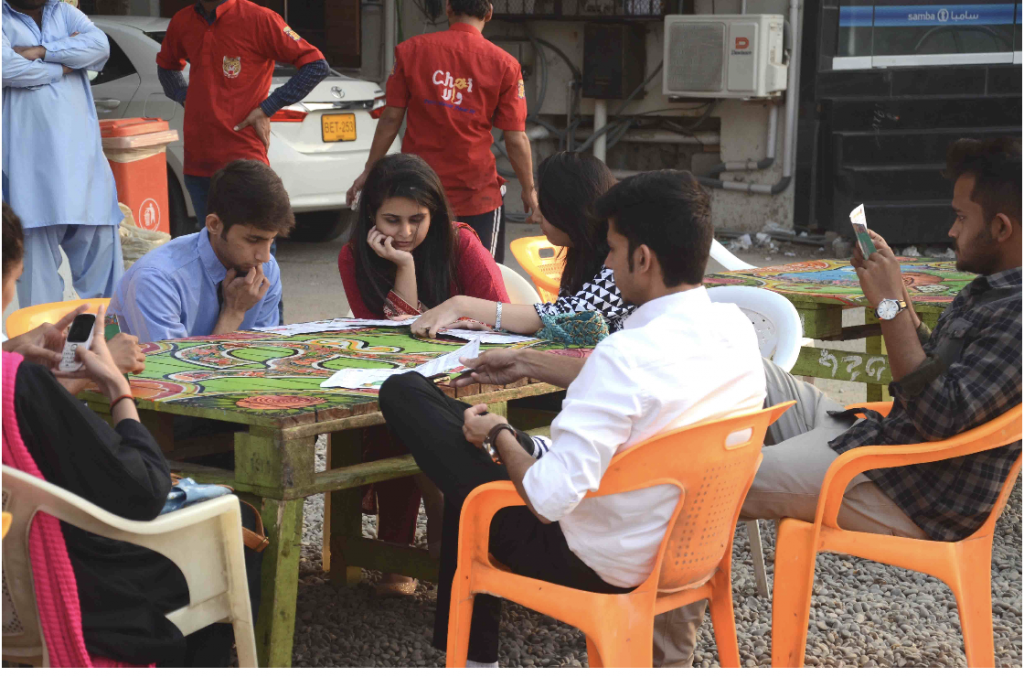
Chai Wala is a hip Karachi café (tagline: "reinventing the chai experience") that serves upscale versions of traditional dhaba snack foods and beverages. Established five years ago, it attracts young men and women who are drawn to its trendy decor and menu, which includes Nutella chai, "artisanal" teas, and “dips” like hummus. It also sells branded merchandise. Places like Chai Wala have taken the concept of the traditional working class outdoor tea stand and reinterpreted it to attract a bourgeois clientele. 

[caption id="attachment_2406" align="aligncenter" width="640"] The scene at Chai Wala.[/caption]

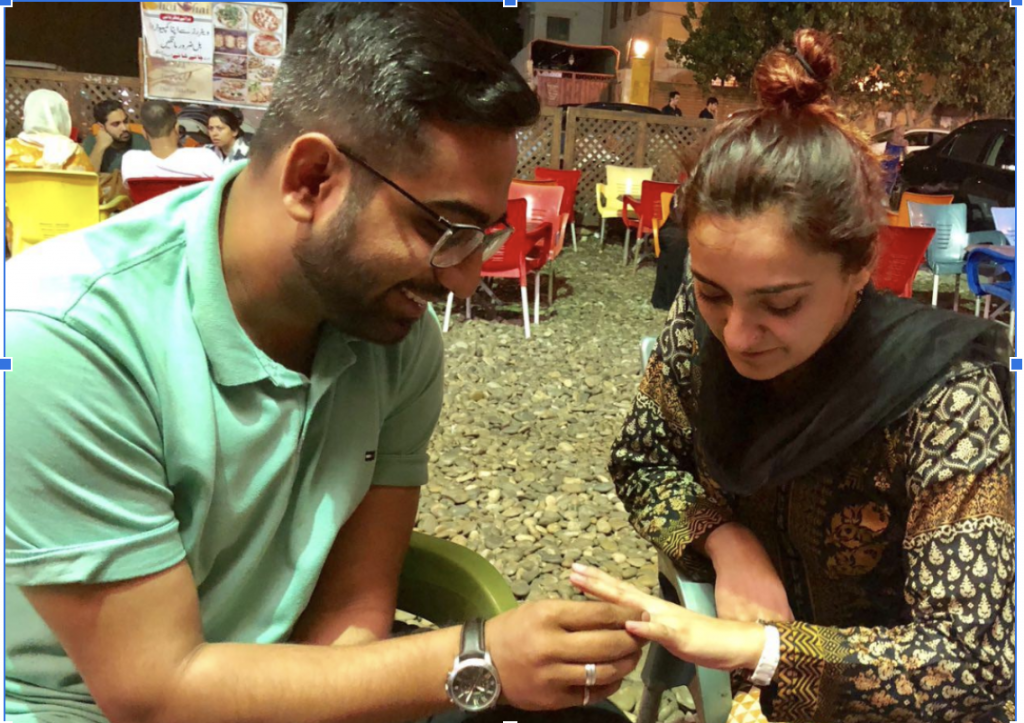
Shaheera Anwar, a 29 year old journalist who moved from Saudi Arabia to Karachi in 2017, got engaged at a traditional outdoor dhaba. “I was dating my now-husband and we often hung out at dhabas after work—and I am someone who hates grand, public gestures, so I got proposed to at a dhaba,” she said. Shaheera is aware that dhaba culture has since become trendy, and she is not sure this is a good thing. She sees places like Chai Wala as gathering places for the rich that erase the egalitarian culture of the traditional dhabas.

[caption id="attachment_2405" align="aligncenter" width="640"] Shaheera Anwar getting engaged at a traditional dhaba in Karachi.[/caption]

Among middle class Pakistanis there is a widely-held perception that high end dhabas are safer for women because they attract a “better crowd.” This raises the question of the role class plays in Pakistani society, and how it affects the way women are treated in the public domain. 

The emergence of high end dhabas occurred right around the time that a feminist collective founded an organization called Girls at Dhabas,  which addresses the absence of women in public spaces and strives to reclaim them. The media gave significant coverage to the group when it first launched, but while press attention has since dwindled the movement has only grown stronger and more vocal in addressing the structural problems that prevent Pakistani women from moving about freely in the public square.

“It took living in other countries to learn that I had been conforming to a clever scam my whole life, thinking the city belonged only to men,” said movement founder Sadia Khatri. Sadia speaks in poetic language about the joy that comes with finally breaking free of the restraints placed on women’s freedom of movement. “The city’s breath rising to meet mine with each step, the pleasure of placing one foot before another, unthinking, meditative. The trust that so long as I kept going, Karachi would keep expanding, opening up before me.”

Many Pakistani women are making similar discoveries about the joy found in moving about in public. Maliha, who re-entered the corporate world after a career break, said that working in an office brought a kind of freedom she had all but forgotten. By extension, sitting at dhabas no longer seemed as daunting. “You gain enough confidence that when someone tries to harass or catcall you, you don’t shy away from hitting back,” she said.  Maliha found herself easing into the spaces she wanted to be. “The more you become accustomed to an environment, the more you learn about an environment, the more confident you become in dealing with that environment,” she said. 

Shoaib is the owner of a successful traditional dhaba in Lahore that specializes in Amritsari hareesa, which the women in his family make according to an old family recipe. He cheerfully  acknowledges that his clientele, once predominantly male and working class, has expanded to include families and women; and he has noticed the increased presence of women on the streets. But while Shoaib expressed no objection to other women claiming public spaces as their own, he said he would not want the women of his own family to be seen on the street or eating a meal at a restaurant. For Shoaib the women he saw eating at his dhaba represented a different lived reality—one that was simply not his. 

Shoaib’s perception of the class divide seems accurate. Upper-class women at posh dhabas are granted the right to be there because they come with the entitlement associated with their socioeconomic class. They are accustomed to being addressed as “ma’am,” and the staff treat them accordingly. Working class women, however, do not see these cafés as their place.

But Sanam, a supervisor at Shahi Bawarchi Khana, a fashionable restaurant in Old Lahore,  banished her insecurities and discomfort about being out in public. “I no longer feel uncomfortable in public spaces, because I know I can handle myself,” she said of working in a restaurant, adding that “girls need to keep moving forward and face the world.” Unlike the women who founded the feminist collective Girls at Dhabas, Sanam is not from the educated upper class. But with her unapologetic confidence she is exactly the kind that needs to be normalized within this debate about public spaces. 

Aqib, the manager at a trendy chai dhaba style restaurant in Old Lahore, articulated his perception of how class drives the lived reality for women in Pakistan. “Women come here more than men now, especially young TikTokers who like creating a big fuss,” he said of the changing demographics among his customers. Like Shoaib, the proprietor of the traditional dhaba that specializes in Amritsari hareesa, Aqib thought that the increased presence of women in the public domain should occur within cultural limitations. 

But what Pakistani men think about gender roles is slowly becoming irrelevant to the women who are paving a path forward. In Karachi’s impoverished Lyari district, notorious for its gun battles between criminal gangs, Shazia Jameel, the manager at Lyari Girls’ Café provides a space in this very male dominated area where women can gather. At the café they can take English language classes, learn boxing, study hair styling and makeup techniques, and chat in a relaxed atmosphere without fear of molestation. Shazia leads a group of women from the café who go cycling on Sundays, stopping on the way back from their ride for breakfast at a male dominated dhaba. At first the women were uncomfortable there, but that feeling has since disappeared. Now they are regulars.

The truth is, it’s not the piercing gazes or the opinions that have really changed, especially not among the working class. What has begun to change is women’s responses to traditional mindsets. The posh dhabas are not remotely inclusive places, nor would anyone argue otherwise. But the noise around them has led women to question why they accepted the limitations placed on their freedom of movement in their own country. They now regard strolling the streets and sitting in cafés as their right. Shazia Jameel puts the onus for protecting women's safety on the authorities, calling upon them to instal CCTV cameras. She also advocates legislation to eradicate religious extremism, which she blames for the perpetration of restrictive attitudes toward women. 

Shazia is right. It’s well past time that the right of women to move about in public without fear of molestation be protected. Nor should they be held responsible for the way men behave toward them. Despite what the old guard may think, change is coming from every direction, one cup of chai at a time. 
    [post_title] => Pakistani women are claiming their right to be in public spaces—one cup of chai at a time
    [post_excerpt] => What Pakistani men think about gender roles is slowly becoming irrelevant to the women who are paving a path forward.
    [post_status] => publish
    [comment_status] => closed
    [ping_status] => open
    [post_password] => 
    [post_name] => pakistani-women-are-claiming-their-right-to-be-in-public-spaces-one-cup-of-chai-at-a-time
    [to_ping] => 
    [pinged] => 
    [post_modified] => 2026-08-06 22:47:02
    [post_modified_gmt] => 2026-08-06 22:47:02
    [post_content_filtered] => 
    [post_parent] => 0
    [guid] => https://conversationalist.org/?p=2401
    [menu_order] => 219
    [post_type] => post
    [post_mime_type] => 
    [comment_count] => 0
    [filter] => raw
)

Pakistani women are claiming their right to be in public spaces—one cup of chai at a time

WP_Post Object
(
    [ID] => 2286
    [post_author] => 2
    [post_date] => 2021-02-05 05:30:59
    [post_date_gmt] => 2021-02-05 05:30:59
    [post_content] => The search for a room of one's own—on Instagram.

Pakistanis were late adopters of social media culture, but that is now changing rapidly; emerging Instagram influencers with tens of thousands of followers have become the subject of articles in online magazines and on television. One of the most notable aspects of Pakistani influencer culture is the rise of women, who are finding a space and a voice in the country’s deeply conservative, patriarchal culture. 

Tanzeela Khan is a publicist as well as a style and beauty influencer, with over 100,000 Instagram followers. In her carefully curated photos she models outfits that highlight the latest fashions from both East and West, with captions that offer observations about her social life and her emotions. A photo posted on January 20 shows Tanzeela in a plum colored chenille coat with a matching face mask, captioned #motd (message of the day). 

Pakistani society frowns upon women who work outside the home; social media platforms offer them an opportunity to both stay at home and become entrepreneurs. The pandemic lockdown didn’t spark the rise of Pakistani influencer culture, but it definitely caused it to grow exponentially.

Women comprise 49 percent of Pakistan’s population, but only 24 percent of the labour force. The unpaid labor of domestic duties is not classified as work, which is a consequence of the fact that women are deprived of a space in the discourse for their own narratives. A few newspaper headlines illustrate widely held views on women in the workforce. 
  • “No country for working women,”  (Pakistan Express, March 10, 2018)
  • Should Pakistani women get a job? Yes but.. Say Pakistani men,” (World Bank Blogs, April 5, 2019);  
  • Problems working women face”  (Dawn, May 9, 2019)
While these articles make it clear that Pakistani women face severe challenges in seeking work outside the home, they focus on data while ignoring the human stories that show how women are affected by the lack of opportunities to embark on a career. Nor do they offer solutions, or suggestions for a path forward. The voices of women are not heard, whether they stay at home or go out to work. Tooba Syed, a feminist activist, pointed out in an Opinion piece for Dawn newspaper that women who do enter the workforce generally work in “occupations that mimic care work; undervalued, underpaid and further reinforcing women’s primary gender role as a caregiver.” Influencer culture provides Pakistani women with a space completely their own, neither dominated by men nor governed by existing norms of what is and isn’t acceptable—at least not directly.  Saman Zahrai, who moved from her native Lahore to London after she married, started out as a mommy blogger in 2018. “There was so much about mommyhood that I just wanted to share,” she said. She had been online for months before she recognized the opportunity to monetize her Instagram posts. As her blog developed, she began to incorporate other interests and to learn what interested her followers. This helped her make the shift to becoming a fashion influencer who shares her style choices, which include both traditional Pakistani outfits and European trends. Zahrai still visits Lahore frequently; she said the contrast with her life in London has made her acutely aware of the extent to which her native country denies women a space of their own. Blogging and influencing, she confirmed, can feel very liberating for women who want to express themselves in an environment that is free of social opprobrium and not controlled by the male gaze. Some influencers mix it up, with glamorous posed style photos alongside social justice messages. Rimsha Waseem, an influencer from Karachi who has more than 52,000 followers, says that she feels a responsibility to include social responsibility messaging with her fashion and makeup content. In addition to launching a campaign for breast cancer awareness on her YouTube channel, she worked with a local manufacturer of feminine hygiene products to raise awareness of period poverty.  Rimsha, Saman and Tanzeela come from privileged backgrounds. Their families are well off, they are educated, speak English, and have unlimited access to the internet and social media. In taking advantage of the opportunity to amplify their own voices and carve out their own space, they are paving the way for other women. Pakistani feminists understand that the few need to champion the many. But critics of the new influencer culture claim the young women who model their glamorous clothes and lifestyle on Instagram and YouTube are wasting their time; that they are immodest; or that they are unrepresentative and out of touch. The fatal flaw in the claim that Pakistan’s female influencers are out of touch with their country’s social reality is the case of Qandeel Baloch, the first and most famous influencer of them all. Unlike Tanzeela, Saman, and Rishma, Qandeel was not from the educated upper class. She was born to a conservative family in a small rural town in the Punjab, grew up poor and was married off at age 18 to a cousin who, she said, was physically abusive. Baloch escaped the marriage and ran off to the big city, where she changed her name (her birth name was Fauzia Azeem), tried and failed to break into show business and then discovered that the surest path to fame was via social media. The videos Baloch posted on her Facebook wall, which had more than 500,000 followers, managed to be simultaneously sexually provocative, guileless, and socially critical. She monetized her fame with paid advertising, which allowed her to support her family. But in 2016 an ill-conceived stunt that exposed a prominent imam’s hypocrisy brought notoriety, threats, and unwelcome attention directed at her family. On a visit home shortly after the incident with the imam, her youngest brother smothered her to death while she slept—in a so-called “honor killing.” She was 26 years old.  The murder of Qandeel Baloch sent shockwaves across the country, and was widely covered by the media both in Pakistan and abroad. Baloch had spoken often about taking charge of her sexuality rather than letting the exploitative media industry do it for her. Now, her murder resonated even with women who had disliked Baloch’s provocative persona. She became an icon for resilience and for the principle that a woman had the right to her own voice. Pakistani influencers from more privileged backgrounds still face significant challenges. Arranged marriages are a cultural norm for most families, but those who might have been interested in asking Rimsha to be their daughter in law see her career as a barrier. “People see it as me “showing myself off,”” said Rimsha. She added: “According to them it is not right for a girl to do, but no one sees the effort that goes into content creation.” While most of the Pakistani influencers on Instagram are women, the trend of social media bloggers and personalities began on YouTube with Zaid Ali, a Canadian-Pakistani star vlogger. Ali led the way for male vloggers, most of whom create funny, relatable videos that are entertaining but not exactly substantive. What’s notable is that the men are applauded for their light and amusing videos, while female influencers are criticized for the same type of content. Male influencers are not accused of showing off or wasting their time.  Tanzeela says there’s still a long way to go before influencer culture becomes mainstream in Pakistan. So far it has provided a space and a voice for women with talents and business acumen that they had kept under wraps for too long. Rimsha said that the money she earns as an influencer has allowed her to move toward financial independence. “I’ve managed to fund my travels, and support myself in other means which I am very grateful for,” she said. Very few women ever live alone in Pakistan; the norm is to go from their family home to their husband’s family home. Nor is financial independence for women a widely understood concept, let alone a valued one. But influencer culture and blogging have opened new doors for women to earn money on their own terms. The financial independence is gratifying, and is a small step toward broader social acceptance of women who earn their own living.  These are strong, smart women who have figured out how to monetize their passions. Pakistan needed a space where women could own their brands; we must move past the point of looking down on fashion, style or beauty as lesser content, which boils down to pulling people down. Rimsha is a strong advocate for lifting up and supporting women. Global women’s movements have shown the power of solidarity over the years and the influencer culture is no different. There’s a new kind of working woman in Pakistan and she’s here to stay. [post_title] => Pakistan's female influencers are challenging the patriarchy [post_excerpt] => Pakistani society frowns upon women who work outside the home; social media platforms offer them an opportunity to both stay at home and become entrepreneurs. [post_status] => publish [comment_status] => closed [ping_status] => open [post_password] => [post_name] => an-instagram-account-of-ones-own-pakistani-women-are-finding-a-voice-through-influencer-culture [to_ping] => [pinged] => [post_modified] => 2026-08-06 22:55:35 [post_modified_gmt] => 2026-08-06 22:55:35 [post_content_filtered] => [post_parent] => 0 [guid] => http://conversationalist.org/?p=2286 [menu_order] => 228 [post_type] => post [post_mime_type] => [comment_count] => 0 [filter] => raw )
Pakistan’s female influencers are challenging the patriarchy

WP_Post Object
(
    [ID] => 730
    [post_author] => 2
    [post_date] => 2019-03-15 16:32:04
    [post_date_gmt] => 2019-03-15 16:32:04
    [post_content] => Thousands of Pakistani women took to the streets of cities across the country to demand gender equality. 

On March 8 thousands of women took to the streets of Pakistan's cities to join the Aurat March, or Women’s March, and demand their rights. The atmosphere was exuberant and hopeful, and the march felt as though it were an announcement: a new generation of homegrown feminists had come of age. In their battle for gender equality, however, Pakistani women face some heavy and unique socio-political challenges. 

The demands voiced by the women who assembled in urban areas across Pakistan might sound anachronistic or quaint to Western feminists. In addition to calling for an end to violence toward women, they chanted and carried signs for a living wage for female workers, for increased political participation — and the right to move freely in public spaces. 

In Pakistan, the march’s detractors claimed that it was copied from the Women’s March that took place in the United States in January 2017. Given the very tangible risks Pakistani feminists face, this dismissive attitude is at best ignorant. The women who marched in the United States did not fear physical violence or social condemnation. And the women who marched in Pakistan were inspired not by foreign activists, but by homegrown feminist icons.

The Aurat March is only the latest iteration of a complex feminist movement Pakistan, which was recently declared the sixth most dangerous country in the world for women.

The power of the patriarchy

Pakistani feminists seek to raise awareness among their female peers about their basic rights. Women have the right, for example, to safety and security; to freedom from gender-based discrimination and from sexual harassment. They have the right to equal career opportunities, to schooling and healthcare. Women in Pakistan are struggling against decades, if not centuries, of strict gender roles defined by one of the harshest patriarchies in the world. That patriarchy implements strict control over all areas of girls’ and women’s lives. It enacts violence on women’s bodies, using a strict interpretation of Islam as justification for this misogyny. Pakistan’s legal system perpetuates this. While pro-women laws have been passed by the government,  the police do not enforce them and the legal system rarely prosecutes them. Pakistani feminists also face accusations that feminism is a movement of the privileged, or the Western-educated; that by fighting for women’s rights they are undermining Islam, which they claim already gives women their rights in the context of religious law. In conservative Pakistan, all revolutionaries are accused of immorality and obscenity, and of causing social upheaval and corruption. But the backlash against the feminist movement is even more vindictive than usual. It is colored by misogynist abuse and condescending dismissal that comes from even the most educated men and women — because they are heavily invested in the patriarchal structure of the country, which is the source of their privilege.

Accusations of foreign influence

Some of the suspicions toward the Pakistani feminist movement comes from the fact that Western feminists have, particularly since 9/11, attempted to impose their particular expression of feminism in non-Western parts of the world, such as Iran, Iraq, Afghanistan, and Pakistan, often in conjunction with foreign military interventions. Now, with the rise of global and intersectional feminism, “white feminism” is under strong criticism for its inability to place the voices of those non-Western women above its own agenda. But this criticism ignores the fact that there is a genuine home-grown feminism in all these non-western countries. It is led by local women who express their own needs and desires, form their own agendas, and fight their own battles.   Pakistani feminists have refuted accusations that feminism is a Western-imposed movement, or that it is secular (i.e., un-Islamic), by placing the struggle in the context of Pakistan’s social and political issues, and by addressing the immediate needs and concerns of Pakistani women. Feminists in Pakistan have coined the Urdu word behenchara, or sisterhood, to enact a feminist takeover of the word bhaichara, or fraternity.  They have also placed an inclusive, intersectional ethos at the center of the movement to bring together Pakistan’s diverse groups under the banner of yakhjeti, or unity.

Raising a grassroots movement

On March 8 Pakistani women gathered in Lahore, Karachi and Islamabad, just as they did in 2018. Following weeks of project-building, intense campaigning, door-to-door awareness-raising, and clear and urgent communication of their goals, they marched through public spaces. They made sure to express their message in a host of local languages, in order to make it accessible to as broad as possible a swathe of Pakistani society. They framed the struggle for women’s liberation as one that is inherently linked with the liberation of all oppressed groups and minorities. Last year, 5,000 women from all sections of society marched. They attracted attention from the media, both local and international, and starting a dynamic conversation on social media, in classrooms, and on television, about what feminism is and why it is necessary in Pakistan. This year the turnout was even bigger, as women across ethnic groups and religious sects, socioeconomic groups and gender identities, turned out to hear inspirational speeches from women leaders and representatives, to sing and dance and to take over the streets. In Pakistan, both dancing and taking control of public space are considered immoral behavior for women.

Pakistani feminists don’t need white saviors

The march was not limited to the educated, urban elite. The women of Sindhiani Tehreek, the rural Sindhi Women’s Movement, came to Karachi from Hyderabad and the village Jungshahi on the coast of Sindh. Women from the Hindu and Christian minority communities attended in Lahore and Karachi. Female health workers and midwives, who provide medical care in the most intimate of women’s spaces and have been identified as a major part of the grassroots feminist movement in Pakistan, took center stage at the march. Women marched in Peshawar, Quetta, Faislabad, Hyderabad, and Chitral too, bringing the numbers to nearly 8,000 across the country.  Pakistani feminists have never waited for Western feminists to instruct them in how to fight for their rights. Today a younger generation of feminists is building on the work of female activists who struggled against dictatorship in the 1970s. The Women’s Action Forum was at the forefront of that struggle against Islamist General Mohammed Zia ul Haq, who controlled Pakistan for a decade beginning in 1978. During that time of dictatorship and martial law, the regime stole many of the rights for which women had long struggled; trying to confine them behind the veil and in the home. The brave young women of WAF endured political oppression, social condemnation, and physical violence. In one infamous incident, during their protest on the Lahore Mall against the 1979 Hudood Ordinances — newly introduced laws that criminalized adultery and non-marital sex — police beat them and tried to disperse them with tear gas. The Pakistani feminists of 2019 are inspired by those women, who are now feminist icons, and their groundbreaking activism. Metaphorically taking the torch passed on from the previous generation, contemporary feminists formed a new collective last year; it is called Hum Aurtain (We Women —  the title comes from Pakistani poet Kishwar Naheed’s famous poem “We Sinful Women), and it was instrumental in organizing Karachi's Aurat March in 2018.

A second generation of homegrown feminists

Aurat March organizers made it clear that the march was not foreign-funded, nor funded by NGOs or corporations, and that there were no alliances with any political party. The Pakistani feminist movement is homegrown, inclusive, and intersectional.  They urged men to become allies and join the movement; standing against patriarchal structures, they said, was open to all. But the Aurat March of 2018 and 2019 did not happen overnight. Feminist groups and collectives like Girls at Dhabas, Aurat Raj, Women on Wheels, Girls on Bikes, and the Lyari Girls Café have been chipping away at those societal strictures for several years now. Thanks to their work, people are starting to challenge restrictive attitudes toward women. The work of Pakistani feminists will continue even after the high of the Aurat March 2019 fades away. Pakistani women are exploring female-led initiatives in technology and finance, women’s leadership in sports, academics, media, and the military. They have formed organizations that seek to put women on company boards, on panels, position them as experts in every field. Women in the rural areas area agitating for a living wage, for their work to be recognized as formal labor. Most excitingly, all of these components form a feminist discourse that is gaining momentum among young people, women, men, trans, straight, queer. Feminism is rapidly becoming part of the everyday conversation shaping a more progressive Pakistan. [post_title] => Pakistan’s feminist revolution: The second generation [post_excerpt] => Pakistani feminists have never waited for Western feminists to instruct them in how to fight for their rights. Today a younger generation of feminists is building on the work of female activists who struggled against dictatorship in the 1970s. [post_status] => publish [comment_status] => open [ping_status] => open [post_password] => [post_name] => pakistans-feminist-revolution-the-second-generation [to_ping] => [pinged] => [post_modified] => 2026-08-07 16:47:01 [post_modified_gmt] => 2026-08-07 16:47:01 [post_content_filtered] => [post_parent] => 0 [guid] => https://conversationalist.org/?p=730 [menu_order] => 348 [post_type] => post [post_mime_type] => [comment_count] => 0 [filter] => raw )
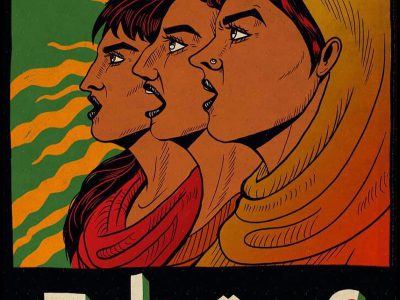
Poster for Aurat March 2018

Pakistan’s feminist revolution: The second generation

WP_Post Object
(
    [ID] => 412
    [post_author] => 2
    [post_date] => 2019-01-22 14:50:49
    [post_date_gmt] => 2019-01-22 14:50:49
    [post_content] => 

This interview was originally published in March 2017.

Adam Linehan was 21 when he joined the Army, an “old guy” at the time he did it. After waking up during basic training and briefly wondering, “What the fuck did I get myself into?” he went on to serve as a combat medic in Iraq and Afghanistan. Today he’s a senior staff writer at Task & Purpose. I spoke to him about Trump, the prospect of more war, and the relationship between military and civilian life for the Anti-Nihilist Institute’s Woke Vets series.

Natalia: You’ve written about the Clint Lorance case— I’ve been following that story for a while, and it freaked me out. Both the case and the reaction to it [Editor’s note: 1st Lt. Clint Lorance was serving in Afghanistan’s Kandahar province when he ordered his men to fire on civilians, resulting in two deaths. The argument of his supporters hinges on the notion that “everyone is a potential enemy in Afghanistan.” Yet not one of Lorance’s men was willing to support his actions in court. Platoon members further testified that Lorance tried to get them to shoot a 12-year-old who came to retrieve the bodies in the aftermath of the shooting.] You can’t understand the Lorance case without understanding the nuances around it, but how do you begin to explain the nuances of war to civilians who have no experience of it?

Adam: If there is one thing that my experience at war taught me it is that war is not that far removed from our everyday reality. It’s a human thing — human beings easily adopt the role of soldier. Civilians overcomplicate it in their minds.

I remember getting back from Afghanistan and a lot of people saying, “Oh, I could’ve never done that.” And my response was always, “You don’t know. You could have probably done it—and it’s not that hard to do.”

There are ways of talking, writing or filming stuff about war that make it accessible. A lot of veterans adopt the stance of, “You’ll never understand this,” but I think that’s a defense mechanism.

Natalia: I’ve spent a lot of time writing about Russia, which has a draft. I think the draft is horrible, but I also notice that in America, because we don’t have a draft anymore, civilians see military life as very removed from their own lives. We end up with a weird dichotomy— people either fetishize the military or say, “Why should I give a fuck about it?” But if you’re American, Iraq and Afghanistan were fought in your name. No matter who you voted for, you can’t get around it — and in my experience, this isn’t something people like to hear. Have you encountered similar denial and/or apathy?

Adam: After I got back from Afghanistan, the Occupy movement took off. People were in the street. And I remember thinking, “Why aren’t people reacting to Afghanistan in a similar fashion?” I had just gotten back from witnessing terrible things and remember being very angry about how few people even cared.

When you’re at war, you think the country’s paying attention. When you get home, one of the first things you realize is that hardly anyone actually gives a shit.

That’s a dangerous mentality. It allows us, as a country, to be in perpetual conflict.

We are ultimately responsible for what our soldiers are doing overseas. I’m a civilian now, but I’m still responsible. But I’ll add that it’s equally dangerous to go from apathy to the fetishization of soldiers.

Natalia: A year ago, I was telling my liberal friends, “Trump’s going to win,” and nobody believed me. Now I’m the one waking up in disbelief every morning, having to tell myself, “Yep, it’s real.” Having said that, I think everything he’s doing is predictable — especially if you have experience with wealthy narcissists. I think someone like that gets off on being in charge of a huge, powerful military. But how would you characterize that relationship? Who do you see him as when you think of him as our commander-in-chief?

Adam: Trump comes from a class of people who don’t serve in the military. On a personal level, he is very far removed from soldiers and their lives. I don’t think he is able to see them for the people that they are.

When he claims to know more about ISIS than the generals, this suggests that he doesn’t hold career officers in high regard. Look at it this way — they took Iraq off the travel ban list. But why was it there in the first place?

If Trump had been interested in the Iraq war and had been following it, he would have known how extremely dangerous it is to insult a country where you have American soldiers on the ground.

American soldiers depend on Iraqi civilians and soldiers for everything from intelligence gathering to basic security. Anyone who has ever been to Iraq would know how dangerous it is to send the message that the travel ban conveyed to the people of that country.

It’s dangerous for a commander-in-chief to think he knows it all, full stop.

In light of that, under this administration, it will take very little for us to get sucked into another war. And when that happens, it’s not going to be managed with the careful consideration that we had under Obama, and even George W. Bush.

I wasn’t a Bush supporter, but when he sent men into combat, he felt it. You can see that he’s still struggling with that decision today. I think Trump is very different.

If we have another Boston Marathon-like bombing, or a San Bernardino-style situation under Trump, he will use that as justification to go to war. He has positioned himself as a strong leader who will destroy terrorism — and even though everyone knows that it’s impossible to win the war on terror like that, he won’t be able to walk it back.

Natalia: How does one win this war?

Adam: I’ve reached the conclusion that counter-insurgency is not an effective strategy.

The key to counter-insurgency is winning the hearts and minds of the local population, and persuading them to get on your side. That’s an impossible task, because you have soldiers in there, and soldiers’ priority is survival.

In a life-or-death situation, a soldier will choose life over the mission.

When you put soldiers in a very dangerous environment and tell them to forge relationships with the locals, soldiers are not opposed to that idea. But the second that bullet start flying, they’re going to shoot back. And the second that one of their buddies is killed, they’re going to perceive that entire population as the enemy. Introduce suicide bombers into the equation, and the suspicion of the local population goes through the roof.

So the distance between the local population and the soldiers grows — and insurgents know that. IEDs and suicide bombers are not designed just to kill, they’re designed to sow suspicion, and they work.

I’m inclined to say that it’s smarter to rely more heavily on special forces and surgical raids. Mass deployment of troops is not the answer in fighting terrorism. Career Delta Force, Navy SEAL guys are very good and take what they do very, very seriously. It’s better to lean more on those guys.

We started these wars. It’s idealistic to think we can sever our involvement completely.

That’s why I’m not advocating not doing anything at all, since we obviously have to keep terrorists on their toes.

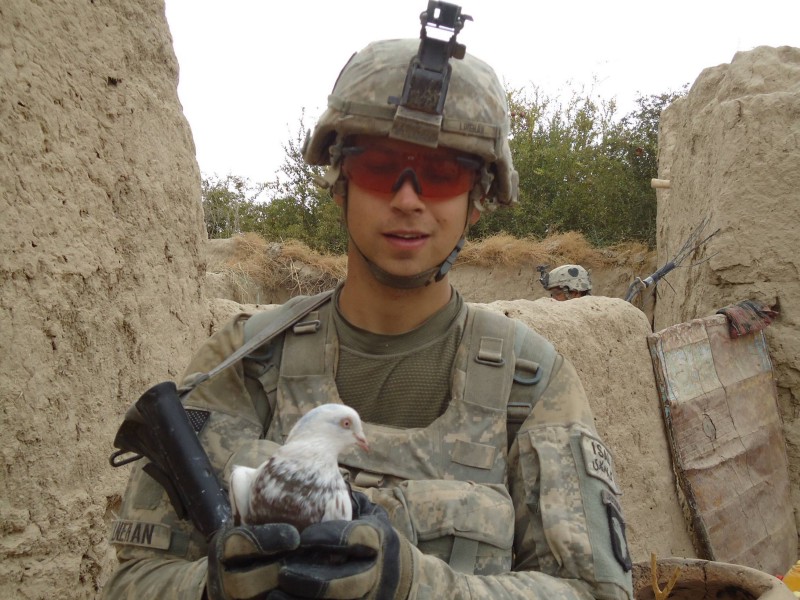
Adam Linehan hanging out with a pigeon in Kandahar, 2010.

Natalia: So you joined the military under Bush, and deployed for the first time under Bush, and then the second time under Obama. And this is a dumb question, but I have to ask it — did you feel any difference while serving under these two administrations?

Adam: No. I was in Iraq when Obama was elected. I thought there would be no more deployments, so when Obama announced the Surge in Afghanistan, I was very surprised.

I don’t remember observing a difference, nobody I knew did either. Obama was very aggressive on Afghanistan. Overall, he didn’t strike me as less aggressive when it came to executing missions at all.

There were complaints that the rules of engagement were getting tighter, but I don’t think that was coming from Obama. I think it was coming from the generals, whose logic was, “We’re under a lot of pressure to turn this war around. We can’t do that while killing civilians.”

By the time Obama came around, there were a lot of military commanders who understood that one of the things holding us back was we were not forging good relationships with the local people and the local government.

Natalia: Let’s say you were ten years younger now. Do you think you would have joined up under a Trump administration?

Adam: To be honest, yes. I was going to be a medic — I wanted to help people. I knew the war would be happening with or without me. And people don’t usually let politics affect their decision to join.

Obviously, a lot of people in the military hated Obama. But they still didn’t have problems with recruiting people.

Natalia: Why did so many people in the military hate Obama?

Adam: A lot of people in the military come from conservative backgrounds. Obama represented the epitome of liberal values to them. He symbolized everything they didn’t stand for.

On a certain level, there was also racism going on. But a lot of the guys in my unit in Iraq? During the campaign, they didn’t know much about Obama. They just knew that he was an eloquent Democrat. That’s all it took for them to think “He’ll take our guns and tighten up the ROEs.”

Natalia: We have a tradition of the military being politically neutral. Do you think this will hold under Trump and his chaotic policies?

Adam: I’m liberal, and I was the only one in my platoon. Most everyone else [in the military] is conservative, and they will be perfectly fine serving under Trump.

Natalia: We’re talking about conservatism, and it’s interesting to me, because Trump is not really conservative. He’s a rich hedonist and a con artist, basically, and will do whatever it takes to keep power. Do you think this will ever become obvious to people?

Adam: I think there are guys in the military who are starting to wake up to some of his shortcomings. So it’s fortunate for Trump that he has [James] Mattis as Secretary of Defense. Mattis is seen as the buffer, as the person who will hold Trump in check on issues that affect the military.

But a lot of people in the infantry are simply happy to have someone like Trump in power, because they want to go to war. They want to have that experience, and Trump is the quickest way to get there.

Keep in mind — a lot of the people in the military aren’t super political. They’re just young guys who like being soldiers.

For what it’s worth, I don’t think that the military could become this super radicalized force that Trump could deploy against the people of the United States.

Natalia: Do you really think Mattis can keep Trump in check?

Adam: Mattis is very strategic. Take the Muslim ban, for example. Mattis knew that this wasn’t smart strategically speaking.

Who was pressuring Trump to remove Iraq from the Muslim ban list? It was Mattis and [National Security Advisor H.R.] McMaster, and Rex Tillerson (surprisingly).

If Trump ever loses Mattis or gets rid of him, there goes a lot of his military support. Because a lot of people in the military are suspicious of the civilians surrounding Trump — people like Steve Bannon or Steve Miller — but I cannot overstate how revered Mattis is by the military. Mattis has put himself in a position where he is indispensable, so if anyone is going to rein in Trump, it’s down to him.


[post_title] => Woke vets: 'Hardly anyone gives a shit' about America’s perpetual war [post_excerpt] => [post_status] => publish [comment_status] => open [ping_status] => open [post_password] => [post_name] => woke-vets-hardly-anyone-gives-a-shit-about-americas-perpetual-war-2 [to_ping] => [pinged] => [post_modified] => 2026-08-07 16:52:24 [post_modified_gmt] => 2026-08-07 16:52:24 [post_content_filtered] => [post_parent] => 0 [guid] => https://conversationalist.org/?p=412 [menu_order] => 363 [post_type] => post [post_mime_type] => [comment_count] => 0 [filter] => raw )

Woke vets: ‘Hardly anyone gives a shit’ about America’s perpetual war