How women artisans in Kashmir are reconnecting with an old tradition to weave new hope.
Every morning, as the sun rises over the old city of Srinagar in Indian-administered Kashmir, 48-year-old Rafiqa Ramzan steps out of her modest home and walks through the maze-like alleys of her neighborhood to catch the bus to work. On the way, she prays at the famous nearby Sufi shrine, Hazrat Makhdoom Sahib (RA), for her 17-year-old son's well-being and the stability of her job.
Ramzan, a single mother, works as a katanvajian—a woman who spins pashmina (cashmere) wool—a craft she learned from her mother when she was just 10 years old. In her youth, she would often compete and spin alongside her friends in her locality, and remembers the soft background noise of the radio, filling the air with old Kashmiri songs and folktales. The job, however, wasn’t sustainable: She continued spinning in adulthood, making it her livelihood, but by her early thirties, the meager wages forced her to give it up. After abandoning her spinning wheel (called a "yinder" in Kashmiri) for over a decade, she only returned to her roots in early 2023 after joining Zaevyul.
Named for the Kashmir word for “delicate,” Zaevyul is a first of its kind artist-centric initiative that operates as a small factory, helping women revive and recreate the region's heritage pashmina shawls. Wajahat Qazi, a writer-turned-entrepreneur, created the initiative in 2022 as a for-profit social enterprise aimed at reviving the historic craft and providing dignified livelihoods to local artisans. Originally, Qazi distributed carded pashmina to women to spin at home, but logistical challenges prompted him to bring the entire production process in-house, something unusual within the industry. However, he soon found that the shift not only improved quality control, but also fostered trust among the women, many of whom come from conservative families.
“It was difficult initially to draw women to this proposition, but once they saw the workspace and the respect they were given, it took off,” he says.
Wajahat Qazi, founder of Zaevyul, providing instruction to a spinner. (Shoaib Mir)
Known as “soft gold,” pashmina was first introduced to Kashmir by the fifteenth century ruler Zain-ul-Abidin, affectionately called Budshah or Great King by his subjects. His reign left a lasting influence on the region's socio-economic fabric, one of which was inviting skilled artisans from Persia (modern-day Iran) to share their expertise with the local population. This included the rigorous techniques of spinning pashmina shawls, still practiced today throughout the region and the fashion world, from Brunello Cucinelli to Louis Vuitton and Hermes.
Over time, pashmina became synonymous with Kashmir's identity. And the women of the region have been an integral part of shaping the industry for centuries, as they are typically its leading artisans. But beginning in 2006, the craft became badly impacted by the influx of cheaper, machine-made imitations, degrading the market for hand-spun pashmina. According to Kashmir's Handicraft Department, there were an estimated 377,000 artisans in the region at the time, nearly half of them women. But as a result of the industry’s decline, dwindling incomes forced thousands of people to leave the craft and seek alternative livelihoods, Ramzan included.
"Before joining Zaevyul, I faced many difficulties,” she says. “I relied on my brothers, and seeing how everything is overpriced broke me inside. The thought of being a burden began to take a toll on my mental health. But by the Almighty's grace, I learned about Zaevyul, which changed my life.”
When she first began earning a living from spinning, Ramzan would take home 1500 to 2000 Rupees per month. The time and effort she invested in the labor-intensive spinning process did not match the meager remuneration she received, which also wasn’t enough to support her son. But now, at Zaeyvul, she earns 8000 to 10000 Rupees per month, and has found so much more than a higher income.
“Before, I would spin pashmina alone at home, but we share our joys and sorrows here,” she says with a smile. “This sense of community has started healing me from within and increased my productivity. Being here gives me a sense of empowerment like someone has given wings to a crippled bird."
Today, Zaevyul employs 40 people, including 30 women, who work as spinners, weavers, and administrative staff, all of whom operate out of a spacious, well-lit karkhana—a manufacturing house specifically designed for artisans. For Qazi, the entire process and purpose of Zaevyul is also multilayered.
“I was struck by the need to create something meaningful,” he says. “My focus turned to the handicraft sector, particularly pashmina, a craft historically sustained by a gendered division of labor—women spun and carded the delicate fibers, while men wove them into luxurious shawls.”
Meemah (who opted to go only by her first name), like Ramzan, also works at Zaevyul as a spinner, and similarly notes the financial stability the venture has given her, alongside improving her mental health and offering her a sense of direction.
“I have often been at the receiving end of the turmoil we’re living in,” she says. “There have been days where I used to feel entirely depressed…I wasn’t myself, and spinning pashmina takes patience. I had to stop. But after learning about this place and joining it, I have been helped a lot, both mentally and financially.”
She shares this as she meticulously spins her pashmina wool in its original white color.
“I pray that we get many more orders and that more women join us. It’s a relief to work in an office-like setting,” she continues. “This place is more than just a workplace. It's a place where we've met other women and formed a community. We're not lonely here. It's a 10-to-4 job with breaks for prayers, meals, and rest.”
Rafiqa Ramzan (in green) spins pashmina alongside her friends at work.(Shoaib Mir)
Zaevyul is especially conscious of honoring this work-life balance, and ensuring the safety of its employees. With approximately 700,000 troops deployed in the region, Kashmir is one of the world's most militarized conflict zones. The ratio of military personnel to civilians is particularly striking, with one soldier for every 30 locals, according to a report by the International Institute for Strategic Studies, a UK-based think tank. This makes everyday commuting for work a tedious endeavor. But Zaevyul provides transportation to alleviate this difficulty, relieving the potential stress it may cause for its workers. Every day, a bus ferries 30 women artisans from different parts of Srinagar to Zeevyul, located in the city’s outskirts.
"Given the political instability in Kashmir, it wouldn't have been possible for me to travel back and forth here without bus service,” Ramzan says as she boards the bus with other artisans to head home. “The environment here is safe, providing us all with a sense of security, for us and our families. Moreover, working here has given me a perfect work-life balance, which wasn't possible when I was spinning day and night alone at home."
Qazi notes that his employees’ continued “economic empowerment” is crucial to maintaining Zaevyul. Hand-spinning pashmina remains a labor-intensive process, and the wages must justify the cost. It also requires immense skill and patience for women who are typically largely responsible for the bulk of household work.
“If you’re not paying them well, it doesn’t make sense for them to dedicate their time to this craft,” he says.
The challenges, however, are manifold. The cost of hand-spun pashmina is significantly higher than machine-spun alternatives, limiting its reach. And while pashmina enjoys global brand recognition, the premium price of handmade products restricts its affordability. This has led to a decline in demand for hand-spun pashmina, which continues to push artisans out of the craft, some never returning.
Despite these hurdles, Qazi is committed to his vision of Zaevyul, continuing to operate on the principles of empathy, authenticity, and ethical production, all while reviving this pristine craft and creating a broader, positive socio-economic impact. It has certainly made a material and monetary difference to all who work there, but also offers them pride and dignity in the work itself.
Looking ahead, Qazi dreams of expanding Zaevyul. The current workspace can accommodate up to 200 women, but financial constraints remain a barrier. His next challenge will be to identify and connect with new markets, conscious consumers, and ethical buyers who are passionate about supporting marginalized artisans and craftspeople.
“Our premise is to revive the craft in its most authentic form and help more women and weavers,” he says.
Like the women he employs, for Qazi, Zaewuyl is more than a business—it’s a movement to preserve Kashmir’s cultural heritage while empowering its artisans, one thread at a time.
[post_title] => Threading the Needle
[post_excerpt] => How women artisans in Kashmir are reconnecting with an old tradition to weave new hope.
[post_status] => publish
[comment_status] => closed
[ping_status] => closed
[post_password] =>
[post_name] => pashmina-kashmir-artisans-cashmere-wool-zaewuyl-collective
[to_ping] =>
[pinged] =>
[post_modified] => 2026-08-03 23:16:26
[post_modified_gmt] => 2026-08-03 23:16:26
[post_content_filtered] =>
[post_parent] => 0
[guid] => https://conversationalist.org/?p=8093
[menu_order] => 25
[post_type] => post
[post_mime_type] =>
[comment_count] => 0
[filter] => raw
)
How skincare has, and hasn't, changed across generations of women.
I have a distinct memory from when I was a young girl, of my nani, my maternal grandmother, opening her Ponds cold cream, with its white base and light green lid, and tapping it onto her face.
I’m still a child, maybe 10 or 11, and when she finishes, she offers the jar of cold cream to me, insisting I also start putting it on regularly to take care of my skin. As I scoop up some of the cream and begin applying it, my nani watches my technique intently, correcting me wherever she thinks I'm not being gentle enough. “Never rub your face,” she tells me. “It’ll make your skin sag and give you wrinkles.”
For as long as I can remember, I have associated my nani with that Ponds cold cream. It really was, and still is, such a key part of her everyday life. She still has jars of it in her bedroom and her bathroom so that it’s always on hand, and brings it with her whenever she leaves home. Yet despite her obvious brand loyalty, my nani’s routine has always been more about process than product. At a time when women were asked to be invisible, to put everyone before themselves, those five minutes spent meticulously applying her face cream each night were an almost rebellious act of self care.
Skincare in Pakistan, and perhaps across the world, has changed significantly since my nani’s days, and I’ll admit even I’ve given in to the hype, buying at least a couple of products with fancy ingredients on the label like “hyaluronic acid” and “AHAs.” But unlike my nani, I’ve always been far less meticulous with my skincare routine. Perhaps it's because these trends are still quite new to me, or maybe the routines themselves have become too complicated. But perhaps more than either, it’s because these products are only selling me an idea of self care, rather than actually fostering a habit of it.
Growing up, aside from what I learned from my nani, the concept of skincare was taught to me very differently. In fact, it wouldn’t be remiss to say that in South Asia, the importance of skincare starts from the womb. I remember, starting from when I was a child, the pregnant women around me were told to eat “white” foods during pregnancy so that their baby would have fair skin. Anything dark—coffee, chocolate—was to be avoided, out of fear that it would cause their baby to have a darker complexion. Despite these myths being completely debunked, they still form a critical part of skincare motivations for older South Asians today, and pregnant people often still receive the same advice.
It’s no secret that whitening has long been a major motivation behind skincare within many Asian cultures and amongst countless other cultures around the world. Despite global trends to push “fairness” out of advertising lingo, the underlying beliefs and colorism still persist, along with the dangerous ways people choose to realize them. This has been true for centuries: Some Renaissance era women would even wear leeches behind their ears to suck out their blood and leave them looking paler, which was considered more beautiful. As recently as the mid to late 20th century, many brides in South Asia would utilize a similar technique in anticipation of their weddings—again, to appear paler and “more beautiful.” Dr. Christine Hall, a GP and Aesthetics Doctor at London’s Taktouk Clinic, says that similar beliefs have long existed in Korean culture, too. “There is an age-old belief which suggested that darker skin tones mean that you worked the land, and so this was correlated to a poorer societal class,” she says. “As a result, most South Koreans did and still do prefer to avoid the sun and tanning—but the focus is on anti-aging, and not so much skin lightening or bleaching.”
As Dr. Hall notes, while some skincare practices have remained consistent across generations, it is the motivations and drivers behind those routines that have continued to shift. In a more extreme example, a recent T: The New York Times Style Magazine article reported that people are still using leeches for beauty treatments today—not for the sake of becoming paler, however, but “in an effort to refresh the skin and reduce wrinkles.”
It makes sense that as beauty standards have continued to evolve, our motivations for partaking in skincare would evolve with them. But, Dr. Hall argues, this isn’t necessarily always because women are trying to chase an ever-changing standard of beauty. After all, we live in a time where women are perceived very differently from the world my nani grew up in; and some of these shifts can also come from letting go of the societal pressures that demand women to conform to them in the first place. “Sometimes, the ideology of having perfect skin and being beautiful goes too far,” Dr. Hall explains, citing the extreme pressure many South Koreans, especially women, feel to maintain their looks. “This has resulted in a movement called ‘escape the corset’ where women are cutting their hair short and throwing away their makeup and refusing to conform to these unrealistic expectations.”
In some ways, the motivation behind the “escape the corset” movement—driven by self-empowerment and a woman’s right to look however she’d like—almost feels closer to my nani’s relationship to skincare than most of what’s sold to us today. One major reason for this, of course, is the overwhelming and unnecessary economy of choice fueled by capitalism, which depends on continuously moving the bar for “beauty” in order to keep us buying more new products. Beauty is now a multi-billion dollar industry, largely funded by women, and it’s only growing each year. This is also partially why, compared to previous generations, there’s been a global shift from more natural skincare—including a reliance on homemade DIY products—to lab-formulated, fancy-sounding multiple-step routines that can only be purchased in a store, and at a cost. “In Greece where I’m originally from, older generations always used natural remedies for many years,” shares Fani Mari, a freelance beauty journalist and content creator. Despite not being a fan of DIY skincare herself, she still incorporates some of these remedies into her skincare routine because they’re simple and effective—and connect her to her culture and the elders who passed it down to her.
For many young women, a similar influence has guided them through their own skincare evolutions, as well. Haniya Shariq Khan, a young college student in Lahore, remembers her own skincare journey with her nani very fondly. While her nani passed away five years ago, Khan shares that she and her mother still follow the same skincare regimen she taught them to this day.
As the wife of a landlord, living in a rural area, Khan’s grandmother endured grueling days of work for most of her life, and skincare was her reprieve. “She was expected to do certain chores, such as making lassi by hand, an incredibly rigorous activity, but she realized quickly that the leftover butter made for a really nourishing moisturizer,” Khan shares. As time went on, and her grandparents' financial situation improved, she continued to indulge in her skin, eventually buying new creams, including some from as far as London.
“I think honestly she was just very into beauty,” Khan says. “Growing up so poor, she had no shoes to wear if she outgrew them… [But] even as a little girl living in the tenements, she used to be crazy about fashion, about the latest hairstyles, and always had her own kohl and mirror from the age of about nine. So this was a hang up from her very deprived childhood: She was keeping her inner child happy by indulging in all these things.”
This relationship to skincare felt similar to my own nani’s relationship to it, even if it took a slightly different shape: So much of the motivation behind skincare for our ancestors was a way of indulgence and self care. While on surface level, this might seem shallow, or largely motivated by societal pressures, these individual experiences show a far deeper sense of well-being, and even treating one’s self, in a time where, for most women, this was largely inaccessible.
Based on most beauty ads today, it may seem like “self care” is still the main driver behind the skincare industry. But the onslaught of consumerism, and the increasing pressure to buy more and more, has turned it more sinister. As a culture, we’ve turned skincare into a necessity. Combined with the pandemic’s impact on our mental health, the pervasiveness and pressures of social media, and an overflow of information in the digital age, skincare has also become a compulsion. Children as young as 10 are now buying into the pressure of using anti-aging products. Capitalism has meant that the move away from the pressure to wear makeup hasn’t necessarily freed us from caring about our appearance. It’s only made skincare our new cult-like obsession, and makes me question whether we’ve learned anything at all.
The way we begin to counter this is by discerning and deciding for ourselves what feels right, not what we’re told will make us feel beautiful by a slew of constantly changing trends and ads that insist we have to buy absolutely everything. It’s by returning to why our grandmothers washed their faces, and reconnecting to skincare as an actual vehicle of self care. This is easier said than done, but some beauty enthusiasts are trying—and in the process, building a new legacy that seeks to find the balance in all of it.
Meraj Fatima, the founder of Her Beauty, a Pakistan-based skincare brand that launched last year, says her brand was inspired by her own skincare journey, and unlearning the skincare traditions of past generations that didn’t work for her. But in the process of creating it, something surprising happened: Her mother and grandmother were willing to go on this renewed skincare journey with her.
Fatima, who had Rosacea growing up, says her skin condition meant she had to figure out what worked for her and what didn’t amongst the various natural “totkas” (home remedies) her mother and grandmother had passed down to her. “One thing that differentiates me from my mom is my mom used natural agents to do skincare, like using lemon, which is terrible for your skin, or malai, which could soften your skin, but my kind of skin will react to it,” she shares. Today, her mother and grandmother are open to trying the products she recommends instead, and are some of Her Beauty’s regular customers.
Still, Fatima wants to be mindful of not eschewing old remedies or products just because something newer and supposedly “better” might be available. She always tells potential customers to start with what they have at home first, and not buy products unnecessarily—even if they’re her own. “I’ve seen my teenage cousins who feel pressured to use so many products without reason. And I have a daughter, too, now, so I keep thinking about what I want to pass down to her,” she says.
The work for younger generations of women, then, is one of both learning and unlearning: Seeing skincare as more than just a trend, but instead, as a practice. Or perhaps as a ritual for the self, or an act of rebellion, like it was for our nanis. Perhaps, then, rather than buying something new, we need to step back, and realize the Ponds already in our cabinet is already enough.
[post_title] => Why Our Grandmothers Washed Their Faces
[post_excerpt] => How skincare has, and hasn't, changed across generations of women.
[post_status] => publish
[comment_status] => closed
[ping_status] => closed
[post_password] =>
[post_name] => generations-women-skincare-beauty-standards-pakistan-south-asia
[to_ping] =>
[pinged] =>
[post_modified] => 2026-08-03 23:41:08
[post_modified_gmt] => 2026-08-03 23:41:08
[post_content_filtered] =>
[post_parent] => 0
[guid] => https://conversationalist.org/?p=7604
[menu_order] => 32
[post_type] => post
[post_mime_type] =>
[comment_count] => 0
[filter] => raw
)
Meet the women creating new life from arid land in India.
It was a day of joy and relief for Kamla: Her daughter was getting married—and the night before, it had rained.
Far from a bad omen, the downpour had been ever welcome. Kamla is a farmer, whose livelihood is directly dependent on the land she cultivates, the land that gives her and her family a variety of vegetable crops to eat and to sell, like beetroots, tomatoes, beans, and chilis. For much of the year, however, the weather works against her: She and her family live in Khajraha Khurd, a village in the Jhansi district of Bundelkhand, Uttar Pradesh—an otherwise drought-prone region in India’s most populous state.
In Kamla's home that morning, preparations were being made for the wedding. Women were singing folk songs and cleaning the freshly picked vegetables from her farm to prepare meals for their guests. Young girls were making roti on the earthen stove burning with a wood fire. Other children were jumping in muddy puddles as cows grazed in a nearby pasture. The entire scene resembled a Satyajit Ray film, portraying their small, Indian village as a mosaic of intertwining agrarian lives.
Kamla was overjoyed. Because of the savings she’d earned through farming, she would be able to gift her daughter two heavy, embroidered sarees with matching glass bangles, heels, and bindis as a wedding gift. She wouldn’t have been able to afford them otherwise. “When I got married, nobody asked me about my choices,” she says. “But today, at my daughter’s wedding, I have made sure her choices are taken care of.”
Farming is a path that has opened many new doors for Kamla, one she first chose to walk in 2020, when the outbreak of the COVID-19 pandemic led to the imposition of a country-wide lockdown. In cities across India, migrants who worked as daily wagers—Kamla included—suffered the most, as their jobs were eliminated overnight. Their very livelihoods came to a complete standstill, and few to none could meet their personal needs, let alone those of their families.
At the time, Kamla was working as a construction worker on a site in New Delhi. After the lockdown was announced, she stuffed her things into a sack and started the journey back to Bundelkhand—where she was born and raised—along with her three children and husband. Without employment, the couple had to exhaust all their savings simply to return home.
Once in Bundelkhand, Kamla was desperate for work. She was not alone: During the pandemic, Uttar Pradesh experienced one of the largest reverse migrations in India. More than 3 million workers returned to their villages from the cities, many of them living below the poverty line—and for women freshly out of work like Kamla, their options were especially limited.
Even before the pandemic, women had been at a disadvantage. According to the dozens of people that I spoke to for this piece, women in India often work more than men, keeping households and raising children in addition to some form of employment outside of their homes—all while being paid less than their male counterparts. In cities, women frequently worked as concrete mixers, diggers, stone breakers, and brick haulers; climbed unstable scaffolding carrying bricks; and were exposed to pollution at their work sites—as were their children, who they often brought to work because there was no one at home to provide childcare. Despite these women doing equal (if not more) work, the people I spoke to estimated that a male laborer usually makes up to 500 Indian rupees (US$7) a day at a construction site, while a woman only makes up to 300 (US$4).
This disparity in pay and promotions, along with regular sexual harassment, a lack of maternity leave, and the absence of toilets, are all an everyday reality for most working women in the informal and unorganized labor market in India. These factors are predominantly driven by patriarchal norms, as well as social, economic, and cultural restrictions, and often feel impossible to avoid. Overworked and underpaid—and now facing a global pandemic—many women didn’t want to migrate to new cities where they would again be forced to compromise on the health, hygiene, and education of their children, or to continue living without community support. With a pandemic at their doorstep, there had to be another option.
Luckily, at home in Bundelkhand, women like Kamla had access to a resource they did not have in the cities: land. Many of their husbands were in possession of inherited land once ripe for farming, but long abandoned in the past due to drought.
Historically, farming in the region had been a challenge. For the past several decades, Bundelkhand has faced a crisis due to uncertain rainfall patterns, causing severe crop damage and sometimes total crop failure. If they could revive this land, however, it could be a tremendous opportunity for financial security. Putting their heads together, these women regularly met three or four times a week to share their household and financial troubles, brainstorm ways to address their issues, and identify how to achieve their financial goals. Farming quickly became one of them.
Kamla expressed an early interest in farming for two reasons: She wanted a sustainable source of food for her family, and she wanted a fair way to earn a livelihood. This is why, in 2022, she decided to join the Basant Mahila Farmer Producer Organisation, a collective of about 3,000 women entrepreneurs across forty villages in the Jhansi, Mahoba, and Lalitpur districts in Bundelkhand. The program was founded in 2020 by ActionAid India through Work4Progress India to create and promote more livelihood opportunities for women, especially those pushed to migration due to the effects of climate change.
The majority of farming-related policies and programs in Uttar Pradesh are not women-friendly, but Basant aimed (and aims) to change that. Rajendra Nigam, a district coordinator at Basant, tells me, “We trained women like Kamla to produce organic seeds, and they successfully produced seeds of wheat, groundnut, pea, and urad (black gram), which are always in high demand in the region.” Through Basant, Kamla learned how to grow her own organic vegetables and fruits, how to prepare cow manure as organic fertilizer, and how to grow multiple crops on the same land in a year. Soon after completing her training, Kamla also received about eleven types of vegetable seeds and some farming tools, spray machines, drums with which to prepare fertilizers, and material for farm fencing to continue farming independently.
“I came back from Delhi tired and empty handed,” says Kamla, who in the past often hid her face in front of local village elders as a mark of modesty and respect when in the presence of men. Now, she fearlessly calls herself “an organic woman” who has successfully and continuously grown vegetables and grains on her 1.5 acres of land since 2022.
It wouldn’t be the only skillset that Kamla gained from Basant. The program isn’t just about teaching women the skills necessary to begin farming, but also to give them the financial literacy and independence necessary to make financial decisions of their own—in India, a realm traditionally dominated by men. To that end, Basant has worked as an intermediary between the government and farmers to educate the latter on various insurance protection plans and credit opportunities specific to their work. These local solutions, according to Khalid Chaudhry, an associate director at ActionAid India, contribute to helping women reach financial independence, some for the first time. And Kamla is just one of many women benefiting from it.
Deva. Photo courtesy of Aliya Bashir.
“I didn’t know how to grow home-grown food. It felt like a dream,” says Deva, a mother of three sons, who recently began farming a “nutrition garden” on her 1.5 acres of land. She decided to join Basant after she’d seen some women in her community benefit from it, and was particularly interested in learning about the cultivation of various vegetables and fruits, what plants to grow in what season, how to prepare manure and a compost pit, and how to save her produce from pests. Before long, she could do all of this herself.
“Now, I teach women to prepare organic manure, pesticides, and fertilizers at a very low cost by using the material usually available on our farms,” she says.
Prior to returning to Bundelkhand in 2020, Deva worked for three years in the brick kilns of Delhi and Uttar Pradesh. Now, she grows organic beetroot, bottle gourd, tomato, fenugreek, cucumber, brinjal, and other vegetables, and is able to sell them at fair prices compared to commercial farming. In addition, she hopes to begin selling her organic manure in the market to better maintain the soil health of other local farms.
Equipped with so much new agricultural knowledge, Deva has become an advocate for nutritious food in her village, and takes great care with her family’s diet, always feeding them a variety of fruits and vegetables. In 2022, she was also able to purchase six chicks and four goats from her earnings.
“Earlier, we would always have less availability of food. But now, we are not only having chemical-free food, but also eggs and chicken and dairy at home,” she says.
Her care has proven profitable: In a recent harvest, Deva earned a profit of 66,600 Indian rupees (~US$800) by cultivating a wide variety of vegetables and fruits in her garden. When she was working as a manual laborer, she wasn’t able to save anything—but now, she hopes to give her grandchildren the good education she couldn’t afford to give to her children before them.
Kamla has similar hopes and dreams. Although she couldn’t afford her elder daughters’ education due to limited financial resources, she is determined to pay for her youngest daughter’s schooling, and farming has allowed her to save more money than she could have ever imagined when she was working in construction. “In Delhi, we would work for almost ten hours a day and would earn 20,000 Indian rupees (~US$240) per month,” Kamla says. “The place is very costly to live in—around 15,000 (~US$180) would go into rent and other expenses. Saving a few thousand rupees was difficult.” In comparison, in the past three months, Kamla has sold 30,000 Indian rupees (~US$365) worth of eggplants alone; the cost for cultivation for which was just 5,000 rupees (~US$60).
“We are expecting the eggplant production to increase three times in this season,” she adds.
Over the last few months, Kamla has sold 80,000 Indian rupees (~US$965) worth of produce through multiple vegetable cultivation, growing high yield vegetables like beetroot, bottle gourd, chickpeas, and cucumber simultaneously. The overall expenses were 13,000 Indian rupees (~US$155), which meant a profit of 67,000 Indian rupees (~US$810), much of which she has been able to put into savings.
“I grew up with the thought that a woman can’t have big dreams,” she says—but still, she’d always refused to give up on them. Customs and tradition taught her that only men have the capability to manage food security in a rural Indian family, and she’s already proven this doesn’t need to be the case. “My family is very happy with my farming work,” she says. “When I am busy on the farm, my husband not only takes care of the children, but also helps in preparing meals.”
This domestic bliss feels prescient. One of the founding members of the Balant program, Laxmi Devi, chose its fitting name upon its founding: In Hindi, basant means happiness and prosperity. With their new skillset, Kamla—and Deva, and so many other women—seem to have found just that.
[post_title] => A Farm of One's Own
[post_excerpt] => Meet the women creating new life from arid land in India.
[post_status] => publish
[comment_status] => closed
[ping_status] => closed
[post_password] =>
[post_name] => india-women-farmers-basant-bundelkhand-farming-agriculture-climate-change
[to_ping] =>
[pinged] =>
[post_modified] => 2026-08-04 17:40:16
[post_modified_gmt] => 2026-08-04 17:40:16
[post_content_filtered] =>
[post_parent] => 0
[guid] => https://conversationalist.org/?p=5947
[menu_order] => 61
[post_type] => post
[post_mime_type] =>
[comment_count] => 0
[filter] => raw
)
Meet the artisans and designers who want to change where you think "luxury" comes from.
Forty years ago, in a small workshop in Sabzazar, Lahore, a young boy watched colors come to life in the form of peacocks, traditional Islamic patterns, and various depictions of his favorite Mughal stories, and fell in love with cotton printing. It was a process Aslam Mirza could watch for hours: the workers extracting natural dyes, sometimes even from vegetables; placing the stencils down for block printing; painstakingly stamping out each design; and creating rows and rows of unique patterns. He was fascinated by the way the machines and artisans came together to turn curtains, table runners, and more into usable art. It was the most beautiful thing he’d ever seen.
For Mirza, this art was also a connection to his ancestors: Under the name of Punjab Calico Printing, his family had been bringing beautiful tapestries and Mughal artwork to customers since 1868, helping to keep these delicate art forms alive. From a young age, Mirza knew that he wanted to carry on his family’s legacy, and today, he is the fourth generation in a business that has won multiple awards and accolades for their talent. But despite this rich family legacy, when he first expressed an interest in joining the family business, his father discouraged it; and by the time he was old enough to work, the once popular, 40-worker strong printing house had been left with almost nothing. “Pakistani handicrafts have long been left behind,” Mirza says. “When I attend small scale exhibitions I see that the younger generation wants nothing to do with [it] anymore.”
Despite his father’s wishes, Mirza took over Punjab Calico Printing in 1982, and with a small team of workers, he continued to create the designs that had always awed him. He also made contact with brokers and middlemen who could get his work to larger cities where he thought more people might be interested. Still, despite their best efforts to stay on top of trends and keep prices low to attract more customers, it became pretty clear to Mirza and his fellow artisans that individual efforts could only go so far. State corruption, which Mirza describes as the mismanagement and at times pocketing of funds attributed to his sector, and a lack of attention given to artisans and their needs, meant there were no areas for growth and almost no platforms for artisans to feature their work and connect with customers, or even each other. It was only when Mirza was approached by Zain Ahmad some two and a half years ago that things started to change.
Ahmed had then just started Rastah—a luxury urban wear brand fusing streetwear and traditional Pakistani crafts—and was looking to bring Mirza’s skill with Mughal art to his designs. For Ahmad, the main goal was to elevate a timeless talent to an international trend, and doing that meant challenging a lot of norms. Amidst local fashion trends having moved away from traditional crafts and a lack of access to international platforms, perhaps the biggest hurdle Rastah faced was challenging the decades old notion that anything made in Pakistan was automatically subpar. “Countries where artisanship can thrive have a very negative connotation with the tag ‘Made In Pakistan,’ which is controversial because if you look at luxury heritage brands globally, many are inspired by South Asian crafts but they won't acknowledge it,” Ahmad says. “You'll see block prints, hand woven fabrics, and more, but they're white washed to fit the narrative that sells abroad.”
Challenging these perceptions on a global scale was difficult enough on its own, but according to Ahmad, it has been just as difficult locally. Last year, the brand was embroiled in online controversy when customers accused them of exploitation due to their high prices compared to other Pakistani brands. It was only after Rastah made it into the wardrobes of high profile names like Hollywood’s Riz Ahmed and Bollywood’s Karan Johar that the criticism stopped. “We live in a Pakistan where people still live in a colonial hangover, and it shows us consumer psychology,” he says. “We need outsiders to validate things for us.”
As Ahmad explains it, the high price point is meant to be a counter to the norm of middlemen exploiting artisans by buying their products for low prices, then upselling them and pocketing the profits. It’s a practice experts and activists in the industry have long been looking to end, but hasn’t proven easy—and not just for Rastah. Sara Ejaz, the head of business developments and partnerships at Vceela, an online marketplace promoting Pakistani handicrafts, says that despite wanting to make the selling process as direct as possible, the organization has faced multiple hurdles. For one, the lack of financial inclusion for women in Pakistan has been a major barrier for women artisans who want to take their skills (and profits) further. “We’re trying to get rid of the middleman process and when we get an order on Vceela, it directly notifies the artisan who is registered as a seller,” she explains. “But we ran into an issue where many of the women artisans who were registered would put up their brother’s, father’s, or husband’s account to receive payments because they didn’t have their own.”
Still, it’s a start. Platforms and brands like Rastah, Vceela, Kaarvan Crafts Foundation, and Khudkaar are all examples of how Pakistani crafts can be amplified and made more desirable with the right structures in place, and in their own way, each of them is challenging social perceptions and inequality in order to champion the “Made in Pakistan” tag. Through these online marketplaces, artisans can access both local and international consumers directly, which otherwise wouldn’t have been possible for them.
Thus far, most of the “Made in Pakistan” movement has been about perception and innovation. But while "artisan," "heritage," and "sustainability" have all become buzzwords across Pakistan’s newly "woke" fashion landscape, a sustainable movement needs to go beyond greenwashing and putting certain words on their labels, and instead focus on investing in the people behind the products. As founder of sustainability focused organization Zuka and long time PR head at Kaarvan, Mehr Husain explains that the ultimate goal is for artisans like Mirza to be able to retain customers on their own and achieve financial independence. “Just because one engages with artisans does not mean it is sustainable,” she says. “You need to train them so they are able to earn independently and you need to go beyond just creation of fashion products. This means you raise awareness and be advocates of highlighting what is wrong with the current models of fashion and work to protect local heritage, be it fabrics, skills, or craft. Sustainable support ultimately means upward social mobility for artisans.” So far, it seems to be working: Rabia, an artisan in Layyah—a small town in South Punjab, Pakistan—who works at Khudkaar, says the organization's online marketplace and marketing has been crucial in empowering artisans to believe that they, too, can create international level products with the right training and access.
For Rastah, having their artisans have a direct stake in the products they create has played a major role in doing this, too. Building off of the hype from their initial collaboration, Ahmad decided to move past just fashion, and stock unique handmade products like Mirza’s tapestries directly onto his website. “When it comes to the products they create themselves, all the money earned on those goes to the artisan directly," Ahmad says. "We keep no part of it, we simply act as a connector between them and consumers." Before his collaboration with Rastah, Mirza’s tapestries would often sell for PKR 4000 to 5000, or $20 to $25 USD. “When I first told Aslam Saab [a term of respect used for elders] that I would stock his tapestry and price it at $300, he told me I was making a huge mistake and that no one would buy it, but it sold out.”
As the impact of these individual efforts comes together, benefiting from the accessibility that digital bridges provide, a somewhat unintentional movement is slowly starting to uplift those who have struggled in poverty for generations at the behest of their craft. Rastah—and Vceela, and many others—are proof of what artisans like Mirza have always known: that these crafts and traditions are undoubtedly unique, they just need other people to see it, too. But it can only happen working from the inside out, and it needs to be a collaborative effort. “Pakistani artisans are no less than anyone, they are just restricted because of their poverty,” Mirza says. “When people visit from abroad, they love our things but we don't like them ourselves. We need to start changing that.” Championing a “Made in Pakistan” label, and marketing it with pride, might just be step one in getting there.
[post_title] => Made in Pakistan
[post_excerpt] => Meet the artisans and designers who want to change where you think "luxury" comes from.
[post_status] => publish
[comment_status] => closed
[ping_status] => closed
[post_password] =>
[post_name] => made-in-pakistan-rastah-mughal-artisans-luxury-fashion
[to_ping] =>
[pinged] =>
[post_modified] => 2026-08-04 20:06:22
[post_modified_gmt] => 2026-08-04 20:06:22
[post_content_filtered] =>
[post_parent] => 0
[guid] => https://conversationalist.org/?p=5379
[menu_order] => 101
[post_type] => post
[post_mime_type] =>
[comment_count] => 0
[filter] => raw
)
How McDonald's, KFC, and other American eateries spread around the world.
Even before the war, Aban Pestonjee’s business was doing rather well.
In the 1970s, Swedish and American home appliances were the kind of thing that lots of people in Sri Lanka wanted, but hardly anyone knew how to get. In response to a series of economic shocks, the government largely barred imports, including luxury goods like washing machines and dryers. But Pestonjee had an idea. She bought used appliances at embassy auctions and sold them at a markup out of a corner shop in the capital city, Colombo. Even with the economy largely restricted, business was good on the Indian Ocean island. But when Sri Lanka descended into civil war in the 1980s, it exploded.
Pestonjee started importing appliances from Korea and offering environmental cleanup services. Later, she expanded into tourism and property. Her three children joined the business, making her family a dynasty and her company, the Abans Group, one of the most powerful in Sri Lanka. In 1998, with the war mostly relegated to the north and east of the country, Colombo slipped into an eerie calm, and at the urging of one of her sons, Pestonjee made her biggest move yet.
She opened the first McDonald’s in Sri Lanka.
~
It’s easy to forget when looking at it through the nostalgic lens that often filters our view of the era, but American fast food was also born in the aftermath of war. When Richard and Maurice McDonald built their namesake restaurant chain in the Southern California desert in the late 1940s and early 1950s, the area was the frontline of a profound economic disruption. The industrial economy that had ended the Great Depression and closed out the Second World War had turned inwards, building prefabricated homes and four-door sedans instead of tanks and planes. In short order, this inverted war economy had also transformed American agriculture: When chemical manufacturers stopped making munitions and started making fertilizer, they supercharged corn production, setting off a livestock explosion which has never abated. As a business that sold meat to car-bound customers in new suburbs, McDonald’s and the industry it launched were ideally positioned to get ahead in an era of chaos.
As the same systems which made it thrive in the United States spread internationally, fast food rushed headlong for the rest of the world. In 1996, the New York Times’ columnist Thomas Friedman argued the industry’s global nature pointed to a deeper trend about the state of the world. As he summarized it, “No two countries that both have a McDonald’s have ever fought a war against each other.” Friedman said his idea was “tongue in cheek,” and as a hard-and-fast rule, it was always a little shaky, before coming apart entirely with Russia’s 2008 invasion of Georgia. But as an observation about the conditions necessary for capitalism, not an axiom of world affairs, Friedman’s “Golden Arches Theory of Conflict Prevention” pointed to a real correlation between a nation’s international fast food offerings and its stability. If a country was at peace (at least in its urban centers, like Colombo in the late 1990s), was prosperous enough to sustain a consumer class, and was integrated with the world economy, it was likely ready to host a McDonald’s or some other global fast food chain. Seen the other way around, fast food was evidence of a country’s stability.
The last few years have made that observation especially relevant, as the global fast food boom has reached countries which were at war in living memory. You can find Burger King in Côte d’Ivoire, Dairy Queen in Cambodia, and KFC in Sudan, a country that was heavily sanctioned as recently as 2017 for committing acts of genocide in Darfur. In these and other nations, fast food’s arrival is nothing if not an indication of peace and a rejoining of the international order.
Yet even as fast food continues to evidence stability, its global expansion has depended on entrepreneurs—like Aban Pestonjee—who sharpened their business acumen in chaotic times, including times of war and occupation.
~
If you know much about the business of fast food, you’ve likely heard about the franchise system. Since McDonald’s’ early days in the Southern California desert, fast food has depended on independent businesses and entrepreneurs, or “franchisees,” to buy into their system. For a fee and a cut of the revenues, a fast food company (i.e., McDonald’s Corporation, or CKE Restaurants, owners of the Carl’s Jr. and Hardee’s brands) gives the franchisee a regional monopoly, allowing them to use its likeness and adopt its methods of doing business. In the industry’s early days in the 1950s and 1960s, franchising allowed fast food companies to expand wildly across the United States on the backs of countless smaller, independent businesses—all with only marginal investments of their own capital. As they’ve plotted expansions around the world, fast food companies have found additional benefits to franchisees, as these local entrepreneurs typically bring local contacts and knowledge to the endeavor which their corporate overlords generally lack.
As an entrepreneur who made her fortune in war, Pestonjee was perfectly suited for the role. She had grown up as a child of an immigrant family and a member of Sri Lanka’s tiny Parsi community. In a war that pitted the nation’s two biggest ethnic groups against each other, she was an outsider. Conflict was little more than minor disruption and background noise as she grew her business.
“You get used to it,” she told a researcher many years after her business first took off. “Knowing that one bomb has gone off here, then everything goes down, business gets slack for a month or two, people forget it and then again it starts.”
Den Fujita, the Japanese entrepreneur who brought McDonald’s to Japan, similarly navigated a messy period in history to amass a fortune. Fujita’s father was an engineer for a British company, and he had picked up some English at home. He studied English in high school, and, at the end of the Second World War, with much of the country leveled and his father and two sisters having been killed in American bombing raids, Fujita left home to translate for the former enemy at the seat of their occupation, the General Headquarters, or GHQ, in Tokyo.
Soon after, Fujita started an importation company. It was a simple business model: He figured out what the American occupiers wanted, and then he figured out how to get it to them. As the Americans left, he expanded his business, importing luxury goods for the Japanese themselves. When McDonald’s first began laying plans for an overseas expansion two decades later, Japan looked difficult, if not impossible, to enter. The bureaucracy was dense, the culture was perplexing. But Fujita was the perfect partner in a country fraught with risk—a bridge between those American corporate executives and the Japanese people, whom they knew nothing about. In 1971, his company, Fujita & Co, became McDonald’s’ first franchisee in Japan. Before long, its first location, in the Ginza district in Tokyo, became the world’s busiest McDonald’s.
There are stories in the rubble of every conflict of shrewd entrepreneurs building a fortune as the nation rebuilds itself. In the early 1990s, as Cambodia recovered from years under Khmer Rouge rule, a refugee named Kith Meng returned from his adopted Australia to take the reins at his family’s company and tap some of the billions of dollars in international aid then flowing into the country. Kith’s Royal Group became a source of basic provisions for UNTAC, the United Nations’ body managing Cambodia while the national government assembled itself. Crucially, for the sprawling, multilingual force inundated with paperwork, Royal also imported copy machines.
As UNTAC packed its bags and left in 1993, Royal invested in a slew of other money-making ventures, some of which, such as a cellular network, a bank, and some TV stations, proved useful to a country getting on its feet, and some of which, such as a casino and a lottery, mostly served to line the budding tycoon’s pockets. Meng’s many ventures put him at the center of a vast network of his own creation, making him an ideal middleman for foreign companies looking to break into Cambodia. In the early 2000s, one of those companies was a Malaysian KFC franchisee. Soon after, Royal founded a separate company with it to bring KFC to Cambodia. The first location opened in 2008.
So, what does war have to do with running an international fast food chain? No matter when or where they take place, wars are times of creation as much as they are times of destruction. When war-ravaged people find that the commercial networks which once supported their purchasing habits have collapsed—because of sanctions, a shifting frontline, or because a manufacturing base was obliterated the night before—their usual consumer preferences evaporate. They don’t care who they bought from in the past. They’ll just go to whoever can navigate the tumult to deliver the goods, now.
When opening in developing countries, fast food’s corporate giants are similarly lackadaisical, if only because they have to be. In countries where industrial-scale beef and poultry production (let alone french fry-ready potatoes) don’t exist, they can’t work within existing systems to meet them, even if they would prefer to. Instead, they have to build new systems, and to do that, they need locals who understand these places intimately. Often, entrepreneurs who cut their teeth in war have exactly the skills they’re looking for.
War has another effect: It reveals the artificiality of old social hierarchies. Meng, Pestonjee, and Fujita were all ambitious and hungry for opportunity. But they were also outsiders—Pestonjee because she was a Parsi; Fujita, because his mother was a Christian and the Japanese he spoke was actually a dialect of his native Osaka; Meng, because he had spent most of his youth abroad. In an era of peace and stability, determination might have only led to modest success. But the social-leveling effects of war and occupation offered chances that would have never existed otherwise.
It’s fitting, then, that after the bombs and gunfire went quiet in their countries, all three would gravitate to fast food. Even though they promote their goods as luxuries in developing countries, fast food brands still retain the welcoming spirit of undiscerning capitalists wherever they operate. Through their doors, the old hierarchies have no place. Everyone is welcome, just as long as they have the money to pay.
Additional fact checking by Apoorva Tadepalli.
[post_title] => The Wartime Roots of the Global Fast Food Boom
[post_excerpt] =>
[post_status] => publish
[comment_status] => open
[ping_status] => open
[post_password] =>
[post_name] => the-wartime-roots-of-fast-food
[to_ping] =>
[pinged] =>
[post_modified] => 2026-08-04 20:31:38
[post_modified_gmt] => 2026-08-04 20:31:38
[post_content_filtered] =>
[post_parent] => 0
[guid] => https://conversationalist.org/?p=4783
[menu_order] => 114
[post_type] => post
[post_mime_type] =>
[comment_count] => 0
[filter] => raw
)
We need narratives that explore our shared problems and point the way toward collective liberation, but South Asian stories in U.S. popular culture haven’t kept pace with our new political realities.
Until 9/11, I didn’t feel a strong need to see my ethnicity represented in American pop culture. Growing up in the U.S. as South Asian was an experience in cultural invisibility, but not one that was necessarily undesirable. GenXers and older Millennials came after the hippie era, which convinced mainstream American culture that Indian culture could be summarized with yoga, incense, and kirtans, and there was little in the 1980s and 1990s to dispel those lingering narratives, or to ground South Asians authentically in popular culture. What we did see, whether it was Amy Irving in brownface playing an Indian princess, or Apu in The Simpsons, was often problematic and unrepresentative.
This situation changed over the last two decades. The first film I saw in theaters after 9/11 was Mira Nair’s Monsoon Wedding, which played at New York City’s storied Paris Theater, right outside the Plaza Hotel. Steeped in joyous chaos and vitality, the film, which is set in New Delhi, portrays an exuberant, extended upper middle class family gathered at the home of the bride’s family to celebrate her arranged marriage to a suitably handsome Indian doctor. Tinged with a hint of tragedy and immersed in love for both family and the kind of colorful Desi spectacle Pico Iyer calls a “marigold tapestry,” the film was an escape, a connection, and a salve in the recovering-but-still-desolate city. I hadn’t realized how much I needed it.
The only previous occasion on which I'd had an inkling of this need was while watching Nair's 1991 film Mississippi Masala. This bittersweet and boundary-breaking love story stars Denzel Washington as Demetrius, a Black American man from a working class background, and Sarita Choudhary as Mina, an Indian woman born in Uganda. After Idi Amin expelled all the “foreigners” in 1972, Mina, who at one point in the film says she has never been to India, lives with her family in a small-town Mississippi motel owned by relatives who represent the great wave of migration from Gujarat to the U.S. during the 1980s and 1990s. The film pulsates with the same vibrancy that would be seen in Monsoon Wedding 10 years later.
But while Monsoon Weddingtells a deeply Indian story, Mississippi Masalatells a deeply American one. As Durba Mitra writesin an essay celebrating the film’s 30th anniversary, Mississippi Masalais a “love story wrapped in histories of postcolonial displacement, settler colonialism, and the shadows of Jim Crow, offer[ing] an account of the cruel circuitous routes of displacement and migration to the American South.” The film is one of the first mainstream American artworks to show both the discrimination experienced by the Indian-American diaspora, and the anti-Black racism the community directs at the Black people amongst whom they now live. Even 30 years later, it stands out as a political inquiry that interrogates what it means to seek liberation through young, urgent love across race, class, and culture.
A scene from 'Mississippi Masala,' Mira Nair's 1991 film starring Sarita Choudhury and Denzel Washington.
Mitra notes in her essay, “The Indian diaspora in the U.S. has always been imagined in the American political landscape as a people neither here nor there.” South Asians who were either born in the U.S. or came as children following the 1965 Immigration Act were so few in number—even today there are only 5.4 million—that, Mississippi Masala aside, the microculture of American-born GenX Desis made little more than a blip in popular culture. On the one hand, this environment provided a kind of freedom in which we could try to shape culture and community without a spotlight. We could try to form bonds of solidarity in the face of entrenched political, cultural, religious, national, and caste lines that separated our peers on the subcontinent and were embraced by diaspora members who clung to their xenophobic, racist, or communal ideologies. On the other hand, the community could be insular and, existing in what Shilpa Davé calls “ambiguous racialized space,” both the victim and the perpetrator of discrimination.
Events in post 9/11 America made clear the need for South Asian stories with political and cultural specificity in mainstream culture. The months immediately after that terrible day were a period of intense discrimination, surveillance, violence, and Islamophobic and anti-immigrant policies. As Representative Pramila Jayapal said, “9/11 changed what it meant to be Arab, Muslim, or South Asian in this country.” Jayapal delivered her remarks during the first ever Congressional hearing on Discrimination and Civil Liberties of Muslim, Arab, and South Asian communities, held over twenty years after 9/11. Finally.
Representation in this political context matters. Rashad Robinson, the prominent civil rights activist, rightly warns usnot to mistake presence for power: Being in a room doesn't necessarily establish a direct line to decision making. None of us relates to the experience of being South Asian in the same way, and none of us should have to represent any or all of the rest of us. But one of the adverse effects of underrepresentation is to convince members of a minority community that they lack power within the dominant culture—that access and opportunity are limited, and their own stories will be unheard or filtered through stereotypes. In an essayabout Lisa Ling’s food docuseries on Asian food in the U.S., Marina Fang writes: “Asian Americans often start from the default position of being “the other.” We have to explain ourselves, usually to a white audience.” In this kind of cultural environment, the need to present perfect or one dimensional characters—a pillar of the toxic “model minority” myth—takes root, and division and misunderstanding flourish.
Presence and visibility may not be the entire solution to these problems. They are nevertheless crucial levers toward power. And the years between 9/11 and the 2016 U.S. election—marked by cross-MENASA community organizingto fight discrimination and state violence —gave rise to a mini renaissance of South Asian content that explored and played with the place South Asians occupy in the U.S. cultural landscape.
Rampant xenophobia in the post-2016 world makes the need for solidarity, representation, and narrative shift even stronger. But the South Asian diaspora community has splintered over the past few years. Rising authoritarianism—from Trump to Brexit to Modi—emboldened Hindu nationalists in India and around the world, greatly exacerbating existing caste and religious discrimination. On the international stage, South Asians have been slow to rise in defense of our common humanity. It feels like a fraught time to embrace South Asian identity and a deeply precarious time around the world. We desperately need narratives that explore our shared problems and point the way toward collective liberation, but South Asian stories in U.S. popular culture haven’t kept pace with our new political realities.
I’ll admit to some satisfaction these days at seeing so much South Asian content made by people in front of and behind the camera. South Asian actors are playing a variety of dynamic, complicated, and sexy (but not exoticized) characters in content ranging from the color-blind casting of Bridgertonand The Green Knight, to the coming-of-age stories in Never Have I Everand Spin, to superheros (that most American of genres) as seen in Eternalsand Ms Marvel.
In this landscape, the character that most closely represents me, at least demographically, is Seemain …And Just Like That. Played by Sarita Choudhary (who also played Mina in Mississippi Masala), Seema is a GenX New Yorker, unapologetically sexual, self-made, fabulous, and untethered to familial or cultural expectations. She is refreshing. I understand why the show disappointedmany viewers with its portrayals of aging, race, class, consumerism, gender, and sexuality, but a small part of me enjoyed watching a glamorous brown woman of a certain age chewing up the scenery.
But reality these days always creeps in. It's hard to get past what is happening politically in the South Asian community and watch even escapist content with unadulterated joy. As I watched her, I couldn’t help but wonder: Is Seema enough?
Her character comes from what appears to be an upper caste Hindu background and lives the life of a one percenter in Manhattan, with a private driver and a luxurious wardrobe of exceedingly expensive designer clothes, shoes, and handbags. She sits in privilege and has origins in what is now the oppressor class in India. As do I. Not all South Asians are privileged—far from it, especially in terms of race, class, or caste. But for a community that is small in numbers, we have a relatively high level of power and privilege. This is what Seema, as fabulous as she is in some ways, also represents.
In the current state of our world, confronting society from our perspective as South Asians should require us to interrogate where we sit along the spectrum of power. What is our collective responsibility? Where do we have social power, and where do we use it for good? We need rich, complex stories that explore these questions. We need more than a few of these stories every decade.
I want to know what Demetrius and Mina would do in our world. That’s the story I’m looking for now. We are living in monstrous, devastating times. We need lightness, escape, and joy—and a more inclusive roster of characters that will shape the way people perceive one another. Even more so, we need to tell stories of solidarity.
[post_title] => Representation matters: South Asians in American pop culture since 9/11
[post_excerpt] => During the 30 years since Mira Nair's groundbreaking film 'Mississippi Masala,' the representation of South Asians in American pop culture has evolved significantly. But is it enough?
[post_status] => publish
[comment_status] => closed
[ping_status] => open
[post_password] =>
[post_name] => representation-matters-south-asians-in-american-pop-culture-since-9-11
[to_ping] =>
[pinged] =>
[post_modified] => 2026-08-04 20:48:04
[post_modified_gmt] => 2026-08-04 20:48:04
[post_content_filtered] =>
[post_parent] => 0
[guid] => https://conversationalist.org/?p=3963
[menu_order] => 129
[post_type] => post
[post_mime_type] =>
[comment_count] => 0
[filter] => raw
)
Fired from their jobs, their bank accounts frozen, facing death threats, the country's 270 female judges are in exile or in hiding.
Only six months ago Tayeba Parsa, 34, a female judge in Afghanistan, was determined to keep advancing women’s rights despite threats that Kabul would soon fall to the Taliban.
“There were times when I was really scared, but I always went to work,” Parsa tells me by phone from Warsaw. She has been living there with her elderly father and husband since last August, when the Taliban took over Kabul, waiting for news of a student visa from a country willing to take her in. “It was my profession, I loved my job, I studied for years to become a judge. I didn’t want to give it up.”
In the six months since the Taliban took over, the rights of women in Afghanistan have been all but eliminated. Girls older than 12 have few opportunities to obtain an education, while women fighting to hold on to any progress made over the last two decades face threats, prison, and often death. In this reality, women who not only have a higher education than most, but also practiced law in a position of authority over men, run the risk of execution without trial. In January 2021, unknown assailants on a motorcycle gunned down two Afghan women judges who were on their way to work.
When Parsa fled Afghanistan she gave up not only her career, but her entire life as she knew it.
“I was at home for three days when we heard news that the Taliban were at all checkpoints,” she says. “I collected all my documents and started destroying case notes to hide my identity.”
A former judge in the commercial division of the appeals court of Kabul province, Parsa is a member of the International Association of Women Judges (IAWJ) and volunteered to act as communications officer for the local branch. This association automatically placed her at higher risk.
“The Taliban consider every Afghan who collaborates with foreigners an infidel, a traitor,” she says. “When I was a judge, I was receiving constant anonymous death threats.” To avoid being targeted by the Taliban, Parsa and her fellow judges hid their identities when going to work and avoided riding in officially marked cars. She says she knew the dangers and accepted them.
“You never knew if you were going to come home,” she said.
In Taliban-controlled Afghanistan, all women and girls are at risk. But no one is more in danger than women lawyers, judges, journalists, and police officers. Women in key positions of power were especially targeted by this regressive militant group, which seeks to enforce an extremist interpretation of Islam. As soon as the Taliban took over, the women lost their jobs and saw their bank accounts frozen. They knew their lives were in imminent danger.
Afghan women judges were instrumental in challenging their deeply patriarchal society by demonstrating that violence against women and girls is not only wrong, but a punishable criminal offence. Putting aside fears for their own safety, they convicted and sentenced the men who stood trial in their courtrooms for rape, kidnapping, murder, forced marriage, or preventing women from going to school.
The new Taliban government has released criminals whom Parsa, and approximately 270 other female judges, had sentenced to prison after they were convicted of crimes. With these men now free to take revenge, the women were in grave danger.
Nabila, who requested that her last name be withheld, was a family court judge who granted divorce petitions to many women.
“Afghan law stipulates that a wife can request a divorce if her husband has been jailed for more than five years,” she tells me. “Some of these men were dangerous criminals who had committed serious crimes like murder and kidnapping. I granted these divorces according to the rule of law, but when the Taliban arrived, they released many of these criminals who came looking for me. I was no longer safe.”
Nabila is one of 26 female Afghan judges and lawyers who, along with their families, arrived in Athens from Afghanistan via Georgia this past September. While she, her husband, and their three children were eligible for evacuation, their immediate families remain behind. They fear reprisals against them and worry about their day-to-day living conditions, with a worsening humanitarian crisis on the ground.
“We’re always calling them, always checking up on them,” she said, adding that her relatives have had to change homes frequently for their safety.
International sisterhood
The International Association of Women Judges, which represents more than 6,500 judges in over 100 countries, has been instrumental in helping their Afghan colleagues get out of the country and in amplifying their message.
Mona Lynch, a Supreme Court judge in Nova Scotia and regional director of the International Association of Women, emphasized the urgency of getting those women out of Afghanistan.
“We have been trying to assist them in any way we can over the past few months,” she says. “These brave women have contributed for 20 years to maintaining the rule of law and stable governance in Afghanistan.”
“None of them wanted to leave their country, they simply had no choice,” said Judge Lynch. “And the ones still left behind are getting more and more desperate as the circumstances deteriorate. They need help and we need to be their voice.”
Education is everything
While waiting in Poland, Parsa has been using her free time to improve her English. After applying for scholarships at German, French, and American universities she obtained a visa for the UK, which she accepted—but at a cost.
“I’m happy because it’s an English-speaking country, and I can’t imagine the additional hurdle of learning another language right now, but the visas are only for me and my husband. I would have to leave my father behind. I don’t know what to do.”
She hopes to return to Afghanistan one day and help rebuild the country, but right now it’s only a vague dream, fueled by cautious optimism.
“The situation as it is right now won’t stand,” she says. “It’s intolerable, there’s no rule of law. Trials are being conducted by illiterate people. I want to be the voice of all Afghan women judges, those who are still there, still in hiding, still in danger, and those who have been evacuated but haven’t been offered visas,” she said, making a plea for the international community to help extricate the women still in hiding in Afghanistan, and to help settle permanently the women who got out but are still waiting for visas.
Nabila’s husband Asadullah, who is a construction engineer, has been translating parts of the conversation in his fluent English. In answer to the interviewer’s question, he described Afghanistan’s immediate future as “dark,” adding that this was the case “especially for women."
“I believe in women’s rights, they’re half of society,” he says. “I have three daughters and I saw a dark future for them there. My girls would not have been able to attend school. The Taliban may have promised that they can go, but I don’t believe them.”
Life in Limbo in Athens
Some 200 female Afghan judges, Nabila among them, are hoping Canada will fast-track their arrival, since they qualify under a resettlement program for Afghan refugees in danger for having held leadership or human-rights positions.
Greece has welcomed more women fleeing Afghanistan than any other country so far. Amed Khan, an American philanthropist who was instrumental in helping many Afghan judges find a temporary home in Greece, said in an article for The Greek Reporter that it reflected an openness he saw from smaller governments that was missing from the world’s biggest economic powers.
“The only political leadership I’ve seen is from smaller countries like Greece, Albania, Qatar, North Macedonia; it’s not the G7,” said Khan. “A lot of countries made a lot of money in Afghanistan and now they want to wash their hands and look for the next opportunity.”
Despite her gratitude, Nabila wants to put down permanent roots and is waiting eagerly for news of permanent resettlement. She is worried about the children being unable to attend school in Greece, because they are in the country on temporary visas.
A painfully slow process
Few countries have provided easy pathways for these women. They are scattered with their families in more than 17 countries around the world, and only a small number have been resettled permanently in their final destinations.
The American Bar Association has created the Afghanistan Response Project and the International Association of Women Judges has launched a fundraising campaign, but these efforts rely more on individual goodwill than government assistance.
The Canadian government has expanded its special immigration program to include women leaders and human rights defenders, as well as persecuted minorities, but advocates say the process is too slow. Immigration Minister Sean Fraser recently suggested that it could take up to two years for the government to meet its promise of resettling 40,000 Afghan refugees. Fewer than 7,000 have arrived in Canada so far.
And so these women wait, stuck in limbo. They can’t dream or plant roots in a temporary home. They worry about their future.
“These are professional, talented, brave women,” Parsa tells me. “They fought for the rule of law in Afghanistan. They stood strong against threats and political pressure. They’re educated and driven, they deserve to be offered scholarships and a new life, they are the future of Afghanistan.”
[post_title] => Afghanistan's female judges lost everything when the Taliban took over
[post_excerpt] => In Taliban-controlled Afghanistan, all women and girls are at risk. But no one is more in danger than women lawyers, judges, journalists, and police officers. Women in key positions of power were especially targeted.
[post_status] => publish
[comment_status] => closed
[ping_status] => open
[post_password] =>
[post_name] => afghanistans-female-judges-lost-everything-when-the-taliban-took-over
[to_ping] =>
[pinged] =>
[post_modified] => 2026-08-04 20:54:59
[post_modified_gmt] => 2026-08-04 20:54:59
[post_content_filtered] =>
[post_parent] => 0
[guid] => https://conversationalist.org/?p=3908
[menu_order] => 135
[post_type] => post
[post_mime_type] =>
[comment_count] => 0
[filter] => raw
)
WP_Post Object
(
    [ID] => 3583
    [post_author] => 2
    [post_date] => 2021-12-09 23:56:55
    [post_date_gmt] => 2021-12-09 23:56:55
    [post_content] => Famous for its delicious honey, Kashmir has seen a decline in artisanal apiculture due to a confluence of political and environmental factors.

GANDERBAL, KASHMIR –Clusters of beehives dot the sprawling lawns outside the Rizvi family home in the Kashmiri village of Shalhar. Bees swarm the flowers and suck the marrow out of colorful petals. Towseefa Rizvi, 49, clad in protective gear, walks toward her hives; she manages 200 colonies of Apis mellifera, often referred to as the European or western honeybee. This district, located about a half-hour’s drive from Srinagar, boasts diverse flora, sprawling apple orchards, and extensive forests that are the reason Kashmir is famous for its uniquely delicious honey.

“I had never thought of doing something like this,” she says, gently opening a hive. “But this unusual job has both challenged and fascinated me.”

A mother of three, Rizvi has been beekeeping for more than a decade. She taught herself the necessary skills by researching online, watching and consulting with local apiarists, and through trial and error. In addition to running her own honey production busines, she now trains and supports new apiarists, especially women in her community. Beekeeping is a popular enterprise, she explained, because startup costs are low.

The average annual turnover from Rizvi’s 200 colonies is about $10,698 (monthly income in rural Kashmir is between $66 and $133). She retains an income of about $4,012 and puts the difference back into the business.

This part of Kashmir is deeply conservative. Women typically look down while walking outdoors; they do not speak in public or visit the homes of strangers unless accompanied by a male family member. Rizvi’s decision to become the first women in her district to launch her own business, let alone in this traditionally male-dominated occupation, was thus deeply unusual. But her husband, Syed Parvaz, 42, has supported her from the beginning; he is now a production manager in Kashmir Valley Agro Industry, which includes their honey-making business (Jammu and Kashmir is the only place in India that produces a rare variety of wild bush honey, he explained.) The couple are committed to releasing the untapped potential of the honey production industry in their region.

Inspired by Rizvi’s example, an increasing number of women from poor families are starting their own apiaries. They look up to her for showing them an income-earning business that they can run from home, a fact that was particularly relevant during the pandemic lockdown. Rizvi and her husband have registered around 500 beekeepers and have trained thousands of beekeepers in neighboring districts.

“I tell them if I can be an entrepreneur with limited education and skills, why can’t they,” says Rizvi. “I started beekeeping when there were hardly any women in the trade, but now we have so many around and if we cannot inspire and support each other then it would be our collective failure.”

The pandemic provided Rizvi with unexpected opportunities. During the lockdown she launched an online school to teach beekeeping, and then a website to sell a variety of products ranging from honey to herbal tea mixtures. She also renewed her commitment to sustainable farming practices, starting with cultivating her own vegetables to compensate for soaring prices and spotty access to markets. Bees, she pointed out, play “a major role” in sustainable agriculture.

[caption id="attachment_3585" align="aligncenter" width="840"] Towseefa Rizvi and Syed Parvez at their honey production facility.[/caption]

Some hope that, with an infusion of knowledge and skills, beekeeping could help revitalize Kashmir’s economy.

Unemployment in the territory is the highest in India, a fact that has particularly hurt people younger than 35, who are 70 percent of the population, and women—72.6 percent of whom are without work. More than two years of political upheaval, military curfews, the longest internet blackout in history, and then the pandemic lockdown, have had a devastating impact. The Kashmir Chamber of Commerce and Industries estimates that the regional economy has lost $7bn since 2019.

But the road to expanding beekeeping into a lucrative business is littered with obstacles, explained Sajad Hussain Parey, professor of entomology at Baba Ghulam Shah Badshah University. The government provides no social security to beekeepers—i.e, they are not insured—or training in modern methods. Most traditional beekeepers are unaware of critical  skills like seasonal hive management and bee pollen collection. As a result, honey production is low; a lack of marketing opportunities further undermines the earning potential of beekeeping. Quality control is also a problem, said Parey, because there is no central institution to monitor and test the honey for purity.

But an infusion of government funding could unleash the potential of Kashmir’s honey industry. What’s needed are training and market access to allow sustainable exploitation of Kashmir’s climate and natural vegetation. With honeybees around the world becoming increasingly vulnerable to climate change and the chemicals used in industrial apiaries, training local people in artisanal beekeeping and modern scientific methodology could create significant employment opportunities. A return to sustainable beekeeping methods would also encourage ecological awareness and rural development, promote small village industry, increase biodiversity —and could double farmers’ income from fruit and vegetable cultivation by complementing it with beekeeping.

Since almost everyone in Kashmir has a house and land, they have the space and means to engage in small and medium scale beekeeping at home, with minimal financial investment.

The regional government is working to generate new business opportunities in the production of bee byproducts like beeswax, propolis, bee venom, and royal jelly. In addition, it is attempting to expand the apiculture sector by increasing the number of beekeeping units, obtaining a GI tag for the region’s honey, and helping farmers increase their incomes by introducing modern technological methods.

Parvez and Rizvi have begun working on Integrated Pest Management to train apiarists in protecting their bees from pests and predators.

“A person should be confident to take care of bees,” says Syed, adding that the couple is in constant touch with institutions, research departments, and independent beekeepers across the world. Through their networks they are learning about skill training, trust building measures, and procurement of plants and machinery, as well as how to diversify their honey products and expand their market opportunities. By setting up sales outlets, they are also learning how to improve the income and employment of the beekeepers, assure sustainability and inspire more young unemployed people to take up the craft.

Rizvi explains that her ambition goes beyond just growing her own business. “The participation of more and more women in this field is my dream,” she said, adding that she is working to create “a sustainable revenue opportunity” for local people.

As Rizvi prepares to inspect her hives, which she does during the evenings, when the bees are less aggressive, she puts on her protective cap and coat. “A blooming garden is my office,” says Rizvi as bees buzz and hum in the hive. “And bees are like my family.”
    [post_title] => ‘Bees are like my family’: A female beekeeper is reviving honey production in Kashmir
    [post_excerpt] => After years of political upheaval, military curfews, months-long communications blockades, and then the devastating pandemic, Kashmir's economy is on its knees. Could beekeeping save it?
    [post_status] => publish
    [comment_status] => closed
    [ping_status] => open
    [post_password] =>
    [post_name] => bees-are-like-my-family-how-a-female-beekeeper-is-redefining-honey-production-in-kashmir
    [to_ping] =>
    [pinged] =>
    [post_modified] => 2026-08-05 18:20:35
    [post_modified_gmt] => 2026-08-05 18:20:35
    [post_content_filtered] =>
    [post_parent] => 0
    [guid] => https://conversationalist.org/?p=3583
    [menu_order] => 157
    [post_type] => post
    [post_mime_type] =>
    [comment_count] => 0
    [filter] => raw
)
WP_Post Object
(
[ID] => 3409
[post_author] => 2
[post_date] => 2021-11-05 05:51:15
[post_date_gmt] => 2021-11-05 05:51:15
[post_content] => Nevertheless, she persisted.*
The first five minutes of “I Am Belmaya,” a feature documentary set in Nepal, could be a stand-alone short film. A young woman goes about her morning chores, sweeping the courtyard outside her one-room home and washing dishes at the outdoor water tap as chickens peck nearby and a rooster crows. Her face is closed; her posture speaks of drudgery and poverty. The camera then switches to street scenes in Pokhara, which lies under the stunning Annapurna Mountain. Diesel buses roar; a sidewalk barber gives a shave to a man reclining in an old-fashioned chair; and everywhere, women are engaged in backbreaking physical labor—stirring the contents of a pot at a roadside café while holding a baby with one arm, squatting on the ground to spin wool by hand, staggering as they carry impossibly heavy loads of bricks on their backs. From high above, a drone camera pans over the sprawling city and then zooms in on the tiny shack, the little courtyard, the chickens, the outdoor water faucet, and the young woman. This is Belmaya.
In a scant two minutes the young woman narrates her life story: born low caste in a poor village; orphaned by age nine; deprived of an education by brothers who thought girls were more useful working in the fields; and then, finally, some joy and hope at a boarding school for disadvantaged girls. A British woman named Sue Carpenter gave a photography workshop at the school, distributing little automatic cameras to all the girls and arranging an exhibition at the British Council in Kathmandu for the most talented ones—of whom Belmaya was one. Seven years later, Carpenter returns to Nepal and reconnects with her former protégé.
Belmaya is now 21 years old, unhappily married and the mother of a two-year-old daughter. She has not realized her ambition to become a photographer or finish high school. The school confiscated the cameras after Sue left, implementing corporal punishment that made the young girl resentful and angry. In 2006 she was full of hope for the future; but in 2014 she is mired in deep regret at not having obtained the education that would have allowed her to be independent and financially secure. Smiling sadly, she tells Carpenter that she’s never found happiness and does not expect to find peace.
The contrast between the subdued, pensive 21-year-old Belmaya of 2014 and her younger iteration, as seen in clips Carpenter filmed at the school in 2006, is stark and telling. At 14 she was a charismatic presence, laughing loudly and voicing strong opinions about the unjust position of women in her deeply patriarchal society. She loved photography, explaining that she felt free when she took pictures and that everything looked different through the camera lens. But at 21 life seems to have beaten her down.
One of the points the film makes is that Belmaya’s life could indeed have stayed stuck at the five-minute mark, in that bleak place of grinding poverty and hopelessness—but it did not. "I Am Belmaya" documents the eponymous heroine's journey to becoming a documentary filmmaker in her own right. She achieves this with remarkable resourcefulness, resilience, and hard work, despite obstacles that include a drunken husband who beats her and the 2015 earthquake that devastated Nepal.
Over the next five years, Belmaya learns filmmaking through rigorous mentoring programs that start with learning how to use a tripod. “Practice every day for at least 30 minutes,” says the director who is teaching her the craft of filmmaking. And she does, with an expression of deep focus as she repeatedly collapses and re-opens the tripod. The film shows her learning how to do closeups and storyboards; we see her smile with pleased surprise when she is told that she has a bright mind. She shows a natural talent for conducting interviews. Gradually, as she acquires skills and knowledge, a confident, ambitious woman emerges.
The film within the film is Belmaya’s making of her first documentary, a short called “Educating Our Daughters.” In one of the most poignant scenes, while interviewing two girls at their school, she asks: “Being a woman, do you believe I will be able to make a film?" Smiling warmly at her, the two girls answer: “Of course you will! What does a girl lack?” Belmaya’s expression shows wonder at their self-confidence; one can almost hear her listing all the things she lacks.
“Educate Our Daughters” was rapturously received at the Kathmandu Film Festival. It went on to win critical acclaim and awards on the international festival circuit, and Belmaya with it. The scene of her striding confidently along a street in London, where she will present her film at the UK Asian Film Festival, can only be called triumphant. But the most brilliant success of this absorbing, touching documentary is in its telling of Belmaya’s story from her own perspective, with no hint of a white savior tale. She shares director’s credit with Sue Carpenter, in an explicit assertion that she controls her own narrative.
*On December 15 The Conversationalist will screen this film live online, with a follow-up Q&A with the directors. Click here to register.
[post_title] => 'I Am Belmaya': Film review
[post_excerpt] => The film follows the life of Belmaya Nepali over a period of 14 years, as she takes up a camera to tell her story. Silenced for years by poverty and the patriarchy, the young woman transcends her circumstances and reclaims her voice through filmmaking.
[post_status] => publish
[comment_status] => closed
[ping_status] => open
[post_password] =>
[post_name] => i-am-belmaya-film-review
[to_ping] =>
[pinged] =>
https://vimeo.com/595445531
[post_modified] => 2026-08-05 20:01:45
[post_modified_gmt] => 2026-08-05 20:01:45
[post_content_filtered] =>
[post_parent] => 0
[guid] => https://conversationalist.org/?p=3409
[menu_order] => 165
[post_type] => post
[post_mime_type] =>
[comment_count] => 0
[filter] => raw
)
WP_Post Object
(
    [ID] => 2914
    [post_author] => 2
    [post_date] => 2021-07-15 20:11:07
    [post_date_gmt] => 2021-07-15 20:11:07
    [post_content] => The Modi government placed Kashmir under the longest internet shutdown ever imposed in a democracy.

Two prolonged lockdowns in Indian-administered Jammu and Kashmir have taken a toll on the region’s children. The first began on August 5, 2019, when the Modi government unilaterally revoked Article 370 of the constitution, which had guaranteed autonomy for the disputed region since 1947. To pre-empt protests, the government blocked internet access and phone connectivity, while the army deployed soldiers on the streets to implement draconian policies that included arrest and detention without charge, curfews, and mandatory home confinement. Schools and universities were closed for about six months. Two weeks after the military closure was lifted and schools reopened, the government in New Delhi announced a country-wide pandemic lockdown that closed all the schools and colleges in India—indefinitely. But while children in the rest of India were able to attend school online, the government refused to restore internet access in Kashmir.

The two million children of Kashmir missed nearly two years of formal schooling. Meanwhile, those from disadvantaged backgrounds had no means of accessing the internet even when the government restored access. The pandemic has exacerbated the digital divide between India’s rich and poor, since very few parents of children who attend public schools can afford smartphones to access online classes.

For those who live in remote areas that lack infrastructure, internet and mobile connectivity are poor even under normal circumstances. Now, with the pandemic keeping the schools closed, a recent BBC News report shows children in rural villages walking miles and even traversing mountains for an internet signal that might allow them to access their online schoolwork. But the signal is so weak that downloading tutorials can take hours. At that speed, online video classes are impossible.

[caption id="attachment_2923" align="aligncenter" width="740"] Kashmiri children walking home from school in winter.[/caption]

Mental health experts and teachers report that the lockdowns have also exacerbated pre-existing physical and mental health problems, causing trauma that could take generations to heal.

Dr. Majid Shafi, a clinical psychiatrist who treats children and adolescents in the central and southern districts of Kashmir said restrictions on children, who are confined to their homes for long periods during extended lockdowns, has adversely affected their physical, emotional, and cognitive health.

“Almost every parent of kids and teenagers in Kashmir is complaining these days about increased behavioral issues in their children,” said Dr. Shafi, adding that he had seen an “appreciable increase” in symptoms such as a feeling of hopelessness, anxiety, mood disorders, and a decline in academic performance

Isha Malik, a clinical psychologist at a government-run children’s hospital in Srinagar, said the months-long suspension of phone and internet connectivity had severely hampered delivery of mental health-care services. As a consequence, she said, many of her patients had relapsed or seen their symptoms worsen.

Ms. Malik, who also treats psychosocial and mental health problems in children and women at her own clinic in Srinagar, said that drug abuse among adolescents has increased with the lockdowns because they could not “release their pent-up emotions” by meeting up with friends. Data collected by physicians at Kashmir’s Institute of Mental Health & Neurosciences (IMHANS) shows that heroin consumption in Kashmir increased an astonishing 1,500 percent between 2016-19. There are only three addiction treatment centers for the region’s population of 12.5 million.

During the same period of 2016-19, IMHANS found that the number of children hospitalized in psychiatric wards increased from 17,000-30,000. One small survey conducted by a psychologist in Srinagar showed that 72 percent of school-age children said they felt a lack of purpose in life.

But even before the current lockdowns, Kashmir suffered from high rates of mental illness due to ongoing political unrest and repeated military incursions, going back to the 1990s.

According to a 2016 report, co-authored by psychiatrists and researchers from IMHANS and ActionAid International, the mental health situation in Kashmir was already “alarming.” The researchers found that 11.3 percent of the adult population suffered from mental illness, which is significantly higher than the Indian national average of 7.3 percent.

A 2015  study—jointly prepared by Doctors Without Borders, IMHANS, and the University of Kashmir—found that Kashmir was suffering from a mental health crisis of “epidemic proportions,” with 50 percent of women and 37 percent of men suffering from depression and/or PTSD.

In 2019, shortly after the Modi government revoked Kashmir’s autonomous status, the People’s Union for Civil Liberties (PUCL), roughly equivalent to the ACLU in the United States, released a fact-finding report that found the suspension of internet and phone communication had “hugely hampered” the medical system in its efforts to provide mental healthcare to patients in Kashmir—which mirrors the experience of Ms. Malik, the clinical psychologist in Srinagar.

Amit Sen, a New Delhi-based child and adolescent psychiatrist who was part of the PUCL fact-finding team that visited Kashmir in 2019, described his deep concern for the welfare of the region’s children in a powerful essay for The Indian Express. The city of Srinagar had become a ghost town, he wrote, with the children he had seen playing on the street during previous visits now absent. The minority of children who could access mental healthcare were suffering from “acute anxiety, panic attacks, depressive-dissociative symptoms, post traumatic symptoms, suicidal tendencies and severe anger outbursts.” The violent aggression and abuse perpetrated by the military on civilians, wrote Dr. Sen, could take “generations” to heal.
History of school closures
School closures are a familiar aspect of life in Kashmir. Students have called for academic strikes in response to political unrest—particularly after the army and government forces killed civilians. In 2016 there was a student strike to protest the military’s killing of Burhan Wani, a popular 21-year-old militant commander in southern Kashmir. In March 2018, the government closed academic institutions for 32 days, when protests erupted after military shelling resulted in the deaths of five members of a single family, along with two militants. In other words, the more recent lockdowns have only exacerbated long-simmering political tensions.
Digital divide, unequal access
Access Now, an international advocacy group that tracks internet shutdowns across the world, reported in March that the government’s seven-month suspension of Kashmir’s internet access in 2019-20 was the longest in any democracy. According to the group’s analysis, the Indian government blocks internet access more than any country on earth.

The Jammu-Kashmir Coalition of Civil Society, a prominent civil rights group, called the government’s communications blackout “digital apartheid.” Only in February 2021 did the government finally restore 4G mobile data service.

Umar Rashid Bhat, a public school teacher in Chandoosa, a village in northern Kashmir, says that 60 percent of his students are from households living below the poverty line, and thus cannot afford smartphones that would allow them to access online tutorials—or to participate in online classes via conference calls, which some private schools offered during the internet shutdown.

About one in five children attended private schools before the pandemic, but enrolment is dropping because the pandemic has put so many parents out of work and has thus made them unable to pay tuition. Meanwhile, 175,000 children have dropped out of public schools. Sharif Bhat, who heads the Jammu and Kashmir office of Save the Children, said the organization believes many of those children left school in order to find odd jobs that would help support their families during the precipitous economic downturn caused by the long lockdowns.

Shah Fozia Hussain, a government middle school teacher in Seer Shaksaz, a village about 37 miles from Srinagar, noticed that one of her eighth-grade pupils joined her online class after an absence of more than a month. The student told her privately that he had been out working with his father, who had been unable to earn a living for months due to the lockdowns. After saving for several months, the son had been able to buy a smartphone that enabled him to rejoin his class. “I was in tears when I heard his story,” said Ms. Hussain. For the hundreds of thousands of Kashmiri children who are suffering under the government’s decision to place nationalism over their welfare and the ongoing ravages of the global pandemic, owning a smartphone that allows them to access their basic right to an education has become a privilege.
    [post_title] => Kashmir's lost generation of children
    [post_excerpt] => Deprived of internet and phone access, cooped up at home under military lockdown and then a pandemic lockdown, Kashmiri children are under severe mental stress that is putting them in psychiatric words and causing them to turn to heroin.
    [post_status] => publish
    [comment_status] => closed
    [ping_status] => open
    [post_password] =>
    [post_name] => denied-school-internet-access-for-2-years-kashmiri-children-are-anxious-depressed
    [to_ping] =>
    [pinged] =>
    [post_modified] => 2026-08-06 20:38:21
    [post_modified_gmt] => 2026-08-06 20:38:21
    [post_content_filtered] =>
    [post_parent] => 0
    [guid] => https://conversationalist.org/?p=2914
    [menu_order] => 188
    [post_type] => post
    [post_mime_type] =>
    [comment_count] => 0
    [filter] => raw
)
WP_Post Object
(
[ID] => 2847
[post_author] => 2
[post_date] => 2021-06-24 17:25:51
[post_date_gmt] => 2021-06-24 17:25:51
[post_content] => British Vogue's interview with the Pakistani Nobel Peace Prize laureate set off a storm of virulent criticism in her native Pakistan.
The July issue of British Vogue departs notably from the usual fare of supermodels, pop stars, and actresses. Wearing a traditional salwar kameez and matching head scarf, Malala Yousafzai—“survivor, activist, legend”—gazes serenely through honey-colored eyes. Her warm smile is slightly lopsided, a permanent reminder that she survived a gunman’s bullet to her head. She is a Nobel Peace Prize laureate and one of the world’s most admired activists for the education of girls and women; and yet, she conveys neither artifice nor arrogance.
The interview, conducted by London-based journalist Sirin Kale, reads like the transcript of a lighthearted conversation between two young women sitting in a café. Malala, now 23 and just graduated from the University of Oxford, happily answers questions about what she likes to eat, how she spends her time, and what her plans are for the future.
But when asked about her romantic life Malala became so visibly uncomfortable that her interviewer felt as though she were “torturing a kitten.” In the extremely conservative area of northern Pakistan called Swat, where Malala was born and raised, falling in love or having a boyfriend is considered shameful and dishonorable. But, later, she nonetheless offers some ambivalent comments about marriage.
“I still don’t understand why people have to get married. If you want to have a person in your life, why do you have to sign marriage papers, why can’t it just be a partnership?”
In Pakistan, these anodyne comments set off a firestorm of virulent criticism. Social media users called her a “prostitute” and “traitor”; and the hashtag #ShameonMalala trended for days. Z-list celebrities attempted to capitalize on the Malala hatred by issuing sanctimonious statements about marriage, while newspaper columns analyzing the interview made headlines for weeks. A so-called preacher in the conservative north of Pakistan declared that he would assassinate the young woman for violating the sanctity of Islam.
By now Malala is used to Pakistanis expressing outrage at what she does and says. But the magnitude of this backlash was particularly intense.
Upper middle-class women, who tend to be more educated and thus supposedly more worldly, were particularly critical of Malala for voicing reservations about marriage. In Pakistani Facebook groups, they wrote that Malala’s head injury had probably caused brain damage; or they mocked her appearance, commenting that of course she was against marriage—with her disfigured face, she would never find a husband.
How to explain this vicious torrent of outrage? Perhaps these well-heeled, well-educated urban women were lashing out because by questioning the value of marriage, Malala had implicitly criticized the institution from which most Pakistani women derive their identity, status, and privilege.
Pockets of liberalism do exist in Pakistan. A 23-year-old woman from a rich family in Lahore, Islamabad or Karachi might be allowed to choose her spouse—even to date or have a boyfriend. But saving face is essential; cultural and religious standards must be upheld. Those who rebel against society’s mores are expected to do so discreetly.
It’s a rare woman in Pakistan who remains single by choice. By questioning whether partnership and love should require religious and legal sanction, Malala unintentionally held up a mirror that reflected all the burdens and restrictions of marriage. That is why these women responded to the interview by having a complete meltdown: Their own internalized misogyny trumped whatever lip service they usually give to female solidarity and sisterhood. Their lambasting of Malala, the so-called “darling of the West,” was reminiscent of the ritual of “salvaging” in The Handmaid’s Tale, when the Handmaids gleefully pull on the rope that hangs the condemned woman to death.
Of course Malala does have many supporters in her home country, where she’s often called the “Pride of Pakistan.” They counter the haters by holding up examples of Malala’s positive influence in Pakistan and the rest of the world—like the Malala Fund, mentioned in the Vogue interview, which is rebuilding schools in her native Swat, in several African countries, and in Gaza. Few people know about this important work, or that the Fund supports the work of policy reformists who are overhauling Pakistan’s creaky education system. Those who love Malala are happy that she survived the assassination attempt and thrived; that Pakistan’s military defeated the Taliban; and that something excellent can come out of Pakistan, a place where life is difficult and often grim.
Pakistanis are under a lot of pressure these days. The country faces serious economic problems even as it tries to recover from decades of dictatorship and terrorism; matters are further complicated by the country’s continued involvement in geopolitical conflicts with India and Afghanistan. Salaries remain low even as inflation and taxes continue to rise. Quality education, health care, and job security are all in short supply. Working-and middle-class people feel the economic frustrations most acutely; for them, dignity and security are a mirage.
On popular television talk shows broadcast each night, upper-class Pakistanis argue about the causes of their country’s malaise—e.g., corruption, government incompetence, and the erosion of moral values. But instead of looking for ways to strengthen the country internally, they blame external bogeymen such as India, “the West,” and anyone who seems to be working against Pakistan’s interests.
Malala has become a lightning rod for these people. Every time she does something that makes the news, she’s accused of making the country look bad. The usual round of accusations and bizarre conspiracy theories are trotted out: Her shooting was a staged drama so she could obtain a foreign passport; she has been chosen by Western and Jewish overlords to become prime minister of Pakistan one day; her many prestigious awards are in fact compensation for the role she plays in a master plan to dismantle Pakistan altogether. They speculate that Malala is actively working against her own country.
On the Vogue cover, Malala is traditionally but elegantly attired: She wears a crimson dupatta draped gracefully over her head and shoulders and a matching crimson kameez; the backdrop is the same shade of crimson—the color of blood, the color of revolution, of love—and she holds one hand up to her face, right where her facial muscles droop because of her injuries. She’s careful to portray herself visually as respectful of her Pashtun heritage. But it’s getting harder to keep her intelligent mind and her ideas as carefully curated. This tension will only grow as she navigates through life: In Pakistan, every word she says will be parsed and every action criticized.
Having completed her formal education, Malala is now considering what she should do with the considerable money and influence she has accumulated over the last six years. Besides the Nobel Prize, there is the Malala Fund (Bill and Melinda Gates and Angelina Jolie are donors) as well as appearances at Davos and the United Nations. For some, this is too much power for a young woman from a valley in Swat, Pakistan. Her friends Greta Thunberg, the climate activist, and Emma (‘X’) Gonzalez, the Parkland shooting survivor and anti-gun activist, both of whom have also been targeted by vicious critics, can relate.
Malala’s detractors often ask why other young victims of terrorism, especially boys, don’t receive the same treatment as the young woman from Swat. But most people don’t know what happened to these victims, whom they believe are stranded in Pakistan, locked out of the privilege and influence that Malala wields. Waleed Khan is a university student who was shot in a 2014 Taliban terrorist attack on the Army Public School in Peshawar. Like Malala, Khan went to the UK for treatment and stayed on to pursue his education; Malala and her family supported him throughout his ordeal. In the wake of the controversy over the Vogue interview, Khan tweeted: “From a long time I have been seeing images of me and Malala circulating around. I would like to request everyone please stop this comparison. We can’t uplift one person by degrading the other. Malala is an inspiration for many young ppl like me and millions around the world.”
From a long time I have been seeing images of me and Malala circulating around. I would like to request everyone please stop this comparison. We can’t uplift one person by degrading the other. Malala is an inspiration for many young ppl like me and millions around the world.
With so many programs for improving the lives of girls funded by Western NGOs and foreign missions, many complain that boys are left behind. Some of this is fair criticism; but some is sexist backlash in a society accustomed to conferring automatic privilege upon boys and men. Elevating Malala above male victims of similar violence sparks fears about another Western conspiracy to rend Pakistan’s social fabric and make women more powerful than men.
The degradation of others considered to have gained too much wealth or prominence is called Tall Poppy Syndrome, a term that originated in Australia. In Pakistan, Malala is the home-grown variety; both men and women want to cut her down because they think she’s gotten too big and gone too far. But not everyone reacts with so much jealousy or negativity to Malala. Many Pakistanis openly adore her; and the government of Pakistan gave her full support and security when she came to Pakistan on a secret trip in 2018. Hundreds of little girls study in the schools she has opened in the Swat Valley. Across the country, plenty of people recognize that those who shot Malala in the head are the real enemies of Pakistan.
Malala rarely comments on this negativity, although when she came to Pakistan in 2018, she told the BBC that she couldn’t understand it. But in the three years since that visit, Malala has grown and evolved from a girl into a woman. The biggest sign that she’s ready for the next phase in her life, and that the hatred doesn’t faze her, is a meme, popular among millennials, that she tweeted a few days after the Vogue cover was released online. It’s a GIF of Elmo, the Muppet character, standing with his arms raised in front of a backdrop of flames dancing behind him. For Malala, this is the equivalent of a mic drop.
[post_title] => Hating Malala is now 'en vogue' in Pakistan
[post_excerpt] => The 23 year-old Nobel laureate's cover photo and interview for British Vogue set off a storm of virulent criticism in her native Pakistan.
[post_status] => publish
[comment_status] => closed
[ping_status] => open
[post_password] =>
[post_name] => hating-malala-is-now-en-vogue-in-pakistan
[to_ping] =>
[pinged] =>
[post_modified] => 2026-08-06 20:42:02
[post_modified_gmt] => 2026-08-06 20:42:02
[post_content_filtered] =>
[post_parent] => 0
[guid] => https://conversationalist.org/?p=2847
[menu_order] => 193
[post_type] => post
[post_mime_type] =>
[comment_count] => 0
[filter] => raw
)
WP_Post Object
(
    [ID] => 2696
    [post_author] => 2
    [post_date] => 2021-06-04 03:39:59
    [post_date_gmt] => 2021-06-04 03:39:59
    [post_content] => Changing attitudes and mentorship programs are nurturing an emerging generation of young women.

Numana Bhat, 34, is a postdoctoral researcher at the La Jolla Institute for Immunology in San Diego, where she focuses on understanding the biology that underlies the immune response to vaccines. Her husband, Raiees Andrabi, is Institute Investigator at the Department of Immunology and Microbiology at Scripps Research, a prestigious non-profit medical research center. Both are from Kashmir, the India-administered Muslim majority territory that has been convulsed by political violence for decades.

India and Pakistan have fought three wars over Kashmir, which is claimed by both countries. Meanwhile, the Indian military has put down popular insurgencies, which began in the late 1980s, with tactics that Amnesty International and Human Rights Watch have described as human rights abuses. Since 1989, more than 70,000 Kashmiris have been killed during these government crackdowns, while more than 8,000 have disappeared. Thousands of people have been detained without charge under the draconian Public Safety Act.

On August 5, 2019, Prime Minister Narendra Modi’s BJP government unilaterally revoked the constitutionally guaranteed autonomous status of the region, further dividing it into two federally governed union territories. The military imposed an unprecedented lockdown, blocking internet access and phone lines and intimidating journalists. As a result, seven million people were cut off from the outside world for several months.

Given the obstacles created by the political turmoil and violence in Kashmir, Dr. Bhat’s academic success is remarkable. And she is not alone; a notable number of Kashmiri women have become prominent scientists, despite periodic and unpredictable outbreaks of militarized violence, a lack of resources, and the pressure of traditional expectations.

After completing her B.A. and Master’s degrees in Kashmir, Dr. Bhat earned a PhD in biomedical sciences from Sanford Burnham Prebys Medical Discovery Institute, a non-profit medical research center in La Jolla, California. There she discovered that “a fascinating molecule called Regnase-1 acts as molecular brakes in antibody producing cells and prevents autoimmunity.”

[caption id="attachment_2698" align="alignnone" width="300"] Numana Bhat in her laboratory.[/caption]

She credits her mother and a dedicated high school biology teacher for endowing her with the tools and curiosity to pursue a career in biomedical science. But other gifted young women are not as fortunate: opportunities and resources for higher education in scientific research are scarce in Kashmir, “although the people themselves, both students and mentors at the university level, are capable of doing great things,” she said.

She added that she had heard about “people in mentoring positions” who made “discouraging remarks” to female students— including explicit pressure to channel their energy into getting married and having children rather than into post-graduate studies.

Nevertheless, Dr. Bhat said, she has noticed an increasing number of young Kashmiri women pursuing graduate studies and careers in scientific research both in India and abroad. She added that younger people were going outside the sciences to choose careers in humanities, journalism and the arts, “which is also quite refreshing to see.”
More challenges for women
Masrat Maswal, 33, is an assistant professor in chemistry at a government college in central Kashmir’s Budgam district.

She grew up middle class in an extended family where attention and money were scarce. Her parents paid more attention to her in high school, where she excelled academically and won praise from her teachers. But she said that Kashmiri society does not make it easy for young women who want to pursue post graduate work and demanding research positions in the sciences. “From the day you are born as a girl in a family in Kashmir, they start to prepare for your marriage; so choosing a career—particularly in science, which needs patience, persistence, hard work, sacrifices and an ample amount of time—is really hard,” she said.

[caption id="attachment_2704" align="alignnone" width="300"] Masrat Maswal at home in Kashmir.[/caption]

Her female students are often deterred from pursuing graduate work in the sciences by social pressures to marry and settle down when they are in their twenties. “We are losing a lot of talent,” she said, “Due to the prevailing socio-cultural norms of our society.”

The lack of proper infrastructure and lab facilities in Kashmir’s colleges also undermines the enthusiasm of both students and teachers, she added.
Family support matters
Amreen Naqash, 31, moved to New Zealand in 2019 to study for a doctorate in pharmacology and toxicology at the University of Otago. In her spare times she mentors students in her native Kashmir who want to pursue graduate studies either in India or abroad. Women, she observed, are showing more interest in looking for fellowships and pursuing graduate work in the sciences at universities outside India.

[caption id="attachment_2702" align="alignnone" width="200"] Amreen Naqash in her lab.[/caption]

“I’m in touch with some promising female undergrads from Kashmir, which makes me so glad,” she said. “It is such a wonderful feeling to guide them as they are in their prime career stage.”

Omera Matoo, 38, has a PhD in marine biology. She is an assistant professor in evolutionary genetics and physiology at the University of Nebraska in Lincoln, where her research is funded by the National Science Foundation (NSF).

Born and raised in Kashmir, Dr. Matoo earned her B.A. and Master’s degrees at Bangalore University, where she became friends with two classmates from different parts of India, both of whom came from families of scientists.

[caption id="attachment_2703" align="alignnone" width="300"] Omera Matoo in her lab.[/caption]

“Looking back, I realize that played a very big role in my career,” she said. All three of them decided to pursue doctorates in the sciences.
Limited opportunities
When Dr. Matoo applied in 2007 for a doctoral program at a university in the United States, she had to travel to New Delhi and Bangalore to take her GRE and TOEFL exams; at the time, there wasn’t a single coaching or test center in Kashmir.

The situation for prospective graduate students has since improved. Thanks to the internet, they can take standardized tests online. Mentoring initiatives like JKScientists have been established, with volunteers offering would-be graduate students help and advice.

“And then there are other Kashmiri scientists across the world who struggled along similar paths before making a mark in their chosen fields; and now they are giving back to their society by mentoring and guiding young students and aspiring researchers.”

Role models and social support structures, said Dr. Matoo, provide positive feedback for young people; this is especially true for female university students in Kashmir, who benefit from having their academic interests nurtured.

Dr Seemin Rubab, a professor of physics at the National Institute of Technology in Srinagar, is regularly approached by young girls from Kashmir for career guidance and counseling.

“Many times I’ve had to counsel their fathers and brothers to let them pursue their academic careers and avail themselves of opportunities outside Kashmir and India,” said Dr. Rubab.

Professor Nilofer Khan, acting Vice Chancellor at the University of Kashmir who has also served as Dean of Student Welfare and founder coordinator of Women’s Studies Centre, confirmed that for years a lack of family support has been a serious obstacle for women who wished to pursue doctoral studies, particularly when they were married with children.

“Very few females used to go for research studies in science subjects,” she said, adding that times were changing and female students were “proving their mettle” in the sciences.

The frequent government-imposed internet shutdowns are a serious problem for students facing application deadlines, said Dr. Matoo. Delayed exams and the lack of access to resources—“all these limiting things have a scale up effect, not to mention the consequences for mental health,” she said. But somehow these obstacles have not undermined the enthusiasm and academic focus of the young women from Kashmir who regularly reach out to her for guidance on making a career in science.

“I am constantly impressed and humbled by their resolve to make a bright future for themselves against all odds,” said Omera. “That gives me a lot of hope and in a way keeps me grounded.”
    [post_title] => Kashmiri women defy patriarchy & politics to pursue careers in the sciences
    [post_excerpt] => A notable number of Kashmiri women have become prominent scientists, despite periodic and unpredictable outbreaks of militarized violence, a lack of resources, and the pressure of traditional expectations.
    [post_status] => publish
    [comment_status] => closed
    [ping_status] => open
    [post_password] =>
    [post_name] => kashmiri-women-defy-patriarchy-politics-to-pursue-careers-in-the-sciences
    [to_ping] =>
    [pinged] =>
    [post_modified] => 2026-08-06 21:00:05
    [post_modified_gmt] => 2026-08-06 21:00:05
    [post_content_filtered] =>
    [post_parent] => 0
    [guid] => https://conversationalist.org/?p=2696
    [menu_order] => 199
    [post_type] => post
    [post_mime_type] =>
    [comment_count] => 0
    [filter] => raw
)



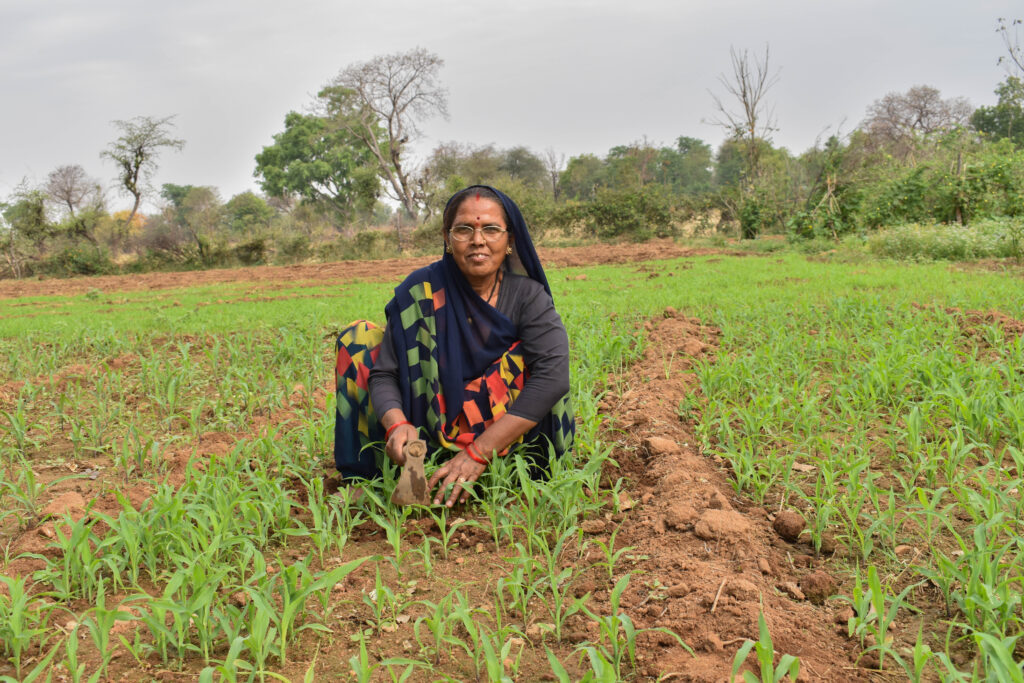
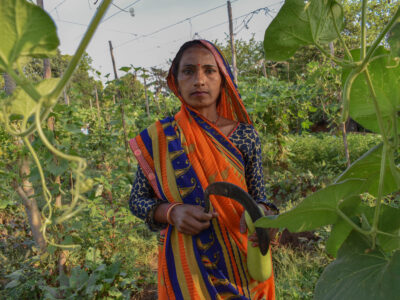

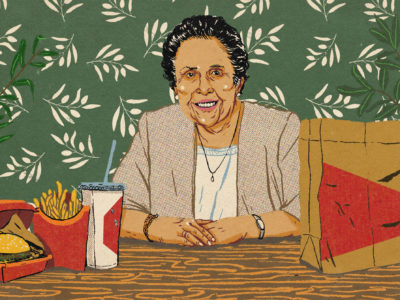

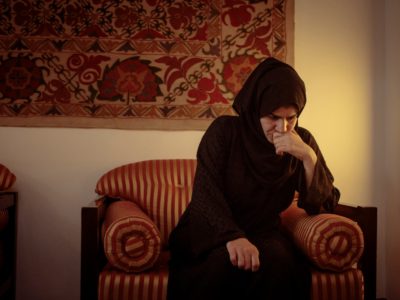
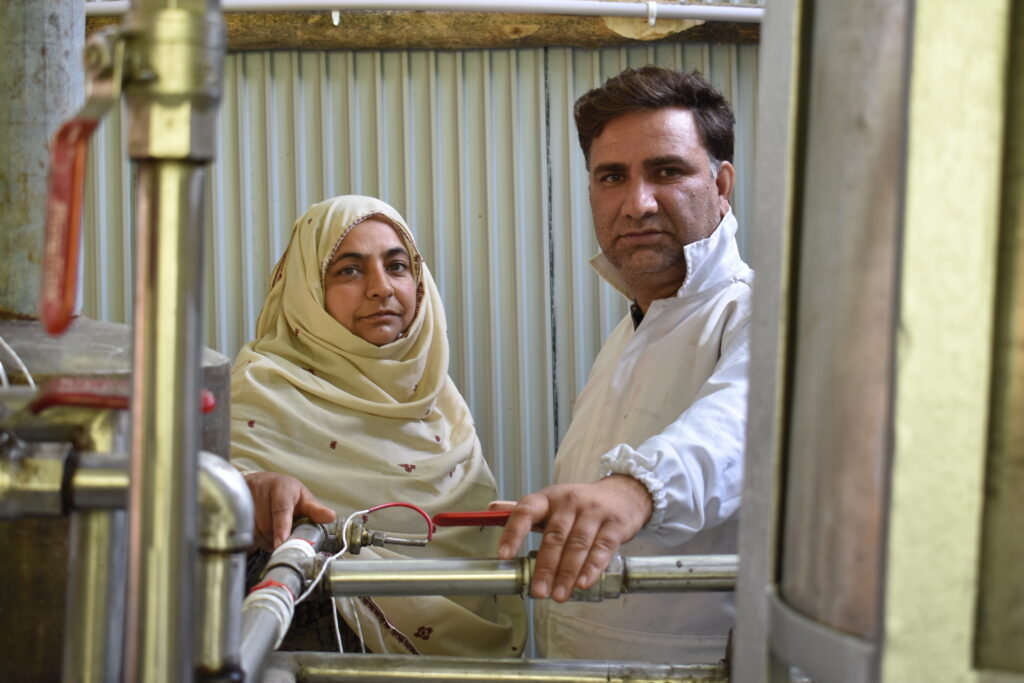 Towseefa Rizvi and Syed Parvez at their honey production facility.[/caption]
Some hope that, with an infusion of knowledge and skills, beekeeping could help revitalize Kashmir’s economy.
Unemployment in the territory is the
Towseefa Rizvi and Syed Parvez at their honey production facility.[/caption]
Some hope that, with an infusion of knowledge and skills, beekeeping could help revitalize Kashmir’s economy.
Unemployment in the territory is the 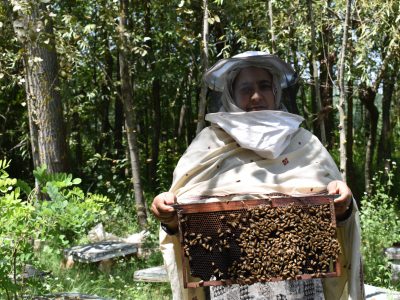
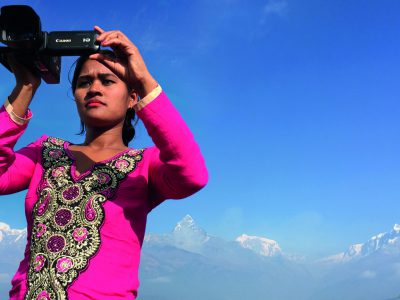
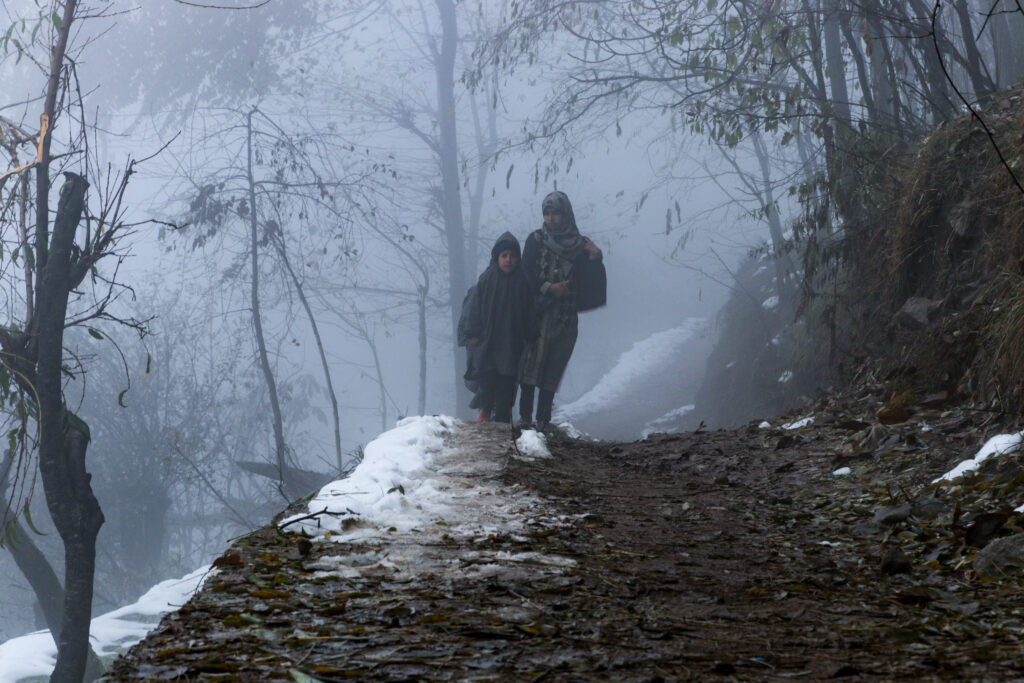 Kashmiri children walking home from school in winter.[/caption]
Mental health experts and teachers report that the lockdowns have also exacerbated pre-existing physical and mental health problems, causing trauma that could take generations to heal.
Dr. Majid Shafi, a clinical psychiatrist who treats children and adolescents in the central and southern districts of Kashmir said restrictions on children, who are confined to their homes for long periods during extended lockdowns, has adversely affected their physical, emotional, and cognitive health.
“Almost every parent of kids and teenagers in Kashmir is complaining these days about increased behavioral issues in their children,” said Dr. Shafi, adding that he had seen an “appreciable increase” in symptoms such as a feeling of hopelessness, anxiety, mood disorders, and a decline in academic performance
Isha Malik, a clinical psychologist at a government-run children’s hospital in Srinagar, said the months-long suspension of phone and internet connectivity had severely hampered delivery of mental health-care services. As a consequence, she said, many of her patients had relapsed or seen their symptoms worsen.
Ms. Malik, who also treats psychosocial and mental health problems in children and women at her own clinic in Srinagar, said that drug abuse among adolescents has increased with the lockdowns because they could not “release their pent-up emotions” by meeting up with friends. Data collected by physicians at Kashmir’s Institute of Mental Health & Neurosciences (IMHANS)
Kashmiri children walking home from school in winter.[/caption]
Mental health experts and teachers report that the lockdowns have also exacerbated pre-existing physical and mental health problems, causing trauma that could take generations to heal.
Dr. Majid Shafi, a clinical psychiatrist who treats children and adolescents in the central and southern districts of Kashmir said restrictions on children, who are confined to their homes for long periods during extended lockdowns, has adversely affected their physical, emotional, and cognitive health.
“Almost every parent of kids and teenagers in Kashmir is complaining these days about increased behavioral issues in their children,” said Dr. Shafi, adding that he had seen an “appreciable increase” in symptoms such as a feeling of hopelessness, anxiety, mood disorders, and a decline in academic performance
Isha Malik, a clinical psychologist at a government-run children’s hospital in Srinagar, said the months-long suspension of phone and internet connectivity had severely hampered delivery of mental health-care services. As a consequence, she said, many of her patients had relapsed or seen their symptoms worsen.
Ms. Malik, who also treats psychosocial and mental health problems in children and women at her own clinic in Srinagar, said that drug abuse among adolescents has increased with the lockdowns because they could not “release their pent-up emotions” by meeting up with friends. Data collected by physicians at Kashmir’s Institute of Mental Health & Neurosciences (IMHANS) 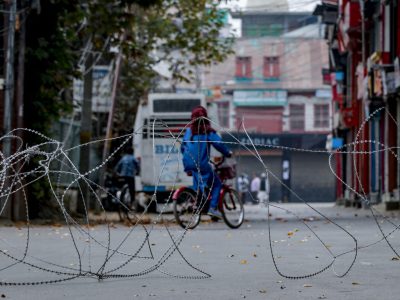
 Numana Bhat in her laboratory.[/caption]
She credits her mother and a dedicated high school biology teacher for endowing her with the tools and curiosity to pursue a career in biomedical science. But other gifted young women are not as fortunate: opportunities and resources for higher education in scientific research are scarce in Kashmir, “although the people themselves, both students and mentors at the university level, are capable of doing great things,” she said.
She added that she had heard about “people in mentoring positions” who made “discouraging remarks” to female students— including explicit pressure to channel their energy into getting married and having children rather than into post-graduate studies.
Nevertheless, Dr. Bhat said, she has noticed an increasing number of young Kashmiri women pursuing graduate studies and careers in scientific research both in India and abroad. She added that younger people were going outside the sciences to choose careers in humanities, journalism and the arts, “which is also quite refreshing to see.”
Numana Bhat in her laboratory.[/caption]
She credits her mother and a dedicated high school biology teacher for endowing her with the tools and curiosity to pursue a career in biomedical science. But other gifted young women are not as fortunate: opportunities and resources for higher education in scientific research are scarce in Kashmir, “although the people themselves, both students and mentors at the university level, are capable of doing great things,” she said.
She added that she had heard about “people in mentoring positions” who made “discouraging remarks” to female students— including explicit pressure to channel their energy into getting married and having children rather than into post-graduate studies.
Nevertheless, Dr. Bhat said, she has noticed an increasing number of young Kashmiri women pursuing graduate studies and careers in scientific research both in India and abroad. She added that younger people were going outside the sciences to choose careers in humanities, journalism and the arts, “which is also quite refreshing to see.”
 Masrat Maswal at home in Kashmir.[/caption]
Her female students are often deterred from pursuing graduate work in the sciences by social pressures to marry and settle down when they are in their twenties. “We are losing a lot of talent,” she said, “Due to the prevailing socio-cultural norms of our society.”
The lack of proper infrastructure and lab facilities in Kashmir’s colleges also undermines the enthusiasm of both students and teachers, she added.
Masrat Maswal at home in Kashmir.[/caption]
Her female students are often deterred from pursuing graduate work in the sciences by social pressures to marry and settle down when they are in their twenties. “We are losing a lot of talent,” she said, “Due to the prevailing socio-cultural norms of our society.”
The lack of proper infrastructure and lab facilities in Kashmir’s colleges also undermines the enthusiasm of both students and teachers, she added.
 Amreen Naqash in her lab.[/caption]
“I’m in touch with some promising female undergrads from Kashmir, which makes me so glad,” she said. “It is such a wonderful feeling to guide them as they are in their prime career stage.”
Omera Matoo, 38, has a PhD in marine biology. She is an assistant professor in evolutionary genetics and physiology at the University of Nebraska in Lincoln, where her research is funded by the National Science Foundation (NSF).
Born and raised in Kashmir, Dr. Matoo earned her B.A. and Master’s degrees at Bangalore University, where she became friends with two classmates from different parts of India, both of whom came from families of scientists.
[caption id="attachment_2703" align="alignnone" width="300"]
Amreen Naqash in her lab.[/caption]
“I’m in touch with some promising female undergrads from Kashmir, which makes me so glad,” she said. “It is such a wonderful feeling to guide them as they are in their prime career stage.”
Omera Matoo, 38, has a PhD in marine biology. She is an assistant professor in evolutionary genetics and physiology at the University of Nebraska in Lincoln, where her research is funded by the National Science Foundation (NSF).
Born and raised in Kashmir, Dr. Matoo earned her B.A. and Master’s degrees at Bangalore University, where she became friends with two classmates from different parts of India, both of whom came from families of scientists.
[caption id="attachment_2703" align="alignnone" width="300"] Omera Matoo in her lab.[/caption]
“Looking back, I realize that played a very big role in my career,” she said. All three of them decided to pursue doctorates in the sciences.
Omera Matoo in her lab.[/caption]
“Looking back, I realize that played a very big role in my career,” she said. All three of them decided to pursue doctorates in the sciences.