WP_Post Object
(
[ID] => 3675
[post_author] => 2
[post_date] => 2022-01-05 21:49:48
[post_date_gmt] => 2022-01-05 21:49:48
[post_content] => The current situation for journalists in Belarus is horrific enough, but will probably worsen.
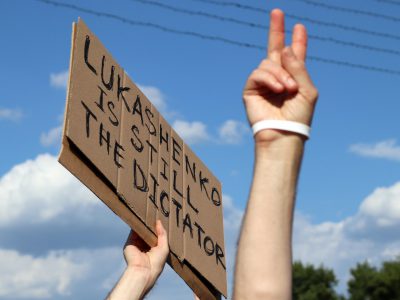
On May 23, Belarusian authorities caused a global outcry when they diverted a Lithuania-bound commercial flight to the Belarus capital of Minsk so they could arrest two passengers on the plane: self-exiled journalist Raman Pratasevich and his girlfriend Sofia Sapega. This shocking tactic was seen as emblematic of just how far President Aleksandr Lukashenko is willing to go to capture and punish his critics.
The dramatic arrest should not have surprised anyone familiar with the vindictive nature of the Lukashenko regime. The Belarusian leader, who has run the country since 1994, launched an especially brutal crackdown against the media around the August 9, 2020, presidential election, which was widely seen as rigged.
Dozens of reporters were detained for reporting on mass anti-government protests after Lukashenko claimed victory in the contested vote; Belarus now has at least 19 reporters behind bars —up from 10 in 2020 —according to CPJ’s 2021 prison census.
CPJ has documented the beatings of journalists in detention as well as the authorities’ attempts to close media outlets, block the internet, raid newsrooms, harass journalists, and keep bringing new charges against those in jail. Many journalists have been detained multiple times.
By late 2020, CPJ noted another change in the Belarusian authorities’ tactics: they started bringing criminal charges against journalists rather than just holding them in 15-day administrative detentions. In February, two journalists of the Poland-based online broadcaster Belsat TV were sentenced to two years in jail. The two were detained in November 2020 while livestreaming from a protest in Minsk. Katsiaryna Barysevich, a correspondent for Tut.by, one of Belarus’ largest media outlets, was also detained in November 2020 and sentenced in March this year to six months in jail on absurd charges of reporting on the death of protester Raman Bandarenka.
When Barysevich, whom CPJ honored with its International Press Freedom Award this year, was released from prison on May 19, she found out that her media outlet was shuttered, more than a dozen of her colleagues, including chief editor Maryna Zolatava, journalists Elena Tolkacheva and Volha Loika were in custody on tax evasion charges. Barysevich was unable to enter the Tut.by office. “I can’t get a document that proves my past employment with Tut.by because the office is sealed off, and there’s nobody in there. I cannot prove that I am unemployed now,” she told CPJ in June. (Several other Tut.by staff remain in detention and face serious charges. They are not listed in CPJ’s prison census because they did not work as journalists.)
Days after the authorities raided the Tut.by and Belsat offices in May, the arrest of Pratasevich reinforced the full extent of the brutal nature of the Lukashenko regime.
Pratasevich, who was made to appear on state TV and at press conferences after a publicized “confession,” is now under house arrest in Minsk, banned from seeing anybody and going outside. Agents from the KGB, Belarus’ national security agency, reportedly live with him in his room. Pratasevich’s parents, Dmitry and Nataliya, say they do not know what charges their son is facing and told CPJ they are concerned about him.
By late 2021, Belarusian authorities had closed down most prominent independent media outlets and popular social media channels, branding them “extremist.” The authorities also targeted organization that help journalists. The Belarusian Association of Journalists (BAJ), an advocacy and trade group that is a partner of CPJ, was ordered to close after 26 years of operations. Its leaders continue monitoring press freedom violations from inside Belarus.
The Press Club Belarus, which assisted journalists with training, education and capacity building, was shuttered; its head Yulia Slutkskaya and other employees ended up behind bars. They were released only after asking for presidential pardon and paying large fines to cover the taxes they were accused of evading.
In addition, Belarusian authorities took extra measures to ensure that the information about detainees does not get to local and international media. They forced many lawyers to sign non-disclosure agreements that prevent them from speaking on cases, and stripped some lawyers of their licenses.
Belarus prison conditions are harsh. Journalists usually share cells with a dozen of other inmates, some with diseases, including COVID-19, or lice. Many have health issues but are not getting the medical treatment they need. Ksenia Lutskina, detained in December 2020 and facing seven years in jail in retaliation for her work as a journalist, has a brain tumor that is growing and causing bad headaches, her father, Aleh Lutksin, told CPJ. She’s been given painkillers but is not allowed to receive tests or medication she needs. (Belarus authorities have not responded to CPJ’s requests for information about any detainees.)
The current number of journalists behind bars is the highest for Belarus in the three decades since CPJ launched its prison census. Many are facing lengthy prison sentences on retaliatory and anti-state charges, such as treason.
The situation for journalists in Belarusian jails is likely to worsen. Every day, there are fewer media outlets and press freedom advocates to report on the journalists’ conditions, upcoming trials, and sentences. Those who continue to do so, like reporters at BAJ, are at risk of imprisonment. Lukashenko’s track record shows he can be expected to use every available tool to continue gagging dissident voices.
*This article was originally published by the Committee to Protect Journalists (CPJ).
[post_title] => In Belarus, Lukashenko’s vindictiveness reaches new heights
[post_excerpt] => The current number of journalists behind bars is the highest for Belarus in three decades.
[post_status] => publish
[comment_status] => closed
[ping_status] => open
[post_password] =>
[post_name] => in-belarus-lukashenkos-vindictiveness-reaches-new-heights
[to_ping] =>
[pinged] =>
[post_modified] => 2026-08-05 18:15:53
[post_modified_gmt] => 2026-08-05 18:15:53
[post_content_filtered] =>
[post_parent] => 0
[guid] => https://conversationalist.org/?p=3675
[menu_order] => 152
[post_type] => post
[post_mime_type] =>
[comment_count] => 0
[filter] => raw
)
 Reading a newspaper on a bench in Hong Kong on August 20, 2020.[/caption]
The Chinese government’s feud with Lai started in the 1990s, when, after writing a column suggesting that China’s tough Premier Li Peng “drop dead,” Lai was forced to sell his mainland Chinese clothing business that was the source of his initial wealth. An advertising squeeze on the paper, clearly orchestrated by China, started in the late 1990s and accelerated over the years. The Apple Daily office, Lai’s home, and staff reporters suffered various attacks over the years.
“The very rights of journalists are being taken away,” Lai told CPJ in a 2019 interview. “We were birds in the forest and now we are being taken into a cage.” A
Reading a newspaper on a bench in Hong Kong on August 20, 2020.[/caption]
The Chinese government’s feud with Lai started in the 1990s, when, after writing a column suggesting that China’s tough Premier Li Peng “drop dead,” Lai was forced to sell his mainland Chinese clothing business that was the source of his initial wealth. An advertising squeeze on the paper, clearly orchestrated by China, started in the late 1990s and accelerated over the years. The Apple Daily office, Lai’s home, and staff reporters suffered various attacks over the years.
“The very rights of journalists are being taken away,” Lai told CPJ in a 2019 interview. “We were birds in the forest and now we are being taken into a cage.” A 







 Hazal Sipahi, host of the podcast "Mental Klitoris."[/caption]
When she was a child growing up in provincial Turkey, Sipahi said, sexuality was only discussed in whispers; but as soon as she could speak English, she found an ocean of sexuality content available on the internet.
“I searched for information online and found it, only because I was curious,” she said. “I also learned many false things on the internet, and they were very hard to correct later on.”
For example, Sipahi explained, “For so long, we thought that the hymen was a literal veil like a membrane.” In Turkey there is a widespread belief that once the hymen is “deformed,” a woman’s femininity is damaged, and she somehow becomes less valuable as a future spouse.
“Mental Klitoris” is both Sipahi’s public service and her means of self-expression. She uses her podcast to correct misunderstandings and disinformation, to go beyond censorship and to translate new terminology into Turkish.
“I really wish I had been able to access this kind of information when I was around 14 or 15,” she said.
More than 45,000 people listen to Mental Klitoris, which provides them with access to crucial information in their native tongue. They learn terms like “stealthing,” “pegging,” “abortion,” “consent,” “vulva,” “menstruation,” and “slut-shaming.” Sipahi covers all these topics on her podcast; she says she’s adding important new vocabulary to the Turkish vernacular.
She’s also adding a liberal voice to the ongoing discussion about feminism, “Which became even stronger in Turkey after #MeToo.” She believes her program will lead to a wave of similar content in Turkey.
“This will go beyond podcasts,” she said. “We will have a sexual opening overall on the internet.”
Inspired by contemporary creatives like Lena Dunham (“Girls”), Michaela Coel (“I Might Detroy You”),
Hazal Sipahi, host of the podcast "Mental Klitoris."[/caption]
When she was a child growing up in provincial Turkey, Sipahi said, sexuality was only discussed in whispers; but as soon as she could speak English, she found an ocean of sexuality content available on the internet.
“I searched for information online and found it, only because I was curious,” she said. “I also learned many false things on the internet, and they were very hard to correct later on.”
For example, Sipahi explained, “For so long, we thought that the hymen was a literal veil like a membrane.” In Turkey there is a widespread belief that once the hymen is “deformed,” a woman’s femininity is damaged, and she somehow becomes less valuable as a future spouse.
“Mental Klitoris” is both Sipahi’s public service and her means of self-expression. She uses her podcast to correct misunderstandings and disinformation, to go beyond censorship and to translate new terminology into Turkish.
“I really wish I had been able to access this kind of information when I was around 14 or 15,” she said.
More than 45,000 people listen to Mental Klitoris, which provides them with access to crucial information in their native tongue. They learn terms like “stealthing,” “pegging,” “abortion,” “consent,” “vulva,” “menstruation,” and “slut-shaming.” Sipahi covers all these topics on her podcast; she says she’s adding important new vocabulary to the Turkish vernacular.
She’s also adding a liberal voice to the ongoing discussion about feminism, “Which became even stronger in Turkey after #MeToo.” She believes her program will lead to a wave of similar content in Turkey.
“This will go beyond podcasts,” she said. “We will have a sexual opening overall on the internet.”
Inspired by contemporary creatives like Lena Dunham (“Girls”), Michaela Coel (“I Might Detroy You”),  Tuluğ Özlü[/caption]
Asked to describe how she feels when she crosses the barriers created by widely shared social taboos about human sexuality, Özlü, who lives in Istanbul’s hip
Tuluğ Özlü[/caption]
Asked to describe how she feels when she crosses the barriers created by widely shared social taboos about human sexuality, Özlü, who lives in Istanbul’s hip  Rayka Kumru[/caption]
Kumru said one of the current barriers to freedom in Turkey was the lack of access to comprehensive sexuality education, information and skills such as sex-positivity, critical thinking around values and diversity, and communication about consent. She circumvents that barrier by informing her viewers and listeners about them directly.
“Once connections and a collaborations are established between policy, education, and [particularly sexual] health, and when access to education and to shame-free, culturally specific, scientific, and empowering skills training are allowed, we see that these barriers are removed,” Kumru explains. Otherwise, she says, the same myths and taboos continue to play out, making misinformation, disinformation, taboos, and shame ever-more toxic.
Rayka Kumru[/caption]
Kumru said one of the current barriers to freedom in Turkey was the lack of access to comprehensive sexuality education, information and skills such as sex-positivity, critical thinking around values and diversity, and communication about consent. She circumvents that barrier by informing her viewers and listeners about them directly.
“Once connections and a collaborations are established between policy, education, and [particularly sexual] health, and when access to education and to shame-free, culturally specific, scientific, and empowering skills training are allowed, we see that these barriers are removed,” Kumru explains. Otherwise, she says, the same myths and taboos continue to play out, making misinformation, disinformation, taboos, and shame ever-more toxic.
 Şükran Moral[/caption]
When it comes to female sexuality, Moral said, Turkey’s art scene is still conservative. “There’s self-censorship among not only creators, but also viewers and buyers, so it’s a vicious cycle.”
Part being an artist, particularly one who challenges the position of women, she said, is seeing a reaction to her work. “When art isn’t displayed,” she asked, “how do you get people to talk about taboos?”
Turkish academia also suffers from a censorship of sex studies.
Dr. Asli Carkoglu, a professor of psychology at Kadir Has University, said it was not easy finding a precise translation for the English word “intimacy” in Turkish.
“There’s the word ‘mahrem,’” she said, but that term has religious connotations.
The difficulty in interpretation, she explains, illustrates the problem: In Turkey, intimacy has not been normalized.
President Recep Tayyip Erdogan and his conservative Justice and Development Party (AKP) have many times expressed support for gender-based segregation and a conservative lifestyle that protects their interpretation of Muslim values.
Erdogan, who has has been in power since 2003, has his own ways of promoting those values.
“At least three children,” has long been the slogan of Erdogan’s population campaign, as the president implores married couples to expand their families and increase Turkey’s population of 82 million.
“For the government, sex means children, population,” Dr. Carkoglu explained.
Dr. Carkoglu believes that sex education should be left to the family, but “when the government acts as though sexuality is nonexistent, the family doesn’t discuss it. It’s the chicken-and-egg dilemma,” she said.
So, how do you overcome a taboo as deep-rooted as sexuality in Turkey? Carkoglu believes that that the topic will have to be normalized through conversations between friends.
“That’s where the taboo starts to break,” she said. “Speaking with friends [about sexuality] becomes normal, speaking in public becomes normal, and then the system adapts.”
But for many Turks, speaking about sexuality is very difficult.
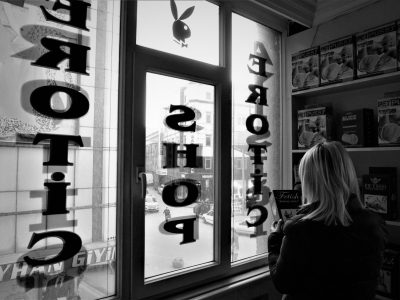
Berkant, 40, has made a living selling sex toys at his shop in the city of Adana, in southern Turkey, for the past two decades. But he said that he’s still too embarrassed to go up to a cashier in another store and say he wants to buy a condom.
“It doesn’t feel right,” he said, adding he doesn’t want to make the cashier uncomfortable.
He is seated comfortably at his desk as we speak; behind him, a wide selection of vibrators are arrayed on shelves.
Berkant and his older brother own one of three erotica shops in Adana. Most of their customers are lower middle class; one-third are female. “Many of them are government workers who come after hearing about us from a friend,” he said.
The shopkeeper said female customers phone in advance to check whether the shop is “available,” meaning empty.
He said he often refers women who describe certain complaints to a gynecologist.
“I see countless women who are barely aware of their own bodies,” he said.
Dr. Doğan Şahin, a psychiatrist and sexual therapist, said that the information women in Turkey hear when they are growing up has a lot to do with their avoidance of discussions about sex, even when the subject concerns their health.
[caption id="attachment_2971" align="aligncenter" width="1600"]
Şükran Moral[/caption]
When it comes to female sexuality, Moral said, Turkey’s art scene is still conservative. “There’s self-censorship among not only creators, but also viewers and buyers, so it’s a vicious cycle.”
Part being an artist, particularly one who challenges the position of women, she said, is seeing a reaction to her work. “When art isn’t displayed,” she asked, “how do you get people to talk about taboos?”
Turkish academia also suffers from a censorship of sex studies.
Dr. Asli Carkoglu, a professor of psychology at Kadir Has University, said it was not easy finding a precise translation for the English word “intimacy” in Turkish.
“There’s the word ‘mahrem,’” she said, but that term has religious connotations.
The difficulty in interpretation, she explains, illustrates the problem: In Turkey, intimacy has not been normalized.
President Recep Tayyip Erdogan and his conservative Justice and Development Party (AKP) have many times expressed support for gender-based segregation and a conservative lifestyle that protects their interpretation of Muslim values.
Erdogan, who has has been in power since 2003, has his own ways of promoting those values.
“At least three children,” has long been the slogan of Erdogan’s population campaign, as the president implores married couples to expand their families and increase Turkey’s population of 82 million.
“For the government, sex means children, population,” Dr. Carkoglu explained.
Dr. Carkoglu believes that sex education should be left to the family, but “when the government acts as though sexuality is nonexistent, the family doesn’t discuss it. It’s the chicken-and-egg dilemma,” she said.
So, how do you overcome a taboo as deep-rooted as sexuality in Turkey? Carkoglu believes that that the topic will have to be normalized through conversations between friends.
“That’s where the taboo starts to break,” she said. “Speaking with friends [about sexuality] becomes normal, speaking in public becomes normal, and then the system adapts.”
But for many Turks, speaking about sexuality is very difficult.
Berkant, 40, has made a living selling sex toys at his shop in the city of Adana, in southern Turkey, for the past two decades. But he said that he’s still too embarrassed to go up to a cashier in another store and say he wants to buy a condom.
“It doesn’t feel right,” he said, adding he doesn’t want to make the cashier uncomfortable.
He is seated comfortably at his desk as we speak; behind him, a wide selection of vibrators are arrayed on shelves.
Berkant and his older brother own one of three erotica shops in Adana. Most of their customers are lower middle class; one-third are female. “Many of them are government workers who come after hearing about us from a friend,” he said.
The shopkeeper said female customers phone in advance to check whether the shop is “available,” meaning empty.
He said he often refers women who describe certain complaints to a gynecologist.
“I see countless women who are barely aware of their own bodies,” he said.
Dr. Doğan Şahin, a psychiatrist and sexual therapist, said that the information women in Turkey hear when they are growing up has a lot to do with their avoidance of discussions about sex, even when the subject concerns their health.
[caption id="attachment_2971" align="aligncenter" width="1600"] Advertisement for men's underwear in Izmir, Turkey.[/caption]
Men don’t really care whether the woman is aroused, willing or having an orgasm, he said. Unless the problem is due to pain, or vaginismus, couples rarely head to a therapist, he adds.
“[Women who grew up hearing false myths] tend to take sexuality as something bad happening to their bodies, and so, they unintentionally shut their vaginas, leading to vaginismus. This is actually a defense method,” he told The Conversationalist.
“They fear dying, they fear becoming a lower quality woman, or that sex is their duty.”
While most Turkish women find out about their sexual needs after getting married, the doctor says that, based on research he completed about 10 years ago, men tend to fall for myths about sexuality by watching pornography, which plants unrealistic fantasies about sex in their minds.
“Sexuality is also presented as criminal or banned in [Turkish] television shows. The shows take sexuality to be part of cheating, damaging passions or crimes instead of part of a normal, healthy, and happy life.”
He recommends that couples talk about sexuality and normalize it. Talking is crucial, and so is the language used in those conversations.
Bahar Aldanmaz, a Turkish sociologist studying for her PhD at Boston University, told The Conversationalist why talking about menstruation matters.
“A woman’s period is unfortunately seen as something to be ashamed of, something to be hidden,” she said. (According to Turkey’s language authority, the word “dirty” also means “a woman having her period.”)
“There are many children who can’t share their menstruation experience, or can’t even understand they are having their periods, or who experience this with fear and trauma.”
And this is what builds a wall of taboo around this essential issue, the professor says. It is one of the issues her non-profit organization “We Need To Talk” aims to accomplish, among other problems related to menstruation, such as period poverty and period stigma.
Female hygiene products are taxed as much as 18 percent—the same ratio as diamonds, said Ms. Aldanmaz. She adds that this is what mainly causes inequality—privileged access to basic health goods, the consequence of the roles imposed by Turkish social mores.
“Despite declining income due to the COVID-19 pandemic, there is a serious increase in the pricing of hygiene pads and tampons. This worsens period poverty,” Aldanmaz says. She offers Scotland as an example of what would like to see in Turkey: free sanitary products for all.
During Turkey’s government-imposed lockdown in May 2021, several photos showing tampons and pads in the non-essential sales part of markets stirred heated debates around the subject, but neither the Ministry of Family and Social Services nor the Health Ministry weighed in.
“We are fighting this shaming culture in Turkey,” Aldanmaz says, “by understanding and talking about it.”
[post_title] => Sexually aware and on air: Beyond Turkey's comfort zone
[post_excerpt] => Turkish podcasts that host frank conversations about sexuality are smashing taboos and filling information vacuums.
[post_status] => publish
[comment_status] => closed
[ping_status] => open
[post_password] =>
[post_name] => sexually-aware-and-on-air-beyond-turkeys-comfort-zone
[to_ping] =>
[pinged] =>
[post_modified] => 2026-08-06 19:44:25
[post_modified_gmt] => 2026-08-06 19:44:25
[post_content_filtered] =>
[post_parent] => 0
[guid] => https://conversationalist.org/?p=2949
[menu_order] => 187
[post_type] => post
[post_mime_type] =>
[comment_count] => 0
[filter] => raw
)
Advertisement for men's underwear in Izmir, Turkey.[/caption]
Men don’t really care whether the woman is aroused, willing or having an orgasm, he said. Unless the problem is due to pain, or vaginismus, couples rarely head to a therapist, he adds.
“[Women who grew up hearing false myths] tend to take sexuality as something bad happening to their bodies, and so, they unintentionally shut their vaginas, leading to vaginismus. This is actually a defense method,” he told The Conversationalist.
“They fear dying, they fear becoming a lower quality woman, or that sex is their duty.”
While most Turkish women find out about their sexual needs after getting married, the doctor says that, based on research he completed about 10 years ago, men tend to fall for myths about sexuality by watching pornography, which plants unrealistic fantasies about sex in their minds.
“Sexuality is also presented as criminal or banned in [Turkish] television shows. The shows take sexuality to be part of cheating, damaging passions or crimes instead of part of a normal, healthy, and happy life.”
He recommends that couples talk about sexuality and normalize it. Talking is crucial, and so is the language used in those conversations.
Bahar Aldanmaz, a Turkish sociologist studying for her PhD at Boston University, told The Conversationalist why talking about menstruation matters.
“A woman’s period is unfortunately seen as something to be ashamed of, something to be hidden,” she said. (According to Turkey’s language authority, the word “dirty” also means “a woman having her period.”)
“There are many children who can’t share their menstruation experience, or can’t even understand they are having their periods, or who experience this with fear and trauma.”
And this is what builds a wall of taboo around this essential issue, the professor says. It is one of the issues her non-profit organization “We Need To Talk” aims to accomplish, among other problems related to menstruation, such as period poverty and period stigma.
Female hygiene products are taxed as much as 18 percent—the same ratio as diamonds, said Ms. Aldanmaz. She adds that this is what mainly causes inequality—privileged access to basic health goods, the consequence of the roles imposed by Turkish social mores.
“Despite declining income due to the COVID-19 pandemic, there is a serious increase in the pricing of hygiene pads and tampons. This worsens period poverty,” Aldanmaz says. She offers Scotland as an example of what would like to see in Turkey: free sanitary products for all.
During Turkey’s government-imposed lockdown in May 2021, several photos showing tampons and pads in the non-essential sales part of markets stirred heated debates around the subject, but neither the Ministry of Family and Social Services nor the Health Ministry weighed in.
“We are fighting this shaming culture in Turkey,” Aldanmaz says, “by understanding and talking about it.”
[post_title] => Sexually aware and on air: Beyond Turkey's comfort zone
[post_excerpt] => Turkish podcasts that host frank conversations about sexuality are smashing taboos and filling information vacuums.
[post_status] => publish
[comment_status] => closed
[ping_status] => open
[post_password] =>
[post_name] => sexually-aware-and-on-air-beyond-turkeys-comfort-zone
[to_ping] =>
[pinged] =>
[post_modified] => 2026-08-06 19:44:25
[post_modified_gmt] => 2026-08-06 19:44:25
[post_content_filtered] =>
[post_parent] => 0
[guid] => https://conversationalist.org/?p=2949
[menu_order] => 187
[post_type] => post
[post_mime_type] =>
[comment_count] => 0
[filter] => raw
)