WP_Post Object
(
    [ID] => 10457
    [post_author] => 15
    [post_date] => 2026-04-22 17:24:08
    [post_date_gmt] => 2026-04-22 17:24:08
    [post_content] => 

Diana Dajer on community, technology, and the radical work of democratic care.


In a world increasingly shaped by political violence, authoritarian reflexes, and digital harm, peacebuilding can feel abstract—or impossibly distant. But for Diana Dajer, peace is neither theoretical nor inevitable. It is something that must be built carefully, collectively, and often quietly, through democratic practice.

Currently, Dajer is manager of citizen participation with Fundación Corona, a non-profit based in Colombia. We met in Barcelona after Build Peace, an international gathering of practitioners working at the intersection of technology, conflict transformation, and civic life. Among many compelling presentations, Dajer’s stood out—not because it promised technological salvation, but because it insisted on something more demanding: deliberation, care, and faith in people.

From Conflict to Participation

Dajer’s path into democracy work began not with innovation labs or civic tech, but with the social disruption caused by violence and loss. As a lawyer, Dajer worked on human rights cases for victims of Colombia’s armed conflict early in her career. Later, she joined the Ministry of the Interior during peace negotiations with the FARC (Revolutionary Armed Forces of Colombia) guerrilla movement. 

While there, she listened closely—to victims, civil society leaders, and government officials. What became clear was unsettling. Violence in Colombia was not only the result of armed actors, but of long-standing democratic exclusion. When local communities lacked meaningful ways to influence policy or solve local problems, violence became one of the few remaining channels for human agency—the capacity to shape their own lives.

“That’s when I understood,” Dajer says, “that participation is the real name of peace in Colombia.”

Rather than focus solely on peace after violence, she turned toward democracy itself: how it is built, who it includes, and how power is shared.

Technology for Care, Not Control

Years later, that commitment would take shape in Bogotá through a rare experiment: a multi-year effort to embed deliberative democratic processes inside city government. Working with the City Council and civil society partners, Dajer helped create a “laboratory of democracy” to test new ways of engaging citizens—especially in a political culture where protest had become the dominant form of participation.

“Protest is essential,” she says. “But when there is no dialogue with institutions, real solutions don’t happen.”

Bogotá’s leaders made a strategic choice to move incrementally. Rather than treating technology as a standalone tool for deliberation, they used it to solve specific process challenges in order to make participation more open, inclusive, and effective. Drawing on behavioral insights to encourage constructive engagement, the team launched a public communications campaign across social media. City Hall’s chatbot, Chatico, helped scale participatory budgeting and created a more transparent, inclusive channel for the civic lottery process. The city also relied on practical, digital tools, which included building websites to support hybrid citizen assemblies and bring in voices beyond those physically in the room. An educational course delivered through WhatsApp prepared participants in advance.

These early pilots evolved into a citywide deliberative process backed by Carlos Galán, a leader shaped by Colombia’s history of political violence. The aim was never speed or one-off spectacle, but trust—built gradually through structured listening and collective reasoning. 

In Dajer’s work, technology is never the starting point. It is a tool, carefully chosen, subordinate to context. Used strategically, it can help narrow the distance between governing institutions and citizens, opening new possibilities while respecting its limits. But she emphasizes it should never be the destination. 

This ethic traces back to her mentors in the global peacebuilding community, who taught her to ask first: What problem are we trying to solve? And just as importantly: Should technology be part of the solution at all?

Leading as a Woman—with Awareness and Solidarity

Leadership, for Dajer, has always been gendered. “It is more challenging than being a man,” she says without hesitation. Like many women in public life, she learned early to manage others’ perceptions—how she dressed, how she spoke, how authority was read onto her body.

But she is also careful to name her privilege: Gender does not operate alone. Race, class, indigeneity, and access compound exclusion in ways that shape who is heard and who is erased. Conscious of this, Dajer sees her role not just as a leader, but as a bridge—using her position to elevate other women who face even steeper barriers.

What has sustained her is community: women working together across civil society, refusing isolation. Feminist leadership, she believes, is collective by design.

Faith as a Source of Strength

What is less often visible in conversations about democracy and technology—but central to Dajer’s life—is faith.

When asked where she draws strength and clarity, she speaks not of ambition or certainty, but of prayer. One prayer, in particular, guides her: Make me an instrument of your peace.

“I don’t always know where I’ll be needed,” she says. “So I pray for openness. That I can serve—whether the work is big or small.”

Her faith is not about control or moral superiority. It is about humility, discernment, and love—qualities she sees as essential antidotes to polarization. In moments of exhaustion or fear, prayer is a way for her to realign with purpose, especially as she balances leadership with motherhood and family life.

Resisting Authoritarianism with Love and Hope

Dajer is clear-eyed about the global moment. Colombia, the United States, and many other democracies are experiencing renewed threats to the rule of law and separation of powers. For women living through these pressures, she begins with solidarity.

“I see you,” she says. “I see the burden.”

Her advice is strikingly feminist: Resist not only through opposition, but through care. Much of her current work focuses on narrative—how language shapes emotion, and how perceived chaos blends with fear-based messaging to fuel authoritarianism. Facts alone, she notes, rarely counter hate. What does are stories rooted in hope, love, and a shared future.

This extends to digital life. She urges mindfulness about what we consume and amplify online, recognizing how social media can trap us in cycles of rage. The alternative is not withdrawal, but grounding—deep human connection, empathy, and collective action offline as well as on.

Youth, the Future, and Feminist Democracy

Despite everything, Dajer is hopeful, especially about young people. Her organization, Fundación Corona, has shifted its strategy toward youth engagement, informed by research showing that future-oriented democratic narratives can reawaken belief in collective power.

When democracy is framed not as a failing legacy but as a tool to shape the future, young people also respond. Deliberative spaces—especially when designed with care—can help further transform this hope into action.

Building Peace Together

If there is one message Dajer offers to feminists working for democracy, it is this: Do not do this alone. Authoritarianism thrives on fragmentation. Peace, by contrast, is built through collaboration—across differences, across sectors, and across borders.

Agreeing on fundamentals is hard, and deliberation is slow. But isolation changes nothing.

For Dajer, the work continues—not as performance, or branding, but as service. As manager of civic participation at Fundación Corona, she remains guided by faith, sustained by solidarity, and grounded in care. Her work and ethos is a necessary reminder that democracy is not only a system. It is a practice. And women are already doing the work of keeping it alive.

[post_title] => The Long Arc of Peace Is Built by Women [post_excerpt] => Diana Dajer on community, technology, and the radical work of democratic care. [post_status] => publish [comment_status] => closed [ping_status] => closed [post_password] => [post_name] => diana-dajer-global-women-peacebuilders-profile-fundacion-corona-colombia-democracy [to_ping] => [pinged] => [post_modified] => 2026-08-03 20:52:31 [post_modified_gmt] => 2026-08-03 20:52:31 [post_content_filtered] => [post_parent] => 0 [guid] => https://conversationalist.org/?p=10457 [menu_order] => 0 [post_type] => post [post_mime_type] => [comment_count] => 0 [filter] => raw )

Diana Dajer

The Long Arc of Peace Is Built by Women

WP_Post Object
(
    [ID] => 10356
    [post_author] => 15
    [post_date] => 2026-03-20 02:24:54
    [post_date_gmt] => 2026-03-20 02:24:54
    [post_content] => 

How samba schools in Brazil are teaching Black history through the parades at Carnival.

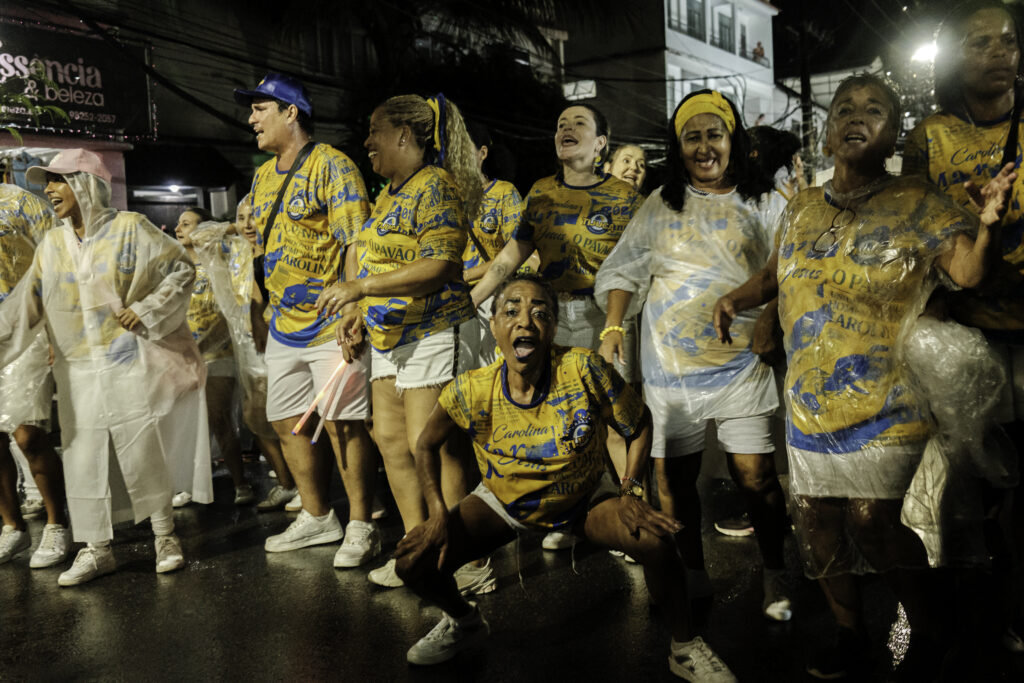
The torrential rain couldn’t stop Unidos da Tijuca, one of the oldest samba schools in Rio de Janeiro, Brazil, from rehearsing in the streets. On an evening in early February, dancers flooded the Morro do Borel community, moving their bodies in unison as a crowd cheered them on, shouting their loyalty to the samba school and dancing alongside them. The crowd had been waiting for hours for the rehearsal to begin, drinking beer and barbecuing, the evening already a celebration. Now, the sound of snare drums, quick and sharp, moved each spectator to sing along to the music, as the year's anthem began to play. The performance had officially begun. 

Though the parades in Rio are world-famous, attracting a global audience for Carnival each year, the greatest show in the world still belongs to these communities, where the parades—a pivotal part of the season’s festivities—originated. It is also here that these samba schools work hard year-round to honor the parades’ original purpose: bringing marginalized histories that aren’t taught in Brazilian schools to the national stage.

“Since the 1930s, samba schools have been addressing themes closely related to Brazilian history,” historian Luiz Antonio Simas tells The Conversationalist. “This created a tradition in which Brazilian history, important figures from Brazilian history, and the country's natural beauty became recurring themes [at each parade].” 

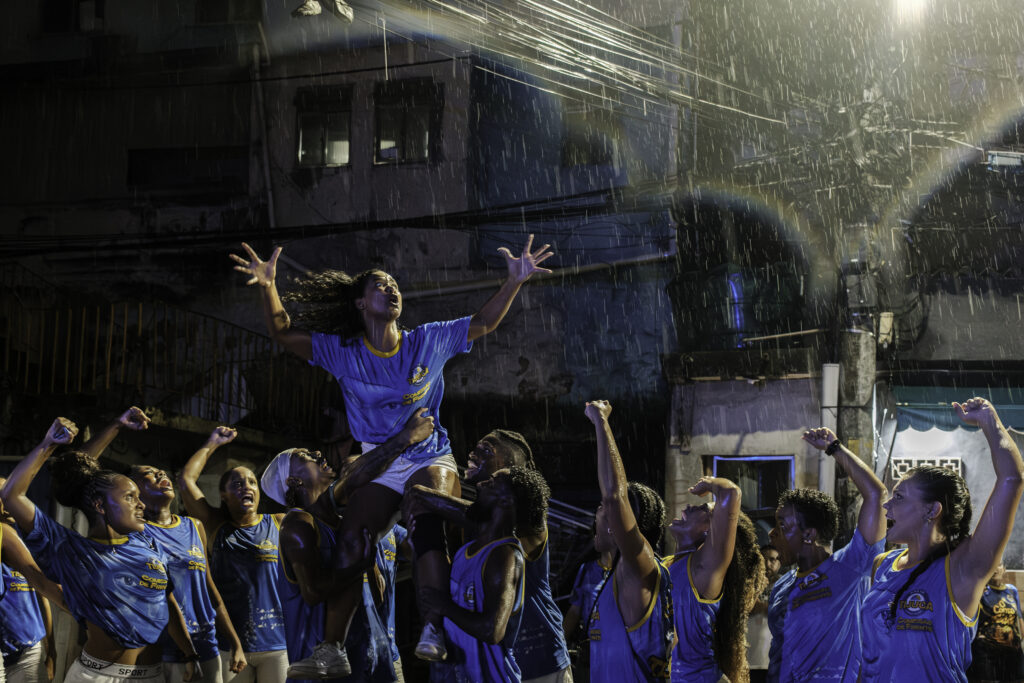
During a street rehearsal by the Unidos da Tijuca samba school, and under heavy rain, the opening performance group performs one of its choreographies from the storyline honoring writer Carolina Maria de Jesus near Favela do Borel, in the Tijuca neighborhood of Rio de Janeiro, Brazil.
Leonardo Carrato

Founded in 1931, Unidos da Tijuca is one of 12 samba schools that compete during Carnival, each putting on a parade built from scratch that highlights a different piece of forgotten Brazilian history. For this year’s parade, Unidos da Tijuca chose to tell the story of Carolina Maria de Jesus, a Black Brazilian memoirist, poet, composer, playwright, and best-selling author, most known for her book Child of the Dark: The Diary of Carolina Maria de Jesus, published in 1960 and translated into 14 languages. Last year, the school chose to tell the story of Logun-Edé, an orisha of the Black Brazilian religion Candomblé, and the year before, the influence of Portuguese folk tales on Brazilian samba music. 

Other competing schools chose different figures to celebrate this year: Acadêmicos do Salgueiro paid homage to Carnival designer and professor Rosa Magalhães, a samba school legend who won six Carnival championships in the 1980s. The samba school Paraíso de Tuiuti performed a parade about Afro-Cuban religious practices, with a whole chorus written in the Yorubá language. And the 2026 winner, Unidos do Viradouro, honored Moacyr da Silva Pinto, or Mestre Ciça, the school's legendary percussion conductor. 

In telling these stories, Unidos da Tijuca and other samba schools aim to make marginalized histories—and Black history in particular—more accessible through popular culture, allowing them to keep these histories alive. The construction of the parade is a year-long process that starts again right after Carnival ends, beginning with each school democratically electing a theme, running a song competition, and translating history into a visual performance through choreography that involves hundreds of dancers.

But while the parades are a joyful culmination of the schools’ efforts, for the communities each samba school represents, it’s the lead-up to the final performance that often most solidifies the history being celebrated. 

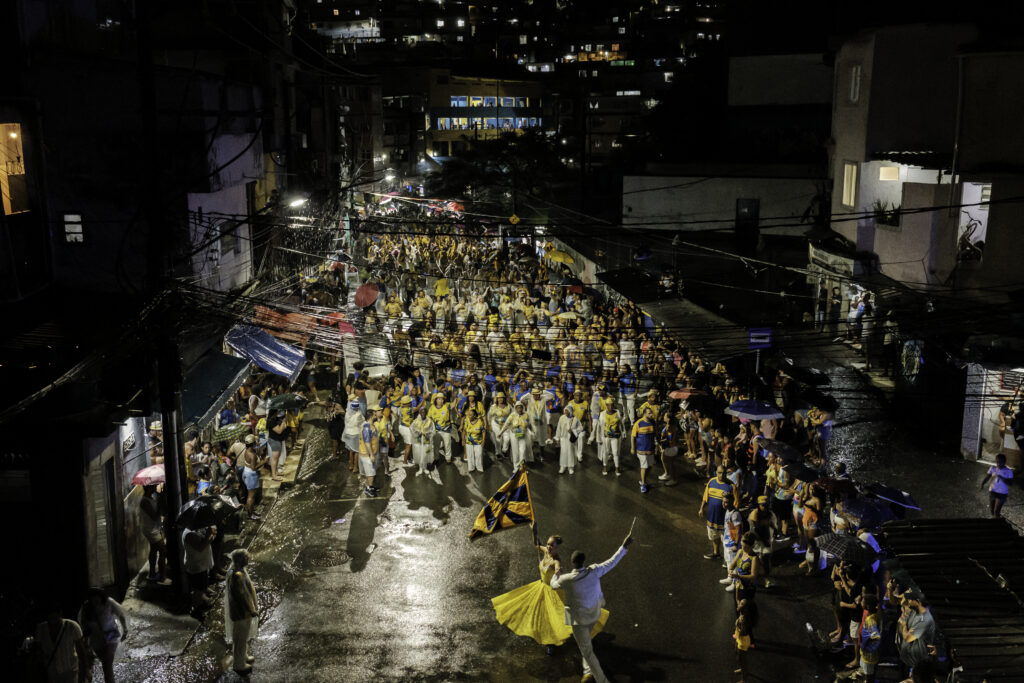
During the Unidos da Tijuca samba school’s final street rehearsal, the Mestre-Sala and Porta-Bandeira wing leads a large group of members through the streets near Favela do Borel, in the Tijuca neighborhood of Rio de Janeiro, Brazil.
Leonardo Carrato

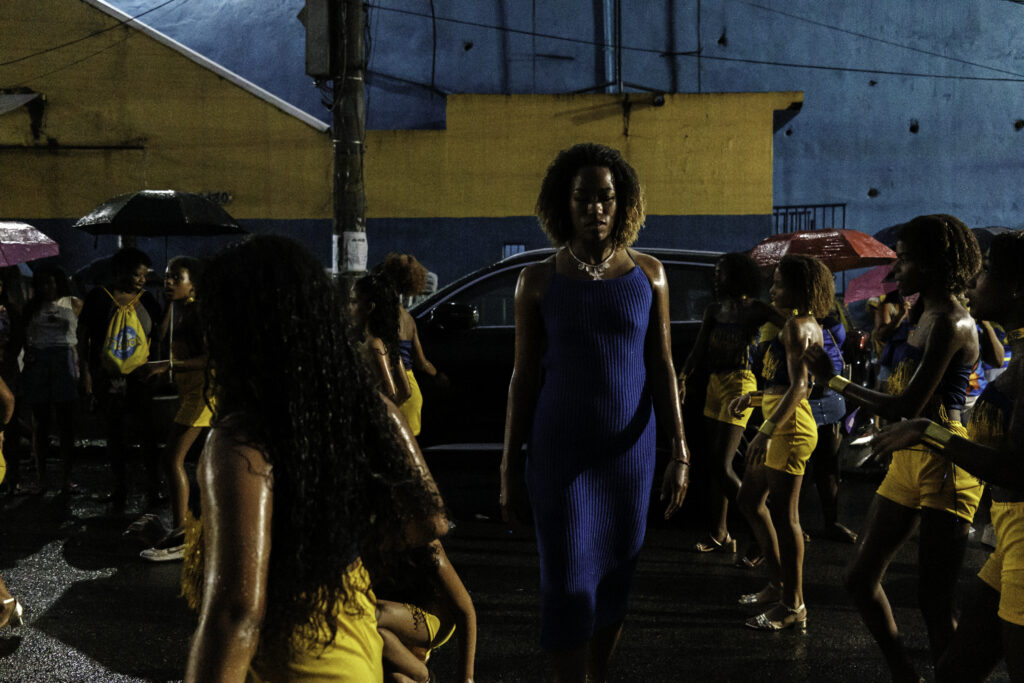
That rainy Sunday was Unidos da Tijuca’s last street rehearsal before the official parade at the Sambadrone, and party dwellers excitedly gathered to watch an intimate preview of what would later earn the school 7th place in the official competition. At 6 PM, onlookers dressed in the colors of Unidos da Tijuca—blue and yellow—waited outside of the school, a tall building painted in yellow. The energy was high as people gathered, and the song composed for this year’s parade played loudly through speakers at the closest bar, along with songs from previous years: "Logun-Edé - Santo Menino que Velho Respeita" (“Logun-Edé - The Holy Child Old Men Respect”) and "O Conto de Fados" (“The Tale of Fairies”). 

As the time for the performance neared, people began singing along to the story of Maria de Jesus, one that mirrors the stories of many Black women in Brazil today. A single mother of three, Maria de Jesus lived in the favela of Canindé in São Paulo, where she spent her time picking up recyclables to sell, taking care of her children, and writing about her day-to-day life. One of her notebooks from this time would eventually become her first best-selling book, Child of the Dark, which sold 10,000 copies in its first week of publication in 1960—an achievement that was unheard of at the time, and still rarely met in Brazil now. 

But the majority of the community was unfamiliar with these details of Maria de Jesus’s life before Unidos da Tijuca chose to tell her story for the 2026 parade. “It’s essential that we talk about a person who has been made invisible by society and by the Brazilian people,” Mariah Dantas, one of the principal dancers, tells The Conversationalist. “Almost nobody remembers her importance, or how impactful she was at the time, and how important she is today. Because many women still live in poverty like she did… This isn’t just about telling Carolina’s story, but also about highlighting that Black women still live like that, and that this needs to change.”

Many of these same women also live in Morro do Borel, and saw themselves reflected in Maria de Jesus’s story for the first time. “It was the perfect choice,” Carlos Batata, member of Unidos da Tijuca and president of Unidos da Tijuquinha, a version of the samba school for children, tells The Conversationalist. “The story was unknown, [but] with time, people got to know more about Carolina’s work, and now people sing the samba song and relate and cry to it, because there are parts of the lyrics—a phrase, a chorus—that represents each woman’s story here.” 

The children’s wing coordinator walks among the members as they prepare for the Unidos da Tijuca samba school’s final street rehearsal through the streets of Favela do Borel, in the Tijuca neighborhood of Rio de Janeiro, Brazil.
Leonardo Carrato

To accurately tell Maria de Jesus’s story, Unidos da Tijuca worked with an academic consultant on everything from the writing of the samba song’s lyrics, the design of thousands of costumes and five floats, and even some of the choreography. (The practice of hiring a consultant is relatively new across samba schools, a union of institutional education and popular education that only began around 10 years ago.) This year, Unidos da Tijuca collaborated with researcher Fernanda Felisberto, a literature professor at the Federal University of Rio de Janeiro, who is a part of an editorial committee that has salvaged, re-edited, and published Maria de Jesus’s work in recent years. 

“For a long time, we used to say that there are histories that traditional schools don’t tell, but that Carnival will tell those histories, almost as if they’re in opposition to each other,” Felisberto says. “But in reality, we are building a process that goes hand-in-hand, especially because hiring consultants has become more and more common for samba schools. So, samba schools today are learning from these traditional sources of knowledge. The challenge for Carnival is to translate that knowledge in a way that reaches more people.” 

The act of performing in community is a large part of this translation, and in Morro do Borel, it is what has brought Maria de Jesus’s story back to life. “Sou a liberdade, mãe do Canindé / Muda essa história, Tijuca / Tira do meu verso a força pra vencer / Reconhece o seu lugar e luta / Esse é o nosso jeito de escrever,” both members of the samba school and party dwellers alike screamed at the top of their lungs during the street rehearsal. (“I am freedom, mother of Canindé / Change our history, Tijuca / Get the strength to win from my verses / Recognize your place in struggle / This is our way of writing.”)

Under heavy rain, members of one of the wings of the Unidos da Tijuca samba school parade through the neighborhood streets near Favela do Borel during the final rehearsal before Carnival in the city of Rio de Janeiro, Brazil.
Leonardo Carrato

For this year’s parade, Felisberto says the school intentionally focused on lesser known works by Maria de Jesus, like the music she composed and recorded, and the plays she wrote, which remain unreleased to the public. They hoped to show Maria de Jesus was more than her biggest successes, in part so that she is recognized for the breadth of her creative work, which never got as much exposure as her first book. “We want people to understand that Carolina was a multidimensional artist,” Felisberto says. “Child of the Dark constructed an image of Carolina that spotlighted precarity, which is how people see her today. The challenge was to humanize her, show her failures and successes beyond a narrative around her best-selling memoir.” 

Like Felisberto, many view the Carnival parades not just as a celebration marginalized histories, but as a collective experience with a lasting impact. “I consider samba songs by samba schools to be historical documents,” Simas says, adding that in his 30 years working as a history teacher in public schools in Rio, he has used samba songs as pedagogical sources. “It’s a tool to start debates, we can analyze the lyrics, study the trajectory of some historical characters who are less talked about in formal education.” 

For Unidos da Tijuca member Douglas Coutinho, studying samba songs even helped him to pass his university entry exams. “My history teacher used the samba song from 2008, ‘João e Marias’ by Imperatriz Leopoldinense, [in class],” Coutinho says. “The samba song helps teachers teach, and it helps students understand the material that is being taught.”

During a street rehearsal by the Unidos da Tijuca samba school, and under heavy rain, the opening performance group performs one of its choreographies from the storyline honoring writer Carolina Maria de Jesus near Favela do Borel, in the Tijuca neighborhood of Rio de Janeiro, Brazil.
Leonardo Carrato

Perhaps most importantly, in telling and preserving these stories through samba parades, communities are able to reclaim the narrative from the dominant classes, which tend to dismiss or downplay the importance of marginalized histories. Sometimes, it also allows these stories to become the dominant narratives—at least, during Carnival, when the media’s attention turns to the communities these samba schools represent. 

“Samba schools will tell us stories that are important for the people,” says Iara Cassano, a member of Acadêmicos do Salgueiro and a samba teacher. “The dominant narratives will tell histories that are important to the elites… Carnival gives us autonomy to tell our own histories.”

[post_title] => A History Lesson Through Samba [post_excerpt] => How samba schools in Brazil are teaching Black history through the parades at Carnival. [post_status] => publish [comment_status] => closed [ping_status] => closed [post_password] => [post_name] => samba-school-forgotten-marginalized-black-history-rio-de-janeiro-brazil-carnival-parades-unidos-da-tijuca [to_ping] => [pinged] => [post_modified] => 2026-08-03 20:57:25 [post_modified_gmt] => 2026-08-03 20:57:25 [post_content_filtered] => [post_parent] => 0 [guid] => https://conversationalist.org/?p=10356 [menu_order] => 0 [post_type] => post [post_mime_type] => [comment_count] => 0 [filter] => raw )
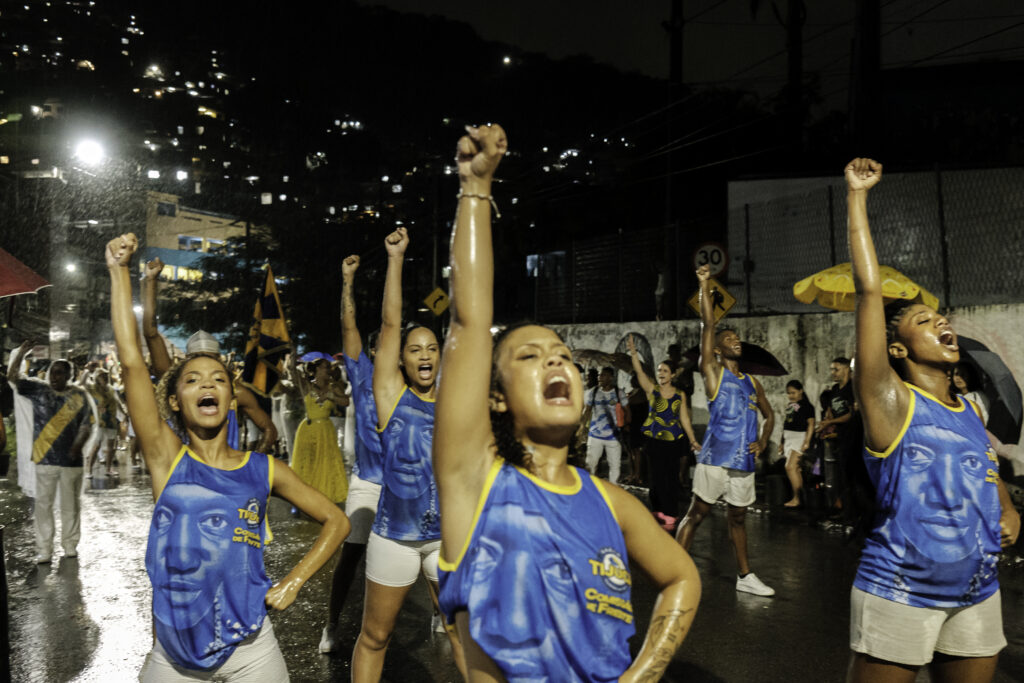
During a street rehearsal by the Unidos da Tijuca samba school, and under heavy rain, the opening performance group performs one of its choreographies from the storyline honoring writer Carolina Maria de Jesus near Favela do Borel, in the Tijuca neighborhood of Rio de Janeiro, Brazil.

A History Lesson Through Samba

WP_Post Object
(
    [ID] => 9814
    [post_author] => 15
    [post_date] => 2025-12-03 18:41:15
    [post_date_gmt] => 2025-12-03 18:41:15
    [post_content] => 

How women play a crucial role in the country's struggle against dictatorship.

Andreina Baduel, a 39-year-old activist from Caracas, Venezuela, had a happy childhood. Growing up with 11 brothers and sisters, she fondly remembers the love and support she received from her parents—how her father frequently took all his children to the beach, or out to dinner at their favorite restaurant. From an early age, she says, her father also instilled in them an appreciation for education, allowing her, in her own words, to "cultivate an intellect and become a better human being.” But at 23, life as Baduel knew it came to an abrupt end when her father was sent to prison. 

“My life came to a standstill,” she recalls. “It was a turning point in our lives that affected so many things.”

Baduel is the daughter of Raúl Isaías Baduel, a retired general of the Venezuelan armed forces and former defense minister under former President Hugo Chávez’s regime. In 2009, he publicly broke with Chávez over constitutional disagreements, and accused the then-president of becoming “increasingly authoritarian.” For his dissent, he was sent to prison for the majority of his remaining life, until his death in 2021. 

After her father’s imprisonment, Baduel became her family’s main source of moral support. The Baduel family has now been considered dissidents for nearly 17 years, and she also acts as their public mouthpiece—speaking out on their behalf, and ensuring their stories continue to be heard, both in their country and beyond. This has included aiding two of her brothers over the years, who were respectively detained, arrested, and subjected to torture and ill-treatment in prison, under both Chávez’s and current President Nicolás Maduro’s regimes. 

“We have been persecuted, harassed, silenced,” Baduel says. “[But] the truth cannot be killed, [and] faith cannot be extinguished. My father’s voice lives in every word we speak.”

Baduel’s story is not uncommon. Like many women in Venezuela, she is known both as the relative of a high profile political prisoner, and as an outspoken activist. Her advocacy on her family’s behalf also exemplifies how Venezuelan women play a crucial role in fighting against the country’s dictatorship, amid Maduro’s human rights violations and in the face of his “reelection” last year. (The win was deemed fraudulent by election watchdogs such as Transparencia Electoral, as well as the international community, including the U.S. and some of the country’s Latin American neighbors, like Brazil and Colombia.)

“Women have a very important role in the opposition movement; but also in sounding the alarm after last year’s election,” says a leader of a Venezuelan women’s rights organization, who asked to remain anonymous for safety reasons. Referencing María Corina Machado—one of the country’s main opposition leaders, who recently won a Nobel Peace Prize for her democratic struggle against the country’s dictatorship—the organizer says Venezuelan women have long “been a leading force and a leading voice” in speaking out about the government’s infractions, both at home and abroad. “[Many] women in exile and in the diaspora are also playing a key role,” she says.

This includes women like Violeta Santiago, a Venezuelan human rights activist and journalist who was forced to flee the country after receiving death threats by government-led armed groups. She now continues to write about injustice and the state of human rights in Venezuela from Chile. 

But at home, the risks are higher, both for those who speak out and those who don’t. Because of this, everyday women like Baduel have been forced to partake in this fight for their entire adult lives, defining the parameters of their existence from within the nation they call home.

First Arrest 

On the day Baduel’s father was arrested by the Venezuelan military, he was shopping with his family. None of them could have known that, except for a brief period of house arrest in 2017, he’d languish in prisons for the rest of his life. This included spending time in La Tumba, or The Tomb, a prison infamous for inflicting white torture on its prisoners. This torture is comprised of, but not limited to, isolation, a lack of access to natural light, constant freezing temperatures, no access to water, and nearly no food. 

In 2021, while detained in El Helicoide, one of Caracas’ most notorious penitentiary facilities, Baduel’s father died at 66, over a decade after his initial arrest. According to the official report, he died from “cardiac-respiratory failure” after contracting COVID-19. But his family believes his death was actually caused by neglect, torture, and ongoing health conditions sustained after years of imprisonment without medical care. Juan Guaidó, the main opposition leader at the time, publicly supported this claim on social media, and the United Nations called for an independent investigation. A separate UN fact-finding mission has since concluded that crimes against humanity have been perpetrated in the country, particularly in relation to political persecution and prison conditions. 

Through all of it, the Baduel family has remained steadfast.

“We knew our father’s imprisonment and death would change us from within,” Baduel says, wearing a t-shirt that reads “Ser Baduel No Es un Delito (“Being a Baduel Is Not a Crime”). “We understood it would either bring up the best of us, or the worst of us. And we decided to confront it with faith and hope.” 

Brutal Torture

Years before Baduel’s death, two of his sons—Raúl Emilio Baduel and Josnars Adolfo Baduel—were also imprisoned over conspiracy charges. Raúl Emilio, now 45, was detained while attending a peaceful protest in 2014, and released four years later. Josnars Adolfo, now 37, was detained in 2020 and sentenced to 30 years in prison, which he’s currently serving at Rodeo Uno, also known for its brutal torture of prisoners.

“He is imprisoned in a cell of two square meters, where he only has a cement bed and a latrine,” Baduel says. “They physically torture [him]—they beat him, suffocate him, and use electric [torture] on him.” She also says she’s only able to speak to Josnars for 15 minutes each week, from behind a glass wall. “They want to annihilate him, and make other prisoners scared of what awaits them,” she says.

Despite facing an onslaught of harassment, death threats, and government surveillance, Baduel plans to keep fighting. Recently, she received support from The Inter-American Commission on Human Rights, who granted her precautionary measures “in the belief that she faces a serious, urgent risk of suffering irreparable harm to her rights to life and personal integrity.” But while there is still no guarantee that her rights will be respected under the current regime, Baduel believes that she and the many other women stuck in the same fight as her are “a fundamental pillar” in defending human rights in Venezuela. “I am the voice of my family,” she reiterates, ”and of all the victims of this regime who are in prison, and who cannot speak for themselves.” 

Constant Fear

Sairam Rivas, 32, is another Venezuelan activist fighting for a loved one who she says was unjustly imprisoned by the regime: Her partner, Jesús Armas, 38, has been imprisoned since December 2024. 

Rivas is also a former political prisoner herself. In May 2014, while attending Caracas’ Central University of Venezuela for social work, Rivas, then a leading student organizer, was a part of a public camping protest in the capital’s streets. They were speaking out against the militarization of public space, and protesting the recent deaths of multiple young protestors at previous demonstrations. Along with 200 other young people, Rivas was arrested and later incarcerated at El Helicoide, the same prison as Raúl Baduel. With support from her university and international NGOs like PROVEA, Amnesty International, and Foro Penal, she was released after five months, unlike other young people detained that day, some of whom she says were imprisoned for up to three years. 

“But the [political] situation then was different to what it is now,” Rivas says. “Back then, we could hire private lawyers, and there were no forced disappearances of dissidents.” 

A photo of Sairam Rivas standing in front of a glass wall. She is wearing a white t-shirt with black text that reads, "Liberen a todos los presos políticos."
Sairam Rivas. (Photo courtesy of Sara Cincurova.)

She also says she believes the only reason she was not subjected to sexual violence and torture is because her imprisonment was “very famous.” “As a student leader, my case had a lot of visibility on social media among young people,” she explained. The notoriety of her case did not avert all ill-treatment, however. “We had to sleep handcuffed on the floor,” she says. “We were threatened to be transferred to harsher prisons and face torture if we continued to protest in the future.” 

A decade later, on June 10, 2024, Rivas would experience a new horror: Her partner, Jesús Armas, was nowhere to be found. Neither she nor his family had received any information about him for seven days, only to discover he’d been “kidnapped” by the government. 

Armas had been a part of María Corina Machado’s campaign team, and as punishment following the 2024 election, he was detained, interrogated, imprisoned, and then tortured by Maduro’s regime.

“At this moment, Jesús is still isolated in El Helicoide, and doesn’t have any contact with me or his family,” she says. “The feeling of fear is [constant] in Venezuela, but you cannot think about it because then you become paralyzed.” 

Rivas is acutely aware of the pain many Venezuelan women experience, not only as prisoners, but often, as the caretakers and public resistors on their family’s behalf. But she also notes that many Venezuelan women are transforming this pain into action. As she sees it, beyond activism, women must also take on key roles in the opposition, as Machado has, and lead movements that will restructure the civil and political order destroyed by the dictatorship. “Women have a crucial role to play in the construction of a movement of families of political prisoners—a movement that not only fights for their freedom, but also for the creation of historical memory, so that justice can be done and [similar] crimes are never repeated,” she says.

A Venezuelan university professor of social sciences, who also requested anonymity for fear of retaliation, echoes Rivas’ assessment that it is a particularly scary time. She tells The Conversationalist that “every [new] day has become a possibility of chaos.” But despite the enormous risks, women across the country continue to fight however they can. 

“After having spent my entire active life as a professor at the Central University of Venezuela, it is very difficult to keep my mouth shut when I see how [our] country is being destroyed,” she says. “But when you open your mouth, [the government] can come and look for you—regardless of whether you are young or old, or whether you live in a middle class or lower class area.”

According to the professor, women’s rights violations have a long, multifaceted history in Venezuela. “More covert at one time, more open at another, more hidden in some places, more open in others—it is permanent and constant,” she says, adding that political prisoners are always treated worse than other prisoners, especially those detained for democratic activism.

Still, fear of imprisonment has not silenced opposition to the government for some, despite the potential cost. As Machado recently wrote on X—while still living in hiding within the country's borders––in the face of a brutal dictatorship and the suffering, torture, and extrajudicial killings it has caused, Venezuelans have continued bravely forging a “formidable civic movement,” overcoming the barriers “the regime built to divide us.”

For Baduel, the years of persecution, and witnessing her family members being tortured, also forced her to confront a personal choice: “to become the best version of myself, or the worst.” 

Despite her suffering, she says she deliberately chose to cultivate her humanity, something necessary in the continued fight. “I decided to transform my life for the better, not for the worse,” she says. “To fight for justice in Venezuela; to demand accountability, and to build a historical memory for my family and all those who were tortured.”

[post_title] => The Fight to Free Venezuela's Political Prisoners [post_excerpt] => How women play a crucial role in the country's struggle against dictatorship. [post_status] => publish [comment_status] => closed [ping_status] => closed [post_password] => [post_name] => venezuela-dictatorship-activist-adreina-baduel-raul-isaias-caracas-prison-political-persecution-sairam-rivas-jesus-armas [to_ping] => [pinged] => [post_modified] => 2026-08-03 21:07:38 [post_modified_gmt] => 2026-08-03 21:07:38 [post_content_filtered] => [post_parent] => 0 [guid] => https://conversationalist.org/?p=9814 [menu_order] => 0 [post_type] => post [post_mime_type] => [comment_count] => 0 [filter] => raw )
Venezuelan activist Andreina Baduel talks upon arrival at the headquarters of the Scientific, Penal, and Criminalistic Investigation Service Corps (CICPC) in Caracas on December 16, 2024. Andreina is the daughter of General Raul Baduel, an old ally and former minister of Hugo Chavez, who died in prison in 2021 after breaking with the government. She has dark brown hair, parted to the side, and is looking above the camera, with one hand raised as she gestures while speaking.

The Fight to Free Venezuela’s Political Prisoners

WP_Post Object
(
    [ID] => 8823
    [post_author] => 15
    [post_date] => 2025-09-09 21:36:41
    [post_date_gmt] => 2025-09-09 21:36:41
    [post_content] => 

Over-processed produce is disconnecting us from where food comes from.

The way it looked promised richness and flavor. Sharp green leaves, stemless, in a transparent plastic package with the words “organic” and “triple-washed.” It was something I’d never seen before: ready-to-eat spinach with no dirt, worms, or roots. In Colombia, my home country, produce always needed to be washed. Spinach, in particular, needed extra effort, because it was always sold as a whole. I usually soaked it in vinegar and lemon for half an hour to kill any parasites or bacteria. But in the United States, everything seemed easy, fast, and reliable—no soaking required. I bought the bag of spinach, and prepared a fresh salad with goat cheese and walnuts. In less than two minutes, it was on my plate. I chewed and chewed. But while there was a hint of spinach in whatever those leaves were, it was certainly not spinach

In Colombia, I lived in Bogotá, a densely populated and urbanized area. With reduced access to green spaces, I felt most connected to nature through food. Vegetables came from the earth and still carried the signs: roots that once absorbed nutrients, stems that transported water and sugars, bugs that had nibbled on the same leaves I would soon eat, too. Seeing all this reminded me that my food had been grown, not manufactured. It connected me to the farmers who had cultivated, cared for, and harvested it. I felt grounded when peeling, chopping, smelling, washing, and eating my produce. At the end of the day, I was manipulating something that came from the earth.

When I moved to New York City in 2022, I noticed how little people manipulated their food by comparison. Grocery stores sold pre-washed and pre-cut vegetables, and people just opened the packages and threw food on a plate and called it a meal. They didn’t need to bother getting their hands dirty, because their food was already chopped and sanitized. 

To me, this disconnect was clearly separating people from nature, making food’s origins feel unfamiliar. When people don’t see, feel, and taste the whole flavor of produce, they also feel less encouraged to eat it. A mango that once grew on a tree, appears nature morte—a dead nature—in a plastic container, more like a granola bar than fruit. In Colombia, produce tasted intense and complex. Spinach, for example, tasted bitter, earthy, and savory. A friend from Peru tells me she avoided fruit her first year in New York because it tasted too sugary and artificial. Another friend from Mexico will only eat pineapple, because she thinks other fruits taste as if they’ve been diluted in a water and sugar solution.

The University of Florida found the reason that fruits, like tomatoes, taste so insipid in the U.S. is because, in the pursuit of higher yield, disease resistance, and shelf life, the genes responsible for flavor were bred out. While unsanitized produce may be risky for gastrointestinal health, GMO and ready-to-eat produce isn’t necessarily always “safer,” either. Processing facilities or farms, for example, frequently wash greens with water and chlorine. While safe in small doses, regular consumption can pose health risks. Other additives, like preservatives or antioxidants, might also cause immune diseases and antibacterial resistance

It’s also just unnatural. A Colombian friend living in San Francisco tells me she once forgot about a bag of mandarins for two months. When she rediscovered them, they were still edible. “The mandarins were supposed to be spoiled,” she said. “What kind of component do they have to survive for months?” 

It is a universal truth that Western society is obsessed with germs. We fear bacteria so much that we do everything we can to isolate ourselves from it, no matter the source. But when it comes to food, are we truly that delicate—unable to tolerate mud on our fingers or on the ground beneath our feet? Is our obsession reinforcing the binary vision that nature is dirty and dangerous, and human creations safe and clean? And what are we robbing ourselves of in the process?

Research published in Communications Psychology found that the more people interact with nature, the more fruits and vegetables they eat. While this affects us all, it disproportionately affects some of us more than others: Access to nature and socioeconomic and racial inequalities in U.S. urban areas have long been related. Simultaneously, the more urban the environment, the fewer healthy food choices are available—especially amongst Black and Hispanic communities, who often have less access to green spaces. 

Community gardens and farmers markets help mitigate this gap. They also provide more affordable prices than grocery stores for organic and whole produce. I used to visit a community garden in Queens, where I learned how to compost and take care of the crops they had, allowing me to feel close to food again like I once did in Colombia. I have also tried to buy my produce in farmers markets that sell whole foods, rather than their chopped and sanitized counterparts. But access to these spaces is limited. Community gardens can’t produce the amount of food necessary to feed the whole city. Farmers markets are only in certain neighborhoods and on specific days a week, limiting access for working-class people. Not everyone has the privilege to eat spinach from the earth and not a bag.

I don’t have a solution to this disconnection. But I do know this: We understand the world through our senses. The feel of a vegetable in our hands, the smell of it, the taste, reminds us we exist because of the earth, what we feed ourselves comes from the earth, and that our cells are built from the earth, too. Our bodies evolved alongside the earth. Our ancestors touched soil, grew food, harvested crops, and fed their communities with their hands. And it seems likely for our collective wellbeing that we still need to do everything in our power to do the same.

[post_title] => Food is Meant to Be Touched [post_excerpt] => Over-processed produce is disconnecting us from where food comes from. [post_status] => publish [comment_status] => closed [ping_status] => closed [post_password] => [post_name] => food-groceries-united-states-colombia-produce-packed-pre-washed-cut-processed-gmo-ready-to-eat-fruits-vegetables-treatment [to_ping] => [pinged] => [post_modified] => 2026-08-03 22:30:08 [post_modified_gmt] => 2026-08-03 22:30:08 [post_content_filtered] => [post_parent] => 0 [guid] => https://conversationalist.org/?p=8823 [menu_order] => 10 [post_type] => post [post_mime_type] => [comment_count] => 0 [filter] => raw )
An illustration with different panels of a salad being prepared. On the left, a panel with a plate of spinach salad with walnuts and goat cheese on a placemat next to a fork, over a panel with spinach growing in the wild. Across the top, a panel with a close-up of spinach with a snail on it; a panel where spinach is being rinsed in a colander; and a panel where spinach is being chopped. On the bottom, a large panel in the center with pre-packed groceries: a giant plastic tub of spinach, a bag of lemons, an apple with a sticker on it, a bag of walnuts, a package of feta. On the bottom right, organic vegetables in plastic crates and piles.

Food is Meant to Be Touched

WP_Post Object
(
    [ID] => 7948
    [post_author] => 15
    [post_date] => 2025-02-28 00:51:37
    [post_date_gmt] => 2025-02-28 00:51:37
    [post_content] => 

On the history we see—and the history we don't—in "I'm Still Here."

When Eunice Paiva first learns that her husband Rubens has been murdered in the Oscar-nominated film I’m Still Here, the audience only sees her reaction to the news, but never actually hears what has happened. The scene is bewildering to watch: Sitting on the office couch in her bathing suit, having just returned from swimming in the sea by their house, Paiva’s hair is still dripping with saltwater when she finds out her life has been changed forever. But the audience doesn’t yet know why.

I’m Still Here takes place during the Brazilian military dictatorship of 1964 to 1985, and the scene almost functions like an emotional map of the fallout of fascism in Brazil—confusion over absence of information, followed by the heaviness of grief. Rubens’s murder is only confirmed to the audience much later in the film, when his now-widow specifically asks what has happened to her husband’s body. This is when the still-hazy facts fall into place: Rubens was kidnapped and murdered by the Brazilian right-wing military dictatorship, and his family will never see him again. 

I’m Still Here is based on a true story: Both in the movie and in reality, the Brazilian government wouldn’t admit to killing Rubens until 25 years after the fact. For much of the film, this unknowing leaves both Paiva and the audience on uncertain ground—how can we react to news we didn’t really hear? And how do we grieve for someone we don’t yet know is dead?  

It’s not surprising that one of the most talked about performances from the Academy Awards this year is Fernanda Torres’s quiet portrayal of Eunice Paiva, for which she has been nominated for Best Actress in a Leading Role. Yet the film’s impact is as much a credit to her performance as it is to the powerful true story behind it. The first Brazilian film to ever be nominated for Best Picture, I’m Still Here unveils a history that is often disputed or played down in both Brazil and the United States. It is a resurfacing of the prohibitive and visceral reality of living under the Brazilian military dictatorship: A “dissident” politician, Rubens Paiva was one of 434 people the regime kidnapped and murdered under the guise of stamping out communism and socialism, a move that was aided and abetted by the US during the Cold War. Rather than focus on his story, however, the film instead turns the lens on his wife, Eunice—one of the countless women and families those killings left behind. Through her perspective, there’s a surprising subtlety to I’m Still Here—and in its silences, there are embedded histories that the average non-Brazilian viewer might not be able to understand, but that give important context to the story being told. 

At the end of March in 1964, the Brazilian military staged a coup d’etat in response to then-president João Goulart’s structural reforms, which sought to reduce class inequality through workers’ rights and agrarian reform. These changes were not well liked by Brazil’s elite, who, in particular, viewed the agrarian reform—which would see abandoned land redistributed to people without any—as prejudiced against owners of large swathes of land. The president’s relationship with unions and his support for the working class were also understood as the beginnings of communism in Brazil, rather than as an attempt to regulate workers’ rights in a country that was still operating under the same logics of the colonialism and slavery that founded it. The regime’s anti-communist position was an ideological win for the US, which resulted in the launching of Operation Brother Sam, a plan to logistically support the coup d’état should Goulart refuse to step down. After being forcibly ousted, Goulart was banned from running for political office for ten years and exiled to Uruguay with his family. 

The violent stamping down of political dissent started early in the regime through heavy censorship of the media. The military controlled the newspapers, the radio broadcasts, and the TV news reels, only allowing positive news to be disseminated, and silencing any publications or people who had dissenting or critical opinions. Left-wing organizations and parties were dissolved and outlawed, often operating illegally to organize resistance against the government. These groups were also severely persecuted by the regime, including the Brazilian Workers’ Party, of which both Goulart and Rubens were members. 

In I’m Still Here, the civilian struggle against this enforced silence is portrayed a few times, but perhaps most notably, when Eunice sends her oldest daughter Vera to London for an improvised gap year. Preemptively guarding against her daughter’s young sense of justice, Eunice does this to prevent Vera from joining the Students’ National Union out of fear for her safety. The organization operated illegally for 21 years throughout the dictatorship, and was key in organizing protests against the military government—but the consequences of getting involved in the resistance could be fatal. At least 39 students were murdered by the regime for organizing against them. Eunice knew that Vera, a young woman raised in a bohemian, left-wing household, would want to join the struggle against the dictatorship in college, and preferred to keep her safe in Europe until the regime subsided.

But even in London, the global consequences of the dictatorship were still evident. In a letter she sends home to her mother, Vera writes that she ran into Gilberto Gil, a Brazilian musician who was arrested without trial and detained for 57 days in 1968. After Gil was released, he was exiled from Brazil, and forced to leave the country alongside many other artists, including Caetano Veloso, Chico Buarque, and Raul Seixas. Yet despite the dictatorship's mass censorship efforts, by the 1970s, music consumption had boomed in Brazil—and the regime aimed their attention at the genres of samba, rock, and MPB (Brazilian Popular Music), which had formed a broad front against the Christo-fascist repression of the dictatorship. It is estimated that between 5,000 and 10,000 people were exiled from the country during this period, some of whom never returned. And it wasn’t just musicians: Many artists, intellectuals, journalists, filmmakers, and poets were also forced to leave, as a part of stamping out any voice that wasn’t favorable to the regime. The artists and musicians who were allowed to stay in Brazil had to submit their work to the government for approval before it was released, just to make sure the content wasn’t critical of the regime and that it promoted conservative, Christian values to the population. In I'm Still Here, the importance of Brazilian music during these dark times is displayed through the film’s soundtrack, which features some of the exiled artists, including Veloso and Gil.

The mass exile of musicians and artists is not uncommon in Latin American history—nor are state-sponsored disappearances and murders. Rubens’s disappearance and subsequent death in I’m Still Here is representative of what happened in Brazil, but the reality is that dictatorships across the continent have left thousands of families destroyed, forcing women to take up a fight they never signed up for and demand answers from their governments. In Chile, the Pinochet regime kidnapped and murdered 3,200 people, and to this day 1,500 of the disappeared have not been found. In Argentina, the government estimates 9,000 people were killed during the country's dictatorship, while civilian groups claim the number of victims is 30,000. I’m Still Here portrays the case of Eunice, who, in addition to her grief, did not have access to her husband’s estate and bank accounts until the state finally issued a death certificate 25 years later. But it could just as easily have been about any one of the parents behind the Madres de La Plaza de Mayo, an organization in Argentina that, for 46 years, has fought to find disappeared students taken by the Argentine military regime in the 70s. 

“The dictatorships of South America were not a banana republic matter,” Torres said in an interview with Vogue. “They were part of the macro politics of the time. That’s why I always repeat that [Eunice is] a victim of the Cold War; she’s not a victim of the dictatorship of a banana republic country. People treat the dictatorships in South America like something that happened on that faraway continent. But it’s all part of the same story.”

This same story continues to this day. But in exposing this complicated history of silence, I’m Still Here pushes for these silences to end contemporarily, challenging how right-wing politicians in Brazil and abroad regularly downplay the past dictatorship today in pursuit of their own political goals. If the dictatorship wasn’t that bad, they argue, then extreme-right president Jair Bolsonaro has done nothing wrong in attempting to stage a coup d’état against the newly elected left-wing president in 2022. But even the film’s Oscar campaign makes its intention explicit: to bring this history to a new audience, and to draw attention to the US’s involvement in deposing democratic regimes in Latin America in order to continuously exploit the continent for profit and labor. In the process, it has even strengthened the anti-amnesty campaign for the individuals who attempted to stage the coup in 2022. 

In this sense, by telling Eunice and Rubens’s story, I’m Still Here has broken the silence that still persists, and that still helps to support fascist regimes across the globe. Despite the murders, the kidnappings, and the right-wing rewriting of history, the stories of the victims of these regimes, kept alive by the family who lost them, can never be killed. I’m Still Here is a testament to the power of political art and cinema—something the military regime wanted to exterminate at all costs. In a bid to truly commit to remembering history, I’m Still Here argues that a present-day consciousness of fascism is the only way to stop it.

[post_title] => The Women the Dictatorship Left Behind [post_excerpt] => On the history we see—and the history we don't—in "I'm Still Here." [post_status] => publish [comment_status] => closed [ping_status] => closed [post_password] => [post_name] => im-still-here-ainda-estou-aqui-brazil-military-dictatorship-fascism-academy-awards-fernanda-torres-eunice-paiva-rubens-best-actress-picture [to_ping] => [pinged] => [post_modified] => 2026-08-03 23:19:36 [post_modified_gmt] => 2026-08-03 23:19:36 [post_content_filtered] => [post_parent] => 0 [guid] => https://conversationalist.org/?p=7948 [menu_order] => 27 [post_type] => post [post_mime_type] => [comment_count] => 0 [filter] => raw )
A scene from the movie "I'm Still Here." Actress Fernanda Torres, as Eunice Paiva, stands off to the left side of the screen, having entered an empty room that looks to be abandoned. We see her from behind.

The Women the Dictatorship Left Behind

WP_Post Object
(
    [ID] => 6660
    [post_author] => 15
    [post_date] => 2024-02-26 17:32:37
    [post_date_gmt] => 2024-02-26 17:32:37
    [post_content] => 

Nearly three months after COP28, are we actually delivering on its promises?

The day before COP28 began in the UAE last November, a damning report was released by the Centre For Climate Reporting, confirming what many had already suspected: COP28 President Sultan Ahmed Al Jaber had taken multiple meetings with various oil-producing countries throughout the year, likely swaying his priorities for the conference ahead. While Al Jaber’s legitimacy had already been in question, this latest report put his credibility on a cliff. As such, COP28 began with damage control: The first move of Al Jaber’s presidency was to operate the Loss and Damage fund based on recommendations from the Transitional Committee, achieving its passage with unanimous support. 

It was an easy win, but not a big enough one—and just a couple months into 2024, I worry what was and wasn’t achieved at COP28 might be an arbiter for climate action in the year to come. 

Although the fund’s operation was a step in the right direction—facilitating financial resources for countries already suffering the impacts of climate change—as written, many factors could prevent it from working as intended. Most notably, the Transitional Committee’s (questionable) recommendation to name the World Bank as the operation entity, and the absence of the equity principle, would both affect the fund's ability to assist the nations most vulnerable to climate inaction. To help with this, after the failure of an agreement at SB58, COP28 agreed on the Santiago Network as the fund’s host, operationalizing technical assistance for these countries in loss and damage matters. But it’s unclear if it will be enough.

It also wouldn’t be the only agreement reached during the conference that left something to be desired. After enabling the Loss and Damage fund, the parties focused on the most pressing matter of COP28: the global stocktake decision. In Article 14, the Paris Agreement defined a period of five years for reevaluating the treaty's implementation and projecting priorities for the following period, with COP28 designated for the first assessment. This year, the most polemic aspect of this negotiation focused on the phrase “fossil fuel phase out” (FFPO), an expression embraced and proposed by the Least Developed Countries (LDC) at COP23, in hopes of more ambitious climate action. Regrettably, based on the strong opposition of various oil-producing countries, the initial presidency draft of the global stocktake did not include the phrase FFPO anywhere in the text, causing upset among those supportive of its inclusion. This latter group comprised 127 parties, including the Independent Association of Latin America and the Caribbean (AILAC), the Environmental Integrity Group (EIG), the EU, and even the US. However, despite overwhelming support, universal consensus is vital for adopting new decisions at COPs—and oil-producing countries did not give in to their demands.

Eventually, compromise was reached between the two opposing sides, and instead of using FFPO, the language was changed to include "transitioning away from fossil fuels in energy systems" and “phasing out inefficient fossil fuel subsidies,” enabling the parties to reach an agreement. Although this small move towards ending fossil fuels is valuable, the latest draft of the stocktake leaves much room for interpretation as to what those two phrases mean—its language too vague to hold many parties accountable. For example, the text only calls for transitioning away from fossil fuels when used in energy systems, thus excluding some industries, such as transportation, from being asked to the same. There has also been talk of "transition fuels," which would be very favorable to the interests of polluting actors, allowing greenwashing commitments to take the place of actually transitioning away from fossil fuels. Ultimately, all of this suggests that although the revised text of the global stocktake decision was an improvement from the first draft, it does not ensure that polluting states and companies will not continue to exploit fossil fuels: It is merely a first step towards a better horizon, but still a very fragile one.

Helping to fortify that step, it was also decided that the Just Transition program—which advocates for shifting from an extractive to a regenerative economy worldwide, and is likely to be a vital part of the next global stocktake in 2028—would go into operation "immediately after" the end of COP28. But regarding climate finance—in other words, the means by which climate action is funded—it was decided a draft decision would be written later this year, the same year in which three workshops and three work program meetings will be held. The substance of what’s to come will remain for SB60 and COP29, and is perhaps the most impactful element of the upcoming negotiations.

In the interim, there is much that must be done—with a few key factors standing in the way. Consensus is a crucial element in climate negotiations, requiring broad agreements across parties to implement the objectives of the UNFCCC. But it remains unclear how exactly “consensus” is defined at these conferences, as Article 42 of the UNFCCC’s procedural rules—which present two alternative means to reach consensus—has not yet been adopted, leaving much space for interpretation and thus, conflict. At COP16 in Cancún, for example, Bolivia interpreted consensus to mean unanimity, and tried to block the agreed decision, believing it wasn't ambitious enough. In response, the COP16 presidency insisted that "the consensus rule does not imply unanimity, much less does it imply the possibility of a delegation exercising a right to veto after years of hard work and sacrifice [of the other parties]." Without an explicit definition, the possibility that some groups or states will attempt to block other agreements remains open.

For the climate regime's success, decisions adopted by the COP must be widely supported and legitimized. Currently, multilateralism and civil society both help ensure this is possible. At COP28, when oil-producing states opposed including FFPO in the decision text, both developing and developed nations joined forces to create the language in the current draft. But they were able to achieve this compromise, in part, because of outside support. Usually, the role of civil society is especially relevant in each stage leading up to every COP. Reports, statements, and advocacy are vital for influencing state agents in pursuing, prioritizing, and incorporating climate ambition into their decisions. At COP28, the typical preambular role of civil society was extended into the very conference itself. After receiving the presidency draft of the global stocktake decision, several demonstrations were organized within the venue in an attempt to pressure delegates to make improvements to it, and to make evident the public opinion that the original presidency draft would entail a regression for climate action. I believe these last minute demonstrations were crucial for the parties who wanted more climate ambition: Without their work and effort, the final version of the decision text would likely not have even mentioned fossil fuels at all.  

Still, more consistency and clarity are needed to continue advancing climate action in the right direction, both in 2024 and beyond. The gaps in the "transitioning away" formula adopted by the parties will require immense caution moving forward. It is essential not to repeat COP26’s and COP27’s mistakes, where the former merely mentioned fossil fuels but the latter did not deliver any progress. The prospect of COP29 will not be easy, with another oil-producing host country and a former oil industry CEO as President of the Conference. All of the elements that prevented COP28 from being a fiasco are required and must be maximized in Azerbaijan. Achieving the phase out of fossil fuels depends on developing countries, especially, increasing climate action, and at COP29, developed countries should demonstrate their willingness to achieve the FFPO by committing and effectively transferring the necessary resources to these developing nations. As such, climate finance must be a priority. The fragile progress of COP28 requires a growth curve in the following COPs, setting ambitious targets and equivalent means for achieving them. Let's dream of a COP30, with the background of the Amazon in Belém do Para, actually establishing and moving towards the FFPO. 

[post_title] => The State of Climate Action in 2024 [post_excerpt] => Nearly three months after COP28, are we actually delivering on its promises? [post_status] => publish [comment_status] => closed [ping_status] => closed [post_password] => [post_name] => climate-action-2024-conference-of-the-parties-cop28-oil-ffpo [to_ping] => [pinged] => [post_modified] => 2026-08-04 17:47:18 [post_modified_gmt] => 2026-08-04 17:47:18 [post_content_filtered] => [post_parent] => 0 [guid] => https://conversationalist.org/?p=6660 [menu_order] => 63 [post_type] => post [post_mime_type] => [comment_count] => 0 [filter] => raw )
An offshore oil rig in the middle of the East China Sea. There does not appear to be land nearby in any direction.

The State of Climate Action in 2024

WP_Post Object
(
    [ID] => 5118
    [post_author] => 15
    [post_date] => 2022-09-27 12:20:00
    [post_date_gmt] => 2022-09-27 12:20:00
    [post_content] => 

On hurricanes, power, and the people the Inflation Reduction Act leaves behind.

“LUMA pa’l carajo.” 

On July 28, Puerto Rican reggaeton artist Bad Bunny’s message was heard by a record-setting audience of 18,749 at San Juan’s José Miguel Agrelot Coliseum and beyond, to all those watching on Telemundo, then countless others as the clip went viral on TikTok in the days following. It was the first of three sold-out concerts—and he was telling Puerto Rico’s only electric company to go to hell. 

True to his ethos of representing the archipelago first and foremost, Bad Bunny was speaking of a very specific local problem. It has been five years since the category five Hurricane Maria devastated Puerto Rico and its electricity system, yet most households still experience brief blackouts daily. In the same concert, the artist noted that it’s only in his own country that he must perform with fifteen generators to ensure the show goes on. And it wasn’t his first time speaking out on this issue: “El Apagón,” meaning “the blackout,” has been the break-out hit off the now global superstar’s latest album, Un Verano Sin Ti. The video for the song was released on September 16 and intersperses the usual music video party scenes with a documentary by independent journalist Bianca Graulau, talking of colonial displacement and gentrification. It also repeatedly calls LUMA out by name.

LUMA is a power monopoly, the only option for all residents of Puerto Rico, and was installed in June of 2020, replacing the public energy company PREPA (Puerto Rico Electric Power Authority). While LUMA was ostensibly hired to fix a faulty electric grid, Puerto Ricans have experienced rate increases over two years without broadly improved service. A nearly five-day blackout in April has seen LUMA sued by four food corporations for damages, and on July 20, there was a protest against their business that marched from the Capitol building to the governor’s mansion. “Fuera LUMA” is the call—LUMA Out. This hasn’t led to change. On August 7, Centro Médico, a main hospital, lost power for twenty hours and women were reportedly given Tylenol during cesarean procedures. When I started writing this, another complete blackout had befallen much of the San Juan metropolitan area; another large protest on August 25 saw police gassing crowds and assaulting a photojournalist; and now, Hurricane Fiona, which made landfall on September 18, has caused an archipelago-wide blackout once again. 

I am a food writer, reliant on my stove and with a packed fridge. Being able to cook is survival for me in more ways than the obvious, and that means a gas stove is not a luxury but a necessity, especially during a blackout. Puerto Rico, officially a territory of the U.S. that functions more as a colony, pays more than double the average rate for energy than in the States: 33 cents per kilowatt hour versus 14 cents. Because of this, both in terms of cost and practicality, using gas isn’t just one option in Puerto Rico—for many, it’s the only option. The archipelago derives 97 percent of its energy from fossil fuels, leaving only 3 percent usage from renewable sources such as solar, wind, and water. Most believe LUMA (and, by extension, the U.S.) is largely to blame: It’s the Financial Oversight and Management Board, which the United States Congress created to oversee and approve Puerto Rico’s budget without any Puerto Rican voting representation, that has imposed austerity measures on education and public pensions while also imposing a privatized energy monopoly. 

Yet this is the backdrop against which I have heard calls to “Electrify Everything,” calls that will get louder because of subsidies and tax incentives built into the new Inflation Reduction Act passed by the U.S. Congress and swiftly signed into law by President Joe Biden in August. The act provides homeowners who switch to appliances like induction stoves with $840, presenting the greening of this sector—now nationally 61 percent reliant on fossil fuels—as a problem to be solved by the market, not regulation or investment in public utilities. 

Like most U.S. policies, it also leaves Puerto Ricans to fend for themselves. “City leaders, lawmakers, and climate activists pushing for all-electric policies argue that continuing to rely on fossil fuel-burning furnaces, water heaters, and cooking ranges is incompatible with plans to bring net carbon emissions to zero by mid-century or sooner,” writes Jonathan Mingle at Yale Environment 360. While these efforts already exist on city and state government scales, the greater push is toward consumer choice: Choosing an electric car, or an induction stove—choices, of course, most people in Puerto Rico do not have.

Fully placing the burden of switching to green energy sources onto those who both own their homes and have the spare $1000 or more to spend on a new stove, which might also require new cookware or even wiring, strikes me as means-testing—not to mention how it leaves renters like myself out of the equation. Scholars such as Sanya Carley and David M. Konisky in Nature Energy have written about how this “new” approach also only further reinforces old dichotomies, where it’s easy to see renters (and colonies) as the "losers": "The transition to lower-carbon sources of energy will inevitably produce and, in many cases, perpetuate pre-existing sets of winners and losers. The winners are those that will benefit from cleaner sources of energy, reduced emissions from the removal of fossil fuels, and the employment and innovation opportunities that accompany this transition. The losers are those that will bear the burdens, or lack access to the opportunities."

My personal stove in my rented Old San Juan apartment runs on tanks of propane gas that we have delivered, and as a recipe developer who also cooks at least eighteen meals per week, we go through one tank every two months. They cost $26 each time. Our last electricity bill from LUMA, without using electricity to cook, was around $284. Both of these energy sources are derived from fossil fuels, as my landlord hasn’t switched the house to solar power, and we are at their mercy on this. I do hope rebates make it more likely that this will happen, yet there is no timeline or further push to make this choice inevitable. I could purchase single induction burners for myself—would these be eligible for a tax credit?—but where would I put them in my small kitchen? They’d be useless in a blackout and only increase my already staggering electric bills.

While the archipelago is subject to U.S. laws and its economy is overseen by a Fiscal Control Board, it has no voting representation in Congress. It is thus rarely taken into consideration when it comes to legislation, and the Inflation Reduction Act is no exception. How can a colony with a higher poverty rate than any state benefit from tax credits for buying all new energy equipment for their homes? What does this act do to bring down energy costs that are double what they are in the States? How can Puerto Rico “Electrify Everything,” when it often can’t electrify anything? 

Right now, solar power accounts for 2.5 percent of energy usage in Puerto Rico. Casa Pueblo, a nonprofit organization in Adjuntas, has been pushing for further reliance and has successfully brought solar to 400 homes and businesses in the city. Yet a broader, island-wide switch is elusive, as the New York Times has reported, because of cost: According to the website Solar Reviews, “As of Aug 2022, the average cost of solar panels in San Juan is $2.8 per watt making a typical 6000 watt (6 kW) solar system $12,437 after claiming the 26% federal solar tax credit now available.” Of Puerto Rico’s population of over 3.1 million, 43.4 percent live in poverty, and average per capita income is $13,318, per the 2020 Census

The Puerto Rico Energy Public Policy Act, passed in 2019, says that the archipelago will be fossil fuel-free by 2050. In the meantime, the suggestion that we take responsibility for our appliances and install solar panels at home sounds like telling people not to use plastic straws while Taylor Swift flies in a private plane: an individualized solution that will benefit those with the money to do it, while everyone else is left to wonder if they’re not doing enough. Despite the promises of the Puerto Rico Energy Public Policy Act, all final say ultimately lies with the federal government; the Fiscal Control Board can decide on taxes for solar power, or refuse to let the local government fund initiatives. It was the U.S. Energy Department, FEMA, and HUD, after all, that allocated $12.8 billion to “revamp” the energy industry—and the U.S., after all, that gave us LUMA. 

There are no guarantees around the availability or accessibility of gas to power stoves (or anything else), yet it provides security for the time being to those who have gone months without power after one storm, with another hurricane season always on the horizon, and without any real repairs to infrastructure. Puerto Rico is always an afterthought when it comes to U.S. policy, which has the effect of reinforcing its colonial status at every turn. While the Biden administration says that the new Inflation Reduction Act focuses on environmental justice for marginalized communities, Puerto Rico knows the truth: that it’s likely just another policy where we will be left behind, to cook on gas stoves, through another blackout, the words of Bad Bunny emblazoned on posters pasted all over the streets of San Juan.

[post_title] => "Electrify Everything" Doesn't Work in Puerto Rico [post_excerpt] => On hurricanes, power, and the people the Inflation Reduction Act leaves behind. [post_status] => publish [comment_status] => closed [ping_status] => closed [post_password] => [post_name] => puerto-rico-blackout-luma-hurricane-fiona-maria-inflation-reduction-act [to_ping] => [pinged] => [post_modified] => 2026-08-04 20:21:20 [post_modified_gmt] => 2026-08-04 20:21:20 [post_content_filtered] => [post_parent] => 0 [guid] => https://conversationalist.org/?p=5118 [menu_order] => 108 [post_type] => post [post_mime_type] => [comment_count] => 0 [filter] => raw )
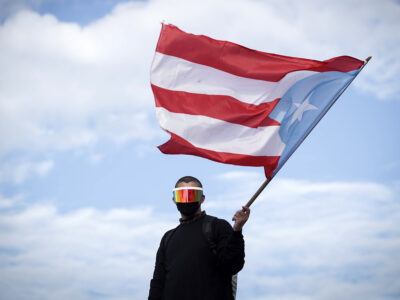
Bad Bunny wearing a black long sleeved shirt, a black cloth face mask, and giant sunglasses that shield his eyes, looking directly at the camera while waving a giant Puerto Rican flag.

“Electrify Everything” Doesn’t Work in Puerto Rico

WP_Post Object
(
    [ID] => 4815
    [post_author] => 15
    [post_date] => 2022-09-22 12:05:00
    [post_date_gmt] => 2022-09-22 12:05:00
    [post_content] => 

Everything you need to know about the treaty protecting environmental defenders in Latin America.

In 1988, three days before Christmas, Francisco “Chico” Alves Mendes Filho went to take a shower in his yard when he was assassinated by local cattle ranchers with a .22 rifle. 

Mendes had been a Brazilian leader of the rubber tapper workers’ union, who advocated for Indigenous people’s rights and defended the Amazon rainforest against exploitation. The cattle ranchers who’d killed him were rural landowners, hoping to continue deforesting it. This wasn’t the first killing of an environmental defender in Latin America and the Caribbean (LAC), and it wouldn’t be the last. In 2016, almost 30 years after Chico Mendes's murder, Berta Cáceres, a Honduran Indigenous environmental defender, was killed by sicarios for her opposition to the construction of a dam in the Gualcarque River. Two different causes, two different countries, and two different times, but one motivation: to silence those who fought and defended the environment in Latin America.

Environmental defenders have contributed to halting 11% of environmentally damaging projects across the planet. However, the role comes with a high cost to their safety: Constant threats, violence, and hundreds of assassinations make their work incredibly dangerous. These attacks are mainly related to land disputes and environmental damage, and 70% are for defending forests

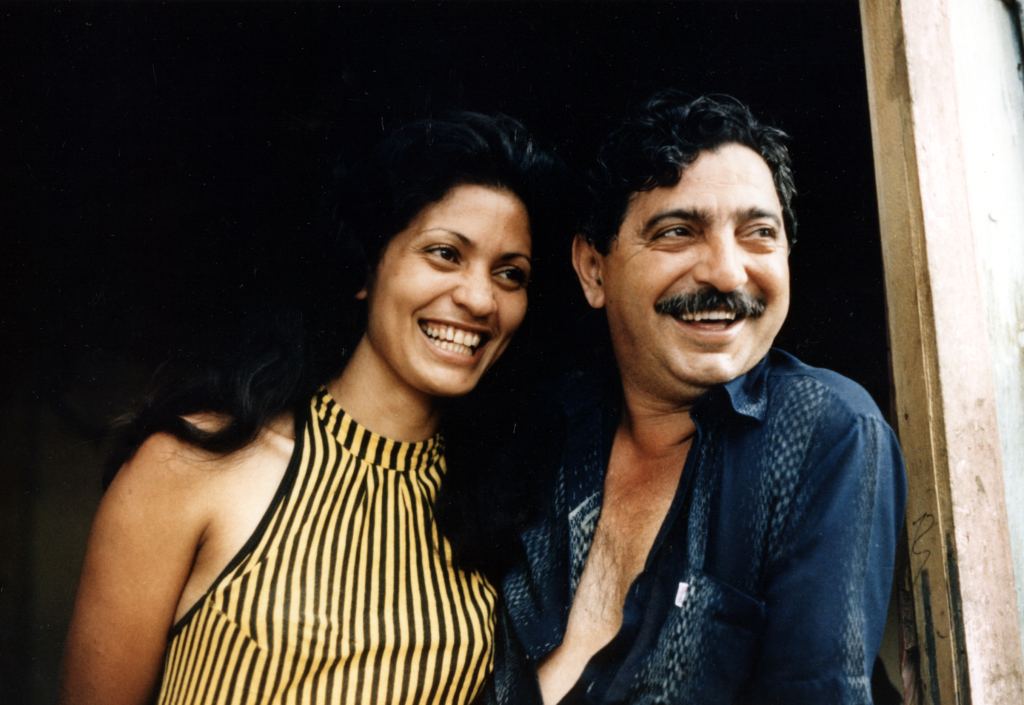
Chico Mendes and his wife, Ilsamar, laughing.
Chico Mendes and his wife, Ilsamar, in 1988. Courtesy of Miranda Smith / Wikimedia.

The UN defines environmental human rights defenders as “individuals and groups who, in their personal or professional capacity and in a peaceful manner, strive to protect and promote human rights relating to the environment, including water, air, land, flora and fauna.”They use non-violent methods to protect the environment, contributing to preserving biodiversity and Indigenous rights. In 2000, the Human Rights Commission established the Special Rapporteur on the situation of human rights defenders, which included promoting environmental defenders' protection within their mandate. In 2019, the UN General Assembly recognized the contribution of environmental defenders to ecological protection and sustainable development, urging states to develop and appropriately fund protection initiatives for human rights defenders. 

But this has proven tricky in Latin America. According to a 2021 Global Witness report titled “Last Line of Defence,” 165 environmental defenders were killed in LAC in 2020,a frightening number that illustrates how vulnerable activists are in the region. In addition, these attacks made up 73% of all attacks against environmental defenders in the world, making Latin American especially hazardous area to protect the environment. The reason behind the frequency of these attacks is closely related to the region’s long history with extractive industries as a means of economic development. LAC is largely made up of developing countries, and many have opted to prioritize economic growth over environmental regulation. Vulnerable populations, such as Indigenous communities and poor local communities, have suffered the impacts of this the most, and in parallel, also act as the last line of defense when it comes to protecting the environment.

The regional response for protecting environmental defenders: The Escazú Agreement

Even though environmental regulations in Latin American countries have progressed in recent years, activists are still being murdered and attacked, and regional cooperation is required to ensure their protection. In 2012, a collective of LAC nations decided to draft an agreement implementing Principle 10 of the UN’s Rio Declaration on Environment and Development, with the goal of creating the LAC version of the Aarhus Convention. The agreement was adopted on March 4, 2018, in Escazú, Costa Rica—giving the treaty its name: the Escazú Agreement, or Acuerdo de Escazú. On April 22, 2021, nearly a decade after discussions first began, the Escazú Agreement went into effect, becoming the first environmental treaty in LAC. 

The primary purpose of the treaty is to improve and guarantee the procedural human rights of access to information, public participation, and justice. Latin America is a region with severe economic inequalities that directly affect the political participation of the most vulnerable populations, excluding them from most decision-making processes. The Escazú Agreement, acknowledging this exclusionary situation and the numerous socio-environmental conflicts across the continents, sets new human rights standards, guaranteeing the most vulnerable communities are involved in environmental decision-making. 

Concerning environmental defenders, the Escazú Agreement also seeks to change the dangerous circumstances they suffer across Latin America. First, the treaty states in Article 9 that “each [signing] party shall guarantee a safe and enabling environment for persons, groups and organizations that promote and defend human rights in environmental matters ” In practice, this allows environmental defenders to act freely and safely, without fear of threat or harm. 

The treaty also indicates that signing countries “shall take adequate and effective measures to recognize, protect and promote” the human rights of environmental defenders. This clause focuses on civil and political rights, reinforcing their right to life, freedom of opinion, freedom of movement, personal integrity, and peaceful assembly, among others. In addition, due to the historical impunity of the criminals who have perpetrated crimes against environmental defenders, the treaty reinforces due process for preventing and punishing attacks or threats made against them.

To further effectively protect environmental defenders, in April, the first Conference of the Parties (COP) to the Escazú Agreement established an ad hoc working group to create an action plan to be presented at the next COP. According to the initial COP, this working group would allow for significant public participation, “endeavouring to include persons or groups in vulnerable situations,” especially Indigenous people and local communities. This could mean that environmental defenders who have experienced attacks or threats themselves can now be a part of creating the action plan to prevent more attacks from happening in the future. 

The purpose of all these rules is to protect the legitimate political work of environmental activists across Latin America. This progress is essential for making LAC more democratic and ecological; and indeed, defending those who risk their lives to protect the environment is vital for continually improving our democracies.

The problem, however, has been getting signatories to ratify it.

The vital need to adopt the treaty

Twenty-five countries have signed the Escazú Agreement so far, but only 13 have ratified it. Some have resisted signing it based on reasons of sovereignty or the vagueness of the treaty’s obligations. For instance, before Chilean president Gabriel Boric ratified the treaty, the former government of Sebastian Piñera decided to not sign it because he believed specifically protecting environmental activists would affect equality before the law.

Colombia, however, might be the most notable country to have not yet ratified the treaty, despite having the world's highest number of murdered environmental defenders (65)in 2020. Hopefully, the newly elected President, Gustavo Petro,will ratify Escazú,complying with his campaign promise to do so; because as long as countries continue not to honor it, the murders will continue to happen. Months ago in Brazil—another country that has not ratified the treaty—two environmental defenders were murderedin the Javari Valley: Dom Phillips, a British journalist, and Bruno Pereira, a Brazilian Indigenous rights defender. Since Jair Bolsonaro was elected in 2019, environmental regulations have diminished in the country, as the Brazilian president continuously opens Indigenous reserves for commercial purposes, triggering environmental conflicts and putting defenders at risk. In addition, Bolsonaro's government legitimized armed land grabbers dedicated to attacking Indigenous and local communities and deforesting the Amazon by weakening all the environmental institutions focused on protecting the environment and Indigenous rights. As a result, the biggest country of LAC has aligned itself with extractive interests over human ones. 

Although the situation with environmental defenders in LAC is critical, right-wing political parties and economic groups see Escazú as an obstacle to economic development. For decades, they have rejected increasing protective measures for those who oppose extractivist expansion. Political negotiations and effective treaty implementation by state parties are crucial elements for incorporating more nations into Escazú. One way to help do this is by increasing awareness of the treaty’s existence, and the goals it hopes to accomplish.

Courtesy of Camilo Freedman / APHOTOGRAFIA / Getty Images.

The Escazú Agreement: An example of defending the defenders

Following the Escazú Agreement's example, the interest in strengthening protections for environmental defenders is expanding to other continents. For example, Asia and Africa do not have any regional treaties to protect environmental defenders, but have organized cooperative networks to defend the defenders on the ground. In Africa, Natural Justice is supporting a powerful initiative, African Environmental Defenders,which aims to protect environmental defenders though an “emergency fund” to support their work. In Europe, environmental defenders are also taking priority. In 2021, the EU Parliament called its member states to take action to protect environmental defenders' human rights, showing that the threats and attacks on these activists are not only happening in the Global South. 

As we face the ever-growing climate crisis, protecting the environment and our delicate ecosystems is crucial. Globally, the role of environmental defenders has been vital to stopping the ecological degradation of the planet. However, their silent and voluntary work is not recognized, despite risking their own lives to preserve the environment for the benefit of present and future generations. Therefore, it is fair and necessary to protect them and stop the impunity of those who abuse and attack activists for exploiting the environment to make a profit. By establishing the Escazú Agreement, Latin America contributed to showing an institutionalized path for protecting environmental defenders, a priority that every government should have—not only to protect the environment, but also democracy itself.

Additional fact checking by Sophia Cleary.

You Should Give a Sh*t About is an ongoing column highlighting local stories with a global impact.

[post_title] => You Should Give a Sh*t About: The Escazú Agreement [post_excerpt] => Everything you need to know about the treaty protecting environmental defenders in Latin America. [post_status] => publish [comment_status] => open [ping_status] => open [post_password] => [post_name] => escazu-agreement-explainer-latin-america-environmental-treaty [to_ping] => [pinged] => [post_modified] => 2026-08-04 20:25:39 [post_modified_gmt] => 2026-08-04 20:25:39 [post_content_filtered] => [post_parent] => 0 [guid] => https://conversationalist.org/?p=4815 [menu_order] => 109 [post_type] => post [post_mime_type] => [comment_count] => 0 [filter] => raw )
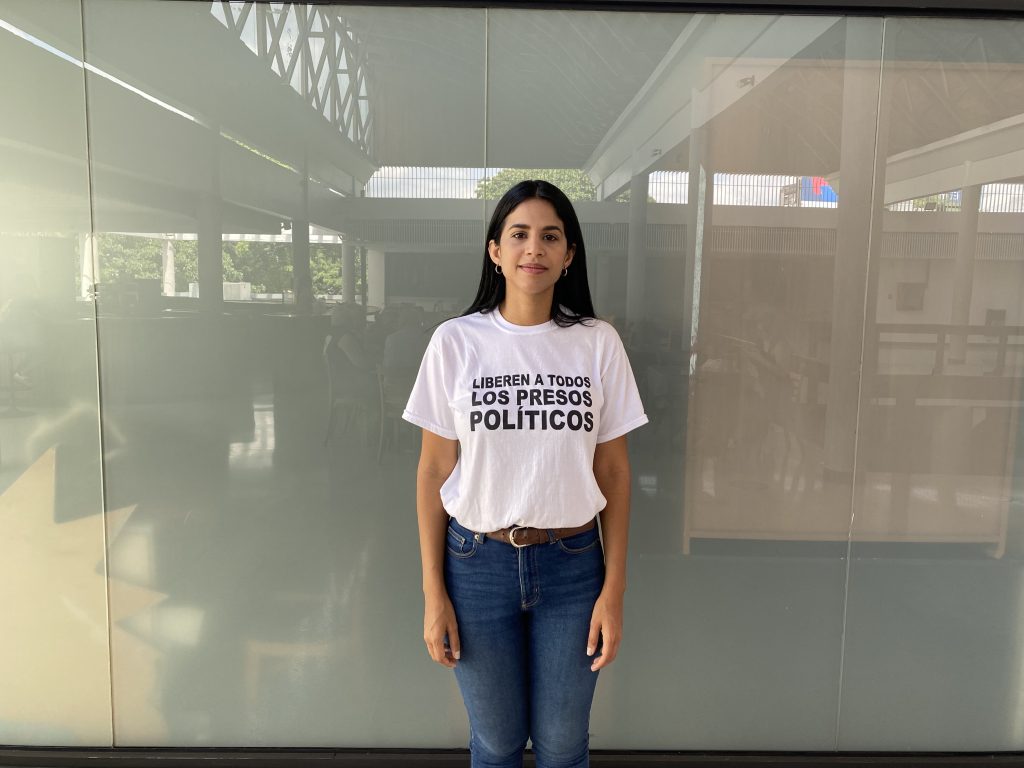
Wildfires Devastate Wetlands Of The Parana Delta

You Should Give a Sh*t About: The Escazú Agreement

WP_Post Object
(
    [ID] => 3637
    [post_author] => 2
    [post_date] => 2021-12-20 18:10:17
    [post_date_gmt] => 2021-12-20 18:10:17
    [post_content] => The historic election marks the final stage in the transition away from Pinochet's dictatorship.

Hundreds of thousands of people flocked onto the streets of Chile’s cities on Sunday night to celebrate a history-making presidential election. The sounds of cheers and honking car horns were everywhere as, with 97 percent of the votes counted, Gabriel Boric, a 35-year-old former student leader who headed the leftist coalition Frente Amplio, became the country’s youngest president. The final polls heading into the election predicted a very close result, with the far-right Jose Antonio Kast, 55, slightly ahead of the much younger, progressive Boric. But the final tally was not even close: Boric won with 55.9 percent of the vote—12 percentage points ahead of Kast, who called Boric to concede at 7.10 p.m., after only 30 percent of the ballots had been counted.

[caption id="attachment_3644" align="aligncenter" width="740"] Jubilant Boric supporters poured onto the streets of Santiago on December 19, 2021.[/caption]

On Election Day I was in Concepcion, in south-central Chile, feeling anxious but also hopeful that the Chilean people would elect Gabriel Boric, the humane, democratic and environmentally conscious candidate. I was at a polling station as ballot counting began, watching as the numbers showed a consistent advantage for Boric. When the announcement was made that Gabriel Boric had been elected, becoming Chile's youngest president, I was euphoric.


The two candidates campaigned on polarized visions for their country.

Kast, a conservative Catholic with nine children, is a Pinochet supporter. He ran a right-wing populist campaign that promoted a continuation of neoliberal economic policies and climate change denial. He vociferously opposed gender equality and abortion rights and incited against impoverished Venezuelans and Haitians who sought a better life in Chile.

Read more: Chile faces its most consequential election since the end of the Pinochet dictatorship

Boric is a former leader of the 2011-13 student movement, which sought better and more affordable education for all; as a young politician, he was one of the architects of the 2019 Agreement for Social Peace, which led to the 2020 referendum for a new, more equitable constitution to replace the Pinochet-era one. His platform calls for an overhaul of the economy, ending the neoliberal policies that have made the country deeply unequal; Boric campaigned on making Chile a more unified society—one fully transitioned away from the legacy of the Pinochet regime.

The campaign

Sunday’s election marked the end of a long process that began with the July primaries. Boric surprised everyone by winning the leadership of the leftist coalition over the Communist candidate, Daniel Jadue. The polls had projected a win for Jadue, but he made some serious missteps with various gaffes, including antisemitic statements; Boric, meanwhile, came off as inclusive, charismatic, and knowledgeable during the debates. With his moderate yet innovative positions, like the importance of finding a balance between economic growth and a response to the climate crisis, he attracted the millennial voters who played a decisive role in his becoming the leftist coalition's candidate. A high turnout for the primaries, with more than 1.7 million voters casting a ballot, created a solid electoral base for the first round of the presidential election. Kast, on the other hand, did not participate in the right-wing party’s primary elections; nor was he a favorite in the polls at the beginning of the election campaign. His candidacy emerged from a political pact between conservative Christians and the new far-right Republican Party; he then went on to perform well during the first debates against Sebastian Sichel, his rival for leadership of the right-wing coalition. Sichel positioned himself as a center-right candidate, a move that proved to be a mistake: He pushed right-wing voters toward Kast, whom they saw as an “authentic” right-wing candidate. For the far-right, who supported the Pinochet dictatorship and opposed a new constitution, Kast represented both their natural political home, and the man who was more likely to bring a right-wing government to power. The center-right moved toward Kast because they saw him as the man most likely to be elected and they wanted a right-wing government at all costs, even if that meant tacitly supporting xenophobic proposals such as the construction of ditches in Chile’s north to prevent impoverished and desperate Venezuelan migrants from entering the country.

The race

In the weeks before Election Day on December 19, polls consistently showed Kast just slightly ahead of Boric in a very tight race. International legacy media outlets painted a picture of Chilean society polarized between two extremist candidates, although Boric’s views are hardly extreme—they would put him somewhere between Bernie Sanders and Elizabeth Warren. In Chile, the influential right-wing media outlets played an outsized role in promoting Kast’s campaign with fake news that incited against Boric. Kast, for example, claimed several times that the bearded, tattooed leader of the leftist coalition used illicit drugs, a baseless lie that the right-wing media amplified until it gained such wide credence that Boric felt compelled to respond. During the December 13 debate against Kast he released lab results that proved he had no cannabis, amphetamines, or cocaine in his bloodstream. Besides creating a divisive and polarized atmosphere during the campaign, the far right’s aggressive rhetoric and fake news also disseminated fear of Boric’s purportedly “socialist” agenda. For example, Kast claimed that the Communist Party’s support for Boric was indicative of a dangerous, far-left agenda; evoking Venezuela’s socialist bogeyman, he said that Boric, if elected, would drag Chile into chaos. In fact, Boric is very much a moderate who has attracted broad support with a political platform that advocates policies similar to those of European social democratic parties. Voter turnout in Chile hovers at 50 percent, which increased this time in the second round. Some analysts predicted that Boric would inspire a surge in the youth vote, propelled by their concerns about the climate crisis and rising authoritarianism. While there is no data yet about age groups, overall voter participation did increase by more than one million over the first round. This election saw the highest electoral turnout in Chilean history, with Gabriel Boric receiving more votes than any presidential candidate in previous elections.

A historic election

Kast’s extreme views on women’s rights, gender equality, and LGBTQ rights inspired a diverse political movement in support of Boric’s candidacy. One of his proposals, for example, was to allow police to detain suspects for five days in undefined “confinement centers.” The far-right candidate thus galvanized significant sectors of voters to find common cause in combating the threat of far-right populism. The close relationship between the far right and religious fundamentalists alarmed feminists and other progressive movements, mobilizing them to organize and get out the vote.
But Chileans remain divided about the causes and outcomes of the 2019 social movement that sparked nationwide protests, which in turn led to a political agreement for the establishment of a constitutional process. The far-right opposes any structural change to Pinochet’s system. Boric and his broad coalition represent Chile’s majority, who aspire to a stable social and political transformation. They support the constitutional process and want a more equitable economic system that will replace Pinochet’s neoliberal legacy with a welfare state and sound environmental policies. Boric’s administration will seek to introduce an ecological approach to governing, and to implement transformative policies to pensions and healthcare, two of the pillars of the unequal and segregated Chilean system. Boric represents hope for a nation that wants more dignity, a fact that puts positive pressure on the future government: it needs to be humane, fair, and efficient. I believe the newly elected President Boric is more than ready to take on this immense challenge. [post_title] => Gabriel Boric becomes Chile's youngest president on a progressive mandate [post_excerpt] => The historic election marks the final stage in the transition away from Pinochet's dictatorship. [post_status] => publish [comment_status] => closed [ping_status] => open [post_password] => [post_name] => gabriel-boric-becomes-chiles-youngest-president-on-a-progressive-mandate [to_ping] => [pinged] => https://conversationalist.org/2021/11/18/chile-faces-its-most-important-and-most-polarized-presidential-election-since-the-end-of-pinochets-rule/ [post_modified] => 2026-08-05 18:17:08 [post_modified_gmt] => 2026-08-05 18:17:08 [post_content_filtered] => [post_parent] => 0 [guid] => https://conversationalist.org/?p=3637 [menu_order] => 154 [post_type] => post [post_mime_type] => [comment_count] => 0 [filter] => raw )
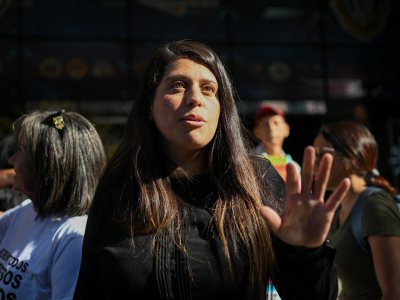
Gabriel Boric becomes Chile’s youngest president on a progressive mandate