How samba schools in Brazil are teaching Black history through the parades at Carnival.
The torrential rain couldn’t stop Unidos da Tijuca, one of the oldest samba schools in Rio de Janeiro, Brazil, from rehearsing in the streets. On an evening in early February, dancers flooded the Morro do Borel community, moving their bodies in unison as a crowd cheered them on, shouting their loyalty to the samba school and dancing alongside them. The crowd had been waiting for hours for the rehearsal to begin, drinking beer and barbecuing, the evening already a celebration. Now, the sound of snare drums, quick and sharp, moved each spectator to sing along to the music, as the year's anthem began to play. The performance had officially begun.
Though the parades in Rio are world-famous, attracting a global audience for Carnival each year, the greatest show in the world still belongs to these communities, where the parades—a pivotal part of the season’s festivities—originated. It is also here that these samba schools work hard year-round to honor the parades’ original purpose: bringing marginalized histories that aren’t taught in Brazilian schools to the national stage.
“Since the 1930s, samba schools have been addressing themes closely related to Brazilian history,” historian Luiz Antonio Simas tells The Conversationalist. “This created a tradition in which Brazilian history, important figures from Brazilian history, and the country's natural beauty became recurring themes [at each parade].”
Leonardo Carrato
Founded in 1931, Unidos da Tijuca is one of 12 samba schools that compete during Carnival, each putting on a parade built from scratch that highlights a different piece of forgotten Brazilian history. For this year’s parade, Unidos da Tijuca chose to tell the story of Carolina Maria de Jesus, a Black Brazilian memoirist, poet, composer, playwright, and best-selling author, most known for her book Child of the Dark: The Diary of Carolina Maria de Jesus, published in 1960 and translated into 14 languages. Last year, the school chose to tell the story of Logun-Edé, an orisha of the Black Brazilian religion Candomblé, and the year before, the influence of Portuguese folk tales on Brazilian samba music.
Other competing schools chose different figures to celebrate this year: Acadêmicos do Salgueiro paid homage to Carnival designer and professor Rosa Magalhães, a samba school legend who won six Carnival championships in the 1980s. The samba school Paraíso de Tuiuti performed a parade about Afro-Cuban religious practices, with a whole chorus written in the Yorubá language. And the 2026 winner, Unidos do Viradouro, honored Moacyr da Silva Pinto, or Mestre Ciça, the school's legendary percussion conductor.
In telling these stories, Unidos da Tijuca and other samba schools aim to make marginalized histories—and Black history in particular—more accessible through popular culture, allowing them to keep these histories alive. The construction of the parade is a year-long process that starts again right after Carnival ends, beginning with each school democratically electing a theme, running a song competition, and translating history into a visual performance through choreography that involves hundreds of dancers.
But while the parades are a joyful culmination of the schools’ efforts, for the communities each samba school represents, it’s the lead-up to the final performance that often most solidifies the history being celebrated.
Leonardo Carrato
That rainy Sunday was Unidos da Tijuca’s last street rehearsal before the official parade at the Sambadrone, and party dwellers excitedly gathered to watch an intimate preview of what would later earn the school 7th place in the official competition. At 6 PM, onlookers dressed in the colors of Unidos da Tijuca—blue and yellow—waited outside of the school, a tall building painted in yellow. The energy was high as people gathered, and the song composed for this year’s parade played loudly through speakers at the closest bar, along with songs from previous years: "Logun-Edé - Santo Menino que Velho Respeita" (“Logun-Edé - The Holy Child Old Men Respect”) and "O Conto de Fados" (“The Tale of Fairies”).
As the time for the performance neared, people began singing along to the story of Maria de Jesus, one that mirrors the stories of many Black women in Brazil today. A single mother of three, Maria de Jesus lived in the favela of Canindé in São Paulo, where she spent her time picking up recyclables to sell, taking care of her children, and writing about her day-to-day life. One of her notebooks from this time would eventually become her first best-selling book, Child of the Dark, which sold 10,000 copies in its first week of publication in 1960—an achievement that was unheard of at the time, and still rarely met in Brazil now.
But the majority of the community was unfamiliar with these details of Maria de Jesus’s life before Unidos da Tijuca chose to tell her story for the 2026 parade. “It’s essential that we talk about a person who has been made invisible by society and by the Brazilian people,” Mariah Dantas, one of the principal dancers, tells The Conversationalist. “Almost nobody remembers her importance, or how impactful she was at the time, and how important she is today. Because many women still live in poverty like she did… This isn’t just about telling Carolina’s story, but also about highlighting that Black women still live like that, and that this needs to change.”
Many of these same women also live in Morro do Borel, and saw themselves reflected in Maria de Jesus’s story for the first time. “It was the perfect choice,” Carlos Batata, member of Unidos da Tijuca and president of Unidos da Tijuquinha, a version of the samba school for children, tells The Conversationalist. “The story was unknown, [but] with time, people got to know more about Carolina’s work, and now people sing the samba song and relate and cry to it, because there are parts of the lyrics—a phrase, a chorus—that represents each woman’s story here.”
Leonardo Carrato
To accurately tell Maria de Jesus’s story, Unidos da Tijuca worked with an academic consultant on everything from the writing of the samba song’s lyrics, the design of thousands of costumes and five floats, and even some of the choreography. (The practice of hiring a consultant is relatively new across samba schools, a union of institutional education and popular education that only began around 10 years ago.) This year, Unidos da Tijuca collaborated with researcher Fernanda Felisberto, a literature professor at the Federal University of Rio de Janeiro, who is a part of an editorial committee that has salvaged, re-edited, and published Maria de Jesus’s work in recent years.
“For a long time, we used to say that there are histories that traditional schools don’t tell, but that Carnival will tell those histories, almost as if they’re in opposition to each other,” Felisberto says. “But in reality, we are building a process that goes hand-in-hand, especially because hiring consultants has become more and more common for samba schools. So, samba schools today are learning from these traditional sources of knowledge. The challenge for Carnival is to translate that knowledge in a way that reaches more people.”
The act of performing in community is a large part of this translation, and in Morro do Borel, it is what has brought Maria de Jesus’s story back to life. “Sou a liberdade, mãe do Canindé / Muda essa história, Tijuca / Tira do meu verso a força pra vencer / Reconhece o seu lugar e luta / Esse é o nosso jeito de escrever,” both members of the samba school and party dwellers alike screamed at the top of their lungs during the street rehearsal. (“I am freedom, mother of Canindé / Change our history, Tijuca / Get the strength to win from my verses / Recognize your place in struggle / This is our way of writing.”)
Leonardo Carrato
For this year’s parade, Felisberto says the school intentionally focused on lesser known works by Maria de Jesus, like the music she composed and recorded, and the plays she wrote, which remain unreleased to the public. They hoped to show Maria de Jesus was more than her biggest successes, in part so that she is recognized for the breadth of her creative work, which never got as much exposure as her first book. “We want people to understand that Carolina was a multidimensional artist,” Felisberto says. “Child of the Dark constructed an image of Carolina that spotlighted precarity, which is how people see her today. The challenge was to humanize her, show her failures and successes beyond a narrative around her best-selling memoir.”
Like Felisberto, many view the Carnival parades not just as a celebration marginalized histories, but as a collective experience with a lasting impact. “I consider samba songs by samba schools to be historical documents,” Simas says, adding that in his 30 years working as a history teacher in public schools in Rio, he has used samba songs as pedagogical sources. “It’s a tool to start debates, we can analyze the lyrics, study the trajectory of some historical characters who are less talked about in formal education.”
For Unidos da Tijuca member Douglas Coutinho, studying samba songs even helped him to pass his university entry exams. “My history teacher used the samba song from 2008, ‘João e Marias’ by Imperatriz Leopoldinense, [in class],” Coutinho says. “The samba song helps teachers teach, and it helps students understand the material that is being taught.”
Leonardo Carrato
Perhaps most importantly, in telling and preserving these stories through samba parades, communities are able to reclaim the narrative from the dominant classes, which tend to dismiss or downplay the importance of marginalized histories. Sometimes, it also allows these stories to become the dominant narratives—at least, during Carnival, when the media’s attention turns to the communities these samba schools represent.
“Samba schools will tell us stories that are important for the people,” says Iara Cassano, a member of Acadêmicos do Salgueiro and a samba teacher. “The dominant narratives will tell histories that are important to the elites… Carnival gives us autonomy to tell our own histories.”
[post_title] => A History Lesson Through Samba
[post_excerpt] => How samba schools in Brazil are teaching Black history through the parades at Carnival.
[post_status] => publish
[comment_status] => closed
[ping_status] => closed
[post_password] =>
[post_name] => samba-school-forgotten-marginalized-black-history-rio-de-janeiro-brazil-carnival-parades-unidos-da-tijuca
[to_ping] =>
[pinged] =>
[post_modified] => 2026-03-20 02:25:49
[post_modified_gmt] => 2026-03-20 02:25:49
[post_content_filtered] =>
[post_parent] => 0
[guid] => https://conversationalist.org/?p=10356
[menu_order] => 0
[post_type] => post
[post_mime_type] =>
[comment_count] => 0
[filter] => raw
)
A memoir interwoven with historical research that might leave you wondering if anything really changes in these United States.
The Mixed Marriage Project’s title will more than likely give an onlooker pause. Perhaps that’s the point. But before conjuring up too many presumptions based on the name, one might also note it is the work of renowned law professor and sociologist Dorothy E. Roberts. Amongst other books, Roberts is the author of Killing the Black Body (about black women’s reproductive history in the United States) and Fatal Invention: How Science, Politics, and Big Business Re-create Race in the Twenty-first Century. In her latest, a memoir interwoven with historical research, she unfolds her parents’ interracial relationship, and through it, partly unravels a United States’ history of the subject itself.
The “project” of the book’s title is personal for Roberts: In the 1930s, her father, a white American of Welsh and German descent, set out to examine interracial relationships between black and white people specifically, while studying to be an anthropologist at the University of Chicago. His interview-based research, which explored interracial unions formed as early as the late 1800s, continued till the 1960s and ’70s, and included interviewing the children of couples he’d earlier surveyed. This feat was supposed to become a book, sold to a publisher while her father was working as a professor at Chicago’s Roosevelt University. But the book was never published, and its stories left untold until now.
Roberts theorizes the reason for this was that her father’s work had become so interwoven into his identity—and their family life—that its completion would have caused a real identity disruption. Who was he if he wasn’t working on the project? And where did that leave her and her family?
Through her own research, Roberts learns her mother, a black, Jamaican immigrant, was also involved in this work, conducting interviews alongside her father for many years. Both were committed to the project’s objectives, one of which was to demonstrate that interracial relationships are not inherently abnormal, because black and white people are not fundamentally different. This was also how her parents met: While majoring in chemistry at Roosevelt, her mother became her father’s research assistant. (In the book, Roberts explicitly states she “wonder[s] how their professional partnership evolved into a romantic one—and whether they worried about the perception of impropriety.”) This prompts Roberts to question an underlying reason for her parents' marriage: Were they supposed to be embodiments of their own mixed marriage project? If Roberts’ parents were indeed as much a part of the study as they were leads of it, she concludes, it would make her and her sisters its subjects, too—or, at least, its personified outcomes.
Rather than be rattled by this possibility, the author measures it against the people she personally knew her parents to be—curious, culturally-aware, well-traveled, and community-minded. Her parents’ relationship, after all, existed beyond their work, and they were initially drawn to each other by their shared sense of adventure, similar values on education, and complementary sensibilities—her mother as the planner and her father as the spontaneous one. By her own admission, Roberts gives them a latitude that an outsider might not. But I reckon this is where the book shines as memoir, rather than an investigation of an investigation: the reader gets to know Roberts’ parents through her loving eyes. Loving eyes that, for the record, do not condone the same politics her parents—especially her father—may have arrived at through their work: that interracial relationships offer some kind of medium to restore black and white relations in the United States, shaped by white supremacy and violence. (On this, Roberts pointedly disagrees.)
Beyond family history, the themes in Project will be recognizable to anyone versed on the discourse, likely causing you to wonder if anything really changes in these United States. The politics of the study’s participants—black men, black women, white men, and white women in heterosexual, interracial relationships—reveal how black men-white women couples were seen as more “acceptable” but also more arduous in the long-run; white women often lost privilege they couldn’t regain unless divorced. The research also highlighted the sexual tropes attached to black women-white men couples—and the misogynoir that informs outsiders' views of them. Recurring themes, regardless of interracial pairings, showed how marital cutting across the color line affected one’s choice of neighborhood and the life afforded to them and, possibly, their children. Also recurring—especially in the civil rights era—were the many well-meaning couples who entered these marriages in the hopes of proving to the world as much as to themselves that interracial coupling inherently combats a racist society. This hope, Roberts argues, was often an erroneous one, as countless couples later found out.
In the lasting analysis of her father’s work, Roberts arrives at the same conclusion that she began with regarding interracial relationships: They are not panacea for a society, a country, or a world that has yet to unravel itself from white supremacy, let alone repair its many casualties. But in Project, Roberts shows us that despite flawed, socially-constructed and racialized societies, people will enter unions and arrangements of all kinds, her parents included. These unions may not transcend race, but they do demonstrate that, in spite of the race politics attached, people will deem them worth fighting for. Some do so naively and are thus confronted with seeing the depths of racism like they never have before. But others, especially the curious, culturally-aware, and community-minded, go into them with eyes wide open, prepared to confront all of its politics united.
[post_title] => February Book of the Month: "The Mixed Marriage Project" by Dorothy E. Roberts
[post_excerpt] => A memoir interwoven with historical research that might leave you wondering if anything really changes in these United States.
[post_status] => publish
[comment_status] => closed
[ping_status] => closed
[post_password] =>
[post_name] => february-book-of-the-month-botm-pick-the-mixed-marriage-project-by-dorothy-e-roberts-memoir-interracial-relationships-dating-history-research
[to_ping] =>
[pinged] =>
[post_modified] => 2026-02-27 20:45:28
[post_modified_gmt] => 2026-02-27 20:45:28
[post_content_filtered] =>
[post_parent] => 0
[guid] => https://conversationalist.org/?p=10212
[menu_order] => 0
[post_type] => post
[post_mime_type] =>
[comment_count] => 0
[filter] => raw
)
According to one book, both a lot and very little has changed in the last 100 years.
From the moment I saw The Woman’s Book sitting on a dusty shelf in a secondhand shop, I knew I had to rescue it. I was fascinated: At 719 pages, the hefty tome—browned around the edges and threatening to fall apart—promised to teach well-off British women of 1911 everything they ought to know about womanhood, from poultry-keeping to child-rearing to overseeing the servants.
According to the hand-inked inscription, one lucky Miss Wilson received the manual as a Christmas gift in 1911, with “best wishes” from what looks to be a “Mr. Brooke.” Color me intrigued as to that relationship—but flipping through it, I could only assume that this Mr. Brooke had hoped to begin training his intended future wife, by sending her a literal manual on womanhood. While laying out various tasks, the book gives hints at what a woman’s purpose was in the early 20th century. The gentlewoman’s aim is to avoid attracting the eye of the crowd. To contain boisterous laughter. To please.
So much has changed! I thought. But so little had, too.
There’s plenty in The Woman’s Book that feels like it’s from another world — the etiquette of visiting cards, how to make a fur muff. Yet a lot also feels familiar: the domestic and family labor that too naturally falls to women, the fact that if we want to embark on certain careers, we better expect a fight to get there. While some of the details might differ, it’s clear that the ultimate purpose of this prescriptive book was to tell women how to exist—and in that regard, we have work to do.
Courtesy of the author.
On Pregnancy
When I picked up The Woman’s Book, I was heavily pregnant, and reading every feminist birthing book I could get my hands on (a sure fire way to terrify yourself about childbirth). I immediately skipped to the baby section to find out what the women of the early 20th century were being told, only to discover that the section titled “Baby’s Arrival” was merely two paragraphs long, with nothing whatsoever about the act of giving birth itself.
On the general topic of dressing during pregnancy, however, there was a full page: three times the space given to pushing the thing out. One important part of pregnancy that is very well covered is whether or not one should wear a corset when with child—not for the safety of the fetus, of course, but because “an effort must be made to avoid appearing conspicuous.” (The author’s advice is to keep the corset, but to wear ones that aren’t quite so tight, giving an inch of priority to health over some idea of vanity.)
And ladies, no snacks during this special time (or, actually, ever), no trips to the theatre, and for god’s sake, please do avoid traveling by bus, train, or tram towards the end of the final trimester. Most importantly, “All morbid and sensational literature should be avoided.”
Over a century later, people who are not medical professionals still tell pregnant women what to do and when. We’re told to take all the drugs, do it without drugs, have a birth plan, don’t have a birth plan— meanwhile, some pregnant women aren’t told an awful lot at all. But never is unwanted advice more abundant than during this magical time. When a yoga teacher told me I had complications in birth because I “didn’t try hard enough” to do it naturally, it took every ounce of peace I had left not to finish her off with a flying warrior pose. I imagine I’d have felt the same if someone chided me for not wearing the proper pregnancy corset.
On Beauty
Unsurprisingly for a book with such strong opinions on pregnancy fashion, The Woman’s Book also has a fair amount of beauty advice. The book is packed with gold like: “Try and cultivate a more cheerful outlook upon life if you would permanently rid yourself of these vexing little lines between brows” and “Overwork and worry are powerful deterrents to all culture of beauty.” Because we women really should prioritize the absence of wrinkles over thinking too hard, of course. (For the record, mischievous grey hairs are usually also caused by worry—so we should all really just STOP WORRYING if we want to remain youthful.)
It’s also in this chapter that it becomes clear who, exactly, the book is targeting. One tip in particular that speaks pretty strongly to the diversity of the UK’s upper-class in 1911 is a set of instructions on how to whiten your neck and arms. For real. It involves bathing in milk (the service of dairy cows is never ending) and dusting on plenty of powder, effectively telling wealthy white women to transform themselves into donuts in order to be beautiful.
But don’t fret gentlewomen, because by 2024, we’ve been freed from this obsession with how contorting our faces makes us hideous, how our bodies must be a certain way, and why any of that matters. Unless of course you count the endless “new beauty obsessions” we’re encouraged to spend our hard-earned money on (which we still make less of than men, of course), the smoothing Instagram filters that it’s now normal to view the world through, and the constant need to define a bikini body as anything other than a body that happens to have a bikini on it.
On Work
After I got the book home safely, I decided to take a closer look at the contents page. Did I spy “careers for women” and “women in politics”? Had I been too quick to judge?
What’s incredible is that Florence B. Jack, the editor of The Woman’s Book, suggests the 1911 woman has it pretty good in the world of work. There are many vocations for a young lady, unlike in those pesky olden times. A woman can be a teacher, a private secretary, a florist, a beekeeper, even a lady clerk, for heaven’s sake! (Not to be confused with a regular clerk, of course.) She can also be the most “womanly profession” of them all: a nurse. But no matter your choice, Jack cautions, there is a catch—you have to be really good. There’s no room for mediocrity when you’re a woman. (Arguably, still true today.)
When it comes to my own profession of journalism, I might have found breaking through a bit trickier in 1911, as Jack warns this is a job “not so easily accessible as other callings.” It’s possible, but the budding female journalist has to be “really clever.” When it comes to training, a girl should get a position as a typist or secretary in a newspaper office. Leave journalism school to the chaps, eh? But if a woman is able to make a success of being a reporter, “her powers of intuition and her tact are so much greater than that found in the average man reporter that she is at times entrusted with very special duties.” Imagine that. An exceptional employee being given more responsibility than an average one. Do we even need feminism anymore?
Shockingly, the book also gives women of 1911 permission to be a doctor. It only asks that there be no female medical students at Oxford and Cambridge, thank you very much. Apparently there’s little “old-fashioned prejudice against the ‘woman doctor’” anymore, either, and even more encouragingly, “there is none of that ‘under-cutting of fees’ which has to be adopted by women in most other professions.” So if you want to earn the same as a man for the same job (will we women ever be satisfied?), start getting to grips with human biology. (Perhaps just don’t consult The Woman’s Book for anatomy lessons.) Oh, and if being a woman surgeon (prefix compulsory, of course) is your raison d'etre, best to get a new raison, because in this profession above all others, “prejudice will prove one of the most formidable opponents.” That old chestnut.
Comparatively, you would hope advice on “careers for women” in 2024 would encourage you to do any job you damn well please. But of course, that doesn’t mean that women and nonbinary people are treated the same as their male coworkers. Call me when female pilots aren’t getting mistaken for air stewards and the gender pay gap has been eradicated. And that’s before we intersect gender with class, race, geography, sexuality, and everything else that has an impact on salary and treatment in the workplace.
On Politics
At last, we get to “women in politics.” In 1911, British women could be canvassers, speakers, and campaign organizers. But let’s not get carried away—they couldn’t be trusted to actually vote, let alone stand as political candidates themselves. Still, after all the advice on household management, what to wear, and how to correctly visit your neighbors, I was surprised that the final section of The Woman’s Book turned to the women’s suffrage movement. Now the men have lost interest, it seems to suggest, here’s what we really think.
There’s plenty of talk of servants and country houses throughout The Woman’s Book, so it’s no surprise that it wasn’t a book for all women: It was a book for privileged women. But I found it somewhat encouraging that one of its final comments is devoted to how the suffragist movement brought together women of all classes and politics, “the peeress and the laundry girl,” walking together in processions and fighting for what’s right. In particular, Jack talks about women’s desires to improve work and wages, so that work could be judged by its “true market value and not by the sex of the worker.” It’s a passionate take on why women want freer lives, and how their involvement in politics can create better circumstances for all of humanity.
In many ways, the same holds true today—and frustratingly, it feels like we’re still fighting for the same things. It also feels like we’re still fighting against the same things, too. I don’t know that a Woman’s Book of 2024 would pay quite so much attention to how to iron frills. But look at the pages of mainstream publications targeted at women and there’s an abundance of pieces on how to outfit prep, how to make a charcuterie board bigger than your actual house, and how to get a smoky lip. Aren’t we still being told how to exist? Isn’t this more of the same?
If instead of treating it as an endnote, there was a central focus on how to collectively push for progress for all of us, we might just be able to surpass all these objective measurements of how a woman should “be,” and instead tick the box of what we actually ought to know.
Courtesy of the author.
[post_title] => "Everything a Woman Ought to Know"
[post_excerpt] => According to one book, both a lot and very little has changed in the last 100 years.
[post_status] => publish
[comment_status] => closed
[ping_status] => closed
[post_password] =>
[post_name] => guide-the-womans-book-1911-manual-history-sexism-class-suffrage-movement
[to_ping] =>
[pinged] =>
[post_modified] => 2024-09-13 19:27:53
[post_modified_gmt] => 2024-09-13 19:27:53
[post_content_filtered] =>
[post_parent] => 0
[guid] => https://conversationalist.org/?p=7125
[menu_order] => 49
[post_type] => post
[post_mime_type] =>
[comment_count] => 0
[filter] => raw
)
An interview with the writer-director of "Astonishing Little Feet," a short film about the first documented Chinese woman to come to America.
The first documented Chinese woman to come to the United States was told it would be temporary.
Just 19 years old (or 14, or 16—reports vary), Afong Moy was brought to America not as an immigrant, but as a curiosity, sold off by her father to a ship captain who promised he would return her on his next voyage back to Canton in two years. Moy's father wouldn't be the only one to capitalize off of her: Arriving in New York in 1834, Moy's main purpose would be to help two American merchants, the Carne brothers, sell "exotic" goods—essentially acting as a living mannequin, singing traditional songs, demonstrating how to use chopsticks, and, on occasion, walking for short distances on her bound feet as a way to solicit interest in the brothers' imported Chinese wares.
She would never return home.
Moy would go on to become incredibly famous—so famous she eventually met then-President Andrew Jackson while touring around the country. She would also die in obscurity, no record of her existence after 1850. Very little is known about her today, and even less about how she might have felt about her new life and exploitation. But a new short film seeks to capture a glimpse at both: Astonishing Little Feet, written and directed by Maegan Houang, reimagines what Moy's first experience "performing" for potential investors might have looked like—and the result is harrowing, an uncomfortable exploration of complicity, curiosity, and the history of Asians in America.
Below, we spoke with the writer-director about her film—the title pulled from surviving advertisements that bill Moy as the "Chinese Lady" with "astonishing little feet"—and the importance of not looking away from an ugly past.
~
The Conversationalist: How did you first decide you wanted to do a film about Afong Moy?
Maegan Houang: I was reading The Making of Asian America by Erika Lee, and there’s one line in it that mentions her. I just couldn’t believe what I was reading. It really struck a chord with me—I felt so connected to the idea that the first Asian woman most people in the United States saw was there to help someone else sell goods, just because she seemed particularly exotic and strange. I immediately thought there was a movie there.
From what I’ve read, it seems like Afong Moy was treated as a “good” herself, as a commodity. I only knew the bare minimum about her before watching your film, and then I went down my own wormhole. What struck me is how young she was. Some reports say she was as young as 14—so to even call her the first documented Chinese “woman” is a misnomer.
She was between 14 and 18—max.
What resonated most with you about her story?
It was what you just said, that she was a commodity. That she was commodified to help other people make money, because she was such an interesting, exotic object. To me, there’s no way there’s not an element of hypersexualization there, which was really resonate to how I felt growing up. For context, I’m half Asian, and I grew up in Michigan, where there were mostly white people at my school. I grew up being perceived as Asian; I also grew up understanding that I was being seen as different—but no one was explaining to me why. To me, that’s a deficit in our education as Asian Americans. I think it’s easy to blame the system, but I think it’s our own parents, who are immigrants, who really don’t—understandably—know the history of the country they moved to, and the history of how Asian Americans have been treated, and therefore have no reason to tell us. So we’re thrown into a system where we don’t really understand all this context and all this history.
In high school, when I was being really hypersexualized and sexually harassed, as many young women are, there always seemed to be a layer of cruelty, of dehumanization. I didn’t understand it, and I felt like it was my fault. As anyone who’s a woman of a minority, we all understand that there’s no one reason for everything. I can't sit here and say it's a hundred percent that I'm Asian. I don't know. But I think what I wanted in this film was—if other people know her story, maybe they'll better understand their own context as young women in our country. Because there’s no way that kind of introduction to Asian women—which continued throughout the 1800s with P.T. Barnum, with different circus acts [including Moy]—doesn’t impact our present day understanding of what and who an Asian American woman is.
Obviously, my life is not nearly as horrific as Moy's. I’m not trying to create a false parallel of trauma, because I actually really despise that. But at the same time, I think it's really important to know that there might be things about our existence and the way we're treated that really have nothing to do with us, so we don't internalize them. And that's why I wanted to make the movie, and why I wanted it to be hard to watch. Because the other thing is, I don't think there's anyone watching the film, including myself, who kind of doesn't want to look at her foot.
I was going to ask—you made the decision to show Moy's bound foot. Why give in to the curiosity of the viewer?
I think we're all ultimately quite complicit in the systems of exploitation and capitalism of even our own bodies and people. As a filmmaker, it was instinctual to some degree. But also, people feel bad at the end of the movie, because they did participate in it. I think that's fine. It's okay to feel bad. It's okay to have to question your own role in the way that we live our lives. I'm not trying to create a false equivalency. Objectively, things are better than they were then. You and I are not people who were trafficked from Asia to make people money.
It's not that our experiences are equivalent, but it is shining a light on the historical origins to certain narratives and how they're baked into Western and American culture on some level. Even though it's not nearly as bad, or as surface level.
Yeah, totally. I do believe in historical consciousness. It was only forty years ago, Stanley Kubrick's Full Metal Jacket. That's not very long ago.
Talk me through what was important to you in portraying the other characters in the film, especially Captain Obear and the Carne brothers.
Sometimes, I think we over-intellectualize, or—it's not a real word, but—evil-ize people, trying to prescribe more evil intention to certain things that I fundamentally don't think is there. All of them just want to rise in class. And it has an abhorrent result. But none of them think they're a bad person. None of them think they're doing something wrong. They're just operating within the rules of our society and our system. I was happy when I would screen it and people would laugh at certain things because that shows a discomfort with the absurdity of the past; we can't imagine being that way. But I think people were. So I wanted them to be realistic, but hopefully inspire people to think about the parallels that we might still have—which is also why I wanted to show the foot from their point of view, because sometimes, when you finally get what you wanted, it's really horrible, but it doesn't change the fact that you wanted it. And that's an uncomfortable space.
So much of what you're talking about is complicity and capitalism; that if you're conditioned to believe that this is the only way to succeed in life, then you become blinded by what you're sacrificing morally or otherwise in the process to achieve it.
Yes.
Which, going back to the choice to show the foot—I do want to discuss the very intense and visceral scene of the unwrapping in a second, but first, I was really struck by your choice to switch back and forth between perspectives in the film, almost as if we're both being perceived and also the perceiver.
In early screenings, I actually got notes from people that it should be more in her perspective. And I was so bummed out by that note—because that's the easy way out. Because if you're aligned with her, you are like, "I'm aligned with the victim, I'm aligned with the person being oppressed." And I think that's trauma porn, a little bit. If it's fully from her perspective, we get to feel okay, and I think that's dishonest.
It was interesting the extent to which this note would mostly come from men. I'm like, why do you need me to spell this out for you? Why is that something you need?
That's interesting, given the scene where her foot is being unwrapped—there are very obviously a lot of parallels to assault, to rape. It feels like a rape, I think, to the viewer. And that felt very intentional. I wanted to just talk a little bit more with you about your decision to approach it that way, and her translator Atung's place in all of it as the one who actually unwraps her foot while the other men watch.
All he does is unwrap her foot, and it feels like assault. I would imagine that's what it feels like to her.
Yes.
It's horrible, but it's also obviously what the men want to see, and then they're also a little bit stunned by it. With the translator, he is trapped. He just has to do what they say—this is how he eats, this is how he lives. Now, it's not enslavement, but it's imprisonment through capitalism, it's imprisonment through just needing to survive. So he doesn't want to do it, but it's what he has to do. Those are just the terms that you accept sometimes when you immigrate to a new country where you're a minority, and they're unpleasant, but they're also just reality. Unfortunately, people don't really stand up to power—but he tries. She tries. Meanwhile, [the merchants] aren't doing their own dirty work. They're observing it.
The voyeurism of it was really striking to me.
Not to be lame, but I'm a student of Hitchcock. And his whole thing was that everyone has a dirty little mind. I was trying to play with that idea, which, again, doesn't work if you're only in her perspective. You have to feel like, oh, I am sort of drawn in to this act, but I know I shouldn't be.
I really loved that the film was in Cantonese, and how that added another layer to her isolation within it.
My family is from Hong Kong, they speak Cantonese.
Mine, too.
It's really painful because Cantonese is the oldest spoken Chinese language, and when going back thousands of years to characters that we don't know how to read anymore, it's Cantonese that helps guide you, not Mandarin. It's also accurate—they would've spoken Cantonese.
It's also another way of feeling othered, being disconnected from the language around you. She couldn't speak English, which meansshe couldn't understand what was being said if it wasn't translated for her.
A lot of people say, well, women didn't have agency [back then], and that's something I just don't agree with. Women had agency within the confines of their circumstance, and they did employ their agency however they could. It's a myth that we have about women in the past, that they're just sitting there while things happened around them. Moy is deploying whatever agency she has. It just may not work, but that doesn't mean that she doesn't have it and that she doesn't try to use it and that she doesn't feel proud of where she's from in her culture. I imagine her dad was like, you're going to go show people what China's really like; that she was told she was going to help educate Americans. That he told her some kind of fable, because that's what people do to survive. And ultimately, she met Andrew Jackson—which, there's no way when that was happening, she wasn't like, "I'm a badass." That's just the reality of power. It's better to be an oppressed person with status than to be an oppressed person without it.
What do you think Afong Moy dreamed of?
I think she dreamed about home. There are moments even I dream about this, and I am obviously born in America, but I still dream of going back home. It's not to live there, but it's to touch and feel the culture that I don't have as easy access to. It's why I would want to go get dim sum, or why I would want to get Hong Kong breakfast, or—my family's also Vietnamese—why I sometimes just really want a bowl of pho. And I imagine in that time period, all those kind of home comforts, particularly food, would be so out of reach and so inaccessible that I would probably, if I were her, really yearn for some of those things.
On the flip side, I also think if I were her, I would dream of other types of fame, of success within the system that she's trapped within. Or freedom, which in that situation, might have been someone marrying her. I don't know.
Of course, we can't know. I was just curious what you imagined when trying to get in her headspace.
No, no, I love that question. It's so interesting. I mean, you just try to think how it would feel to be so far from home, and so poor—and disabled, which is a whole other thing. Women with bound feet were trapped in their houses basically, because they couldn't really walk. It was a status thing, and people were proud of it, but it's still really fucked up. We've tolerated a lot from the way men have tried to disempower us, and she really embodies a lot of those longstanding trends.
It feels fair to say Moy wasn't just commodified for her ethnicity, she was also commodified for her disability. Although there's overlap between the two.
Yeah. Well, it's clearly stemmed from a fetish in Chinese culture that it was more attractive to have a really small, tiny foot, to the point where everyone was maiming themselves—or each other, with the help of older women—to achieve this strange fetish. You could argue foot binding in China was also a commodification of women, because you're making women into an object that's appealing to men. I think it's a pretty abhorrent custom, in that it limited women's ability and mobility to do so many things. Now the tricky thing is not exceptionalizing or exotifying that custom as morally better or worse than other customs that other people have done to women in other cultures all around the world. It's disgusting, but I also would argue that there's a lot of disgusting things we do to ourselves to make us interesting to men that we'll all look back on in different ways, to different degrees, that become more or less acceptable depending on what's in fashion. You could argue weight loss and disordered eating is a different version of self harm and mutilation for men. Or attempting to stay young. And some people hurt themselves to do that.
I was going to say, binding feet in an attempt to keep them as small as when you were a child—could also be a means of sexualizing youth, in an extreme way.
Yeah, totally. I just view it as another norm that was really brutal, but that still has parallels to norms that we live in at the moment.
What else do you hope people take away from the film?
I just hope people think about Asian Americans in history, and how that pertains today. And also their complicity within a capitalist system of exploitation, and not in a self-flagellating way. There's a bit too much of that in our current society, and I don't think acting out of shame for the past or the present is going to resolve how our system works. We have to shine a light on things that are horrible, but also have empathy for ourselves, and for people in the past—that they're doing the best they can because of systemic factors instead of trying to look at everything so individually. That's not going to be how any of our current crises get solved. Climate change, for example, won't be solved by one person. It's going to require and necessitate collective action to fight back against the system that we live in, and it's going to require sacrifice from a lot of people that don't want to sacrifice, and questioning why do we place some lives above other lives?
I don't know. Those are just the things I thought about while making it, but I'm also fine with people taking away whatever they want, because I do think as artists, we aren't able to really control how our work is interpreted, and we have to let that go. White men love the movie, actually—I get the most compliments from white men, weirdly.
But I mean, I made it for us. People are like, "Who did you make it for?" Other Asian American women.
[post_title] => What Did Afong Moy Dream About?
[post_excerpt] => An interview with the writer-director of "Astonishing Little Feet," a short film about the first documented Chinese woman to come to America.
[post_status] => publish
[comment_status] => closed
[ping_status] => closed
[post_password] =>
[post_name] => afong-moy-first-chinese-woman-america-astonishing-little-feet-short-film-maegan-houang-interview
[to_ping] =>
[pinged] =>
[post_modified] => 2024-08-28 21:15:11
[post_modified_gmt] => 2024-08-28 21:15:11
[post_content_filtered] =>
[post_parent] => 0
[guid] => https://conversationalist.org/?p=6581
[menu_order] => 65
[post_type] => post
[post_mime_type] =>
[comment_count] => 0
[filter] => raw
)
WP_Post Object
(
[ID] => 3725
[post_author] => 2
[post_date] => 2022-01-20 19:19:35
[post_date_gmt] => 2022-01-20 19:19:35
[post_content] => As couriers, saboteurs, fighters, and assassins, Jewish women played key roles in fighting the Nazis, displaying astonishing bravery and sangfroid.
In 2007, while carrying out research at the British Library, author Judy Batalion found a dusty, Yiddish-language book called Women in the Ghettos (Freuen in di Ghettos). Published in 1946, it contained dozens of accounts written by and about Jewish women who, in the years after the Second World War, scattered around the world and faded into obscurity. But before “disappearing,” they left written records detailing astonishing acts of wartime bravery.
In her introduction to The Light of Days: The Untold Story of Women Resistance Fighters in Hitler’s Ghettos, the gripping book inspired by her discovery in the British Library, Batalion describes her surprise at learning of the role women had played in organizing and leading resistance to the Nazis. “Despite years of Jewish education, I’d never read accounts like these… I had no idea how many Jewish women were involved in the resistance effort, nor to what degree,” she writes.
[caption id="attachment_3736" align="alignleft" width="300"] Judy Batalion[/caption]
Batalion grew up in Montreal’s tight-knit Jewish community “composed largely of Holocaust survivor families”—including her own grandmother, who escaped German-occupied Warsaw and fled eastward to the Soviet Union. Most of her grandmother’s family was subsequently murdered. As Batalion recalls, “She’d relay this dreadful story to me every single afternoon as she babysat me after school, tears and fury in her eyes.” For Batalion, remembering the Holocaust was a daily event. She describes a childhood overshadowed by “an aura of victimization and fear.”
That proximity allowed Batalion to develop an intimate connection to events that had taken place decades earlier, thousands of miles away. But even for those without such a close connection, the impact (and import) of the Holocaust is inescapable. According to a 2020 Pew Survey, 76 percent of American Jews overall, across religious denominations and demographics, reported that “remembering the Holocaust” was essential to their Jewish identity. In stark contrast, just 45 percent overall said that “caring about Israel” was a critical pillar of their identity, with that percentage declining among the youngest age groups.
These numbers raise an urgent question: given its centrality to North American Jewish life, what exactly are we remembering when we remember the Holocaust? As Judy Batalion herself points out, the Holocaust was an important subject in both her formal and informal education. And yet, of the many women featured in Freuen in di Ghettos, she had only heard of one, the Hungarian-Jewish poet Hannah Senesh, who lived in Mandatory Palestine when she was recruited by the British to parachute into Nazi-occupied Yugoslavia. Why had all these other women been edited out of history?
Part of the problem is that “the Holocaust” wasn’t one unified moment in time, but a highly complex historical event within an even larger, more complex world war. It unfolded over several years, spanned continents, and left evidence in numerous languages. The murder of millions of Jews was complex, too; death camps and gas chambers are the most recognized aspects of the genocide, but it must be remembered that two million Jews within the Soviet Union were murdered in mass shootings—the so-called “Holocaust by bullets.” In addition to those murdered in gas chambers and mass shootings, there were hundreds of thousands of so-called passive victims, who died of weaponized starvation and disease. No single story or perspective can convey the genocide’s enormity, a fact which makes teaching, and remembering, the Holocaust a constant challenge. In that sense, The Light of Days makes a welcome intervention, prompting us to think critically about what we choose to remember (and what we don’t.)
Drawing on memoir, witness testimony, interviews, and a variety of secondary sources, Batalion focuses on the stories of female “ghetto fighters.” These were activists and leaders who came up in the vibrant world of Poland’s pre-war Jewish youth movements, which represented a remarkable variety of political and religious affiliations. The young women of the socialist Zionist groups Dror (Freedom) and Hashomer Hatzair (Young Guard) feature prominently, but religious Zionists, Bundists (Jewish socialists), Communists, and young Jews representing various other cultural, political, and religious affiliations are there, too. Before the war, these groups taught leadership skills: how to make plans and follow through. When the war began, pre-existing leadership structures and a network of locations all over Poland allowed members to find one another and to immediately make plans for mutual aid and resistance. When these young fighters lost their family members, movement comrades were there to support and care for one another as another type of family.
Only a small percentage of Jewish women took part in armed resistance and combat. Most of them were kashariyot, or female couriers. Couriers were quite literally “connectors,” transporting news, publications, medical supplies, weapons and more between ghettos at incredible personal risk. Over the years, the role of the couriers has been minimized and pushed to the edges of Holocaust resistance narratives. Light of Days brings the stories of the kashariyot back to the center of resistance history. As the war progressed, the “youth movements evolved into militias.” Because of their ability to travel, the kashariyot acquired valuable information about logistics like guard routines and routes in and out of ghettos. The kashariyot worked alongside male resistance leaders, aiding in mission planning and working as fixers.
Frumka Plotnicka is one of the “stars” of Light of Days. She had been a member of the Freedom youth group from the age of 17; in 1939, when war breaks out, she is 25 and working for the movement in Warsaw. On the instructions of movement leaders, she returns to her family in Pinsk, now in Soviet territory. But she soon insists on returning to Nazi-occupied Warsaw to be with her comrades. Even so, Frumka is not content to stay in one place. She was “prescient about the need to forge long-distance connections. She’d dress up as a non-Jew… and traveled to Lodz and Bedzin,” (cities with Freedom communes) “to glean information.” And that’s just at the very beginning of the war.
We think of the Jewish experience during the war as one of overwhelming confinement. Jews were forced into enclosed ghettos, then onto cramped trains, and finally into camps. The experience of the women in Light of Days, however, tells a completely different story. They move in and out of ghettos and travel across Poland, with some traversing mountains in perilous journeys across borders to freedom. Batalion describes the experiences of women who were imprisoned in Nazi jails and subjected to Gestapo torture, as well as those who experienced miraculous prison breaks and other amazing escapes from peril.
These women moved around with relative ease, but their mobility depended on many factors. Undercover travel required physical stamina and mental focus. Funds were needed to pay for essentials like forged papers, bribes, and smugglers, not to mention the cost of transportation itself. In order to travel, a Jew had to be able to pass physically and linguistically as a Pole (or even a German). It was easier for women to pass because they didn’t have to worry about their circumcision betraying them. Many Jewish women spoke unaccented Polish thanks to their education at secular state schools, while their brothers, educated at religious schools, had heavy “Jewish” accents.
As a Yiddishist, some of Batalion’s characters were already familiar to me from Yiddish song and poetry. But Light of Days took me further into their stories, providing welcome recontextualization. For example, Hirsch Glik’s “Shtil di nakht” is a well-known Yiddish song that tells the story of a daring act of sabotage against a Nazi train; it was inspired by Vitka Kempner, a female partisan.
Kempner’s sabotage is covered in Light of Days, within a much longer, fascinating exploration of the women of Vilna’s (Vilnius) Jewish partisans (known by their acronym, FPO). Vitka’s successful use of a homemade bomb to blow up a Nazi train was “the first such act of sabotage in all of occupied Europe” and inspired many more.
Glik’s song, as moving as it is, is told from a man’s point of view. The lyrics highlight the appearance of the unnamed woman. The narrator of the song asks (in Yiddish), Do you remember how I taught you how to hold a weapon in your hand? It’s a romantic image, but one that started to bother me as I read further. The women of the FPO were not subordinates who needed to be instructed by the men. Vitka’s friendship with Ruzka Korczak, a fellow partisan fighter, was arguably as important to Vitka as her relationship with her future husband, ghetto resistance leader Abba Kovner. Abba, Vitka, and Ruzka were a high visibility trio on the streets of the Vilna ghetto, and the three of them supposedly shared a bed, “stirring rumors about a menage a trois.” Vitka and Ruzka fought side by side and, after the war, ended up at the same kibbutz in Palestine, where they remained life-long friends.
Though women played only a small role in actual armed resistance, those who did take up arms exhibited astonishing bravery and sangfroid. Batalion tells the story of Niuta Teitelbaum, a young Communist in the Warsaw ghetto who wore her long blond hair in thick braids to give the impression that she was a “naïve sixteen year-old” when she was in fact “an assassin.” With her blue eyes and blonde hair that allowed her to “pass” as a non-Jew, Teitelbaum walked into the office of a Gestapo officer and “shot him in cold blood.” When an attempted assassination left a Gestapo agent in the hospital, “Niuta, disguising herself as a doctor, entered his room, and mowed down both him and his guard.” Teitelbaum went on to organize a woman’s unit in the Warsaw ghetto and take a leading role in the 1943 uprising. She was captured, tortured, and killed at the age of 25.
Despite exhilarating moments of triumph, the overarching story of The Light of Days is still the mass murder of millions of Jews. The protagonists suffer vicious torture at the hands of the Gestapo. They are under constant threat of sexual blackmail. They see their friends and families murdered, and witness the Nazi occupation of Poland unfold with its obscene ethos of brutalizing sadism. In other words, this is heavy stuff. It deserves more room to breathe, and to allow the reader to process. I imagine that Batalion couldn’t bear cutting any of her fascinating material. Unfortunately, the book sags at times with too many main characters, and jumps around between storylines in a way some readers may find confusing.
Nonetheless, Light of Days is a perfect book for our moment. Not only does it recenter an important history, but it takes the time to explore the ethical implications that come with it (for example, does emphasizing armed resistance minimize Nazi crimes? Do we valorize armed resistance at the price of minimizing spiritual or creative resistance?) Batalion also does an admirable job exploring the many factors that account for the disappearance of women’s stories from Holocaust memory, both at an individual and societal level. In that regard, Light of Days offers something for all readers, whether Jewish or not, looking to (re)write lost narratives back into the collective memory.
[post_title] => Edited out of history: the Jewish women who fought the Nazis
[post_excerpt] => As couriers, saboteurs, fighters, and assassins, Jewish women played key roles in fighting the Nazis, displaying astonishing bravery and sangfroid.
[post_status] => publish
[comment_status] => closed
[ping_status] => open
[post_password] =>
[post_name] => edited-out-of-history-the-jewish-women-who-fought-the-nazis
[to_ping] =>
[pinged] =>
[post_modified] => 2024-08-28 21:15:12
[post_modified_gmt] => 2024-08-28 21:15:12
[post_content_filtered] =>
[post_parent] => 0
[guid] => https://conversationalist.org/?p=3725
[menu_order] => 147
[post_type] => post
[post_mime_type] =>
[comment_count] => 0
[filter] => raw
)
WP_Post Object
(
[ID] => 2756
[post_author] => 2
[post_date] => 2021-06-15 17:49:54
[post_date_gmt] => 2021-06-15 17:49:54
[post_content] => There is a tendency to present the Mitfords as Nancy did: as eccentric and therefore unthreatening aristocrats.
Britain is ever wreathed in class and class obsession. Now, there is another adaptation of The Pursuit of Love, Nancy Mitford’s wildly popular 1945 novel about an eccentric, country-dwelling aristocratic family with an overbearing father, an exasperated mother, six sisters, and one brother. Essentially, it is a sanitized portrait of Mitford’s own interwar upbringing at Asthall Manor in Oxfordshire.
The three-part adaptation is directed by Emily Mortimer, was broadcast on the BBC in May, and will stream on Amazon from July 30. Lily James (Lady Rose Aldridge in Downton Abbey) is Linda Radlett and Andrew Scott (the “hot” priest in Fleabag) is the whimsical Lord Merlin. Reviews have been positive to ecstatic (“fantastically enjoyable”; “absolutely glorious”; and “quite profound”). Critics have noted that this adaptation targets the Bridgerton generation with modern interpretations; but the coverage has declined to focus on the Nazism of the most notorious Mitford sisters, Diana and Unity, and the politics of their brother Tom, who died fighting the Japanese in the Pacific theatre because he could not bring himself to fight Germans.
Nancy Mitford performs an enchantment with her pen: She combines her sisters into one dazzling Romantic heroine, Linda Radlett. Linda is a benign composite, with elements borrowed from each sister (except Unity, the Nazi, who was incapacitated by 1945, having shot herself in the head when war broke out. Unity is singular).
[caption id="attachment_2788" align="alignleft" width="218"] Nancy Mitford[/caption]
Linda abandons her first husband: that is Diana, who left her own husband to marry Sir Oswald Mosley, the leader of Britain’s tiny smudge of fascists. She falls in love with a communist: Jessica. Then a Frenchman: Nancy. She is superficially kind: Deborah.
Linda is that mercurial thing: charming. Charm is the ability to seduce people against their better instincts. She is a feather in the wind. Such people do not take responsibility. They do not have to. The Pursuit of Love is essentially redemptive: for the Mitfords and for the aristocracy. It is the founding document of the Mitford cult—without it, there would be no cult—and it is self-serving. They only pursued love, after all—who doesn’t? In response, I can only purse my lips and say: Nazis?
The truth of their fascism—Diana was Mosley’s lover and helpmeet and Unity stalked and worshipped Hitler—is more repulsive than mere viewers of The Pursuit of Love can know. There is, for instance, no scene in the novel or TV adaptation in which Unity, living in Germany, boasts that her home is a flat belonging to Jews. Which Jews, and where are they now? (It would have made a better novel than Linda shtupping a boring Communist, but Nancy was writing absolution, and the family appreciated it. On reading it, Lord Redesdale wept with happiness.)
There are many examples. “Everyone should know I am a Jew hater,” wrote Unity to the Nazi newspaper Der Stürmer, in case mere speech was not loud enough. As late as the 1980s, Diana was blaming global Jewry for the Holocaust. If they had stepped in and saved German Jews from the consequences of their own evil—by resettling them, she suggests—it might not have happened. Consider the 1938 Evian Conference, at which the assembled representatives of 32 countries expressed their regrets at being unable to provide refuge for the Jews of Germany and Austria. Apparently she missed it.
There is a tendency to present the Mitfords as Nancy did: as eccentric and therefore unthreatening aristocrats whose attachment to murderous tyranny in life was no more significant than their clothing, their manners, or their speech. They were young and they succumbed to the jackboot: that is, the line. (Unlucky, that’s all. Poor Lady Redesdale.) It is convenient—it defends the wider aristocracy from accusations of racism, of hating democracy—and it is unjust. That Unity failed to kill herself when war broke out—she lived for nine years with a bullet in her skull—does not forgive the bullets she wished on others, if they were Jews. She was once found in the garden of a friend, practising shooting for the day she could legally kill Jews. (She was a terrible shot. When she shot herself, she missed.) In England, she is only remembered as a bit odd.
[caption id="attachment_2771" align="aligncenter" width="677"] The Mitford Family in 1928.[/caption]
I think that, in retrospect, their vernacular absolved them. It makes them sound unserious; gossip columnists near tyrants, and amateurs at that. For this I blame Noël Coward and Enid Blyton. We are so used to hearing the cadence and idioms of English as it was spoken in the light comedies and children’s stories of the 1930s, that it is easy to laugh at Diana’s defence of Julius Streicher, which Jessica, the sister who married a Communist, moved to America and became a civil rights activist, related in her memoir Hons and Rebels: “‘But darling!’ Diana drawled, opening her vast blue eyes, ‘Streicher is a kitten!’”
It is equally easy to laugh at Unity’s typical sign-off in letters from Munich, where she went to accost Hitler: “best love and Heil Hitler! Bobo.” (They all had nicknames. Nancy called Jessica, the Communist, “Squalor.”) Then there is Unity’s unique interpretation of Nazi in-fighting: “It must have been so dreadful for Hitler when he arrested Röhm himself & tore off his decorations. POOR HITLER.” (The caps are hers.) You may laugh, but she meant it. Or Diana’s moronic observation: “His [Hitler’s] hands were white and well-shaped.” Or Diana’s other moronic observation: “I never once saw him [Hitler] eat a cake of any sort.” It’s not a profound thing to meet Hitler, if that is what you come away with. Diana wrote and so, writer to writer: Thank God you had a private income too.
The only possible defence for these Mitford sisters is a feminist defence: They did not, due to an upbringing in which they were chaperoned as fiercely as they were unschooled, know how to manage lust. (In The Pursuit of Love the narrator, Fanny, is properly educated. I can hear Nancy’s envy in the prose.) Today they would be described as “radicalized.” Nanny Blor—aristocratic children were raised by nannies and governesses—was wise about her ungovernable charges. She cautioned against Unity’s involvement with Mosley’s British Union of Fascists: “All those men!” she said, and she would know—though Unity was at this point, in Mel Brooks’ phrase, only playing ping-pong with the balls. When Jessica ran away with a Communist Blor wailed, “Jessica has only taken two pairs of knickers & they are both too small for her & I’m afraid they will burst.” Too late, Nanny Blor. Too late.
[caption id="attachment_2776" align="alignleft" width="251"] Diana Mitford, later Lady Mosley.[/caption]
Diana does not write about her physical passion for Oswald Mosley, but it is made obvious by what she gave up for it. She left a rich, loving husband—Bryan Guinness— to be Mosley’s mistress, only marrying him after his wife died (of peritonitis or heartbreak, depending on who is telling). Diana not only ruined her reputation for Oswald; she was also interned for three years as a fascist sympathizer during the Second World War. She could never admit to need (six siblings and stubbornness prohibit it) and was never short of words—she posed quite successfully as a pseudo-intellectual, mostly on the basis of possessing books—but on her passion for Mosley she only said: “He was completely sure of himself and of his ideas.” Conviction was not something her father, Lord Redesdale, who raged and squandered his fortune, ever had.
Redesdale was self-hating. His older brother Clement was killed in the First World War, and he was the remnants: a disappointing younger brother in competition with a ghost. In response he destroyed the great fortune that shamed him, which is now a few cottages, a pub, and a snack bar. (He was also likely a manic depressive. But if aristocrats had family therapy the history of Great Britain would be a different tale.) So that was that: Diana settled into Mosley’s iron fist like a pretty bird. She called him “The Leader"; by the end she was almost the only follower. Having read almost everything about Diana, I wonder if her fascism was both convenient and retrospective. Because the best and worst thing I can say about Diana Mosley is that she isn’t a convincing fascist. She was trivial and flinty; she was skin deep. She said in old age, “I don’t mind in the least what people’s politics are.”
Her family say she never changed her views: Were these, then, her views? I believe it because she was no intellectual—we are back to Hitler’s dietary imperatives and beautiful hands—and, after she was imprisoned with Mosley during the war for national security, how could she perform a retreat, admit a wrong? Diana destroyed herself for lust, and so trapped herself. It is a fair fate for someone so visual.
Unity (middle name Valkyrie), who was conceived in a small town in northern Ontario called Swastika—which still exists—is more horrifying. She went to Munich in 1932 to stalk Hitler. She hung round at Nazi party offices and lurked in his favourite restaurant—the Osteria Bavaria—with the confidence of the British aristocrat with golden hair. He considered her a lucky charm—she was related to Winston Churchill by marriage—but it consumed her. You know how stupid some people sound on Twitter? Unity wrote like that on paper. “It was all so thrilling,” she writes of one encounter with Adolf, “I can still hardly believe it. When he went, he gave me a special salute all to myself.” She would stand on street corners to “waggle a flag” at him.
It was not abnormal for women to react to him like that. One account reads, “Women by the thousand abased themselves at Hitler’s feet, they tried to kiss his boots, and some of them succeeded, even to the point of swallowing the gravel on which he had trod.” I hope that is apocryphal.
[caption id="attachment_2790" align="alignleft" width="220"] Unity Mitford in 1938, wearing a swastika pin.[/caption]
One biography has Unity having formal orgies—she was English, after all—with SS officers under Swastikas and relating the details to Adolf at his request. I’m not sure that I believe that—though with Unity anything is possible, and she did sunbathe nude in the Englischer Garten in Munich—but family accounts refer to shaking, sighing, and trembling in HIS presence. She especially thrilled to his rage: “He got angrier & angrier,” she wrote to Diana, “& at last thundered— you know how he can— like a machine-gun—‘Das nächste Mai, dass die Richter so einen Mann freilassen, so lasse ich ihn von meiner Leibstandarte verhaften und ins Konzentrationslager schicken; und dann werden wir sehen, welches am stärksten ist, the letter of Herr Gürtner’s law oder MEINE MASCHINEN GEWEHRE!’” (Essentially, he is threatening someone with imprisonment in a concentration camp and death by a machine gun held by someone else. Those beautiful hands were technically clean.) Her gasping payoff is—and you can hear the throbbing lust on the page— “It was wonderful.”
Can a bucolic English childhood make you crave that much anger, if you are a victim of home schooling? I’m glad some people enjoyed tourism in Nazi Germany, but I wonder if Nancy’s title is quite right. It is better called The Pursuit of Rage.
[post_title] => 'The Pursuit of Love': a sanitized portrait of the Nazi-loving Mitford sisters
[post_excerpt] => The critically acclaimed new BBC adaptation of Nancy Mitford's 1945 novel declines to address the fascism in the family.
[post_status] => publish
[comment_status] => closed
[ping_status] => open
[post_password] =>
[post_name] => the-pursuit-of-love-a-sanitized-portrait-of-the-nazi-loving-mitford-sisters
[to_ping] =>
[pinged] =>
[post_modified] => 2024-08-28 21:15:13
[post_modified_gmt] => 2024-08-28 21:15:13
[post_content_filtered] =>
[post_parent] => 0
[guid] => https://conversationalist.org/?p=2756
[menu_order] => 196
[post_type] => post
[post_mime_type] =>
[comment_count] => 0
[filter] => raw
)
WP_Post Object
(
    [ID] => 2718
    [post_author] => 2
    [post_date] => 2021-06-10 17:55:42
    [post_date_gmt] => 2021-06-10 17:55:42
    [post_content] => Government inquiries have exposed Canada's systemic racism toward Indigenous people.

In September 2020, Joyce Echaquan, a 37-year-old Atikamekw woman from Quebec’s Manawan community, livestreamed a Facebook video that showed her screaming in pain while hospital healthcare workers openly mocked her. “You’re a fucking idiot,” “only good for sleeping around,” and “you are better off dead,” were just some of the comments recorded. Joyce passed away shortly after posting the video, which was shared widely online; the collective shock and shame at her death galvanized a movement to force Canadians to come to terms with the racism and colonialism in their medical system.

During the public inquiry that followed, witnesses and hospital staff testified to long-standing prejudice from healthcare workers and hospital administrators who neither knew nor cared that Indigenous patients were receiving inadequate care. Advocates for First Nations communities pointed to this incident not as an isolated tragedy, but as one more example of a medical system that continues to see Indigenous peoples as less deserving of equal treatment and respect.
A culture of anti-Indigenous racism
Among those testifying at the inquiry was Dr. Samir Shaheen-Hussain, an assistant professor in the Faculty of Medicine at McGill University and a Montreal pediatric emergency physician, who spoke about medical colonialism as "a culture or ideology, rooted in systemic anti-Indigenous racism, that uses medical practices and policies to establish, maintain or advance a genocidal colonial project.”

While not many people are familiar with the term, Dr. Shaheen-Hussain has written a book on the subject. Fighting for a Hand to Hold: Confronting Medical Colonialism against Indigenous Children in Canada (2020, McGill-Queens University Press) shines a light on the decades-long cruel practice of separating children from their families during emergency medevacs from northern and remote regions of Quebec.


Working as a pediatric emergency physician, Dr. Shaheen-Hussain saw the cruel consequences of the non-accompaniment practice first-hand in 2017, when he treated two young patients who were undergoing stressful medical procedures without their loved ones by their side. Quebec pediatricians had been demanding the end of this heartless practice for decades, but successive governments refused to change the policy, making Quebec an outlier in Canada. When a citizen confronted him about the matter at a public event in 2018 , Quebec’s then-Health Minister, Gaétan Barrette, made comments that basically amounted to propagating “drunken Indian” and “freeloader” tropes. Calls for his resignation went unheeded, but the practice of preventing parents from accompanying their children on medevac flights was finally discontinued later that year, on the back of a campaign called #aHand2Hold.
Confronting the truth of past horrors
The same week that Dr. Shaheen-Hussain testified at the Quebec inquiry on Echaquan’s death a grim discovery on the other side of the country, in Kamloops, British Columbia, stopped Canadians in their tracks. A mass grave containing the remains of 215 Indigenous children at the site of a former residential school provided physical confirmation of what thousands of survivors of these forced-assimilation centres had been saying for years.

In 2015, the Truth and Reconciliation Commission (TRC) a nationwide commission on the evils of these government-sponsored, church-run schools that operated between 1831 and 1996, concluded that thousands of children had been mistreated, physically and sexually abused, and knowingly left vulnerable to outbreaks of disease, resulting in thousands of deaths.

[caption id="attachment_2749" align="aligncenter" width="640"] Kamloops Indian Residential School in 1937.[/caption]

In addition, highly unethical nutrition experiments under the care of two physicians (one of them was a former president of the Canadian Paediatric Society and one of three inventors of Pablum infant cereal) working for the Department of Indian Affairs of Canada had been conducted on many of these children without their knowledge or consent. They were purposefully denied adequate nutrition or dental care, as part of these experiments, eerily reminiscent of the Syphilis Study conducted on Black men by the U.S. Public Health Service at Tuskegee and the medical experiments Nazi doctors performed on concentration camp survivors during World War II. Even when children died, the experiments continued.

[caption id="attachment_2741" align="alignleft" width="300"] A Black man is tested during the Tuskegee Study of Untreated Syphilis in the Negro Male.[/caption]

The TRC commission made a number of recommendations, among them a request for the federal government to “acknowledge that the current state of Aboriginal health in Canada is a direct result of previous Canadian government policies, including residential schools” and to “establish measurable goals to identify and close the health outcomes between Aboriginals and non-Aboriginal communities […] via efforts [that] would focus on indicators such as: infant mortality, maternal health, suicide, mental health, addictions, life expectancy, birth rates, infant and child health issues, chronic diseases, illness and injury incidence, and the availability of appropriate health services.” Out of a total of 94 recommendations or calls to action made in 2105, only eight have since been implemented.
A lack of compassion and respect
Dr. Arlene Laliberté, a psychologist  who is Algonquin from the Timiskaming First Nation, completed her PhD on suicide in Indigenous communities. She sees the effects of medical colonialism and the intergenerational and multigenerational trauma caused by the residential school and child welfare systems (often manifesting as structural violence and self harm) daily in her work. She also sees the indifference to it.

“Collaboration and communication are always difficult with hospitals and healthcare institutions,” she says. “When I accompany patients of mine who are going through crises or mental health issues, I often observe a lack of compassion, a lack of understanding, an unwillingness to follow up with the patient or the patients’ family. They aren’t taken seriously or believed when they disclose symptoms, and their pain is minimized or dismissed.”

Dr. Laliberté says that Indigenous patients are often treated as second-class citizens, with no respect for their own traditional healing methods, not being seen beyond the stigma or cliches of being “a bunch of drunks” and “savages.” As a result they tend to mistrust the system or delay treatment for serious physical or mental health issues, often until it’s too late.

Attempting to bridge this ignorance gap, the TRC commission called upon medical and nursing schools in Canada to require all students take a course dealing with Aboriginal health issues, including the history and legacy of residential schools, the United Nations Declaration on the Rights of Indigenous Peoples, Treaties and Aboriginal rights, and Indigenous teachings and practices. According to the commission, this would require “skills-based training in intercultural competency, conflict resolution, human rights, and anti-racism.”

“As far as I know, this still isn’t part of the curriculum,” says Dr. Laliberté. “While I was teaching at the university, I thought of how overrepresented Indigenous children are in the foster care system (a whopping 52.2 per cent of children in foster care in Canada are Indigenous, although they account for only 7.7 percent of the child population), and I took it upon myself to educate future psycho-educators who will be working in the DPJ (Quebec’s Youth Protection system). Some of my peers voiced strong opposition to this and weren’t interested in anything that wasn’t part of the status quo.”
Forced sterilization of Indigenous women
Unwanted medical procedures are not only part of our colonial history –they continue to be part of the present. This past May, a local Métis (person of mixed Indigenous and European ancestry) lawyer in British Columbia alleged that he knew of Indigenous girls— some younger than 10 years old—who had been forced by social workers to have IUDs inserted by doctors because they were at risk of being raped in foster care.

These disturbing allegations came on the heels of the final report of the National Inquiry on Missing and Murdered Indigenous Women and Girls (MMIWG), which included a section on the forced sterilization of Indigenous Women in Canada. It reminds us that commonplace medical procedures are often used without consent to decrease or limit the Indigenous population.

There are parallels here with similar coercive sterilization tactics implemented in the United States. The Family Planning Services and Population Research Act of 1970 enabled the mass sterilization (some say more than 25 percent) of Native American women of child-bearing age. Back in Canada, the province of Saskatchewan is currently facing a class-action lawsuit from women alleging they were coerced into getting tubal ligation as recently as 2014. A similar lawsuit has since been launched in Alberta.
“Medical colonialism killed Joyce”
This colonial mindset and the systemic discrimination that deeply affects issues regarding standards of care, ethics, caregiver policies and practices is often a straight line from the past to today’s medical system, with healthcare staff often making fast and damaging assumptions about Indigenous patients and why they’re seeking medical help. During the inquiry for Echaquan, who died of pulmonary edema, witnesses testified that healthcare staff mistook her debilitating pain and severe myocardiopathy for drug withdrawal symptoms. As a result, they disregarded her cries of pain and left her unmonitored, which was against healthcare protocol. According to the testimony of Dr. Alain Vadeboncoeur, an emergency physician at the Montreal Heart Institute, who examined her autopsy report, the 37-year-old mother of seven “could have been saved with proper care.”

Dr. Shaheen-Hussain shared similar conclusions at the inquiry, stating categorically that “medical colonialism killed Joyce Echaquan and that her death was avoidable.”
Medicine isn’t always healing
Dr. Shaheen-Hussain’s book is a powerful condemnation of medical colonialism, which continues to affect Indigenous communities. The descriptions of forced sterilization, skin grafting, Indian Hospitals (sanatoriums), medical nutritional experiments, and medical disappearances speak loudly to deeply embedded racism in medical culture. No wonder Indigenous communities are suspicious of the Canadian healthcare system and the people who work within it.

“How the government responded to the #AHand2Hold campaign is telling, because if denial stems from the top, one can only imagine what it’s often like on the frontlines,” says Dr. Shaheen-Hussain. “Medical colonialism is rooted in the long-held belief that medicine is benevolent and neutral, but it’s often not, and we need to come to terms with that reality.”

Unconscious bias also manifests in how Indigenous health professionals are perceived by the medical establishment. “We are often seen as less competent,” Dr. Laliberté says. “I didn’t get my PhD in a cracker box, and yet, despite my credentials, I am often seen as less respectable. I have also seen the services offered on a reserve deemed less valuable, even though the registered professionals working there have the same education as everyone else.” The Indian Act and the infantilization of Indigenous peoples as “wards of the state” still unconsciously resonates today with many who should know better.
Joyce’s Principle
After Echaquan’s tragic death, the Atikamekw community drafted Joyce’s Principle, which aims to guarantee all Indigenous people the right of equitable access, without any discrimination, to all social and health services, as well as the right to enjoy the best possible physical, mental, emotional, and spiritual health. The brief constitutes a reminder and a formal request for a commitment by the governments of Quebec and Canada (and their institutions) to respect and protect Indigenous rights relative to healthcare and social services rights that are recognized internationally. The federal government adopted Joyce’s Principle, but the Quebec government refused because the document makes explicit mention of systemic racism, which the provincial government insists does not exist.

Indigenous academics, advocates, physicians, and the Quebec Nurses' Association (QNA) immediately blasted the government for its stubborn refusal. In a published statement, the QNA said, “Without explicit confirmation of the presence of such problems, little changes or actions will lead to positive results.”

The government’s refusal to adopt Joyce’s Principle is, according to Dr. Shaheen-Hussain, “a slap in the face, unconscionable, insulting, and destructive to Indigenous communities’ idea of working together for a better future.”

He finds the government’s stubborn refusal to acknowledge systemic racism “jarring.” “It’s like trying to provide treatment for a diagnosis you refuse to name,” he says. “This refusal is so perplexing to me, because, contrary to accusations that it puts ‘all Quebecers on trial,’ if you accept systemic racism, you’re actually doing the exact opposite. You’re in fact acknowledging that you’ve inherited a system that you’re simply part of and should be actively working to dismantle.”
Gaslighting government
The minister responsible for Indigenous Affairs in Quebec insists he doesn’t want to get tangled up in semantic debates and prefers to take concrete action. But advocates insist that a government denying precisely what those it seeks to re-establish trust with are asking for is, once again, gaslighting their concerns.

Dr. Shaheen-Hussain makes it clear this isn’t a semantic debate to those affected. “Systemic racism and medical colonialism are why infant mortality is four times higher for Inuit children than average childhood mortality rates in Quebec. It’s why it’s twice as high for Indigenous children ages 10-19 than the Canadian average and five times as high for Indigenous teenage girls living on a reserve. It’s because of an entire system, not because of a few racist people.”

He insists that throwing money at a problem the government isn’t even willing to recognize in any meaningful way is pointless. “There’s no tangible commitment to eradicate systemic racism at its root.”

Quebec’s response is to casually point to the federal government and blame the Indian Act of 1876 for all the ills that have befallen Indigenous communities over the years. This is convenient deflection and denial, according to Dr. Shaheen-Hussain. “There is a fair amount of historical proof that proves the contrary,” he says. “Quebec is complicit in systemic racism and colonialism too.”

First Nations and their best interests are often caught in the middle of a power struggle between both of Canada’s colonizing forces (the English and the French) as the Quebec and federal governments often engage in a push and pull over jurisdictions and territory. When much-needed federal legislation was finally adopted in 2019, allowing Indigenous groups to take over their own child welfare systems, which would prioritize the placement of Indigenous children within their own communities, the Quebec government challenged it because it saw the new legislation as a threat to its provincial jurisdiction. The move understandably angered the Indigenous community, which called it “shameful.”
A complicit medical system
Chronic underfunding of health services and social services and the unwillingness to relinquish power as a way of redressing social inequities is also medical colonialism. Canadian medical anthropologist John O’Neil, who’s briefly mentioned in Dr. Shaheen-Hussain’s book, writes that “the system of medicine that we now rely on not only assisted that [colonial] expansion, but it was assisted in its development and domination by the colonial process of subjugation and resource exploitation.”

In the book’s afterword, Kanesatake activist Ellen Gabriel reveals that in the Mohawk language, the word for “hospital” is Tsi Iakehnheiontahionàhkhwa, which equates to “the place where people go to die.” It’s quite telling that the medical institutions most of us think of as sources of healing and help are seen as a place of death by those who have suffered—and continue to suffer—under them.

For her part, Dr. Laliberté defines medical colonialism as “living in fear and frustration.” She witnesses the daily struggle by Indigenous communities across Canada for respect and empathy, engaged in reclaiming traditional measures that support their peoples' mental health and wellness, being challenged by a colonial mindset that presumes to know better.

“Living my life as a First Nations professional woman, I am livid most of the time,” she says.
    [post_title] => 'A lack of compassion': Canada’s shameful history of medical colonialism
    [post_excerpt] => At a recent public inquiry following the death of an Indigenous woman, witnesses and hospital staff testified to long-standing prejudice from healthcare workers.
    [post_status] => publish
    [comment_status] => closed
    [ping_status] => open
    [post_password] =>
    [post_name] => a-lack-of-compassion-canadas-shameful-history-of-medical-colonialism
    [to_ping] =>
    [pinged] =>
    [post_modified] => 2024-08-28 21:14:02
    [post_modified_gmt] => 2024-08-28 21:14:02
    [post_content_filtered] =>
    [post_parent] => 0
    [guid] => https://conversationalist.org/?p=2718
    [menu_order] => 197
    [post_type] => post
    [post_mime_type] =>
    [comment_count] => 0
    [filter] => raw
)
WP_Post Object
(
[ID] => 2675
[post_author] => 2
[post_date] => 2021-05-27 18:10:41
[post_date_gmt] => 2021-05-27 18:10:41
[post_content] => A hardwired belief that it couldn't happen here has made it impossible to acknowledge the reality. On May 19 Senate Minority Leader Mitch McConnell came out against the January 6th Commission, a proposed bipartisan investigation into Republican crimes. Kevin McCarthy, the GOP House leader, did the same on May 18. Thus the Democrats were once again stymied in their efforts to obtain answers under oath about the violent attempt to overturn the 2020 election results and reinstall Donald J. Trump as president. These provocations come on the heels of Liz Cheney's removal from her House GOP leadership position for having affirmed Biden's victory and for having criticized the "Big Lie"—i.e., that Trump won the election and the Democrats “stole” it— that led to the January 6th insurrection. It is a lie that the GOP continues to promote, as do the media outlets aligned with the party. Trump loyalist Elise Stefanik replaced Cheney. On Fox News Sunday, Cheney said that both McCarthy and Stefanik were complicit in Trump's lies. Fred Upton, a Michigan Republican congressman who also voted to impeach Trump, said on CNN’s “State of the Union” that he was “very disappointed” with his party’s leadership for ousting Cheney, saying: "We're not going to win unless we add to our base, not subtract from our base." In a functioning democracy, what Cheney and Upton said might make sense. But if their party’s strategy is to pack the courts, overturn elections, incite mobs, gerrymander, suppress votes, and otherwise harass the vulnerable, then the size of its base is not as relevant a concern. Authoritarians don’t want a big tent. They want—demand—a loyal, obedient cult of personality. Exclusion is their power move. The GOP is an authoritarian party that has been open about its intent to establish minority rule by any means necessary. The Big Lie is going strong, part of a long tradition of racist Lost Causes.As of April 1, Republicans introduced 361 voter suppression bills in 47 states. As Jamelle Bouie wrote in The New York Times: If It's Not Jim Crow, What is It? In Florida and Oklahoma, Republicans legalized hitting protestors with cars. Across the country, Republicans are engaging in an all-out legal assault on trans kids and their families. This past week, the Republican-installed Supreme Court agreed to take up a Mississippi abortion case that is poised to overturn Roe v. Wade. Republicans have been on the path toward authoritarianism for more than two decades. Bush v. Gore, Citizens United and Shelby v Holder were way stations on the road to the insurrection. Trump just speeded up the journey and helped them blossom into their worst selves. American exceptionalism has distorted our perception of the GOP's turn to authoritarianism. The shocked surprise at each new escalation, the democracy experts Columbusing authoritarian studies—there are so many experts in so many countries to whom one could turn for years of accumulated wisdom if only the association were not considered so deeply offensive. A hardwired belief that “it couldn’t happen here” has made it impossible to acknowledge the reality: it has already "happened here."People continue to argue that America can't be fascist, as if semantics will save us from what's to come. People said it couldn't be a slow-motion coup, and even if it was, that it would never succeed. How cavalier! In November, 2020 I tweeted, "Not every attempted coup becomes a successful coup, but every successful coup was once an attempted coup. Why the fuck would you ever want to take the chance?"People desperate for any semblance of the rule of law see principles in Liz Cheney's behavior. Others see her hard right voting record, her continued support for voter suppression laws and last name and wonder what she stands to gain. Her vote to impeach Trump was significant, and good for fundraising. In betting against the party, she must expect to survive long enough to see Trumpism implode. With the help of her backers, she is positioning herself and a few colleagues to pick up the GOP pieces. People have been betting since the 2016 primaries that Trump would collapse. What began as "he'll never be the nominee" morphed into "he'll never win" which led to "he'll resign." By the end we'd hit a low: "he'll leave the White House." The latest version of this magical thinking: "He won't run again." Says who? How do they know? Have they met an abusive narcissist, let alone one with a personality cult who's had a taste of nuclear codes? What happens if Trumpism doesn't implode and the GOP further radicalizes? What happens if they regain national power? How much damage are they doing on the state and local level? Can you imagine a Republican Congress certifying a Democratic winner in 2024? On the bright side, Trump and the Trump Organization are embroiled in civil and criminal legal action. The Biden administration has shown more openness to unilateral action and structural change than many expected. Biden's stimulus bill was passed without bipartisan support through reconciliation. He's created a bipartisan commission to advise on expanding the Supreme Court. Previously against filibuster reform, Biden has since become open about its abuse and the need for change. But the administration has yet to overcome some exasperating hurdles. Senators Manchin and Sinema still oppose ending the filibuster, which effectively gives Republicans the power to block the January 6 Commission, legislation securing the right to vote, PR or DC statehood, or an expanded Supreme Court. The myth of bipartisanship stands in the way of legislative mobilization to save our democracy.Americans find it difficult to think of their country as anything other than a democracy. The reactionary backlash to the groundbreaking New York Times Magazine 1619 Project, which questioned how democratic a white supremacist America could truly be, most recently cost journalist Nikole Hannah-Jones tenure at UNC— despite impeccable credentials that include having been awarded a MacArthur “genius” fellowship in 2017 and a Pulitzer Prize in 2020. These trends did not arise overnight. America has a long history of legalizing atrocities, corruption and discrimination. Those efforts have been supported by white supremacist, nationalist myths like American exceptionalism and its imperialist predecessor, Manifest Destiny. If we're going to save our democracy, we must accept that Trump and the GOP are one, and that they pose a longstanding, violent threat to our democracy and human rights. American exceptionalism isn't real. We aren't special. Rule of law won't save the day. Propaganda works, and can't be easily undone. To start, it would help if people stopped expecting authoritarianism in the US to look like some other country’s version of it. We have our own white, capitalist, Evangelical version, built upon what Isabel Wilkerson persuasively calls the American caste system, rooted in indigenous genocide and chattel slavery. The rest of the world knows it too. The Nazis studied American race laws, both state and federal, in order to write the Nuremberg Laws. In the case of the one-drop rule, even they found America too harsh. Too often, news analysis gives the impression that Trump is done and the authoritarian threat is past. But GOP displays of loyalty and escalations on Fox News suggest otherwise. The base is holding Trump 2024 signs. We don't know how this will play out, or when Trumpism will implode, whether in two months or 10 years. But abusers don't quit, and it's a mistake to let our relief at the reprieve fool us into thinking we're free of him.
[post_title] => The fascism is already here, but we can't see it through the lens of exceptionalism
[post_excerpt] => American exceptionalism has distorted our perception of the GOP's turn to authoritarianism.
[post_status] => publish
[comment_status] => closed
[ping_status] => open
[post_password] =>
[post_name] => the-fascism-is-already-here-we-just-cant-see-it-through-the-lens-of-exceptionalism
[to_ping] =>
[pinged] =>
[post_modified] => 2024-08-28 21:11:29
[post_modified_gmt] => 2024-08-28 21:11:29
[post_content_filtered] =>
[post_parent] => 0
[guid] => https://conversationalist.org/?p=2675
[menu_order] => 201
[post_type] => post
[post_mime_type] =>
[comment_count] => 0
[filter] => raw
)
WP_Post Object
(
    [ID] => 2213
    [post_author] => 2
    [post_date] => 2020-12-04 07:33:19
    [post_date_gmt] => 2020-12-04 07:33:19
    [post_content] => To break down the structures of racism and oppression, start with an act of radical solidarity: listening.

A memorial gathering for David Graeber, the activist-anarchist and anthropologist who died unexpectedly in September, was held on October 11 in Berlin. The invitation described it as part of an intergalactic memorial carnival. In memory of Graeber’s activism, the masked attendees shouted “off with their heads!” while gleefully popping balloon heads of Trump, Erdoğan and Bolsonaro, who represented “kings to topple”.

They also chanted against patriarchy, imperialism and racism in the direction of the nearby Humboldt Forum, a controversial project to repurpose the former Prussian Berlin Palace as a museum for ethnographical collections from Africa, Asia and the Americas. Opponents of the project say it perpetuates Germany’s legacy of colonialism with a collection of stolen objects housed in a building that symbolizes European imperialism.

In Potential Histories: Unlearning Imperialism, Ariella Azoulay, an artist, critical theorist and Professor of Modern Culture and Media and Comparative Literature at Brown University, describes the institutionalization of these “kings”, or the manifestations of political, social and economic control through physical violence and cultural erasure, as part of an interconnected system of imperial oppression stretching back to 1492. She proposes the urgent, imaginative task of unlearning these structures.

In many ways, this aim to rethink imperial societal structures is present in the global wave of demonstrations inspired by the Black Lives Matter protests that started in the United States last spring, sparked by the May 25 killing of George Floyd, a Black American, by a white Minneapolis police officer. Black Lives Matter protests have been ongoing since the 2013 founding of the group after the killing of Trayvon Martin. The recent protests, which also build on the decolonial and antiracist efforts against institutions and monuments by groups such as Decolonize This Place, Museum Detox and the Monument Removal Brigade, have triggered a renewed debate on the imperial legacies of Western Europe and the United States, especially the perpetuation of these histories via the institutionalization of material culture.

In June, the King of Belgium responded to a mass Black Lives Matter protest in Brussels by apologizing for his country’s brutal colonial history in the Democratic Republic of the Congo. Activists emphasized that this apology was informal, lacked concrete political action and came sixty years too late. In the United States, Black Lives Matter protesters in Washington, D.C. toppled a statue of Confederate general Albert Pike after Juneteenth rallies. In September, Congolese activist Mwazulu Diyabanza staged a widely-reported protest with his attempt to take back a nineteenth century African funeral pole that was on exhibition at the Quai Branly Museum in Paris. In October, London police arrested eighteen-year-old Benjamin Clark for tagging a statue of Winston Churchill with “racist”.

Diyabanza, the Congolese activist, is part of the pan-African Les Marrons Unis Dignes et Courageux, which has enacted similar actions in the Netherlands and southern France. For the Quai Branly intervention in June, he worked with other activists to live-stream the event; in the video he calls for the French government to stop collecting stolen colonial objects. But the judge who presided over his case stated that it should focus only on the specific funerary pole and not the broader context of ongoing colonial reparation efforts. Diyabanza argued that the museum action should not be considered a crime because, “We get our legitimacy from the perpetual idea of trying to recover our heritage and giving our people access to it.”

In Potential Histories Azoulay stresses this idea of legitimacy in which stolen material culture is often used to prop up state, colonial and imperial actors as a basic premise that underlines the (fraudulent) idea of History. While she draws on her scholarship and activism in Israel and Palestine and research on slavery in the United States, Azoulay’s aims to illustrate the international embeddedness of such imperial and colonial structures.

Azoulay’s ongoing critical photographic theory research plays an important role in unpacking this History. She suggests that the “shutter” of photography, which dates back to the late nineteenth century, was a technology that aided imperial conquest. The shutter “acts like a verdict” in that it initiates a linear before and after and results in a document narrating a specific historical vision—i.e., the vision of the (colonial) photographer and the ruling institution that he represents. She describes the use of photography as a means of recording the attempted erasure of native cultures, which were and are territorially separated and ruled. The photograph is a format in which these results were used to create linear historical knowledge, such as how the creation of new borders renders some “undocumented” or “illegal aliens” and some “citizens.” This is upheld by institutions ranging from museums, universities and archives to contemporary formations of nation-based sovereignty and governance.


[caption id="attachment_2232" align="alignnone" width="1920"] From Ariella Aïsha Azoulay's exhibition "Errata" at the Fundació Antoni Tàpies in Barcelona.[/caption]

Azoulay posits that the use of this violent photographic shutter stretches back to 1492, a moment of imperial Spanish colonization of the Americas, the start of the international global slave trade to make this possible and the obliteration of Judeo-Muslim culture through Inquisition decrees. This history also includes the devastation of the Caribbean’s indigenous Taíno people’s politics and culture in 1514; the ruination of the nonfeudal cocitizenship system of the Igabo people in West Africa; the 1872 Crémiuex decree that gave French citizenship to Jewish Algerians but withheld it from Muslims, a divide-and-conquer strategy with ramifications that are felt to this day; and the ongoing ravaging of Palestinian politics and culture since the early 1900s. In this connected schema of colonial destruction and erasure paired with institutionalization and documentation, the concept of history is premised on the ideas of discovery and progress. Each colonial regime “discovered” new artworks and exhibited them in new museums; they documented dispossessed people with the new label of “refugees” and imposed new cultural practices and political institutions premised on the undoing of previous indigenous norms and knowledge.

Potential history is positioned as a means of addressing these historical damages by imaginatively reactivating the memories and potentialities shut off by the imperialist photograph and its material positioning. Azoulay describes “rehearsal methods” for how we can question and begin to undo these structures. One strategy is the act of revising imperial photos through annotation, including notes, comments and modified captions that challenge the histories they describe. When these interventions are rejected by the archives that own the legal rights to the photos, Azoulay redraws the photographs herself.

Another rehearsal method is the idea of striking, found in short chapters that imagine museum workers, photographers and historians going on strike. The idea of striking until our world is repaired means saying no to the relentless new of history. It does not aim to substitute an alternative history or fill museums with new objects, but rather to reject their logic and promote its active unlearning. Azoulay underlines these and other rehearsals as modes of practicing new forms of co-citizenry and solidarity based on critical looking. “Unlearning imperialism,” she writes, “means aspiring to be there for and with others targeted by imperial violence, in such a way that nothing about the operation of the shutter can ever again appear neutral.”

“Being there” is a moment of radical solidarity in which one aspires to listen to those affected by such violence and question the flow of history that imperial institutions strive to promote as casual and natural. This includes recognizing the role of looted objects and their role in building imperial ideas, but also reclaiming them as means to enact other modes of being, such as thinking of them not as protected “art” but as part of people’s real material worlds.

Azoulay also listens to new melodies that arise from such sites of imperial documentation. She recounts the story of her own Algerian father moving to Israel as a child and trying to forget his native Arabic—because in Israel, the European elite actively condemned its use and promoted Hebrew. She first learned that her grandmother’s name was the Arabic Aïsha, the name of the Prophet Mohamed’s third wife, when she saw her father’s birth certificate after he died. Plucked from this imperial document, the name was a “treasure” in her Hebrew-speaking, Jewish-Israeli family; she sought to use it as a site of imagination by adopting it as her own—in addition to her Hebrew name, Ariella. Azoulay speaks of Aïsha as a haunting scream: Aïsha, Aïsha, Aïeeeeeeee-shaaaaaaaa.

Azoulay further demonstrates photographs and documents as dual sites of violence and resistance with images taken by the Civil War photographer Timothy O’Sullivan in 1862. One of his iconic images shows eight Black people standing stiffly near a large house persistently labeled as the “J.J. Smith Plantation.” These words make it clear that the people in the photograph are racialized property. She describes how this violence is repeated in historical archives, in which photographs of Black people taken before and after the Civil War are interchangeably captioned as depicting slaves; she proposes the imagining of a “dismissed exposure,” or ghostly negative of a forgotten image reinserted into the frame. The original image becomes blurred and surreal as it competes with sculptures from the MoMA floating in the background. Since there are no images on display in U.S. museums of Black Americans reunited with objects stolen from them, the dismissed exposure serves as an imaginative placeholder in the photographic archive. It waits for different worlds and meanings.


Potential history dwells in such creative exercises. It resists simplistic ideas of financial restitution for destroyed cultures or the mere substitution of one history for another. Instead, it advocates persistent unlearning of how the world is taught, represented and constructed; solidarity in resisting these demands; listening to those affected; and, above all, imagining. Azoulay’s book is a long (over 670 pages) and challenging read. It brings up the question of who has the resources to read it; while its ideas are currently being filtered through museum exhibitions such as the traveling , the question remains as to how this work can reach a wider and more diverse audience. If you do manage to find a copy, perhaps try following one of the more whimsical moments of the book: dip in as you please, conceiving of no beginning or end, but rather of moments that shine in “a bright, brief and sudden light” against the “dazzling” beam of imperialism.

After all of the “kings” had been “beheaded” at the intergalactic memorial carnival in Berlin, we passed around a hat, on which was written things we wanted to cherish and save. “It’s more about the spirit of hope than destruction,” laughed a person in a wooden demon mask.
    [post_title] => 'Potential Histories: Unlearning Imperialism': a review of Ariella Azoulay's new book
    [post_excerpt] => How the "shutter" of photography aided imperial conquest.
    [post_status] => publish
    [comment_status] => closed
    [ping_status] => open
    [post_password] =>
    [post_name] => potential-histories-unlearning-imperialism-a-review-of-ariella-azoulays-new-book
    [to_ping] =>
    [pinged] =>
    [post_modified] => 2024-08-28 21:15:13
    [post_modified_gmt] => 2024-08-28 21:15:13
    [post_content_filtered] =>
    [post_parent] => 0
    [guid] => http://conversationalist.org/?p=2213
    [menu_order] => 234
    [post_type] => post
    [post_mime_type] =>
    [comment_count] => 0
    [filter] => raw
)
WP_Post Object
(
    [ID] => 1297
    [post_author] => 2
    [post_date] => 2019-08-09 15:36:13
    [post_date_gmt] => 2019-08-09 15:36:13
    [post_content] => Human rights organizations warn that northwestern Syria is on the brink of a humanitarian catastrophe unprecedented in the twenty-first century.

On July 22 Russian jets bombed the market in Maarat al-Numan, a town near Idlib in northwestern Syria, killing 40 civilians. According to an eyewitness named Um Abdullah, the bombing was so devastating that rescue workers struggled to find corpses left intact. “They filled entire bags with body parts,” she said.

Idlib and the surrounding area is now the last remaining territory in Syria still controlled by opposition forces. Over three million people live there, including over 1.5 million children. They are nearly all civilians, with about half displaced from other parts of Syria. After Russia intervened directly in the civil war in late 2015 on the side of the Assad regime, pro-regime forces, including Iran-backed militias, recaptured all the other rebel-held areas. Those who refused to surrender to the regime were deported to Idlib, where they now await their fate. Since the end of April Bashar al-Assad’s regime forces and their Russian allies have been pounding the area with air strikes, killing nearly 800 people so far. The UN and human rights NGOs warn of an impending “humanitarian nightmare,” as regime forces decimate cities, pushing civilians to flee toward the sealed Turkish border.

https://www.youtube.com/watch?v=HFAZ_FsKxmg&feature=youtu.be

Syrian and Russian militaries renewed their assault on Idlib in late April, recycling tactics they used in places like Aleppo: in addition to heavy indiscriminate attacks on population centers, they destroy essential infrastructure and services such as hospitals, ambulances, schools and markets with targeted strikes from the air. They also kill civil defense teams while they are trying to rescue civilians trapped under rubble. Between heavy airstrikes, shelling, and a ground assault, more than 452,000 people have been displaced over the last three months.

But neither the dire warnings from humanitarian workers and UN agencies, nor the devastating death and destruction, have received significant media attention. The world has turned its attention away from the war for many reasons, but the main factor seems to be that there is essentially nothing new about Syrian civilians dying in indiscriminate airstrikes. Hundreds of thousands have died in such attacks over the last eight years. Activists on the ground disseminate graphic and disturbing images of the carnage and destruction in the hope of shocking the outside world into taking action; but those disturbing images achieve the opposite of their intended purpose, with the news-consuming public feeling helpless and thus increasingly reluctant to look and to know.

Another factor behind the scant reporting from Idlib is that journalists have extremely limited access. All entry of foreign journalists into Idlib requires coordination with the Islamist group Hayat Tahrir al-Sham (HTS), an offshoot of al-Qaeda, which is the dominant power in the region. Even when journalists do gain access to the area, they face enormous challenges that include limitations of time and space: it’s almost impossible to explain the complex international negotiations and power plays over the fate of this densely populated region in a succinct 750-word news item or a three-minute report for television news.

[embed]https://www.youtube.com/watch?v=c4I4tthapJw[/embed]
Aftermath of the Russian airstrike on Maarat al-Numan, July 22, 2019.
The significant media coverage of the atrocities in Aleppo, eastern Ghouta and the city of Homs did not alter the fate of these regions: they all fell to the regime, after ferocious military campaigns. The saturation coverage did, however, make it more difficult for Russia to claim that the regime was killing “terrorists” while the wire services were publishing photos and videos of wounded children undergoing painful medical treatment in bombed out hospitals that had run out of anesthesia.

Media coverage also increased international empathy for the people living in areas that were under siege, with activists organizing demonstrations around the world. Syrians followed the online support campaigns and solidarity protests held across the west, feeling that even if their predicament remained unchanged, at least their humanity and suffering were acknowledged. The current silence, despite the ongoing humanitarian catastrophe, makes them feel abandoned. Perhaps, if the assault on Idlib had received the kind of media attention given to Aleppo in 2015, public pressure would have affected western government policy; perhaps those governments would have reconsidered their decision to cut essential funding for civil society organizations in the opposition-held areas of Syria.

Despite the world’s indifference and the dearth of foreign reporters on the ground, local journalists continue to cover events. Samer Daabol, a photojournalist in Idlib, sees his work as an act of defiance against the Syrian regime. He explained that he felt a “responsibility to amplify the voice of civilians,” adding: “No one can do this except us, living in this war zone.” He tried to explain what it’s like to live with a complete absence of physical security. “There is no safe place during the day or night,” he said, adding that the air strikes “create immense pressure, anxiety, sudden precipitation, insomnia, headaches.” He and the rest of Idlib live “a life that revolves around death.”

Idlib’s fate is now in the hands of Turkey, Russia, and, to a lesser extent, Iran. The three countries have negotiated several “de-escalation” deals, but all the armed actors in the conflict — the opposition, the Assad regime, and its ally Russia — have repeatedly violated those agreements.

The Assad regime has vowed to retake every inch of Syria. In pursuit of this goal, it has ignored deals to de-escalate the conflict. Turkey, meanwhile, is determined to prevent the area from falling into the hands of the regime, largely because Ankara knows that as Assad’s forces re-take control of Idlib, a massive number of Syrian civilians will rush to the Turkish border, which has been sealed since 2016. Only a very few have the means to escape by paying smugglers thousands of dollars. Turkish border police routinely shoot and kill Syrian asylum seekers, while others have been caught and deported back. Turkey already has 3.6 million Syrian refugees and they don’t want any more — particularly not if they are jihadi militants. In order to preempt this scenario, Ankara has increased military assistance to the National Liberation Front, a conglomeration of Islamist and mainstream rebel groups.

Umm Yazan, 28, is one of the Civil Defense employees who helps rescue civilians and provide them with medical care. I spoke to her after she had been displaced from her hometown in southern Idlib due to intense airstrikes.

Umm Yazan explained that she joined the Civil Defense, also known as the White Helmets, because she could never abandon her people. White Helmets work under extremely perilous conditions: they are routinely targeted in “double tap” attacks, with bomber planes first hitting a target and then swooping back for a second time to kill rescue workers while they are working to drag survivors out of the rubble. Um Yazan’s five year-old son, Yazan, was killed in an airstrike in 2015. “When I rescue someone’s son, I feel I am recovering my son’s spirit. This gives me such great positive energy to continue my work,” she said.

In recent years I have spoken to hundreds of Idlib residents and met with refugees who managed to escape to Turkey. The dire living conditions in the region — the near-constant shelling, loss of loved ones, poverty, absence of basic amenities, instability, and displacement patterns from and into Idlib, have left an indelible mark on the region’s inhabitants, forging a unique temperament. They have strong communal solidarity, are dogged, fatalistic, fearful, angry and bitter toward the outside world; they also suffer from unyielding, but usually repressed, mental anguish.

“People have changed a great deal,” said Mohammed, a commander with the Free Syrian Army who was displaced from his home in Hama several years ago. “We never expected [when the uprising began in 2011] to be targeted with barrel bombs and missiles.” He added: “These people have been sentenced to death.” While in other regions of Syria the population often pressured the rebels to surrender to the regime, in Idlib half the population is composed of people who chose displacement over “reconciliation.” Many original inhabitants of the region are also opposed to surrender.

[caption id="attachment_1303" align="aligncenter" width="5184"] Atmeh border camp in Idlib, near the Syrian border. Over 800,000 internally displaced people live here in tents, with neither running water nor toilets.[/caption]

“Civilians saw with their own eyes what happened in areas that reconciled with the regime. People there are suffering humiliation, detention and torture,” said Mohammed, the FSA commander. In previous “reconciliation” deals, those who refused to surrender were bussed to Idlib, which was the last stronghold of the opposition. These internally displaced people have seen and heard what the Assad regime’s soldiers do to civilians in formerly opposition held areas — i.e., they rape the women and slaughter indiscriminately. Many people in Idlib believe that opposition factions are implementing the agendas of their foreign sponsors. They also acknowledge that the opposition forces can be abusive toward civilians. And yet, they need their protection.

Yasin (not his real name), a resident of Khan Sheikhoun, said that about 150 members of his extended family had been killed during the eight-year war. “The international community and all countries, Arab and Western, do not care about [us],” he said, adding that he believed the Arab and western governments wanted the Russians to help the Assad regime kill all the people of Idlib. Yasin barely survived the April 2017 Sarin gas attack on Khan Sheikhoun, which killed about 100 people. The UN’s chemical weapons watchdog, the OPCW, held the Syrian regime responsible for the strike. “The entire world abandoned us — Turkey, the world, the West. Nothing is before us except death,” said Yasin. He spoke rapidly, rushing to unload his pain, inhaling and exhaling audibly.

Yasin works as a monitor tracking Syrian and Russian jets. He informs the Syrian Civil Defense of approaching planes, so that they can warn civilians to find shelter, or escape the crowded locations that are routinely targeted by Russian forces and the Syrian regime. His immediate family fled to northern Aleppo, which is under Turkish control and thus safe from airstrikes. Khan Sheikhoun has been largely depopulated, with civilians seeking cover in nearby orchards or fleeing further north. “The Russian jets are chasing people wherever they escape,” Yasin said. But he refuses to leave, insisting that the regime will come for him no matter where he goes. “Let me die when I’m here, on my land.” Yassin’s resolve is not predicated on hope, but on fatalism. “No one hears us. Our blood is the cheapest on earth. Whether a Syrian dies or lives, it does not matter,” he said.

Umm Abdullah is a math teacher and prominent anti-regime activist in her city, Maarat al-Numan, an epicenter of civil society activism in Idlib. She joined the early protest demonstrations in 2011. Today she leads several associations, advocates for the rights of detainees in regime prisons and supports their families. “If you walk around Maarat al-Numan, you will see buildings with floors collapsed atop each other, stores with metal gates blown out. Jets do not leave the sky. Strikes are ongoing... Our children are dying.” She wept as she said, “I have not seen my son in seven years. He was my happiness. My eldest. He had a flame inside him. He was full of life.” ِAbdullah, her son, was arrested in February 2012 and detained in the notorious Sednaya Prison for participating in anti-regime protests. The family was informed only this year that he died under torture back in 2014. Like many other relatives of detainees, they sold property to pay exorbitant bribes for the release of their child, but to no avail.

For the past three years, Idlib has been stuck in an impossible, deadly situation. The frozen low-intensity conflict escalates every few months, resulting in mass casualties; the influence of the jihadis has expanded under the increasingly pragmatic Hayat Tahrir al-Sham; and humanitarian conditions have deteriorated as a consequence of a reduction in international funding. In the west, we are not reading about Idlib in the headlines — or even in the back pages. Because the media is barely reporting the story, many people have the mistaken impression that the war in Syria is over. The people of Idlib have become somewhat accustomed to having their intense suffering ignored — but still, they do feel dehumanized. “We are human beings. We have feelings, just like you,” said Umm Abdullah. “You in the west call for animal rights, for dogs and cats, so first demand our rights, us human beings.”
    [post_title] => Who will write our history? The world looks away while Idlib awaits its fate
    [post_excerpt] => Because the media has largely stopped reporting the war in Syria, there is a widespread misunderstanding that the war in Syria is over. In fact, it has escalated.
    [post_status] => publish
    [comment_status] => closed
    [ping_status] => open
    [post_password] =>
    [post_name] => who-will-write-our-history-the-world-looks-away-while-idlib-awaits-its-fate
    [to_ping] =>
    [pinged] =>
    [post_modified] => 2024-08-28 21:11:30
    [post_modified_gmt] => 2024-08-28 21:11:30
    [post_content_filtered] =>
    [post_parent] => 0
    [guid] => https://conversationalist.org/?p=1297
    [menu_order] => 307
    [post_type] => post
    [post_mime_type] =>
    [comment_count] => 0
    [filter] => raw
)
WP_Post Object
(
    [ID] => 1218
    [post_author] => 2
    [post_date] => 2019-07-19 18:03:53
    [post_date_gmt] => 2019-07-19 18:03:53
    [post_content] => The current political climate seems disastrous for the Palestinians. But as recent history shows, the bleakest circumstances can yield great opportunities.

Alongside the dog whistle politics, much of Donald Trump’s public image is a throwback to 1980s New York City culture, with its gaudy society parties, unapologetic misogyny, and predatory real estate practices. His presidency jerks between rhetorical excess and emptiness. From negotiations with North Korea abroad to immigration policy at home, Trump’s actions have cycled between Twitter onslaughts devoid of meaningful content and the implementation of acutely retrograde executive orders. His administration’s recent effort to address conflict in the Middle East by convening the “Peace to Prosperity” conference in Manama, Bahrain, is a further case in point.

At the core of the Trump administration’s economic plans for the Palestinians is a glossy brochure released shortly before the summit itself. Notwithstanding the slick graphics and  the presentation, which makes it look like something a business consulting firm would publish, it is an astonishing study of hollowness and deception. The $50 billion dollar pitch book promotes all sorts of investments, including a desalination plant in Gaza and a transport corridor with the West Bank, but does not even mention the word “occupation” to describe Israel’s control over the occupied Palestinian territories. Particularly galling to Israeli and Palestinian civil society activists was the discovery that the photographs used to illustrate that glossy brochure were from promotional material for the very grassroots peace building initiatives — such as The Bereaved Parents Circle Forum and Olive Oil Without Borders — that the Trump administration had abruptly defunded in recent months.

Live-tweeting from the lobby of Manama’s Four Seasons hotel, where the workshop was held, journalist Jack Moore wrote that he was “was left speechless by the Davos-esque Conflab” he had witnessed during the two-day event. In a widely-circulated Twitter thread, he described a gathering of shady private sector grandees, all male panels, and patronizing U.S. flippancy toward absent Palestinian officials. In his opening speech, Jared Kushner described his vision for an economically vibrant West Bank and Gaza without broaching the political context in which such development might take place. Other participants had spent so little time on the ground in Palestine, that they mispronounced names of well-known places. Meanwhile, the head of FIFA touted the virtues of football as a means of “contribut[ing] to change” in the region. When the numbers were crunched, it was clear that the U.S. government was looking for a way to offload the major costs of economic investment to the Gulf states and private investors, shouldering even less of the paltry amount they now provide in the form of economic assistance in the occupied territories.

This opportunistic spirit of Manama fit with a broader pattern of pushing the Palestinians into a corner. During several interviews in the run up to the Bahrain Summit, Kushner reinforced the approach of excluding the PLO while dismissing fears of American imbalance. Asked if he understood why the Palestinians did not trust him, Kushner responded curtly, “I’m not here to be trusted.” As the Palestinian historian Rashid Khalidi has argued, this “neocolonial arrogance” of the U.S. administration is a throwback to the British Mandate and the notion that Palestinians are not quite ready to govern themselves.

Israeli leaders have also promoted this paternalistic view. The former Education Minister and leader of the right-wing Jewish Home party, Naftali Bennett, for example, called for the Palestinians to govern themselves “in all aspects barring two elements: overall security responsibility and not being able to allow the return of descents of Palestinian refugees.” When asked whether his vision would provide self-determination for Palestinians, Bennett demurred. “It’s unrealistic…the Stability Plan is only partial self-determination, but in the real world you have to make compromises.”

Since Trump’s election the alignment between the U.S. and Israeli governments has yielded a series of transformative developments that in practice put an end to the two-state solution.

The most widely publicized of these developments was the relocation of the U.S. embassy from Tel Aviv to Jerusalem. With this move, the U.S. indicated that it no longer regarded as legitimate the Palestinians’ claim to East Jerusalem as the putative capital of their future state. The U.S. also closed its consulate in East Jerusalem, which had served Palestinian residents of the occupied territories; and it ordered the Palestinian mission in Washington D.C. to close, ending the official Palestinian diplomatic presence in the U.S. capital.

The U.S. withdrew its funding to UNWRA, the United Nations agency that provides essential services, like education and medical care, to over five million Palestinian refugees in Lebanon, Syria, Jordan, Gaza, and the West Bank. The State Department denied visas to prominent Palestinian figures who had been visiting the U.S. for years — including PLO executive committee member Hanan Ashrawi, who received her PhD from the University of Virginia. In addition to adopting a policy of complete indifference to Israel’s ever-expanding settlement expansion in the West Bank, the U.S. removed the word ‘occupied’ from government documents. When Netanyahu campaigned in the recent national election partly on a promise to annex the West Bank, which Israel has occupied for 52 years, the Trump administration did not even respond, even as it has chosen a permissive attitude towards the growing Israeli call for annexation of the West Bank. In all these ways, the conflict has returned to a pre-Oslo paradigm. The Palestinians are, as it were, stuck back in the 1980s.

Rather than simply lament the circus in Bahrain, the Palestinian leadership must look for a meaningful way to respond to this diplomatic farce. Some Palestinians have argued that since the Oslo Agreement has been fatally violated, the Palestinian Authority should formally be dismantled. Those who oppose this move say it would cause harm to the Palestinian population, and perhaps even lead to the outbreak of violence. Another historical parallel to consider is the PLO’s position following the 1978 Camp David Accords between Egypt and Israel. Abandoned by Egyptian President Anwar al-Sadat, sidelined in autonomy talks over their future without participation, surrounded by an expanding ring of Jewish settlements in the West Bank and Gaza, the Palestinians were forced to confront both political efforts at state prevention followed swiftly by the 1982 military intervention in Lebanon and Israeli attempts to defeat the PLO in its Beirut stronghold.

This moment of acute crisis was also an opportunity for Yasser Arafat and the Palestinian leadership to rethink the future of the national struggle. After the PLO was forced to retreat from Beirut in 1982, Palestinian political activists in Gaza and the West Bank forced a shift of power away from the exiled leaders, now based in Tunis, and a new reckoning with their demands, culminating in the outbreak of the first Intifada in December 1987. The mass grassroots protest against the then 20-year old occupation led to tangible results: the U.S. finally recognized the PLO; and by the early 1990s the Israelis began to engage with the Palestinian political movement. With that same occupation now extending over five decades, what new opportunities might be seized beyond the fulsome rejection of the Trump administration’s effort to impose what one Palestinian playwright has called a “slumlord’s peace”?

In the summer of 1986, the Palestinian political activist and intellectual Sari Nusseibeh toyed with an idea that might shake up the paradigms of political discussion. Writing in the newspaper Al-Mawqef, he posed a thought experiment about which situation was preferable: “autonomy or annexation with full equal rights [for Palestinians] in Israel?” In his view, freedom through the ballot box would give Palestinians joint control over their own lives and the lives of their Jewish neighbors. He soon appeared on a leading Israeli political talk show alongside one leader of the settler movement, who was startled by Nusseibeh’s argument. Either Palestinians would get a state of their own, or Israel would have a battle for equal rights on its hands. Suddenly, the left-wing Labor Party began invoking fears of a “demographic threat” as a means to accelerate negotiations, while the Israeli representative to the UN noted that “If Palestinians begin to think like this, then we’ve really got something to worry about."

These fears remain highly relevant today. What happens when the political conflict is framed as a conversation about equal rights, access, and citizenship? The government of Israeli Prime Minister Benjamin Netanyahu is acutely concerned about the rhetoric shifting in this direction, a fear underscored by the backlash against the movement for Boycott, Divestment, and Sanctions (BDS) as a means of pressuring Israel in economic, cultural and diplomatic realms. Recent efforts to criminalize BDS, and to label it anti-Semitic, underscore how far this battle of delegitimization can go.

In the face of these developments, advocates for an equitable solution to the Israeli-Palestinian conflict must continue to push for a values-centered approach where the language of rights and equality for Arabs and Jews remains at the center of political discourse. Trump himself was quick to dispose of the two-state paradigm in his first meeting with the Israeli Prime Minister, telling reporters he was not wedded to the idea of territorial partition. But rather than promote an equitable alterative, his administration has tipped the scales firmly in one direction. To reverse this sense of defeat, a reorientation of the parameters of debate is in order. Rather than haggle over the crumbs of economic peace, there needs to be a clear demand for meaningful sovereignty and citizenship—along with the means of leveraging that equitable future—in whatever political constellation might eventually emerge.

A return to the 1980s can evoke retrograde politics, but it is also an opportunity to interrogate the political imaginaries that took hold at the end of the Cold War, and to imagine alternative paths not taken. Could contemporary developments offer a chance to rethink the Palestinian future, moving away from territorial division and statist demands? Are there lessons to be learnt from Nusseibeh’s earlier calls for annexation alongside Netanyahu’s promise of implementing a more restrictive version? Might this crisis provide a viable way for Palestinians to firmly back out of the narrow Israeli and American corner? The current political landscape might appear calamitous, but Trump and Netanyahu will not last forever. Even as the foolhardy mandarins like Jared Kushner, Jason Greenblatt, and David Friedman demand Palestinian surrender, the threat of being vanquished can also be redirected in bracing new directions.


    [post_title] => Back to the future: How Palestine can pull itself out of the 1980s
    [post_excerpt] => Pushed into a corner by U.S. and Israeli policy and the indifference of Arab leaders, Palestinian leadership is in a moment of acute crisis. But the calamitous political landscape also presents an opportunity for creative new paradigms.
    [post_status] => publish
    [comment_status] => open
    [ping_status] => open
    [post_password] =>
    [post_name] => back-to-the-future-how-palestine-can-pull-itself-out-of-the-1980s
    [to_ping] =>
    [pinged] =>
    [post_modified] => 2024-08-28 21:15:14
    [post_modified_gmt] => 2024-08-28 21:15:14
    [post_content_filtered] =>
    [post_parent] => 0
    [guid] => https://conversationalist.org/?p=1218
    [menu_order] => 313
    [post_type] => post
    [post_mime_type] =>
    [comment_count] => 0
    [filter] => raw
)
WP_Post Object
(
[ID] => 1083
[post_author] => 2
[post_date] => 2019-06-06 14:36:45
[post_date_gmt] => 2019-06-06 14:36:45
[post_content] => Expressing dissent in China is difficult and dangerous, but a brave few persist in telling their story. This week the world remembers the events that took place on June 4, 1989, in Tiananmen Square — although remembering is easier to do in some countries than in others. China’s digital great wall blocks access to information about the massacre, often with the help of American technology companies. Demonstrators who were in Tiananmen and lived through the crackdown that followed don’t even tell their children about it, lest they ask questions of the wrong people. Even more disturbing, young Chinese students raised in a post-Tiananmen world question the value of knowing what really happened that day, as Louisa Lim, the author of The People’s Republic of Amnesia, writes in the New York Times. But while the Communist party has succeeded in crushing dissent, it has not figured out a way to make people forget. Today some survivors of those horrific events that took place in Beijing 30 years ago still make tiny, subversive gestures to show they have not forgotten, thus proving that people can uphold the historical record even under the most repressive governments.In a moving reported op-ed for the New York Times, China expert Ian Johnson describes this quiet dissent expressed by brave writers, artists, musicians, and intellectuals as “unofficial history.” They “have taken it upon themselves to preserve the memories of the country’s many killings, famines, uprisings and government crackdowns,” he writes. This history is smuggled in and out of China, accessed through VPN software to avoid censorship, or conveyed in symbolic code. This unofficial history is a testament to the resilience of people and of storytellers.In addition to the vibrant unofficial history kept alive by a community of people, Johnson writes for the New York Review of Books that the official history of Tiananmen Square continues to expand, most recently with a book about how the Communist Party rewrote history the week following the crackdown, including backdating political endorsements of the decision to use military force on the protestors. The “truth stubbornly endures,” Johnson writes.
In other news:
Can the social cost of carbon — a figure that estimates the economic burden of climate change per metric ton of carbon dioxide — help incentive climate change solutions? Read more.What is “economic patriotism”? Read about Elizabeth Warren’s plan to reinvigorate American industry.At this New York bakery, it’s not your past (whatever it may hold) that matters, but your future. What does employment based on the Buddhist principle of “non-judgment” look like?
[post_title] => This is how China's political dissidents keep historical memory alive
[post_excerpt] => In China, brave writers, artists, musicians, and intellectuals have taken it upon themselves to preserve the memories of events their government works hard to repress with digital censorship and police harassment.
[post_status] => publish
[comment_status] => open
[ping_status] => open
[post_password] =>
[post_name] => chinas-digital-great-wall-censors-facts-but-memory-persists
[to_ping] =>
[pinged] =>
[post_modified] => 2024-08-28 21:11:30
[post_modified_gmt] => 2024-08-28 21:11:30
[post_content_filtered] =>
[post_parent] => 0
[guid] => https://conversationalist.org/?p=1083
[menu_order] => 325
[post_type] => post
[post_mime_type] =>
[comment_count] => 0
[filter] => raw
)

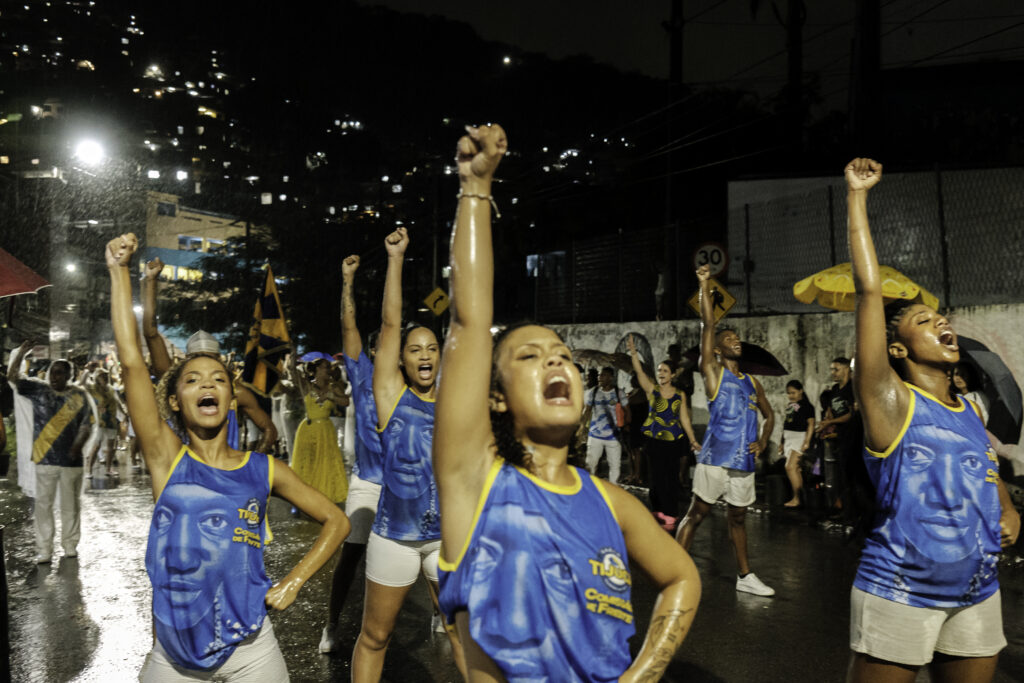
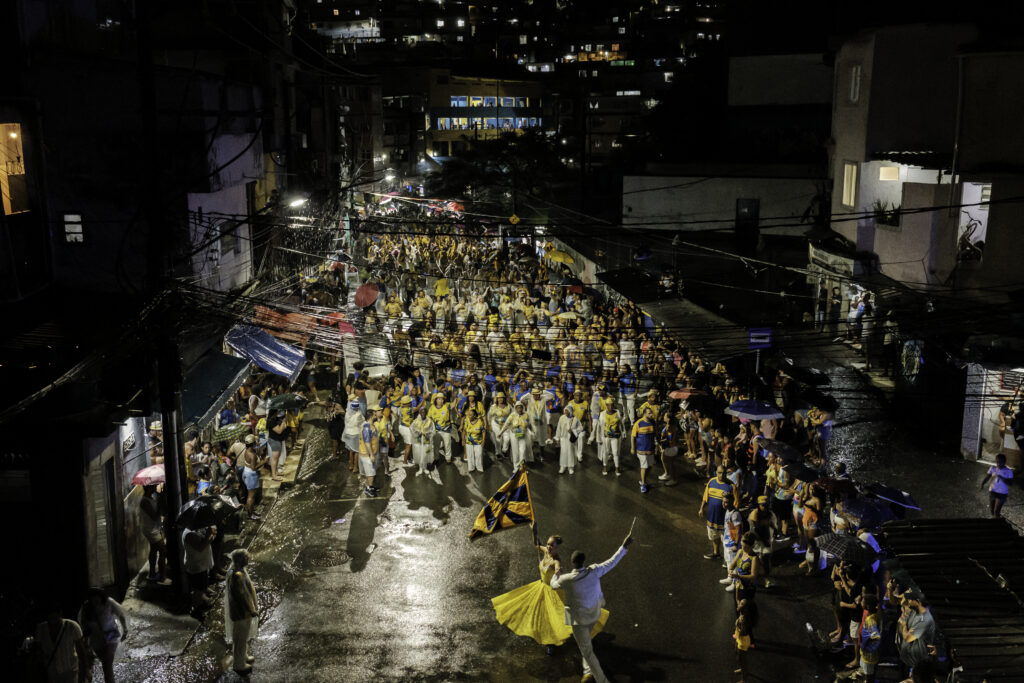
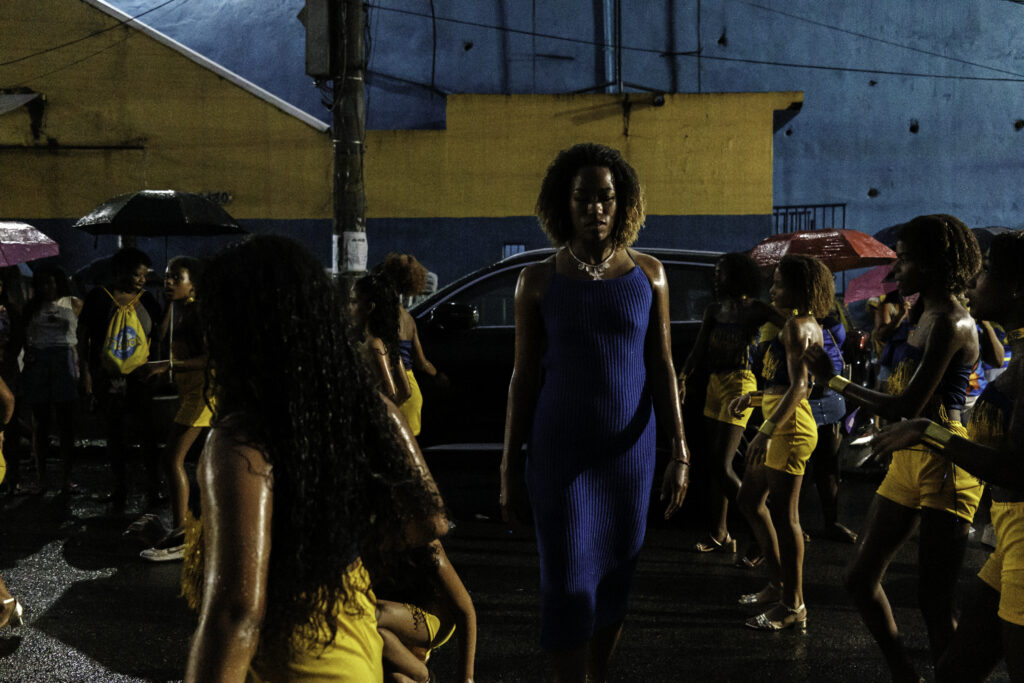
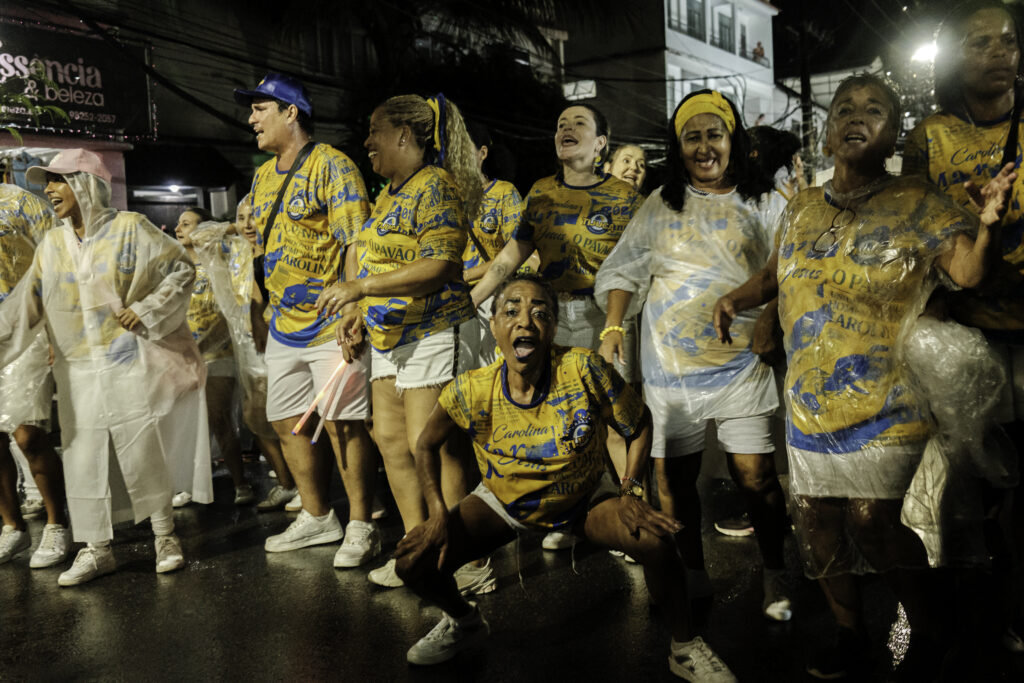
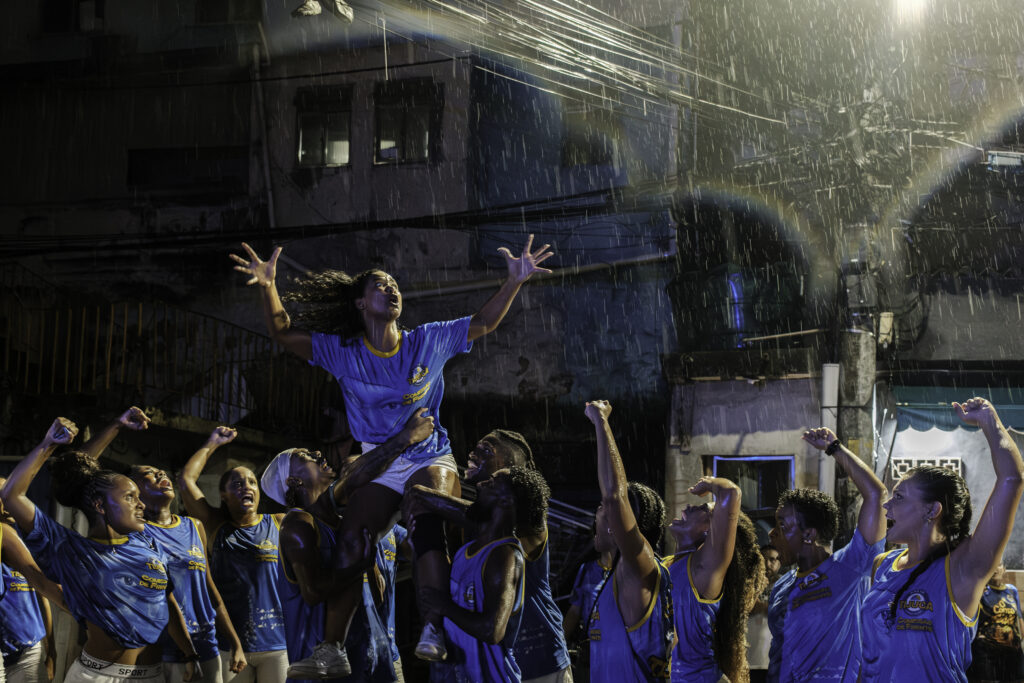
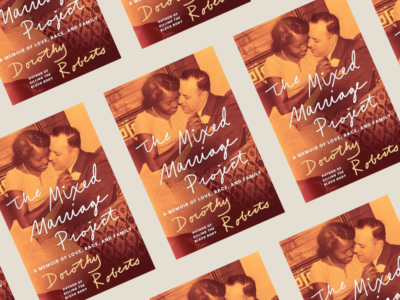


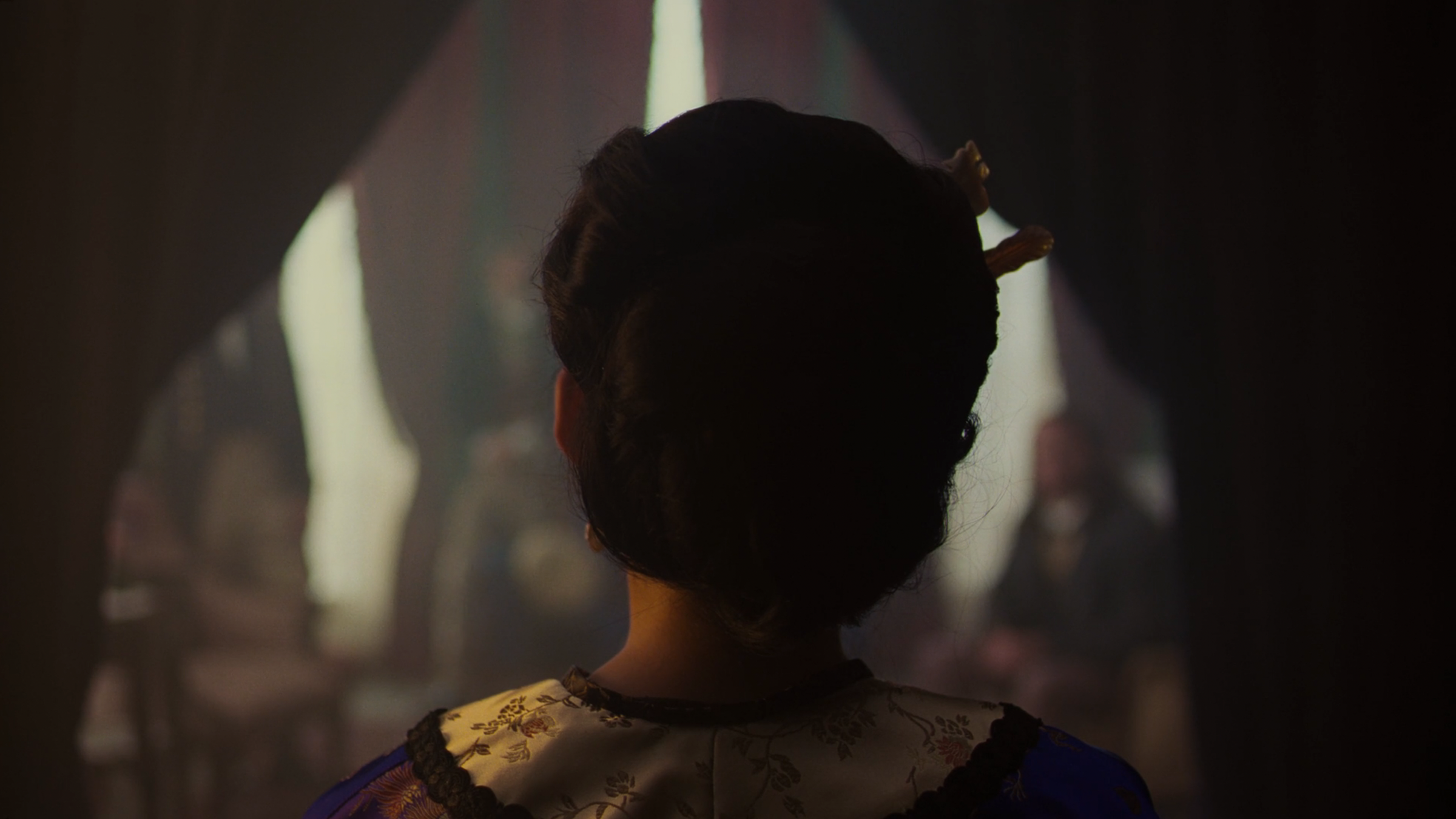
 Judy Batalion[/caption]
Batalion grew up in Montreal’s tight-knit Jewish community “composed largely of Holocaust survivor families”—including her own grandmother, who escaped German-occupied Warsaw and fled eastward to the Soviet Union. Most of her grandmother’s family was subsequently murdered. As Batalion recalls, “She’d relay this dreadful story to me every single afternoon as she babysat me after school, tears and fury in her eyes.” For Batalion, remembering the Holocaust was a daily event. She describes a childhood overshadowed by “an aura of victimization and fear.”
That proximity allowed Batalion to develop an intimate connection to events that had taken place decades earlier, thousands of miles away. But even for those without such a close connection, the impact (and import) of the Holocaust is inescapable. According to a 2020 Pew Survey, 76 percent of American Jews overall, across religious denominations and demographics, reported that “remembering the Holocaust” was essential to their Jewish identity. In stark contrast, just 45 percent overall said that “caring about Israel” was a critical pillar of their identity, with that percentage declining among the youngest age groups.
These numbers raise an urgent question: given its centrality to North American Jewish life, what exactly are we remembering when we remember the Holocaust? As Judy Batalion herself points out, the Holocaust was an important subject in both her formal and informal education. And yet, of the many women featured in Freuen in di Ghettos, she had only heard of one, the
Judy Batalion[/caption]
Batalion grew up in Montreal’s tight-knit Jewish community “composed largely of Holocaust survivor families”—including her own grandmother, who escaped German-occupied Warsaw and fled eastward to the Soviet Union. Most of her grandmother’s family was subsequently murdered. As Batalion recalls, “She’d relay this dreadful story to me every single afternoon as she babysat me after school, tears and fury in her eyes.” For Batalion, remembering the Holocaust was a daily event. She describes a childhood overshadowed by “an aura of victimization and fear.”
That proximity allowed Batalion to develop an intimate connection to events that had taken place decades earlier, thousands of miles away. But even for those without such a close connection, the impact (and import) of the Holocaust is inescapable. According to a 2020 Pew Survey, 76 percent of American Jews overall, across religious denominations and demographics, reported that “remembering the Holocaust” was essential to their Jewish identity. In stark contrast, just 45 percent overall said that “caring about Israel” was a critical pillar of their identity, with that percentage declining among the youngest age groups.
These numbers raise an urgent question: given its centrality to North American Jewish life, what exactly are we remembering when we remember the Holocaust? As Judy Batalion herself points out, the Holocaust was an important subject in both her formal and informal education. And yet, of the many women featured in Freuen in di Ghettos, she had only heard of one, the 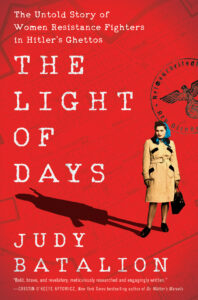 Drawing on memoir, witness testimony, interviews, and a variety of secondary sources, Batalion focuses on the stories of female “ghetto fighters.” These were activists and leaders who came up in the vibrant world of Poland’s pre-war Jewish youth movements, which represented a remarkable variety of political and religious affiliations. The young women of the socialist Zionist groups Dror (Freedom) and Hashomer Hatzair (Young Guard) feature prominently, but religious Zionists, Bundists (Jewish socialists), Communists, and young Jews representing various other cultural, political, and religious affiliations are there, too. Before the war, these groups taught leadership skills: how to make plans and follow through. When the war began, pre-existing leadership structures and a network of locations all over Poland allowed members to find one another and to immediately make plans for mutual aid and resistance. When these young fighters lost their family members, movement comrades were there to support and care for one another as another type of family.
Only a small percentage of Jewish women took part in armed resistance and combat. Most of them were
Drawing on memoir, witness testimony, interviews, and a variety of secondary sources, Batalion focuses on the stories of female “ghetto fighters.” These were activists and leaders who came up in the vibrant world of Poland’s pre-war Jewish youth movements, which represented a remarkable variety of political and religious affiliations. The young women of the socialist Zionist groups Dror (Freedom) and Hashomer Hatzair (Young Guard) feature prominently, but religious Zionists, Bundists (Jewish socialists), Communists, and young Jews representing various other cultural, political, and religious affiliations are there, too. Before the war, these groups taught leadership skills: how to make plans and follow through. When the war began, pre-existing leadership structures and a network of locations all over Poland allowed members to find one another and to immediately make plans for mutual aid and resistance. When these young fighters lost their family members, movement comrades were there to support and care for one another as another type of family.
Only a small percentage of Jewish women took part in armed resistance and combat. Most of them were 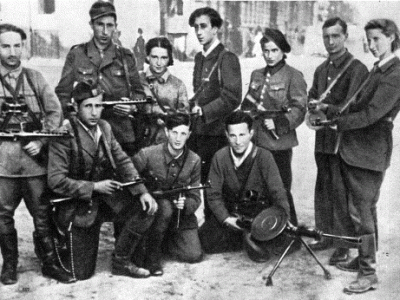
 Nancy Mitford[/caption]
Linda abandons her first husband: that is Diana, who left her own husband to marry Sir Oswald Mosley, the leader of Britain’s tiny smudge of fascists. She falls in love with a communist: Jessica. Then a Frenchman: Nancy. She is superficially kind: Deborah.
Linda is that mercurial thing: charming. Charm is the ability to seduce people against their better instincts. She is a feather in the wind. Such people do not take responsibility. They do not have to. The Pursuit of Love is essentially redemptive: for the Mitfords and for the aristocracy. It is the founding document of the Mitford cult—without it, there would be no cult—and it is self-serving. They only pursued love, after all—who doesn’t? In response, I can only purse my lips and say: Nazis?
The truth of their fascism—Diana was Mosley’s lover and helpmeet and Unity stalked and worshipped Hitler—is more repulsive than mere viewers of The Pursuit of Love can know. There is, for instance, no scene in the novel or TV adaptation in which Unity, living in Germany, boasts that her home is a flat belonging to Jews. Which Jews, and where are they now? (It would have made a better novel than Linda shtupping a boring Communist, but Nancy was writing absolution, and the family appreciated it. On reading it, Lord Redesdale wept with happiness.)
There are many examples. “Everyone should know I am a Jew hater,” wrote Unity to the Nazi newspaper Der Stürmer, in case mere speech was not loud enough. As late as the 1980s, Diana was blaming global Jewry for the Holocaust. If they had stepped in and saved German Jews from the consequences of their own evil—by resettling them, she suggests—it might not have happened. Consider the 1938 Evian Conference, at which the assembled representatives of 32 countries expressed their regrets at being unable to provide refuge for the Jews of Germany and Austria. Apparently she missed it.
There is a tendency to present the Mitfords as Nancy did: as eccentric and therefore unthreatening aristocrats whose attachment to murderous tyranny in life was no more significant than their clothing, their manners, or their speech. They were young and they succumbed to the jackboot: that is, the line. (Unlucky, that’s all. Poor Lady Redesdale.) It is convenient—it defends the wider aristocracy from accusations of racism, of hating democracy—and it is unjust. That Unity failed to kill herself when war broke out—she lived for nine years with a bullet in her skull—does not forgive the bullets she wished on others, if they were Jews. She was once found in the garden of a friend, practising shooting for the day she could legally kill Jews. (She was a terrible shot. When she shot herself, she missed.) In England, she is only remembered as a bit odd.
[caption id="attachment_2771" align="aligncenter" width="677"]
Nancy Mitford[/caption]
Linda abandons her first husband: that is Diana, who left her own husband to marry Sir Oswald Mosley, the leader of Britain’s tiny smudge of fascists. She falls in love with a communist: Jessica. Then a Frenchman: Nancy. She is superficially kind: Deborah.
Linda is that mercurial thing: charming. Charm is the ability to seduce people against their better instincts. She is a feather in the wind. Such people do not take responsibility. They do not have to. The Pursuit of Love is essentially redemptive: for the Mitfords and for the aristocracy. It is the founding document of the Mitford cult—without it, there would be no cult—and it is self-serving. They only pursued love, after all—who doesn’t? In response, I can only purse my lips and say: Nazis?
The truth of their fascism—Diana was Mosley’s lover and helpmeet and Unity stalked and worshipped Hitler—is more repulsive than mere viewers of The Pursuit of Love can know. There is, for instance, no scene in the novel or TV adaptation in which Unity, living in Germany, boasts that her home is a flat belonging to Jews. Which Jews, and where are they now? (It would have made a better novel than Linda shtupping a boring Communist, but Nancy was writing absolution, and the family appreciated it. On reading it, Lord Redesdale wept with happiness.)
There are many examples. “Everyone should know I am a Jew hater,” wrote Unity to the Nazi newspaper Der Stürmer, in case mere speech was not loud enough. As late as the 1980s, Diana was blaming global Jewry for the Holocaust. If they had stepped in and saved German Jews from the consequences of their own evil—by resettling them, she suggests—it might not have happened. Consider the 1938 Evian Conference, at which the assembled representatives of 32 countries expressed their regrets at being unable to provide refuge for the Jews of Germany and Austria. Apparently she missed it.
There is a tendency to present the Mitfords as Nancy did: as eccentric and therefore unthreatening aristocrats whose attachment to murderous tyranny in life was no more significant than their clothing, their manners, or their speech. They were young and they succumbed to the jackboot: that is, the line. (Unlucky, that’s all. Poor Lady Redesdale.) It is convenient—it defends the wider aristocracy from accusations of racism, of hating democracy—and it is unjust. That Unity failed to kill herself when war broke out—she lived for nine years with a bullet in her skull—does not forgive the bullets she wished on others, if they were Jews. She was once found in the garden of a friend, practising shooting for the day she could legally kill Jews. (She was a terrible shot. When she shot herself, she missed.) In England, she is only remembered as a bit odd.
[caption id="attachment_2771" align="aligncenter" width="677"] The Mitford Family in 1928.[/caption]
I think that, in retrospect, their vernacular absolved them. It makes them sound unserious; gossip columnists near tyrants, and amateurs at that. For this I blame Noël Coward and Enid Blyton. We are so used to hearing the cadence and idioms of English as it was spoken in the light comedies and children’s stories of the 1930s, that it is easy to laugh at Diana’s defence of
The Mitford Family in 1928.[/caption]
I think that, in retrospect, their vernacular absolved them. It makes them sound unserious; gossip columnists near tyrants, and amateurs at that. For this I blame Noël Coward and Enid Blyton. We are so used to hearing the cadence and idioms of English as it was spoken in the light comedies and children’s stories of the 1930s, that it is easy to laugh at Diana’s defence of  Diana Mitford, later Lady Mosley.[/caption]
Diana does not write about her physical passion for Oswald Mosley, but it is made obvious by what she gave up for it. She left a rich, loving husband—Bryan Guinness— to be Mosley’s mistress, only marrying him after his wife died (of peritonitis or heartbreak, depending on who is telling). Diana not only ruined her reputation for Oswald; she was also interned for three years as a fascist sympathizer during the Second World War. She could never admit to need (six siblings and stubbornness prohibit it) and was never short of words—she posed quite successfully as a pseudo-intellectual, mostly on the basis of possessing books—but on her passion for Mosley she only said: “He was completely sure of himself and of his ideas.” Conviction was not something her father, Lord Redesdale, who raged and squandered his fortune, ever had.
Redesdale was self-hating. His older brother Clement was killed in the First World War, and he was the remnants: a disappointing younger brother in competition with a ghost. In response he destroyed the great fortune that shamed him, which is now a few cottages, a pub, and a snack bar. (He was also likely a manic depressive. But if aristocrats had family therapy the history of Great Britain would be a different tale.) So that was that: Diana settled into Mosley’s iron fist like a pretty bird. She called him “The Leader"; by the end she was almost the only follower. Having read almost everything about Diana, I wonder if her fascism was both convenient and retrospective. Because the best and worst thing I can say about Diana Mosley is that she isn’t a convincing fascist. She was trivial and flinty; she was skin deep. She said in old age, “I don’t mind in the least what people’s politics are.”
Her family say she never changed her views: Were these, then, her views? I believe it because she was no intellectual—we are back to Hitler’s dietary imperatives and beautiful hands—and, after she was imprisoned with Mosley during the war for national security, how could she perform a retreat, admit a wrong? Diana destroyed herself for lust, and so trapped herself. It is a fair fate for someone so visual.
Unity (middle name Valkyrie), who was conceived in a small town in northern Ontario called Swastika—which still exists—is more horrifying. She went to Munich in 1932 to stalk Hitler. She hung round at Nazi party offices and lurked in his favourite restaurant—the Osteria Bavaria—with the confidence of the British aristocrat with golden hair. He considered her a lucky charm—she was related to Winston Churchill by marriage—but it consumed her. You know how stupid some people sound on Twitter? Unity wrote like that on paper. “It was all so thrilling,” she writes of one encounter with Adolf, “I can still hardly believe it. When he went, he gave me a special salute all to myself.” She would stand on street corners to “waggle a flag” at him.
It was not abnormal for women to react to him like that. One
Diana Mitford, later Lady Mosley.[/caption]
Diana does not write about her physical passion for Oswald Mosley, but it is made obvious by what she gave up for it. She left a rich, loving husband—Bryan Guinness— to be Mosley’s mistress, only marrying him after his wife died (of peritonitis or heartbreak, depending on who is telling). Diana not only ruined her reputation for Oswald; she was also interned for three years as a fascist sympathizer during the Second World War. She could never admit to need (six siblings and stubbornness prohibit it) and was never short of words—she posed quite successfully as a pseudo-intellectual, mostly on the basis of possessing books—but on her passion for Mosley she only said: “He was completely sure of himself and of his ideas.” Conviction was not something her father, Lord Redesdale, who raged and squandered his fortune, ever had.
Redesdale was self-hating. His older brother Clement was killed in the First World War, and he was the remnants: a disappointing younger brother in competition with a ghost. In response he destroyed the great fortune that shamed him, which is now a few cottages, a pub, and a snack bar. (He was also likely a manic depressive. But if aristocrats had family therapy the history of Great Britain would be a different tale.) So that was that: Diana settled into Mosley’s iron fist like a pretty bird. She called him “The Leader"; by the end she was almost the only follower. Having read almost everything about Diana, I wonder if her fascism was both convenient and retrospective. Because the best and worst thing I can say about Diana Mosley is that she isn’t a convincing fascist. She was trivial and flinty; she was skin deep. She said in old age, “I don’t mind in the least what people’s politics are.”
Her family say she never changed her views: Were these, then, her views? I believe it because she was no intellectual—we are back to Hitler’s dietary imperatives and beautiful hands—and, after she was imprisoned with Mosley during the war for national security, how could she perform a retreat, admit a wrong? Diana destroyed herself for lust, and so trapped herself. It is a fair fate for someone so visual.
Unity (middle name Valkyrie), who was conceived in a small town in northern Ontario called Swastika—which still exists—is more horrifying. She went to Munich in 1932 to stalk Hitler. She hung round at Nazi party offices and lurked in his favourite restaurant—the Osteria Bavaria—with the confidence of the British aristocrat with golden hair. He considered her a lucky charm—she was related to Winston Churchill by marriage—but it consumed her. You know how stupid some people sound on Twitter? Unity wrote like that on paper. “It was all so thrilling,” she writes of one encounter with Adolf, “I can still hardly believe it. When he went, he gave me a special salute all to myself.” She would stand on street corners to “waggle a flag” at him.
It was not abnormal for women to react to him like that. One  Unity Mitford in 1938, wearing a swastika pin.[/caption]
One
Unity Mitford in 1938, wearing a swastika pin.[/caption]
One 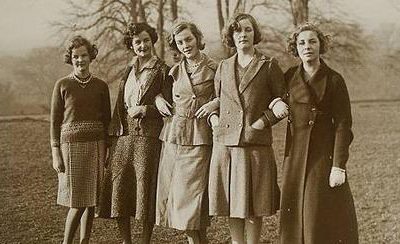
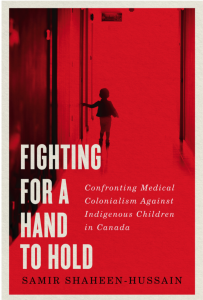 Working as a pediatric emergency physician, Dr. Shaheen-Hussain saw the cruel consequences of the non-accompaniment practice first-hand in 2017, when he treated two young patients who were undergoing stressful medical procedures without their loved ones by their side. Quebec pediatricians had been demanding the end of this heartless practice for decades, but successive governments refused to change the policy, making Quebec an outlier in Canada. When a citizen confronted him about the matter at a public event in 2018 , Quebec’s then-Health Minister, Gaétan Barrette,
 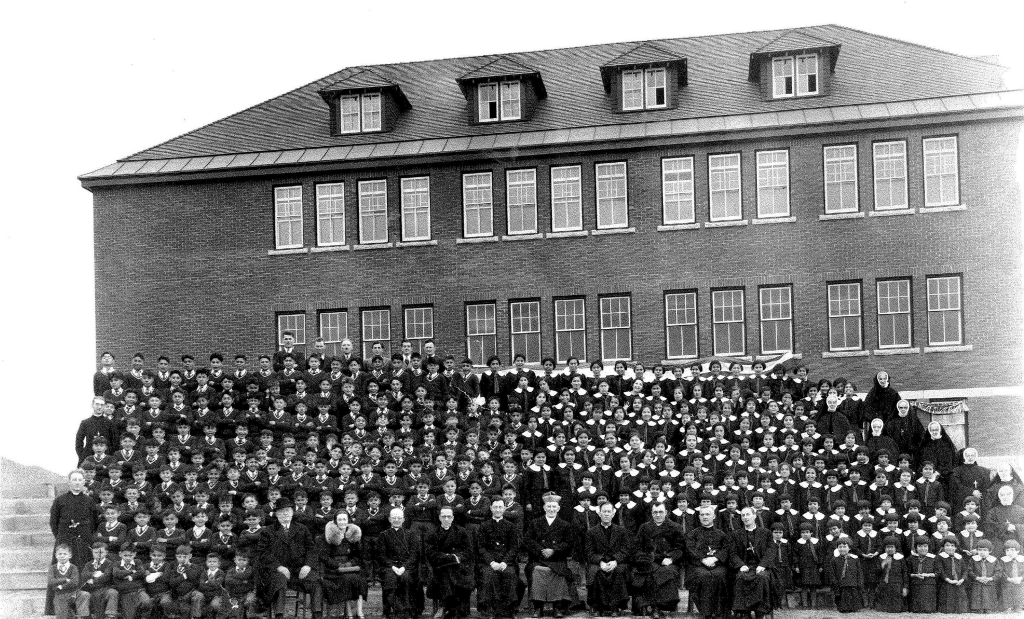 Kamloops Indian Residential School in 1937.[/caption]
In addition, highly unethical
Kamloops Indian Residential School in 1937.[/caption]
In addition, highly unethical 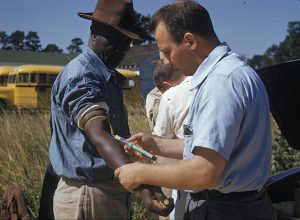 A Black man is tested during the Tuskegee Study of Untreated Syphilis in the Negro Male.[/caption]
The
A Black man is tested during the Tuskegee Study of Untreated Syphilis in the Negro Male.[/caption]
The 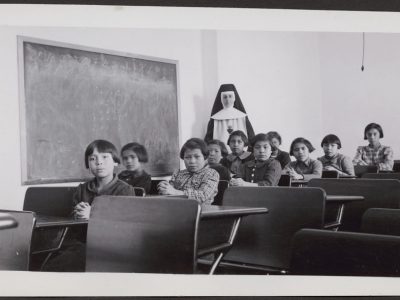
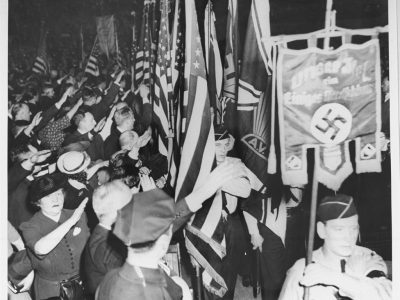
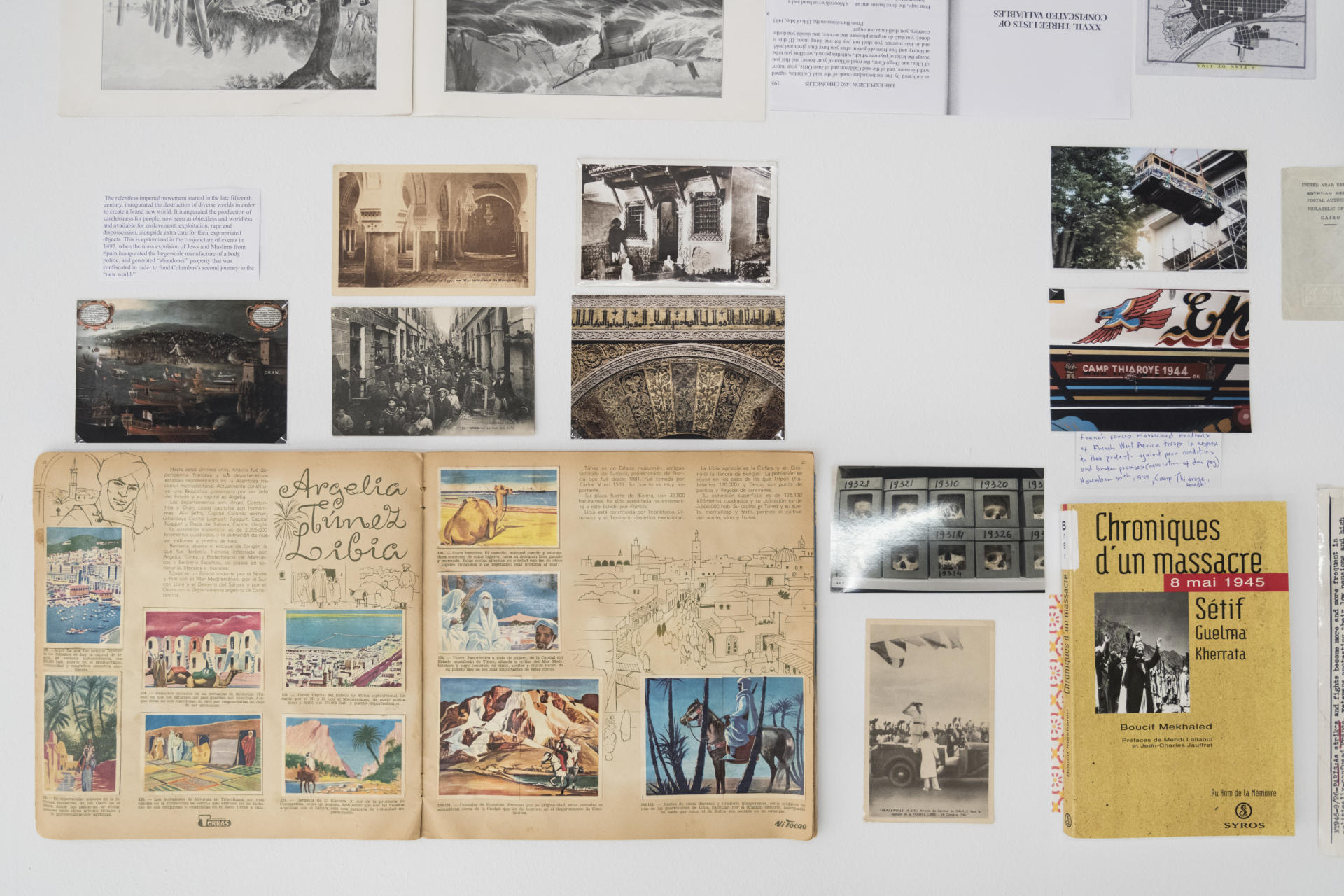 From Ariella Aïsha Azoulay's exhibition "Errata" at the Fundació Antoni Tàpies in Barcelona.[/caption]
Azoulay posits that the use of this violent photographic shutter stretches back to 1492, a moment of imperial Spanish colonization of the Americas, the start of the international global slave trade to make this possible and the obliteration of Judeo-Muslim culture through Inquisition decrees. This history also includes the devastation of the Caribbean’s indigenous Taíno people’s politics and culture in 1514; the ruination of the nonfeudal cocitizenship system of the Igabo people in West Africa; the 1872 Crémiuex decree that gave French citizenship to Jewish Algerians but withheld it from Muslims, a divide-and-conquer strategy with ramifications that are felt to this day; and the ongoing ravaging of Palestinian politics and culture since the early 1900s. In this connected schema of colonial destruction and erasure paired with institutionalization and documentation, the concept of history is premised on the ideas of discovery and progress. Each colonial regime “discovered” new artworks and exhibited them in new museums; they documented dispossessed people with the new label of “refugees” and imposed new cultural practices and political institutions premised on the undoing of previous indigenous norms and knowledge.
Potential history is positioned as a means of addressing these historical damages by imaginatively reactivating the memories and potentialities shut off by the imperialist photograph and its material positioning. Azoulay describes “rehearsal methods” for how we can question and begin to undo these structures. One strategy is the act of revising imperial photos through annotation, including notes, comments and modified captions that challenge the histories they describe. When these interventions are rejected by the archives that own the legal rights to the photos, Azoulay redraws the photographs herself.
Another rehearsal method is the idea of striking, found in short chapters that imagine museum workers, photographers and historians going on strike. The idea of striking until our world is repaired means saying no to the relentless new of history. It does not aim to substitute an alternative history or fill museums with new objects, but rather to reject their logic and promote its active unlearning. Azoulay underlines these and other rehearsals as modes of practicing new forms of co-citizenry and solidarity based on critical looking. “Unlearning imperialism,” she writes, “means aspiring to be there for and with others targeted by imperial violence, in such a way that nothing about the operation of the shutter can ever again appear neutral.”
“Being there” is a moment of radical solidarity in which one aspires to listen to those affected by such violence and question the flow of history that imperial institutions strive to promote as casual and natural. This includes recognizing the role of looted objects and their role in building imperial ideas, but also reclaiming them as means to enact other modes of being, such as thinking of them not as protected “art” but as part of people’s real material worlds.
Azoulay also listens to new melodies that arise from such sites of imperial documentation. She recounts the story of her own Algerian father moving to Israel as a child and trying to forget his native Arabic—because in Israel, the European elite actively condemned its use and promoted Hebrew. She first learned that her grandmother’s name was the Arabic Aïsha, the name of the Prophet Mohamed’s third wife, when she saw her father’s birth certificate after he died. Plucked from this imperial document, the name was a “treasure” in her Hebrew-speaking, Jewish-Israeli family; she sought to use it as a site of imagination by adopting it as her own—in addition to her Hebrew name, Ariella. Azoulay speaks of Aïsha as a haunting scream: Aïsha, Aïsha, Aïeeeeeeee-shaaaaaaaa.
Azoulay further demonstrates photographs and documents as dual sites of violence and resistance with images taken by the Civil War photographer Timothy O’Sullivan in 1862. One of his iconic images shows eight Black people standing stiffly near a large house persistently labeled as the “J.J. Smith Plantation.” These words make it clear that the people in the photograph are racialized property. She describes how this violence is repeated in historical archives, in which photographs of Black people taken before and after the Civil War are interchangeably captioned as depicting slaves; she proposes the imagining of a “dismissed exposure,” or ghostly negative of a forgotten image reinserted into the frame. The original image becomes blurred and surreal as it competes with sculptures from the MoMA floating in the background. Since there are no images on display in U.S. museums of Black Americans reunited with objects stolen from them, the dismissed exposure serves as an imaginative placeholder in the photographic archive. It waits for different worlds and meanings.
Potential history dwells in such creative exercises. It resists simplistic ideas of financial restitution for destroyed cultures or the mere substitution of one history for another. Instead, it advocates persistent unlearning of how the world is taught, represented and constructed; solidarity in resisting these demands; listening to those affected; and, above all, imagining. Azoulay’s book is a long (over 670 pages) and challenging read. It brings up the question of who has the resources to read it; while its ideas are currently being filtered through museum exhibitions such as the traveling , the question remains as to how this work can reach a wider and more diverse audience. If you do manage to find a copy, perhaps try following one of the more whimsical moments of the book: dip in as you please, conceiving of no beginning or end, but rather of moments that shine in “a bright, brief and sudden light” against the “dazzling” beam of imperialism.
After all of the “kings” had been “beheaded” at the intergalactic memorial carnival in Berlin, we passed around a hat, on which was written things we wanted to cherish and save. “It’s more about the spirit of hope than destruction,” laughed a person in a wooden demon mask.
[post_title] => 'Potential Histories: Unlearning Imperialism': a review of Ariella Azoulay's new book
[post_excerpt] => How the "shutter" of photography aided imperial conquest.
[post_status] => publish
[comment_status] => closed
[ping_status] => open
[post_password] =>
[post_name] => potential-histories-unlearning-imperialism-a-review-of-ariella-azoulays-new-book
[to_ping] =>
[pinged] =>
[post_modified] => 2024-08-28 21:15:13
[post_modified_gmt] => 2024-08-28 21:15:13
[post_content_filtered] =>
[post_parent] => 0
[guid] => http://conversationalist.org/?p=2213
[menu_order] => 234
[post_type] => post
[post_mime_type] =>
[comment_count] => 0
[filter] => raw
)
From Ariella Aïsha Azoulay's exhibition "Errata" at the Fundació Antoni Tàpies in Barcelona.[/caption]
Azoulay posits that the use of this violent photographic shutter stretches back to 1492, a moment of imperial Spanish colonization of the Americas, the start of the international global slave trade to make this possible and the obliteration of Judeo-Muslim culture through Inquisition decrees. This history also includes the devastation of the Caribbean’s indigenous Taíno people’s politics and culture in 1514; the ruination of the nonfeudal cocitizenship system of the Igabo people in West Africa; the 1872 Crémiuex decree that gave French citizenship to Jewish Algerians but withheld it from Muslims, a divide-and-conquer strategy with ramifications that are felt to this day; and the ongoing ravaging of Palestinian politics and culture since the early 1900s. In this connected schema of colonial destruction and erasure paired with institutionalization and documentation, the concept of history is premised on the ideas of discovery and progress. Each colonial regime “discovered” new artworks and exhibited them in new museums; they documented dispossessed people with the new label of “refugees” and imposed new cultural practices and political institutions premised on the undoing of previous indigenous norms and knowledge.
Potential history is positioned as a means of addressing these historical damages by imaginatively reactivating the memories and potentialities shut off by the imperialist photograph and its material positioning. Azoulay describes “rehearsal methods” for how we can question and begin to undo these structures. One strategy is the act of revising imperial photos through annotation, including notes, comments and modified captions that challenge the histories they describe. When these interventions are rejected by the archives that own the legal rights to the photos, Azoulay redraws the photographs herself.
Another rehearsal method is the idea of striking, found in short chapters that imagine museum workers, photographers and historians going on strike. The idea of striking until our world is repaired means saying no to the relentless new of history. It does not aim to substitute an alternative history or fill museums with new objects, but rather to reject their logic and promote its active unlearning. Azoulay underlines these and other rehearsals as modes of practicing new forms of co-citizenry and solidarity based on critical looking. “Unlearning imperialism,” she writes, “means aspiring to be there for and with others targeted by imperial violence, in such a way that nothing about the operation of the shutter can ever again appear neutral.”
“Being there” is a moment of radical solidarity in which one aspires to listen to those affected by such violence and question the flow of history that imperial institutions strive to promote as casual and natural. This includes recognizing the role of looted objects and their role in building imperial ideas, but also reclaiming them as means to enact other modes of being, such as thinking of them not as protected “art” but as part of people’s real material worlds.
Azoulay also listens to new melodies that arise from such sites of imperial documentation. She recounts the story of her own Algerian father moving to Israel as a child and trying to forget his native Arabic—because in Israel, the European elite actively condemned its use and promoted Hebrew. She first learned that her grandmother’s name was the Arabic Aïsha, the name of the Prophet Mohamed’s third wife, when she saw her father’s birth certificate after he died. Plucked from this imperial document, the name was a “treasure” in her Hebrew-speaking, Jewish-Israeli family; she sought to use it as a site of imagination by adopting it as her own—in addition to her Hebrew name, Ariella. Azoulay speaks of Aïsha as a haunting scream: Aïsha, Aïsha, Aïeeeeeeee-shaaaaaaaa.
Azoulay further demonstrates photographs and documents as dual sites of violence and resistance with images taken by the Civil War photographer Timothy O’Sullivan in 1862. One of his iconic images shows eight Black people standing stiffly near a large house persistently labeled as the “J.J. Smith Plantation.” These words make it clear that the people in the photograph are racialized property. She describes how this violence is repeated in historical archives, in which photographs of Black people taken before and after the Civil War are interchangeably captioned as depicting slaves; she proposes the imagining of a “dismissed exposure,” or ghostly negative of a forgotten image reinserted into the frame. The original image becomes blurred and surreal as it competes with sculptures from the MoMA floating in the background. Since there are no images on display in U.S. museums of Black Americans reunited with objects stolen from them, the dismissed exposure serves as an imaginative placeholder in the photographic archive. It waits for different worlds and meanings.
Potential history dwells in such creative exercises. It resists simplistic ideas of financial restitution for destroyed cultures or the mere substitution of one history for another. Instead, it advocates persistent unlearning of how the world is taught, represented and constructed; solidarity in resisting these demands; listening to those affected; and, above all, imagining. Azoulay’s book is a long (over 670 pages) and challenging read. It brings up the question of who has the resources to read it; while its ideas are currently being filtered through museum exhibitions such as the traveling , the question remains as to how this work can reach a wider and more diverse audience. If you do manage to find a copy, perhaps try following one of the more whimsical moments of the book: dip in as you please, conceiving of no beginning or end, but rather of moments that shine in “a bright, brief and sudden light” against the “dazzling” beam of imperialism.
After all of the “kings” had been “beheaded” at the intergalactic memorial carnival in Berlin, we passed around a hat, on which was written things we wanted to cherish and save. “It’s more about the spirit of hope than destruction,” laughed a person in a wooden demon mask.
[post_title] => 'Potential Histories: Unlearning Imperialism': a review of Ariella Azoulay's new book
[post_excerpt] => How the "shutter" of photography aided imperial conquest.
[post_status] => publish
[comment_status] => closed
[ping_status] => open
[post_password] =>
[post_name] => potential-histories-unlearning-imperialism-a-review-of-ariella-azoulays-new-book
[to_ping] =>
[pinged] =>
[post_modified] => 2024-08-28 21:15:13
[post_modified_gmt] => 2024-08-28 21:15:13
[post_content_filtered] =>
[post_parent] => 0
[guid] => http://conversationalist.org/?p=2213
[menu_order] => 234
[post_type] => post
[post_mime_type] =>
[comment_count] => 0
[filter] => raw
)

 Atmeh border camp in Idlib, near the Syrian border. Over 800,000 internally displaced people