WP_Post Object
(
    [ID] => 10768
    [post_author] => 15
    [post_date] => 2026-07-17 20:38:29
    [post_date_gmt] => 2026-07-17 20:38:29
    [post_content] => 

Györgyi Gálik on trust, agency, and the invisible work of peacebuilding.

What are the conditions that make democracy possible?  

This is the question that animates the work of Györgyi Gálik, the Hungarian co-founder of Governing Together at Dark Matter Labs, a non-profit research and design lab that builds alternative models for future economies. Unlike many democracy practitioners, Gálik is less interested in designing the next civic platform or participation process than she is in understanding the invisible conditions that ensure their success: trust, agency, kindness, dignity, psychological safety, and fostering relationships that allow people to govern together.

For Gálik, peacebuilding is not something that begins after violence, but rather the work of cultivating the social, relational, and institutional conditions that make violence less likely in the first place. In that sense, peacebuilding and democracy are not separate projects to her: They are expressions of the same underlying work. 

"Peace begins much earlier,” she tells me “It begins in the everyday conditions that help people feel seen, valued, connected, and capable of shaping the world around them. Peacebuilding is the slow, everyday work of creating the conditions where people can act, choose, disagree, repair, and shape the systems that govern their lives.”

“Peacebuilding is less about the absence of violence and more about the presence of agency," she continues. "That is also how I understand democracy."

Learning Democracy Through Loss

For Gálik, this understanding emerged from both political observation and personal experience.

Raised in Hungary and having lived across Europe and North America, she became fascinated by the ways political systems shape everyday life. But her deepest lessons came from watching how people lose meaning when they lose agency—something she witnessed in her own home. 

Throughout her life, Gálik’s father struggled with alcoholism, and died tragically at a time when addiction was treated primarily as a moral failing or personal weakness, rather than a consequence of trauma, disconnection, and unmet needs. What he lacked, she now believes, was not willpower alone, but community, dignity, empathy, meaning, and purpose.

Over time, she began to understand what happened to her father not simply as a family story, but also a political one: The same conditions that leave individuals vulnerable also leave democracies vulnerable. 

Citizens who are filled with resentment and hurt, and feel powerless, unseen, and unheard, become easier to manipulate. People stripped of purpose and dignity become susceptible to cynicism and authoritarian appeals. Far more alarming, this can happen without most even realizing it: It has always frightened Gálik how much people can normalize almost anything if the conditions are made gradually enough.

"The personal and the political were never really separate to begin with," she says.

When Democracy Exists Without Genuine Choice

Few people understand this dynamic more viscerally than Hungarians. 

Gálik points to recent investigations documenting how authoritarian governments can maintain the appearance of democracy while systematically narrowing citizens' choices in reality. Elections continue. Participation technically remains available. Yet fear, dependency, poverty, and intimidation hollow out any meaningful sense of agency.

This is something Hungarians have experienced firsthand. The former government stayed in power for 16 years, not simply by putting money in people’s pockets, but by deliberately maintaining widespread vulnerability with a disturbing level of precision. Threatening parents that their children could be taken away. Telling elderly people they could lose their place in care homes. Threatening families that their heating, gas, or electricity could be switched off, or that they’d lose their jobs. Letting criminals off in return for their votes.

What makes this system so chilling is how functionally, it narrows people’s choices without ever pushing them outside a system that depends on their votes and participation in order to maintain the illusion of a functioning democracy. 

"A society can have consultation, elections, surveys, town halls, and participation processes, and still not have genuine democratic choice," Gálik explains.

For her, democracy is not simply the presence of participation, but meaningful participation.

That distinction feels increasingly relevant far beyond Hungary. Across many democracies, citizens are invited to participate while struggling with economic insecurity, housing crises, burnout, and declining trust in institutions. Formal participation remains, but if people cannot afford to lose their job, speak up, move home, access care, or have the capacity to imagine a different future, then democracy becomes procedural rather than real. 

Democracy's Invisible Infrastructure

One of the most striking ideas in Gálik's work is her belief that, like any seed, democratic ideals need the rich microbiome that sustains healthy, regenerative soil to grow.

In politics, we tend to focus on what is visible: elections, policies, public meetings, constitutions, and institutions. But just as a plant depends on an unseen ecosystem of microorganisms to survive, healthy democracies depend on countless invisible interactions and flows of exchange. Integrity. Curiosity. Reciprocity. The ability to repair harm. The willingness to work across differences.

Without these, both on an individual and societal level, democratic institutions may continue to function on paper while becoming increasingly brittle in practice.

As a result of New Public Management, society’s dominant doctrine since the 1980s, and our broader desire to control complexity, most governments have invested heavily in measurable outputs and performance targets. Yet many technocratic reforms designed to improve efficiency and enable growth have unintentionally weakened the relationships that allow societies to function. Gálik argues that we have become experts at producing outputs, visions, and strategies while neglecting the human infrastructure that turns those outputs into meaningful outcomes for people and communities. A city can produce an award-winning climate strategy and meet every reporting requirement, yet still struggle to deliver meaningful change when departments are siloed, staff lack the capacity to collaborate across mandates, public trust is low, and political leaders are unable to sustain collective action over time.  

"We are meeting the targets," one of Gálik’s colleagues observes, "but missing the point."

The Gendered Labor of Holding Society Together

The consequences of this invisible infrastructure are not distributed equally. Much of the work required to maintain relationships, build trust, manage conflict, and hold communities together is often performed by women, yet they remain largely unseen, undervalued, and uncompensated. 

Like many women working in politics, public institutions, and social change, Gálik is familiar with the invisible labor required simply to be heard.

Having lived in seven different countries, she has encountered remarkably similar patterns. Many women learn very early that they need to be significantly overprepared to be taken equally seriously. They watch as strategic contributions go unnoticed. They learn to manage their tone, language, appearance, and demeanor to navigate institutions that were rarely designed with them in mind. They learn to present as smart enough, but never too smart.

The endless examples of code-switching she’s collected from women around the world are both humorous and sobering: wearing glasses to appear more serious, wearing a ring to signal they have a husband and are therefore to be taken seriously, bringing brothers as stand-ins to unlock credibility during negotiations. 

But Gálik also sees an unexpected strength in these experiences.

Women, she argues, often become experts at reading power because they have spent their lives navigating it. They know how to build trust, maintain connection during conflict, and hold complexity without collapsing into domination. 

These are not secondary skills. They are precisely what modern democracies so desperately need.

Gálik has never accepted a passive role in public life. Nor has she believed that the capacity to initiate change should be reserved for those who occupy positions of formal authority. Her advice to women facing authoritarianism is practical and urgent: find each other, protect each other, document what is happening, and refuse isolation. Throughout history, women have created new forms of communication when official channels become dangerous—from underground publishing networks to other mediums of resistance (including quilts, sewing circles, and silent public gatherings). That creativity and resourcefulness remain one of democracy's most enduring resources.

Trust as Democratic Infrastructure

Throughout our conversation, Gálik repeatedly returns to one word: trust.

Not trust as a feeling, nor as a given. But trust as infrastructure, and daily practice.

Roads do not emerge spontaneously. Neither do water systems, bridges, or electrical grids. They must be built, maintained, repaired, and protected. Trust requires the same kind of investment.

When trust collapses, participation becomes performative. Citizens may still show up, but they no longer believe their contributions matter. Democracy continues as a procedure while losing its legitimacy as a shared project.

The question should not be whether citizens trust institutions. The question is whether institutions behave in trustworthy ways. Do they listen? Repair harm? Share power? Tell the truth? Follow through?

These are governance questions, Gálik argues. But they are also peacebuilding questions.

The Work Ahead

Just weeks before our conversation, Hungarian voters ended their sixteen years of increasingly authoritarian rule. Yet Gálik cautions against viewing electoral victories as endpoints. Removing an authoritarian leader is only the beginning. The deeper challenge is rebuilding trust, institutions, civic confidence, and the everyday habits of democratic life among a population long treated as invisible and disposable. 

The other challenge is dealing with the rightful resentment these governments leave behind. How might we see possibility in the widespread anger that results from an oppressive regime? Anger is a healthy and necessary response to injustice. It can be one of the most powerful motivating forces for change. The problem is what happens to anger when it has nowhere to go, when it is met with indifference, with the expectation to just move on, with contempt, or with further exclusion. There, it hardens into something more destructive.

As Gálik puts it, “The answer is not to suppress anger or to fear it. The question is whether we can create places where it can be transformed into agency, participation, and collective action. Democracies do not heal by asking people to suppress or forget what happened to them. They heal when people experience that their voices matter again.”

As our conversation ends, Gálik returns to the same idea that has guided her work from the beginning. She hopes that in ten years, Governing Together will have helped to build a serious field of practice around the relational foundations of democracy—one that nurtures both individual and societal wellbeing. 

Democracy is not solely defended in court or in government halls. Peacebuilding doesn’t only happen after conflict. Both depend on whether people still believe they have agency in shaping a better future together—and whether they feel their lives carry meaning and purpose within it. Democracy, then, must be something we practice every day in our workplaces, neighborhoods, families, institutions, and communities. These everyday acts are the nutrients of democratic life. They sustain the social microbiome—the living ecosystem of relationships from which trust, cooperation, collective agency, and the belief that change is possible can grow.

It is a deceptively simple idea. And perhaps one of the most radical democratic arguments of our time.

[post_title] => The Soil Beneath Democracy [post_excerpt] => Györgyi Gálik on trust, agency, and the invisible work of peacebuilding. [post_status] => publish [comment_status] => closed [ping_status] => closed [post_password] => [post_name] => gyorgyi-galik-governing-together-dark-matter-labs-hungary-democracy-peacebuilding-global-peacebuilders [to_ping] => [pinged] => [post_modified] => 2026-08-03 20:28:56 [post_modified_gmt] => 2026-08-03 20:28:56 [post_content_filtered] => [post_parent] => 0 [guid] => https://conversationalist.org/?p=10768 [menu_order] => 0 [post_type] => post [post_mime_type] => [comment_count] => 0 [filter] => raw )

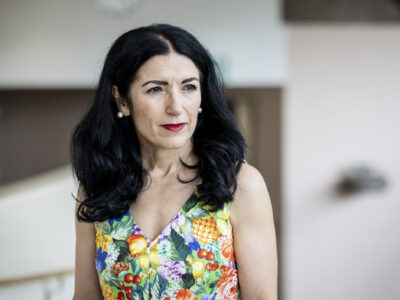
A photo of Györgyi Gálik on a blue grid background.

The Soil Beneath Democracy

WP_Post Object
(
    [ID] => 10558
    [post_author] => 15
    [post_date] => 2026-05-15 19:59:48
    [post_date_gmt] => 2026-05-15 19:59:48
    [post_content] => 

Why intersex activists are fighting for constitutional protections in Ghana.

To get ahead of the odds against them—an unsympathetic media, a punitive legislature influenced by the American Christian right, and a public uninformed about biological diversity—the intersex movement in Ghana has had to get crafty. 

In January 2025, the Ghanaian government announced a new constitutional review process, instituted by President John Mahama shortly after he was sworn in. Its main aims were to “propose reforms to enhance transparency, limit executive power, strengthen checks and balances, and improve judicial and local government structures."

In it, however, the intersex movement saw an opportunity: All of Ghana’s constitution could be reviewed. This included Article 17, which states that all are equal before the law and no one is to be discriminated against on the basis of race, place of origin, political opinions, color, gender, occupation, religion, or creed. If the movement could propose a review of Article 17, they reasoned, perhaps they could amend it to explicitly include that no one could be discriminated against based on their sex characteristics, or if they are of indeterminate gender (intersex). 

It seemed like a solid plan. 

After several strategy meetings, legal review, and input from constitutional law experts, however, the leaders of the movement realized it would not be so straightforward. Article 17 represented an “entrenched position," meaning a long-held view that was unlikely to change. As such, not only would it be difficult to convince the public of the importance of including intersex people for protection under the constitution, socially; legally, it would also require a referendum to pass.

The intersex movement already had only a few allies among the political class, and based on their findings, they also knew a majority of the public did not understand the concept of indeterminate gender—that someone may be born male with female sex organs, for instance, and should not be discriminated against for something out of their control. Making matters worse, the media also regularly conflated sexuality with gender in bad faith: A slate of investigations by friendly NGOs had revealed some major media organizations had even received funding from anti-LGBTQIA+ rights groups. 

They changed tack. 

Instead, the movement decided to seek an intervention through Article 28, which provides for the protection of children’s rights. They proposed that the provision be updated to explicitly ensure the recognition and protection of intersex children, who, in Ghana, are currently subjected to “corrective” and “forced” surgeries and medical procedures, according to firsthand accounts reported to Intersex Ghana, the country’s first intersex-led human rights organization. 

Specifically, the group hoped to protect intersex children from “medically unnecessary, nonconsensual and irreversible procedures, intended to alter their sex characteristics.” These speculative procedures—sanctioned by doctors and parents without due consideration for the well-being of the child—can have lifelong physical, psychological, and even economic consequences, impairing the child’s ability to make a living in the future, says Lawrence Shone Edem Adjei, director of Intersex Ghana, over a video call. 

"At age 14, I have undergone more than six surgeries after non-consensual procedures were performed on me at birth. I feel like the doctors used me for studies,” intersex advocate Emmanuella Kwarteng shared in one testimonial. 

Kwarteng’s experience is not an uncommon one, and Intersex Ghana has had to intervene in a number of medical cases gone awry. In one particular case, Adjei recounts that a child had gone through up to eight surgeries over a span of ten years. Initially, their testes were removed, and the child was identified as female. Years later, doctors realized their initial procedure had caused the child to begin bleeding internally during menstruation. An additional surgery then had to be performed to remove the child’s womb. 

“It's like just trial and error," Adjei says. 

To make the case for intersex children in front of the constitutional review committee, and to prevent this from happening again, the intersex movement put together a murderer’s row of accomplices. Alongside activists like Adjei, this included two doctors, three lawyers, a High Court judge, and families with intersex children who could share their lived experiences. 

It was a particularly precarious time: The intersex rights movement was working with significantly fewer resources than it had ever had. Intersex Ghana and other NGOs had been depleted by the U.S.-led funding cuts to pro-LGBTQIA+ rights advocacy groups all over the world, and philanthropic support had dried up. 

The movement was throwing everything it had left at this case. Before the constitutional review committee, it had a few propositions. First, that the Ghanaian government provides an additional gender “I” (or intersex) on its Birth and Death registry upon discovery at birth that a child is not identified with one gender. Second, that the Ghanaian government outlaws and criminalizes forced surgeries to deter doctors from performing them, regardless of the demands of the child’s parents. Controversially, by Adjei’s own admission, “We are not in favor of the parents serving consent.” Instead, the movement proposed that the intersex individual be allowed to develop naturally. When the child is of age, they can then make an informed decision on their own bodies. 

The advocates made their case to the constitutional review panel, drawing precedent from a case in Kenya. In the 2014 case, Baby A v Attorney General, an intersex child was denied a birth certificate because their sex had been marked with a question mark, effectively barring them from participating in civic life. The court, hedging, declined to admit a human rights violation, but still ordered the state to issue the birth certificate and begin the slow work of collecting data, developing medical guidelines, and contemplating a legal framework for intersex people. As a result of the case, the Kenyan government is now mandated to collect data on intersex individuals, and consider legal reforms and protections for them more broadly. 

This landmark court case eventually resulted in an Intersex Persons Bill in 2024 which, among other things, guaranteed the “prohibition of harmful medical practices” against intersex people—including children. 

The advocates argued that Ghana should follow Kenya’s example and recognize intersex people as a distinct legal entity, allow for intersex markers in civil documentation, include intersex persons in national census and data gathering, and establish a national commission for intersex individuals. They further argued that the condition of being “intersex” is not in conflict with Ghanaian cultural values by demonstrating support from religious and traditional leaders.

After months of deliberation, which included hearing from anti-intersex and anti-LGBTQ+ groups opposed to the proposed changes, Ghana’s constitutional review committee reached a decision. They recommended to the government that the constitution be amended to “provide for the right of every child to bodily integrity, including freedom from irreversible, non-consensual medical or surgical interventions that are not strictly necessary to preserve life or prevent serious and immediate harm; that the best interests of the child shall override social, cosmetic, cultural or expediency-based justifications for invasive medical procedures; for protection for intersex children, recognising their distinctive vulnerability to medically unnecessary ‘normalising’ interventions carried out before informed consent is possible.” 

The movement was thrilled.

Their excitement, however, was short-lived. Soon after the committee submitted its recommendations, anti-intersex rhetoric started appearing in the press. On a national news show, Ghanaian legislator Nana Agyei Baffour Awuah called the proposed protections the “most crucial” part of the constitutional review, claiming the changes would “transform our constitution”—but not for the better. 

“We know that these things can be the entrance of LGBTQ,” Awuah said, repeating a common trope widespread in the media that conflates sexuality with gender.  “You want to sneak this into the constitution!” 

Awuah was not accusing anyone in particular with his statement, but turned to fellow guest Oliver Barker-Vormawor, an activist and lawyer involved in the constitutional deliberations. In response, Barker-Vormawor defended the committee’s recommendations. 

“We're saying that these are medical decisions that must be made, not parents using cultural basis to demand for surgeries to be imposed on children,” Barker-Vormawor said, reiterating their intentions. 

In reality, the intersex movement in Ghana has gone to great lengths to distance itself from the LGBTQ+ movement as a safety and security strategy. It is also one of the biggest criticisms the movement faces from its potential allies. When an anti-LGBTQ+ bill was first introduced in Ghana in July 2021, intersex advocates campaigned tirelessly for the removal of intersex persons from the law, which included recommendations for surgery and hormonal treatments to “correct” them. Later that year, Intersex Ghana sent a memo to the Ghanaian legislature’s Committee on Parliamentary Affairs, asking for the bill to be thrown out in its entirety. But overall, the movement continues to tread the line between distinction and solidarity with its LGBTQ+ allies as best it can. 

Still, some argue the two movements are ultimately inseparable because of their intersections: There are people who are intersex and trans; or intersex and gay. 

“The movement has become too medicalized,” intersex and trans activist Awo Dufie Fofie says. 

Dufie, assigned male at birth, later discovered she was intersex in her 20s, and initially went great lengths to reverse the growth of breast tissue in her body. At some point, she was taking fifteen pills a day. Upon meeting a queer elder—who had also been born a hypereffeminate male, but had socially transitioned to female in the 1950s—Awo stopped blocking estrogen in her body and instead let her body develop as it would without pharmaceutical intervention. 

The intersex movement often has to make its case through visual aids of intersex bodies, Dufie argues, and as such, she believes it has created “a system that becomes a bit puritan about who can rightfully call themselves intersex and who is intersex enough to represent the community.” When Awo decided to transition, she was even advised by a fellow advocate that if she made it public, it would make the intersex movement “look bad."

"It is my sincere hope that intersex advocacy…adopts a much more decolonial framework and approach which embodies and centers the entire experiences of intersex people, such as their everyday lives,” she says. “Not only what medical conditions we have and how much intersexphobia we experience.”

Adjei acknowledges the catch-22 the intersex movement finds itself in, and understands why it believes it has to advocate for itself by providing distinctions between sexuality and gender. But she also believes it must also be in solidarity with the queer movement because of their overlap and intersections—including continued discrimination. “Ghanaians will not differentiate between an intersex person walking by and an LGBT person,” Adjei says. An effeminate but masculine-presenting intersex person is just as likely to be attacked—as has happened in many cases across the country—as a gay man expressing himself in a way that might be considered feminine. 

“I was not seen as human growing up… because I had two genitalia,” Comfort Bugre, an intersex person, shared in a testimonial presented to the review committee. 

“Growing up, I was isolated from people due to my intersex condition. I was relocated because people found out and started calling me names,” Elorm Enne, another intersex advocate, shared in a separate testimonial. 

Currently, the hard-won constitutional review recommendation is in the implementation stage, and the Presidency has set up a committee to see how proposals may be effected. 

The intersex movement is counting on seeing three things: First, large scale research on intersex people across the country, both to shed light on the quantitative heft of these protections, and to better understand the prevalence and diversity of intersexuality. Second, mass sensitization and public education across the country’s 16 regions on the harms of corrective child surgeries, in partnership with key institutions such as the Human Rights Commission and the National Commission for Civic Education. And perhaps most importantly, the legitimacy of intersex as its own gender, and protection for all intersex people in the country. 

The movement is tempering ambition with pragmatism. Advocates are also preparing for an outcome where the recommendation is struck down, or isn’t implemented, either in whole or in part. But if this comes to pass, the movement—with whatever funding it has left—plans to play its trump card. There are a number of government agencies and offices that should be involved in protecting intersex children: medical boards, the Attorney General’s office, the Ministry of Health, local government administrations. 

It plans to sue all of them. 

~

Additional Research by Nyameye Kiki Akumia.

[post_title] => "I Was Not Seen as Human Growing Up" [post_excerpt] => Why intersex activists are fighting for constitutional protections in Ghana. [post_status] => publish [comment_status] => closed [ping_status] => closed [post_password] => [post_name] => intersex-ghana-constitution-protection-lgbtqia-childrens-rights [to_ping] => [pinged] => [post_modified] => 2026-05-15 20:00:07 [post_modified_gmt] => 2026-05-15 20:00:07 [post_content_filtered] => [post_parent] => 0 [guid] => https://conversationalist.org/?p=10558 [menu_order] => 0 [post_type] => post [post_mime_type] => [comment_count] => 0 [filter] => raw )

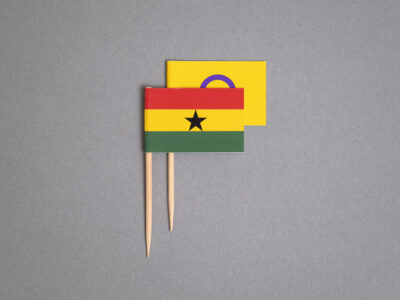
A photo illustration by Ricardo Tomás of Ghana's flag on a toothpick. It is covering the intersex flag (also on a toothpick), starting to rise behind it.

“I Was Not Seen as Human Growing Up”

WP_Post Object
(
    [ID] => 10477
    [post_author] => 15
    [post_date] => 2026-05-06 20:18:14
    [post_date_gmt] => 2026-05-06 20:18:14
    [post_content] => 

Nerima Wako Ojiwa on technology, youth-led democracy, and organizing at the speed of crisis.

Peacebuilding does not always unfold slowly.

Sometimes, it happens in moments of crisis—when institutions fail, when violence is imminent, and when the only thing standing between disappearance and survival is collective action.

This is where Nerima Wako Ojiwa enters the story.

As the founder and executive director of Siasa Place, one of Kenya’s most influential youth-led political organizations, Nerima represents a proactive and vital expression of feminist peacebuilding: fast, adaptive, deeply networked, and rooted in solidarity, showing how democracy must often be defended in real time.

From Distance to Determination

Nerima’s political awakening began far from home. In 2012, while interning in Washington, D.C. with Search for Common Ground, she watched conflict escalate in East Africa and felt the weight of distance—geographic and political.

“I felt removed,” she says. “And that made me question not just what was happening there, but what was happening at home in Kenya.”

When she returned, she noticed a gap between activism and politics that led to systemic change. Youth organizations existed, but few were willing to engage in or with politics directly, whether governance, policy, or power. Online spaces for serious political debate were rare.

So, she decided to help create one.

Siasa Place—siasa meaning “politics” in Swahili—was designed as an explicitly political, youth-centered, digital-first space. Its purpose was simple and radical: to give young people room to deliberate about their future, to organize collectively, and to reclaim politics as somewhere they belong.

Feminist Leadership in a Hostile Arena

Leading this kind of space as a young woman in Kenya came with immediate costs. Nerima was in her early twenties at the time—petite, outspoken, and operating in a deeply male-dominated political environment. She encountered disbelief, harassment, and persistent assumptions that a man must be behind her work.

“There has to be a godfather,” people said. Or a rich uncle. Or a political patron.

But Nerima was doing everything herself.

For years, she ran Siasa Place without funding, navigating precarity while building credibility. She also learned—like many women before her—how to protect herself, adapting her behavior to avoid advances from men in ways that reshaped her leadership and hardened her resolve.

Perhaps the most telling moment, however, came later, when Nerima was debating running for office herself—and a male colleague told her she should not run for a women’s political seat because she’d transcended gender entirely. (Kenya has constitutional female quotas in parliament, mandating that no more than two-thirds of members in elective or appointive bodies can be of the same gender. However, the country has struggled to meet this quota, with women holding about 23% of parliamentary seats as of 2022.)

It was meant as praise. It revealed the cost of legitimacy.

Organizing as Peacebuilding

Unlike many leaders trained through formal mentorship, Nerima learned to organize through crisis.

The most recent example still reverberates. In May 2025, activists Boniface Mwangi of Kenya and Agather Atuhaire of Uganda were abducted in Tanzania after showing solidarity with an opposition leader. Nerima helped coordinate a rapid-response network across borders—using encrypted messaging, social media amplification, and collective pressure.

Four days later, both were released.

“They couldn’t kill us because people were making too much noise online,” Agather later told her.

This experience underscored Nerima’s belief that if you are not involved in politics, if there is no good governance, you're not going to be able to have a good—or safe—life. “And that's what we translate in all of our Siasa Place forums,” she says. “This is why you should be engaged, because everything is a political decision.” 

Technology, Deliberation, and Power

At Siasa Place, technology is not treated as a single solution but as a menu of tools, deployed intentionally at different moments:

  • TikTok to raise awareness and funds.
  • Messaging platforms to coordinate action.
  • Deliberative technologies like Polis and Remesh to shape policy outcomes.

What Nerima values most about these tools is their refusal of hierarchy. Influence cannot be bought or performed, and participants must think for themselves. 

For a generation shaped by influencers and algorithmic culture, this kind of engagement carries real weight—and it works. One striking example: Youth participation through Siasa Place pressured the Kenyan government into withdrawing a proposal that would have cut funding for youth programming entirely. The outcome showed that when young people organize and speak collectively, they can shift policy directly.

Nerima sees her work as bridging the gap between mobilization and meaningful political participation. "We are channeling our people to understand how policy works," she explains, "and why inclusive involvement matters for the betterment of the majority—rather than allowing purely selfish actors to dominate these spaces." She also points to progress on more fundamental challenges, like making information accessible so that people can engage without feeling locked out of the process.

Mutual Aid as Feminist Democracy

Perhaps the most powerful shift Nerima describes is cultural. Kenyan youth—many disillusioned by the state—have begun to act as one another’s safety net. They have raised millions to bail out protesters, cover medical bills, and support families in crisis.

This is not issue-based activism. It is solidarity as infrastructure.

And it is being led, overwhelmingly, by young women.

Refusing Erasure

Before we end our conversation, Nerima raises a final concern—one that echoes across feminist history.

“These movements are being led by women,” she says. “And women get erased.”

Technology, she believes, gives us a chance to interrupt that pattern—to document leadership, to create an archive of memory as it happens, to leave digital footprints that future generations can trace. For Nerima, this preservation is through Siasa Place. But each of us is capable of participating in it—because the act of recording is itself a form of peacebuilding, as is the full spectrum of feminist democratic work today: patient and urgent, institutional and insurgent, grounded in care and driven by courage.

The first step is simply to choose to take part.

[post_title] => We Will Be Our Own Safety Net [post_excerpt] => Nerima Wako Ojiwa on technology, youth-led democracy, and organizing at the speed of crisis. [post_status] => publish [comment_status] => closed [ping_status] => closed [post_password] => [post_name] => nerima-wako-ojiwa-siasa-place-kenya-youth-democracy-movement-technology-politics-global-women-peacebuilders [to_ping] => [pinged] => [post_modified] => 2026-08-03 20:48:56 [post_modified_gmt] => 2026-08-03 20:48:56 [post_content_filtered] => [post_parent] => 0 [guid] => https://conversationalist.org/?p=10477 [menu_order] => 0 [post_type] => post [post_mime_type] => [comment_count] => 0 [filter] => raw )
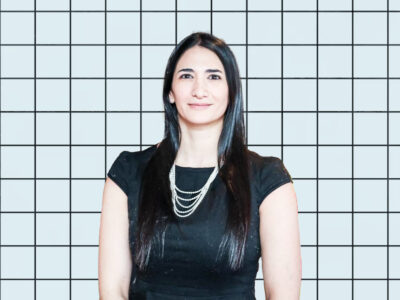
A portrait of Nerima Wako Ojiwa on a light blue grid background.

We Will Be Our Own Safety Net

WP_Post Object
(
    [ID] => 10457
    [post_author] => 15
    [post_date] => 2026-04-22 17:24:08
    [post_date_gmt] => 2026-04-22 17:24:08
    [post_content] => 

Diana Dajer on community, technology, and the radical work of democratic care.


In a world increasingly shaped by political violence, authoritarian reflexes, and digital harm, peacebuilding can feel abstract—or impossibly distant. But for Diana Dajer, peace is neither theoretical nor inevitable. It is something that must be built carefully, collectively, and often quietly, through democratic practice.

Currently, Dajer is manager of citizen participation with Fundación Corona, a non-profit based in Colombia. We met in Barcelona after Build Peace, an international gathering of practitioners working at the intersection of technology, conflict transformation, and civic life. Among many compelling presentations, Dajer’s stood out—not because it promised technological salvation, but because it insisted on something more demanding: deliberation, care, and faith in people.

From Conflict to Participation

Dajer’s path into democracy work began not with innovation labs or civic tech, but with the social disruption caused by violence and loss. As a lawyer, Dajer worked on human rights cases for victims of Colombia’s armed conflict early in her career. Later, she joined the Ministry of the Interior during peace negotiations with the FARC (Revolutionary Armed Forces of Colombia) guerrilla movement. 

While there, she listened closely—to victims, civil society leaders, and government officials. What became clear was unsettling. Violence in Colombia was not only the result of armed actors, but of long-standing democratic exclusion. When local communities lacked meaningful ways to influence policy or solve local problems, violence became one of the few remaining channels for human agency—the capacity to shape their own lives.

“That’s when I understood,” Dajer says, “that participation is the real name of peace in Colombia.”

Rather than focus solely on peace after violence, she turned toward democracy itself: how it is built, who it includes, and how power is shared.

Technology for Care, Not Control

Years later, that commitment would take shape in Bogotá through a rare experiment: a multi-year effort to embed deliberative democratic processes inside city government. Working with the City Council and civil society partners, Dajer helped create a “laboratory of democracy” to test new ways of engaging citizens—especially in a political culture where protest had become the dominant form of participation.

“Protest is essential,” she says. “But when there is no dialogue with institutions, real solutions don’t happen.”

Bogotá’s leaders made a strategic choice to move incrementally. Rather than treating technology as a standalone tool for deliberation, they used it to solve specific process challenges in order to make participation more open, inclusive, and effective. Drawing on behavioral insights to encourage constructive engagement, the team launched a public communications campaign across social media. City Hall’s chatbot, Chatico, helped scale participatory budgeting and created a more transparent, inclusive channel for the civic lottery process. The city also relied on practical, digital tools, which included building websites to support hybrid citizen assemblies and bring in voices beyond those physically in the room. An educational course delivered through WhatsApp prepared participants in advance.

These early pilots evolved into a citywide deliberative process backed by Carlos Galán, a leader shaped by Colombia’s history of political violence. The aim was never speed or one-off spectacle, but trust—built gradually through structured listening and collective reasoning. 

In Dajer’s work, technology is never the starting point. It is a tool, carefully chosen, subordinate to context. Used strategically, it can help narrow the distance between governing institutions and citizens, opening new possibilities while respecting its limits. But she emphasizes it should never be the destination. 

This ethic traces back to her mentors in the global peacebuilding community, who taught her to ask first: What problem are we trying to solve? And just as importantly: Should technology be part of the solution at all?

Leading as a Woman—with Awareness and Solidarity

Leadership, for Dajer, has always been gendered. “It is more challenging than being a man,” she says without hesitation. Like many women in public life, she learned early to manage others’ perceptions—how she dressed, how she spoke, how authority was read onto her body.

But she is also careful to name her privilege: Gender does not operate alone. Race, class, indigeneity, and access compound exclusion in ways that shape who is heard and who is erased. Conscious of this, Dajer sees her role not just as a leader, but as a bridge—using her position to elevate other women who face even steeper barriers.

What has sustained her is community: women working together across civil society, refusing isolation. Feminist leadership, she believes, is collective by design.

Faith as a Source of Strength

What is less often visible in conversations about democracy and technology—but central to Dajer’s life—is faith.

When asked where she draws strength and clarity, she speaks not of ambition or certainty, but of prayer. One prayer, in particular, guides her: Make me an instrument of your peace.

“I don’t always know where I’ll be needed,” she says. “So I pray for openness. That I can serve—whether the work is big or small.”

Her faith is not about control or moral superiority. It is about humility, discernment, and love—qualities she sees as essential antidotes to polarization. In moments of exhaustion or fear, prayer is a way for her to realign with purpose, especially as she balances leadership with motherhood and family life.

Resisting Authoritarianism with Love and Hope

Dajer is clear-eyed about the global moment. Colombia, the United States, and many other democracies are experiencing renewed threats to the rule of law and separation of powers. For women living through these pressures, she begins with solidarity.

“I see you,” she says. “I see the burden.”

Her advice is strikingly feminist: Resist not only through opposition, but through care. Much of her current work focuses on narrative—how language shapes emotion, and how perceived chaos blends with fear-based messaging to fuel authoritarianism. Facts alone, she notes, rarely counter hate. What does are stories rooted in hope, love, and a shared future.

This extends to digital life. She urges mindfulness about what we consume and amplify online, recognizing how social media can trap us in cycles of rage. The alternative is not withdrawal, but grounding—deep human connection, empathy, and collective action offline as well as on.

Youth, the Future, and Feminist Democracy

Despite everything, Dajer is hopeful, especially about young people. Her organization, Fundación Corona, has shifted its strategy toward youth engagement, informed by research showing that future-oriented democratic narratives can reawaken belief in collective power.

When democracy is framed not as a failing legacy but as a tool to shape the future, young people also respond. Deliberative spaces—especially when designed with care—can help further transform this hope into action.

Building Peace Together

If there is one message Dajer offers to feminists working for democracy, it is this: Do not do this alone. Authoritarianism thrives on fragmentation. Peace, by contrast, is built through collaboration—across differences, across sectors, and across borders.

Agreeing on fundamentals is hard, and deliberation is slow. But isolation changes nothing.

For Dajer, the work continues—not as performance, or branding, but as service. As manager of civic participation at Fundación Corona, she remains guided by faith, sustained by solidarity, and grounded in care. Her work and ethos is a necessary reminder that democracy is not only a system. It is a practice. And women are already doing the work of keeping it alive.

[post_title] => The Long Arc of Peace Is Built by Women [post_excerpt] => Diana Dajer on community, technology, and the radical work of democratic care. [post_status] => publish [comment_status] => closed [ping_status] => closed [post_password] => [post_name] => diana-dajer-global-women-peacebuilders-profile-fundacion-corona-colombia-democracy [to_ping] => [pinged] => [post_modified] => 2026-08-03 20:52:31 [post_modified_gmt] => 2026-08-03 20:52:31 [post_content_filtered] => [post_parent] => 0 [guid] => https://conversationalist.org/?p=10457 [menu_order] => 0 [post_type] => post [post_mime_type] => [comment_count] => 0 [filter] => raw )

Diana Dajer

The Long Arc of Peace Is Built by Women

WP_Post Object
(
    [ID] => 10165
    [post_author] => 15
    [post_date] => 2026-02-18 19:45:31
    [post_date_gmt] => 2026-02-18 19:45:31
    [post_content] => 

In an era of rising authoritarianism and billionaire autocrats, defenders of human rights cannot afford to retreat.

There's a moment in every struggle when retreat seems like the only rational option. When dictators grow bolder and democracies grow weaker; when the funding dries up and the threats are mounting.

For even the staunchest of human rights defenders, this is often the moment when the temptation to step back, to compromise, to "wait for better times" becomes almost irresistible. But it’s also the moment when it’s most crucial that we hold the line.  

The Illiberal Surge

The numbers tell a grim story. According to the 2025 Democracy Without Borders report, the proportion of the world’s population living in a liberal democracy is now the lowest it’s been in 50 years—less than 12% of people worldwide. In contrast, 72% of the population—equivalent to 5.8 billion people—live under autocratic rule. Even countries once considered democratic beacons are sliding backwards, their institutions hollowed out by leaders who exploit fear, weaponize division, and dismantle checks and balances with disturbing efficiency. Increasingly, even the United States—long regarded as a democratic anchor—is exhibiting patterns of autocratic drift, marked by the concentration of executive power, the erosion of institutional constraints, and the normalization of political coercion and violence.

Across every continent, we are witnessing an unprecedented assault on human rights, rule of law, and democratic norms. According to Freedom House, global freedom has declined for 19 consecutive years. In Russia, Vladimir Putin has transformed a nuclear superpower into a revisionist rogue state, waging wars of conquest under the banner of Russkii Mir (“the Russian World”)—an imperial doctrine that frames violence as civilizational reunification. In practice, this entails the imposition of totalitarian control over territory, society, and political life through authoritarian systems of governance abroad; and at home, the total, systematic elimination of political opposition. In Turkey, Recep Tayyip Erdoğan has hollowed out judicial independence and imprisoned tens of thousands to entrench personal rule. In China, Xi Jinping has constructed the most advanced surveillance state in human history, fusing cutting-edge technology with unapologetic repression. In Hungary, Viktor Orbán has perfected the model of so-called “illiberal democracy,” an oxymoron that now functions as a practical manual for aspiring autocrats.

Even in formerly Soviet Central Asia, where expectations were never high, the trajectory is alarming. Kyrgyzstan, once celebrated as the region's freest country, now jails journalists, suppresses protests, and coordinates with Russian security services to hunt down dissidents. Kazakhstan, despite its carefully cultivated image as a modernizing state and economic powerhouse, brutally crushes peaceful protests, including inviting Russian troops to massacre its own citizens—killing over 200 people in what the government euphemistically called "anti-terrorist operations" in January 2022. Uzbekistan continues to restrict civil liberties, while the EU prepares to reward it with enhanced trade deals; and Tajikistan and Turkmenistan remain totalitarian nightmares that don't even try to pretend otherwise.

The Billionaire Autocrat: Democracy's New Nemesis

Making this era particularly dangerous is not just the rise of traditional autocrats, but the emergence of a new breed: the billionaire strongman who wields wealth as a weapon and treats nations like personal subsidies.

These are not just politicians who happen to be rich, but oligarchs who view governance as an extension of their business empires, who treat public office as private property, and who recognize no distinction between state resources and personal assets. Unlike traditional dictators, who seize power through military coups or revolutionary movements, this modern autocrat often arrives through elections—then uses his power for self-enrichment and for dismantling democracy from within, ensuring he can remain in power indefinitely.

Look at Donald Trump’s return to the U.S. presidency, backed by the world’s richest man, Elon Musk, who has used his ownership of X (formerly Twitter) to amplify destructive and hateful narratives and undermine democratic discourse while on his path to becoming the world’s first trillionaire. Look at the tech billionaires who increasingly view themselves as above the law and accountable to no one, while wielding unprecedented influence over information flows and public opinion. Intoxicated by this unchecked power, some have gone further—intervening in the domestic politics of other countries, amplifying or aligning with extremist and openly fascist movements, and actively threatening democratic processes far beyond their own borders. This concentration of power is not accidental: It is built on decades of privileged access to public resources, publicly funded research, state subsidies, regulatory forbearance, and the extraction of value from user-generated data and public infrastructure.

This marriage of authoritarian governance and extreme wealth has created a feedback loop of power consolidation, where wealth buys political influence, and political influence protects and expands wealth—a cycle that continues until the very concept of public interest becomes quaint and obsolete.

These billionaire autocrats also work in tandem, threatening human rights both in their home countries and abroad: They fund each other's regimes, help evade sanctions, provide safe havens for each other's stolen assets, and create international networks of corruption that transcend borders.

The result is a global ecosystem of kleptocracy where the rules apply to ordinary people but never to the powerful. When a Kyrgyz president is overthrown for corruption, he flees to Belarus or Russia. When Russian oligarchs need to launder money, they find willing accomplices in London, Dubai, and New York. This is not limited to traditionally authoritarian states, either. Under Donald Trump, the United States also recently adopted a recognizably autocratic maneuver: Shortly after kidnapping President Nicolás Maduro, proceeds from the sale of Venezuelan oil—reportedly totaling $500 million—were routed into multiple offshore accounts, the largest held in Qatar.

The Funding Crisis

The cruel irony is that, as threats of global authoritarianism continue to multiply, the resources to defend against them are evaporating.

The organizations that document war crimes, defend political prisoners, expose corruption, and provide legal aid to vulnerable populations are being forced to cut staff, close offices, and scale back operations. Small grassroots groups—often the most effective, because they're closest to the communities they serve—are disappearing entirely.

Human rights organizations across the world are facing unprecedented funding cuts. Governments that once supported civil society are redirecting resources to "national priorities"—often code for building walls and buying weapons. Private foundations are "pivoting" to other issues. International donors are suffering from "democracy fatigue," as if defending basic rights were a trend rather than a fundamental imperative.

Why We Cannot Retreat

In the face of these challenges, some have argued for strategic retreat. "Wait for the political climate to improve," they say. "Focus on less controversial issues." "Don't antagonize powerful governments." "Be realistic about what's achievable."

This advice is seductive precisely because of its supposed practicality. But it's also wrong.

History teaches us that authoritarianism, once given space to breathe, metastasizes. Dictators interpret hesitation as weakness and compromise as surrender. When human rights defenders go quiet, they don't buy time—they lose ground.

The window for resistance doesn't widen with patience; it narrows with delay.

Every time we soften our demands for accountability, every time we accept "reforms" that are purely cosmetic, every time we prioritize short-term economic interests over long-term democratic values, we hand authoritarians another victory. Consider the trajectory of Russia. In the 1990s and early 2000s, Western governments believed they could moderate Putin through engagement and economic ties. But each concession, each instance of looking the other way, each prioritization of "stability" over justice only emboldened Putin further. By the time the West decided to take a firm stance, Russia had already become the authoritarian menace it is today—and Ukraine is still paying the price for it in blood.

It is imperative, then, that we do not repeat our predecessors’ mistakes: Where they ceded ground, we must now hold the line.

What Holding the Line Means

Holding the line doesn't mean mindless stubbornness, or a refusal to adapt. Instead, it means refusing to compromise on core principles, regardless of the circumstances—a collective effort that requires each of us.

It means human rights organizations should continue documenting abuses even when governments threaten their staff. It means journalists investigating corruption even when they risk imprisonment or death. It means activists organizing protests, even when they’re banned and participants are beaten.

Holding the line means attaching real, enforceable human rights conditions to every cooperation agreement, trade deal, and aid package. It means wealthy democracies cannot allow their financial systems to become laundromats for dictators' stolen wealth. It means tech companies cannot provide surveillance tools to authoritarian regimes. It means universities cannot accept money from kleptocrats seeking to buy respectability. It means investigating and sanctioning corruption, regardless of whose feelings it hurts.

It also means confronting the uncomfortable truth that extreme wealth concentration must be dismantled. A world where a handful of billionaires wield more power than elected governments is inherently incompatible with democracy and human rights. When individuals accumulate resources equivalent to national budgets, they become unaccountable centers of power that can manipulate democracies, fund authoritarian movements, and evade any meaningful oversight.

To truly hold the line, then, we also need wealth taxes that prevent the emergence of quasi-monarchical fortunes. We need to abandon the fiction that billionaires are somehow more enlightened, more competent, or more deserving of power than democratically elected officials. We need corporate governance reforms that prevent oligarchs from treating companies as personal fiefdoms. We need to close the legal loopholes that allow the ultra-wealthy to operate in regulatory twilight zones.

We need to hold not just one line, but all the smaller lines that make up the whole.

The Cost of Retreat

And if we don't?

In the 1930s, democracies chose appeasement over confrontation, economic interests over moral clarity. They told themselves that engaging with fascist regimes would moderate them, that war could be avoided through compromise—and millions died because of it.

Today's authoritarians are learning the same lesson their predecessors did: Democracies will tolerate almost anything if you frame it as "stability" or "economic necessity." And they've adjusted their behavior accordingly—becoming bolder, more brutal, and more brazen in their contempt for human rights and international law.

If we retreat now, the next generation won't just face an "illiberal surge"—they'll face an illiberal world order where authoritarianism is the norm, the powerful answer to no one, and human rights are quaint historical curiosities.

Hope Is a Discipline

Make no mistake: Holding the line is exhausting. The victories are small and the setbacks are devastating. There will be moments when continuing seems impossible, when the challenges we face feel insurmountable.

But hope is not about believing everything will work out. Hope is the discipline of continuing the fight even when the odds are terrible. Hope is understanding that the line we hold today creates and protects the space where tomorrow's resistance will grow. And sometimes, against all odds, that resistance succeeds.

We’ve seen it in our lifetimes: the fall of the Berlin Wall, the collapse of the USSR, the end of apartheid, the Arab Spring’s brief flowering, the popular uprisings across Latin America and Central Asia, Ukraine’s Revolution of Dignity. These weren't inevitable—they happened because people refused to accept authoritarianism as permanent.

They happened because people held the line until the moment came to advance.

A Call to Action

To human rights defenders everywhere: When funding disappears, innovate. When governments threaten you, document everything. When allies waiver, remind them what's at stake.

To democratic governments and international institutions: Stop the charade of believing trade will transform autocrats. Attach real conditions to every agreement. Support civil society unreservedly. Sanction corruption aggressively. And recognize that your credibility depends not on what you say but what you do when authoritarians call your bluff.

To citizens of global democracies: Recognize that your freedoms are not guaranteed. They exist because previous generations fought for them and current defenders maintain them. Support human rights organizations. Find your people. Build coalitions. Hold your governments accountable when they prioritize profits over principles. And understand that authoritarianism will eventually come for you if it is allowed to flourish unchecked.

To journalists: Keep investigating. Keep publishing. Your work is dangerous precisely because it's effective. Every investigation you complete, every truth you reveal, chips away at the foundations of authoritarian power.

And to those who have already retreated, who have compromised, who have gone quiet: It's never too late to return to the fight. The line is thinner than it should be, and we need everyone who still believes in human rights and rule of law to stand with us.

The Choice Before Us

We stand at an inflection point. The choices we make now—as individuals, organizations, and societies—will determine whether the 21st century becomes an era of hard-won freedom or deepening oppression.

The authoritarians are betting we'll fold. They're counting on our exhaustion, our divisions, our tendency to prioritize short-term comfort over long-term principles. They believe that funding cuts will silence us, that threats will intimidate us, that time is on their side.

They're wrong.

We will hold the line. Not because it's easy, but because it's necessary. Not because victory is guaranteed, but because surrender is unthinkable.

The line we hold is not just a metaphor. It's the space where lawyers defend political prisoners. Where journalists expose corruption and abuse. Where activists organize communities. Where ordinary people refuse to accept injustice as inevitable.

We see this in action with every political prisoner who receives legal representation because a human rights organization refused to close. Every corruption scandal exposed because a journalist refused to be silenced. Every protest that happens because activists refused to give up. These are not marginal victories—these are the threads that keep the fabric of resistance intact.

This line is under assault from authoritarians, oligarchs, and billionaire autocrats who recognize no limits to their ambition and no accountability for their actions. They have money, power, and momentum.

But we have something stronger: the conviction that human dignity matters, that our rights are not negotiable, and that no amount of wealth or power places anyone above justice.

So we hold the line. Today, tomorrow, and for as long as it takes.

Because if we don't, there won’t be one left to hold onto.

[post_title] => We Must Hold the Line [post_excerpt] => In an era of rising authoritarianism and billionaire autocrats, defenders of human rights cannot afford to retreat. [post_status] => publish [comment_status] => closed [ping_status] => closed [post_password] => [post_name] => hold-the-line-fascism-autocracy-kleptocracy-billionaires-threats-authoritarianism-protest-activism-preserving-democracy-politics-human-rights [to_ping] => [pinged] => [post_modified] => 2026-02-18 19:45:33 [post_modified_gmt] => 2026-02-18 19:45:33 [post_content_filtered] => [post_parent] => 0 [guid] => https://conversationalist.org/?p=10165 [menu_order] => 0 [post_type] => post [post_mime_type] => [comment_count] => 0 [filter] => raw )
An illustration of a flock of birds in formation to form a bigger bird, facing off against a fighter jet.

We Must Hold the Line

WP_Post Object
(
    [ID] => 8231
    [post_author] => 15
    [post_date] => 2025-04-22 02:08:57
    [post_date_gmt] => 2025-04-22 02:08:57
    [post_content] => 

Despite the threat of police violence and arrest, student-led protests against President Erdoğan and his ruling party continue across Turkey.

A wave of street demonstrations began rapidly taking over Turkey last month after a crowd of students at Istanbul University pushed back against, and ultimately overcame, a riot police barricade attempting to block their path. This feat was seen as a moment of encouragement and empowerment for a country that has long felt silenced by its current government, and has led to continued demonstrations across Turkey in the weeks since.

The students on March 19 were protesting the imprisonment of Ekrem İmamoğlu, Istanbul’s current mayor, and the biggest rival of President Recep Tayyip Erdoğan in the next presidential election. They were also protesting a court decision made the day prior that nullified İmamoğlu’s diploma, a controversial ruling that meant the mayor, a member of the main opposition Republican People’s Party, the CHP, would not be directly eligible for candidacy. 

The ruling was taken as a major blow to democracy and rule of law both by his supporters and by the opposition, with the party’s chairman calling it a “black mark.” But it was only a foreshadowing. The next morning, İmamoğlu, along with some 100 people, including aides, business people, and other mayors of the metropolitan’s districts, were detained in their homes. İmamoğlu had been accused of corruption and terror for allegedly establishing an electoral alliance with the Kurds in previous mayoral elections. 

The case against him was widely taken as politically-motivated—the law being utilized once again as a weapon to extend Erdoğan’s reign, and discourage and limit his critics. Many were also quick to call out the hypocrisy of the charges: President Erdoğan, founder of the ruling Justice and Development Party, the AKP, has himself been in talks with Turkey’s pro-Kurdish DEM Party to release Abdullah Öcalan, the imprisoned leader of the separatist Kurdistan Workers’ Party, the PKK, designated as a terror entity by Turkey and the U.S. alike.

In a handwritten note posted on Twitter/X while he was detained, İmamoğlu wrote, “My people will respond to those who steal the people’s will.”

Massive demonstrations immediately erupted across the country, in Istanbul, Ankara, Izmir, and tens of provinces, including Konya in central Turkey, a very conservative AKP stronghold. All were met with brutal police violence. At many of the protests, the riot police used tear gas, rubber ball rifles, and water cannons against the young protestors, many of whom had their faces covered to hide their identities, out of fear of losing their livelihoods. 

For many, it was their first street demonstration. Many held various sizes of the Turkish flag, and banners—some humorous—expressing their resilience and upset. 

Bülent Kılıç

On March 22, at the legal end of the mayor’s detention period, İmamoğlu and the CHP Chairman Özgür Özel both called for a demonstration at Sarachane, the metropolitan municipality’s headquarters in Istanbul’s historic Fatih district. 

“The walls of fear have been overcome,” İmamoğlu said in his call, posted on Twitter/X—referencing a culture of fear that has been especially prevalent since 2015, when a war re-erupted with the PKK, and since 2016, when a U.S.-based Turkish cleric was accused of orchestrating a coup. Both paved the way for a more authoritarian environment, in which civil dissent would often be marginalized.

Hoping to deter protestors from attending the demonstration in Sarachane, the Interior Ministry imposed various travel restrictions in key provinces, including shutting down metro and bus stations to limit travel. But their efforts were unsuccessful. Hundreds of thousands surrounded the municipality in support of İmamoğlu, while many other demonstrators of various ages stood outside the courthouse in Caglayan, where the mayor’s hearing would be held throughout the night. 

Ultimately, demonstrators were protesting what they believed to be an attack on Turkey’s democracy and core values. Facing a riot police barricade encircling the massive building, hundreds chanted, “Turkey is secular; it will remain secular,” and the famous Bertolt Brecht line: “All of us, or none!”

The court ruling came at early dawn: İmamoğlu and tens of aides were arrested for corruption, pending trial, which has since been postponed to July 11.

The decision drew masses more to the streets, mainly young people, many of whom viewed the ruling as an extension of Erdoğan’s corruption. For millions across the country, it was a drop too much following years of polarizing rhetoric and the criminalization of dissent in a crumbling economy.

“We are not here to support any political party,” Beyza Ozdemir, a 30-year-old screenwriter said in Sarachane, a day after the mayor was arrested. “I came because I want to defend my rights, my country; to stand against injustice. I’m here for the ruling government to resign.”

Alongside her friend, 27, Ozdemir explained that, like much of the population, they were just “surviving.” Under near-80 percent inflation, it has become nearly impossible to travel, own property, or make plans for the future in Turkey, something they blamed on Erdoğan and the AKP. 

Other demonstrators said they were protesting for freedom of expression, justice, and in support of earthquake-proofing cities, following the devastating damage caused by the 2023 earthquake. Others said they were there because of the alarming femicide numbers, the destruction of nature, and the killing of strays in shelters. A majority said they came to protect the secular democracy entrusted to the Turkish youth by Mustafa Kemal Atatürk, founder of modern Turkey.

President Erdoğan, who’s been in the official power seat since 2003, called the demonstrations “a movement of violence” and “street terror.” But Beyza’s friend said that he felt like “a phoenix” standing among the crowds, chanting in solidarity, after years of being silenced following the massive 2013 Gezi Park protests against the same government, protests that were criminalized to the point of terror charges and a life sentence for a Turkish philanthropist, who is accused of undertaking an alleged organizational role.

Bülent Kılıç

Twelve years later, in Sarachane, the authorities would take similar, disproportionate measures once again. Caught on camera by photojournalists and protestors on the night of March 23, hundreds of riot police sprayed tear gas and fired heavy barrages of rubber balls directly at demonstrators, many of whom were just walking back to the metro at the end of the night. 

Dozens of shoes were left behind by those who could flee. The next morning, members of the media, including internationally-acclaimed photojournalists, were detained on morning raids along with hundreds of young demonstrators, many of them university students.

All were accused of violating the law on meetings, and were imprisoned pending trial. Immediately, a public campaign to release them began, underlining that they were simply using their constitutional rights to protest. The campaign gained momentum on various social media and opposition platforms, which seems to have helped most of them to be freed, but with tens still imprisoned.

The protests continued. Following the last day of the mass gathering in Sarachane, on March 25, the CHP announced a demonstration in Maltepe, across the Bosphorus, the weekend following. They claimed 2.2 million people attended the event in solidarity. 

The next day was the beginning of a government-imposed nine-day religious holiday, Eid al-Fitr, putting a temporary end to the mass demonstrations. In response, the opposition called for a day of nationwide mass boycott to curb the AKP’s economic hinge, by stopping consumption fully, a goal that was supported by many shops and restaurants, which all closed for the day.

Some actors who supported the boycott were removed from their roles in state-owned streaming platform Tabii, while Cem Yiğit Üzümoğlu, who stars as Mehmed the Conqueror in Netflix’s Rise of Empires: Ottoman, was briefly detained.

While the heat of the mass street demonstrations has since slowed down because of the break, boycotts against pro-government brands and the student-led protests have continued. This month, videos of demonstrations held by high school students from various provinces have also started circulating. In one, tens of riot police are stationed outside Vefa High School in Istanbul, where one student holds a banner reading, “Rights, Law, Justice!”

Many universities across the country have also continued to hold sit-ins and forums, calling for more demonstrations on campuses and in the streets. They continue to demand the release of the remaining imprisoned students, and to defend their right to constitutional welfare and secular democracy under new leadership. 

Bülent Kılıç

On April 8, a “resistance and solidarity concert” was held in Kadikoy, attended mostly by university students, with hundreds of riot police standing by. While letters from imprisoned students were read aloud on stage, slogans against Erdoğan and his government were chanted throughout.

“Turkey has major problems of injustice and corruption. These come together and threaten our future,” Ayse, a 25-year-old student, who did not want to provide her last name, said. She’s about the same age as the AKP’s political power.

“Our fight will not end upon the students’ and İmamoğlu’s release, but when Turkey becomes a just and equal country, providing a bright future for its youth,” she said. “Though, they should be released because they were only practicing their constitutional rights.” 

Despite the growing authoritarianism, Ayse said she feels more empowered than ever before, thanks to the crowds surrounding her.

[post_title] => "A Drop Too Much" [post_excerpt] => Despite the threat of police violence and arrest, student-led protests against President Erdoğan and his ruling party continue across Turkey. [post_status] => publish [comment_status] => closed [ping_status] => closed [post_password] => [post_name] => turkey-protests-istanbul-university-ekrem-imamoglu-president-recep-tayyip-erdogan-politics [to_ping] => [pinged] => [post_modified] => 2026-08-03 23:07:12 [post_modified_gmt] => 2026-08-03 23:07:12 [post_content_filtered] => [post_parent] => 0 [guid] => https://conversationalist.org/?p=8231 [menu_order] => 21 [post_type] => post [post_mime_type] => [comment_count] => 0 [filter] => raw )

Protestors in Turkey stand in a line, all with their faces covered. In the center, someone in a ski mask is gesturing with their hand, seemingly yelling; in front of them, a child with their face covered is holding a protest sign and a red rod.

“A Drop Too Much”

WP_Post Object
(
    [ID] => 7425
    [post_author] => 15
    [post_date] => 2024-11-20 02:58:45
    [post_date_gmt] => 2024-11-20 02:58:45
    [post_content] => 

On building something better than what we've been given.

I was a young writer relatively early in my career when Donald Trump won the presidency in 2016. Based out of California with most of the team in New York, I was also the only writer still online at the magazine where I worked when the election was called. In a fugue state, I wrote the story I’d been assigned: a neutral news piece laying out the facts. Then, I drank a Miller High Life and went to bed, knowing there wasn’t much else I could do until morning.

Two election cycles later, and again, I was the only one still online at my job when they announced the results of the race. But this time, my mother was sitting next to me. It was her fourth presidential election cycle as an American citizen, and watching the television screen, we both held our breath—not just in anticipation of the results, but for everything before and beyond them, and the chaos we knew would follow, regardless of who won. 

When it was finally called, we both exhaled. Despite whatever other feelings we might have had as individuals, neither of us, I think, was surprised: Between us, there was a mutual understanding that anything is possible in America—for better but, more often, for worse. 

~

It is impossible to convince someone who has bought into their own delusions that what they see in front of them is, in fact, a delusion. This fact is non-partisan, and applies as much to the Democratic Party as it does to the millions of Trump supporters who voted in favor of a candidate whose policies would cause them harm. If you are surprised by Trump’s victory this year, then you, too, have bought into a delusion—an idea of security either afforded to you by privilege or passivity or both. This is different from being disappointed, or scared, or even angry about it, although sometimes they can all feel the same. 

“A system of supremacy justifies itself through illusion, so that those moments when the illusion can no longer hold always come as a great shock,” Ta-Nehisi Coates writes in his new book, The Message, which grapples with the narratives we tell ourselves in order to maintain our sense of moral righteousness when confronted with an immoral reality. Coates cites the Trump years as proof of this: The illusion of America has been crumbling for years, but accepting this requires facing your complicity in the facade—something not everyone chooses to do, particularly those that benefit from it. 

Our democracy has long been broken. The 2024 election just tore down the last vestiges of the veneer for those still unable to see it. Now, the US must reckon with what remains. We cannot call ourselves a democracy when we live in a country where nearly 38 million people live below the poverty line, where basic healthcare isn’t a human right, and where ordinary citizens have no say in what wars we participate in and who we send weapons to. Nor can we call ourselves a democracy when the salary for a sitting member of Congress is more than twice the average total household income, and when the judges that sit on the nation’s highest court are appointed for lifelong tenures, able to change the fate of an entire generation, and entirely dependent on the political party in power when a justice either steps down or dies. Perhaps most obviously, we also cannot call ourselves a democracy when we elect a president based on an electoral college rather than a popular vote—and the outcome of any election, including this one, should not change our stance that this is fundamentally undemocratic; as is the frequent redlining, gerrymandering, redistricting, and voter suppression that happens openly and without shame. 

This is not the track record of a country with a functioning moral compass, although it begs the question if a country can even have one. Morality is a thing for people, not for nation-states. Change in this country, in perhaps all countries, has almost always been reactionary. So, too, will change be on the other side of this, whatever shape “this” takes; something I would have said even prior to the election, because no amount of voting has ever been enough to save us from ourselves, to guarantee the safety of the millions affected by our government’s actions, or to definitively “fix” things for good. 

A “functioning” democracy is dependent on the buy-in of its people, but I’d argue also on an electorate's collective desire to do what’s best for the majority of its populace. This baseline isn’t automatic, but built through its foundations, which are fortified by the choices we make each day in showing up for one another, far beyond the ballot box. When we treat voting as our only tool against oppression, we’ve already lost. When we only engage, and demand, and pay attention every two or four years, we’ve already lost. This doesn’t mean that voting isn’t important, just that we cannot solely rely on something that was originally designed to exclude the vast majority of us to enact meaningful change for that same majority. 

“For the master’s tools will never dismantle the master’s house,” Audre Lorde said, something I see quoted time and time again. But people rarely seem to include the rest of the sentiment, and its context: “They may allow us temporarily to beat him at his own game, but they will never enable us to bring about genuine change. And this fact is only threatening to those women who still define the master’s house as their only source of support.” The reality, should we choose to see it, is our toolbox is often much larger than we believe it to be, our sources of support much wider. It is, I believe, our moral obligation to utilize both. 

To do so, however, requires us not to do the work of our oppressors for them. “Without community there is no liberation, only the most vulnerable and temporary armistice between an individual and her oppression,” Lorde said in the same speech. “But community must not mean a shedding of our differences, nor the pathetic pretense that these differences do not exist.” 

If a diverse people’s history of the country is our guide, when has the United States ever been a beacon of morality? When has what is ethically sound ever been achieved in this country without an uprising or without violence, or at least some degree of incivility? The modern Republican Party has always understood—and, arguably, romanticized—this in a way the Democratic Party has not, because the latter fundamentally believes the system works when it has continuously proven it doesn’t. (At least, never for all of us, or even for most.)  

The real work, then, is in building the world we want to live in through organizing and action and care, not by solely relying on systems of bureaucracy and government that depend on our dysfunction and discord to keep us reliant on their mercurial benevolence in order to continue funding themselves. The work is in taking care of each other when the systems that purport to have our best interests at heart continuously fail to protect them. The work is in not only dreaming that something better is possible, but realizing it, every day, in our actions and in our communities, both close to us and far away. We achieve this by investing in our communities, not just financially, but through the creation of long-term, sustainable support systems and networks of care; by establishing community processes that encourage collaborative, collective decision-making and problem-solving; by sharing responsibility for our communities’ well-being and safety; and by making resources accessible to anyone who needs them, whether healthcare, food, or otherwise. 

In spite of everything, we have done this. We are doing this. Even before the election, I saw the fruits of these efforts in my community every day: people rallying to find breastmilk for a baby who needed it, someone looking for help doing their dishes while struggling with their mental health, another person looking for housing leads after their current living situation proved unsafe. All three found the support they needed, not from the government, but from their neighbors.

So if you are seeking comfort right now, this is the one thing that has given some to me: We still have each other. 

~

The day after the election, I text back and forth with a friend. He is disappointed, hungover, knee-deep in political analysis, doomscrolling. 

“I left one country 15 years ago because I tried to be a part of something, and ultimately it led to me having to flee, and then everything got a lot worse than I even anticipated at that time,” he says. “Now I see the same thing happening here, but this time I don’t actually believe that anything will get better.”

What do you say to someone who’s already lived through worse? I tell him that I’m sorry and I love him and he deserves more. 

~

In the lead-up to this year’s election, I am often very angry. Around me, a lot of people are, too. While some of this anger seems to circle around the election specifically, much of it does not—and it might be more accurate to say it is actually the election which is orbiting around the anger, and not the other way around. This is mostly because there’s been so much to be angry about: the way the United States continues to fund a genocide; the catastrophic reality of climate change; the endless threats to abortion and bodily autonomy; the rampant racism, transphobia, and xenophobia; how quickly the world has backslid into fascism, embracing right wing extremism in elections around the globe. All of it feels impossible to ignore, an endless cacophony of horrors; but still, some people manage, and this makes me angry, too. 

None of this goes away after the election is over. 

I’ve spent a lot of time thinking about anger since Trump was first elected in 2016; about its manifestations, its purpose. This curiosity began, in part, because of my own relationship to it: Historically, I’ve never been good at holding on to interpersonal anger, yet I’ve always felt it, deep and terrifying, in response to the world’s seemingly endless capacity for injustice, violence, and other forms of harm. I see it everywhere, notice the various shapes it takes. I learn that rage can be a guiding force when we really listen to it, or a parasite that hollows us out when we don’t. I ask my friends what pisses them off, discuss what our anger tells us about ourselves, and try to better understand what my anger might tell me about me. 

What enrages us often reveals something that terrifies us, anger and fear just two sides of the same coin. People often vote (or don’t vote) because they’re angry about something. But fear, too, drives people to the polls: fear for how their lives might change if it goes one way or the other, fear for their livelihoods, their family, their friends, their safety, themselves, the world; and, inversely, fear of other people—although history suggests this isn’t anything new. “The sad truth of the matter is that most evil is done by people who never made up their minds to be or do either evil or good,” Hannah Arendt writes in The Life of the Mind, her final unfinished work. But somehow, this has always felt scarier to me, more dangerous, more unpredictable than the alternative. When morality is an afterthought, evil is gradual, more insidious, a slow burn that starts small, until eventually we’re so deep into it, it feels impossible to close the gap between where we are and where we were and where we want to be. 

How, then, do we push back? The most optimistic answer I can come up with is by making the “good” so obvious a choice that there are actual consequences to being “evil,” rather than a deepening of the status quo. Rather than moving the threshold for what we accept, for how we categorize and define “good” and “evil,” we make up our minds not to waver from what we know is right—critically, not just in our elections, but in how we move through the world every day. It is stoking the fire of our anger, and our terror, and actually using it for good.

Back in 2020, I read On Anger, a Boston Review forum led by philosopher Agnes Callard. The book was released just before COVID shut everything down, a few months before that year’s election. “Maybe anger is not a bug of human life, but a feature—an emotion that, for all its troubling qualities, is an essential part of being a moral agent in an imperfect world,” editors Deborah Chasman and Joshua Cohen write in the book’s introduction. Some of the writers agree; others less so. There is debate on whether it is possible to be both justifiably angry and morally sound; whether anger is “useful” from an evolutionary standpoint; whether anger is, in fact, what makes us human. All seem to agree that it’s a powerful emotion; Callard, perhaps, most of all.

“When people commit injustice against us, we feel it: our blood boils,” she writes in the book’s seminal essay. “At that point, we have to decide how much we want to fight to quell our anger, how much effort we are going to put into repressing and suppressing that upswell of rage.”

“The answer,” she concludes, “is rarely none.”

~

The night of the election, a friend calls me, afraid and alone in her grief, her husband already asleep. “I feel guilty for calling,” she says. I tell her not to, that I’m glad she did. The next day, another friend calls. He asks why I sound so calm. “Aren’t you worried about NATO?” he asks. “I’m worried about NATO.” 

“Well,” I say. “Everything is shit.” 

“Everything is shit,” he repeats. 

Another friend and I text back and forth on Election Day. “I’m so deeply jaded by this country at this point,” she says. “I feel like politicians aren’t as scared of us as they should be.” My response is immediate. “Well, to be fair, I don’t think we’ve given them enough reason to be.”

~

Much like America itself, the American Dream has always been one of deluded and individualistic self-exceptionalism, selling itself as a meritocracy when in reality, it is a lottery stacked in favor of a very small minority, the buy-in rarely worth the pay-out.

While American exceptionalism is unlikely to be the death of us all, it’s already been the death of too many of us, the vast majority not even American, but people whose greatest sin was being born somewhere the US had a financial and/or political interest in, a Venn diagram that I’m pretty sure is just a circle. But to believe this type of unfettered power through violence could be limitless and without consequence is foolish: Global imperialism is a cancer, and like all cancers, it ultimately feeds on the host. “Nobody is exceptional, we are all just people worthy of life and dignity,” writer Fariha Róisín posted in a message on Instagram. “US Americans made domination a world order and what they didn’t realize was that fascistic glean would rear its ugly head and turn inward.” It should come as no surprise that fascism is now in full bloom on American soil: Its keepers have been watering it for years. 

There is little we can do but try to plant something better that might outgrow it, by not abandoning our humanity when it may feel “easier” to give it up. I often revisit Muriel Rekeyser’s poem, “Elegy in Joy,” as a reminder it is always possible to grow something new: “Not all things are blest, but the / seeds of all things are blest. / The blessing is in the seed.” Each choice we make is a seed, each choice a new beginning. Not all will bear fruit, but that doesn’t mean the planting is fruitless.

I know we—the collective we—will survive this, in part because there isn’t much of a choice. What devastates me and enrages me is how many will suffer unnecessarily in the process, how many already have; and the people who won’t survive this at all, who already haven’t. “Where there is power, there is resistance,” writes Foucault. And it’s true: As long as people give a shit, there will be resistance. As long as there are people who haven’t given into their own complacency, there will be resistance. And for all my own disillusionment, I’m not so far gone that I can’t see it’s there: Right now, there is despair, but despair is just a reminder there’s still something human left in you yearning for better, that there’s still some sliver of hope, kicking and screaming and furious and terrified, buried underneath the muck.

“Our roots are in the dark; the earth is our country,” Ursula K. Le Guin said during her commencement address at Mills College in 1983. “Why [do] we look up for blessing—instead of around, and down? What hope we have lies there…Not in the light that blinds, but in the dark that nourishes, where human beings grow human souls.”

It is also in this darkness where we must grow a backbone, because the longest stretch of the fight is always still to come. 

~

Late Thursday afternoon, two days after the election, my mom’s phone dings. Looking at it, she groans.

“Forget it, Nancy Pelosi,” she says. “Jesus. It’s over!”

~

In the early afternoon, long before any of the polls closed on Tuesday, I began donating. Not to any political campaign (despite the onslaught of texts, I never understood what possible use my $20 would do in changing an election on Election Day), but to Palestine, to Sudan, to mutual aid. I signed up to make lunches for my unhoused neighbors. I spoke with friends. I chose to respond to a situation that felt dependent on the cooperation of millions, many not interested in mutual liberation, with small choices that felt, comparatively, within my control—a practice I try to keep in my everyday life. These actions may have been insignificant in the grand scheme of things, but they felt more significant than any vote I’ve ever cast, more fortifying. Closer to a version of the world I want to live in, but don’t. 

At the 2001 Connecticut Forum, Toni Morrison was asked, “How do you survive whole in a world where we’re all victims of something?” She took a moment to gather her thoughts. “Sometimes you don’t survive whole, you just survive in part,” she said. “But the grandeur of life is that attempt. It’s not about that solution. It is about, you know, being as fearless as one can, and behaving as beautifully as one can, under completely impossible circumstances.”

For the last few years, so much has felt impossible. So much has felt enraging, and heartbreaking, and terrifying, and worse. But I’ve seen enough jokes about the relentlessness of living in “unprecedented times,” and counter-jokes from historians that the times are not, in fact, unprecedented at all, to know that what feels impossible is less impossible than we might believe. 

“The worst thing about being human is our ability to adapt,” a friend tells me. But maybe it’s one of the best things, too. Even if we are no longer whole, we are changed—and it's precisely because of this change that we can begin to build a new whole from our parts.

[post_title] => Fear and Rage and Grief and Joy [post_excerpt] => On building something better than what we've been given. [post_status] => publish [comment_status] => closed [ping_status] => closed [post_password] => [post_name] => united-states-2024-election-community-building-american-exceptionalism-fascism [to_ping] => [pinged] => [post_modified] => 2026-08-03 23:47:16 [post_modified_gmt] => 2026-08-03 23:47:16 [post_content_filtered] => [post_parent] => 0 [guid] => https://conversationalist.org/?p=7425 [menu_order] => 36 [post_type] => post [post_mime_type] => [comment_count] => 0 [filter] => raw )
A paper collage of blue, green, and red cutouts, with a red swirl cutout overlayed on the green.

Fear and Rage and Grief and Joy

WP_Post Object
(
    [ID] => 5764
    [post_author] => 15
    [post_date] => 2023-04-07 20:35:25
    [post_date_gmt] => 2023-04-07 20:35:25
    [post_content] => 

It’s comforting to imagine that a conscious uncoupling would heal our country’s painful divisions. But it wouldn’t.

Since its inception, the United States has been divided along a number of overlapping fault lines, most saliently race, religion, geography, and politics. Yet for decades, pundits have been acting as if this were a new and terrifying development. What’s actually a number of divides is most often portrayed as one vast gulf between two, roughly equal “sides”: two sides that can’t agree on human rights, school curricula, the role of government, or even what our Constitution means—and would rather burn the whole country down than attempt to compromise for the greater good.

Ironically, in recent years, pundits on both sides of the aisle have united around a supposed solution to this divide: a national divorce. Marjorie Taylor Greene, a Republican congresswoman from Georgia best known for suggesting that the 2018 California wildfires were ignited by a space laser controlled by a corporate cabal that included Jewish bankers, is the most recent and provocative proponent of this concept, but it’s been proposed a lot since 2016, and not just by far-right extremists. (See: The Case for Blue-State SecessionWhat Would a United Blue America Look Like?, and It’s Time for a Bluexit, to name a few.)

The appeal is obvious. Proponents across the political spectrum argue that we’d all be better off living in our particular version of a “free country”—for liberals, one where abortion is a right and kids are taught science and history; for conservatives, one where private gun ownership is not restricted and kids are not taught anything that deviates from their parents’ beliefs. It’s comforting to imagine that a conscious uncoupling would heal our country’s painful divisions. But it wouldn’t, because our real problem is not our differing beliefs—it's our broken democracy.

The largest and most profound gap in the United States today isn’t between the Right and the Left: It is between what Americans say they want—and in many cases vote for—and the laws and leaders we have. The clearest proof of this can be found in our electoral outcomes. Nearly twenty-three years ago, a conservative Supreme Court halted a recount in Florida, installing George W. Bush as president, despite his opponent Al Gore winning the popular vote by over half a million. Likewise, when Hillary Clinton became the first woman to win a majority of votes for president in 2016, the Electoral College again defied the will of the people, anointing Donald Trump instead. In the last 20 years, most Americans who vote have voted for the Democratic presidential candidate. Yet thanks to the Electoral College, since 2000, the candidate who won the most votes has twice lost the presidency. Why would someone who voted with a majority of their compatriots in multiple presidential elections, only to see the losing candidate installed in the White House, have faith in our system? Why would they bother showing up to vote the next time?

These elections have consequences that transcend the Oval Office. In 2022, a Court made rabidly right-wing by judges Trump appointed overruled a majority of Americans to strike down Roe v. Wade, extinguishing a nearly 50-year-old precedent which guaranteed limited abortion rights throughout the United States. Obergefell v. Hodges, the 2015 Supreme Court ruling that guaranteed marriage equality nationwide, is less than a decade old and could very well be next.

Behaving as if the United States is a pure democracy ruled by an enlightened majority is wishful thinking. It’s clearer every day that we are in fact ruled by a reactionary minority. And while it’s true that what the majority believes is not always right—a majority of Americans opposed interracial marriage until relatively recently, for example—consistently overruling the popular will carries its own risks, including widespread apathy and disillusionment.

Despite what he has claimed, Donald Trump has never had the support of a majority of Americans, or even half of them. He became president in 2016 thanks to the Electoral College, not the American people, nearly 3 million more of whom voted for Hillary Clinton. (Not even half of voters cast ballots for Trump, let alone half the country; neither Clinton nor Trump won more than 50 percent of votes cast in 2016—Clinton won 48 percent and Trump got 46.) Throughout his tenure, Trump attained an average approval rating of 41 percent—four points lower than that of any of his predecessors in Gallup's polling era. And voters have not hidden their disapproval: In 2020, more Americans showed up to vote than in any other presidential election in 120 years—and Trump lost by over 7 million votes.

Pundits tend to attribute this abstention to laziness, apathy, or privilege, despite the fact that non-voters are disproportionately non-white and lower-income. But it’s more often a result of hopelessness and despair: While there are many reasons Americans don’t vote, including significant structural barriers and deliberate voter suppression, not voting is also a rational response to mounting evidence that our votes don’t and can’t make a meaningful difference without major democratic reforms. Gun control, abortion rights, Medicare for All, paid family and medical leave, higher pay for child care workers, and government-subsidized child care all have clear majority support. Most Americans also believe the federal government should be doing more to reduce the impact of climate change. But the will of the people only means so much when there’s an Electoral College to overrule the popular vote, a millionaire-dominated Senate to halt popular legislation, and an unelected Supreme Court that can decide, 50 years later, to overturn Roe—itself a far-from-perfect judicial edict which ultimately failed to protect abortion rights.

Yet rather than working to abolish or reform entrenched anti-democratic institutions, pundits across the political spectrum cling to the fantasy of retreating to our separate corners. Right-wing arguments for secession mostly rest on conservatives’ antipathy to, in Rep. Greene’s memorable phrase, “sick and disgusting woke culture issues.” This might make slightly more sense if there actually were a corps of woke warriors in the United States intent on forcing kids to attend drag shows—but, spoiler alert: There’s not. Meanwhile, the liberal case for secession is slightly more reality-based, in that there really are people in power who want to charge women with murder and potentially execute them for having abortions—although such people do not represent half of the country, or even half of South Carolina.

Liberals also sometimes frame their pro-secession arguments as motivated by a desire to protect non-fascists in red states, but how exactly blue state secession would help vulnerable red staters remains a mystery. The argument rests partially on the delusion that blue states will become bastions of freedom, equality, and progressive public policy the moment they sever ties with Mississippi. That analysis conveniently ignores the persistent and ugly legacy of human rights abuses in blue states and requires faith that, as Nathan Newman wrote in “The Case for Blue-State Secession,” blue states newly freed of senators like Joe Manchin would “raise new revenue by increasing tax rates on the wealthy and corporations, and free up funds through lowered military spending”—and put all that new revenue to good and popular use.

A blue state nation might in theory be likelier to raise taxes on the rich, but anyone who has lived in ex-governor Andrew Cuomo’s New York knows blue states have powerful enemies of progress and Manchins of their own. It’s the American people who favor higher taxes on the wealthy, not political elites in any state—just like it’s the American people who want the government to tackle climate change and invest in infrastructure and subsidize child care. Many politicians are in office not to make progress but to block it. All of which is why the best solution is to strengthen our democracy, not divide our country into separate fiefdoms controlled by wealthy interests with different cultural values but a similar stake in avoiding direct democracy.

The United States is enormous, heterogeneous, and full of people with idiosyncratic and often self-contradictory views. It includes families whose members have radically different politics, some of whom live under the same roof. A 2020 report found that more LGBTQ Americans live in the South than in any other region in the country. A recent analysis of public opinion data found that Americans hold substantially more liberal attitudes on questions of gender, sexuality, race, and personal liberty than they did in the 1970s, though their views on issues like gun ownership, abortion, taxes, and law enforcement have changed little in the last 50 years. When Americans have voted directly on abortion policy via statewide ballot measures in the last year, they have—every time and in every state, red, blue, and purple—voted for fewer restrictions, not more.

Opponents of a national divorce tend to focus on the considerable structural and economic obstacles to carving up the country along partisan lines. But the biggest and most urgent reason to oppose this type of schism is the protection of human rights. Avoiding direct democracy is essential to consolidating conservative power. Mitch McConnell is serving his seventh term in the U.S. Senate for many reasons, but popularity in his home state of Kentucky is not one of them—a 2021 poll found that 53 percent of Kentuckians disapproved of McConnell’s performance, and that’s just Kentuckians who are registered to vote. According to a 2020 report, the state of Georgia likely purged nearly 200,000 Georgians from the state’s voter rolls for wrongly concluding that they had moved. Alienation, structural obstacles to voting, voter suppression, and threat of prosecution are powerful barriers to full political participation.

The fact that many of our state governments are conservative does not necessarily reflect the will of the people in those states. Millions of people live in red states and a substantial proportion of them oppose or are unaware of the ugliest policies they purportedly endorse by living there. Even Trump voters do not deserve the policies they supposedly supported; people cast ballots for all kinds of reasons, some of them rational—people whose number one issue is banning abortion will naturally vote for GOP candidates who have promised to do just that—and some of them ill-informed and contradictory. People live where they live for a variety of reasons, most notably family ties and lack of money; not everyone wants or has the resources to move to states with “better” governments. Children and teenagers, who often suffer the most from retrograde state laws, don't choose where they are born or raised. They, too, have rights in need of protection.

Venting our anger by demonizing our neighbors may feel cathartic. It’s a lot easier to rail at red states and the people who live in them than it is to build enough support to achieve the democratic reforms we so desperately need. But officially dividing the country along partisan lines would not only fail to keep vulnerable people safe; it would actively trap them in harm’s way. True democracy, like the worthiest ideals of our original, diverse, and experimental nation, is worth defending. Divorce won’t save us, but a functioning government—one everyone is encouraged and equipped to participate in, and given ample reason to trust—could.

[post_title] => America Needs a Democracy, Not a Divorce [post_excerpt] => It’s comforting to imagine that a conscious uncoupling would heal our country’s painful divisions. But it wouldn’t. [post_status] => publish [comment_status] => closed [ping_status] => closed [post_password] => [post_name] => america-national-divorce-broken-democracy [to_ping] => [pinged] => [post_modified] => 2026-08-04 19:22:10 [post_modified_gmt] => 2026-08-04 19:22:10 [post_content_filtered] => [post_parent] => 0 [guid] => https://conversationalist.org/?p=5764 [menu_order] => 86 [post_type] => post [post_mime_type] => [comment_count] => 0 [filter] => raw )
A vintage, black-and-white photo of a man walking into a building with a large "MARRIAGES AND DIVORCES" sign. He's wearing a long sleeved white button-down, high-waisted pants, and a cowboy hat. You can't see his face. On the site, there's a sandwich board sign that says "park here for information," next to an old-fashioned car.

America Needs a Democracy, Not a Divorce

WP_Post Object
(
    [ID] => 5633
    [post_author] => 15
    [post_date] => 2023-03-03 12:01:00
    [post_date_gmt] => 2023-03-03 12:01:00
    [post_content] => 

Last year, all eyes were on the Kurdish exile turned Swedish MP. Now that she's left parliament, here's what she plans to do with the attention.

Amineh Kakabaveh is stumbling over her words as she lists the things representatives of the regime in Iran and their families can still do, despite local authorities’ brutal crackdown on the nationwide protests for democracy that started in September. “They can still put their money in foreign banks, their children can still study abroad, they can still travel,” she says. Sure, she is glad that Iran was thrown out of the UN Committee for Women’s Rights last December. But, Kakabaveh says, it’s far from enough—and it won’t be, as long as they remain a connected member of the international community.

What adds a painful layer to her anger is the fact that she hasn’t seen her own family in Iran in years, and can’t even freely talk on the phone with them out of fear of retaliation by the regime. “Can you imagine I haven’t seen my father for 23 years?,” she says. “My mom told me on the phone she feels for the mothers. That’s all she can say without getting in trouble.”

Kakabaveh, 48, is a Kurdish-Swedish woman who was only 13 years old when she ran away from suppression and threats by Iran’s then still fairly new Islamic regime to join the armed Kurdish opposition group, the Komala Party. After six years in the mountains of Kurdistan in both Iran and Iraq, she crossed the border into Turkey at 19. From there, she was re-settled to Sweden, where she started getting a formal education for the first time in her life. She made it to university, studying both sociology and philosophy, before entering the Swedish parliament for the Green Party at the age of 35. 

Through it all, her resistance against the regime has never faded. But while she has always been rather well-known in Sweden for her political work, the outside world only got to know her last year, when she was suddenly in the eye of a geopolitical storm. Sweden had applied for NATO membership to protect itself against Russian threat after the invasion of Ukraine, but met objections from NATO member Turkey, which wouldn’t give permission for Sweden’s acceptance if it kept supporting Kurdish “terrorists.” They even have one in their parliament, Turkey’s president Recep Tayyip Erdoğan fulminated, referring to Kakabaveh.

She had irritated him, to say the least. After years as an MP for the Green Party, she had become an independent MP in 2019, and as such had power to make or break any government plans: Her one vote defined whether it would get a majority or not. She used that power to force the Swedish government to express its support for the Kurds in Syria, who have been building an autonomous region in the country’s northeast since 2012. There have even been pictures of Swedish officials with what Turkey considers “terrorists” as a result of her work, not to mention the Swedish government’s decision to stop selling arms to Turkey because of the country’s invasion into Syria in 2019. (The embargo has since been lifted.) In retaliation, Erdoğan pledged that Sweden would never become a NATO member until it stopped this support.

The power play between states continues. And while the attention has shifted away from Kakabaveh, who is no longer a member of parliament since the elections in September last year, her attention hasn’t shifted away from politics. Today, she travels throughout Europe, speaking in parliaments from Belgium and Spain to Greece and France, drawing attention to the plight of the Iranian people in general, and that of the Kurds specifically.

Kakabaveh grew up in Seqiz, a town in Kurdistan in northwest Iran—the same town Jina Mahsa Amini was from, the girl who was murdered by Iran’s “morality police” for not properly wearing her hijab when she visited the country’s capital city of Tehran last September, sparking protests around the world. Kakabaveh’s family was so poor that having any kind of childhood was impossible for her. In her memoir, “No bigger than a Kalashnikov”: A Peshmerga in Parliament, she shared how she started working at age six to contribute to the family income. She spun wool, she wove and embroidered, and she did seasonal work in fields and orchards, for which she was paid in fruit and beans. Then, on the radio, a very young Kakabaveh heard about the armed communist opposition group, Komala—and decided that one day, she would join. “An uncle of mine had joined them when I was very small,” she says. “I dreamed about that. I knew that Komala had female peshmerga, too,” referring to the Kurdish fighters whose name literally means “those who face death.”

While Kurdish groups initially supported the revolution in 1979, the new government hadn’t lived up to its promises to them: Kurds didn’t get more rights, or even autonomy. A Kurdish uprising was brutally put down. Amineh was 7 years old when it happened. Soon, the regime started targeting her family after several of its members joined the resistance. Repression increased. “In some media I have been described as a child soldier,” Kakabaveh says, “because I joined the peshmerga when I was 13. But that term doesn’t do justice to reality and to our traumas. The regime abused me, they wanted to lock me up and rape me, they tortured and humiliated my father. They suppress Kurdish culture and rob us of our dignity.” Kakabaveh adds that, while formally, members must be 18 to join Komala, she felt the group “tried to create a place that was as safe as possible for their young members.”

Initially, Komala was based inside Iranian borders, but when that became too dangerous, it retreated to Kurdistan in Iraq. The group is still based there. Although the current demonstrations in Iran are not organized by Komala or other Iranian-Kurdish groups, they are still targeted by the mullahs: Since the protests started in September, their camps and villages have been shelled several times, leading to dozens of deaths, including civilians. 

Kakabaveh’s life as a 13-year old peshmerga in the mountains of Kurdistan seems to be light years away from her life as an academically educated former MP in Sweden. But she says her experiences as a young girl in Iran and later as a Komala guerrilla fighter define what she fights for now as a politician and activist. “My mother was forced to marry my father, and that was the same for all the girls,” she says. “All Kurds are suppressed by the regime, but women are also suppressed by the patriarchy. Especially when the Swedish minority government needed my support to govern, I have been able to do a lot to put the Kurdish struggle and the women’s resistance on the international agenda.”

She isn’t sad, she says, that she no longer has a place in the country’s most important meeting hall. In her many years of parliamentary work, she built an enormous international network, which she uses now to draw attention to the situation in Iran from across the world. 

In direct contact with her family, though, she still must be extremely careful. “I have talked to my mother only twice since the protests started, very shortly via the phone of one of her neighbors,” she says. “That she said that she is sorry for the mothers tells me a lot. The regime takes children away, takes them to prison, rapes them, tortures them, and sentences them to death.”

What angers her is that the international community doesn’t act decisively enough against the regime in Tehran. That is her most important message now: If she could stand up to it at 13, if people everywhere in Iran continue to pour into the streets in protest despite the suppression, the torture, and the death penalty—why aren’t they getting more support? Canada and Australia have issued sanctions, but that’s about it, she says. “Freeze their money, stop giving visas to them and their families, make them pariahs.”

The protests have been going on for almost six months now. Initially, international media reported on them extensively, but that has been fading away. Are the demonstrations fading away, too? “Not at all,” Kakabaveh says in a fierce voice. She mentions Kurdistan as one of the centers of the demonstrations in the northwest, but another region, Baluchistan, in the southeast, too. “Every Friday after prayers thousands of people protest in Zahedan, the biggest city in Baluchistan,” she says. “Also in Kurdistan the protests are ongoing. Kurdistan and Balochistan are the light and the eyes of Iran. But the militarization is intensifying. There are more Pasdaran [Revolutionary Guards] outside schools than students.”

Describing these two communities, the Kurds and the Baluchs, as “the light and the eyes” of Iran explains the depth of the current wave of demonstrations. According to reports by human rights organizations like Amnesty International and Human Rights Watch, it’s the minority groups who suffer the most, and in multiple ways. Both Kurds and Baluchs are not only ethnic minorities, but also predominantly Sunni Muslim, while the regime is Shia. All Iranians suffer under the dictatorship, but communities who don’t fit the default identity of Persian Shia Muslim suffer more. It was not a coincidence that the protests started with the death of a Kurdish girl, whose funeral marked the first big outpouring of grief and anger over the regime’s brutality. That’s why it’s important to name her as Jina Mahsa Amini: Jina is her Kurdish name, which only her family used, because Kurdish names are not officially accepted. It is written on her gravestone.

This dynamic was one of the topics addressed during a recent panel in the Flemish parliament, in which Kakabaveh spoke alongside two other Iranian women in exile. Kakabaveh stressed that ethnic and religious minorities would still be suppressed if the current regime was to be replaced by a secular but still nationalist one. After all, the current regime is not the first to suppress Kurds, a group that resisted the previous regime, as well. “You know, I am 48 years old and in my lifetime I have never seen democracy in Iran,” she said. “So what can we expect? For example, one of the things the women are protesting against, is the forced wearing of the hijab, but do they know the fundamental freedoms underlying this demand? That remains to be seen.”

But in her speech, Kakabaveh drew hope from her past experiences as well. She reflected on her discussions with her male comrades when she was still a peshmerga in the mountains, and how they treated her differently without realizing it. “They accepted women as peshmerga fighters, but their mentality was still male-focused and the leading positions were taken by men,” she said. “I criticized them for it. They said they supported women’s rights but had to learn. And they have learned a lot since.”

Now that what she calls a “revolution” has broken out in Iran, Kakabaveh says she is actually glad that she is no longer an MP. As an activist with a network, with a story to tell and a vision to share, she has all the freedom to travel and speak however she pleases, reaching both loyal and new audiences. In the coming months, she’ll be returning to Greece, as well as France and Germany. And while to the outside world, it may seem as if the protests don’t really have leadership, Kakabaveh believes otherwise. “The people themselves, the women who are fighting for their rights so bravely, are the leaders of this revolution,” she says. She is just hoping to help serve them. 

[post_title] => What Will Amineh Kakabaveh Do Next? [post_excerpt] => Last year, all eyes were on the Kurdish exile turned Swedish MP. Now that she's left parliament, here's what she plans to do with the attention. [post_status] => publish [comment_status] => closed [ping_status] => closed [post_password] => [post_name] => amineh-kakabaveh-profile-kurdistan-iran-sweden-government [to_ping] => [pinged] => [post_modified] => 2026-08-04 19:30:57 [post_modified_gmt] => 2026-08-04 19:30:57 [post_content_filtered] => [post_parent] => 0 [guid] => https://conversationalist.org/?p=5633 [menu_order] => 91 [post_type] => post [post_mime_type] => [comment_count] => 0 [filter] => raw )
Photograph of Kurdish exile and former Swedish Parliament member Amineh Kakabaveh, a woman in her early 50s with black wavy hair below her shoulders. She's wearing red lipstick and pearl earrings, and a colorful dress with a pattern of various fruits and flowers. She is looking off to the right.

What Will Amineh Kakabaveh Do Next?

WP_Post Object
(
    [ID] => 1437
    [post_author] => 2
    [post_date] => 2019-10-25 15:38:07
    [post_date_gmt] => 2019-10-25 15:38:07
    [post_content] => Once, the purpose of philanthropy was to elevate civil society. Today, it is used by the wealthy to purchase power and influence — often at the cost of civil society. Now a young generation of Americans who were born into rich families are searching for new models for the wealthy to give and effect change.

Recently, philanthropic donations from prominent organizations or individuals have become controversial. Leading cultural institutions, such as London’s Tate Museum and the Guggenheim in New York, renounced donations from the Sackler family, because their role in the opiate epidemic could no longer be disputed. Prestigious universities, like Harvard and MIT, are under fire for having accepted large sums from Jeffrey Epstein, even after a Florida court convicted him in 2008 of procuring underage girls.

Exposing the problem of “third-rail donors” is important, but public outrage at the rich getting richer by giving to the poor also obscures more fundamental questions: is philanthropy, even by those with ostensibly altruistic motives, such as Bill Gates, compatible with democracy? Does it serve or subvert it? Are there newer models that might better serve the public interest? And how should wealthy channel their resources for the common good?

During America’s Gilded Age of the late nineteenth century, inequality became so stark that it became an issue in the public discourse. Industrialists like Andrew Carnegie implored the wealthy to ask, “What is the proper mode of administering wealth after the laws upon which civilization is founded have thrown it into the hands of the few?”  Carnegie became a philanthropist in order to lift up the less fortunate but at the time his generosity was not well received. Eugene V. Debs, the famous socialist and labor leader, railed against him:

We want libraries, and we will have them in glorious abundance when capitalism is abolished and workingmen are no longer robbed by the philanthropic pirates of the Carnegie class. Then the library will be as it should be, a noble temple dedicated to culture and symbolizing the virtues of the people.

Most of the labor movement, however, took a more practical view. Samuel L. Gompers, founder of the American Federation of Labor, once responded that,

After all is said and done, [Carnegie] might put his money to a much worse act. Yes, accept his library, organize the workers, secure better conditions and particularly, reduction in hours of labor and then workers will have some chance and leisure in which to read books.

Carnegie’s philanthropic program created one of the most important civic institutions in the United States and in the rest of the English-speaking world — the branch library. His example, however, remains exceptional, not least because he endeavored to bolster the public sector. During the Progressive Era of the early twentieth century, civil society activists enlisted the wealthy to help champion causes that would lead to new public policy and civic institutions. Their ideals and achievements heavily influenced President Franklin D. Roosevelt’s New Deal, under which Congress enacted public works and welfare policies, like Social Security, that are taken for granted today but which were revolutionary at the time. Contemporary philanthropy in the United States does not address inequality, or promote progressive public policy. In Just Giving: Why Philanthropy Is Failing Democracy and How It Can Do Better, political philosopher Rob Reich notes two surprising things: at most, 30 percent of giving in the United States goes to poverty-fighting programs; and the higher your income, the less likely you are to give your money to those programs. The wealthy tend to give to cultural institutions and higher education, while the less wealthy are more disposed to give to poverty alleviating institutions like soup kitchens. Reich then asks a question that only seems rhetorical: would society benefit more from altruistic philanthropy or private consumption? Does the tax-deductible charitable work a foundation or wealthy individual undertakes contribute more to society than the taxes the public coffers would receive from a major purchase, or from inheritance taxes? Furthermore, why should the public subsidize a wealthy person’s priorities and discretionary spending? At a recent panel, Reich recounted a story told in Mark Dowie’s 2002 book, American Foundations An Investigatory History: when George Soros set up his Open Society foundation, there was disagreement about what its priorities should be. Soros allegedly pounded his fist on the table and said, “This is my money at the end of the day, and we’re going to do it my way.” A junior staff member then chimed in,

Excuse me Mr. Soros, roughly half the money in this foundation is not yours but the public’s – if you hadn’t placed your money in this institute, half of it would be in the U.S. Treasury.

According to Reich, foundations and charitable giving cost the US roughly $50 billion per annum in foregone taxation. As Reich says, big philanthropy is then essentially an exercise of power that is unaccountable, nontransparent, donor-directed, tax-deductible. It’s a plutocratic exercise of power in a democratic society. Over the past 100 years, the changing economic and political landscape has affected and been affected by the role of philanthropy. In Nicholas Lemann’s essential Transaction Man: the rise and the decline of the American dream, the author explores reasons for the decline of the big corporation and big government, and the rise of unregulated finance and private sector solutions (or lack of solutions) in their place. Lemann writes about the series of policy decisions that led to a disintegration of the social compact. A confluence of factors led to a receding welfare state, made easier by a growing distance from the lessons of the Great Depression. However, Lemann shows that the status quo is not the inevitable result of the march of progress. Transaction Man, with his eyes fixed on the bottom line, is the manifestation of years of shifting priorities. Anand Giridharadas perfectly illustrates how this new transactional ethos affects philanthropy in Winners Take All: The Elite Charade of Changing the World, (Penguin Random House, 2018). Most conspicuously it is to “do well by doing good.” As Giridharadas writes, “In the journey from Adam Smith’s theory to that of the win-win, the entrepreneur is transformed from an incidental booster of the common good into a unique figure specially capable of tending to it.” Winners Take All brings the reader along to the ubiquitous conferences and panels where tech entrepreneurs, thought leaders, politicians, corporate executives and philanthropists contemplate the challenges of the world, then enthusiastically agree with one another’s often market-based solutions.  “If the logic of our time had applied to the facts of an earlier age,” writes Giridharadas, “someone would have put out a report suggesting that ending slavery was great for reducing the trade deficit.” Giridharadas unfortunately overlooks a major reason for the neoliberalist bent to current philanthropy. As Jane Mayer explains in her important 2016 book Dark Money, liberal philanthropy is the consequence of very intentional conservative philanthropy. Mayer charts the weaponization of philanthropy by the Kochs and other conservative billionaires, in their successful attempt to move previously radical libertarian positions about money and government into the mainstream. Not all philanthropic foundations exist to promote policy that undermines government regulation or benefits respective industries. Most, however, seem to perpetuate the notion that the private sector is better positioned to offer solutions. Rob Reich and Nicholas Lemann are not the only ones challenging this received wisdom. Many, like Holly Fetter, are searching for new models for the wealthy to give and effect change. Fetter grew up wealthy, but felt unable to reconcile her class with her more progressive politics. As she tells it: “When I went to an Occupy rally, I then went home and actually googled “rich kid social justice.”  She founded the Stanford University chapter of the Resource Generation, a community of young people, 35 and younger who are in the wealthiest 10 percent and are committed to wealth redistribution that aids progressive causes. The tagline on their website reads, “Got class privilege and want social justice?” Patriotic Millionaires is another group of the very wealthy people seeking systemic change. The quote framing its homepage, by former AOL executive Charlie Fink states, “Because my country – our country – means more than my money.” It includes links to a conference that calls for taxing the rich, and an article titled Equalizing Capital Gains is Essential for Equality. The North Star Fund is a 40 year-old New York City-based social justice foundation that provides more options for rich people who want to make the world more equitable. Their work includes the participation of communities to which they have contributed grant money totaling $57 million. Rachel Sherman, a sociologist who has been studying the habits of the wealthy, feels that there is something important about this political moment. In an interview with The Conversationalist she said, “Sanders and Warren talk about inequality and that it is silence about wealth, the fact that it’s kind of uncouth to talk about money, that allows so much inequality to hold together.” She emphasized the importance of not attacking individual rich people, or pointing out the “good” wealthy person who spends her money “appropriately.” Her work has raised this issue of what kind of person is a good wealthy person, and if we deem them so, would we then think they are entitled to their wealth? Sherman points to Warren Buffet as an example, saying: “It doesn’t matter that he’s lived in the same house he bought in 1951; there is nothing you can do to be entitled to that much money.” Sherman makes an apt analogy to engaging with white privilege and says, “If we can get rich people to not feel personally defensive…it is very analogous to white people feeling defensive about white privilege – ‘I’m not racist so it’s fine.’  You may not be a rich asshole, but you are still benefiting from class privilege.” She feels it is extremely important to depersonalize wealth and “show that this is a moment where we actually have shared interest in having a more egalitarian society and it is something we can do collectively.” She reflects that the new younger wealthy class, like Resource Generation, are able to catalyze this kind of conversation by openly saying “this is not about me personally — it’s not my fault — we just need to recognize the structural reasons [for inequality].” With the 2020 elections looming, inequality, and the role of government in addressing it, have risen to the surface for the first time in several generations. The spate of books about the role of philanthropy and the private sector attest to this. Problematic contributions by the Sacklers, the Kochs, and others with dubious intentions or sources of wealth, should highlight the urgency of reassessing redistribution of wealth more generally. Rather than relying on the wisdom and moral clarity of the very wealthy to fix societal ills, perhaps new models of philanthropy, or their tax contributions as citizens, should replace them. [post_title] => Is philanthropy subverting democracy? [post_excerpt] => Contemporary philanthropy in the United States does not address inequality, or promote progressive public policy. Instead it has become transactional — a means for the rich to purchase power and influence. [post_status] => publish [comment_status] => closed [ping_status] => open [post_password] => [post_name] => how-philanthropy-is-subverting-democracy [to_ping] => [pinged] => [post_modified] => 2026-08-06 23:21:38 [post_modified_gmt] => 2026-08-06 23:21:38 [post_content_filtered] => [post_parent] => 0 [guid] => https://conversationalist.org/?p=1437 [menu_order] => 296 [post_type] => post [post_mime_type] => [comment_count] => 0 [filter] => raw )

Is philanthropy subverting democracy?