




Györgyi Gálik on trust, agency, and the invisible work of peacebuilding.
What are the conditions that make democracy possible?
This is the question that animates the work of Györgyi Gálik, the Hungarian co-founder of Governing Together at Dark Matter Labs, a non-profit research and design lab that builds alternative models for future economies. Unlike many democracy practitioners, Gálik is less interested in designing the next civic platform or participation process than she is in understanding the invisible conditions that ensure their success: trust, agency, kindness, dignity, psychological safety, and fostering relationships that allow people to govern together.
For Gálik, peacebuilding is not something that begins after violence, but rather the work of cultivating the social, relational, and institutional conditions that make violence less likely in the first place. In that sense, peacebuilding and democracy are not separate projects to her: They are expressions of the same underlying work.
“Peace begins much earlier,” she tells me “It begins in the everyday conditions that help people feel seen, valued, connected, and capable of shaping the world around them. Peacebuilding is the slow, everyday work of creating the conditions where people can act, choose, disagree, repair, and shape the systems that govern their lives.”
“Peacebuilding is less about the absence of violence and more about the presence of agency,” she continues. “That is also how I understand democracy.”
Learning Democracy Through Loss
For Gálik, this understanding emerged from both political observation and personal experience.
Raised in Hungary and having lived across Europe and North America, she became fascinated by the ways political systems shape everyday life. But her deepest lessons came from watching how people lose meaning when they lose agency—something she witnessed in her own home.
Throughout her life, Gálik’s father struggled with alcoholism, and died tragically at a time when addiction was treated primarily as a moral failing or personal weakness, rather than a consequence of trauma, disconnection, and unmet needs. What he lacked, she now believes, was not willpower alone, but community, dignity, empathy, meaning, and purpose.
Over time, she began to understand what happened to her father not simply as a family story, but also a political one: The same conditions that leave individuals vulnerable also leave democracies vulnerable.
Citizens who are filled with resentment and hurt, and feel powerless, unseen, and unheard, become easier to manipulate. People stripped of purpose and dignity become susceptible to cynicism and authoritarian appeals. Far more alarming, this can happen without most even realizing it: It has always frightened Gálik how much people can normalize almost anything if the conditions are made gradually enough.
“The personal and the political were never really separate to begin with,” she says.
When Democracy Exists Without Genuine Choice
Few people understand this dynamic more viscerally than Hungarians.
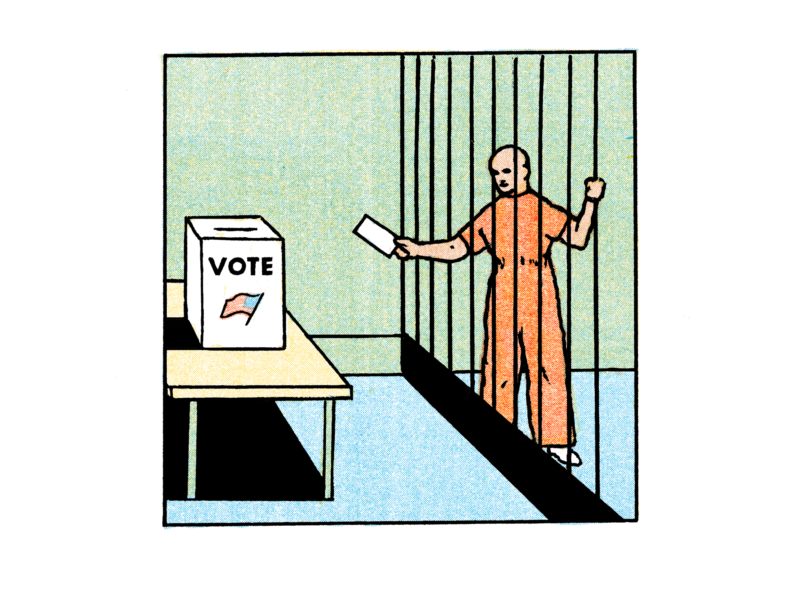
Gálik points to recent investigations documenting how authoritarian governments can maintain the appearance of democracy while systematically narrowing citizens’ choices in reality. Elections continue. Participation technically remains available. Yet fear, dependency, poverty, and intimidation hollow out any meaningful sense of agency.
This is something Hungarians have experienced firsthand. The former government stayed in power for 16 years, not simply by putting money in people’s pockets, but by deliberately maintaining widespread vulnerability with a disturbing level of precision. Threatening parents that their children could be taken away. Telling elderly people they could lose their place in care homes. Threatening families that their heating, gas, or electricity could be switched off, or that they’d lose their jobs. Letting criminals off in return for their votes.
What makes this system so chilling is how functionally, it narrows people’s choices without ever pushing them outside a system that depends on their votes and participation in order to maintain the illusion of a functioning democracy.
“A society can have consultation, elections, surveys, town halls, and participation processes, and still not have genuine democratic choice,” Gálik explains.
For her, democracy is not simply the presence of participation, but meaningful participation.
That distinction feels increasingly relevant far beyond Hungary. Across many democracies, citizens are invited to participate while struggling with economic insecurity, housing crises, burnout, and declining trust in institutions. Formal participation remains, but if people cannot afford to lose their job, speak up, move home, access care, or have the capacity to imagine a different future, then democracy becomes procedural rather than real.
Democracy’s Invisible Infrastructure
One of the most striking ideas in Gálik’s work is her belief that, like any seed, democratic ideals need the rich microbiome that sustains healthy, regenerative soil to grow.
In politics, we tend to focus on what is visible: elections, policies, public meetings, constitutions, and institutions. But just as a plant depends on an unseen ecosystem of microorganisms to survive, healthy democracies depend on countless invisible interactions and flows of exchange. Integrity. Curiosity. Reciprocity. The ability to repair harm. The willingness to work across differences.
Without these, both on an individual and societal level, democratic institutions may continue to function on paper while becoming increasingly brittle in practice.
As a result of New Public Management, society’s dominant doctrine since the 1980s, and our broader desire to control complexity, most governments have invested heavily in measurable outputs and performance targets. Yet many technocratic reforms designed to improve efficiency and enable growth have unintentionally weakened the relationships that allow societies to function. Gálik argues that we have become experts at producing outputs, visions, and strategies while neglecting the human infrastructure that turns those outputs into meaningful outcomes for people and communities. A city can produce an award-winning climate strategy and meet every reporting requirement, yet still struggle to deliver meaningful change when departments are siloed, staff lack the capacity to collaborate across mandates, public trust is low, and political leaders are unable to sustain collective action over time.
“We are meeting the targets,” one of Gálik’s colleagues observes, “but missing the point.”
The Gendered Labor of Holding Society Together
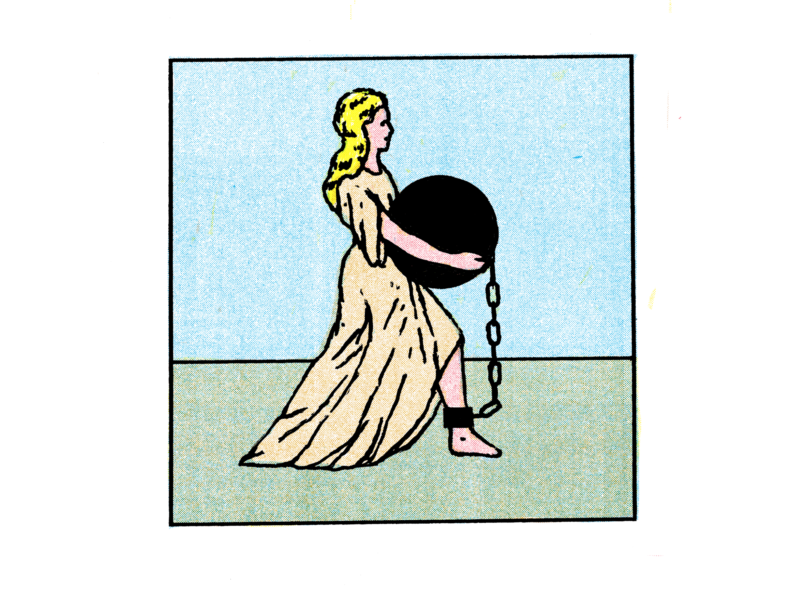
The consequences of this invisible infrastructure are not distributed equally. Much of the work required to maintain relationships, build trust, manage conflict, and hold communities together is often performed by women, yet they remain largely unseen, undervalued, and uncompensated.
Like many women working in politics, public institutions, and social change, Gálik is familiar with the invisible labor required simply to be heard.
Having lived in seven different countries, she has encountered remarkably similar patterns. Many women learn very early that they need to be significantly overprepared to be taken equally seriously. They watch as strategic contributions go unnoticed. They learn to manage their tone, language, appearance, and demeanor to navigate institutions that were rarely designed with them in mind. They learn to present as smart enough, but never too smart.
The endless examples of code-switching she’s collected from women around the world are both humorous and sobering: wearing glasses to appear more serious, wearing a ring to signal they have a husband and are therefore to be taken seriously, bringing brothers as stand-ins to unlock credibility during negotiations.
But Gálik also sees an unexpected strength in these experiences.
Women, she argues, often become experts at reading power because they have spent their lives navigating it. They know how to build trust, maintain connection during conflict, and hold complexity without collapsing into domination.
These are not secondary skills. They are precisely what modern democracies so desperately need.
Gálik has never accepted a passive role in public life. Nor has she believed that the capacity to initiate change should be reserved for those who occupy positions of formal authority. Her advice to women facing authoritarianism is practical and urgent: find each other, protect each other, document what is happening, and refuse isolation. Throughout history, women have created new forms of communication when official channels become dangerous—from underground publishing networks to other mediums of resistance (including quilts, sewing circles, and silent public gatherings). That creativity and resourcefulness remain one of democracy’s most enduring resources.
Trust as Democratic Infrastructure
Throughout our conversation, Gálik repeatedly returns to one word: trust.
Not trust as a feeling, nor as a given. But trust as infrastructure, and daily practice.
Roads do not emerge spontaneously. Neither do water systems, bridges, or electrical grids. They must be built, maintained, repaired, and protected. Trust requires the same kind of investment.
When trust collapses, participation becomes performative. Citizens may still show up, but they no longer believe their contributions matter. Democracy continues as a procedure while losing its legitimacy as a shared project.
The question should not be whether citizens trust institutions. The question is whether institutions behave in trustworthy ways. Do they listen? Repair harm? Share power? Tell the truth? Follow through?
These are governance questions, Gálik argues. But they are also peacebuilding questions.
The Work Ahead
Just weeks before our conversation, Hungarian voters ended their sixteen years of increasingly authoritarian rule. Yet Gálik cautions against viewing electoral victories as endpoints. Removing an authoritarian leader is only the beginning. The deeper challenge is rebuilding trust, institutions, civic confidence, and the everyday habits of democratic life among a population long treated as invisible and disposable.
The other challenge is dealing with the rightful resentment these governments leave behind. How might we see possibility in the widespread anger that results from an oppressive regime? Anger is a healthy and necessary response to injustice. It can be one of the most powerful motivating forces for change. The problem is what happens to anger when it has nowhere to go, when it is met with indifference, with the expectation to just move on, with contempt, or with further exclusion. There, it hardens into something more destructive.
As Gálik puts it, “The answer is not to suppress anger or to fear it. The question is whether we can create places where it can be transformed into agency, participation, and collective action. Democracies do not heal by asking people to suppress or forget what happened to them. They heal when people experience that their voices matter again.”
As our conversation ends, Gálik returns to the same idea that has guided her work from the beginning. She hopes that in ten years, Governing Together will have helped to build a serious field of practice around the relational foundations of democracy—one that nurtures both individual and societal wellbeing.
Democracy is not solely defended in court or in government halls. Peacebuilding doesn’t only happen after conflict. Both depend on whether people still believe they have agency in shaping a better future together—and whether they feel their lives carry meaning and purpose within it. Democracy, then, must be something we practice every day in our workplaces, neighborhoods, families, institutions, and communities. These everyday acts are the nutrients of democratic life. They sustain the social microbiome—the living ecosystem of relationships from which trust, cooperation, collective agency, and the belief that change is possible can grow.
It is a deceptively simple idea. And perhaps one of the most radical democratic arguments of our time.