WP_Post Object
(
    [ID] => 11001
    [post_author] => 15
    [post_date] => 2026-09-08 23:40:49
    [post_date_gmt] => 2026-09-08 23:40:49
    [post_content] =>
Women steeped in democracy work around the world share their thoughts on what we owe our shared future, and how we can all better contribute to our communities.


So much of what we once took for granted—democracy, belonging, institutions, even our sense of a shared future—feels unsettled. Being a good community member feels equally fraught, yet in the face of uncertainty, it has become all the more essential in the collective fight for a better tomorrow.


We asked women working across different fields, countries, and cultural backgrounds a simple set of questions: What does community mean to you? What can a person do today to become a better neighbor, organizer, and partner in a shared future? And what advice would you offer to anyone looking to strengthen their relationship to their community?


Their answers point toward a common practice and perspective: A shared future is not something we wait for. It is something we make together.


Community is contributing, no matter what it looks like


Tiffany Kagure Mugo is a Kenyan author and podcaster who focuses on issues around sex and sexuality within the African context. Based in Johannesburg, South Africa, she is actively involved in building a vast community of and for queer people across the African continent. Describing this community as the one she spends the most time in, she says it also intersects with the sex positive community she is a part of, which she’s worked to cultivate continent-wide for many years.


“The older I’ve gotten, the more my idea of community has shifted,” Mugo says. “When I was trying to figure out my sexuality, the idea of community was very much based on my social justice connections, who could help me figure out my sexuality… And then as I got older, it was the network of friends that I have built.”


At present, Mugo primarily sees community beyond the larger groups she aligns with politically, socially, and in terms of identity, and instead, as the people who are a part of her core support system. “The idea of community can be very nebulous,” she says. “For the longest time, because of being in the social justice world and having all these buzz words around community, it became a very rigid idea.” During that period of her life, Mugo considered community to be a fixed idea with definitive parameters that demanded a collective politics presenting itself in very specific ways. She has since shed that precise definition of community for one that makes room for more people, even if they are not always the people who are going to sit together at the same dinner party.


Beatriz Silva de Almeida Barros in São Paulo, Brazil applies a similar sentiment in her definition of community. On a granular level, hers is composed of people across six cities in the three countries she’s lived in—Brazil, the United States, and Ireland—plus the digital connections she’s made, some through her work as a gender equality advocate. Broadly speaking, however, Barros says it’s “important to allow yourself the idealism of caring about everyone in the world.” As Barros explains it, taking an interest and learning to be attentive to the ways she can reach others is precisely what has expanded her ability to reach more people across social and political divides.


“If I tell my Gen X coworker with no college education that I think abortions should always be free and legal, she’s going to think I’m another one of those commies and dismiss me out of hand,” she says. “If I tell her I wish her doctor hadn’t pressured her into having another child before she had a hysterectomy, without which she’d still have debilitating pain, we’ve taken a step in the right direction.”


Barros considers communities as groups that we’re a part of, de facto, even if we may not necessarily choose all the people in them, such as in a workplace. In such environments, she says, attempting systemic change to wholly improve people’s lives may not always be possible, but there are still always ways to make a difference.


“What we can do,” Barros says, “is make the experience of making a living more livable by being kinder to one another.”


Start where you are, with what you have


For Maria Perez, the Ecuadorian co-Executive Director of Democracy Rising, becoming a better community member begins with finding a place to contribute.


“Join a local organization that aligns with your values and with the vision of the world and your community you are interested in co-creating,” she says. “Get clear about what you have to offer.”


That contribution does not have to be extraordinary. It might be $20 a month. It might be volunteering an hour a week. It might be facilitation, graphic design, event planning, or simply a willingness to show up.


“I guarantee that any organization you align with is struggling to make ends meet,” Perez says. “Become an active supporter. It will take all of us.”


This idea—that citizenship is expressed through contribution—is deeply rooted in the Basque Country, where Ione Ardaiz, Projects Lead at Arantzazulab, describes a longstanding tradition of community development and collaborative governance known as herrigintza: building community, society, and public institutions together.


One of the concepts that shapes this work is auzolan, collective work carried out for the common good. It is based on a simple reciprocity: Sometimes you contribute your time and effort to help others; other times, you benefit from the support of your community. More broadly, Ardaiz says, auzolan expresses the idea that people come together “to create, sustain, and care for what belongs to everyone.”


Another Basque concept, erantzukidetasuna, combines ideas of responsibility, reciprocity, and shared obligation. It provides a stark contrast to the transactional worldview prevalent in Western governing philosophies, particularly so-called “free market capitalism.” In one word, erantzukidetasuna describes the mutual relationships in a successful society, including what we owe one another. Through this lens, citizenship is not only about having rights, but about taking responsibility for the conditions we share. Collective and individual wellbeing is not simply something provided by public institutions; both depend on people actively contributing to sustaining and strengthening them over time.


This is a useful corrective to the idea that civic life is something that happens somewhere else, in institutions or among professional organizers.


Based in east Kent, UK, Rebecca Gibson emphasizes this kind of local community engagement should go beyond one’s municipality, to include both offline and online spaces where people have shared values. A Londoner for most of her life who now lives in Canterbury, her local community involvement includes directly addressing the most pressing issues within her area, from climate change to roads. She also says the early days of COVID lockdown inadvertently made her much more attuned to her neighbors both near and far, especially some of the especially vulnerable and lonely older adults in her community, something now considered an epidemic across the globe.


“Through the parish council and the church, there was a real effort to connect with elderly neighbors and make sure they weren’t isolated,” Gibson says. “I was actually paired with an 86-year-old woman at the time, who was in poor health and I would do her shopping for her and regularly call on her through the window.” Their relationship superseded the time frame of the initiative, and they eventually became friends, something Gibson says might not have happened without the initial program, despite them living on the same street.


Separately, the genocide in Gaza has prompted Gibson to seek community beyond her usual networks, who didn’t share her outrage. She sought local groups of like-minded people, joining marches and setting up a continuous weekend stall in the city center to engage strangers. Previously on the board of Canterbury for Palestine, Gibson has become heavily involved in the Boycott, Divestment, Sanctions (BDS) movement over the last few years, as part of the Palestinian-led global movement’s effort to put economic and political pressure on Israel.


“For me, it’s been a powerful reminder that community can come from the most unexpected places and that finding people who you share values with can turn a feeling of helplessness into something much more positive and active,” she says.


Practice belonging through relationship


That work begins with how we relate to the people around us.


Perez suggests a remarkably simple practice: Start a friendly conversation with someone whose worldview you suspect is different from your own—because of age, class, gender, ethnicity, or any other difference. “Acknowledging that you both belong in your community is a reminder that a shared future includes all of us,” she says. “These small, seemingly meaningless touches are really important.”


For Ouassima Laabich, a Moroccan futures practitioner and initiator, and a Project Lead of Muslim Futures at Superrr, that kind of relationship across differences requires something deeper.


“Being a better community member begins with honesty and authenticity: showing up as your full self, with the beautiful, the difficult, and the unfinished parts all present,” she says. She describes the self as an unfinished process, and says we have to grant other people that same permission to continue evolving. That means staying in uncomfortable conversations: the disagreement in a group of young friends, the moment when someone names a tension nobody wants to touch, initiating a conversation with the neighbor to whom you owe an honest word.


Community, in this sense, is not harmony. It is the ongoing work of maintaining a relationship.


To Laabich, community needs caring, both for ourselves and for others.  Self-care, then, is not an escape from community responsibility, she argues—it is what allows us to return to it.


“Rest when you are depleted,” she says, “so that after some rest, you can still lead the counseling session, answer the message that keeps the network alive, knock on the door of the neighbor who has gone quiet.” And just as importantly, work within your real capacities: "Offer the two hours you have rather than the ten you wish you had,” she adds. “Name the task you can carry and the one you cannot.”


There is generosity in knowing our limits. A sustainable community is built not by people pretending to be limitless, but by people being honest about what they can give—and then giving it.


Move from participation to shared power


The women also point toward something larger than individual acts of community care: finding ways to share real responsibility for community decisions.


If building a shared future begins with how we show up for one another, sustaining that future requires us to develop ways of making decisions together. Movements need more than shared values, individual acts of solidarity, and heroes; they need cooperative structures that turn many individuals’ knowledge, relationships, and imagination into collective agency and shared power.


Movements must cultivate forms of cooperation and collective decision-making that can draw people together, while also renewing the institutions we already have, even when those institutions seem illegitimate, or have grown distant, depleted, or derelict. The work of democracy is not simply to build something new, but to reclaim and repair what belongs to all of us.


Many of the women are experimenting with different ways that communities can achieve this, and Perez is particularly proud of a recent effort to find “antidotes to fascism that are effective and applicable now, by regular people in their communities.” She convened elected officials, government bureaucrats, and community activists from across the country who are experimenting with shared decision-making models in their jurisdictions.


“They are learning from each other and troubleshooting together,” she says. The goal is to cultivate experiments in collaborative governance, “one seed at a time.”


This is also at the heart of Arantzazulab's work in the Basque Country: finding new ways to meaningfully involve citizens in public policymaking and decision-making, while also supporting innovation within public institutions. The aim is not simply to give people more opportunities to speak, but to rethink the relationship among public institutions, organized civil society, and individual citizens—and to strengthen the democratic ecosystem that connects them.


For Dr. Jayne Engle, a Canadian-American practitioner working at the intersection of democracy, cities, land relationships, and futures, this kind of civic infrastructure is increasingly essential. “Every community carries stories of the beautiful futures its people already know are possible,” she says.


Currently, she is especially enthusiastic about building Polity, a democracy cooperative developing digital civic infrastructure for more participatory, deliberative, and democratic forms of collective action. Engle sees this work, alongside the efforts of many others, as fundamental to building the civic agency required for the societal innovation and transformation demanded by this moment of geopolitical and geoeconomic disruption.


In other words, becoming a better community member is not only about becoming kinder or more engaged. It is also about building the capacity to make decisions together.


Learn to see what is possible


This form of collective action also requires imagination.


Engle encourages people to pay close attention to their own thought patterns and ways of seeing. As Anaïs Nin famously put it, “We don't see the world as it is, but as we are.” For Engle, futures thinking and systems thinking have to be accompanied by two other elements that are equally important: feeling and imagination. Their practice allows us to see possibilities, and to cultivate a collective imagination that makes resilience possible.


“Start where you are; do what you can,” she says. “Find the others. And lead with love and courage.”


Perez's work with communities experimenting in collaborative governance is one expression of this principle. Engle's partnerships with Indigenous community leaders through 7GenerationCities and their efforts to develop new practices of land relationships and stewardship is another. These practices change the time horizon of civic work: Instead of thinking only in election cycles or fiscal years, Engle asks us to think in generations.


“Learn to see—and sow—the seeds of the possible,” she says. “Every community carries stories of the beautiful futures its people already know are possible.” That means accepting that important ideas may initially feel too radical, even embarrassing. “Discomfort is often a sign you're onto something meaningful and important,” she says.


For Nana Darkoa Sekyiamah, a Ghanaian feminist and writer whose transnational work is at the center of sexual and reproductive rights and social justice, radical possibilities turn into radical realities when one considers what is absent from the community they have, and what they would like to have, then actually begins to build it.


“If there’s a space that you wish exists but doesn’t exist yet, create that space yourself,” she says. “Find people who are like-minded and invite them to co-create the space with you.”


She’s speaking from experience: Sekyiamah holds an annual festival centered around sex and sexuality, and for the first time ever, she’s excited that it will be held in a francophone country, Benin, allowing it to draw many French speakers from West Africa and elsewhere. Centered around pleasure, Sekyiamah is especially proud that she can approach sex and sexuality through this dimension, as an important part of the conversation. Bringing together her community of African feminists and queer people across Africa and its diaspora—including Mugo, who has previously attended—Sekyiamah takes great pride in the various people represented in organizing the festival and attending it, physically and virtually.


“I’m really proud of that, because it’s a community effort and also an effort that benefits the community, with the community being feminists, being queer people, being sex workers, being trans people, being gender non-conforming people,” Sekyiamah says.


Build for people you may never meet


Perhaps the most profound shift many of the women describe requires moving from thinking about community as the people who are here now, to thinking about community across time.


Engle describes the practice of considering “our future ancestors”—people who do not yet exist, but whose lives will be shaped by the decisions we make today. She asks herself a question that gives a different meaning to civic responsibility: “What did you do when you knew?”


This asks us to think beyond our immediate interests, our own political moment, and even our own generation. It asks us to become stewards rather than simply consumers of the places and institutions we inherit. And it connects back to the Basque concept of auzolan—how sometimes we contribute to something from which someone else will benefit in the future, just as we benefit from the work undertaken by those who came before us.


A shared future is built in this reciprocal space—between generations, between neighbors, between citizens and institutions, between what we can imagine and what we are willing to do.


The work is ordinary—and extraordinary


None of these women suggest that there is a single grand gesture that will repair our communities. Instead, they describe a collection of practices.


Join something. Give what you can. Talk to your neighbor. Stay in the difficult conversation. Know your limits. Rest so you can return. Share responsibility. Learn from people who see the world differently. Build institutions that allow people to make decisions together. Imagine futures that do not yet exist. Think across generations.


Community is something we continually make through our relationships, our contributions, our courage, our imagination, and our willingness to take responsibility for what belongs to all of us. Our shared future is not waiting to be discovered somewhere ahead. It is being built, one conversation, one act of care, one experiment, and one seed at a time.

    [post_title] => How To Be a Better Neighbor
    [post_excerpt] => Women steeped in democracy work around the world share their thoughts on what we owe our shared future, and how we can all better contribute to our communities.
    [post_status] => publish
    [comment_status] => closed
    [ping_status] => closed
    [post_password] =>
    [post_name] => how-to-be-a-better-neighbor-community-member-development-democracy-decision-making-politics-shared-future-guide
    [to_ping] =>
    [pinged] =>
    [post_modified] => 2026-09-10 19:43:50
    [post_modified_gmt] => 2026-09-10 19:43:50
    [post_content_filtered] =>
    [post_parent] => 0
    [guid] => https://conversationalist.org/?p=11001
    [menu_order] => 0
    [post_type] => post
    [post_mime_type] =>
    [comment_count] => 0
    [filter] => raw
)

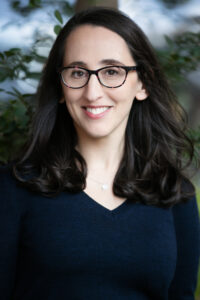 Judy Batalion[/caption]
Batalion grew up in Montreal’s tight-knit Jewish community “composed largely of Holocaust survivor families”—including her own grandmother, who escaped German-occupied Warsaw and fled eastward to the Soviet Union. Most of her grandmother’s family was subsequently murdered. As Batalion recalls, “She’d relay this dreadful story to me every single afternoon as she babysat me after school, tears and fury in her eyes.” For Batalion, remembering the Holocaust was a daily event. She describes a childhood overshadowed by “an aura of victimization and fear.”
That proximity allowed Batalion to develop an intimate connection to events that had taken place decades earlier, thousands of miles away. But even for those without such a close connection, the impact (and import) of the Holocaust is inescapable. According to a 2020 Pew Survey, 76 percent of American Jews overall, across religious denominations and demographics, reported that “remembering the Holocaust” was essential to their Jewish identity. In stark contrast, just 45 percent overall said that “caring about Israel” was a critical pillar of their identity, with that percentage declining among the youngest age groups.
These numbers raise an urgent question: given its centrality to North American Jewish life, what exactly are we remembering when we remember the Holocaust? As Judy Batalion herself points out, the Holocaust was an important subject in both her formal and informal education. And yet, of the many women featured in Freuen in di Ghettos, she had only heard of one, the
Judy Batalion[/caption]
Batalion grew up in Montreal’s tight-knit Jewish community “composed largely of Holocaust survivor families”—including her own grandmother, who escaped German-occupied Warsaw and fled eastward to the Soviet Union. Most of her grandmother’s family was subsequently murdered. As Batalion recalls, “She’d relay this dreadful story to me every single afternoon as she babysat me after school, tears and fury in her eyes.” For Batalion, remembering the Holocaust was a daily event. She describes a childhood overshadowed by “an aura of victimization and fear.”
That proximity allowed Batalion to develop an intimate connection to events that had taken place decades earlier, thousands of miles away. But even for those without such a close connection, the impact (and import) of the Holocaust is inescapable. According to a 2020 Pew Survey, 76 percent of American Jews overall, across religious denominations and demographics, reported that “remembering the Holocaust” was essential to their Jewish identity. In stark contrast, just 45 percent overall said that “caring about Israel” was a critical pillar of their identity, with that percentage declining among the youngest age groups.
These numbers raise an urgent question: given its centrality to North American Jewish life, what exactly are we remembering when we remember the Holocaust? As Judy Batalion herself points out, the Holocaust was an important subject in both her formal and informal education. And yet, of the many women featured in Freuen in di Ghettos, she had only heard of one, the 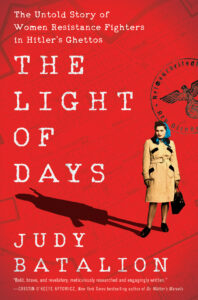 Drawing on memoir, witness testimony, interviews, and a variety of secondary sources, Batalion focuses on the stories of female “ghetto fighters.” These were activists and leaders who came up in the vibrant world of Poland’s pre-war Jewish youth movements, which represented a remarkable variety of political and religious affiliations. The young women of the socialist Zionist groups Dror (Freedom) and Hashomer Hatzair (Young Guard) feature prominently, but religious Zionists, Bundists (Jewish socialists), Communists, and young Jews representing various other cultural, political, and religious affiliations are there, too. Before the war, these groups taught leadership skills: how to make plans and follow through. When the war began, pre-existing leadership structures and a network of locations all over Poland allowed members to find one another and to immediately make plans for mutual aid and resistance. When these young fighters lost their family members, movement comrades were there to support and care for one another as another type of family.
Only a small percentage of Jewish women took part in armed resistance and combat. Most of them were
Drawing on memoir, witness testimony, interviews, and a variety of secondary sources, Batalion focuses on the stories of female “ghetto fighters.” These were activists and leaders who came up in the vibrant world of Poland’s pre-war Jewish youth movements, which represented a remarkable variety of political and religious affiliations. The young women of the socialist Zionist groups Dror (Freedom) and Hashomer Hatzair (Young Guard) feature prominently, but religious Zionists, Bundists (Jewish socialists), Communists, and young Jews representing various other cultural, political, and religious affiliations are there, too. Before the war, these groups taught leadership skills: how to make plans and follow through. When the war began, pre-existing leadership structures and a network of locations all over Poland allowed members to find one another and to immediately make plans for mutual aid and resistance. When these young fighters lost their family members, movement comrades were there to support and care for one another as another type of family.
Only a small percentage of Jewish women took part in armed resistance and combat. Most of them were 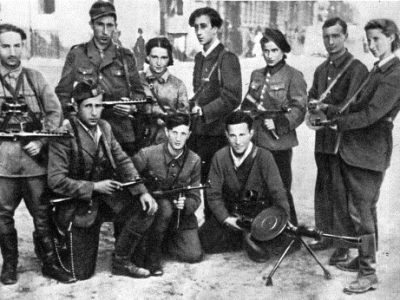
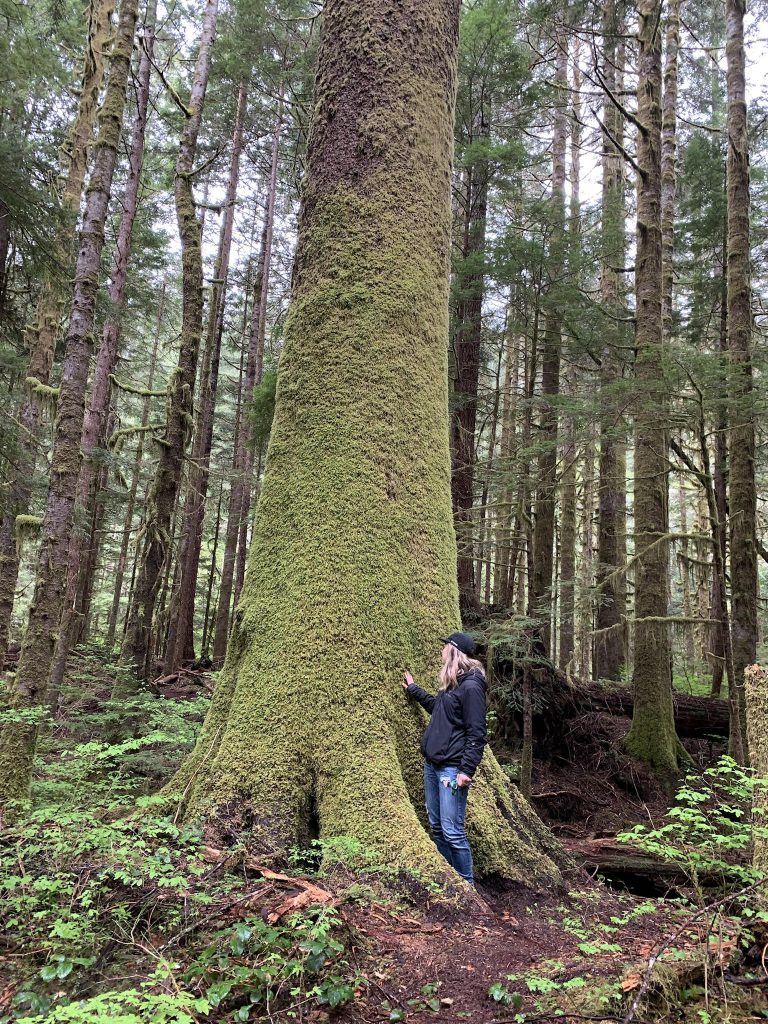 Amy Iredale dwarfed by one of the ancient trees at Fairy Creek.[/caption]
Some, however, don’t see anything holy here. For them, millennia-old forests are just land that should be exploited and trees that can be replanted.
Amy Iredale dwarfed by one of the ancient trees at Fairy Creek.[/caption]
Some, however, don’t see anything holy here. For them, millennia-old forests are just land that should be exploited and trees that can be replanted.
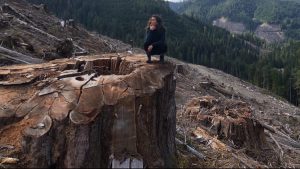 Freshly cut old growth trees in the Caycuse River Valley.[/caption]
Old-growth forests cannot be replaced because replanted forests—referred to as second growth—do not recreate the rich conditions and biodiversity of the ancient trees. The study urged the government to “immediately place a moratorium on logging in ecosystems and landscapes with very little old forest.” The Union of British Columbia Indian Chiefs also passed a resolution last year calling on the government to do the same.
Fairy Creek’s 12.8 hectares of unlogged ancient old-growth forests are in fact extremely rare, making up less than 1 percent of what remains in the province. And yet, despite their importance and rarity, these ancient trees are still being cut down. Teal-Jones still has government approval to log in mostly old-growth forests.
The Supreme Court of British Columbia granted an injunction in April for the RCMP to come in and remove protesters and tree-sitters at a string of blockades on logging roads in the area. Over 185 people have so far been arrested, but Canada’s legacy media has given the story little coverage. Independent media outlets
Freshly cut old growth trees in the Caycuse River Valley.[/caption]
Old-growth forests cannot be replaced because replanted forests—referred to as second growth—do not recreate the rich conditions and biodiversity of the ancient trees. The study urged the government to “immediately place a moratorium on logging in ecosystems and landscapes with very little old forest.” The Union of British Columbia Indian Chiefs also passed a resolution last year calling on the government to do the same.
Fairy Creek’s 12.8 hectares of unlogged ancient old-growth forests are in fact extremely rare, making up less than 1 percent of what remains in the province. And yet, despite their importance and rarity, these ancient trees are still being cut down. Teal-Jones still has government approval to log in mostly old-growth forests.
The Supreme Court of British Columbia granted an injunction in April for the RCMP to come in and remove protesters and tree-sitters at a string of blockades on logging roads in the area. Over 185 people have so far been arrested, but Canada’s legacy media has given the story little coverage. Independent media outlets 
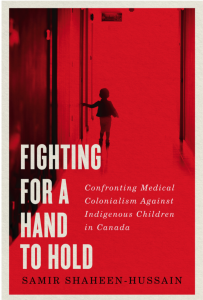 Working as a pediatric emergency physician, Dr. Shaheen-Hussain saw the cruel consequences of the non-accompaniment practice first-hand in 2017, when he treated two young patients who were undergoing stressful medical procedures without their loved ones by their side. Quebec pediatricians had been demanding the end of this heartless practice for decades, but successive governments refused to change the policy, making Quebec an outlier in Canada. When a citizen confronted him about the matter at a public event in 2018 , Quebec’s then-Health Minister, Gaétan Barrette,
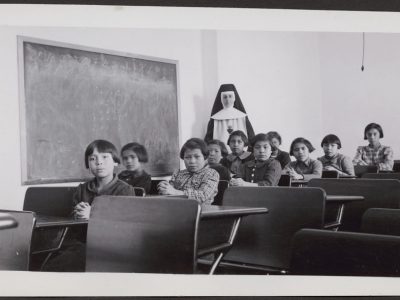
 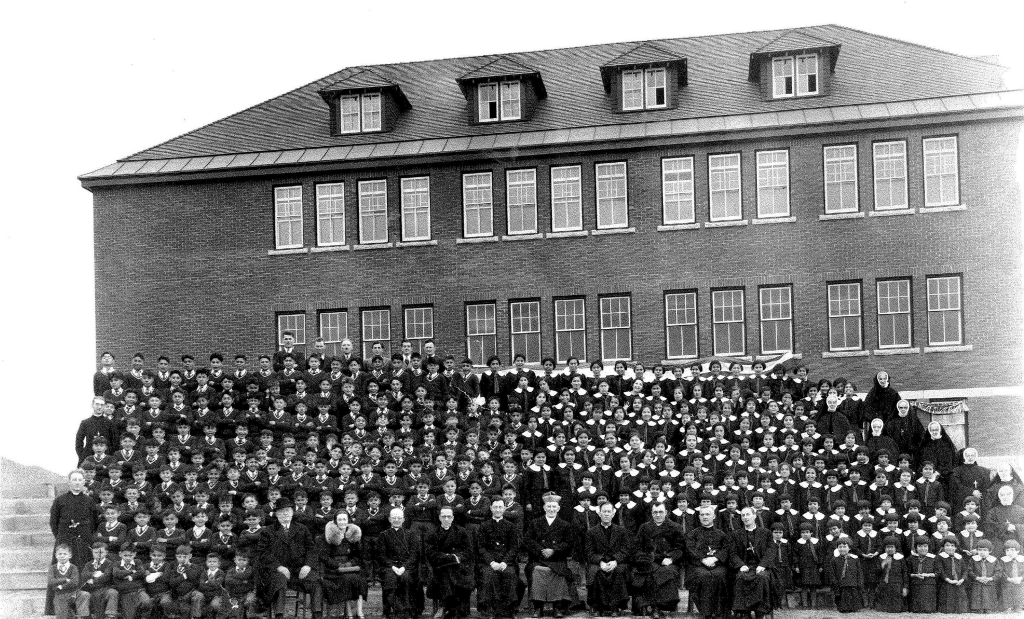 Kamloops Indian Residential School in 1937.[/caption]
In addition, highly unethical
Kamloops Indian Residential School in 1937.[/caption]
In addition, highly unethical 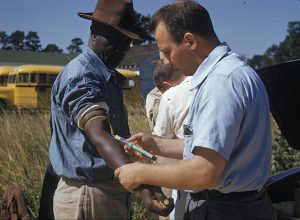 A Black man is tested during the Tuskegee Study of Untreated Syphilis in the Negro Male.[/caption]
The
A Black man is tested during the Tuskegee Study of Untreated Syphilis in the Negro Male.[/caption]
The