WP_Post Object
(
    [ID] => 1821
    [post_author] => 2
    [post_date] => 2020-06-18 20:24:45
    [post_date_gmt] => 2020-06-18 20:24:45
    [post_content] => Father's Day elicits painful and happy memories about a now aged father.

The words that best describe my father all start with the letter “r”: rogue, rapscallion, renegade, rascal.

Also: Rage. I have been scorched many times by his verbal outbursts; for years at a time, I’ve just had to keep my distance, emotionally singed by the last blast. I have wished often for a father who was calm and consistent. Someone for whom I could find the right Father’s Day card.

My father has four children by four women. I’m the oldest, the only child of his first marriage to my mother, an American he met in the south of France and married a few months later in her native New York City. He took her to his hometown, Vancouver, where they had a glamorous life: they opened an art gallery, and she modelled part-time. Later, they moved to London.

The second oldest is a half-sister I’ve never met and someone, for decades, he didn’t even know existed; I’ve spoken to her once by phone. The next oldest, who I know, is ten years my junior, a successful entrepreneur. The youngest, a man 23 years my junior, is the only child of his second marriage. None of us ever shared a home and only the two half-brothers have a relationship. The two not raised by my father resent those who were.

I lived with him from the age of 14 to 19. My parents had divorced, and my mother’s mental illness became overwhelming. I moved into his home with his girlfriend; she was too old to be a sister, too young to be a mother, and a tough cookie who, at 28, didn’t really know what to make of an unhappy 15 year old. He was often far away for a month at a time, filming, leaving two ill-suited young women alone to make it work.

When he was home in those years, though, he made up for it, and gave me a lot of time with him, alone. We skied and played squash and went for long walks in the country. When I was bullied at school, he tried his best to help me. Our Christmases were lavish. We played Scrabble for hours in front of the fire, the cat scrambling our letters as we drank tea and ate chocolate cookies.

This was the mid 1970s. Second-wave feminism was blooming and he never once, then or later, pressured me to be conventionally pretty or to follow the traditional path of marriage and motherhood. I’ve always appreciated that. Being smart, talented and competitive mattered most to him. He raised me, basically, as a boy — to be fearless, intellectually confident, eager to explore the wider world.

The summer I was 15 we drove across Canada together, just the two of us. We slept most often in a tent, once awakened by a farmer looking down on us from his tractor.

That road trip is one of my happiest memories. We drew, took photos and played endless games of 20 Questions as we drove across the tedious prairies. We dipped south into the United States and attended a pow-wow in one of the Dakotas, where a bag of sugar and some meat were left at our tent door, a welcome for everyone there. That’s typical of the best of my father — always curious, always seeking the next adventure.

That’s the part of him, still healthy and living alone at 91 in the countryside, that I still like and admire. Through his travels making documentaries, I glimpsed tantalizing bits of a larger world. He brought me home bits of it: badges from the Tokyo 1964 Olympics, a caribou rug and sealskin gloves from the Arctic, a woven Afghan rifle case. Much as it was difficult being left alone with his girlfriend—later his wife—I knew he loved his work and understood that his long absences were the price we paid for that. His pursuit of adventure and career influenced me profoundly in my choice of career; I became a journalist, digging up my own stories to share.

But those loving teenage years came to an abrupt end when, in my sophomore year of university, he abruptly sold the house and told me, without warning, to find a new place to live; he and his girlfriend were going to live on a boat in Europe. I was on my own for good, with some money from a grandmother but not a dime from him for tuition, books, or living expenses. Long before the internet or cellphones, the only way to contact my father was by poste restante.

That year was disastrous. I slept around, starved for male approval and attention. I was attacked in my ground-floor apartment where I lived alone, at the back of an alley in a dicey neighborhood—a place no attentive or protective father would have allowed. My grades, previously straight As, plummeted. I moved again and again until finally, that summer, I found safe shelter on the top floor of a spacious house on a treelined street in a much nicer neighborhood, in a sorority filled with other women, one of them my best friend.  Life calmed down and took a turn for the better.

That was the summer I started writing for national magazines, which was exciting but also a source of tremendous pressure.

I was running on fumes when my father sent me a ticket to join them on their small boat in France and I mailed a long letter explaining how fragile I was. Attending university full-time, while also freelancing, had been exhausting. I was thrilled to be taken seriously by national magazine editors, but was emotionally raw, barely a few weeks after having been grabbed through my bathroom’s low open window and hit on the head while bathing. The assailant took off and I never reported it.

My father never got the letter—so he had no idea. And he never welcomed weakness and fear.

That visit ended very badly, with a shouting match in a French parking lot at midnight. I was proud of my writing success which, somehow, he found dubious. Why, he raged, would anyone take me, then just turned 20, seriously?

Well, why not?

I had arrived desperately needing a relaxing break but, as usual, I disappointed him for reasons that made no sense to me. He wasn’t paying for university or any of my living costs and I didn’t need him financially. I sure didn’t need him emotionally if this was to be my lot.

For the first time in my life I stood up to him and flew home early.

They came back and re-settled in a small town 1,200 miles away from me, and I tried again, in my mid-20s, another summer vacation visit. They now had a son who was five or six.

There was another explosion of rage at me, and my father flung a heavy glass goblet into a metal sink, shattering it. I didn’t leave that time. Why was he always so angry with me? I rarely spent time with him and his second family, and had become a successful young journalist any parent would normally take pride in.

In the decades since, I’ve been the brunt of his anger —verbal, never physical—too many times. There’s never an apology, just the assumption this is the price of admission to our relationship. He’s had quieter arguments with my husband. After each one, we withdraw for months or years and hope he’ll be civil the next time.

He was wonderful at our wedding in 2011, terrible when I got breast cancer in 2018. He came out to support me at a successful event I organized, elegant in jacket and tie, beaming with pride – then a few years later excoriated me in front of others for a minor mistake.

He was cordial in our most recent conversation, just before his birthday. Relieved, I enjoyed it and wondered how many years we even have left to mend fences for good before it’s too late.

But, let down too many times when I really needed his help or support, I never know what to expect and learned not to rely on him years ago.

I keep trying because he’s my only parent.

Because his own father, a self-made businessman who died before I was born, was apparently very tough—and who knows what he learned to become?

Because I just do.

People wonder why I persist and so do I—how can a woman who considers herself a feminist keep tolerating such abuse?

I don’t have a tidy answer.

I just know that one day I won’t miss his anger—but I will miss the best of him.
    [post_title] => A daughter reflects on a volatile father who brought out her best and hurt her the most
    [post_excerpt] => I have wished often for a father who was calm and consistent. Someone for whom I could find the right Father’s Day card.
    [post_status] => publish
    [comment_status] => closed
    [ping_status] => open
    [post_password] => 
    [post_name] => a-daughter-reflects-on-a-volatile-father-who-brought-out-her-best-and-hurt-her-the-most
    [to_ping] => 
    [pinged] => 
    [post_modified] => 2024-08-28 21:14:03
    [post_modified_gmt] => 2024-08-28 21:14:03
    [post_content_filtered] => 
    [post_parent] => 0
    [guid] => http://conversationalist.org/?p=1821
    [menu_order] => 261
    [post_type] => post
    [post_mime_type] => 
    [comment_count] => 0
    [filter] => raw
)

A daughter reflects on a volatile father who brought out her best and hurt her the most

WP_Post Object
(
    [ID] => 1759
    [post_author] => 2
    [post_date] => 2020-05-14 21:23:43
    [post_date_gmt] => 2020-05-14 21:23:43
    [post_content] => The dynamics of gentrification among the middle class are complicated, but Covid-19 has brought some painful clarity.

On January 24, the day I went into labor, only two people in the U.S. had been diagnosed with the coronavirus that still had no name. That afternoon, I stumbled out of our Brooklyn apartment building under the watchful eyes of whichever neighbors happened to be in the courtyard or peering out their windows at that moment. In recent months, as I started growing more and more rotund, neighbors who had generally offered no more than a passing nod in the elevator or by the front gate began holding doors for me, inquiring about my pregnancy, and telling me tales of their own. I started to enjoy shifting my distinguishing characteristic in the building from my whiteness, which marked me as a gentrifier in a borough of gentrification, to my belly, which marked me as a beleaguered woman in a world of beleaguered women.

The demographics inside my 120-unit apartment building on the border of two Brooklyn neighborhoods—one already thoroughly gentrified, another well on its way—reflect the demographics on the street. In the building, longtime black residents get replaced, vacancy by vacancy, with mostly white, highly educated newcomers like myself, whose rent-stabilized apartments are still a bargain at twice the price many of the older families are paying.

The dynamics of gentrification among the middle class are complicated, particularly in a city like New York, where racial differences persistently track onto income levels and health outcomes, and whole communities get displaced by predatory developers. My also-white partner is an artist and I’m a graduate student. As far as annual income is concerned, many of the longtime residents are probably in better shape than we are. But as is playing out so blatantly during this crisis, social class isn’t just about income. This lesson has never been clearer than from where I write this, perched under a skylight at a friend’s childhood home in Connecticut, where we have been hiding out for the last six weeks.

We spent the first four weeks of my son’s life in the normal self-isolation of new parenthood. The news about the spread of the virus was ominous, but felt distant. Family visited, friends brought food. The only visitors we restricted were my aunt and uncle, who had returned in mid-February from a cruise in the Far East. All others were welcome, as was the friendly up-close cooing of our neighbors. When I was finally able to move around again after a few weeks of what is euphemistically referred to as postpartum “discomfort,” I delightedly walked down the block to my favorite coffee shop and down a couple more to another, just because I could.

But soon the three of us came down with a cold and again began receding from the world. It was just as well, because days later, on March 4, a Covid-19 cluster surfaced just north of the city. As we monitored our temperatures and the baby’s cough—which is one of the saddest and scariest sounds I have ever heard—and gradually nursed ourselves back to health, the city got sicker and sicker all around us.

A neighbor posted to the building’s invite-only Facebook page, which is populated almost exclusively by the building’s gentrifiers, expressing concern for elderly residents and for the woman who cleans the hallways and takes out the trash. Ideas were circulated about how to help: sign-up sheets, phone calls, pros, cons.

At the same time, discarded latex gloves started littering the streets and sidewalks like a dystopian second autumn. At first we spotted just one or two each time we took the dog out for a walk, but soon there were scores of them clustering in slow-moving eddies.

Headlines forecasting calamities bled into each other across all our devices, the drumbeat growing louder and closer, and the warm exchanges we had been having with neighbors gradually fizzled into a mutually fearful, distanced dance when negotiating doorways in common spaces. The streets began feeling empty. Normally coveted parking spots opened up as people with means packed up and drove away. At the same time, the building’s Facebook page went curiously quiet. Had the other gentrifiers left the premises?

Since we had no country house to flee to nor the means to indefinitely rent one, we figured we would just stay put. We signed up for new internet service that week; if we were going to stay, we were going to do it with high-speed broadband.

But what might have been even more contagious than the virus so many were fleeing was the panic it induced. When close friends also with a newborn and also without a country house announced their decision to flee the city, we finally accepted that the postpartum back-to-work routine we had so meticulously planned and were started to look forward to implementing had become obsolete. So had the need for a new internet provider. The elevator, which we needed to ride up and down twice a day with our 12-year-old dog, started to feel like a death trap. High-touch zones like the front doorknobs seemed to glow, radioactive. The day Governor Cuomo finally announced the closure of public schools, I started feeling desperate. We tapped into our networks, learned that a friend’s parents had left behind an empty house in the suburbs when they decamped months earlier to the Virgin Islands, and that they would let us have it. Two days later, we made our first of several car trips to the midcentury house on a wooded road which would become our temporary home.

After hearing that we were leaving, friends in our building who had been planning to ride it out decided that they would follow suit. As they wheeled their suitcases packed with dried beans and all-season clothing through the lobby, a young black resident standing with a friend by the elevator muttered after them: “Have fun in the Poconos.”

Our friends, who are also white, weren’t going to the Poconos, and we weren’t going to the Virgin Islands. But what difference does it make? Whether their family’s empty suburban condo or our friend’s empty suburban house, we have options because the people in our communities have options. And the fact that neither we nor our friends are even paying for our temporary housing only underscores the inequality of our opportunities.

Packing up the car in front of the same neighbors who saw us off to the hospital just two months earlier is not an experience I will soon forget. As we crossed one bridge out of the city and then another, leaving the dimmed skyline behind, we found ourselves arguing about the dynamics of our departure. Ethically speaking, by most accounts, fleeing to an empty house with two weeks’ worth of groceries was the best thing to do. Three fewer people in the building means three fewer disease vectors, and three fewer hospital beds to take up if we fell ill. Our presence helped no one and was only a risk, and a potential resource drain.

And yet. Leaving behind the neighbors whose outpricing our presence only accelerated felt like a betrayal. Not that anyone seemed sorry to see us go. Maybe, just maybe, some felt a certain satisfaction at being right: that we might be friendly, we might move secondhand furniture ourselves out of our 15-year-old Honda, and we might hold doors whenever there isn’t a pandemic, but at the end of the day, we have choices, and many of them do not. The virus itself might be equal opportunity, but the crowded conditions and impossibility of remote working are not.

Maybe in the end it’s just as well the Facebook group never really integrated. If our good intentions didn’t bear fruit, at least their transience could go largely unnoticed. Except, that is, by those of us who spoke and then fell silent.
    [post_title] => Escaping pandemic Brooklyn? You're probably white, even if you have less money than your Black neighbors
    [post_excerpt] => As we crossed one bridge out of the city and then another, leaving the dimmed skyline behind, we found ourselves arguing about the dynamics of our departure.
    [post_status] => publish
    [comment_status] => closed
    [ping_status] => open
    [post_password] => 
    [post_name] => escaping-pandemic-brooklyn-youre-probably-white-even-if-you-dont-have-more-money-than-your-black-neighbors
    [to_ping] => 
    [pinged] => 
    [post_modified] => 2024-08-28 21:14:03
    [post_modified_gmt] => 2024-08-28 21:14:03
    [post_content_filtered] => 
    [post_parent] => 0
    [guid] => http://conversationalist.org/?p=1759
    [menu_order] => 268
    [post_type] => post
    [post_mime_type] => 
    [comment_count] => 0
    [filter] => raw
)

Escaping pandemic Brooklyn? You’re probably white, even if you have less money than your Black neighbors

WP_Post Object
(
    [ID] => 1730
    [post_author] => 2
    [post_date] => 2020-05-08 03:51:34
    [post_date_gmt] => 2020-05-08 03:51:34
    [post_content] => Want to stop a conversation cold? Tell someone you haven’t spoken to your mother in a decade. Then tell them you’re her only child.

The annual Mother’s Day frenzy culminates with the actual celebration this Sunday, with a sentimental blizzard of flowers and cards that included, in pre-pandemic times, restaurant tables often filled with happy mothers and daughters celebrating their love for one another.

On social media, there will be endless tributes to mothers who have died, recently or decades ago, still much missed and deeply mourned.

That won’t be me.

My mother died suddenly this year, at 85, sitting in her nursing home armchair watching television—in a city a seven-hour, cross-country international flight from me.

I hadn’t seen her in years nor tried to re-connect. I knew better, even though others repeatedly urged me to, including my father, 50 years divorced from her but lately back in touch.

“You’ll regret it!”

“What if she dies?”

“Just go!”

“You never know…”

But they didn’t know the full story.

Every year I sent her a Christmas card filled with the past year’s news, but never received a reply, not even in 2018, the year of my early-stage breast cancer, surgery and radiation. When she had had a mastectomy decades before, I’d flown from New York to Vancouver to get her back home and re-settled.

A few years ago, she told my best friend, a local who went to visit, to tell me to stay away.

How does one end up so estranged?

More easily than you’d think.

Yet no other relationship carries as much emotional freight as the mother-daughter bond.

The very word, mother, is a verb as well as a noun, implying loving attention, an open heart and arms, a ready ear. A welcoming place to run back to whenever you need comfort and solace.

But that’s just not everyone’s experience.

She left my father when I was seven. I was sent to boarding school, and every summer to camp, my battered blue trunk shuttling between them. I shared rooms for years with four to six other girls, summers in a raw wooden bunk, winters in a brown metal bed.

At school, we were shouted at routinely by ancient housemothers, women who’d been widowed or never married, old enough to be our grandparents, to whom we were nothing more than a name on a checklist and someone to discipline, but never to hug or console.

I saw my mother on weekends and holidays. She did throw great, lavish birthday parties for me, with cakes and sparklers and lots of my pals.

There were adult years when she and I got along well, and even traveled together, with adventures in Fiji, Peru, Costa Rica and Colombia as I flew in to visit her, mid-journey. She had inherited enough money to travel as long as she liked and lived frugally. Later, I visited her home in British Columbia a few times.

But her alcoholism worsened, and her bipolar illness blitzed my life repeatedly, usually without warning. That meant hospitalizations, worldwide, and I learned to dread the inevitable phone call detailing the latest mayhem – when, manic and acting out wildly in public, she landed in foreign jails and hospitals or trashed her rental apartment, sometimes many time zones distant.

At 19, living alone and attending university full-time in downtown Toronto, I had no idea what to do. You really can’t turn to someone in your Chaucer seminar and ask for that kind of help. My father, also away traveling the world with his soon-to-be second wife, showed no interest.

And talking about any of it, rough enough for me to handle privately, felt like telling tales out of school. Who could possibly understand, sympathize or help? She would just keep doing whatever she pleased anyway, consequences be damned.

The worst moment for me was when she ended up in a locked London psychiatric ward. I had just finished the happiest year of my life, on a Paris-based journalism fellowship. Her illness, a trio of frosty English doctors told me, could be inherited, while offering me no advice or comfort. I was a young, ambitious journalist with a growing career, now terrified my mind was potentially as susceptible. In a small, highly competitive industry, I couldn’t risk anyone wondering if I would be next.­­

Her weary friends gave up.

Her three American cousins, living many miles away, fed up with her late-night calls and wild-eyed visits, gave up.

No one really knew what was going on but me.

I had fled her care after a terrifying manic breakdown that occurred when I was 14, when we lived in Mexico. She drove a van carrying me and two others down a major highway with the headlights turned off, ending up crashed in a ditch at midnight in a city we’d never seen before. For two weeks it fell on me to care for a friend who’d just arrived from Canada to visit.

A few weeks later, I returned to Canada and moved in with my father and his girlfriend. I never lived with my mother again.

No one ever discussed her illness with me, or offered me tools to cope with it, even though I knew the name of her psychiatrist. Later in life, I intellectually accepted that mental illness is an illness, but at 14, I was too scared and angry at having been so endangered. Nor was this the first time I’d been subjected to a manic breakdown; she had one when I was 12 when we stayed at a friend’s house. I awoke to find a massive potted plant spread at the bottom of the stairs --- but remember nothing after that. I have some gaps in my memory, likely protective.)

Yet, for decades, like a broken robot, I did keep visiting her, hoping, naively and childishly, for the kind of mother so many others took for granted – healthy, loving, reliable, attentive. Too often, I endured another drunken rage.

So, I too, gave up.

Only in the weeks after her death, that little flickering pilot light of hope for eventual reconciliation finally extinguished, did I realize that I’d won more than I’d lost.

Without her, I’ve created and navigated a successful life, living and working in five cities and three countries. A life filled with loving friends, a strong marriage and a successful writing career.

No one taught me how to dress or apply make-up or cook or any of the skills mothers traditionally pass on to their daughters, let alone how to handle finances, work or relationships. I learned, even as a teenager, to rely on a few others, happy to help me out when needed.

The more I figured stuff out, most of the time successfully, the more self-confidence I gained. I didn’t need a lot of direction or advice.

I learned to challenge authority – or, more crucially – not genuflect to it in the first place. Would my mother disapprove of my choices? She’d never even notice. That itself offered  substantial freedom when I see so many women miserably buckling, sometimes deep into middle age, under the weight of their mothers’ disapproval --- of their bodies, their partners, their work or their parenting.

And I learned to celebrate my own triumphs.

When I graduated university, all of which she’d missed while traveling, she refused to attend my graduation, even in a huge hall with thousands of others, because I’d also invited my father. So, I asked him to stay home; when I called her back, she’d already committed to the graduation of a friend’s daughter instead.

So, friends became my  closest family.

The Christmas Eve my mother threw her gifts around my living room in a drunken rage, I fled the next day to a friend’s home in Pennsylvania, racing from my New York home down the highway to a place I knew for sure --- never having met his parents -- would be calm and kind. As usual, the homes of others were my refuge.

When I married for the second time, a friend stood in as my witness and helped me with  the last-minute primping every bride craves before heading down the aisle. For decades a friend 10 years my senior welcomed me into her home, year after year, whether I was single, divorced, re-married.

The world, I learned, is full of other mothers.

 
    [post_title] => On Mother's Day, I feel no desire to pay tribute to my mother
    [post_excerpt] => The very word, mother, is a verb as well as a noun, implying loving attention, an open heart and arms, a ready ear. A welcoming place to run back to whenever you need comfort and solace. But that’s just not everyone’s experience.
    [post_status] => publish
    [comment_status] => closed
    [ping_status] => open
    [post_password] => 
    [post_name] => a-daughter-explains-why-she-wont-celebrate-mothers-day-this-sunday
    [to_ping] => 
    [pinged] => 
    [post_modified] => 2024-08-28 21:14:03
    [post_modified_gmt] => 2024-08-28 21:14:03
    [post_content_filtered] => 
    [post_parent] => 0
    [guid] => http://conversationalist.org/?p=1730
    [menu_order] => 270
    [post_type] => post
    [post_mime_type] => 
    [comment_count] => 0
    [filter] => raw
)

On Mother’s Day, I feel no desire to pay tribute to my mother

WP_Post Object
(
    [ID] => 1375
    [post_author] => 2
    [post_date] => 2019-09-06 17:50:29
    [post_date_gmt] => 2019-09-06 17:50:29
    [post_content] => A few months into his year of reading female authors, he developed a feminist spidey sense.

Inspired by television producer Shonda Rhimes’s manifesto Year of Yes, a friend spent 2017 saying ‘yes’ to every challenge thrown her way. In the same spirit, I decided that 2018 would be my year of reading women. My friend starred in a local production of the Wizard of Oz, and became pregnant with her first child. The shifts in my life were less dramatic, but notable nonetheless

I was proud to call myself a feminist, but had started to realize that my tastes did not reflect my politics.  I believed in equal pay, in sharing domestic responsibilities, in righting historical wrongs; but when I got home after a day at the office, I would put on a Kamasi Washington record, pour myself a glass of Eben Sadie wine, and read the new Murakami. If I looked up, I would see an apartment decorated with art by men, with the exception of a lone Louise Bourgeois multiple. I needed a re-education.

A mild panic set in after I made the decision, in December 2017, to spend the coming year reading books by women. It was similar to the one I felt a year later, when I decided to give up alcohol for lent. But I quickly rationalized the project. There was exceedingly more worthwhile literature in the world than I could ever read. By limiting myself to women, I argued to myself, I would not jeopardize the quality of my to-read list; I would just change its focus. And if, after all, it was a big disaster, I could revert to my sexist ways in 2019.

In the publishing industry, conventional wisdom holds that men do not read books by women. The evidence, however, suggests that this perception does not reflect reality, although Joanna Rowling did yield to the suggestion that she might sell more books if she styled herself as J.K.. I knew I was not unique in failing to live according to my ideals, but this knowledge was not validating. I wanted to change, and I believed I could. Research has shown we can reprogram our subconscious: decorating one’s work or living space with images of successful African Americans, for example, is shown to decrease implicit anti-black bias.

I decided that the books I would read over the following year could be in any genre, and on any topic. I would make exceptions for reading related to my work or studies, and for long-form journalism in periodicals. But that was it. Even if a favorite male author published a new title, it would have to wait until 2019.

January was a few days away, so I had to figure out how to begin. I read a New York Times list of best art books of 2017, which recommended the novel Autumn, by Ali Smith. That seemed as good a place to start as any, so I ordered a copy. It was magnificent.

Finding books was, as you might imagine, easier than I had anticipated. We can often identify gender from a name. When in doubt, the dustjacket will typically provide clarity; even if there is no author portrait, a bio will refer to ‘her city of birth,’ or ‘his fifth novel.’ I did occasionally get it wrong: Tracy Daugherty, who authored a biography of Joan Didion, is a man.

I became far more acutely aware that newspapers and magazines review fewer books by women than by men. While I could have guessed this prior to my year of reading women authors, I had never given it much thought. I was discovering the patriarchal pattern that determines what we read, and when. Perversely, this pattern actually turned my experiment into a pleasurable game — a big feminist where-is-Waldo, if you will.

Nowhere was this game more challenging than in airport bookstores. I had struggled to find books while in transit even before 2018, but now I was forced to be open to unfamiliar authors and genres. As a result, some of the highlights of my year originated in airports. I read my first fantasy novel, The Shining Girls, by Lauren Beukes. I liked it so much I followed with Zoo City. On a particularly long intercontinental flight I alternated between watching The Handmaid’s Tale on the inflight entertainment system and reading two books — Margaret Atwood’s Freedom and Clarissa Pinkola Estes’s classic Women Who Run With the Wolves. I am still astonished to have discovered the latter in the tiny bookstore of my hometown airport.

A few months into the year, I started to develop a certain vigilance, a feminist spidey sense. I imagine it is second nature to many women, but it was new to me.

During a visit to Amsterdam I visited a well-known feminist bookstore called Xantippe and asked the salesperson for a recommendation. She directed me to Grand Hotel Europa by Ilja Leonard Pfeijffer. A man. Not wanting to appear to second guess the store clerk, whose age, appearance, and occupation gave her a natural authority on matters of gender and literature, I mumbled something about the book’s heft, and asked for other suggestions.

Despite shelves largely filled by women, the next two recommendations were also written by men. At this stage, I quietly suggested I had walked into this book store on purpose. It was an awkward moment. When we regained our composure, we discussed the salesperson’s experience that men don’t read women, which had prompted her suggestions. She also insisted I read Pfeijffer at some point, because it really was that good. I left with a new novel by Eva Meijer.

What my encounter at Xantippe alluded to, of course, was that there is no such thing as women’s literature. Yes, non-fiction with feminist under- or overtones had become one of my staples: I read and internalized the voices of Roxane Gay, Joan Didion, Terry Castle, Sisonke Msimang, Zadie Smith, and Maggie Nelson. They gave me a deeper and more nuanced understanding of the range of female experiences in our sexist world, in a way that only the written word can.

Yet many of my most exciting discoveries were novels. Among them were Olga Tokarczuk’s Flights, which won the 2018 Man Booker International Prize; Azareen Van der Vliet Oloomi’s Call Me Zebra, winner of the 2019 PEN/Faulker award; and The Parisian, the stunning debut of 27-year old Isabella Hamad. Any lingering suspicion I had that women restrict themselves to certain themes or subject matter was put to rest by the depth and range of these three writers.

It turned out that my rule did even not even preclude me from reading about dead white men. One of my other airport bookstore finds was a biography of Seneca, by Emily Wilson.

While it is, in all respects, a classic biography, Wilson is more attuned to the gender dynamics in Seneca’s life than most male biographers would have been. Something similar had happened for me. The spidey sense I first noticed about halfway through my year of reading women had, towards the end of the twelve months, become a program that ran permanently in the background of my consciousness. I instinctively played where-is-Waldo, extending it to other domains, too. I started looking for women in jazz. Female wine makers. When reading the news, I was more likely to notice a byline. I searched out women in politics.

I am now well into year two.  While I have recently cheated — I succumbed to the overwhelming marketing for Sapiens, and did eventually read Pfeijffer’s Grand Hotel Europa — I still read women almost exclusively. They enrich my life. They give me a broader horizon. And slowly but surely, they are chipping away at my subconscious sexism. The slight sense of dread I felt when first conceiving the experiment is now a source of embarrassment. To quote feminist icon Diane Lockhart, “I realize it’s alright that the world is crazy, as long as I make my little corner of the world sane.” One book at a time.
    [post_title] => His year of reading women
    [post_excerpt] => The experience of committing to a year of reading only books written by women gave him a deeper and more nuanced understanding of the range of female experiences in our sexist world.
    [post_status] => publish
    [comment_status] => closed
    [ping_status] => open
    [post_password] => 
    [post_name] => his-year-of-reading-women
    [to_ping] => 
    [pinged] => 
https://lithub.com/the-exiles-of-azareen-van-der-vliet-oloomi/
    [post_modified] => 2024-08-28 21:14:03
    [post_modified_gmt] => 2024-08-28 21:14:03
    [post_content_filtered] => 
    [post_parent] => 0
    [guid] => https://conversationalist.org/?p=1375
    [menu_order] => 302
    [post_type] => post
    [post_mime_type] => 
    [comment_count] => 0
    [filter] => raw
)
His year of reading women

WP_Post Object
(
    [ID] => 1368
    [post_author] => 2
    [post_date] => 2019-08-30 16:29:20
    [post_date_gmt] => 2019-08-30 16:29:20
    [post_content] => When I was 12 years old, a lonely black femme male child, I read The Bluest Eye in a single night. Every character was in me or a reflection of my life.

Toni Morrison gave me a blueprint for the meaningful exploration of love and trauma. She accomplished this by centering her narratives on the lives of black femmes, people like me, whom society has traditionally devalued. As a result of this precise focus, Morrison’s body of work surpasses identity politics; it heals us from within the deep darkness of our society and elevates us to its bright but colorless peaks.

I spent my early childhood in a  single-parent home full of affirmation and stability. But when my mother descended very suddenly into the thick of her addiction, my life changed radically. Today, drug addicts are called victims of the opioid crisis, and there are empathetic national calls for resources to be invested in finding a therapeutic solution for them. When I was a child in the 1990s, people like my mother were called crackheads and super predators. The only solution offered to them was a well-trained beast called the prison industrial complex. Later, I would learn that the well-trained old beast was excited by a charismatic young presidential hopeful I saw playing saxophone on The Arsenio Hall Show. That beast chased and found my mother: she was incarcerated when I was 12 years old, and I entered the worst period of my life.

I was sent to live in a group home for teenage boys, a house full of strangers and staff supervisors that would come and go based on work shifts. It was cold and did not feel like a home at all. School was no longer the fun, curiosity-inducing place of learning that it once had been. Instead, it was a place where bullies of all genders were waiting around every corner to hurl a fist, or to yell the insults “nigger” and “faggot.” I suffered from both the fists and the insults because I was a black femme male child. Socially isolated, I floated through each day finding solace in the hope that my mother would soon be free and my life would return to normal.  

My English teacher became my unlikely savior. Mean as a rattlesnake, she was a stern-faced, pale white woman with piercing eyes and a manner of speech so acerbic that she terrorized even my bullies into silence, thus safeguarding me from their venom at least while I was in her class. One day she arrived in an unusually good mood, holding a cloth bag that contained copies of Toni Morrison’s The Bluest Eye. I understood that she’d had to fight for permission to teach this book, which she distributed with the admonition that it was a treat for which we should be grateful. 

That night I sat in my room and read this book with an enthusiasm I hadn’t felt since I devoured Gertrude Warner’s The Boxcar Children, years earlier. Every character in The Bluest Eye was within me or a reflection of my life. I didn't know the word “transgender,” but I strongly believed my life would have been much better if only I had been born a girl. So I identified with Pecola, the violence-damaged, impoverished foster girl who escapes into a fantasy world; but instead of longing for blue eyes to make me beautiful, I longed for female genitalia. I come from a color-struck family so I was my mother’s “dream high yellow child” and treated with care and protected as such. I was Maureen, the light-skinned black girl, and Claudia, who comes from a poor family. I had aunts that were Miss Marie, the overweight and kind prostitute, and a few that had upper-class aspirations like Geraldine. My step father was Cholly, the destructive man who lives on the margins of society.  I finished the book and rushed back to class, flushed with enthusiasm. By the end of the semester, I had read Beloved and Song of Solomon. That experience sparked a lifelong love for Toni Morrison and the characters in her novels. I was anchored in the humanity of Pecola, of Sethe in Beloved, and of the women of the Convent in Paradise

I understood the pathology of Pecola’s request for blue eyes because I was bombarded with the same ideals of eurocentric beauty. My advantage was in being born later, by which time there was a well-established counter-narrative: James Brown had been singing “I'm Black and I'm Proud” for decades; Beverly Johnson and Naomi Campbell had appeared on the covers of glossy magazines and modeled haute couture at the Paris fashion shows; and Dorothy Dandridge had broken down barriers so that Angela Bassett could show me what’s love got to do with it. I was surrounded by beacons of light, from Grace Jones to Oprah, so I did not aspire to any attributes of whiteness. I identified with Pecola because she wanted something very badly, but as a child dealing with dysphoria without understanding the bio-psychology of transgenderism, I did not understand the pathology of my own desire. I was told was that I was delusional, mentally ill, and that I needed prayer. 

After finishing The Bluest Eye, I wondered if the happy ending for Pecola was being lost in the delusion that blue eyes would make her more beautiful. My 12-year-old heart was full of empathy for Pecola; I felt that, had she been given time and care before trauma ravaged her, she would have learned to appreciate her own beauty. It was this insight, gained from reading Toni Morrison’s great novel, that made me appreciate my own humanity before I had to face questions about my trans womanhood. My rock-solid belief that I was a human above all else centered me; I had no doubt that I deserved empathy and dignity while I figured out the rest of my identity.

Beloved tells a story of complicated motherly love that is different from the romantic image sold by Hollywood. Sethe saves her daughter, named Beloved, by making a horrible, complicated decision for which she suffers intense emotional trauma. My mother was raised by her abusive schizophrenic grandmother with her four cousins. Although she was the color of peanut butter, she was the darkest girl. Her childhood was filled with physical and sexual abuse all rooted in religion and the color of her skin. She felt that her mother had abandoned her, which undermined her self-esteem and made her feel out of place in the world. So when I was born, a high yellow blue-eyed curly haired infant, she treated me like a baby doll. She said “I just could not believe that something so beautiful could come from me.” She showered me with praise and adoration and told me that no one would ever hurt me, that nobody would ever take her from me. She was overprotective. She was loving. She was the perfect mother. So for all of my childhood I was certain that a mother’s love could never be broken — that it was the strongest thing in the world. I was thus completely unprepared emotionally for her fall into drug addiction and jail. 

As a teenager who did not understand the concepts of addiction and self-medicating to sublimate emotional pain, I felt betrayed and abandoned by my mother. Morrison’s novel Beloved helped me to understand that a mother’s love can manifest in a plethora of ways when she lives in a world of violence. Sethe, the runaway slave who kills her own child rather than see her returned to bondage, does the best she can to love and protect the children she has later. She is of course deeply traumatized, which hobbles her ability to nurture her living children. By analyzing Sethe’s response to having been given a second chance at mothering, I could see my mother through a completely new lens. I didn't want to haunt my mother like the ghost of Beloved. My mother is still battling her addiction, but I can see her humanity and love her, while holding her accountable for her decisions. We are on a journey of healing.

In a black trans woman’s life, community is intrinsic to survival. In 1997, when I was on the cusp of my life as an activist, I read Paradise. The novel is about a  black community led by men who turn their rage on a group of ostracized women who have found refuge in a place called the Convent. Three years after reading that novel, I won a First Amendment right victory when I successfully sued my high school for the right to attend the prom in the gender-affirming attire of my choosing. I began my matriculation as the first openly trans woman who was forced to live in a male dorm at the HBCU Jackson State University in the deeply conservative town of Jackson, Mississippi. 

I could not have survived those ordeals without the help of community. I owe my emotional well being to the black and or femme community; to my white feminist English teacher, who gave me the phone number of the ACLU, which helped me win my case in high school; to the gray-eyed Alpha Kappa Alpha at the college admission office who waived my out-of-state fees so that I could afford to be admitted; to the tall, dark dean of students who protected me from expulsion after I got into a fight with a bully during my sophomore year of college; and to my natural hair Aunt Georgia, who filled my refrigerator with food when I had no money. I owe much to the black young femme students, male and female, who showed me love and support while I went through the perils of being first to do what I was doing. Like the women in Paradise who found refuge in the convent, I found a safe haven in the black femme community. Because of them, I knew that I would never be alone and that somebody always had my back, and that I would survive because I had a safe place to be. 

Toni Morrison’s characters are complex and unique. By focusing in her novels on the least among us, Ms. Morrison transcended identity barriers. Her stories help me heal and grow my relationships with myself, my family and my community. She will continue to be beacons of light for generations to come.

 
    [post_title] => Toni Morrison's novels taught me to see the world through a lens of compassion
    [post_excerpt] => The insight I gained from reading Toni Morrison's novels made me appreciate my own humanity before I had to face questions about my trans womanhood. 
    [post_status] => publish
    [comment_status] => closed
    [ping_status] => open
    [post_password] => 
    [post_name] => toni-morrisons-novels-taught-me-to-see-the-world-through-a-lens-of-compassion
    [to_ping] => 
    [pinged] => 
    [post_modified] => 2024-08-28 21:14:03
    [post_modified_gmt] => 2024-08-28 21:14:03
    [post_content_filtered] => 
    [post_parent] => 0
    [guid] => https://conversationalist.org/?p=1368
    [menu_order] => 303
    [post_type] => post
    [post_mime_type] => 
    [comment_count] => 0
    [filter] => raw
)
Toni Morrison’s novels taught me to see the world through a lens of compassion

WP_Post Object
(
    [ID] => 1270
    [post_author] => 2
    [post_date] => 2019-08-02 17:50:22
    [post_date_gmt] => 2019-08-02 17:50:22
    [post_content] => Can an authentic apology from a perpetrator heal the wounds caused by sexual assault? 

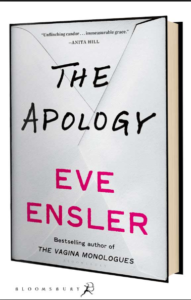
In her new book The Apology, Eve Ensler — best known for her groundbreaking play Vagina Monologues and for her activism in the movement to end violence against women — imagines her now-deceased father apologizing for having abused her sexually when she was a child. In a podcast conversation about the book with comedian and writer Marc Maron, Ensler observes that while the #MeToo movement has exposed the endemic abuse perpetrated by powerful men, we have yet to see many, or any, of those men make a serious commitment to accounting for their behavior. With this book, she tells Maron, “I thought to myself, maybe I could write what I want to hear, maybe I could write the words and what it would sound like and look, so it could be a possible blueprint.”


It seems that the #MeToo movement has reached a plateau. The consequences for the perpetrators are stuck in limbo as society searches for the means to effect necessary systemic change. As Ensler says to Maron, “We’ve broken the silence. But now men have to do their part of this or we’re not going to move forward.”

Almost none of the prominent men exposed and demoted by #MeToo has offered a real apology — let alone an act of contrition. Charlie Rose, Louis CK, Russell Simmons, James Toback, and Kevin Spacey all issued statements laced with puzzlement, self-pity — or, in Toback’s case, outright hostility. Others verged on the satirical: celebrity chef Mario Batali sent a mass e-mail apology that included the postscript: “In case you’re searching for a holiday-inspired breakfast, these Pizza Dough Cinnamon Rolls are a fan favorite.” The writer Geraldine DeRuiter won a James Beard Award for an article in which she frames her experience of following Batali’s failed recipe as a satirical allegory for his non-apology.


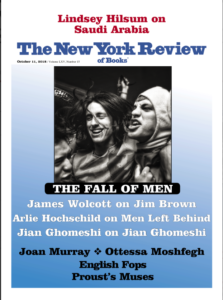
Quite a few of these men tried to fast track a comeback, circumventing both apology and expressions of contrition. Charlie Rose approached feminist editor Tina Brown with the idea that she produce a program with him interviewing prominent men who had been toppled by #MeToo (she declined). Louis CK received a standing ovation when he appeared unannounced to do a stand up set at New York’s famous Comedy Cellar, only a few months after he acknowledged that he had on several occasions stripped naked and masturbated in front of female comedians whose nascent careers were predicated on his goodwill. And last October The New York Review of Books published a 3,000-word, first person essay by Jian Ghomeshi, the disgraced Canadian former radio show host. The CBC fired Ghomeshi in 2014 after learning that the Toronto Star was about to publish an investigative report detailing credible accusations that he had for years battered women during sexual encounters, and had abused women who worked for him. Titled “Reflections from a Hashtag,” the essay is redolent of narcissism and self-pity. It begins:

Not so long ago, I spoke to hundreds of thousands of listeners across North America every day on a public radio show. These days, the closest I come to public performance is at a neighborhood karaoke bar in New York. Even that can have its perils.

Ghomeshi was oblivious to the rather obvious contradiction in having been granted the platform of one of the most prestigious publications in the English language from which to proclaim that he had been silenced. Reaction to the essay was swift and negative, rising to a crescendo of outrage after Ian Buruma, then editor of the NYRB, made some egregiously tone deaf remarks in a follow-up interview conducted by Isaac Chotiner for Slate. One line in particular lit up the internet. In response to Chotiner’s observation that several women had credibly accused Ghomeshi of having punched them in the head during sexual encounters, Buruma responded:

The exact nature of his behavior — how much consent was involved — I have no idea, nor is it really my concern.

For Buruma, apparently, the fact that a Canadian court had declined to convict Ghomeshi of rape based on existing jurisprudence was the only relevant consideration. His response indicates that he is not at all interested in issues of morality, in the feelings of women. Nor does he address the question of whether or not jurisprudence is equipped to provide justice to women in cases of sexual assault that do not meet the legal definition of rape. Buruma seems not to know (or perhaps does not care) that Ghomeshi acknowledged, in a first-person essay published on his Facebook wall, that he committed many violent sexual acts on women. Ghomeshi claimed they were consensual “rough sex,” but his essay does not include the viewpoints of the women who accused him of assault. Is being fired from their jobs and socially marginalized sufficient punishment for these men? There are those who say yes, and who further assert that women who demand punishment that goes beyond sanctions are indulging in gratuitous rage. In response, feminist journalist Rebecca Traister offers this observation in an essay published for New York magazine's The Cut:

Today, there’s quite a bit of blowback at these guys on social media. Which makes it crucial to point out that irritation — or flat-out rage — at the men attempting professional comebacks after having been credibly accused of sexual harassment and abuse isn’t necessarily about a punitive urge to see them forever in purgatory.

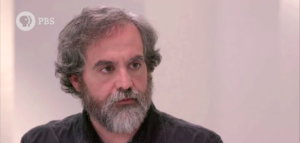
The goal, in other words, is not to seek eternal damnation for these men, but rather to see them doing the kind of work that would actually change the paradigm. So far, none have accepted this challenge. There is, however, at least one recent example of a famous man who did offer a considered apology to the woman he had assaulted. Late last year the journalist Zainab Salbi interviewed Devin Faraci, once an influential film critic who was editor in chief of birth.movies.death, for a PBS television series called #MeToo, Now What? Today, Faraci earns his living making coffee at a Starbucks; he resigned his editorship after a woman accused him of sexual assault. Separately but in the same episode, Salbi also interviewed Caroline Contillo, Faraci’s accuser. Caroline told The Conversationalist that PBS had informed her they would do a segment on Faraci with or without her involvement. Faraci’s fall predated #MeToo by about one year, and he truly brought it on himself. A self-proclaimed feminist, he tweeted his disgust at the infamous Access Hollywood tape, in which Donald Trump boasted of having committed sexual assaults on multiple women, by “grabbing them by the pussy.” In response to Faraci’s comment, Caroline Contillo fired off a tweet, in which she accused him of having done the same thing to her. Within days of the ensuing Twitter storm, Faraci, who acknowledged a severe alcohol problem that causes him to black out and often precipitated bad behavior, apologized and resigned. But just one year later, he was quietly rehired. This premature attempt at reestablishing his career elicited a cascade of negative reaction, and Faraci resigned for a second and final time. Here the story deviates from the script: rather than licking his wounds angrily as he searched for another way to make a professional comeback, Faraci entered a 12-step recovery program. He now seems committed to a process of transformation and to making an authentic apology. [caption id="attachment_1275" align="alignnone" width="300"] Devin Faraci (screencap)[/caption] While Salbi’s separate interviews with Caroline and Faraci are short and somewhat superficial, they do provide insight into the impact of sexual assault and the power of a sincere apology. A victim who receives an acknowledgement of wrongdoing and a heartfelt expression of contrition from the perpetrator can experience a powerful physical and emotional response. In the interview, Contillo tells Salbi that while the assault itself was terrible, a “larger psychological pain had lodged itself” in her body. Caroline Contillo highlights one of the less understood effects of trauma — that it invades the body and stays there, long after the physical act. Ensler says the same thing to Maron: that when a victim receives an apology that carries empathetic recognition by the perpetrator, it causes a physical reaction. Contillo said that Faraci’s apology provided relief not only because she could let go of the pain, but because she now felt that she was “living in a culture that suddenly seemed to care about” women who had been sexually assaulted or preyed upon. Faraci offered his considered apology as part of a 12-step program. He said he had been eager to offer it sooner but was counseled to wait for that stage of the recovery process (step nine of the 12 steps); he decided “to trust the process.” In Alcoholics Anonymous, as in other frameworks for personal transformation, an apology is valued for its sincerity. Absolution is a nice bonus, but it is not the motivating factor. In an email to The Conversationalist, Contillo writes, “My acceptance of his apology was an indication that I believe he could change — not evidence that he has.” But she does seem to feel that PBS coerced her to participate in the #MeToo program by telling her that the interview with Faraci would be broadcast with or without her participation, and that Faraci overstepped by failing to inform her before publishing a blog post about his apology and her having accepted it. Contillo says that she is not “optimistic that any deep-seated transformation has taken place.” But perhaps she would feel differently if PBS had approached her with more compassion, and if Faraci had consulted her before publishing his blog post. “Does a sincere apology hold the key to transformation?” Contillo wonders.

I totally believe so. I had hoped to talk on the PBS show more about that, and my work with the Zen Peacemakers, who do reconciliation work. But I quickly realized when I was on set that it wasn't really going to be about that. I do hope that story gets told: that when we can face a seemingly intractable situation of harm without turning away and without jumping in to fix it with a transaction, shifts can happen.

The power of Eve Ensler’s book is that it offers real insight into how to engage with what the perpetrator did while finding a way toward reconciliation and healing. The father she conjures is fully human, even as he speaks to her about his monstrous acts. Without excusing his behavior, Ensler draws from the depths of empathy to understand how a father could do such harm to his daughter. She shows the darkest interiors of human behavior, but also finds the source of the hurt and anger that cause it. In writing the book, Ensler experienced what she calls the “alchemy of the apology.” In her conversation with Maron she says that it “changes the chemistry of your own being.”

It starts to release things that have just been stuck there — and not knowing…and searching…why did this person do this to me?”

Maron’s own reaction to reading the book seems almost to be an incarnation of that alchemy, of exactly what Ensler intends the book to do. Throughout their podcast discussion he is clearly grappling in near-agony with toxic masculinity, as he experiences it and as he observes it in others. He is unpacking the issues in real time, with Ensler as his interlocutor-slash-therapist. For Ensler, the conversation with Maron is an opportunity to see the book’s effect on a male reader. That is why, although The Apology is a brutal account of what her father did to her when she was a child, it also offers, as Ensler describes it “a bridge.” She asks:

“Do we want to keep punching at each other or do we want to stop violence; to build a world where women feel equal and free and safe and men feel really good about that, [so that] they feel like we are all in the same story?”

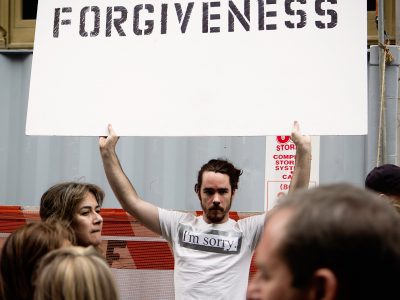
While #MeToo raised awareness significantly of the pervasiveness of predatory male misbehavior and its corrosive effect on women, the road to change is paved with many obstacles. If we are to uproot this pervasive, toxic behavior from our society, we will have to embark on a painful but necessary transformative process that includes truly sincere, well-considered apologies from the perpetrators to their victims, with no strings attached. One of the positive effects of the heightened awareness that comes with #MeToo is that now we know what we need to do; the issue is finding the will to do it. Ensler’s The Apology provides the roadmap to change. Devin Faraci and Caroline Contilllo's experience shows the direction this process can take. Certainly, transformative justice is a tricky thing to achieve. Society does not usually reward those who undertake the painful process, while establishment forces like lawyers and public relations agents caution their clients against it. But if we are truly committed to changing the status quo, then we must also commit to the process — painful though it may be. [post_title] => When 'I'm sorry' is meaningful: seeking transformative justice in the age of #MeToo [post_excerpt] => As the #MeToo movement struggles to define adequate punishment for perpetrators of sexual violence, a new book explores the power of a sincere apology. [post_status] => publish [comment_status] => closed [ping_status] => open [post_password] => [post_name] => when-im-sorry-is-meaningful-seeking-transformative-justice-in-the-age-of-metoo [to_ping] => [pinged] => https://www.hollywoodreporter.com/news/drafthouse-caught-firestorm-as-devin-faraci-breaks-silence-1039241 [post_modified] => 2024-08-28 21:14:03 [post_modified_gmt] => 2024-08-28 21:14:03 [post_content_filtered] => [post_parent] => 0 [guid] => https://conversationalist.org/?p=1270 [menu_order] => 309 [post_type] => post [post_mime_type] => [comment_count] => 0 [filter] => raw )
When ‘I’m sorry’ is meaningful: seeking transformative justice in the age of #MeToo

WP_Post Object
(
    [ID] => 1181
    [post_author] => 2
    [post_date] => 2019-06-28 16:16:18
    [post_date_gmt] => 2019-06-28 16:16:18
    [post_content] => Even peaceful, prosperous Canada is not immune from the populism that thrives on tribal anxiety and prejudice. 

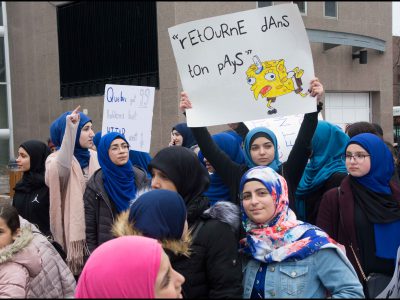
Last week Quebec, Canada’s second most populous province, passed a law that bans public employees from wearing religious symbols at work. Known as Bill 21, the law would force public school teachers, police officers, Crown attorneys, and judges who wear hijabs, turbans, or yarmulkes, to choose between their religion and their profession.

Quebec is not the only democracy to enforce this type of ban in the name of separation of religion and state: France bans Muslim women from wearing a burqini to the beach or a headscarf to teach in public schools; and Turkish law prevented women who wore the hijab from working as public servants or even attending university until 2013.

But Canada’s international reputation is, not unjustifiably, one of tolerance and acceptance. The federal government has pursued a policy of multiculturalism since 1971, and more recently Prime Minister Justin Trudeau set a widely lauded example when he opened Canada’s doors to over 25,000 Syrian refugees.

Across Canada, Quebec’s new law is controversial at best. Legal scholars have suggested that it violates Canada’s Charter of Rights and Freedoms, while the city of Brampton in the neighboring province of Ontario has voted to support a legal challenge against the law. Meanwhile, the vast majority of Quebecois — beyond the multicultural city of Montreal — approve of the new law. 

Why do Quebec attitudes toward multiculturalism and religious practice differ so starkly from those held in the rest of Canada? The complex answer is found in Quebec’s post-World War Two history.

During the 1960s Quebec underwent a radical social transformation known as the Quiet Revolution. In a single decade, the once impoverished and largely agrarian province transformed itself from a society dominated and controlled by the Catholic church, which overwhelmingly dictated public mores and laws, to a modern, staunchly secular province that rejected religion and its institutional power. Between 1960 and 1970, Quebec’s birth rate declined from Canada’s highest to its lowest; and its once heavily attended churches are now used as restaurants, gyms, and performance spaces.

The process of secularization applied to all of the province’s public institutions, from its schools and universities to its hospitals and welfare system. It was accompanied by a resurgent national identity that rested on the twin pillars of the French language and secularism. Quebec is today a prosperous middle class society with a comprehensive social welfare system administered by the province rather than by the Church.

Sixty years later, many in Quebec see Bill 21 as the next necessary step in that evolution and an extension of that same social project. But nothing could be further from the truth.

The Quiet Revolution was a peaceful social movement that forever altered Quebec’s political and social landscape. It allowed the French-speaking majority to establish its primacy on the political, social, economic and cultural stage at both the provincial and the federal level. But the current movement is not about promoting the rights of the majority. Rather, by seeking to establish secularism as part of Quebec’s national identity, the provincial government is sacrificing the rights of the province’s minorities. A movement that was once about positive self-affirmation is now simply a reactionary rejection of others.

Ignoring its critics and refusing to debate, the government’s center-right Coalition Avenir Quebec (CAQ), led by Premier François Legault, rammed Bill 21 through the legislature by preemptively invoking Section 33 of the Canadian Charter of Rights and Freedoms, which is a rarely-used override power often referred to as the “notwithstanding” clause. In other words, the CAQ circumvented both the Quebec and Canadian Charter of Rights and Freedoms, thus preventing the new law from being struck down in court for the next five years. It also shut down debate by invoking closure, and by introducing last-minute amendments that outline surveillance powers for the ministry and rules of enforcement.

The secularism championed by Quebec’s Quiet Revolution stemmed from a deep-rooted and understandable desire by the French-speaking majority to rid itself of the Catholic Church’s asphyxiating control over the government and reaffirm its proud transformation into a modern, secular French-speaking state. In sharp contrast, Bill 21, a far more restrictive form of secularism imported from France, is primarily motivated by Quebecers’ antipathy for religion — primarily non-Christian faiths. This is not religious neutrality: it is religious persecution. The overwhelmingly white French speakers of Quebec are succumbing to anti-Muslim prejudice.

The populist CAQ tapped into this prejudice during the November 2018 election campaign; it now bases many of its legislative decisions on people’s fears rather than on facts.

Bill 21 is a response to the zeitgeist. The fear of Muslims that started with 9/11 spread to Quebec, bringing with it the impression that the government was making too many concessions to religious minorities. In 2006, Quebec created a special commission to study the “reasonable accommodation” of cultural minorities’ religious practices, in response to the perception that religion was making a comeback in the public sphere. In 2013, the Parti Quebecois, the nationalist party that ascended to power on the back of the Quiet Revolution in the mid-1970s, attempted to implement their questionably named Charter of Quebec Values, which sought to ban “ostentatious” religious symbols. The initiative failed miserably and the party was defeated by the Liberals. In 2015, Quebec’s Liberal government introduced their own version of secularism in Bill 62, which would prevent Muslim women wearing a burqa or a niqab from receiving government services. That, too, failed.

In 2019, Premier Legault’s government decided to circumvent the democratic process and put an end to long-standing debates on how to accommodate cultural minorities, by basically not bothering to accommodate them at all. His party’s goal is a homogeneous public face.

Legault, who denies that systemic racism or Islamophobia exist in Quebec, readily admitted in an interview with Radio Canada, Canada’s French-language public broadcaster, that Bill 21 “was a concession to people who are a little racist and don’t want to see religious symbols anywhere in public.” In a follow-up televised interview with the English-language CBC, Legault side-stepped the question of whether he felt empathy for a public school teacher who would have to remove her hijab if she wanted to keep her job. 

Exclusionary populism is defined by pandering to irrational fears and “solving” non-existent problems. Quebec has seen no incidents of religious proselytism or registered any complaint of bias by a public servant wearing a visible religious symbol. And yet hate crimes against Muslims have increased. Only three years ago, Alexandre Bissonnette entered a Quebec City mosque and gunned down six worshippers. 

In a brazen display of hypocrisy, the same Quebec government that demands concessions from people who wear visible religious signs has decided that schools and hospitals will not have to remove the crucifixes from their walls because they’re classified as “heritage” items. Private schools, most of which are Christian, are also exempt from Bill 21. In the meantime, a crucifix still hangs on the walls of the National Assembly and most schools and city streets are still named after Christian saints. 

Despite the CAQ’s insistence that the new law is meant to further Quebec’s commitment to secularism, a recent poll clearly points to prejudice against Muslims as the main motivator. Numerous French-language columnists and TV shows routinely discuss the “Muslim invasion” and a need for Quebecers to reassert themselves “before its too late.”

Meanwhile, Quebec’s largest French-language school board has announced that it will not apply the religious symbols law until it studies it further. The English School Board of Montreal has also said it will not comply with the law, although the government insists that it will not accept any delays. Civil liberties and Muslim groups have already vowed to challenge the bill and have filed an injunction in Quebec Superior Court, where a hearing is scheduled for July.

Bill 21 might feel like a win for the Legault government and its supporters, but it has created a divisive and contentious social climate. The legislation has been met with many legal challenges and by stinging criticism around the world. It could lead to a brain drain, as people who feel unwelcome in Quebec decide to live elsewhere. The CAQ might soon discover this “win” is more akin to a smugly defiant Pyrrhic victory.

In many ways, the legislation is an unfortunate manifestation of increasing concerns over immigration and its impact on Quebec’s national identity. But populism, which often seeks to provide simplistic solutions to complex problems and encroaching fears, is all the rage these days and certainly not unique to Quebec. From Brexit in the U.K., to The League in Italy, to Trumpism in the U.S., to Marine Le Pen in France, homogenous majorities struggle to come to terms with increasing diversity and religious plurality. In a 2005 opinion piece for The Times, Salman Rushdie writes:

In the age of mass migration and the internet, cultural plurality is an irreversible fact. Like it or dislike it, it’s where we live, and the dream of a pure monoculture is at best an unattainable, nostalgic fantasy and at worst a life-threatening menace.

The shifting relationship between nationalism, religion, and secularism continues to inform current debates about Quebec’s identity. Unfortunately, the deep-seated anxiety French-speaking Quebecers feel about their demographic future has caused it to justify exercising the same dogmatic social control on people’s appearance and way of life that, ironically, the Church once held. [post_title] => In Quebec, a new law forces minorities to choose between their religion and their profession [post_excerpt] => Despite the government' insistence that the new law is meant to further Quebec’s commitment to secularism, a recent poll clearly points to prejudice against Muslims as the main motivator. [post_status] => publish [comment_status] => open [ping_status] => open [post_password] => [post_name] => in-quebec-a-new-law-forces-minorities-to-choose-between-their-religion-and-their-profession [to_ping] => [pinged] => [post_modified] => 2024-08-28 21:14:03 [post_modified_gmt] => 2024-08-28 21:14:03 [post_content_filtered] => [post_parent] => 0 [guid] => https://conversationalist.org/?p=1181 [menu_order] => 317 [post_type] => post [post_mime_type] => [comment_count] => 0 [filter] => raw )
In Quebec, a new law forces minorities to choose between their religion and their profession

WP_Post Object
(
    [ID] => 1113
    [post_author] => 2
    [post_date] => 2019-06-14 15:48:34
    [post_date_gmt] => 2019-06-14 15:48:34
    [post_content] => The combination of jokes and storytelling has become a potent weapon in the culture wars

With “Nanette,” her critically acclaimed 2018 Netflix special, Australian comedian Hannah Gadsby inspired an international conversation about the purpose of comedy. During her hour-long monologue, filmed in front of a rapt audience at the Sydney Opera House, Gadsby challenges the idea that comedy is an effective means of dealing with controversial issues. In theory, she explains, comedy creates a connection through laughter; but in practice, it undermines serious discussions and perpetuates toxic norms.

Gadsby grew up lesbian and gender non-conforming in ultra-conservative Tasmania, where homosexuality was legalized only in 1997. Humor was her defence mechanism against fear and shame, but it also kept her from thriving. She has come to realize, she explains in “Nanette,” that the price of self-deprecating humor is her dignity. “I put myself down in order to seek permission to speak,” she says.

Storytelling succeeds where jokes fail, says Gadsby. They can provide answers by integrating marginalized voices in a three-dimensional way that is not just a setup and a punchline, but an arc with a beginning, a middle, and an end.  “What I would have done,” she said, “to have heard a story like mine, to feel less alone, to feel connected.” She adds: “This is bigger than homosexuality; this is about how we conduct debate in public about sensitive things.”

Comedy and storytelling

Several comedians and writers have embraced the challenge of creating films and television series that combine jokes and storytelling to catalyze and reflect new norms. “Booksmart,” a hilarious and charming new film directed by Olivia Wilde, brings marginalized voices into the mainstream and normalizes them. The film replaces the conventional teen rom-com device of shy boy and awkward girl with two socially awkward teenage girls, best friends, one of whom is straight and the other a lesbian. The girls don't bother to correct the impression of their performatively liberal parents, who believe the girls are romantically involved. On the eve of their high school graduation, they decide to misbehave radically for the first time in their bookish lives, which leads to a series of hilarious misadventures. The girls are precocious and they live in Los Angeles, but they are highly relatable and possess an age-appropriate innocence that transcends their coastal elite status. “Crazy Ex-Girlfriend,” an ingenious comedy that has as its protagonist a woman who is obsessed with a man she dated as a teenager, explores mental health seriously and unflinchingly rather than playing it for laughs. It works because the plots are hilarious and the characters compelling. The show manages to combine brilliantly written comedy and story development with a serious agenda — and on mainstream cable television. Premium cable channels have also been taking some chances with programs about the lives of social groups that were all-but unknown on mainstream television just a few years ago. HBO’s “Insecure,” for example, presents the lives of 20-something middle class African-American women. Star Issa Rae mines her own life in the series, set in Los Angeles. She works for a non-profit while Molly, her best friend since they were undergraduates at Stanford, is a corporate attorney. The series follows Issa’s foundering relationship with a live-in boyfriend, Molly’s awkward dating life, their career hurdles, and all the other universal agonies of fumbling toward adulthood — but presented through a lens that focuses on the unique aspects of the African-American experience in a white-majority society. If the series were about white women, “Insecure” would be a cliché. But because it’s about black women whose life experiences are as recognizable as that of Abbi Jacobson and Ilana Glazer of “Broad City,” it is revolutionary. “Crashing,” by and with Pete Holmes, and also on HBO, takes on comedy. Holmes’s character, based on a version of himself, is a white, Christian comedian pursuing his career in New York City’s less-than-earnest comedy scene. In this context, Holmes is the marginal one. Viewers gain a visceral understanding that there is no such thing as “normal,” and that diversity is what makes us human. As he struggles to make it, Holmes finds himself crashing on the couches of comedians who have achieved a degree of fame and financial success; this is a plot device that brings cameo appearances by pretty much everyone in the business — a true comedy nerd’s delight. “Crashing,” has taken on serious issues, such as addiction — with an amazing performance by veteran comic Artie Lange, who has struggled with addiction for decades. The series includes episodes with angry male comics who refuse to adapt to evolving social mores, as well as new female and non-white voices. “Crashing” was not renewed for a fourth season, which is a real loss for the broader conversation about comedy, especially about its changing landscape. The show upends the notion that sensitivity to new voices and old tropes will spell an end to “funny.” Instead it challenges the older guard to be more creative and opens the conversation to those that have been marginalized, which is a lot of very funny people. But scripted comedy and the traditional comedy set do pose limitations that underscore Hannah Gadsby’s central points. The characters are ultimately fictional, even if they are relatable and represent more diversity. They reflect real concerns, but they they don’t live beyond the page on which they are written.

Unscripted and stand-up comedy

One of the reasons the stand-up comic seems to offer truth, is that she stands there as herself, connecting with her audience through a combination of vulnerability and sharp insights. Comics tend to be quite open about their personal struggles and often draw on them for material. But the stand-up set is usually a well-honed combination of jokes and short stories. With “Nanette,” Hannah Gadsby shows that comedians now have a much broader range of options in which they can present their work. Comedy seems to have found its value as storytelling. “Nanette” is one example of this form, but podcasts seem to be the perfect storytelling platform.

Comedy and the podcast

Podcasting has helped the golden age of comedy to flourish. It also offers perhaps the most intimate ways of experiencing entertainment, as a one-on-one experience between the listener and the podcaster. In the case of podcasts hosted by people who allow the listener into their personal lives, a long-lasting bond is created. “My Favorite Murder,” a true-crime podcast hosted by Karen Kilgariff, a veteran comic and writer, and Georgia Hardstark, a Cooking Channel personality and food writer, embodies the way in which comedy can be a valuable storyteller, a medium for serious conversations, and a means to connect. They achieved this unintentionally, as a result of tapping into the zeitgeist. The format is simple: in each episode, the hosts take turns telling the story of their “favorite murder” – stories that have fascinated them and fed their obsession with true crime, ranging from Jon Benet Ramsey to the Golden State Killer. The retellings are not especially well-researched, with Hardstark and Kilgariff openly relying on Wikipedia, or episodes of true crime shows. The hosts also often mispronounce places and names, and sometimes have a tenuous grasp of history or basic geography. It is their very frank awareness of their ignorance, and their openness to being challenged, that taps into the vulnerability and empathy through which they connect — both to one another, and to their audience. Kilgariff and Hardstark have also arrived at their podcast with baggage they are willing to unpack. The two discuss their past substance abuse, eating disorders, failure to thrive in conventional settings (neither has a college degree), dysfunctional relationships, watching a parent succumb to Alzheimers, and ultimately, the way both have achieved growth through years of therapy. And it is clear they are sharing themselves in a way that they think will be valuable to others. Since its launch in 2016, the podcast has soared in the charts, sold out live shows nationally and internationally, and has a cult following of fellow “Murderinos.” Their fans are mostly women, who make up the vast majority of true crime fans. There are as many true crime podcasts as there are comedy podcasts, but with this combination, their talent and chemistry, and ability to connect through their own stories, the duo have captured a perfect medium for an audience that seemed urgently hungry for it. Their new memoir, “Stay Sexy & Don’t Get Murdered,” is an even more candid extension of the themes they have spoken about on the show. And they have bared themselves even more-so, to everyone’s benefit. The podcast has received thousands of emails over the years with fans expressing deeply personal reasons for feeling connected to and by the show. Between full episodes, MFM releases mini-episodes, with the hosts reading out a select few “Hometown Murders” sent in by listeners (really any true crime story that the listener has some kind of personal connection to). Almost invariably, the listener explains at the end of the show why it touched her, and expresses gratitude. One listener, who is a sex worker, told the hosts that they are “angels for trying to contribute to the [conversation around] the frequent mockery and stereotyping of violence against sex workers;” another wrote, after telling a story about her dad’s role in helping end a hostage situation, that “I am so grateful for the way you ladies talk and are so open about mental illnesses, it was (my dad’s) own bipolar disorder that led to the end of his life and I’ve always felt a stigma around his disease and death like it was an anomaly and isolate thing when really it’s everywhere and I appreciate your willingness to start an honest conversation;” and one woman wrote in to tell a story and thank them for, “helping this junior lawyer with long hours and unbelievable professional self-doubt.” In the interest of total disclosure, I once wrote them myself with a hometown story and thanked them for sharing themselves in the way they do. They were my loyal and constant companions who kept me feeling connected to the world when I was laid off from my job. Comedy has certainly grown to include more storytelling, and deeper excavations than throwaway punchlines. It helps that comedians often come equipped with a wide array of dysfunctions they are happy to discuss. Hannah Gadsby was right to question the value of comedy if it was used only as a means of defusing tension. But the medium seems to be expanding. It is becoming an avenue for serious conversations, and for a wider variety of us to connect.  Hannah Gadsby is returning this summer with a new special, “Douglas, we may well get a new verdict from her as well. It will be on Netflix in 2020. [post_title] => Comedy's role as a catalyst for social change [post_excerpt] => The combination of jokes and storytelling has become a potent weapon in the culture wars [post_status] => publish [comment_status] => open [ping_status] => open [post_password] => [post_name] => the-new-comedy-has-become-a-catalyst-for-social-change [to_ping] => [pinged] => [post_modified] => 2024-08-28 21:14:03 [post_modified_gmt] => 2024-08-28 21:14:03 [post_content_filtered] => [post_parent] => 0 [guid] => https://conversationalist.org/?p=1113 [menu_order] => 322 [post_type] => post [post_mime_type] => [comment_count] => 0 [filter] => raw )

Comedy’s role as a catalyst for social change

WP_Post Object
(
    [ID] => 826
    [post_author] => 5
    [post_date] => 2019-04-11 18:53:26
    [post_date_gmt] => 2019-04-11 18:53:26
    [post_content] => While the #metoo movement has led to a reconsideration of how masculinity functions in our society, it’s also important to be aware of when the movement acts to constrain conversations about modern feminism, and how to correct this problem.

Men convicted of gender-based crimes in El Salvador are required to enter a program on masculinity. The program seeks to correct the learned behaviors associated with a culture of toxic masculinity and has produced some promising results. Read more.

At Brown University, a program called called Masculinity 101 hosts discussion groups on what masculinity means, relationship dynamics, empathy with others, and male privilege. Other programs at colleges and universities have tried similar or related initiatives with mixed success. Learn more.

Students in a solutions journalism course at the University of Oregon reported on #MeToo initiatives on and off their campuses, asking tough questions about what works and why, and what doesn’t. It’s thoughtful work on an important subject. Read their stories here.

Journalist Sady Doyle tweeted an interesting thread this week, in which she posits that issues once classified as purely “feminist” are now labeled "#MeToo" issues. Doyle's argument mirrors the thesis that David Klion advances in an article for ANI, in which he points out that #MeToo makes both men and women of the ruling class nervous because it is essentially a labor movement, with women demanding the same salaries and opportunities currently available to their male peers. Click on the tweet embedded below to read the entire thread. 

https://twitter.com/sadydoyle/status/1114289946439897093

And then there’s this: what will history will say about the fact that the first, loudest, and best-funded films about the #MeToo moment all made by men? Read about that here.
    [post_title] => Stage two of #metoo: the pros, the cons & the consequences
    [post_excerpt] => 				Taking a look at how the movement has affected the expression of masculinity and where it will go from here.		
    [post_status] => publish
    [comment_status] => open
    [ping_status] => open
    [post_password] => 
    [post_name] => stage-two-of-metoo-the-pros-the-cons-the-consequences
    [to_ping] => 
    [pinged] => 
https://conversationalist.org/2019/02/14/why-metoo-makes-the-ruling-class-nervous/
    [post_modified] => 2024-08-28 21:14:03
    [post_modified_gmt] => 2024-08-28 21:14:03
    [post_content_filtered] => 
    [post_parent] => 0
    [guid] => https://conversationalist.org/?p=826
    [menu_order] => 341
    [post_type] => post
    [post_mime_type] => 
    [comment_count] => 0
    [filter] => raw
)

Stage two of #metoo: the pros, the cons & the consequences

WP_Post Object
(
    [ID] => 771
    [post_author] => 11
    [post_date] => 2019-03-29 15:21:53
    [post_date_gmt] => 2019-03-29 15:21:53
    [post_content] => While the world praises Prime Minister Jacinda Ardren and the people of New Zealand for their compassionate, inclusive response to the Christchurch mosque attack, a more complex and nuanced conversation about the flaws in their society is taking place at home 
(with contributions from Brannavan Gnanalingam, Laura O’Connell-Rapira, Lamia Imam, and Jess Berentson-Shaw)
The world has been riveted by New Zealand’s response to the terror attack committed on March 16 by a white nationalist, who murdered 50 Muslims attending Friday prayers at two Christchurch mosques. Prime Minister Jacinda Ardren’s response, from her “they are us” to her insistence that she will not say the name of the attacker, has been heralded as a new standard in how to respond to such events. Meanwhile the public reaction — with New Zealanders gathering spontaneously in their thousands to stand in silent vigil around mosques all over the country for the first Friday prayers after the attack, has been praised as an example of compassion and tolerance. But in New Zealand, the public conversation about our response to this attack and what enabled this to take place in our country is more complex. Many New Zealanders have been challenged by what appear to be two mutually exclusive stories about who we are, as individuals and as a nation, in the wake of these attacks. On the one hand, our Prime Minister rapidly assured us and the world that this attack was an abomination against the values of tolerance and inclusiveness that we as a nation hold dear. In her first public statement after the attack, Ardern was unequivocal: the person who carried out the massacre was not ‘us’. Many New Zealanders were more than ready to believe her, and to identify with Ardern as a representation of who we really are — compassionate, empathetic, inclusive. Resolute in the face of hatred and terrorism. But there is another story being told in these days of grief and reckoning. It’s the story of Muslim New Zealander Lamia Imam’s experiences as a student in Christchurch, learning to stomach racism because ‘it wasn’t a big deal.’ “When white nationalists were congregating in Christchurch I was alarmed but let it go because ‘it is their country and they can choose to hate people'," she said. Anjum Rahman of the Islamic Women’s Council of New Zealand has written about the lengths her group went to, over five years and two governments, to draw attention to the growing threat of anti-Islamic and racist activity in New Zealand.

"We begged and pleaded, we demanded. We knocked on every door we could. … We told them about our concerns over the rise of vitriol and the rise of the alt-right in New Zealand. We asked them what resources were being put in to monitoring alt-right groups."

So which is it? Is New Zealand a country, as our prime minister has asserted, in which there is no place for the ideologies espoused by the Christchurch mosque terrorist? Or are we a country in which Islamophobia and racist hatred has been directed towards Muslim women for years, with little apparent action from our government? The mosque massacre has forced many New Zealanders to face this gap between who we want to believe we are and who we actually are.

A tale of two New Zealands

It’s the gap between the New Zealand that stood in silence outside mosques all over the country as our national radio station played the Islamic call to prayer, and the New Zealand that provides a man who compared immigrants to a snake with one of the largest media audiences in the country. It’s the gap between the New Zealand in which thousands of people stood together at vigils over the past two weeks to sing traditional Māori songs of peace, lament and love, and the New Zealand in which people regularly complain about te reo Māori — an official language of our country — being spoken on public radio, or taught in our schools. Some commentators in New Zealand have responded defensively to these competing stories, decrying it as a ‘narrative of self-loathing that wants us to think the worst of ourselves’. As one writer put it, we have to choose whether the true version of our country was to be represented by ‘a few misanthropic cranks who haven't yet got their heads around the new multicultural New Zealand, or the countless thousands of New Zealanders who attended vigils, donated money or quietly grieved at home for fellow citizens who happen to be Muslim’. But perhaps both these things can be true. For many New Zealanders, this tension has always been apparent, as has the fact that racism in New Zealand exists well beyond ‘a few misanthropic cranks’. New Zealand lawyer and writer Brannavan Gnanalingam, who was born in Sri Lanka, says that growing up, he thought Aotearoa (the Maori name for New Zealand) had a curious form of racism.

"Most people on a day-to-day basis were generally friendly to your face, but also subscribed to racist narratives that meant structural racism got embedded, particularly towards Māori. It meant we put up with casual racist jokes from friends and colleagues or faced racism from complete strangers without warning. The thing was, the discursive frameworks used in all of those 'light' situations were the same discursive frameworks used by those with far more nefarious motives."

For others, like Lamia Imam, the mosque massacre meant she could no longer maintain the illusion of the ‘better version’ of New Zealand.

“I looked at my New Zealand passport with pride and told myself I came from a country that was more compassionate and kind, a country that was slightly better. Today we are no better. We as a country failed to stop something horrific, because we like to believe we are better.”

One of the reasons these two competing narratives have taken so many by surprise, suggests Gnanalingam, is because of the highly segregated nature of New Zealand society.  

"We've got a very segregated society — class-wise, racially, politically. Christchurch took some Pākehā (white New Zealanders) by surprise because their everyday life didn't come into contact with people who subscribed to the terrorist's views. It meant they were very complacent. It also meant insidious narratives get embedded because there's no-one challenging it. Our mainstream culture is far too anti-intellectual and monocultural for that."

A leader who reflects her people

Reconciling this tension has been a challenge for Jacinda Ardern. Her first instinct — to reassure New Zealand and the world that this attack was entirely out of character for our country — was met with widespread approval at home and abroad. But as the narrative here in New Zealand has become more nuanced, and as time has passed since the attack, Ardern has begun to find ways to acknowledge the racism and intolerance that exists in our country. Ardern’s leadership has been seen by many New Zealanders to represent and reflect the best version of ourselves. She has shown very genuine empathy for the survivors and the families of those killed. She has been clear on the nature of this attack and resolute in her commitment to not naming or in any way elevating the profile of the attacker. She has demonstrated rare political skill in negotiating the support of both her more populist coalition partner and the opposition party for gun law reform. In the widespread, and justified, global admiration of Ardern’s empathy and compassion in the wake of the Christchurch attacks, her determination and political skill have perhaps been underplayed. Behind her ability to reflect back to us the best of who we want to be, is there something particularly ‘Kiwi’ about our Prime Minister? Ardern grew up in a small, working class rural town. Her father was a police officer, her mother worked in the school-cafeteria. They were members of the local Mormon congregation and Ardern has credited her upbringing as the source of her relatability, empathy and compassion. But as commentator Jess Berentson-Shaw has pointed out ‘there is something more important than our prime minister's empathy and compassion’ being demonstrated in her response to the mosque attack.   

"It is this: she has inhabited a role that was thrust upon her, and responded with a style of leadership that is guided not by a desire for personal recognition, but by a very clearly articulated set of collective values. She seems utterly genuine about putting others' needs before her own. Jacinda Ardern is restoring, in a uniquely 21st century way, the old-fashioned notion of public service."

That this public service leadership feels extraordinary, and so different from other leaders, says Berentson-Shaw, speaks volumes at how far we have travelled from what leadership should be. However, as she goes on to say, this commitment to serving the collective good is not without precedent in New Zealand. It has been demonstrated, ‘for decades, centuries even’ by Māori.

"Many Māori have made endless attempts to work with the Crown, and all New Zealanders, to find resolution and repair for violence and hate, intolerance and theft, enacted against them for decades. ... Yet they have been prepared to rebuild relationships. Māori have shown tolerance, and a willingness to work with Pākehā [white New Zealanders], even when Pākehā  refuse to see those efforts."

Maori lessons in grieving

In the immediate days following the attacks in Christchurch, it was to the example set by Māori that New Zealand looked for a guide on how to conduct ourselves. Māori campaigner Laura O’Connell-Rapira explains:

"In Māori culture, one of the most important aspects of losing a loved one is the tangihanga or tangi. The word means to weep and sing a lament for the dead. People travel from all around the country and world to these funerals to share in grief and memories of those who pass. The vigils that have been attended by tens of thousands of New Zealanders serve very much the same purpose."

In the wake of the attack, Māori from across New Zealand and Australia have also been captured, and shared across social media, performing haka to express solidarity with the Muslim community. The haka, popularised by the All Blacks, and often mistranslated as a ‘war dance’ is so much more than that. Haka can be a way of expressing grief, love, support, mourning. The week following the terror attack, Christchurch iwi (tribe) Ngāi Tahu opened their marae (spiritual meeting homes) to the Muslim community to sleep, pray and mourn their loved ones. This concept of opening up your home to others is based on a principle called manaakitanga, which means to ‘care for and uplift a person’s mana,’ or well-being in a holistic sense. So, if we turn so readily to traditional Māori values and practises to guide us in how to deal with grief and loss and prioritise collective care in our response to Christchurch mosque attack, asks O’Connell-Rapira, why haven’t we listened to Māori when they have repeatedly told us about the need to address our country’s racism? Countless commentators of colour including Muslims, Māori and migrants have been calling for New Zealanders to make the connection between this act of white supremacist terror and colonization. So much so it prompted a walk-out at an Auckland vigil. As wise elder and Māori lawyer Moana Jackson points out, “In many ways, today’s white supremacists are the most recent and most extreme colonizers." Laura O’Connell-Rapira adds:

"The person who killed 50 Muslims did so because he believes white people are superior to people of colour and he (and we) live in a society that promotes that message in a number of ways. Early colonizers also believed white people were superior to people of colour, so much so they kill(ed) us."

Recognizing colonial history

If we really want to do everything we can to ensure that this kind of violence is ‘never again’ perpetrated in our country, this may be the painful bridge we have to cross — a recognition that this is not the first time we’ve seen this scale of white supremacist violence in our country. That, in fact, the modern nation of New Zealand was built on such violence. Pākehā New Zealanders don’t have a good track record when it comes to having the ugly truths of our nation’s history pointed out to us. So the burning question is whether, as we reach for the best versions of ourselves in the wake of the Christchurch attacks, we will find the courage to look beyond the surface story of a compassionate, inclusive and tolerant New Zealand, to face the fuller, more complex story of our colonial history and its remnants, which continue to shape our country today. Marianne Elliott is co-director of The Workshop, an independent, non-profit policy and communication think tank based in Wellington, New Zealand. Follow her on Twitter @zenpeacekeeper [post_title] => After Christchurch: a tale of two New Zealands [post_excerpt] => Over the two weeks since the Christchurch mosque massacre, Prime Minister Jacinda Ardern has begun to find ways to acknowledge the racism and intolerance that exists in New Zealand. [post_status] => publish [comment_status] => open [ping_status] => open [post_password] => [post_name] => a-tale-of-two-new-zealands-and-the-journey-toward-reconciliation [to_ping] => [pinged] => [post_modified] => 2024-08-28 21:14:03 [post_modified_gmt] => 2024-08-28 21:14:03 [post_content_filtered] => [post_parent] => 0 [guid] => https://conversationalist.org/?p=771 [menu_order] => 344 [post_type] => post [post_mime_type] => [comment_count] => 0 [filter] => raw )

After Christchurch: a tale of two New Zealands

WP_Post Object
(
    [ID] => 730
    [post_author] => 2
    [post_date] => 2019-03-15 16:32:04
    [post_date_gmt] => 2019-03-15 16:32:04
    [post_content] => Thousands of Pakistani women took to the streets of cities across the country to demand gender equality. 

On March 8 thousands of women took to the streets of Pakistan's cities to join the Aurat March, or Women’s March, and demand their rights. The atmosphere was exuberant and hopeful, and the march felt as though it were an announcement: a new generation of homegrown feminists had come of age. In their battle for gender equality, however, Pakistani women face some heavy and unique socio-political challenges. 

The demands voiced by the women who assembled in urban areas across Pakistan might sound anachronistic or quaint to Western feminists. In addition to calling for an end to violence toward women, they chanted and carried signs for a living wage for female workers, for increased political participation — and the right to move freely in public spaces. 

In Pakistan, the march’s detractors claimed that it was copied from the Women’s March that took place in the United States in January 2017. Given the very tangible risks Pakistani feminists face, this dismissive attitude is at best ignorant. The women who marched in the United States did not fear physical violence or social condemnation. And the women who marched in Pakistan were inspired not by foreign activists, but by homegrown feminist icons.

The Aurat March is only the latest iteration of a complex feminist movement Pakistan, which was recently declared the sixth most dangerous country in the world for women.

The power of the patriarchy

Pakistani feminists seek to raise awareness among their female peers about their basic rights. Women have the right, for example, to safety and security; to freedom from gender-based discrimination and from sexual harassment. They have the right to equal career opportunities, to schooling and healthcare. Women in Pakistan are struggling against decades, if not centuries, of strict gender roles defined by one of the harshest patriarchies in the world. That patriarchy implements strict control over all areas of girls’ and women’s lives. It enacts violence on women’s bodies, using a strict interpretation of Islam as justification for this misogyny. Pakistan’s legal system perpetuates this. While pro-women laws have been passed by the government,  the police do not enforce them and the legal system rarely prosecutes them. Pakistani feminists also face accusations that feminism is a movement of the privileged, or the Western-educated; that by fighting for women’s rights they are undermining Islam, which they claim already gives women their rights in the context of religious law. In conservative Pakistan, all revolutionaries are accused of immorality and obscenity, and of causing social upheaval and corruption. But the backlash against the feminist movement is even more vindictive than usual. It is colored by misogynist abuse and condescending dismissal that comes from even the most educated men and women — because they are heavily invested in the patriarchal structure of the country, which is the source of their privilege.

Accusations of foreign influence

Some of the suspicions toward the Pakistani feminist movement comes from the fact that Western feminists have, particularly since 9/11, attempted to impose their particular expression of feminism in non-Western parts of the world, such as Iran, Iraq, Afghanistan, and Pakistan, often in conjunction with foreign military interventions. Now, with the rise of global and intersectional feminism, “white feminism” is under strong criticism for its inability to place the voices of those non-Western women above its own agenda. But this criticism ignores the fact that there is a genuine home-grown feminism in all these non-western countries. It is led by local women who express their own needs and desires, form their own agendas, and fight their own battles.   Pakistani feminists have refuted accusations that feminism is a Western-imposed movement, or that it is secular (i.e., un-Islamic), by placing the struggle in the context of Pakistan’s social and political issues, and by addressing the immediate needs and concerns of Pakistani women. Feminists in Pakistan have coined the Urdu word behenchara, or sisterhood, to enact a feminist takeover of the word bhaichara, or fraternity.  They have also placed an inclusive, intersectional ethos at the center of the movement to bring together Pakistan’s diverse groups under the banner of yakhjeti, or unity.

Raising a grassroots movement

On March 8 Pakistani women gathered in Lahore, Karachi and Islamabad, just as they did in 2018. Following weeks of project-building, intense campaigning, door-to-door awareness-raising, and clear and urgent communication of their goals, they marched through public spaces. They made sure to express their message in a host of local languages, in order to make it accessible to as broad as possible a swathe of Pakistani society. They framed the struggle for women’s liberation as one that is inherently linked with the liberation of all oppressed groups and minorities. Last year, 5,000 women from all sections of society marched. They attracted attention from the media, both local and international, and starting a dynamic conversation on social media, in classrooms, and on television, about what feminism is and why it is necessary in Pakistan. This year the turnout was even bigger, as women across ethnic groups and religious sects, socioeconomic groups and gender identities, turned out to hear inspirational speeches from women leaders and representatives, to sing and dance and to take over the streets. In Pakistan, both dancing and taking control of public space are considered immoral behavior for women.

Pakistani feminists don’t need white saviors

The march was not limited to the educated, urban elite. The women of Sindhiani Tehreek, the rural Sindhi Women’s Movement, came to Karachi from Hyderabad and the village Jungshahi on the coast of Sindh. Women from the Hindu and Christian minority communities attended in Lahore and Karachi. Female health workers and midwives, who provide medical care in the most intimate of women’s spaces and have been identified as a major part of the grassroots feminist movement in Pakistan, took center stage at the march. Women marched in Peshawar, Quetta, Faislabad, Hyderabad, and Chitral too, bringing the numbers to nearly 8,000 across the country.  Pakistani feminists have never waited for Western feminists to instruct them in how to fight for their rights. Today a younger generation of feminists is building on the work of female activists who struggled against dictatorship in the 1970s. The Women’s Action Forum was at the forefront of that struggle against Islamist General Mohammed Zia ul Haq, who controlled Pakistan for a decade beginning in 1978. During that time of dictatorship and martial law, the regime stole many of the rights for which women had long struggled; trying to confine them behind the veil and in the home. The brave young women of WAF endured political oppression, social condemnation, and physical violence. In one infamous incident, during their protest on the Lahore Mall against the 1979 Hudood Ordinances — newly introduced laws that criminalized adultery and non-marital sex — police beat them and tried to disperse them with tear gas. The Pakistani feminists of 2019 are inspired by those women, who are now feminist icons, and their groundbreaking activism. Metaphorically taking the torch passed on from the previous generation, contemporary feminists formed a new collective last year; it is called Hum Aurtain (We Women —  the title comes from Pakistani poet Kishwar Naheed’s famous poem “We Sinful Women), and it was instrumental in organizing Karachi's Aurat March in 2018.

A second generation of homegrown feminists

Aurat March organizers made it clear that the march was not foreign-funded, nor funded by NGOs or corporations, and that there were no alliances with any political party. The Pakistani feminist movement is homegrown, inclusive, and intersectional.  They urged men to become allies and join the movement; standing against patriarchal structures, they said, was open to all. But the Aurat March of 2018 and 2019 did not happen overnight. Feminist groups and collectives like Girls at Dhabas, Aurat Raj, Women on Wheels, Girls on Bikes, and the Lyari Girls Café have been chipping away at those societal strictures for several years now. Thanks to their work, people are starting to challenge restrictive attitudes toward women. The work of Pakistani feminists will continue even after the high of the Aurat March 2019 fades away. Pakistani women are exploring female-led initiatives in technology and finance, women’s leadership in sports, academics, media, and the military. They have formed organizations that seek to put women on company boards, on panels, position them as experts in every field. Women in the rural areas area agitating for a living wage, for their work to be recognized as formal labor. Most excitingly, all of these components form a feminist discourse that is gaining momentum among young people, women, men, trans, straight, queer. Feminism is rapidly becoming part of the everyday conversation shaping a more progressive Pakistan. [post_title] => Pakistan’s feminist revolution: the second generation [post_excerpt] => Pakistani feminists have never waited for Western feminists to instruct them in how to fight for their rights. Today a younger generation of feminists is building on the work of female activists who struggled against dictatorship in the 1970s. [post_status] => publish [comment_status] => open [ping_status] => open [post_password] => [post_name] => pakistans-feminist-revolution-the-second-generation [to_ping] => [pinged] => [post_modified] => 2024-08-28 21:14:03 [post_modified_gmt] => 2024-08-28 21:14:03 [post_content_filtered] => [post_parent] => 0 [guid] => https://conversationalist.org/?p=730 [menu_order] => 348 [post_type] => post [post_mime_type] => [comment_count] => 0 [filter] => raw )
Poster for Aurat March 2018

Pakistan’s feminist revolution: the second generation

WP_Post Object
(
    [ID] => 611
    [post_author] => 6
    [post_date] => 2019-02-14 19:18:23
    [post_date_gmt] => 2019-02-14 19:18:23
    [post_content] => 


Critics of the #metoo movement see trends that threaten to undermine the privileges they regard as rightfully theirs

More than a year into the #MeToo movement, new stories continue to break about powerful men brought low over patterns of sexual misconduct. In January alone, singer R. Kelly, actor Kevin Spacey, and director Bryan Singer all saw real professional and legal consequences for years of sexual predation. The conversations #MeToo has inspired on long-festering issues of sexual harassment and gender discrimination are acquiring momentum and depth. But there is one aspect of #MeToo that has not yet received the attention it deserves — possibly because it is discomfiting to so many of its would-be allies — and that is the threat the movement poses to the ruling class.

The people who see this threat clearly are the critics of #MeToo who identify as social liberals. Many of them claim to admire the movement’s achievements, and to rejoice in the downfall of egregious offenders like Harvey Weinstein. But those same putative allies of the movement also sense that #MeToo represents a real threat to the social hierarchy from which they benefit — and this elicits deep anxiety and fear.

A challenge to the social order

#MeToo is, among many other things, a revolt against the establishment. It is a revolt against the inadequacies of the legal system that usually protects the rulers, even as it fails to protect vulnerable people from predators. Every #MeToo story represents accountability not just for a particular bad man, but for a wider network of people who have profited from enabling and protecting him. The movement has exposed a narrow, legalistic understanding of morality, whereby actions can only be judged by the standards of what is admissible in court. The #MeToo movement challenges everyone to uphold standards of ethical decency that do not fall under the rubric of the letter of the law. This is a threat to those who have benefited from the status quo.

The anxiety of the establishment has been palpable almost from the beginning of the #MeToo movement. The New York Times broke the Weinstein story in October 2017; within one month, Times opinion editor and columnist Bari Weiss was concern-trolling that “due process is better than mob rule.” In a November 2017 column titled, “The Limits of Believe All Women” Weiss writes: “In less than two months we’ve moved from uncovering accusations of criminal behavior (Harvey Weinstein) to criminalizing behavior that we previously regarded as presumptuous and boorish (Glenn Thrush).”

A month later, in a column entitled “When #MeToo Goes Too Far,” Bret Stephens stood up for Thrush, then a star reporter at the Washington bureau of the Times who was under investigation for sexually harassing much younger women. Dean Baquet, the newspaper’s executive editor, eventually decided that while Thrush had “behaved in ways that [the Times] does not condone,” he “does not deserve to be fired.” Instead, management decided to punish Thrush by suspending him without pay for two months, and by removing him from the prestigious D.C. bureau. Many eyebrows rose over this decision and the ambivalent message it telegraphed about the paper’s policy toward sexual predators on staff.

On the one hand, investigative reporters Jodi Kantor and Megan Twohey were doing Pulitzer Prize-winning work that took down Harvey Weinstein, one of the most powerful men in Hollywood, and inspired a global reckoning with sexual predation and the people who enable it. On the other hand, when one of the paper’s own staffers was credibly accused of behaving inappropriately toward much younger women, management decided against enacting a policy that protected women by making men like Thrush understand the cost of harassment and predation.

The law v ethics

In publicly defending Thrush before the investigation into his behavior had concluded, Weiss and Stephens were expressing a concern that went far beyond the impulse to protect a colleague. Their worry is one that has echoed during the #MeToo era: what if the movement gets out of hand and “mob justice” fills the vacuum left by the failure of the legal system to punish sexual predators and protect the vulnerable? If someone like Thrush hasn’t committed a crime according to the law, but he has, to borrow a phrase from Baquet’s statement, “acted offensively,” who decides on the appropriate punishment? Thrush’s fate showed that the privileges men like him had viewed as rightfully theirs were suddenly vulnerable. It is this understanding that elicits the fearful responses we see disguised as righteous indignation.

What really worried Weiss and Stephens, in other words, wasn’t the threatening work  environment that someone like Thrush might have created for younger women, but the idea that Thrush’s career trajectory might be affected negatively if he were judged by ethical standards instead of legal standards. In short, they were defending the freedom from accountability that is a perk of membership in the elite.

A September 2018 scandal involving an employee of Israel’s foreign ministry provides further insight into this anxiety. In the wake of credible accusations of sexual misconduct leveled by several women, David Keyes, who had been hired two years earlier as a spokesperson for Israel’s Prime Minister Benjamin Netanyahu, was forced to resign. Bret Stephens, who in his previous position as deputy opinion editor of the Wall Street Journal had worked with Keyes, commented on the record for the Times on this incident.

Back in 2013, Keyes, then a New York-based neoconservative activist, had frequented the Journal’s offices as part of his outreach to the opinion section. During this period, he propositioned at least four female Journal employees at the office. Stephens told the Times that “he gave Mr. Keyes a dressing-down, calling him a ‘disgrace to men’ and ‘a disgrace as a Jew,’ and barred him from the office without an appointment.” Stephens also said that in November 2016 he contacted Ron Dermer, Israel’s ambassador to the US, to warn him that Keyes “posed a risk to women in Israeli government offices.”

Stephens’s self-described actions in this story seem honorable at first glance. He chastised Keyes for his harassment of women at the Journal and he warned Keyes’s employer. But if Stephens knew that Keyes was harassing Journal employees, why didn’t he bar him altogether from the newspaper’s offices, instead of limiting him to visits by appointment? Why did a non-employee get to wander the Journal offices without an appointment in the first place, and why would anyone make an appointment with Keyes after being made aware of the serious allegations against him? Stephens also delayed contacting Dermer until months after Netanyahu hired Keyes as his spokesperson. He apparently took no further action after warning Dermer, and didn’t go public with any of this information until the story broke two years later.

These situations are, to be fair, not easy to navigate. Stephens might not have had enough information to take more drastic action than he did. Or he might have felt bound to respect the privacy of Keyes’s accusers, who had not yet gone public. And it’s also worth acknowledging that all of the incidents involving Keyes preying on women at the Journal took place before #MeToo, which upended everyone’s understanding of how someone like Keyes might be held accountable.

Who decides on justice?

But what’s striking about the way Stephens chose to handle the matter is that he deferred to Dermer’s judgment and kept the matter out of the public domain. Stephens balanced his desire to prevent workplace harassment of women against his relationship with Dermer, who is an extremely powerful figure in Israel and in the elite U.S. media circles in which Stephens operates; and he exercised the prerogative of powerful white men to decide how best to handle a male employee’s conduct toward women.

I don’t like Stephens’s work and I disagree with his politics, but this isn’t about picking on him. This is about identifying the real source of his concern regarding #MeToo — i.e., not that predatory men are being held accountable for their behavior, but that powerful people won’t be able to control the process of accountability, and that instead accusers will be able to try predatory men in the court of public opinion. Stephens isn’t defending the right to harass, but he is defending the right of people like him to decide what constitutes harassment — and what an appropriate punishment ought to be. He is defending, in short, the existing power structure.

Another recent example can be seen in Ian Buruma’s brief tenure as editor of the New York Review of Books. Last fall, Buruma decided, against the wishes of most of the NYRB staff, to publish a first-person essay by Jian Ghomeshi, the disgraced host of Q, a syndicated radio program, who had been fired from the Canadian Broadcasting Company (CBC) in 2014 after more than 20 women accused him of non-consensual violence during sexual encounters.

The Ghomeshi essay prompted mass outrage in the literary world and set off a storm of rage on Twitter. Then Buruma compounded his error by agreeing to an interview with Slate’s Isaac Chotiner, in which he made clear his ambivalence about #MeToo and his concern that it could have “undesirable consequences.” Of Ghomeshi’s actions, Buruma said “All I know is that in a court of law he was acquitted, and there is no proof he committed a crime.” He added, “The exact nature of his behavior — how much consent was involved — I have no idea, nor is it really my concern.” After the Chotiner interview, NYRB staff revolted, and the magazine’s publisher forced Buruma to resign.

Buruma, like Stephens, has not been accused of sexual misconduct. The unsettling thing about his actions is that he instinctively extended the benefit of the doubt to a credibly accused violent predator whose behavior had long been an open secret in Canadian media circles, tolerated by male executives who for years had considered Ghomeshi too valuable to fire. Instead of experiencing relief that such a dangerous man had been exiled from media, Buruma felt moved to give Ghomeshi a prestigious new platform, to facilitate his return to polite society, and to defend him on the grounds that he hadn’t been convicted in court. Ghomeshi is legally entitled to his freedom, but it’s men like Buruma who think he’s entitled to a powerful position in the culture as well.

Or consider the most recent edition of Esquire magazine. It features a cover story on a white middle-class 17-year-old boy in Wisconsin trying to navigate the murky waters of the post-#MeToo era. The teenager in question comes across as remarkably ordinary, but Esquire editor Jay Fielden provides a very telling reason for telling the boy’s banal story via one of the most widely read publications in print journalism. In an editor’s letter, he writes:

"The very social fabric of modern democratic civilization — watercooler BS, chats with cabbies and total strangers, dinner parties, large family gatherings — sometimes feel like a Kafkaesque thought-police nightmare of paranoia and nausea, in which you might accidentally say what you really believe and get burned at the stake."

Fielden mourns an imaginary era in which playing devil’s advocate at parties was a fun pastime (for white men like him, he neglects to add). And he expresses his concern that kids today are feeling overwhelmed by “the passions and change this moment has unleashed—#MeToo, gender fluidity, Black Lives Matter, “check your privilege,” and #TheFutureIsFemale.” #MeToo, of course, is the first item on the list.

Protecting one's own

Again, no one is accusing either Fielden or his teenage protagonist of having behaved inappropriately in their dealings with women. But Fielden shares with Buruma, Stephens, and so many other powerful white men in media an abiding concern that #MeToo represents a threat to him and to everyone else in his insulated world of upper middle class white people. It’s not sexual misconduct per se that he’s defending; rather, he is defending the right to be forgiven easily, to be protected from consequences, and to set the terms of debate, as men like Fielden can do by deciding who gets to be on the cover of a prestigious national magazine that is displayed on every newsstand in the country.

At its core, #MeToo is about who gets to hold power in the workplace. Until now, the people holding the power have been overwhelmingly white and male. Since almost no one gives up power and privilege voluntarily, these white men are obviously invested in maintaining the status quo. But even if that weren’t the case, even if the leadership class were fully representative of the country’s actual demographics, unaccountable power would be a problem in and of itself.

That’s why #MeToo frightens elites. It’s one thing to banish a handful of men for sexual predation or for using racial slurs, or even to replace them with leaders from the communities they offended and marginalized. It’s another thing to challenge the entire premise of their authority, to argue that the lowliest employees have a right to tell their story, to take private transgressions and make them public, to build solidarity with other people in the same position, and to rewrite the terms of one’s own employment without asking anyone’s permission. #MeToo isn’t just a cultural revolution; it’s a labor revolution, and it won’t be complete until the entire system that allows people to get away with predatory behavior is toppled.

David Klion is a freelance journalist who has written for The Nation, Jewish Currents, and The Guardian. Follow him on Twitter.


[post_title] => Why #metoo makes the ruling class nervous [post_excerpt] => The people who see this threat clearly are the critics of #MeToo who identify as social liberals. Many of them claim to admire the movement’s achievements, and to rejoice in the downfall of egregious offenders like Harvey Weinstein. But those same putative allies of the movement also sense that #MeToo represents a real threat to the social hierarchy from which they benefit. [post_status] => publish [comment_status] => open [ping_status] => open [post_password] => [post_name] => why-metoo-makes-the-ruling-class-nervous [to_ping] => [pinged] => [post_modified] => 2024-08-28 21:14:03 [post_modified_gmt] => 2024-08-28 21:14:03 [post_content_filtered] => [post_parent] => 0 [guid] => https://conversationalist.org/?p=611 [menu_order] => 357 [post_type] => post [post_mime_type] => [comment_count] => 0 [filter] => raw )

Why #metoo makes the ruling class nervous