Despite the threat of police violence and arrest, student-led protests against President Erdoğan and his ruling party continue across Turkey.
A wave of street demonstrations began rapidly taking over Turkey last month after a crowd of students at Istanbul University pushed back against, and ultimately overcame, a riot police barricade attempting to block their path. This feat was seen as a moment of encouragement and empowerment for a country that has long felt silenced by its current government, and has led to continued demonstrations across Turkey in the weeks since.
The students on March 19 were protesting the imprisonment of Ekrem İmamoğlu, Istanbul’s current mayor, and the biggest rival of President Recep Tayyip Erdoğan in the next presidential election. They were also protesting a court decision made the day prior that nullified İmamoğlu’s diploma, a controversial ruling that meant the mayor, a member of the main opposition Republican People’s Party, the CHP, would not be directly eligible for candidacy.
The ruling was taken as a major blow to democracy and rule of law both by his supporters and by the opposition, with the party’s chairman calling it a “black mark.” But it was only a foreshadowing. The next morning, İmamoğlu, along with some 100 people, including aides, business people, and other mayors of the metropolitan’s districts, were detained in their homes. İmamoğlu had been accused of corruption and terror for allegedly establishing an electoral alliance with the Kurds in previous mayoral elections.
The case against him was widely taken as politically-motivated—the law being utilized once again as a weapon to extend Erdoğan’s reign, and discourage and limit his critics. Many were also quick to call out the hypocrisy of the charges: President Erdoğan, founder of the ruling Justice and Development Party, the AKP, has himself been in talks with Turkey’s pro-Kurdish DEM Party to release Abdullah Öcalan, the imprisoned leader of the separatist Kurdistan Workers’ Party, the PKK, designated as a terror entity by Turkey and the U.S. alike.
In a handwritten note posted on Twitter/X while he was detained, İmamoğlu wrote, “My people will respond to those who steal the people’s will.”
Massive demonstrations immediately erupted across the country, in Istanbul, Ankara, Izmir, and tens of provinces, including Konya in central Turkey, a very conservative AKP stronghold. All were met with brutal police violence. At many of the protests, the riot police used tear gas, rubber ball rifles, and water cannons against the young protestors, many of whom had their faces covered to hide their identities, out of fear of losing their livelihoods.
For many, it was their first street demonstration. Many held various sizes of the Turkish flag, and banners—some humorous—expressing their resilience and upset.
Bülent Kılıç
On March 22, at the legal end of the mayor’s detention period, İmamoğlu and the CHP Chairman Özgür Özel both called for a demonstration at Sarachane, the metropolitan municipality’s headquarters in Istanbul’s historic Fatih district.
“The walls of fear have been overcome,” İmamoğlu said in his call, posted on Twitter/X—referencing a culture of fear that has been especially prevalent since 2015, when a war re-erupted with the PKK, and since 2016, when a U.S.-based Turkish cleric was accused of orchestrating a coup. Both paved the way for a more authoritarian environment, in which civil dissent would often be marginalized.
Hoping to deter protestors from attending the demonstration in Sarachane, the Interior Ministry imposed various travel restrictions in key provinces, including shutting down metro and bus stations to limit travel. But their efforts were unsuccessful. Hundreds of thousands surrounded the municipality in support of İmamoğlu, while many other demonstrators of various ages stood outside the courthouse in Caglayan, where the mayor’s hearing would be held throughout the night.
Ultimately, demonstrators were protesting what they believed to be an attack on Turkey’s democracy and core values. Facing a riot police barricade encircling the massive building, hundreds chanted, “Turkey is secular; it will remain secular,” and the famous Bertolt Brecht line: “All of us, or none!”
The court ruling came at early dawn: İmamoğlu and tens of aides were arrested for corruption, pending trial, which has since been postponed to July 11.
The decision drew masses more to the streets, mainly young people, many of whom viewed the ruling as an extension of Erdoğan’s corruption. For millions across the country, it was a drop too much following years of polarizing rhetoric and the criminalization of dissent in a crumbling economy.
“We are not here to support any political party,” Beyza Ozdemir, a 30-year-old screenwriter said in Sarachane, a day after the mayor was arrested. “I came because I want to defend my rights, my country; to stand against injustice. I’m here for the ruling government to resign.”
Alongside her friend, 27, Ozdemir explained that, like much of the population, they were just “surviving.” Under near-80 percent inflation, it has become nearly impossible to travel, own property, or make plans for the future in Turkey, something they blamed on Erdoğan and the AKP.
Other demonstrators said they were protesting for freedom of expression, justice, and in support of earthquake-proofing cities, following the devastating damage caused by the 2023 earthquake. Others said they were there because of the alarming femicide numbers, the destruction of nature, and the killing of strays in shelters. A majority said they came to protect the secular democracy entrusted to the Turkish youth by Mustafa Kemal Atatürk, founder of modern Turkey.
President Erdoğan, who’s been in the official power seat since 2003, called the demonstrations “a movement of violence” and “street terror.” But Beyza’s friend said that he felt like “a phoenix” standing among the crowds, chanting in solidarity, after years of being silenced following the massive 2013 Gezi Park protests against the same government, protests that were criminalized to the point of terror charges and a life sentence for a Turkish philanthropist, who is accused of undertaking an alleged organizational role.
Bülent Kılıç
Twelve years later, in Sarachane, the authorities would take similar, disproportionate measures once again. Caught on camera by photojournalists and protestors on the night of March 23, hundreds of riot police sprayed tear gas and fired heavy barrages of rubber balls directly at demonstrators, many of whom were just walking back to the metro at the end of the night.
Dozens of shoes were left behind by those who could flee. The next morning, members of the media, including internationally-acclaimed photojournalists, were detained on morning raids along with hundreds of young demonstrators, many of them university students.
All were accused of violating the law on meetings, and were imprisoned pending trial. Immediately, a public campaign to release them began, underlining that they were simply using their constitutional rights to protest. The campaign gained momentum on various social media and opposition platforms, which seems to have helped most of them to be freed, but with tens still imprisoned.
The protests continued. Following the last day of the mass gathering in Sarachane, on March 25, the CHP announced a demonstration in Maltepe, across the Bosphorus, the weekend following. They claimed 2.2 million people attended the event in solidarity.
The next day was the beginning of a government-imposed nine-day religious holiday, Eid al-Fitr, putting a temporary end to the mass demonstrations. In response, the opposition called for a day of nationwide mass boycott to curb the AKP’s economic hinge, by stopping consumption fully, a goal that was supported by many shops and restaurants, which all closed for the day.
Some actors who supported the boycott were removed from their roles in state-owned streaming platform Tabii, while Cem Yiğit Üzümoğlu, who stars as Mehmed the Conqueror in Netflix’s Rise of Empires: Ottoman, was briefly detained.
While the heat of the mass street demonstrations has since slowed down because of the break, boycotts against pro-government brands and the student-led protests have continued. This month, videos of demonstrations held by high school students from various provinces have also started circulating. In one, tens of riot police are stationed outside Vefa High School in Istanbul, where one student holds a banner reading, “Rights, Law, Justice!”
Many universities across the country have also continued to hold sit-ins and forums, calling for more demonstrations on campuses and in the streets. They continue to demand the release of the remaining imprisoned students, and to defend their right to constitutional welfare and secular democracy under new leadership.
Bülent Kılıç
On April 8, a “resistance and solidarity concert” was held in Kadikoy, attended mostly by university students, with hundreds of riot police standing by. While letters from imprisoned students were read aloud on stage, slogans against Erdoğan and his government were chanted throughout.
“Turkey has major problems of injustice and corruption. These come together and threaten our future,” Ayse, a 25-year-old student, who did not want to provide her last name, said. She’s about the same age as the AKP’s political power.
“Our fight will not end upon the students’ and İmamoğlu’s release, but when Turkey becomes a just and equal country, providing a bright future for its youth,” she said. “Though, they should be released because they were only practicing their constitutional rights.”
Despite the growing authoritarianism, Ayse said she feels more empowered than ever before, thanks to the crowds surrounding her.
[post_title] => "A Drop Too Much"
[post_excerpt] => Despite the threat of police violence and arrest, student-led protests against President Erdoğan and his ruling party continue across Turkey.
[post_status] => publish
[comment_status] => closed
[ping_status] => closed
[post_password] =>
[post_name] => turkey-protests-istanbul-university-ekrem-imamoglu-president-recep-tayyip-erdogan-politics
[to_ping] =>
[pinged] =>
[post_modified] => 2026-08-03 23:07:12
[post_modified_gmt] => 2026-08-03 23:07:12
[post_content_filtered] =>
[post_parent] => 0
[guid] => https://conversationalist.org/?p=8231
[menu_order] => 21
[post_type] => post
[post_mime_type] =>
[comment_count] => 0
[filter] => raw
)
Women from one of Turkey's most affected regions share how little has changed—and how much still needs to be done.
Inside a prefabricated house atop a hill in Antakya, Turkey, Saniye Yılmaz is sitting on a beige velvet sofa, charging the beeping pill installed in her heart. She is shaking, and struggles to speak.
“Everything got worse after the earthquake,” she says, adding that the stress has made the symptoms of her Parkinson’s disease even more unbearable. “We’re the living dead.”
It’s been over a year since the Hatay region of Turkey, where she lives, faced a colossal trauma: On February 6, 2023, two catastrophic earthquakes initiated the collapse of over 160,000 buildings across 11 provinces in Turkey’s south and southeast, killing more than 50,000 people, injuring more than 107,000, and directly impacting over 13 million. The two earthquakes—with a magnitude of 7.8 and 7.5, respectively—happened only nine hours apart, with many aftershocks in between and after.
Shortly following, ahead of the centennial elections, President Recep Tayyip Erdoğan promised to “mend the scars” of this devastating tragedy while on a tour of the quake zone, telling his citizens: “Give me a year.” With the anniversary come and gone, he has so far failed to deliver on his promise—and many are outraged over it.
“We were left out in the cold and rain for five days, and I couldn’t charge my pills,” Saniye says, still stirred by the memory. “I nearly died.”
Her anger for having been abandoned by the government can be felt in her gaze, her brown eyes dark and furious. It is a feeling shared by many, especially in Antakya, where rescue workers first arrived three days after the quakes, as thousands froze or bled to death under the rubble. It has felt impossible to regain any sense of normalcy since.
“It’s very difficult, being a woman,” Saniye’s 76-year-old mother, Sakine Yılmaz, says. “But after the earthquake, everything became much harder.”
Because Saniye’s father also has Parkinson’s, Sakine is the sole caretaker of their household. The family lost their house and all their belongings to the earthquakes, and as Sakine speaks, she’s washing donated dishes by hand, as her husband eats the bulgur balls she’s prepared with yogurt. When she’s finished, she will start on the laundry. Her exhaustion from the last year is legible in the many lines on her face.
Saniye Yılmaz (left) and her mother Sakine Yılmaz (right). Photo: Can Erok
The desperate mood seen in their cramped living quarters is reflective of the almost 700,000 other people living in temporary shelters across what’s today called “the quake zone.” According to Hatay’s governor, Mustafa Masatlı, nearly 200,000 people live in “container cities” in Hatay alone. Thousands more are living in plastic tents, which you see set up on side streets and in the yards of cracked houses.
“My children can’t shake out their energies,” a distressed 31-year-old Yazgın Danışman says. “They don’t sleep at night. Their sleep and eating schedule is messed up.”
Danışman is a tired mother, housewife, and survivor, who lives in a container with her husband and three of her children. As we speak, she tries to soothe her 1-year-old to sleep in her lap. She is upset with the government for not keeping them safe against the earthquakes by promoting rapid gentrification, and for only acknowledging their hardships prior to the elections, when it could benefit them politically. “I will not vote,” she says, referring to the local elections on March 31. Her newfound friends—her neighbors—share her fury and resolve. They say they don’t want to “have to wait in these [containers]” for an unseeable future.
Still, it remains unclear just how much longer they will be trapped there. Before last year’s presidential and parliamentary selections, President Erdoğan initially vowed to totally solve the housing problem by “constructing quality and safe structures” for all affected by the earthquakes within a year. When he spoke again in August, the number was reduced to 319,000 safe new homes to be built—again, “in a year.” So far, he has only been able to deliver 46,000, according to the Environment and Urbanization Minister Mehmet Ozhaseki.
Yazgın Danışman drinks tea with Kadriye Zaran (center) and Mevlüde Aydın (right), her neighbors and now close friends. Photo: Can Erok
Critics, including the Union of Chambers of Turkish Engineers and Architects (TMMOB), have accused the government of favoring political motivations over sustainable solutions in this crisis, and have pointed out it’s making unrealistic promises to the public. Many citizens, meanwhile, blame the government not only for their lack of response to the tragedy, but for directly contributing to the extent of the damage in the first place. Although officials, including President Erdoğan, have repeatedly described the earthquakes as “the disaster of the century,” attempting to pin responsibility on divine forces, scientists suggest it was in fact the corruption and greed of local and central governments that killed the masses. Turkey had been expecting an earthquake of this magnitude for well over two decades, yet the government continuously moved forward with building projects that lacked the proper techniques, inspections, and planning to withstand the inevitable disaster. One notable example is the 2018 zoning amnesty granted by the Erdoğan government ahead of the elections, which condoned many illegal structures in a highly seismic country—a move seen as a way to gain votes over his opponents. In another case, the mayor of Hatay, a member of the main opposition party, received $200,000 worth of bribes to allow a lush apartment complex to be built three years before the earthquakes, only for it to collapse, killing more than 60 residents.
It would be one apartment complex of thousands: Lale Korkmaz, 50, lost both her husband and her 22-year-old son, Isa Baris, when their building collapsed, its foundations failing against the 4:17 AM earthquake. At the time, she had been at the hospital with her 26-year-old daughter, Buket, who was being treated for leukemia; Isa had been her marrow donor.
Buket would lose her life just one week after Korkmaz lost her husband and son. But, she says, Isa had been her daughter’s support system until the very end—not just as a donor, but as a poet, a vivid storyteller, and a bright spirit.
“He loved the Beatles; we would watch movie after movie,” Korkmaz says, her eyes tearing up. “We even had a WhatsApp chat that included only us three. One of us would message to let them know when the coffee was ready. I just really miss our conversations.”
Now, Korkmaz lives with her older daughter’s family in one of the prefabs, mounted by a private Turkish company and given to the government’s emergency and disaster management agency, AFAD. “[My granddaughter and I] blow kisses at the stars when they stand aligned,” she says, in hopes that her two late children are on the receiving end.
Korkmaz finds a small sliver of solace in her daily coffee dates with other women neighbors, each going through their own tragedies. She also holds out hope that a hospital somewhere will name one of its rooms after her daughter, and that the purple tulips she’s planted in her honor will bloom in the near future. That’s what her daughter’s name means—tulip.
Lale Korkmaz shows the flowers she grew in memory of her son and daughter. Photo: Can Erok
But besides these brief moments of peace, the future is bleak both for her and for millions across the deprived quake zone, and in Antakya’s case, it is especially horrific. Prior to the earthquakes, it had been known around the globe as a culture and gastronomy hub, and as a prime example of coexistence, with Sunnis, Alewites, and multiple different Christian communities all living in harmony. Now, the earthquake’s name is all over the wrecked city, first called Antioch in the Bible, its many unique historic heritage sites almost totally wiped out.
Today, the city is so dusty, you see tired people covering their noses and mouths as they walk amidst what seems like a doomsday plateau. You can physically see the high risk of asbestos in the layer of dust that gathers on your clothes and your car. Out of 911,000 apartment units and homes, more than 266,000 were destroyed or severely damaged in Antakya, according to Mayor Lutfu Savas. The city feels like a giant construction zone, with excavators still scooping away mountains of rubble that once stood as buildings made of feeble concrete, some of which had been approved to be mixed with sand, per court documents. Where the rubble has been cleared, large patches of empty land remain, haunting locals while silently breaking their hearts.
But while everyone suffers deeply in Antakya, for women, the toll is even heavier, according to Canan Gullu, president of the Federation of Women’s Associations of Turkey, who’s been traveling between the quake-stricken provinces over the past year to implement various projects focused on helping women.
“Turkey already ranks very low on the Gender Gap Index,” Gullu says, referring to the 2023 World Economic Forum report, which puts Turkey at 129 out of 146 countries. “So, we are seeing this divide deepen further here now.”
Part of the problem is the lack of space, leading to pressure cooker domestic situations. “Imagine a life that fits 21 square meters [or about 225 square feet],” she explains, referring to the containers. “Women lack their private spaces. In that tightness, women are expected to cook, do the laundry, look after the children, serve the rest of the family.”
She has called for immediate psychosocial rehabilitation in the region, and for more training and employment options for women. The federation has also opened 30 “Purple Sites,” containers among the temporary settlements, where women can meet with psychologists, midwives, and child education specialists. They are seeing a rise in the number of girls dropping out of school, girls and women forced into marriage due to economic reasons, and of child abuse, Gullu says. “Children must be able to go to school or kindergarten,” she urges, noting that educational costs remain sky-high. She has also called for the government and private funding to help bring small businesses back on their feet as quickly as possible to help alleviate this, but there is a long way to go.
One of the "Purple Sites." Photo: Can Erok
Turkey’s crippling inflation rate stands at around 83 percent, independent economists say. And in Hatay, many items are more expensive than ever due to lack of resources. According to the Treasury and Finance Minister, the cost of the damage from the earthquakes stands at $104 billion US dollars; but so far, only around $30 billion has been spent. And the clock is ticking for female freedoms under these destitute conditions.
“We are up against a tremendous increase in cases of violence, as well, because of poverty and unemployment,” Gullu says.
Aysel*, who asked to remain anonymous for security reasons, has experienced this firsthand.
“He beats me all the time, for any reason,” she says, referring to her abusive husband. She says she married him when she was 48, and that he has been violent throughout their marriage, choosing to spend almost all of their retirement stipend on drinking all day. But after February 6, her life only got worse.
“I want to get out,” Aysel says. “I built a little hut, and I’m going to move there, and wait for him to divorce me.” She hopes he will have to pay her alimony if that happens.
Still, Aysel is afraid that he could track her to her new home, and assault her there, and is considering trying to get a restraining order against him—but is also scared of what might happen if she does. “He’s been sleeping with a knife under his pillow for the last two months,” she says, sobbing.
What Aysel has survived is heartbreakingly common in the region, even before last year. “According to the official data on domestic violence against women, available from prior to the earthquakes, the affected regions have a relatively lower rate of reporting to authorities and higher level of acceptance in cases of violence,” a recent UN Women report says. But Aysel is determined to get out.
Now over 60, she wants to start over, if she’s able to find the opportunity to do so. She hopes to begin working soon, but is worried about the lack of opportunities in the city, and knows she will struggle finding a job. “I’m willing to do any work just to stay away from him,” she says. Her resolve is reflective of many other women in the region, in spite of all that has been taken from them.
For hundreds of thousands—if not millions—of women and girls, the obstacles of the earthquakes’ aftermath stand tall, and brighter times lay too far out in the horizon to be seen. But without the government coming to save them, each will continue doing all that they can to persevere on their own.
A woman sits on a bench in front of an expanse of prefabricated homes. Photo: Can Erok
[post_title] => One Year After the Earthquake
[post_excerpt] => Women from one of Turkey's most affected regions share how little has changed—and how much still needs to be done.
[post_status] => publish
[comment_status] => closed
[ping_status] => closed
[post_password] =>
[post_name] => turkey-antakya-hatay-earthquake-zone-year-anniversary-disaster-erdogan
[to_ping] =>
[pinged] =>
[post_modified] => 2026-08-04 17:39:28
[post_modified_gmt] => 2026-08-04 17:39:28
[post_content_filtered] =>
[post_parent] => 0
[guid] => https://conversationalist.org/?p=6756
[menu_order] => 60
[post_type] => post
[post_mime_type] =>
[comment_count] => 0
[filter] => raw
)
WP_Post Object
(
[ID] => 3193
[post_author] => 2
[post_date] => 2021-09-22 03:32:26
[post_date_gmt] => 2021-09-22 03:32:26
[post_content] => Her message to the world: please don't forget the refugee children.A little girl is walking alone from Syria to England. She is 11 feet and 6 inches tall.Little Amal (Arabic for “hope”) is actually a giant puppet. She represents the thousands of refugee children who have been displaced from their home countries. This nine-year-old Syrian girl is now journeying from Turkey, across Europe, and to the U.K., as part of an 8,000 kilometer (5,000 mile) travelling festival titled The Walk.At the end of July, Amal began her journey as a “refugee” in Gaziantep, Turkey, home to half a million Syrians. People holding lanterns aloft surrounded her, lighting up the night. As she moved through the streets, Amal reached out to balconies where children stood watching, and gently touched their hands as they smiled down at her. Orbs of light sparkled overhead, and a choir welcomed her with song. Many of the people participating in the street theater were themselves refugees.Amal is now halfway through this theatrical journey created by Good Chance, a theater company founded in the Calais refugee camps in 2015, in collaboration with the Handspring Puppet Company. Communities in Turkey, Greece, and Italy, where she’s continued her journey, have found different ways to welcome her — sometimes with love, and sometimes with hostility. But how close is Amal’s experience to that of real refugee children?
Setting off in Turkey
The rest of Amal’s journey through Turkey was likewise filled with celebration and theatrical wonder.In Adana, a flock of model birds accompanied her across the Taşköprü stone bridge, held up proudly on long sticks by both children and adults in the local community. She played with the children of Tarsus, who crowded in together for a chance to touch her hands. In the Kaleiçi Bazaar in Denizli, portraits of refugees who had journeyed through Turkey were projected onto walls as she appeared.“I think the most common reaction is wonderment, followed by curiosity. People have been receiving her very warmly in many places,” says Amir Nizar Zuabi, artistic director of The Walk and Good Chance.“One of the most astonishing things for me as artistic director on this project, was the true generosity and creativity that this evoked from people,” he says. “This project is only possible because of a network of thousands of people that have devoted time, energy, and their creativity to create these welcoming events along the way.”Turkey is a poignant place for this journey to begin. It hosts the biggest population of refugees in the world. The “best interests of the child” principle, part of the United Nations Convention of the Rights of the Child, is enshrined into law here, which means that all unaccompanied young refugees must, in theory, be given suitable accommodation and a guardian. But according to the Asylum Information Database (AIDA), many children are in fact abandoned by the state which doesn’t offer the protections they are promised. AIDA has also pointed out the state sometimes appoints inappropriate guardians, such as people without the right qualifications, or who aren’t a relative, leaving refugee children with no other choice but to beg in the street.Were Amal settling in Turkey, accessing education could also be a real problem. Approximately 400,000 Syrian children residing in the country are not receiving an education, according to Human Rights Watch and Turkey’s Ministry of Education,Amal, however, is not settling in Turkey. On her last day in the country, she stood on the shores of Çesme as the sun set, ready to take a boat to Greece. In these waters, many refugees like her have lost their lives. Zuabi commented on the potency of that moment, as Amal looked into the horizon, almost motionless.
Hostility in Greece
Little Amal’s journey in Greece was, at times, quite tumultuous. It began with music, with a whole community arriving to meet her off the boat in Chios and welcome her with song. But in other towns, she faced fury.“In a city called Larissa in Greece, she became a symbol of the refugee problem, she was shouted at and even violently attacked,” says Zuabi. Protesters threw stones at Amal. And in Meteora, people voted to ban Amal from walking through their village, because they did not want a Muslim child walking through a Greek Orthodox space. More violence was threatened against Amal in other towns and villages along her route.“From that moment, her appearances in Greece created a strong sense of solidarity. I think the reaction she induces is specific to the context of the country we are in, and even more specific to the city and the population we meet,” Zuabi says. “One thing I know for sure is that nobody stays indifferent.” In spite of the threats against Amal, people still came together to welcome her in Athens. While some events had to be cancelled, Amal took to a rooftop in Athens to meet locals. From this vantage point, Zuabi says, he could see people wiping tears from their eyes. On the Walk With Amal Instagram account people responded to the video of the violence with an outpouring of love and solidarity—more than double the number of comments than their other popular videos. There were messages like, “I'm so proud that I walked with you Amal, hand in hand with my children!” and “We want to welcome you, celebrate you and keep you safe.” In Ioannina, Amal walked between the Katsikas refugee camp and the city centre. In the camp, Zuabi says there was a sense of pride; people felt celebrated. As she walked on,the local community presented lightboxes filled with messages of hope: “You are our rainbow” and “Step by step,” they said. When unaccompanied minors arrive in Greece, they are detained in reception centres until they’ve been processed and a place in a shelter found for them, but backlogs mean they can be left waiting for months. Their accommodation is often unsuitable, and spaces are limited. Human Rights Watch has witnessed young people living amongst the general population of Greece’s Moria Camp, because the areas designated for children are beyond capacity. Some children have to fend for themselves, sometimes sleeping in the open despite the fact that, under Greek law, unaccompanied children should be placed in safe accommodations and placed under guardianship.Irida Pandiri is responsible for shelters for unaccompanied minors through her work with the Association for the Social Support of Youth (ARSIS), a Greek NGO that assists young people in difficulty or danger. She says the larger reception centres in which people are detained are simply not appropriate for children, in part because they cannot leave the facilities to go to school. Meanwhile, the guardianship promised to these young people is not provided. “Guardianship, it is almost a joke in Greece,” she says. “When they are in the detention facilities, there are no guardians.” This, for ARSIS, is a crucial issue. Education is also a major problem, with Greek schools often reluctant to register refugee children; even in cases where registration is possible, Covid restrictions often prevent them from leaving the camp to attend.In order to make it to these reception centres, young refugees must come face-to-face with authorities hoping to send them back to Turkey. Their “welcome” to Greece is full of violence: their belongings are confiscated and they are frequently turned away, in clear violation of their human rights. Many such experiences have been documented by organizations like the Border Violence Monitoring Network and Refugee Rights Europe.Just as the response to Amal’s reception in Greece was mixed, so has ARSIS found its ability to do its work challenged by uneven support in various communities.“In the years since 2017-2018, in the areas where we are trying to establish shelters, unfortunately, the communities weren’t so welcoming,” Pandiri says.But ARSIS continues to support young refugees as best it can. The organization has eight centres for unaccompanied children across Greece, and they operate safe zones in some of the larger camps. Other NGOs also offer child protection services, legal advice, and recreational activities.As Amal took her final steps in Greece toward Piraeus Port, she was guided by more singing and live music. The protests in Greece were loud, but the welcome was louder.
Walking through Italy
Little Amal is now walking through Italy. She arrived in Bari, where an Italian nonna, or grandmother, arrived to give her guidance. This nonna, a puppet just a few inches shy of Amal’s height, pulled her for a hug and imparted upon her some words of wisdom.
[caption id="attachment_3195" align="aligncenter" width="640"] Little Amal greeted by an Italian nonna, or grandmother, in Bari, Italy.[/caption]
Italy has welcomed Amal warmly, but this experience might be far from the reality for actual young refugees. Andrea Costa is president of Baobab Experience, an organization supporting displaced people who have arrived in Italy. The organization is also a humanitarian partner of The Walk.“Italy—and I’m very sad to say this, because I love my country—is changing,” Costa said. Although it has traditionally welcomed foreigners, negative media coverage of migration and the rise of far-right politicians have led to a changed country, he said, adding: “It's pretty difficult for unaccompanied minors to make their way in Italy.”In Italy, solidarity with refugees has now been criminalized in a number of ways. In June 2019, Italy banned NGOs from carrying out search and rescue operations. In the area of Ventimiglia, several people have been charged for giving food to refugees, after a municipal decree outlawed the practice.“Before, people felt ashamed to be racist,” said Costa. But now, people who want to help refugees must do so surreptitiously. Like Turkey and Greece, Italy has policies and procedures in place that are designed to protect unaccompanied children. They are given a permit to remain until they are 18 years old. They can’t be pushed back to other countries, they must be accommodated, and they cannot be detained. But in practice, these rights aren’t always respected. As the coronavirus pandemic swept through Italy, the government used private ships to quarantine incoming refugees. According to a report from the Italian Association for Juridical Studies on Immigration (ASGI), some children were held on these ships for 10-15 days (although some people report this is far longer) before their ages were assessed. Human Rights Watch reported that children were being illegally pushed back from Italy to Greece, another abuse of rights. These are young people who have most likely already faced tremendous trauma.Costa describes Italy as a transit country for refugees. While many young people choose to move through the country rather than claim asylum, they are at risk.“We have an extremely high number of unaccompanied minors who don't want to stay in Italy, but want to go directly to France, to Germany, to Holland, to Belgium, because they know that even for minors, just like for all the other migrants, it's much better organized in other European countries,” Costa said.According to Human Rights Watch, many young refugees cite a lack of access to education and poor reception upon arrival in Italy as influencing them to move onto other countries instead.Baobab Experience is an organization composed of volunteers who care for young people at risk of falling into the hands of smugglers or human traffickers while they’re in Italy. They make sure these refugees have somewhere to sleep, something to eat, and are clothed. Recently, they joined a network of organizations helping to create safe passages so that, if those young people do choose to cross borders, trusted organizations can help on the other side, including in finding travel tickets at the best prices, rather than turning to smugglers.But there is another problem for unaccompanied minors in Italy—a cruel gift on their 18th birthday. As they make the difficult transition into adulthood, far from their home country and family, they are no longer guaranteed accommodation. Many of them lack the skills to make their way safely in the world, with no access to language or professional skills.“There are a lot of young people that really lose important years of their lives,” Costa says. This is why Baobab Experience provides English and Italian courses for young people.Despite all this, Costa remains optimistic about the future of refugees in Italy. He’s seen a change in younger Italians, who seem to be more understanding about their plight. Perhaps a new, more welcoming Italy is on the horizon.Meanwhile, Amal is continuing her journey through Italy, before she crosses into France. She’s just finished exploring the ancient landmarks of Rome; in Vatican City Pope Francis met with Amal, along with the children accompanying her on this leg of the journey. Amal’s welcome across Turkey, Greece, and Italy varied from country to country and village to village. Like the refugees whose experiences she’s enacting, Amal’s journey has only begun. Her last stop is the U.K., where the government is currently pushing through legislation called the borders and nationalities bill, which would deny asylum or aid to any refugee who enters the country through an unofficial port of entry—for example, by crossing the channel in a small boat. Under the provisions of the bill, Afghan refugees forced to escape from the Taliban could be jailed in the U.K. because they reached the country by routes that the U.K. government has decided are “illegal”—although, according to international law, there is no such thing as an illegal asylum seeker. What kind of welcome can Amal expect when she arrives in October?In spite of the government proposals, many British communities promise a warm welcome to Amal and to refugee children. Camden Town has planned a birthday party for Amal, while several choirs will sing for her in the port town of Folkestone on the day she arrives in the U.K.. Anti-refugee sentiment has become more pronounced since Brexit, but many people have also become more vocal about their support for refugees. In the face of racism, changing government policy, and dehumanizing tabloid headlines, compassionate communities are needed more than ever.
[post_title] => This is Little Amal, the puppet refugee girl on a European odyssey
[post_excerpt] => Ferried from country to country by volunteer puppeteers, Little Amal has been greeted by choirs and dancers. In Vatican City, she was greeted by Pope Francis.
[post_status] => publish
[comment_status] => closed
[ping_status] => open
[post_password] =>
[post_name] => this-is-little-amal-the-puppet-refugee-girl-walking-8000-kilometers-across-europe
[to_ping] =>
[pinged] =>
[post_modified] => 2026-08-06 17:28:02
[post_modified_gmt] => 2026-08-06 17:28:02
[post_content_filtered] =>
[post_parent] => 0
[guid] => https://conversationalist.org/?p=3193
[menu_order] => 177
[post_type] => post
[post_mime_type] =>
[comment_count] => 0
[filter] => raw
)
WP_Post Object
(
    [ID] => 2949
    [post_author] => 2
    [post_date] => 2021-07-23 03:19:22
    [post_date_gmt] => 2021-07-23 03:19:22
    [post_content] => Turkish podcasts that host frank conversations about sexuality are smashing taboos and filling information vacuums.

If her medium were television or radio, Hazal Sipahi would not be permitted to host her weekly program about sexuality in Turkey.

Thanks to podcasts, which have not yet fallen under the control of the country’s notoriously strict broadcasting rules and regulations authority, Sipahi’s audience gets to listen to “Mental Klitoris” every week.

“I wouldn’t be able to call a ‘penis’ a ‘penis’ on a traditional radio frequency,” said the 29-year-old doctoral candidate from Bursa Province, in northwestern Turkey.

Each week on her show, she discusses issues like sexual consent and positions, sex toys, health, abuse, gender, preferences, and pleasure. Her approach, Sipahi said, is “minimum shaming and maximum normalization of sexuality.”

“Sexuality has always been a favorite subject I could easily talk about,” she said. It is not, however, a subject she could discuss freely outside her social circle. In Turkey, the pervasive attitude toward open discussions about sexual intimacy and sexuality is still very conservative. Turkish schools do not provide any sex education besides the biological facts.

[caption id="attachment_2959" align="aligncenter" width="1024"] Hazal Sipahi, host of the podcast "Mental Klitoris."[/caption]

When she was a child growing up in provincial Turkey, Sipahi said, sexuality was only discussed in whispers; but as soon as she could speak English, she found an ocean of sexuality content available on the internet.

“I searched for information online and found it, only because I was curious,” she said. “I also learned many false things on the internet, and they were very hard to correct later on.”

For example, Sipahi explained, “For so long, we thought that the hymen was a literal veil like a membrane.” In Turkey there is a widespread belief that once the hymen is “deformed,” a woman’s femininity is damaged, and she somehow becomes less valuable as a future spouse.

“Mental Klitoris” is both Sipahi’s public service and her means of self-expression. She uses her podcast to correct misunderstandings and disinformation, to go beyond censorship and to translate new terminology into Turkish.

“I really wish I had been able to access this kind of information when I was around 14 or 15,” she said.

More than 45,000 people listen to Mental Klitoris, which provides them with access to crucial information in their native tongue. They learn terms like “stealthing,” “pegging,” “abortion,” “consent,” “vulva,” “menstruation,” and “slut-shaming.” Sipahi covers all these topics on her podcast; she says she’s adding important new vocabulary to the Turkish vernacular.

She’s also adding a liberal voice to the ongoing discussion about feminism, “Which became even stronger in Turkey after #MeToo.” She believes her program will lead to a wave of similar content in Turkey.

“This will go beyond podcasts,” she said. “We will have a sexual opening overall on the internet.”

Inspired by contemporary creatives like Lena Dunham (“Girls”), Michaela Coel (“I Might Detroy You”),  Tuluğ Özlü, an Istanbul native, says her audience’s hunger to hear a conversation about sexuality is unmissable.

In 2020, Özlü launched a weekly talk series called “Umarım Annem Dinlemez,” (“I Hope My Mom Isn’t Listening”). With over a million listeners, it is now the third-most popular podcast on Spotify Turkey. It’s mostly about sex.

[caption id="attachment_2980" align="alignleft" width="413"] Tuluğ Özlü[/caption]

Asked to describe how she feels when she crosses the barriers created by widely shared social taboos about human sexuality, Özlü, who lives in Istanbul’s hip Kadikoy neighborhood, answered with a single word: “Free.”

“It makes me feel I’m not obligated to keep it in, and it makes me feel free,” she says. “As I feel this, I scream."

In one episode of her podcast, she discussed group sex with Elif Domanic, a famous Turkish designer of erotic fetish lingerie. In another, the topic was one-night stands.

Özlü brings prominent actresses on air, as well as her friends. Once she invited her mother on the program. The two engaged in a frank discussion about sexuality—in what was surely an unprecedented event in Turkish broadcasting.


Rayka Kumru is a sexologist, sexual health communication and knowledge translation professional who was born and raised in Istanbul and now lives in Canada. She had the rare good fortune to be raised in a home where questions about sex were, to some extent, answered openly. She says she has made it her mission to provide information about the subject in a straightforward, compassionate and shame-free manner.

The lack of access to information about sex and sexuality in her native country, Kumru said, was “unacceptable.”

[caption id="attachment_2977" align="alignleft" width="541"] Rayka Kumru[/caption]

Kumru said one of the current barriers to freedom in Turkey was the lack of access to comprehensive sexuality education, information and skills such as sex-positivity, critical thinking around values and diversity, and communication about consent. She circumvents that barrier by informing her viewers and listeners about them directly.

“Once connections and a collaborations are established between policy, education, and [particularly sexual] health, and when access to education and to shame-free, culturally specific, scientific, and empowering skills training are allowed, we see that these barriers are removed,” Kumru explains. Otherwise, she says, the same myths and taboos continue to play out, making misinformation, disinformation, taboos, and shame ever-more toxic.


Sukran Moral has first-hand knowledge of Turkey’s toxic discourse on sexuality since she first achieved public recognition in the late 1980s, first as a journalist and writer and later as an artist, sparking heated debates.

One of her most infamous pieces of work is an eight-minute video installation called “Bordello,” in which she stands on Zurafa Street, the historic location of Istanbul’s brothels, wearing a transparent negligee and a blonde wig, while men leer at her.

She said that one of Turkey’s largest newspapers at the time, Hürriyet, labeled her a “sex worker” after that performance. Moral moved to Rome to escape death threats; she stayed there for years.

[caption id="attachment_2982" align="aligncenter" width="640"] Şükran Moral[/caption]

When it comes to female sexuality, Moral said, Turkey’s art scene is still conservative. “There’s self-censorship among not only creators, but also viewers and buyers, so it’s a vicious cycle.”

Part being an artist, particularly one who challenges the position of women, she said, is seeing a reaction to her work. “When art isn’t displayed,” she asked, “how do you get people to talk about taboos?”

Turkish academia also suffers from a censorship of sex studies.

Dr. Asli Carkoglu, a professor of psychology at Kadir Has University, said it was not easy finding a precise translation for the English word “intimacy” in Turkish.

“There’s the word ‘mahrem,’” she said, but that term has religious connotations.

The difficulty in interpretation, she explains, illustrates the problem: In Turkey, intimacy has not been normalized.

President Recep Tayyip Erdogan and his conservative Justice and Development Party (AKP) have many times expressed  support for gender-based segregation and a conservative lifestyle that protects their interpretation of Muslim values.

Erdogan, who has has been in power since 2003, has his own ways of promoting those values.

“At least three children,” has long been the slogan of Erdogan’s population campaign, as the president implores married couples to expand their families and increase Turkey’s population of 82 million.

“For the government, sex means children, population,” Dr. Carkoglu explained.

Dr. Carkoglu believes that sex education should be left to the family, but “when the government acts as though sexuality is nonexistent, the family doesn’t discuss it. It’s the chicken-and-egg dilemma,” she said.

So, how do you overcome a taboo as deep-rooted as sexuality in Turkey? Carkoglu believes that that the topic will have to be normalized through conversations between friends.

“That’s where the taboo starts to break,” she said. “Speaking with friends [about sexuality] becomes normal, speaking in public becomes normal, and then the system adapts.”

But for many Turks, speaking about sexuality is very difficult.

Berkant, 40, has made a living selling sex toys at his shop in the city of Adana, in southern Turkey, for the past two decades. But he said that he’s still too embarrassed to go up to a cashier in another store and say he wants to buy a condom.

“It doesn’t feel right,” he said, adding he doesn’t want to make the cashier uncomfortable.

He is seated comfortably at his desk as we speak; behind him, a wide selection of vibrators are arrayed on shelves.

Berkant and his older brother own one of three erotica shops in Adana. Most of their customers are lower middle class; one-third are female. “Many of them are government workers who come after hearing about us from a friend,” he said.

The shopkeeper said female customers phone in advance to check whether the shop is “available,” meaning empty.

He said he often refers women who describe certain complaints to a gynecologist.

“I see countless women who are barely aware of their own bodies,” he said.

Dr. Doğan Şahin, a psychiatrist and sexual therapist, said that the information women in Turkey hear when they are growing up has a lot to do with their avoidance of discussions about sex, even when the subject concerns their health.

[caption id="attachment_2971" align="aligncenter" width="1600"] Advertisement for men's underwear in Izmir, Turkey.[/caption]

Men don’t really care whether the woman is aroused, willing or having an orgasm, he said. Unless the problem is due to pain, or vaginismus, couples rarely head to a therapist, he adds.

“[Women who grew up hearing false myths] tend to take sexuality as something bad happening to their bodies, and so, they unintentionally shut their vaginas, leading to vaginismus. This is actually a defense method,” he told The Conversationalist.

“They fear dying, they fear becoming a lower quality woman, or that sex is their duty.”

While most Turkish women find out about their sexual needs after getting married, the doctor says that, based on research he completed about 10 years ago, men tend to fall for myths about sexuality by watching pornography, which plants unrealistic fantasies about sex in their minds.

“Sexuality is also presented as criminal or banned in [Turkish] television shows. The shows take sexuality to be part of cheating, damaging passions or crimes instead of part of a normal, healthy, and happy life.”

He recommends that couples talk about sexuality and normalize it. Talking is crucial, and so is the language used in those conversations.

Bahar Aldanmaz, a Turkish sociologist studying for her PhD at Boston University, told The Conversationalist why talking about menstruation matters.

“A woman’s period is unfortunately seen as something to be ashamed of, something to be hidden,” she said. (According to Turkey’s language authority, the word “dirty” also means “a woman having her period.”)

“There are many children who can’t share their menstruation experience, or can’t even understand they are having their periods, or who experience this with fear and trauma.”

And this is what builds a wall of taboo around this essential issue, the professor says. It is one of the issues her non-profit organization “We Need To Talk” aims to accomplish, among other problems related to menstruation, such as period poverty and period stigma.

Female hygiene products are taxed as much as 18 percent—the same ratio as diamonds, said Ms. Aldanmaz. She adds that this is what mainly causes inequality—privileged access to basic health goods, the consequence of the roles imposed by Turkish social mores.

“Despite declining income due to the COVID-19 pandemic, there is a serious increase in the pricing of hygiene pads and tampons. This worsens period poverty,” Aldanmaz says. She offers Scotland as an example of what would like to see in Turkey: free sanitary products for all.

During Turkey’s government-imposed lockdown in May 2021, several photos showing tampons and pads in the non-essential sales part of markets stirred heated debates around the subject, but neither the Ministry of Family and Social Services nor the Health Ministry weighed in.

“We are fighting this shaming culture in Turkey,” Aldanmaz says, “by understanding and talking about it.”
    [post_title] => Sexually aware and on air: Beyond Turkey's comfort zone
    [post_excerpt] => Turkish podcasts that host frank conversations about sexuality are smashing taboos and filling information vacuums.
    [post_status] => publish
    [comment_status] => closed
    [ping_status] => open
    [post_password] =>
    [post_name] => sexually-aware-and-on-air-beyond-turkeys-comfort-zone
    [to_ping] =>
    [pinged] =>
    [post_modified] => 2026-08-06 19:44:25
    [post_modified_gmt] => 2026-08-06 19:44:25
    [post_content_filtered] =>
    [post_parent] => 0
    [guid] => https://conversationalist.org/?p=2949
    [menu_order] => 187
    [post_type] => post
    [post_mime_type] =>
    [comment_count] => 0
    [filter] => raw
)
WP_Post Object
(
    [ID] => 2048
    [post_author] => 2
    [post_date] => 2020-09-11 00:18:50
    [post_date_gmt] => 2020-09-11 00:18:50
    [post_content] => Even as femicide rates rise, conservatives in the ruling party want to roll back legislation designed to protect women.

For the last five years Turkish feminist movements have faced one backlash after another and are perpetually braced for the next one. “There is always this… feeling of insecurity, uncertainty, and inability to see the future,” activist Feride Eralp told The Conversationalist. “Your most basic rights are constantly under threat.”

Eralp has been advocating for women’s rights since she was 15; her mother was active in the founding women’s movements in the 1980’s. In recent weeks, thousands of women have been demonstrating on the streets of Istanbul, Ankara, and 35 additional cities across Turkey to demand their civil rights and to protest a shocking rise in rates of femicide.

The catalyst for this latest round of protests occurred in July, when police found the mutilated corpse of Pınar Gültekin, a 27 year-old student, in a rural area of southwestern Turkey. They arrested her ex-boyfriend, Cemal Metin Avci, who confessed to having beaten and strangled Gültekin, before burning her body and stuffing it into a barrel, which he buried in the woods. The horrific incident was heavily covered by Turkish media, eliciting widespread revulsion; the murder became a rallying cry for feminist groups, which had already been protesting for months the failure of government authorities to protect women from domestic violence and femicide.

The government’s obligation to protect women is enshrined in the Istanbul Convention, a groundbreaking human rights treaty against domestic violence that is aimed at preventing violence against women. It is formally called the Council of Europe Convention on preventing and combating violence against women and domestic violence. Turkey was the first country to ratify the treaty, signed on March 12, 2012. Since then, 45 countries and the EU have signed. No country has ever withdrawn from it.

Recently, President Erdoğan's Justice and Development Party (AKP) suggested they would withdraw Turkey from the treaty.

The impetus for the Istanbul Convention was the 2009 decision of the European Court of Human Rights (ECHR) in Opuz v Turkey, which found that Turkish authorities failed to protect Nahide Opuz from her violently abusive ex-husband, even after he stabbed her repeatedly and murdered her mother.

So far this year, 285 women have been murdered in Turkey. That’s more than one woman murdered per day, the majority at the hands of their estranged spouses.

Despite these numbers, lobbying groups for political Islamists, composed mostly of conservative men, have been pressuring the government to withdraw from the Convention on the basis that it undermines ‘family structure.’ In fact, the Istanbul Convention truly aims to protect the most vulnerable members of the family from domestic violence.

Preservation of the traditional family structure has long been a foundation of values instilled by the Turkish ruling party, explained Sinem Adar, an Associate at the Center for Applied Turkey Studies in the German Institute for International and Security Affairs. “I think the current government definitely has a very particular, rigid understanding of the family,” Adar told The Conversationalist.

Erdoğan has said numerous times throughout the years that women should have at least three children. The President has also referred to women who do not wish to have children as “unnatural” and “incomplete.” The deputy chair of AKP, Numan Kurtulmus, once described single women as “hedonistic,” and asserted that they put “dynamite in the foundations of the family.”

When Erdoğan, who was then prime minister rather than president, made his 2013 statement about woman having to bear three children, he played into this capitalistic driver of women’s oppression. As Eralp said, the family becomes a unit to keep women producing labor, inside and outside the home. Turkey does not have a strong social welfare system and it is on the brink of a financial crisis; under these circumstances, women become primary caregivers for children and the elderly. “With an economic crisis of this degree, you don’t want to lose free labor,” Eralp explained. As Erdoğan said in his speech: “One or two children mean bankruptcy. Three children mean we are not improving but not receding either. So, I repeat, at least three children are necessary in each family, because our population risks aging."

Turkish society invests the family with tremendous value and importance; the average Turkish citizen is inculcated from childhood with a strong sense of responsibility for relatives. But when the issue of gender is contextualized within the family, individual rights are undermined. “It’s almost like not seeing the woman as an individual but seeing them as part of a family,” Adar said. In other words, a woman’s safety, security and freedoms cannot be seen as intrinsic, but instead debatable within traditional family structures.

The government’s rhetoric and policy can be seen as systematic pressure to suppress individual liberties when it comes to family, sex, gender relations; they leave very little space for women to seek change. “It’s like making the voice of the women who need the help the most, less and less heard, because again everyone is packaged in the context of the family,” Adar said. “If they decide to abolish [the Istanbul Convention], it would definitely have an influence on individual liberties.”

Canan Güllüm, the president of the Federation of Women's Associations in Turkey, said during a phone interview that the Islamist lobbying groups have long advocated for the “protection of the holy family.” She agreed that this contributed to a culture that threatened women’s safety and freedom. “Family, where the violence is reproduced as it is happening now in the society, is not a safe place for women,” Güllü said.

The composition of the protests belies conservative claims that Turkish feminists are primarily secular. Practicing Muslim women wearing the traditional headscarf are as visible at demonstrations as their secular sisters; they are all willing to hold picket signs reading “We don’t want to die!”; the phrase recalls the last words of Emine Bulut, whose husband stabbed her to death last year in a café—in front of her 10-year-old daughter. Women who represent a broad swathe of political and religious views have come together in these protests to advocate for their right to life. As Güllü pointed out, they “do not feel comfortable in today's patriarchal and unequal family structure where their rights are not protected.”

Whether they are religious or secular, there is only one set of laws, and one path of recourse for all people in the country. “Women are aware of these rights and they’re not willing to give them up for any ideological or political reasons,” Eralp said. “I can’t imagine a woman who would push that away under her own free will.”

The debate around the Istanbul Convention in Turkey has also divided the ruling AKP’s base. Erdoğan’s own daughter, Sümeyye Erdoğan Bayraktar has come out in support of the Convention. Bayraktar is the deputy chair of the Women and Democracy Association (KADEM), which is conservative on issues such as LGBT rights; it advocates for ‘woman’s human dignity’ and is often engaged in lobbying the government.

There is something religiously conservative in the family value model the government is trying to “preserve,” but it isn’t predicated on a secular vs religious binary. A more accurate analysis would emphasize the ongoing inequality between men and women, and how the impunity and lack of justice demonstrated in Turkey promotes it. In recent years, a more moralistic, conservative discourse has become salient in the public realm. At the same time, there has been an increasing intensity of violence by the state and break down of the justice system in order to consolidate power.  As Adar put it; “it has to do with the institutional deterioration [and] the deterioration of the primary rule of law.” To a certain extent, the increase in violence now prominent in the public eye, reflects the socio economic situation of the country.

The rate of femicide has more than doubled in Turkey since the signing of the Istanbul Convention, which means that its legal and protective measures are not being implemented. Rarely is there justice for women who are murdered or abused, particularly if the perpetrators are well connected. For Turkish women, their rights, as Eralp observed, are transactional.

Güllü added that while the framework to protect women and promote equality is already in place, it hasn’t been prioritized. The government, she believes, has not upheld the values of civil and gender equality in the last 20 years.

The rhetoric employed by Erdogan’s conservative government further conveys to the public an implicit understanding that this type of discourse and behavior is acceptable; this acts as a legitimizing power. In general, there is an acceptance and understanding of men’s motives to commit violence towards women, which ends up being passed from one generation to the next. Amnesty International went so far as to say in an August statement on the rise of femicides that “even the discussion of a possible withdrawal [from the Convention] is having a huge adverse impact on the safety of women and girls.”

At the same time, women in Turkey are clearly going through a period of consciousness raising and are becoming much more politically assertive. But unless the value of gender equality is internalized throughout all levels of government and civil society, the task of protecting individual rights in Turkey will continue to be challenging. What’s needed is a widespread understanding that no one “deserves” to be subjected to violence.

Turkey’s feminist activists are hopeful, given the increasing numbers of women coming out to protest and stand up for their rights. “The women's movement in Turkey is very strong and consolidated, and we will not give up fighting,” Güllü said, emphatically.


    [post_title] => "We don't want to die!" Turkish women demand government action to end femicide
    [post_excerpt] => Women who represent a broad swathe of political and religious views have come together in mass demonstrations to advocate for their right to life in a deeply patriarchal society, under a government that has failed to implement the laws that should protect them.
    [post_status] => publish
    [comment_status] => closed
    [ping_status] => open
    [post_password] =>
    [post_name] => turkish-women-are-staring-down-the-patriarchy-as-they-demand-their-rights
    [to_ping] =>
    [pinged] =>
    [post_modified] => 2026-08-06 23:00:30
    [post_modified_gmt] => 2026-08-06 23:00:30
    [post_content_filtered] =>
    [post_parent] => 0
    [guid] => http://conversationalist.org/?p=2048
    [menu_order] => 247
    [post_type] => post
    [post_mime_type] =>
    [comment_count] => 0
    [filter] => raw
)
WP_Post Object
(
    [ID] => 1428
    [post_author] => 2
    [post_date] => 2019-10-18 22:51:17
    [post_date_gmt] => 2019-10-18 22:51:17
    [post_content] => The Syria crisis has provided a clear issue for Democrats in pursuing their impeachment inquiry.

When Nancy Pelosi took the 'extraordinary' step of initiating impeachment proceedings against President Trump on September 24, the consensus among even those who had for months been calling upon her to do so was that the Republican-dominated Senate would block his removal from office. Over the ensuing three weeks, however, a series of seismic occurrences have upended received wisdom. As prominent historian and journalist Heather Cox Richardson wrote yesterday in a long Facebook post, it feels "as though the nation has shifted." The immediate catalyst for this shift was Trump's decision to withdraw U.S. military support from the Kurdish stronghold in northeastern Syria, and to suspend military aid to the Kurds. This, coming on the back of some stunning revelations about Trump's dealings in Ukraine, have finally cracked the wall of Republican support for the president.
'I want you to do us a favor though'
The original reason for the impeachment hearings was a whistleblower complaint from an unnamed CIA officer who had been assigned to the White House. According to the complaint, which several media outlets published in its entirety, Trump indirectly told the newly elected president of Ukraine, Volodymyr Zelensky, that he wanted Ukraine to manufacture dirt on Joe Biden. During their phone conversation, Trump used a phrase that could be the 10 words that sink his presidency: "I want you to do us a favor though." The "though" implies that Trump was asking for a quid pro quo — a personal service for his own benefit. Then it emerged that Trump had held up the release of a $400 million military aid package to Ukraine. Since that aid package had been approved by Congress in July, the president was in effect withholding taxpayer money for his personal use.

Trump tried, of course, to obfuscate by claiming the whistleblower had made false accusations and insisting that his conversation with Zelensky had been "a perfect phone call." Republican senators continued to defend Trump. Their constituents still supported the president, believing his claims that the allegations regarding the phone call were untrue or misunderstood. Since impeachment is a political process and not a trial, GOP lawmakers were not going to risk being voted out of office by angry Trump supporters. The impeachment inquiry would continue, but with little chance of the president being forced out of office.
The Syria debacle
On October 6, Trump announced abruptly that he was withdrawing U.S. military support for Kurdish forces in northeastern Syria. The Kurds were U.S. allies; they had fought and destroyed the Islamic State, which cost the lives of an estimated 11,000 soldiers. Turkey, however, regarded the Kurds as terrorists. As soon as American commandos pulled out of the Kurdish stronghold, Turkey launched a military attack that has shocked the world with its brutality.

Besides the horrific moral implications of abandoning the Kurds after they had saved the U.S. from deploying its own troops to fight the Islamic State, Trump's decision to pull out of northeastern Syria is a diplomatic and security catastrophe. America has given up its leverage in the region, indicated to any future allies that they cannot be trusted, and possibly provided an opportunity for ISIS to resurrect itself.

Kurdish forces that were guarding 11,000 captured ISIS fighters had to abandon the prison camps in order to fight Turkish forces; many of those ISIS prisoners simply walked out of the camps — presumably to fight another day; indeed, there has already been a spike in ISIS attacks against the Syrian Democratic Forces (SDF), the anti-Assad forces that were also U.S. allies. Meanwhile Putin rushed to fill the territorial vacuum, deploying Russian soldiers to the area. Some of them posted triumphal videos taken at abandoned U.S. military bases.
Cracks in the wall
Even stalwart Trump supporters were appalled at the extent to which Trump had undermined American security and its national interests. Senator Lindsey Graham, a national security hawk, issued scathing tweets accusing the president of creating "a complete and utter national security disaster."

I worry we will not have allies in the future against radical Islam, ISIS will reemerge, & Iran’s rise in Syria will become a nightmare for Israel.
I fear this is a complete and utter national security disaster in the making and I hope President Trump will adjust his thinking.

— Lindsey Graham (@LindseyGrahamSC) October 16, 2019

When Fox News reported Graham's criticism, it became clear that Trump's support was weakening. Swing voters might not understand the significance of Trump's phone call with Zelensky, but they certainly understand the significance of their president making them vulnerable to terrorist attacks committed by the so-called Islamic State.

This was Nancy Pelosi's moment. At a fraught White House meeting regarding the Trump administration's Syria policy, she stood to confront the president, pointing her finger at him as his aides hung their heads. An unnamed White House photographer caught what has already become an iconic image, the subject of in-depth analysis by art historians and culture critics, and which Pelosi promptly posted as her new header on Twitter.


Trump is now an embattled president, and he knows it. But his base remains loyal, and that will probably never change. The question is whether the institutions of the state, after three years of relentless assault, remain sufficiently robust to support the democratic process of impeachment.
For more analysis of this extraordinary historical moment:
[post_title] => The ground beneath Trump's feet
[post_excerpt] => Besides the horrific moral implications of abandoning the Kurds after they had saved the U.S. from deploying its own troops to fight the Islamic State, Trump's decision to pull out of northeastern Syria is a diplomatic and security catastrophe. America has given up its leverage in the region, indicated to any future allies that they cannot be trusted, and possibly provided an opportunity for ISIS to resurrect itself.
[post_status] => publish
[comment_status] => closed
[ping_status] => open
[post_password] =>
[post_name] => the-ground-beneath-trumps-feet
[to_ping] =>
[pinged] =>
[post_modified] => 2026-09-15 23:27:54
[post_modified_gmt] => 2026-09-15 23:27:54
[post_content_filtered] =>
[post_parent] => 0
[guid] => https://conversationalist.org/?p=1428
[menu_order] => 297
[post_type] => post
[post_mime_type] =>
[comment_count] => 0
[filter] => raw
)
WP_Post Object
(
[ID] => 850
[post_author] => 12
[post_date] => 2019-04-18 15:35:22
[post_date_gmt] => 2019-04-18 15:35:22
[post_content] => A surprise electoral win by the first and only communist mayor in Turkey deserves a closer look at how his socialist policies won over the hearts of his constituents and then of the whole country
By Hande Oynar
After dancing with his supporters on the street, one of the first things Turkey’s first elected Communist mayor did, within a week of taking office, was to remove the police checkpoint and demolish the wall in front of the municipality building in the city of Tunceli. Fatih Mehmet Maçoğlu told the assembled television news reporters that he intended to make the administrative building more accessible to the public, in keeping with the platform on which he had run. He also tweeted that he would not accept any celebratory flowers or gifts; instead, he suggested to those who wanted to give him a gift that they could instead donate to a fund for the rehabilitation of the city’s stray animals. The results of Turkey’s municipal elections last month inflicted several losses on President Erdoğan’s Justice and Development Party (AKP) in strongholds such as Istanbul and Ankara, but the most remarkable victory went to Maçoğlu, a 50-year old healthcare worker with a bushy moustache and ever-present smile who won the race for the province of Tunceli with 32.7% of the vote. The communist challenger beat the candidate for the left-wing, Pro-Kurdish People’s Democratic Party (HDP) and the incumbent from the CHP, historically the main opposition party. Maçoğlu called his election “a victory for the people of Dersim,” using the Kurdish name for the city to emphasize that its population is predominantly Alevi and Zaza/Kurdish. The city has seen several uprisings; most recently, it was run by a trustee appointed by Erdoğan as part of a crackdown on 24 Kurdish-run cities after the failed coup attempt in 2016.Maçoğlu earned his political support over a period of five years as a regional small town mayor, in which capacity he established a sterling reputation for transparency, rectitude, and hard work. But even so, his win in last month’s municipal elections is an anomaly for Turkish politics, where the word “communist” has long been used as a slur. Since the 1920s, successive Turkish governments have persecuted communists, starting in the 1920s with the assassination of the party’s leaders, through the Cold War and the period of military rule during the 1980s. Under Erdogan, opposition leaders, journalists and intellectuals are in jail. Given all this, Maçoğlu’s overt embrace of communism is an act of great courage.
Rise of an idealist
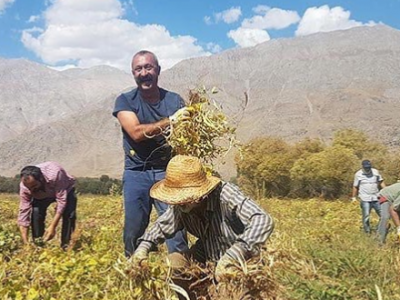
Maçoğlu entered politics in 2014, winning a local election with 36.1% of the vote. He beat his closest rival from Peace and Democracy Party (BDP, the precursor to today’s HDP) to become the mayor of his hometown of Ovacık, a rural district of Tunceli with a population of approximately 7,000. Previously, he had worked as a healthcare professional in public hospitals. But besides his well known socialist views and his union activism, Maçoğlu had no political experience. As mayor of Ovacık he inherited a debt of approximately $200,000 from the previous local government; and so he immediately set about to increase the district’s revenue.In Ovacık, Maçoğlu’s first priority was to improve agricultural production and ease unemployment by allowing people to cultivate 160,000 acres of arable land that belong to the municipality. Comprised mostly of women and unionized teachers who had recently been laid off, Maçoğlu's army of amateur farmers began producing organic potatoes, garbanzo and cannellini beans — all crops that are relatively easy to grow in the province’s harsh climate, with its heavy winters that last five to six months. Subsidized by the municipality, the farmers founded an agricultural production cooperative, which eventually evolved into an e-commerce site, ovacikdogal.com (Ovacık Natural). Soon they added sustainably and organically produced honey, salt, cheese and molasses to their range of products. People in big cities who were following the communist mayor on social media began buying the communist beans of Ovacık to support the cooperative. The initiative performed beyond expectations. The amateur organic farmers of Ovacık succeeded not only in paying off the district’s debt, but also in providing local women with earned income for the first time in their lives. Part of its profits were put toward a small fund that helps college students from disadvantaged backgrounds to pay their school-related expenses.Maçoğlu also reduced the cost of water, which is prohibitively expensive in Turkey, to a symbolic 50 kr (about 10 cents) per cubic meter. His reason: access to water is a basic human right. He transferred the annual budget allotted to cover the cost of gas for his unused official vehicle to the only bus that served the whole district, making public transportation free. He built a library containing 10,000 books for a small town of 3,200 people and organized public programs to encourage reading habits among children and adolescents.
A folk hero
But perhaps the most striking reason for Maçoğlu having become a viral folk hero overnight was his radical fiscal transparency. At the end of the first fiscal year of his first term, he hung an enormous poster showing his administration’s profit and loss statement on the facade of the town’s municipality building. In the murky waters of municipal politics, where tenders miraculously go to people with close ties to administrators, this was a breath of fresh air. Across the country, both Maçoğlu’s supporters and his critics alike applauded his action. In Ovacık, Maçoğlu ran on a platform that promised transparency and accountability. He emphasized those two principles while championing and explaining his socialist values almost every time he opened his mouth, especially in front of cameras. And there were (and still are) a lot of cameras. People began to travel from across the country to meet the determined man with the cheerful smile, and to see his model of governance.In fact, he has made a point of keeping his office door open and has set up his desk in such a way so that he sits alongside his visitors, instead of across from them behind his desk. In Turkey, every public officer has a portrait of Ataturk, the founder of the republic above their seats, but Maçoğlu has a picture of the Argentine Marxist revolutionary Che Guevara up on his wall as well. As mayor of Tuncil, Maçoğlu has rejected the trappings of power. He made the official vehicle assigned to him available to newly weds who get married at City Hall, and opted to drive his own car while on the job. This is a significant statement in Turkey, where public officials enjoy driving around with security convoys of up to 50 vehicles, blocking traffic everywhere they go.These small acts may seem trivial or even gimmicky to those unfamiliar with Turkish politics, but in the corruption-ridden atmosphere propagated over decades by local and central governments, simple gestures go a long way. “Socialism has an inherent understanding of how to create a culture that provides the ability to act in a way that is united and in solidarity based on equality and social justice,” Maçoğlu noted in an interview with the leftist publication SOL International. With his work in Ovacık and now in Dersim, he hopes to set an example in municipal governance for other cities across the country. The fact that these values are so rare in Turkey’s political landscape makes Maçoğlu a harbinger of hope for a new breed of public official, whose agenda is truly to serve the peopleHande Oynar is a freelance writer based in New York and Istanbul. She has been writing for various art and lifestyle publications for the past decade and is a regular contributor to Vogue Turkey. Follow her on Twitter @handeoynar.
[post_title] => In Turkey, a communist mayor has become a national folk hero
[post_excerpt] => Turkey's first communist mayor ran on a platform of radical transparency — and won, in a country where 'communism' is a dirty word
[post_status] => publish
[comment_status] => open
[ping_status] => closed
[post_password] =>
[post_name] => in-turkey-a-communist-mayor-has-become-a-national-folk-hero
[to_ping] =>
[pinged] =>
[post_modified] => 2026-08-07 16:25:38
[post_modified_gmt] => 2026-08-07 16:25:38
[post_content_filtered] =>
[post_parent] => 0
[guid] => https://conversationalist.org/?p=850
[menu_order] => 338
[post_type] => post
[post_mime_type] =>
[comment_count] => 0
[filter] => raw
)



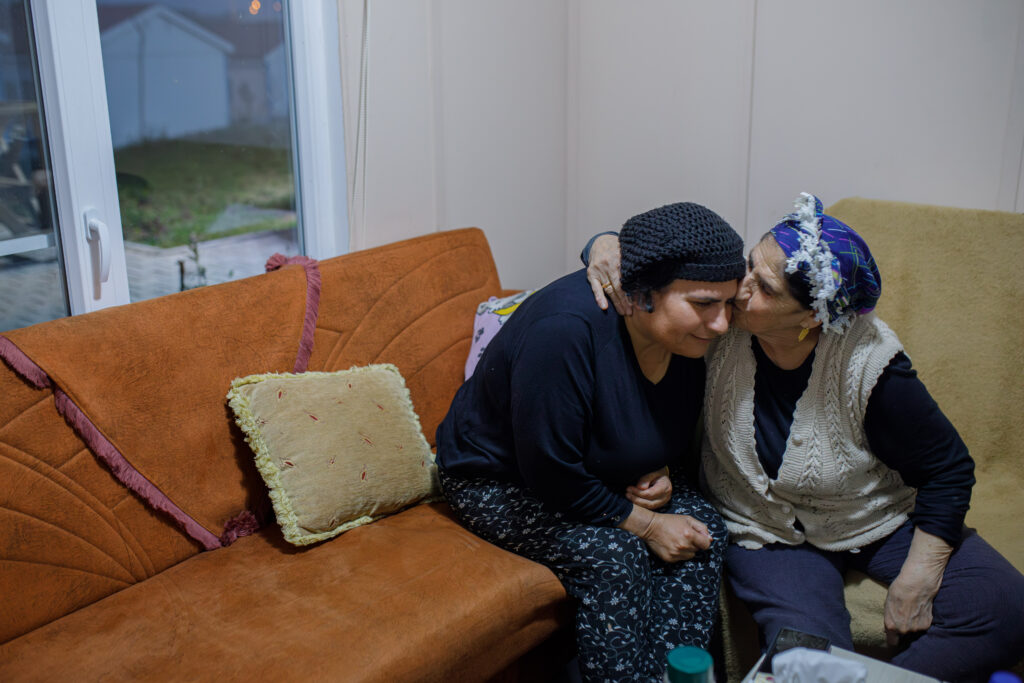
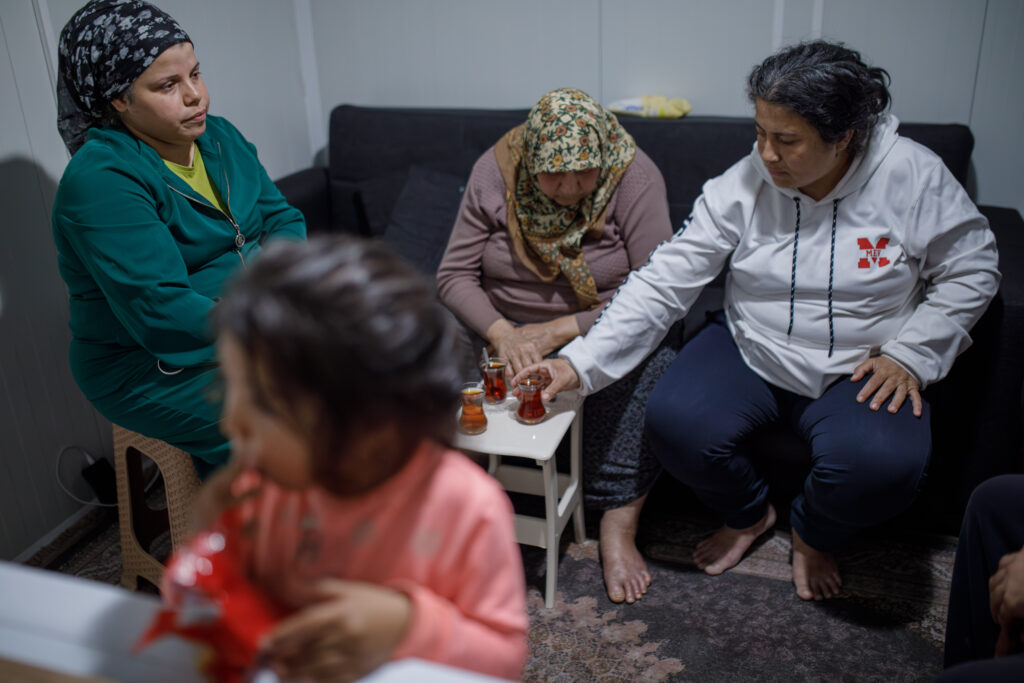
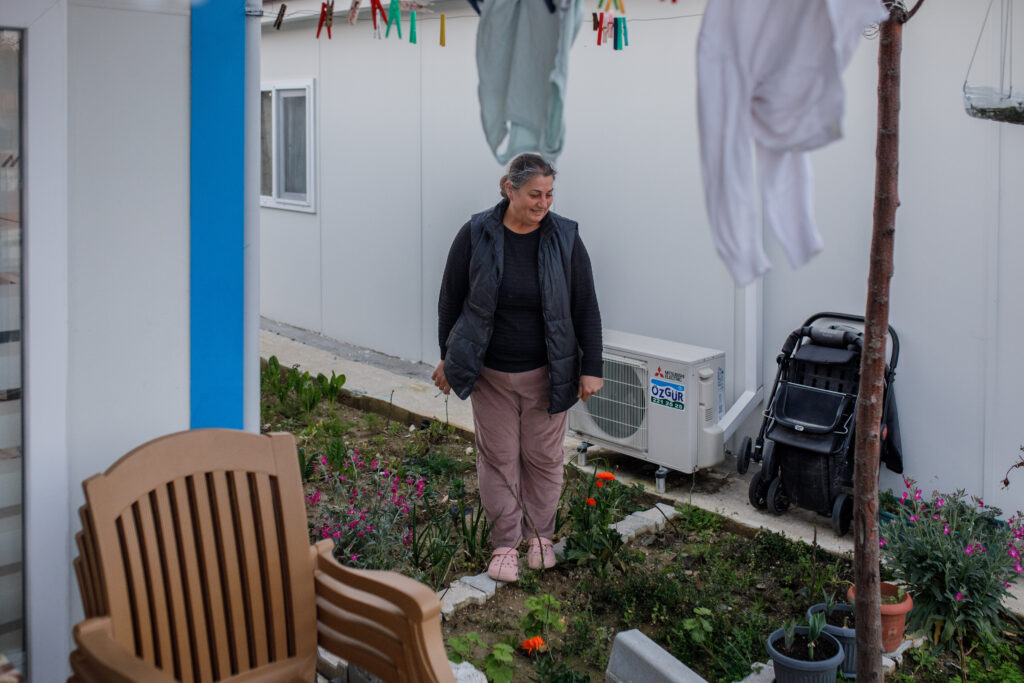
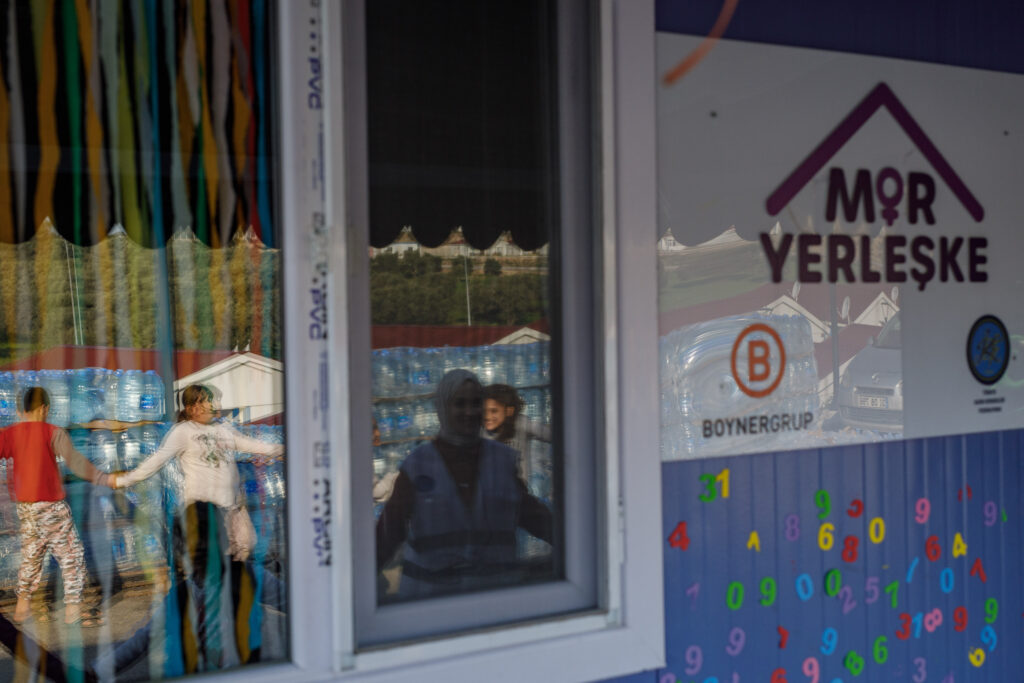
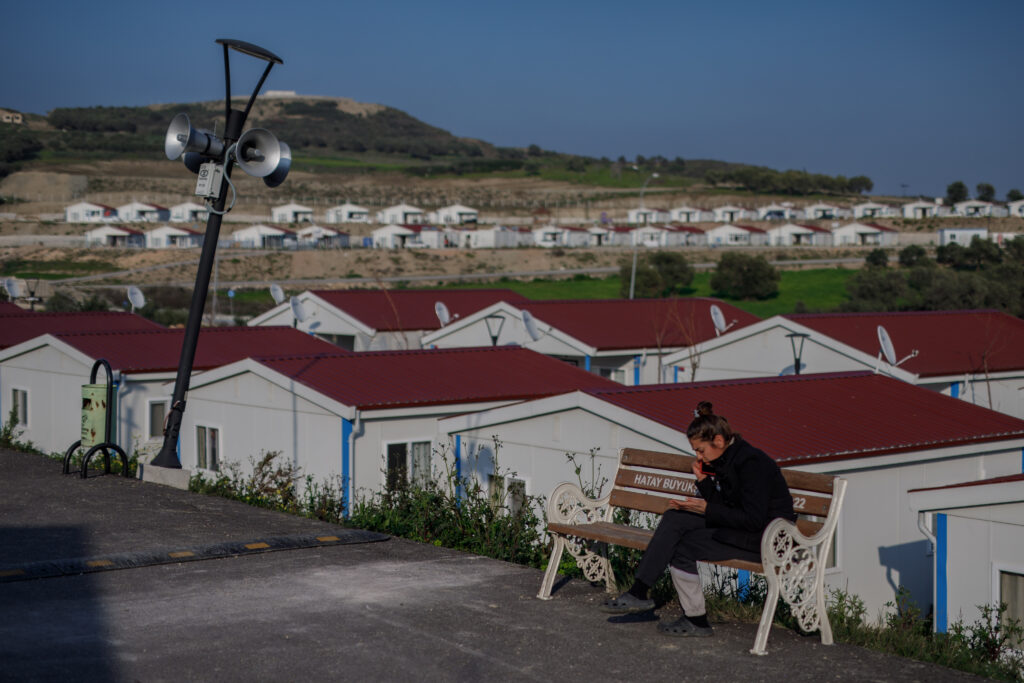
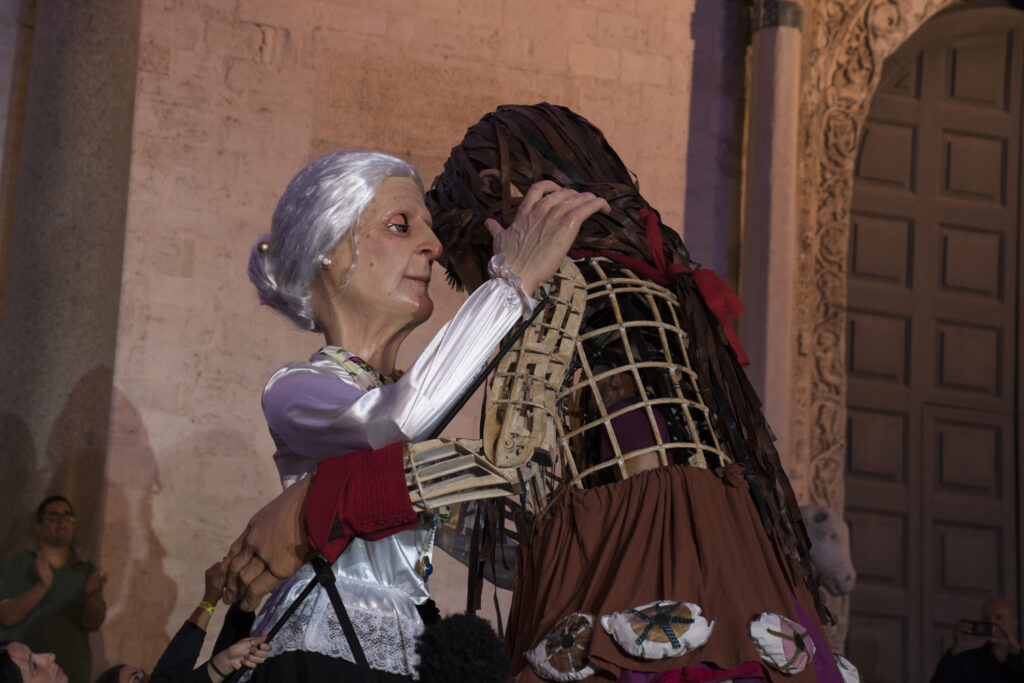 Little Amal greeted by an Italian nonna, or grandmother, in Bari, Italy.[/caption]
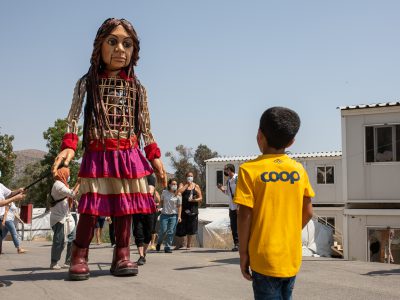
 Hazal Sipahi, host of the podcast "Mental Klitoris."[/caption]
When she was a child growing up in provincial Turkey, Sipahi said, sexuality was only discussed in whispers; but as soon as she could speak English, she found an ocean of sexuality content available on the internet.
“I searched for information online and found it, only because I was curious,” she said. “I also learned many false things on the internet, and they were very hard to correct later on.”
For example, Sipahi explained, “For so long, we thought that the hymen was a literal veil like a membrane.” In Turkey there is a widespread belief that once the hymen is “deformed,” a woman’s femininity is damaged, and she somehow becomes less valuable as a future spouse.
“Mental Klitoris” is both Sipahi’s public service and her means of self-expression. She uses her podcast to correct misunderstandings and disinformation, to go beyond censorship and to translate new terminology into Turkish.
“I really wish I had been able to access this kind of information when I was around 14 or 15,” she said.
More than 45,000 people listen to Mental Klitoris, which provides them with access to crucial information in their native tongue. They learn terms like “stealthing,” “pegging,” “abortion,” “consent,” “vulva,” “menstruation,” and “slut-shaming.” Sipahi covers all these topics on her podcast; she says she’s adding important new vocabulary to the Turkish vernacular.
She’s also adding a liberal voice to the ongoing discussion about feminism, “Which became even stronger in Turkey after #MeToo.” She believes her program will lead to a wave of similar content in Turkey.
“This will go beyond podcasts,” she said. “We will have a sexual opening overall on the internet.”
Inspired by contemporary creatives like Lena Dunham (“Girls”), Michaela Coel (“I Might Detroy You”),
Hazal Sipahi, host of the podcast "Mental Klitoris."[/caption]
When she was a child growing up in provincial Turkey, Sipahi said, sexuality was only discussed in whispers; but as soon as she could speak English, she found an ocean of sexuality content available on the internet.
“I searched for information online and found it, only because I was curious,” she said. “I also learned many false things on the internet, and they were very hard to correct later on.”
For example, Sipahi explained, “For so long, we thought that the hymen was a literal veil like a membrane.” In Turkey there is a widespread belief that once the hymen is “deformed,” a woman’s femininity is damaged, and she somehow becomes less valuable as a future spouse.
“Mental Klitoris” is both Sipahi’s public service and her means of self-expression. She uses her podcast to correct misunderstandings and disinformation, to go beyond censorship and to translate new terminology into Turkish.
“I really wish I had been able to access this kind of information when I was around 14 or 15,” she said.
More than 45,000 people listen to Mental Klitoris, which provides them with access to crucial information in their native tongue. They learn terms like “stealthing,” “pegging,” “abortion,” “consent,” “vulva,” “menstruation,” and “slut-shaming.” Sipahi covers all these topics on her podcast; she says she’s adding important new vocabulary to the Turkish vernacular.
She’s also adding a liberal voice to the ongoing discussion about feminism, “Which became even stronger in Turkey after #MeToo.” She believes her program will lead to a wave of similar content in Turkey.
“This will go beyond podcasts,” she said. “We will have a sexual opening overall on the internet.”
Inspired by contemporary creatives like Lena Dunham (“Girls”), Michaela Coel (“I Might Detroy You”),  Tuluğ Özlü[/caption]
Asked to describe how she feels when she crosses the barriers created by widely shared social taboos about human sexuality, Özlü, who lives in Istanbul’s hip
Tuluğ Özlü[/caption]
Asked to describe how she feels when she crosses the barriers created by widely shared social taboos about human sexuality, Özlü, who lives in Istanbul’s hip  Rayka Kumru[/caption]
Kumru said one of the current barriers to freedom in Turkey was the lack of access to comprehensive sexuality education, information and skills such as sex-positivity, critical thinking around values and diversity, and communication about consent. She circumvents that barrier by informing her viewers and listeners about them directly.
“Once connections and a collaborations are established between policy, education, and [particularly sexual] health, and when access to education and to shame-free, culturally specific, scientific, and empowering skills training are allowed, we see that these barriers are removed,” Kumru explains. Otherwise, she says, the same myths and taboos continue to play out, making misinformation, disinformation, taboos, and shame ever-more toxic.
Rayka Kumru[/caption]
Kumru said one of the current barriers to freedom in Turkey was the lack of access to comprehensive sexuality education, information and skills such as sex-positivity, critical thinking around values and diversity, and communication about consent. She circumvents that barrier by informing her viewers and listeners about them directly.
“Once connections and a collaborations are established between policy, education, and [particularly sexual] health, and when access to education and to shame-free, culturally specific, scientific, and empowering skills training are allowed, we see that these barriers are removed,” Kumru explains. Otherwise, she says, the same myths and taboos continue to play out, making misinformation, disinformation, taboos, and shame ever-more toxic.
 Şükran Moral[/caption]
When it comes to female sexuality, Moral said, Turkey’s art scene is still conservative. “There’s self-censorship among not only creators, but also viewers and buyers, so it’s a vicious cycle.”
Part being an artist, particularly one who challenges the position of women, she said, is seeing a reaction to her work. “When art isn’t displayed,” she asked, “how do you get people to talk about taboos?”
Turkish academia also suffers from a censorship of sex studies.
Dr. Asli Carkoglu, a professor of psychology at Kadir Has University, said it was not easy finding a precise translation for the English word “intimacy” in Turkish.
“There’s the word ‘mahrem,’” she said, but that term has religious connotations.
The difficulty in interpretation, she explains, illustrates the problem: In Turkey, intimacy has not been normalized.
President Recep Tayyip Erdogan and his conservative Justice and Development Party (AKP) have many times expressed support for gender-based segregation and a conservative lifestyle that protects their interpretation of Muslim values.
Erdogan, who has has been in power since 2003, has his own ways of promoting those values.
“At least three children,” has long been the slogan of Erdogan’s population campaign, as the president implores married couples to expand their families and increase Turkey’s population of 82 million.
“For the government, sex means children, population,” Dr. Carkoglu explained.
Dr. Carkoglu believes that sex education should be left to the family, but “when the government acts as though sexuality is nonexistent, the family doesn’t discuss it. It’s the chicken-and-egg dilemma,” she said.
So, how do you overcome a taboo as deep-rooted as sexuality in Turkey? Carkoglu believes that that the topic will have to be normalized through conversations between friends.
“That’s where the taboo starts to break,” she said. “Speaking with friends [about sexuality] becomes normal, speaking in public becomes normal, and then the system adapts.”
But for many Turks, speaking about sexuality is very difficult.
Berkant, 40, has made a living selling sex toys at his shop in the city of Adana, in southern Turkey, for the past two decades. But he said that he’s still too embarrassed to go up to a cashier in another store and say he wants to buy a condom.
“It doesn’t feel right,” he said, adding he doesn’t want to make the cashier uncomfortable.
He is seated comfortably at his desk as we speak; behind him, a wide selection of vibrators are arrayed on shelves.
Berkant and his older brother own one of three erotica shops in Adana. Most of their customers are lower middle class; one-third are female. “Many of them are government workers who come after hearing about us from a friend,” he said.
The shopkeeper said female customers phone in advance to check whether the shop is “available,” meaning empty.
He said he often refers women who describe certain complaints to a gynecologist.
“I see countless women who are barely aware of their own bodies,” he said.
Dr. Doğan Şahin, a psychiatrist and sexual therapist, said that the information women in Turkey hear when they are growing up has a lot to do with their avoidance of discussions about sex, even when the subject concerns their health.
[caption id="attachment_2971" align="aligncenter" width="1600"]
Şükran Moral[/caption]
When it comes to female sexuality, Moral said, Turkey’s art scene is still conservative. “There’s self-censorship among not only creators, but also viewers and buyers, so it’s a vicious cycle.”
Part being an artist, particularly one who challenges the position of women, she said, is seeing a reaction to her work. “When art isn’t displayed,” she asked, “how do you get people to talk about taboos?”
Turkish academia also suffers from a censorship of sex studies.
Dr. Asli Carkoglu, a professor of psychology at Kadir Has University, said it was not easy finding a precise translation for the English word “intimacy” in Turkish.
“There’s the word ‘mahrem,’” she said, but that term has religious connotations.
The difficulty in interpretation, she explains, illustrates the problem: In Turkey, intimacy has not been normalized.
President Recep Tayyip Erdogan and his conservative Justice and Development Party (AKP) have many times expressed support for gender-based segregation and a conservative lifestyle that protects their interpretation of Muslim values.
Erdogan, who has has been in power since 2003, has his own ways of promoting those values.
“At least three children,” has long been the slogan of Erdogan’s population campaign, as the president implores married couples to expand their families and increase Turkey’s population of 82 million.
“For the government, sex means children, population,” Dr. Carkoglu explained.
Dr. Carkoglu believes that sex education should be left to the family, but “when the government acts as though sexuality is nonexistent, the family doesn’t discuss it. It’s the chicken-and-egg dilemma,” she said.
So, how do you overcome a taboo as deep-rooted as sexuality in Turkey? Carkoglu believes that that the topic will have to be normalized through conversations between friends.
“That’s where the taboo starts to break,” she said. “Speaking with friends [about sexuality] becomes normal, speaking in public becomes normal, and then the system adapts.”
But for many Turks, speaking about sexuality is very difficult.
Berkant, 40, has made a living selling sex toys at his shop in the city of Adana, in southern Turkey, for the past two decades. But he said that he’s still too embarrassed to go up to a cashier in another store and say he wants to buy a condom.
“It doesn’t feel right,” he said, adding he doesn’t want to make the cashier uncomfortable.
He is seated comfortably at his desk as we speak; behind him, a wide selection of vibrators are arrayed on shelves.
Berkant and his older brother own one of three erotica shops in Adana. Most of their customers are lower middle class; one-third are female. “Many of them are government workers who come after hearing about us from a friend,” he said.
The shopkeeper said female customers phone in advance to check whether the shop is “available,” meaning empty.
He said he often refers women who describe certain complaints to a gynecologist.
“I see countless women who are barely aware of their own bodies,” he said.
Dr. Doğan Şahin, a psychiatrist and sexual therapist, said that the information women in Turkey hear when they are growing up has a lot to do with their avoidance of discussions about sex, even when the subject concerns their health.
[caption id="attachment_2971" align="aligncenter" width="1600"] Advertisement for men's underwear in Izmir, Turkey.[/caption]
Men don’t really care whether the woman is aroused, willing or having an orgasm, he said. Unless the problem is due to pain, or vaginismus, couples rarely head to a therapist, he adds.
“[Women who grew up hearing false myths] tend to take sexuality as something bad happening to their bodies, and so, they unintentionally shut their vaginas, leading to vaginismus. This is actually a defense method,” he told The Conversationalist.
“They fear dying, they fear becoming a lower quality woman, or that sex is their duty.”
While most Turkish women find out about their sexual needs after getting married, the doctor says that, based on research he completed about 10 years ago, men tend to fall for myths about sexuality by watching pornography, which plants unrealistic fantasies about sex in their minds.
“Sexuality is also presented as criminal or banned in [Turkish] television shows. The shows take sexuality to be part of cheating, damaging passions or crimes instead of part of a normal, healthy, and happy life.”
He recommends that couples talk about sexuality and normalize it. Talking is crucial, and so is the language used in those conversations.
Bahar Aldanmaz, a Turkish sociologist studying for her PhD at Boston University, told The Conversationalist why talking about menstruation matters.
“A woman’s period is unfortunately seen as something to be ashamed of, something to be hidden,” she said. (According to Turkey’s language authority, the word “dirty” also means “a woman having her period.”)
“There are many children who can’t share their menstruation experience, or can’t even understand they are having their periods, or who experience this with fear and trauma.”
And this is what builds a wall of taboo around this essential issue, the professor says. It is one of the issues her non-profit organization “We Need To Talk” aims to accomplish, among other problems related to menstruation, such as period poverty and period stigma.
Female hygiene products are taxed as much as 18 percent—the same ratio as diamonds, said Ms. Aldanmaz. She adds that this is what mainly causes inequality—privileged access to basic health goods, the consequence of the roles imposed by Turkish social mores.
“Despite declining income due to the COVID-19 pandemic, there is a serious increase in the pricing of hygiene pads and tampons. This worsens period poverty,” Aldanmaz says. She offers Scotland as an example of what would like to see in Turkey: free sanitary products for all.
During Turkey’s government-imposed lockdown in May 2021, several photos showing tampons and pads in the non-essential sales part of markets stirred heated debates around the subject, but neither the Ministry of Family and Social Services nor the Health Ministry weighed in.
“We are fighting this shaming culture in Turkey,” Aldanmaz says, “by understanding and talking about it.”
[post_title] => Sexually aware and on air: Beyond Turkey's comfort zone
[post_excerpt] => Turkish podcasts that host frank conversations about sexuality are smashing taboos and filling information vacuums.
[post_status] => publish
[comment_status] => closed
[ping_status] => open
[post_password] =>
[post_name] => sexually-aware-and-on-air-beyond-turkeys-comfort-zone
[to_ping] =>
[pinged] =>
[post_modified] => 2026-08-06 19:44:25
[post_modified_gmt] => 2026-08-06 19:44:25
[post_content_filtered] =>
[post_parent] => 0
[guid] => https://conversationalist.org/?p=2949
[menu_order] => 187
[post_type] => post
[post_mime_type] =>
[comment_count] => 0
[filter] => raw
)
Advertisement for men's underwear in Izmir, Turkey.[/caption]
Men don’t really care whether the woman is aroused, willing or having an orgasm, he said. Unless the problem is due to pain, or vaginismus, couples rarely head to a therapist, he adds.
“[Women who grew up hearing false myths] tend to take sexuality as something bad happening to their bodies, and so, they unintentionally shut their vaginas, leading to vaginismus. This is actually a defense method,” he told The Conversationalist.
“They fear dying, they fear becoming a lower quality woman, or that sex is their duty.”
While most Turkish women find out about their sexual needs after getting married, the doctor says that, based on research he completed about 10 years ago, men tend to fall for myths about sexuality by watching pornography, which plants unrealistic fantasies about sex in their minds.
“Sexuality is also presented as criminal or banned in [Turkish] television shows. The shows take sexuality to be part of cheating, damaging passions or crimes instead of part of a normal, healthy, and happy life.”
He recommends that couples talk about sexuality and normalize it. Talking is crucial, and so is the language used in those conversations.
Bahar Aldanmaz, a Turkish sociologist studying for her PhD at Boston University, told The Conversationalist why talking about menstruation matters.
“A woman’s period is unfortunately seen as something to be ashamed of, something to be hidden,” she said. (According to Turkey’s language authority, the word “dirty” also means “a woman having her period.”)
“There are many children who can’t share their menstruation experience, or can’t even understand they are having their periods, or who experience this with fear and trauma.”
And this is what builds a wall of taboo around this essential issue, the professor says. It is one of the issues her non-profit organization “We Need To Talk” aims to accomplish, among other problems related to menstruation, such as period poverty and period stigma.
Female hygiene products are taxed as much as 18 percent—the same ratio as diamonds, said Ms. Aldanmaz. She adds that this is what mainly causes inequality—privileged access to basic health goods, the consequence of the roles imposed by Turkish social mores.
“Despite declining income due to the COVID-19 pandemic, there is a serious increase in the pricing of hygiene pads and tampons. This worsens period poverty,” Aldanmaz says. She offers Scotland as an example of what would like to see in Turkey: free sanitary products for all.
During Turkey’s government-imposed lockdown in May 2021, several photos showing tampons and pads in the non-essential sales part of markets stirred heated debates around the subject, but neither the Ministry of Family and Social Services nor the Health Ministry weighed in.
“We are fighting this shaming culture in Turkey,” Aldanmaz says, “by understanding and talking about it.”
[post_title] => Sexually aware and on air: Beyond Turkey's comfort zone
[post_excerpt] => Turkish podcasts that host frank conversations about sexuality are smashing taboos and filling information vacuums.
[post_status] => publish
[comment_status] => closed
[ping_status] => open
[post_password] =>
[post_name] => sexually-aware-and-on-air-beyond-turkeys-comfort-zone
[to_ping] =>
[pinged] =>
[post_modified] => 2026-08-06 19:44:25
[post_modified_gmt] => 2026-08-06 19:44:25
[post_content_filtered] =>
[post_parent] => 0
[guid] => https://conversationalist.org/?p=2949
[menu_order] => 187
[post_type] => post
[post_mime_type] =>
[comment_count] => 0
[filter] => raw
)
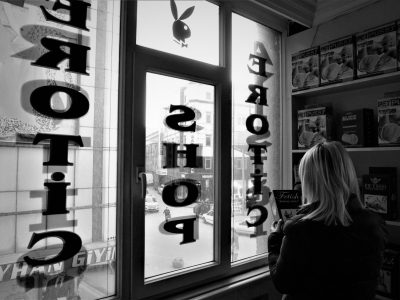
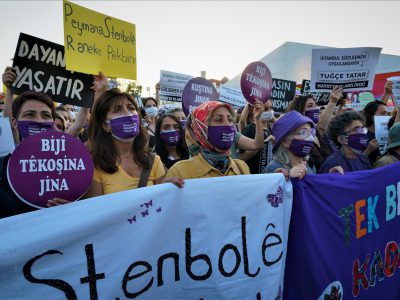
 Trump is now an embattled president, and he knows it. But his base remains