WP_Post Object
(
[ID] => 10961
[post_author] => 15
[post_date] => 2026-08-18 19:09:53
[post_date_gmt] => 2026-08-18 19:09:53
[post_content] =>
As the genre continues to diversify, it's time for K-pop to reckon with its relationship to Blackness.
BTS’s long-awaited comeback was controversial from the start.
In March, following a year-and-a-half hiatus to fulfill their mandatory Korean military service, the seven-member boy group reunited with a short animated trailer teasing their new album Arirang. Inspired by a nationally beloved and UNESCO-recognized folk song of the same name, the album was positioned as somewhat of an homage to the group’s Korean roots. In the trailer, the group spotlights the “profound cultural significance” of the original song—believed to be over 600 years old—through a “modern reimagining” of the seven Korean students at Howard University who first recorded it in 1896.
But many fans noticed something strange: For a few seconds, BTS can be seen portraying the students while singing, on campus, to a mostly white audience.
“Who are [these] white folks at a historically Black college built so Black Americans could actually go to college because white people would not allow them into their schools?” one fan commented on YouTube. Others followed suit.
Upon release, the 14-track album followed the standard K-pop formula: a mix of Korean and English songs with a bit of AAVE slang thrown in, and a slew of high-profile Western producers and writers, including Mike-Will-Made-It, Tezzo Touchdown, and Diplo. In short, Arirang was less an homage to an unofficial national anthem than it was a catchy hip-hop album—a nod to the group's cultural influences, but not necessarily their Korean ones. Only the leading track (“Body to Body”) sampled parts of the historic song.
This wasn’t unusual: Over time, as the genre has diversified, K-pop groups have made music with expanding influences, ranging from house to trap. In recent years, the genre has only further loosened, often following global trends rather than strictly adhering to what’s popular in Korea.
It’s an identity crisis that’s been plaguing the genre since the beginning of the decade. While the earliest iterations of K-pop groups (also known as first generation K-pop) occasionally produced songs in English, such tracks didn’t determine a group’s popularity, nor did they dominate the genre like they do now. As K-pop reaches a critical mass of popularity among international audiences, with groups not only sometimes singing exclusively in English, but also branding themselves as “global groups” with members from around the world, the lines have started to blur on what specifically makes K-pop, K-pop. It’s also why it’s become increasingly necessary for the genre as a whole to reckon with its relationship to Blackness, both historically and today.
The word K-pop itself was a bit of an accident. Dr. Stephanie Choi, Assistant Professor of Ethnomusicology at the University of Colorado Boulder, says that the label was “coined by outsiders, not by the K-pop industry itself.” Popularized in the 90s by Japanese and Chinese media, the term was used to refer to the global popularity of Korean dance pop, before Western media began using it throughout the decade. “Only by the early 2000s was the term introduced to Korean media,” says Dr. Choi.
It was around this time that Lee Soo-man, the architect of what's known as contemporary K-pop, created the idol trainee system that now defines the genre. Inspired by the assembly line approach of 60s Motown, Soo-man brought the same model to Korea, founding SM Entertainment in 1995, carefully crafting and turbocharging each trainee’s talents in dance, vocals, and visual identity through bootcamps notorious for their intensity.
This tradition has endured, eventually evolving into idol trainee reality TV-style competitions that have since produced some of the biggest K-pop groups in the world, including TWICE and Stray Kids. Like the rest of the genre, the success of these shows has now moved beyond Korea to the international stage, which is where The Debut: Dream Academy—the hit show behind the global girl group Katseye—was born.
In addition to commercial success, equally pivotal to defining K-pop is the loyalty of its fandoms, something that’s endured even as the genre has continued to diversify. All K-pop groups thrive on the intimate relationship fostered between idols and their fans, and through social media, this relationship has only intensified. But as the genre has globalized, this intensity has also proven to be a double-edged sword for idols of color. While there's, of course, virtue in national and ethnic representation, for idols, this has often manifested as overexposure to racism and bigotry—sometimes including from fans of color who project themselves onto what they believe an idol of their culture should look like.
It’s a part of why in late February, when Manon Bannerman, the only Black-identifying member of the global girl group Katseye, announced a temporary hiatus from group activities for unspecified reasons, the internet was abuzz with shock, confusion, outrage, and genuine concern on her behalf. Others, meanwhile, were suspicious.
“Definitely some anti-Blackness going on behind the scenes & you can’t tell me otherwise,” one fan commented on Reddit amidst all the speculation. “It’s very textbook.”
For an industry that has roots in Black entertainment, you’d think Black idols would be more common in K-pop. But while K-pop groups have always had members from other East Asian countries, having visibly non-Asian members is still rare. Alexandra Reid of girl group BP Rania was the first Black idol in K-pop history, debuting in 2015. After BP Rania disbanded and re-debuted as Blackswan in 2020, Senegalese-Belgian member Fatou joined her in the lineup. In 2025, Girlset (formerly known as VCHA) rebranded into a multinational four-person girl group, including a Venezuelan-Trinidadian member. But otherwise, Katseye remains the exception rather than the rule when it comes to racial diversity.
The Katseye girls hail from three continents and several different ethnicities and nationalities. Sophia, the group leader, is from the Philippines. Manon is Ghanaian and Swiss. Lara, Daniela, and Megan are all from the States, representing Indian, Cuban-Venezuelan, and Chinese-Singaporean heritages respectively. The only member born and raised in Korea is Yoonchae, who is also the youngest of the six. Their diversity has long been their strength—carefully engineered to capture the hearts of millions of fans, starting from their debut on 2023’s The Debut: Dream Academy, then in 2024, through their intimate Netflix docu-series Pop Star Academy. Following multiple successful commercials for Jollibee, Glossier, and The Gap (the latter of which went viral as a perceived response to Sydney Sweeney’s rather tactless American Eagle ad), the group became seen by fans as a paragon of what the future of K-pop could be.
“I found it interesting that there was a member with the same name as mine who also has Venezuelan ancestry,” says Daniela Bottini, a self-identified Eyekon, as the group’s fans are known. “It was refreshing to see that when they said global, they really meant it. They took the best parts of the K-pop training system, but also recognized that the rigid rules that govern it couldn’t work in a group mainly comprised of young Gen Z women raised in more liberal countries.”
Indeed, on paper, Katseye checks off every K-pop box: rooted in the trainee system, with a deeply interpersonal fandom, challenging choreography, and catchy songs perfect for a 30-second TikTok. Unfortunately, their success has also shed light on the uncomfortable ways global groups are still perceived—and treated—in K-pop compared with their all-Korean peers.
Unlike her Korean contemporaries, Bannerman has not been offered the same grace nor protection she might otherwise have found from fans, even before she announced her hiatus. Throughout her trainee days and well into her debut, she received online hate and death threats and was often called “lazy” and “ungrateful” for someone in her position. It’s an unfortunate reality that all idols, Korean or not, have to go through; but coupled with xenophobia and racism, often rampant against non-Korean idols within fandom spaces, the insults compound.
While anti-Blackness is a worldwide phenomenon, it feels especially glaring in an industry that has long been inspired by Black American culture. Historically, the genre has borrowed heavily from Black aesthetics and practices while divorcing them from the bitterness of Black history, thus turning them into something more “palatable” for a broader audience to enjoy. Across the genre, Black culture is simultaneously commodified while its originators go unrecognized—something increasingly harder to ignore when Black idols like Bannerman exist. Katseye and other global groups, then, present an interesting tension point within the genre, ultimately forcing K-pop’s global audience to reconcile its conflicting ideas of fetishized exotic orientalism—its own form of racism—with its disdain for Black people. It's also what makes BTS’s Arirang trailer snafu—intentional or not—so glaring.
As the genre continues to diversify and to innovate, we’ll likely see more attempts at recreating Katseye’s success, and songs that are not just in English, but in Spanish, French, and other languages, too. Maybe there will be a K-pop group that only produces house music and dance. Perhaps the next trend in K-pop will be country guitar riffs. Jeff Benjamin, a K-pop contributor at Billboard, made the prescient prediction that 2026 will be a defining year for how the genre shifts and how global audiences perceive K-pop overall.
“At this year's Grammy Awards, we saw Katseye as well as Rosé of Blackpink perform; additionally, KPop Demon Hunters won an award—but the bodies of work that these three acts were nominated for aren't traditional K-pop,” says Benjamin.
It’s likely we’ll see a shift happen sooner rather than later. As of June 2026, the Grammys have introduced a new award: Best Asian Pop Music Performance, a category recognizing pop music performances originating from or widely known in Asian markets. It isn’t limited to just K-pop, but J-pop, C-pop, and music from other countries across the Asian diaspora, too. Shortly after the category was announced, BTS said they would not submit Arirang for consideration in the 2027 awards.
“We hope our music can be heard and loved for what it is, rather than being divided by region or language,” reads a statement from all seven members of the group, explaining their decision. “We thank Army [the group's fandom] and everyone who has always stood by us.”
As barriers between cultures and languages break down on our screens, and the world as we know it inevitably changes, it’s clear that K-pop has the potential to be a bright spot in a new world order. It’s already crossed the boundaries of race, ethnicity, and language to become an international genre. Its music resonates and inspires millions of fans across the world. But if the genre wants to reach its full cultural potential, it will also have to reckon with its relationship not only to idols of color, but xenophobia towards idols outside of Korea, once and for all.
As of today, Katseye is a de facto four-member girl group with Bannerman’s hiatus ongoing, and Sophia's recent announcement she would be stepping back from the group until September. Prolonged hiatuses aren’t uncommon in K-pop groups, usually due to illness or injury or just the need for a mental health break. But whether Bannerman comes back to the group or not, one thing is for certain: the issue of anti-Blackness in K-pop remains, and it’s up to both the industry and its fans to dismantle it.
[post_title] => The Globalization of K-Pop
[post_excerpt] => As the genre continues to diversify, it's time for K-pop to reckon with its relationship to Blackness.
[post_status] => publish
[comment_status] => closed
[ping_status] => closed
[post_password] =>
[post_name] => globalization-k-pop-music-genre-anti-blackness-katseye-manon-bannerman-idols
[to_ping] =>
[pinged] =>
[post_modified] => 2026-08-19 12:34:00
[post_modified_gmt] => 2026-08-19 12:34:00
[post_content_filtered] =>
[post_parent] => 0
[guid] => https://conversationalist.org/?p=10961
[menu_order] => 0
[post_type] => post
[post_mime_type] =>
[comment_count] => 0
[filter] => raw
)

Race
- Refugees
There are 84 million people in the world who have been forcibly displaced, either within their own countries or beyond its borders. People forced to flee their home countries for fear of being persecuted are known as refugees, and they’re often at risk due to their political beliefs, religion, race, nationality, membership of a particular social group, or sexual orientation. They might be facing war or violence in their home countries. Under the Universal Declaration of Human Rights, people are guaranteed the right to seek asylum in another country. They’re also protected from refoulement, where states must not return refugees to places where their lives or freedom would be under threat.
- Asylum seekers
Refugees who have made an application to stay in a new country, but have not yet received a decision, are known as asylum seekers. They can only make that application once they’re in the new country. As of 2021, there are 4.4 million people waiting on asylum applications across the world. Some travel through several nations before making an application — there is no obligation for people to seek asylum in the first country in which they arrive. Asylum procedures can be complicated, involving interviews, lengthy legal processes, and even detention-like accommodation.
- Trafficked people
Human traffickers take advantage of people’s vulnerabilities. Those escaping risky situations, or deceived into believing strangers can find themselves in disastrous situations. Victims of human trafficking can be forced into sexual exploitation, slavery, marriage, or crime. It happens both across borders and within people’s home countries.
Immigration: a brief history
People have migrated throughout the whole of history, from early human movement out of Africa to periods of colonialism. It’s nothing new. But the ways migrants are treated and the factors that drive movement are ever shifting. Climate change is forcing more people to leave their homes, and technological advances mean those who want to work from anywhere often can. The Coronavirus pandemic forced countries to close their borders, and some governments used it as an excuse to turn away people.
Immigration laws
Here’s a snapshot of how immigration laws have changed in recent history, and the moments that made big impacts:
- United Kingdom
- During World War II, the UK took in around 70,000 Jewish refugees fleeing Nazi Germany. British children from cities and towns, known as evacuees, were sent to live in the British countryside, or even in other nations, away from the threat of bombs.
- After World War II, the country needed help rebuilding cities and staffing the healthcare system, and invited people from the Commonwealth to move to the UK. Those arriving from the Caribbean were known as the Windrush generation. They were automatically British subjects. However, in 2017, it became clear that the Home Office had wrongly deported commonwealth citizens, after destroying documentation which would have proved their right to live and work in the UK.
- The introduction of the Immigration Act in 1971 put an end to Commonwealth citizens enjoying more rights in the UK than those from other nations.
- In 2016, the UK voted to leave the European Union. On 31 January 2020, Brexit came into force, putting an end to freedom of movement for British citizens in the EU.
- The European Union and Schengen area
- In 1951, six European countries joined together with the key aim of preventing further war and furthering economic growth. Through the European Economic Community, workers were eventually given the right of free movement in 1968.
- In 1992, the European Union (EU) was created. Freedom of movement for all EU nationals was enshrined in law. Two years later, Iceland, Liechtenstein, Norway, and Sweden were also included in free movement measures.
- The creation of the Schengen Agreement means that citizens can now travel across 26 European countries (four of which are non-EU) without facing border controls. It is a passport-free zone.
- United States
- The United States has long been known as a country of immigrants. In 1892, the country’s first immigration station opened — Ellis Island.
- The Immigration Act of 1924 brought big changes. Fears of communism were spreading, and many Americans wanted to separate themselves from other nations after the horrors of the First World War. Racism and discrimination increased and the new law limited migration based on nationality. In the same year, the US border patrol was established to stop illegal immigrants crossing into the country.
- In 1965, the nationality-based quota system finally came to an end with the Immigration and Nationality Act.
- During the Trump administration, the environment for refugees became more hostile. People were forced to wait in Mexico, and anyone traveling through other countries before arriving in the US was denied the right to claim asylum. Some refugees are sent to Guatemala in a “safe third country” agreement.
- Japan
- Japan has a reputation for strict immigration controls. For much of history, the country has been fairly isolated, with little mix of other ethnicities.
- Between 1905 and 1945, a large number of people from Japanese territories migrated to the mainland - they were Korean, Chinese, and Taiwanese. After World War II, controls tightened.
- The 1952 Immigration Control and Refugee Act made it difficult for foreigners who wanted to live and work long-term in Japan.
- By the 1990s the aging population was causing labor shortages, and some unskilled workers were given opportunities to move to Japan. Many other visa controls were tightened.
- In 2021, the government shelved a bill which would have allowed asylum seekers to be pushed back to their home countries when their applications were under appeal.
- Uganda
- During World War II, Uganda hosted around 7,000 Polish refugees. From this point, the country continued to welcome groups of people in need of refuge.
- Uganda now has the largest number of refugees across the whole of Africa. It has an open-door policy, and people from neighboring East African countries arrive to seek safety. Refugees are given plots of land on arrival, access to healthcare and education, and the right to work - it’s known as a self-reliance model. This isn’t the whole story, and there are many challenges, but Uganda’s refugee policies are largely considered progressive. Nearly 1.5 million refugees now live in Uganda.
Immigration visas
Variations of passports and visas have existed throughout history, but up until World War I people could move fairly freely — although the opportunities might not have been as numerous. Following the war years and subsequent security fears, passports as we know them now came into being.
In 1920, the League of Nations set a global standard for the documents. While Western countries were keen for these identity documents, many other countries were against the idea and saw them as restrictive. With the introduction of passports, came entry visas, with the same goal of national security. Just a year after the League of Nations meeting, the US introduced an act that put a quota on the number of immigrants allowed into the country.
How different nations approach immigration visas is constantly in flux. EU citizens don’t require visas to move to other EU states, while nations like New Zealand, Australia, and Canada are pickier in who they welcome into their countries. There’s a large expat population in Singapore, and depending on which country you come from, getting a visa could be fairly straightforward.
World events impact visa restrictions. The coronavirus pandemic means some countries require anyone entering to be vaccinated. Technological advancements and a rise in working from home have created changes too. Estonia, Cape Verde, and Barbados are just some of the countries offering digital nomad passports, allowing people to enjoy residency in a new place, while their career continues from a laptop.
What immigration is like today
- United Kingdom
- Immigration laws are in a state of flux in the United Kingdom. Since Brexit, this island nation no longer allows people from the EU to live, study, or work in the country visa-free, as was the case before. In the rest of the EU, citizens can move freely.
- Following Brexit, the UK has a points-based immigration system.
- The government wants to change the asylum laws and push back people arriving via irregular routes. Many are forced to cross the English Channel on dangerous boats or stowed in lorries, for a lack of a safe alternative.
- The UK granted British citizenship to 146,483 people in 2021 and gave residence documents to 10,135 people from EEA (European Economic Area) countries. The nation gave protection to 13,210 asylum seekers in the same year.
- United States
- People who want to call the United States home must first get an immigrant visa. When they land on US soil, they become a Lawful Permanent Resident (LPR), allowing them to apply for jobs and live in the country. After five years, they can apply for US citizenship.
- There are different rules for immediate family members of US citizens, who have to meet certain eligibility criteria. Skilled workers can also get special visas on a temporary or permanent basis.
- Refugees can apply to become LPRs one year after arriving or receiving asylum. They go through a complicated system.
- 707,362 people received permanent residence status in 2020, a figure likely impacted by the pandemic. Previous years have usually exceeded 1 million. 29,916 people arrived in the US as refugees in 2019.
- Japan
- Japan is facing a labor shortage and a shrinking population. For a country long-averse to immigration, things might be about to change. The country plans to start welcoming skilled workers to stay in the country indefinitely. Until now, their visas have only been valid for five years and didn’t extend to family members. Many of the workers come from Vietnam and China.
- The country operates on a points-based system for foreign professionals. Most people need a Certificate of Eligibility, applied for by their sponsor in Japan.
- People between 18 and 30 can apply for a working holiday visa, which lasts for a year.
- Japan has a low rate of accepting asylum seekers, compared to other wealthy countries.
- Japan welcomed 115,000 immigrants in 2018, which was around 15 percent more than the previous year.
- South Africa
- People who want to emigrate to South Africa can first apply for a temporary residence permit, before looking towards permanent residency.
- After working in the country for five years, people can apply for permanent residency. Those partnered with or related to a South African citizen can also apply, as well as some other categories.
- South Africa has the largest number of immigrants in Africa — in total about 2.9 million, just under 5 percent of the population. 255,200 of them are displaced people.
- Policies have become less welcoming to refugees in recent years, with 96 percent of all asylum cases rejected in 2019.
- Sweden
- Sweden is a member of the EU, which means that anyone within the Schengen area is free to live and work in the country. Non-EU/EEA citizens need an offer of work to apply for residency.
- Different European countries have different refugee policies. Sweden had a welcoming refugee policy until 2016, and offered permanent residency visas to refugees. Since then, the number of applications being granted has declined. In 2021, the new government replaced the offer of permanent visas with temporary ones. However, the country continues to accept 5,000 quota refugees a year, who are people that UNHCR (the UN’s Refugee Agency) select to be housed in safe countries.
- Sweden welcomed 82,518 migrants in 2020, which has steadily dropped from double that in 2016. The number is likely to have been impacted further by the Coronavirus pandemic. There were 12,991 new asylum seekers in the same year.
- Saudi Arabia
- Whether permanent or not, a visit to Saudi Arabia usually requires an in-country sponsor. However, some expats are now able to apply for a Premium Residency Card without a sponsor.
- The country does not recognize dual citizenship, so taking two passports could mean you get one confiscated. Anyone who’s visited Israel might face problems entering Saudi Arabia.
- Immigrants make up 38.8 percent of Saudi Arabia’s population.
- 877 people applied for asylum in 2020 and while very few applications have been processed yet, they’ve all been accepted. It’s worth noting that 247 people from Saudi Arabia applied for asylum in other nations.
Why people migrate
Whether choosing to set up home in a new country or forced to make journeys across borders, there are many reasons people migrate. Economic need or opportunity is a huge driver, while war and violence displace millions every year. People move to join family, study abroad, or retire. And throughout history and today, Indigenous communities have been forced from their native lands.
Migrating for economic reasons
Money is a huge driver of migration. Many people are forced to move, because of a complete lack of opportunity to earn a living in their region. Economic migration is often viewed as a choice, but poverty, dangerous working conditions, or food insecurity can mean some people have little choice but to leave their homes. For these people, migration is a case of survival.
Others choose to migrate because they can earn higher wages in other countries, find more opportunities, or follow particular career paths. Professionals from all over the world take opportunities to make homes in new countries.
Some migrant workers face economic insecurity in their own nations. For these people, the jobs on offer when they migrate are often the ones that nationals don’t want to take on. These industries can be unregulated and migrant workers are at risk of exploitation.
Demographic changes also impact migration. Aging populations come hand-in-hand with labor shortages, leaving a need for young workers. As of 2018, Japan is facing the greatest skills shortage in the world, followed by Turkey, Greece and India.
According to the World Migration Report 2020, there are 164 million migrant workers. They make up 70 percent of all migrants.
Migrating for safety reasons
There are 26.6 million refugees worldwide, with a further 48 million people displaced within their own countries, according to UNHCR. More than two thirds of these people have traveled from Syria, Venezuela, Afghanistan, South Sudan, and Myanmar. In these countries and others, people face war, violence, and persecution. Syrians have witnessed executions in the street and had their towns and villages bombed. Politically-driven violence and food insecurity in Venezuela forces people to leave. The recent fall of Afghanistan to the Taliban has put people in serious danger.
In Ethiopia, the Oromo people face violence and persecution, as do other specific groups of people across the world. LGBTQIA+ people are often forced to leave countries that outlaw homosexuality, or face prison, violence, or even death. In the Democratic Republic of Congo, unrest and fighting between different groups means people are forced to flee. In some nations, citizens face mandatory military service. In Eritrea, that service sometimes becomes indefinite.
In North Korea, human rights barely exist. There is no access to media from outside the country, famine is rife, and citizens are conditioned to devote themselves to the ‘Great Leader.’ Defectors have little choice but to put themselves in the hands of smugglers. If they are caught escaping, they face forced labor camps. China does not recognize North Koreans as refugees, and so those who are caught are returned.
Many people who become refugees for safety reasons are forced to choose between leaving family behind in dangerous situations, or putting their loved ones at more risk on perilous journeys. It is an impossible decision. For those making the journey alone, they may have to wait years for an asylum decision before accessing family reunification channels, where some can be reunited with their families.
Migrating for family reasons
Many people cross oceans to be closer to their families. Some refugees aim for specific countries because they already have family connections, which they hope will make integration easier. Others are the partners or children of migrant workers. Then there are people who have been apart from their families, and choose to reconnect with them: they might be caring for elderly parents, seeking comfort after changes of circumstance, or moving in with different family members. Some have new family ties — through marriage, long-term relationships, or adoption.
Depending on which country they’re applying from, some people with refugee status can go through family reunification channels to bring their loved ones into their new home country.
In 2018, around 1.9 million people moved to OECD (Organization for Economic Co-operation) countries for family reasons. Around 40 percent of family migrants live in the US.
Climate migration
The climate crisis is a growing concern. So too is climate migration. As our planet heats up, geography and weather patterns are disrupted. Island nations like Tuvalu are witnessing rising sea levels before their very eyes and people are reluctantly making migration plans. Storms, droughts, and floods are battering communities across the world, forcing people to relocate. To adapt to climate change, people are moving. Most people are displaced within their own countries, others are crossing borders.
Papua New Guinea is one nation under threat from climate change. Between 2008 and 2013, 151,000 people were displaced in the country, and two thirds of those were due to environmental hazards.
In Peru, people’s livelihoods are impacted by climate change. Glacial melting and temperature extremes mean fishers and farmers are facing new challenges — as are the people relying on these food sources. People are forced from rural areas into cities. Many face floods, landslides, cold, and drought.
Australia was hit by bush fires in both 2019 and 2020, forcing thousands of people from their homes and causing huge destruction to the environment.
In 2020, 30.7 million people around the world had to migrate because of disasters. 98 percent of those disasters were caused by weather and climate.
Barriers to immigration
Immigration isn’t easy. Once geographical and emotional barriers have been navigated, there are those conditions imposed by governments. And when people are accepted into countries, they might face new challenges — language and cultural barriers, racism, and finding work. The coronavirus pandemic has put another barrier in the way, causing backlogs and closing borders.
Government paperwork
For people who’ve been forcibly displaced, one of the first barriers to immigration can be a lack of passport. People who’ve fled their homes with nothing have difficulty proving their identity or crossing borders safely. When it comes to accessing jobs and education, it can be hard to prove education levels without physical certificates. Once people have applied for asylum, complicated processes, technicalities, or a lack of support can leave people with rejected claims or facing deportation.
Migrants who have relocated willingly are still at the hands of bureaucracy. Lengthy forms or restrictive visas can dissuade people from migrating, or they might be rejected for visas. For people on temporary visas in certain countries, accessing permanent residency can be a stressful process that takes years. I could mean staying in unpleasant jobs just to hold on to a sponsor, or paying out vast sums of money.
There are other pieces in the paperwork puzzle. Criminal record checks, medical reports, and vaccination certificates, to begin with. Couples and families might need to prove that they’re in genuine relationships.
Language
People applying for citizenship in some countries have to prove their knowledge of language and culture.
Asylum seekers can be acutely affected by language barriers. A lack of suitable translators leads to some claims being misinterpreted. People can be, and are, returned to unsafe countries due to being misunderstood or not being given enough opportunity to represent themselves. Accessing services and assimilating into wider society can also prove tough when people are learning a new language from scratch, all whilst dealing with the impact of trauma.
Financial requirements
Immigration can come with a huge price tag. Aside from the usual costs of moving home (along with flights and international haulage), there might be expensive visa fees.
Beyond this, some countries impose further financial requirements, like the salary that migrant workers need to earn. Those applying for family visas in countries like the UK and Canada might have to prove that they can financially support the people they want to bring over. In Australia, those applying for student visas need to prove that they can financially support themselves. In South Africa, anyone who wants a retired person’s visa needs to prove that they earn at least R37,000 (nearly $2,500 US) per month.
Restrictions on migrants
Migrants don’t always have the same rights as nationals. Asylum seekers in many countries are prohibited from working or studying while their applications are being assessed, which can make supporting themselves difficult, as well as impacting their wellbeing. Even though many have been through traumatic experiences, some asylum seekers are held in detention centers. They can be unsanitary and crowded.
In some countries, immigrants are required to pass a language test, undergo medical tests for things like Tuberculosis, or pay extra to access healthcare systems.
People arriving on some visas might be advised not to leave the country again — for example fiancé(e)s arriving on a family visa before the wedding takes place — or risk having to reapply.
The future of immigration
The climate crisis, a health pandemic, and political tensions are all playing into how migration is changing. People stayed put as borders closed to stop the spread of a virus, while others were forced to flee their homes regardless. Technological advances offer greater opportunities for global citizens, while far right politics threaten freedom of movement. How countries respond to refugees is in constant flux, and there are at the same time both positive and worrying trends.
According to Move by founder of FutureMap, Parag Khanna, throughout history we humans have been driven to migrate by five forces: climate change, demographics, politics, economics, and technology. Climate change, now more so than in recent centuries, is going to have a huge impact on migration. It is already happening.
As the US moves further away from the Trump administration, which was famously hostile towards migrants, the UK closes its borders to many. The effects of Brexit are coming into being. Tension in Russia casts a shadow over Europe and beyond. And people left at risk in Afghanistan are still awaiting the refuge that so many countries have promised.
Whether the world chooses to build more bridges, or more walls, is yet to be seen.
[post_title] => A beginner’s guide to immigration [post_excerpt] => When is someone an immigrant? When are they a refugee? Meanwhile, the word migrant is often used as an umbrella term for everybody moving somewhere new, regardless of the reason — it isn’t specific to refugees. [post_status] => publish [comment_status] => closed [ping_status] => open [post_password] => [post_name] => a-beginners-guide-to-immigration [to_ping] => [pinged] => http://refugeehome.uk/eritrean-students-forced-into-indefinite-military/ [post_modified] => 2024-08-28 21:11:29 [post_modified_gmt] => 2024-08-28 21:11:29 [post_content_filtered] => [post_parent] => 0 [guid] => https://conversationalist.org/?p=3951 [menu_order] => 132 [post_type] => post [post_mime_type] => [comment_count] => 0 [filter] => raw )


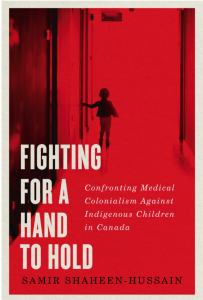
Working as a pediatric emergency physician, Dr. Shaheen-Hussain saw the cruel consequences of the non-accompaniment practice first-hand in 2017, when he treated two young patients who were undergoing stressful medical procedures without their loved ones by their side. Quebec pediatricians had been demanding the end of this heartless practice for decades, but successive governments refused to change the policy, making Quebec an outlier in Canada. When a citizen confronted him about the matter at a public event in 2018 , Quebec’s then-Health Minister, Gaétan Barrette,

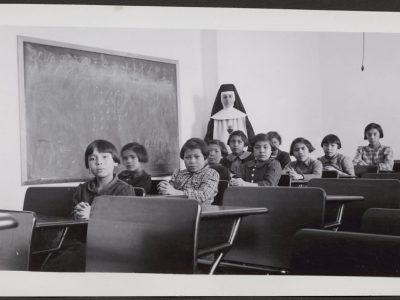
Kamloops Indian Residential School in 1937.[/caption]
In addition, highly unethical
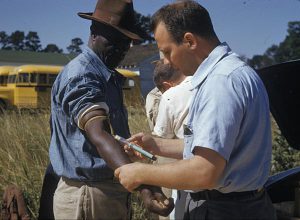
A Black man is tested during the Tuskegee Study of Untreated Syphilis in the Negro Male.[/caption]
The 
Yousra Samir Imran with her book, "Hijab and Red Lipstick."[/caption]