WP_Post Object
(
    [ID] => 419
    [post_author] => 2
    [post_date] => 2019-01-22 14:55:09
    [post_date_gmt] => 2019-01-22 14:55:09
    [post_content] => 

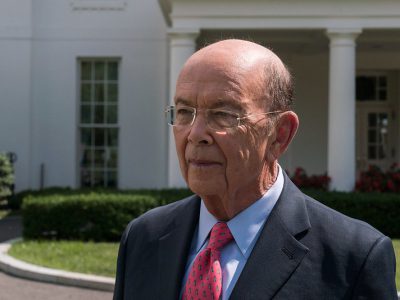
How did we overlook billionaire Commerce Secretary Wilbur Ross’s overt financial ties with the Russian oligarchy?

Though Wilbur Ross's 2014 buyout of the Bank of Cyprus, a tax haven for Russian billionaires, has been documented in the press, it only made headlines in 2017. Spy games may capture our cultural imagination, but dirty money is what greases the machinery.

On February 16, six Democratic senators sent a letter to Wilbur Ross with questions about his Russia ties but the White House sat on his response. Cory Booker was the only senator to keep pushing into last week with follow-up questions. Ross sailed through his confirmation yesterday without answering them. We didn’t follow the money and now it’s in the White House.

In a way, the Bank of Cyprus, where Ross is the primary stakeholder and vice-chairman, symbolizes the failure of Western efforts to diminish Russian financial influence.

Cyprus was a notorious tax haven for Russian businessmen until the European debt crisis in 2013 led the bank to collapse. Russian businessmen lost billions fast. Putin refused to help and Germany was reluctant to bail out the Russian deposits. It wanted to force Russians out of the European bank and so during restructuring, deposits were converted into shares. Ironically, this gave majority ownership of the bank over to Russian plutocrats. As the Cypriot president, Nicos Anastasiades, said in June 2013, “They wanted to throw out the Russians but in the end, they delivered our main bank to the Russians.”

This is where Wilbur Ross comes in. Having already made money during the European debt crisis through a takeover of the Bank of Ireland, Ross led a 1 billion euro takeover of the Cypriot bank during the summer of 2014, including a buyout of most, but not all of the Russian plutocrats. Viktor Vekselberg, one of Russia’s richest men, became the second-largest shareholder in the bank through his Bahama-based conglomerate, Renova Group.

Ross recruited Josef Ackermann, former CEO of Deutsche Bank, Putin associate and a director at Renova Group, to join Bank of Cyprus’s board. Deutsche Bank is Trump’s largest creditor and was recently found guilty of enabling a $10 billion Russian money laundering scheme, funnelling money from Moscow to offshore accounts in Cyprus (!), among other places.

Besides Ackermann, Bank of Cyprus’s board includes Ross as vice-chairman, a position he shared until 2015 with former KGB agent and businessman Vladimir Strzhalkovsky. After Strzhalkovsky’s resignation, Renova Group executive Maksim Goldman stepped up as vice-chairman. These relationships are more than a little bit incestuous.

In his rage against Obama and Clinton over the Panama Papers and Crimean sanctions, Putin could never have planned a revenge fantasy which played out as well as it has for him — it’s too perfect. But Putin did set himself up for success.

Oil men, offshore accounts and corrupt businessmen are Putin’s bread and butter, and now he has Trump, Tillerson and Ross in the White House.

It’s unfortunate considering that the sanctions seemingly limited Russia’s financial bad behavior. In March 2016, just a week before the Panama Paper leaks revealed Putin’s off-shore investments in the Caribbean, Reuters reported on Moscow’s tighter regulation of off-shore business, citing Vekselberg’s choice to bring assets home to Russia as evidence of the Kremlin’s new muscle.

Imagine the field day these thieves will have when sanctions are lifted and secrecy is protected. Of all of the Trump team’s connections to Russia, Ross’s are explicit and well-documented and yet nothing has been done about them.

Trump’s campaign knew about Vekselberg even before he won. As Trump’s own ties to Russia were being questioned in the weeks before the election, his campaign issued a press release accusing the Clinton Foundation of being on Vekselberg’s dole. Trump regularly accuses Clinton of crimes that he has in fact committed.

Additionally, though it predates Ross’s involvement in the Bank of Cyprus, Senator Booker’s follow up letter asks Ross if he has any knowledge about the 2008 purchase of Trump’s Palm Beach home by Dmitry Rybolovlev, another Russian billionaire and investor in the Bank of Cyprus. Good luck getting an official answer now.

America’s obsession with Flynn’s phone calls should not come at the expense of investigation into Ross’s relationship with notorious money launderers. Ross has yet to resign from the Bank of Cyprus. He has said he intends to divest, but talk is especially cheap with the Trump administration. Such overt corruption in the highest echelons of our government is corrosive, and, unlike the rest of the GOPs policies, is sure to trickle down.


[post_title] => Wilbur Ross, Trump and Russia: Dirty money in the White House [post_excerpt] => Oil men, offshore accounts and corrupt businessmen are Putin’s bread and butter, and now he has Trump, Tillerson and Ross in the White House. [post_status] => publish [comment_status] => open [ping_status] => open [post_password] => [post_name] => wilbur-ross-trump-and-russia-dirty-money-in-the-white-house-2 [to_ping] => [pinged] => [post_modified] => 2026-08-07 16:51:24 [post_modified_gmt] => 2026-08-07 16:51:24 [post_content_filtered] => [post_parent] => 0 [guid] => https://conversationalist.org/?p=419 [menu_order] => 361 [post_type] => post [post_mime_type] => [comment_count] => 0 [filter] => raw )

Wilbur Ross, Trump and Russia: Dirty money in the White House

WP_Post Object
(
    [ID] => 398
    [post_author] => 2
    [post_date] => 2019-01-22 14:38:04
    [post_date_gmt] => 2019-01-22 14:38:04
    [post_content] => 

Donald Trump is a criminal, just not in the spy-game fever dream you’ve imagined.

The real trick to making sense of Trump lies in understanding the black market. You know who gets this dual mentality? Vladimir “Panama Papers” Putin. The chaotic narrative of Trump’s actions gains some coherence when you frame his dealings as either legitimate or on the side. It’s a kind of double-speak Russians are familiar with.

Once known primarily for fraud, including allegations of money laundering and labor trafficking, Trump has leveled upwards in the gangster world. As president, his social set now includes mercenary billionairesbanking oligarchs and oil tycoons. Men who considered him small fry just months ago are knocking down Mar-a-Lago’s door.

Some have likened this presidency to "House of Cards,” but Trump can’t hold a candle to Frank Underwood’s brilliant maneuvering. As has been noted before, Trump is a Batman villain rampaging through a Gotham with no Batman. He’s the Queens construction boss with a short fuse, mob ties, a penchant for stiffing workers and a predatory appetite for women. Bankrupt morally and financially, he becomes a reality star and ultimately President. Next step, attempted global domination.

Is it any wonder that Americans jumped at the mention of Trump Escorts being trademarked in China? Never mind the Trump lawyer’s reasonable statement that it was done to circumvent notorious Chinese piracy. On some level, however, we were hoping for a new twist in the drama, for some kind of evidence that our president is a glorified pimp.

After all, human trafficking, defined by the use of force or coercion to extract labor, including sex work, is the second-most lucrative transnational crime after drugs. Trafficking often occurs when migrants are forced from their homes in search of opportunities elsewhere, whether due to poverty, violence or increasing geopolitical and environmental instability. Long before he was president, Trump had a track record of intimidating vulnerable immigrants, his wives included.

Trump has previously capitalized on women through beauty pageants and his modeling agency, which is alleged to have trafficked women into the country on incorrect visas, subsequently taking their passports and withholding wages. Boasting about spying on underage women doesn’t help his case. Meanwhile, whether the sensational Steele dossier is true or not, one thing it did reveal is how comfortably Putin and Trump laugh when characterizing Russian prostitutes as one of Russia’s great natural resources.

Trump stinks of corruption. Even if we don’t know what he is up to exactly, we do know something about his scene. The tourism industry has come under increased scrutiny over its unique position with regard to human trafficking. Hotels, not pizza parlors, are known hot spots for many forms of trafficking. Victims range from the construction workers who build them and the house keepers who clean them to the sex workers who service men in them.

To use the earlier example of China, the 2016 Global Study on Sexual Exploitation of Children in Travel and Tourism says that increased business travel in East Asia has increased the likelihood of children being sexually exploited. “Corporate culture in these [East Asian] countries often calls for after-hours “meetings” characterized by alcohol and sex to cement social and business relations.” The study further notes that some Chinese men value sex with children because virginity brings youthfulness and good fortune in business.

More generally, the 2016 U.S. State Department Trafficking in Persons Reportnotes that like many countries, criminal syndicates and local gangs run trafficking networks in China. Meanwhile, the One Child Policy and cultural gender bias has created a lopsided number of male children. Women from poorer regions and neighboring countries have been trafficked in to make up the difference.

Some international hotel chains like Marriott International and Wyndham Hotels have taken note of the larger problem and partnered with anti-trafficking groups ECPAT-USA and Polaris to create the Code, a specific set of practices and guidelines for the tourism industry to combat the sexual exploitation of children. The new training guidelines were implemented by Marriott in Rio de Janeiro during the Olympics and has gained traction since.

As for Trump, there has been no sign of his hotels’ participation in these tourism initiatives. Trump may have left Atlantic City for the White House, but he’ll never be better than Trump Taj Mahal.

Take for instance Vice’s report from Dubai about Trump paying migrant workers poorly, keeping them in squalor while they build his new golf course. The New Yorker’s investigation into Trump Tower Baku opens up the possibilities that Trump was in bed with the Iranian Revolutionary Guard through a partnership with the Mammadov family, paid for in cash and personally supervised by his daughter Ivanka.

As president, Trump continues to exploit workers while paying lip service to human trafficking and sexual assault. His current reign of terror against undocumented immigrants in the U.S. is reminiscent of the time Trump threatened to deport the undocumented Polish workers who cleared the land for Trump Tower. Mexican and Central American construction workers are still victims of trafficking here in America.

Trump has preyed on vulnerable communities his whole life, as the repeated labor violations and discriminatory practices show. As President, he’s vowed to fight the epidemic of human trafficking though he openly promotes policies which exacerbate its root causes. Banning refugees, closing our borders, and stirring up global and environmental chaos benefits the criminal underground, as Trump well knows.

Time to face it — we’ve put a thug in the Oval Office because we’re racist snobs about crime and who constitutes a “criminal.” When Trump strikes, his tailored suit doesn’t in any way mean that he hurts people less; it just helps conceal who he actually is. If you don’t believe me, ask the Russians.


[post_title] => Trump Underground [post_excerpt] => The chaotic narrative of Trump’s actions gains some coherence when you frame his dealings as either legitimate or on the side. It’s a kind of double-speak Russians are familiar with. [post_status] => publish [comment_status] => open [ping_status] => open [post_password] => [post_name] => trump-underground-2 [to_ping] => [pinged] => [post_modified] => 2026-09-15 19:51:01 [post_modified_gmt] => 2026-09-15 19:51:01 [post_content_filtered] => [post_parent] => 0 [guid] => https://conversationalist.org/?p=398 [menu_order] => 367 [post_type] => post [post_mime_type] => [comment_count] => 0 [filter] => raw )

Trump Underground

WP_Post Object
(
    [ID] => 394
    [post_author] => 2
    [post_date] => 2019-01-22 14:34:21
    [post_date_gmt] => 2019-01-22 14:34:21
    [post_content] => 

This interview was conducted and originally published in June 2017.

Tim Hardin is a United States Army veteran who served on active duty for 12 years. He deployed twice to Iraq with the 3rd Infantry Division and 3 times to Afghanistan as a USASOC soldier. Now he’s a full-time student-veteran in upper Manhattan attending a CUNY school thanks to the Post 9/11 GI Bill. Tim organizes with his New York City chapter of the Democratic Socialists of America, where he’s also a part of the DSA Veterans Working Group.

Natalia: Did 9/11 influence your decision to join the military? I’ve heard from a lot of veterans about how it was a formative event.

Tim: I grew up in rural western North Carolina, I’m from a pretty poor family. Neither one of my parents graduated from high school — they got their GEDs after I was born. So I joined the military to escape poverty and get money for college.

And I was in high school when 9/11 happened. It influenced me, but it didn’t leave a scar on my psyche as it did for some people. I understand it was a formative event for a lot of people, but I don’t like the romanticism that’s attached to it. Look at all the frustrating and harmful ways that the romanticism [surrounding the War on Terror] is used to manipulate Americans into getting behind the jingoism which runs through so much of our discourse.

Natalia: So we’ve had all of these years of war, war that you served in. And now a lot of people I know who are ex-military or still in the military are saying that the rules of engagement have changed under Trump. Do you see it this way?

Tim: In a broad sense, all indications are that the rules of engagement have changed. This doesn’t surprise me.

This administration has shown a complete disregard for civilian casualties. It damages our standing abroad and it really hurts our mission. It’s self-defeating.

You know, I actually still have my rules of engagement card from when I was deployed the first time in 2003. [I remember] the first time I got into a firefight in 2003, when we invaded [Iraq]. You know, it’s an extremely unnatural thing, I think, to try to kill another person. At least for the broad majority of people who are not sociopaths.

Can you really hesitate if you’re questioning whether there is a threat in front of you? This is why there are so many critical protections that we have — they’re to keep us from making a situation worse. 
 
I’ve had some people tell me off the record — who can’t go on record because they’re still [on] active duty — that the signal to military command from the White House is that “we’re not going to care so much if a bunch of Iraqis die,” or whatever.

Obama obviously had his flaws as president and leader, but he was also more conscious of the fact that we’re killing people. I’m not seeing that [level of] care with the Trump administration.

Reporting on civilian casualties [quickly] evaporates from the public’s memory. This hurts [the mission]. But we forget so quickly.

Natalia: A lot of people in the military are conservative, so I’m always being told that, hey, they don’t care about any of this stuff, they’re just happy that a Republican is president. That’s interesting to me, because of course Trump is not a real conservative. He used the conservative platform to his advantage to get to the White House, but that’s it. Do you think some people in the military are starting to see him for what he is?

Tim: I was in the Army for 12 years on active duty, and for major events that impacted broad swathes of the public — take for example the crisis of 2008 — there was such a signifiant buffer for me there.

Most people on active duty are insulated from a lot of the events happening to the general public, so it’s actually very easy to be straight up apolitical.

I was generally apolitical for most the time I was in the military, until my last four years — when I started developing my own personal politics.

Most people in the military are young and impressionable, and they’re lacking an education. So you can have a lot of toxic masculinity. Or, for example, racism. And they’re insulated from the public, so there are significant obstacles to having a culture of accountability. I think that’s the real issue.

Natalia: Do you encounter anger from other veterans when you say stuff like that? Some of my veteran friends are upset with me for doing this series, for example. Because, well, we’re touching on issues that can be very upsetting.

Tim: Most of my interaction with other veterans now comes via Facebook. And I’ve been in my own little bubble with veterans who I knew and worked with. [But] last November I really took a more socialist turn. So there have been some mean and hateful things said to me. A [former] Green Beret told me, “I want to split your gristle.” And this was in response to what I think is really mild socialist stuff.

Yeah, I’ve been threatened and criticized by other veterans, not even dyed-in-the-wool conservatives, for that matter.

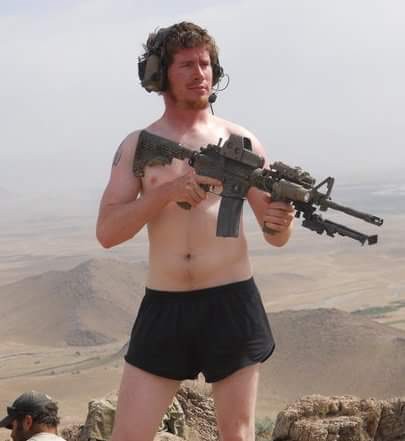
Our favorite picture from Tim Hardin’s Army days, hands down. Courtesy of Tim Hardin.

Natalia: I’m one of those people whose life — let’s admit this — has basically been ruined by student debt. And when I talk about how education should be a right, I’ve definitely had veteran friends say things like, “I had to fucking go to fucking Iraq because I wanted an education. Now some privileged assholes will get it for free?” And I completely see their argument, I’m not trying denigrate what they went through — but I also see a flaw in that logic, and I’m wondering if you see it too, or if you think I’m completely off-base to point it out.

Tim: That’s a refrain that I’ve seen out there multiple times as I advocated for free public higher education.

I tell people that when fighting for this country, I got put in some really bad situations that no one should be put in. People shouldn’t have to risk their lives so they can have access to higher education.

The system rewarded me because I risked my life for it, but education is a human right. You’re investing in your citizens when you give them the right to an education. It’s very simple stuff, and I don’t understand why we haven’t figured that out as a country.

There are people who come out of combat who are human husks. How many thousands of people who signed up to get free college are dead now? We live in the richest country in the world, and we could choose to empower Americans and invest in them.

I don’t understand why the richest country in the world does not have this shit figured out. I mean, there’s lots of reasons for it, but I just get so angry about it.

Natalia: So we were talking earlier about how there’s lots of young men in the military, and how that determines a lot of things. In this interview with Task & Purpose’s Adam Linehan we also discussed age, and how a lot of these young guys, for what it’s worth, are not going to get radicalized by the current administration and are not going to want to let Trump use the military against the American people. But I think we can all see someone like Steve Bannon just itching for that. Do you have any thoughts on that? Is this a possibility under Trump?

Tim: Well it didn’t take long for Homeland Security to go after undocumented immigrants under Trump, did it? And it could be a trial balloon — like, “How much will the American public be willing to take?”

I’m a pretty positive person, but I’m also a realist, and the young enlisted guys? They can be impressionable. And it doesn’t help that, like I said, a lot of people who have been in the military for a long time can feel isolated from the general public. It’s difficult with no cross-dialogue, no moderating influence, and people creating their own bubbles.

In my old unit, Fox News was always playing at the battalion headquarters. I see the same people who were my superiors just Breitbarting it up on Facebook right now.

So I’m not super hopeful. Maybe I’m hopeful on a regional basis. I don’t have a good read on what might happen, but I think that whatever happens would be very different from place to place.

I think Trump might try to turn the military [against the American people] if he comes close to being impeached.

And impeachment doesn’t necessarily mean the end of his presidency, but that there are legal clouds gathering above his head. Even though our system is slow, it does eventually process these things. Should Trump realize he might get booted from the White House, he could turn aggressive. But I think by that point the people on his side would also be like rats leaving a sinking ship.

Natalia: There is a lot of indication that Trump wants a war. He’s like a little boy who thinks its all a big game, and the military is his big boy toy. What do you think renewed armed conflict would look like under Trump?

Tim: I don’t think we’re headed into a new World War or anything like that. Like with Russia — it’s in the Trump administration’s interests to placate them, because of business interests.

But he’s itching to be a wartime president. Maybe [an attack on] North Korea? Maybe lots of limited strikes all over the place?

But [the Trump administration] also has a lot of turnover, and maybe that turnover will continue, and the chaotic shitshow will continue.

I mean, who’s really advising him on these issues? People like Jared Kushner? God, just think about it.

The bottom line is that they’re trying to run this government like a business, so they’ll do whatever is good for their business interests. Maybe they’ll just keep launching fucking Tomahawks for show.

[post_title] => Woke Vets: 'Disregard for civilian casualties hurts our mission' [post_excerpt] => How many thousands of people who signed up to get free college are dead now? We live in the richest country in the world, and we could choose to empower Americans and invest in them. [post_status] => publish [comment_status] => open [ping_status] => open [post_password] => [post_name] => woke-vets-disregard-for-civilian-casualties-hurts-our-mission-2 [to_ping] => [pinged] => [post_modified] => 2026-09-15 19:50:32 [post_modified_gmt] => 2026-09-15 19:50:32 [post_content_filtered] => [post_parent] => 0 [guid] => https://conversationalist.org/?p=394 [menu_order] => 368 [post_type] => post [post_mime_type] => [comment_count] => 0 [filter] => raw )

Woke Vets: ‘Disregard for civilian casualties hurts our mission’