WP_Post Object
(
    [ID] => 8581
    [post_author] => 15
    [post_date] => 2025-05-29 00:10:24
    [post_date_gmt] => 2025-05-29 00:10:24
    [post_content] => 

Stories from my friends still trying to survive.

It begins with a panicked message on Bluesky in October 2024. Someone is messaging me with a link to a fundraiser and stilted English that reads as though it came from a bad translation app. The picture on her GoFundMe shows a young woman with a pale face and shocking green eyes. 

It’s been seven months since the borders of Gaza were sealed. She says she is in Zeitoun, a pocket of north Gaza under siege. I respond in colloquial Arabic, to see if this person can even speak the language, to see if she is real. I ask her for a WhatsApp number. She gives me one. It starts with +972.

She is real. Her name is Hayat. She, along with her husband and children, did not flee south as the siege on north Gaza tightened. Where to go? she says. 

Hayat is pregnant. Eventually she will give birth—by c-section, without anesthesia—to a little girl with blue-green eyes as brilliant as her own. She names her Fatima. Now, I have a namesake in Gaza. 

I meet Mohamed next. A farmer and a teacher, he has lost his sheep and rabbits, but even living in al-Mawasi refugee camp, he persists in growing plants and crops in a little garden by his shelter so there may be something fresh to eat amid the siege. Al-Mawasi, a cruelly named “safe zone,” has witnessed regular attacks and bombardments since Mohamed arrived there in March 2024. 

This same siege today, almost three months since all aid to Gaza has been cut off, has driven people to famine. The cost of flour, if you can find it, careens wildly, swinging from an already farcical $100 USD to an impossible $700 USD. The bread bakeries have shut down. The World Central Kitchen says its warehouses are bare. Children have been dying of malnutrition and under bombs all at once, like fish in an increasingly shrinking barrel. To quote a DC pundit, “The war in Gaza is not really that different than other wars.” A beat. “Well, except I guess they can’t run away.” 

My keeping a bunny as a pet amuses Mohamed. One day, he shares a story about missing his animals, and a farmer in Texas donates $500 to his fundraising campaign. Mohamed is saving every penny for his eventual evacuation from Gaza, now a distant hope. Meanwhile, the cost to survive continues its inhumane inflationary spiral. Funds meant for escape are now hoarded for food, any food, which is becoming harder and harder to find.

After Hayat and Mohamed, I meet Obada. Obada is a lawyer with three children. He considers his youngest, Zain, a gift from God, as his other two children required medical intervention to exist. Zain did not. On Eid, Obada shares a photo of Zain in his little white thobe, a dignified and serious garment for adults that is adorable on a baby. 

The calls for help swirl thick and fast—other families realize they can build lifelines beyond the walls of Gaza, that someone, anyone, is willing to hear out their agony. There are Naser and Amal, with their children Rolan and Omar. Naser currently lies in one of Gaza’s last functioning hospitals with a breathing obstruction, and needs surgery. I try to help them a little. Rolan sends me a thank you photo: a young girl of seven, sitting on a pile of rubble against a blue sky, holding a sign that reads, “My love for you (heart) Fatima Ayub.” 

Before Israel sealed the Rafah crossing with Egypt in March 2024, it cost $5000 USD per adult, and $2500 USD per child, to organize an evacuation from Gaza. Those figures, as extortionate as they were, are meaningless now. No one can leave, and if they do, it will be as part of the deliberate depopulation of the strip. Yet, as my friends in Gaza keep telling me, nothing is left. Virtually no school, clinic, hospital, or mosque in Gaza has been left standing. Gaza has been bombed more heavily than London, Dresden, and Hamburg in World War II, combined. Children keep arriving in the few remaining hospitals with bullets in their heads.

I meet multiple Ahmads. There is Original Ahmad, who braved the migration boat passage under Israeli gunfire to escape Gaza to Europe—but is distraught because his mother and the rest of his family are still in the north. There’s Child Ahmad, who returned to Gaza to marry his lifelong sweetheart Samar, and was trapped when the war came. There’s Other Ahmed, whose siblings are all frantically trying to survive in a tent. Then, comes Another Ahmad, who shares a photo of himself in the rain, barefoot with already too-thin legs. 

There is Suad, who is only 24, and mother to a little boy, Omar. She’s taken to calling me mom, having lost her own mother before the war. I have no maternal experience, but try to hear her story. Among the most common injuries in Gaza unrelated to war wounds are burns—made worse by so many people cooking on unsafe, open fires. She shows me a bad burn that needs medical treatment. Her little boy has broken his leg, an ordinary childhood tragedy compounded infinitely by the horror. 

I meet Malak and Maali, who are sisters. Maali is disabled and needs a new wheelchair and special care. Malak labors hard on an unwelcome internet and on an unforgiving planet to help her sister retain her life and dignity.

Then comes Majd, 17, only just a child himself. Still, he shoulders the responsibility of trying to help his sisters and mother survive. He feels he has no choice.

Moataz is a shy and kind young man whose beloved father is ailing from kidney disease. Moataz doesn’t understand online fundraising, doesn’t understand social media, doesn’t understand this bizarre dystopia where he talks to a woman on the other side of the planet to try and outmaneuver a siege of biblical proportions. 

Rumors circulate in the aftermath of hostage Edan Alexander’s release that food aid will be permitted to enter Gaza. So far, these are only rumors. The siege grinds on. The ground invasion begins in earnest. An Israeli MK tells the world, “Last night, almost 100 Gazans were killed. And the question you asked me just now had nothing to do with Gaza. Do you know why? Because it doesn’t interest anyone. Everyone has gotten used to [the fact] that [we can] kill 100 Gazans in one night during a war and nobody cares in the world.”

Does anyone care? Does caring matter? 

Hayat, too, has burned herself. She tells me a pack of diapers for baby Fatima costs $70. 

Still, no aid comes.

Obada sends me photos of his dear friend, killed just last night with his wife and baby daughter. “My heart hurts, Fatima,” he tells me. “With his baby in his arms. He was only married a year.” 

Still, no aid comes. 

A friend asks me if I can help Hanadi, a still-young woman with eight children. I give what I can. 

Still, no aid comes. 

Even good news comes tainted. Naser is out of the hospital, but now, his neighborhood in Khan Younis is under evacuation orders following the latest assault. He decides not to evacuate. “I’m tired,” he tells me. “Rolan came to me crying asking why we are staying when everyone else is fleeing. It cut my heart.”

Child Ahmad, meanwhile, is fleeing, also pushed into al-Mawasi. He says he will not be online so much. When I do not hear from him for a day, I worry. I think of the al-Hol concentration camp for some 55,000 wives and children of ISIS fighters in Syria.

The US undertakes a farcical “aid delivery attempt,” under the eye of mercenaries who take selfies against a backdrop of starving Palestinians. The effort is about as successful as the floating pier to deliver aid that sank into the sea, a perfect grotesque metaphor, almost as perfect as letting children die while hundreds of thousands of tons of food rots within sight. 

Now that the ghastly end game for Gaza has been laid bare, this is what we—the Western world—have done to the Palestinians. When will it end? my friends ask me. How much more can we be expected to take? they ask. Until when? they ask. 

It is May 28, 2025. I have no answers for anyone. 

If readers wish to help any of these or other families trying to survive in Gaza, they may contact the author on Signal at fatimaayub.01 or by email at fsayub@gmail.com.

[post_title] => To Live and Die in Gaza [post_excerpt] => Stories from my friends still trying to survive. [post_status] => publish [comment_status] => closed [ping_status] => closed [post_password] => [post_name] => gaza-palestine-israel-war-survival-siege-aid-embargo [to_ping] => [pinged] => [post_modified] => 2026-08-03 22:49:02 [post_modified_gmt] => 2026-08-03 22:49:02 [post_content_filtered] => [post_parent] => 0 [guid] => https://conversationalist.org/?p=8581 [menu_order] => 15 [post_type] => post [post_mime_type] => [comment_count] => 0 [filter] => raw )
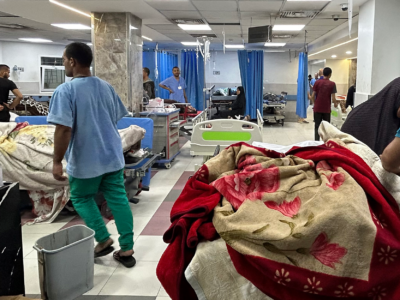
GAZA CITY, GAZA - MAY 17: Palestinians, struggling with hunger due to Israeli embargo, wait in line to receive hot meals distributed by the charity organizations as Israeli attacks continue, in Jabalia Refugee Camp in Gaza City, Gaza on May 17, 2025.

To Live and Die in Gaza

WP_Post Object
(
    [ID] => 6701
    [post_author] => 15
    [post_date] => 2024-03-01 22:18:42
    [post_date_gmt] => 2024-03-01 22:18:42
    [post_content] => 

I worried that coming out would further ostracize me from other feminists. Instead, it reinforced why I became one in the first place.

The reason why I waited so long to come out as nonbinary was because I thought it would ostracize me even further from other feminists. As a person disabled by chronic pain and fatigue from fibromyalgia, I’d already been made to feel out of place within feminism for the entirety of both my professional and academic careers. I'd also developed my writing voice during the so-called heyday of feminist blogging—a heyday that unfortunately wasn’t as utopian as people might suspect—and had experienced firsthand the complicated dynamics that arise when one’s platform makes them a target. Not wanting to separate myself further from other feminists, I chose to keep my complex feelings about my gender identity to myself. Until eventually, of course, I couldn’t.

It’s a bit of a cliché for people in the LGBTQIA community to say that they always knew they weren’t straight, or that they weren’t cis. But a part of me always knew I was nonbinary, even before I’d fully admitted it to myself. One of the defining features of my childhood and adolescence was my inner “eh…no” when people—mostly adults, but often my peers, as well—would try to label me as a “girl” or “young woman.” It would happen at school, and at home: As a child, I was prone to slouching, and my mom would encourage me to improve my posture by insisting, “Stand up straight! Like my dad used to say, ‘Be PROUD you’re a woman!’” Each time, a tiny voice inside my brain would whisper but I’m not a woman in response.

As my adolescence chugged on, I began receiving even more unwanted attention and scrutiny from peers regarding my “manly” voice—a direct quote from one of my bullies—as well as my rapidly changing body. I was not a fan of this attention, nor of the insistence that I was a girl, its implication that I should adapt myself to better seem like it. What was so great about being a girl, anyway? Or for that matter, being a boy? I just wanted to be myself.

It was around this time that I first discovered feminism. As a seventh grader, I read Dr. Mary Pipher’s book Reviving Ophelia: Saving the Selves of Adolescent Girls and started quietly identifying as a feminist. Despite the difficulties I still faced from being bullied, Pipher’s book, and the idea of feminism, made me feel less alone. I daydreamed about finding a feminist community that I could contribute to and feel valued by in return—one that included a wide variety of perspectives from people with different life experiences, all working together to make a world where oppressions like sexism, ableism, racism, classism, and anti-fat bias were no longer the norm. In high school, I began openly identifying as a feminist, and eventually, got better at ignoring my peers’ asinine comments. But I still yearned for something more—something I couldn’t yet put my finger on.

I eventually found a community of feminist friends when I started college and chose to pursue a major in Women’s and Gender Studies. Needing a break from academic writing, I also started my own blog in 2005. I quickly noticed that most of the feminist blogs with the largest audiences tended to cover issues that catered to young, educated, white, middle/upper class, cis women. Sexism, body image, popular culture, media representation, sexuality, and reproductive rights are, of course, all subjects that deserve coverage, but the ways in which they intersected with disability never seemed to be covered in any depth. Despite the use of the word “intersectionality” from some of the more popular feminist bloggers, it seemed to me that few actually practiced it.

As it happened, I was not the only one to notice the absence of disability from the feminist blogosphere. In 2009, I collaborated with a group of disability bloggers to form a site called FWD/Feminists With Disabilities as a response. The tipping point had come when several of us noticed that one of the most popular feminist blogs had never published a post specifically about disability and feminism; and when disabled readers had raised their concerns in the comments, other commenters had piled on, insisting disability and feminism were two separate things, and that the disabled commenters were being “bullies.” FWD ultimately only lasted for two years; the amount of threats, derailing, and angry e-stomping we received—in our comments, inboxes, and elsewhere—mostly from other feminists, all ostensibly on our side, proved to be enough to burn us out.

Having to repeatedly explain what feminism and disability had to do with each other—and that disability and chronic illness are feminist issues—was grating. It was isolating. This isolation got worse when I entered a Master’s program for Women’s and Gender Studies, where I was the only physically disabled person in my grad cohort. I faced pushback from multiple professors in the department for supposedly not being energetic enough. Another professor, the department head at the time, threatened to fail me when I missed more than the allotted two classes due to pain and fatigue from my fibromyalgia, on the grounds that it “wouldn’t be fair to the other students.” I later found out that I was not the only disabled person whom she had treated this way.

Throughout this period, I kept wondering if I was a failure as a feminist because I was not performing youthful, sisterhood-uplifting feminism the right way. I was repeatedly made to feel “difficult,” just for pointing out how feminism was leaving disabled people behind. Yet resolutely declaring I am a disabled woman, and I belong here didn’t feel right, either. I had this slippery, niggling feeling in the back of my brain that the reason this was the case was that I was not a woman at all. But at the time, I was in close contact with enough feminists eager to tell me how I was doing both feminism and academic work wrong, that keeping quiet about my weird gender stuff was easier than further othering myself.

Eventually, in my mid-30s, the discomfort of performing as someone I was not outweighed the comfort of avoiding negative attention or questioning from people skeptical as to whether the nonbinary identity is real. Surprisingly, on the other side, I became even more of a feminist than ever before, not because my core beliefs had changed, but because coming out had allowed me to be my authentic self. I no longer felt like I needed to identify as a woman to be a good feminist, because, of course, I didn't.

Since coming out, I’ve realized that I have better ways to spend my time and energy than trying to make nondisabled feminists care about disability issues. In fact, I likely would have come out sooner if I hadn’t wasted so much time trying to get (mostly white and nondisabled) women in the feminist movement to acknowledge that disabled women exist, and that many disabled people of all genders are feminists. While it’s irritating that I still get misgendered by TERFs on social media sometimes, the block button is there for a reason: I can’t be anyone other than myself, and if “feminism is for everybody,” as bell hooks once wrote, then it’s for nonbinary people, too. In a time where nonbinary and trans people of all ages are being smeared as predators, simply for being who they are—and, in the sad recent case of high school student Nex Benedict, being threatened or killed due to the moral panic surrounding trans existence, fueled by the specter of “safety” for cisgender kids—it is crucial that feminists welcome people of all gender identities in the ongoing fight for gender equality. It only benefits all of us when we do.

[post_title] => Feminism is for Nonbinary People, Too [post_excerpt] => I worried that coming out would further ostracize me from other feminists. Instead, it reinforced why I became one in the first place. [post_status] => publish [comment_status] => closed [ping_status] => closed [post_password] => [post_name] => feminism-nonbinary-coming-out-disability-intersectionality [to_ping] => [pinged] => [post_modified] => 2026-08-04 17:46:28 [post_modified_gmt] => 2026-08-04 17:46:28 [post_content_filtered] => [post_parent] => 0 [guid] => https://conversationalist.org/?p=6701 [menu_order] => 62 [post_type] => post [post_mime_type] => [comment_count] => 0 [filter] => raw )
An illustration of an abstract figure, emitting light as if they are a crystal. Their light bounces on the background.

Feminism is for Nonbinary People, Too

WP_Post Object
(
    [ID] => 6461
    [post_author] => 15
    [post_date] => 2023-12-06 18:49:50
    [post_date_gmt] => 2023-12-06 18:49:50
    [post_content] => 

When will we as a global community say enough is enough?

Recently, an incident occurred that should not be common but is: A woman—we will call her Ada—was assaulted by her husband. The couple had not been able to conceive a child, so her husband beat her, shouting insults while he did. Then, he threw her belongings out of the house into the night and told her not to return.

One of their neighbors who had heard the shouting came over, and convinced the husband to allow Ada back into the house. She remains there still, because like so many women suffering intimate-partner violence, she does not have anywhere else to go. The issue is exacerbated by her disability: Ada uses a wheelchair as a result of polio. With no job, Ada is dependent on her husband. Finding work is challenging because of her mobility issues and because she is uneducated. In Cameroon, where she lives, they do not believe sending girls with disabilities to school is necessary or worthwhile due to social stigma.

But what happened to Ada is far from an isolated occurrence. Violence against women and girls with a disability occurs around the world at astronomical rates. The UN estimates that women with a disability are at least three times more likely to experience violence from a partner, family member, or caregiver than women without a disability. The United Nations Population Fund estimates that between 40 and 68 percent of young women with a disability experience sexual violence before the age of eighteen.

To be a woman or a girl with a disability—physical, visual, intellectual, or multiple forms—is to always be vulnerable. We know this, because we both have a physical disability, from polio and scoliosis, respectively. We’ve both experienced various forms of discrimination and violence as children and women. And we both now work with survivors of violence with disabilities and their families.

One of the most painful realities we see in our work is that the violence perpetrated against a woman or girl with a disability is often done by someone who is supposed to care for them—a partner, a spouse, a caregiver, a teacher. These perpetrators have the advantage because they know their victims, or their families, are dependent on them. Like Ada, millions of women are forced to face the question, What do you do when the person you should be able to turn to is the one perpetrating the violence?

The difficult reality is that justice for these women is elusive. Women’s stories are often discounted, but a woman with a disability faces additional barriers to even having her story heard at all. There is an added layer of discrimination against them, as well as more practical hurdles. A deaf person who is unable to share her story without an interpreter. A woman in a wheelchair who needs transportation assistance to the police station or courthouse. A woman with an intellectual disability who may not even have the language to share what happened to her.

The complexity and scope of the problem are why we sent an open letter signed by more than 400 disability rights activists and our supporters to UN General-Secretary António Guterres, calling on him and his colleagues to support the creation, adoption, and implementation of a new Optional Protocol to the Convention on the Elimination of All Forms of Discrimination against Women (CEDAW) specific to ending violence against women and girls.

As we write in our letter: “With violence against women and girls in the spotlight, the specific and unique needs of violence against women and girls with disabilities has a chance to be seen and addressed in a larger and more comprehensive way.”

Nations’ familiarity with CEDAW—one of the most ratified treaties in the world—makes a new Optional Protocol the most sensible and expedient path to a binding framework that protects women and girls around the world, including and especially the most vulnerable, like us. An Optional Protocol to CEDAW would mandate various interventions proven to lower rates of violence, including legal reform, training and accountability for law enforcement and other professionals, comprehensive services for survivors, and violence-prevention education programs. Implementation could be monitored through a metrics-based system that would hold nations accountable for meeting clear benchmarks specific to States’ duties.

In other words, an Optional Protocol would require nations to address all forms of violence against all women and girls, in all spheres and under all circumstances—including better protection for women like Ada.

The alternative is to allow the violence to continue—an unconscionable alternative where women and girls around the world will continue to suffer. How many more women and girls must be harmed before the issue is taken seriously? It horrifies us to think that the men who perpetrate this violence will continue to get away with it, and go on to harm another woman, another child. When will we as a global community say enough is enough?

We know there is a solution. The international community has been working on this issue for more than 30 years, and it is time to take the next step.

As we write in our letter, “We have it within us to change the course of human history to one where every woman and girl lives a life free of violence.” The safety of women like Ada, like us, depends on it.

[post_title] => How International Law Can Better Protect Women and Girls with Disabilities [post_excerpt] => When will we as a global community say enough is enough? [post_status] => publish [comment_status] => closed [ping_status] => closed [post_password] => [post_name] => international-law-cedaw-convention-on-the-elimination-of-all-forms-of-discrimination-against-women-violence-girls-disability-abuse [to_ping] => [pinged] => [post_modified] => 2026-08-04 17:51:17 [post_modified_gmt] => 2026-08-04 17:51:17 [post_content_filtered] => [post_parent] => 0 [guid] => https://conversationalist.org/?p=6461 [menu_order] => 69 [post_type] => post [post_mime_type] => [comment_count] => 0 [filter] => raw )

A blurred image of a young girl in a red wheelchair, on a mauve background.

How International Law Can Better Protect Women and Girls with Disabilities

WP_Post Object
(
    [ID] => 5880
    [post_author] => 15
    [post_date] => 2023-05-18 17:06:31
    [post_date_gmt] => 2023-05-18 17:06:31
    [post_content] => 

Under international criminal law, apartheid only applies to discrimination based on race. A new open letter argues it should apply to gender discrimination, too.

In March of this year, a group of over 100 Iranian and Afghan women signatories published an open letter calling for the end of gender apartheid. The purpose of the letter was threefold: to raise awareness of what gender apartheid is, and how it's affecting women in Iran and Afghanistan; to encourage public statements and policy responses condemning these regimes; and to expand the definition of apartheid under international law. As the letter explains, currently, under international criminal law, use of the word apartheid is limited to race; but for years, activists around the world—and more specifically, in Iran and Afghanistan—have been using it to describe extreme, gender-based persecution, and the regimes that perpetrate it. The letter makes the case for why it's time we update the word's definition on the global stage.

Below, we spoke to one of the people behind the campaign, human rights lawyer Gissou Nia, on the letter's longterm goals, its challenges, and why language matters when it comes to gender persecution and apartheid.

~

How did the open letter come to be? How did you get involved?

The open letter came about with a core group of Iranian and Afghan women signatories. The genesis of this is that women's rights activists in Afghanistan and Iran have been using the term "gender apartheid" for years to describe, essentially, a system of subjugation and oppression that they are being repressed by. [But] when I spoke to some of these activists, not all of them had actually been aware that gender apartheid is not currently a crime under international law. Gender was not a part of that definition.

Apartheid, as defined under international criminal law—whether it’s a part of crimes against humanity or not—only applies to racial apartheid. So, [we] thought, why don’t we just change the definition? There have been incredible legal academics and jurors who have [already] been working on this, like Karima Bennoune, and what we wanted to achieve with the campaign is to supercharge [their] efforts. It’s an unbranded campaign—so there’s no one organization attached to it.

I’m curious what differentiates an apartheid regime from other forms of gender discrimination.

It’s a great question. One of the main things that people have asked is how is this distinct from gender persecution, let’s say. With gender persecution, which is a crime against humanity as defined under the ICC Rome Statute, that’s a more broadly defined crime. There may be some instances of something that you could charge as gender persecution that would amount to gender apartheid, but gender apartheid describes a certain type of treatment. It really focuses on the structures. The word “apartheid” comes from the word “apart” in Afrikaans, born out of the historical experience of South Africa—but it’s really about keeping one group separate from another. Here, you could say that [it’s] men subjugating and dominating women for purposes of entrenching power. I think that’s the distinguishing factor. Certainly, that would amount to a case of gender persecution, as well, and we’re not saying that it’s either/or—we think these are all complementary. In the case of race, we have both racial apartheid and racial persecution; so there’s no reason that we can’t have gender apartheid, as well.

I’d also say that gender apartheid, as opposed to gender discrimination, is much more extreme. Certainly misogyny and patriarchy exist everywhere. There are gender discriminatory laws in many different countries, including in the US. But a gender apartheid regime is something that’s quite distinct and different. It basically is saying that women are not worth a man. In the case of Iran, a woman’s value is worth half that of a man, legally. So they’re removed from public spaces. That’s why in Afghanistan, women and girls are not allowed to be educated, [why] they’ve been taken out of employment. The Taliban recently said that Afghan women cannot work for the UN in Afghanistan. So it’s essentially the removal of women from public spaces and from public life. And that’s enshrined in the law: You are formally not worth a man, and we are going to repress you, because that’s how we’re going to keep this regime in power.

When you say their value is less, how is that defined?

So, for example—I’m a lawyer, so this one for me is especially grating—if I was to give testimony in a court in Iran, my testimony would be worth half that of a man. I also wouldn’t be able to travel outside of Iran without the permission of my husband or my male guardian. I couldn’t ride a bike, I couldn’t go to sporting stadiums. I would be barred from certain types of higher education. Women do not have equal capacity, inheritance, divorce, marriage rights—anything that relates to the family, they’re unequal. And, of course, there’s the mandatory hijab laws, which we know sparked the outrage over Mahsa Amini’s murder.

For this particular campaign, why did you choose Iran and Afghanistan specifically? There are other countries where, arguably, [gender apartheid] would apply.

Because we were campaigning [and] were successful in removing the Islamic Republic from the UN Commission on the Status of Women. Obviously all of that came about because of the Woman, Life, Freedom movement in Iran after Mahsa was killed at the hands of the Islamic Republic’s morality police. There were a lot of Afghan women activists that wrote me after that and were congratulating me. [But] Afghanistan was still on the UN Commission on the Status of Women. True, the Taliban is not formally recognized before the UN, so the representative is from the former government and basically doesn’t represent anybody. Nonetheless, they’re still there.

And it really struck me, that while we’re speaking about Woman, Life, Freedom in Iran, and while there’s been such a global outpouring of attention and action and policy engagement and energy, right across the border, our Afghan sisters are dealing with a horrendous situation, of which the globe is exhibiting some form of paralysis, and a lack of direction on how to improve their circumstances.

I think a lot of Iranian women who are championing women’s rights have been thinking about our Afghan sisters, who we’re tied to through shared borders, shared culture, and in some cases shared language. These issues are interlinked and they’re not separate, and so we’ve been keen to do some joint activism. It’s something a bit new in terms of campaigning, and certainly once the law is adopted or as discussions continue, there may be other women that choose to engage with it who feel that they’re living under gender apartheid regimes. This was a campaign that Iranian and Afghan women came together to launch, but it doesn’t preclude other groups of women wanting to [sign] or get involved with this advocacy or get behind this mission. Anybody can sign, and support. But the number of gender apartheid regimes in the world is actually pretty few.

How many people have signed it so far?

I haven’t checked lately to see what the tracker is, but it was something like 5000.

Can you talk me through the three chief demands the letter makes?

So basically, the [three demands] are the way that we envision [passing the law] would happen. I’ll just walk you through the timeline. In the immediate, first of all, there’s a lot of people who are not familiar with what the term apartheid is even, [especially] under the age of 35. However, most of the decision makers that we are seeking to engage with are above the age of 35, and they’re in government, and they have direct recollection of those events in the eighties [in South Africa] until the dismantling of the apartheid system in 1990. It has a real moral and resonant power for those decision makers, so part of this campaign is aimed around introducing the term gender apartheid, so people are familiar with what that actually means. What does apartheid refer to, what does it refer to in the context of Iran and Afghanistan, and why is this still going on.

The second thing is, we want parliaments around the world to issue resolutions condemning the apartheid in Afghanistan and Iran. That’s moving forward in Canada, in the UK, in New Zealand, and now we’re doing a lot of outreach to states in South America and Africa because we think that will be very important to have a global frame. This isn’t just a Western effort, and we want to make sure that is understood.

The ultimate goal is to have some of the legal frameworks that apply to apartheid amended or introduced to include gender apartheid. One of our main goals is to have gender apartheid included in the definition at the upcoming global convention on crimes against humanity. It should be adopted at the end of 2024, with any luck, and we want to be included.

Do you think the history of the term being so associated with race helps or hinders the movement?

Well, it’s not called racial apartheid. It’s just called apartheid. The reason that apartheid doesn’t include gender is because it was created in the 20th century out of the South Africa experience. I [also] think a lot of international criminal law [has been] created by men in small rooms, and not necessarily with women’s input and that’s changing. We see that there is an increased focus on gendered crimes. There’s even a reevaluation of the crime of genocide to focus more on the gendered aspects of it. Historically, people have assumed that genocide has to be mass killing, not realizing that actually, it could also just be sterilization, and those forms of genocide are much more focused around women.

The point is a lot of crimes that we grapple with are really viewed through more of a male lens, and there’s been a concrete effort to apply a gender lens to that. I think this ties into the reason why apartheid didn’t focus on gender. It wasn’t because there weren’t gender apartheid regimes. It was just because of the kind of dialogue that was happening in the 70s and the 80s and the 90s.

Longer term, what happens if you succeed in changing international law? What happens if [gender apartheid] is criminalized?

The biggest thing is just that then it’ll be possible to be prosecuted, and there’ll be a lot of new pathways for accountability. It also ultimately will enforce prosecution of crimes like gender persecution, as well, because prosecutors will start to think more deeply about the gender aspects of crime. But while the end goal might be to have this legally enshrined, really, the goals are all along the way. Because what we want to do is raise awareness about what this crime is, but also drive policy actions.

I mean, with South Africa, the ask was really to financially isolate that regime and to get people—governments, companies—to stop doing business with them. With Iran and Afghanistan, they’re already very isolated, they’re already very sanctioned. It’s not about introducing new sanctions or dissuading companies from working with these states, because they already aren’t. It’s about reframing the discussion. Those sanctions are issued for nuclear proliferation, for WMDs, for ballistic missiles, for terrorism; they are not issued for human rights violations, and they’re definitely not issued for gender apartheid. So we want to start to reframe why it is that we’re saying that governments should not engage with these governments [so] they need to change their behavior. It makes it unacceptable.

The crime of apartheid as distinct to the crime of gender persecution, gender apartheid would introduce more of a question about third party actors. Because of the historical example of South Africa apartheid, there’s a question of liability. If governments and companies are complicit, or doing business with regimes that are perpetrating gender apartheid, are they willingly aiding and abetting this regime? It’s a bit more expansive than what’s currently on the books, in our view.

We’re not asking for increased sanctions as part of this campaign. What we’re asking for is that there clearly are demands that gender apartheid come to an end.

For more information, you can read the letter in its entirety, and join in signing it, at endgenderapartheid.today.

You Should Give a Sh*t About is an ongoing column highlighting local stories with a global impact. This interview has been edited and condensed for clarity.

[post_title] => You Should Give a Sh*t About: Gender Apartheid [post_excerpt] => Under international criminal law, apartheid only applies to discrimination based on race. A new open letter argues it should apply to gender discrimination, too. [post_status] => publish [comment_status] => closed [ping_status] => closed [post_password] => [post_name] => end-gender-apartheid-today-open-letter-interview-gissou-nia-human-rights-lawyer [to_ping] => [pinged] => [post_modified] => 2026-08-04 19:11:25 [post_modified_gmt] => 2026-08-04 19:11:25 [post_content_filtered] => [post_parent] => 0 [guid] => https://conversationalist.org/?p=5880 [menu_order] => 82 [post_type] => post [post_mime_type] => [comment_count] => 0 [filter] => raw )
An old black-and-white photo of women protesting in Iran in the 80s. Many of them are yelling, with their fists in the air. They're protesting an (at the time) newly enforced dress code for women in Iran, requiring women to dress a certain way or else lose their jobs.

You Should Give a Sh*t About: Gender Apartheid

WP_Post Object
(
    [ID] => 5760
    [post_author] => 15
    [post_date] => 2023-04-06 06:27:58
    [post_date_gmt] => 2023-04-06 06:27:58
    [post_content] => 

Attacks against LGBTQ rights—largely targeting trans people—have been ramping up. It isn't hard to imagine what will happen next.

Since the Supreme Court’s decision in Obergefell v. Hodges legalized same-sex marriage nationwide in 2015, we have been living through an era of fierce fascist backlash against progressive politics and “wokeness” in general—much of it targeted against the LGBTQ community. With each passing year, Republican theocrats have pushed the envelope in state legislatures, paving the way for the eventual passage of severe restrictions on LGBTQ rights. Across the board, these attacks have disproportionately affected transgender people.

In this era of defunding and banning gender-affirming healthcare—and, most recently, a ban on drag in the state of Tennessee that will likely lead to police harassment of anyone deemed gender-nonconforming, if it survives its legal challenges—the bathroom bills of yesteryear seem almost quaint. The Right’s onslaught has progressed incrementally but quickly, with the state bans on trans girls participating in school sports that began to pass in 2020 effectively serving as “gateway” bills to make today’s terrifying state-level, anti-queer crackdown possible. And now, congressional Republicans are threatening to take state persecution of the LGBTQ community nationwide once more: H.R. 734, the first national anti-trans sports bill to advance in Congress beyond committee, is currently awaiting a floor vote in the House of Representatives. This bill comes just days after the House passed a new “parental rights” bill, more accurately described as a “don’t say gay” bill: legislation that would force schools to out queer children to their parents in order to receive federal funding, among other repressive measures.

Neither of these bills will pass the narrowly Democratic-controlled Senate, of course. But should Republicans regain both houses of Congress and the presidency in 2024, national bills attacking queer schoolchildren (and the parents who support them), gender-affirming healthcare for both minors and adults, and public expressions of gender-nonconformity are very likely to become federal law. With the precedent set by the recent overturning of Roe v. Wade as a key turning point, the Roberts Court will already have established the “constitutionality” of allowing such cruel, draconian laws. And they will be passed, of course, in the name of “protecting children,” even though queer children will be severely harmed by these policies—forced to remain closeted or subjected to outing and conversion “therapy,” and, in far too many cases, driven to suicide as a result.

Using children as pawns to push a radical Christian agenda is nothing new. To make their enemies seem truly monstrous, authoritarians need innocent “victims” to “rescue.” This is where “the children” come in, so long as the children are never permitted to speak for themselves. We’ve seen this playbook before. The Christian boys supposedly subjected to ritual murder by Jews, according to the medieval European blood libel. The fertilized eggs that anti-abortion extremists insist to us are “persons” whose “murders” must be prevented and/or punished. And now, the all-American schoolchildren who might observe happy, thriving queer adults, or read about queer people in school libraries, or hear a female teacher talk about her wife, and thus “decide” to be queer against the wishes of their good Christian parents.

Of course, if proponents of anti-trans legislation actually cared about children, they would rally behind, for example, sensible regulations to make sure that homeschooling isn’t being used by parents to abuse, neglect, or indoctrinate their children. They would support initiatives like those in the state of California that provide wellness centers in public schools, where any student can get mental health help and queer children can get safe and confidential guidance without fear of being outed to parents that it may not be safe to come out to. Instead, the people concerned with “saving kids” from “transgenderism” promote the opposite—including unregulated homeschooling and Christian schooling where possible, and attempting to control public schools where it’s not.

As John Stoehr of The Editorial Board aptly put it, “The rights of children—the right to grow, develop and change—is conspicuous for its absence in the debate over anti-trans laws, book bans and other oppressive forms of government control.” In the United States, children’s rights at the federal level are almost nonexistent. We are the only United Nations member state not to have ratified the UN Convention on the Rights of the Child. And if patriarchal, anti-pluralist, authoritarian Christians who treat their children like chattel want to keep things this way—and they do—fomenting a conspiratorial politics of moral panic is an effective means of doing so.

In recent years, a number of commentators have convincingly argued that the QAnon conspiracy theory is of a piece with the Satanic Panic of the 1980s and 1990s—essentially the resurgence of an American impulse toward Christian-inflected moral panic. Then as now, conspiracy theorists have conjured up a phantasmagoric enemy, projecting their fears, anxieties, and grievances both personal and social onto a monstrous “other” in the name of protecting “children” from cabals of ritual child abusers who happen to be populated by the out-groups conservative Christians most despise: “heretics” and nonbelievers, liberals and progressives (including progressive Christians), Jewish-coded “elites,” and members of the LGBTQ community.

Again, this is nothing new. In 1977, Anita Bryant named her Miami, Florida-based organization that fought, successfully, for anti-gay discrimination “Save Our Children.” Similarly, in the original Satanic Panic, the panicking populace in question rallied around “believing the children.” The irony is that the adults involved did not, in fact, believe the children—the supposed victims of the supposed satanic ritual abuse, of which no physical evidence has ever emerged. It was only under prompting from their paranoid parents, wildly irresponsible mental health practitioners pushing “recovered memory” therapy, and police and prosecutors at the height of the “tough on crime” era that the children were “believed” at all—after they at last broke down and told the adults what they wanted to hear, by regurgitating those adults’ absurd dark fantasies back to them. In recent years, some of these children, now able to speak for themselves as adults, have explained the ways in which they were manipulated into lying. Some have even gone to court to formally recant their childhood testimony in an effort to exonerate innocent people who were falsely convicted. Not coincidentally, many of those innocent people who were unjustly locked up for years as a result of the Satanic Panic were also queer.

This historical context has been on my mind as I consider the American Christian Right’s current moral panic, in which fixations on Hollywood, the Democratic Party, and the “deep state” coincide with the rebooting of baseless 1970s and 80s era conspiracy-mongering about queer people as supposed “groomers” and “pedos.” In fact, most child molesters identify as heterosexual. But as the website of the Zero Abuse Project, a nonprofit dedicated to preventing sexual abuse, puts it, “Abuse is about power and control and is not anchored by sexual orientation.”

Never mind the fact that 93% of child sex abusers are known to their victims, and 34% of child sex abuse victims are abused by members of their own families. Statistically, attending church on a regular basis is far more dangerous for children than attending an occasional family-friendly drag show in the company of their parents. Yet only the latter are regularly targeted by raving mobs of angry, mostly white, mostly male Christian fascists, carrying the Christian flag and shouting things like, “The fist of Christ will come down on you very soon!”

Abusers and authoritarians can’t handle ego threats, so instead of self-reflection on the real threats of violence within their own communities, they scapegoat members of vulnerable groups, casting them as “demonic” and connected to powerful, “evil” forces, thus allowing them to paint themselves as victims rather than victimizers. Rather than grapple with the ways in which their patriarchal ideology directly fosters abuse against women, children, and queer folks, they push actively harmful policies that purport to “help” them. Such are the contours of majoritarian grievance-mongering—and it’s the out-groups and the children the fascists claim to be so concerned about who suffer as a result.

Like other kinds of abuse, today’s right-wing American moral panic is about power and control—the power and control of the aggrieved, privileged population who fear they are losing their “right” to put the rest of us in our place. So far, the current moral panic isn’t generating an epidemic of false convictions for “indecency” or sexual misconduct involving minors, as happened during the Satanic Panic. But if we let them get away with it, today’s American fascists will simply criminalize queer existence, and then, you can be sure, the arrests will start in force.

Tennessee’s new drag ban, which would have gone into effect on April 1 before it was temporarily blocked by a court, stipulates that a second offense is a felony, punishable by up to six years in prison. And let’s be clear: While lower courts may still block laws like Tennessee’s from going into effect as they work their way through the court system, the illegitimately stacked, far-right Supreme Court can almost be counted on to stand on the wrong side of history. If the law does go into effect within the next year or two, how it is enforced may give us a hint of what lies in store for the rest of the nation if Republicans take full control of the federal government. We need to be aware of the stakes even as we continue to fight state-level battles, and we need to start pressuring blue states to commit not to enforce unjust laws targeting marginalized people, as dictated by an angry fascist minority who hold disproportionate power in our flawed American system. Fascists should not be allowed to frame the national discourse, and they have proven time and time again that they don’t truly care about the wellbeing of actual children, as opposed to the voiceless victims they’ve created in their heads. They only care about retaining power and control—and pitting scapegoated “demons” against objectified “children” is a means to that end.

[post_title] => Tennessee's Anti-Drag Bill Doesn't Exist in a Vacuum [post_excerpt] => Attacks against LGBTQ rights—largely targeting trans people—have been ramping up. It isn't hard to imagine what will happen next. [post_status] => publish [comment_status] => closed [ping_status] => closed [post_password] => [post_name] => anti-lgbtq-drag-policies-christian-attacks-rights-tennessee [to_ping] => [pinged] => [post_modified] => 2026-08-04 19:23:33 [post_modified_gmt] => 2026-08-04 19:23:33 [post_content_filtered] => [post_parent] => 0 [guid] => https://conversationalist.org/?p=5760 [menu_order] => 88 [post_type] => post [post_mime_type] => [comment_count] => 0 [filter] => raw )
Drag queen Vanity is under a spotlight in the foreground, while most of the background is black. Her red hair is teased high in an up-do, with the front smoothed back. She's in profile, looking off to the side, and is wearing a large earring with many large gemstones. She's wearing a low cut muted green dress, with a crystal broach at the waist.

Tennessee’s Anti-Drag Bill Doesn’t Exist in a Vacuum

WP_Post Object
(
    [ID] => 5695
    [post_author] => 15
    [post_date] => 2023-03-27 17:00:00
    [post_date_gmt] => 2023-03-27 17:00:00
    [post_content] => 

Their stories, in their own words—and why you should be paying attention.

Rode Wanimbo’s aunties welcomed her back to her ancestral village in the usual way—with a song of lament. This, in her Lani tribe’s language, is known as leendawi, somewhere between singing and crying. And whenever she visits for a vacation, or when a family member passes away, her aunties greet her with it. 

On this occasion as always, Rode followed her aunties into a traditional honai, a roundhouse built with natural materials, and sat to hear their stories, told through song. Her village has witnessed an unspeakable horror. In 1977, a year before Rode was born, the Indonesian military swept into West Papua in a hostile takeover, killing swathes of villagers. Rode’s family fled to the town of Wamena, her mother pregnant with Rode and already caring for an infant son. Others were forced to flee on foot, either seeking refuge in neighboring Papua New Guinea or becoming internally displaced people (IDPs) and clutching at survival in the forest. On her last trip home, Rode’s aunties sang tales of these atrocities. They spoke of how they were raped by the Indonesian army, of witnessing loved ones die, and how others crossed the border to live as refugees. 

As Rode recounts this, her voice begins to tremble, as it does for much of the interview. The first time she heard the leendawi, she was 11 years old.

“That’s the way they express what they have been going through. I think that in our culture, that’s the only way they try to pass a message to me, through that leendawi,” she says. Women are not allowed to speak in front of men, Rode adds, making it hard for them to express their feelings. Yet across West Papua, thousands of Indigenous women are dealing with trauma after trauma after being displaced from their homes, with no outlet to speak on it.

“We thought about how to create a safe space for women, so women can talk,” Rode says.

As part of her role as the coordinator of the women’s department for the Evangelical Church of Indonesia, she’s done just that. Alongside her team, Rode has created what she calls “storytelling circles,” where women can openly share their experiences and emotions with each other. Currently, Rode runs a handful of sessions a year, taking long journeys across tricky terrains to reach different communities.

At these sessions, around 20 women come together. They start with body mapping, where each woman lies on a large sheet of paper, as her body is outlined on the page by a partner. Using this silhouette as a guide, the pair asks each other which parts are sick or need attention. Sometimes the women, forced to walk for hours each day to collect food and water, share how it impacts their bodies. Other times, the women share what they’ve survived. 

In another session, the participants use time periods as a way into their stories, the steady concept of dates and seasons opening a door to the traumas they’ve never spoken aloud. The women share their experiences, first with a partner and then the group, revealing how the military and police burned down their villages. They talk about their homes and gardens being destroyed, yet how they still long to go back. How they want to be in a place where they belong, the place of their ancestors.

Alongside these safe spaces, Rode—who has also sent joint submissions to the UN on the issue of IDPs in West Papua—is collecting an oral record of these women’s testimonies. She shared some of their stories with The Conversationalist, originally spoken in local languages and written down from memory. The stories here have been collected by Rode, and the names have been changed. 

At this time, international journalists are not allowed into West Papua.

The women of Nduga

When Yohana and her family were forced from their home in Nduga, Yohana’s husband walked with her as far as the region’s border. He parted with sobering words.

“He said, ‘If you find a man who is able to make a garden and make sure you and our children have a meal every day at the shelter, I give you permission to marry him as if I was dead, for I will go back to join the National Liberation Army to protect our homeland,’” Yohana told the storytelling circle. She has been living in an IDP center in Wamena for around four years, and has survived by gardening on land borrowed from the local community.

Yohana was forced to flee her home after an incident that displaced hundreds of people in her community. It occurred in 2018, during a celebration of what many Indigenous Papuans consider their independence day: when their elders declared their freedom from Dutch Colonial rule on December 1, 1961, before Indonesia took over in 1969. According to Rode, as members of the West Papua National Liberation Army (a rebel civilian organization) celebrated this day in Nduga, some construction workers took a photograph. The liberation army believed the workers to be police informants, and violence broke out. Some of the workers—reportedly up to 31—were killed. According to those displaced, army and police raids followed in retaliation: They burned down houses, churches, and schools, and dropped explosives from helicopters.

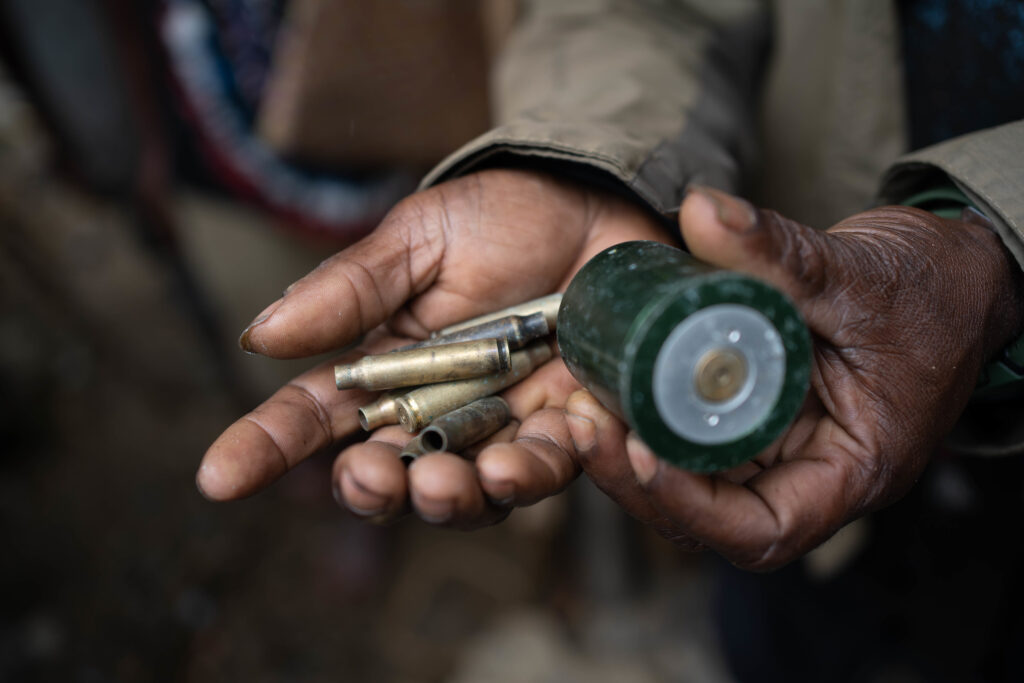
A close-up photograph of hands holding recovered ammunition from an aerial attack in West Papua, including what appear to be large brass-colored shells and a larger canister. The only thing in focus are the hands and the weaponry, but you can see the person holding the shells is wearing a dark gray-green jacket.
An eyewitness to an aerial attack in West Papua shares recovered ordnance. (Photographer anonymous by request.)

Life before the conflict, according to some of Rode’s friends, was peaceful and centered around community, family, and gardening. Now, this particular community in Wamena is host to around 200 women and children displaced from Nduga. There are eight other such communities in the region. Most of the men have either gone to the jungle to join armed rebel groups or have stayed behind to look after their villages, leaving them behind. There is no clean water nearby, no electricity, no hospital access, and no school. When babies are born, it is often in the IDP centers themselves.

“Some [women] spend sleepless nights because they don’t know the situation of their children,” Rode says, many of whom were separated from their mothers during the military attacks. There is no internet connection to trace them. 

Displaced in Ilaga

At around 7 a.m. one morning, Irene and her husband were in front of a village office in Ilaga when she heard the fatal gunshot. She didn’t see who had fired it—only that it had come from the direction of the trees, and that it had killed her husband. She did not cry.

“My children are living with trauma as I did, but I pretend to be strong in front of them,” she told Rode. The violence has only continued: One night during her stay in Ilaga, Rode heard gunfire at the Indigenous settlement. She claims the source was the Indonesian security forces. She lay awake all night, thinking of her own two children.

The day-to-day life for these women is no easier. For many of the women in Ilaga, hours every day are spent walking to gardens and rivers, hours away, just to collect sweet potatoes and clean water. Along the way, soldiers stop them at regular army posts, where they have to report on the purpose of their travel. According to Rode, the reason for these checkpoints comes down to the army being suspicious of the IDPs—they believe they might be providing information and food to armed separatist groups. The women told Rode that they know it is dangerous to travel these distances, but that they have no choice. To stay still is to starve.

Beyond tensions around independence movements, there is another driver of conflict in the region. The island of New Guinea is home to the world’s third largest area of rainforest, and its natural resources are highly sought after. Indigenous communities, the guardians of this environment, have been further displaced from their homes as companies seek gold, minerals, or space for palm oil monocultures. Freeport’s Grasberg Mine—one of the world’s largest gold mines—has been the most famous example. But there have also been plans to build a mine in the gold-filled mountains of the Wabu Block, which have been met with huge concern from groups like Amnesty International. 

In Ilaga, one mother told Rode, with anger in her eyes, “If the Indonesians want to have our gold from our mountains, they could just take it. Why did they treat us like animals? They came into our homes without permission and uprooted us from our ancestral land.”

For Indigenous communities, Rode explains, this removal feels especially painful, because of their spiritual and cultural connection with the mountains, rivers, and land. To remove the people is to destroy their identity.

“We view mountains as our mother who nurtured the plants, which become food for the animals, and we get the milk from the animals,” she says. “When our mountains are being exploited, it’s like a rape to our mother. We have to protect our mother.”

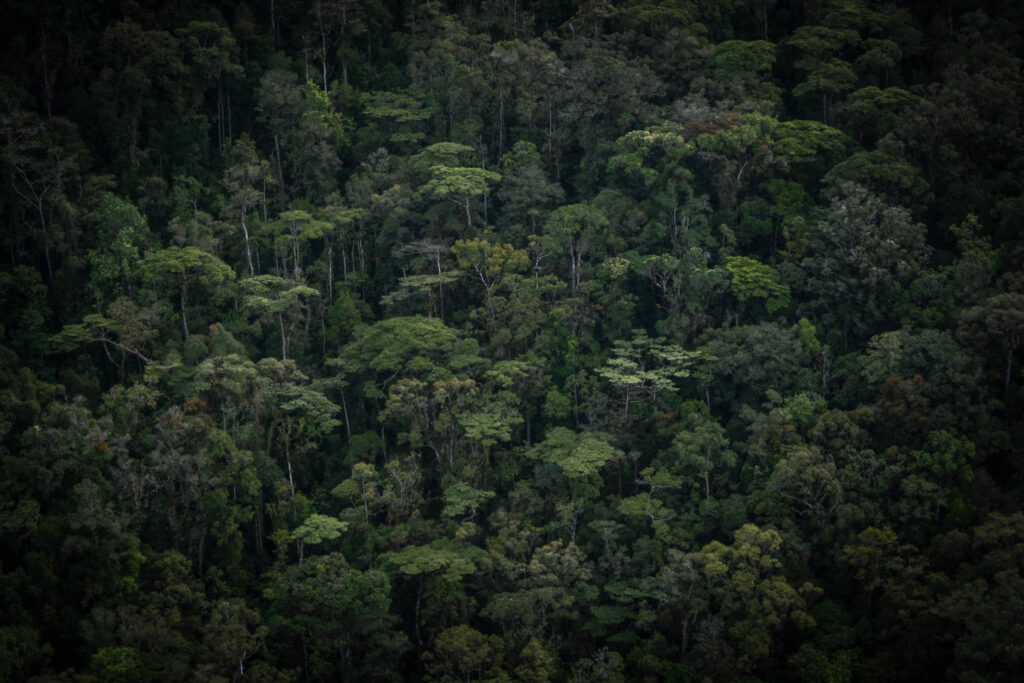
An aerial shot of a forest in West Papua. There are trees of different heights and varieties, and no notable gaps in the canopy; it's lush and dark green.
A view of the Papuan highlands near Kiwi. (Photographer anonymous by request.)

The root of West Papua’s problems

West Papua’s problems go back to 1898, when it was colonized by The Netherlands, along with the other islands that now form Indonesia. When the country became independent in 1949, however, it was without West Papua, which stayed in the control of the Dutch. Instead, West Papua prepared for its own independence throughout the 1950s, and by 1961, that moment had arrived: A congress of people declared independence and raised their new Morning Star flag for the first time in what is now called Jayapura. The Indonesian government, however, was not happy with this arrangement, and soon invaded. In a bid to end the conflict between Indonesia, the Netherlands, and Indigenous Papuans, the US government encouraged the Dutch to hand control of West Papua to Indonesia. The New York Agreement gave control of West Papua to first the United Nations, and then, by 1963, to Indonesia, which became the temporary administrator of the country, with the stipulation that West Papuans would have the right to self determination.

But a promised independence referendum in 1969, as part of the transition after the end of Dutch rule, was not a democratic event. Instead, 1,000 people were given a vote by the Indonesian army, and told to make a very specific choice under threat of being shot. Yet this vote was still approved by the UN—cementing West Papua’s place under Indonesian rule.

“The Papuans were just outside the room, while the rest of the world decided their future,” says Naomi Sosa, founder of Papua Partners, an organization that supports training and global links in the country. “The root goes down to the political contestation. They were supposed to have a vote for self determination, but it was controlled by Indonesia.”

Eventually, in 2000, West Papua was given special autonomy, with their own government looking after their affairs, but without independence. In reality, Naomi says this special autonomy wasn’t implemented properly, with all the powers being taken back to Jakarta. Today, there is a movement demanding self determination, where West Papuans could determine their own future through a referendum. But in stark contrast to this desire, the Indonesian government is focusing on the decentralization of provinces. Under Indonesian president Joko Widodo, known as Jokowi, things have become more difficult for West Papuans, with UN experts saying that since violence escalated in 2018, there are now 100,000 displaced people and humanitarian aid is being blocked. Naomi says Indigenous communities, particularly those in the highlands, are under severe threat. Any form of protest is met with brutal force. Now, the government wants to make further divisions, which Naomi says makes it harder for the 250 tribes to unite and weakens the independence movement. 

More districts also means more military posts—which makes many IDPs uneasy. Rode says when displaced women in particular are encouraged to go back home, they feel they have no guarantees of their safety because of the increased military presence.

“Please tell them to leave our homeland so we can go back home,” they tell her.

Still, Rode has not given up hope, and neither have the thousands of people displaced throughout the country, whether they are part of independence movements or staying strong to keep their families alive in IDP camps. As the final call with her ends, Rode makes a plea: West Papuans need solidarity from the international community. They are experiencing settler colonialism, and it cannot be separated from global politics. Papuans do not want to be forgotten.

“We are powerless,” Rode says. “We really need help.”

[post_title] => The Forgotten Women of West Papua [post_excerpt] => Their stories, in their own words—and why you should be paying attention. [post_status] => publish [comment_status] => closed [ping_status] => closed [post_password] => [post_name] => west-papua-indigenous-women-idps-crisis-indonesia [to_ping] => [pinged] => [post_modified] => 2026-08-04 19:29:01 [post_modified_gmt] => 2026-08-04 19:29:01 [post_content_filtered] => [post_parent] => 0 [guid] => https://conversationalist.org/?p=5695 [menu_order] => 89 [post_type] => post [post_mime_type] => [comment_count] => 0 [filter] => raw )
A mother sits cross-legged inside of a dark wooden structure, looking at a pot on a fire. She is holding a young child, who is grasping her necklace and putting it in their mouth. The woman is wearing a dark blue and black knit cap, a long-sleeved gray shirt, and a red skirt patterned with large leaves. The child is wearing a lighter blue knit hat and a white garment. There are chalk drawings on the wooden walls behind them.

The Forgotten Women of West Papua

WP_Post Object
(
    [ID] => 5576
    [post_author] => 15
    [post_date] => 2023-02-10 14:30:00
    [post_date_gmt] => 2023-02-10 14:30:00
    [post_content] => 

And why do so many people support them?

Listen to this article on The Conversationalist Podcast. | 17:50 min

On January 4, in Enoch, Utah, 42-year-old Michael Haight shot and killed his wife, five children, and mother-in-law, before turning the gun on himself, a form of murder-suicide known as "family annihilation." Tausha Haight, his wife of twenty years, had filed for divorce a couple weeks prior. Abusers always lose it when you leave. 

It's since been reported, first by the Associated Press, that Haight was investigated in 2020 for potential child abuse after someone outside the family reported it to the police. Utah's child protective services got involved. At the time, Haight’s eldest daughter Macie said the abuse had begun years earlier, in 2017. She described a time her father grabbed her by the shoulders and threw her into furniture, along with another incident in which he had strangled her. She said she’d been afraid that he would kill her. Michael blamed the then-14-year-old for his violence, saying she was "mouthy." During the same police investigation, Macie also said that her father regularly belittled her mother, and Michael admitted to surveilling his wife’s communications. No charges were filed.

Nearly three years later, Michael’s obituary in the local paper would read that he "made it a point to spend quality time with each and every one of his children," and that they were a "cherished miracle." One commenter spoke of his “Christlike love and service.” Neither the obituary nor the commenters mentioned the murders, and it was only taken down after Shannon Watts, gun reform advocate and founder of Moms Demand, tweeted it out.

Haight’s story isn’t so uncommon. In the United States alone, a man has annihilated his family every 3.5 weeks for the last two decades, a likely miniscule portion of the estimated family annihilations worldwide. Men who strangle their partners are ten times more likely to become men who kill them. And having a gun in the home increases the risk of murder in a domestic violence incident by 500%.

So why do we continue to treat what happened to the Haight family like an isolated tragedy—a “personal” matter—as opposed to exactly what it was: a domestic tyrant who felt entitled, by virtue of being a man, to enforce his will, crush dissent, and destroy his family as soon as they tried to flee? 

When a head of state insists on their natural or divine right to monitor your private communications, stalk your movements, imprison you at home, and beat or kill you for wearing certain clothes, meeting friends, or maintaining a separate bank account, we rightly call them authoritarian. We are loud in our disapproval: When Iranian women took to the streets in protest over the arrest and murder of Mahsa Amini by morality police for not properly wearing hijab, the support abroad was strong, the brutality obvious. But when it's the head of a household terrorizing you, the euphemisms (and excuses) surface: family difficulties over a private matter, better dealt with behind closed doors; it’s best not to get involved, it’s none of our business. All support evaporates, because father still knows best — and if father wants to blow everything up just because he can, who's going to stop him? 

Studies on familicide say in almost every case, the man claims his family as property, with the right to end their lives. Murder, after all, is the ultimate form of control. But the impulse to control or destroy isn't limited to physical violence: The easiest way to break people is to break what's precious to them. Look at Elon Musk, who had to lose 200 billion dollars before people finally stopped calling him a genius. Within months of his taking over Twitter, 80% of the company’s workforce had quit or been fired, especially anyone found criticizing him. In a recent New York Magazine piece about Musk's takeover, they describe how Twitter employees flocked to the company Slack during these mass layoffs, all anxiously waiting for the ax: "One person posted a meme of Thanos from Avengers: Infinity War, the supervillain who exterminates half the living beings in the universe with a snap.”

Advertisers fled Musk’s "extremely hardcore" site as he rolled out a disastrous verification process, threatened people who linked out to other social networks, reinstated Nazis, and ranted about eugenics, all while overseeing a radical uptick in harassment and slurs. With no clear plan to make Twitter profitable, and engineers rolling their eyes at his technical expertise, it's no wonder Twitter and Tesla's value has since plummeted. Not that he's taken any accountability for the losses or the lives he's upended. He's been too busy impregnating his employee, lashing out at mouthy critics, and, most recently, firing a Twitter engineer for informing him the reason his engagement was down wasn’t due to a bug—but because people weren’t as interested in him as they used to be.

Whether they're the head of a family, company, or state, everyone suffers so long as masculinity is wrapped up in an ability to dominate. Impunity and entitlement breed ignorance and nihilism. Patriarchy is ancient, authoritarian, incompatible with equality and democracy, and bad for everyone involved. And it’s as relevant to how Musk acquired and destroyed Twitter as it is to the protests in Iran as it is to what happened to the Haight family. 

Human rights also don't disappear at your doorstep. According to the UN, 47,000 women and girls were killed by their partners or other family in 2020. On average, that means one murder every 11 minutes. But freeing women and children from violence won't happen so long as it's still taboo to speak about it. We’d rightfully consider it outrageous if someone called reports of mass rapes and murders in Ukraine by Russian soldiers "airing dirty laundry.” Yet we don’t extend the same support to women abused and murdered by partners or relatives, which happens in every community, and is far more likely than “stranger danger.” (And on the rare occasion victims do get attention, they’re usually blonde, white, and already dead.)

Meanwhile, it's the same self-destructive, patriarchal entitlement that motivates domestic violence that motivates atrocities like the Russian invasion of Ukraine if I can't have you, nobody can – with the same results. Putin first became aggressive in 2014 after Ukraine turned down a trade agreement with Russia in favor of one with the European Union. (Again, it's most dangerous when you try to leave.) Absent consequences, including for past wars in Syria, Georgia, and Chechnya, Putin has continuously escalated the bloodshed, and will do anything short of giving up power to punish Ukrainians for daring to be free, including letting Russia crumble. In that sense, he's just like Michael Haight: Insult the sovereign, or threaten his control, and watch him burn the building down with everyone trapped inside. Whatever it takes to teach them a lesson. 

Our bodies don't differentiate between state-sponsored or home-bound torture. What does your killer's institutional affiliation matter when you're dead? The lines are blurred in any case, considering the number of men who abuse in private who also abuse the public. It's not a coincidence that police abuse their families at high rates, or that two-thirds of mass shootings are either an incident of domestic violence or are perpetrated by someone with a record of it. Yet time and time again, on both a personal and policy level, we treat domestic violence as a completely separate matter – anything to avoid the reality that some homes are conflict zones, too.

Even the preeminent global treaty on women’s rights, the Convention on the Elimination of Discrimination Against Women (CEDAW), does not contain the word "violence" once. In 1980, when CEDAW was passed, gender-based violence was considered outside its scope, a private matter that this public treaty wouldn't touch with a ten-foot pole. Men's rights, especially in war, were already covered as human rights, a courtesy not extended to everyone else. It wasn't until 1992 that the CEDAW Committee issued General Recommendation 19, which interpreted the treaty to include gender violence. (Full disclosure, I'm on the board of an organization, Every Woman, calling for a new global treaty to close this atrocious gap in international law.) Like the Refugee Treaty, which advocates fought tooth and nail to have courts interpret to include gender persecution as a "particular social group," half the world's population suffering the most pervasive human rights violation was considered niche.

When feminism states that the personal is political, it speaks to the ways the private sphere continues to oppress women. There can be no equality in public so long as violence at home is ignored. To be part of the public, you first need to make it outside. Patriarchy cuts across every divide, but its effects are worsened by poverty, racism, and other forms of oppression. When 72-year-old Huu Can Tran shot and killed 11 people at the Star Ballroom Dance Studio in Monterey Park, California during a Lunar New Year celebration, people speculated whether this was yet another anti-Asian hate crime, a misogynist escalation, or possibly both. No motive has been found so far, or connection to any of the victims, but the shooting sparked a discussion online about domestic violence in the Asian American community. The Asian Pacific Institute on Gender Based Violence released a statement of mourning, and a plea to make the connection between femicide and mass shootings. They estimate that between 21-55% of API women in the US have experienced intimate physical or sexual violence. 

In the United States, women of color are disproportionately affected by gender violence. The CDC reports that Black women are three times more likely than white women to be killed in a domestic dispute. More than half of Indigenous women in the US have experienced sexual or intimate partner violence. On a global scale, 1 in 3 women have experienced sexual assault or domestic violence. 

Authoritarians know that subordinating women helps them stay in power, and systematically encourage and enact patriarchal violence to keep people in line. They claim that masculinity is under threat, and loosen laws that protect women and gender nonconforming people. Reactionary autocrats worldwide are attacking women's rights as a means of entrenching their control and weakening political participation in democratic mass movements. In Russia, Putin rolled back criminal consequences for domestic violence. President Recep Tayyip Erdoğan withdrew Turkey from the Istanbul Convention, the European treaty on domestic violence. Poland keeps threatening to do the same, while Hungary never signed it in the first place. (In a move to distance itself from its neighbors, Ukraine finally ratified the Istanbul Convention last year.) Before he was voted out and supporters staged a failed coup on his behalf, Jair Bolsonaro cut 90% of funding for domestic violence prevention in Brazil. The Taliban once again won’t even let women go to school. 

Autocrats in the U.S. use the same playbook. Trump assaulting women was part of his appeal, an envied display of power, like his bragging about getting away with hypothetical murder. The party he arguably still leads is no better. America’s homegrown extremists think abortion is murder, but shooting your spouse and kids for wanting a divorce is “Christlike love.” Revoking Roe v. Wade and putting women's reproductive rights in the hands of state legislators is a human rights disaster with global ripple effects. The loss of access to abortion and reproductive healthcare radically strengthens abusers' control over women's bodies, in many cases trapping women for life with children. As if that's not bad enough, this past week the Fifth Circuit Court of Appeals struck down a federal law which removed guns from people under restraining orders from their partner or child. Even prior to the ruling, programs to surrender firearms were rarely enforced. In 2021, 127 women were murdered by a male intimate partner with a firearm in Texas, the state where the legal challenge began.

So long as authoritarian violence is acceptable, even encouraged, on the micro level within families, it will be impossible to defeat on a macro level. There is no democracy, no value for human rights, without the participation and inclusion of women and children. And that participation depends on feeling safe at home first. All life, and livelihoods, are devalued when we devalue vulnerable people. And for what? An ancient status quo built on brute strength. Marriage and the nuclear family still provide the basic unit for our tax code. We're incentivized by the government to create a private jurisdiction where men overarchingly rule. The patriarchs are not okay, and it's doubtful they ever have been. Their benevolent dictatorship kills, and it’s time to let the toxic institution go.

[post_title] => Why Do So Many Men Destroy What They Can't Control? [post_excerpt] => And why do so many people support them? [post_status] => publish [comment_status] => closed [ping_status] => closed [post_password] => [post_name] => domestic-abuse-family-annihilation-gender-violence-why-men-destroy [to_ping] => [pinged] => [post_modified] => 2026-08-04 19:33:38 [post_modified_gmt] => 2026-08-04 19:33:38 [post_content_filtered] => [post_parent] => 0 [guid] => https://conversationalist.org/?p=5576 [menu_order] => 94 [post_type] => post [post_mime_type] => [comment_count] => 0 [filter] => raw )
An open box of matches with dark blue tips, over a red background. On the front of the box is a photo of Elon Musk's face, outlined in Twitter blue.

Why Do So Many Men Destroy What They Can’t Control?

WP_Post Object
(
    [ID] => 5317
    [post_author] => 15
    [post_date] => 2022-11-18 21:31:51
    [post_date_gmt] => 2022-11-18 21:31:51
    [post_content] => 

Why the Duma's new restrictions against LGBTQ "propaganda" are both dangerous and unsurprising.

Nearly everyone who pursues an advanced degree in area studies without having ethnic or family ties to their chosen region has an unusual story about how they got into the field. In my case, the interest stemmed from two short-term evangelical youth mission trips to Russia in 1999 and 2000. 

I had just graduated from high school at the time, and I was looking for something to help me contextualize a crisis of faith that had been troubling me for several years. I wanted to imagine a world beyond the stifling Midwestern conservative Christian enclave in which I’d grown up, and when I first stepped off the plane in Moscow, I was nervous but also thrilled to start getting a sense of what Russia was like. I was thus susceptible to certain romantic notions about the “Russian soul” and its depth of authenticity that supposedly contrasted with Western superficiality and calculation, and, after seeing the sights in Moscow and spending a couple of weeks getting to know young Russians in a rural summer camp environment, I was hooked. In that lingering post-Cold War moment of relative optimism, I developed a naive fascination with Russian language and culture that came to define my professional and intellectual life in the following years.

It’s embarrassing to me now that I ever engaged in missionary activities, but, while I quickly gave up on the desirability of converting (Orthodox) Christians to (Protestant) Christianity, the new friends and pen pals and an interest in the country itself remained. I began to study Russian in college, and from that point on, I traveled to Russia regularly until the end of 2015, by which time I had earned a PhD in modern Russian history from Stanford University and spent three years teaching at the Russian Presidential Academy of National Economy and Public Administration (RANEPA), a school with which Stanford partnered at the time. But these days, I’m forced to wonder if I’ll ever go back.

Amid the coverage of Russia’s brutal war in Ukraine, which has dragged on now for nearly eight months, the Russian State Duma has been preparing to pass further restrictions against LGBTQ “propaganda” in an initiative that Deputy Alexander Khinshtein, chair of the committee on information policy, believes may pass as early as next week, according to reporting by the Russian news service Interfax. The new legislation, for which hefty fines will be demanded from violators, is quite comprehensive, banning any public representation of queer sexualities or gender identities, and making particular mention of banning “information that might cause children to wish to change their sex.” Thus far, this new legislation has received relatively little comment in the Western press. But there is no doubt that the legislation and the Russian discourse around it will generate yet more violence against a scapegoated minority as the government drives LGBTQ existence entirely underground. 

“Sodomy” was illegal in the Soviet Union, and was only legalized in Russia in 1993. At that point, many observers believed that a democratizing post-Soviet state was on a trajectory toward greater acceptance of difference and greater integration into the international community. Sadly, and in retrospect unsurprisingly, the openness did not last.

From 2003 to 2004, in between finishing college at Ball State University and starting my postgraduate studies at Stanford, I worked as an English teacher at the American Home—a private English school and center of cultural exchange—in the provincial Russian city of Vladimir, in the region I’d traveled to as a youth missionary. In my advanced English classes at the American Home, I had students read and discuss newspaper articles about current events, and that year, the state of Massachusetts had legalized same-sex marriage. When we discussed the topic in class, by and large, the students voiced negative opinions. But whether it was acceptable that we were discussing homosexuality and LGBTQ rights in the classroom was never remotely in question. 

Fast-forward to the 2012-2013 academic year, when, post-PhD, I taught humanities classes to both undergraduates and master’s students at RANEPA. One of the Russian students in my postgraduate course—the only liberal among the Russians in the class—gave a sympathetic presentation about Pussy Riot’s “Punk Prayer” protest and its aftermath. She chose the topic entirely on her own, but I was admittedly enthusiastic. Her presentation gave way to a chaotic shouting match among the students, which I should have taken as a foreshadowing of things to come. Some weeks later, I got a frantic phone call from a RANEPA administrator demanding to know why I had “taught Pussy Riot lyrics” in my class. The conversation left me wondering if I was going to get fired. While I didn’t, I did learn to self-censor a bit in the classroom. Later that summer, the Russian State Duma passed its notorious anti-gay “propaganda” law banning the dissemination of any information about “non-traditional sexual relations” to minors. I was dismayed.

All of this has been on my mind in light of the Duma’s new anti-LGBTQ legislation—legislation that feels all the more potent given what is fueling it. Because while anti-queer sentiment has been brewing for years, with much encouragement from above, it is also quite clear that Moscow’s anti-queer obsession is connected with the war in Ukraine, both of which derive from an authoritarian ethos that elevates toxic masculinity, patriarchy, and “traditional values” as an ideal to be emulated, promising punishment for those who deviate. The legislation is of a piece with the war effort, which Russian Orthodox Church and state officials have cast in terms of “spiritual warfare” against the “satanic” West, specifically for its rejection of these same “traditional values.”

Russian President Vladimir Putin has taken an increasingly right-wing populist line since 2011, a period when protests against corruption and election irregularities were a regular feature of life in Moscow. Meanwhile, since the Ukrainian protests of 2013, which centered on Kyiv’s Maidan Nezalezhnosti (Independence Square) and developed into what is now referred to as the Revolution of Dignity, right-wing Russian politicians and Russian Orthodox Christian leaders have fixated on Ukrainian aspirations for democracy and self-determination, denouncing these hopes as a Western conspiracy, Nazism, Satanism—and, of course, as the corrupting influence of “Gayropa.” The authoritarian desire of the Putin regime and Russian nationalists to control the future of Kyiv has thus been framed in terms of “Western decadence” vs. “traditional Slavic values,” a framing that, until Putin actually invaded Ukraine, generated a great deal of sympathy for the Russian autocrat on the American and European Right.

Here at home, of course, LGBTQ rights are also under intense attack by the Right, and certain states’ governors—those of Florida and Texas in particular—have so severely abused their respective state bureaucracies in their efforts to persecute transgender Americans and their supporters that many families with trans children have been forced to move out of state. This isn’t the post-Cold War world many of us once young, naïve idealists imagined. When I returned from Russia to take a postdoctoral fellowship at the University of South Florida in Tampa in 2015, I still thought I was going to a place where things were getting better and better for queer folks like myself. I was wrong.

In both Putin’s authoritarian Russia and Trump’s authoritarian America, it was (and has been) painful to watch people I thought were reasonable go all-in for the nationalist narratives that leave no room for those who are different from the straight Christian norm. Ironically, it was while living in Moscow, at age 33, that I finally came to recognize my own queerness, the source of feeling “different” and uncomfortable in my own skin that had marked my evangelical childhood and youth, and which that same evangelical socialization had left me ill-equipped to see or acknowledge. Once upon a time, I had held up Russia as a mirror to America, my vague young adult discontent and inability to feel comfortable in my Christian Right milieu fueling a need to broaden my horizons about human possibilities. Now, I see in both countries a sort of imperial provincialism, a post-Cold War hangover borne of “great power” nostalgia and a yawning abyss of insecurity papered over with jingoistic bravado, conspiracy theories, and approved categories of people to hate, while (in classic abuser mode) claiming to “love” them so much that you have to beat them into conformity with what is ultimately “best for them.” In both countries, there are many good people who resist these toxic impulses, but the impulses persist, leaving destruction in their wake. 

The last time I was in Russia was December 2015, when RANEPA flew me to Moscow to sign a contract that supposedly had to be signed in person before I could get paid for the last semester of editorial work I had done remotely on one of the school’s academic journals. With not much to do other than wait for the paperwork, I visited friends, strolled down memory lane, and went ice skating with a colleague and an ex-girlfriend at the massive outdoor rink in Gorky Park. Amid New Year’s preparations, almost no work gets done in Russia in late December, and on the day I had to leave Moscow, there was still no contract for me to sign. “Don’t worry,” a young administrator told me. “We’ll just forge your signature on the contract.” I finally got paid in cash at an academic conference in the United States that took place nearly a year later.

That surreal goodbye to Russia is an apt coda to the years I spent at RANEPA, when Putin’s creeping authoritarianism started to become, well, much less creeping. In the first few years after 2015, I continued to assume I would return to Russia someday. But now, many Russians themselves, including some of my friends and colleagues, have had to flee the country for their own protection as conscientious objectors to the full-scale war that, back then, none of us anticipated. Some LGBTQ Russians have also fled in recent years, a trend that will no doubt continue as state persecution of the LGBTQ community intensifies. Just as Americans sometimes debate whether it’s ethical for people whose rights and safety are threatened to leave red states instead of staying and trying to change things for the better, the topic of leaving or remaining in Russia—which inevitably raises questions of privilege and survivors’ guilt—has been a contentious matter among the Russian intelligentsia in recent years. My own thinking is that no one who can find a way to leave—especially no marginalized person—is ever ethically obligated to remain in a place that denies them their rights and is unsafe for them. Sometimes, as you struggle to keep hope alive that someday things will be better, all you can do is bear witness.

[post_title] => Russia's New Anti-LGBTQ Legislation is Just More of the Same Authoritarianism [post_excerpt] => Why the Duma's new restrictions against LGBTQ "propaganda" are both dangerous and unsurprising. [post_status] => publish [comment_status] => closed [ping_status] => closed [post_password] => [post_name] => russia-duma-anti-lgbtq-propaganda-legislation-authoritarianism [to_ping] => [pinged] => [post_modified] => 2026-08-04 20:10:42 [post_modified_gmt] => 2026-08-04 20:10:42 [post_content_filtered] => [post_parent] => 0 [guid] => https://conversationalist.org/?p=5317 [menu_order] => 103 [post_type] => post [post_mime_type] => [comment_count] => 0 [filter] => raw )

Russia’s New Anti-LGBTQ Legislation is Just More of the Same Authoritarianism

WP_Post Object
(
    [ID] => 4815
    [post_author] => 15
    [post_date] => 2022-09-22 12:05:00
    [post_date_gmt] => 2022-09-22 12:05:00
    [post_content] => 

Everything you need to know about the treaty protecting environmental defenders in Latin America.

In 1988, three days before Christmas, Francisco “Chico” Alves Mendes Filho went to take a shower in his yard when he was assassinated by local cattle ranchers with a .22 rifle. 

Mendes had been a Brazilian leader of the rubber tapper workers’ union, who advocated for Indigenous people’s rights and defended the Amazon rainforest against exploitation. The cattle ranchers who’d killed him were rural landowners, hoping to continue deforesting it. This wasn’t the first killing of an environmental defender in Latin America and the Caribbean (LAC), and it wouldn’t be the last. In 2016, almost 30 years after Chico Mendes's murder, Berta Cáceres, a Honduran Indigenous environmental defender, was killed by sicarios for her opposition to the construction of a dam in the Gualcarque River. Two different causes, two different countries, and two different times, but one motivation: to silence those who fought and defended the environment in Latin America.

Environmental defenders have contributed to halting 11% of environmentally damaging projects across the planet. However, the role comes with a high cost to their safety: Constant threats, violence, and hundreds of assassinations make their work incredibly dangerous. These attacks are mainly related to land disputes and environmental damage, and 70% are for defending forests

Chico Mendes and his wife, Ilsamar, laughing.
Chico Mendes and his wife, Ilsamar, in 1988. Courtesy of Miranda Smith / Wikimedia.

The UN defines environmental human rights defenders as “individuals and groups who, in their personal or professional capacity and in a peaceful manner, strive to protect and promote human rights relating to the environment, including water, air, land, flora and fauna.”They use non-violent methods to protect the environment, contributing to preserving biodiversity and Indigenous rights. In 2000, the Human Rights Commission established the Special Rapporteur on the situation of human rights defenders, which included promoting environmental defenders' protection within their mandate. In 2019, the UN General Assembly recognized the contribution of environmental defenders to ecological protection and sustainable development, urging states to develop and appropriately fund protection initiatives for human rights defenders. 

But this has proven tricky in Latin America. According to a 2021 Global Witness report titled “Last Line of Defence,” 165 environmental defenders were killed in LAC in 2020,a frightening number that illustrates how vulnerable activists are in the region. In addition, these attacks made up 73% of all attacks against environmental defenders in the world, making Latin American especially hazardous area to protect the environment. The reason behind the frequency of these attacks is closely related to the region’s long history with extractive industries as a means of economic development. LAC is largely made up of developing countries, and many have opted to prioritize economic growth over environmental regulation. Vulnerable populations, such as Indigenous communities and poor local communities, have suffered the impacts of this the most, and in parallel, also act as the last line of defense when it comes to protecting the environment.

The regional response for protecting environmental defenders: The Escazú Agreement

Even though environmental regulations in Latin American countries have progressed in recent years, activists are still being murdered and attacked, and regional cooperation is required to ensure their protection. In 2012, a collective of LAC nations decided to draft an agreement implementing Principle 10 of the UN’s Rio Declaration on Environment and Development, with the goal of creating the LAC version of the Aarhus Convention. The agreement was adopted on March 4, 2018, in Escazú, Costa Rica—giving the treaty its name: the Escazú Agreement, or Acuerdo de Escazú. On April 22, 2021, nearly a decade after discussions first began, the Escazú Agreement went into effect, becoming the first environmental treaty in LAC. 

The primary purpose of the treaty is to improve and guarantee the procedural human rights of access to information, public participation, and justice. Latin America is a region with severe economic inequalities that directly affect the political participation of the most vulnerable populations, excluding them from most decision-making processes. The Escazú Agreement, acknowledging this exclusionary situation and the numerous socio-environmental conflicts across the continents, sets new human rights standards, guaranteeing the most vulnerable communities are involved in environmental decision-making. 

Concerning environmental defenders, the Escazú Agreement also seeks to change the dangerous circumstances they suffer across Latin America. First, the treaty states in Article 9 that “each [signing] party shall guarantee a safe and enabling environment for persons, groups and organizations that promote and defend human rights in environmental matters ” In practice, this allows environmental defenders to act freely and safely, without fear of threat or harm. 

The treaty also indicates that signing countries “shall take adequate and effective measures to recognize, protect and promote” the human rights of environmental defenders. This clause focuses on civil and political rights, reinforcing their right to life, freedom of opinion, freedom of movement, personal integrity, and peaceful assembly, among others. In addition, due to the historical impunity of the criminals who have perpetrated crimes against environmental defenders, the treaty reinforces due process for preventing and punishing attacks or threats made against them.

To further effectively protect environmental defenders, in April, the first Conference of the Parties (COP) to the Escazú Agreement established an ad hoc working group to create an action plan to be presented at the next COP. According to the initial COP, this working group would allow for significant public participation, “endeavouring to include persons or groups in vulnerable situations,” especially Indigenous people and local communities. This could mean that environmental defenders who have experienced attacks or threats themselves can now be a part of creating the action plan to prevent more attacks from happening in the future. 

The purpose of all these rules is to protect the legitimate political work of environmental activists across Latin America. This progress is essential for making LAC more democratic and ecological; and indeed, defending those who risk their lives to protect the environment is vital for continually improving our democracies.

The problem, however, has been getting signatories to ratify it.

The vital need to adopt the treaty

Twenty-five countries have signed the Escazú Agreement so far, but only 13 have ratified it. Some have resisted signing it based on reasons of sovereignty or the vagueness of the treaty’s obligations. For instance, before Chilean president Gabriel Boric ratified the treaty, the former government of Sebastian Piñera decided to not sign it because he believed specifically protecting environmental activists would affect equality before the law.

Colombia, however, might be the most notable country to have not yet ratified the treaty, despite having the world's highest number of murdered environmental defenders (65)in 2020. Hopefully, the newly elected President, Gustavo Petro,will ratify Escazú,complying with his campaign promise to do so; because as long as countries continue not to honor it, the murders will continue to happen. Months ago in Brazil—another country that has not ratified the treaty—two environmental defenders were murderedin the Javari Valley: Dom Phillips, a British journalist, and Bruno Pereira, a Brazilian Indigenous rights defender. Since Jair Bolsonaro was elected in 2019, environmental regulations have diminished in the country, as the Brazilian president continuously opens Indigenous reserves for commercial purposes, triggering environmental conflicts and putting defenders at risk. In addition, Bolsonaro's government legitimized armed land grabbers dedicated to attacking Indigenous and local communities and deforesting the Amazon by weakening all the environmental institutions focused on protecting the environment and Indigenous rights. As a result, the biggest country of LAC has aligned itself with extractive interests over human ones. 

Although the situation with environmental defenders in LAC is critical, right-wing political parties and economic groups see Escazú as an obstacle to economic development. For decades, they have rejected increasing protective measures for those who oppose extractivist expansion. Political negotiations and effective treaty implementation by state parties are crucial elements for incorporating more nations into Escazú. One way to help do this is by increasing awareness of the treaty’s existence, and the goals it hopes to accomplish.

Courtesy of Camilo Freedman / APHOTOGRAFIA / Getty Images.

The Escazú Agreement: An example of defending the defenders

Following the Escazú Agreement's example, the interest in strengthening protections for environmental defenders is expanding to other continents. For example, Asia and Africa do not have any regional treaties to protect environmental defenders, but have organized cooperative networks to defend the defenders on the ground. In Africa, Natural Justice is supporting a powerful initiative, African Environmental Defenders,which aims to protect environmental defenders though an “emergency fund” to support their work. In Europe, environmental defenders are also taking priority. In 2021, the EU Parliament called its member states to take action to protect environmental defenders' human rights, showing that the threats and attacks on these activists are not only happening in the Global South. 

As we face the ever-growing climate crisis, protecting the environment and our delicate ecosystems is crucial. Globally, the role of environmental defenders has been vital to stopping the ecological degradation of the planet. However, their silent and voluntary work is not recognized, despite risking their own lives to preserve the environment for the benefit of present and future generations. Therefore, it is fair and necessary to protect them and stop the impunity of those who abuse and attack activists for exploiting the environment to make a profit. By establishing the Escazú Agreement, Latin America contributed to showing an institutionalized path for protecting environmental defenders, a priority that every government should have—not only to protect the environment, but also democracy itself.

Additional fact checking by Sophia Cleary.

You Should Give a Sh*t About is an ongoing column highlighting local stories with a global impact.

[post_title] => You Should Give a Sh*t About: The Escazú Agreement [post_excerpt] => Everything you need to know about the treaty protecting environmental defenders in Latin America. [post_status] => publish [comment_status] => open [ping_status] => open [post_password] => [post_name] => escazu-agreement-explainer-latin-america-environmental-treaty [to_ping] => [pinged] => [post_modified] => 2026-08-04 20:25:39 [post_modified_gmt] => 2026-08-04 20:25:39 [post_content_filtered] => [post_parent] => 0 [guid] => https://conversationalist.org/?p=4815 [menu_order] => 109 [post_type] => post [post_mime_type] => [comment_count] => 0 [filter] => raw )
Wildfires Devastate Wetlands Of The Parana Delta

You Should Give a Sh*t About: The Escazú Agreement

WP_Post Object
(
    [ID] => 3833
    [post_author] => 2
    [post_date] => 2022-02-10 08:00:49
    [post_date_gmt] => 2022-02-10 08:00:49
    [post_content] => 

The Phosphoros Theatre makes plays with, for, and by asylum seekers in the UK. Its amateur actors travel all over the country to perform, telling their own stories in the form of a fictionalized narrative. 

__

“On a chair on a ship in the middle of the ocean.”

“The bed I shared with my grandfather at home.”

“A sofa-bed in Belgium that I could hardly fit on.”

The characters on the stage have all been forced by their circumstances to sleep in uncomfortable places. As the lights come up, the audience learns that the actors are all asylum seekers and refugees who have come to the UK. In All The Beds I Have Slept In, produced by Phosphoros Theatre, they describe their perilous journeys from their dangerous home countries to a place they hoped would offer them freedom and safety.

Phosphoros’s plays emerge from the minds of its actors. To create this production, the company got together over a weekend, played drama games, and brainstormed. They had stories to share but needed a theme to anchor them. They realized that what their stories had in common was beds, in that all of them had once slept on proper beds at home but then, during their long journeys, they had moved from one strange bed to another. Often, they had had nowhere to sleep but the cold ground. On stage, that theme became a prop that was central to the action—sometimes a bed on wheels that served as a place to sleep or a place to talk. Sometimes, the bed was even a boat.

By the end of the creative weekend playwright Dawn Harrison had a wealth of material. During the writing process she checked in with the actors by WhatsApp to verify what kinds of expressions they might use, to make sure the dialogue reflected their voices accurately.

“A charpai on top of my roof in Afghanistan when it was too hot to sleep inside,” is how one of the performers, a young man named Syed Haleem Najibi, described his bed.

Syed is studying to be an engineer, while simultaneously touring with the theater company—which makes productions with, for, and starring refugees and asylum seekers. In theory one’s bed is a “place of comfort,” but this has not been the case for many of these refugees. “I've slept on the street, and I've slept in forests and fields,” Syed said. Going into this project “I understood the value of a bed,” he said, adding that the stories were “very personal. All the actors, he said, wanted to tell their stories in their own voice and “not the way the media or the politicians are showing it.”

Syed has been with the company since its first production in 2016, but All the Beds I Have Slept In has been his most emotional acting experience . Refugee audience members often approach him after his performance and tell him that they heard their own story in his words. “I'm representing all these people who don't have the opportunity to be standing on a stage like this and tell the stories the way they want to,” Syed says.

All the actors in the production came to the UK as teenage asylum seekers. They are used to telling their stories, but usually to lawyers, social workers, and interpreters who then retell their stories for them. Syed wants people in the UK to get to know refugees and hear their stories directly.

The message he wants to convey is that  “nobody would be willing to leave their family, leave their homeland, leave their friends, just like that for no reason. You don't leave home unless home is not safe for you.”

Missing home

“A blanket in the rescue ship that pulled me from the sea.”

When he arrived in the UK as a teenager in 2012, Syed was full of hope. He believed he had arrived in a country that would respect and recognize his human rights. But like his character in All The Beds I Have Slept In, who glosses over the difficulties of his life in the UK as he describes it to his brother back home over the phone, Syed’s experience was not what he had hoped.

Once in the UK, he discovered that he was at the start of another journey, this time through the bureaucracy—the asylum system, the care system, the education system. It was a “hostile” experience, he said. He had to fight for his rights, and his battle continues.

Being part of a touring theater company has changed Syed’s experience of living in the UK. He’s met people in every part of the country and has come to know a huge range of organizations that support refugees. And he has made new friends. He says he now has a new family called “Phosphoros.”

Nevertheless, said Syed, Britain does not feel like home. “I am constantly reminded that I don't belong here, by the system and by society,” he says. Compounding that feeling, the House of Commons recently passed the controversial “Nationality and Borders bill,” which, if approved by the House of Lords and passed into law, would make it harder for people to claim asylum in the UK. This bill could even allow the government to strip people of their citizenship without notice.

“It's shocking to hear that even somebody with British citizenship can be removed and sent back to their country of birth,” Syed says.

On a 2019 visit to Afghanistan Syed realized that his country no longer felt like home. People there saw him as a foreigner rather an Afghan. “I realized that I'm just a tourist in Afghanistan and I don't belong there,” he said. “I don’t belong anywhere.”

Afghanistan from afar

“In a stranger’s flat in Nice.”

During his previous life in Afghanistan, Syed went to school. But there was no future for him there, with seemingly never-ending war all around him. The extreme instability was impossible to bear, and so he decided to leave

In August, tensions in Afghanistan increased again when the U.S. pulled its remaining troops out of the country, leaving a power vacuum that the Taliban filled within days. Syed found it “heartbreaking” to watch this unfold from abroad, knowing his family was still there. He says that people he knows are now going weeks without their salaries and, unable to buy food, have become desperate.

Towards the future

 “A carpet in church the night before a spiritual celebration.”

Syed no longer sees a future in Afghanistan and is now focused on building his life in the UK. He’s studying sustainable energy engineering, and hopes to contribute toward ending the climate crisis.

But he’s also hoping that those who follow his path will have a better future. “I'm hoping to see a system, not just in the UK, but all around the world, treating migrants, refugees, and asylum seekers with dignity and respect,” he says.

Syed wants to continue acting with Phosphoros even as he starts his engineering career. He’s proud to use his personal experience as a piece of art, and education, to help people see refugees as human beings. To treat them with the dignity and respect they are so often denied.

In the play, a stranger offers kindness to a boy called Mohamed, who is continuing his journey towards the UK. He offers him a place to stay for the night. He buys his train ticket. It is this kindness that allows Mohamed to travel without fear. But the stranger doesn’t wait to be thanked. Instead, he said that he was going to get a coffee and strolled away.

“When he said he was getting a coffee, he meant goodbye.”

[post_title] => 'In our own words': refugee actors share their stories on stage [post_excerpt] => The Phosphoros Theatre makes plays with, for, and by asylum seekers in the UK. Its amateur actors travel all over the country to perform, telling their own stories in the form of a fictionalized narrative.  [post_status] => publish [comment_status] => closed [ping_status] => open [post_password] => [post_name] => in-our-own-words-refugee-actors-share-their-stories-on-stage [to_ping] => [pinged] => [post_modified] => 2026-08-04 21:02:32 [post_modified_gmt] => 2026-08-04 21:02:32 [post_content_filtered] => [post_parent] => 0 [guid] => https://conversationalist.org/?p=3833 [menu_order] => 140 [post_type] => post [post_mime_type] => [comment_count] => 0 [filter] => raw )

‘In our own words’: refugee actors share their stories on stage

WP_Post Object
(
    [ID] => 2638
    [post_author] => 2
    [post_date] => 2021-05-18 10:30:12
    [post_date_gmt] => 2021-05-18 10:30:12
    [post_content] => Whether organizations like the UN will meaningfully press China on the issue is not clear.

Humans have a real appetite for mass murder. The twentieth century produced at least eight genocides, and the last 21 years have featured three more. Genocides are now a casual part of politics, unfolding with little consequence or objection. Most troubling is confronting China’s systematic campaign against its Muslim Uyghur population, which is coming to a head after decades of discriminatory and abusive policies. The logic of the American-led War on Terror helped justify a tsunami of abusive policies against Muslims worldwide. The genocide in Xinjiang is only its logical conclusion.

The U.S., U.K. and some European states now confirm that China is committing genocide in Xinjiang. But beyond that are stillness and silence. The silence is loudest from leaders and countries who once professed solidarity for oppressed Muslims everywhere. This is partly a function of the authoritarianism in influential Muslim countries like Saudi Arabia, the United Arab Emirates, and Turkey—calling to protect the rights of Muslims elsewhere might give their own populations ideas. And anyway, Saudi Arabia is occupied with butchering journalists and Yemenis, the UAE is busy making peace with Israel (don’t mind the apartheid), and Turkey would rather deport Uyghurs back to China.

The ugly truth is that for all who wonder what they would have done as genocides unfolded in their time, the answer is largely nothing. The videos of Uyghur men shackled and blindfolded and put on trains to unknown destinations, the immense surveillance and detention infrastructure China uses to enforce obedience to Beijing, Uyghur women relating their rapes and abuse in internment camps, the fates of Uyghurs who have fled only for authorities to imprison their family members, the sharp decrease in Uyghur population numbers and birth rates—they are not a secret. Beijing has countered questions and criticisms from other states with unsubtle propaganda campaigns, outright hostility and assertions that it is fighting Islamic extremism.

No one knows how to confront a rising, antagonistic China. Global trade, commerce and financial markets all depend on a stable relationship with Beijing. Multilateral institutions like the United Nations no longer provide a meaningful forum to address vast crises and deal with atrocities like genocide as the UN Charter dictates. In any event, China is committed to a new multilateralism in the Eastern hemisphere where it can shape and influence the work of newer groupings such as the Shanghai Cooperation Organization and ASEAN. Moreover, through its flagship “Belt and Road Initiative” the Chinese government hopes to forge strong economic and political ties throughout Asia with billions in infrastructure investment. With these layered ties to its neighbors China is looking for more than markets: it needs as many allies as possible in a world where China’s authoritarianism is deepening.

Irrespective of how powerful China is or isn’t at this moment, it is powerful enough that it can subjugate a population of 14 million people, send one million of them to camps, and eradicate their religion and cultural identity without any repercussion from global actors. What’s clearer is that no one is prepared to find a way to end it. Beijing remains impervious, and hostile, to criticism about how its laws and policies violate political freedoms and basic rights, and especially so on Xinjiang. The most successful public campaigns that have managed to highlight an aspect of the Xinjiang crisis is the use of cotton harvested through forced Uyghur labor. As it turns out, major brands including Zara, Nike and Apple have all come under scrutiny for relying on Chinese supply chains that may well be relying on this labor too.

Not that many people are criticizing. Three years ago, the world looked on as Myanmar’s army displaced the country’s entire Muslim Rohingya population into neighboring Bangladesh, committing war crimes so monstrous that the UN deemed the campaign genocide. Despite an international outcry, the operation to push out the Rohingya from western Burma succeeded. Most Rohingya refugees remain in Bangladesh, living in squalid camps that lack basic amenities and infrastructure, without access to livelihoods or any prospect of returning safely to Myanmar.

Noting Henry Kissinger’s facetious and lazy advice not to tangle with China on human rights issues, the enormous question remains: how is the ongoing genocide in Xinjiang going to end? Who will end it? Does it end in mass graves and gas chambers, as with genocides before? Or is there a way, slow but painful, to push China toward a different relationship with is minority communities? Who is willing to make this a priority in state-to-state relations with China?

Perhaps it would be easier if the Muslims of Xinjiang had not been Muslim. Muslims have been the targets of so many wars in the last century that the notion of Muslims dying in far-off places—Chechnya, Palestine, Iraq, Syria, Afghanistan just in the latter half of the 20th century—is blasé and predictable. Even a state that traffics as aggressively in its Muslim identity as Pakistan has nothing to say about Xinjiang, despite the fact that the beleaguered province sits on the other side of Pakistan’s eastern border.

The US and European states have seriously damaged their own standing when criticizing the conduct of other states. The debacles in Afghanistan and Iraq, apart from destroying those countries, set a comfortable precedent for states with total contempt for the concept of human rights. One lesson of those wars was that no one would be held accountable for overthrowing a government, war crimes or any serious abuses, especially if they were from the occupying army. Such reckless disregard for longstanding international norms about how states conduct themselves in war meant that Russia and Iran could act as violently as they chose when intervening in Syria’s war to sustain Bashar al-Assad. The global institutions meant to protect civilians, and investigate and prosecute war crimes, have largely proven themselves useless.

The Chinese government also looks at events like the Iraq and Afghanistan wars and concluded its best defense against criticism for its gross human rights violations is to point that China’s opponents have no credibility on these points. This comes alongside a greater confidence that China can engage with the world on its own terms, and one of those terms is that outsiders have no say in China’s domestic affairs. The response to this cannot be silence.

The Chinese government works very hard to shut down any political discussion about Xinjiang, most recently demanding other UN member states not attend a discussion about the province, organized by the U.S., U.K., and Germany. Whether organizations like the UN will meaningfully press China on the issue is not clear. In the meantime, what of the world’s billion or so Muslims? Beyond a few Uyghur diaspora groups, Muslim advocacy organizations and governments are quiet. Confronting China on Xinjiang will have real material costs for states who want to sway Beijing’s policy, but ignoring an ongoing genocide means the destruction of an entire people is acceptable state conduct. That seems a much higher price to pay.
    [post_title] => We are watching real time genocide in China
    [post_excerpt] => No one knows how to confront a rising, antagonistic China. Global trade, commerce and financial markets all depend on a stable relationship with Beijing.
    [post_status] => publish
    [comment_status] => closed
    [ping_status] => open
    [post_password] => 
    [post_name] => we-are-watching-real-time-genocide-in-china
    [to_ping] => 
    [pinged] => 
    [post_modified] => 2026-08-06 21:03:36
    [post_modified_gmt] => 2026-08-06 21:03:36
    [post_content_filtered] => 
    [post_parent] => 0
    [guid] => https://conversationalist.org/?p=2638
    [menu_order] => 204
    [post_type] => post
    [post_mime_type] => 
    [comment_count] => 0
    [filter] => raw
)
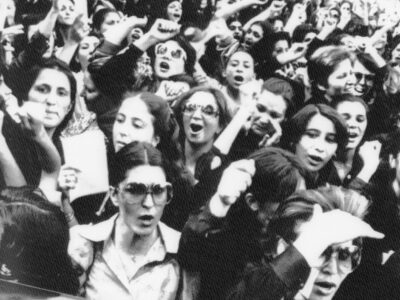
We are watching real time genocide in China

WP_Post Object
(
    [ID] => 1473
    [post_author] => 2
    [post_date] => 2019-11-14 21:18:46
    [post_date_gmt] => 2019-11-14 21:18:46
    [post_content] => This is the first instance of a transcontinental application to the ICJ based on violations of the Convention on the Prevention and Punishment of the Crime of Genocide

The Gambia, a majority-Muslim West African nation, and the smallest country on mainland Africa, took an enormous step this Monday on behalf of their fellow Muslims, the Rohingya people, when it filed a lawsuit against Myanmar for the crime of genocide — the destruction in whole or in part, of a national, ethnical, racial or religious group — at the International Court of Justice (ICJ).

The Rohingya are a Muslim ethnic minority in majority-Buddhist Myanmar who are concentrated in Rakhine state, which borders Bangladesh. They have lived in Myanmar for generations, but the Rohingya have always been treated like outsiders and systematically discriminated against by the government. In August 2017, following small-scale attacks by Rohingya militants against Myanmar police posts, Myanmar security forces responded with widespread, indiscriminate murders and gang-rapes, as well as the burning of entire villages. Thousands of Rohingya were killed, and an estimated 745,000 Rohingya fled as refugees to neighboring Bangladesh, including 400,000 children.

They joined around 200,000 Rohingya refugees already living in Cox’s Bazar, Bangladesh, which is now home to the world’s largest refugee camp. Over 900,000 stateless, deeply traumatized Rohingya are living in precarious shelters, vulnerable to monsoons and dependent on humanitarian aid.

Witnesses to the genocide tell horrifying stories. Reuters reported that on September 2, 2017, 10 Rohingya men were bound together while Buddhist villagers dug a shallow grave, before hacking to death two of the men and shooting the rest:

“One grave for 10 people,” said Soe Chay, 55, a retired soldier from Inn Din’s Rakhine Buddhist community who said he helped dig the pit and saw the killings. The soldiers shot each man two or three times, he said. “When they were being buried, some were still making noises. Others were already dead.”

Myanmar describes its actions as a “clearance operation." It jailed and then ultimately released two of the Reuters journalists who investigated the story, and continues to deny vehemently that it committed genocide. The United Nations independent fact-finding mission issued a report last year, which named senior generals of the Myanmar military who they recommended be investigated and prosecuted in an international criminal tribunal for genocide, crimes against humanity and war crimes. The mission further found that the Rohingya who remain in Myanmar are at risk of further genocidal violence, and that repatriation has been practically impossible. The case is unprecedented for a number of reasons. The Gambia is located over 7,000 miles from Myanmar — this is the first instance of a transcontinental application to the ICJ based on violations of the Convention on the Prevention and Punishment of the Crime of Genocide of December 9, 1948, to which both Myanmar and The Gambia are signatories. The Gambia’s lawsuit is supported by the Organisation of Islamic Cooperation, which calls itself the “collective voice of the Islamic world,” and represents 57 member states, including Bangladesh, which has borne the brunt of the Rohingya refugee crisis. The Gambia is seeking an injunction to prevent Myanmar from inflicting further violence upon the Rohingya population, and accountability for atrocities already committed. Prosecution of war crimes and crimes against humanity normally falls under the jurisdiction of the International Criminal Court (ICC), but Myanmar is not a signatory to the Rome Statute and so no charges have been filed. At a time when wealthy nations are increasingly turning their backs on enforcing human rights law, it’s heartening to see smaller nations (with access to deep pockets) holding power to account at the Hague. Gambia’s efforts on behalf of the Rohingya began after its attorney general and justice minister, Abubacarr Tambadou, read the UN report on the atrocities, and flew to Bangladesh to meet refugees and hear their stories. Tambadou, who worked for years as a lawyer at the International Criminal Tribunal for Rwanda (ICTR), told the Washington Post: “As I listened to the horrific stories — of killings, of rape, of torture, of burning people alive in their homes — it brought back memories of the Rwandan genocide. The world failed to help in 1994, and the world is failing to protect vulnerable people 25 years later.” The Gambia recently began hearings for its own Truth, Reconciliation and Reparations Commission to address human rights abuses committed by former dictator Yahya Jammeh. [post_title] => The Gambia has filed a case of genocide at The Hague against Myanmar, on behalf of the Rohingya [post_excerpt] => The case is unprecedented for a number of reasons. [post_status] => publish [comment_status] => closed [ping_status] => open [post_password] => [post_name] => gambia-has-filed-a-case-of-genocide-at-the-hague-against-myanmar-on-behalf-of-the-rohingya [to_ping] => [pinged] => [post_modified] => 2026-08-06 23:17:22 [post_modified_gmt] => 2026-08-06 23:17:22 [post_content_filtered] => [post_parent] => 0 [guid] => https://conversationalist.org/?p=1473 [menu_order] => 292 [post_type] => post [post_mime_type] => [comment_count] => 0 [filter] => raw )
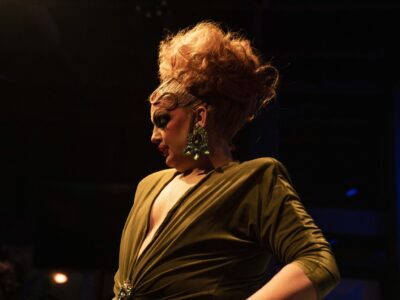
The Gambia has filed a case of genocide at The Hague against Myanmar, on behalf of the Rohingya