WP_Post Object
(
    [ID] => 5838
    [post_author] => 15
    [post_date] => 2023-05-03 17:29:33
    [post_date_gmt] => 2023-05-03 17:29:33
    [post_content] => 

How social media influencers are challenging stereotypes both within and outside of Muslim communities—just by being themselves.

In this very digital age, I wouldn’t describe myself as much of a social media person. Despite my active Twitter presence, which I attribute to work, and the occasional procrastination scroll on Instagram, which always ends up longer than expected, I’ve just never really found much joy in it. Even back when most people dreamed of becoming bloggers, I never saw the appeal: I couldn’t relate to their desire to share their lives so publicly, and felt a disconnect with their content as a result. 

Then, around January last year, I discovered With Love, Leena. The account follows the day to day life of Texas-based content creator Leena Snoubar, covering everything from fashion to parenting to all things lifestyle. In one video, she gives a tutorial on how she removes makeup stains from her hijabs. In another, she shares an intimate day out with her mother and sisters, where they grab brunch and go wedding dress shopping for her youngest sister. Scrolling through her account, I found myself feeling—for the first time—like I was actually getting something out of my Instagram experience: I’d never come across a Muslim influencer who was so visibly Muslim and yet didn’t feel the need to justify or be bound by their religion. 

It was only when I came across Leena that I realized my feelings of disconnect on social media had less to do with the platforms themselves, and more to do with the kind of content I was seeing. Maybe it was the algorithm or just my lack of social media engagement, but I was almost exclusively served either general fashion and beauty content—which I assumed was because of my gender—or Islamic videos, with little in between. It made me feel alienated in terms of my other interests, and like I had to separate my religious identity from the rest of me, or else somehow justify their intermingling. 

For a lot of young Muslims, being online as a visibly Muslim person creates a pressure to either always be preaching Islamic content or advocating for our religious identity. When I first started out as a journalist, I often felt a heavy responsibility to justify my identity, and to prove, somehow, that Muslim women were not limited to the stereotypes projected onto us. But constantly having to justify my identity also meant constant emotional labor, and as I quickly learned, this only ever led to burnout. It’s a pressure that content creator Maliha—who says she’s been an “internet girlie” since before influencers became popular—is very familiar with. “I started out with my YouTube channel, and then Instagram, and because a lot of my content was cosplay I became the ‘hijabi cosplayer,’” she says. “But I’m not very good with having a niche, and when I moved to TikTok, I started making content that I connected to more, mostly rants and healing—social justice-y stuff.” Despite pivoting directions with her content, though, she soon found that her audience hadn’t changed or expanded at all: Maliha says that even though her content wasn't Islamic, TikTok’s algorithm was almost exclusively showing her videos to other Muslim users. 

This sort of systemic stereotyping, that comes from both outside and within Muslim communities, is exactly what some influencers like Leena and Maliha are challenging with their diverse content. Despite living continents apart, I immediately felt a connection to Maliha—one that came from so many shared experiences, not just as Muslims, but also as young women. She’s just an average twenty-something, sharing her everyday thoughts, laced with a little humor and, often, a lot of sarcasm. I’m not the only one who has felt a connection to her work, either: Maliha says that her role as a content creator has helped her make friends across the globe. 

For 20-year-old Younis AlZubeiri, this sense of community has played a big role in his own content creating journey. “My overarching goal with my content was to also be that outlet for other Muslims on the internet that didn’t really have someone to look to online,” he says. “In the world of Andrew Tates and [other] horrible role models to young kids, especially Muslims, I tried to just be a source of good to them.” He first started creating content at 14, making videos about comics just for himself. But slowly, his focus started shifting. “When I had followers who looked like me tell me about my impact on them, there was a light that switched,” he shares. Now, he has over 100,000 followers on TikTok, where he shares videos exploring culture and entertainment and diversity within both. 

Along with creating spaces of acceptance for Muslims from all walks of life, many of these influencers are also challenging what it means to be visibly Muslim in 2023. This means fighting stereotypes offline, too: Amira Rahmat, a food and travel blogger, often embarks on solo trips and says she’s always met with surprise when people see a young Muslim woman traveling alone. “When I post content on my page, a lot of the comments I see are, ‘Oh, you’re so brave to travel alone,’” Amira shares. But likewise, she says many of her commenters are inspired by her videos: For many Muslim women, who have to fight back stereotypes that Muslim women’s pardah or religious restrictions keep them confined to their homes, seeing women like Amira and being able to share in her experiences has become a crucial part of shaping their confidence and self reflection. 

It may seem like these are just a bunch of random creators covering various topics, but that’s the point. In this age of growing Islamophobia, they’ve begun to play a very important role in humanizing all of us beyond our hijabs and beards and masjids. They’re creating their own spaces, where being Muslim doesn’t impact or influence all the other parts of themselves. This is just as pivotal within our community as it is outside of it: Muslims who find themself stuck between proving themselves to other Muslims and justifying themselves to non-Muslims seeing creators just being honest and unapologetic about whatever topic they’d like can give us a lot of strength on the days we most need it. “It’s such a fine line to be a Muslim artist in any capacity,” says Dubai based content creator Emad. Whether or not you talk about religion, he continues, you’ll be judged by Muslim and non-Muslim creators alike, and pigeonholed by both. “For someone like me, I wanted to get into Muslim content because it’s fun. [But] so many times it happens that you become a ‘Muslim creator’ and then you do a fun TikTok dance and suddenly you’re not a Muslim creator because you’ve apparently done something wrong.”  

This isn’t always easy. But when the polarized opinions and criticism become too much, Younis says that humor helps—especially when met with harmful alt-right and other extremist narratives. “I can’t just post about being a leftist and expect them to change,” he says. “You have to go about it in another light and try to convey the point you’re trying to make through humor.” These are baby steps, he adds, but making viewers laugh can challenge pre-existing notions that all Muslims are the same and that they don’t exist outside of a one-dimensional identity.

These small steps go a long way, and are already making a difference for creators (and viewers) around the world. Pakistan-based food blogger Emon Malik says the content creator economy has been growing in her country, and credits that to the growing diversity of creators. And the number of Muslim content creators is only growing.

“With more [diverse] content creation, people are more informed,” Amira says. “It comes from personal experiences, not Google, and it’s more raw and authentic.” It’s also more relatable—and for me, inspiring. When I see content creators like Leena or Maliha or Amira, it gives me the push I need to be more unapologetically myself. As these content creators have shown me, I’m more than my religious identity, but I don’t have to hide it away, either.

[post_title] => The New Faces of Being Visibly Muslim Online [post_excerpt] => How influencers are challenging stereotypes both within and outside of Muslim communities—just by being themselves. [post_status] => publish [comment_status] => closed [ping_status] => closed [post_password] => [post_name] => muslim-tiktok-social-media-islam-representation-content-creators-influencers-advocacy [to_ping] => [pinged] => [post_modified] => 2026-08-04 19:19:00 [post_modified_gmt] => 2026-08-04 19:19:00 [post_content_filtered] => [post_parent] => 0 [guid] => https://conversationalist.org/?p=5838 [menu_order] => 84 [post_type] => post [post_mime_type] => [comment_count] => 0 [filter] => raw )
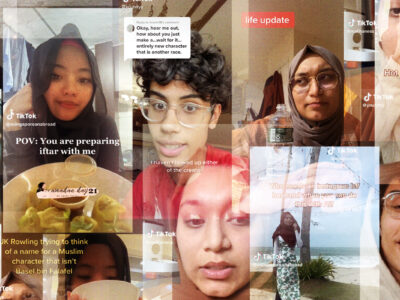
A collage of screenshots, from various Muslim TikTok content creators, engaging in all sorts of different styles of content creation. In one video, the creator is dressed in a banana suit; in another, the creator is answering a question about cosplay; in another, it appears to be a cooking tutorial. The screenshots are overlapping, with various degrees of opacity, giving the feeling of rich, diverse array of content.

The New Faces of Being Visibly Muslim Online

WP_Post Object
(
    [ID] => 5760
    [post_author] => 15
    [post_date] => 2023-04-06 06:27:58
    [post_date_gmt] => 2023-04-06 06:27:58
    [post_content] => 

Attacks against LGBTQ rights—largely targeting trans people—have been ramping up. It isn't hard to imagine what will happen next.

Since the Supreme Court’s decision in Obergefell v. Hodges legalized same-sex marriage nationwide in 2015, we have been living through an era of fierce fascist backlash against progressive politics and “wokeness” in general—much of it targeted against the LGBTQ community. With each passing year, Republican theocrats have pushed the envelope in state legislatures, paving the way for the eventual passage of severe restrictions on LGBTQ rights. Across the board, these attacks have disproportionately affected transgender people.

In this era of defunding and banning gender-affirming healthcare—and, most recently, a ban on drag in the state of Tennessee that will likely lead to police harassment of anyone deemed gender-nonconforming, if it survives its legal challenges—the bathroom bills of yesteryear seem almost quaint. The Right’s onslaught has progressed incrementally but quickly, with the state bans on trans girls participating in school sports that began to pass in 2020 effectively serving as “gateway” bills to make today’s terrifying state-level, anti-queer crackdown possible. And now, congressional Republicans are threatening to take state persecution of the LGBTQ community nationwide once more: H.R. 734, the first national anti-trans sports bill to advance in Congress beyond committee, is currently awaiting a floor vote in the House of Representatives. This bill comes just days after the House passed a new “parental rights” bill, more accurately described as a “don’t say gay” bill: legislation that would force schools to out queer children to their parents in order to receive federal funding, among other repressive measures.

Neither of these bills will pass the narrowly Democratic-controlled Senate, of course. But should Republicans regain both houses of Congress and the presidency in 2024, national bills attacking queer schoolchildren (and the parents who support them), gender-affirming healthcare for both minors and adults, and public expressions of gender-nonconformity are very likely to become federal law. With the precedent set by the recent overturning of Roe v. Wade as a key turning point, the Roberts Court will already have established the “constitutionality” of allowing such cruel, draconian laws. And they will be passed, of course, in the name of “protecting children,” even though queer children will be severely harmed by these policies—forced to remain closeted or subjected to outing and conversion “therapy,” and, in far too many cases, driven to suicide as a result.

Using children as pawns to push a radical Christian agenda is nothing new. To make their enemies seem truly monstrous, authoritarians need innocent “victims” to “rescue.” This is where “the children” come in, so long as the children are never permitted to speak for themselves. We’ve seen this playbook before. The Christian boys supposedly subjected to ritual murder by Jews, according to the medieval European blood libel. The fertilized eggs that anti-abortion extremists insist to us are “persons” whose “murders” must be prevented and/or punished. And now, the all-American schoolchildren who might observe happy, thriving queer adults, or read about queer people in school libraries, or hear a female teacher talk about her wife, and thus “decide” to be queer against the wishes of their good Christian parents.

Of course, if proponents of anti-trans legislation actually cared about children, they would rally behind, for example, sensible regulations to make sure that homeschooling isn’t being used by parents to abuse, neglect, or indoctrinate their children. They would support initiatives like those in the state of California that provide wellness centers in public schools, where any student can get mental health help and queer children can get safe and confidential guidance without fear of being outed to parents that it may not be safe to come out to. Instead, the people concerned with “saving kids” from “transgenderism” promote the opposite—including unregulated homeschooling and Christian schooling where possible, and attempting to control public schools where it’s not.

As John Stoehr of The Editorial Board aptly put it, “The rights of children—the right to grow, develop and change—is conspicuous for its absence in the debate over anti-trans laws, book bans and other oppressive forms of government control.” In the United States, children’s rights at the federal level are almost nonexistent. We are the only United Nations member state not to have ratified the UN Convention on the Rights of the Child. And if patriarchal, anti-pluralist, authoritarian Christians who treat their children like chattel want to keep things this way—and they do—fomenting a conspiratorial politics of moral panic is an effective means of doing so.

In recent years, a number of commentators have convincingly argued that the QAnon conspiracy theory is of a piece with the Satanic Panic of the 1980s and 1990s—essentially the resurgence of an American impulse toward Christian-inflected moral panic. Then as now, conspiracy theorists have conjured up a phantasmagoric enemy, projecting their fears, anxieties, and grievances both personal and social onto a monstrous “other” in the name of protecting “children” from cabals of ritual child abusers who happen to be populated by the out-groups conservative Christians most despise: “heretics” and nonbelievers, liberals and progressives (including progressive Christians), Jewish-coded “elites,” and members of the LGBTQ community.

Again, this is nothing new. In 1977, Anita Bryant named her Miami, Florida-based organization that fought, successfully, for anti-gay discrimination “Save Our Children.” Similarly, in the original Satanic Panic, the panicking populace in question rallied around “believing the children.” The irony is that the adults involved did not, in fact, believe the children—the supposed victims of the supposed satanic ritual abuse, of which no physical evidence has ever emerged. It was only under prompting from their paranoid parents, wildly irresponsible mental health practitioners pushing “recovered memory” therapy, and police and prosecutors at the height of the “tough on crime” era that the children were “believed” at all—after they at last broke down and told the adults what they wanted to hear, by regurgitating those adults’ absurd dark fantasies back to them. In recent years, some of these children, now able to speak for themselves as adults, have explained the ways in which they were manipulated into lying. Some have even gone to court to formally recant their childhood testimony in an effort to exonerate innocent people who were falsely convicted. Not coincidentally, many of those innocent people who were unjustly locked up for years as a result of the Satanic Panic were also queer.

This historical context has been on my mind as I consider the American Christian Right’s current moral panic, in which fixations on Hollywood, the Democratic Party, and the “deep state” coincide with the rebooting of baseless 1970s and 80s era conspiracy-mongering about queer people as supposed “groomers” and “pedos.” In fact, most child molesters identify as heterosexual. But as the website of the Zero Abuse Project, a nonprofit dedicated to preventing sexual abuse, puts it, “Abuse is about power and control and is not anchored by sexual orientation.”

Never mind the fact that 93% of child sex abusers are known to their victims, and 34% of child sex abuse victims are abused by members of their own families. Statistically, attending church on a regular basis is far more dangerous for children than attending an occasional family-friendly drag show in the company of their parents. Yet only the latter are regularly targeted by raving mobs of angry, mostly white, mostly male Christian fascists, carrying the Christian flag and shouting things like, “The fist of Christ will come down on you very soon!”

Abusers and authoritarians can’t handle ego threats, so instead of self-reflection on the real threats of violence within their own communities, they scapegoat members of vulnerable groups, casting them as “demonic” and connected to powerful, “evil” forces, thus allowing them to paint themselves as victims rather than victimizers. Rather than grapple with the ways in which their patriarchal ideology directly fosters abuse against women, children, and queer folks, they push actively harmful policies that purport to “help” them. Such are the contours of majoritarian grievance-mongering—and it’s the out-groups and the children the fascists claim to be so concerned about who suffer as a result.

Like other kinds of abuse, today’s right-wing American moral panic is about power and control—the power and control of the aggrieved, privileged population who fear they are losing their “right” to put the rest of us in our place. So far, the current moral panic isn’t generating an epidemic of false convictions for “indecency” or sexual misconduct involving minors, as happened during the Satanic Panic. But if we let them get away with it, today’s American fascists will simply criminalize queer existence, and then, you can be sure, the arrests will start in force.

Tennessee’s new drag ban, which would have gone into effect on April 1 before it was temporarily blocked by a court, stipulates that a second offense is a felony, punishable by up to six years in prison. And let’s be clear: While lower courts may still block laws like Tennessee’s from going into effect as they work their way through the court system, the illegitimately stacked, far-right Supreme Court can almost be counted on to stand on the wrong side of history. If the law does go into effect within the next year or two, how it is enforced may give us a hint of what lies in store for the rest of the nation if Republicans take full control of the federal government. We need to be aware of the stakes even as we continue to fight state-level battles, and we need to start pressuring blue states to commit not to enforce unjust laws targeting marginalized people, as dictated by an angry fascist minority who hold disproportionate power in our flawed American system. Fascists should not be allowed to frame the national discourse, and they have proven time and time again that they don’t truly care about the wellbeing of actual children, as opposed to the voiceless victims they’ve created in their heads. They only care about retaining power and control—and pitting scapegoated “demons” against objectified “children” is a means to that end.

[post_title] => Tennessee's Anti-Drag Bill Doesn't Exist in a Vacuum [post_excerpt] => Attacks against LGBTQ rights—largely targeting trans people—have been ramping up. It isn't hard to imagine what will happen next. [post_status] => publish [comment_status] => closed [ping_status] => closed [post_password] => [post_name] => anti-lgbtq-drag-policies-christian-attacks-rights-tennessee [to_ping] => [pinged] => [post_modified] => 2026-08-04 19:23:33 [post_modified_gmt] => 2026-08-04 19:23:33 [post_content_filtered] => [post_parent] => 0 [guid] => https://conversationalist.org/?p=5760 [menu_order] => 88 [post_type] => post [post_mime_type] => [comment_count] => 0 [filter] => raw )
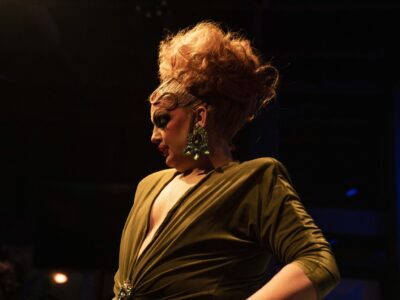
Drag queen Vanity is under a spotlight in the foreground, while most of the background is black. Her red hair is teased high in an up-do, with the front smoothed back. She's in profile, looking off to the side, and is wearing a large earring with many large gemstones. She's wearing a low cut muted green dress, with a crystal broach at the waist.

Tennessee’s Anti-Drag Bill Doesn’t Exist in a Vacuum

WP_Post Object
(
    [ID] => 5576
    [post_author] => 15
    [post_date] => 2023-02-10 14:30:00
    [post_date_gmt] => 2023-02-10 14:30:00
    [post_content] => 

And why do so many people support them?

Listen to this article on The Conversationalist Podcast. | 17:50 min

On January 4, in Enoch, Utah, 42-year-old Michael Haight shot and killed his wife, five children, and mother-in-law, before turning the gun on himself, a form of murder-suicide known as "family annihilation." Tausha Haight, his wife of twenty years, had filed for divorce a couple weeks prior. Abusers always lose it when you leave. 

It's since been reported, first by the Associated Press, that Haight was investigated in 2020 for potential child abuse after someone outside the family reported it to the police. Utah's child protective services got involved. At the time, Haight’s eldest daughter Macie said the abuse had begun years earlier, in 2017. She described a time her father grabbed her by the shoulders and threw her into furniture, along with another incident in which he had strangled her. She said she’d been afraid that he would kill her. Michael blamed the then-14-year-old for his violence, saying she was "mouthy." During the same police investigation, Macie also said that her father regularly belittled her mother, and Michael admitted to surveilling his wife’s communications. No charges were filed.

Nearly three years later, Michael’s obituary in the local paper would read that he "made it a point to spend quality time with each and every one of his children," and that they were a "cherished miracle." One commenter spoke of his “Christlike love and service.” Neither the obituary nor the commenters mentioned the murders, and it was only taken down after Shannon Watts, gun reform advocate and founder of Moms Demand, tweeted it out.

Haight’s story isn’t so uncommon. In the United States alone, a man has annihilated his family every 3.5 weeks for the last two decades, a likely miniscule portion of the estimated family annihilations worldwide. Men who strangle their partners are ten times more likely to become men who kill them. And having a gun in the home increases the risk of murder in a domestic violence incident by 500%.

So why do we continue to treat what happened to the Haight family like an isolated tragedy—a “personal” matter—as opposed to exactly what it was: a domestic tyrant who felt entitled, by virtue of being a man, to enforce his will, crush dissent, and destroy his family as soon as they tried to flee? 

When a head of state insists on their natural or divine right to monitor your private communications, stalk your movements, imprison you at home, and beat or kill you for wearing certain clothes, meeting friends, or maintaining a separate bank account, we rightly call them authoritarian. We are loud in our disapproval: When Iranian women took to the streets in protest over the arrest and murder of Mahsa Amini by morality police for not properly wearing hijab, the support abroad was strong, the brutality obvious. But when it's the head of a household terrorizing you, the euphemisms (and excuses) surface: family difficulties over a private matter, better dealt with behind closed doors; it’s best not to get involved, it’s none of our business. All support evaporates, because father still knows best — and if father wants to blow everything up just because he can, who's going to stop him? 

Studies on familicide say in almost every case, the man claims his family as property, with the right to end their lives. Murder, after all, is the ultimate form of control. But the impulse to control or destroy isn't limited to physical violence: The easiest way to break people is to break what's precious to them. Look at Elon Musk, who had to lose 200 billion dollars before people finally stopped calling him a genius. Within months of his taking over Twitter, 80% of the company’s workforce had quit or been fired, especially anyone found criticizing him. In a recent New York Magazine piece about Musk's takeover, they describe how Twitter employees flocked to the company Slack during these mass layoffs, all anxiously waiting for the ax: "One person posted a meme of Thanos from Avengers: Infinity War, the supervillain who exterminates half the living beings in the universe with a snap.”

Advertisers fled Musk’s "extremely hardcore" site as he rolled out a disastrous verification process, threatened people who linked out to other social networks, reinstated Nazis, and ranted about eugenics, all while overseeing a radical uptick in harassment and slurs. With no clear plan to make Twitter profitable, and engineers rolling their eyes at his technical expertise, it's no wonder Twitter and Tesla's value has since plummeted. Not that he's taken any accountability for the losses or the lives he's upended. He's been too busy impregnating his employee, lashing out at mouthy critics, and, most recently, firing a Twitter engineer for informing him the reason his engagement was down wasn’t due to a bug—but because people weren’t as interested in him as they used to be.

Whether they're the head of a family, company, or state, everyone suffers so long as masculinity is wrapped up in an ability to dominate. Impunity and entitlement breed ignorance and nihilism. Patriarchy is ancient, authoritarian, incompatible with equality and democracy, and bad for everyone involved. And it’s as relevant to how Musk acquired and destroyed Twitter as it is to the protests in Iran as it is to what happened to the Haight family. 

Human rights also don't disappear at your doorstep. According to the UN, 47,000 women and girls were killed by their partners or other family in 2020. On average, that means one murder every 11 minutes. But freeing women and children from violence won't happen so long as it's still taboo to speak about it. We’d rightfully consider it outrageous if someone called reports of mass rapes and murders in Ukraine by Russian soldiers "airing dirty laundry.” Yet we don’t extend the same support to women abused and murdered by partners or relatives, which happens in every community, and is far more likely than “stranger danger.” (And on the rare occasion victims do get attention, they’re usually blonde, white, and already dead.)

Meanwhile, it's the same self-destructive, patriarchal entitlement that motivates domestic violence that motivates atrocities like the Russian invasion of Ukraine if I can't have you, nobody can – with the same results. Putin first became aggressive in 2014 after Ukraine turned down a trade agreement with Russia in favor of one with the European Union. (Again, it's most dangerous when you try to leave.) Absent consequences, including for past wars in Syria, Georgia, and Chechnya, Putin has continuously escalated the bloodshed, and will do anything short of giving up power to punish Ukrainians for daring to be free, including letting Russia crumble. In that sense, he's just like Michael Haight: Insult the sovereign, or threaten his control, and watch him burn the building down with everyone trapped inside. Whatever it takes to teach them a lesson. 

Our bodies don't differentiate between state-sponsored or home-bound torture. What does your killer's institutional affiliation matter when you're dead? The lines are blurred in any case, considering the number of men who abuse in private who also abuse the public. It's not a coincidence that police abuse their families at high rates, or that two-thirds of mass shootings are either an incident of domestic violence or are perpetrated by someone with a record of it. Yet time and time again, on both a personal and policy level, we treat domestic violence as a completely separate matter – anything to avoid the reality that some homes are conflict zones, too.

Even the preeminent global treaty on women’s rights, the Convention on the Elimination of Discrimination Against Women (CEDAW), does not contain the word "violence" once. In 1980, when CEDAW was passed, gender-based violence was considered outside its scope, a private matter that this public treaty wouldn't touch with a ten-foot pole. Men's rights, especially in war, were already covered as human rights, a courtesy not extended to everyone else. It wasn't until 1992 that the CEDAW Committee issued General Recommendation 19, which interpreted the treaty to include gender violence. (Full disclosure, I'm on the board of an organization, Every Woman, calling for a new global treaty to close this atrocious gap in international law.) Like the Refugee Treaty, which advocates fought tooth and nail to have courts interpret to include gender persecution as a "particular social group," half the world's population suffering the most pervasive human rights violation was considered niche.

When feminism states that the personal is political, it speaks to the ways the private sphere continues to oppress women. There can be no equality in public so long as violence at home is ignored. To be part of the public, you first need to make it outside. Patriarchy cuts across every divide, but its effects are worsened by poverty, racism, and other forms of oppression. When 72-year-old Huu Can Tran shot and killed 11 people at the Star Ballroom Dance Studio in Monterey Park, California during a Lunar New Year celebration, people speculated whether this was yet another anti-Asian hate crime, a misogynist escalation, or possibly both. No motive has been found so far, or connection to any of the victims, but the shooting sparked a discussion online about domestic violence in the Asian American community. The Asian Pacific Institute on Gender Based Violence released a statement of mourning, and a plea to make the connection between femicide and mass shootings. They estimate that between 21-55% of API women in the US have experienced intimate physical or sexual violence. 

In the United States, women of color are disproportionately affected by gender violence. The CDC reports that Black women are three times more likely than white women to be killed in a domestic dispute. More than half of Indigenous women in the US have experienced sexual or intimate partner violence. On a global scale, 1 in 3 women have experienced sexual assault or domestic violence. 

Authoritarians know that subordinating women helps them stay in power, and systematically encourage and enact patriarchal violence to keep people in line. They claim that masculinity is under threat, and loosen laws that protect women and gender nonconforming people. Reactionary autocrats worldwide are attacking women's rights as a means of entrenching their control and weakening political participation in democratic mass movements. In Russia, Putin rolled back criminal consequences for domestic violence. President Recep Tayyip Erdoğan withdrew Turkey from the Istanbul Convention, the European treaty on domestic violence. Poland keeps threatening to do the same, while Hungary never signed it in the first place. (In a move to distance itself from its neighbors, Ukraine finally ratified the Istanbul Convention last year.) Before he was voted out and supporters staged a failed coup on his behalf, Jair Bolsonaro cut 90% of funding for domestic violence prevention in Brazil. The Taliban once again won’t even let women go to school. 

Autocrats in the U.S. use the same playbook. Trump assaulting women was part of his appeal, an envied display of power, like his bragging about getting away with hypothetical murder. The party he arguably still leads is no better. America’s homegrown extremists think abortion is murder, but shooting your spouse and kids for wanting a divorce is “Christlike love.” Revoking Roe v. Wade and putting women's reproductive rights in the hands of state legislators is a human rights disaster with global ripple effects. The loss of access to abortion and reproductive healthcare radically strengthens abusers' control over women's bodies, in many cases trapping women for life with children. As if that's not bad enough, this past week the Fifth Circuit Court of Appeals struck down a federal law which removed guns from people under restraining orders from their partner or child. Even prior to the ruling, programs to surrender firearms were rarely enforced. In 2021, 127 women were murdered by a male intimate partner with a firearm in Texas, the state where the legal challenge began.

So long as authoritarian violence is acceptable, even encouraged, on the micro level within families, it will be impossible to defeat on a macro level. There is no democracy, no value for human rights, without the participation and inclusion of women and children. And that participation depends on feeling safe at home first. All life, and livelihoods, are devalued when we devalue vulnerable people. And for what? An ancient status quo built on brute strength. Marriage and the nuclear family still provide the basic unit for our tax code. We're incentivized by the government to create a private jurisdiction where men overarchingly rule. The patriarchs are not okay, and it's doubtful they ever have been. Their benevolent dictatorship kills, and it’s time to let the toxic institution go.

[post_title] => Why Do So Many Men Destroy What They Can't Control? [post_excerpt] => And why do so many people support them? [post_status] => publish [comment_status] => closed [ping_status] => closed [post_password] => [post_name] => domestic-abuse-family-annihilation-gender-violence-why-men-destroy [to_ping] => [pinged] => [post_modified] => 2026-08-04 19:33:38 [post_modified_gmt] => 2026-08-04 19:33:38 [post_content_filtered] => [post_parent] => 0 [guid] => https://conversationalist.org/?p=5576 [menu_order] => 94 [post_type] => post [post_mime_type] => [comment_count] => 0 [filter] => raw )
An open box of matches with dark blue tips, over a red background. On the front of the box is a photo of Elon Musk's face, outlined in Twitter blue.

Why Do So Many Men Destroy What They Can’t Control?

WP_Post Object
(
    [ID] => 4739
    [post_author] => 15
    [post_date] => 2022-09-01 23:27:00
    [post_date_gmt] => 2022-09-01 23:27:00
    [post_content] => 

Pregnancy and parenting will never "just work out” for everybody.

Nine years ago, I told my mother that the man I was seeing didn’t want children. I wasn’t yet sure what I wanted, and at the time his certainty was both comforting and concerning: I appreciated that he knew his own mind but wanted to keep my options open. “Oh, well,” my mom said. “Sometimes certain people meet, and someone gets pregnant, and—BOOM!—everybody's happy.” She was sort of joking, and sort of not. I knew she hoped that he, and I, would change our minds about becoming parents. Nine years later, for a variety of reasons, we haven’t.

Despite her Catholic education, my mother is fervently pro-choice. Having suffered a difficult miscarriage and carried three pregnancies to term, she is not cavalier about the toll pregnancy and labor take on the body and soul. She recognizes what most people—including anti-abortion activists, who get abortions when they need them—intuitively know: that forcing someone to remain pregnant and give birth is an act of brutality.

Yet, like many Americans, my mother also wants to believe that even unexpected pregnancies can sometimes turn out for the best, especially when those involved are ready, willing, and able to become parents.

It’s not wrong to wish this were always the case. It would certainly be better if it were impossible to make a baby unless you were ready and willing to parent, and always possible when you were; if every pregnancy and delivery were complication-free; and if every baby were painlessly ushered into a stable and functional family unit at birth. But that’s not the world we live in, and pregnancy is not the peaceful, glowing, rose-tinted fantasy so many want to believe it is.

Even under the best of circumstances, pregnancy can be grueling. Some people, including celebrities like the comedian Amy Schumer and Duchess of Cambridge Kate Middleton, experience hyperemesis gravidarum, or extreme, persistent nausea and vomiting. In 2019, Schumer, then in her second trimester, estimated that she’d vomited around 980 times since becoming pregnant. The Duchess, meanwhile, described her own experience with the condition as “utterly rotten.” And while hyperemesis gravidarum is relatively rare, around 70% of pregnant people still experience nausea and vomiting. 

Pregnancy can also lead to a host of other debilitating symptoms, including depression, insomnia, and/or difficulty concentrating. “My body was heavy, tired from the insomnia that kept me awake from three until seven in the morning, exhausted from the constant vomiting, and bloated from all the eating, which fended off the unrelenting nausea,” writer Miriam Foley wrote in an essay for Parents.com. “I felt sick all day and woke up to be sick or eat during the night. I vomited in public on street corners, at roundabouts, beside parked cars, in the bin, in basins, in the toilet, in the sink…emotionally I was even worse; delicate, jumpy, tearful.”

This was Foley’s second pregnancy, one she and her husband had “very much wanted.” Imagine dealing with those symptoms when you don’t want or aren’t ready to be pregnant, give birth, or raise a child.

In the U.S., we force those who undergo childbirth to choose between solvency and recovery. Because the overwhelming majority of people who become pregnant and give birth are women, and we take women’s pain and suffering for granted, we have largely failed to ease it via public policy. Many see pain and danger as inescapable conditions of women’s lives, particularly Black and brown women, as demonstrated by our maternal mortality rates. In 2015, I wrote a column about the shocking number of U.S. women who return to work just two weeks after giving birth, a decades-long problem we lack the political will to solve. I’ll never forget the stories I heard. Two weeks after giving birth, one mom told me, she still looked six months pregnant and felt like her vagina was “inside out.” A then 34-year-old mother of two said her first baby tore her perineum, anus, and sphincter muscles “badly"; it was 10 days before she could even walk. Her legs and feet were so swollen she thought her skin was going to split open, and she developed mastitis in her left breast, which felt like the “jaws of life” were ripping her chest apart. Pregnancy and childbirth may always involve some degree of discomfort. But they could certainly be easier to endure and recover from than they are in the U.S.

The everyday agonies people who choose to be pregnant are expected to tolerate become a form of torture when those who had no choice are forced to endure them, too. A surprising number of well-meaning but clueless Americans join the right-wing religious fanatics in proffering adoption as a seamless alternative to abortion, despite the fact that the former is far riskier, costlier, and more physically and psychologically painful than the latter. As was true before Roe, and will keep happening in the wake of its repeal, many birth parents in states where abortion is illegal are forced to carry pregnancies to term and undergo childbirth against their will—a trauma with potentially life-long consequences for birth parents, babies, and adoptive families.

Even those who want and consciously decide to become parents know how hard it is to raise kids in an atomized, every-family-for-itself country with no universal health or child care, no paid family leave, and no guaranteed income. They suffer near-constant levels of stress, anxiety, and fear, both about big-picture existential threats and everyday survival. There are only four countries in the world where couples with young children who earn the average wage spend more than 30 percent of their salary on child care, and the United States is one of them—along with New Zealand, the U.K., and Australia. (By contrast, the average couple in Austria, Greece, Hungary, and Korea spends less than four percent.)

The same Republican officials who worked so tirelessly to overturn Roe have also fought tooth and nail against providing basic public goods and services to ease the considerable burdens the U.S. imposes on women and families. The states most hostile to abortion rights have no paid family leave and some of the worst maternal mortality rates in the nation. All except Louisiana are run by anti-abortion Republicans; meanwhile, Louisiana’s legislature is Republican-dominated, and its governor, a nominal Democrat, is staunchly anti-abortion, in defiance of his party’s platform. Earlier this year, the state’s lawmakers tried to classify abortion as homicide under state law and allow prosecutors to criminally charge patients. If anti-abortion legislators wanted to make it safer, easier, and more inviting to raise a family, they would have done so. Instead, they’re busy trying to figure out how to jail pregnant people.

When even the willing feel ensnared by the increasingly unmanageable demands of pregnancy and parenting, no one is free. Not every accident is a happy one, nor can it always be made so through sheer force of will. If individuals and families were not buried, alone, under the crushing burdens of pregnancy, childbirth, and childrearing, more Americans might choose to start families. And others still wouldn’t. As New York Magazine reporter Sarah Jones recently wrote, “I am childless because that’s what I’ve chosen for myself...Congress could pass Medicare for All tomorrow, and paid family leave, and all the other policies I support, and if I became pregnant right now I would still have an abortion.” 

And that is her right, whether or not a stranger or a state legislator or a Democratic governor approves it.

[post_title] => "Happy" Accidents [post_excerpt] => [post_status] => publish [comment_status] => open [ping_status] => open [post_password] => [post_name] => happy-accidents-pregnancy-parenting [to_ping] => [pinged] => [post_modified] => 2026-08-04 20:28:16 [post_modified_gmt] => 2026-08-04 20:28:16 [post_content_filtered] => [post_parent] => 0 [guid] => https://conversationalist.org/?p=4739 [menu_order] => 113 [post_type] => post [post_mime_type] => [comment_count] => 0 [filter] => raw )
An illustration of a woman wearing sunglasses, looking down at her stomach. In the reflection, you can see that she's pregnant.

“Happy” Accidents

WP_Post Object
(
    [ID] => 4811
    [post_author] => 15
    [post_date] => 2022-08-31 10:30:00
    [post_date_gmt] => 2022-08-31 10:30:00
    [post_content] => 

A survey of 12-year-olds to early 20-somethings in the US.

This article is a companion piece. If you’re curious to learn how older people feel about the state of the world, click here.

We’re more than two years deep into a pandemic, and if it feels like we’re moving backwards, it’s because in many ways, we are. 

In 2022 alone, there have been over 300 mass shootings in the US. Earlier this summer, in a historic decision, the Supreme Court overturned Roe v. Wade, immediately impacting the reproductive rights of millions. Meanwhile, global temperatures have reached dangerous, record-breaking highs, and if we squint into the horizon, all signs point to an imminent recession, where young people seeking employment will undoubtedly be among those hit the hardest. 

Oh, and did we mention we’re still living amid a deadly virus that continues to take lives each day? 

The Conversationalist asked young people from various parts of the country their thoughts on the state of the world right now. Which issues are overwhelming them the most? What kinds of discussions are they having with their friends? How do they feel about the future? Is it all doom and gloom? 

Here’s what they had to say, in their own words. 

~

“Turning on the news and seeing the violence in this world is not a surprise anymore. It's not even sad because I expect it. What scares me now is going to places where I can't find the nearest exit if I need to flee quickly. My home city of Chicago is now looked down upon by America as crime central. When I tell people I live in the suburbs of Chicago they gasp as if I'm in danger. 

I remember flinching at school when I heard a student squeeze open their chip bag, resulting in a loud popping noise. My heart skipped a beat and my mind immediately thought of the worst. Within seconds I was asking myself, Where is the noise coming from? Is it safe to stay where I am? How did the intruder get into the school? All from a kid’s chip bag making a loud popping noise. I shouldn't be thinking that way. It shouldn't be a habit for me, a 17-year-old, to look for the nearest exit in every public place I go to. 

I just want to be shocked when I turn on the news channels again.”

—Amanda, 17, suburbs of Chicago 

“Not only is there more fear in the world with monkeypox currently, specifically in New York, climate change is also only giving us about eight more years before there is no turning back. This is extremely worrisome because Americans aren’t doing anything about this and we only have so much time before our ecosystems become more fragile than ever. 

Overall, as someone within the generation that has to suffer most from these current issues, this is very concerning for not only our well-being but our physical health. We need to take the appropriate measures to prevent further conflict.”

Juliette, 15, New York, NY

“I’m finishing up my senior year in the fall at Penn State University. From my vantage point, the recent Dobbs decision has stirred up an immense amount of emotion from all sides of the spectrum and both sides of the coin, so to speak. College-aged women and female students that I interact with are overwhelmingly disturbed and frightened—they are fired up and want to help right the ship to protect abortion access for themselves and, in the case of the few pro-life women, for others. I work in local political organizing and one way to communicate with pro-life women in particular is to remind them that while they may not choose to have an abortion, their friends may face situations where they need one—and bringing the hot-button issue to a hyper-personal level really helps some people understand that they should not be so anti-choice. 

For men, a general sense of confusion and passive worrisome behavior is the vibe that I’m getting. My guy friends in particular tend NOT to be split among party lines with abortion—a lot of them think it’s stupid to tell women they can’t do something, while others are afraid that their female partners may not have the birth control/contraceptives they need to continue a sexual relationship. 

My fear is that despite the level of concern and anger at this decision, people my age will not care enough to vote in the large numbers that we need to actually change things. [We] can’t change SCOTUS, but can sure as hell change our state legislatures and Congress. That’s why I’m getting as involved as I can to spread the word to students and folks my age that this election is undeniably the most important of our lifetimes, and that at the very least you need to vote.”

Josh, 21, State College, PA

“With everything happening in our political climate, the one word that can't escape my mind is 'division.’ With all of the constant discord going about through the media, it's hard to ignore. 

I've noticed that the in-person conversations I've shared with people of differing views from me have been much more productive than online ones, whether it be in my classes or at group hangouts. I believe a considerable problem our generation is facing is a lack of personal connection stemming from social media playing a much more significant role in our day-to-day lives. The more that I've realized the adverse side effects of social media, the more attempts I've made to stray away from it. I've deleted Twitter, TikTok, and Facebook with the goal of doing away with it entirely. It's too stressful and time-consuming, and I've also found my mental health to be better in my time away from it. 

I can't help but have my worries about our society's collapse. It's very taxing on me to see so much nonstop negative news.”

Tommy, 18, Worthington, OH

“I’m feeling a bit agitated with how we talk about mental health on the internet and social media lately. I’m not saying that mental health awareness is bad. I just think that with anything that becomes mainstream, it loses any much-needed nuance and seriousness. And that’s what has happened with mental health awareness. You can see it happening in so many forms, whether it’s brands trying to capitalize off of it, down to those stupid ‘Little Miss Whatever’ memes, or any other insert-yourself-here gimmick. All of it totally downplays how serious mental health is and buries any useful resources, turning mental health awareness into another throwaway talking point.”

Margot, 19, Boston, MA

“I live in Jacksonville, Florida but attend school in Ohio. I’m pursuing a degree in fashion and am thankful that most opportunities in fashion do take place in more blue states like New York and California. However, that doesn’t take away my fear of what the future holds. 

While New York, specifically NYC, and California are states that I believe do well in protecting the rights of their citizens, they are also some of the most expensive places to live. Fashion is not one of the best industries in terms of high salaries and affordable wages––at least compared to the cost of living in the places where the industry is best established. 

But even more than that, reproductive rights are a major concern for me. The mere thought of me unintentionally getting pregnant and not even having the option to decide how I want to go about my health has me petrified and runs through my mind constantly. I’m truly at the point where I don’t think I’m even going to consider looking into jobs and companies that are located in red states. To make matters worse, we’re living in a system ruled by a Supreme Court that just took a major blow to combating the climate crisis and agreed to hear a case that heavily impacts voting rights, which would just be another major step in the seemingly decline of democracy. 

I’m very worried about the future, which really sucks because I feel like this is the time that I should be looking forward to it the most.”

Janelle, 21, Jacksonville, FL 

“Over the past few years, the world has felt pretty bad and it’s not getting much better. The government is corrupt; politicians are bad. I’m just resigned to it. I don’t really know how I could change anything. All politicians suck (sorry). It feels like things have been bad forever.”

—Charlotte, 12, Los Angeles, CA

“Everything and everyone right now is so polarized. Most people are arguing for or against things that they don’t know the half about. We are being served all of our information through the media and most of it is altered and incorrect. People form opinions on misinformation and stick to them while being blind to any opposing information. We have to be more open to hearing others' ideas in order to function as a united front.”

Kate, 18, East Lyme, CT

“It's pretty easy to feel despair about the big national issues as it really seems like there is nothing we can do to stem the flow of environmental and human rights catastrophes coming down from a federal and corporate level. That said, I feel hopeful about local politics. 

I hear a lot of talk about urban issues in my peer groups, mainly how to deal with cars-as-default politics in urban planning and policy while promoting alternatives for local transport. While this also feels futile sometimes, there are always silver linings and improvements being made to help bring American cities up to snuff, which in turn seems like a way to help the battle against climate change AND improve quality of life across the board.”

Nicholas, 21, Memphis, TN

“After the events of the last few months I have really felt a crushing fear settle under my skin, wherever I am––at a parade, my school, or the grocery store. It has become harder and harder to listen to the news, to force myself to feel the reality of the crushing headlines, both afraid of the state of the country and afraid of becoming numb to it. 

Being a teen right now is a minefield of double edged swords; between finding comfort in social media and absorbing yourself in saddening discussions, and learning how to become an adult while having massive gaps in the teen experience from the pandemic. I feel young and afraid to grow up in a world where my rights are in question and where there is not a path in sight leading to true freedom. I am as helpless as our elected president, sadly tweeting about what I wish I could fix about our country.”

Carley, 17, Romeoville, IL

“I feel like the world is moving forwards and backwards in different ways. Some things are being improved such as tech and medicine, and some things may be struggling to improve such as plastic in the ocean or people littering. [But] I believe that people should still take precautions with COVID.”

Spencer, 13, New York, NY

“I think it’s impossible not to feel somewhat hopeless at the moment, especially if you’re an activist or politically ‘in-the-know’ circle. I work in education consultancy and research and have done so since I was 15, so I am no stranger to a challenge. Kentucky was not exactly the most conducive environment to the work I was attempting to do. So I guess today's current state of affairs does not strike me as too abnormal. 

I understand this is not the prevailing view amongst my peers, especially in California. But I honed my chops in this work when Kentucky had a governor who openly wondered about drowning teachers, who loosened gun restrictions, and who attempted to gut our teacher pension system. Today's battles are not any different from yesterday’s; they are just as severe and not any more severe. But that assumes you were fighting yesterday’s battles and a lot of my peers weren’t. A lot of them gained political and social consciousness relatively recently and have nothing to compare today's climate to. I would never blame them for that, and I do not think that lessens the importance of their voices. But it does mean these activists need to take a step back from their work to frame it in historical context. 

The Civil Rights Movement, the LGBTQ movement, the fight for Roe; these movements led to large scale social changes in the face of unprecedented challenges. We should be taking strategic guidance from these movements to provide us with that roadmap to social change. It’s like if we were playing chess and constantly losing to the same guy, yet when we stopped and looked at the table next to us, we see the same guy losing to someone else. By taking that step back, we are able to observe a successful strategy to counter that would not have come out of our frustration. If we just keep attempting the same strategies over and over to create social change, without drawing from successful historical examples, we are destined to lose. 

This is why I have hope in the midst of such despair. Because I understand much of our despair has to do not with the particular situation we find ourselves in and more with our outlook on this situation.”

Will, 21, Somerset, KY

[post_title] => How Do Younger People Feel About the State of the World? [post_excerpt] => [post_status] => publish [comment_status] => open [ping_status] => open [post_password] => [post_name] => how-do-younger-people-feel-about-the-state-of-the-world [to_ping] => [pinged] => https://conversationalist.org/2022/08/31/how-do-older-people-feel-about-the-state-of-the-world/ [post_modified] => 2026-08-04 20:42:06 [post_modified_gmt] => 2026-08-04 20:42:06 [post_content_filtered] => [post_parent] => 0 [guid] => https://conversationalist.org/?p=4811 [menu_order] => 124 [post_type] => post [post_mime_type] => [comment_count] => 0 [filter] => raw )

An illustration of a young woman looking out over representations of the state of the world

How Do Younger People Feel About the State of the World?

WP_Post Object
(
    [ID] => 3993
    [post_author] => 2
    [post_date] => 2022-04-01 12:01:52
    [post_date_gmt] => 2022-04-01 16:01:52
    [post_content] => 

Judge Ketanji Brown Jackson performed admirably before the Senate Judiciary Committee, despite attacks on her historic nomination to the Supreme Court by Republican conspiracies, racism and sexism.

Last week, the Senate Judiciary Committee held hearings on the appointment of Judge Ketanji Brown Jackson to be the first Black female justice to sit on the Supreme Court. The hearings were a circus of QAnon conspiracies and racist dog whistles, with little pushback on Republicans from Democrats. This week Executive Director Anna Lind-Guzik highlights recurring themes in the commentary on Jackson's nomination: Republican abuses and complicity, Jackson's unwavering composure and respectability politics, Democrats' abandonment of their nominee, rampant misogynoir (misogyny specifically targeting Black women), and in spite of everything, pride at Jackson's historic nomination, both as a Black woman and a former public defender.

Republican misbehavior, politicization and complicity

So far the only one Republican, Susan Collins, has said she will vote to confirm Judge Jackson. Longtime Supreme Court reporter Linda Greenhouse writes for the New York Times: "every Republican who votes against her confirmation will be complicit in the abuse that the Republican members of the Judiciary Committee heaped on her." She concludes, "the Republicans’ role in the Jackson hearing was not remotely about Ketanji Brown Jackson. It was about concocting a scary version of a Black woman to serve up to their base."

Also in the New York Times, Emily Bazelon refutes Republican attacks on Judge Jackson for her sentencing decisions in child pornography cases, even citing the National Review for calling Senator Hawley's line of questioning ​​“meritless to the point of demagoguery.”

Related Posts

Democrats' failure to support Judge Jackson

Dahlia Lithwick wrote in Slate about how Democrats stranded Ketanji Brown Jackson at her hearings. "Jackson looked alone fending off the QAnon smear brigade for much of these hearings because she was alone, at least until Sen. Cory Booker took it upon himself in his last colloquy to offer up a powerful corrective to the hatred being leveled at her." 

Here is a video of Cory Booker telling Judge Jackson that no one will "steal his joy" at her nomination. When Black women were asked how they felt watching the hearings, many expressed a range from pride and hope, to pain and disgust. 

Racism, misogyny, and misogynoir

In Teen Vogue, Anna Gifty Opoku-Agyeman and Katie Camacho Orona argue that the attacks against Judge Ketanji Brown Jackson mirror those used against Justice Sonia Sotomayor. They compare the disingenuous critical race theory attacks on Judge Jackson to accusations of "reverse discrimination" made against Sotomayor. 

In Oprah Daily, legal scholars Madiba Dennie and Kate Kelly speak to the misogynoir Judge Jackson faced at the hearings. ​​"Misogynoir is a term coined by queer feminist scholar Professor Moya Bailey that encapsulates the specific hatred directed toward Black women, who face discrimination on the basis of both race and gender." 

In Ms. Magazine, Bonnie Stabile writes about misogyny's gatekeeping role at the hearings.

Composure and respectability in predominantly white spaces

Coming on the heels of Will Smith and Chris Rock's dust-up at the Oscars, Roxane Gay wrote an essay "In defense of thin skin" where she describes her pain watching Judge Jackson's hearing. She notes, "the Senate Judiciary Committee apparently valued decorum over Judge Jackson’s dignity."

For The Nation, Elie Mystal delves into Judge Jackson's pause after Ted Cruz rudely asked her, “Do you agree…that babies are racist?” He writes, "In that pregnant moment, everybody in the whole country who was watching got to see whiteness at work. Everybody knew that Ted Cruz got to stand up there and call Ketanji Brown Jackson whatever he wanted to, and nobody would stop him. Everybody knew that Jackson could not respond in kind if she wanted the job. And everybody knew that, in the same situation, Kavanaugh could and did sneer at his questioners, threaten the Senate with political retribution, and declare his undying love for beer, without hurting his chances at unaccountable lifetime power. Power he now holds."

Celebrating Ketanji Brown Jackson's accomplishments and experience

In the New York Times, Erica Green reports on how Ketanji Brown Jackson reacted to Confederate flag displays in her time at Harvard. 

For Teen Vogue, public defender Alexzandria Poole writes about her excitement at seeing a former public defender represented on the Supreme Court.

In Grid News, Chris Geidner writes that Jackson's history of acknowledging people's humanity is precisely what Republicans don't like about her.

Finally, check out Madiba Dennie and Elizabeth Hira's discussion of what Judge Jackson's nomination means to women of color in the legal profession.

[post_title] => Ketanji Brown Jackson's road to the Supreme Court [post_excerpt] => [post_status] => publish [comment_status] => closed [ping_status] => open [post_password] => [post_name] => media-roundup-ketanji-brown-jacksons-road-to-the-supreme-court [to_ping] => [pinged] => [post_modified] => 2026-08-04 20:43:29 [post_modified_gmt] => 2026-08-04 20:43:29 [post_content_filtered] => [post_parent] => 0 [guid] => https://conversationalist.org/?p=3993 [menu_order] => 127 [post_type] => post [post_mime_type] => [comment_count] => 0 [filter] => raw )

Ketanji Brown Jackson’s road to the Supreme Court

WP_Post Object
(
    [ID] => 3963
    [post_author] => 2
    [post_date] => 2022-03-17 09:00:40
    [post_date_gmt] => 2022-03-17 09:00:40
    [post_content] => 

We need narratives that explore our shared problems and point the way toward collective liberation, but South Asian stories in U.S. popular culture haven’t kept pace with our new political realities. 

Until 9/11, I didn’t feel a strong need to see my ethnicity represented in American pop culture. Growing up in the U.S. as South Asian was an experience in cultural invisibility, but not one that was necessarily undesirable. GenXers and older Millennials came after the hippie era, which convinced mainstream American culture that Indian culture could be summarized with yoga, incense, and kirtans, and there was little in the 1980s and 1990s to dispel those lingering narratives, or to ground South Asians authentically in popular culture. What we did see, whether it was Amy Irving in brownface playing an Indian princess, or Apu in The Simpsons, was often problematic and unrepresentative. 

This situation changed over the last two decades. The first film I saw in theaters after 9/11 was Mira Nair’s Monsoon Wedding, which played at New York City’s storied Paris Theater, right outside the Plaza Hotel. Steeped in joyous chaos and vitality, the film, which is set in New Delhi, portrays an exuberant, extended upper middle class family gathered at the home of the bride’s family to celebrate her arranged marriage to a suitably handsome Indian doctor. Tinged with a hint of tragedy and immersed in love for both family and the kind of colorful Desi spectacle Pico Iyer calls a “marigold tapestry,” the film was an escape, a connection, and a salve in the recovering-but-still-desolate city. I hadn’t realized how much I needed it. 

The only previous occasion on which I'd had an inkling of this need was while watching Nair's 1991 film Mississippi Masala. This bittersweet and boundary-breaking love story stars Denzel Washington as Demetrius, a Black American man from a working class background, and Sarita Choudhary as Mina,  an Indian woman born in Uganda. After Idi Amin expelled all the “foreigners” in 1972, Mina, who at one point in the film says she has never been to India, lives with her family in a small-town Mississippi motel owned by relatives who represent the great wave of migration from Gujarat to the U.S. during the 1980s and 1990s. The film pulsates with the same vibrancy that would be seen in Monsoon Wedding 10 years later. 

But while Monsoon Wedding tells a deeply Indian story, Mississippi Masala tells a deeply American one. As Durba Mitra writesin an essay celebrating the film’s 30th anniversary, Mississippi Masala is a “love story wrapped in histories of postcolonial displacement, settler colonialism, and the shadows of Jim Crow, offer[ing] an account of the cruel circuitous routes of displacement and migration to the American South.” The film is one of the first mainstream American artworks to show both the discrimination experienced by the Indian-American diaspora, and the anti-Black racism the community directs at the Black people amongst whom they now live. Even 30 years later, it stands out as a political inquiry that interrogates what it means to seek liberation through young, urgent love across race, class, and culture. 


A scene from 'Mississippi Masala,' Mira Nair's 1991 film starring Sarita Choudhury and Denzel Washington.

Mitra notes in her essay, “The Indian diaspora in the U.S. has always been imagined in the American political landscape as a people neither here nor there.” South Asians who were either born in the U.S. or came as children following the 1965 Immigration Act were so few in number—even today there are only 5.4 million—that, Mississippi Masala aside, the microculture of American-born GenX Desis made little more than a blip in popular culture. On the one hand, this environment provided a kind of freedom in which we could try to shape culture and community without a spotlight. We could try to form bonds of solidarity in the face of entrenched political, cultural, religious, national, and caste lines that separated our peers on the subcontinent and were embraced by diaspora members who clung to their xenophobic, racist, or communal ideologies. On the other hand, the community could be insular and, existing in what Shilpa Davé calls “ambiguous racialized space,” both the victim and the perpetrator of discrimination.

Events in post 9/11 America made clear the need for South Asian stories with political and cultural specificity in mainstream culture. The months immediately after that terrible day were a period of intense discrimination, surveillance, violence, and Islamophobic and anti-immigrant policies. As Representative Pramila Jayapal said, “9/11 changed what it meant to be Arab, Muslim, or South Asian in this country.” Jayapal delivered her remarks during the first ever Congressional hearing on Discrimination and Civil Liberties of Muslim, Arab, and South Asian communities, held over twenty years after 9/11. Finally.

Representation in this political context matters. Rashad Robinson, the prominent civil rights activist, rightly warns usnot to mistake presence for power: Being in a room doesn't necessarily establish a direct line to decision making. None of us relates to the experience of being South Asian in the same way, and none of us should have to represent any or all of the rest of us. But one of the adverse effects of underrepresentation is to convince members of a minority community that they lack power within the dominant culture—that access and opportunity are limited, and their own stories will be unheard or filtered through stereotypes. In an essay about Lisa Ling’s food docuseries on Asian food in the U.S., Marina Fang writes: “Asian Americans often start from the default position of being “the other.” We have to explain ourselves, usually to a white audience.” In this kind of cultural environment, the need to present perfect or one dimensional characters—a pillar of the toxic “model minority” myth—takes root, and division and misunderstanding flourish. 

Presence and visibility may not be the entire solution to these problems. They are nevertheless crucial levers toward power. And the years between 9/11 and the 2016 U.S. election—marked by cross-MENASA community organizing to fight discrimination and state violence —gave rise to a mini renaissance of South Asian content that explored and played with the place South Asians occupy in the U.S. cultural landscape. 

Rampant xenophobia in the post-2016 world makes the need for solidarity, representation, and narrative shift even stronger. But the South Asian diaspora community has splintered over the past few years. Rising authoritarianism—from Trump to Brexit to Modi—emboldened Hindu nationalists in India and around the world, greatly exacerbating existing caste and religious discrimination. On the international stage, South Asians have been slow to rise in defense of our common humanity. It feels like a fraught time to embrace South Asian identity and a deeply precarious time around the world. We desperately need narratives that explore our shared problems and point the way toward collective liberation, but South Asian stories in U.S. popular culture haven’t kept pace with our new political realities.

I’ll admit to some satisfaction these days at seeing so much South Asian content made by people in front of and behind the camera. South Asian actors are playing a variety of dynamic, complicated, and sexy (but not exoticized) characters in content ranging from the color-blind casting of Bridgerton and The Green Knight, to the coming-of-age stories in Never Have I Ever and Spin, to superheros (that most American of genres) as seen in Eternals and Ms Marvel

In this landscape, the character that most closely represents me, at least demographically, is Seema in …And Just Like That. Played by Sarita Choudhary (who also played Mina in Mississippi Masala), Seema is a GenX New Yorker, unapologetically sexual, self-made, fabulous, and untethered to familial or cultural expectations. She is refreshing. I understand why the show disappointed many viewers with its portrayals of aging, race, class, consumerism, gender, and sexuality, but a small part of me enjoyed watching a glamorous brown woman of a certain age chewing up the scenery. 

But reality these days always creeps in. It's hard to get past what is happening politically in the South Asian community and watch even escapist content with unadulterated joy. As I watched her, I couldn’t help but wonder: Is Seema enough? 

Her character comes from what appears to be an upper caste Hindu background and lives the life of a one percenter in Manhattan, with a private driver and a luxurious wardrobe of exceedingly expensive designer clothes, shoes, and handbags. She sits in privilege and has origins in what is now the oppressor class in India. As do I. Not all South Asians are privileged—far from it, especially in terms of race, class, or caste. But for a community that is small in numbers, we have a relatively high level of power and privilege. This is what Seema, as fabulous as she is in some ways, also represents. 

In the current state of our world, confronting society from our perspective as South Asians should require us to interrogate where we sit along the spectrum of power. What is our collective responsibility? Where do we have social power, and where do we use it for good? We need rich, complex stories that explore these questions. We need more than a few of these stories every decade. 

I want to know what Demetrius and Mina would do in our world. That’s the story I’m looking for now. We are living in monstrous, devastating times. We need lightness, escape, and joy—and a more inclusive roster of characters that will shape the way people perceive one another.  Even more so, we need to tell stories of solidarity. 

[post_title] => Representation matters: South Asians in American pop culture since 9/11 [post_excerpt] => During the 30 years since Mira Nair's groundbreaking film 'Mississippi Masala,' the representation of South Asians in American pop culture has evolved significantly. But is it enough? [post_status] => publish [comment_status] => closed [ping_status] => open [post_password] => [post_name] => representation-matters-south-asians-in-american-pop-culture-since-9-11 [to_ping] => [pinged] => [post_modified] => 2026-08-04 20:48:04 [post_modified_gmt] => 2026-08-04 20:48:04 [post_content_filtered] => [post_parent] => 0 [guid] => https://conversationalist.org/?p=3963 [menu_order] => 129 [post_type] => post [post_mime_type] => [comment_count] => 0 [filter] => raw )
Representation matters: South Asians in American pop culture since 9/11

WP_Post Object
(
    [ID] => 3955
    [post_author] => 2
    [post_date] => 2022-03-14 08:14:50
    [post_date_gmt] => 2022-03-14 08:14:50
    [post_content] => 

Reproductive justice combines tenets of human rights, social justice, and reproductive rights.

What is reproductive justice?

For decades, Black feminists in the U.S. have been pushing a women’s movement too often dominated by the concerns of middle-class white women to expand its horizons. In June 1994 a caucus of Black feminists pioneered the concept of “reproductive justice,” hoping to spur their fellow advocates to broaden their definition of reproductive freedom by taking into account most women’s daily lives and experiences.

Part of what they objected to was the reduction of women’s rights to a simple, one-time choice. They knew, often firsthand, that many women who become unexpectedly pregnant do not have easy access to comprehensive health care, including abortion and other reproductive services. Because many white, middle-class feminists took stable housing, decent health care, and safe neighborhoods for granted, they did not always see that a range of other rights related to women’s bodily autonomy were also in need of defending. As Dorothy E. Roberts, author and professor of law, sociology, and civil rights at the University of Pennsylvania, explained in Dissent in 2015, “The language of choice has proved useless for claiming public resources that most women need in order to maintain control over their bodies and their lives…giving women ‘choices’ has eroded the argument for state support, because women without sufficient resources are simply held responsible for making ‘bad’ choices.”

Roberts and other champions of reproductive justice believe all women have the right to opt out of parenthood entirely, to end some pregnancies and continue others, and to have as many children as they want and raise those children in safe, healthy, and nurturing environments. Loretta Ross of SisterSong, the largest multiracial reproductive justice collective in the U.S., has described reproductive justice as “the complete physical, mental, spiritual, political, social, and economic well-being of women and girls, based on the full achievement and protection of women’s human rights.” In Ross’s view, the reproductive justice framework “analyzes how the ability of any woman to determine her own reproductive destiny is linked directly to the conditions in her community.”

Those conditions are “not just a matter of individual choice and access” but include social realities like unstable housing, poverty, racial discrimination, and lack of proximity to health care facilities that provide abortions and/or prenatal care. A 2017 study found that one in five U.S. women would need to travel at least 43 miles (69 kilometers) to reach the nearest abortion clinic. Pregnant women’s and newborns’ lack of access to health care is just as crucial to address as lack of access to abortion. Pregnant women in rural areas often receive inadequate prenatal care; some rural communities do not have even one practicing obstetrician/gynecologist. Around one in four Wyoming women receive less-than-adequate prenatal care, meaning that, on average, they begin prenatal care after the fourth month of pregnancy or attend less than 79 percent of recommended checkups.

The U.S. also has a shameful record of letting women die during or around childbirth, a particularly shocking fact in such a wealthy nation. Maternal health outcomes are even worse for women of color and low-income women. The maternal mortality ratio more than doubled in the U.S. between 1999 and 2014, and Black women are approximately three times more likely to die in childbirth than white women. Stress caused by racial discrimination plays a significant role in maternal mortality rates, as does lack of proximity to hospitals providing high-quality care. Reproductive justice means ensuring that every woman has not only the right and ability to end a pregnancy, but control of her fertility, freedom from coerced or forced sterilization, adequate health care, and the ability to give birth to and raise children in a safe and healthy environment.

For the pro-choice movement to truly represent all women, reproductive justice advocates believe it must significantly broaden its demands for privacy and respect for individual choices to include, in Ross’s words, “the social supports necessary for our individual decisions to be optimally realized.” They also believe that control of one’s reproductive destiny is a human right, and that governments are obligated to protect women’s human rights by fully funding the programs required to keep them and their children healthy and safe.

Rather than focusing solely on the legal right to an abortion, reproductive justice advocates seek to work in coalition with other social justice movements, from the Movement for Black Lives to the movements for economic justice, the rights of people with disabilities, and LGBTQ rights.
Asian Communities for Reproductive Justice (ACRJ) has defined three primary frameworks for fighting reproductive oppression and furthering reproductive justice:

  • Reproductive Health - deals with delivery of services
  • Reproductive Rights - addresses legal issues
  • Reproductive Justice - focuses on movement building

Reproductive justice goes beyond efforts to safeguard abortion rights. It is not solely dependent on courts, political parties, or sympathetic politicians and physicians. It’s about empowering women and girls to make decisions not just about a particular pregnancy but throughout their entire reproductive lives. Reproductive justice can only be achieved when all women have not just the same rights on paper, but the power, freedom, and resources necessary to exercise them.

What are the principles of reproductive justice?

Reproductive justice is a broad concept, and as such it touches on a wide range of issues. The list below is not comprehensive—however, it does provide a useful framework for understanding just how multifaceted the fight for reproductive justice can be:

  • The right to remain child-free
  • The right to end one or multiple pregnancies
  • The right to free health care, including abortion
  • Easy access to every kind of health care, including abortion and other reproductive services
  • The right to raise as many children as one wants
  • The right to raise children in a safe and healthy environment
  • The right of every child to a safe and healthy home
  • The right to support a family
  • The right of all mothers, including those charged with and convicted of crimes, to see and care for their children
  • The right of pregnant women and mothers in prisons and jails to be treated in accordance with international human rights law
  • The right to nonjudgmental and medically sound health care, including abortion, prenatal care, and care for new parents and newborns
  • The right to create a birth plan honored by all health care providers assisting in a birth
  • Respect and support for essential care work performed inside and outside of the home
  • Freedom from food deserts, contaminated water, and state violence
  • Freedom from prosecution for struggling with drug addiction while pregnant
  • Freedom from forced or coerced sterilization
  • Freedom from forced or coerced abortion
  • Freedom from shame and stigma

Who coined the term ‘reproductive justice’?

After organizing an informal Black Women’s Caucus at a national pro-choice conference sponsored by the Illinois Pro-Choice Alliance in Chicago in 1994, a group of Black women social justice advocates came up with the term and defined the framework. They recognized that the mainstream feminist movement of the time, which was led by and represented the interests of middle- and upper-class white women, was not familiar with or equipped to meet the needs of women of color, trans people, and other marginalized women.

These women, who called themselves the “Women of African Descent for Reproductive Justice,” argued for a new and broader conception of reproductive freedom rooted in internationally recognized human rights standards developed by the United Nations. Advocates of reproductive justice seek to unite the struggle for reproductive rights with the fight for social justice. The women who coined the phrase published a full-page statement with over 800 signatures in The Washington Post and Roll Call to announce the birth of a new movement.

When did the reproductive justice movement start? 

Though many of the ideas behind it have existed in some form for decades, it officially began in 1994, when a group of Black reproductive rights advocates who participated in a number of national conferences in the U.S. and the International Conference on Population & Development (ICPD) in Cairo, Egypt, gathered in Chicago to pioneer a new reproductive rights framework. They hoped that framing these rights as a question of “justice” would better address both the full spectrum of women’s reproductive rights and the particular experiences and concerns of Black and/or low-income women. They shared frustrations about the status of Black women’s reproductive health around the globe and the limits of a pro-choice movement rooted in narrow notions of privacy. And they urged the larger movement to contextualize abortion care as one crucial aspect of a broader spectrum of human rights, including bodily autonomy and the full range of reproductive decision-making.

Reproductive justice combines tenets of human rights, social justice, and reproductive rights. “In Our Own Voice: National Black Women’s Reproductive Justice Agenda,” which employs a reproductive justice framework, focuses on three key policy areas: abortion rights and access, contraceptive equity, and comprehensive sex education.

How does reproductive justice relate to intersectionality?

The concept of reproductive justice is an outgrowth of intersectionality, which is itself related to the original meaning of identity politics as defined by the Black socialist feminists of the Combahee River Collective. Members of the Collective believed their identities and the various forms of oppression they experienced as members of different but overlapping groups—Black people, women, LGBTQ people, and working-class people—uniquely suited them to fight these  oppressions.

Intersectionality means that all forms of oppression are interconnected, and all people experience oppression and discrimination differently as a result of their particular identities. As the self-described “black, lesbian, mother, warrior, poet” Audre Lorde once said, “There is no such thing as a single-issue struggle because we do not live single-issue lives.” And in the words of SisterSong, “Marginalized women face multiple oppressions and we can only win freedom by addressing how they impact one another.” Reproductive justice is about recognizing, honoring, and easing the lives of all child-bearing people by fighting all forms of oppression—including racism, sexism, able-ism, anti-LGBTQ discrimination, and economic injustice—not only in isolation, but when and where they intersect.

Why does reproductive justice matter? 

Reproductive justice matters because it relates to the lives and experiences of every person capable of giving birth. By significantly broadening the lens through which most people view reproductive rights, it covers a far wider range of human experiences, is relevant to and supported by many more people, and has the potential to transform millions of lives by harnessing the collective power of various social movements—for economic justice, criminal justice reform, and civil rights, among others—that are connected but too often siloed.

Reproductive justice in childbirth

Until the mid-1800s, women in the United States managed their own birth experiences with little oversight and intervention. Abortion was common throughout the nineteenth century. It was only in the latter half of the century, when medicine became a respected profession and the American Medical Association was established, that physicians lobbied to have abortion banned. Their concern was not about the morality of abortion, but the financial and professional implications of being forced to compete with midwives and purveyors of home abortion remedies.

Tensions arose around that time, and persist today, between midwives, many of whom were trained in traditional healing practices, and formally educated and/or state-licensed physicians, nurses, and other medical practitioners. The conflict was partly between an authoritarian and patriarchal medical establishment and the women giving birth and the midwives they trusted to assist them.

Women of color, poor women, and women with disabilities typically had and have fewer choices about where and how to give birth and who may attend them when they do. Reproductive justice advocates seek to eliminate these disparities and ensure that all women can give birth safely, comfortably, in the company of their chosen attendants, and in the setting and manner of their choosing.

Reproductive justice in schools

A key aspect of reproductive justice in schools is comprehensive sex education, which can help students prevent unintended pregnancies and increase their odds of graduating.

Teenagers who are given partial or no medically accurate information about how to prevent pregnancy and/or STIs and explicitly or implicitly taught to be ashamed of their bodies and sexuality are likelier to become pregnant or cause a pregnancy—a circumstance which interrupts their educations more often than not. Students who are pregnant or parenting should not have to choose between raising children and completing their educations. They deserve time to recover after giving birth, permission to make up missed work, child care, transportation, counseling, health care, personalized graduation plans, flexible schedules, and freedom from stigma. As the novelist Toni Morrison said in a 1989 Time interview in response to a leading question ("You don't feel that these girls will never know whether they could have been teachers, or whatever?”) about teen moms, “They can be teachers. They can be brain surgeons. We have to help them become brain surgeons…That's the attitude you have to have about human life. But we don't want to pay for it. I don't think anybody cares about unwed mothers unless they're black—or poor. The question is not morality, the question is money.” The U.S. will not achieve reproductive justice until it is willing to invest the necessary resources in all of its children.

Reproductive justice in workplaces

In 2014, then Rep. Tammy Duckworth (D-Illinois), a woman of color and a veteran of the Iraq war who lost both legs in a 2004 helicopter crash, was 46, pregnant, and in her third trimester. Because her doctor had advised her not to travel at that stage of her pregnancy, she appealed to her fellow Democrats to make a one-time exception to the Democratic caucus’s ban on proxy voting so she could participate in House Democratic caucus leadership and committee member elections.

Nancy Pelosi and other House Democratic leaders denied her request. Far more disturbing than what happened to Duckworth, who went on to become a U.S. senator, is what happens to women in retail and service industry jobs on a regular basis. Employers routinely deny pregnant workers basic accommodations like access to bottled water, the ability to sit down, and extra bathroom breaks. In 2014 Bene’t Holmes, a 25-year-old single mother and Walmart employee who was then four months pregnant, asked her manager for the less physically demanding job duties her doctor had recommended. Her request was denied. The next day she had a miscarriage at work.

Reproductive justice means supporting whatever choices women make about their reproductive lives, not forcing them to choose between supporting their families and following a doctor’s advice. It means fighting to ensure both that every woman who wants to end a pregnancy can do so and that every woman who wants to continue one can do so safely and with dignity. And it means that employers and governments must support workers while they are becoming and once they have become mothers. During World War II President Franklin Roosevelt used funds from a wartime infrastructure bill to establish a national network of child care centers for women who took factory jobs to support the war effort. Despite the best efforts of mothers, social welfare groups, unions, early childhood educators, and social workers to keep them open after the war, President Harry Truman shut them down as soon as Japan surrendered. It shouldn’t take a world war for governments to meet people’s needs.

Reproductive justice in prisons

Women in many countries, including the United States, have been arrested and incarcerated for ending or attempting to end unwanted pregnancies and/or endangering fetuses, which is particularly ironic given how the state often treats incarcerated mothers. It is cruel and illogical to imprison pregnant women for possibly jeopardizing a nonexistent baby by, for example, using drugs while pregnant and to separate mothers convicted of crimes from the living children who need them. The treatment of pregnant and nursing women and/or mothers in prisons and jails, including for pregnancy-related crimes, is clearly connected to poverty, xenophobia, and racism.

In 2017, a U.S. government official denied an abortion to a teenaged immigrant detainee who was pregnant as a result of rape and said she would rather harm herself than continue the pregnancy. In 2014 a Pennsylvania woman named Jennifer Whalen was charged with a felony and three misdemeanors, including endangering the welfare of a child, and sentenced to prison after helping her 16-year-old daughter end an unwanted pregnancy by ordering the abortion pill online. Whelan, a single parent who worked as a nursing home aide, said her daughter did not have health insurance and could not afford a hospital abortion.

In 1989, officials in Charleston, South Carolina, began arresting pregnant women whose prenatal tests showed they were smoking crack. In some cases, Dorothy Roberts wrote in her 1997 book, Killing the Black Body: Race, Reproduction, and the Meaning of Liberty, RACE, REPRODUCTION, AND THE MEANING OF LIBERTY a team of police officers tracked down expectant mothers in their neighborhoods. In others, officers appeared at hospital maternity wards to haul away women in handcuffs and leg irons hours after giving birth. According to Roberts, one Charleston woman spent the final weeks of her pregnancy in a dingy cell in the Charleston County Jail. When she went into labor, she was taken to the hospital in chains, where she remained shackled to the bed throughout the entire delivery. All but one of the 48 women arrested for prenatal crimes in Charleston that year were Black. And in 1978—five weeks into a 40-year sentence, with no painkillers or sterilized medical equipment of any kind—22-year-old Debbie Sims Africa gave birth to her son Mike in a Pennsylvania prison cell. She cut the baby’s umbilical cord with her teeth, hid him under a sheet, and relied on her fellow incarcerated women to hide the noise by singing or coughing when he cried. She couldn’t keep her baby with her under jail rules and knew it would be difficult to conceal his existence for long. After three days, she told the authorities, who promptly took him away.

Reproductive justice demands that all women terminating or carrying a pregnancy, giving birth, and/or raising a child be treated like human beings in life-altering circumstances. Then President Trump signed a law banning the shackling of pregnant women in 2018. Far more remains to be done to guarantee reproductive justice for incarcerated people.

Who invented intersectional feminism?

Black feminist scholar Kimberlé Crenshaw is often credited with having coined the term in 1989, when she published a paper entitled, “Demarginalizing the Intersection of Race and Sex: A Black Feminist Critique of Antidiscrimination Doctrine, Feminist Theory and Antiracist Politics.” In Keeanga-Yamahtta Taylor’s How We Get Free: Black Feminism and the Combahee River Collective, a collection of interviews with pioneering Black feminists, Demita Frazier, one of Taylor’s interviewees, questions that narrative. “I have to talk to the young woman—Kimberlé Crenshaw…who says that she coined the term intersectionality,” Frazier says. “I always laugh when I read that because I remember the day we were sitting at the women’s center in Cambridge, drafting our probably third or fourth draft of the [Combahee River Collective] statement, I said, ‘You know, we stand at the intersection where our identities are indivisible.’ There is no separation. We are as Black women truly and completely intact in our paradox, and there’s nothing paradoxical about oppression [laugh]” (How We Get Free, Haymarket Books, p. 123).

In the 1970s, Frazier and her fellow Black socialist feminists conceptualized identity politics as the idea that Black liberation, feminism, and the fight for economic justice didn’t have to and shouldn’t be disparate and conflicting movements; it was only by coming together to fight all forms of oppression that organizers could truly free all people. In 1977 the Collective issued a statement which proclaimed, among other things, that “work must be organized for the collective benefit of those who do the work…and not for the profit of the bosses,” but added, “We are not convinced, however, that a socialist revolution that is not also a feminist and anti-racist revolution will guarantee our liberation.”

Many of the core concepts of intersectionality can be traced back to nineteenth century figures like the abolitionist and women’s rights crusader Sojourner Truth, who wanted to be recognized for and freed from the specific indignities she had suffered as a Black woman in the United States. Truth is said to have challenged attendees of the 1851 Women's Rights Convention in Akron, Ohio, to include women like her in their conception of women’s rights: “That man over there says that women need to be helped into carriages, and lifted over ditches, and to have the best place everywhere. Nobody ever helps me into carriages, or over mud-puddles, or gives me any best place! And ain’t I a woman? Look at me! Look at my arm! I have ploughed and planted, and gathered into barns, and no man could head me! And ain’t I a woman? I could work as much and eat as much as a man—when I could get it—and bear the lash as well! And ain’t I a woman? I have borne thirteen children, and seen most all sold off to slavery, and when I cried out with my mother’s grief, none but Jesus heard me! And ain’t I a woman?”

Reproductive Justice Around the World

Defending the rights and dignity of all women often means confronting state power, as Irish women did when they took to the streets to demand the repeal of Ireland’s abortion ban in 2017 and Polish and Mexican women did when they protested their countries’ abortion laws en masse in 2020. Women in Chile, Colombia, El Salvador, and other Latin American countries followed suit in 2021. In the last decade and a half Marea Verde (Green Wave), a Latin American women’s movement, has waged “aggressive campaigns” and led mass popular protests “organized around legal action and legislative demands that center broadly on women’s autonomy and rights” that have helped liberalize abortions laws throughout the region, as reproductive rights litigation expert Ximena Casas recently explained in The New York Times.

Reproductive justice in the United States

Abortion is, for now, legal in the U.S. but heavily restricted. Women, many of whom are poor, immigrants, and/or women of color, have been prosecuted for ending pregnancies and having miscarriages. United Nations human rights monitors harshly criticized the state of Texas for a particularly draconian 2021 anti-abortion law which, they said, violated international law by endangering women’s lives and denying them the basic right to control their bodies. Melissa Upreti, a human rights lawyer tasked by the United Nations Human Rights Council with fighting to end discrimination against women and girls, characterized the law as “sex and gender-based discrimination at its worst,” adding that it has “not only taken Texas backward, but in the eyes of the international community, it has taken the entire country backward.”

The U.S. has the highest maternal death rate among developed nations. In 2018, there were 17 maternal deaths for every 100,000 live births in the U.S., which is more than double the ratio of most other high-income countries. It has far more OB/GYNS than midwives and an overall shortage of maternal health care providers of any kind relative to births. The U.S. is the only developed country that does not guarantee access to provider home visits or paid parental leave to women who have just given birth.

Government officials have sterilized thousands of U.S. women without their full knowledge or consent and required many more to have fewer children than they wanted in exchange for desperately needed financial support. These policies have disproportionately affected Native Americans, Black people, Latinas, low-income people, and people with intellectual disabilities. From 1950 to 1966, Black women in North Carolina were sterilized at over three times the rate of white women and over 12 times the rate of white men.

Reproductive justice in Canada

Inducing an abortion was a crime in Canada until 1988, when the country’s Supreme Court determined its abortion law was unconstitutional and struck it down. Abortion has since been legal at any stage in a woman’s pregnancy and is covered as a publicly funded medical procedure under the Canada Health Act, but provinces such as New Brunswick place limits on these funds. In New Brunswick only hospital abortions are covered by insurance; abortions at private clinics are not insured. As in the United States, access to abortion varies widely throughout the country. Inhabitants of many rural provinces and territories have access to only one or two providers. Canadian officials have a long and ugly history of sterilizing Indigenous women without their knowledge or consent.

Reproductive justice in India

India allows abortion during the first trimester with approval by a medical practitioner and under specific conditions, including when the pregnancy is the result of a rape and when a patient’s life or health is at risk. In cases involving severe fetal anomaly, a three-person medical board composed of a gynecologist, a pediatrician, and a radiologist must confirm the diagnosis in order for a pregnant person to access care, a requirement that is particularly difficult to fulfill outside of major cities.

Activists in India have been seeking to reform the country’s abortion laws for over a decade. In March 2020, a new set of amendments to the 1971 Medical Termination of Pregnancy (MTP) Act were introduced in parliament. Critics have suggested the proposed amendments were inadequate and not framed “within a rights-based context for a person seeking abortion.”

Reproductive justice in Poland

Poland has some of the most restrictive abortion laws in Europe. The government instituted a near-total ban on abortion in October 2020, triggering the country’s largest protests since the fall of communism. In September 2021 a 30-year-old woman named Izabela died of septic shock after doctors refused to perform a life-saving abortion. “The baby weighs 485 grams. For now, thanks to the abortion law, I have to lie down. And there is nothing they can do,” she wrote in a text message to her mother shortly before her death. “They'll wait until it dies or something begins, and if not, I can expect sepsis.”

Draconian abortion laws notwithstanding, Poland has one of the world’s lowest maternal mortality rates. Its National Health Fund, for which the vast majority of Polish residents are eligible, covers most of the costs associated with giving birth in a hospital. The government also covers uninsured women during pregnancy, childbirth, and the postpartum period. Low-income parents receive a government allowance for their first child, and parents of two or more children get around $130 per month per child. Every woman, regardless of insurance status, gets a home visit from a midwife within days of giving birth. The Health Ministry guarantees a woman's right to choose the place and method of birth, decide who is in the delivery room, and be with her newborn for at least two hours after giving birth.

Reproductive justice in El Salvador

Latin American women, particularly in El Salvador, have served decades-long prison sentences for having miscarriages the authorities claimed were self-induced. El Salvador is one of four countries in Latin America with no-exceptions abortion bans. In 2021, the authorities freed three Salvadoran women who were sentenced to 30 years in prison for what the authorities claimed were self-induced abortions. A fourth woman was released in 2022. In 2021, the Inter-American Court of Human Rights found El Salvador responsible for the death of a Salvadoran woman sentenced to 30 years in prison for aggravated homicide after losing a pregnancy in 2008. The woman, who had two children, died of cancer in prison two years later, partly as a result of inadequate medical care. Among other reforms, the Court ordered El Salvador to tighten regulations governing doctor-patient confidentiality and, in a ruling that applies to countries throughout Latin America and the Caribbean, ruled that health care providers can no longer report women seeking abortion care and other reproductive services to law enforcement.

Reproductive justice in Ghana

In 2022, Ghana’s national health insurance program expanded to include free long-term contraception with the goal of sparing millions of women already covered by the country’s national health insurance program from paying out-of-pocket costs for effective long-term contraception. Ghana has high maternal mortality rates—its maternal mortality ratio is 308 per 100,000 live births—high rates of sexually transmitted infections, and low levels of contraceptive use. Women in rural communities have a particularly hard time accessing birth control and other reproductive health care services. Abortion is still a criminal offense in Ghana, with exceptions in cases of rape, incest, serious fetal anomaly, and/or risk to the woman's health. Around 22–30 percent of maternal deaths in Ghana are thought to be the result of unsafe abortions.

A few last words on reproductive justice

In the last 25 years, reproductive justice advocates have worked to broaden the view of an occasionally myopic pro-choice movement overly focused on electing Democrats and pressuring sympathetic administrations to appoint liberal justices to the U.S. Supreme Court. Having a Democrat in the White House and a more liberal Supreme Court does make it likelier that American women will retain certain rights. But it would profoundly improve the lives of all U.S. women, and women and people capable of giving birth around the world, if governments treated control over one’s reproductive and family life as a fundamental human right, rather than a privilege reserved for those with the means to obtain needed services.

“Every child a wanted child” has long been a credo of the pro-choice movement. Reproductive justice seeks to take this laudable goal several steps further by challenging us to build a world in which every child is not only “wanted” by its parents at birth, but well provided for. It offers a path to creating societies that truly honor life by treating all who are capable of creating it, and every person born, as worthy of love, respect, and care—and investing our collective resources accordingly.

[post_title] => A beginner's guide to reproductive justice [post_excerpt] => Reproductive justice combines tenets of human rights, social justice, and reproductive rights. [post_status] => publish [comment_status] => closed [ping_status] => open [post_password] => [post_name] => a-beginners-guide-to-reproductive-justice [to_ping] => [pinged] => [post_modified] => 2026-08-04 20:49:18 [post_modified_gmt] => 2026-08-04 20:49:18 [post_content_filtered] => [post_parent] => 0 [guid] => https://conversationalist.org/?p=3955 [menu_order] => 131 [post_type] => post [post_mime_type] => [comment_count] => 0 [filter] => raw )
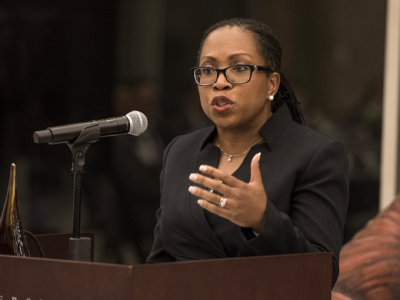
A beginner’s guide to reproductive justice

WP_Post Object
(
    [ID] => 3923
    [post_author] => 2
    [post_date] => 2022-03-03 19:34:29
    [post_date_gmt] => 2022-03-03 19:34:29
    [post_content] => 

Menstrual inequity is not unique to developing nations. It affects all low-income girls and women.

What if someone’s circumstances forced them to experience their period without access to sanitary napkins or tampons? Would they go to school or to work worrying every minute about blood soaking through their underwear, whether the makeshift pad they made with a fistful of toilet paper, a dirty rag, or even cow dung or leaves stayed in place, whether it increased their risk of bacterial infection?

Would you?

Millions of young girls and women experience their monthly periods under these undignified and unhygienic circumstances. They miss school, they miss work, and as a result their earning potential and opportunities for social and financial advancement in their lives are irrevocably affected. In some extreme situations, young women even exchange sex for money to buy menstrual supplies. This is referred to as period poverty.

Period poverty creates poverty

“Imagine not being able to sit through class,” says Jessica Williams, Chief Communications Officer for Days for Girls, a U.S.-based non-profit organization that aims to improve educational and livelihood outcomes for women and girls by “turning periods into pathways.”

“You can’t work, you end up staying home, all these missed opportunities to contribute and make money. Period poverty literally creates poverty.”

The World Bank estimates 500 million women and girls globally lack access to adequate facilities for menstrual hygiene management. That means access to basic needs like sanitary napkins, tampons, toilet paper, separate bathrooms with a door that can safely close behind them and running water to wash their hands and underwear. Half the world’s population in developing and poor countries lacks the fundamental necessities a woman needs to deal safely and with dignity with a bodily function that recurs monthly for 40 years of their lives.

Operating in over 144 countries in six continents, Days for Girls creates washable and reusable menstrual health products and kits that include carry pouches, underwear, soap and washcloths, and a menstrual cup alternative. These products are manufactured and sold locally by women, providing them with a dependable stream of revenue.

Period inequity is our problem, too

While menstrual inequity is far more pervasive in developing nations, it is not unique to far-away countries. Low-income girls and women, women in Indigenous communities, and women experiencing homelessness in western countries—where supermarket and pharmacy aisles are brimming with all brands, colours, sizes, and shapes of sanitary products—are still not able to afford basic menstrual products.

Many countries are now having long-overdue conversations about making sanitary products free or at the very least tax-free and affordable—finally seeing them as medical necessities women don’t have a choice about purchasing. Scotland was the first country in the world to make period products free. It’s perhaps no accident the bill was first introduced by a woman and passed by a government that has a woman at the helm. Countries like Canada and Australia have removed the GST from period products, New Zealand and a handful of U.S. States have already mandated free period products in schools. Recent U.S. studies have shown that about a quarter of menstruating students struggle to access period products, with both anxiety, stigma, and educational barriers cited as the direct result.

Breaking the stigma

Period poverty goes beyond a lack of access to period products. It also refers to taboos attached to menstruation.

“In some cultures, women on their period are considered unclean,” says Williams. “Our job is to help people overcome this, educate them on the subject, teach young boys, their brothers, fathers, husbands, about female bodies so they can be more understanding and supportive of what is essentially a basic human right.”

Nepali schoolgirls holding bags of washable menstrual products.

In Nepal, one of the countries Days for Girls operates in, menstruating women are considered bad luck. The stigma forces them into isolated menstruating huts every month, which makes them vulnerable to rape, animal attacks, and bad weather. Many young girls have died while alone. Aside from the physical dangers involved in forced isolation, superstitions like these also degrade women and position them as inferior in a society that should see them as equals.

The scent of solidarity

Barb Stegemann, founder and CEO of The 7 Virtues, a perfume company, decided to help the Nepali women who are shunted into menstruating huts.

On March 8, International Women’s Day, she’s launching Lotus Pear, a scent that uses sustainably sourced geranium from Egypt, with part of the proceeds helping to advance menstrual equity for 700 young women in Nepal.

“It’s about women and power, the loss of it, and getting it back,” Stegemann says. “Each of us is a potential agent of change.” The entrepreneur says she prefers empowerment over charity because it creates self-sufficiency and confidence in one’s abilities. As a young teenager, she saw first-hand how poverty can undermine one’s potential and self-esteem.

“We fell on hard times when I was a young,” she says. “My mom started having health issues and all of sudden… record scratch. We’re living in a trailer on welfare and mom is in the hospital all the time.”

Stegemann says she knows what period poverty feels like.

“Not to get gross,” she says, “but we were poor, I would often use toilet paper.”

Period kits that Day for Girls distributes.

Women lifting other women

Women helping empower other women is a running theme through Stegemann’s career and overall philosophy. When she launched her business 12 years ago, she worked out of her garage and bankrolled the venture with her credit card. She aspired to support families in war-torn nations by flexing women’s buying power to reverse issues of war and poverty.

Her fragrance collection is made with natural essential oils purchased and often manufactured in countries rebuilding after war or strife, from Haiti to Afghanistan and Rwanda, what Stegemann refers to as “retail activism.”

Impact partners like her are essential to the work non-profits like Days for Girls do.

“Without impact partners like The 7 Virtues, we wouldn’t be able to do our work because they essentially fund the work that we do,” says Williams.

Like Stegemann, the founder of Days for Girls is also a woman whose actions have been shaped by difficult personal experiences.

Celeste Mergens was born in Oklahoma, to a family that faced poverty, spent time living in a car and often went without food. At the age of seven she was raped. When she heard that some North American men were travelling to poor countries with suitcases full of menstrual products these women needed just so they could sexually assault them, she knew she had to do something. Since 2008, her organization’s two-pronged approach to period poverty—the sale and manufacture of menstrual pads and the education to eliminate taboos—has changed countless of lives.

“I was told over 400 women immediately came forward for the program in Nepal,” says Stegemann. “The organization has invested for so long in the community there’s now trust, and I think that’s what’s so exciting, it’s a movement.”

The invisible problem

The global pandemic has only exacerbated the challenges women and girls face. A recent report indicates almost 10 million children worldwide might never return to school. It predicts girls will have a harder time than boys, because many will be forced into early marriage or the labor market as families struggle with extreme poverty. With these obstacles in mind, efforts to tackle period poverty and the limitations it imposes on women worldwide can only be encouraged.

“I think the issue of period poverty should be part of everyone’s political platform,” says Stegemann. “It would be refreshing to hear a candidate say, ‘These are the things that advance a community,’ and find a way for companies to provide them for free.”

Stegemann says she was shocked to learn that a lack of sanitary products in the north of Canada, where a box of tampons can run from $16 to more than $45, remains a huge problem among Indigenous communities.

“Was I living around a rock?” she asks. “Why don’t more people know about these things?”

[post_title] => Why period poverty is everyone's problem [post_excerpt] => The World Bank estimates 500 million women and girls globally lack access to adequate facilities for menstrual hygiene management. That means access to basic needs like sanitary napkins, tampons, toilet paper, separate bathrooms with a door that can safely close behind them and running water to wash their hands and underwear. [post_status] => publish [comment_status] => closed [ping_status] => open [post_password] => [post_name] => why-period-poverty-is-everyones-problem [to_ping] => [pinged] => [post_modified] => 2026-08-04 20:54:07 [post_modified_gmt] => 2026-08-04 20:54:07 [post_content_filtered] => [post_parent] => 0 [guid] => https://conversationalist.org/?p=3923 [menu_order] => 134 [post_type] => post [post_mime_type] => [comment_count] => 0 [filter] => raw )

Why period poverty is everyone’s problem

WP_Post Object
(
    [ID] => 3908
    [post_author] => 2
    [post_date] => 2022-03-01 08:30:39
    [post_date_gmt] => 2022-03-01 08:30:39
    [post_content] => 

Fired from their jobs, their bank accounts frozen, facing death threats, the country's 270 female judges are in exile or in hiding.

Only six months ago Tayeba Parsa, 34, a female judge in Afghanistan, was determined to keep advancing women’s rights despite threats that Kabul would soon fall to the Taliban.

“There were times when I was really scared, but I always went to work,” Parsa tells me by phone from Warsaw. She has been living there with her elderly father and husband since last August, when the Taliban took over Kabul, waiting for news of a student visa from a country willing to take her in. “It was my profession, I loved my job, I studied for years to become a judge. I didn’t want to give it up.”

In the six months since the Taliban took over, the rights of women in Afghanistan have been all but eliminated. Girls older than 12 have few opportunities to obtain an education, while women fighting to hold on to any progress made over the last two decades face threats, prison, and often death. In this reality, women who not only have a higher education than most, but also practiced law in a position of authority over men, run the risk of execution without trial. In January 2021, unknown assailants on a motorcycle gunned down two Afghan women judges who were on their way to work.

When Parsa fled Afghanistan she gave up not only her career, but her entire life as she knew it.

“I was at home for three days when we heard news that the Taliban were at all checkpoints,” she says. “I collected all my documents and started destroying case notes to hide my identity.”

A former judge in the commercial division of the appeals court of Kabul province, Parsa is a member of the International Association of Women Judges (IAWJ) and volunteered to act as communications officer for the local branch. This association automatically placed her at higher risk. 

“The Taliban consider every Afghan who collaborates with foreigners an infidel, a traitor,” she says. “When I was a judge, I was receiving constant anonymous death threats.” To avoid being targeted by the Taliban, Parsa and her fellow judges hid their identities when going to work and avoided riding in officially marked cars. She says she knew the dangers and accepted them. 

“You never knew if you were going to come home,” she said.

In Taliban-controlled Afghanistan, all women and girls are at risk. But no one is more in danger than women lawyers, judges, journalists, and police officers. Women in key positions of power were especially targeted by this regressive militant group, which seeks to enforce an extremist interpretation of Islam. As soon as the Taliban took over, the women lost their jobs and saw their bank accounts frozen. They knew their lives were in imminent danger. 

Afghan women judges were instrumental in challenging their deeply patriarchal society by demonstrating that violence against women and girls is not only wrong, but a punishable criminal offence. Putting aside fears for their own safety, they convicted and sentenced the men who stood trial in their courtrooms for rape, kidnapping, murder, forced marriage, or preventing women from going to school. 

The new Taliban government has released criminals whom Parsa, and approximately 270 other female judges, had sentenced to prison after they were convicted of crimes. With these men now free to take revenge, the women were in grave danger.

Nabila, who requested that her last name be withheld, was a family court judge who granted divorce petitions to many women. 

“Afghan law stipulates that a wife can request a divorce if her husband has been jailed for more than five years,” she tells me. “Some of these men were dangerous criminals who had committed serious crimes like murder and kidnapping. I granted these divorces according to the rule of law, but when the Taliban arrived, they released many of these criminals who came looking for me. I was no longer safe.”

Nabila is one of 26 female Afghan judges and lawyers who, along with their families, arrived in Athens from Afghanistan via Georgia this past September. While she, her husband, and their three children were eligible for evacuation, their immediate families remain behind. They fear reprisals against them and worry about their day-to-day living conditions, with a worsening humanitarian crisis on the ground.

“We’re always calling them, always checking up on them,” she said, adding that her relatives have had to change homes frequently for their safety. 

International sisterhood 

The International Association of Women Judges, which represents more than 6,500 judges in over 100 countries, has been instrumental in helping their Afghan colleagues get out of the country and in amplifying their message. 

Mona Lynch, a Supreme Court judge in Nova Scotia and regional director of the International Association of Women, emphasized the urgency of getting those women out of Afghanistan. 

“We have been trying to assist them in any way we can over the past few months,” she says. “These brave women have contributed for 20 years to maintaining the rule of law and stable governance in Afghanistan.” 

“None of them wanted to leave their country, they simply had no choice,” said Judge Lynch. “And the ones still left behind are getting more and more desperate as the circumstances deteriorate. They need help and we need to be their voice.”

Education is everything 

While waiting in Poland, Parsa has been using her free time to improve her English. After applying for scholarships at German, French, and American universities she obtained a visa for the UK, which she accepted—but at a cost. 

“I’m happy because it’s an English-speaking country, and I can’t imagine the additional hurdle of learning another language right now, but the visas are only for me and my husband. I would have to leave my father behind. I don’t know what to do.” 

She hopes to return to Afghanistan one day and help rebuild the country, but right now it’s only a vague dream, fueled by cautious optimism.

“The situation as it is right now won’t stand,” she says. “It’s intolerable, there’s no rule of law. Trials are being conducted by illiterate people. I want to be the voice of all Afghan women judges, those who are still there, still in hiding, still in danger, and those who have been evacuated but haven’t been offered visas,” she said, making a plea for the international community to help extricate the women still in hiding in Afghanistan, and to help settle permanently the women who got out but are still waiting for visas.

Nabila’s husband Asadullah, who is a construction engineer, has been translating parts of the conversation in his fluent English. In answer to the interviewer’s question, he described Afghanistan’s immediate future as “dark,” adding that this was the case “especially for women."

“I believe in women’s rights, they’re half of society,” he says. “I have three daughters and I saw a dark future for them there. My girls would not have been able to attend school. The Taliban may have promised that they can go, but I don’t believe them.”

Life in Limbo in Athens

Some 200 female Afghan judges, Nabila among them, are hoping Canada will fast-track their arrival, since they qualify under a resettlement program for Afghan refugees in danger for having held leadership or human-rights positions. 

Greece has welcomed more women fleeing Afghanistan than any other country so far. Amed Khan, an American philanthropist who was instrumental in helping many Afghan judges find a temporary home in Greece, said in an article for The Greek Reporter that it reflected an openness he saw from smaller governments that was missing from the world’s biggest economic powers.

“The only political leadership I’ve seen is from smaller countries like Greece, Albania, Qatar, North Macedonia; it’s not the G7,” said Khan. “A lot of countries made a lot of money in Afghanistan and now they want to wash their hands and look for the next opportunity.”

Despite her gratitude, Nabila wants to put down permanent roots and is waiting eagerly for news of permanent resettlement. She is worried about the children being unable to attend school in Greece, because they are in the country on temporary visas.

A painfully slow process 

Few countries have provided easy pathways for these women. They are scattered with their families in more than 17 countries around the world, and only a small number have been resettled permanently in their final destinations. 

The American Bar Association has created the Afghanistan Response Project and the International Association of Women Judges has launched a fundraising campaign, but these efforts rely more on individual goodwill than government assistance.

The Canadian government has expanded its special immigration program to include women leaders and human rights defenders, as well as persecuted minorities, but advocates say the process is too slow. Immigration Minister Sean Fraser recently suggested that it could take up to two years for the government to meet its promise of resettling 40,000 Afghan refugees. Fewer than 7,000 have arrived in Canada so far. 

And so these women wait, stuck in limbo. They can’t dream or plant roots in a temporary home. They worry about their future.

“These are professional, talented, brave women,” Parsa tells me. “They fought for the rule of law in Afghanistan. They stood strong against threats and political pressure. They’re educated and driven, they deserve to be offered scholarships and a new life, they are the future of Afghanistan.”

[post_title] => Afghanistan's female judges lost everything when the Taliban took over [post_excerpt] => In Taliban-controlled Afghanistan, all women and girls are at risk. But no one is more in danger than women lawyers, judges, journalists, and police officers. Women in key positions of power were especially targeted. [post_status] => publish [comment_status] => closed [ping_status] => open [post_password] => [post_name] => afghanistans-female-judges-lost-everything-when-the-taliban-took-over [to_ping] => [pinged] => [post_modified] => 2026-08-04 20:54:59 [post_modified_gmt] => 2026-08-04 20:54:59 [post_content_filtered] => [post_parent] => 0 [guid] => https://conversationalist.org/?p=3908 [menu_order] => 135 [post_type] => post [post_mime_type] => [comment_count] => 0 [filter] => raw )
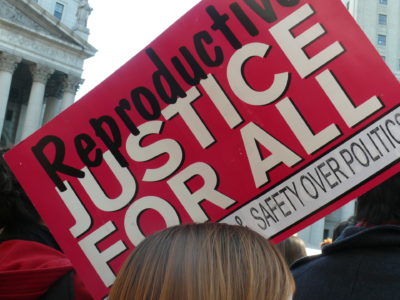
Afghanistan’s female judges lost everything when the Taliban took over

WP_Post Object
(
    [ID] => 3894
    [post_author] => 2
    [post_date] => 2022-02-24 08:30:17
    [post_date_gmt] => 2022-02-24 08:30:17
    [post_content] => 

Ajo, a traditional microsavings system based on trust, allowed women in the informal economy to survive the pandemic lockdown.

The outdoor markets of Lagos are a noisy clutter of shops and makeshift stalls. The traders are mostly women who call out their wares loudly, with customers clustering in front of the stalls to haggle while the business owner multitasks and chats with them all. The stall owners are friendly but competitive, bantering with one another all day.

In this familiar chaos, the women form sisterhoods and support systems. One of these systems is called “ajo” (or “esusu” in eastern Nigeria). It is an ancient informal cooperative savings culture passed down for generations, with the women contributing a portion of their earnings on a weekly or monthly basis and each receiving the full amount, in turn, to invest in her business.

This is a typical example of how an ajo works:

In a 12-unit rotation for 12,000 naira ($29.01) monthly, each member contributes 1,000 naira ($2.42) per month, choosing a number or month when they would like to receive their due. They give their money to a thrift collector, who is responsible for disbursing the collected money at the end of each agreed-upon period, and for keeping the women’s savings. At the end of the rotation, a member can cancel her contribution or start again. But a unit of 12 does not mean 12 people. It could also mean 12 “hands,” or contributions. Some members might decide to contribute two hands, or double the amount (2,000 naira), to collect double  (24,000 naira). 

The foundational principles of ajo are trust, familiarity, and an uninterrupted cycle of donation. These might not seem like concrete measures for financial security, but they are remarkably successful—most of the time. The restrictions and privations of the Covid-19 pandemic interrupted this usually reliable traditional micro-savings system.  Women make up half of Nigeria’s informal labor force, which is unregulated and often exploited. Whether they are traders, farmers, or domestic workers, these women are often the family’s secret breadwinners (in this conservative patriarchal culture, the man must always be seen as the financial head of the family). The pandemic lockdowns, with income drastically cut due to restrictions that for several months kept market hours reduced to four from the usual 60 per week, made ajo more important than ever.

Surviving the pandemic, despite the prevalence of disinformation

In December 2021 I visited Addo market in Lagos to speak with some of these women.  Ify, a single mother in her mid-thirties who sells dried fish, told me ‌she panicked when the government announced a lockdown in March 2020, at the beginning of the pandemic. For several months hardly any customers visited the market; the few who came to shop were limited to one at a time. According to the women, if stallholders neglected to wear masks, the police forced them to buy one from them at exorbitant prices, or even kicked them out of the market. I could not independently verify this, but have no reason to doubt the women given the Nigerian police's well-documented corruption. To save on the expense of buying a new disposable mask to wear each day, Ify bought a reusable face shield.

Ify said she was not worried about catching the virus. She gets her information on COVID-19 from mainstream news outlets, but her opinions reflect the disinformation that circulates on social media. She said that one woman in the area died after she was vaccinated, although she acknowledged never having met her. Ify said she never met anyone who had caught the virus, nor did she believe she would catch it, which is why she did not plan to be vaccinated.  She asked why the government was mandating vaccines when they had not done the same for HIV tests or antiretrovirals. 

The government is, in fact, not mandating vaccines. As in other countries, vaccine passports are required to enter certain public spaces and in order to travel.

Ronke, a 21-year-old college student who helps at her mother’s vegetable stall during semester breaks, could only sell fresh produce to neighbors for their meals during the lockdown. “I saw no dead bodies or sick people in Nigeria even on social media, me and my family believe COVID-19 is fake and we will not be taking the vaccine,” she said. 

Nigeria’s first phase of the vaccine rollout was in March–April 2021; it was limited to essential workers and the elderly, which excluded most of the women who work at the market. Before the lockdown, these women, some of whom have little or no formal education, received health information from the local radio, community workers, and primary healthcare centers. But the pandemic exposed them to unverified sources and misinformation on WhatsApp and Facebook. 

Family and friends innocently share viral messages via WhatSapp groups; the messages, in pidgin English and various local languages, recommend homemade cures for the virus, like herbal steaming. Or they contain disinformation, like the claim that Covid vaccines inject magnetic chips into the body. According to this conspiracy theory, the chips attract metals, like spoons, which stick to the skin. According to another conspiracy theory the virus is fake and the pandemic restrictions are just another government ploy to steal public funds. Since people receive these messages from those they trust, like their faith leaders or educated members of their families, they believe they are credible.

How COVID affected the ajo system

Because they made so little money during the lockdowns and were struggling to feed their families on their reduced earnings, neither Ify nor Ronke could keep up their ajo contributions, nor could many other women in their groups. With contributions reduced by 70 percent, their ajo unit could not stay afloat. Contributions stopped, pending the lifting of the lockdown and the full re-opening of the markets. Ronke refers to the semblance of normalcy that followed the 2020 lockdown as the “end of Corona,” a sentiment shared by most women in the market. If they may trade, then “corona” must be over, they say, associating the virus with the period of restrictions and nothing more. These women go about their business without face masks or social distancing. The police no longer compel them to abide by any pandemic restrictions.

A study of the impact of COVID-19 on women’s savings groups carried out by a collaboration of think tanks and researchers, including the Bill and Melinda Gates Foundation, Africa Center for Systematic Reviews, and Makerere University, found that households with women who are in informal savings groups were less likely to experience food insecurity and more likely to have savings, which was critical in getting through the pandemic. Women’s savings groups showed more potential for resilience and provided women with a platform for leadership and community responsiveness.

Ajo, however, still carries risk. The women in Addo market lost their savings during the pandemic lockdown to a thrift collector who suddenly “disappeared with everything.” In case of death or serious illnesses, no one is liable for the loss. Sometimes, bad loans accumulate from members who misappropriate funds. That is why researchers recommend that financial institutions and governments offer further support for ajo.

Beatrice Joseph is a thrift collector and restaurateur in Yola, Adamawa State, in northeast Nigeria, an area that has been plagued by terrorists and bandits. She manages the contributions of women across five markets in the state, engaging them in financial literacy training, bookkeeping, and loan repayment.  During the lockdown, Beatrice lost all her investments when her restaurant was vandalized.  She managed to keep her business and that of her members thanks to a partnership with Riby, a digital financial services (DFS) platform that supports financial cooperatives and trade groups in Nigeria. These services act as the central collector while simplifying the banking process by accepting social credit as collateral (the group stands as guarantor), using USSD codes and text messages instead of complicated apps, and securing their savings. This reduces the risk associated with ajo, while providing financial independence for the women by converting their savings to investments. 

Ekundayo Kiyesi, general manager of Riby, describes the thrift collector as an individual microfinance bank that provides accountability, accessibility, and security to the ajo for a monthly service charge that is commonly around 25 cents. Platforms like Riby are formalizing the ajo system for larger collectives in markets and cottage industries like the unit Beatrice manages, but among smaller, homogenous groups some believe ajo should remain communal and independent. 

Joy Ehonwa, a freelance writer and book editor in Lagos who runs a small ajo group for employed middle-class women, is one of them. Joy created a system of accountability for her group, a record and digitization process that involves registering a next of kin—which, she laughingly assured me, she had never had a reason to use. 

Financial insecurity is just as much of an issue for women working in formal business employment, as it is for those whose income is derived from the informal economy. According to the Central Bank of Nigeria (CBN), approximately half the Nigerian working population earns less than 700 naira ($1.70) per day, even in formal employment; in cases where income is determined by gender (e.g. in the case of office assistants), women earn even less. With such low income and no collateral, they can neither save money nor afford to take a loan. This is where ajo comes in; it is a saving and interest-free loan system that they can depend on. 

Nigerian women have more financial agency today than ever before, but societal and cultural norms are still very conservative. Husbands thus control the family finances due to the widely held belief that a man whose wife is financially independent is emasculated. A lack of education, religious and gender bias, and low trust in financial service providers are also reasons for financial dependence. But when women are empowered to earn and invest, they drive innovation, invest in health and child development and increase productivity and economic growth. The economic strength of a country is directly proportional to the economic strength of its women. Despite the digitization of ajo, it will remain a fluid system driven by community, trust and independence. With some financial education, Nigeria’s hardworking, innovative women will save their country’s declining economy. 

[post_title] => How a traditional microsavings system enabled Nigerian women to save their businesses during the pandemic [post_excerpt] => Ajo, a traditional microsavings system based on trust, allowed women in the informal economy to survive the pandemic lockdown. [post_status] => publish [comment_status] => closed [ping_status] => open [post_password] => [post_name] => how-a-traditional-microsavings-system-enabled-nigerian-women-to-save-their-businesses-during-the-pandemic [to_ping] => [pinged] => [post_modified] => 2026-08-04 20:56:25 [post_modified_gmt] => 2026-08-04 20:56:25 [post_content_filtered] => [post_parent] => 0 [guid] => https://conversationalist.org/?p=3894 [menu_order] => 137 [post_type] => post [post_mime_type] => [comment_count] => 0 [filter] => raw )
How a traditional microsavings system enabled Nigerian women to save their businesses during the pandemic

WP_Post Object
(
    [ID] => 3756
    [post_author] => 2
    [post_date] => 2022-01-27 21:13:29
    [post_date_gmt] => 2022-01-27 21:13:29
    [post_content] => Forced sterilizations on detained migrant women is in line with the US's long, sordid history of eugenics.

Last month, the Department of Homeland Security (DHS) briefed House Democrats on allegations concerning several gynecological procedures, including hysterectomies, that a physician performed on migrant women in Immigration and Customs Enforcement (ICE) custody at the Irwin County Detention Center in Ocilla, Georgia—allegedly without their informed consent. The incidents became public knowledge in September 2020, after a consortium of human rights groups filed an explosive report on behalf of Nurse Dawn Wooten, a whistleblower who worked at the detention center.

In a December 3 letter signed by the chairmen of the House Committees on Homeland Security and Oversight and Reform, legislators wrote: “We are concerned that Dr. [Mahendra] Amin may have been performing unnecessary surgical procedures to defraud DHS and the Federal government without consequences.” The letter, which is addressed to DHS Secretary Alejandro Mayorkas, also requested information on the steps the Department has taken to review treatment Dr. Amin provided and ensure migrants receive proper medical care in the future.

The Conversationalist confirmed a December 15 DHS briefing with two committee staffers, both of whom declined to share additional details about the information presented. A staffer from the Committee on Homeland Security clarified that this was a DHS review of the Irwin County Detention Center and not a general review of migrant detention facilities, although Congress requested the Department to brief them on the matter months ago.

The December 3 letter says, “the Committee on Homeland Security requested a briefing on August 10, 2021, on DHS’s efforts to review the suitability of detention facilities. To date, DHS has not fulfilled this request. We ask that you ensure the Committees receive this briefing without further delay.”

On January 3, the DHS released a report that found “the facility’s chronic care, continuity of care, and medical policies and procedures to be inadequate” but did not find that unnecessary or unwanted hysterectomies had been performed. The report does, however, quote an ICE employee who alleges that there is a systemic issue in the ICE leadership that makes the agency “unwilling to listen to concerns or complaints about detention facilities.”

Nurse Dawn Wooten worked at the Irwin County Detention Center (ICDC) for three years. She says that Dr. Amin, who was referred to as the “uterus collector,” had performed hysterectomies on at least 20 women without their consent. Many of these women did not speak English well enough to consent to the procedures or understand what had been done to them. Thirty-five women are now suing ICE over Dr. Amin’s abuse.ICDC, run by a for-profit prison company called LaSalle Corrections, also came under harsh scrutiny for their botched COVID-19 response, which sparked hunger strikes and protests among detainees early in the pandemic.

The Georgia-based advocacy group Project South filed the complaint, which describes a filthy, insect-infested facility with inadequate COVID-19 safety precautions, where staff refused to test symptomatic detainees and fabricated medical records. Detainees who protested the conditions were punished with beatings, pepper spray, and solitary confinement. Nurse Wooten told The Intercept that she was demoted after raising concerns with her supervisors.

“It is deeply concerning that neither DHS nor the private prison company running Irwin have yet to face accountability for the medical abuse that migrant women faced at Irwin,” Azadeh Shahshahani, the Legal and Advocacy Director with Project South said in an email statement to The Conversationalist. “This is setting an awful precedent. Congress and the Biden Administration must act now.”

The joint committee investigation subpoenaed LaSalle Corrections in November 2020 after the company refused to turn over medical records on the procedures Dr. Amin performed. Dr. Tony Ogburn, Department Chair of Obstetrics and Gynecology at the University of Texas Rio Grande Valley, reviewed those records. He concluded that Dr. Amin’s care “did not meet acceptable standards.”

“My concern is that he was not competent and simply did the same evaluation and treatment on most patients because that is what he knew how to do, and/or he did tests and treatments that generated a significant amount of reimbursement without benefitting most patients,” Dr. Ogburn concluded in a November 2021 letter to the Georgia Medical Board.

Following pressure from lawmakers, activists, and advocacy groups, DHS Secretary Mayorkas announced he would sever ties with LaSalle Corrections in May 2021, though migrants were not removed from the facilities until September 2021—a full year after Project South filed Nurse Wooten’s whistleblower complaint with the ICE administration.

While these abuses came to light during the Trump presidency the lack of accountability continues under the Biden Administration, with migrant arrests now at a 21-year high. The current administration has ramped up deportations under a Trump-era health policy that allows the government to expedite the process without giving migrants the opportunity to apply for asylum. The government claims the rushed deportations are a COVID-19 safety precaution.

Under Title 42, the Trump Administration expelled 444,000 migrants. Under Biden, this number has already reached 690,000. COVID-19 still runs rampant in migrant detention centers and in prisons such as New York City’s Rikers Island, where more than one-fifth of the incarcerated population has tested positive.

Immigration advocates have been disappointed with the new administration. Since taking office, Biden has filed 296 executive orders on immigration, 89 of which have reversed actions taken by the Trump administration such as the travel ban on Muslim majority nations and construction of the border wall.

When Dawn Wooten stepped forward to make a whistleblower complaint about the medical abuses at ICDC, international headlines about “mass hysterectomies” sparked outrage and comparisons to Nazi Germany. Others placed the story within a long history of American eugenics that targeted Black, brown, disabled, and indigenous women.

“People with Spanish surnames were disproportionately sterilized during the period of peak eugenics in the 1920s through the 1950s,” says Heather Dron, a Research Fellow at the Sterilization and Social Justice Lab at the University of Michigan.

During the twentieth century, U.S. states subjected over 60,000 people to sterilization without consent, with over 30 states establishing eugenics boards. State governments targeted minorities, the disabled, and others who did not fit into “social norms” for forced sterilization.

From 1929 to 1974 North Carolina ordered as many as 7,600 women sterilized— a majority of whom were Black women from low-income backgrounds. Margaret Sanger and Dr. Gregory Pincus exploited government birth control centers in Puerto Rico to subject one-third of the female population to sterilization procedures, often without their consent, purportedly to address “overpopulation” and poverty on the island. Under the Family Planning Services and Population Research Act of 1970 physicians sterilized an estimated 25 percent of Native American women of childbearing age in a six-year period.

Adolf Hitler writes admiringly in Mein Kampf of eugenics policies practiced in the U.S. “There is today one state in which at least weak beginnings toward a better conception [of immigration] are noticeable. Of course, it is not our model German Republic, but [the United States], in which an effort is made to consult reason at least partially. By refusing immigrants on principle to elements in poor health, by simply excluding certain races from naturalization, it professes in slow beginnings a view that is peculiar to the People's State.”

Heather Dron’s research focuses on eugenic sterilization in California, where roughly 20,000, or one-third, of U.S. sterilizations were performed starting from 1909.

“There was a law on the books between 1909 and 1979 that allowed for the sterilization of institutionalized people housed in psychiatric hospitals, or in homes for what was then called the ‘feeble-minded,’” Dron says. “Sterilization was seen as a solution to all these other social problems. They saw it as a way to keep these people out of institutions.”

While eugenics laws in California have been repealed, sterilizations have continued. A 2013 investigation by Mother Jones revealed that 148 women in two California prisons were sterilized from 2006 to 2010.

“You get a similar dynamic there,” says Dron, referring to the recent ICE cases. “There were a few people who were performing a lot of procedures who seemed like they didn’t have a great ethical practice in general.”

There is no evidence to suggest that Dr. Mahendra Amin was motivated to perform these surgeries for anything other than financial compensation. Last month's letter from House Democrats expressing concerns that Dr. Amin performed these surgeries to “defraud the government” further supports this theory.

“It sounds like there’s some sort of incentive to perform surgical interventions because you’re paid per intervention and some people took advantage of that,” Dron says of Dr. Amin’s case. “But you have to read that with a little bit of skepticism because often we point to these bad actors and say it’s just them as opposed to a system that systematically thinks that people who are incarcerated shouldn’t have kids.”

The breaking news of hysterectomies performed on migrant women in ICE custody barely made it through one news cycle before news of Ruth Bader Ginsberg’s death broke just days later. Her death was followed by a swift Republican push to nominate a third Supreme Court Justice under Trump just weeks ahead of the 2020 election.

The media might choose to remember the hysterectomies performed at the Georgia ICE facility as a particularly egregious act that happened under a uniquely evil administration. That would be a huge mistake.

According to a December 2021 article in The Texas Tribune, the number of immigrants held in ICE detention centers has increased by more than 50 percent since Biden took office. Moreover, the investigation into Dr. Amin’s medical practice has been conducted on Biden’s watch.

Detentions have been accompanied by a spike in border crossings in 2021. Biden has downplayed this as a seasonal phenomenon while Republicans have pointed to plans to offer 11 million migrants a path to citizenship as cause for the surge. Others say the migrants are motivated by growing instability in their home countries. With less attention on the issue of migration, Biden has gotten away with his continuation of the “remain in Mexico” policy by pointing to Title 42, which has been extended twice by the Centers for Disease Control and Prevention, as a matter of public health.

Under the Biden Administration, we no longer hear overtly fascist rhetoric from the White House aimed at migrants, but detainees at ICE facilities continue to suffer from extreme medical neglect and abuse as COVID-19 cases soar.

In order to prevent us from reliving the past, we need to understand the circumstances that led us to where we are today. Ending Trump’s remain in Mexico policies, fulfilling a campaign promise to offer migrants a path to citizenship, and holding Dr. Amin and LaSalle Corrections responsible for their medical abuses would be a great place to start.

 
    [post_title] => The 'Uterus Collector': The surgeon who performed coerced hysterectomies on detained migrant women
    [post_excerpt] => The forced sterilizations are in line with the U.S.'s long, sordid, racist history of eugenics. 
    [post_status] => publish
    [comment_status] => closed
    [ping_status] => open
    [post_password] => 
    [post_name] => the-uterus-collector-the-scandal-of-the-surgeon-who-performed-coerced-hysterectomies-on-detained-migrant-women
    [to_ping] => 
    [pinged] => 
    [post_modified] => 2026-08-05 18:04:55
    [post_modified_gmt] => 2026-08-05 18:04:55
    [post_content_filtered] => 
    [post_parent] => 0
    [guid] => https://conversationalist.org/?p=3756
    [menu_order] => 145
    [post_type] => post
    [post_mime_type] => 
    [comment_count] => 0
    [filter] => raw
)
The ‘Uterus Collector’: The surgeon who performed coerced hysterectomies on detained migrant women