WP_Post Object
(
    [ID] => 10477
    [post_author] => 15
    [post_date] => 2026-05-06 20:18:14
    [post_date_gmt] => 2026-05-06 20:18:14
    [post_content] => 

Nerima Wako Ojiwa on technology, youth-led democracy, and organizing at the speed of crisis.

Peacebuilding does not always unfold slowly.

Sometimes, it happens in moments of crisis—when institutions fail, when violence is imminent, and when the only thing standing between disappearance and survival is collective action.

This is where Nerima Wako Ojiwa enters the story.

As the founder and executive director of Siasa Place, one of Kenya’s most influential youth-led political organizations, Nerima represents a proactive and vital expression of feminist peacebuilding: fast, adaptive, deeply networked, and rooted in solidarity, showing how democracy must often be defended in real time.

From Distance to Determination

Nerima’s political awakening began far from home. In 2012, while interning in Washington, D.C. with Search for Common Ground, she watched conflict escalate in East Africa and felt the weight of distance—geographic and political.

“I felt removed,” she says. “And that made me question not just what was happening there, but what was happening at home in Kenya.”

When she returned, she noticed a gap between activism and politics that led to systemic change. Youth organizations existed, but few were willing to engage in or with politics directly, whether governance, policy, or power. Online spaces for serious political debate were rare.

So, she decided to help create one.

Siasa Place—siasa meaning “politics” in Swahili—was designed as an explicitly political, youth-centered, digital-first space. Its purpose was simple and radical: to give young people room to deliberate about their future, to organize collectively, and to reclaim politics as somewhere they belong.

Feminist Leadership in a Hostile Arena

Leading this kind of space as a young woman in Kenya came with immediate costs. Nerima was in her early twenties at the time—petite, outspoken, and operating in a deeply male-dominated political environment. She encountered disbelief, harassment, and persistent assumptions that a man must be behind her work.

“There has to be a godfather,” people said. Or a rich uncle. Or a political patron.

But Nerima was doing everything herself.

For years, she ran Siasa Place without funding, navigating precarity while building credibility. She also learned—like many women before her—how to protect herself, adapting her behavior to avoid advances from men in ways that reshaped her leadership and hardened her resolve.

Perhaps the most telling moment, however, came later, when Nerima was debating running for office herself—and a male colleague told her she should not run for a women’s political seat because she’d transcended gender entirely. (Kenya has constitutional female quotas in parliament, mandating that no more than two-thirds of members in elective or appointive bodies can be of the same gender. However, the country has struggled to meet this quota, with women holding about 23% of parliamentary seats as of 2022.)

It was meant as praise. It revealed the cost of legitimacy.

Organizing as Peacebuilding

Unlike many leaders trained through formal mentorship, Nerima learned to organize through crisis.

The most recent example still reverberates. In May 2025, activists Boniface Mwangi of Kenya and Agather Atuhaire of Uganda were abducted in Tanzania after showing solidarity with an opposition leader. Nerima helped coordinate a rapid-response network across borders—using encrypted messaging, social media amplification, and collective pressure.

Four days later, both were released.

“They couldn’t kill us because people were making too much noise online,” Agather later told her.

This experience underscored Nerima’s belief that if you are not involved in politics, if there is no good governance, you're not going to be able to have a good—or safe—life. “And that's what we translate in all of our Siasa Place forums,” she says. “This is why you should be engaged, because everything is a political decision.” 

Technology, Deliberation, and Power

At Siasa Place, technology is not treated as a single solution but as a menu of tools, deployed intentionally at different moments:

  • TikTok to raise awareness and funds.
  • Messaging platforms to coordinate action.
  • Deliberative technologies like Polis and Remesh to shape policy outcomes.

What Nerima values most about these tools is their refusal of hierarchy. Influence cannot be bought or performed, and participants must think for themselves. 

For a generation shaped by influencers and algorithmic culture, this kind of engagement carries real weight—and it works. One striking example: Youth participation through Siasa Place pressured the Kenyan government into withdrawing a proposal that would have cut funding for youth programming entirely. The outcome showed that when young people organize and speak collectively, they can shift policy directly.

Nerima sees her work as bridging the gap between mobilization and meaningful political participation. "We are channeling our people to understand how policy works," she explains, "and why inclusive involvement matters for the betterment of the majority—rather than allowing purely selfish actors to dominate these spaces." She also points to progress on more fundamental challenges, like making information accessible so that people can engage without feeling locked out of the process.

Mutual Aid as Feminist Democracy

Perhaps the most powerful shift Nerima describes is cultural. Kenyan youth—many disillusioned by the state—have begun to act as one another’s safety net. They have raised millions to bail out protesters, cover medical bills, and support families in crisis.

This is not issue-based activism. It is solidarity as infrastructure.

And it is being led, overwhelmingly, by young women.

Refusing Erasure

Before we end our conversation, Nerima raises a final concern—one that echoes across feminist history.

“These movements are being led by women,” she says. “And women get erased.”

Technology, she believes, gives us a chance to interrupt that pattern—to document leadership, to create an archive of memory as it happens, to leave digital footprints that future generations can trace. For Nerima, this preservation is through Siasa Place. But each of us is capable of participating in it—because the act of recording is itself a form of peacebuilding, as is the full spectrum of feminist democratic work today: patient and urgent, institutional and insurgent, grounded in care and driven by courage.

The first step is simply to choose to take part.

[post_title] => We Will Be Our Own Safety Net [post_excerpt] => Nerima Wako Ojiwa on technology, youth-led democracy, and organizing at the speed of crisis. [post_status] => publish [comment_status] => closed [ping_status] => closed [post_password] => [post_name] => nerima-wako-ojiwa-siasa-place-kenya-youth-democracy-movement-technology-politics-global-women-peacebuilders [to_ping] => [pinged] => [post_modified] => 2026-05-15 16:46:48 [post_modified_gmt] => 2026-05-15 16:46:48 [post_content_filtered] => [post_parent] => 0 [guid] => https://conversationalist.org/?p=10477 [menu_order] => 0 [post_type] => post [post_mime_type] => [comment_count] => 0 [filter] => raw )


A portrait of Nerima Wako Ojiwa on a light blue grid background.

We Will Be Our Own Safety Net

WP_Post Object
(
    [ID] => 10457
    [post_author] => 15
    [post_date] => 2026-04-22 17:24:08
    [post_date_gmt] => 2026-04-22 17:24:08
    [post_content] => 

Diana Dajer on community, technology, and the radical work of democratic care.


In a world increasingly shaped by political violence, authoritarian reflexes, and digital harm, peacebuilding can feel abstract—or impossibly distant. But for Diana Dajer, peace is neither theoretical nor inevitable. It is something that must be built carefully, collectively, and often quietly, through democratic practice.

Currently, Dajer is manager of citizen participation with Fundación Corona, a non-profit based in Colombia. We met in Barcelona after Build Peace, an international gathering of practitioners working at the intersection of technology, conflict transformation, and civic life. Among many compelling presentations, Dajer’s stood out—not because it promised technological salvation, but because it insisted on something more demanding: deliberation, care, and faith in people.

From Conflict to Participation

Dajer’s path into democracy work began not with innovation labs or civic tech, but with the social disruption caused by violence and loss. As a lawyer, Dajer worked on human rights cases for victims of Colombia’s armed conflict early in her career. Later, she joined the Ministry of the Interior during peace negotiations with the FARC (Revolutionary Armed Forces of Colombia) guerrilla movement. 

While there, she listened closely—to victims, civil society leaders, and government officials. What became clear was unsettling. Violence in Colombia was not only the result of armed actors, but of long-standing democratic exclusion. When local communities lacked meaningful ways to influence policy or solve local problems, violence became one of the few remaining channels for human agency—the capacity to shape their own lives.

“That’s when I understood,” Dajer says, “that participation is the real name of peace in Colombia.”

Rather than focus solely on peace after violence, she turned toward democracy itself: how it is built, who it includes, and how power is shared.

Technology for Care, Not Control

Years later, that commitment would take shape in Bogotá through a rare experiment: a multi-year effort to embed deliberative democratic processes inside city government. Working with the City Council and civil society partners, Dajer helped create a “laboratory of democracy” to test new ways of engaging citizens—especially in a political culture where protest had become the dominant form of participation.

“Protest is essential,” she says. “But when there is no dialogue with institutions, real solutions don’t happen.”

Bogotá’s leaders made a strategic choice to move incrementally. Rather than treating technology as a standalone tool for deliberation, they used it to solve specific process challenges in order to make participation more open, inclusive, and effective. Drawing on behavioral insights to encourage constructive engagement, the team launched a public communications campaign across social media. City Hall’s chatbot, Chatico, helped scale participatory budgeting and created a more transparent, inclusive channel for the civic lottery process. The city also relied on practical, digital tools, which included building websites to support hybrid citizen assemblies and bring in voices beyond those physically in the room. An educational course delivered through WhatsApp prepared participants in advance.

These early pilots evolved into a citywide deliberative process backed by Carlos Galán, a leader shaped by Colombia’s history of political violence. The aim was never speed or one-off spectacle, but trust—built gradually through structured listening and collective reasoning. 

In Dajer’s work, technology is never the starting point. It is a tool, carefully chosen, subordinate to context. Used strategically, it can help narrow the distance between governing institutions and citizens, opening new possibilities while respecting its limits. But she emphasizes it should never be the destination. 

This ethic traces back to her mentors in the global peacebuilding community, who taught her to ask first: What problem are we trying to solve? And just as importantly: Should technology be part of the solution at all?

Leading as a Woman—with Awareness and Solidarity

Leadership, for Dajer, has always been gendered. “It is more challenging than being a man,” she says without hesitation. Like many women in public life, she learned early to manage others’ perceptions—how she dressed, how she spoke, how authority was read onto her body.

But she is also careful to name her privilege: Gender does not operate alone. Race, class, indigeneity, and access compound exclusion in ways that shape who is heard and who is erased. Conscious of this, Dajer sees her role not just as a leader, but as a bridge—using her position to elevate other women who face even steeper barriers.

What has sustained her is community: women working together across civil society, refusing isolation. Feminist leadership, she believes, is collective by design.

Faith as a Source of Strength

What is less often visible in conversations about democracy and technology—but central to Dajer’s life—is faith.

When asked where she draws strength and clarity, she speaks not of ambition or certainty, but of prayer. One prayer, in particular, guides her: Make me an instrument of your peace.

“I don’t always know where I’ll be needed,” she says. “So I pray for openness. That I can serve—whether the work is big or small.”

Her faith is not about control or moral superiority. It is about humility, discernment, and love—qualities she sees as essential antidotes to polarization. In moments of exhaustion or fear, prayer is a way for her to realign with purpose, especially as she balances leadership with motherhood and family life.

Resisting Authoritarianism with Love and Hope

Dajer is clear-eyed about the global moment. Colombia, the United States, and many other democracies are experiencing renewed threats to the rule of law and separation of powers. For women living through these pressures, she begins with solidarity.

“I see you,” she says. “I see the burden.”

Her advice is strikingly feminist: Resist not only through opposition, but through care. Much of her current work focuses on narrative—how language shapes emotion, and how perceived chaos blends with fear-based messaging to fuel authoritarianism. Facts alone, she notes, rarely counter hate. What does are stories rooted in hope, love, and a shared future.

This extends to digital life. She urges mindfulness about what we consume and amplify online, recognizing how social media can trap us in cycles of rage. The alternative is not withdrawal, but grounding—deep human connection, empathy, and collective action offline as well as on.

Youth, the Future, and Feminist Democracy

Despite everything, Dajer is hopeful, especially about young people. Her organization, Fundación Corona, has shifted its strategy toward youth engagement, informed by research showing that future-oriented democratic narratives can reawaken belief in collective power.

When democracy is framed not as a failing legacy but as a tool to shape the future, young people also respond. Deliberative spaces—especially when designed with care—can help further transform this hope into action.

Building Peace Together

If there is one message Dajer offers to feminists working for democracy, it is this: Do not do this alone. Authoritarianism thrives on fragmentation. Peace, by contrast, is built through collaboration—across differences, across sectors, and across borders.

Agreeing on fundamentals is hard, and deliberation is slow. But isolation changes nothing.

For Dajer, the work continues—not as performance, or branding, but as service. As manager of civic participation at Fundación Corona, she remains guided by faith, sustained by solidarity, and grounded in care. Her work and ethos is a necessary reminder that democracy is not only a system. It is a practice. And women are already doing the work of keeping it alive.

[post_title] => The Long Arc of Peace Is Built by Women [post_excerpt] => Diana Dajer on community, technology, and the radical work of democratic care. [post_status] => publish [comment_status] => closed [ping_status] => closed [post_password] => [post_name] => diana-dajer-global-women-peacebuilders-profile-fundacion-corona-colombia-democracy [to_ping] => [pinged] => [post_modified] => 2026-04-30 23:00:14 [post_modified_gmt] => 2026-04-30 23:00:14 [post_content_filtered] => [post_parent] => 0 [guid] => https://conversationalist.org/?p=10457 [menu_order] => 0 [post_type] => post [post_mime_type] => [comment_count] => 0 [filter] => raw )
Diana Dajer

The Long Arc of Peace Is Built by Women

WP_Post Object
(
    [ID] => 6971
    [post_author] => 15
    [post_date] => 2024-06-04 21:04:41
    [post_date_gmt] => 2024-06-04 21:04:41
    [post_content] => 

In her new memoir "Rebel Girl," riot grrrl pioneer Kathleen Hanna reckons with her mistakes.

When I first saw Bikini Kill perform live in 2022, it felt like a long time coming. The groundbreaking feminist punk band hadn’t toured in two decades, and in the intervening years, legions of listeners like me had become devout fans, and frontwoman Kathleen Hanna something of an unwitting feminist icon. Most of us figured we’d never actually get the chance to see her, Kathi Wilcox, Billy Karren, and Tobi Vail together on stage again—at least, not like in the band’s heyday. Bikini Kill’s live shows were the stuff of legends: brash refutations of macho-dude punks, where the band tore through fierce odes to feminist solidarity, and Hanna yelled into the mic about wanting “revolution, girl-style, now”—famously demanding, at every show, that the crowd make space for young women to come up to the front of the room. 

But that was 20 years ago. The three women I watched on stage in New York (Karren didn’t join the reunion tour) were not the same young punks who’d played in grungy basements in the ’90s. They were a couple decades older and wiser; still committed to their feminist principles, but changed, years of experience and new perspectives now coloring their rallying cries. At the show I saw, Hanna’s slogan—“Girls to the front!”—got an overdue, if slightly clunky, corrective. It wasn’t just girls who deserved space at these shows, Hanna explained. Nonbinary people deserved to occupy that space, too, as did trans men—anyone who usually got shoved aside. It made sense to me that Hanna would reject—or at least reframe—her original sentiment, even if it temporarily robbed the iconic phrase of some of its power. The context around Hanna had changed, and punk had, too: Where she used to look out from the stage and see only a handful of young women, their views blocked by a moshpit of guys, she now saw a respectful, diverse crowd who didn’t have to be asked to make space for each other, because they’d already done it themselves.  

I thought about this shift in punk feminism while reading Rebel Girl, Hanna’s new memoir, released last month. It’s a dense, often chaotic book that careens through Hanna’s fascinating life: her difficult childhood, her entrée into the punk scene, her early days on tour with Bikini Kill, then later as a solo artist and with Le Tigre and The Julie Ruin. Throughout, Hanna grapples with what it means to be an artist and an activist, and how the sexist conditions for women in rock music have—and haven’t—changed since she first started making music. Hanna makes it clear that she never set out to become a feminist icon (she started a band, she writes, simply because she wanted “to be heard”), and that riot grrrl was always intended to be an anti-hierarchical movement, without a clear, singular leader. Maybe this is why what struck me most while reading Rebel Girl wasn’t Hanna’s righteousness, or her many triumphs, but the way she acknowledged her shortcomings—and the failures of the riot grrrl movement she helped pioneer. 

With startling honesty, Hanna reflects over and over on the ignorance afforded to her by her privilege, a rare thing to witness from a celebrity of her magnitude. In one incident, she writes about offending Kurt Cobain, whom she’d initially befriended over their shared feminist politics. He’d gotten icy after she gifted him a copy of an inflammatory manifesto, and Hanna realized he may have felt like she was lording her expensive college education over him—“acting like Ms. Smarty Pants College Girl who had come to educate dumb working-class Kurt,” as she puts it, despite having worked as a stripper to make ends meet when she was a student. It was a crucial moment in her early understanding of intersectionality. “Being constantly put down as a woman,” she writes, “had blinded me to my own power to hurt people.” 

Eventually, she’d witness this same lack of awareness in her peers. On one occasion, she writes about organizing a workshop called “Unlearning Racism” at a riot grrrl conference, and quickly realizing how few of her fellow white feminists had begun to think about—never mind concretely take action against—the intersecting oppressions women of color faced within the punk scene and more generally. Again, Hanna acknowledges her ignorance. “I realized that day that many BIPOC women were as disappointed in white punk feminists as I’d been by white male punks,” she writes. “And that was the problem…I hadn’t seen how so much of our punk feminism was really just white feminism.” 

It’s not an entirely self-recriminating book. Hanna, too, has suffered plenty under the patriarchy, and more than anything else, her main nemesis throughout Rebel Girl is the unending violence she’s experienced at the hands of men: the abusive behavior of her father, betrayal and assault from trusted friends, and all manner of stalkers, creepy sound guys, and violent showgoers on tour. The book, too, is filled with moments of joy: Hanna finding her voice as a singer, witnessing her music connect with young women around the world, falling in love, starting a family. Hanna has long sat among my personal pantheon of feminist heroes, and it was enthralling to encounter the magic and power of her art throughout the book, and to peek behind the curtain of a creative life I’ve long admired. 

But it’s the moments of tension, disappointment, and misjudgment in Rebel Girl that I still keep returning to. When I first fell in love with the moral certitude of Bikini Kill’s lyrics, it was easy to assume a certain kind of ethical perfection on the part of their author. These stories—laced with choices I didn’t always agree with—reveal a bigger, more complicated picture, one that was deeply humanizing and, in its own way, comforting to me as a reader. Over the years, I’ve loved Hanna’s creative output and been inspired by her commitment to feminism. But like her, I’ve made plenty of my own mistakes and failed to live up to my values innumerable times. Rather than absolution, Hanna’s confessions function as an honest acknowledgement of an uncomfortable truth: staying true to your values in a world that doesn’t always align with them means constantly making hard decisions. By her own admission, she didn’t always get it right. 

When I finished reading Rebel Girl, I thought again about that moment when Hanna talked about “girls to the front” in New York. The fact that times have changed doesn’t mean the slogan had been unimpeachable in the ’90s; if anything, Hanna’s relatively tame qualifiers of today would have been far more punk if she’d said them then. But just because her rallying cry wasn't perfect doesn’t take away from the many people it inspired—and just because Hanna didn’t notice its limits then doesn’t disqualify her from seeing them and changing things now. Riot grrrl was a flawed movement, and Hanna a flawed person. Any version of history that ignores that fact erases the reality of what the feminist struggle actually looks like: exhilarating and empowering, yes, but also messy and filled with mistakes, both individual and collective. Rebel Girl feels all the more encouraging for its admissions of imperfection, as a humanizing reminder that even the most luminous icons have their flaws, and that striving for perfection at any cost can grind momentum to a halt. Instead, maybe it’s more powerful to take the mic when we have it, admit when we didn’t get things right, and make our way to the front, where we all belong.

Rebel Girl: My Life as a Feminist Punk by Kathleen Hanna is available now.
[post_title] => Imperfect Feminists to the Front [post_excerpt] => In her new memoir “Rebel Girl,” riot grrrl pioneer Kathleen Hanna reckons with her mistakes. [post_status] => publish [comment_status] => closed [ping_status] => closed [post_password] => [post_name] => kathleen-hanna-rebel-girl-my-life-as-a-feminist-punk-memoir-review-bikini-kill-riot-grrrl [to_ping] => [pinged] => [post_modified] => 2024-08-28 21:15:10 [post_modified_gmt] => 2024-08-28 21:15:10 [post_content_filtered] => [post_parent] => 0 [guid] => https://conversationalist.org/?p=6971 [menu_order] => 56 [post_type] => post [post_mime_type] => [comment_count] => 0 [filter] => raw )
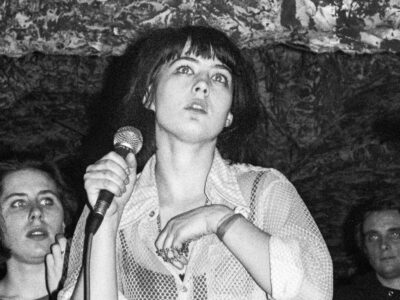
2TDF8H6 KATHLEEN HANNA, BIKINI KILL, NEWPORT TJS, 1993: Kathleen Hanna the singer of Bikini Kill playing at the Legendary TJs in Newport, Wales, UK on 8 March 1993. This Bikini Kill/Huggy Bear Tour came at the peak of the Riot Grrrl scene and was to promote the two bands combined 1993 album Yeah Yeah Yeah Yeah (Kill Rock Stars). The gig started with a music workshop for women only. It is a black and white film photo, with Kathleen Hanna wearing a mesh white button down over a black bra. Her dark hair is cut short with bangs, and she's holding a microphone slightly to the side, looking up to the ceiling. Behind her, a few fans watch. They appear to be underground.

Imperfect Feminists to the Front

WP_Post Object
(
    [ID] => 6701
    [post_author] => 15
    [post_date] => 2024-03-01 22:18:42
    [post_date_gmt] => 2024-03-01 22:18:42
    [post_content] => 

I worried that coming out would further ostracize me from other feminists. Instead, it reinforced why I became one in the first place.

The reason why I waited so long to come out as nonbinary was because I thought it would ostracize me even further from other feminists. As a person disabled by chronic pain and fatigue from fibromyalgia, I’d already been made to feel out of place within feminism for the entirety of both my professional and academic careers. I'd also developed my writing voice during the so-called heyday of feminist blogging—a heyday that unfortunately wasn’t as utopian as people might suspect—and had experienced firsthand the complicated dynamics that arise when one’s platform makes them a target. Not wanting to separate myself further from other feminists, I chose to keep my complex feelings about my gender identity to myself. Until eventually, of course, I couldn’t.

It’s a bit of a cliché for people in the LGBTQIA community to say that they always knew they weren’t straight, or that they weren’t cis. But a part of me always knew I was nonbinary, even before I’d fully admitted it to myself. One of the defining features of my childhood and adolescence was my inner “eh…no” when people—mostly adults, but often my peers, as well—would try to label me as a “girl” or “young woman.” It would happen at school, and at home: As a child, I was prone to slouching, and my mom would encourage me to improve my posture by insisting, “Stand up straight! Like my dad used to say, ‘Be PROUD you’re a woman!’” Each time, a tiny voice inside my brain would whisper but I’m not a woman in response.

As my adolescence chugged on, I began receiving even more unwanted attention and scrutiny from peers regarding my “manly” voice—a direct quote from one of my bullies—as well as my rapidly changing body. I was not a fan of this attention, nor of the insistence that I was a girl, its implication that I should adapt myself to better seem like it. What was so great about being a girl, anyway? Or for that matter, being a boy? I just wanted to be myself.

It was around this time that I first discovered feminism. As a seventh grader, I read Dr. Mary Pipher’s book Reviving Ophelia: Saving the Selves of Adolescent Girls and started quietly identifying as a feminist. Despite the difficulties I still faced from being bullied, Pipher’s book, and the idea of feminism, made me feel less alone. I daydreamed about finding a feminist community that I could contribute to and feel valued by in return—one that included a wide variety of perspectives from people with different life experiences, all working together to make a world where oppressions like sexism, ableism, racism, classism, and anti-fat bias were no longer the norm. In high school, I began openly identifying as a feminist, and eventually, got better at ignoring my peers’ asinine comments. But I still yearned for something more—something I couldn’t yet put my finger on.

I eventually found a community of feminist friends when I started college and chose to pursue a major in Women’s and Gender Studies. Needing a break from academic writing, I also started my own blog in 2005. I quickly noticed that most of the feminist blogs with the largest audiences tended to cover issues that catered to young, educated, white, middle/upper class, cis women. Sexism, body image, popular culture, media representation, sexuality, and reproductive rights are, of course, all subjects that deserve coverage, but the ways in which they intersected with disability never seemed to be covered in any depth. Despite the use of the word “intersectionality” from some of the more popular feminist bloggers, it seemed to me that few actually practiced it.

As it happened, I was not the only one to notice the absence of disability from the feminist blogosphere. In 2009, I collaborated with a group of disability bloggers to form a site called FWD/Feminists With Disabilities as a response. The tipping point had come when several of us noticed that one of the most popular feminist blogs had never published a post specifically about disability and feminism; and when disabled readers had raised their concerns in the comments, other commenters had piled on, insisting disability and feminism were two separate things, and that the disabled commenters were being “bullies.” FWD ultimately only lasted for two years; the amount of threats, derailing, and angry e-stomping we received—in our comments, inboxes, and elsewhere—mostly from other feminists, all ostensibly on our side, proved to be enough to burn us out.

Having to repeatedly explain what feminism and disability had to do with each other—and that disability and chronic illness are feminist issues—was grating. It was isolating. This isolation got worse when I entered a Master’s program for Women’s and Gender Studies, where I was the only physically disabled person in my grad cohort. I faced pushback from multiple professors in the department for supposedly not being energetic enough. Another professor, the department head at the time, threatened to fail me when I missed more than the allotted two classes due to pain and fatigue from my fibromyalgia, on the grounds that it “wouldn’t be fair to the other students.” I later found out that I was not the only disabled person whom she had treated this way.

Throughout this period, I kept wondering if I was a failure as a feminist because I was not performing youthful, sisterhood-uplifting feminism the right way. I was repeatedly made to feel “difficult,” just for pointing out how feminism was leaving disabled people behind. Yet resolutely declaring I am a disabled woman, and I belong here didn’t feel right, either. I had this slippery, niggling feeling in the back of my brain that the reason this was the case was that I was not a woman at all. But at the time, I was in close contact with enough feminists eager to tell me how I was doing both feminism and academic work wrong, that keeping quiet about my weird gender stuff was easier than further othering myself.

Eventually, in my mid-30s, the discomfort of performing as someone I was not outweighed the comfort of avoiding negative attention or questioning from people skeptical as to whether the nonbinary identity is real. Surprisingly, on the other side, I became even more of a feminist than ever before, not because my core beliefs had changed, but because coming out had allowed me to be my authentic self. I no longer felt like I needed to identify as a woman to be a good feminist, because, of course, I didn't.

Since coming out, I’ve realized that I have better ways to spend my time and energy than trying to make nondisabled feminists care about disability issues. In fact, I likely would have come out sooner if I hadn’t wasted so much time trying to get (mostly white and nondisabled) women in the feminist movement to acknowledge that disabled women exist, and that many disabled people of all genders are feminists. While it’s irritating that I still get misgendered by TERFs on social media sometimes, the block button is there for a reason: I can’t be anyone other than myself, and if “feminism is for everybody,” as bell hooks once wrote, then it’s for nonbinary people, too. In a time where nonbinary and trans people of all ages are being smeared as predators, simply for being who they are—and, in the sad recent case of high school student Nex Benedict, being threatened or killed due to the moral panic surrounding trans existence, fueled by the specter of “safety” for cisgender kids—it is crucial that feminists welcome people of all gender identities in the ongoing fight for gender equality. It only benefits all of us when we do.

[post_title] => Feminism is for Nonbinary People, Too [post_excerpt] => I worried that coming out would further ostracize me from other feminists. Instead, it reinforced why I became one in the first place. [post_status] => publish [comment_status] => closed [ping_status] => closed [post_password] => [post_name] => feminism-nonbinary-coming-out-disability-intersectionality [to_ping] => [pinged] => [post_modified] => 2024-08-28 21:14:01 [post_modified_gmt] => 2024-08-28 21:14:01 [post_content_filtered] => [post_parent] => 0 [guid] => https://conversationalist.org/?p=6701 [menu_order] => 62 [post_type] => post [post_mime_type] => [comment_count] => 0 [filter] => raw )
An illustration of an abstract figure, emitting light as if they are a crystal. Their light bounces on the background.

Feminism is for Nonbinary People, Too

WP_Post Object
(
    [ID] => 6636
    [post_author] => 15
    [post_date] => 2024-02-13 22:00:24
    [post_date_gmt] => 2024-02-13 22:00:24
    [post_content] => 

An exclusive excerpt from "The Weird Sister Collection," edited by Marisa Crawford.

I didn't deign to call myself a feminist until I was nineteen years old, in my second year of college. Before then, I just wanted to be a writer. Reading Judy Blume and the Baby-Sitters Club books obsessively as a kid, I decided I wanted to be an “author” when I grew up, and started writing my own poems and young adult novels in fourth grade (a baby poet at heart, I could never get past chapter two). “Feminist” was a word I rarely heard growing up. If I did, it was mentioned with suspicion at best and disdain at worst. My first encounter with feminism as not purely negative came at fourteen, when my friend’s dad took us to a feminist vegetarian bookstore and restaurant in Bridgeport, Connecticut, called Bloodroot (it’s still there; please go). There, customers brought their own used dishes up to the counter in an apparent rejection of female subserviency that set off a little spark in my brain about the roles of women in the world around me, even if we sort of made fun of it after we left. I bought a bumper sticker that said “Vegetarians Taste Better,” uncertain if the sexual undertone was intended. I also bought a book of poems called Used to the Dark by Vicky Edmonds, a totally obscure small-press work, but the sole example I had at the time of what might be called feminist poetry. Of course, I wouldn’t have used that shameful word, “feminist,” to describe Edmonds’s book—maybe “writing by a woman about the dark parts of how it feels to be a woman,” like so much of my favorite music was? Weird, outspoken women artists like Tori Amos and Ani DiFranco and Courtney Love, who all my boyfriends and boy friends made fun of.

In college when I finally started calling myself a feminist—after meeting cool feminist friends who were nothing like the humorless stereotypes I had been warned about, and who told me I needed to throw out my bleached tampons and listen to Le Tigre and take women’s studies classes—I wanted desperately to make up for lost time, realizing that my whole life had been missing this essential perspective. So I read any and all feminist media I could get my hands on: I borrowed Inga Muscio’s book Cunt from a friend and read it along with every issue of Bitch magazine. I declared a minor in women’s studies and took classes where I learned about intersectionality, agency, privilege. 

In my creative writing classes, we never talked about those things; in my first workshop that same year, the MFA student instructor was so infectious in his excitement about literature that I didn’t even notice the syllabus he handed out had zero women writers on it until another female student in the class pointed it out—I was too busy becoming obsessed with Frank O’Hara’s Lunch Poems. Slowly I learned about feminism on a parallel path just next to the one where I was learning about how to be a writer. But I couldn’t quite figure out how these two spaces could coexist, let alone collide, and how on earth to go about building my own life within that collision.

~

Years later, I started the blog Weird Sister in 2014 because these two worlds—the feminist world that was incisive and inclusive, and the literary world that was performative, tongue-in-cheek, and experimental—still felt far too separate to me, even as I entered my thirties. In college, I’d started to see glimpses of the intersections between them: in women’s lit courses where we read Jamaica Kincaid, Toni Morrison, Maxine Hong Kingston, June Jordan, Gloria Anzaldúa. I went to see Eileen Myles read for extra class credit. I found Arielle Greenberg’s Small Press Traffic talk “On the Gurlesque” on the internet one night. Each piece of the feminist literary puzzle I learned about blew my mind all over again, and it occurred to me that there was not just one right way but many, many ways to be a feminist writer.

All these rich lineages of literary work and activism were out there, but where were the spaces outside of academia for people to come together to think and talk about them? From the mid-2000s into the 2010s, the blogosphere was where people talked about things. After college, I discovered the blog Feministing and made it my computer’s homepage so I wouldn’t forget to read it every day. That blog—along with other feminist blogs of that era like Crunk Feminist Collective, Everyday Feminism, Black Girl Dangerous, Tiger Beatdown, Racialicious, and the Women’s Media Center blog—offered supersmart, inclusive takes on politics and pop culture in an accessible, conversational tone that helped me and so many other young people better understand the world. But they didn’t often include literary content—how could they, strapped as they were with the task of breaking down the entire world for young feminists, and payment-free at that? When these spaces did cover books, they were more commercial publications, not the niche within-a-niche world of experimental poetry where I had found my home as a writer. 

At the same time—but in a separate sphere—lit blogs were where my particular literary world found community and dialogue on the internet. On blogs like HTMLGiant, Coldfront, The Rumpus, and We Who Are About To Die, poets and experimental writers wrote and read about the small poetry presses and underground literary culture that rarely got covered in larger venues. I remember reading some posts that addressed feminist issues by writers like Roxane Gay and Melissa Broder, then still aspiring writers themselves, but more often I read a lot of posts by cis white men that were interesting, insightful, and funny but lacked the political analysis I was looking for about how poetry related to gender and race and the other aspects of identity and power that mattered most when it came to living in the world.

These indie lit blogs were mostly edited by men and featured long rosters of mostly male contributors, mirroring the gender disparities of more mainstream literary publishing outlets and gatekeepers of the time. Of course there were, thankfully, some exceptions. Pussipo (later renamed HemPo), a collective of 160 feminist poets, started the blog Delirious Hem in 2006, which featured feminist poetics forums, roundtables with feminist small presses, feminist poets writing about everything from rape culture to movies, fashion, and fitness (“It’s a blog, it’s a poetics journal, it’s a platform. From time to time, a post will appear,” reads the description on the now archived Blogspot website). In 2009 I was forwarded a mass email from poet and professor Cate Marvin called “Women’s Writing Now!” which began “Dear Female Writer.” The email—which explained that Marvin’s panel proposal on Contemporary Women’s Poetry had been rejected by the annual writing conference AWP, while the conference regularly accepted proposals on topics unrelated to women (Birds in Poetry, for example, stands out in the mind from my own years of attending)—was a rallying call for the creation of a whole new organization dedicated exclusively to women’s writing. As a result, Marvin, along with Erin Belieu and Ann Townsend, soon founded VIDA: Women in Literary Arts, and in 2010 the organization began, among other vital literary projects, their annual VIDA Count to draw attention to gender disparities in publishing. With the Count, VIDA was not just critiquing inequities in literary culture but also holding institutions and gatekeepers accountable to do better in a very clear, measurable way.

But as Christopher Soto writes in his piece “The Limits of Representation” (page 113), equity in numbers, while hugely important, is only one measure of progress. I still longed for an intentional, energetic, creative, and community-building space to fill in even just some of the lack of feminist literary commentary online, to bridge a bit of the gap between these two distinct worlds I inhabited, and to disrupt the white male lit-blog industrial complex with an explicitly feminist Blog of One’s Own. Boosted by the encouragement of a girl gang of feminist poet friends (special shout-out to Becca Klaver for helping me get the blog off the ground), I bought a web domain, went into a temporary and never-to-be-replicated fugue state wherein I designed a website, and asked a roster of the smartest, coolest feminist writers I knew to join me in launching Weird Sister

~

I wanted Weird Sister to be a space for talking about the feminist poems and books that inspired us, the contemporary literature that was doing interesting work around gender and other aspects of identity, the sexist shit that happened in the literary world but that nobody talked about publicly, how the established canon we all learned in school upheld what bell hooks calls the white supremacist capitalist patriarchy, the exciting readings and events going on, and the pop culture we consumed alongside it all with glasses of wine or Dr. Pepper—because we were not, after all, monoliths who existed only within the literary world. Like Becca Klaver writes in her piece about Bernadette Mayer’s poetics of “radical inclusiveness” (page 74), it felt feminist and unapologetic to show ourselves as full people who were not just poets and literary critics but also nostalgists and reality TV watchers and record collectors and parents and teachers and people working to survive in the world. 

With Weird Sister, I wanted to create an online platform that was filled with serious ideas, but didn’t feel stuffy and exclusionary like poetry criticism so often can. Emulating the chatty, conversational tone of my favorite feminist blogs, Weird Sister aimed to be open and unpretentious. Vernacular language and oft-ridiculed traditionally feminine speech patterns like saying “like” too much were welcomed and encouraged. And, as on the best lit blogs, conventional criticism, creative forms, and personal elements could all, like, blend together. It was a space to celebrate and encourage dialogue between seemingly divergent aspects of culture, both “highbrow” (poetry, film, visual art, politics) and “lowbrow” (pop music, nostalgia, TV, celebrity gossip), and to take to task those supposed cultural distinctions with a glitter-nail-polished middle finger held high.

When it came to the blog’s name, I wanted to invoke the ineffable, the interplanetary; the glittery liminal spaces that art comes from. The “Weird Sisters” are the three witches in Shakespeare’s Macbeth, double double-ing and leading the play’s hero to his demise. They’re prophets, goddesses, bearded hags stirring a glowing cauldron. A weird sister is also an outcast, a goth girl, a nerd, a poet. Her existence is a disruption to the status quo. In my own family, I always felt like the weird one—sandwiched between my two sisters, the art-y and sensitive one traced in heavy black eyeliner. Seeing other “weird” girls and women and femmes in pop culture growing up made me feel seen and inspired. 

Weird Sister emerged as a space where we and others like us could see ourselves reflected back, and where we could hang out together and talk and write and multiply; a weird sister to both the more journalistic feminist blogs and the less feminist lit blogs that came before us. A platform and community of feminist poets and creative writers, many of whom were trying out writing critically for the first time in a collaborative blog space, all of whom have gone on to do so many incredible things in the literary world.

~

I didn't realize it at the time, but in 2014 we were on the precipice of a cultural sea change. When Beyoncé performed at the VMAs the next year alongside a giant glowing “FEMINIST” sign and a sample from Chimamanda Ngozi Adichie’s TED Talk “We Should All Be Feminists,” it made me wonder if a column debunking stereotypes about feminist poetry was even still necessary. In a turn toward what writer Andi Zeisler calls “marketplace feminism,” everywhere you looked people were suddenly wearing feminist T-shirts bought from indie retailers or from H&M, drinking from feminist mugs, meeting at feminist co-working spaces. There was also a huge influx of mainstream, corporate-funded feminist publications and content popping up online. Broadly, VICE’s women’s imprint, launched in 2015. (I both was miffed by their tagline, “Women’s news you thought would exist by now,” and longed for them to hire me.) Lena Dunham and Jenni Konner teamed up to create Lenny Letter that same year. Bustle, Rookie, and xoJane had all launched a few years earlier, and the media landscape was suddenly flooded with women’s personal stories and lists of “ten feminist novels to read this summer.” Most of these publications folded by 2019—a testament to the tumult of the industry, but also to the fleeting nature of corporate interests in feminism as a cultural fad. Many of the original trailblazing feminist blogs and magazines of the 1990s and early 2000s—like Bitch and Feministing—have also since folded, a testament to the difficulty of sustaining an independent feminist project without sufficient funding. 

But of course the cultural and social activism of the mid-2010s was about much more than just corporate co-opting of feminism, something that’s been happening since the dawn of the women’s movement itself. Between 2013 and 2015, in response to non-indictments of the murderers of Trayvon Martin and Michael Brown, the #BlackLivesMatter hashtag created by Alicia Garza, Patrisse Cullors, and Opal Tometi became recognized as a protest movement on a global scale. And #MeToo, the campaign started by Tarana Burke in 2006 to draw attention to sexual assault, was popularized as a viral hashtag in 2017. Around this time, my own writing community also began having vital conversations about inclusion, abuse, race, and gender on a scale I had never seen before. In 2015, for example, Marcelo Hernandez Castillo, Javier Zamora, and Christopher Soto founded the Undocupoets Campaign—and later a fellowship with the same name—to protest the discriminatory rules of many first-book publishing contests in poetry, which prohibited undocumented poets from applying. And after several high-profile conceptual poets were called out for racist performances, an anonymous collective of poets called the Mongrel Coalition Against Gringpo began sharing online manifestos lambasting what they saw as the white supremacist project of conceptual poetry (or “conpo”). When a number of instances of sexual misconduct came to light in the poetry and Alt Lit worlds, a proto–#MeToo movement, started by feminist poets including myself in cities across the US and beyond, undertook efforts to dismantle a widespread culture of sexual abuse and harassment in poetry and Alt Lit. Jennif(f)er Tamayo, whose literary activism was instrumental during this time in organizing “Enough Is Enough” meetings and discussions on sexism and accountability in the New York poetry community, writes about their commitment to “Being Unreasonable” as a locus for resisting entrenched forms of oppression in our particular literary communities (page 129). Weird Sister was created to encourage dialogue at the intersections of literature, culture, and social justice, and during this transformative moment it served as a space to document some of these conversations as they were happening in literary communities.

A feminist lit blog was never enough, would never be enough, to eradicate the world’s injustices, but being one small piece of the puzzle trying to change things for the better was all we could ever really hope to be. Writing this in 2023, I can’t say that I feel particularly hopeful about the state of the world. But I think about an interview with Jia Tolentino in 2022 where she says that she can accept hopelessness as a feeling, but never as a political standpoint, and I feel inspired by the continued work of all the writers gathered in this book and at work beyond it—all those “humorless” and hilarious and smart and radical and messy and groundbreaking literary activists that paved the way for us and continue to do so.

When I first launched Weird Sister, I loved the feeling of running a vibrant space where vital conversations about feminism, poetry, and pop culture could flourish. I stayed up late each night working on it between days at my copywriting job—high on the blend of excitement and anxiety—but naturally it was impossible for me and for all of the Weird Sister team to keep doing this work, at this rate, sustainably. And without a model for funding or time to make one, the blog slowly went from a rush to a trickle of occasional content. As Samhita Mukhopadhyay, former executive editor of Feministing, wrote for Barnard College’s 2012 #FemFuture conference on the future of online feminism, “Blogging has become the third shift. You do your activist work, you have a job to make money and then you blog on top of that. It’s completely unsupported.” The feminist blogosphere that Mukhopadhyay refers to is widely considered the hallmark of a whole “wave” of feminism, but—like so much activist work throughout history— it’s had virtually no financial support. Still, in spite of the challenges that came with Weird Sister, it’s amazing to look back on the vast and mind-blowing array of writing that came out of planting this weird little seed on the internet. I hear there’s a movie about baseball where they say, “If you build it, they will come.” I built Weird Sister, and out came all the feminist weirdos with their brilliant minds, and this incredible collaboration and community was born. 

~

The Weird Sister Collection brings together some of the most popular, insightful, LOL-funny, moving, and unforgettable posts from the blog between 2014 and 2022, along with some new work highlighting essential perspectives, figures, moments, and movements in feminist literary history. The book pulls out natural themes that emerged from the blog’s eclectic archive: from bringing a contemporary feminist lens to historical literature and paying homage to the iconic writers that came before us, to shining light on current books, events, organizations, and conversations. And, of course, it includes writing about pop culture, both nostalgic and present-day. While never exhaustive, this book hopes to offer a snapshot of some of the vital conversations and commentary surrounding feminism, literature, and pop culture from the last decade, and those that led up to it. 

Weird Sister was born out of a love for feminist books, from my longing for feminist books to exist, to line the walls; to read them all, to write them. So it makes sense that it is now a feminist book too. I want feminist literary writing to take up more and more space, both on the internet and in the physical world, on bookshelves where a teenager at a feminist bookstore café might stumble upon them, goddess willing, after bringing her tray up to the counter. And I hope that putting Weird Sister’s contents in a book will allow future generations to learn about the early twenty-first-century feminist blogosphere in a format that gives it the same legitimacy as the white male literary canon; the same weight as the copy of On the Road that my high school English teacher handed me because she thought I might like weird, emotional, experimental prose, and assumed, correctly, that I would ignore how it treated women. The impulse that propelled feminist bloggers in the first place was an interest in creating our own media, holding it up, declaring it real and legitimate and important amid a patriarchal culture that devalued it and gatekept it away. So this book is a reminder that Weird Sister happened, and of the powerful, cool shit you can do together as a creative community. It’s proof that all these feminist writers read books by all these other feminist writers and wrote about them—and about music and movies and TV and art—and then became the feminist writers that others will write about someday. And actually, people are writing about them right now—go read it. Go write it. It’s a never-ending cycle of influence, admiration, and creation. I hope that you find it weird and inspiring.

From “The Weird Sister Collection:Writing at the Intersections of Feminism, Literature, and Pop Culture,” edited by Marisa Crawford. Excerpted with permission of Feminist Press. Copyright 2024 Marisa Crawford.

[post_title] => How a Feminist Blog is Born [post_excerpt] => An exclusive excerpt from "The Weird Sister Collection," edited by Marisa Crawford. [post_status] => publish [comment_status] => closed [ping_status] => closed [post_password] => [post_name] => the-weird-sister-collection-book-excerpt-introduction-marisa-crawford-feminist-blog [to_ping] => [pinged] => [post_modified] => 2026-01-27 21:20:00 [post_modified_gmt] => 2026-01-27 21:20:00 [post_content_filtered] => [post_parent] => 0 [guid] => https://conversationalist.org/?p=6636 [menu_order] => 64 [post_type] => post [post_mime_type] => [comment_count] => 0 [filter] => raw )
The cover of "The Weird Sister Collection" tiled on a light pink background.

How a Feminist Blog is Born

WP_Post Object
(
    [ID] => 6095
    [post_author] => 15
    [post_date] => 2023-10-20 19:49:22
    [post_date_gmt] => 2023-10-20 19:49:22
    [post_content] => 

One hundred years after the ERA was first introduced, we've never needed it more. So what's the holdup?

Most Americans believe that the United States Constitution guarantees equal rights to women under the law. It’s only natural. Women in the U.S. can vote, own property, drive cars, fly planes, serve in the military, get divorced, and establish credit in our own names. We make up around 47 percent of the workforce and have held senior positions in business, law, and government for decades. From 1973 to 2022, we even had federally protected abortion rights. We continue to be underpaid, mistreated in low-wage jobs, and underrepresented in the highest-paying professions, but most Americans believe that women are—and should be—equal citizens.

Under current law, however, we are not: For women to attain the legal status most assume we already have, the U.S. would need to adopt the Equal Rights Amendment (ERA), first introduced in Congress 100 years ago this year, and introduced in every session of Congress since.

Depending on who you ask, American women do have some constitutional protection already. Some legal scholars and Supreme Court justices have asserted that women are “persons” and thus covered by the Equal Protection Clause of the 14th Amendment, which reads, “No State shall make or enforce any law which shall abridge the privileges or immunities of citizens of the United States; nor shall any State deprive any person of life, liberty, or property, without due process of law; nor deny to any person within its jurisdiction the equal protection of the laws.” But others disagree, and figures as diverse as the late archconservative Supreme Court Justice Antonin Scalia and the late liberal Justice Ruth Bader Ginsburg believed that the Constitution does not explicitly guarantee sex equality—something Ginsburg saw as an obstacle to full and lasting equality for women and Scalia saw as a fact not necessarily in need of a remedy.

In the wake of the Supreme Court’s 2022 Dobbs decision, which overturned Roe v. Wade, the stakes are higher than they have been in 50 years. The ERA would make gender equality explicit—which has been its purpose since it was first introduced. In 1923, women’s rights crusader Alice Paul authored what was originally known as the Lucretia Mott Amendment, in honor of the Quaker abolitionist and women’s rights activist. The text declared that, “Men and women shall have equal rights throughout the United States and every place subject to its jurisdiction.” Over the years, this text has evolved, and today, the amendment reads, “Section 1: Equality of rights under the law shall not be denied or abridged by the United States or by any state on account of sex. Section 2: The Congress shall have the power to enforce, by appropriate legislation, the provisions of this article. Section 3: This amendment shall take effect two years after the date of ratification.” But the spirit and purpose remain the same. (Supporters say that “sex” is synonymous with “gender” for the purposes of the amendment, which would apply to women of all gender identities and sexual orientations.)

It very nearly came to pass in the 1970s. Rep. Emanuel Celler (D-NY), then the powerful long-time chair of the House Judiciary Committee, had refused to hold a hearing on the ERA for over 30 years, when he finally succumbed to pressure from a new group of younger female legislators. The ERA passed both houses of Congress in 1972 and was sent to the states for ratification, at which point 22 states voted to ratify it. By 1977, that number had increased to 35 of the 38 states required for it to become part of the Constitution. After around 100,000 supporters—described at the time by right-wing activist Phyllis Schlafly, the ERA’s bitterest foe, as “a combination of Federal employees and radicals and lesbians”—marched in Washington in 1978, Congress voted to extend the original ratification deadline by three years. As supporters scrambled to reach the required threshold, lawmakers in five states—Idaho, Kentucky, Nebraska, South Dakota, and Tennessee—voted to rescind their states’ initial ratification. The extended deadline expired in 1982.

A major cause of this disrupted momentum was Schlafly herself. Books and television series have told the story of Schlafly, a vicious bigot who led the well-orchestrated opposition campaign that defeated the ERA, at least temporarily, at the dawn of the Reagan era. Schlafly is widely credited with having halted the amendment at a time when it enjoyed broad bipartisan support, including from then President Richard Nixon, and was all but guaranteed to pass. But the ERA foundered in that era for other reasons, too. While supporters were going on weeks-long hunger strikes and selling their blood to raise money for the cause, opponents had personal wealth and possible assistance from shadowy corporate interests and far-right organizations like the John Birch Society on their side. Motivated by religious zeal, fear, and a feeling of being disrespected, opponents of the ERA caught supporters off-guard and, ultimately, out-organized them.

Why the ERA hasn’t become a recognized part of the Constitution in the last 30 years is less well-known, but not necessarily difficult to deduce. In recent years, it has often felt like society is moving backward and forward at the same time. The election of Donald Trump and elevation of alleged attempted rapist Brett Kavanaugh to the Supreme Court, the cratering of women’s workforce gains and deepening of the child care crisis that accompanied a global pandemic, and the overturning of Roe have made earlier eras look positively rosy in comparison. At the same time, social media has fueled and distorted a limited feminist resurgence. This new wave delivered the #MeToo movement, a renewal of feminist organizing around abortion rights and the ERA, and a predictable cycle of counterreaction, an earlier manifestation of which Susan Faludi memorably documented in her 1991 classic, Backlash. (American women might reasonably wonder if that backlash ever ended.)

Still, there has been progress. Fueled in part by anger at Trump’s election, organizers successfully pursued ratification of the ERA in Nevada in 2017, Illinois in 2018, and Virginia in 2020, bringing the total number of states that have ratified the amendment to the required 38. (Some argue that certain states’ decision to rescind ratification means the ERA has never achieved the required number; others say those rescissions are legally invalid and should be ignored.) President Biden affirmed his support for the ERA as recently as August. While running for president, Kamala Harris vowed to get it done in her first 100 days in office. With Trump out and Biden/Harris in, what’s holding it up?

Today’s advocates believe that the ERA deadline, which only appears in the preamble and not the text of the amendment itself, can be removed or extended by Congress, or even, if the threshold for ratification has been met, ignored altogether. Yet the Biden administration—which published a new memo in 2022 essentially punting the issue to Congress and the courts—has indirectly prevented this by failing to withdraw a 2020 Trump administration memo which stated, in part, “Congress has constitutional authority to impose a deadline for ratifying a proposed constitutional amendment…Congress may not revive a proposed amendment after a deadline for its ratification has expired.” Additionally, there is enduring opposition to the ERA from the reactionary right, which now includes nearly every senior GOP leader; behind-the-scenes opposition from the business interests that fund both major parties to varying degrees; and the reluctance of top Democratic officials to make it a priority.

The ERA has always had bipartisan support, but in the modern era, most of its advocates are Democrats. Sens. Susan Collins (R-ME) and Lisa Murkowski (R-AK) and Rep. Brian Fitzpatrick (R-PA) are the only congressional Republicans who support it today. Yet a 2016 poll found that 90% of Republicans support the ERA, which suggests that the Republican Party is, on this issue, profoundly out of step with its base. Still, it shouldn’t matter: Even with the GOP’s lurch to the right and subsequent withdrawal of support, the Democratic Party—which controlled at least one branch of government from 1992 to 2001, 2006 to 2016, and 2020 to today—should theoretically have been able to deliver by now on an amendment that most Americans want.

One theory as to why they haven’t is that if the ERA is finally adopted, it could diminish Democrats’ ability to raise money and swing elections by emphasizing ever-present threats to abortion, LGBTQ, and women’s rights. Those rights are indeed under threat, but adopting the ERA would strengthen them considerably—which is why the modern GOP so strongly opposes it, and why Democrats should rally behind it. Enshrining gender equality in state constitutions has already helped protect abortion rights at the state level; New Mexico’s state supreme court recently struck down a state law banning the funding of abortion-related services, citing the state’s ERA, which guarantees “equality of rights for persons regardless of sex.” If finally adopted, it would do the same at the national level. But without the ERA, it will be difficult and potentially impossible to safeguard those rights for the long term.


While the GOP has been largely hostile to abortion rights since Roe v. Wade, the Democratic Party has not defended them nearly as forcefully or consistently. Although many activists urged top Democrats to pass a federal law protecting abortion rights before the Dobbs decision, they essentially said that their hands were tied: Although they could and did pass such legislation in the House, it would never survive in the Senate. Right-wingers are as or more committed to banning abortion today as they were 50 years ago, while pro-choice supporters haven’t been as consistent, motivated, or likely to base their vote on abortion—although that is beginning to shift in light of Dobbs. As recently as 2019, some advocates insisted that the ERA has nothing to do with abortion rights; today, one of its main selling points is that it will protect them.


Corporate opposition to the ERA has remained steady, if covert. The amendment would make it easier to sue companies that pay women unequally or otherwise discriminate against them, which is why the insurance industry has historically opposed it. As Eleanor Smeal, then the president of the National Organization for Women, explained in 1982, “The real opposition [to the ERA], behind the visible political opposition, has been the special corporate interests that profit from sex discrimination.” In 2010, a blogger for the U.S. Chamber of Commerce approvingly quoted a characterization of equal pay advocates as possessing a “Scrooge-like fetish for money.” And as late as 2019, a Chamber of Commerce spokesman declined to comment on the ERA’s prospects, citing instead the organization’s support for the Equality Act, which would prohibit discrimination on the basis of sexual orientation and gender identity but would not provide protection as durable as the ERA—and which continues to languish in Congress.

Other dynamics are evolving, slowly but surely. While the causes that motivate the religious right haven’t changed much in 50 years—aside from a shift from attacking gay marriage to attacking trans children—the ERA opponents of today have had to pivot from overt sexism to co-opting the language of equality. In 1970, you could say of ERA advocates, as then Sen. Sam Ervin (D-NC) did, “Now, if you want to convince me that ladies desire to be drafted, you send me some sweet young things in here of draft age and let them tell me that.” Today, opponents are often reduced to arguing that the ERA is unnecessary because American women already have equality under the law, or, in some cases, mimicking the language of advocates in an effort to sound more mainstream and modern. (See anti-ERA Republican Sen. John Kennedy’s recent declaration that, “Radical lawmakers cannot erase women or their rights from our Constitution,” which is, not coincidentally, similar to what a supporter might say of him.)

How can we move forward today? Modern supporters argue that the ERA has already been ratified and U.S. archivist Colleen Shogan, the head and chief administrator of the National Archives and Records Administration, need only recognize and publish it. This year lawmakers have introduced two major resolutions which support that interpretation. In January, Sens. Ben Cardin (D-MD) and Lisa Murkowski and Reps. Ayanna Pressley (D-MA), Cori Bush (D-MO), and others introduced a joint resolution to affirm the ratification of the ERA by removing what supporters see as an arbitrary and rescindable ratification deadline. In July, Sen. Kirsten Gillibrand (D-NY) and Rep. Cori Bush (D-MO) introduced a joint resolution stating that the ERA has already been ratified as the 28th Amendment to the Constitution and calling on Shogan to certify and publish it. “In terms of which strategy is better, in my view, it's 100% the publication strategy,” Nicole Vorrasi Bates, executive director of the pro-gender equality nonprofit Shattering Glass, Inc., told me.

In response to questions about the best strategy for getting the ERA into the Constitution, what she sees as the primary obstacles to doing so, and why the Biden administration has not prioritized it, Rep. Pressley’s office sent a written statement which read, in part, “[T]he only thing standing in the way of the ERA becoming the 28th Amendment is the arbitrary deadline imposed decades ago.” The statement also explained that she was both a co-lead on Rep. Bush’s July resolution and had introduced her own because, in her opinion, “We must use every tool available to get this over the finish line.”

Gillibrand has said that she also hopes to compel the Biden administration to call on Shogan to act or change the Senate’s filibuster rules so that measures like the ERA would need only a simple majority to move forward. Kate Kelly, author of Ordinary Equality: The Fearless Women and Queer People Who Shaped the U.S. Constitution and the Equal Rights Amendment, said the “most charitable interpretation” of the Biden administration’s foot-dragging is that the president is “waiting for the moment where enough people care, where enough of the next generation pick up the fight [and] turn it into an electoral issue, that its power and potential will be fully realized.” From the administration’s perspective, she explained, there may be some risk of creating a “constitutional crisis” if the president affirms that the ERA is part of the Constitution and the Supreme Court rejects that view. “Until the groundswell of support for the [ERA] in the modern day is equal to that potential risk, there is [from Biden’s point of view] no advantage to proceeding,” she said.

As it has in the past, a strong nationwide feminist movement with a coherent set of demands and demonstrated ability to disrupt business as usual and withhold or deliver votes could exert meaningful pressure on Congress and the White House. We don’t have that. Although support for abortion rights is stronger than it has been in decades, the movement to defend abortion rights—a critical component of the U.S. feminist movement from the 1960s to today—remains divided on vision and strategy. The task of the coming years is to build a cohesive one. As we learned from the partially successful battle for abortion rights in the 1960s and the heartbreaking defeat of the ERA in the 70s, progress is neither inevitable nor irreversible. Even constitutional amendments can be undone. The ERA, like anything of value, is worth fighting for. And American women of all stripes can’t wait another century for the law to give us our due.

[post_title] => It's Time to Pass the Equal Rights Amendment [post_excerpt] => One hundred years after the ERA was first introduced, we've never needed it more. So what's the holdup? [post_status] => publish [comment_status] => closed [ping_status] => closed [post_password] => [post_name] => equal-rights-amendment-history-era-united-states-constitution-gender-equality [to_ping] => [pinged] => [post_modified] => 2024-08-28 21:11:27 [post_modified_gmt] => 2024-08-28 21:11:27 [post_content_filtered] => [post_parent] => 0 [guid] => https://conversationalist.org/?p=6095 [menu_order] => 73 [post_type] => post [post_mime_type] => [comment_count] => 0 [filter] => raw )
A black and white vintage photo of people protesting. In the foreground, a woman holds a sign that says "ERA WON'T GO AWAY!" and another holds a sign that says "ERA NOW." They are in front of an office building.

It’s Time to Pass the Equal Rights Amendment

WP_Post Object
(
    [ID] => 5269
    [post_author] => 15
    [post_date] => 2022-10-26 12:38:00
    [post_date_gmt] => 2022-10-26 12:38:00
    [post_content] => 

A review and a revisiting of Carla Lonzi’s "Self-Portrait."

On a peaked December day of a sunless Berlin winter in 2021, I attended a meeting of the personal is theoretical, a feminist reading group hosted by diffrakt center for theoretical periphery. A few weeks before, we had collectively decided to read “Let’s Spit on Hegel,” a 1970 manifesto written by Italian feminist thinker Carla Lonzi (1931–1982) and published by the feminist group she'd co-founded, Rivolta Femminile. As we read the text aloud over mugs of overly sweet mulled wine, we discussed how second wave feminism texts can feel both outdated and exciting, simultaneously limiting in terms of what the (white, Western, cis) female body can be, and inspiring in terms of what a (collective, non-hierarchical, sick of Hegel) feminist politics could demand. Towards the end of the manifesto, Lonzi declares, “An entirely new word is being put forward by an entirely new subject. It only has to be uttered to be heard,” a utopian demand for a new woman and a new feminist world to emerge through writing. Despite some reservations, I nevertheless left the meeting very curious about how Lonzi might further seize this act of self-creation in her other work. 

The demand for a new word/world/woman resounds between tense and vibrant frequencies in Lonzi’s 1969 Self-Portrait, recently translated into English by Alison Grimaldi Donahue for Divided Publishing. Often positioned as Lonzi’s last work before her entry into feminist activism, Self-Portrait is a collection of interviews with fourteen Italian artists mostly associated with the Arte Povera movement throughout the 1960s. More than just an attempt to destabilize the hierarchies between artist and critic, Self-Portrait significantly not only critiques the Italian art scene, but how collective configurations should grapple with power, authority, and desire. One of the more popular works in Lonzi’s broader ouvre, it is an important text in Italian feminism because it reveals tensions in the broader cultural, political, and social movements of the late sixties and seventies that led some women to turn to feminism as the main means of achieving their demands for change.

As a whole, Self-Portrait records Lonzi’s discontent with the modern critic in a strict remove from his artistic subject, the desire to let artists speak for themselves, and the limits of art. The artists shift between flattering and talking over Lonzi, each vying for her attention but often losing themselves in the void of a soliloquy. Long-winded monologues on the myth of the artist, the mechanics of sculpting an erection, and the differences between Italian and American art scenes are peppered with casual and blatant sexism. When I first read Self-Portrait, I found myself alternating between moments of boredom and mirth fueled by frustration at most of the artists, and excitement when Lonzi’s clear voice cut through their bullshit. It felt like Lonzi was sketching the void where the role of the traditional critic wavers, and a feminist voice is needed to intervene.

Upon revisiting it, I found myself thinking of Self-Portrait as less of an enjoyable reading document and more as a template for how one can play with the boundaries of the self and others through experiments with the (spoken) word. On the one hand, Self-Portrait is a mash-up of the things normally cut out of interviews, such as pauses, stutters, and ramblings that go on for too long. On the other, it is the product of a seven-year project, the first of Lonzi's works in cutting, pasting, and editing conversations as a work of art in itself. As translator Alison Grimaldi Donahue describes in an interview, what seems to be the simple transcription of interviews was a long and highly mediated process. “Maybe she’s just treating their voices as a piece of found material. She is the manipulator, she is the fabbro…they sold their voices away,” Donahue muses. In a highly performative gesture, Lonzi poses her most eloquent questions to Cy Twombly, who was never formally interviewed and whose answers are always denoted by “[silence],” seeming to ask and answer itself about how to push back against those who try to take up too much space. Just when you think Lonzi’s aim is to let artists metaphorically hang themselves with their own words, interesting bits pop in, the best being her exchanges with eventual Rivolta Femminile co-founder Carla Accardi—the only woman interviewed. “I want to kiss you!” Lonzi exclaims amidst Accardi’s reflections on collectivity. In response, perhaps smirking, Accardi continues her answer unfazed.

Carla Lonzi studied art history and worked as an art critic in Florence, but is best known for her years as a feminist activist in Rome and Milan. After declaring a decisive break from art, Lonzi co-founded the radical feminist collective Rivolta Femminile with Carla Accardi and Elvira Bannoti in 1970—just a few short months after she released Self-Portrait. Lonzi and Rivolta Femminile were major figures in second wave feminism, often seen as part of the transnational movement of women from the early 1960s to the late 1970s, united by their rejection of sexual violence and the patriarchal order. As a collective, their demands were for equality in the private and public spheres, self-determination of female bodies and reproductive rights, and equal education and work opportunities. But globally, their work has largely gone overlooked: Historian Maude Anne Bracke argues that narratives of second wave Western transnational feminism tend to give primacy to the US and UK, while positioning Italian feminism as “atypical, with its distinctive features including its non-institutional basis, the centrality of theory, and the emphasis of sexual difference.” While Rivolta Femminile did indeed emphasize female separatism, Lonzi spent her career challenging this limited depiction of Italian feminism, most notably through the incredibly multifaceted nature of her writing, between theory, manifesto, poetry, diary entries, and manipulated transcripts of conversations, as in Self-Portrait.  

While the art critic and feminist Lonzi are often described as at odds with each other, these two hats are connected by a thread of experiments in collective ways of being together—experiments that call attention to and aim to break down the hierarchies of modern capitalist patriarchy. In Self-Portrait, this is explored through illuminating these structures in a toxic art world that must ultimately be left behind. In later works, these concerns take the form of explicit demands to reject patriarchy as the central form of oppression in all strata of life and to form separatist feminist groups. Lonzi played with exactly how to live out such concerns throughout her life, and was often depicted as a strong-willed figure who simultaneously sought leadership roles while trying to break them down theoretically. While one can say that such a struggle is embedded in the nature of collective politics, it is in this realm that Lonzi’s varied writings resonate as unstable experiments in blurring the boundaries between the self and others to try to reach a conception of the new woman—usually coming back to the self after all. 

In thinking about Lonzi’s legacy today, I came back to the original tensions that appear in Self-Portrait and Lonzi’s broader corpus, and how these same tensions have appeared in recent discussions of the #MeToo movement. When it went viral in 2017, years after it was first used by Tarana Burke in 2006, #MeToo brought together some of the hopes of the early, seemingly long-gone internet as an equal space, textually juxtaposing a variety of women from different races, classes, and statuses through verbal repetition and collective authorship of two simple words. It also recreated a false illusion of a de-hierarchical space, namely that it was based on the accusations of the privileged as a means of creating space to hear those who had cried out unheard against such abuse for many years. In regard to Lonzi, this again underlines the tensions between self and collective at the heart of the promise of feminism to make the personal political, along with the question of whose self we are led back to. Self-Portrait came at a breaking point for Lonzi, in which she turned to a more overtly feminist agenda to address what she saw as major wrongs with living together. Her issues with self portraiture itself mirror the very demands for more inclusivity and diversity that eventually broke down many second wave feminist collectives. Even as she dismantles the critic, Lonzi struggles with the hope of writing experiments to create new spaces and the lived reality of power and hierarchy. 

While the road from the self to the collective is not an impossible one, from a contemporary perspective, it is a task that demands much more reflection on and attention to its intersectional scope. Lonzi's experiments speak to both the hope for the collapse of the formal bounds of established hierarchies and the need for such a dream to be constantly recontextualized and reevaluated. Perhaps then Lonzi is best approached as an entry into writing as a malleable extension of the feminist self, one whose contours change with a feminism in flux with the demands of its time. While Self-Portrait is nominally about art, it radiates with this demand to perpetually reimagine and reinvent the self when up against the realities of breaking down such boundaries. “Mine wasn’t an interest in art…” Lonzi confesses at one point in the book, but rather the feeling that, “extraordinary things were possible between beings… a potentiality that I felt humanity possessed. I knew I had it and I felt that it belonged to everyone.”

Divided Publishing
[post_title] => Can We Write Our Way to a New Word? [post_excerpt] => A review and a revisiting of Carla Lonzi’s "Self-Portrait." [post_status] => publish [comment_status] => closed [ping_status] => closed [post_password] => [post_name] => self-portrait-carla-lonzi-rivolta-femminile [to_ping] => [pinged] => [post_modified] => 2024-08-28 21:15:12 [post_modified_gmt] => 2024-08-28 21:15:12 [post_content_filtered] => [post_parent] => 0 [guid] => https://conversationalist.org/?p=5269 [menu_order] => 105 [post_type] => post [post_mime_type] => [comment_count] => 0 [filter] => raw )

A lithograph of a watercolor painting of an exploding cloud surrounded by a ring of red-orange light, and a blue-gray sky beyond it.

Can We Write Our Way to a New Word?

WP_Post Object
(
    [ID] => 5246
    [post_author] => 15
    [post_date] => 2022-10-18 21:35:02
    [post_date_gmt] => 2022-10-18 21:35:02
    [post_content] => 

Why the protests in Iran are about more than just women's rights.

Zan. Zendegi. Azadi.

Woman. Life. Freedom.

This is the rallying cry on the streets of Iran as the people clamor not just for women’s rights and justice for Mahsa Amini, but for a different world order—for the right to live under conditions of their own making.

On September 16, 2022, 22-year-old Amini died in the custody of Iran’s “morality police,” who (allegedly) beat her to death for inappropriately wearing “hijab,” or the veil. In direct response, the Iranian people have taken to the streets to protest not just gender violence, but decades-long violences of empire that survive in Iran despite the Islamic Republic’s break with the West. While galvanized by Mahsa’s murder, these protests highlight accruing grievances against the Islamic regime, as well as an empire that birthed and underwrites the state’s terror tactics. 

As those of us in the West begin to make sense of Iran’s senseless state violence, we must refrain from pathologizing Islam as the source of this violence, or the veil as a sign of oppression that revokes women’s agency. We must also be careful not to reproduce the colonialist logic whereby we task ourselves, as “good liberal subjects,” with “saving” these brown women from brown men, as cultural anthropologist Lila Abu-Lughod warns. 

This is not the first time that Iranian women have used the veil—in other words, gender politics—to mobilize a demand for the people. In 1979, at the height of what was then an anti-imperialist uprising, Iranian women donned the veil not because they wanted to give up their agency, but because they wanted to take it. These women had suffered for years at the hands of a puppet government that imposed Western standards of being and doing and knowing, including but not limited to mandatory unveiling—obscuring their lived experiences as a people who want to know themselves outside of the West’s phallic gaze. 

As the handmaiden of empire, this gaze pretends to “know” the people it Others, making Iranians, in this case, the West’s antecedent and foil; a people in need of Western patronage and intervention in order to animate their political will. But the women of Iran are not awaiting our verb to make their demands known and felt. Neither are the Iranian children who sing about the possibility of “enghelab”—revolution—as they join their teachers to burn effigies of the Ayatollah. 

Today, Iranians across gender, racial, ethnic, religious, and class lines are risking their lives in refusal of what iconic feminist scholar bell hooks describes as “imperialist white supremacist capitalist patriarchy.” Even as the state’s violence is totalizing, these women and children and those who stand with them courageously and collectively dream of an Otherwise. And it isn’t the first time: Jalal Al-e Ahmad, whose writings galvanized the 1979 revolution, called the Iranian state’s obsession with emulating the West a disease, which he termed “Gharbzadegi,” or Westoxification. He implored Iranians to seek alternative modernities outside of imperialist white supremacist capitalist patriarchy’s phallic, penetrating violence, so that they might make their own lives (and ours) matter. Indeed, the revolution that the Iranian people sought then and continue to seek today cannot be contained by a demand for gender justice alone. 

I have often wondered, in the hour of bell hooks’ passing, what she might say about the uprisings in Iran. She argued that feminism is for everybody; in other words, that feminism helps us understand how society and its dis/contents function. In her final years, hooks expressed concern that feminism is dying in today’s society. As her friend and confidant, I would like to think that the protests in Iran today would give her hope, because Iranian women and their co-conspirators are strategically leveraging feminism, using a critique of patriarchy to challenge empire. 

Shervin Hajipour’s song “Barayeh,” described by popular media as the “anthem” of Iran’s protests, enumerates many of these intersectional violences, and how they animate the Iranian government’s iron fist. The people are protesting, Hajipour writes, “for the child laborer and [for] his dreams”; he adds, rather poetically, that they are also protesting for a crumbling economy, for the imprisoned, for the polluted air, for the dying trees, for the extinction of Persian cheetahs, and for “the murdered and innocent forbidden street dogs.” 

Interestingly, rather than get caught up in the humanist exceptionalism of Western empire, Iranians protesting on the streets today know that revolution for their people is impossible without a change in the valuation of life. Their demand is not that all lives matter, but rather, that all life—human and non-human—matters. 

What’s happening in Iran today isn’t (just) the stuff of gender violence, which is a Western import, anyway. It is about survivance in the face of the imperialist white supremacist capitalist violence that remains in Iran. It is about poverty. It is about Western sanctions that make medical care impossible. It is about, as political theorist Michel Foucault wrote in a November 1978 article for the Italian daily Corriere della serra, “breaking away from…global hegemonies.” It is about a people who, “with bare hands who want to lift the fearful weight, the weight of the entire world that bears down on each of us, but more specifically on them, these oil workers and peasants at the frontiers of empire.” 

In “Barayeh,” Hajipour goes on to describe the protests as a revolution for “the embarrassed fathers with empty hands,” for “the missing and murdered kids,” for “the students and their future,” for “the Afghan kids.” His list is long, because, as Foucault notes, Iranians are clamoring for all of us. While Iranian women and girls are certainly leading this charge, there has been no shortage of men who stand with them or, indeed, who follow their lead, understanding that the feminism these women employ to clamor against patriarchy will better their living conditions, too.

What we’re seeing today is a long history of Iranians demanding a freedom with empty hands, for the world that suffers, still, because—as hooks implores—imperialist white supremacist patriarchy devastates all of our living conditions. 

Let us stand with Iranians now as they stand with us, as they bear this weight: the “fearful weight…of the entire world.”

This piece has been adapted from a speech given by M. Shadee Malaklou at a vigil hosted by the bell hooks center.

[post_title] => The Fight for an Otherwise [post_excerpt] => Why the protests in Iran are about more than just women's rights. [post_status] => publish [comment_status] => closed [ping_status] => closed [post_password] => [post_name] => iran-protests-mahsa-amini [to_ping] => [pinged] => [post_modified] => 2024-08-28 21:11:28 [post_modified_gmt] => 2024-08-28 21:11:28 [post_content_filtered] => [post_parent] => 0 [guid] => https://conversationalist.org/?p=5246 [menu_order] => 106 [post_type] => post [post_mime_type] => [comment_count] => 0 [filter] => raw )
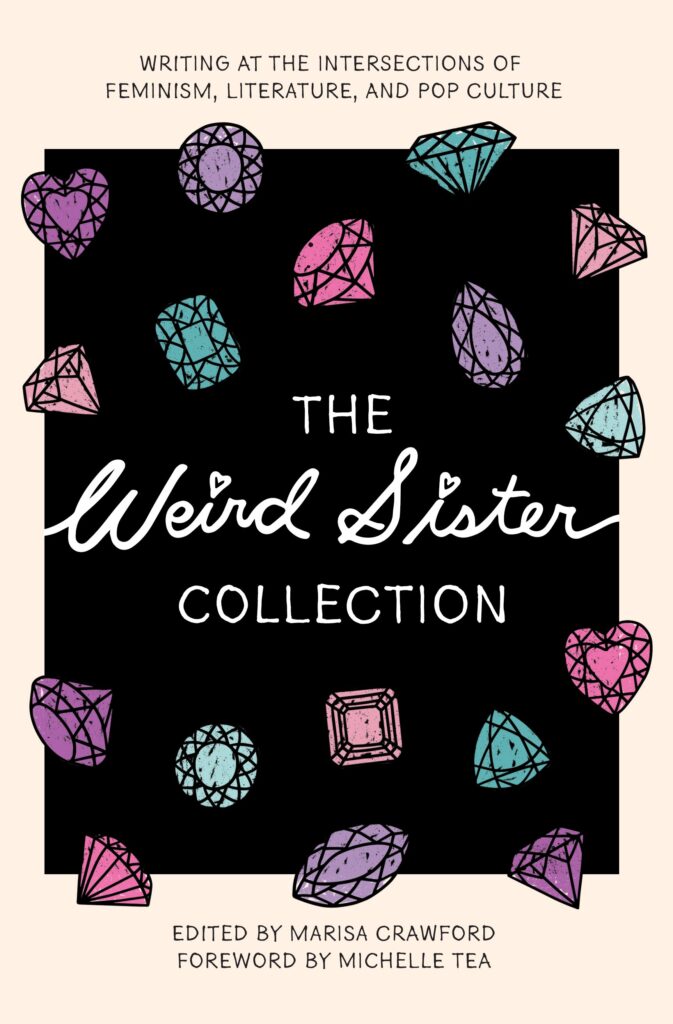
The Fight for an Otherwise

WP_Post Object
(
    [ID] => 3767
    [post_author] => 2
    [post_date] => 2022-02-03 01:15:03
    [post_date_gmt] => 2022-02-03 01:15:03
    [post_content] => Zemmour's racism and anti-immigrant positions are not new, but his misogyny reveals where the ideological fault line lies between the new and the old far right.

Éric Zemmour, a prominent French journalist and television personality who espouses extreme-right views, announced in November that he would be a candidate for president of the Republic. He doesn’t yet have enough signatures to run in the April election, but his potential candidacy has captured enormous media attention, revealing significant support from the far right and even from some subcultures of the moderately conservative right.

Zemmour has almost no chance of being elected president, though he might poach some votes from Marine Le Pen, the leader of the Rassemblement National (RN, or National Rally; formerly the FN, or National Front). Nevertheless, a trickle of ministers and smaller political parties continue to join his newly established Reconquête (Reconquer) party, even as he is involved in a series of high profile scandals involving several accusations of sexual assault, an extramarital relationship with a much younger woman, and three court cases on accusations of inciting racist hatred.

While he has won supporters for his extreme positions on Muslims and immigration, Zemmour polls low with women. Marine Le Pen has reorganized her campaign accordingly, and Zemmour —with seven accusations of sexual assault currently pending and more than a few misogynist tracts under his belt—was obliged, for reasons of realpolitik, to declare himself a “feminist, like the next man.”

A darling of the culture wars

Zemmour, 63, rose to prominence in the 1990s as a columnist and commentator. Back then he espoused a “union of the right”—i.e., a coalition of the moderate right Républicains and the far-right Front National (FN). He became a darling of the culture wars with his essay Le Premier Sexe (2006), a gender panic polemic on the purported “feminization” of men in France. The book—yes, its title is a riposte of Simone de Beauvoir’s feminist book The Second Sex—sold over 100,000 copies.  He followed this with a novel, Petit Frère (2008), in which he attacked “anti-racist angelism," and then a trilogy that sold even better than Le Premier Sexe—Mélancolie française (2010), in which he recounts the history of France; Le Suicide français (2014), where he argues that the French nation has become degenerate since the student-led uprisings of 1968; and Destin français (2018), a sort of autobiography in which he describes various historical events that have influenced his worldview. He ends the final essay with a polemic against the growing influence of Islam on French society. Zemmour’s most recent book, La France n’a pas dit son dernier mot (France Hasn’t Had Its Last Word), published in 2021, sold 165,000 copies within three weeks. Cherished by his followers as “an intellectual” and tolerated by others as a kind of maverick TV personality—a buffoon, perhaps, like the former journalist Boris Johnson, or like Donald Trump—Zemmour is, thanks to his many books, a frequent guest on television news and culture programs. He uses these prime-time opportunities to air his views on the decline of French society, the clash of civilizations, immigration and assimilation, national preference, and national identity. He is one of the figures responsible for bringing the “great replacement theory,” the fear that France’s “native” (white) population will be replaced by (brown) non-European people, into the mainstream discourse. Whilst lamenting the passage of France’s heroic age—Napoleon, etc.—Zemmour manages to align himself with both President Charles de Gaulle, who led the French resistance during the Nazi occupation of France, and the Nazi collaborator Marshall Philippe Pétain, Vichy France’s chief of state. This pairing is an ingenious move, presenting two historical figures who represented opposing political views as representatives of France’s lost past, when strong men took charge. Jean Marie Le Pen, the former leader of the far-right FN, made the mistake of expressing his support for Pétain while denouncing de Gaulle—at a time when de Gaulle was still an extremely popular figure in France. Zemmour expresses support for both men, which is novel.

A racist's racist

Zemmour is the son of Jewish immigrants from Algeria and is himself a practicing Jew who attends an Orthodox synagogue. That has not stopped him from aligning himself with the antisemitic far right, or from saying that Pétain was right to deport non-French Jews to concentration camps—because in doing so he saved some French-French Jews (of the 75,000 Jews deported from France, 72,500 were murdered) . Zemmour has transitioned smoothly from being an “outspoken” voice in the discourse around political correctness as it morphed into what we now call a “debate” on “cancel culture.” Today he is a comfortable anti-feminist, traditionalist, misogynist, homophobe, anti-abortionist, and a “critic” of the legacy of the social movements of the 1960s. He also deplores gender studies and writes in Le Premier Sexe that rape trials qualify as the “judiciary surveillance of desire.” In the months before he announced his candidacy, Zemmour reveled in several personal and legal scandals that further raised his public profile. In September Paris Match’s cover showed him frolicking in the sea with Sarah Knafo, his 28 year-old assistant and campaign manager, whom he has known since she was 13 years old (she is the daughter of family friends). Zemmour recently confirmed that Knafo is his “companion” and is pregnant with his baby, to the delight of the press, which speculates endlessly about Mylène Chichportich, his wife of 40 years: Is she suffering or indifferent as she stands silently at his side? While Knafo is something of a protégée to Zemmour, she is in her own right a perfectly terrifying and precocious extreme right militant. As a university student she was active in the FN and in a student association called Critique of European Reason, through which she got down with the sovereigntists and Euroskeptics, and met prominent right wing thinkers like Alain Finkielkraut. At 25 she did an internship at the French embassy in Tunis. She then authored a “handbook,” based on what she’d learned in North Africa about migration routes, on how to facilitate the deportation of undocumented migrants from France. His frequent trips in and out of court keep the press talking about Zemmour, too. His January 17 conviction for inciting racial hatred was his third. A judge fined him 10,000 euros ($11,400) for having said, on live television, that unaccompanied migrant minors “have nothing to do [in France], they’re rapists, assassins, that’s all they are, you have to send them back to where they came from.” Meanwhile, at one of his November rallies, Zemmour’s militia-style bodyguards beat up an anti-racist activist in a brawl reminiscent of Trump rally scenes.

A radical ideologue

French commentators have pointed out that the country’s media is falling into the trap of giving free publicity to Zemmour, just as the U.S. media made the mistake of broadcasting Trump’s rallies live without commentary and of reporting incessantly on his tweets, giving him massive free publicity on mainstream evening and cable news programs. Like Trump, Zemmour overwhelms the media with provocative soundbites, which are often in the form of attacks on journalists. As a result, media outlets are drowning in a sea of far-right madness—reporting and broadcasting Zemmour’s racist, sexist, and fascist comments repeatedly, without analysis or critique. The fact that Zemmour’s ideas are splayed bittily across television and internet platforms, and that only certain people read his books from beginning to end, works to obscure their character as a complete ideology. His misogyny, abhorrence for the student-led uprisings of 1968, dislike of modernity, and hatred of Muslims are connected and inform each other. A quick online search brings up a list of citations to go with each of Zemmour’s ideas, presented like an inventory of the contents of a bag belonging to the fasciste du jour. Zemmour deliberately muddies the extremism of his complete ideology by presenting his ideas in a willfully confusing, often “third positionist” manner— i.e., expressing right wing ideas in the language of left-wing ones. For example, in his books he offers a critique of the monogamous couple and, ostensibly, praise for polyamory. But this is not advocacy for free love. Rather, it is an expression of approval for a premodern society in which married men had multiple mistresses and in which women had no means of leaving an unhappy marriage. In French third positionism is roughly translated as confusionniste — which is a better term, perhaps, because the deliberate effort to create confusion is a salient and defining characteristic of contemporary fascism. Writing about Zemmour is challenging because it’s almost impossible to avoid the trap of either reproducing his ideas without comment, or presenting them with expressions of shock and outrage. In either case, the writer is amplifying Zemmour’s ideology, thus giving him yet more free publicity. Zemmour and his fellow far right television personalities have succeeded in shifting the Overton window of the French discourse. Fueled by the country’s growing and fertile climate of Islamophobia, which is partly a reaction to a series of high profile, violent terrorist attacks over the last six years, the center and center-right are now taking positions that were once considered far right. In a recent illustration of this shift, Macron’s government drafted and passed the Loi de Séparatisme, a law to “strengthen republican values.” The law targets and seeks to repress the Muslim community and its cultural expression, which conflicts with France’s aggressive secularism. As such, it is a populist attempt to exploit, or give lip service to, the idea that a cultural “great replacement” has happened, or is happening, in France. It is perhaps surprising that the extreme right—identitarian and antisemitic as it is—might choose Éric Zemmour over Marine Le Pen. Zemmour, though born in France, is the offspring of an Algerian-Berber Jewish immigrant family, while Le Pen is white and descended from France’s best-known fascist dynasty. Zemmour’s background has been a subject of conversation on fan forums for Papacito (a far-right influencer with a popular YouTube channel who supports Zemmour) and on gaming websites, where eager 20-year-old neo-Nazis agree that while his Jewishness is a bit of a problem, he’s kind of an Ubermensch.

The fault line in the far right

Physically, Zemmour cuts a slight figure, with, as Harrison Stetler put it, “massive ears folding out around [a] receding jaw.” He bears no physical resemblance to the towering Aryan figures of Donald Trump or Boris Johnson, or to the topless horse rider Vladimir Putin. His possible success amongst extreme right voters — a smattering of ultra-conservative Christians, neo-Nazi groups, far right influencers, lapsed FN or Républicains voters—seems to be derived from his capacity to embody discursively a kind of straight talking, Trumpian masculinity (and whiteness), not seen in French politics since Jean-Marie Le Pen led the FN. He espoused a more overt brand of racism than that of his daughter Marine, the heir to the party’s leadership. Marine Le Pen, meanwhile, has in recent years made a dive for the center, trying to clean up her party and kicking out embarrassing family members such as her niece (who now wants to run with Zemmour) and her father, who infamously described the Holocaust as “a detail of history” and, as a French military officer, tortured people during the Algerian war. The effect of Marine’s efforts to take the party mainstream was to alienate her most right-wing voters, who have become disillusioned with her perceived political correctness. While Le Pen herself has said she is “against gay marriage,” she has also pink-washed her party in an effort to appeal to LGBT groups and even has several gay deputies. Recently Le Pen revealed that for the last five years she has been living in secret with a woman, her “childhood friend” Ingrid. “There are no men in my house, even the cats are female,” Marine said in a widely watched TV interview broadcast in early November. The critical fault line between Zemmour and Le Pen is, clearly, misogyny. Zemmour positions himself against a “cosmopolitan” political correctness that purportedly welcomes homosexuality and feminizes extreme right politics. Those who oppose Marine Le Pen’s leadership of the FN perceive her as having emasculated her daddy’s once-great party. One might wonder what is more prominent in Zemmour’s ideology—a hatred of women, or a hatred of Muslims and immigrants? But this would be the wrong question. Zemmour’s essay Le Premier Sexe shows his misogyny and his racism to be, if not interchangeable, on a continuum with one another. It shows the strong link between “theories” of feminization and the great replacement, which usually advances the racist theory that Muslims, Jews, and other non-white people will soon replace white people. It starts out as a great replacement theory about gender, advancing the idea that French men have become feminized through a culture that elevates “feminine values.” Men, he writes, are allowing themselves to be replaced by women and become total pussies, whereas a real man is a “sexual predator, a conqueror.” It is of course a polemic: his histrionic dismay at the purported fragility of contemporary French men is motivated by his belief in a naturalized masculine power (and violence), ready and waiting to be resuscitated. His essay is a spurious patchwork of loosely connected observations on advertising, football, cinema, sport, dubious “facts” and statistics, and hardcore conspiracy theories. He advances the theory that the purported feminization of men is due to the influence of “single mothers, sixty-eighters and feminists,” plus a homosexual conspiracy that wants to denaturalize sex and create a society segregated along the lines of gender. According to Zemmour, the plot is to eradicate male body hair because it would remind men of their natural “bestiality, virility,” and to set up conspiratorial alliances in cities between immigrants, single women, and gays. The speed with which he moves from roots to rootless cosmopolitans is, frankly, startling. By the end of Le Premier Sexe all this scattered madness joins up with his other great preoccupation—Muslims and immigrants. The great replacement of gender becomes just the great replacement, tout court. Hurtling through an account of the liberalization of divorce and abortion, he claims that French men have “laid their phalluses down,” thus declaring France “an open land, waiting to be impregnated by a virility from outside.” This has happened, he writes, because Christianity is a pussy religion. Outside of the Western world, he writes, men defend their dominant position “like a treasure” and refuse to align the “status” of their women with that of the Europeans. The argument is not simply that white French men are becoming more like women, but that they will be replaced by a masculine revolution of foreign (Muslim) men who are concentrated in France’s suburbs. Despite the book’s highly misogynistic character, which shows Zemmour’s hatred for women and especially feminists, part of his argument is that Black and Arab men, with their machismo and their desire to dominate, present a danger to…Western white women and feminists. Zemmour can claim as much as he likes that he is now a feminist. His entourage of female influencers, FemmesAvecZemmour (WomenWithZemmour), are flocking to make the same racist argument about women’s safety in an effort to make a feminist of old Zemmour. But Zemmour is quite different from other leaders. He manages to present himself as a real man, a man’s man, a man who speaks his mind, while remaining, a wily, self-satisfied intellectual who espouses a hardcore and explicit ideology. Whether he becomes a candidate in the presidential election or not, it’s quite clear that his prominence is symptomatic of a rightward shift in France, and in any case such extreme right mobilizing has already made its impact on the policies of the center. [post_title] => Softbois in France: a feminist perspective on the rise of Éric Zemmour [post_excerpt] => Zemmour's racism and anti-immigrant positions are not new, but his misogyny reveals where the ideological fault line lies between the new and the old far right. [post_status] => publish [comment_status] => closed [ping_status] => open [post_password] => [post_name] => softbois-in-france-the-rise-of-eric-zemmour-from-a-feminist-perspective [to_ping] => [pinged] => [post_modified] => 2026-01-15 21:27:58 [post_modified_gmt] => 2026-01-15 21:27:58 [post_content_filtered] => [post_parent] => 0 [guid] => https://conversationalist.org/?p=3767 [menu_order] => 144 [post_type] => post [post_mime_type] => [comment_count] => 0 [filter] => raw )

"Eric Zemmour surrounded by supporters at the end of his meeting at the Trocadero on March 27, 2022."

Softbois in France: a feminist perspective on the rise of Éric Zemmour

WP_Post Object
(
    [ID] => 3435
    [post_author] => 2
    [post_date] => 2021-11-11 12:32:06
    [post_date_gmt] => 2021-11-11 12:32:06
    [post_content] => Bond is a sex addict, but he doesn't really love women—unless they are dead.

The current James Bond, Daniel Craig, looks like a working-class man who puts in hours at the gym. If you watch his body, you think: That’s where I’ll find him, doing burpees. Sean Connery, who was the first to play 007—he and Craig are considered the best of the Bonds—was the same type. Broad and solid, he walks through the corridors of power with a sullen expression on his face. His fists itch. He is keenly addicted to these places because the people who work there let him kill things. But he does not belong there.

James Bond is not, however, packaged as a working-class man. He wears bespoke suits from Jermyn Street, the London address synonymous with timelessly elegant and very expensive men’s clothes. When you see him, you imagine a copy of Esquire or GQ just beyond his reach. His accessories are a constant reminder that Bond is a highly lucrative franchise. In “No Time to Die,” reports jamesbondlifestyle.com, “James Bond’s Tom Ford Tuxedo is presented to him in a Bennett Winch The S.C Holdall Suit Carrier”—a high end twill weekend bag that retails for about $845.

This James Bond is both a salesman and a product—a quintessentially British brand, like Devon fudge or Cheddar cheese. He sells suits, shirts, watches, shoes, ties, bags—and, especially, cars. Bond is a tenacious and destructive car salesman. A British patriot, he usually drives an Aston Martin— in “No Time to Die” there are four of them—but, as with women, he isn’t fussy. In the same film a Toyota Land Cruiser takes out two Land Rovers in a Norwegian wood.
  It feels as though every new Bond film precipitates a feminist debate. I think this is part of the marketing strategy, trying to keep a man from the past relevant, but women are not important to Bond. We think they are because they so often appear naked in front of him, but they are important the way peacocks are important, and you don’t improve a fairy tale by inviting real women in. Bond likes them pretty and even better dead.  Mrs. Bond lived a single afternoon in “On Her Majesty’s Secret Service,” and it was righteous. Fairy tale creatures can’t take responsibility. Then it was back to dull and repetitive objectification: of Beautiful Firm Breasts in floating beds or escape pods with windows and Venetian blinds. Two of his women were called, quite literally, Pussy. Others were named for sex acts: Goodhead, Onatop, O’Toole and even Chew Mee, which is outrageous. Bond is so obviously a sex addict there is little else to say. He keeps his cars longer than his women; in "Skyfall," the Aston Martin DB5 even had a garage like a marital home. He did have a female boss for a while (Judi Dench), but she died in his arms, like a broken little girl or a bad mother. Fleming called his mother M, and his women are death-stalked breasts. Ian Fleming, the man who invented Bond, was an upper middle-class journalist who worked at the foreign desk of the Sunday Times and was a sometime secret agent who lost his father in the First World War. Both Bond and Fleming are orphans, and all Fleming’s anger and longing meet in Bond, named for an ornithologist who became famous in the 1930s; because if an ornithologist can seduce and save the world, who can’t? Let us not forget that James Bond is just a civil servant—albeit one who, according to the Ian Fleming books, had an unlimited overseas expense account. According to one British newspaper, his salary would be the equivalent of $120,000, and that won’t buy many Tom Ford dinner suits. But he doesn’t live like a civil servant. He lives like an oligarch without boundaries: he lives like a villain.  When the villain says to Bond, as he often does, “we are the same person, you and I”—and Ernst Blofeld is explicitly his adoptive brother, according to “Spectre” (2015)— he means this. Want to see my new cufflinks, bro? Our beloved Bond is a Franken-Bond then: not so much a man who isn’t there as a man who cannot be. He’s not a character because he doesn’t make sense. He is a myth. No wonder Daniel Craig looks exhausted. No wonder, too, that my favorite Bond is the 2012 short film “The Queen and James Bond,” set at the London Olympics, in which 007 delivers Elizabeth II from Buckingham Palace to the opening ceremony in a helicopter. Myth to myth, they fall into the sky. “No Time to Die” makes no attempt to conceal that Bond is a creature from a fairy tale. In this latest instalment we have two imprisoned princesses, one ogre, and a poison garden. No matter; or, rather, more please. James Bond is, 10 novels and 25 films in, the third most lucrative cinema franchise in history—behind “The Avengers” and the Harry Potter series. This is suitable because he is both an Avenger without a cape and Harry Potter without magic. Sean Connery called him “an invincible superman” and “this dream we all have of survival” who “thrives on conflict” though “one can’t help liking him.” Of course, we do. He is our proxy soldier and lover; our only authentic superhero, apart from, possibly, King Arthur (and didn’t Merlin do all the real work, just as Q does?) Marvel’s Captain Britain never really took off, so we won’t include him. James Bond’s chief raison d'être is to inhabit the fantasy of British power. There are multiple drugs in Bond, but the big one is global hegemony. It’s the dream that only the villain can give voice to, the villain we are invited to despise. “World domination, same old dream,” says Roger Moore in “The Spy Who Loved Me.” Every film has shots of Imperial London—the calming scenes when Bond returns from dangerous foreign lands. But the Empire is long gone, except in the mind of this tiny man who is a bit like Hiroo Onoda, the Japanese soldier who refused to surrender in 1945; instead, he hid in the jungle of the Philippines until 1974, when the emperor formally relieved him of his command. A man from the past still alive? That is Count Dracula, and Bart Simpson, and James Bond, who fought in World War Two, which Britain won, and that finest hour was 80 years ago. It is true that Bond is sadder now, that he has gained some self-awareness, and this has ruined him. In the opening sequence of “No Time to Die” Britannia lies in sand—like Ozymandias, but next to an Aston Martin. Bond is 99 years old, entombed in Tom Ford and a dream that has now broken. You can see his misery in his face. Still, some things endure. A Black woman (Lashana Lynch) is 007 for most of “No Time to Die” but, as M retreated into useless femininity in “Skyfall,” so does Lynch as 007. She leaves the war in a dingy with the women and children, which a male 007 would never do. I won’t tell you the ending, but Bond makes breakfast for a child, and he doesn’t make sense peeling a mango. The new James Bond will collide with Brexit Britain. I cannot think what happens next.   [post_title] => The feminist debate about James Bond is a marketing strategy [post_excerpt] => James Bond is the third most lucrative cinema franchise in history—behind 'The Avengers' and the Harry Potter series. He is a British export, like Cheddar cheese or Devon fudge. He is also a man who represents nostalgia for a time, long ago, when Britain ruled over an empire. [post_status] => publish [comment_status] => closed [ping_status] => open [post_password] => [post_name] => the-feminist-debate-about-james-bond-is-just-a-marketing-strategy-for-the-brand [to_ping] => [pinged] => [post_modified] => 2024-08-28 21:15:12 [post_modified_gmt] => 2024-08-28 21:15:12 [post_content_filtered] => [post_parent] => 0 [guid] => https://conversationalist.org/?p=3435 [menu_order] => 163 [post_type] => post [post_mime_type] => [comment_count] => 0 [filter] => raw )
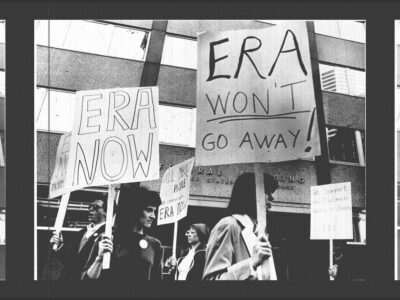
The feminist debate about James Bond is a marketing strategy

WP_Post Object
(
    [ID] => 3409
    [post_author] => 2
    [post_date] => 2021-11-05 05:51:15
    [post_date_gmt] => 2021-11-05 05:51:15
    [post_content] => Nevertheless, she persisted.*

The first five minutes of “I Am Belmaya,” a feature documentary set in Nepal, could be a stand-alone short film. A young woman goes about her morning chores, sweeping the courtyard outside her one-room home and washing dishes at the outdoor water tap as chickens peck nearby and a rooster crows. Her face is closed; her posture speaks of drudgery and poverty. The camera then switches to street scenes in Pokhara, which lies under the stunning Annapurna Mountain. Diesel buses roar; a sidewalk barber gives a shave to a man reclining in an old-fashioned chair; and everywhere, women are engaged in backbreaking physical labor—stirring the contents of a pot at a roadside café while holding a baby with one arm, squatting on the ground to spin wool by hand, staggering as they carry impossibly heavy loads of bricks on their backs. From high above, a drone camera pans over the sprawling city and then zooms in on the tiny shack, the little courtyard, the chickens, the outdoor water faucet, and the young woman. This is Belmaya.

In a scant two minutes the young woman narrates her life story: born low caste in a poor village; orphaned by age nine; deprived of an education by brothers who thought girls were more useful working in the fields; and then, finally, some joy and hope at a boarding school for disadvantaged girls. A British woman named Sue Carpenter gave a photography workshop at the school, distributing little automatic cameras to all the girls and arranging an exhibition at the British Council in Kathmandu for the most talented ones—of whom Belmaya was one. Seven years later, Carpenter returns to Nepal and reconnects with her former protégé.

Belmaya is now 21 years old, unhappily married and the mother of a two-year-old daughter. She has not realized her ambition to become a photographer or finish high school. The school confiscated the cameras after Sue left, implementing corporal punishment that made the young girl resentful and angry. In 2006 she was full of hope for the future; but in 2014 she is mired in deep regret at not having obtained the education that would have allowed her to be independent and financially secure. Smiling sadly, she tells Carpenter that she’s never found happiness and does not expect to find peace.

The contrast between the subdued, pensive 21-year-old Belmaya of 2014 and her younger iteration, as seen in clips Carpenter filmed at the school in 2006, is stark and telling. At 14 she was a charismatic presence, laughing loudly and voicing strong opinions about the unjust position of women in her deeply patriarchal society. She loved photography, explaining that she felt free when she took pictures and that everything looked different through the camera lens. But at 21 life seems to have beaten her down.

One of the points the film makes is that Belmaya’s life could indeed have stayed stuck at the five-minute mark, in that bleak place of grinding poverty and hopelessness—but it did not. "I Am Belmaya" documents the eponymous heroine's journey to becoming a documentary filmmaker in her own right. She achieves this with remarkable resourcefulness, resilience, and hard work, despite obstacles that include a drunken husband who beats her and the 2015 earthquake that devastated Nepal.

Over the next five years, Belmaya learns filmmaking through rigorous mentoring programs that start with learning how to use a tripod. “Practice every day for at least 30 minutes,” says the director who is teaching her the craft of filmmaking. And she does, with an expression of deep focus as she repeatedly collapses and re-opens the tripod. The film shows her learning how to do closeups and storyboards; we see her smile with pleased surprise when she is told that she has a bright mind. She shows a natural talent for conducting interviews. Gradually, as she acquires skills and knowledge, a confident, ambitious woman emerges.

The film within the film is Belmaya’s making of her first documentary, a short called “Educating Our Daughters.” In one of the most poignant scenes, while interviewing two girls at their school, she asks: “Being a woman, do you believe I will be able to make a film?" Smiling warmly at her, the two girls answer: “Of course you will! What does a girl lack?” Belmaya’s expression shows wonder at their self-confidence; one can almost hear her listing all the things she lacks.

“Educate Our Daughters” was rapturously received at the Kathmandu Film Festival. It went on to win critical acclaim and awards on the international festival circuit, and Belmaya with it. The scene of her striding confidently along a street in London, where she will present her film at the UK Asian Film Festival, can only be called triumphant. But the most brilliant success of this absorbing, touching documentary is in its telling of Belmaya’s story from her own perspective, with no hint of a white savior tale. She shares director’s credit with Sue Carpenter, in an explicit assertion that she controls her own narrative.

*On December 15 The Conversationalist will screen this film live online, with a follow-up Q&A with the directors. Click here to register
    [post_title] => 'I Am Belmaya': film review
    [post_excerpt] => The film follows the life of Belmaya Nepali over a period of 14 years, as she takes up a camera to tell her story. Silenced for years by poverty and the patriarchy, the young woman transcends her circumstances and reclaims her voice through filmmaking.


    [post_status] => publish
    [comment_status] => closed
    [ping_status] => open
    [post_password] => 
    [post_name] => i-am-belmaya-film-review
    [to_ping] => 
    [pinged] => 
https://vimeo.com/595445531
    [post_modified] => 2024-08-28 21:15:12
    [post_modified_gmt] => 2024-08-28 21:15:12
    [post_content_filtered] => 
    [post_parent] => 0
    [guid] => https://conversationalist.org/?p=3409
    [menu_order] => 165
    [post_type] => post
    [post_mime_type] => 
    [comment_count] => 0
    [filter] => raw
)
‘I Am Belmaya’: film review

WP_Post Object
(
    [ID] => 3368
    [post_author] => 2
    [post_date] => 2021-10-28 15:19:50
    [post_date_gmt] => 2021-10-28 15:19:50
    [post_content] => No one is forbidding anyone from using the term 'woman' or 'mother.'

On October 15 Rosie DiManno, a Canadian journalist, wrote a contentious column for the Toronto Star, in which she claimed that women were being “erased” because British health care providers were introducing gender-inclusive language to accommodate nonbinary people and transgender men. The practice of referring to a menstruating or pregnant person instead of a menstruating or pregnant woman was, DiManno asserted, tantamount to “blotting women out” and bore a “whiff of misogyny.” DiManno’s grievance mongering, with her anger directed at transgender people, follows a pattern we have come to expect from TERFs—the acronym stands for “trans exclusionary radical feminist”—and their enablers. Almost invariably, they invoke problems that do not exist as a means of preempting the expansion of rights and reasonable accommodations for trans people.

Whether the imaginary problem du jour is “men in dresses” invading public bathrooms or, as in DiManno’s op-ed, the supposed erasure of language that captures quintessentially female experiences, this tactic embodies reactionary politics of grievance and scapegoating. The subtext is that transgender women are “really” men, transgender men are “really” women, and nonbinary people don’t exist. DiManno’s views are widely known to Canadian newspaper readers, and rarely elicit a response, but this particular column received international attention because Margaret Atwood promoted it approvingly on Twitter. This is indeed disappointing. Even more disappointing is that Atwood refused to listen to those who alerted her to the trans-antagonistic nature of DiManno’s commentary. Instead, she doubled down.

Before exploring these developments and the key issue of inclusive language in more detail, let me get a couple of things out of the way. First, no one is forbidding anyone from using the term “woman” or “mother.” Secondly, I’m not here to “cancel” an 81-year-old literary icon, even if I had the power to do so. I taught The Handmaid’s Tale in 2018 for an arts and humanities theme course on apocalypse and dystopia in the University of South Florida’s Honors College; and, while I am not planning a return to the classroom, I would teach that book again. Atwood’s novel is an immensely important exploration of what can happen when religious extremism runs amok, with the harm disproportionately falling on women and queer people (“gender traitors” in the terminology of Gilead), and for that reason it is painfully relevant in our time.

As a trans woman, I have no trouble discussing access to abortion care as a woman’s issue, although it doesn’t fit exclusively under that rubric because it also affects trans men and some nonbinary individuals, which makes it also an LGBTQ issue. Nor is access to abortion an issue that affects all women. Cisgender women who are unable to conceive, have had hysterectomies, have gone through menopause, or who have certain intersex conditions, are not personally affected by abortion access issues, but no one would get defensive about applying the word “woman” to people in most of those categories.

I would like to pause here to point out that I unabashedly typed “woman” or “women” five times in the above paragraph, because in each case that was the most fitting term. In addition, in my recent commentary on Brittney Poolaw’s horrific manslaughter conviction in Oklahoma for suffering a miscarriage, I used the word “women” 10 times; by contrast, I used the inclusive phrase “anyone who can get pregnant” just once.

To the second point above— i.e., the issue of “cancel culture”— it should go without saying that criticizing the views of a public figure is not censorship. A highly visible public figure should expect that the expression of their opinion on political concerns will elicit a variety of responses and should be prepared for criticism. Even if one is not a public figure, the right to free speech is not the same as an exemption from consequences for expressing hateful or bigoted views.

In addition to the degree of offense, power dynamics should be taken into consideration. This should be axiomatic for feminists. And yet, when it comes to these issues and “cancel culture,” anti-trans self-described feminists are suddenly unable to understand that women (see what I did there?) like Atwood, gazillionaire Harry Potter author J.K. Rowling, and DiManno are not vulnerable people who have to worry about financial insecurity or access to healthcare. They all have white and cis privilege, and they have far more power than the average woman. Trans people, by contrast, are disproportionately poor, highly vulnerable to “cancellation” via scapegoating, likely to face barriers to healthcare access, and, especially in the case of Black trans women, disproportionately subjected to violence up to and including murder.

There is one issue DiManno raised on which I agree with her and, by extension, Atwood: the anatomy of the female reproductive system has historically been erased due to patriarchy and puritanism. Encouraging girls and, indeed, all of us to have a better understanding of the vulva, the clitoris, the cervix, the uterus, and so forth is something our society needs. Jennifer Gunter’s 2019 bestseller The Vagina Bible was a much needed intervention, and I am very glad it exists. At the same time, there is something very odd about women who identify with feminism, a movement that has sought to decouple a woman’s value from reproduction and childrearing, to suddenly wish to define women precisely in those terms so long as it means not having to accommodate “those people.”

Regarding inclusive language, I disagree with DiManno and Atwood’s claim that using it as a means of accommodating some people who can get pregnant undermines the goal of increasing literacy about female anatomy and reproduction. DiManno completely misrepresented the facts to make her case, by referring to an article in The Lancet about UK hospitals using gender-neutral language to accommodate transgender men and nonbinary people. As Stacy Lee Kong points out, rather than prescribe that language across the board, “What did happen is Brighton and Sussex University Hospitals NHS Trust announced in February that it would be adding new trans-friendly terms including ‘birthing people’ and ‘chestfeeding’ to its existing vocabulary as a way to become more inclusive. The hospital was careful to note that it would only be using gender-neutral language in its internal communications and meetings, and that staff would use patients’ correct pronouns while caring for them.”

Intentionally or not, there is a great deal of dishonesty among the handwringing “why can’t we say woman anymore” crowd. That Atwood would throw in her lot with them is more disappointing than surprising to those who have been paying attention, since, as Kong also highlighted in her commentary on the current dustup, Atwood has previously reveled in being a self-described “bad feminist.”

The evolution of language, which is often pushed along by activists and advocates for marginalized communities, is understandably something that can make people uncomfortable. And indeed, activists sometimes go to excesses, though trans rights activists have so little power that the issue is mostly a red herring. Meanwhile, discomfort is sometimes necessary in order to learn and grow. And there is simply no excuse for distorting, exaggerating, and lying about what is really happening when healthcare systems, which often discriminate against trans people, begin to move toward understanding and accommodation. That thoroughly reactionary response is antithetical to the spirit of feminism as I understand it. Atwood seems uninterested in addressing her critics in a serious way, but if she should happen to read this column, I would ask her to look at the actual facts rather than the distorted version found in DiManno’s column, to sit for a while with her discomfort, and to consider leaving the politics of fear, scapegoating, and scarcity to the reactionary Right.
    [post_title] => Margaret Atwood's opposition to gender-inclusive language is disappointing, but not surprising
    [post_excerpt] => Self described feminists who oppose the expansion of rights and reasonable accommodations for trans people are ddisregarding the facts in favor of a position predicated on fears and biases.
    [post_status] => publish
    [comment_status] => closed
    [ping_status] => open
    [post_password] => 
    [post_name] => margaret-atwoods-opposition-to-gender-inclusive-language-is-disappointing-but-not-surprising
    [to_ping] => 
    [pinged] => 
    [post_modified] => 2024-08-28 21:15:12
    [post_modified_gmt] => 2024-08-28 21:15:12
    [post_content_filtered] => 
    [post_parent] => 0
    [guid] => https://conversationalist.org/?p=3368
    [menu_order] => 168
    [post_type] => post
    [post_mime_type] => 
    [comment_count] => 0
    [filter] => raw
)
Margaret Atwood’s opposition to gender-inclusive language is disappointing, but not surprising