WP_Post Object
(
    [ID] => 4783
    [post_author] => 15
    [post_date] => 2022-09-01 11:00:00
    [post_date_gmt] => 2022-09-01 11:00:00
    [post_content] => 

How McDonald's, KFC, and other American eateries spread around the world.

Even before the war, Aban Pestonjee’s business was doing rather well. 

In the 1970s, Swedish and American home appliances were the kind of thing that lots of people in Sri Lanka wanted, but hardly anyone knew how to get. In response to a series of economic shocks, the government largely barred imports, including luxury goods like washing machines and dryers. But Pestonjee had an idea. She bought used appliances at embassy auctions and sold them at a markup out of a corner shop in the capital city, Colombo. Even with the economy largely restricted, business was good on the Indian Ocean island. But when Sri Lanka descended into civil war in the 1980s, it exploded. 

Pestonjee started importing appliances from Korea and offering environmental cleanup services. Later, she expanded into tourism and property. Her three children joined the business, making her family a dynasty and her company, the Abans Group, one of the most powerful in Sri Lanka. In 1998, with the war mostly relegated to the north and east of the country, Colombo slipped into an eerie calm, and at the urging of one of her sons, Pestonjee made her biggest move yet. 

She opened the first McDonald’s in Sri Lanka. 

~

It’s easy to forget when looking at it through the nostalgic lens that often filters our view of the era, but American fast food was also born in the aftermath of war. When Richard and Maurice McDonald built their namesake restaurant chain in the Southern California desert in the late 1940s and early 1950s, the area was the frontline of a profound economic disruption. The industrial economy that had ended the Great Depression and closed out the Second World War had turned inwards, building prefabricated homes and four-door sedans instead of tanks and planes. In short order, this inverted war economy had also transformed American agriculture: When chemical manufacturers stopped making munitions and started making fertilizer, they supercharged corn production, setting off a livestock explosion which has never abated. As a business that sold meat to car-bound customers in new suburbs, McDonald’s and the industry it launched were ideally positioned to get ahead in an era of chaos. 

As the same systems which made it thrive in the United States spread internationally, fast food rushed headlong for the rest of the world. In 1996, the New York Times’ columnist Thomas Friedman argued the industry’s global nature pointed to a deeper trend about the state of the world. As he summarized it, “No two countries that both have a McDonald’s have ever fought a war against each other.” Friedman said his idea was “tongue in cheek,” and as a hard-and-fast rule, it was always a little shaky, before coming apart entirely with Russia’s 2008 invasion of Georgia. But as an observation about the conditions necessary for capitalism, not an axiom of world affairs, Friedman’s “Golden Arches Theory of Conflict Prevention” pointed to a real correlation between a nation’s international fast food offerings and its stability. If a country was at peace (at least in its urban centers, like Colombo in the late 1990s), was prosperous enough to sustain a consumer class, and was integrated with the world economy, it was likely ready to host a McDonald’s or some other global fast food chain. Seen the other way around, fast food was evidence of a country’s stability. 

The last few years have made that observation especially relevant, as the global fast food boom has reached countries which were at war in living memory. You can find Burger King in Côte d’Ivoire, Dairy Queen in Cambodia, and KFC in Sudan, a country that was heavily sanctioned as recently as 2017 for committing acts of genocide in Darfur. In these and other nations, fast food’s arrival is nothing if not an indication of peace and a rejoining of the international order. 

Yet even as fast food continues to evidence stability, its global expansion has depended on entrepreneurs—like Aban Pestonjee—who sharpened their business acumen in chaotic times, including times of war and occupation. 

~

If you know much about the business of fast food, you’ve likely heard about the franchise system. Since McDonald’s’ early days in the Southern California desert, fast food has depended on independent businesses and entrepreneurs, or “franchisees,” to buy into their system. For a fee and a cut of the revenues, a fast food company (i.e., McDonald’s Corporation, or CKE Restaurants, owners of the Carl’s Jr. and Hardee’s brands) gives the franchisee a regional monopoly, allowing them to use its likeness and adopt its methods of doing business. In the industry’s early days in the 1950s and 1960s, franchising allowed fast food companies to expand wildly across the United States on the backs of countless smaller, independent businesses—all with only marginal investments of their own capital. As they’ve plotted expansions around the world, fast food companies have found additional benefits to franchisees, as these local entrepreneurs typically bring local contacts and knowledge to the endeavor which their corporate overlords generally lack. 

As an entrepreneur who made her fortune in war, Pestonjee was perfectly suited for the role. She had grown up as a child of an immigrant family and a member of Sri Lanka’s tiny Parsi community. In a war that pitted the nation’s two biggest ethnic groups against each other, she was an outsider. Conflict was little more than minor disruption and background noise as she grew her business. 

“You get used to it,” she told a researcher many years after her business first took off. “Knowing that one bomb has gone off here, then everything goes down, business gets slack for a month or two, people forget it and then again it starts.”

Den Fujita, the Japanese entrepreneur who brought McDonald’s to Japan, similarly navigated a messy period in history to amass a fortune. Fujita’s father was an engineer for a British company, and he had picked up some English at home. He studied English in high school, and, at the end of the Second World War, with much of the country leveled and his father and two sisters having been killed in American bombing raids, Fujita left home to translate for the former enemy at the seat of their occupation, the General Headquarters, or GHQ, in Tokyo. 

Soon after, Fujita started an importation company. It was a simple business model: He figured out what the American occupiers wanted, and then he figured out how to get it to them. As the Americans left, he expanded his business, importing luxury goods for the Japanese themselves. When McDonald’s first began laying plans for an overseas expansion two decades later, Japan looked difficult, if not impossible, to enter. The bureaucracy was dense, the culture was perplexing. But Fujita was the perfect partner in a country fraught with risk—a bridge between those American corporate executives and the Japanese people, whom they knew nothing about. In 1971, his company, Fujita & Co, became McDonald’s’ first franchisee in Japan. Before long, its first location, in the Ginza district in Tokyo, became the world’s busiest McDonald’s. 

There are stories in the rubble of every conflict of shrewd entrepreneurs building a fortune as the nation rebuilds itself. In the early 1990s, as Cambodia recovered from years under Khmer Rouge rule, a refugee named Kith Meng returned from his adopted Australia to take the reins at his family’s company and tap some of the billions of dollars in international aid then flowing into the country. Kith’s Royal Group became a source of basic provisions for UNTAC, the United Nations’ body managing Cambodia while the national government assembled itself. Crucially, for the sprawling, multilingual force inundated with paperwork, Royal also imported copy machines. 

As UNTAC packed its bags and left in 1993, Royal invested in a slew of other money-making ventures, some of which, such as a cellular network, a bank, and some TV stations, proved useful to a country getting on its feet, and some of which, such as a casino and a lottery, mostly served to line the budding tycoon’s pockets. Meng’s many ventures put him at the center of a vast network of his own creation, making him an ideal middleman for foreign companies looking to break into Cambodia. In the early 2000s, one of those companies was a Malaysian KFC franchisee. Soon after, Royal founded a separate company with it to bring KFC to Cambodia. The first location opened in 2008. 

So, what does war have to do with running an international fast food chain? No matter when or where they take place, wars are times of creation as much as they are times of destruction. When war-ravaged people find that the commercial networks which once supported their purchasing habits have collapsed—because of sanctions, a shifting frontline, or because a manufacturing base was obliterated the night before—their usual consumer preferences evaporate. They don’t care who they bought from in the past. They’ll just go to whoever can navigate the tumult to deliver the goods, now.  

When opening in developing countries, fast food’s corporate giants are similarly lackadaisical, if only because they have to be. In countries where industrial-scale beef and poultry production (let alone french fry-ready potatoes) don’t exist, they can’t work within existing systems to meet them, even if they would prefer to. Instead, they have to build new systems, and to do that, they need locals who understand these places intimately. Often, entrepreneurs who cut their teeth in war have exactly the skills they’re looking for. 

War has another effect: It reveals the artificiality of old social hierarchies. Meng, Pestonjee, and Fujita were all ambitious and hungry for opportunity. But they were also outsiders—Pestonjee because she was a Parsi; Fujita, because his mother was a Christian and the Japanese he spoke was actually a dialect of his native Osaka; Meng, because he had spent most of his youth abroad. In an era of peace and stability, determination might have only led to modest success. But the social-leveling effects of war and occupation offered chances that would have never existed otherwise.

It’s fitting, then, that after the bombs and gunfire went quiet in their countries, all three would gravitate to fast food. Even though they promote their goods as luxuries in developing countries, fast food brands still retain the welcoming spirit of undiscerning capitalists wherever they operate. Through their doors, the old hierarchies have no place. Everyone is welcome, just as long as they have the money to pay.

Additional fact checking by Apoorva Tadepalli.

[post_title] => The Wartime Roots of the Global Fast Food Boom [post_excerpt] => [post_status] => publish [comment_status] => open [ping_status] => open [post_password] => [post_name] => the-wartime-roots-of-fast-food [to_ping] => [pinged] => [post_modified] => 2026-08-04 20:31:38 [post_modified_gmt] => 2026-08-04 20:31:38 [post_content_filtered] => [post_parent] => 0 [guid] => https://conversationalist.org/?p=4783 [menu_order] => 114 [post_type] => post [post_mime_type] => [comment_count] => 0 [filter] => raw )
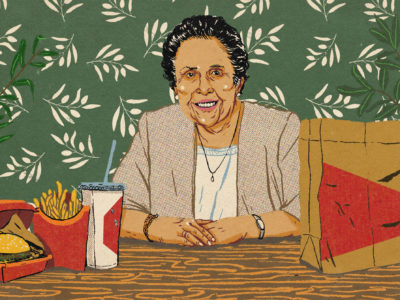
An illustration of Aban Pestonjee sitting at a table with a fast food meal.

The Wartime Roots of the Global Fast Food Boom

WP_Post Object
(
    [ID] => 3775
    [post_author] => 2
    [post_date] => 2022-02-03 10:39:07
    [post_date_gmt] => 2022-02-03 10:39:07
    [post_content] => Journalists have been silenced with a campaign of intimidation, censorship, arrests, detention—and murder.

One year since a democracy-suspending coup, press freedom is dying in Myanmar. A military campaign of intimidation, censorship, arrests, and detentions of journalists has more recently graduated to outright killing, an escalation of repression that aims ultimately to stop independent media reporting on the junta’s crimes and abuses.

In January, military authorities abducted local news reporter Pu Tuidim shortly after he interviewed members of the anti-coup Chinland Defense Force armed group in the restive Chin State. Soldiers confiscated his laptop computer, used him as a captive human shield in a live-fire combat zone, and then summarily executed him, dumping his bound corpse in the muddy outskirts of a local village, his editor at the Khonumthung Media Group told CPJ.

Pu Tuidim’s murder followed the killing of two other Myanmar journalists in December, including one independent photographer who was picked up for photographing an anti-coup silent protest in the commercial capital of Yangon, held at a military interrogation center, and then pronounced by a military hospital as dead without explanation to his family.

A third reporter, Sai Win Aung, was killed on Christmas Day in a military artillery attack in Kayin State while reporting on the plight of internally displaced people in border areas that have become full-blown war zones since the coup. His editor told CPJ it is unclear if he was targeted in the shelling attack, but the reporter had weeks earlier fled Yangon for the insurgent-controlled frontier region after coming under military surveillance for his news reporting.

READ MORE: In Myanmar, the internet is a tool and a weapon

Myanmar’s generals, already the target of Western sanctions for their rights abuses, have a cynical incentive to suppress reporting that exposes their daily assault on Myanmar’s people. The Assistance Association of Political Prisoners, an independent rights monitoring group based in Thailand, reported on January 28 that the junta has killed 1,499 and detained 8,798 since last year’s February 1 coup. Those imprisoned include dozens of journalists, CPJ research shows, making Myanmar the world’s second-worst jailer of journalists in 2021, trailing only China, after having none in jail in 2020. The majority are being held on bogus charges under the penal code’s vague and broad Article 505(a), which effectively criminalizes critical news reporting as causing instability or purveying misinformation. Most were detained after reporting on anti-military street protests.
The generals are reaching next for an online kill switch. New proposed cybersecurity legislation aims to make virtual private networks (VPNs) illegal, a bid to stop Myanmar citizens from accessing banned websites and social media including Facebook, which many news organizations, including small local language outfits in ethnic areas, use as their sole platform for posting news. The legislation also gives junta authorities arbitrary powers to access user data, ban content, and imprison regime critics. If passed, a near certainty without an elected legislature in place, the law will give the junta the legal tool it needs to roll back the press freedom gains achieved between 2012 and the coup, a period where hundreds of independent media outlets bloomed from the darkness of an earlier era of military dictatorship, when all broadcast media was soldier-controlled and all newspapers were forced to publish as weeklies to give censors time to cut their content. Nothing more belies the junta’s claim that it is only holding power for an interregnum period to prepare for a return to democratic elections, originally in 2022, now supposedly in 2023, than its ongoing and intensifying assault on the free press – a crucial pillar in any functioning democracy that holds its leaders to account. The effect of the military’s repression is seen clearly in the rising tide of journalists who are fleeing for their lives to face uncertain futures across the country’s borders with India and Thailand, in the growing number of once-vibrant news publications that have gone dark through shuttered bureaus, halted printing presses, and abandoned web sites and Facebook-hosted news pages. That’s, of course, not to say the flame of press freedom has been completely extinguished in today’s benighted, military-run Myanmar. Tech-savvy reporters have launched upstart news publications that continue to defy bans, threats, and even the murder of their reporters to publish the news and keep the world informed of  abuses and atrocities that may be driving their nation towards full-scale civil war. Myanmar’s journalists and independent news outlets have a long and storied history of evading military censorship to get out the news. The next chapter in the history is now being written as a new generation of undercover journalists risk their lives for exile-run and other unauthorized publications to report the news the junta is desperately trying to suppress. And therein lies the hope for a one-day revitalized democratic Myanmar. This article was originally published by the Committee to Protect Journalists. It is reproduced here with permission.  [post_title] => Myanmar's military has crushed press freedom [post_excerpt] => One year since Burma's military staged a coup, it has crushed the country's free media with a campaign of intimidation, censorship, arrests, detention—and murder. [post_status] => publish [comment_status] => closed [ping_status] => open [post_password] => [post_name] => a-year-after-myanmars-military-coup-the-countrys-independent-media-has-been-crushed [to_ping] => [pinged] => https://conversationalist.org/2021/02/12/in-myanmar-the-internet-is-a-tool-and-a-weapon/ [post_modified] => 2026-08-05 18:00:14 [post_modified_gmt] => 2026-08-05 18:00:14 [post_content_filtered] => [post_parent] => 0 [guid] => https://conversationalist.org/?p=3775 [menu_order] => 143 [post_type] => post [post_mime_type] => [comment_count] => 0 [filter] => raw )
Myanmar’s military has crushed press freedom

WP_Post Object
(
    [ID] => 3604
    [post_author] => 2
    [post_date] => 2021-12-16 13:38:56
    [post_date_gmt] => 2021-12-16 13:38:56
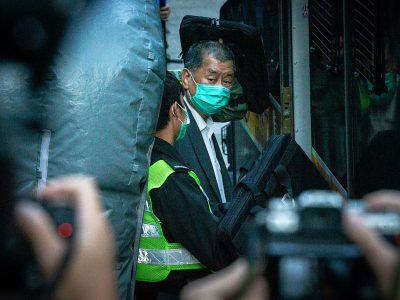
    [post_content] => Jimmy Lai, 74, angered the Chinese government by refusing to curb the pro democracy editorial line of  his popular newspaper 'Apple Daily.'

The year 2021 marks a sad milestone in Hong Kong. For the first time journalists in the former British colony appear on CPJ’s annual survey of journalists unjustly imprisoned for their work. Eight. Zero to eight in one year.

I first visited Hong Kong nearly 50 years ago as a student and returned to live there a few years later for research on a Ph.D. thesis. I subsequently paid many visits to Hong Kong as a working journalist, both before and after reversion to Chinese rule in 1997, and most recently as a press freedom advocate with CPJ.*

To say that Hong Kong has changed over these years is a vast understatement.

The squeeze on press freedom didn’t start in 2021. While Hong Kongers have never participated in a full electoral democracy, they had for decades enjoyed uninhibited freedom of the press and the rule of law—factors that contributed to Hong Kong’s attractiveness as a thriving business and finance center. The colonial era anti-communist press included famed titles like the English-language South China Morning Post and the Chinese Ming Pao, while the left included the pro-communist flag wavers Ta Kung Pao and Wen Wei Po. Many international news organizations established regional headquarters in the city because of the freedom and convenience. It was hard not to like Hong Kong for its energy, the food, the setting, and its entrepreneurial, ambitious people.

The 1984 British-Chinese agreement that led to the handover to China 13 years later put Hong Kong on notice that the communists were coming, like it or not, and set in motion significant changes, as CPJ documented in a report. The anti-communist press gradually became less strident, even before the handover. Afterwards, the trend continued, with occasional physical attacks on journalists notably concentrated on critics of the Chinese or Hong Kong governments. Police frequently attacked journalists during widespread pro-democracy demonstrations in 2019.

Of course, there was a major exception to this softening of China coverage: Jimmy Lai, founder of Apple Daily and Next Digital. Lai is this year’s winner of CPJ’s Gwen Ifill Press Freedom Award for “extraordinary and sustained achievement in the cause of press freedom.” And he now sits in jail for his stubborn refusal to join most of the rest of the media by curbing his openly pro-democracy and anti-communist editorial line in Apple Daily. He could remain there for the rest of his life. Six of his senior colleagues, as well as a commentator at the independent internet radio channel D100, are also in jail. The paper and Next Digital were forced out of business.

[caption id="attachment_3607" align="alignleft" width="640"] Reading a newspaper on a bench in Hong Kong on August 20, 2020.[/caption]

The Chinese government’s feud with Lai started in the 1990s, when, after writing a column suggesting that China’s tough Premier Li Peng “drop dead,” Lai was forced to sell his mainland Chinese clothing business that was the source of his initial wealth. An advertising squeeze on the paper, clearly orchestrated by China, started in the late 1990s and accelerated over the years. The Apple Daily office, Lai’s home, and staff reporters suffered various attacks over the years.

“The very rights of journalists are being taken away,” Lai told CPJ in a 2019 interview. “We were birds in the forest and now we are being taken into a cage.” A literal cage, now.

Lai and the others have been charged under the draconian National Security Law that China imposed on July 1, 2020 after historic pro-democracy protests swept the city. While Lai and his colleagues are the most prominent media targets, the law has spread a chill through the Hong Kong community of journalists, as CPJ has documented.

The independent-minded Hong Kong Journalists Association has come under a series of attacks from the government and the pro-communist press, including a suggestion by authorities that HKJA may have breached the national security law. On November 5, the Hong Kong Foreign Correspondents’ Club released a survey of its members showing that 83.8 percent of its members saw deterioration of the working environment for journalists, and that 71 percent were slightly or very concerned about possible arrest for their work. Predictably, and in sadly typical fashion, the Chinese foreign ministry office in Hong Kong blasted the FCC, saying in a threatening statement: “Its smearing of Hong Kong’s press freedom and playing-up of the chilling effect are interference in Hong Kong affairs.”
This isn’t to say that some excellent journalism doesn’t still take place in Hong Kong by a number of news outlets and international bureaus that remain in the city. But the red lines over what’s permissible and what’s not have never been more blurry. As CPJ’s principal spokesperson on Hong Kong and China, I’ve been blunt and uninhibited criticizing both the Chinese and Hong Kong governments. Given China’s record of taking foreigners hostage, and Hong Kong’s still evolving application of the National Security Law, will I ever feel comfortable or safe returning to the place that I’ve grown to love over the years?  I’m not sure. *This article was originally published on the website of the Committee to Protect Journalists.  [post_title] => 'The rights of journalists are being taken away': Hong Kong's most prominent media mogul is jailed [post_excerpt] => For decades Hong Kong enjoyed uninhibited freedom of the press, which continued after the territory reverted to China's rule in 1997. But the July 1, 2020 National Security Law put a chill on the media. [post_status] => publish [comment_status] => closed [ping_status] => open [post_password] => [post_name] => jailing-of-pro-democracy-media-mogul-is-a-sad-milestone-in-the-decline-of-hong-kongs-press-freedom [to_ping] => [pinged] => [post_modified] => 2026-08-05 18:19:17 [post_modified_gmt] => 2026-08-05 18:19:17 [post_content_filtered] => [post_parent] => 0 [guid] => https://conversationalist.org/?p=3604 [menu_order] => 156 [post_type] => post [post_mime_type] => [comment_count] => 0 [filter] => raw )

‘The rights of journalists are being taken away’: Hong Kong’s most prominent media mogul is jailed

WP_Post Object
(
    [ID] => 3409
    [post_author] => 2
    [post_date] => 2021-11-05 05:51:15
    [post_date_gmt] => 2021-11-05 05:51:15
    [post_content] => Nevertheless, she persisted.*

The first five minutes of “I Am Belmaya,” a feature documentary set in Nepal, could be a stand-alone short film. A young woman goes about her morning chores, sweeping the courtyard outside her one-room home and washing dishes at the outdoor water tap as chickens peck nearby and a rooster crows. Her face is closed; her posture speaks of drudgery and poverty. The camera then switches to street scenes in Pokhara, which lies under the stunning Annapurna Mountain. Diesel buses roar; a sidewalk barber gives a shave to a man reclining in an old-fashioned chair; and everywhere, women are engaged in backbreaking physical labor—stirring the contents of a pot at a roadside café while holding a baby with one arm, squatting on the ground to spin wool by hand, staggering as they carry impossibly heavy loads of bricks on their backs. From high above, a drone camera pans over the sprawling city and then zooms in on the tiny shack, the little courtyard, the chickens, the outdoor water faucet, and the young woman. This is Belmaya.

In a scant two minutes the young woman narrates her life story: born low caste in a poor village; orphaned by age nine; deprived of an education by brothers who thought girls were more useful working in the fields; and then, finally, some joy and hope at a boarding school for disadvantaged girls. A British woman named Sue Carpenter gave a photography workshop at the school, distributing little automatic cameras to all the girls and arranging an exhibition at the British Council in Kathmandu for the most talented ones—of whom Belmaya was one. Seven years later, Carpenter returns to Nepal and reconnects with her former protégé.

Belmaya is now 21 years old, unhappily married and the mother of a two-year-old daughter. She has not realized her ambition to become a photographer or finish high school. The school confiscated the cameras after Sue left, implementing corporal punishment that made the young girl resentful and angry. In 2006 she was full of hope for the future; but in 2014 she is mired in deep regret at not having obtained the education that would have allowed her to be independent and financially secure. Smiling sadly, she tells Carpenter that she’s never found happiness and does not expect to find peace.

The contrast between the subdued, pensive 21-year-old Belmaya of 2014 and her younger iteration, as seen in clips Carpenter filmed at the school in 2006, is stark and telling. At 14 she was a charismatic presence, laughing loudly and voicing strong opinions about the unjust position of women in her deeply patriarchal society. She loved photography, explaining that she felt free when she took pictures and that everything looked different through the camera lens. But at 21 life seems to have beaten her down.

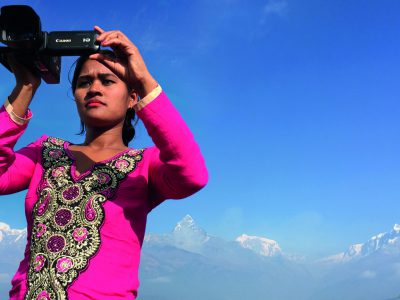
One of the points the film makes is that Belmaya’s life could indeed have stayed stuck at the five-minute mark, in that bleak place of grinding poverty and hopelessness—but it did not. "I Am Belmaya" documents the eponymous heroine's journey to becoming a documentary filmmaker in her own right. She achieves this with remarkable resourcefulness, resilience, and hard work, despite obstacles that include a drunken husband who beats her and the 2015 earthquake that devastated Nepal.

Over the next five years, Belmaya learns filmmaking through rigorous mentoring programs that start with learning how to use a tripod. “Practice every day for at least 30 minutes,” says the director who is teaching her the craft of filmmaking. And she does, with an expression of deep focus as she repeatedly collapses and re-opens the tripod. The film shows her learning how to do closeups and storyboards; we see her smile with pleased surprise when she is told that she has a bright mind. She shows a natural talent for conducting interviews. Gradually, as she acquires skills and knowledge, a confident, ambitious woman emerges.

The film within the film is Belmaya’s making of her first documentary, a short called “Educating Our Daughters.” In one of the most poignant scenes, while interviewing two girls at their school, she asks: “Being a woman, do you believe I will be able to make a film?" Smiling warmly at her, the two girls answer: “Of course you will! What does a girl lack?” Belmaya’s expression shows wonder at their self-confidence; one can almost hear her listing all the things she lacks.

“Educate Our Daughters” was rapturously received at the Kathmandu Film Festival. It went on to win critical acclaim and awards on the international festival circuit, and Belmaya with it. The scene of her striding confidently along a street in London, where she will present her film at the UK Asian Film Festival, can only be called triumphant. But the most brilliant success of this absorbing, touching documentary is in its telling of Belmaya’s story from her own perspective, with no hint of a white savior tale. She shares director’s credit with Sue Carpenter, in an explicit assertion that she controls her own narrative.

*On December 15 The Conversationalist will screen this film live online, with a follow-up Q&A with the directors. Click here to register
    [post_title] => 'I Am Belmaya': Film review
    [post_excerpt] => The film follows the life of Belmaya Nepali over a period of 14 years, as she takes up a camera to tell her story. Silenced for years by poverty and the patriarchy, the young woman transcends her circumstances and reclaims her voice through filmmaking.


    [post_status] => publish
    [comment_status] => closed
    [ping_status] => open
    [post_password] => 
    [post_name] => i-am-belmaya-film-review
    [to_ping] => 
    [pinged] => 
https://vimeo.com/595445531
    [post_modified] => 2026-08-05 20:01:45
    [post_modified_gmt] => 2026-08-05 20:01:45
    [post_content_filtered] => 
    [post_parent] => 0
    [guid] => https://conversationalist.org/?p=3409
    [menu_order] => 165
    [post_type] => post
    [post_mime_type] => 
    [comment_count] => 0
    [filter] => raw
)

‘I Am Belmaya’: Film review

WP_Post Object
(
    [ID] => 3147
    [post_author] => 2
    [post_date] => 2021-09-07 10:00:11
    [post_date_gmt] => 2021-09-07 10:00:11
    [post_content] => The CEO of Afghanistan's largest media outlets talks about whether and how they will be able to continue operating freely. 

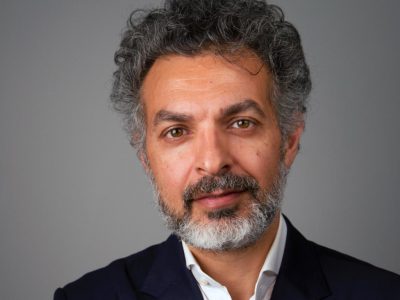
Saad Mohseni had a lot to worry about when the Taliban rolled into Kabul on August 15. Mohseni is CEO of the Moby Group, which owns and operates Afghanistan’s biggest news and entertainment networks, TOLO News and TOLO TV. The company’s 400 employees would have to adapt one way or another to the nation’s new, ultraconservative rulers.

Mohseni was born in London—his father was an Afghan diplomat and his mother a broadcaster for the BBC. In 1982, his father was on a diplomatic posting in Tokyo when the Soviets invaded Afghanistan. Rather than return to Afghanistan, the family settled in Australia.

The former investment banker and dual Afghan-Australian citizen launched an FM radio station in Afghanistan in 2003,  TOLO TV in 2004, and TOLO News as a separate channel in 2010. The operations have thrived in what Mohseni says was the freest media environment in Asia and the Middle East.

CPJ talked to Mohseni on August 27 by video from Dubai about how and whether that freedom can continue. So far, the Taliban are at least tolerating the station. Taliban fighters confiscated government-issued weapons from guards at TOLO News, but allowed them to keep privately purchased firearms, according to a tweet from the station. And a representative of the Taliban appeared on air interviewed by a female TOLO newscaster. She has since fled the country, according to news reports. CPJ contacted Taliban spokesman Zabihullah Mujahid for comment via messaging app but received no response.

This interview has been edited for length and clarity.

How did you approach the launch of TOLO News?

What we attempted to do from the get go was to always have our viewers in mind. It was very important to us not to be didactic and condescending and to be as honest as possible with viewers. You have to be focused in terms of reporting on facts. It’s totally unvarnished and totally uncensored. And it has to be balanced and non-emotional. News takes a long time, but once you have people’s trust, people stick with you through thick and thin as they have with us now.

How was it financed initially?

We started the radio station [in 2003 with seed money from USAID] and the reaction was extraordinary. Some people reacted very badly and some people were very positive, but most people were listening to it, which was the most important thing. Then we thought of a TV station and again USAID helped with that. Essentially the business has been viable from day one except for the [two] grants and it’s been able to sustain itself for almost 20 years. It’s one of Afghanistan’s great success stories. It’s the freest media in the entire region. It’s dangerous, especially for media operators—but it’s free. Last night, we were interviewing people in the Panjshir Valley who are opposing the Taliban regime; then we interviewed the Taliban; then we had a woman who was condemning the Taliban in our studio; and then we had another woman on satellite supporting the Taliban. We are continuing to do our work like we always have. The question is whether we can continue in this new environment.

Has anything changed with the Taliban victory?

We’re scared, I’ll be honest with you, we are nervous. Everyone is having sleepless nights, but what the viewer is experiencing is not that different. We have suffered because of the 70 or 80 people we’ve lost [who fled]. They’ve left and gone on to greener pastures. Not that we have begrudged their decision, as a matter of fact, we have helped them leave the country. But they have left a huge vacuum. So we have had to hire like crazy, or move people up within the organization. [Previously] a person who joins wouldn’t be in front of a camera for a long, long time. But now we’re hiring on Wednesday and you see that person in front of a camera on Thursday.  The sad thing is to lose this much capacity, to see a generation of people who we’ve invested in, who could have done so much for the country, being forced to leave. This brain drain will take us another two decades to build that sort of capacity, sadly. The only things we have pulled are some of the music shows and some of the more provocative soap operas. We made that decision on day one realizing that there wasn’t much upside but there was a lot to lose. I believe that our viewership for the news programs have more than doubled because people are concerned and they need to know. The one thing we cannot take away from people is hope, and I think media plays such an important role in providing people with hope. We are thinking that the Taliban will limit women’s education in the provinces so we can turn our morning session and early afternoon segments into an education segment in particular for our women.

TOLO News has been attacked over the years, with journalists threatened and staff possibly killed by the Taliban. How is the staff dealing with that?

It’s not easy. I think they are torn emotionally because the ones who are left behind feel left behind, their colleagues have left for France, for Europe, and for the U.S. [In the previous] government we had allies. We had some faith in the judiciary, we knew that many of the judges basically respected the rule of law, our freedom as a media outlet under the constitution, and Afghan media laws, which are relatively progressive. And then the presence of the international community was a massive safety net, where they always stressed the importance of civil society and so forth. Right now, we have no safety nets. None. [On August 25] our reporters were attacked by the Taliban, literally a kilometer away from where our offices are, at the center of the city of Kabul. We complained to the media commission, they promised to pursue it, but that’s all that we could do.  We did report on it, and it was in our news. We spoke to the international media about it, we’re not fearful of that, but it just shows that we are completely and totally exposed right now.

Will you keep sending out women reporters and putting them on air?

That to us is a red line. People ask what sorts of things would force you to abandon your operations in Afghanistan. One of the things would be to walk away from that particular responsibility, the inclusion of women, minority rights, human rights, if we’re forced to censor our news and not be the truth tellers we’ve been for the last two decades. We’ve lost many of our female employees, but we’ve just hired a whole bunch. So hopefully, we’ll see more women on the screen. One of the Taliban leaders spoke to a mutual friend and was telling him “I can’t believe how much Kabul has changed since 2001.” And our friend pointed out to him that it’s not just the city and the buildings that have changed, the country has changed. I think if the Taliban are smart they will be cognizant of these changes and adopt a more inclusive approach. They have their constituencies but you have to remember that the most positive poll number I’ve seen is that their dogma appeals to 15 percent of the population. They ought to go and engage the other 85 percent and become a political movement that appeals to all segments of our society. There’s an opportunity for them as well. They have a good place to start from but they have to adopt an appeal to other constituencies. My fear is that they will snap and go back to what they feel comfortable with, which is to be dogmatic and to become dictatorial, and have this black-and-white approach to things.

What contingencies are you planning for?

Two things. Firstly, if Afghanistan is isolated the economy will suffer like we have not seen since the 1990s. It will shrink dramatically. And perhaps if the Taliban feel really threatened they could intimidate advertisers. I think we may have to look into, at least, a period of more donor-assisted operations than advertising revenues. What we would need to do is create a parallel structure [in London] that would complement the Afghan structure. Because in Afghanistan we still have no restrictions, but if the day comes that we have to close Afghanistan we [could] just push a button and switch directly to London. What the Taliban can do is shut down our terrestrial transmissions but we will still be available on satellite and on these illegal cable operations. There are hundreds of these cable companies. Also we are available online, we have an app that allows for people to stream on different networks.

Is there a possible more optimistic scenario for your future operations in the country?

It’s too early, but it’s our job to push for that. Half my time now is talking to all the political players in Afghanistan, including some of the hardcore Taliban sympathizers who have a good deal of influence with them. We’re not just spectators. This is our country. We have an obligation to lobby, to advocate for a more open, moderate Afghanistan because it’s the only way the international community will work with the Taliban. I think for the Taliban, they have to realize this, but I think it’s going to have to be communicated in a way that is not very condescending, in which they are engaged by professional diplomats, they are courted. We’re talking about people who fought for the last 25 to 30 years, some even more than that. That’s why these TV shows are so important — so they can see for themselves what a vibrant country Afghanistan has become since the 1990s. I hope that it resonates with them. I think we have nothing to lose by engaging with them. Because worst case scenario is that [the international community] sticks to the sanctions. [Sanctions] are mistaken because the people who are going to suffer the most are the [millions of] Afghans who continue to live in the country.

Would you like to add anything else?

The fear is real, the nerves are real, I feel a lot of fear, and my staff are saying they don’t even want to go out because there are no guarantees they are not going to get beaten up. Women who technically can come to work are concerned that even in a car on their way to work, some checkpoint guy is going to say, “Why are you going to work?” Because they’ve issued this directive about female employees of the government, but some illiterate guy from [the provinces] who is stopping cars, he doesn’t know the difference between a government employee and a private sector employee. He may get violent because he thinks she’s breaking the law. These are things that we have to worry about on a day-to-day basis. This interview was originally published on the Committee to Protect Journalists' website. [post_title] => 'The fear is real': The CEO of Afghanistan's biggest media outlet on the challenges of broadcasting under Taliban rule [post_excerpt] => 'We have an obligation to lobby, to advocate for a more open, moderate Afghanistan because it’s the only way the international community will work with the Taliban.' [post_status] => publish [comment_status] => closed [ping_status] => open [post_password] => [post_name] => the-fear-is-real-the-ceo-of-afghanistans-biggest-media-outlet-on-the-challenges-of-broadcasting-under-taliban-rule [to_ping] => [pinged] => [post_modified] => 2026-08-06 19:32:06 [post_modified_gmt] => 2026-08-06 19:32:06 [post_content_filtered] => [post_parent] => 0 [guid] => https://conversationalist.org/?p=3147 [menu_order] => 181 [post_type] => post [post_mime_type] => [comment_count] => 0 [filter] => raw )

‘The fear is real’: The CEO of Afghanistan’s biggest media outlet on the challenges of broadcasting under Taliban rule

WP_Post Object
(
    [ID] => 2638
    [post_author] => 2
    [post_date] => 2021-05-18 10:30:12
    [post_date_gmt] => 2021-05-18 10:30:12
    [post_content] => Whether organizations like the UN will meaningfully press China on the issue is not clear.

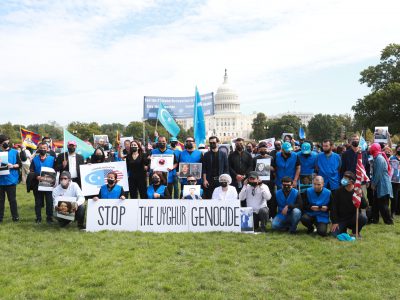
Humans have a real appetite for mass murder. The twentieth century produced at least eight genocides, and the last 21 years have featured three more. Genocides are now a casual part of politics, unfolding with little consequence or objection. Most troubling is confronting China’s systematic campaign against its Muslim Uyghur population, which is coming to a head after decades of discriminatory and abusive policies. The logic of the American-led War on Terror helped justify a tsunami of abusive policies against Muslims worldwide. The genocide in Xinjiang is only its logical conclusion.

The U.S., U.K. and some European states now confirm that China is committing genocide in Xinjiang. But beyond that are stillness and silence. The silence is loudest from leaders and countries who once professed solidarity for oppressed Muslims everywhere. This is partly a function of the authoritarianism in influential Muslim countries like Saudi Arabia, the United Arab Emirates, and Turkey—calling to protect the rights of Muslims elsewhere might give their own populations ideas. And anyway, Saudi Arabia is occupied with butchering journalists and Yemenis, the UAE is busy making peace with Israel (don’t mind the apartheid), and Turkey would rather deport Uyghurs back to China.

The ugly truth is that for all who wonder what they would have done as genocides unfolded in their time, the answer is largely nothing. The videos of Uyghur men shackled and blindfolded and put on trains to unknown destinations, the immense surveillance and detention infrastructure China uses to enforce obedience to Beijing, Uyghur women relating their rapes and abuse in internment camps, the fates of Uyghurs who have fled only for authorities to imprison their family members, the sharp decrease in Uyghur population numbers and birth rates—they are not a secret. Beijing has countered questions and criticisms from other states with unsubtle propaganda campaigns, outright hostility and assertions that it is fighting Islamic extremism.

No one knows how to confront a rising, antagonistic China. Global trade, commerce and financial markets all depend on a stable relationship with Beijing. Multilateral institutions like the United Nations no longer provide a meaningful forum to address vast crises and deal with atrocities like genocide as the UN Charter dictates. In any event, China is committed to a new multilateralism in the Eastern hemisphere where it can shape and influence the work of newer groupings such as the Shanghai Cooperation Organization and ASEAN. Moreover, through its flagship “Belt and Road Initiative” the Chinese government hopes to forge strong economic and political ties throughout Asia with billions in infrastructure investment. With these layered ties to its neighbors China is looking for more than markets: it needs as many allies as possible in a world where China’s authoritarianism is deepening.

Irrespective of how powerful China is or isn’t at this moment, it is powerful enough that it can subjugate a population of 14 million people, send one million of them to camps, and eradicate their religion and cultural identity without any repercussion from global actors. What’s clearer is that no one is prepared to find a way to end it. Beijing remains impervious, and hostile, to criticism about how its laws and policies violate political freedoms and basic rights, and especially so on Xinjiang. The most successful public campaigns that have managed to highlight an aspect of the Xinjiang crisis is the use of cotton harvested through forced Uyghur labor. As it turns out, major brands including Zara, Nike and Apple have all come under scrutiny for relying on Chinese supply chains that may well be relying on this labor too.

Not that many people are criticizing. Three years ago, the world looked on as Myanmar’s army displaced the country’s entire Muslim Rohingya population into neighboring Bangladesh, committing war crimes so monstrous that the UN deemed the campaign genocide. Despite an international outcry, the operation to push out the Rohingya from western Burma succeeded. Most Rohingya refugees remain in Bangladesh, living in squalid camps that lack basic amenities and infrastructure, without access to livelihoods or any prospect of returning safely to Myanmar.

Noting Henry Kissinger’s facetious and lazy advice not to tangle with China on human rights issues, the enormous question remains: how is the ongoing genocide in Xinjiang going to end? Who will end it? Does it end in mass graves and gas chambers, as with genocides before? Or is there a way, slow but painful, to push China toward a different relationship with is minority communities? Who is willing to make this a priority in state-to-state relations with China?

Perhaps it would be easier if the Muslims of Xinjiang had not been Muslim. Muslims have been the targets of so many wars in the last century that the notion of Muslims dying in far-off places—Chechnya, Palestine, Iraq, Syria, Afghanistan just in the latter half of the 20th century—is blasé and predictable. Even a state that traffics as aggressively in its Muslim identity as Pakistan has nothing to say about Xinjiang, despite the fact that the beleaguered province sits on the other side of Pakistan’s eastern border.

The US and European states have seriously damaged their own standing when criticizing the conduct of other states. The debacles in Afghanistan and Iraq, apart from destroying those countries, set a comfortable precedent for states with total contempt for the concept of human rights. One lesson of those wars was that no one would be held accountable for overthrowing a government, war crimes or any serious abuses, especially if they were from the occupying army. Such reckless disregard for longstanding international norms about how states conduct themselves in war meant that Russia and Iran could act as violently as they chose when intervening in Syria’s war to sustain Bashar al-Assad. The global institutions meant to protect civilians, and investigate and prosecute war crimes, have largely proven themselves useless.

The Chinese government also looks at events like the Iraq and Afghanistan wars and concluded its best defense against criticism for its gross human rights violations is to point that China’s opponents have no credibility on these points. This comes alongside a greater confidence that China can engage with the world on its own terms, and one of those terms is that outsiders have no say in China’s domestic affairs. The response to this cannot be silence.

The Chinese government works very hard to shut down any political discussion about Xinjiang, most recently demanding other UN member states not attend a discussion about the province, organized by the U.S., U.K., and Germany. Whether organizations like the UN will meaningfully press China on the issue is not clear. In the meantime, what of the world’s billion or so Muslims? Beyond a few Uyghur diaspora groups, Muslim advocacy organizations and governments are quiet. Confronting China on Xinjiang will have real material costs for states who want to sway Beijing’s policy, but ignoring an ongoing genocide means the destruction of an entire people is acceptable state conduct. That seems a much higher price to pay.
    [post_title] => We are watching real time genocide in China
    [post_excerpt] => No one knows how to confront a rising, antagonistic China. Global trade, commerce and financial markets all depend on a stable relationship with Beijing.
    [post_status] => publish
    [comment_status] => closed
    [ping_status] => open
    [post_password] => 
    [post_name] => we-are-watching-real-time-genocide-in-china
    [to_ping] => 
    [pinged] => 
    [post_modified] => 2026-08-06 21:03:36
    [post_modified_gmt] => 2026-08-06 21:03:36
    [post_content_filtered] => 
    [post_parent] => 0
    [guid] => https://conversationalist.org/?p=2638
    [menu_order] => 204
    [post_type] => post
    [post_mime_type] => 
    [comment_count] => 0
    [filter] => raw
)

We are watching real time genocide in China

WP_Post Object
(
    [ID] => 2317
    [post_author] => 2
    [post_date] => 2021-02-12 04:13:29
    [post_date_gmt] => 2021-02-12 04:13:29
    [post_content] => Civil society organizations in Myanmar are pushing for international recognition of internet access as a human right.

Since the internet first emerged during the 2011 Arab Spring as an effective means of organizing grassroots protests and speaking directly to the rest of the world in an unprecedented way, human rights defenders have found that it can also be used as a weapon against them. Since 2011, nationalist politicians in both authoritarian and democratic states have learned how to manipulate their citizens through social media—and when to use internet shutdowns to cut their critics off from the rest of the world. The Myanmar military clearly understands this dichotomy well. Since seizing power on January 31, it has restricted internet access—starting with Facebook, which for most people in Myanmar is their primary gateway to the online world.

In the midst of massive peaceful protests and a violent response from the military, people inside Myanmar have attempted to get information out during first a partial and then nearly total internet shutdown. It has never been easy for human rights defenders in Myanmar, but without the internet it is exponentially harder.

This is not the first time the Myanmar government has limited or blocked internet access. Eight townships in Rakhine and Chin states have been living with shutdowns off and on since June 2019. The military reportedly lifted those shutdowns on February 3, even as they began to restrict access elsewhere. Without access to the internet during the pandemic, residents— many of them survivors of the military’s genocide against ethnic Rohingya—have been denied essential information and vital aid. Now there are signs that internet shutdowns will be the new normal in Myanmar.

#WhatIsHappeningInMyanmar?

Using this hashtag and others, people inside Myanmar have been doing their best to report events on the ground, although Facebook, WhatsApp, and Messenger have been blocked since February 3. Many people, including activists and journalists,  moved to Twitter, where they called for the world to pay attention and support them. The military responded by blocking access to Twitter and Instagram on February 5, and followed this with a broader internet shutdown.  For a few days, friends and family outside of Myanmar had no information; they were left to wonder whether their loved ones were safe. Only a few independent media outlets and individual activists, such as journalist Mratt Kyaw Thu, managed to circumvent the shutdown and post live updates to social media. Internet access now appears to be at least partially restored. Footage of protests, including a video of the military shooting 19-year old Myat Thet Thet Khaing, is making the rounds on social media; but military leaders refuse to back away from their anti-democratic coup, despite international condemnation and the imposition of sanctions by the United States. In fact, the military has proposed a draconian “cyber security bill.”  According to an open letter signed and posted online by 161 Myanmar civil society organizations—a brave move, given the ongoing arrests of members of the National League for Democracy party as well as Union Election Commission officials and high-profile activists— the bill:

…includes clauses which violate human rights including the rights to freedom of expression, data protection and privacy, and other democratic principles and human rights in the online space. As the “bill” is drafted by the current military regime to oppress those who are against its rule, and to restrict the mobilization and momentum of online resistance, we strongly condemn this action by the current military regime in accordance with our democratic principles.

Currently there are only unofficial English translations of the bill available on social media, but reviews by Reuters and BBC reporter Freya Cole confirm that the legislation would prohibit “speech, texts, image, video, audio file, sign, or other expressions disrupting unity, stabilization, and peace.” The text also appears to include provisions that would enshrine the government’s right to shut down the internet at will and require Internet Service Providers to retain massive amounts of user data. ISPs that do not comply could be subject to fines and see their employees imprisoned.

The internet as a weapon

The military knows from its own experience the power of the internet—and especially of social media. The consensus among international experts and the U.N. is that the genocide of the Rohingya was enabled by the military’s use of Facebook; this is something that even Facebook acknowledges. In a 2018 article on the role Facebook played in inciting against the Rohingya, The New York Times reported that the military created fake Facebook personas who “posed as fans of pop stars and national heroes” and “flooded” the social media platform with hatred, spreading misinformation and fear about Muslims generally and the Rohingya specifically, even as the military systematically massacred and raped Rohingya, burning their villages to the ground and forcing the survivors to flee to neighboring Bangladesh. Facebook provided some shocking statistics about posts in Myanmar during the genocide of the Rohingya. In a 2018 blog post the company says it removed “425 Facebook Pages, 17 Facebook Groups, 135 Facebook accounts and 15 Instagram accounts in Myanmar” for engaging in “Coordinated Inauthentic Behavior” (CIB)—i.e., networks of fake accounts dedicated to inciting violence and hatred and spreading misinformation. According to the company “[a]pproximately 2.5 million people followed at least one of these Facebook Pages.” But that wasn’t the end of the matter. Facebook has continually reported on efforts remove CIB— yet some of this content is still active. In fact, the social media platform banned a military television network page that was operating after the coup had already taken place only because the Wall Street Journal asked why it was still active, given that it had been banned earlier.

#SaveMyanmar

We do not have any clarity on what will happen next to internet freedom in Myanmar. For social media users outside the country, this a good time to follow the Twitter accounts of people who have been reporting events from the ground as much as and whenever possible. Twitter should consider authenticating these accounts and fast-tracking a blue check of verification to those who request it. In a February 6 letter, civil society organizations in Myanmar called for Internet Service Providers to “prevent the military from accessing user data…take every action available to appeal the recent junta directives, [and] develop plans in the event the human rights situation in Myanmar deteriorates.” The situation in Myanmar is inarguably deteriorating, and ISPs must develop those plans now. Telenor, the Norwegian multinational communications services provider, has said repeatedly that it is doing everything it can to push back on these orders, but their best is clearly not enough. The UN Human Rights Council is holding an emergency session on Friday to discuss the “implications” of the situation in Myanmar. The UN has already taken steps towards declaring access to the internet a human right. As it considers how to support human rights in the country it should emphasize the need to maintain internet access. After all, the internet isn’t just a weapon; it is still, even now, and despite those who continue to abuse it for nefarious purposes, a tool for upholding human rights and maintaining democracy. [post_title] => In Myanmar, the internet is a tool and a weapon [post_excerpt] => The military has proposed a draconian "cyber security bill" that would allow it the right to shut down internet access at will. [post_status] => publish [comment_status] => closed [ping_status] => open [post_password] => [post_name] => in-myanmar-the-internet-is-a-tool-and-a-weapon [to_ping] => [pinged] => [post_modified] => 2026-08-06 22:50:07 [post_modified_gmt] => 2026-08-06 22:50:07 [post_content_filtered] => [post_parent] => 0 [guid] => https://conversationalist.org/?p=2317 [menu_order] => 227 [post_type] => post [post_mime_type] => [comment_count] => 0 [filter] => raw )

In Myanmar, the internet is a tool and a weapon

WP_Post Object
(
    [ID] => 1083
    [post_author] => 2
    [post_date] => 2019-06-06 14:36:45
    [post_date_gmt] => 2019-06-06 14:36:45
    [post_content] => Expressing dissent in China is difficult and dangerous, but a brave few persist in telling their story. 

This week the world remembers the events that took place on June 4, 1989, in Tiananmen Square — although remembering is easier to do in some countries than in others. China’s digital great wall blocks access to information about the massacre, often with the help of American technology companies. Demonstrators who were in Tiananmen and lived through the crackdown that followed don’t even tell their children about it, lest they ask questions of the wrong people. Even more disturbing, young Chinese students raised in a post-Tiananmen world question the value of knowing what really happened that day, as Louisa Lim, the author of The People’s Republic of Amnesia, writes in the New York Times. 

But while the Communist party has succeeded in crushing dissent, it has not figured out a way to make people forget. Today some survivors of those horrific events that took place in Beijing 30 years ago still make tiny, subversive gestures to show they have not forgotten, thus proving that people can uphold the historical record even under the most repressive governments.

In a moving reported op-ed for the New York Times, China expert Ian Johnson describes this quiet dissent expressed by brave writers, artists, musicians, and intellectuals as “unofficial history.” They “have taken it upon themselves to preserve the memories of the country’s many killings, famines, uprisings and government crackdowns,” he writes. This history is smuggled in and out of China, accessed through VPN software to avoid censorship, or conveyed in symbolic code. This unofficial history is a testament to the resilience of people and of storytellers.

In addition to the vibrant unofficial history kept alive by a community of people, Johnson writes for the New York Review of Books that the official history of Tiananmen Square continues to expand, most recently with a book about how the Communist Party rewrote history the week following the crackdown, including backdating political endorsements of the decision to use military force on the protestors. The “truth stubbornly endures,” Johnson writes.

In other news:

Can the social cost of carbon — a figure that estimates the economic burden of climate change per metric ton of carbon dioxide — help incentive climate change solutions? Read more. What is “economic patriotism”? Read about Elizabeth Warren’s plan to reinvigorate American industry. At this New York bakery, it’s not your past (whatever it may hold) that matters, but your future. What does employment based on the  Buddhist principle of “non-judgment” look like? [post_title] => This is how China's political dissidents keep historical memory alive [post_excerpt] => In China, brave writers, artists, musicians, and intellectuals have taken it upon themselves to preserve the memories of events their government works hard to repress with digital censorship and police harassment. [post_status] => publish [comment_status] => open [ping_status] => open [post_password] => [post_name] => chinas-digital-great-wall-censors-facts-but-memory-persists [to_ping] => [pinged] => [post_modified] => 2026-08-07 16:10:49 [post_modified_gmt] => 2026-08-07 16:10:49 [post_content_filtered] => [post_parent] => 0 [guid] => https://conversationalist.org/?p=1083 [menu_order] => 325 [post_type] => post [post_mime_type] => [comment_count] => 0 [filter] => raw )

This is how China’s political dissidents keep historical memory alive