WP_Post Object
(
    [ID] => 3682
    [post_author] => 2
    [post_date] => 2022-01-06 12:10:09
    [post_date_gmt] => 2022-01-06 12:10:09
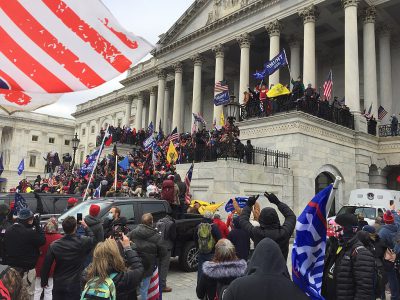
    [post_content] => On the sad anniversary of the January 6, 2021 coup attempt, The Conversationalist's Executive Director has assembled a list of the best analysis she's read in the U.S.'s mainstream media.

On the one-year anniversary of the January 6 coup attempt, I've assembled some of the best reporting and analysis reflecting on how the United States got to this point, and what comes next. The articles cover a range of topics and points of view, from Osita Nwanevu's systemic analysis to Margaret Sullivan's media criticism. Rebecca Solnit and Barton Gellman offer eloquent explainers on authoritarian lies, with Solnit's essay looking backwards to Birtherism, and Gellman looking ahead to 2024. Jennifer Rubin has an interesting read on how to fight her former party's extremism, and Vice has disturbing updates on Proud Boys embedding themselves in local community organizing.
Why Republicans Keep Falling for Trump’s Lies
Rebecca Solnit’s New York Times essay on truth, lies, and authoritarian control is brilliant; George Orwell would have been proud. She begins by tracing the series of GOP lies leading from the Tea Party to Trumpism. Delving into notions of gullibility, cynicism and true belief, Solnit paraphrases Hannah Arendt: "among those gulling the public, cynicism is a stronger force; among those being gulled, gullibility is, but the two are not so separate as they might seem." Lucky for us, Solnit is comfortable with grey areas. Where many writers might be tempted to let the deluded off the hook, especially anti-vaxers now dying from COVID, Solnit digs into their complicity, "gullibility means you believe something because someone else wants you to. You’re buying what they’re selling."
'Trump's next coup has already begun'
Barton Gellman’s piece for The Atlantic is a strong summary of the ongoing threat to the 2024 election; he explains why and how January 6 was a practice run for future GOP violence. This is a clear and cogent breakdown of how the Big Lie incites the GOP base to violently overthrow democracy. It is an urgent call to action, but also self-conscious about not entering crisis-mode sooner. Take, for example, the source with a "judicious temperament" who "cautioned against hyperbole" last year but is now on board with U.S. democracy's death throes. The extended illness isn't examined.

“Virtually no one a year ago, certainly not I, predicted that Trump could compel the whole party’s genuflection to the Big Lie and the recasting of insurgents as martyrs," writes Gellman. But he shouldn’t take pride in being a latecomer to an obvious crisis. There are entire fields dedicated to studying authoritarianism, extremism, propaganda, and personality cults. Those scholars haven't been silent. If being wrong is reasonable, I was a hysterical alarmist, because when Trump first ran I said he would never leave office peacefully, that it was the end of elections as we know them, and that his party-cult base would back him.
If American democracy is going to survive, the media must make this crucial shift
Margaret Sullivan, media columnist for The Washington Post, addresses the mainstream media's failure to make the threat to democracy THE story. Why aren't more outlets openly pro-democracy? Quoting Ruth Ben-Ghiat and Thomas Zimmer, both prominent scholars of authoritarianism, Sullivan argues that the piecemeal approach to covering democratic decline is failing. While the media is finally taking note (she provides plenty of links to further reading) as we approach the one-year anniversary of the insurrection, most are still failing to center the most important political story in decades. Sullivan encourages publications and editors to take a stand for democracy. "Don’t be afraid to stand for something as basic to our mission as voting rights, governmental checks and balances, and democratic standards. In other words, shout it from the rooftops. Before it’s too late."
Trump isn't the only one to blame for the Capitol Riot
In an essay for The New York Times, Osita Nwanevu argues persuasively that the American political system is to blame for the structural advantages that bred Republican entitlement to power. Yes, January 6 was an attack on our democratic institutions, but "our institutions also helped produce that violent outburst by building a sense of entitlement to power within America’s conservative minority." Citing a laundry list of undemocratic institutions and rules, including the Electoral College, stacked courts, and the Senate filibuster, Nwanevu takes issue with the outsized political power of rural voters in sparsely populated states. Structural advantages insulate Republican demagoguery from criticism, radicalizing the party faster in the name of patriotism. Meanwhile, Democrats are still reluctant to consider systemic reforms that would help address the imbalance.
Opinion: Polling on Jan. 6 shows the vast majority of Americans aren’t crazy
Jennifer Rubin, a formerly conservative columnist for The Washington Post, wants to look on the bright side of the fact that the majority of Republicans believe the election was stolen and that Democrats are illegitimately in control. She encourages Biden and the Department of Justice to be more outspoken, and connects Christian nationalism to the insurrection, noting the Christian symbols at the insurrection, a topic The Conversationalist has covered extensively. Being Jennifer Rubin, she also wants to build out the law enforcement capacity to deal with the threat, but fails to mention rising extremism within those institutions.
The Proud Boys Changed Tactics After Jan. 6. We Tracked Their Activity.
Vice reports on how the extremist Proud Boys retreated from the national stage after January 6 to focus on local organizing. There was some speculation that the Proud Boys were going to collapse after two major events—nearly 50 of them faced federal charges, and a report showed that their "chairman" was an informant for the feds. But they did not collapse. Instead, they took a three month break and then began embedding themselves further in local communities across the country. Since then they've joined anti-vax, anti-CRT groups showing up at school board and city council meetings, and made an effort to blend in with local far-right activism. As a result, their base of support has grown.
    [post_title] => Media roundup: how should we analyze the impact of last year's attempted coup?
    [post_excerpt] => On the sad anniversary of the January 6, 2021 coup attempt, Anna Lind-Guzik has assembled a list of the best analysis she's read in the U.S.'s mainstream media.
    [post_status] => publish
    [comment_status] => closed
    [ping_status] => open
    [post_password] =>
    [post_name] => media-roundup-best-analysis-of-january-6s-impact-on-the-one-year-anniversary
    [to_ping] =>
    [pinged] =>
    [post_modified] => 2024-08-28 21:11:29
    [post_modified_gmt] => 2024-08-28 21:11:29
    [post_content_filtered] =>
    [post_parent] => 0
    [guid] => https://conversationalist.org/?p=3682
    [menu_order] => 151
    [post_type] => post
    [post_mime_type] =>
    [comment_count] => 0
    [filter] => raw
)
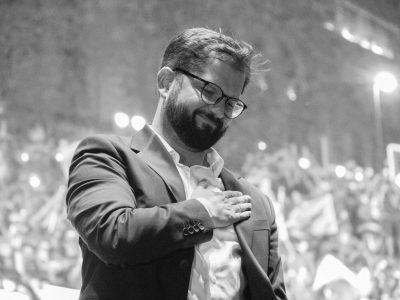
 Jubilant Boric supporters poured onto the streets of Santiago on December 19, 2021.[/caption]
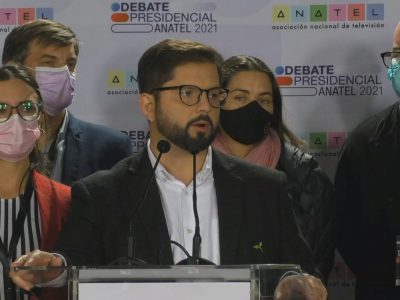
On Election Day I was in Concepcion, in south-central Chile, feeling anxious but also hopeful that the Chilean people would elect Gabriel Boric, the humane, democratic and environmentally conscious candidate. I was at a polling station as ballot counting began, watching as the numbers showed a consistent advantage for Boric. When the announcement was made that Gabriel Boric had been elected, becoming Chile's youngest president, I was euphoric.
Jubilant Boric supporters poured onto the streets of Santiago on December 19, 2021.[/caption]
On Election Day I was in Concepcion, in south-central Chile, feeling anxious but also hopeful that the Chilean people would elect Gabriel Boric, the humane, democratic and environmentally conscious candidate. I was at a polling station as ballot counting began, watching as the numbers showed a consistent advantage for Boric. When the announcement was made that Gabriel Boric had been elected, becoming Chile's youngest president, I was euphoric.

 Reading a newspaper on a bench in Hong Kong on August 20, 2020.[/caption]
The Chinese government’s feud with Lai started in the 1990s, when, after writing a column suggesting that China’s tough Premier Li Peng “drop dead,” Lai was forced to sell his mainland Chinese clothing business that was the source of his initial wealth. An advertising squeeze on the paper, clearly orchestrated by China, started in the late 1990s and accelerated over the years. The Apple Daily office, Lai’s home, and staff reporters suffered various attacks over the years.
“The very rights of journalists are being taken away,” Lai told CPJ in a 2019 interview. “We were birds in the forest and now we are being taken into a cage.” A
Reading a newspaper on a bench in Hong Kong on August 20, 2020.[/caption]
The Chinese government’s feud with Lai started in the 1990s, when, after writing a column suggesting that China’s tough Premier Li Peng “drop dead,” Lai was forced to sell his mainland Chinese clothing business that was the source of his initial wealth. An advertising squeeze on the paper, clearly orchestrated by China, started in the late 1990s and accelerated over the years. The Apple Daily office, Lai’s home, and staff reporters suffered various attacks over the years.
“The very rights of journalists are being taken away,” Lai told CPJ in a 2019 interview. “We were birds in the forest and now we are being taken into a cage.” A 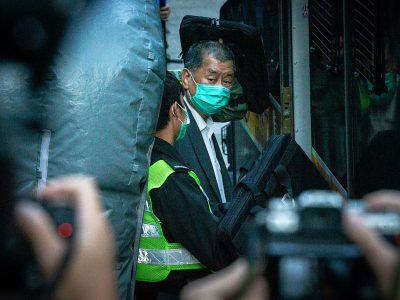
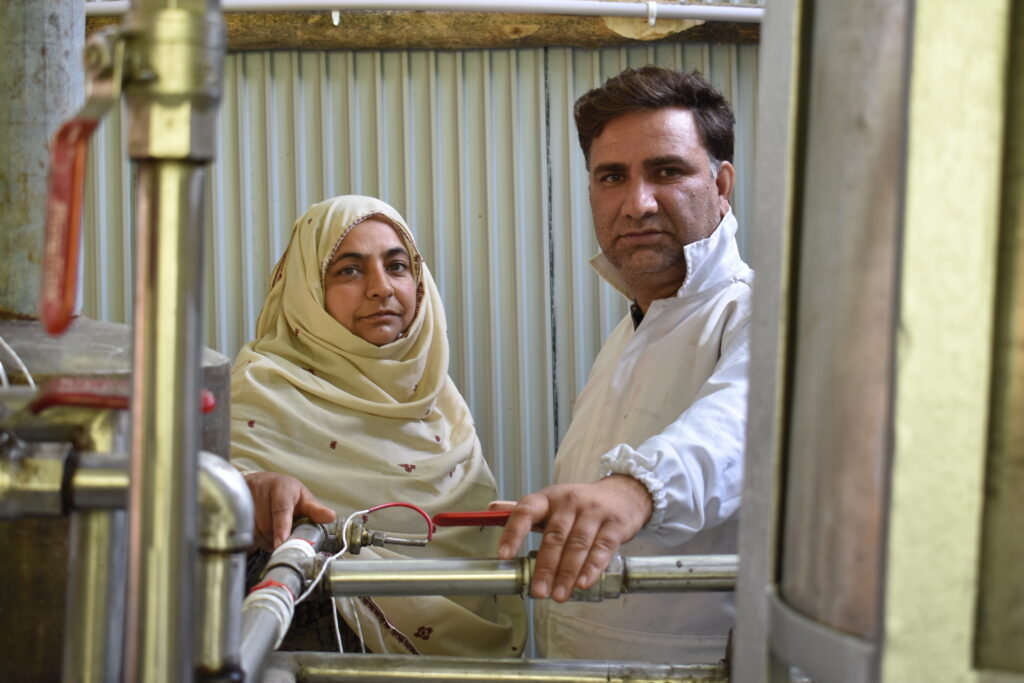 Towseefa Rizvi and Syed Parvez at their honey production facility.[/caption]
Some hope that, with an infusion of knowledge and skills, beekeeping could help revitalize Kashmir’s economy.
Unemployment in the territory is the
Towseefa Rizvi and Syed Parvez at their honey production facility.[/caption]
Some hope that, with an infusion of knowledge and skills, beekeeping could help revitalize Kashmir’s economy.
Unemployment in the territory is the 
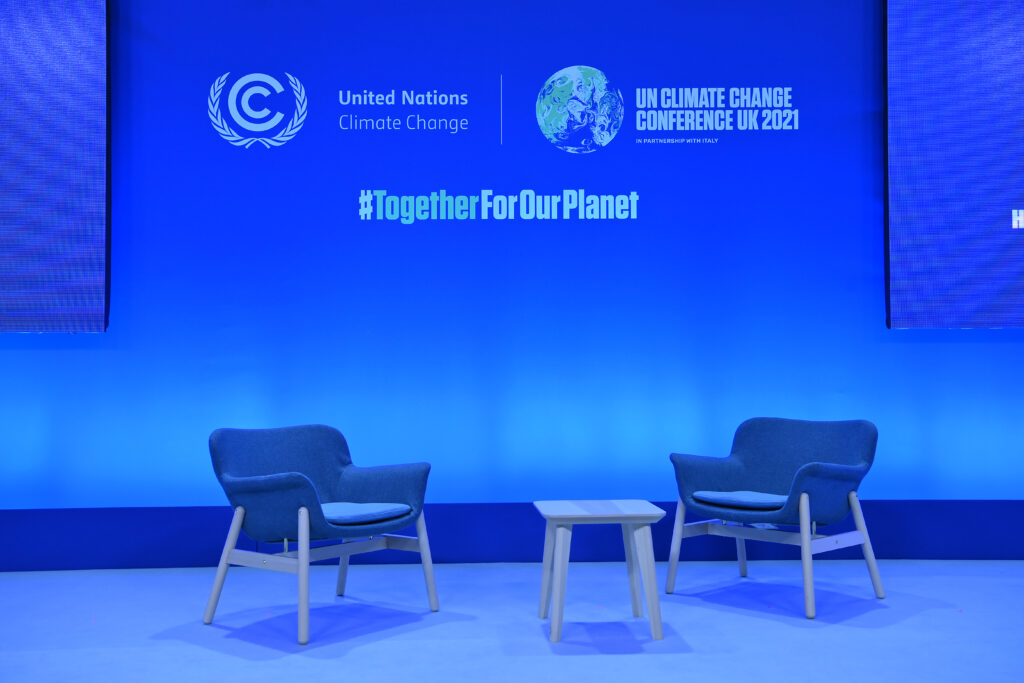 COP26 Climate Change Conference on November 4, 2021.[/caption]
COP (Conference of the Parties) is the decision-making body for the United Nations Framework Convention on Climate Change (UNFCCC). Signed in 1992, the Convention tasks COP with realizing the UNFCCC’s agenda as it responds to the evolving challenges of climate change. COP1 took place in Berlin in 1995. Since then, the climate conferences have been held every one or two years; their purpose is to define the global path toward confronting the climate crisis.
Some of the best-known COPs include:
COP26 Climate Change Conference on November 4, 2021.[/caption]
COP (Conference of the Parties) is the decision-making body for the United Nations Framework Convention on Climate Change (UNFCCC). Signed in 1992, the Convention tasks COP with realizing the UNFCCC’s agenda as it responds to the evolving challenges of climate change. COP1 took place in Berlin in 1995. Since then, the climate conferences have been held every one or two years; their purpose is to define the global path toward confronting the climate crisis.
Some of the best-known COPs include:
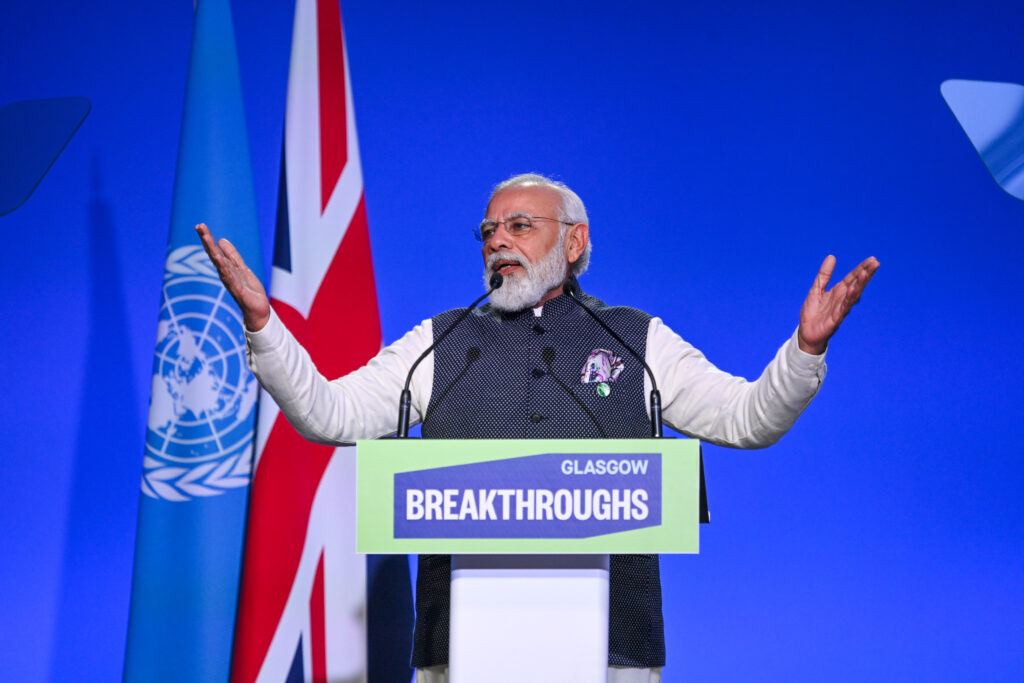 Indian Prime Minister Narendra Modi at at COP26 on November 2, 2021.[/caption]
India’s last-minute demand for a change to the wording of the conference resolution caused an enormous uproar. The original wording called upon signatories to “accelerate (…) efforts towards the phase-out of unabated coal power”; India said it wanted it changed to “phasedown of unabated coal power.” COP decisions require consensus, so the president was forced to capitulate. But while wealthy countries were vociferous in their criticism of this move and the media blamed India for playing an obstructive role, there is more to India’s position than simple obstruction or lack of purpose. The country’s negotiators were responding to a lack of commitment from rich countries to supporting the needs of poorer ones. From India’s perspective, the richer nations were historically for climate change and were therefore ethically obligated to cooperate with those who were poorer, carried far less responsibility for climate change, and were more vulnerable to its impact. Ambition and equity mark a delicate balance in every climate negotiation, a fact that Glasgow demonstrated once again.
Future COPs must better consider how to navigate this precarious balancing act. The urgency of the situation precludes further setbacks.
It will be very difficult for anyone who attended COP26 to forget the sight of Alok Sharma, the president of COP,
Indian Prime Minister Narendra Modi at at COP26 on November 2, 2021.[/caption]
India’s last-minute demand for a change to the wording of the conference resolution caused an enormous uproar. The original wording called upon signatories to “accelerate (…) efforts towards the phase-out of unabated coal power”; India said it wanted it changed to “phasedown of unabated coal power.” COP decisions require consensus, so the president was forced to capitulate. But while wealthy countries were vociferous in their criticism of this move and the media blamed India for playing an obstructive role, there is more to India’s position than simple obstruction or lack of purpose. The country’s negotiators were responding to a lack of commitment from rich countries to supporting the needs of poorer ones. From India’s perspective, the richer nations were historically for climate change and were therefore ethically obligated to cooperate with those who were poorer, carried far less responsibility for climate change, and were more vulnerable to its impact. Ambition and equity mark a delicate balance in every climate negotiation, a fact that Glasgow demonstrated once again.
Future COPs must better consider how to navigate this precarious balancing act. The urgency of the situation precludes further setbacks.
It will be very difficult for anyone who attended COP26 to forget the sight of Alok Sharma, the president of COP, 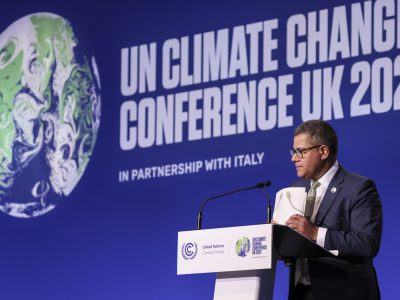
 José Antonio Kast at a press conference on August 30, 2021.[/caption]
This election campaign takes place in the context of a process to rewrite the national constitution, which came out of the massive protest movement that swept across the country in 2019. The factors that led to the protests, the issues that are driving this election campaign, and the future of Chile’s democracy are the subject of this article.
José Antonio Kast at a press conference on August 30, 2021.[/caption]
This election campaign takes place in the context of a process to rewrite the national constitution, which came out of the massive protest movement that swept across the country in 2019. The factors that led to the protests, the issues that are driving this election campaign, and the future of Chile’s democracy are the subject of this article.
 Protesters in Santiago on November 19, 2019.[/caption]
The government responded with a repressive crackdown that included the deployment of soldiers on urban streets, the imposition of curfews in several cities, and President Sebastian Piñera’s “
Protesters in Santiago on November 19, 2019.[/caption]
The government responded with a repressive crackdown that included the deployment of soldiers on urban streets, the imposition of curfews in several cities, and President Sebastian Piñera’s “