WP_Post Object
(
    [ID] => 6915
    [post_author] => 15
    [post_date] => 2024-05-10 18:37:13
    [post_date_gmt] => 2024-05-10 18:37:13
    [post_content] => 

In hiring a babysitter of my own, have I become the mother I used to nanny for?

When the young woman appeared at my door, braless, pink-haired, and smelling faintly of cigarettes, the only thing I could think about were my shoes. 

My daughter had recently gone from being a baby to a toddler, and for the first time in her short life, I’d landed a dream job that would require me to return to the office after a year off. As preparation, I’d spent hours looking for a specific pair of clog boots, the exact shoes I believed I needed to walk into my new office as a new(ish) mom, newly 40, finally in her power era. They had to be either Swedish Hasbeens or from the No. 6 Store—the ones with the shearling on the inside that came to the top of the ankle. Even though I couldn’t really justify spending $400 on a pair of shoes, I was obsessed. Something deep inside me told me these boots would complete a vision of myself that I had been fantasizing about for over a decade: practical but stylish, sophisticated but understated. I felt a primal need to have them. 

Then, this manic pixie dream babysitter, complete with the prerequisite tattoos and dyed hair that changed color every week, knocked on my door, and showed me all at once where my girl boss fantasy had come from. I hadn’t put it together until that moment, but my new shoes were the exact same clogs that belonged to the mother I used to nanny for when I was my sitter’s age. Instantly I was transported back to the long oak table in their dining room, the one where I’d linger after my duties for the day were completed. For years, I’d watched this mom strut around Brooklyn in those clogs, living the life I’d desperately wanted. And somewhere in my subconscious, the boots had buried themselves as a symbol—of adulthood, of success, of stability. All the things that seemed so far away from me in my early twenties, when I first started working for her. 

And in a way, they were. Fresh out of drama school in London, I had moved to New York at 23 with hopes of becoming a working actress, but instead had become what I call a “professional auditioner.” On average, I would go to something like four auditions a week, but nothing ever stuck. I was terrified of failure, terrified of everything—but more than anything else, paralyzed by what I would do if I actually got any of the parts I went in for. 

Like most struggling actors, I was also broke. To make rent, I worked as a babysitter for a family in Brooklyn Heights, watching their two boys over the course of three years. Really, I was their nanny, but that word was verboten in the wealthy creative enclave that I worked under. The title would have legitimized my work, and no one—not the parents who paid me under the table, not the children I watched, and especially not me—wanted to admit that it was an actual job. 

To be honest, the kids and I were never a great match; they were devoted to sports, obsessed with talking about soccer and basketball, while my athletic acumen was limited to a two hour yoga class. This didn’t seem to matter much, and the kids didn’t seem to mind, either. I would shepherd them from whatever practice they’d begged to sign up for to whatever music lesson they were being forced to take, make them dinner, give them their bath, kiss their scraped knees—and the whole time, I’d wait for her to come home.

Whenever I babysat, whether I was making broomsticks for a quidditch match in the park or listening to the same joke for the hundredth time, I was mentally elsewhere; rehearsing lines, begging my agent to get me an audition, texting some boy. But the moment Mom walked through the door, I was present; and suddenly, I never wanted to leave. At seven each night, she would swoop in from her job as a commercial producer, dressed in clothes that were always subtle but expensive, on trend but never tacky. She’d kiss the tops of her boys’ heads, take her coat off, and start telling me about her day. 

Her stories about office life, about school meetings, her gossip about other parents, left me enraptured. I would study her with a mix of curiosity and fear; I wanted a version of her life, and at the time, it felt painfully unattainable. 

When she was at work and the boys preoccupied, I’d spend my days gazing at the awards on her shelves, the artwork on her walls, the beautiful crown molding in her apartment. But it was more than that. As she showed me the secret corners of an adult woman’s existence, I in turn revealed my own desires, not only to her, but to myself. She listened to my ideas with respect and responded to my opinions with interest, allowing me the space to begin to think I might have some big potential I hadn’t yet realized. That maybe I, too, was in possession of the same exceptionality that I saw in all the parents at pick up at her children’s fancy alternative elementary school: the playwrights, the performance artists, the Pulitzer winners. I wanted to make something that mattered to the world—because I wanted to matter, and felt like I didn’t. 

It was in those thrilling ten minutes that I spent with her each night, trying to soak up everything, that I felt like my life could finally have direction. In those brief interludes between her taking off her coat and me putting on mine, she was a confidante, a mentor, a hopeful oracle giving a glimpse of my future—and, I realize now, a mother to me, as well, in a time where I needed it. 

Even so, I found myself battling a dark depression for about a year, flailing and miserable, grappling with the fact that my career wasn’t going anywhere. Eventually, it began bleeding into my work. There was a devastating moment when the nine-year-old, home sick with a stomach bug, caught me crying over yet another rejection. I thought he’d been asleep, and when he walked in on me, it seemed so taboo, I told him I was only practicing for an audition. I felt guilty, like I might have introduced something dark and scary into his perfect childhood—but truthfully, I was humiliated. I could have been so many things, and in that moment, I was a failed actress who wasn’t even allowed to call herself a nanny.

Eventually, I decided to go back to school, to change course. I gave up on acting at the same time I stopped working for the family. Leaving was fine, healthy even, for all of us. The kids, their parents—especially Mom and me—had quickly discovered that we had outgrown the need for each other.

Still, she left her mark. Eleven years later, I’d walk into my new job as a TV producer, in a secondhand version of her clog boots; in a way, a secondhand version of the woman I believed I was supposed to become. I’d amassed my own awards, my own crown molding—but it hadn’t really hit me how much I’d replicated my former boss’ life until my own babysitter showed up, a mirror image of my younger self, now reflecting back who I’d become on the other side. 

I was working from home when our sitter first started with us, and watching her sleepy, wrinkle free eyes gaze upon my child was jarring. Not only because it’s always strange to watch someone else mother your baby, but also because I’d only ever played the babysitter’s part, and now, I’d been cast in the titular role, the one I’d always wanted. I suddenly found myself performing a kind of character, speaking a little too loudly when I was on a work call, hoping to impress the 22-year-old rocking my daughter to sleep in the next room. 

Each night, before she left, I began to ask her about her life. How long had she been with her boyfriend: Several years, and they planned to get married. What did she want in the future: To work with kids in a small town away from the city. She told me she couldn’t wait to live without roommates and asked my opinion on her next tattoo. Once she gave me a handmade bracelet made of special crystals she had sourced herself. They’d help me through my next big pitch meeting, she said. I almost cried at the thoughtfulness. (She never gave my husband anything.) Was I becoming to this young woman what my former boss was to me, I wondered? Did I even want that? 

While I mostly feel grateful towards my previous employer, I still harbor some resentment towards her, too. It was clear to me that while she’d likely had her own salaried caretaker when she was little, the mother I’d worked for had never taken on that job herself. She hadn’t needed to. As such, she’d never given a second thought to the intricacies of my well-being once I stepped foot outside of her apartment, and hadn’t ever really cared for me beyond those ten minutes she gave me each night. I made $20,000 a year working for her, and never had health insurance the entire time. She never offered it to me, and I couldn’t afford it. She trusted me with her children’s safety, with their lives—and yet there was no one I could trust with mine, no one to cover my urgent care bill when I got the flu, no one I could turn to when I needed someone to take care of me.   

Of course, my relationship with my sitter is imperfect in its own ways. Like all 20-somethings, she’s subjected to her own hardships; friends let her down, great apartments pass her by, she works a second job catering while her peers all seem to get full time jobs with benefits. Sometimes she arrives at our home with a cloud of sadness that I know too well. Once settled, however, the fog disappears, replaced with a supernatural ability to be present with our baby; then, the next week, she’ll be wishy-washy, often canceling right before she’s supposed to come over. 

Recently, she flaked on us again during a stressful moment when she was very much needed. My mother in law told me that there was always something a little off, something a little “unreliable about the kinds of girls drawn to these jobs.” Even though in part, I agreed with her, I was also offended—not only on her behalf, but on behalf of my younger self, too. I knew intimately how precarious this time in a young person’s life could be; how, for me, being “the babysitter” was fun and easy at first, then slowly became a twisted reflection of the life I didn’t have, the life that felt so far away, no matter how hard I tried to get to it.

So I try to extend some grace to the girl who has come to look after my child. Whenever she’s late, I remind myself that this is not what she felt put on this earth to do, that for all of us, this is temporary. While I can’t give her the opportunities she’s chasing, the life she’s running towards, I hope to give her the same ten minutes a day that, with enough accumulation, might make their own kind of guidance, draw their own kind of map, like the one that had been given to me. Sometimes I wonder if one day she might go through the same thing I’m experiencing now, and hire a babysitter of her own, continuing this cycle of nannies and mothers, mothers and nannies. 

Often I find myself surprised by the largeness of these maternal feelings—how far they can extend out from my daughter towards everyone around me, how they extend to her, too. Once, I came home and found the babysitter asleep on our bed, the baby tucked against her, both of them breathing peacefully, their eyes flickering back and forth beneath their lids. I was almost dizzy looking at her, a vision from my past come to sleep in her future self’s bed. All these versions of who I was, who I am, and who I have yet to become, were suddenly in the room with me, asking me to take off my clogs before finding a way to nestle against these tender bodies. But of course, I did not do that. Instead, I covered them both with a blanket, closed the door gently behind me, and let them sleep.    

[post_title] => The Babysitters Club [post_excerpt] => In hiring a babysitter of my own, have I become the mother I used to nanny for? [post_status] => publish [comment_status] => closed [ping_status] => closed [post_password] => [post_name] => babysitter-nanny-mother-mom-relationship-childcare-motherhood-care-work-labor [to_ping] => [pinged] => [post_modified] => 2024-09-13 19:24:34 [post_modified_gmt] => 2024-09-13 19:24:34 [post_content_filtered] => [post_parent] => 0 [guid] => https://conversationalist.org/?p=6915 [menu_order] => 58 [post_type] => post [post_mime_type] => [comment_count] => 0 [filter] => raw )
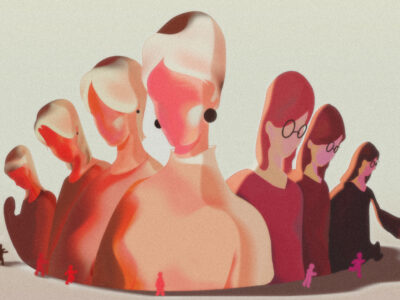
An illustration of seven different illustrations of the same woman through different stages in her life, in a color gradient of reds and burgundies. They are all looking down at a semi circle underneath them, where tiny children toddle around.

The Babysitters Club

WP_Post Object
(
    [ID] => 6857
    [post_author] => 15
    [post_date] => 2024-04-05 17:52:00
    [post_date_gmt] => 2024-04-05 17:52:00
    [post_content] => 

When reading the news feels like staring into the sun, restorative narratives provide a lens to bear witness without burning our eyes.

On April 8, the moon will pass directly between the Earth and the sun, shrouding parts of the world in darkness, and creating a tempting void we're told not to look at directly. It’s a relatively rare but well understood phenomenon, full of portents; the sun and the moon aligning just so—a haloed, shadowy abyss that is astonishing to behold, but harmful to observe without the right protection. 

Going out on a limb here: The eclipse is not the only collective experience that's currently harming us without the right lens with which to see it.

To read the news today is an exercise in patience, in heartbreak, and in fury. It is overwhelming. Each day we bear witness, however shallowly, to rising authoritarianism and declining democracy, to climate crises, to war, mass death, human-made famine. All variables aligning at once to create a total eclipse of despair. Meanwhile, we are expected to continue life as normal, to pretend the void isn’t there, tempting us to lose ourselves in it—all while the people responsible for its existence insist it isn’t there at all. Is it any wonder so many people are losing their bearings? How are we supposed to look at what’s in front of us when it feels like staring directly into the sun? 

Trying to engage with what's happening in the world—in a time where media layoffs are constant, where publications are shuttering, where suppression is rampant and journalists are killed and jailed with impunity—is a fraught exercise, even for those who pride themselves on media literacy and sourcing good journalism. Cowardly headlines, rampant disinformation, and clickbait crap are exhausting people to the point of nihilism. When the NYT is normalizing witness tampering, and Elon is openly promoting race wars and eugenics on X (née Twitter), as 30,000 Palestinians, killed by the IDF, die in passive voice, it can feel maddening trying to figure out where to turn without losing yourself in toxic sludge. Cory Doctorow calls this the "enshittification" of the internet, the transformation of social media platforms from user friendly to user abusive, ultimately harming both its consumers and its bottom line. All the while, endless ads and propaganda continue to short circuit our brains.

None of this means we're doomed. But it does mean that we can't allow ourselves to check out. On the contrary, we have to keep finding stories of hope, and truth, and resilience if we want to sustain ourselves in the fight for democracy, our communities, the planet, and each other. The real balancing act we face when absorbing and coping with the news isn’t between observable reality and alternative facts. It is emotional: How do you stay engaged with the world, while also maintaining the hope necessary to stave off nihilism? 

It can be hard to see it, but there are still substantive reasons for hope: You just have to put on your protective glasses first. 

There's a backlash to the backlash, and it's happening all around us. Following the targeted killing of seven humanitarian aid workers from World Central Kitchen in Gaza, President Joe Biden finally threatened to condition US support to Israel. In India, rural women driven home from the cities by COVID are reviving drought-stricken farmland with the help of NGOs, and making a sustainable income for themselves and their families. At last month's Commission on the Status of Women at the United Nations, the current and all former Special Rapporteurs on violence against women and girls—together with four nations (Democratic Republic of Congo, Sierra Leone, Costa Rica, Antigua and Barbuda)—called for a new global treaty to end gender violence, citing the global crackdown on women's rights as impetus for moving forward immediately. 

Restorative narratives like these are essential: They are a way to help regulate our emotions around the news, rebuild trust in good journalism, and stoke hope for a better tomorrow. This is because these stories are focused on people, resilience, and solutions—communities making progress despite the bullshit. Restorative narratives help us differentiate fact-based trends from moral panics, and genuine threats from trauma responses. They're a means for collective engagement with the world, but with the right tools to protect us. Because who doesn't want to see the eclipse? People are traveling from all over the world to get closer to totality, tracing the eclipse's path from Mexico to Canada. It's a striking phenomenon, and worth our attention. Just don't burn your eyes when you see it.

[post_title] => Total Eclipse of Despair [post_excerpt] => When reading the news feels like staring into the sun, restorative narratives provide a lens to bear witness without burning our eyes. [post_status] => publish [comment_status] => closed [ping_status] => closed [post_password] => [post_name] => eclipse-2024-metaphor-news-restorative-narratives-protection [to_ping] => [pinged] => [post_modified] => 2024-09-13 19:28:30 [post_modified_gmt] => 2024-09-13 19:28:30 [post_content_filtered] => [post_parent] => 0 [guid] => https://conversationalist.org/?p=6857 [menu_order] => 59 [post_type] => post [post_mime_type] => [comment_count] => 0 [filter] => raw )
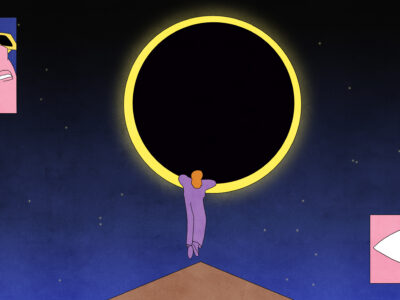
An illustration of a woman in a purple sweatsuit at the top of a mountain, climbing into the solar eclipse (a black circle overlapping with a yellow border, representing the moon and sun). In one corner, there's a inserted illustration of a woman looking up into the sky with protective glasses on, in the other corner, there's a close-up illustration of an eye where the iris is replaced by the eclipse.

Total Eclipse of Despair

WP_Post Object
(
    [ID] => 6756
    [post_author] => 15
    [post_date] => 2024-03-15 23:25:43
    [post_date_gmt] => 2024-03-15 23:25:43
    [post_content] => 

Women from one of Turkey's most affected regions share how little has changed—and how much still needs to be done.

Inside a prefabricated house atop a hill in Antakya, Turkey, Saniye Yılmaz is sitting on a beige velvet sofa, charging the beeping pill installed in her heart. She is shaking, and struggles to speak.

“Everything got worse after the earthquake,” she says, adding that the stress has made the symptoms of her Parkinson’s disease even more unbearable. “We’re the living dead.”

It’s been over a year since the Hatay region of Turkey, where she lives, faced a colossal trauma: On February 6, 2023, two catastrophic earthquakes initiated the collapse of over 160,000 buildings across 11 provinces in Turkey’s south and southeast, killing more than 50,000 people, injuring more than 107,000, and directly impacting over 13 million. The two earthquakes—with a magnitude of 7.8 and 7.5, respectively—happened only nine hours apart, with many aftershocks in between and after.

Shortly following, ahead of the centennial elections, President Recep Tayyip Erdoğan promised to “mend the scars” of this devastating tragedy while on a tour of the quake zone, telling his citizens: “Give me a year.” With the anniversary come and gone, he has so far failed to deliver on his promise—and many are outraged over it.

“We were left out in the cold and rain for five days, and I couldn’t charge my pills,” Saniye says, still stirred by the memory. “I nearly died.”

Her anger for having been abandoned by the government can be felt in her gaze, her brown eyes dark and furious. It is a feeling shared by many, especially in Antakya, where rescue workers first arrived three days after the quakes, as thousands froze or bled to death under the rubble. It has felt impossible to regain any sense of normalcy since.

“It’s very difficult, being a woman,” Saniye’s 76-year-old mother, Sakine Yılmaz, says. “But after the earthquake, everything became much harder.”

Because Saniye’s father also has Parkinson’s, Sakine is the sole caretaker of their household. The family lost their house and all their belongings to the earthquakes, and as Sakine speaks, she’s washing donated dishes by hand, as her husband eats the bulgur balls she’s prepared with yogurt. When she’s finished, she will start on the laundry. Her exhaustion from the last year is legible in the many lines on her face.

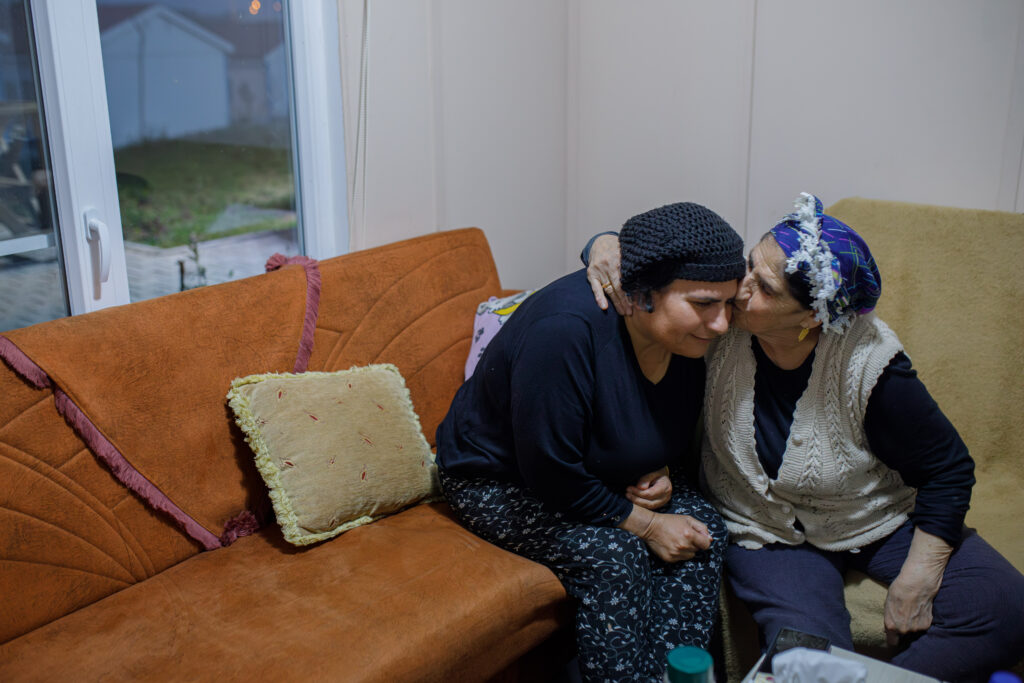
Saniye Yilmaz, who lives with her elderly parents in a prefabricated city in Hatay and has Parkinson's disease, sits on an orange sofa. Saniye Yilmaz's 76-year-old mother Sakine Yilmaz kisses her daughter on the forehead. Saniye is wearing a navy knit hat, long sleeved navy shirt, and floral print navy pants. Her mother is wearing a blue patterned scarf on her head, a beige sweater vest, and navy long-sleeved shirt and pants. Photo: Can Erok
Saniye Yılmaz (left) and her mother Sakine Yılmaz (right). Photo: Can Erok

The desperate mood seen in their cramped living quarters is reflective of the almost 700,000 other people living in temporary shelters across what’s today called “the quake zone.” According to Hatay’s governor, Mustafa Masatlı, nearly 200,000 people live in “container cities” in Hatay alone. Thousands more are living in plastic tents, which you see set up on side streets and in the yards of cracked houses.

“My children can’t shake out their energies,” a distressed 31-year-old Yazgın Danışman says. “They don’t sleep at night. Their sleep and eating schedule is messed up.”

Danışman is a tired mother, housewife, and survivor, who lives in a container with her husband and three of her children. As we speak, she tries to soothe her 1-year-old to sleep in her lap. She is upset with the government for not keeping them safe against the earthquakes by promoting rapid gentrification, and for only acknowledging their hardships prior to the elections, when it could benefit them politically. “I will not vote,” she says, referring to the local elections on March 31. Her newfound friends—her neighbors—share her fury and resolve. They say they don’t want to “have to wait in these [containers]” for an unseeable future.

Still, it remains unclear just how much longer they will be trapped there. Before last year’s presidential and parliamentary selections, President Erdoğan initially vowed to totally solve the housing problem by “constructing quality and safe structures” for all affected by the earthquakes within a year. When he spoke again in August, the number was reduced to 319,000 safe new homes to be built—again, “in a year.” So far, he has only been able to deliver 46,000, according to the Environment and Urbanization Minister Mehmet Ozhaseki.

Yazgın Danışman drinks tea with Kadriye Zaran (center) and Mevlüde Aydın (right), her neighbors and now close friends. Photo: Can Erok

Critics, including the Union of Chambers of Turkish Engineers and Architects (TMMOB), have accused the government of favoring political motivations over sustainable solutions in this crisis, and have pointed out it’s making unrealistic promises to the public. Many citizens, meanwhile, blame the government not only for their lack of response to the tragedy, but for directly contributing to the extent of the damage in the first place. Although officials, including President Erdoğan, have repeatedly described the earthquakes as “the disaster of the century,” attempting to pin responsibility on divine forces, scientists suggest it was in fact the corruption and greed of local and central governments that killed the masses. Turkey had been expecting an earthquake of this magnitude for well over two decades, yet the government continuously moved forward with building projects that lacked the proper techniques, inspections, and planning to withstand the inevitable disaster. One notable example is the 2018 zoning amnesty granted by the Erdoğan government ahead of the elections, which condoned many illegal structures in a highly seismic country—a move seen as a way to gain votes over his opponents. In another case, the mayor of Hatay, a member of the main opposition party, received $200,000 worth of bribes to allow a lush apartment complex to be built three years before the earthquakes, only for it to collapse, killing more than 60 residents.

It would be one apartment complex of thousands: Lale Korkmaz, 50, lost both her husband and her 22-year-old son, Isa Baris, when their building collapsed, its foundations failing against the 4:17 AM earthquake. At the time, she had been at the hospital with her 26-year-old daughter, Buket, who was being treated for leukemia; Isa had been her marrow donor.

Buket would lose her life just one week after Korkmaz lost her husband and son. But, she says, Isa had been her daughter’s support system until the very end—not just as a donor, but as a poet, a vivid storyteller, and a bright spirit.

“He loved the Beatles; we would watch movie after movie,” Korkmaz says, her eyes tearing up. “We even had a WhatsApp chat that included only us three. One of us would message to let them know when the coffee was ready. I just really miss our conversations.”

Now, Korkmaz lives with her older daughter’s family in one of the prefabs, mounted by a private Turkish company and given to the government’s emergency and disaster management agency, AFAD. “[My granddaughter and I] blow kisses at the stars when they stand aligned,” she says, in hopes that her two late children are on the receiving end.

Korkmaz finds a small sliver of solace in her daily coffee dates with other women neighbors, each going through their own tragedies. She also holds out hope that a hospital somewhere will name one of its rooms after her daughter, and that the purple tulips she’s planted in her honor will bloom in the near future. That’s what her daughter’s name means—tulip.

Lale Korkmaz, 50, who lost her son and daughter in the earthquake, shows the flowers she grew in memory of her son and daughter in front of the prefabricated house where she lives. She is wearing a black long-sleeved shirt, a dark unzipped puffy vest, taupe pants, and light pink Crocs. Her hair is tied back. Photo: Can Erok
Lale Korkmaz shows the flowers she grew in memory of her son and daughter. Photo: Can Erok

But besides these brief moments of peace, the future is bleak both for her and for millions across the deprived quake zone, and in Antakya’s case, it is especially horrific. Prior to the earthquakes, it had been known around the globe as a culture and gastronomy hub, and as a prime example of coexistence, with Sunnis, Alewites, and multiple different Christian communities all living in harmony. Now, the earthquake’s name is all over the wrecked city, first called Antioch in the Bible, its many unique historic heritage sites almost totally wiped out.

Today, the city is so dusty, you see tired people covering their noses and mouths as they walk amidst what seems like a doomsday plateau. You can physically see the high risk of asbestos in the layer of dust that gathers on your clothes and your car. Out of 911,000 apartment units and homes, more than 266,000 were destroyed or severely damaged in Antakya, according to Mayor Lutfu Savas. The city feels like a giant construction zone, with excavators still scooping away mountains of rubble that once stood as buildings made of feeble concrete, some of which had been approved to be  mixed with sand, per court documents. Where the rubble has been cleared, large patches of empty land remain, haunting locals while silently breaking their hearts.

But while everyone suffers deeply in Antakya, for women, the toll is even heavier, according to Canan Gullu, president of the Federation of Women’s Associations of Turkey, who’s been traveling between the quake-stricken provinces over the past year to implement various projects focused on helping women.

“Turkey already ranks very low on the Gender Gap Index,” Gullu says, referring to the 2023 World Economic Forum report, which puts Turkey at 129 out of 146 countries. “So, we are seeing this divide deepen further here now.”

Part of the problem is the lack of space, leading to pressure cooker domestic situations. “Imagine a life that fits 21 square meters [or about 225 square feet],” she explains, referring to the containers. “Women lack their private spaces. In that tightness, women are expected to cook, do the laundry, look after the children, serve the rest of the family.”

She has called for immediate psychosocial rehabilitation in the region, and for more training and employment options for women. The federation has also opened 30 “Purple Sites,” containers among the temporary settlements, where women can meet with psychologists, midwives, and child education specialists. They are seeing a rise in the number of girls dropping out of school, girls and women forced into marriage due to economic reasons, and of child abuse, Gullu says. “Children must be able to go to school or kindergarten,” she urges, noting that educational costs remain sky-high. She has also called for the government and private funding to help bring small businesses back on their feet as quickly as possible to help alleviate this, but there is a long way to go.

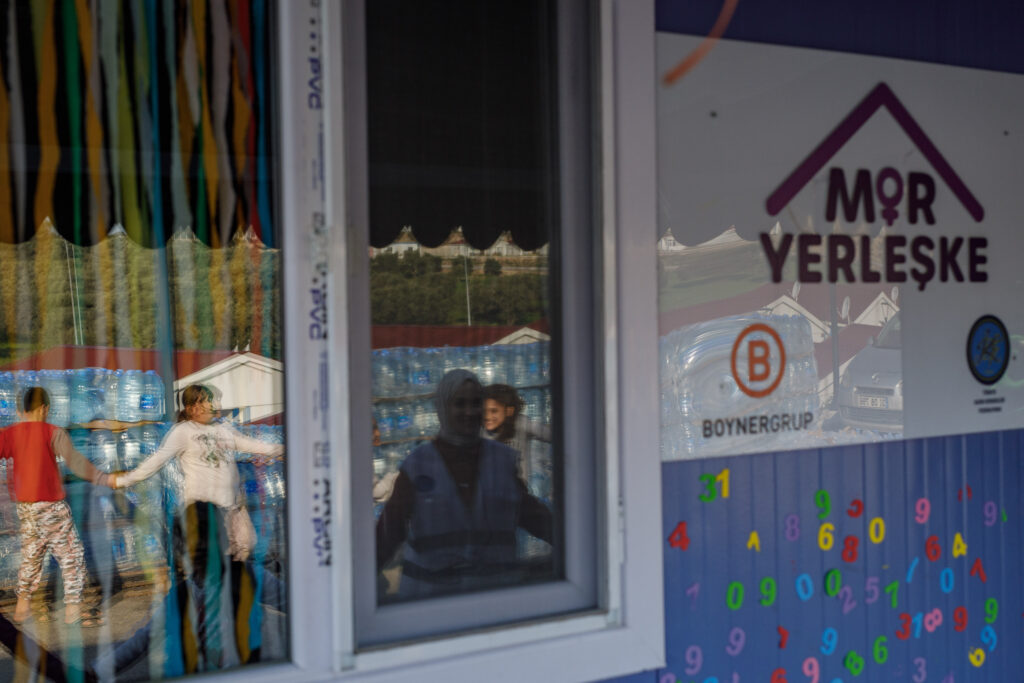
Children play in a prefabricated city west of Antakya. A psychologist and "social welfare officers" accompany the children as they play nursery rhymes outside one of the women's federation's "Purple Sites." You can see their reflection in the window, which has colorful paper streamers on the inside. Photo: Can Erok
One of the "Purple Sites." Photo: Can Erok

Turkey’s crippling inflation rate stands at around 83 percent, independent economists say. And in Hatay, many items are more expensive than ever due to lack of resources. According to the Treasury and Finance Minister, the cost of the damage from the earthquakes stands at $104 billion US dollars; but so far, only around $30 billion has been spent. And the clock is ticking for female freedoms under these destitute conditions.

“We are up against a tremendous increase in cases of violence, as well, because of poverty and unemployment,” Gullu says.

Aysel*, who asked to remain anonymous for security reasons, has experienced this firsthand.

“He beats me all the time, for any reason,” she says, referring to her abusive husband. She says she married him when she was 48, and that he has been violent throughout their marriage, choosing to spend almost all of their retirement stipend on drinking all day. But after February 6, her life only got worse.

“I want to get out,” Aysel says. “I built a little hut, and I’m going to move there, and wait for him to divorce me.” She hopes he will have to pay her alimony if that happens.

Still, Aysel is afraid that he could track her to her new home, and assault her there, and is considering trying to get a restraining order against him—but is also scared of what might happen if she does. “He’s been sleeping with a knife under his pillow for the last two months,” she says, sobbing.

What Aysel has survived is heartbreakingly common in the region, even before last year. “According to the official data on domestic violence against women, available from prior to the earthquakes, the affected regions have a relatively lower rate of reporting to authorities and higher level of acceptance in cases of violence,” a recent UN Women report says. But Aysel is determined to get out.

Now over 60, she wants to start over, if she’s able to find the opportunity to do so. She hopes to begin working soon, but is worried about the lack of opportunities in the city, and knows she will struggle finding a job. “I’m willing to do any work just to stay away from him,” she says. Her resolve is reflective of many other women in the region, in spite of all that has been taken from them.

For hundreds of thousands—if not millions—of women and girls, the obstacles of the earthquakes’ aftermath stand tall, and brighter times lay too far out in the horizon to be seen. But without the government coming to save them, each will continue doing all that they can to persevere on their own.

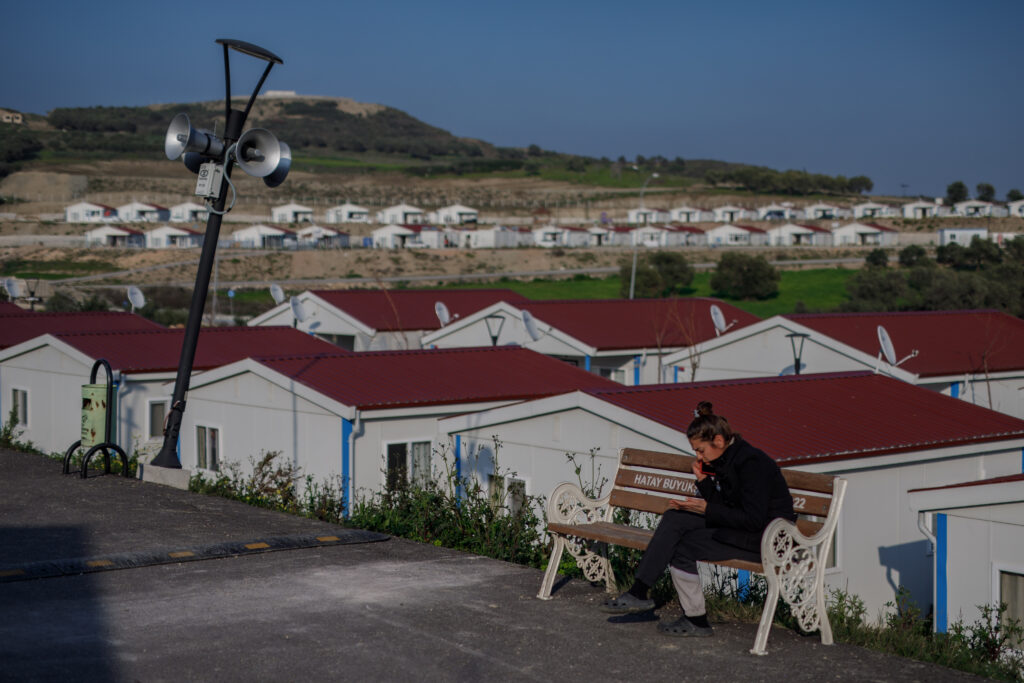
A woman living in a prefabricated city sits on a bench and talks on the phone. She is wearing all black and sandals, her hair tied in the bun. In the background, the homes are all small and light gray with dark red roofs and a line of blue. Some have satellites. Photo: Can Erok
A woman sits on a bench in front of an expanse of prefabricated homes. Photo: Can Erok
[post_title] => One Year After the Earthquake [post_excerpt] => Women from one of Turkey's most affected regions share how little has changed—and how much still needs to be done. [post_status] => publish [comment_status] => closed [ping_status] => closed [post_password] => [post_name] => turkey-antakya-hatay-earthquake-zone-year-anniversary-disaster-erdogan [to_ping] => [pinged] => [post_modified] => 2024-08-28 21:11:27 [post_modified_gmt] => 2024-08-28 21:11:27 [post_content_filtered] => [post_parent] => 0 [guid] => https://conversationalist.org/?p=6756 [menu_order] => 60 [post_type] => post [post_mime_type] => [comment_count] => 0 [filter] => raw )
Two women who've collected iron from the rubble in Antakya, Turkey on a makeshift cart cover their faces to protect themselves from the dust as they walk through the center of the city. Everything around them is gray, nearly all buildings flattened or crumbling. Photo: Can Erok

One Year After the Earthquake

WP_Post Object
(
    [ID] => 5947
    [post_author] => 15
    [post_date] => 2024-03-07 18:56:22
    [post_date_gmt] => 2024-03-07 18:56:22
    [post_content] => 

Meet the women creating new life from arid land in India.

It was a day of joy and relief for Kamla: Her daughter was getting married—and the night before, it had rained.

Far from a bad omen, the downpour had been ever welcome. Kamla is a farmer, whose livelihood is directly dependent on the land she cultivates, the land that gives her and her family a variety of vegetable crops to eat and to sell, like beetroots, tomatoes, beans, and chilis. For much of the year, however, the weather works against her: She and her family live in Khajraha Khurd, a village in the Jhansi district of Bundelkhand, Uttar Pradesh—an otherwise drought-prone region in India’s most populous state.

In Kamla's home that morning, preparations were being made for the wedding. Women were singing folk songs and cleaning the freshly picked vegetables from her farm to prepare meals for their guests. Young girls were making roti on the earthen stove burning with a wood fire. Other children were jumping in muddy puddles as cows grazed in a nearby pasture. The entire scene resembled a Satyajit Ray film, portraying their small, Indian village as a mosaic of intertwining agrarian lives.

Kamla was overjoyed. Because of the savings she’d earned through farming, she would be able to gift her daughter two heavy, embroidered sarees with matching glass bangles, heels, and bindis as a wedding gift. She wouldn’t have been able to afford them otherwise. “When I got married, nobody asked me about my choices,” she says. “But today, at my daughter’s wedding, I have made sure her choices are taken care of.”

Farming is a path that has opened many new doors for Kamla, one she first chose to walk in 2020, when the outbreak of the COVID-19 pandemic led to the imposition of a country-wide lockdown. In cities across India, migrants who worked as daily wagers—Kamla included—suffered the most, as their jobs were eliminated overnight. Their very livelihoods came to a complete standstill, and few to none could meet their personal needs, let alone those of their families.

At the time, Kamla was working as a construction worker on a site in New Delhi. After the lockdown was announced, she stuffed her things into a sack and started the journey back to Bundelkhand—where she was born and raised—along with her three children and husband. Without employment, the couple had to exhaust all their savings simply to return home.

Once in Bundelkhand, Kamla was desperate for work. She was not alone: During the pandemic, Uttar Pradesh experienced one of the largest reverse migrations in India. More than 3 million workers returned to their villages from the cities, many of them living below the poverty line—and for women freshly out of work like Kamla, their options were especially limited.

Even before the pandemic, women had been at a disadvantage. According to the dozens of people that I spoke to for this piece, women in India often work more than men, keeping households and raising children in addition to some form of employment outside of their homes—all while being paid less than their male counterparts. In cities, women frequently worked as concrete mixers, diggers, stone breakers, and brick haulers; climbed unstable scaffolding carrying bricks; and were exposed to pollution at their work sites—as were their children, who they often brought to work because there was no one at home to provide childcare. Despite these women doing equal (if not more) work, the people I spoke to estimated that a male laborer usually makes up to 500 Indian rupees (US$7) a day at a construction site, while a woman only makes up to 300 (US$4).

This disparity in pay and promotions, along with regular sexual harassment, a lack of maternity leave, and the absence of toilets, are all an everyday reality for most working women in the informal and unorganized labor market in India. These factors are predominantly driven by patriarchal norms, as well as social, economic, and cultural restrictions, and often feel impossible to avoid. Overworked and underpaid—and now facing a global pandemic—many women didn’t want to migrate to new cities where they would again be forced to compromise on the health, hygiene, and education of their children, or to continue living without community support. With a pandemic at their doorstep, there had to be another option.  

Luckily, at home in Bundelkhand, women like Kamla had access to a resource they did not have in the cities: land. Many of their husbands were in possession of inherited land once ripe for farming, but long abandoned in the past due to drought.

Historically, farming in the region had been a challenge. For the past several decades, Bundelkhand has faced a crisis due to uncertain rainfall patterns, causing severe crop damage and sometimes total crop failure. If they could revive this land, however, it could be a tremendous opportunity for financial security. Putting their heads together, these women regularly met three or four times a week to share their household and financial troubles, brainstorm ways to address their issues, and identify how to achieve their financial goals. Farming quickly became one of them.

Kamla expressed an early interest in farming for two reasons: She wanted a sustainable source of food for her family, and she wanted a fair way to earn a livelihood. This is why, in 2022, she decided to join the Basant Mahila Farmer Producer Organisation, a collective of about 3,000 women entrepreneurs across forty villages in the Jhansi, Mahoba, and Lalitpur districts in Bundelkhand. The program was founded in 2020 by ActionAid India through Work4Progress India to create and promote more livelihood opportunities for women, especially those pushed to migration due to the effects of climate change.

The majority of farming-related policies and programs in Uttar Pradesh are not women-friendly, but Basant aimed (and aims) to change that. Rajendra Nigam, a district coordinator at Basant, tells me, “We trained women like Kamla to produce organic seeds, and they successfully produced seeds of wheat, groundnut, pea, and urad (black gram), which are always in high demand in the region.” Through Basant, Kamla learned how to grow her own organic vegetables and fruits, how to prepare cow manure as organic fertilizer, and how to grow multiple crops on the same land in a year. Soon after completing her training, Kamla also received about eleven types of vegetable seeds and some farming tools, spray machines, drums with which to prepare fertilizers, and material for farm fencing to continue farming independently.

“I came back from Delhi tired and empty handed,” says Kamla, who in the past often hid her face in front of local village elders as a mark of modesty and respect when in the presence of men. Now, she fearlessly calls herself “an organic woman” who has successfully and continuously grown vegetables and grains on her 1.5 acres of land since 2022.

It wouldn’t be the only skillset that Kamla gained from Basant. The program isn’t just about teaching women the skills necessary to begin farming, but also to give them the financial literacy and independence necessary to make financial decisions of their own—in India, a realm traditionally dominated by men. To that end, Basant has worked as an intermediary between the government and farmers to educate the latter on various insurance protection plans and credit opportunities specific to their work. These local solutions, according to Khalid Chaudhry, an associate director at ActionAid India, contribute to helping women reach financial independence, some for the first time. And Kamla is just one of many women benefiting from it.

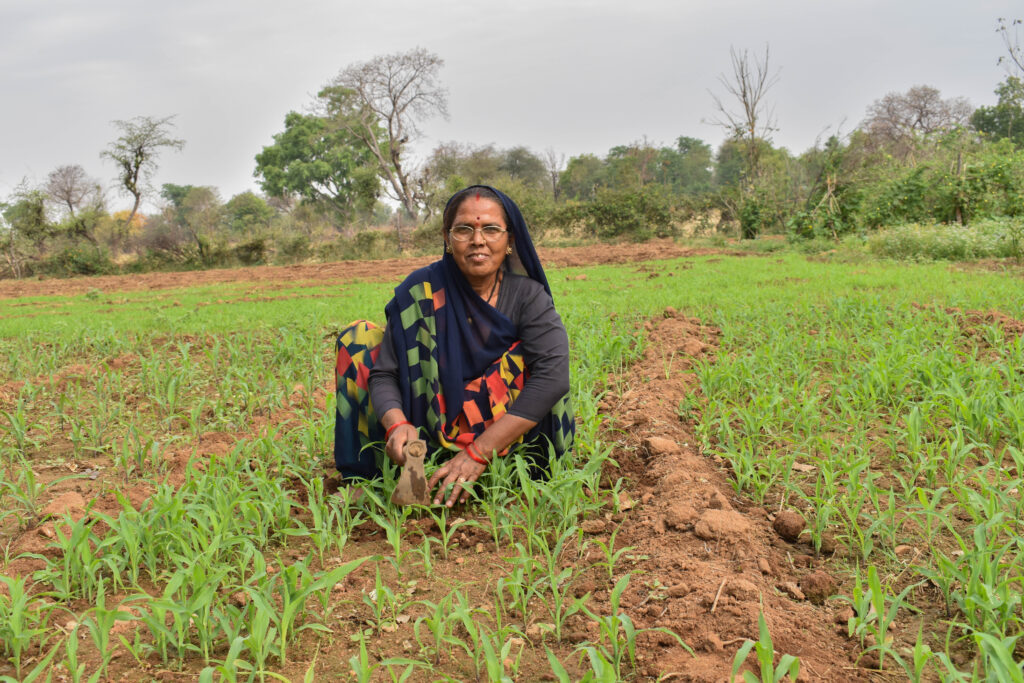
Deva, an older Indian woman, is crouched down in a field of sprouting green leaves. She is wearing a navy blue sari with a colorful geometric pattern of greens and yellows and oranges; round glasses; and red bangles on her wrists.
Deva. Photo courtesy of Aliya Bashir.

“I didn’t know how to grow home-grown food. It felt like a dream,” says Deva, a mother of three sons, who recently began farming a “nutrition garden” on her 1.5 acres of land. She decided to join Basant after she’d seen some women in her community benefit from it, and was particularly interested in learning about the cultivation of various vegetables and fruits, what plants to grow in what season, how to prepare manure and a compost pit, and how to save her produce from pests. Before long, she could do all of this herself.

“Now, I teach women to prepare organic manure, pesticides, and fertilizers at a very low cost by using the material usually available on our farms,” she says.

Prior to returning to Bundelkhand in 2020, Deva worked for three years in the brick kilns of Delhi and Uttar Pradesh. Now, she grows organic beetroot, bottle gourd, tomato, fenugreek, cucumber, brinjal, and other vegetables, and is able to sell them at fair prices compared to commercial farming. In addition, she hopes to begin selling her organic manure in the market to better maintain the soil health of other local farms.

Equipped with so much new agricultural knowledge, Deva has become an advocate for nutritious food in her village, and takes great care with her family’s diet, always feeding them a variety of fruits and vegetables. In 2022, she was also able to purchase six chicks and four goats from her earnings.

“Earlier, we would always have less availability of food. But now, we are not only having chemical-free food, but also eggs and chicken and dairy at home,” she says.

Her care has proven profitable: In a recent harvest, Deva earned a profit of 66,600 Indian rupees (~US$800) by cultivating a wide variety of vegetables and fruits in her garden. When she was working as a manual laborer, she wasn’t able to save anything—but now, she hopes to give her grandchildren the good education she couldn’t afford to give to her children before them.

Kamla has similar hopes and dreams. Although she couldn’t afford her elder daughters’ education due to limited financial resources, she is determined to pay for her youngest daughter’s schooling, and farming has allowed her to save more money than she could have ever imagined when she was working in construction.  “In Delhi, we would work for almost ten hours a day and would earn 20,000 Indian rupees (~US$240) per month,” Kamla says. “The place is very costly to live in—around 15,000 (~US$180) would go into rent and other expenses. Saving a few thousand rupees was difficult.” In comparison, in the past three months, Kamla has sold 30,000 Indian rupees (~US$365) worth of eggplants alone; the cost for cultivation for which was just 5,000 rupees (~US$60).

“We are expecting the eggplant production to increase three times in this season,” she adds.

Over the last few months, Kamla has sold 80,000 Indian rupees (~US$965) worth of produce through multiple vegetable cultivation, growing high yield vegetables like beetroot, bottle gourd, chickpeas, and cucumber simultaneously. The overall expenses were 13,000 Indian rupees (~US$155), which meant a profit of 67,000 Indian rupees (~US$810), much of which she has been able to put into savings.

“I grew up with the thought that a woman can’t have big dreams,” she says—but still, she’d always refused to give up on them. Customs and tradition taught her that only men have the capability to manage food security in a rural Indian family, and she’s already proven this doesn’t need to be the case. “My family is very happy with my farming work,” she says. “When I am busy on the farm, my husband not only takes care of the children, but also helps in preparing meals.”

This domestic bliss feels prescient. One of the founding members of the Balant program, Laxmi Devi, chose its fitting name upon its founding: In Hindi, basant means happiness and prosperity. With their new skillset, Kamla—and Deva, and so many other women—seem to have found just that.

[post_title] => A Farm of One's Own [post_excerpt] => Meet the women creating new life from arid land in India. [post_status] => publish [comment_status] => closed [ping_status] => closed [post_password] => [post_name] => india-women-farmers-basant-bundelkhand-farming-agriculture-climate-change [to_ping] => [pinged] => [post_modified] => 2024-09-13 19:24:53 [post_modified_gmt] => 2024-09-13 19:24:53 [post_content_filtered] => [post_parent] => 0 [guid] => https://conversationalist.org/?p=5947 [menu_order] => 61 [post_type] => post [post_mime_type] => [comment_count] => 0 [filter] => raw )
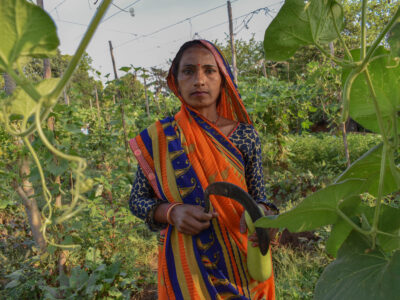
A woman in a colorful patterned sari, rich with bright oranges and blues and golds. She is holding vegetables she has grown on her farm, and is surrounded by bright greenery.

A Farm of One’s Own

WP_Post Object
(
    [ID] => 6701
    [post_author] => 15
    [post_date] => 2024-03-01 22:18:42
    [post_date_gmt] => 2024-03-01 22:18:42
    [post_content] => 

I worried that coming out would further ostracize me from other feminists. Instead, it reinforced why I became one in the first place.

The reason why I waited so long to come out as nonbinary was because I thought it would ostracize me even further from other feminists. As a person disabled by chronic pain and fatigue from fibromyalgia, I’d already been made to feel out of place within feminism for the entirety of both my professional and academic careers. I'd also developed my writing voice during the so-called heyday of feminist blogging—a heyday that unfortunately wasn’t as utopian as people might suspect—and had experienced firsthand the complicated dynamics that arise when one’s platform makes them a target. Not wanting to separate myself further from other feminists, I chose to keep my complex feelings about my gender identity to myself. Until eventually, of course, I couldn’t.

It’s a bit of a cliché for people in the LGBTQIA community to say that they always knew they weren’t straight, or that they weren’t cis. But a part of me always knew I was nonbinary, even before I’d fully admitted it to myself. One of the defining features of my childhood and adolescence was my inner “eh…no” when people—mostly adults, but often my peers, as well—would try to label me as a “girl” or “young woman.” It would happen at school, and at home: As a child, I was prone to slouching, and my mom would encourage me to improve my posture by insisting, “Stand up straight! Like my dad used to say, ‘Be PROUD you’re a woman!’” Each time, a tiny voice inside my brain would whisper but I’m not a woman in response.

As my adolescence chugged on, I began receiving even more unwanted attention and scrutiny from peers regarding my “manly” voice—a direct quote from one of my bullies—as well as my rapidly changing body. I was not a fan of this attention, nor of the insistence that I was a girl, its implication that I should adapt myself to better seem like it. What was so great about being a girl, anyway? Or for that matter, being a boy? I just wanted to be myself.

It was around this time that I first discovered feminism. As a seventh grader, I read Dr. Mary Pipher’s book Reviving Ophelia: Saving the Selves of Adolescent Girls and started quietly identifying as a feminist. Despite the difficulties I still faced from being bullied, Pipher’s book, and the idea of feminism, made me feel less alone. I daydreamed about finding a feminist community that I could contribute to and feel valued by in return—one that included a wide variety of perspectives from people with different life experiences, all working together to make a world where oppressions like sexism, ableism, racism, classism, and anti-fat bias were no longer the norm. In high school, I began openly identifying as a feminist, and eventually, got better at ignoring my peers’ asinine comments. But I still yearned for something more—something I couldn’t yet put my finger on.

I eventually found a community of feminist friends when I started college and chose to pursue a major in Women’s and Gender Studies. Needing a break from academic writing, I also started my own blog in 2005. I quickly noticed that most of the feminist blogs with the largest audiences tended to cover issues that catered to young, educated, white, middle/upper class, cis women. Sexism, body image, popular culture, media representation, sexuality, and reproductive rights are, of course, all subjects that deserve coverage, but the ways in which they intersected with disability never seemed to be covered in any depth. Despite the use of the word “intersectionality” from some of the more popular feminist bloggers, it seemed to me that few actually practiced it.

As it happened, I was not the only one to notice the absence of disability from the feminist blogosphere. In 2009, I collaborated with a group of disability bloggers to form a site called FWD/Feminists With Disabilities as a response. The tipping point had come when several of us noticed that one of the most popular feminist blogs had never published a post specifically about disability and feminism; and when disabled readers had raised their concerns in the comments, other commenters had piled on, insisting disability and feminism were two separate things, and that the disabled commenters were being “bullies.” FWD ultimately only lasted for two years; the amount of threats, derailing, and angry e-stomping we received—in our comments, inboxes, and elsewhere—mostly from other feminists, all ostensibly on our side, proved to be enough to burn us out.

Having to repeatedly explain what feminism and disability had to do with each other—and that disability and chronic illness are feminist issues—was grating. It was isolating. This isolation got worse when I entered a Master’s program for Women’s and Gender Studies, where I was the only physically disabled person in my grad cohort. I faced pushback from multiple professors in the department for supposedly not being energetic enough. Another professor, the department head at the time, threatened to fail me when I missed more than the allotted two classes due to pain and fatigue from my fibromyalgia, on the grounds that it “wouldn’t be fair to the other students.” I later found out that I was not the only disabled person whom she had treated this way.

Throughout this period, I kept wondering if I was a failure as a feminist because I was not performing youthful, sisterhood-uplifting feminism the right way. I was repeatedly made to feel “difficult,” just for pointing out how feminism was leaving disabled people behind. Yet resolutely declaring I am a disabled woman, and I belong here didn’t feel right, either. I had this slippery, niggling feeling in the back of my brain that the reason this was the case was that I was not a woman at all. But at the time, I was in close contact with enough feminists eager to tell me how I was doing both feminism and academic work wrong, that keeping quiet about my weird gender stuff was easier than further othering myself.

Eventually, in my mid-30s, the discomfort of performing as someone I was not outweighed the comfort of avoiding negative attention or questioning from people skeptical as to whether the nonbinary identity is real. Surprisingly, on the other side, I became even more of a feminist than ever before, not because my core beliefs had changed, but because coming out had allowed me to be my authentic self. I no longer felt like I needed to identify as a woman to be a good feminist, because, of course, I didn't.

Since coming out, I’ve realized that I have better ways to spend my time and energy than trying to make nondisabled feminists care about disability issues. In fact, I likely would have come out sooner if I hadn’t wasted so much time trying to get (mostly white and nondisabled) women in the feminist movement to acknowledge that disabled women exist, and that many disabled people of all genders are feminists. While it’s irritating that I still get misgendered by TERFs on social media sometimes, the block button is there for a reason: I can’t be anyone other than myself, and if “feminism is for everybody,” as bell hooks once wrote, then it’s for nonbinary people, too. In a time where nonbinary and trans people of all ages are being smeared as predators, simply for being who they are—and, in the sad recent case of high school student Nex Benedict, being threatened or killed due to the moral panic surrounding trans existence, fueled by the specter of “safety” for cisgender kids—it is crucial that feminists welcome people of all gender identities in the ongoing fight for gender equality. It only benefits all of us when we do.

[post_title] => Feminism is for Nonbinary People, Too [post_excerpt] => I worried that coming out would further ostracize me from other feminists. Instead, it reinforced why I became one in the first place. [post_status] => publish [comment_status] => closed [ping_status] => closed [post_password] => [post_name] => feminism-nonbinary-coming-out-disability-intersectionality [to_ping] => [pinged] => [post_modified] => 2024-08-28 21:14:01 [post_modified_gmt] => 2024-08-28 21:14:01 [post_content_filtered] => [post_parent] => 0 [guid] => https://conversationalist.org/?p=6701 [menu_order] => 62 [post_type] => post [post_mime_type] => [comment_count] => 0 [filter] => raw )
An illustration of an abstract figure, emitting light as if they are a crystal. Their light bounces on the background.

Feminism is for Nonbinary People, Too

WP_Post Object
(
    [ID] => 6660
    [post_author] => 15
    [post_date] => 2024-02-26 17:32:37
    [post_date_gmt] => 2024-02-26 17:32:37
    [post_content] => 

Nearly three months after COP28, are we actually delivering on its promises?

The day before COP28 began in the UAE last November, a damning report was released by the Centre For Climate Reporting, confirming what many had already suspected: COP28 President Sultan Ahmed Al Jaber had taken multiple meetings with various oil-producing countries throughout the year, likely swaying his priorities for the conference ahead. While Al Jaber’s legitimacy had already been in question, this latest report put his credibility on a cliff. As such, COP28 began with damage control: The first move of Al Jaber’s presidency was to operate the Loss and Damage fund based on recommendations from the Transitional Committee, achieving its passage with unanimous support. 

It was an easy win, but not a big enough one—and just a couple months into 2024, I worry what was and wasn’t achieved at COP28 might be an arbiter for climate action in the year to come. 

Although the fund’s operation was a step in the right direction—facilitating financial resources for countries already suffering the impacts of climate change—as written, many factors could prevent it from working as intended. Most notably, the Transitional Committee’s (questionable) recommendation to name the World Bank as the operation entity, and the absence of the equity principle, would both affect the fund's ability to assist the nations most vulnerable to climate inaction. To help with this, after the failure of an agreement at SB58, COP28 agreed on the Santiago Network as the fund’s host, operationalizing technical assistance for these countries in loss and damage matters. But it’s unclear if it will be enough.

It also wouldn’t be the only agreement reached during the conference that left something to be desired. After enabling the Loss and Damage fund, the parties focused on the most pressing matter of COP28: the global stocktake decision. In Article 14, the Paris Agreement defined a period of five years for reevaluating the treaty's implementation and projecting priorities for the following period, with COP28 designated for the first assessment. This year, the most polemic aspect of this negotiation focused on the phrase “fossil fuel phase out” (FFPO), an expression embraced and proposed by the Least Developed Countries (LDC) at COP23, in hopes of more ambitious climate action. Regrettably, based on the strong opposition of various oil-producing countries, the initial presidency draft of the global stocktake did not include the phrase FFPO anywhere in the text, causing upset among those supportive of its inclusion. This latter group comprised 127 parties, including the Independent Association of Latin America and the Caribbean (AILAC), the Environmental Integrity Group (EIG), the EU, and even the US. However, despite overwhelming support, universal consensus is vital for adopting new decisions at COPs—and oil-producing countries did not give in to their demands.

Eventually, compromise was reached between the two opposing sides, and instead of using FFPO, the language was changed to include "transitioning away from fossil fuels in energy systems" and “phasing out inefficient fossil fuel subsidies,” enabling the parties to reach an agreement. Although this small move towards ending fossil fuels is valuable, the latest draft of the stocktake leaves much room for interpretation as to what those two phrases mean—its language too vague to hold many parties accountable. For example, the text only calls for transitioning away from fossil fuels when used in energy systems, thus excluding some industries, such as transportation, from being asked to the same. There has also been talk of "transition fuels," which would be very favorable to the interests of polluting actors, allowing greenwashing commitments to take the place of actually transitioning away from fossil fuels. Ultimately, all of this suggests that although the revised text of the global stocktake decision was an improvement from the first draft, it does not ensure that polluting states and companies will not continue to exploit fossil fuels: It is merely a first step towards a better horizon, but still a very fragile one.

Helping to fortify that step, it was also decided that the Just Transition program—which advocates for shifting from an extractive to a regenerative economy worldwide, and is likely to be a vital part of the next global stocktake in 2028—would go into operation "immediately after" the end of COP28. But regarding climate finance—in other words, the means by which climate action is funded—it was decided a draft decision would be written later this year, the same year in which three workshops and three work program meetings will be held. The substance of what’s to come will remain for SB60 and COP29, and is perhaps the most impactful element of the upcoming negotiations.

In the interim, there is much that must be done—with a few key factors standing in the way. Consensus is a crucial element in climate negotiations, requiring broad agreements across parties to implement the objectives of the UNFCCC. But it remains unclear how exactly “consensus” is defined at these conferences, as Article 42 of the UNFCCC’s procedural rules—which present two alternative means to reach consensus—has not yet been adopted, leaving much space for interpretation and thus, conflict. At COP16 in Cancún, for example, Bolivia interpreted consensus to mean unanimity, and tried to block the agreed decision, believing it wasn't ambitious enough. In response, the COP16 presidency insisted that "the consensus rule does not imply unanimity, much less does it imply the possibility of a delegation exercising a right to veto after years of hard work and sacrifice [of the other parties]." Without an explicit definition, the possibility that some groups or states will attempt to block other agreements remains open.

For the climate regime's success, decisions adopted by the COP must be widely supported and legitimized. Currently, multilateralism and civil society both help ensure this is possible. At COP28, when oil-producing states opposed including FFPO in the decision text, both developing and developed nations joined forces to create the language in the current draft. But they were able to achieve this compromise, in part, because of outside support. Usually, the role of civil society is especially relevant in each stage leading up to every COP. Reports, statements, and advocacy are vital for influencing state agents in pursuing, prioritizing, and incorporating climate ambition into their decisions. At COP28, the typical preambular role of civil society was extended into the very conference itself. After receiving the presidency draft of the global stocktake decision, several demonstrations were organized within the venue in an attempt to pressure delegates to make improvements to it, and to make evident the public opinion that the original presidency draft would entail a regression for climate action. I believe these last minute demonstrations were crucial for the parties who wanted more climate ambition: Without their work and effort, the final version of the decision text would likely not have even mentioned fossil fuels at all.  

Still, more consistency and clarity are needed to continue advancing climate action in the right direction, both in 2024 and beyond. The gaps in the "transitioning away" formula adopted by the parties will require immense caution moving forward. It is essential not to repeat COP26’s and COP27’s mistakes, where the former merely mentioned fossil fuels but the latter did not deliver any progress. The prospect of COP29 will not be easy, with another oil-producing host country and a former oil industry CEO as President of the Conference. All of the elements that prevented COP28 from being a fiasco are required and must be maximized in Azerbaijan. Achieving the phase out of fossil fuels depends on developing countries, especially, increasing climate action, and at COP29, developed countries should demonstrate their willingness to achieve the FFPO by committing and effectively transferring the necessary resources to these developing nations. As such, climate finance must be a priority. The fragile progress of COP28 requires a growth curve in the following COPs, setting ambitious targets and equivalent means for achieving them. Let's dream of a COP30, with the background of the Amazon in Belém do Para, actually establishing and moving towards the FFPO. 

[post_title] => The State of Climate Action in 2024 [post_excerpt] => Nearly three months after COP28, are we actually delivering on its promises? [post_status] => publish [comment_status] => closed [ping_status] => closed [post_password] => [post_name] => climate-action-2024-conference-of-the-parties-cop28-oil-ffpo [to_ping] => [pinged] => [post_modified] => 2024-08-28 21:11:27 [post_modified_gmt] => 2024-08-28 21:11:27 [post_content_filtered] => [post_parent] => 0 [guid] => https://conversationalist.org/?p=6660 [menu_order] => 63 [post_type] => post [post_mime_type] => [comment_count] => 0 [filter] => raw )
An offshore oil rig in the middle of the East China Sea. There does not appear to be land nearby in any direction.

The State of Climate Action in 2024

WP_Post Object
(
    [ID] => 6636
    [post_author] => 15
    [post_date] => 2024-02-13 22:00:24
    [post_date_gmt] => 2024-02-13 22:00:24
    [post_content] => 

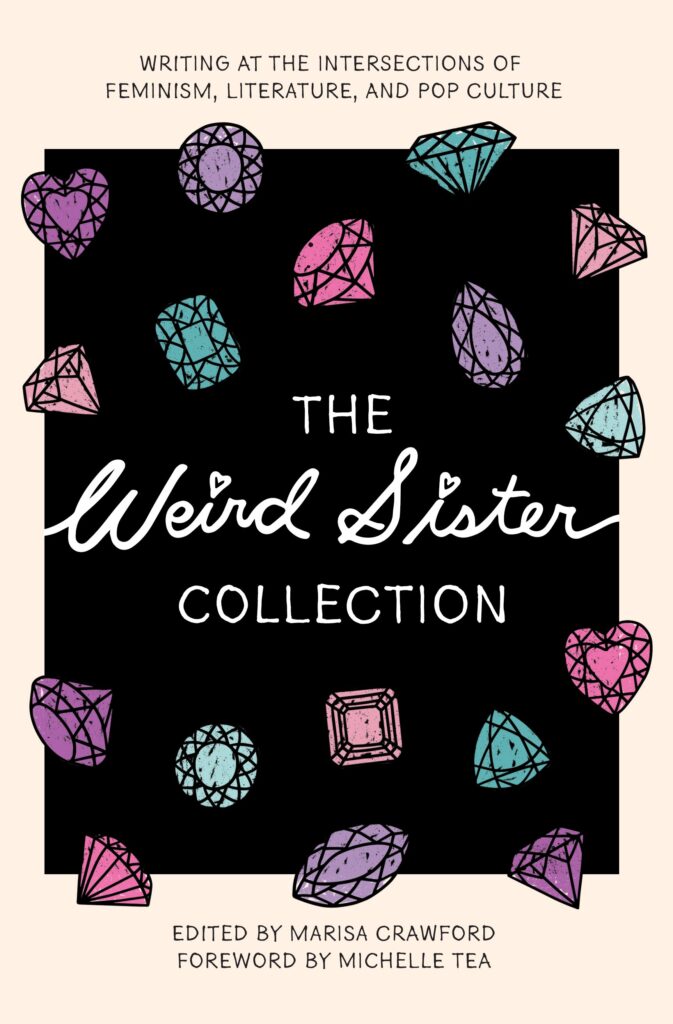
An exclusive excerpt from "The Weird Sister Collection," edited by Marisa Crawford.

I didn't deign to call myself a feminist until I was nineteen years old, in my second year of college. Before then, I just wanted to be a writer. Reading Judy Blume and the Baby-Sitters Club books obsessively as a kid, I decided I wanted to be an “author” when I grew up, and started writing my own poems and young adult novels in fourth grade (a baby poet at heart, I could never get past chapter two). “Feminist” was a word I rarely heard growing up. If I did, it was mentioned with suspicion at best and disdain at worst. My first encounter with feminism as not purely negative came at fourteen, when my friend’s dad took us to a feminist vegetarian bookstore and restaurant in Bridgeport, Connecticut, called Bloodroot (it’s still there; please go). There, customers brought their own used dishes up to the counter in an apparent rejection of female subserviency that set off a little spark in my brain about the roles of women in the world around me, even if we sort of made fun of it after we left. I bought a bumper sticker that said “Vegetarians Taste Better,” uncertain if the sexual undertone was intended. I also bought a book of poems called Used to the Dark by Vicky Edmonds, a totally obscure small-press work, but the sole example I had at the time of what might be called feminist poetry. Of course, I wouldn’t have used that shameful word, “feminist,” to describe Edmonds’s book—maybe “writing by a woman about the dark parts of how it feels to be a woman,” like so much of my favorite music was? Weird, outspoken women artists like Tori Amos and Ani DiFranco and Courtney Love, who all my boyfriends and boy friends made fun of.

In college when I finally started calling myself a feminist—after meeting cool feminist friends who were nothing like the humorless stereotypes I had been warned about, and who told me I needed to throw out my bleached tampons and listen to Le Tigre and take women’s studies classes—I wanted desperately to make up for lost time, realizing that my whole life had been missing this essential perspective. So I read any and all feminist media I could get my hands on: I borrowed Inga Muscio’s book Cunt from a friend and read it along with every issue of Bitch magazine. I declared a minor in women’s studies and took classes where I learned about intersectionality, agency, privilege. 

In my creative writing classes, we never talked about those things; in my first workshop that same year, the MFA student instructor was so infectious in his excitement about literature that I didn’t even notice the syllabus he handed out had zero women writers on it until another female student in the class pointed it out—I was too busy becoming obsessed with Frank O’Hara’s Lunch Poems. Slowly I learned about feminism on a parallel path just next to the one where I was learning about how to be a writer. But I couldn’t quite figure out how these two spaces could coexist, let alone collide, and how on earth to go about building my own life within that collision.

~

Years later, I started the blog Weird Sister in 2014 because these two worlds—the feminist world that was incisive and inclusive, and the literary world that was performative, tongue-in-cheek, and experimental—still felt far too separate to me, even as I entered my thirties. In college, I’d started to see glimpses of the intersections between them: in women’s lit courses where we read Jamaica Kincaid, Toni Morrison, Maxine Hong Kingston, June Jordan, Gloria Anzaldúa. I went to see Eileen Myles read for extra class credit. I found Arielle Greenberg’s Small Press Traffic talk “On the Gurlesque” on the internet one night. Each piece of the feminist literary puzzle I learned about blew my mind all over again, and it occurred to me that there was not just one right way but many, many ways to be a feminist writer.

All these rich lineages of literary work and activism were out there, but where were the spaces outside of academia for people to come together to think and talk about them? From the mid-2000s into the 2010s, the blogosphere was where people talked about things. After college, I discovered the blog Feministing and made it my computer’s homepage so I wouldn’t forget to read it every day. That blog—along with other feminist blogs of that era like Crunk Feminist Collective, Everyday Feminism, Black Girl Dangerous, Tiger Beatdown, Racialicious, and the Women’s Media Center blog—offered supersmart, inclusive takes on politics and pop culture in an accessible, conversational tone that helped me and so many other young people better understand the world. But they didn’t often include literary content—how could they, strapped as they were with the task of breaking down the entire world for young feminists, and payment-free at that? When these spaces did cover books, they were more commercial publications, not the niche within-a-niche world of experimental poetry where I had found my home as a writer. 

At the same time—but in a separate sphere—lit blogs were where my particular literary world found community and dialogue on the internet. On blogs like HTMLGiant, Coldfront, The Rumpus, and We Who Are About To Die, poets and experimental writers wrote and read about the small poetry presses and underground literary culture that rarely got covered in larger venues. I remember reading some posts that addressed feminist issues by writers like Roxane Gay and Melissa Broder, then still aspiring writers themselves, but more often I read a lot of posts by cis white men that were interesting, insightful, and funny but lacked the political analysis I was looking for about how poetry related to gender and race and the other aspects of identity and power that mattered most when it came to living in the world.

These indie lit blogs were mostly edited by men and featured long rosters of mostly male contributors, mirroring the gender disparities of more mainstream literary publishing outlets and gatekeepers of the time. Of course there were, thankfully, some exceptions. Pussipo (later renamed HemPo), a collective of 160 feminist poets, started the blog Delirious Hem in 2006, which featured feminist poetics forums, roundtables with feminist small presses, feminist poets writing about everything from rape culture to movies, fashion, and fitness (“It’s a blog, it’s a poetics journal, it’s a platform. From time to time, a post will appear,” reads the description on the now archived Blogspot website). In 2009 I was forwarded a mass email from poet and professor Cate Marvin called “Women’s Writing Now!” which began “Dear Female Writer.” The email—which explained that Marvin’s panel proposal on Contemporary Women’s Poetry had been rejected by the annual writing conference AWP, while the conference regularly accepted proposals on topics unrelated to women (Birds in Poetry, for example, stands out in the mind from my own years of attending)—was a rallying call for the creation of a whole new organization dedicated exclusively to women’s writing. As a result, Marvin, along with Erin Belieu and Ann Townsend, soon founded VIDA: Women in Literary Arts, and in 2010 the organization began, among other vital literary projects, their annual VIDA Count to draw attention to gender disparities in publishing. With the Count, VIDA was not just critiquing inequities in literary culture but also holding institutions and gatekeepers accountable to do better in a very clear, measurable way.

But as Christopher Soto writes in his piece “The Limits of Representation” (page 113), equity in numbers, while hugely important, is only one measure of progress. I still longed for an intentional, energetic, creative, and community-building space to fill in even just some of the lack of feminist literary commentary online, to bridge a bit of the gap between these two distinct worlds I inhabited, and to disrupt the white male lit-blog industrial complex with an explicitly feminist Blog of One’s Own. Boosted by the encouragement of a girl gang of feminist poet friends (special shout-out to Becca Klaver for helping me get the blog off the ground), I bought a web domain, went into a temporary and never-to-be-replicated fugue state wherein I designed a website, and asked a roster of the smartest, coolest feminist writers I knew to join me in launching Weird Sister

~

I wanted Weird Sister to be a space for talking about the feminist poems and books that inspired us, the contemporary literature that was doing interesting work around gender and other aspects of identity, the sexist shit that happened in the literary world but that nobody talked about publicly, how the established canon we all learned in school upheld what bell hooks calls the white supremacist capitalist patriarchy, the exciting readings and events going on, and the pop culture we consumed alongside it all with glasses of wine or Dr. Pepper—because we were not, after all, monoliths who existed only within the literary world. Like Becca Klaver writes in her piece about Bernadette Mayer’s poetics of “radical inclusiveness” (page 74), it felt feminist and unapologetic to show ourselves as full people who were not just poets and literary critics but also nostalgists and reality TV watchers and record collectors and parents and teachers and people working to survive in the world. 

With Weird Sister, I wanted to create an online platform that was filled with serious ideas, but didn’t feel stuffy and exclusionary like poetry criticism so often can. Emulating the chatty, conversational tone of my favorite feminist blogs, Weird Sister aimed to be open and unpretentious. Vernacular language and oft-ridiculed traditionally feminine speech patterns like saying “like” too much were welcomed and encouraged. And, as on the best lit blogs, conventional criticism, creative forms, and personal elements could all, like, blend together. It was a space to celebrate and encourage dialogue between seemingly divergent aspects of culture, both “highbrow” (poetry, film, visual art, politics) and “lowbrow” (pop music, nostalgia, TV, celebrity gossip), and to take to task those supposed cultural distinctions with a glitter-nail-polished middle finger held high.

When it came to the blog’s name, I wanted to invoke the ineffable, the interplanetary; the glittery liminal spaces that art comes from. The “Weird Sisters” are the three witches in Shakespeare’s Macbeth, double double-ing and leading the play’s hero to his demise. They’re prophets, goddesses, bearded hags stirring a glowing cauldron. A weird sister is also an outcast, a goth girl, a nerd, a poet. Her existence is a disruption to the status quo. In my own family, I always felt like the weird one—sandwiched between my two sisters, the art-y and sensitive one traced in heavy black eyeliner. Seeing other “weird” girls and women and femmes in pop culture growing up made me feel seen and inspired. 

Weird Sister emerged as a space where we and others like us could see ourselves reflected back, and where we could hang out together and talk and write and multiply; a weird sister to both the more journalistic feminist blogs and the less feminist lit blogs that came before us. A platform and community of feminist poets and creative writers, many of whom were trying out writing critically for the first time in a collaborative blog space, all of whom have gone on to do so many incredible things in the literary world.

~

I didn't realize it at the time, but in 2014 we were on the precipice of a cultural sea change. When Beyoncé performed at the VMAs the next year alongside a giant glowing “FEMINIST” sign and a sample from Chimamanda Ngozi Adichie’s TED Talk “We Should All Be Feminists,” it made me wonder if a column debunking stereotypes about feminist poetry was even still necessary. In a turn toward what writer Andi Zeisler calls “marketplace feminism,” everywhere you looked people were suddenly wearing feminist T-shirts bought from indie retailers or from H&M, drinking from feminist mugs, meeting at feminist co-working spaces. There was also a huge influx of mainstream, corporate-funded feminist publications and content popping up online. Broadly, VICE’s women’s imprint, launched in 2015. (I both was miffed by their tagline, “Women’s news you thought would exist by now,” and longed for them to hire me.) Lena Dunham and Jenni Konner teamed up to create Lenny Letter that same year. Bustle, Rookie, and xoJane had all launched a few years earlier, and the media landscape was suddenly flooded with women’s personal stories and lists of “ten feminist novels to read this summer.” Most of these publications folded by 2019—a testament to the tumult of the industry, but also to the fleeting nature of corporate interests in feminism as a cultural fad. Many of the original trailblazing feminist blogs and magazines of the 1990s and early 2000s—like Bitch and Feministing—have also since folded, a testament to the difficulty of sustaining an independent feminist project without sufficient funding. 

But of course the cultural and social activism of the mid-2010s was about much more than just corporate co-opting of feminism, something that’s been happening since the dawn of the women’s movement itself. Between 2013 and 2015, in response to non-indictments of the murderers of Trayvon Martin and Michael Brown, the #BlackLivesMatter hashtag created by Alicia Garza, Patrisse Cullors, and Opal Tometi became recognized as a protest movement on a global scale. And #MeToo, the campaign started by Tarana Burke in 2006 to draw attention to sexual assault, was popularized as a viral hashtag in 2017. Around this time, my own writing community also began having vital conversations about inclusion, abuse, race, and gender on a scale I had never seen before. In 2015, for example, Marcelo Hernandez Castillo, Javier Zamora, and Christopher Soto founded the Undocupoets Campaign—and later a fellowship with the same name—to protest the discriminatory rules of many first-book publishing contests in poetry, which prohibited undocumented poets from applying. And after several high-profile conceptual poets were called out for racist performances, an anonymous collective of poets called the Mongrel Coalition Against Gringpo began sharing online manifestos lambasting what they saw as the white supremacist project of conceptual poetry (or “conpo”). When a number of instances of sexual misconduct came to light in the poetry and Alt Lit worlds, a proto–#MeToo movement, started by feminist poets including myself in cities across the US and beyond, undertook efforts to dismantle a widespread culture of sexual abuse and harassment in poetry and Alt Lit. Jennif(f)er Tamayo, whose literary activism was instrumental during this time in organizing “Enough Is Enough” meetings and discussions on sexism and accountability in the New York poetry community, writes about their commitment to “Being Unreasonable” as a locus for resisting entrenched forms of oppression in our particular literary communities (page 129). Weird Sister was created to encourage dialogue at the intersections of literature, culture, and social justice, and during this transformative moment it served as a space to document some of these conversations as they were happening in literary communities.

A feminist lit blog was never enough, would never be enough, to eradicate the world’s injustices, but being one small piece of the puzzle trying to change things for the better was all we could ever really hope to be. Writing this in 2023, I can’t say that I feel particularly hopeful about the state of the world. But I think about an interview with Jia Tolentino in 2022 where she says that she can accept hopelessness as a feeling, but never as a political standpoint, and I feel inspired by the continued work of all the writers gathered in this book and at work beyond it—all those “humorless” and hilarious and smart and radical and messy and groundbreaking literary activists that paved the way for us and continue to do so.

When I first launched Weird Sister, I loved the feeling of running a vibrant space where vital conversations about feminism, poetry, and pop culture could flourish. I stayed up late each night working on it between days at my copywriting job—high on the blend of excitement and anxiety—but naturally it was impossible for me and for all of the Weird Sister team to keep doing this work, at this rate, sustainably. And without a model for funding or time to make one, the blog slowly went from a rush to a trickle of occasional content. As Samhita Mukhopadhyay, former executive editor of Feministing, wrote for Barnard College’s 2012 #FemFuture conference on the future of online feminism, “Blogging has become the third shift. You do your activist work, you have a job to make money and then you blog on top of that. It’s completely unsupported.” The feminist blogosphere that Mukhopadhyay refers to is widely considered the hallmark of a whole “wave” of feminism, but—like so much activist work throughout history— it’s had virtually no financial support. Still, in spite of the challenges that came with Weird Sister, it’s amazing to look back on the vast and mind-blowing array of writing that came out of planting this weird little seed on the internet. I hear there’s a movie about baseball where they say, “If you build it, they will come.” I built Weird Sister, and out came all the feminist weirdos with their brilliant minds, and this incredible collaboration and community was born. 

~

The Weird Sister Collection brings together some of the most popular, insightful, LOL-funny, moving, and unforgettable posts from the blog between 2014 and 2022, along with some new work highlighting essential perspectives, figures, moments, and movements in feminist literary history. The book pulls out natural themes that emerged from the blog’s eclectic archive: from bringing a contemporary feminist lens to historical literature and paying homage to the iconic writers that came before us, to shining light on current books, events, organizations, and conversations. And, of course, it includes writing about pop culture, both nostalgic and present-day. While never exhaustive, this book hopes to offer a snapshot of some of the vital conversations and commentary surrounding feminism, literature, and pop culture from the last decade, and those that led up to it. 

Weird Sister was born out of a love for feminist books, from my longing for feminist books to exist, to line the walls; to read them all, to write them. So it makes sense that it is now a feminist book too. I want feminist literary writing to take up more and more space, both on the internet and in the physical world, on bookshelves where a teenager at a feminist bookstore café might stumble upon them, goddess willing, after bringing her tray up to the counter. And I hope that putting Weird Sister’s contents in a book will allow future generations to learn about the early twenty-first-century feminist blogosphere in a format that gives it the same legitimacy as the white male literary canon; the same weight as the copy of On the Road that my high school English teacher handed me because she thought I might like weird, emotional, experimental prose, and assumed, correctly, that I would ignore how it treated women. The impulse that propelled feminist bloggers in the first place was an interest in creating our own media, holding it up, declaring it real and legitimate and important amid a patriarchal culture that devalued it and gatekept it away. So this book is a reminder that Weird Sister happened, and of the powerful, cool shit you can do together as a creative community. It’s proof that all these feminist writers read books by all these other feminist writers and wrote about them—and about music and movies and TV and art—and then became the feminist writers that others will write about someday. And actually, people are writing about them right now—go read it. Go write it. It’s a never-ending cycle of influence, admiration, and creation. I hope that you find it weird and inspiring.

From “The Weird Sister Collection:Writing at the Intersections of Feminism, Literature, and Pop Culture,” edited by Marisa Crawford. Excerpted with permission of Feminist Press. Copyright 2024 Marisa Crawford.

[post_title] => How a Feminist Blog is Born [post_excerpt] => An exclusive excerpt from "The Weird Sister Collection," edited by Marisa Crawford. [post_status] => publish [comment_status] => closed [ping_status] => closed [post_password] => [post_name] => the-weird-sister-collection-book-excerpt-introduction-marisa-crawford-feminist-blog [to_ping] => [pinged] => [post_modified] => 2026-01-27 21:20:00 [post_modified_gmt] => 2026-01-27 21:20:00 [post_content_filtered] => [post_parent] => 0 [guid] => https://conversationalist.org/?p=6636 [menu_order] => 64 [post_type] => post [post_mime_type] => [comment_count] => 0 [filter] => raw )
The cover of "The Weird Sister Collection" tiled on a light pink background.

How a Feminist Blog is Born

WP_Post Object
(
    [ID] => 6581
    [post_author] => 15
    [post_date] => 2024-02-07 19:39:54
    [post_date_gmt] => 2024-02-07 19:39:54
    [post_content] => 

An interview with the writer-director of "Astonishing Little Feet," a short film about the first documented Chinese woman to come to America.

The first documented Chinese woman to come to the United States was told it would be temporary.

Just 19 years old (or 14, or 16—reports vary), Afong Moy was brought to America not as an immigrant, but as a curiosity, sold off by her father to a ship captain who promised he would return her on his next voyage back to Canton in two years. Moy's father wouldn't be the only one to capitalize off of her: Arriving in New York in 1834, Moy's main purpose would be to help two American merchants, the Carne brothers, sell "exotic" goods—essentially acting as a living mannequin, singing traditional songs, demonstrating how to use chopsticks, and, on occasion, walking for short distances on her bound feet as a way to solicit interest in the brothers' imported Chinese wares.

She would never return home.

Moy would go on to become incredibly famous—so famous she eventually met then-President Andrew Jackson while touring around the country. She would also die in obscurity, no record of her existence after 1850. Very little is known about her today, and even less about how she might have felt about her new life and exploitation. But a new short film seeks to capture a glimpse at both: Astonishing Little Feet, written and directed by Maegan Houang, reimagines what Moy's first experience "performing" for potential investors might have looked like—and the result is harrowing, an uncomfortable exploration of complicity, curiosity, and the history of Asians in America.

Below, we spoke with the writer-director about her film—the title pulled from surviving advertisements that bill Moy as the "Chinese Lady" with "astonishing little feet"—and the importance of not looking away from an ugly past.

~

The Conversationalist: How did you first decide you wanted to do a film about Afong Moy?

Maegan Houang: I was reading The Making of Asian America by Erika Lee, and there’s one line in it that mentions her. I just couldn’t believe what I was reading. It really struck a chord with me—I felt so connected to the idea that the first Asian woman most people in the United States saw was there to help someone else sell goods, just because she seemed particularly exotic and strange. I immediately thought there was a movie there.

From what I’ve read, it seems like Afong Moy was treated as a “good” herself, as a commodity.  I only knew the bare minimum about her before watching your film, and then I went down my own wormhole. What struck me is how young she was. Some reports say she was as young as 14—so to even call her the first documented Chinese “woman” is a misnomer.

She was between 14 and 18—max.

What resonated most with you about her story?

It was what you just said, that she was a commodity. That she was commodified to help other people make money, because she was such an interesting, exotic object. To me, there’s no way there’s not an element of hypersexualization there, which was really resonate to how I felt growing up. For context, I’m half Asian, and I grew up in Michigan, where there were mostly white people at my school. I grew up being perceived as Asian; I also grew up understanding that I was being seen as different—but no one was explaining to me why. To me, that’s a deficit in our education as Asian Americans. I think it’s easy to blame the system, but I think it’s our own parents, who are immigrants, who really don’t—understandably—know the history of the country they moved to, and the history of how Asian Americans have been treated, and therefore have no reason to tell us. So we’re thrown into a system where we don’t really understand all this context and all this history.

In high school, when I was being really hypersexualized and sexually harassed, as many young women are, there always seemed to be a layer of cruelty, of dehumanization. I didn’t understand it, and I felt like it was my fault. As anyone who’s a woman of a minority, we all understand that there’s no one reason for everything. I can't sit here and say it's a hundred percent that I'm Asian. I don't know. But I think what I wanted in this film was—if other people know her story, maybe they'll better understand their own context as young women in our country. Because there’s no way that kind of introduction to Asian women—which continued throughout the 1800s with P.T. Barnum, with different circus acts [including Moy]—doesn’t impact our present day understanding of what and who an Asian American woman is.

Obviously, my life is not nearly as horrific as Moy's. I’m not trying to create a false parallel of trauma, because I actually really despise that. But at the same time, I think it's really important to know that there might be things about our existence and the way we're treated that really have nothing to do with us, so we don't internalize them. And that's why I wanted to make the movie, and why I wanted it to be hard to watch. Because the other thing is, I don't think there's anyone watching the film, including myself, who kind of doesn't want to look at her foot.

I was going to ask—you made the decision to show Moy's bound foot. Why give in to the curiosity of the viewer?

I think we're all ultimately quite complicit in the systems of exploitation and capitalism of even our own bodies and people. As a filmmaker, it was instinctual to some degree. But also, people feel bad at the end of the movie, because they did participate in it. I think that's fine. It's okay to feel bad. It's okay to have to question your own role in the way that we live our lives. I'm not trying to create a false equivalency. Objectively, things are better than they were then. You and I are not people who were trafficked from Asia to make people money.

It's not that our experiences are equivalent, but it is shining a light on the historical origins to certain narratives and how they're baked into Western and American culture on some level. Even though it's not nearly as bad, or as surface level.

Yeah, totally. I do believe in historical consciousness. It was only forty years ago, Stanley Kubrick's Full Metal Jacket. That's not very long ago.

Talk me through what was important to you in portraying the other characters in the film, especially Captain Obear and the Carne brothers.

Sometimes, I think we over-intellectualize, or—it's not a real word, but—evil-ize people, trying to prescribe more evil intention to certain things that I fundamentally don't think is there. All of them just want to rise in class. And it has an abhorrent result. But none of them think they're a bad person. None of them think they're doing something wrong. They're just operating within the rules of our society and our system. I was happy when I would screen it and people would laugh at certain things because that shows a discomfort with the absurdity of the past; we can't imagine being that way. But I think people were. So I wanted them to be realistic, but hopefully inspire people to think about the parallels that we might still have—which is also why I wanted to show the foot from their point of view, because sometimes, when you finally get what you wanted, it's really horrible, but it doesn't change the fact that you wanted it. And that's an uncomfortable space.

So much of what you're talking about is complicity and capitalism; that if you're conditioned to believe that this is the only way to succeed in life, then you become blinded by what you're sacrificing morally or otherwise in the process to achieve it.

Yes.

Which, going back to the choice to show the foot—I do want to discuss the very intense and visceral scene of the unwrapping in a second, but first, I was really struck by your choice to switch back and forth between perspectives in the film, almost as if we're both being perceived and also the perceiver.

In early screenings, I actually got notes from people that it should be more in her perspective. And I was so bummed out by that note—because that's the easy way out. Because if you're aligned with her, you are like, "I'm aligned with the victim, I'm aligned with the person being oppressed." And I think that's trauma porn, a little bit. If it's fully from her perspective, we get to feel okay, and I think that's dishonest.

It was interesting the extent to which this note would mostly come from men. I'm like, why do you need me to spell this out for you? Why is that something you need?

That's interesting, given the scene where her foot is being unwrapped—there are very obviously a lot of parallels to assault, to rape. It feels like a rape, I think, to the viewer. And that felt very intentional. I wanted to just talk a little bit more with you about your decision to approach it that way, and her translator Atung's place in all of it as the one who actually unwraps her foot while the other men watch.

All he does is unwrap her foot, and it feels like assault. I would imagine that's what it feels like to her.

Yes.

It's horrible, but it's also obviously what the men want to see, and then they're also a little bit stunned by it. With the translator, he is trapped. He just has to do what they say—this is how he eats, this is how he lives. Now, it's not enslavement, but it's imprisonment through capitalism, it's imprisonment through just needing to survive. So he doesn't want to do it, but it's what he has to do. Those are just the terms that you accept sometimes when you immigrate to a new country where you're a minority, and they're unpleasant, but they're also just reality. Unfortunately, people don't really stand up to power—but he tries. She tries. Meanwhile, [the merchants] aren't doing their own dirty work. They're observing it.

The voyeurism of it was really striking to me.

Not to be lame, but I'm a student of Hitchcock. And his whole thing was that everyone has a dirty little mind. I was trying to play with that idea, which, again, doesn't work if you're only in her perspective. You have to feel like, oh, I am sort of drawn in to this act, but I know I shouldn't be.

I really loved that the film was in Cantonese, and how that added another layer to her isolation within it.

My family is from Hong Kong, they speak Cantonese.

Mine, too.

It's really painful because Cantonese is the oldest spoken Chinese language, and when going back thousands of years to characters that we don't know how to read anymore, it's Cantonese that helps guide you, not Mandarin. It's also accurate—they would've spoken Cantonese.

It's also another way of feeling othered, being disconnected from the language around you. She couldn't speak English, which means she couldn't understand what was being said if it wasn't translated for her.

A lot of people say, well, women didn't have agency [back then], and that's something I just don't agree with. Women had agency within the confines of their circumstance, and they did employ their agency however they could. It's a myth that we have about women in the past, that they're just sitting there while things happened around them. Moy is deploying whatever agency she has. It just may not work, but that doesn't mean that she doesn't have it and that she doesn't try to use it and that she doesn't feel proud of where she's from in her culture. I imagine her dad was like, you're going to go show people what China's really like; that she was told she was going to help educate Americans. That he told her some kind of fable, because that's what people do to survive. And ultimately, she met Andrew Jackson—which, there's no way when that was happening, she wasn't like, "I'm a badass." That's just the reality of power. It's better to be an oppressed person with status than to be an oppressed person without it.

What do you think Afong Moy dreamed of?

I think she dreamed about home. There are moments even I dream about this, and I am obviously born in America, but I still dream of going back home. It's not to live there, but it's to touch and feel the culture that I don't have as easy access to. It's why I would want to go get dim sum, or why I would want to get Hong Kong breakfast, or—my family's also Vietnamese—why I sometimes just really want a bowl of pho. And I imagine in that time period, all those kind of home comforts, particularly food, would be so out of reach and so inaccessible that I would probably, if I were her, really yearn for some of those things.

On the flip side, I also think if I were her, I would dream of other types of fame, of success within the system that she's trapped within. Or freedom, which in that situation, might have been someone marrying her. I don't know.

Of course, we can't know. I was just curious what you imagined when trying to get in her headspace.

No, no, I love that question. It's so interesting. I mean, you just try to think how it would feel to be so far from home, and so poor—and disabled, which is a whole other thing. Women with bound feet were trapped in their houses basically, because they couldn't really walk. It was a status thing, and people were proud of it, but it's still really fucked up. We've tolerated a lot from the way men have tried to disempower us, and she really embodies a lot of those longstanding trends.

It feels fair to say Moy wasn't just commodified for her ethnicity, she was also commodified for her disability. Although there's overlap between the two.

Yeah. Well, it's clearly stemmed from a fetish in Chinese culture that it was more attractive to have a really small, tiny foot, to the point where everyone was maiming themselves—or each other, with the help of older women—to achieve this strange fetish. You could argue foot binding in China was also a commodification of women, because you're making women into an object that's appealing to men. I think it's a pretty abhorrent custom, in that it limited women's ability and mobility to do so many things. Now the tricky thing is not exceptionalizing or exotifying that custom as morally better or worse than other customs that other people have done to women in other cultures all around the world. It's disgusting, but I also would argue that there's a lot of disgusting things we do to ourselves to make us interesting to men that we'll all look back on in different ways, to different degrees, that become more or less acceptable depending on what's in fashion. You could argue weight loss and disordered eating is a different version of self harm and mutilation for men. Or attempting to stay young. And some people hurt themselves to do that.

I was going to say, binding feet in an attempt to keep them as small as when you were a child—could also be a means of sexualizing youth, in an extreme way.

Yeah, totally. I just view it as another norm that was really brutal, but that still has parallels to norms that we live in at the moment.

What else do you hope people take away from the film?

I just hope people think about Asian Americans in history, and how that pertains today. And also their complicity within a capitalist system of exploitation, and not in a self-flagellating way. There's a bit too much of that in our current society, and I don't think acting out of shame for the past or the present is going to resolve how our system works. We have to shine a light on things that are horrible, but also have empathy for ourselves, and for people in the past—that they're doing the best they can because of systemic factors instead of trying to look at everything so individually. That's not going to be how any of our current crises get solved. Climate change, for example, won't be solved by one person. It's going to require and necessitate collective action to fight back against the system that we live in, and it's going to require sacrifice from a lot of people that don't want to sacrifice, and questioning why do we place some lives above other lives?

I don't know. Those are just the things I thought about while making it, but I'm also fine with people taking away whatever they want, because I do think as artists, we aren't able to really control how our work is interpreted, and we have to let that go. White men love the movie, actually—I get the most compliments from white men, weirdly.

But I mean, I made it for us. People are like, "Who did you make it for?" Other Asian American women.

You can stream "Astonishing Little Feet" on Vimeo here. This interview has been edited and condensed for clarity.

[post_title] => What Did Afong Moy Dream About? [post_excerpt] => An interview with the writer-director of "Astonishing Little Feet," a short film about the first documented Chinese woman to come to America. [post_status] => publish [comment_status] => closed [ping_status] => closed [post_password] => [post_name] => afong-moy-first-chinese-woman-america-astonishing-little-feet-short-film-maegan-houang-interview [to_ping] => [pinged] => [post_modified] => 2024-08-28 21:15:11 [post_modified_gmt] => 2024-08-28 21:15:11 [post_content_filtered] => [post_parent] => 0 [guid] => https://conversationalist.org/?p=6581 [menu_order] => 65 [post_type] => post [post_mime_type] => [comment_count] => 0 [filter] => raw )
A film still from Astonishing Little Feet, a short film about Afong Moy by Maegan Hoaung. We see the back of the actress playing Moy's head, facing forward, a curtain in front of her drawn to reveal her blurred audience of four men.

What Did Afong Moy Dream About?

WP_Post Object
(
    [ID] => 6555
    [post_author] => 15
    [post_date] => 2024-01-19 18:15:47
    [post_date_gmt] => 2024-01-19 18:15:47
    [post_content] => 

When my grandad died, I didn't know how to process it. Then I met others who felt the same.

There is an episode of Buffy the Vampire Slayer that I think about often, still as gut-wrenching today as it was when it first aired. “The Body” follows the immediate aftermath of the death of Buffy’s mother, Joyce: her cold face, her stiff limbs; the crack of her ribs when her daughter attempts CPR. It also follows each character’s individual response to grief, a reminder that there is no right way to process death. I cry every time I watch “The Body”, moved by everyone’s outpouring and quiet devastation. But I perhaps relate most to Anya, an ex-demon who is new to human mortality and feeling, and unable to process what has happened. She seems to be clinical, cold even, when asking if the group will see the body. Buffy’s best friend Willow gets upset by this, believing that Anya isn’t in pain like the rest of them.

Anya loses it in response—her first outburst ever. “I don’t understand how this all happens; how we go through this,” she says. “I mean, I knew her, and then she’s—there’s just a body, and I don’t understand why she just can’t get back in it and not be dead anymore! It’s stupid! It’s mortal and stupid!It’s the illogical nature of death that has shaken her; that death is constant and permanent, as is the pain and need to go on no matter what. The very fact of being human is unpalatable and beyond comprehension to her—and when my grandad died, I felt exactly the same.

I do not handle grief well. Autistic people, much like ex-demons, are often assumed to have no feelings at all—but the reality is the opposite: We often feel things very deeply, on a cellular level that impacts every aspect of our functioning. Because of this, it can take us a while longer to process things, or even just to express them outwardly. Death and grief are no exception.

When my grandad was dying, just weeks before he was due to walk me down the aisle, I thought I had a handle on it. I dropped everything, avoiding work and most people, so that I could take the time I needed to try and process it. It was futile. Death is illogical, and unfair, and stupidly mortal. I know a person is not their body, but when their body dies, they are no longer here, no longer able to get back into it. My grandad was here, and then he was sick, and then I could no longer call him to talk about the birds in his garden. I couldn’t accept it. 

After speaking with a few other autistic people, it seems many have faced a similar struggle when processing the death of loved ones, sometimes grieving long before the death itself, in hopes of better preparing for it. “With my grandad I grieved years before he was even ill, when [it was] just a hypothetical,” Reb, 23, told me. “When I was a kid I imagined what it would be like when he died. I knew it was inevitable and something I couldn't control, so I tried to prepare for it.” With my grandad, I’d done the same: His death was my greatest fear, and I wrote about it constantly, in hopes it would help lessen the sting when it inevitably happened.

These attempts at preparation for future heartbreak, often at the expense of present joy, make sense to me. I read once that autistic people experience all time simultaneously: the past, future, and present, all wrapped up in the current moment. I can’t let myself enjoy the fact that the people I love are here, because I know one day they won’t be. It’s like an unconscious self-preservation. Sitting at dinner with my grandad before he died, I would hurtle through time, the inevitable pain becoming stronger the closer we got to its reality. I knew, even then, it would destroy me. 

Autistic people experience everything in our bodies to an extreme extent—every sound, every smell, every touch. We often get sensory overload, which can lead to meltdowns and burnout. There are ways to mitigate this. My biggest trigger in public is sound, so I often wear earplugs. I can’t tolerate most fabrics, so I wear cotton. But over the months after my grandad died, a sensitivity stronger than anything I’d felt before crept up on me and made it impossible to do anything. I couldn’t go to restaurants, the gym, or even supermarkets without teetering on a full-blown meltdown. I spent most evenings curled up in a ball playing Zelda, but every day, it got worse, until inevitably, I was in my first burnout in years. I’d completely shut down. 

I wanted so badly to grieve well, to process healthily, but my body disagreed. “My autism is getting worse,” is how I put it to my husband, but how I would never want anyone to put it to me. I felt angry, and weird, and mean. I didn’t feel like myself, but I did—I felt like the kind of person I fear I am. At some point, I realized that what I was experiencing was grief, that I wasn’t just angry or “wrong” or struggling for no reason, but that my loss had sunk into my bones. 

It was only with time, and some recovery, that I realized this. Tess, 26, told me that she  experienced a similar shut down while grieving. “Stressful situations like bereavement can disable our usual coping mechanisms,” she says. “I’m upset about losing this person, so now the floodgates have opened because I’m too fragile to block out sounds and feelings from other things. It makes you want to withdraw, and it’s very isolating.”

For many autistic people, these feelings can develop into more extreme difficulties to function. Anwen, 31, shared that when she lost multiple members of her family in 2019, she became a “sensory mess.” “My short term memory was shot. I have issues with that on the best of days, but I started having to make lists of everything, printing out itineraries, texting myself reminders,” she says. She was used to hiding her sensory difficulties, so she was able to seem fine to those around her, but for months, she was so distraught she couldn’t even eat. “All of my texture issues ramped up tenfold and I just ate chips for a year because anything else made me feel sick,” she says. 

Grief affects every single person differently, and sometimes even for allistic (non-autistic) people, that might mean a similar, complete cognitive shutdown. But autistic people, particularly women, already spend a lot of time “masking”: concealing any difficulties they may have with existing in a world not built for them. When we experience grief, this urge only compounds. The subconscious need to display grief in a “good,” appropriate way means that we might not express it at all, and if we aren’t dealing with it privately, it’ll sneak up on us through our ability to function, obliterating any and all of our coping mechanisms.

For much of this year, my first without my grandad, I felt very angry. Seeing litter on the ground was enough to send me into a spiral, my preexisting grief coalescing with climate grief and a general distrust of humanity. Someone FaceTiming in a restaurant? Always enraging, but with my increased sensitivity, enough to ruin my entire night, leaving me curled up at home with the screech of the offending iPhone speaker still rattling around in my ears. I couldn’t look at anyone I loved without thinking about death, without thinking, What is the point? They’re going to die. They could die now. Why build these bonds, spend this time together?

As an autistic person, I am prone to forming incredibly deep connections. I know how to love and how to nurture relationships. But to love someone at all is to anticipate grief, and I don’t have the tools to manage the inevitable loss. I’m not confident that I ever will. But speaking to other autistic people for this piece, I finally feel, if not normal, at least not wrong for how I’ve processed my grief. As Tess put it to me, “Autistic people have the most special bond [with each other], because it’s like you spend your whole life thinking you’re so bad at being a goose, and then you find out you’re a duck.” We are all victims of the same mortal rules, but it is a relief to have found other ducks, and to not be alone in how I experience death in life.  

If you are struggling with grief, I found some helpful resources on https://www.autismandgrief.org/.

[post_title] => How Grief Affects Autistic People Differently [post_excerpt] => When my grandad died, I didn't know how to process it. Then I met others who felt the same. [post_status] => publish [comment_status] => closed [ping_status] => closed [post_password] => [post_name] => grief-autism-processing-death-buffy [to_ping] => [pinged] => [post_modified] => 2024-08-28 21:15:11 [post_modified_gmt] => 2024-08-28 21:15:11 [post_content_filtered] => [post_parent] => 0 [guid] => https://conversationalist.org/?p=6555 [menu_order] => 66 [post_type] => post [post_mime_type] => [comment_count] => 0 [filter] => raw )
A surreal illustration of someone crying, with one hand covering most of their face, and the other held out in front of them in a "stop" gesture. They are looking downwards and you cannot see their eyes, but a tear escapes between their fingers on the hand covering their face.

How Grief Affects Autistic People Differently

WP_Post Object
(
    [ID] => 6505
    [post_author] => 15
    [post_date] => 2024-01-10 19:33:00
    [post_date_gmt] => 2024-01-10 19:33:00
    [post_content] => 

(For you to add to your 2024 TBR pile.)

Book cover for Hamnet by Maggie O'Farrell.

Hamnet by Maggie O'Farrell

Before reading this novel, I’d somehow missed that Shakespeare had a child named Hamnet, who died of the plague in 1596 at the age of eleven, four years before Hamlet was written. Seems relevant! Only the bare bones are known about Shakespeare's wife, Agnes/Anne, and their kids, and Hamnet is O'Farrell's lyrical recreation of their 16th century family life in Stratford-upon-Avon. The storytelling is so vivid and captivating, you won’t miss their most famous relation.

Anna Lind-Guzik

The Guest by Emma Cline

Like everyone else in New York, I flew through The Guest when it came out last summer. A story about a woman in her 20s after she's been kicked out of her boyfriend’s house in the Hamptons, she pleases her way through strangers’ homes, grasping onto the life that she once had. She was in no way a relatable character—but it was fascinating to me how this woman could so easily sell a narrative and transform herself into what various people want.

Victoria Rosselli

Book cover for The Guest by Emma Cline.

How Kyoto Breaks Your Heart by Florentyna Leow

My favorite book this year was How Kyoto Breaks Your Heart by Florentyna Leow. It’s a story about women friendships, the heartbreak of breaking up with those close friends, and Kyoto. Throughout the book, Leow weaves their personal experiences, like of being a tour guide and making jam from a thriving persimmon tree, as metaphors on loss and the joy of finding yourself despite it. I have never read a book that so beautifully put the feelings of losing a female friend on a page (including the painful grieving process). Every word felt refreshing and I kept repeating to myself, “This is me.” But as much as it’s about friends, it’s equally about Japan. With every page, I yearned to explore Kyoto and soak up everything it has to offer, even if my heart breaks a little in the process.

Kiera Wright-Ruiz

Shy by Max Porter

If you are interested in how identity and childhood shape our experiences of the world, you will love Max Porter's Shy, a novel that begins with its young protagonist leaving a boarding school for troubled boys in the middle of the night and heading for the river with a backpack full of rocks. What I loved is that Porter continuously disrupted my expectations of what would come next. The author—who holds a masters degree in feminism and performance art—writes about boyhood, toxic masculinity, and the existential crisis of growing up in today's gendered world in a way that incited an emotional and visceral reaction in me, offering the flip side of my own experience growing up as a girl in the US. It made me question and look at things with a new light; and the ending was so cinematic and powerful that I cried in public reading it!

Elyssa Dole

Easy Beauty by Chloé Cooper Jones

I hate to say it, but it's much rarer these days that a book really knocks my socks off. I blame myself for this. My attention span has waned, my burnout has deepened—both things that have made it harder for me to really sink myself into a good book. This was not the case with Easy Beauty. It was kismet: Entirely by chance, I started reading it while in Italy, where a large portion of the memoir takes place, making it an especially vivid read. But even if I'd been in the middle of the Pacific, I would have devoured this gorgeous memoir. Chloé Cooper Jones' writing is just sumptuous; her memoir equal parts sharp, tender, brutal, and funny. A breathtaking exploration of "otherness," and how each of us is complicit in upholding it, even as the "othered"; but likewise how we might be able to push back and subvert the narratives given to us.

Gina Mei

[post_title] => The Best Books We Read in 2023 [post_excerpt] => (For you to add to your 2024 TBR pile.) [post_status] => publish [comment_status] => closed [ping_status] => closed [post_password] => [post_name] => best-books-read-2023-novel-memoir [to_ping] => [pinged] => [post_modified] => 2024-08-28 21:15:11 [post_modified_gmt] => 2024-08-28 21:15:11 [post_content_filtered] => [post_parent] => 0 [guid] => https://conversationalist.org/?p=6505 [menu_order] => 67 [post_type] => post [post_mime_type] => [comment_count] => 0 [filter] => raw )
A tiled grid of books: The Guest by Emma Cline, Shy by Max Porter, How Kyoto Breaks Your Heart by Florentyna Leow, Hamnet by Maggie O'Farrell, and Easy Beauty by Chloe Cooper-Jones.

The Best Books We Read in 2023

WP_Post Object
(
    [ID] => 6478
    [post_author] => 15
    [post_date] => 2023-12-20 22:16:37
    [post_date_gmt] => 2023-12-20 22:16:37
    [post_content] => 

On the endless proliferation of art weeks.

“That’s an awful lot of money to go into a shop,” my friend, a creative director and no stranger to event planning, mused as we traded Paris Art Week VIP passes like baseball cards. In a single, whirlwind long weekend last October, we wended around the aisles of no fewer than five art fairs: The Paris Internationale, THÉMA, Design Miami/, Offscreen, and, the main attraction, Paris+ par Art Basel, having its second-ever iteration in France. Had we not shared and swapped those passes, we each would have been out upwards of €500, to say nothing of the fact that some of the passes were invite-only—priceless bits of currency during Art Week, where €500 is more or less considered pocket change. It is a rigamarole that would be repeated in another couple of months, at Basel’s next iteration, which would bear a striking resemblance to the version we’d seen in Paris. Yet it wasn’t so long ago that Basel just stayed put in Basel. 

Before we go any further, “Basel” here refers to Art Basel,  an art fair held in Basel, Switzerland each June. But these days, in addition to Paris, Basel is also in Miami, where there was another art fair earlier this month, and in Hong Kong, where there will be another fair in March. Indeed, like the British Empire, the sun never sets on Basel, a town of 171,000 otherwise known principally as the home of Roger Federer and Erasmus. And Basel isn’t alone: Miami’s Art Week empire has expanded, too. The sinking tax haven—where, Lenny Bruce once said, “neon goes to die”—has its own Basel, Design Miami/, which now, in addition to Paris, meanders annually to Shanghai and, aber natürlich, Basel itself. At first glance, Basel (the city) and Miami (the city) might not seem to have much else in common, except for these never-ending art fairs—and, of course, the money required to go into the proverbial shop.  

Why should any of this matter? Why should we care if largely the same group of egregious polluters—art collectors with private jets, influencers, hangers-on, DJs of inscrutable provenance—stomp their carbon footprints across continents to attend art fairs perennially named after the city they just left behind? As the old saw goes, it’s always five o’clock somewhere—and now, apparently, Art Week, too. Globally, Art Week now happens somewhere about as frequently as Independence from the British Empire is celebrated. And while the world that populates it might seem insular and frivolous to the point of farce, the sort of top-down, endlessly replicating model of speculation and monetization it represents should worry all of us: Those art fair carbon footprints are a garish harbinger of the death of a creative class, and of a wealth gap that will likely never close. 

Like Fashion Week, which now takes place approximately 30% of the year, Art Week is inhabited by its own roving “world”—quite literally, a moveable feast—but the homogeneity of the art world is more profound than its cast of characters might suggest. Contemporary art, like high-end fashion, is largely the same in every major city on the planet, thanks in part to the strangle-hold of blue-chip galleries like Gagosian and Zwirner. None of it is really about art anymore. It’s about luxury. It’s about branding. 

The point of all this globetrotting is the maintenance of a robust marketplace—and, at least as importantly, the very flashy appearance of one. The 2023 Art Basel and UBS Art Market Report makes for some eye-watering reading: 

Global art sales increased by 3% year-on-year to an estimated $67.8 billion, bringing the market higher than its pre-pandemic level in 2019…[but] there was also divergence in market segments, with the highest end continuing to be the driver for growth. In the auction sector, the highest-priced works of over $10 million were the only segment to show an increase on aggregate, while in the dealer sector, those at the higher end performed significantly better than their peers in the lower tiers. These trends continued to dampen any hopes of significant restructuring of old hierarchies in the post-pandemic art market, and sales continued to display the more familiar pattern of outperformance at the high end, buoying aggregate values but creating a denser concentration at the top. 

Perhaps these numbers account for some of the manic laughter in the Coen Brothers’ The Big Lebowski, when video artist Knox Harrington picks up the phone and announces to Julianne Moore’s Maude, “It’s Sandro, about Biennale.” And it’s only gotten crazier in the 25 years since the film came out. The art market is still behind luxury fashion’s $111.5 billion annual take, but not by all that much, especially when one considers how many fewer galleries, art fairs, and auction houses there are in the world, as opposed to the sheer number of luxury fashion stores and online platforms.   

This wasn’t always the case. We have come a long way from the progenitor of the contemporary art fair, the so-called 1913 Armory Show, an exhibit designed to introduce Americans to Fauvism and Cubism, and artists not yet well known in the US, including Henri Matisse and Pablo Picasso. The show was a watershed cultural moment, modernizing and commercializing an outdated European salon model. It also could only have happened in America. Originally hatched during the Royal Academy shows of the 17th and 18th centuries, the salon model had already matured into something more commercial during the 19th century, commensurate with the acquisitive tastes and expansive budgets born of the Industrial Revolution. Presciently, during this era, British art dealer Joseph Duveen observed, “Europe has a great deal of art, and America has a great deal of money.” 

A total of 87,000 New Yorkers saw the show before it decamped to Chicago. It heralded the ascendancy of art that pushed beyond the academic and the staid—where concepts of beauty and even the purpose of artistic expression were called into question. (Fashion Week would not come to the US until 1943.) At the New York fair, Marcel Duchamp’s “Nude Descending a Staircase” sold for $324, or $10,172, adjusted for inflation. At Art Basel (Basel) this past June, one of Louise Bourgeois’ “spider” sculptures sold for $22.5 million on the first day of VIP previews. 

So what caused the over 2,200% increase? To quote James Carville, “It’s the economy, stupid.” The percentage, while jaw-dropping, mirrors others with which we are all too familiar, such as executive compensation and urban real estate. Quite simply, it’s yet another manifestation of an incomprehensibly large and probably irreversible wealth gap. However, the art world cut a slightly different economic curve. After the contemporary art market crashed in the early 1990s—slumping in a series of scandals along with the rest of the country—large and institutional collectors shunned the sector. But by century’s end, it had begun creeping back, after the Clinton Years (featuring a star turn by none other than Carville) saw the first dot-com boom and bust: Not incidentally, works of art, beyond serving as status markers, are also fabulous places to hide and launder money. At around the same time, auction prices went up in late 19th-century and 20th-century art to unprecedented numbers

It wasn’t until 2002 that Art Basel, an industry staple on the calendar since 1970, launched a fair in Miami, in part to nudge contemporary art back into the spotlight, financially speaking. (Some also credit the establishment of new major contemporary art institutions, like the Tate Modern in 2000, with the comeback.) And it worked. This resurgence of the market was so robust that it survived even the 2008 crash largely unscathed, reaching new heights with the emergence of an online market in the 2010s. The fair phenomenon only grew from there, naturally migrating to Asia as new billionaires were minted amid China’s boom—just as Joseph Duveen might have predicted. 

Which brings us back to Art Week, the brand. Luxury is predicated on branding, and branding must maintain a consistency that, when achieved, is known as an “identity”—a handy euphemism for what Walter Benjamin famously defined as the aura of a work of art: equal parts authenticity (or uniqueness) and locale (within a physical space or culture). In fashion, Chanel sports its iconic chains and camellias; in contemporary art, a Gerhard Richter canvas damn well better look like a Richter. This identity, regardless of product, fulfills the Benjaminian equation: authenticity + locale = aura. The market then determines what price tag it can bear. 

In 2023, the proliferation of locales (via the cultural and commercial context of an art fair) and the authenticity of the work it draws (a unique yet consistent group of A-list galleries and artists) creates an aura for the art world to the tune of many billions of dollars, if UBS is to be believed. To merit that sort of return on investment, the commodity must be recognizable; its identity, or aura, must be strong. This is attained through predictability, which—you probably don’t need Walter Benjamin to tell you—is rather inimical to artistic expression. And the easiest way to make the aura predictable is by an onslaught of art fairs, with little time between them for artists to actually create—well, art.

No matter what way you see it, there is great currency in this homogeneity for those who can afford to trade in it. Ultimately, the art, much like the people at each of the art fairs, is pretty much the same. Commodification demands it. Fittingly, the VIP attendees often turn out in regalia from the same dozen or so luxury fashion houses whose brick-and-mortar presence signifies a wealthy neighborhood anywhere in the world. As for the fair-goers, the barrier to entry is high at these events, too. Aside from travel, a gallery must put up around $20,000 for even a medium-sized booth at Art Basel and even more for shipping fees—and do so at multiple fairs per year. And you probably don’t need Karl Marx or Ronald Reagan to tell you very little of this money is trickling down to the artists themselves. It’s a content farm, with souvenir tote bags and champagne. (And, as my companion at Paris Art Week likes to note, the champagne sponsor for the art fairs is almost always the aptly named Ruinart.)

This exhausting, transcontinental treadmill has led to a contemporary art market that varies little fair to fair. How could it not? Who would spend all those millions on an unknown commodity they won’t be able to offload down the line? What kind of an investment would that be? The art world has never shied away from being self-referential, but a market is iterative. If one were dropped blindfolded into one of these art fairs, the chance of being able to tell in what city or at what event they had found themselves would be a longshot. 

And that’s the point: Basel is everywhere. It’s all the same.

[post_title] => It's Always Basel Somewhere [post_excerpt] => On the endless proliferation of art weeks. [post_status] => publish [comment_status] => closed [ping_status] => closed [post_password] => [post_name] => art-week-contemporary-basel-paris-miami-switzerland-hong-kong-shanghai [to_ping] => [pinged] => [post_modified] => 2024-08-28 21:15:11 [post_modified_gmt] => 2024-08-28 21:15:11 [post_content_filtered] => [post_parent] => 0 [guid] => https://conversationalist.org/?p=6478 [menu_order] => 68 [post_type] => post [post_mime_type] => [comment_count] => 0 [filter] => raw )
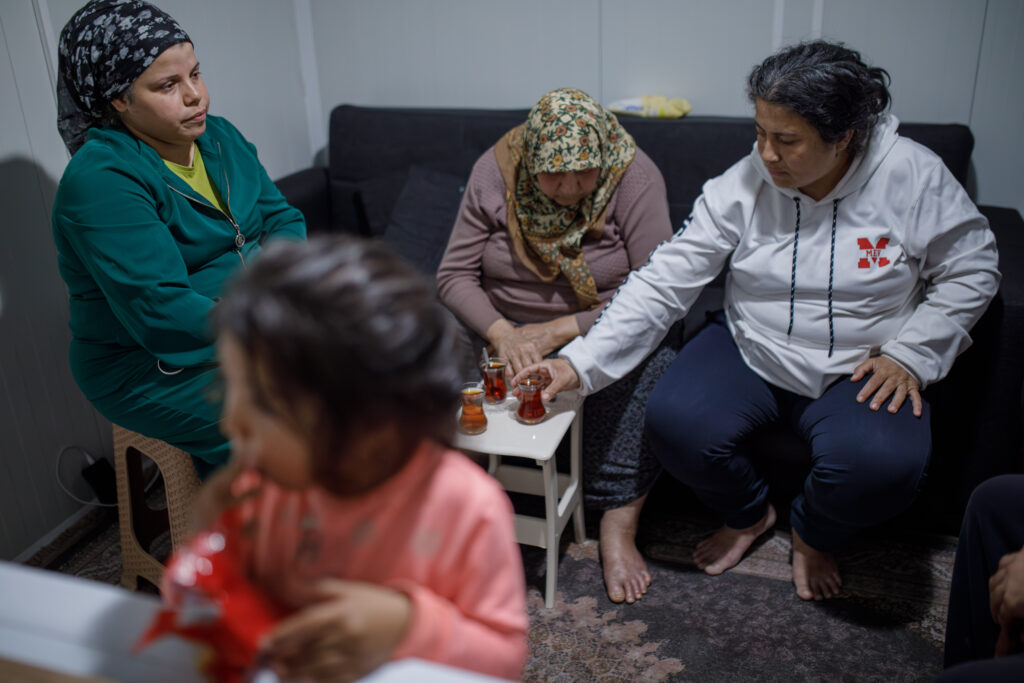
MIAMI, FLORIDA - DECEMBER 06: Atmosphere during Art Basel Miami Beach Art Fair 2023 VIP Preview at the Miami Convention Center on December 06, 2023 in Miami, Florida. In the photo, a man and a woman take photos on their phone of a portrait on the wall, a square painting of a man in a hat, largely in shades of blue. (Photo by Sean Zanni/Patrick McMullan via Getty Images)

It’s Always Basel Somewhere

WP_Post Object
(
    [ID] => 6461
    [post_author] => 15
    [post_date] => 2023-12-06 18:49:50
    [post_date_gmt] => 2023-12-06 18:49:50
    [post_content] => 

When will we as a global community say enough is enough?

Recently, an incident occurred that should not be common but is: A woman—we will call her Ada—was assaulted by her husband. The couple had not been able to conceive a child, so her husband beat her, shouting insults while he did. Then, he threw her belongings out of the house into the night and told her not to return.

One of their neighbors who had heard the shouting came over, and convinced the husband to allow Ada back into the house. She remains there still, because like so many women suffering intimate-partner violence, she does not have anywhere else to go. The issue is exacerbated by her disability: Ada uses a wheelchair as a result of polio. With no job, Ada is dependent on her husband. Finding work is challenging because of her mobility issues and because she is uneducated. In Cameroon, where she lives, they do not believe sending girls with disabilities to school is necessary or worthwhile due to social stigma.

But what happened to Ada is far from an isolated occurrence. Violence against women and girls with a disability occurs around the world at astronomical rates. The UN estimates that women with a disability are at least three times more likely to experience violence from a partner, family member, or caregiver than women without a disability. The United Nations Population Fund estimates that between 40 and 68 percent of young women with a disability experience sexual violence before the age of eighteen.

To be a woman or a girl with a disability—physical, visual, intellectual, or multiple forms—is to always be vulnerable. We know this, because we both have a physical disability, from polio and scoliosis, respectively. We’ve both experienced various forms of discrimination and violence as children and women. And we both now work with survivors of violence with disabilities and their families.

One of the most painful realities we see in our work is that the violence perpetrated against a woman or girl with a disability is often done by someone who is supposed to care for them—a partner, a spouse, a caregiver, a teacher. These perpetrators have the advantage because they know their victims, or their families, are dependent on them. Like Ada, millions of women are forced to face the question, What do you do when the person you should be able to turn to is the one perpetrating the violence?

The difficult reality is that justice for these women is elusive. Women’s stories are often discounted, but a woman with a disability faces additional barriers to even having her story heard at all. There is an added layer of discrimination against them, as well as more practical hurdles. A deaf person who is unable to share her story without an interpreter. A woman in a wheelchair who needs transportation assistance to the police station or courthouse. A woman with an intellectual disability who may not even have the language to share what happened to her.

The complexity and scope of the problem are why we sent an open letter signed by more than 400 disability rights activists and our supporters to UN General-Secretary António Guterres, calling on him and his colleagues to support the creation, adoption, and implementation of a new Optional Protocol to the Convention on the Elimination of All Forms of Discrimination against Women (CEDAW) specific to ending violence against women and girls.

As we write in our letter: “With violence against women and girls in the spotlight, the specific and unique needs of violence against women and girls with disabilities has a chance to be seen and addressed in a larger and more comprehensive way.”

Nations’ familiarity with CEDAW—one of the most ratified treaties in the world—makes a new Optional Protocol the most sensible and expedient path to a binding framework that protects women and girls around the world, including and especially the most vulnerable, like us. An Optional Protocol to CEDAW would mandate various interventions proven to lower rates of violence, including legal reform, training and accountability for law enforcement and other professionals, comprehensive services for survivors, and violence-prevention education programs. Implementation could be monitored through a metrics-based system that would hold nations accountable for meeting clear benchmarks specific to States’ duties.

In other words, an Optional Protocol would require nations to address all forms of violence against all women and girls, in all spheres and under all circumstances—including better protection for women like Ada.

The alternative is to allow the violence to continue—an unconscionable alternative where women and girls around the world will continue to suffer. How many more women and girls must be harmed before the issue is taken seriously? It horrifies us to think that the men who perpetrate this violence will continue to get away with it, and go on to harm another woman, another child. When will we as a global community say enough is enough?

We know there is a solution. The international community has been working on this issue for more than 30 years, and it is time to take the next step.

As we write in our letter, “We have it within us to change the course of human history to one where every woman and girl lives a life free of violence.” The safety of women like Ada, like us, depends on it.

[post_title] => How International Law Can Better Protect Women and Girls with Disabilities [post_excerpt] => When will we as a global community say enough is enough? [post_status] => publish [comment_status] => closed [ping_status] => closed [post_password] => [post_name] => international-law-cedaw-convention-on-the-elimination-of-all-forms-of-discrimination-against-women-violence-girls-disability-abuse [to_ping] => [pinged] => [post_modified] => 2024-08-28 21:11:27 [post_modified_gmt] => 2024-08-28 21:11:27 [post_content_filtered] => [post_parent] => 0 [guid] => https://conversationalist.org/?p=6461 [menu_order] => 69 [post_type] => post [post_mime_type] => [comment_count] => 0 [filter] => raw )
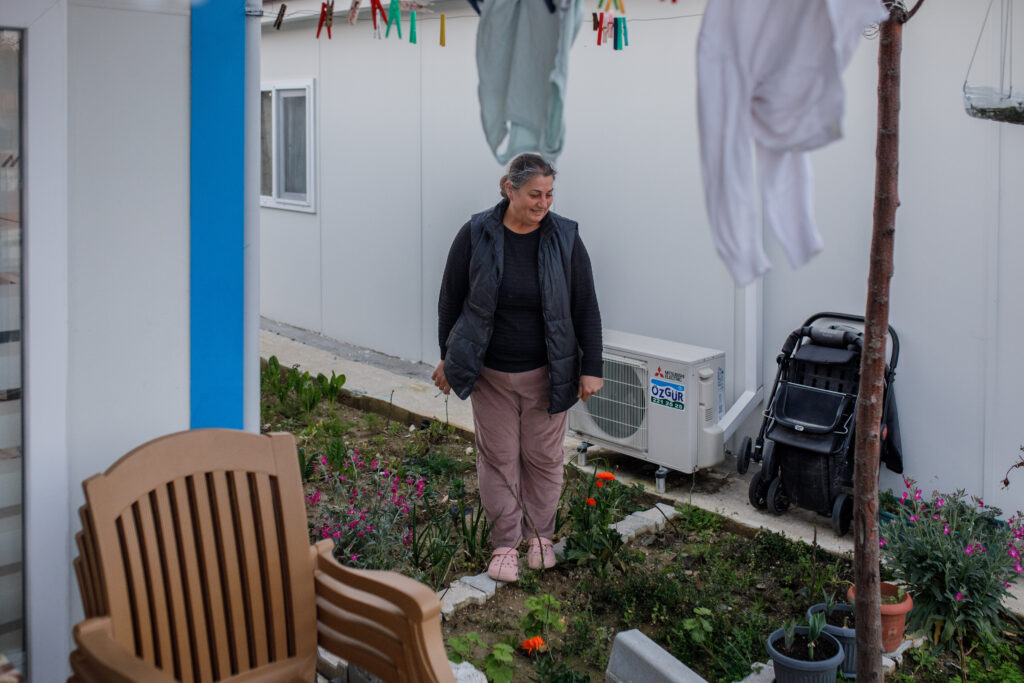
A blurred image of a young girl in a red wheelchair, on a mauve background.

How International Law Can Better Protect Women and Girls with Disabilities